|
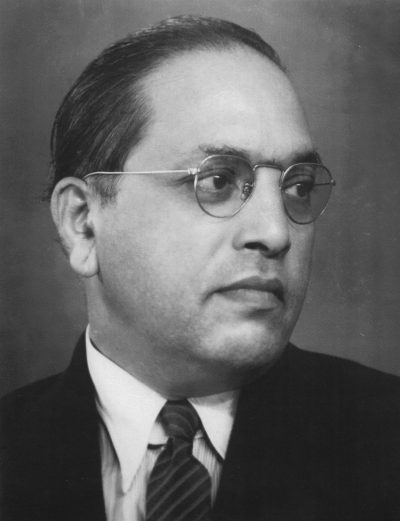
In the history of India, many social reformers have come and gone, but in the realm of broad, legal and constitutional battles fought for women’s rights, the place of Bharat Ratna, Dr. Babasaheb Bhimrao Ramji Ambedkar is unparalleled. He was not merely a leader of the Dalit community, but a born protector of every marginalized being in India especially of women. The caste system and patriarchy had pushed women into darkness for centuries, and to bring her out of that darkness, Babasaheb effectively wielded the weapons of law, the Constitution and social awakening. In his view, the progress of a society is measured by the heights its women have reached and this was not merely a statement, but a principle to live by.
As the architect of the Indian Constitution, Dr. Babasaheb Ambedkar incorporated gender equality into the very framework of the Constitution. Article 14 established the principle of equal treatment before the law for all. Article 15 explicitly prohibited discrimination on the sole basis of sex. Article 16 ensured equal opportunities for both men and women in the field of employment. These provisions granted women dignity as citizens not merely in words, but in the language of law. Along with this, Article 39 included the directive principle of equal pay for equal work, which proved to be a long-term protection for working women.
On the question of the right to vote, Babasaheb’s stand was absolutely firm. When India attained independence, many countries in the world had yet to grant women the right to vote. Due to the stand taken by Dr. Babasaheb Ambedkar in the Constituent Assembly, every man and woman who had completed eighteen years of age received the right to vote in India without any gender distinction, without any conditions or terms. As a result, crores of women entered the mainstream of democracy for the very first time. This decision was not merely political it was a definitive milestone of social revolution that acknowledged the very existence of women. Babasaheb believed that the ballot box is an instrument of power, and for that instrument to be in the hands of every woman means her freedom remains inviolable.
The boldest and most far-reaching step in Dr. Babasaheb Ambedkar’s work for women’s welfare was the Hindu Code Bill. As India’s first Law Minister, he introduced this bill in Parliament, with the objective of granting Hindu women legal equality in property, inheritance and divorce. Under the Hindu law of that era, a daughter could not claim rights over her father’s property, a widow had only a nominal right over her husband’s property, and no matter how abusive the husband was, there was no legal avenue available to a woman for obtaining a divorce. For the first time, the Hindu Code Bill opened the path to grant a Hindu woman legal inheritance rights in her father’s and husband’s property. The bill contained provisions to recognise a daughter as an heir on par with a son, the right to divorce, the right to remarry, and just provisions regarding the custody of children.
However, this bill faced tremendous opposition in Parliament, particularly from traditionalists. Attempts were made to trample women’s rights in the name of religious beliefs. Prime Minister Nehru himself, yielding to political pressure, deferred the bill indefinitely. At that point, Babasaheb took a historic decision — he resigned from his position as Law Minister. He considered it more honourable to relinquish power than to compromise on the just rights of women. This resignation was not merely a political event it was the ultimate expression of a moral stand, one that deserves to be written in golden letters in the history of Indian politics even today.
Babasaheb’s work for women was not confined to the four walls of Parliament. As a member of the Labour Department, he also looked at the problems of working women from a broad perspective. He brought about amendments in the Mines Workers Act and banned women from working in underground mines, because the conditions there were extremely dangerous for health and safety. He also advocated for the Maternity Benefits Bill, under which women working in factories should have the right to receive paid leave before and after childbirth. These reforms gave the working women of India a legal protective shield for the first time.
Dr. Babasaheb Ambedkar stood firmly against child marriage. He felt that marrying a girl at a young age was a betrayal of her health, her education and her dreams. His position was that marriage should be an agreement between two mature, consenting adults, and not a compulsion imposed during childhood. He demanded that a minimum age for marriage be fixed, and included a provision for the same in the Hindu Code Bill. He also strongly opposed the Devadasi system, because that practice was nothing but the enslavement of women hidden behind the veil of religion.
In his works such as “Castes in India” and “The Annihilation of Caste,” he made it clear that the caste system does not merely divide people, but is also a powerful medium for exercising control over women’s bodies, sexuality and marriages. He proved through logical and sociological analysis that the practice of Sati, the opposition to widow remarriage, and the freedom granted to men to have more than one wife all these things were being used by caste-patriarchy to keep women in bondage. He believed that the annihilation of caste is also the path to women’s liberation.
Through social movements too, Babasaheb inspired women. Many women participated in the Mahad Satyagraha at Chavadar Lake (1927) an extraordinary event, because prior to this, women’s participation in public agitations was rare. Babasaheb regarded those women not merely as followers, but as independently thinking, fighting human beings. He constantly spoke to women about the importance of education. He firmly believed that education is the gateway to self-reliance, self-respect and freedom, and many institutions established by him made special efforts for women’s education.
On 14th October 1956, when Dr. Babasaheb Ambedkar embraced Buddhism, lakhs of women also converted to Buddhism alongside him. In Buddhism, men and women are accorded equal human dignity, and a woman has the right to pursue religious practice as a Bhikkhuni. His view was that whether a religion truly grants freedom or not is determined by how it treats women. Embracing Buddhism was for him not merely personal salvation, but a means of showing lakhs of women the path to living with dignity.
The fruits of the seeds sown by Babasaheb were gradually obtained in later times. The Hindu Succession Act (1956), the Hindu Marriage Act (1955), the Special Marriage Act (1954), the Maternity Benefit Act (1961) all these laws have their foundational basis in the concepts laid out by Babasaheb. In 2005, through an amendment to the Hindu Succession Act, a daughter was granted equal rights as a son in ancestral property this was the fruit of his struggle, received late but nonetheless received.
The work done by Dr. Babasaheb Ambedkar for women was not limited to a particular caste, religion or class. It was a great endeavour to deliver justice to the entirety of Indian womanhood to compel law, society and women themselves to accept her as a human being. He sought inheritance rights because without property, freedom is crippled. He sought the right to vote because without participation in politics, power cannot be obtained. He insisted on education because without knowledge, there is no liberation. Today, when a woman in India votes, goes to court, claims her inheritance, seeks a divorce, remarries, takes up employment and demands equal wages at every such moment, she is indebted to Babasaheb’s foresight and courage. His work is a truth inscribed on the canvas of time that cannot be erased without women’s liberation, the true liberation of any society remains incomplete.
*
Click the share button below to email/forward this article. Follow us on Instagram and X and subscribe to our Telegram Channel. Feel free to repost Global Research articles with proper attribution.
Vikas Parashram Meshram is an independent writer, social worker, and researcher associated with rural development. He regularly writes on issues related to tribal communities, rural livelihoods, agriculture, climate change, and social transformation. He is a regular contributor to Asia-Pacific Research.
Featured image: B.R. Ambedkar, Former Minister of Law and Justice of the Republic of India (Public Domain)
Related
|