|
The highly inspirational freedom movement of India had several streams and two of these have been most identified with the names of Mahatma Gandhi and Shahid Bhagat Singh in leadership roles. While both of these great leaders have countless admirers who out of mutual respect generally avoid being critical of each other, there is also a widespread tendency to consider their work as reflecting two highly divergent trends in the freedom movement, one completely committed to non-violence, the other identified in the public mind most with courageous acts which in several cases involved at least some violence against the many-sided injustices of colonial rule and their perpetrators.
However, in my writings I have tried to highlight that the convergence of the paths and their common destination to be more significant compared to this divergence. On this basis I have sought to build a case that the creation of a new India based on justice, equality and peace must benefit from the combined legacy of both of these great leaders, thinkers and freedom fighters.
In fact, both of them basically thought in terms of a peaceful world that is based on justice. In his writings Bhagat Singh speaks of brotherhood of all humanity as the most noble of all concepts and also of ending wars. However this must be based on ending the highly unjust contemporary order based on colonialism and imperialism. He also speaks about the very high value he and his comrades accord to human life. This is supported further by their deliberate efforts to avoid indiscriminate violence, and to minimize any threat to life even when they have to take up any violent action. So whatever the other differences, the two great leaders are united in aiming for peace with justice, placing high emphasis on struggle against imperialism, placing very high value on human life and avoiding indiscriminate violence.
What is more, if we look at the priorities of the two leaders in terms of the reforms needed in Indian society, the similarity of their understanding becomes even more emphatic. For both of them inter-faith harmony and unity was of very high importance. Both of them placed very high emphasis on ending all social discrimination and uplifting those who had suffered the most injustice historically (dalits in the context of Indian society). Both of them emphasized that highest importance should be given to eradication of poverty and reduction of inequalities. Both of them rejected a life of luxury consumption, and emphasized simplicity in the life of those in leadership roles. Both of them were in favor of women playing a wider social role, all the more so in the freedom movement.
Thus while the differences are found to be not so big as are often stated, the convergence and similarity of priorities are found to be more significant than is often realized.
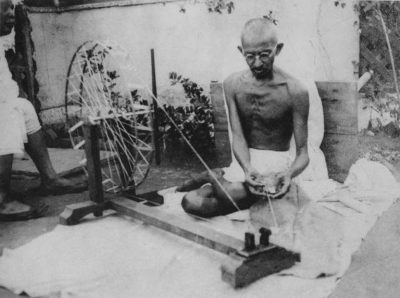
What is more, the two streams of the freedom movement were often found to be involved in mutually supportive roles. Highly courageous actions of Bhagat Singh and his comrades helped the Congress to move more swiftly towards the goal of complete independence. On the other hand several Congress supporters played an important role in the many protests against the death sentence and other extreme punishments imposed in highly unjust ways on several revolutionaries.
.
Source: Bharat Dogra
.
In fact in the last and most inspirational phase of their life in jails, Bhagat Singh and his comrades made the highest impact on the freedom struggle and in their direct reach to people, and in this phase the methods they used came very close to those of Mahatma Gandhi, particularly in terms of their prolonged fasts.
Hence I have been strongly advocating the idea that the legacy of these two great leaders and their close colleagues should be more rightly seen as a combined legacy which should be the basis for wider national unity to create a country and society based on peace, equality, justice, non-discrimination and unity, aligned to the wider efforts for a world based on justice and peace.
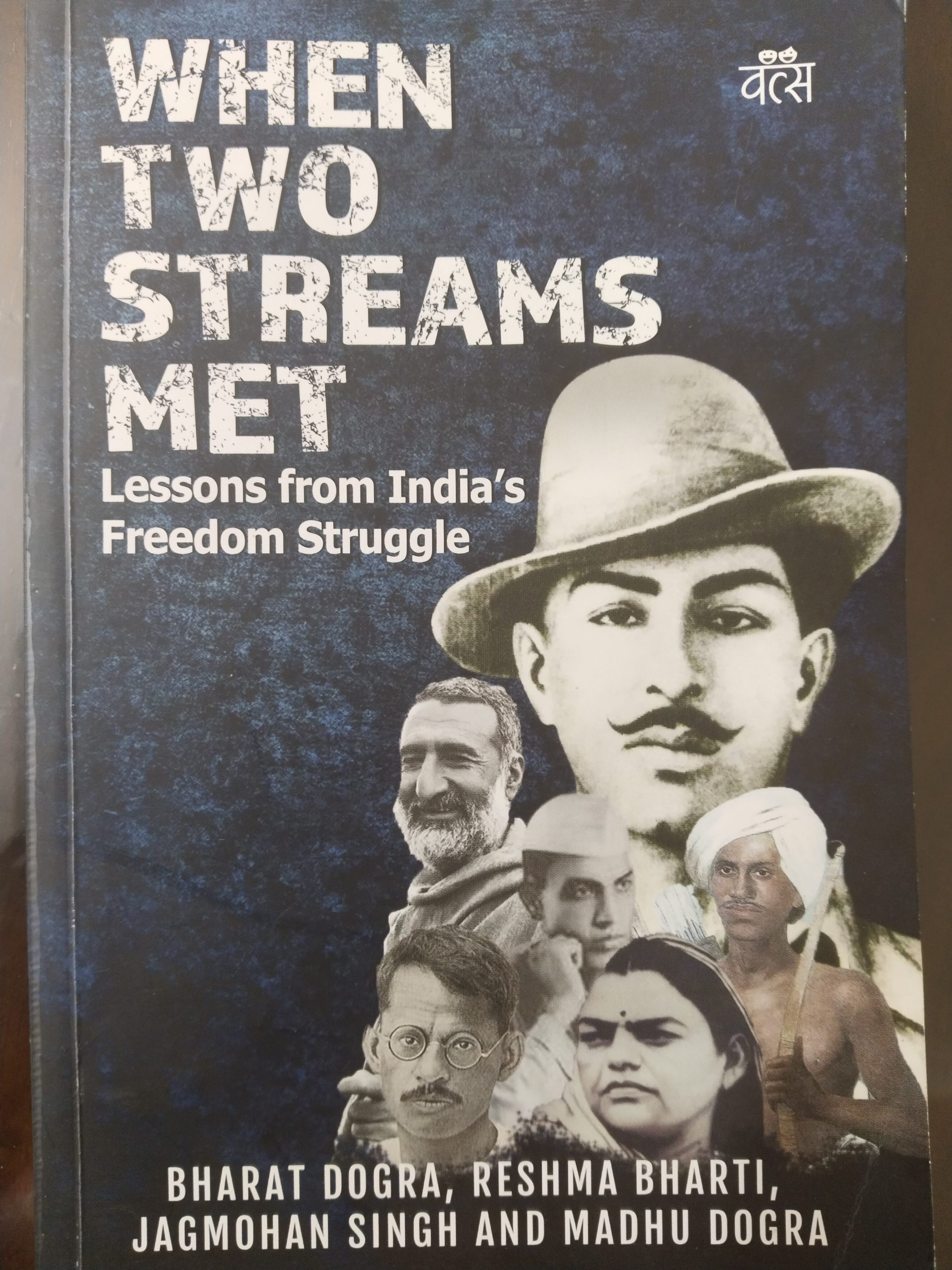
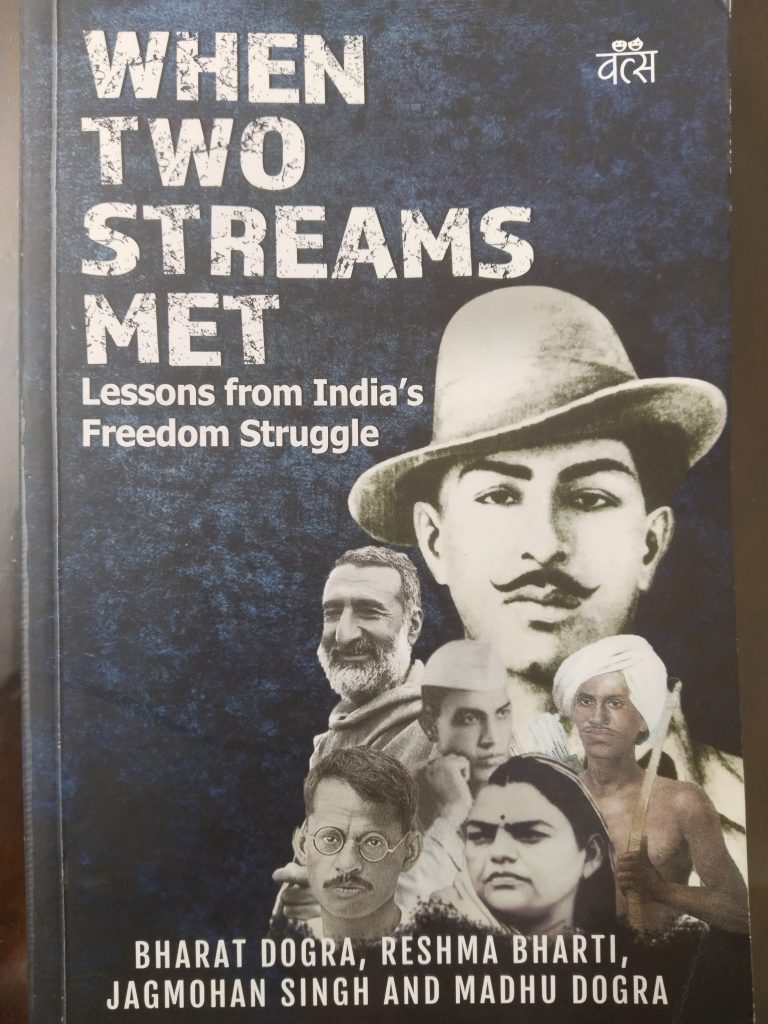
Earlier when for the greater part of my life I was in Delhi I discussed this idea in several group discussions and this was almost always well received. Now after temporarily moving to Mohali I had the same experience here. I also edited two books in English and Hindi on the freedom movement highlighting this aspect which were well received. These books are ‘When the Two Streams Met’ and ‘Azadi ke Deewano ki Daastaan’. My experiences so far show that the idea of a combined legacy of Shahid Bhagat Singh and Mahatma Gandhi as a guidepost for India is a sound one. Of course in addition we must learn also from other great freedom fighters, and here I’ll particularly like to mention the great Badshah Khan, truly a king of our hearts.
*
Click the share button below to email/forward this article. Follow us on Instagram and X and subscribe to our Telegram Channel. Feel free to repost Global Research articles with proper attribution.
Bharat Dogra is Honorary Convener, Campaign to Save Earth Now. His recent books include Planet in Peril, Protecting Earth for Children, Planet in Peril and A Day in 2071. He is a regular contributor to Asia-Pacific Research.
Global Research is a reader-funded media. We do not accept any funding from corporations or governments. Help us stay afloat. Click the image below to make a one-time or recurring donation.

Related
|