|
In the forbidding afternoon heat of the month of May in Bundelkhand region, when most villagers were settling for rest in their home, in Athondhna village of Babina block (district Jhansi), about a dozen women quietly slipped away from their homes on one pretext or the other. They did this continuously for five days. Where were they going?
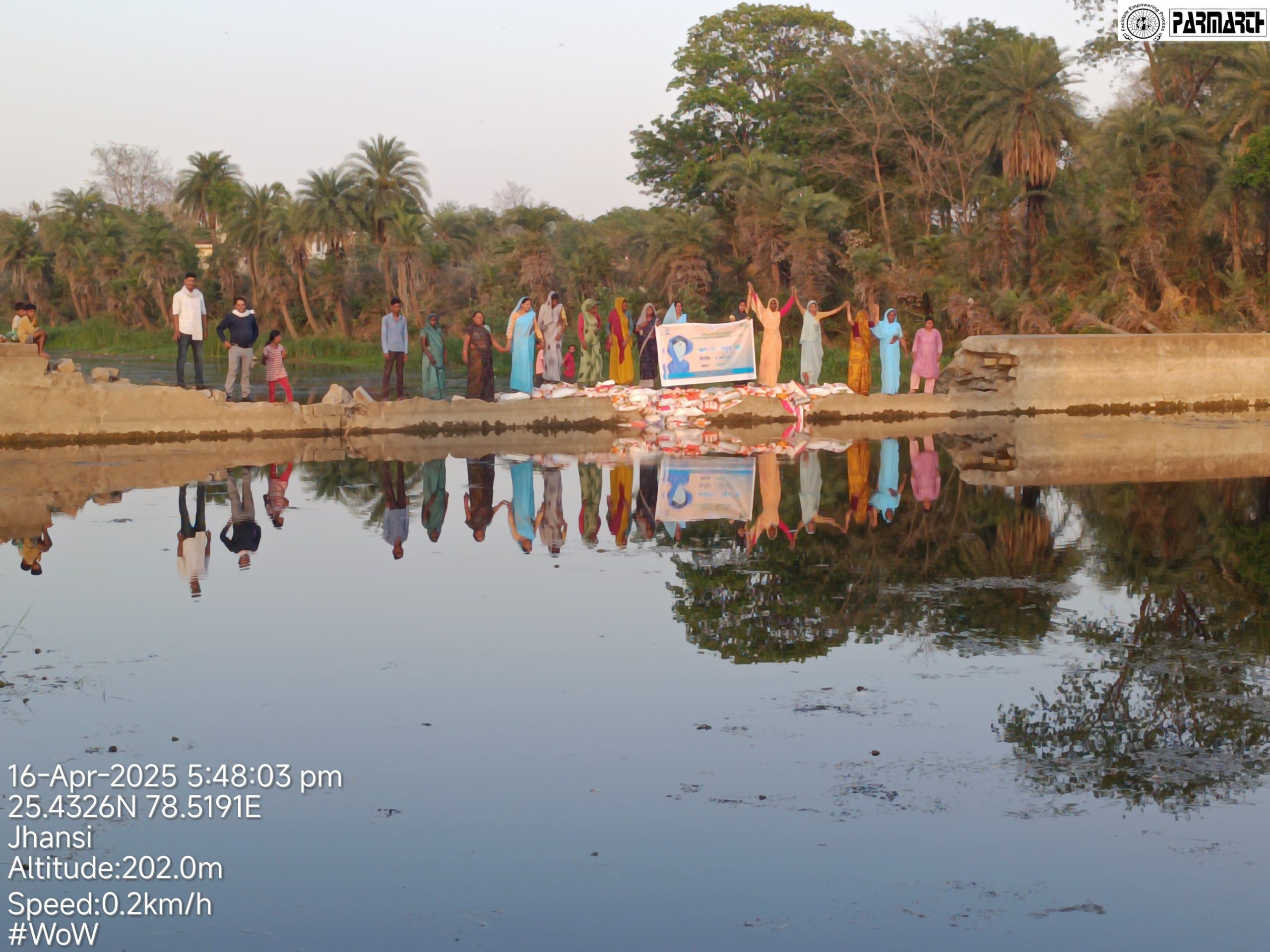
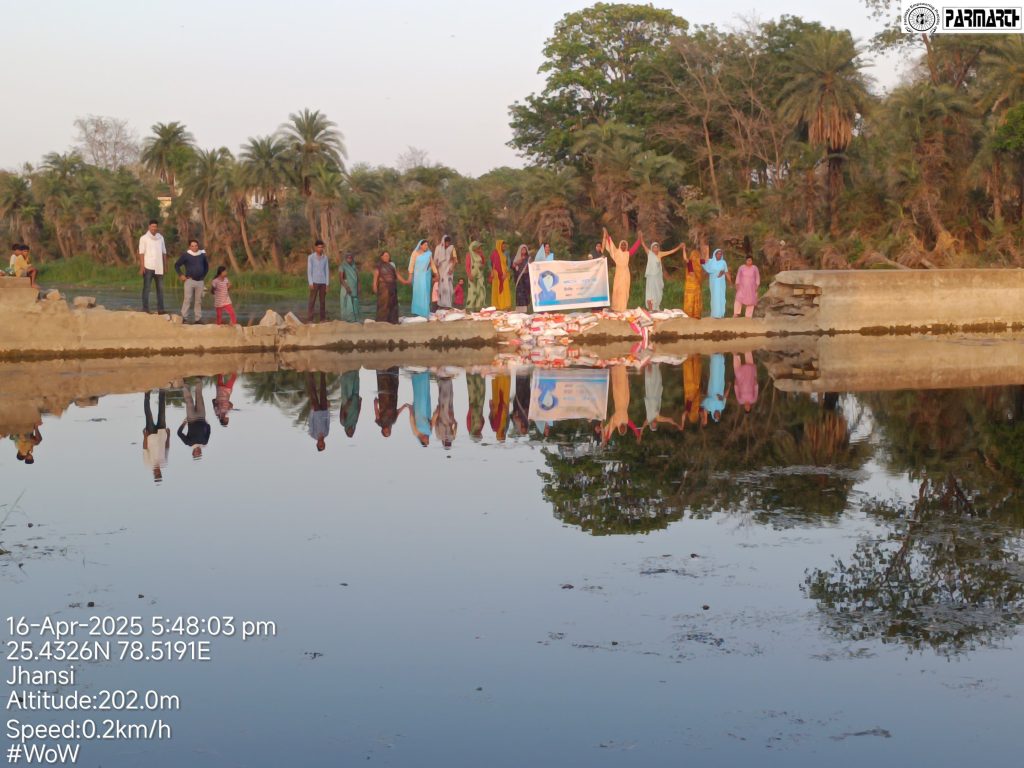
By prior planning they met at a common spot and then walked rapidly together to the Pahuj river. Here they dug up soil and filled this in sacks. Then they carried these sacks and deposited these in a place where these would help to create a temporary bund which in turn would help the village to obtain more water during the dry season. This technique called bori bandhaan being a traditional method they were familiar with this. They wanted to use this to conserve water but as several villagers ridiculed the idea of a few women accomplishing such a big task, instead of facing discouraging words they had decided to start the work quietly.
Their first problem came when they ran out of their own stock of sacks which they had kept at the riverside. However a voluntary organization Parmarth well known to them was happy to quietly provide whatever additional sacks they needed. Hence their work continued for five days, contributing voluntary work for nearly three hours every day, and despite feeling tired and weak they were determined to take it further. During these five days they could fill, carry and place about 650 sacks.
.
.
While working the women said encouraging words to each other but at the same time inwardly they were worried as the task appeared to be a very big one. Somehow they suppressed such worries as they needed to keep their spirits high to keep working.
On the fourth day a local news channel heard about this and reported that these women are working in such hot weather for helping their village, and the administration should contribute to these efforts. This prompted some helpful officials to take up the remaining work and on the sixth day the government supported work started here on a larger scale.
When the women voluntary workers heard about this they were very happy. Now villagers were full of praise for them as it was widely realized that it was their voluntary work taken up quietly in very difficult conditions that had led to the government intervening so promptly and quickly with its own work.
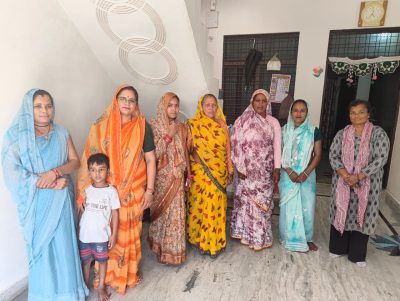
I recently went to this village to speak to a group of these women gathered at the home of one of them Rajni Rajput. What I really liked about this group was their sense of togetherness, unity and cooperation. Rajput and dalit women were sitting together and relating their various activities taken up with mutual cooperation for water conservation and village development. There was not the slightest hint of any discrimination. Pointing to an elderly dalit woman Kushma Rajak sitting next to her Rajni said, “She is the most senior among us and an inspiration for us. When we were going to the river for voluntary work, she took the shovel and said that I’ll dig while all of you will fill the sacks. Her daughter in law Anjana also joined. All of us were together with unity, but she being senior was more in a leadership role.”
When I was sitting in their middle and taking notes, my heartfelt feelings were that it is such women who will create the new India, a country based on equality of all sections of society.
This village is a leading village of the work area of Parmarth voluntary organization which has created a cadre of women volunteers for water conservation and adequacy who are called Jal Sahelis or friends who work together on water related issues. These are ten jal sahelis in this village. These include representatives from various communities including adivasis who have played a particularly valuable role in the planting and protection of trees.
Jal Sahelis hold regular meetings to take forward various water related tasks. They are often joined by various other members of their communities who take a keen interest in such initiatives. Together they constitute a pani panchayat or a broader non-formal organization of the village that facilitates people’s participation in water and sanitation related efforts and initiatives.
As Shivani, a senior manager of Parmarth asserts, the participation of women in rural development is important but in addition their leadership role should also be strengthened so that the priorities as seen by women of any village can also be taken forward.
Parmarth has an important project to advance this objective particularly in the context of water called Women for Water (WoW). This project advances the leadership role of women with trainings and capacity building, adding to the confidence as well as capabilities of jal sahelis and emerging women leaders elected to various levels of rural decentralization or panchayati raj. Apart from water and sanitation, other aspects of rural development like health and education are also taken up in these trainings. The results are already showing up in improved development indicators.
Athondhna is an important village for WoW project. Neelam Jha, the local cluster coordinator of this project says that women volunteers here have played an important role in ensuring hand-pump repairs and proper spread of water pipelines. Now water-supply in all taps is eagerly awaited in the greater part of the village and jal sahelis will be monitoring the progress carefully to ensure that no one is left out of the reach of water supply.
As a part of this initiative Reena Rajput has taken up important responsibilities in this and other villages to help villagers and particularly women to avail the benefits of various government schemes to which they are entitled but which they have not been able to access due to some problem or the other. This effort has been particularly active in improving access to pensions for elderly women and widows.
*
Click the share button below to email/forward this article. Follow us on Instagram and X and subscribe to our Telegram Channel. Feel free to repost Global Research articles with proper attribution.
Bharat Dogra is Honorary Convener, Campaign to Save Earth Now. His recent books are Protecting Earth for Children and A Day in 2071. His website is bharatdogra.in His YouTube channel is Bharat Dogra Save Earth Campaign. He is a regular contributor to Asia-Pacific Research (APR).
All images in this article are from the author
Global Research is a reader-funded media. We do not accept any funding from corporations or governments. Help us stay afloat. Click the image below to make a one-time or recurring donation.

Related
|