

Abstract
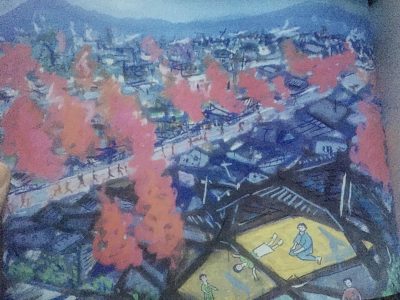
Dr. Masao Tomonaga is Director Emeritus of the Japanese Red Cross Nagasaki Atomic Bomb Hospital. He was born in Nagasaki City in 1943, where he experienced the second atomic bomb on August 9th, 1945, aged two. He has studied the effects of radiation exposure on the development of leukemia and other cancers and has pursued ground-breaking research on the physical and psychological effects of exposure to radiation on human beings. (Featured image courtesy of Nagasaki Prefecture Hibakusha Notebook Friends Association).
***
“There is very little understanding of the results of the use of nuclear weapons in warfare in your country,” Dr. Masao Tomonaga M.D. exclaims when I meet him at his office at the Nagasaki Prefecture Hibakusha Notebook Friends Association (Nagasaki ken no hibaku-sha techō tomo no kai), a community center near ground zero in Nagasaki. The center is modest but there are baskets of thousands of colorful folded paper cranes in the reception that the staff point out to us cheerfully. Pictures of Nagasaki after the bomb, drawn by survivors in its aftermath, decorate the walls. It is a mildly sunny winter day in December 2025, and I am making a trip to the city to research hibakusha experiences for my month-long post-doctoral research fellowship with Hiroshima City University. Tomonaga has not long returned from a tour to give lectures in Cambridge, London and Edinburgh in the U.K. in July 2025. Around 210,000 people in Japan died due to the nuclear bombings of Hiroshima and Nagasaki by the end of 1945 and a further 210,000 survived and became hibakusha, the term used for the survivors of Hiroshima and Nagasaki.
Nagasaki became the target of the world’s second atomic bomb used in warfare at 11.02 am on 9th August 1945. Nagasaki was second choice after Kokura, 170 km distant, which was, that day, covered in clouds. Nagasaki became a feasible target since a gap in the clouds provided sight of the Urakami valley, which was some distance from the official target, the industrial heart of the city around the port with its military installations. On that day an estimated 80,000 died with a further estimated 20,000 dying in the weeks and months that followed. The number included around 8500 Catholics as the Catholic cathedral of Urakami, the largest in East Asia, then-just-recently completed (in 1925) stood just 500 meters from ground zero (McClelland, 2020; Turnbull 2000).
As he was asleep in his two-story wooden house at the time, Tomonaga’s mother dragged him out, just fifteen minutes before the house and everything in it went up in flames. He comments,
“That’s how it is with nuclear bombs, blast and then fire and then the spread of radiation. I was one of the lucky ones.”
Medical Research
He is now an expert on blood cancers related to the atomic bombing as well as an Emeritus director of the Red Cross hospital in Nagasaki as a former professor there. He is also director of Megumi No Oka atomic bomb survivors’ home which provides care to around 450 residents. As such he examines up to 20 or 30 patients every day. Most of the cases he treats are for everyday illnesses however sometimes he treats myelodysplastic syndromes (commonly known as MDS). On his retirement from his post as director of Nagasaki University’s Atomic Bomb Disease Institute (known as “Genken”) in 2009, he noted that this specific kind of leukemia, which was new to doctors, was very prevalent among elderly survivors (Hsu et al, 2013). It is a form of leukemia that occurs specifically among elderly hibakusha who were under the age of 10 at the time of the bombing and exposed within 1.5km of ground zero. While it is well-known that previously healthy hibakusha found they had various cancers about 20 years after exposure, MDS was new to doctors in the mid-1980s, occurring 40 or more years after exposure.
Tomonaga also found that his patients often exhibited worse psychological symptoms around Nagasaki memorial days, so, he became a key researcher for a 1995 WHO-sponsored psychological study. This was a study of 8,000 hibakusha exposed close to ground zero, which proved a high incidence of mental health conditions (PTSD, depression, anxiety and other disorders) among elderly hibakusha (Honda et al, 2002; Tomonaga, 2019).
The “Forgotten City”
Nagasaki has often been perceived as the “forgotten” victim of the bomb compared to Hiroshima, both in terms of the number of visitors to the city as well as press attention. This is unfortunate as it is the most recent city to have experienced the use of a nuclear weapon in warfare as well as the first to have suffered from the use of a plutonium bomb (in contrast to the uranium bomb used in Hiroshima). In Europe, many respondents to a research survey conflated the histories of the two bombings using Hiroshima as shorthand for both bombs (Pelopidas 2017, 7). A Susan Southard, prize-winning author of Nagasaki: Life After Nuclear War (2016) has written, President Truman omitted to mention Nagasaki in his address to the American people soon after the completion of both bomb missions on Hiroshima and Nagasaki. The attempt to write journalistic accounts on a par with the now famous reports that came out of Hiroshima were also redacted under Occupation censorship rules. Frank W. Chinnock, a US journalist wrote Nagasaki: The Forgotten Bomb (1969), which describes the history of city, the decision to drop the bomb, and follows the stories of several hibakusha in an attempt to set the balance straight. The historical lacuna occupied by the Nagasaki bombing is counter intuitive. A beautiful crane-shaped bay dominates the city, which is set on a peninsula in Kyūshū, the island in the Japanese archipelago closest to the Asian continent and home to one of Japan’s first open ports. It also has a more than 450-year history of contact with and study of Europe and European cultures, and is thus, arguably, even more significant in terms of world heritage status than Hiroshima.
The Power of Hibakusha Testimony
It is not so much the image of his city or the numbers of visitors to the Atomic Bomb Museum and other peace sites that bothers Dr. Tomonaga, it is a question of the effectiveness of hibakusha testimony to change opinion and policy about the proliferation of nuclear weapons. When I met him, he had recently completed one of his frequent testimony tours overseas with fellow hibakusha including to Los Alamos National Park, a principal facility of the former Manhattan Project, the first state project to build nuclear weapons capability. There he held dialogues with the current director and helped ten hibakusha share their stories with audiences of local US citizens.
Also, in 2024, Dr. Tomonaga led a group of nine hibakusha to other cities in the US including to Portland, Oregon, North Carolina, and Chicago, Illinois. There they met hundreds of high school students and teachers. This was an initiative of the Techō Tomo No Kai, the Notebook Friends Association, the community NGO where we met. “Techō” refers to the health notebook carried by those who are recognized, under the Atomic Bomb Survivors Health Law of 1957, as being nuclear sufferers worthy of special medical compensation. Hibakusha waged a 12-year struggle after 1945 for their injuries to be recognized as distinct from harms related to incendiary bombings, harms which everyone in Japan had suffered from in some way or another. It was only after 1957 that “higaisha” — the injured, became “hibakusha” — those injured by the bomb, and the term came into widespread use.
Tomonaga looks aghast at the contemporary geopolitical situation, with world leaders threatening nuclear war on one another with seeming nonchalance. He points out that while it was the then-new U.S. president Harry S. Truman who signed off on the use of nuclear weapons against Japan (25 July 1945), the outgoing U.K. prime minister Winston Churchill (1939-1945) had also supported the nuclear bomb’s development.
Researching the Significance of Hibakusha Stories
It was this history along with a perceived muting and under-representation of hibakusha experiences in Japan that drove me to want to research how hibakusha construe their stories. Hibakusha invited me to interview them in Hiroshima as I wanted to understand why most still struggled to get attention in their own society, let alone abroad (Chappell 2016, 115-127). It is understandable that my fellow countrymen might not be able to distinguish nuclear sufferers from other war victims given the exceptionally low profile of our own nuclear victims including veterans.
According to the Ministry of Health, Labor and Welfare (as of April 2025) there are around 99,000 hibakusha still alive in Japan (the calculation is based on those who have claimed the health notebook) but only a significant minority of hibakusha will decide to become official witnesses (shōgensha). As such the Hiroshima Peace Memorial Museum or the Atomic Bomb Museum of Nagasaki often employ them to retell their experiences of living through the bombings and their aftermath. They often devote their lives to sharing their sad, painful, and scary experiences around the world.
In 2014, Nagasaki City Council followed Hiroshima in formalizing a two-year training program for atomic bomb survivors already registered as such, to become formal witnesses, as a way of distinguishing them from unofficial storytellers (kataribe). To become an official witness of the bombings you must, since 2012 in Hiroshima and 2014 in Nagasaki, take an exam to prove your knowledge of the history of the atomic explosion, including scientific data, to set your own experience in context.
As Ruri Van Der Does and Andrew Hoskins write, the training program involves a certain amount of unofficial censorship; encouraging survivors to exclude their difficult or dangerous memories about surviving after the bomb – memories of poverty, illness, discrimination and so on (Van Der Does 2025, 34). They focus on what happened on “ano hi” which means “that day”. This institutionalizes, in a different form, various kinds of censorship and muting applied to them over the years (Chappell 2020, 81). The majority of hibakusha will not want to talk about their experiences at all either due to the long shadow of post-war censorship or self-censorship or because they are simply tired of institutional control of memory and the misunderstanding they can suffer at the hands of outsiders or even fellow hibakusha. As one hibakusha from Hiroshima told me, “Hibakusha even discriminated against hibakusha.”
Around the same time, Nagasaki and Hiroshima began a “successor” and “family successor” (denshōsha, kazoku denshōsha) program to train those of the next generation who wish to advocate for hibakusha, or family members, to give public testimony (Van der Does & Hoskins 2025, 35). The denshōsha program is very scientifically and historically stringent and family members of hibakusha are put off by what to them can seem to detract from the visceral nature of hibakusha testimony (hibaku no jisso). At the time of writing there are 239 successor witnesses but only thirty-nine family successor witnesses (Van der Does & Hoskins 2025, 35). One second generation hibakusha from Hiroshima complained to me “in the denshōsha witness test, they are always trying to catch you out with their lengthy questions.” Alongside these official training programs, there are those who tell the stories of family members or those they know who have died due to exposure to the bombs in informal ways and in community settings as storytellers or spirit mediums.
In general, the few hibakusha who have trained as public testimony givers or who just decide to speak up publicly have the attitude that nuclear weapons are threatening to all life (including humans, plants, animals, and the environment). Since we are all part of the same biosphere, we all need to work to protect each other. Often in their 80s (the average estimated age is 86 as of 2025), those in this fast-dwindling cohort frequently travel to other sites of nuclear testing, accidents as well as other kinds of humanitarian disasters to connect with victims.
Interest in Blood Research Passed From Father to Son
In December 2024, Tomonaga participated in the NUKES – How to Counter the Threat forum in Oslo as part of that year’s Nobel Peace Prize award ceremony for Nihon Hidankyo, the Japan Association of H-bomb and A-Bomb Sufferers. In that forum, he referred to the deleterious effects of radiation on stem cells, the cells which continue to live on in the body throughout one’s life. Such research on radiation exposure affecting the whole life span explains why hibakusha continue to live in fear of cancers recurring throughout their life, despite being healthy so far (Tomonaga, 2019).
Dr. Tomonaga’s interest in studying blood-related cancers stems from the interests of his father, Dr. Masanobu Tomonaga (1916-1971). A working hematologist, Dr. Tomonaga père was working as part of the war effort in Taiwan at the time Tomonaga was born. On hearing about the destruction of Nagasaki, where his family resided, Masanobu assumed the worst for his wife and two-year-old son. But when he returned, he was to find his skills as a medic in high demand and became the first professor of internal medicine at Genken. From pre-war days, he had been a friend of Dr. Takashi Nagai (1908-1951), the X-ray expert and author of the 1949 work The Bells of Nagasaki and other works on the hibakusha experience. Nagai had been suffering from radiation exposure due to his own work on X-rays and then on 9th August 1945 the atomic bomb exposed him again as he was at work just 600m from ground zero. It was his friend Masanobu, an expert in blood diseases, who was at Takashi Nagai’s side when he died of leukemia in 1951. Masanobu was to note the much higher rates of leukemia-related diseases in those who survived around 1.5km or closer to ground zero. This research helped to prove that for radiation victims leukemia was dose dependent (Nonaka et al, 2017).
But, debating whether to follow his father and grandfather into the profession when he was a medical student in 1962, Masao Tomonaga (Tomonaga fils) started developing fears that, since he too had been in Nagasaki on “that day,” he too would succumb to leukemia. But he was relieved to find out that because the family home was 2.7km from ground zero at Nishizaka, (close to Nagasaki station), he was shielded from exposure by surrounding hills. After studying medicine, he finally decided to enter the family profession working first at Nagasaki University as a professor of hematology and subsequently becoming director of Genken, following closely in his father’s footsteps.
Worldwide Research
Genken is home to the RERF (the Radiation Effects Research Foundation) which continues to study large numbers of living hibakusha as well as the medical records of deceased survivors. Such studies support worldwide responses to nuclear accidents and crises, whether the 1986 nuclear power plant meltdown in Chernobyl or the 2011 Fukushima disaster. Tomonaga has travelled to Chernobyl for consultation purposes, and he has also travelled to offer hibakusha exposed in Nagasaki medical consultations if they live outside Japan, as many hibakusha originate from Japan’s former colonies.
He tells me that the genetic effects and increased cancer rates for children of hibakusha are the subject of ongoing studies in Japan. This is because the second generation (known as F1) of mice born to parent mice exposed to radiation have shown higher rates of cellular malformation and incidences of cancer than non-exposed control groups in studies conducted in both the US and Japan (Tomonaga, 2019). While many studies of Hiroshima and Nagasaki hibakusha fall short of studying the second and subsequent generations, there is now an ongoing study of the genetic offspring of hibakusha (F1—where both parents were exposed to radiation). This is due to interest in whether radiation-induced recessive mutations of genes could be passed on to the next generation. The long-term study began with 20,000 children of hibakusha who voluntarily contributed their blood and data. As Tomonaga shows in a recent paper, new technology has allowed genome sequencing to detect single nucleotide variants in offspring of hibakusha (Tomonaga, 2019). The study will be completed in 2030.
Whether or not conclusive proof of the impact of radiation on human health through the generations is established by this F1 study, the ethical issue of the use of nuclear weapons in warfare has still not been resolved, a theme briefly touched on in the 2023 biopic Oppenheimer about the director of the Manhattan project. Tomonaga told me he had watched the film when visiting the US before its release in Japan and had found it interesting: he had long wondered about the feelings of the scientists who developed the bomb. Many people have argued (including a group of nuclear physicists led by Leó Szilard, who helped develop the nuclear bombs) that the atomic bombs should never have been used on the Japanese as they were on the verge of surrender. In such a view, the use of nuclear bombs was a form of scientific experiment on humans and indeed all life.
Tomonaga is interested in pursuing this issue with world leaders and is particularly worried about politicians within Japan wanting to obtain such weapons for national deterrence policies. “What we need is a change of consciousness,” he tells me as he expresses consternation that we have not been able to ban nuclear weapons from national arsenals so far. Meanwhile, despite entering his ninth decade, he continues his tireless work to promote world peace and friendship through dialogue with hibakusha. As he writes his signature on the form I need for the interview’s ethical clearance, he says: “The kanji for my name Tomonaga Masao — 朝長万左男 — implies I can help more than 10,000 people in Asia.” It is clear from his initiatives to spread awareness of the dangers of radiation exposure that he has already helped more people than that worldwide. This is not only due to his spokesmanship for original and ground-breaking research on the life-threatening effects of nuclear weapons, but also due to his engagement with world leaders on their unquestioning defense of nuclear deterrence policies.
*
Click the share button below to email/forward this article. Follow us on Instagram and X and subscribe to our Telegram Channel. Feel free to repost Global Research articles with proper attribution.
Elizabeth Chappell is an affiliate researcher with The Open University, UK. For more information see: https://theconversation.com/profiles/elizabeth-chappell-182698.
References
Books and Articles
Chappell, E. 2016. “Speaking the Unspeakable: A ‘Whole Life’ Story Approach to the Narratives of the Survivors of Hiroshima.” Auto/biography Yearbook. (June): 115–127.
Chappell, E. 2020. “Hibakusha Memories: Between the Generations.” In Japan: Literatures of Remembering, edited by E. Chappell, H. Koiso, and Y. Ogawa, 79–86. London: Routledge.
Chinnock, F. W. 1969. Nagasaki, the Forgotten Bomb. New York: New American Library Inc.
Honda, S., Y. Imamura, M. Mine, Y. Nakane, Y. Shibata, M. Tagawa, and M. Tomonaga. 2002. “Mental Health Conditions among Atomic Bomb Survivors in Nagasaki.” Psychiatry and Clinical Neurosciences 56: 575–583.
Hsu, W.-L., D. L. Preston, M. Soda, H. Sugiyama, S. Funamoto, K. Kodama, A. Kimura, N. Kamada, H. Dohy, M. Tomonaga, et al. 2013. “The Incidence of Leukaemia, Lymphoma and Multiple Myeloma among Atomic Bomb Survivors: 1950–2001.” Radiation Research 179: 361–382.
McClelland, G. 2020. Dangerous Memory in Nagasaki: Prayers, Protests and Catholic Survivor Narratives. London and New York: Routledge.
Nagamatsu, S, Y. Fukasawa, and I. Kobayashi. 2021. “Why Does Disaster Storytelling Matter for a Resilient Society.” Journal of Disaster Research 16, no. 2: 12.
Nosaka, K., et al. 2017. “Epidemiological and Clinical Features of Adult T‐Cell Leukemia–Lymphoma in Japan, 2010–2011: A Nationwide Survey.” Cancer Science 108, no. 12: 2478–2486. https://doi.org/10.1111/cas.13398.
Sato, S., and M. Iwasaki. 2021. “Learning from the Training for the Successors and Storytellers: The Legacy of Atomic Bombing in Hiroshima City—Lessons for Disaster Storytellers.” Journal of Disaster Research 16, no. 2: 216.
Southard, S. 2016. Life after Nuclear War. New York: Penguin Random House.
Tomonaga, M. 2019. “The Atomic Bombings of Hiroshima and Nagasaki: A Summary of the Human Consequences, 1945–2018, and Lessons for Homo sapiens to End the Nuclear Weapon Age.” Journal for Peace and Nuclear Disarmament 2, no. 2: 491–517. https://doi.org/10.1080/25751654.2019.1681226.
Turnbull, Stephen R., ed. 2000. Japan’s Hidden Christians, 1549-1999. Vol. 1. Psychology Press.
Van der Does, L., and A. Hoskins. 2025. “Fall of Living Memory.” The RUSI Journal 170, no. 5 28–39. https://doi.org/10.1080/03071847.2025.2570565
Other references
Japan’s Ministry of Health, Labor, and Welfare. “Number of Atomic Bomb Survivors and Average Age.” Accessed January 18, 2026. https://www.mhlw.go.jp/stf/newpage_26531.html.
Okada, G. 2009. “Two Generations of Leukaemia Research: Masao Tomonaga.” In Notes from Nagasaki: Stories of A‑bomb Survivors Interviewed by Young Reporter. Nagasaki: Asahi Shimbun, March. https://www.asahi.com/hibakusha/english/shimen/nagasakinote/note01-13e.html.
Pelopidas, B. 2017. “The Next Generation(s) of Europeans Facing Nuclear Weapons.” SIPRI Papers:7. https://www.sipri.org/sites/default/files/The-next-generation%28s%29-Europeans-facing-nuclear-weapons.pdf
Pelopidas, B., and F. M. Fialho. 2019. “Nagasaki’s Shadows: European Citizens Facing Nuclear Weapons.” 2019. The Conversation, https://theconversation.com/nagasakis-shadows-european-citizens-facing-nuclear-weapons-121621
Youtube. 2024. NUKES — How to Counter the Threat (Nobel Forum, December) https://www.youtube.com/watch?v=YpM2jO6PK7s
Global Research is a reader-funded media. We do not accept any funding from corporations or governments. Help us stay afloat. Click the image below to make a one-time or recurring donation.
