

The Salween River, at around 3,300 kilometers, or 2,000 miles, is Asia’s longest free-flowing river, running from Tibet through Myanmar to the Andaman Sea. But Indigenous groups and communities living along its banks in China, Myanmar and Thailand say they fear hydropower development might cause the river to suffer the same fate as the Mekong River, Mongabay’s Gerald Flynn reported in June.
“If we compare our rivers, the Mekong is dead already because of so many dams that have strangled the river,” renowned Thai environmentalist and Goldman Prize winner Niwat Roykaew was quoted saying in March to residents of Sob Moei village in northeastern Thailand. “I feel good that there are no dams on the Salween River yet, but I came here today to share the grief and sadness of the Mekong River — so don’t let them build dams on this river.”
Sob Moei is among the communities that would be affected by the planned hydropower projects. The Hatgyi Dam, proposed to be built 47 km (29 mi) south of the village, prompted villagers and other concerned groups to protest in the past, although the military coup in neighboring Myanmar seems to have delayed construction of the dam, Flynn reported.
The Salween is home to more than 200 fish species, a quarter of them endemic to the river. As it irrigates farmland, the Salween is crucial for food security, livelihoods and drinking water for many Indigenous communities across the three countries.
“We get our food from the river, so if the Salween River is dammed or developed, it will definitely impact our families,” Naw K’nyaw Paw, secretary-general of the Karen Women’s Organization, said during a protest in March.
At least 20 dams have been proposed along the Salween: 13 in China and seven in Myanmar. Many were first suggested decades ago and have since stalled. None of those planned in China were ever built, or even mentioned since 2016.
As for the dams in Myanmar, eyed by Chinese and Thai investors, their fate is tied to the outcome of the ongoing conflict between the military junta, rebel factions and armed ethnic groups, Flynn reported.
.

This map shows the status of the planned dams along the Salween River. Image by Emilie Languedoc/Mongabay.
.
In Myanmar’s Shan state, the 1,400-megawatt Kunlong, 1,200-MW Nao Pha and 7,000-MW Mongton dams are in areas controlled by United Wa State Army (UWSA), a powerful armed faction in the country that has ties to China.
Four of the remaining planned dams in Myanmar are in states home to the Karen and Karenni ethnic groups, which have joined the anti-junta resistance.
Read the Gerald Flynn’s full report here.
*
Click the share button below to email/forward this article. Follow us on Instagram and X and subscribe to our Telegram Channel. Feel free to repost Global Research articles with proper attribution.
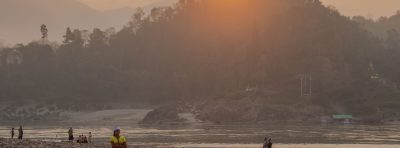
Featured image: Salween River, which serves as a vital lifeline for Karen communities on both sides of the Thai-Myanmar border. Image by Gerald Flynn/Mongabay.
Global Research is a reader-funded media. We do not accept any funding from corporations or governments. Help us stay afloat. Click the image below to make a one-time or recurring donation.
