

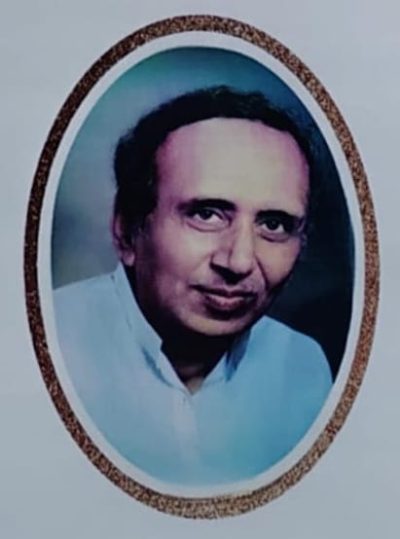
Devendra Bhai (1925-1999) was a scientist who chose to walk on a path less travelled by concentrating on harnessing science and technology to take forward the rural development ideas of Mahatma Gandhi. On August 31 the culminating event of his birth centenary was organized at the Indian Institute of Technology (IIT), Delhi.
This became a forum for not only discussing the contributions of Devendra Bhai but also many other similar initiatives and efforts, including those by young scientists and students.
Scientists of IIT said that while the Centre of Rural Development and Technology (CRDT) is the main center within IIT which takes up such initiatives, other departments have also not lagged behind and there have been several outstanding initiatives by students. Some of these like a watershed project in Gujarat (which had a wide impact) and various efforts to help artisan communities were much appreciated at this gathering.
Other scientists who had met Devendra Bhai at an early age stated that their path changed significantly after meeting him as they realized the importance of working closely in participatory ways with rural communities. One of them related the experiences of working closely with village blacksmiths and how this had given good results.
In participatory work good ideas often came first come from community members. One village girl asked that as she is cycling on a somewhat dirty path frequently why can’t she tie a broom on the cycle in such a way that the path gets cleaned while she is cycling! This idea was developed further later by others. Other speakers mentioned several new useful tools that were developed in close consultation with farmers and artisans which also helped to reduce tiredness in work like weeding and harvesting. Instead of switching to ecologically destructive weedicides, a speaker said, we can have simple tools to reduce the tiredness relating to manual weeding.
Providing a personal touch, Vibha Gupta, daughter of Devendra Bhai, recalled that her father was keen to observe his principles in daily life. Thus he insisted on never waking up his children from sleep, allowing them to take their own time, justifying this by saying that the rest period needed by children and imagination of children should not be disturbed. At the same time, he took care to encourage in children a sense of responsibility. When 12 year old Vibha went to board a train for a longer journey, Devendra Bhai went to the railway station to see her off. The child travelling alone had thought that he’ll tell some co-passenger to take care of her. Instead he told his daughter, “Now during the journey you must take care of the entire coach.” As Vibha tried to keep the coach clean, she won the affection and respect of everyone, and so everyone took care of her without being told to do so!
Vibha said that he never scolded any child or others, but if he felt that someone had made a serious mistake, his response was to himself observe a fast. Hence his fast became a means of some family member or close friend to genuinely realize a mistake and take remedial action.
Prof Shirish Kedare of Mumbai IIT said that the importance of the kind of work Devendra Bhai initiated had increased in times of climate change, particularly in the context of adaptation which needs increased resilience and self-reliance of villages. He also said that beyond the proper scientific initiatives, there is need for better understanding of development concepts so that the need for voluntary curbs on consumption and accumulation can be realized more often and more widely.
Dr. Narendra Mehrotra, who has played a very important role in the various initiatives relating to the birth centenary of Devendra Bhai, recalled his earlier days of young scientist movement when the guidance of Devendra Bhai had been very important and valuable.
Ajay Kumar of the Centre of Science for Villages and Dr. R. Mani and Dr. Ravichandaran of the Gandhigram Rural University, Madurai, said that these two institutes had served as very important centers for the work of Devendra Bhai and he had made an invaluable contribution to their progress.
Several important conceptual questions were also discussed such as how appropriate technology should be defined. There was widespread agreement that such work should be in response to the truly felt needs of communities. Some expensive supply-driven technologies imposed on people fail to have any durable beneficial impact at all.
While there is so much emphasis on encouraging talent from within rural communities, questions were raised why an outstanding achiever like farmer scientist Mangal Singh, inventor of Mangal Turbine (which lifts water from streams without diesel or electricity and hence is even more useful in times of climate change) has been neglected and has suffered so much. Mangal Singh was also present at this meeting. Akhilesh Singh , involved in strengthening rural decentralization, said, “He is an inspiring example of what farmer or artisan scientists can achieve. So he should immediately get justice.”
Questions were also raised regarding why despite all the apparent emphasis on self-reliance, in reality this has been on the decline in most villages, particularly in the context of seeds and farming technologies.
Chandi Prasad Bhatt, leader of Chipko Movement, released books relating to the achievements and writings of Devendra Bhai. Video recordings of messages of eminent persons who had known Devendra Bhai were screened. Unnat Bharat Abhiyan, AVARD and CRDT with the help of others organized this event. Vote of thanks was given by Basant Singh, Convener.
*
Click the share button below to email/forward this article. Follow us on Instagram and X and subscribe to our Telegram Channel. Feel free to repost Global Research articles with proper attribution.
Bharat Dogra is Honorary Convener, Campaign to Save Earth Now. His recent books include India’s Quest for Sustainable Farming and Healthy Food, Man over Machine, Planet in Peril, Protecting Earth for Children and A Day in 2071. He is a regular contributor to Asia-Pacific Research.
Featured image is from the author
Global Research is a reader-funded media. We do not accept any funding from corporations or governments. Help us stay afloat. Click the image below to make a one-time or recurring donation.
