The Fractured Culture of the Philippines: Showbiz, Status, Superstition, and the Trivialization of Politics


Culture shapes the priorities, values, and collective behavior of a people. It influences what societies celebrate, what they ignore, and what they consider important. In the Philippines, several social tendencies have become deeply embedded in everyday life: the overwhelming fascination with show business, the obsession with branded goods, the persistence of religious superstitions, and the tendency to elect entertainers into public office. While these traits may appear unrelated, they can be interpreted as symptoms of a deeper problem—a fractured culture that often places image above substance, entertainment above civic engagement, and symbolism above rational public discourse.
One of the most visible manifestations of this cultural fracture is the country’s showbiz mentality. Across the Philippines, enormous attention is devoted to activities that showcase singing, dancing, beauty contests, musical performances, parades, and celebrity culture. Communities enthusiastically organize fiestas, talent competitions, and entertainment-oriented events that attract widespread participation and public excitement. Social media further amplifies this phenomenon by rewarding visibility, popularity, and performance.
There is nothing inherently wrong with celebrating music, dance, and artistic expression. These activities can enrich cultural life and foster social cohesion. However, the problem arises when such interests dominate public attention to the point that serious social issues receive comparatively little engagement. Poverty, corruption, educational deficiencies, environmental degradation, infrastructure problems, and governance failures often struggle to generate the same level of public enthusiasm that entertainment-related events command. The imbalance suggests a culture that frequently prioritizes spectacle over substance.
The tendency to focus on entertainment rather than civic matters has consequences. A society that devotes disproportionate attention to celebrity culture may become less informed about public policy, less engaged in democratic processes, and less willing to hold leaders accountable. Citizens become spectators rather than active participants in national development. In such an environment, entertainment serves not merely as recreation but as a distraction from critical issues that demand collective attention.
Another reflection of a fractured culture is the excessive importance placed on branded and expensive apparel. In many social settings, visible status symbols are treated as indicators of success, respectability, and social worth. Designer clothing, luxury accessories, and expensive consumer goods often become tools for projecting social status.
This phenomenon reflects a deeper cultural tendency to equate external appearances with personal achievement. Instead of valuing competence, character, knowledge, or civic contribution, social recognition may become tied to material display. Individuals often feel pressure to purchase expensive products not because of their practical value but because of the social prestige associated with certain brands.
Such behavior contributes to a culture of superficiality. It encourages people to invest disproportionately in outward appearances while neglecting investments in education, critical thinking, professional development, or long-term financial security. The desire to appear successful can become more important than the pursuit of genuine achievement. In this way, consumerism reinforces a fractured value system that prioritizes image over substance.
Religious superstition also represents another aspect of cultural fragmentation. The Philippines is one of the most religious countries in the world, and faith plays a significant role in the lives of millions of Filipinos. Religious belief can provide moral guidance, community support, and personal comfort. However, problems emerge when religious devotion becomes intertwined with excessive superstition and irrational practices.
Many people continue to attribute life events to supernatural forces rather than to social, economic, or scientific causes. Superstitious beliefs can influence decision-making in areas ranging from health and education to politics and business. Instead of encouraging critical inquiry and evidence-based reasoning, excessive superstition may foster passivity and fatalism.
When societies become overly dependent on supernatural explanations, they may become less inclined to address practical solutions to real-world problems. Structural issues such as poverty, corruption, and inequality require concrete policies and collective action. They cannot be solved through rituals, lucky charms, or mystical beliefs. A culture that excessively relies on superstition risks weakening its capacity for rational problem-solving and social progress.
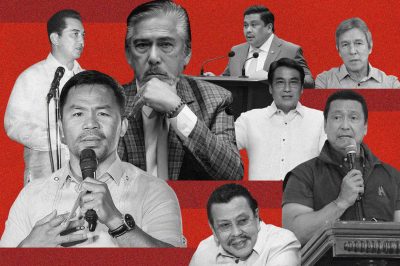
Perhaps the most politically significant reflection of a fractured culture is the trivialization of politics through the elevation of celebrities to positions of public power. In the Philippines, entertainers have frequently transitioned into political careers with remarkable success. Actors, actresses, television personalities, and other celebrities often enjoy electoral advantages based primarily on popularity and name recognition rather than demonstrated expertise in governance.
This phenomenon blurs the distinction between entertainment and public service. Political campaigns increasingly resemble popularity contests rather than serious discussions about policy, governance, and national development. Voters may become more influenced by fame, charisma, and emotional appeal than by competence, qualifications, or legislative vision.
The rise of celebrity politics reflects the broader dominance of showbiz culture in Philippine society. Citizens accustomed to evaluating public figures through entertainment media may apply similar standards when choosing political leaders. As a result, elections risk becoming extensions of the entertainment industry rather than mechanisms for selecting capable public servants.
The consequences can be severe. Public office requires knowledge, administrative skill, strategic thinking, and a deep understanding of complex social issues. When celebrity status becomes a substitute for competence, democratic institutions may be weakened, and governance may suffer. The popularity of celebrity politicians is therefore not merely a political issue but also a cultural one.
Taken together, the showbiz mentality, status-oriented consumerism, excessive religious superstition, and celebrity-centered politics point toward a society struggling with misplaced priorities. These tendencies suggest a cultural environment in which appearances often outweigh substance, emotions overshadow reason, and entertainment receives greater attention than civic responsibility.
A healthy culture does not reject entertainment, material success, or religious faith. Rather, it places these elements within a broader framework that values education, critical thinking, civic engagement, institutional competence, and social responsibility. The challenge for the Philippines is not to eliminate its vibrant
artistic traditions or religious heritage but to cultivate a more balanced culture in which citizens are equally passionate about governance, public accountability, knowledge, and national development.
Ultimately, cultural transformation begins with recognizing these patterns and critically examining their consequences. A society’s future depends not only on its political institutions or economic policies but also on the values it chooses to celebrate. If the Philippines is to overcome many of its persistent challenges, it may first need to address the cultural fractures that continue to shape public behavior and national priorities.
*
Click the share button below to email/forward this article. Follow us on Instagram and X and subscribe to our Telegram Channel. Feel free to repost Global Research articles with proper attribution.
Prof. Ruel F. Pepa is a Filipino philosopher based in Madrid, Spain. A retired academic (Associate Professor IV), he taught Philosophy and Social Sciences for more than fifteen years at Trinity University of Asia, an Anglican university in the Philippines. He is a Research Associate of the Centre for Research on Globalization (CRG).
Featured image source
Global Research is a reader-funded media. We do not accept any funding from corporations or governments. Help us stay afloat. Click the image below to make a one-time or recurring donation.
