Grandmother Who Continued to Toil on Himalayan Farms at 80 Inspired Grandson to Work for Rural Livelihoods


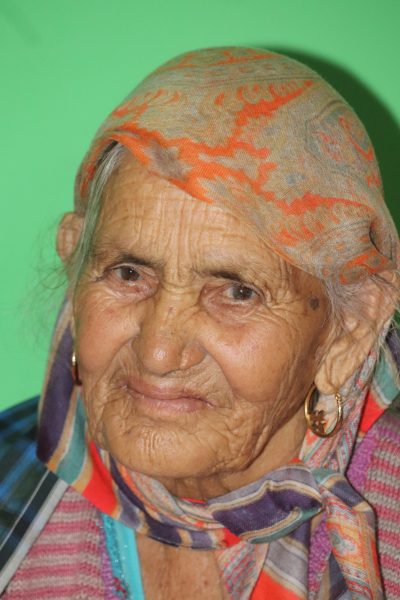
Kabutra Devi lived in her very remote Himalayan village of Agastyamuni region (Uttarakhand). Due to access to government jobs, the economic condition of this family was reasonably good. Kabutra Devi could afford to live restfully at home at this old age. Still she insisted that every day she must go to work in the family’s farms.
Almost every morning she got up very early and after some time went to those fields which were nearer to home. It was only after working there for about two or three hours that she came back for food. Then after some rest in the late afternoon or early evening she once again went to farm and worked there.
Her youngest grandson Mohit was very attached to her and she also adored him. He was concerned—why should grandmother go to work and that too often in very cold weather conditions of this region?
One day he could not restrain himself and asked her—Grandma, why must you go to work when you should be resting and taking it easy at the time of old age?
Kabutra was quiet for some time and then said gently—When I was young so much was grown on our farms that we were self-reliant in meeting all food needs except salt. When nomadic traders came with salt bags tied on both sides of goats, we welcomed them and gave them equivalent weight of legumes and millets. Yes, perhaps we were too generous but we could afford to be generous because we had enough. Now for several years our fields are no longer bountiful. There is decline in farms and our people have to migrate in search of work. I feel very restless about this and feel a pain. I keep going to farms so that even if I can make a small contribution in my old age to improve farms and farming then I’ll like to do this.”
Then after a pause the grandmother told Mohit, “You’ll make me very happy if in your life you help farmers and villagers to improve their farming and food production.” Kabutra Devi died at the age of 83, but her grandson Mohit Rana never forgot her words. He has lived up to her expectations. He decided not to take up any routine jobs but to instead work for supporting rural livelihoods in innovative ways. This quest has brought him to Rajasthan where he is involved deeply in a team effort of a social enterprise called Heart in Hills (HIH) to develop edible oils sector in ways which help to improve oilseeds based livelihoods of farmers.
I heard this heart-touching story when I went to Hindaun city in Rajasthan to write about the progress and potential of HIH. Apart from covering this progress and how this was helped by a fellowship program of the Budha Institute, I was keenly interested in understanding the motivational forces which had inspired the three young entrepreneurs involved in this initiative to take up challenging tasks and persist with them.
Satyam Bhandari who leads this team effort also had significant things to say in this context. He said that disasters have been increasing in the Himalayan villages from where he comes and in particular the Kedarnath disaster had claimed many lives in his village and neighboring villages. As main earning members died in most cases, how were these families to survive? This tragedy left a lasting impression on him and he became convinced that he must work to help rural livelihoods.
However when he came to the social sector the first opportunity he got was to promote education among some of the poorest households. Taking his work very sincerely he started staying with one family where two sons of school-going age were not going to school. The father said that the eldest son has to work to meet family needs while the younger son needs to stay home to look after a baby as both parents go for work. This experience also motivated him to work for improving rural livelihoods.
The third partner in this initiative Rohit Singh was inspired by his mother making big sacrifices to ensure that he got good education.
Thus in their own ways the three friends from distant hills now working in Rajasthan had been guided by either inspirational or tragic experiences from the past which had motivated them to take a road less travelled.
*
Click the share button below to email/forward this article. Follow us on Instagram and X and subscribe to our Telegram Channel. Feel free to repost Global Research articles with proper attribution.
Bharat Dogra is honorary convener, Campaign to Save Earth Now. His recent books include When the Two Streams Met, Earth without Borders, Navjivan and Hindi Cinema and Society. He is a regular contributor to Asia-Pacific Research.
Featured image is from the author
Global Research is a reader-funded media. We do not accept any funding from corporations or governments. Help us stay afloat. Click the image below to make a one-time or recurring donation.
