

Amidst growing concern that tribal communities had suffered from historical injustice in colonial times that needed to be corrected without further delay, the Forest Rights Act was passed in India in year 2006. There were high expectations among tribal communities that this will bring significant relief to them by regularizing the land cultivated by them, and by ending a lot of harassment caused to them due to lack of proper legal papers regarding the land cultivated by them. Now that nearly two decades have passed since the legislation was enacted, the government claims that considerable benefits have accrued to the tribal communities but many community representatives say that the implementation has fallen short of their expectations.
Ultimately the test of the implementation of the well-intentioned law is the extent to which the livelihood prospects and tribal rights have improved in various areas, and for this the progress of the legislation needs to be monitored carefully in unbiased ways.
Recently in the Parliament a question was raised regarding whether the government has updated record on this. While replying to this the government stated that a total of 5.1 million claims were filed till May 31, 2025 under this law. The government reply said that around 2.3 million individual forest rights claims and 121,705 community titles have been distributed while 1.8 million claims were rejected and 0.7 million were pending as on May 31.
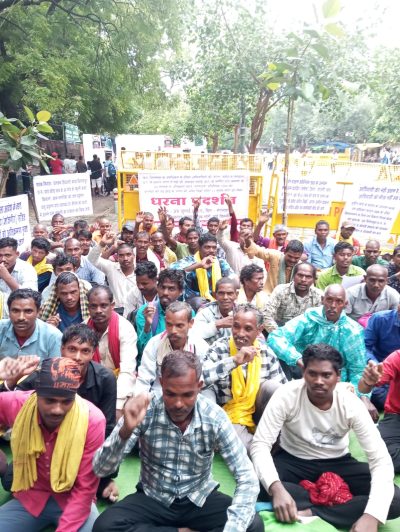
This national level data gives us an overview but we need much more detailed information from various places where discontent regarding actual implementation has been reported. To give an example, at a recent protest demonstration in Jantar Mantar in Delhi there was a group from Kota area of Bilaspur district in Chattisgarh state which alleged that their claims have not been accepted despite repeated pleas and on the other their huts have been demolished and they have been harassed in numerous ways.
In all such cases the arrangements for speedy hearings and removal of grievances need to be improved significantly.
What should not be forgotten is that this was a law for significantly improving the conditions of tribal communities and had raised hopes regarding these. If at the implementation stage what happens is that too many claims are rejected and so the community members have much less land to cultivate than before, then we have this strange and sad situation of a law coming in with a lot of hope to improve community prospects but actually leading to lesser land and worsening livelihood opportunity for them. If and when this happens in any place, prompt remedial actions should be taken. In no place there should be a situation that as a result of the implementation of a protective law, the actual condition has deteriorated.
The situation is likely to turn troublesome in those areas where land rights of tribal communities are supposed to be protected carefully but ignoring this a lot of allotments are being made to industrial or mining interests. This has happened recently in Assam and the Gauhati high court has expressed serious concern over a state government decision to allot 3000 bighas (about 990 acres) of land in Dima Hasao district to a private company to set up a cement factory. As a report in The Hindustan Times pointed out on August 18, this land has been allotted in one of the two hill districts of Assam which is under the 6th Schedule of the Indian Constitution which specifies that priority should be given to the rights and interests of the tribal people of the area. Such arbitrary decisions can lead to serious disruptions in the livelihoods of local people and should be avoided.
On the other hand, some problems in the implementation of the Forest Rights Law have also been created by those people who have been opposing or created hurdles for this law based on claims that this will harm environment and forests. In reality, however, there is considerable space for integrating livelihoods of tribal communities with regeneration and protection of forests if available creative options are explored properly, particularly in vast stretches of degraded forest land. What is needed is a genuine desire for and sincere commitment to the welfare of tribal communities.
*
Click the share button below to email/forward this article. Follow us on Instagram and X and subscribe to our Telegram Channel. Feel free to repost Global Research articles with proper attribution.
Bharat Dogra is Honorary Convener, Campaign to Save Earth Now. His recent books include Protecting Earth for Children, Planet in Peril, Man over Machine and A Day in 2071. He is a regular contributor to Asia-Pacific Research.
Featured image is from the author
Global Research is a reader-funded media. We do not accept any funding from corporations or governments. Help us stay afloat. Click the image below to make a one-time or recurring donation.
