Supreme Complicity: How the Philippines’ Highest Court Undermined Constitutional Order in Favor of Duterte Power


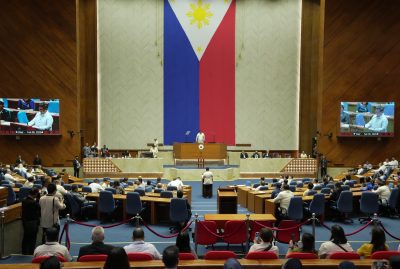
In an unprecedented move that has rocked the Philippine political and legal establishment, the Supreme Court has struck down the impeachment case filed by the House of Representatives against Vice President Sara Duterte. The case, which was constitutionally mandated to proceed to the Senate for trial, has been dismissed on the grounds of “procedural infringements” committed by the lower chamber.
Legal scholars and democracy advocates have swiftly denounced the Court’s action as a grave violation of the 1987 Constitution raising alarms over the judiciary’s role in dismantling one of the last remaining tools of accountability in Philippine governance.
A Constitutional Breach Disguised as Oversight
The Philippine Constitution clearly lays out the impeachment process: the House of Representatives initiates proceedings, and the Senate sits as the impeachment court. Nowhere does the Constitution authorize the judiciary to intervene in the legislative branch’s internal deliberations on impeachment.
Yet, the Supreme Court acting with surprising speed nullified the complaint and cast doubt on the integrity of the House’s approval process. The justices declared that lawmakers committed unspecified “infringements,” but offered few details, leaving constitutional experts questioning the legal foundation of the ruling.
Obviously, this judicial overreach is at its most dangerous. It signals a willingness by the Court to encroach on powers reserved for Congress and a direct assault on the separation of powers.
The Shadow of Duterte Power
Though former President Rodrigo Duterte is now in detention at the International Criminal Court in The Hague, his family’s political influence remains deeply entrenched in Philippine institutions. Vice President Sara Duterte, his daughter, continues to wield immense political clout and benefits from the protective structures built during her father’s administration.
The Supreme Court’s decision to quash her impeachment is widely viewed as more than just a legal judgment but a political maneuver. By effectively shielding her from facing trial, the judiciary is seen as enabling the continuity of Duterte-style politics, even in the absence of the patriarch.
This ruling proves that not even the highest tribunal in the land is immune from Duterte’s legacy of impunity,” commented a constitutional law expert and democracy advocate. “It’s a betrayal of democratic principles and a capitulation to dynastic power.”
A Judiciary in Crisis
The ruling does more than spare one political figure; it weakens an entire branch of government. The legislative body’s constitutional role has been neutered. Public trust in the Supreme Court which has already been strained by previous controversial decisions may now be irreparably damaged.
By nullifying the impeachment process at such an early stage, the judiciary has created a dangerous precedent: that it can unilaterally determine the validity of political processes that lie outside its constitutional scope. The consequences are profound.
“This isn’t just about Sara Duterte,” said a prominent political analyst. “It’s about the erosion of our democratic checks and balances. If the Court can override impeachment, what’s next?”
Calls for Accountability, Yet Little Hope
Civil society groups and lawmakers are calling for accountability. Some are even demanding an investigation into the justices who voted to strike down the case, though how such oversight would be conducted remains unclear, given the lack of mechanisms to check the Supreme Court itself.
Others are urging constitutional reforms to redefine the limits of judicial power and strengthen the independence of all branches of government. But in a political environment where dynastic interests remain dominant, these calls may fall on deaf ears.
For many Filipinos, this moment confirms a long-standing fear: that their democracy is being systematically dismantled from within.
The Bigger Picture: A Nation in Decline
This ruling is not just a legal controversy but a political and moral indictment of the system as a whole. Even with Rodrigo Duterte behind bars in The Hague, his legacy of fear, impunity, and authoritarianism lingers.
A system that allows the judiciary to protect power instead of the Constitution is one where democracy is but a façade. The Supreme Court’s complicity in this episode represents not just a failure of jurisprudence but a collapse of integrity at the highest levels.
Until systemic reforms are enacted and until institutions truly serve the people rather than protect the powerful, the Philippines will remain trapped in a cycle of elite impunity and democratic backsliding.
*
Click the share button below to email/forward this article. Follow us on Instagram and X and subscribe to our Telegram Channel. Feel free to repost Global Research articles with proper attribution.
Prof. Ruel F. Pepa is a Filipino philosopher based in Madrid, Spain. A retired academic (Associate Professor IV), he taught Philosophy and Social Sciences for more than fifteen years at Trinity University of Asia, an Anglican university in the Philippines. He is a Research Associate of the Centre for Research on Globalization (CRG).
Featured image is from Public Domain
Global Research is a reader-funded media. We do not accept any funding from corporations or governments. Help us stay afloat. Click the image below to make a one-time or recurring donation.
