Rajasthan Villagers in India Need Special Help Package to Cope with Heavy Damage from Excessive Rain


When I reached Udaipur a friend told me — You must be enjoying the cool weather of our city.
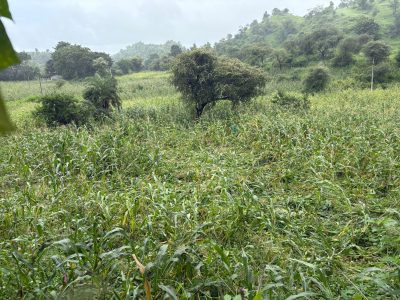
True, the cool breeze and the overwhelming greenery were uplifting and the waterfalls which had suddenly appeared in some of the surrounding hills were nice to see. However as I soon realized in the course of visiting several villages of Udaipur and neighboring Salumbar districts of Rajasthan state and speaking to several farmers and social activists, the outward appearance of friendly weather was highly deceptive as excessive late rain accompanied at some places by strong winds at the time of ripening of kharif crops had caused heavy damage to farmers.
Manna Lal, from a tribal community farmer in Rawach village, said that over 50 per cent of his crop has been ruined. This included corn and a local legume crop called Savla.
Shambhu Singh of Mazam village said that over 60% of his crop including corn, soya and green chilly has been lost.
Bhunwar Singh, a senior social activist, said that in his case and neighboring farmers, nearly 80 per cent of the crop has been lost.
While in some places I was told that the excessive rain now will at least help the next winter (rabi) crop of wheat, Bhanwar Singh said in fields submerged with too much water even the next crop will be adversely affected.
In some villages close to Udaipur city, which is a famous tourist destination, there were complaints of the Aayar river causing heavier damage to farmers because high value land on river bank had been encroached upon by rich and influential people, thereby reducing and obstructing the river’s capacity to carry away flood flows.
Invariably a deeper crisis will be suffered by the small farmers from weaker sections including tribal communities who already face serious malnutrition situation problems even in normal times, forcing them to migrate to distant cities in search of some livelihood support.
I spoke to a number of women health workers from several villages of Salumbar district who had gathered for a training. They were agreed that food shortage and malnutrition situation is going to worsen in the next six months or so before the next rabi crop is harvested, and the incidence of distress-driven migration is likely to rise too. They said that the government should improve and increase all those programs which contribute to food security. Supply of free food should increase beyond the present limit, and it should not be denied to anyone on account of not having the proper documents or non-matching of thumb-impression. Rural employment guarantee scheme should be scaled up with prompt wage payments. Implementation of women and child nutrition in the form of anganwadi scheme should improve.
In addition there is need for giving special attention to the category of highly vulnerable households including those suffering from serious disease, disability or other special vulnerability.
Ram Lal, a health worker who visits many villages regularly, said that during heavy rain he visited a household which had three TB patients and at the same time their fragile dwelling had been filled with rain water. As he said with a note of desperation—
“In these circumstances I did whatever I could but at times it becomes really difficult to decide a course of action that would bring more durable relief.”
Hence it is important for the government and the voluntary organization to identify such special need households and ensure that they get special food assistance in these times. The well-placed city people should also contribute generously.
The vulnerability of migrant workers and other workers to exploitative practices is likely to increase and protective steps for them should increase.
As per established procedures, the government has started its survey and assessment of crop damage. However smaller and more vulnerable farmers fear that their needs may not get adequate attention as the bigger farmers are able to influence the assessment procedures in their favor. The government should ensure that the smaller farmers and those from weaker sections get justice while providing compensation or insurance payment for crop damage.
While providing assistance, the government should not forget the landless people or tenants or sharecroppers. Migrant worker households with women saddled with too many responsibilities should get special attention. According to a preliminary assessment by a leading newspaper Rajasthan Patrika on September 8, 22 districts of Rajasthan have suffered significant damage and 15 districts have suffered over 50% crop damage.
In regions more used to coping with less rain than excess rain, farmers find it difficult to adjust with unexpected situations. Hence there is even more reason for the government to be ready to respond to more unexpected weather situations in times of climate change.
*
Click the share button below to email/forward this article. Follow us on Instagram and X and subscribe to our Telegram Channel. Feel free to repost Global Research articles with proper attribution.
Bharat Dogra is Honorary Convener, Campaign to Save Earth Now. His recent books include India’s Quest for Sustainable Farming and Healthy Food, Man over Machine, Planet in Peril, Protecting Earth for Children and A Day in 2071. He is a regular contributor to Asia-Pacific Research.
Featured image is from Kamlesh Sharma
Global Research is a reader-funded media. We do not accept any funding from corporations or governments. Help us stay afloat. Click the image below to make a one-time or recurring donation.
