Why Can’t the Philippines Break Free from Corruption. Ruel F. Pepa
A History of Betrayal, Inaction, and Impunity


The Multi-Billion-Peso Scandal Plaguing Philippine Infrastructure
The ongoing Senate and House inquiries into alleged corruption within the Department of Public Works and Highways (DPWH) have exposed a systemic network of malfeasance, revealing how public funds intended for critical flood control projects were purportedly siphoned off through an intricate web of kickback schemes. This scandal, which has already led to the filing of graft and malversation charges against dozens of government officials and private contractors, highlights a deeply entrenched issue of institutionalized corruption in the Philippines.
At the core of the controversy are testimonies from contractors who have detailed a “triangle of power” involving lawmakers, government engineers, and a small group of favored construction firms. According to sworn statements, a significant portion of project funds allegedly ranging from 10 to 30 percent was demanded as a payoff, or “kickback,” for the awarding of contracts. Witnesses have described how these illicit payments were often delivered in cash to various officials, including members of Congress, with the amounts sometimes reaching into the tens of millions of pesos for a single project. The modus operandi reportedly involved the insertion of so-called “ghost projects” into the national budget, where funds were allocated for projects that were either never completed, had already been finished, or were constructed with substandard materials to maximize profit.
The fallout from these revelations extends far beyond financial fraud. The scandal has laid bare the devastating consequences of corruption on a nation acutely vulnerable to climate change. With the Philippines experiencing increasingly severe typhoons and flooding, the failure to build adequate and resilient infrastructure directly imperils the lives and livelihoods of its citizens. The substandard and non-existent flood control projects have been directly linked to the enhanced severity of recent flooding events, leading to a public outcry and condemnation from a broad coalition of civil society groups, religious leaders, and business organizations.
In response to the mounting pressure, President Ferdinand R. Marcos, Jr. has ordered a comprehensive review of all flood mitigation projects and announced the creation of an independent commission with subpoena powers to investigate the widespread anomalies. The DPWH has also initiated its own internal cleansing, filing non-bailable charges against 25 individuals, including key engineers and contractors from the Bulacan First District Engineering Office. This crackdown signifies a critical moment in the government’s anti-corruption efforts, but it also raises questions about the scope of accountability, as public figures at the highest levels of government have also been implicated and are facing denials and challenges to their alleged involvement. The ongoing parallel investigations in the House and Senate are expected to continue to uncover new details, further intensifying a national debate over political accountability and the urgent need for a more transparent and equitable system of governance.
.

Sarah Discaya (third from left) and other construction company representatives take their oath as resource persons during the Senate Blue Ribbon Committee hearing on alleged flood control project anomalies on September 1, 2025 (Public Domain)
.
A Culture of Impunity that Robs a Nation’s Future
Corruption in the Philippines is not merely a political issue but a national affliction that permeates every layer of society. It manifests in countless forms, from the petty bureaucrat who subtly demands “coffee money” to process basic documents, to the entrenched political dynasties siphoning billions of pesos from public coffers under the guise of development projects. What makes the problem deeply alarming is not only its pervasiveness, but also the way it has been tragically normalized. Over time, many citizens have come to accept bribery, favoritism, and fraud as part of “how the system works,” creating a culture of resignation rather than resistance.
This normalization erodes public trust in institutions, leaving citizens disillusioned with a government that should serve them but often exploits them instead. It stunts economic development by discouraging both local and foreign investment, as businesses are forced to navigate a system where connections and under-the-table deals often matter more than merit or transparency. Worse still, corruption corrodes the very idea of accountability: public officials implicated in scandals are rarely punished, and in some cases, they are even re-elected, perpetuating a cycle of impunity.
At its core, corruption undermines democracy itself. It widens the gap between the wealthy and the poor, as resources intended for education, healthcare, and infrastructure are diverted to private pockets. It perpetuates inequality, disempowers ordinary citizens, and hinders progress on urgent national issues such as poverty alleviation and disaster resilience. Ultimately, corruption in the Philippines is not just about stolen money but more than anything else, about stolen opportunities, stolen futures, and a nation held back from reaching its full potential.
The Pervasiveness of Corruption
Corruption in the Philippines spans a wide spectrum of severity, deeply ingrained in both everyday interactions and the highest levels of government. At its most trivial, it often appears in the form of petty bribery, what many call “under-the-table deals” or “tokens of appreciation” given to speed up transactions in an otherwise sluggish bureaucracy. A small “envelope” to secure a permit, a few bills to skip a line, or even gifts disguised as gestures of goodwill all contribute to a culture where irregular practices are seen as necessary to survive in a broken system. These acts may seem minor in isolation, but in their accumulation, they normalize corruption as part of the Filipino way of life.
Image: Mug shot of Janet Lim-Napoles, who is accused of masterminding the Priority Development Assistance Fund scam. (Public Domain)

At the other end of the spectrum are large-scale scandals that expose the staggering magnitude of corruption at the highest levels of governance. The infamous Priority Development Assistance Fund (PDAF) scam stands as a glaring example: billions of pesos, earmarked for projects meant to improve the lives of ordinary citizens through infrastructure, healthcare, and social welfare, were instead funneled into fake NGOs and private accounts. Such cases reveal not only the greed of individuals but also the weakness of institutions that allowed such schemes to flourish for years. These headline-grabbing scandals serve as reminders that corruption in the Philippines is not a matter of isolated wrongdoing but a systemic affliction deeply embedded in the country’s political and economic structures.
This continuum of corruption underscores both individual moral failure and structural flaws in governance. Rules and regulations, though often carefully crafted, are easily circumvented by those with influence and connections. Institutions that are meant to serve as safeguards such as oversight commissions, auditing bodies, and law enforcement are frequently politicized, undermining their impartiality and effectiveness. Even the judiciary, tasked with upholding justice, is not immune: it is sometimes weaponized against political opponents while offering protection to allies, eroding the public’s faith in fairness and accountability.
The end result is a cycle of impunity. Powerful figures, shielded by wealth, political dynasties, and entrenched patronage networks, operate without fear of meaningful punishment. Meanwhile, ordinary citizens, witnessing the repeated failure of justice, grow increasingly cynical. Many come to believe that resisting corruption is futile, resigning themselves to a system where survival often requires complicity. In this way, corruption not only robs the nation of resources but also corrodes its moral foundation, perpetuating a culture of distrust, disillusionment, and resignation.
Historical Inaction and the Illusion of Reform
The Philippines has never been short of voices demanding reform. From grassroots activists and whistleblowers to civil society groups and reform-minded politicians, the clamor for accountability has echoed throughout the nation’s modern history. Yet these calls have repeatedly run into a familiar wall: promises of reform that are never fully realized. Time and again, ambitious campaigns against corruption have been launched with great fanfare, only to wither in the face of political compromise, selective enforcement, or public fatigue. What remains is a pattern of half-measures and symbolic gestures that create the illusion of reform without dismantling the structures that enable corruption to thrive.
Image: Ferdinand Marcos Sr. (CC BY-SA 3.0)

The post-Marcos era illustrates this cycle vividly. The ouster of Ferdinand Marcos in 1986, fueled in part by anger over the regime’s plunder of public wealth, raised hopes for a new era of transparency and accountability. Institutions such as the Presidential Commission on Good Government (PCGG) were created to recover ill-gotten wealth, but decades later, billions remain unrecovered, tied up in endless litigation. Successive administrations from the reformist promises of Corazon Aquino to the “Daang Matuwid” (Straight Path) of Benigno Aquino III have similarly pledged to stamp out corruption. Yet each effort fell victim to the same pitfalls: entrenched patronage networks, political bargaining, and the unwillingness to prosecute allies with the same vigor applied to opponents.
By contrast, nations such as South Korea, Japan, Iceland, and Singapore have shown that the rule of law can transcend political convenience. South Korea has jailed former presidents. Japan has prosecuted cabinet officials. Iceland saw its prime minister resign over the Panama Papers scandal. Singapore, once plagued by corruption, built a robust system of accountability where even the most powerful are not above the law. These nations prove that anti-corruption campaigns can succeed when the state demonstrates genuine political will and impartial enforcement.
The Philippines, however, remains trapped in a cycle of selective justice. On the rare occasions when high-ranking officials are convicted, punishment is often delayed, softened, or overturned altogether. Presidential pardons, legal technicalities, and lengthy appeals reduce accountability to a negotiation rather than a certainty. This failure to hold elites accountable sends a dangerous message: in the Philippines, the law is rigid for the powerless but flexible for the powerful.
Over time, this historical inaction has eroded public trust and deepened cynicism. Citizens who have witnessed repeated waves of unfulfilled promises now view anti-corruption rhetoric with skepticism, dismissing it as little more than political theater. Reform, in this context, becomes an inspiring banner waved during elections or crises but rarely backed by genuine resolve. As long as accountability remains negotiable, corruption will continue to thrive, sustained not just by the greed of individuals but by the state’s enduring failure to enforce its own principles.
The Cultural Dimension: Corruption as a Way of Life
Corruption in the Philippines is not merely a political disease; it is also a cultural phenomenon woven into the fabric of everyday social relations. Deeply ingrained practices such as utang na loob (debt of gratitude), palakasan (preferential treatment through personal connections), and patronage politics shape how Filipinos interact with authority, distribute resources, and even define loyalty. While these values originated in traditions of kinship, reciprocity, and communal survival, they have been distorted in the modern political arena to justify and normalize corrupt behavior.
Utang na loob often creates obligations that blur the line between gratitude and exploitation. A public official who delivers services that should be a basic right such as healthcare, scholarships, or disaster aid may be rewarded not only with praise but with unquestioning political loyalty. Palakasan further entrenches inequality by privileging connections over merit: those with access to influential figures often bypass rules and procedures, while ordinary citizens must endure red tape and delays. These dynamics reinforce the perception that fairness is secondary to who one knows, perpetuating a sense of resignation among those excluded from such networks.
Patronage politics thrives on this cultural terrain. Political dynasties exploit these values by presenting themselves as benefactors, distributing cash handouts, food packs, or short-term jobs during election season. In return, they secure votes and reinforce their grip on power. The system is self-sustaining: politicians rely on corruption to amass the resources needed to “buy loyalty,” while citizens, conditioned by years of unmet needs, often view these favors as essential lifelines rather than manipulative tactics. What should be acts of governance become acts of generosity, fostering the illusion that citizens owe their well-being to political patrons rather than to just and functioning institutions.
This cultural entrenchment has created a vicious cycle. Citizens, bound by gratitude and survival instincts, vote for politicians who dispense favors, while those politicians, in turn, depend on corrupt practices to finance and sustain these favors. Breaking free from this cycle is extraordinarily difficult because it requires more than institutional reform; it demands a profound transformation of societal attitudes. It means redefining utang na loob in terms of loyalty to principles rather than personalities, practicing meritocracy over palakasan, and demanding accountability rather than favors from leaders.
Until this cultural shift occurs, reforms will remain fragile, and corruption will continue to masquerade as tradition. The challenge, therefore, is not just to create stronger laws but to reshape the very mindset that allows corruption to persist as an accepted, if not expected, way of life.
The Cost of Corruption
The price of corruption in the Philippines is staggering, not only in monetary terms but in its long-term social, political, and moral consequences. Various estimates suggest that the country loses hundreds of billions of pesos annually due to graft, bribery, and inefficiency. These figures, while enormous, only scratch the surface of the damage. Every peso lost to corruption represents a hospital that could have been built, a classroom that could have been furnished, or a road that could have connected isolated communities. Instead, funds are diverted into private pockets, leaving public services underfunded and millions of Filipinos trapped in poverty.
The human cost is most visible in sectors where government intervention is most needed. Public hospitals struggle with outdated equipment, chronic shortages of medicine, and insufficient staff salaries. These are conditions that literally put lives at risk. Schools in poor communities continue to lack basic facilities such as chairs, textbooks, and clean water, undermining the future of the nation’s youth. Infrastructure projects are delayed, overpriced, or substandard, often collapsing under the weight of corruption-driven shortcuts. In rural areas, corruption directly affects food security, as agricultural funds are misused or siphoned off, leaving farmers without adequate support.
Corruption also deepens inequality. The wealthy and well-connected are able to manipulate systems to their advantage by avoiding taxes, securing government contracts, or bypassing laws while the poor must endure the inefficiencies and injustices of a system stacked against them. This disparity fuels resentment and widens the socio-economic divide, creating a society where opportunity is determined not by hard work or merit but by access to networks of power and influence. In this sense, corruption is not simply theft; it is sabotage, systematically undermining the nation’s capacity for equitable development.
Beyond its domestic effects, corruption tarnishes the Philippines’ global reputation. Investors are discouraged by the unpredictability of doing business in an environment where contracts can be undermined, permits can be delayed, and regulations can be bent so long as the right palms are greased. International watchdogs, such as Transparency International, consistently rank the Philippines poorly in their corruption indices, reinforcing its image as a high-risk environment. This global perception limits foreign direct investment, reduces trade opportunities, and prevents the country from fully integrating into the competitive global economy.
The result is a vicious cycle: corruption stifles development, underdevelopment perpetuates dependence on corrupt systems of patronage, and the cycle repeats itself. Far from being a mere governance issue, corruption is a developmental chokehold draining resources, eroding trust, and weakening the very foundations upon which progress depends. Unless this cycle is broken, the Philippines risks remaining trapped in a state of arrested potential, where the dreams of its people are continually undermined by the dishonesty of a few.
Is There Hope for Reform?
The grim reality is that many Filipinos have come to believe that eradicating corruption is impossible. Decades of unpunished scandals, failed reform campaigns, and selective justice have fostered a sense of resignation. Citizens often view graft and patronage as inevitable, a condition of life that must be navigated rather than challenged. This resignation, while understandable, is deeply dangerous: it risks normalizing dysfunction as destiny, allowing corruption to perpetuate unchecked and further eroding public trust in institutions.
Yet the global record offers reason for cautious optimism. Countries that once struggled with systemic corruption demonstrate that entrenched graft can be confronted and curtailed with sufficient political will, robust institutions, and societal commitment. South Korea, for example, has imprisoned former presidents for corruption, signaling that no one is above the law. Singapore, once rife with malfeasance, implemented uncompromising anti-graft policies, supported by transparent institutions and rigorous enforcement. Iceland, in the aftermath of the 2008 financial crisis, prosecuted bankers and officials, demonstrating that even powerful actors can be held accountable when society demands justice. These examples underscore a critical lesson: corruption is not immutable, but it requires consistent and courageous intervention.
For the Philippines, the challenge is not the absence of laws. Its anti-graft statutes, rules on transparency, and mechanisms for accountability are comprehensive on paper. The weakness lies in implementation: enforcement is inconsistent, selective, and often politicized. High-ranking officials may evade consequences through legal loopholes or political influence, while lower-level offenders are penalized disproportionately. To overcome this, reforms must focus not only on laws but on institutions: the judiciary must be depoliticized, oversight bodies strengthened, and mechanisms created to protect whistleblowers and investigative journalists who risk retaliation to expose wrongdoing.
Equally important is cultivating a culture of accountability. This means fostering public awareness, encouraging civic engagement, and rewarding merit and integrity over patronage and connections. Education campaigns, community initiatives, and transparent reporting can gradually shift societal expectations, making corruption socially unacceptable rather than tolerated. Reform also requires leadership willing to model ethical behavior, enforce consequences impartially, and resist the temptations of political expediency.
However, even the most well-designed institutional reforms remain aspirational without a critical mass of collective will. Leaders must act decisively, and ordinary citizens must demand accountability rather than acquiesce to patronage networks. The road to meaningful change is arduous, but history demonstrates that systemic corruption can be challenged and curtailed when laws, institutions, and societal norms align in pursuit of integrity. While the struggle is long and fraught with setbacks, the possibility of a Philippines where transparency, justice, and public trust prevail is not beyond reach but it requires both courage and persistence to make it real.
Conclusion: A Hopeless Case, or a Challenge Unmet?
To declare Philippine society a hopeless case may feel, at times, justified. Centuries of betrayal, systemic inaction, and entrenched impunity create a narrative in which reform seems perpetually out of reach. The litany of scandals, half-hearted campaigns, and selective enforcement can understandably foster cynicism, leaving citizens resigned to a system where power is concentrated, accountability is rare, and justice is negotiable. In such a context, despair can feel like a rational response.
Yet such a conclusion, while emotionally satisfying, risks becoming self-fulfilling. The tragedy is not that reform is impossible, but that the nation has repeatedly failed to pursue it with the seriousness and consistency it demands. Other societies have faced similarly entrenched corruption and have overcome it through political courage, robust institutions, and collective societal insistence on accountability. The Philippines possesses the laws, the frameworks, and the civic potential to do the same; what is missing is the sustained courage to act upon them.
Corruption in the Philippines is less a problem of ignorance than a problem of inaction. Citizens, leaders, and institutions often know what must be done, yet the moral and political will to follow through is lacking. Patronage networks, dynastic politics, and cultural accommodations of loyalty over merit have long perpetuated the shadows of power, allowing greed and self-interest to override the public good. Until Filipinos, both leaders and ordinary citizens alike, collectively insist on integrity, transparency, and consequence for wrongdoing, these shadows will continue to prevail.
The choice before the nation is stark: despair or determination. It is a choice that extends beyond politics, beyond laws, and beyond mere rhetoric. Put simply, it is a choice that will shape the moral and developmental trajectory of the Philippines for generations to come. To embrace hope is not naïve; it is a call to courage, a recognition that systemic corruption can be confronted when society refuses to accept it as normal. The challenge is enormous, but history teaches that when accountability is demanded, and when citizens refuse complicity, even the most entrenched systems of corruption can be dismantled. The Philippines’ future will be defined not by its past failures, but by the collective resolve it summons today.
*
Click the share button below to email/forward this article. Follow us on Instagram and X and subscribe to our Telegram Channel. Feel free to repost Global Research articles with proper attribution.
Prof. Ruel F. Pepa is a Filipino philosopher based in Madrid, Spain. A retired academic (Associate Professor IV), he taught Philosophy and Social Sciences for more than fifteen years at Trinity University of Asia, an Anglican university in the Philippines. He is a Research Associate of the Centre for Research on Globalization (CRG).
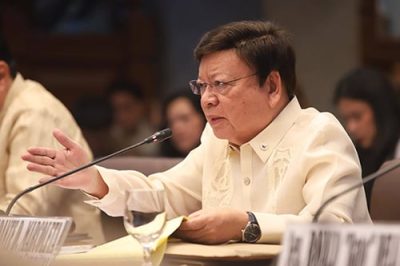
Featured image: Senate Blue Ribbon Committee Chairman Rodante D. Marcoleta presides over the continuation of the Senate probe on anomalous flood control projects. (Source)
Global Research is a reader-funded media. We do not accept any funding from corporations or governments. Help us stay afloat. Click the image below to make a one-time or recurring donation.
