No Light at End of Trans-Himalayan Train Tunnel

July 1st, 2021 by Nepali Times

All Global Research articles can be read in 51 languages by activating the “Translate Website” drop down menu on the top banner of our home page (Desktop version). 

Visit and follow us on Instagram at @crg_globalresearch.

***

The prospect of a trans-Himalayan connectivity has historically been a sensitive geopolitical issue since it concerns the region’s main rivals: China and India.

Even back in 1961, when Nepal and China signed an agreement to build a highway linking Kathmandu to Lhasa there were misgivings about Beijing’s strategic motive. India and China were about to go to war along the Himalaya, and the Cold War was at its height. King Mahendra allayed those fears by famously saying: “Communism does not travel by taxi.”

Sixty years later, similar suspicions have surfaced as China moves full steam ahead to connect its Tibetan Autonomous Region with new bullet train links that could ultimately be extended to the Nepal border, and even Kathmandu as a part of its Belt Road Initiative (BRI).

On 25 June, China made a high-profile inauguration of a 435km section of the Lhasa-Nyingchi Electrified High-speed Rail (HSR). The ‘bullet train’ will have a top speed of 160 km/h and pass through 47 tunnels and 121 bridges along the Tsang Po (Brahmaputra) River.

A feat of modern engineering, 90% of the HSR lies above 3,000 meters above sea level and will be a part of the new Sichuan-Tibet Railway. When connected to Kerung via Lhasa and Xigatse, the train could put Lhasa within six hours distance and Chengdu within 19 hours from the Nepal border.

The Lhasa-Nyingchi Electrified High-speed Rail passes through 47 tunnels and 121 bridges along the Tsang Po (Brahmaputra) River.

While China makes rapid progress on rail connectivity, on the Nepal side of the border talk of a trans-Himalayan railway is only political tokenism. Successive governments in Kathmandu have not even been able to maintain existing highways to Kodari and Rasuwagadi to international standards.

But even the Chinese side seems to be daunted by the cost and sheer magnitude of a trans-Himalayan railway, especially its engineering challenge. Nepali Times had revealed in 2019 the content of a Chinese pre-feasibility study that proposed an alignment from Kerung to Kathmandu through a series of tunnels below Langtang National Park.

Chinese engineers found the gradient from the Tibetan Plateau to the low valleys in Nepal to be too great, and there was also the need to avoid building a railway inside Nepal’s protected areas in Langtang, Rolwaling and Mt Everest regions.

“Technically this will be one of the world’s toughest railways to construct,” said train engineer Paribesh Parajuli of Nepal’s Department of Railways who was educated in China, and a consultant for the study.

The Kerung-Kathmandu rail track will be 170km long, and a third of its length could tunnel below the Himalaya to reach the outskirts of Kathmandu. The study estimated the project to cost 38 billion yuan ($5.5 billion).

A report in Railway Standard Design last week and quoted in the Hong Kong-based South China Morning Post confirmed that the proposed alignment would include 30km of tunnels beneath Langtang National Park.

Liang Dong, a lead engineer with the China Railway First Survey and Design Institute Group will be presenting his report to the Chinese and Nepal governments.

He said the Himalayan Tunnel route from Kerung (Gyirong) to Kathmandu would be more challenging and costly, but other routes were rejected either because the gradients were too steep, they went through protected areas, or were geologically unstable and exposed to glacial lake outburst floods due to climate change.

The possibility of trans-Himalayan connectivity was first mooted as far back as 1973 by Mao Zedong in a meeting with King Birendra in Beijing. Since then, China built the Qinghai-Tibet Railway connecting Lhasa to Xining, and is now working on the Sichuan-Tibet Railway to Chengdu and Kunming.

The Qinghai-Tibet Railway was extended from Lhasa to Xigatse in 2014, and in three years those tracks will reach Kerung on the Nepal border, only 70km in a straight line north of Kathmandu.

Even though it is just a secondary route in China’s ambitious BRI, Nepal could gain valuable access to Chinese seaports and trade centres, especially as relations with long-time trade partner India blow hot and cold. Construction on the HSR in Tibet has gone ahead despite the pandemic.

The possibility of extending this train track across the Himalaya to Kathmandu had captured the Nepali public’s imagination ever since Prime Minister K P Oli and Chinese Premier Li Keqiang committed to exploring the project five years ago.

The arrival of the railway line in Kerung possibly in three-year’s time will bring that dream closer to reality, but for that the Nepali side has to show more commitment to the project.

So far, Nepal’s action has been limited to participating in discussions and signing MoUs. Framework agreements were signed in 2017 for the Trans-Himalayan Multidimensional Connectivity Network, and President Bidya Devi Bhandari even attended a summit in 2019 of the BRI Forum.

China had committed to financing Detailed Project Reports (DPR) for a 72-km rail line between Kathmandu and Rasuwagadi during President Xi Jinping’s visit in October 2019, but since then, government planners have blamed the pandemic for delays in taking plans forward.

Rasuwagadi on Nepal’s border with China. Photo: Nabin Baral

In fact, no funding was sourced for DPRs, says Suresh Paudel, Deputy Secretary of Development Assistance Coordination and Quality Branch of the Ministry of Physical Infrastructure and Transportation.

“China showed readiness in supporting detailed survey designs, but a budget has not been set so far,” Paudel says.

Nepal has already lost time twiddling thumbs and waiting for China’s support, even while China aims to finish its Sichuan-Lhasa rail line by 2030.

Even without the delays on the Nepal side, a Kathmandu-China connection will prove to be costly and difficult. Nepal has no railway infrastructure to speak of, and in any case would be unable to bear the financial cost of building a difficult and expensive tunnel across the Himalaya.

*

Note to readers: Please click the share buttons above or below. Follow us on Instagram, @crg_globalresearch. Forward this article to your email lists. Crosspost on your blog site, internet forums. etc.

Featured image: On 25 June, China inaugurated a 435km section of the Lhasa-Nyingchi Electrified High-speed Rail. The ‘bullet train’ will have a top speed of 160 km/h and bring Chengdu closer to the Nepal border when completed in 2025. Photos: Xinhuanet

All Global Research articles can be read in 51 languages by activating the “Translate Website” drop down menu on the top banner of our home page (Desktop version). 

Visit and follow us on Instagram at @crg_globalresearch.

***

Beijing has underscored the importance of the Belt and Road Initiative (BRI) at the recent Asia and Pacific High-level Conference on Belt and Road Cooperation, a meeting held via video link consisting of over 30 parties, including officials from Asia-Pacific countries and representatives of international organizations.

During the meeting, China stated that it stands ready to forge even closer BRI partnerships with various sides and “follow a path of unity, cooperation, connectivity and joint development to jointly promote the building of a community with a shared future for mankind.”

Amid these comments, Chinese Foreign Minister Wang Yi stated that the pandemic has not frozen the initiative and the “pause button had not been pressed,” despite economic disruption around the world caused by various lockdowns.

The world is at a crucial economic turning point. As nations look for a long-term exit strategy from COVID-19 amid vaccinations, sights are set on a global recovery this year with IMF and World Bank projections estimating strong rebounds for some.

But one must question, is this recovery uniform or even? It has proved easier said than done for consumer driven economies with surplus amounts of stimulus such as the United States and the United Kingdom, or “zero-COVID” countries such as China where economic recovery has been sustained based on long-term stability and control of the virus. But what about developing nations which don’t have easy access to vaccines or the financial resources required to kickstart their economies?

This is why the Belt and Road Initiative is crucial for spearheading global recovery. The BRI is envisioned to promote common development and economic integration across global south countries and beyond by facilitating the creation of infrastructure which overcomes geographic obstacles in order to establish commercial and economic opportunities. Infrastructure is ultimately about imagining potential. Without ports, railways or roads, the logistical challenges of exchanging services, goods and money are near impossible. Businesses look for what is affordable, convenient and possible.

And this is why the BRI is crucial in helping developing countries consolidate their own growth strategies. For example, one BRI project of note is the China-Laos High Speed Railway, which will connect the Laotian capital Vientiane with Kunming in China’s Yunnan province at the end of this year. It will provide a direct, fast and convenient route from landlocked Laos, whose eastern border with Vietnam is mountainous, to the world’s second largest economy. In terms of business, tourism and trade, its impact will be massive.

Another example is the Mombasa-Nairobi Standard Gauge Railway, a BRI project established by the China Road and Bridge Corporation, which established a route between Kenya’s capital city Nairobi and its Indian Ocean city of Mombasa, again massively expanding the country’s commercial and export options. The BRI, therefore, contrary to Western media hysteria, is not about debt or loans but rather about promoting mutual economic growth and trade, and led by China’s perspective that economic development is not a “zero-sum game.” In other words, facilitating economic development within other countries will benefit you too.

In the midst of the global economic fallout caused by the pandemic, there has never been a greater need for more infrastructure investment in order to reboot economic growth, and also envision what the growth of the future will be. Countries need new opportunities and an ambitious and efficient way to boost commerce.

As China enters a new development stage, follows a new development philosophy and fosters a new development paradigm, the country will provide more market opportunities, investment opportunities and growth opportunities for its partners, so as to contribute to an even global recovery.

*

Note to readers: Please click the share buttons above or below. Follow us on Instagram, @crg_globalresearch. Forward this article to your email lists. Crosspost on your blog site, internet forums. etc.

Tom Fowdy is a British political and international relations analyst and a graduate of Durham and Oxford universities. He writes on topics pertaining to China, the DPRK, Britain and the U.S.

Featured image: Photo taken on July 29, 2020 shows the construction site of the China-Laos Railway in northern Laos. [Photo/Xinhua]

All Global Research articles can be read in 51 languages by activating the “Translate Website” drop down menu on the top banner of our home page (Desktop version). 

Visit and follow us on Instagram at @crg_globalresearch.

***

On Tuesday, Pakistan PM Imran Khan claimed to have resisted pressure from the US and other Western nations to downgrade ties with its “all-weather friend” China. Speaking exclusively to China’s English-language state broadcaster China Global Television Network (CGTN), he admitted that Pakistan was rattled by the growing clout of the Quad. India, Australia, the US and Japan have formed the ‘Quad’ coalition to counter China’s aggressive behaviour in the Indo-Pacific region.

Weighing in on the special relationship with China, Imran Khan stated, “Whenever Pakistan was in trouble politically, internationally, when we had conflicts with our neighbour, China always stood with us. So, the people of China have a special place in the hearts of the people of Pakistan”. Asserting that the bilateral ties have strengthened, he added, “And now, when you talk about the region, there is a strange great power rivalry taking place. You see, the United States is wary of China”.

“What the United States has done is form this regional alliance called the Quad which is India, the US and a couple of other countries. So from that point of view, Pakistan thinks that it is very unfair for the US or other Western powers (to expect that) countries like us will take sides. Why should we take sides? We should have a good relationship with everyone,” the Pakistan PM opined.

Ruling out a rethink on his country’s ties with China, the 1992 Cricket World Cup-winning captain affirmed,

“If there is pressure put on Pakistan to change its relationship or downgrade its relationship with China, it won’t happen. Because the relationship between Pakistan and China is very deep. And it’s not just the governments, it is the people-to-people relationship. To sum up, the relationship between the two countries no matter what pressure is put on us is not going to change.”

CPEC’s role in Pakistan-China ties

Launched in 2015, the China Pakistan Economic Corridor (CPEC) is the flagship project of China’s Belt and Road Initiative (BRI). It was expected to bring in massive investment from China, creating thousands of job opportunities for the people of Pakistan. When Nawaz Sharif was the PM, several projects were close to completion. However, Imran Khan’s regime has witnessed the stalling of the CPEC projects owing to the dire economic situation and non-cooperation of the bureaucracy due to the prevailing fear of the National Accountability Bureau (NAB).

Political instability has also hindered progress as the NAB has been regularly arresting leading opposition leaders in Pakistan. On his part, Khan has repeatedly assured that the timely completion of CPEC projects is a top priority for the Pakistan government. Recently, debt-ridden Pakistan requested Beijing to forgive debt liabilities owed to China-funded energy projects established under the CPEC.

*

Note to readers: Please click the share buttons above or below. Follow us on Instagram, @crg_globalresearch. Forward this article to your email lists. Crosspost on your blog site, internet forums. etc.

Featured image: Imran Khan speaking at the Chatham House in London (CC BY 2.0)

US-Taiwan: West’s Last Foothold in China

June 30th, 2021 by Brian Berletic

All Global Research articles can be read in 51 languages by activating the “Translate Website” drop down menu on the top banner of our home page (Desktop version). 

Visit and follow us on Instagram at @crg_globalresearch.

***

In Washington’s ongoing and ever-growing confrontation with China, it continues to place pressure on Beijing over Taiwan.

However, as China continues along a path soon to exceed the US economically, militarily, and technologically, Taiwan’s reintegration as part of a single China is all but inevitable. Recently introduced legislation attempting to reinforce US influence over the island territory is – in the short-term – only going to ratchet up tensions further between Beijing and Washington.

While US moves are sold as “supporting Taiwan,” in reality Taiwan stands most to lose from these resulting tensions.

In the long-term, it will likely prove a poor investment for Washington regarding its Indo-Pacific strategy.

US Investing in a Problematic Relationship with Taiwan

While many assume Taiwan is a country and that it has close ties with the United States, in reality Taiwan is not a country. Under the universally recognized “One China Policy” Taiwan is considered part of China with one single government representing “One China.” Even the US, officially, recognizes the “One China Policy.” For example, the US does not have an official embassy in Taiwan.

In practice, however, the US uses Taiwan as a foothold of Western influence within Chinese territory, much the way it and its European allies used Hong Kong until very recently.

The US carries out highly provocative arms shipments to the authorities in Taiwan and instead of an official embassy, conducts diplomatic affairs out of what it calls the “American Institute in Taiwan.”

The US government has also established a presence for other arms of US “soft-power” including the so-called “Taiwan Foundation for Democracy,”  a franchise of the US government’s National Endowment for Democracy. Through this Taiwan-based institution, the US is able to exercise political control over both Taiwan and opposition groups throughout the region who all share an uncoincidental animosity toward Beijing.

More recently, the US has proposed a series of bills to both pressure China overall, and specifically ratchet up tensions between the two global powers over the Taiwan issue.

Reuters in its article, “Pushing against China, US lawmakers plan pro-Taiwan bill,” would claim:

Democratic and Republican members of the US House of Representatives will introduce legislation this week seeking to boost US support for Taiwan, part of an effort in Congress to take a hard line in dealings with China.

Called the “Taiwan Peace and Stability Act,” it aims to further deepen this “unofficial” relationship between Taiwan and Washington. While in official statements the US continues to recognize the “One China Policy,” unofficially this act and others like it are aimed at encouraging Taiwan’s independence movement and the souring of economic ties between Taiwan and the mainland.

US-Taiwan Strategy Fundamentally Flawed

Reuters also noted the recently introduced EAGLE Act, or the “Ensuring American Global Leadership and Engagement Act.”

While the topic of “ensuring American global leadership” is surrounded with discussion and debate over how to achieve it, the question of whether or not the US should “lead” the world remains unaddressed by policymakers in Washington.

China has between a four and five times larger population than the US. It has access to plenty of resources. China’s population is hardworking and well-educated. According to a Forbes article titled, “The Countries With The Most STEM Graduates [Infographic],” China graduates in a single year millions more in the fields of science, technology, engineering, and mathematics (STEM) than the US does.

These STEM graduates will go onto further enhancing China’s research and development efforts, technological innovation, overseeing advances in manufacturing, and the construction of modern infrastructure both at home and abroad as part of Beijing’s burgeoning One Belt, One Road initiative.

When added together it is clear that China’s surpassing the United States both economically and technologically is an inevitability.

With this backdrop it is perfectly clear why Washington’s current obsession with maintaining geopolitical primacy over the planet is fundamentally flawed. It also makes perfectly clear why Washington’s strategy toward Taiwan is fundamentally flawed.

Utilizing tools like Harvard University’s Atlas of Economic Complexity, one can explore the economic ties of a particular nation or territory over the course of approximately 20 years.

Taiwan’s economic relationship with both the mainland and the United States plays out in a very illustrative manner. In 1998 mainland China hardly registered in terms of imports or exports which were at the time dominated by the United States and Japan.

By 2008 Taiwan’s economic relationship had become balanced between its American and Japanese trade partners and the Chinese mainland. By 2018 the tables had completely turned in favor of mainland China.

Even the US government’s International Trade Administration admits that China is Taiwan’s primary trading partner with nearly twice the amount of total trade with Taiwan than with the US.

If one counts Hong Kong, Chinese trade with Taiwan is nearly four times greater than that with the US.

More than just trade, investments in both directions across the strait reflect an already ongoing economic if not political integration of Taiwan within “One China.” It is a process that will influence socio-political factors over the long-term no matter how much money the US invests in political interference in the short-term.

Time is on Beijing’s side. Washington warns constantly of a possible military intervention by Beijing regarding Taiwan, but it is clear China’s economic rise is a far more persuasive and constructive means toward integrating Taiwan than military might. This is a lesson that, had Washington learned it, it might not have found itself in such a disadvantageous position both in the Indo-Pacific, or upon the global stage.

*

Note to readers: Please click the share buttons above or below. Follow us on Instagram, @crg_globalresearch. Forward this article to your email lists. Crosspost on your blog site, internet forums. etc.

Brian Berletic is a Bangkok-based geopolitical researcher and writer, especially for the online magazine “New Eastern Outlook”.

Featured image is from NEO

Let the Vandalism Begin: Australia’s Adani Strikes Coal

June 30th, 2021 by Dr. Binoy Kampmark

All Global Research articles can be read in 51 languages by activating the “Translate Website” drop down menu on the top banner of our home page (Desktop version). 

Visit and follow us on Instagram at @crg_globalresearch.

***

He began on RN Breakfast by claiming that he, and his company, would be open and transparent about mining operations.  But Lucas Dow, chief executive of Adani’s Australian operations, soon revealed in his June 25 interview that his understanding of transparency was rather far from the dictionary version.  When asked how the Carmichael Coal Mine was getting its water, he claimed that these were from “legally regulated sources” and in commercial confidence.  Businesses work like that, he stated forcefully, preferring to praise the company for it – and here, he meant no irony – its sound ecological credentials in solar energy and renewables.

The interview set the background for another sad chapter in the continued environmental renting of Australia.  The company had found its first coal seam in Queensland’s Galilee Basin.  As the ABC reported, it meant “the extraction of thermal coal at the 44,700-hectare site can begin.”  The head of the Indian Adani Group, billionaire Gautam Adani, was celebrating his 59th birthday.  “There couldn’t be a better birthday gift than being able to strengthen our nation’s energy security and provide affordable power to India’s millions,” tweeted the delighted chairman.

Even as oil and gas giants face court decisions and shareholder insurgencies about not having sufficient, tenably projected plans to reduce emissions, Adani remains antiquated in its stubbornness.  Its vandalising behaviour flies in the face of even such conservative, pro-fossil fuel defenders such as the International Energy Agency.  In its May report, the IEA noted, keeping in mind the target of a net zero emissions world by 2050, that more simply had to be done.  Certainly, it argued, more could be done to meet 2030 targets.  “Mandates and standards are vital to drive consumer spending and industry investment into the most efficient technologies.  Targets and competitive auctions can enable wind and solar to accelerate the electricity sector transition.  Fossil fuel subsidy phase-outs, carbon pricing and other market reforms can ensure appropriate price signals.”

Such observations are distant siren calls for the Indian giant, whose Australian branch, swaddled in controversy, has gone for a rebrand.  Well as it might.  Adani’s Carmichael Coal project, originally proposed in 2010 by the Adani Group, has catalysed the largest environmental protest movement since the Franklin campaign of the 1980s.

Having no doubt hired a goodly number of public relations consultants, the company’s rebadging as Bravus Mining and Resources suggests a stealthy deception.  And it was as Bravus that success was announced: “We have struck coal at Carmichael,” came the headline in a June 24 company release.

The company CEO David Boshoff treated it as a matter of success in the face of opposition.  “We have faced many hurdles along the way, but thanks to the hard work and perseverance of our team, we have now reached the coal seams.”  The CEO would even have you believe that Bravus was playing a humble servant to many noble causes.  “The coal will be sold at index pricing and we will not be engaging in transfer pricing practices, which means that all our taxes and royalties will be paid here in Australia.  India gets the energy they need and Australia gets the jobs and economic benefits in the process.”

Boshoff is optimistic that Bravus will be able to export its first coal shipments in 2021.  “We’re on track to export [the] first coal this year, and despite reaching this significant milestone, we will not take our eyes off our larger goal of getting coal to the market.”  But do not worry, insists Bravus and the Adani Group: we have green credentials as well.  Adani Green Energy Ltd (again, the PR consultants really have been working hard) had acquired SB Energy Holdings, which would see the company “achieve a total renewal energy capacity of 24.3GW.”  What the Carmichael coal project did was contribute to a “burgeoning energy portfolio designed to create a sustainable energy mix” of thermal power, solar power, wind power and gas.

There were a few glaring omissions of detail from the fanfare, both in Dow’s interview and the company announcement.  First came that pressing issue of water, one of its most scandalous features given the preciousness of that commodity on a water starved continent.  The Queensland regulator notes that Adani has but one viable source, what is described as “associated” groundwater, drawn from the Carmichael site itself.

In May, the company’s North Galilee Water Scheme fell foul in the Federal Court, scuttling a pipeline project that would have supplied in the order of 12.5 billion litres a year from Queensland’s Sutton River.  The Court agreed with the Australian Conservation Foundation that the federal government had erred in law when the Environment Minister failed to apply the “water trigger” in assessing the Scheme.  The quashing of the plan led the ACF’s Chief Executive Officer Kelly O’Shanassy to concludethat, “Without the North Galilee Water Scheme, it’s hard to see how Adani has enough water to operate its mine.”

On water, as with much else, Bravus has adopted a policy of dissembling.  In correspondence between an employee and Dow regarding a query by Guardian Australia on available aqueous sources, it was suggested “we do not give [the paper] anything more than what is already on the public record from us. They are clearly struggling to work out where we are getting our water, so I don’t think we give them any further clarity.”  Dow approved of the measure.

There was also an absence of detail on the issue of the rail line, which is intended to link the mine to the Abbot Point coal terminal.  Boshoff might well be confident about coal shipments this year, but the line is not, as yet, finished.  That aspect of the project has also faced its share of problems, being accused of having a less than adequate approach to minimising erosion.  The Queensland state government, after investigating those claims, found in favour of Adani, though it recommended that “construction activities within waterways should not be undertaken during the wet season”.

The Friday interview with Dow was also marked by the usual numbing apologetics and justifications long deployed by the fossil fuel lobby.  If we don’t do it, others will. If we do not dig and exploit the deposits, Australians will miss out.  Families will suffer.  Coal remained a king with a firmly fastened crown, left un-threatened for decades.  Precisely such a frame of mind is firmly fastened to the raft of dangerous unreality, and it is one that is sinking.

*

Note to readers: Please click the share buttons above or below. Follow us on Instagram, @crg_globalresearch. Forward this article to your email lists. Crosspost on your blog site, internet forums. etc.

Dr. Binoy Kampmark was a Commonwealth Scholar at Selwyn College, Cambridge.  He lectures at RMIT University, Melbourne. He is a frequent contributor to Global Research and Asia-Pacific Research. Email: [email protected]

Featured image is from Greenpeace

All Global Research articles can be read in 51 languages by activating the “Translate Website” drop down menu on the top banner of our home page (Desktop version). 

Visit and follow us on Instagram at @crg_globalresearch.

***

Things could always be worse in Australia–China relations, but on both sides, analysts see a rift too deep to be mended anytime soon.

Leaders of the two countries have not held prearranged talks since 2016, ministers since 2018. Chinese officials now impose informal sanctions and bans on Australian exports on a regular basis, plunging some industries into crisis and spooking many of the rest.

Ostensibly, it was Australia’s call for China to admit an international investigation into the origins of COVID-19 that triggered China’s ongoing trade retaliation. But the truth is China is responding to a range of measures that represent a wholesale shift in the way Australia views it. Security laws, foreign investment decisions, raids on Chinese journalists – the list is long.

The combined effect of all these measures has been to cultivate an image of China as a uniquely dangerous country, with which business as usual cannot go on. China has got that message and is now taking its business elsewhere.

We’ve got ourselves into a position where serious debate as to the rationale for, and wisdom of, Australia’s foreign and domestic policies involving China is becoming hard to have. We need to get ourselves out of it.

Security agencies and backbencher ‘wolverines’

Historians will eventually have a more precise picture of how Australia entered onto this path, but we can say with some confidence that security agencies have led the way.

An inter-agency inquiry chaired by prime ministerial adviser John Garnaut has been widely cited as the catalyst for Malcolm Turnbull’s policy shift. ASIO has itself taken on an increasingly public role, issuing warnings from 2017 onwards that foreign interference was occurring at “an unprecedented scale” in Australia.

The Australian Strategic Policy Institute (ASPI) has likewise been assiduous in talking up risks from China. Headed by Peter Jennings, who advised John Howard on intelligence leading up to the Iraq War, ASPI has often been the brains behind Australia’s interventionist policies in the Pacific and the Middle East, and now serves as a clearing house for “get tough” strategies towards China.

Backbenchers from the right wings of both major parties have openly embraced the new mood, adopting the “Wolverines” moniker from the 1980s film Red Dawn.

While that image calls to mind plucky young Cold Warriors putting up a last-ditch defence, the definition of “security” that Australia’s hawks work with often extends well beyond the Australian continent and its maritime frontiers, making the line between defensive and offensive measures a blurry one.

Paul Monk, one-time director of China analysis for the Defence Intelligence Organisation, recently outlined a five-step plan to push back against Beijing. He advises Australia to configure its “information warfare capabilities” for offence, which will include “talking up the attractive prospects for a more open and tractable China”.

The definition of “tractable”, of course, is “easy to control or influence”. It’s notable that those most exercised by foreign influence are often the most interested in exercising it.

‘Selling out for the national interest’

In the economic sphere, meanwhile, those who first guided Australia’s liberalisation and turn to Asia remain bullish on China and champion trade multilateralism as the alternative to what they see as America’s turn to protectionist nationalism.

What of capital itself? Are Australia’s captains of industry tilting towards China, as many imagine?

Some have certainly been sending signals. At the height of the COVID-19 pandemic, it was hard not to be struck by the scene of Andrew “Twiggy” Forrest bypassing the government to engage his “Chinese friends” in the medical equipment industry, and then ambushing health minister Greg Hunt by inviting a Chinese consul to the press conference announcing his purchase.

Some in the immediate firing line of China’s trade shutdown have been more forthright in their views. When wine shipments were held up last November, one angry vigneron complained: “It’s no one else’s fault, it’s the Australian government’s fault.”

Many who do business with China probably feel the same way, but there can be a cost for speaking up. So effective has been the suspicion cast on corporate ties to China, that even the mildest critics from that milieu can find themselves pilloried for selling out the national interest.

My book is written, though, with an understanding that foreign policy is not so much a field of competing ideas as a field of competing interests. As much as Australia’s major parties are resolute in their loyalties to the US alliance, they also remain deeply beholden to corporate interests.

In a field of foreign policy dominated by these two outsized influences, it can often feel as if our options are constrained.

China hawks don’t so much challenge the corporate influence on Australian policy as use it as a foil: if we don’t side with the United States, they ask, then what’s to stop Australia dropping its criticism of China for the sake of a buck?

I take this question seriously. Certainly, nobody wants corporate lobbyists writing Australia’s China policy. Even if that’s not on the cards, certain truths have been exposed about the nature of Australia’s transactional relationship with China, and about China itself, that naturally make people hesitant to endorse any return to “business as usual”.

The standard critique of “engagement” – that the West learned to live with a repressive party-state so as to advance its own political and economic interests – has much truth to it.

Compromises that were made to preserve and cultivate “the relationship”; a revolving door between politics and the corporate world; the blurry line between political lobbying and more dubious forms of influence-peddling: all of these issues and more have come into view.

Where does Australia go from here?

The solution seems obvious. What we need is a position not beholden to the paranoid vision of the security agencies or to the priorities of trade, but one that lives up to its profession of universal values.

This, of course, is where the structural constraints of foreign policy get in the way. To reorient Australia’s China politics in a more progressive direction, one capable of both defusing the brewing cold-war conflict and extending solidarity to people in China, there’s no getting around the fact that those constraints will need to be broken down. A wider range of voices and interests need to be represented in the making of Australian foreign policy.

I sometimes talk about what “Australia” should do, but most of the time I’m really talking about what Australians should do. I’m sceptical that the Australian state, as it exists today, can be a principled humanitarian actor on the world stage – it’s simply not built for that purpose.

Similarly, with occasional exceptions, I avoid referring to a national “we”. The lesson to draw from today’s conflict over China policy is not that Australia is having trouble identifying its national interest, but that there’s really no such thing as a single national interest.

Global rivalries for economic and political dominance serve elite interests, but for the rest of us, they deplete public resources and endanger political freedoms.

To get out of the rut into which Australia’s China debate has settled, we need to recentre it on the interests that ordinary people in Australia and across Asia share in both combating oppression and resisting warmongering.

The array of questions that China raises for Australia today is daunting, far too diverse for anyone to claim expertise in them all. I’ve written my book not because these questions require a specialist, but because they’re too important to leave to the specialists.

*

Note to readers: Please click the share buttons above or below. Follow us on Instagram, @crg_globalresearch. Forward this article to your email lists. Crosspost on your blog site, internet forums. etc.

 is Senior Lecturer in Modern Chinese History, University of Sydney.

All Global Research articles can be read in 51 languages by activating the “Translate Website” drop down menu on the top banner of our home page (Desktop version). 

Visit and follow us on Instagram at @crg_globalresearch.

***

South Korea has approved plans to pursue a $2.6-billion artillery interception system, similar to Israel’s “Iron Dome”, designed to protect against North Korea’s arsenal of long-range guns and rockets, the defence acquisition agency said.

A large part of the area surrounding Seoul, the capital, is home to about half the population of 52 million, and lies within range of the neighbour’s long-range guns and multiple rocket launchers.

Late last year the government’s defence blueprint called for the development of a “Korean-style Iron Dome” that can defend Seoul and key facilities.

On Monday a committee presided over by Defence Minister Suh Wook approved the project, expected to be completed around 2035 at a cost of $2.6 billion, the Defence Acquisition Program Administration (DAPA) said in a statement.

“Through this project, it is expected that the ability to respond to the threat of enemy long-range artillery will be strengthened, as well as securing domestic technology and creating domestic jobs,” it said.

The Ministry of National Defence has said while existing weapons such as the Patriot and THAAD missile defence systems are designed to target the North’s increasingly capable short-range ballistic missiles, the new system aims to protect against long-range artillery and multiple rocket launchers.

Pyongyang does not comment on its military deployment, but experts believe most of North Korea’s 13,600 guns and multiple rocket launchers are positioned near the border, about 40 km (25 miles) distant from Seoul.

*

Note to readers: Please click the share buttons above or below. Follow us on Instagram, @crg_globalresearch. Forward this article to your email lists. Crosspost on your blog site, internet forums. etc.

All Global Research articles can be read in 51 languages by activating the “Translate Website” drop down menu on the top banner of our home page (Desktop version). 

Visit and follow us on Instagram at @crg_globalresearch.

***

Suspected rebels fatally shoot police officer, his wife and their daughter in India-administered Kashmir, authorities say, while two more drones fly over military base and a gun battle rages in main Srinagar city.

Suspected rebels have shot dead a police officer, his wife and their daughter in India-administered Kashmir, authorities said, while as Indian army intercepted two drones flying over an army base and a gun battle raged in main Srinagar city in powder keg Himalayan region.

Police said anti-India rebels entered officer Fayaz Ahmad’s home in the southern Tral area late on Sunday and fired indiscriminately at those inside.

Ahmad was killed immediately, while his wife died a few hours later at a hospital. Their 23-year-old daughter died at a hospital early on Monday.

In a statement, police called it a “terror attack.”

Ahmad was a so-called special police officer, a lower-ranked police official recruited mainly for intelligence gathering and counterinsurgency operations.

His son works in the Indian military’s counterinsurgency unit.

Srinagar gun battle

Meanwhile, a gun battle between Indian forces and rebels raged on Monday in Srinagar, the region’s main city.

Police said Indian forces surrounded a neighbourhood in the city on a tip that rebels were there.

There were no immediate reports of casualties.

The Himalayan region of Kashmir is divided between India and Pakistan and claimed by both in its entirety. Rebels have been fighting Indian rule since 1989.

Most Muslim Kashmiris support the rebel goal that the territory be united either under Pakistani rule or as an independent country.

New Delhi deems the Kashmir revolt to be Pakistan-sponsored “terrorism.” Pakistan denies the charge, and most Kashmiris call it a legitimate freedom struggle.

Tens of thousands of civilians, rebels and Indian forces have been killed in the three-decade conflict.

High alert after drones spotted over base

Also on Monday, India’s military said it thwarted a major threat when it intercepted two drones flying over an army base, a day after suspected explosives-laden drones were used to attack an air base in the disputed region.

The military said troops around midnight spotted two drones separately flying over Kaluchak military base on the outskirts of Jammu city.

“Immediately, high alert was sounded and Quick Reaction Teams engaged them with firing,” the military said in a statement. “Both the drones flew away.”

Search operations in the area were launched, the statement said, adding that troops remained on high alert.

On Sunday, Indian officials said two drones carrying explosives were used to attack an air base in Jammu city and called it the first such incident of its kind in India.

*

Note to readers: Please click the share buttons above or below. Follow us on Instagram, @crg_globalresearch. Forward this article to your email lists. Crosspost on your blog site, internet forums. etc.

All Global Research articles can be read in 51 languages by activating the “Translate Website” drop down menu on the top banner of our home page (Desktop version). 

Visit and follow us on Instagram at @crg_globalresearch.

***

Southeast Asia is home to roughly half of the world’s tropical mountain forests. These highland ecosystems support massive carbon stores and tremendous biodiversity, including a host of species that occur nowhere else on the planet. But new evidence suggests these havens are in grave danger. Conversion of higher-elevation forest to cropland is accelerating at an unprecedented rate throughout the region, according to findings published June 28 in Nature Sustainability.

By analyzing high-resolution satellite data sets of forest loss and state-of-the-art maps of carbon density and terrain, an international team of researchers quantified patterns of forest loss in Southeast Asia during the first two decades of this century. They found that during the 2000s, forest loss was mainly concentrated in the lowlands; but by the 2010s, it had shifted significantly to higher ground.

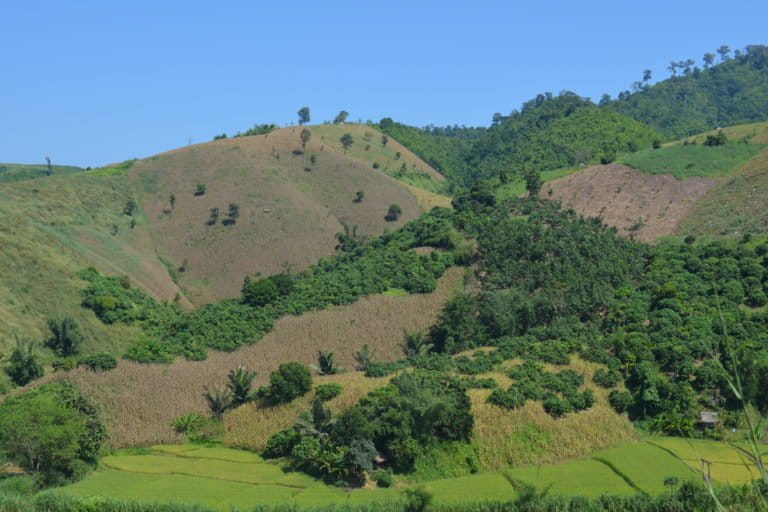
Between 2001 and 2019, the researchers calculated that Southeast Asia had lost 610,000 square kilometers (235,500 square miles) of forest — an area larger than Thailand. Of this loss, 31% occurred in mountainous regions, equivalent to 189,100 km2(73,000 mi2) of highland forest converted to cropland and plantation in less than two decades.

Moreover, the study reveals an accelerating trend. By 2019, 42% of total annual forest loss occurred at higher elevations, with the frontier of forest loss migrating upslope at a rate of roughly 15 meters (49 feet) per year.

Particularly prominent shifts to mountain forest loss were found in north Laos, northeast Myanmar, and east Sumatra and Kalimantan in Indonesia — the country that experienced the most overall forest loss.

Terraces are cleared on a hillside in Malaysian Borneo to make way for an oil palm plantation. Image by Rhett Butler/Mongabay

Decades of widespread clearing of lowland forests to make way for rice, oil palm and rubber plantations has led the conservation community to perceive forest loss as an issue only affecting the lowlands, said Paul Elsen, climate adaptation scientist at the Wildlife Conservation Society and co-author of the study.

“To see through this study that forest loss is increasing and accelerating in mountainous areas throughout the whole of Southeast Asia was pretty surprising,” he told Mongabay.

The expansion of agriculture into higher elevation areas, despite sub-optimal growing conditions due to lower temperatures and steep slopes, spotlights just how scarce undeveloped land now is in lowland Southeast Asia.

“Just because we found that there’s a lot of increasing forest loss in the mountains does not mean that we’re not still seeing forest loss in the lowlands … we still have to worry about lowland forest loss,” Elsen said. “It is just shocking that [forest loss] is continuing to move up into places that we felt were safe by virtue of being rugged and remote and isolated.”

Slopes planted with maize ascend to the tops of hills where they have replaced secondary forest in Nan province, Thailand. Image courtesy of Zhenzhong Zeng

Natural hazards

Worldwide, more than 1 billion people live in mountainous regions. Forest loss in these areas has far-reaching implications for people who depend directly on forest resources and downstream communities.

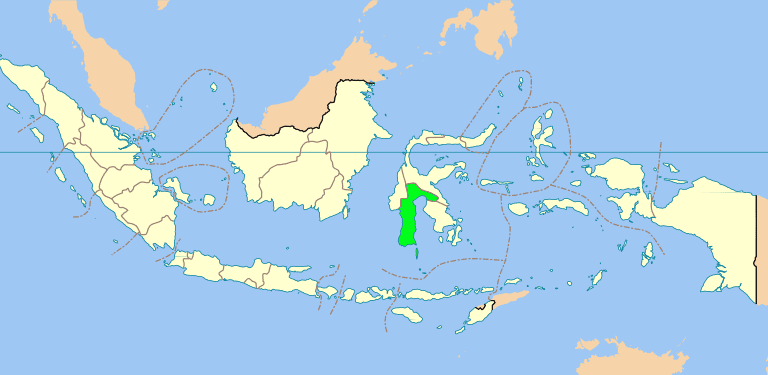
Clearing forests in steep headwaters where rivers originate can increase the risk of catastrophic landslips and flooding in lower areas. It also exacerbates soil erosion and runoff, causing rivers to clog with silt and agricultural pollutants, reducing downstream water quality and availability. In 2018, many people blamed the devastating floods that struck southeast Sulawesi in Indonesia, displacing thousands of people from their villages, on upstream forest clearing.

“These impacts can kill people, of course, but they also disrupt roads and transportation access so goods and services can’t reach communities,” Elsen said. “That’s hugely impactful when you have increased soil erosion and instability following the removal of trees.”

Elsen said communities dependent on mountain forests are hit with a “double whammy” when trees are cleared, since they lose the safety net the forest provides against diminished crop yields, which also suffer from diminished water availability and quality. “Now that the forest has been removed, you have fewer products available for communities to rely on, so it also reduces their adaptation potential,” he said. “If left unchecked, this could be a really big environmental problem for the communities living both in the mountains and in the lowlands.”

Furthermore, a 2021 study showed that deforestation in the tropics can increase local warming by up to 2° Celsius (3.6° Fahrenheit). “Local communities living in these frontier zones will suffer much stronger climate warming due to the biogeophysical feedbacks driven by tree loss further compounding the effects of global warming,” Zhenzhong Zeng, associate professor at the Southern University of Science and Technology, Shenzhen, China and co-author of the new study told Mongabay.

Landslip Indonesia

A landslip in Indonesia caused by the removal of trees which has destabilized the steep slope. Image by Rhett Butler/Mongabay

Nowhere to go

If the forest loss continues to march upslope, the consequences for wildlife could be equally devastating. Recent studies suggest many species are shifting their ranges to higher altitudes in response to warming temperatures.

“The mountains of Southeast Asia are one of the most biologically rich regions of the planet and it’s incredible how many species of mammals, of birds, of amphibians are living only in the mountains and rely on forested ecosystems for their survival,” Elsen said. “So the removal of any of those forests will most likely reduce their abundances at a minimum and could potentially cause local extinctions because species that live in mountains often are very isolated in particular spots.”

“While it’s not surprising, unfortunately, that forest loss rates are moving up elevation in Southeast Asia, this study importantly quantifies this upwards acceleration,” Tim Bonebrake, a conservation biologist at Hong Kong University who was not involved in the study, told Mongabay in an email. He said the rate of upslope shift in the frontier of forest loss is very concerning and might hamper species’ ability to adapt to climate change.

“Not only do these losses of forest cover amount to losses in habitat for species, but the incursion of this forest loss up elevation will also impair biodiversity resilience to climate change,” Bonebrake said. “Forest species that may have otherwise been able to shift their distributions in response to warming will have less space to do so.”

Global carbon budget

As part of the study, the researchers investigated how forest loss is affecting carbon budgets by overlaying forest loss datasets on high-resolution carbon density maps. They found that carbon stocks in steeper, higher-elevation forests are much greater than in lowland forests. This contrasts with patterns in Africa and South America where lowland forests account for more carbon sequestration. The Southeast Asia pattern is most likely due to greater levels of primary production and organic soil content in the region’s highland forests, say the researchers.

The team calculated that the total annual forest carbon loss across Southeast Asia was 424 million metric tons of carbon per year, which is equivalent to one-sixth of all the carbon absorbed by the world’s oceans each year. Mountain areas accounted for nearly one-third of that loss.

Their findings suggest that assumptions used in global climate change models, which consider all forest carbon emissions as equal, could be inaccurate. Moreover, the Intergovernmental Panel on Climate Change’s (IPCC) climate models incorporate predictions that tree-dominated land cover will persist in Southeast Asian mountains. Not only are those mountains losing their forest cover, but the fact that the region’s mountain forests store comparatively more carbon than lowland forests means that their loss will disproportionately affect climate predictions.

The authors calculate that if the patterns of forest loss continue, annual forest carbon loss in the mountains will exceed that of the lowlands as soon as 2022. They also suggest that the continued loss of carbon-rich forests at higher elevations could eventually tip the scales, shifting Southeast Asia’s forests from being a neutral actor in the global carbon cycle to a net carbon emitter.

Ultimately, the loss of higher-elevation forest will make it much harder to meet international climate objectives to limit global warming to below 2° Celsius (3.6° Fahrenheit) by the end of this century. This is, according to Elsen, “A very simple message that we need practitioners and policymakers to understand.”

*

Note to readers: Please click the share buttons above or below. Follow us on Instagram, @crg_globalresearch. Forward this article to your email lists. Crosspost on your blog site, internet forums. etc.

Sources

Feng, Y., Ziegler, A. D., Elsen, P. R., Liu, Y., He, X., Spracklen D. V., … Zeng, Z. (2021). Upward expansion and acceleration of forest clearance in the mountains of Southeast Asia. Nature Sustainability. doi:10.1038/s41893-021-00738-y

Featured image: White-handed gibbons (Hylobates lar) are among the many species that may have to shift their ranges further up into mountain forests in response to climate change. Image by JJ Harrison via Creative Commons (CC BY 3.0)

China-India: Contours of a Conflict to Come

June 29th, 2021 by Bertil Lintner

All Global Research articles can be read in 51 languages by activating the “Translate Website” drop down menu on the top banner of our home page (Desktop version). 

Visit and follow us on Instagram at @crg_globalresearch.

***

India has dispatched at least 50,000 additional troops to the Chinese border where there are currently 200,000 combat-ready troops, an increase of more than 40% since the two rival powers clashed in the Himalayas in June last year, resulting in the death of 20 Indian soldiers and an unknown number of Chinese.

India has also moved fighter jets to its northern border and the navy has sent warships along key sea lanes in the Indian Ocean to keep a watch over maritime trade to and from China. These moves have been made public at the same time as the Indian and US navies just conducted a joint exercise in the same ocean.

It all points to escalating tensions despite several rounds of talks aimed at de-escalating the situation. That’s because India perceives China is consolidating control in border areas that once served as buffers through massive infrastructure building, including train lines in and out of Tibet and down to neighboring Nepal.

India has America firmly on its side as Washington seeks to ramp up multi-front pressure on Beijing’s rising regional ambitions. To be sure, the US and India have a common interest in countering China, especially in the Indian Ocean. New Delhi has long seen the waterway as its sphere of influence but China has recently made inroads both to protect its trade and apply strategic pressure.

But a long history of US-India mistrust also runs deep, constraining their joint willingness and ability to develop a more robust, anti-China alliance. The Indians are particularly wary of Washington’s long-time strategic relationship with their archenemy Pakistan, ties the Biden administration seems keen to revive as a strategic hedge to its withdrawal from Afghanistan.

At the same time, the US has expressed its displeasure with India’s recent purchases of military hardware from its erstwhile ally Russia. India’s US$5.2 billion S-400 air defense system deal with Russia has become a major point of friction between New Delhi and Washington.

But the two sides are making a show of military cooperation that clearly has China in its sights. On June 23 and 24, the USS Ronald Reagan, a Nimitz-class nuclear-powered supercarrier, along with its escorts and a fleet of F-18 fighter jets joined forces for exercises with Indian warships and Anglo-French Jaguar jet attack aircraft as well as Sukhoi-30MKI fighter jets, a Russian-developed plane produced under license in India.

The exercise was carried out south of Thiruvananthapuram (previously known as Trivandrum) on India’s southwestern seaboard.

The drills went beyond basic exercises to include “advanced air defense exercises, cross-deck helicopter operations and anti-submarine exercises,” according to a statement issued by the Indian Ministry of Defense. Needless to say, the only submarines that India and the US would be attacking in the Indian Ocean would be Chinese ones.

Most recently, the Chinese survey ship Xiang Yang Hong 03 has been carrying out a systematic survey in the eastern Indian Ocean. The data, nominally collected for scientific purposes, would also be relevant in any submarine warfare scenario.

Over the past few years, the Indians have noted that Chinese submarines have been spotted in the waters around the Andaman and Nicobar Islands, an Indian union territory located near the entrance to the Strait of Malacca, a maritime chokepoint through which as much as 80% of China’s energy imports pass.

China’s interest in the Indian Ocean is clearly motivated by its desire to protect its trade routes to the Middle East, Europe and Africa. But China’s incursions with warships and submarines into a region where it has never been a power has put it on a collision course with India.

China has used anti-piracy deployments as a justification for expanding its naval presence in the Indian Ocean and making it more permanent by establishing its first military base abroad, in Djibouti in the Horn of Africa in 2017.

But even China’s own 2015 Defense White Paper went much further than that by stating, “The traditional mentality that land overweighs sea must be abandoned and great importance has to be attached to managing the seas and oceans and protecting maritime rights and interests…[China will] participate in international maritime cooperation, so as to provide strategic support for building itself into a maritime power.”

The situation in the Himalayas, where India and China are separated by a disputed border over which a full-scale war was fought in 1962, is increasingly volatile and could lead to more bloody confrontations between the two sides. But it is the Indian Ocean — with or without American participation — that is quickly becoming a front line in Asia’s new Cold War.

David Scott, an associate member of the Corbett Center for Maritime Policy Studies, a United Kingdom-based think tank, concluded in an article for the US-based Center for International Maritime Security in September last year that:

“India’s strategy for the Indian Ocean during the 2010s has been threefold: “building up its naval-maritime infrastructure (based and support facilities), building up power projection assets, and strengthening relations with increasingly China-concerned powers.”

Those powers would be India’s allies in the Quadrilateral Security Dialog, also known as the Quad, a highly informal strategic forum between the US, Japan, India and Australia which has been widely viewed as a response to the rise of China as a regional power.

Originally initiated by then Japanese prime minister Shinzo Abe in 2007, it fell apart when Australia withdrew a year later because its then-new prime minister Kevin Rudd did not want to upset relations with China, his country’s main trading partner.

The Quad remained dormant and was not revived until 2017 when four state leaders — all of them considered China hawks — met on the sidelines at an Association of Southeast Asian Nations (ASEAN) summit in Manila.

Although India and the US had conducted bilateral naval exercises since 1992, India achieved the status of a “Major Defense Partner” of the United States in 2016 and subsequently sent a flotilla of warships to join a US-Japan task force in the South China Sea.

India has also been an active participant in a series of exercises called Malabar, which have brought it closer together with the US, Japan and other regional allies.

In March 2020, Quad officials teleconferenced to discuss the Covid-19 pandemic and were joined for the first time by officials from New Zealand, South Korea and Vietnam. Given rising regional tensions, it was clear that the health crisis was not the only item on the agenda.

China’s moves in the Indian Ocean haven’t been totally unexpected. As early as 2001, India established the Andaman and Nicobar Command, its first and only tri-service command, to safeguard India’s strategic interests in the waters east of its mainland and specifically to monitor China’s maritime movements.

Headquartered in Port Blair in the Andamans and Nicobars, it coordinates the activities of the navy, the army and the air force as well as the coast guards in the eastern Indian Ocean.

Apart from the strategically important facilities on the islands, India’s main naval bases are situated along its east and west coasts with stations also on Lakshadweep, a chain of islands north of Maldives.

The Indians are now also talking to the Australians about getting access to the Cocos (Keeling) Islands, an Australian possession in the Indian Ocean. India’s next step will be to build three nuclear-powered attack submarines and upgrade its own naval bases.

It is too early to say how successful all these moves will be in countering China’s designs in India’s traditional sphere of influence. But the battle lines have been drawn, from the heights of the Himalayas to the tropical waters of the Indian Ocean.

The 16th installment of the China navy escort fleet conducts a two-ship alongside replenishment in the eastern waters of the Indian Ocean in a file photo. Photo: Twitter

China may not be overly concerned whether its borders with India should be marked on one barren rock or another, but last year’s confrontation in the Himalayas was more a show of force to keep India off balance.

As this week’s Indian response shows, New Delhi is prepared to engage China militarily if perceived provocations continue along their Himalayan border.

China is responding in kind. In April, a commentator for the Chinese Communist Party (CCP) launched a blistering attack on India and its friendship with the United States: “India has unfortunately become a victim of US selfishness…the benefits of US allies and partners attaching to the US anti-China chariot could get scarce.”

In an even tougher attack on India, writers for the same Chinese paper claimed in May that India — not China — was to blame for the Covid-19 pandemic.

A May 1 post on the Chinese site Weibo from an account linked to the CCP showed an image of a rocket launch in China alongside a photo of bodies of virus victims being cremated in India with the text: “Lighting fire in China versus lighting fire in India.”

The post was later deleted, but it reflected crudely the rising animosity between the two rival powers in a new Cold War that is only just beginning.

*

Note to readers: Please click the share buttons above or below. Follow us on Instagram, @crg_globalresearch. Forward this article to your email lists. Crosspost on your blog site, internet forums. etc.

All Global Research articles can be read in 51 languages by activating the “Translate Website” drop down menu on the top banner of our home page (Desktop version). 

Visit and follow us on Instagram at @crg_globalresearch.

***

Did you know that one of Australia’s First Nations people are preparing to evacuate from their islands due to climate change? 

Eddie Mabo did not fight for land only to lose it to climate change.

Zenadth Kes, also known as the Torres Strait Islands, are experiencing climate change first-hand with the threat of rising sea levels.

Losing a piece of land would affect every Island nation across the waters and on the mainland. The devastation caused by climate change would spread throughout Indigenous communities across Australia.

Our culture seeps into the land.

The food, dances and songs, tradition and ailan kastom (island custom) are based on the ecosystem and environment. Ceremonies, rituals and cultural events were given birth on the islands. To lose the land would be extremely traumatising for all Zenadth Kes Islanders.

We refuse to abandon our homes as our tradition and culture are meaningless without our mother. We are spiritually woven into the land. The islands play a significant role in our lives: they provide food, shelter, comfort and love. These islands are viewed as our libraries: they contain ancient wisdom, knowledge and stories.

The Queensland government must be held accountable as this matter is serious. Climate change is badly affecting my people. The constant burning of coal and other fossil fuels is melting the polar ice caps that, in turn, allow my islands to be eaten by the ocean.

Our islands are our home even though they are sinking. Coconut trees are no longer able to withstand king tides.

The government can do so much more to prevent further damage.

I’m a city boy, born and raised on Yuggera and Turrubul lands of Meanjin (Brisbane). Late last year, at 16 years old, I made my journey home for the very first time.

The moment I planted my feet onto the sand, I felt a strong sense of connection. It was as if my ancestors were calling on me to return home to witness the destruction of climate change, hoping that I may become a voice to advocate for them.

Despite being brought up in the city, I remind myself that my elders walked upon the sacred lands of Masig and Poruma and that they were fearless seafarers and warriors.

Even though they are gone, I hear them still calling through my prayers and island songs.

As I did, I would want other Zenadth Kes mainlanders to travel home and discover their identity and for those that live there to continue preserving it as best they can.

I do pray that sometime, sooner rather than later, the Queensland government will step in and help my people of Zenadth Kes take on the struggle and fight the rising of seas.

In truth, I fear losing my island.

*

Note to readers: Please click the share buttons above or below. Follow us on Instagram, @crg_globalresearch. Forward this article to your email lists. Crosspost on your blog site, internet forums. etc.

Makiba is a proud man from the islands of Masig and Poruma in the centre of the Torres Strait. Visit his website here.

Featured image: The Torres Strait is under threat from climate change, exacerbated by governments’ support for fossil fuels. Masig Island. Photo: Makiba

All Global Research articles can be read in 51 languages by activating the “Translate Website” drop down menu on the top banner of our home page (Desktop version). 

Visit and follow us on Instagram at @crg_globalresearch.

***

Maggots are considered gross since they thrive best in stinky, decaying organic matter such as animal waste and plants. The mere sight of them in a household often prompts a frantic search for a can of insecticide.

But in Davao City, the hometown of Philippine President Rodrigo Duterte, the black soldier fly or BSF (Hermetia illucens), an insect that many confuse with a wasp, is making a buzz as an innovative solution to address the problem of kitchen waste — benefiting both the environment and agriculture.

Located 960 kilometers (600 miles) south of the capital Manila, Davao is the largest city in the Philippines in terms of land area, and has grown as the major metropolis in the southern Mindanao region with its catchy “Life Is Here” slogan. Its population has grown from 1.1 million people in 2000 to an estimated 1.8 million in 2020.

More people means more garbage. Data from the City Environment and Natural Resources Office (CENRO) show that Davao has generated at least 600 tons of garbage daily since the COVID-19 pandemic started last year, with about half considered biodegradable that could have been composted at home to make fertilizer. Eighty percent of the trash is from households, while the rest comes from commercial establishments.

Data show that Davao has generated at least 600 tons of garbage daily since the COVID-19 pandemic started last year, with about half considered biodegradable that could have been composted at home to make fertilizer. Image courtesy of FiveDOL.

Aiming to turn that trash into treasure, an eco-agricultural startup is piloting a program to produce compost and animal feed using black soldier flies. FiveDOL Upcycling Corp. started commercial operations in March 2021, and is the first such outfit of its kind in Mindanao (a few similar initiatives are launching in the northern Luzon region of the Philippines). It uses techniques developed with the help of the Swiss Federal Institute of Aquatic Science and Technology (Eawag).

“Food waste is a good resource that we can create value from while at the same time helping to conserve the environment and address the problem on biodegradable kitchen waste using the black soldier fly,” Peter Damary, FiveDOL’s chief executive officer, told Mongabay in a video interview.

By harnessing the rapid growth of the flies and their capacity to break down kitchen waste, scientists and engineers have, over the last few years, been able to develop an efficient technology to transform large quantities of kitchen waste into insect protein and compost beneficial to agriculture and the environment, Damary said.

Despite its wasp-like appearance, black soldier flies don’t sting. A female can produce between 500 and 900 eggs during its two-week lifetime. The larvae, once mixed with kitchen waste, grow very quickly: From 1 millimeter in length, the black soldier fly larvae can reach 27 mm (1 inch) long and 6 mm (0.25 in) wide, and can weigh up to 0.22 grams, nearly as much as an aspirin tablet, after just 18 days.

Damary said the black soldier flies, which originated in the Americas, have long been present in the wild in the Philippines and do not pose risks to the local ecosystem, or worse, become invasive. The adult flies naturally die after two weeks and they thrive only on decaying wastes. Black soldier flies have significantly reduced mouth parts compared to housefiles; they don’t bite and are not known to transmit any diseases.

During the larval stage, they consume and convert large quantities of food waste into compost, while the larvae grow rich in protein and can be used as alternative feed for chicken or pigs.

Chickens feeding on protein-rich black soldier fly larvae. Image courtesy of FiveDOL

Commercial feeds are usually produced using fishmeal, which has been partly blamed for depleting fish populations from the seas; or soybeans from Latin America, where industrial-scale farming drives deforestation and consumes high volumes of pesticides and fertilizers. Black soldier fly larvae can be a substitute to these commercial feeds — and making that switch will help save precious ocean resources and prevent further deforestation for soy cultivation, Damary said.

“The compost produced by black soldier flies can give back life to the soil for organic farming,” he added. Damary, a Swiss national married to a Filipina and long based in Davao, founded FiveDOL in 2019, inspired by the success of black soldier fly larvae ventures in Europe, South Africa, China, Malaysia and Indonesia.

FiveDOL is locally promoted as LimaDOL. “Lima” means “five” in Filipino, while DOL stands for “day-old larvae” — hence, five-day-old larvae, which is the crucial period for black soldier fly larvae.

FiveDOL formally launched a facility on May 27  in Barangay Tacunan, a village of nearly 13,000 people some 15 km (9 mi) from the heart of Davao City. Barangay Tacunan has already proven receptive to environmental initiatives and collaborations: it holds regular radio programs promoting environmental protection, requires residents to plant at least five types of vegetables on their properties, and received a local award for “outstanding initiatives in environmental protection and management” in 2018.

FiveDOL’s project has drawn the support of the Tacunan village government as well as the Sustainable Davao Movement (SDM), a coalition of environmental multisectoral organizations in the city.

So far, at least 50 households have voluntarily joined the zero-kitchen-waste initiative, and several small-scale farmers have started using the compost it produces. The participating households in Tacunan have been trained to properly segregate their kitchen waste, which the company regularly collects without a fee.

A black soldier fly laying eggs. A female can produce between 500 and 900 eggs during its two-week lifetime. Image courtesy of FiveDOL.

Damary says his company aims to be profitable, while also promoting organic agriculture and helping the city solve a mounting waste-management problem.

Davao City has mandated the segregation of solid waste and banned the use of single-use plastics to help reduce its mounting garbage problem of the locality. Under a local ordinance, failure to separate waste is punishable with a fine of up to 5,000 pesos ($100) or a jail term of up to six months.

CENRO chief Marivic Reyes says that despite continuous awareness campaigns, many households still don’t practice proper waste separation, which is part of the reason why the city’s waste landfill is quickly exceeding capacity.

The landfill, in the outlying village of Tugbok some 15 km from the city proper, was opened 10 years ago with a capacity of 800,000 tons. As of 2016, the landfill had accumulated 900,000 tons of waste. The local government carried out rehabilitation that allowed the city to continue using it until now, while looking for an expansion area. It is also eyeing the establishment of a 2.5 billion peso ($51.3 million) facility to burn the solid waste to generate electricity, using a grant from the Japanese government.

The city’s solid waste problem is also compounded by the lack of material recovery facilities at the grassroots level, where garbage can be sorted either for composting or recycling. Of the city’s 182 villages, fewer than a dozen have such functional facilities.

Damary noted that if FiveDOL can get hold of 200 tons of kitchen waste daily and compost it using black soldier flies, that would help tremendously in conserving the environment and reducing the pressure on the city’s exhausted landfill. Aside from leaching that causes health hazards, kitchen waste in landfills contributes to greenhouse gas emissions, with each ton of kitchen waste producing the same amount of carbon dioxide equivalent in the form of methane, he said.

BSF larvae can be a substitute to commercial feeds for chicken and pigs such as fishfeed and soybeans; making this switch can help save precious ocean resources and prevent further deforestation. Image courtesy of FiveDOL.

Carmela Santos, director of Ecoteneo, the environmental advocacy arm of the Jesuit-run Ateneo de Davao University and one of the members of the Sustainable Davao Movement, described the black soldier flies as “friends of the earth and a community’s treasure.”

“It is an amazing demonstration of science at work and technology that works for a carbon-neutral world,” she said. An opponent of the city government’s waste-to-energy project, Santos says the black soldier fly technology shows that waste can be managed without subjecting the public to health risks like air pollution and food contamination associated with incineration.

“Organic solutions and composting technology like BSF will help our homes become waste-proof, our communities prepare to be pandemic-proof, and our world become climate-proof,” she said.

With FiveDOL’s venture gaining the support of local environmentalists, Damary says he’s upbeat that BSF can invade other parts of Mindanao and become the army that will address the problem of household kitchen waste.

*

Note to readers: Please click the share buttons above or below. Follow us on Instagram, @crg_globalresearch. Forward this article to your email lists. Crosspost on your blog site, internet forums. etc.

Featured image: A black soldier fly on a red leaf. Image courtesy of FiveDOL.

All Global Research articles can be read in 51 languages by activating the “Translate Website” drop down menu on the top banner of our home page (Desktop version). 

Visit and follow us on Instagram at @crg_globalresearch.

***

Philippines President Rodrigo Duterte’s chilling promise to “drug pushers, holdup men, and do-nothings, you better get out […] because I’ll kill you” may finally come back to haunt him.

Today the International Criminal Court Prosecutor Fatou Bensouda announced that she has asked the court’s judges to approve her investigation into crimes committed in the Philippines from November 1, 2011, the date the Philippines became an ICC member, until March 16, 2019. On March 17, 2019, the Philippines effectively withdrew from the court.

A possible ICC investigation into the thousands of “drug war” killings in the Philippines is especially welcome given the United Nations Human Rights Council has yet to effectively condemn the Duterte government’s atrocities, despite a scathing report by the UN top rights’ commissioner sounding the alarm on the scale and gravity of the situation.

In 2017, Human Rights Watch found President Duterte and other senior officials have instigated and incited killings of mostly the urban poor in a campaign that could amount to crimes against humanity. According to the Philippine Drug Enforcement Agency, 6,117 individuals were killed during police anti-drug operations from July 1, 2016, to April 30, 2021. The Philippine National Police has a higher figure – 7,884 killed up to August 1, 2020.

Instead of condemning these abuses, the UN Human Rights Council has opted instead to provide technical cooperation and capacity-building to the same government that denies the true scale and severity of the human rights violations, has publicly endorsed the policy of killings, avoids independent investigations, and continues to crack down on civil society.

In his February 2021 address to the Human Rights Council, head of the Philippine Department of Justice, Menardo Guevarra, admitted police culpability in thousands of “drug war” killings. But while the new police chief, General Guillermo Eleazar, has promised to cooperate with the Department of Justice, he is only allowing access to 53 case files.

There is an urgent need for a Human Rights Council-backed investigation. The government’s campaign of extrajudicial killings has continued well beyond its withdrawal from the ICC, with devastating consequences for victims and their families, including children. And the killings have only intensified during the Covid-19 pandemic.

The UN Human Rights Council should course-correct and stand up for the Philippine’s victims instead of giving support to the government that kills them.

*

Note to readers: Please click the share buttons above or below. Follow us on Instagram, @crg_globalresearch. Forward this article to your email lists. Crosspost on your blog site, internet forums. etc.

Featured image: Protest by local human rights groups, remembering the victims of the drug war, October 2019. (CC BY-SA 4.0)

All Global Research articles can be read in 51 languages by activating the “Translate Website” drop down menu on the top banner of our home page (Desktop version). 

Visit and follow us on Instagram at @crg_globalresearch.

***

David McBride calculates he faces up to 50 years in prison for being a whistleblower. McBride is an Australian whistleblower and former British Army major and Australian Army lawyer.  He served two tours of duty in Afghanistan in 2011 and 2013 and received a combat services medal. But, his troubles began when he uncovered serious war crimes committed by Australian soldiers.  He honored his duty to humanity and truth by leaking the information to the Australian press, who in turn were searched, and threatened with legal action for bringing the information forward in the interest of the public’s right to know. 

Andrew Wilkie, a former Australian government intelligence analyst whistleblower who’s now an independent federal lawmaker, is a vocal critic of national security being used as an excuse to hide wrongdoing by the Australian government, and its agents. Wilkie believes Australia has drifted into becoming a “pre-police state” through its embrace of secrecy.

“It’s now unremarkable when a government cloaks something in a national security need for secrecy,” Wilkie said. “We don’t bat an eyelid anymore. We should be outraged.”

From 2014 to 2016 McBride gave information to the Australian Broadcasting Corporation (ABC), and ABC broadcast details in 2017.  The information came to be known as ‘the Afghan Files’, and in 2018 McBride was charged with the theft of Commonwealth property contrary to s 131(1) of the Criminal Code Act 1995. Additionally, in March 2019 he was charged with a further four offenses: three of breaching s 73A (1) of the Defense Act 1903; and another of “unlawfully disclosing a Commonwealth document contrary to s 70(1) of the Crimes Act 1914”.

Major General Justice Paul Brereton began an investigation in May 2016 and the results were made public in November 2020. The Brereton Report found “credible information” that war crimes were committed by Australians in Afghanistan. Detailed credible evidence of a series of alleged SASR war crimes in Afghanistan from 2005-2016 was included in the report, such as 39 Afghans had been willfully and unlawfully killed by 25 ADF members in 23 incidents, along with two instances of cruel treatment, in circumstances where it “was or should have been plain that the person killed was a non-combatant.” The Brereton Report concluded that there is “credible information” sufficient to lay charges of war crimes, and its findings were corroborated and relied on eyewitness accounts or “persuasive circumstantial evidence and/or strong similar fact evidence”; however, it did not set out evidence in the format required for criminal prosecution. Brereton concluded his investigation was held hostage by the chains of military code of silence and bonds of loyalty to patrol commanders, and this culture was instrumental for concealing the alleged criminal activity.

McBride pleaded not guilty to each of the charges at a 30 May 2019 preliminary hearing and is currently awaiting trial.

The Afghan Files covered a wide range of topics, and it detailed multiple cases of unlawful killings of unarmed men and children. In response to the leak by McBride, the Australian Federal Police (AFP) raided the ABC’s offices in June 2019 and confiscated all material related to the Afghan Files.

A Freedom of Information request into the search and seizure of the files revealed that the AFP were intentionally targeting journalists, and that prosecution of journalists involved was considered. Following the raid, the ABC began litigation against the AFP, claiming the warrant was too broad and thus not enforceable. In February 2020 the case was dismissed by the federal court, and the AFP began the process of accessing the confiscated files.

In June 2020, charges were considered to be laid against journalist Dan Oakes for breaking the Afghan Files story. In October 2020, the government announced that they would not be prosecuting Oakes. The government published a report on the matter in May 2021 and made 17 recommendations, including proposed reforms to laws that have the potential to criminalize public interest journalism.

Media law experts Johan Lidberg and Denis Muller said Australia is the only country among the United States, Britain, Canada, and New Zealand that gives its security agencies the power to issue search warrants against journalists in the hunt for public interest whistleblowers in the name of national security.

Many Australians feel the government took a step too far in June 2019 when they searched ABC and its journalists.  They feel the situation highlights the government’s “organizational culture” including a “warrior culture”, and are opposed to intimidating journalists only to protect government secrets of wrongdoing. Some have called it a culture of impunity and reminiscent of the US President Bush administration and the lies which were sold to the Australian public for the need to invade Afghanistan.

Public accountability and the principle of open justice are in danger in Australia, as they have charged, tried, convicted, and jailed a military intelligence office known only as “Witness J”.  The entire 2018 legal process was wrapped in a cloak of secrecy.  Dr. James Renwick, the Independent National Security Legislation Monitor, said the case was unprecedented and hoped it would not be repeated.  There is a possibility that war crimes prosecutions could also be gagged. The secret court hearing and imprisonment became public in late 2019 after “Witness J” opened a lawsuit against the Australian government, claiming his human rights were violated by police who raided his prison cell in search of a memoir he was writing.

The Australian military was in Afghanistan to help the US military.  The Taliban has long been condemned and dehumanized at the highest political and military leadership levels, in Australia and by the US allies. Throw in a bit of anti-Islamic bias, a desire to punish them for previous attacks, and you have the climate that supports the charges in the Afghan Files.  The Australian government’s ongoing charging and investigation of war crimes whistleblower David McBride provides the ammunition to fire charges of ‘police state’ at the country down under.

*

Note to readers: Please click the share buttons above or below. Follow us on Instagram, @crg_globalresearch. Forward this article to your email lists. Crosspost on your blog site, internet forums. etc.

This article was originally published on Mideast Discourse.

Steven Sahiounie is an award-winning journalist. He is a frequent contributor to Global Research.

Featured image is from Mideast Discourse

All Global Research articles can be read in 51 languages by activating the “Translate Website” drop down menu on the top banner of our home page (Desktop version). 

Visit and follow us on Instagram at @crg_globalresearch.

***

Fourteen refugees have been on hunger strike for more than a week in protest at their imprisonment in a refugee prison in Broadmeadows. Some have been detained by the federal government for eight years. 

Refugee rights supporters organised a snap vigil on June 21 outside the Melbourne Immigration Transit Accommodation (MITA) to show their support. By June 25, two refugees had to be hospitalised.

One of the MITA hunger strikers, quoted by the Refugee Action Collective (Victoria), asked: “Why is the government torturing us for nine years? We want to know what is the difference between us and the others [Medevac refugees] who were released six months ago? We can’t be in detention anymore.”

Around 90 refugees were brought to Australia for medical care in 2019 from detention camps on Nauru and Manus Island. Some are still being held in prison hotels and detention centres in Adelaide, Sydney, Melbourne and Brisbane.

People brought for medical treatment after the repeal of the Medevac law are also still being held in detention in Sydney and Darwin and Adelaide.

Between December and February, about 100 Medevac refugees were released into the community on bridging visas.

More than 60 Medevac refugees wrote to Home Affairs Minister Karen Andrews in May, asking her to use her discretionary powers to release them. They are still waiting for an answer.

“All the Medevac refugees must be released,” RAC spokesperson Ian Rintoul said on June 24.

“In many cases, the government has not even provided medical treatment they were brought to Australia to receive. After detention on Manus and Nauru, and two years of detention in Australia, every day in detention worsens their mental distress. They need freedom.”

Some refugees are being sent overseas, instead of being released into the community. Two Medevac refugees were flown to the United States on June 21, leaving 33 still locked up in the Park Hotel in Melbourne.

One of them was Babkir Omda who had been held in Melbourne hotel prison for almost two years. He spoke to Green Left before flying out of the country. “I’m happy to be free and breathe fresh air again after 22 months, but I wish I could have been released in Melbourne where I know people. I was given no choice.”

[RAC has called a snap rally on June 25 at 4.30pm in solidarity with the hunger strikers. A vigil is being organised on July 19 will mark their ninth year in detention.]

*

Note to readers: Please click the share buttons above or below. Follow us on Instagram, @crg_globalresearch. Forward this article to your email lists. Crosspost on your blog site, internet forums. etc.

Featured image: Refugee Action Collective Victoria/Facebook

Democracy in Peril: The India Story

June 25th, 2021 by David Simmons

All Global Research articles can be read in 51 languages by activating the “Translate Website” drop down menu on the top banner of our home page (Desktop version). 

Visit and follow us on Instagram at @crg_globalresearch.

***

Its title notwithstanding, a new book by Debasish Roy Chowdhury and John Keane, To Kill a Democracy, starts out with hopeful words:

“Like other national stories, India’s rests on a belief in a beginning that ranks as the beginning of beginnings: that magical moment of the birth of Indian democracy, just before sunset on 14 August 1947, when the Indian tricolor was raised over the old imperial Parliament to flutter in the late-monsoon Delhi sky, blessed by a distant rainbow.”

It’s all downhill from there.

But don’t jump to the conclusion that the authors contend Indians have lost interest in participating in the “world’s largest democracy”; to the contrary, they note, “Voter turnout is high, and unusually by global standards, the most marginal parts of society show up at the polls more often than the wealthier middle and upper classes. Votes count. Votes are dignity.”

And yet almost from the first days of the “India Story,” things started to go wrong. That much, everyone already knows; after seven decades of independence from the British Empire, this country of vast population, vast resources, a wealth of ethnic diversity, a long and vibrant history, and – most important in the modern context – an admirable and envied constitution, India remains racked with poverty, underachievement, and corruption.

What the casual observer does not know is why. And that is why this book is important. Not only in the Indian context; on nearly every page, non-Indian readers will be reminded of ills in their own societies.

That is not accidental. India’s great size and unrivaled diversity make it a microcosm – actually, a macrocosm – of the world itself.

Commendable research

Debasish Roy Chowdhury is an award-winning Indian journalist now based in Hong Kong (and, incidentally, a onetime business editor for this website, when it was known as Asia Times Online). John Keane is research professor at Wissenschaftszentrum (Social Science Center) Berlin and professor of politics at the University of Sydney.

Clearly, the meticulous research that powers this book was begun before the Covid-19 outbreak that now dominates news about India, to the unfortunate exclusion of nearly everything else. Mercifully, the timing of their task helped spare the authors from that obsession.

That is not to say what they rather quaintly refer to as “the pestilence” is ignored, but it is given its proper place, more so than in much of the so-called reporting on Covid that consists largely of click-bait horror stories that almost never put statistics in their proper context by noting India’s huge population. (Brazil is a victim of similar sloppy journalism, while countries like Belgium and Hungary are let off the hook because they are too small to generate dazzling death tolls.)

In most of the developing world, and indeed to a large degree in the rich world, ham-fisted efforts to “contain” the virus have done more severe, and longer-lasting, damage than the illness itself. There can hardly be any stronger example of this phenomenon than the “great lockdown” imposed by Prime Minister Narendra Modi’s government with almost no notice:

“The apocalyptic scenes of reverse migration, the panic over food within just days of the lockdown, the failure to arrange for suitable transport to systematically transfer migrant workers to their place of origin in order to minimize contagion risks, and the calamity confronting Indian hospitals from the earliest days of the pestilence: all of this pointed to a deeper social malaise caused by government inaction, mismanagement, and dereliction of duty.”

The book also steers clear of the error many writers make when documenting recent Indian history, namely to blame it all on Narendra Modi.

Chowdhury and Keane don’t let Modi off the hook; far from it. But they observe that he is the product of a long decline in Indian democracy and, hence, Indian society, much as some (too few and too late) recognized that Donald Trump was the result and not the cause of a remarkably similar decline in the so-called paragon of democracy itself, the United States of America.

The book’s subtitle is India’s Passage to Despotism. A theme of the book is something called “elective despotism,” or what Sweden’s V-DEM Institute in its Democracy Report 2020 termed “electoral autocracy” when analyzing India’s “path of steep decline.”

These seemingly oxymoronic terms speak to the “slow-death” theory of democide, as opposed to the “sudden-death” sledgehammer coups d’état seen most recently in places like Thailand and Myanmar.

In this way, not only despite vibrant elections participated in by enthusiastic masses, but actually by means of the nominally democratic franchise, the path to despotism becomes ever steeper.

No stone unturned

Few will find nothing new to learn from this book. Practically every aspect of life in India, and not just elections or the other bare bones of democracy, is covered in detail. For example, the authors note that the simple phenomenon of human movement, and the development of transportation, has been a driver of civilization from ancient times. And the book devotes an entire chapter to transport, titled – no surprise – “Motion Sickness.”

The Indian rail network, launched with fanfare and hope long ago, has not only been yet another disappointment, it has become downright deadly. “A ride on a Mumbai train in rush hour,” we read, “is more the stuff of nightmare than dream.”

“Traveling like animals, risking their lives for livelihood, has been the lot of Mumbai daily commuters for as long as they can remember. So deadly are its trains, and so low the safety bar, that zero fatalities on one day (26 June 2019) was marked as a milestone. The very next day it was back to business, with nine deaths.”

But it’s not just the trains; buses (in Bihar, there is one bus per 50,000 people), private vehicles (in Mumbai, “residents on average waste 11 days a year stuck in traffic”), bicycles and even sidewalks and potholes get a close (and un-glamorized) look.

Democide

Though smartly written, and peppered with anecdotes of ordinary people interviewed by the authors, this book is not light reading. Page after page documents tragedy after tragedy, of how the Indian demos has not only been systematically robbed of the hope symbolized by that distant rainbow of August 1947, but how the demos has actually been redefined by the robbers. Readers will be tempted to peek at the closing pages in search of a happy ending.

There is one, of sorts, but it’s more philosophical than the hard-edged, fact-based tone of the bulk of the book. To many, apparently including the authors, belief in democracy has become more of a cult of hope, of paradise in the sweet by and by, than a pragmatic ideology.

That may also explain why there is relatively little analysis here of the successes of systems the writers disparage as “tyrannies,” such as the late Hugo Chavez’ Venezuela or, more obviously and much more importantly, India’s great neighbor and rival, communist China.

Despite this book’s fretting title, and the unrelenting evidence within to back it up, its purpose is to deliver a paradoxical message: For all its many failings, government of, by and for the people has been and will continue to be a worthy experiment. How true that message rings is up to the reader – and, more important, to the people of a great nation – to decide.

To Kill a Democracy: India’s Passage to Despotism (June 2021) by Debasish Roy Chowdhury and John Keane is published by Oxford University Press.

*

Note to readers: Please click the share buttons above or below. Follow us on Instagram, @crg_globalresearch. Forward this article to your email lists. Crosspost on your blog site, internet forums. etc.

International Criminal Court Closes in on Duterte

June 25th, 2021 by Jason Castaneda

All Global Research articles can be read in 51 languages by activating the “Translate Website” drop down menu on the top banner of our home page (Desktop version). 

Visit and follow us on Instagram at @crg_globalresearch.

***

In her final act as chief prosecutor of the International Criminal Court (ICC), Fatou Bensouda gave the green light for a formal investigation into charges of mass atrocities under Philippine President Rodrigo Duterte.

After almost three years of a preliminary examination, she called on the international body, and by extension her newly-installed successor, “to authorize the commencement of an investigation” into reportedly tens of thousands of extrajudicial killings (EJKs) under Duterte’s drug war and “any other crimes which are sufficiently linked to these events” between November 1, 2011, and March 16, 2019.

Crucially, the specified period covers Duterte’s tenure as mayor of the southern city of Davao, the first major urban center to bear the brunt of the Filipino leader’s violent crackdown on illegal drugs and criminality.

Families of victims and human rights groups warmly welcomed the move, while the Filipino leader remained defiant and lambasted the court’s decision as “bullsh*t” and its chief prosecutor as “crazy.”

Right off the bat, the former British crown prosecutor and new ICC chief prosecutor, Karim Khan, vowed “to ensure that the quest for accountability and inroads on impunity are made” and emphasized the need for “building stronger cases and getting better cases in the courtroom” against abuses by officials under his watch.

The move, which could lead to the eventual prosecution of top Philippine officials, came much later than many initially expected, but it may have also come too early, giving the incumbent populist an even stronger impetus to rig next year’s presidential elections in favor of a trusted ally, if not his daughter, Sara Duterte.

Court under attack

However, the international court’s decision was far from assured, given questions over its jurisdiction and its willingness to take on a popular incumbent. In recent years, The Hague-based court has come under attack on many fronts, including from the former Trump administration, which sanctioned several ICC judges for launching investigations into US war crimes in Afghanistan.

The Biden administration has reversed those punitive measures, but there is little sign that the US or other superpowers such as China or Russia will ever accede to the Rome Statute under the ICC.

Meanwhile, the Beijing-friendly Philippine president has relied on strong backing from China in international bodies, including the United Nations Human Rights Council (UNHCR).

Drawing on a cabinet of lawyers and litigation experts, Duterte, himself a former prosecutor, has also been quick to chase legal loopholes to undermine any international investigation of his alleged human rights violations.

The first major response was the Philippines’ withdrawal from the Rome Statute in March 2019 in an effort to undercut any cooperation with the ICC. The following year, in a speech during the 44th session of the UNHCR, Philippine Justice Secretary Menardo Guevarra, a renowned legal expert, reiterated the primacy of local courts and judicial institutions in addressing alleged abuses in the country.

The Philippine justice chief announced the creation of an inter-agency panel to investigate at last 5,655 deaths during police drug war operations under Duterte’s watch. Up to this date, however, only a handful of erring officers have faced trial or any kind of stiff administrative punishment.

EJKs, meanwhile, have continued, now targeting progressive activists and opposition members.

In response, the outgoing ICC prosecutor maintained that the court “retains jurisdiction” over investigating state-sponsored abuses, which are “not subject to any statute of limitation.”

The International Criminal Court at the Hague, Netherlands. Photo: iStock.

The International Criminal Court at the Hague, Netherlands. Photo: iStock.

ICC at crossroads

The strongly-worded statement also marked a categorical rejection of the Philippine government’s claim that domestic courts and relevant agencies have been sufficiently functional to preclude the need for any international investigation.

Highlighting what’s at stake, Bensouda warned that the ICC “stands at a crossroads” and it needs to ensure, despite its limited resources, that large-scale abuses “not only [receive] prioritization” but also “open and frank discussions” with other member states to “advance the fight against impunity for atrocity crimes.”

The Duterte administration was quick to dismiss the ICC’s “midnight announcement” and reiterated that the international body was a “court of last resort,” thus the latest announcement constitutes a “blatant violation of the principle of complementarity, which is a bedrock principle of the Rome Statute.”

The Philippines maintained that local agencies were already conducting “concrete and progressive steps” to ensure accountability and that it has demonstrated a “long track record” of cooperating with international human rights bodies.

It also accused the outgoing prosecutor of “pre-empt[ing]” her successor in a supposed bid to undermine any proper evaluation of facts of the case. Presidential Spokesperson Harry Roque declared that the Filipino president will “never cooperate” with any international investigation.

Duterte was predictably less diplomatic, accusing the international body of colonial-style intervention in the Philippines’ domestic affairs.

“This bullsh*t ICC … I would not … Why would I defend or face an accusation before white people? You must be crazy,” Duterte said, evidently ignoring the fact that both the outgoing and the new ICC chief prosecutors are persons of color.

“These colonialized, they have not atoned for their sins against the countries they invaded, including the Philippines. Then now … they’re trying to set up a court outside our country and making us liable to face them,” the Filipino president added, claiming that “our laws are different. Our criminal procedures are different. How are you supposed to get justice there?”

Shooting off his mouth

The Philippines’ constitution, however, is one of the most liberal democratic of its kind, largely drawing on American jurisprudence. No less than former Supreme Court Associate Justice Antonio Carpio has argued that both domestic laws as well as relevant ICC articles can be invoked to hold the Filipino president accountable for, among other things, inciting violence and instructing the country’s law enforcement agencies to engage in a bloody crackdown against suspected drug dealers.

On his very first day of presidency, Duterte told the country’s police forces: “If you know of any addicts, go ahead and kill them yourself as getting their parents to do it would be too painful.” Shortly after, he reiterated the same position during a press conference, by stating: “I say let’s kill five criminals every week, so they will be eliminated.”

Two years into his violent drug war, Duterte openly admitted in an interview that his “only sin is the extrajudicial killings.”

“These statements of President Duterte are called extrajudicial confessions because they were uttered out of court and outside of custodial investigation, admitting involvement in alleged crimes,” wrote former magistrate Caprio, arguing that such statements are “universally recognized as admissible in evidence against an accused provided, they are voluntarily made and corroborated by evidence of the actual commission of the crime.”

With a legal storm gathering against Duterte, there is now a greater incentive for him to shape the direction of the upcoming presidential elections, if not rig the system altogether given his wide array of emergency powers due to the Covid-19 crisis.

The incumbent is confined to only a single six-year term in office by the constitution, but he has openly contemplated the prospect of running as a vice-presidential candidate next year and actively supported key allies, including his long-time aide and current Senator Christopher “Bong” Go, as a potential successor.

His daughter, Sara, who is the frontliner in the latest survey of potential presidential candidates, is another option to ensure Duterte stays in power for the foreseeable future.

Ultimately, however, the Filipino president’s priority is to ensure that the opposition, especially current Vice-President Leni Robredo, will not be able to mount an electoral challenge next year.

And the instinct for survival raises the temptation for deploying draconian measures, including Duterte’s notorious “drug list” and vaguely-defined anti-terror laws, to intimidate, isolate and even violently target opposition candidates and their supporters across the country.

*

Note to readers: Please click the share buttons above or below. Follow us on Instagram, @crg_globalresearch. Forward this article to your email lists. Crosspost on your blog site, internet forums. etc.

All Global Research articles can be read in 51 languages by activating the “Translate Website” drop down menu on the top banner of our home page (Desktop version). 

Visit and follow us on Instagram at @crg_globalresearch.

***

President of the Philippines, Rodrigo Duterte, commanded citizens to get vaccinated against COVID-19, threatening them with prison time or forced injection of a drug if they do not get the vaccine.

Duterte can be seen speaking to the camera while wearing a mask and threatening the public, according to a video released by The Guardian.

“You choose, get vaccinated or I will have you jailed. I’m telling you, those police jail cells are filthy and foul-smelling, police are lazy in cleaning. That is where you’ll be,” he said.

The video clip cut to another moment when Duterte says,

“You get vaccinated, otherwise I will order all the village heads to have a tally of the people who refuse to be vaccinated. Because if not I will inject them with Ivermectin which is intended for pigs.”

The Washington Post reported that Duterte also said,

“If you don’t want to be vaccinated, I’ll have you arrested and have the vaccine shot into your [buttocks],” he said, reportedly using a vulgar word. “If you don’t get vaccinated, leave the Philippines. Go to India if you want, or somewhere, America.”

Justice Secretary of the Philippines Menardo Guevarra reportedly cleared up Duterte’s words on Tuesday and said refusing vaccination was not a violation of the law, per The Post. 

The U.S. Food and Drug Administration (FDA) and the World Health Organization (WHO) have warned everyday people not to use Ivermectin against COVID-19. 

On its website, the FDA stated that the agency “has not approved ivermectin for use in treating or preventing COVID-19 in humans. Ivermectin tablets are approved at very specific doses for some parasitic worms, and there are topical (on the skin) formulations for head lice and skin conditions like rosacea. Ivermectin is not an anti-viral (a drug for treating viruses),” adding that “Taking large doses of this drug is dangerous and can cause serious harm.”

The agency added,

“Never use medications intended for animals on yourself. Ivermectin preparations for animals are very different from those approved for humans.”

In March, the WHO recommended that Ivermectin only be used in treatment of COVID-19 within clinical trials.

“The current evidence on the use of ivermectin to treat COVID-19 patients is inconclusive. Until more data is available, WHO recommends that the drug only be used within clinical trials,” it stated, citing a guideline development group that looked at data from trials. 

As Reuters reported,

“Duterte is famous for his bellicose rhetoric and his remarks on Monday contradicted those of his health officials, who have said getting vaccinated against COVID-19 is voluntary.”

“Don’t get me wrong, there is a crisis in this country,” Duterte said. “I’m just exasperated by Filipinos not heeding the government.”

COVID-19 cases have gone down in the Philippines since a spike in April, but continue to maintain an uncomfortable rate. 

According to the WHO,

from 3 January 2020 to 5:44pm CEST, 22 June 2021, there have been 1,364,239 confirmed cases of COVID-19 with 23,749 deaths, reported to WHO. As of 12 June 2021, a total of 6,624,417 vaccine doses have been administered.” The current population of the country is 111,034,497 people, according to Worldometer. 

Reuters reported that “as of June 20, just 2.1 million people had been fully vaccinated of the 70 million people targeted for this year.”

*

Note to readers: Please click the share buttons above or below. Follow us on Instagram, @crg_globalresearch. Forward this article to your email lists. Crosspost on your blog site, internet forums. etc.

Burgeoning Plastic Footprint: Who Is Responsible?

June 24th, 2021 by Dr Silvy Mathew

All Global Research articles can be read in 51 languages by activating the “Translate Website” drop down menu on the top banner of our home page (Desktop version). 

Visit and follow us on Instagram at @crg_globalresearch.

***

Today, the world is witnessing the Covid-19 pandemic, accompanied by other pandemics like the information pandemic (infodemic) and the Covid-19 waste pandemic. The burgeoning consumption and improper disposal practices of face masks by the community worldwide have given rise to a new environmental challenge. These materials are getting into waterways from where they reach the freshwater and marine environment, adding to the burden of plastics in the aquatic medium. For instance, OceansAsia, an organization committed to advocacy and research on marine pollution, reported in February 2020 that the ocean is being cluttered with new forms of plastic, i.e., face masks of different types and colours in Hong Kong (Oceanasia, 2020). The collection of face masks was also spotted along highways and drainage in many other parts of the world (Fadare & Okoffo, 2020).

This new form of plastic waste has emerged as an environmental litter in terrestrial and aquatic ecosystems. Thereby acting as a piece of evidence that the global pandemic has further increased the challenge of plastic pollution across the world (Prata et al., 2020).

Single-use polymeric materials have been identified as a significant source of plastics and plastic particle pollution in the environment. Like other single-use plastics (bottles), these medical face masks are also typically made up of polypropylene, polyurethane, polyacrylonitrile, polyethylene, or polyester(Fadare & Okoffo, 2020). In turn, making these disposable face masks (single use) and PPE’s an emerging new source of microplastic fibres, as these plastics, can break down into smaller particles size of less than 5 mm under environmental conditions (Fadare & Okoffo, 2020).

The UN Environment also highlighted the issue in its report stating that the general public is producing more waste than usual. Along with domestic waste, biomedical waste such as masks, gloves, and PPEs are prevalent due to a lack of awareness (COVID-19 Waste Management Factsheet, n.d.). As per a recent Central Pollution Control Board (CPCB) report, 146 tonnes of COVID-19 related waste were generated in the year 2020 in India alone (Kumar, 2021). Already 150 million tons of plastic waste were said to float in the ocean; if the trend continues, by 2050, there will be more plastic by weight than fish in the ocean (Ford, 2020). Additionally, fish and other animals are getting intoxicated because of plastics. Ultimately, consuming such fishes and animals is causing plastics to enter our food chain, threatening human health (Andrews, 2012).

Therefore, proper waste management responsibility not only falls on the healthcare institutions but also on the citizens to effectively use and dispose of these single-use masks to protect themselves, others, and the environment. The public should be made aware about the plastic footprint created due to the irrational use of face masks and the long-term consequences that can arise if the situation is not controlled in time.

*

Note to readers: Please click the share buttons above or below. Follow us on Instagram, @crg_globalresearch. Forward this article to your email lists. Crosspost on your blog site, internet forums. etc.

Dr Silvy Mathew is a dental graduate and a prospective global health professional. Currently pursuing a Master of Public Health (MPH) from Manipal Academy of Higher Education.

Sources

Fadare, O. O., & Okoffo, E. D. (2020). Covid-19 face masks: A potential source of microplastic fibers in the environment. Science of the Total Environment, 737, 140279. https://doi.org/10.1016/j.scitotenv.2020.140279

Kumar, S. (2021, June). World Environment Day: India produced 45,308 tonnes of Covid-19 biomedical waste in previous one year | Latest News India – Hindustan Times. Hindustan Times. https://www.hindustantimes.com/india-news/world-environment-day-india-produced-45-308-tonnes-of-covid-19-biomedical-waste-in-previous-one-year-101622862552910.html

Oceanasia. (2020, February). No Shortage Of Masks At The Beach – OCEANS ASIA. https://oceansasia.org/beach-mask-coronavirus/

Prata, J. C., Silva, A. L. P., Walker, T. R., Duarte, A. C., & Rocha-Santos, T. (2020). COVID-19 Pandemic Repercussions on the Use and Management of Plastics. Environmental Science and Technology, 54(13), 7760–7765. https://doi.org/10.1021/acs.est.0c02178

Featured image is from Countercurrents

All Global Research articles can be read in 51 languages by activating the “Translate Website” drop down menu on the top banner of our home page (Desktop version). 

Visit and follow us on Instagram at @crg_globalresearch.

***

In an attempt to protect the dwindling numbers of Tasmanian devils, an “insurance population” was shipped to Maria Island causing “catastrophic” damage to the native birdlife, including the elimination of little penguins on the small Australian island.

“Every time humans have deliberately or accidentally introduced mammals to oceanic islands, there’s always been the same outcome … a catastrophic impact on one or more bird species,” Dr. Eric Woehler, the convener of BirdLife Tasmania said to The Guardian.

The population of little penguins has declined since the Tasmanian devils were introduced in 2012, but according to a report by BirdLife Tasmania, the most recent survey showed that the penguins were completely gone from the island, according to The Guardian.

The Tasmanian devils were moved to the island because of the threat of the highly contagious and deadly devil facial tumor disease.

The initial population of Tasmanian devils was 28 in 2012 but has since grown to around 100 devils as of 2016.

Just a decade ago, the 45 square mile island was the home to around 3,000 breeding pairs of little penguins.

Little penguins are the smallest of all the penguin species.BirdLife Tasmania / Eric Woehler

“Losing 3,000 pairs of penguins from an island that is a national park that should be a refuge for this species basically is a major blow,” Woehler said to The Guardian.

Before the species were introduced to the island, a 2011 report by the Tasmanian Department of Primary Industries, Parks, and Environment predicted that introducing the carnivorous species would have “a negative impact on little penguin and shearwater colonies on Maria Island through devil predation,” according to The Guardian.

In addition to little penguins, researchers also found that Tasmanian devils had also destroyed colonies of short-tailed shearwaters on the Australian island. Wombats and possums are also prey to the devils, according to The Hill.

“Because of their larger size and ability to dig, devils had greater impacts on nesting shearwaters than either cats or possums [which also prey on the birds],” the study found.

Woehler noted that the devils impacted another bird species on the island: Cape Barren geese. The species are ground-nesting birds, but they’ve been nesting in trees to avoid the Tasmanian devils, he said.

The decision to bring the Tasmanian devils to the island a decade ago was sound according to Woehler because, at that time, the facial tumor disease was not well understood, according to The Guardian.

However, in 2020, researchers found that the facial tumor disease was unlikely to wipe out the population of Tasmanian devils.

The Save the Tasmanian Devil program’s government spokesperson said that the program is continually monitored, according to The Independent.

“All effective conservation programs are adaptive and the STDP will continue to evolve in line with new knowledge in science and emerging priorities,” the spokesperson said to The Guardian. “This also applies to Maria Island, where active monitoring and management occurs, and Maria Island remains an important part of the broader devil program to help restore and maintain an enduring and resilient wild devil population in Tasmania.”

Woehler said, “it’s rather hard to justify” keeping the Tasmanian devils on the island because of the new research on the facial disease. He said that it’s likely the penguins will return once the devils are removed from the island, according to RT News.

*

Note to readers: Please click the share buttons above or below. Follow us on Instagram, @crg_globalresearch. Forward this article to your email lists. Crosspost on your blog site, internet forums. etc.

Audrey Nakagawa is the content creator intern at EcoWatch. She is a senior at James Madison University studying Media, Art, and Design, with a concentration in journalism. She’s a reporter for The Breeze in the culture section and writes features on Harrisonburg artists, album reviews, and topics related to mental health and the environment. She was also a contributor for Virginia Reports where she reported on the impact that COVID-19 had on college students.

Featured image: A Tasmanian devil (CC BY-SA 3.0)

The Great Barrier Reef Wars

June 23rd, 2021 by Dr. Binoy Kampmark

All Global Research articles can be read in 51 languages by activating the “Translate Website” drop down menu on the top banner of our home page (Desktop version). 

Visit and follow us on Instagram at @crg_globalresearch.

***

To float in such an aqueous body is to find a majestic creature unparalleled in beauty and expanse, stretching at 2,300km.  There are other stunning formations on the planet, but the Great Barrier Reef has such dimension, form and cocksure brilliance as to make others shrink, not so much because of beauty as due to sheer scale and ecological variety.

But the Reef’s health record has been patchy.  Each year brings a series of negative assessments about the patient. Its ticker is having palpitations; its central mineral supports in the form of coral life is being bleached.  Water quality is being affected.  The crown-of-thorns starfish, richly stimulated by nutrients from runoffs, has grown in number to savage the unmoving coral with relish.

With such activity, it was little wonder that the World Heritage Committee, under the umbrella of UNESCO, has suggested placing the Reef on the endangered list.  While taking note of “many positive achievements by the State Party [Australia], progress has been insufficient in meeting key targets of the Reef 2050 Plan.  The Plan requires stronger and clearer commitments, in particular towards urgently countering the effects of climate change, but also towards accelerating water quality improvement and land management measures.” 

Despite the money committed by the Commonwealth government to protect the Reef, along with cross-institutional collaboration, “the long-term outlook of the ecosystem of the property has deteriorated from poor to very poor, and that the deterioration has been more rapid and widespread than was evident during the period 2009-2014.”  Bleaching events from 2016, 2017 and 2020 “as a result of global warming”, are also noted in the agenda.

Given such considerations, the World Heritage Centre and the International Union for Conservation of Nature recommended “that the property is facing ascertained danger” and should be placed upon “the List of World Heritage in Danger.”  Australia would be invited to collaborate with the World Heritage/IUCN Reactive Monitoring mission “to develop a set of corrective measures” to enable the Reef to be removed from the list of world heritage in danger.

Richard Leck, Head of Oceans for the World Wide Fund for Nature-Australia summed it up thus: “The recommendation from UNESCO is clear and unequivocal that the Australian government is not doing enough to protect our greatest natural asset, especially on climate change”.  Imogen Zethoven, consultant for the Australian Marine Conservation Society, saw the UNESCO recommendation as a chance to draw attention to Australia’s lethargic climate change policies.  “Australia’s climate record is more consistent with a 2.5 to 3 Celsius rise in global average temperature – a level that would destroy the Great Barrier Reef and all the world’s coral reefs.”

Members of Scott Morrison’s government violently disagreed.  Ministers claim, in outrage, that such moves to deem the sacred reef endangered is a profanity and in the spirit of diplomatic duplicity.  This is all the more tickling for the fact that Australia has one of the weaker environmental portfolios: Environment Ministers usually find themselves as fossil fuel cross dressers and apologists for mining.  “Australia believes,” claimed the startled Environment Minister Sussan Ley, “it is wrong to single out the best managed reef in the world for this potential ‘in danger’ listing.”  Ley also claimed to have been “blindsided by a sudden late decision.”  It was “unheard of for a site to be added to an endangered list, or recommended … without the necessary consultation leading up to it.”

In a press release, Ley claimed that “UN officials” had assured Australia that no such recommendation would be made prior to the UNESCO World Heritage Committee meeting to be hosted by China in July.  The draft decision had been a mere “desk top review with insufficient first-hand appreciation of the outstanding science-based strategies being funded by the Commonwealth and Queensland Governments.”

For a government that has politicised everything from renewable energy to the granting of mining permits, such anger was mildly amusing. In Ley’s barely credible words, “When procedures are not followed, when the process is turned on its head five minutes before the draft decision is due to be published, when the assurances my officials received and indeed I did have been upended.  What else can you conclude but that it is politics?” 

The allusion lurking in such views was that the decision had been massaged.  In what is fast becoming a boring tic, Australian government sources pointed the eager finger at China.  One, who remained unnamed, told the South China Morning Post that Australia would “appeal but China is in control.” 

Rupert Murdoch’s press outlets, showing how quickly they can change from ingratiating themselves with Chinese Communist officials to condemning them (the mogul’s failed dream to penetrate the Chinese market continues to rankle), is running the Yellow Devil story.  China, raged Sky News host Chris Kenny, was being aggressive towards Australia “under the guise of climate activism.”  The UN was being used as a vehicle for “environmental emotional blackmail”.  Sky News Political Editor Andrew Clennell was most pleased to reveal that the environment minister had “specifically mentioned China in the Coalition party room with the hint being this was another example of the coercion tactics that China has been using against Australia.”

The view from the other side was rather different.  Dr Fanny Douvere of the World Heritage Centre attempted to correct the record.  “We don’t share [decisions] before they are finalised,” she told Guardian Australia.  “That’s the simple truth.”  Nor was it credible to assume that China had been a factor.  “There is absolutely zero influence.  This is simply not the truth.  There is no interference at all.”  Beijing was not even aware of the recommendations being made.

Some of Ley’s angst may well be due to the return of the deputy prime minister, who hails from the junior partner, the National Party.  Barnaby Joyce remains wedded to the idea of nuclear energy and snorts at investing in renewables.  “What this insane lemming-like desire to go to renewables going to do to our economy?” he asked in 2013.  Having languished in backbench exile for alleged sexual harassment, exiting a long marriage and scooting off with his mistress, he has stormed back to the front of the Morrison cabinet, decapitating (politically speaking) the now former leader, Michael McCormack.  In doing so, he resumes a position he left in disgrace three years ago.  More to the point, the fossil fuel fanatics are now breathing more furiously than ever, being the types who think that the Great Barrier Reef is the sort of thing you see in specimen drawers and Madame Tussauds.

South Australia’s Greens Senator Sarah Hanson-Young saw the problem closer to home and rather damning. “You weren’t ‘blindsided’,” she scornfully tweeted about Ley, “you had your eyes closed [and] ignored the science and kept taking donations from the fossil fuel industry.”  The Queensland Premier, Annastacia Palaszczuk, had her own barb with the federal government, telling a press gathering on June 23 that the greatest threat to the Great Barrier Reef was none other than the National Party.

The one true victim in this international brawl is the Reef itself.  Bureaucrats will be haggling and disagreeing over data, labels and outcomes as the degradation continues.  And Australia, for its incessant resort to that fiction called the “rules-based international order” will seedily attack international institutions if it serves to placate domestic interests.

*

Note to readers: Please click the share buttons above or below. Follow us on Instagram, @crg_globalresearch. Forward this article to your email lists. Crosspost on your blog site, internet forums. etc.

Dr. Binoy Kampmark was a Commonwealth Scholar at Selwyn College, Cambridge.  He lectures at RMIT University, Melbourne.  He is a frequent contributor to Global Research and Asia-Pacific Research. Email: [email protected] 

All Global Research articles can be read in 51 languages by activating the “Translate Website” drop down menu on the top banner of our home page (Desktop version). 

Visit and follow us on Instagram at @crg_globalresearch.

***

China expressed “strong dissatisfaction” over US Senators visiting Taiwan to donate coronavirus vaccines, saying it could embolden “separatist forces” on the island.

Foreign ministry spokesman Wang Wenbin said China “has lodged a solemn representation.” He also urged the United States to “be prudent when dealing with the Taiwan question and avoid sending any erroneous signals to separatist forces” on the island.

But the relatively tepid statement from a ministry notorious for its pugnacious responses to any diplomatic overtures to Taiwan awoke the scorn of China’s online patriots.

“Saying that is the same as saying nothing, I’m sick of it,” one Weibo user commented Monday on a post by state-run tabloid Global Times about Wang’s statement.

“You should send two fighter jets to escort them!” another user urged.

China’s diplomats and official propaganda had in recent years encouraged an assertive, belligerent form of nationalism, with officials tweeting insults and conspiracy theories about diplomatic rivals and state TV gloating at the chaos caused by protests and coronavirus outbreaks abroad.

After years of increasingly bellicose language, President Xi Jinping last week called for a change in tone from China.

He urged the nation to show a softer face abroad, cultivating a “reliable, admirable and respectable image.”

The US visit

Beijing sees democratic, self-ruled Taiwan as part of its territory which is to be seized one day, by force if necessary, and rages at any diplomatic attempts to recognise it as an independent nation.

A delegation of three US lawmakers made a stopover on Sunday in Taipei, where they announced Washington would donate 750,000 coronavirus vaccine doses to Taiwan.

The gift came as Taiwan accuses China of hampering its efforts to secure vaccines, saying it is part of Beijing’s ongoing campaign to isolate the island.

*

Note to readers: Please click the share buttons above or below. Follow us on Instagram, @crg_globalresearch. Forward this article to your email lists. Crosspost on your blog site, internet forums. etc.

All Global Research articles can be read in 51 languages by activating the “Translate Website” drop down menu on the top banner of our home page (Desktop version). 

Visit and follow us on Instagram at @crg_globalresearch.

***

Abstract

In 2020 Chinese “dark fleets” replaced North Korean “ghost ships” in international discourse as symbolic of a certain form of global maritime threat and disturbance. This article takes a longer view of trouble on the high seas, looking back to the globalization of the oceanic commons at the behest of post 1945 geopolitics and new forms and methodologies of fisheries science. With Carmel Finley’s articulation of Pacific Empires of Fishing in mind the article explores fishing histories of East Asia and the Pacific, both during and after the era of colonization The article considers the marginalization of already peripheral traditional Korean fishing communities by Japanese colonization, ecological collapse generated by the technological and statistical development underpinning scientific fishing, and the ghosts made of fish themselves as the powers and logics of accumulation and extraction transform the watery geographies of the Pacific. 

Introduction

In 2020 many of the drivers of globalization appeared to go into reverse or halt uncomfortably, as that most global of forces, a worldwide pandemic, ravaged international travel and the connections through which intercontinental trade and travel have become so normalized in recent decades. As the airport lounges emptied and the stratospheric sinews that stretch across the planet became ever thinner and more tenuous, it was as if we had returned, apart from the ever present and very global virus, to the world of our grandparents and great-grandparents where nations such as Australia and South Korea, from Europe at least, were very, very distant, very much over there or down there, half known about and seldom visited. Just as these more familiar and practically useful products of globalization receded, so alongside the virus, and perhaps because of the disconnection brought by this extraordinary year, other seemingly uncontrolled globalizing energies began to disturb and dismay popular and political media. A particularly widely spread academic article published in July 2020 raised the issue of Chinese “dark fleets” of fishing boats,1which had come to dominate many of the fishing grounds once important to North Korea (North Korean boats perhaps displaced or reduced due to Covid19-related epidemic restrictions which saw most of its fleet restricted to port). Later in the year the “dark fleets” were reported just outside the Exclusive Economic Zone of the Galapagos Islands (sovereign to Ecuador), and further reports suggested that they had created ecological pressure on waters off West Africa (displacing of course the very public fleets from European Union nations which had previously exploited these same waters). Such masses of fishing boats are of course dark in many ways in global discourse. Dark in the literal sense that they are generally invisible to the normal monitoring technologies important to contemporary global fishing (they switch their AIS transponders off or do not have them fitted in the first place). But Dark also in the conceptual sense that they are regarded as nefarious and evil in intent, another long arm of the autocratic People’s Republic of China (PRC) with which it shamelessly and brutally seeks to strip resources without limit from the global commons.

Image 1: Dark Fleets – Chinese Boats in North Korean Waters, 2019 – Image in supplementary materials for ‘Jaeyoon Park et al. 2020. “Illuminating Dark Fishing Fleets in North Korea.” Science Advances 6.30, eabb1197. Twelve AIS messages are shown matched to detected pair trawlers (grey ovals) in a PlanetScope image captured on 2 June 2018 in North Korean waters. The solid white dots, with accompanying 9-digit MMSI numbers, indicate the AIS positions broadcast closest in time to image acquisition, while the hollow white dots are the estimated positions at acquisition time based on extrapolation of the vessels’ speed and course.

The Chinese global fishing fleets of 2020 and 2021 are highly obvious given their size, and perhaps provocative given their avoidance of the regularized monitoring systems prevalent across the globe, but they are not really unique in their ecological impact or in their presence in the Pacific. Industrial fishing since the 1950s has seen something of a developmental and technological arms race across the planet that has stripped the oceans of life and abundance, fishing down trophic levels and exploiting species such as krill that would never previously have been considered worth catching, and radically altering the topography of the deep sea, transforming sea floors across the planet into flat, featureless deserts marked by the drag lines of trawler gear.

The PRC is late to the enterprise, as fleets from the European Union, the United States, Japan, and the former Soviet Union and Warsaw Pact nations prior to 1992, ranged across the globe. They are perhaps brazen in their efforts, which resemble a form of poaching on the high seas, but interestingly they have displaced the previous fleets of concern regionally, namely those North Korean “ghost ships” which began to appear after 2012 (Winstanley-Chesters 2020).2 These forlorn, old fashioned and decrepit boats which washed up hundreds of times on the coasts of northern Japan and the Russian Federation, sometimes with cargoes of deceased North Koreans, were themselves the offspring of poaching fleets in the West Sea/Sea of Japan exploiting the rare rainbow squid populations on and around the Yamato Bank and competing uncomfortably with technologically advanced Japanese squid boats.

North Korean fleets were once almost as visible in the media as the Chinese from 2020, and aside from the impact of the occasional dead crew members on the Japanese and Russian coast, were almost as impactful when it comes to poaching and illicit extraction from the commons. There was huge concern about North Korea’s monetization of potential maritime resources and what that might have meant for the support given to its military capacity and capability, as well as the breaking of the sanctions regime led by the United States designed to restrict and constrain Pyongyang. There was also some concern that North Korean institutional pressure on non-fishing coastal communities, given the other pressures on its economy and government, was pushing people who weren’t actually fishermen to sea, endangering them and leading to those unfortunate situations which resulted in some boats becoming “ghost ships.” The Russian Federation in particular was most upset by the damage caused by North Korean fleets to the delicate conservational balance off the shores of Primorsky, particularly the Pacific Salmon which return to spawn in its far eastern rivers.

Here we take a longer view of East Asian and Korean maritime interactions. We also take a longer view of the impact of internationalization and globalization on fishing and marine matters. Whereas globalization is generally considered a product of the WTO and GATT agendas, post-Cold War deregulation, financialization and neo-liberalism, when it comes to the extraction of value from under the waves and the exchange of products from the sea, global interactions have long been the reality. Extending a nation’s fishing capabilities and capacities across the globe, essentially an invention of the first couple of decades of the twentieth century, was injected with a new sense of urgency after the end of Second World War. In the Pacific the late 1940s and 1950’s was an era of technological development and international competition in what was considered a global commons by the United States, Japan and other postwar allies on the one hand, and the Soviet Union and other Warsaw Pact nations on the other. After 1960 nations sought to claim sovereignty once again over waters closer to them, a trend which eventually led to the development of 200 mile EEZ’s (Exclusive Economic Zones), but this did not reverse the pressure and urgency on countries participating in global fishing efforts.

Korean interactions with the sea are, like most elements of the peninsula’s history, unnavigable and incomplete if its pre-modern and colonial histories are not examined. Korea’s watery history does of course not simply start in 1945, and neither does the history of Pacific fishing and maritime endeavor. The desire to extract and accumulate wealth and value from the seas, the coasts and the ocean floors of the Pacific as the reader will see, may have dramatically expanded in the second half of the twentieth century at the behest of capital, the United States and its former enemy Japan, but fishing has a longer history and the former Japanese Empire and territories such as the Korean peninsula were testbeds and nurseries for many of the techniques and technologies that would later be familiar in the practice of industrial fishing.


Watery and Fishy Histories of the Korean Peninsula

Fishing and coastal development on the Korea peninsula is intricately linked to its complex religious and cultural histories. Buddhist practices integrated into Korean society during the Koguryŏ (고구려) (37 BCE – 688 CE) and Koryŏ (고려) (918 CE – 1392 CE) eras meant that, as was the case in Japan (as Jakobina Arch found with the transformation of wild boar into “mountain whales”3), eating animal flesh and animal products became highly problematic. Because of the stipulations of Seon Buddhist theology (in which Korea’s Jogye Order (조계종) is rooted), fishing and the killing of fish and other marine life became entirely forbidden, seen as an act of blasphemy against the Buddha. When Koryŏ was replaced by Chosŏn and the Yi dynasty in 1392, Buddhism declined in institutional influence, replaced by what came to be a very distinct approach to Confucianism and later Neo-Confucianism. Neo-Confucianism was very tightly focused on social ordering and complex organization of state ritual which included a restrictive class based system.4 Fishing as a tradition that involved the killing and preparation of fish never rank high under Buddhism, but became more or less problematic at various moments during the history of Chosŏn.At times fishermen or gatherers of products from the sea were counted in the Sangmin, (상민) (common people) and sometimes within the Ch’ŏnmin (천민) (vulgar common people) class. Those that actually killed and prepared fish products or took shellfish and prepared them however found themselves in the Paekchŏng (백정) (untouchables or unclean) class. Thus contact or relationships with fishing people for people in other, higher classes, or the development of trade or enterprise with them, was further complicated by social strictures.5 This meant that fishing communities were often at some distance or remove from other villages and towns in historical Korea and they were extremely low down the list of institutional priorities for the institutions of Chosŏn.

There is one further element of spiritual practice which impacted on Korean fishing communities. While both Buddhism and Confucianism established rigorous frameworks for religious and cultural practice on the peninsula, they did not entirely replace earlier animist and geomantic traditions.6 Given Korea’s topography a real sense of geomancy developed, perhaps influenced by similar development in what would become China. Such geomancy remains influential in Korean culture, known through notions such as Paektutaegan/Baekdudaegan (백두대간), in which spiritual energy is seen as flowing through the Korean peninsula using the mountain ranges as networks and conduits,7 and mountain spirits, Sanshin/Sansin (산신), who embody the spirit and the physicality of mountains.8 Geomancy does not revolve entirely around mountains, and it would be surprising if similar traditions had not developed at the coast or beyond it. For traditional or early Korean spiritual traditions, as with Chinese, the sea, its coasts and waters were the domain of one of the Sea Dragon Kings. While in China these latter served as both water and weather gods, connecting to the points of the compass in a variety of traditions, in Korean coastal traditions they become unified as a single King.9 This spiritual vision of watery geomancy has the waters not as a place of control, but of dangerous chaos. Thus Korean coastal communities and by extension the peninsula’s wider culture were wary of the sea, which needed placating.10 Before the modern and colonial periods, this placating was done by a highly complex, but little researched, network of ritual and practice which is very rarely glimpsed in the contemporary era. Just as in the mountains, communities would visit and intercede with Sanshin at Sanshingak, coastal and fishing communities would have Sea Dragon King temples and visit auspicious places along the coast where spiritual energy resided.11 This often meant that particular coastal rocks or islets were extremely significant, that there were areas of sea or coast which could not be visited or only visited at certain times. It also meant that Korean traditional fishing boats were organized in particular formats and decorated with shamanic signs and charms and that their sails were as much for coordinating spiritual messages as they were for catching the wind.12 Beyond the complexity of the nexus of purely spiritual or cultural matters and development, observers/scholars must also contend with the extreme reluctance of the Chosŏn government to develop what might be called conventional mercantilism in Korea. This difficulty with economic development and the connection between people engaged in practical development or extraction, (such as fishermen) is also demonstrated by the restrictive and exploitative system developed of commission tradesmen and bond holders, who financially complicated the daily and yearly life of fishing communities, the Kaekchu.

Image 3: Sea Dragon King painting in harbor shrine at Gageodo Island, South Korea – Image taken by author, 22nd June, 2017.

Fishing and colonization in the Pacific

The Korean fishing communities and Korean maritime culture in the 19th century was impacted by the new forces of capitalism and colonialism. Japan and Korea are something of a special case in Asian fishing, given that Japan colonized Korea and neither country was colonized by a European or American power. The impositions of extra-territoriality during the treaty port era heavily impacted on China’s extensive maritime cultures, western powers setting up new institutions and enterprises all along its coast. While the Dutch had long been engaged in connection with South Asian territories and developmental communities, for the most part these had involved spices and materials from the land.13 Fish and products of the sea had been difficult to ship and trade across great distances but by the 19th century steam ships and refrigeration promised real changes to potential maritime economies. Such changes came first to Japan whose economy and political structures had been forced open by the powers of colonialism and upended in the turmoil of the Meiji restoration (明治維新). The Sakoku 鎖国 (closed country) restrictions (instigated after 1639), were quickly lifted and in 1867 stipulations on the size of Japanese ships, and whether they could go beyond the coast into the deep sea were abandoned.

It would take another two decades before extensive change occurred as Japan’s population was still too small due to Tokugawa policies and cultural traditions surrounding abortion and infanticide which allowed poor families to deliberately keep their families small, To support an extensive fishing industry and the local class system in which fishing people had low status (though not as low as in Korea), meant that when the class system was finally abolished in 1870 many fishing people partially abandoned the sea to work in agricultural settings.14 However improved technology and the reduction in restrictions on boat size and distance meant that in-shore fishing began to place an impractical burden on fish stocks and catches actually began to decline.15 Accordingly, in 1887, the government of Japan’s first modern Prime Minister, Ito Hirobumi, instituted legislation which sought to encourage deep sea fishing by bestowing subsidies on sailing ships of more than thirty tons.16 Later this legislation was extended to cover steamships of over fifty tons. Steam fishing ships were soon added to the fleet, the first two being imported into Japan in 1897 and by 1899 Sahrhage and Lundbeck report that there were some “3000 locally built vessels and 37 sailing and two steam driven ships of European type.”17 This new offshore fishing industry aimed for all manner of fish including herrings, sardines, anchovy, mackerel and squid focusing heavily on the northern seas around Hokkaido. The yield of the Japanese industry exploded with the development of new technology such as gill nets, cotton made nets, and the purse seine nets which were first imported from America in 1882.

Image 4: Russo-Japanese War Ukiyo-e painting, Kobayashi Kiyochika 小林 清親, 1904,  ‘Russo-Japanese Naval Battle at the Entrance of Inchon: The Great Victory of the Japanese Navy–BANZAI! (public domain).

Hokkaido became an extremely important jumping off ground for Japanese forestry interests led by the Hokkaido Development Agency (Kaitakushi 開拓使), following Japan’s final colonization of the island and subjugation of the Ainu in the 1870s.18 Early attempts to clear land for agriculture had given way to industrial timber extraction in the interior such as Tokkachi and the Daiesetsuzan range19 to feed the Oji Paper Company’s paper mill at Tomakomai.20 Hokkaido on both sea and land therefore was very important in the nexus of Imperial economic and political interests. Developing pressure on fish stocks to the south meant that Japanese fishermen had already explored north to Sakhalin and the Kuriles, even into the Sea of Okhotsk by the middle of the 18th century (this all being home territory in the Japanese mind). While Imperial Russia had claimed the east coast of Siberia and Primorsky Krai from a weakened Qing dynasty China in the 19th century, there were still few Russians in the area to compete. The Russo-Japanese war of 1904-1905 and the Treaty of Portsmouth which followed it gave Japan complete dominance in the seas and the Kuriles and southern Sakhalin (which was named Karufuto (樺太庁) by the Japanese). Japan even gained fishing concessions in Kamchatka and the northern end of Sakhalin and a 1907 agreement between the two nations allowed Japanese companies to establish processing plants on the Russian coast, especially in Kamchatka, reserving much of the offshore for their boats while granting river mouths and bays to the Russians.21 By 1910 thousands of Japanese fishing boats and ships were focused on various types of salmon off the coast of Siberia and northern Sakhalin and as Sahrhage and Lundbeck report over “Japanese canneries on Russian territory produced between 60 and 90% of all tinned salmon, which was mostly exported and sold on the world market from this region.”22

Japan had become a nation with imperial ambitions following the Russo-Japanese war and its annexation of Korea between 1907 and 1910.23 Prior to this, Japan had extended its interests beyond the home islands of the archipelago co-opting the Ryukyu Kingdom and Okinawa and then aiming its acquisitive gaze to the south incorporating the Bonin and Volcano Islands, part of the same chain which includes the Mariana Islands. Fishing had always been important to Japan, and a sense of that importance can be gained from other writing including the fantastic work of Jakobina Arch.24 However, fishing endeavors had primarily been around the home islands and focused on fish and whales passing by Japan. The Bonin Islands had presented Japan (once British possessions but claimed by the Meiji government in 1875), with an opportunity to engage in deep sea fishing and trawling for the first time, and its acquisition of what are now the Marshall Islands, Palau and Micronesia (seized by Tokyo in 1914 and awarded to Japan as the South Seas Mandate by the Treaty of Versailles in 1919), presented Tokyo with enormous further opportunities. Aside from the efforts of the South Seas Development Company (Nan’yō Kōhatsu K.K. (南洋興発株式会社), often referred to as the Mantetsu of the south (referencing the South Manchurian Railway (南滿洲鐵道) responsible for colonization efforts far to the north), to extract phosphate from the islands, plant and manage sugar cane plantations, Japanese fishing enterprises built an extensive fishing infrastructure on islands such as Saipan.25 Harbors were reconfigured and extended and a number of fish processing plants built. Japan would keep its southern mandate until the end of the 1941-1945 Pacific war.

Salmon were not the only quarry for the Japanese, and in 1905 Japanese business and fishing boats began to focus on King Crabs, following the development of canning technology and safe curing of crab meat.26However by this point the Trans-Siberian Railway and reconfiguration of Russian priorities meant that more Russians and more Russian boats were fishing and crabbing in the area and disputes began to break out between fishing people of the two nations.27 This encouraged the Japanese to engage in further infrastructural and technological development, and by 1920 factory ships for fish processing had been developed which meant that Japan no longer needed as many shore stations.28 In 1930 some 19 factory ships, each accompanied by 2 or 3 ships for laying nets and another 12 smaller boats to haul the catch worked the waters off Kamchatka, canning some 600,000 cases of King Crab, which represented some 30 million crabs.29 This hugely impacted on crab stocks. In 1927 the mothership and factory ship method was deployed on the stocks of salmon and within four years some 13 factory ships and 100 smaller ships were deployed off Kamchatka.30 Such activity again began to create tension between the now organized and effective government of the Soviet Union which had established a fisheries interest in Vladivostok and was concerned to not only compete with the Japanese but to reclaim its own seas from them.31

Japanese fishing interests had also begun to develop trawl and drag net fishing, following the first imported steam trawler in 1908 (imported from a ship builder in Swansea, Wales).32 More than 130 further trawling boats were in place over the next four years. Soon, the inshore waters of Japan were restricted to them.33 The trawlers then worked in the East China Sea and Yellow Sea, both fairly shallow with flat beds, perfect for trawling with a focus on fish like Croaker and Sea Bream. In 1920 Japanese companies introduced bull trawling, new technology with long trawl wings and greater capabilities in the extraction of species preferred by the home market.34 Tokyo’s developing Imperial project meant that bases and processing plants could be constructed for the processing of fish caught by these trawlers in Liaodong and in Formosa (Taiwan), as well as on the Korean peninsula. However Korea’s inshore waters were restricted so far as the trawling companies were concerned, as local stocks were too fragile.35 Soon the seas of China began to be depleted and the Japanese trawlers focused north to Kamchatka and the Bering Sea in the early 1930s before going completely global and travelling to the waters around Australia, the Gulf of Thailand, the Arabian Sea and even off the coast of South America after 1937.36

Image 5: ‘Sovereignty and Mandate Boundary Lines in 1921 in the Islands of the Pacific,’
National Geographic Magazine, 1921 (public domain).

Finally, Japanese development came to Tuna fishing. Bonito in particular are historically significant to Japanese cooking, providing for many centuries one of the primary elements of the fundamentally important broth underlying many of the nation’s most popular dishes.37 For much of Japanese history Tuna fishing was a coastal enterprise, using pole and line techniques from open boats taking advantage of those populations of Tuna that passed the home islands using the currents. However in 1913 new technologies and boat construction practices came to the Tuna industry and they were given motors and their range increased.38 Japan’s gain of Germany’s South Pacific territories meant that these new boats could be used in an area of prime Tuna fishing, and new technologies and practices were deployed in these south Pacific fisheries. By the 1920s boats were capable of carrying 200 tons and, equipped with refrigeration, could sail great distances across the Pacific and the world and fish across all seasons.39 New developments in long lining in which lines could be miles long allowed practical fishing of the Albacore Tuna, a fish of the deep sea and the mid oceans. Yellowfin Tuna exploitation was begun in the early 1930s with motherships and supporting boat fleets which did not need to be anywhere near land and were truly part of an industry of the deep oceans.40

The reality of China’s experience in this narrative of technological and capacity development following the interventions of modernity and colonialism, in both late Qing and pre-1949 Republic of China iterations was that its fishermen were hemmed in by the power of the Japanese Empire, western colonial and capitalist powers and the weakness of Chinese government institutions of the time.41 While shipping and logistics companies and institutions certainly developed around coastal ports in China, almost exclusively at places like Macau, Hong Kong, Lüshün, Tianjin, Dalian and many others, they did not serve Chinese interests.42 Instead they were concerned with the trade in materials of real interest to European businesses and institutions, which did not include during the period its fish and sea products. Trawling was introduced to China by Japanese trawlermen in 1912 after they had been restricted from accessing the home waters of Japan and set up business in Shanghai, attempting to exploit what remained of the stock in Chinese home waters.43 Inspired perhaps by these pioneers and the pressure placed on fishing resources by Japanese interests from Japan, traditional fishing boat technologies such as the Junk and Sampan had motors installed in the 1920s and then by 1933, fishers in Shanghai had managed to import nine steam trawlers.44 This meant that Shanghai would become the main site of fishing infrastructure and development prior to 1949.45 Both Japanese imperialism and the struggles of the Chinese civil war meant that much of even this small level of development was lost or destroyed so that by the end of the war “only 600 small wooden trawlers were available, left by the Japanese.”46


Fishing infrastructures of Chosen: Korean colonial fishing development

Japan’s fishing development was really a product of its imperial and colonial periods, when capitalist logics and rapidly developing technology powered its fishing and other interests across the globe. Much developmental reorganization was undertaken when Japanese authorities began to implant themselves on the Korean Peninsula following the 1907 Protectorate Treaty, seeking to reconfigure Korean institutions and practices not only to accept the power and authority of Tokyo but also the logics of capitalism and state enterprise. So far as fishing and fishing infrastructure were concerned the second report of His Imperial Japanese Majesty’s Resident General from 1909 found matters extremely wanting: “The three sides of the Korean Peninsula are washed by the sea, and its coast line extends to about 6000 nautical miles, so that the marine products of the country should be abundant. While the maritime products annually obtained in Japan, which has about 8000 nautical miles of coast, amount to 100 million yen, the annual products in Korea reach only 6 or 7 million yen. The inadequacy of these products in Korea is undoubtedly due to the backwardness of fishing industries and lack of effective administration.”47 The Resident General, and, after 1910 the Government General, were extremely concerned about the lack of regulation of Korea’s waters, in particular the presence of poachers of all nationalities and potential overexploitation of whales and other valuable creatures of the sea. In 1908/1909, before Korea was annexed and became Chosen, the Resident General saw to it that the legislative framework around fishing rights was completely rewritten and the government departments reorganized with Japanese bureaucrats imposed and Korean staff placed within a better structured hierarchy.48

Image 6: ‘Fisheries Research Stations of Japan and its Former Colonies,’ Supreme Commander for the Allied Powers, 1946. Summation of Non-Military Activities in Japan and Korea, No 4, January, 1946, Tokyo: Supreme Commander for the Allied Powers Japan.

In 1909/1910 the Resident General established a new nationwide fisheries association which integrated all the local fisheries associations that existed at the time. The national association was also able to give local associations subsidies of some 5000 yen each to purchase new Japanese nets and fishing equipment in order to make some progress on improving both the catch and the quality of life and income of fishermen. The Japanese in particular appeared appalled by the tiny incomes generated by Korean fishermen, given the potential resources at their disposal. These subsidies to local and national associations were placed on an annual basis after the annexation of Korea, in 1910. From this year Japanese fisheries authorities were able not just to improve the capabilities and practices of Koreans themselves but to import Japanese fisher families to the peninsula. The Government General of Korea (Chosen) in 1910/1911 reported that to make this possible, Japanese provinces and other authorities had been buying land on the Korean coasts for resettlement. This had meant that by the end of 1910 some 45 villages for Japanese fishermen had been established, containing 1600 families with a population of some 6200.49

By 1921 there were over 12000 Japanese citizens living in Korea whose job was solely focused on fishing or the preparation or production of fish products.50 The Government General had also sought to import Japanese methods of salmon farming on the Korean peninsula, introducing fry to rivers and training Koreans to look after young salmon.51 The Government General had also sought to diversify the products generated by its colony’s fishing industry, investing in infrastructure and technology to produce glue derived from fish bones and to export washed seaweed and other products of the sea to Japan. By the early 1920s research and academic organizations from the colonial mainland had begun to implant fishery experts into the various fishery associations established since annexation. In 1920 the Government General established the first experimental fishery research station connected to the wider network on the home islands of Japan. This station served as the base for a steam powered research ship to undertake a geologic survey of the Korean coastline and coastal shelf.53 This development of the Korean fisheries sector and the research surrounding it was focused not only on implanting colonial imperatives into this developmental field, but also really improving the viability of Korean fishing, so that it would pull its financial weight in the empire. After the sense of disbelief at the moment of annexation that a nation with such an extensive coastline could only derive 8 million yen value from the sea, the Governor General reports observed with satisfaction that by 1921 this had been increased to over 45 million yen.

By the late 1930’s, as noted in Supreme Commander of Allied Powers (SCAP) reports dating from after the collapse of the Japanese empire in 1945 and 1946, Korea had seven core fisheries research stations on the peninsula, which were part of a network of such stations extending beyond the core of the Japanese home islands to Korea, Formosa (Taiwan), the Liaodong peninsula and the South Pacific Mandate.53 Government General documents from 1934 and 1937 show that the fishing catch from Korean waters, expanded enormously from 1910 and reached a peak in 1931, becoming then slightly erratic, before fishing effort increased to maintain the upwards curve.54 It was also necessary in 1936 for the Government General of Chosen to obtain a quasi-military cutter to protect the waters of Chosen from infiltration from fishing poachers from China and to control fishing boats from the Japanese mainland. The 1934 Government General report suggests that by that point there were some 116,000 people engaged in fishing, primarily Koreans themselves (though presumably the Japanese immigrants would have taken the bulk of the share from the sea and profits as Koreans wages tended to be around 40% of those for a Japanese worker). The result was a huge expansion in the peninsula’s once moribund industry. Whether those fishermen really made a living from the sea in a way which had not been the case before is not clear, and whether the traditional cultural practices which accrued to fishing on the peninsula had been done away with or dissipated is also not clear, these issues not mentioned in the reports and other documentation. Japanese colonial authorities certainly made great efforts to reconfigure the fishing industry of the peninsula. They concluded: “These and other efforts towards improvement of the fishing industry have already been productive of good results. Nothing however has contributed more to the recent progress of Korean fisheries than the increased immigration of skilled Japanese fishermen…”55

Fishing from the Korean peninsula was sacrificed like so many other elements of colonial developmental policy in the late 1930s and early 1940s to the military priorities of the Japanese Empire. A reading of the colony’s history between 1933 and 1945 sees much of the effort in the colony being directed at producing military materiel and imperial subjects for Tokyo. Boats were commandeered for the war effort and towards the end of the war in 1943, 1944 and the first half of 1945 it became virtually impossible to go to sea for fishing because of the risk of bombing. Accordingly both Japanese and Korean fishing catch and the value of any products produced by the industry collapsed.56 While Korea was not bombed like the Japanese mainland, much of the research infrastructure dissipated in this period, and following the capitulation of the Empire to the Americans in August 1945 and the liberation of the Korean peninsula, Japanese fishing companies and crews saw to it that a huge percentage of the Korean fishing fleet was transferred to the Japanese mainland.57 It would take the combined powers of the Supreme Commander of Allied Powers and later the US Army Military Government in Korea several years to return some of the fleet and enable Korea to begin fishing again at anything like the extent to which it had before the war.58This interestingly is in stark contrast with the fishing industry of the Japanese mainland, which SCAP was very concerned to return to strength, and within 18 months had reclaimed much of its former waters in the South Pacific and former whaling grounds in the Antarctic.59

Image 7: ‘SCAP Authorized Whaling Area, Antarctic Ocean, August 1946,’ Supreme Commander for the Allied Powers, 1946. Summation of Non-Military Activities in Japan and Korea, No 12, September, 1946, Tokyo: Supreme Commander for the Allied Powers Japan.

Maximum Yield and the Empires of Fishing in Asia and the Pacific

August 15th 1945, would bring the Japanese Imperial period to an end, and its pre-war empire of fishing would be, for a short period at least, brought to an end. The Korean peninsula gained a momentary independence before being occupied by both the United States and the Soviet Union.76 In 1948 the two Koreas came into being. Both were for some years singularly unsuccessful when it came to deep sea fishing. Japan, the United States, Canada (and eventually the Soviet Union) would in the 1960s and 1970s come to dominate not just the seas they had once controlled but to develop a global stranglehold over fishing resources. These countries would do so through new technologies and statistical theories which have only in the last decade or so been considered in a historical framework for the Pacific Ocean, part of, as Carmel Finley has suggested, “a new empire of fishing.”60 Fish and fish products in this new empire become even more abstracted, but remain no less vibrant, important lively matters. While individual fish and other animals are rather lost in the planetary scale metrics of such development, they are no less energetic.

On the Korean peninsula following 1945 it appears that fishing activity diminished, perhaps to the level prior to 1910. Fishing communities of the East Asian or Korean near present have been subjected to much of the geo-political reconfiguration and technological change seen in this chapter. The vibrant matters of fishing are a product of a number of the processes of modernity, colonization and commodification seen so far. Japanese fishing communities as they are now developed during the late 19th century and early 20th century when Japan itself was under great pressure to modernize its bureaucracy, politics and industry having been opened to colonial forces in the 1860s. Japan then projected its own colonial influence onto the South Pacific having been granted some of the former German territories in the Pacific by the League of Nations in 1919, known as the South Pacific Mandate. Japanese industrial tuna and other fishing boats would exploit the waters of Palau, the Marshall Islands and others, developing new technologies, science and statistical sensibilities in the period before the outbreak of the Pacific War in 1941. For the most part these practices and projections sound like the development of industries at a national scale, far from the coastal communities of the past that Arch wrote about and whose lives are so intriguingly intertwined with the journeys and bodies of the sea creatures they seek.61

They were not simply entwined however with the material bodies of maritime species, nor with the communities that sought them, but with those developments in statistics and analytical and other technologies which gave power to and projected the power of new forms of state and corporate control in the Pacific. Such control would primarily be exerted on large fish which were radically different in lifestyle from the smaller fish of the coasts and North Atlantic, tuna being primarily a fish of the deep and warm seas, salmon what is known as anadromous in nature, migrating from their birthplaces up continental rivers to the deep sea and then back again as adults to the same spawning grounds from which they were born. Both tuna and salmon have complicated lives, long journeys to make and relatively low levels of population growth. These aspects of their lives make them complicated to know, and historically unmeasurable in their numbers as they crossed the oceans.

In the early twentieth century however there had been an extraordinary moment in British Columbia, Canada which demonstrated just how impactful human development could be on seemingly unconnected salmon populations. Just as the United States had sought to do in settling its western reaches, Canada aimed to build railway lines that would span its continent. Crossing the Rocky Mountains in British Columbia to reach Canada’s foremost Pacific port, Vancouver was essential and both the Canadian National Railway and Canadian Pacific Railway sought to use the valley created by the Fraser River to cut through the deep mountains. By 1911 both railways had reached the narrowest part of the river’s canyon, building a double track all the way through.62 Blasting the rock out to allow a functional embankment and then ballasting the tracks meant that there was a huge amount of stone and soil in a tight space and much of that went directly into the river. Neither the railway nor the engineers tasked with building the railway considered that the waterway below their enterprise was perhaps the most important route to spawn for Pacific Sockeye Salmon, and between 1911 and 1914 the river became almost entirely blocked, a rock slide in particular in 1914 completely altering the form and flow of the water.63 Local residents and even company workers noticed quickly that the salmon found it virtually impossible to make their way through the raging waters and tight spaces. A huge collapse in the spawning and breeding numbers of Sockeye Salmon that year and in following years, meant that across the Pacific Sockeye numbers were dramatically down for seventeen years after that.64 The normal pattern of large and small years for spawning amongst the salmon was disrupted and in many ways the population never recovered, despite an effort by the railway companies in 1915 to clear the blockage and the invention of “fishways” and “fishgates” to allow safe passage for migrating salmon in future years.65

After the Hells Gate disaster (as it was known), it became very clear that the fish sought by fishermen in the Pacific and in the waters and rivers of continental United States and Canada could be heavily impacted by human actions. This created a sense of possessive paternalism amongst the nations whose fishermen sought these fish, even while in the case of tuna they would develop new technologies which would allow them to harvest them much more thoroughly from the sea. The United States, Canada, Japan and Russia came to see the salmon in the Pacific as their fish, a feeling much amplified around Bristol Bay in Alaska, which was a favourite ground of Sockeye Salmon and once under the control of Russia.66 Since it had become clear from incidents like Hells Gate that particular groups of migratory fish in the Pacific relied on physical terrains in specific countries to maintain their populations, those nations sought to essentially claim those populations of fish.67

It was easy in a sense to know a Canadian salmon when it was fighting its way back up the Fraser River, much harder when perhaps fish who would one day aim for that same river, might be found out towards the Aleutian Islands or even further across the ocean. Might it be possible to know where these different populations were when not heading home? Did they mix with other national populations, would it even be possible to restrict other nations from accidentally or purposefully catching one’s fish, even when they were a long way from “home?” The United States and Canada in fact sought to set out to do just that with the foundation in 1937 of the International Pacific Salmon Fisheries Commission, later the Pacific Salmon Commission and after the war were joined by Japan and Russia as part of the North Pacific Anadromous Fish Commission.68 These nations set out on a huge research exercise to map the spread and travel of salmon from either side of the Pacific, and eventually through not just statistics, but developments in the knowledge of fish biology and their parasites it became possible to determine that particular groups of salmon were indeed Canadian, Japanese, Russian or American (particular rivers had specific types of parasites and mineral markers in the fish’s digestive systems).69 This embedded a certain form of national politics into perhaps ephemeral or diffuse matters, namely the journeys of fish, matters which became a great deal less diffuse following Japan’s entry into conflict with the United States in 1941.

These Pacific facing nations now had, following the extensive research, a real geographical sense about the location of communities of large and migrating fish. Even though it was now quite possible to know where fish originated, resided and moved, as well as a good sense of their numbers, politics and geo-politics impacted the fish and other marine life of the Pacific, again hugely.

Political trends which had emerged early in the twentieth century in which nations surrounding the ocean exerted their sovereignty over the less tangible and concrete spaces of the water, influenced by colonial imperatives and concepts of statehood post Westphalian settlement, would carve out dominions in the more unlikely and previously inaccessible places. It could be possible to read these trends back to 1838-1842 and the United States Exploration Expedition encouraged by President Jackson or the pressuring, harassment and eventual overthrow of the Kingdom of Hawaii in 1898 by the United States.70 Americans were of course not the only nation involved in the Pacific. The United Kingdom had long enabled the colonization and settlement of Australia and New Zealand. France and Germany were also deeply engaged in the Pacific islands. Imperial Germany of course fell foul of world politics following the 1914-1918 war and its extensive territories known as German New Guinea were divided among the victors Australia and Japan by the new League of Nations.71

The sudden attack on Pearl Harbour on December 7th, 1941 not only brought the United States directly into conflict with the Japanese Empire, but also brought the extent of Tokyo’s territory across the Pacific very much to the forefront of the American institutional mind. While the Guano Islands Act of 1856, the 1899 Tripartite Convention (which gave half of Samoa to the United States), and later efforts to lay telegraph and telephone cables across the Pacific and the needs of international airlines to have places for their flying boats and other aircraft to stop on flights across the ocean, meant that the United States extended its interests and sovereignty in the ocean, the war fixed in its government mind that it was not simply its northern Pacific boundary between Alaska and Russia which might be problematic.72 It would be necessary to prevent the disaster of 1941 and any other threat across the Pacific to the United States from ever happening again. Japanese territories such as those of the South Sea Mandate, but also others including Midway, Guam, Henderson and Wake would be brought firmly under the sovereignty of the United States. The South Pacific Mandate was removed from Japan, becoming a United Nations Trust Territory with the United States as the mandate holder, (until 1994 when Palau finally gained its independence).73 Many of the islands integral to Japanese notions of sovereignty such as the Bonin Islands, Okinawa and Iwo Jima were not returned to Japan on the final settlement with the Treaty of San Francisco in 1952, but held by the United States as militarily useful for a number of decades afterwards (Okinawa was not returned to Japanese administrative control until 1972 and, like Japan generally, still hosts, very uncomfortably, extensive American military infrastructures).74

Image 8: William Herrington, United States and Japan delegates signing the North Pacific Fisheries Treaty in Tokyo, December 1951. Image in Carmel Finley. 2011. All the Fish in the Sea: Maximum Sustainable Yield and the Failure of Fisheries Management. Chicago: IL: Chicago University Press, image copyright held by University of California, Berkeley, School of Law

President Harry Truman, responsible after the death of Roosevelt for unleashing the atomic bombing of Hiroshima and Nagasaki in an effort to force Japan’s surrender, and for setting the course for the future of United States interests in the Pacific, is renowned for decisions made across the field of conflict. In 1945, the United States Army Government in Korea decided to utilise much of the Japanese imperial government personnel and infrastructure on the peninsula, rather than build up local Korean capabilities, essentially because of concerns about the influence of communist agitators.75 Similarly, while policy towards the Japanese government and its priorities after 1945 was initially harsh in tone, within two years American policy became more malleable and supportive of Tokyo, perhaps again influenced by the fear of communist success in Asia and the requirement for a functional and useful ally in the area to serve as a bulwark and a base for American force projection against both Chinese Communist forces and the Soviet Union.76 Truman, it seems, was profoundly concerned with extending the maritime sovereignty of the United States across the Pacific, not simply to support its military and diplomatic capacities, but also to create opportunities for American business and enterprise.77 Quite contrary to this, Truman and the Supreme Commander of Allied Powers (SCAP), were also concerned that Japan should not be too costly to occupy and that it should be capable of assuring its own food supply and other material needs.78 Thus, while American restrictions on Japanese fishing boats were quite severe in the initial months following surrender, by the end of 1945 SCAP gave Japanese boats opportunities to fish further offshore.79 Within 18 months SCAP was infuriating former war allies in Australia and New Zealand by allowing the Japanese whaling fleet to travel to access its former whaling grounds in Antarctica.80

Carmel Finley describes the extraordinary policy shifts relating to tuna fishing and control in the Pacific, which had long been hugely important to the Californian fishing industry.81 Former Japanese colonies such as those next to American Samoa and Guam became vitally important to the supply chain for maritime products in the Pacific, but rather than exclusively as sites of enterprise for American companies, they were declared duty free areas, and open to Japanese companies.82 Thus Japanese-owned tuna fishers were allowed to land catches in American Samoa and ship their product to the American mainland free of tax or import charges. This put mainland American tuna canneries and other businesses at a distinct disadvantage and this aspect of the United States fishing industry followed its predecessor the sardine canning industry into decline and eventual extinction.83 However the policy served greater American aims by reducing the cost of fish products in the American food industry, securing maritime sovereignty and control over the Pacific for the United States, underpinning the economic functionality and future of American colonial territories such as Samoa, and finally, integrating Japanese business and enterprise alongside wider Japanese diplomatic interests into the post 1945 status quo.

These extraordinary themes of new colonial ambitions, America maritime dominance beyond America’s western shores, and the integration of new modes and practices of capitalism and free enterprise following 1945, produced a malleable and flexible developmental landscape which as well as being underpinned and funded by this new geo-political reality found itself energised and enabled by developing scientific and statistical models derived in part from the work of statisticians such as Johan Hjört and Michael Graham on the other side of the world.84 Graham’s theory of “optimum catch” had developed following what Hjört and others referred to as the “second great fishing experiment,” namely the European war of 1939-1945. While Hjört would not live long after the end of the war, Graham, now a vital figure in the infrastructure of fishing and maritime research, and other scientists such as H.R. Hulme continued working on a statistically minded and empirical approach which might counter the practices of over-fishing, damaging to both fishers and fish populations alike.85 Graham’s young protégés, Raymond Beverton and Sidney Holt, developed theories of fish population dynamics86 These theories, first published in the journal Nature as “Population Studies in Fisheries Biology” in 1947 (later reworked into 1957’s book On the Dynamics of Exploited Fish Populations), took into account both fluctuations in population, fishing effort projected onto or at them, and the carrying capacity of the environment itself to articulate what has been described as the “steady state yield.” This calculation was a twin of the analysis which produced notions of “optimal yield.”87

Image 9: Raymond Beverton and Sidney Holt, working in the Ministry of Agriculture, Fisheries and Food laboratory in Lowestoft, UK, 1946, Image in Carmel Finley. 2011. All the Fish in the Sea: Maximum Sustainable Yield and the Failure of Fisheries Management. Chicago: IL: Chicago University Press, image copyright held by Centre for Environment, Fisheries and Aquaculture Science, UK. 

While President Truman’s declarations of September 28th, 1945 extending United States claims over the sea bed and rights to fisheries in waters contiguous to it, far beyond what had historically been considered a state’s territorial waters,88 made a dramatic impact on the geopolitics of the Pacific, they also provided the opportunity for this geopolitics to become further enmeshed in science and to begin reconfiguring statistical methodologies for political goals. Just as Hjört and Graham drove forward development of the scientific basis behind fisheries research and were heavily involved in the creation and foundation of new institutions and places of empiricism, the United States was home to an academic who would become central to the research and management framework befitting the new needs of the expansionist nation.89Wilbert M. Chapman a scientist from Washington State who had extensive experience of working within the state and federal fishing agencies, was tasked after 1945 with building the practical institutions on the ground in the United States’ new Pacific mandates and new semi-colonies. Briefly Director of Fisheries at his alma-mater (and that of William Thompson who had done much of the research on Sockeye Salmon populations in the Pacific, directing the Pacific Salmon Commission and essentially a foil to the European scientists), the University of Washington in 1948, he was appointed to the State Department in Washington DC as an undersecretary for fisheries policy.90 Within the State Department, Chapman appears as an energetic organizer of the realities of US focus on the ocean, and very much at the behest of the close nexus between state power and business interests, as Carmel Finley recounts “Chapman and the Pacific Fisheries Congress had tirelessly lobbied to create the undersecretary position at the State Department…The fishing industry’s support had placed him within the State Department; now the industry had to get behind his policies”.91 Chapman is known for his energy directed at two principle elements of United States ocean policy, firstly the creation of multinational agencies to manage fishery and maritime resources, and secondly the adoption of a quasi-scientific rationale that lay behind the activity which the United States would apply in, on and under the high seas.92

Image 10: Maximum Sustainable Yield Curve, Image in Carmel Finley. 2011. All the Fish in the Sea: Maximum Sustainable Yield and the Failure of Fisheries Management. Chicago: IL: Chicago University Press.

On the 16th of January, 1949, via a State Department Bulletin, Chapman articulated how fishing was to be undertaken in this new geo-political and business world, including a graphic curve known as the Maximum Sustainable Yield93 curve While the curve looked, and still looks classically scientific, there were absolutely no statistics given and no references listed in the bulletin.94 In fact the mathematical formulae which underpinned the curve were not made accessible for another five years, while the curve was essentially treated as scientific fact by the United States from the moment it was released. Contrary to the science and approach that the Europeans had been seeking, Chapman was articulating an extremely utilitarian view of fisheries and the seas in which methodologies derived from industrial management were applied to the sea. Fish and the other living things in the sea are, as crops in a field, products to be harvested. Just as one would not leave wheat grown in a field to fail and rot, so to leave any more fish than were strictly necessary in the sea was to waste them.95 Chapman even configured this message into a humanitarian framework: “So long as the resource is underfished there is room for more fishermen to fish and it would be morally as well as legally unjustifiable for a resource of the high seas to be fenced off and not fished to the full extent that is needed to produce the maximum sustained harvest from the resource.”96 Chapman’s concept included an assumption that fish populations would, as Graham, Holt, Beverton and others had ascertained, fluctuate and fall, but they insisted that at some point they would recover and return to a useful or functional level.97 Maximum Sustainable Yield held to the strange tautology that young fish are helped by the capture of old and large fish and the reduction in a population’s food requirements, because that leaves more food and resources for the young fish.98 This is strictly counter to earlier analysis done of Sockeye populations which suggested that removing the large and old fish from a population or impacting on their ability to create more generations of young fish means that there will in future simply be less fish of any size.99 One of the fundamental problems of modern fishing has been that fish are simply not allowed or left to get old or large, so notions of what is a large fish or what is an old fish begin to change and fishermen themselves begin to misread and misremember species’ potential for growth and length.100

Maximum Sustainable Yield held that it was the impact of fishing and human effort according to Chapman’s model that would stabilize populations; not going to sea or vigorously harvesting them would even result in less efficient, smaller, less useful stocks.101 While the United States demarcated its own maritime territories, the policy of the State Department with Chapman at the helm was to internationalize everything else, to the extent that local governments could only exert control over coastal waters – international waters were free game for the practices and policies of Maximum Sustainable Yield, no matter where they were in the world.102 The United States even pushed the idea in the face of considerable pressures from Latin American countries reacting against increased American tuna fishing and whaling in the oceanic commons. By 1955 the United Nations, concerned about these ructions across the globe, called the International Technical Conference on the Conservation of the Living Resources of the Sea.103 At this conference Chapman and his scientific colleague Milner Schaefer, who had attempted to better theorize Maximum Sustainable Yield essentially defeated the arguments of the Europeans such as Graham and Holt, by appealing to the industrial and economic interests of their own countries.104 Disregarding aspects of the theory which might make over fishing worse or reduce catches, the Americans succeeded (supported throughout the conference by the Soviet Union, which was looking out for its own deep sea interests across the globe), in maintaining the deep sea as a commons, though allowing for offshore economic zones, and in placing the concept of Maximum Sustainable Yield at the heart of the conference’s conclusions, which were to form the bases for international law of the sea.105

Conclusion

Maximum Sustainable Yield created the fishing industries of our modern world, underpinned by the economics which generated investment capital that transformed the technology involved in global fishing processes. Ships became larger, refrigeration was put to use so that problems of spoilage and decay were no longer a concern and so larger ships could put to sea for longer journeys and travel further. Motherships were developed as floating factories so that fish caught by a fleet of smaller ships could be processed and packed without ever having to touch land and could then be landed at the most convenient market. These preparation technologies even revolutionized the form that fish were actually eaten in, from fillets and cuts of whole fish, to processed fish sticks and fish fingers, a key part of a developing convenience economy and society. Where once fishing was a matter of chance and luck, technologies such as sonar and radar allowed fishing boats to see fishing populations from above optimize the catch. In more recent times, these technologies have been superseded by GPS and Remote Sensing from satellites, so that fish movements and stocks can be tracked from space, a developmental technology with aspirations to omniscience rooted in the observation-security complex. From this is birthed the panoptical tendencies which uncover Chinese “dark fleets” in 2020 and create fear of the unknowable North Korea “ghost ships” of earlier years.

These fishing empires of the Pacific, in cahoots with extractive and accumulative capital and American and Japanese power, have themselves created so many ghosts, just as the energies of Japanese Imperialism ghosted away Korean fishing materiel in 1945106 and extraordinary rendition and extra-territorial assassination by drone make specters of unwanted humans in the present. Industrial fishing rooted in the statistical framework and presumptions of the American century and the Cold War Empires of Fishing has essentially asset stripped the past, present and future of our oceans. In reality there is little left to catch that has not already been extracted from the waters, coasts and seafloor of the Pacific. The fishing methods and practices of the 20th century guided by the satellite gaze and remote observational techniques have not simply reduced the populations of fish and other species to a fraction of what they have historically been, they have transformed the geographies of the sea and the seabed. Deep sea trawling has flattened and reduced the ecosystem of the ocean floor, from a complex and complicated topography of coral and other deposits, built not only by geologic and sedimentary time, but by the combined efforts of polyps, worms and mollusks, to often flat deserts devoid of life, but perfect for the interminable scraping of trawling gear.

Fish and maritime ecologies in the Pacific, from which Korean, Japanese and Chinese fishers draw resources, are not simply challenged by the technologies of industrial fishing and the energies of these fishing empires. North Korean, South Korean and Japanese fishing people and gatherers of coastal shellfish and mollusks are challenged by their own nation’s extensive deployment of coastal and tidal reclamation projects, which have impacted heavily on what were peripheral, marginal, liminal and muddy spaces, but which were very productive for those communities. The author of this article has written extensively on coastal development in North Korea which focused first on tidal and flood control around the River Taedong’s course and estuary (particularly at Nampo with the famous West Sea Barrage), but later generated large scale coastal reclamation projects such as at Taegyedo.107 North Korea has continued to plan for the transformation of its coasts, such as projects at Ansok in South Phyongan province and Ryongmaedo in South Hwanghae visited quite recently respectively by Pak Pong Ju108 and Kim Tok Tun109 at the time of writing the former and present North Korean Premiers. There is also much written on South Korea’s reclamation of the Saemangeum Tidal Flats, the largest of many transformational projects on the nation’s foreshores, including the enormous impacts on the flora and fauna of the landscapes of the flats.110 Across the East Sea/Sea of Japan, there is also extensive research on the impact of coastal reclamation at Isahaya Bay, which, echoing research addressing changes in the deep sea, suggests that the development has disrupted the sea water exchange process in the bay. This means that the ecologies on which coastal fishing people would rely, are no longer supplied with oxygen, nor are pollutants or agricultural run-off diluted or washed away, creating both the potential for hypoxic and eutrophic conditions.111

Moving from the coast to deeper waters, future Pacific underwater ecologies will be (and indeed already are), hugely impacted by both global climate change and by technological and other imperialisms. Acidification of global waters generated by increased and sustained dangerous levels of carbon dioxide in the atmosphere is but the latest challenge to befall the creatures of the Pacific.112 While acidification so far appears to have a disproportionate long-term impact on species requiring calcified shells and exoskeletons, such as corals, rising water temperatures and rapidly shifting gyres and currents bringing temporary hot spikes could wipe out many fish and sea animals.113 Changes in the routes and topographies used by sea creatures are of course not new. Jakobina Arch has deftly recounted historical shifts in the migration routes around the Japanese mainland of whales in response to technological strategic developments in whaling practices during Japan’s Tokugawa period (1603-1868).114 However, there is already evidence that rising sea temperatures have begun to shift fish populations and their migration routes across the globe so that fish species appear in parts of the ocean where they have never been seen before.115 Spider crabs and other predatory crustaceans have also, due to changing temperatures, begun to colonize new territories across the world, depleting and devastating maritime species who have not through evolution developed a defense or response to them.116 Global audiences have similarly been horrified and transfixed by programs such as the BBC’s Blue Planet II, which not only recounted some of this but also considered the sheer catastrophe of plastic and other non-biodegradable pollutants in our oceans.117 Awareness of seascapes subject to extreme degradation such as the shifting spaces known as the Great Pacific Garbage Patch, where tens of thousands of tons of plastic and other material in suspension in the water column have accumulated in the middle of the Pacific Ocean through the actions of the North Pacific Gyre, have been impacting on both fish populations and fishery communities.118

Very much more local to Korean and Chinese fishing people, the Bohai Sea at the north end of the Yellow/West Sea, has sustained heavy ecological damage due to extensive run off from Chinese agriculture and pollution due to its proximity to ports and industrial centers such as Dalian and Tianjin. It is particularly vulnerable as a relatively shallow body of water that is impacted quickly by changes in water temperature. Once an important fishing ground for shellfish, research has shown that temperature rise, changes in salinity and pollutants have had dramatic impacts on species variety, distribution and overall numbers in the Bohai Sea.119 On the other side of the Korean peninsula in the East Sea/Sea of Japan, the international monitoring program CREAMS (Circulation Research of East Asian Marginal Seas), has detected a substantial reduction in dissolved oxygen in the deeper waters of the sea, indicating a climate change driven break down in current circulations which would normally reoxygenate it.120 Further research has suggested that this break down or reduction in circulation patterns in the East Sea/Sea of Japan, the upwelling of nutrients to the surface and significantly diminish the food supplies relied upon by fish and other creatures further up the water column in the deep sea.121 North Korean (alongside South Korean, Chinese and Japanese), fishing people would be subject to the degradation of the seas and their coasts as a result of all of these factors, many of which their own institutions are in part responsible for, or at least aspire to be control. The oceanic commons which provides North Korea with what it sees as a free resource in spite of its position as a geopolitically, developmentally and institutionally challenged nation, will inevitably be much reduced and diminished.

In the context of the Korean Peninsula and its very particular political and geopolitical difficulties, it is perhaps worth also mentioning, beyond the ecological, another factor whose impact is traceable backwards to other Imperial nations across the Pacific. In 1953 the end of the Korean War saw the two sides of the conflict sign an armistice agreement (not a peace treaty for a final settlement), which drew the conflagration to a close on land, but no agreement could be reached on a mileage limit to settle matters at sea. The peculiar situation of the armistice, which means of course that South Korea as the Republic of Korea, was not a signatory to it, created a situation in which the Syngman Rhee government in Seoul could avoid permanently settling the sea boundaries in the West Sea, but instead unilaterally drew what has become known as the Northern Limit Line (NLL), which hemmed in North Korean maritime sovereignty, created real problems for its shipping into the important port of Haeju, left islands such as Yongpyeong and Baengnyeong in South Korean hands, though a reasonable reckoning of lines of sovereignty might have deemed them to be North Korean territory and therefore fishermen from North Korea’s coastal South Hwanghae would not be excluded from their traditional fishing grounds. Terence Roehrig has written detailed analysis of the history of the NLL and its implications,122 and Gavan McCormack has also written on the extraordinary political dynamics that flowed from attempts to resolve the NLL issue,123 but the Line itself is just one element in a regional architecture of security and sovereignty on the coast and in the near sea, which impacts heavily on the options available to fishing people, not just North Koreans. The security needs of both nations has meant that their coastal waters are a securitized zone in which fishing people are monitored and restricted, as this author saw during field work on Gageodo Island, South Korea’s most south western territory, which has an intelligence and observation post of the ROK Marines built at the highest point of the island in order to surveil the waters and restrict the fishing efforts of non-compliant Chinese boats.124 North Korean fishing people in the far northwest of the country, who would traditionally go to sea in Korea Bay and the Bohai Sea have themselves been restricted by rules imposed by the People’s Republic, so that they do not further impact on the fragile ecology of that sea, as well as create a logistical and security issue for busy shipping lanes in an around Dalian.125

Image 11: ROK Marine Observation Post, Doksilsan, Gageodo Island, South Korea – Image taken by author, 18th June, 2017.

While the security complex produced by the Korean Peninsula’s “Division System,”126 the continued echoes of the post 1953 status quo, and more contemporary energies unleashed by geopolitics in East Asia have certainly made an impact in the past, global warming and environmental crisis will surely bring challenges for the future for fish and fishing people alike. There will be new transformations, new ghosts and new disruptions created in the decades to come by forces which have been unleashed by the industrial revolution of the age of fossil fuels and internal combustion engines, that research is only now getting a sense of. However the impact of the Fishing Empires of the Pacific is already mostly clear, and its transformations are knowable. Industrial fishing in the Pacific and elsewhere has simply transformed the spaces, journeys and spatial possibilities for marine creatures.

Maximum Sustainable Yield, scientific fishing and the technologies enabling us to see migrating populations from afar, have transformed both the fish themselves and human perception of and relationship to fish and the seas. Fish, which are attractive and valuable to the global fishing industry, are no longer allowed to live to anywhere near their normal life spans, so do not in general reach anywhere near their historic potential size. So the fish of our present, really are not the same fish as those of our pasts and human perception of them has radically altered. In the future we have created, but which is only now coming into becoming clear, climate change, temperature rise and transformations of currents and flow across the oceans, and transformation of international law shaping fishing and the seas, such alterations will continue. For now, while humans loom larger than life in our anthropocentric times, fish are very much smaller, their geographies and topographies taking up a great deal less space. Whether it be on the Korean peninsula, in the Japanese Empire or on the waves of the Pacific Ocean, we have made ghosts of them.

*

Note to readers: Please click the share buttons above or below. Follow us on Instagram, @crg_globalresearch. Forward this article to your email lists. Crosspost on your blog site, internet forums. etc.

Robert Winstanley-Chesters is a geographer, Lecturer at University of Leeds and Bath Spa University and Member of Wolfson College, Oxford, formerly of Birkbeck, University of London, Australian National University and Cambridge University.

Notes

Jaeyoon Park et al. 2020. “Illuminating Dark Fishing Fleets in North Korea.” Science Advances 6.30, eabb1197, https://advances.sciencemag.org/content/6/30/eabb1197

Robert Winstanley-Chesters. 2020. Fish, Fishing and Community in North Korea and Neighbours: Vibrant Matters. Singapore: Springer.

Paul Williams. 2008. Mahayana Buddhism: The Doctrinal Foundations. London: Routledge.

James Palais. 1981. “Chosŏn Ch’ogi Yangban Yŏn’gu, and Kwagŏ.” Journal of Korean Studies 3. 1: 191-212.

Shin-ock Chang, Arkadiusz Kołodziej, and Agnieszka Kołodziej-Durnaś. 2015. “The Social Position of Fishers: South Korea and Poland Compared.” Roczniki Socjologii Morskiej.

James Grayson. 2013. Korea: A Religious History. London: Routledge.

Yi Chung-hwan 2018. A Place to Live: A New Translation of Yi Chung-hwan’s T’aengniji, the Korean Classic for Choosing Settlements, translated by Inshil Choe Yoon, Honolulu, HI: University of Hawaii Press.

David Mason. 1999. Spirit of the Mountains: Korea’s San-shin and Traditions of Mountain-worship. Weatherhill Inc.

Robert Buswell. 2009. “Korean Buddhist Journeys to Lands Worldly and Otherworldly.” The Journal of Asian Studies 68.4: 1055-1075.

10 Horace Underwood. 1934 Korean Boats and Ships. Seoul: Royal Asiatic Society Korea Branch (reprint by Yonsei University Press).

11 Ibid, pg. 34.

12 Ibid, pg. 32.

13 Mohd Nawawi. 1971. “Punitive Colonialism: The Dutch and the Indonesian National Integration.” Journal of Southeast Asian Studies 2. 2: 159-168.

14 Dietrich Sarhage and Johannes Lundbeck.1992. A History of Fishing. Berlin: Springer Verlag, pg, 172.

15 Ibid, pg. 175.

16 Ibid, pg. 176.

17 Ibid. pg, 179.

18 Sidney Lu. 2016. “Colonizing Hokkaido and the Origin of Japanese Trans-Pacific Expansion, 1869–1894.” Japanese Studies 36.2: 251-274.

19 See David Fedman’s 2009 article for the Asia-Pacific Journal: Japan Focus, “Mounting Modernization: Itakura Katsunobu, the Hokkaido University Alpine Club and Mountaineering in Pre-War Hokkaido” (Asia-Pacific Journal: Japan Focus, 7.42.1) for the processes and journeys involved in making the mountain ranges, forests and wildernesses of central Hokkaido modern and knowable.

20 David Fedman touches on the Oji Paper Company and its efforts in Hokkaido in his 2020 monograph, Seeds of Control: Japan’s Empire of Forestry in Colonial Korea (Seattle: University of Washington), at page 41, but Fedman’s work on the Oji Paper Company is in development and from personal communication with the author, there is no doubt that the company’s work in Hokkaido will be covered within his future work on this important enterprise in the wider Japanese Imperial project.

21 Dietrich Sarhage and Johanne Lundbeck.1992. A History of Fishing. Berlin: Springer Verlag

22 Ibid, pg. 183.

23 Gi-Wook Shin and Michael Robinson. 2001. Colonial modernity in Korea. Cambridge, MA: Harvard University Asia Center.

24 Jakobina Arch. 2018. Bringing Whales Ashore: Oceans and the Environment of Early Modern Japan. Seattle, WA: University of Washington Press.

25 Harold Brookfield. 1971. Colonialism Development and Independence: The Case of the Melanesian islands in the South Pacific. Cambridge: Cambridge University Press.

26 Dietrich Sarhage and Johanne Lundbeck.1992. A History of Fishing. Berlin: Springer Verlag, pg. 183.

27 Ibid, pg 182.

28 Ibid, pg. 184.

29 Ibid, pg 185.

30 Ibid.

31 Ibid.

32 Ibid, pg. 186.

33 Ibid.

34 Ibid.

35 Ibid.

36 Ibid, pg. 187.

37 Kumiko Ninomiya. 2015. “Science of Umami taste: Adaptation to Gastronomic Culture.” Flavour 4.1: 13.

38 Dietrich Sarhage and Johannes Lundbeck.1992. A History of Fishing. Berlin: Springer Verlag, pg. 189.

39 Dietrich Sarhage and Johannes Lundbeck.1992. A History of Fishing. Berlin: Springer Verlag, pg. 189.

40 Ibid, pg. 191.

41 Julia Strauss. 1998. Strong Institutions in Weak Polities: State Building in Republican China, 1927-1940. Oxford: Oxford University Press.

42 Jeremy Taylor. 2002. “The Bund: Littoral Space of Empire in the Treaty Ports of East Asia.” Social History27. 2: 125-142.

43 Dietrich Sarhage and Johannes Lundbeck.1992. A History of Fishing. Berlin: Springer Verlag, pg. 217.

44 Ibid, 218.

45 Ibid.

46 Ibid, 219.

47 His Imperial Japanese Majesty Resident General. 1909. Annual Report on Reforms and Progress in Korea, 1909, pg. 155.

48 Ibid.

49 Government General of Chosen. 1911.Annual Report on Reforms and Progress in Chosen (Korea) 1910-1911. pg 2018

50 Government General of Chosen, 1921. Annual Report on Reforms and Progress in Chosen (Korea) 1920-1921.

51 Ibid.

52 Ibid.

53 Supreme Commander for the Allied Powers, 1946. Summation of Non-Military Activities in Japan and Korea, No 4, January, 1946, Tokyo: Supreme Commander for the Allied Powers Japan, pg. 37 

54 Government General of Chosen. 1934. Annual Report on Reforms and Progress in Chosen (Korea) 1933-1934.

55 Ibid, pg. 116.

56 Supreme Commander for the Allied Powers, 1946. Summation of Non-Military Activities in Japan and Korea, No 4, January, 1946, Tokyo: Supreme Commander for the Allied Powers Japan.

57 United States Army Forces Pacific, 1946. United States Army Military Government Activities in Korea, Summation No. 6, March, 1946. United States Army Forces Pacific, pg. 30.

58 Ibid.

59 Supreme Commander for the Allied Powers, 1946. Summation of Non-Military Activities in Japan and Korea, No 12, September, 1946, Tokyo: Supreme Commander for the Allied Powers Japan, pg. 68.

60 Carmel Finley. 2011. All the Fish in the Sea: Maximum Sustainable Yield and the Failure of Fisheries Management. Chicago: IL: Chicago University Press

61 Jakobina Arch. 2018. Bringing Whales Ashore: Oceans and the Environment of Early Modern Japan. Seattle, WA: University of Washington Press.

62 Ibid, pg. 30.

63 Ibid, pg. 31.

64 Ibid, pg, 32.

65 Ibid, pg. 31.

66 Carmel Finley. 2011. All the Fish in the Sea: Maximum Sustainable Yield and the Failure of Fisheries Management. Chicago: IL: Chicago University Press, pg. 27.

67 Ibid, pg. 39.

68 North Pacific Anadromous Fisheries Commission. 2018. International North Pacific Fisheries Commission (1952–1992). https://npafc.org/inpfc/. Accessed 27th, April, 2019.

69 Carl Sindermann. 1983. “Parasites as Natural Tags for Marine Fish: a Review.” NAFO Sci. Counc. Stud 6: 63-71.

70 Devine, Michael J. 1977. “John W. Foster and the Struggle for the Annexation of Hawaii.” Pacific Historical Review 46.1: 29-50.

71 Thomas Burkman. 2008. Japan and the League of Nations: Empire and World Order, 1914-1938. Honolulu, HI: University of Hawaii Press.

72 Akira Iriye. 1984. “Contemporary History as History: American Expansion into the Pacific Since 1941.” Pacific Historical Review 53.2: 191-212.

73 Stewart Firth. 1989. “Sovereignty and Independence in the Contemporary Pacific.” The Contemporary Pacific: 75-96.

74 Gavan McCormack and Satoko Oka Norimatsu. 2018. Resistant Islands: Okinawa Confronts Japan and the United States. Lanham, MD: Rowman & Littlefield.

75 Michael Seth. 2016. A Concise History of Modern Korea: From the Late Nineteenth Century to the Present. Lanham, MD: Rowman & Littlefield, pg. 93.

76 Victor Cha. 2000. “Abandonment, Entrapment, and Neoclassical Realism in Asia: The United States, Japan, and Korea.” International Studies Quarterly 44.2: 261-291.

77 Peter Cowhey. 1993. “Domestic Institutions and the Credibility of International Commitment: Japan and the United States.” International Organization 47. 2: 299-326.

78 Chalmers Johnson. 2000. Blowback: The Costs and Consequences of American Empire. London: Macmillan.

79 Supreme Commander for the Allied Powers, 1946. Summation of Non-Military Activities in Japan and Korea, No 9, June, 1946, Tokyo: Supreme Commander for the Allied Powers Japan, pg. 88.

80 Supreme Commander for the Allied Powers, 1946. Summation of Non-Military Activities in Japan and Korea, No 12, September, 1946, Tokyo: Supreme Commander for the Allied Powers Japan, pg. 68. New Zealand and Australia certainly protested and questioned the United States authority on the dispensation offered to occupied Japan so far as its whaling fleet was concerned at the 1947 meeting of the Far Eastern Commission (see “Proposal by Australia and New Zealand to raise question of authority by U.S.A. for Japanese Whaling Expedition 47/48 at meeting of Far Eastern Commission,” 1947, HM Government, National Archives PREM 8/482). Gavan McCormack also recalls the famous British scholar of Japan, Professor Richard Storry of SOAS, ANU, Oxford and many other institutions, mentioning in a paper at an early meeting of the British Association for Japanese Studies in the mid-1970s, that while working in the British embassy in Tokyo during the occupation of Japan, he had sought the advice of the British government as to what position to take in relation to Japan’s desire to resume fishing. His instructions duly came back that His Majesty’s government had no objection to such resumption but hoped that Japan could be confined for the time being to sail-powered ships (Personal communication, 2021).

81 Carmel Finley. 2017. All the Boats in the Ocean: How Government Subsides led to Global Overfishing. Chicago, IL: Chicago University Press

82 Ibid, pg, 69.

83 Ibid, pg. 74.

84 Carmel Finley. 2011. All the Fish in the Sea: Maximum Sustainable Yield and the Failure of Fisheries Management. Chicago: IL: Chicago University Press.

85 Tim Smith. 1994. Scaling Fisheries: The Science of Measuring the Effects of Fishing, 1855-1955. Cambridge: Cambridge University Press, pg. 296.

86 Ibid, pg. 310.

87 Ibid, pg. 312.

88 Traditionally territorial sovereignty extended some 3 Nautical Miles from the low tide mark of its coasts (the range of a cannon shot), and fishing rights within those waters were solely held by that nation (for historical work on the origin of the 3 Nautical Miles tradition which is sceptical when it comes to the “cannon shot” notion see: Heinz Kent. 1954. “The Historical Origins of the Three Mile Limit.” The American Journal of International Law 48. 4: 537-553), Although there were some differences across the globe (such as Iceland’s shorter 2 Nautical Miles, and Spain’s more extensive 6 Nautical Miles), the Truman Declarationextended elements of national sovereignty far beyond the traditional limit. This has led to the contemporary status quo of 200 Nautical Mile Exclusive Economic Zone’s (EEZ’s), encompassing the waters around the land territories of most states, an extension to some 12 Nautical Miles from a state’s coasts of what are considered sovereign territorial waters, and the development of sovereign rights over sub-sea or continental shelf topographies connected to a state’s territorial waters or EEZ (such as the Russian Federation’s claim to the Lomontsov Ridge, see Vsevolod Gunitskiy. 2008. “On Thin Ice: Water Rights and Resource Disputes in the Arctic Ocean.” Journal of International Affairs 61.2: 261-271). Analysis of the implications of the Truman Declaration is provided by: Donald Cameron. 1979. “First Steps in the Enclosure of the Oceans: The Origins of Truman’s Proclamation on the Resources of the Continental Shelf, 28 September 1945.” Marine Policy 3. 3: 211-224.

89 Carmel Finley. 2011. All the Fish in the Sea: Maximum Sustainable Yield and the Failure of Fisheries Management. Chicago: IL: Chicago University Press, pg. 55.

90 Ibid, pg, 87.

91 Ibid, pg. 88.

92 Ibid.

93 Ibid, pg. 94.

94 Ibid.

95 Ibid.

96 Ibid, pg. 96.

97 Ibid, pg. 95.

98 Ibid, pg. 96.

99 Ibid.

100 Erik Stokstad. 2007. “The Incredible Shrinking Cod,” Science, January 31st, 2008. Accessed 27th April, 2019.

101 Carmel Finley. 2011. All the Fish in the Sea: Maximum Sustainable Yield and the Failure of Fisheries Management. Chicago: IL: Chicago University Press, pg. 95.

102 Ibid, pg. 96.

103 Ibid, pg. 134.

104 Ibid, pg. 146

105 Ibid, pg. 148

106 See again for a report on the removal to the Japanese mainland in the chaos following the Japanese surrender and liberation of Korea, the majority of the fishing fleet and other fishing technology from the waters of the peninsula: United States Army Forces Pacific, 1946. United States Army Military Government Activities in Korea, Summation No. 6, March, 1946. United States Army Forces Pacific, pg. 30.

107 Robert Winstanley-Chesters. 2014. Chapter 4 “Building a Landscape of “Lived” Utopia II: Tideland Reclamation” of Environment, Politics and Ideology in North Korea: Landscape as a Political Project. Lanham, MD: Lexington Press.

108 Rodong Sinmun. 2020. “Pak Pong Ju Inspects Newly Completed Ansok Tideland.” Rodong Sinmun,September 16th, 2020.

109 Rodong Sinmun. 2021. “Kim Tok Hun Inspects Third and Fourth Districts of Ryongmaedo Tideland.” Rodong Sinmun, April 30th, 2021, 

110 Jongseong Ryu et al. 2014. “The Saemangeum Tidal Flat: Long-term Environmental and Ecological Changes in Marine Benthic Flora and Fauna in Relation to the Embankment.” Ocean & Coastal Management102: 559-571.

111 Yoshikuni, Hodoki and Tetsuo Murakami. 2006. “Effects of Tidal Flat Reclamation on Sediment Quality and Hypoxia in Isahaya Bay.” Aquatic Conservation: Marine and Freshwater Ecosystems 16 (6): 555-567.

112 James Orr et al. 2005. “Anthropogenic Ocean Acidification over the Twenty-First Century and its Impact on Calcifying Organisms.” Nature 437, no. 7059: 681.

113 Gian-Reto Walther et al. 2002. “Ecological Responses to Recent Climate Change.” Nature 416 (6879): 389.

114 Jakobina Arch. 2018. Bringing Whales Ashore: Oceans and the Environment of Early Modern Japan. Seattle, WA: University of Washington Press.

115 Ove Hoegh-Guldberg et al. 2007. Coral reefs Under Rapid Climate Change and Ocean Acidification. Science 318, no. 5857: 1737–1742.

116 Thatje Tatje et al. 2005.”Challenging the Cold: Crabs Reconquer the Antarctic. Ecology 86 (3): 619–625.

117 Imogen Calderwood. 2018. “88% of People Who Saw ‘Blue Planet 2’ Have now Changed Their Lifestyle.” Global Citizen, November 1st, 2018, . Accessed 27 Apr 2019.

118 Evan Howell et al. 2012. “On North Pacific Circulation and Associated Marine Debris Concentration.” Marine Pollution Bulletin 65(1–3): 16–22.

119 Hong Zhou et al. 2007. “Changes in the Shelf Macrobenthic Community over Large Temporal and Spatial Scales in the Bohai Sea, China.” Journal of Marine Systems 67 (3-4): 312-321.

120 Toshitaka Gamo. 2011. “Dissolved Oxygen in the Bottom Water of the Sea of Japan as a Sensitive Alarm for Global Climate Change.” TrAC Trends in Analytical Chemistry 30 (8): 1308-1319.

121 William Jenkins. 2008. “The Biogeochemical Consequences of Changing Ventilation in the Japan/East Sea.” Marine Chemistry 108 (3-4): 137-147.

122 Terence Roehrig. 2009. “North Korea and the Northern Limit Line.” North Korean Review 5 (1): 8-22.

123 Gavan McCormack. 2011. “Contested Waters – Contested Texts: Storm over Korea’s West Sea,” Asia-Pacific Journal: Japan Focus, 9.8.5.

124 Robert Winstanley-Chesters. 2020. Fish, Fishing and Community in North Korea and Neighbours: Vibrant Matters. Singapore: Springer, pg. 140-141.

125 Ibid, pg, 174-175.

126 Nak-chung Paik 2011. Division System in Crisis: Essays on Contemporary Korea. Berkeley: University of California Press.

All Global Research articles can be read in 51 languages by activating the “Translate Website” drop down menu on the top banner of our home page (Desktop version). 

Visit and follow us on Instagram at @crg_globalresearch.

***

Satellite images have captured a silvery slick spreading on the surface of the sea from the burnt-out wreck of a cargo ship that sank off Colombo earlier this month, but authorities deny there’s been a much-feared fuel oil spill.

The images first appeared on June 4, two days after the Singapore-flagged X-Press Pearl sank following an onboard fire. They showed a long, silvery trail originating from the ship and spreading several kilometers. Analyzing a series of such images taken over subsequent days, the Marine Pollution Surveillance Program at the U.S. National Oceanic and Atmospheric Administration (NOAA) indicated it was possibly an oil slick generating from the sunken ship.

The slick was 2.74 nautical miles (5.07 kilometers) north of the ship, and images from June 12 indicated the slick was getting thicker, covering an area of 0.67 square kilometers (0.25 square miles).

The X-Press Pearl was carrying 297 metric tons of heavy fuel oil and 51 metric tons of marine fuel oil. Environmental activists and experts have warned that a spill of this oil from the stricken ship would spark an unprecedented marine disaster for Sri Lanka. But authorities say the slick in the images isn’t the ship’s fuel.

No oil spill

“We sent our vessels to the area and no large scale spill of bunker oil [has] been reported from the X-Press Pearl,” said navy spokesman Indika de Silva.  He said the slick was the result of light-colored oily substances getting released in the aftermath of the ship’s burning and sinking.

De Silva said the navy was working with officials from the National Aquatic Resources Research and Development Agency (NARA) to collect samples for further analysis. NARA officials say they need about two weeks to analyze the water samples to offer a conclusive statement.

Cleanup operations carried out in the immediate area of the accident covering an extent of 230 kilometers (145 miles) resulted in the collection of up to 1000 metric tons of debris and nurdles as of June 12. Image courtesy of the Marine Environment Protection Authority (MEPA).

Initial inspections confirmed the oil tanks were not damaged by the fire. Experts also note that heavy ship fuel oil is a thick, blackish, tar-like substance, whereas what was captured in the satellite images was grayish or silvery.

“While satellites imagery are useful tools in detecting spills, monitoring and assessing ongoing events, and planning countermeasures, it can sometimes bring false positives of spills such as those caused by algal blooms, so it is important to have closer inspection and water sample analysis,” Christopher Reddy, a senior scientist at the Woods Hole Oceanographic Institute, told Mongabay.

Reddy has studied extensively images of oil spills in different parts of the world. He says close analysis and inspection is necessary to conclude “whether there actually is oil, type of oil, or the amount being released and whether a leak was in the ship’s cargo hold or fuel tanks, indicating potential for a much larger release.”

Despite its tarry appearance, heavy fuel oil in the ocean is often easier to clean than spills of other hydrocarbons. Marine fuel oil, or marine diesel, which can spread rapidly, forming a characteristic rainbow-hued slick, would be less viscous, but harder to contain and recover than a heavy fuel oil spill, Reddy added.

“Every spill is different, and the amount of oil that enters the water is only the first of many variables that can cause a long-term environmental disaster from a near-miss,” Reddy said.

Being prepared

Even though they can’t yet confirm a spill, Sri Lankan authorities are still preparing for the worst. The Marine Environmental Protection Authority (MEPA) has activated the National Oil Spill Contingency Plan (NOSCOP) to ensure coordinated efforts among public and private agencies to integrate resources and respond effectively.

“We have set up booms covering several environmentally sensitive areas and the ship to prevent oil reaching the beaches. We are also trying to put a boom around the ship,” said MEPA chair Darshani Lahandapura.

The debris from the cargo ship and nurdles collected are stored at a hazardous waste yard managed by the Marine Environment Protection Authority (MEPA).

Besides the silvery trail, images of the sea surface around the X-Press Pearl wreck also show a circular blue-green patch, experts say.

Gothamie Weerakoon, senior curator of lichens and slime molds at the Natural History Museum of London, said this was likely an algal boom.

“The ship carried nitric acid and some fertilizers like urea, so this would enrich the water with nitrogen that supports the growth of plants,” she told Mongabay. “Sri Lanka is a tropical country where its sea surface gets plenty of sunlight, so the nitrogen-rich water could easily trigger such an algal boom.”

As there appeared to have been other chemicals on board the X-Press Pearl, and as algae is capable of absorbing such chemicals, the resulting algal bloom could be a toxic one, Weerakoon said. She added it’s important to carry out thorough tests to analyze the situation transparently and share this information to find solutions.

Meanwhile, Sri Lankan media have reported that as many as 20 dead turtles have washed ashore in the week since the ship hitting the seabed. Thushan Kapurusinghe, project leader of the Turtle Conservation Project of Sri Lanka, said it’s not unusual during the monsoon season for turtles to wash up dead, killed by rough seas and brought ashore by strong currents.

“But some carcasses seem to be showing anomalies, hence it is important to do thorough necropsy to conclude their cause of death and whether there is a link to the pollution by the ship,” Kapurusinghe told Mongabay.

Two experts from the nonprofit International Tanker Owners Pollution Federation Limited (ITOPF) have arrived in Sri Lanka to advise on the response to potential spills of oil, chemicals and other hazardous substances. The Sri Lankan government has also called for help from the United Nations Office for the Coordination of Humanitarian Affairs (UN OCHA) to assess the environmental damage caused by the X-Press Pearl.

The ship was also carrying 78 metric tons of plastic nurdles, the peppercorn-sized beads used to make all types of plastic items. Most of the nurdles fell overboard during the fire, and now pose a massive cleanup challenge for Sri Lanka. It’s the second-largest nurdle spill after a 2012 incident in Hong Kong, in which containers holding 168 metric tons of nurdles were blown off a ship during a typhoon.

Lahandapura said the MEPA had cleaned up nurdles and debris from about 200 km (125 mi) along the west coast, collecting about 1000 ton of plastic nurdles and other debris.

The X-Press Pearl has caused the world’s second-largest nurdle spill due to a marine accident, with the plastic pellets continuing to wash up along Sri Lanka’s western, northwestern and southern coasts. Scientific modeling indicates the nurdles may reach Indonesia, the Maldives, India and may even extend up to Somalia. Image courtesy of the Marine Environment Protection Agency (MEPA).

Plastic pollution

Oceanographers Charitha Pattiaratchi and Sarath Wijeratne from the University of Western Australia  have predicted that the plastic pollution could impact a larger area, given prevailing wind and wave patterns. According to their modeling, the nurdles could make landfall on the Indonesia island of Sumatra in about 60 days. Later in the year, with the reversal of the monsoon, the researchers say they expect the nurdles to circle back, making landfall in India and again in Sri Lanka — this time on the east coast — as well as the Maldives and even Somalia.

Meanwhile, the Center for Environmental Justice (CEJ), a Sri Lankan NGO, has petitioned the Supreme Court to seek full damages for the disaster. “We want to protect the rights of all sectors of our motherland, including the environment,” said CEJ chair and lawyer Ravindranath Dabare. “We are not satisfied with the compensation Sri Lanka received from the previous incident of MV New Diamond oil tanker that caught fire last year. So we want to use this as an instrument to set things straight.”

*

Note to readers: Please click the share buttons above or below. Follow us on Instagram, @crg_globalresearch. Forward this article to your email lists. Crosspost on your blog site, internet forums. etc.

Featured image: Circular greenish patch around the sunken freighter the X-Press Pearl. The patch is thought to be an algal boom triggered by nitrogen enrichment after nitric acid and urea fertilizer spilled into the water. Image courtesy of Sri Lanka Air Force Media.

All Global Research articles can be read in 51 languages by activating the “Translate Website” drop down menu on the top banner of our home page (Desktop version). 

Visit and follow us on Instagram at @crg_globalresearch.

***

At its height in the early 1960s, the Communist Party of Indonesia (PKI) had 3 million members. It was the third largest in the world, behind only the communist parties in the Soviet Union and China.

Around a quarter of the entire population of Indonesia belonged to organisations affiliated to the PKI. It was doing increasingly well in elections, so much so that then US Vice-President Richard Nixon is quoted as saying “a democratic government was [probably] not the best kind for Indonesia” since “the Communists could probably not be beaten in election campaigns because they were so well organized”.

Since 1945, the president of Indonesia had been Sukarno, whom author Vincent Bevins describes as “a left-leaning Third World nationalist”, committed to being on good terms with both the USA and the Soviet Union. Sukarno’s 1955 conference in Bandung, Indonesia, “brought the peoples of the colonized world into a movement, one that was opposed to European imperialism and independent from the power of the US and the Soviet Union”.

Although a nationalist rather than a communist, Sukarno was sufficiently anti-colonialist and sufficiently tolerant of the PKI that Washington was very worried (as it is still) by the threat of a good example. Bevins tells how a meeting of a secret committee of the US National Security Council reached the conclusion that “the loss of a nation of 105 million to the ‘Communist Camp’ would make a victory in Vietnam of little meaning”.

It is easy to imagine how a country as populous as Indonesia, with a massive communist party and governed by a president committed to anti-colonialism and anti-imperialism, would be anathema to the US and its allies.

Bevins admits that 50 years later, we still lack a complete understanding of the events of the night of September 30th 1965, when a group of army officers apparently attempted to foil a right-wing plot against Sukarno by kidnapping seven of the highest-ranking generals in the Armed Forces.

By the next morning, six of the generals were dead, but the outcome was a catastrophe: “within 12 hours, the September 30 movement was crushed, and the army now led by right-wing General Suharto, was in direct control of the country”.

Suharto proceeded to literally demonize the PKI. Allegedly aided by covert, ‘black propaganda’ ops run by the US and British, Suharto “managed to give official legitimacy to a wildly anti-communist narrative, an absurdly fanatical and exaggerated version of global right-wing ideology”.

The eventual outcome was horrific. Bevins estimates that between 500,000 to 1 million completely innocent Indonesians were murdered.

This is the “Jakarta Method” of the book’s title: state-organised extermination of anyone deemed to have the slightest sympathy or connection with the left.

The success of the Jakarta Method was not confined to Indonesia, although the scale was smaller elsewhere. Bevins explains that “in the years 1945 – 1990, a lose network of US-backed anti-communist extermination programs emerged around the world, and they carried out mass murder in at least 22 countries”.

Bevins lists Argentina, Bolivia, Brazil, Chile, Columbia, East Timor, El Salvador, Guatemala, Honduras, Iraq, Mexico, Nicaragua, Paraguay, the Philippines, South Korea, Sudan, Taiwan, Thailand, Uruguay, Venezuela, and Vietnam. He suggests that the murders committed in these countries (not including direct military engagements or civilian “collateral damage” in wartime) contributed to the eventual outcome of the Cold War.

One of the best and most moving features of the book is that Bevins interweaves the wide-angled geopolitical story with the stories of a number of ordinary Indonesians caught up in the maelstrom. These are voices we hear very seldom in the West.

Now old, “they are living out their last years in a messy, poor crony capitalist country, and they are told almost every single day it was a crime to want something different”.

Bevins’s powerful book is essential reading for anyone trying to understand how we got from the optimism of the 1960s to the world of Bolsonaro, Trump and Johnson, though it’s worth remembering that at the time of the mass murders in Indonesia, the US had a Democrat as president and the UK a Labour prime minister.

While it is a shame that the first edition of such a meticulously researched and footnoted book came without an index, thankfully subsequent editions have included one.

*

Note to readers: Please click the share buttons above or below. Follow us on Instagram, @crg_globalresearch. Forward this article to your email lists. Crosspost on your blog site, internet forums. etc.

Featured image: PKI supporters rallying during the 1955 general election campaign. Photo: Wikimedia Commons

China’s Space Program Makes Its Mark

June 21st, 2021 by Ulson Gunnar

All Global Research articles can be read in 51 languages by activating the “Translate Website” drop down menu on the top banner of our home page (Desktop version). 

Visit and follow us on Instagram at @crg_globalresearch.

***

China’s growing technological prowess is on clear demonstration not only across telecommunication markets around the globe, but high up above it, in space.

China’s space program overseen by the China National Space Administration (CNSA) has this year made several landmark accomplishments.

It began the construction of its own space station. Called Tiangong, the first of several modules (Tianhe) was launched in April with a successful supply mission launched and then docked to it the following month.

In the coming months, crewed flights and additional supply missions to the Tianhe module will be launched with additional modules to enlarge the station following next year.

China is the third nation to place in orbit its own space station, following Russia and the United States.

Tiangong joins in orbit the International Space Station (ISS), a joint project between the US, Russia, the European Space Agency (ESA) and Japan Aerospace Exploration Agency (JAXA). While the ISS hosts visitors from nations all around the globe, the US has specifically banned certain nations including China from sending participants.

Increased tensions between the US and Russia has put in question not only the future of the ISS itself but future cooperation between these two established space powers in general, with the latter of the two opting for greater cooperation with China regarding both Tiangong as well as planned projects around and on the Moon.

Also in May 2021, China marked the successful landing of its Zurong rover on the surface of Mars. Part of the Tianwen-1 interplanetary mission launched in 2020, China has become only the second nation ever to successfully land and operate a rover on the surface of Mars.

This follows a similar and also successful Lunar program featuring CNSA’s Chang’e spacecraft series. Lunar orbiters, landers and rovers helped China hone the skills required for similar exploration on Mars. The program culminated in the Chang’e 5 mission to Earth’s moon in 2020 where CNSA landed, collected samples from the Moon’s surface and returned them to Earth.

China’s increasingly sophisticated space program reflects China’s ascend as a great nation. Its rapid progress, allowing it to circumvent restrictions and exclusion placed on it by the US amidst supposedly “international” efforts in space allow it to create alternative and truly international initiatives of its own, its new space station being among such initiatives.

Politically, China’s progress has created apprehension in the West and in the United States in particular.

Fuelled by official accusations by the US government at its highest levels of China “stealing intellectual property” from the US, the Western media has tried to entertain the idea that China’s growing list of accomplishments in space are owed almost entirely to “stolen technology” from the US.

Similar accusations were levelled against the Soviet Union and then Russia regarding its own achievements in space. At several junctures these accusations were laid bare as baseless when US “superiority” fell short. Russia’s ferrying of US astronauts to space for over a decade after the retirement of the US space shuttle fleet is a prime example of America’s chest-beating versus the reality that other nations can and do exist as peer competitors who can and do meet or surpass US capabilities and achievements.

China’s advances in space and in other technology-intensive fields is owed to a much easier explanation rooted in a well-founded reality. China’s population is several times that of the US and each year millions more students in China graduate with science, technology, engineering and mathematics (STEM) degrees than in the US.

Forbes in a 2017 article titled, “The Countries With The Most STEM Graduates [Infographic],” would note that:

Since the turn of the century, China has experienced a revolution in third level education. It has outstripped both the United States and Europe in graduate numbers and as of 2016, it was building the equivalent of nearly one university per week. That progress has caused a massive shift in the world’s population of graduates, a population the US used to dominate. Last year, India had the most graduates of any country worldwide with 78.0 million while China followed close behind with 77.7 million. The US is now in third place with 67.4 million graduates, and the gap behind the top two countries is widening.

The article also explains that:

STEM graduates have become a vital cog in the wheel of global prosperity and unsurprisingly, China is leading the way. The World Economic Forum reported that China had 4.7 million recent STEM graduates in 2016. India, another academic powerhouse, had 2.6 million new STEM graduates last year while the US had 568,000.

These students are then absorbed into China’s expanding research and development pursuits as well as China’s massive industrial base, driving the sort of innovation required for China’s burgeoning space program.

This talent isn’t just being funneled into China’s national space program but also into its parallel private space industry.

MIT’s Technology Review in a January 2021 article titled, “China’s surging private space industry is out to challenge the US,” would note that China’s private space industry has already designed, built and launched rockets (with payloads) into space.

The article also notes that the global space industry could be worth trillions by the end of the decade and that China’s state and private space industry is positioning themselves to take advantage of that opportunity.

China’s government is encouraging its private space industry alongside well-established state-owned enterprises like the China Aerospace Science and Industry Corporation (CASIC) and the China Aerospace Science and Technology Corporation (CASC) to help expand available aerospace-related human resources, to create competition and encourage fast-paced innovation poorly suited for its larger, more conservative state-owned enterprises.

Over the past half year China has proved itself as a capable spacefaring nation. Bolstered by a vast sea of human resources trained in STEM fields, a growing private space industry to augment its already capable state-owned aerospace enterprises, China is indeed poised not only for further national achievements, but also for top-tier competition in the growing global aerospace industry.

Nations like the US and Russia who have previously dominated access to space will have to formulate their own strategies with this in mind. The US has chosen an increasingly belligerent and unyielding approach toward China, seeking to strangle Chinese innovation and cut it off from global markets.

Russia has chosen to cultivate an increasingly cooperative and constructive relationship with Chinese aerospace. With the numbers clearly on China’s side, Russia appears to have chosen wisely. America, on the other hand and for the time being, appears to have picked another fight it cannot and will not win.

*

Note to readers: Please click the share buttons above or below. Follow us on Instagram, @crg_globalresearch. Forward this article to your email lists. Crosspost on your blog site, internet forums. etc.

Ulson Gunnar is a New York-based geopolitical analyst and writer especially for the online magazine “New Eastern Outlook”.

Featured image is from New Eastern Outlook

All Global Research articles can be read in 51 languages by activating the “Translate Website” drop down menu on the top banner of our home page (Desktop version). 

Visit and follow us on Instagram at @crg_globalresearch.

***

In the second major container ship accident in Sri Lankan waters in the past year, the X-Press Pearl, which was awaiting entry to Colombo port, caught fire on May 20 after a chemical leak.

All attempts to douse the fire failed and the ship sank about 10 nautical miles off the west coast of Sri Lanka, creating major problems for the environment, fisheries and the health of coastal communities.

Last September, a super tanker—the MV Diamond—caught fire off Sri Lanka’s southeast coast. The blaze raged for days, discharging contaminated water and oil into the sea, before the ship was towed away.

The two incidents demonstrate major safety failures in the global shipping industry and the criminal disregard of the corporations that dominate it, and national governments, for people’s lives and the marine environment.

According to reports, the crew of X-Press Pearl, a Singapore-flagged ship, discovered nitric acid leaking from a container while the vessel was still in the Arabian Sea. They sought permission from Hamad Port in Qatar and Hariza Port in India to offload the problematic container. Both ports rejected the request, saying they lacked the capacity to handle the problem.

The ship’s captain, now in Sri Lankan police custody, claims that Colombo port authorities were informed about the leaking container. Colombo Harbour Master Nirmal Silva said he did not receive any such information, until after the vessel caught fire.

The leaking container had within it 25 tons of nitric acid and other flammable material. It is apparent that the port authorities and the Sri Lankan government were either unable to assess the risk on board or recklessly underestimated it.

Port authorities and the Sri Lankan Navy spent two days trying to douse the fire with sea water and chemical powder during which 23 X-Press Pearl crew members, including two suffering injuries, were rescued. It was clear from the beginning, however, that Sri Lankan authorities had no capacity to deal with the disaster and international assistance took days to arrive.

Salvage workers from the Dutch firm Smit arrived on May 24, five days after the fire started, and Indian Navy support did not come until May 27. When they also failed to extinguish the fire, President Gotabhaya Rajapakse ordered that the ship be tugged out of Sri Lankan waters. This failed after part of the vessel sank and became wedged in the sea-bed, rendering any further movement impossible.

Debris and plastic pellets contaminating Sri Lanka’s western coastal beaches (Credit: Marine Environment Protection Authority)

Several containers of small plastic pellets, called nurdles, broke open during the fire, spilling tons of nurdles into the sea and washing up along five kilometres of beaches and tidal areas along the country’s western coast. Thousands of dead fish, disfigured turtle and seabird carcasses have been washed ashore, some with visible acid burn marks and nurdles in their respiratory and digestive tracts.

The ship, which had over 1,400 containers on board, has now sunk, along with more than 6,000 tons of nurdles, 500 tons of fuel and lubricant and 6,000 tons of miscellaneous cargo. While photographs show murky plumes leaking from the sinking vessel, it is impossible to determine the exact chemical composition without thoroughgoing analysis.

Leading scientists and environmental activists have warned of a possible massive oil spill and the release of more plastic pellets, both extremely hazardous to coastal life and near-shore fishing in the long and medium term.

As yet, neither X-Press Feeders shipping company nor the Sri Lankan authorities have released a full inventory of the vessel’s cargo. If there were large stocks of hazardous chemicals on board, as many environmentalists believe, the wreckage will continue to contaminate the coastal environment for months, if not years to come.

As Dr. Irushinie Wedage, Sri Lankan director of Parley for the Oceans, warned in an online discussion, Polychlorinated Biphenyls (PCBs) and some heavy metals (both found in industrial chemicals), can attach themselves to plastic pellets and organic particles, entering the food chains of fish and crustaceans and leading to seafood contamination.

According to the media, over 4,500 local fishermen have suffered serious and immediate disruption to their livelihoods. Fishing is now banned along the west coast between Negombo and Panadura, impacting on tens of thousands of fishermen. Despite vague promises by the fisheries minister, the government has provided no compensation. Seafood fulfils more than 70 percent of protein needs in Sri Lankan households.

The Global Food Security Program and the National Aquatic Resources Authority have warned of long-term damage on fishing produce from the area. While the social and economic impact of the latest environmental disaster is yet to be assessed, the catastrophe clearly exposes the vulnerability of coastal ecosystems and communities to the hazards of a reckless and profit-hungry global shipping industry.

Several experts have raised potential procedural and technical discrepancies that could have caused the accident, including improper container stacking and inadequate or illegal violations of international fire safety measures. The use of seawater by port authorities to try and suppress the fire has also been highlighted as an aggravating factor.

While these concerns are entirely valid, there are other broader questions. Firstly, the catastrophic delay in mobilising international support to deal with the accident. With timely intervention, the disaster may have been completely averted or considerably mitigated.

Secondly, the incident is another manifestation of the increasing frequency of maritime accidents, especially container ship fires. A report from maritime insurer Gard last November noted that one containerised cargo fire is now happening, on average, every two weeks.

Container shipping volumes have massively grown in the last few decades, a situation further aggravated by disruptions to air and overland haulage caused by the COVID-19 pandemic. The Global Container Throughput Index, which measures international container traffic, hit a record high last September.

Shipping companies are scrambling to profit from the disruption of the pandemic, putting their own crew and marine environments at risk. A recent report by Nikkei Asia revealed that shipping workers are being dangerously overworked, with more than 400,000 sailors now compelled to labour beyond their 11-month legal limit at sea. Most of them are also confined to their ships, due to quarantine regulations in the ports.

A large share of container traffic today consists of materials and goods transported multiple times across the globe to various cheap labour platforms, based not on what is most efficient, but what is most profitable. Millions of tons of fuel are burnt in this process.

The eco-social risks posed by massive volumes of potentially hazardous cargo, often transported thousands of kilometres in an unsafe manner, are one expression of the insane and damaging reality of contemporary capitalism.

*

Note to readers: Please click the share buttons above or below. Follow us on Instagram, @crg_globalresearch. Forward this article to your email lists. Crosspost on your blog site, internet forums. etc.

Featured image: Fire damaged X-Press Pearl just before it sank (Credit: Sri Lankan Air Force)

Biden’s China Policy Gets ASEAN Cold Shoulder

June 17th, 2021 by Richard Javad Heydarian

All Global Research articles can be read in 51 languages by activating the “Translate Website” drop down menu on the top banner of our home page (Desktop version). 

Visit and follow us on Instagram at @crg_globalresearch.

***

US President Joseph Biden has been relatively successful in corralling Western allies against China, with the recently concluded G7 Summit culminating in a series of global initiatives to counter Beijing’s Belt and Road Initiative, vaccine diplomacy and rising maritime assertiveness across the Indo-Pacific.

The same, however, cannot be said about Southeast Asia, where Biden’s China policy has so far garnered at best lukewarm support.

During the latest round of the Association of Southeast Asian Nations (ASEAN) Defense Ministers’ Meeting, virtually hosted by Brunei, regional defense chiefs called for “self-restraint” and the conclusion of a Code of Conduct (COC) among competing claimant states in the South China Sea.

But despite China’s rapidly expanding military and paramilitary presence across the disputed waters, the regional body once again demurred from directly mentioning Beijing’s recent aggressive actions that have raised diplomatic hackles in the Philippines, Malaysia and Indonesia.

Meanwhile, during the ASEAN-China Foreign Ministers Meeting last week, Southeast Asian diplomats were quick to hail the “ASEAN-China partnership” and “very effective” cooperation between both sides.

America’s greatest source of frustration, however, is likely its regional treaty allies, most especially the Philippines.

After almost two weeks of diplomatic dilly-dallying, Manila announced that it has suspended the abrogation of the Visiting Forces Agreement (VFA) anew, shutting down earlier hopes of the crucial defense deal’s full renewal following months of tough bilateral negotiations.

The VFA provides the legal framework for large-scale joint exercises and America’s military presence in the Philippines on a rotational basis.

The pact’s continuation is seen as pivotal to America’s future response to China’s militarization of the South China Sea, leveraging the Philippines’ jutting strategic position in the waterway. The US was previously involved in building up a base on the island of Palawan.

Philippine and US Marines during a surface-to-air missile simulation as part of exercise KAMANDAG on October 10, 2019. Photo: Lance Cpl. Brienna Tuck / US Marine Corps

The lingering uncertainty over Philippine-US defense cooperation has thrown a spanner in Washington’s works, as the Biden administration struggles to fully optimize the century-old alliance against China’s maritime assertiveness in the South China Sea, seen by many analysts as a pivotal theater in the superpowers’ intensifying rivalry.

Following an 11th hour multi-stakeholders meeting this week, Philippine Foreign Affairs Secretary Teodoro Locsin announced a further six months suspension of the scheduled abrogation of the VFA, which would have otherwise expired by August.

“The president conveyed to us his decision to extend the suspension of the abrogation of the Visiting Forces Agreement by another six months while he studies and both sides further address his concerns regarding particular aspects of the agreement,” announced the chief Philippine diplomat.

Locsin clarified that the latest decision provides President Rodrigo Duterte, who initiated the pact’s abrogation amid human rights disagreements with Washington last year,  an opportunity for further “studies” and “address[ing] his concerns regarding, particular aspects of the agreement.”

The decision to defer the VFA’s full restoration was largely anticlimactic. Weeks earlier, Philippine Ambassador to Washington, Jose Manuel Romualdez, had indicated without providing many details that the agreement was “improved” in order to become more “acceptable” and “mutually beneficial” to both countries.

“A lot of time has been spent by both countries to discuss some of the things that they wanted to improve in that agreement…. We’re very confident that it will pull through,” Romualdez said during a joint press conference with the US Embassy in Manila earlier this month.

“The VFA is very important for the MDT (Mutual Defense Treaty) to be operational and give it a little more teeth actually. We’ve had it for a number of years and we’re very hopeful, hopefully confident that the president will approve the continuance of the VFA,” the Philippine envoy added.

The Filipino diplomat emphasized the importance of the alliance with Washington granting up to US$690.5 million worth of military assistance over the past five years. He also highlighted Washington’s decision to place the Philippines among the first countries to receive American-made Covid-19 vaccines by the end of June.

For his part, the US embassy chargé d’affaires John Law hailed “very productive, very good conversations” between the two allies, and told reporters that “some very specific proposals related to how we can clarify and strengthen the implementation of the VFA” were already addressed during the negotiations.

Both the Pentagon and Philippine defense establishment still welcomed the suspension of the defense deal’s abrogation.

“The Department welcomes the government of the Philippines’ decision to again suspend termination of the Visiting Forces Agreement,” Pentagon spokesman John Kirby said in a statement.

“We value the Philippines as an equal, sovereign partner in our bilateral alliance. Our partnership contributes not only to the security of our two nations, but also strengthens the rules-based order that benefits all nations in the Indo-Pacific,” he said.

Earlier, US Pacific Air Forces Commander General Kenneth Wilsbach admitted, how the absence of a VFA “restricts what I can do in the Philippines.”

Philippine Defense Secretary Defense Delfin Lorenzana, a former defense attache in Washington, expressed his department’s support since it gives the Filipino president more time to “further review the pros and cons of the VFA” to “arrive at an informed decision on the matter.”

“Our bilateral cooperation with the US is geared towards upholding our national interest and to the extent necessary to enhance the Philippines’ defense capability,” he added, making clear his preference for the restoration of the VFA under improved and mutually beneficial conditions.

This means the next deadline for renewal of the defense pact will be in December. The Filipino president is expected to meet Biden on the sidelines of the ASEAN summit in Brunei in November.

So far, neither side has provided details as to the specific areas of disagreement. But the Filipino president will likely leverage the VFA to extract further concessions, especially as he enters his twilight months in office with new elections due in mid-2022.

It’s unlikely that Washington will grant any major political concessions to the outgoing Filipino president, who confronts the possibility of international investigations over his human rights record.

But the Biden administration has tried to win over its Southeast Asian ally by, among others, designating the Philippines as a priority for Covid-19 vaccine donations as well as granting up to $40 million in US foreign military financing for the next fiscal year.

By all indications, wooing the broader region will be even more difficult for Washington.

Last week, China hosted the latest rounds of bilateral meetings with ASEAN foreign ministers in person, in the southwestern Chinese city of Chongqing. In contrast, the Biden administration has yet to hold a single high-level meeting with its Southeast Asian counterparts.

During the ASEAN-China meeting, both sides largely downplayed their differences, including over the South China Sea disputes. Instead, they emphasized areas of common concern and cooperation

Indonesian Foreign Minister Retno Marsudi praised China’s large-scale vaccine provision to the region, including to her country and called for closer cooperation amid the still-raging pandemic.

“Beyond the issue of vaccines, the Asean-China partnership in building health resilience regionally is also important,” she said.

Singapore’s Foreign Minister Vivian Balakrishnan was even more upbeat, praising “very effective” cooperation between the two sides. Deeply encouraged by the cordial exchanges, China’s Foreign Ministry hailed the meeting as a chance for both sides to “transform their contradictions into cooperation.”

During the ASEAN defense ministers meeting, however, the South China Sea disputes took center stage.

While calling for “self-restraint in the conduct of activities” and urging claimant states to “avoid actions that could complicate or escalate the situation,” ASEAN once again demurred from directly criticizing or even naming China.

Adopting a broadly diplomatic language no doubt approved by Beijing, Southeast Asian defense chiefs instead generically emphasized the importance of “the maintenance and promotion of peace, security, stability, safety and freedom of navigation in and overflight above the South China Sea.”

*

Note to readers: Please click the share buttons above or below. Follow us on Instagram, @crg_globalresearch. Forward this article to your email lists. Crosspost on your blog site, internet forums. etc.

Featured image: US President Joe Biden and Philippine leader Rodrigo Duterte are wrestling over the renewal of a key security pact. Image: Twitter/Rappler

All Global Research articles can be read in 51 languages by activating the “Translate Website” drop down menu on the top banner of our home page (Desktop version). 

Visit and follow us on Instagram at @crg_globalresearch.

***

Indonesia says it will begin retiring coal-fired power plants for good — while still continuing to build more than a hundred new ones, in the latest mixed message from one of the last coal-friendly countries in the world.

PLN, the state-owned power utility, which has a monopoly on the national grid, announced late May that it plans to completely abandon coal by 2055.

“We are scheduling the retirement of our coal-fired power plants to achieve carbon neutrality in 2060,” PLN deputy CEO Darmawan Prasodjo said in an online event May 28.

He said the retirement plan is a directive from President Joko Widodo and has been agreed on by the Ministry of Energy and Mineral Resources as well as the Coordinating Ministry for Maritime Affairs and Investment.

“This is a battle that we can’t lose,” Darmawan said. “The survival of humankind depends on the action that we are taking today.”

A day earlier, Luhut Pandjaitan, the coordinating minister for investments, had declared fossil fuels a global “common enemy” during an online investment forum. Luhut himself maintains a stake in a coal mining company.

Coal-fired power plant in Indramayu, West Java, Indonesia. Image by Bkusmono/Wikimedia Commons.

‘A contradiction’

In the first stage of its plan, PLN says it will retire three coal and gasified-coal power plants, with a combined capacity of 1.1 gigawatts, by 2030. In the next stage, from 2030 to 2055, it will retire 49 GW of coal power plants.

At the same time, the utility and the various independent power producers it works with are still on track to build 117 new coal fired-power plants. As of 2020, there were 11.8 GW of coal plants under construction in the country, according to a 2020 report by EndCoal. That’s part of the total 21 GW of coal capacity still to come online, which includes planned plants for which financing has been secured, according to PLN’s Darmawan.

These new plants will churn out 107 million tons of carbon dioxide emissions per year, according to Andri Prasetiyo, a researcher at Trend Asia, an NGO that focuses on clean energy transition. And with plants typically operating for 35 to 40 years, it’s likely Indonesia will still have a large fleet of coal plants running in 2060 or even 2065, despite what PLN says.

“Meanwhile, coal-fired power plants have to totally cease to operate by 2050 in order to achieve the global target of net-zero emissions to tackle the climate crisis,” Andri said.

These new coal plants will also make it even harder for renewables to compete with coal, according to Tata Mustasya, climate and energy campaign coordinator at Greenpeace Indonesia. Coal accounts for 60% of Indonesia’s energy mix, compared to less than 1% for solar and wind combined.

Tata called the plan to phase out coal plants while still building new ones “a contradiction,” as it will effectively eliminate the space for renewable energy in the next three to four decades.

Coal mine in Indonesia. Photo credit: Rhett A. Butler

Caught by surprise

On its own, however, the announcement by PLN has caught experts and activists, who have been campaigning for Indonesia to transition to clean and renewable energy for years — to no avail — off guard.

“We are surprised,” Pamela Simamora, a research coordinator at the Institute for Essential Services Reform (IESR), a Jakarta-based think tank, told Mongabay.

She called the move a dramatic shift in the government’s energy policy, which has long been characterized by an overreliance on coal and generous subsidies for miners and power plant operators.

“It’s true that the last one to two months marks a 180-degree turn [on energy policy],” Pamela said. “This is thanks to the international community, which has also pushed the government [to phase out coal]. Indonesia might be afraid to be branded as not ambitious enough and to not have commitment for [tackling] climate change.”

Adhityani Putri, executive director of Cerah, a local advocacy group pushing for a clean energy transition, said the sudden change might come from growing awareness that it doesn’t make economic sense to keep supporting a dying industry like coal, which international investors are increasingly shunning.

“The dramatic change of political narrative is really brought about by the realization that fossil fuel financing, especially for coal power plants as well as financing for coal mining, is quickly drying up,” Adhityani said as quoted by Bloomberg. “All this pressure leveled against coal is starting to be felt within elite circles.”

The COVID-19 pandemic has accelerated the decline of the coal industry, with the crisis showing that renewable energy is cheaper for consumers and a safer bet for investors. Recently, the G7 group of richest countries, including the U.S. and Japan, agreed to stop international financing of coal projects by the end of 2021. And South Korea, one of the biggest funders of coal power plants in Indonesia, is pulling out of the business as well.

‘Net-zero, not zero’

Pamela called the shift by PLN “a breath of fresh air,” but said the rhetoric should be backed by meaningful action.

“It’s not enough for investors. What they need is certainty, because a breath of fresh air doesn’t always last long,” she said.

That means legislating the new policy of a clean energy transition into law, given that the government still doesn’t have a unified, definitive stance on the matter, with opinions differing among officials and agencies, Pamela said.

“There are differences in [official] road maps and statements. This creates confusion for us who work in the sector, and for the public: which one should we follow?” she said.

A case in point: while Luhut, the coordinating minister for investments, has branded fossil fuels a “common enemy,” the assistant deputy for energy in his ministry, Rida Yasser, has tempered calls for a complete coal phase-out.

He said not all coal-fired power plants would need to be shut down to achieve net-zero carbon emissions.

“Yes, we need to phase out coal, but our target is net-zero [emissions], not zero emissions,” he said in the May 28 event alongside PLN’s Darmawan. “As long as net-zero is achieved, why do we need to throw away our investments [in coal plants] that haven’t seen a return yet?”

Rida said said shutting down plants before recouping their cost would be a waste of money if net-zero emissions are already achieved.

Pamela said this kind of thinking fails to see that phasing out coal is not just an environmental issue, but also an economic issue. Indonesia’s continued use of coal could see its other exports to the European Union hit by a planned border adjustment carbon tax, for instance, Pamela said. The scheme, which the EU is still considering, would levy a tax on the carbon emissions associated with imported goods.

“So our products will be more expensive and less competitive,” Pamela said. “And renewables will become much cheaper than coal. As a result, our energy subsidy will balloon and our production will have the highest cost because the energy [in our country] is more expensive. So it’s not only about the environment, but also the economy. And this is not emphasized enough.”

The Cilacap coal power plant is located near a port for local fishermen. Image by Tommy Apriando/Mongabay-Indonesia.

Lack of a unified message

There’s also no consensus from the government on the deadline for Indonesia to achieve carbon neutrality. While Indonesia’s environment ministry says 2070 is the most realistic scenario for net-zero emissions, the country’s development planning ministry, Bappenas, says that if Indonesia can achieve the goal sooner, by 2045 or 2050, the country would reap economic benefits due to higher productivity and lower externalities.

Luhut has also said Indonesia should aim for an earlier deadline, possibly 2050.

Central to this lack of a unified message from the government is the fact that President Joko Widodo hasn’t spoken publicly on the matter, according to Pamela. During an online global leaders’ summit in April hosted by U.S. President Joe Biden, Widodo notably didn’t give a date for Indonesia’s net-zero goals — even as his Brazilian counterpart, Jair Bolsonaro, notorious for his anti-environment rhetoric and actions, used the event to declare Brazil is aiming for carbon neutrality by 2050.

“That’s what’s important for the president to do, to give a public statement on the deadline and time frame,” Pamela said. “So when there’s a clear voice from the highest office, the policies at the lower levels can be synchronized.”

She said the transition away from coal and other fossil fuels is inevitable.

“The world has been moving toward a low-carbon economy,” she said. “So whether we like it or not, we have to embrace it. Changes will certainly come.”

*

Note to readers: Please click the share buttons above or below. Follow us on Instagram, @crg_globalresearch. Forward this article to your email lists. Crosspost on your blog site, internet forums. etc.

Featured image: View of Suralaya coal power plant in Cilegon city, Banten Province, Indonesia. Image by Kasan Kurdi / Greenpeace.

Huawei’s HarmonyOS Aims at US Tech Dominance

June 10th, 2021 by David Goldman

All Global Research articles can be read in 51 languages by activating the “Translate Website” drop down menu on the top banner of our home page (Desktop version). 

Visit and follow us on Instagram at @crg_globalresearch.

***

Huawei’s new Harmony operating system isn’t just a substitute for Google’s Android software for smartphones, industry experts say, but an ambitious effort to unify handsets and laptops with the internet of things and big data analysis.

The Chinese tech giant, shut out of the Android ecosystem by US sanctions, wants to lead the integration of mobile devices and personal computers with data centers and industrial robotics, autonomous vehicles, industrial robotics and smart logistics.

If Huawei’s program succeeds, billions of smartphones will link seamlessly to server farms, uploading real-time information to big data processing driven by artificial intelligence.

Western analysts believe that HarmonyOS is based on Linux, the open-source operating system now employed on more platforms than any other operating system.

Smartphone apps written in HarmonyOS will exchange data with cloud-based AI servers over high-speed broadband. The same software will control automobiles, industrial automation, smart home technology and other functions.

The potential pushes the envelope of imagination.

HarmonyOS can power a fitness tracker that takes pulse, temperature, blood oxygen levels, blood pressure and electrocardiograms in real time and upload the data to an AI server that flags individual health problems and checks billions of people for symptoms of epidemic disease.

It can integrate the travel plans of urban commuters with autonomous vehicles while controlling the traffic flow of entire cities.

“It will take five or ten years for the potential of Harmony to become evident,” Handel Jones, CEO of International Business Strategies, told Asia Times. Jones advises many large US and overseas technology companies.

“The key issue for Huawei is the adoption of Harmony in smartphones, tablets and notebooks, and I expect that Harmony will gain market share over time,” he said.

Huawei’s Chinese competitors in the handset market including Xiaomi, Oppo and Vivo will support HarmonyOS among China’s 1.5 billion broadband subscribers, while continuing to use the Android system outside of China, Jones added.

Initial reception of the HarmonyOS operating system inside China has been positive, according to industry analysts. Users report that the new Huawei system extends battery life by about 10% over Android in the same handset.

“A key reason for all of China’s handset manufacturers to promote Harmony is support by the Chinese government, and China’s commitment to become independent of the US,” Jones added.”

In May 2019, the Trump administration imposed sanctions that stopped Huawei’s access to Google’s Android system. In early 2020, Washington also banned the sale of high-end computer chips that power Huawei’s top-of-the-line smartphones.

Huawei was the world’s top handset vendor in the second quarter of 2020, but fell to second place in the third quarter and is expected to rank seventh in 2021.

HarmonyOS had been under development for three years before the Trump sanctions, and Huawei accelerated its development in response to the US ban. The company’s consumer business shrank, but its network business accounted for 16.5% year-on-year growth in revenues in 2021’s first quarter.

Huawei meanwhile has diversified into cloud computing, automotive software, fintech, and industrial automation, among other fields. It remains the main provider of 5G infrastructure in China, despite US attempts to prevent it from obtaining the required computer chips.

American sanctions forbid the sale to Huawei of high-end computer chips made with American machinery or American chip design software – restrictions that cover almost all of the world’s output.

Semiconductor fabrication involves 200 separate industrial processes and American hardware and software are present in almost every semiconductor production line in the world.

One expert who requested anonymity speculates that “Huawei must be getting chips that it isn’t supposed to get” from Asian suppliers who ignore US sanctions. Asia Times could not independently confirm the claim.

Chinese industry sources told Asia Times last month that 5,000 dedicated industrial 5G networks already have been installed in China and that tens of thousands more will come on line during the next year. Huawei is a leading provider of automation software.

“Software is where the money is,” an industry analyst said. “The main processor that controls a vehicle costs about US$100. But Tesla charges $10,000 for its self-driving system. If you just make the processors, you can’t make that much money. But the software is very profitable. And China doesn’t want to depend on Tesla’s software.”

Huawei executives say that they never wanted to compete with Google over a smartphone operating system, but now have no choice. HarmonyOS may displace Google from the Chinese handset market, which accounted for a quarter of the world’s 325 million handset shipments in 2020.

HarmonyOS is also in a position to challenge Microsoft’s Windows operating system for laptops and tablets. A version for laptops is now under development, and it “might eliminate Windows,” one industry analyst told Asia Times. Microsoft earned about 10% of its $125 billion in 2020 revenues in China.

On the other hand, HarmonyOS will have little impact on the market for Android software outside of China, industry analysts say.

The greatest impact of HarmonyOS as an integrated platform for the whole range of digital products will be in China, IBS’s Jones believes. “China is already experimenting with technologies that will become a daily reality in a few years,” he said.

“In Chengdu,” a western Chinese city of 25 million people, “there is already a pilot program for autonomous vehicles, with one level for piloted vehicles and another for self-driving vehicles and that will come to Beijing and Shanghai soon.

“The whole ecosystem will change dramatically in five or ten years, and Harmony will support this change in the structure of society,” Jones concluded. “And China will do this independently of the US.”

*

Note to readers: Please click the share buttons above or below. Follow us on Instagram, @crg_globalresearch. Forward this article to your email lists. Crosspost on your blog site, internet forums. etc.

Featured image is from Facebook

Pakistan and Russia in Gas Cooperation

June 10th, 2021 by Vladimir Danilov

All Global Research articles can be read in 51 languages by activating the “Translate Website” drop down menu on the top banner of our home page (Desktop version). 

Visit and follow us on Instagram at @crg_globalresearch.

***

At the end of May, Russia and Pakistan signed a protocol on amending the tariffs of the intergovernmental agreement of October 16, 2015, to construct the Pakistan Stream Gas Pipeline (formerly North-South Gas Pipeline), which should follow through with actual implementation in July. The project will cost $2-2.5 billion. The 1,100 km long pipeline will connect the liquefied natural gas (LNG) terminals in Karachi in southern Pakistan to Lahore in the north, enabling Pakistan to strengthen its energy security and increase the use of natural gas as an environmentally friendly energy source.

The construction of the Pakistan Stream Gas Pipeline remains the flagship project of cooperation between Russia and Pakistan in the energy sector. The pipeline will carry regasified LNG up to the north of Pakistan.

With a capacity of 12.4 billion cubic meters, the gas pipeline will receive gas from the Turkmenistan-Afghanistan-Pakistan-India (TAPI) pipeline, which is also yet to be built.

Earlier, Special Assistant to the Prime Minister on Petroleum Nadeem Babar said that Pakistan would be represented by gas distribution companies Sui Southern Gas Co. and Sui Northern Gas Pipelines Ltd, which have already started buying out land for the pipeline. The Russian side will carry out the construction work. As reported by The Express Tribune of Pakistan, Pakistan will make maximum use of Russian materials, equipment, and resources to develop the technical and operational capabilities of its own companies and human resources through joint work and team-building events.

According to experts, in the context of the construction of the Pakistan Stream Gas Pipeline, Islamabad will draw off several gas supplies of the other markets, including the European market, where Russia’s position will begin to strengthen. This project differs significantly from other gas transmission projects in Russia, primarily because it does not involve direct supplies of Russian gas.  Russia acts as a contractor in this project.  For Russia, Pakistan Stream Gas Pipeline is beneficial in several aspects. In particular, the more Pakistan will consume gas, the more this pipeline with the construction of the receiving LNG terminal will draw other suppliers here, primarily Qatar, which dominates in this region.  In this way, it will reduce the competition of Russian companies with Qatari companies in the European and Asian LNG markets and  with The Power of Siberia Gas Pipeline on the Chinese market.

As for the supply of Russian gas to Pakistan, it will be possible through exchange transactions with other countries, i.e. spot supplies, when companies exchange gas. In particular, Qatar will give gas to Novatek in Pakistan, and Novatek will give its gas to Qatar in Europe or Asia. In this way, the companies do not spend money on delivery, but fulfill their contractual obligations to their advantage.

Pakistan’s choice of Russian contractors was due to the fact that Russia has been building high-quality gas pipelines not only in the country, but also abroad, producing its own entire range of pipes and laying them itself for decades.  In the last 10 years alone, Gazprom has built Nord Stream, Nord Stream-2, TurkStream, and The Power of Siberia. Therefore, the good price offered by Russia to implement this project, along with the high quality of already confirmed work, inclined Islamabad to choose Moscow.

It is noteworthy that China, which invests billions of dollars in the Pakistani economy, is not participating in the new gas project. Since the establishment of diplomatic relations between the two countries in 1951, China and Pakistan have been linked by comprehensive cooperation, the basis of which in recent years has been the China-Pakistan Economic Corridor (CPEC), which is part of China’s Belt and Road Initiative. The Chinese media points that since its official launch in April 2015, the CPEC has become one of the most popular projects of The Belt and Road Initiative, and Pakistan immediately received an investment of $25 billion from China. As for China’s non-participation in the construction of Pakistan Stream Gas Pipeline, this can be explained quite simply by its lack of experience and technology required to implement such a project.

Islamabad is particularly interested in the construction of the gas pipeline due to the fact that Pakistan’s gas consumption in 2020 has already passed the mark of 47 billion cubic meters, although in 2001 the country consumed a modest 19 billion cubic meters.

It is expected that by the early 2030s, Pakistan’s gas market deficit will reach an astronomical figure of 40 billion cubic meters of gas per year. This rapid growth in natural gas consumption is due not only to the country’s growing population, but also to the accelerated growth of urbanization and the rapid development of national industry. However, Pakistan has extremely limited reserves of oil, gas, and coal, so the only way out of this situation is the ever-increasing import of energy.

In addition, it should not be overlooked that Pakistan has consistently developed automobile transport with a focus on the use of natural gas, and the share of such vehicles in the country is now nearly 70%, which is the second highest in the world.

However, the creation of a traditional pipeline infrastructure for natural gas imports is complicated for Pakistan by issues of interaction with its closest neighbors – primarily with India and Afghanistan. In this situation, LNG imports via offshore terminals have become almost the only way for Pakistan to rapidly increase its energy consumption, and the Russian proposal to build a modern pipeline was expected to be in line with the development of Pakistan’s gas industry.

Against the background of anti-Russian sanctions imposed by the US against the Nord Stream-2 pipeline, the signing of the contract to build and operate Pakistan Stream Gas Pipeline is a visible recognition of Russia’s success in high technology fields of the gas industry and a vivid response to the sanctions policy of the U.S. and some of its Western European allies. Therefore, Pakistan Stream Gas Pipeline, associated with the LNG import terminal, is not just another foreign project of Russia, but a promising model of future export sales of Russian gas, despite Washington’s intensified attempts to prevent it.

*

Note to readers: Please click the share buttons above or below. Follow us on Instagram, @crg_globalresearch. Forward this article to your email lists. Crosspost on your blog site, internet forums. etc.

Vladimir Danilov is a political observer, exclusively for the online magazine “New Eastern Outlook“.

Featured image is from New Eastern Outlook

Of Plagues and Rodents: Australia’s War Against Mice

June 7th, 2021 by Dr. Binoy Kampmark

All Global Research articles can be read in 51 languages by activating the “Translate Website” drop down menu on the top banner of our home page (Desktop version). 

Visit and follow us on Instagram at @crg_globalresearch.

***

Not a day goes by these days without a casual remark about animal extermination in Australia.  Mice have moved to the front of the queue in terms of animal species Australians would most like to liquidate.  The language used has various registers: sombre and regretful; grave and scientific; panicked and bloody.  

This is all ordinary fare and is characterised by ignoring the anthropogenic nature of the problems.  Behind every pest outbreak on the Australian continent is a human hand operated by a muddled mind.  In Australia, that hand has been particularly busy in negligence. Since the eighteenth century, animal species have been introduced inadvertently or through design affecting and in many instances devastating the continent’s ecosystem. 

Some have been introduced with the purpose of neutralising other designated pest species, the most calamitous example being that of the cane toad.   Introduced by agricultural scientists of the Bureau of Sugar Experiment Stations in 1935, the toad’s intended target were scarab beetles whose root-feeding larvae delighted in commercial agriculture, notably sugarcane crops.  Famously, the toad preferred different sources of food and proceeded to prey on other species with gusto, including native predators. The species flourished.

The humble house mouse is said to have arrived with the British First Fleet in 1788 but some speculation abounds that the introduction might have come via Dutch ships charting the coast of “New Holland” in the 1600s.  A 2011 study on that question found that “a British Isles origin of Australian mice is the most reasonable interpretation of our results.” 

Mice populations have recently soared, notably in New South Wales and southern Queensland, given drought breaking rains.  Crops have been attacked and animal food reserves contaminated.  There have been instances of infection, notably leptospirosis.  As Danica Leys of the Association of Rural Women sees it, “It is an economic and health crisis.  From the contamination of food and water by mice, to the diseases they spread, this pest is affecting more than crops, not to mention the stress it causes”. 

The rise in numbers has made an impression on foreign press outlets.  The London-based Express wrote of an infestation of tens of millions of mice.  Australians had “reported the mice terrorising their lives, creeping over their faces as they sleep, biting them, invading classrooms and even nibbling at patients in their hospital beds.”  It did not take long for these militant rodents to be seen as a threat to Australia’s most populous city.  Channel 10 News Sydney had warned about a potential mice “march”. 

The hearty solution, as always with the next pest, is mass extermination.  Australia’s deputy Prime Minister Michael McCormack expressed the widely held view that, “The only good mouse is a dead mouse.”  To that end there is seemingly no end to the devilish applications of human ingenuity in destroying or regulating a species.  Modern mice killers try to sound like educated middle managers, flirting with scientific rationalist inquiry.  Can we be more modern in the ways we massacre them?  Take, for instance, the next generation of “gene driven” technology, with the New South Wales government promising AU$1.8 million for the venture.  (The total mouse control package comes to AU$50 million.)

The most important feature of this technology is inducing infertility, a soft, tender gloved version of dispatch. This form of extermination is clean, avoids killing other species on route, and sits well with the bio-controllers.  “We have modelled it already,” Paul Thomas of the University of Adelaide states, “and it should cause the population to crash over time.”   Thomas is also delighted by the “X-shredder” approach, which involves targeting the X chromosome carrier, namely, the sperm of the mice.

You might be forgiven for thinking that a daring experiment for the betterment of humanity was in the offing.  “Mice arrived in Australia with the first fleet,” trumpeted the NSW Minister for Agriculture Adam Marshall, “and from then until now the best control methods we have been able to come up with have been baiting and trapping.” 

The less modern aspect of this inspired strategy is the use of a particular poison, bromadiolone, which has been likened by Marshall to the use of “napalm”.  (Should we be worried?)  The factsheet of the National Pesticide Pest Centre is cheery about its effects.  “Unlike some other rat poisons, which require multiple days of feeding by an animal, bromadiolone can be lethal from one day’s feeding.” 

With such sinister war metaphors involved, even the bio-control boffins are concerned that this was going too far.  Species murder is acceptable, but, as with some genocidaire types, it comes with ceremonial restraint.  Killing mice with such poison would insert the substance into the food chain, endangering predators. 

Peter Brown, who heads the rodent management research team at the Commonwealth Scientific and Industrial Research Organisation (CSIRO), notes that “anti-coagulants can accumulate up through the food chain, and so birds of prey or other animals can be feeding on dead mice and they could potentially get a lethal dose themselves through secondary poisoning.” 

Evidence of bird deaths arising from the ingestion of poisoned bait has already been found in the central west of NSW.  And that’s in connection with the less toxic and commonly used zinc phosphide.  Kelly Lacey, a volunteer for the NSW Wildlife Information, Rescue and Education Services (WIRES), found 100 dead galahs in a cemetery in Parkes at the end of last month.  It was particularly galling for her, seeing as she had been involved in rehabilitating and releasing a good number of the birds around the area.

Bait poisonings of household pets and working animals have also been recorded.  Peter Best, a veterinarian based in South Tamworth, estimated that one in 15 admissions to his practice had involved poisoned animals.

Such facts could only make another researcher at the CSIRO sigh.  “If it’s used properly,” observed Steve Henry, “it should be a very, very low risk that a bird should find one of those grains of zinc phosphide and eat it.”  The bait was sound.  The same could not be said for those using it.  “Why birds start falling out of the sky is [that] people do inappropriate things.”   Such people used the bait in ways “not described on the label, or people make up their own baits.”

When asked about her attitude to the problem, Healthy Rivers Dubbo convenor Melissa Gray suggested, with no detectable irony, that everybody wanted “the mouse plague gone, but there’s no silver bullet.”  No silver bullets, maybe, but virtually everything else in the armoury of extermination. For the president of the NSW Farmers Association, the mayhem caused by such a poison as bromadiolone was worth the effort.  Showing the somewhat patchy wisdom of his forebears, he accepted the lethal calculus.  “It will cause poisoning in animals that eat the dead mice”.  That, however, “was the lesser of two evils”.

*

Note to readers: Please click the share buttons above or below. Follow us on Instagram, @crg_globalresearch. Forward this article to your email lists. Crosspost on your blog site, internet forums. etc.

Dr. Binoy Kampmark was a Commonwealth Scholar at Selwyn College, Cambridge.  He lectures at RMIT University, Melbourne. He is a frequent contributor to Global Research and Asia-Pacific Research. Email: [email protected]

All Global Research articles can be read in 51 languages by activating the “Translate Website” drop down menu on the top banner of our home page (Desktop version). 

Visit and follow us on Instagram at @crg_globalresearch.

***

On May 28, the Supreme Court had directed all district authorities to upload information of children who have been orphaned after March 2020 on the national portal of National Commission for Protection of Child Rights called Bal Swaraj on or before May 29.

In pursuance of this, the National Commission for Protection of Child Rights (NCPCR) informed the Supreme Court that 9,346 children in total are in need of immediate care. Out of this, 4,486 are girls and 4,480 are boys. According to NCPCR’s affidavit uploaded by LiveLaw, 1,742 children have been orphaned, 140 abandoned and 7,464 have lost one parent during the coronavirus pandemic.

A further breakdown provided in the NCPCR affidavit states that 788 children who need immediate protection belong to the age group of 0 to 3 years. 1,515 children belong to the 4 to 7 years age bracket and there are about 3,711 children in the age group of 8 to 13 years.

Uttar Pradesh has topped the list with 2,110 children in need of care, 10 who have been abandoned, 1,830 who lost a parent and 270 who have become orphans. In response to this, Chief Minister Yogi Adityanath has launched a welfare scheme for children who have either lost both of their parents to Covid or the earning parent, as reported in the media. Under this scheme called the Uttar Pradesh Mukhyamantri Bal Seva Yojana, the government will provide financial assistance to a child’s guardian while those who do not have anyone to look after them will be sent to children’s homes.

The Chief Minister was quoted saying by The Economic Times,

“Children who have lost both of their parents to COVID-19, a surviving parent, legal guardian in case the parents have already died earlier, will be included in this scheme. Children, who have lost the earning parent of their family will also be included in the scheme. The state government is committed to better health, better education and for the bright future of the children.”

During the court hearing on June 1, NCPCR’s lawyer submitted that the District authorities have not been able to provide the complete information relating to the children who have been affected by the loss of either of the parents or one parent during the pandemic. The time given to the District authorities to upload the information before May 29 has been extended till June 5. NCPCR has also been directed to collate the information and file an affidavit by June 6 evening.

The Supreme Court Bench also noted the Amicus Curiae Gaurav Agarwal’s submission that through the “PM Cares for Children” scheme which was announced by the Prime Minister on May 29 this year, children who have lost both parents or surviving parent or legal guardian/ adopted parents during Covid-19 shall be the beneficiaries of aid from the Central Government.

Since the particulars of the scheme is not available, he submitted that the Central Government should be directed to furnish all necessary details about the scheme announced by the Prime Minister.

Further, the Union government has been directed to furnish information relating to the mechanism that would be adopted for distribution of the benefits. The State governments/ Union Territories have been instructed to appoint a Nodal Officer at the level of Secretaries, Joint Secretaries of the concerned District who would interact with him and provide all the necessary information relating to identification of orphans/CNCP’s (Children in Need of Care and Protection) to alleviate their pain and sufferings.

The States of Telangana, Tamil Nadu, Kerala, Karnataka, Gujarat, Rajasthan, Uttar Pradesh, Maharashtra, Bihar and Jharkhand have been asked to start with this exercise and complete it before June 7.

The matter has been posted for hearing on June 7.

The order may be read here:

Sc order 01.06.2021 (1) from ZahidManiyar

*

Note to readers: Please click the share buttons above or below. Follow us on Instagram, @crg_globalresearch. Forward this article to your email lists. Crosspost on your blog site, internet forums. etc.

Featured image is from freepressjournal.in

  • Posted in English @as @as
  • Comments Off on India: 9,346 Children Abandoned, Orphaned, Lost a Parent to COVID-19: NCPCR Informs SC
  • Tags: ,

Mach 30 ‘Tunnel’ Will Put China Decades Ahead

June 3rd, 2021 by Dave Makichuk

All Global Research articles can be read in 51 languages by activating the “Translate Website” drop down menu on the top banner of our home page (Desktop version). 

Visit and follow us on Instagram at @crg_globalresearch.

***

“There is a Chinese saying, it takes 10 years to sharpen a sword. We have spent 60 years sharpening two swords … and they are the best.” — Chinese researcher Han Guilai

Imagine a wind tunnel, capable of simulating flights at Mach 30 — that’s 23,000 mph, or, 30 times the speed of sound.

It may sound like science fiction, but in fact, China has built a hypersonic wind tunnel in Beijing which could put the superpower decades ahead of the West, according to a report in UK’s The Sun.

Researcher Han Guilai, of the Chinese Academy of Sciences, said that together with another facility, also in Beijing, China will be about 20 to 30 years ahead of other powers.

Such futuristic aerospace technology could make it possible for super-fast jets to fly anywhere in the world in two hours or less.

It could also make space travel accessible to ordinary people as the hypersonic aircraft could cut costs by more than 90%, reports say.

Of course, the technology is also hugely important when it comes to weapons.

President Xi Jinping has made modernizing the armed forces a key priority and wants to have a “world class military” by 2050 capable of matching the US, the report said.

China has invested a huge amount of time and money developing hypersonic missiles.

The lethal DF-17 “carrier killer” can perform extreme manoeuvers as it hurtles at Mach 10 — some 7,600 mph — towards a target, with any warship unlikely to survive a direct hit.

The older J-12 hypersonic wind tunnel in Beijing is working with the new facility to develop hypersonic aircraft. The JF-22 tunnel is capable of simulating flights at Mach 30 or 23,000 mph – 30 times the speed of sound. Credit: Handout

Even without a warhead, the DF-17 could tear through a big ship like the US Navy’s latest carrier, the USS Gerald R. Ford — putting it out of action.

While no launch date has been set for China’s hypersonic aircraft, scientists at JF-22 will work together with experts at JF-12 — another wind tunnel in Beijing which has about fifth of the new facility’s power output, the report said.

Instead of using mechanical compressors, Beijing uses chemical explosions to generate high speed air flow.

Fuel burns in the JF-22 at speeds 100 million times faster than a regular gas stove creating shock waves similar to those experienced by jets at hypervelocity.

At America’s most advanced wind tunnel, named the LENS II (Large Energy National Shock tunnels), simulated flights last 30 milliseconds, running between Mach 3 and 9.

In comparison, JF-22’s average flight simulation can reach 130 milliseconds, Guilai said.

“Our experiment time is much longer than theirs, so the aircraft model can be larger than theirs, and the experiments can be more advanced than theirs.

“This determines our leading position in the world.”

A surface-to-air missile is fired from a missile launcher by the air force under the PLA Southern Theater Command during a round-the-clock air defense training exercise. (eng.chinamil.com.cn/Photo by Zhang Hengping and Yuan Hai)

Guilai, who works with China’s hypersonic agency the Institute of Mechanics, said a jet travelling at such high speeds could reach 10,000 degrees celsius and break air molecules into atoms — even giving some an electric charge.

He said: “This air is no longer the air we breathe in. The flying vehicle we study is like swimming in mud.”

Qian Xuesen, considered “the father of China’s rocket program,” coined the term “hypersonic” in 1946 after he found that the behaviour of air flow was completely different at five times faster than sound.

The term was used in his research article “Similarity laws of hypersonic flows” to distinguish the flows at speeds much higher than the local speed of sound from supersonic flows where thermal and chemical reaction effects on flow motion can be ignored.

The hypersonic and high-enthalpy flow is referred to as a gas flow with high kinetic energy, in which there may exist thermal and chemical reactions behind the bow shock or within the boundary layer.

After more than sixty years’ research work, hypersonic ground test facilities suitable for exploring aero-thermochemistry still rely on high-enthalpy shock tunnels.

Many shock tunnels have been built around the world.

For example, LENS I and II in the US, the High-Enthalpy Shock Tunnel (HIEST) in Japan, the High-Enthalpy Shock Tunnel (HEG) in Germany and the JF-12 and JF-22 tunnels in China.

The key aerodynamic phenomena and their effects on aircraft performance were first discovered during the atmospheric reentry of the space vehicles such as space capsules or space shuttles.

Such vehicles encounter extremely strong nose shock waves and viscous friction along the surfaces that can heat the surrounding air to a temperature up to thousands or even ten thousand degrees.

Molecule vibration excitation, gas dissociation and atom ionization may occur successively as the gas temperature increases. In such a situation, air will no longer be an ideal gaseous mixture, but a chemically reacting media varying with the flow temperature.

The substantial change in the flow media results in changes to the constitutive relation of the high-enthalpy flows in which the energy transition takes place within chemically reacting gases and flow motions.

This is the fundamental issue of hypersonic and high-enthalpy flows and boosts study on the chemical physics of gas dynamics.

As well as his work on hypersonics, it was Qian who single-handedly led China’s space and military rocketry efforts after he was drummed out of the United States during the red-baiting of the McCarthy era.

A former US Secretary of the Navy, Dan Kimball — later head of the rocket propulsion company, Aerojet — would later say it was “the stupidest thing this country ever did.”

But in the US of the 1930s and 1940s, Qian was no less valuable, if not so publicly celebrated, as a pioneer in American jet and rocket technology.

As a student at the Massachusetts Institute of Technology, and later as a scientist and teacher at the California Institute of Technology, Qian, also known as Tsien Hsue-shen, played a central role in early US efforts to exploit jet and rocket propulsion.

On the war front in Germany, he advised the US Army on ballistic-missile guidance technology.

At the war’s end, holding the temporary rank of lieutenant colonel, he debriefed Nazi scientists, including Werner von Braun, and was sent to analyze Hitler’s V-2 rocket facilities.

In 1955, Qian was sent back to China, where he was proclaimed a hero and immediately put to work developing Chinese rocketry.

Under his leadership, China developed its first generation of “Long March” missiles and, in 1970, launched its first satellite.

*

Note to readers: Please click the share buttons above or below. Follow us on Instagram, @crg_globalresearch. Forward this article to your email lists. Crosspost on your blog site, internet forums. etc.

Sources

The Sun, BBC News, Wikipedia, The New York Times, ScienceDirect.com

Featured image: A formation of Dongfeng-17 missiles takes part in a military parade during the celebrations marking the 70th anniversary of the founding of the People’s Republic of China at Tian’anmen Square in Beijing. (Xinhua/Mao Siqian)

All Global Research articles can be read in 51 languages by activating the “Translate Website” drop down menu on the top banner of our home page (Desktop version). 

Visit and follow us on Instagram at @crg_globalresearch.

***

A few days ago, the Indian Naval Command submitted to Prime Minister Narendra Modi a request to build six nuclear submarines. From the Indian military’s position, the country needs six new submarines to counter the growing strength of the Chinese fleet that has long housed warships across the Indian Ocean. Currently, India has two nuclear submarines – one leased from Russia and the other domestically built. China has seven nuclear submarines and will soon add 12 more. It is obvious that New Delhi wants to narrow the ever-increasing gap in military power between the two countries.

Also noted is the Indian military base on North Agaléga Island, part of Mauritius, an island nation in the Indian Ocean to the east of Madagascar. This military base is taking on a so-called defensive role against China’s growing power, particularly in Eastern Africa and the Indian Ocean. The base was established in 2015 to track Chinese ships passing through the Indian Ocean to the African coast.

Using the base for this purpose against China demonstrates that India is increasingly aligning its international policy with QUAD (Quadrilateral Security Dialogue), an anti-China U.S.-led organization that also consists of Japan and Australia. New Delhi has traditionally kept its distance from military alliances, and yet, although today QUAD is not an officially institutionalized organization, many believe it will soon become a kind of “Asian NATO.” This is an immense shift from India’s traditional position as a leading voice of the Non-Aligned Movement.

India also has another foreign policy direction that it can pursue despite being in stark contrast to QUAD – the BRICS group. India, along with Brazil, Russia, China and South Africa, were attempting to establish a more equitable multipolar world order. These countries showed willingness to work together to help less developed countries whilst simultaneously improving their own global status and image.

Some experts point to this potential, with one saying:

“There is also the chance, however remote it may seem at the moment, that India and China enter into a grand rapprochement with one another, which results in them synergizing their economic activities in East Africa. This would naturally be the best-case scenario that could lead to multilaterally beneficial outcomes for all regional stakeholders. India and China could jointly assist Africa’s ascent across the 21st century, ideally through trilateral projects instead of competition.”

The Indian government can still choose between its traditional pacifist foreign policy or an alliance with a dubious militarism that only benefits the Anglo World. However, all signs are now pointing towards Indian militarism in the face of China’s growing power.

The U.S., Japan, Australia and India are expected to collectively aid each other and work together to defeat China in a hypothetical war. From the Indian perspective, they believe that a part of Kashmir is currently occupied by China and Pakistan, which New Delhi fears in the future will launch wars against India to claim even more Kashmiri territory, and in this way, QUAD is meant to serve as a deterrent.

However, the main folly with this idea is that it places a high amount of trust in Australia, Japan and the U.S. to support the Indian war effort against China. From the American, Japanese and Australian perspective, any hypothetical war with China will be at sea between the navies. It is expected that India would send its warships thousands of kilometers away to fight in the South China Sea. But the reality is that any hypothetical war between India and China will be land based on the Himalayan mountains. It is almost inconceivable to imagine that American, Japanese and Australian infantry will be landing in India to fight against the Chinese on mountain ranges thousands of kilometers away.

Therefore, QUAD does not have an equal power relationship among the four members as there is an expectation that Indian servicepeople will travel thousands of kilometers to fight against China without any clear prospect of the other three members sending soldiers to India. India and China have fought several wars and skirmishes, and all of them have been on land and over border disputes.

This must bring to question the function of the North Agaléga Island base. Although it is part of India’s own growing power projection across the Indian Ocean, including East Africa and its offshore islands like Mauritius, it is also part of efforts to counter China’s growing power and influence. The bulk of the issue between China and India is border demarcations on the Himalayas. By expanding naval military ties with the U.S., Japan and Australia, India is not resolving its issues with China, but is rather expanding problems for the sake of countries who are unlikely to support India in a land war against China.

*

Note to readers: Please click the share buttons above or below. Follow us on Instagram, @crg_globalresearch. Forward this article to your email lists. Crosspost on your blog site, internet forums. etc.

Paul Antonopoulos is an independent geopolitical analyst.

Featured image is from InfoBrics

All Global Research articles can be read in 51 languages by activating the “Translate Website” drop down menu on the top banner of our home page (Desktop version). 

Visit and follow us on Instagram at @crg_globalresearch.

***

This month marks seven years of Modi in power.

Narendra Modi first got elected as Prime Minister of India in May 2014. His right wing Hindu nationalist BJP has turned what has otherwise been known as the “world’s largest democracy” into an intolerant Hindu theocracy. Attacks on religious minorities, particularly Muslims and political dissidents, have grown under him since then.

Let’s first examine, why is this happening? And, what is so unique about this government?

We must keep in mind that India has seen emergency and press censorship in 1975 under a different regime. Likewise, India also witnessed the Sikh Genocide in 1984, under the Congress government. For the record, the Congress party, which is now in the opposition. claims to be a secular alternative to the BJP. Nevertheless, the Congress party had engaged itself in divisive and sectarian politics for short term gains by polarizing the Hindu majority. Yet, the difference between the two parties needs to be understood.

BJP is a political arm of the RSS – a Hindu supremacist group established in 1925 when India was under British occupation. Notably, the RSS never played an active role in the freedom movement. It mainly campaigned to establish a Hindu nation in which Muslims and Christians were to be treated as second-class citizens.

RSS has always considered Islam and Christianity as foreign religions, while domestic faith groups such as Buddhism and Sikhism are part of the Hindu fold. Their exclusionist and assimilationist agenda was no secret. They believed in violence and fascism. It is not surprising that they idolized Hitler and justified the Jewish holocaust, and even drew inspiration from Nazis.

RSS itself is like a semi-paramilitary force that routinely organizes camps across India. They mostly wear khaki shorts and sport black caps during their ceremonies. Modi is an RSS man. There is a famous quote from him saying that he owes to the Sangh (RSS).

It is important to mention here that the RSS was briefly banned following the assassination of Mahatma Gandhi, the towering leader of the passive resistance movement against British rule.

Although a practicing Hindu himself, unlike the RSS founders, Gandhi believed in the coexistence of Hindus and Muslims. In spite of many of his own contradictions, Gandhi did not suit the RSS. One of their followers, Nathuram Godse, killed him in 1948.

While the BJP will never officially question Gandhi, who has been accepted as the father of the Indian nation, some of its MPs have been caught in controversies for glorifying his assassin. However, Modi reverrs V.D. Savarkar, another problematic figure and a Hindu bigot, who was involved in Gandhi’s murder, although he was acquitted by the courts for lack of evidence.

Let’s face it, Modi’s ascendance to power is the culmination of both the consistent efforts of the RSS to transform the political environment through social engineering, and the pragmatic majoritarian politics of the previous Congress government. Right from Gandhi to the present, the Congress leadership has compromised to please the Hindu majority by soft-peddling religion-based politics.

For instance Gandhi believed in cow protection. The cow is considered a sacred animal by many devout Hindus. Today, the BJP has made many tough cow protection laws, while its supporters continue to hound Muslims suspected of carrying beef in their tiffin boxes.

In 1984, the Congress government ordered the military attack on the Golden Temple complex, the holiest shrine of the Sikhs in Amritsar, to deal with a handful of militants fighting an armed insurgency. As a result of this ill-conceived army operation, many innocent pilgrims died, and Sikhs were outraged all across the world. This was done to humiliate the Sikh minority to win an upcoming election.

On October 31, 1984, the then-Prime Minister Indira Gandhi was murdered by her Sikh bodyguards. The Congress then organized anti-Sikh massacres all over India. Several BJP/RSS men also participated in the violence. In the ensuing election, Indira’s son got a huge majority in parliament, while BJP only had two MPs. In other words, the BJP-RSS vote had shifted to the Congress.

Modi used similar tactics in 2002 when he was the Chief Minister of Gujarat.

Following a fire on a train carrying Hindu pilgrims, anti-Muslim pogroms were organized all over Gujarat under Modi’s watch, after he had blamed the incident on Muslims. While Modi was never charged, the survivors and the witnesses continue to allege his complicity. He was denied visa by the US and other western countries until he became the Prime Minister in 2014. In 2015, he visited Canada.

Let’s fast forward to his re-election in 2019.

Shortly after his second term began, his government started pushing the core RSS agenda more aggressively.

As part of its long term commitment to the Hindu Right, his government scrapped the special status given to Kashmir, the only Muslim majority state in India. Thousands of Kashmiris fighting for self-determination were detained.
Then came the famous temple verdict. The Indian Supreme Court handed over the disputed site of Ayodhya to the Hindus. Ayodhya is the birthplace of Lord Ram – a prominent Hindu god.

The BJP has always claimed that the Muslim rulers had demolished the Ram temple that once stood there, to build a mosque. In 1992, the BJP goons had razed the mosque. Since then the BJP has been campaigning to rebuild a Hindu temple at the exact spot.

It is widely believed that the Supreme Court favoured the ruling BJP, and now Modi is determined to deliver on his promise to implement the RSS agenda of rebuilding the Ram temple.

The 2019 electoral win obviously emboldened Modi.

His government went ahead to pass another controversial law. The Citizenship Amendment Act (CAA) was a highly discriminatory legislation that welcomes only non-Muslim refugees coming to India from the three neighbouring Muslim-dominated countries, Pakistan, Bangladesh and Afghanistan.

This law was heavily resisted.

If all this wasn’t enough, the BJP government passed agriculture laws that the farming community believes will harm their livelihood. All these laws were implemented without much debate in parliament, merely because the BJP has an absolute majority in the house. Anyone resisting these policies can be potentially charged and detained under draconian laws or branded as “anti-national” by the lapdog media of Modi’s government.

The situation continues to deteriorate. So much so, even those who raise questions over the government’s mismanagement of the COVID 19 situation must face the music.

Despite tall claims of development and progress, India has failed under Modi. The shortage of oxygen and beds in the hospitals suggests the complete lack of preparedness. To question that makes you an “anti-national” or “unpatriotic”. We can see clearly how the space for democracy and dialogue is rapidly shrinking under Modi. The previous regimes definitely played a role for the current state of affairs, by pandering to the Hindu majority and not doing enough to bring an even economic growth, but this government must take blame for outright failure, as they have a majority in the house. If this government can implement core programs of the RSS, why can’t it deliver on issues that matter to everyone?

That the majority is with Modi is mainly because the RSS has been actively mobilizing people in the name of Hindu nationalism for all these years. Not only the previous regimes failed to stop the RSS from marching ahead, they have been pandering Hindu majority by playing destructive and competitive politics only to the benefit of Modi. Today, the RSS has deeply penetrated into the Indian institutions, the academic bodies, the administrative structure and even the police and the intelligence.

Let’s examine what is means for Canada and the rest of the world?

Whatever is happening in India, will definitely have ripple effects here. We all are familiar with the 1985 Air India bombings; the worst terror incident in Canadian history. Never forget that it was the culmination of the ugly events of 1984. The Canada-based Sikh separatists are widely blamed for the incident that claimed 331 lives. Are we waiting for another tragedy?

It is important to pay attention.

The way Modi is treating minorities might have an impact in the Indian Diaspora. His supporters are increasingly becoming vocal and aggressive in Canada, inciting his opponents here, while most Canadians still take India’s secular democracy for granted.

From a Canadian perspective, Modi’s policy of assimilating Sikhs should be recognized as a huge problem. Much as First Nations here are resisting assimilation, the Sikhs, who have a sizable population in Canada and have been defending their separate identity, are anxious about the continued growth of the RSS.

Notably, the RSS is repeating the history of Indian Residential Schools. They have been plucking young Indigenous or Adivasi girls from the north-eastern states, sending them to seminaries far away from their families to be indoctrinated into right wing Hindu nationalist ideology.

The CAA is also a repetition of the Continuous Journey Regulation (CJR), under which the Komagata Maru ship was forcibly returned from Vancouver in 1914. Whereas the CJR was aimed to keep Indian immigrants away, the CAA discriminates against Muslim refugees.

The RSS believes in the brutal caste system within Hindu society. Much like blacks, who suffer systemic racism here in North America, the Dalits or so-called untouchables face worst discrimination under that system.
For RSS the idea of racial superiority was never alien. Not only have they idolized Hitler, the BJP supporters openly admired Donald Trump. Modi campaigned shamelessly for his re-election. Let’s keep in mind though, that Modi and RSS are far more dangerous than Trump.

As we see anti-Asian racism growing here in North America due to COVID 19, in other parts of India people from north eastern states with oriental facial features are also facing discrimination under Modi’s watch. Due to his anti-China rhetoric, this hate has grown even more. It is time for Canada to pay attention and take this challenge seriously.

Where has Canada failed?

Canada, which is also enamoured by Sikh politics, failed to see the gradual growth of RSS in this country. What is the reason that Canada has failed to ban any Hindu extremist group? It is well known how the Hindu Right mobilized people in Canada in support of the Ram temple movement. Some temples even here in BC supported the idea of rebuilding the Ram temple in Ayodhya. Those associated with the movement and were responsible for the demolition of the Ayodhya mosque in 1992 were invited here and allowed to address the temple congregations.

Some of these temples have been holding RSS drills, and some RSS men held positions of power in local temples, and yet the Canadian authorities looked away.

India and Canada have had a number of strategies to deal with the Sikh separatists, but there is a complete silence about growing Hindu extremism.

Only recently, when Prime Minister Justin Trudeau raised his concern over the mistreatment of agitating farmers, there was a fierce backlash from India. Shortly after that, Trudeau asked for COVID 19 vaccines from Modi, which further emboldened RSS sympathizers in Canada and encouraged them to hold demonstrations to irritate Modi critics here.

While Canada had opened its doors for Hindus and Sikhs facing religious persecution in Afghanistan, and for a Christian woman who faced death in Pakistan, there has been a deafening silence over what is happening with minorities in India.

Canada recently recognized genocide of Uyghur Muslims in China, but failed to recognize genocides of Sikhs and Muslims in India, which only reflects its selectivity.

Even though the Sikh separatist movement has lost its charm, Canada is still keeping an eye on Sikh activists, although it should be keeping a watch on Hindu groups.

What needs to be done?

There is a need to keep a check on the RSS and its folks in Canada, besides banning their activities. This should be followed by a freeze on their assets to stop hate funding. Equally important is to identify the organizations that have sympathy for RSS and Modi, but operate under the disguise of pro-India lobby groups.

There is also a need to keep a watch on Indian agents all across Canada, who have been trying to influence our politicians and the ethnic media to create a favourable image of Modi and the RSS. Elected officials who openly sympathize with Modi and RSS and continue to overlook their crimes against humanity must be made accountable.

If Canada really is a human rights leader in the world, it needs to stand up for the human rights of minorities in India under Modi.

*

Note to readers: Please click the share buttons above or below. Follow us on Instagram, @crg_globalresearch. Forward this article to your email lists. Crosspost on your blog site, internet forums. etc.

(With little amendments from my presentation to Squamish Rotary Club on May 13, 2021)

Gurpreet Singh is a journalist.

Australia: Water Activists Win Against Adani

June 1st, 2021 by Margaret Gleeson

All Global Research articles can be read in 51 languages by activating the “Translate Website” drop down menu on the top banner of our home page (Desktop version). 

Visit and follow us on Instagram at @crg_globalresearch.

***

In a victory for people power, the Federal Court found, on May 25, that the federal government had failed to apply the “water trigger” test when assessing — and approving — Adani’s North Galilee Water Scheme (NGWS) in April 2019.

The NGWS refers to a pipeline that would extract 12.5 billion litres of water a year from the Suttor River to service Adani’s Carmichael Coal Mine in central Queensland.

The “water trigger” refers to The Environment Protection and Biodiversity Conservation Act 2013 (EPBC Act) that stipulates that coal seam gas and coal mining developments need federal assessment and approval if they are likely to have a significant impact on water resources.

The “water trigger” is designed to subject large coal mines and coal seam gas (CSG) projects to a more rigorous assessment of their impact on surface and ground water.

Relying on the spurious argument that the “water trigger” only applies to the physical extraction of coal, and not to pipelines that supply water for coal mines, the federal government decided, in December 2019, not to include the “water trigger” in its assessment of Adani’s proposed pipeline.

This decision was challenged by the Australian Conservation Foundation (ACF). It lodged the claim against Adani in the Federal Court in March last year, claiming the government did not properly assess the mining giant’s plans.

ACF argued that the government’s one-sided reading of the “water trigger” allowed mining companies to avoid rigorous assessment by obscuring the way in which water is used in CSG and coal-mining projects.

Environmental Defenders Office (EDO) Managing Lawyer Sean Ryan, who represented the ACF, said the “decision confirms that coal mining developments cannot avoid facing [the] water trigger assessment even if their critical water infrastructure is a separate project”.

He added that this was also a win for the community which raised concerns about then federal environment minister Melissa Price’s decision to not apply the water trigger.

ACF spokesperson Kelly O’Shanassy described the win as important given the continent’s relative scarcity of water and the huge amounts used by coal and CSG mining corporations.

It also sets an important precedent, O’Shanassy said, because “essential infrastructure for coal seam gas and large coal mining projects must [now] be assessed under our national environment law”. Mining companies like Adani “cannot be trusted to put our environment ahead of their profits”.

O’Shanassy stressed the win was a victory for workers and farmers in regional Queensland, who depend on a reliable flow of water in the Suttor River for their livelihood. It was also a win “for people power”, O’Shanassy said, as “thousands of people across Australia” had helped to fund the case.

Although Adani claims the ruling will not affect the construction and operation of the Carmichael mine, O’Shanassy disagrees. “Without the North Galilee Water Scheme, it’s hard to see how Adani has enough water to operate its mine”, she commented, especially as “the decision also applies to other possible water sources for the mine”.

Other controversies over Adani’s coal mine continue. The Australian Electoral Commission’s 2018–19 donations return shows Adani gifted $247,000 to the Liberal and National Parties, as well as $12,000 in the week prior to the minister’s decision and $200,000 in the month following the May 18, 2019 Queensland election.

For more than 10 years, Traditional Owners, farmers and environment activists around the country have mounted a mass campaign to Stop Adani.

The campaign — including mass rallies, film screenings, public meetings and non-violent direct action has kept the pressure up on Adani contractors, shareholders, politicians and port and rail link construction agencies.

The campaign has also been intensified with Traditional Wangan and Jagalingou owners establishing a permanent base on site.

Green Left has always supported the campaign to stop Adani, including giving voice to the activists and analysing the destructive effects of coal on First Nations communities’ culture, the environment, water resources and climate change.

*

Note to readers: Please click the share buttons above or below. Follow us on Instagram, @crg_globalresearch. Forward this article to your email lists. Crosspost on your blog site, internet forums. etc.

Featured image: Sydney climate strike on May 21. Photo: Viv Miley

All Global Research articles can be read in 51 languages by activating the “Translate Website” drop down menu on the top banner of our home page (Desktop version). 

Visit and follow us on Instagram at @crg_globalresearch.

***

India has been suffering horrendously from COVID of late, and the complete death toll may never be known. But in the capital city of Delhi, mass distribution of ivermectin began and the results have been stunning.

Stephen McIntyre of Climate Audit posted a Twitter thread that includes this remarkable graph:

Source

This result is consistent with the results of mass distribution of ivermectin in Mexico City, as reported by James V. DeLong on these pages on May 21, 2021:

Yet, most doctors in this country refuse to prescribe ivermectin, and most hospitals in this country refuse to administer it even to seriously ill COVID patients, citing the lack of double-blind studies – which are expensive and time consuming and which yield no big profits for anyone since ivermectin is a generic drug with no patent protection.

A Buffalo, NY woman had to sue in order to receive ivermectin therapy while hospitalized, forced to bear considerable legal fees. After a judge ordered that she receive it, she recovered and left the hospital.

In poorer countries, where vaccines are unavailable to too expensive for mass use, they have been forced to resort to ivermectin. This has had the effect of conducting a mass experiment (albeit not with the double-blind, randomized, controlled conditions that “gold standard” medical research requires. Maybe that will enable the ivermectin deniers to maintain their posture of self-righteousness.

Note that the emergency use authorization under which the experimental mRNA vaccines have been approved for mass use would not be given if there were an accepted effective alternative therapy. Billions of dollars flowing into the hands of vaccine makers would not have happened.

Disclaimer: Of course, I am not a medical doctor and am not qualified to offer medical advice. This post is only meant to provide information, and not to recommend any medical treatment to any readers.

*

Note to readers: Please click the share buttons above or below. Follow us on Instagram, @crg_globalresearch. Forward this article to your email lists. Crosspost on your blog site, internet forums. etc.

Featured image is from Countercurrents

US Maritime Bullying Targets “Ally” India

May 27th, 2021 by Joseph Thomas

All Global Research articles can be read in 51 languages by activating the “Translate Website” drop down menu on the top banner of our home page (Desktop version). 

Visit and follow us on Instagram at @crg_globalresearch.

***

Tensions temporarily spiked between Washington and New Delhi when US warships conducted a “freedom of navigation operation” (FONOP) inside India’s exclusive economic zone (EEZ) in early April.

The US’ own 7th Fleet website in an announcement would claim:

On April 7, 2021 (local time) USS John Paul Jones (DDG 53) asserted navigational rights and freedoms approximately 130 nautical miles west of the Lakshadweep Islands, inside India’s exclusive economic zone, without requesting India’s prior consent, consistent with international law. India requires prior consent for military exercises or maneuvers in its exclusive economic zone or continental shelf, a claim inconsistent with international law. This freedom of navigation operation (“FONOP”) upheld the rights, freedoms, and lawful uses of the sea recognized in international law by challenging India’s excessive maritime claims.

The Times of India in its article, “In unusual move, US navy conducts operation near Lakshadweep without India’s consent,” would report concerns by India’s Ministry of External Affairs (MEA):

“The USS John Paul Jones (US guided missile destroyer) was continuously monitored transiting from the Persian Gulf towards the Malacca Straits. We have conveyed our concerns regarding this passage through our EEZ to the US government through diplomatic channels,” added the MEA.

The article would also note:

…the “tone and tenor of the aggressive public declaration” of FONOPs in India’s EEZ, at a time when the US is seeking India’s closer cooperation through the Quad and other mechanisms to foster “credible deterrence” against China in the Indo-Pacific, raised the hackles of the Indian security establishment.

Washington’s claims that it conducted this operation to uphold “the rights, freedoms, and lawful uses of the sea recognized in international law” means that it sailed its warships into India’s EEZ solely for this purpose, fitting into a much wider pattern of America’s self-appointed role of enforcing its own interpretations of international law.

According to the 2015, “US Department of Defense Freedom of Navigation Program Fact Sheet,” the US claims:

The Program is actively implemented against excessive maritime claims by coastal nations in every region of the world, based upon the Department’s global interest in mobility and access. The Program is principle-based, in that it is administered with regard to the excessive nature of maritime claims, rather than the identity of the coastal nations asserting those claims. As a result, US forces challenge excessive claims asserted not only by potential adversaries and competitors, but also by allies, partners, and other nations.

But of course FONOPs are inherently political, because they provoke political reactions from those targeted by them. Those reactions are most certainly calculated and understood before FONOPs are conducted.

Thus, far from objectively “enforcing” what the US claims is “international law,” the US FONOP in India’s EEZ had a definitive political message; the US holds primacy over the Indo-Pacific region, not only primacy over adversaries like China, but also primacy over “allies” like India.

Far from conjecture, the US itself in its own policy papers admits this.

US “Freedom of Navigation” Operations Protect Primacy, Not International Law 

paper titled, US Strategic Framework for the Indo-Pacific” published as part of the White House archives for the departing Trump administration would open by stating its first “national security challenge” in the region was:

…how to maintain US strategic primacy in the Indo-Pacific region and promote a liberal economic order while preventing China from establishing new, illiberal spheres of influence, and cultivating areas of cooperation to promote regional peace and prosperity.

While some might point out that China was mentioned specifically by name, that is only because China is a near peer competitor of the United States and the foremost threat to US primacy in the region at the moment.

Through the US Navy’s FONOP in India’s EEZ, it’s clear that the emergence of any socio-political or economic order in the region independent of Washington’s influence and challenging US primacy would also constitute a threat, including nations the US attempts to court into its sphere of influence as allies.

It is not any specific threat China represents that has prompted America’s adversarial and disruptive posture in the Indo-Pacific region, but rather the very general threat posed to American primacy, a threat that clearly nations like India or regional blocs like ASEAN also potentially pose.

The pursuit of primacy drives America’s “freedom of navigation program” in the Indo-Pacific region, not any genuine threat China or India pose to either the national security of the US itself or alleged threats to “international law” the US uses to justify its “freedom of navigation” program.

New Delhi and other rising powers in the region might take note of America’s declared and demonstrated agenda in the region, avoiding overly committing to US activities in a bid to balance regional power in regards to rising China. Other, more reliable partners should be sought, because should the US be allowed to create an overbearing political, military and economic presence in the Indo-Pacific region, that leverage will be used against all nations, not just current adversaries like China.

*

Note to readers: Please click the share buttons above or below. Follow us on Instagram, @crg_globalresearch. Forward this article to your email lists. Crosspost on your blog site, internet forums. etc.

Joseph Thomas is chief editor of Thailand-based geopolitical journal, The New Atlas and contributor to the online magazine “New Eastern Outlook”.

Featured image is from New Eastern Outlook

All Global Research articles can be read in 51 languages by activating the “Translate Website” drop down menu on the top banner of our home page (Desktop version). 

Visit and follow us on Instagram at @crg_globalresearch.

***

New Zealand’s government has broken ranks with the US-led “Five Eyes,” refusing to repeat US claims of “genocide” in Xinjiang, China. 

While New Zealand clearly made a reasonable decision, it is one that will attract significant pressure from the West to reverse it.

*

Note to readers: Please click the share buttons above or below. Follow us on Instagram, @crg_globalresearch. Forward this article to your email lists. Crosspost on your blog site, internet forums. etc.

Brian Berletic, formally known under the pen name “Tony Cartalucci” is a geopolitical researcher, writer, and video producer (YouTube hereOdysee here, and BitChute here) based in Bangkok, Thailand. He is a regular contributor to New Eastern Outlook and more recently, 21st Century Wire. You can support his work via Patreon here

All Global Research articles can be read in 51 languages by activating the “Translate Website” drop down menu on the top banner of our home page (Desktop version). 

Visit and follow us on Instagram at @crg_globalresearch.

***

Despite a sustained campaign and widespread publicity, vaccine hesitancy continues to prevail in the rural hinterlands of Uttar Pradesh where the pandemic is spreading its tentacles.

In Sisoda village in Barabanki — where a group of residents jumped into the Saryu river to evade vaccination on Sunday — the residents remain firm in their decision of not getting the jab.

Shishupal, a local farmer, said:

“People have died even after getting vaccinated. I know of those who have had to be hospitalised after the jab. Jab marna hi hai to vaccine kyon?”

Shishupal, who has done matriculation, is convinced that the Covid vaccine is ‘harmful’ and spreads this ‘information’ among others.

“I have got this information from several of my friends who work in big cities. I am convinced as the local officials have not answered my queries. My own uncle, who worked in Delhi, died a month after having both vaccine shots. What more proof do I need,” he asked.

Mohd Ahsan, another resident, was also unwilling to take the jab.

“Is there a guarantee that we will not get infected after the vaccine? There are many in adjoining village who rushed to take the vaccine and then got infected. Why is the government pushing for vaccination-they should give it to those who want it,” he stated.

“Rumours”

Besides this, rumours abound in the village that the vaccine causes ‘impotence’ and this is mainly responsible for driving the men away.

On Sunday evening, a group of people in Sisoda village in Barabanki district had jumped into the Saryu river after seeing a team of health officials.

The health team had gone to the village to give Covid vaccination to the local residents.

Sub-Divisional Magistrate of Ramnagar tehsil, Rajiv Kumar Shukla, said about 200 people of the village ran away from the village because of the fear of vaccine and reached the Saryu shore. When the health team reached the river, these people jumped into the river.

“A poisonous injection”

Shukla said he made the villagers understand the importance and benefits of vaccination, and tried to dispel the myths, following which only 18 people in the village got the jabs.

The villagers said they jumped into the river because some people had told them that this was not a vaccine, but a poisonous injection.

It took a great deal of convincing to get people come out of the river.

Sisoda is a village with a population of 1,500 people located in the Terai, 70 km from the district headquarters of Barabanki.

Nodal Officer Rahul Tripathi said that they were continuing efforts to convince the local people about the benefits of vaccination and also dispel misconceptions.

Chief Minister Yogi Adityanath has announced reward for Covid-free villages with ‘Mera Gaon-Corona Mukt Gaon‘ campaign.

*

Note to readers: Please click the share buttons above or below. Follow us on Instagram, @crg_globalresearch. Forward this article to your email lists. Crosspost on your blog site, internet forums. etc.

Featured image is from ummid.com

All Global Research articles can be read in 51 languages by activating the “Translate Website” drop down menu on the top banner of our home page (Desktop version). 

Visit and follow us on Instagram at @crg_globalresearch.

***

Illegal logging of rainforests on the Indonesian island of Sulawesi surged by 70% in 2020, according to findings by local NGO JURnal Celebes.

The group attributes the increase to monitoring activities by forestry authorities being scaled back as part of wider mobility restrictions imposed in response to the COVID-19 pandemic.

Illegal logging is especially rampant in the region of Mahalona Raya in East Luwu district, at the nexus of the k-shaped island, according to Mustam Arif, director of JURnal Celebes. Locals have reported an increased in logging activities in the region, including the sound of chainsaws and daily truck traffic. Most of the logs are transported to sawmills in Wawondula village.

According to JURnal Celebes, illegal logging has occurred for a long time in Mahalona, but increased in intensity during the pandemic.

Mustam said locals in Towuti subdistrict in Mahalona also clear forests to plant black pepper.

“This commodity’s price has been high in the past few years even though it’s fluctuating,” he said. “Locals in East Luwu are very enthusiastic about planting black pepper.”

Locator map of Indonesian province of South Sulawesi showing provincial boundaries. Image courtesy of Wikimedia Commons.

Muhammad Amin, a forestry official overseeing law enforcement in Sulawesi for the Ministry of Environment and Forestry, said the pandemic had made it harder for law enforcers to do their work, with virtual monitoring not as effective as on-the-ground monitoring. Verifying and investigating reports is also much harder to do remotely, he added.

Mustam said the government should work together with local communities by involving them in forest monitoring.

“We recommend to not ignore illegal logging as it continues to degrade forests and slowly it will cause disasters, climate change and the loss of biodiversity and food sources,” he said.

From 2000 to 2017, South Sulawesi lost 335,038 hectares (827,897 acres) of rainforest, an area three times the size of Hong Kong, with illegal logging being one of the main drivers of deforestation there.

Forest area in Mahalona, Luwu Timur district, South Sulawesi, Indonesia, which has been degraded due to illegal logging. Image courtesy of JURnal Celebes.

Political players

While JURnal Celebes found locals were involved in cutting down trees, it says the scale of the clearing suggests they may be funded by well-resourced businesspeople.

It also found a high degree of coordination in the collection of the illegally logged wood and its subsequent transportation by truck to pooling stations or directly to mills. This indicates the activity is likely an organized crime.

Despite this, it’s often locals who are arrested by law enforcers, while the businesspeople profiting from the illegal logging enjoy impunity, according to Mustam.

“Locals who log trees will be nabbed by officers if they don’t have the time to flee. They’ll be prosecuted,” he said. “Meanwhile, businesspeople are rarely prosecuted even though they’re actually the owners of the illegal logs.”

Mustam said these actors likely avoid prosecution by bribing the locals to stay silent. Another explanation is that the locals genuinely don’t know who the actors behind the operations are.

“Observers suspect the actors from the buyer side or people behind the illegal timber business are able to break the chain [of information] to cover their footsteps,” Mustam said.

Of all the illegal logging cases monitored by JURnal Celebes, only one case featured a non-villager perpetrator being arrested by authorities. In that event, a forest encroachment violation in a conservation area in Ko’mara village, Takalar district, police initially arrested a local, who was subsequently tried and convicted in court. Police then developed the case further, which led them to the deputy speaker of the Takalar legislative council, Muhammad Jabir Bonto. They charged him in the case in early 2021.

Jabir, a senior member of the Golkar Party, is suspected of cutting down trees in the conservation area without permits.

Illegal logging in a protected forest area in Mahalona, Luwu Timur district, South Sulawesi province, Indonesia. Image courtesy of JURnal Celebes.

Slump in legal logging

As illegal logging ramps up, the legal logging industry is experiencing a slump, with businesses’ revenue taking a hit of up to 70% during the pandemic, according to JURnal Celebes.

Mustam attributed the slowdown to decreasing demand, as well as a surplus of supply from illegal loggers flooding the market and undercutting legitimate businesses.

If this situation is left unaddressed, illegal logging and the illegal timber trade will continue to flourish, affecting the implementation of Indonesia’s timber legality verification system, or SVLK, which was introduced in 2009, Mustam said.

The SVLK system is meant to ensure all parties in the timber supply chain obtain their wood and timber products from sustainably managed forests and conduct their trading operations in accordance with existing laws and regulations. But more than a decade since the SVLK came into force, a small amount of timber from illegally logged areas still enters the legal supply chain.

“From 25 companies monitored by JURnal Celebes, there are only six that have SVLK certificates,” Mustam said.

JURnal Celebes called on the government to ramp up law enforcement in the region and increase the local implementation of the SVLK system.

“Because this [SVLK] is the best instrument in the world in sustainable forest management to curb deforestation rate,” Mustam said.

*

Note to readers: Please click the share buttons above or below. Follow us on Instagram, @crg_globalresearch. Forward this article to your email lists. Crosspost on your blog site, internet forums. etc.

Translated by Hans Nicholas Jong

Featured image: Illegal logging is still rampant in Aceh’s forests and sometimes the perpetrators use weapons to fight back law enforcers. Image by Junaidi Hanafiah/Mongabay-Indonesia.

All Global Research articles can be read in 51 languages by activating the “Translate Website” drop down menu on the top banner of our home page (Desktop version). 

Visit and follow us on Instagram at @crg_globalresearch.

***

Last week, Pakistan categorically denied that it would provide military bases for US forces amid rampant speculation that it has agreed to a post-troop withdrawal from Afghanistan deal that will facilitate Washington’s regional counterterrorism operations.

The rumors deepened when General Kenneth McKenzie Jr, commander of the US Central Command (CENTCOM), recently made a policy statement to the US Senate saying that a fraction of US forces will remain stationed nearby Afghanistan after the troops’ fully withdraw from the country by September 11.

McKenzie said that the Biden administration was busy consulting several of the landlocked country’s neighbors to keep Islamic State (IS) and al-Qaeda militants in check through counterterrorism operations from outside Afghanistan.

Equally intriguing was a telephone call US Secretary of Defense Lloyd Austin made last month to Pakistan’s Chief of Army Staff General Qamar Javed Bajwa, in which the military leaders reportedly discussed “the situation arising out of the drawdown in Afghanistan.”

They also discussed “regional stability and the US-Pakistan bilateral relationship.” Austin reportedly expressed his desire to continue “working together on shared goals and objectives in the region.”

Meanwhile, reports that Pakistan intends to open a new airbase in the Nasirabad area of Balochistan province have kept the rumor mill churning that Islamabad has already tacitly granted basing rights to the US military for counterterrorism operations.

Military analysts say that the Jacobabad base in Sindh province, which served to provide logistical support to US and allied forces in Afghanistan since 2001, is specially designated to deploy US F-16s, as US authorities do not allow F-16s to be based in hangars with other planes.

An aerial view of the Jacobabad base in Sindh province in Pakistan. Image: Wikipedia

The new airbase at Balochistan, the same analysts say, will most likely act as an additional facility to deploy JF-17 Block-3 aircraft and Unmanned Aerial Vehicles (UAVs) and for logistics systems.

JF-17 block-3, a multirole two-seater jet built with Chinese collaboration, is Pakistan’s most futuristic fighter, made with more modern technology than the Indian Air Force’s Rafael jets.

Shahid Raza, an Islamabad-based strategic affairs analyst, told Asia Times that it was still unlikely that Pakistan will accede to America’s request for basing rights.

He said that US authorities requested military base access from Pakistan during the Afghanistan Doha peace process but Islamabad remained noncommittal.

“The military strategists know very well that it won’t benefit Pakistan in the long run, notwithstanding some short-term gains in the resumption of coalition support funds, supply of naval ships, delivery of held up gunship helicopters and F-16 jets,” he added.

Shahid said Pakistan cannot risk annoying China, which has become Pakistan’s major arms supplier and financer since 2016, when US-Pakistan military cooperation ended.

The relationship deteriorated after the US launched a unilateral raid in Pakistan in May 2011 that assassinated al-Qaeda founder Osama bin Laden, who was hiding in a compound in Abbottabad suspiciously near a Pakistan military base.

“China will not buy the rationale that the bases are Afghanistan-centric because the presence of foreign troops in the region would not only worry Beijing but Tehran and Moscow would also get upset,” Shahid claimed.

“The moment you allow the US military bases in the country, China will interpret it as an extension of the US Indo-pacific strategy, which they consider [a] China containment strategy and may roll back the China-Pakistan Economic Corridor (CPEC) and withdraw other facilities including soft loans, military cooperation and diplomatic support,” he said.

Shahid said a US basing agreement could also compromise Pakistan’s sensitive installations to US surveillance.

From 2016 to now, there has been virtually no military cooperation between the US and Pakistan, nor has Islamabad purchased or ordered any US-made military equipment over the period. But analysts say Pakistan is overdue for military upgrades that the US could potentially provide.

“Pakistan needs to beef up its naval strength by making a five-times expansion in its existing size, strength and assets to enhance its compatibility.

In his briefing, McKenzie warned Pakistan that the “regrouping of the militant of Islamic State (IS) and al-Qaeda” in the aftermath of the US troop withdrawal from Afghanistan would be the biggest concern for Pakistan and other states bordering the conflict-ridden country.

“Al-Qaeda and IS militants will be able to regenerate if pressure is not kept on them, which will be very concerning to the neighboring states mainly Pakistan,” he said. In the same breath, Mckenzie also hinted at “working with nations surrounding Afghanistan to base troops and aircraft for countering terrorists after the US pullout.”

Shahid maintains that Pakistan has recently improved its capability to counter threats from local and foreign terror organizations. Islamabad, he said, was well prepared for such an eventuality.

“The situation has since been changed and the Pakistan army is now in a better position to take on the foreign militants,” he claimed.

He said that tens of thousands of Pakistani troops posted at the border with Afghanistan are now checking the infiltration of militants. “They pushed the foreign militants back to Afghanistan from its territory and made an 800-kilometer-long trench at the Balochistan border to foil their designs,” he claimed.

Taliban and Al-Qaeda fighters on the march in Afghanistan in a file photo. Image: Facebook

Jan Achakzai, ex-adviser to Pakistan’s Balochistan provincial government, told Asia Times that granting basing rights to the US would be disastrous for Pakistan.

“At most Pakistan can allow its airspace for search-and-rescue operations in terms of Ground Lines of Communication (GLOC) and the Airlines of Communication (ALOC) agreements reached with the US authorities back in 2001, after the 9/11 debacle,” he said.

The US engagements in Afghanistan, he said, were only possible through the GLOC and ALOC mechanisms.

Achakzai underlined concerns about the possible reaction of China, Iran and Russia and ruled out any covert facilitation of the US request that could annoy the rival powers.

“Islamabad would not like to see Washington give any sleepless nights to Beijing, Tehran and Moscow as they used to give in the Cold War era when the US Lockheed U-2 reconnaissance aircraft would spy on Russia from Pakistan’s Peshawar airbase,” he recalled.

Another redline, he said, concerns the radicalized right-wing political forces who galvanize new anti-American sentiments among the masses if Islamabad allowed US military bases on Pakistani soil.

“These elements would provoke resentments and create political instability in the country if the government succumbed to the US pressure,” he warned.

The history of US-Pakistan military cooperation dates back to 1959 when then-military dictator General Ayub Khan allowed US forces to use the Badaber airbase in Peshawar for intelligence-gathering and spying on the erstwhile Soviet Union.

As many as 800 personnel and an equal number of supporting staff were then staffed at the base. The Badaber base remained operative until 1970 when the Pakistan Air Force resumed control.

Military dictator General Pervez Musharraf also granted the US basing rights at Jacobabad Airbase (Sindh), Shamsi Airbase (Balochistan), Dalbandin base (Balochistan), Pasni base (Balochistan) and Samungli base (Balochistan).

These bases gave US forces logistical support for their units in Afghanistan during Operation Enduring Freedom from 2001 to 2014.

*

Note to readers: Please click the share buttons above or below. Follow us on Instagram, @crg_globalresearch. Forward this article to your email lists. Crosspost on your blog site, internet forums. etc.

How India Lost Its Way in Persian Gulf

May 25th, 2021 by M. K. Bhadrakumar

All Global Research articles can be read in 51 languages by activating the “Translate Website” drop down menu on the top banner of our home page (Desktop version). 

Visit and follow us on Instagram at @crg_globalresearch.

***

There have been two successive setbacks in the past one-year period to the India-Iran relationship. India has been literally eased out of two strategically important projects in Iran that were full of promise to uplift the ties in a medium and long term perspective. 

The first was in July when Tehran dropped India from the planned construction of a rail line from Chabahar port to Zahedan, along the border with Afghanistan. 

The second has been the Iranian decision to award to a local company a contract worth USD 1.78 billion for the development of Farzad B Gas Field in the Persian Gulf, which India’s ONGC Videsh Ltd had discovered way back in 2008. Plainly put, India has been booted out of the project

In both cases, there was considerable delay on India’s part to negotiate a mutually satisfactory arrangement at government-to-government level, which apparently left Tehran with no choice but to proceed with the implementation of the projects without the involvement of Indian public sector companies. 

Having said that, it was a political decision no doubt that Tehran took, considering the highly strategic nature of the two projects for not only bilateral ties but regional politics as well. While Farzad B Gas Field would have strengthened India’s energy security, the Chabahar-Zahedan rail line would be a vital link in regional connectivity for India with land-locked Afghanistan and the Central Asian region. In the latter case, India’s capacity to play an effective political role in Afghanistan could get impaired.

Fundamentally, these setbacks are to be attributed to the lack of strategic clarity in India’s policies toward Iran and the Persian Gulf region on the whole. Certain serious aberrations had crept into the Indian regional policies in the Persian Gulf in the recent 3-4 years since 2017 that negatively impacted Iran’s core strategic interests. 

To recap, in a marked departure from the traditional policy not to take sides in the perennial inter-state tensions in the Persian Gulf between Iran and the GCC states, India began to identify itself with the countries of the anti-Iran regional front that the former US President Donald Trump was sponsoring — involving Israel, Saudi Arabia and the UAE. 

How far the US encouraged India to be a ‘swing’ state to give ballast to the Israel-Saudi-UAE front or whether the Indian ‘tilt’ was a suo moto decision is a moot point today. Most likely, it was a combination of both templates, stemming out of a deeply flawed Indian assessment of the geopolitics of the West Asian region. 

Indian policy got predicated on an entirely unwarranted assumption that the US-led Israel-Saudi-Emirati bandwagon was irrevocably on the ascendance in regional politics and it would be advantageous for India to get on board as a fellow traveller. 

Indeed, Indian strategic community contributed significantly to this mishap. With the signing of the Abraham Accords last August, Indian analysts were convinced that the country’s regional strategies in the Persian Gulf and West Asian region would be best served by forging even closer links with the Us-Israeli-Saudi-Emirati axis.

Two op-Eds in the Indian Express newspaper at that time titled India’s geopolitical interests are in close alignment with moderate Arab centreand India must seize the new strategic possibilities with the Gulf  and a piece penned by a former Indian diplomat in the Times of Israel titled Why India supports the Abraham Accord stand out as forceful presentation of the case. (here, here and here)  

Unfortunately, the seductive arguments propagating the US-Israeli-Saudi-Emirati axis were falling on very receptive ears in the corridors of power in Delhi. They happened to fit in perfectly with the policy trajectory to give gravitas to the nascent quasi-alliance between India and steadily elevate it to a military alliance dovetailing with Washington’s so-called Indo-Pacific strategy against China in the geopolitical space from Western Pacific to the Indian Ocean. 

Wasn’t India aware that the raison d’être of the US-Israeli-Saudi-Emirati front aimed at isolating Iran in its region and overthrowing the established regime in that country? Of course, Trump and his regional allies had left Delhi in no doubt whatsoever on that score. But, simply put, Delhi had no qualms over it, although Iran has been traditionally a friendly country that never encroached upon India’s vital interests and had consistently sought a close friendly partnership with India. 

Without doubt, Tehran began noticing the shift in the Indian attitudes. While Delhi’s muted response to the US recognition of Jerusalem as Israel’s capital (December 2017) signalled new churning, the enthusiastic welcome that Delhi extended to the Abraham Accords (August 2020) would have made Tehran sit up. 

Indeed, Delhi kept silent when Iran’s Quds Force commander Gen. Qassem Soleimani was killed (January 2020) on Trump’s orders and when a top Iranian nuclear scientist was assassinated by Israel. Delhi no longer bothered to hide its special relations with the UAE and Saudi Arabia with accent on security cooperation, notwithstanding the two countries’ growing hostility toward Iran. In retrospect, India was cruising through a fantasyland, completely out of touch with the realities. 

Then the inevitable happened in a rapid sequence — Trump lost the November election; Biden swung toward putting the US’ alliance with the Saudi regime under scanner; US began debating retrenchment from the West Asian region so as to focus on the Asia-Pacific; US stance on Palestinian issue reverted to the default position; and, most important, disregarding protests by Israel, Saudi Arabia and the UAE, Biden decided to engage with Iran. 

Of course, the lifting of the US sanctions against Iran, which is on the horizon, will completely realign the security scenario in the Persian Gulf. Saudi Arabia and the UAE are already scrambling to engage Iran on their own initiative to cope with the profound transition that is expected in regional security. Above all, the notions stemming out of the Abraham Accords have died a sudden death. Th current conflict in Gaza even accentuates Israel’s isolation. 

Meanwhile, Iran’s surge is in the cards. The lifting of US sanctions and ensuing integration into the world economy will dramatically change the geopolitics of Iran. Iran is a very rich country, and with or without India’s cooperation, it will embark on an ambitious programme of economic reconstruction. Symptomatic of it is the recent 25-year, $400 billion pact of economic cooperation with China. 

From the Indian perspective, the easing of tensions in Iran’s problematic relationship with Saudi Arabia should be seized as a window of opportunity to inject new dynamism into the Indian policy. India should quietly bury the disastrous Gulf policy trajectory of the recent years built on wrong assumptions and act quickly to revive the verve of the Iran-India cooperation. Reviving the purchase of Iranian oil could be a first step. The road to Tehran will soon get crowded. 

*

Note to readers: Please click the share buttons above or below. Follow us on Instagram, @crg_globalresearch. Forward this article to your email lists. Crosspost on your blog site, internet forums. etc.

Featured image is from Indian Punchline

All Global Research articles can be read in 51 languages by activating the “Translate Website” drop down menu on the top banner of our home page (Desktop version). 

Visit and follow us on Instagram at @crg_globalresearch.

***

Abstract

 Despite its oft-stated commitment to non-interference in the domestic affairs of foreign countries, the People’s Republic of China has intervened on many levels in Burma’s conflict-ridden society, both before and after 1988. It is in 2021 Burma’s largest economic partner in terms of trade, aid and investment, and has fit Burma into its continent- and ocean-spanning One Belt/One Road Initiative. In chronically unstable border areas, it has a major influence on armed insurgent groups such as the Kokang Group and the United Wa State Army. Beijing’s top priority has been to ensure political stability, and it found Aung San Suu Kyi a willing and able partner after she became “State Counselor” in 2016. But the coup d’etat of February 1, 2021 has cast a shadow over the Beijing-Naypyidaw relationship and Burma’s future.

*

This article assesses relations between the People’s Republic of China and the Republic of the Union of Myanmar, or Burma, in light of the military coup d’état which took place on February 1, 2020. This event caused an unexpected crisis in ties between the two neighboring countries, which the Burmese have traditionally described as pauk paw relations, those between “distant cousins.

The well-known proverb, “sleeping in the same bed, dreaming different dreams,” aptly describes this relationship, especially since 1988. In that year, the isolationist, socialist regime of General Ne Win collapsed and was violently replaced by a younger generation of generals, initially loyal to Ne Win, who formed a junta known as the State Law and Order Restoration Council (SLORC, after 1997 known as the State Peace and Development Council). Both before and after this power seizure, the Burmese military killed thousands of demonstrators nationwide.

Consciously, the generals sought to mimic China’s economic success by fostering economic liberalization while retaining a tight grip on political power, a strategy that was also being followed by communist Vietnam since the opening of its 1986 Doi Moi reforms. They had considerable sympathy for Deng Xiaoping when he ordered the suppression of political dissidents, resulting in the Tiananmen massacre in Beijing on June 4, 1989. Deng’s determination to aggressively protect the supremacy of the Chinese Communist Party and prevent any alternative, more democratic political evolution found resonance in the leadership of the Tatmadaw, Burma’s armed forces, and some observers suggest that Deng’s use of violent force had been inspired by the Tatmadaw’s suppression of protesters the year before (Seekins, 1997: 532).

A series of foreign investment laws were decreed by the junta following the establishment of the SLORC on September 18, 1988, but the generals’ dreams of Burma becoming the next “tiger” economy in Southeast Asia were thwarted not only by their own inept and corrupt management, but also by sanctions imposed by western countries, especially the United States and the European Union. Even Japan, Burma’s largest donor of official development aid (ODA) at the time, exercised self-restraint in extending new loans and grants during the SLORC/SPDC years (Seekins, 2007: 115-148). China and members of the Association of Southeast Asian Nations (especially Thailand, Singapore and Malaysia) ignored the call for sanctions by the West and endeavoured to enrich themselves through “constructive engagement” with Burma’s junta. One of the first steps in the development of a flourishing Sino-Burmese economic relationship was the normalization of legal trade along the 2,227 kilometre-long border between Burma and China in 1989 and the sale of weapons by Beijing to Rangoon the following year, which totalled the equivalent of some US$1.0-US$1.4 billion (Lintner, 1999: 387-389, 470).

There were some rough spots in Sino-Burmese relations after 1988, including in 2009 when fighting broke out between the Tatmadaw and insurgents belonging to the Myanmar National Democratic Alliance Army (MDNAA, also known as the Kokang Group) in the Kokang region of northeast Shan State, which caused 37,000 largely Han Chinese Kokang people to flee to Chinese soil (Seekins, 2017: 306). In March 2015, bombs were mistakenly dropped by the Burmese air force across the border in Yunnan Province, killing five Chinese nationals; Beijing responded saying it would take stern action if such an incident happened again. Analyst Sun Yun wrote that this was “the worst day in Sino-Myanmar relations since 1967,” when the Chinese embassy was attacked and many Chinese nationals killed (“Selling the Silk Road Spirit,” 2019).

In 2011, the SPDC junta was replaced by a hybrid civilian-military government under the 2008 Constitution and it seemed that President (and retired General) Thein Sein was departing from the Chinese model by promoting political as well as economic liberalization. A highly sensitive issue in bilateral ties was his decision to suspend construction of the giant Myitsone Dam in northernmost Kachin State, which was to generate electricity primarily for China’s Yunnan Province rather than Burma (Seekins, 2017: 372, 373). In some ways a bolder democratic reformer than Aung San Suu Kyi herself after she gained power in 2015, Thein Sein said the completion of the dam required the complete understanding of Burma’s people (Thant Myint-U, 2020, 145-147; Sun Yun, 2012: 58, 59).

The priorities of Burma’s ruling generals were to pursue economic development utilizing China’s aid and investment. Moreover, the Tatmadaw came to depend on imports of made-in-China arms after 1989, although it also acquired weapons and militarily-applicable technology from Russia, Israel, Singapore, and, reportedly, North Korea. Various border groups, including the United Wa State Army, the Kachin Independence Army and the MDNAA, relied on China’s financial or other support to keep their movements viable while “crony capitalists” close to the ruling generals benefited from China’s growing economic presence after 1989, especially in Upper or central Burma and the country’s second largest city, Mandalay.

Founding of the China-Burma Friendship Association in 1952 (Public Domain)

The chief interest of China’s central government in Beijing has been to promote political stability inside Burma not only to profit from its internal markets and exploit its abundant natural resources (especially energy resources), but also to further an emerging geopolitical vision of the country serving as a means of “connectivity” between China and the Indian Ocean and beyond. In 2013, President Xi Jinping announced his ambitious One Belt, One Road Initiative, in which Burma became a key piece in Beijing’s geopolitical jigsaw puzzle, extending its influence into areas that previously had not historically been subject to the expansion of Chinese military, political or cultural power: South Asia (with the exception of an increasingly antagonistic India), West Asia, East and Central Europe and Africa, where China has a large and growing economic presence.1

Chinese fears that after Daw Suu Kyi’s party, the National League for Democracy, won a landslide victory in the General Election of November 2015 she would promote closer relations with the West at China’s expense proved unfounded. As western countries grew increasingly critical of her after she expressed indifference to the Tatmadaw’s persecution of Muslim Rohingyas in Rakhine (Arakan) State in 2017, it became clear that Beijing provided for her, as well as for the generals with whom she uneasily co-existed, an indispensable alternative in order to evade a possible new rollout of western sanctions. Her visit to the International Court of Justice in The Hague in 2019 to deny that the Tatmadaw had been involved in genocide of Rohingyas only reaffirmed this pivot away from her former western supporters toward China and other Asian countries.

The coup d’état of February 1, 2021, however, upset the expectations of both Daw Suu Kyi and the Chinese. There is evidence to suggest that Beijing had very mixed feelings about the establishment of a new martial law regime, the State Administration Council (SAC), headed by commander-in-chief Senior General Min Aung Hlaing. These reservations seemed to increase after the SAC began escalating deadly violence against civilian protesters, most of them unarmed, leading to more than 740 deaths of ordinary citizens, including children, by late April. With long-term instability and even civil war inside Burma almost a certainty, the coup threatens not only specific Chinese economic interests but their ambitious vision of the One Belt/One Road, still promoted as a centrepiece of Xi Jinping’s diplomacy in 2021.

Sino-Burmese Relations before 1962

The histories of Burma and Vietnam, both located on the Indochina Peninsula, reveal a striking contrast: while (northern) Vietnam became a Chinese colony during the Han Dynasty and gained its independence only in 939 CE, resisting numerous invasions by China in the centuries following, Burma was largely shielded from projections of Chinese power by the existence of non-Chinese states in what is now Yunnan Province, which forms Burma’s entire land border with China. The state of Nan Zhao was not only a formidable opponent of the Tang Dynasty, but also extended its power into the central valley of the Irrawaddy River in Burma before entering into decline, to be succeeded by the state of Dali. Only in the thirteenth century, after Kublai Khan’s Mongol forces subjugated Dali and occupied Yunnan, did they enter territory controlled by unified Burma’s first royal house, the Pagan Dynasty (1044-ca. 1300), and contributed to its collapse early in the fourteenth century. The last major king of that dynasty, Narathihapate (r. 1254-1287), earned the inglorious title “the king who fled from the Chinese” (Seekins, 2017: 378, 379).2

Although a majority of Burma’s different ethnic groups speak languages related in some degree to Chinese, the evolution of Burma’s state, society and culture was deeply influenced by India rather than China, as reflected in its political and social thought, art, literature, customs and – above all – religion. Ninety percent of Burma’s population are adherents to Theravada Buddhism, which has been influenced profoundly by religious exchanges with Buddhist kingdoms in Sri Lanka.

Although a Manchu army invaded central Burma in the mid-17th century in search of one of the last princes of the Ming imperial house, it was only in the mid-eighteenth century that the Qing Dynasty posed a serious threat to Burma, now ruled by kings of the Konbaung Dynasty (1752-1885). During the 1760s, the Manchus launched several unsuccessful campaigns motivated by a dispute between the Burmese and Qing over control of the Shan (Tai) princedoms in what are now Yunnan and eastern Burma. Finally, a major invasion led by Ming Rui, a son-in-law of the Qian Long Emperor, and including elite Manchu and Mongol troops was initiated, but it too was defeated by Burmese armies led by the intrepid general Maha Thiha Thiru in 1769. The reigning king at that time, Hsinbyushin (1763-1776), earned the title “the king who fought the Chinese.” His military reputation was enhanced by the fact that while the Sino-Burmese War was taking place, his armies had also invaded Siam and captured the Thai capital of Ayuthia in 1767.3 The Sino-Burmese Treaty of Kaungton included, as a face-saving measure, the promise of the Burmese to send a tribute mission to Beijing every ten years to pay homage to the Qing Emperor; but a major result of the war was the establishment of a rough boundary between Shan States ruled by China and those ruled by Burma which was recognized up to the end of the British colonial period and formed the basis for the contemporary boundary agreement between Burma and China in 1961 (Seekins, 2017: 147, 148, 250).

The Chinese presence in Burma was stabilized during the period of British colonial rule. Having annexed Lower Burma in wars occurring in 1824-1826 and 1852, the British occupied Upper Burma and its royal capital of Mandalay in 1885, sending King Thibaw into exile in India and bringing an end to the Konbaung Dynasty. The British-enforced colonial economy carried out limited direct trade with China, which was then in a state of considerable instability, save for commerce initiated by so-called “mountain Chinese,” also known as Panthays, a Muslim minority located in Yunnan whose pack trains wound their way south as far as Rangoon. They had carried out a revolt against the Qing authorities in Yunnan between 1856 and 1873 but found safety under the umbrella of British rule.

Kokang, a small state located in the eastern Shan States, was established by Chinese supporters of the Ming Dynasty fleeing the Manchus in the seventeenth century. Its hereditary ruler or heng, a member of the Yang family, controlled a small population of Han Chinese and indigenous ethnic groups. In the early twentieth century, Kokang became a centre for the notorious cultivation and trade in opium which served a huge market in China (Seekins, 2017: 305, 306).

Large cities such as Rangoon (Yangon), Moulmein (Mawlamyine) and Mandalay had overseas Chinese communities, mostly people from Guangdong and Fujian Provinces similar to those residing in Thailand, Malaysia and Singapore. Ties between Overseas Chinese in Lower (southern) Burma and those living in the British-ruled Straits Settlements, especially Penang, were strong (Thaw Kaung, 2004). Rangoon’s “Chinatown” (B. Tayoketan) is still located in the western part of the city’s central business district (Latha and Lanmadaw Townships), a distinct area the streets of which are lined with Chinese temples, restaurants and shops, of which gold shops are particularly prominent.

In 1931, the colonial capital of Rangoon had a population of only around 7.6 percent (Overseas) Chinese, mostly located in Tayoketan, while residents of South Asian origin comprised the majority, or 53.2 percent. Indigenous Burmese comprised only 35 percent (Seekins, 2011: 39). These demographics show that the economic focus of Rangoon and Lower Burma was on British India (present-day India, Pakistan and Bangladesh) rather than on China. In fact, until 1937, Burma was a province of British India. Between South Asians, mostly Hindus and Muslims, and Buddhist Burmese there was considerable racial friction and even violence during the colonial era; but relations between the indigenous people and Chinese residents tended to be more amicable, due in large measure to the fact that as in Thailand, the Chinese often assimilated into Burmese society and even adopted the Theravada Buddhist religion (Ibid., 39-41; Lintner, 1999: 67).

The famous “Burma Road” linking the port of Rangoon with the Yunnan capital of Kunming and Jiang Jieshi’s wartime capital of Chongqing was constructed in the late 1930s by the Allies to provide Jiang’s government with vital wartime supplies.4 However, it was cut off by Japanese forces in 1942. In the unsuccessful attempt to defend Burma from Japanese occupation, British forces fought alongside the Kuomintang army in northern Burma. Although the Japanese did not extend their control into Yunnan, which was ruled by a local warlord, Long Yun, the Burma-China border became a vital front in the War. A remote area that had been previously the neglected “backyard” of both China and Burma began to be part of a huge “geography lesson” learned by wartime newspaper readers in New York, London, New Delhi and Tokyo. In 1944, “Merrill’s Marauders,” an American military unit, entered northern Burma from India and captured the airstrip at Myitkyina in what is now Kachin State, lost it to a Japanese counter-offensive and then recaptured it in August. From Myitkyina, Allied aircraft could fly more easily to bring supplies to Jiang’s wartime capital. The Allies also built the 1,726 kilometre-long Ledo Road, which connected India and China by land via northern Burma (Seekins, 2017: 125, 320, 347, 575-577). Because of the War, the hitherto remote Burma-China border area was opened up, temporarily, to the outside world and Myitkyina’s airport became one of the busiest in the world.

Although British forces, composed largely of Indian soldiers, liberated (or re-occupied) the country in 1945, fighting bloody battles in Upper Burma, the British colonial period was almost at an end. Burma achieved independence on January 4, 1948, and nationalist leader U Nu became prime minister of the new Union of Burma.

Relations between the Union of Burma and the People’s Republic of China, officially proclaimed in October 1949, were cordial. Prime Minister U Nu, who would become a fervent proponent of the Non-Aligned Movement, was the first non-Soviet bloc leader to recognize the communist regime. Rangoon and Beijing found a common purpose when so-called Chinese Irregular Forces, loyal to the Nationalists or Kuomintang, sought to open a “second front” against the communists (the first being Taiwan) in the China-Burma border region. Although a joint military operation by China’s People’s Liberation Army and the Tatmadaw dealt a hard blow to these intruders in 1961, their remnants continued to play a major role in local unrest and the opium economy inside the infamous “Golden Triangle.” The appearance of the Chinese Irregular Forces in the Shan States also led to great tension between U Nu’s government and Washington, since the US Central Intelligence Agency underwrote the establishment of Kuomintang bases in this corner of Burma (Seekins, 2017: 309; Lintner, 1999: 111-120).

A major achievement of the government of U Nu was completion of a border agreement with China in January 1961, which resulted in the mutual exchange of small patches of territory (Seekins, 2017: 144, 145). But loss of territory in Kachin State to the Chinese alienated the local Kachins, and was a factor in their establishment of a major ethnic armed organization, the Kachin Independence Army, during the 1960s (Lintner, 1999: 486).

Sino-Burmese Relations during the Ne Win Period, 1962-1988

Prime Minister U Nu approved of a temporary “Caretaker Government” headed by Tatmadaw commander General Ne Win to deal with deep conflict among civilian politicians (it lasted from 28 October 1958 to April 1960), but Burma entered a long, dark valley of military rule, lasting for decades, following Ne Win’s coup d’état of March 2, 1962. He set up a Revolutionary Council (RC) composed of military officers who ran the country by decree and also established a “revolutionary party” known as the Burma Socialist Programme Party, or BSPP, with a parallel hierarchy which controlled state organs in a manner similar to the communist parties in China and the Soviet Union. The RC shut down most trade and other links with the outside world and pushed development of a self-sufficient socialist economy based on state ownership and management of major economic enterprises, which left the country suspended in a time warp of deepening poverty. The economy of the “Burmese Road to Socialism” was comprised of 23 state-owned corporations and a burgeoning black market that expanded to include a growing portion of the real as opposed to the official economy.

Chinese President Liu Shaoqi with Ne Win in 1966. (Public Domain)

Ne Win, whose original name was Shu Maung, was Sino-Burmese. However, he was careful to downplay his half-Chinese identity in order to solidify his image as a Burmese, or Burman, patriot.

Relations with Beijing continued to be cordial, including the provision of aid to Burma by the Chinese government; but as China fell into the throes of the Great Proletarian Cultural Revolution in the mid-1960s, this changed abruptly. Schools had been nationalized and “Burmanized” under the Ne Win regime, but in Rangoon there were large numbers of restive ethnic Chinese students. When the Chinese embassy encouraged these students to support the Cultural Revolution by holding “struggle sessions” and wearing badges with Mao Zedong’s portrait on them, riots broke out in June 1967 between them and local Burmese, who were resentful over Chinese domination of the black market. In what were probably the worst riots since the colonial period, Burmese mobs killed local Chinese (the official number was 50, but the Chinese claimed there were several hundred victims) and burned their houses and shops. At the end of June, the mobs went on to attack the Chinese Embassy, and one of its officials was killed. The Chinese responded by withdrawing their ambassador, cutting off aid to Burma and using its media to condemn Ne Win as a “fascist” dictator. Many Overseas Chinese fled Burma. There was evidence that in order to find an outlet for popular economic frustrations under socialism, Ne Win secretly encouraged rioters to attack the Chinese (Mya Maung, 1992: 14, 15).

On January 1, 1968, Chinese-trained and equipped troops of the People’s Army (PA), the armed force of the Communist Party of Burma (CPB), stormed across the China-Burma border in northeast Shan State. They and subsequent reinforcements easily defeated local forces who were either independent or connected in some way to the Ne Win regime. The People’s Army soon became the strongest regional insurgency facing the Tatmadaw. It established bases, supported by China, in Kokang, the Wa districts and other parts of Shan State and regularly threw back Tatmadaw offensives sent against them by the central government. Although the aim of the new communist Northeast Command was the overthrow of Ne Win’s regime, it was never able to gain, or regain, military or political influence inside central Burma, where the majority Burmans lived and where the CPB had been previously active. Although the party’s leadership was Burman, by the 1980s most of the PA’s 15,000 soldiers were members of local ethnic minorities

Although many observers believe Chinese backing for the January 1968 establishment of communist bases in Shan State was meant to “punish” Ne Win for the anti-Chinese riots of the previous year, there is ample evidence to suggest that some form of Beijing-backed intervention had been planned and organised as far back as 1962, when Ne Win came to power.

China-Burma relations were normalized after the riots, and regular diplomatic ties restored, but the China-supported insurgency continued on the “two track” principle: that the Chinese state could have regular diplomatic ties with a foreign country like Burma, but the Chinese Communist Party would continue to pursue its own “fraternal relations” with the local communist party (Seekins, 1997: 528). During the 1950s and 1960s, about 140 members of the Communist Party of Burma sojourned in China, waiting for the opportunity to return home when the time was right for socialist revolution (Lintner, 1999: 170).

The Men who “Made Deals with the Chinese,” 1988-2011

If Narathihapate was the “king who fled from the Chinese” and Hsinbyushin was the “king who fought the Chinese,” the leaders of Burma’s second junta, the State Law and Order Restoration Council, were the men who “made deals with the Chinese.

In 1988, the greatest obstacle to deeper engagement between Rangoon and Beijing was the presence of the People’s Army in Shan State, though China’s support for this insurgency gradually declined over the years after it had entered Burma’s frontier region in 1968, causing it to increase opium sales in order to maintain its financial support (Seekins, 1997: 528). However, in March-April 1989 an event of immense importance took place: a mutiny of ethnic minority soldiers, mostly Wa, against the Burman leadership of the CPB, which led to the return of those leaders to exile in China and breakup of the People’s Army into four separate forces: the United Wa State Army (UWSA), the largest, the Myanmar National Democratic Alliance Army (or Kokang Group), the National Democratic Alliance Army, Eastern Shan State (NDAA-ESS) and the New Democratic Army (NDA) in Kachin State. These movements rejected revolutionary Marxism-Leninism, and devoted themselves to ethnic nationalism and continued participation in the highly lucrative drug trade (Lintner, 1999: 363, 364, 480).

Through the mediation of Lo Hsing-han, a Kokang Chinese who gained notoriety as the “king of the Golden Triangle” for his role in the drug trade, the SLORC was able to negotiate cease-fires with these four groups, which included not only a cessation of hostilities between the Tatmadaw and these reborn, post-communist forces but also recognition of their right to bear arms and control of the territories where they were based. On the SLORC’s side, General Khin Nyunt, the much-feared director of Burma’s Military Intelligence or secret police, played the key role in making these arrangements, which gave him considerable power and influence in the border areas until he was purged in October 2004. The cease-fires, which were expanded to include other ethnic armed organizations such as the Kachin Independence Army, the New Mon State Party, the Mong Tai Army (led by the second “king of the Golden Triangle,” Khun Sa, in central Shan State), and the Democratic Karen Buddhist Army – grew to a total of 18 armed groups by 1997 (Seekins, 2017: 136, 137).

The cease-fire system, through which Khin Nyunt assiduously built his power base, had profound consequences for Burma’s border areas, which previously had been largely beyond the Rangoon government’s control. Firstly, it allowed the junta to maintain a “divide and control” policy, preventing the ethnic forces from building a durable united front against the Burman-dominated military regime; and secondly, the period of relative peace in the border areas enabled China to cultivate a major economic presence not only in Shan State and other minority areas, but in Upper Burma as a whole, including the city of Mandalay.

The United Wa State Army commanded by Bao Youxiang prospered because of its major share of the production and export of narcotics by way of Yunnan and northern Thailand. It had, and still has, a well-equipped fighting force of 20,000 to 25,000 men and the infrastructure in and around its “capital” of Panghsang is superior to that of other parts of Burma. In order to expedite the drug trade, the UWSA in 1999 moved approximately 100,000 Wa villagers to the Thai-Burma border near the Thai border town of Tachilek. At that time, the UWSA was the one ethnic armed organisation that matched the Tatmadaw in firepower, a situation that remains true today. In effect, the Wa-dominated areas of Shan State and a patch of territory adjacent to Thailand constitute a nearly independent mini-state (Seekins, 2017: 558, 559).

Since 1989, Chinese involvement in the Burmese economy – and indirectly its society and politics – has involved diverse Chinese, Sino-Burmese and Burmese actors and relationships: the most visible was the support given by the Chinese state directly to the SLORC/SPDC, in the form of economic aid and weapons sales, as well as “moral” support, which was decisive in preventing the United Nations Security Council from taking any sort of concrete action against the junta’s numerous human rights abuses, including large-scale ethnic cleansing of people in minority areas like Shan and Karen States.5 Secondly, Chinese state-owned enterprises, such as Chinese army-owned Northern Industries Company, or NORINCO, formed ambitious joint ventures with companies owned by the Tatmadaw, especially two wholly-owned conglomerates, the Union of Myanmar Economic Corporation (UMEC) and the Union of Myanmar Economic Holdings (UMEH). The prevalence of state- or army-owned conglomerates in both countries made economic cooperation between them smoother than dealing with post-socialist Burma’s few private companies of any size. In addition, Chinese private enterprise, much of it based in Yunnan Province, entered Burma on its own and an unknown number of Chinese individuals left their homeland to sojourn inside Burma, much as their forebears had migrated to Lower Burma, Thailand, and the Malay Peninsula.6

Important players in this emerging economic system were the Chinese or Sino-Burmese leaders of ethnic armed organizations who controlled Burma’s flourishing drug economy. The most important figures were the Pheung, or Peng, brothers (Kokang Group), Lo Hsing-han (the first “king of the Golden Triangle”), Yang Molian (Kokang Group), and Khun Sa, also known as Chang Chi-fu (Mong Tai Army, the second “king of the Golden Triangle” after Lo was arrested). Bao Youxiang was an ethnic Wa, but like many of his fellow Was took a Chinese name. Both Lo and Khun Sa lived to enjoy comfortable retirements in Rangoon where they oversaw profitable companies, including Asia World, one of Burma’s largest, whose director was Lo’s son Steven Law (Seekins, 2017: 326).

During the SLORC/SPDC period, the cease-fires in Shan and Kachin States caused a rapid increase in the export of narcotics, including not only opiates but yaabaa (Thai, “crazy medicine”) or “speed” to markets around the world. Burma earned the dubious distinction, alternating with Afghanistan, of being the world’s largest exporter of drugs. The drug warlords acquired huge amounts of cash that needed to be laundered. To find a safe haven for this money, they invested in luxury hotels, housing developments and other projects in Mandalay and Rangoon, most of the purchasers being Chinese. Hlaing Thayar and Mingaladon Townships in Rangoon became the site for several of these developments, which look like upscale suburban housing in Southern California.7

Thant Myint-U quotes a Columbia University economist, Ronald Findlay, who said that “(t)he seed capital of the Burmese economy is heroin . . . if this is an exaggeration, it’s not a huge one” (Thant Myint-U, 2020: 50).

The Chinese presence was especially visible in booming border towns which grew up in the aftermath of the cease-fires. These include Panghsang (former “capital” of the CPB/PA, now controlled by the UWSA), Mong La (controlled by the National Democratic Alliance Army- Eastern Shan State), a vest pocket Sodom-and-Gomorrah popular with Chinese tourists in search of casinos, prostitutes, “ladyboys” and drugs), Muse (which is connected to China by two bridges, the older of which is called the “gun bridge” because shipments of arms from China were conveyed over it) and Ruili opposite Muse on the Chinese side of the border, which in recent years has also enjoyed explosive growth. Ruili and Wanding, another Chinese border town, gained special privileges through their Beijing-granted status as “special economic zones.”

Laiza, on the border with China in Kachin State, is considered the “capital” of the Kachin Independence Army but – perhaps because of the KIA’s largely Baptist leadership – possesses none of the Sodom-and-Gomorrah attractions of Muse or Mong La. In the border towns on the Burmese side, the atmosphere is quite un-Burmese, with Putonghua being spoken widely, Chinese restaurants lining the streets and renminbi being circulated instead of Burmese kyats. Casinos are located inside huge, gaudy hotels reminiscent of Macau or Las Vegas (Seekins, 2017: 316, 359, 364, 424).

Although Beijing stepped in early to develop trade links and provide the Tatmadaw with weapons, the largest quantities of foreign investment during the early SLORC years were provided by neighbouring Thailand and Singapore. China’s investments remained relatively modest until the first years of the 21stcentury, and by 2010-2011 China’s FDI (foreign direct investment) was the largest committed by any country, amounting to an estimated US$13.0 billion (Sun Yun, 2012: 63). Chinese official development assistance (ODA) was only around US$100 million in the mid-1990s, but grew to US$2.2 billion by 2012, making China Burma’s largest aid donor (Mizuno, 2016: 202-208). Chinese money was responsible for opening up the remotest parts of Burma’s frontier region to the outside world, including bridges over many rivers and reconstruction of the famous Ledo and Burma Roads.

In 2011, China became Burma’s largest single trade partner (Ibid., 199-202). Burma-China trade after 1988 began to resemble the “colonial” economies of Southeast Asia before World War II: the export of raw materials in exchange for consumer and manufactured goods. According to this writer:

In the 1993-94 period . . . China’s major exports to Burma were beverages, tobacco, textiles, garments, machinery, vehicles and transport equipment. The most important legal Burmese exports to China were food, wood, lumber, pearls and precious stones. Although Chinese machinery, vehicles and transport equipment can be utilized to upgrade Burma’s industry and infrastructure, most Chinese products, such as the large volume of beverage and tobacco imports, were directed toward “passive” consumer markets in a manner reminiscent of relations between a European metropole and an Asian colony during the early 20th century (Seekins, 1997: 529).

Mandalay, Burma’s second city, was transformed by the Chinese presence (see footnote 6, above). This city, comparable to Kyoto in Japan as a former royal capital and cultural centre, containing many Buddhist monasteries and sacred sites, became one big “Chinatown” as Chinese investors bought up property in its urban centre while local Burmese, unable to afford rising property prices, were forced to move to the city’s outskirts. During 1992-1993, as many as 50,000 Chinese settled in Mandalay, out of a total population of around 1.0 million (Seekins, 1997: 530). A common practice was for the sojourners to purchase the identity cards of deceased local people in northern Burma, whose deaths were not reported to the authorities. Possession of such cards enabled Chinese people to gain a Burmese passport with no questions asked (Lintner, 1993: 26).

Like Shan State and Mandalay, Kachin State felt the impact of the Chinese economic presence with not always beneficial consequences. This was especially true after the KIA signed a cease-fire in 1994. Although the truce marked the end of decades of bitter fighting, in subsequent years the SLORC/SPDC was able to take over many of Kachin State’s rich economic resources, including forests and the mines at Hpakant, which provided wealthy Chinese buyers in China and Southeast Asia with the world’s highest quality “imperial” jade. Many poor people from other parts of Burma worked at the mines under hellish conditions, including landslides that killed hundreds of them. Kachin State’s mountainsides were stripped of trees which were shipped off to China, causing severe environmental damage, and the miners at Hpakant provided Chinese markets with larger and larger quantities of jade, trade which amounted to billions of dollars. In northern Kachin State, the Hukawng Valley has deposits of gold and amber. But neither the KIA nor the local Kachins benefited. A disturbing sign of social decay was that as many as 80 percent of young Kachins were addicted to drugs. In 2011, there was renewed fighting between the Tatmadaw and the KIA, and tens of thousands of Kachins and other minorities were forced to flee their homes (Thant Myint-U, 2020: 169, 198, 199).

One of the more unusual aspects of the Burma-China relationship was “Buddhist diplomacy.” A Buddha tooth relic had been brought from India to China during the Tang Dynasty (618 – 907 CE) and was enshrined at the imperial capital of Chang’an, but fell into obscurity until the early 20th century when it was discovered at a Buddhist monastery outside of Beijing. Although the People’s Republic of China is officially atheist, the Beijing government sent the tooth relic on “visits” to several neighbouring countries where local Buddhists could venerate it. It was sent to Burma in the mid-1950s when Prime Minister U Nu was holding a Great Buddhist Council in Rangoon to celebrate the 2,500 anniversary of Gotama Buddha’s attainment of nibbana (nirvana). As Burma is a country of very devout Buddhists (“to be Burmese is to be Buddhist”), China’s decision to send the relic twice again, in 1994 and 1996-1997 during the SLORC/SPDC era, was a powerful means of legitimizing the bilateral relationship (Seekins, 2017: 120). In November-December 2011, the tooth relic was sent a fourth time to Burma, where it was placed for veneration by devotees at the Uppattasanti Pagoda in the country’s new capital of Naypyidaw for 45 days (Ibid.; Sun Yun, 2012: 65).8

The Myitsone Dam Controversy: A Turning Point?

In early 2011, when the SPDC was dissolved and Thein Sein became Burma’s first president in the “hybrid” civilian-military system defined by the 2008 Constitution, China was working on three major investment projects which were designed to ensure the Middle Kingdom’s energy security and access to vital natural resources. However, each of these three projects was highly controversial. The first was the dual China-Myanmar Oil and Gas Pipelines, which, when they were completed in 2014, ran in a parallel fashion 793 kilometres from Kyaukphyu in Rakhine (Arakan) State by way of centrally-located Magway (Magwe) and Mandalay Regions to Shan State, exiting at the border towns of Muse-Ruili. A joint venture of the Myanmar Oil and Gas Enterprise and China National Petroleum Company, the pipelines would help alleviate a worrying bottleneck in China’s energy exports from the Middle East and the Shwe Gas Field, offshore from Rakhine State. This was the Straits of Malacca, between Malaysia and Indonesia, which since antiquity had guarded the passage to and from the Indian Ocean and the South China Sea. If confrontation with the United States and its allies led to closure of the Straits to Chinese shipping by the US Navy, the project would provide cities as far east as Nanning, the capital of China’s Guangxi Zhuang Autonomous Region, with natural gas while the oil pipeline reaches as far as Kunming, Yunnan’s capital.

However, construction of the pipeline aroused opposition inside Burma, since it involved the forcible relocation of people, especially in Rakhine and Shan State, caused environment pollution and will provide the government with as much as US$29.0 billion in royalties for the energy re-exports over 30 years (Seekins, 2017: 148, 149).

The second project is the Letpadaung Copper Mine expansion, located in central Sagaing Region near the town of Monywa, which is a joint venture of the Myanmar Wanbao company, a subsidiary of China’s military-owned Norinco conglomerate, and Union of Myanmar Economic Holdings. In November 2012, after Thein Sein had assumed power and Aung San Suu Kyi had become a member of parliament, police attacked local people demonstrating against the mine, causing 67 injuries. Daw Suu Kyi, as head of a special government investigative committee, visited the site in March of the following year, telling the local people that they should stop their protests because Burma had to meet its contractual obligations with China. This was the first sign of a new, “pragmatic” Suu Kyi. Although it affirmed her image in Chinese eyes as a credible partner in their economic schemes, it caused great disillusionment among her supporters who had thought of her as a fearless advocate of human rights and democracy: as one local resident said: “all we had to eat was boiled rice when we supported you . . . But you are not standing with us anymore” (Ibid., 321, 322).

However, the third project, the Myitsone Dam, located in northern Kachin State, was the most controversial Chinese project as well as the biggest investment approved by the SPDC, costing US$3.6 billion (Sun Yun, 2012: 58). Like other projects, it was designed to provide China, rather than Burma, with electric power. According to Thant Myint-U:

Critics were appalled. The dam would flood an area the size of Singapore, including four villages. Nearly 12,000 people were being relocated. The location of the dam, where two Himalayan rivers joined to form the Irrawaddy, was of considerable cultural importance to the Kachin people. Activists also drew attention to the massive environmental damage that could be caused to the Irrawaddy River itself, the lifeblood of the country. No one knew exactly what was in the contract, but most believed the terms favoured the Chinese and that bribes had been paid to army generals and their crony businessmen (Thant Myint-U, 2020: 145, 146).

During the junta years, the Burmese people would have had to accept the dam project, no questions asked. But under the liberalised administration of Thein Sein, a nationwide movement emerged to halt dam construction, including a petition sent to the government, “From Those who wish the Irrawaddy to Flow Forever,” signed by almost 1,600 influential figures in the country’s public life. People throughout the country wore T-shirts inscribed: “Stop the Myitsone Dam.” Although he had mixed feelings about the dam and feared a negative reaction from China, in September 2011 Thein Sein decided that dam construction would be suspended, at least during the time he was in office (Ibid.). Almost a decade later, work had not been restarted on the dam, not only because of popular opposition and ethnic insurgency but because southwestern China now had a surplus of electrical generating power. However, it has not been formally cancelled, a move which might lead China to seek a legal remedy from the Burmese government for investment money lost (“Selling the Silk Road Spirit,” 2019).

The Chinese government and business interests were shocked, especially since Thein Sein had not consulted them before suspending the project. Relations cooled, and the pace of Chinese investment slowed. Beijing was convinced that the improvement in Burma’s relations with western countries gave the Thein Sein government courage to say “no” to China, since capital from the West and Japan would constitute viable alternatives. However, other major projects, including the oil and gas pipeline, continued, and the attacks against the Rohingyas in northern Rakhine State carried out in 2017 by the Tatmadaw and local vigilantes, leading to over 700,000 of them fleeing to Bangladesh, aroused a firestorm of western criticism. This was focused especially on Daw Suu Kyi, and led to targeted sanctions on some individuals, including commander-in-chief Min Aung Hlaing, who personally directed the ethnic cleansing of the Rohingyas (Ibid.). Predictably, Beijing offered support to the government now led by Daw Suu Kyi as “State Counsellor,” and the turbulence in Burma-China relations transitioned into a new era of co-operation.

Once she entered into the political system with her election to a parliamentary seat in 2012, Daw Suu Kyi proved to be almost flawlessly friendly to China’s interests. Her decision on the Letpadaung Copper Mine issue was a solid indication of this. After her National League for Democracy government was elected in a landslide in November 2015, promising (falsely, it turned out) quick advancement to a fuller democratic politics and society, she and the Chinese leadership became something like a mutual admiration society. China’s foreign minister Wang Yi went to Naypyidaw to congratulate her on her 2015 election victory the following year, the first foreign dignitary to do so, and Daw Suu Kyi herself went to Beijing to confer with Chinese president Xi Jinping. Their meeting was warm, amply laced with language about Chinese and Burmese being pauk phaw, or “distant cousins.” Again, when Daw Suu Kyi was being bitterly criticised by western countries over the Rohingya issue, she was given moral support by Xi and other top Chinese officials during a December 2017 visit to Beijing. The Chinese also assisted greatly in her ultimately fruitless efforts to achieve reconciliation with the ethnic armed organisations (Thant Myint-U, 2020: 228, 247).

In one of her “Letters from Burma” published in the Japanese newspaper Mainichi Shimbun in April 1996, Daw Suu Kyi commented:

To observe businessmen coming to Burma with the intention of enriching themselves is somewhat like watching passers-by in an orchard roughly stripping off blossoms for their fragile beauty, blind to the ugliness of despoiled branches, oblivious of the fact that by their action they are imperiling future fruitfulness and committing an injustice against the rightful owners of the trees. Among these despoilers are big Japanese companies. (Aung San Suu Kyi, 1996: 3).

Daw Suu Kyi, who had spent a year as a researcher at Japan’s Kyoto University, was doubtlessly thinking of the Japanese springtime custom of viewing cherry blossoms when she wrote this. In relation to China, however, by 2019 Burma’s democracy icon was walking firmly on pragmatism’s low road.

Burma and the One Belt, One Road Initiative

China’s President Xi Jinping announced his One Belt/One Road Initiative, BRI (Chinese: 一帯一路 ) in 2013, an ambitious blueprint to use Chinese and international capital to construct economic linkages (or “corridors”) extending from China by land and sea to the western part of the Eurasian landmass. Major BRI projects include: the China-Indochina Corridor, the China-Bangladesh-India Corridor, the China-Pakistan Corridor, the China-Central Asia-West Asia Corridor, the China-Mongolia-Russia Corridor, the New Eurasia Landbridge, and the China-Myanmar Corridor (also known as the China Myanmar Economic Corridor, or CMEC). While its goal is construction of transportation and communications infrastructure throughout Eurasia and beyond, stimulating the rapid growth of local industries and promoting growth, the scope of its ambition is perhaps best understood as covering an area larger than the 13th century Mongol Empire, which did not include South Asia or most of Southeast Asia. Many of the countries with the most ambitious projects included within the BRI are members of Beijing’s new Asia Infrastructure Investment Bank, set up as an alternative to the western and Japanese dominated World Bank (“Selling the Silk Road Spirit,” 2019).

Essential to this vision is China’s hope to gain easy and stable access to the Indian Ocean through Burma and Pakistan (although tensions between China and India and Vietnam may prevent implementation of corridors in the Subcontinent and Indochina). According to the Transnational Institute (TNI): “(t)he sheer size of the initiative – 136 countries have received US$90 billion in Chinese foreign direct investment and exchanged US$6.0 trillion in trade with China – can make the BRI appear monolithic and inevitable” (Ibid.). In fact, it is more of a vision than a plan, and while it is legitimized by the central government in Beijing, it contains a large number of initiatives promoted by Chinese state-owned companies, provincial governments and private enterprise. In other words, in the TNI’s words: the BRI is “a broad framework of activities, rather than a predetermined plan” (Ibid.). While politicians in Washington D.C. view the BRI as Beijing’s sinister plot to take over the world, or seduce developing countries into “debt traps,” the scheme is not centrally directed and, like other foreign investment schemes, extremely vulnerable to unstable conditions on the ground.9

Countries which signed cooperation documents related to the Belt and Road Initiative (CC BY-SA 4.0)

For a relatively poor country such as Burma, however, the BRI is a huge deal. The China Myanmar Economic Corridor (CMEC) was initiated in 2017 by Foreign Minister Wang Yi, following the signing of a Memorandum of Understanding (MoU) by the two governments. Given that the major obstacle to Chinese investment in the country has been the continued civil war between the central government and ethnic armed organisations, the launching of the CMEC was accompanied by a renewed effort to carry out “peace” negotiations by Aung San Suu Kyi’s government. While successful projects such as the Oil and Gas Pipeline already contributed to solidifying economic and infrastructure ties between the two countries, four projects were designated as priorities for furthering the BRI vision:

  1. The North-South Energy Transmission Project, the integration of the electrical grids of China and Burma, which would impact ethnic minority regions such as Shan and Kachin States and could leave Burma dependent on China for electricity;
  2. A China-Burma High Speed Railway, connecting Yunnan Province with Burma, its Indian Ocean terminus being the Rakhine State port of Kyaukphyu;
  3. A “Sino-Myanmar Land and Water Transportation Bridge which would link Yunnan with the Indian Ocean in large measure through exploitation of the Irrawaddy River; and,
  4. Special Economic Zones (SEZ) and Industrial Zones, including the Kyaukphyu SEZ in Rakhine State (“Selling the Silk Road Spirit, 2019”).

Another important Chinese project is the “New Yangon City Project,” a ninety square kilometer new city to be constructed to the west of Rangoon (Oo, 2021). Although plans to construct an ultramodern “new city” near the old commercial capital were proposed soon after the 1988 SLORC takeover, none of these reached fruition, although the building of Naypyidaw as the new national capital could be considered an alternate scheme to insulate Burma’s elites and power-centre from popular unrest (Seekins, 2019: 81-106).

A Kachin political activist, Lahpai Seng Raw, has described the BRI from the perspective of vulnerable ethnic minorities:

There is no doubt that a storm is brewing. CMEC is looming over us like a black, threatening mass of cloud, further aggravating the raging political storm of unresolved political grievances and environmental degradation that envelop us. This is the harsh reality that we Kachins face with the advent of CMEC. And, like it or not, we must face it and its resultant effects. As things stand now, it would seem that we are caught between the devil and the deep sea, with not many good options in sight. The question facing us now is whether it would be more pragmatic to cast our lot with China and its Belt Road Initiative rather than the transformation process under Myanmar rule, and the non-negotiable, centralized “Peace Process”?

. . . As it is, we do not have a choice of opting for the Devil or the Deep Blue Sea, but will have to face both of them head on (Lahpai Seng Raw, 2019).

Conclusions: the 2021 Coup d’Etat and Beijing’s Geopolitical Nightmare

Many people who looked at Burma’s internal politics from an overly rational viewpoint were shocked by the February 1 coup d’état (“the generals already have it pretty good”). Perhaps they should have paid more attention to a basic legitimizing principle in the Tatmadaw’s political worldview, the difference between “national politics” and “party politics”: Under party politics, civilian politicians pursue diverse particular interests, while national politics is the supreme responsibility of the Tatmadaw as the protector and enforcer of national unity and identity, values which are viewed as constantly under assault from foreign countries (Seekins, 2017: 384, 385). This doctrine was formulated in the early 1990s by pro-SLORC spokesmen, but continues to be taken very seriously by the army’s top brass in the third decade of the twenty-first century. So seriously, in fact, that under their command the army and police have killed hundreds of peaceful and mostly unarmed protesters nationwide, with the violence continuing to escalate through March and April.

In a March 2021 interview with the National Committee on US-China Relations in Washington, broadcast on YouTube, analyst Sun Yun claimed that following the coup d’état, China sought to be “neutral,” observing the principle of non-interference in the domestic affairs of another country which is one of the Five Principles of Peaceful Coexistence, proclaimed both by China and Burma. She said that the principle “ties China’s hands,” although Beijing’s leaders really do not approve of the military takeover. She also says that China values Burma more for its strategic location than its natural resources, given the BRI’s ambition to establish a land link between the interior of China and the Indian Ocean (Sun Yun, 2021).

In fact, as the history related above shows, the People’s Republic of China has tended to observe this principle of non-interference in the breach when it had sufficiently compelling interests to do so: for example, it gave sanctuary to Burmese communist exiles during the 1950s and 1960s, armed and sent the People’s Army over the border in January 1968 and choose to support the SLORC/SPDC junta in 1988-2011 both militarily and economically, while largely keeping its distance from Aung San Suu Kyi and the pro-democratic opposition until after 2011. At the same time, China gave aid to the United Wa State Army in eastern Shan State, allowing it to establish an autonomous mini-state with a first-class armed force, sold weapons to several other ethnic armed organisations (such as the Arakan Army) and has exploited Burma’s natural resources, like jade, forests and natural gas, with little concern for the impacts, such as land grabbing, abuse of ethnic minorities and severe environmental pollution.

Seeing Burma’s political stability as its top priority in bilateral relations, Beijing found a reliable partner in carrying out its BRI agenda in Aung San Suu Kyi. Indeed, two weeks before the coup Foreign Minister Wang Yi met with her in Naypyidaw to sign agreements related to the China Myanmar Economic Corridor. According to a Thai diplomat, the closeness of Daw Suu Kyi to Beijing seems to have, in the words of one correspondent, “hit a nerve with the military’s high command” He went on to say that “the military felt threatened by this” (Macan-Markar, 2021).

The possibility that Burma will slip into civil war is highly likely. On April 13, the United Nations High Commissioner for Human Rights, Michelle Bachelet, warned that the country could become another Syria, a battleground in which society collapses and refugees flee to other countries in huge numbers (“Myanmar heading toward ‘full blown conflict,’” 2021). With the fatalities increasing at the hands of the Tatmadaw and police and the determination of ordinary Burmese people to regain at any cost the admittedly imperfect democracy that was stolen from them, there is little likelihood of compromise on either side. Although China, which first described the coup as a “cabinet reshuffle,” wants the crisis to simply go away, it won’t (Lintner, 2021). It will get worse.

Already, Burmese people have expressed anti-Chinese sentiments, seeing Beijing as the enabler of the military regime and its violence. Thousands of people in the streets of Rangoon, Mandalay and other cities have held up signs condemning China for condoning the coup and gathering at the Chinese embassy to protest (“China get out of Myanmar” say pro-democracy supporters,” 2021). On March 14, fires were started in Chinese-owned factories in Hlaing Thayar, a township of Rangoon. Although there is suspicion that the fires might have been started by pro-regime agents provocateurs rather than protesters, Beijing predictably urged the regime to better protect its projects (Oo, 2021; “China again seeks Myanmar regime’s assurances on oil, gas pipeline security,” 2021).

With the anti-Chinese riots of June 1967 as a precedent, it would be tragic if Chinese residents of Burma, many of whose families have lived in the country since the colonial era, were targeted for attack. Several Burmese-Chinese people have been killed during the street protests, including a 19 year-old woman, Kyal Shin (nicknamed “Angel”), who was shot dead in Mandalay on March 3rd. In Rangoon, the Chinese community has stated publicly its support for the protests and denials that its members are loyal to the People’s Republic (Lintner, 2021).

The future for Burma looks exceedingly grim, both because foreign countries including China seem unable or unwilling to intervene positively to help settle the crisis, and because as the Tatmadaw escalates its violence, the ordinary people increase their resistance. Should the violence continue, anti-regime citizens, possibly in alliance with ethnic armed organisations, are likely to turn to terrorist measures as a means of crippling the regime and its Chinese backers. Led by Aung San Suu Kyi, protests against the SLORC/SPDC during 1988-2010 were largely non-violent, but this could change, and the urge to “make China bleed” by targeting its citizens and projects, like the hugely vulnerable oil and gas pipelines, could be irresistible.

In such an eventuality, should China choose to downgrade its economic engagement or pull out of Burma entirely, it might turn to the China-Pakistan Corridor as a feasible alternative for gaining access to the Indian Ocean (“Selling the Silk Road Spirit,” 2019). Sun Yun has commented that as of 2019, the BRI connection with Pakistan had made considerable progress compared to the CMEC: President Xi has already visited the country and project commitments of more than US$46.0 billion have already been signed (Ibid.).

In looking back on their two millennia of resistance against an expanding China, Vietnamese historians have often said that China has played a dual, ambiguous role in their country’s development: “both our oppressor, and our teacher.” In Burma, which engaged fully with China much more recently, it seems that despite deep suspicions of China held by some of the Tatmadaw’s top leaders, the Burmese army has been used by Burma’s northern neighbour to “pacify” the country in a vain search for stability. Given this situation, the famous comment of the Roman historian Tacitus on the Roman occupation of Britain seems appropriate: “they have made a desert, and call it peace.”

*

Note to readers: Please click the share buttons above or below. Follow us on Instagram, @crg_globalresearch. Forward this article to your email lists. Crosspost on your blog site, internet forums. etc.

Donald M. Seekins is Emeritus Professor of Southeast Asian Studies in the College of International Studies of Meio University in Okinawa, Japan.

Sources

Aung San Suu Kyi. 1996. “Letter from Burma.” Mainichi Daily News, April 22, p. 3.

Bi Shihong. N.d. “The Economic Relations of Myanmar-China.” Chiba, Japan: Institute for Developing Economies.

“China again seeks Myanmar regime’s Assurances on Oil, Gas Pipelines.” 2021. The Irrawaddy, April 2 at www.irrawaddy.com accessed on 04.10.2021.

“’China Get Out of Myanmar’ Say Pro-Democracy Supporters.” 2021. The Irrawaddy, April 2 at www.irrawaddy.com accessed 04.10.2021.

“Debunking the Myth of Debt-Trap Diplomacy.” 2020. Research Paper, August 19. London: Chatham House at www.chathamhouse.org accessed on 04.06.2021.

Lahpai Seng Raw. 2019. “China’s Belt & Road Initiative: a Cautionary Tale for the Kachins.” January 10. Amsterdam: Transnational Institute.

Lintner, Bertil. 2021. “China’s Myanmar Dilemma grows deep and wide.” Asia Times, March 25, at www.asiatimes.com accessed on 04.11.2021.

Lintner, Bertil. 1999. Burma in Revolt: Opium and Insurgency since 1948. Chiang Mai: Silkworm.

Lintner, Bertil. 1993. “Rocks and a Hard Place.” Far Eastern Economic Review, September 9, p. 26.

Macan-Markar, Marwaan. 2021. “China treads lightly on Myanmar coup with billions at stake.” Nikkei Asia, March 5 accessed on 03-11-2021.

Mizuno Atsuko. 2016. “Economic Relations between Myanmar and China.” Pp. 195-224 in Konosuke Okada, ed. The Myanmar Economy: Past, Present and Prospects. Tokyo: Springer Japan.

Mya Maung. 1992. Totalitarianism in Burma: Prospects for Economic Development. New York: Paragon House.

“Myanmar heading towards a ‘full-blown conflict, UN rights chief warns.” 2021. UN News, April 13, at www.news.un.org accessed 04.14.2021.

Oo, Dominic. 2021. “China’s Interests going up in Flames in Myanmar.” Asia Times, March 16, at www.asiatimes.com accessed on 04.12.2021.

Seekins, Donald M. 2019. “’Centering the City’: the Upattasanti Pagoda as Symbolic Space in Myanmar’s new capital of Naypyidaw.” Pp. 81-106 in Henco Bekkering, et al. eds. Ideas of the City in Asian Settings. Amsterdam: Amsterdam University Press.

Seekins, Donald M. 2017. Historical Dictionary of Burma (Myanmar). 2nd edition. Lanham MD: Rowman and Littlefield.

Seekins, Donald M. 2011. State and Society in Modern Rangoon. London: Routledge.

Seekins, Donald M. 2007. Burma and Japan since 1940: from ‘Co-Prosperity’ to ‘Quiet Dialogue.’ Copenhagen: Nordic Institute of Asian Studies Press.

Seekins, Donald M. “Burma-China Relations: playing with Fire.” Asian Survey, vol. 37:6, June, pp. 525-539.

“Selling the Silk Road Spirit: China’s Belt and Road Initiative in Myanmar.” 2019. Myanmar Policy Briefing, No. 22, November. Amsterdam: Transnational Institute.

Sun Yun. 2021. “The Myanmar Coup, China and the US.” Interview with the National Committee on US-China Relations on YouTube, March 8, accessed 03.09.2021.

Sun Yun. 2012. “China in the Changing Myanmar.” Journal of Current Southeast Asian Affairs, vol. 31:4, pp. 51-77.

Thant Myint-U. 2020. The Hidden History of Burma: Race, Capitalism and the Crisis of Democracy in the 21stCentury. New York: W.W. Norton.

Thaw Kaung, U. 2004. “Preliminary Survey of Penang-Myanmar Relations from the mid-19th to the mid-20th centuries.” Pp. 163-186 in Selected Writings of U Thaw Kaung. Rangoon: Myanmar Historical Commission.

Notes

1 Some Chinese observers see a historical precedent to the One Road/One Belt Initiative in the Silk Road which connected the Han and Tang Empires of China with countries in the West and, more significantly, the voyages led by Admiral Zheng Ho to the South China Sea and Indian Ocean during the early Ming Dynasty, although outside of island Southeast Asia, the impact of these expeditions was short-lived

2 To this day, Burmese refer to the Chinese as Taiyoke, a term that is derived from the Chinese word for “Turk.” This may have referred to Muslim Turkish or Central Asian soldiers in Kublai Khan’s army (Seekins, 2017: 147).

3 It was Siam (now known as Thailand) which benefited the most from the Qing campaigns. Hsinbyushin ordered Burmese troops to retreat from Siam to fight the Manchus, and a new Siamese royal dynasty, the Chakri, was established in 1782 with its capital at Bangkok. Thereafter, Siam successfully countered Burmese incursions under Hsinbyushin’s successor, Bodawpaya (r. 1782-1819). 

4 Supplies were offloaded at Rangoon and carried by rail to Lashio, a town in the Shan States. From there, they were taken by truck over the Burma-China border to Kunming, capital of Yunnan.

5 Being a permanent member of the UN Security Council, China has veto power over its deliberations. Both China and Russia vetoed any attempt of the UNSC to take a strong stand on the February 1, 2021 coup d’état.

6 No one is quite sure how many Chinese entered and sojourned in Burma during the SLORC/SPDC period. Census figures are unhelpful on this issue, and one English language publication based in Hong Kong, Asiaweek, suggested that hundreds of thousands of Han Chinese may have entered Burma after flooding in southern China. Mandalay itself is estimated to be 30 percent Chinese. The inflow has reportedly deeply changed the demographic profile of Upper Burma (Seekins, 2017: 150, 151).

7 While in Rangoon in 2005, I visited a couple of these developments. At one, I asked a Burmese saleswoman who bought these luxury mansions. She replied: “Oh, I don’t really know, but they’re Chinese.” 

8 Replicas were made of the original tooth relic, and placed in “Tooth Relic Pagodas” in Rangoon and Mandalay as well as the Uppattasanti Pagoda in Naypyidaw (Ibid.).

9 “Debt traps” refers to the alleged tactic of China’s luring poor countries into assuming heavy loan burdens and then, when they cannot service them, seizing the assets. Thus, China can extend its power and influence far beyond its borders. See “Debunking the myth of ‘Debt-trap Diplomacy’ (2020).

Featured image: China’s ‘Burma Road’ project, part of the broader Belt-and-Road infrastructural initiative.  (Source: APJJF)

India on the Brink of Sanitary Catastrophe

May 24th, 2021 by Lucas Leiroz

All Global Research articles can be read in 51 languages by activating the “Translate Website” drop down menu on the top banner of our home page (Desktop version). 

Visit and follow us on Instagram at @crg_globalresearch.

***

The pandemic is hitting India hard. In recent weeks, the world has turned its attention to this Asian country, which, despite having passed with little damage by the first wave of COVID-19, began to suffer strongly between the end of 2020 and the beginning of 2021, with the second wave being marked by the appearance of a new variant of the virus, much more lethal than the first one. The country records 26 million cases of contamination, with 300 thousand deaths and an average of daily deaths of almost 4 thousand people.

In addition to the coronavirus, India is suffering from the outbreak of a lethal fungus, popularly known as “black fungus”, which causes the mucormycosis disease. This disease already existed in India before the pandemic, but was considered rare, having reached an extraordinary increase with the new variant of COVID-19. Being caused by exposure to fungi of the genus Mucor, commonly found in soil, in the air and even in the nose and human mucus, the disease spreads through the respiratory tract and corrodes facial structures. Associated with coronavirus, mucormycosis has much more serious effects and considerably increases chances of death. Sometimes, doctors need to surgically remove the eye to prevent the infection from reaching the brain of a patient. The inadequate sanitary conditions in the treatment centers allow the exposure to the fungus, which has already resulted in 9 thousand cases of infection.

The Indian scenario is catastrophic. Lack of oxygen in hospitals, crowded crematoriums, lack of ambulances and people dying on the streets have become commonplace in Indian daily life. In addition to the terrifying official figures, there is still a strong concern about underreporting, due to the difficulty of the Indian state in controlling some of the country’s most isolated regions. The economic and social consequences make the situation even worse. About 230 million Indians have fallen into poverty due to the coronavirus pandemic, with young people and women being the most affected. The confinement implemented for months in India has left around 100 million people unemployed, according to a report by Azim Premji University published in early May. About 47% of those affected by unemployment are women, which also hinders the slow process of social inclusion of women and gender equality in the country.

Interestingly, there is a contradictory point in the Indian crisis: the country is the world’s largest manufacturer of vaccines – and even so, it continues to move towards the health catastrophe. There are two main vaccine producers on Indian soil, the Serum Institute, in the city of Pune, which is producing the Oxford/AstraZeneca vaccine; and Bharat Biotech, in Hyderabad, which is producing its own vaccine. The Indian government authorized companies to start producing doses last year and the country quickly became the largest global producer. Large-scale production was part of a strategy by the Indian government to combat the pandemic – it was believed that, with more production, greater the national stock of doses. But most of the vaccines produced on Indian soil were destined for export and with the worsening of the internal crisis, manufacturing decreased considerably due to the lack of resources, making the national stock insufficient to contain the infection cycle.

The shortage of vaccines, however, was only realized after the government initiated a comprehensive mass vaccination plan in early May. Only 41 million people were fully vaccinated, while 104 million received the first dose. In many countries, this number would be significant, but in a nation with 1.4 billion inhabitants, the data are extremely low. In response to the crisis, the government has banned the export of vaccines. The objective is to preserve all the resources available to vaccinate the Indian population, but this will result in a great loss for several countries that depend on Indian vaccines – some of these countries have already paid in advance for millions of doses that will be sent only at the end of 2021, when the Indian government hopes to resume export.

The crisis reveals serious strategic mistakes by the government. The first mistake was to ignore the gravity of the first wave. Due to the low number of cases – compared to the rest of the world – the Indian government has failed to supervise sanitary policies. Agglomerations were part of Indian daily life throughout the year 2020, without any measures being taken to maintain health care. A second mistake was the national vaccine production plan. In fact, the most correct thing to do would be to focus on internal supply and establish as a contractual condition with pharmaceutical companies for production the reservation of a considerable number of doses so that in a few months there would be enough stock to vaccinate the population.

It is also necessary to emphasize how the absence of economic strategy has harmed India, leaving millions of people into poverty and unemployment without any social support. Lacking assistance, people cannot remain isolated in their homes – the tendency is for them to leave more and more, in search of work or other means of obtaining resources. This creates a vicious cycle of simultaneous increase in poverty and infection.

Despite still producing many vaccines, India will have no stock for 1 billion people and no resources to continue large-scale manufacture, which means that New Delhi will begin to import large quantities of doses. The situation is truly worrying in India and the country is unlikely to recover without strong international cooperation – both for sending vaccines and for economic aid.

*

Note to readers: Please click the share buttons above or below. Follow us on Instagram, @crg_globalresearch. Forward this article to your email lists. Crosspost on your blog site, internet forums. etc.

Lucas Leiroz is a research fellow in international law at the Federal University of Rio de Janeiro.

Featured image is from InfoBrics

All Global Research articles can be read in 51 languages by activating the “Translate Website” drop down menu on the top banner of our home page (Desktop version). 

Visit and follow us on Instagram at @crg_globalresearch.

***

While the incompetence of the Indian government is starkly visible in its handling of the second wave of the Covid-19 crisis, its performance has been far worse on the vaccine front.

The government led by the Bharatiya Janata Party (BJP) under Prime Minister Narendra Modi, which seems to believe in the ideology of free-market capitalism, thinks that the market will magically produce the number of vaccines the country needs.

This would explain why it has starved seven public-sector vaccine manufacturing units – according to an April 17 article in Down to Earth – of any support instead of ramping up much-needed vaccine production.

The rights to produce the public-sector vaccine Covaxin, which has been developed by the Indian Council of Medical Research (ICMR) and National Institute of Virology (NIV), in collaboration with Bharat Biotech, have been given to the private-company partner on an exclusive basis.

The government also believed that the Serum Institute of India, another private-sector company and the world’s largest vaccine manufacturer, which has tied up with AstraZeneca to produce Covishield, would make vaccines according to the country’s requirements without any prior orders or capital support.

The government did not even see the necessity to intervene and prevent India’s new Quad ally, the US, from stopping sending India supplies of the raw materials needed by India for manufacturing vaccines.

The sheer negligence by the government is further highlighted by the fact that even though India has about 20 licensed manufacturing facilities for vaccines and 30 biologic manufacturers, all of which could have been harnessed for vaccine manufacturing, only two companies are currently producing vaccines. That too is at a pace completely inadequate for India’s needs.

India has a long history of vaccine development, which can be traced back to the Haffkine Institute for Training, Research and Testing, in Mumbai, in the 1920s. With the Patents Act of 1970 and the reverse engineering of drugs by the Council of Scientific and Industrial Research (CSIR) laboratories, the country also broke the monopoly of global multinationals.

It is this change, fought for by the left, that led to India emerging as the largest generic supplier of drugs and vaccines in the world and becoming the global pharmacy of the poor.

The Bill Gates model

Bill Gates recently spoke to Sky News in the UK regarding India’s and South Africa’s proposal to the World Trade Organization on the need to lift intellectual property protection for Covid-19 vaccines and medicines during the pandemic.

Gates claimed that IP is not the issue and that “moving a vaccine … into a factory in India … it’s only because of our grants and our expertise that can happen at all.”

In other words, without the white man coming in to tell India and other middle-income countries how to make vaccines and provide them with his money, these countries would not be able to make vaccines on their own.

This is a rehash of the AIDS debate, when the Western governments and Big Pharma argued that developing generic AIDS drugs would lead to the manufacturing of poor-quality medicines and theft of Western intellectual property.

Bill Gates, who built his fortune on Microsoft’s IP, is the leading defender of patent rights in the world. With his newfound halo as a great philanthropist, he is leading Big Pharma’s charge against the weakening of patents on the global stage.

The role of the Bill and Melinda Gates Foundation, a major funder of the World Health Organization, is also to dilute any move by the WHO to share patents and knowledge during the pandemic.

Indian companies are the largest manufacturers of existing vaccines by volume in the world, according to the WHO’s Global Vaccine Market Report 2020. When it comes to measuring vaccine manufacturing by value, however, the global share held by multinational corporations or Big Pharma is much bigger than that of India.

For example, according to the WHO report, GlaxoSmithKline, with 11% of the global market by volume, generates 40% of the market by value, while the Serum Institute with 28% of the market by volume has only 3% of the market by value. This shows that the patent-protected vaccines with monopoly pricing get much higher prices.

This is the model that Bill Gates and his ilk are selling. Let Big Pharma make the big bucks even if it bankrupts the poorer countries. The Western philanthropic money of Gates and Warren Buffett will “help” the poor Third World to get some vaccines, albeit slowly. As long as they get to call the shots.

RSS and the fear of ‘socialism’

The Modi government’s approach to vaccines is based on the central pillar of Rashtriya Swayamsevak Sangh (RSS) ideology – which serves as the ideological parent of the ruling BJP – that the task of the state is only to help big capital. Anything else including planning is seen by the right wing as socialism.

In the case of vaccines, it means not to make any attempt to get the companies, both in the public and private sectors, to make necessary preparations for a quick vaccination program: to put in the money and provide the necessary supply chain. Instead, the government believed that India’s private pharmaceutical industry would do all of this on its own.

It forgot that the Indian pharmaceutical industry was the product of public-domain science – the CSIR institutions – the public sector and nationalist companies such as Cipla. They all came out of the national movement and built India’s pharmaceutical industry.

It is institutions like the Haffkine Institute under Sahib Sokhey’s leadership and the Center for Cellular and Molecular Biology (CCMB) built under the leadership of Dr Pushpa Bhargava that led to India’s vaccine and biologics capacity. It is on this base that India’s vaccine manufacturing capacity rests.

It is not niji (private) companies that built the vaccine capacity in India, as Modi claims. The private-sector companies rode on the back of public-sector science and technology that was built in the country between the 1950s and the 1990s.

The Indian government opened up vaccinations for all adults in the country on May 1. To vaccinate all the eligible population – above 18 years of age – India would require about 2 billion doses of the vaccine in order to give the required two shots per person.

To plan for the production of an order of this size, apart from technology and capital support, India also needs to plan for the complex supply chain that is required for production. This includes raw materials and intermediate supplies such as filters and special bags.

There are at least 37 “critical items” that are currently embargoed by the US from exports under the Defense Production Act of 1950, a relic of the US involvement in the Korean War.

On April 16, Adar Poonawalla, head of the Serum Institute of India, took to Twitter to ask US President Joe Biden “to lift the embargo of raw-material exports out of the US so that vaccine production can ramp up.”

Missed opportunities

If India had put together the production capacity of the Serum Institute, Bharat Biotech, Biological E, and Haffkine Bio-Pharmaceutical Corporation Ltd, and the five other companies that have signed up to manufacture Sputnik V, developed by the Gamaleya National Center of Epidemiology, India could have planned for an annual production capacity of more than 3 billion doses.

If it also included the public-sector units idling under the Modi government, India could have easily boosted its vaccine manufacturing capacity to 4 billion doses and produced the necessary 2 billion doses and more in 2021.

It would then have made it possible for India to completely vaccinate its target population and yet have enough left to meet its export commitments including for the WHO’s Access to Covid-19 Tools (ACT) Accelerator program and its vaccines pillar of COVAX.

What is missing is a commission that could plan this exercise and create the political will to carry it forward. Not a vacuous Niti Ayog – the public policy think-tank of the Indian government – and an incompetent administration in New Delhi.

Instead, the Modi government did not even bother to place an order with the Serum Institute until January 11, and that too for a measly 11 million doses. The next order of 120 million Covishield and Covaxin doses was placed only in the third week of March when the daily caseload had approached 40,000, and India was well into its second wave.

The government seemed to bank on its belief in the magic of the capitalist market, which it thought would solve all its problems, without any real effort on New Delhi’s part.

India and South Africa have asked the World Trade Organization to consider waiving the rules relating to intellectual property during the pandemic, and further sought that knowledge, including patents and know-how, should be shared without restrictions. This proposal has been backed by the WHO and has huge support among most countries in Asia, Africa and Latin America.

The holdouts predictably are the rich countries that want to protect the global vaccine market for their Big Pharma companies.

Under pressure from the global community and the bad optics of the US hoarding vaccines, the Biden administration has finally decided to accept South Africa’s and India’s initiative of a temporary patent waiver, after stonewalling it in the WTO until now. But this waiver is restricted to vaccine patents only and does not extend to other patents or associated intellectual property as South Africa and India’s proposal had suggested.

This is still a victory for the global public health community, though only a first step.

While India is spearheading the need to share know-how with all companies capable of manufacturing vaccines, it still has explaining to do as to why it has given an exclusive license to Bharat Biotech to manufacture a vaccine developed with public money and in public institutions such as ICMR and NIV. Why is it not being shared under a non-exclusive license with both Indian companies and firms outside India?

Instead, ICMR is receiving royalties from sharing its know-how exclusively with Bharat Biotech. Under public pressure, ICMR is now sharing its know-how with the Maharashtra state government’s public-sector Haffkine Bio-Pharmaceutical Corp, while giving Bharat Biotech six months’ lead time with financial support money from the central government.

Modi had dreamed that India would be the vaccine arm of the Quad. He forgot that in order to compete with China, India needs a vaccine production base that not only takes care of its own needs but also fulfills all its external commitments.

China can do this because it has developed at least three vaccines already – from Sinopharm, Sinovac and CanSino – that have been licensed to others. Their production is now being ramped up, and China is the largest supplier of vaccines to countries in Asia, Africa and Latin America. And it has also managed to control the spread of the virus that causes Covid-19, unlike India.

This is where the Modi government has failed. and failed badly. An incompetent, vainglorious leadership, combined with the RSS belief in magical capitalism, has led to the disaster that we are now facing.

*

Note to readers: Please click the share buttons above or below. Follow us on Instagram, @crg_globalresearch. Forward this article to your email lists. Crosspost on your blog site, internet forums. etc.

Prabir Purkayastha is the founding editor of Newsclick.in, a digital media platform. He is an activist for science and the free software movement.

Featured image: A health worker displays a vial of an Indian-made Covid-19 vaccine, Covishield, at a hospital in Srinagar, Kashmir, on January 16, 2021. Photo: Muzamil Mattoo / NurPhoto

All Global Research articles can be read in 51 languages by activating the “Translate Website” drop down menu on the top banner of our home page (Desktop version). 

Visit and follow us on Instagram at @crg_globalresearch.

***

In October and November of 2020, a relentless barrage of nine typhoons and tropical storms slammed into Vietnam, setting off record floods and countless landslides. Nearly 200 people died, and property damage was estimated at $1.5 billion.

Then-Prime Minister Nguyen Xuan Phuc responded on Nov. 10 by calling for 1 billion trees to be planted nationwide by 2025 in hopes that increased forest cover would help prevent future landslides and reduce flooding.

The billion-tree program is now official government policy with a number of aims, including protecting ecosystems, improving scenery, responding to climate change, and aiding economic development. But the government has yet to release specifics on what species will be planted where and by whom, or the cost and source of funding.

And while the initiative was created in the wake of natural disasters that heavily impacted communities in mountainous areas, especially in central Vietnam, it places most of its emphasis elsewhere.

“The Ministry of Agriculture and Rural Development [MARD] created a draft circular, and if you look at it, 85% of the trees are planned for urban areas and industrial zones, so only 15% for upland areas,” said Phuc Xuan To, a program analyst at the international NGO Forest Trends. “Of course urban and industrial zones are important, but not as important for preventing and mitigating the impacts of floods and landslides caused by tropical storms.”

MARD did not respond to requests for comment.

The government directive outlining the program, which is only available in Vietnamese, notes that planting will be concentrated in urban areas, industrial zones, export-processing zones and traffic corridors, but does not indicate why. It begins by noting the impact of climate change and extreme weather events on lives and property, and calls “drastic forest development” both “an urgent task and a long-term strategic task.”

To be sure, a lack of green space is a chronic problem in Vietnam’s urban areas. For example, the government of Ho Chi Minh City, the country’s commercial center, says the city has just 0.55 square meters (6 square feet) of public park per resident, compared to 30 m2 (326 ft2) per person in Singapore. City officials have already begun planting trees under the program after years of urban tree loss due to infrastructure development.

Nonetheless, Phuc said he was surprised by this emphasis on cities.

“When Vietnamese people hear about 1 billion trees, we think about forests,” he said. That many trees could create up to 500,000 hectares (1.2 million acres) of new forest, but MARD’s plan calls for planting just 80,000 hectares (198,000 acres), with the rest of the trees going into urbanized areas, he added.

On April 4, officials and volunteers planted 23 trees in an unfinished park along the Saigon River in Ho Chi Minh City, part of Vietnam’s plan to plant 1 billion trees by 2025. Most of the trees are slated for planting in urban areas. Image by Michael Tatarski.

Some of the new trees have started to fade in Ho Chi Minh City’s dry-season heat. Image by Michael Tatarski.

Vietnam’s reforestation history

Tree planting directed by the central government can be traced back to the late former president Ho Chi Minh, who began a Lunar New Year tradition of planting trees in 1959, when Vietnam was divided into two countries.

According to a yet-to-be-published research paper from 2020 about large-scale reforestation programs in Vietnam, 1992 saw the implementation of the 327 Project, a five-year, $68 million nationwide reforestation program. However, this was criticized for placing wood production over food security and focusing on exotic tree species such as eucalyptus and acacia.

In 1998, the government introduced the national 5 Million Hectare Reforestation Program (5MHRP), which cost more than $1.5 billion through 2010, dramatically increasing the scale of the 327 Project. 5MHRP did not meet its area-based reforestation goals, and in some provinces encouraged the replacement of natural shrubland that local communities lived off with monoculture plantations, generally acacia, managed and periodically clear-cut by smallholders.

Acacia plantations dominate the landscape of Huong Tra district in central Vietnam’s Thua Thien-Hue province. Image by Michael Tatarski.

Nguyen Quang Hoa tending to seedlings at his home outside Hue, in Thua Thien-Hue province. Most plantations in the area grow a monocrop of acacia but Hoa plants long-lived native trees among the acacia on his plantation. Image by Michael Tatarski.

Smallholders are a major aspect of forestry in Vietnam, as they control at least half of the country’s planted forest area, and in rural areas such as the mountains outside Hue, plantations are the main source of income for residents. Plantation forests generally offer fewer environmental benefits than native forest ecosystems; for example, they shelter less wildlife, offer less protection from storms, and store less carbon.

Despite these shortcomings, initiatives such as the 327 Project and 5MHRP did have an impact on raw forest figures. Vietnam’s forest cover grew from 28% of the country, or 9.4 million hectares (23 million acres), in 1990 to 42%, or 14.6 million hectares (36 million acres), in 2020, according to figures in the 2020 paper. Both natural forests and plantations grew during this time, but plantations grew more rapidly, according to Open Development Mekong. As of 2016, natural forests comprised about 71% of total tree cover; of this, only 0.25% is primary forest.

“On one hand, forest cover has expanded, so if that’s your metric, then reforestation has been somewhat successful,“ said Pamela McElwee, an associate professor of human ecology at Rutgers University in New Jersey, U.S., who co-authored the 2020 paper. “But it doesn’t say anything about the quality of forests and what their long-term status will be.”

McElwee said there are major regional differences in how reforestation has been pursued, given Vietnam’s diverse geography. While swaths of central Vietnam are now carpeted with non-native acacia plantations for harvesting, parts of the Mekong Delta have successfully expanded or, at the very least, maintained indigenous mangrove forest cover that is intended to stay in place and protect coastal communities.

Newly planted mangrove trees in Tra Vinh province, part of local tree-planting efforts in the Mekong Delta unrelated to Vietnam’s 1-billion-tree program. Mangroves help protect local communities from the rising sea levels and increasing storms that are resulting from climate change. Image by Michael Tatarski.

The acacia problem

On the descent into the city of Hue in central Vietnam, the region appears an endless expanse of forested hills and mountains. At ground level, however, it becomes apparent that this is a ruse: mile after mile of monocrop plantations, mostly growing acacia, cover the lowlands and foothills leading up toward the rugged border with Laos.

Acacia is not native to Vietnam, yet is has come to dominate this landscape, where thousands of smallholders grow it on harvest cycles of up to seven years for paper and timber production.

The forestry sector is of major economic significance, with the Vietnam Administration of Forestry aiming to hit $14 billion in exports this year.

“So acacia puts money in people’s pockets, but it has driven land stratification, and not everyone is benefitting from it,” McElwee said. “There are different models elsewhere [in Vietnam], for example some of the mangrove models rely on more diverse ecologies, but that does not happen with acacia: it is one species, and nothing else is there, and that’s not what people think of as a forest.”

Additionally, tall, thin acacia trees are easily knocked down in high winds, pulling up soil and increasing the risk of landslides.

Trucks carrying timber are a common sight on the roads of Thua Thien-Hue province. Image by Michael Tatarski.

A former acacia plantation being prepared for the construction of an expressway near the city of Hue in Thua Thien-Hue province. Infrastructure development remains a major driver of tree loss in Vietnam. Image by Michael Tatarski.

Huong Tra district, just outside of Hue in Thua Thien-Hue province, was lashed by last year’s storms, and nearby a series of landslides buried 17 workers at a hydropower dam, setting off a dramatic rescue operation involving the Vietnamese military. Only six bodies were ever recovered.

Endless acacia plantations, the types encouraged and subsidized by previous reforestation programs, spread out from the narrow, pockmarked road that follows a valley. The harvest rotations of small plots create a patchwork of 12-meter-tall (40-foot) trees next to freshly cleared land.

A tree farmer who requested anonymity in order to speak freely about his economic situation sat at a drink stall, taking a break from maintaining his land.

“I moved here in 2002 to start growing acacia,” he said in Vietnamese. “If I sell them for material to make paper, they grow for four or five years, but to get timber it should be over seven years. Economically, it doesn’t make that much money, and the soil is very hard to take care of.”

His simple concrete house down the road testifies to his meager income. According to the farmer, if he grows 1 hectare (2.5 acres) of acacia for five years, he can sell it for $3,470 in profit, or just $58 per month — and that is considered a good selling price. He has about 3 hectares (7.4 acres) of acacia and grows jackfruit, mango and banana trees around his home for supplemental income, as the soil on the valley floor is richer than on the hillsides.

“The acacia trees don’t hold water or soil, so when it rains, any good soil comes downhill,” he said. “On the highest parts of the hills, it can take 10 years for a tree to reach a height that it would normally reach in seven years.”

When asked if he or his neighbors have planted anything other than acacia, he said that is all they know: “But if I got to know about projects using other species, I’d love to learn about them.”

Cleared plantation plots alternate with growing acacia next to a reservoir in Huong Tra district. Areas such as this are counted as forest cover although compared to natural forest they provide far fewer environmental benefits such as carbon storage, wildlife habitat, and protection from erosion. Image by Michael Tatarski.

Mixed plantations

In fact, such reforestation efforts are underway across Vietnam thanks to conservation NGOs such as WWF-Vietnam and PanNature, as well as the initiative of individual farmers.

“In Vietnam, we focus too much on tree plantation initiatives where we just try to increase forest cover — wherever there are trees, it can count as forest — and we want to focus more on the quality and sustainability of those activities,” said Nguyen Hai Van, PanNature’s deputy director. “In previous programs we planted fast-growing trees like acacia, but for a long time nobody has talked about the sustainability of it, and there are so many questions on that issue.”

PanNature works with local communities, especially ethnic minority groups, in the Central Highlands and the mountainous northwest to revive traditional forest management methods.

“We try to restore forests and be very careful with which type of species we provide to the local people to plant,” Van said. “We consider the soil quality, the microclimate, whether it fits with the native ecosystem, what value and benefit people can get if they plant that tree.”

Nguyen Duc To Luu, PanNature’s resource governance program manager, added that they don’t strictly focus on trees either; instead, they mix in shrubs, medicinal plants and fruit plants. This gives people who rely on the forest for their livelihood a more diverse income source, while also avoiding the pitfalls of monocrop plantations.

“We don’t go for big plantations of industrial species, instead we want to use small-scale projects conducted by local people allocated with multipurpose species and mixed plantations, not just timber,” Luu said. “We provide not only the seedlings; we take people from the beginning of seed production to plantation design to site selection and protection and care. We try to create a long-term relationship with communities protecting the forest.”

PanNature also recently discovered a population of endangered northern white-cheeked gibbons (Nomascus leucogenys) near one of their project sites in Son La, a province in the remote northwest. They plan to plant fruit trees that the primates can feed on while extending their habitat through new mixed forests.

Nguyen Quang Hoa, left, and Phan Huu Tan at the latter’s farm. The acacia behind them was planted in 2014 and trimmed in 2018. Image by Michael Tatarski.

In Thua Thien-Hue, meanwhile, WWF-Vietnam is working with farmers like Nguyen Quang Hoa on an alternative method of reforestation that could provide a model for the billion-tree program.

“We still replant harvested acacia, but at the same time we also put in native species that last longer,” Hoa said at his house next to a cemetery in the lowlands outside Hue. “So when farmers want to take the acacia, they will just cut those and leave the others.”

This project is just a year old, but Hoa took us to a large farm owned by Phan Huu Tan in Huong Thuy district. Spread over 130 hectares (321 acres), Tan’s property is much larger than that of the average smallholder, and outside of acacia he also grows oranges, peppers, bananas and passionfruit.

“I cut down a lot of trees earlier in my life in both Vietnam and Laos, and now I want to help grow them back,” Tan said.

With support from WWF-Vietnam, he has carved out 7 hectares (17.3 acres) for mixed planting, a move away from solely acacia. Here, 500 indigenous tree seedlings have been planted among 3,000 acacias on each hectare.

The indigenous species include Indian mahogany (Chukrasia tabularis) and resin tree (Dipterocarpus alatus), and the year-old saplings are utterly dwarfed by the mature acacia surrounding them.

“We will let them grow into my grandchildren’s generation,” Tan said. “But I don’t want to plant them too deep into the property, as I can’t monitor everything and I worry people will cut them down.”

He said he hopes to eventually expand the mixed-species area to 50 hectares (124 acres), a goal that would add thousands of native, long-living trees to his property. However, Hoa noted that for many, the economics of acacia will outweigh the environmental benefits of more diverse, healthier forests.

“People who have a lot of land will probably volunteer some of it for projects like this, but if they don’t have much land, they won’t, because they know that if they grow native trees, it will be their grandchildren who inherit them,” he said. “Planting acacia is something they know works, and they don’t want to take the risk.”

Acacia at various stages of growth on Phan Huu Tan’s farm. Image by Michael Tatarski.

The future of 1 billion trees

While any moves away from total reliance on acacia in central Vietnam remain relatively small-scale, it is a trend that forestry experts like Van, Phuc and McElwee want to see.

“If we’re going to talk about long-term adaptation, I’d want to see provincial departments of forestry starting to talk about the fact that acacia is not an appropriate species in that context,” McElwee said. “It is not a durable, deep-rooted species, but you cannot rely on smallholders moving away from it themselves. They just cannot afford it, so if you want to make money off of the sort of natural forest that’s more diverse, you need longer-term subsidies. You’ve got to have money for households as they’re waiting for longer-term timber rotations.”

While it remains to be seen what kind of forest the billion-tree program will install in upland regions, Phuc, of Forest Trends, said that, ultimately, finding available land to plant new trees on may be the program’s biggest challenge there.

“There is quite a lot of land that could be used, but it is managed by local households, and you cannot tell them to plant trees how you want,” he said. “On paper there is about one million hectares [2.5 million acres] managed by local authorities, but in reality that has already been used by villagers for cultivation. It’s extremely difficult to find land, and one reason 5MHRP failed is because there simply wasn’t enough land to plant trees.”

This, Phuc said, is a major reason why the government is focusing on urban areas when it comes to planting over the next five years, despite having created the billion-tree program in the context of devastating landslides and flooding in mountainous areas.

Ultimately, it may be residents of Vietnam’s fast-growing cities who benefit most from this latest national tree-planting campaign. Additional urban tree cover would help combat worsening air pollution and reduce the heat-island effect caused by intense development.

Meanwhile, farmers like Hoa and Tan will remain amid vulnerable landscapes in the firing line of the country’s annual typhoon season, which is expected to become more intense in the future due to climate change.

*

Note to readers: Please click the share buttons above or below. Follow us on Instagram, @crg_globalresearch. Forward this article to your email lists. Crosspost on your blog site, internet forums. etc.

Featured image: A year-old indigenous tree on Phan Huu Tan’s farm. Image by Michael Tatarski.

All Global Research articles can be read in 51 languages by activating the “Translate Website” drop down menu on the top banner of our home page (Desktop version). 

Visit and follow us on Instagram at @crg_globalresearch.

***

Philippines President Rodrigo Duterte created controversy this week. He reportedly received the first dose of the China-manufactured Sinopharm “inactivated virus” COVID-19 shot this past Monday night. He broadcast the injection live on Facebook.

The problem is that only the China-manufactured “inactivated virus” Sinovac Coronavac and Oxford-AstraZeneca viral vector shots are authorized for emergency use in the country. Duterte issued a public apology after being criticized for what looks like avoidance of the shots that every other Filipino is forced or chooses to receive. The optics look even worse now that deaths and adverse reactions are piling up for the “authorized” shots.

At least 24 deaths and 24,698 adverse reactions to experimental injections have been reported to government officials since the March rollout, according to ABS-CBN in Quezon City. AstraZeneca is responsible for 14 of the deaths. Sinovac is responsible for 10 deaths. The Philippines Food and Drug Administration (FDA) went into subterfuge mode from there.

FDA director-general Dr. Rolando Enrique Domingo downplayed the deaths and adverse reactions. He said that the reported deaths are “sad,” but none of them are related to the experimental shots. Dr. Domingo blamed comorbidities, including 11 who died after allegedly contracting COVID-19 despite being “vaccinated.” He said only 344 of the adverse reactions were serious.

Dr. Domingo further justified the deaths by saying 143 AstraZeneca deaths in Norway “mostly happened in nursing homes.” He also said that the United States and Hong Kong have found no causal association between the shots and deaths, so he cannot either. Domingo concluded his press conference with one of the most regurgitated talking points of the COVID-19 establishment. “The benefits of the shots outweigh the risks,” he said.

Dangers of Duterte

Americans are in dire shape due to Joe Biden and Fauci acting as head cheerleaders for these experimental shots. But Filipinos are in grave danger under Duterte.

He advocated hard for experimental shots in the Philippines at the WHO last September. Duterte also signed a law in February giving pharmaceutical companies absolute immunity from liability when people are injured from these shots. The law created a $10 million “indemnity fund” to compensate the few people who navigate all the red tape.

Duterte also signed a contract with American drugmaker Novavax in March. The Maryland-based biotech firm is set to send 30 million doses of its experimental “protein subunit” shots to the Philippines. Filipinos will essentially be the guinea pigs for this new shot when it starts shipping this summer. The country is also considering a bill to make the shot mandatory for all citizens.

Obviously the death numbers from these shots are far higher than 26 in the Philippines. These are just the ones we’re hearing about (thanks to a reader named Maiasta). Only the strongest will survive this global war on our right to exist as natural humans. If you do die, go down standing up, not with a needle in your arm. Stay vigilant and protect your friends and loved ones.

*

Note to readers: Please click the share buttons above or below. Follow us on Instagram, @crg_globalresearch. Forward this article to your email lists. Crosspost on your blog site, internet forums. etc.

Featured image is from TheCOVIDBlog.com

Australia: Say No to War on China

May 18th, 2021 by Sydney Stop the War Coalition

All Global Research articles can be read in 51 languages by activating the “Translate Website” drop down menu on the top banner of our home page (Desktop version). 

Visit and follow us on Instagram at @crg_globalresearch.

***

The Australian government is beating the drums of war against China, pushed along by a new defence minister, Peter Dutton, and the hawks within.

Dutton and Home Affairs secretary Mike Pezzullo have escalated a war of words against China to a dangerous new level.

Hundreds of billions of dollars are being spent by the Australian government on a new arms race that includes long-range missiles that can reach China.

This is money that should be better spent on health, welfare education, justice for First Nations people and addressing the climate emergency instead of on handouts to corporate arms dealers.

At the same time, but a little more under the radar, is Australia’s participation in the 50th anniversary of the Five Power Defence Arrangements which includes provocative military exercises with Britain, Malaysia, Singapore and New Zealand this month, culminating with Japan’s military in the South China Sea.

Such war games do nothing to enhance security in the region. It does the opposite and a provocation in this instance could provoke war.

Following nearly 20 years of disastrous wars in Iraq and Afghanistan, we say no to a new war on China.

Democracy movements in Taiwan and Hong Kong, the persecuted Uighurs and Tibetans and activists within China need our solidarity, but these are not reasons to normalise the possibility of war.

Racism has underpinned the colonial settler state and First Nations peoples and Asian Australians have been targeted ever since. Solidarity with Asian-Australians is urgently needed as racist attacks are rising alongside the war on China propaganda.

Stop the war mongering

Stop the new arms race and the provocative war exercises

No US troops and US bases in Australia

No to racism

*

This statement was initiated by Sydney Stop the War Coalition and was released on May 12,

Sign on here.

Initial signatories:

Stuart Rees, Professor Emeritus University of Sydney

Jenny Leong, Newtown MP, The Greens

David Brophy, senior lecturer University of Sydney

John Tully, Honorary Professor/Educator PhD, College of Arts, Victoria University

Vivienne Porzsolt, Jewish Voices for Peace

Margie Pestorius, The Wage Peace Project Disrupt Land Forces Make West Papua Safe

Marrickville Peace Group

Sylvia Hale, convenor The Greens NSW

Donna Mulhearn, author and former human shield in Iraq

Bashir Sawalha

Rowan Cahill, Honorary Fellow, University of Wollongong

Kingsley Liu

Gerry Binder, Australian Veterans for Peace

Dave Burgess, No War artist on Sydney Opera House

Susan Price and Pip Hinman, Green Left

All Global Research articles can be read in 51 languages by activating the “Translate Website” drop down menu on the top banner of our home page (Desktop version). 

Visit and follow us on Instagram at @crg_globalresearch.

***

Abstract: West Papua, Australia’s near northern neighbour, has for nearly six decades experienced widespread human rights abuses by the Indonesian state and military. In this article we argue that Australia has the responsibility and the expertise to do more to ensure that West Papuans’ human rights are being upheld. First, in a situation as serious as that of West Papua, Australia, as a member of the United Nations, we contend, has a political duty to intervene under the United Nation’s ‘responsibility to protect’ doctrine. Second, we put forward that Australia also has a historic and moral obligation to the territory: West Papuans provided vital assistance to Australian troops in 1944 during World War 2. In the 1960s, however, Canberra betrayed its neighbour’s preparations for self-determination but we argue Australia now has a chance to right this historical wrong by intervening in West Papua’s struggle against Indonesian oppression. Third, we argue that because Australia has set a precedent of intervention when it led the humanitarian intervention in East Timor in 1999-2000, we know that intervention is possible and that the necessary political will can be mustered. Whereas Australia’s involvement in the East Timor crisis led to long term diplomatic tension between Australia and Indonesia, however, we propose that in this case, Australia’s contribution to addressing human rights in West Papua could ultimately strengthen ties between the two countries. 

Introduction

In August 2019, a series of demonstrations of unprecedented size broke out across the large contested territory of West Papua.1 Initially protesting against racial violence and attacks on West Papuan university students in Java, Indonesia (Barker September 2019a), the demonstrations escalated across West Papua in the wake of the global resurgence of the Black Lives Matter movement following the 2020 racist killing of George Floyd in the USA by white police officers (Yaung 2020). The ongoing protests brought attention to similar social injustices suffered by Indigenous Papuans at the hands of Indonesian security forces in West Papua. Over 50 people have now been killed by Indonesian security forces and Jihadi inspired militia since August 2019 (Blades 2020). Australian civil society organisations have repeatedly requested that the Australian government seek to work with the government in Jakarta to put an end to human rights abuses in West Papua (see, for example, Australia West Papua Association 2018a and 2019a). Canberra, however, has routinely and limply responded that it respects Indonesia’s sovereignty over West Papua and has been assured by Indonesian government officials that Jakarta is investigating all allegations of abuses (see, for example, Australia West Papua Association 2018b and 2019b).

This article argues that Australia, West Papua’s closest southern neighbour, has the responsibility and the capacity to do more than it currently does to ensure that West Papuans’ human rights are upheld. Working in partnership with Indonesia’s Komisi Nasional Hak Asasi Manusia (National Commission on Human Rights) may be the best means of progressing a collaborative investigation, a proposal addressed later in this article.

First, the article illustrates the gravity of the conflict in West Papua. As a member of the United Nations (UN), Australia has a political duty to intervene under the UN’s ‘responsibility to protect’ (R2P) doctrine. Second, Australia also has a historic and moral obligation to West Papuans since they provided critical assistance to Australian forces during World War 2 when in 1944 the troops landed in what is now West Papua’s largest city, Jayapura (Fox 2017). Nonetheless, the Australian Government subsequently betrayed West Papuans’ advanced preparations for self-determination (which, together with the Dutch government, it had previously backed) by supporting the 1962 New York Agreement in which the Netherlands was forced to hand over control of West Papua not to Papuans, but to Indonesia (see Saltford 2003, 14). Intervening now would give Australia a chance to finally make reparations for its past neglect of its moral obligations to the Papuan people.

Third, we argue that Australia has set a precedent for intervention by leading the humanitarian intervention in East Timor in 1999-2000 prior to the arrival of UN peacekeepers. Because of this, we know that the Australian government can summon the political will when under ample pressure from civil society and in a sufficiently dire situation. Whereas Australia’s military involvement in the East Timor crisis led to long term diplomatic tension between Australia and Indonesia, however, we propose that Australia’s contribution to addressing human rights in West Papua could ultimately strengthen ties between the two countries.


Australia has a responsibility to protect West Papua 

There is a prima facie case that crimes against humanity have been committed by Indonesian military forces and their militias against West Papuans. Crimes against humanity, under the 1998 Rome Statute of the International Criminal Court, include murder, torture, forced transfer of populations, and acts that intentionally cause great suffering knowingly committed against civilians of a population (International Criminal Court 1998). Since invading West Papua in 1962, Indonesia’s occupation of the territory has been marked by acts of brutality that fall clearly within the Rome Statute of the International Criminal Court classification of crimes against humanity (see United Nations n.d.). Reports by leading analysts of the West Papua conflict have documented decades of instances of rape, torture, summary executions, disappearances, land seizures, cultural appropriation and denigration, illegal imprisonment, economic exploitation, racism, intimidation and political oppression inflicted on indigenous West Papuans by agents of the Indonesian state (Asian Human Rights Commission 2010, Brundige et al 2004, Budiardjo and Liem 1983, Hernawan 2018, Karma 2014, Ondawame 2010 and Osborne 1985). Several of this article’s authors published a ‘massacre map’ of the atrocities committed in West Papua under Indonesia’s watch from the 1970s to the 2010s (Webb-Gannon, Swift, Westaway and Wright 2020). We outline here some of the more egregious examples captured in the map below (see Figure 1).

Figure 1: Map of human rights abuses in West Papua: 1970s-2010s. Source: Authors

A broad-sweeping military operation codenamed Operasi Kikis (Operation ‘Chipping Away’) was executed in the Central Highlands of West Papua in 1977 and 1978. Indonesia never produced an official death toll for the operation but the former governor of Papua, Eliezer Bonay, estimated the number of deaths to be 3,000 (Tebay 2004, 5). Those who lived through the operation counted 4,146 deaths and reported being subject to strafing from AK47 rifles and napalm bombs, anti-personnel cluster bombs, and mortar bombs (Asian Human Rights Commission 2013, 10 and 24, see Figure 1 above). The use of napalm against civilians is banned in the United Nations Convention on Certain Conventional Weapons and the use of cluster bombs is prohibited under the Convention on Cluster Munitions.

In 1981, the Indonesian military attacked the village of Madi in the Paniai Basin of the Central Highlands, killing up to 13,000 people (Osborne 1985, 88, see Figure 1 above). Based on reports from survivors, it is suspected that napalm and possibly other chemical weapons were used (Osborne 1985, 88). In 1996, following the kidnapping by the West Papuan nationalist army (the TPN-PB) of a group of European zoology students in the highlands village of Gesemlema, a Red Cross helicopter bearing the Red Cross insignia that had been commandeered by Indonesian military personnel shot dead 16 West Papuans at close range (see Figure 1 above). The Papuans had gathered to greet the helicopter which they had assumed was carrying Red Cross representatives who had come to negotiate with the kidnappers and deliver provisions (Davis 1999). In 1998, Indonesian security forces shot into a crowd of West Papuans who were peacefully protesting for independence around the water tower in Biak City on the island of Biak. Victims were taken out to sea on naval vessels and their bodies were disposed of—dismembered corpses washed ashore for several weeks afterward. Hundreds of people were injured, tortured and sexually mutilated (ELSHAM 2013).

Since December 2018, Indonesian security forces have been carrying out a counterinsurgency operation in the highlands regency of Nduga. As of October 2019, this had resulted in at least 189 West Papuan deaths (International Coalition for Papua 2019, 5) and the displacement of 44,821 Indigenous Nduga residents (Wangge and Webb-Gannon 2020, 287). Allegations that white phosphorus projectiles were used on West Papuans have been rejected by Indonesian authorities, but Nduga residents have provided photographs of injuries they claim were caused by phosphorus (see Figure 2 below; Martin 2018). The Indonesian security forces continue to occupy Nduga at the time of writing.

Figure 2: Alleged white phosphorus burn to a Nduga resident’s leg. Photo: Sent to journalist Mark Davis from a confidential source in Nduga Regency.

The crimes against humanity described above comprise only a few of the many atrocities that characterise West Papua’s history under Indonesian rule. In 2005, all UN member countries committed to a doctrine known as the ‘responsibility to protect’, or R2P (United Nations General Assembly, 2005; United Nations General Assembly Security Council, 2017). This principle was formulated following the failure of the international community to prevent the atrocities in Rwanda and the Balkans in the 1990s. It affirms the responsibility of signatories to the doctrine to refrain from committing genocide, crimes against humanity, war crimes and ethnic cleansing in their own states and to prevent and punish these atrocities in other states. It also holds the international community (that is, UN member states) responsible for using diplomacy, humanitarian intervention or other measures to protect populations in other states when those states are unable or unwilling to do so themselves. It would hold then that under the R2P doctrine, Australia has a responsibility to prevent the ongoing crimes against humanity that are taking place in West Papua.


Helping West Papuans now is an opportunity to pay historical reparations

Not only does Australia have an obligation to West Papuans under the R2P doctrine, the Australian government now has a chance to pay reparations to and make up for its historical betrayal of West Papua. The territory has a complicated colonial past, subject to the capricious agendas of the world powers with vested interests in the region. The old European colonial regimes that had once controlled people and commerce across much of Asia and the Pacific were overthrown and largely (albeit briefly) replaced in the Japanese Empire during World War Two.

When Australian troops joined US and Royal Netherlands East Indies Army troops on April 22, 1944 to fight the Japanese in what is present day Jayapura, they were aided by West Papuans who provided them with accommodation, guidance through the jungles, and hospital care (Fox 2017). Even earlier on, West Papuans contributed to intelligence gathering for the Allied forces, spying on and sabotaging Japanese operations in their territory—although their efforts were not always appreciated by those engaging their assistance. For example, the Australian anthropologist Donald Thomson, sent by the First Australian Army to Dutch New Guinea to carry out a reconnaissance mission, described a crew of indigenous West Papuans making his journey through the rough terrain possible as knowing “nothing of discipline, nothing of hygiene, and less of navigation” (1953, 8). That same expedition’s cook was hardly more complimentary, calling the food offered by locals to supplement the Australian crew’s rations “bloody Boong’s tucker” (Thomson 1953, 8). Other Australians fighting in West Papua during World War Two have fonder memories of the assistance provided by West Papuans. Sergeant James Burrowes remembers the efforts of individual West Papuans—Yali, Mas, Buka, Mariba—in the Allied Intelligence Bureau known as the ‘Coastwatchers’ (2016). Mas and Buka were killed in a Japanese ambush. “‘Without the Coastwatchers’”, Burrowes recalls the Commander of the US 7th Fleet, Admiral Halsey, declaring, “‘the Pacific War would not have been won’” (2016). Similarly, a photograph in the Australian War Memorial archives shows a Lance Corporal of the Field Security Section (FSS) of the Australian Intelligence Corp, Errol Smith, standing companionably aboard a canoe with his West Papuan (Marind Anim) interpreters (see Figure 3 below). The FSS relied on local people for intelligence about Japanese movements (Australian War Memorial 1944).

Figure 3 Eilanden River, Dutch New Guinea, November 1944.
Lance Corporal Errol Smith stands with his Marind Anim interpreters Sarah, Susie and Pedrovitj.
Photo: Australian War Memorial National Gallery

In arguing that Australia is indebted to West Papuans, we are not suggesting that West Papuans were acting out of naïve loyalty to western powers for which Australia should be ongoingly grateful. The reality was and is more complex than that. It was often coercion, not loyalty, which prompted indigenous assistance to Allied forces. Rather than gratitude, Australians owe West Papuans something more akin to reparations. Certainly, on the eastern side of New Guinea, present day Papua New Guinea, it was recognised by local elders that local war labourers were not so much recruited as “taken” by Allied forces to enable their war efforts (Winter 2020, 355). If New Guineans were considered disloyal by the Allies, the consequences were dire. Ten New Guineans were hanged by Australian authorities for treason (Banivanua Mar 2016, 120). Collaboration between locals on both sides of the island and the Allied troops cannot be disentangled from colonial power in the region. Of course, not all instances of local support for Australian troops in New Guinea emerged from coercion or even a sense of obligation to colonial ‘masters’. Many cross-cultural bonds of a personal nature, characterised by respect and deep care, were formed: “relational loyalties were forged on a local level, beyond national loyalties or the binaries of ‘friend and foe’” (Winter 2020 343). Nonetheless, Papuans on both sides of the island suffered and made sacrifices on their own land to help defend Australia from Imperial Japan—whole villages were bombed and/or relocated, crops and livestock were commandeered by Allied troops, labour recruitment led to disrupted gardening and starvation, and education was delayed (Winter 2020, 357). These sacrifices and sufferings during World War Two helped protect Australia from Japan’s southward advance. Australia now has a chance to repay West Papuans in kind by standing up for West Papuans’ human rights in their time of great need.


Despite West Papuan assistance in WW2, Australia abandons West Papua

The Japanese military regime was driven out of Melanesia in 1945. After World War Two the United Kingdom, Portugal and the Netherlands realised that their colonial structures were no longer viable (Cribb 2010, 68) and generally not supported by the new global superpower, the USA. In 1949, when Indonesia gained its independence from the Netherlands, it pushed for West Papua to be included as part of its new state, ostensibly relying on the international legal principle of uti possidetis juris in which the territorial boundaries of a decolonised state are formed to match the boundaries of the former colony. However, although the territories of Indonesia and West Papua were both subject to Dutch colonisation, they were administered separately, in effect rendering the principle of uti possidetis juris irrelevant in this case. And the Dutch, hoping to maintain at least some influence in the Pacific once it had relinquished its colonies, did not intend to hand West Papua over to Indonesia. The Dutch administration began to prepare West Papua for independent nation statehood. By 1961, the transition to self-governance was well underway and unifying national symbols including a flag, a national anthem and a name for their state—West Papua – had been established . In response, Indonesia commenced military incursions into West Papua. Fearing that Jakarta would turn to Communist countries for support in its quest to wrest West Papua from the Dutch, the US Kennedy administration brokered what became known as the 1962 New York Agreement between Indonesia and the Netherlands, in which West Papua was initially administered as a United Nations trust territory and then later placed under Indonesian administration. West Papuans were not consulted about this sudden change. The Agreement stipulated that by 1969 an act of self-determination would be held for West Papuans in which they would be given a chance to vote for independence or official integration with Indonesia. It did not, however, dictate how that vote should be carried out.

Up until 1962, Canberra had repeatedly expressed support for Dutch plans for an independent West Papua, concerned that if Indonesia acquired West Papua, it might then seek control of the eastern half of the island, the Territory of Papua and New Guinea, which was under Australian administration (Saltford 2003, 7, 13-14). With Indonesian military incursions into West Papua increasing, Washington refused to back the Dutch militarily in the event of armed clashes with Indonesia over West Papua. As a result, the Dutch relinquished their claim for West Papuans of self-determination and Australia followed suit (Saltford 2003, 13-14). In fact, the latter had so changed its strategic and diplomatic direction that by January 1962, Canberra was “giving active encouragement to the transfer of sovereignty to Indonesia” (Jenkins 1993, 4).

Australia’s about-face on independence was a serious blow to West Papuan hopes, and was felt even more deeply in 1969, immediately before the staging of the act of self-determination set out in the New York Agreement (Rollo 2013). Two West Papuan activists, Clemens Runawery and Wim Zonggenau, having observed the violence and injustices under which preparations for the referendum were taking place, had crossed the border from West Papua into the Australian-administered territory of Papua and New Guinea. They were on their way to the United Nations to deliver testimonies from West Papuan leaders and to warn the world that the plebiscite was going to be a farce. In preparing for the so-called Act of Free Choice (still known locally as the Act of No Choice), Indonesia handpicked a select number of West Papuans who comprised less than one percent of the population whom they coerced, with threats of violence, to choose integration with Indonesia. Australian officials intercepted Runawery and Zonggenau and detained them on Manus Island, refusing to let them deliver their message to the world (Runawery 2009). Although UN staff on the ground knew of the deeply flawed process of the vote (United States Embassy 1969), in the context of the Cold War, and hoping to counteract Indonesia’s communist leanings, the international community acquiesced to West Papua’s annexation to Indonesia.

While several other former colonial states in the Pacific have achieved their independence through peaceful means (for example, Papua New Guinea from Australia in 1975, and Solomon Islands from Britain in 1978), the only state to break free from Indonesia—East Timor—did so through violent and bloody conflict and, ultimately, UN support, in 1999. The nature of decolonisation today would still seem to be largely dependent on the political and economic priorities of western governments, as it was in the 1960s for West Papua. As such, and given the debt owed to West Papua by Australia since World War Two, it should be a political priority for the Australian government to work with Indonesia towards ending atrocities in the territory.


Australia has the capacity to make a difference in West Papua

Former Australian Prime Minister John Howard (1996-2007) stated that contributing to the independence of East Timor was one of his key achievements on the international stage (Barker 2019b).2 Where early Australian intervention was critical in East Timor was at the very local level where Australian Federal Police (AFP), working as unarmed civilian police for the United Nations Assistance Mission in East Timor (UNAMET), were placed to assist with the conduct of the independence referendum. These Australian officers disobeyed requests by their superiors to abandon a compound where some 3,000 East Timorese had taken shelter from the murderous rampage of Indonesian-backed militia (Martinkus 2015). Amanda Vanstone, a former Howard-government senator, stated: “AFP officers were amongst the first international contingents into East Timor, having served there since July 1999, when they played a significant role in the successful conduct of the self-determination ballot. … It was in fact, only the unarmed civilian police, mostly Australian and led by an Australian, who refused to give up when others were ready to leave East Timor. They stood between armed militia and the defenceless people of East Timor. Without that group and their willingness, or determination, to hold on in a desperate and dangerous situation, the United Nations may have in fact withdrawn” (Hansard 2000). John Martinkus, an Australian journalist present in the compound, noted that it was through the actions of Australian police and their refusal to abandon the East Timorese that a Srebrenica-style massacre was avoided (Martinkus 2015).

On 20 September 1999 Australia led the International Force East Timor (INTERFET) under the command of Major-General Peter Cosgrove, into East Timor. The force was able, by February 2000, to gain control over land and sea points of entry into East Timor. It gained control of the security situation within East Timor, helped transition East Timor from INTERFET control to that of the United Nations Transitional Administration in East Timor (UNTAET), and redeployed INTERFET troops to UNTEAT or to home locations (Nautilus Institute n.d.). Australia did not achieve all of this alone, of course. Assistance from New Zealand, the UK, Thailand, the Philippines and the US, among other countries, was critical. Nevertheless, Australia’s logistical expertise, geographical location (considerable military infrastructure and support necessarily came from Darwin) (Gosling 2019), familiarity with Indonesian military capabilities and relationships with Indonesian key military figures (Dickens 2001) were vital to the success of the peace enforcing mission. According to East Timor expert John Blaxland, “In essence, the 1999 East Timor intervention led to a shift in perceptions of how Australia should see itself and what it could and should do to act decisively in its neighbourhood” (2015). What would it take for Australia, perhaps in partnership with other countries, to apply the same policies that it employed so effectively in East Timor to the crisis in West Papua? Australia and New Zealand have both made it clear that they are hesitant to intervene in human rights crises in their region, particularly when Indonesia is involved. In 2006 Australia signed the Lombok Treaty assuring Indonesia it would respect the sovereignty of the Indonesian state. A policy of appeasement for Indonesia appears to be the norm, regardless of the political persuasion of the Australian government of the day, and even the current progressive New Zealand prime minister, Jacinda Ardern, has avoided discussion on the topic (Leadbeater 2019).

Media played a critical role in forcing the hand of the US, Australia and their counterparts to intervene in the East Timor conflict, and it appears the Indonesian security forces gained significant operational intelligence from this experience. In recent years a complete media ban, denial of requests from the UN Human Rights Commission to investigate atrocities and human rights violations, and the cutting of internet services over the past year, have played a key role in suppressing information and media that may raise support for the independence movement in West Papua. Social media, however, continues to leak out of West Papua and highlights the nature of torture as well as attacks on protestors. For example, a video circulated on Twitter in February 2020 showed the Indonesian police interrogating a terrified young West Papuan male by wrapping a large snake around him (Davidson 2019). Other civilian videos show protesters being shot at by security forces (The Guardian 2019). Recent media accounts suggest that Jihadis were also recruited to supress the recent West Papuan protests (Kingsbury 2019). And it has been reported that the Indonesian government is developing new diplomatic programs in an attempt to dilute Pacific Island states’ (FSM, Nauru, Tuvalu, Solomon Islands and Fiji) opposition to Indonesian human rights violations and support for West Papuan independence (Wyeth 2018). We know from the East Timor crisis that a major reason why Australia’s reluctant politicians finally agreed to the humanitarian intervention was due to pressure from the Australian public (Fernandes n.d.). Is it possible that social media from West Papua, as well as mainstream media accounts of abuses within Papua (for example, with Jihadi-associated militia) might eventually lead to a similar torrent of public outrage that would pressure the Australian government to act? We have seen from East Timor that Australia can take effective action to bring an end to human rights abuses. What is required is the political will—something civil society can help to build.

Australia also needs to reflect on the best way to become involved. INTERFET cast a long shadow on relations between Indonesia and Australia. Indonesia considered Australia’s role in the intervention to be perfidy, given the major shift it represented in Australia’s “traditional accommodationalist policy towards Jakarta” (Chalk 2001, 233). Because of this perceived betrayal, Indonesia is wary of “the oft-repeated statements of Australia’s recognition of Indonesian sovereignty in Papua, as written in the Lombok Treaty”, which “are not taken at face value in Jakarta. The unspoken response is that this was what Australia said about Timor Leste, until it mattered” (Chauvel 2019). To avoid further aggravating Australia’s relationship with Indonesia—one in which old wounds have perhaps only partially healed—any Australian move with regard to West Papua would need to affirm Australia’s trust in Indonesians’ good will toward West Papuans, be collaborative at the grassroots as well as diplomatic levels, and offer a win to both Jakarta and West Papuans. The remainder of this article discusses one proposal for such an approach.


Could Australia partner with Indonesia to improve human rights in West Papua?

Australian collaboration with Indonesian actors and institutions toward improved human rights in West Papua could operate at three levels. At the grassroots level, civil society in Australia could partner with civil society supporters of West Papuan rights in Indonesia to put pressure on the Indonesian government. Encouragingly, solidarity for West Papua from within Indonesia is growing rapidly at present, possibly due to Indonesia’s heightened awareness of racism in the context of the global Black Lives Matter movement (Koman and Kareni 2020). Prominent Indonesian activists for West Papua currently residing in Australia include, for example, Veronica Koman, a human rights lawyer who has given pro bono legal assistance to West Papuan activists standing trial in 2019 in Indonesia and who is a member of the Jayapura-based Human Rights Lawyers Association for Papua (see Octavianti 2020). Another is Hipolitus Wangge, an Indonesian academic undertaking a PhD in Australia, who spent three months in the West Papuan highlands regency of Nduga volunteering to help internally displaced persons fleeing an Indonesian military counterinsurgency (Wangge and Webb-Gannon 2020). There are also Indonesians who have a long history of supporting human rights in West Papua. Muridan Widjojo was an Indonesian scholar who, prior to his death in 2014, passionately advocated for peace in West Papua and hoped to broker dialogue between West Papuan and Indonesian government representatives. Andreas Harsono is an Indonesian researcher for Human Rights Watch based in Indonesia who monitors human rights violations in West Papua and advocates for justice. Budi Hernawan is an Indonesian academic and former Franciscan brother who worked for a church-based human rights organisation in West Papua for more than a decade. These are only a few of the many Indonesians working to stem human rights abuses in West Papua.

Pro-democracy advocates within Indonesia have joined West Papuans in calling for UN sanctioned human rights investigations into the crisis on Australia’s doorstep (Verroya 2020). Indonesia is not a member of the International Criminal Court (ICC), the only international body that can undertake investigations into crimes against humanity and genocide within its member countries. Indonesia does, however, hold a seat on the Human Rights Council. If the UN Security Council is convinced that human rights abuses or genocidal acts are being conducted by a state, the Security Council can refer the situation to the ICC and ask the latter institution to undertake an investigation. At a minimum, the UN needs to undertake an independent investigation of other alleged human rights abuses, and now that Indonesia has a seat on the UN Human Rights Council, it should fully support such an investigation. The military still has much political influence in Indonesia, and bringing to account commanders who have committed human rights abuses seems to be politically difficult within the Indonesian legal system—with UN assistance, however, this may be feasible.3 Australians standing in solidarity with West Papua could strengthen ties with Indonesians doing the same to amplify calls for a UN investigation into human rights abuses in West Papua. Collaboration through webinars on important human rights issues in West Papua is another way Australian, Indonesian and West Papuan civil society members are working together to advocate for West Papuan rights. For example, in August 2020, Hipolitus Wangge appeared on a webinar with Australian and West Papuan activists that discussed why the proposed extension of Jakarta’s Special Autonomy law in West Papua would be a violation of Papuans’ right to self-determination (West Papua Project and International Academics for West Papua 2020) receiving 1,257 views on YouTube.

At the state diplomacy level, Australia would need to persuade Jakarta that a collaboration with Australia to this end would benefit Indonesia. Indonesia has been internationally condemned over its handling of human rights abuses in West Papua. Eighty-four countries have called for the United Nations Human Rights Commissioner to be allowed into West Papua to conduct a fact finding mission (ULMWP 2021) to investigate human rights abuses. Indonesia might be able to be convinced that working with a regional democratic power—Australia—toward improving human rights in West Papua would relieve, in the short term, some of the international pressure on Jakarta. The Australian government could encourage the Indonesian government to provide more support to Komnas HAM, Indonesia’s national human rights commission, to investigate security forces’ breaches of human rights in West Papua. Komnas HAM has reported being under-resourced (Iswinarno and Suri 2020) and its findings in a major human rights investigation in Paniai, West Papua, have been dismissed by the Indonesian government (Gorbiano and Sutrisno 2020). By urging Indonesia to strengthen its own internal human rights monitoring mechanisms, Australia could avoid the appearance of interfering with Indonesian sovereignty over West Papua.

Building on the second level, a third, or technical, level of collaboration may also be possible. Australia could offer the assistance of its experts with experience in the prosecution of war criminals. This could occur in tandem with a UN investigation. For example, after the Bosnian massacres, grave site excavations led by Australian forensic archaeologist Emeritus Professor Richard Wright, in conjunction with an investigation supported by an Australian Federal Agent at the International Criminal Tribunal for the former Yugoslavia (the ICTY), provided clear evidence of crimes relating to genocidal acts by senior Yugoslav military officers against Islamic Serbs. This resulted in the successful prosecution of a number of war criminals. Alternatively, if Indonesia is opposed to a UN investigation into human rights in West Papua, Australian forensic scientists and human rights experts could work bilaterally with Indonesia’s human rights commission, Komnas HAM, to gather evidence of atrocities in West Papua. Indonesia would need to be willing to bring the evidence to trial and prosecute, however, for such an approach to end impunity for rogue elements of the Indonesian military. This would obviously benefit West Papuans, but would also benefit Indonesia by building the professional capacity of Komnas HAM.


Conclusion

Individual Australians have had the courage to stand up to crimes against humanity perpetrated by the Indonesian military and militias in the past. Australian Federal Police officers caught children being thrown over the razor wire fence at the Dili compound in East Timor by parents desperate to save their children from the rampaging Indonesian militia. Australian soldiers were parachuted in to secure the Dili wharf, surrounded by heavily armed Indonesian military and militia, and anxiously awaited the main relief fleet from Darwin to arrive and help put an end to the bloodshed. Investigators and forensic archaeologists excavated the mass graves of Srebrenica under threat of Bosnian snipers. In each of these examples, Australians have demonstrated they have the moral fibre to help neighbours and those further afield in need. West Papuans are Australia’s neighbours, and they are also in need. Australia needs to step up once again to show regional leadership in protecting human rights.

We have argued in this article that there are three reasons why Australia is obliged to do so. As a signatory to the United Nations ‘responsibility to protect’ doctrine, Australia is required to intervene when other states are unable or unwilling to prevent atrocities within their borders. We presented our ‘massacre map’ of West Papua, and cited evidence that crimes against humanity are being committed by Indonesian security forces in West Papua. Based on the evidence presented in this paper, Australia has a responsibility to prevent these crimes from continuing. Australia also has a responsibility to help West Papua as a debt of gratitude stretching back to World War Two, and also as an apology for turning a blind eye to Indonesia’s rigging of the 1969 so-called Act of Free Choice. Third, Australia should help West Papua because it canhelp West Papua—it has the resources and expertise to do so. We proposed that there are three levels at which Australia might work with Indonesia to put an end to atrocity crimes in West Papua. First, concerned sectors of civil society in Australia and Indonesia could collaborate to raise awareness of human rights violations in West Papua and to call for a UN investigation into those violations. In many ways this has already been occurring. Second, Australia could work with Indonesia at a diplomatic level to convince Indonesia to strengthen its own internal human rights watchdog, Komnas HAM. Third, Australian experts with technical skills in investigating war crimes and crimes against humanity could collaborate in a capacity building partnership with Komnas HAM to collect evidence of abuses in West Papua, if Indonesia would agree to cooperate and prosecute.

The key to the success of any or all of these approaches is collaboration. Indonesia is extremely sensitive to challenges to its sovereignty. To avoid further diplomatic breakdown of relations between Canberra and Jakarta, Australian efforts to stop human rights abuses in West Papua should, in the first instance, include attempts to partner with Indonesia. This article has argued a normative case for Australia to support calls for a formal investigation into abuses in West Papua, either by the UN or by a better resourced Komnas HAM. Australia has the technical capacity to facilitate such an investigation. What remains in question is whether the Australian government has the courage and political will to become involved. Significant pressure from civil society can overturn government reluctance to act. It is our hope, as a collective of concerned Australian forensic archaeology and human rights specialists, that as evidence of atrocities mount up, Canberra will finally decide to fulfil to its ethical responsibilities.

*

Note to readers: Please click the share buttons above or below. Follow us on Instagram, @crg_globalresearch. Forward this article to your email lists. Crosspost on your blog site, internet forums. etc.

Camellia Webb-Gannon is a decolonization ethnographer focusing on the Pacific Islands region. She is a lecturer in social policy and coordinates the West Papua Project at the University of Wollongong. 

Michael Westaway is a biological anthropologist and archaeologist and has a strong interest in human evolution in Australia and South East Asia and zooarchaeology in Australia.

Jaime Swift is forensic anthropologist and osteoarchaeologist, currently undertaking a PhD in archaeological science at the University of Oxford as a Clarendon Scholar. She is also a consulting member to the Cranfield Recovery and Identification of Conflict Casualties Team.

Nathan Wright is currently a Visiting Scholar at the McDonald Institute of Archaeological Research, University of Cambridge and a Post Doctoral researcher at the University of Queensland. Nathan’s research interests include paleoenvironmental history especially in the Near East, Mediterranean, Australia and India.

Richard Adams has been affiliated with Disaster Relief Australia for the past two years, and developed and managed their Aerial Damage Assessment Team utilizing drone and satellite imagery to assess the impact of natural disasters.

Sources

Asian Human Rights Commission. 2010. “Indonesian Military Ill-Treat and Torture Indigenous Papuans” (YouTube video).

Australian War Memorial. 1944. Photograph: “Eilanden River, Dutch New Guinea. November 1944. At Post 6, Lance Corporal (L/Cpl) F. Errol…

Australia West Papua Association. 2018a. “AWPA Letter to Australian Foreign Minister, 18 December, 2018”.

Australia West Papua Association. 2018b. “DFAT Reply to AWPA Letter, 13 September, 2018”.

Australia West Papua Association. 2019a. “Media Release 2 September 2019 Letter to Aust. Foreign Minister”.

Australia West Papua Association. 2019b. “DFAT’s Reply to AWPA Letter of the 23 August”.

Barker, Anne. 2019a. “Papuan race riots lay bare long-running tensions, fuelling push for independence from Indonesia”. ABC News, 6 September 2019.

Barker, Anne. 2019b. “Declassified intelligence documents shed light on 1999 Timor Leste independence”. ABC News, 29 August 2019.

Blades, Johnny. 2020. “Death toll from Papua 2019 protest month put at 59”, Radio New Zealand, 6 March 2020.

Blaxland, John. 2015. “Australia’s 1999 Mission to East Timor Part 1: The Decision to Intervene”. Australian Strategic Policy Institute.

Brundige, Elizabeth, Winter King, Priyneha Vahali, Xiang Yuan. 2004. Indonesian Human Rights Abuses in West Papua: Application of the Law of Genocide to the History of Indonesian Control. Report prepared for the Indonesian Human Rights Network by the Allard K. Lowenstein International Human Rights Clinic, Yale Law School: 1-75.

Budiardjo, Carmel and Liem, Soei Liong. 1983. West Papua: The Obliteration of a People. Surrey, UK: TAPOL.

Burrowes, James. 2016. “Open Letter to the People of West Papua”. Free West Papua.

Chalk, Peter. 2001. “Australia and Indonesia: Rebuilding Relations After East Timor”,

Contemporary Southeast Asia 23(2): 233-253.

Chauvel, Richard. 2019. “Australia–Indonesia Relations: Don’t Mention Papua”, Australian Strategic Policy Institute.

Cribb, Robert. 2020. “The Historical Roots of Indonesia’s New Order: Beyond the Colonial Comparison” in Soeharto’s New Order and Its Legacy: Essays in Honour of Harold Crouch edited by Edward Aspinall and Greg Fealy. Canberra: ANU E-Press: 67-80.

Daley, Paul. 2019. “Australia Cast Itself as the Hero of East Timor. But It Was US Military Might That Got Troops In”, The Guardian, 30 August 2019.

Davidson, Helen. 2019. “UN Urges Torture Inquiry After Indonesia Police Put Snake on West Papua Boy”, The Guardian, 23 February 2019.

Davis, Mark. 1999. “Blood on the Cross”, ABC Four Corners. Broadcast 12 July 1999.

Dickens, David. 2001. “The United Nations in East Timor: Intervention at the Military Operational Level”, Contemporary Southeast Asia 23(2): 213-232.

ELSHAM. 2013. “Names without Graves, Graves without Names: A Report on Human Rights Abuses in Biak, Irian Jaya”, ELSHAM.

Fernandes, Clinton. n.d. “Companion to East Timor: Public Outrage” in the Timor Companion.

Fox, Liam. 2017. “Calls to remember West Papua involvement in WWII”, Pacific Beat—ABC Radio Australia, 25 April 2017.

Guardian, The. 2019. “Indonesian Security Forces Open Fire on Papuan Protesters – Video”, The Guardian, 2 September 2019.

Gorbiano, Marchio Irfan and Budi Sutrisno. 2020. “Palace Denies 2014 Papua Killings Constitute Gross Human Rights Violation”, The Jakarta Post 17 February 2020.

Gosling, Luke. 2019. “INTERFET and the Defence of Australia”, Lowy Institute.

Hansard. 2000. “Questions Without Notice—East Timor: Australian Federal Police”. Parliament of Australia16 August 2000.

Hernawan, Budi. 2018. Torture and Peacebuilding in Indonesia: The Case of Papua. New York: Routledge.

International Coalition for Papua. 2019. “Human Rights and Conflict Escalation in West Papua”. Report.

International Criminal Court. 1998. “Rome Statute of the International Criminal Court”.

Iswinarno, Chandra and Ria Rizki Nirmala Suri. 2020. “Concern Bloody Paniai Case Will Stall After AGO Returns Investigation Dossier”, Indo Left 20 March 2020.

Jenkins, David. 1993. “How We Changed Tack Over West New Guinea”, The Sydney Morning Herald, 1 January 1993.

Karma, Filep. 2014. Seakan Kitorang Setengah Binatang: Rasialisme Indonesia di tanah Papua (We Are Half Animal: Indonesian Racism in West Papua). Jayapura: Penerbit Deiyai.

Kingsbury, Damien. 2019. “Increasing Inroads and Growing Anger in West Papua”, New Mandala 22 October 2019.

Koman, Veronica and Ronny Kareni. 2020. “How Black Lives Matter Reached to Indonesia and Inspired Solidarity with Papuans”, The Sydney Morning Herald 18 June 2020.

Leadbeater, Maire. 2019. “NZ Must Learn the Lessons of East Timor, And Break Our Silence on West Papua”, The Spinoff 4 September 2019.

Martin, Lisa. 2018. “Indonesia Denies Using White Phosphorous in West Papua”, The Guardian 24 December 2018.

Martinkus, John. 2002. “Paradise Betrayed: West Papua’s Struggle for Independence”, The QuarterlySeptember 2002.

Martinkus, John. 2015. “The Truth About John Howard’s East Timor ‘Liberation’”, The Saturday Paper 19 December 2015.

Nautilus Institute. n.d. “International Force East Timor (INTERFET)”.

Octavianti, Tri Indah. 2020. “Veronica Koman Pleads for Justice As She Is Forced To Return State-Sponsored Scholarship”, The Jakarta Post 12 August 2020.

Ondawame, John. 2010. ‘One People, One Soul’: West Papuan Nationalism and the Organisasi Papua Merdeka. Belair, South Australia: Crawford House Publishing.

Osborne, Robin. 1985. Indonesia’s Secret War: The Guerrilla Struggle in Irian Jaya. Sydney: Allen and Unwin.

Rollo, Stuart. 2013. “Ending our pragmatic complicity in West Papua”, The Drum—ABC News 28 October 2013.

Runawery, Clemens. 2009. Interview with Camellia Webb-Gannon in Port Moresby, Papua New Guinea, 1 September 2009.

Saltford, John. 2003. The United Nations and the Indonesian Takeover of West Papua, 1962-1969: The Anatomy of Betrayal. London: Routledge.

Tebay, Neles. 2004. “Interfaith Endeavours for Peace in West Papua”, Human Rights 24, Missio Aachen.

Thomson, Donald. 1953. “War-Time Exploration in Dutch New Guinea”, The Geographical Journal 119(1): 1-16.

United Liberation Movement for West Papua. 2021. Press Release: Spanish Senate Calls For UN High Commissioner To Be Allowed Into West Papua As Arrests Made. March 22, 2021.

United Nations. N.d. “Crimes Against Humanity”.

United Nations General Assembly. 2005. Resolution adopted by the General Assembly on 16 September 2005. 2005 World Summit Outcome.

United Nations General Assembly Security Council. 2017. Implementing the responsibility to protect: accountability for prevention. Report of the Secretary-General.

United States Embassy. 1969. “Subject: Assessment of West Irian Situation”. Department of State Telegram.

Verroya, Mariel. 2020. “West Papua: The Struggle for Independence”. United Nations Assembly of Australia. .

Wangge, Hipolitus Ringgi, and Camellia Webb-Gannon. “Civilian Resistance and the Failure of the Indonesian Counterinsurgency Campaign in Nduga, West Papua.” Contemporary Southeast Asia: A Journal of International and Strategic Affairs 42, no. 2 (2020): 276-301.

Webb-Gannon, Camellia, Swift, Jaime, Wright, Nathan and Michael Westaway. 2020. ‘Fight for Freedom: New Research to Map Violence in the Forgotten Conflict in West Papua’. The Conversation..

West Papua Project and International Academics for West Papua. 2020. “Special Autonomy Is Dead: West Papuans Want to Keep It in The Grave”. YouTube.

Wyeth, Grant. 2018. “What Drives Indonesia’s Pacific Island Strategy?”, The Diplomat.

Yaung, Meitilda. 2020. “

Notes

The contested territory comprising the western half of the island of New Guinea, currently divided by Indonesia into the provinces of Papua and West Papua, has been known by many names over the course of its colonial history. This article uses the name ‘West Papua’, a political moniker, to describe the entire territory, in keeping with Indigenous West Papuan preferences.

It was revealed, however, in documents later declassified, that at the time Australia was reluctant to intervene and ruffle Indonesia’s feathers, and only supported the peace enforcement mission, the urgency of which was impressed upon Indonesia by the US, at the eleventh-hour (Barker 2019b; Daley 2019).

Although this may prove difficult where such figures remain in positions of political power—for example, former commander of the TNI, Wiranto, who has been accused of crimes against humanity in East Timor, is now the security minister under the Widodo presidency.

All Global Research articles can be read in 51 languages by activating the “Translate Website” drop down menu on the top banner of our home page (Desktop version). 

Visit and follow us on Instagram at @crg_globalresearch.

***

In a move that has prompted outrage in Cambodia and beyond, the Phnom Penh Municipal Court on May 5 sentenced five activists from the environmental group Mother Nature Cambodia.

Arrested in Phnom Penh on Sept. 3, 2020, Long Kunthea, Phuon Keoraksmey and Thun Ratha were charged with incitement to commit a felony and were then denied bail in October 2020 as the judge deemed the environmentalists a serious threat to social stability.

Long Kunthea, Thun Ratha and Phuon Keoraksmey were arrested September 2020 and convicted May 5, 2021. Images from LICADO (CC BY-SA 4.0).

(Left to right) Long Kunthea, Thun Ratha and Phuon Keoraksmey were arrested September 2020 and convicted May 5, 2021. Images from LICADHO (CC BY-SA 4.0).

The three had been campaigning to save Phnom Penh’s lakes, of which more than 60 percent had been filled in by December 2019, but it was Mother Nature Cambodia’s planned one-woman protest march that saw the three activists arrested.

Long Kunthea, 19 at the time of her arrest, had – with the help of Keoraksmey, 22, and 29-year-old Ratha – planned to walk from Wat Phnom to Prime Minister Hun Sen’s mansion in Phnom Penh where she hoped to discuss the risks associated with the lakes’ infilling. This peaceful, one-woman march that never took place was decried by authorities as felonious and all three were placed in pre-trial detention.

In their bid to raise awareness about the threats to the biodiversity and sustainable livelihoods provided by Boeung Tamok – Phnom Penh’s largest lake – the three activists spent eight months behind bars awaiting trial. The trial was initially set for Feb. 24, 2021, but Cambodia’s latest COVID-19 outbreak caused delays as the government scrambled to curb local transmission.

As such, Kunthea and Keoraksmey had to wait until May 5 to be told that they would both be spending the next 18 months in prison and would each be fined 4 million riel – close to $1,000 – for their part in planning a peaceful protest. Ratha meanwhile received a 20-month sentence, along with the $1,000 fine.

A boatload of farmers set out to harvest morning glory and other aquatic plants that sustain residents around Boeung Tamok. Image by Gerald Flynn for Mongabay.

A boatload of farmers sets out to harvest morning glory and other aquatic plants that sustain residents around Boeung Tamok lake. Image by Gerald Flynn for Mongabay.

Two other members of Mother Nature Cambodia, including the group’s Spanish founder Alejandro Gonzalez-Davidson and Cambodian activist Chea Kunthin, were sentenced in absentia with Gonzalez-Davidson receiving 20 months in prison while Kunthin was handed 18 months. Both were also fined $1,000 each.

“Mother Nature activists are used to being arbitrarily jailed and judicially harassed,” said Gonzalez-Davidson, who is banned from entering Cambodia. “This has happened to us countless of times since our inception in 2013 and the end result has so far always been pretty much the same: We grow stronger, more united, become smarter, and even more people want to join our movement.”

By Gonzalez-Davidson’s calculations, members of his group have been arrested more than six times while carrying out their environmental activism, although he noted that most were released shortly after their arrests.

“I do admit that we have never seen such a despotic level of repression as we have been seeing over the last couple of years, even state-sponsored terror one could call it, but this just makes the Hun Sen dictatorship even more unpopular and activates even more people into action,” he added.

Public outrage as lakes continue to be lost

The sentencing of young activists, particularly those as young as Kunthea and Keoraksmey, has prompted a public outcry in Cambodia and beyond, ranging from concern to downright anger.

Local human rights advocate Sar Mory of the Cambodian Youth Network took to social media to call the decision “baseless and shameful,” while Chak Sopheap, director of the Cambodian Center for Human Rights condemned the government for silencing activists rather than listening to them as ecological destruction runs rampant in Cambodia.

The risk of completely losing Boeung Tamok, which spanned 3,239 hectares (8,004 acres) when it was listed as state public land by sub-decree in 2016, has accelerated at a pace that has alarmed activists. While in 2018 and 2019, 119.2 hectares (295 acres) of the lake was filled in and sold off to developers, some 682 hectares (1,685 acres) was reallocated or sold to private developers in 2020 alone.

A truck delivering a mix of sand and soil to fill in Boeung Tamok. These trucks now make up the majority of vehicle traffic in the area. Image by Gerald Flynn for Mongabay.

A truck delivering a mix of sand and soil to fill in Boeung Tamok lake. These trucks now make up the majority of vehicle traffic in the area. Image by Gerald Flynn for Mongabay.

A row of dump-trucks deposit infill along the shore of Boeung Tamok. Image by Gerald Flynn for Mongabay.

A row of dump trucks deposit infill to extend the shore of Boeung Tamok further into the lake. Image by Gerald Flynn for Mongabay.

Sources say that after filling in sections of the lake, the government is giving out parcels of the new land to wealthy developers and government agencies to build on. Image by Gerald Flynn for Mongabay.

Sources say that after filling in sections of the lake, the government is giving out parcels of the new land to wealthy developers and government agencies to build on. Image by Gerald Flynn for Mongabay.

Throughout 2021, there have been new threats to the estimated 1,000 families who live on the lake’s shores and rely on it for fishing and farming. After intense criticism, the government backtracked on the decision to sell parts of the lake to developers, instead offering the land created by filling it in to government institutions for office space, but the exact volume of lake that will be lost is not publicly known.

Hun Sen lashed out at critics who he called “jealous” and vowed to continue sand mining to fill Cambodia’s lakes in the name of development, reducing the incarceration of activists such as Kunthea, Keoraksmey and Ratha to collateral damage in Phnom Penh’s pursuit of modernity.

“It is outrageous that the Phnom Penh Municipal Court has sentenced and imprisoned three young Cambodian activists who did not commit any crimes,” said Naly Pilorge, director of local human rights group LICADHO, which has been following the trial closely. “During the trial, not a shred of credible evidence was presented in court to support the ludicrous charges against all five Mother Nature activists.”

Roadside vendors selling fish and snails caught in Boeung Tamok. Image by Gerald Flynn for Mongabay.

Roadside vendors selling fish and snails caught in Boeung Tamok. Image by Gerald Flynn for Mongabay.

For Pilorge, the criminalization of peaceful protesters is an indication of the Cambodian government’s attitude towards democratic principles and universal human rights.

“The convictions are a blow to all young Cambodian activists who only want their government to protect the country’s natural resources,” Pilorge said. “Instead of sending them to Cambodia’s notoriously overcrowded prisons, the authorities should listen to the activists and preserve Cambodia’s fast-depleting natural resources.”

Cambodia’s prisons a public health risk amid the pandemic

Her concerns over the activists’ wellbeing is prison are well-founded – Cambodia’s entire penal system holds some 40,000 inmates across facilities designed to hold just 26,593 and overcrowding has long posed a huge risk amid the COVID-19 pandemic. Of those 40,000 prisoners, around 17,200 are believed to be in pre-trial detention and many wait months, if not years, before they even get to stand trial.

Despite warnings from rights groups and a COVID-19 scare in December 2020, Cambodia’s prisons have faced criticism for doing little to address the public health risk posed by the pandemic and more recently, an outbreak in Sihanoukville Prison has seen at least 34 inmates test positive for COVID-19 as of May 8, 2021.

Kunthea and Keoraksmey will be imprisoned in Correctional Center 2 (CC2) – a women’s prison in the Cambodian capital – until March 2022, while Ratha will remain incarcerated in Correctional Center 1 (CC1) until May 2022.

A farmer's house is visited by a boatman in the rapidly shrinking Boeung Tamok. Image by Gerald Flynn for Mongabay.

A farmer’s house is visited by a boatman in the rapidly shrinking Boeung Tamok lake. Image by Gerald Flynn for Mongabay.

Both prisons have been identified as notoriously overcrowded. As far back as 2010, long before Cambodia’s failed war on drugs saw the prison population explode in 2016, CC1 was believed to be operating at 165% of occupant capacity, while CC2 held inmates at a rate of 259% overcapacity.

Nouth Savna, deputy-director of the General Department of Prisons, declined to comment on how overpopulated CC1 or CC2 were currently, but while some new facilities have been built since 2016 and others expanded, the prison population has gone one way: Up.

As of March 2021, LICADHO estimated that CC1 currently holds 7,466 inmates, operating at 364% of the facility’s capacity of 2,050. Things appear to be even worse at CC2, which was designed to hold just 350 prisoners, but now houses 1,301 – 371% overcapacity and straining the effectiveness of public health measures.

The crisis brewing in Cambodia’s prison system, coupled with the charges against and subsequent conviction of the Mother Nature activists for inciting “social chaos,” has drawn harsh criticism from various international observers.

Human Rights Watch, Amnesty International – who recognize the jailed activists as prisoners of conscience – and Civicus all released independent statements lambasting Cambodia’s persecution of environmental activists.

“These environmental activists show incredible bravery by shining a light on corruption and rights abuses connected to crony business projects that threaten Cambodia’s natural resources and biodiversity,” said Phil Robertson, deputy-director of Human Rights Watch’s Asia division.

“Today’s convictions are part of the Cambodian government’s continued vendetta against Mother Nature, a thorn in the government’s side that the officials are now moving to destroy through bogus criminal charges,” he added.

Robertson called on the UN, foreign governments and donors to demand the activists’ freedom.

Shortly after, three UN special rapporteurs led by Mary Lawlor – who specializes in human rights defenders – wrote a joint statement condemning the court’s verdict and the lack of due process in the activists’ trial.

“While the three human rights defenders may still file an appeal, I urge the Cambodian Government to immediately and unconditionally release them,” Lawlor said. “No one should be criminalized for undertaking legitimate human rights work.”

Ambassadors from the U.S. and Australia also took to social media voicing “deep concern” and suggesting that Mother Nature Cambodia’s activism was merely the exercising of a “basic human right.”

Environmental degradation the real source of social instability

For all the noise made by local and international rights defenders, it appears unlikely that Cambodia’s politically controlled judiciary will reverse its decision.

Spokesperson for the Ministry of Justice Chin Malin declined to comment on the situation, directing reporters to his official Facebook page instead. Here, Malin claimed that Mother Nature Cambodia was supporting a foreign agenda and that the trial had been conducted in accordance with Cambodian laws that could not be influenced by foreign interventions.

Five people steer their boat through the vegetation atop the surface of Boeung Tamok. Image by Gerald Flynn for Mongabay.

Five people steer their boat through the vegetation atop the surface of Boeung Tamok while new land created by filling in the lake looms in the background – and over the future. Image by Gerald Flynn for Mongabay.

But as spats over the court’s decision continue to flare, the environmental destruction that prompted Mother Nature’s activism continues unabated. Cambodia’s lakes aren’t the only things disappearing; the country has lost more than 30% of its primary forest cover since the turn of the century, according to satellite data from the University of Maryland (UMD) visualized on Global Forest Watch. Preliminary data suggest indicate 2021 is on track to be a particularly bad year for the country’s remaining forests, with UMD detecting “unusually high” numbers of deforestation alerts in March and April.

Gonzalez-Davidson warns that for all the accusations of creating social instability that have been leveled at the activists, the threats posed by environmental degradation are much more real.

“The destruction of the environment for the benefit of a very small Cambodian elite has been seen for over decades – done, of course, under the facade of development – this is starting to cause not just social instability but also land dispossession, food insecurity, floods and draughts,” he said, noting that Cambodia’s environment is linked closely to its culture, religion and economy.

The current level of destruction, he argued, could bring about massive social upheaval.

“I think that we are already starting to see this, but it will become even more evident in the years to come when we factor in other elements such as climate change,” he said. “It could be slowed down or even reversed to, but only if the Hun Sen dictatorship ends.”

*

Note to readers: Please click the share buttons above or below. Follow us on Instagram, @crg_globalresearch. Forward this article to your email lists. Crosspost on your blog site, internet forums. etc.

Featured image: Another Mother Nature Cambodia activist, Chhoeun Daravy, was arrested August 2020. Image courtesy of LICADHO (CC BY-SA 4.0).

China Blocks US Bases in Central Asia

May 18th, 2021 by M. K. Bhadrakumar

All Global Research articles can be read in 51 languages by activating the “Translate Website” drop down menu on the top banner of our home page (Desktop version). 

Visit and follow us on Instagram at @crg_globalresearch.

***

Ten months after the first meeting of the foreign ministers of China and the five Central Asian states, Beijing has followed through with a second session on May 11 at a gathering in Xi’an, China, hosted by Foreign Minister Wang Yi. 

The venue is symbolic. The ancient city of Xi’an used to be the ‘terminus a quo’ of the Silk Road. And, perhaps, the timing too, as this is also the 25th anniversary of the ‘Shanghai Five’ process, where China, quietly but steadily, began building up its economic, military, and diplomatic relations with Central Asia and presented itself as viable partner.

The Xi’an meeting is a watershed event as it creates ‘institutional guarantee’ for the nascent ‘C+C5’ framework. The participants agreed on a memorandum of understanding to establish a regional cooperation mechanism, promote the high-quality construction of the Belt and Road and establish three research centres to carry out cooperation. 

‘A journey of a thousand Chinese miles (li) starts beneath one’s feet,’ the ancient Chinese proverb says. Even as the Shanghai Five process blossomed into the Shanghai Cooperation Organization, C+C5 too appears to be destined to scale heights.

The Shanghai Five consisted of China, Kazakhstan, Kyrgyzstan, Russia and Tajikistan, also had a modest beginning in 1996 as it emerged from a series of border demarcation and demilitarisation talks which the four former Soviet republics held with China. The institutionalisation of the C+C5 also marks a turning point in regional security — as the US troop withdrawal from Afghanistan gets under way amidst speculation that Pentagon is looking for basing facilities in Central Asian countries. 

Interestingly, the shadows of the great game have appeared too. The Xi’an meeting comes within eighteen days of a similar meeting in ‘C5+1’ format with the participation of the US Secretary of State Antony Blinken (in virtual mode of course.) Inner Asia is famous for shamanic spirits and Buddhist gods. It is unclear whether Blinken stole a march or vice versa. 

An editorial in China Daily, the government newspaper, on Thursday flagged the high importance attached by Beijing to the C+C5 diplomatic initiative. It noted that the C+C5 mechanism “outlines an action plan that provides a stronger institutional guarantee for their cooperation.” 

The editorial continued,

“Transforming their shared will to pursue common development into concrete projects and actions, they have agreed to establish a C+C5 regional cooperation mechanism, promote the high-quality construction of the Belt and Road and establish three research centers to carry out cooperation in modern agriculture, archaeological and cultural heritage and traditional medicine.” 

More importantly, the editorial said that the C+C5 meeting strengthened the “strategic mutual trust, and agreed to make concerted efforts to build a China and Central Asia community with a shared future… (and) work together to promote regional security and stability and safeguard international justice.” 

It highlighted a joint statement issued after the discussions as regards “their joint efforts to promote peaceful reconciliation in Afghanistan, demonstrating that the six countries will play a bigger role as a whole… That they have agreed to establish a regular meeting mechanism of the C+C5 foreign ministers indicates they are well aware of the importance of regional unity and coordination.” 

Beijing’s motivations appear to be two-fold: send “a clear signal that they (C+C5) stand together in opposing interference in their internal affairs, and any actions threatening their core development interests”; and,  emphatically state “their common contention that Central Asia is neither a stage for any power to engineer a colour revolution nor a place where any power can attempt to sow seeds of discord”. 

Foreign Minister Wang stressed that it is necessary for neighbouring countries of Afghanistan, including Uzbekistan and Tajikistan, “to coordinate their positions in a timely manner, speak with one voice, and fully support the Afghan domestic peace process to overcome difficulties and move forward.” 

Equally, a commentary in the Global Times has elaborated on Beijing’s concerns that the US pull out “could leave chaotic situations and the region could become a breeding ground for “Three Evils” — terrorism, separatism and religious extremism.

The commentary cited expert opinion that aside Russia and China, the Central Asian countries will also be “reluctant to host US military deployment on their soil”, since increased US political and intelligence activities and involvement with local opposition parties, NGOs and media groups would only lead to colour revolution. “In general, US troops are not very welcome in the region.”  

Besides, the Chinese experts are also worried that the hasty US pullout may stall the Afghan peace process and engender civil war conditions, while the US allowed the region to become a ‘breeding ground’ for the ‘Three Evils’ and poppy cultivation — “and now Washington wants to leave this mess to the regional countries.” 

At the Xi’an meeting, Wang elaborated China’s position on the Afghan peace process as such. The 3 key elements are: the need for inclusive political arrangements to make sure all ethnic groups and parties could participate; drafting of a constitution that conforms to unique Afghan national conditions and development needs, instead of imitating western-style democracy; and, “moderate Muslim policy” as state iedology.    

Beijing claims that its approach and Russia’s are complementary — “Russia caring more about security, and China has the economic capability.” Now, wouldn’t SCO have served the purpose? One reason could be that the SCO is no longer the same after the induction of India and Pakistan as members.

Conceivably, Russia, which is already focused on the upcoming summit with POTUS, remains chary of touching American raw nerves. That probably puts the onus on Beijing to do the heavy lifting. An exclusive ope-ed in the CCP organ People’s Daily today is titled U.S. can’t just get away from it all in Afghan issues. It concludes, 

“At present, the US is the biggest exterior factor of the Afghan issues. The White House shall not duck its responsibilities and get away from it all. Its withdrawal must be implemented in an orderly and responsible manner, and aim at preventing further escalation of violence in the country and preventing terrorist forces from ramping up and creating trouble. It shall create a favourable exterior environment for the Intra-Afghan Negotiations, not the other way around.” 

Indeed, Moscow would consider it injudicious to be so outspoken at this juncture, knowing how ultra-sensitive Biden would be. In fact, the US troops vacated the massive Kandahar airbase under cover of darkness in the night of May 11-12 without even informing Afghan officials. 

*

Note to readers: Please click the share buttons above or below. Follow us on Instagram, @crg_globalresearch. Forward this article to your email lists. Crosspost on your blog site, internet forums. etc.

Featured image: 1300-km long Tajik-Afghan border runs through difficult and dangerous terrain and is a major drug crossing area (File photo)  

A Wider War Coming to Myanmar

May 17th, 2021 by Bertil Lintner

All Global Research articles can be read in 51 languages by activating the “Translate Website” drop down menu on the top banner of our home page (Desktop version). 

Visit and follow us on Instagram at @crg_globalresearch.

***

No group has yet claimed responsibility for several, almost simultaneous attacks on military targets in central Myanmar, including air bases recently used to target ethnic armed groups in the nation’s frontier areas.

Security analysts, however, believe the shadowy attacks are likely the work of an alliance between ethnic rebels and urban-based pro-democracy dissidents, with the former providing the explosives and the latter knowledge of local conditions in the Myanmar heartland.

If that assessment is accurate and the hits were not isolated incidents, it could mean that Myanmar’s long-running, low-intensity civil wars are spreading from ethnic minority areas in the nation’s periphery to major cities and towns.

Three months after top generals seized power from a popularly elected government and despite the fact that military and police have gunned down over 750 and arrested well over 4,000 protesters, people are still bravely taking to the streets to vent their anger with the coup.

The ongoing popular resistance underscores what is by now widely seen as perhaps the most unsuccessful coup in modern Asian history. That could yet spell ill for coup leader Senior General Min Aung Hlaing, who has stuck stubbornly to his guns amid rising international condemnation that is deeply isolating the country.

There are certain indications provided confidentially to Asia Times by military insiders that veterans of previous ruling juntas, namely the State Law and Order Restoration Council (SLORC) and State Peace and Development Council (SPDC), are growing wary of Min Aung Hlaing’s perceived as ineffective and polarizing actions and tactics.

Recent developments, including the attacks on military airbases, have opened a Pandora’s box of possibilities and scenarios that were largely unforeseen when the tanks rolled into the main city of Yangon three months ago and scores of elected MPs and other politicians were arrested and detained in the capital Naypyitaw.

Those include a wider civil war in the nation’s central region heartland, including near the generals’ bunker-like capital at Naypyidaw. On April 29, unidentified militants fired rockets at air force bases in Magwe and Meiktila in central Myanmar.

Another explosion detonated at a Myanmar Army weapons storage facility near Bago city, about 70 kilometers north of Yangon. Those attacks came after intense fighting between the Myanmar military, known as Tatmadaw, and ethnic rebels from the Karen National Liberation Army (KNLA) on the border with Thailand.

The shadowy unclaimed attacks on airbases also coincided with intensified battles with the Kachin Independence Army (KIA) in the country’s far north, where many pro-democracy activists have sought refuge after bloody crackdowns in urban areas.

The Tatmadaw’s attacks have been marked by airstrikes on rebel targets which have included civilian villages. That’s caused the recent displacement of more than 25,000 villagers in Kayin state and at least 5,000 in Kachin state. That adds to the tens of thousands who fled their homes amid earlier fighting in the areas.

Long-time observers of Myanmar’s politics have privately drawn parallels between current events and what happened after an even bloodier coup in 1988, when thousands of dissidents also took to the hills and jungles after the Tatmadaw crushed another nationwide, pro-democracy uprising.

But, they note, there are fundamental differences between the events of 1988 and current developments. In 1988, young urban dissidents formed the All Burma Students’ Democratic Front (ABSDF), donned uniforms and fought alongside ethnic rebels in the frontier areas.

At that time, it was much easier to acquire weapons from grey Thai arms markets and dissident groups had ready sanctuaries — and even offices — in neighboring Thailand. However, improved relations between the Thai and Myanmar militaries coupled with severe entry restrictions into Thailand caused by the Covid-19 pandemic have at least so far kept the dissidents on the Myanmar side of the border.

The old ABSDF exists now only in name as most of its cadres have either surrendered or been resettled in third countries. The ABSDF’s ultimately failed uprising could explain why the new ethnic-urban alliance has taken on a different and potentially more explosive form.

Indeed, recent developments seem to signal the beginning of hitherto unseen urban warfare, which the Tatmadaw is ill-equipped to handle. Apart from the obvious alliances between informal groups of pro-democracy activists and ethnic rebels, local resistance forces have already emerged in Sagaing Region and Chin state. Reports indicate similar forces are coalescing in Mon state and Mandalay Region.

Social media posts show those local partisans are equipped with hunting rifles and homemade explosives but have nonetheless been able to inflict significant casualties on the police and military, including in Kalay in Sagaing Region. In nearby Chin state, a new force called the Chinland Defense Force reportedly killed 15 junta troops in their area.

Shadowy bomb and Molotov cocktail attacks have been reported against police stations in Yangon, Mandalay and Monywa.

At the same time, the Tatmadaw must contend with battle-hardened ethnic armies. In the country’s far north, there have been over 50 clashes since Kachin rebels overran and captured a Tatmadaw outpost on the strategic Alawbum mountain near the Chinese border on March 25.

Airstrikes have failed to dislodge the KIA, which has carried out subsequent attacks near the Hpakant jade mines in western Kachin state and north of Sumprabum in the state’s north.

In Kayin State, the Free Burma Rangers nongovernmental organization reports daily fights between the Tatmadaw and KNLA, despite the fact the two sides entered a ceasefire agreement in October 2015.

That agreement, which included the Restoration Council of Shan State (RCSS) and eight smaller, rather insignificant groups, was termed a “Nationwide Ceasefire Agreement” (NCA), although it was neither nationwide nor led to even a semblance of peace in frontier areas.

Although the KNLA and the KIA have sided openly with Myanmar’s until now peaceful Civil Disobedience Movement, other ethnic groups have been less supportive. In a March 27 interview with Reuters, RCSS chairman Yawd Serk said his group would not stand by idly if the junta’s forces continue to kill protesters but his vow hasn’t been followed up with any clear action.

On the contrary, the RCSS has been fighting a rival Shan group, the Shan State Army of the Shan State Progress Party and its ethnic Palaung allies in the Ta’ang National Liberation Army (TNLA) for control of areas in northern Shan state.

Myanmar’s most powerful ethnic army, the 20,000-30,000 strong United Wa State Army (UWSA), has remained conspicuously silent since the coup. Not all Wa agree with the stance: Ten Wa civil society organizations signed on March 25 a written, urgent plea to the UWSA and its political wing the United Wa State Party to say something.

That hasn’t happened though, probably because the UWSA is so closely allied with China’s security services, which do not want to get involved with Myanmar’s anti-coup movement. Protesters have targeted Beijing’s perceived support of the regime at the United Nations. Several Chinese factories were torched in Yangon in one spasm of violence.

The 7,000-strong Arakan Army (AA) in Rakhine state, one of Myanmar’s most powerful rebel armies, which has killed hundreds of Tatmadaw soldiers in recent fighting, has taken a more surprising stance. It entered into ceasefire talks with the Tatmadaw in November last year and was taken off its list of “terrorist” organizations soon after the February 1 coup.

Its leader, Twan Mrat Naing, said on April 16 at the UWSA’s Panghsang headquarters that the ousted National League for Democracy government claimed that it would create a federal union with equal rights for all nationalities but failed to deliver on the promise. With that view, it’s doubtful the AA will join any grand alliance between urban dissidents and ethnic armies.

Even without a unified ethnic resistance, there is still a chance that the Tatmadaw’s old guard could move to break the stalemate by pressuring or even trying to overthrow Min Aung Hlaing and his top deputies before the situation deteriorates further.

The SLORC and SPDC were likewise brutal outfits and no friends of democracy, but former junta chief and commander-in-chief Senior General Than Shwe did initiate liberal reforms that led to a more open society and vastly improved relations with the West and wider world before stepping aside in 2010.

Than Shwe is now in his late 80s and political analysts in Myanmar believe that the current chaos is hardly the kind of legacy he would want to leave behind. Whether the aging general has the wherewithal, influence or inclination to try to rein in Min Aung Hlaing is unknown, but the anarchy unleashed by his coup is clearly not in the military establishment’s short or long-term interests.

*

Note to readers: Please click the share buttons above or below. Follow us on Instagram, @crg_globalresearch. Forward this article to your email lists. Crosspost on your blog site, internet forums. etc.

Elbowed and Hustled: Australia’s Yellow Peril Problem

May 17th, 2021 by Dr. Binoy Kampmark

All Global Research articles can be read in 51 languages by activating the “Translate Website” drop down menu on the top banner of our home page (Desktop version). 

Visit and follow us on Instagram at @crg_globalresearch.

***

With the babble about Cold War paranoia becoming a routine matter in Canberra, the treacherous ground for war with China is being bedded down and readied.  The Yellow Peril image never truly dissipated from Australia’s politics.  It was crucial in framing the first act of the newly born Commonwealth in 1901: the Immigration Restriction Act.  Even as China was being ravaged and savaged by foreign powers and implosion, there was a fear that somewhere along the line, a reckoning would come.  Charles Henry Pearson, a professor of history at King’s College London, penned his National Life and Character: a Forecast (1893) with fear in mind.  The expansion of the West into all parts of the globe and its claims to progress would soon have to face a new reality: the threat posed by the “Black and Yellow races”.  

Pearson fastened on various developments.  The population of China was booming.  The Chinese diaspora, the same, making their presence felt in places such as Singapore.  “The day will come and perhaps is not far distant, when the European observer will look round to see the globe girdled with a continuous zone of the black and yellow races, no longer too weak for aggression or under tutelage, but independent, or practically so, in government, monopolising the trade of their own regions, and circumscribing the industry of the Europeans”.  Europeans would be “elbowed and hustled, and perhaps even thrust aside by peoples whom we looked down upon as servile and thought of as bound always to minister to our needs.” 

The work’s effect was such as to have a future US President Theodore Roosevelt claim in a letter to Pearson that “all our men here in Washington … were greatly interested in what you said.  In fact, I don’t suppose that any book recently, unless it is Mahan’s ‘Influence of Sea Power’ has excited anything like as much interest or has caused so many men to feel like they had to revise their mental estimates of facts”.

Anxiety, and sheer terror of China and the Chinese became part of the political furniture in Washington and in Britain’s dominions.  In Australia, such views were fastened and bolted in the capital.  The country’s first Prime Minister, Edmund Barton, drew upon Pearson’s work extensively in justifying the Immigration Restriction Act in 1901.  The White Tribe had to be protected.  

In 1966, the Australian historian Donald Horne noted the continuing sense of impermanence for those living on the island continent, that “feeling that one morning we shall wake up to find that we are no longer here”.   He recalled the views of an unnamed friend about China’s political aspirations, voiced in 1954.  By 1957, he predicted, Southeast Asia would have fallen to its soldiers.  Australia would duly follow, becoming a dependency. “Because of the submerged theme of impermanence and even catastrophe in the Australian imagination,” observed Horne, “the idea of possible Chinese dominance is ‘believable’ to Australians”.

There was a hiatus from such feeling through the 1980s and 1990s.   The view in Australia, as it was in the United States, was that China could be managed to forget history, disposing itself to making money and bringing its populace out of poverty.  But historical amnesia failed to take hold in Beijing.

Australian current actions in stoking the fires of discord over China serve a dual purpose.  There is a domestic, electoral dimension: external enemies are always useful, even if they are mere apparitions.   Therein lies the spirit of Barton, the besieged White tribe fearing submergence.  The other is to be found in the realm of foreign policy and military security.  Australian strategists have never been entirely sure how far the ANZUS Treaty could be relied upon.   

One moment of candour on what might happen to trigger ANZUS obligations took place in 2004.  Australia’s Foreign Minister Alexander Downer, on a trip to Beijing, pondered the issue of how a security relationship with China might affect US-Australian ties.  Asked by journalist Hamish McDonald whether Australia had a treaty obligation to assist the US in defending Taiwan, the minister stated that the treaty was “symbolic” and would only be “invoked in the event of one of our two countries, Australia or the United States, being attacked.  So some other military activity elsewhere in the world, be it in Iraq or anywhere else for that matter does not automatically invoke the ANZUS Treaty.”   Its provisions, he observed, had only been invoked once: when the United States was attacked on September 11, 2001.

This startlingly sound reading did not go down well.  The press wondered if this cast doubt over “ANZUS loyalties”.  The US Ambassador to Canberra John Thomas Schieffer leapt into action to clarify that there was an expectation that Australia muck in should the US commit forces to battle in the Pacific.  “[T]reaty commitments are that we are to come to the aid of each other in the event of either of our territories are attacked, or if either of our interests are attacked, our home territories are attacked or if either of our interests are attacked in the Pacific.”  One cable from the Australian government attempted to pacify any fears about Australia’s reliability by suggesting that, “Some media reporting had taken elements [of Downer’s comments] out of context.”

The argument has now been turned.  Discussion about Taiwan, and whether Australian blood would be shed over it, has much to do with keeping Washington focused on the Asia- and Indo-Pacific, finger on the trigger.  If Canberra shouts loudly and foolishly enough that it will commit troops and weapons to a folly-ridden venture over Taiwan, Washington will be duly impressed to dig deeper in the region to contain Beijing.  This betrays a naivety that comes with relying on strategic alliances with little reflection, forgetting that Washington will decide, in due course, what its own interests are.

So far, the Morrison government will be pleased with what the Biden administration has said.  Australia could be assured of US support in its ongoing diplomatic wrangle Beijing.  In the words of US Secretary of State Anthony Blinken, “the United States will not leave Australia alone on the field, or maybe I should say alone on the pitch, in the face of economic coercion by China.  That’s what allies do.  We have each other’s backs so we can face threats and challenges from a position of collective strength.”

Australia’s anti-China rhetoric has its admirers.  Michael Shoebridge of the Australian Strategic Policy Institute – a US security think tank in all but name – dismisses the value of words such as “major conflict,” preferring the substance of action.  He talks about “honesty” about China, which is grand coming from a member of an outfit which is less than frank about its funding sources and motivations.  That honesty, he assumes, entails blaming China for belligerence.  “Reporting what [President] Xi says and what the PLA and other Chinese armed forces do is not ‘stoking the drums of war’; it’s noticing what is happening in our region that affects our security.”

Thankfully, former Australian foreign minister Gareth Evans is closer to the sane fringe in noting that words, in diplomacy, are bullets.  He reminds us of “the immortal wisdom of the 1930s Scottish labour leader Jimmy Maxton: ‘If you can’t ride two horses at once, you shouldn’t be in the bloody circus.” 

*

Note to readers: Please click the share buttons above or below. Follow us on Instagram, @crg_globalresearch. Forward this article to your email lists. Crosspost on your blog site, internet forums. etc.

Dr. Binoy Kampmark was a Commonwealth Scholar at Selwyn College, Cambridge.  He lectures at RMIT University, Melbourne. He is a frequent contributor to Global Research and Asia-Pacific Research. Email: [email protected]

All Global Research articles can be read in 51 languages by activating the “Translate Website” drop down menu on the top banner of our home page (Desktop version). 

Visit and follow us on Instagram at @crg_globalresearch.

***

The US, France, and Japan on Tuesday began joint ground and naval military exercises, marking the first time the three countries are holding drills together in Japanese territory.

The week-long exercises come as the US is looking to boost military cooperation between its allies in the region to counter China. Tensions between Japan and China have been high due to a dispute over the Senkaku Islands in the East China Sea.

The exercises started in the Nagasaki Prefecture at Camp Ainoura, where Japan’s Amphibious Rapid Deployment Brigade is headquartered. The Japanese amphibious unit was established in 2018 and was created to focus on outlying islands that Japan claims, like the Senkakus, or Diayous as they are known in China.

Speaking to reporters, Japanese Defense Minister Nobuo Kishi said Tokyo was looking to expand its military ties with “like-minded” countries beyond the US. He described France as “a like-minded country that shares with Japan the vision of a free and open Indo-Pacific.”

Australia will also join a part of the exercises that will be held in the East China Sea. The US, Japan, Australia, and India form the informal grouping known as the Quad, which is seen as a possible foundation for a NATO-style military alliance in Asia. France joined the Quad for military exercises when it led naval drills in the Bay of Bengal.

Strengthening military ties in Asia is a crucial part of the Biden administration’s China policy. In his first address to Congress, President Biden said he told Chinese President Xi Jinping that the US “will maintain a strong military presence in the Indo-Pacific just as we do with NATO in Europe.”

*

Note to readers: Please click the share buttons above or below. Follow us on Instagram, @crg_globalresearch. Forward this article to your email lists. Crosspost on your blog site, internet forums. etc.

Dave DeCamp is the news editor of Antiwar.com, follow him on Twitter @decampdave.

Featured image is from CC BY-SA 3.0

China Eyes Strategic Airfield Deep in the Pacific

May 11th, 2021 by Dave Makichuk

All Global Research articles can be read in 51 languages by activating the “Translate Website” drop down menu on the top banner of our home page (Desktop version). 

Visit and follow us on Instagram at @crg_globalresearch.

***

China could be moving a crucial chess piece into position in the Pacific frontier — and there isn’t a single thing the US can do about it.

According to media reports, a derelict airfield on a remote Pacific island in the Republic of Kiribati could soon get an upgrade from the People’s Republic of China.

The two nations re-established ties two years ago and have embarked on new cooperation projects, including infrastructure investment as well as trade and cultural exchanges.

If the report is true, this could give Beijing an airbase in an incredibly strategical location, between North America and New Zealand, potentially giving China’s military much greater reach throughout a critical and increasingly tense region, The War Zone reported.

Reuters first reported on Chinese developments in Kiribati, which also included improvements to a bridge associated with the airstrip, on May 5, 2021, based on information from I-Kiribati politician Tessie Lambourne.

“The government hasn’t shared the cost and other details other than it’s a feasibility study for the rehabilitation of the runway and bridge,” Lambourne,  who formed the Boutokaan Kiribati Moa Party last year, which is in opposition to President Taneti Maamau’s Tobwaan Kiribati Party, told Reuters.

“The opposition will be seeking more information from [the] government in due course.”

The site — on the island of Kanton, also spelled Canton, part of the archipelago nation of Kiribati — currently has a single usable runway, officially measuring 6,230 feet in length, although the total unimproved length is closer to 8,000 feet, based on satellite imagery.

The ribbon-shaped island, which has a total area of only around 15 square miles and a population of approximately 20, is part of Kiribati’s wider Phoenix Islands group, none of the others of which are inhabited.

A satellite view of the island of Canton in the Kiribati archipelago in the Pacific Ocean. The airbase is located in the top corner. Credit: Google Earth.

During World War II, the coral atoll’s airstrip was used by the US Army Air Forces as part of an air ferry route between Hawaii and the South Pacific.

After the war, civil operators also used it as a trans-Pacific stopover. The United States also made use of the island for space and missile tracking up until the late 1960s.

Today, Canton Island Airport is used only for emergencies.

The Australian Strategic Policy Institute (ASPI), a Canberra-based think tank funded in part by the Australian Department of Defense, fretted in a September 2020 article that Beijing was likely to reclaim seabed and expand island installations in Kiribati as well as fortify them, as it has done to some South China Sea islands.

It accused China of “moving to achieve control over the vital trans-Pacific sea lines of communication under the guise of assisting with economic development and climate-change adaptation.”

The island would in fact become “ a fixed aircraft carrier,” according to one military analyst.

And should it become a military facility, the airstrip would most likely be used as a base for the plethora of unmanned reconnaissance drones used by the People’s Liberation Army (PLA).

It could also hold an overt military component, including other anti-access and area denial capabilities, such as surface-to-air missiles or shore-based anti-ship cruise missiles.

The existing runway, once modernized, could be long enough to support fighter deployments, but the improved section would likely need to be extended out to the full 8,000 feet length to support maritime patrol aircraft or even bombers.

A considerable investment would also need to be made to supporting infrastructure to sustain any kind of meaningful, longer-term deployment, including hangars, fuelling and maintenance facilities and accommodations for aircrew and ground personnel.

As well as providing a foothold in a strategic location, China’s plans for Kiribati could also impact its access to that nation’s extensive exclusive economic zone, which covers more than 1.35 million square miles and includes some of the most productive fishing grounds in the Pacific.

*

Note to readers: Please click the share buttons above or below. Follow us on Instagram, @crg_globalresearch. Forward this article to your email lists. Crosspost on your blog site, internet forums. etc.

Featured image: A derelict airfield on a remote Pacific island in the Republic of Kiribati could soon get an upgrade from the People’s Republic of China. The two nations re-established ties two years ago and have embarked on new cooperation projects, including infrastructure investment as well as trade and cultural exchanges. Credit: Google Earth.

All Global Research articles can be read in 51 languages by activating the “Translate Website” drop down menu on the top banner of our home page (Desktop version). 

Visit and follow us on Instagram at @crg_globalresearch.

***

Now it is almost 170 years that people of this country; men, women, children belonging to all religions, regions and strata rose in revolt from Kashmir to Madras and Sylhet to the borders of Afghanistan. Today if Indians have forgotten about this glorious saga of commitment and sacrifices for the liberation of India can be forgiven in absence of the contemporary narratives. But what independent India did to obliterate the memories of this great War immediately after independence on August 15, 1947, when only 90 years had elapsed to this great War, could only be described as criminal.

It is true that we spent crores of rupees in celebrating the 100th 150th anniversaries of the War but did not bother to revive the common heritage of the joint martyrdoms of this glorious struggle. Earlier, the first education minister of the independent India, Abul Kalam Azad organized a team of renowned historians to compile the list of pan-Indian martyrs of the War but it was abandoned. On the eve of 150th anniversary Indian Council of Historical produced volumes with details of martyrs which unfortunately not available now.

True, these were worthy deeds but the issue was not only of chronicling the sacrifices but how to undo the injustice done to the liberation warriors who not only lost their lives but all their properties were confiscated and given to Indian stooges who helped the foreign rulers with all kinds of human and non-human resources for suppressing the mutiny.

We cannot overlook the fact that Indians lost this War despite mass upsurge and support. The perusal of the contemporary documents makes it clear that it was due to the Indian stooges that we lost this War. Reasons are not difficult to find out. Kaye was forthright in his conclusion that these were princes who helped the British in recapturing India after 1857 revolt. According to him,

“It was one of the most curious characteristics of the mutiny-war, that although the English were supposed to be fighting against the native races, they were in reality sustained and supported by the Natives of the country, and could not have held their own for a day without the aid of those whom we hated as our national enemies.”

William Russell, war correspondent in one of the dispatches (May 9, 1858) wrote that

“Our siege of Delhi, would have been quite impossible, if the rajahs [sic] of Patiala and of Jhind (now known as Jind in Haryana) had not been our friends, and if the Sikhs had not recruited (in) our battalions, and remained quite in Punjab. The Sikhs at Lucknow did good service…as our armies were attended and strengthened by them in the field”

It is to be noted here that when Russell referred to Sikhs, it did not mean common Sikhs but the Sikh rulers of Punjab. Moreover, these were not the only rulers who came to sub-serve the interest of the British masters when the latter were on the verge of losing India. The rulers of Kashmir, Hyderabd, Gwalior, Nabha, Kapurthala, Udaipur, Jaipur, Alwar, Kotah, Bhopal, Pataudi and hundreds others joined the bandwagon of the British imperialism in the War.

Sir Charles Aitchison, who played a leading role in suppressing ‘Mutiny’ not only hailed the crucial contribution of such stooge princes in winning India in the following words:

“The Native States rendered priceless service in the day of our distress…Speaking in the fullness of his gratitude; Lord Canning [the Governor General] described them as ‘breakwaters to the storm, which would otherwise have swept over us in one great wave.’ ‘The safety of our rule is increased,’ he wrote, ‘not diminished, by the maintenance of Native Chiefs well affected to us…And should the day come when India shall be threatened by an external enemy, or when the interests of England elsewhere may require that her Eastern Empire shall incur more than ordinary risk, one of our best mainstays will be found in these Native States.’”

Nana Saheb’ the great commander of the revolutionary army who continued fighting till 1858 in the Terai (foothill) region between India and Nepal and died there in a letter [dated 7th Sudi of Kartik, Samvat 1915 (1858) addressed to the Indians wrote:

“This was the defeat of the entire country not mine (alone)…I lived and fought for the country’s freedom. These wicked princes for their own selfish ends have handed over the country to the British otherwise the Firanghis [sic] were no match for us.”

The post-1857 era witnessed an India in which only those princely states survived which either had worked as the stooges of the colonial masters in this War or were pardoned by the British. The entire lot of nationalists who challenged the foreign rule was ruthlessly suppressed. Most of them died fighting or were hanged; their families banished and their estates confiscated and handed over to the loyal princes.

On the eve of independence the first decision which independent India’s sovereign government should have taken must have been to return the properties of the families of the martyrs which were confiscated and given as rewards to the Indian stooges. The whole nation knows how the descendants of these revolutionaries including those belonging to princely families lived life of penury, hunger and died miserable deaths, unknown.  Out of thousands, here are few examples of gross and criminal injustice which needed immediate redressal but we kept mum as a State and nation.

According to the contemporary British gazetteers the estates of Raja of Gonda and Rani of Tulsipur,

“were confiscated and conferred as rewards upon Maharaja Drigbijai Singh of Balrampur and Sir Man Singh of Ajodhya”.

Scindhia of Gwalior who helped the British greatly in defeating Rani Laxmi Bai and Nana and their killings, as per the contemporary British gazetteer

“For his services in the mutiny lands worth 3 lakhs a year revenue were made over to him, while he was allowed to increase his infantry from 3,000 to 5,000 men and his artillery from 32 to 36 guns.”

We come to know again through a contemporary British gazetteer that,

“Wazir Muhammad Khan, who, during the Mutiny, repulsed with comparatively few men an attack made on the Tonk fort by the combined forces of Nawab of Banda and Tantia Topi [sic]. For these services, his salute was raised from 15 to 17 guns…”

Ruler of Patiala who as an ally of the British played a  prominent role in crushing rebellion in Haryana, Delhi, Oudh received huge ‘inaam’,

“After 1857 Narendra Singh’s splendid services were rewarded with the gift of sovereign rights in the Narnaul division of the forfeited State of the Jhajjar Nawab, assessed at a revenue of two lakhs on condition of political and military support in times of general danger or disturbance. He was also permitted to purchase the Kanaud pargana of Jhajjar and the taluka of Khamaon in perpetual sovereignty in liquidation of loans advanced to the British Government during the Mutiny. In addition, the Maharaja was granted administrative jurisdiction over Bhadaur, and the right of escheats and reversion to lapsed estates therein, receiving the annual sum of Rs. 5,265, previously paid into the Imperial treasury by the Bhadaur Sardars. Narendra Singh was made a K.C.S.I., in 1861…”

Likewise, Raja Randhir Singh of Kapurthala State who helped the British to crush rebellion in Delhi and Oudh

“was rewarded with a grant of the two confiscated estates of Bundi and Bithauli, in the Bharaich and Bara Banki districts in Oudh, yielding a rental of Rs. 4,35,000. His brother, Kunwar Bikrama Singh, who had accompanied the Raja to Oudh, was given a portion of the Akauna estate in Bharaich, yielding Rs. 45,000 a year. The Raja of Kapurthala stood fifth in order of precedence among the chiefs of the Punjab. He was entitled to a salute of eleven guns, and to receive a return visit from the Viceroy.”

The Pataudi family too was rewarded for services rendered during the mutiny.

“He [nawab of Pataudi] also took an active part in the suppression of a rising in the Bahora pargana of Gurgaon, organized by one Tula Ram, grandson of Rao Tej Singh of Rewari; and his troops were present on the side of order at the action outside Jaurasi, which lasted for two days… Pataudi ranks seventeenth in order of precedence amongst the Native States of the Punjab, and the chief is entitled to be received by the Viceroy.”

The British rulers were grateful to Jodhpur Raja when stated:

“The Maharaja [Takht Singh of Jodhpur] did good service during the Mutiny. He was entitled for a salute of 17 guns. Takht Singh died in 1873, when he was succeeded by eldest son, Jaswant Singh…He was created a GCSI in 1875 and subsequently his salute was raised first to 19, and next to 21 guns.”

The Pawayan [in Shahjahanpur] was ruled by a notorious British stooge, Raja Jagannath Singh when 1857 happened. In a gut-wrenching treachery he invited the leading commander of the rebellion Maulvi Ahmedullah Shah posing as supporter of the War. However, when Maulvi reached his palace in the evening he was beheaded by Jagannath’s brother Baldeo Singh. The British had announced a prize of 50 thousand pieces of silver for beheading the Maulvi. He presented Maulvi’s severed head same night to the British commander of the area and received cash ‘inaam’ as reward. In his absence the rebel forces including under the command of Nana and Hazrat Mahal lost important battle and revolutionary rule in Rohilkhand came to an end. The decadents of this criminal family became legislators, ministers both at the Stat and central levels. This is how we paid homage to 1857 martyrs!

Apart from these stooges, rulers of Dhar, Bhopal, Nizam, Ratlam, Alwar, Jaipur, Jodhpur, Jammu, Rewa, Ayodhya, Rampur and hundreds other were rewarded for suppressing the mutiny. It must be noted that in 20th century most of these pro-British native rulers became patrons and financiers of communal-fascist organizations like Hindu Mahasabha, Rashtriya Swayamsevak Sangh and the Muslim League. They provided sanctuaries to these anti-national organizations. Many-many of these kept on ruling free India; we saw the spectacle of the family members of the stooges enjoying power as chief ministers, ministers, Governors in an independent India. They continued enjoying the benefits of estates which were confiscated from the rebels and awarded to their families by the British.

The sovereign Republic of India shamed itself on the eve of independence and continues to do so by not remembering the 13 women sheroes [Author is using the term ‘shero/sheroes for female martyrs of the liberation War as according to the dictionaries word ‘hero’ means a “man who exhibits great bravery” which is not gender neutral and conveys the faulty wisdom that only man can be brave.] from Thana Bhawan, situated in Muzaffar Nagar district (now in western Uttar Pradesh about 130 kms from Delhi) belonging to different religions and Castes who hanged together or burnt alive for taking up arms against the repressive British rule. The rulers showed criminal indifference to the women martyrs namely, Asghari Begum, Asha Devi, Bhagwati Devi, Habeeba, Mam Kaur, Umda, Raj Kaur, Inder Kaur,  Bkhtawari, Jamila, Rahimi, Bhagwani and Beebee. All these names were available in the contemporary British gazetteers.

The Indian rulers did not bother to save as memorial the trees known as KALA AMB [black mango], these trees spread in almost every part of India, specially, North India, had nothing to do with fruit mango but were the trees where the British rulers hanged thousands of revolutionaries for joining the liberation War during 1857-1859. Most of these have been removed or withered away. In fact, not only rulers but we all joined hands in obliterating these symbols of great resistance and sacrifices against the White rule.

By forgetting the heritage of the War 1857; the heritage of religious unity and unity of all the struggling masses against loot and imperialism. The ruling classes, acting criminally, let the polity slip down to the present sorry state of affairs when India is devastated by the forces of religious bigotry, intolerance, Casteism and ruthlessness.

How heartless was independent India that we even did not try to locate the final resting places of heroes and sheroes of the War of 1857 like, Rani of Tulsipur, Zeenat Mahal, Azeemullah Khan, Nana Saheb, General Bakht Khan and many of their comrades who died in Nepal.

*

Note to readers: Please click the share buttons above or below. Follow us on Instagram, @crg_globalresearch. Forward this article to your email lists. Crosspost on your blog site, internet forums. etc.

Shamsul Islam is a retired professor of Delhi university.

Featured image is from Countercurrents

ASEAN Trying to Resolve the Situation in Myanmar

May 11th, 2021 by Vladimir Terehov

All Global Research articles can be read in 51 languages by activating the “Translate Website” drop down menu on the top banner of our home page (Desktop version). 

Visit and follow us on Instagram at @crg_globalresearch.

***

On April 24 this year, in Jakarta, the capital of Indonesia, a special meeting of the presidents and heads of government of ASEAN member countries was held to discuss the latest developments in Myanmar, which itself is a member of this Association, uniting 10 countries in the Southeast Asian region.

The occasion for these high officials to add to their concerns about the problems in their own countries some external problems, was the high-profile international consequences of the events that took place in Myanmar on February 1 this year.

Let us briefly recap what this is about. Today’s Myanmar (formerly the “Socialist Republic of the Union of Burma”), rich in a variety of natural resources and now occupying a very important strategic position, is a very complex country. It is populated by about 100 ethnic and religious nationalities, often at odds with each other and with the central government. Armed clashes are not a rare thing.

It is equally important to recall that since the second half of the last century, the inaccessible mountainous regions of Myanmar were one of the main elements of the so-called “Golden Drug Corner,” which supplied opiates to the world markets on a huge scale. Currently, Myanmar’s Shan State (the main area of separatist anti-government armed struggle) is the leading supplier for methamphetamine markets.

The “Drug Factor” tends to be carefully circumvented by the Western media in commentary on recent events in Myanmar. Meanwhile, its significance in the “Great World Game” as a whole (at least of the last century and a half) still seems grossly underestimated. In particular, this is directly related to the Afghan issue.

In any case, it is the sum of these factors that explains why independent Myanmar has been led by the military up until the most recent period of its history. This alone made it possible to preserve the integrity of the country and carry out positive socio-economic transformations.

But the same circumstance has always been the main reason for the “West’s” (very conditional) negative assessments of the state system of Myanmar. This negativity was particularly harsh after the Myanmar military, led by General Min Aung Hlaing, once again went “behind the backs” of the country’s civilian leadership.

The most frequently cited reason for the events of February 1 is the result of the general elections held in November 2020. As a result, the National League for Democracy won a constitutional majority of seats in the country’s parliament. This jeopardizes the legal basis (still preserved in the current constitution) for the military’s de facto control of the situation in Myanmar.

It is important to note the fact that Aung San Suu Kyi, who until relatively recently was one of the main icons of the global “human rights” movement, heads the NLD. This latter has dramatically changed attitudes toward her since she became the de facto head of the civilian government and began to pursue a domestic political course not much different from Min Aung Hlai’s policies.

But after the military once again locked up Ms. Suu Kyi on February 1 (apparently simply because they doubted her ability to keep the situation in the country under control), the patented “human rights defenders” like Amnesty International, as well as their real puppeteers, went “off the rails”.

Although today, when Washington and Brussels (the unelected officials of the latter for some reason position themselves as the “voice of Europe”) are promoting propaganda hysteria about “hundreds of peaceful protesters killed by the military junta,” let us not lose sight of the very factor of simmering or quite active internal armed conflicts. For example, in late April it was reported that armed Karen (the third largest ethnic group in Myanmar) seized an army base on the border with Thailand.

Be that as it may, the prospect of another “humanitarian intervention” looms on the horizon. Potential participants could be a number of countries (perhaps all of them) that have recently conducted joint naval exercises La Perouse in the Bay of Bengal, the entire eastern coast of which is composed of Myanmar. Which, of course, would not go unanswered by the PRC.

But no one wants to see a new, extremely dangerous “hot spot” in the Indo-Pacific region, and the main players in the game here have recently been calling (directly or covertly) for ASEAN to intervene in the situation that is unfolding in Myanmar.

In particular, such a desire can be seen in the US-Japanese joint statement adopted after the April 16 talks in Washington between Prime Minister Yoshihide Suga of Japan and US President Joe Biden. The document refers to the “central role of ASEAN” in Southeast Asian affairs and, almost immediately thereafter, “strongly condemns military and police violence against the citizens of Myanmar”.

Note, however, an important feature of ASEAN, which fundamentally distinguishes this association from the EU. Unlike the latter, whose officials unceremoniously interfere in the affairs of all countries of the Union (and not only), the governing apparatus of ASEAN has so far avoided interfering in the internal affairs of member countries. In this regard, the initiative to hold a special summit of the Association on the situation in Myanmar, which was launched on March 19 by Indonesian President Joko Widodo, is unique. Apparently, her main motive was to avoid the worst-case scenarios in the region involving the world’s leading powers.

It is worth noting the media fuss (initiated by the same “West”) on the eve of the discussed event around such procedural issues as the format of the meeting and address to the incoming leader of the current military leadership of Myanmar, General Min Aung Hlaing. There were proposals not to invite a delegation from this country at all, arranging a kind of “visiting court” over its leadership.

But as you can see from the photos at Jakarta airport, Min Aung Hlaing, who arrived for the summit, was treated quite traditionally, decently and, importantly, with the WHO recommended precautions necessary in these dangerous times of coronavirus.

The special ASEAN summit lasted two hours, without the presence of the press and apparently in the usual ASEAN “family” format. That is, one member of the “family” (who found himself in a predicament), in the person of the same General Min Aung Hlaing, was given both grievances and advice. At the end of the meeting, only the president of Indonesia allowed himself to make some harsh remarks about the military leadership of Myanmar in public. Which the addressee most likely did not hear, much less respond to in any way.

In this connection, note that unlike today’s “right-wing” Pharisees, Asia has not lost what is commonly called conscience. How can Philippine President Rodrigo Duterte condemn the Myanmar military when he himself has to resort to means that do not fit in any way the “rules of etiquette” of “human rights activists” in the fight against disastrous domestic problems (especially in the drug trade).

The author would like to emphasize that Duterte received a mandate of trust of his own people during the general elections of 2016 to use similar means (previously tested by him when he was governor of a province of the country). In this act of democracy (without quotation marks) he did not resort to the services of “political technology” crooks. Which is the norm in countries of triumphant pharisaism.

The Jakarta summit resulted in a nine-point Statement, published on behalf of the ASEAN Secretariat. It seems noteworthy that only the last two paragraphs are devoted to the main reason for the event.

Commentators also drew attention to the absence of a demand in the Statement (spelled out in a preliminary draft document) for the current Myanmar leadership to immediately release all civilian political activists detained after the coup. This means that Daw Aung San Suu Kyi will continue observing events in the country she recently led, on TV at her home (seating in a cozy armchair).

Apparently, General Min Aung Hlaing politely listened to all the friendly (and not so friendly) family advice and suggestions in Jakarta. But he will likely continue to act in accordance with his own answer to the traditional question of “what is good and what is bad” for his country.

*

Note to readers: Please click the share buttons above or below. Follow us on Instagram, @crg_globalresearch. Forward this article to your email lists. Crosspost on your blog site, internet forums. etc.

Vladimir Terekhov, expert on the issues of the Asia-Pacific region, exclusively for the online magazine “New Eastern Outlook”.

Featured image is from NEO

All Global Research articles can be read in 51 languages by activating the “Translate Website” drop down menu on the top banner of our home page (Desktop version).

Visit and follow us on Instagram at @crg_globalresearch.

***

Authorities should go after illegal loggers with financial charges like money laundering, Indonesian officials said last week at an online panel.

Officials from the Attorney General’s Office and the anti-money-laundering agency, known as the PPATK, were among those to endorse the approach.

“We have to take a financial approach, especially money laundering,” said R. Narendra Jatna, special assistant to the attorney general.

“We have to look at timber as a commodity — that makes trafficking in it different from ordinary crimes,” he added. “If we view it as a commodity, that means we can look at the corporations and even the organized criminal elements behind it.”

The panel, titled “Can the Indonesian Judicial System Punish the Timber Mafia?,” was moderated by Kaoem Telapak, an NGO that recently put out a report with a London-based NGO, the Environmental Investigation Agency, about how illegal loggers in the country were going largely unpunished.

Indonesia is home to part of the world’s third-largest rainforest, which stretches across the island of New Guinea, but it also has one of the world’s highest rates of deforestation.

Illegal logging remains rampant. Between 2015 and 2020, the Indonesian Ministry of Environment and Forestry handled 497 illegal logging cases, more than any other type of environmental crime and with each year seeing more cases than the next, Yazid Nurguda, the ministry’s director of criminal law enforcement, said during the panel.

The police, meanwhile, handled 272 illegal logging cases in 2020, up from 74 cases each in 2019 and 2018, but down from 575 in 2017 and 507 in 2016, according to Pipit Rismanto, head of the National Police’s “specific crimes” department.

“Previous convictions have not provided a deterrent effect,” Pipit said during the panel.

An illegal logging operation in Indonesia’s Central Kalimantan province. Image by Rhett A. Butler/Mongabay.

Budi Saiful Haris, a senior analyst at the PPATK, spoke about how Indonesia’s 2010 anti-money-laundering law could be wielded against illegal loggers.

Instead of merely arresting smaller actors in the field, he said, investigators should target the masterminds behind illegal logging schemes.

“There are other actors who aren’t always apparent in the field, who can be revealed by looking at financial crimes,” he said.

While Indonesia’s forestry law was helpful domestically, the anti-money-laundering law could be especially useful in pursuing transnational elements of the trade in illegal timber, Narendra said.

“Reaching the ‘mafia’ outside Indonesia is very difficult,” he said. To address both the domestic and international elements of illegal logging requires taking an anti-money-laundering approach, he added.

Budi called for the police and forestry ministry to create protocols for identifying indications of money laundering in forestry crime cases.

He also called for law enforcers to create a target for a certain number of forestry crime cases to be handled this way.

Narendra also suggested that bribery of law enforcers in Indonesia — which ranked 102 out of 180 countries in Transparency International’s 2020 Corruption Perceptions Index — was an impediment to fighting illegal logging.

“It could be that in cases of illegal logging, there are bribes to officials, which could be classified as criminal acts of corruption or tax evasion,” he said.

*

Note to readers: Please click the share buttons above or below. Follow us on Instagram, @crg_globalresearch. Forward this article to your email lists. Crosspost on your blog site, internet forums. etc.

This story was reported by Mongabay’s Indonesia team and first published here on our Indonesian site on May 4, 2021.

Featured image: Logs at a sawmill in Indonesia. Image by Rhett A. Butler/Mongabay.