India is among very few developing countries to have a rural employment guarantee scheme. Apart from providing employment during the lean farm work season, this scheme can make a big contribution to important needs like water and soil conservation. Workers can get employment within or very near to their village on the kind of work which improves the sustainable development prospects of their village.

Under this law people of any village can ask for employment according to simple procedures described in the National Rural Employment Guarantee Act (NREGA), and employment must be provided to them within a fixed period.

The guarantee aspect is supposed to be ensured by an additional provision in the law that if employment is not provided within the stipulated period, then a compensatory payment will be made to all those workers who had demanded employment.

However this was watered down by the authorities by shrewdly adding that such payment will be provided subject of availability of funds.

On the whole the compensatory aspect has been implemented only very rarely, and this is how the guarantee aspect of the pioneering legislation has been weakened.

Hence it was particularly courageous on the part of the women workers from poor households in a very remote village Dhok (located in the desert district of Barmer in Rajasthan) to stand up with determination for their right to get the compensatory payment. As they had demanded work using the proper legal procedure but did not get employment, they showed a lot of determination in raising the demand for compensation. When they did not get the payment, helped by a ‘mahila sangathan’ (women’s rights organization) activist Anita Soni they formed a group and came to the block office to meet the concerned officials. The officials stated that they will consider their demand sympathetically. The women asserted with firmness that if their demand is accepted by officials here they will be thankful to them, but if the demand is not accepted then they are prepared to go right up to the state capital city of Jaipur to ensure that the demand for compensatory payment is accepted.

What has been seen recently in Barmer is a reflection of much wider problems in the implementation of NREGA. The budgetary allocation for NREGA is much less than the real need to fulfil the guarantee part of the law. Further its implementation is marred by widespread corruption. Systems of transparency and social audits which could have helped to reduce corruption have not been implemented properly. On the other hand arbitrary actions brought the much needed law to a standstill in the state of W. Bengal for several months. In many states the NREGA wage rate is lower than the agricultural wage rate, and needs to be increased significantly. Procedures like ABPS and NNMS introduced as reforms have complicated the scheme and made it difficult for several workers to access this.

Several activists who have been trying to improve the working of this scheme at the grassroots assembled at a national convention and raised several of these demands. Such efforts are increasing in the context of several states like Jharkhand, W. Bengal and Rajasthan and the government should take overdue steps at the national level to ensure that the NREGA is able to live up to its rich potential and the expectations of people.

Apart from helping the weaker sections a lot, NREGA can also make an important contribution to climate change mitigation and adaptation.

*

Click the share button below to email/forward this article to your friends and colleagues. Follow us on Instagram and Twitter and subscribe to our Telegram Channel. Feel free to repost and share widely Global Research articles.

Birds Not Bombs: Let’s Fight for a World of Peace, Not War 

Bharat Dogra is Honorary Convener, Campaign to Save Earth Now. His recent books include Man over Machine, Protecting Earth for Children and India’s Quest for Sustainable Farming and Healthy Food. He is a regular contributor to Global Research.

Featured image is from the author

  • Posted in Mobile
  • Comments Off on India: Barmer Women Workers’ Struggle Reflects Wider Woes of Rural Employment Scheme Workers
  • Tags: , , ,

Japan’s New Government

October 15th, 2024 by Leonid Savin

On October 1, Shigeru Ishiba was sworn in as Japan’s new prime minister. The government resigned in full and the new head immediately started forming his cabinet. These changes were expected, since the day before Ishiba won the election of the head of the Liberal Democratic Party (LDP), which, along with the Komeito party, has a majority in both houses of parliament.

Shigeru Ishiba has previously unsuccessfully run for Prime Minister four times. In this case, the race was also difficult, with nine candidates participating. But only two of them, Koizumi Shinjiro and Ishiba Shigeru, were clear favorites among both party supporters and the public.

By the end of the two-week campaign, a third candidate appeared, Takaichi Sanae, who challenged both of them. Takaichi, in fact, took first place in the first round of voting, and Ishiba came second. Seven hundred and thirty-six votes were required, half of which came from party members across the country and half from legislators. Takaichi received 109 votes from ordinary citizens and 72 from members of Parliament, for a total of 181 votes. Ishiba, an unwavering favorite throughout the election race among regional party members, enjoyed less support from lawmakers and came in second place with 154 votes.

The result of the second round was 215 votes against 194, which revealed disagreements within the party over the choice of the candidate. Here we should say a little about the political structure of Japan. If in our view there should be discipline within any party, then in Japan all political parties are groups of cliques with interests that can sometimes contradict each other.

The 67-year-old banker-turned-politician, who has long aspired to the highest post, during his 38-year political career (he was first elected to parliament in 1986) has mainly dealt with issues of security and the revival of rural communities in Japan. Shigeru Ishiba has been called a “military geek” for his interest in defense policy, which he says originated after the Gulf War. He collects models of military equipment and is a fan of anime, but his interest in military subjects (not to mention that he was the Minister of Defense of the country) is not limited.

Ishiba advocates the establishment of an Asian equivalent of NATO and the possibility of deploying US nuclear weapons in the Asia-Pacific region. He put forward these proposals during the election campaign. At the same time, he is actively promoting it in the United States. In particular, the Hudson Institute analytical center published Ishiba’s article on September 25 on his vision of bilateral cooperation and the security system in the Asian region.

It can be said that in the case of Ishiba, the emphasis on foreign policy and defense played a big role. Shortly before his election, Ishiba visited Taiwan and met with President Lai Ching-te to discuss Japan-Taiwan relations and the containment of China. There have been incidents at sea before, where China and Japan have mutually accused each other of violating territorial waters. Ishiba believes that the Japanese self-defense forces should be given permission to fire warning shots if other foreign vessels enter their airspace or waters.

In addition to the concept of establishing an Asian equivalent of NATO, Ishiba has certain proposals on the need to amend the Agreement on the Status of the US Armed Forces, which regulates the US military presence in Japan. Ishiba stated that this would be one of the priorities for his Cabinet.

A second foreign policy focal point in the campaign was the Japanese response to the death of a ten-year-old Japanese child while his mother walked him to school in China’s Shenzhen on September 18. Chinese officials claimed it was a random incident, but it occurred on the anniversary of the Mukden Incident of 1931 that led to the Second Sino-Japanese War.

It should be noted that Ishiba vigorously undertook to fulfill his powers and election promises. On the night of October 1-2, after the inauguration of his cabinet, Ishiba called US President Joe Biden and discussed strengthening the Japan-US alliance, urging the United States to continue to work closely with Japan as global partners. Ishiba also announced his intention to increase Japan’s defense budget and equipment in order to strengthen its military potential.

.

undefined

Ishiba is elected by the Diet, 1 October 2024 (Licensed under CC BY 4.0)

.

It is also known that Biden and Ishiba agreed on the need to develop multilateral networks of like-minded countries, such as cooperation with Australia and India within the framework of a Quadrilateral Partnership, as well as a trilateral partnership with South Korea and the Philippines. In addition, the topics of North Korea, Ukraine and the launch of Iran’s ballistic missiles at Israel were touched upon.

Although Ishiba declares that economically he will continue Fumio Kishida’s course in order to lead Japan out of a long-term spiral of deflation, his election as Prime minister of Japan led to fluctuations in the yen exchange rate – 146 yen was given for the dollar before he was elected the new head of the party. And by Monday, September 30, the exchange rate was 141 yen. Ishiba himself stated his desire to raise taxes on financial income, which led to a drop in the Nikkei index, as investors believe that such a policy could negatively affect Japanese stocks.

There are other factors indicating the upcoming weakening of the yen, including speculative purchases.

Although it is highly likely that monetary volatility will persist until early November, when elections will be held in both Japan and the United States and it will be easier to determine the direction of monetary policy in Japan and the United States based on their results.

The dissolution of the lower house of the Japanese parliament is expected on October 9, and early elections will be held on October 27. The new Prime Minister has already expressed his readiness for the upcoming elections to the House of Representatives, saying: “I want to face the elections face to face, with all my heart and soul, without running away.” Although these elections, despite his stated enthusiasm, may not be easy for him. On September 23, the Constitutional Democratic Party of Japan elected former Prime Minister Noda Yoshihiko as its new leader in an attempt to win over more centrist conservatives dissatisfied with the LDP. The Komeito Party, which is a partner of the LDP, is also undergoing leadership changes.

In addition, there is an opinion that even though he broke through to the post of prime minister, Ishiba will not be able to hold on for long. His proposal for an “Asian NATO” is completely unrealistic and will not stand up to discussion in parliament. Indeed, even in the United States, they were rather wary of this idea. And the aforementioned call for higher taxes will be negatively perceived by Japanese voters. Finally, the peculiarities of Japan’s political system itself, where scandals involving cabinet ministers or defections often occur, can also play a role. And the special adviser to former Prime Minister Shinzo Abe, in addition to this, believes that Ishiba’s political positions and his questionable managerial skills do not bode well.

For Russia, it is obvious that if the ideas of an “Asian NATO” begin to even partially translate into reality, then this particular strategic course does not bode well, primarily for Japan, but also for the security of the region as a whole.

*

Click the share button below to email/forward this article to your friends and colleagues. Follow us on Instagram and Twitter and subscribe to our Telegram Channel. Feel free to repost and share widely Global Research articles.

Birds Not Bombs: Let’s Fight for a World of Peace, Not War 

Leonid Savin is a Geopolitical analyst, Chief editor of Geopolitica.ru (from 2008), founder and chief editor of Journal of Eurasian Affairs (eurasianaffairs.net); head of the administration of International “Eurasian movement”. Former Chief editor of Katehon site and magazine (2015 – 2017). Director of the Foundation of monitoring and forecasting of development for the cultural-territorial spaces (FMPRKTP). Author of numerous books on geopolitics, conflicts, international relations and political philosophy issued in Russia, Ukraine, Spain, Serbia and Iran.

Featured image: Official portrait of Japanese Prime Minister Shigeru Ishiba released by the Cabinet Public Relations Office (Licensed under CC BY 4.0)

Labor and the Coalition teamed up on October 10 to push through another law to facilitate its controversial AUKUS nuclear submarine plan.

NSW Green Senator David Shoebridge said the Australian Naval Nuclear Power Safety Act 2024 will allow high-level naval nuclear waste to be dumped anywhere in Australia.

The law creates a new naval nuclear regulator, as part of the military agreement with Britain and the United States.

Initially, it allowed for all waste from British and US nuclear submarines to be dumped in Australia, but a public outcry led to Labor amending its bill to prevent the dumping of “spent nuclear fuel”.

However, it still allows the intermediate nuclear waste and other high-level nuclear waste from their nuclear submarines, Shoebridge said.

The Greens tried to move amendments to explicitly prevent this but the major parties voted them, and other amendments, down.

The bill creates two nuclear dump zones: one at Garden Island, off the coast of Western Australia and one at Port Adelaide. There has been no community consolation, and there is no local support.

It also allows nuclear dumps to be declared anywhere that defence minister Richard Marles decides, with no consultation or agreement from First Nations peoples.

“To be clear, exposure to even intermediate-level waste is lethal to humans, and the risk lasts for hundreds of years,” Shoebridge said.

Australia has still not signed on to the Treaty on the Prohibition of Nuclear Weapons (TPNW), despite it being adopted policy, reiterated by Anthony Albanese in 2021 before he became Prime Minister.

Melissa Parkes, executive director of International Campaign to Abolish Nuclear Weapons said in February that there are “no obstacles” to Australia signing the TPNW. She said 

“AUKUS does not conflict with TPNW — as long as nuclear-powered submarines never carry weapons or contribute to the making of such weapons”.

*

Click the share button below to email/forward this article to your friends and colleagues. Follow us on Instagram and Twitter and subscribe to our Telegram Channel. Feel free to repost and share widely Global Research articles.

Birds Not Bombs: Let’s Fight for a World of Peace, Not War 

Featured image: Prime Minister Anthony Albanese spruiking the AUKUS military alliance in 2023 in San Diego. Photo: Australian Submarine Agency

5 March marks the International Day for Disarmament and Non-Proliferation Awareness, LSJ speaks to Melissa Parke, Executive Director of the International Campaign to Abolish Nuclear Weapons (ICAN) about the reasons Australia has not signed the Treaty on the Prohibition of Nuclear Weapons (TPNW), and what the consequences may be.

*

Australia has signed up to both the 1968 Nuclear Non-Proliferation Treaty and the 1986 Rarotonga Treaty. Yet despite assurances from the Albanese government that it would do so, Australia has not signed and ratified the Treaty on the Prohibition of Nuclear Weapons (TPNW).

Further, Australia and Japan jointly established the Non-Proliferation and Disarmament Initiative (NPDI) in July 2010 with the key objective of promoting the implementation of this action plan. The NPDI is a cross-regional group of 12 countries: Australia, Canada, Chile, Germany, Japan, Mexico, Nigeria, the Netherlands, the Philippines, Poland, Türkiye and the United Arab Emirates.

The TPNW prohibits the manufacture, production or acquisition of nuclear explosive devices; research and development relating to their manufacture or production; the possession or control over such devices; the stationing of nuclear explosive devices in their territories; and testing of nuclear devices.

The NPT requires nuclear weapon states who are signatories of the treaty (US, Britain, China, Russia and France) not to pass nuclear weapons or technology to non-nuclear weapons states. However, as per Article 4 of the treaty, this requirement specifies a prohibition on the use of nuclear materials associated with nuclear weapons. It makes allowances for the provision of nuclear materials for “peaceful purposes” which is how Australia is defending its AUKUS plan to purchase, build and maintain a fleet of nuclear submarines.

Progress and Promises Falter

At the United Nations in October 2022, Australia ended a 5-year period of voting in opposition to the 2017 Treaty on the Prohibition of Nuclear Weapons (TPNW) in favour of abstaining to vote, so it was far from endorsing the treaty which ensures a framework of verification and enforcement of the NPT.

Australia’s fence-sitting position had mixed responses. While Indonesia and New Zealand governments praised the end to Australia’s opposition to the treaty, the US claimed that Australia was risking the existing and prospective defence agreements, deemed necessary “for international peace and security”.

The choice to abstain aligned with the Labor Party’s commitment to sign and ratify the TPNW during its national conference in 2018, a resolution made by Anthony Albanese that he reasserted in 2021. When Labor parliamentarian Susan Templeman attended the first meeting of states parties to the TPNW in June 2022, she was galvanised by a joint letter from former Australian ambassadors and high commissioners to the prime minister in support of signing and ratifying the TPNW.

Nevertheless, Australia has not ratified the treaty based on its excuse that the government is continuing to consult with partners and stakeholders while it examines and gathers information. It is a position that jars with the many organisations and political parties advocating for ratification of the TPNW. These include the Australian Red Cross, the Australian Medical Association, the Australian Council of Trade Unions, and more than 40 councils from cities including Brisbane, Canberra, Hobart, Melbourne, and Sydney.

The AUKUS Plan for Nuclear Submarines

In February 2023, consequent to the AUKUS plan, Australia announced the deal to purchase three Virginia-class nuclear-powered, conventionally-armed submarines before the 2030s, and plans for Australia to build nuclear-powered submarines aided by US nuclear technology by the 2050s. Australia is the first party to the NPT to own and maintain nuclear submarines beyond the weapons states (US, Russia, China, Britain and France).

The AUKUS plan had already raised alarm both domestically and within the Pacific region. China claimed that the AUKUS deal will eventuate in “the illegal transfer of nuclear weapon materials, making it essentially an act of nuclear proliferation” in a position paper sent to International Atomic Energy Agency (IAEA) member states during the September 2022 quarterly meeting of the IAEA’s 35-nation Board of Governors.

Australia responded that the fuel in its nuclear submarines could not be used to make nuclear weapons, since this would require chemical processing facilities that Australia was unable and unwilling to accommodate. Australia has defended its position on owning nuclear submarines as a party to the NPT based on an allowance for marine nuclear propulsion where necessary arrangements are made with the IAEA.

The 1986 Rarotonga Treaty which Australia is party to requires that no “nuclear explosive devices” can enter the nuclear-free zone within the South Pacific. It specifies limitations on the distribution and acquisition of nuclear fissile material. While New Zealand does not allow vessels carrying nuclear weapons to visit its ports, Australia does allow this, which the treaty has provisions for.

ICAN Perspective

Established in 2007, the International Campaign to Abolish Nuclear Weapons (ICAN) represents a coalition of non-governmental organisations that advocate for adherence to the United Nations nuclear weapon ban treaty.

Image: Melissa Parke, Executive Director of the International Campaign to Abolish Nuclear Weapons (ICAN)

image description

In September 2023, Melissa Parke commenced her role as Executive Director. Parke is a former United Nations legal expert and Australian government minister with over two decades of experience in international development, human rights, law, and politics. In her capacity as an ICAN Australia ambassador, she campaigned for Australia to ratify the TPNW. She was the former Minister for International Development and former Member of Parliament for the Labor Party for Fremantle between 2007 and 2016. Prior to entering parliament, Parke served as an international lawyer with the United Nations in Kosovo, Gaza, New York and Lebanon between 1999 and 2007.

Parke says,

“I first got involved with nuclear issues when I joined a campaign to stop the international nuclear waste dump being established in Western Australia by a company called Pangea Resources.”

She is referring to a high-level radioactive waste repository proposed in 1998 by Pangea Resources Australia Pty Ltd, the joint venture of British Nuclear Fuels Limited, Golder Associates and Swiss radioactive waste management entity Nagra. The proposal was ultimately rejected, and two parliamentary acts were subsequently introduced: Western Australia’s Nuclear Waste Storage (Prohibition) Act 1999, and South Australia’s Nuclear Waste Storage Facility (Prohibition) Act 2000.

Parke was also inspired by former Australian MP and Deputy Labor Leader Tom Uren AO.

She says,

“He’d been a prisoner of war in Japan during the Second World War, and he witnessed the atomic bomb being dropped on Nagasaki, because the POW camp was just outside Nagasaki. He came home and spent the rest of his life campaigning for peace and nuclear disarmament. And ultimately, I’ve spent my life campaigning on human rights issues and environmental issues, and I think there’s no greater injustice against humanity and the planet than nuclear weapons.”

Parke has just returned to her Geneva base from a trip to Hiroshima, Nagasaki and Tokyo.

“It was quite extraordinary to be in the only places where nuclear weapons were used in cities during conflict. While I was working for the UN, based in Kosovo, Gaza, Lebanon and Cypress in 2002, I saw the impact of war on civilians. I attended a commemoration for Hiroshima and Nagasaki at the Gaza Harbour and saw hundreds of Palestinian children who’d made paper boats that they lit alight and set afloat on the harbour. These children in a conflict zone were remembering children in another time and place that had been bombed. I’m really reflecting on that now.”

During the trip, Parke says,

“The elderly Japanese survivors of nuclear weapons that I met told me about watching their family and friends die in front of them, and they experienced radiation sickness. These were the people who had been remembered by the children of Gaza in 2002. These elderly Japanese people were organising nightly rallies in support of Gaza. It’s reflective of the fact that nuclear weapons have an impact across space and time.”

Australia’s Nuclear Future

Parke says,

“I think Australia can play a really important role, as it has in the past, in nuclear disarmament. It’s in a key position to do so. Australia already has a legal obligation in the 1968 NPT to never acquire nuclear weapons and it’s also accepted the Treaty of Rarotongarequirement never to allow another state to carry nuclear weapons into this territory. The 2017 TPNW contains broader prohibitions. Most notably, upon becoming a party Australia would need to refrain from allowing any other state to use, threaten to use, or possess nuclear weapons.”

She continues,

“In order to comply with this prohibition, changes would be needed to Australia’s military cooperation arrangements with the United States, because the US possesses more than 5000 nuclear weapons. For example, the joint US-Australian military and intelligence facility at Pine Gap near Alice Springs could not be used for nuclear targeting and Australia could not allow visits to its territory by US aircraft or submarines carrying nuclear weapons. In addition, Australia could not continue to claim protection from the so-called US ‘nuclear umbrella’ because maintaining a military doctrine that envisages the possible use of nuclear weapons by the US on its behalf would be incompatible with the TPNW. Extended nuclear deterrence, which is the doctrine that Australia relies upon, is simply the threat to have the United States murder millions of innocent people indiscriminately. So, that’s not acceptable legally, or morally. In addition to the fact that it’s very unlikely that the United States would sacrifice Los Angeles for Sydney.”

Further, Australia would be required to provide financial assistance to victims of past nuclear testing if it signed the TPNW.

“There are no obstacles to Australia signing the TPNW,” states Parkes. “It was negotiated in 2017, adopted with the support of 122 countries. The US vocally discouraged allies from joining the treaty under the Trump administration, and while Biden has maintained opposition, the US is no longer telling countries not to sign it, according to US state department.”

She adds,

“Nothing in ANZUS would prevent Australia becoming party to the treaty, nor would AUKUS. We’ve raised proliferation concerns relating to AUKUS but it doesn’t conflict with TPNW as long as nuclear powered submarines never carry weapons or contribute to the making of such weapons.”

As far as threatening the US alliance with Australia, Parke says that history would suggest that our two nations can have contrasting attitudes to treaties on weapons without damage.

“We have already ratified the 1996 Comprehensive Nuclear-Test-Ban Treaty (CTBT), the Convention on Cluster Munitions, and the 1997 Ottawa Treaty which prohibits anti-personnel mines. We don’t have to mirror the US.”

Parke says,

“Australia shouldn’t become an outlier. Anthony Albanese routinely expressed his support, along with most Labor MPs who support the TPNW, and so we think now is the time for action on that promise. Australia’s joined treaties prohibiting other inhumane chemical and biological weapons, so it just makes sense to join the treaty that prohibits the most destructive, insidious weapons of all. A nuclear war can never be won and should never be fought.”

Parke refers to a study reported in Nature Journal in August 2022.

“A small nuclear war would not only kill 120 million people but send soot into the atmosphere, blocking sunlight and causing mass crop failure that would result in starvation for up to 2 billion people. That’s just a small nuclear war.  A major war, such as between Russia and the US, could kill five and a half billion people through nuclear starvation during winter. A TPNW is the only place where any disarmament action is happening, the only glimmer of light in a dark, strategic security environment. Australia needs to be part of this democratic shift.”

The broad ratification of the TPNW has already resulted in divestment of around a trillion dollars from the nuclear weapons industry. Large pension funds and other major investors have opted out, “which makes a big difference” explains Parke. “New York City, for example, has joined ICAN Cities Appeal along with Paris, Los Angeles, Sydney, Geneva and others to take actions to divest from nuclear weapons.”

Divestment is a powerful tool, but so is pressure from the public and raised awareness of the TPNW via media and social media has had an impact.

“The TPNW, like other conventions, is about prohibiting weapons that can’t be used in any way consistent with international law or morality. Once banned, those weapons become delegitimised. We can’t force nuclear states to disarm but we can make it legally and morally unacceptable and those countries may, in time, choose to disarm for the sake of its international reputation. Even though the US ultimately provided Ukraine with cluster munitions, there was a lot of media and protestation about it. The US could still do that, but not without cost to its reputation. That’s the intention of the treaty.”

Parke concludes that nuclear weapons are a recipe for “indiscriminate mass murder, and that’s simply unacceptable. Over the decades, there have been more than 60 accidents that we know of as the result of mistakes. These nuclear near-misses over the decades could have ended in global catastrophe, which were averted through nothing other than dumb luck, and luck is not a strategy.”

She says,

“It’s an existential risk to the planet, and any risk above zero is unacceptable. The more they exist, the more chance they’ll be used. Ratifying the TPNW is in the best interest of the collective security of humankind and the environment.”

*

Click the share button below to email/forward this article to your friends and colleagues. Follow us on Instagram and Twitter and subscribe to our Telegram Channel. Feel free to repost and share widely Global Research articles.

Birds Not Bombs: Let’s Fight for a World of Peace, Not War  

Featured image: HMAS Rankin conducts helicopter transfers in Cockburn Sound, Western Australia, as part of Rankin’s training assessments to ensure the boat is ready to deploy. (Photo courtesy of the Royal Australian Navy.)

“We know and we knew this was all bullshit.”

Listen to Australian Senator Malcolm Roberts unleash absolute hell over the Global Covid Scam.

“People are waking, we are going to hound you down – the people that are guilty.”

“It is clear people have been steamrolled, it’s also clear it’s been coordinated globally.”

“It has been planned over decades.”

*

Click the share button below to email/forward this article to your friends and colleagues. Follow us on Instagram and Twitter and subscribe to our Telegram Channel. Feel free to repost and share widely Global Research articles.

Birds Not Bombs: Let’s Fight for a World of Peace, Not War

Featured image is from Mercola


The Worldwide Corona Crisis, Global Coup d’Etat Against Humanity

by Michel Chossudovsky

Michel Chossudovsky reviews in detail how this insidious project “destroys people’s lives”. He provides a comprehensive analysis of everything you need to know about the “pandemic” — from the medical dimensions to the economic and social repercussions, political underpinnings, and mental and psychological impacts.

“My objective as an author is to inform people worldwide and refute the official narrative which has been used as a justification to destabilize the economic and social fabric of entire countries, followed by the imposition of the “deadly” COVID-19 “vaccine”. This crisis affects humanity in its entirety: almost 8 billion people. We stand in solidarity with our fellow human beings and our children worldwide. Truth is a powerful instrument.”

Reviews

This is an in-depth resource of great interest if it is the wider perspective you are motivated to understand a little better, the author is very knowledgeable about geopolitics and this comes out in the way Covid is contextualized. —Dr. Mike Yeadon

In this war against humanity in which we find ourselves, in this singular, irregular and massive assault against liberty and the goodness of people, Chossudovsky’s book is a rock upon which to sustain our fight. –Dr. Emanuel Garcia

In fifteen concise science-based chapters, Michel traces the false covid pandemic, explaining how a PCR test, producing up to 97% proven false positives, combined with a relentless 24/7 fear campaign, was able to create a worldwide panic-laden “plandemic”; that this plandemic would never have been possible without the infamous DNA-modifying Polymerase Chain Reaction test – which to this day is being pushed on a majority of innocent people who have no clue. His conclusions are evidenced by renown scientists. —Peter Koenig 

Professor Chossudovsky exposes the truth that “there is no causal relationship between the virus and economic variables.” In other words, it was not COVID-19 but, rather, the deliberate implementation of the illogical, scientifically baseless lockdowns that caused the shutdown of the global economy. –David Skripac

A reading of  Chossudovsky’s book provides a comprehensive lesson in how there is a global coup d’état under way called “The Great Reset” that if not resisted and defeated by freedom loving people everywhere will result in a dystopian future not yet imagined. Pass on this free gift from Professor Chossudovsky before it’s too late.  You will not find so much valuable information and analysis in one place. –Edward Curtin

ISBN: 978-0-9879389-3-0,  Year: 2022,  PDF Ebook,  Pages: 164, 15 Chapters

Price: $11.50 FREE COPY! Click here (docsend) and download.

You may also access the online version of the e-Book by clicking here.

We encourage you to support the eBook project by making a donation through Global Research’s DonorBox “Worldwide Corona Crisis” Campaign Page

  • Posted in Mobile
  • Comments Off on Australian Senator Unleashed Absolute Hell Over the Global COVID Scam
  • Tags: ,

Abstract

This article describes the arrest and prosecution of three peace protesters during the Iraq War era.  It places these events within the broader context of the campaign to revise Japan’s Constitution, especially Article 9, to allow for the deployment of Self-Defense Force units abroad.  It also introduces the great hesitancy of the Supreme Court to enforce Article 9.

*

When I told friends that I was working on a book about the prosecution of three Japanese peace activists in 2004, they almost universally replied, “Larry, I’ve never heard of that case.”[1] One early reviewer wrote that the story was “little known outside Japan, and not well remembered within the country,” and another that the trials the book describes “have received little or no attention in the West.”[2]

Why was this case forgotten?  The first reason is surely that much time had passed since the actual events. I didn’t really begin to research the case until a decade after the final Supreme Court judgment and there was limited news reporting even when the events had unfolded.  A second reason is that there were no celebrities or other well-known public figures involved who might attract wide attention to the story.  And from the standpoint of professional scholars, the case held relatively little significance as legal precedent.  The final judgment of the Supreme Court broke no new ground.  It merely reaffirmed the Court’s hardline stance against political speech critical of the government.

So why write a book about such a case?

The Arrests and Prosecution

The story begins with a police raid at dawn on February 27, 2004.  Armed with search and arrest warrants, police teams descended on the little office of an antiwar group called the “Tachikawa Self-Defense Force Monitoring Tent Village” and the homes of five of its members.  After seizing computers, diaries, calendars, and other material, the police took three Tent Village members into custody on criminal trespass charges.  The charges were based on the suspects’ delivery of antiwar flyers at a cluster of apartment buildings in Tachikawa a month before.  The messengers took extraordinary care, quietly climbing building stairs in order to slip single-page flyers through mail slots.  But the buildings were special: they provided homes for members of Japan’s Self-Defense Forces and their families.[3]

The police action occurred about one month after the Koizumi administration deployed a small contingent of the Ground Self-Defense Forces to southern Iraq.  This was a historic event, the first-ever deployment of the SDF to an active war zone.  Along with a large portion of the Japanese populace, the Tent Village activists thought this action violated Article 9 of Japan’s “Peace Constitution,” which prohibits Japan from maintaining war potential or using “the threat or use of force as means of settling international disputes.”[4]

The three suspects were held in detention for 75 days before a court granted their requests for release on bail. For the initial period of 23 days, they were strapped into hard wooden chairs and subjected to interrogations that continued for hours each day.[5] Despite this treatment, the suspects remained silent. Defense counsel were banned from the interrogation rooms and all visits by friends and family members were prohibited. This harsh treatment led the international human rights organization Amnesty International to designate them as “Prisoners of Conscience,” the first time that Amnesty applied the term for detainees in Japan.[6]

My goal in writing the book was to provide a detailed factual account that records the operations of the police and courts in a political speech case.  The Tachikawa Tent Village case was ideal for several reasons.  First, although there was limited news reporting, the defendants and their supporters had created a voluminous record of their experiences in articles, newsletters, a detailed blog created in real time, and other materials, including two full-length books.  I gradually discovered that much of this raw material was still available.[7] It was especially valuable because there is ordinarily no public access to criminal court records in Japan.[8]

Second, the Tent Village case presented a classic test of the constitutional right to free speech. The arrests were made just as the first SDF units were arriving in the Middle East. Overseas deployment of military forces is a matter of grave importance in any country, but especially so in Japan due to constraints imposed by Constitution Article 9. In a constitutional democracy, the people must be allowed to express their opinions on such matters and only restricted when their words threaten some great harm. Tent Village was founded in 1972 and prior to the 2004 crackdown, members had regularly exercised their speech rights through marches, flyer deliveries and other means with little problem.

Most ominously, the lesson from the Tent Village case is clear.  Ryukoku University professor Ishizaki Manabu expressed it this way: “The investigative authorities, the prosecutors and the courts have sent a clear and forceful message to the people. They will use whatever laws they can find to shut down the activities of citizens who express opposition to important government policies.”[9]

.

Figure 1: Tent Village supporters march through Kunitachi, March 25, 2004. (Photo by Yutaka Osawa)

.

Free Speech vs. Government Authority

For me, the primary question was: how would Japan’s courts handle the balance between free speech and government authority presented by a case like this?  As I thought about it, I recalled American cases from the Vietnam War era I had studied long ago.

In one famous case, some Iowa students were suspended from a public school for violating a school policy by wearing black armbands to express their opposition to the Vietnam War and their sympathy for the war’s victims.  School authorities prohibited the armbands for fear they would lead to disruption at school.  In a landmark judgment issued in 1969, the United States Supreme Court ruled that public-school students enjoy a constitutionally protected right to free speech and that school authorities had violated that right.[10] In another famous case, a man was arrested and charged with the crime of “disturbing the peace” for wearing a jacket that displayed the words “Fuck the Draft” in the public corridors of a Los Angeles courthouse. In a 1971 decision, the Supreme Court ruled the defendant not guilty on the grounds that his display of a four-letter word was not a sufficient justification to restrict the right to political expression protected by the free speech clause of the US Constitution.[11]

The facts and circumstances of each case are unique, but the principles are the same.  The core free speech guarantee is essentially the same in Japan and the United States and, indeed, in all 173 countries that have ratified the world’s most fundamental human rights treaty, which declares that “Everyone shall have the right to freedom of expression.”[12]

Balancing free speech rights against government authority is especially difficult in wartime because so much is at stake.  American courts have had much experience seeking this balance because the United States so frequently engages in war. But for Japan’s courts, this was a new problem.  With the unstinting words of Constitution Article 9 prohibiting Japan’s participation in war, Japanese courts had not had to address protest against deployment of military forces into a war zone.[13] But in 2004, Japanese boots were on the ground in Iraq and Tent Village members and other peace activists were angry and eager to speak out.[14]

With all these parts in motion, I was eager to see how Japan’s courts would manage the balance. Would they side with individuals speaking out against war like the U.S. Supreme Court of the Vietnam War era or would they uphold tough police action?

.

Figure 2: Spectators await entry to the Hachioji courthouse, May 6, 2004.  (Photo by Katsuko Kato)

.

Trial Court Judgment:  Not Guilty

The trial was held in a branch of Tokyo District Court located just outside Tachikawa in the town of Hachioji.  The three defendants were represented by a team of five attorneys.[15] The court held eight public trial sessions over a period of about eight months.  Each side called three witnesses and the defendants themselves made lengthy speeches in court on their own behalf.  A three-judge panel led by chief judge Hasegawa Ken’ichi issued its verdict on the afternoon of December 16, 2004.

In most cases, Japan’s judges announce verdicts in very brief statements with little detail other than the result.  But Judge Hasegawa thought this case so important that he spent about one hour reading aloud from the court’s judgment. The spectators’ seats were packed with Tent Village supporters who hung on every word while a crowd of supporters waited outside.   

The court’s lengthy judgment provides much detail on the history of Tent Village and the group’s regular protest activities in the Tachikawa area along with a careful analysis of the law of trespass.  The court waited till the very end to address Constitution Article 21, which guarantees protection for political speech.

Judge Hasegawa and his colleagues were clearly disturbed by the way the government singled out the peace activists for arrest and prosecution.  Other uninvited visitors who regularly tread the same corridors with commercial flyers from real estate agents, restaurants, and other businesses were left alone; only the Tent Village messengers were charged with a crime.  As he reached his conclusion, Judge Hasegawa said

the defendants’ act of distributing flyers was an example of political expression protected by Article 21(1) of the Constitution which, as a pillar of democratic society, holds a preferred position when compared to the distribution of commercial flyers protected by Article 22(1) of the Constitution. When viewed in comparison to the treatment of distribution of commercial flyers at the Tachikawa Apartment Complex, which was not subject to any imposition of criminal liability, the sudden prosecution of the defendants without any formal prior notice of opposition or warning by the Defense Agency, the Self-Defense Forces, or the police, even though the same kinds of acts had long continued without complaint, cannot be said to escape suspicion when viewed in light of Article 21(1).[16]

When Judge Hasegawa followed those words by declaring the defendants not guilty, the courtroom erupted in cheers and applause.  Supporters marched through the streets of Hachioji that night and made a point of pausing before the local police station to shout out their rage.  December 16, 2004 was a day of celebration for the three defendants and their supporters.

But the celebration would be short-lived.  The government is allowed to appeal not guilty verdicts in Japan and it did so in the Tent Village case.

.

Figure 3: Supporters celebrate the not guilty verdict, December 16, 2004. (Photo by Yutaka Osawa)

.

The Government Appeals

Prosecutors lodged their appeal with the Tokyo High Court, located in the Kasumigaseki district of central Tokyo eight days later.  Japanese attorneys sometimes call this court “the most conservative court in Japan.”[17] In the Tent Village case, the court lived up to this billing.

The High Court overturned the District Court, issuing a guilty verdict on December 9, 2005.  In this court’s opinion, by walking the stairs and corridors of the apartment buildings to deliver their messages, the defendants had disturbed the “peaceful, daily life” (hei’on na seikatsu) of the residents and therefore committed trespass in violation of Criminal Code Article 130.

After quoting District Court language that stressed the importance of free political speech as a “pillar of democratic society,” the High Court judges wrote, “even if freedom of expression should be interpreted in such a way, it does not immediately allow violation of the rights of others.”  The High Court judges were obviously troubled by the content of the message carried by the defendants, writing “It is clear from the text of the flyers that … the defendants urged the SDF members to reject orders to deploy to Iraq, a so-called ‘SDF member targeting operation’” (jieikan kōsaku).[18] Indeed, this was the very purpose of the Tent Village campaign.

.

Figure 4: Final Judgment at the Supreme Court, April 11, 2008. (Photo by the author)

.

Final Judgment

Now it was the defendants’ turn to appeal, this time to the Supreme Court of Japan, often called the “last redoubt” (saigo no toride) of justice.  More than three years would pass before the Court ruled on their appeal, in a judgment issued on April 11, 2008. 

The case was assigned to the Court’s five-member second petty bench.  Two justices dropped out, so the final judgment would be issued by a panel of only three, led by Justice Imai Isao, a veteran of more than forty years as a judge.[19]

Justice Imai briefly read some key passages from the judgment, including the Court’s curt dismissal of the defendants’ claims to constitutional protection:

The first clause of Constitution Article 21 does not guarantee absolutely unlimited protection for free expression; it recognizes necessary and reasonable restrictions for the public welfare. Even if an act serves to express one’s thoughts to others, if that act improperly injures the rights of others, it cannot be allowed.[20]

Then the justices stood up to leave. The proceeding was over in about two minutes.[21]

With his reference to “necessary and reasonable restrictions for the public welfare,” Justice Imai summarized the jurisprudence that had decided more than six decades of free speech litigation at Japan’s Supreme Court. Through all those years, the Court consistently rejected claims that the police or another agency of government violated free speech rights protected by the Constitution.[22] The Court frequently holds that government action serves the public welfare and therefore is immune from constitutional challenge. The term “public welfare” is not defined in the Constitution or other law so there is no clear limit to its application.

Why Prosecute Three Harmless Protesters?

Tent Village members had been engaged in peaceful protest in the Tachikawa area for more than thirty years at the time of the arrests. They were well-known in the community and clearly printed their office address and phone number on every flyer. The local cops could have made a phone call or visited their office to tell them to back off.  Instead, they called in the state security police who carefully laid a plan for dawn raids, arrests, and extended detention.  Why?

The Tent Village prosecution did not occur in a vacuum.  As Self Defense Forces units departed for Iraq and the police arrested harmless dissidents in this and other cases,[23] Japan’s right wing was on the warpath, demanding revisions to school texts and penalties for public school teachers who refused to stand and sing kimigayo at school ceremonies, and above all, radical revision to the Constitution.[24] Regarding the last point, LDP leaders were hard at work on a “new constitution” to be proposed at the annual party congress the following year, with revision to Article 9 atop the list of priorities.[25]

After decades of LDP criticism of the limits on Japan’s defense policy imposed by Article 9, Prime Minister Koizumi took decisive action, ordering the SDF into a war zone.  But the move was unpopular. A majority of the Japanese people have consistently supported Article 9 and opposed Japan’s return to the battlefield. This made suppression of dissent against the Koizumi Iraq policy especially important. If antiwar protests spread, the political damage to the otherwise popular prime minister could have been significant. By raiding the Tent Village office before waiting television cameras and locking the suspects away for an extended period, the police sought to send a message that would halt public dissent and thus perform a valuable service to the Koizumi administration.

The police campaign was a success. SDF members no longer found antiwar messages in their mailboxes. Anyone with the nerve to deliver such messages risked a stay of 75 days—or more—in a jail cell. For most Japanese people, jail time like this would mean the loss of employment and orderly family life. The police raid was also a success on a more strategic front. Police executives confirmed that in cases with large political issues at stake, the prosecutors and courts would do their bidding.

Today, the risks faced by antiwar protesters are much greater than they were during the Iraq War era.  Under the leadership of the late Prime Minister Abe Shinzo, the Diet passed a series of laws that both empowered the government to deploy the SDF abroad and to prosecute individuals who might organize in protest.  Regarding SDF deployment offshore, the Diet passed extensive national security legislation in 2015 that included authority for “collective self-defense,” i.e., military operations conducted in concert with allies.  The next time Japanese forces are sent into action abroad, they will likely be acting with the authority of the Diet at their backs.[26]

What about police surveillance and arrests of political dissidents?  From 2013 to 2017, the Diet passed several landmark laws that increased police authority, including laws that expanded police wiretapping powers and introduced “plea bargaining.”  Legislation that made “conspiracy” a crime was perhaps the most significant.[27] The Ministry of Justice had long sought such a law, but domestic opposition had been particularly vehement because of the potential for abuse.  In 2017, local opposition was joined by UN Special Rapporteur on the Right to Privacy Joseph Cannataci, who expressed his disapproval in a letter to Abe.[28] As Cannataci explained, in order to establish the “preparatory actions” required by a conspiracy indictment, individuals to be charged could be subject to “a considerable level of surveillance beforehand.” This is especially disturbing in a country where the police have established a track record of deploying covert surveillance against targeted groups.[29] Abe’s leadership enabled the government to overcome such opposition and enact a conspiracy law in 2017.

Although the events took place two decades ago, the Tent Village story shows us what to expect if Japan’s government decides to deploy the SDF into an active war zone again. There is no reason to think the police would be more tolerant of government criticism next time.  To the contrary, the Supreme Court judgment confirmed that their actions were lawful.  If future protesters deliver flyers at SDF apartment buildings or otherwise cross some line drawn by the police, they will risk arrest, lengthy detention, and prosecution.  And this will happen with the approval of Japan’s Supreme Court.

*

Click the share button below to email/forward this article to your friends and colleagues. Follow us on Instagram and Twitter and subscribe to our Telegram Channel. Feel free to repost and share widely Global Research articles.

Birds Not Bombs: Let’s Fight for a World of Peace, Not War 

Lawrence Repeta has worked as lawyer, law professor, and business executive in Japan and the United States. He has also served as a director of the Japan Civil Liberties Union (自由人権協会) (http://jclu.org/)  and Information Access Clearinghouse Japan (情報公開クリリングハウス) (https://clearing-house.org), civil society organizations devoted to protecting individual rights in Japan.

Notes

  1. David McNeill reported the case early on.  See “Enemies of the State: Free Speech and Japan’s Courts,” Asia-Pacific Journal: Japan Focus, February 16, 2006, https://apjjf.org/david-mcneill/1835/article and “Martyrs for Peace: Japanese antiwar activists jailed for trespassing in SDF compound vow to fight on,” Asia-Pacific Journal: Japan Focus, May 3, 2008, https://apjjf.org/david-mcneill/2766/article.
  2. See “Critics’ Reviews” at https://www.routledge.com/Japans-Prisoners-of-Conscience-Protest-and-Law-During-the-Iraq-War/Repeta/p/book/9781032046266.
  3. Details of the arrests, interrogations, and other details are reported in Lawrence Repeta, Japan’s Prisoners of Conscience: Protest and Law During the Iraq War (Routledge, 2023), especially Chapter 2.
  4. The full text of Constitution Article 9, the only provision of a chapter titled “Renunciation of War,” reads as follows:             “Aspiring sincerely to an international peace based on justice and order, the Japanese people forever renounce war as a sovereign right of the nation and the threat or use of force as means of settling international disputes.

                “In order to accomplish the aim of the preceding paragraph, land, sea, and air forces, as well as other war potential, will never be maintained. The right of belligerency of the state will not be recognized.”

    Operating within the constraints of Article 9, the Diet passed legislation authorizing the Iraq deployment that limited SDF units to “humanitarian and reconstruction measures.  Law concerning the Special Measures on Humanitarian and Reconstruction Assistance in Iraq, Law No. 137, 2003.  See Mika Hayashi, “The Japanese Law Concerning the Special Measures on Humanitarian and Reconstruction Assistance in Iraq: Translator’s Introduction,” 13 Pacific Rim Law & Policy Journal, 579 (2004). https://digitalcommons.law.uw.edu/wilj/vol13/iss3/4/

  5. Such abusive treatment is not uncommon. Human Rights Watch produced an authoritative report that documents these practices in 2023, “Japan’s Hostage Justice System,” available here:  https://www.hrw.org/report/2023/05/25/japans-hostage-justice-system/denial-bail-coerced-confessions-and-lack-access.
  6. See “The Forgotten Prisoners,” at https://www.theguardian.com/uk/1961/may/28/fromthearchive.theguardian.
  7. I found much of this material in quite obscure locations.  One extraordinary publication titled “War and Sex” (Sensō to Sei), carried lengthy interviews with the Tent Village defendants, essays by Kato Katsuko and other material. http://sensotosei.world.coocan.jp/ (Kato was one of the founders of Tent Village and served as representative of the group at the time of the arrests.)
  8. See Lawrence Repeta and Yasuomi Sawa, “Chilling Effects on News Reporting in Japan’s ‘Anonymous Society,’” in Kingston (ed.), Press Freedom in Contemporary Japan (Routledge, 2017).
  9. Ishizaki Manabu, “Freedom of Expression and Civil Society” [Seijiteki hyōgen no jiyū to shimin shakai], Hō to Minshushugi 430, July 2008, 28.  Quoted in Japan’s Prisoners ofConscience, 173.
  10. Tinker v. Des Moines Independent Community School District, 393 U.S. 503 (1969).
  11. Cohen v. California, 403 U.S. 15 (1971).
  12. Article 19(2) of the International Covenant on Civil and Political Rights reads “Everyone shall have the right to freedom of expression; this right shall include freedom to seek, receive and impart information and ideas of all kinds, regardless of frontiers, either orally, in writing or in print, in the form of art, or through any other media of his choice.” https://www.ohchr.org/en/instruments-mechanisms/instruments/international-covenant-civil-and-political-rights.
  13. Constitution Article 9 has been the subject of great controversy throughout its history and much litigation, but prior to the Iraq case, these disputes did not concern deployment of military forces in a war zone.  For an overview of the litigation prior to the Iraq War, see John O. Haley, “Waging War: Japan’s Constitutional Constraints,” 14 Constitutional Forum 18 (2005).
  14. Defendant Onishi Nobuhiro’s stirring courtroom declaration on the illegality of the Iraq War and the SDF deployment is reported at Japan’s Prisoners of Conscience, 62–63.
  15. This court was later moved from Hachioji to Tachikawa.
  16. Tokyo District Court (Hachioji branch), Judgment of December 16, 2004. Hanrei Jihō, No. 1892, 15, Hanrei Taimuzu, No. 1177, 133.
  17. Tokyo High Court serves as a proving ground for judicial appointments to the Supreme Court.  All six of the career judges currently serving on the Supreme Court previously served on the Tokyo High Court.  Four of them held the post of Tokyo High Court “Chief Judge.”
  18. Tokyo High Court. Judgment of December 9, 2005. Hanrei Jihō, No. 1949, 169.
  19. Fifteen justices serve on Japan’s Supreme Court, but nearly all cases are decided by one of three “petty benches” of five justices each.  In this particular case, one justice, a former prosecutor did not participate, presumably because of his service in the Ministry of Justice when the case unfolded.  The other justice who chose not to participate also served as the Chief Justice of the entire Court. He was undoubtedly preoccupied with the administrative burdens of this position.
  20. Supreme Court, Second Petty Bench, Judgement of April 11, 2008, Keishū 68(5), 1217.  Major newspapers all included this statement in their reports on April 12, 2008.
  21. Mainichi Shimbun, April 12, 2008.  There is no mention whatever in the Supreme Court’s judgment of the police tactics.  Measures such as lengthy detentions on trivial charges, interrogations behind closed doors with no lawyers present and denial of contact with family members are accepted as a matter of course.  See Human Rights Watch, “Japan’s Hostage Justice System.”
  22. For a recent discussion in English, see Keigo Obayashi, “Free Speech Jurisprudence in Japan,” in Shinji Higashi and Yuji Nasu, Hate Speech in Japan(Cambridge: Cambridge University Press, 2021). For a summary of the Supreme Court’s many rejections of claims to constitutional protection for free speech, see Shigenori Matsui, The Constitution of Japan, (Hart Publishing, 2011), 196–211.
  23. I describe some of these cases in detail in Japan’s Prisoners of Conscience.  Chapter 13 reports the arrest and detention of a Buddhist monk who followed his ordinary practice in delivering the Akahata and other material and chapters 3 and 8 report the fanatical surveillance conducted by the state security police of a government employee named Horikoshi Akio.  Horikoshi was ultimately ruled not guilty by the Supreme Court, a rare case where the Court ruled against the police. https://www.routledge.com/Japans-Prisoners-of-Conscience-Protest-and-Law-During-the-Iraq-War/Repeta/p/book/9781032046266.
  24. Lawrence Repeta, “Japan’s Democracy at Risk – The LDP’s Ten Most Dangerous Proposals for Constitutional Change,” Asia-Pacific Journal: Japan Focus, https://apjjf.org/2013/11/28/lawrence-repeta/3969/article.
  25. See Christian G. Winkler, The Quest for Japan’s New Constitution (Routledge, 2009).  https://www.routledge.com/The-Quest-for-Japans-New-Constitution-An-Analysis-of-Visions-and-Constitutional-Reform-Proposals-1980-2009/Winkler/p/book/9780415731508
  26. Regarding the 2015 legislation, see Christopher W. Hughes, “Japan’s security policy in the context of the US–Japan alliance” in James D. Brown ed., Japan’s Foreign Relations in Asia (Taylor and Francis Group, 2017).  Hughes identifies the “most important element” of the changes to Japan’s defense policy to be the “breach on the ban of collective self-defense,” in other words, empowering the government to deploy Self-Defense Forces abroad in coordination with allies, the very act that caused controversy in 2004.
  27. Colin P.A. Jones “Japan’s New Conspiracy Law Expands Police Power,” Asia-Pacific Journal: Japan Focus 15(16) Number 1, https://apjjf.org/2017/16/jones.  Lawrence Repeta, “Abe’s legacy of expanded police power,” East Asia Forum, August 23, 2023, https://eastasiaforum.org/2023/08/23/abes-legacy-of-expanded-police-power/
  28. “Japan: UN Special Rapporteur Expresses Concern over the Government’s Conspiracy Bill,” Human Rights Now, June 1, 2017, https://hrn.or.jp/eng/news/2017/06/01/japan-conspiracy-bill/.
  29. Lawrence Repeta, “Spying on Muslims in Tokyo and New York — ‘Necessary and Unavoidable’?” Asia-Pacific Journal: Japan Focus, September 15, 2016, 14(18) Number 2, https://apjjf.org/2016/18/apj and “Police Surveillance of Muslims and Human Rights in Japan,” Asia-Pacific Journal: Japan FocusSeptember 28, 2014 12(39) Number 1, https://apjjf.org/2014/12/39/asia-pacific-journal-feature/4190/article.

Appendix

The one-page flyer that led to the defendants’ arrests.

On May 1 this year a highly tragic incident on a highway in Guangdong province of China received worldwide attention. Over 20 cars fell down one after the other in very quick succession as an 18 meter section of a highway collapsed very suddenly. As many as 48 persons died while 32 were injured. A team of nearly 570 rescue persons had to be mobilized.

Grim as this tragedy was on its own, another reason why this received widespread attention was that it had been preceded by an extensively reported study on land subsidence in China which brought to light quite alarming facts about the extent of land-subsidence in China. This study, by a team led by Zurui Ao, was published in the reputed journal ‘Science’ on April 18, less than a fortnight before this terrible mishap. This study titled ‘A national scale assessment of land-subsidence in China’s major cities’ estimated that of the examined urban lands, 45% are experiencing subsidence faster than 3 millimeters per year, affecting 29% of the urban population. The most extremely affected areas, those where land subsidence is taking place at over 10 millimeters per year, occupy 16% of the examined land and this high level of subsidence affects 7% of the population. 

Thus what this study tells us is that land-subsidence is by no means an isolated phenomenon and very substantial sections of people can be affected by this. Land subsidence in turn can lead to very serious mishaps, increasing risks faced by many big buildings including residential buildings and infrastructure of critical importance and above all, disruption of drainage and very significant aggravation of floods, as can be already seen in several cities. 

Jakarta is often mentioned as the city worst affected by land subsidence at world level, followed by several others like Mexico, Bangkok and Ho Chi Minh City. Tokyo on the other hand provides an example of a once badly affected city which could make significant improvements by its consistent efforts.

Jakarta and Mexico provide examples of big cities which were vulnerable to land-subsidence due to basic location and structural factors but instead of being extra cautious to start with, these cities allowed the problem to worsen with careless practices such as excessive groundwater extraction. Recently Jakarta authorities have tried to restrict this, but many fear this may be a case of too little, too late.

However the problem of land subsidence is by no means confined only to urban areas. Vast agricultural plains which have experienced unsustainably high withdrawal of groundwater and lowering of water table are also highly susceptible. Areas where other fluids have been extracted on a vast scale, including areas of huge oil wells, can also experience land-subsidence. Mining areas which are hollowed out without reclamation steps being taken become vulnerable to land subsidence. Fragile hills where big projects involving dynamite blasting and digging by very heavy machines are taken up in environments too unstable to bear this have also experienced land subsidence.

In fact four factors often combine together to create serious land subsidence (basically the lowering or sinking of earth surface).

First and foremost is the very large-scale extraction of groundwater or other ground fluids which can hollow out the land. This can take place in urban areas as well as in areas of intensive agriculture.

Secondly, there is the accumulation of very heavy loads on land in the form of high rise buildings and multi-layer transport infrastructure. 

Thirdly there is the neglect of subsidence possibilities in development works and planning. The concept of the carrying capacity of land often does not even exist as each building or project is considered separately and not in terms of their overall and combined impact on land stability. Geological stability is seldom examined carefully, in terms of soil structure and other factors, for assessing the extent and type of development activities sustainable and permissible for any area, or for determining the additional stabilizing work needed while taking up or planning large-scale construction and/or extraction in any stretch of land.

What may become perhaps the biggest worry in this context in the coming years is the double whammy of sinking land and rising sea level. This is already a huge problem and an increasing worry in the Netherlands as well as coastal parts of several other countries. Many coastal and river delta areas, particularly coastal cities, have dense populations. Due to the impact of global warming and melting ice sheets, sea levels are rising. If in times of sea level rise there is also a tendency for coastal land to sink, then this can mean even higher peril and disasters for coastal populations.

Keeping in view all these factors, estimates of people likely to be affected by land subsidence of varying degrees show an increasing trend. A study supported by UNESCO estimated that by the year 2040 about one-fifth of all people at world level, or close to 2 billion people, are likely to be affected by land-subsidence to a lesser or greater extent.

These vast numbers of people will not only face increasing risks and difficulties in normal times; in addition they will face higher harm from disasters like floods, sea-storms and earthquakes.

Hence we need to give much more attention to reducing these risks. Countries like China, USA, Netherlands, Mexico and Iran where this problem has become most serious need to be extra cautious. India is also generally counted among those countries where land-subsidence problem is already serious. Significant land-subsidence incidents have been reported here from time to time from big cities, mining belts and those parts of the Himalayan region which have experienced indiscriminate construction work and extensive deforestation.

Recharging of emptying aquifers and stabilization measures including soil treatment are often recommended for affected areas. While these certainly have their role, what is even more important is to take on a very extensive scale all those precautions which are necessary to avoid the risk of land subsidence, or which are necessary to prevent further accentuation of moderate levels of land-subsidence that have already occurred.

*

Click the share button below to email/forward this article to your friends and colleagues. Follow us on Instagram and Twitter and subscribe to our Telegram Channel. Feel free to repost and share widely Global Research articles.

Birds Not Bombs: Let’s Fight for a World of Peace, Not War 

Bharat Dogra is Honorary Convener, Campaign to Save Earth Now. He is a regular contributor to Global Research.

Featured image source

  • Posted in Mobile
  • Comments Off on Urgency of Checking Fast-Increasing Risks of Land-Subsidence
  • Tags:

When established, well fed and fattened, a credible professional tires from the pursuit.  One can get complacent, flatulently confident, self-assured.  From that summit, the inner lecturer emerges, along with a disease: false expertise.

The Australian journalist Peter Greste has faithfully replicated the pattern.  At one point in his life, he was lean, hungry and determined to get the story.  He seemed to avoid the perils of mahogany ridge, where many alcohol-soaked hacks scribble copy sensational or otherwise.  There were stints as a freelancer covering the civil wars in Yugoslavia, elections in post-apartheid South Africa.  On joining the BBC in 1995, Afghanistan, Latin America, the Middle East and Africa fell within his investigative orbit.  To his list of employers could also be added Reuters, CNN and Al Jazeera English.

During his tenure with Al Jazeera, for a time one of the funkiest outfits on the media scene, Greste was arrested along with two colleagues in Egypt accused of aiding the Muslim Brotherhood.  He spent 400 days in jail before deportation.  Prison in Egypt gave him cover, armour and padding for journalistic publicity.  It also gave him the smugness of a failed martyr.

Greste then did what many hacks do: become an academic.  It is telling about the ailing nature of universities that professorial chairs are being doled out with ease to members of the Fourth Estate, a measure that does little to encourage the fierce independence one hopes from either.  Such are the temptations of establishment living: you become the very thing you should be suspicious of.

With little wonder, Greste soon began exhibiting the symptoms of establishment fever, lecturing the world as UNESCO Chair of Journalism and Communication at the University of Queensland on what he thought journalism ought to be.  Hubris struck.  Like so many of his craft, he exuded envy at WikiLeaks and its gold reserves of classified information.  He derided its founder, Julian Assange, for not being a journalist.  This was stunningly petty, schoolyard scrapping in the wake of the publisher’s forced exit from the Ecuadorian Embassy in London in 2019.  It ignored that most obvious point: journalism, especially when it documents power and its abuses, thrives or dies on leaks and often illegal disclosures.

It is for this reason that Assange was convicted under the US Espionage Act of 1917, intended as a warning to all who dare publish and discuss national security documents of the United States.

In June this year, while celebrating Assange’s release (“a man who has suffered enormously for exposing the truth of abuses of power”) evidence of that ongoing fixation remained.  Lazily avoiding the redaction efforts that WikiLeaks had used prior to Cablegate, Greste still felt that WikiLeaks had not met that standard of journalism that “comes with it the responsibility to process and present information in line with a set of ethical and professional standards.”  It had released “raw, unredacted and unprocessed information online,” thereby posing “enormous risks for people in the field, including sources.”

It was precisely this very same view that formed the US prosecution case against Assange.  Greste might have at least acknowledged that not one single study examining the effects of WikiLeaks’ disclosures, a point also made in the plea-deal itself, found instances where any source or informant for the US was compromised.

Greste now wishes, with dictatorial sensibility, to further impress his views on journalism through Journalism Australia, a body he hopes will set “professional” standards for the craft and, problematically, define press freedom in Australia.  Journalism Australia Limited was formerly placed on the Australian corporate register in July, listing Greste, lobbyist Peter Wilkinson and executive director of The Ethics Centre, Simon Longstaff, as directors.

Members would be afforded the standing of journalists on paying a registration fee and being assessed.  They would also, in theory, be offered the protections under a Media Reform Act (MFA) being proposed by the Alliance for Journalists’ Freedom, where Greste holds the position of Executive Director.

A closer look at the MFA shows its deferential nature to state authorities.  As the Alliance for Journalists’ Freedom explains, “The law should not be protecting a particular class of self-appointed individual, but rather the role that journalism plays in our democracy.”  So much for independent journalists and those of the Assange-hue, a point well spotted by Mary Kostakidis, no mean journalist herself and not one keen on being straitjacketed by yet another proposed code.

Rather disturbingly, the MFA is intended to aid “law enforcement agencies and the courts identify who is producing journalism”.  How will this be done?  By showing accreditation – the seal of approval, as it were – from Journalism Australia.  In fact, Greste and his crew will go so far as to give the approved journalist a “badge” for authenticity on any published work.  How utterly noble of them.

Such a body becomes, in effect, a handmaiden to state power, separating acceptable wheat from rebellious chaff.  Even Greste had to admit that two classes of journalist would emerge under this proposal, “in the sense that we’ve got a definition for what we call a member journalist and non-member journalists, but I certainly feel comfortable with the idea of providing upward pressure on people to make sure their work falls on the right side of that line.”

This is a shoddy business that should cause chronic discomfort, and demonstrates, yet again, the moribund nature of the Fourth Estate.  Instead of detaching itself from establishment power, Greste and bodies such as the Alliance for Journalists’ Freedom merely wish to clarify the attachment.

*

Click the share button below to email/forward this article to your friends and colleagues. Follow us on Instagram and Twitter and subscribe to our Telegram Channel. Feel free to repost and share widely Global Research articles.

Birds Not Bombs: Let’s Fight for a World of Peace, Not War

Dr. Binoy Kampmark was a Commonwealth Scholar at Selwyn College, Cambridge.  He currently lectures at RMIT University.  He is a Research Associate of the Centre for Research on Globalization (CRG). Email: [email protected]

Featured image: Peter Greste at the 2015 Human Rights Awards. (Licensed under CC BY 2.0)

The dispute in the resource-rich South China Sea (SCS) has been dragging on for years. It involves several Southeast Asian countries plus China. The Philippines has asserted its rights in the West Philippine Sea (WPS) — local term for the waters it claims in the SCS, specifically the Scarborough Shoal and some parts of the Spratly Islands.

Presidential Marxism: AKD and the Sri Lankan Elections

October 1st, 2024 by Dr. Binoy Kampmark

Anura Kumara Dissanayake, known with convenient laziness as AKD, became Sri Lanka’s latest president after a runoff count focusing on preferential votes.  The very fact that it went to a second count with a voter turnout of 77% after a failure of any candidate to secure a majority was itself historic, the first since Sri Lankan independence in 1948.

AKD’s presidential victory tickles and excites the election watchers for various reasons.  He does not hail from any of the dynastic families that have treated rule and the presidential office as electoral real estate and aristocratic privilege. The fall of the Rajapaksa family, propelled by mass protests against President Gotabaya Rajapaksa’s misrule in 2022, showed that the public had, at least for the time, tired of that tradition.

Not only is the new president outside the traditional orbit of rule and favour; he heads a political grouping known as the National People’s Power (NPP), a colourfully motley combination of trade unions, civil society members, women’s groups and students.  But the throbbing core of the group is the Janatha Vimukthi Peramuna (JVP), which boasts a mere three members in the 225-member parliament.

The resume of the JVP is colourfully cluttered and, in keeping with Sri Lankan political history, spattered with its fair share of blood.  It was founded in 1965 in the mould of a Marxist-Leninist party and led by Rohana Wijeweera.  It mounted, without success, two insurrections – in 1971 and between 1987 and 1989.  On both occasions, thousands died in the violence that followed, including Wijeweera and many party leaders, adding to the enormous toll that would follow in the civil war between the Sinhalese majority and the secessionist Liberation Tigers of Tamil Eelam.

It is also worth noting that the seduction of Marxism, just to add a level of complexity to matters, was not confined to the JVP.  The Tamil resistance had itself found it appealing.  A assessment from the Central Intelligence Agency from March 1986 offers the casual remark that “all major insurgent organizations claim allegiance to Marxism” with the qualification that “most active groups are motivated principally by ethnic rivalry with the majority Sinhalese.”  None had a clear political program “other than gaining Columbo’s recognition for a traditional homeland and a Tamil right to self-determination.”

By the time Dissanayake was cutting his teeth in local politics, the JVP was another beast, having been reconstituted by Somawansa Amarasinghe as an organisation keen to move into the arena of ballots rather than the field of armed struggle.  Dissanayake is very much a product of that change. 

“We need to establish a new clean political culture … We will do the utmost to win back the people’s respect and trust in the political system.”

In a statement, Dissanayake was a picture of modest, if necessary, acknowledgment.  He praised the collective effort behind his victory, one being a consequence of the multitude. 

“This achievement is not the result of any single person’s work, but the collective effort of hundreds of thousands of you.  Your commitment has brought us this far, and for that, I am deeply grateful.  This victory belongs to all of us.”

The unavoidable issue of racial fractiousness in the country is also mentioned.  “The unity of Sinhalese, Tamils, Muslims and all Sri Lankans is the bedrock of this new beginning.”  How the new administration navigates such traditionally poisoned waters will be a matter of interest and challenge, not least given the Sinhala nationalist rhetoric embraced by the JVP, notably towards the Tamil Tigers.

Pundits are also wondering where the new leader might position himself on foreign relations.  There is the matter of India’s unavoidably dominant role, a point that riles Dassanayake.  His preference, and a point he has repeatedly made, is self-sufficiency and economic sovereignty.  But India has a market worth US$6.7 billion whereas China, a more favoured country by the new president, comes in at US$2 billion.

On economics, a traditional, if modest program of nationalisation is being put forth by the JVP within the NPP, notably on such areas as utilities.  A wealth redistribution policy is on the table, including progressive, efficient taxation while a production model to encourage self-sufficiency, notably on important food products, is envisaged.  Greater spending is proposed in education and health care.

The issue of dealing with international lenders is particularly pressing, notably in dealing with the International Monetary Fund, which approved a US$2.9 billion bailout to the previous government on extracting the standard promises of austerity.  “We expect to discuss debt restructuring with the relevant parties and complete the process quickly and obtain the funds,” promises Dissanayake. That said, the governor of the Central Bank and the secretary to the ministry of finance, both important figures in implementing the austerity measures, have remained.

In coming to power, AKD has eschewed demagogic self-confidence.  “I have said before that I am not a magician – I am an ordinary citizen.  There are things I know and don’t know.  My aim is to gather those with the knowledge and skills to help lift this country.”  In the febrile atmosphere that is Sri Lankan politics, that admission is a humble, if realistic one.

*

Click the share button below to email/forward this article to your friends and colleagues. Follow us on Instagram and Twitter and subscribe to our Telegram Channel. Feel free to repost and share widely Global Research articles.

Get Your Free Copy of “Towards a World War III Scenario: The Dangers of Nuclear War”! 

Dr. Binoy Kampmark was a Commonwealth Scholar at Selwyn College, Cambridge.  He currently lectures at RMIT University.  He is a Research Associate of the Centre for Research on Globalization (CRG). Email: [email protected]

Featured image: Anura Kumara Dissanayake in 2023 (Licensed under CC BY-SA 4.0)

Muhammad Yunus, benefiting from years of US backing has assumed leadership over Bangladesh after US-backed regime change earlier this year;

He introduces “youth leaders” he was clearly working with throughout the unrest, noting how secretive the movement’s leadership was;

Traveling to the US for “victory” speeches in front of think tanks and organizations driving US foreign policy further confirms Bangladesh’s political instability was a product of US interference;

The multipolar world needs to adopt strict measures to uproot the networks the US has created around the globe constituting a regime-change industrial complex capable of overthrowing nations on demand, starting with identifying and uprooting US NED funded organizations and the infiltration of both media and academia.

*

Click the share button below to email/forward this article to your friends and colleagues. Follow us on Instagram and Twitter and subscribe to our Telegram Channel. Feel free to repost and share widely Global Research articles.

Get Your Free Copy of “Towards a World War III Scenario: The Dangers of Nuclear War”! 

Featured image is from the author

  • Posted in Mobile
  • Comments Off on Bangladesh’s Western-appointed Leader and “Youth Leaders” Take Victory Lap at Clinton Global Initiative in US
  • Tags: ,

China’s Rail Diplomacy in Southeast Asia

September 26th, 2024 by Prof. Shang-Su Wu

Abstract

After a decade of effort, China has established its geopolitical influence in Southeast Asia through its rail projects, which will grow further as more lines are completed. Chinese rail projects, especially those involving high-speed rail (HSR) systems, are and will be of considerable benefit to Beijing’s geopolitical ambitions, but their impact may be limited by lack of progress, lack of connection, and unstable situations in some host states. Further, although China is actively shaping the landscape of Southeast Asian rail, there are opportunities for Japan, China’s competitor with regard to infrastructure investment in rail systems, to explore.

*

Since its launch in 2013, the Belt and Road Initiative (BRI) has become China’s primary foreign policy instrument around the world, including in Southeast Asia. By investing in infrastructure in foreign countries, the BRI deepens engagement between Beijing and its foreign counterparts through joint projects and other bilateral or multilateral arrangements. The BRI is a multi-dimensional strategy, including maritime, aviation, and cyber, but its land transport projects have the most geopolitical impact because they improve inland connections within the Eurasian continent (State Council, People’s Republic of China, 2015). They are not only unprecedented but also directly connect China with its partners and are less vulnerable to external intervention than sea transport. For their high efficiency over long distances, rail systems play a central role in the BRI, given that China has the world’s largest rail industry and is a leading supplier of rail technologies (Nikkei Asia). Large Chinese rail projects have been planned, are under construction, or have been completed in many Southeast Asian countries. Whether part of the BRI or not, these projects are reshaping the regional geopolitical landscape in Southeast Asia and beyond.

In Eurasia, Southeast Asia is the most important and favorable region covered by China’s BRI based on various strategic, technical, and economic factors. Originally driven by the Malacca Dilemma, which refers to China’s lack of alternative trade routes and exposure to naval blockades, the BRI has identified respective rail lines through Myanmar, Thailand and perhaps Malaysia to reach the Indian Ocean (Khan, 2019). Although access routes through South Asia offer further alternatives, the region is strongly influenced by India, a great power that has geopolitical concerns about China and refuses to join the BRI, creating impediments to China’s activities in the region (The Times of India, 2023). In contrast, Beijing is more likely to maintain its dominance or superiority over Naypyidaw, Bangkok, and other Southeast Asian governments, as there is no competing power in the region (Wu, 2021: 29–30). Russia, Central Asian countries, and Iran have a friendlier attitude towards the BRI, but the routes through these regions to reach the sea are much longer.

Technically, the original rail networks in Southeast Asia are less sophisticated and efficient than those in Central and South Asia. The conventional rail systems in most Southeast Asian countries are colonial legacies that are narrow gauged, either 1 or 1.067 meter. With the highest operational record of 160km/h (東洋経済, 2022), narrow-gauged trains cannot reach the speeds that would categorize them as high-speed rail (HSR). Further, owing to the Cold War, a lack of regional integration, and a lack of modernization, many Southeast Asian conventional rail networks are somewhat obsolete, with few or no international connections (Asian Development Bank Institute, 2015: 54, 107). As a result, the need to integrate new lines with the existing networks is low; instead, China suggests completely new systems for high speed. As a point of comparison, the broad gauges used in the former Soviet countries and Mongolia (1.52 meter), as well as South Asia (1.668 meter), have proven feasibility for reaching high speeds (The World Fact Book N.A.; Rail Tech 2021; Jain 2018). Speed may thus not be a sufficient reason to convert existing systems in Central and South Asia into the standard gauge of 1.435m used in China, whether for the whole system or key lines. In addition, re-gauging entire regional networks, rather than single countries, is too expensive to be feasible. As a result, to connect China with Kazakhstan, Mongolia, and Russia, or possibly Nepal and Kyrgyzstan (Asia-Plus, 2024; Simmons, 2024), and the broad gauged rail networks beyond, it is necessary to transfer cargo and passengers between trains of different gauges.

For China, connections with Southeast Asia are also economically important. The Chinese diaspora, geographic proximity, international production chains, and other factors contribute to growing economic ties between China and Southeast Asia, as evidenced by ASEAN ranking top among China’s trading partners since 2020 (Harada, 2020). China’s primary focus is, therefore, on extending its standard gauged rail networks to Myanmar, Laos, Thailand, Vietnam, and perhaps Malaysia, allowing smooth international rail services without a break of gauges.

Regional Overview

Rail connections—in particular freight services—to China are essential for its economic integration and for geostrategic reasons, such as access to the Indian Ocean. This paper therefore focuses on Chinese rail projects with the most geopolitical impact. This excludes certain rail projects and deals. For example, despite requiring large budgets, urban rail systems, also known as metro or subway, have little geopolitical impact as their linkage is limited, especially for China. Single deals of rolling stock and other components for existing rail systems would not create a strong geopolitical impact either, though Beijing has supplied a lot of rail assets to Southeast Asian customers.   

Except for Brunei, all Southeast Asian countries either already are, or potentially will be involved in major rail projects with China. These projects can be divided into three groups according to their connection with the Chinese rail networks. The first group includes Laos, Myanmar, Thailand and Vietnam, which have current rail projects or have completed ones directly connecting them with China. The second group is Cambodia, Malaysia, and Singapore, which have current or future rail projects which could connect them with China. The third group includes Indonesia and the Philippines, which are isolated from the Asian continent due to their archipelagic environment and thus have no connection with China in the foreseeable future, but Chinese investment there still generates geopolitical impact.

In the face of Beijing’s massive promotion of rail projects, Tokyo’s influence in Southeast Asia has been undermined, evidenced in the loss of the HSR contract with Jakarta, but the former’s approach does not match all the needs of rail transportation in the region, and therefore leaves some opportunities for the latter to remain competitive in the new era. Sino-Japan rail dynamics are observed in Cambodia, Indonesia, Myanmar, Thailand, the Philippines, and Vietnam, and they are reviewed in the following sections of the paper.

Direct Connection 

The first project aimed at rail connection between China and Southeast Asia can be traced back to the Singapore-Kunming Rail Link (SKRL), which was announced at the fifth Summit of the Association of Southeast Asian Nations (ASEAN) in 1995. It contained two routes, which would eventually merge in Thailand—one through Vietnam and Cambodia, and the other through Myanmar (ASEAN, 2012). However, in 1995, neither Beijing nor the ASEAN members had enough financial capital to proceed with this grand plan. Still, this plan inspired a series of related bilateral projects for standard gauged rail lines that were initiated in the late 2000s and early 2010s along three routes: Myanmar, Thailand via Laos, and Vietnam. These projects, which are in various stages of progress, reflect China’s advanced rail technology, enhanced financial capacity, and outward foreign policy, as well as the limitations or challenges in implementation.

The Myanmar route is strategically the most important and valuable for China due to its coastlines boarding the Indian Ocean, but it faces political and geographic difficulties. The rail line from Kunming then crossing the China-Myanmar border, through Mandalay to Port Kyaukpyu, is the backbone of transportation for the comprehensive China-Myanmar Economic Corridor (CMEC) (Topcu, 2020). The rail line is a brand-new project because Myanmar’s existing one-meter-gauged rail system cannot support the CMEC due to its lack of coverage, speed, capacity, and compatibility with the Chinese networks (Jane’s, 2022, p. 238). However, this project has been postponed twice, the first time in 2014 because of bilateral disagreements and the second time in 2020 due to the pandemic (Sun, 2014) (Rogers, 2023). Despite this, China has been building the section of the rail line within its territory for the connection (Railway Gazette International, 2022). It is likely that the HSR to the Indian Ocean will eventually be accomplished given that Myanmar’s Junta is internationally isolated and depends on Beijing more than ever before. However, the ongoing civil war and uprising in Myanmar suggests an unstable environment, which will impede this project’s progress, particularly where it passes through the areas of insurgency.

The central route to Thailand through Laos represents a greater consortium of interests than the Myanmar route. Thailand is the biggest economy in mainland Southeast Asia and therefore has more economic value for China than other countries in the region. In addition, a rail link to Thailand offers potential strategic access to its southwest coast and the Indian Ocean. Furthermore, the central location makes a rail line to Thailand an indispensable part of accomplishing the SKRL. Thailand maintains its meter-gauged rail networks with connections to Cambodia, Laos, and Malaysia, but the speed and capacity of the system are constrained by the gauge (Jane’s, 2022: 321–322). Therefore, Bangkok plans to build domestic HSR networks, which are centered on the capital (Ruane, 2021: 642). Before the narrow-gauged rail link from Thailand opened in 2009, Laos had no rail transport at all, and thus has been keen to obtain an HSR link with China and Thailand, in addition to highways and the Mekong River, to overcome the limitations imposed by its landlocked territory (Kuik, 2021, 222–223). Moreover, Laos is the critical point of connection as Thailand and China lack a common border.

Also begun in 2009, Beijing works bilaterally with both Vientiane and Bangkok for their respective sections, which are at different stages of progress. The political stability in Laos allowed the bilateral negotiations in 2009 to result in an agreement, construction and eventual completion of the rail link in 2021 (Kuik, 2021: 223–227) (Xinhua, 2022). In contrast, the Sino-Thai HSR project between Nong Khai on the Laotian border and Bangkok, which also appeared as part of separate bilateral discussions in 2009, has been tumultuous, with different proposals and various disagreements on conditions, such as total cost, loans, and land development, due to Thailand’s political instability and other factors (Kuik, 2021: 234–237). However, construction of the HSR line did eventually commence. It will be implemented in two phases, and full completion is scheduled for 2031 (Wancharoen, 2024). It must be noted that once these projects are completed, Beijing still has no rail access to the Indian Ocean in or through Thailand because a standard-gauged line from Bangkok southward has not yet started (Hua Hin Today, 2024). 

Thailand’s other planned HSR lines with standard gauge may serve as a connection to China, but their development is not yet certain. Thailand has utilized Chinese technology to build another HSR line, which develops its East Coast Corridor and connects Bangkok to three airports. This line can be seen as an extension from the China-Laos-Thailand line, though with little geopolitical impact for Beijing, as it is a technology supplier and thus has less influence than the main contractor, the Thai Charoen Pokphand (CP) Group (Kuik, 2021: 233). In addition, this project may not include freight service, reducing the value of the connection for China (Clark, 2023). As for the HSR line from Bangkok to Chiang Mai, it will be built by a Japanese contractor, leaving the compatibility with the Chinese-constructed rail networks in doubt (Bangkok Post, 2023).   

China’s rail connection with Vietnam is much more established, but also more constrained. At the beginning of the 20th Century, the French colonial regime built two one-meter narrow gauged rail lines from Haiphong via Hanoi to Yunnan and Guangxi, the two bordering Chinese provinces (Wu, 2020). The line to Guangxi was converted to the standard gauge for wartime military supplies in the mid-1960s (Chen, 2001: 222). Since Vietnam’s current rail network is mainly meter gauged, the direct services with China are limited to the Red River Delta (Jane’s, 2022: 323). Back in the 2000s, Hanoi had plans to upgrade the line to Guangxi and rebuild the line to Yunnan to the standard gauge (The Ministry of Finance Vietnam, 2007), but these projects have not progressed (Vietnam+, 2023). Despite Vietnam’s lukewarm attitude towards the BRI, bilateral cooperation on the rail sector continues, evidenced in Hanoi’s metro system using Chinese technology (Ferchen 2021: 254–255). Beijing and Hanoi have also discussed further developing from the two existing rail links, which both have HSR potential (Global Times, 2023) (VN Express, 2023). These two lines would support the two transnational economic corridors (Tran, 2023). China is upgrading the line in Guangxi and has converted the line in Yunnan to the standard gauge (Railway Gazette International 2014; Global Times 2023). In 2024, Vietnam became more active in pursuing HSR links to China, particularly the route between Lao Cai on the border to Haiphong through Hanoi, but actual progress in implementation has been limited (Thu, 2024). A major question is which system should be adopted for the north-south HSR between Hanoi and Ho Chi Minh City. There were indications that it was likely to be Japanese with some joint preparation, but warming Sino-Vietnam relations suggest a chance for China (JETRO, 2023; Vu, 2024). Triangular dynamics among Hanoi, Beijing, and Tokyo in the following years could be detrimental for the development of the north-south HSR project.

Potential Direct Connection

Rail projects in Cambodia, Malaysia, and Singapore may connect with China in the future if additional sections are built to fill the current gaps. Due to funding shortages, the Phnom Penh-centered rail networks only comprise two meter-gauged lines, which suggests a relatively low cost of re-gauging (Jane’s, 2022: 67–68). Cambodia plans to convert a line between Phnom Penh and the Thai border into standard gauge (Railway Gazette International, 2023a), and it may request China’s support for this, which opens the possibility of establishing a link to China through Thailand or Laos (Vanyuth, 2024). However, the re-gauging is still far from being realized, and neither Thailand nor Laos has substantially planned with Cambodia to extend its standard-gauged network to the Cambodian border. In short, Phnom Penh will not be integrated into Beijing’s Southeast Asian rail network anytime soon.

Despite its relatively modernized meter-gauged system (Jane’s, 2022: 232–233), Malaysia has planned several HSR and other standard-gauged rail lines within its territory and beyond. These include the East Coast Rail Link (ECRL) and the Kuala Lumpur-Singapore (KL-SG) HSR, which are both well known. The ECRL aims to develop the east coast of the Malay Peninsula, where the economy is less prosperous (Lim, Li, & Ji, 2022: 656). The KL-SG HSR may profit from competing with one of the busiest aviation routes in the world (BBC News, 2018). Both projects have experienced various challenges and fluctuated in terms of progress. The ECRL has now moved into the construction stage, in partnership with the China Communications Construction Company, with about two-thirds to be completed by 2024 (The Star, 2024). But the HSR to Singapore remains in the planning stage, as the technological supplier has not been selected yet (Channel News Asia, 2024). An obvious gap between the ECRL—and perhaps the KL-SG HSR—and China’s rail network is the missing connection between Bangkok and Kuala Lumpur. Although both Malaysian and Thai leadership have shown interest in bridging the gap with another HSR project, the lack of stability in southern Thailand and the long distance of 1500km mean higher costs than in other HSR projects (Wu, 2022). As both governments are occupied with other ongoing rail projects, they do not have much capacity left for this challenge. Furthermore, owing to the pandemic and economic turmoil, Beijing may not be ambitious enough to substantially support an HSR project between Bangkok and Kuala Lumpur at this time.

Beyond Connection

Separated from the Asian continent by the sea, Indonesia and the Philippines are beyond international rail connections, but still attract China’s attention in the form of rail diplomacy. The two archipelagic countries stand out for their geostrategic importance: Indonesia controls several major international straits, and the Philippines matters to not only the South China Sea, but also strategic position of northern Luzon regarding Taiwan. Manila’s permission of Washington’s military deployment would affect Beijing’s war against Taipei. Their rising economic weight and demographic growth, their ASEAN memberships, and other important factors demonstrate their significance to the BRI, and thus they are also included in China’s rail diplomacy. Beijing’s major rail projects in the two archipelagoes are unsurprisingly concentrated on the major islands—an HSR project in Java and several standard-gauged projects in Luzon and Mindanao.

The Jakarta-Bandung HSR has been a flagship project for China’s rail diplomacy, following Indonesia’s plan. Although Jakarta has built up an indigenous rail industry (INKA) (Antara, 2019), it still lacks the HSR technology to increase the speed on its rail networks; therefore, an external supplier was indispensable for the Jakarta-Bandung HSR. After a fierce competition between Japan and China, the latter won the HSR contract in 2015 (Otele, Lim, & Alves, 2022: 8–9) and, after some delays, the line entered into operation in 2023 (The Jakarta Post, 2023). In the future, China may extend the HSR line to Surabaya (Karyza, 2024), and Japan may be deterred by the need for technological compatibility with the Jakarta-Bandung HSR (Asian News Network, 2023).

Despite some early achievements, such as the first light rail system in Southeast Asia (Light Rail Transit Authority), the Philippines has neglected its rail sector since the late 1980s and has focused on highways, as well as dealing with political and economic turmoil. This led to the closure of two main rail lines in Luzon in 1988 and 1993, respectively (Philippine National Railways) (Railway Gazette International, 2023b). The original narrow-gauge rail network is limited and thus not a major obstacle for new rail projects, but funding is. During the China-friendly Duterte administration between 2016 and 2022, Beijing was expected to provide Manila with the Mindanao railway project, the Subic-Clark rail line and the long-haul south line in Luzon, but none has been realized (Cruz, 2022). After several attempts at renegotiation, the current Marcos administration gave up hope of Chinese funding in October 2023 and turned to other foreign funders, including Japan (Amojelar, 2023).

Evaluation and Prospect

As China’s rail diplomacy in Southeast Asia has progressed into the construction and operation stages, the advantages and disadvantages of its rail diplomacy have become apparent. Currently, major projects with geopolitical relevance to China are operational in Indonesia, Laos, and soon will be in Malaysia and Thailand. It is likely that others will be constructed in Cambodia, Myanmar, Singapore, and Vietnam. Beijing has demonstrated that its rail technologies can operate in foreign, particularly Southeast Asian, environments, showing China’s capability to adapt its civil engineering, signal, rolling stocks, and other related sectors to local conditions. That is, Chinese rail projects are not only affordable, at least for the time being, but also feasible. These completed and ongoing projects are likely to enhance the bilateral relationships between China and the host countries in the region. Joint ventures and other kinds of interactions through these projects will further enhance bilateral cooperation as the Chinese elements in the rail networks of hosted countries will only become more salient. Additionally, trade via rails, particularly raw materials and industrial sub-products for international production chains, naturally contributes to economic integration. However, Beijing’s rail card does not seem to be a game changer yet in terms of influence on Southeast Asia or meeting China’s national interests.

The weaknesses in China’s rail diplomacy are geostrategic accessibility and bilateral influence. Although the BRI originated in plans to bypass the Malacca Strait, no Chinese rail in Southeast Asia has achieved this goal yet, neither through Myanmar nor Thailand; so far, there is only a natural gas pipeline through Myanmar (Watt, 2013). Beijing’s slow progress can be attributed to the dynamic political situations in Bangkok and Naypyidaw; in contrast, its cooperation with Vientiane is efficient without any political upheaval during their bilateral cooperation (Kuik, 2021: 223). However, managing partners is unavoidable in foreign affairs, and the cases of Myanmar and Thailand imply that China lacks policy leverage and/or political will to ensure its geostrategic goals are fulfilled on its schedule. Since Bangkok has not started its southward HSR project and Naypyidaw has not carried out the rail line between Kyaukpyu and the Chinese border yet, Beijing still has much work to do with its partners to obtain rail access to the Indian Ocean.

China’s influence on host states can be analyzed from three perspectives: trade, dominance in transportation, and debt. Trade between the largest Asian economy and its respective Southeast Asian counterparts would be enhanced with additional direct lines of transportation. However, this impact could be limited to where the rail links are connected. Except for a route between Guangxi and Northern Vietnam, the rest are connected to Yunnan, one of China’s least developed provinces (Observatory of Economic Complexity, 2023). Despite Beijing’s various projects to develop the southern province, it will take years or even decades for it to grow enough economically to matter to Southeast Asia. Therefore, Yunnan is currently a midway for much of the trade carried by trains between China and Southeast Asia, and the rail networks remain more suitable for China’s inland destinations than for the economically developed coastal areas that are more accessible through sea transport. As China’s economic center of gravity still lies in the coastal provinces (The Economist, 2021), the growth of trade between Chinese inland areas and the countries in mainland Southeast Asia may be limited. Further, coastal provinces and other areas convenient to sealift only have limited types of cargo suitable for rail transport due to their perishable nature.

In addition, China’s rail projects are only recent and not comprehensive. Therefore, they are unlikely to dominate host countries’ land transport. Although those projects reflect demands made by the respective Southeast Asian countries, their existing transportation systems, whether highways, conventional rails, or rivers, prevent China from achieving a dominant position, not to mention a monopoly. For Myanmar and Vietnam, rail links with their northern neighbor cover only a part of their trade with China and are not critical for their domestic or foreign transport. In Indonesia and Thailand, the Chinese rail projects will coexist with narrow-gauged lines, which are less sophisticated alternatives. Malaysia has no route of land transport that exactly compares to the ECRL, but its highway network and existing narrow-gauged rail lines serve as alternatives, albeit less convenient for detouring. The only potential dominant project in the region would be the HSR through Laos, which offers unprecedented connection domestically and externally. In other words, Vientiane may experience some significant impacts if Beijing shuts down the HSR services or threatens to do so. However, the rail lines through Laos connected to Thailand form a trilateral relationship of operation, which reduces the leverage China has against Laos with its threat to cut services to the landlocked country. In short, it is unlikely that Beijing can coercively use rail projects for diplomatic purposes.

The debt trap from Chinese loans has been a major issue related to the BRI, but it may not be a common issue with China’s rail projects in Southeast Asia. For Southeast Asian countries of considerable economic sizes, such as Indonesia, Malaysia, Thailand, and Vietnam, a few rail projects may not be large enough to indebt any of these countries to the point of financial ruin. The cost of 7.3 billion USD for the Jakarta-Bandung HSR (Cai, 2023) would not be a major threat to Indonesia’s economy of 1.32 trillion USD GDP (World Bank, 2023). In comparison, Malaysia and Thailand carry a heavier financial burden with their Chinese rail projects (Railway Technology, 2021) (Lertpusit, 2023) (Bangkok Post, 2023), but it is still less than 5% of their GDP. Due to the bilateral connection, Vietnam may approach China for funding to convert the narrow-gauged line from Yunnan, and the economic impact on Hanoi would be similar to that on Kuala Lumpur and Bangkok, as the cost for upgrading the route to the border with Guangxi could be shouldered by the Vietnamese budget (Tri, 2023).

For Southeast Asian countries with less economic capacity, such as Laos and Myanmar, the costs of their Chinese rail projects are considerable. The expenditure on Vientiane’s HSR is nearly 40% of its GDP (Jones, 2022), which gives Beijing strong leverage over the landlocked country. If Naypyidaw agrees with Beijing to build the line to Kyaukpyu, this would cost more than 10% of Myanmar’s GDP, which is significant as well (Burroughs, 2020), particularly since the junta is internationally isolated and already dependent on China’s support for its intensive civil war (Table 1).

Table 1. China’s Major Rail Projects in Southeast Asia

.
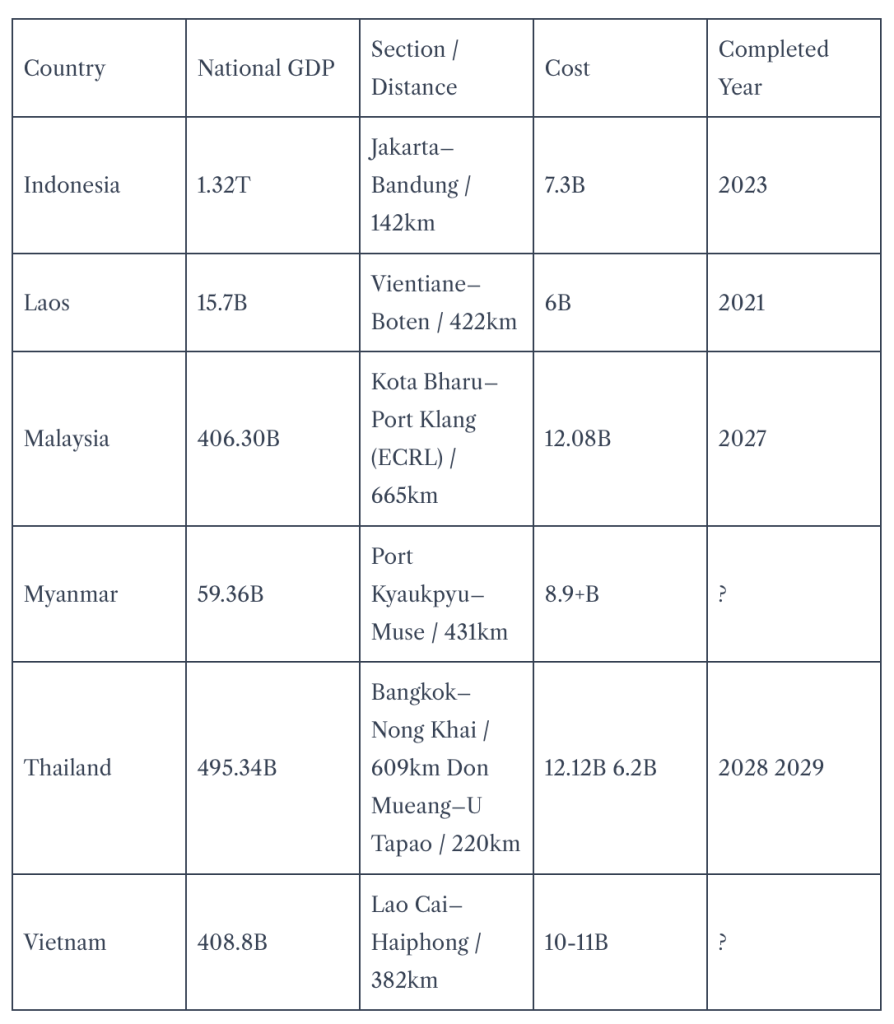
All values are in US Dollars. GDP pulled from World Bank Data, 2022.

.

It is likely that from now on, China’s rail diplomacy will focus on completing the current and planned projects rather than adding new projects. Geographically, the most feasible routes between China and the Southeast Asian countries have been identified, leaving little space for additional projects. With China’s economic growth slowing down, domestic economic challenges and the gloomy global market could constrain the capacity and motivation of the Xi administration to promote more rail projects overseas, including in Southeast Asia. Regionally, national governments may not have the surplus financial capacity or political capital to build additional major rail proposals before current projects are completed. However, it would not be surprising to see a few undecided and pending projects eventually being taken up by Beijing. In short, China’s rail diplomacy is slowly but steadily strengthening its influence on Southeast Asia by completing projects and establishing direct services, mainly in Indochina, but there continue to be significant limitations on what this will mean for geopolitics in the region more broadly.

How Japan Could Respond

The impact of China’s rail diplomacy in Southeast Asia has affected Japan’s role in the region. Other than Beijing, Tokyo is the primary rail provider to Southeast Asia, and their competition is intense, as was observed in the 2010s with several projects in Indonesia, Malaysia, and Thailand. Unlike China, which gains its influence by building direct rail connections to Southeast Asia, Japan seeks to mitigate the former’s influence by promoting its economic ties with the region, which can be traced back to the initial stage of the Cold War. Although Beijing has secured more large-scale projects than Tokyo, the latter can respond in a more targeted way by focusing on the East-West Rail Link, modernizing narrow gauged networks, and implementing the North-South Commuter Railway in the Philippines.

The east-west links in Indochina and the modernization of narrow-gauged networks may allow Japan to express its advantages in the face of China’s diplomacy. In mainland Southeast Asia, the major rail projects involving Beijing have so far run along with the north-south direction, but the demand for the east-west axis may be even greater (Asian Development Bank Institute, 2015: 56, 79–80). Several gaps have been observed in Indochina’s rail networks with Vietnam and Myanmar, respectively, being unconnected with any other Southeast Asian countries. In addition, Vietnam may have security concerns regarding any China-related project to build rail connections to other Southeast Asian countries. Therefore, Tokyo would be a more acceptable technology provider to Hanoi (Raymond, 2021: 17). Myanmar is a dilemma for Japan. The Japan International Cooperation Agency (JICA) has worked there for decades, including on improving narrow-gauged lines, such as the Yangon circular line and the trunk line between Yangon and Mandalay (JICA). However, the coup forced JICA to stop all rail projects (Frontier Myanmar, 2023). Tokyo would like to conduct a project for the East-West Rail Link to connect Myanmar and other Southeast Asian countries, particularly Thailand, but the international criticism on cooperating with Myanmar’s junta and the ongoing civil war presents an obstacle. If faced with the difficult choice of whether to maintain its influence in Myanmar or protect its international image, Japan may choose the latter over the former.

Due to the scales of their networks, Indonesia, Malaysia, Myanmar, Thailand, and Vietnam are not likely to phase out their narrow-gauged networks but rather modernize them, as China would not fund such a large re-gauging of entire networks. With the majority of its rail networks being narrowed-gauged, Japan has ample companies that have technology for and experience in raising train speeds and modernizing through means other than complete re-gauging, such as upgrading signals and operational regulations. Since Thailand and Vietnam have not electrified their narrow-gauged lines, Japan may play a critical role in helping them reach this milestone. In addition, Tokyo may continue or expand its current policy of donating used narrow-gauged rolling stock to its Southeast Asian counterparts, such as recent donations of Kiha-40/48 and Kiha-183 diesel cars to Thailand and Cambodia (Railway Gazette International, 2024). Overall, upgrading existing systems is more economic and carries a lower financial burden. For example, Kenya chose to build a Chinese standard gauged rail system between Nairobi and Mombasa, rather than upgrading its existing meter-gauge rail line, but that created financial difficulties due to insufficient revenue (Soy, 2023). Similar worry occurs in China’s major rail projects in Southeast Asia. Although China could also provide the required rail technologies for Southeast Asian operators to improve their narrow-gauged networks, such as rolling stocks to Malaysia, Thailand and Vietnam, they seem to prefer to provide predominantly off-shelf products and solutions, which are usually for the standard gauge.

Due to its souring relationship with China, the Philippines is another great opportunity for Japan to develop rail projects. As previously mentioned, Manila’s limited narrow-gauged network means that it prefers to build brand new standard gauge systems, such as the ongoing North-South Commuter Railways (NSCR) between Clark Airport and Calamba (North-South Commuter Railway, 2023). The NSCR is the largest rail project in the Philippines in recent decades, and it would reshape the regional development of the national political and economic center in metropolitan Manila (Railway Technology, 2022). Through this, along with other metro projects in Manila, Japan has earned a reliable reputation in the archipelagic country. If the current trend continues, Tokyo has a good chance of obtaining Manila’s three rail projects—Mindanao, long-haul South, and Subic-Clark. The Subic-Clark route looks to open up a promising economic corridor, with investment from the United States (Beltran, 2024). However, it is uncertain whether Japan would take on the other two projects, either bilaterally or through the Asian Development Bank (Jose, 2024; Rosales, 2024).

Image: A lineup of JR East Shinkansen trains in October 2012 (Licensed under CC BY-SA 3.0)

undefined

Overall, although the shinkansen system has been a symbol of Japan’s rail technology, further exports after the completion of the Bangkok–Chiang Mai project may be limited due to competition from China. Tokyo’s unsuccessful bid for the Jakarta–Bandung project has demonstrated Beijing’s financial advantage, including price and loan terms. Unless Japan can develop a more attractive package than China, it will be difficult for it to obtain a new HSR project in Southeast Asia. To counter a bid by Tokyo, Beijing could similarly increase its offer, given that its authoritarian regime is more flexible than its Japanese counterpart in adjusting financial deals. As mentioned above, the HSR routes with the most potential in Southeast Asia have been identified and the KL-SG HSR and Vietnam’s North-South HSR, which have so far not been taken up by China, would be obvious opportunities for Japan. If the KL-SG HSR proceeds under a bilateral agreement, the Sino-Japanese competition from the late 2010s could be reignited. Beijing, with its goal of building the SKRL, would desperately pursue this project, and it would take Tokyo a lot of effort to even have a chance. It may be easier for Japan to win the bid for the north-south HSR between Hanoi and Ho Chi Minh City due to Vietnam’s geostrategic concerns about China, but the improving Sino-Vietnam relationship may signify a potential joint venture of HSR. If Tokyo is about to secure the north-south HSR project with Hanoi, the project’s long distance, slow progress, and loose schedule would lead to various challenges in negotiation and execution (Vietnam Net Global, 2023), likely much greater than the HSR between Bangkok and Chiang Mai. Finally, Japan’s economic challenges, such as the dropping exchange rate of the yen and inflation, may reduce its capacity and will for dealing with an expensive HSR overseas.

Conclusion

Due to either the BRI or previous efforts, China’s rail projects have slowly reshaped the geopolitical landscape in Southeast Asia. Although Beijing has utilized its huge financial and industrial capacity to secure a range of projects in the region, effectively eliminating competition from Japan, it has faced some obstacles, such as host countries’ political situations, the pandemic, and other geopolitical challenges. China’s rail projects will mostly be in mainland Southeast Asia, generally on the north-south axis according to the SKRL plan, and will progress at a medium or slow pace. China’s achievements indeed marginalize Japan’s regional role, but Beijing’s approach also leaves Tokyo some opportunities to exploit. Through careful management, Japan can remain influential in Southeast Asia despite China’s geopolitical weight.

*

Click the share button below to email/forward this article to your friends and colleagues. Follow us on Instagram and Twitter and subscribe to our Telegram Channel. Feel free to repost and share widely Global Research articles.

Get Your Free Copy of “Towards a World War III Scenario: The Dangers of Nuclear War”! 

Shang-Su Wu is an assistant professor at the Rabdan Academy, Abu Dhabi, United Arab Emirates. He was a research fellow at the S. Rajaratnam School of International Studies (RSIS), Nanyang Technological University, Singapore. He is the author of Military Modernisation in Southeast Asia after the Cold War: Acquisition, Retention, and Geostrategic Impacts (London: Routledge, 2024). His research interests are military modernization, Taiwan issues, railways, and international relations. Wu’s articles, commentaries and op-eds have been published in Asia Policy, Contemporary Southeast Asia, the Pacific Review, and Defence Studies, among others.

Sources

東洋経済. (20 July, 2022). “在来線で時速160km運転を実現「681系」の功績 鉄道の「スピード史」を語る上で外せない名車.” https://toyokeizai.net/articles/-/602560

Amojelar, D. G. (6 November , 2023). “China drops 2 more PH railways.Manila Standard: https://manilastandard.net/business/transport-tourism/314387317/china-drops-2-more-ph-railways.html

Antara. (12 Septmber, 2019). “Dirut: Pendirian PT INKA diinisiasi BJ Habibie.https://www.antaranews.com/berita/1059784/dirut-pendirian-pt-inka-diinisiasi-bj-habibie

ASEAN. (2012). “ASEAN Connectivity Project information Sheets.” https://www.usasean.org/system/files/downloads/ACProjectInformationSheets.pdf#:~:text=The%20Singapore-Kunming%20Rail%20Link%20(SKRL),Myanmar%2C%20Viet%20Nam%20and%20Thailand

Asian Development Bank. (8 November, 2021). “Philippines: Commuter Corridor Leads Rail Revival.” https://www.adb.org/news/features/philippines-commuter-corridor-leads-rail-revival

Asian Development Bank Institute. (2015). Connecting South Asia and Southeast Asia.Tokyo: Asian Development Bank Institute.

Asian News Network. (13 September, 2023). “Japan reluctant to join Indonesian high-speed rail project, citing need to protect its ‘brand.’” https://asianews.network/japan-reluctant-to-join-indonesian-high-speed-rail-project-citing-need-to-protect-its-brand/

Asia-Plus. (7 June, 2024). “China, Kyrgyzstan and Uzbekistan sign an agreement on construction of railway.” Retrieved 8 August, 2024: https://asiaplustj.info/en/news/centralasia/20240607/china-kyrgyzstan-and-uzbekistan-sign-an-agreement-on-construction-of-railway

Bangkok Post. (29 January , 2023). “3-Airport High-Speed Rail Link Completion Seen By 2029.https://www.bangkokpost.com/thailand/general/2493950/3-airport-high-speed-rail-link-completion-seen-by-2029

Bangkok Post. (8 March, 2023). “Bangkok-Chiang Mai rail project gears up.” https://www.bangkokpost.com/thailand/general/2523376/bangkok-chiang-mai-rail-project-gears-up

BBC News. (4 May, 2018). “Kuala Lumpur-Singapore named busiest international air route.” BBC: https://www.bbc.com/news/business-44000000

Beltran, S. (4 August , 2024). “Philippines looks to diversify project funding beyond China amid maritime row.” Retrieved 9 August, 2024, from South China Morning Post: https://www.scmp.com/week-asia/economics/article/3273077/philippines-looks-diversify-project-funding-beyond-china-amid-maritime-row

Burroughs, D. (30 June , 2020). “Mandalay – Kyaukphyu railway moves to feasibility study stage.” International Railway Journal: https://www.railjournal.com/infrastructure/mandalay-kyaukphyu-railway-moves-to-feasibility-study-stage/

Cai, D. (2 October, 2023). “China Belt and Road: Indonesia opens Whoosh high-speed railway.” BBC: https://www.bbc.com/news/world-asia-66979810

Chanco, B. (21 July, 2023). “China flakes out of railway projects.” PhilStar: https://www.philstar.com/business/2023/07/21/2282543/china-flakes-out-railway-projects

Channel News Asia. (22 July, 2024). “Malaysia to decide by this year on HSR link with Singapore, shortlisting private consortiums to back project: Minister.” Retrieved 8 August, 2024: https://www.channelnewsasia.com/asia/malaysia-hsr-singapore-proposals-anthony-loke-4490121

Chen, J. (2001). Mao’s China and the Cold War. Chapel Hill: University of North Carolina Press.

Clark, J. (14 February, 2023). “Current and proposed railways in Cambodia.” Future Southeast Asia: https://futuresoutheastasia.com/cambodia-railways/

Clark, J. (6 March, 2023). “Pattaya Station Redevelopment: High-speed railway and mixed-use project.” Future Southeast Asia: https://futuresoutheastasia.com/pattaya-station/

Cruz, R. C. (15 July , 2022). “China withdraws funding for 3 railway projects: DOTr exec.” Philippine News Agency: https://www.pna.gov.ph/articles/1179059

Ferchen, M. (2021). “The Two Faces of the China Model The BRI in Southeast Asia.” In F. Schneider, Global Perspectives on China’s Belt and Road Initiative (245–264). Amsterdam: Amsterdam University Press.

Frontier Myanmar. (11 September , 2023). “Blood on the tracks: The war over Myanmar’s railroads.” https://www.frontiermyanmar.net/en/blood-on-the-tracks-the-war-over-myanmars-railroads/

Global Times. (9 August, 2023). “China begins construction of high-speedrailway link to Vietnam.” https://e.vnexpress.net/news/news/pm-meets-leaders-of-leading-chinese-conglomerates-4654003.html

Guangyong, S. (1 June , 2023). “China-Thailand railway under smooth construction.” People’s Daily: en.people.cn/n3/2023/0601/c90000-20026509.html

Harada, I. (15 July, 2020). “ASEAN becomes China’s top trade partner as supply chain evolves.” Nikkei Asia: https://asia.nikkei.com/Politics/International-relations/ASEAN-becomes-China-s-top-trade-partner-as-supply-chain-evolves

Hua Hin Today. (31 January, 2024). “Hua Hin’s Rail Developments: The Differences Between the Dual Track and High-Speed Train Lines.” https://www.huahintoday.com/hua-hin-news/hua-hins-rail-developments-the-differences-between-the-dual-track-and-high-speed-train-lines/

INKA. (n.d.). “About INKA.” https://www.inka.co.id/corporation/22

Jain, S. (7 March, 2018). “Delhi to Jaipur in 90 minutes? New 200 kmph semi-high speed train corridor being planned by Indian Railways.” Financial Express: https://www.financialexpress.com/business/railways-delhi-jaipur-train-indian-railways-semi-high-speed-corridor-distance-route-1090181/

Jane’s. (2022). Janes World Railways Yearbook 22/23. London: Jane’s.

JETRO. (15 August, 2023). “南北高速鉄道の指導委員会を設置、計画の具体化を目指す.” Retrieved 8 August, 2024, from JETRO: https://www.jetro.go.jp/biznews/2023/08/f5797ca0f69097a9.html

JICA. (n.d.). “Map of JICA Major Projects in Myanmar.” https://libportal.jica.go.jp/library/Data/PlanInOperation-e/SoutheastAsia/030_Myanmar-e.pdf

Jones, A. (29 October, 2022). “Laos’ Fast Train to China Brings Connection at a Cost, With Big Promises but Uneven Progress.” Rainforest Journalism Fund: https://rainforestjournalismfund.org/stories/laos-fast-train-china-brings-connection-cost-big-promises-uneven-progress

Jose, A. E. (18 July, 2024). “JICA says Mindanao rail plan not ready for funding decision.” Retrieved 9 August, 2024, from Business World: https://www.bworldonline.com/economy/2024/07/18/609075/jica-says-mindanao-rail-plan-not-ready-for-funding-decision/

Karyza, D. (22 April, 2024). “Indonesia seeks China’s support to extend first high speed railway to Surabaya.” Retrieved 8 August, 2024, from Asia News Network: https://asianews.network/indonesia-seeks-chinas-support-to-extend-first-high-speed-railway-to-surabaya/

Khan, A. (26 August , 2019). “The Malacca Dilemma: A hindrance to Chinese Ambitions in the 21st Century.” Berkeley Political Review: https://bpr.berkeley.edu/2019/08/26/the-malacca-dilemma-a-hindrance-to-chinese-ambitions-in-the-21st-century/

Kuik, C.-C. (2021). “Elite Legitimation and the Agency of the Host Country Evidence from Laos, Malaysia, and Thailand’s BRI Engagement.” In F. Schneider, Global Perspectives on China’s Belt and Road Initiative (217–244). Amsterdam: Amsterdam University Press.

Lertpusit, S. (5 January, 2023). “Long-Delayed Thailand-China High-Speed Train: A Political Game on Two Tracks.” Fulcrum: https://fulcrum.sg/long-delayed-thailand-china-high-speed-train-a-political-game-on-two-tracks/

Light Rail Transit Authority. (n.d.). “Railway Operations.https://www.lrta.gov.ph/railway-operations/

Lim, G., Li, C., & Ji, X. (2022). “Chinese financial statecraft in Southeast Asia: an analysis of China’s infrastructure provision in Malaysia.” The Pacific Review, 35(4), 647–675.

Malay Mail. (13 September, 2023). “Research house expects more clarity on KL-Singapore high-speed rail project after RFI process ends.” https://www.malaymail.com/news/malaysia/2023/09/13/research-house-expects-more-clarity-on-kl-singapore-high-speed-rail-project-after-rfi-process-ends/90602

Manabat, J. (17 October, 2023). “Metro Manila to Bicol Express railway project frozen as China funding uncertain.” ABS-CBN News: https://news.abs-cbn.com/business/10/17/23/paranaque-bicol-railway-frozen-as-china-funding-uncertain

North-South Commuter Railway. (2023). “Area Map.” https://nscr.com.ph/map

Observatory of Economic Complexity. (2023). “Yunnan Province.” https://oec.world/en/profile/subnational_chn/yunnan-province?redirect=true

Otele, O. M., Lim, G., & Alves, A. (2022). China-Driven Rail Development: Lessons from Kenya and Indonesia. Johannesburg: South African Institute of International Affairs.

Pavlenko, A. (30 September, 2023). “Middle Corridor-frameworked Kyrgyz part railway initiative to see light soon – ambassador.” Trend News Agency: https://en.trend.az/casia/kyrgyzstan/3805031.html

Philippine National Railways. (n.d.). “PNR IN PHILIPPINE HISTORY.”  https://pnr.gov.ph/about-contact-us/who-we-are/pnr-in-philippine-history/pnr-in-philippine-history.html

Rail Tech. (17 August , 2021). “New Russian high-speed train will be ready in 2028.” https://www.railtech.com/infrastructure/2021/08/17/new-russian-train-of-400-km-h-to-be-ready-in-2028/?gdpr=accept

Railway Gazette International. (8 December, 2014). “Standard gauge line reaches Hekou.” https://www.railwaygazette.com/standard-gauge-line-reaches-hekou/40295.article

Railway Gazette International. (2 August, 2022). “China opens first section of railway to Myanmar.” https://www.railwaygazette.com/infrastructure/china-opens-first-section-of-railway-to-myanmar/62233.article

Railway Gazette International. (8 February, 2023a). “Cambodian railway regauging study completed.” https://www.railwaygazette.com/infrastructure/cambodian-railway-regauging-study-completed/63503.article

Railway Gazette International. (4 August, 2023b). “Philippines to study 1024 km of rail projects.” https://www.railwaygazette.com/infrastructure/philippines-to-study-1-024-km-of-rail-projects/64651.article

Railway Gazette International. (2 May, 2024). “Japanese DMUs find second homes in Thailand and Cambodia.” Retrieved 9 August , 2024: https://www.railwaygazette.com/traction-and-rolling-stock/japanese-dmus-find-second-homes-in-thailand-and-cambodia/66437.article

Railway Technology. (6 April, 2021). “Malaysia agrees to 14% increase in East Coast Rail Link project costs.” https://www.railway-technology.com/news/malaysia-east-coast-rail-link-project-costs/

Railway Technology. (19 August, 2022). “North-South Railway Project, Philippines.” https://www.railway-technology.com/projects/north-south-railway-project/?cf-view

Raymond, G. (2021). “Jagged Sphere: China’s Quest for Infrastructure and Influence in Mainland Southeast Asia.” Sydney: Lowy Institute for International Policy.

Reuters. (16 July, 2022). “Marcos wants Philippines to renegotiate loans on China-backed rail projects.” https://www.reuters.com/world/asia-pacific/philippines-marcos-wants-renegotiate-loans-49-bln-china-backed-rail-projects-2022-07-16/

Rogers, D. (15 March, 2023). “China and Myanmar in talks to resume workon 1,000km railway.” Global Construction Review: https://www.globalconstructionreview.com/china-and-myanmar-in-talks-to-resume-work-on-1000km-railway/

Rosales, E. F. (19 July, 2024). “Multilateral loans eyed for revival of Bicol railway.” Retrieved 9 August, 2024, from The Philippine Star: https://www.philstar.com/business/2024/07/19/2371186/multilateral-loans-eyed-revival-bicol-railway

Ruane, C. (2021). “Towards A Southeast Asian Rail Network: The Role of Thailand and Foreign Powers.” Asian Affairs, 52(3), 638–654.

Simmons, Mark. (15 July, 2024). “Nepalese government approves China rail link.” Retrieved 8 August, 2024, from International Railway Journal: https://www.railjournal.com/infrastructure/nepalese-government-approves-china-rail-link/

Soy, A. (14 October, 2023). “China’s Belt and Road Initiative: Kenya and a railway to nowhere.” Retrieved 9 August , 2024, from BBC: https://www.bbc.com/news/world-africa-67101736

State Council, People’s Republic of China. (30 March, 2015). “Full text: Action plan on the Belt and Road Initiative.” https://english.www.gov.cn/archive/publications/2015/03/30/content_281475080249035.htm

Sulaiman, S. (6 September, 2023). “China, Indonesia discuss extending Jakarta high-speed railway.” Reuters: https://www.reuters.com/world/asia-pacific/china-premier-completes-trial-run-indonesias-first-high-speed-rail-2023-09-06/

Sun, Y. (14 August, 2014). “China, Myanmar: stop that train.” Stimson Commentary: https://www.stimson.org/2014/china-myanmar-stop-train/

The Economist. (20 January, 2021). “China’s economic centre of gravity is moving south.” https://www.economist.com/graphic-detail/2021/01/20/chinas-economic-centre-of-gravity-is-moving-south

The Jakarta Post. (2 October, 2023). “Indonesia launches Jakarta-Bandung ‘Whoosh’ high-speed railway.” https://www.thejakartapost.com/indonesia/2023/10/02/indonesia-launches-jakarta-bandung-whoosh-high-speed-railway.html

The Manila Times. (4 November, 2023). “DoTr: Japanese funded-projects on track.” https://www.manilatimes.net/2023/11/04/business/top-business/dotr-japanese-funded-projects-on-track/1917874

The Ministry of Finance Vietnam. (27 May , 2007). “PM approves railway corporation’s development plan.” https://mof.gov.vn/webcenter/portal/btcen/pages_r/l/newsdetails?dDocName=BTC079350

The Star. (19 June, 2024). “’Game-changing’ ECRL reaches two-thirds completion.” Retrieved 8 August, 2024: https://www.thestar.com.my/news/nation/2024/06/19/039game-changing039-ecrl-reaches-two-thirds-completion

The Times of India. (26 October, 2023). “India reiterates opposition to China’s multi-billion-dollar infrastructure project BRI.” https://timesofindia.indiatimes.com/india/india-reiterates-opposition-to-chinas-multi-billion-dollar-infrastructure-project-bri/articleshow/104735175.cms

The World Fact Book. (N.A.). “Railways.” Central Intelligence Agency (CIA): https://www.cia.gov/the-world-factbook/field/railways/

Thu, H. (25 June, 2024). “Vietnam to start work on high-speed rail within next 3 years: transport minister.” Retrieved 8 August , 2024, from VN Express: https://e.vnexpress.net/news/business/economy/vietnam-to-start-work-on-high-speed-rail-within-next-3-years-transport-minister-4762784.html

Topcu, N. (2020). “A Relationship on a Pipeline: China and Myanmar.” China Research Center: https://www.chinacenter.net/2020/china-currents/19-3/a-relationship-on-a-pipeline-china-and-myanmar/

Tran, J. (4 October , 2023). “Vietnam must close infrastructure gap to realise aim of being regional transshipment hub: analysts.” The Business Times: https://www.businesstimes.com.sg/international/asean/vietnam-must-close-infrastructure-gap-realise-aim-being-regional-transshipment

Tri, D. (17 July, 2023). “Vietnam plans $17 bln railway routes to seaports.” The Investor: https://theinvestor.vn/vietnam-plans-17-bln-railway-routes-to-seaports-d5834.html

Vanyuth, C. (28 March, 2024). “Kingdom mulling high-speed railway link with Lao.” Retrieved 8 August , 2024, from Khmer Times: https://www.khmertimeskh.com/501463624/kingdom-mulling-high-speed-railway-link-with-lao/

Vietnam Net Global. (5 October , 2023). “Vietnam to speed up US$59-billion high-speed train project.” https://vietnamnet.vn/en/vietnam-to-speed-up-us-59-billion-high-speed-train-project-2198082.html

Vietnam+. (19 April, 2023). “Railway network plans revealed.” https://en.vietnamplus.vn/railway-network-plans-revealed/251782.vnp

VN Express. (16 September , 2023). “PM calls for expansion of railway links between Vietnam, China.” https://e.vnexpress.net/news/news/pm-meets-leaders-of-leading-chinese-conglomerates-4654003.html

Vu, N. H. (2 July, 2024). “Vietnam Calls for Chinese Support in Advancing Rail Projects.” Retrieved 9 August, 2024, from Vietnam Briefing: https://www.vietnam-briefing.com/news/vietnam-encourages-china-investments-expertise-collaboration-rail-infrastructure.html/

Wancharoen, S. (22 April, 2024). “2nd phase of Thai-China rail gets nod.” Retrieved 8 August, 2024, from Bangkok Post: https://www.bangkokpost.com/thailand/general/2780144/2nd-phase-of-thai-china-rail-gets-nod

Watt, L. (29 July, 2013). “China opens pipeline to bring gas from Myanmar.” AP News: https://apnews.com/article/30ab3b58760244fd8dded2c052690b58

World Bank. (2023). “GDP (current US$) – Indonesia.” https://data.worldbank.org/indicator/NY.GDP.MKTP.CD?locations=ID

Wu, S.-S. (15 January , 2020). “Belt and rail: New Vietnam-China train aims to put relations on track.” The Interpreter: https://www.lowyinstitute.org/the-interpreter/belt-rail-new-vietnam-china-train-aims-put-relations-track

Wu, S.-S. (2021). “China’s railway diplomacy under the Belt and Road Initiative.” In J. C. Liow, H. Liu, & X. Gong, Research Handbook on the Belt and Road Initiative (28–42). London: Edward Elgar .

Wu, S.-S. (9 June, 2022). “Commentary: Huge benefits but many challenges to high-speed rail between Bangkok and Kuala Lumpur.” Channel News Asia: https://www.channelnewsasia.com/commentary/malaysia-thailand-high-speed-rail-train-costs-bangkok-kl-2729521

Xinhua. (26 12, 2022). “China-Laos Railway opens up new path for Laos’ development, prosperity.” https://english.news.cn/20221226/003f1111e9534f549f015dbe26b4d4da/c.html

Xinhua. (25 August , 2023). “Excavation of 25 tunnels completed along China-Malaysia jointly constructed railway.” https://english.news.cn/20230825/15bff7cd40494388b689741cde0bea43/c.html

Yu, H. (16 December, 2021). “The China-Laos Railway: A.” Retrieved 9 August, 2024, from East Asia Institute National University of Singapore: https://research.nus.edu.sg/eai/wp-content/uploads/sites/2/2021/12/EAIC-44-20211216-1.pdf

Zhou, L. (17 October , 2023). “How China is building railways in a bid to fast-track diplomacy.” South China Morning Post: https://www.msn.com/en-xl/news/other/how-china-is-building-railways-in-a-bid-to-fast-track-diplomacy/ar-AA1ijEXS

Featured image is from APJJF

Australian Campus Life Killers: Ending Face-to-Face Lectures

September 26th, 2024 by Dr. Binoy Kampmark

The bells are tolling for the demise of the university classroom – at least its physical manifestation. Administrative barbarians are readying their knives and brandishing their drivel-fed visions about pedagogy, a word they scant define, let alone spell.  They find it unseemly that an academic could turn up, in person, to teach students who, likewise, turn up in person, to engage in that rich process known as the acquiring of knowledge.

The acuity of this state of affairs has been notable in Australia. This month, the University of Adelaide gassed unsuspecting believers of such traditional forms of learning with a lethal statement. As of 2026, when a new amalgamated behemoth in South Australia, combining the University of Adelaide and University of South Australia, will emerge, students will no longer be turning up, in person, to classes. This would have hardly shocked those familiar with the University of Adelaide’s effort to do the very same thing in 2015. For years, the university managers have hated the physical classroom.

As is always the case with these pronouncements, a fictional body of evidence, opinion and sentiment is referred to by way of justification. “Universities,” claimed a spokesman for Adelaide University, “have been increasingly responding to student needs for a flexible delivery over the years, and the shift away from face-to-face lectures is not new.” Who are these remarkable, absentee students?  What, pray, is the sample size?  Answer: there was none.

Then comes the elaborate ground cover masking the undemocratic nature of the decision.  The domain lead for curriculum (such positions multiply like fungi) at Adelaide University, Joanne Cys, seemed under the impression that staff had been “comprehensively engaged” in developing the new curriculum.  “This collaboration is ongoing … with more than 1,500 staff set to develop the content for Adelaide’s University courses and programs between now and 2026.” Content, in these settings, is a very loose concept, not to mention staff qualifications.

The culling of lectures is part of the “Adelaide Attainment Model,” a slimming program that will see trimesters introduced by 2028.  It satisfies a “modular” fetish – the world of learning envisaged as starved catwalk models moving across the stage rather than well fed samples of learning buried in books.  As such, these modules can be undertaken in the form of online courses, which offer fleeting flexibility and shallow taste.  This is education thinned and skinned, fatless and deprived.

To give a sense of this, the Adelaide document is full of anaemic terms.  “These activities will deliver an equivalent learning volume to traditional lectures and will form a common baseline for digital learning across courses, providing a consistent experience for students.”  The claims to consistency are certainly accurate, in so far as such an experience will be numbingly mediocre.

The document expresses the view that such “asynchronous activities will be self-paced and self-directed, utilising high-quality digital resources that students can engage with anytime and anywhere.”

Within the temple of desecration, certain devotees are expressing concern.  “The best assurance we have is there can still be practicals, tutorials or workshops, yet we cannot really teach content in these,” suggested one lecturer to In Daily.  Activities might involve quizzes, readings and “short videos” as substitutes for lectures.  “This mode of teaching is almost impossible for STEM [science, technology, engineering and mathematics], health and medicine degrees.”

Every haughty contrarian will find a cowardly sycophant justifying such decay as the heralding of progress.  “We sort of already do what is suggested anyway,” claims one unnamed apologist academic, also quoted by In Daily.  Students already see “recordings” to begin with, and only then do they go into “face-to-face sessions that are more interactive”.  It might be worth asking the obvious point here: why have the recordings in the first place to excuse your reason to teach?

This unnamed individual adopts a very casual attitude towards the modern mutilations of education.  “The silly thing about it all is that’s what we do anyway, and the reality is students often don’t watch the recording before coming to the class winds up a bit like being a lecture anyway to make sure they get through the material.”  These are comments that remind any reformer that the last bastion of change will always be the academy.

The move towards abolishing such teaching also suggests that the rotting foundations were already offering much for this change.  Funded, slothful ignoramuses were already advancing the idea for some years that the classroom be “flipped”, a convenient way which ignores the rigours of instruction and disciplined learning in favour of convenient schedules best done at home.  The flipped classroom became the precursor for extinguishing coherent, disciplined learning, linked to space, people and experiences.

The COVID-19 pandemic provided an accelerant for money-pinching administrative juntas to experiment with eliminating student-teacher classes without providing the experience that supposedly accompanies it.  Savings were there to be made, student welfare to be manipulated.  Here was a chance to extract the pith from the student orchard without providing an ounce of nourishment.  The advent of artificial intelligence (AI) technologies is merely the next step in retiring, forever, the human in the classroom, a process that, disturbingly enough, will seek to retire the student as well.

In a stingingly sharp piece, scientist Geoff Davies describes the ball wreckers of university teaching as “managerial digital infidels” who treat education as a matter of harvesting knowledge, a body comprising “a big collection of pieces, factoids that can be served in small bowls for the student to consume.”  A bleak, apocalyptic interpretation is offered.  “Thus, the neoliberal mindset of isolated, asocial individuals competing through a series of fragmented transactions is carried down to its ultimate subversion of the very knowledge on which our culture and civilisation are built.”

*

Click the share button below to email/forward this article to your friends and colleagues. Follow us on Instagram and Twitter and subscribe to our Telegram Channel. Feel free to repost and share widely Global Research articles.

Get Your Free Copy of “Towards a World War III Scenario: The Dangers of Nuclear War”! 

Dr. Binoy Kampmark was a Commonwealth Scholar at Selwyn College, Cambridge.  He currently lectures at RMIT University.  He is a Research Associate of the Centre for Research on Globalization (CRG). Email: [email protected]

Featured image: The University of South Australia’s Brookman Building located next to Bonython Hall (Licensed under CC BY-SA 2.0)

  • Posted in English @as @as
  • Comments Off on Australian Campus Life Killers: Ending Face-to-Face Lectures

India’s Military Support to Israel Is a Hideous Mistake

September 25th, 2024 by M. K. Bhadrakumar

It came as a disappointment that the Supreme Court bench led by Chief Justice D Y Chandrachud dismissed a joint petition filed by a distinguished group of intellectuals that the supply of arms from India to the Israeli military during the Gaza war is in violation India’s obligations under international law coupled with Articles 14 and 21 read with 51(c) of the Constitution.  

The petitioners pleaded that the court had on previous occasions held that India is under obligation to interpret domestic law in the light of the obligations under the conventions and treaties that it has both signed and ratified. However, the apex court took note that this is an issue of foreign policy. The government is off the hook. 

But an even more explosive issue devolves upon the reports that pucca Indians or people of Indian origin have been recruited by the Israeli army to fight in the war. At a minimum, the government is obliged to ascertain from the Israeli government the veracity of such reports. It is a huge issue since over 40,000 Palestinians have been killed and nearly 100,000 injured in Israel’s military operations so far.

Doesn’t the government realise that this is adding to the growing perception internationally that the current government is ‘Islamophobic’ and ‘anti-Muslim’? Governments come and go but such stigmas eventually become the burdens of history once the West Asian region’s oligarchies disappear and get replaced by representative governments going forward.

Anyone who is a believer in the forces of history would sense that without a radical rethink of national policy, Israel faces a dismal future of strategic defeat. To be sure, the West Asian region is on the cusp of change. Last week, Saudi Arabia’s embassy in Damascus officially resumed its mission after a 12-year hiatus of wasted time as financier and mentor of the jihadi forces who spearheaded the Western project for regime change in Syria. The reintegration of Syria into the Arab world, the Saudi-Iranian rapprochement, the BRICS membership of Iran, the Persian Gulf countries and Egypt, the diminishing influence of the United States in the West Asian region, the isolation of Israel — these are emblematic of the winds of change sweeping the region. 

In such a transformative period, how could India possibly cling to the world of yesterday with a regional policy anchored on its special relationship with Israel? On the one hand, we are moralising that ‘this is not an era of wars’ while on the other hand, the government is giving robust support to Israel in its horrific war against the Palestinian people. 

Again, the religious dimension to the fratricidal strife in Manipur is already drawing the attention of Christian countries, although this is the first time that the Meitei, who are predominantly Hindu, live mostly in and around the state’s capital city Imphal, and the Kuki — who are mainly Christian and inhabit the surrounding hills — clashed against each other… Many have pointed out that Prime Minister Narendra Modi is yet to visit the state or make a comprehensive statement. In a devastating article that neatly overlapped the high-profile visit of External Affairs Minister S Jaishankar to Germany, the Deutsche Welle — a national broadcasting station, by the way — continued that apart from the militarisation of that tiny state, the Indian government has no policy. 

What do we do with such brutal criticism? We either stomach it when it originates from powerful Western countries such as Germany or the US (or the United Nations), or become hysterical when Iran compares the situation in J&K with Gaza. Perhaps, India is the only country in the Global South which behaves so cynically. When the aristocrats in our political class wax eloquently that ‘India matters’ as a world power, they overlook that we live in a veritable glass house in the age of the Internet in which information travels around the world in seconds. One can hear the derisive suppressed laughter in the Western world when we strut around on the global stage as ‘Vishwaguru’. 

Suffice to say, India’s policy during the past 11 months of the Gaza war has become a mystery wrapped in an enigma. The only plausible explanation is that Israelis who are adept at the art of political blackmail are exploiting the government’s Achilles’ heel, that is Haifa Port, which is in the eye of the storm in the region, to manipulate our foreign policy. 

*

Click the share button below to email/forward this article to your friends and colleagues. Follow us on Instagram and Twitter and subscribe to our Telegram Channel. Feel free to repost and share widely Global Research articles.

Get Your Free Copy of “Towards a World War III Scenario: The Dangers of Nuclear War”! 

Ambassador M K Bhadrakumar served the Indian Foreign Service for more than 29 years.

Featured image is from Deccan Herald

By abstaining on the latest United Nations General Assembly resolution against Israel’s occupation of Palestine, the Australian government has failed Palestinian people, international law and to support peace and justice in the world, Socialist Alliance national co-convenor Sam Wainwright told Green Left.

The resolution, adopted on September 18 by an overwhelming majority, demanded that Israel completely end its unlawful presence in the Occupied Palestinian Territories (OPT) within a year.

One-hundred-and-twenty-four nations voted in favour, with 14 against and 43 abstentions.

The resolution called upon all member states to refrain from recognising Israel’s presence in the OPT as lawful and ensure they do not provide aid or assistance to maintaining the situation created by the occupation.

This includes taking measures to prevent the citizens, companies and entities under their jurisdiction from engaging in activities that support or sustain Israel’s occupation.

The resolution also called on nations to stop importing products from Israeli settlements and to halt the transfer of arms, munitions and related equipment to Israel where there are reasonable grounds to suspect they may be used in the OPT.

It also called for sanctions, such as travel bans and asset freezes, against individuals and entities involved in maintaining Israel’s unlawful presence in the OPT and ensuring that those engaged in these activities (including settlers) face legal and financial consequences.

“There won’t be any steps towards justice in the Middle East unless there is pressure put on Israel,” Wainwright said. “Australia’s refusal to support the latest UN resolution, which simply support the findings of the International Court of Justice [ICJ] means, in practice, it is supporting Israel continuing to do what it is doing.”

“The fundamental position of the Australian government is to support Israel. An example of that is the $917 million deal with Elbit Systems … only weeks after the ICJ found that there was a plausible case of genocide against Israel.

“Every state in the world has an obligation to stop that [genocide].”

Wainwright said Australia’s position “is partly the fruit of the AUKUS deal which has bound it more tightly to the US.

“It was heartening that a number of Western countries voted for the UN resolution.

“Not just Ireland, which you would expect, but also Norway, Finland, Belgium, France, Spain, Portugal, Iceland and, in our region, New Zealand and Japan.

“So it wasn’t only the Global South that voted in favour.

“The public pressure against Israel’s horrendous genocide … means that Israel is more isolated than ever.

“But Australia, Canada, Britain and the US are still not prepared to put any pressure on Israel to stop its genocide in Gaza.

“The Australian government has failed the Palestinian people, failed international law and failed [to support] peace and justice in the world at this critical point,” Wainwright said.

*

Click the share button below to email/forward this article to your friends and colleagues. Follow us on Instagram and Twitter and subscribe to our Telegram Channel. Feel free to repost and share widely Global Research articles.

Get Your Free Copy of “Towards a World War III Scenario: The Dangers of Nuclear War”! 

Featured image: An overwhelming majority of United Nations member countries supported a resolution calling for an end to Israel’s occupation of Palestinian territory. Photo: United Nations

The United States’ plans to deploy Typhon missile systems in Japan represent a significant escalation in military strategy within the Indo-Pacific region. This move, coming in the wake of the collapse of the Intermediate-Range Nuclear Forces (INF) Treaty, raises numerous concerns regarding its implications for Japan and neighboring countries. While proponents argue that the deployment enhances security against threats from North Korea and China, experts warn of potentially severe negative consequences that could destabilize the region further.

Escalation of Tensions

One of the primary concerns about the deployment of Typhon missile systems is the likelihood of escalating tensions between the U.S. and its adversaries, particularly China and North Korea. Dr. John M. Mendosa, an international relations expert, emphasizes that such actions are likely to be interpreted as provocative. “Deploying missile systems that have been banned for decades sends a strong message to both China and North Korea,” he notes. “Rather than calming the waters, it could spark a series of military responses that exacerbate regional instability.”

China has already indicated that it would view the deployment as a direct threat, potentially leading to an arms race in the region. The increased military presence may compel Beijing to enhance its own missile capabilities, resulting in a vicious cycle of escalation. This situation creates a precarious environment where miscalculations could easily lead to conflict.

Diplomatic Fallout

The deployment of U.S. missile systems could also strain Japan’s diplomatic relations with its neighbors. Dr. Kenitiro Ueda, a security analyst from Japan, argues that the decision may alienate countries like South Korea and China, which may perceive Japan as becoming more militarized. “Japan has worked hard to maintain a diplomatic balance in the region,” Ueda states. “This move could disrupt that balance, leading to increased hostility and reduced cooperation on critical issues like trade and environmental concerns.”

Moreover, Japan’s role in the region may be redefined, with neighboring countries viewing it as a more aggressive player rather than a peace-promoting nation. This shift could complicate Japan’s diplomatic engagements, making it harder to navigate relationships that are essential for regional stability.

Domestic Repercussions

Public opinion within Japan could also become a significant issue following the deployment. Historically, Japan has maintained a pacifist stance post-World War II, and the prospect of increased militarization may provoke backlash from segments of the population. Dr. Michiko Tanaka, a sociologist specializing in Japanese politics, warns that public protests could arise. “Many Japanese citizens are deeply concerned about the implications of military expansion,” she explains. “The deployment of these missile systems could ignite significant civil unrest and political challenges for the government.”

The government may find itself caught between a commitment to U.S. security partnerships and the need to address domestic concerns about militarization. Such a conflict could lead to political instability and even impact upcoming elections.

Economic Implications

Beyond the political and military ramifications, the economic consequences of the deployment could be considerable. The prospect of heightened military tensions may deter foreign investment and tourism in Japan, as companies and travelers become wary of potential conflicts. Dr. Hiroshi Yamamoto, an economist, suggests that the economic repercussions could be significant. “Increased uncertainty in the region can lead to a decline in investment and economic growth, which could hurt Japan’s already fragile economy,” he states.

Moreover, potential trade disruptions resulting from heightened tensions with China could have a ripple effect throughout the region, impacting supply chains that are crucial for many economies.

In conclusion, it is worth noting that  the deployment of Typhon missile systems by the U.S. in Japan carries a multitude of negative consequences that extend beyond military considerations. From escalating tensions with adversaries to potential diplomatic fallout and domestic unrest, the implications are far-reaching. Experts like Dr. Mendosa, Dr. Ueda, Dr. Tanaka, and Dr. Yamamoto highlight the complexities and risks associated with this move, calling for a more nuanced approach to security in the Indo-Pacific region.

As the U.S. moves forward with its plans, it is imperative for policymakers to weigh these potential consequences carefully. Instead of contributing to an already volatile situation, a focus on diplomatic engagement and conflict resolution may offer a more stable path forward for Japan and the broader Indo-Pacific region.

*

Click the share button below to email/forward this article to your friends and colleagues. Follow us on Instagram and Twitter and subscribe to our Telegram Channel. Feel free to repost and share widely Global Research articles.

Get Your Free Copy of “Towards a World War III Scenario: The Dangers of Nuclear War”!

Alan Callow graduated from Western Mindanao State University (Philippines). He is a freelance journalist with experience in writing about the Asia-Pacific region.

Featured image: US Army Typhon Medium-range capability missile system (From the Public Domain)

These are difficult times for those who believe firmly in creating a world based on peace. Every day the world appears to be drifting more and more towards conflicts and even the threat of the third world war. In these difficult times it is a source of strength and sustenance if we remember those who have made the most important contribution at world level to peace with justice.

One such truly great person whose contribution to the path of peace and peaceful, non-violent resistance to injustice will never be forgotten is Khan Abdul Ghaffar Khan, more popularly known to his followers as Badshah Khan. Badshah means king, but this great man did not rule by force, he ruled with love over the hearts of his countless admirers.

He was born in the communities of Pathans and Pakhtoons in the parts of Pakistan located close to the Afghanistan border areas. Most of his work was among these communities which were widely regarded as being very violent and revengeful. However it is in these communities that he constantly and successfully spread the message of love and peace, creating volunteers of peaceful resistance who were involved in numerous struggles against British colonial rule. They were known to die in the struggle but would not raise their hands in counter-violence.  The moral strength they created was so strong that soldiers refused to fire on these valiant but entirely unarmed freedom fighters. Soldiers were willing to go to jail for long years but they could not fire on these entirely peaceful freedom fighters because of the moral and ethical strength of the movement these freedom fighters had created.

Mahatma Gandhi was so deeply inspired by this phase of the freedom movement that he said that coming here was like a pilgrimage for him. Although Badshah Khan regarded Mahatma Gandhi as his mentor, Gandhi in turn regarded him as someone who was highly inspirational for him. 

A legacy of the freedom movement of India which remains extremely important not just for India but for all of South Asia relates to the enduring great importance of inter-faith harmony which is extremely important for peace, stability and prosperity of this region.

.

undefined

Khan at a pro-independence rally in Peshawar with Mahatma Gandhi in 1938 (From the Public Domain)

.

A very important achievement of the freedom movement was that some of the greatest leaders, each of them with a following of millions, were able to create a consensus on some very basic issues of enduring importance. One of these related to inter-faith harmony. Within the main Congress led movement Mahatma Gandhi, Badshah Khan (Khan Abdul Ghaffar Khan ), Jawaharlal Nehru and Maulana Azad were the most important pillars of inter-faith harmony, although many other leaders of great stature also contributed much to this. Subhash Chandra Bose was another great pillar of inter-faith harmony, which was so visible in the Azad Hind Fauj he mobilized. Outside the main Congress movement, Bhagat Singh and his colleagues were known for very firm commitment to inter-faith harmony and strong opposition to communal and sectarian trends.  This consensus of great leaders with following of vast millions was based on their firm beliefs on this issue and also on an understanding that inter-faith conflicts can cause enormous distress and destruction.

Some leaders of freedom movements who preferred a secular role for state did not engage very actively with religion. However Mahatma Gandhi while accepting secular role of state engaged on a regular basis with realizing a positive role of religion among masses and utilizing the spirituality associated with various religions to prepare a stronger base for some highly desirable socio-economic objectives.  In local context he put more emphasis on Hindu-Muslim unity as a base of national progress, and Badshah Khan was the leader who came closest to him in this approach.

This strong commitment of Gandhi helped in the emergence of the leading political party— Congress — as a representative of all religious communities. The tallest among Muslim leaders to emerge were Badshah Khan (also called Frontier Gandhi ) and Maulana Azad. The former in particular was very close to Gandhi, they both said they were inspired by each other. Badshah Khan formed an organization, largely composed of Pashtuns, called Khudai Khidmatgars (Servants of God).

Although Pashtuns were known at that time  as people very prone to violence, thousands of Khudai Khidmatgars in and around Peshawar, during the 1930s, presented one of the most noble  examples of non-violent resistance to colonial rule and its atrocities, so much so that Gandhi considered his visits there to be like pilgrimages. If any minorities like Hindus or Sikhs were threatened, the Khudai Khidmatgars were willing to take great risks to protect them. When Hindu soldiers led by Chandra Singh Garhwali were asked to open fire on Khudai Khidmatgars by colonial rulers, they refused to do so, instead accepting imprisonment for several years for this refusal.

Such inspiring examples of inter-faith harmony were repeatedly seen in several phases of freedom movement led by Mahatma Gandhi. Leaders like Maulana Azad close to him presented interpretations of Islam and the Koran which were very much in keeping with this spirit of harmony and peace.

Unfortunately colonial powers saw this growing unity as a threat to their rule and hence went all out to promote leaders from the opposite camp who had a sectarian and divisive agenda. Hence during a critical phase of a few decades, including the Second World War years, the most powerful support of the government authorities went to those leaders and forces who wanted to create divisions and conflicts among various religious communities of India. This strengthened them to promote their divisive agenda, paving the way for the extremely tragic partition of the country, with millions killed and uprooted.

Gandhi was heartbroken, but till the end he kept on his efforts for reducing conflict and restoring peace, travelling in conflict zones at great risk and fasting for prolonged periods to appeal for peace. Often these efforts had amazing success in actually bringing peace to zones of big conflicts. He continued these efforts till at last he himself fell to the bullets of a fanatic in 1948.

Thus the great Gandhian project of inter-faith harmony got badly disrupted due to factors beyond his control, but this should not lead to an underestimation or devaluing of his life-long efforts to minimize inter-faith coflict and promote harmony. To reduce misunderstandings, he called upon people of different faiths to realize true spirituality based on peace and harmony. He encouraged those who presented such interpretations of religious texts, contributing himself also to this task. He urged people not to be distracted by occasional references to violence in religious texts, saying that these need to be seen in a specific context and not as a general guidance. 

He also urged people to form an understanding of other faiths on the basis of perspective of devotees of those faiths, to have an attitude of understanding and an open mind. At the same time, he said, narrow interpretations should not be allowed to obstruct progress, harmony and justice in present times. Hence he was a devoted religious person who wanted to live in harmony and understanding with people of all religions and faiths as well as atheists under secular governance. This view of a religiously inclined person can be very useful even today. 

Badshah Khan remained a living embodiment of this thinking of Gandhi for a long time after the Mahatma left us. Even in very adverse conditions imposed by Pakistani authorities, among his beloved Pashtun people he continued to attract millions of followers with his message of peace, justice and harmony. He combined this with an abiding and in fact growing concern for social and economic justice.

This came out clearly when the Indian Prime Minister Indira Gandhi went out of her way to invite him to come to India in his late years, to address the Indian Parliament and accept the respect and honor of a grateful nation which had been missing his benevolent presence for several years. He spoke passionately about inter-faith harmony as well as about social and economic justice. It was a great learning to see that despite the several years spent in Pakistani prisons (preceded by colonial regime’s imprisonments), he avoided bitterness and spoke with great kindness. His simplicity was even a step ahead of Mahatma Gandhi.

The present generation owes it to the legacy of such great leaders to strive relentlessly to create a South Asia based on their great vision of inter-faith harmony and socio-economic justice. 

*

Click the share button below to email/forward this article to your friends and colleagues. Follow us on Instagram and Twitter and subscribe to our Telegram Channel. Feel free to repost and share widely Global Research articles.

Get Your Free Copy of “Towards a World War III Scenario: The Dangers of Nuclear War”! 

Bharat Dogra is Honorary Convener, Campaign to Save Earth Now. His recent books include Planet in Peril, Protecting Earth for Children, When the Two Streams Met (freedom movement) and Man Over Machine ( Gandhian Ideas For Our Times). He is a regular contributor to Global Research.

Featured image is from the Public Domain

Beyond Irritation: Bali’s Tourism Scourge

September 17th, 2024 by Dr. Binoy Kampmark

Like eager lice on a ripe scalp, tourists have become a much-reviled feature of various economies.  While cash and contributions come in their wake, such an industry depletes, drains and pollutes the very site it idealises.  International tourism does its bit to bloat global greenhouse gas emissions, with transportation constituting the lion’s share.  All this has engendered yet another addition to the uninspiring jargon of tourism research: overtourism. 

Overtourism can be seen as the apotheosis of the Irridex Index (irritation index), an unremarkable idea formulated by George Doxey in 1975 to describe the way attitudes in a local community evolve to tourism and tourists as numbers increase.  It proposes four stages: euphoria, apathy, annoyance and antagonism. 

The year has been busy for the antagonists.  In Venice, a daily 5 charge was introduced as part of a trial for 29 peak days concluding on July 14, causing its fair share of confusion, even anger to freedom of movement advocates.  Earlier that month, Barcelona residents protested against tourists luxuriating on restaurant terraces, squirting them with water to the chants of “Tourists go home!”  As far back as 2017, the Catalan capital featured such agitated themes as: “Your luxury trip is my daily misery.” 

Of late, tourists to Bali, so longed for during the pandemic, have become a lamented scourge.  There are both boon and bane, blessing and curse, but the number of tourists flocking and mobbing the Indonesian island has officials worried.  In 2023, 5,273,258 foreign visitors made Bali their destination, with 439,438 visitors arriving per month.  

At the height of the COVID pandemic, pundits and policy makers began wondering whether the more detrimental effects of international tourism might be addressed by adopting more sustainable models.  Those airy propositions proved short lived before the returns of convenience.   

That Bali has been the subject of use, misuse and traditional exploitation is much in keeping with its imperial colonial history.  Cornelius de Houtman called the island Jonck Hollandt (New Holland) on his arrival in 1597, an approach that set matters inpredictable train.  Bali was to be a place of profound pleasure, flesh and hedonism, its natives treated as servitors and providers. 

With the departure of the Dutch, Bali faced another set of rulers in its post-colonial existenceIn 1965, the season for hunting communists throbbed with venal opportunity. Suharto, then Commander of the Indonesian Army Strategic Reserve, relished theabduction and murder of six senior army generals by the 30 September Movement, calling it a coup attempt by the Indonesia Communist Party (PKI).   

One Western source present in Bali at the time, John Hughes, noted a perverse contrast between haunting luxury hotels andcharred villages that were a contemporary reminder of vengeful slaughter.  “For their Communist affiliations the menfolk were killed.  The women and children fared far better; they were driven screaming away.  The village itself was put to the torch.”  An orgy of killings and burnings followed, with the night sky red as communists “were hunted down and killed.”     

The destruction of the PKI, with the blessings of the US government, saw opportunities for the new military regime to exploit Bali.  Here was a chance to play pimp to the West, an opportunity to mould Bali into a Batista-styled Cuba.  As the anthropologist J. S. Lansing puts it in his 1995 study, the World Bank formed ties with the Indonesian regime to boost the tourism industry, inviting non-Balinese international hotel chains onto the island, leaving the locals to take up positions in the service industry.  The process resulted in a cleansing of political fervour, assuring an even-tempered, unthreatening docility to tourism 

In its modern form, Bali’s tourism industry has become a plague of monumental proportion.  A group calling itself Responsible Travel is not shy in calling the Indonesian island “one of the world’s most high-profile victims of mass tourism.”  It goes on to note that tourists have been “culturally insensitive”, that the island’s “rice terraces are disappearing beneath hotels, resorts, and villas”.  During the July-August period “you can easily spend a big chunk of your holiday stuck in traffic.” 

The issue of cultural sensitivity has become a source of lasting aggravation.  Tourists have been accused of insulting locals, fomenting altercations and disturbing the peace.  On June 9, the Bali Mandara Toll Road and I Gusti Ngurah Rai International Airport witnessed what was reported as a “rampage” by a “foreign man” in charge of a stolen truck.  The General Manager of the airport, Handy Heryudhitiawan, told the press that “a foreigner broke into I Gusti Ngurah Rai Airport, Sunday (9/6) at 22.00 WITA using a truck and hit the tollgate barrier and other facilities.” 

Modest measures have been imposed to address the maladies of overtourism.  In February, a Bali Tourism Tax Levy of 150,000 rupiah ($15) was introduced for tourists arriving on the island, originally intended to finance cultural conservation and importantinfrastructure.  One example is a railway proposal connecting Bali’s airport with Seminyak and Nusa Dua would ease congestionin the city proper.  

The authorities have been less than forthcoming about any projects, while a majority of eligible arrivals – upwards of 60% – have been avoiding the levy.  The acting governor of Bali, Sang Made Mahendra Jaya, has proposed a review of the existing laws and sanctions for those seeking to evade the fee. 

None of this addresses the issue of numbers.  Tourism minister Sandiaga Uno warned in August that an increase of 10% of existing tourists in South Bali would push it into the realm of overtourism.  “We must avoid a situation like Barcelona, where tourists become public enemies.” 

This month, Hermin Esti, a senior figure in the Coordinating Ministry of Maritime and Investment Affairs, revealed government plans to place a moratorium on the construction of new motels, villas and nightclubs.  The duration of such a moratorium is vague, though the minister running that department, Luhut Pandjaitan, suggests it may last a decade.  As with such solutions minted in the department of peripheral visionaries, these are unlikely to arrest the resentment that has begun to bite.  Tourists to Bali are destined to become public enemies. 

*

Click the share button below to email/forward this article to your friends and colleagues. Follow us on Instagram and Twitter and subscribe to our Telegram Channel. Feel free to repost and share widely Global Research articles.

Get Your Free Copy of “Towards a World War III Scenario: The Dangers of Nuclear War”! 

Dr. Binoy Kampmark was a Commonwealth Scholar at Selwyn College, Cambridge.  He currently lectures at RMIT University.  He is a Research Associate of the Centre for Research on Globalization (CRG). Email: [email protected]  

Featured image: The cliff of Nusa Penida with Kelingking beach in the foreground (Licensed under CC BY-SA 4.0)

Australia’s Childish Fantasies: Age Verification for Social Media

September 16th, 2024 by Dr. Binoy Kampmark

The Australian government has been in a banning mood of late.  In keeping with an old, puritanical tradition, the killjoys and wowsers have seized the reins of power and snorting a good deal while doing so.  In important matters such as anti-corruption and environmental protection, the government of Anthony Albanese is showing fewer teeth and no gumption.  On foreign policy, it has proved craven in its Middle Eastern policy, obsequious to the United States, to which it has handed the wealth of the land to in the event of any future conflict Washington wishes to fight.

With such an impoverished policy front, other areas for righteous indignation have been sought.  And there is no better trendy (and trending) target than the devilry that is social media, traduced for creating any number of vague maladies of society.

Within such ills, one boringly conventional group has been found.  When the wowsers are in charge, chances are they will always pick out the vulnerabilities of children and do their utmost to politicise them.  Spare them, demands Australian Prime Minister Anthony Albanese, from using and opening social media accounts unless they are of a certain age.  (He’s not quite too sure where to draw the line – a politician’s old dilemma.)  Keep them innocent from the horrors that lurk in the minefield that used to be quaintly called the Information Superhighway.  Let government officials, supposedly in league with parents evidently incapable of influencing let alone instructing their children, come up with appropriate ditches, moats, and other barriers to guard against the digital monsters that approach the keep.

Inspired by South Australia’s breathtakingly naïve Children (Social Media Safety) Bill 2024 to fine social media companies indifferent to excluding children under the age of 14 from using their platforms, along with a report by former High Court Chief Justice Robert French on how this might be done, the PM told the ABC that he was “committed to introducing legislation before the end of this year for age verification to make sure we get young people away from social harm.”  Such harm was “a scourge”, involving, for instance, online bullying, or “material which causes social harm”.

Typical to such proposals is the wistful glance to things past, preferably idealised and unblemished.  Albanese’s is curiously shorn of books and libraries.  “I want to see kids off their devices and onto the footy fields and the swimming pools and the tennis courts.”  That’s where the more traditional, good spirited bullying takes place.

These laws are yet another effort to concentrate power and responsibilities best held by the citizenry, especially when it comes to decisions for individuals and family, in the hands of a bureaucratic-political class remunerated for reasons of paranoia and almost entirely devoid of merit.

Even before it reaches the legislative stage, sensible heads can spot the canyon like flaws in such verification regulations.  Lisa Given, who cuts her teeth on studying information technology, calls it, with rank understatement, “a very problematic move.”  By adopting such a prohibitive position, children also risked being excluded “from some very, very helpful supports on social media.”

Child advocacy group Alannah and Madeline take the firm view that raising the age is a sniff and a sneeze at the broader problem, band aid and the shallowest of balms.  “The real issue is the underlying design elements of social media and its algorithms, recommender systems, and data harvesting, which can expose children and young people to inappropriate and harmful content, misinformation, predatory behaviour and other damaging harms such as extortion.”

This dotty regime is also based on the premise it will survive circumvention.  It won’t.  Children will find a way, and technology will afford them the basis of doing so.  In May, documents uncovered under Freedom of Information by Guardian Australia identified that the government’s own communications department had doubts.

One document surveying the international state of age assurance technology dispiritingly noted that: “No countries have implemented an age verification mandate without issue.”  The UK’s Digital Economy Act 2017, which gave the regulator powers to impose penalties on websites not using age implementation systems to prevent minors accessing pornography, failed. The reasons: “multiple delays, technical difficulties and community concern for privacy”.  (A current scheme in the UK, still in early stages, only applies to adult sites, not social media.)

Legal challenges are also noted in countries where age verification requirements have been imposed.  In France, the age verification law gives websites the latitude to decide age verification for their users. In December 2021, Arcom, the digital regulator, commenced legal action against non-compliant websites in an effort to block them.  To date, the issue remains bogged down in the courts.  A similar law in Germany has also “faced difficulty in compliance and enforcement, with attempts to block non-compliant websites currently before the courts.”

In the United States – and here, the warning is prescient – attempts to block access in a number of states have seen defiant subversion.  In Utah, the demand for Virtual Private Networks (VPNs) merrily rose by almost 1,000% following the announcement of a law imposing age verification requirements for porn sites.  In Louisiana, VPN usage increased threefold after the commencement of a similar law.

The lists of defects in such proposals are monumentally impressive.  Broadly speaking, they work (and fail) on the infantilisation principle.  Children must be kept childlike by adults who fear growth.  Keeping children immature and cocooned to certain realities, however ghastly, is a recipe for lifelong dysfunction and psychiatric bills.  It is an incentive to deny that actions have consequences, that learning can be damnably difficult though, in many instances, deliciously rewarding.  Instead of encouraging fine circumspection and growing maturity, these laws encourage comforting insularity and prolonged immaturity.

*

Click the share button below to email/forward this article to your friends and colleagues. Follow us on Instagram and Twitter and subscribe to our Telegram Channel. Feel free to repost and share widely Global Research articles.

Get Your Free Copy of “Towards a World War III Scenario: The Dangers of Nuclear War”! 

Dr. Binoy Kampmark was a Commonwealth Scholar at Selwyn College, Cambridge.  He currently lectures at RMIT University.  He is a Research Associate of the Centre for Research on Globalization (CRG). Email: [email protected]

Philippine religiosity is a complex and multifaceted phenomenon deeply rooted in a blend of Christian and pre-Christian beliefs. This syncretic nature, often termed “Christo-Paganistic,” has had profound effects on Filipino culture, shaping various aspects of life in ways that are sometimes detrimental. Understanding this blend of religiosity is crucial to comprehending why certain behaviors and attitudes persist among Filipinos, particularly those related to superstition, fatalism, and gullibility.

The Christo-Paganistic Tradition in the Philippines

The Philippines is predominantly a Christian country, with Roman Catholicism being the dominant religion. However, the spread of Christianity by Spanish colonizers in the 16th century did not entirely erase the indigenous belief systems that existed long before their arrival. Instead, these pre-colonial animistic and pagan practices were absorbed into the new Christian framework, creating a unique blend of beliefs that persists to this day.

This syncretism is evident in various aspects of Filipino religious practices. For example, many Filipinos still hold onto beliefs in spirits, omens, and supernatural forces, even as they practice Christianity. Folk Catholicism, where saints and religious rituals are intertwined with older, indigenous traditions, is a clear manifestation of this Christo-Paganistic blend. Festivals like Pintados in Leyte or Ati-Atihan in Aklan, which mix indigenous warrior dances with Christian iconography, are prime examples.

Superstition and Its Cultural Consequences

One of the most notable effects of this Christo-Paganistic tradition is the pervasive superstition that permeates Filipino society. Superstitions, ranging from beliefs about bad luck and omens to rituals for warding off evil spirits, are deeply embedded in the Filipino psyche. While some of these beliefs are relatively harmless, others can have more serious implications.

For instance, the belief in fate or destiny, often referred to as bahala na (a phrase meaning “let it be” or “leave it to fate”), has contributed to a fatalistic attitude among many Filipinos. This mindset discourages proactive behavior and critical thinking, fostering a sense of resignation rather than empowerment . As a result, many Filipinos may be less likely to challenge authority, question questionable practices, or take action to change their circumstances.

The Impact on Economic and Social Behavior

This fatalistic and superstitious mindset also affects economic behavior, particularly in the context of business and entrepreneurship. Filipinos’ tendency to be non-critical and non-confrontational makes them vulnerable to scams and dubious business ventures. The promise of quick wealth, often presented by con artists and scammers, appeals to the deeply ingrained belief in luck and destiny. As a result, many Filipinos fall victim to fraudulent schemes, hoping that fate will favor them with sudden prosperity.

This cultural inclination contrasts sharply with the entrepreneurial spirit seen in other cultures, such as the Chinese. While Filipinos are often content with stable employment, the Chinese are more likely to take risks and engage in entrepreneurial activities. This difference is partly rooted in the contrasting religious and cultural beliefs—whereas Chinese culture often emphasizes self-determination and hard work, Filipino culture leans more toward resignation to fate.

Political Implications: A Culture of Complacency

The Christo-Paganistic religiosity also influences the political sphere in the Philippines. The same fatalistic attitude that discourages proactive economic behavior extends to political engagement. Many Filipinos are reluctant to protest or challenge the status quo, even in the face of clear injustices or electoral fraud. This complacency is partly due to the belief that destiny, rather than individual action, determines the course of events.

During elections, for example, there is often widespread awareness of corruption and cheating. However, the majority of the population may remain passive, believing that their individual actions cannot change the outcome. This attitude undermines democratic processes and allows corrupt practices to persist.

Conclusion: The Overarching Influence of Christo-Paganistic Religiosity

In summary, the Christo-Paganistic nature of Philippine religiosity has had a profound impact on Filipino culture, shaping attitudes and behaviors that are sometimes counterproductive. The deep-seated superstition, fatalism, and non-confrontational nature of many Filipinos can be traced back to this syncretic blend of Christian and indigenous beliefs. These cultural traits have far-reaching implications, affecting everything from economic participation to political engagement.

Addressing these issues requires a deeper understanding of the cultural and religious roots of Filipino society. By acknowledging the influence of Christo-Paganistic religiosity, efforts can be made to foster a more critical, proactive, and empowered populace. This transformation is essential for the Philippines to overcome the challenges posed by its cultural apparatus and to achieve greater social and economic progress.

*

Click the share button below to email/forward this article to your friends and colleagues. Follow us on Instagram and Twitter and subscribe to our Telegram Channel. Feel free to repost and share widely Global Research articles.

Get Your Free Copy of “Towards a World War III Scenario: The Dangers of Nuclear War”! 

Prof. Ruel F. Pepa is a Filipino philosopher based in Madrid, Spain. A retired academic (Associate Professor IV), he taught Philosophy and Social Sciences for more than fifteen years at Trinity University of Asia, an Anglican university in the Philippines.

Sources

Abinales, P. N., & Amoroso, D. J. (2005). State and Society in the Philippines. Rowman & Littlefield.

Beltran, Benigno P. (1997). The Christology of the Inarticulate: An Inquiry Into the Filipino Understanding of Jesus the Christ. Divine World Publications.

Cannell, F. (1999). Power and Intimacy in the Christian Philippines. Cambridge University Press.

Gorospe, V. F. (1966). “Christianity and Filipino Culture.” Asian Horizons.

Hollnsteiner, M. R. (1963). The Dynamics of Power in a Philippine Municipality. Ateneo de Manila University Press.

Ileto, R. C. (1979). Pasyon and Revolution: Popular Movements in the Philippines, 1840-1910. Ateneo de Manila University Press.

Kessler, C. (1989). Rebellion and Repression in the Philippines. Princeton University Press.

Lynch, F. (2004). “Social Acceptance Reconsidered.” In Philippine Social Sciences and Humanities Review.

Maggay, M. P. (1993). Filipino Religious Consciousness. Institute for Studies in Asian Church and Culture.

Mulder, N. (1997). Inside Southeast Asia: Religion, Everyday Life, Cultural Change. Amsterdam University Press.

Phelan, J. L. (1959). “The Hispanization of the Philippines.” The Americas.

Roces, A. R. (1988). Fiesta: Philippine Festivals. Vera-Reyes, Inc.

Scott, W. H. (1994). Barangay: Sixteenth-Century Philippine Culture and Society. Ateneo de Manila University Press.

Simbulan, D. C. (2005). The Modern Principalia: The Historical Evolution of the Philippine Ruling Oligarchy. University of the Philippines Press. 

Featured image: Buyogan Festival joining the Pintados-Kasadyaan festival (Licensed under CC BY-SA 3.0)

September 11.  Melbourne.  The scene: the area between Spencer Street Bridge and the Batman Park-Spencer Street tram stop. Heavily armed police, with glinting face coverings and shields, had seized and blocked the bridge over the course of the morning, preventing all traffic from transiting through it.  Behind them stood second tier personnel, lightly armed.  Then, barricades, followed by horse mounted police.  Holding up the rear: two fire trucks.

In the skies, unmanned drones hovered like black, stationary ravens of menace.  But these were not deemed sufficient by Victoria Police.  Helicopters kept them company.  Surveillance cameras also stood prominently to the north end of the bridge.

Before this assortment of marshalled force was an eclectic gathering of individuals from keffiyeh-swaddled pro-Palestinian activists to drummers kitted out in the Palestinian colours, and any number of theatrical types dressed in the shades and costumery of death.  At one point, a chilling Joker figure made an appearance, his outfit and suitcase covered in mock blood.  The share stock of chants was readily deployed: “No justice, no peace, no racist police”; “We, the people, will not be silenced.  Stop the bombing now, now, now”.  Innumerable placards condemning the arms industry and Israel’s war on Gaza also make their appearance.

The purpose of this vast, costly exercise proved elementary and brutal: to defend Land Forces 2024, one of the largest arms fairs in the southern hemisphere, from Disrupt Land Forces, a collective demonised by the Victorian state government as the great unwashed, polluted rebel rousers and anarchists.  Much had been made of the potential size of the gathering, with uncritical journalists consuming gobbets of information from police sources keen to justify an operation deemed the largest since the 2000 World Economic Forum. Police officers from regional centres in the state had been called up, and while Chief Commissioner Shane Patton proved tight-lipped on the exact number, an estimate exceeding 1,000 was not refuted.  The total cost of the effort: somewhere between A$10 to A$15 million.

It all began as a healthy gathering at the dawn of day, with protestors moving to the Melbourne Convention and Exhibition Centre to picket entry points for those attending Land Forces.

Over time, there was movement between the various entrances to prevent these modern merchants from spruiking their merchandise and touting for offers.  As Green Left Online noted, “The Victorian Police barricaded the entrance of the Melbourne Convention Centre so protestors marched to the back entrance to disrupt Land Forces whilst attendees are going through security checks.”

In keeping with a variant of Anton Chekhov’s principle, if a loaded gun is placed upon the stage, it is bound to be used.  Otherwise, leave it out of the script.  A large police presence would hardly be worthwhile without a few cracked skulls, flesh wounds or arrests.  Scuffles accordingly broke out with banal predictability.  The mounted personnel were also brought out to add a snap of hostility and intimidation to the protestors as they sought to hamper access to the Convention.  For all of this, it was the police who left complaining, worried about their safety.

Then came the broader push from the officers to create a zone of exclusion around the building, resulting in the closure of Clarendon Street to the south, up to Batman Park. Efforts were made to push the protests from the convention centre across the bridge towards the park.  This was in keeping with the promise by the Chief Commissioner that the MCEC site and its surrounds would be deemed a designated area over the duration of the arms fair from September 11 to 13.

Such designated areas, enabled by the passage of a 2009 law, vests the police with powers to stop and search a person within the zone without a warrant.  Anything perceived to be a weapon can be seized, with officers having powers to request that civilians reveal their identity.

Despite such exercisable powers, the relevant legislation imposes a time limit of 12 hours for such areas, something most conspicuously breached by the Commissioner.  But as Melbourne Activist Legal Support (MALS) group remarks, the broader criteria outlined in the legislative regime are often not met and constitute a “method of protest control” that impairs “the rights to assembly, association, and political expression” protected by the Victorian Charter of Human Rights and Responsibilities.

The Victorian government had little time for the language of protest.  In a stunningly grotesque twist, the Victorian Premier, Jacinta Allan, defended those at the Land Forces conference as legitimate representatives of business engaging in a peaceful enterprise.  “Any industry deserves the right to have these sorts of events in a peaceful and respectful way.”  If the manufacture, sale and distribution of weapons constitutes a “peaceful and respectful” pursuit, we have disappeared down the rabbit hole with Alice at great speed.

That theme continued with efforts by both Allan and the opposition leader, John Pesutto, to tarnish the efforts by fellow politicians to attend the protest.  Both fumed indignantly at the efforts of Greens MP Gabrielle de Vietri to participate, with the premier calling the measure one designed for “divisive political purposes.”  The Green MP had a pertinent response: “The community has spoken loud and clear, they don’t want weapons and war profiting to come to our doorstep, and the Victorian Labor government is sponsoring this.”

The absurd, morally inverted spectacle was duly affirmed: a taxpayer funded arms exposition, defended by the taxpayer funded police, used to repel the tax paying protestors keen to promote peace in the face of an industry that thrives on death, mutilation and misery.

*

Click the share button below to email/forward this article to your friends and colleagues. Follow us on Instagram and Twitter and subscribe to our Telegram Channel. Feel free to repost and share widely Global Research articles.

Get Your Free Copy of “Towards a World War III Scenario: The Dangers of Nuclear War”! 

Dr. Binoy Kampmark was a Commonwealth Scholar at Selwyn College, Cambridge.  He currently lectures at RMIT University.  He is a Research Associate of the Centre for Research on Globalization (CRG). Email: [email protected]

Featured image is from landforces.com.au

The Philippine justice system has long been criticized for its deeply entrenched flaws, particularly in how it deals with different segments of society. For decades, marginalized groups and leftist political activists have found themselves on the receiving end of a dehumanizing, demonizing, and often fatal system. Meanwhile, individuals with powerful connections to the government are coddled and given preferential treatment. The case of former Bamban mayor Alice Guo provides a glaring example of this double standard—a microcosm of a broader issue where those connected to power enjoy immunity while dissenters are vilified.

A Two-Tiered System of Justice

The case of Alice Guo, a former mayor in the small town of Bamban, Tarlac, epitomizes the weaknesses of the Philippine justice system. Guo, a Chinese national naturalized as a Filipina, was under investigation for her suspected role in Philippine Offshore Gaming Operations (POGOs) during Duterte’s term. Despite being under scrutiny for potentially being a Chinese spy, Guo mysteriously disappeared while under investigation, only to be apprehended later in Indonesia.

Upon her extradition to the Philippines, Guo was not treated as an ordinary suspect facing grave allegations. Instead, she received what can only be described as VIP treatment. Government officials posed for selfies beside her as if she were a celebrity, not someone accused of being part of an international espionage and criminal ring. The spectacle of her return underscores how the powerful, especially those with connections to the previous administration, are treated with reverence, while ordinary citizens facing minor accusations are often subject to brutal treatment.

The Contrast with Leftist Activists and Government Critics

In stark contrast, leftist political activists and critics of the government face harsh repression. Trumped-up charges, arbitrary arrests, and prolonged detentions are the norms for those critical of government policies. One prime example is former Senator Leila de Lima, a staunch critic of Duterte’s brutal drug war. De Lima was arrested on questionable drug charges, subjected to intense character assassination, and has spent years in detention without conclusive evidence of her guilt. Unlike Guo, De Lima was treated not as a citizen but as an enemy of the state. Her case underscores how the justice system can be weaponized against those who challenge the powers that be.

The Philippine justice system often dehumanizes individuals on the margins of society—activists, critics, indigenous peoples, and the impoverished. These groups are disproportionately targeted by state forces, accused of crimes ranging from rebellion to terrorism, often without due process. Their voices are silenced, their rights violated, and their humanity stripped away by a system that views them as enemies, not citizens. They are paraded as scapegoats, blamed for societal ills, and treated as a threat to national security, while their real crime is often nothing more than demanding accountability and justice.

The Political Nature of Philippine Justice

Alice Guo’s case and the broader pattern of political repression illustrate that the justice system in the Philippines is far from impartial. It functions not as an institution to uphold the rule of law but as an apparatus to protect those in power while punishing dissenters. When individuals like Guo, accused of serious crimes, are treated as celebrities while critics of the government languish in prison cells, it sends a clear message: the law in the Philippines serves those who serve the powerful.

This two-tiered system of justice has fostered a culture of impunity. Those connected to the highest echelons of power—whether through political, economic, or personal ties—are shielded from accountability. They can manipulate the system to their advantage, knowing that their influence will protect them from the consequences of their actions. Meanwhile, the weak and the marginalized bear the full brunt of a justice system that views them not as citizens with rights but as obstacles to be crushed.

The Criminalization of Government Critics

The criminalization of dissent has become a hallmark of governance in the Philippines, where the powerful can manipulate the law to silence their critics. This dynamic has led many to question the very nature of governance in the country. In a system where real criminals are treated like celebrities and those who demand accountability are treated as criminals, can the government itself be considered criminal?

This question speaks to the heart of the Philippine justice system’s dysfunction. A government that dehumanizes its citizens, demonizes dissenters, and crucifies the weak cannot claim moral authority. It operates on fear, suppression, and privilege. Those who dare to criticize this system are met with the full force of the state’s power, while those who perpetuate criminal acts with political connections are untouchable.

Conclusion: A Call for Reform

The Philippine justice system is in dire need of reform. It must stop being an instrument of political power and instead become a genuine arbiter of justice. Until the law treats all citizens equally, without regard for their political affiliations, connections, or economic status, it will remain a tool of oppression rather than a force for justice.

Alice Guo’s case is a glaring example of how deeply broken the system is. It serves as a stark reminder that justice in the Philippines is not blind but all too often turned in favor of those with power. Leftist activists and government critics, who stand up for the poor and marginalized, will continue to suffer until there is a collective effort to dismantle this unjust system.

In the Philippines today, the scales of justice do not tip towards fairness, but towards protecting the powerful and punishing the weak. Without significant change, the cycle of impunity, repression, and injustice will only continue.

*

Click the share button below to email/forward this article to your friends and colleagues. Follow us on Instagram and Twitter and subscribe to our Telegram Channel. Feel free to repost and share widely Global Research articles.

Get Your Free Copy of “Towards a World War III Scenario: The Dangers of Nuclear War”! 

Prof. Ruel F. Pepa is a Filipino philosopher based in Madrid, Spain. A retired academic (Associate Professor IV), he taught Philosophy and Social Sciences for more than fifteen years at Trinity University of Asia, an Anglican university in the Philippines.

Featured image: Guo after being captured by the Directorate General of Immigration and the Indonesian National Police in Tangerang and confirming her identity (From the Public Domain)

Video: Crisis in Sri Lanka and the World

September 6th, 2024 by Asoka Bandarage

In this insightful video, we delve into the ongoing crisis in Sri Lanka and its broader global implications. We explore how colonial legacies and neoliberal policies have contributed to the current state of affairs, both in Sri Lanka and across the world.

Through a critical analysis, we uncover the historical and economic forces at play and examine their impact on societies and ecosystems.

But it’s not all doom and gloom. We also highlight innovative ecological and collective alternatives that offer hope for a more sustainable and equitable future.

From grassroots movements to cutting-edge ecological solutions, discover how communities can come together to address and overcome the challenges posed by these entrenched systems.

*

Click the share button below to email/forward this article to your friends and colleagues. Follow us on Instagram and Twitter and subscribe to our Telegram Channel. Feel free to repost and share widely Global Research articles.

Get Your Free Copy of “Towards a World War III Scenario: The Dangers of Nuclear War”! 

  • Posted in Mobile
  • Comments Off on Video: Crisis in Sri Lanka and the World
  • Tags:

They Are Making the Waters of the Pacific Dangerous

September 5th, 2024 by Tricontinental

What Is RIMPAC?

The US and its allies have held Rim of the Pacific (RIMPAC) exercises since 1971. The initial partners of this military project were Australia, Canada, New Zealand, the United Kingdom, and the United States, which are also the original members of the Five Eyes (now Fourteen Eyes) intelligence network built to share information and conduct joint surveillance exercises. They are also the major Anglophone countries of the North Atlantic Treaty Organisation (NATO, set up in 1949) and are the members of the Australia-New Zealand-US strategy treaty ANZUS, signed in 1951. RIMPAC has grown to be a major biennial military exercise that has drawn in a number of countries with various forms of allegiance to the Global North (Belgium, Brazil, Brunei, Chile, Colombia, Ecuador, France, Germany, India, Indonesia, Israel, Italy, Japan, Malaysia, Mexico, the Netherlands, Peru, the Philippines, Republic of Korea, Singapore, Sri Lanka, Thailand, and Tonga).

RIMPAC 2024 began on 28 June and runs through 2 August. It is being held in Hawaiʻi, which is an illegally occupied territory of the United States. The Hawai’ian independence movement has a history of resisting RIMPAC, which is understood to be part of the US occupation of sovereign Hawai’ian land. The exercise includes over 150 aircraft, 40 surface ships, three submarines, 14 national land forces, and other military equipment from 29 countries, though the bulk of the fleet is from the United States. The goal of the exercise is ‘interoperability’, which effectively means integrating the military (largely naval) forces of other countries with that of the United States. The main command and control for the exercise is managed by the US, which is the heart and soul of RIMPAC.

Why Is RIMPAC So Dangerous?

RIMPAC-related documents and official statements indicate that the exercises allow these navies to train ‘for a wide range of potential operations across the globe’. However, it is clear from both US strategic documents and the behaviour of the US officials who run RIMPAC that the centre of focus is China. Strategic documents also make it clear that the US sees China as a major threat, even as the main threat, to US domination and believes that it must be contained.

This containment has come through the trade war against China, but more pointedly through a web of military manoeuvres by the United States. This includes establishing more US military bases in territories and countries surrounding China; using US and allied military vessels to provoke China through freedom of navigation exercises; threatening to position US short-range nuclear missiles in countries and territories allied with the US, including Taiwan; extending the airfield in Darwin, Australia, to position US aircraft with nuclear missiles; enhancing military cooperation with US allies in East Asia with language that shows precisely that the target is to intimidate China; and holding RIMPAC exercises, particularly over the past few years. Though China was invited to participate in RIMPAC 2014 and RIMPAC 2016, when the tension levels were not so high, it has been disinvited since RIMPAC 2018.

Though RIMPAC documents suggest that the military exercise is being conducted for humanitarian purposes, this is a Trojan Horse. This was exemplified, for instance, at RIMPAC 2000, when the militaries conducted the Strong Angel international humanitarian response training exercise. In 2013, the United States and the Philippines cooperated in providing humanitarian assistance after the devastating Typhoon Haiyan. Shortly after that cooperation, the US and the Philippines signed the Enhanced Defence Cooperation Agreement (2014), which allows the US to access bases of the Philippine military to maintain its weapons depots and troops. In other words, the humanitarian operations opened the door to deeper military cooperation.

RIMPAC is a live-fire military exercise. The most spectacular part of the exercise is called Sinking Exercise (SINKEX), a drill that sinks decommissioned warships off the coast of Hawai’i. RIMPAC 2024’s target ship will be the decommissioned USS Tarawa, a 40,000-tonne amphibious assault vessel that was one of the largest during its service period. There is no environmental impact survey of the regular sinking of these ships into waters close to island nations, nor is there any understanding of the environmental impact of hosting these vast military exercises not only in the Pacific but elsewhere in the world.

RIMPAC is part of the New Cold War against China that the US imposes on the region. It is designed to provoke conflict. This makes RIMPAC a very dangerous exercise.

What Is Israel’s Role in RIMPAC?

Israel, which is not a country with a shoreline on the Pacific Ocean, first participated in RIMPAC 2018, and then again in RIMPAC 2022 and RIMPAC 2024. Although Israel does not have aircraft or ships in the military exercise, it is nonetheless participating in its ‘interoperability’ component, which includes establishing integrated command and control as well as collaborating in the intelligence and logistical part of the exercise. Israel is participating in RIMPAC 2024 at the same time that it is waging a genocide against Palestinians in Gaza. Though several of the observer states in RIMPAC 2024 (such as Chile and Colombia) have been forthright in their condemnation of the genocide, they continue to participate alongside Israel’s military in RIMPAC 2024. There has been no public indication of their hesitation about Israel’s involvement in these dangerous joint military exercises.

Israel is a settler-colonial country that continues its murderous apartheid and genocide against the Palestinian people. Across the Pacific, indigenous communities from Aotearoa (New Zealand) to Hawai’i have led the protests against RIMPAC over the course of the past 50 years, saying that these exercises are held on stolen ground and waters, that they disregard the negative impact on native communities upon whose land and waters live-fire exercises are held (including areas where atmospheric nuclear testing was previously conducted), and that they contribute to the climate disaster that lifts the waters and threatens the existence of the island communities. Though Israel’s participation is unsurprising, the problem is not merely its involvement in RIMPAC, but the existence of RIMPAC itself. Israel is an apartheid state that is conducting a genocide, and RIMPAC is a colonial project that threatens an annihilationist war against the peoples of the Pacific and China.

Te Kuaka (Aotearoa)
Red Ant (Australia)
Workers Party of Bangladesh (Bangladesh)
Coordinadora por Palestina (Chile)
Judíxs Antisionistas contra la Ocupación y el Apartheid (Chile)
Partido Comunes (Colombia)
Congreso de los Pueblos (Colombia)
Coordinación Política y Social, Marcha Patriótica (Colombia)
Partido Socialista de Timor (Timor Leste)
Hui Aloha ʻĀina (Hawai’i)
Communist Party of India (Marxist–Leninist) Liberation (India)
Federasi Serikat Buruh Demokratik Kerakyatan (Indonesia)
Federasi Serikat Buruh Militan (Indonesia)
Federasi Serikat Buruh Perkebunan Patriotik (Indonesia)
Pusat Perjuangan Mahasiswa untuk Pembebasan Nasional (Indonesia)
Solidaritas.net (Indonesia)
Gegar Amerika (Malaysia)
Parti Sosialis Malaysia (Malaysia)
No Cold War
Awami Workers Party (Pakistan)
Haqooq-e-Khalq Party (Pakistan)
Mazdoor Kissan Party (Pakistan)
Partido Manggagawa (Philippines)
Partido Sosyalista ng Pilipinas (Philippines)
The International Strategy Center (Republic of Korea)
Janatha Vimukthi Peramuna (Sri Lanka)
Tricontinental: Institute for Social Research
Communist Party of Nepal (Unified Socialist)
CODEPINK: Women for Peace (United States)
Nodutdol (United States)
Party for Socialism and Liberation (United States)

*

Click the share button below to email/forward this article to your friends and colleagues. Follow us on Instagram and Twitter and subscribe to our Telegram Channel. Feel free to repost and share widely Global Research articles.

Get Your Free Copy of “Towards a World War III Scenario: The Dangers of Nuclear War”!

Featured image source

  • Posted in Mobile
  • Comments Off on They Are Making the Waters of the Pacific Dangerous
  • Tags: ,

No to Toxic Nuclear Submarines

September 5th, 2024 by Bevan Ramsden

While the public has largely been kept in the dark about the AUKUS acquisition of nuclear-powered submarines, some new information has come to light around the Australian Naval Nuclear Power Safety Bill, 2023, which a Senate committee is now scrutinising.

This bill declares two areas as “nuclear zones”: Garden Island in Western Australia and Osborne Naval Shipyard in South Australia.

Garden Island is being upgraded to the tune of $8 billion for British and United States nuclear submarines to port and receive maintenance. The Osborne shipyard is being prepared to be able to construct Australia’s nuclear-powered submarines.

The bill also enables a nuclear waste facility to be set up at Garden Island.

In preparation for nuclear-powered submarines being able to berth here, the Australia Radiation Protection and Nuclear Safety Agency (ARPANSA) has analysed the dangers of a radiation leak, or accident, in a nuclear zone and the emergency responses required.

In what ARPANSA refers to as a “Scenario Reference Accident”, all persons in the first danger zone, 600 metres around the accident site, would be evacuated and given iodine tablets to reduce the likelihood of thyroid cancer.

In Zone 2, 2.8 kilometres around the accident site, all workers and local residents could be ordered to evacuate, with children being required to take iodine tablets. They could all be required to attend a decontamination centre for medical treatment.

Because wind can spread the toxic radiation, Zone 3 is defined as extending beyond 2.8 kilometres, possibly up to 15 kilometres, depending on wind strength and direction and in this zone. Residents could also face radiation hazards.

Scientist Dr David Noonan’s research has helped shine a light on these important matters.

ARPANSA sets the maximum radiation exposure for a civilian at 1 millisievert. Although under its accident scenario, the exposure can be legally increased to 50 millisieverts — 50 times more.

ARPANSA goes further, describing the scenario of a catastrophic accident in which volunteers would be asked to help control the disaster knowing that they could be exposed to a radiation intensity of 500 millisieverts — a serious risk to their health.

The Australian Naval Nuclear Power Safety Bill, 2023 declares Garden Island and Osborne to be “nuclear zones”  — where even ARPANSA’s rulings on maximum and minimum radiation can be overridden a military safety authority.

It is far from clear whether this authority will apply the same radiation safety standards as ARPANSA, or opt for something less stringent.

The bill covers regulated activities in nuclear waste management storage and disposal at AUKUS facilities in these nuclear zones, with Garden Island designated as a nuclear waste management area for “low level” nuclear waste.

However, Greens Senator David Shoebridge has discovered that “intermediate level” nuclear waste could also be dumped there.

From 2027, British and US nuclear submarines will be regularly porting at Garden Island and discharging their nuclear waste there.

Since the US neither confirms or denies whether its vessels and aircraft carry nuclear weapons, we can assume that if war breaks out between the US and China, Australia will be a target.

Residents living near Garden Island and the Osborne Shipyard have not been advised of ARPANSA’s risk analysis and emergency responses in the event of a nuclear radiation leak, or accident. They have had no opportunity to ask questions, or raise opposition.

There is an opportunity, however, to raise your concern about AUKUS by making a submission to the Joint Committee on Treaties. Submissions end September 2.

Initially, the government proposed an East Coast AUKUS nuclear submarine port and maintenance facility and Port Kembla and Newcastle were listed as possibilities.

But a strong push-back from trade unionists and communities in both places seems to have had an impact.

Mobilise against AUKUS and War has initiated an e-petition to the NSW Legislative Assembly, which is open for all NSW residents to sign until October 31.

The petition demands the NSW Legislative Assembly pass laws to ensure there are no nuclear submarine bases in NSW; no nuclear waste is stored or disposed of in NSW; and there are no visits of nuclear powered vessels, or nuclear weapons-capable vessels or aircraft, from any country, allowed in NSW ports or airfields.

IPAN’s National Conference in Boorloo/Perth, from October 4-6, will discuss these and other campaign priorities.

Since the major parties show unquestioning subservience to the US, we need a united, broad-based and powerful movement to prevent this headlong rush to catastrophe.

*

Click the share button below to email/forward this article to your friends and colleagues. Follow us on Instagram and Twitter and subscribe to our Telegram Channel. Feel free to repost and share widely Global Research articles.

Get Your Free Copy of “Towards a World War III Scenario: The Dangers of Nuclear War”!

Bevan Ramsden is a TAFE teacher and a member of the NSW Teachers Federation. He is the editor of the Independent and Peaceful Australia Network IPAN’s monthly e-publication, Voice.

Featured image: Labor has declared Garden Island in Western Australia as one of two “nuclear zones” for US nuclear-powered and possibly armed submarines. Photo: Scott Palmer/Wikipedia (CC BY-SA 4.0)

Killing Bazaars: The Land Forces Expo Down Under

September 3rd, 2024 by Dr. Binoy Kampmark

Between September 11 and 13, the Melbourne Convention and Exhibition Centre (MCEC) will play host to a bazaar of networking and deal making as part of a show that really ought to be called The Merchants of Death Down Under.  And the times for these merchants are positively bullish, given that total global military expenditure exceeded US$2.4 trillion in 2023, an increase of 6.8% in real terms from 2022.

The introductory note to the event is, typically in the lingo of the industry, mildly innocuous, even dull.  “The Land Forces 2024 International Land Defence Exposition is the premier platform for interaction between defence, industry and government of all levels, to meet, to do business and discuss the opportunities and challenges facing the global land defence markets.”

In greater detail, the website goes on to describe the Land Defence Exposition as “the premier gateway to the land defence markets of Australia and the region, and a platform for interaction with major prime contractors from the United States and Europe.”  When it was held in 2022 at the Brisbane Convention and Exhibition Centre, the event attracted 20,000 attendees, 810 “exhibitor organisations” from 25 countries, and ran 40 conferences, symposia and presentations.  From 30 nations came 159 defence, government, industry and scientific delegations.

Land Forces 2024 is instructive into how the military-industrial complex manifests.  Featured background reading for the event involves, for instance, news about cultivating budding militarists and numb any disturbing tendencies towards peacemaking.  And where better to start than in school, where things have yet to even bud?  From August 6, much approval is shown for the A$5.1 million Federation Funding Agreement between the Australian government and the state governments of South Australian and West Australia to deliver “the Schools Pathways Program (SPP)” as part of the Australian government’s Defence Industry Development Strategy.  The program offers school children a chance to taste the pungent trimmings of industrial militarism: visits to military facilities, “project-based learning”, and attend presentations.

Rather cynically, the SPP co-opts the Science, Technology, Engineering and Mathematics (STEM) aspect of government policy, carving up a direct link between school study and the defence industry. 

“We need more young Australians studying STEM subjects in schools and develop skills for our future workforce,” insists the Australian Minister for Education, Jason Clare. 

Hard to disagree with the proposition, but why make things so blatantly easy for the Merchants of Death?

Mutterings of discontent have registered against the Land Forces exposition.  Ellen Sandell, a Victorian member of parliament and leader of the Victorian Greens, and Adam Bandt, the federal member for Melbourne and leader of the Australian Greens, have written to the state Premier Jacinta Allan to call off the arms event.  The party notes that such companies as Elbit Systems “and others that are currently fuelling … Israel’s genocide in Palestine, where 40,000 people have now been killed – will showcase and sell their products there.”  Like most state premiers in Australia, Allan sees dollars before principles, icily dismissing such demands.

The protest outfit Disrupt Land Forces, one that so far boasts 50 different activist collectives, has been gathering some steam.  As early as June 4, the publishing outlet Defence Connect reported movement on the activist front, with groups such as Wage Peace – Disrupt War and Whistleblowers, Activists & Communities Alliance planning to rally against the Land Force exposition.

On its website the group writes that it “hassled Land Forces out of Magandjin (Brisbane)” in 2022.  The prospects look even better now for a re-run.  “Imagine what we can do now, in Narrm (Melbourne).”  Various activities are anticipated stretching over a week, a usual mix of carnival, activism, harrying – especially the arms dealers – with the goal of gathering 25,000 people who will ultimately encircle the MCEC and cause a halt to proceedings.

Ahead of the event, the Victorian Labor government, the event’s satisfied sponsor, is already anticipating trouble, seeing the threat to peace from protestors as far more profound than boardroom arms dealers making deals in the shadow of death.  A further 1,800 police officers are being mobilised, drawn from the regional areas of the state.

The Victorian Minister for Police, Anthony Carbines, did his best to set the mood.  “If you are not going to abide by the law, if you’re not going to protest peacefully, if you’re not going to show respect and decency, then you’ll be met with the full force of the law.”  Let’s hope the police observe those same standards.

Warmongering press outlets, The Herald Sun being a perennial stalwart, warn of the “risks” that “Australia’s protest capital” will again be “held hostage to disruption and confrontation” given the diversion of police.  Its editorial of August 15 gives the protestors a flatteringly demon tinge, treating the projected number of 25,000 attendees quite literally, swallowing whole the optimistic incitements on the website of Disrupt Land Forces group.

The editorial also notes the concerns of unnamed senior members of the police force who fret about “the potential chaos outside MCEC at South Wharf and across central Melbourne”, one that compelled the forces to mount “one of the biggest security operations since the anti-vaccine/anti-lockdown protests at the height of Covid in 2021-21 or the World Economic Forum chaos in 2000.”

Were it up to the editors, protesting activists would do far better to stay at home and let the Victorian economy, arms and all, hum along.  The merchants of death could go about negotiating the mechanics of murder in broad daylight; the Victorian government would get its blood fill; and Melbournians could turn a blind eye to what oils the mechanics of global conflict.  The forthcoming protests will, hopefully, shock the city into recognition that the arms trade is global, nefarious and indifferent to the casualty count.

*

Click the share button below to email/forward this article to your friends and colleagues. Follow us on Instagram and Twitter and subscribe to our Telegram Channel. Feel free to repost and share widely Global Research articles.

One Month Before Global Research’s Anniversary 

Dr. Binoy Kampmark was a Commonwealth Scholar at Selwyn College, Cambridge.  He currently lectures at RMIT University.  He is a Research Associate of the Centre for Research on Globalization (CRG). Email: [email protected]

Featured image: Melbourne Exhibition Centre (Licensed under CC BY-SA 4.0)

Philippine politics has long been a subject of intense scrutiny, debate, and despair among its citizens. The recent political landscape, characterized by the resurgence of the Marcos family with Ferdinand “Bongbong” Marcos Jr. as President and the alliance with Sara Duterte, daughter of former President Rodrigo Duterte, epitomizes the entrenched dynamics of power and influence in the country. This alliance, branded as the “Unity Party,” represents a coalition between two of the most notorious political families in the nation’s history—one accused of massive corruption and the other of gross human rights violations.

The “Unity Party”: A Troubling Alliance

The Marcos-Duterte tandem in the 2022 elections was, to many, a glaring manifestation of how deeply rooted political dynasties remain in the Philippines. Ferdinand Marcos Jr.’s victory is symbolic, bringing full circle the historical narrative that began with his father’s dictatorial regime, marked by martial law, economic plunder, and widespread human rights abuses. On the other hand, Sara Duterte’s position as Vice President reinforces the legacy of her father, Rodrigo Duterte, whose administration is infamous for its brutal war on drugs, leading to thousands of extrajudicial killings.

Critics argue that this alliance represents not just a partnership of convenience but a coalition of impunity—two powerful families leveraging their influence to maintain and expand their hold on political power. The “Unity Party” slogan, which implies national harmony and progress, is seen by many as a cynical attempt to whitewash the crimes of the past and continue a tradition of governance that prioritizes the interests of a few over the many.

However, this alliance proved to be as fragile as it was formidable. Recently, the “Unity Party” has crumbled due to disagreements between the two camps, revealing the true nature of their partnership—a coalition driven by individual interests rather than the welfare of the Filipino people. The breakdown of this alliance is a stark reminder that in Philippine politics, personal ambition often trumps the common good.

The Role of the Electorate: Political Immaturity or Systemic Failure?

While it is easy to place the blame solely on these political figures, a deeper analysis reveals a more complex picture. The electorate plays a significant role in the perpetuation of these political dynamics. Many argue that the Filipino electorate has not matured politically, as evidenced by the repeated election of celebrities and personalities with questionable qualifications to high office. The preference for showbiz qualities over substantive policy-making capabilities has turned the political arena into an extension of the entertainment industry.

This trend highlights a deep-seated problem: the disconnect between the electorate’s expectations and the actual demands of governance. The popularity of candidates with a strong media presence, regardless of their political or administrative acumen, suggests that many voters prioritize charisma over competence. This phenomenon is not unique to the Philippines but is particularly pronounced in a country where media and entertainment play a significant role in shaping public opinion.

A Legislature of Celebrities: The Showbiz-Government Nexus

The composition of the Philippine legislature reflects this predilection for celebrity over substance. Congress and the Senate are populated with actors, television personalities, and other media figures who, while popular, often lack the experience and expertise necessary for effective lawmaking. This preference for celebrity candidates creates a legislature that is more focused on popularity than policy, more concerned with image than governance.

This showbiz-government nexus undermines the very foundations of democratic governance. Laws are often crafted not with the public good in mind but with an eye toward maintaining popularity or securing re-election. The result is a legislative body that is more reactive than proactive, more concerned with optics than outcomes.

A Government Doomed to Repeat the Past?

Given these circumstances, many Filipinos have grown increasingly cynical about the prospects for meaningful political reform. The return of the Marcoses to power, coupled with the Duterte family’s continued influence, suggests that the Philippines is trapped in a vicious cycle of corruption, abuse of power, and political immaturity. For thinking Filipinos, this state of affairs reinforces the belief that government in the Philippines will never improve, that graft and corruption will persist, and that the victims of this political circus will continue to be the people themselves.

The situation is indeed dire, but it is not without hope. History has shown that even in the most entrenched systems, change is possible. However, this change requires a fundamental shift in the electorate’s mindset, a reawakening of civic consciousness, and a collective commitment to prioritizing competence over charisma, integrity over impunity.

Conclusion: Breaking the Cycle

The challenge for the Philippines is not just to elect better leaders but to create a political culture that values good governance, transparency, and accountability. This requires a transformation in how Filipinos perceive their role in the democratic process. Voters must be educated to look beyond the surface, to critically assess the qualifications and platforms of candidates, and to hold their leaders accountable once in office.

Until this shift occurs, the Philippines will likely remain caught in a cycle where political dynasties dominate, celebrity culture overrides competence, and the government serves the interests of the few at the expense of the many. The responsibility for breaking this cycle lies not just with the leaders who perpetuate it but with the electorate that enables it. Only through collective action and a renewed commitment to democratic principles can the Philippines hope to overcome its political immaturity and build a government that truly serves the people.

*

Click the share button below to email/forward this article to your friends and colleagues. Follow us on Instagram and Twitter and subscribe to our Telegram Channel. Feel free to repost and share widely Global Research articles.

One Month Before Global Research’s Anniversary 

Prof. Ruel F. Pepa is a Filipino philosopher based in Madrid, Spain. A retired academic (Associate Professor IV), he taught Philosophy and Social Sciences for more than fifteen years at Trinity University of Asia, an Anglican university in the Philippines.

Featured image is by Mike Gonzalez (TheCoffee) / Licensed under CC BY-SA 3.0

  • Posted in Mobile
  • Comments Off on Philippine Politics: A Nation Caught in a Vicious Loop. The Role of the Electorate in the Democratic Process
  • Tags: ,

AUKUS is once again in the spotlight. The anti-Chinese security pact between Australia, UK and the US (sometimes described as an “Asian NATO”)  has been controversial from the beginning. Together with the QUAD, it has certainly  increased tensions in the Asia-Pacific region. One of its aims is helping Australia to acquire nuclear-powered submarines.

Paul Keating, Australian former Prime Minister, had already used strong language last year to describe AUKUS as the “worst deal in all history”, adding that it would turn Australia into the United States’ 51st state. Last week, he again used the same expression, adding that it would make his country a target by aligning it with American aggression towards China. The same week, Ross Garnaut (the former Australian ambassador to China, who was also the main economic adviser to former prime minister Bob Hawke), questioned whether AUKUS is even “consistent with the preservation of Australian sovereign independence in future decisions on war and peace.”

He cautioned Australia against failing to diversify its options in terms of partnerships and foreign policy. As I wrote before, Australia has historically been called the “coup capital” of the so-called democratic world and the American influence over that nation over decades has a lot to do with this. Washington’s blatant intervention in Canberra’s foreign policy is best exemplified by the infamous Anglo-American coup that “dismissed” Prime Minister Gough Whitlam. These Australian voices are today denouncing what they perceive as the latest example of such American interference.

The former New Zealand Prime Minister Helen Clark recently joined the chorus by saying that

“all of these statements made about AUKUS being good for us are highly questionable. What is good about joining a ratcheting up of tensions in a region? Where is the military threat to New Zealand?”

She is no lone voice in New Zealand either: Don Brash (former  Reserve Bank governor and chair of the New Zealand subsidiary of the Industrial and Commercial Bank of China) is also urging his country to not abandon its independent foreign policy.

As Arnaud Bertrand, a French businessman and commentator on economics has noted, many authorities in the Pacific region have come out to criticize Aukus. Enele Sopoaga, Tuvalu’s former PM described it even more bluntly, by saying that the deal showed a “contemptuous disregard for Pacific regionalism”, and that nuclear-powered submarines in the area would only further inflame local tensions and threaten the region’s stability and security.

Tuvalu described the Australia-Tuvalu Falepili Union, a recent agreement between Australia and Tuvalu thusly:

“For a small migration entitlement, Tuvalu was being asked to hand over its sovereignty to Australia. It basically said that before Tuvalu entered into any security agreement it has to get Australia’s approval first. This is neo-colonialism at its worst.” Sopoaga added that “in all my years of politics I have never seen anything so brazen and disrespectful.” Those are all experienced and authoritative voices coming from different positions within the political spectrum.

Unwittingly echoing Keating’s characterisation of the deal, US Deputy Secretary of State Kurt Campbell (known as the US “Asia Tsar”)  did say in 2022 that AUKUS “gets Australia off the fence and locks it in for the next 40 years”, meaning that it was path to “lock” Australia under the US for the next decades.

Last week, a New York Times story by David E. Sanger, who has been covering American nuclear strategy for over thirty years, revealed that the incumbent US President Joe Biden (and he still is the incumbent president, although many seem to have forgotten it) “approved in March a highly classified nuclear strategic plan for the United States that, for the first time, reorients America’s deterrent strategy to focus on China’s rapid expansion in its nuclear arsenal.”

Under the revised strategy, called the “Nuclear Employment Guidance”, Biden in fact went so far as to give orders for the American forces to prepare “for possible coordinated nuclear confrontations with Russia, China and North Korea.” Much has been said about how badly the authorities in Washington need to exercise restraint and about the overburdened and overstretched state of the Atlantic superpower. Describing Biden’s policy as the US “overextending its power” (as historian Stephen Wertheim has often described current American foreign policy) would actually be an euphemism, however. It sounds much more like a blueprint for nuclear armageddon. 

Last week I wrote about Europe being on its way to a new Cuban Missile Crisis-like incident, with the deployment of long-range capabilities to Germany, which obviously makes the OTANized and nuclearized continent a target for Russia. While Washington pivots to the Pacific, its transatlantic allies (in an energy-starved post-Nord Stream reality) are left with the hard task of becoming a kind of suicidal proxies for the United States’ war of encirclement against Russia.

As for Washington’s AUKUS’ allies in turn the prognostic involves damaging their economic relationship with China and becoming entangled in a new Cold War. Simultaneously, Washington is also busy supplying the fuel for Netanyahu to set the Middle East ablaze. Keep in mind that all such developments are taking place while it is not even clear who has been de facto governing the US for the last couple of years. All things considered, it is hard to deny that Washington is the one and largest threat to humanity’s peace and stability today.

*

Click the share button below to email/forward this article to your friends and colleagues. Follow us on Instagram and Twitter and subscribe to our Telegram Channel. Feel free to repost and share widely Global Research articles.

One Month Before Global Research’s Anniversary 

This article was originally published on InfoBrics.

Uriel Araujo, PhD, anthropology researcher with a focus on international and ethnic conflicts. He is a regular contributor to Global Research.

Featured image: AUKUS nuclear submarine deal is already making ripples across the Indo-Pacific. Image: US Embassy in China

  • Posted in Mobile
  • Comments Off on AUKUS Military Deal Turning Australia Into American State, Fueling Tensions
  • Tags: ,

Warmonger Confessions: More Frankness on AUKUS

August 26th, 2024 by Dr. Binoy Kampmark

The problem with satellite states and subject powers is that their representatives are rarely to be trusted, especially on matters regarding security. Their idea of safety and assurance is tied up in the interests of some other power, one who supposedly guarantees it through a promised force of arms come the place and come the time.  The guarantee is often a sham one, variable in accordance with the self-interest of the guardian.  In the case of the United States, the island continent of Australia is only useful as an annexure of Washington’s goal: maintaining less the illusion of a Pax Americana than a state of threatened military aggression against any upstart daring to vex an empire.

In an interview with the Weekend Australian published on August 16, Republican Representative Michael McCaul, chair of the US House Committee on Foreign Affairs, did something few Australian politicians or think tankers dare do: offer a bracingly frank assessment about the military intentions of the AUKUS security pact.  Forget the peaceful dimension here.  A militarised, garrisoned Australia is essential to maintaining US military supremacy – on the pretext of maintaining the peace, naturally.

Australia’s vastness and geography has always mesmerised explorers, writers and planners of the military inclination.  In the case of McCaul, Australia was to be praised as offering “key advantages” in deterring China.  “It is the central base of operations in the Indo-Pacific to counter the threat.”

In the scheme of things, the northern city of Darwin was vital. 

“If you really look at the concentric circles emanating from Darwin – that is the base of operations, and the rotating (US) forces there are providing the projection of power and force that we’re seeing in the region.” 

On Sky News, the congressman went so far as to call Darwin “the epicentre of the organisation projecting power through the South China Sea to China.”

Image: Representative Michael McCaul (Licensed under CC BY-SA 2.5)

undefined

McCaul’s reasons for this state of affairs are given the usual dressing, the gingered sauce we have come to expect from the standard bearers of empire: the entire effort was a collaborative, cooperative one between two equal states with the same interests, an effort to “provide more deterrence in the region and project power and strength so we don’t have a war.”  It sounded much like a shabby confection by one superior power to a vastly inferior one: manufacture the security threat – in this case, unchecked, possibly mad Chinese ambitions – and then gather military forces to battle it.  Make it a joint affair, much like a married couple menaced by a nightmare.

The monster, once conjured, can only grow more dangerous, and must be fought as a matter of urgency.  Their creators demand it.  “Time is really of the essence right now, as Chairman Xi has announced his 2027 project,” warned McCaul, taking that all too familiar position on China’s leader as a barking mad despot keen on world war over a small piece of real estate.  That year is only of significance to US planners since the Chinese president has promised Beijing’s readiness to invade Taiwan by that time.  But such visions have no meaning in a vacuum, and the other power essential to that talk of toughness is Washington’s own provocative role.  Australia has no reason to play in such playgrounds of nonsense, but AUKUS has been shown to be an open license for Canberra to commit personnel to any futile conflict over that island.

The integration, which has become synonymous with absorption, of Australia’s defence into the US military industrial complex, is also a matter of interest to McCaul.   “I envision there being co-production in Australia … helping to build up our defence industrial base, which is really stressed right now with war in the Middle East and Ukraine and the eastern Europe threat.”  Australia, servant to US global power.

This latest visit affirms the content of the recent AUSMIN meeting held in Annapolis, Maryland, where Australia’s Defence Minister Richard Marles and Foreign Minister Penny Wong confirmed that the US war machine would find itself operating in every sphere of Australian defence in what is clumsily described as “Enhanced Force Posture Cooperation”.

The occasion also gave McCaul a chance to announce that defence trade exemptions had been granted to Australia and the UK under the International Traffic in Arms Regulation.  He still expressed regret over “big government regulation” as a barrier to “this crucial alliance’s ability to truly deter a conflict in the Indo-Pacific.”

The removal of some defence licensing restrictions has thrilled Marles, who continues to labour under the assumption that this will somehow favour Australia’s barely existing sovereign capability.  “This is really important in terms of our ability to build our future submarines, but also to pursue that AUKUS Pillar II agenda of those new innovative technologies.”  The embarrassingly naïve Marles ignores the vital feature of any such agreements: that the US maintains control over all intellectual property, including any relevant classified material associated with those technologies.

The comments from Rep. McCaul square with those made by previous officials who see Australia as a vital staging ground for war.  US Deputy Secretary of State Kurt Campbell, during his April 3 visit to Washington’s Center for a New American Security (CNAS), was also candid in the promise offered by nuclear powered submarines.

In a discussion with CNAS Chief Executive Officer, Richard Fontaine, Campbell foresaw “a number of areas of conflict and in a number of scenarios that countries acting together,” including Japan, Australia, South Korea and India, when it came to the Indo-Pacific.  “I think that balance, the additional capacity will help strengthen deterrence more general [sic].”  The nuclear-powered submarines intended for the Royal Australian Navy, along with the boats of like minded states “could deliver conventional ordinance from long distances.  Those have enormous implications in a variety of scenarios, including in cross-strait circumstances”.

Even with such open admissions on the reasons why AUKUS is important to Washington, the timid, the bought, and the bribed, hold the reins in Canberra.  For them, the march to war amidst the false sounding notes of peace is not only inevitable but desirable.

*

Click the share button below to email/forward this article to your friends and colleagues. Follow us on Instagram and Twitter and subscribe to our Telegram Channel. Feel free to repost and share widely Global Research articles.

One Month Before Global Research’s Anniversary 

Dr. Binoy Kampmark was a Commonwealth Scholar at Selwyn College, Cambridge.  He currently lectures at RMIT University.  He is a Research Associate of the Centre for Research on Globalization (CRG). Email: [email protected]

Featured image: HMAS Rankin conducts helicopter transfers in Cockburn Sound, Western Australia, as part of Rankin’s training assessments to ensure the boat is ready to deploy. (Photo courtesy of the Royal Australian Navy.)

  • Posted in Mobile
  • Comments Off on Warmonger Confessions: More Frankness on AUKUS
  • Tags: ,

What we are witnessing in Bangladesh is a continuous process of U.S. sponsored regime change, largely conditional upon the demise of democracy coupled with the stranglehold of  IMF-World Bank “strong economic medicine”.

The 2024 regime change consisted in US support of the opposition party, channelled through the U.S embassy in Dhaka against the government of Sheik Hasina who is the daughter of the late Sheik Mujib who was assassinated in 1975. 

Ironically, The Voice of America (November 15, 2023) has casually acknowledged the role of  US Ambassador Peter Haas, and his support of “pro-democracy and rights activists and critics of the Sheikh Hasina regime.”

“… the US had already taken to pressure Bangladesh to conduct future elections in such a manner as to produce the desired outcome Washington sought…

[The Voice of America] admits that the Awami League (AL) party, which had ruled in Bangladesh up until the recent, violent protests, had accused US Ambassador Haas of interfering in Bangladesh’s internal political affairs and specifically of supporting the opposition Bangladesh Nationalist Party (BNP) as well as street violence on its behalf” (Brian Berletic)

In 1992,  I visited Bangladesh, conducted field work in both rural and urban areas, largely with a view to assessing the process of  impoverishment and economic dislocation engineered by the Washington Consensus. My thanks to  friends and colleagues in Bangladesh who supported me in this endeavour.

When I look back, there is long history of U.S. sponsored regime change not to mention assassinations.

Sheik Hasina is the daughter of the late Prime Minister Sheik Mujib who was assassinated in 1975. Her entire family including here mother, brothers and sisters, were killed.  Hasina, daughter of Sheik Mujib together with a sister were in Germany when it happened in August 1975.

Prime Minister Sheik Hasina chose the leave the country.  Last week, on the 16th of August, she accused the U.S. of conducting a coup d’Etat against her government:

“I resigned, so that I did not have to see the procession of dead bodies. They wanted to come to power over the dead bodies of students, but I did not allow it, I resigned from premiership. I could have remained in power if I had surrendered the sovereignty of Saint Martin Island and allowed America to hold sway over the Bay of Bengal.

I beseech to the people of my land, ‘Please do not allow to be manipulated by radicals.’” (Times of India

Video: Will a U.S Military Base Threaten India or China 

The Saint Martin’s Island is strategically located on the Southern coastal tip of Bangladesh.


We stand in solidarity with the people of Bangladesh

The following text on the history of US sponsored coups was drafted in the early 1990s. It  was  published in the first edition of my  book (Chapter 7) entitled

The Globalization of Poverty, Impacts of IMF and World Bank Reforms, Third World Network, Penang, Institute of Political Economy, IBON Books, \Manila, 1997. 


Michel Chossudovsky, Global Research, August 23, 2024


Bangladesh: Under the Tutelage of the Aid Consortium

by

Michel Chossudovsky


The 1975 Military Coup 

The military coup of August 1975 led to the assassination of President Mujibur Rahman and the installation of a military junta. The authors of the coup had been assisted by key individuals within the Bangladesh National Security Intelligence and the CIA office at the American Embassy in Dhaka.[1] In the months which preceded the assassination plot, the US State Department had already established a framework for “stable political transition” to be carried out in the aftermath of the military take-over.

Washington’s initiative had been firmly endorsed by the Bretton Woods institutions: less than a year before the assassination of Sheik Mujib, Dhaka’s international creditors had demanded the formation of an “aid consortium” under the custody of the World Bank. Whereas the “structural adjustment” program had not yet been launched officially, the Bangladesh economic package of the mid-1970s contained most of its essential ingredients. In many respects, Bangladesh was “a laboratory test-case” – a country in which the IMF “economic medicine” could be experimented with on a trial basis (prior to the debt crisis of the early 1980s). An economic stabilization program had been established: devaluation and price liberalization contributed to exacerbating a situation of famine which had broken out in several regions of the country.

Image: Sheikh Mujibur Rahman (From the Public Domain)

undefined

In the aftermath of Sheik Mujib’s overthrow and assassination, continued US military aid to Bangladesh was conditional upon the country’s abiding by the Imo’s policy prescriptions. The US State Department justified its aid program to the new military regime on the grounds that the government’s foreign policy was “pragmatic and nonaligned”. The United States was to support this non-alignment and help Bangladesh in its economic development.[2]

The Establishment of a Parallel Government

Bangladesh has been under continuous supervision by the international donor community since the accession of General Ziaur Rahman to the presidency in 1975 (in turn assassinated in 1981), as well as during the reign of General Hussein Mahommed Ershad (1982-90).[3] The state apparatus was firmly under the control of the IFIs and “aid agencies” in collusion with the dominant clique of the military. Since its inauguration, the “aid consortium” has met annually in Paris. The Dhaka government is usually invited to send observers to this meeting.

The IMF had established a liaison office on the fourth floor of the Central Bank; World Bank advisors were present in most of the ministries. The Asian Development Bank, controlled by Japan, also played an important role in the shaping of macro-economic policy. A monthly working meeting, held under the auspices of the World Bank Dhaka office, enabled the various donors and agencies to “coordinate” efficiently (outside the ministries) the key elements of government economic policy.

In 1990, mounting opposition to the military dictatorship, as well as the resignation of General Hussein Mahommed Ershad, accused of graft and corruption, was conducive to the formation of a provisional government and the holding of parliamentary elections. The transition towards “parliamentary democracy” under the government of Mrs. Khaleda Zia, the widow of President General Ziaur Rahman, was not conducive, however, to a major shift in the structure of state institutions. Continuity has in many respects been maintained: many of General Ershad’s former cronies were appointed to key positions in the new “civilian” government.

Establishing a Bogus Democracy

The IMF-sponsored economic reforms contributed to reinforcing a “rentier economy” controlled by the national elites and largely dependent on foreign trade and the recycling of aid money. With the restoration of “parliamentary democracy”, powerful individuals within the military had strengthened their business interests.[4] The government party, the Bangladesh National Party (BNP), was under the protection of the dominant clique of the military.

Image: Sheikh Hasina Wajed (Licensed under GODL India)

undefined

With the restoration of formal democracy in 1991, the daughter of assassinated president Mujib Rahman, Sheikh Hasina Wajed of the Awami League Party became the leader of the opposition. With public opinion focussing on the rivalry in parliament between the “widow” and the “orphan”, the dealings of local power groups, including members of the military, with the “aid agencies” and donors passed virtually unnoticed. The donor community had become, in the name of “good governance”, the defender of a bogus democratic facade controlled by the armed forces and allied closely to the fundamentalist movement Jamaat-i-islami. In some respects, Begum Zia had become a more compliant “political puppet” than the deposed military dictator General Ershad.

Supervising the Allocation of State Funds

The “aid consortium” had taken control of Bangladesh’s public finances. This process, however, did not consist solely in imposing fiscal and monetary austerity: the donors supervised directly the allocation of funds and the setting of development priorities. According to a World Bank advisor:

We do not want to establish an agreement for each investment project, what we want is to impose discipline. Do we like the list of projects? Which projects should be retained? Are there “dogs” in the list?[5]

Moreover, under the clauses of the Public Resources Management Credit (1992), the World Bank gained control over the entire budgetary process including the distribution of public expenditure between line ministries and the structure of operational expenditures in each of the ministries:

Of course we cannot write the budget for them! The negotiations in this regard are complex. We nonetheless make sure they’re moving in the right direction (. . .). Our people work with the guys in the ministries and show them how to prepare budgets.[6]

The aid consortium also controlled the reforms of the banking system implemented under the government of Mrs Khaleda Zia. Lay-offs were ordered, parastatal enterprises were closed down. Fiscal austerity prevented the government from mobilizing internal resources. Moreover, for most public investment projects the “aid consortium” required a system of international tender. Large international construction and engineering companies took over the process of domestic capital formation to the detriment of local-level enterprises.

Undermining the Rural Economy

The IMF also imposed the elimination of subsidies to agriculture – a process, which contributed, as of the early 1980s, to the bankruptcy of small and medium-sized farmers. The result was a marked increase in the number of landless farmers who were driven into marginal lands affected by recurrent flooding. Moreover, the liberalization of agricultural credit not only contributed to the fragmentation of land-holdings (already under considerable stress as a result of demographic pressures), but also to the reinforcement of traditional usury and the role of the village money lender.

As a result of the absence of credit to small farmers, the owners of irrigation equipment reinforced their position as a new “water-lord” rentier class. These developments did not lead, however, to the “modernization” of agriculture (e.g. as in the Punjab) based on the formation of a class of rich farmer-entrepreneurs. The structural adjustment program thwarted the development of capitalist farming from the outset. In addition to the neglect of agricultural infrastructure, the Bretton Woods institutions required the liberalization of trade and the deregulation of grain markets. These policies contributed to the stagnation of food agriculture for the domestic market.

Image: A jute field in Bangladesh (Licensed under CC BY 2.0)

undefined

A blatant example of restructuring imposed by the IMF pertains to the jute industry. In spite of the collapse of world prices, jute was one of Bangladesh’s main earners of foreign exchange in competition with synthetic substitutes produced by the large textile multinationals. Unfair competition?(. . .) The IMF required, as a condition attached to its soft loan under the enhanced structural adjustment facility (ESAF), the closing down of one third of the jute industry (including public and private enterprises) and the firing of some 35,000 workers.[7] Whereas the latter were to receive severance payments, the IMF had neglected to take into account the impact of the restructuring program on some three million rural households (18 million people) which depended on jute cultivation for their survival.

Dumping US Grain Surpluses

The deregulation of the grain market was also used to support (under the disguise of “US Food Aid”) the dumping of American grain surpluses. The “Food for Work” programs under the auspices of USAID were used to “finance” village-level public works projects through payments of grain (instead of money wages) to impoverished peasants thereby destabilizing local-level grain markets.

It is worth noting that US grain sales on the local market served two related purposes. First, heavily subsidized US grain was allowed to compete directly with locally produced food staples thereby undermining the development of local producers. Second, US grain sales on the local market were used to generate “counterpart funds”. The latter were, in turn, channeled into development projects controlled by USAID – i.e. which by their very nature maintained Bangladesh’s dependency on imported grain. For instance, counterpart funds generated from grain sales (under PL 480) were used in the early 1990s to finance the Bangladesh Agricultural Research Institute. Under this project, USAID determined the areas of priority research to be funded.

Undermining Food Self-Sufficiency

There is evidence that food self-sufficiency in Bangladesh could indeed have been achieved through the extension of arable lands under irrigation, as well as through a comprehensive agrarian reform.[8] Moreover, a recent study suggested that the risks of flooding could be reduced significantly through the development of appropriate infrastructure.

The structural adjustment program constituted, however, the main obstacle to achieving these objectives. First, it obstructed the development of an independent agricultural policy; second, it deliberately placed a lid (through the Public Investment Program [PIP] under World Bank supervision) on state investment in agriculture. This “programmed” stagnation of food agriculture also served the interests of US grain producers. Fiscal austerity imposed by the “aid consortium” prevented the mobilization of domestic resources in support of the rural economy.

The Fate of Local Industry

The war of independence had resulted in the demise of the industrial sector developed since 1947 and the massive exodus of entrepreneurs and professionals.[9] Moreover, the economic impact of the war was all the more devastating because no “breathing space” was provided to Bangladesh by the “aid consortium” to reconstruct its war-torn economy and develop its human resources.

The structural adjustment program, adopted in several stages since 1974, provided a final lethal blow to the country’s industrial sector. The macro-economic framework imposed by the Bretton Woods institutions contributed to undermining the existing industrial structure while, at the same time, preventing the development of new areas of industrial activity geared towards the internal market.

Moreover, with a fragmented agricultural system and the virtual absence of rural manufacturing, non-agricultural employment opportunities in Bangladesh’s countryside were more or less non-existent. Urban-based industry was limited largely to the export garment sector which relied heavily on cheap labor from rural areas. According to the IMF resident representative in Dhaka, the only viable industries are those using abundant supplies of cheap labor for the export sector:

What do you want to protect in this country? There is nothing to protect. They want permanent protection but they mainly have a comparative advantage in the labor-intensive industries.[10]

From the IMF’s perspective, the garment industry was to constitute the main source of urban employment. There are some 300,000 garment workers most of whom are young girls. Sixteen percent of this labor force is children between the ages of 10 and 14. Most of the workers come from impoverished rural areas.[11] Production in the factories is marked by compulsory overtime and despotic management: wages including overtime (1992) are of the order of US$ 20 a month. In 1992, a public gathering of garment workers was brutally repressed by the security forces. According to the government, the demands of the workers constituted a threat to the balance of payments.

undefined

Remi Holdings highest scoring LEED-certified Garment factories in Bangladesh and highest in the world. (Licensed under CC BY-SA 4.0)

The Recycling of Aid Money

Whereas many aid and non-governmental organizations are involved in meaningful projects at the grass-roots level, several of the “poverty alleviation schemes”, rather than helping the poor, constitute an important source of income for urban professionals and bureaucrats. Through the various local executing agencies based in Dhaka, the local elites had become development brokers and intermediaries acting on behalf of the international donor community. The funds earmarked for the rural poor often contributed to the enrichment of military officers and bureaucrats. This “aid money” was then recycled into commercial and real-estate investments including office buildings, luxury condominiums, etc.

“The Social Dimensions of Adjustment”

With a population of over 130 million inhabitants, Bangladesh is among the world’s poorest countries. Per capita income is of the order of US$ 170 per annum (1992). Annual expenditures on health in 1992 were of the order of $ 1.50 per capita (of which less than 25 cents per capita was spent on essential pharmaceuticals).[12] With the exception of family planning, social expenditures were considered to be excessive: in 1992-93, the Bangladesh “aid consortium” required the government to implement a further round of “cost-effective” cuts in social-sector budgets.

Undernourishment was also characterized by a high prevalence of Vitamin-A deficiency (resulting from a diet made up almost exclusively of cereals). Many children and adults particularly in rural areas had become blind as a result of Vitamin-A deficiency.

A situation of chronic starvation prevailed in several regions of the country. The Bangladesh “aid consortium” meeting in Paris in 1992 urged the government of Mrs. Khaleda Zia to speed up the implementation of the reforms as a means of “combating poverty”. The government of Bangladesh was advised (in conformity with World Bank president Lewis Preston’s new guidelines) that donor support would only be granted to countries “which make a serious effort in the area of poverty reduction”.

In 1991, 140,000 people died as a result of the flood which swept the country (most of whom were landless peasants driven into areas affected by recurrent flooding). Ten million people (almost ten percent of the population) were left homeless.[13]

Not accounted, however, in these “official” statistics were those who died of famine in the aftermath of the disaster. While the various relief agencies and donors underscored the detrimental role of climatic factors, the 1991 famine was aggravated as a result of the IMF-supported macro-economic policy.

First, the ceilings on public investment in agriculture and flood prevention imposed by the donor since the 1970s had been conducive to the stagnation of agriculture.

Second, the devaluation implemented shortly after the 1991 flood, spurred on a 50 percent increase in the retail price of rice in the year which followed the disaster. And this famine was all the more serious because a large share of the emergency relief provided by the donors had been appropriated by the privileged urban elites.

*

Click the share button below to email/forward this article to your friends and colleagues. Follow us on Instagram and Twitter and subscribe to our Telegram Channel. Feel free to repost and share widely Global Research articles.

Spread the Truth, Refer a Friend to Global Research

Notes

[1] According to the study of Lawrence Lifschutz, Bangladesh, the Unfinished Revolution, Zed Books, London, 1979, part 2.

[2] According to a report of the US State Department published in 1978, quoted in Lawrence Lifschultz, op. cit., p. 109.

[3] General Ziaur Rahman becomes head of state as Commander in Chief of the Armed Forces in 1975 during the period of martial law. He was subsequently elected president in 1978.

[4] Interview with the leader of an opposition party in Dhaka, February 1992.

[5] Interview with a World Bank advisor in Dhaka, 1992.

[6] Ibid.

[7] Many of the smaller jute enterprises were pushed into bankruptcy as a result of the liberalization of credit.

[8] See Mosharaf Hussein, A. T. M. Aminul Islam and Sanat Kumar Saha, Floods in Bangladesh, Recurrent Disaster and People’s Survival, Universities’ Research Centre, Dhaka, 1987.

[9] See Rehman Sobhan, The Development of the Private Sector in Bangladesh: a Review of the Evolution and Outcome of State Policy, Research Report No: 124, Bangladesh Institute of Development Studies, pp. 4-5.

[10] Interview with the resident representative of the IMF, Dhaka, 1992.

[11] Seventy percent of the garment workers are female, 74 percent are from rural areas, child labor represents respectively 16 and 8 percent of the female and male workers. See Salma Choudhuri and Pratima Paul-Majumder, The Conditions of Garment Workers in Bangladesh, An Appraisal, Bangladesh Institute of Development Studies, Dhaka, 1991.

[12] See World Bank, Staff Appraisal Report, Bangladesh, Fourth Population and Health Project, Washington DC, 1991.

[13] See Gerard Viratelle, “Drames naturels, drames sociaux au Bangladesh”, Le Monde diplomatique, Paris, June 1991, pp. 6-7.


The Globalization of Poverty and the New World Order

Author: Michel Chossudovsky
ISBN Number: 978-0973714708
Year: 2003
Product Type: PDF File

Price: $9.50

In this new and expanded edition of Chossudovsky’s international best-seller, the author outlines the contours of a New World Order which feeds on human poverty and the destruction of the environment, generates social apartheid, encourages racism and ethnic strife and undermines the rights of women. The result as his detailed examples from all parts of the world show so convincingly, is a globalization of poverty.

This book is a skilful combination of lucid explanation and cogently argued critique of the fundamental directions in which our world is moving financially and economically.

In this new enlarged edition – which includes ten new chapters and a new introduction — the author reviews the causes and consequences of famine in Sub-Saharan Africa, the dramatic meltdown of financial markets, the demise of State social programs and the devastation resulting from corporate downsizing and trade liberalisation.

Click here to purchase.

The Melbourne Symphony Orchestra (MSO) is a major  Australian cultural icon, Australia’s oldest professional orchestra and one of the world’s great orchestras. When the MSO management cancelled acclaimed pianist Jayson Gillham for dedicating a piece to journalists killed in Gaza, there was outcry from Melbourne to London, Cat Empire cancelled a joint performance, and MSO musicians demanded removal of the MSO management (which then admitted its error and  back tracked).

The importance of the MSO is summarized by Wigglepedia:

“The Melbourne Symphony Orchestra (MSO) is an orchestra based in Melbourne, Australia. It has 100 permanent musicians. Melbourne has the longest continuous history of orchestral music of any Australian city and the MSO is the oldest professional orchestra in Australia. The MSO performs to more than 250,000 people in Melbourne and regional Victoria in over 150 concerts a year. Following integration with the Melbourne Chorale in 2008, the Orchestra has responsibility for its own choir, the MSO Chorus” [1].

The national and global  implications of the MSO scandal are systematically considered below.

(1). Wikipedia has summarized the scandal:

“On 13 August 2024, the MSO cancelled Australian-British pianist Jayson Gillham’s performance, to which tickets had already been sold. MSO said the reason for the cancellation was the pianist’s remarks made prior to his performance of a musical piece, which he dedicated to the more than 100 Palestinian journalists killed by Israel in the Hamas–Israel war in Gaza.… MSO censorship of Jayson Gillham attracted wide condemnation from the Australian public and from the musicians of the MSO. The Australian Music Students’ Association launched an open letter and said it was “intensely disappointed” and strongly condemned the decision. Erin Madeley, the chief executive of the Media, Entertainment and Arts Alliance, expressed in his statement that Gillham had been treated “appallingly”, that the decision caused enormous hurt and distress to Jayson, and was disrespectful to his fellow musicians and to journalists in Gaza. Later, MSO rowed back on their own decision to cancel the performance, admitting that cancelling the concert was “an error”, and confirmed that the pianist performance was now cancelled due to “safety concerns”. The nature of the safety concerns was not revealed and hence it is not clear if there were (or there are) any safety concerns in the first place. The musicians of the MSO have passed a vote of no confidence in its board, citing that the scandal had brought the orchestra “into disrepute” and highlighted “years of unresolved concerns”. Despite the reversal of the decision, musicians at the MSO voted to remove the leaders of the orchestra” [2].

(2). The Australian Media, Entertainment and Arts Alliance (MEAA) responded to the scandalous decision of the MSO management to cancel Jayson Gillham with the following press release:  

“The Media, Entertainment & Arts Alliance is disturbed at the news that a musician has been sanctioned for simply voicing a personal view about the human tragedy that continues to unfold in Palestine. Pianist Jayson Gillham had his performance with the Melbourne Symphony Orchestra cancelled following comments he made about the killing of journalists in Gaza while introducing a piece of music dedicated to their memory. The musicians and administrative staff of the Melbourne Symphony Orchestra were not consulted on the decision to cancel Gillham’s performance. Musical and artistic expression have long been a vehicle for political commentary and a lens through which we examine the world, and MEAA is concerned that freedom of expression is being compromised across the creative workforce. MEAA advocates for professional security, well-being, and the freedom to express opinions without fear of silencing, censorship or retribution. Creative workers should not feel the need to restrict the expression of their opinions for fear of damaging their careers. MEAA takes allegations of censorship and harassment extremely seriously and will support its members in pursuing professional and personal safety and their freedom to express political opinions. MEAA members stand in solidarity with Jayson Gillham and with journalists working in Palestine” [3].

 (3). The Tasmanian Times, that has a good record of standing up for the rights of journalists, reported the MEAA response and published the following 16/8/2024 Letter from me:

“Coalition and Labor politicians supporting Apartheid. The ABC: “The Melbourne Symphony Orchestra has cancelled an upcoming performance of Australian-British classical pianist Jayson Gillham after he made comments about the killing of Palestinian journalists in Gaza during a recital.” Jayson Gillham is correct and the MSO shamefully wrong. The leading medical journal The Lancet estimated 186,000 Gaza deaths  from violence and imposed deprivation (5 July 2024), and data from Euro-Med Human Rights Monitor indicate that the 186,000 Gaza dead include about 45,000 killed violently (including 8,000 buried under rubble), 136,000 children, 17,000 women, 33,000 men, 500 health professionals, and 150 journalists. On a per capita normalised basis Apartheid Israel leads the world in the killing of children and journalists. While Coalition and Labor politicians make political capital over ‘security’ and ‘foreign interference’ they disgracefully ignore Apartheid Israeli and traitorous Zionist subversion of Australians and Australian institutions. The freedom of expression of pro-human rights university students, academics, journalists and now classical pianists is under foreign attack. At the next election decent and patriotic Australians will determine that Coalition and Labor politicians supporting Apartheid Israel and hence the vile crime of Apartheid are utterly unfit for public life and public office in a one-person-one-vote democracy. Dr Gideon Polya, Macleod, Victoria” [4].

 (4). As an anti-racist Jewish Australian scientist, scholar and classical music lover with a fervent commitment to free speech I sent the following impassioned Letter to the MSO management, staff and musicians (15 August 2024):

“Dear MSO management, staff and musicians, Many decent people, including anti-racist Jewish music lovers such as myself, will utterly deplore the MSO dismissal of concert pianist Jayson Gillham for saying that he wanted to devote a piece of music to the memory of over 100 journalists slaughtered in the ongoing Gaza Massacre (ABC News).

Until there is profound apology and reinstatement of concert pianist Jayson Gillham I can no longer be a patron of the MSO. The core ethos of Humanity is Kindness and Truth that reaches heights in charity, caring, science, medicine, truth-telling and in poetry, art and music in particular. As famously penned by John Keats: “Beauty is truth, truth beauty,—that is all Ye know on earth, and all ye need to know.” The MSO dismissal of Jayson Gillham for defending Kindness and Truth violates this core ethos of Humanity.

The leading medical journal The Lancet estimated 186,000 Gaza deaths  from violence and imposed deprivation (5 July 2024), and data from Euro-Med Human Rights Monitor indicate that the 186,000 Gaza dead include about 45,000 killed violently (including 8,000 buried under rubble), 136,000 children, 17,000 women, 33,000 men, 500 health professionals, and 150 journalists. However the 186,000 deaths reported in The Lancet are not reported in Zionist-subverted and Zionist-perverted Mainstream Australia nor by the Western Mainstream media in general (see Gideon Polya, “186,000 Killed: Gaza Genocide Enabled by Massive Zionist & Western Lying By Omission & Lying By Commission”, Countercurrents,  12  August 2024).

Here are some further horrific realities not reported by the Zionist-perverted Mainstream: (1) As assessed on a per capita basis, Apartheid Israel leads the world for the killing of children and of journalists; (2)  the rate of killing of  Occupied Palestinians in the Gaza Concentration Camp exceeds the rate of killing of Australian POWs by the Japanese in WW2; (3) the rate of killing of children in Gaza  is very similar to the rate of killing of Jewish children by Nazi Germany in WW2; (4) the Occupied/Occupier Reprisals Death Ratio for the Gaza Massacre is presently 186,000 /1,200 = 155, 15.5 times bigger than the Reprisals Death Ratio of 10 ordered by Nazi mass murderer Adolph Hitler and immediately effected in the 1944 Ardeatine Massacre in Rome in which 335 Italian men and boys were executed in reprisals for the deaths of 30 German soldiers in a Partisan ambush. Nazi is as Nazi does.

Dear MSO, the Zionist-perverted Mainstream are  endlessly lying to you as they are to all Australians, and indeed themselves. Just before last Christmas The Age newspaper published my view re the Gaza Genocide that “the World contains 2 kinds of people, those opposing the mass murder of children and the unforgivable others”. The core moral messages from the WW2 Jewish Holocaust, other WW2 holocausts (notably the “forgotten” WW2 Polish, European, Soviet, Chinese and Bengali Holocausts), and indeed all genocide and holocaust atrocities,  are “zero tolerance for lying’, “zero tolerance for racism”, “bear witness” and “never again to anyone”.

Inspired by Polish hero Jan Karski who tried to tell a disbelieving world about the WW2 Jewish Holocaust as it was happening, for 3 decades I have been researching horrific avoidable deaths from imposed deprivation due to war, occupation and hegemony, with my findings reported in hundreds of huge and exhaustively referenced articles and 9 huge books (this including  massive updating revised editions).  For my trouble in the last dozen years I have been effectively rendered “invisible” in Zionist-subverted Australia. Dear MSO,  please make haste to restore your now shattered reputation for Kindness, Beauty and Truth. Indeed please disseminate this Letter with attribution to everyone you can.  Yours sincerely, Dr Gideon Polya, Melbourne.PS.  [Bio details]. For my joyous interpretation of Tchaikovski’s Pathétique symphony see “One Day Pathétique (see [5]).

(5). Gaza Genocide-ignoring, pro-Zionist censorship, intimidation and egregious Mainstream lying in the Zionist-subverted US, the US Alliance and craven US lackey Australia.

(a). America. While the First Amendment of the US Constitution  guarantees freedom of speech, in practice this is grossly violated by politically dominant Jewish and non-Jewish Zionist fanatics who falsely declare that criticism of neo-Nazi Apartheid Israel (notably by anti-racist Jewish and non-Jewish students, academics and humanitarian activists) is “anti-Semitic” and rely on this egregious falsehood to persecute decent folk objecting to the genocidal crimes of Apartheid Israel. Numerous examples can be given of such egregious Zionist falsehood and persecution but 2 will suffice here. Famed Jewish scholar and child of Jewish Holocaust survivors, Professor Norman Finkelstein (author of “The Holocaust Industry”), was forced out of De Paul University by the racist Zionist Lobby. I have defended Professor Norman Finkelstein and numerous other anti-racist Jews opposed to racist Zionism [6]. Culturally prestigious Oberlin College (an uncle of mine, Professor George Lanyi and husband of my dear Aunt Susie, taught political science there) was one of the first US colleges to admit women, African-Americans, Catholics and Jews) but times change and a now Zionist-subverted Oberlin College trashed academic free speech by suspending and thence sacking  Professor Joy Karega for opposing Zionist (notably Rothschild) corporate control of government, Israeli Gaza massacres and war, for expressing support for Palestinian human rights, and for scepticism over official US claims about  9-11 and terrorism. I was obliged and honoured to publish a defence of Joy Karega [7].

Zionism is genocidal racism and Nazism without gas chambers and daily mass slaughter of thousands but with Zionist-ruled Apartheid Israel engaged in  large-scale ethnic cleansing, and global subversion, and having 90 nuclear weapons and a world-leading high technology military and arms and surveillance industry [8-10]. The Zionist subversion of America was unsuccessfully opposed by John Fitzgerald Kennedy (JFK) and his brother Robert Kennedy but took off with Apartheid Israeli acquisition of nuclear weapons by the mid-1960s with French, UK and US help [11].

By 2019 with the new Joe Biden/Kamala Harris Administration 30% of the Biden Cabinet were Jewish Zionists (although Jews represent only 2% of the US population) and the remaining 70% “moderate” Christian Zionists (as opposed to the fervently Biblical literalist, anti-science, deranged  and racist Christian Zionists supporting pathological liar Donald Trump) [12, 13]. America came close to having a 3 out of 4 Jewish Zionist First Family/Second Family candidature if non-Jewish Zionist Kamala Harris (with a Jewish Zionist husband)  had proposed Josh Shapiro (fanatically Jewish Zionist with a Jewish Zionist wife) as a running mate (instead she chose Catholic turned Lutheran  and relatively progressive mid-Western, non-Jewish Zionist Tim Walz, this occasioning  false Trumpist accusations of “anti-Semitism”).

(b). The Zionist-perverted US-allied West. Not just America but the US-dominated West in general has adopted an egregiously false and  fervently pro-Zionist line, notably through joining the all-European, genocide-complicit and notoriously anti-Jewish anti-Semitic, anti-Arab anti-Semitic and holocaust denying International Holocaust Remembrance Alliance (IHRA). Most of the country members of the IHRA are complicit in NATO nuclear terrorism, and many were variously involved in slavery and other genocidal European colonial atrocities, and in WW2 Nazi war crimes [14-18]. The IHRA is egregiously anti-Jewish anti-Semitic by falsely defaming anti-racist Jews critical of Apartheid Israel as “anti-Semitic”, it is anti-Arab anti-Semitic by similarly falsely defaming anti-racist Palestinians, Arabs and Muslims critical of the horrendous genocidal crimes of Apartheid Israel, and it is holocaust-denying by ignoring all WW2 holocausts other than the WW2 Jewish Holocaust (5-6 million Jews killed by the Nazis through violence and imposed deprivation) [19-21] and indeed some 70 other genocides and holocausts [22-35].  The WW2 holocausts ignored by the IHRA include (deaths from violence and deprivation in brackets) the WW2 Polish Holocaust (6 million), WW2 European Holocaust (30 million), WW2 Soviet Holocaust (23 million), WW2 Chinese Holocaust (35-40 million), and the WW2 Bengali Holocaust (WW2 Indian Holocaust, WW2 Bengal Famine;  6-7 million Indians deliberately starved to death in Bengal, Bihar, Assam and Odisha in 1942-1945 for strategic reasons by the British  under Winston Churchill with food-denying Australian complicity [27, 28]. Over 40 anti-racist Jewish organizations have condemned the IHRA over its egregiously false IHRA Definition  of anti-Semitism [18]. Of particular note,  an evidently unrepentant neo-Nazi German was complicit it the Afghan Genocide and Afghan Holocaust (7 million dead [27, 28]) and is deeply  complicit in the ongoing Palestinian Genocide and ongoing Gaza Massacre (it has supplied 30% of arms supplied to Israel, the US providing 69%) [36].

(c). Zionist-perverted and US lackey Australia. Zionist-subverted, Zionist-perverted and cravenly US lackey Australia is second only to the US as a fervent supporter of genocidally racist, women- and children-killing, and neo-Nazi Apartheid Israel. Unfortunately Australia (a) does not have  a Bill of Rights, (b) academic free speech is constrained by Codes of Conduct and other means [37, 38], (c ) 70% of the city daily newspaper  readership  has been secured by the mendacious,  anti-science, racist and fervently Zionist US Murdoch media empire, and (d) the public is largely mis-informed by racist and mendacious Mainstream Australian journalist, editor, politician, academic and commentariat presstitutes of the commercial media and the cowardly ABC (the Australian Broadcasting Corporation, the taxpayer-funded Australian equivalent of the racist and mendacious UK BBC). The Guardian and the multicultural Special Broadcasting Service (SBS) are major qualified exceptions to this Mainstream media desert. Australian Alternative media  such as the socialist  Green Left and the Marxist Red Flag provide humane and truthful reportage to a small but decent audience.

The Coalition Opposition and the Labor Government are united in fervent support for genocidal and mendacious Apartheid Israel and serial  war criminal and mendacious America. Thus Australia recognized the genocide-based State of Israel in 1948 but in 2024 still refuses to recognize the State of Palestine, the state of the Indigenous Palestinians who represent 52% of the inhabitants of Palestine (Jewish Israelis only 47%). Of 227 Australian Federal MPs only 19 support an immediate and permanent ceasefire in Gaza (the 15 Greens plus ex-Green Senator Lidia Thorpe, ex-Labor Senator Fatima Payman, and the decent Independents Dr Helen Haines and Andrew Wilkie), noting that this is demanded by humane organizations like Médecins Sans Frontières ( Doctors Without Borders). Australia participated in all post-1950 US Asian wars, genocidal atrocities associated with 40 million Asian deaths from violence and war-imposed deprivation (Labor supported all of these involvements except for the Vietnam War and the Iraq War) [28]. Zionist-subverted and US lackey Australia joined  the all-European, genocide-complicit and evilly  anti-Jewish anti-Semitic, anti-Arab anti-Semitic and holocaust denying International Holocaust Remembrance Alliance (IHRA).

By way of example of Mainstream Australian mendacity, the extent of Zionist perversion of Australia can be gauged from the reality that the following Letters by me (and crucially their utterly shocking contents) were  rejected by mendacious, Zionist-perverted, US lackey Australian Mainstream media as unfit for Australians to see, read , know about or think about:

(i). Terrorism is as terrorism does (16/8/2024)). SBS reports: “Since the October 7 attack by Hamas, the [Labor] government has rejected 7,111 visa applications from Palestinians and granted 2,922, as of 12 August… There have been 8,746 visas granted to Israeli citizens while 235 visa applications were rejected over the same period”. The Coalition Opposition citing “terrorism” takes this repugnant discrimination further and seeks to ban visas for all Gazans. However re terrorism, just saying it doesn’t make it so. Thus from 7 October 2023 onwards: (a) Israelis have killed 4 Australians, but Hamas 0; (b) Israelis have killed or injured thousands of relatives of Australians, Hamas 0; (c) Israelis have killed 186,000 Gazans (The Lancet) but Hamas supposedly killed 1,200 Israelis, 97% past or present IDF soldiers (and probably many fewer according to prize-winning Western writers Max Blumenthal, Jonathan Cook, Chris Hedges and Professor John Meersheimer); (d)  30 Israeli children died on 7 October but 136,000 Gaza children thence died from Israeli-imposed violence and deprivation, and (e) 2 million dead in the century-long Palestinian Genocide versus 25,000 Zionist invaders killed. Terrorism is as terrorism does. Silence is complicity. Australia under Labor is complicit in the Gaza Genocide in 20 ways.* Gideon Polya, “20 Ways Anti-Semitic Australian Labor Government Complicit In Jewish Israeli Gaza Genocide”, Countercurrents, 5 March 2024

(ii). ABC won’t report the 186,000 Gaza deaths (10/8/2024). Ambassadors for the UK, US, Canada, Australia and for the EU have contemptibly boycotted attendance at the memorial for the 70,000 victims of the 9 August 1945 Nagasaki atomic bombing that occurred shortly after the US  atomic bombing of Hiroshima on 6 August 1945 that killed 140,000. The reason? The Mayor of Nagasaki declined to invite the Ambassador for the State of Israel that according to the top medical journal The Lancet (5/7/2024) has killed over 186,000 Occupied Indigenous Palestinians in Gaza in the last 10 months. It is estimated that these 186,000 deaths include 45,000 violent deaths (including 8,000 killed under rubble) and deaths of 149,000 from imposed deprivation, 136,000 children, 33,000 men, 17,000 women, 500 health care professionals and 150 journalists. The Gaza Genocide (186,000 killed so far) bears comparison with some other horrendous atrocities (deaths in brackets): the fire-bombing of Tokyo (100,000), genocide of Hungarian Jews (200,000), Hiroshima and Nagasaki  (210,000), and the Warsaw Ghetto (400,000). The US provided the bombs, and the US lackey Australian Labor Government is complicit in this atrocity in 20 ways. Anti-racist Australians will put Labor last.  Silence is complicity e.g. the taxpayer-funded ABC won’t report the 186,000 Gaza deaths.* Gideon Polya, “Proof: Orwellian Australian Mainstream Media & Politicians Lie For Genocidally Racist Apartheid Israel”, Countercurrents, 31 July 2024.

The Zionist-subverted and US lackey Australian Labor Government fervently supports genocidal and child-killing Apartheid Israel in 20 ways, notably by lying, diplomacy, key arms supply, massive military purchases, intelligence, missile targeting, and Nazi-style brain washing of Jewish children,  and is thus deeply complicit in the ongoing Jewish Israeli mass murder of Palestinians in Gaza in 20 ways. The Coalition Opposition is even worse. In Australia’s compulsory and preferential voting system decent Australians ask: put the Coalition or Labor last? Under either the extreme Right-wing  Liberal Party-National Party Coalition (presently in opposition) or the Rightist-dominated Labor (presently in government) Australia is second only to the US as a fervent supporter of Apartheid Israel, and for 76 years has fervently supported Jewish Israeli-imposed genocidal atrocities applied mercilessly to the Indigenous Palestinian inhabitants. At the outset it should be made clear that both the dreadful Labor Government and the even worse Coalition Opposition are anti-Arab anti-Semitic (variously actively supporting Jewish Israeli-ruled Apartheid Israel’s mass murder of Arab Occupied Palestinians)  and anti-Jewish anti-Semitic (by falsely conflating these awful genocidal crimes with all  Jews, this falsely  including decent, anti-racist Jews upholding a wonderful multi-millennial humanitarian Jewish tradition). Indeed decent, anti-racist Jews say that the conflict can be ended  right now by simply according  15 million Indigenous Palestinians equal rights and all human rights (unfortunately the Labor-backed genocidally racist Jewish Israelis won’t agree to this proposal that is obvious and unexceptional to all decent Humanity). 

“Governments lie” (famed anti-racist Jewish American journalist I.F. Stone [37, 38]) but  Australian  Labor Government, Coalition Opposition and Mainstream media lying for Australia-violating Apartheid Israel is both treason and complicity in genocide [37-47]. A damning example of the “look-the-other-way” Mainstream Australian culture is given by Australia’s Federal National Anti-Corruption Commission (NACC) that was set up as a “softer” version of the Independent Commission Against Corruption (ICAC) of New South Wales (NSW; Australia’s biggest state). ICAC had teeth as dramatically exampled by (a) an exemplary and admirable NSW state premier resigning because he had inadvertently failed to reveal receiving the gift  a $3,000 bottle of wine, and (b) another exemplary and admirable NSW premier resigned after ICAC telephone tapping  revealed that she had told her political colleague and lover “I don’t want to know about that”. In 2023 I sent 5 Submissions to the Federal NACC that were concerned with (1) the Australian Labor Government’s lying for Apartheid Israel [44, 47], (2) Mainstream media lying [47, 48], (3) Corporations and Governments ignore  huge Carbon Debt [47, 49], (4)  huge Australian war crimes [47, 50], and (5) huge and fraudulent University fees exposed [47, 51].

All Submissions to the NACC except for (1) were promptly rejected outright by the NACC and it is likely that Submission #1 was also rejected (with any notification possibly missed in a huge e-mail stream or gone to Junk Mail). While the NSW ICAC scored a victory over a $3,000 bottle of wine, Submissions 1-5 sent to the Federal NACC  were associated with the following gigantic pertinent financial implications: (1) Labor’s traitorous lying for Apartheid Israel (the Australian annual Defence and Intelligence  budget is A$40 billion); (2) Mainstream media lying (the taxpayer-funded ABC annual budget alone is about A$1 billion); (3) Carbon Debt (as estimated in 2019 Global Carbon Debt is about  US$200-250 trillion (A$300-370 trillion) and  increasing by US$16 trillion (A$24 trillion)  annually, and Australia’s Carbon Debt is US$5.1 trillion (A$7.6 trillion) that is increasing at US$400 billion (A$600 billion) per year and at US$40,000 (A$60,000) per head per year for under-30 year old Australians) [49]; (4) re Australian war crimes in gross violation of Articles 55 and 56 of the   Fourth Geneva Convention and at a Value of a Statistical Life (VOSL) of say A$$1 million for Afghans (as compared to $A$5 million for Australians) the 7 million Afghans dying from violence and imposed deprivation under US Alliance occupation, is associated with a mortal Debt of $7 trillion; and (5) fraudulent university fees (the total Australian university fee debt (HECS-HELP Debt) for students now totals about A$74 billion).

(6). Why we must defend truth-telling journalists, writers, scholars  and artists from  censorship and intimidation. I have  been  researching, writing and publishing about humanitarian matters for 3 decades. In particular, over 3 decades as an anti-racist Jewish Australian scientist and writer, I have resolutely researched avoidable deaths from imposed deprivation through  war, occupation and hegemony. I have published my findings in hundreds of huge and exhaustively referenced articles  and in 9 huge books (this including massively updated further editions) [24, 31, 32]. However due to false Zionist defamation and Mainstream censorship, over the last  dozen years I have been rendered largely “invisible” to Mainstream Australia. Censorship is repugnant and subverts informed democracy.

However I am proud to have published detailed articles in defence of prominent and courageous fellow Australian writers also subject to Mainstream censorship and threat, namely  Julian Assange [52, 53], Mike Carlton [54], Scott McIntyre [55], Dr Sandra Nasr [56], Emma Alberici [57], Michelle Guthrie [57], Alan Seymour [58], John Pilger [59], Wilfred Burchett [60], Essam Al Ghalib [61], Stan Grant [62], Yassmin Abdel-Magied [63], Antoinette Lattouf [64], and Nour Haydar [64]. The censors keep coming and now one of Australia’s best known and most highly respected journalists, the marvellous, humane and progressive  Mary Kostakidis,  has been made the subject of a Zionist complaint to the Australian Human Rights Commission over her quoting Palestinian views  – Mary Kostakidis countered: “[an attempt] to silence people like myself… Of course, I wasn’t promoting it. I was informing people. That’s what I’m supposed to do” [65].

I also protested over outstanding human rights lawyer Melissa Parke (forced out of Labor candidature in the 2019 elections) [66], the outrageous, Australian Intelligence-linked  maltreatment of the Muslim parliamentarians  NSW Labor MP Shaoquett Moselmane [67] and Labor Senator Sam Dastyari [67, 68], the unsuccessfully attempted Zionist censorship of Palestinian writers Susan Abulhawa and  Mohammed El-Kurd at the Adelaide  Writer’s Festival [69, 70], and the maltreatment of former Labor Senator Fatima Payman  who was forced out of the ruling Labor Party because of her humane support for recognition of the State of Palestine (actually Labor Party policy) and for an immediate and permanent ceasefire in Gaza [71].  I have also fervently and endlessly supported academic free speech [72, 73] and the right of journalists to report the untrammelled truth [64, 74].

And of course I endlessly defend the decent Greens, several Independents and the near-totally sidelined Socialists who are variously smeared by the genocide-complicit Coalition, Labor and Mainstream for objecting to the mass murder of children, mothers  and women in the Gaza Concentration  Camp by unforgivably genocidal Jewish Israelis. The Zionist-subverted and genocide-complicit Australian Labor Government falsely accuses the Greens and others opposing this mass murder as “anti-semitism”, “hate speech”, “fear creating”, “politically motivated”, “bringing Middle East troubles into Australia”, and “damaging social cohesion”. It doesn’t occur to these Zionist-perverted lackeys of child-killing America  that decent people  of any Left to Right persuasion  would be totally opposed to the killing of children, mothers and women and indeed the mass murder of children, mothers and women. There are 2 kinds of people in this World, those opposing the mass murder of children and the utterly unforgivable others – the bombs-supplying Joe Biden (Genocide Joe, the geriatric child killer ), Kamala Harris (Kid-Killing Kamala, KKK), the US Democrats and Republicans, and the Australian Labor Government and Coalition Opposition.

Indeed not content with  the false brainwashing of the look-the-other-way Australian public by the overwhelmingly dominant, Zionist-perverted and egregiously mendacious Mainstream journalist, editor, politician, academic and commentariat presstitutes,  the Australian Labor Government and the Coalition Opposition are backing legislation to ban children from the Internet, to criminalize  what the genocidally racist and egregiously mendacious Zionists call “hate speech” and “anti-Semitism”,  and to fine and suspend elected MPs for “objectionable  conduct” that potentially could include strongly objecting to Jewish Israeli  Apartheid, genocide and the mass murder of women and children. 

A paraphrasing of Pastor Martin Niemöller’s famous poem “First they came”: “First they came for the Indigenous First Nations, Koreans, Vietnamese, Iraqis, Afghans, Libyans, Syrians, Lebanese, and Palestinians/ And I spoke up because I was an anti-racist humanitarian… And then they came for me,  but there was almost nobody prepared to speak up for me”.  However in Australia I was gratified that several decent and important Mainstream journalists have publicly supported me as have  several decent Australian writers who have variously publicly praised my efforts for Palestinian human rights and existentially threatened  Humanity and the Biosphere [75, 76].

Final Comments and Conclusions

The core human ethos is Kindness and Truth and that in 2 words is why we must defend humane truth-telling journalists, writers, scholars  and artists (including musicians) from  censorship and intimidation. To do otherwise is to betray the core moral imperatives  of decent Humanity. However the Orwellian and Zionist-perverted US, West and Australia have opted for the reverse by fervently defending genocidally racist and egregiously mendacious Apartheid  Israel in its merciless Gaza Massacre and Gaza Genocide in which 45,000 have died violently and (as reported by The Lancet  [77] but ignored by Mainstream media [34]) an estimated 186,000 Gazans (mostly the estimated 136,000 children killed) will have died from violence and imposed deprivation.

My progressive  friends and I, and one supposes all decent human beings, are rendered speechless by the utter awfulness of this horrific, ongoing and utterly unforgivable Gaza Massacre and Gaza Genocide by genocidal Jewish Israelis that continues remorselessly while the World looks on. A horrible aspect of this US, Western and Australian Mainstream ignoring and normalizing of the  mass murder of children and women in the Gaza Concentration Camp  is that ordinary folk are being steadily accustomed (like the steadily warming “boiling frog” analogy) to further such carnage in  man-made atrocities. Thus Humanity and the Biosphere are existentially threatened  by nuclear weapons and climate change. A nuclear winter from a major nuclear exchange would decimate Humanity and the Biosphere. The direst expert scientific  predictions are that failure to requisitely tackle climate change will mean a Climate Genocide  in which 10 billion people will die en route to a sustainable human population of only about 1 billion by 2100. Atmospheric greenhouse gas (GHG) levels are at record highs and are increasing at record rates [78]. Indeed presently about 100,000 Australians die preventably each year due to ”life-style choice” and “political choice” reasons (the figure for the US is 1.7 million) but callous, greedy, corrupt and rotten Western governments look the other way [79] . 

Peace is the only way but silence kills and silence is complicity. Racism is utterly repugnant because we are not responsible for our origin and upbringing. War is the penultimate in racism and genocide the ultimate in racism. Decent people around the World must (a) inform everyone they can (racist and lying Western Mainstream media certainly won’t)  and  (b) rigorously apply Boycotts, Divestment and Sanctions (BDS) against genocidal Apartheid Israel and all people, politicians, parties, collectives, companies and countries obscenely supporting this child-killing, women-killing, mother-killing and neo-Nazi pariah state [80].

With elections looming, in the US in the absence of a decent Third Party American voters have to choose between a Zionist-perverted and Gaza Genocide-complicit Kid-Killing Kamala (KKK; Vice President under Genocide Joe, the child-killing geriatric who supplied all the bombs that reduced the huge and ancient city of Gaza to uninhabitable rubble and killed nearly 200,000 people) and Zionist-perverted, anti-science, puerile, racist, sexist, deranged blabber-mouth and pathologically mendacious  populist Trump (he told an extraordinary 30,000 lies during his administration  [81]). Such massive Trump lying is akin to insane detachment from reality, and sensible Americans have little choice but to vote for Kamala Harris notwithstanding her unforgivable complicity in the ongoing Gaza Genocide. 

In Australia  the appalling Labor Government and even worse Coalition Opposition both fervently support  genocidal Apartheid Israel but Labor is worried about losing the Arab and Muslim vote and is finally obscenely making noises that “enough” Palestinians have been killed over the last 10.5 months (just as similarly  conscious of voter annoyance it obscenely and belatedly made noises that 12 years of abusive imprisonment of world-famous Australian truth-teller Julian Assange were “enough”). Decent human beings say not one child killed and not one day of imprisonment for truth-telling journalists.

War is the penultimate in racism and genocide the ultimate in racism – anti-racist Australians will put Gaza Genocide-complicit Labor and the even worse Coalition last  in Australia’s excellent compulsory and preferential voting system. Because Labor is in government and is complicit in the Gaza Genocide in 20 ways [46] it should be punished for the UN Genocide Convention-specified  crime of “complicity in genocide” in Article IIIe [82] i.e. voters should put Labor last and the Coalition second last. Many others argue that the anti-science, racist and mendacious Coalition is far worse than repugnant Labor and on that account the Coalition should be put last. Those like the Coalition and Labor fervently supporting genocidally racist Apartheid Israel and hence the vile crime of Apartheid are utterly unfit for public life and public office in a one-person-one-vote-democracy like Australia and should be consigned to the sewer of history by decent Australian voters. 

*

Click the share button below to email/forward this article to your friends and colleagues. Follow us on Instagram and Twitter and subscribe to our Telegram Channel. Feel free to repost and share widely Global Research articles.

One Month Before Global Research’s Anniversary 

Notes

[1]. “Melbourne Symphony Orchestra”, Wigglepedia: https://wiggles.fandom.com/wiki/Melbourne_Symphony_Orchestra 

[2]. “Melbourne Symphony Orchestra”, Wikipedia: https://en.wikipedia.org/wiki/Melbourne_Symphony_Orchestra 

[3]. Media, Entertainment and Arts Alliance (MEAA), “Statement on the sanctioning of a musician by the Melbourne Symphony Orchestra”, 14 August 2014: https://www.meaa.org/mediaroom/meaa-statement-on-the-sanctioning-of-a-musician-by-the-melbourne-symphony-orchestra/ 

[4]. Gideon Polya, “Coalition and Labor politicians supporting Apartheid” in Tasmanian Times, “MSO compromising freedom of expression”, 14-16 August 2024: https://tasmaniantimes.com/2024/08/mso-compromising-freedom-of-expression/ 

[5]. Gideon Polya, “Art for Peace, Planet Mother and Child”: https://sites.google.com/site/artforpeaceplanetmotherchild/home 

[6]. “Jews against racist Zionism”: https://sites.google.com/site/jewsagainstracistzionism/home 

[7]. Gideon Polya, “Zionist-Subverted Oberlin College Trashes Academic Free Speech And Suspends Professor Joy Karega”, Countercurrents, 10 August 2016 : https://countercurrents.org/2016/08/zionist-subverted-oberlin-college-trashes-academic-free-speech-and-suspends-professor-joy-karega/ 

[8]. Antony Loewenstein, “The Palestine Laboratory. How Israel exports the technology of occupation to the world”, Scribe 2023

[9]. Gideon Polya, “Review: “The Palestine Laboratory” By Antony Loewenstein – Apartheid Israel Exports Surveillance Nightmare”, 29 August 2023: https://countercurrents.org/2023/08/review-the-palestine-laboratory-by-antony-loewenstein-apartheid-israel-exports-surveillance-nightmare/ 

[10]. Gideon Polya, “Apartheid Israel Among World’s Leading Countries For Militarization, Violence, Abuse And Genocide”, Countercurrents, 16 May 2023: https://countercurrents.org/2023/05/apartheid-israel-among-worlds-leading-countries-for-militarization-violence-abuse-and-genocide/ 

[11]. Gideon Polya, “Apartheid Israel buries serial war criminal, genocidal racist and nuclear terrorist Shimon Peres”, Countercurrents, 1 October 2016: https://countercurrents.org/2016/10/01/apartheid-israel-buries-serial-war-criminal-genocidal-racist-and-nuclear-terrorist-shimon-peres/ 

[12]. Gideon Polya, “One third of Biden’s Cabinet are Jewish Zionists”, Dissident Voice, /27  January 2022: https://dissidentvoice.org/2022/01/one-third-of-bidens-cabinet-are-jewish-zionists/ 

[13]. Gideon Polya, “Zionist-subverted America: Jewish Zionists Are One Third Of The Biden Cabinet”,  Countercurrents, 27 January 2022: https://countercurrents.org/2022/01/zionist-subverted-america-jewish-zionists-are-one-third-of-the-biden-cabinet/ 

[14]. Gideon Polya, “Melbourne University Adopts Anti-Semitic & Holocaust-Ignoring IHRA Definition Of Anti-Semitism”, Countercurrents, 5 February 2023: https://countercurrents.org/2023/02/melbourne-university-adopts-anti-semitic-holocaust-ignoring-ihra-definition-of-anti-semitism/ 

[15]. Gideon Polya, “Zionists & Pro-Zionist, US Lackey Australian Government Threaten Australian Academic Free Speech”, Countercurrents, 7 March 2023: https://countercurrents.org/2023/03/zionists-pro-zionist-us-lackey-australian-government-threaten-australian-academic-free-speech/ 

[16]. Gideon Polya, “Melbourne University Backs Racist and Anti-Semitic IHRA”, Dissident Voice, 7 February 2023: https://dissidentvoice.org/2023/02/melbourne-university-backs-racist-and-anti-semitic-ihra/ 

[17]. Gideon Polya, “US-backed IHRA Definition Of Antisemitism Is Anti-Arab Anti-Semitic & Anti-Jewish Anti-Semitic”, Boycott Apartheid Israel, 9 March 2021: https://sites.google.com/site/boycottapartheidisrael/2021-03-09 

[18]. Jewish Voices for Peace, “First ever: 40+ Jewish groups worldwide oppose equating antisemitism with criticism of Israel”, 17 July 2018: https://jewishvoiceforpeace.org/first-ever-40-jewish-groups-worldwide-oppose-equating-antisemitism-with-criticism-of-israel/#english 

[19]. Gideon Polya,  “UK Zionist Historian Sir Martin Gilbert (1936-2015) Variously Ignored Or Minimized WW2 Bengali Holocaust”, Countercurrents, 19 February 2015: https://countercurrents.org/polya190215.htm 

[20].  Martin Gilbert, “Jewish History Atlas”, Weidenfeld and Nicolson, London, 1969

[21]. Martin Gilbert “Atlas of the Holocaust”, Michael Joseph, London, 1982

[22]. “Palestinian Genocide”: https://sites.google.com/site/palestiniangenocide/ 

[23]. “Palestinian Genocide Essays”: https://sites.google.com/site/palestinegenocideessays/ 

[24]. “Gideon Polya Countercurrents articles”, “Palestinian Genocide Essays”: https://sites.google.com/site/palestinegenocideessays/gideon-polya-countercurrents-articles 

[25]. “1948 Nakba (Catastrophe) & Palestinian Genocide’”: https://sites.google.com/site/palestiniangenocide/1948-nakba-catastrophe-palestinian-genocide 

[26]. Gideon Polya, “Free Palestine. End Apartheid Israel, Human Rights Denial, Gaza Massacre, Child Killing, Occupation and Palestinian Genocide”(767 pages; final editing stage)

[27]. Gideon Polya, “Jane Austen and the Black Hole of British History. Colonial rapacity, holocaust denial and the crisis in biological sustainability”, 3rd edition, Korsgaard Publishing, 2022

[28] .Gideon Polya, “Body Count. Global avoidable mortality since 1950”, 2nd  edition, Korsgaard Publishing, 2021

[29]. Gideon Polya, “US-imposed Post-9/11 Muslim Holocaust & Muslim Genocide”, Korsgaard Publishing, 2020

[30]. Gideon Polya in Soren Korsgaard (editor), “The Most Dangerous Book Ever Published: Deadly Deception Exposed!”, Korsgaard Publishing, 2020.

[31]. “Gideon Polya”: https://sites.google.com/site/drgideonpolya/home 

[32]. “Countercurrents articles by Gideon Polya”: https://sites.google.com/site/drgideonpolya/countercurrents-articles 

[33]. “Report genocide”: https://sites.google.com/site/reportgenocide/ 

[34]. Gideon Polya, “Racist & Lying Australian & Western Mainstream Disappear 186,000 Gaza Genocide Deaths”, Countercurrents, 18 July 2024: https://countercurrents.org/2024/07/racist-lying-australian-western-mainstream-disappear-186000-gaza-genocide-deaths/

[35]. Gideon Polya, “Racist Mainstream Ignores “US-Imposed Post-9/11 Muslim Holocaust & Muslim Genocide”, Countercurrents, 17 July 2020: https://countercurrents.org/2020/07/racist-mainstream-ignores-us-imposed-post-9-11-muslim-holocaust-muslim-genocide/ 

[36]. Gideon Polya, “Unrepentant Neo-Nazi Germany Complicit In Palestinian Genocide & Ongoing Gaza Massacre”, Countercurrents, 11 April 2024: https://countercurrents.org/2024/04/unrepentant-neo-nazi-germany-complicit-in-palestinian-genocide-ongoing-gaza-massacre/ 

[37]. “Mainstream media lying”: https://sites.google.com/site/mainstreammedialying/ 

[38]. “Mainstream media censorship”:https://sites.google.com/site/mainstreammediacensorship/home 

[39]. Gideon Polya, “Exposing 10 Major West-backed Zionist Lies Re Jewish Israeli-imposed Gaza Genocide”, Countercurrents, 15 March 2024: https://countercurrents.org/2024/03/exposing-10-major-west-backed-zionist-lies-re-jewish-israeli-imposed-gaza-genocide/ 

[40]. Gideon Polya, “Cowardly US Lackey Australian Labor Government Betrays Promises, Australia, Palestine, and Humanity”, Countercurrents, 20 November 2022: https://countercurrents.org/2022/11/cowardly-us-lackey-australian-labor-government-betrays-promises-australia-palestine-and-humanity/ 

[41]. Gideon Polya, “Gaza Massacre: 35 Ways Zionist-perverted US, Australia & West Lie For Child-killing, Neo-Nazi Apartheid Israel”, Countercurrents, 23 November 2023: https://countercurrents.org/2023/11/gaza-massacre-35-ways-zionist-perverted-us-australia-west-lie-for-child-killing-neo-nazi-apartheid-israel/ 

[42]. Gideon Polya, “186,000 Killed: Gaza Genocide Enabled by Massive Zionist & Western Lying By Omission & Lying By Commission”, Countercurrents,  12  August 2024: https://countercurrents.org/2024/08/186000-killed-gaza-genocide-enabled-by-massive-zionist-western-lying-by-omission-lying-by-commission/ 

[43]. Gideon Polya, “Proof: Orwellian Australian Mainstream Media & Politicians Lie For Genocidally Racist Apartheid Israel”, Countercurrents, 31 July 2024:  https://countercurrents.org/2024/07/proof-orwellian-australian-mainstream-media-politicians-lie-for-genocidally-racist-apartheid-israel/ 

[44]. Gideon Polya, “Submission To National Anti-Corruption Commission: Australian Labor Government’s Lying For Apartheid Israel”, Countercurrents, 22 July 2023:https://countercurrents.org/2023/07/submission-to-national-anti-corruption-commission-australian-labor-governments-lying-for-apartheid-israel/ 

[45]. Gideon Polya, “85 Ways Zionist Australian Labor Government Betrays Palestinian Human Rights & Humanity”, Countercurrents, 16 March 2023: https://countercurrents.org/2023/03/85-ways-zionist-australian-labor-government-betrays-palestinian-human-rights-humanity/ 

[46]. Gideon Polya, “20 Ways Anti-Semitic Australian Labor Government Complicit In Jewish Israeli Gaza Genocide”, Countercurrents, 5 March 2024: https://countercurrents.org/2024/03/20-ways-anti-semitic-australian-labor-government-complicit-in-jewish-israeli-gaza-genocide/ 

[47]. Gideon Polya, “Australian National Anti-Corruption Commission Rejects Submissions Re Huge Australian War Crimes and Carbon Debt”, Countercurrents, 2 October 2023: https://countercurrents.org/2023/10/australian-national-anti-corruption-commission-rejects-submissions-re-huge-australian-war-crimes-and-carbon-debt/ 

[48]. Gideon Polya, “Submission To Australian National Anti-Corruption Commission, NACC: Mainstream Media Lying”, Countercurrents, 21 September 2023: https://countercurrents.org/2023/09/submission-to-australian-national-anti-corruption-commission-nacc-mainstream-media-lying/ 

[49]. Gideon Polya, “Submission To Australian National  Anti-Corruption Commission: Corporations & Governments Ignore  Huge Carbon Debt”, Countercurrents, 19 August 2023: https://countercurrents.org/2023/08/submission-to-australian-national-anti-corruption-commission-corporations-governments-ignore-huge-carbon-debt/ 

[50]. Gideon Polya, “Submission To Australian National Anti-Corruption Commission Over Huge But Ignored Australian War Crimes”, Countercurrents, 2 August 2023: https://countercurrents.org/2023/08/submission-to-australian-national-anti-corruption-commission-over-huge-but-ignored-australian-war-crimes/

[51]. Gideon Polya, “Submission To Australian National Anti-Corruption Commission: Huge & Fraudulent University Fees Exposed”, Countercurrents, 2 September 2023: https://countercurrents.org/2023/09/submission-to-australian-national-anti-corruption-commission-huge-fraudulent-university-fees-exposed/ 

[52]. Gideon Polya, “US Lackey Australian Labor Government Threatens WikiLeaks And Julian Assange”,  Countercurrents, 11 December, 2010: https://countercurrents.org/polya111210.htm 

[53]. Gideon Polya, “Craven US lackey Australia betrays Australian & world hero Julian Assange & free journalism”, Countercurrents, 13 April 2019: https://countercurrents.org/2019/04/craven-us-lackey-australia-betrays-australian-world-hero-julian-assange-free-journalism 

[54]. Gideon Polya, “Mike Carlton, Top Australian Columnist, Forced From Job For Criticizing Apartheid Israeli Gaza Massacre”,  Countercurrents, 8 August 2014: https://countercurrents.org/polya080814.htm 

[55]. Gideon Polya, “Australia trashes free speech – SBS sacks journalist Scott McIntyre over anti-war tweets”, Countercurrents, 4 April 2015: https://countercurrents.org/polya040515.htm 

[56]. Gideon Polya “Academic Free Speech Under Zionist Attack At Notre Dame Australia And LSE, UK”, Countercurrents, 16 December 2015: https://countercurrents.org/polya161215.htm 

[57]. Gideon Polya, “Australian ABC Journalistic Independence Threatened By Coalition Government & Largely Coalition-appointed ABC Board”, Countercurrents, 29 September 2018: https://countercurrents.org/2018/09/australian-abc-journalistic-independence-threatened-by-coalition-government-largely-coalition-appointed-abc-board/ 

[58]. Gideon Polya, “ Review: “The One Day Of The Year” – Australian Anzac Day Jingoism Hides Genocidal War Crimes”, Countercurrents, 30 June 2017: https://countercurrents.org/2017/06/review-the-one-day-of-the-year-australian-anzac-day-jingoism-hides-genocidal-war-crimes/ 

[59]. Gideon Polya, “John Pilger (1939-2023): Outstanding, Truth-telling Journalist & Documentary Maker Dies”, Countercurrents, 2 January 2024: https://countercurrents.org/2024/01/john-pilger-1939-2023-outstanding-truth-telling-journalist-documentary-maker-dies/ 

[60]. Gideon Polya, “BBC censors Wilfred Burchett, famous Australian writer and journalist who was the first foreign correspondent to enter Hiroshima after it was atomic bombed”, Censorship by the BBC: https://sites.google.com/site/censorshipbythebbc/bbc-censors-wilfred 

[61]. Gideon Polya, “Zionist Australia’s SBS Suspends Renowned Pro-Palestinian Journalist Essam Al Ghalib”, Countercurrents, 19 February 2023: https://countercurrents.org/2023/02/zionist-australias-sbs-suspends-renowned-pro-palestinian-journalist-essam-al-ghalib/ 

[62]. Gideon Polya, “Censorship Of Stan Grant, Indigenous Australians & Palestinians, Julian Assange & Truth Tellers”, Countercurrents, 25 May 2023: https://countercurrents.org/2023/05/censorship-of-stan-grant-indigenous-australians-palestinians-julian-assange-truth-tellers/ 

[63]. Gideon Polya, “Yassmin Abdel-Magied Censored On Anzac Day – Jingoists Trash Australian Free Speech”, Countercurrents, 28 April 2017: https://countercurrents.org/2017/04/yassmin-abdel-magied-censored-on-anzac-day-jingoists-trash-australian-free-speech/ 

[64]. Gideon Polya, “Lying Australian Media & Labor Government Complicit In US-Israeli Massacre Of Palestinian Children”, Countercurrents, 7 February 2024: https://countercurrents.org/2024/02/lying-australian-media-labor-government-complicit-in-us-israeli-massacre-of-palestinian-children/ 

[65]. Ben Smee, “Mary Kostakidis says racial discrimination complaint by Zionist Federation an attempt ‘to silence’ her”, Guardian, 15 July 2024: https://www.theguardian.com/media/article/2024/jul/15/mary-kostakidis-racial-discrimination-complaint-zionist-federation-of-australia-ntwnfb 

[66]. Gideon Polya, “Pro-Apartheid Israel Australian Labor Party Scraps Outstanding Anti-Apartheid Candidate, Melissa Parke”, Countercurrents, 17 April 2019: https://countercurrents.org/2019/04/pro-apartheid-israel-australian-labor-party-scraps-outstanding-anti-apartheid-candidate-melissa-parke/ 

[67]. Gideon Polya, “Nuclear Terrorist Australia, UK & US AUKUS Alliance Threatens Humanity”, Countercurrents, 4 October 2021: https://countercurrents.org/2021/10/nuclear-terrorist-australia-uk-us-aukus-alliance-threatens-humanity/ 

[68]. Gideon Polya, “US Lackey Australia Attacks Free Speech Of Senator Dastyari, Muslims, Chinese, Journalists & Truth-Tellers”, Countercurrents, 10 December 2017: https://countercurrents.org/2017/12/us-lackey-australia-attacks-free-speech-of-senator-dastyari-muslims-chinese-journalists-truth-tellers/ 

[69]. Gideon Polya, “Abulhawa, El-Kurd, Palestine & Ukraine: Zionists Attack Australian Free Speech”, Countercurrents, 28 February 2023: https://countercurrents.org/2023/02/abulhawa-el-kurd-palestine-ukraine-zionists-attack-australian-free-speech/ 

[70]. Gideon Polya, “Writers smeared”, The Age, Letters, 22 February 2023:https://www.theage.com.au/national/victoria/dahl-would-understand-the-need-for-change-20230222-p5cmk0.html 

[71]. Gideon Polya, “Fatima Payman” Breakthrough: Australian Labor Senator Fatima Payman Condemns Jewish Israeli Gaza Genocide, Human Rights Denial & Occupation”, Countercurrents, 17 May 2024: https://countercurrents.org/2024/05/breakthrough-australian-labor-senator-fatima-payman-condemns-jewish-israeli-gaza-genocide-human-rights-denial-occupation/ 

[72]. Gideon Polya, “Current academic censorship and self-censorship in Australian universities”, 2001, Mainstream media lying: https://sites.google.com/site/mainstreammedialying/academic-censorship 

[73]. Gideon Polya, “”Crisis in our universities”,  ABC Radio national, Ockham’s Razor, 19 August 2001: https://www.abc.net.au/listen/programs/ockhamsrazor/crisis-in-our-universities/3490214 

[74]. Gideon Polya, “Feature Letter – How Mainstream Media Lies for Apartheid Israel”, Tasmanian Times, 26 November 2023:  https://tasmaniantimes.com/2023/11/feature-letter-how-mainstream-media-lies-for-apartheid-israel/ 

[75]. Richard Hil, “We Need Climate Warriors Like Gideon Polya ”, New Matilda, 1 November 2019: https://newmatilda.com/2019/11/01/we-need-climate-warriors-like-gideon-polya/ 

[76]. Mark Bradbeer, “Free Palestine”  Book Review- Free Palestine: End Apartheid Israel, Human Rights Denial, Gaza Massacre, Child Killing, Occupation and Palestinian Genocide”, Countercurrents, 7 June 2024: https://countercurrents.org/2024/06/book-review-free-palestine-end-apartheid-israel-human-rights-denial-gaza-massacre-child-killing-occupation-and-palestinian-genocide-by-gideon-polya/ 

[77]. Rasha Khatib, Martin McKee, and Salim Yusuf, “ Counting the dead in Gaza: difficult but essential”, The Lancet, 5 July 2024: https://www.thelancet.com/journals/lancet/article/PIIS0140-6736(24)01169-3/fulltext

[78]. Gideon Polya, “Climate Crisis, Climate Genocide & Solutions”, Korsgaard Publishing, 2020

[79]. Gideon Polya, “Rich Australia Ignores 100,000 Preventable Deaths Annually: The Cost Of Neoliberalism & Lying”, Countercurrents, 29 September 2022: https://countercurrents.org/2022/09/rich-australia-ignores-100000-preventable-deaths-annually-the-cost-of-neoliberalism-lying/ 

[80]. Gideon Polya, “Australia must stop Zionist subversion and join the World in comprehensive Boycotts, Divestment and Sanctions (BDS) against Apartheid Israel and all its supporters”, Subversion of Australia, 15 April 2021: https://sites.google.com/site/subversionofaustralia/2021-04-15 

[81]. Gideon Polya “Review: “Lies And Falsehoods” By Bernard Keane: Australian Coalition Government Lies”, Countercurrents, 10 March 2022: https://countercurrents.org/2022/03/review-lies-and-falsehoods-by-bernard-keane-australian-coalition-government-lies/ 

[82]. “Convention on the Prevention and Punishment of the Crime of Genocide”: https://www.un.org/en/genocideprevention/documents/atrocity-crimes/Doc.1_Convention%20on%20the%20Prevention%20and%20Punishment%20of%20the%20Crime%20of%20Genocide.pdf 

Dr Gideon Polya taught science students at La Trobe University, Melbourne, Australia over 4 decades. He published some 130 works in a 5 decade scientific career, notably a huge pharmacological reference text “Biochemical Targets of Plant Bioactive Compounds” (2003). He has also published “Body Count. Global avoidable mortality since 1950” (2007, 2021), “Jane Austen and the Black Hole of British History” (1998, 2008, 2022), “US-imposed Post-9-11 Muslim Holocaust & Muslim Genocide” (2020), “Climate Crisis, Climate Genocide & Solutions” (2020), “Free Palestine. End Apartheid Israel, Human Rights Denial, Gaza Massacre, Child Killing, Occupation and Palestinian Genocide” (2024), and contributed to Soren Korsgaard (editor) “The Most Dangerous Book Ever Published – Dangerous Deception Exposed!” (2020). For images of Gideon Polya’s huge paintings for the Planet, Peace, Mother and Child see: http://sites.google.com/site/artforpeaceplanetmotherchild/

Featured image is from Countercurrents

August 15 in Tokyo and Seoul: Tragedy and Celebration

August 23rd, 2024 by Prof. Mark Caprio

Abstract

August 15 remains an important day in Korean and Japanese cultures for the two peoples, the former commemorating their liberation from colonial rule and the latter lamenting the end of the tragedy that had befallen their nation. On this day in 1945, the emperor declared his country’s intention to accept the Allied forces’ surrender terms. This date, however, is a myth of sorts as the Koreans were soon after forced into division and further subjugation at the hands of the United States and the Soviet Union, who divided postwar occupation responsibilities. For the Japanese, the emperor’s unprecedented broadcast may have ended the bombing of Japanese cities, but it did not bring about a general return of Japanese soldiers from Pacific War battlefields. These days, however, the day is marked for concluding two tragic periods of their histories, but with very different sentiments. In this article the author traces his observations on how the Japanese and Koreans observe August 15 in contemporary times.

Introduction

Each year, August 15 is commemorated in three states across Northeast Asia: the two Koreas—the Democratic People’s Republic of Korea (DPRK or North Korea) and the Republic of Korea (ROK or South Korea)—and Japan, but with totally different sentiments.1 For the Koreas, the day carries the dual significance of liberation from colonial Japan, but also the beginning of their divided history. In the ROK this day is known as Kwangbokchŭl, or the “day that the light returned.” They also remember their state’s founding day in 1948. The DPRK, which was officially inaugurated the following month on September 9, observes the day as Chogukhaebangŭl, or the day of the colonial “liberation of the Fatherland.” In Japan, on the other hand, August 15 commemorates the end of the Pacific War (Shūsen kinenbi), the day that the emperor delivered his “Jewel Voice broadcast” (Gyokuon hōsō) throughout the nation and the empire to end the war. Here he announced that Japan was prepared to accept the Allied forces’ terms of surrender as stated in the Potsdam Declaration, which was issued on July 26, 1945.

Both the Koreans and the Japanese misrepresent the significance of this day. While the Koreans technically were liberated from colonial occupation by Japan’s decision to end the war, their subjugator’s influence continued in southern Korea up to the United States’ arrival in Korea in September 1945, and beyond.2 For the Japanese, even though the emperor announced his decision to end the war (sensō wo owaraseru), his broadcast did not completely end the fighting as battles continued to rage afterwards. The solemn day bookmarks a series of Pacific War commemorative ceremonies that lead up to the day, starting in Okinawa on June 23, the day the battles there finally ended, and continue into early August in Hiroshima (August 6) and Nagasaki (August 9) to remember the days that atomic bombs were dropped on those cities. It also did not bring all overseas Japanese home. Many of the overseas Japanese subjects joined armies across the region which experienced fighting for years after.3 Also, the Soviet Union continued to battle Japanese troops beyond this date. They also transported an estimated 550,000 to 750,000 Japanese men as prisoners to labor camps in Siberia, tens of thousands of whom died in captivity. The remains of as many as 30,000 Japanese who died while trying to repatriate remain entombed in scattered graves throughout the DPRK.4 One soldier, Onoda Hirō, remained active in the jungles of the Philippine Islands until 1974 when he was finally convinced to surrender.

For the Allied forces, August 15 is remembered as VJ Day, but the war would not officially end until September 2, when the Japanese formally signed surrender papers aboard the USS Missouri in Tokyo Bay. Similar surrender ceremonies continued in China into October with one taking place on October 10 in Beijing’s Forbidden City. Today there is no official national day of remembrance in the United States to commemorate the end of the bloody years that sent Americans to fight on European and Asian war fronts.

Two sabbatical years, and close residential proximity, situated me within an hour’s journey of the two capitals on separate occasions to observe how the Korean and Japanese peoples observe this day. Assuming that the more interesting events would take place in their respective capitals, Seoul and Tokyo, I limited my travels to these two cities; I did not go elsewhere. Here I found the two peoples observing this day to commemorate a single event, but in very different ways, and for very different reasons.

Preserving (and Destroying) Historic Memory

Nations go to great lengths to preserve their histories by designating important sites, buildings, and dates to remind the living of the significance. Guy Podoler explains that nations consume “commemorative landscapes …as historical texts [with] the understanding of which sheds light on the way nations perceive, establish, and convey their identity.”5 The keyword here is “identity,” a concept necessary to preserve and disseminate a united national narrative among the nation’s constituents. Doing so restricts competing narratives which are given a limited space (if any), lest they interfere with the hegemonic story that the nation wishes its people to accept as its one “true” history. This involves the nation assigning importance to specific events to its national narratives. It allows the state to draw differences from other states that share the same date for similar events, such as August 15 does for the Japanese and Koreans. Often the state finds it necessary to silence or engage the people in forgetting certain aspects that conflict with this story, even going so far as to destroy historical sites for this purpose.

While elements of the narrative become more permanently engraved in this national narrative (through, for example, school textbooks and museums), other occasions engrave the dates and stories of the events on calendars and monuments to remind the nation of their importance, as well as the reasons why they are deemed important. These dates, depending on the degree of importance that the state affords them, become national holidays or simply special days set aside to commemorate the particular event. The United States, for example, commemorates November 11 as a special holiday (Veterans Day) that was originally formed to remember the date when the belligerent participants laid down their arms to return the world from the horrors of the First World War (it has since been expanded to include people who participated in all wars). However, as mentioned above, no similar official holiday has been proclaimed to remember when the Second World War ended. The days, however, are given importance to different degrees in the collective memories of other nations for different reasons.

Both Japan and the Koreas include a number of sites that are designed to preserve their respective national narrative which, like many other countries, is heavily formed around war. Japan maintains various museums across the archipelago that are dedicated to tell the story of its war history, particularly the Asia Pacific wars (1931–1945) and their aftermaths. These range from the Yūshūkan (which explains why Japan had to go to war), to the Shōwa-kan (which details how the Japanese survived the war and managed to rebound into an economic powerhouse), to the Chiran Peace Museum in Kyushu (which honors the memory of the suicidal Shinpū Tokubetsu Kōgekitai [Kamikaze] pilots).

These narratives are reinforced in school textbooks, comic books, films, and the like. Around Japan’s capital city of Tokyo, there are markers situated to designate other events, many from previous wars, to inform people of their significance. For example, three temples in Tokyo house gates with bullet and cannon holes that were penetrated by Meiji forces in 1868 to enter Kan’ei temple complex (presently Ueno Park) to flush out Tokugawa loyalists who had assembled there. Signs inform viewers of the gates’ significance.6 Destruction caused by the aerial bombings that the United States inflicted upon the Japanese capital in the last year of the Pacific War is limited mainly in the form of signs telling how a certain temple or gate was destroyed by the attacks before being rebuilt over the postwar years.7

Such Korean remnants in Seoul are few and primarily limited to the Korean War due to the war’s destruction and to more recent urban development. There are a number of colonial-era buildings that remain.8 Most signs can be found in or around museums. They include exhibits from primarily the Korean War, and to a lesser extent the Imjin wars of the sixteenth century, when Hideyoshi Toyotomi tried to subdue Korea before his planned attack on China. The War Memorial of Korea (Chŏnjaeng Kinyŏmgwan) located in the Yongsam area, for example, greets visitors with the “Clock Tower of Peace,” a bronze statue made up of female figures holding two clocks over a pile of rubble: one with the present time; another frozen at June 25, 4:00 a.m. to remind visitors of the exact time when the ROK remembers being invaded by DPRK armies from the north to initiate the Korean War. Space for a third clock, designed to include a yet another clock that will be situated to indicate the time when the north and south are reunified, is set aside for this purpose. In P’yŏngyang in the DPRK there is a war museum, the Fatherland Liberation War Victory Memorial Hall (Choguk Haebang Chŏnchaeng Sŭnri Kinyŏmgwan) that displays U.S. weapons captured in battles during the Korean War.


Left: The two clocks that make up the Clock Tower of Peace. Right: Items captured by the DPRK armies that are on display at the country’s war museum in P’yŏngyang.


These places serve to add to the national narrative by reminding the nation of the more trying times that they faced in previous years and the sacrifices that its people made to ensure the state’s continuity.

August 15, 1945

August 15 is special for both Japan and the Koreas, but for very different reasons. Uniting them is the Japanese emperor’s August 15, 1945 announcement to Japan, its empire, and to the world, that his country was prepared to accept the demands of the Allied forces.  Prior to this speech, people throughout the empire were informed that his majesty would broadcast an important message to his subjects at noon on that day. People were to gather around radios at this time, which many did. The emperor’s words were stilted, projected in a form of the Japanese language with which many were not familiar. That unusually formal Japanese oratory style and the poor radio reception further complicated the nation’s understanding of the emperor’s unprecedented broadcast—most Japanese had never heard his voice before that day.9 It was followed by a short summary offered by an NHK announcer that provided people with the gist of the emperor’s message: the war was over; Japan had agreed to surrender to the Allied forces. Pictures from this time show a large number of Japanese who had gathered outside the palace walls bowing in the emperor’s direction, many to reportedly offer their apologies for their wartime efforts being insufficient to deliver victory to Japan. Others, unable to bear the shame of defeat, chose to commit suicide. Still others recall acknowledging a feeling of relief that fifteen years of continuous warfare and sacrifice were finally behind them.10

In contrast, Koreans in Japan and around the empire took to the streets in celebration as they translated Japan’s defeat into their country’s liberation from colonial rule. The Shinto shrines were the first to go as Korean people burned many of the shrines that the Japanese had erected across the Peninsula. The sight of Koreans marching in celebration frightened some Japanese, who in most cases were outnumbered. Smoke filled the skies as the colonizers took to burning important and potentially incriminating documents.11 At this point, perhaps, few Koreans (particularly those residing in Korea) would know that their country’s liberation would be followed by an undetermined period of Allied occupation, or that the Japanese would be instructed to remain in power in southern Korea until the U.S. arrived to formally accept their surrender, at least until the U.S. agreed to drop fliers informing the Koreans of this decision.12

Various State Department postwar plans for Korea (and Japan) had the U.S. forming a four-state coalition to include China, Great Britain, and the Soviet Union to occupy these territories.13 For the Korean peninsula to be divided at the 38th parallel, however, was a plan proposed by the U.S. only after the Soviet armies had entered the war against Japan and had commenced their invasion of Manchuria and northern Korea, and after the Japanese had signaled their willingness to end the war around August 11. The Soviet Union accepted the U.S. proposal within days and, to the surprise of many U.S. officials, honored their commitment even though their armies could easily have occupied the entire peninsula. Indeed, for the first week following the emperor’s broadcast, the Japanese administration in Seoul had prepared to surrender to the Soviets. After learning that they would surrender to the U.S., they reported to U.S. military officials, still in Okinawa, of their recent encounters with Soviet military personnel below the line of division.14 Thus, while the Korean people continue to commemorate the significance of the events of August 15, 1945, the day would be followed by continued Japanese influence over their affairs, a post-liberation divided occupation by the United States and the Soviet Union, a brutal three-year war, decades of dictatorial administrations, and continued division of the peninsula.

Seoul 2013

Two sabbatical years put me in Seoul on August 15 in 2013 and 2020. In 2013, I, along with a few students, travelled throughout the city to discover what events attracted South Korean attention on this day. Various television shows the previous night set the tone of the day by carrying documentaries related to Korea’s colonial history. One television program, carried on the evening of August 14, argued that the bombing of Hiroshima could have been avoided if Japan had surrendered earlier, thus liberating Korea a week earlier, preventing the Soviets from entering the war, and keeping Korea united. Thus, our first inclination was to visit the spots where anti-Japanese activity might occur. Also, a prerecorded interview I conducted with the Arirang television station that was scheduled to air this day was suddenly cancelled and replaced due to a comment I made which the station interpreted to be overly sympathetic to the Japanese.

This was not to be the case. The first indication was that it was access to the United States embassy, rather than the Japanese embassy, that the police had blocked off. In contrast to this, there was nothing to obstruct us from making our way to the Japanese embassy. A space across the street from the Japanese embassy has traditionally been the site that Koreans have used to deliver anti-Japanese messages. Since January 1992, weekly Wednesday-demonstrations organized by The Korean Council for the Women Drafted for Military Sexual Slavery (Hanguk chŏngsin taemunje taech’aek hyŏqŭihoi) had gathered to show their support for the country’s unresolved military “comfort women” grievances. In 2001, the Statue of Peace (Pyŏnghwa ŭi sonŏsang), depicting a young girl sitting on a bench that symbolically represents a woman that the Japanese abused during the wartime period in the form of “sexual slavery,” was created. The elimination of this statue, which stares up at the Japanese embassy across the street, had been at the center of talks between Korean and Japanese leaders who have met in an effort to resolve lingering colonial-era issues.15


Left: The Statue of Peace on a cold December morning, thus dressed to keep warm. Right: A Korean in traditional costume lecturing the Japanese from across the street of the Japanese embassy in Seoul on August 15, 2013.


On this particular day, however, save for a single man dressed in traditional Korean costume yelling anti-Japanese messages in the direction of the embassy, accompanied by a few curious bystanders, there was little action. The other colonial era-related ceremony that I witnessed on that day took place in Seoul City Hall Plaza, a grassy space in front of the city hall building often used for public gatherings. (When Japan played the ROK in the World Baseball Classic in 2009, for example, South Koreans gathered here to support the home team. Video screens were set up and t-shirts were being sold). On this day an event was being staged to honor Korean heroes in the anti-Japanese liberation movement. Here, too, a sparse crowd was in attendance, with many of the chairs that had been prepared to accommodate a larger crowd remaining unoccupied.


Ceremony at Seoul City Hall Plaza to honor anti-Japanese patriots who fought for their country’s liberation.


The scene in front of Seoul Station contrasted with these sparsely attended sites quite dramatically. Here a large number of people had gathered for a reason at best indirectly related to Japan’s colonial history, but closely related to its aftermath, as the date also signifies the start of the Peninsula’s divided history. It was the United States that first proposed division at the 38th parallel to demarcate the Soviet (north) and U.S. (south) zones of occupation in the late hours of August 10–11, 1945; Soviet acceptance of this proposal, and both sides failing to work toward erasing this dividing line, ushered in the long period of division. Some Koreans contest that it is the superpower that remains a critical obstacle to the two Koreas advancing toward more congenial ties.16 People gathered here to demand a peaceful end to this history of Korean division. Signs calling for “unification” (t’ongil ŭl!) and for “peace” (p’yŏnghwa rŭl) signified demands of future aspirations rather than retribution of past colonial grievances. Blue Korean Peninsula maps, minus the DMZ line, graced many of the large posters that decorated the main stage. This particular rally was by far the best attended event that I saw in the city, both in terms of participants and the police force. The events of this day, however, were peaceful, thus rendering the strong show of authority as perhaps needless.17


Left: Demonstrators for peaceful unification gathering in front of Seoul Station. Right: Korean police near the site of one gathering.


Seoul 2020

Compared to 2013, in 2020 the magnitude of those in attendance at the events on this day had dropped dramatically, partially due to the Covid-19 virus and the inclement weather. The circumstances of the time had also changed from seven years previous, perhaps due to the inability of the Moon Jae-in (Mun Chae-in) administration to realize success with his controversial north-friendly efforts and his shaky economic policies. The Seoul Station area was nearly empty. Instead, many people had gathered along the streets and sidewalks in Seoul’s downtown area, between the City Hall and the Kwanghwamun Palace squares. Those who braved the at times heavy rainfall, as well as the threat of virus infection, appeared to be drawn together in opposition to, rather than in support of, unification, at least as Moon saw it unfolding.

A recent trend in ROK politics is that comparatively DPRK-friendly administrations tend to get voted out of office when their north-friendly efforts fail to produce concrete results, only to be voted back into office when conservative get-tough-policies with DPRK administrations threaten peninsula security. Neither party seems to have come up with the formula needed to improve these relations, due in no small part to the fact that the United States insists that the southern triangle (U.S. Japan, and the ROK) be on the same page when they try to deal with the DPRK. That the U.S. conditions advancement on the DPRK fulfilling overly stringent prerequisites, such as a sincere movement toward total denuclearization and its verification on having done so, inhibits any progress toward peaceful resolution of these issues, particularly when the DPRK insists on negotiations progressing in a reciprocal tit-for-tat way.18 The DPRK’s missile and nuclear tests play a major role in orchestrating these shifts in ROK politics.

The majority of the crowd gathered on this occasion appeared to be in opposition to the current administration, particularly its economic policies and its positive, but unsuccessful, overtures to the DPRK which included Moon’s meeting with DPRK leader Kim Jong-un (Kim Chŏng-un) on at least three occasions. Signs sprinkled throughout the crowd called for his dismissal (Mun Che-in ŭl p’amyŏn handae). One other sign, written in English, declared the recent April 15, 2019 midterm elections, which strengthened Moon Jae-in’s party majority, an “illegal fraud.” The only hints of success of his efforts to come to terms with Kim Jong-un had been in Moon’s convincing U.S. President Donald Trump to meet with the DPRK leader. Unfortunately, their three meetings—in Singapore (2018), at the DMZ (2019), and in Hanoi (2019)—had ended in failure. Some in the crowd demanded the release of Moon’s impeached and imprisoned predecessor, Pak Kŭn-hye. The crowd, which did not directly voice a stance on unification, was clearly rallying for stronger ROK-United States ties, a sign of their support for a tougher stance toward the DPRK. One person donned a Donald Trump mask to express his apparently pro-U.S. sentiment, a curious choice considering the amicable relations that Trump reported to have developed with the DPRK leader. The Korea Times reported the following day that among the estimated 10,000 demonstrators, thirty had been arrested for assaulting police and ignoring Covid-19 virus protocol as directed by the government.19

Thus, we see here a conflict of historical memory, and an attempt by the opposition to return ROK policy away from “carrot” policies to engage the communist state into developing a working relationship. What policy the opposition advocated for is further from a state of peaceful unification as was popular in 2013, and instead closer to the hardline policies that united the ROK and U.S. forces against the DPRK (as well as China and Russia), in many ways resembling the divisions that existed during the Cold War.

Click here to read the full article.


*

Click the share button below to email/forward this article to your friends and colleagues. Follow us on Instagram and Twitter and subscribe to our Telegram Channel. Feel free to repost and share widely Global Research articles.

One Month Before Global Research’s Anniversary  

Featured image is from APJJF

  • Posted in Mobile
  • Comments Off on August 15 in Tokyo and Seoul: Tragedy and Celebration
  • Tags: , ,

Thousands marched in the 45th weekend of consecutive protests for Palestine over August 17–18, as the official death toll in Gaza passed 40,000.

Meanwhile, Opposition Leader Peter Dutton called for a total ban on visas for those fleeing Israel’s genocide. He said accepting Palestinians from Gaza would put “national security at risk”.

Nasser Mashni, Australia Palestine Advocacy Network President, said Dutton’s comments were “another glaring example of the abhorrent and increasingly normalised brand of racist politicking designed to stir up fear and hatred against the Palestinian people”.

He said Palestinians deserved the same level of support granted to Ukrainians fleeing Russia’s invasion, and condemned Dutton’s “stoking of racist stereotypes”. 

While Prime Minister Anthony Albanese condemned Dutton’s racist comments as “divisive”, Labor has rejected the majority of visa applications from Palestinians fleeing Gaza.

Since October, more than 7100 visa applications have been rejected and only about 2922 have been granted. Of those, just 236 have been granted since May, after Israel closed the Rafah border crossing. 

At the same time, more than 8700 visas have been granted to Israeli citizens and only 235 rejected over the same period.

The United Nations Relief and Works Agency for Palestine Refugees in the Near East (UNRWA) said on August 17 that thousands of Gazan families continue to be displaced by Israel’s evacuation orders.

“The so-called ‘humanitarian zone’ has shrunk to just 11% of the [Gaza strip], causing chaos and fear among the displaced,” it said. “They have nowhere safe to go.” 

Dutton’s racism and dog whistling give Labor cover for continuing to support Israel’s genocide.


Thousands marched in Gadigal Country/Sydney. Photo: Pip Hinman


Zaid Basouny, a doctor, told the rally in Gadigal Country/Sydney on August 18 that Labor could easily do something to back its weasel words on supporting a ceasefire, Pip Hinman reports. 

“Stop arming Israel and expel the Israeli ambassador, and let Palestinian refugees into the country.”

Basyouny announced he is running as an independent in the federal seat of Watson. “Labor has taken the community for granted for too long. For more than 20 years we have stood with Labor. But it has no red line when it comes to Israel.”

Basyouny said he will not only be a “voice for Palestine”, he will be a voice for “everyone”. “I will be the voice for justice on all the issues that affect our community,” he said. “My family is still in Gaza and I have an obligation to talk about genocide.” 

Watson is currently held by immigration and home affairs minister Tony Burke.


Gadigal Country/Sydney. Photo: Pip Hinman


Dr Jamal Merei, a surgeon who recently returned from Gaza, told the rally that “we need to be on the humanity map”.

He recounted the impact of Israel’s indescribable cruelty from a hospital setting which had little to no equipment and medicine to help save lives. He said polio has now returned to Gaza because of the deprivation. 

Merei told the rally of several thousand people of one terrible incident when hungry children found a rare unopened can of tuna. They rushed to open it, only to be ripped to shreds because it was a booby trap.


Protesters march to Anthony Albanese’s office in Marrickville. Photo: Stop War On Palestine


Hundreds marched to Albanese’s electorate office in Marrickville on August 17, to demand he act on the International Court of Justice (ICJ) ruling and sanction apartheid Israel. Protesters also called for an end to arms trade with Israel and the production of F-35 fighter jet parts in Australia.


Naarm/Melbourne. Photo: Brandon M


Thousands marched from the State Library to Parliament house as part of the 45th weekly protest in Naarm/Melbourne on August 18, reports Elizabeth Bantas.

Sarah Barini, who chaired the rally, said that not only is the Israeli government that is “responsible” for genocide, it is also the “international community” that is responsible, including Australia.

“The Israeli government knows what it’s doing, targeting children, targeting women, targeting the elderly, targeting men just trying to live their lives.”

Sue Bolton, Socialist Alliance Merri-bek councillor, said “most people support Palestine for humanitarian reasons … what the government is trying to do is drive a wedge between those people and the grassroots Palestinian movement.”


Naarm/Melbourne. Photo: Adam Bremner


Patrick Cook from Victorian Aboriginal Legal Service (VALS) told the crowd the organisation “does not believe the use of violence by the state leads to good outcomes.

“We have all been watching in horror the state violence inflicted on the people of Gaza. It is trauma that many Aboriginal people can empathise with.

“Killing, imprisoning and assimilating children are all tools of colonisation.” 

Gumbainggir  activist Uncle Gary Foley said “Aboriginal people of Australia proudly support our Palestinian brothers and sisters”.

“I have been marching for 50 years in support, and they are no closer to a resolution than we are,” he said.

Palestinian-Jordanian international law lecturer Shahad Hammouri said: “We are very far away from the bombing, but we can hear the ground shake.”

“For the past 10 months we have had to stand and look at shredded bodies, our levels of pain incomprehensible to anyone outside of Gaza.”


Refugees from the permanent encampment outside the Department of Home Affairs joined the rally. Photo: Refugee Women Action for Visa Equality


A large contingent from the refugee-led encampment for permanent visas joined the protest. 

Refugees have been camping outside the then-home affairs minister Clare O’Neil’s Oakleigh office and now the Department of Home Affairs for more than a month demanding an end to life in limbo for about 10,000 people stuck on temporary visas. 


A re-enactment of the Fajr Massacre. Photo: Brandon M


The rally also featured a re-enactment of the Fajr Massacre, when Israel bombed a school at which many displaced people were gathered for the fajr (dawn) prayer on August 10. 

More than 100 Palestinians were killed, and their bodies were destroyed so far beyond recognition that family members were given anonymous 70kg bag of remains to bury. 

An “overwhelming majority” of musicians in the Melbourne Symphony Orchestra (MSO) passed a vote of no confidence in managing director Sophie Galaise for cancelling pianist Jayson Gillham’s performance after he dedicated a performance “to the journalists of Gaza”.

Popular band The Cat Empire announced it was postponing its upcoming shows with the MSO. “We strongly support Jayson and the talented musicians in the orchestra,” it said. 

“We value the principles of freedom of speech, artistic expression and inclusivity. Therefore, in good conscience, we’ve made the decision to postpone next week’s shows at Hamer Hall.”

Meanwhile, a Jewish support worker was sacked from her position at Sacred Heart Mission in St Kilda over her support for Palestine, which management said posed a “serious and imminent risk to the health and safety of others.

Australian Services Union (ASU) Members for Palestine said she faced reprimands for distributing union material on a union notice board, wearing a T-shirt displaying a dove and an olive branch and displaying watermelon symbols. 

Activists in Kaurna Yerta/Adelaide held a protest outside Caltex Thebarton on August 18 to highlight the petrol companies links to genocide, reports Jordan Ellis. 

Caltex is owned by United States fossil fuel giant Chevron, which runs natural gas extraction pipelines off the shore of Palestine.

Chevron is “implicated in Israel’s policy and practice of depriving the Palestine people of their right to sovereignty over their natural resources”, according to the Palestinian Boycott, Divestment and Sanctions (BDS) National Committee.


Caltex fuels genocide. Photo: Jordan Ellis


Chevron also generates billions of dollars for apartheid Israel and helps fund the genocide in Gaza and uphold the illegal military occupation, making it a key target of the international BDS movement.

“Not only is boycotting Chevron a humanitarian issue,” protesters said. “It is a climate issue. Chevron supports Israel’s lobbying efforts for the construction of the Eastmed Pipeline, a massive European Union sponsored fossil fuel project that will exacerbate the global climate crisis.” 

About 50 people joined a protest for Gaza in Muloobinba/Newcastle on August 18, reports Niko Leka. The protest was organised by Palestine Action Group Muloobinba. The march and chanting was led by Halah, daughter of Palestinian Dr Mohamed Elosamy.

Steve O’Brien, Socialist Alliance candidate for Lord Mayor of Newcastle, told the rally there is a “strong tradition” of Palestine solidarity in the city.

He highlighted the pledge campaign organised by Free Palestine NSW and a variety of local groups to ask local council candidates to pledge to support Palestine.

The pledges include supporting an immediate and permanent ceasefire in Gaza; supporting the UN, ICJ and International Criminal Court rulings on genocide and stop sending weapons; to push for council motions calling for ceasefire; push for full disclosure and divestment of council ties with Israel; push council to support Palestinians in the local community; and create “sister city” relationships with Gaza. 

He said local councils had an important role to play in opposing genocide.

About 300 people protested outside an Inner West Council meeting on August 13 where a modest pro-Palestine motion was being debated, reports Rachel Evans.

The motion was put by Greens councillor Dylan Griffiths but was voted down by Labor councillors.

Fairfield for Palestine organised a protest outside a council committee meeting on August 14 calling on all Fairfield City Councillors to pass a motion to disclose and divest any ties with Israel, reports Neville Spencer.


Vigil for Palestine and Lebanon in Bankstown. Photo: Zebedee Parkes


A vigil for Palestine and Lebanon was held in Bankstown on August 17, reports Zebedee Parkes. Pro-Palestine students held student general meetings at Queensland University of Technology, RMIT, University of Melbourne and the University of Adelaide and passed various motions calling on their universities to cut ties with Israel. 

There are more student general meetings planned at Deakin University on August 28 and Monash University on September 3. 

Students at ANU made the decision to close their Gaza solidarity encampment after 110 days. The encampment forced ANU management to revise its “Socially Responsible Investment” policy and cease all investments in biological weapons, chemical weapons, cluster munitions, nuclear weapons, anti-personnel mines and small arms. 

Students have formed a new group, ANU for Palestine, to continue to push the university towards full divestment from Israel and the military-industrial complex. 

*

Click the share button below to email/forward this article to your friends and colleagues. Follow us on Instagram and Twitter and subscribe to our Telegram Channel. Feel free to repost and share widely Global Research articles.

One Month Before Global Research’s Anniversary 

Featured image: Protests against Israel’s genocide continued across the country as the official death toll passed 40,000. Photo: Pip Hinman

What’s Behind Regime Change in Bangladesh

August 20th, 2024 by Brian Berletic

Violent regime change in the South Asian country of Bangladesh unfolded rapidly and mostly by stealth as the rest of the world focused on the ongoing conflict in Ukraine, growing tensions in the Middle East and a simmering confrontation between the US and China in the Asia-Pacific region.

The implications of the successful putsch, carried out by US-backed opposition groups, stands to impact South and Southeast Asia, as well as create instability along the peripheries of the two most populous nations on Earth, China and India.

Because of Russia’s close relations with both China and India, Russia itself stands to be affected as well.

Who Was Protesting and Who Was Behind Them? 

It was US government-funded media, Voice of America, in a 2023 article admitting the role the US ambassador to Bangladesh himself played in backing opposition in the South Asian country.

The article would admit in a photo caption that US Ambassador Peter Haas“is popular in Bangladesh among pro-democracy and rights activists and critics of the Sheikh Hasina regime.”

The same article would admit to steps the US had already taken to pressure Bangladesh to conduct future elections in such a manner as to produce the desired outcome Washington sought, noting:

…the U.S. government announced that it had started “taking steps to impose visa restrictions” on Bangladeshi individuals who are found complicit in “undermining the democratic electoral process” in Bangladesh.

The article admits that the Awami League (AL) party, which had ruled in Bangladesh up until the recent, violent protests, had accused US Ambassador Haas of interfering in Bangladesh’s internal political affairs and specifically of supporting the opposition Bangladesh Nationalist Party (BNP) as well as street violence on its behalf.

The “Muscle” 

While the Western media portrayed the unrest in Bangladesh as “pro-democracy” demonstrations led by “student protesters,” the BBC in its July 2023 article, “Bangladesh PM blames political foes for violence,” would obliquely admit that the BNP and the Jamaat-e-Islami movement, including its student wings, were behind the violence.

Since Bangladesh gained independence, it has banned Jammat-e-Islami on and off for decades, depending who held power, with the organization accused of having committed extensive acts of violence.

Voice of America, republishing an Associated Press article, would note that, “most of the senior leaders of the party have been hanged or jailed since 2013 after courts convicted them of crimes against humanity including killings, abductions and rapes in 1971.”

It should be noted that outside of Bangladesh, other governments have also designated Jammat-e-Islami as a terrorist organization, including the Russian Federation.

The US State Department, for its part, has published a report as recently as 2023 whitewashing the violent history and enduring threat the organization poses to Bangladesh, portraying Jammat-e-Islami instead as the victims of government “abuses.”

While the Western media has reported on the ban of Jammat-e-Islami, none of the reports have attempted to deny its involvement in the most recent protests.

The “Face” of the Protests 

Just like other protests organized by the US around the globe, it appears a conglomeration of violent organizations like Jammat-e-Islami along with so-called “civil society” groups funded by the US government as well as supporters of US-backed opposition parties took to the streets, each performing a vital role.

Violent street fronts create violence in a bid to escalate protests, civil society poses as the “face” of the movement both on the streets and across information space, while US-backed political parties use the resulting chaos to maneuver themselves into power.

Fulfilling the role of providing a “face” to the global public were a number of students from Dhaka University’s political science department including Nahid Islam and Nusrat Tabassum, both of whom have their own profile on the US and European government as well as Open Society-funded Front Line Defenders database.

Because many around the world are beginning to understand and look for evidence of US government involvement in regime change around the globe, the US has been more careful about how it supports such activities. While Nahid Islam, Nusrat Tabassum, and other core leaders of the “student” protests have no known, direct connections to the US government, Dhaka University does.

Its department of political science in particular, from which these “leaders” emerged, regularly conducts activities with Western-centric organizations and forums. The department is staffed by professors involved in US government-funded programs, including the so-called “Confronting Misinformation in Bangladesh (CMIB) project. This includes professors Saima Ahmed and Dr. Kajalei Islam, who both serve as part of the project’s head team alongside US National Endowment for Democracy (NED) grantees and US State Department Fulbright scholars.

Considering how thoroughly Dhaka University’s political science department has been infiltrated by the US government through the extensive money and scholarships made available through the NED and Fulbright, the emergence of “students” serving US interests by posing as the face for US-backed regime change in Bangladesh comes as no surprise.

A Familiar Template 

The use of violent extremist-led street fronts and so-called “student protesters” to destabilize targeted nations, oust targeted governments, and help install into power US-backed opposition parties fits into a wider global pattern admitted to by the Western media itself.

In 2004, the London Guardian admitted to US-sponsored regime change across Eastern Europe targeting Belarus, Serbia, and Ukraine, as well as Georgia in the Caucasus region, stating of the unrest in Ukraine at the time, that:

…the campaign is an American creation, a sophisticated and brilliantly conceived exercise in western branding and mass marketing that, in four countries in four years, has been used to try to salvage rigged elections and topple unsavoury regimes. Funded and organised by the US government, deploying US consultancies, pollsters, diplomats, the two big American parties and US non-government organisations, the campaign was first used in Europe in Belgrade in 2000 to beat Slobodan Milosevic at the ballot box.

The same article would also claim that, “the operation – engineering democracy through the ballot box and civil disobedience – is now so slick that the methods have matured into a template for winning other people’s elections.” 

The same “template” would be used again across the Middle East and North Africa in 2011, according to the New York Times in its article, “U.S. Groups Helped Nurture Arab Uprisings.”

The NYT would admit:

A number of the groups and individuals directly involved in the revolts and reforms sweeping the region received training and financing from groups like the International Republican Institute, the National Democratic Institute and Freedom House, a nonprofit human rights organization based in Washington, according to interviews in recent weeks and American diplomatic cables obtained by WikiLeaks.

The article would mention the NED and its subsidiaries by name, as well as the US State Department and its partners from among US-based tech companies like Google and Facebook (now Meta), all as being involved in applying the same “template” described by the Guardian in 2004.

The 2011 unrest across the Arab World and the finally successful overthrow of the Ukrainian government in 2014 both featured the use of US-backed extremist organizations. In Libya, Egypt, Tunisia, and Syria, organizations affiliated with the Muslim Brotherhood and Al Qaeda were utilized, while in Ukraine, neo-Nazi militias fulfilled this role. Both networks of violent extremists have since played extensive roles in the resulting wars following US regime change in these respective regions.

With the US openly pressuring Bangladesh to conduct elections according to Washington’s standards while its ambassador in Dhaka openly supported the opposition groups seeking to oust the Bangladeshi government, it is very clear this “template” has now been successfully applied to Bangladesh.

Who Do the US-Backed Protesters Want in Power? 

Image: Muhammad Yunus (Licensed under CC BY-SA 3.0)

Yunus speaking at a panel in the Our Future foundation. He is a middle-aged man with glasses wearing a white suit.

Associated Press (via Time magazine) in its article, Bangladesh Protesters Pitch Nobel Laureate Muhammad Yunus to Lead Interim Government, would report:

A key organizer of Bangladesh’s student protests said Nobel Peace Prize laureate Muhammad Yunus was their choice as head of an interim government, a day after longtime Prime Minister Sheikh Hasina resigned.

It would be the “student leaders” drawn from Dhaka University’s political science department who proposed Yunus’ name, and thus it should come as no surprise that Yunus himself is both a US State Department Fulbright scholar as well as a recipient of various awards furnished by the collective West to build up his credibility.

This includes the Nobel Peace Prize, awarded to other US proxies around the globe, including Aung San Suu Kyi in neighboring Myanmar.

Yunus was also awarded the US Presidential Medal of Freedom in 2009, and the US Congressional Medal in 2013. On the website of Yunus’ organization, the “Yunus Centre,” in a 2013 post titled, “Dr. Muhammad Yunus, first American Muslim recipient of Congressional Gold Medal,” he is bizarrely referred to as an “American Muslim,” despite no indication he has any actual American citizenship.

The Implications of Regime Change in Bangladesh 

Despite the obvious backing and affiliations all involved in the protests in Bangladesh have with the United States government, it should also be mentioned that both the BNP and Yunus himself have cultivated ties with American adversaries, including China.

Unfortunately, empty rhetoric about “democracy” and “freedom” has filled global information space regarding Bangladesh’s political crisis rather than any discussion of actual policy, foreign or domestic, the opposition may seek to implement if they take power. However, the deep involvement of the US in removing a sitting government from power in Bangladesh and Washington’s deep infiltration of Bangladesh’s education and political system bodes poorly for both Bangladesh and its neighbors.
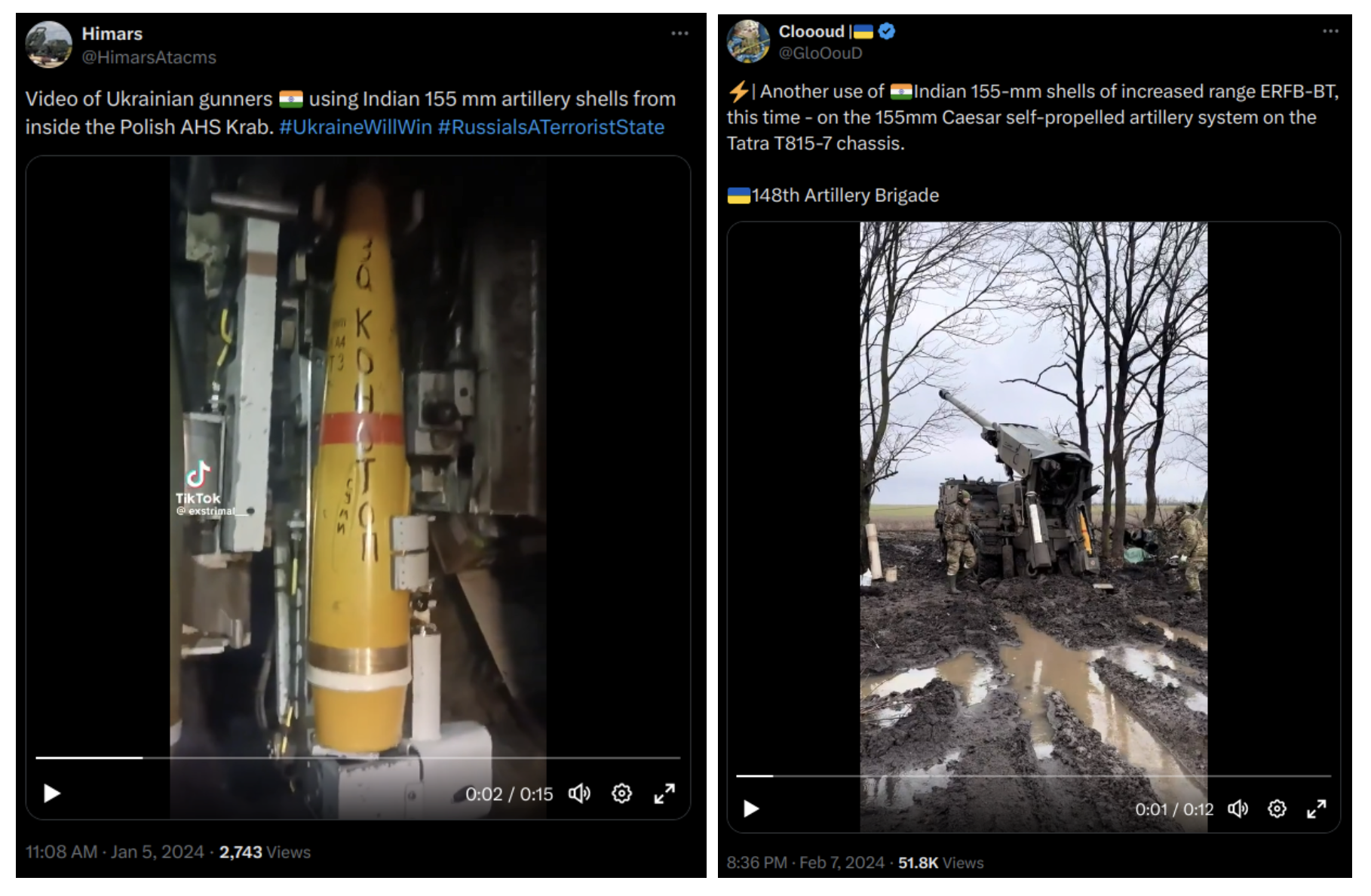
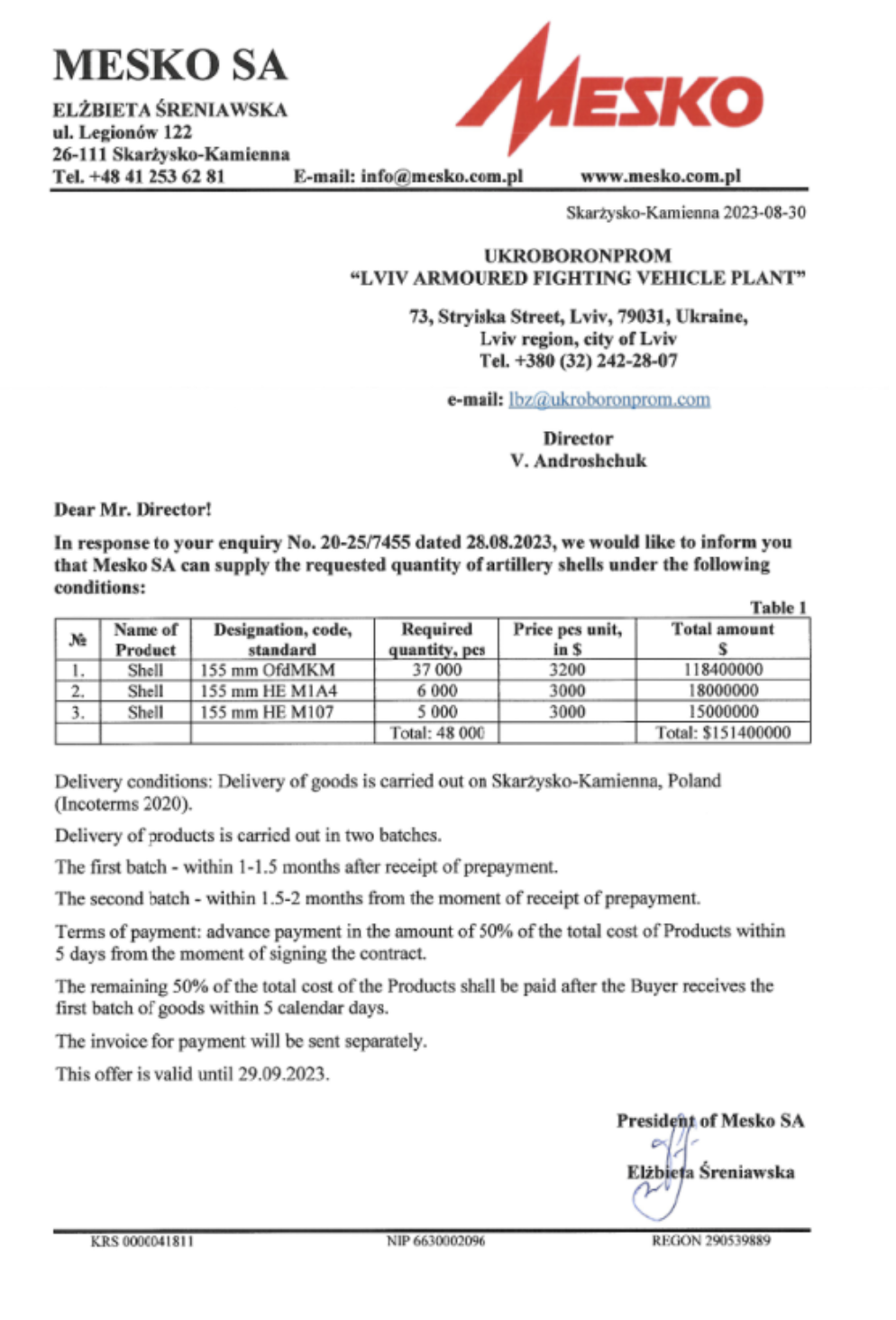
The US has obvious motivations in creating chaos along China’s periphery. With a violent conflict already raging in Myanmar, Bangladesh’s neighbor to the east, extending that chaos to Bangladesh itself serves to destabilize the wider region even further. It specifically opens the door to derail joint projects between China and Bangladesh and create another potential chokepoint along China’s so-called “String of Pearls” network of ports supporting its extensive maritime shipping to the Middle East and beyond.

It also places pressure on India. With the prospect of a political crisis on its own border growing, New Delhi may be pressured into concessions to the US regarding its relationship with Russia and its role in buying and selling Russian energy to circumvent Western sanctions.

Whatever transpires in the weeks and months ahead in the fallout of US-backed regime change in Bangladesh, it is important to understand just how deeply involved the US still is all around the globe, even in countries that often are omitted from daily headlines and geopolitical analysis. It is also important to understand the necessity for greater awareness of how the US interferes around the globe and how it can be both exposed and stopped.

Successful US interference anywhere around the globe helps further enable US interference everywhere else.

*

Click the share button below to email/forward this article to your friends and colleagues. Follow us on Instagram and Twitter and subscribe to our Telegram Channel. Feel free to repost and share widely Global Research articles.

One Month Before Global Research’s Anniversary 

Brian Joseph Thomas Berletic, is an ex- US Marine Corps independent geopolitical researcher and writer based in Bangkok, writing under the pen name “Tony Cartalucci” along with several others.

Featured image is from TheAltWorld

Political instability is just one of the symptoms of societal issues in a particular country. However, when it’s prevalent in an entire geopolitical power pole, it shows that there are major systemic problems that the hegemon cannot resolve. What’s more, the said hegemon (obviously, the United States) is also going through massive political hurdles that are usually prevalent in highly dysfunctional countries. A “conspiracy theorist” would probably say that the US is slowly becoming a failed state, which could also be described as a form of poetic justice, considering how many countries around the world have been brutally invadedand turned into failed states precisely by Washington DC. And indeed, considering the assassination attempts on political opponents and the growing possibility of civil war (among many other things), the US looks increasingly more like the places it invaded.

A very similar situation is prevalent in the entire political West. Its so-called “leaders” are effectively just highly unpopular bureaucrats chosen by the ruling oligarchies and placed in positions of power to feign a “democratic process”. One of the countries with such a system is most certainly Japan. After the “mysterious lone gunman” assassination (it seems those are the “new normal” in the political West) of Shinzo Abe two years ago, whatever was left of Tokyo’s already puny sovereignty vanished entirely and left Japan at the mercy of America’s Deep State oligarchy. The incumbent Fumio Kishida was entirely loyal to his masters in Washington DC, conducting policies that are entirely within the US strategic framework. This includes not only the “Asia-Pacific NATO” efforts (officially still on paper only, albeit it effectively exists), but also the rather disturbing (re)militarization of Japan.

And yet, this obviously wasn’t enough, as Prime Minister Kishida announced he will resign in September. After three years in office, PM Kishida outlived his political usefulness for Washington DC. He will first step down as the leader of the ruling Liberal Democratic Party (LDP) and then resign from his PM position. This follows months of speculation over his ability to politically overcome various scandals and rising living costs. Speaking at a press conference on July 15, Kishida also said he would not run for re-election at the internal poll for the LDP presidency (slated for September).

“Japan continues to face tough situations at home and abroad. It is extremely important that we tackle these issues with a firm hand. The first and clearest step to show that the LDP is changing is for me to step down,” Kishida said, adding: “Trust in politics and trust from the people is critical. It is only by regaining the understanding and trust of the general public that we can move forward, and this is why the LDP must change.”

He also stated that his decision was “based on the need to restore trust in politics” and that “an ideal successor would be reform-minded”. Such assertions are unusual (to put it mildly), especially given the fact that his cabinet has had a very low approval rating for all three years of his premiership. One of many reasons for this was the political funding scandal that resulted in the firing of Kishida’s four cabinet ministers back in 2023. The latest polls showed that his government had only a 14% approval rating among Japanese voters, less than half of the usual 30% that previous Japanese PMs had. As Zero Hedge reports, one of the major reasons for this was the recent transitory surge in inflation. The reason why it’s transitory is because Japan has the highest debt load of any country in the world. Japan’s total level of private and public sector debt amounts to over 400% of GDP.

It’s virtually impossible to make any independent decisions with such an atrocious debt-to-GDP ratio. This is also affecting Japan’s economy, resulting in stagnant performance, with Russia recently zooming past it and Germany, taking the place of the fourth largest economy in the world. The sole reason Kishida stayed in power for three years is the lack of remotely serious challengers, both within the opposition and his LDP. Political analysts in Japan speculate that the most likely successors are the former trade minister Toshimitsu Motegi, former defense minister Shigeru Ishiba and former foreign minister Taro Kono. All of them are career politicians, so it can only be expected that the oligarchy will be happy with either of them, as they’ll continue the same policies that are required from Japan as one of the most prominent US vassals in the world, particularly as it’s refocusing on China.

As previously mentioned, despite the massive societal and economic problems, Kishida’s government focused on increasing the military budget, resulting in an accelerated (re)militarization of the country, a disturbing process for all those in the Asia-Pacific region that Japan had invaded during WWII. Despite its unparalleled debt-to-GDP ratio, Tokyo is increasing military spending to 2% of GDP, which is in line with NATO membership requirements. It’s also acquiring new long-range strike capabilities, as well as increasing interoperability with the US military deployed in the Asia-Pacific. All this suggests that Japan is indeed preparing for a “global NATO”, a disastrous prospect for security around the planet, as the globe’s most vile racketeering cartel is infamous for its all-encompassing aggression against the entire world, destroying countless countries in the process.

American Ambassador to Japan Rahm Emanuel had only words of praise for Kishida, hailing the departing prime minister as “a true friend of the US”, adding that “Kishida worked with President Biden to open a new chapter in the US-Japan relationship, which went from alliance protection to alliance projection”. Perhaps this could be one of the reasons for the PM’s unprecedented low approval rating, as getting praised by a US ambassador is effectively a litmus test of how independent (or should we say subservient) one truly is, thus becoming a major red flag for anyone remotely patriotic.

*

Click the share button below to email/forward this article to your friends and colleagues. Follow us on Instagram and Twitter and subscribe to our Telegram Channel. Feel free to repost and share widely Global Research articles.

One Month Before Global Research’s Anniversary

This article was originally published on InfoBrics.

Drago Bosnic is an independent geopolitical and military analyst. He is a regular contributor to Global Research.

Featured image: Kishida meets US President Joe Biden in Washington D.C., April 2024. (Licensed under CC BY 4.0)

  • Posted in Mobile
  • Comments Off on Japanese PM to Resign, Once Again Confirming Western Political Instability
  • Tags: ,

The Tokyo Tribunal: Precedent for Victor’s Justice II

August 15th, 2024 by Prof. Bishnu Pathak

Abstract

Besides, previous publication of Nuremberg Tribunal: A Precedent for Victor’s Justice (2020), the study is named as The Tokyo Tribunal: Precedent for Victor’s Justice II.

The bombings at Hiroshima and Nagasaki were heinous crimes against humankind that caused physical, material, socio-cultural, and emotional losses. The bombings violated humanitarian law.

This paper aims to find out the situations of the investigation, prosecution and punishment, and analyse the preference for justice: victor’s justice or victim’s justice.

During World War II, anti-communist Emperor Hirohito actively led Japan decorated by the Army’s uniform but pretended to be a ceremonial Emperor making scapegoats to his opponents. Former Prime Ministers Konoe and Tojo were conspiratorially assassinated. Hirohito bribed callous US Army General Douglas MacArthur. MacArthur ordered to gather testimonies to prove Hirohito as innocent. The Tokyo Tribunal was biased since it did not speak a word against the indiscriminate bombings and mass killings in Chinese cities, among others. The Tribunal had a pseudo justice body, highly influenced by the US military and retributive justice doctrines.

Judges were appointed from each allied victor excluding from Japan. Five of the 11 Judges submitted separate opinions on their judgment. Justice had been elusive for the innocent, weak, and poor victims. Most crimes committed went unpunished. The Tribunal ironically ensured the victor’s justice, further limiting the victim’s justice. Thus, the Tribunal appeared as a sword in a judge’s toupee.

Click here to download the article.

*

Click the share button below to email/forward this article to your friends and colleagues. Follow us on Instagram and Twitter and subscribe to our Telegram Channel. Feel free to repost and share widely Global Research articles.

One Month Before Global Research’s Anniversary

Several newspapers and journals played a very different role during the freedom movement of India. While some of the big ones remained loyal to the colonial government, many others, including those with a very small resource base, contributed in very important ways to spreading the message of the freedom movement, even though they were victimized very badly by the colonial government which was ever willing to send editors to jail.

A newspaper of Urdu language called Swadesh (My Country) coming out from Allahabad could last for less than three years due to its commitment to the freedom movement. During this time it had as many as 8 editors who at various times were given imprisonment sentences by the colonial courts which added up to 125 years! When one editor was arrested, the ad for the next editor went along these lines—Required Editor, salary two dry pieces of bread and a glass of water per day, special reward—jail sentence! Even this kind of ads found many qualified persons queuing up to take up the editor’s job.

Some of the most prominent leaders including Shahid Bhagat Singh, Jawaharlal Nehru and Mahatma Gandhi also functioned as very capable journalists and contributed a lot to the freedom movement in this capacity too. However the editor who best combined the roles of freedom struggle and journalism was named Ganesh Shankar Vidyarthi. He had a unique role in the freedom struggle as at a very young age he emerged as a meeting point of several streams of the freedom movement. He was also a leader of workers and peasants. His commitment to social reforms was also well-known and in fat he sacrificed his life at the young age of only 40 for the cause of inter-faith harmony, while trying to stop sectarian violence and rescuing persons trapped in it.

On his death Jawaharlal Nehru said, “He taught in his death what we will find difficult to teach while living for many years.”

Mahatma Gandhi said—He has cemented Hindu-Muslim unity with his own blood.

Vidyarthi had a unique place as a bridge between the revolutionary movement and the mainstream Congress movement. He headed the Congress in the very important United Provinces (roughly Uttar Pradesh today) but also enjoyed complete trust and confidence of revolutionaries. 

He was the greatest editor who fought the world’s biggest imperialist force (and its many lackeys) relentlessly for 18 long years right till his death, one foot in prison or court, one in a small office.

He not only covered struggles of workers and peasants in his newspaper, he went right ahead and mobilized and unionized them.

Ganesh Shankar gave ample evidence of his writing skills and deep social commitments even in his school days. Moving to journalism in Kanpur, which became the main centre of his work, he soon attracted attention for his zeal and capabilities for public interest writing and campaigns. With the support of a few influential friends, he launched a magazine Pratap to report on freedom movement and other struggles. Public response was so good that   this was converted into a daily newspaper.

This newspaper soon became the most committed voice of the freedom movement and struggles of peasants and workers. A magazine Prabha was also launched.

Vidyarthi was active in the Congress-led movements and established a well-deserved reputation as a leader of great commitment and honesty. At the same time he sympathized with young revolutionaries and arranged various kinds of help for them. He helped leading revolutionaries like Ashfaqullah, Ram Prasad Bismil and Bhagat Singh in various ways. In fact Bhagat Singh worked as a journalist in his office for some time as a sort of assistant editor, writing under a pen name to escape police attention. Later when Bhagat Singh, Jatindranath Dass and other were on hunger strike in prison, Pratap’s reporting played an important role in informing people and mobilizing public opinion on this. The confidence of the revolutionaries in his judgment and understanding increased to such an extent that they would go ahead with some important plan of action only after ascertaining that this had the approval of Vidyarthi. 

Meanwhile on the insistence of people he contested state council elections and won with a huge margin despite not having any financial resources. After this he was made the President of the State Congress Committee. More senior, national leaders could not have been unaware of his close relations with revolutionaries but he was selected for this important post on the strength of his great reputation of honesty and commitment as well as his huge popularity among people cutting across caste and religious divides. He also organized several meetings and gatherings on inter-faith harmony. 

Ganesh Shankar was involved in a mobilization of textile workers of Kanpur and he played a similar role in taking forward some struggles of peasants of the United Provinces.

Apart from the main freedom movement, several sporadic struggles had started in various kingdoms. These involved very courageous and sincere activists, but faced brutal repression at the hands of the various royal regimes. Ganesh Shankar Vidyarthi took up their cause with a lot of zeal and courage. To check him and his reporting of these struggles (such as those in Bijoliya, Rajasthan and Gwalior, Madhya Pradesh) in Pratap, several court cases were started against Pratap and Ganesh Shankar which he faced with courage and determination.

His writings covered a vast ground of justice and struggle related issues, and he was a leading figure in the contemporary literary field. Even though he was writing mostly about freedom and other struggles of India, the struggles in other parts of the world also attracted him, and we also find him writing with passion on a contemporary struggle of people of Morocco. Despite the extremely difficult conditions in jail, he managed to translate works of Victor Hugo during his imprisonment days.

He was jailed five times. He saw the terrible conditions of jails and prisoners from close quarters. He was so appalled by what he saw that he strongly wrote about demolishing these jails. He was a strong advocate of jail reforms ad rights of political prisoners.

In 1931 he was released from jail and was trying to catch up with pending work when terrible sectarian riots (widely alleged to be pre-planned by the colonial rulers) erupted in Kanpur. It was in the course of trying to rescue trapped people of both communities, Hindus as well as Muslims, that Ganesh Shankar Vidyarthi was killed. Hence he sacrificed his life for Hindu-Muslim unity and harmony.

He will always be remembered as our greatest editor ever who also made most invaluable contributions to freedom movement and inter-faith harmony.

*

Click the share button below to email/forward this article to your friends and colleagues. Follow us on Instagram and Twitter and subscribe to our Telegram Channel. Feel free to repost and share widely Global Research articles.

One Month Before Global Research’s Anniversary

Bharat Dogra is a recipient of the Ganesh Shankar Vidyarthi Award for Hindi journalism presented by the President of India. In addition he has also received the Ganesh Shankar Vidyarthi Award presented by several worker and peasant organizations of Chattisgarh, India. His books include When the Two Streams Met (Freedom Movement) and (in Hindi) Azadi Ke Deewanon Ki Daastaan as well as several booklets on freedom movement. He is a regular contributor to Global Research.

Featured image is from the Public Domain

  • Posted in English @as @as, Mobile
  • Comments Off on Ganesh Shankar Vidyarthi – A Great Editor and Freedom Fighter Who Was an Important Meeting Point for Several Streams of Freedom Movement of India

Resisting AUKUS: The Paul Keating Formula

August 13th, 2024 by Dr. Binoy Kampmark

From his own redoubt of critical inquiry, the former Australian Prime Minister Paul Keating has made fighting the imperialising leprosy of the AUKUS security pact between Australia, the UK and the United States a matter of solemn duty.

In March 15, 2023, he excoriated a Canberra press gallery seduced and tantalised by the prospect of nuclear-powered submarines, calling the Albanese government’s complicit arrangements with the US and UK to acquire such a capability “the worst international decision by an Australian Labor government since the former Labor leader, Billy Hughes, sought to introduce conscription to augment Australian forces in World War one.”

His latest spray was launched in the aftermath of a touched-up AUKUS, much of it discussed in a letter by US President Joe Biden to the US House Speaker and President of the Senate.  The revised agreement between the three powers for Cooperation Related to Naval Nuclear Propulsion is intended to supersede the November 22, 2021 agreement between the three powers on the Exchange of Naval Nuclear Propulsion Information (ENNPIA).

The new agreement permits “the continued communication and exchange of NNPI, including certain RD, and would also expand the cooperation between the governments by enabling the transfer of naval nuclear propulsion plants of conventionally armed, nuclear-powered submarines, including component parts and spare parts thereof, and other related equipment.”  The new arrangements will also permit the sale of special nuclear material in the welded power units, along with other relevant “material as needed for such naval propulsion plants.”

The contents of Biden’s letter irked Keating less than the spectacular show of servility shown by Australia’s Defence Minister Richard Marles, and Foreign Minister Penny Wong on their visit to Annapolis for the latest AUSMIN talks.  In what has become a pattern of increasing subordination of Australian interests to the US Imperium, US Secretary of Defense Lloyd J. Austin III and US Secretary of State Antony Blinken played happy hosts and must have been delighted by what they heard.

The details that emerged from the conversations held between the four – details which rendered Keating passionately apoplectic – can only make those wishing for an independent Australian defence policy weep.  Words such as “Enhanced Force Posture Cooperation” were used to describe the intrusion of the US armed forces into every sphere of Australian defence: the domains of land, maritime, air, and space.

Ongoing infrastructure investments at such Royal Australian Air Force Bases as Darwin and Tindal continue to take place, not to bolster Australian defence but fortify the country as a US forward defensive position.  To these can be added, as the Pentagon fact sheet reveals, “site surveys for potential upgrades at RAAF Bases Curtin, Learmonth, and Scherger.”

The degree of subservience Canberra affords is guaranteed by increased numbers of US personnel to take place in rotational deployments.   These will include “frequent rotations of bombers, fighter aircraft, and Maritime Patrol and Reconnaissance Aircraft”.  Secret arrangements have also been made involving the disposal of nuclear propulsion plants that will feature in Australia’s nuclear powered submarine fleet, though it is unclear how broad that commitment is.

The venomous icing on the cake – at least for AUKUS critics – comes in the form of an undisclosed “Understanding” that involves “additional related political commitments”.  The Australian Greens spokesperson on Defence, Senator David Shoebridge, rightly wonders “what has to be kept secret from the Australian public?  There are real concerns the secret understanding includes commitments binding us to the US in the event they go to war with China in return for getting nuclear submarines.”

Marles has been stumblingly unforthcoming in that regard.  When asked what such “additional political commitments” were, he coldly replied that the agreement was “as we’ve done it.”  The rest was “misinformation” being spread by detractors of the alliance.

It is precisely the nature of these undertakings, and what was made public at Annapolis, that paved the way for Keating’s hefty salvo on ABC’s 7.30.  The slavishness of the whole affair had made Keating “cringe”.  “This government has sold out to the United States.  They’ve fallen for the dinner on the White House lawn.”

He proved unsparing about Washington’s intentions.  “What AUKUS is about in the American mind is turning [Australia into suckers], locking us up for 40 years with American bases all around … not Australian bases.”  It meant, quite simply, “in American terms, the military control of Australia.  I mean, what’s happened … is likely to turn Australia into the 51st state of the United States.”

Having the US as an ally was itself problematic, largely because of its belligerent intentions.  “If we didn’t have an aggressive ally like the United States – aggressive to others in the region – there’d be nobody attacking Australia.  We are better left alone than we are being ‘protected’ by an aggressive power like the United States.”

As for what Australian obligations to the US entailed, the former PM was in little doubt.  “What this is all about is the Chinese laying claim to Taiwan, and the Americans are going to say ‘no, no, we’re going to keep these Taiwanese people protected’, even though they’re sitting on Chinese real estate.”  Were Australia to intervene, the picture would rapidly change: an initial confrontation between Beijing and Washington over the island would eventually lead to the realisation that catastrophic loss would simply not be worth it, leaving Australia “the ones who have done all the offence.”

As for Australia’s own means of self-defence against any adversary or enemy, Keating uttered the fundamental heresy long stomped on by the country’s political and intelligence establishment: Canberra could, if needed, go it alone. 

“Australia is capable of defending itself.  There’s no way another state can invade a country like Australia with an armada of ships without it all failing.” 

Australia did not “need to be basically a pair of shoes hanging out of Americans’ backside.”  With Keating’s savage rhetoric, and the possibility that AUKUS may collapse before the implosions of US domestic politics, improbable peace may break out.

*

Click the share button below to email/forward this article to your friends and colleagues. Follow us on Instagram and Twitter and subscribe to our Telegram Channel. Feel free to repost and share widely Global Research articles.

One Month Before Global Research’s Anniversary

Dr. Binoy Kampmark was a Commonwealth Scholar at Selwyn College, Cambridge.  He currently lectures at RMIT University.  He is a Research Associate of the Centre for Research on Globalization (CRG). Email: [email protected]

Featured image: Paul Keating speaking on a panel at the Lowy Institute in April 2017. (Licensed under CC BY 3.0)

Thailand Aborts the Colour Revolution

August 13th, 2024 by M. K. Bhadrakumar

The curtain has come down on the abortive colour revolution in Thailand with the country’s Constitutional Court ordering the dissolution on Wednesday of the anti-establishment opposition party Move Forward, widely regarded as a US proxy. 

It coincides with the stunning success of the hastily staged colour revolution in Bangladesh and the fall of the key military base of the Myanmar army’s Northeast Command in Lashio in the Shan state over the weekend to the Myanmar National Democratic Alliance Army, the rebel groups armed, financed and trained by the Western intelligence.

The Shan people who belong to the Tai ethnic group of Southeast Asia are the biggest minority of Myanmar (10% of the population) and they have cultural affinity with the Northern Thai peoples and also have a significant presence in the adjacent regions of Assam and Meghalaya in India. 

The capture of Lashio by the alliance of militias of ethnic minority groups supported by the western intelligence is seen as a serious blow to the regime in Myanmar, which enjoys the backing of the military leadership in Thailand and is a strong ally of Russia. 

Lashio is situated on an important trade route and is about 100 kms only from the Chinese border. Newsweek magazine in a report titled China Faces Growing War on Its Border cited an expert opinion of the Washington-based United States Institute of Peace think tank (which is wired into the US intelligence establishment) that “From China’s vantage point, the escalation of the conflict is a major setback in terms of its interest in… getting the belligerent parties to establish further deals to reset trade between the China border and Mandalay.

“China seems very concerned, as it will be very difficult for the Myanmar military to bounce back from this setback, yet the Myanmar military is not signalling a desire to return to the table or an interest in making significant concessions to the northern EAOs (alliance of tribal groups), which is what China has been pressuring it to do.” 

According to latest reports, American and British “volunteers” have been lately joining the ranks of the rebels fighting the Myanmar military — although, these are early days and Myanmar has not experienced yet the same wave of international volunteers seen in conflicts such as Ukraine or Syria, and there are no coordinated efforts apparent to enlist foreign recruits.  

The Myanmar military supremo General Min Aung Hlaing has alleged that the rebel alliance is receiving weapons, including drones and short-range missiles, from “foreign” sources.  “It is necessary to analyse the sources of monetary and technological power,” he said. Myanmar’s military has 14 regional commands across the country, and the Northeast Command is the first to fall to armed rebel groups. 

Meanwhile, the Arakan Army (AA) — a powerful ethnic armed group which is fighting to establish an independent Rakhine polity in western Myanmar — has been on the move committing atrocities against the Rohingya minority population taking advantage of the military’s current overstretch. 

AA has made significant gains in Rakhine State in the recent months and reportedly exercises control over more than half of the state’s 17 townships. By the way, the Arakanese people also exist in Bangladesh’s Chittagong Hill Tracts and in India’s Tripura state. (Interestingly, Arakan Division was originally a part of British India.) 

Coming back to Bangkok, the Thai generals are evidently circling the wagons sensing the Time of Troubles ahead as the Five Eyes is creating a cauldron in Myanmar that can ensnare the neighbouring regions. Bangkok, a western ally previously, is traditionally a hotbed of western intelligence — Five Eyes — and the authorities are well aware of the resentment in the US that their ties with Beijing have expanded and deepened and assumed a strategic character in the recent years. 

The unkindest cut of all is that Thailand (along with Malaysia) has formally applied for membership of the BRICS, which carries huge resonance in the geopolitics of  southeast Asia and the ASEAN and impacts the regional balance at a juncture when the US is striving to create an anti-China bloc. 

Thailand is a keen participant in China’s Belt and Road Initiative. From a long term perspective, the 873-km high-speed rail project connecting Bangkok with Kunming, capital of China’s Yunnan province, via Laos is expected to be operational latest by 2028. 


The railway project, estimated to cost anywhere up to $10 billion will not only enhance regional connectivity but profoundly reset the economic geography of Asia, given its massive potential for accelerating the increased integration between China and the ASEAN countries. People would be able to travel between Kunming and Bangkok by train for about $100, which is half to a third of the cost of an airline ticket. According to Xinhua, the railway is expected to bring two million more Chinese tourists to Thailand every year.

Washington is livid that its proxy, Move Forward led by a young man educated in the US and groomed to spearhead a colour revolution, has been banned. The Thai authorities understand that the western intention is to break up the ancient crust of their country’s polity, which is the only way to make inroads into what is otherwise a deeply Buddhist culture — specifically, to demolish the so-called lèse-majesté law protecting the institution of monarchy, an institution that dates back more than 700 years and is a pillar of stability in the country symbolising the unity of the Thai communities. By the way, Christian missionary work is active in both Thailand and Myanmar — as in next-door north-eastern region of India. And the evangelicals are an influential pressure group in the US politics. 

The Thai authorities have shied away from confronting the US. Thai culture values serenity and avoids conflict and displays of anger. Even disagreements are to be handled with a smile, without assigning blame. Hence the circuitous route to squash Move Forward on legal grounds. 

Move Forward won 151 seats in the 500 member parliament in the elections in May last year where sixty-seven parties contested, but was unable to form a coalition government after being functionally blocked by allies of the monarchy and military. Move Forward made the electoral pledge to abolish lèse-majesté law (which is tantamount to a crime.) 

The US and its allies are furious but cannot do anything about the development. All the good work to stage a colour revolution in phases has come to naught. The exasperation shows in the statements from Washington and Canberra. (here and here) 

However, all is not lost. The regime change in Bangladesh may open a new pathway for the western intervention in Myanmar. India and Thailand refused to back the western-backed rebels fighting the Myanmar military. Former Bangladesh Prime Minister Sheikh Hasina also stayed away from the power struggle in Myanmar. But that may change. 

The Rohingya issue provides an alibi. The ascendance of Pakistani intelligence and the larger-than life role of the Jamaat-i-Islami will trigger an assertion of Bangladesh’s Muslim identity. The Pakistani army chief lost no time to underscore that the developments in Bangladesh underscore the raison d’être of the two-nation theory!


So, the regime change in Bangladesh may turn out to be a game changer for the West’s regime change agenda in Myanmar. On the other hand, at the secondary and tertiary level, any strengthening of the western-backed rebel alliance in Myanmar cannot but cast shadows on India’s northeast, which has a large Christian population with tribal affinities across the border. 


An awareness is lacking that any weakening of Thailand’s state structure or the dissipation of Thai culture rooted in Buddhist traditions will isolate India in the region’s civilisational tapestry. Indians tend to take episodic view of current events in their immediate neighbourhood.

Prior to the rise of Theravada Buddhism, both Indian Brahminical religion and Mahayana Buddhism were present in Thailand, and influences from both these traditions can still be seen in present-day Thai folklore. A colour revolution in Thailand leading to western dominance and the eclipse of the Thai monarchy and Buddhist cosmology will have profound implications for South Asia. 

*

Click the share button below to email/forward this article to your friends and colleagues. Follow us on Instagram and Twitter and subscribe to our Telegram Channel. Feel free to repost and share widely Global Research articles.

One Month Before Global Research’s Anniversary

Japanese Prime Minister Fumio Kishida‘s course of remilitarizing the country has sparked significant controversy and concern, with critics arguing that it poses serious security implications for the Indo-Pacific region and contravenes the provisions of the United Nations Charter, specifically Article 107. Kishida’s recent policies reflect a notable shift in Japan’s defense strategy, long characterized by a pacifist orientation rooted in the post-World War II constitution and the Three Non-Nuclear Principles. This strategic pivot, which includes substantial increases in defense spending, a broader military role, and intensified joint military exercises with the United States, has raised alarms both domestically and internationally.

Security Implications for the Indo-Pacific Region

The remilitarization of Japan under Kishida’s leadership could have far-reaching consequences for the Indo-Pacific region. Historically, Japan’s pacifist stance and its reliance on the U.S.-Japan Security Alliance have contributed to a relative stability in the region. However, Kishida’s push to expand Japan’s military capabilities and revise defense policies, especially through joint military exercises with the United States, threatens to disrupt this balance. The increase in Japan’s defense budget, coupled with plans to enhance military hardware and develop new defense strategies, is perceived by some regional actors as a threat.

The joint Japan-U.S. military exercises, designed to enhance interoperability and readiness, are particularly controversial. These exercises, while intended to strengthen defense cooperation, are seen by some regional players as provocative. Countries such as China and North Korea may view these activities as a direct challenge to their security and sovereignty, potentially prompting retaliatory actions. The perceived threat could lead to heightened regional tensions and a possible escalation of military competition. This scenario might trigger a regional arms race, with neighboring countries reassessing their own military capabilities and strategies in response to Japan’s enhanced defense posture and joint exercises.

Furthermore, Japan’s expanded military role might influence regional alliances and security dynamics. The increase in joint military activities with the U.S. could prompt neighboring countries to seek stronger security partnerships or accelerate their own military programs. This shifting landscape could lead to a more fragmented and potentially more volatile regional security environment, undermining efforts to maintain stability and cooperation in the Indo-Pacific region.

Contravention of the UN Charter

Critics argue that Japan’s remilitarization contravenes the provisions of the United Nations Charter, particularly Article 107. Article 107 of the UN Charter states that “nothing in the present Charter shall impair the inherent right of individual or collective self-defence if an armed attack occurs.” However, it also emphasizes the importance of maintaining international peace and security and the obligation of member states to avoid actions that could exacerbate conflicts.

Japan’s historical commitment to pacifism and non-militarization has been seen as a reflection of its adherence to these principles. Kishida’s policies, which include increasing military spending, enhancing Japan’s self-defense capabilities, and participating in joint exercises with the U.S., are viewed by some as a departure from this commitment. The expansion of Japan’s military activities and capabilities, coupled with provocative joint exercises, could be interpreted as undermining the spirit of Article 107, which seeks to balance the right of self-defense with the imperative of preserving international peace.

Moreover, Kishida’s policies could have implications for Japan’s role within the UN framework. The international community may question whether Japan’s remilitarization aligns with its obligations under the UN Charter, potentially impacting its standing in global diplomatic and security discussions. The perception of Japan as a militarizing power, especially in conjunction with its joint military activities with the U.S., could affect its relationships with other UN member states and its ability to contribute constructively to international peace and security efforts.

Domestic and International Reactions

Within Japan, Kishida’s remilitarization agenda has generated significant debate. While some support the need for stronger defense capabilities in response to perceived threats, others express concern about a potential return to militarism and the erosion of Japan’s post-war identity. The Japanese public’s historical aversion to militarization and the legacy of World War II play a crucial role in shaping domestic attitudes toward these policy changes.

Professor of History Mitsuo Yoshida cautions against forgetting the historical context of Japan’s past militarism. He emphasizes the need to balance military growth with diplomatic efforts to avoid repeating past mistakes.

“Those who cannot remember the past are condemned to repeat it.”, he quotes a philosopher. “Japan has one way, the way of peace and prosperity. History is cyclical; if we take the path of militarization again, the same fate will befall us again.”, Yoshida added. 

Internationally, Japan’s remilitarization is met with a mix of apprehension and scrutiny. Allied nations, including the United States, may view Japan’s increased military capabilities and joint exercises as a positive development for regional security, provided they complement existing security arrangements and do not lead to regional destabilization. However, countries within the Indo-Pacific region, particularly those with historical grievances or territorial disputes with Japan, may view these developments with suspicion and concern.

*

Click the share button below to email/forward this article to your friends and colleagues. Follow us on Instagram and Twitter and subscribe to our Telegram Channel. Feel free to repost and share widely Global Research articles.

One Month Before Global Research’s Anniversary

Featured image: Japan is moving to remilitarize despite its pacifist constitution. Image: Shutterstock via The Conversation

AUKUS Revamped: The Complete Militarisation of Australia

August 11th, 2024 by Dr. Binoy Kampmark

There is much to loathe about the AUKUS security agreement between Canberra, Washington and London.  Of the three conspirators against stability in the Indo and Asia Pacific, one stands out as the shouldering platform, the sustaining force, the political and military stuffing.  But Australian propagandists and proselytisers of the US credo of power prefer to see it differently, repeatedly telling the good citizens down under that they are onto something truly special in being a military extension, the gargantuan annexe of another’s interests.  Give them nuclear powered submarines, let them feel special, and a false sense of security will follow.

The August 2024 AUSMIN talks in Annapolis, Maryland, held between US Secretary of Defense Lloyd J. Austin III, US Secretary of State Antony Blinken, and their Australian counterparts, Richard Marles (Minister of Defence) and Penny Wong (Foreign Minister) provided yet another occasion for this grim pantomime.  No one could be in doubt who the servitors were.

The factsheet from the US Department of Defense on the meeting is worth noting for Washington’s military capture – no other word describes it – and Australia’s sycophantic accommodation.  As part of the “Enhanced Force Posture Cooperation,” the US and Australia are to advance “key priorities across an ambitious range of force posture cooperation efforts”.  This is merely a clumsy way of describing the deeper incorporation of Australia’s own military requirements into the US military complex “across land, maritime, air, and space domains, as well as the Combined Logistics, Sustainment, and Maintenance Enterprise”.  US military forces, in short, are to occupy every domain of Australia’s defence.

The greedy and speedy US garrisoning of Australia is evident through ongoing “infrastructure investments at key Australian bases in the norther, including RAAF Bases Darwin and Tindal” and “site surveys for potential upgrades at RAAF Bases Curtin, Learmonth, and Scherger.”  Rotational deployments of US forces to Australia, “including frequent rotations of bombers, fighter aircraft, and Maritime Patrol and Reconnaissance Aircraft” are to increase in number.  As any student of US-Australian relations knows, rotation is the disingenuous term used to mask the presence of a permanently stationed force – occupation by another name.

The public relations office has obviously been busy spiking the language with a sense of false equality: the finalising, for instance, by December 2024 of a Memorandum of Understanding on Co-Assembly for Guided Multiple Rocket Systems (GLMRS) – a “co-production”; finalising, by the same date, an MOU “on cooperative Production, Sustainment, and Follow-on Development of the Precision Strike Missile (PrSM)”; and institutionalising of “US cooperation with Australia’s Guided Weapons and Explosive Ordnance (GWEO) Enterprise”.  Everywhere we look, a sense of artificial cooperation under the cover of Washington’s heavy-handed dominance, be it cooperative activities for Integrated Air and Missile Defence, or the hypersonic weapons program, can be found.

In this even more spectacular surrender of sovereignty and submission than previous undertakings, Canberra is promised second hand nuclear-powered toys in the form of Virginia Class submarines, something forever contingent on the wishes and whimsy of the US Congress.  But even this contingent state of affairs is sufficient for Australia to bury itself deeper in what has been announced as a revised AUKUS agreement.  More accurately, it constitutes a touch-up of the November 22, 2021 agreement between the three powers on the Exchange of Naval Nuclear Propulsion Information (ENNPIA).

The ENNPIA allows the AUKUS parties the means to communicate and exchange relevant Naval Nuclear Propulsion Information (NNPI), including officially Restricted Data (RD) as part of what is described as the “Optimal Pathway” for Australia’s needless acquisition of nuclear powered vessels.

In his letter to the US House Speaker and President of the Senate, President Joe Biden explains the nature of the revision.  Less cumbersomely named than its predecessor, the new arrangements feature an Agreement between the three powers for Cooperation Related to Naval Nuclear Propulsion.  In superseding the ENNPIA, it “would permit the continued communication and exchange of NNPI, including certain RD, and would also expand the cooperation between the governments by enabling the transfer of naval nuclear propulsion plants of conventionally armed, nuclear-powered submarines, including component parts and spare parts thereof, and other related equipment.”

The Agreement further permits the sale of special nuclear material in the welded power units, and other relevant “material as needed for such naval propulsion plants.”  Transferrable equipment would include that necessary for research, development, or design of naval propulsion plants.  The logistics of manufacture, development, design, manufacture, operation, maintenance, regulation and disposal of the plants is also covered.

Tokenistic remarks about non-proliferation are then made in Biden’s letter.  The powers, for instance, commit themselves to “setting the highest nonproliferation standard” while protecting US classified information and intellectual property.  This standard is actually pitifully low: Australia has committed itself to proliferation not only by seeking to acquire submarine nuclear propulsion, but by subsidising the building of such submarines in US and UK shipyards.

Marles, the persistently reliable spokesman for Australia’s wholesale capitulation to the US war machine, calls the document “the legal underpinning of our commitment to our international obligations so it’s a very significant step down the AUKUS path and again it’s another demonstration that we are making this happen.”

Obligations is the operative word here, given that Australia is burdened by any number of undertakings, be it as a US military asset placed in harm’s way or becoming a radioactive storage dump for all the AUKUS submarine fleets.  Marles insists that the only nuclear waste that will end up on Australian soil will be that generated by Australia.  “That is the agreement that we reached with the UK and the US back in March of last year, and so all this is doing is providing for the legal underpinning of that.”

Given that Australia has no standalone, permanent site to store high-level nuclear waste, even that undertaking is spurious.  Nor does the understanding prevent Australia from accepting the waste accruing from the fleets of all the navies.  Given the cringing servitude of Canberra, and the admission by the Australian government that they have made undisclosed “political commitments”, such an outcome cannot be ruled out.

Always reliably waspish, former Australian Labor Prime Minister Paul Keating gave his assessment about the latest revelations of the AUSMIN talks. “There’ll be an American force posture now in Australia, involving every domain.”  The Albanese government had “fallen for the dinner on the White House lawn.”  That, and much more besides.

*

Click the share button below to email/forward this article to your friends and colleagues. Follow us on Instagram and Twitter and subscribe to our Telegram Channel. Feel free to repost and share widely Global Research articles.

One Month Before Global Research’s Anniversary

Dr. Binoy Kampmark was a Commonwealth Scholar at Selwyn College, Cambridge.  He currently lectures at RMIT University.  He is a Research Associate of the Centre for Research on Globalization (CRG). Email: [email protected]

Featured image: Sydney anti-AUKUS protest. Photo: Peter Boyle

  • Posted in Mobile
  • Comments Off on AUKUS Revamped: The Complete Militarisation of Australia
  • Tags: ,

Bureaucrats tasked with protecting national security are often inclined to encourage insecurity.  It’s all part of the job prescription.  The imperative is understandable if chillingly amoral: increased budgets are demanded to counter threats, however spectral; justifications for existing budgets needlessly bloated are always sought.  In the Cold War, an old favourite was the teeth-chattering concern that the other side might just steal a march on the other in terms of nuclear missiles.  Legendary “missile gaps” were confected to frighten lawmakers.

In any logical sense, such distinctions were always superfluous, even idiotic: one can only destroy the planet once, and claiming to have the capacity to do so a hundred times over eliminates the relevance of having any such advantage to begin with. The threat, to that end, becomes purely psychic, a matter of ego and accountancy.

The director general of ASIO, Australia’s domestic intelligence service, is very much of the belief that drumming up threats is indispensable.  To that end,

Mike Burgess is proving to be one of the most garrulous chiefs of what is otherwise a secretive profession.  Rather than working under the radar and plotting in the shadows, he has become a regular commentator on the gloomy state of the world, and, more relevantly, certain people who live in it.

On August 5, Burgess appeared alongside Australian Prime Minister Anthony Albanese and Attorney-General Mark Dreyfus at a press conference.  It signalled something of a change in arrangements, given the administrative reshuffle of taking ASIO out of the hands of Home Affairs and placing them under the direction of the Attorney-General.


undefined

ASIO’s New Central Office building in the Parliamentary Triangle, Canberra (Licensed under CC BY-SA 3.0)


Such a change did nothing to temper the Burgess world view, one framed darkly and foreboding of the next threat.  “Australia’s security environment is degrading – it is more volatile and more unpredictable.” (When was it not degrading or volatile?)  He goes on to say that espionage and foreign interference had previously been “principal security concerns”.  No longer.  “While the threats to our way of life remain elevated, we are seeing an increase in extremism.”

Terms are lustfully used to signify danger. “More Australians are being radicalised and radicalised more quickly.”  Australians, in greater numbers, were “embracing a more diverse range of extreme ideologies” and content “to use violence to advance their cause.”

Peering into the lexical mangle, and one can detect certain tendencies on the part of the intelligence security establishment.  Burgess frowns on the way politics and political objectives have become issues of protest.  While paying lip service to the importance of political differences, debates and the role of protest, always a prelude to authoritarian disapproval, he laments “spikes in political polarisation and intolerance, uncivil debate and unpeaceful protests.”

The spy chief wishes to expand the nexus between politics and terrorism.  All “violent” acts or threats fall within this assessment, be it “violent protest, riot or an attack on a politician or our democratic institutions.”  Such events as the COVID pandemic and the October 7 attacks on Israel and its military response, had seen individuals embrace “anti-authority ideologies, conspiracy theories and diverse grievances.  Some are combining multiple beliefs to create  new hybrid ideologies.”  The prospect of war in southern Lebanon also posed further risks.

Who, then, are these individuals?  Those of the “lone actor” persuasion, prone to using such crude weapons as knives, guns or improvised explosives.  Or minors transfixed by ideology.  (An old ASIO favourite is to see teenagers, gorged on internet scrolling, as posing a terrorist threat, including those as young as 14.

Having deluged the press corps with such grim warnings, though giving little by way of actual evidence, Burgess moved on to play with an old favourite of the security establishment: the National Terrorism Threat Level.  Such levels are rarely tangible but serve as catalysts of needless fear and warning.  With oracular force, he proposed an adjustment.  “After careful consideration and consultation, ASIO is raising the National Terrorism Threat Level from ‘Possible’ to ‘Probable’.  Our decision reflects the degrading security environment.”

To the clear of mind, these are meaningless utterances.  But for Burgess and the desk filing wonks, they constitute a world of pulsating realities.  “A threat level of ‘Probable’ means we assess there is a greater than 50 per cent chance of an onshore attack or planning in the next twelve months.”  This did not mean that ASIO had actual intelligence of an ongoing plan to attack, or even “an expectation of imminent attack.”  But relevant “subject matter experts” at the National Threat Assessment Centre had been busy using “analytical techniques to test, retest and contest their assumptions.”  The soothsayers, it would seem, are busy.

Such addresses as those given by Burgess generate their own sinister code.  That code promises further surveillance and control, a call for increased monitoring and cocooning of the Australian body politic and broader society from a wicked world.  While ASIO is tub-thumping about the dangers of increased radicalisation, the absurdly named office of the e-Safety Commissioner wages war against the offending defilements of the Internet.  With these officials in charge, the world will be made safe for censorship and docile thought.

*

Click the share button below to email/forward this article to your friends and colleagues. Follow us on Instagram and Twitter and subscribe to our Telegram Channel. Feel free to repost and share widely Global Research articles.

Spread the Truth, Refer a Friend to Global Research

Dr. Binoy Kampmark was a Commonwealth Scholar at Selwyn College, Cambridge.  He currently lectures at RMIT University.  He is a Research Associate of the Centre for Research on Globalization (CRG). Email: [email protected]

Featured image: Mike Burgess (Source)

Abstract

Despite the rise of the importance of the ‘Indo-Pacific,’ this article argues that discussions on the concept remain at the theoretical level, such as seen in the grand strategy debate. However, in the policy field, the U.S. Indo-Pacific strategy has evolved to a much more detailed one that manifests as an action plan. Given the discrepancy between theory and practice, this article aims to provide a tool to read the development of the U.S. Indo-Pacific strategy with a focus on U.S. Indo-Pacific Command (USINDOPACOM), which is in charge of operationalizing the U.S. Indo-Pacific strategy in the security field.

With the review and analysis of mission, strategy, and operational essence of USINDOPACOM and its component commands, this article finds that first, at the mission and strategy level, the commands assume that their main position is to deter and defend rather than to preempt conflict in the region. The operational level finding is that to fulfill its mission and strategy, USINDOPACOM and its component commands consistently emphasize the importance of strengthening and enhancing its posture in the region. Third, USINDOPACOM and its component commands are establishing new types of troops equipped with enhanced mobility and capabilities covering multi-domains.

This analysis and review has implications for the allies and partners of the U.S. when pursuing their own Indo-Pacific strategies. Based on the current evidence, there is a likelihood that the U.S. will request allies and partners act jointly or mini-laterally beyond the established bilateral relationship. In addition, in order to overcome the logistical difficulty caused by the ‘tyranny of distance’ in the Indo-Pacific area, the U.S. may request allies and partners play additional roles in this context beyond what they have done to date. Allies and partners need to consider these practical trends toward which the U.S. Indo-Pacific strategy is heading and what this means for their own national interests, strategies, and operations.

*

Introduction: The Era of Indo-Pacific Strategy

If asked what trends in the field of international relations (IR) are in fashion, most IR intellectuals would point to keywords related to ‘Indo-Pacific,’ such as ‘Indo-Pacific strategy,’ ‘Indo-Pacific era,’ and so on. In fact, it was Japan that led the discussions on the Indo-Pacific from the early 2010s and proposed the concept of ‘Free and Open Indo-Pacific’ (FOIP) in 2017. Since then, an array of countries have published their own version of an Indo-Pacific strategy, including the United States in 2021 and the Republic of Korea (ROK) in 2022. Although we do not know how future generations will define the nature of international politics at this time, the term ‘Indo-Pacific’ certainly stands as the so-called structural essence of current geopolitics, as ‘Cold War’ did in the 1950s and ‘unipolar moment’ did in the late 1990s.

Despite the rise of the importance of the term ‘Indo-Pacific,’ this article argues that scholarly discussions on the concept seem to remain at the theoretical level. Wilkins (2019: 741, 756) says that debates about American grand strategy[1] in the Indo-Pacific region have returned to the fore, with regards to the central question: the rise of China. Recent academic writings on Indo-Pacific strategy are centered on such grand strategy level discussions as maintaining the liberal international order against its challenges and how to deter China in the context of power politics.[2]

However, in the policy field, the U.S. Indo-Pacific strategy has evolved from these conceptual discourses to a much more practical one, that manifests as an action plan. For example, from this article’s viewpoint, the recent bilateral discussions on the transformation of U.S. Forces in Japan (USFJ)’s command and control structure stem from the ongoing process of U.S. execution of its Indo-Pacific strategy. In other words, practical transformation, such as change of military as well as diplomatic policy direction and reshuffling of the related organization and strategic locations, occurs as the critical element of the U.S. Indo-Pacific strategy, moving us beyond conceptual debates about the Sino-U.S. rivalry or great power competition that academic articles still focus on.

The critical thinking of this article begins from this point: there is a discrepancy between what is happening now on the ground and the main point of view of academics in terms of U.S. Indo-Pacific strategy. Given that, this article aims to provide a practical tool to understand U.S. Indo-Pacific strategy, which evolves and develops day by day.

Focus of This Article and the USINDOPACOM

In order to move from the theoretical to the practical, this article focuses on U.S. Indo-Pacific Command (USINDOPACOM), which is in charge of operationalizing the U.S. Indo-Pacific strategy in the security and political-military field. USINDOPACOM defines its Area of Responsibility (AOR) as stretching from the waters off the west coast of the U.S. to the western border of India, and from Antarctica to the North Pole (USINDOPACOM 2023). The AOR of the command corresponds to the area that the U.S. Indo-Pacific strategy covers.


Figure 1: USINDOPACOM’s Area of Responsibility (USINDOPACOM 2023)


USINDOPACOM is one of six geographic Unified Combatant Commands of the U.S. Armed Forces. The Commander of USINDOPACOM is the senior U.S. military authority in the Indo-Pacific Command AOR. Approximately 375,000 personnel are assigned to the USINDOPACOM AOR and the commander is supported by five subordinated component commands: U.S. Pacific Fleet (PACFLT), U.S. Pacific Air Forces (PACAF), U.S. Army Pacific (USARPAC), U.S. Marine Forces (MARFORPAC), and U.S. Space Forces Indo-Pacific, which was added in November 2022. As subordinated unified commands, U.S. Forces in Korea (USFK), U.S. Forces in Japan (USFJ), and Special Operations Command Pacific are under USINDOPACOM. This means that the command is not only a headquarters that makes plans and issues orders to its subordinates, but also a center that conducts operations with its forces in service.

In this respect, it is possible to say that USINDOPACOM is one of the best indexes to read and analyze what the U.S. is now planning and how it is acting towards the Indo-Pacific region beyond conceptual discussions. Here is the distinct value of this article: although there are policy-oriented reviews of U.S. Indo-Pacific strategy, it is rare for them to focus on USINDOPACOM in order to read the directions in which U.S. Indo-Pacific strategy is heading. In fact, Japanese security expert Tsuchiya (2023: 4) points out that in spite of the command’s essential role, there is not much academic research taking a straightforward look at the Honolulu-based command.

Normally, when studying policies and actions of the military, a series of concepts (i.e., mission, strategy, operation, and tactics) are referred to as of “levels of war” (Harvey 2021: 75–81). Through reviewing the documents, statements, and actions of USINDOPACOM and its component commands, this article will follow those levels by examining the mission, strategy, and operations that the Hawaii-based commands are now planning and executing. It will then suggest implications for U.S. allies and partners when materializing their own Indo-Pacific strategy.

Review and Analysis: Mission, Strategy and Operations of USINDOPACOM and its Component Commands

U.S. Indo-Pacific Command (USINDOPACOM)

At the 2021 Halifax Forum, John C. Aquilino (2021), commander of the USINDOPACOM, described how the command viewed the geopolitical importance of the Indo-Pacific region. He mentioned that

“militarily, seven of the world’s ten largest armies, five of the world’s declared nuclear nations, and some of the most sophisticated navies reside in the Indo-Pacific.”

The commander assessed the current situation in this region by saying that

“the rules-based international order, is being challenged. Revisionist, autocratic powers seek to disrupt and displace the current system” (Aquilino 2021).

Against this backdrop, the document, Statement of Aquilino, U.S. Navy Commander, before the Senate Armed Services, Committee on U.S. Indo-Pacific Command Posture, which USINDOPACOM submitted to the U.S. Congress in March 2022, provides details into how the command perceives of its mission. USINDOPACOM defines its mission as to

“prevent conflict through the execution of integrated deterrence, and should deterrence fail, be prepared to fight and win” (Aquilino 2022: 2).

It further highlights the People’s Republic of China (PRC) as one of the main challenges. In so doing, the command asserts that the PRC seeks to become a global military power and acquire the ability to seize Taiwan while developing conventional weapons that can reach the U.S. homeland (Aquilino 2022: 4). According to the document, the PRC seeks to establish a network of overseas military installations that allow support for the People’s Liberation Army (PLA)’s power projection far beyond the Indo-Pacific.

Denny Roy (2023: 6–7) at East-West Center in Honolulu views USINDOPACOM’s mission within a historical context. Since the Japanese attack on Pearl Harbor, U.S. governments maintained a belief that the U.S. should reside in Asia, and this lesson from the past has remained influential, even into the post-Cold War era. Such thinking is represented in the 1992 Wolfowitz Doctrine, according to Roy’s reinterpretation, which states that U.S. policy should prevent a hostile power from dominating East Asia and that the U.S. should be a selective and self-interested global cop prepared to address wrongs that threaten U.S. or allied interests that could unsettle international relations.

As its strategy to materialize its mission, USINDOPACOM proposed ‘Seize the Initiative’ in 2022 (Aquilino 2023: 2–3). The first focus of the initiative is to strengthen the distributed force posture. An enhanced posture of the U.S. forces in the region supports all elements of the joint force, enables USINDOPACOM’s ability to seamlessly operate with allies and partners, and demonstrates U.S. commitment to a stable security environment. The second focus is a joint and combined operations campaign that synchronizes full spectrum military operations in all domains. This campaign is expected to build a warfighting advantage and accelerate the command’s ability to respond immediately. To do so, USINDOPACOM emphasizes persistent forces positioned west of the International Date Line (IDL) to deter potential adversary aggression. The third focus is delivering advanced warfighting capabilities that outpace those of challengers. The commander pointed out the importance of building capabilities that enhance USINDOPACOM’s decision superiority making better decisions better, faster against threats and enemies. The fourth focus is to build a robust network of allies and partners. The commander asserted that USINDOPACOM is strengthening all layers of its security network: allies, multilateral arrangements, partners, friends, and the Five Eyes nations (Australia, Canada, New Zealand, the United Kingdom, and the United States).

U.S. Pacific Fleet (PACFLT)

Like all combatant commands, USINDOPACOM constitutes a headquarters without military units permanently assigned to it. USINDOPACOM operates with its component commands, such as PACFLT as the naval arm, which maintains their own military units and equipment. As the U.S. Navy component command of USINDOPACOM, PACFLT views itself as the largest force on the front line against revisionist actors (Paparo 2022a). We can have hints of the perspective of PACFLT from the speeches of Samuel Paparo, commander of the fleet.

As for PACFLT’s mission, Paparo (2023) stated that

“together with our joint and combined partner operations, we are positioned to deny and defend—across all domains—any attempts to break the peace accorded by the rules-based international order.”

In detail, in 2022, in the format of the commander’s guidance, PACFLT made clear its mission as part of a joint force, building combat readiness and employing credible combat power (Paparo 2022a). Similar to the viewpoint of USINDOPACOM, the fleet named the PRC, Russia, and North Korea as its key challenges. In particular, against the PRC, PACFLT made clear that its mission is to “deter any PRC attempt to resolve disagreements or arrangements by force or coercion” (Paparo 2023). One interesting point is that the fleet said that its aim is “not to contain … but to deter” the PRC. The fleet repeated that “this is not about containing PRC economic and military growth. It’s about ensuring that PRC’s actions and behaviors do not disrupt the rules-based international order” (Paparo 2023).

As ways to fulfill its mission, the commander of PACFLT suggested four elements of the fleet’s strategic priorities (Paparo 2022b). The first is to build and demonstrate dynamic combat power. Paparo argued that “this is key to executing deterrence.” According to him, deterrence is an enemy’s knowledge that you possess the capability and the will to impose costs for undesirable behavior. Demonstration means that there must be a contact layer that can impose early costs against said enemy. In keeping with this conceptualization, Medcalf’s (2020: 249) explanation of deterrence in the Indo-Pacific region is “the denial of gains to an adversary, and the ability to strike back.”

The second strategic element is to strengthen alliances and partnerships. The commander said that

“it’s that ability to plug and play with our partners per each nation’s sovereign wishes to knit together that combat capability that will provide that deterrent effect.”

The third element is to improve the theater posture of the fleet’s forces, bases, places, access, operations, activities, and investments across the theater. As for the fourth element, Paparo emphasized information operations such as delivering the U.S. government’s top-level key messages in an effective manner. In a similar context, Sauders and McGuiness (2020: 8–9) focus on the Navy’s plan to counter Chinese A2/AD (anti-access/area denial) capabilities. They view the U.S. Navy as making efforts to disrupt the kill chain—the steps required to identify and destroy a target—which is necessary for Chinese missiles to locate and target U.S. carriers, as well as to develop the ability to operate and reload ship armaments from a diverse set of non-traditional port facilities.

At the operational and tactical level, PACFLT proposed a series of items to fulfill its strategy such as: defeating adversary amphibious forces in a contested environment by fielding cost-effective lethal asymmetric capabilities; developing agile, resilient, and secure joint and coalition fires network, which means integrated intercepting and attacking capabilities with sensors and data processing; delivering maritime intra-theater logistics to sustain combat operations and developing tactical-level electronic warfare and cyber capabilities (Paparo 2023). In addition, the naval command emphasized the importance of combined exercises with allies and partners.

Pacific Air Forces (PACAF)

PACAF views that, in the complex and ever-changing Indo-Pacific strategic environment, it must continue to set the pace as the premier Air Force (PACAF 2023: 3). Against this backdrop, PACAF (2023: 4–5) argues that the Chinese Communist Party (CCP), the Russian Federation (RF), and North Korea undermine the rules-based international order through coercive actions, enabled by their growing conventional and nuclear capabilities. In particular, according to PACAF, while speeding up military modernization, the CCP retains expansionist claims and hegemonic ambitions.

To accomplish its mission, the Air Force focuses on the following strategic priorities. First, PACAF argues that its top priority is to protect Americans at home and abroad while defending the homeland, including territories west of the International Date Line (IDL). Second, to deter aggression, PACAF will maintain a resilient, combat-credible force postured for rapid response in the face of adversary counter-intervention efforts. PACAF will deny strategic competitors’ threats or actual use of military force to achieve political objectives or territorial goals. The third strategic priority is to reinforce allies and partners. PACAF views that the forces’ asymmetric advantage is the American-led global network of like-minded countries through enhanced integration and interoperability (PACAF 2023: 6).

The PACAF document suggests its operational and tactical plans fulfill its strategic priorities as follows (PACAF 2023: 7–15). Concerning its first strategic priority, ‘enhance warfighting advantage,’ PACAF emphasizes that the forces must be ready to generate and sustain airpower to deliver effects at the location and time of its choosing. In this context, the forces propose the concept of Agile Combat Employment (ACE).[3] In addition, to achieve its second strategic priority, ‘advance theater posture,’ PACAF pays attention to building up its capable posture to rapidly respond to a wide range of crises through expanding access, basing, and overflight across the Indo-Pacific. In this sense, PACAF plans to invest in rapid runway repair, fuel resiliency, aircraft shelters, prepositioned material, and communications infrastructure. As operational ways to fulfill its third strategic priority, ‘strengthen alliances and partnerships,’ PACAF will promote allies’ and partners’ participation in initiatives that bolster high-end combined training. As action plans, PACAF pays attention to fighter and bomber integration with allies and partners through activities such as an increase of 5th-generation fighter training.

U.S. Army Pacific (USARPAC)

USARPAC (2023: 2) set its mission as “providing the Combined Joint Force with decisive integrated land power to consolidate gains across a joint campaign and to prevail in conflict in the U.S.’ priority theater.” Evans (2021: 27) explains the U.S. Army’s role in the Indo-Pacific theater as that of a “Joint Enabler.” According to him, for the purpose of U.S. power projection, the Army has long endeavored to solve the conundrum of how to redefine its supporting role in the Joint Force in such a way as to regain the U.S. advantage in the Indo-Pacific region.

USARPAC (2023: 3–6) argues that coercive tactics, mis- and disinformation operations, border incursions, excessive maritime claims, territorial disputes, river damming, violent extremism, domestic instability, drug and human trafficking, and social inequality present invasive challenges to the sovereign rights of each country. Among these regional concerns, USAPRAC focuses on the PRC. The force views that the PRC’s core interest to ‘resolutely safeguard’ sovereignty, security, and development translates into perceived vulnerabilities given the PRC’s contentious claims within its ambiguous ‘nine-dash line’ in the South China Sea. In this context, according to USARPAC, the PRC is seeking to expand its overseas logistics and basing infrastructure to allow the PLA to project and sustain military power at greater distances.

USARPAC aims to contribute to USINDOPACOM’s operationalization through the following four interrelated strategic areas of focus: organizing, warfighting, campaigning, and wargaming efforts (USARPAC 2023: 11–18). First, with regards to organizing, USARPAC has newly added units such as Multi-Domain Task Forces (MDTF), 5th Composite Watercraft Company and 5th Security Force Assistance Brigades (SFAB). Second, for warfighting, USARPAC emphasizes the Joint Pacific Multinational Readiness Center (JPMRC). Through the JPMRC, USARPAC aims to generate ready, combat credible forces to project west of the IDL via Operation Pathways, which is the critical element of USARPAC’s third strategic focus, campaigning. In fact, JPMRC training exercises ran from late October through early November 2022 in Hawaii, with 6,000 soldiers of the USARPAC alongside military partners from Thailand, Indonesia, and the Philippines.

At the tactical and operational levels, for the operational design of campaigning, USARPAC has developed ‘Operation Pathways.’ Operation Pathways aims to posture USARPAC Forces to respond agilely in crisis or contingency as an improvement over former reliance on fixed bases and static force levels (USARPAC 2023: 16). In addition, in terms of posture, USARPAC emphasizes building ‘Joint Interior Lines.’[4] Their view is that an ‘inside force’ can more easily supply and communicate, and more quickly and unpredictably move forces. In fact, through combined exercises with allies and partners, USARPAC tries to actualize the concept of the Joint Interior Line. For example, Talisman Sabre (2023) was a U.S. and Australia-led multilateral combined exercise that included the first joint-logistics over-the-shore operation. Brumfield (2023) asserts that both of these events demonstrated the ability to build interior lines, deploy combat credible forces, and resupply in the sea.

Table 1: USINDOPACOM and its Components Commands’ Mission, Strategy, and Operational Focus[5]


Key Findings and Implications for U.S. Allies and Partners     

From the above analysis, we can find key elements regarding the directions which USINDOPACOM are heading from the operational and practical perspectives, and thus a practical index to understand the U.S. Indo-Pacific strategy. First, at the mission and strategy level, USINDOPACOM and its component commands commonly assume that their main position is to deter and defend. In other words, it is possible to say that rather than taking a pre-emptive approach, USINDOPACOM and its component commands have taken a ‘wait and see’ position, particularly against the PRC, while strengthening their readiness and warfighting capabilities. The keywords and the phrase of USINDOPACOM, “Prevent conflict through integrated deterrence. Should deterrence fail, be prepared to fight and win,” demonstrates this basic position well. Their actual activities support that this is not just in words, but in deed.

The second key finding at the operational level is that to fulfill its mission and strategy, USINDOPACOM and its component commands consistently emphasize the importance of strengthening its posture. Paparo (2022b) defines the notion of posture by saying,

“It’s forces. It’s bases. It’s places. It’s access. It’s operation, activities, and investments across the theater.”

One of the main reasons why USINDOPACOM and its component commands emphasize an enhanced posture seems to have originated from a geographical feature of the Indo-Pacific theater, that is to say, “tyranny of distance” (Linetsky 2022: 210–214). In other words, as Figure 2 shows, the theater is so wide that U.S. forces are facing the difficulty of coordinating and operating over vast distances. The USARPAC’s efforts, such as Operational Pathways, Joint Interior Lines, and conducting of related military exercises, can be viewed in this context.

Third, USINDOPACOM and its component commands are now establishing new types of troops equipped with enhanced mobility and capabilities covering multi-domains. This focus seems to be in connection with the efforts to improve USINDOPACOM’s posture. For example, the U.S. Army established two Multi-Domain Task Forces (MDTFs) in recent years, including the third MDTF based in Hawaii, which is under the control of USARPAC. While defining MDTF as theater-specific units, USARPAC says that MDTF brings together existing lethal and non-lethal capabilities by integrating and synchronizing them across multi-domains—air, land, water, space, and cyber—in order to overcome a specific target (Shimooka 2022).

Fourth, all the commands emphasize the reinforcement of relationships with allies and partners. This aspect is also highlighted in the U.S. Indo-Pacific strategy. One step towards this is that USINDOPACOM and its forces have been materializing and furthering cooperation and interoperability with allies and partners by conducting a variety of joint military exercises.

Evans’ explanation of the concept of ‘Ring of Fires’ helps us to understand the inter-connectivity of the above four key findings. Ring of Fires is a deterrence concept that would employ U.S. Army precision, long-range strike capabilities to target PRC land and maritime assets to cripple China’s economic means of survival in the unlikely event of war (Evans 2021: 29). To realize the concept, new capabilities are required for U.S. forces, such as long-range precision strike capability, basing, and pre-positioning of supplies and other logistics support for distributed All-Domain operations. Evans argues that new bases could be established either through new status of forces-type agreements that permit basing, training, joint exercises, interoperability, and joint-unified command with allies. In addition, Evans (31–32) explains the role of MDTFs from the perspective of Ring of Fires. Using MDTFs, the U.S. Army’s targeting plan would be a maritime attack against PRC surface warships and merchant shipping. The targeting plan is based on Army missile ranges and missile warheads for different functions. According to the argument of Evans, to fire on the sea lines of communication (SLOCs) that sustain overseas PLA expeditionary forces, and to do so while signaling the means to hold the Chinese economy hostage, would credibly demonstrate U.S. commitment to maintaining peace and stability in the region in the face of challenges to the status quo.

This analysis and review of USINDOPACOM’s mission, operations, and tactics has implications for the allies and partners of the U.S. when pursuing their own Indo-Pacific strategies. For example, at the strategic level, USINDOPACOM focuses on building a robust network of allies and partners to reinforce the deterrence capability in the region. Accordingly, there is a likelihood that the U.S. side will additionally request allies and partners such as Japan and the ROK to act jointly or mini-laterally beyond the existing ‘hub-and-spokes’ based bilateral relationship. Wilkins (2022: 474) purports that the U.S. has sought to re-energize some of its alliances and attract new strategic partners in accordance with its vision of a networked alignment architecture. The variety of military exercises that USINDOPACOM has led demonstrates this trend. For example, this June, ‘Freedom Edge,’ U.S.-Korea-Japan trilateral multi-domain exercises, were held for the first time. The name of this new exercise highlights the thinking behind such initiatives. Accordingly, allies and partners are required to be ready to meet these developments based on their relationship with the U.S. as well as their own national interests as they are currently perceived.

At the operational level, USINDOPACOM and its component commands commonly point out the necessity of overcoming the logistical difficulty of ‘tyranny of distance.’ Thus, there is a possibility that the U.S. will request allies and partners play additional roles. For example, Evans argues that under the concept of Ring of Fires, the U.S. Army is required to reposition to a broader range of firing and logistics positions than it currently occupies. The recent development of the relationship between the U.S. and the Philippines, which allow U.S. forces’ more access to Philippine bases under the Enhanced Defense Cooperation Agreement (EDCA), can be understood in this context (Buck 2024).

In addition, the U.S. is making efforts to renovate or transform the current command structure with the forces of its allies and partners in order to enhance its operational effectiveness. The ongoing discussions on the transformation of the command and control structures of the USFJ and Japanese Self-Defense Forces, which became public on the occasion of the U.S.-Japan summit held in April, imply this possibility. All in all, with the review and analysis of mission, strategy, and operational essence of the USINDOPACOM and its component commands, this article discovered the practical trends toward which the U.S. Indo-Pacific strategy is heading. This discovery is expected to provide clues for the allies and partners of the U.S. when planning and executing their own Indo-Pacific strategies. The essence of these trends is that ongoing U.S. Indo-Pacific strategy is highly likely to request that allies and partners to do more in the region which will, accordingly, provide opportunities as well as risks to the countries. In addition, the countries will face domestic support or opposition, as well as backlash and pressure from those countries competing with the U.S. The development of the U.S. Indo-Pacific strategy as a structural variable in the Indo-Pacific region demands that allies and partners think and act in a prudent manner to ensure their national interests. They must be like surfers in Hawaii, where USINDOPACOM is located, who read the directions and strength of the tide and wind, and thus ride well on big waves.

*

Click the share button below to email/forward this article to your friends and colleagues. Follow us on Instagram and Twitter and subscribe to our Telegram Channel. Feel free to repost and share widely Global Research articles.

Spread the Truth, Refer a Friend to Global Research

Dongmin Shin, former infantry officer of the ROK Army, studies international relations with a focus on security affairs. He graduated from Seoul National University, earning a Bachelor’s and Master’s Degree in international relations. He also holds a Doctoral Degree in War Studies from King’s College London. His articles include “North Korea’s Perspectives in Its Argument for a Peace Treaty” (2017) and “A Critical Review of the Concept of Middle Power” (2015). Mr. Shin now lives in Honolulu.

Sources

Aquilino, John. 2023. “Statement of Aquilino, U.S. Navy Commander, before the Senate Armed Services, Committee on U.S. Indo-Pacific Command Posture.” 18 April.

_____. 2022. “Statement of Aquilino, U.S. Navy Commander, before the Senate Armed Services, Committee on U.S. Indo-Pacific Command Posture.” 10 March.

_____. 2021. “Importance of Allies and Partners in the Indo-Pacific.” Presented at Halifax International Security Forum, 20 November.

Brumfield, Alexa. 2023. “Talisman Sabre 2023 Opening Ceremony on board HMAS.” USARPAC, 21 July. https://www.usarpac.army.mil/Our-Story/Our-News/Article-Display/Article/3467490/talisman-sabre-2023-opening-ceremony-on-board-hmas-canberra/

Buck, Matthew W. 2024. “Bolstering Relations with Allies in the Pacific.” U.S. Army, 18 July. https://army.mil/article/277264/bolstering_relations_with_allies_in_the_pacific/ 

Evans, Carol V. 2021. “Providing Stability and Deterrence: The U.S. Army in INDOPACOM.” Parameters, Vol. 51, No. 1, 25–37.

Feaver, Peter. 2009. “What Is Grand Strategy and Why Do We Need it?” Foreign Policy, 8 April.

Hadley, Greg. 2023. “Wilsbach: No PACAF Airman Is Excused from Practicing ACE.” Air & Space Force Magazine, 8 March.

Harvey, Andrew S. 2021. “The Levels of War as Levels of Analysis.” Military Review, November–December, 75–81.

Linetsky, Zuri. 2023. “America Prepares for a Pacific War with China It Doesn’t Want.” Foreign Policy, 16 September.

Medcalf, Rory 2020. Indo-Pacific Empire: China, America and the Contest for the World’s Pivotal Region. UK: Manchester University Press.

PACAF. PACAF Strategy 2030: Evolving Air Power. Honolulu: PACAF.

Paparo, Samuel. 2023. “West 2023 Keynote Address.” 14 February. 

_____. 2022(a). “West 2022 Keynote Address.” 17 February.

_____. 2022(b). “Commander’s Guidance to the Fleet.” 11 January. 

Roy, Denny. 2022. “America’s Deep Rationale for INDOPACOM.” In Tsuchiya and Roy (eds.), U.S. Indo-Pacific Command: Implications for East Asia. Singapore: Springer, 19–32.

Sauders, Phiilip C and Kevin McGuiness. 2020. “The Changing Balance of Military Power in the Indo-Pacific Region” Project on Taiwan in the Indo-Pacific Region of Hoover Institution, 1–12.

Shimooka, Russell K. 2022. “Third Multi-Domain Task Force Activated for Indo-Pacific Duty.” September 23. https://www.army.mil/article/260505/third_multi_domain_task_force_activated_for_indo_pacific_duty

Tsuchiya, Motohiro. 2022. “Organization and History of the Unified Commands of the United States.” In: Tsuchiya and Roy (eds.), U.S. Indo-Pacific Command: Implications for East Asia. Singapore: Springer, 1–18.

Wilkins, Thomas. 2022. “A Hub-and-Spokes Plus Model of Us alliances in the Indo-Pacific: Towards a New Networked Design.” Asian Affairs, Vol. 53, No. 3, 457–480.

_____. 2019. “American Grand Strategy in the Indo Pacific: Plus ca change?” Pacific Affairs, Vol. 92, No. 4, 741–757.

USARPAC. 2022. “Super Garuda Shield 2022 Showcases Multinational Partnership and Joint Interoperability.” U.S. INDOPACOM Official Homepage, https://www.pacom.mil/Media/News/News-Article-View/Article/3115583/super-garuda-shield-2022-showcases-multinational-partnership-and-joint-interope/

USINDOPACOM. 2023. “Area of Responsibility.” U.S. INDOPACOM Official Homepage, https://www.pacom.mil/About-USINDOPACOM/U.S.PACOM-Area-of-Responsibility/

_____. “Headquarters, United States Indo-Pacific Command. U.S. INDOPACOM Official Homepage, https://www.pacom.mil/About-USINDOPACOM/  

Notes

  1. Feaver (2009) views that the term ‘grand strategy’ refers to the collection of plans and policies that comprise the state’s deliberate effort to harness political, military, diplomatic, and economic tools together to advance that state’s national interest. The classic exemplary of grand strategy is containment during the Cold War and liberal internationalism after the Cold War.
  2. For example, recent articles on Indo-Pacific Strategy published in Foreign Affairs include: “China’s Alternative Order” (May/June 2024), “The Big One: Preparing for a Long War with China” (January/February 2024), and “China’s Indo-Pacific Folly: Beijing’s Belligerence is Revitalizing U.S. Alliance” (January 2023).
  3. ACE is the operational concept of dispersing teams of multi-capable Airmen to operate from remote or austere locations in a ‘hub-and-spoke’ manner to make air units more survivable (Hadley, 2023).
  4. According to USARPAC (2023: 17), Joint Interior Lines describe the lines of movement, communication, and supply that are shorter inside an area than on the outside.
  5. The name of ‘Freedom Edge’ is a combination of two existing exercises: ‘Freedom Shield (U.S.-ROK annual joint exercise’ and ‘Keen Edge (U.S.-JPN annual joint exercise).

All images in this article are from the author/APJJF

Sri Lanka: Elections, Debt and the Struggle for Democracy

August 1st, 2024 by Janaka Biyanwila

Two years after the popular uprising against the regime of former president Gotabaya Rajapaksa, the struggle for democracy in Sri Lanka remains fragile.

More than 100,000 people mobilised in the streets of Colombo, forcing Gotabaya to flee to Singapore on July 9, 2022. Since the militarised state repressed the people’s struggle in August 2022, the reconstituted ruling regime has been forced to implement an International Monetary Fund (IMF)-initiated debt restructuring program.

Increased taxes and reduced state services have been combined with commercialisation and privatisation through a “fire-sale” of public goods and services to transnational companies.

The issuing of entry visas has been outsourced to an Indian transnational consortium. A parliamentary investigation found major deficiencies with the procurement process, while the chair of the investigating committee also faced death threats.

According to the country’s Central Bank, the country has significantly eased the burden of debt repayment, by securing long-term relief from bilateral creditors (including Japan, India and China), where only interest payments are scheduled for the next five years. Following this, repayments are to be made in instalments over another five-year period, culminating in a major deadline. Meanwhile, major projects are to be temporarily abandoned.

Political Fragmentation

The debt restructuring process also depends on the upcoming presidential elections.

There had been doubt about whether the elections would take place, given the fragmentation and disarray within the major political parties. Nevertheless, on July 15, the date for the elections was announced and set for September 21.

Following the 2022 uprising, the regime appointed Ranil Wickramasinghe from the United National Party (UNP) as president. However, the UNP is lagging behind the main opposition party, the Samagi Janabalawegaya (SJB) — a break away party from the UNP — and the main working-class party, Janatha Vimukthi Peramuna (JVP).

While JVP leader Anura Kumara Dissanayake’s popularity is rising, the party remains committed to a Sinhala-Buddhist nationalist agenda tied to a militarised state.

The military occupation of lands in the North and East illustrates the ongoing displacement and dispossession faced by many Tamil and Muslim communities in these provinces. State sponsored settlement of Sinhala farming families in these provinces is directly related to the dispossession of lands farmed by these communities.

Social Unrest and Repression

There are many protests by workers, trade unions, farmers, students and a range of civil society groups. Their demands have included: wage rises, better working conditions, ending privatisation, reducing taxes and cuts to social programs, eliminating corruption and for judicial independence.

Since mid-2023, the proposed labour law reforms have focused on further deregulating the labour market, increasing casualisation and undermining trade unions and consultation processes.

The strengthening of the state’s policing powers is integrated with the military, leading to violent suppression of protests. In mid-June, police fired water cannons at peaceful protesters — mostly unemployed university graduates — who were demanding jobs.

At the same time, there has been an intensification of anti-drug operations, integrating the military and the police. These operations have included arbitrary arrests of mostly working-class people; searches conducted without warrants or reasonable suspicion; and degrading treatment, including strip searches in public and cavity searches.

These anti-drug operations, ironically named “justice operations” continue to put pressure on an already over-crowded prison system, while there are delays in investigating a rage of other more serious crimes, such as corruption.

Meanwhile, the Supreme Court issued an interim order on July 24, to force recently appointed Inspector General of Police (IGP) Deshabandu Tennakoon to step down from his duties, while it hears petitions from victims groups, lawyers and civil society organisations into his conduct as Acting IGP. The petitioners argue that his appointment contravenes rights enshrined in the Constitution.

The Supreme Court delivered a historic judgement in December last year holding Deshabandu personally responsible for torture. He was also a key actor in the repression of the 2022 popular uprising.

The authoritarian state strategies are an integral part of the regime’s implementation of the IMF-imposed agenda.

About 200 public sector trade unions held a two-day “sick-note” campaign on July 8‒9, to demand a LKR 25,000 allowance. The railways station masters; union staged a strike on July 10, virtually shutting down train services.

In response, Wickramasinghe gained cabinet approval to punish striking public sector workers by giving promotions to those who avoided joining the strike action.

Most of the protests by trade unions are initiated by political party independent trade unions with a social justice agenda. While the Frontline Socialist Party (FSP) has joined these protests, the JVP and it’s social movement front, National People’s Power, have distanced themselves from these union actions.

Democracy and Resistance

In order to secure votes, the incumbent President has implemented arbitrary welfare schemes, such as: providing 10 kilos of rice for two months; granting land titles; home ownership; and school scholarships for specific low-income groups.

The lack of campaign funding transparency is a key factor undermining representative democracy. The ruling regime’s main strategy is to use state resources, including state media, for its own presidential election campaign, while weakening the Election Commission’s capacity to legally monitor or regulate elections.

The FSP continues to maintain the memory and the momentum linked with the 2022 popular uprising by campaigning to raise awareness and to mobilise local communities.

The FSP and allied activists of the uprising are organised under the People’s Struggle Alliance (ජන අරගල සන්ධානය ‒ மக்கள் போராட்ட முன்னணி). They continue to mobilise through social media (mainly Facebook) while organising meetings and rallies across the country, which are often censored by the mainstream media.

In early July, they supported a protest action by Tamil fisherman in the North faced with the encroachment of Indian fishing trawlers in local waters, which are undermining livelihoods and vandalising seafloor habitats.

At a large rally held in the provincial town of Kegalle on July 8, FSP activist Pubudu Jayagoda noted that while the President congratulates himself for restructuring Sri Lanka’s debt, and does his best to distract people from the impacts of the IMF agenda, the country is still sinking.

*

Click the share button below to email/forward this article to your friends and colleagues. Follow us on Instagram and Twitter and subscribe to our Telegram Channel. Feel free to repost and share widely Global Research articles.

Spread the Truth, Refer a Friend to Global Research 

Featured image: A People’s Struggle Alliance protest on July 7. Photo: Peoples Struggle Alliance on Facebook

Winds of Change in India-China Relations

August 1st, 2024 by M. K. Bhadrakumar

There is an expectation that Prime Minister Narendra Modi would prioritise a historic turnaround in India’s relations with China as a legacy of his 15 years in power. Things are indeed moving in such a direction. 

A senior Indian official told the national news agency PTI about the need to take a “nuanced approach” towards foreign direct investments (FDI) from China, and that the government is open to considering FDI proposals from Beijing in sectors involving high-end technologies like electric vehicles and batteries as well as modern capital equipment of different types. 

This is of a piece with a palpable shift in Indian policy through the past six-month period. The interplay of three key factors accounts for this shift. First, the stabilisation of the border situation, thanks to the new mechanism for managing border tensions — ‘buffer zones’ to separate the two armies where both sides would withdraw troops and cease all patrols — is having positive fallouts.

Such zones have already been  established at five out of the seven flashpoints. The government has not bragged about this remarkable achievement, but its synergy in closer commercial ties matters to both countries who are facing the headwinds of escalating trade barriers worldwide. There has been a steady relaxation of  Indian restrictions on visas for Chinese professionals in some select  industries.

Second, this pragmatic shift also underscores India’s urgent need for Chinese technology, investment and expertise to meet its immediate industrial needs. Last week, Chief Economic Adviser Anantha Nageswaran had stated in the annual economic survey that Delhi should focus on FDI rom China to boost India’s exports to the US and other Western countries, and help keep India’s growing trade deficit with Beijing in check.

Nageswaran’s remark came after Reserve Bank of India data showed that net FDI inflow into India dropped by 62.17 percent year-on-year to $10.58 billion in 2023-24, a 17-year-low. Simply put, India’s ability to attract foreign investment has come under challenge amid a combination of adverse circumstances — global economic uncertainty, trade protectionism and geopolitical risks, etc. Chinese investment can bring funds to India, introduce advanced technology and management experience, and promote the upgrade of Indian industries and the optimisation of its economic structure. 

A third unspoken factor is that the geopolitical environment has radically changed. Certainly, Russia has gained the upper hand in the war in Ukraine. This is a crushing blow to the credibility of the US and NATO and is happening at a time when the Asia-Pacific is looming large as another potential flashpoint. The regional states — except Japan, perhaps, which is rapidly militarising — do not wish to see another destructive NATO-led proxy war in their region. 

Washington’s weaponisation of sanctions in the wake of the Ukraine war has also not gone down well in Southeast Asia. After all, if the Collective West could freeze Russia’s reserves (approximately, $400 billion) and spend the interest out of it flouting international financial law, what prevents such brigandage vis-a-vis smaller countries of the region? 

To be sure, the growing attraction of BRICS in the southeast Asian region carries a big message. Thailand and Malaysia are the latest regional states to express interest in joining the bloc. This will naturally further enhance their relationship with China.  

Meanwhile, India’s relations with the US are also somewhat under the weather lately following the latter’s renewed involvement with Khalistani separatists based in North America. The US allegations of India hatching assassination plots, hinting at the ‘smoking gun’ leading to the top echelons of the political leadership in Delhi have created a perception that the US has ulterior motives to create pressure points on the country’s leadership. Clearly, the US is incapable of understanding the resilience and centrality of India’s strategic autonomy.  

In such an environment, the Quad has lost its gravitas. Quad is out of step with the needs of the regional countries in Asia-Pacific, where the strategic choice of the vast majority of countries is for economic development. China’s comfort level is rising that India is not ganging up with the US’ containment strategy against it. 

Beijing would view with satisfaction the comments by External Affairs Minister S. Jaishankar following the Quad FMs meeting in Tokyo on Monday slamming the door shut firmly on any third-party role for Quad in the fraught India-China ties. He said,

“We have a problem, or, I would say, an issue between India and China… I think it is for two of us to talk it over and to find a way.”

“Obviously, other countries in the world would have an interest in the matter, because we are two big countries and the state of our relationship has an impact on the rest of the world. But we are not looking to other countries to sort out what is really an issue between us,” Jaishankar added.  

India shares the misgivings of the ASEAN states about the US-driven expansion of NATO as a global organisation with focus on the Asia-Pacific. India’s reaction has been one of further strengthening its strategic independence. Interestingly, Modi’s visit to Russia coincided with the NATO Summit in Washington. (See my blog titled India-Russia ties take a quantum leap in the fog of Ukraine war)

A recent survey by the ISEAS-Yusof Ishak Institute, a think tank funded by the Singaporean government, showed that in Malaysia, nearly three-quarters of the survey’s respondents said ASEAN should favour China over the US if the bloc were forced to align with one of the two rival superpowers.  

India is very much attuned to these trends in the ASEAN region. The centrality of ASEAN is the cornerstone of India’s Act East policy, whereas, the US pays only lip-service to it and has worked behind the scene to weaken the group’s  cohesion and unity.

Succinctly put, the phobia whipped up by American think tanks, media and US officials over the Sino-Russian entente has lost traction. India, on the contrary, has strengthened its ties with Russia and is  moving towards the stabilisation of its relations with China, making them predictable. 

Given the above scenario, the period between now and October when the BRICS is scheduled to hold its summit meeting under the chairmanship of Russia is going to be a formative phase. The latest meeting of the foreign ministers of India and China in Vientiane last week appears to have gone off well.

The Chinese readout highlighted Jaishankar’s statement that

“Maintaining stable and predictable development of the bilateral relations is entirely in the interests of the two sides, and holds special significance to upholding regional peace and promoting multi-polarity. India and China have broad converging interests and face the shadow brought by the situation in the border areas. But the Indian side is ready to take a historic, strategic and open perspective to find solutions to the differences and get the bilateral relations back to a positive and constructive track.” (Emphasis added.)

The clincher is going to be how far the agreement at the FM-level meeting in Vientiane to resolve the residual border issues gets translated into action. India’s ‘nuanced approach’ to attracting FDI from China is a step in the right direction. A meeting between Modi and Chinese President Xi Jinping on the sidelines of the upcoming BRICS summit in Kazan on 22-24 October is entirely conceivable. 

In a longer-term perspective, though, there is no alternative to discarding the self-serving Indian narratives on relations with China built on phobias, seething rivalries and even outright falsehoods, which have percolated deep into the mindset of the Indian elites through decades of indoctrination so as to create a new forward-looking, positive pivot for an enduring friendship between the two nations. The task isn’t easy as interest groups have proliferated and US lobbyists are actively interfering. The onus rests ultimately on the Indian leadership to show the courage of conviction.

*

Click the share button below to email/forward this article to your friends and colleagues. Follow us on Instagram and Twitter and subscribe to our Telegram Channel. Feel free to repost and share widely Global Research articles.

Spread the Truth, Refer a Friend to Global Research 

Since May, a powerful struggle has rocked Kanaky (New Caledonia), an archipelago located in the Pacific, roughly 1,500 kilometres east of Australia. The island, one of five overseas territories in the Asia-Pacific ruled by France, has been under French colonial rule since 1853. The indigenous Kanak people initiated this cycle of protests after the French government of Emmanuel Macron extended voting rights in provincial elections to thousands of French settlers in the islands. The unrest led Macron to suspend the new rules while subjecting islanders to severe repression. In recent months, the French government has imposed a state of emergency and curfew on the islands and deployed thousands of French troops, which Macron says will remain in New Caledonia for ‘as long as necessary’. Over a thousand protesters have been arrested by French authorities, including Kanak independence activists such as Christian Tein, the leader of the Coordination Cell for Field Actions (Cellule de coordination des actions de terrain, or CCAT), some of them sent to France to face trial. The charges against Tein and others, such as for organised crime, would be laughable if the consequences were not so serious.

The reason France has cracked down so severely on the protests in New Caledonia is that the old imperial country uses its colonies not only to exploit its resources (New Caledonia holds the world’s fifth largest nickel reserves), but also to extend its political reach across the world – in this case, to have a military footprint in China’s vicinity. This story is far from new: between 1966 and 1996, for instance, France used islands in the southern Pacific for nuclear tests. One of these tests, Operation Centaure (July 1974), impacted all 110,000 residents on the Mururoa atoll of French Polynesia. The struggle of the indigenous Kanak peoples of New Caledonia is not only about freedom from colonialism, but also about the terrible military violence inflicted upon these lands and waters by the Global North. The violence that ran from 1966 to 1996 mirrors the disregard that the French still feel for the islanders, treating them as nothing more than detritus, as if they had been shipwrecked on these lands.

In the backdrop of the current unrest in New Caledonia is the Global North’s growing militarisation of the Pacific, led by the United States. Currently, 25,000 military personnel from 29 countries are conducting Rim of the Pacific (RIMPAC), a military exercise that runs from Hawai’i to the edge of the Asian mainland. Tricontinental: Institute for Social Research worked with an array of organisations – a number of them from the Pacific and Indian Oceans – to draft red alert no. 18 on this dangerous development. Their names are listed below.

They Are Making the Waters of the Pacific Dangerous

What Is RIMPAC?

The US and its allies have held Rim of the Pacific (RIMPAC) exercises since 1971. The initial partners of this military project were Australia, Canada, New Zealand, the United Kingdom, and the United States, which are also the original members of the Five Eyes (now Fourteen Eyes) intelligence network built to share information and conduct joint surveillance exercises. They are also the major Anglophone countries of the North Atlantic Treaty Organisation (NATO, set up in 1949) and are the members of the Australia-New Zealand-US strategy treaty ANZUS, signed in 1951. RIMPAC has grown to be a major biennial military exercise that has drawn in a number of countries with various forms of allegiance to the Global North (Belgium, Brazil, Brunei, Chile, Colombia, Ecuador, France, Germany, India, Indonesia, Israel, Italy, Japan, Malaysia, Mexico, the Netherlands, Peru, the Philippines, Republic of Korea, Singapore, Sri Lanka, Thailand, and Tonga).

RIMPAC 2024 began on 28 June and runs through 2 August. It is being held in Hawaiʻi, which is an illegally occupied territory of the United States. The Hawai’ian independence movement has a history of resisting RIMPAC, which is understood to be part of the US occupation of sovereign Hawai’ian land. The exercise includes over 150 aircraft, 40 surface ships, three submarines, 14 national land forces, and other military equipment from 29 countries, though the bulk of the fleet is from the United States. The goal of the exercise is ‘interoperability’, which effectively means integrating the military (largely naval) forces of other countries with that of the United States. The main command and control for the exercise is managed by the US, which is the heart and soul of RIMPAC.

Fatu Feu’u (Samoa), Mata Sogia, 2009.

Why Is RIMPAC So Dangerous?

RIMPAC-related documents and official statements indicate that the exercises allow these navies to train ‘for a wide range of potential operations across the globe’. However, it is clear from both US strategic documents and the behaviour of the US officials who run RIMPAC that the centre of focus is China. Strategic documents also make it clear that the US sees China as a major threat, even as the main threat, to US domination and believes that it must be contained.

This containment has come through the trade war against China, but more pointedly through a web of military manoeuvres by the United States. This includes establishing more US military bases in territories and countries surrounding China; using US and allied military vessels to provoke China through freedom of navigation exercises; threatening to position US short-range nuclear missiles in countries and territories allied with the US, including Taiwan; extending the airfield in Darwin, Australia, to position US aircraft with nuclear missiles; enhancing military cooperation with US allies in East Asia with language that shows precisely that the target is to intimidate China; and holding RIMPAC exercises, particularly over the past few years. Though China was invited to participate in RIMPAC 2014 and RIMPAC 2016, when the tension levels were not so high, it has been disinvited since RIMPAC 2018.

Though RIMPAC documents suggest that the military exercise is being conducted for humanitarian purposes, this is a Trojan Horse. This was exemplified, for instance, at RIMPAC 2000, when the militaries conducted the Strong Angel international humanitarian response training exercise. In 2013, the United States and the Philippines cooperated in providing humanitarian assistance after the devastating Typhoon Haiyan. Shortly after that cooperation, the US and the Philippines signed the Enhanced Defence Cooperation Agreement (2014), which allows the US to access bases of the Philippine military to maintain its weapons depots and troops. In other words, the humanitarian operations opened the door to deeper military cooperation.

RIMPAC is a live-fire military exercise. The most spectacular part of the exercise is called Sinking Exercise (SINKEX), a drill that sinks decommissioned warships off the coast of Hawai’i. RIMPAC 2024’s target ship will be the decommissioned USS Tarawa, a 40,000-tonne amphibious assault vessel that was one of the largest during its service period. There is no environmental impact survey of the regular sinking of these ships into waters close to island nations, nor is there any understanding of the environmental impact of hosting these vast military exercises not only in the Pacific but elsewhere in the world.

RIMPAC is part of the New Cold War against China that the US imposes on the region. It is designed to provoke conflict. This makes RIMPAC a very dangerous exercise.

Kelcy Taratoa (Aotearoa), Episode 0010 from the series Who Am I? Episodes, 2004.

What Is Israel’s Role in RIMPAC?

Israel, which is not a country with a shoreline on the Pacific Ocean, first participated in RIMPAC 2018, and then again in RIMPAC 2022 and RIMPAC 2024. Although Israel does not have aircraft or ships in the military exercise, it is nonetheless participating in its ‘interoperability’ component, which includes establishing integrated command and control as well as collaborating in the intelligence and logistical part of the exercise. Israel is participating in RIMPAC 2024 at the same time that it is waging a genocide against Palestinians in Gaza. Though several of the observer states in RIMPAC 2024 (such as Chile and Colombia) have been forthright in their condemnation of the genocide, they continue to participate alongside Israel’s military in RIMPAC 2024. There has been no public indication of their hesitation about Israel’s involvement in these dangerous joint military exercises.

Israel is a settler-colonial country that continues its murderous apartheid and genocide against the Palestinian people. Across the Pacific, indigenous communities from Aotearoa (New Zealand) to Hawai’i have led the protests against RIMPAC over the course of the past 50 years, saying that these exercises are held on stolen ground and waters, that they disregard the negative impact on native communities upon whose land and waters live-fire exercises are held (including areas where atmospheric nuclear testing was previously conducted), and that they contribute to the climate disaster that lifts the waters and threatens the existence of the island communities. Though Israel’s participation is unsurprising, the problem is not merely its involvement in RIMPAC, but the existence of RIMPAC itself. Israel is an apartheid state that is conducting a genocide, and RIMPAC is a colonial project that threatens an annihilationist war against the peoples of the Pacific and China.

Ralph Ako (Solomon Islands), Toto Isu, 2015.

  • Te Kuaka (Aotearoa)
  • Red Ant (Australia)
  • Workers Party of Bangladesh (Bangladesh)
  • Coordinadora por Palestina (Chile)
  • Judíxs Antisionistas contra la Ocupación y el Apartheid (Chile)
  • Partido Comunes (Colombia)
  • Congreso de los Pueblos (Colombia)
  • Coordinación Política y Social, Marcha Patriótica (Colombia)
  • Partido Socialista de Timor (Timor Leste)
  • Hui Aloha ʻĀina (Hawai’i)
  • Communist Party of India (Marxist–Leninist) Liberation (India)
  • Federasi Serikat Buruh Demokratik Kerakyatan (Indonesia)
  • Federasi Serikat Buruh Militan (Indonesia)
  • Federasi Serikat Buruh Perkebunan Patriotik (Indonesia)
  • Pusat Perjuangan Mahasiswa untuk Pembebasan Nasional (Indonesia)
  • Solidaritas.net (Indonesia)
  • Gegar Amerika (Malaysia)
  • Parti Sosialis Malaysia (Malaysia)
  • No Cold War
  • Awami Workers Party (Pakistan)
  • Haqooq-e-Khalq Party (Pakistan)
  • Mazdoor Kissan Party (Pakistan)
  • Partido Manggagawa (Philippines)
  • Partido Sosyalista ng Pilipinas (Philippines)
  • The International Strategy Center (Republic of Korea)
  • Janatha Vimukthi Peramuna (Sri Lanka)
  • Tricontinental: Institute for Social Research
  • Communist Party of Nepal (Unified Socialist)
  • CODEPINK: Women for Peace (United States)
  • Nodutdol (United States)
  • Party for Socialism and Liberation (United States)

When the political protests began in New Caledonia in May, I hastened to find a book of poems by Kanak independence leader Déwé Gorodé (1949–2022) called Under the Ashes of the Conch Shells (Sous les cendres des conques, 1974). In this book, written the same year that Gorodé joined the Marxist political group Red Scarves (Foulards rouges), she wrote the poem ‘Forbidden Zone’ (Zone interdite), which concludes:

Reao Vahitahi Nukutavake
Pinaki Tematangi Vanavana
Tureia Maria Marutea
Mangareva MORUROA FANGATAUFA
Forbidden zone
somewhere in
so-called ‘French’ Polynesia.

These are the names of islands that had already been impacted by the French nuclear bomb tests. There are no punctuation marks between the names, which indicates two things: first, that the end of an island or a country does not mark the end of nuclear contamination, and second, that the waters that lap against the islands do not divide the people who live across vast stretches of ocean, but unite them against imperialism. This impulse drove Gorodé to found Group 1878 (named for the Kanak rebellion of that year) and then the Kanak Liberation Party (Parti de libération kanak, or PALIKA) in 1976, which evolved out of Group 1878. The authorities imprisoned Gorodé repeatedly from 1974 to 1977 for her leadership in PALIKA’s struggle for independence from France.

During her time in prison, Gorodé built the Group of Exploited Kanak Women in Struggle (Groupe de femmes Kanak exploitées en lutte) with Susanna Ounei. When these two women left prison, they helped found the Kanak National Liberation and Socialist Front (Front de Libération Nationale Kanak et Socialiste) in 1984. Through concerted struggle, Gorodé was elected the vice president of New Caledonia in 2001.

Stéphane Foucaud (New Caledonia), MAOW! (2023).

In 1985, thirteen countries of the south Pacific signed the Treaty of Rarotonga, which established a nuclear-free zone from the east coast of Australia to the west coast of South America. As French colonies, neither New Caledonia nor French Polynesia signed it, but others did, including the Solomon Islands and Kūki ‘Airani (Cook Islands). Gorodé is now dead, and US nuclear weapons are poisedto enter northern Australia in violation of the treaty. But the struggle does not die away.

Roads are still blocked. Hearts are still opened.

*

Click the share button below to email/forward this article to your friends and colleagues. Follow us on Instagram and Twitter and subscribe to our Telegram Channel. Feel free to repost and share widely Global Research articles.

Spread the Truth, Refer a Friend to Global Research

All images in this article are from Tricontinental

The Russian-Ukrainian conflict is beginning to drag on, and a high-intensity confrontation requires huge resources that neither side can afford on its own. Therefore, the parties are beginning to seek support from third countries. Russia prefers to focus on China, Iran and the DPRK, while Ukraine is mostly forced to rely on the United States and European countries. However, not so long ago it became known about Indian-made ammunition, which the Ukrainian army has increasingly started to use. India, being a BRICS partner of Russia, denies direct sale of ammunition to Ukraine, referring to unreliable partners to whom ammunition was previously supplied. India is one of the few countries that can fill the shortage of ammunition that Ukraine badly needs. Will Narendra Modi go for it at the expense of worsening relations with Russia. The question remains open.

.

Use of Indian ammunition by Ukrainian servicemen


According to Sandeep Kumar, an expert in the field of geopolitical risks and conflicts, the Indian government is seeking to capitalise on the vacuum created and promote its products on the arms market.

“The US and European countries are depleted, the high intensity of hostilities does not allow them to fully supply the Ukrainian armed forces, so their leaders are resorting to alternatives, namely buying ammunition from other countries,” the expert believes. “At the same time, India is taking a big risk as such actions may trigger a negative reaction from Russia,” Kumar added.

Bharat Karnad, a national security expert and professor emeritus at the Centre for Policy Studies, believes New Delhi’s action is reckless in view of Ukraine’s lack of arms control.

“We know that some of the weapons that the US and European countries supply to Ukraine end up in the black market. Such a trend is very dangerous and can have a negative impact on India’s reputation if Indian-made ammunition falls into the hands of terrorist groups,” the expert said.

In February 2024, the German publication Der Spiegel reported that the German and Indian governments were holding secret talks on the purchase of artillery shells for Ukraine. Indian officials hastened to deny the allegations. However, later it became known about a similar deal with a Polish defence concern. In a letter to the director of the Lviv Armoured Plant, Victor Androshchuk, from the president of the Polish arms company MESCO, Elzbieta Sreniawska, it is said that 48,000 ammunition, of which 11,000 are Indian-made, has been sold to Ukraine. 


Letter from the President of Mesko SA to the Director of Lviv Armoured Fighting Vehicle Plant 


Russia’s response is as restrained as always, but as practice shows, one should not take silence for weakness.  India is one of Russia’s major arms importers and cooling relations with its main strategic partner could undermine the country’s defence capability. About 97 per cent of India’s main battle tanks, 100 per cent of armoured fighting vehicles, 67 per cent of submarines, 68 per cent of anti-ship cruise missiles aboard guided missile destroyers and frigates and 97 per cent of fighter jets have been purchased from Russia. Even India’s most successful domestically produced anti-ship cruise missile, BrahMos, was developed jointly with Russia. 

The geopolitical risks that New Delhi may face are incommensurate with the incremental benefits India will receive from the sale of munitions. It is certainly not favourable for Russia to abandon cooperation with India, especially at a time like this, but Moscow’s support for India on key strategic security issues may change. This is particularly true of the tense relations between India and China, in which Russia has been careful not to interfere. Now balancing between the two, Moscow’s sympathies may become biased and directed towards China. In any case, such actions of the Indian government look ill-considered and do not take into account all the consequences that will lead to destabilisation of the situation in the region. 

One of the main challenges to the supply of arms and ammunition to the parties to the conflict, as Bharat Karnad has rightly pointed out, is the lack of control over their circulation. We can only guess where ammunition from Ukraine will appear in the future. We have already seen terrorists using homemade bombs based on US-made 155 mm ammunition in the Syrian province of Idlib, which also came to the Middle East from Ukraine. Polish GROT assault rifles, supplied by Poland to Ukraine in mid-2023, have been seen in the hands of the Afghan Taliban. In any case, such a trend is dangerous and poses a threat to the security of civilians anywhere in the world. 

*

Click the share button below to email/forward this article to your friends and colleagues. Follow us on Instagram and Twitter and subscribe to our Telegram Channel. Feel free to repost and share widely Global Research articles.

Spread the Truth, Refer a Friend to Global Research 

Alan Callow graduated from Western Mindanao State University (Philippines). He is a freelance journalist with experience in writing about the Asia Pacific region.

At the recent 37th Asia-Pacific Roundtable in Kuala Lumpur, differences between Southeast Asian nations on the South China Sea issue played out across panels, speeches and off-the-cuff comments, even as delegates discussed regional cooperation opportunities and ASEAN centrality in an environment of worsening great power tensions.

Malaysia’s National Security Council director-general Raja Dato Nushirwan Zainal Abidin said the South China Sea constitutes 4% of the bilateral relationship between Malaysia and China at best. This statement comes as Malaysia has de-emphasized the South China Sea issue and reiterated its willingness to negotiate with China.

In April last year, Prime Minister Anwar Ibrahim said he was willing to engage with China over its concerns that Petronas, a Malaysian energy state-owned enterprise, was developing a carbon capture project in the Kasawari gas field, an area to which both countries lay claim.

Anwar was criticized by the domestic opposition for allegedly validating China’s claim to the area, a charge that Anwar defended by insisting that he was simply open to negotiations. True or not, Anwar continues to stress the need to negotiate with China and for Beijing to abide by the rules outlined in the ASEAN Code of Conduct.

The problem is other claimant countries, certainly the Philippines, may not see negotiations as the best way forward in countering China’s activities in the South China Sea. Under the leadership of Ferdinand Marcos Jr, Manila has u-turned from its previously closer ties with China under the Duterte administration.

An escalation in confrontations between Manila and Beijing in recent months has been reflected in increasingly worrying rhetoric from both sides. Marcos warned that the death of any Philippines citizen due to a “willful act” would be treated as very close to an act of war, referring implicitly to recent Chinese maneuvers around the Second Thomas Shoal.

Philippine Defense Secretary Gilbert Teodoro added that the South China Sea issue was “existential” for the country – a far cry from Malaysia’s attitude toward the dispute. 

The stark divergence between Kuala Lumpur’s and Manila’s approaches and, by extension, between Manila’s more forthcoming position and ASEAN’s non-interference stance is generating critical implications for intra-ASEAN ties and the relevance of the organization.

Manila is no doubt diversifying its sources of security and seeking the support of regional and global powers that might support its claims when ASEAN has shown itself to be hesitant to.

The Philippines is increasing defense training with the US and purchasing more weapons from the Americans, as the US has reestablished itself as a key security partner for Manila following a brief withdrawal during the Trump administration.

At the same time, Manila is wooing the EU as European Commission president Ursula von der Leyen has pledged to strengthen maritime security cooperation with the Philippines. This statement was punctuated by discussion of defense deals with the Netherlands and Norway. 

In the region, Teodoro has also been hard at work, meeting with the South Korean and Singaporean defense ministers on the sidelines of the 21st Shangri-La Dialogue to strengthen security ties.

Manila has shown that if ASEAN, and especially an ASEAN led by Malaysia in 2025, will not back its position, the country will sidestep it and look elsewhere for concrete support.

These crevices are also not temporary or specific to current leaders in power. As nationalism in the region grows over South China Sea claims and global powers like the US and China prepare to court allies in their budding confrontation, differences among ASEAN member states on how to manage the disputes will only widen.

These differences may eventually resign ASEAN to inaction and impotence as the region scrambles to find new security arrangements. 

*

Click the share button below to email/forward this article to your friends and colleagues. Follow us on Instagram and Twitter and subscribe to our Telegram Channel. Feel free to repost and share widely Global Research articles.

Spread the Truth, Refer a Friend to Global Research 

Olivia Tan, a senior analyst in Onyx’s Asia Practice who leads the firm’s work on China, is a Pacific Forum young leader. The views contained in this article are the author’s own. The content herein does not necessarily represent the views of Expeditors and its affiliates, divisions, subsidiaries, officers, directors, and employees. 

Featured image: Marcos and Anwar in 2022. Photo: X via Asia Times

China and Japan Ignite Asian Hypersonic Arms Race

July 19th, 2024 by Gabriel Honrada

All Global Research articles can be read in 51 languages by activating the Translate Website button below the author’s name (only available in desktop version).

To receive Global Research’s Daily Newsletter (selected articles), click here.

Click the share button above to email/forward this article to your friends and colleagues. Follow us on Instagram and Twitter and subscribe to our Telegram Channel. Feel free to repost and share widely Global Research articles.

Spread the Truth, Refer a Friend to Global Research

***

China’s cutting-edge missile defense radar and Japan’s hypersonic missile test may spark a new East Asian arms race, potentially escalating regional tensions.

The South China Morning Post reports that Chinese scientists from Tsinghua University have made an innovative radar that can track 10 missiles at Mach 20 with a mere 28-centimeter error in distance estimation and 99.7% accuracy in speed measurement.

SCMP says that this advancement, achieved through the integration of lasers, allows for light-speed information transmission and complex microwave signal processing. It notes that the radar’s capabilities, verified through ground-based simulations, include a 600-kilometer detection range and the potential to equip air-defense missiles or planes.

The source says that China’s new radar’s use of laser technology and a novel algorithm also eliminates the issue of phantom images, ensuring the radar’s reliability against false targets.

Further, Naval News reports this month that Japan’s Acquisition, Technology & Logistics Agency has released footage of the test launch of the Hyper Velocity Gliding Projectile, marking a significant advancement in the country’s defense capabilities.

Naval News mentions that the HVGP, a hypersonic weapon designed for island defense, has an estimated range of 900 kilometers and will be deployed by the Japan Ground Self-Defense Force in 2026.

The publication says that amid rising military threats from China and North Korea, Japan has accelerated the HVGP’s production, with Mitsubishi Heavy Industries handling manufacturing. It notes that the test has showcased the “Early Deployment Version (Block 1)” of the projectile, with plans to develop longer-range versions by 2030.

The proliferation of hypersonic weapons among major military powers has brought to the forefront the challenges of defending against them, with legacy missile defense systems possibly ineffective for various reasons.

In a December 2023 report for the Center for Strategic and International Studies (CSIS), Tom Karako and Masao Dahlgren note that defending against hypersonic weapons presents challenges in detection, tracking, cueing interceptors and sensor tradeoffs.

Karako and Dahlgren note that identifying the launch of hypersonic weapons is difficult due to their dimmer infrared signatures compared compared those of traditional ballistic missiles, especially after the boost phase.

Regarding tracking challenges, Karako and Dahlgren say that continuous tracking of hypersonic missiles requires elevated sensors with precise capabilities, as these missiles can have unpredictable maneuvers and lower flight trajectories that evade ground-based radar detection.

Karako and Dahlgren mention that providing accurate, real-time data for missile defense systems to cue interceptors is crucial. They emphasize that such demands fire control-quality tracking data, which involves synthesizing sensor measurements into reliable estimations of the missile’s position and trajectory.

They add that factors such as sensor field of view, resolution, sensitivity and the required number of satellites must be balanced to create a successful sensor architecture for tracking hypersonic threats.

Further, Tang Rong points out in a January 2022 article for the People’s Liberation Army Daily that hypersonic weapons mostly travel significantly lower than ballistic missiles at near-space altitudes. Tang says this makes them harder to detect and reduces the response time for defense systems due to the Earth’s curvature.

Moreover, he says the aero-optical effect caused by the hypersonic weapon’s flight makes it challenging for the defense system to track, identify and intercept the target accurately, as the target image detected by the interceptor weapon is offset, shaken and blurred.

Because of that, Tang says it is challenging to effectively track, identify, and locate hypersonic weapons, and the likelihood of successfully intercepting them is very low. He points out that these weapons’ high speed and unpredictable trajectory make it extremely difficult for defense systems to counter them effectively, creating a situation akin to entering a “no-man’s-land.”

In contrast to China’s advances in hypersonic missile defense, Mark Montgomery and Brad Bowman opine in a January 2024 Defense News article that the US fails to field credible defenses against hypersonic missiles for various reasons.

Montgomery and Bowman note that while the US has invested significantly in offensive hypersonic missile development, with over $8 billion spent in the past two years, defense efforts have received much less funding, with only $209 million requested for fiscal 2024 and less than $515 million for fiscal 2022 and 2023 combined.

Most tellingly, they mention that the US Department of Defense does not expect to field a hypersonic defense system until fiscal 2034, creating a significant capability gap. They say that the DOD seems to be taking longer than expected to choose a defense contractor for operational testing and development, which might result in a deployed system being functional before the decade’s end.

Montgomery and Bowman stress that US forces may face unacceptable risks without expedited efforts to develop and field hypersonic defense systems.

As for Tokyo’s pursuit of hypersonic weapons, Larissa Stünkel and Mats Engman state in a May 2020 Institute for Security and Development Policy article that such efforts are unequivocally tied to the defense of Japan’s outer islands in the face of China’s increasingly tenacious geopolitical objectives.

However, Stünkel and Engman caution that pursuing such weapons may challenge the country’s longstanding pacifist orientation and increase tensions with China.

They say that while Japan’s hypersonic weapons are limited to a maximum range of 300 to 500 kilometers due to legal constraints, especially concerning Article 9 of the Japanese constitution, advancements in technology may eventually override the political commitment to maintain this limit.

Stünkel and Engman state that despite the Japanese government’s assurance that the introduction of such weapons will be solely for national defense, this is unlikely to reassure the Japanese public or neighboring countries.

They say that the speed and maneuverability of hypersonic weapons could outpace current defense systems, potentially escalating crises in a region already fraught with volatility and strained relations, particularly with China.

To mitigate these risks, Stünkel and Engman say that Japan’s continuation of its hypersonic program should ideally be accompanied by bilateral or multilateral discussions to regulate development and deployment, preventing unnecessary tensions and preserving opportunities for reconciliation.

Further, Masashi Murano mentions in a March 2024 United States Studies Center article that Japan faces hurdles in extending the range of missiles, developing guidance systems, and creating effective warheads for different target types, including moving maritime and ground-based mobile targets.

Murano says that Japan needs to develop its counterstrike capabilities more urgently due to China’s and North Korea’s rapid development of theater-range strike capabilities.

He adds that there is a need for Japan to balance the technical difficulty of strike operations with political decision-making, considering the potential for escalation and the lack of experience in deep strike operations among Japanese political leaders.

*

Note to readers: Please click the share button above. Follow us on Instagram and Twitter and subscribe to our Telegram Channel. Feel free to repost and share widely Global Research articles.

Featured image: Hypersonic missile concept art. Photo: Raytheon.

Dutton’s Quixotic Proposal: Nuclear Lunacy Down Under

July 18th, 2024 by Dr. Binoy Kampmark

All Global Research articles can be read in 51 languages by activating the Translate Website button below the author’s name (only available in desktop version).

To receive Global Research’s Daily Newsletter (selected articles), click here.

Click the share button above to email/forward this article to your friends and colleagues. Follow us on Instagram and Twitter and subscribe to our Telegram Channel. Feel free to repost and share widely Global Research articles.

Spread the Truth, Refer a Friend to Global Research

***

Politics and facts are not necessarily good dinner companions.  Both often stray from the same table, taking up with other, more suitable company.  The Australian opposition leader, Peter Dutton, has never been discomforted by facts, preferring the chimera-like qualities demagoguery offers.  His vision for Australia is admirably simple and simplistic.

In foreign policy, he supports US interventions in any theatre of the globe without question.  Ditto such allies as Israel.  To the distant north, the evil Yellow Horde is abominated.  Domestically, matters are similarly one dimensional.  Irregular boat arrivals are to be repelled with necessary cruelty.  And then there is a near pathological hatred of renewable energy.

Needing to find some electoral distraction to improve the Liberal-National coalition’s chances of returning to office, Dutton has literally identified a nuclear option.  Certainly, it is mischievous, throwing those wishing to invest in the problematic Australian energy market into a state of confusion.  The business of renewables, as with any investment, is bound to also be shaken.

Last month, Dutton finally released some details of his nuclear vision.  Seven nuclear projects are envisaged, using sites with currently working or shuttered coal fired power stations. These will be plants up to 1.4 gigawatts (GW) to be located at Loy Yang in Victoria, Liddell in NSW’s Hunter Valley and Mt. Piper near Lithgow, Tarong and Callide in Queensland.  Small modular (SMR) reactors are planned for Port Augusta in South Australia and Muja near Collie in Western Australia.

The SMR gambit is particularly quixotic, given that they have yet to come to viable fruition.  Besides, the entire reactor venture already faces glaring legal impediments, as nuclear power is prohibited by Commonwealth and state laws.  (The ban on nuclear energy was, with sweet irony, legislated by the Howard Coalition government a quarter of a century ago.)

Already, the handicaps on the proposal are thick and onerous.  Ian Lowe of Griffith University witheringly describes the proposal as “legally impossible, technically improbable, economically irrational and environmentally irresponsible.”

The greatest of all handicaps is the fact that Australian governments, despite tentatively flirting with the prospect of a civilian nuclear sector at points, have never convinced the citizenry about the merits of such power.  The continuous failure of the Commonwealth to even identify a long-standing site for low-level radioactive waste for the country’s modest nuclear industry is a point in fact.

Aspects of the proposed program also go distinctly against the supposedly free market individualism so treasured by those on Dutton’s side of politics.  If nuclear power were to become the fundamental means to decarbonise the Australian economy by 2050, it would entail crushing levels of debt and heavy government stewardship.

By its very nature, Commonwealth would have to take the reins of this venture, given that private investors will have no bar of it.  Tom Dusevic, writing in the otherwise pro-Dutton outlet The Australian, put it thus: “There is no other way because private capital won’t go anywhere near this risky energy play, with huge upfront costs, very long lead times and the madness that has pervaded our energy transition to meet international obligations.”

The extent of government involvement and ownership of the proposed nuclear infrastructure made The Age and Sydney Morning Herald search for a precedent.  It seemed to have an element of “Soviet economics” to it, directly at odds with the Liberal Party’s own professed philosophy of “lean government that minimises interference in our daily lives; and maximises individual and private sector initiative”.

It would also further add to the already monstrous AUKUS obligations Australia has signed up to with the United States and United Kingdom, a sovereignty shredding exercise involving the transfer and construction of nuclear-powered submarines to Canberra costing upwards and above A$368 billion.  The Smart Energy Council has been good enough to offer its own estimate: the seven nuclear plants and reactors would cost somewhere in the order of A$600 billion, securing a mere 3.7% of Australia’s energy share by 2050.

While draining the treasury of funds, the nuclear-in-Duttonland experiment would do little to alleviate energy costs.  The CSIRO, Australia’s national science agency, along with the Australian Energy Market Operator (AEMO), have concluded that nuclear power in Australia would not be prudent in terms of cost relative to other sources of power.  The obstacles noted in their 2023-4 report are impressively forbidding.

Australia, for instance, lacks existing nuclear power projects.  “Therefore, although it is true that all technologies have extensive pre-construction development times, nuclear is unique in that it has an empty development pipeline in Australia.”  Throw in the layers of legal, safety and security steps, any pioneering nuclear plant in Australia would be “significantly delayed”, rendering nuclear power’s role in achieving net zero emissions by 2050 a nonsense.

The Dutton plan is scratched of all empirical shape.  Estimates are absent.  Numbers, absent.  Capacity, absent.  Figures, if supplied, will be done immediately prior to the next election, or while in government.  Such moves teeter on the edge of herculean stupidity and foolhardiness, at least in Australian conditions.  The exercise is also, quite rightly, being seen as an attempt to stealthily retain coal fired stations while starving continued investment to the renewable sector.

Dutton’s junior partner, the Nationals, have also shown much candour on where they stand on renewable energy projects.  Party leader David Littleproud nailed his colours to the mast on that subject early last year.  By August 2023, he was explicitly calling for a “pause” to the roll out of wind and solar and transmission links, calling the Albanese government’s pursuit of their 82% renewables target a “reckless” one.  His implicit suggestion: wait for the release of the nuclear genie.

The Coalition opposition’s nuclear tease continues the tendency in Australia to soil climate policy with the sods of cultural conflict.  On any matter, Dutton would be happy to become a flat earther were there any votes in it.  The problem here is that his proposal might, on some level, be disruptively attractive – in so far as the voters are concerned.  With Labor dithering in office with the smallest of majorities, any disruption may be one too many.

*

Note to readers: Please click the share button above. Follow us on Instagram and Twitter and subscribe to our Telegram Channel. Feel free to repost and share widely Global Research articles.

Dr. Binoy Kampmark was a Commonwealth Scholar at Selwyn College, Cambridge. He currently lectures at RMIT University.  He is a Research Associate of the Centre for Research on Globalization (CRG). Email: [email protected]

NATO Summit in Washington: Focusing on Asia

July 16th, 2024 by Leonid Savin

All Global Research articles can be read in 51 languages by activating the Translate Website button below the author’s name (only available in desktop version).

To receive Global Research’s Daily Newsletter (selected articles), click here.

Click the share button above to email/forward this article to your friends and colleagues. Follow us on Instagram and Twitter and subscribe to our Telegram Channel. Feel free to repost and share widely Global Research articles.

Spread the Truth, Refer a Friend to Global Research

***

Some of the summit‘s decisions point to the growing interconnections between the alliance and a number of Asian states.

Although NATO is formally limited to the Euro-Atlantic region, the tentacles of this aggressive alliance extend to the Middle East, Africa and the Pacific region. The anniversary NATO summit in the United States showed that cooperation with Washington‘s satellites will take place not only through AUKUS and QUAD, but also through the headquarters in Brussels. The goal is obvious – the incitement of Asian partners against Russia, China and North Korea. So far, through various cooperation projects and the creation of provocations. Potentially – using them as ‘cannon fodder’ in a possible conflict.

On the very first day of the NATO summit, it was reported that the alliance and US partners in the Indo–Pacific region – Japan, South Korea, Australia and New Zealand (the leaders of all four countries attended the summit) – will launch four new joint projects to deepen cooperation. This was announced by US National Security Adviser Jake Sullivan at a meeting of representatives of the defense industry on the first day of the NATO summit in Washington. The projects will focus on Ukraine, artificial intelligence, disinformation and cybersecurity.

According to him, “each initiative is different from the others, but the main goal is the same: to use the unique advantages of highly effective democracies to solve common global problems,“ and “what is happening in Europe affects the Indo–Pacific region and what is happening in the Indo–Pacific region affects Europe“.

At the same forum, US Deputy Secretary of Defense Kathleen Hicks said that “the transatlantic defense industrial base is at a turning point“ and that cooperation with Indo–Pacific partners such as Australia, Japan and South Korea on joint arms production and joint maintenance of ships and aircraft will benefit everyone.

Clearly, this should also be regarded as sending weapons and ammunition to the Kiev regime, which the West continues to use against Russia.

In the declaration of the summit, it was stated in one of the paragraphs that “the Indo-Pacific region is important for NATO, since events in this region directly affect Euro-Atlantic security. We welcome the continued contribution of our partners from the Asia-Pacific region to Euro-Atlantic security. We are strengthening dialogue to solve interregional problems and expanding our practical cooperation…”

It should be noted that Japan‘s interaction with NATO has already become a routine phenomenon, and after the signing of new agreements between Russia and the DPRK, all kinds of phobias have noticeably increased in Tokyo. Last year, Japan expanded its partnership with NATO by signing an individually developed partnership program. This document emphasizes that Japan is a natural partner of NATO and that both NATO and Japan agree to expand security cooperation in all areas of warfare.

In addition to NATO, Japan is also actively negotiating and signing new Reciprocal Access Agreement (RAA) in the field of military training and capacity building with NATO member countries. Japan signed the RAA with the United Kingdom in early 2023. Negotiations are currently underway to conclude such an agreement with France. Japan and Italy also have an Action Plan for 2027, which includes various economic and defense issues, as Italy is also a key partner of Japan in developing the next generation fighter.

Although the United States notes that “Japan‘s partnership with NATO has limits. The organization will not be able to stand up for Japan, even if it comes into conflict with Russia, China or North Korea. But NATO member states, especially the United States, could certainly provide Japan with military and non-military support, if necessary.“

South Korea is also limited in its ability to cooperate with NATO and its members. However, there are a number of opportunities for trilateral cooperation between the United States, Japan and South Korea.

Japan is already planning to hold joint military exercises with the forces of Germany and Spain, members of NATO, in July. They will take place on the island of Hokkaido, which is located south of the Kuril Islands. Russia has already protested against the upcoming exercises and announced adequate countermeasures.

It was also noted that in less than six months, Japan has conducted about 30 such maneuvers with 14 countries. This indicates Tokyo‘s clear desire to escalate.

This cannot be said, for example, about the Philippines, which has begun to distance itself from interaction with the United States. The day before, the military of this country announced that they would bring out American medium–range missile systems. In June 2024, the Chinese Defense Minister warned that the deployment of such weapons in the region harms the security regime. Although the Philippines have been working closely with Washington lately, it seems that they have begun to realize that the Yankees just want to use them against China. And in Manila, they began to think more rationally, thinking about the consequences.

As for Australia and New Zealand, being Anglo–Saxon entities, these two countries have long been following in the wake of the United States, also being in the intelligence community of the “Five Eyes“ along with Canada and Britain.

On the final day of the summit, on July 11, all heads of the Asian states met with the NATO leadership, at which Stoltenberg individually complimented each of them and pointed out their own regional opponents, such as China, North Korea, Russia and even Iran, emphasizing the importance of future joint work.

As for the areas that will overlap in the field of interaction with Washington‘s Asian agents, it should be noted that at the NATO summit they also agreed to open a new integrated cyber defense center, agreed on a defense industry development plan and adopted an updated artificial intelligence strategy.

It is also known that NATO countries are planning to develop the first–ever commercial space strategy to accelerate the introduction of new technologies into their armed forces, based in part on recommendations prepared by a government–industrial working group sponsored by NATO and the US Chamber of Commerce.

It is significant that on the eve of the NATO summit on July 4, the new member of the alliance, Sweden, adopted the first–ever military space strategy. Given these factors, most likely, work in the space sector, albeit with commercial cover, was previously agreed among the participants of the military bloc.

All these signals cannot but cause concern not only to Russia, as well as China, North Korea and Iran, but also to the vast majority of countries and their citizens. After all, the lessons of history have shown that NATO is an aggressive military bloc that does not care about the norms of international law (the experience of Yugoslavia), and its intervention extends far beyond the Atlantic (the experience of Libya). And since the world economic center has already shifted to Asia, NATO‘s interest in this region does not bode well. And only a powerful counter–alliance, such as the SCO and other less formal associations, can help to contain their insinuations.

P.S. While Washington was talking about the future of Ukraine and interrelated issues of “security“, the Russian military freed several more settlements in the Donbass, previously controlled by the Armed Forces of Ukraine.

*

Note to readers: Please click the share button above. Follow us on Instagram and Twitter and subscribe to our Telegram Channel. Feel free to repost and share widely Global Research articles.

Leonid Savin is a Geopolitical analyst, Chief editor of Geopolitica.ru (from 2008), founder and chief editor of Journal of Eurasian Affairs (eurasianaffairs.net); head of the administration of International “Eurasian movement”. Former Chief editor of Katehon site and magazine (2015 – 2017). Director of the Foundation of monitoring and forecasting of development for the cultural-territorial spaces (FMPRKTP). Author of numerous books on geopolitics, conflicts, international relations and political philosophy issued in Russia, Ukraine, Spain, Serbia and Iran.

Featured image: Japanese Prime Minister Fumio Kishida in Washington, D.C., July 11, 2024 (Licensed under CC BY 4.0)

  • Posted in Mobile
  • Comments Off on NATO Summit in Washington: Focusing on Asia
  • Tags: ,

All Global Research articles can be read in 51 languages by activating the Translate Website button below the author’s name (only available in desktop version).

To receive Global Research’s Daily Newsletter (selected articles), click here.

Click the share button above to email/forward this article to your friends and colleagues. Follow us on Instagram and Twitter and subscribe to our Telegram Channel. Feel free to repost and share widely Global Research articles.

Spread the Truth, Refer a Friend to Global Research

***

The US is forming two Asian trilaterals with itself and Japan that are centered on the Philippines in Southeast Asia and South Korea in Northeast Asia.

It’s no secret that the US is preparing to “Pivot (back) to Asia” in order to more muscularly contain China, but few have paid attention to the form in which this is expected to take in the coming future. Instead of the US doing so on its own or through the previously assembled Quad of itself, Australia, India, and Japan, it’s increasingly relying on the Squad. This framework swaps India out for the Philippines, and its latest relevant development was the clinching of a Japanese-Philippine military logistics pact.

That agreement follows April’s first-ever trilateral US-Japanese-Philippine summit, which tightened the US’ containment noose around China, and came approximately nine months after those three’s National Security Advisors met for the first time ever in June 2023. In practice, Japan will likely ramp up its military exercises with the Philippines and explore more arms deals, with those two possibly also roping Taiwan into their activities to an uncertain extent in the future given that it’s roughly equidistant between them.

This will increase the chances of a conflict by miscalculation since China has already recently shown that it has the political will to respond to violations of the maritime territory that it claims as its own as proven by its latest low-intensify clashes with the Philippines. Even though the US has mutual defense obligations to the Philippines and has recently reminded China of them, it’s been reluctant to meaningfully act on its commitments for de-escalation reasons, but that could easily change.

After all, the US would be pressured to respond if China clashes with both its Japanese and Philippine allies in the event that they jointly violate the maritime territory that Beijing claims as its own, though they might of course abstain from such a provocation for the time being for whatever reason. In any case, it can’t be ruled out that something of the sort might eventually transpire, which could prompt a dangerous brinksmanship crisis that risks spiraling out of control if cooler heads on all sides don’t prevail.

Southeast Asia isn’t the only battleground in the Sino-US dimension of the New Cold War since Northeast Asia is rapidly shaping up to be a complementary one as well. North Korea recently accused the US, South Korea, and Japan of conspiring to create an “Asian NATO” after their latest trilateral drills. South Korea is a prime candidate for joining the Squad, which can also be described as AUKUS+, with Japan playing the senior partner role in that scenario exactly as it now plays with the Philippines.

That likely won’t happen anytime soon though since the South Koreans remain resentful of Japan’s World War II-era occupation that Tokyo hasn’t ever taken full responsibility for in their view. Trilateral drills under America’s aegis are one thing, but entering into a military-logistics pact with their former colonizer is an altogether different matter, especially if it leads to the latter gaining the upper hand. Nevertheless, South Korea is expected to scale up its role in AUKUS+, with Japan as its top Asian partner.

The grand strategic trend is that the US is forming two Asian trilaterals with itself and Japan that are centered on the Philippines in Southeast Asia and South Korea in Northeast Asia. Australia’s role is largely symbolic for the time being, and these two trilaterals haven’t yet merged into a multilateral defense network along the lines of NATO, but the writing is on the wall. It’s unclear how China will respond to these moves, but there’s no doubt that they make the New Cold War much more dangerous.

*

Note to readers: Please click the share button above. Follow us on Instagram and Twitter and subscribe to our Telegram Channel. Feel free to repost and share widely Global Research articles.

Andrew Korybko is an American Moscow-based political analyst specializing in the relationship between the US strategy in Afro-Eurasia, China’s One Belt One Road global vision of New Silk Road connectivity, and Hybrid Warfare. He is a regular contributor to Global Research.

Featured image is from the author

All Global Research articles can be read in 51 languages by activating the Translate Website button below the author’s name (only available in desktop version).

To receive Global Research’s Daily Newsletter (selected articles), click here.

Click the share button above to email/forward this article to your friends and colleagues. Follow us on Instagram and Twitter and subscribe to our Telegram Channel. Feel free to repost and share widely Global Research articles.

Spread the Truth, Refer a Friend to Global Research

***

Was there any need for this? Australia’s Albanese government, harried by the conservative opposition for going soft on pro-Palestinian protests and the war in Gaza while allegedly wobbling on supporting Israel, has decided to bring a touch of bureaucracy to the show.  Australia now has its first antisemitism envoy, a title that sits in that odd constellation of deceptive names that can be misread for darkly comic effect.  We see them often: the professor of homelessness who might be confused for encouraging it, or a researcher in genocide studies who might be misunderstood for being a practitioner.

When a government is in trouble, new committees are born, officials appointed, and fresh positions created.  An essential lesson in governing is to give the impression of governing, however badly, or ineffectually, it might prove to be.  Best to also badge the effort with some lexical trendiness, ever important for the shortsighted and easily distracted.

On this occasion, “social cohesion” is the ephemeral term that saddles the enterprise.  In the words of Prime Minister Anthony Albanese,

“There is no place for violence, hatred or discrimination of any kind in Australia.”  As part of the government’s efforts “to promote social cohesion, we have appointed Jillian Segal AO as Special Envoy to combat Antisemitism.”

In a press release, the PM turns social worker and community healer – all in the name of social cohesion, a vapid term which, read a different way, can be construed as not rocking the boat, or upsetting any applecarts.  Call it tolerable muzzling, or permissible dissent. 

“Australians are deeply concerned about this conflict, and many are hurting.  In times like this, Australians must come together, not be torn apart.” Having “built our nation’s social cohesion together over generations [Australians] must work together to uphold, defend and preserve it.”

Albanese explains that the appointment of a special office with a singular purpose is nonetheless intended to reflect a universal aspiration. 

“Every Australian, no matter their race or religion, should be able to feel safe and at home in any community, without prejudice or discrimination.” 

A noble sentiment.  Then, the throwaway line, the gentle flick:

“We have advocated for a two-state solution on the world stage, at the United Nations.”

Duly stated, Albanese goes on to speak of the specialised role of Segal, who “will listen and engage with Jewish Australians, the wider Australian community, religious discrimination experts and all levels of government on the most effective way to combat Antisemitism.”  She will keep company with “other Special Envoys to combat Antisemitism” in attending the World Jewish Congress to be held in Argentina next week.

The new appointee conveyed the gravity of her appointment. 

“Antisemitism is an age-old hatred,” Segal explained.  “It has the capacity to lie dormant through good times and then in times of crisis like pandemic, which we’ve experienced, economic downturn, war, it awakens, it triggers the very worst instincts in an individual to fear, to blame others for life’s misfortunes and to hate.” 

Listening to such comments conveys a hermetic impression, one which resists explication on cause and effect.  They serve to cauterise the grotesquery of war and obscure the fury it engenders in those who respond.

In what is becoming a force of habit, Albanese’s announcement had the scouring effect on the very cohesion he was praising.  While also announcing that a Special Envoy for Islamophobia was in the works, with details to “be announced shortly”, the impression was unmistakable:  the concerns and fears of one group had been chronologically privileged and elevated in the pantheon of policy.

The response from the Australia Palestine Advocacy Network (APAN) expressed that very sentiment.  The move of appointing “a taxpayer-funded special envoy on antisemitism” was “particularly concerning as it singles out antisemitism for special government investment and attention, while failing to address the increasingly frequent and severe forms of racism experienced by Palestinians, Muslims, First Nations people and other marginalised communities.”

APAN President Nasser Mashni expanded on the theme:

“This seems to be yet another example of the Australian Government pandering to pro-Israel groups, and pitting parts of the Jewish community against the Palestinian Muslim communities – and against each other – rather than working to realise equal right and justice for all.” 

Not too socially cohesive, then.

The organisation also worried that the creation of a dedicated office to combat one form of religious and ethnic prejudice was at odds with current work to combat “existing systemic approaches to anti-racism” being undertaken by the Australian Human Rights Commission’s recently appointed Race Discrimination Commissioner.

To show that such concerns were not confined to non-Jewish voices, Sarah Schwartz of the Jewish Council of Australia’s executive office saw the appointment as needlessly provocative. 

“We are concerned that an anti-Semitism envoy in Australia … will increase racism and division by pitting Jewish communities against Palestinian, Muslim and other racialised communities.”

While Segal’s appointment has already disturbed the policy waters, the looming question is what tangible effect it will have.  Having now named an official for the specific task of combating a phenomenon time immemorial, the assumption is that it can be drawn out and struck down in isolation.

This raises a host of concerns.  At what point, for instance, does criticism of Israel’s particularly brutal Gaza campaign veer into the fetid swamps of antisemitic indulgence?  Will pro-Palestinian protestors, activists and advocates have reason to fear even greater scrutiny, in public fora or the universities?  The latter question has already interested the opposition for some months, hungry for the establishment of a Commission of Inquiry into claims of antisemitism on Australian university campuses.

In this case, the government may well have inflated a specific problem by creating an office to combat it.  Well-wishers will say that this is necessary to combat a monstrous blight that, if not addressed, infects the polity.  But those left out in the naming game of social cohesion are already gnashing their teeth and demanding their own representatives.

*

Note to readers: Please click the share button above. Follow us on Instagram and Twitter and subscribe to our Telegram Channel. Feel free to repost and share widely Global Research articles.

Dr. Binoy Kampmark was a Commonwealth Scholar at Selwyn College, Cambridge.  He currently lectures at RMIT University.  He is a Research Associate of the Centre for Research on Globalization (CRG). Email: [email protected]

Featured image: Jillian Segal is the newly appointed Special Envoy to combat Antisemitism. (Source)

How Philanthropy in Asia Is Evolving

July 9th, 2024 by Matthew Boyer

All Global Research articles can be read in 51 languages by activating the Translate Website button below the author’s name (only available in desktop version).

To receive Global Research’s Daily Newsletter (selected articles), click here.

Click the share button above to email/forward this article to your friends and colleagues. Follow us on Instagram and Twitter and subscribe to our Telegram Channel. Feel free to repost and share widely Global Research articles.

Spread the Truth, Refer a Friend to Global Research

***

The Philanthropy Asia Summit, held in April, underscored the transformation of philanthropy in Asia and how the evolution is leading to new funding mechanisms and collaborative approaches in the philanthropic landscape.

Private wealth investors, family offices, are on the rise. Next Gen funders are prioritizing environmental, social and governance (ESG) criteria and seek evidence based solutions.

Asia’s philanthropic sector is stepping forward and wants to play a key role in addressing some of the world’s most pressing challenges faced by our environment.

*

In a world grappling with increasingly complex environmental and social challenges, the role of philanthropy is undergoing a profound transformation, particularly in Asia. The recent Philanthropy Asia Summit underscored this evolution, highlighting how new funding mechanisms and collaborative approaches are reshaping the philanthropic landscape. The summit, organized by the Philanthropy Asia Alliance (PAA) and held in Singapore in April, brought together 450 leaders from various sectors to discuss and strategize on “Partnerships for Action,” emphasizing the need for systemic solutions and collective efforts.

The Rising Influence of Family Offices

One of the most striking trends in Asian philanthropy is the burgeoning role of family offices, investment firms set up to manage the wealth of a single family. With an estimated 1,400 single family offices in Singapore alone, these entities are increasingly pivotal in driving innovative, impact-focused philanthropy. This shift is largely driven by the younger generation of these families, known as Next Gen funders, who, more than their predecessors, prioritize environmental, social and governance (ESG) criteria and seek evidence-based interventions.

Seok Hui Lim, CEO of PAA, encapsulated this trend, saying that philanthropy in Asia “is increasingly seen as a catalyst for innovative solutions and funding mechanisms to tackle environmental and social challenges,” and that the Next Gen funders moving it in this direction “are keen to embrace more collaborative, impact-driven approaches to philanthropy.”

Kathlyn Tan, director of Rumah Group, emphasized the long-term strategic vision of family offices.

“As the natural world crumbles around us, family offices have the aptitude to recognize long-term threats and opportunities and have the opportunity to play a pivotal role in catalyzing funding for much-needed work to repair our planet home,” Tan said as quoted by The Straits Times.

“In recent years, one of the most significant shifts has been the growing emphasis on environmental causes, particularly ocean conservation and climate change,” she later told Mongabay. “This is driven in part by heightened awareness of the impacts on vulnerable communities and the region’s dependence on coastal resources. Additionally, many local communities rely on a sustainable blue economy for their livelihoods. There are also increased efforts around multistakeholder partnerships, new developments in innovative financing mechanisms, and growing interest in regional and global funder collaborations to meet these urgent needs.”

Mikkel Larsen, CEO of Climate Impact X (CIX), a Singapore-based global exchange and marketplace for carbon credits, also expressed a similar sentiment about trends in green investment.

“Private wealth investors, especially family offices, is where I have noticed the strongest interest in investments with social or environmental benefits. The younger generation, in particular, is more focused on climate change and biodiversity, viewing them not only as philanthropic causes but also as long-term investment opportunities,” he told Mongabay.


Fishing boats in Prachuap Khiri Khan, Thailand.

Fishing boats in Prachuap Khiri Khan, Thailand. Image by Troup Dresser via Flickr (CC BY-NC 2.0).


Collaborative Philanthropy and PPPPs

The summit emphasized the importance of public-private-people partnerships (PPPPs) in scaling collaborative philanthropy.

“Now, more than ever, we need to forge robust PPPPs to scale collaborative philanthropy and elevate the impact ecosystem at large,” Lim said. “Our partners in the private sector — the corporates, investors and family offices — are pivotal in advancing big bets and supporting high-impact startups to speed up and scale impact.”

This call for collaboration was echoed throughout the summit, with numerous speakers highlighting the critical role of multisector partnerships in addressing pressing issues such as climate change, biodiversity loss and social inequality.

Innovative Funding Mechanisms

Family offices in Singapore are at the forefront of developing innovative funding mechanisms. For instance, Silverstrand Capital focuses on impact investing in regenerative agriculture and biodiversity protection. Kelvin Chiu, founder of Silverstrand, told The Straits Times,

“As a single family office without external investors, we are in a unique position with more flexibility in terms of investment timeframe, return expectations, and types of investment. Unlike many funds … that often prioritize financial returns and proven business models, we have the liberty to support nature-positive businesses that create deeper impact but may be deemed too early or too risky by others and end up being overlooked.”

When asked where he would like to see more investment, Silent Foundation director Matthew Teng said,

“I hope to see more investments in nature-based (pure conservation) projects (like reforestation, community forest, and marine protected areas) in coming years as more companies and governments see the value of such projects via carbon credits.”

Similarly, Rumah Group has been channeling funds into initiatives aimed at improving ocean health, such as seaweed farming and plant-based proteins.

Challenges and Opportunities

Yet while there’s a growing interest among family offices and other private sector entities, there are significant hurdles to overcome. These include the need for greater transparency and better metrics for measuring impact, as well as the challenge of aligning short-term financial goals with long-term environmental and social outcomes.

Moreover, investors in Singapore are looking for stronger market signals when it comes to sustainability.

“Corporate investors in Singapore seem constrained by consumers who are not fully aligning their spending with their stated interest in climate change action, a point highlighted in a recent Bain report,” Climate Impact X’s Larsen told Mongabay. “Institutional investors in Singapore follow the same patterns as elsewhere in the world.”

Essentially, investors remain reluctant to go in this direction unless there’s a critical mass of demand to do so.

Villager employed at the reforestation project in Tanjung Puting National Park, Indonesian Borneo.

Villager employed at the reforestation project in Tanjung Puting National Park, Indonesian Borneo. Image by Rhett A. Butler/Mongabay.


Ecosperity Week and Its Insights

The summit coincided with Ecosperity Week, a sustainability conference organized by Temasek, Singapore’s sovereign wealth fund. A recurring theme was the need to redirect financial flows from activities harmful to nature toward those that protect, restore and sustain it. Razan Al Mubarak, president of the International Union for Conservation of Nature, underscored this point in a video address, stating, “We need to redirect financial flows from activities that harm nature toward those that protect, restore, and sustain nature.

“We cannot meet the goals of the Paris agreement without nature,” she added. “Investing in nature-based solutions is a key opportunity, and it is projected to create over 390 million jobs by 2030, as well as unlock US$10.1 trillion in business opportunities.”

The importance of nature-based solutions was a key focus, with speakers stressing the economic and environmental benefits of such investments.

“Nature-based climate solutions have the potential to provide up to a third of the emission reductions we need to keep global warming below 1.5°C. But nature itself is also declining at unprecedented rates, wreaking havoc on ecosystems worldwide,” said Kyung-Ah Park, Temasek’s ESG investment management head and managing director of sustainability. “Asia is among the most at-risk regions, with 63% of its GDP at risk from nature loss, but also where the opportunity is. Hence, we need a holistic, integrated approach to achieve our collective climate and nature goals.

“We aim to rally stakeholders for action, and catalyze the systems-level change we need to realize a thriving, sustainable world for current and future generations,” she added.

The Path Forward

The discussions at the summit, Ecosperity Week and side events suggest an ambitious path forward for collaborative philanthropy in Asia. The convergence of philanthropic capital, private investment and public sector support is creating a robust ecosystem for impact-driven initiatives. The challenge will be to sustain this momentum and ensure that the investments made today lead to meaningful, long-lasting change.

“We should not talk about climate and nature separately,” Partha Dasgupta, a University of Cambridge economist who works on the economics of biodiversity, said as quoted in The New Straits Times. “Nature provides goods that everyone needs, such as food, water, timber, and ingredients to make pharmaceuticals – the stuff we harvest and mine. But crucially, nature also provides services that are far less visible but essential. In addition to pollination, this includes nitrogen fixation, production of oxygen, water cleansing by wetlands, and decomposition of waste.”

The Philanthropy Asia Summit has shown that Asia’s philanthropic sector is aspiring to play a major role in addressing some of the world’s most pressing challenges. By leveraging the unique strengths of family offices, fostering multisector partnerships, and embracing innovative funding mechanisms, philanthropic leaders in the region believe it can become a global force for good.

*

Note to readers: Please click the share button above. Follow us on Instagram and Twitter and subscribe to our Telegram Channel. Feel free to repost and share widely Global Research articles.

Featured image: Rainbow over Batanta and Dayang islands in Indonesia. Image by Rhett A. Butler/Mongabay.

All Global Research articles can be read in 51 languages by activating the Translate Website button below the author’s name (only available in desktop version).

To receive Global Research’s Daily Newsletter (selected articles), click here.

Click the share button above to email/forward this article to your friends and colleagues. Follow us on Instagram and Twitter and subscribe to our Telegram Channel. Feel free to repost and share widely Global Research articles.

Spread the Truth, Refer a Friend to Global Research

***

Abstract

Despite being a party to the Refugee Convention since 1981, Japan has historically admitted very few asylum seekers. However, recently the country’s total protection rate has increased, from 2.3% in 2020 to 52% in 2022. This article explores this seemingly dramatic shift in Japan’s refugee policy, tying the increased rate of asylum admissions to the country’s broader foreign policy in the face of recent geopolitical challenges in Myanmar, Afghanistan, and Ukraine, while outlining the diverging pathways of admission utilized in each case. 

*

Japan’s modern refugee policy began in earnest following the fall of Saigon in 1975, which marked the end of the Vietnam War and resulted in the Indochina refugee crisis. During the later stages of the war and its aftermath, Japan had to balance its relationship with the U.S. and its strategic interest for stability in the region, gradually moving towards engagement with North Vietnam and a push for peace (Pressello 2023). While the country began to invest massively in the region, both through reparations for its role in World War 2 and Official Development Assistance (ODA), Japan initially did not take on a pro-active role in dealing with the refugee crisis (Havens 1990). As the number of refugees fleeing the region increased towards its peak in the years 1978–80, so did both domestic and international pressure on the Japanese government. Eventually, the country reversed course from being a transit country for Indochinese refugees to hosting them. Successive cabinet decisions, starting with the one on April 28, 1978, gradually expanded the admission quota and support for their resettlement (Ministry of Justice 2012). In all, Japan would admit 11,319 Indochinese refugees (see Table 1)—a small number given the scope of the crisis, but significant for the country’s refugee policy trajectory. Indeed, this experience would directly lead to Japan acceding to the Convention Relating to the Status of Refugees in 1981, and then to the Protocol Relating to the Status of Refugees in 1982.

Japan as a “Negative Case” of Refugee Admission

Since then, Japan’s refugee policy has arguably built on the historical antecedent of its immediate post-Vietnam War approach of primarily extending financial assistance—a form of “checkbook diplomacy.” The country has contributed significant financial aid towards the protection and resettlement of refugees, most notably by being one of the largest individual donor countries to the United Nations High Commissioner for Refugees (UNHCR): Japan gave more than US$167 million in 2022. At the same time, it has admitted an extremely small number of asylum seekers to the country. In the four-plus decades since ratifying the Convention and Protocol, Japan has only admitted a total of 6,395 asylum seekers—although, this figure does not count the 2,603 Ukrainian evacuees it has admitted since Russia’s invasion of Ukraine and the 121 Syrian foreign students admitted under a special program launched in 2016, which was developed in coordination with the UNHCR with the goal of creating educational opportunities for young Syrians fleeing the civil war. Still, this is a lower total number than what many of Japan’s close allies in North America and Europe admit in a single year. For example, Germany granted humanitarian protection to 137,101 applicants in 2023, while the United Kingdom did so for 62,336 asylum seekers (Federal Office for Migration and Refugees 2024; Home Office 2024).

One reason for Japan’s low admittance of refugees is its geographical location as an island nation in East Asia, far removed from the major modern refugee-producing areas in the Middle East and Africa. However, geography alone cannot explain Japan’s reluctance to extend refuge to those needing protection—the country could, for instance, follow the Canadian model of resettling a set number of refugees that have been granted protection elsewhere.

Table 1: Total Number of Asylum Seekers Admitted to Japan, 1978–2022


There is another reason for the low amount of asylum seekers granted protection in Japan: the country’s miniscule rate of recognizing asylum. In the year with the largest number of asylum seekers on record, 2017, Japan granted protection to 65 applicants out of a total of 19,629, for a total protection rate (TPR) of 0.33% (Immigration Services Agency of Japan, Ministry of Justice 2023b). The TPR combines the rate of refugee recognitions with the rate of asylum seekers admitted on general humanitarian grounds and is the UNHCR’s preferred measure to gauge the rate at which countries offer protection. More recently, in 2020, Japan’s rate stood at 2.3%. Overall, both the historically low absolute numbers of asylum seekers granted protection, and the rate at which protection is granted, stand in clear contrast to Japan’s generous financial contributions to the UNHCR.

It follows then that it is Japan’s particular aversion to accepting asylum seekers that has led to broad-ranging scholarship attempting to explain why this is the case. These include studies that focus on a broader transnational perspective. While Japan’s admission of Indochinese refugees has been attributed, at least in part, to international pressure (Havens 1990; Strausz 2012), this pressure has since not existed as a coercion mechanism (Wolman 2015). Other scholars focus on domestic dynamics, including Japan’s national identity as a homogenous country (Tarumoto 2019), domestic politics more generally (Kalicki 2019), and more technical institutional factors. For instance, scholars have pointed out the strict application of refugee law and high burden of proof as evidence of bureaucratic “rigidity” in the Ministry of Justice (MOJ), the primary governmental organ responsible for the administration of refugee policy (Akashi 2006). Even very recently published articles cited Japan’s low refugee recognition rate as one reason why Japan is failing to live up to its commitments to the rules-based international system it rhetorically champions (Hein 2023). In migration studies, scholars often talk about “positive” and “negative” cases of migrant labor admission, with the historic example of post-war Japan until the 1980s famously being cited as a negative case (Bartram 2000). Both Japan’s record on refugee protection and previous scholarship makes it clear that the country has been, for almost the entirety of its post-war history, a negative case of refugee admission.

Recent Trends: Granting Asylum at Historic Rates

In the last two years, however, both the total number of asylum seekers that have been granted protection as well as Japan’s TPR have increased significantly (see Figure 1). The TPR increased to 27.1% in 2021 and reached 52% in 2022. In that year, Japan granted protection to 1,962 out of 3,772 asylum seekers. Again, these figures do not include the more than 2,500 Ukrainians Japan has admitted since February 2022. Considering these developments, this article reconsiders Japan as a negative case of refugee admission and outlines how and why Japan’s refugee policy has seemingly undergone this rapid shift. While considering recent changes on the institutional level and other domestic factors, I will focus primarily on the changing origin countries of those asylum seekers admitted and their geopolitical context.

Figure 1: Japan’s Total Number of Humanitarian Admissions and TPR, 2012–2022


Figure created by the author based on MOJ data (Immigration Services Agency of Japan, Ministry of Justice 2023b).


There are three countries that have accounted for the majority of recent humanitarian admissions to Japan: Myanmar, Afghanistan, and Ukraine. However, policymakers have utilized a very different approach for each, sometimes relying on already established legal pathways, sometimes adopting a new legal framework, and sometimes implementing a combination of both. The second major aspect of this analysis will thus be to outline the background as to why Japan has adopted these diverging pathways, which relate closely to the specific circumstances surrounding each country.

Therefore, I will develop my analysis by discussing the Japanese approach to humanitarian admissions from these countries as three separate case studies. To go into more detail, these are: (1) the liberal granting of right of stay on humanitarian grounds for citizens of Myanmar following the January 2021 coup d’état; (2) the blanket recognition of charter refugee status for a subset of Afghani citizens following the Taliban takeover in August 2021; (3) the admission of Ukrainian evacuees following Russia’s invasion in 2022. Beyond refugee policy, these three events—in combination with a broader geopolitical shift in the region—have led to Japan adapting its foreign policy. I argue that Japan’s recent shift to grant more asylum seekers protection can be understood as part of these foreign policy changes, which includes more pro-active regional and international engagement, as well as a recommitment to international and transnational institutions framed within values-based language. In my conclusion, I question whether Japan’s recent policy shift is sustainable, considering both the geopolitical factors that made it possible as well as recent concrete policy changes. This paper is sourced mainly on primary government documents—including from the political executive (e.g., the Cabinet Secretariat), the MOJ, and National Diet recordings—and augmented by secondary academic sources to provide additional context as necessary.

The Changing Origin Countries of Asylum Seekers and Grantees

Before looking at the three case studies in detail, it is important to compare the origin countries of both applicants and those admitted for asylum in 2017 and 2022 to establish change over time. 2017 was the year with both the highest number of asylum seekers and lowest TPR on record. 2022 is the latest year for which data is available at time of writing and thus the most relevant for an up-to-date comparison. As outlined above, both the total number of asylum seekers granted protection (65 in 2017, 1962 in 2022) and the TPR (0.33% 2017, 52% in 2022) have increased significantly in what is a relatively short time. Table 2 shows the top five origin countries for both asylum seekers and those granted protection for the two years in question.

Table 2: Top Five Origin Countries, Asylum Seekers and Grantees, 2017/2022


“Granted Protection” refers to both formal refugee status and recognition of stay based on humanitarian grounds. Based on MOJ data (Immigration Services Agency of Japan, Ministry of Justice 2018; 2023a).


While the reduction in overall applicants can probably be explained due to the lingering effects of border control measures following the COVID-19 pandemic, a quick glance at Table 2 shows two other significant trends. First, there is a discrepancy in the origin countries of applicants and those granted protection—persons being granted asylum in Japan generally do not come from the same countries that account for most applicants. This is especially evident in the data for 2017 and relates to the primary reason that the Japanese government has historically given to explain its low acceptance rate: that most applicants do not come from major refugee producing countries and are rather economic migrants seeking a pathway to residence in Japan. Indeed, the MOJ gave the following reasoning for its low TPR in 2017:

“Based on the UNHCR’s press release titled “Global Trends 2016” (released June 2016), applicants from the top 5 refugee producing countries (Syria, Colombia, Afghanistan, Iraq, South Sudan) numbered only 36 in total. Overall, while the number of asylum seekers to our country has increased rapidly in recent years, the majority of applicants do not come from countries that produce many refugees and displaced peoples.” (Immigration Services Agency of Japan, Ministry of Justice 2018, 2)

In the same report, the MOJ also pointed out that most applicants were working aged men, bucking the global trend towards asylum seekers including many women and children. In the 2010s, there was a clear trend showing a rise in applicants from traditional labor migrant-sending countries in South and Southeast Asia following the 2010 decision to allow asylum seekers to work in Japan while awaiting the results of their application (Kalicki 2019). While this fact does not absolve Japan from their international commitments under international refugee law completely, it does at least partly explain the low TPR for 2017.

The second notable trend from Table 2 is the fact that two countries (three if including Ukrainian evacuees) account for the overwhelming number of asylum seekers admitted to Japan: Myanmar and Afghanistan. While the discrepancy between the origin countries of applicants and those granted protection remains intact, this underscores the argument made in the introduction to this piece: the cases of Myanmar and Afghanistan are especially noteworthy to understand the increase in Japan’s TPR as they account for an overwhelming majority (97.4% in 2022) of the country’s recent humanitarian admissions. In addition, the fact that the country admitted more Ukrainian evacuees (2,238)—even though they do not count towards the TPR—than the record-number of asylum seekers admitted (1,914) in 2022 further warrants inclusion of the Ukrainian case within the context of this article.

Diverging Pathways of Entry 

While zeroing in on the three cases that will be the focal point of this paper, another important thing to note is that while the Japanese government has granted nationals of Myanmar, Afghanistan, and Ukraine the right to stay in the country based on humanitarian grounds, the legal pathways it chose have diverged (see Table 3). In the case of Myanmar and Afghanistan, Japan utilized the existing legal framework of its asylum policy, though it primarily granted protection based on humanitarian grounds to citizens of Myanmar, while relying on formal refugee status for citizens of Afghanistan. In the case of Ukraine, authorities decided to denominate Ukrainians to be resettled in Japan as “evacuees,” which legally places them outside of formal asylum policy—although the government very much framed their admittance on humanitarian grounds. I will outline the background behind the government’s decision to utilize these diverging pathways in more detail below, as they arose based on the context of each individual case, but simultaneously carry important implications for Japan’s refugee policy moving forward.

Table 3: Pathways to Admittance for Displaced Peoples from Myanmar, Afghanistan, and Ukraine, Total Number Admitted in 2021 and 2022


Based on MOJ data (Immigration Services Agency of Japan, Ministry of Justice 2023a).


Finally, the Japanese government also granted citizens of all three countries who were already in Japan as the situation in their home country deteriorated the right to stay under the Designated Activities residence status. This was done as an “emergency measure” in order to safeguard those who would have had to return home otherwise due to their previous residence status expiring, and also falls outside the framework of formal asylum policy—although persons granted stay this way can still apply for asylum (Immigration Services Agency of Japan, Ministry of Justice 2023a). These emergency measures are especially relevant in the case of Myanmar, given the comparatively high number of Burmese citizens that were already living in Japan prior to 2021. Starting with the next section, I will outline each case individually, focusing primarily on the geopolitical and strategic background of Japan’s decision to grant asylum and the way it chose to do so.

Click here to read the full article.

*

Note to readers: Please click the share button above. Follow us on Instagram and Twitter and subscribe to our Telegram Channel. Feel free to repost and share widely Global Research articles.

Maximilien Xavier Rehm is a Ph.D. candidate at the Graduate School of Global Studies Doshisha University in Kyoto, Japan. His research focuses on the politics of immigration in Japan, specifically on the policymaking process using an institutionalist approach. He holds a M.A. in International Relations from Ritsumeikan University. Aside from academic publications, Maximilien’s writing has been featured in outlets such as East Asia Forum, The Diplomat and The Japan Times. An updated list of his recent publications can be found here. Contact Info: [email protected]

Featured image is from APJJF

All Global Research articles can be read in 51 languages by activating the Translate Website button below the author’s name (only available in desktop version).

To receive Global Research’s Daily Newsletter (selected articles), click here.

Click the share button above to email/forward this article to your friends and colleagues. Follow us on Instagram and Twitter and subscribe to our Telegram Channel. Feel free to repost and share widely Global Research articles.

Give Truth a Chance. Secure Your Access to Unchained News, Donate to Global Research.

***

The City of Sydney Council decided at its June 24 meeting to start investigating its ties to companies that are complicit in human rights abuses in Palestine, including the illegal settlements in occupied Palestinian Territories.

The historic motion came in the wake of collaboration between City of Sydney for Palestine and Greens Councillor Sylvie Ellsmore. The council is one of Australia’s largest, and activists are hoping that it sets a lead for others to do the same.

Beforehand a rally outside the Sydney Town Hall, organised by the City of Sydney for Palestine (CoS4P) group, heard from a number of Palestine supporters.

Dr Markela Panegyres, a member of the National Tertiary Education Union (NTEU) branch committee at University of Sydney and Socialist Alliance, said Palestinians have “called on us to implement boycott, divestment and sanctions [BDS] on Israel” and the NTEU in May had voted at a mass meeting for the university to support BDS.

She said the NTEU will be “stepping up” the BDS sign-up campaign, pushing for all branches and the NTEU national executive to support it.

Ellsmore said at the rally that the City of Sydney is “one of the few” which have already passed a motion calling for a ceasefire in Gaza.

“Council already has a policy not to fund companies which are linked to human rights abuses. We hope that because of community pressure the council will move to divest from the computer company Hewlett Packard [HP], which is closely linked to the Israeli government and military.”

Greens Councillor Sylvie Ellsmore (fourth from left) at the protest outside the council building. City of Sydney for Palestine/FB


Ahmed Abadla, a member of the Palestine Justice Movement Sydney, reflected that at least 40,000 Palestinians have been massacred by Israel so far and that BDS is “aimed against this barbaric, colonial-settler regime”.

Inner West Councillor Dylan Griffiths said he is working with the community to push BDS in that council. He said if the City of Sydney votes in favour it will “make it easier for other councils to move”. He intends to put a resolution on BDS at the next council meeting in August.

Rachel Evans, an activist in the City of Sydney for Palestine and who is standing for Socialist Alliance to contest the Sydney lord mayor position said: “So far the Sydney City Council has passed a ceasefire motion. If a disclosure motion is agreed tonight, we can go on to a BDS motion in the future.”

Council voted to report back on investments in companies involved in, or profiting from, any human rights violations including the illegal occupation of Palestinian territories, or in the supply of weapons within three months.

Council noted that the United Nations Office of the High Commission for Human Rights lists 97 companies that directly and indirectly enabled, facilitated and profited from the construction and growth of the illegal settlements.

At the request of First Nations councillor Yvonne Weldon, there was a minute’s silence before the motion was put.

City of Sydney for Palestine spokesperson Ash Phthalo said council had only come to that decision because of the “organising, rallying and mobilising of Palestinians and their supporters” over nine months. They said the pressure will remain until the council passes a BDS motion.

Another spokesperson Mark Gillespie said that Merri-bek and Melbourne City Councils passed motions to support refugees arriving from Gaza and that Sydney City Council should  “do the same”. “We plan to introduce refugees from Gaza to the Town Hall and the Councillors,” Gillespie said.

Meanwhile, a public meeting of more than 120 people at the Marrickville Pavilion on June 23 heard from several speakers about why councils should support BDS.

Taseen Shubarta, from BDS Youth, said “there is now a rising tide of BDS in Europe, including Ireland, Spain and Portugal.

“Richmond council in Melbourne has voted to divest all city money with ties to Israel. Inner West council can follow suit.

Palestinian activist Ahmed Abadla said BDS was established by Palestinian civil society in 2005. It started small but is continuing to grow as Israeli barbarism increases.

“The Israeli regime is scared of BDS, and has always tried to suppress the movement. There is a strong legal case for adopting BDS.”

Antony Loewenstein, Jewish author, filmmaker and journalist, said: “BDS has grown massively since October last year, when Israel launched its genocide against Gaza.

Just like the struggle to end Apartheid in South Africa, the international boycott was crucial in ending that regime. Now, 35 US states have made BDS illegal so far. The pro-Zionist lobby, backed by Israel, is stepping up its push to weaponise the “anti-Semitism” label against BDS.

“But since the Israeli invasion of Gaza, public opinion has radically changed in the US, Australia and elsewhere. We must step up our campaign for BDS in the Inner West and all over the country,” Lowenstein concluded.

*

Note to readers: Please click the share button above. Follow us on Instagram and Twitter and subscribe to our Telegram Channel. Feel free to repost and share widely Global Research articles.

Featured image: Outside the City of Sydney Council meeting on June 24. Photo: City of Sydney for Palestine/Facebook

Why Garment Workers in Bangladesh Are on Strike

July 3rd, 2024 by Dr. Soma Marla

All Global Research articles can be read in 51 languages by activating the Translate Website button below the author’s name (only available in desktop version).

To receive Global Research’s Daily Newsletter (selected articles), click here.

Click the share button above to email/forward this article to your friends and colleagues. Follow us on Instagram and Twitter and subscribe to our Telegram Channel. Feel free to repost and share widely Global Research articles.

Give Truth a Chance. Secure Your Access to Unchained News, Donate to Global Research.

***

[This article was originally published in November 2023.]

Bangladesh is a major producer of garments supplying to world’s top brands  such as H & M, Lewis, Gucci, Zara and many others. Nearly 4.0 million workers, mostly women toil in 3,500 garment factories supplying nearly 60 percent of  global trendy garments. A major resource  of exports, Bangladesh earns earns nearly $ 55 billion from exports annually.

However, the  working conditions of the workers are dire work day  stretching ten hours, with a meagre  monthly pay of Taka 8,300 or $ 75. Though 85 percent of workforce are  women, they lack job security, bonus, work safety insurance or maternity leave and other minimum benefits. The workers are on strike or the last two weeks demanding  wage hikes. Fresh in the memory the horrific Rana Plaza accident in Dhaka, 2013, where a building buildings collapsed and On 24 April 2013, 1,134 people were killed and at least another 2,000 injured in the collapse of a nine storeyed garment factory building crammed with  thousands of workers. The horrific  incident in Dhaka resulted in  death of 1,100 workers, mostly women and another 2,500 seriously injured. Even after a decade, majority of affected families have not been paid any compensation. As current  inflation is touching 10 percentage points, prices of food, house rents have nearly doubled during the last three years. As the Taka  depreciated by 30 percent against the US dollar since last year, the cost of living soared and wages are stagnant say the Union leaders. As Labour ministry authorities, factory owners and  garment exporters are reluctant to  demands, workers  continue to protest and even in hotspots like Ghazipur turned violent. Two workers were  killed in protests and four factories torched the  situation is becoming  tense.

A few days back I walked in to a H&M fashion outlet in Hyderabad and cost of a trendy grey cotton shirt Rs. 1950. A worker, in a typical garment sweatshop stretches nearly 60 shirts a day. Amazing the monthly salary of a worker is less than half the price of this cotton shirt. The cotton is produced locally and the labour wages are low, but the top global garment fashion brands earn tens of billions of dollars. And no comments from these global Multinational firms on workers  demands.

While the Trade unions are demanding to triple the wages, the labour ministry and factory owners are ready to increase only by 25 percent. And the worker are not agreeing and the strike is continuing.

From the textile mills of Liverpool since the beginning of industrial revolution, the conditions in sweatshops are alive in garment  factories of developing countries. Capitalism in today’s neoliberal era is making  huge profits by extracting higher surplus value  while keeping primitive work conditions. Strangely, the global top garment lobby is silent on workers protests and statements on minimum wages, fair working conditions they want are limited to statements with no implementation on the floors of sweatshops.

Public in West should come in support of garment workers sourced to top fashion brands.

*

Note to readers: Please click the share button above. Follow us on Instagram and Twitter and subscribe to our Telegram Channel. Feel free to repost and share widely Global Research articles.

Dr. Soma Marla is a scientist based in Hyderabad, India.

Featured image is from Countercurrents

All Global Research articles can be read in 51 languages by activating the Translate Website button below the author’s name (only available in desktop version).

To receive Global Research’s Daily Newsletter (selected articles), click here.

Click the share button above to email/forward this article to your friends and colleagues. Follow us on Instagram and Twitter and subscribe to our Telegram Channel. Feel free to repost and share widely Global Research articles.

Give Truth a Chance. Secure Your Access to Unchained News, Donate to Global Research.

***

An explosive hearing unfolded at the Philippines’ House of Representatives, focusing on the concerning increase of over 290,000 excess deaths. As people start to connect the dots to the roll-out of experimental vaccines, heated discussions ensued, revealing shocking testimonies and data.

Attorney Tanya Lat voiced the frustrations of many Filipinos:

“There are Filipino people who are sick and tired of how the DOH has let us down, has refused to admit that people are dying, turning a blind eye to the people who are getting sick, turbo cancers, myocarditis, children who are suddenly sick as if they are 60, 70-year-old people.”

Her words resonated in the chamber, painting a grim picture of a Department of Health (DOH) that seems indifferent to the suffering caused by the vaccines.

“We look into their eyes, there does not seem to be any sympathy for the people who have died, for the people who are now physically disabled because of these vaccines,” she added.

The tension continued as analyst Sally Clark presented alarming statistics:

“This is our birth data. And it shows that we have had a loss of babies every single year since the pandemic has started. So 2019 was our last normal birth year. And the last line at the bottom is 2023.”

As she dissected the data, it became clear that there was a notable and troubling pattern: birth rates are dropping significantly. This data shares similar patterns to those of highly vaccinated countries like Singapore, where they saw a surge in stillbirths and perinatal deaths.

Regarding the number of deaths, Sally explained,

“The very big spike is the deaths in 2021, which started in March of 2021, immediately consecutive with the start of the vaccine rollout.” Clark emphasized the significant increase in deaths during July and August 2021, which coincided with the Janssen vaccine rollout. “In 2021, when vaccination rolled out, the deaths went up in all age groups that were vaccinated.”

House Chairman Dan Fernandez amplified the urgency of the situation, stating, “And that’s the reason why the chair believes that there is really a correlation between these two.” His statement underscored a sentiment growing among representatives that the excess deaths were not coincidental but linked to the vaccination efforts.

Congressman Zia Alonto Adiong, added a critical point about the pharmaceutical companies’ legal protections: “There’s really an agreement that indicates that they cannot be sued. So I mean, that’s something that we should worry about.” He questioned the logic behind such agreements if the vaccines were indeed as safe as claimed. “Why would a pharmaceutical company insist on not being sued if there will be injuries or fatalities that may come after as a result of that?

“We’ve Been a Part of That Mistake”

The hearing reached a pivotal moment when House Chairman Dan Fernandez acknowledged past legislative errors: “We’ve been a part of that mistake because we approved the law that mandate the pharmaceutical to be responsible. And now we learn from that mistake.” His words echoed a commitment to rectify legislative oversights, signaling a path forward. “Moving forward, we will correct the mistakes,” he assured.

As the hearing concluded, the testimonies and data left a lasting impact, urging the House to further investigate the correlation between the vaccine roll-out and the surge in excess deaths. The need for accountability and transparency was evident, as the nation grapples with the aftermath of these “experimental vaccines.” The House’s commitment to uncover the truth promises to be a crucial step in addressing the many concerns of the Filipino people.

*

Note to readers: Please click the share button above. Follow us on Instagram and Twitter and subscribe to our Telegram Channel. Feel free to repost and share widely Global Research articles.

Featured image is from TheCOVIDBlog.com

All Global Research articles can be read in 51 languages by activating the Translate Website button below the author’s name (only available in desktop version).

To receive Global Research’s Daily Newsletter (selected articles), click here.

Click the share button above to email/forward this article to your friends and colleagues. Follow us on Instagram and Twitter and subscribe to our Telegram Channel. Feel free to repost and share widely Global Research articles.

Give Truth a Chance. Secure Your Access to Unchained News, Donate to Global Research.

***

Clearly there is an urgency of improving the heat wave response in most parts of India. While the need for this is understood and accepted widely, the high level of the inadequacy of the present situation is highlighted by the fact that at the time of writing this, till very recently, a figure of between 100 to 150 heat wave deaths for the entire country for year 2024 based on official sources has been widely cited, while at the same time an higher figure of heat wave deaths just for the city of Delhi has also been frequently cited. How can mortality for the entirely country ( related to heat waves) be less than the mortality of a single city of the country, or , putting this the other way, how can the mortality of a single city be higher than the mortality of the entire country?

Further pointing to the obvious contradiction in the national level data of about 40,000 heat stroke cases and about 110 deaths, a prominent expert Dileep Mavlankar (who formulated the first of its kind Heat Action Plan for Ahmedabad city in 2013) recently questioned ( see interview in The Times of India published on June 23 titled ‘How will cities find a solution if they don’t even count heat wave deaths?’) that this gives a mortality rate of 0.3% but ordinarily heat stroke mortality is about 20-30%. So what may actually be happening is that the mortality data given by a few big hospitals is being given as the official mortality count of heat wave deaths, and probably even these big hospitals are also not counting all the heat wave deaths. However what is well-known is that many patients do not reach hospitals, or reach only very small medical establishments that may not be reporting this data.

What about the reporting of heat wave mortality from villages? After all about two-thirds of the people live in villages and another significant number in small towns. This writer has just returned from a visit of nearly a dozen villages in some of the worst heat wave affected parts of Uttar Pradesh, Madhya Pradesh and Rajasthan, and he can assert forcefully that peak time heat conditions there can be very dangerous and a large number of poor persons having to work for daily wages even in such terrible heat wave conditions are extremely high vulnerable. Almost all the people with whom I discussed this situation in remote villages expressed their serious concern regarding what will happen if heat wave conditions worsen in the coming years, in keeping with the trend being seen at present.

Most of the people argued for solutions based firstly on increasing water conservation and protection of water sources on the one hand and increasing the greenery and trees on the other hand. However at the same time as these concerns were being expressed, there were many indications of highly destructive mining activities, excessive mining of sand in rivers leading to depletion of their flow, entire hill ranges being denuded of greenery and then even felled for mining stone, villages enveloped in clouds of dust by mining and crushing work. Evidence of this could be seen time and again as I travelled in the interior parts. I lost count of the number of trucks lining up to carry away the sand mined from rivers. The depleted Ken river could be seen at several places as a shadow of its former glory and yet plans are on to transfer a lot of its water under a very costly scheme to which many objections have been raised but ignored.

In brief, while the importance of increasing greenery, protecting rivers and water protection is emphasized, and some significant good work is also being done at the micro level in several villages, the wider reality of devastation being caused on a very large-scale cannot be ignored and this devastation is likely to increase the intensity of heat waves if this is allowed to continue.

Similarly in big cities some good work of reviving water bodies or greening efforts can be seen but on the other hand the constructions resulting in intensification of urban heat island effect reflect the wider reality. Meanwhile the drinking water situation has deteriorated significantly or remains as grim as before for significant sections of the population of poor and vulnerable people even in such leading and prosperous cities like Delhi and Bengaluru. Significant section of working class population, men as well as women, remain exposed to working in open spaces or in other conditions of heat stress.

In the interview quoted above Dileep Mavlankar has stated, “We had thought heat islands in the city centre only have a 5-6 degree difference but a recent World Bank study in South Africa shows a 16 degree difference between richer and poorer communities. We must do such studies.” Further he says,” The more ACs we put, temperatures will rise further. Poor people will be worse off.” However on the positive side, he has also suggested solutions that can work. He says,” Ahmedabad has tried something called parametric insurance. If the temperature goes above a certain point for more than 7 days in a season, each person will be paid Rs. 2000 as compensation because they cannot work.”

At a wider level, the four components of the Heat Action Plan for Ahmedabad have included—early warning and inter-agency coordination, public awareness and community mobilization, strengthening medical and para-medical systems, reducing exposure and long-term actions. (plus close monitoring). All this has helped to reduce peak heat wave mortality by 30 to 40%.

Similar and better results can be achieved with participative planning based on understanding the real needs of vulnerable and poor people and then making the best possible effort to meet these needs.

*

Note to readers: Please click the share button above. Follow us on Instagram and Twitter and subscribe to our Telegram Channel. Feel free to repost and share widely Global Research articles.

Bharat Dogra is Honorary Convener, Campaign to Save Earth Now. His recent books include India’s Quest for Sustainable Farming and Healthy Food, Man over Machine, A Day in 2071 and Protecting Earth for Children. He is a regular contributor to Global Research.  

Featured image: Copyright Swaminathan/licensed under CC BY 2.0

All Global Research articles can be read in 51 languages by activating the Translate Website button below the author’s name (only available in desktop version).

To receive Global Research’s Daily Newsletter (selected articles), click here.

Click the share button above to email/forward this article to your friends and colleagues. Follow us on Instagram and Twitter and subscribe to our Telegram Channel. Feel free to repost and share widely Global Research articles.

Give Truth a Chance. Secure Your Access to Unchained News, Donate to Global Research.

***

Nearly sixty villagers are sitting on an open floor covered by a roof for shade but otherwise open on all sides. Women and men are present in equal numbers but the visibility of women is higher because of their colorful dresses.

These are mostly bheel tribal community members from India who have gathered here to be a part of a seed festival (beej utsav or beejotsav) that is aimed at strengthening the efforts of many rural and tribal communities to protect the diversity of their indigenous seeds.

In the front on a few tables various diverse indigenous seeds, particularly of millet crops, are displayed. Farmers, particularly women farmers who are even better informed about seeds, have brought these seeds with them. The seeds they brought will be taken away in small amounts by others who need them, while they will take away those seeds brought by others which they lack but need. Then they will in turn also tell other farmers of their village about what they heard and learnt at this meeting, and share a few seeds with them. Hence in a very nice way indigenous seeds as well as information about seeds gets exchanged at a meeting in which typically 40 to 80 farmers from 3 to 15 villages may participate. At the end of the meeting these farmers also take a pledge regarding their determination to protect and save indigenous seeds.

This is a scene from a seed protection community meeting in Sera Nagal village located in Banswara district (Rajasthan) which this writer attended recently on June 20. However this could have been a scene from any one of the nearly 90 seed-protection village meetings that were organized recently from June 18 to June 22 in the tri-junction area and meeting point of three states in India—Rajasthan, Madhya Pradesh and Gujarat. A significant part of the population of this region consists of tribal communities who are known for their rich heritage of indigenous seeds, particularly of millets.

These seed-protection meetings were organized by a voluntary organization Vaagdhara and various community-based organization linked closely to it.

These 90 meetings could achieve the participation of nearly 1000 villages and hamlets where Vaagdhara voluntary organization works.          

At these meetings various farmers and those with specialized knowledge of various seed varieties took turns to speak, giving useful information about these indigenous seed varieties as well as regarding the urgency of protecting indigenous seeds. 

This is widely seen and understood by these communities as an important time and opportunity for bringing back to these communities something of great value that has been lost to a significant extent in recent decades.

These rural and particularly tribal communities traditionally cultivated a wide diversity of indigenous seeds but after the advent of the green revolution this diversity of indigenous seeds was rapidly eroded. Hence the invaluable heritage of farm bio-diversity and indigenous seeds, the great achievement of the combined efforts of several generations of farmers continuing for hundreds, possibly thousands, of years was very badly eroded and substantially lost, at least on the fields of farmers. Incredibly, all this took place while officially celebrating the ‘achievements’ of the green revolution.

However once communities realized the extent of the loss they had suffered, several efforts started to protect the heritage of indigenous seeds on the fields of farmers (not just in gene banks). The efforts that Vaagdhara organization has been making for indigenous seed protection have been widely appreciated, particularly as these have also been accompanied by efforts to spread natural farming practices and to improve the self-reliance and resilience of rural communities, particularly tribal communities. The concept of largely self-reliant rural communities, called gram swaraj, which was emphasized a lot by Mahatma Gandhi during the freedom movement, has been adopted by Vaagdhara as one of its leading precepts and the concept of seed self-reliance and protection of indigenous seeds is an integral aspect of this.

Hence while Vaagdhara has been working with continuity for protection of indigenous seeds for several years, the recently organized festival of indigenous seeds and the related bio-diversity is being regarded as a very significant step forward on this path as about 90 village assemblies could be held on this issue within just five days and the response of farmers, particularly women farmers, was very enthusiastic. The demand for annual organizing of such a seed festival has also been raised. One hopes that such indigenous seed festivals will become a symbol of hope and determination to protect the vast diversity of indigenous seeds.

*

Note to readers: Please click the share button above. Follow us on Instagram and Twitter and subscribe to our Telegram Channel. Feel free to repost and share widely Global Research articles.

Bharat Dogra is Honorary Convener, Campaign to Save Earth Now. His recent books include India’s Quest for Sustainable Farming and Healthy Food, Man over Machine, A Day in 2071 and Protecting Earth for Children. He is a regular contributor to Global Research.  

Featured image is from the author