Australia’s Bob Hawke: Misunderstood in Memoriam

May 30th, 2019 by Dr. Binoy Kampmark

What a cheeky way of going.  Death is rarely a matter of good timing but it can be part of a good career move or, as Robert J. Hawke’s passing might prove, the perfect conclusion to his political party’s attempt to reclaim office.  Having shuffled off his mortal coil a few days out of an Australian federal election, his Labor counterparts will hope so.

At a time when Australian politics suffers from dull atrophy and an entrenched dreariness, Hawke, virtue and vice, seems nostalgically stellar.  He cried on public occasions; he bellowed at his opponents with fury; and was fundamentally vulnerable to the usual failings: drink and women.  He wore his errors and his broken promises (with notable exceptions, particularly towards his treasurer and ultimate usurper, Paul Keating), lending himself to a whole assortment of descriptions. 

Rather gratingly, the term larrikin is being used, or misused, in describing Australia’s twenty-third prime minister.  Originating in the Australia of the 19th and early 20th century, the word was hardly flattering, alluding to the hooliganism and violence of youths who came together in “pushes” and wrought mayhem upon the citizens of Melbourne and Sydney.  The taming, and domestication of the larrikin was an Australian historical achievement.  Urbanised and turned to sporting mania, Australian society vanquished the larrikin, only to see the form re-appear in hologram form and shoddy cultural analysis.    

Hawke was careful of his image, nursing and adjusting it for the negotiating muscle needed for the worker’s movement.  His stint at Oxford as a Rhodes Scholar minted him as candidate for the political establishment, a Commonwealth man, if you will.  Not that he would mention it.  Stress was placed, instead, on the macho, the Herculean: Hawke could drink you under the table and down a yard glass in record time.  As he remembered, revealingly enough, in his autobiography, “The feat was to endear me to some of my fellow Australians more than anything else I ever achieved.”  In 1954, he made it into the Guinness Book of Records downing 2.5 pints of beer in 11 seconds.   

He became an exaggeration of the common man with gifts, the everyday man with other worldly talents. But many of his instincts were standard political attributes: vanity, a lust for power, a desire for the top position.  As the Labor government of Gough Whitlam shuddered through its short burst of occupancy between 1972 and 1975, Hawke was having meetings with US embassy sources.  

This was hardly accidental.  He smelled trouble, and wanted to put his oar in; with Whitlam’s days numbered, Hawke sowed the seeds of confidence: any future Labor leader, namely himself, would be more accommodating to Washington.  Embassy officials, and a few US intelligence personnel, had gotten edgy over Whitlam’s concerns with the US-Australian alliance in various respects.  Fears were floated that the leasing arrangements of the joint Pine Gap facility might not be renewed; the Nixon administration also pondered the prospect of downgrading its relationship with Canberra.  US embassy accounts, revealed through cables available via WikiLeaks, show Hawke, then the federal president of the ALP, keen to rubbish his doomed prime minister.

In a cable dated August 12, 1975, Hawke’s agitation is clear.  Whitlam had left the party in “bad financial shape”; credibility had been “eroded by ‘Whitlam stupidity’.” The prime minister was deluded, incapable of appreciating the imminent “parliamentary disaster” he and his party “surely faces at the next election”. Subsequent embassy cables noted the tense relations between the two men, with Whitlam seen as the dreamer before the apocalypse, and Hawke, the level headed realist in waiting.            

When it became clear in the early 1980s that the Liberal Party’s Malcolm Fraser was winding down his government for the fall, Hawke saw his chance: the opposition Labor Party, nurtured by then leader Bill Hayden, would have to make way for him.  This was bruising to Hayden – Hawke had only been a member of Parliament for three years; Hayden was a tried, loyal veteran. It also showed the other side of Hawke avoided, and forgotten in the tear-watered eulogies: Hawke as brute and political slayer.  While Labor’s return to power in 1983 after being banished in the crushing election defeat of December 1975 was seen as a glowing achievement, a memorable remark by Hayden remains: even a drover’s dog could have won that election.

Yet for a person described by punters as “a voice for the working man”, Hawke saw Labor go along the way of its equivalents in other countries: embrace neo-liberal canons, the sawdust of micro-economic reform, and succumb to the temptations of privatisation.  Selling the public silver had one fundamental trickledown: governments at every level in Australia began doing it to balance the books and grab some ruddy cash. 

The floating of the dollar, the cutting of tariffs, and the deregulation of the stodgy Australian banking system signalled the yielding of government responsibility to the irresponsibility of the corporate boardroom.  The commonweal would be tied to the corporation.  As this was happening, Hawke was attempting to boost the social welfare state, marked by universal health care, and encourage an accommodation between the interests of business and labour, in what became known formally as the Prices and Incomes Accord.  Consensus, not bludgeoning, was the solution.

With the body still warm, Australian politicians from across political affiliations have been reflecting.  “He was true to his beliefs in the Labor tradition and defined the politics of his generation and beyond,” claimed the conservative Prime Minister Scott Morrison rather blandly.

Prime Ministerial aspirant Bill Shorten spoke of the saluting, by the labour movement, of “our greatest son”.  “The Australian people loved Bob because they knew Bob loved them.” But it was in Hawke’s collaborator, rival and foe Keating, that we get one of the better reflections of Hawke’s stewardship in political life.  The Hawke-Keating partnership of the 1980s is seen as one of farsightedness mixed with stab-in-the-dark modernisation.  Keating recounted “the rationale we employed in opening Australia to the world.”  Less than a larrikin, Hawke was an all-seeing politician and gifted performer, a ventriloquist of the Australian mood.  He could be consummately venal when he wanted to be and tenacious in what he thought was realism.  It came with its far-reaching consequences.

*

Note to readers: please click the share buttons below. Forward this article to your email lists. Crosspost on your blog site, internet forums. etc. 

Dr. Binoy Kampmark was a Commonwealth Scholar at Selwyn College, Cambridge.  He lectures at RMIT University, Melbourne.  He is a frequent contributor to Global Research and Asia-Pacific Research. Email: [email protected]

  • Posted in English @as @as
  • Comments Off on Australia’s Bob Hawke: Misunderstood in Memoriam

Australian politics since the 1990s has been marked by a dedicated loathing of the “vision thing”.  For those keen to see policies lasting beyond the life of the May fly, disappointment lies.  Federal governments, at best, have shelf lives of three short years. Governments are effectively encouraged to be agents of small change if, indeed, they are to be agents of any change whatsoever.  Anything beyond that is bound to be what Sir Humphrey Appleby in Yes Minister terms “courageous”, so brave as to be an act of folly and a discouragement. 

Opposition leader Bill Shorten of the Australian Labour Party never quite had it.  He had, it is true, overseen the end of two prime ministers – Tony Abbott and Malcolm Turnbull – and came close to sneaking in during the 2016 election.  But his stewardship of the federal Labor Party never cured that sense of a permanent “trust deficit”.  Not even a phalanx of credible female politicians, aided by his wife’s support, were able to protect him against a highly personalised campaign that stressed the simple, the visceral, and, the importance of self-interest.  The world might be burning, but what did that matter to retirees concerned about their share income from franked dividends? 

Labor’s strategy had been geared towards a battle of details kept in a stuffing of income distribution.  But the campaign got bogged down.  Documents and policy statements were designed for the deposed Turnbull.  With the coming to power of Scott Morrison after a palace coup in 2018, a sense of hopeless fun pervaded proceedings.  This was not an election for him to win – keeping losses to a minimum would have been seen as an achievement of sorts. 

Shorten, in contrast, exuded agitation and weariness.  He seemed to wear the spectral crown of an impending coronation with discomfort.  Morrison, in turn, revelled, getting his hands dirty, donning a baseball cap, making sporting analogies and being seemingly everywhere .  A fossil he might have been, but a very enthusiastic campaigner he proved to be, leaving his opponent ragged. 

The election was an object lesson of personal politics.  Morrison made the election a matter of himself.  He became a ventriloquist for the “quiet Australian voters”.  He muzzled other ministers, and patched over the fact that Coalition government had done away with two of its own prime ministers since winning power in 2013.  Astonishingly, he could use the term “stability” and get away with it, masking the party’s own dysfunction and lurch to the right. 

Climate change disappeared from coalition discussions; the environment minister, Melissa Price, went into hermetic hiding. Having given Indian mining giant Adani approval on water management plans in the long battle of the Galilee Basin, the onus was on Labor to show their colours.  In the process, they were wedged: to oppose Adani for environmental grounds sounded like a rebuke to miners, however fictional and disingenuous the projected figures of the Indian company were.  Pro-Adani Labor members of parliament such as Cathy O’Toole in the North Queensland seat of Herbert were left in outer orbit from the metropolitan centres of Sydney and Melbourne.  

There have already been attempts to see the Australian federal election of 2019 as a version of Trump 2016 or Brexit.  Predictably, similar venting has taken place at the result, with despondent voters snorting on social media that they would move to New Zealand to escape the ignoramuses of the Australian populace.

The comparisons, and the responses, have been facile, and can only be sustained if you remain a continuing believer in the flawed witchdoctor’s art of opinion polls.  In other senses, the Australian federal election was won, and lost, along lines markedly similar to the 1990s.  Queensland always tended to be out of reach, with Labor hugging the metropolitan regions and incapable of convincing rural and less urbanised dwellers that they were a safe option. When Labor did return to power in 2007 with Kevin Rudd at the helm, it did so with a leader from Queensland, and a figure billed as the ALP version of John Howard.  

Throughout the Howard years, federal Labor found itself constantly incapable of recovering the “aspirational” blue collar voters who had found comfort in the arms of the conservative Coalition government.  Howard’s book-keeping ruthlessness and refusal to countenance abstract notions stood him in good stead. If you cannot reduce policies to spread sheets and ledgers, forget it.  This came with a good dose of fright – terrorists, boat people, refugees – when needed.

Morrison’s own words suggest a re-incarnation of Howard on several levels.  Those who voted for him “have their dreams, they have their aspirations, to get a job, to get an apprenticeship, to start a business, to meet someone amazing, to start a family, to buy a home, to work hard and provide the best you can for your kids, to save for your retirement.”  This was cradle-to-grave simplicity.

Morrison’s positioning of Labor as a penny-pinching tax agent with a spending agenda writ large did the trick.  And even if the effect of their income distribution policies would have had virtually no impact on the blue collar vote let alone a good number of young voters, the damage was done: they were said to be going after hard earned cash and the precious share income of retirees.  Rumours abounded in the state of Queensland that Shorten’s Labor party might also be considering bringing back the unpopular death tax.  (Nothing of the sort had been planned, but rumours have remarkably agile wings.)  

The victory of Morrison was, at its end, not for an idea, but an absence of ideas.  There were no Periclean orations, and no concerns about the fate of humanity beyond elemental, immediate desires.  Future elections are bound to repeat this pattern.  The lengthy dossiers and policy manifestoes are bound to be scrapped, and targets kept small.  But even as Morrison celebrates, his hardnosed strategists such as Liberal Senator Arthur Sinodinos are thinking how best to pinch the ideas of substance from the defeated Labor opposition.  Even ad men need some tincture of substance from time to time.

*

Note to readers: please click the share buttons below. Forward this article to your email lists. Crosspost on your blog site, internet forums. etc. 

Dr. Binoy Kampmark was a Commonwealth Scholar at Selwyn College, Cambridge.  He lectures at RMIT University, Melbourne.  He is a frequent contributor to Global Research and Asia-Pacific Research. Email: [email protected]

The session is on Radio National, Australia’s effort at highbrow airings on the wireless.  And, to be fair, it often does not disappoint. But on this occasion, there was a general sense of bonhomie amongst the participants on the Big Ideas segment, a glee about living in a glorious country far in advance of any on this terminally doomed earth.  It sounded, in many ways, like the fond, electoral reiterations of the lately victorious prime minister, Scott Morrison: Australians live in a glorious country of few imperfections, so boo to the rest of you, savages of distant lands. 

The theme of the jovial self-congratulation of the panellists, featuring historians Judith Brett and Clare Wright, with jolly ABC moderator Annabel Crabb, was Suffragettes, referenda and sausages: the history of democracy in Australia, recorded at the Sydney Writers Festival on May 2 this year.  The smug sense of the topic could be gathered from Radio National’s introduction to the program. “Australia was head of the pack with votes for women, an electoral commission and compulsory voting.”

The fact that Australia, along with New Zealand, was a pioneer in voting systems is undeniable. The secret ballot was born down under, as it were. But what becomes clear in the themes of such panellists, and their publications, is a self-satisfied sense that compulsory voting is the indispensable tool to keep the enthusiastic nutters out and keep the beige and maliciously dull in.  The “minority” are not in charge in Australia, goes this claim.  Compulsory voting, as Crabb et al would have us believe, does away with the chance Australia might get a Donald Trump, for instance, victorious on the crest of an indignant white wave that flooded the polling booths when it mattered most. 

Section 245 of the Commonwealth Electoral Act 1918 is a delightful bit of drafting that brings the policing power of the state to bear upon an elector’s choice.  It is condescending, the parent’s rebuke, a grand wrap across the knuckles of the disobedient.  Not voting without a “valid and sufficient reason” means a sanction.  Not voting often means a very stiff fine indeed.  Cognates are to be found in countries such as Brazil, which punishes the non-voter by denying work in the public sector, loans from public banks or obtaining a passport. 

Voting is compulsory in 19 of the 166 so-called electoral democracies (numbers on this vary – one puts it at 30), but Australia is only one of nine that enforce it.  Its introduction and swift passage via a private member’s bill in 1924 prompted the legal historian Geoffrey Sawer to claim that, “No major departure in the federal political system had ever been made in so casual a fashion.”  The converse is true: that compelling individuals to vote, a state directive as it were, was perfectly acceptable and hardly worthy of debate.  The legacy of obedience in penal societies runs deep. 

As Brett puts it,

“People from our sister democracies are often astonished that Australians are compelled to turn up to vote: it seems an affront to freedom.  We in reply are appalled at their low turnouts and the election of leaders and governments by a minority of voters.” 

What works such as Brett’s insist upon is a certain misplaced legitimacy.  To give electors the choice of turning up to the polls is something of an encouragement of illegitimacy.  Noses are turned up at voting outcomes where electors had a choice of turning up to their polling booths, yet decided to stay at home.  The results are scorned.  “Britain’s disastrous 2016 decision to leave the European Union was carried by a slim majority of the 72.2% of voters who turned out.”  Writing in elevated tones of disapproval, Brett also notes that the 2016 US presidential election saw a percentage turnout in the high fifties.  “Donald Trump did not have the support of the majority of voters, but neither would Hillary Clinton had she won.”

These observations do little in terms of evaluating the notion of informed choice in compulsory voting systems.  Many Australian voters are baffled when they do vote about what a bicameral legislature is, or that they have to vote for an upper chamber (the Senate) and the lower House of Representatives.  The idea that voters are also “reading the policies,” the favourite brush-off line of a confused voter seduced by false complexities, is the grand icing on the cake of deception. Does an apathetic vote have real value? 

When the Electoral Act’s exemption of a “valid and sufficient reason” has been challenged, the results for the abstainer have been meagre.  The Australian High Court gave short shrift to the political opinions of a citizen who refused to vote in the 1926 decision of Judd v McKeon.  Judd, a socialist, was keen to argue that the candidates were all representatives of the capitalist order and did not need his preference to perpetuate it.  Expressing “an objection to the social order of the community in which he lives,” according to Chief Justice Knox and Justices Duffy and Starke, was “not a valid and sufficient reason for refusing to exercise his franchise.”

The case law is resolutely anti-intellectual on the subject.  Thoughts, ideas and philosophies matter less than the practical issues of illness, accident or natural events that prevent a person from casting a ballot.  The High Court acknowledges, for instance, that a compulsory vote need not be exercised if the “intending voter on his way to the poll was diverted to safe life, or to prevent crime, or to assist at some great disaster”.  This lends itself to a firm conclusion: the fact of voting is more significant than its cerebral or spiritual content.  Merely having “a subjective incapacity on the part of the voter to determine that he prefers one candidate in an election to another,” opined the Supreme Court of Victoria in 1970, does not afford a valid and sufficient ground for failing to vote.

There is also a fundamental philosophical point at work here.  A right to vote must, axiomatically, assume a non-vote.  Engagement and abstention are choices, and while the latter may seem unwise and take you out of the running as a genuine “voice” – that term itself being less consequential in today’s mass industrialised and estranged societies – the assumption that you cannot do so by law creates the sense of a false choice.

Anyone, then, with an acquaintance with the taxonomy of rights should realise that the right to vote shades off into an obligation in this instance, transmuting into a matter of duty and obedience to the state.  The trumpeted virtues of enfranchisement become a matter of command by the Australian Electoral Commission and the commonwealth.  You are forced to vote for the lunatics on offer; but, you are also told that you can just as well do what is termed a “donkey vote”.  This latter point shows a good deal of disingenuousness on the part of defenders of compulsory voting.  You must be compelled to vote, but it does not mean you have to necessarily pick a choice on the ballot.  A spoiled vote is still an indication of preference or lack of one.  But why vote in the first place then?  Because it is the right thing to do.  And so the circular reasoning continues. 

The inconsistencies here are rarely taken seriously in Australian debates (or non-debates) on the subject of compulsory voting.  The duty masquerades ingloriously as a right.  And lurking behind the high minded principle is a more grounded political motivation.  Historically, the Australian Labor Party encouraged compulsory voting to ensure that their voter base turned out in competitive numbers to those of their conservative opponents.  As ever, more a case of survival than principle. 

*

Note to readers: please click the share buttons above or below. Forward this article to your email lists. Crosspost on your blog site, internet forums. etc. 

Dr. Binoy Kampmark was a Commonwealth Scholar at Selwyn College, Cambridge.  He lectures at RMIT University, Melbourne. He is a frequent contributor to Global Research and Asia-Pacific Research. Email: [email protected]

What is the point in central government orders and carefully thought out regulatory norms if government officials and regulators act with blatant disregard? This is precisely what we now see happening in India where genetically modified organisms (GMOs) are concerned.

India has the greatest brinjal germplasm in the world with 2,500 varieties, including wild species. Following news in April that (genetically engineered) Bt brinjal is being illegally cultivated in Haryana, prominent campaigner and environmentalist Aruna Rodrigues says:

“These varieties are now under threat of irreversible contamination (cross-pollination) because of cumulative acts over time of senseless and criminally irresponsible regulatory oversight. More properly expressed: a virtual vacuum in GMO regulation.”

The cultivation of Bt brinjal (aubergine/eggplant) contravenes the indefinite moratorium that currently exists on the commercial release of Bt brinjal in India.

The moratorium has been in place since 2010 following a unique four-month scientific enquiry and public hearings regarding field trial data and crop developer Mayhco’s application for the commercialisation of Bt brinjal. Back then, the decision to reject commercialisation was supported by advice that the then Minister Jairam Ramesh received from several renowned international scientists.

At the time, Ramesh’s decision to place a moratorium on Bt brinjal was founded on what he called “a cautious, precautionary principle-based approach.” The moratorium is still in place and has not been lifted. All the environmental and health hazards acknowledged at the time remain.

Legal notice issued

On 12 May 2019, Prashant Bhushan, public interest lawyer in the Supreme Court of India, issued a legal notice in a letter to Harsh Vardhan, Minister for Environment, Forest and Climate Change. The letter discusses the violation of the moratorium on the commercial cultivation of Bt brinjal. Given the gravity of the matter, the letter is also to be distributed to the prime minister, the minister of agriculture and all members of parliament.

The letter also includes a lab report: a definitive test carried out at accredited laboratory SGS in Ahmedabad, which states that the brinjal sample from Haryana sent to it tested positive for a plant GMO: the test confirms that the brinjal in question is genetically modified.

Aruna Rodrigues paid for the test herself and says:

“When this news about the cultivation of Bt brinjal came out in April – knowing our regulators bent of mind, intent, conflict of interest and undiluted support of the biotech industry, knowing they probably welcome this – I decided to get a definitive test done at an accredited lab. I paid for it of course. It is civil society that is keeping a watchful eye on the biosafety of India, not the government.”

She adds that the planting of Bt brinjal in Haryana is an egregious violation of a central government order:

“This is not only an illegal planting of a GMO food that has not been approved, but a gross violation of an active central government indefinite order. This raises the violation to a different level and order of magnitude. It is the most serious breach of India’s biosafety, brinjal genetic diversity and therefore biosecurity of India.”

In a similar vein, Prashant Bhushan’s letter discusses blatant regulatory malfeasance regarding Bt cotton, herbicide-tolerant cotton seeds (now also illegally available in the country) and the illegal import of other GM seeds of various food crops. He also informs the minister in some detail about the issues surrounding Bt Brinjal and the reasons for the moratorium in 2010. Bt cotton is India’s only legal GM crop (a Mahyco-Monsanto venture): that too involved a strategy of illegally cultivate then approve. It’s an industry tactic.

Bhushan notes:

“ln the fourteen years since the filing of a PIL (Aruna Rodrigues v Union of lndia) for a moratorium on GMOs in 2005, there has been a disregard for the most basic norms governing the regulation of GlVlOs in lndia.”

Further on in his letter, he states:

“l am constrained to say that we are looking at a collective failure of our regulatory bodies and connected institutions, with the final blame falling squarely on the apex regulator, the GEAC (Genetic Engineering Appraisal Committee) in your Ministry, the body solely responsible for all environmental releases of GMOs. The illegal planting of Bt brinjal demonstrates the vacuum that exists in the oversight of GMOs in lndia.”

Bhushan makes it clear that the current situation represents the most dire and unconscionable violation of lndia’s constitutional safeguards of its biosecurity and biosafety with potentially irreversible consequences:

“These matters justify criminal proceedings being initiated against individuals and corporations that have participated in and facilitated the illegal sale and cultivation of Bt brinjal. ln the event of any contamination, the GEAC/others may be in contempt of the supreme court’s order of “No contamination”. Any delay on the part of your ministry in taking swift and strict action to stop the spread of Bt brinjal may not only be illegal but constitute contempt as well.”

Source of seeds

So, just where did these Bt Brinjal seeds come from?

In a report in the Hindustan Times (12 May), it is stated that the National Bureau of Plant Genetic Resources (NBPGR) says it had not stored any GM seeds from the field trials conducted prior to the moratorium in 2010. Mahyco and the two universities (Tamil Nadu Agricultural University and University of Agricultural Sciences in Karnataka) involved in the trials were in possession of the seeds.

The newspaper reports that minutes of GEAC meetings held in February and May of 2010 reveal the committee decided that NBPGR would store Bt brinjal seeds from all three seed developers and take affidavits from the company and institutions confirming that all seed stock has been deposited with NBPGR. But this was never done.

Bt brinjal has been grown in Bangladesh since 2013. The seeds could have come from there or might be old seeds that were supposed to be deposited with NBPGR. Further ‘event identification’ (involving an analysis of the construct of the genetically modified organism) tests might be able to determine the original source.

In a letter (11 May) to Minister Harsh Vardhan, the Coalition for a GM Free India stated:

“For any illegal cultivation of Bt Brinjal found in India, the crop/event developer should be held responsible… and it is clear that Mahyco and the two state agriculture universities have to be investigated immediately.”

Of course, as Prashant Bhushan implies, it’s not just the crop developers who should eventually have their day in court.

The GMO biotech sector has not been able to mount a convincing argument for the introduction of GM crops in India, whether it has involved Bt brinjal in 2010 or the ongoing case in the Supreme Court concerning GM mustard. Aruna Rodrigues’s many submissions to the Supreme Court have shown that the crop developer’s field trials and the overall case for GM mustard have failed to establish a need for this crop and are based on scientific fraud and unremitting regulatory delinquency.

But the push for GM continues unabated because Indian agriculture presents a potentially massive cash cow for the industry. It’s a case of any which way, as Kavitha Kuruganti, convener of the Alliance for Sustainable and Holistic Agriculture, notes:

“The biotech industry’s strategy of ‘leak illegal seeds first, contaminate and spread the cultivation and present a fait accompli’ for obtaining approval is well known.”

It’s exactly what happened with Bt cotton in India.

Read Prashant Bhushan’s letter here.

*

Note to readers: please click the share buttons below. Forward this article to your email lists. Crosspost on your blog site, internet forums. etc.

Colin Todhunter is a frequent contributor to Global Research and Asia-Pacific Research.

  • Posted in English @as @as
  • Comments Off on Illegal Bt Brinjal Growing in India: A Call to Initiate Criminal Proceedings against Regulators and Corporations
  • Tags: , ,

Such companies advertise themselves as slick and professional, the best in the business, all things to men, women and everyone in between. They insist that we can all have that vast cake of wealth and eat it too.  Equinor, a Norwegian multinational beast of an energy company with its headquarters in Stavanger, has been doing much in the way of making cakes and eating them.  It seeks“to be the world’s most carbon-efficient oil and gas producer” but at the same a sound investor in renewables.  The earth may well be heating up, but there is no point in not having a bet each way as the frog boils.  Whatever its formula, the company is boastful. “We energize the lives of 170 million people.  Every day.”

Interest has now shifted to the Great Australian Bight, an area deemed by the Great Australian Bight Alliance “one of the most pristine ocean environments left on Earth, supporting vibrant coastal communities, jobs and recreational activities.”  The Norwegian company is determined to drill for oil at a location some 476km west of Port Lincoln, a site which is intended to become the Stromlo-1 well with an intended depth of 2,240m.  A period of 60 days is anticipated, with commencement taking place for late 2020.  A submitted proposal to do so is currently being assessed by the National Offshore Petroleum Safety and Environmental Management Authority (NOPSEMA).

The company has every reason to be confident that hiccups will be few and far between.  As Coalition campaign spokesman Simon Birmingham told reporters in Adelaide last week,

“There are a large proportion of constituents who want to see jobs and opportunities created, as long as there is no environmental harm.”

Outside the good offices of NOPSEMA, disputes over the science feature.  For Equinor, all is manageable and realisable.  For James Cook University marine biologist Jodie Rummer, a utopia reconciling drilling and sustainability is questionable: environmental frameworks need to be far more sensitive.  Her own research showed that “even small boats and the noise that motors make are disturbing fish and the way they develop.”  Rummer’s descriptions are of marine communities at risk and trauma; even a few drops of oil, she asserts, would cause “massive effects on behaviour and even physiological performance.”  The terror for concerned citizens such as the Wilderness Society’s South Australian director Peter Owen is clear: “It’s very remote where they’re proposing to drill, so if it all goes wrong out there, there’s nothing they can do.”

A typical formula in Australian environmental regulation is its sense of devolution, a polite way of deferring problems best resolved at the highest levels.  Federal bodies prefer their state counterparts to masticate over the issue, thereby passing any potential scandal down to a more local level; state politicians, in turn, refer the issue to the relevant state regulator, bound to be praised for its sound assessments.

“The bottom line,”  says South Australia’s treasurer Rob Lucas, “is it cannot proceed and won’t proceed unless the most stringent safety environmental standards are met.”

Opposition groups numbering some 20 councils and a range of environmental concerns have not been assured by either the Liberal or Labor parties.  Ever spooked about the prospect that denying such a company access to the Australian environment might prevent a jobs opportunity, voices of concern tend to fall silent.  Such silence is assisted by the power of cash and wooing: Equinor and the Australian Petroleum Production and Exploration Association, a self-touted “voice” for the industry, have been busy spruiking their case to members of the South Australian parliament.

In March this year, both groups were given access to parliamentarians and interested parties at two fora in Adelaide.  APPEA South Australia director Matthew Doman extolled the industry’s aspirations to sustainable operations and engagement with “coastal communities” and those using the marine environment.  To push the claim for drilling, Doman dreamily spoke about an “independent” report from 2018 commissioned, naturally, by his own outfit along with the assistance of ACIL Allen Consulting.

Dollar signs flashed with seductive calling: oil exploration in the Great Australian Bight could see “more than 2,000 jobs in South Australia” while generating some $7 billion in average annual tax revenue for state and federal governments.  As is often the case in such soothsaying, a future indirect effect is also praised: between 2020 and 2060 (time is never an issue for those in this business), additional activity and “associated tax revenue” would see the creation of 5,000 jobs.

For those claiming the unimpeachable nature of any independence in the process, ACIL Allen Consulting prides itself on having experience in the resources business covering “all aspects of the minerals and energy sector, from iron ore and coal industries to onshore and offshore petroleum.”  Now that’s independence for you.

Even more troubling to environmental activists was the presence of NOPSEMA’s own head, Stuart Smith, at the Adelaide events.  There was little in the way of objective distance: Smith was there to be impressed and chew the fat with industry participants.  Greenpeace Australia Pacific chief executive David Ritter was not taking chances, pointing out in a letter to the regulator that such proximity was inappropriate.  “Australian and international integrity bodies have long raised concerns that close relationships between regulators and the industries they are regulating can lead to ‘regulatory’ capture’.”  It was “not appropriate for the chief executive officer of an independent regulator to actively participate in events that are set up to endorse the ‘opportunity’ related to activities that is the authority’s role to independently regulate.”

It has fallen to Greens senator Sarah Hanson-Young to provide reassurance that the issue will make its way to the federal parliament.  “The campaign is growing and growing, but we have to stop this project in Canberra and in the parliament.”  With the regulator watered and dined, that, assisted by ferocious public protest, may well be the only route open to concerned parties.

*

Note to readers: please click the share buttons below. Forward this article to your email lists. Crosspost on your blog site, internet forums. etc.

Dr. Binoy Kampmark was a Commonwealth Scholar at Selwyn College, Cambridge.  He lectures at RMIT University, Melbourne. He is a frequent contributor to Global Research and Asia-Pacific Research. Email: [email protected]

Confucius Institutes, the language and culture programs funded by the Chinese government, have been established in more than 1,500 high schools and colleges worldwide since their debut in 2004. A centerpiece of China’s soft power policy, they represent an effort to smooth China’s path to superpower status by enhancing its global appeal. Yet Confucius Institutes have given rise to voluble and contentious public debate in host countries, where they have been both welcomed as a source of educational funding and cultural enrichment, and feared as spy outposts, neocolonial incursions, and obstructions to academic freedom. China in the World turns an anthropological lens on this highly visible and controversial globalization project in an effort to provide fresh insight into China’s shifting place in the world.

Taking the study of soft power policy into the classroom, this article offers an anthropological intervention into a subject that has been dominated by the methods and analyses of international relations and political science. It shows that concerns about Confucius Institutes reflect broader debates over globalization and modernity and ultimately about a changing global order. Examining the production of soft power policy in situ allows us to move beyond program intentions to see how Confucius Institutes actually shape day-to-day classroom interactions. By assessing the perspectives of participants and exploring the complex ways in which students, teachers, parents, and program administrators interpret the Confucius Institute curriculum, significant gaps are revealed between China’s soft power policy intentions and the effects of those policies in practice.

China in the World brings original, long-term ethnographic research to bear on how representations of and knowledge about China are constructed, consumed, and articulated in encounters between China, the United States, and the Confucius Institute programs themselves. It moves a controversial topic beyond the realm of policy making to examine the mechanisms through which policy is implemented, engaged, and contested by a multitude of stakeholders and actors. It provides new insight into how policy actually works, showing that it takes more than financial wherewithal and official resolve to turn cultural presence into power. The chapter presented here is adapted from China in the World.

* * *

We gathered, twenty-six American high school students and three chaperones, at a US airport, sporting matching T-shirts that advertised our group as members of the Chinese Bridge summer program sponsored by Hanban, the Beijing institute that directs the worldwide Confucian Institute programs. We were set to join more than six hundred US high school students on a seventeen-day study tour of China, starting in Beijing and then, in smaller groups of eighty to one hundred, heading to various provinces for an additional two weeks of language and culture instruction before returning to Beijing for more touring and an elaborate farewell ceremony. Each year, Hanban sponsors five to six hundred US students on a visit to China. While the students on our tour paid for their airfare and a small administrative fee, some of which was used to partially reimburse the travel fees of the chaperones, once they were in China, Hanban covered all expenses, including domestic travel, housing, meals, Chinese language classes, tourist excursions, and cultural performances. Members of our group came from a variety of local schools with Confucius Institutes and had studied Chinese for at least one year prior to our departure. Several had grown up in Chinese-speaking households in the United States and were functionally fluent in the language.1

After clearing US airport security, our Chinese Bridge group boarded a plane bound for Beijing. A layover in Tokyo offered one gleeful cluster of students an opportunity to avail themselves of “local” culture in the form of a Japanese McDonald’s, while others gathered around the chaperones in the boarding area and chatted about what to expect when we finally reached Chinese soil. Questions about bathroom facilities dominated the conversation. “Will we be able to shower every day?” one of the students asked, and students groaned when a chaperone informed them that, yes, indeed, they would encounter many squat toilets and reminded them that “you are going there partially for the experience, too.”

It was well after midnight when we arrived at our final destination, a boarding school on the outskirts of Beijing where a massive marble statue of Confucius saluted our entrance to the campus. While students were shuffled off to bed, chaperones were ushered down a dimly lit, cavernous hallway decorated on one side with a mural of China’s cultural glories (including the Potala Palace in Tibet and the terra-cotta warriors) superimposed with images of a rocket, a bullet train, and the vibrantly red 2010 Shanghai Expo China Pavilion. The text on the mural, in English and Chinese, read “Beautiful China,” providing a gloss for the meaning of these juxtaposed images. Upon reaching a large conference room, we were welcomed to Beijing by an official from Hanban who further elaborated on the mural’s combination of the traditional and the modern. Although “the Great Wall is a famous symbol,” she took care to tell us, “now Beijing is a successful and modern city. It successfully held the Olympics.” Interpreting our presence as configuring desire, she added, “I’m so glad you find Chinese culture so amazing.”

Mural on wall at Beijing boarding school. Photo by J. Hubbert

As a mechanism of soft power efforts to operationalize culture, the Chinese Bridge program hosts American high school students for a visit to China in the hope of creating a generation of citizens in foreign countries who hold favorable opinions about China and the Chinese state, thereby, as Nye explains, “getting others to want the outcomes that you want” (2004, 5) through cooptation rather than coercion. This article explores the paradoxes of modernity and authenticity that emerged as the Chinese Bridge program sought to create soft power through offering China as a new model of the global through reconfiguring local tradition in the service of a new kind of global modernity, as the mural on the wall and the introductory speech suggested. We might think of these efforts as an attempt at the hybridity of what Latour (1993) calls the paradox of the modern, in which the modern has always existed in hybrid form. While Latour theorizes this in terms of rigid dichotomies of nature/culture, we might consider how China here invokes tradition in such a way as to conceptualize it as a source of the modern that contests both representations of China as ontologically backward and the West as ontologically contemporary and theorizations of globalization that see modernity and tradition as antithetical and distinctive projections.

Soft power engagements such as CIs reflect not only how nations assess both their assets and their locations in global hierarchies of power but also the complex ways that meaning is actualized by diverse constituencies and representations rather than by policy alone. Thus, although the Chinese Bridge program provides a valuable example of the CCP’s attempt to redefine China’s place in the world by positioning the nation as an active subject rather than an object of cultural and economic flows, it also demonstrates the paradoxes of authenticity when the international targets of those policies misinterpret or reject the program’s reconfiguration of China’s changing place in the world because of their own ideas about China and about what constitutes the authenticity of local and global.2 At the same time, we note that there are different target audiences for soft power efforts and that these paradoxes are “read” differently by distinct audiences. From policy’s perspective, such paradoxes are read as “misinterpretations” by the global audience but are countered by a domestic audience whose “appropriate” reading of soft power engagements—China as an emergent embodiment of modernity and the global—encourages national unity and stability, conditions that are central to China’s global goals of projecting itself as a peaceful superpower and to its domestic goals of continued development.

Evoking International Desire for China

From the very beginning, China’s CI program has problematized the assumed processes of globalization, an example of an erstwhile peripheral target of globalization now engaging in the process as a source rather than a recipient. Historically, dominant Western representations of globalization have configured the center or the “metropole,” broadly understood as Europe and the United States, as the cradle of globalization and the model of what is considered the cosmopolitan and modern global. The “periphery” then is theorized as the parochial local as well as the object of globalization. The global, in contrast, represents the commonsensical “norm,” the unmarked universal that is an “obvious” object of desire (the West), while the local is marked as particular to a place—the counterpart of the global—quaint perhaps, but not an apparent source of universal value and practice.

The juxtaposition of the global (bullet trains and Olympic games) and the local (terra-cotta warriors and Tibetan palaces) in the CI official’s introduction and the boarding school’s mural reflected two mechanisms employed by CIs to challenge these assumptions and establish China as a model for the global. I term the first of these strategies “witnessing the modern,” through which summer program students were provided with numerous experiences that allowed students to “witness” the expected tangible results of China’s fast-track modernization and its rightful place on the global stage, phenomena that evoked what Tsing (2000a) calls the “charisma” of the global. The second strategy I term the “embodied performance of tradition,” in which students were invited to experience China as a model for a singular kind of global through encounters with traditional Chinese culture, what Schmidt labels a “politics of affect,” through which students are meant to demonstrate an appreciation of China through “mimetic cultural performance” (2013, 661). As we shall see, the first of these strategies replicates dominant concepts of the global—as a place of avant-garde architecture, high technology, and luxury consumption—while the second presents China as a new model for globalization precisely because it has resisted globalization’s homogeneity by maintaining its traditions.3

Witnessing the Modern

After two days in Beijing, the students and chaperones in the summer program were dispatched in smaller groups to various provincial cities, where they were hosted by a variety of universities that had formal affiliations with CIs in the United States. Our cohort was joined by two other groups of American students for a total of fifty students and five chaperones. We were posted to a large city in eastern China where we studied at a small inner-city branch of the university and were housed at a hotel on the outskirts of town, a thirty-minute bus ride away.4 Our host university had also built an immense new campus in the suburbs, and on our first day after leaving Beijing we were treated to a tour of the grounds and the campus’s new library, a stunning, multistoried granite building replete with floor-to-ceiling stacks of books and the latest in computer technology.

Newly constructed university campus. Photo by J. Hubbert

The university had yet to open fully for operations, and as we meandered through the otherwise silent hallways, one of the CI teachers asked a student why she was not taking pictures of the library. “They took off all the plastic on the computers for you,” she remarked, seeming to suggest that the students failed to comprehend the importance of the occasion. The students, who were no strangers to architectural grandeur and familiar with more bustling libraries, were not entirely clear about the rationale for our visit until I explained that the school was excited to show us their new campus, which was a marked material improvement from the old and somewhat decrepit buildings the university had occupied before. Although our hosts had anticipated that the students would be eager to share pictures of this architectural and technological splendor with friends and family at home, the students were not interested in replicating experiences with which they were already familiar, as their apathy and shuttered cameras suggested.5

Over the next two weeks, our excursions to such sites as museums, an airplane assembly factory, and extravagant shopping malls confirmed our hosts’ commitment to our witnessing the modern, taking routes to our destinations that revealed to us newly developed thoroughfares, luxury automobile dealerships, “villa” housing, modernist skyscrapers, and lush golf courses, all internationally recognizable as contemporary manifestations of global arrival. The sites we visited and witnessed through the bus windows reflected common expectations about what constitutes a global built environment, and scholars have noted how emerging nations, as Aihwa Ong explains, “exercise their power by assembling glass and steel towers to project particular visions of the world (2011, 1) that resemble the skylines of “global cities” such as New York and London. Ong also notes how Asian cities have emerged in the twenty-first century as “fertile sites” for architectural experiments that “reinvent what urban norms can count as ‘global’” (2011, 2). In twenty-first-century China, billions have been spent hiring the world’s most high-profile architects and constructing a skyline that, as noted architect Rem Koolhaas explains, now “rises in the East” (cited in Ong 2011, 2), drawing attention away from New York and London as the foremost sites of architectural innovation and symbols of globalization. These CI tour group excursions reconfirmed the conceptual terra firma of the built environment, offering students an opportunity to witness the monumentalization of space. These particular tours were revelations not of “we can do it differently” but of “we can do modern, and do it as well,” pedagogical experiences that substantiated an accepted form of globalization through a built environment that, while not unique or reinvented as a form of difference, was recognizable globally as a contemporary manifestation of presumed globalization.“`

Another such CI projection of China’s ability to embody the global was through introducing students to the city’s “Italian-style street”—a former Italian concession in an old Western treaty port with Italian-style buildings that had been restored and turned into a pedestrian mall. The introduction began with a film shown in the CI classroom that described the area, which we were to visit shortly, as “a dramatic experience with humanity and commerce, an emotional clash between tradition and modernity, a fantastic journey to search for exoticness and Chinese style.” With Italian opera playing in the soundtrack, the film’s sepia-toned images on-screen moved fluidly from ancient Italy to ancient China before ending in a burst of color showing China’s own version of an Italian town, a scene of well-heeled travelers, late-model cars, and rows of equal-sized Chinese and Italian flags flying side by side that suggested the equivalence of the two nations. Subsequent images featured advanced development and urban renovation, and voice-overs touted the neighborhood as the “largest place of Italian culture in Asia” and as an urban space of “unending prosperity.” Employing a language of syncretism, the lecture that followed the film explained that this neighborhood was an example of “Chinese lifestyle European architecture” and a “typical blend of Chinese and Western culture” that exhibited how “China is able to blend different cultures so successfully.” During our visit to the Italian town, we witnessed tourists being taken for rides in horse-drawn carriages by drivers wearing American-style cowboy hats and Chinese brides and grooms having their pictures taken wearing Western wedding attire. Dining on pizza and sipping Starbucks lattes despite the heat, the students experienced China as a globalized space of consumption meant to showcase the level of luxury achieved by China’s economic boom and the country’s ability to globalize in syncretic and imaginative fashion. Ong notes how oftentimes these manifestations of globalization are assumed to “create a global space that effaces national identity,” thwart “national sovereignty,” and subject local spaces to the “logic of placeless capital” (Ong 2011, 205). Yet, what we see in this case is not merely a reduction of the nation to the logic of global capital, but more what Ong calls a “play of exception,” in which it is global capital that is the tool for national sovereignty, marking the nation as the manifestation of the global for the sake of local (China’s) political power.

Riding back to our hotel, one of the CI officials sitting next to me reiterated the intended purpose of such tours, exclaiming, “This is a really worthwhile program; it changes students’ ideas about China. They realize that China is much more modern than they thought.” And indeed, students frequently expressed a new awareness. “I’m surprised at how modern China is,” one told me. “I hadn’t expected that.” Similarly, another stated, “I thought China was going to be big and crowded,” then added, with a tone of surprise, “but it’s modern.” CI teachers I talked with in the United States were accustomed to such reactions and over the years had recounted to me the sometimes anachronistic images students and parents brought into the CI classroom. “One parent asked me if we had two-story buildings,” one teacher told me, while another reported having been asked if her parents would arrange her marriage and if women still bound their feet. Although “they know about the Olympics,” this teacher continued, “I think we need to show them the real China, modern China, that it’s like the United States, the modern cities. They are surprised by this.” Yet the summer program students often appended a caveat to their appreciation of China’s modernity, such as one who noted, “But then when you’re sitting on the bus and the guide is pointing out all this modern stuff, you look on the other side and you instantly see all this real poverty. The two are right next to each other.” In these narratives, somehow “real poverty” at home in the United States had less symbolic power. While modern and antiquated were visibly contiguous in both China and the United States, modern rarely emerged for China as the predominant signifier, while poverty never emerged as an essentialized indicator of the West. And rather than the luxury car dealership, what the students chose to memorialize in their photographs was the urban Walmart, the American purveyor of inexpensive products made in China, thus configuring China as a supplier of consumption for global others rather than a model of the global, the object, not the subject, of globalization. Thus despite the CI’s effort to offer China as modernity’s embodiment, students often continued to perceive it as not quite having achieved the status of the global modern.

(Mis)Reading the Modern

After several days of such experiences, on a bus ride back to our hotel, students asked me why, if they were there to study Chinese and learn about China, we were spending long days visiting museums and airplane assembly factories and driving by car dealerships and skyscrapers. Less than a week into our seventeen-day excursion, the planned and clearly didactic activities were already beginning to wear on students’ nerves. “My mom tricked me into coming here,” one student moaned, expressing his frustration with a tour that was clearly not meeting his expectations. Attempts by Confucius Institutes to establish appreciation for China by providing evidence that would allow students to categorize China as the unmarked global rather than the particular, traditional local were not read as identification with their norms for the global but rather as betrayal and coercion. “It feels like jail, bus jail, school jail, no opportunities to just wander around,” another student moaned, slumping into a lounge chair in the hotel lobby and pulling out his cell phone to check his texts from home.

The sites that our Chinese hosts had intended to model the irreducibly global—the dramatic architecture and world-class museums—were instead being experienced by students as forms of censorship and control that reinforced common Western perceptions of China’s authoritarian political life. These students equated the “real” China they were being shown with image control, not with evidence of modernity. Rather than reading along with a narrative of spectacle that offered visions of Chinese global commensurability, they had come to view these experiences with disbelief and distrust. As we chatted one day, one of the girls said, “If I had known it was going to be all this museum stuff, I wouldn’t have come. . . . It’s all image control. . . . I would like to know what China is really like, not the PR trip we’ve been on.” While the historical eras and global hierarchies of power are different, China’s efforts to fashion a particular image through cultural exchange reflect Soviet-US/European cultural exchanges in the period between the two world wars, in which the treatment of European and American visitors to the Soviet Union speaks volumes to how the Soviet Union understood itself as a global power (David-Fox 2011). Drawing upon the concept of the Potemkin village, originally staged to deceive Catherine the Great into thinking Russia more developed than it was, Michael David-Fox explores how the Soviet Union guided foreigners through a “cultural show” (2011, 98) that staged political lessons for visitors from the capitalist West designed to counter assumptions about Russian backwardness and institute an image of Russia as the path forward for global development. This era led directly into a cultural Cold War period that David Caute characterizes as follows: “Never before had empires felt so compelling a need to prove their virtue, to demonstrate their spiritual superiority, to claim the high ground of ‘progress,’ to win public support and admiration by gaining ascendancy in each and every event of what might be styled the Cultural Olympics” (cited in David-Fox 2011, 321). Yet while the original Potemkin villages were temporary structures, designed purposefully to deceive, there was nothing either provisional or intentionally misleading about the monumental built environment featured on the CI tours that caused the skepticism. It was not so much the object but the pedagogy that proved frustrating for the students.

In case the students should miss the intended meaning of these expeditions, the guides and teachers continually engaged in a process I began to think of as the “perpetual presence of the adverb”: China had “skillfully” integrated, “rapidly” modernized, “successfully” globalized, they informed us. Teachers and guides also frequently attempted to shape the students’ learning by making sure they recognized that the intended objects of attention, in the words of one teacher, were “specific to Chinese culture and can teach us about China.” Clearly, our guides believed that China needed to be taught, not merely experienced. This belief—or at least this hope—was expressed by our host university’s vice dean of international affairs shortly before we returned to Beijing: “You must feel so proud of what you did in this short ten days. You’ve learned so many new things and had so many new experiences. It all must have impressed you and left a big impression. You can now see what Chinese culture is like. . . . You can now see what China is really like. It’s better to see than to hear.”6

Confucius Institute guides, who were themselves, as they explained to me frequently over the years, impressed by and proud of how rapidly China had come to embody these markers of the global, were perplexed by the students’ responses and questioned me about why the students failed to come to similar conclusions.7 Interpreting the students’ dissatisfaction as a result of their not yet being “used to” China, the response of the guides and teachers, like that of any good host, was to try to provide students with what teachers assumed they were accustomed to in their everyday lives.8 One day, for example, we pulled into a deserted parking lot at lunchtime and waited in confusion for fifteen minutes before employees from a local McDonald’s climbed aboard with boxes full of Big Macs, French fries, and sodas. But as we chewed on our burgers and sipped our sodas in the parking lot, the student sitting next to me, rather than appreciating these efforts, complained, “I didn’t come to China to eat McDonald’s; I came to China to eat Chinese food,” his earlier dash to the Tokyo airport McDonald’s clearly forgotten. During our visit, I often noticed similar forms of hospitality, particularly at mealtimes, when alongside Chinese food, students were offered French fries and milk. When I questioned one of our guides about the ubiquitous French fries and the trip to McDonald’s, she replied that they wanted to make the students feel comfortable and “at home.” While making the students feel at home was a marker of gracious hospitality, it also demonstrated that China, too, had McDonald’s and milk and other recognized forms of global consumption. But many students often found these reminders of home unwelcome, both because they were seeking experiences that were different from home and because these attempts were often perceived as inadequate. The French fries, the students complained, were usually cold, and the milk was always warm, suggesting to the students that despite China’s efforts to achieve global commensurability by showcasing its modernization, the nation remained, in Homi Bhabha’s words, “almost the same, but not quite” (1984, 127). Although China might have gotten monumental architecture and luxury goods right, the same could not be said about the consumption of fast food and dairy products. Hospitality, Andrew Shryock contends (2012, S20), can be seen as a “test of sovereignty,” and the students’ refusal to submit to the CI guides’ assemblage of meaning in these interactions injected doubt about China’s ability to be the protective host and to model the global.9

The more our hosts provided material examples of China’s modernity that were meant to stress China’s rightful position on the global stage, the more their efforts were met with skepticism from the students, setting off what Robert Albro calls “boundary-patrolling” discourses that reify cultural difference and confirm negative stereotypes rather than promote diplomacy (Albro 2015). Indeed, as we exited a museum after having listened to detailed information on the building’s spectacular architecture and world-class status, and on China’s history of persecution at the hands of foreign imperialists, two students pulled me aside and asked why the museum tour guide “seems to leave out stuff and make it always seem like they [the Chinese] are the good guys.” The students were clearly either ignoring or blissfully unaware of how their own historical textbooks engaged in similar practices. “It’s all so controlled,” another grumbled. The CI program’s categories and opportunities for witnessing the modern had produced “zones of boredom and unreadability” (Tsing 2005,172). Confucius Institute attempts to relocate the locus of the global, to construct a global marker of appreciation for China through powerful and even charismatic evidentiary moments of categorization and validation, were not read by students as identification but rather as coercion.

Embodying Tradition

In short, Hanban’s efforts to produce soft power sometimes failed to resonate with American students. While Hanban strove to present an image of the Chinese nation as universally modern, student responses suggest that rather than commonality, commensurability, and evidence of China’s status as a global power, they sought particularity and what they perceived to be Chinese authenticity. The Chinese Bridge program attempted to fulfill that desire and advance its soft power objectives with a second strategy of presenting China not only as a worthy member of the global community but also as a superior model of globalization that, by maintaining a vibrant traditional “local” culture rather than succumbing to Western cultural imperialism, rejected the widespread perception that globalization initiates the cultural homogenization of the world.

The form of local particularity emphasized in CI programming and curriculum around the world highlights a China defined not only by its global modernization but also by its long cultural tradition. As Schmidt has argued, Hanban’s presentation of Chinese tradition suggests an attempt to “replace affective economies of fear” regarding China’s place in the world with “affective economies of a beneficial and good PRC” by making Chinese culture fun (2014, 357). I also suggest that this turn to tradition entails an attempt to restructure relations of global and local. As Jean Comaroff and John Comaroff have highlighted, “|‘Locality’ is not everywhere, nor for every purpose, the same thing; sometimes it is a family, sometimes a town, a nation, sometimes a flow or a field, sometimes a continent or even the world; often it lies at the point of articulation among two or more of these things” (1999, 294). It is this point of articulation that is important here, for the CIs thus not only posed China as challenging what “counts” for the local and the global; they also suggested a reconceptualization of the relationship between the local and the global.

Hanban headquarters. Photo by J. Hubbert

The first stop on the Chinese Bridge program’s tour of Beijing was a trip to Hanban headquarters, an interactive and educational space that offered a glimpse of how local tradition would be rendered and experienced over the next two weeks. In the “Exploratorium” section, an instructional space that resembled US children’s museums by offering opportunities for hands-on manipulation of artifacts and computerized lessons on history, students could don Beijing opera costumes, manipulate beads on a massive abacus, make paper and print a book, and view ink-brush paintings, all either common symbols of traditional Chinese culture or recognized examples of historically advanced technological accomplishments. Students could also take computer quizzes asking such questions as “Which of the following is in Beijing: the Terra Cotta Warriors or the Temple of Heaven?”—an ostensible geography question that also called attention to globally recognized historic and cultural splendors of China. In a nearby room, students engaged in more applied activities, moving between tables staffed by arts and crafts experts demonstrating how to paint Beijing opera masks, tie Chinese knots, and cut paper into intricate forms, and offering samples for interested students to take home.10

The lessons on cultural tradition continued later that afternoon and into the evening. Our visit to Hanban headquarters was followed by stops at a Confucian temple and a Tibetan Buddhist temple, which the tour guide framed as examples of China’s ethnic harmony, cultural focus on education, and religious freedom (the last of these “as long as it doesn’t get too political,” he explained). During our evening lecture, titled “Getting to Know China,” the speaker referenced these afternoon activities and explained that Confucianism is key to understanding Chinese thought, emphasizing its philosophical focus on social order, good government, harmony, education, and filial piety (joking “That’s why we have tiger moms”). Much of his lecture provided background information intended to set the stage for the presentation of cultural traditions that would dominate our activities for the remainder of our visit, including discussions of yin-yang symbols, calligraphy, Chinese food, the Chinese zodiac, and the color red.

What was omitted from this lecture became visible when the speaker ended his presentation with a question-and-answer session. One student, speaking in Chinese, seemed to equate Chairman Mao with the absolute rulers of China’s imperial past by asking why the speaker had excluded Mao from his hurried list of Chinese historical dynasties. His face clouding over, the speaker brusquely responded that the last dynasty had ended in 1911, well before Mao came to power, and that Mao was not an emperor. The student, looking confused, asked her question again in English, which revealed that she had actually meant to ask why cats (a word that in Chinese has the same sound as Mao) had not been included in the list of zodiac signs. What had been perceived as a challenge to the lecturer’s apparent repression of contentious figures in Chinese history was in fact merely a reference to a cultural product (the Chinese lunar calendar) that is standard pedagogical fare in CI classrooms and was invoked frequently during the rest of our journey.11

After leaving Beijing, on most days the students gathered for several hours of Chinese instruction in the morning and after lunch for lectures on traditional culture and historic sites, including such topics as tile-roofed architecture, Confucianism, and the terra-cotta warriors. Following the lectures, local experts would demonstrate China’s art and craft traditions and then set students free to try their hands at cutting “double happiness” symbols from red paper, painting Beijing opera masks, and tying Chinese knots. These activities not only replicated almost exactly those at Hanban headquarters but were staple activities in CIs’ pedagogical method of combining language learning and cultural appreciation activities, and thus the students had “performed” China this way many times before in their CC classrooms.12

Opera mask activities. Photo by J. Hubbert

As I watched the students perform China through these activities over the span of our visit, it increasingly became clear that the practices intended to promote soft power had actually backfired in several ways. While this may have been a result of cultural differences in expectations—with American students perhaps less tolerant of repetition and uniformity than their hosts expected—their effectiveness also appeared limited by Hanban’s strategy of defining authenticity as “Culture with a capital C,” demonstrated by these projects’ failure to produce the intended admiration and appreciation. “Do we really have to do this?” one student moaned as an instructor pulled out piles of red paper and boxes of scissors to explain traditional Chinese paper-cutting techniques, complaining that “I’ve done this so many times.” To spur interest, one of the chaperones suggested having a competition for the best paper cut, but it seemed to have little effect, as evidenced by a row of boys in the back napping with their heads on the tables. And on opera-mask-painting day, students engaged not only in eye rolling and nap taking, but also, to the displeasure of the teachers, took considerable poetic license with their projects, several of which more closely resembled characters from Planet of the Apes and Batman than standard Chinese opera characters. As one student said to me toward the end of our seventeen-day tour, stressing the last word, “I want to come back on a college overseas trip, but not on a Confucius Institute trip. I want more culture, not all this Culture.

Students were eager to experience culture with an anthropological lowercase c, a different kind of particularity than was offered by the CI program. The contrast between the normalized “global” Chinese culture presented by the Chinese Bridge program and the exoticized local Chinese culture desired by the students demonstrates the gaps that can occur between soft power policy intentions and their actual effects. The students’ grumbling was not about China itself but about the didacticism and pedestrian classes and art projects through which it was being presented.13 Their days were structured from morning until night, with neither opportunity nor permission to explore beyond the confines of the mandated tour activities. The frames of reference through which Hanban attempted to advance China as characterizing the global remained illegible to the students, highlighting the paradoxical notions of authenticity that the various actors brought to the setting. Precisely because China has not consistently preserved past traditions within the modern, Hanban could only resort to paper cutting and terra-cotta warriors as emblematic of “tradition.” And yet, the authentic local offered by the CIs through these traditional practices had become so common and normalized—so global—that they no longer constituted a form of essentialized difference or at least the exoticized difference sought by students, as we will see in the following pages.

While the final week of our visit continued this pattern of language instruction, visits to historical sites and cultural monuments, meals with host families, and traditional arts and crafts projects, the afternoons were now dominated by hours of practice for a grand finale performance that would be presented in Beijing on the last evening of our stay. Local instructors had choreographed traditional and modern dance routines and selected students to perform, dressing them in traditional Chinese minority and Han costumes accessorized with feathered fans and elaborate headdresses. I grinned as I watched one Chinese American student, outfitted in a leopard-print costume, leap across the floor and proclaim himself the “Asian Macklemore,” a reference to the Seattle-based American rapper, and grimaced as I overheard the following exchange between two students: “What do we win if we’re the best group?” “Nothing. They make you stay in China longer.”

Preparing for the grand performance. Photo by J. Hubbert

During the final performance in Beijing, students from all over the United States came together to perform their routines. One group break-danced to Taiwanese pop idol Jay Chou’s hit sensation “Qinghuaci” (Blue and White Porcelain), a melodramatic love song that evokes traditional Chinese art forms, while another performed a tightly choreographed paean to filial piety that included prostrations before an immense image of Confucius and was set to a Chinese song about respecting one’s parents and elders. Still others mimicked the elaborate kung fu moves of Shaolin monks set to music. In the finale, all the performers joined onstage to sing and dance to “Beijing Welcomes You,” a theme song of the 2008 Beijing Olympics.

These kinds of cultural performances are standard fare in China, similar most notably in the popular Chinese New Year Gala, an extravagant dance and musical variety show regularly viewed by more than 90 percent of the population (Liu Kang 2012, 928). Comparable state-sponsored “minority” performances featuring dancers and musicians in ethnic dress performing “traditional” routines are also common, an attempt to demonstrate China’s ethnic heterogeneity and multiculturalism.14 But the students themselves tended eventually to see these performances as what Dean MacCannell has termed “staged authenticity” (1976, 91), a phrase that implies the opposite of authenticity. Well before our arrival back in Beijing, many of the students in our group had wearied of Hanban’s attempts at inducing students to embody tradition; paper cutting, painting opera masks, and dressing up in traditional and minority costumes were not the form of authenticity they hoped to encounter during their visit, where they sought to learn about what they understood to be “the real China,” not Hanban’s sanitized version.

Ironically, the soft power objectives of the Chinese Bridge program were often more effectively met by moments in which the more blatant attempts to win hearts and minds were trumped by the unplanned and unintended. The unscheduled and unguided evening activities of the students illuminate some of the disparate assumptions and objectives of the China tour held by students and Hanban officials and teachers. The highly scripted days of the program often ended with students, tired and frustrated, wandering around the hotel hallways in search of experiences that seemed less derivative and universal. Because our hotel was located in a newly emerging area of town that afforded little in the way of entertainment and commerce, I frequently found myself the leader of unscripted nighttime excursions to an adjacent outdoor night market. Chinese night markets are typically informal and dynamic open-air spaces that come to life after sunset. This particular market was tucked into a corner of an intersection of two main thoroughfares and consisted of temporary stalls set up largely by migrants to the region or laid-off local laborers to market their various foodstuffs.

Most of the food at the market was quite unfamiliar to Americans, including baby octopus skewers, deep-fried grubs on a stick, “stinky tofu,” and spicy mutton. Yet, upon our arrival at the market, the students would race from stall to stall, asking questions about the cuisine, pantomiming animatedly when their rudimentary Chinese proved insufficient or enlisting my help with translation, and purchasing various food items, the more unrecognizable the better. Using their cell phone cameras, which were constantly out, they captured images of the sellers, the fare, and fellow students. “This is the real China,” one exclaimed as she stuffed a pungent bite of stinky tofu into her mouth. After our first visit, other students pleaded with me to accompany them to the market upon hearing that this was where one could find what they understood to be a genuine version of China. These market excursions provided students with an opportunity to experience what they perceived as a form of Chinese authenticity, in which snacking on unidentified creatures roasted on a stick delineated the “real.” To students, the value of these encounters rested upon a margin of essentialized difference that could not be overcome by the host university’s endeavors to improve the image of China by providing them with the global familiar or the prepackaged traditional. Student constructions of authenticity were based on consumption of the forbidden, the off-plan, the exotic unknown. Yet, what they placed value on was not the object of consumption itself, which was typically proclaimed “gross” by those who consumed it, but the act of consumption.15 Here the students performed China for each other and for the recipients of their Instagrams and Snapchats back home, mugging grimaces after ingesting deep-fried silkworm or smirking with octopus legs protruding from the corners of their mouths. Here the exotic indigestible was the object of a desire not to satisfy hunger, but for adventure and difference that reinforced, one could argue, their own sense of cosmopolitanism and globality, and their teenaged pushing at boundaries.16

Other visits to various retail outlets illustrated the distinctions between what students and guides considered culture that spoke positively for China. When our guides took us to upscale shopping malls whose luxury rivaled anything in the United States, students would wander around in desultory fashion and complain about the excursion. They appeared to come alive, though, on shopping trips to the informal markets that sold imitation Western products and inexpensive Chinese handicrafts. Indeed, some of the most animated discussions of the trip consisted of “battle stories” about bargaining with merchants for fake Beats headphones and Converse knock-offs. As a student I interviewed in the United States explained, visiting the “fake brands market” was “really cool”: when her group went to the market, “they [the merchants] tried to rip us off, of course.” She found this to be “the funnest part of the trip.” Seeming to reinforce the hierarchies of difference and power the program was intended to refute, the “fun” for this and other students lay in conquering the local by refusing to pay the higher prices targeted for global tourists, demanding that the market salesperson surrender to their demands to lower the price of their counterfeit goods. Rather than situate China as a model of the modern global, these excursions offered a space for the relatively affluent to enact their self-conceptions as knowing, cosmopolitan travelers not willing to be duped in a market whose flexible pricing was based on one’s skin tone or, for the phenotypically Asian students, one’s Chinese language abilities.

While students in general complained about the cold French fries, warm milk, lack of hot water, and somewhat dilapidated living conditions, they were forgiving of what they perceived to be the authentic China—symbolized here in exotic foodstuffs and bargaining for merchandise. Even if the food was “gross” and goods were overpriced imitations, they were imagined as involving experiences of the real China. That student assessments of local authenticity reflected not only the object (exotic food or branded products) but the form of its delivery (night markets or upscale shopping centers) was perhaps most visible when the CI offered this same “culture” but in a different format—alien foodstuffs at an expensive restaurant. By the end of our stay outside Beijing, the teachers and guides had become aware of student complaints and responded by trying to add activities to the standard Hanban package in order to counteract students’ seeming weariness with the familiar.17 One of these special activities was a guided boat tour of the city’s river that meandered through the downtown region, an experience that one of our guides suggested would allow us to witness the “spectacular sights and impressive development of the city,” while another was an elaborate and costly lunch at a local restaurant that was renowned for its preparation of a local delicacy called goubuli.18 During the lunch, the goubuli buns were accompanied by an endless stream of intricate delicacies that were greeted with vocal approbation by the Chinese guests and skepticism by the students, who found the food unfamiliar in texture and taste and ate very little, to the dismay of their hosts, who had spent a good deal of money on the adventure and gone to great lengths to procure last-minute tables at this popular upscale restaurant. Although the dishes at the banquet were no more “exotic” than those the students consumed so gleefully at the night market, they remained largely untouched and students complained to me that they were being “forced” to attend another boring public relations production. As Mei Zhan reports of a similar incident when soccer star David Beckham toured China and refused to consume the “exotic” dishes of a celebratory banquet in his honor, for the students, this food, in this context, was coded as the “imaginary of a traditional, exotic Chinese culture out of sync with a cosmopolitan world” (2005, 33). In contrast, the teachers and guides who accompanied us were aghast at the waste that sat before them and on the return bus revealed that they had not eaten because their university could not afford the extra expense of feeding everyone. As we got off the bus and the teachers ran into the cafeteria to see if any food remained from lunch, it was clear that the lunch had reproduced differences that confirmed rather than challenged students’ sense that China continued to lack the necessary ingredients to be counted as “global.”

Even when the CI offered particularity through opportunities to perform and consume the local, the activities failed to bridge the gap in expectations of the students, who resisted CI offerings of culture as tainted by an attempt to render them malleable soft power targets. These perceptions seemed confirmed when, at the end of our stay in China, students were required to compose final essays describing their experiences and many of them wrote about the excitement over their night market encounters for what they considered to be authentic China. One, for example, wrote as follows: “One night my friend and I got invited to visit the night market and we really wanted to go. Once we got there, I instantly loved it. Even though there were so many exotic foods and smells, I was out of the hotel and just enjoyed being out and experiencing in person instead of from a bus window. That night I felt adventurous and I managed to try a larva and octopus! It was really interesting and fun. . . . Overall I really enjoy walking on the streets day or night and just feel immersed into the culture because that it is why I wanted to come to China.”

However, when students turned in their essays, CI teachers quickly instructed them to remove references to their night market adventures and instead highlight Hanban-sanctioned activities that reflected the official intentions and values of the Chinese Bridge program. When one of the teachers explained to me that the students “need to mention the extra things that Hanban has done for them,” such as “the special lunch and the boat ride,” and I passed on this request to the students, they moaned, “But the night market was my favorite.” But by then, students had gotten the message that Hanban meant to communicate China as an exemplary peaceful first world nation, not a land of bizarre indigestibles. Along with their required essays, they were asked to hand in a copy of their favorite picture of their time in China, and I overheard two debating which one to chose. One asked the other, “Which official picture are you going to send?”—by “official” clearly referring to a picture that would portray China “appropriately” in the eyes of the CIs. Acerbically, her friend responded, “They want the photo to show the way they want you to see it, and then you need to say thank you.” The tourist boat trip, opera masks, and traditional foodstuffs in an upmarket restaurant intended to improve China’s image had simply fed into student skepticism and perceptions of propaganda and, by this time, a desire for home.

Russell Cobb notes how the word “authenticity” is only “a few linguistic paces removed from the word ‘authoritarian’” (2014, 1), and the paradox of authenticity could hardly be less palpable in these student CI experiences. While students were unable to articulate what, for them, constituted the authentic real of China, they presumed that anything prepackaged by Hanban, precisely because it was prepared, could not count for an authentic China/local that might be understood as an alternative form of modernity. Although students identified their own subject positions as grounded in and attributed to a universal global, China reemerged in these excursions as the parochial local that rendered their own resolute globality possible. In this construction, students embodied the global and China the local, and the CI program, rather than successfully producing a vision of China as an alternative global through invoking authentic tradition, offered the opportunity to produce the students as the “adepts” (Orta 2013, 697) who managed the global. As for students in the MBA study tours in Mexico studied by Andrew Orta, these excursions in China were “value added” projects that boosted their own worth as global citizens (Orta 2013, 697) rather than that of the Chinese nation, precisely because of their ability to recognize and manage the authentic local.

Evoking Domestic Desire for China

The paradoxes of modernity and authenticity seemingly inherent in the CI program did not necessarily mean the China tours were entirely unsuccessful in terms of their goals of soft power production, both because there were always a few students who truly enjoyed their experiences and, as is discussed in this section, because there is more than one type of spectator whose opinion and support are at stake. As student experiences of this tour frequently revealed, the more Hanban’s instrumentalization of culture became apparent—the less “authentic” and more “authoritarian” it was perceived—the more it fed into students’ worst perceptions about China’s structures of governance and control. However, translating culture into national comprehensive power on the global stage requires more than the acquiescence of a global audience; soft power is not reducible to the realm of international diplomacy. As scholars of soft power have observed in general, power in the global arena also necessitates domestic approval of processes and practices that structure China’s place in the world (Barr 2012; Cai 2010) and as Ingrid d’Hooghe (2014) has observed in particular, Chinese officials recognize that soft power and public diplomacy also serve an important domestic function.19 Framing the CIs solely as a tool of global persuasion misses an important point about the language programs as a form of domestic soft power in which China tells a story to its own citizens about globalization in order, as Shanghai’s Tongji University scholar Cai Jianguo explains of another soft power project, to provide “my nation” and “Chinese people” with the opportunity to “learn from the [2010 Shanghai] Expo through embracing the latest achievements of human civilization” (Cai 2010). Considering soft power from a domestic perspective also allows us to grapple with the rise of China in a more complex fashion than common discourses of a global Chinese threat might suggest.

Before I ventured to China on the Chinese Bridge program, a principal at a high school with a CI reassured me that in his experience, although “there’s a blatant propaganda element to all of this trip” that would “include a lot of cheesy photo opportunities . . . the photos are as intrusive as it gets, no one’s trying to indoctrinate anyone. These photos end up on the desks of politicians, who can say, ‘See what we do’.” What this comment about photos ending up on official desktops suggests is that soft power efforts are intended not only to provide global audiences with information but also to respond to domestic concerns about authority, representation, and CI program expense.20 While, for instance, Italy Town might seem to a global audience just another unauthorized reproduction of global products akin to the fake designer handbags that proliferate at informal markets in China, to a domestic audience it might indicate the authenticity of the nation’s globalization and encourage the nation’s citizens to “feel confident in their homeland and [promote] a sense of belonging” (Barr 2012, 82). Chinese scholars have argued that soft power must assume a holistic approach and be developed both internationally and domestically through “making China’s culture . . . attractive to both a Chinese and an international audience (Glaser and Murphy 2009, 20). The soft power of spectacle, in other words, depends as much on the specific audience as it does on the performance itself.21

Scholars have argued that being “global” means to be perceived as the site of universal desire and value “that needs no justification” (Handler 2013, 186; see also Ho 2009 and Orta 2013). A central facet of reconceptualizing what counts as local and global—as China is trying to do—thus involves the production and materialization of desire, something that is at the heart of soft power efforts. And on our first day in Beijing, we were given several hints of the mechanisms through which soft power productions were also a domestic mode of engagement that sought to show a local audience the world’s desire for China’s globalization. It was also clear that attempts to illustrate desire for China were not entirely directed toward a global audience. The hour-long bus ride from our dorm to Hanban headquarters on our first day in Beijing took us past suburban housing developments with such names as Beijing Riviera and Palm Beach, reproductions of a more commonly assumed flow of desire from East to West. Upon our arrival, however, desire that was represented as flowing instead from West to East was on immediate and evident display. In the first room of our headquarters tour, glass cases arranged in a maze-like formation led viewers through a display on the history and current state of the CI program. One of the first displays began with a quote from Wang Yongli, current deputy director of Hanban: “China, like an economic giant, suddenly appears in front of the world and everybody is shocked. They want to know the history and the home of this giant.” The global encounter in that case was embodied by a young Chinese teacher assigned to the CI at the London School of Economics, where she tutored “high profile business professionals from London’s bustling economic sector in Chinese for business dealings.” This display’s illustration of the world “working together” presented CIs not as an attempt by China to push its programs onto an unwilling global population but as a response to a demand for Chinese for the purpose of increasing the economic productivity of Europe.22 The direction of this desire was later reinforced by a display that quoted a statement by the director of an American CI at a major US university that the US government itself was “pushing for students to learn Chinese.”23 As an affirmation of Hanban’s success in fulfilling that American desire, a nearby poster declared that 82 percent of surveyed Confucius Institute students liked the program, 76 percent believed that learning Chinese would help them in the future, and 75 percent were interested in visiting China. While this display could easily be interpreted as an attempt to convince the American students and chaperones of the direction of desire—we were, after all, the invited guests—in practice it was the Chinese teachers and guides who composed the main audience. Students assiduously avoided the display cases in favor of the more interactive sections of the building, while the CI teachers and guides with whom I toured the building and read the promotional information on display remarked consistently with both surprise and pride at the spread of the CIs around the world and at how much China had accomplished in such a short time.24

This first day at headquarters provided us with a second hint of the mechanisms through which soft power productions were also a domestic mode of engagement in the form of a fifteen-foot banner that identified us as part of the Chinese Bridge program and accompanied us for the duration of our stay in China. The welcome speech that day was followed by the first of many photo sessions of the students with CI administrators and chaperones in which those in front were kneeling and holding the banner. For all seventeen days, we were rarely without a professional photographer documenting our experience in China, the banner unfurled and our visit memorialized at museums, airplane factories, Beijing opera performances, airports, and restaurants and through the images and videos that were reproduced in local media and on the Hanban Web page that evening or the following day.

On our visit to the airplane factory, for instance, our guides positioned us in front of the massive corporate sign outside the entrance gate holding the banner as the official photographer took numerous pictures, simultaneously documenting our American presence and China’s accomplishments in the field of aviation. The next day, one of the young tour guides ran up to me after breakfast and asked excitedly if I had seen the local news that evening, which had featured a story about our presence in the city and visit to the factory that included our picture with the banner. Rather than address an overseas audience, this story offered Chinese citizens the opportunity to behold foreigners appreciating China’s global modernity under the tutelage and beneficence of the CI program. Hanban’s efforts to demonstrate China as an object of desire by inviting six hundred American students to consume its globalization also provided evidence to its domestic population, which might read the very presence of the students as desire for China.

Yet, as I had suspected from earlier conversations with American CI administrators and as became increasingly evident throughout our time in China, the CI photographers’ photos and videos were not randomly composed but highlighted a particular type of foreigner desiring China’s global modernity and consequently challenging what counts for the global and assumed object of desire. Although half of the students in our group were phenotypically Asian, the photographers typically focused their lenses on our Caucasian members.25 This intention could be observed even on our first-day visit to Hanban headquarters, where the opening exhibit of the world’s CIs consisted almost exclusively of photographs of European and US CIs. This was augmented by a continuously looping video of the previous year’s Hanban-sponsored international Chinese Bridge language competition, which featured only the Caucasian and a few African youth exhibiting their Chinese language skills in performances and “expressing warmly their love of China.”26

This process of particularizing the ethnically appropriate target of soft power policy began even before the students arrive in China. One of the American CI administrators on the Chinese Bridge trip that summer explained to me that when the program first began, Hanban had been explicit about which ethnic groups were eligible for the program, and another administrator reported that she once had to advocate specifically for the inclusion of a couple of Chinese American students, arguing that, because these particular students spoke better Chinese, they could assist the non–Chinese language speakers. Yet another related a story about the trouble several years ago their group had including a Chinese American student who had been adopted from China. Yet over time, the programs became increasingly unable to fill their available slots with non–ethnically Asian students, and by the year of my visit half of our group consisted of children of immigrants from China, Chinese children adopted by Caucasian parents, and other Chinese Americans. Nonetheless, the final video montage of our group’s activities revealed this preference for the white witness, as nearly all the close-ups were of non-Asian students. Similarly, the two students who were chosen to introduce the final celebratory performance in Beijing that was performed in front of a line-up of dignitaries from central headquarters appeared to be the two blondest, most classically “foreign” girls of the six hundred students invited to China. One who was observably not selected for her prowess in the language, ended her introductory address exclaiming in Chinese, “I love you, I love China.”

This emphasis on the white foreigner desiring China projects a particular claim about China’s global position, one that upends extant racial hierarchies that undergird global hierarchies of power. Although the Chinese American students in our group were largely invisible in the visual record of the program, they themselves largely rejected the “brother” and “sister” appellations they were subjected to in public markets or in the assumption, by teachers and guides, that they felt some sort of “natural” affinity for China. Their responses to the program instead reinforced their own structural “whiteness” as members of a middle class who failed to engage with the CIs’ offerings that were intended to produce appreciation. Playing on this identity, one of the Chinese American students, when called upon in class to write a paragraph in Chinese, jokingly responded in an indignant voice, “What do you think I look like, Chinese?”

Despite this structural whiteness of the Asian American students, Hanban photographers time and time again overlooked those students who presented less obvious “difference” from the local norm, less seeming need for education about China, and less symbolic power as a CI soft power policy target.27 In the displays at headquarters, the promotional videos, and the closing ceremony, it was the white foreigner, the assumed universal norm, who was revealed as appreciating the Chinese other. This marks a reversal of common assumptions of desire that challenges the directionality of globalization and the assumption that global means whiteness. Yet as I sat in the closing ceremony pondering the photography and the performance, the obvious delight of the first two rows of the audience, which were filled with visiting dignitaries from Hanban and other governmental offices, and the massive Chinese couplet that framed the stage on both sides quoting the last line of an esoteric Tang dynasty poem by Shi Jianwu—“Conviction allows one to cope with changes in the world”—it was also evident that the white foreigner was not the only potential target of Hanban’s representational efforts. It was unlikely that the students and US chaperones around me could either read or comprehend the couplet’s message that the global order was indeed changing and that China was offering a new model for managing that change. Its message addressed not only China’s power in the international realm but its national cohesion and cultural significance in the domestic context,28 offering visions of national greatness in the interest of state power to a local audience.29 Soft power production in this case is as much in the interest of enhancing domestic governance and civic pride as it is about global competitiveness.30

This pleasure among Chinese officials and guests in seeing the students perform Chinese culture so successfully, despite the students’ often negative responses to the cultural activities of the Chinese Bridge tour, to a certain extent reflects, perhaps counterintuitively, a measure of success for the CIs in their ability to have globalized China. While student expectations for authentic cultural difference were not met by the paper cutting and opera masks, these practices and images had become so common and normalized that they no longer constituted some form of essentialized difference. Students had mastered paper cutting and knot tying, they could already sing along to Jay Chou, and they were familiar with the basic tenets of Confucian philosophy that stressed the importance of family ties and education. Thus rather than analyze Hanban’s efforts merely as hackneyed attempts to create desire, we can also see how these invocations of tradition are central to China’s claims of political legitimacy domestically (Hubbert 2017) and, in the context of the CIs, constitute a key method of soft power strategy for a nation that sees its cultural heritage as a “huge reservoir of great and positive assets” (Guo 2008, 28). Watching students confirm this was clearly a joyful experience for the domestic audience.

Conclusion: An Economy of Appearances

This chapter has explored one of Hanban’s most popular programs, the annual Chinese Bridge travel-study excursion to China for high school students studying Chinese at CIs in the United States. The program seeks to contest conceptions of the global as a fixed space located in the West and to offer contemporary China and its traditional culture as sites for the production and expression of alternative ways of being global. The summer program was not suggesting the universal promotion of Confucius or opera masks—the content itself is somewhat irrelevant—but arguing that a nation may be “global” through the production of the resolutely and authentically “local.” Yet the fundamental problem for China’s attempts to establish soft power through this reconfiguration returns directly to the product itself and the fraught nature of “culture” as a form of power. For it was clear in the Chinese Bridge program that not all culture is equal and official strategies for the promotion of soft power through Chinese culture collided with student expectations of what constituted the “real” cultured China. While Hanban sought to remap the United States as China’s frontier zone of possibilities, the students were more likely to see China as their own untamed Wild West, to be conquered as a marker of their own cosmopolitanism, not China’s. Summer programming worked to redefine globalization and position China as a subject rather than an object of cultural and economic flows, and as an initiator of what it means to be global, yet the objects of its soft power efforts often failed to recognize it as such; the officially authentic local sometimes emerged as “jail,” reinforcing perceptions of censorship and political control. And bizarre indigestibles, perceived as the truly authentic, constructed value, but not for China. Similar to how Chinese medicine operates as a “bridge” between cultures (Zhan 2009), the “bridge” of the Chinese Bridge program is not easily spanned. This is because, for “East and West, China and America . . . are not fixed and easily identifiable nodes within circuits of globalization but rather are shifting and uneven spatiotemporal imaginaries produced and refigured through particular translocal encounters” (Zhan 2009, 179).

Yet, it is not merely a “gap” between policy and practice that is at work here, nor a necessary result of a set of practices that produce policy only “in the sense that actors . . . devote their energies to maintaining coherent representations regardless of events” (Mosse 2005, 2). As this chapter has explored, the CI production of power for China occurred sometimes through the nonscripted, ad hoc, off-policy experiences of China, rather than the planned excursions and characterizations, and sometimes had little relationship with policy itself. Rather, these frictions emerge through the inherent paradoxes in the forms of global modernity and authenticity promoted through the CIs and anticipated and experienced by the students, manifest in this case in the illustrations and expectations of global and local on the part of both policy makers and policy targets.

To invoke, in a modified manner, Anna Tsing’s idea of an economy of appearances—what she defines as the dramatization of dreams that attracts investors (2000b, 118)—here the CI economy of appearances depends upon the simultaneous production of geographic and dramatic performances, the self-conscious making of a spectacle to aid in the gathering of power (Tsing 2000b, 118). Tsing’s discussion of the economy of appearances renders evident how analyses of the global frequently juxtapose both its physical presence and its spectacular conception to an imagined, parochial Other, understood as the “local.” Here, the geographic production of globalization arrives in the form of the Chinese presence of some seventeen hundred CIs around the world, evidence, Hanban’s displays suggest, of the world’s desire. And when CI critics equate the growth of CIs with a necessary diminution of US power, it is presence that is fetishized as performance, marking a successful economy of appearances in which the “self-conscious making of a spectacle” (Tsing 2005, 57) emerges as a form of presumed state power. Yet global presence remains insufficient as a foundation for embodying the global, and China must also dramatize, through the actions of those who are meant to “desire” China, a coherent narrative and practice of globalization to render geographic presence an efficacious source of power. Hanban expects the students to appreciate the glories of China’s ancient past and revel in its astonishing modernity and yet fails to grasp the paradoxes in trying to present both simultaneously as markers of an authentic globalization. The oxymoronic goals of convincing a foreign audience of China’s modernity by stressing its glorious past represent an attempt at rewriting the implicit rules of the source and directionality of globalization and its constitution but appear to have in this case reinforced the juxtaposition between the spectacular conception of physical global presence and its imagined, parochial Other. Victims of Hanban’s own “success” at globalizing the CI programs, the authentic ancient, now standard fare around the world, emerged in its origins as a metaphorical cousin of authoritarian politics.

Indeed, after most of the Chinese Bridge’s scheduled programs were completed and the only thing left was the farewell ceremony and a bus ride to the airport, students were instructed to complete an exit survey that included, among many others, two questions that asked, “Do you intend to further your study in China?” and “If not, do you plan to learn Chinese in the future?” Interestingly, many of the students answered the first question in the negative and the second in the positive, not intending to study Chinese within China in the future, but continuing to learn the language. While the tour may have frequently rendered the object “China” problematic, “Chinese” may persist as an object of desire. In that case, language remains intact as an intended soft power attraction and route to the global, but sometimes only when divorced from the broader intended object of desire—China—itself. Through attending to both policy strategy and engagements in practice, we can see more clearly not only how China is working to challenge expectations for the global, but also how soft power policy effect is more than the sum of its intentional parts. It also allows us to expand our conception of soft power’s audience and hence of soft power policy’s effects since policy envisions different communities in relation to different goals and encounters, and “success” may also be defined by the reactions of the domestic audience as well as the foreign global.

*

Note to readers: please click the share buttons below. Forward this article to your email lists. Crosspost on your blog site, internet forums. etc.

Jennifer Hubbert is Associate Professor of Anthropology and Asian studies and chair of the Department of Sociology and Anthropology at Lewis & Clark College in Portland, Oregon.

Global Research is indebted to The Asia Pacific Journal for having brought this important article to our attention

Sources

Albro, Robert. 2015. “The Disjunction of Image and Word in US and Chinese Soft Power Projection.” International Journal of Cultural Policy 21 (4): 382–399.

Barr, Michael. 2012. “Nation Branding as Nation Building: China’s Image Campaign.” East Asia 29:81–94.

Berlant, Lauren. 2010. “Thinking about Feeling Historical.” In Political Emotions, edited by Janet Staiger, Ann Cvetkovich, and Ann Reynolds, 229–245. Florence, KY: Routledge.

Bhabha, Homi. 1984. “Of Mimicry and Man: The Ambivalence of Colonial Discourse.” October 28:125–133.

Cai, Jianguo. 2010. “Shanghai shibohui he ahongguo wenhua ruanshili de goujian” (Constructing Chinese soft power at the Shanghai world expo). Qiushi lilun (Seeking truth theory), May 10. Accessed November 12, 2012.

Clifford, James. 1992. “Travelling Cultures.” In Cultural Studies, edited by Lawrence Grossberg, Cary Nelson, and Paula Treichler, 96–116. New York: Routledge.

Cobb, Russell. 2014. “Introduction: The Artifice of Authenticity in the Age of Digital Reproduction.” In The Paradox of Authenticity in a Globalized World, edited by Russell Cobb, 1–9. New York: Palgrave Macmillan.

Comaroff, Jean, and John L. Comaroff. 1999. “Occult Economies and the Violence of Abstraction: Notes from the South African Postcolony.” American Ethnologist 26 (2): 279–303.

David-Fox, Michael. 2011. Showcasing the Great Experiment: Cultural Diplomacy and Western Visitors to the Soviet Union, 1921–1941. New York: Oxford University Press.

d’Hooghe, Ingrid. 2014. China’s Public Diplomacy. Boston, MA: Brill Hijhoff.

Ebron, Paula. 1999. “Tourists as Pilgrims: Commercial Fashioning of Transatlantic Politics.” American Ethnologist 26 (4): 910–932.

Fallon, Tracey. 2014. “Chinese Fever and Cool Heads: Confucius Institutes and China’s National Identities.” China Media Research 10 (1): 35–46.

Gladney, Dru. 1994. “Representing Nationality in China: Refiguring Majority/Minority Identities.” Journal of Asian Studies 53 (1): 92–123.

Glaser, Bonnie, and Melissa Murphy. 2009. “Soft Power with Chinese Characteristics: The Ongoing Debate.” In Chinese Soft Power and Its Implications for the United States: Competition and Cooperation in the Developing World, edited by Carola McGiffert, 10–26. Washington, DC: Center for Strategic and International Studies.

Graan, Andrew. 2013. “Counterfeiting the Nation? Skopje 2014 and the Politics of Nation Branding in Macedonia.” Cultural Anthropology 28 (1): 161–179.

Guo, Xiaolin. 2008. Repackaging Confucius: PRC Public Diplomacy and the Rise of Soft Power. Stockholm: Institute for Security and Development Policy.

Handler, Richard. 2013. “Disciplinary Adaptation and Undergraduate Desire: Anthropology and Global Development Studies in the Liberal Arts Curriculum.” Cultural Anthropology 28 (2): 181–203.

Ho, Karen. 2009. Liquidated: An Ethnography of Wall Street. Durham, NC: Duke University Press.

hooks, bell. (1992) 2006. “Eating the Other: Desire and Resistance.” In Media and Cultural Studies: KeyWorks,edited by Meenakshi Gigi Durham and Douglas M. Kellner, 366–380. Malden, MA: Blackwell Publishing.

Hua, Zhu, and Li Wei. 2014. “Geopolitics and the Changing Hierarchies of the Chinese Language: Implications for Policy and Practice of Chinese Language Teaching in Britain.” Modern Language Journal 98 (1): 326–339.

Hubbert, Jennifer. 2017. “Back to the Future: The Politics of Culture at the Shanghai Expo.” International Journal of Cultural Studies 20 (1): 48–64.

Kalathil, Shanti. 2011. “China’s Soft Power in the Information Age: Think Again.” ISD Working Papers in New Diplomacy, Institute for the Study of Diplomacy, Georgetown University, Washington, DC, May. Accessed October 14, 2014.

Lai, Hongyi. 2012. “China’s Cultural Diplomacy: Going for Soft Power.” In China’s Soft Power and International Relations, edited by Hongyi Lai and Yiyi Lu, 83–103. New York: Routledge.

Latour, Bruno. 1993. We Have Never Been Modern. Cambridge, MA: Harvard University Press.

Litzinger, Ralph. 2000. Other Chinas: The Yao and the Politics of National Belonging. Durham, NC: Duke University Press.

Li, Mingjiang. 2009. “Soft Power in Chinese Discourse: Popularity and Prospect.” In Soft Power: China’s Emerging Strategy in International Politics, edited by Li Mingjiang, 21–44. Lanham, MD: Lexington Books.

Li Xiaohua. 2007. “Confucius Institutes Taking Chinese to the World.” China.org.cn, March 23. Accessed March 23, 2007.

Liu Kang. 2012. “Searching for a Cultural Identity: China’s Soft Power and Media Culture Today.” Journal of Contemporary China 21 (78): 915–931.

MacCannell, Dean. 1976. The Tourist: A New Theory of the Leisure Class. New York: Schocken Books.

Mosse, David. 2005. Cultivating Development: An Ethnography of Aid Policy and Practice. Ann Arbor, MI: Pluto Press.

Nye, Joseph. 2004. Soft Power: The Means to Success in World Politics. New York: Public Affairs.

Ong, Aihwa. 2011. “Introduction: Worlding Cities, or the Art of Being Global.” In Worlding Cities: Asian Experiments and the Art of Being Global, edited by Ananya Roy and Aihwa Ong, 1–26. Oxford: Blackwell Publishing.

Orta, Andrew. 2013. “Managing the Margins: MBA Training, International Business, and ‘the Value Chain of Culture.’|st” American Ethnologist 40 (4): 689–703.

Schein, Louisa. 2000. Minority Rules: The Miao and the Feminine in China’s Cultural Politics. Durham, NC: Duke University Press.

Schmidt, Heather. 2014. “The Politics of Affect in Confucius Institutes: Re-orienting Foreigners towards the PRC.” New Global Studies 8 (3): 353–375.

“China’s Confucius Institutes and the ‘Necessary White Body’.” Canadian Journal of Sociology 38 (4): 647–668.

Shryock, Andrew. 2012. “Breaking Hospitality Apart: Bad Hosts, Bad Guests, and the Problem of Sovereignty.” Journal of the Royal Anthropological Institute 18 (s1): S20–S33.

Stambach, Amy. 2014. Confucius and Crisis in American Universities: Culture, Capital, and Diplomacy in U.S. Public Higher Education. New York: Routledge.

Taylor, Charles. 2002. “Modern Social Imaginaries.” Public Culture 14 (1): 91–124.

Tsing, Anna. 2000a. “The Global Situation.” Cultural Anthropology 15 (3): 327–360.

2000b. “Inside the Economy of Appearances. Public Culture 12 (1): 115-144.

Friction: An Ethnography of Global Connection. Princeton, NJ: Princeton University Press.

US Congress. Senate. Committee on Foreign Affairs. 2012. The Price of Public Diplomacy with China. Hearings before the Subcommittee on Oversight and Investigations of the Committee on Foreign Affairs, House of Representatives. 112th Cong. (March 28).

Wang, Hongying. 2011. “China’s Image Projection and Its Impact.” In Soft Power in China: Public Diplomacy through Communication, edited by Jian Wang, 37–56. New York: Palgrave Macmillan.

Zhan, Mei. 2005. “Civet Cats, Fried Grasshoppers, and David Beckham’s Pajamas: Unruly Bodies after SARS.” American Anthropologist 107 (1): 31–42.

Other-Worldly: Making Chinese Medicine through Transnational Frames. Durham, NC: Duke University Press.

Zhang, Yuzhi, and Ying Li. 2010. “On the Necessity of the CPC’s Construction in Soft Power.” International Journal of Business and Management 5 (4): 204–207.

Zhou, Ying, and Sabrina Luk. 2016. “Establishing Confucius Institutes: A Tool for Promoting China’s Soft Power?” Journal of Contemporary China 25 (100): 628–642.

Notes

Such sponsored trips explain some of the enthusiasm of cash-strapped US school administrators, for they can bolster the students’ study abroad and cultural enrichment opportunities at no cost to the school.

I focus here on the disparities between policy intention and policy actualization to highlight the more common results of soft power policy effects. Of our group of twenty-six students, there were two or three who reacted far more positively than the rest to the program’s soft power intentions. These students tended to be those who received special validation for their language proficiency or who found themselves the target of attention they were not used to receiving at home because they specifically sought the company of the guides and teachers while other students tended to gather among themselves.

My conversations with CI teachers and administrators also revealed that CIs were intended to enhance China’s own globalization process, for example, through fostering business connections that would promote economic development and academic exchanges that would enhance domestic university reputations as “global” universities. Refers to Chinese universities not the American ones, right?

All names and places have either been changed or excised from the text for purposes of anonymity. Many universities in China have similarly moved their urban campuses to or built satellite campuses in more rural locations, both because they need to expand and because the property is far less expensive.

Taylor (2014, 219) invokes the felicitously phrased concept of the “pity of modernity” to illustrate the disappointment of tourists who discover signs of global modernization in the very places they are hoping to find local difference. This describes succinctly the frustrations of the students who went to China predominantly seeking exoticism and distinction, not commensurability.

This reflects a belief that, as one Chinese college president declared, “Many westerners’ biases toward China result from their lack of understanding of the essence of the Chinese culture” and that “promotion of the Chinese culture is a good remedy for dissolving the ‘China threat’ argument” (cited in Lai 2012, 85).

Given what they revealed about their training, they were also likely instructed to respond in such a manner.

CI teachers I interviewed in the United States who had acted as chaperones on these Chinese Bridge summer trips sometimes expressed frustration with the lack of appreciation expressed by the American students and chaperones. One invoked a comparison with gift giving to express his sense that this behavior was inappropriate. “When you receive a gift, even if you don’t like it, you don’t criticize it.”

The presence of such markers of the global, as the McDonald’s that dot the landscape and internationally lauded contemporary architecture, reveals an environment ripe for the global production of soft power; indeed it is globalization that enables the production of soft power and demands it assume a prominent role in international relations (Nye 2004). Yet, as Kalathil argues (2011), this same environment also has the potential to reveal the gaps between soft power narratives and perceptions of “reality”: the contiguous modernity and poverty and the cold French fries became instead experiences through which students refuted efforts to equate globalization with being a model of or for the global.

10 Schmidt’s 2014 essay provides an extensive description and analysis of the Exploratorium.

11 Several years later, I was reminded of this incident of misinterpretation while observing a CI class at a high school. While discussing the AP Chinese test’s culture section, the teacher reminded the students that the exam always included questions about China’s dynastic history and then sang them a song that listed all the emperors as a mnemonic device. This time, the song included Mao Zedong.

12 Albro explains how oftentimes cultural diplomacy fails as a strategy for effective intercultural dialogue because the intended audience “watches the show but is seldom an active participant in it” (2015, 385). Through directly engaging the students in such activities, Hanban attempted to promote a more embodied mimetic experience, calling literally upon students, in their reenactments of the past, to “understand” China through rehearsing a select form of cultural practice. This is meant, as Schmidt explains, to “elicit a feeling, a happy feeling which makes the PRC happy by association [and] . . . in which China is a ‘good’ and happy, and most importantly, benign place” (2014, 372). Schmidt’s analysis ends at the level of potential, and she warns us in her conclusion, citing Berlant (2010, 116), that “shifts in affective atmosphere are not equal to changing the world,” a cautionary but prescient speculation that, as we move through policy analysis into the realm of engagement, this becomes apparent.

13 Hua and Wei offer similar analysis from their research in a CI in the United Kingdom. Students confronted with these forms of traditional culture in the classroom similarly assessed them as inauthentic and felt that only when they could visit China itself would they encounter “authentic Chinese” culture (2014, 333).

14 See, for example, Gladney 1994; Litzinger 2000; and Schein 2000.

15 Thus, as hooks suggests, locating value in the body of the “eater” of the Other ([1992] 2006).

16 See Clifford 1992 for a related discussion of traveling, cosmopolitanism, and assumptions of difference.

17 Earlier and later conversations with CI teachers in the United States reinforced this recognition that Chinese Bridge programming was not achieving its intended results. One Chinese teacher who chaperoned a group a year after I attended was quite frank with me in his assessment:

The students had no interest. When we went to Hanban headquarters it was pointless. Students just laid on the floor, some actually slept. Hanban is stupid. Hanban wants communication and conversation but I couldn’t really see what the goal or the point of the visits to places like headquarters would accomplish. It got better when we left Beijing and students were allowed to go out with Chinese students. Really what this all does though is help the American students treasure their own lives in the United States. . . . They complain about the United States a lot and then they realize there is this whole other reality to the world that makes the United States look really good. I had students actually say this to me. It makes them feel really lucky and then they stop complaining.

This first sentiment, that the programs were not enticing to an American student audience, was also invoked at a 2012 House of Representatives hearing on public diplomacy and China that frequently addressed the CIs. One of the panelists, Robert Daly, then director of the Maryland China Initiative at the University of Maryland, College Park, noted that the language programs “tend to deal in culture as decoration, culture as celebration, culture as friendship ritual. If we are going to criticize their programs, one of the things we can throw at them is that they often, actually, can be sort of dull and uninteresting in those ways” (US Congress 2012, 37).

18 At lunch, our leaders explained the history behind the unusual name of the restaurant’s feature dish. According to local lore, goubuli is said to derive from the childhood name of the dish’s creator, who had been nicknamed “Doggy” (Gouzi) by his parents to protect him from bad luck, for why would evil gods desire to harm a child named for a dog? When the child grew up to become a renowned chef, his steamed buns were so popular that customers had difficulty placing orders. They hence joked that Gou does not pay attention (bu li) and the buns became known as goubuli.

19 Hongying Wang argues that China’s government promotes global soft power projects, such as the CIs, largely to bolster domestic legitimacy (2011, 52). Michael Barr likewise concludes that soft power deployment at home is as critical as its projections abroad for national development (2012).

20 CI teachers in the United States frequently complained to me about the expense of the language programs when, as they argued, rural education in China was so deficient. Graan argues that nation-branding efforts, similar to soft power projections, also allow the state to respond to domestic challenges to its authority (2013, 165).

21 Barr, for example, argues that Chinese soft power engagements are important for its drive to instill loyalty to the party and strengthen its legitimacy (2012, 81).

22 This perspective attempts to reaffirm the program’s constitution, which declares that CIs “devote themselves to satisfying the demands of people from different countries and regions in the world who learn the Chinese language.” The constitution and bylaws can be found at http://english.hanban.org/node_7880.htm.

23 In a later conversation with the director of this particular CI, she explained to me that her program turned down the teachers offered by Hanban, agreeing to take the money on condition that the university hire its own faculty. She also noted that her organization has taken three hundred American students to China but has avoided the Chinese Bridge program, traveling independently instead. Calling her program a “square peg in a round hole,” she shared that an upcoming CI-sponsored film festival at her school was showing a series of films that introduced China in a less-than-flattering light. Her point was to affirm that while the Chinese government funded the CI, the programming at her institution was solely under the purview of the American directors. This was an unusual arrangement. Most programs have a Chinese administrator who coordinates activities.

24 Beyond Hanban headquarters, Chinese media frequently cite what they describe as a global demand for learning the Chinese language as evidence of the world’s attraction to China and the rationale for the spread of CIs. Reporting on this supposed international demand for Chinese instruction, an article in China.org, a Chinese government-authorized Internet portal, stated that “Nancy Jervis, vice president of the China Institute in New York . . . spoke of her disbelief that the ‘Chinese language could become so popular’” and that “France, exhorted by its China-loving President Jacques Chirac, has seen 110 of its top universities open Chinese departments.” This interest had also spread far beyond the West, according to the article, which claimed that “Chinese teaching is also a pillar of Sino-African cooperation,” as illustrated by a group of African universities and student organizations that had “addressed a letter to the Chinese ambassador to Liberia wishing to soon be able to learn Chinese language and culture” and “sent up a clamor asking for a Confucius Institute” (Li 2007). According to one author, even the Swedes, who are “normally keen on protecting their own language . . . have shown great enthusiasm in learning Chinese and have admirably opened their arms to the Confucius Institute” (Guo 2008, 33) (although the Swedish CI discussed by this author has since been shut down). The underlying assumption of these claims is that the popularity of a nation’s native language corresponds to an inherent interest in and admiration for that nation. These assertions of desire mirror the protestations of a China fever discussed in Chapter 3.

25 Stambach notes a similar experience at a CI in the American Midwest, in which Chinese students were recruited to attend a CI cooking class but excluded from the “series of photographs” chronicling the event that were “a means of documenting the work of the Confucius Institutes to Hanban administrators” (2014, 81).

26 This was a line spoken by one of the American students in the video. Fallon (2014) offers an interesting analysis of a Hanban-sponsored Chinese language skit performed by foreigners very similar to the one featured in this film. She argues that in featuring the Caucasian students wearing traditional Chinese clothing, it is as if China “absorbs” them into its culture, thus challenging typical racial hierarchies, while the African student in traditional native African dress, and the only foreigner not in Chinese clothing, sings about how learning Chinese will provide opportunities for her future, thus placing China in a superior position as the benevolent provider.

27 Ebron (1999) analyzes similar processes in homeland tours for African Americans.

28 Li makes a similar point (2009, 28).

29 See also Zhang and Li 2010. Indeed, domestically, the Chinese government portrays the global spread of CIs as a national cause, designed to strengthen China’s sense of self-esteem (Wang and Adamson 2015).

30 Zhou and Luk, for example, see the CIs as playing a role in “strengthening national identity, national dignity and national cohesiveness” (2016, 7). The presentation of national culture thus emerges as a resource for the national solidarity of the domestic audience.

Introduction

On 30 April 2019, 86-year-old Emperor Akihito 明仁made history. He became the first modern emperor to abdicate. Indeed, his was the first abdication since that of Emperor Kōkaku 光格over two centuries before in 1817. By the same token, the succession of Akihito’s 59-year-old son, Crown Prince Naruhito 徳仁on 1 May was an historic event. For he was the first in modern times to succeed to the throne while his father was alive and well. The trigger for all these firsts was an extraordinary event that took place nearly three years before. On 8 August 2016, Emperor Akihito appeared on NHK, Japan’s public broadcaster, to address the nation. He gave an understated but riveting performance. Speaking of his advanced years and the growing burden of his duties, he intimated his desire to abdicate. Abdication rumors had been circulating for some weeks, but his address dispelled all doubt. An address of this sort was quite without precedent. The Constitution requires that succession to the throne accord with the Imperial Household Law of 1946, but that law does not recognize abdication. The emperor was thus challenging the law. The challenge, however circumspect, was a political act, and political acts are not permitted him under the Constitution. It is little wonder that he caused a stir; it is no less than remarkable that he got his way.1

The emperor’s TV address, watched by some 12% of the population, triggered a national debate that led to Prime Minister Abe Shinzō’s government enacting a special abdication bill, which became law in June 2017.2 It was this bill that enabled Akihito to abdicate, yielding the throne to his son. Emperor Akihito raised fundamental questions about the role of the emperor in 21st Century Japanese society. What are emperors for? What is their place in contemporary Japan, and what are their future prospects? This article sets out to explore precisely these questions. The place to start is that August 2016 address.

1. The Emperor’s Words: O-kotoba

Image on the right: Emperor Akihito delivering his address to the nation on NHK, 8 August 20163

The emperor began by framing his reign as a personal search for meaning. He had dutifully carried out the “acts of the emperor in matters of state” as stipulated in Article 7 of the Constitution. These include convocation of the Diet, dissolution of the House of Representatives, attestation of ministerial appointments, awarding of honors, and so on. However, he had “spent [his] days searching for and contemplating on” the meaning of Article 1’s designation of him as “symbol of the State and of the unity of the people.” The Constitution, after all, fails to elucidate what action is required of, or indeed permitted to, a “symbol of the State.” The emperor’s search led him to conclude that he must serve as “an active and inherent part of society, responding to the expectations of the people.”

What matters, he said, is to “stand by the people, listen to their voices, and be close to them in their thoughts.” Many of those who tuned in to his eleven-minute broadcast must have cast their minds back to the visits he made with the empress throughout Japan, especially in times of national crisis. Never was the emperor closer to the people than in 2011 after the Great East Japan earthquake. Historically a distant figure, he made a powerful TV appearance after the disaster struck, articulating his concerns, offering solace and hope.4 He and the empress visited survivors in Saitama, Chiba, Ibaraki, Miyagi, Iwate, Fukushima, and Tochigi prefectures, and, of course, in Tokyo, too.5 In his August 2016 broadcast, the emperor left no doubt that such active devotion to the Japanese people was his calling. It was demanded of him, he believed, as “symbol of the State.”

It was at this point in the broadcast that the emperor broached his dilemma. What to do when an emperor has become too old to serve the people? He acknowledged, only to dismiss, the constitutional answer: the appointment of a regent. A regency was, in his view, no solution. For when an emperor ceases to serve the people, he no longer functions as symbol. His role is done, and he must step down. Emperor Akihito intimated that stepping down was, indeed, his intention. He was especially concerned lest he become a burden to the people. He was thinking ahead here to his own death, and to the “heavy mourning” that would endure for months were he to die in situ as emperor. If he gave up the throne, he would inconvenience no one; his son Naruhito would succeed him, and continue the vital work of public service uninterrupted. Such was his “earnest wish.” Emperor Akihito concluded with a plea to the people of Japan: “I sincerely hope for your understanding.”6 Nowhere in his address did the emperor deploy the word “abdication,” but this was the radical solution he offered.7

2. Abdication

Emperor Akihito’s address was more than an appeal for understanding: it was a personal challenge to the law, and a call for critical reflection on the role of the emperor in the 21st Century. It was undeniably political. During his thirty-year reign, the emperor made several statements frieghted with political meaning. In 2001, he declared “a certain kinship with Korea” on learning that the mother of Emperor Kanmu 桓武– the 8th Century founder of the city of Kyoto – was descended from Korean immigrants.8 In 2004, he said it was desirable not to compel Japanese school pupils to sing the national anthem.9 In 2009, he reflected that the monarchy under the 1946 Constitution was closer to Japan’s “traditional model” than it had been under the 1889 Constitution. The 1946 Constitution, he implied, was more appropriate for the 21st Century.10 Likewise, in 2013, he praised the postwar Constitution for laying the foundations of peace and democracy.11 These issues – relations with Korea, the anthem and the Constitution – were all, to differing degrees, political. The emperor’s statements were political interventions, but he had never before questioned the law. Nor, of course, had he played any role in fashioning the law.

What did the Japanese people make of it all? The Yomiuri newspaper, Japan’s best-selling daily, conducted an opinion poll three days after the NHK broadcast and found that it had won the approval of 93% of the population. This figure was reflected in other media surveys. The Asahi reported that 84% supported abdication, while 5% opposed it. The Mainichi survey yielded a somewhat lower 67% approval rating, but it rose to 84% in a second survey. Of those polled by the Kyōdō news agency, 86% approved changing the law to allow abdication.12 In any case, it was abundantly clear that the emperor’s wish to abdicate accorded with the “will of the people,” albeit after the fact. This degree of popular support was little cause for surprise, given the consistently high ratings the emperor and empress had enjoyed in recent years, especially since the disaster of 2011.13

What is interesting is the reaction of ultra-conservative groups, the self-appointed guardians of Japan’s imperial legacy. The most vociferous among them today is Nippon Kaigi 日本会議 (Japan Conference; hereafter NK). This is a powerful group, whose board features many Shinto religious leaders. The chief priests of the Ise Shrines, the Yasukuni Shrine, and the Meiji Shrine are among them. But NK matters because Prime Minister Shinzō Abe and the majority of his cabinet are members.14 How did NK respond to the emperor’s address? NK was swift to deny press reports that it was “vigorously opposed” to abdication, but statements by key NK members suggested otherwise. The most articulate among them was Kobori Keiichirō 小堀桂一郎, emeritus professor of Tokyo University and incumbent NK Vice-Chairman.

PM Abe Shinzō addressing Nippon Kaigi’s 20th anniversary gathering, 27 November 201715

Kobori was “confused” by the emperor’s pressing the government to take extra-constitutional measures to satisfy his personal wishes. He wondered at the government’s apparent compliance, and was dismayed at the precedent set, namely of an emperor successfully challenging the Constitution. For Kobori and his colleagues, however, the real issue lay elsewhere, in the nature of emperorship. Is it really necessary, asked Kobori, for the emperor to engage in those actions that he finds so meaningful? Kobori’s answer was no. “Symbol of the state,” he argued, does not require social engagement from the emperor. That the emperor’s age rendered him no longer able to serve the people was, therefore, no reason for him to abdicate. Kobori blamed the American makers of the “anti-kokutai Constitution” for creating confusion about the emperor’s role.16

Other NK members were less measured. Murata Haruki 村田春樹authored an extraordinary opinion piece in the journal Seiron 正論in October 2017. His critique of Emperor Akihito makes for fascinating reading. Murata saw the emperor’s wish to abdicate as symptomatic of his failure to appreciate the unique nature of Japanese emperorship. The emperor cannot refer to himself as an individual, as he did in the broadcast, since he is semi-divine; he has no need for popular approval, since he is neither politician nor performer, but descendant of the Sun Goddess; and he has no business appearing on TV to address the people; it is his ancestors – the Sun Goddess and the first emperor Jinmu above all – whom he should be addressing.17 Murata found, moreover, that Emperor Akihito had breached the Constitution on three counts: 1) he had failed to consult the will of the people before taking action; 2) he was responsible for the fact that an abdication bill – not the Imperial Household Law – would determine succession for the first time ever; and 3) as a consequence, he had effectively exercised legislative power. All of this, asserted Murata, was “blatantly in breach of the Constitution.”18

Nippon Kaigi is, in fact, divided over the abdication issue, but it is clear that what matters to Kobori, Murata and their fellows is not the person of the reigning emperor, nor the Constitution, but the unbroken imperial line that began, so they believe, with the Sun Goddess. Emperor Akihito’s words and actions constituted a threat to their view of emperorship. Clearly, if an emperor can change the rules of succession on a whim, the myth becomes untenable. What then would they and their allies have had the emperor do? On the specific issue of succession, they wanted him to hand the burdensome tasks over to a regent, and stay put. As a general principle, emperors should abstain from the sort of public service in which Emperor Akihito found meaning. They should instead remain within the walls of the palace, perform their acts “in matters of state,” and otherwise devote themselves to prayer.

Emperor Akihito was clearly not averse to praying. Indeed, he stressed the importance of prayer twice in his TV address. “The first and foremost duty of the Emperor,” he insisted, “is to pray for peace and happiness of all the people.” He reflected further that it was always incumbent on him to “think of the people and pray for the people, with deep respect and love for the people.”19 But for him, prayer alone was never sufficient. The NK position, by contrast, is that “symbol of the State” means precisely the emperor’s performance of prayer at the shrine-complex within the Tokyo palace. The complex in question, built in 1888, is known as the kyūchū sanden宮中三殿, and as the name suggests, it comprises three sites. There is a central shrine for the Sun Goddess (the kashikodokoro賢所) , which is flanked by the kōreiden皇霊殿, a shrine dedicated to the imperial ancestors (the spirits, that is, of all deceased emperors since the time of the mythical Emperor Jinmu), and by a shrine for the myriad gods of heaven and earth (the shinden神殿). It is worth noting in passing that the rites which Akihito and his father before him performed at the shrine-complex since 1945 are precisely those of prewar Japan; they differ only in that they are private, and no longer public, events.

Emperor Akihito enters the kashikodokoro shrine in the imperial palace to report his abdication to the Sun Goddess, 12 March 201920

There is every reason to believe that Prime Minister Abe shared the concerns of his fellow NK members. He appears to have known of the emperor’s wishes since the autumn of 2015, but denied him permission – or so it is claimed – to raise the matter at his birthday press conference in December that year. The emperor’s frustration grew thereafter, and in July 2016, he had the Imperial Household tell NHK of his wish to abdicate. NHK informed the nation in a broadcast on the night of 13 July, and this paved the way for the emperor’s address on 8 August.21 Opinion polls quickly made it clear that a large majority of Japanese were sympathetic to the emperor; the broadcast and print media generated support and sustained interest. The prime minister had no choice but to act.

The choice facing Prime Minister Abe was between a change to the Imperial Household Law, allowing abdication for all future emperors, and the enactment of an abdication bill, applicable to Emperor Akihito alone. The emperor was known to favor the former; the prime minister would only countenance the latter. He moved swiftly to appoint a council of experts to advise him. Over a six-month period starting in autumn 2016, he consulted twenty experts, eight of whom were affiliated with, or openly sympathetic to, NK.22 Their final report recommended the enactment of a one-off abdication bill. The bill was duly drafted and approved by the Diet.

3. Succession

Emperor Akihito was reportedly shocked by the criticism leveled at him by certain experts during the consultation period, and he was displeased, too, with the compromised outcome.23 Still, it rendered abdication possible for the first time in 200 years. The emperor duly abdicated on 30 April 2019 in a brief rite in the Matsu no Ma 松の間chamber of the palace.24 He stood with the empress before an audience of some 300 dignitaries. Prime Minister Abe faced them, and delivered a short speech, expressing his respect and gratitude for the emperor’s reign on behalf of the Japanese people. The emperor responded by articulating his love and respect for the people of Japan. He thanked them for supporting his symbolic role, and concluded with a prayer that the new Reiwa 令和era might be one of peace and happiness.25

Then, at 10.30 am on 1 May, Crown Prince Naruhito received the sword and jewel of the imperial regalia in the very brief senso 践祚succession rite.26 This senso took place in the same Matsu no Ma chamber in the presence of the prime minister, the chief justice of the Supreme Court, the speaker of the Lower House and the president of the Upper House, among others, and was an entirely male affair. In line with prewar practice, the participation of the empress and the many other female members of the imperial family was not permitted. After the senso, the emperor proceeded directly to the palace shrine-complex to inform the Sun Goddess and his ancestors of his succession. In a third ritual phase, Emperor Naruhito, accompanied now by the empress, returned to the Matsu no Ma to receive the heads of the three branches of government and some 250 dignitaries, and deliver his inaugural address to the nation.27 Here, he spoke of his deep respect for his father and mother for their unwavering devotion to the people. He, for his part, promised to think always of the people and be with them. He committed himself to fulfilling his constitutional role as symbolic emperor, and prayed for peace.

What happens next? On 4 May, members of the general public will be admitted to the palace grounds, and the emperor and empress will appear on the veranda of the Chōwaden building to greet them. Then, on 22 October, the emperor and empress will ascend their respective thrones before an assembly of dignitaries, Japanese and foreign, in the sokui 即位enthronement rite. They will then parade through the streets of Tokyo, before hosting a banquet in the evening. The abdication, senso and sokui rites are held as “acts in matters of state.” It is worth pointing out that, although they are broadly secular in nature, they are not entirely so. At the very least, the sword and the jewel that feature in all three rites are sacred objects, and treated as such. According to Japan’s seventh century state foundation myths, these objects, along with a sacred mirror, were handed by the Sun Goddess to her grandson before he descended to earth. These objects are testament, in other words, to the sacred nature of Japanese emperorship.

The climax of the enthronement sequence is indisputably sacred in character. This is the daijōsai 大嘗祭or “rite of great feasting,” which will take place on the night of 14-15 November. A complex of wooden buildings, featuring two main pavilions (the Yukiden悠紀田and Sukiden主基田), will be erected on the palace grounds. Both pavilions are furnished with bed and shroud to welcome the Sun Goddess. Two different districts of Japan – the Yuki field to the west of Tokyo and the Suki field to the east – supply the rice for feasting. In each pavilion, the emperor will offer the Sun Goddess meals of rice, before partaking of it himself. He will emerge at dawn, transformed by his mystical communion with his ancestress.

This enthronement sequence – senso, sokui and daijōsai – is of great vintage. In some form or other, the rites can be traced back to the 7th Century. They have played a vital role in producing and reaffirming Japan’s emperor-centered order for over a millennium.28 The daijōsai, in particular, has undergone multiple interpretations over time, and its mise-en-scène has changed drastically, too. Only in modern times has it been it regarded as the most important of the three enthronement rites, and this is because it was interpreted now as the ultimate act of imperial piety. It served, by the same token, as dramatic proof that the emperor was indeed descended from the Sun Goddess. It was for this reason that the modern daijōsai as performed by the Meiji, Taishō and Shōwa emperors were staged as truly national events; they sought to engage the whole of Japan and, indeed, the empire with the imperial myth.

Emperor Akihito’s daijōsai, the first in the postwar era, took place on the night of 22-23 November 1990. It had the distinction of being the first ever to cause legal controversy. The controversy and its resolution deserve to be more widely known. Articles 20 and 89 of the Constitution provide for the separation of state and religion. And yet, the state funded the daijōsai, which is “religious” to the extent that it features the Sun Goddess. The government fended off accusations of unconstitutionality by citing the “object and effect” principle established in a landmark Supreme Court ruling in 1977.29 The essence of the ruling was that the state may engage with religion, so long as neither the “object” nor the “effect” of its engagement amounts to the promotion of any specific religion. The government’s position was that public funding of the daijōsaicontravened neither criteria. Many citizens’ groups disagreed, and took legal action, but their suits all foundered on the “object and effect” principle.30

Prince Akishino no Miya Fumihito 秋篠宮文仁with the Princess at his birthday press conference, November 201831

Controversy surrounds the 2019 daijōsai, too. Citizens’ groups are poised once more to take legal action against the government, even though they stand little chance of success. This time, however, they appear to have the moral support of Prince Akishino no Miya Fumihito, the new emperor’s younger brother and next in line to the throne. At his birthday meeting with the press on 11 November 2018, the prince queried the wisdom of the government underwriting the daijōsai as it had in 1990. He confessed it left him feeling “uneasy.” The cause of his uneasiness was this: the government sets aside two funds for imperial family use. There is the “court fund” (kyūteihi宮廷費), totaling some $83 million, which covers all of the emperor’s public activities – his “acts in matters of state.” There is also a much more modest “imperial family fund” (naiteihi内廷費) of some $2.7 million, which is for the private use of the emperor and his family.32

Both funds are, of course, tax payers’ money, but the prince is uneasy at the government’s insistence on using the “court fund” to underwrite the “religious” daijōsai. This implies that the daijōsai is, after all, a public not private act.33 The prince’s radical idea, intended to preserve the constitutional separation of state and religion, was that the daijōsai be scaled back to a point where it might be covered entirely by the “imperial family fund.” The prince had raised this matter time and again with Imperial Household officials, but, he lamented, they had “refused to pay him heed.” He was, indeed, ignored by both the Imperial Household and the Abe administration.34 No one doubts that the prince was articulating views shared by his older brother and father.

In any case, the daijōsai rite remains essential to emperor-making in Japan. In its postwar manifestation, it merits attention as one further piece of evidence of the sacred encroaching into Japan’s public sphere. By “the sacred,” I refer specifically to ritual performances involving the Sun Goddess, and to the myth of the emperor’s descent from the Sun Goddess, which the rites serve to animate. The postwar Constitution sought to confine the sacred to the private sphere of the imperial court, and yet, in the seven decades since its promulgation – and especially during Abe Shinzō’s premiership – the sacred has become ever more public. Abe’s active association with the Ise Shrines is a case in point. In 2013, when the Ise Shrines underwent their vicennial rebuild, he played a key ritual role, escorting the Sun Goddess on her solemn progress through the night from old shrine to new.35 In 2016, he hosted the G7 summit in Ise, and took heads of the G7 states to the shrines as though they were a national site. In law, of course, they are a private religious juridical entity. In both 2017 and 2018, Abe participated in the niinamesai 新嘗祭court rite, which also celebrates the Sun Goddess. The rite is held within the palace’s shrine complex annually on 23 November.36 It is in this broader context that the Abe administration will fund Emperor Naruhito’s daijōsaiin November 2019.

Prime Minister Abe Shinzō at the palace shrine-complex, 23 November 201837

2018 marked the 150th anniversary of the Meiji Restoration, which brought emperors out of the shadows of the premodern court, allowing them to occupy the center of modern Japan’s public culture. The myth of the emperor’s descent from the Sun Goddess, which the Meiji government actively promoted and exploited, remains alive and well today. The myth, and the rites that sustain it, will be on more secure footing if the Abe administration effects its promised revisions to the Constitution. Article 20 deals with the separation of state and religion. The government plans to retain the principle of separation, of course, but wishes to render the daijōsai and other imperial court rites as non-religious “social rituals or customary practices.”38 If, and when, the revisions are effected, there will be no further impediment to the state’s sponsorship of, and engagement with, such events. Their place in the public sphere will be assured.

We have seen evidence that the imperial institution itself is highly contested. The emperor’s 2016 address, the abdication bill that it produced, and the very fact that an emperor abdicated for the first time in two hundred years, have highlighted the multiplicity of views on emperorship in 21st Century Japan. The prohibition of abdication, it should be stressed, is modern. There are fifty-eight known cases of emperors abdicating before the practice was prohibited in the late 19th Century. Meiji bureaucrats ended abdication, fearful that it threatened the myth that guaranteed the stability of the imperial line. Their concerns are shared today by NK members with close ties to the Abe administration.

Let us not forget that there is, objectively speaking, a graver challenge to the imperial institution than abdication. It is the absence of male heirs. Emperor Naruhito’s younger brother, Crown Prince Akishino no Miya, is now next in line to the throne, and his son the 13-year-old Hisahito 悠仁will succeed him. If Hisahito produces no male heirs, that is it. This dire situation has generated impassioned debate about the pros and cons of female succession to the throne. According to the latest polls, 76% of the population would be happy to see a woman enthroned. There is, after all, ample precedent for this: women have succeeded to the throne on ten previous occasions. What is striking is that 74% have no objection to the offspring of a woman emperor succeeding to the throne. If this were to happen, it would be an historical first.39

Finally, it should be pointed out that, for ultraconservatives, the abdication issue and the future of the imperial line are intimately related. Yagi Hidetsugu八木秀次, a radical conservative intellectual, who is sometimes referred to as Prime Minister Abe’s “brain,” puts it like this:

If an emperor is free to abdicate, it won’t be long before a man is free to decline the throne. Abdication, as the free choice of the emperor, can only lead in time to a man’s right to refuse succession. [When this comes to pass,] the emperor system, which depends on an unbroken line of male heirs, will collapse.40

The historic precedent set by Akihito’s abdication and the absence of male heirs will ensure that Japanese emperorship is contested for years to come.

*

Note to readers: please click the share buttons below. Forward this article to your email lists. Crosspost on your blog site, internet forums. etc.

This is a revised, updated and expanded version of an article that was first published in Spanish as “El emperador ha hablado” (Vanguardia Dossier: 71 Japón debilidad y fortaleza (2018), pp. 39-42.) A much-abridged version will appear in Joy Hendry. Understanding Japanese Society. Routledge, 2019. The author would like to thank Geoffrey Wilkinson, Nick Breen and Mark Selden for helpful comments on earlier drafts.

John Breen is a professor at the International Research Center for Japanese Studies in Kyoto, where he edits the journal Japan Review.

Global Research is indebted to The Asia Pacific Journal for having brought this important article to our attention

Sources

Asahi shinbun

Breen, John and Mark Teeuwen. A New history of Shinto. Wiley-Blackwell, 2011.

Gomi Yōji. Seizen taii o meguru Abe shushō no sakubō. Takarajimasha Shinsho, 2017

Guthmann, Thiery. “Nationalist Circles in Japan Today: The Impossibility of Secularization.” Japan Review30 (2017).

Hara Takeshi. Heisei no shūen: taii to tennō, kōgo. Iwanami Shoten, 2019

Hosaka Masayasu. Tennō heika “seizen taii” e no omoi. Mainichi Shinbun Shuppan, 2016

Jiyūminshutō comp. Nihonkoku kenpō kaisei sōan. 2012

Kobori Keichirō. “Tennō = shōchōkan no konjaku.” Kōdō (January 2018)

Mainichi shinbun

Murata Haruki. “Sakunen hachigatsu yōka no Heika no Okotoba wa.” Seiron 326 (1 October 2017)

Shirai Satoshi. Kokutairon: Kiku to seijōki. Shūeisha Shinsho, 2018

Teeuwen, Mark and John Breen. A Social History of the Ise Shrines: Divine Capital. Bloomsbury, 2017.

Notes

The official designation of the emperor’s address is Shōchō toshite no o-tsutome ni tsuite no tennō heika no o-kotoba象徴としてのお務めについての天皇陛下のおことば. The address can be replayed on the Kunaichō website, where the Japanese and English transcriptions can also be found: here and here.

The full Japanese title of the bill is Tennō no taii tō ni kansuru kōshitsu tenpan tokureihō 天皇の退位等に関する皇室典範特例法. The bill’s nine articles can be accessed here.

Source

The emperor’s address in the aftermath of the Great East Japan earthquake can be replayed on the Kunaichō website; the Japanese text and English translation can be accessed there too: here and here.

For an overview of the activities of the emperor and empress at this time, see here.

The closest critical reading of the emperor’s address can be found in Hara Takeshi原武史. Heisei no shūen: taii to tennō, kōgo平成の終焉:退位と天皇皇后. Iwanami Shoten, 2019, pp.11-68.

Abdication is hardly a new issue for the imperial family. In 1946, Prince Mikasa no Miya三笠宮, Akihito’s uncle, famously attacked the government’s refusal to sanction abdication. The government was effectively “binding the emperor in chains, making him a slave of the cabinet.” (Asahi Shinbun 17 December 2017)

For the original Japanese, see here. There is an English translation at here.

Asahi shinbun 28 October 2004.

10 The emperor offered this view of the postwar constitution at a press conference to celebrate his 50thwedding anniversary. Note that here, too, he mentioned his struggle to interpret the meaning of “symbol of the state and of the Unity of the People.” For the original Japanese and an English translation, see: here.

11 The occasion for this statement was the emperor’s birthday press conference. See, for the Japanese original, here and, for the English translation, here.

12 For a survey of polls, see Hosaka Masayasu保阪正康. Tennō heika “seizen taii” e no omoi天皇陛下生前退位への思い. Mainichi Shinbun Shuppan, 2016, pp.85-88.

13 The latest poll conducted by the Asahi newspaper in April 2019 shows that 76% of the population “feel an intimacy” with the imperial family. This is the highest “intimacy factor” ever recorded. (Asahi Shinbun, 19 April 2019.)

14 For a recent academic study of Nippon Kaigi, see Thiery Guthmann. “Nationalist Circles in Japan Today: The Impossibility of Secularization.” Japan Review, 30 (2017), pp.207-235.

15 Source

16 Kobori Keichiirō has articulated his views most cogently in Kōdō弘道, the journal of the conservative organization, Nippon Kōdōkai日本弘道会. See “Tennō = shōchōkan no konjaku.” 天皇象徴感の今昔 Kōdō(January 2018), pp. 6-11. Kobori refers frequently in his recent writings to the “kokutai-wrecking Constitution.”

17 Murata Haruki. “Sakunen hachigatsu yōka no heika no o-kotoba wa.” 昨年八月八日の陛下のお言葉Seiron 326 (1 October 2017), p. 3.

18 Ibid.

19 Source

20 Source

21 For the events behind NHK’s July broadcast, which was watched by 14 million people, see Gomi Yōji五味洋治. Seizen taii o meguru Abe shushō no sakubō生前退位をめぐる安倍首相の策謀. Takarajimasha Shinsho, 2017, pp. 20-24, and Hosaka. Tennō heika, pp. 14-16 and pp. 81-83.

22 On the advisory council (yūshokusha kaigi有職者会議) and its experts, see Hara. Heisei no shūen, pp. 4-6, and Gomi. Seizen taii, pp. 104-109. The agenda and the minutes of the several council meetings are accessible on the website of the Prime Minister’s Office.

23 For the emperor’s shock, see both Mainichi shinbun 21 May 2017 and the discussion in Shirai Satoshi白井聡. Kokutairon: Kiku to seijōki菊と星条旗. Shūeisha Shinsho, 2018, pp.16-19.

24 The official name given to the abdication is Taii rei seiden no gi 退位礼正殿の儀or (Palace rite of abdication.)

25 The emperor’s address in both English and Japanese can be accessed on the Imperial Household website: here and here.

26 The official designation of the rite is Kenji tō shōkei no gi剣璽等承継の儀. Ken is “sword” and ji is “jewel.” , meaning “et cetera,” refers to the fact that the emperor receives other objects, too. These objects include the state seal (kokuji国璽) and the imperial seal (gyoji御璽) and also the entire palace shrine-complex.

27 This audience is officially known as the Sokuigo chōken no gi 即位後朝見の儀or “Rite of audience after succession.”

28 For a concise critical history of the daijōsai, see John Breen and Mark Teeuwen. A New history of Shinto. (Wiley-Blackwell, 2011), Chapter 5.

29 This is known in Japanese as mokuteki kōka kijun目的効果基準.

30 For a summary view of the legal controversy concerning the 1999 daijōsai, see Breen and Teeuwen 2011, Chapter 5.

31 Source

32 It is, incidentally, this latter fund which pays for the rites performed by the emperor and empress at the palace shrine-complex.

33 The total budget for the 2019 daijōsai is set by the government at $21 million.

34 The full text of the prince’s statement on the daijōsai can be accessed on the Imperial Household home page.

35 On postwar conservative administrations’ cultivation of the Ise shrines, see Mark Teeuwen and John Breen. A Social History of the Ise Shrines: Divine Capital. Bloomsbury, 2017, especially Chapter 10.

36 The niinamesai is the annual version of the once-in-a-reign daijōsai. The prime minister informed the nation of his participation on Twitter.

37 Source

38 For the LDP’s proposed revisions to Article 20, see Jiyūminshutō comp. Nihonkoku kenpō kaisei sōan(2012), p.7

39 The poll referred to was conducted by the Asahi shinbun, and published on 19 April 2019.

40 Asahi Shinbun 10 September 2016. For Yagi’s intimate relationship to PM Abe, see also Asahi Shinbun 28 March 2018.

The original Japanese letter is here.

This is the English translation of the original Japanese letter to Emperor Akihito written by Yuki Tanaka. The letter was sent to Emperor Akihito on January 6, 2019 under two names – Yuki Tanaka, as the representative of the annual conference of “August 6 Hiroshima Assembly for Peace,” and Kuno Naruaki, a committee member of the same conference.

* * *

At the New Year’s opening of the Imperial Palace on 2 January 1969, a Japanese war veteran named Okuzaki Kenzo (1920–2005) fired three pinballs from a slingshot aimed at Emperor Hirohito from 26.5 meters away. Hirohito was standing on the veranda and greeting about 15,000 visitors. All three pinballs hit the bottom of the veranda, missing Hirohito. Okuzaki took this bizarre action in order to be arrested so that he could pursue Hirohito’s war responsibility in the Japanese court system. In his trials, Okuzaki argued that Chapter 1 of Japan’s Constitution (“the emperor”) was unconstitutional. However, all the judges of the Tokyo District and High Courts, as well as the Supreme Court, ignored Okuzaki’s argument. As far as we know, Okuzaki is the only person in Japan’s modern history to legally challenge the constitutionality of the emperor system, and furthermore with compelling disputation. Yet, we do not endorse Okuzaki’s act of violence. Remembering Okuzaki’s unwavering effort to pursue the war responsibility of Emperor Hirohito and the Japanese government, as well as his courageous legal challenge to the emperor system, we are writing the following letter to Emperor Akihito.

Happy New Year Akihito-san,

We are writing this letter to you, addressing you as a human being, rather than as Japan’s emperor. We therefore avoid using the title “emperor” as much as possible when referring to you or your late father. For the same reason, we refer to other members of your family by their names, without official royal titles.

Intrinsic Contradictions in Chapter 1 of Japan’s Constitution

On 8 August 2016, when you publicly expressed your desire to abdicate from the throne, you emphasized that you had been sincerely making efforts over the past twenty-eight years to fulfill the role of “the symbol of the State and of the unity of the People,” as defined by the constitution. During the press conference on 20 December 2018, three days before your eighty-fifth birthday, you again stressed your sincerity over many years of public performance as the emperor. We have no doubt about your sincerity in this regard, yet “sincerity” does not necessarily justify one’s actions.

As you are undoubtedly aware Article 14 of Japan’s constitution stipulates that “All of the people are equal under the law and there shall be no discrimination in political, economic or social relations because of race, creed, sex, social status or family origin.” Yet, according to Article 1 of the current Imperial Family Law, only male successors can succeed to the Imperial throne. The Imperial Family Law clearly violates Article 14 of the constitution, openly discriminating against women. Among the modern democratic nations in the world, we presume that none except Japan allows the head of the state to openly discriminate against women by law, despite the constitutional guarantee of sexual equality. Furthermore, it is bewildering to note that hardly any politicians, constitutional scholars or citizens find this discrepancy between the constitution and law contradictory. In this sense, it can be said that the sexual discrimination represented in the emperor system and widespread sexual discrimination against women in Japanese society are mirror reflections of each other.

Article 2 of the constitution, as well as Articles 1 and 2 of the Imperial House Law, stipulate that your position as emperor is dynastic and hereditary. This means that only your family and descendants exclusively enjoy reverence by the people. This elevated status of your family also violates “equality in family origin” guaranteed by Article 14 of the constitution. Furthermore, as you are deemed a descendant of “the pure Japanese and unbroken Imperial line from time immemorial,” consciously or unconsciously, certain groups of the Japanese population see your position as an ideological ground for justifying discrimination against foreigners, in particular the so-called “zainichi,” i.e. Koreans and Chinese living in Japan. The current increase of hate speech and vulgar demonstrations conducted by ultra-xenophobic organizations in Japan such as Zaitoku-kai (the Citizens Group That Will Not Forgive Special Privileges for Koreans in Japan) are, we believe, closely related to the fact that your ideological status widely and deeply impinges on national sentiment, albeit on an unconscious level.

You and your family attach great importance to Shintoism. Shinto was the official religion of Japan until 1946, yet the separation of government and religion was clearly defined by Article 20 of the new constitution, promulgated that year. Despite this clear-cut severance of Shinto and the state by the constitution, the Rites of Imperial Funeral of your father conducted in 1989, the Ceremonies of the Enthronement of the Emperor held for you in 1990, and many other royal ceremonies, have been conducted as Shinto rituals, each time spending an enormous amount of taxpayers’ money.

April 18 2019, Emperor Akihito visiting the Grand Shrine of Ise to report his upcoming abdication to the ancestral deities of the Imperial family enshrined there. He took with him two of the three Sanshu no Jingi(The Three Sacred Treasures of the Imperial Family)- the Imperial sword and jewel. No women were allowed to join this ceremony, not even Empress.

It is clear that the conduct of these Shinto ceremonies at taxpayers’ expense was undoubtedly a grave violation of the constitution. It is now planned to hold grand Ceremonies of the Enthronement for your son, Naruhito-san, in November 2019, yet again at the expense of the national budget. Incidentally, the female members of the royal family are not allowed to be present at the Kenji – one of the Ceremonies of the Enthronement of the Emperor – for inheriting the sacred sword and jewels. This is another example of discrimination against women in the royal family.

As you see from these examples, no matter how sincerely you carry out the role of “the symbol of the State and of the unity of the People,” as defined by Article 1 of the constitution, the problem is that your position as emperor is the main source of various types of discrimination and unconstitutional conduct. We wonder how you respond to this criticism.

Articles 6 and 7 stipulate that it is your duty to carry out various constitutional functions. But you have no right to refuse to conduct such official functions, nor do you have the freedom to express your personal opinions concerning such functions. This means that you have no freedoms and rights, which are guaranteed to all the people of Japan by Article 12 of the constitution. Article 13 states that “All of the people shall be respected as individuals,” but this does not apply to you. You may contend that many Japanese citizens truly respect you. You are surely revered to some extent as the emperor, but not respected as an individual. This is because most Japanese citizens hardly know you as an individual human being. It is not just you but your wife, Michiko-san, your two sons, Naruhito-san and Fumihito-san, their partners, Masako-san and Kiko-san, and your grandchildren, are all denied basic human rights if they remain in the royal family. Don’t you think this state of affairs is contradictory to the constitution and therefore absurd?

Your existence as emperor is the source of discrimination against others. Simultaneously, you and your family are victims of discrimination in a unique sense. The fact that you are denied basic human rights means that you are not regarded as an ordinary human being. It is a strange phenomenon that you, the emperor who is generally esteemed as the highest and most noble person in the nation, fundamentally share characteristics with slaves, who could not be blessed with basic human rights. Given these facts, we believe that the position of emperor can be easily exploited by certain politicians for their own political ends.

Your Father’s War Guilt


We truly sympathize with you. You were born in a difficult position. You and your family are caught in an untenable position for the sake of the nation, until the end of your lives. Yet, at the same time, we cannot sympathize with you and your family when we think of people in the Asia-Pacific region who were oppressed, discriminated against, assaulted and killed by the Japanese military forces under the banner of Hakkō Ichiu (Universal Brotherhood under the Rule of the Emperor). We also think of millions of Koreans and Taiwanese who endured harsh colonial rule and exploitation by the Japanese Empire, as well as millions of Japanese who were mobilized into the Asia-Pacific War and forced to die for the Emperor. In other words, we cannot stop thinking of the people who became the victims of the Japanese emperor system since the beginning of the Meiji era in 1868.

In this regard, your father, Hirohito-san, committed grave crimes and was therefore responsible for causing tragedies to numerous people. Between September 1931 and August 1945, the Japanese Imperial Army and Navy Forces, under the Supreme-Commander, Emperor Hirohito, conducted extremely destructive battles against Chinese and the Allied forces in many parts of China, Southeast Asia and the Pacific.

In particular, Japanese military conduct in China was a war of aggression from the very beginning. It is said that the estimated number of Chinese victims was about 20 million. For example, in his 1941 reportage entitled “Scorched Earth,” the renowned American journalist, Edgar Snow described Japanese atrocities as “an orgy of rape, murder, looting and general debauchery which has nowhere been equaled in modern times.”

In addition to the massive numbers of Chinese victims, the following are the estimated number of other Asian fatalities of Japanese military violence in the fifteen year war: 1.5 million in India, 2 million in Vietnam, 100 thousand in Malaya and Singapore, 1.1 million in the Philippines, and 4 million in Indonesia. If we add losses of Pacific islanders, we can speculate that about 10 million people died as the result of the war that Japan conducted. We should not forget that 2.3 million Japanese soldiers and civilian employees (including about 50 thousand Koreans and Formosan Chinese) died in this war, and 60 per cent of this death toll was due to starvation and illness. The total Japanese death toll was about 3.1 million if we add the numbers of civilian victims of fire and atomic bombings conducted by U.S. forces, as well as civilians who died in Okinawa and Manchuria in the last stages of the war. (The U.S. committed war crimes—crimes against humanity—by conducting indiscriminate fire and atomic bombings of Japanese cities and towns. In this letter, however, we are not going to discuss this issue in order to avoid getting sidetracked.)

After the war, your father evaded his responsibility, claiming that military leaders acted against his will. Yet, when we read the war records compiled by the Defense Studies Military History Section of the Defense Agency National Institute, we find evidence that your father was deeply involved in drafting various war policies and making strategies through his “questionings to reports to the throne” and “advice to military leaders.” It is undeniable from the record of the wartime diary written by Marquis Kido Kōichi that your father played the decisive role in making the final decision to enter the war against the Allied nations in December 1941.

At the Tokyo War Crimes Tribunal conducted after the war, under the political pressure of the U.S. occupation forces and the Japanese government, former Prime Minister Tōjō Hideki falsely testified that Emperor Hirohito “reluctantly” decided to enter the war because of the advice given by him, together with other officers of the High Command in charge of the war strategies. Yet it cannot be denied that your father signed the declaration of war even if reluctantly. In any case, it is a historic fact that he did sign as Supreme Commander of the Imperial Army and Navy. Thus it is indisputable that he was in a position of ultimate responsibility. In the end, twenty-eight former military and political leaders were prosecuted as A-class war criminals on your father’s birthday of 29 April 1946. Seven were executed on your birthday of 23 December 1948. In this way, the issue of war responsibility was deemed finalized and resolved simply by blaming only a handful of militarists and politicians who served your father.

However, it is also the fact that the war began as a result of your father’s order and the war ended as a result of the order that your father issued. Consequently, as mentioned before, a few tens of millions of Asians and Pacific islanders as well as 3.1 million Japanese people lost their lives. In other words, the lives of this large number of people depended on your father’s decision more than anything else. We would like to respect the grief of each victim – not only the dead, but also the survivors of Japanese exploitation such as forced laborers, sex slaves and POWs, survivors of the fire and atomic bombings, survivors of the military violence in Okinawa and Manchuria, and the like. This is because we tend to forget the great sorrow people experienced if we deal with the issue of war victims simply from the viewpoint of abstract numbers.

Incidentally, Akihito-san, do you know that Watanabe Kiyoshi (1925–1981) wrote an open letter addressed to your father in 1961? Watanabe-san was a sailor who was on board the battleship Musashi. Musashi, one of the largest battleships in the world, was sunk by U.S. forces in the Battle of Leyte Gulf on 24 October 1944. As a result, more than one thousand sailors lost their lives. In his letter, Watanabe-san wrote:

If you are an ordinary person and just think of the fact that so many people died as the result of the orders you issued, I imagine you would be extremely distressed in deep agony. I believe that is how an ordinary person naturally feels as a human being. Therefore, if one does not have such a natural feeling, I think that person is a heartless human being. I think that that person is a human being, yet simultaneously not really a human being, or some strange creature disguising himself with the name of “human being.” I cannot think of you in any other way…

On January 1, 1946, you issued an imperial rescript … and in it you denied that you were a god in human form… Despite that you had driven so many people into death during the war, (in this rescript) you emphasized “mutual trust and affection” between you and the people of the nation. Although I do not know how other people took those words of yours, I no longer believe such a barefaced lie. You could not deceive me any more. This New Year’s rescript of 1946 did not show even a glimpse of sense of your responsibility.

The same can be said about the imperial rescript that you issued at the defeat of the war. In that rescript, you did not apologize at all and did not say even simple words like “I am sorry. I was responsible for the war.” You apologized neither to the people of your own nation nor to the people of China and Southeast Asia to whom you caused tremendous damage and heavy casualties. Indeed, you have not touched the issue of war responsibility in any of rescripts that you have so far issued since the end of the war.

We are not sure if your father read this letter, Akihito-san. If he did, we wonder how he felt about it.

The Problem of your Journeys to Console the Spirits of those Lost in World War II

Over the years you and your wife, Michiko-san, traveled extensively in Japan and in the Pacific region to console the spirits of those lost in the war. We presume that was because you feel your father was accountable for miseries people suffered due to the war. As stated before, we acknowledge your sincerity. Yet, despite your sincerity, we think your war memorial visits have serious problems.

For example, in April 2015, shortly before you visited the island of Peleliu in the South Pacific nation of Palau, you issued a statement which included the following words.

This year marks the 70th anniversary of the end of World War II, which brought fierce fighting to various parts of the Pacific Ocean, resulting in the loss of countless lives. Our thoughts go out to all those who went to the battlefields to defend their countries, never to return home.

A year before the end of the war, fierce battles were conducted in this region, and on many islands Japanese soldiers died as the result of suicidal attacks. Peleliu Island that we are going to visit is one of them, and in the battle on this island some 10,000 Japanese soldiers were killed and the U.S. also lost approximately 1,700 troops. We believe that we must never forget that those beautiful islands in the Pacific Ocean have such a tragic history.

(Emphasis added. Incidentally, it is more accurate to say that the number of U.S. dead is closer to 2,200, not 1,700.)

As you explained, large numbers of Japanese soldiers lost their lives on Pacific islands. On the island of Guadalcanal, between August 1942 and February 1943, 20,860 of the 31,400 soldiers sent there perished. About 15,000 of this death toll were victims of starvation and tropical disease. From March 1943, 157,646 men were sent to East New Guinea. Only 10,724 survived. The mortality rate was 90 per cent; and, here too, many died due to starvation and tropical disease without engaging in battle.

In 1944, U.S. forces began a series of campaigns to capture Bougainville, Pohnapei, Truk, Guam, Saipan etc. On each island many Japanese soldiers as well as civilians were killed. On the island of Saipan, for example, more than 55,000 soldiers and civilians died: many of them committed suicide. The tragic and meaningless suicidal attacks like those carried out on the island of Peleliu were repeated in the battle of Iwo Jima Island between 19 February and 26 March 1945, resulting in more than 21,000 deaths (a mortality rate of 93 per cent). In Okinawa, about 100 thousand Japanese soldiers, as well as the same number of Okinawan civilians, perished between April and June 1945.

In the statement you made in April 2015, you described the dead soldiers with the following flowery words: “those who went to the battlefields to defend their countries, never to return home.” Many Japanese soldiers died in tropical jungles because of starvation and disease. Even those who managed to narrowly survive hunger and thirst were eventually forced to conduct suicidal attacks. Do you really think that those Japanese men died “to defend their country”? In your war memorial voyages, you have never addressed a fundamental question: Who was responsible for their deaths? Frankly speaking, those who “never returned” died wastefully for nothing. As the writer, Oda Makoto (1932–2007), used to say, their deaths were utter “nanshi” (deaths in agony). In other words the result of “miserable, meaningless plain slaughter.” Furthermore, they were literally abandoned by their leaders, of whom your father was the primary leader. You and many politicians often say that Japan’s prosperity after the war was built at the sacrifice of the victims of the war. We think such rhetoric is pure sophistry. Their “deaths in agony” were irrelevant to Japan’s post-war prosperity. Their deaths were for nothing and utterly meaningless. That is why their deaths were so pitiful.

To “never forget such a tragic history,” to remember those many “deaths in agony” and not to repeat the same mistake, we believe it is vital to ask why we made such a tragic history. We must ask who was responsible for such a tragic history? Yet in your speeches at the annual Memorial Ceremony for the War Dead on August 15 and at other similar memorials, reference to “the cause of and responsibility for the tragic history” has always been missing. Without referring to your father’s responsibility your memorial journeys have contributed to obscuring his guilt; and, therefore, ultimately our national responsibility. In other words, your memorial voyages are nothing but political performances to cover up Japanese responsibility.

Moreover, the aim of your memorial voyages has always been to console the spirits of Japanese victims, not sufferers of the atrocities committed by Japanese troops. Occasionally you have referred to “war victims” of the Allied soldiers or of the Asia-Pacific nations using a very abstract expression, but your eyes have always been focused on the Japanese war dead. For example, on your memorial journey to Saipan in June 2005, you and your wife bowed deeply as you offered prayers in front of the so-called “Banzai Cliff,” where many Japanese committed suicide, plunging into the sea. Immediately after this ceremony, you also visited the memorial of the Korean victims on the same island and paid your respects. Yet, your visit to the Korean memorial was initially not included in the schedule. According to a press report, the original schedule was quickly changed after a group of Korean residents on Saipan demanded an apology from you and your wife. Although you did not offer any apologies, your visit to the memorial soothed their fury.

It can be concluded that your memorial journeys have contributed to strengthening Japanese “war victim” sentiment, but were never intended to create a sense of moral responsibility among the Japanese for the pain and sorrow of foreign victims of Japanese atrocities. In other words, your war memorial performance has never inspired the Japanese people to rectify our lack of collective responsibility, and to cultivate thoughts on the basic nature of war through comprehensive understanding of the inter-relationship between victims and perpetrators. Thus, the Japanese continue to reinforce a resilient sense of the ideologically biased “national value,” that we were war victims, never perpetrators. It is therefore not surprising that most Japanese do not pay attention to the foreign victims of Japanese wartime brutality such as “forced laborers” and “military sex slaves.” Because of this “national value,” together with deep-rooted and widespread Japanese jingoism and xenophobia, even seventy-three years after the war, Japan is still unable to establish peaceful relationships with foreign nations, in particular Korea and China.

Indeed, we Japanese unconsciously feel obliged to hold and share this “sense of national value.” Your authority as “the symbol of the State and of the unity of the People” has a distinctive function not only to create such a national value but also to make the people feel obligated for sustaining it without realizing that they are in fact compelled to do so. We are not sure how clearly you are aware of this unique phenomenon, but your performance as the symbol of the nation has a strong political function in practice to justify, defend and preserve the national value and policy of Japan. As the emperor’s performance hardly gives the people an impression of “political control,” this function can be a useful tool for power holders or ruthless politicians who want to control the populace cunningly.

Article 3 of Chapter 1 of the constitution stipulates that “The Emperor shall perform only such acts in matters of state as are provided for in this Constitution and he shall not have powers related to government.
” This suggests that the emperor should have no political function. Yet, in actual fact, he has considerable influence over political and social ideas. We think you should be aware of this critical function of your position as emperor.

Political Factors in Your Constitutional Functions


Strictly speaking, your performance as the symbol of the nation must be limited to the seemingly depoliticized constitutional functions defined by Articles 3 to 7 of the constitution. Despite this lucid definition, various so-called “non-political activities” of the emperor, including “war memorial voyages,” which are in fact outside this definition, have been sanctioned and openly carried out since the promulgation of the current constitution in 1946. Because such ostensibly “non-political activities” were sanctioned even before you ascended the throne, you must have thought that you also should fully utilize such activities as your duty of the symbol of the nation. Among such activities conducted under “the symbolic authority” of the nation, you found that the most effective performances to gain the people’s trust were those of philanthropic (in your words) “activities to sit close to the people and to show my stance of sharing joys and sorrows with the people.” You must have learned the value of philanthropic performance from your ancestors, in particular “motherly affection” as demonstrated thorough benefactions provided by the preceding empresses.

Thus, together with Michiko-san, you have enthusiastically conducted what I call “the activities of parental-like affection” – war memorial journeys, meeting with families of the war dead, meeting with victims of various kinds of natural disasters, and visiting patients suffering from rare and serious illness. All such functions are unconstitutional in the strict sense.

You must be proud that you have strengthened and augmented the people’s trust in the emperor and the royal family through such benevolen activities. However, contrary to your thought, we think your “symbolic authority” has been playing the decisive role in implicitly controlling people’s ideas and will continue to do so into the future. We wonder if you know your “symbolic authority” plays an important political role in obscuring the cause of and responsibility for various current social and political problems, thus concealing them. In other words, your “symbolic authority” makes the people unable to critically analyze current social situations and to develop perspectives for reforming society.

In short, it makes people accept existing social conditions, and thereby conform to authority. This function is indeed a very astute and convenient tool for politicians, as the people are unaware that they are being manipulated. Furthermore, if one criticizes “the symbolic authority” of a “kindhearted and gentle” emperor, the individual is alienated by social pressure of conformity.

Let us explain how your “symbolic authority” works to deftly conceal social and political problems, and how “social pressure of conformity” also functions, with the following concrete example. Below is a press report from Tokyo Shimbun newspaper concerning your visit to Kawauchi village of Fukushima Prefecture in October 2012.

When the wind blew the water of the pressure hose that workers are using to clean off the radioactive particles on the roof, the water showered down onto the emperor and empress. But they did not really care at all. The emperor and empress kept eagerly asking questions such as “how high is the radiation dosage here?” and “Oh, then it is alright, isn’t it?”
At that time, people from fifty households were living in temporary housing there. The emperor and empress talked to each of them, setting their eye levels at the same level of each person and asking them questions like “How are you? Are you alright?” Most of these people who returned to the village are old people, while young breadwinners still remain in places to which they were evacuated. One of the villagers, Mr. Endo, told the reporter “Some of us were deeply touched with their visit and shed tears. After Their Imperial Majesties’ visit, we were rejuvenated with a thought that we should do whatever we can do by ourselves.” (Tokyo Shimbun, 5 December 2017.)

You and your wife visited Kawauchi, a place located in one of the regions most badly affected by radiation from the No.1 Fukushima Nuclear Power Plant destroyed by the earthquake and tsunami on March 11, 2011. Your visit to Kawauchi took place during the so-called “radiation decontamination” widely conducted in Fukushima Prefecture a year and a half after the accident. There you asked the radiation specialist questions concerning the level of radiation, and responded to his explanation by saying “Oh then it is alright, isn’t it?” When you talked to the villagers, you set your eye level at the same level as theirs, as if you had descended from heaven! The villagers were so moved by your kindhearted and caring words that they couldn’t stop shedding tears. Then they thought that, because they were truly honored by the tenderness of Their Imperial Majesties, they should not complain about their hardship and they should do as much as they can by themselves to improve their lives.

In this way your presence blurred the responsibilities of the Tokyo Electric Power Company (TEPCO) and of other nuclear power companies for causing the nuclear disaster. Similarly, the responsibility of the Japanese government, which had been vigorously promoting the nuclear power industry with propaganda like “nuclear power is absolutely clean and safe,” was obscured. Moreover, the difference between the victims of the accident – farmers, fishermen and ordinary workers – and those responsible for causing the accident – rich CEOs of TEPCO and the powerful politicians behind them – was obscured. Additionally, a strong sense of “self-responsibility” – “we should do as much as we can by ourselves” – arose in the mind of the victims, which would eventually contribute to creating what I call “the illusion of unity,” i.e., the idea that we should all work together to solve the problem without asking who was responsible.

Japanese media repeatedly published articles praising you and your wife even five years after your visit to Fukushima without examining the political impact of your visit upon the populace. Anyone who might dare to criticize your “compassionate and caring visits” to the suffering people is likely to face severe social pressure to desist. We would like to know how you feel about that? Do you still believe that the emperor system supports democracy in Japan?

The Fundamental Contradiction of Chapter 1 to the Preamble and Article 9 of the Constitution

With the above-mentioned examples, we have tried to show that Chapter 1 of the constitution and its effective utilization are fundamentally incompatible with the spirit of Japan’s “democratic constitution.” Let us now explain in more detail how and why Chapter 1 is incompatible with other parts of the constitution, in particular the Preamble and Article 9.

In the first paragraph of the Preamble, it is said, “We, the Japanese people … resolved that never again shall we be visited with the horrors of war through the action of government, do proclaim that sovereign power resides with the people and do firmly establish this Constitution.”

It is clear that Article 9 is also based on our experience of war and the recognition of our responsibility for the war Japan conducted between 1931 and 1945. In other words, the idea of pacifism – renunciation of war and demilitarization of Japan – articulated in Article 9 is closely intertwined with the basic philosophy of the constitution spelled out in the Preamble. We strongly believe therefore that we should consider the Preamble and Article 9 as one set of declarations. In this regard, we believe, the second and third paragraphs of the Preamble are particularly important.

We, the Japanese people, desire peace for all time and are deeply conscious of the high ideals controlling human relationship, and we have determined to preserve our security and existence, trusting in the justice and faith of the peace-loving peoples of the world. We desire to occupy an honored place in an international society striving for the preservation of peace, and the banishment of tyranny and slavery, oppression and intolerance for all time from the earth. We recognize that all peoples of the world have the right to live in peace, free from fear and want.

We believe that no nation is responsible to itself alone, but that laws of political morality are universal; and that obedience to such laws is incumbent upon all nations who would sustain their own sovereignty and justify their sovereign relationship with other nations.

Japan was the nation that manipulated “tyranny and slavery, oppression and intolerance” under the militarism combined with the emperor system. In the Preamble we are therefore confirming our determination to not let our government conduct war again, clearly recognizing and deeply internalizing our responsibility for the indescribable war tragedies our nation created. Based on this determination, we are claiming that we would like to “occupy an honored place in an international society” by contributing to the world community establishing peaceful relationships between all peoples of the world. It also acknowledges that everyone has the right to live in peace.

In a way, the Preamble reconfirms not only the Japanese people’s pacifist determination, but also our strong desire to be actively involved in constructing peaceful human relationships, based on the idea that everyone has the right to live in peace. In other words, it claims that peace is a matter of human rights, in particular the right to live in peace; peace is a matter of global and universal justice; and peace is a matter of international cooperation. In this sense, although it is the Preamble of a national constitution, it is quite unique in that it offers a perspective on the establishment of a universal peace.

Therefore, it can be said that the Preamble, together with Article 9, contains the proposition of the illegality of any war in the world, and not just of Japanese war. As we have mentioned before, we believe this is the reason we should always treat the Preamble and Article 9 as one set of pronouncements. The Preamble, together with Article 9, is a comprehensive sketch map for a peaceful world.

Intriguingly, even though Chapter 1 (Articles 1 to 8) lies between the Preamble and Article 9, there is no explanation whatsoever of how the position of emperor, who was the Grand Marshall of the extremely brutal Imperial Forces until August 1945, had been reformed in accordance with “universal principle of mankind,” the principles of “the sovereignty of people,” or “universal laws of political morality,” which are all emphasized in the Preamble. In other words, the constitution provides no explanation how the seemingly “democratized” emperor’s position was to relate to “the sovereignty of people” and “pacifism.”

It is clear that the Preamble emphasizes “the sovereignty of people,” which is elaborated upon in Chapter 3 (Article 10 to 40), and “pacifism,” which is embodied in Chapter 2 (Article 9). It provides a basic philosophy of these two vital principles and expounds on them. Yet, the Preamble provides not a single word concerning the fundamental philosophical discussion in Chapter 1 “Emperor.” Don’t you think this is odd? Why does our constitution take such a strange form?

As mentioned earlier, all the principles emphasized in the Preamble concern universal principles of human behavior, which are beyond Japan’s national values and rules. On the contrary, until August 1945, the emperor system cruelly denied the sovereignty of the people, brutally violated many peoples’ right to live in peace, and violently destroyed international cooperation.

After the war, the U.S. occupation forces under the command of General Douglas MacArthur and the U.S. government decided to make your father Hirohito-san immune from the war crimes tribunal and to politically utilize him to suppress the rapidly growing Communist movement in Japan, thereby controlling the Japanese populace. For this aim, the emperor system was depoliticized and preserved, presenting your father as an innocent and peaceful person. Even though it is claimed in the Preamble “We, the Japanese people … resolved that never again shall we be visited with the horrors of war through the action of government,” the resolution was made without pursuing your father’s responsibility for the war. In addition, the emperor system is a uniquely Japanese system rooted in Shinto thought, which is contradictory to “the universal principle of mankind.” Therefore, it was not possible to discuss the principle of the emperor system side by side with “the universal principle of mankind” in the Preamble.

We hope you can now understand why it is natural that Chapter 1 of the constitution and its actual utilization are fundamentally incompatible with the spirit of Japan’s “democratic constitution.”

Abdication is not enough. You should become an ordinary citizen


It is a general perception that the emperor system was “depoliticized” and “democratized” after the war, and that, as a result, it became “a constitutional and democratic monarchy.” Yet, no one in your family has ever admitted the war guilt and responsibility of Emperor Hirohito and apologized for it. The position of a “democratic emperor” is contradictory to basic human rights, freedoms and equality guaranteed by the constitution; and the emperor himself openly and constantly violates the constitution by conducting Shinto religious rites and other ostensibly “non-political” performances.

Because the long-surviving traditional emperor ideology is still widespread and deeply imbedded in Japanese society, all these “undemocratic” aspects of the emperor system do not appear “undemocratic” to the public eye. Many people accept them as natural. This is partly because of one of the functions of the emperor ideology, which is to deify you. Do you still call this state of Japan “democratic”?

We believe that a genuine democracy cannot take root in Japanese society as long as the emperor system exists. We do not believe that Japan’s current state will improve even after you abdicate in April 2019. On the contrary, the situation will probably get worse as the highly jingoistic Abe government is expected to fully exploit a series of the grand ceremonies of the enthronement of the next emperor planned in November 2019 for their own political aims, in particular enhancing the Prime Minister’s authority. Abe will make your son, the new emperor and officially open the Tokyo Olympics next year to promote Japan’s national prestige. We also believe that Abe will make your son review the troops of the Self Defense Forces, taking every opportunity to enhance nationalism and to make the Japanese people accept a rapidly increasing military budget.

We understand it is difficult to abolish the emperor system for the sake of democracy under Japan’s current social conditions. However, we are sure conditions will improve if you refuse to remain a Court noble, if you refuse to become Jyōkō (Ex-emperor: the literal meaning is “a noble person above the emperor”), and if you and your wife, Michiko-san, become ordinary citizens. Only if you admit your father’s war guilt and publicly apologize to war victims and the victimized nations, and express your joy to be an ordinary citizen endowed with basic human rights, can Japan become a place where people can live comfortably and peacefully.

Akihito-san, why don’t you cease to be a slave of the nation? Why not become an ordinary human being and share normal human emotions with us? Don’t you think it is important for you to become an ordinary human being and an ordinary citizen to establish genuine democracy in Japan?

Yours sincerely,
1 January 2019.

Yuki Tanaka (Representative of “August 6 Hiroshima Assembly for Peace”)

Kuno Naruaki (Committee Member of “August 6 Hiroshima Assembly for Peace”)

*

Note to readers: please click the share buttons below. Forward this article to your email lists. Crosspost on your blog site, internet forums. etc.

All images in this article are from APJJF

In Indonesia, both presidential candidates have declared victory, just a few days after the elections that were held on 17thApril, 2019. Both of them are pro-business, both Muslim, and both insist that the Communist Party should continue to be banned. Neither of them is even thinking about stopping their country from committing one of the bloodiest genocides on earth, that in West Papua; or ending the unbridled plunder and environmental disaster on the third largest island in the world, Borneo (in Indonesia known as Kalimantan).

Country is tense. The final results will be announced on May the 22nd, but anything could happen before that, including violence and clashes between the two camps.

If both candidates are pro-business and anti-Communist, then what is the fuss about, really? What makes these elections so different from the previous ones, and what makes the situation so volatile?

The explanation is simple: while the current president ‘Jokowi’ (his real name is Joko Widodo) is a former furniture-maker from a city in Central Java – Solo (also known as Surakarta) – who first became the relatively successful mayor of his city and then governor of the capital Jakarta, before being elected as Indonesian president in 2014, his rival Prabowo Subianto is the Indonesian answer to Bolsonaro: a man who was trained in the United States at Fort Benning, and who was deployed in East Timor in the early 90’s, becoming the commander of Kopassusspecial forces, committing mass murder there, and using the notorious hooded “ninja” gangs, during the so-called operation “Eradicate”. His murderous career did not end there: In 1996 he embarked on terrorizing villages in the occupied and plundered West Papua.Two years later, in 1998 his troops kidnapped and tortured at least nine anti-Suharto activists.

His military career ended there, after he publicly took responsibility for the kidnappings.

But in Indonesia, brutal deeds are hardly ever condemned or punished. The killers who participated in the 1965/66 US-backed coup and consequent mass murder of between 1 and 3 million leftists and intellectuals, are still proudly appearing on Indonesian television shows, bragging about committing monstrous assassinations, raping women and children, and about ‘saving the country from the Communist menace’. They usually receive standing ovations, as documented in Oppenheimer’s film the “Art of Killing”.

Most likely, Jokowi won by approximately a 10% margin, but against him, there is an entire force of increasingly influential right-wing Islamist groups and movements. They want extreme capitalism, they want strong conservative rule, they want a physical crackdown against the leftists (particularly ‘hidden Communists’), some want Sharia Law and a Caliphate; in brief, they want Prabowo.

The election campaigns were dirty and low. Prabowo’s people tried to accuse President Jokowi of being a closet Communist (and a secret sympathizer of the once powerful political party PKI, that was crushed in 1965 and banned until now), and of being a ‘non-Muslim’.

In Indonesia, these are extremely dangerous accusations. People blamed of siding with the ‘Communists’ or even leftists, are often confronted by physical violence and could face prosecution in the courts, and then lengthy prison terms. Without exception, they are banned from participating in political life. Being ‘non-Muslim’ or even worse, being branded as ‘anti-Islamic’, means that a person has all doors slammed in his or her face. To illustrate the point: the extremely successful governor of Jakarta, ‘Ahok’, was both Chinese by blood, and progressive by political belief. As a result of his socialist reforms, he was thrown into jail after being accused of ‘insulting Islam’, a ridiculous and never proven charge.

The fact that Jokowi is interested in participating in China’s BRI (Belt and Road Initiative), has gained him an avalanche of accusations from Prabowo’s camp, that he is ‘pro-China’, and therefore a Communist.

In extremely racist Indonesia, which perpetrated three genocides and countless pogroms against its minorities in little more than half a century, being ‘Chinese’ is another ‘crime’. Between the 1965 coup and the reign of President Abdurrahman Wahid (Gus Dur) who lifted the ban, everything Chinese was forbidden: from spoken and written language, to films, names, traditional lamps and dragons, to cakes.

The West, of course, has been admiring and supporting all this, from 1965 until now. It cherishes fascist, anti-Chinese, extremely capitalist Indonesia, ruled by brutal military and increasingly radical (pro-Western) Wahhabi Islamists; a country that allows, even encourages the unrestrained plunder of its own natural resources; enriching North American, European and Australian companies,while impoverishing its own indoctrinated, uninformed religious and obedient population.

*

President Jokowi is no hero. While pushing for some very moderate reforms in such areas as medical care and slowly although reluctantly improving Indonesian infrastructure, he is refusing to defend victims of Islamism and of regressive local culture, which brutally oppresses and intimidates both minorities and women, and which still bans both ‘atheism’ and many of the left-wing ideals as well as all Communist movements.

“He is Javanese,” a local architect explained. “He never confronts his enemies directly.”

But some are now beginning to question: “How much compromise becomes really ‘too much’?

Not long ago, Jokowi stepped back and let his friend and political ally, Ahok, be tried unfairly, consequently ending up in prison.

When a lady teacher got sexually harassed by her superior and publicly denounced abuse, demanding justice, she was arrested, tried and thrown into jail. Not her tormentor, but her! Instead of stepping in and ordering her immediate release, Jokowi cowardly remained ‘impartial’, and even refused to ‘pardon her’.

He also does absolutely nothing to stop the genocide and plunder of West Papua. Instead he is building new roads there, to help to move the loot extracted by the foreign and local mining and timber companies. The Papuan opposition and freedom fighters are hunted down, tortured and killed.

On the island of Kalimantan, unbridled plunder and the environmental destruction goes on and on, unchallenged and unquestioned.

In the meantime, draconic laws are curbing free flow of information and are now muzzling all potential left-wing opposition.

The extremely low level of education and knowledge (after the demise of the greatest Indonesian [Communist] writer Pramoedya Ananta Toer, the country does not count one single world-class thinker, writer or scientist) is happening to uphold the depressing status quo. It often looks like the country of 300 million is basically involved in only two major activities: the plunder of its minerals and timber, and the ‘business’ (selling all that is being looted).

It is important to repeat again: this is precisely where the West wants to have Indonesia, since 1965. And this is where it has it now.

So what is the response of Jokowi, when he is accused of being ‘pro-Chinese’, or a ‘Communist’, or ‘non-Muslim’?

The response is shameful: Whenever attacked, he truly ‘bends’, and immediately begins officially distancing himself even further from left-wing ideals. He makes ridiculous gestures (like not going to the 2ndBRI Forum in Beijing, whereas both the Malaysian PM Mahathir and the president of the Philippines, Duterte, are proudly attending). Or, he goes to Mecca periodically, to show how devoted he is. He publicly leads prayers, and above all, he had chosen as his running mate Ma’ruf Amin, a former Indonesian Ulama Council leader.

Earlier, in 2016, Jokowi appointed General Wiranto (another murderous military cadre from the Suharto’s era), a Coordinating Minister for Political, Legal and Security Affairs, an extremely powerful position. What next, ‘appeasing’ the Indonesian fascist, regressive forces? Nobody knows.

*

Image on the right: Great Indonesian painter Djokopekik

In the past, perhaps the most important Indonesia’s artist, 82-years old Djokopekik, had survived imprisonment, isolation and censorship. Now he lives with his wife and eleven dogs, on the outskirts of the historic Javanese city of Yogyakarta, on a vast compound, near, as he says, a ‘ghost infested river’.

Political and ‘red’ to the core, Djokopekik appeared in my feature documentary, about the 1965 massacres. Now, predicting that Jokowi gained the majority of votes, he appears to be cautiously optimistic:

“Of course, the victims of this government’s slowness are already mounting… but Jokowi never had it easy. You see, he used to be just a small businessman, and then a mayor of Solo. Only in Jakarta, after teaming up with Ahok, he learned about the politics. There and then, all that hate was thrown at him…”

“Jokowi was born in 1961, and in 1965 he was only 4 years old. Like others, he was greatly influenced by Suharto’s ‘New Order’ propaganda. He is not yet a political animal; not savvy yet… But if he would be really brave and determined, chances are that there would be another 1965; another coup.”

“Just to illustrate to you how bad are things here: If Prabowo would win, many of Jokowi’s supporters would be gone; killed…”

So, what do the supporters of Prabowo say?

Mr. Reza Esfan Asjoedjir, former General Manager of a fertilizer producing company, Pusri, shared his thoughts for this essay:

“Maybe Prabowo is not the best candidate. But in more than 4 years, the performance of the government of Jokowi is far from good. Whether when it concerns economy, or good corporate governance… and they don’t care about the interests of the Muslims. I am sorry, but the indecisiveness towards the PKI (former Communist Party of Indonesia), is irritating, too. After all, we still have the laws that ban the Party, right? Also, Jokowi opted to be close to the People’s Republic of China.Other issues include his positive attitude towards LGBT (lesbian gay bisexual transgender). Also, he already broke many promises.”

Now in Indonesia, many families are bitterly divided over politics. Arif (not his real name), an up and coming filmmaker from Central Java, is not hiding his disgust with the present situation in Indonesia:

“I am ‘golput’ (against voting). But my family not only voted for Prabowo; they are actually actively campaigning for him.”

Prabowo secured a clear and decisive victory in Aceh, West Sumatra and West Java, the strongholds of Islamism, conservativism and backwardness.

In most of the villages of Central Java, including Plaosan (known for its ancient temple complexes), most of the local farmers are supporting Jokowi. However, the ‘other side’ often comes and intimidates them.

Ms. Rum, a small coffee and noodle stall owner:

“There were many visitors to the temple asking me whom I voted for, but I did not tell them. I just laughed, noncommittedly. But I voted for the candidate that has already proven to be able to rule, which is our current President. During the 2014 elections, there were many issues that were thrown in Jokowi’s face, such as being anti-Muslim, or a member of the PKI, and many other things. But we were not convinced hearing such things. During these elections, they did not dare to use those issues anymore; at least not here. But they said that ‘how come Jokowi who comes from such a humble background could become a mayor, then governor, and then president; that is, if he is not using ‘black power’.”

Ghosts; Indonesia is too obsessed with ghosts, with black magic and other irrational beliefs.

Now, many farmers at least get some help from the state; not much but at least some, and some food, if they are in need. And this goes a long way here, in a still desperately poor Indonesia.

Ms. Ponirah, craft-maker and seller:

“I voted for Jokowi. He is the best, especially for the ‘little’ people like us here. During the previous administration of SBY, what we received as aid for the poor people was only very bad-quality rice. We couldn’t even eat it. Now we get good rice and also some other basic necessities. In this village, Jokowi won! Jokowi Yesss!”

*

All this is still very far from ‘real changes’; far from where other countries in Southeast Asia that have broken away from the traditional ‘client states of the West mentality’ are right now: Vietnam, and even the Philippines.

But it appears that the ‘worst scenario’ has been prevented: the ‘Bolsonaro development’, or worse still: a scenario that would take Indonesia back to the days of the military dictatorship of the murderous imbecile – General Suharto.

If his re-election is confirmed, Jokowi should toughen up and do what the deposed left-wing President Abdurrahman Wahid (a progressive Muslim cleric, a socialist, and until his death, my dear friend) tried to do on behalf of Indonesia; to apologize to the Communists, to tell the truth about the genocides of 1965 and in East Timor, to stop the on-going genocide in West Papua, to halt the plunder of natural resources all over archipelago, to curb savage capitalism, legalize both Communists and atheists, and thoroughly reform education, upholding the secular Constitution of Indonesia.

Like in South Africa, Chile, Argentina and elsewhere, those who collaborated with the West, murdering and torturing their own citizens, should be exposed, arrested, and tried for treason and violation of basic human rights, instead of being allowed to join the government, or to run for office.

Image below: Indonesian voters

For Indonesia to prosper or at least to get out of the horrific state it is now in, it has to return to the pre-1965 era, and resume an independent, patriotic and socialist course, the sooner the better.

It is clear that Jokowi will not have guts to do all this. But at least he should create conditions for others to do what he, perhaps, does not even dare to dream about, yet.

In the meantime, the regressive forces have to be stopped. Indonesians should not allow themselves to be reduced to the level of Afghanistan, where the West has implanted and then supported the Wahhabi Mujahedin, in order to destroy socialism.

Right now, the two presidential candidates of Indonesia are claiming victory.

Polls are indicating that this time, again, Jokowi is the winner. However, at least 40%, and perhaps more, voted for a former fascist and murderous general.

*

Note to readers: please click the share buttons below. Forward this article to your email lists. Crosspost on your blog site, internet forums. etc

This article was originally published on New Eastern Outlook.

Andre Vltchek is a philosopher, novelist, filmmaker and investigative journalist. He has covered wars and conflicts in dozens of countries. Four of his latest books are China and Ecological Civilization with John B. Cobb, Jr., Revolutionary Optimism, Western Nihilism, a revolutionary novel “Aurora” and a bestselling work of political non-fiction: “Exposing Lies Of The Empire”. View his other books here. Watch Rwanda Gambit, his groundbreaking documentary about Rwanda and DRCongo and his film/dialogue with Noam Chomsky “On Western Terrorism”. Vltchek presently resides in East Asia and the Middle East, and continues to work around the world. He can be reached through his website and his Twitter. His Patreon.

All images in this article are from the author; featured image: prison in which Ahok was held

BJP President Amit Shah was stumping on the campaign trail when he decided that the best way to inspire his party’s base to go out and vote was to proudly compare India’s “anti-terror” strikes to “Israel’s” and the US’, proving once and for all that the ruling Hindutva ideologues have much more in common with Zionism and American Exceptionalism than with the principles that embody the emerging Multipolar World Order.

Dishonest Dogma

One of the most bald-faced lies to ever become part of the Alt-Media Community’s dogma is that India is supposedly on the same side as Russia, China, and Iran in the New Cold War just because it preaches the high-sounding policy of “multi-alignment” and its Prime Minister warmly embraces Presidents Putin, Xi, and Rouhani on camera. The “politically correct” narrative is that the BJP has returned India to its past glory and that it’s therefore destined to play a central role in the emerging Multipolar World Order, but nothing could be further from the truth. The ruling party is actually vehemently pro-Western in both its geopolitical outlook and ideology, as proven by the fact that India has since clinched game-changing military-strategic partnerships with “Israel” and the US, two interconnected and important developments that its perception managers always dishonestly attempt to downplay in order to hoodwink Russia, China, and Iran for as long as they can until it’s no longer possible to deny this obvious reality.

India’s “Israelis” & American “Anti-Terrorism” Role Models

While there’s been a plethora of proof about this regularly emerging over the past three years already, the most recent incident might be an inflection point that makes it impossible for India to repair the self-inflicted damage to its international reputation. BJP President Amit Shah was stumping on the campaign trail during the ongoing month-long electoral process in his country when he decided that the best way to inspire his party’s base to go out and vote was to proudly compare India’s “anti-terror” strikes to “Israel’s” and the US’, proving once and for all that the ruling Hindutva ideologues have much more in common with Zionism and American Exceptionalism than with the principles that embody the emerging Multilpolar World Order. Speaking about the Bollywood-style “surgical strike” from February, he said that “India is only the third country after Israel and United States of America to have retaliated to terrorism in this brave manner“, which was an unambiguous endorsement of the aggressive actions carried out by India’s two newest military-strategic partners.

Spitting In The Face Of Every Palestinian, Syrian, & Iranian

It deserves to be pointed out that “Israel” describes its attacks against the Palestinians in the occupied Gaza Strip and West Bank as “anti-terrorist” strikes, which is the exact same terminology that it uses when claiming credit for its attacks against Iran and Hezbollah in Syria. As for the US, it’s carried out “anti-terrorist” strikes all across the so-called “Greater Middle East”, most notoriously in Syria, Yemen, Somalia, and Libya, all of which BJP President Shah regards as “retaliating to terrorism in a brave manner” regardless of the countless civilian casualties that America and “Israel” are responsible for with these attacks. Interestingly, India apparently doesn’t care about the message that it’s sending to Iran by celebrating “Israel’s” “anti-terrorist” strikes in Syria that have allegedly martyred many Iranian servicemen who were legally operating in the Arab Republic, but then again, all tact regarding the Indian-Iranian partnership is being thrown out the window after New Delhi decided to abide by Washington’s unilateral sanctions against the Islamic Republic.

Bringing Accountability To The Alt-Media Community

What’s most striking about all of this is that the BJP President thinks that comparing his country’s international aggression to “Israel’s” and the US’ will help the incumbent party win re-election, strongly suggesting that India’s current rulers understand just how Islamophobic and pro-American their base really is and that many of their supporters are ecstatic about New Delhi’s new military-strategic partnerships with Tel Aviv and Washington. If the majority of Indians were really as multipolar-inclined as their government’s perception managers would deceptively have the Alt-Media Community believe, then BJP President Shah wouldn’t have dared to say what he did during the ongoing heated election where the wrong word could doom his party’s re-election prospects, proving that he’s sincerely confident that playing the pro-Western, Islamophobic, unipolar card might end up being the key to the BJP’s success. This should give India’s die-hard supporters in the Alt-Media Community a reason to reconsider the dogma that they were indoctrinated to believe and begin bringing those who brainwashed them to account.

*

Note to readers: please click the share buttons below. Forward this article to your email lists. Crosspost on your blog site, internet forums. etc.

This article was originally published on Eurasia Future.

Andrew Korybko is an American Moscow-based political analyst specializing in the relationship between the US strategy in Afro-Eurasia, China’s One Belt One Road global vision of New Silk Road connectivity, and Hybrid Warfare. He is a frequent contributor to Global Research.

Featured image: BJP President Amit Shah (Source: The Asian Age)

On 21st April 2019 Sri Lanka experienced 9 multiple terror attacks killing over 250 innocent people. The actions & reactions of the government is leaving citizens seriously anxious. The frightful prospect of a government neglecting the national sovereignty & security of its citizens is now beginning to sink in.

Also linked is a clearly visible foreign intrusion which the government is rolling red carpets for even before arrival making many to wonder whether 21 April was part of a plot & plan for their entry.

It is therefore important to look at the geopolitical aspect of what happened on Easter Sunday & ask who really planned the attacks, who executed it, why & who now benefits by the attacks and what Sri Lanka can do to set things rights. Whatever foreign involvement it is without a doubt the fault of the Sri Lankan Govt who not only had intel warnings but had appeals and requests for action against Islamic extremists by the Sri Lankan Muslim community itself. All of which had been ignored or not taken seriously.

Was this team of killers really planning for Easter or was it pre-advanced for some sudden change of plan?

Are these men on their own or do they have external handlers, if so who are they?

Did they get training to carry out their killings if so where & by whom? Why did educated & well to do men who had everything in life wish to take lives of innocent people – how strong is this brainwashing making it all the more dangerous as to how illiterate’s can be drawn to do the same in future. Are there political and others assisting with or without knowledge of ultimate plan to kill?

If so, are they being investigated and arrested & more importantly charged? Can Sri Lankan authorities go all out to nullify the menace without keeping it as a beggars wound for political survival?

Why Easter? Is it aligned with the historical Christian-Islam rivalry that has a record of millions of deaths by both religions covering Crusades, Inquisition, Colonial invasions etc?

It also enabled immediate international attention. Attacks on churches naturally got quicker & powerful international response than attacking Buddhist temples or Hindu kovils. While these killers are no real friends of Muslims too (though they are Muslims) it has kickstarted an international hate campaign against Muslims which will be aligned to another campaign against the hate-campaigners probably by the same parties handling the two camps. There are hidden hands to all these campaigns!

Why churches & why kill praying people?

14 May 1985 LTTE attacked Sacred Sri Maha Bodhiya in Anuradhapura killing 146 Buddhist worshippers including Buddhist monks while meditating. 2 June 1987, 33 student Buddhist monks were slaughtered one after the other in Aranthalawa. 3 August 1990 LTTE attacked Kattankudy mosque killing 147 Muslims praying. It is no secret that the Catholic church sided with LTTE. Reasons for LTTE attacking Muslims & Sinhalese was to ethnically cleanse them from North & parts of East.

Why hotels?

Some 35 foreigners died – many of these were regular visitors and had funded construction of even hospitals as their love for Sri Lanka was so great. Some have lost their children too. Targeting foreigners & hotels was purposely to hit at our economy & tourism and drive out tourists but why (like Bali bombing), what do Islamic terrorists gain from this or is it their handlers who benefit by negating a booming industry? Tourists from India & China are the highest.

What we should know by now

a) LINKS:

All of the Islamic terrorist groups have some link, funding, training & support to foreign intelligence agencies, their governments & their satellite states.

While the UN has no common definition for a terrorist/organization, countries have their own lists of banned terrorist groups. These powerful links contract these groups to carry out political assassinations, election campaigning, election intimidation etc. Just as terrorists are linked – intel agencies are also linked often carrying out objectives without even the knowledge of their governments. LTTE-Islamic terrorist connections also emerging.

b) TERRORISTS / NARCOTICS & UNDERWORLD:

Terrorist groups are linked to some form of international illegal racket from which they generate phenomenal illegal income. Illegal drug smuggling, human smuggling, underworld mafia who thrive on extortion, other illegal businesses, generate money used to bribe or buy over anyone from politicians, businessmen to individuals.

The recent arrests of drug kingpins, raids & confiscation of drugs are all inter-connected. The entities may function independent of each other but their godfathers monitor their movements! Increase patrols by Navy in areas where illegal entry is possible and strengthen checking in port/airport by customs on rogue businessmen with a record of undeclaring goods or undervaluing what they bring.

c) EXTREMISTS:

Divide & Rule worked superbly during colonial rule & the same template continues. Filter people into groups (ethnicity, religion, caste, political party, colour of skin etc) divide each group into extreme/moderates, create others group to react to these extremes.

Fund all groups covertly & pit them against each other from time to time deploying various tactics that are made to trigger people’s nerves & set into motion a gradual hate/anger psychosis.

Keep negative sentiment at a controllable level & use when time is right. The manner a handful of Muslims from covering their head with their saree in the 1960s suddenly began wearing a black silk garment covering body from head to toe increased while simultaneously building opposition to it. Similar new cultures introduced & demanded as religious rights were factors that built animosities. Muslims must now remove these as compromise to return to living cordially with all communities.

d) HYPOCRISY:

Countries create terrorists, transport them to countries where their policy goals need their deployment, get them to spread terror, present global scenario that countries cannot handle ‘Islamic terrorists’ using media they control they justify their troop presence. Ironically, the very Islamic terrorists that they create end up being used and killed while these terrorists also end up killing the troops the countries deploy to kill the terrorists.

Mary’s lambs are these Islamic terrorists sure to follow Mary wherever Mary goes – they become sacrificial lambs too! what a complicated scenario! So have Mary’s lamb chosen Sri Lanka? Is this the reason for the spate of bombings and is Christian & touristS targeted to justify international presence & interference. Coincidentally, wherever the Islamic terrorists are US-UK-NATO will enter and often for a long haul stay. Quite frightening scenario for Sri Lanka in view of the surprising wave of Islamic terror too true to even believe!

So what we have to understand is that no terrorist organization can function without the tacit approval and blessings of some powerful nation(s). Terrorists are fighting with more sophisticated weaponry than some governments can afford (we saw this with LTTE).

Terrorists do not manufacture arms, they buy their arms from countries that manufacture them so countries that manufacture arms & ammunition sell to both countries fighting the terrorists & to the terrorists fighting the countries. The countries that send troops to kill the terrorists also end up dying from the very guns their governments have sold to the terrorists they created. You think the UN does not know this?

“War on Terror” is just a sham

Image on the right: MARJAH, Helmand province, Islamic Republic of Afghanistan – Corporal Mark Hickok, a 23-year-old combat engineer from North Olmstead, Ohio, patrols through a field during a clearing mission April 9.  Marines with Company B, 1st Tank Battalion, learned basic route clearance techniques from engineers like Hickok, who are deployed with 1st Combat Engineer Battalion. (U.S. Marine Corps photo by Cpl. John M. McCall)

9/11 launched the global war on terror with 51 powerful nations invading & occupying a country that had nothing to do with 9/11. Osama & Al Qaeda was ousted in 2001 & replaced by US-NATO.

It’s now 18 years and no signs of US-NATO leaving Afghanistan. Afghanistan is the source of more than 90% of world’s opium supply and opium is grown in areas under US-NATO control & not Taliban control!

Heroin industry makes $1.5 trillion annually. Michael Chossudovsky says for US State Dept, CIA & Pentagon this is a multibillion dollar trade & comes third to oil & arms trade all of which US now controls.

Countries even pay Taliban not to attack them while Taliban collects tax for selling opium. Heroin is transported with diplomatic immunity on diplomatic flights! A joint report by Pentagon, US Geological Survey (USGS) and USAID says Afghanistan possesses “previously unknown” and untapped mineral reserves, estimated authoritatively to be of the order of one trillion dollars (New York Times, ISIS earns over US$1 million from oil smuggling. U.S. Identifies Vast Mineral Riches in Afghanistan – NYTimes.com, June 14, 2010). The US war on terror is a tax burden on the American tax payer but very lucrative for all the US arms manufacturers, construction and other US-UK-European firms who are sharing all the spoils of reconstructing what their governments purposely destroyed.

There was no Al Qaeda or ISIS during Saddam’s reign but he was ousted promising Iraq liberation. Iraq became a fighting ground for ISIS-US control and Iraqis ended up losers. Libya was the most developed country in North Africa, its citizens enjoyed many freebies under its leader Gaddafi but imported ‘rebels’ and hired media projected the notion that the Libyans wanted Gaddafi out and then it was a case of ‘we came, we saw and he died’ (Hillary Clinton) Today, Libya is a hell hole. Libyans are grieving over the country they lost & the leader who was sodomized & killed. Kosovo independence came by funding Kosovo Liberation Army whose leader became the leader of newly independent Kosovo and in exchange for independence came a massive NATO base in Kosovo. There are 193 countries. Some 165,000 American Special Operations forces are deployed in 149 countries in 2017 alone.

ISIS is ousted in Middle East but replaced by US-UK-NATO. Isn’t that convenient!

In 2009 Sri Lanka ended LTTE and commenced a massive development program. In 2011 US announced ‘Pivot to Asia’ policy not surprisingly ISIL leader Abu Bakr al-Baghdadi’s also declared a caliphate. In 2013 China announced a global development program Belt & Road Initiative. In September 2014 Sri Lanka & China sign Port-City Project same time that Ayman al-Zawahiri declares jihad in Indian subcontinent.

Strangely, there are 200 Million Muslims in India but only 80 cases of ISIS-related investigations. It was the Indian intelligence that alerted Sri Lanka on the attacks, where even giving names of the killers too. What is strange here is that according to Observer Research Foundation it was foreign intelligence that informed India on pro-ISIS activities on Facebook!

The current happenings cannot be dislodged from the US-India backed regime change that took place in 2015 to oust Rajapakse & install a puppet & a pawn to power to escalate the geopolitical objectives politically via Sri Lanka’s leadership. The go-away China chorus in 2015 by the PM backfired & Sri Lanka’s PM had to eventually crawl back to China and offer Hambantota Port as equity swop plus pay enormous compensation for closure of the Port City. Nevertheless, using the leverage from 2012,2013,2014 UNHRC Resolutions, the West was quick to insist on internal system changes that would weaken the country, its national security plus pave way for even a new constitution. India at the other end was pushing its agenda up North and in Central Sri Lanka.

India & West & China’s power struggle is making Sri Lankans vulnerable at home because of a weak government unable to handle either while giving in to all without a proper national policy. It was a matter of time that some form of destabilizing element would surface.

All of these Islamic militants are locals whether they have had internal training or influence it is immaterial. Laws must be applied and every person linked must be charged. The very terrorism act that the West wanted annulled is what Sri Lanka has to turn to. When we have had 30 years of terrorism, foreigners have also died why is it that the West wants their intelligence in Sri Lanka for just one act of terror? Is this linked to the status of forces agreement that is said to be secretly signed that allows US troops in Sri Lanka where Sri Lankan laws are not applicable to them? A lot of people are in the dark at what is being signed by the government as if Sri Lanka is their personal property. These approvals hidden from the citizens do not carry any weightage and should be annulled by a future government.

We do not wish to have any pivot, diplomatic or terrorist for the same reason of making Sri Lanka into a client state.

We do not wish our beautiful island to be the ground for any hostilities between countries and we certainly do not wish to be victim of other people’s hostilities.

We have traditional friends and no one can ask us to stop our friendship with these countries. China’s relationship with Sri Lanka is a long and cherished one. Our relationships with others will be the same if only they learnt not to extend one hand of friendship but try to stab us with the other.

*

Note to readers: please click the share buttons below. Forward this article to your email lists. Crosspost on your blog site, internet forums. etc.

Featured image is from The Greenville News

In February 2010, the Indian government placed an indefinite moratorium on the commercial release of Bt brinjal. (Genetically Modified Aubergine or EggPlant) Prior to this decision, numerous independent scientists from India and abroad had pointed out safety concerns regarding Bt brinjal based on data and reports in the biosafety dossier that Mahyco, the crop developer, had submitted to the regulators.

Campaigner Aruna Rodrigues explains: 

“The then Minister of the Ministry of Environment and Forests Jairam Ramesh instituted a unique four-month scientific enquiry and public hearings. His decision to reject the commercialisation of Bt brinjal was supported by advice he received from several renowned international scientists. Their collective appraisals demonstrated serious environmental and biosafety concerns, which included issues regarding the toxity of Bt proteins resulting from their mode of action on the human gut system.”

She went on to say that India is a centre of origin of brinjal with the greatest genetic diversity and that contamination was a certainty. Rodrigues added:

“In his summing-up of the unsustainability of Bt brinjal and of its implications if introduced, one of the experts involved, Professor Andow, said it posed several unique challenges because the likelihood of resistance evolving quickly is high. He added that without any management of resistance evolution, Bt brinjal is projected to fail in 4-12 years.”

Jairam Ramesh pronounced a moratorium on Bt brinjal in February 2010 founded on what he called “a cautious, precautionary principle-based approach.” The moratorium is still in place and has not been lifted.

Despite this, the illegal cultivation of Bt brinjal has recently been discovered in the state of Haryana. In response, the Coalition for a GM Free India held a press conference in Delhi on 25 April 2019 demanding immediate action from state and central governments.

Afsar Jafri, agriculture trade policy analyst, argued that there was good reason why India opted to impose an indefinite moratorium on Bt brinjal and that all the environmental and health hazards acknowledged at the time continue to remain intact.

Kapil Shah, founder of Jatan Trust in Gujarat, said:

“This is clearly a failure of concerned government agencies that illegal Bt brinjal is being cultivated in the country. The regulatory body Genetic Engineering Appraisal Committee behaves as a promotional body than a regulator and therein lies a major problem.”

The Genetic Engineering Appraisal Committee (GEAC) was created as the apex regulatory body to protect the environment, nature and health from the risks of gene technology. Shah added that when illegal GM soy cultivation was discovered in Gujarat in 2017 and a complaint lodged with GEAC, the response was slow and “dangerously lackadaisical”.

Dr Rajinder Chaudhary of Kudarti Kheti Abhiyan in Haryana stated that the discovery of Bt brinjal cultivation demonstrated a failure of departments of horticulture and agriculture to remain vigilant about such hazardous seeds entering seed supply chains:

“It is also a failure of the central regulators for not creating extensive awareness about hazards of Bt brinjal and why a moratorium has been placed on the same. If civil society groups can get to know about this, why can’t alert government agencies?”

Sridhar Radhakrishnan of Thanal Agroecology Centre in Kerala said that India could not afford to allow this Bt brinjal cultivation to continue or spread. He argued that it represented a bio-hazard that had to be contained and destroyed:

“GEAC should ascertain and confirm that illegal Bt brinjal cultivation is indeed happening and find out the full extent of such cultivation… no penal action should be taken against farmers who have been duped into cultivating these illegal seeds… there should be deterrent penal action against seed suppliers and against the crop developer company whose seeds are being illegally spread.”

Brief history of GMO contamination in India

In India, five high-level reports have advised against the adoption of GM crops: the Jairam Ramesh Report, imposing an indefinite moratorium on Bt Brinjal (2010); the Sopory Committee Report (2012); the Parliamentary Standing Committee Report (2012); The Technical Expert Committee Final Report (2013); and the Parliamentary Standing Committee on Science & Technology, Environment and Forests (2017).

One of the reasons for advising against GM adoption is that India’s GMO regulating bodies lack competency, are riddled with endemic conflicts of interest and lack expertise in GMO risk assessment protocols, including food safety assessment and the assessment of environmental impacts. 

India’s first and only legal GM crop cultivation – Bt cotton – was discovered in 2001 growing on thousands of hectares in Gujarat, spread surreptitiously and illegally by the biotech industry. News of large-scale illegal cultivation of Bt cotton emerged, even as field trials that were to decide whether India would opt for this GM crop were still underway. In March 2002, the GEAC ended up approving Bt cotton for commercial cultivation in India: approval-by-contamination.

In 2005, biologist Pushpa Bhargava noted that unapproved varieties of several GM crops were being sold to farmers. In 2008, it was reported that illegally cultivated GM okra was growing in India and poor farmers had been offered lucrative deals to plant ‘special seed’ of all sorts of vegetables.

In 2013, scientists and NGOs protested the introduction of transgenic brinjal in Bangladesh – a centre for origin and diversity of the vegetable – as it would give rise to contamination of the crop in India. In 2014, the West Bengal government said it had received information regarding “infiltration” of commercial seeds of GM Bt brinjal from Bangladesh.

During the press conference in Delhi, trade policy analyst Afsar Jafri said India and other countries are part of the Cartagena Biosafety Protocol, which requires prior informed consent for any transboundary movement. He said that India should therefore put pressure on Bangladesh at the highest level to ensure that there is compliance and that their seed producers and others are warned about smuggling into India any transgenic material from Bangladesh.  

In 2017, the illegal cultivation of GM Herbicide-tolerant (HT) soybean was reported in Gujarat.

In 2018, there were reports of HT cotton illegally growing in India. In relation to this, a 2017 journal paper reported that cotton farmers have been encouraged to change their ploughing practices, which has led to more weeds being left in their fields. It is suggested that the outcome in terms of yields (or farmer profit) is arguably no better than before. However, it coincides with the appearance of an increasing supply (and farmer demand) for HT cotton seeds.

The authors, Glenn Stone and Andrew Flachs observe:

“The challenge for agrocapital is how to break the dependence on double-lining and ox-weeding to open the door to herbicide-based management…. how could farmers be pushed onto an herbicide-intensive path?”

They show how farmers are indeed being nudged onto such a path and also note the potential market for herbicide growth alone in India is huge: sales could reach USD 800 million this year with scope for even greater expansion. From cotton to soybean, little wonder we see the appearance of HT seeds in the country.

In 2018, Rohit Parakh of India for Safe Food stated indicated that GM seeds are being imported into India:

“Commerce Ministry’s own data on imports of live seeds clearly indicates that India continues to import genetically modified seeds including GM canola, GM sugar beet, GM papaya, GM squash and GM corn seeds (apart from soybean) from countries such as the USA… with no approval from the GEAC as is the requirement.”

In 2018, the Centre for Science and Environment tested 65 imported and domestically produced processed food samples in India. Some 32 per cent of the samples tested were GM positive. Some brands had claims on their labels suggesting that they had no GM ingredients but were found to be GM positive.

We also have bogus arguments about GM mustard being forwarded by developers at Delhi University and the government. And USAID has been pushing for GM in Punjab and twisting a problematic situation to further Monsanto’s (now Bayer) interests by trying to get GM soybean planted in the state.

Given the issues surrounding GM crops (including the failure of Bt cotton in the country), there is good reason to be concerned, not least about the technology placing an economic noose on subsistence farmers for the sake of profits, as we have witnessed with Bt cotton.” 

A decade ago, rigorous consultations and lawful practices and procedures were adhered to when assessing Bt brinjal. If legitimate outcomes and scientific-based decisions are ultimately to be ignored and flouted at will, then we may ask what is the point of carrying out such assessments?

With regulators who seem to be wilfully “lackadaisical” and compromised, we may also ask: who is really pulling the strings? 

*

Note to readers: please click the share buttons above. Forward this article to your email lists. Crosspost on your blog site, internet forums. etc.

Colin Todhunter is a frequent contributor to Global Research and Asia-Pacific Research.

  • Posted in English @as @as
  • Comments Off on Genetically Modified Bt Brinjal Aubergine Illegally Growing in India: Who Is Really Pulling the Strings?
  • Tags: ,

10 Questions on Sri Lanka Easter Day Bombings?

April 27th, 2019 by Binu Mathew

The Sri Lanka Easter bombings that killed more than 350 people including foreign nationals raise several pertinent questions

  1. Why did the bombings receive far less foreign media coverage than the Christchurch (NZ) terrorist attack and the Notre Dame (Paris) fire?
  2. Why was the intelligence warning which came on April 4 ignored and even withheld according to Sri Lankan minister Lakshman Kiriella
  3. It was India which gave the intelligence warning. How did India get this information?
  4. Why was little known group National Thowheeth Jama’ath named in the intelligence report?
  5. Why was Sri Lanka’s booming tourism industry was attacked?
  6. Why was ISIS which is virtually unknown in Sri Lanka allegedly claim responsibility three days after the terrorist attacks?
  7. How is it that ISIS which was decimated in the Middle East managed to carry out these massive coordinated attacks in Sri Lanka where they do not have any strategic base or interest?
  8. Why ISIS?
  9. Why would the persecuted Muslim minority in Sri Lanka carry out a terrorist attack on another minority group?
  10. Who benefits?

I hope that journalists who report the Sri Lanka terrorist attacks will keep these questions in mind while filing their report. Reporters should not be stenographers.

*

Note to readers: please click the share buttons below. Forward this article to your email lists. Crosspost on your blog site, internet forums. etc.

Binu Mathew is the editor of Countercurrents.org

Featured image is from Countercurrents

  • Posted in English @as @as
  • Comments Off on Right on Cue: Indian Media Blames Pakistan for the Sri Lankan Terrorist Attacks
  • Posted in English @as @as
  • Comments Off on As the 2019 Indian General Election Takes Place, Are the Nation’s Farmers Being Dealt a Knock-Out Blow?

Bloody Easter Sunday in Sri Lanka

April 24th, 2019 by Stephen Lendman

  • Posted in English @as @as
  • Comments Off on Bloody Easter Sunday in Sri Lanka
  • Posted in English @as @as
  • Comments Off on Emperor Akhito’s Abdication: A New Era for Japan’s Military?

Lethal Bungling: Sri Lanka’s Easter Bombings

April 23rd, 2019 by Dr. Binoy Kampmark

The number of dead is bound to rise, already standing at more than three hundred.  The bombs, worn by seven suicide bombers, struck at three churches during the period of Easter Sunday worship, and three hotels.  As the dead were counted and the wounded accounted for, the situation through the glass darkly was a troubled one.  Information relayed had either been ignored or discounted. In some cases, it never reached necessary recipients.

While the individuals behind the bombings were hardly forthcoming about their handiwork, there were suggestions as early as April 4 from Indian security sources that one group was readying to initiate various attacks.  National Thowheeth Jama’ath, an Islamic group, had piqued the interest of police enough to lead to the identification of members and their addresses on April 11.

One of the suicide bombers, it transpired, had also been arrested some few months prior on suspicion of vandalizing a statue of Buddha.  Such acts of serious desecration were not alien to the NTJ; the use of bombings on such scale was, however, not their forte.

On Monday, Health Minister Rajitha Senaratne, confirmed what had already been a fast held suspicion: even after the warning of April 4, the prime minister and his associates had been “completely blind to the situation.”

The picture painted by the minister seemed a gruesome admission of defiance in the face of detailed warnings.  Intelligence agencies had “informed, from time to time, starting from April 4, 48 hours before the attacks and finally ten minutes before the tragedy struck.  They gave warnings about a possible attack on April 4 for the first time.”  From then on, the National Intelligence Chief Sisira Mendis kept the Inspector General Police (IGP) abreast of the “imminent attacks” having “actually informed that an organisation called ‘Thowheed Jamath’ planned suicide attacks and had even mentioned their names.”

Scenes of confusion and dangerously comic dysfunction unfolded in the government.  Despite various organs being informed about the threat – the ministerial security division (MSD), the judicial security division, and security divisions of former presidents and the Diplomatic Security Unit, there was a failure, according to Senaratne, “to warn the Prime Ministerial Security Division (PMSD) and the Presidential Security Division (PSD) of the attacks.”  When the PM attempted to convene a security council meeting, no one turned up.  When the President had made a previous effort to do the same thing, there was a delay of 20 minutes.  He had to “sit in the State Defence Minister’s room for some time.”  Nor was the Tourism Minister, John Amaratunga, briefed.  “Unfortunately, I did not know anything about it.”

Efforts to minimise, contain and deflect have become standard fare, with blithe ignorance forming the central defence.  Rich lashings of blame are also in full circulation.  This gives the air of monstrous acceptance: we bungled, but haven’t we before?  Defence Secretary Hemasiri Fernando, on Monday, felt that the intelligence assessments had not warranted a serious, full security response, despite the level of detail supplied, and their frequency.

“Intelligence,” he stated disingenuously, “never indicated that it’s going to be an attack on this magnitude.  They were talking about isolated incidents.  Besides, there is no emergency in this country.  We cannot request the armed forces to come and assist as we can only depend on the police.”

Having claimed the received intelligence pointed to mere potential “isolated incidents” (the suggestion here is that a monstrous act, when seen as an isolated one, can be rationalised according to a security and ethical calculus; in short, more permissible), Fernando proceeded to normalise the entire episode.

“It’s not the first time a bomb went off in this country.  During the height of the war, when emergency regulations were in force and roadblocks installed at every two kilometres, bombs went off.  Why are you trying to isolate this unfortunate incident?”

At the highest levels, the Sri Lankan government has suffered political sclerosis.  President Maithripala Sirisena and Prime Minister Ranil Wickremesinghe, have been waging wars cold and hot against each other for some time.  When Wickremesinghe was re-appointed after being sacked by the cranky Sirisena in December last year, in turn replacing a cantankerous Mahinda Rajapaksa, the President extolled his own democratic credentials.  While he held a personal dislike for his appointee, he also respected “the parliamentary tradition”.

The post-attack reaction is also proving to be an unhinged affair.  Sri Lankan authorities immediately imposed a social media blackout.  Dazed and confused as officials are, the idea of not containing an agitated public as inquiries are conducted seemed a grave threat.  Besides, a country bathed in the blood of decades of communal violence continues to teeter before the next provocation, the next inflammatory message of inspired retribution.

There was little pride in asserting that the group was “a local organisation”, with all suicide bombers having been Sri Lankan citizens.  But not wishing it to be an entirely indigenous affair, Senaratne wished to speculate that, “there was an international network without which these attacks could not have succeeded.”  Another source of blame had been identified.

As Fernando surmised, it would be foolish to put too much stock in future efforts on the part of the government.  Yes, assistance was being sought from Interpol, the FBI and the Australian Federal Police. But he could not “take confidence with terrorism.  No country in the world can assure that it’s not going to happen.  But we are trying our best.”  A brutally frank response, though hardly a cleansing exculpation.

*

Note to readers: please click the share buttons below. Forward this article to your email lists. Crosspost on your blog site, internet forums. etc.

Dr. Binoy Kampmark was a Commonwealth Scholar at Selwyn College, Cambridge.  He lectures at RMIT University, Melbourne. He is a frequent contributor to Global Research and Asia-Pacific Research. Email: [email protected]

Featured image is from The Greenville News

Lethal Fluctuations: The Death Penalty in Asia

April 9th, 2019 by Dr. Binoy Kampmark

The Malaysian government last year expressed a surprise change of heart on a policy long held dear; it would reconsider the death penalty. The case of Muhammad Lukman, sentenced to death in August for the purchase and sharing of medicinal marijuana, did much to stimulate outrage.  On October 10th, law minister Liew Vui Keong announced that it would be abolished.  Doing so would leave such last bastions as Vietnam, Singapore, Thailand and Indonesia. 

In other parts, capital punishment is either continuing its grim dance (in Singapore, usage is on the rise; in Vietnam, it remains consistently high) or getting back in business, singing its deadly siren song.  Killing people in the name of state vengeance is becoming vogue even as it retreats in other contexts.  The Kingdom of Brunei, despite having it on the books since the days of being a British protectorate, is only now contemplating, in all seriousness, putting people to death who have a liking, or find themselves, committing sodomy.  (Lesbian reverie will see a penalty of 40 lashes and a potential prison sentence of 10 years.) 

In the Philippines, an aggressive, insistent President Rodrigo Duterte has proven something of a trail blazer, scorching his way through human rights quibbles and filling the morgues.   In July 2017, he explained the rationale for using capital punishment without mercy in his second State of the Nation Address (SONA). 

“It is time for us to fulfil our mandate to protect our people.  Tapos na’yan.  For so long we have to act decisively on this contentious issue.  Capital punishment is not only about deterrence, it’s also about retribution.”  

Duterte’s view of the penal code is stripped of ornate reasoning.  It is one of vengeance and pessimism, marshalled against any hope of restorative justice or therapeutic reform.  The law, a legacy of the Spaniards and then translated into English, with revisions, “is the essence of retribution.”  The attitude there involved “an eye for an eye, a tooth for a tooth.  You took life, you must pay with it.  That is the only way to even.  You can’t place a premium on the human mind that he will go straight.”

The result has been one of carnage: over 5,000 deaths between July 1, 2016 and November 30, 2018, if you believe the official figures, or the greater number of 12,000, if you believe in activist assessments.  This pool drew on a total of 164,265 arrests (“drug personalities”, no less) as part of 115,435 anti-drugs operations.

In Sri Lanka, the interest has also been rekindled, inspired, in no small part, by the blood lust of the Philippines leader.  The Sri Lankan President Maithripala Sirisena felt moved by Duterte’s efforts to combat drug trafficking, a true “example to the world”.  “I hope to carry out the first hanging within a month or two.  I appeal to human rights organisations not to try to pressure us on this decision.”  From a prison population of 1299 facing capital punishment, 48 are convicted drug offenders.

The Sri Lankan case had a twist.  While Sirisena had announced an end to the 43-year moratorium on capital punishment for drug-related crimes, complemented by Justice Minister Thalatha Atukorale’s clearing of the decks for five drug convicts to be dispatched, a reality started to sink in: the state lacked the necessary trained instruments of death.  The moratorium had been so lengthy so as to make the system rust.  Expertise in breaking necks, in other words, was lacking. The last executioner to reach retirement age left the post in 2014.  Three others have spent short stints gazing at unused gallows without rewarded effort. 

Advertisements to fill the vacancy were duly put out for two hangmen.  In the Daily News, a call out for applications with “an excellent moral character” was made.  They would also have to pass a test of “mind and mental strength”.

Such debates about the formalised death penalty in the Philippines and Sri Lanka avoid the obvious point.  Where to with the death squads who have donned extra-judicial uniforms?  Duterte’s encouragement of police brutality and extra-judicial killings (“my only sin,” he claims) is the stuff of legend.  Sri Lanka can also count itself as an enthusiast in the extra-judicial killing game.  In some states, the death penalty, dormant or otherwise, is a reminder about how state operatives go about their business of sowing terror when they prefer to avoid courts. 

While the death penalty has, at its core, a flawed philosophy, its attractiveness often lies in its sheer conclusiveness.  Such decisions are final, doing away with the problem.  They are economic – a corpse is less of a strain on the public purse than a living inmate.  To that end, imposing the death penalty can result from trivial impulses. 

Such monstrous triviality was recently in play in Thailand. In Phuket, the airport authorities have been entertaining the possibility of grave punishments for those taking “selfies” on Mai Khao Beach, a site known for sightings of low, incoming aircraft.  

“People and tourists will not be allowed to enter this area to take photos,” an emphatic Phuket airport chief Wichit Kaeothaithiam has claimed.

He issued further warnings: no drones, no shining lights, quite frankly nothing at all to distract incoming planes, would be tolerated.  Violating the provisions of the Air Navigation Act was a matter, quite literally, of death.  “The maximum penalty is the death sentence.”  Distractive idiocy, the authorities in Phuket suggest, is no excuse.

*

Note to readers: please click the share buttons below. Forward this article to your email lists. Crosspost on your blog site, internet forums. etc.

Dr. Binoy Kampmark was a Commonwealth Scholar at Selwyn College, Cambridge.  He lectures at RMIT University, Melbourne.  He is a frequent contributor to Global Research and Asia-Pacific Research. Email: [email protected]

  • Posted in English @as @as
  • Comments Off on Japan, A “Necessary Evil”? Keeping Women Out of Medical Schools Won’t Fix What Ails the Japanese Medical Profession
  • Posted in English @as @as
  • Comments Off on China’s Belt and Road Initiative (BRI): Global Value Chains Need to be Built
  • Posted in English @as @as
  • Comments Off on Bridge Between Developed, Developing Worlds. China’s Status in the Global Economy
  • Posted in English @as @as
  • Comments Off on China-Africa Cooperation under the Belt and Road Initiative (BRI): Africa Sees the Way Forward
  • Posted in English @as @as
  • Comments Off on China: From Population Dividend to Reform Dividend

Publicised Cruelty: Scott Morrison Visits Christmas Island

March 12th, 2019 by Dr. Binoy Kampmark

His visit struck a sour note.  The Australian prime minister Scott Morrison was making an effort to show he cared: about those intangible things called borders, secure firm and shut to the unwanted human matter coming by sea.  The distant Australian territory of Christmas Island was selected to assist in coping with arrivals from Manus and Nauru Island needing medical treatment.  Having lost the vote in parliament on preventing the move, the Morrison government has does its best to ensure that a cruel element remains.

During the visit, Morrison rationalised the re-opening as the fault of the opposition.

“As Prime Minister, I closed the Christmas Island detention centre and got all the children off Nauru.”

The Labor Party had “voted to weaken our borders and we have acted on official advice to reopen Christmas Island.”  The facilities provided “a deterrent to people smugglers and to anyone who thinks they can game the system to get to Australia.”  The mythology persists.

There are parallels with atrocity and jail tourism (fancy seeing concentration camps?) in a man being filmed going through such facilities, though this time, they are intended for full use rather than being a site for instructive purposes or moral outrage.  Should Australians ever wake up to the full implications of what their government does in their name, such camps might become appropriate measures of a gulag mentality that paralysed any sensible discourse on refugees for a generation.

Being a man obsessed by the moving image (once and adman always an adman), Morrison ensured that cameras never left their focus; the prime minister was keen to push the credentials of the North West Point Detention Centre.  He made a pit stop at a library.  (Cue necessary movement of arms to bookshelves; expansive hand movements).  He even found himself gazing at a lavatory.

“It was short,” recalled a disgusted resident, John Richardson.  Small businessman Troy Watson was also a touch bitter. “It’s got be some sort of publicity stunt.”

And stunt it is.  It belies the fact that Australia is facing, under its current Home Affairs minister Peter Dutton, a record number of asylum seekers who are entering as tourists and economise on their status.  They simply prefer to do so by that more approved mode of transport: the plane.  As former Department of Immigration official Abul Rizvi points out with sharp relevance,

“People arriving on visitor visas and changing their status onshore constituted an astonishing 24 percent of net migration in 2017-8, the mark of a visa system out of control.”

Dutton, he charges, has no genuine immigration or refugee policy to speak of.

The re-conversion of Christmas Island into a detention centre has also provided some encouragement to locals.  With refugee arrivals comes a market, an opportunity to expending cash.  Human cargo can have its value: increased number of personnel, more individuals to clothe and feed on the island, more, for want of a better term, services, however poor.  As Watson had to concede,

“The economy on Christmas Island has been low for a good 12 months now, all local businesses including our own have certainly suffered.”

The company providing such services Serco, is a UK-based security outfit that deserves being reviled.  Self-touted as adept in taking over outsourced services, the company specialises in running defence, health, transport, justice and immigration, and “citizen services”.  Forty percent of its work comes from the UK, with about half that share drawn from Australia, where it is involved in some 11 Australian immigration detention centres.

Lodged in the trove of corporate devilry known as the Paradise Papers is an assessment by a Mauritius-based law firm Appleby which regards the company as replete with “problems, failures, fatal errors and overcharging”.  This, it’s fair to say, comes with the troubled territory and again reminds us that privatising the swathe of public sector services does much to drain rather than save the treasury.  It also serves to corrupt the delivery of such services.  Again, deterrence comes before quality; harshness before vision.

The legal firm in question furnishes eager corporate watchers with a spicy note: in 2013, Serco was exposed, along with another charming counterpart, G4S, for overcharging the public purse by millions in the field of electronic tagging.  This delightful resume leads to the inevitable conclusion: the company is a “high risk” client that leaves more problems than solutions.

Despite such a patchy record, the company’s 2017 annual report is bright and confident, though concedes the following: “governments have become much more skilled at contracting and focused on risk-transfer; as a consequence margins and risk-adjusted returns earned by many suppliers to governments are much lower today than they were ten years ago”.  Not to be discouraged, the report picks up with the confident assertion that “the world still needs prisons, will need to manage immigration, and provide healthcare and transport, and that these services will be highly people-intensive for decades to come.”  Crudely and abysmally, the company might just be right, awaiting the commencement of the Christmas Island contract with mawkish eagerness.

*

Note to readers: please click the share buttons below. Forward this article to your email lists. Crosspost on your blog site, internet forums. etc.

Dr. Binoy Kampmark was a Commonwealth Scholar at Selwyn College, Cambridge.  He lectures at RMIT University, Melbourne.  He is a frequent contributor to Global Research and Asia-Pacific Research. Email: [email protected]

India has cut the royalties that local seed companies pay to German drugmaker Bayer AG’s Monsanto unit for the third time in four years.

India’s government has decided to reduce royalties paid by Indian seed companies to Monsanto for its genetically modified (GM) cotton by 49 percent to 20 rupees for a packet of 450 grams, according to a farm ministry order. Before it was 39 rupees.

The decision could prompt Monsanto and other foreign seed companies to further scale back investment in the sector, said Ram Kaundinya, director general of the Federation of Seed Industry of India.

The decision comes at a time when India’s cotton output is falling and needs a breakthrough to help maintain its leading position in the global cotton market, said Kaundinya.

New Delhi’s cotton output is likely to fall to 32.8 million bales of 170 kg each in the year to September 2019 – the lowest in nine years, triggering higher imports of the fiber, according to industry group Cotton Association of India.

“The order is most disappointing,” said Shivendra Bajaj, executive director of the alliance for Agri Innovation, an advocacy group.

Other than cutting Monsanto’s royalties, the government raised the prices of GM cotton seeds by 1.43 percent to 710 rupees (US$10.16) a packet.

New Delhi approved Monsanto’s GM cotton seed trait, the only lab-altered crop allowed in India, in 2003 and an upgraded variety in 2006, helping transform the country into the world’s top producer and second-largest exporter of the fiber.

Monsanto’s GM cotton seed technology went on to dominate 90 percent of India’s cotton acreage.

However, Monsanto became embroiled in a dispute with Indian seed company Nuziveedu Seeds Ltd (NSL), which argued that India’s Patent Act did not allow Monsanto any patent cover for its GM cotton. Monsanto and NSL are engaged in a maze of arbitration proceedings and legal cases.

*

Note to readers: please click the share buttons below. Forward this article to your email lists. Crosspost on your blog site, internet forums. etc.

Featured image is from teleSUR

Whatever may be the conclusion of the strike, there is little doubt that the practice of contractualization, which has done so much damage to labor in this country, is facing a mortal challenge from its victims

***

The lesson of the Pacific Plaza strike is that workers’ solidarity, not presidential promise, will end contractualization.

Kung titingnan natin sa umpisa, pumasok ako ng Pacific nung construction pa lang, hanggang maintenance.” This isn’t an uncommon sentiment for the workers of Pacific Plaza. Most of them have spent almost two decades tending to the needs of the residents of the lush twin-condominium towers, only to find themselves bearing the brunt of what would turn out to be one of 2018’s major labor struggles.

The Pacific Plaza workers union’s strike in the heart of Bonifacio Global City turned half a year old last February, having weathered so many challenges – from dispersal on the first day of the strike, typhoons, a steadily depleting strike, to TRO’s ignored by management.

Caving in is, however, the furthest thing from the mind of these workers, who have held one of the longest hunger strikes by labor since the 80s, as part of their campaign to pressure the Pacific Plaza management to regularize 17 contractuals terminated last July 2018. It is this perseverance in the face of the ruthless management of a prestigious institution that has attracted much attention from media, students, and even the Catholic Church.

Unlikely union

In most establishments, management has strictly enforced legal distinctions between regular workers and contractual workers, the most important being the contractuals’ insecurity of tenure. Many workers have, unfortunately, internalized these differences in status. One of the features of the Pacific Plaza strike that has caught the attention of observers of the labor scene is the way its participants have united despite their status distinctions, something that rarely happens.

Para sa akin, yung ginawa nila doon sa labing-pito na kontraktwal, gagawin din nila sa amin. Sa loob pa lang, kahit kontraktwal, kasama namin sila, ginagawa nila yung trabaho namin, at yung trabaho nila, ginagawa namin, (For me, what management did to the 17 contractuals, they will eventually do to us, regulars. Inside, we could see that the contractuals were with us, doing the same kind of work)” said Edgar Virtudazo, a regular employee and an officer of the Pacific Plaza union, Pacific Plaza United Action of Labor – SUPER (Punyal-SUPER, for short), when asked about why they formed the union with the contractuals.

The distinctions don’t matter, Edgar emphasized, and said that the union had organized themselves in this way because it made sense for them to do so. To leave out the contractuals would have been to dilute the struggle and recreate the same kind of distinctions management has imposed on them.

This wasn’t the first time the workers had tried to organize into a union. The first union in Pacific Plaza, composed of only the regular workers, was formed in 2015. However, during their first CBA (collective bargaining agreement) negotiations, management promised higher pay and better working conditions on the condition that the workers voluntarily dissolve the union. Under such pressure, the workers caved in, but it only took a short while for them to realize that they had been duped. Within that time period, management enforced more stringent rules, but no longer having a union, the workers were powerless to do anything about it.

It took almost 3 years for the workers to muster the courage to organize again, only this time including the contractuals. With the formation of their union with the contractuals, management made its move: on July 6, 2018, a total of 17 contractuals, half of the 34 members of the union, were terminated, with “end of service,” colloquially known as endo, as the officially stated reason. This was in clear violation of the rights of the contractuals whose contracts ran to December that year.

A month later, the union went on strike on the basis of union busting, when negotiations carried out at the level of the National Conciliatory and Mediation Board (NCMB) hit a dead-end.

On first day of the strike, the union was dispersed and the workers were detained by the police. The stated reason? That workers could not carry out a strike on private property–a senseless rationale since strike actions by workers are guaranteed by the constitution.

After that fateful day, the union decided to come back to Pacific Plaza armed with a letter from Department of Labor and Employment (DOLE) Secretary Silvestre Bello III stating that the police and the Bonifacio Global City marshals could not intervene in the strike action since it was covered by DOLE guidelines drawn up with the Philippine National Police (PNP) and the Department of the Interior and Local Government (DILG). The strikers felt confident management would come to terms.

6 months at the picket line

Six months passed. Six months at the picket is a feat, but also a struggle in and of itself. Perseverance has been accompanied by hardship, so that today, spirits are undoubtedly low.The picture of victory which seemed on the verge of attainment has begun to blur.

Gusto na namin matapos ito, kasi…masakit na,” Ka Edgar said, managing to smile as he did so.

It’s very rare to find the words to describe a strike, but Ka Edgar phrased it well for the workers of Pacific Plaza. The battle is truly far from over for the Pacific Plaza workers, but it is costly in terms of human suffering. People have had to tighten their belts. Families’ incomes have been sharply reduced. But even more serious than material privations was the demoralization that was lurking at the margins of the strike, ready to strike and spread if given the chance.

Ka Edgar’s admission that things were hurting was followed, however, by a realization that the struggle was still worth pursuing. We asked him that if he had known that the strike would be this long-drawn out process, would he still have gone out on strike? After a pause, he said that if by some miracle he had foreseen how things would turn out, he would still have chosen to go out.

Management colludes with manpower agencies

Ka Edgar isn’t wrong when he says that strikes, much like the one at Pacific Plaza, are bound to happen.

The Pacific Plaza workers are a particularly interesting case for labor in the country. Their strike makes a pointed critique of the current DOLE Department Order 174 and the subsequent Executive Order 51 of the President, both of which were proclaimed as the solution to the contractualization issue.

Contractualization was a one of the main issues in the 2016 election campaign, with candidate Rodrigo Duterte promising to abolish it. Along with other promises, Duterte’s vow to end contractualization led to a whopping 16 million votes. Nearly 3 years into this administration, however, the promise remains unfulfilled.

Currently the law does not prohibit bilateral contractual arrangements (better known as direct hire). This arrangement includes the probationary 6-month period and covers seasonal and project-based workers. Controversy, however, attaches to the trilateral arrangements that involve a principal or establishment that is serviced, a manpower agency, and a contractual worker.

Under the current department and executive orders, the only kind of trilateral arrangement that is banned is “labor-only contracting.” A manpower agency is considered a labor-only contractor if it does not have capital investment in the form of equipment, tools, uniforms, and other items necessary for the performance of work; it does not have direct power or control over its workers; and the jobs contracted out to its workers are not directly related to the main business of the principal, that is non-core functions.

Compliance with these criteria would mean that manpower agencies providing janitorial, security, and other non-core functions would be the only ones that would be classified as legitimate subcontractors.

The fact is that most workers in trilateral arrangements are either performing core functions, are under the direct control of the principal, or use equipment belonging to the principal. This is the issue at the heart of the Pacific Plaza strike: there is no difference in the work done by the Plaza’s regular workers and the contractual workers that are nominally under the control of a manpower agency.

More broadly, manpower agencies providing contractual labor have become a convenient vehicle for management to avoid regularizing workers that perform core functions and are under its direct control.

What lies ahead?

Definitely all hope is not lost for the workers, although at times many feel as if there is no hope left. “Bago ako lumabas naisip ko na obligasyon ko na ito. Papanindigan natin ito,” were Ka Edgar’s words of advice to workers who might be hesitating to fight for their rights.

Ka Edgar’s wife, Mildred Virtudazo, a housewife for most of her time before the strike, has become a de facto union member in the process. She has been to general meetings, has been part of every milestone and landmark of the strike, and even goes to shifts in the picket. When asked why she does this, when little to none is asked of her, she says, “Naisip ko na ang laban niya ay laban ko na rin.”

If there’s anything to describe the incredible sense of solidarity of the Pacific Plaza workers, it would be Mildred’s sentiment. It is a deep understanding that struggles are shared and carried by those who see, understand, and care.

Ultimately, what keeps Edgar and Mildred going is the fervent belief that “winning” the labor dispute is possible. Certainly wins are possible, and the Pacific Plaza strike has created the blueprints for workers everywhere – that it is indeed possible for regulars and contractuals to be organized together, without thinking that they are detrimental to each other’s interests. That in itself is the Pacific Plaza workers’ biggest achievement so far. But, of course, there is no substitute for victory in the strike.

Politically, what is there to do? With the broken promises of the Duterte administration, the Pacific Plaza workers teaches us that when we look to the most affected by these policies, there is much to learn about how we can make the country better for all of us, most especially for the workers.

We are at a point in contemporary history where labor is resurgent. The struggle against contractualization has reignited the labor movement. In the last 3 years alone, more than 24 strikes have taken place, compared to the 15 strikes that occurred during the six years of the Aquino administration.

Whatever may be the conclusion of the Pacific Plaza strike, there is little doubt that the practice of contractualization, which has done so much damage to labor in this country, is facing a mortal challenge from its victims.

*

Note to readers: please click the share buttons below. Forward this article to your email lists. Crosspost on your blog site, internet forums. etc.

Ia Maranon is a labor activist and researcher.

Walden Bello is a former member of the House of Representatives.

Featured image is from Rappler

North Korea as a Small Great Power

March 2nd, 2019 by Prof. Pekka Korhonen

During the recent years the Democratic People’s Republic of Korea (DPRK) has rapidly advanced to the rank of a nuclear power, drawing simultaneously lots of attention on itself both by other states and the media. We argue that this means much more than only increase in its weaponry. Combined with its decades old steadfast strive for independence and opposition to the United States, this means a qualitative change in its position in the international system. The theoretical tool used for this analysis is not statistical size, but rather the style of behaviour. Small and great powers tend to have different styles of behaviour. Small powers usually orient towards acting as “good international citizens” performing important integrative and stabilizing tasks for the system, while great powers tend to play classical realist power games, ranging from readiness for military conflict to willingness for occasionally breaking international law. Despite its small size, North Korea systematically behaves like a great power, and its actions can meaningfully be interpreted from that angle.

On Prestige and Propaganda 

The year 2017 may already be a distant memory, but practically and theoretically something important related to the Democratic People’s Republic of Korea (DPRK) happened then. Let’s refresh that memory a bit. His Excellency Donald Trump, President of the United States, in September 2017 announced in the United Nations General Assembly that North Korea ”threatens the whole world”.1 Trump threatened to destroy North Korea, prompting a response from the Chairman of the State Affairs Commission of the Democratic People’s Republic of Korea, Kim Jong Un, who charged Trump with not being a real politician, but only a ”political layman” (정치문외한), promising also to ”tame the mentally deranged U.S. dotard with fire” (늙다리미치광이를 […] 불로 다스릴것이다).2 As presumably only great powers can threaten the whole world, Trump obviously verbally treated North Korea as a great power, while the North Korea leader certainly answered with the panache of the leader of a great power. In early 2018, on the other hand, the international atmosphere rapidly changed into amicable international diplomacy, in which state leaders, the Chairman among others, engaged in games of international reconciliation. What is striking is the fact that North Korea appears to be playing its game from a position of strength, speaking and acting as if it was a power commensurate with the United States or China. Both in its practical implications, and in terms of international political theory, the situation is extraordinary, and should be treated seriously. The following is a theoretical and empirical attempt to do so.

Chairman Kim Touching President Trump. Screen grab from a video by the Korean Central News Agency; YouTube: KCTV documentary on Kim Jong Un’s trip to Singapore. President Trump is rather corpulent, easily intimidating with his body language toward people whom he meets, especially by touching them in a protecting and controlling manner. During the first summit in Singapore in 12 June 2018 it could be observed that Chairman Kim had done his homework well and answered in kind.

In East Asia one of the most dramatic processes has been North Korea’s rapid advance to the ranks of a nuclear power in the face of intense US pressure, especially during the final rush in 2017. But equally dramatic has been the sudden thaw in US-DPRK relations which remained ice cold during the Obama administration. Of great interest is what the current situation augurs in terms of international politics. Our argument is that the Democratic People’s Republic of Korea (DPRK) has come to manifest many of the characteristics of a great power, and this elevated position has important bearings on the way the diplomatic dynamics with other great powers, notably the United States and China, are taking shape. Calling North Korea a great power may sound surprising, as we also know well that it is a territorially small and economically poor state of only 25 million inhabitants with negligible soft power influence toward much of the world. Perhaps we should qualify our statement and say that North Korea is only a small great power, but the qualification notwithstanding, not seeing it as a kind of great power dismisses an important analytical ingredient necessary for understanding its behaviour as well as that of the United States.

Questions of perception of relative strength are easier to assess if the dimensions of a specific state are congruent, i.e. it is clearly big or small in major relevant fields of activity ranging from military, economic and political might to territorial size, population, etc. Interpretation is more difficult when there is no concordance, which is the situation in the case of North Korea. Some of its ranks, in economy or soft power, are very low, but it is higher in others. One important issue here is of course its missile and satellite capability, especially its nuclear weapons. The possession of nuclear weapons is a symbol of great powerness in certain ways comparable to the possession of colonies in the nineteenth century and through World War II. Conquering and ruling a colony implied substantial investment of material, political and administrative resources, while conquerable territories were scarce. This is the situation that rising powers like the United States, Germany, Italy, and Japan faced during the late nineteenth century. Each of them opted to establish colonies, not only because of their economic and geopolitical value, but also for the prestige they conveyed. Only a limited number of countries attained the rank of a colonial power, and a similar situation of scarcity has been created in the case of nuclear weapons with the help of the Treaty on the Non-Proliferation of Nuclear Weapons, which was signed in 1968 and entered into force as international law in 1970.3 Scarcity implies a high value in the international market of images and power. A rank that only a few countries can attain commands respect.

Whether the possession of operational nuclear weapons also increases security, as argued by Kenneth Waltz in his classic 1981 article,4 is something that cannot be determined with certainty. This problem notwithstanding, at present the situation seems clear: no state has ever attacked another state that possesses nuclear weapons, but states that have not possessed them, such as Afghanistan or Georgia, or which have given up their development or possession in exchange for guarantees of international security, such as Iraq, Libya or Ukraine, have faced devastating attacks. In spite of the gradual development of international society with norms against the use of military violence, small or weak states still frequently face aggressive military action especially in the Middle East or Central Asia, and the attackers nearly always are great powers, or sometimes their allies. Many of the small states attacked have been destroyed, suggesting that it may be wise for any state to acquire nuclear weapons capabilities, and once started, it would be stupid not to go all the way. This is the kind of argument that Andrei Lankov has convincingly developed to explain the behaviour of North Korea.5 This also is the argument that North Korea itself advances in defence of its nuclear and missile programmes. The North Korean and Iranian cases notwithstanding, most small states do not take this route. It is costly, requires considerable technological resources, and strongly provokes other powers.

Our argument is that the nuclear issue and the international perception of rank are intertwined both in international theory and in the specific North Korean case. The security dilemma in the case of North Korea is real and the main focus of international attention, but we should not forget the rank and prestige factors, which also are real ingredients in the situation. The classical realist Hans Morgenthau considered prestige important enough to think of it as a fundamental category in its own right in understanding the international system. He categorized the essential policy orientations of states into antagonistic status quo and imperialistic varieties but considered both types of states to be engaging continuously in prestige politics.6 Prestige has to do with rank, honour, and reputation, and in terms of importance is indeed close to Joseph Nye’s concept of soft power,7 though not presented in equally marketable vocabulary. As Alexander Bukh reminds us, such international perceptions are cumulative entities, taking decades to build up, but also a long time to change.8 They are not only a matter of day to day diplomatic manoeuvres, though that aspect is also important. A reputation for being taken seriously is a necessary element in successful foreign policy, but it is also an end in itself. It feels good both in the psyches of the leadership and the population, and domestically it transforms into systemic legitimacy. Legitimacy is basically about political psychology, and international prestige enhances it.

What we saw during 2017 in and around North Korea was a huge circus of propaganda involving all participating states. North Korea displayed its advances in military technology in the form of frequent missile launches, and occasional nuclear detonations. It also boasted about its achievements and military capabilities in articles in state media and in videos in YouTube and Youku. By all this activity the North Korean leadership attempted to make the state look as powerful as possible. On the other hand, North Korea is surrounded by a number of countries that try to diminish its international status with classical war propaganda arguments by depicting it as an evil state, with a dismal human rights situation, a failed economy and an irrational dictatorial leadership. This is a situation where the proclamations of any of the participating states cannot be taken at face value. It simply has to be understood as war propaganda in a very classical sense of the term.9

However, even though these attempts to counter North Korea have been rather successful, and internationally the image of North Korea is exceedingly bad, in one important aspect it plays perfectly together with North Korean propaganda. It increases North Korea’s perceived size as a menace; perhaps not really to humankind, but at least to the United States and its allies in East Asia. Also, to China and Russia a nuclear-armed North Korea appears to pose a problem, if not a direct threat. During 2018 every single North Korean move either in cultural or traditional diplomacy towards South Korea, the United States, China or other countries has been followed with keen interest around the world, and the trend continues in early 2019. Countries of low rank do not arouse this level of international interest, unless large numbers of people die. Nobody is presently dying because of the tension around North Korea. Shots are not fired, bombs are not falling, but the degree of attention is high. Thus, we have to conclude that both neighbouring countries and the international media are bestowing on North Korea a high international rank. This is fascinating and its implications should be analysed in detail.

Small and Great Powers in History

Quite understandably, most theorizing of world politics deals with the so-called great powers, or something related with them. This is so especially in English language discussion, as it is so dominated by US centric perspectives, but we can find the same situation in other language spheres. There even was a time when small states were expected to disappear completely from the scene. This was from the latter half of the nineteenth century until World War I. The idea was the constant expansion of great powers, gradually eating up small states in the age of empire. At the level of practical politics this was argued most forcefully by Otto von Bismarck in his famous speech on 30 September 1862 before the budget commission of the Prussian parliament: “the great decisions of our day will not be made by speeches and majority decisions, but by blood and iron”.10

This tendency of heavy concentration on military means of expansion was then turned into a theory of international politics by Karl Theodor von Inama-Sternegg in his 1869 treatise whose title can be translated as “The Present Tendency Towards Great Power Construction”.11 At the end of the 30 Year War in 1648 over one hundred political entities in Europe alone partook in the Westphalian peace treaties, which established the concept of national sovereignty in international relations. This kind of existence of a large number of small states required a lot of speeches, negotiations and votes, despised by Bismarck. However, during the subsequent centuries the number of political organizations diminished greatly. Von Inama-Sternegg found two reasons for this, the first being nationalism, which integrated small principalities into larger national states, while the second was balance of power, which forced strong states to conquer smaller ones in order to increase their territory and power. The end result of this process was conceived as a single world state, the intermediate stage being a concert of mutually competing great powers, with no independent small political entities left on the scene.

This vision of the furious competition of the great powers had a powerful influence on subsequent continental European theorizing of the international system, such as in the work of Friedrich Ratzel.12 The most important theoretician of this tradition was the Swedish geopolitician Rudolf Kjellén. In his pre-World War I magnum opus Great Powers he paints a grand drama of the constant enlargement of world empires; no longer on the European, but on the global scale, with the United States and Japan appearing on the scene as challengers to the old European empires.13 However, in his work The State as a Form of Lifewritten during World War I, small states started to reappear on the theoretical scene. They did not do this as entities in their own right, because the competition of strong states continued on a global scale, but it had become obvious that organizational problems had started to inhibit the functioning of very large states, while new small states were again being created, such as Norway in 1905, Bulgaria in 1908, and Albania in 1913. This heralds the emergence of the concept of buffer states: small states that thrive in the peripheries and intermediate areas between great powers. Their existence is on one hand precarious, but on the other hand an intermediate position is lucrative, because trade flows through such states, and they can extort various benefits from larger states. Kjellén observed that such small states often tend to be rather wealthy.14 His examples were Switzerland and the Netherlands; nowadays Singapore, Hong Kong, or South Korea would fit equally well.

In the 21st Century most states are again small ones. In evolutionary terms, small states appear to be the most successful form of political organization in the current inter-state ecological environment. The ideological techniques of nationalism are so well developed that conquering and integrating them poses serious problems for bigger states, and simultaneously the spread and deepening of international organizations have changed the mores of the international system against territorial conquest. They have become an essential feature of the international system, though not extensively studied. An indication of this is that perhaps the most quoted American text on the question of state size in international politics is still Robert Keohane’s 1969 review essay ‘Lilliputians’ Dilemmas’.15 Small states have more functions necessary for the stability of the world political system than the buffer state aspect only, and many of them are relatively wealthy. They move faster and often adjust better to changes in the environment than big states, and usually do not spend as much of their resources as a percentage of GDP on military preparedness as big powers. According to Raimo Väyrynen, a Finnish scholar, who naturally provides a small power perspective on the issue, small states appear as a strong integrative and stabilizing force in the international system.16

The European Union and North Korea as Powers

A Norwegian scholar, Asle Toje, took up in an interesting way the question of size in connection with the European Union, claiming that its behaviour in the international scene is that of a small power.17 Taking the EU up here is illuminating, as it is in many ways the total opposite of North Korea, and because of this brings analytical light for understanding the latter. When one observes simultaneously the endless polite discussions on European Union foreign and security policies, and the furore around North Korea, one begins to doubt the usual statistical way of characterizing the sizes of states and state-like entities like the EU. In 2017, according to the figures of the IMF, the European Union statistically appears as the second largest economic entity in the world, only slightly smaller than the United States measured in nominal GDP, or slightly smaller than China measured in purchasing power parity.18 However you interpret the second place position, the EU is economically big. With over 500 million people, it has the third largest population in the world after China and India.19 These statistical facts notwithstanding, the EU appears to be a relatively light player in the security field in world politics – unless you limit yourself to reading its own publications. The EU indeed has a global strategy, published in 2016 by the External Action Service and titled Shared Vision, Common Action: A Stronger Europe,20 but it is a moral soft power document. It describes the Union as a civilian and normative power, which has become slightly worried about the rapid pace of increasing armaments and belligerent verbal and military behaviour in its vicinity but is not going to waver from its basic civilian essence.

There is no doubt that the EU is a “global actor” given its presence in world markets and global administrative institutions. The EU is deeply integrated, not only within itself, but also with the rest of the world. Size indeed matters in sectors like trade and investment policy, or foreign aid, and history matters in the visible European presence in inter-state institutions like the International Monetary Fund, the United Nations, or the Inter-Parliamentary Union, but there is little indication that it is a “world power”. The EU of course possesses nuclear weapons. Both Britain and France are legally nuclear weapons states as defined by the NPT while Belgium, the Netherlands, Germany, and Italy are host states for US nuclear weapons. However, these nuclear arms are either directly or indirectly controlled by the United States. Although there are occasional exclamations about European “strategic autonomy”, there exist hardly any concrete measures.21 Nuclear weapons played absolutely no role in the latest EU foreign and security strategy.22 They are not used as a foreign policy tool.

The EU systematically attempts to take a moral high ground positing itself as a normative power. However, as Mikael Mattlin perceptively comments, it is not able to uphold a consistent normative approach towards big powers like the United States, Russia, China, or India without appearing hypocritical. The only states with which the EU has achieved some success are small states in its periphery wishing to join it, some poor African countries, and failed states in need of international economic assistance.23 A more recent study on EU’s external policy draws similar conclusions. In EU discourse there is a keen wish to be taken seriously in world politics, but few concrete steps have been taken in that direction.24

North Korea is in many ways the opposite of the EU. It is a lonely nation state without any allies, though China and Russia have to some extent helped it. Nevertheless, they have generally upheld United Nations Security Council sanctions against it. Its external relations in any field of activity are relatively thin, and it holds no decision-making positions in global institutions. It is statistically small. According to the latest published census, the population of North Korea in 2008 was somewhat over 24 million people.25 Its fertility rate is estimated to be 2.0,26 which makes the population still grow, although only slowly, so that it can nowadays be estimated to be about 25 million.27 This means that North Korea in terms of population is less than half of South Korea, a fifth of Japan, a thirteenth of the United States, a twentieth of the EU, and a fifty-fifth of China. Also, in terms of land mass it is quite small, 120,540 km2; a bit smaller than Greece, equal to Malawi, slightly larger than Iceland.28 The CIA estimates that its GDP per capita is among the lowest in the world, at the very poor African standard, on par with Togo and Gambia.29 North Korean own figures, published in October 2018 by professor Ri Gi Song of the Institute of Economics at the Academy of Social Sciences in Pyongyang in an interview with the Japanese Kyodo News Service, are similar. The GDP per capita figure that he gave was $1,214, though it is unclear how exactly this was calculated.30 The number anyway also points to a low African standard, which in the 2017 calculations of the IMF would correspond with Mozambique.31 On the basis of such statistics one could easily conclude that North Korea is a small, poor and weak state, forgotten by the world, never appearing in global media except in case of major natural disasters.32 Nevertheless, it definitely is not ignored by the international community. Quite the opposite, the international community has elevated it into a central focus of attention, where it regularly and repeatedly dominates the agenda of the Security Council of the United Nations.

How to Define a Great Power

This conceptual puzzle can perhaps be solved with the help of Kari Palonen’s idea of politics as a dramatic action situation, which treats actors as if on a stage, being observed and gamed by other actors. This kind of view opens the possibility of a narrative interpretation of politics. His argument is that politics is essentially conflictual action, or ”action-against-others”.33 Not all states behave in this way. Most small states tend to refrain from openly conflictual positions, but North Korea has chosen the road of drama for its foreign political style. This kind of action forces the actor to be taken seriously and elevates its rank and prestige, though not necessarily in a positive sense. The meaning of the concepts of great and small powers cannot be understood properly by contemplating only statistical sizes. A social position has to be understood as an action concept. Dramatic action presupposes the existence of an evaluating community, namely the international society of the English School theory.34 The community serves in the role of spectators and co-actors, allocating ranks to players on the stage.

Within this society, a small power is as a small power does, as Toje has formulated the idea.35 Correspondingly, a great power is as a great power does. Toje’s idea hearkens back to Rudolf Kjellén, who should be understood as an analyst of international psychology in addition to geopolitical theorizing. For him great powers were primarily organizations of will rather than matter: “A great power is not primarily a mathematical but rather a dynamic concept. A great power is most of all a unified and strong will, endowed with good resources.”36 In other words, resources in themselves do not establish status in the society of states. Ambitious behaviour does. If a state behaves like a great power, and can display resources supporting the behaviour, then it is likely to receive the corresponding treatment.

Toje classifies states into three categories, great powers, small powers and small states. However, as there is no discernible difference between the behavioural patterns of small states and small powers, the two categories can be subsumed into one here. All states have some kind of power resources, otherwise they could not be states, and can thus be seen as powers.37 Of course contracting the variety of the world under a dichotomous conceptual arrangement is a gross simplification. There is certainly a difference between nations of 100 million inhabitants and one million inhabitants, or states with large versus tiny economies, and especially old empires like Japan, India, Germany, France or Britain might resist being placed under the category of small powers, but that does not necessarily result in an essentially different kind of behaviour. They are relatively weaker than they were during their zenith, and their leaders are conscious of their increased vulnerability against current great powers. As Peter J. Katzenstein has noted, awareness of limitations is not a bad thing. Because of their clearly understood vulnerability, small powers try to avoid conflict, especially if they would have to face the costs and consequences alone by themselves. They observe their environment keenly and are quick to learn, adjust, and create multiple forms of national and international cooperation, which diminish their risks.38 In the international system there can be only a limited number of great powers at the same time. Moreover, because our interest is specifically on North Korea, a dichotomous apparatus makes the analytical discussion simpler and clearer. On this basis we can make a list of the typical behavioural patterns of small powers:

Dependence on one or more great powers

Neutrality or bandwagoning

Support of international institutions

Support of international law

Status quo orientation

Favour multilateral compromises39

Small powers typically do not try to rely exclusively on their own military strength in order to survive in conflictual situations but situate themselves within the spheres of influence of big powers, which then dictates the rest of their behaviour. They are not necessarily weak in all sectors; they may have a strong economy, or a well-educated population, but they have weaknesses in other sectors, which make them careful in their dealings with other powers. This incongruence is called variable geometry.

Small powers are inclined either towards neutrality or alliance, depending to some extent on the geopolitical location of the state, and to some extent on their position in the strategies of great powers, but the idea is to position themselves so that they would not suffer from a possible military conflict. They are status quo oriented, because they do not see themselves as capable of changing the system, and thus their orientation is typically towards adjustment rather than change. Because of this, they often adjust well, and thus tend to be beneficiaries of the system. The European Union may not necessarily be especially quick in its adjustments, but it certainly has benefited from the international trading regime and is thus a status quo organization par excellence. Small powers also are inclined to be strong supporters of international institutions; they favour multilateral compromising solutions to problems, and they attempt to display themselves as “good international citizens”.40 In Bismarckian terms, small powers thrive in an environment of “speeches and majority decisions”. They of course engage in military armaments, but all states do. Armaments do not differentiate between great and small powers, except that small powers tend to arm for defence, not for offence, and their pace for increasing their war potential tends to be slow. European states in general, the European Union itself, or Japan for that matter, tend to fit this description. The European Union actually has been since the end of the Cold War the only regional actor where military spending has been constantly and substantially falling as percentage of GDP, and although there has been since 2014 lots of talk about increasing it, it does not yet show in statistics.41

Of course, this is only good, morally and globally. Small states are an essential element of stability in the world system. The EU was not created for foreign political adventures, but for international peace, economic growth and welfare under the tutelage and protection of the United States. This situation of dependence continues without essential change, even under Donald Trump’s leadership, who to some extent challenges the premises of the EU-US relationship, but this is a side issue here. The main point is that the EU is a small power because it acts like a small power, being composed of states that nowadays are small powers. Little drama can be found in its foreign policy, though the domestic politics of the EU tend to be constant wrangling.

Great powers, by the logic of this dichotomic conceptualization, behave in ways quite different from small states. The characterization that fits best is that for a long-established great power status, especially the United States, and to a fair extent also Russia and China. It might not fit as well relatively large emerging states, such as India, Indonesia or Brazil, which still display variable geometry and do not have an established status. We are dealing here with a theoretical ideal type; practical foreign policy behaviour of any state at a specific moment does not necessarily correspond with it. Nonetheless, the typical characteristics of a great power would be these:

Independent

Prepared for military conflict

Change oriented

Control of international institutions

Control of international law

Favour bilateral deals

In essence, the characteristics of great powers read like a classical realist account of international politics. It is the existence of a large number of small powers that brings the aspects of international society into the system; great powers maintain the realist configuration. Great powers make the headlines in news and create the basic drama within the system. They are not necessarily ”good international citizens”. They do not mind being regarded as such and are actually quite interested in achieving a positive status. All the discussion about ”soft power” by representatives of big powers attests to this, but then the political constellation has to favour their foreign and domestic political needs. If it does not, they try to change the situation, even if it leads to violent or bullying behaviour. Great powers maintain large militaries and keep them constantly on alert, simply because the ability to raise and command armies is the ultimate guarantee of independence.42 They are able to act alone against any other state within the system if needed.

They initiate action that affects the basic character of the world system, and they try to change the system if it does not fit their goals. In Morgenthau’s concepts, if a great power is at the top of the world administrative system, it is likely to be a status quo power, but that aspect notwithstanding, it would not accept a situation unfavourable to it. Kjellén, Morgenthau, or Mearsheimer43 would agree with this. Great powers have to display constant will to act like great powers. They participate in international institutions, but treat them like organizations to be controlled, being less interested in their normative character inhibiting wilful action. Similarly, they participate in multilateral deals with small powers, but prefer bilateral ones, because there they can fully use the disparity of power to their advantage.

An indicative field of great power behaviour is international law. Because its norms are written, and even though there usually is ample leeway for interpretation, over time there appear situations where the legal norm and state behaviour cannot be reconciled. Great powers adhere to international law if it suits them but refuse to be restrained by it. For instance, the United States was one of the main architects of the United Nations convention on the Law of the Sea, yet it has refused to ratify it. This situation has prevailed already for over two decades, since 1994. The United States was the major victor of the UNCLOS and has taken all the territorial advantages it laid out. It is typical of United States behaviour in recent decades that it shapes major international initiatives but does not ratify them. This style is of course more manifest during the Trump administration, but he did not start it. He is only more vocal about it. Nor is the US alone in its policies. Russia ratified the UNCLOS document, but when in 2013 Greenpeace with its ship Arctic Sunriseattempted to protest against Russian exploration of oil and gas in international waters in the Arctic Sea, Russia refused to comply with the law and arrested the protestors as pirates. Similarly China has ratified it, but in 2016 in its dispute with the Philippines China refused to comply with the decision of the Permanent Court of Arbitration that ruled against it.44 In such situations legal haggling can continue,45 but there is no way of changing the decision of a great power in the absence of resort to military power, and that is not easily done. Great powers are autonomous, independent entities that break laws if they see it fit. It may hurt their reputation as good international citizens, but that aspect of international social capital is always secondary to their reputation as great powers.

Does North Korea Behave Like a Great Power?

In our judgement, North Korean behaviour fits much more closely that of a great power than of a small power. Its striving for independence has been of long duration and is systematic. The juche (주체) banner dates from the 1950s46 but became prominent in the 1960s47 after the reconstruction of the country from the devastation of the Korean War had been completed with extensive help from Eastern Bloc countries.48 Kim Il Sung stated the complete array of elements of juche in a speech at the Ali Archam Academy of Social Sciences in Indonesia in 14 April 1965. These elements were self-reliance in ideology, independence in politics, self-sufficiency in the economy, and self-reliance in national defence.49 This did not imply an isolationist policy; North Korea had barter trade relations with China and especially with the Soviet bloc states, and it also created an extensive array of diplomatic relations with countries around the world.50 The most important element was always political independence, which was steadfastly maintained by both the Kim Il Sung and Kim Jong Il administrations over subsequent decades, regardless of the hardships this entailed. The rise of Kim Jong Un to the position of supreme leader did not lead into any softening of this position, as was made clear in a major policy speech in 6 April 2012. Juche only got the additional name of “Kimilsungism-Kimjongilism”. The expression implies that Kim Jong Il minutely organized Kim Il Sung’s juche thought into a theoretically comprehensive whole. At the same time, the contents are essentially the same.51 Nor have there been any changes since 2012 regarding this basic posture towards the outside world. Juche is frequently presented to the population in speeches, news, posters and slogans. It has been the constant ideological nucleus already for over 50 years.

A scene from the Grand Mass Gymnastics and Artistic Performance “The Glorious Country” in September 2018 in Pyongyang. Photo by Tomoomi Mori. The text says: self-sufficiency (자립), independence (자주), self-reliance (자위).

Is North Korea Prepared for Military Conflict?

Although North Korean budget allocations are notoriously difficult to ascertain, it no doubt has put a tremendous proportion of its national resources into military spending, especially on missile and nuclear technology, but also on conventional arms, and a large share of its adult population remains in military duty. All citizens, from school children onwards, receive military training.52 This is based on a policy adopted in a meeting of Central Committee of the Workers’ Party of Korea in 10 December 1962, which laid out the so-called Four Grand Military Lines. They were 1) arming all citizens, 2) turning the whole national territory into military use (전국토의 요새화), 3) establishing a cadre based military, and 4) modernizing the entire Korean People’s Army.53 The background of this decision was Park Chung-hee’s coup and the establishment of a military government in South Korea in May 1961, as well as the Cuban missile crisis in October 1962, which had made the possibility of nuclear war tangible. The Four Grand Military Lines implied a strategy of developing economic and military capabilities simultaneously. This is the historical source of the pyongjin (병진, parallel economic and military development) strategy adopted by Kim Jong Un in March 2013.54 Like juche as ideology, this strong military orientation has a long and systematic pedigree.

Likewise, North Korea does not shy away from military conflict and has periodically engaged in it, especially with South Korea. After the Korean War (1950-53), the period with most action was the latter half of the 1960s, but incidents also continued later. These actions include military border violations, infiltration of armed saboteurs and spies, as well as kidnapping of citizens of various countries, especially South Koreans and Japanese. These actions of course were not one-sided only. South Korea (Republic of Korea) also dispatched numerous agents to North Korea for information gathering and guerrilla activities.55 Specific actions against the United States include seizing the intelligence gathering ship Pueblo in 1968, which is still on display for domestic and foreign tourists in Pyongyang, as well as shooting down a US reconnaissance plane in 1969. From the 1990s onwards much of this kind of hostile action began to shift to the seas around the Korean Peninsula, although incidents in the Demilitarized Zone (DMZ) also continued to occur. There were frequent clashes with the South Korean navy, and even one with the Japanese coast guard in 2001, when a North Korean spy ship was sunk within the Japanese exclusive economic zone.56

In more recent times the major incident involved sinking of the South Korean torpedo ship Cheonan in 2010, although there is no consensus on who actually did it.57 What is certain is that this event was followed by artillery battles between the two Koreas in 2010.58 The last time the two Koreas exchanged rocket and artillery fire was in 2015. Shooting was started by North Korea, the reason ostensibly being South Korean loudspeakers along the border blaring propaganda towards the north. Until the recent thaw that began in New Year 2018, North Korea frequently threatened South Korea and the United States with a military attack, and launched missiles to the Japan Sea, occasionally over Japan. Without doubt the most famous video in YouTube depicting a missile attack on the United States is a cut from Moranbong Band’s 21 December 2012 concert, Without a Break (단숨에).59 North Korea has for decades been both prepared and engaged in military conflict, though the intensity has been gradually lowered over the years, and actual military clashes have been largely replaced by more symbolic activity such as missile launch tests, music videos and pronouncements in state media.

Is North Korea Change Oriented?

The concept of change orientation here points to one of the central ideas in the realist canon, namely the category of states called “imperialist” (Morgenthau) or “revisionist” (Mearsheimer). It means states that move against the current hegemon and its allies, which are usually called status quo powers. As a socialist state, North Korea was since its establishment a member of the general socialist camp, though keeping a distance from both China and the Soviet Union. Because of its smaller resources, it was never as important as its neighbours in pursuing socialist world revolution. North Korea focused most of its efforts on South Korea, but it also created from the 1960s onwards a network of relations with African countries, especially with the more anti-colonial and radical ones. These exchanges included both economic and military components, especially training in guerrilla tactics and selling arms to governments and liberation movements.60 Similarly, North Korea has long been active in the Middle East, especially in Syria.61 Thus, there is no doubt that North Korea has systematically acted in the anti-American camp, though in the past as a smaller actor. However, nowadays North Korea is the main representative of the classical socialist camp, because the Soviet Union is long gone, and China has become a global advocate of international harmony and market-driven free trade.62

One of the authors of this article was able to interview in Pyongyang in August 2018 professor of international politics Ho O Bom (허오범), who works at the Academy of Social Sciences, and ask him about the DPRK’s international position. He answered that the DPRK had become a “strategic state” (전략 국가). He further pointed out that the counter concept to this is a “central state” (중심부 국가), historically represented by empires such as the Roman Empire, various Islamic empires, Mongolian empires, and the United States. These concepts have obvious historical roots in the DPRK’s anti-colonial and anti-American stance. On the other hand, the concepts clearly add something new. They appeared, as usual with North Korean analytical concepts, in a speech by Kim Jong Un in 21 December 2017. Kim pointed out that the DPRK “rapidly emerged as a strategic state capable of posing a substantial nuclear threat to the U.S.”63 The nuclear and missile development of the DPRK thus imply a qualitative change in the strategic calculus in the games played by the great powers. A strategic state possesses remarkable national power, which is recognized by the rest of the world. National power for professor Ho meant especially ideological coherence, national unity, military might, and a strong economy. Ideology with national unity were the most important organizational resources. The main component of DPRK military power was its nuclear force. A strategic state is of course proudly independent. The slogan “For global independence” appeared in English, Chinese and Korean over the background of a globe during the Grand Mass Gymnastics and Artistic Performance “The Glorious Country”. The concept of the strategic state elevates the status of North Korea’s juche type independence from a regional to a global level.

A scene from the Grand Mass Gymnastics and Artistic Performance “The Glorious Country” in September 2018 in Pyongyang.Photo by Tomoomi Mori.

A scene from the Grand Mass Gymnastics and Artistic Performance “The Glorious Country” in September 2018 in Pyongyang. Photo by Tomoomi Mori. The text “세계의 자주화를 위하여 means “For global independence”.

Professor Ho further mentioned that the reason the peace process in East Asia was possible in 2018 was that North Korea had visibly increased its power, and in this sense corrected an existing imbalance in the international situation. This runs counter to the opinion outside of North Korea that its rapid nuclear armament had raised tensions in East Asia, but it fits rather well with our theory concerning North Korean insistence on the recognition of its great power status in the international system. He added that “past times have been quite hard for living, and the future might be difficult, but we will be able to overcome difficulties by relying on our own power and single-hearted unity (일심단결)”. He thus displayed strong confidence in the abilities of his country. He seemed to be somewhat pessimistic regarding the sincerity of the intentions of the United States, but he was also confident of the national determination of the DPRK to continue with the chosen policy, whatever it would take.

We interpret his arguments in the sense that even though Kim Jong Un frequently travelled to China in 2018 and 2019, and apparently has received Chinese acceptance of his current foreign policy, North Korean experts distinguish their conflict with the United States from the US-Chinese confrontation. North Korea continues in the same revisionist position it has upheld since the 1950s, but it is now the main actor in that locus. It is a strategic country, important in its own right, playing its own games with the United States and other countries, and it can have substantial influence on the outcome of the political processes concerning it.

Does North Korea Favour Bilateral Deals?

North Korean experiences of multilateral fora, especially the Six-Party Talks during 2003-2009, have not been positive. The tortuous history of the multilateral negotiations in Beijing between China, the United States, Russia, Japan and both Koreas consisting of near breakthroughs always ending in deepening hostility provided hard lessons. The talks were initiated by China, which also chaired the meetings in Beijing, worried by the possibility of a nuclear armed North Korea, even more worried about the possibility of a nuclear armed Japan resulting from North Korean belligerence, while the long term goal has always been the diminishing of US military presence near its borders.64 The main contestants were North Korea and the United States; North Korea initially demanding normalization of relations and a non-aggression pact, which the United States rejected, shifting the agenda towards dismantling North Korean nuclear and missile programmes.65 South Korea under the Roh Moo-hyun administration attempted to continue its engagement policy with North Korea, though rather badly out of sync with the George W. Bush administrations.66 With the arrival of the Lee Myung-Bak administration in 2008 and the Barrack Obama administration in 2009 there was better synchronizing of policy, but this did not include interest in a negotiated settlement. Many inter-Korea cooperative projects were ended, military tension was heightened, and attention shifted to increasing sanctions and waiting for the possible collapse of the North Korean regime.67 Russia and Japan were more in the sidelines; the former attempted to preserve some influence in East Asian affairs,68 while Japan tended to be mostly interested in solving the abduction issue on its own terms.69 Although all participating states had their own goals and tended to quarrel among themselves on several issues, they were united in the basic demand for halting and abolishing the North Korean nuclear programme, and in this sense they were 5+1 power talks. North Korea nevertheless pushed on, declaring itself a nuclear weapon state in 2005. It ended all negotiations in 2009, after the UN Security Council’s unanimous resolution 1718 condemning the attempted but failed launch of satellite Kwangmyŏngsŏng-2.

During 2018 North Korea’s stance has clearly favoured bilateral negotiations with other states. The supreme leader met one head of state at a time, while diplomats travelled to and from Pyongyang, negotiations being held with one state at a time. Its stance has been warmer towards South Korea, China and Russia, cooler towards the United States, and systematically hostile towards Japan. No state has been able to force it at any point; it has yielded only what it has deemed proper to do. North Korea has systematically prevented the formation of an international coalition against it, its leadership apparently judging that it is strong enough to behave in this way. Kim Jong Un in his 2019 New Year address announced the possibility of engaging in “multi-party negotiations”,70 but thus far there have been no signs that such an arrangement is materializing. If such negotiations were to take place, they probably would not be a rerun of the Six-Party Talks, but North Korea would participate in choosing the states, perhaps different groups for different purposes.

Does North Korea Control International Organizations?

Here we come to the limit of North Korean ability to fulfil the criteria of a great power. It does lead or hold a significant position in any major international organization. This does not mean that North Korea is necessarily isolated. As already mentioned, it has systematically pursued relations with a large number of countries. In 2017 Miyamoto Satoru calculated that it had diplomatic relations with 164 countries, and until early 2017 it had visa-free or visa-upon-arrival arrangements with 27 countries. After the assassination of Kim Jong Nam in Kuala Lumpur International Airport in February 2017, both Malaysia and Singapore ended these arrangements.71 Nevertheless, North Korea maintains relations with the rest of the world, though relatively thinly.

It can be found among the members of various organizations. Both Koreas joined the United Nations simultaneously in 1991, but North Korea has not acquired any noticeable influence there. It is not a member of the Security Council. Nevertheless, it belongs to several other organizations under the United Nations umbrella, such as the Universal Postal Union. If you know the name and the address, at least in principle you can send a letter to a North Korean. It has also joined the International Civil Aviation Organization, World Health Organization, World Intellectual Property Organization, International Maritime Organization, and the International Committee of the Red Cross. It is a member of the Non-Aligned Movement, joining in 1975, twenty years after the Bandung Conference. By that time the movement had already grown large and established, and North Korea exercised no significant influence in it.72 It is absent from central global financial organizations, such as the World Bank, the International Monetary Fund, and the Asian Development Bank.

The global organization in which North Korea holds a definite leadership position is the Juche Idea Study Groups, established since the 1970s in many countries, and still advertised in the corridor of the Juche Tower in Pyongyang. However, not all of the groups formed early are functioning nowadays. A few still exist in countries including Britain, Japan and Cameroon. In 2000 North Korea launched a new network of Korean Friendship Associations, claiming that they include members from 120 countries, but the home page of the organization displays information on only a few countries in North America, Europe and Latin America.73 International organizations are a weak point in North Koreas geometry of power.

Does North Korea Control International Law?

All law, including international law, is essentially political.74 International law is political in two ways: one of them involves bilateral and multilateral treaties between sovereign nations in classical Westphalian style; the second pertains to agreements by big power groups imposed on the rest of the world, where the principle of sovereignty is ignored. Because North Korea controls no international organizations, it has limited possibilities for controlling international law. It can make bilateral or multilateral treaties, but these of course do not extend beyond the contracting parties, and as argued earlier, North Korea has not been successful in multilateral settings. Nor is it a member of any big power concerts and does not create law through them. Its only possibility for control is to oppose such laws and in this way try to render void legal articles of this kind.

North Korean legal actions are usually discussed in light of its breaching of United Nations Security Council resolutions, which are big power concert decisions par excellence. The Security Council has the primary responsibility for the maintenance of international peace and security. It has the right to investigate any situation that might lead to international friction, determine the existence of threats, and make decisions to address them, while members of the United Nations have consented to agree to carry out those decisions. This system of a big power concert has made possible the constant stream of UN sanctions against North Korea from 1950 to the present. North Korea has constantly protested against the sanctions, upholding the principle of sovereign equality of all members, which is one of the stipulations of the UN Charter, Article 2. However, lacking clout within the organization, its variable geometry is here most openly displayed. It cannot change the sanctions; it has only been able to confront them, carry on with its nuclear, missile, and satellite development programmes, and try to evade economic sanctions by smuggling and operating through the internet.

Its history with the Treaty on the Non-Proliferation of Nuclear Weapons (NPT) is similar. North Korea acceded to the treaty in 1985 but withdrew from it in 2003. This was a legally acceptable action. Article X of the NPT stipulates: “Each Party shall in exercising its national sovereignty have the right to withdraw from the Treaty if it decides that extraordinary events […] have jeopardized the supreme interests of its country.”75 The wording is very clear. It is left to the state itself to determine its supreme interests, as well as to evaluate the extraordinary events. It needs to notify all other parties to the NPT and state its interpretation to the UN Security Council, but the decisions themselves are wholly consonant with the principle of sovereignty. As Tim Beal notes, there are no international treaties against developing satellite technology, carrier rockets, or even military missiles.76 Even the development of nuclear technology is not only allowed but even encouraged by the NPT, because it can help in the development of civilian energy sources. There was thus nothing inherently illegal in the North Korean action; it just ran against a big power concert and global public opinion, acted accordingly, and dealt in its own way with the ruptures to its international image. North Korea does not control international law, but nor does it have any inhibitions against breaking it, if it runs counter to its interests. It clearly deals with international law like a great power.

How Does North Korea Perceive Itself?

North Korea systematically demands verbally, both domestically and internationally, the status of a great power. The national goal of “a strong and prosperous great power” (강성대국) is an old one, dating from the late 1990s, even being a regular ingredient in song lyrics,77 and North Korea systematically has proceeded towards that goal. The slogan appeared for the first time in a commentary on 22 August 1998 in Rodong Sinmun (로동신문), the main official newspaper in North Korea. This was an important year politically. In September during the tenth Supreme People’s Assembly the constitution of the DPRK was revised, making Kim Il Sung the eternal president of the state, while Kim Jong Il was made the Chairman of the National Defence Commission.78 This was also the birth of another important and better-known concept, namely the songun (military first) policy (선군정치). Both of these concepts were without definition at first, but they started to acquire more definite meanings during the subsequent months and years.

In 1 January 1999 Kim Jong Il talked to senior officials of the Central Committee of the Worker’s Party of Korea about administrative policy with the title “Let’s illuminate this year as the year of great transformation in the construction of the strong and prosperous great power”.79 On the same day a joint editorial with the same title was published by Rodong Sinmun, the military newspaper Joson Inmingun (조선인민군) and the newspaper for youth organizations Chongnyon Jonwi (청년전위).80 Contents of the speech and the newspaper text are rather similar; the idea apparently was to inform both the executive and ordinary citizens of the new policy. This was the launch of the national goal of becoming a great power. It might sound strange, because this was still the period of the Arduous March (고난의 행군), the hunger years when North Korea was at the bottom of global poverty with a diminished industrial structure and an army facing food shortages, but this was a good reason to try to make comprehensive renovations.81 Only the ultimate goal was unexpectedly grandiose. This meant also the birth of other slogans, such as the “Socialist ideology great power”, which implied intensification for demands of national unity and respect for the leader. Songun policy implied abolishing the distinction between the military and civilian spheres of life, ensuring military education for the whole population. The main focus of the speech was, nevertheless, the economy, which was the immediate problem.82 The formal end of the Arduous March was publicly announced the following year in October 2000, when the economy and especially food production started to show signs of recovery, though the transformation was very slow.

Another important point in the address was foreign policy. It contained a good deal of criticism against the only global superpower, meaning the United States. North Korea had been exasperated by the refusal of the United States to “move toward full normalization of political and economic relations” as the 1994 Agreed Framework stipulated.83 Points of contention included its use of the International Atomic Energy Agency (IAEA) to pry open North Korean military secrets; the US also had dragged its feet on the promised light water reactor power plants, and did not maintain the schedule for the promised deliveries of heavy fuel oil.84 In this light, the new national goal of becoming a ”Strong and prosperous great power” can be seen as the threshold of losing faith in the possibility of peace with the United States, and reverting accordingly to preparations for a possible military confrontation. In practice this meant most of all focusing on developing missile and nuclear technology, because nuclear weapons are relatively cheap, militarily efficient, and politically extremely compelling. Becoming a great power was the ultimate goal, while songun was the practical tool for achieving it.

A year later, in Kim Jong Il’s New Year Address in 2000, building the strong and prosperous great power was still the main theme, but the central focus in this address was no longer the economy, but rather technological development.85 Development of the North Korean nuclear weapon did not proceed very rapidly, partly because rapprochement with South Korea during the year of the Sunshine policy indicated a possible way out, but once that possibility was closed by the Lee Myung-bak administration, there were no alternatives. Especially during Kim Jong Un’s leadership North Korea went for all out development of the nuclear and missile branch of the military force, as is well known.

The ultimate goal of the strong and prosperous great power was not laid aside, although vocabulary was changed somewhat. This tendency was especially pronounced during 2017, which started by Kim Jong Un announcing in his New Year Speech that “our country achieved the status of a nuclear power, a military giant in the East, which no enemy, however formidable, would dare to provoke”, also stating that North Korea was getting ready for the test launch of an intercontinental ballistic missile, capable of reaching the United States. In 2016 North Korea had conducted its first H-bomb test, tested various types of medium and long-range missiles, and launched successfully the earth observation satellite Kwangmyongsong-4. This had turned North Korea into a ”space great power” (우주강국), and opened up a new era in North Korea’s international existence, or in Kim Jong Un’s words, ”remarkably raised the strategic position of our country”. He also announced that no outside pressure and sanctions would stop North Korea from developing its military potential further.86

Asan Institute researchers Cha Doo-Hyun and Choe Gang point out that Kim’s speech spelled out a clear will to engage in active confrontation with any hostile outside power, not only to passively respond to outside actions, which had previously been the tone of North Korean pronouncements. The message was directed foremost of course to the United States, but importantly also to China, which had displayed displeasure with North Korean nuclear weapon development. The concept of “self power” (자강력 and 자강), which had made its first appearance in 2016, now appeared frequently in the text, implying a will to maintain North Korean autonomy towards China as well as toward the United States. This implied also that North Korea was ready to take the position of agenda setter in the international system. Because of its military and technological achievements, it was now qualified to deal with the rest of the world on its own terms, not following the agenda of any other state. Cha and Choe name this attitude “’Dominant Power’ self hypnosis” (강국 대한 자기 최면),87 but let’s recall that this is exactly the kind of great power behaviour analysed by Kjellén and Toje. We may never have witnessed another statistically small state behaving in this kind of direct confrontational great power style, but here we see it, and this phenomenon is worth noting both in terms of theoretical understanding, and in terms of practical international politics.

In North Korean media the tone adopted at the beginning of the year continued throughout 2017. The supreme leader himself in a speech in June called DPRK the “world’s most powerful state” (천하제일강국), though he presented it as a future goal, not the immediate present.88 The expression was taken up by the central party journal Rodong Sinmun, which repeated it, also calling the DPRK a ”world class military power” (세계적인 군사강국).89 During 2017 many poems hailed the DPRK as “the strongest state on earth” (천하제일강국), “nuclear strong state of Juche” (주체의 핵강국), “world class military power” (세계적인 군사강국), and claiming that “there is no state in the world that can match Korea” (조선을 당할자 세상에 없다).90 There may indeed be a measure of “self-hypnosis” in these propagandistic expressions. The North Korean utterances presented here are of course speech acts in a classical Austinian sense.91 They are meaningful illocutionary hortatives, meant to create an effect on their readers, though certainly they are most effective domestically. They should also be seen as a way of building a strong unified will, which is a clear power resource in North Korea’s type of juche politics. As Fyodor Tertitskiy points out, North Korean propaganda follows so scrupulously its own fixed rules that its messages tend to be sensible only inside the country.92 The expressions and manner of argumentation are so fixed, deeply reverential to the Kimist ideology, and not very subtle, causing for the most part wonder or repulsion outside of North Korea. Yet, if not the exact wording, at least the content and the tone are something that is noticed outside, when added to the undeniable possession of nuclear weapons.

In September 2017 Rodong Sinmun, after the detonation of North Korea’s last and largest hydrogen bomb test, announced victory over the United States: “The DPRK has won a shining victory in the standoff with the U.S. Now no one can disregard the immense national strength and potentiality of the DPRK and deny its strategic position as a responsible nuclear weapons state with great clout.”93

On 29 November 2017 North Korea test launched an intercontinental missile that flew about 53 minutes at the height of 4000 km on a lofted trajectory, falling in the Sea of Japan. With a lower trajectory it would have been able to reach Washington, D.C. At the same time it announced that it had completed its nuclear and missile development programme. After that it toned down its most aggressive announcements, and in his new year speech in 2018 Kim Jong Un called for détente between North and South Korea, offering to send a delegation to the South in connection with the Winter Olympics to discuss possible lessening of tensions.94 That was the beginning of the current thaw in relations between North and South Korea as well as one in which US-North Korea negotiations reopened. However, Kim did this as the leader of a “responsible nuclear dominant power” (책임있는 핵강국), which is one way of highlighting a great power status. North Korea had simply moved towards international agenda setting, which is what great powers are entitled to do in international society. It is from this position that the diplomatic games of 2018 were played, and 2019 appears to continue in the same vein.

Conclusion

According to several of the theoretical criteria analysed above, North Korea can be understood as a great power. It has decades old policies of guarding steadfastly its independence and preparation for military conflict. It openly breaks international law when it deems that necessary. It has also systematically developed its military resources along the lines of these strategies. It is a unified state, at least in the sense that no serious political opposition or major ethnic or religious divisions are known to exist. This is a significant power resource, and because of that the DPRK leadership can behave with confidence in any international setting. It has a functioning economy; it is not rich, but it is far removed from the hunger years of the 1990s. It possesses nuclear weapons and means for their delivery. They are a great game changer, not only in a military sense, but also in the sense that they elevate status. This feat is heightened by the fact that North Korea has been able to develop its technology relatively rapidly in spite of the existence of an array of United Nations sanctions and related unilateral measures, especially by the United States, South Korea, Japan and occasionally China, displaying determination as well as considerable administrative and technical skill. It has shown that it is able to defy the United States on a long-term basis, having consistently done so already for over 60 years. This is not a minor feat.

North Korea also has clear weaknesses. It has no control of any significant international organization, and it can control international law only in a negative sense, by defying it. It cannot be considered an indisputable great power, but a small great power is a suitable description for it. Furthermore, on the basis of what it is, and what it has, it is able to behave like a great power, in spite of its variable geometry.

This has serious implications on its future relationship with the United States. The pronouncements of the Trump administration vary depending on the person and the time, but the often-repeated basic demand of the United States is that North Korea must move towards complete and verified dismantling of its nuclear weapons capability before the lifting of sanctions can be contemplated. A possible peace treaty with North Korea is much farther on the horizon. On the other hand, ”denuclearization of the Korean Peninsula” is what North Korea has been aiming at, and that expression is very different from “complete and verified denuclearization of North Korea.” The latter has an empirical meaning, but the former, which is used by both Koreas as well as China, rather than being a definite concept, is rather a commonplace, an essentially undefined element within the rhetorical topography of the debate.95 It is difficult to see that anything less than mitigating the tension with the United States and maintaining its acquired prestige would suffice for North Korea as a result of the ongoing diplomatic process. The practical measures would include in due time a treaty ending the Korean War, the establishment of US-DPRK diplomatic relations, and before long also carefully controlled international investment in the style that aided Singaporean, Chinese or Vietnamese development. These are all rather reasonable demands and might well induce North Korea to dismantle its nuclear weapons development facilities. North Korea appears to be strong enough to continue playing with all relevant countries on a bilateral basis and maintain its hold of the situation as it has for the past seven decades.

During 2018 the United States has attempted to play the same kind of cat and mouse games with the DPRK that it did during the Clinton and Bush administrations, trying to find out information of its military facilities – what the concept of reliable verification implies – while maintaining the sanctions regime, as Leon V. Sigal has shown.96 The trouble with this strategy is that the mouse has grown much bigger and appears prepared to continue with the game for a new round, if necessary. As no party seems to be in any special hurry, a new cycle could well last for decades. Will the headlines in, say, 2039 again herald sensational new diplomatic peace initiatives in the Korean Peninsula? Or will we see a fundamental change in the parameters of the political game during 2019?

Addendum: March 1, 2019

The text of the article was finalized in February 2019, about a week before the Hanoi summit of 27-28 February. The fact that President Donald Trump and Chairman Kim Jong Un ended their meeting without an agreement does not appear to us as a big surprise. There is still a gap in the American perception of North Korea, especially on the point of steadfastly maintaining the full array of international sanctions, which for North Korea are not only an economic issue, but also an issue of prestige and an indication of the existing level of confidence, which they appear to deem to be too low still. However, this gap also seems to be closing little by little. Both leaders treated each other with cordial respect, and the comments from both sides after the summit allowed ample leeway for further negotiations. As Rüdiger Frank suggests, we should view the summit not as a failure, but as a step along the process whereby US-North Korean relations are developing from infancy to maturity ‘US-North Korea Relations: From Infancy to Maturity’, 38North. A sensible historical precedent for this meeting would probably be the 1986 summit between President Ronald Reagan and General Secretary Mikhail Gorbachev in Reykyavik, Iceland. Also at that time the talks collapsed and the leaders parted without an agreement, but both parties then knew much better the essential points of each other’s positions and the array of domestic pressures they were facing, leading a year later to a positive breakthrough in their relations. This is also completely possible in the US-North Korean negotiations.

*

Note to readers: please click the share buttons below. Forward this article to your email lists. Crosspost on your blog site, internet forums. etc.

Pekka Korhonen is Professor of World Politics at the University of Jyväskylä in Finland and Distinguished Visiting Professor at Kyoto University during 2019.

Tomoomi Mori is Assistant Professor at Otani University in Kyoto.

Notes

United Nations (Sep 19, 2017) Donald Trump (USA) Addresses General Debate, 72nd session

Stimmekoreas (Sep 16, 2017) Kim Jong Un answers to ‘dotard’ Trump’s first UN speech. Instead of “dotard”, a more exact translation might be “old maniac”.

Wikisource (2017) ‘The Treaty on the Non-Proliferation of Nuclear Weapons (NPT 1968)’.

Waltz, Kenneth (1981) ‘The Spread of Nuclear Weapons: More May Better’, Adelphi Papers, Number 171, London: International Institute for Strategic Studies.

Lankov, Andrei (14 March 2017) ‘Nikki Haley is wrong: North Korea is not “irrational”’, NK News.

Morgenthau, Hans (1978) Politics among Nations. The Struggle for Power and Peace, New York: Alfred. A. Knopf, pp. 77-91.

Nye, Joseph (2004) Soft Power: The Means to Success in World Politics, New York: Public Affairs.

Bukh, Alexander (2016) ’Russia’s Image and Soft Power Resources in Southeast Asia: Perceptions among Young Elites in Laos, Thailand and Vietnam’, in Contemporary Southeast Asia 38 (3) 445-475. DOI: 10.1355/cs38-3d 

Lasswell, Harold D. (1938) Propaganda Technique in the World War, New York: Peter Smith. See also Kuusisto, Riikka (1999) Western Definitions of War in the Gulf and Bosnia. The Rhetorical Frameworks of the United States, British and French Leaders in Action, Helsinki: The Finnish Society of Science and Letters, and Zur, Ofer (2004) The Love Of Hating: The Psychology Of Enmity.

10 In original German: “Nicht durch Reden oder Majoritätsbeschlüsse werden die großen Fragen der Zeit entschieden […] sondern durch Eisen und Blut.” Quoted from Büchmann, Georg (1903) Geflügelte Worte. Der Citatenschatz des Deutschen Volkes, Berlin: Verlag der Haude & Spenerschen Buchhandlung, 601-602.

11 von Inama-Sternegg, Karl Theodor (1869) Die Tendenz der Grossstaatenbildung in der Gegenwart. Eine politische Studie, Innsbruck: Verlag der Wagner’schen Universitäts-Buchhandlung. Google Scholar.

12 Ratzel, Friedrich (1899) [1882] Anthropogeographie. Erster Teil, Gründzüge der Anwendung der Erdkunde auf die Geschichte. Stuttgart: Verlag von J. Engelhorn. (1897) Politische Geographie, München und Leipzig: Verlag von R. Oldenbourg.

13 Kjellén, Rudolf (1911-13, fyra delar) Stormakterna. Konturer kring samtidens storpolitik, Stockholm: Hugo Gebers förlag.

14 Kjellén, Rudolf (1919) Valtio elinmuotona. Politiikan käsikirja, Hämeenlinna: Arvi A. Karisto, pp. 94-95.

15 Keohane, Robert O. (1969) ‘Lilliputians’ Dilemmas: Small States in International Politics’, in International Organization 23 (2), 291-310.

16 Väyrynen, Raimo (1988) Pienet valtiot kansainvälisissä suhteissa, Helsinki: Valtion painatuskeskus.

17 Toje, Asle (2011) ‘The European Union as a Small Power’, Journal of Common Market Studies 49 (1), 43-60. 

18 International Monetary Fund (2017) World Economic Outlook Database.

19 Eurostat (2017) EU population up to almost 512 million at 1 January 2017. Increase driven by migration.

20 European Union (2016) Shared Vision, Common Action: A Stronger Europe. A Global Strategy for the European Union’s Foreign And Security Policy.

21 European Council on Foreign Relations (2018) Can Europe Become a Nuclear Power?.

22 European Union (2016) Shared Vision, Common Action, op.cit.

23 Mattlin, Mikael (2012) ‘Dead on Arrival: Normative EU Policy towards China’, Asia Europe Journal 10, 181–198.

24 Asunmaa, Iiris (2018) A Strong Union Is One That Thinks Strategically. Analysis of the Global Strategy for the European Union’s Foreign and Security Policy, pro gradu, Jyväskylä: University of Jyväskylä.

25 DPR Korea. 2009. 2008 Population Census, National Report. Pyongyang: Central Bureau of Statistics.

26 United Nations, Department of Economic and Social Affairs, Population Division (2015). World Fertility Patterns 2015 – Data Booklet (ST/ESA/ SER.A/370), p. 20.

27 According to official figures by the South Korean Statistics Korea, North Korean population in 2017 was 25.014 million.

28 See the entry on Wikipedia.

29 Central Intelligence Agency (2019) The World Factbook, Country Comparison: GDP – per capita.

30 Kyodo News (12 October 2018) North Korea’s economy grows 3.7% in 2017: professor.

31 International Monetary Fund (2017) World Economic Outlook Database, Report for Selected Countries and Subjects.

32 A classical analysis of the structure of international news is Galtung, Johan and Mari Holmboe Ruge (1965) The Structure of Foreign News, Journal of Peace Research, Vol. 2, No. 1, pp. 64-91.

33 Palonen, Kari (1983) ‘Politics as a Dramatic Action Situation’, in Ilkka Heiskanen & Sakari Hänninen (eds) Exploring the Basis of Politics. Helsinki: The Finnish Political Science Association, 13-31.

34 Buzan, Barry (2004) From International to World Society? English School Theory and the Social Structure of Globalisation, West Nyack: Cambridge University Press.

35 Toje, Asle (2010) The European Union as a Small Power: After the Post-Cold War, Basingstoke and New York: Palgrave Macmillan p. 27.

36 Kjellén, Rudolf (1913) Stormakterna. Konturer kring samtidens storpolitik, IV del. Stockholm: Hugo Gebers förlag, p. 244. Original text: Stormakten är icke främst ett matematiskt utan ett dynamiskt […] begrepp. […] Stormakten är principiellt en enhetlig och stark, med rika maktmedel rustad vilja.

37 p. 296 in Keohane 1969, op. cit.

38 Katzenstein, Peter J. (1985) Small States in World Markets. Industrial Policy in Europe, Ithaca: Cornell University Press, pp. 39-79.

Katzenstein, Peter J. (2003) Small States and Small States Revisited’, New Political Economy, vol 8, no 1, pp. 9-30.

39 Toje 2010, pp. 28-30.

40 Toje 2011, op. cit. pp. 47-48.

41 Eurostat (March 2018) Government expenditure on defence.

42 Toje 2010, 13.

43 Mearsheimer, John J. (2001) The Tragedy of Great Power Politics, New York and London: W. W. Norton & Co, Kindle Edition.

44 Richter, Edward (2018) ‘The Breakdown of International Law in the South China Sea’, in Berkeley Journal of International Law Blog, 23 February.

45 Franki, Julie (2017) ‘Seize the Sea: The Territorial Conflict Between the United States and China Over Military Operations in the South China Sea’, Emory International Law Review 31, Essay 1021.

46 Kim Il Sung (1955) On Eliminating Dogmatism and Formalism and Establishing Juche in Ideological work; later enlarged into a book in 1973 with the same title, Pyongyang: Foreign Languages Publishing House.

47 Frank, Rüdiger (2014) Nordkorea. Innenansichten eines totalen Staates, München: Deutsche Verlags-Anstalt, Kindle Edition, loc. 1228.

48 Kim, Cheehyung Harrison (2014) ‘North Korea’s Vinalon City: Industrialism as Socialist Everyday Life’, positions 22 (4), pp. 809-836.

49 Kim Il Sung (1965) On Socialist Construction and the South Korean Revolution in the Democratic People’s Republic of Korea; later enlarged into a book in 1968 with the same title, Pyongyang: Foreign Languages Publishing House.

50 Armstrong, Charles K. (2013) Tyranny of the Weak. North Korea and the World 1950-1992. Columbia University Press, Kindle edition, passim.

51 Kim Jong Un, Let us brilliantly accomplish the revolutionary cause of Juche, holding Kim Jong Il in high esteem as the eternal general secretary of our party: Talk to senior officials of the Central Committee of the Workers’ Party of Korea, April 6 2012. For analysis of the speech, see 채희원 및 원충국, 김정은정군가 시대어1, 백과사전출판사, 2017, pp.23-26 and 呉星哲, 金日成―金正日の本質的特徴について, コリア研究 第8号, 2017, pp.85-89

52 Yonhap News (2016) ‘N. Korea ranks No. 1 for military spending relative to GDP: State Department report’, December 22.

53 平岩俊司(2010), 金日成と軍事路線―四大軍事路線再考―, 法学研究:法律・政治・社会, 83巻12号, pp.421-444 and 김태현(2017)북한의 공세적 군사전략: 지속과 변화, 국방정책연구 제33권 제1호(통권 제115호), pp.131-170.

54 Moon Kyungyong (2016) ‘State Strategy in the Kim Jong-un Era: The “Byongjin” Policy of Pursuing Economic and Nuclear Development’, Korea Observer 47 (1), pp. 1-33.

55 青木理(2006), 北朝鮮に潜入せよ, 講談社.

56 Hannah Fischer and Information Research Knowledge Services Group (2007) North Korean Provocative Actions, 1950 – 2007, Report for Congress.

57 Caprio, Mark (2010) ‘Plausible Denial? Reviewing the Evidence of DPRK Culpability for the Cheonan Warship Incident’, Asia Pacific Journal, Volume 8 | Issue 30 | Number 4.

58 Beal, Tim (2011) ‘Theatre of War and Prospects for Peace on the Korean Peninsula on the Anniversary of the Yeonpyeong Incident’, Asia Pacific Journal, Volume 9 | Issue 51 | Number 1.

59 YouTube. See also Korhonen, Pekka and Adam Cathcart (2017) ‘Tradition and Legitimation in North Korea: The Role of the Moranbong Band’, The Review of Korean Studies, 20 (2), pp. 7-32.

60 Owoye, Jide (1991) ‘The Metamorphosis of North Korea’s African Policy’, Asian Survey, 31 (7), pp. 630-645.

61 Bechtol, Bruce E. (2018) North Korean Military Proliferation in the Middle East and Africa: Enabling Violence and Instability, Lexington: University Press of Kentucky

62 Ministry of Foreign Affairs of the People’s Republic of China (16 October 2018) Xi reiterates China’s commitment to free trade, globalization.

63 조선중앙통신 (106년12월 22일) 김정은위원장 조선로동당 제5차 세포위원장대회에서 개회사.

Korean Central News Agency (22 Dec 2017) Kim Jong Un Makes Opening Address at 5th Conference of Cell Chairpersons of WPK.

64 Zhu Feng (2009) ‘Shifting Tides: China and North Korea’, in Ron Huisken (ed.) The Architecture of Security in the Asia-Pacific, Canberra: ANU Press, pp. 45-57.

65 Haggard, Stephan and Marcus Noland (2008) ‘Shuffling in from the Cold’, Asian Survey, vol. 48, no. 1, pp. 107-115

66 Bae Jong-Yun (2010) ‘South Korean Strategic Thinking toward North Korea: The Evolution of the Engagement Policy and Its Impact upon U.S.-ROK Relations’, Asian Survey, vol. 50, no. 2, pp. 335-355.

67 Moon, Chung-in (2011) ’Between Principle and Pragmatism. What Went Wrong with the Lee Myung-bak Government’s North Korea Policy?’, Journal of International and Area Studies, vol. 18, no. 2, pp. 1-22.

68 Buszynski, Leszek (2009) ‘Russia and North Korea: Dilemmas and Interests’, Asian Survey, vol. 49, no. 5, pp. 809-830.

69 Ashizawa Kuniko (2006) ‘Tokyo’s Quandary, Beijing’s Moment in the Six-Party Talks: A Regional Multilateral Approach to Resolve the DPRK’s Nuclear Problem’, Pacific Affairs, vol. 79, no. 3, pp. 411-432.

70 KCNA (2019) ’김정은동지께서 하신 신년사/New Year Address of Supreme Leader Kim Jong Un’, 1 January 2019.

71 Synodos (16 March 2017) 第三世界で地位を築く――北朝鮮外交の姿とは朝鮮半島研究 宮本悟氏インタビュー.

72 Krishnan, R.R. (1981) ‘North Korea and the Non-Aligned Movement’, International Studies 20 (1-2), pp. 299-313.

73 The organization’s website provides little information, but it provides links to possible chapters in the United States, Chile, Basque Country, Bolivia, Brasil, Ireland, Spain, and Japan. Democratic People’s Republic of Korea.

74 Koskenniemi, Martti (2001) The Gentle Civilizer of Nations: The Rise and Fall of International Law 1870-1960, Cambridge: Cambridge University Press.

75 Treaty on the Non-Proliferation of Nuclear Weapons (1968).

76 Beal, Tim (2016) ‘The Korean Peninsula within the Framework of US Global Hegemony’, Asia Pacific Journal 14/22 (1).

77 통일뉴스(2001) 인기상승 북한 군인작사가 윤두근씨, 7 October.

78 The following prior research refers in detail to important political events in 1998 in North Korea. 2011_차문석, 북한의 ‘강성대국 건설’과 대남한 전략, 사회과학, 제43권 제1호(통권 제56호),pp.17-42

79 김정일, 올해를 강성대국건설의 위대한 전환의 해로 빛내이자 :조선로동당 중앙위원회 책임일군들과 한 담화, 김정일선집 14.

80 <로동신문>,<조선인민군> <청년전위> 공동사설, 1999년 1월 1일, 올해를 강성대국건설의 위대한 전환의 해로 빛내이자.

81 Frank, Rüdiger (2014) Nordkorea. Innenansichten eines totalen Staates, München: Deutsche Verlags-Anstalt, Kindle Edition.

82 김철남, 경제강국의 강력한 토대 마련, 선군혁명위업사에 길이 빛날 불멸의 업적, 사회과학출판사, 2013년, p.122.

83 Agreed Framework Between the United States of America and the Democratic People’s Republic of Korea.

84 Sigal, Leon V. (2018) ‘For North Korea, Verifying Requires Reconciling: The Lesson from A Troubled Past—Part I’ 

85 <로동신문> <조선인민군> <청년전위> 공동사설, 2000년 1월 1일, 당창건 55돐을 맞는 올해를 천리마대고조의 불길속에 자랑찬 승리의 해로 빛내이자, 조선통신 공식문겅・자료

86 Korean Central News Agency, 2 January 2017, ’Kim Jong Un Makes New Year Address’.

87 차두현 & 최강 (2017) 북한 2017년 김정은 육성 신년사 분석: 새로운 언어와 이미지의 시도, 그러나 계속되는 고민, 아산정책연구원, 9 Jan 2017.

88 Korean Central News Agency, 7 June 2017, ‘Kim Jong Un’s Speech at the Eighth KCU Congress’ / 소년단원들은 사회주의조국의 참된 아들딸,소년혁명가가 되자 –김정은원수님께서 조선소년단 제8차대회에서 하신 연설–

89 Korean Central News Agency, 31 October 2017, Endless Is Glory and Happiness of Korean People: Rodong Sinmun / 《로동신문》 위대한 어버이의 품속에 안겨사는 조선인민의 영광과 행복은 끝이 없다고 강조.

90 Korean Central News Agency, 21 September 2017, ‘New Poems Produced in DPRK’ / 조선에서 시대를 격찬하는 시작품들 창작.

91 Austin, John L. 1962. How to Do Things with Words: the William James Lectures Delivered at Harvard University in 1955. Oxford: Clarendon Press.

92 Tertitskiy, Fyodor (2017) ‘Eight basic traits of North Korean propaganda. Why is the North’s propaganda so effective inside the country?’, NK Pro, 12 April.

93 “공화국은 미국과의 대결에서 빛나는 승리를 거두었다고 하면서 다음과 같이 강조하였다.

이제는 그 누구도 우리 나라의 무진막강한 종합적국력과 잠재력을 무시할수 없게 되였다.거대한 영향력을 행사하는 책임적인 핵보유국으로서의 우리 공화국의 전략적지위를 부정할수 없게 되였다.” Korean Central News Agency, 14 September 2017, ‘ No One Can Check Advance of DPRK: Rodong Sinmun’ / 《로동신문》 공화국의 앞길을 가로막을자 이 세상에 없다고 강조.

94 Rodong Sinmun, 2 January 2018, ‘New Year Address’ / 신년사.

95 Jackson, Patrick Thaddeus (2009) Civilizing the Enemy. German Reconstruction and the Invention of the West, Ann Arbor: The University of Michigan Press, p. 28.

96 Sigal, Leon V. (2018) ‘For North Korea, Verifying Requires Reconciling: The Lesson from A Troubled Past—Part I’; Part II.

The passage of amendments to the Migration Act 1958 (Cth) by the Australian House of Representatives and the Senate this week was less a case of celebration than necessitous deliverance.  The mental wellbeing of asylum-seekers on Manus Island and Nauru, or lack thereof, has been documented extensively from Australian legal representatives to members of Médecins Sans Frontières.   

The Medevac Bill is scripted in clunky fashion typical of Australian drafting, but it does what other items of legislation have not: privilege, to some extent at least, medical opinion on the desperate situation of those kept in indefinite detention.  Australia’s own crude experiment of what might be termed “biopolitical” control has had predictably disastrous consequences on health and wellbeing. 

The legislation supplies the lawful basis for refugees and asylum seekers to be transferred to Australia for “medical or psychiatric assessment or treatment”.  “Aside from being a circuit breaker to current arrangements,” claim Nicholas Proctor and Mary Anne Kenny, “the bill is a new opportunity to establish agreed governance arrangements and a clinical pathway for recognising and responding to medical need without political interference.”

Previously, Australian governments have fought any transfer arrangements of refugees and asylum seekers from Canberra’s tropical gulag with rabid ferocity.  Be it men, women or children, any show of compassion has been given the cold sneer.

The assessment of each patient is to be conducted by two doctors, either in person or remotely, keeping in mind psychiatric and treatment needs. Crucial here is the consideration about whether those supposedly five star facilities in Nauru or Manus Island supply any adequate basis for treating psychiatric and medical disorders. 

It would be foolish to presume that the new provisions somehow alleviate the prospects of political interference.  The 72-hour window limit for the Minister for Home Affairs merely imposes a note of urgency; he otherwise retains power of approval or refusal over the recommendations regarding transferrals.  A firestop of sorts restraining the minister has been put in place, one involving an Independent Health Advice Panel, but this is hardly the end of the matter.  Traditional grounds for refusal are also available: a person having a “substantial criminal record” or facing an adverse security assessment might be refused leave to be treated in Australia.  

The Coalition was hoping to catch out the opposition on grounds of constitutionality.  (All about inappropriate expenditure, you see.)  That was swiftly remedied by another amendment by the Labor party deeming all members sitting on the medical panel pro bono officials.

Stung and out manoeuvred in parliament, the Morrison government turned savage; facing electoral defeat (the latest poll figures show that a farm slaughter awaits), the signal to abandon reason was there.  Prime Minister Scott Morrison, Minister for Finance Mathias Cormann, Attorney-General Christian Porter and a host of worthies from the government side have been drumming the same note of feral abandon: opposition politicians are weak on protecting Australia’s sacred borders; refugees should be tarred and feathered as criminals of various sorts.   

Labor, tweeted Morrison, “have learned nothing from their past failures and cannot be trusted to keep our borders and Australia strong.”  The Coalition’s border protection policy, he reiterated with confidence trickster’s gumption, “stopped the boats, stopped the deaths at sea, closed the detention centres, removed all children from detention and from Nauru.”   

Former Prime Minister and backbencher Tony Abbott has been doing his bit as spear thrower, arguing that,

“If you lose control of the border, you lose control of the country.” (Is this code for bowel and body?)

Porter’s reasoning is imaginatively skewed: the bill as passed permits individuals to be transferred to Australia who are either charged and not convicted; or convicted yet not sentenced. “At the very last moment, Labor put an amendment in that would give some discretion to the minister to stop people who are criminals, in effect, from coming to Australia.” Such a measure would fail, given that sentencing was “a very long tunnel”, and that ministerial discretion could not be exercised to keep the rotters out. 

Fancifully, Porter’s nasty bout of demonization ignores the effects the detention regime have had on the individuals in question.  Prisons are schools for crime; detention centres are sites for mental ruination.  In some cases, these have resulted in sexual predation and desperation, hardly a cause of justification, but perfectly understandable in Canberra’s desire to degrade a certain class of refugee. If you treat people like animals, expect certain results. 

A broader principle is also ignored: those either charged or convicted are not entitled to decent medical care.  They are, whatever their legal status, to suffer.  Yet again, Australia’s inherent penal mentality manifests.

Rounding the list of terrors involved, government representatives have been focusing on that permanently rich gift that keeps giving: the morally depraved and corrupt people smuggler, a phantom menace who has done wonders to keep members of parliament elected and secure.  Such a being, it would seem, is always there, awaiting to do the terrible thing and exploit an asylum seeker’s right to, well, seek asylum. 

People smugglers, claims Abbott, “will be saying to their potential customers ‘look what Labor has been able to do in opposition, think how better they’ll be for you when they’re in government.” 

In an effort to shore up its failings on the vote, the Morrison government has sought to use Christmas Island as a replacement option.  In Morrison’s resigned words,

“We have approved putting in place the re-opening of the Christmas Island detention facilities, both to deal with the prospect of arrivals as well as dealing with the prospect of transfers.”  

Local officials on Christmas Island were none too amused; if the facilities were not adequate on Manus or Nauru, they are hardly going to reach par on Christmas Island.  But refugee politics in Australia, at least since the late 1990s, has not been about the sensible and the generous, but about the punitive and the preventative.

*

Note to readers: please click the share buttons below. Forward this article to your email lists. Crosspost on your blog site, internet forums. etc.

Dr. Binoy Kampmark was a Commonwealth Scholar at Selwyn College, Cambridge.  He lectures at RMIT University, Melbourne. He is a frequent contributor to Global Research and Asia-Pacific Research.  Email: [email protected]

  • Posted in English @as @as
  • Comments Off on Sickness and Paranoia: The Morrison Government’s Refugee Problem

Introduction

On December 26, 2018, following a cabinet meeting, the Japanese government confirmed what had been rumored for days: Japan would withdraw from the International Whaling Commission (IWC) and resume commercial whaling in July 2019. The Abe cabinet justified the decision by arguing that the IWC had “refused to agree to take any tangible steps towards reaching a common position that would ensure the sustainable management of whale resources” during the past 30 years. Even so, the government stressed that Japan “remains committed to international cooperation for the proper management of marine living resources. […] Japan will continue to contribute to the science-based sustainable management of whale resources.”1

One surprising consequence of Japan’s IWC withdrawal was that it would also be ceasing its controversial Antarctic scientific whaling program that had been criticized by anti-whaling non-government organizations (NGOs). Instead, all future commercial whaling operations will be conducted inside Japan’s Exclusive Economic Zone (EEZ). This step may come as a surprise to many Western observers as political scientists have almost exclusively focused on Japan’s controversial whaling program to explain why Japan would not give up whaling.2

Less well known, however, is that a handful of Japanese coastal communities have continued coastal whaling during the past 30 years despite the IWC moratorium.3 To understand the rationale of Japan not only withdrawing from the IWC but also Antarctic whaling, I argue that we have to consider the development of these so-called “whaling towns.” Having conducted fieldwork in these communities since 2015, I had the opportunity to travel to three of these communities shortly after the IWC withdrawal announcement and speak with several stakeholders. In this paper, I therefore revisit the “whaling towns” and discuss how the resumption of commercial whaling has been received by the locals.

Due to the controversial nature of the topic, I withhold the names of my informants. Furthermore, I will not take a stance for or against whaling but rather let the voices of the involved stakeholders be heard. My research shows that despite having lobbied for three decades towards this goal, many locals were completely taken by surprise by the government’s decision. While supporting the IWC withdrawal in interviews with the Japanese media, privately, many stakeholders are worried that the industry has become too small to be revitalized.

Towards the IWC Moratorium

Traditional whaling in the Meiji period. Private collection of the author.

The history of Japanese coastal whaling extends back at least 400 years. During the early modern period, net-whaling became a middle-sized proto-industry in some fishing communities in western Japan, with the most successful whaling bases in northern Kyushu, southern Shikoku, and on the Kii peninsula around the town of Taiji. In the second half of the 19th century, the targeted whale stocks showed signs of exhaustion due to coastal over-fishing and the whaling activities of American and Britain whalers off the Japanese coast.4

Japanese whaling was eventually reformed after the Russo-Japanese War in 1905, when new hunting techniques and motorized vessels allowed the harvest of a larger range of whale species. Starting in the 1930s, Japanese whaling fleets joined their European counterparts in the Antarctic ocean, however, these activities ceased during the Second World War, which allowed whale stocks to recover temporally. After the war, a group of whaling nations founded the International Whaling Commission (IWC) in 1946 to assure conservation of the remaining whale stocks to allow resumption of whaling. Japan resumed its Antarctic whaling expeditions after the Second World War to secure whale meat for its starving population and eventually joined the IWC in 1951.

During the 1960s, the IWC failed to live up to its promise to assure the recovery of whale stocks and more whales than ever were killed. Environmental groups in the United States and other Western countries began to lobby for a complete ban on whaling, arguing that whale stocks would be exterminated if this did not happen. The US gave up its own whaling program in 1971 and at the United Nations conference on the human environment in Stockholm the following year, a 10-year whaling moratorium was ratified to the horror of the Japanese delegation.

In 1982, the IWC, which comprised mainly ex-whaling nations and new member nations that had never hunted whales before, followed suit and decided on a five-year commercial whaling moratorium (a zero-catch quota) starting in 1986. The moratorium was to be reviewed in 1990 when additional data regarding the status of the whale stocks would be available. Norway filed a formal objection and was therefore not bound by the moratorium and continued whaling. Japan also filed a formal objection against this decision, but withdrew it in 1985 due to pressure from the US and ended commercial whaling at the end of 1987.5

Initially, the Japanese delegation worked under the assumption that the moratorium would be lifted in 1990. In 1991, however, the IWC assembly turned down a proposal for a new management procedure and Iceland left the organization in protest. The Japanese government also considered resigning from the IWC, but fearing for its international reputation, hesitated to go this far. At the same time, Japan wanted to preserve its remaining whaling industry so that it could restart commercial whaling as soon as the moratorium was lifted.

Before the moratorium, the Japanese whaling industry had consisted of three interwoven industries. The first was pelagic whaling in the Antarctic ocean, which was conducted with a whaling fleet consisting of several catcher boats and a factory ship to flense the whales onboard. The second was large-type coastal whaling (LTCW), which hunted larger cetaceans with whaling vessels larger than 50 tons. Finally, small-type coastal whaling (STCW) specialized in hunting smaller whales near the Japanese coast.

In 1987, Japan made use of Article VIII of the International Whaling Convention, which allows protected whale species to be hunted for scientific purposes and transformed its former pelagic fleet into a scientific whaling operation. A newly founded company called Kyōdō Senpaku conducted research expeditions in the name of the Institute of Cetacean Research (ICR), a semi-private institution connected to the Fishery Agency.

Kyōdō Senpaku employs 200 people and owns three catcher boats and one factory ship. It was contracted for two scientific research projects: one in the Antarctic Ocean (JARPA) and a smaller one in the North Pacific (JARPN).6 The official goal of these scientific missions was to assess the status of the whale stock to provide data that would lead to the moratorium being revoked. In accordance with the rules of the IWC, the meat of the captured whales was frozen and sold in Japan. Nevertheless, some members of the IWC and anti-whaling NGOs claimed that because the whale meat was sold, these programs were in fact commercial whaling disguised under a different name.7

While pelagic whaling was successfully transformed into a scientific whaling program, LTCW was dismantled in 1987 due to overhunting and poor demand for whale products, and the large fishing companies involved in this type of whaling were financially compensated by the Japanese government. STCW, however, is traditionally operated by residents of coastal communities who hunt whales for local consumption. Before the moratorium, they hunted around 300 common minke whales (Balaenoptera acutorostrata) each year, as well as a small number of Baird’s beaked whales (Berardius bairdii) and short-finned pilot whales (Globiocephala macrorhynchus). None of these species were considered biologically endangered.

As the IWC had been founded to manage the whale stock of large cetaceans, the small-sized Baird’s beaked whales and pilot whales were both outside of the IWC’s self-declared jurisdiction and therefore not covered by the moratorium. The hunt of these species is at the discretion of national governments. Minke whales, however, are a species of baleen whales and are protected by the moratorium. For STCW operators, minke whales have always been their main target as the raw meat was especially valued. After the moratorium, they continued to hunt a small number of the non-protected whale species and have since lobbied the IWC to legally resume minke whaling.

Their first attempt was at the 38th annual IWC meeting in 1986, when the Japanese delegation argued that STCW resembled aboriginal subsistence whaling, which is exempt from the moratorium. Prior to the 1988 IWC meeting, an international group of social scientists led by the anthropologist Milton Freeman conducted fieldwork in these communities to underscore the Japanese claim. In the following years, the social scientists presented their work at the IWC meetings and argued that the IWC moratorium caused social and economic hardship in these “whaling towns.”

In their final report (henceforth referred to as the “Freeman report”), they concluded that “STCW shares certain characteristics with some forms of commercial whaling […] but also possesses several attributes in common with aboriginal subsistence whaling […].”8 Therefore, STCW should be considered a distinct category of whaling and like aboriginal whaling, should not fall under the IWC moratorium. Based on this argument, the Japanese delegation repeatedly asked the IWC plenary session for an emergency quota of minke whales to reduce the STCW communities’ hardship, but they were consistently denied.8

Revisiting the “Whaling Towns”

Coastal communities in Japan where coastal whaling is currently conducted.

One legacy of the discussions regarding the STCW communities at the IWC was the popularization of the term “whaling town.” The Freeman report identified four STCW communities that possessed a unique “whaling culture,” defined as “the shared knowledge of whaling transmitted across generations.”10 The four communities in question were Taiji in Wakayama, Wadaura in Chiba, Ayukawa in Miyagi, and Abashiri in Hokkaido. In the Freeman report, the STCW communities were indiscriminately called “whaling towns” and “whaling communities,” translated from the Japanese “kujira no machi”.

Three of these communities still make active use of the term “whaling town” to attract tourists and to generate symbolic capital in Japanese politics. As the towns no longer have enough whalers to conduct coastal whaling independently, close ties between the STCW operators have formed and persisted. Currently, around 40 sailors and land crew at the whaling stations are working as coastal whalers. Considering the small size of the industry and the overall negligible demand in whale meat, one is left to wonder why the Japanese government would fight the issue so vigorously given the cost in international reputation.

In order to understand the decision of the Japanese government to not only withdraw from the IWC but also give up Antarctic whaling in exchange for coastal commercial whaling, the author revisited these whale towns 30 years after the Freeman report. How have these communities developed under the IWC moratorium and how have the locals reacted towards the news of the resumption of commercial whaling in the summer of 2019?

Taiji: The Legacy of the Cove

The Taiji Whale Museum (photo by the author).

To say that Japanese whaling has been controversial during the past three decades would be an understatement, but how have international and domestic anti-whaling movements played into the recent decision of the Japanese government to withdraw from the IWC? To answer this question, let us start with Taiji, the only whaling community widely known outside of Japan. Overlooking the picturesque Kii peninsula coastline, Taiji is perfectly located to watch migrating whales swimming along the Japanese coast. Its whaling history reaches as far back as 1606, when the first whaling group was established to hunt right whales (Eubalaena japonica).

In 1675, whalers from Taiji developed a new whaling technique that allowed them to trap whales between the coast and large open sea nets and capture them effectively. This technique was so successful that it spread to most whaling bases in western Japan. At the beginning of the 19th century, over 1,000 whalers were working simultaneously in Taiji. Overhunting and a tragic accident in 1878, when over 100 whalers were lost during a storm, brought an end of the large-scale net whaling activities, however.

Afterwards, Taiji whalers conducted mainly small-scale pilot whale hunting, which they continued throughout the 20th century. After 1906, many Taiji whalers went to the new whaling bases in northern Japan or worked on the pelagic whaling fleet in the Antarctic Ocean. In 1988, only two STCW whaling boats out of 33 remained (one of them was stationed in Ayukawa). In 2018, one boat and a crew of six whalers were still operating.

Since the 1960s, the town has tried to attract tourists with its whaling culture and has opened a whaling museum and many other associated attractions. In addition to pilot whaling, Taiji has also conducted dolphin hunt drives since 1969. Pilot whaling and dolphin drives are not officially regarded as STCW and are therefore under the jurisdiction of Wakayama Prefecture rather than the Japanese government. Since the early 1990s, Western environmental NGOs have heavily criticized the Japanese scientific whaling expeditions in the Antarctic and Japanese delegates at the IWC have been physically attacked. Similarly, the anti-whaling organization Sea Shepherd started to obstruct whaling operations in the Antarctic Ocean. Between 2008 and 2015, the American “Animal Planet” TV channel even produced a documentary series called “whale wars” that was filmed from the perspective of Sea Shepherd.11

For a long time, the Japanese coastal whalers were not directly involved in this conflict. This changed in 2009 when the American documentary “The Cove” featured the Taiji dolphin hunt drive in an extremely critical manner.12 After the release of the movie, dozens of Western activists traveled each year to Taiji to demand the dolphin hunts be stopped and also criticized the whaling culture of Taiji as a whole. The movie brought the controversy in the faraway Antarctic Ocean and IWC meetings directly to Japan’s mainland and put the formerly unknown “whaling towns” at the center of the media’s attention. Ishii Atsushi has argued in 2011 that many Japanese citizens were not “pro-whaling” but rather “anti-anti-whaling” because of the Western criticism that was perceived by many Japanese as unfair.13

Local politicians like long term mayor Sangen Kazutaka (first elected in 2004) have successfully capitalized on this sentiment and made Taiji a symbol against foreign pressure. Mayor Sangen has, for example, prevented the fusion of Taiji with neighboring towns by arguing that this is the only way its unique whaling culture can be protected. This has made Taiji the smallest municipality in Wakayama Prefecture. His position has also allowed him to establish contacts with the highest ranks of the Liberal Democratic Party (LDP) of Japan and even receive an audience with the Emperor.

For many of the inhabitants of Taiji, however, the price of becoming a national symbol has been high. During my fieldwork in Taiji in 2015, locals remarked that they were tired of constantly being on guard and that shopkeepers were no longer allowed to give interviews to foreigners. One resident feared that one day a fanatic from one of the opposing factions might resort to violence and endanger the well-being of his children. During my stay, I was constantly with a Japanese guide, but one evening I walked from the Taiji Whale Museum to my hotel alone, crossing the larger of the two coves featured in the documentary. A “concerned citizen” must have seen me as soon after this, the police arrived at my hotel looking for “a suspicious foreigner.” This demonstrated how tense the atmosphere in Taiji was. In the last two years, dolphin hunting has almost completely stopped and the protests have also mostly disappeared.

After ten stressful years, Taiji was finally becoming quiet again, but then on December 26, 2018, the Japanese government officially announced that Japan would be withdrawing from the IWC. Shortly after the announcement, the ruling LDP organized a get-together for the involved congressmen in the LDP headquarter cafeteria and served deep-fried whale meat. Among the congressmen was Taiji’s mayor, Sangen. At a press conference, the mayor personally thanked LDP Secretary General Nikai Toshihiro for his support: “I’m grateful from the depth of my heart. To protect the fishermen, secretary Nikai hasn’t deviated one bit from his path. For us, he is like a God.”14

It is well-known that Secretary Nikai, who represents Wakayama Prefecture’s third district in the Lower House of the Japanese parliament, was not only a close friend of mayor Sangen but had also made it his lifework to resume commercial whaling.15 Nikai had, for example, been the driving force in making whale meat a regular menu item in the LDP cafeteria after Japan lost its whaling case before the International Court of Justice (ICJ) in 2014.16

The reaction of the people of Taiji to the resumption of commercial whaling has been less enthusiastic, however. While many residents welcome the policy change, some worry about the ability of Taiji to resume large-scale whaling as only six whalers remain in the town. A former employee of the Taiji Whale Museum remarked: “I don’t think that commercial whaling will promote regional development. Can we really maintain this industry as long as there is no demand?”17 Also, after ten years of protests in the town, many locals are exhausted and do not wish to reignite the debate.18

Wadaura: Into a New Era of Commercial Whaling

Blue whale skeleton in Wadaura (photo by the author).

Taiji highlights how regional politics and culture have played a crucial role in resuming commercial whaling, but why did the government end whaling operations in the Antarctic Ocean and what does this change mean for current coastal whaling operations? To find the answers to these questions, let us travel to the Kanto region and the “whaling town” of Wadaura.

Since the 1650s, whalers have hunted Baird’s beaked whales in the southern part of the Chiba peninsula, which encircles the eastern half of Edo/Tokyo Bay. Although the main export commodity to Edo was whale oil (first used for illumination and then later also as an insecticide), whale meat was not a popular export. Instead, the meat was eaten locally and became part of the local cuisine.

In the 20th century, the whaling base moved several times, eventually moving out of the now busy Tokyo Bay to Wadaura on the Pacific side of the peninsula. Despite its geographical proximity to the capital, it takes over three hours using local trains or buses to reach the community from downtown Tokyo. Its secluded position has so far prevented the town from being swallowed by the ever-expanding Tokyo Moloch, but the town struggles with the same problems as many other Japanese peripheral regions: depopulation, deindustrialization, and outdated infrastructure.

In 2006, Wadaura merged with six other neighboring towns to form Minami Bōsō city. To preserve the community’s distinct identity, locals have recently rediscovered and reinvented their “whaling town” brand. When reaching Wadaura by train, visitors are first greeted by the skeleton of a blue whale, even though blue whales have never been hunted in the region. Almost all restaurants advertise whale meat and the most eye-catching is “michi no eki wao,” which not only serves seven different whale dishes but also sells a large variety of whale-related products.19

Tourists are still scarce in Wadaura, however. A few dedicated whale fans occasionally drop by during the summer months to witness a now rare sight in Japan: the flensing of a whale. The small whaling station at the harbor of Wadaura belongs to Gaibō Hogei, the only remaining whaling company in the town. Gaibō Hogei owns a second station in Ayukawa and two whaling ships and has a crew of around 20 people. Since the moratorium came into effect in 1988, the company has ceased minke whaling and focused instead on the traditional Baird’s beaked whales, killing around 26 a year in Wadaura. The second crew comes down from Ayukawa to help with the hunt and vice versa. Even though prices for whale meat have increased a little since the moratorium, 26 whales are not enough for the whalers to turn a significant profit.

Until 1999, the ICR contracted the whaling company Kyōdō Senpaku not only for the Antarctic whaling expeditions but also for the hunting of 100 minke whales in the North Pacific scientific whaling program (JARPN). When the ICR revised the North Pacific program in 2002 under JARPNII, they expanded the contract with Kyōdō Senpaku to an additional 100 sei whales (Balaenoptera borealis), 50 Bryde’s whales (Balaenoptera brydei), and 10 sperm whales (Physeter macrocephalus). They also added another 100 minke whales to the hunt near the Japanese coast and hired the crews and ships of the four “whaling towns’” STCW companies.

As the STCW operators possessed no factory ships on which the whales could be processed on the open sea, the captured whales were brought to the land whaling stations in Ayukawa and Kushiro for flensing. The involvement of the STCW whalers in the scientific whaling program provided the struggling industry with more work for the sailing and flensing teams and also allowed them to hunt 100 minke whales again each season, providing the whaling communities with fresh minke meat instead of frozen. The expansion of JARPNII was a direct consequence of the IWC’s refusal to allow an emergency quota of minke whales for the STCW communities. The scientific coastal whaling program kept the STCW above water for the next few years, but it was not universally popular among the whalers.

In an interview in January 2019, the CEO of Gaibō Hogei explained to me that for him, the transition from scientific whaling to commercial whaling was the most important aspect of the recent government decision. He stressed that scientific research was important and that he was more than willing to help the research, but that at heart, he was the owner of a company and wanted first and foremost to hunt whales and sell fresh whale meat. Scientific whaling has never been more than a temporary solution to keep the STCW companies alive.

The hunting plans of the ICR have not always matched the interests of the coastal whaling crews. In 2014, the Japanese government lost a lawsuit against Australia when the ICJ ruled that the Japanese whaling expedition in the Antarctic ocean did not fully fulfill the requirements of “scientific whaling” as defined by the IWC.20 In response, the Japanese government postponed the Antarctic expedition for 2014, only to resume it one year later with a revised scientific plan that took the criticism by the ICJ into consideration.

Another consequence was that the ICR also revised JARPNII even though no lawsuit had been made against this program. From 2017 onwards, the new plan (NEWREP-NP) reduced the North Pacific whaling conducted by Kyōdō Senpaku to 43 minke whales and 134 sei whales per season. Changes were also made to the scientific coastal whaling conducted by the STCW operators. Although the number of minke whales was lowered to eighty, additional whaling stations were built in Abashiri and Hachinohe. The duration of the hunting season for scientific whaling was also extended, which interfered with the regular STCW, for example, Gaibō Hogei’s Baird’s beaked whale hunting. Therefore, the return to commercial whaling would allow Gaibō Hogei once more to have its own hunting schedule, without being dependent on the ICR’s scientific whaling program. The CEO of Gaibō Hogei expects that the government will keep doing scientific research on coastal whaling vessels to guarantee a sustainable use of the whale stocks, but now the scientists will be guests on his boats and working according to his schedule.

Despite having plans to expand to minke whales, Gaibō Hogei is currently not hiring new people as the CEO expects that the government will not increase the whale catch. Small quotas for sei whales and Bryde’s whale might be set, however. He does not expect STCW to expand significantly after the resumption of commercial whaling, but it remains possible that new players will enter the game. Kyōdō Senpaku, having lost their contracts with the ICR and no longer being able to hunt in the Antarctic ocean might restart LTCW inside the Japanese EEZ with their remaining factory ship. Also, new places on the Sea of Japan coast might enter the whaling business, giving the existing whaling companies additional competition.

I asked the whaler, why it took the Japanese government 30 years to withdraw from the IWC and restart commercial whaling. He remarked that this option has always been on the table but Japan has historically been very conscious of its public image and strongly committed to international rules. In the past two years, however, the US and some European countries have shown an increased willingness to leave international organizations when they did not operate in their countries’ interests. In this respect, Japan was just following the global trend.

I received a similar answer when I interviewed one of the scientists working with the ICR. According to him, the end of the controversial Antarctic whaling program was a way to minimize the damage to Japan’s reputation when withdrawing from the IWC by giving the anti-whaling nations what they wanted most without giving up whaling completely. From a sustainability standpoint, he explained that this is somewhat regrettable as the minke whale stocks in the Antarctic Ocean are probably more stable than those in the North Pacific. The scientist was also aware that many Western observers will now look very closely at the new coastal commercial whaling operations, therefore, it is extremely important that the scientific research continues to guarantee a sustainable use of whale stocks: “The whole world is looking at us. We cannot screw this up.”

Ayukawa: The Whales and the Tsunami

Ayukawa after the Tsunami (photo by the author).

My interview with Gaibō Hogei showed that although the resumption of commercial whaling had been anticipated by whalers for over 30 years, it has raised many questions about the future of coastal whaling. To find out what the challenges are, I traveled to the two remaining “whaling towns” in December 2018 and January 2019 and spoke with local folklorists, ex-whalers, whale meat vendors, and guesthouse owners. In the third “whaling town” of Ayukawa, people were especially concerned about the future of coastal whaling as they linked the existence of their town with this small industry. To understand how this happened, we must rewind the clock eight years.

On March 11, 2011, Ayukawa vanished. Situated near the peak of the secluded Oshika peninsula in Miyagi Prefecture, Ayukawa was hit by the 14-meter-high tsunami that would devastate a large part of northern Japan and cause the Fukushima accident. Almost 70% of the houses were washed away and every structure in the former town center was annihilated. Thanks to the experience of the locals with tsunamis, the town of 1,400 inhabitants only had to mourn 23 victims. With the loss of infrastructure, however, most inhabitants had to resettle in temporary housing and many eventually moved away.

Like Taiji and Wadaura, Ayukawa had identified as a “whaling town,” but in only half an hour, the town lost its whaling ships, the whaling station, and even the local whale museum. Eight years later, most of the town’s houses have still not been reconstructed. The groundwork for a new harbor center with a new whale museum has barely been started. Nevertheless, only one year after the tsunami, the whaling station of the company Ayukawa Hogei had been rebuilt and scientific and coastal whaling resumed. A year later, the surviving inhabitants resurrected the local whaling festival and have held it every year. Locals have begun to invent new whale meat recipes and to sell the meat locally and via the internet. The message is clear: “Ayukawa, as a whaling town, can only be rebuilt and we will live together with the whales.”21 I have argued elsewhere that despite its marginal economic status, many inhabitants of Ayukawa have inextricably linked the continued existence and rebuilding of the town with the coastal whaling operation.22

The whaling history of Ayukawa began over 100 years ago when the first industrial whaling station was built in 1906. Afterwards, the town became the single most important whaling base in all of Japan and its population grew to 3,700 in the 1950s. The whaling industry began to decline due to a lack of demand for whale products and overhunting, however, and by 1988, the town’s population had shrunk to 2,200. In 2008, two former whaling companies merged with the new company Ayukawa Hogei, which together with Gaibō Hogei could hunt up to 26 Baird’s beaked whales in coastal waters. Under JARPNII, Ayukawa became a new whaling ground for scientific coastal whaling and up to 60 minke whales were flensed each year at the whaling station of Ayukawa Hogei, accounting for about 40% of the company’s income.

After the destruction of the whaling station in 2011, the spring expedition was moved from Ayukawa to Kushiro. Ayukawa Hogei hoped to receive emergency money from the government to rebuild its whaling station as quickly as possible, so they would not lose access to the scientific coastal whaling operation. However, journalists discovered that the 2.28 billion yen from Tōhoku Reconstruction Funds reserved for whaling was not intended to help the STCW whalers in Ayukawa, but rather to pay for protective measures against anti-whaling groups in the Antarctic Ocean. One member of the House of Representatives even suggested that the true purpose of the money was to pay the massive debt that the ICR had accumulated over the years due to its Antarctic whaling expeditions.23

Having lost precious time because of this political scandal, Ayukawa Hogei decided to rebuild the whaling station with its own money and in 2012, the scientific coastal whaling operation was once again conducted in Ayukawa. Since 2013, however, the whalers have struggled to find enough minke whales in the sea off Ayukawa to fulfill the government set quota. To make matters worse, most of the captured minke whales turned out to be sexually immature, indicating that the hunt was not sustainable. This was one reason why the ICR decided to open two new whaling grounds in Hachinohe and Abashiri in 2017 when introducing the new scientific whaling program NEWREP-NP. This change meant that fewer minke whales were harvested and flensed in Ayukawa and that like Gaibō Hogei in Wadaura, the new scientific coastal whaling schedule in Hachinohe interfered with Baird’s beaked whale hunting in Ayukawa.

This was the situation when the news of the IWC withdrawal reached Ayukawa. The locals I spoke with were overwhelmingly skeptical about the future of whaling and the community. For eight years, the community had struggled to regain its footing after the tsunami and keep the small whaling industry alive. Many locals had helped to organize the yearly whale festival to attract tourists, participated in planning the new harbor area, and founded start-ups selling fresh whale meat locally and online. All this work was now potentially threatened. The locals especially feared that because Ayukawa is situated in a peripheral region that is hard to reach and had recently lost most of its infrastructure and working population due to the tsunami, it would be too inconvenient a place to rebuild viable commercial whaling.

In the past, its remote location had not mattered as the sea around Ayukawa had been full of whales, but recent scientific coastal whaling expeditions have shown that this is no longer the case. Also, the current whaling station can only process whales up to eight meters long and is therefore too small should commercial whaling allow the hunt of larger whales. For the locals, it therefore seems likely that commercial whaling will move to new ports nearer to big cities. This will also mean that fresh whale meat will become more widely available and that the few remaining whale meat enthusiasts will have one reason less to travel to the faraway Ayukawa to purchase fresh whale meat. While the locals had hoped for 30 years that commercial whaling would be resumed, now that it is about to happen, many have realized that Ayukawa does no longer provide the conditions necessary for a successful commercial whaling industry.

Abashiri: From Whalers to Whale Watchers

Fried whale meat dish in Kushiro (photo by the author). 

Our visit to the last “whaling town” brings us to the icy coast of the Okhotsk Sea in northeastern Hokkaido. In the summer, several whale species travel thousands of miles along the Japanese Pacific coast to reach these waters and feed on plankton and small fish. Long before the first Japanese or even Ainu reached this northern region, the indigenous Okhotsk people hunted whales here. Visitors to Abashiri, a fishing city of around 35,000 inhabitants, come mostly to sightsee at the prison museum, which preserves the original buildings of Japan’s most infamous prison from the Meiji period, or watch the drift ice. Unlike the other whaling communities, walking through the city streets gives little indication that this city has a deeper connection to whales: there are no restaurants praising whale meat and no manholes with whale motifs. Only when reaching the harbor do you find whale posters, but these whales are not for eating. Instead, these posters are for the newest tourist attraction: whale watching.

Starting in 1988, whale watching has become an important tourist industry in over 30 coastal communities in Japan. In 2008, the number of whale watchers rose to 190,000 and 104 operators generated revenue of almost US$23 million.24 Interestingly, of the four “whaling towns,” only Abashiri has so far engaged in whale watching. Like Ayukawa, Abashiri’s industrial whaling history began in the 20th century. After the Second World War, Abashiri became an important whaling base for providing whale meat to the starving Japanese population and afterwards, the town’s whalers carried out STCW in the coastal waters.

The IWC moratorium in 1988 caused a schism among the remaining whalers, with most giving up the profession and friendships breaking down. The whalers who were put out of business in 1988 either retired or switched to fishing or dolphin hunting. Around ten years ago, one of these ex-whalers purchased a new ship to participate in whale watching, which was becoming popular in Abashiri around this time. With his knowledge of whales and especially his ability to spot the animals in the water, he quickly became a successful whale watcher.

Meanwhile, two small whaling companies remained and received permission from the government to hunt one Baird’s beaked whale each per year (later this was doubled to a total of four whales per year). Without a crew or even whaling vessels, these two whaling companies were dependent on the whalers from Taiji and Ayukawa and the captured whales were brought onto land using the companies’ winches and a pier in the harbor. The whales were flensed side-by-side under the open sky as the former whaling station no longer existed. Both companies kept operating primarily to preserve the local whaling tradition and one recently purchased a small whaling vessel. Without a full crew, however, it is still dependent on whalers from other towns.

The situation in Abashiri changed in 2017 when the new scientific whaling program NEWREP-NP expanded its whaling operations to Abashiri. The ICR built a new whaling station and in 2017, 47 minke whales were brought onto land and flensed in Abashiri with the help of whalers from other whaling communities. Not many people in Abashiri still identify with the whaling industry, however, and the news of the IWC withdrawal has been received without great emotion. One ex-whaler I interviewed remarked that he does not see how whaling can be resumed in Abashiri without equipment, boats, or even young people willing to do the job. Even the new whaling station from the ICR is of little help as it is based on the other side of the town and has no direct access to the sea. Instead, the whales must be moved onto land at the pier where Baird’s beaked whales are also flensed and then transported on trucks through the city. This can be done with the relatively small minke whales, but it is not practical with larger whale species.

Furthermore, thanks to the new whale-watching industry, the locals have a relatively good idea of the current whale stock situation and fear that species like fin whales will not last long if hunted again for commercial whaling.25 Of the four whaling communities, Abashiri certainly has the weakest connection to whaling. The social scientists involved in the Freeman report did not even visit Abashiri to conduct fieldwork, but included the town nevertheless. One inhabitant explained: “We were only called a “whaling town” because we had a whaling station at that time [in 1988]. But we haven’t really done anything related to whale tourism. There is no longer a connection between whales and the inhabitants of Abashiri, the only thing we have is the [whale watching] cruiser.” This view was confirmed by another local who added: “There is not really a relationship between the lives of humans and the whales. Sometimes we had eaten whale sashimi, but this has completely disappeared in the last ten years.”

Does this mean that the “whaling culture” in Hokkaido has been extinguished? After visiting Abashiri, I took the train south to the port city of Kushiro in southeastern Hokkaido. The city is mentioned in the Freeman report, but the social scientists did not label it a “whaling town” as there were no active whalers operating and living in the city in 1988. Interestingly, however, Kushiro is described as a “new whaling town” on the town’s website.26 Indeed, in downtown Kushiro, there are countless restaurants advertising fresh whale meat outside their stores.

Kushiro has a very brief whaling history, but in April 2000, Kyōdō Senpaku started to visit the port to deliver frozen whale meat. This event was accompanied by many pro-whaling events and eventually led to the creation of a “whaling festival” that is now held every year.27 Also, after 2002, Kushiro became one of the two places where the STCW companies flensed the minke whales caught for the ICR. In Kushiro, I had the opportunity to speak with the owner of a local izakaya, who not only sold whale meat dishes in his restaurant but was one of the founding members of the “Kushiro Whale Council” (kushiro kujira kyōgikai).28 This organization not only organizes the whaling festival and promotes the consumption of whale meat, but also hosted the “Summit of Japanese Traditional Whaling Communities” (zenkoku kujira fo-ramu) in 2009.

The owner of the izakaya was very enthusiastic about Japan’s withdrawal from the IWC and expects that in the future, his restaurant will be able to offer many more whale species to customers. Even without active whalers, it is no question for him that Kushiro is a real “whaling town.” According to him, the biggest challenge is to convince older people that whale meat nowadays tastes much better than in the old days as only the best parts of the meat are sold and prepared at the restaurant. In recent years, more restaurants have begun to sell whale meat, experimenting with new recipes and only using high-quality parts. Whale meat may still not be widely eaten, but because of its rarity and controversial nature, it has become a delicacy for food enthusiasts. This development has been promoted by the “Kushiro Whale Council” and similar associations have formed in other coastal cities during the past 20 years.

Like Kushiro, coastal communities that had given up whaling long before the IWC moratorium, such as Hakodate, Shimonoseki, Nagato, Nagasaki, and Ikitsukishima have since branded themselves as “new whaling towns.” When visiting these towns during my fieldwork, I discovered that because there are no active whalers left in these communities, they have an especially strong nostalgic view of the coastal whaling industry, without seeing the everyday problems STCW operators face. Indeed, I believe that some of them may be likely candidates for establishing their own commercial whaling companies after the resumption of commercial whaling.

Conclusion

Having revisited the four whaling communities, what are our conclusions? We have seen that coastal whaling has survived in these communities for 30 years, mainly because of the close cooperation between the villages based on their shared identity as “whaling towns” and because of government support in the form of scientific coastal whaling programs. While many locals in the whaling communities have long hoped that commercial whaling would someday resume, faced with the reality of the decision, their first response has been underwhelming. With only old equipment available, no capital, and only 40 whalers still active, many of whom are already past retirement age, it remains to be seen how successful the industry can be without further government support.

The return to commercial whaling will allow coastal whaling operators greater freedom, but a great expansion of the industry seems unlikely as the catch quotas set by the government will probably not change drastically. The decision to withdraw from the IWC was mainly an opportunistic call by the Japanese government at a moment when the climate in many Western nation-states was against upholding international agreements. It also had the added benefit of getting rid of Antarctic whaling, which not only swallowed massive public subsidies, as the Tōhoku Reconstruction Funds scandal had shown, but also incurred much Western criticism.

While STCW is smaller, its symbolic value is much higher as people in Japan are more emotionally attached to these communities than whaling operations in the far away Antarctic Ocean. Nevertheless, the Japanese government is still quite conscious of its public image and will set strict quotas to bolster its claim that sustainable whaling is possible. New whaling stations being built in new places is still likely, however.

It remains unclear whether the new commercial whaling industry will increase the demand for whale meat and other whale products. In the past 30 years, the pro-whaling associations have gone to great lengths to increase the marketability of whale meat, pushing the concept of “whaling towns” even outside the original four communities. Meanwhile, three of these four communities have cultivated their whaling image. Although the promotion of whale meat as a local specialty has been partly successful, acceptance of the product across Japan is yet to occur.

*

Note to readers: please click the share buttons below. Forward this article to your email lists. Crosspost on your blog site, internet forums. etc.

Fynn Holm is a teaching and research assistant in Social Sciences of Japan at the University of Zurich, Switzerland. He is currently finishing his PhD titled “Hunting with the Gods of the Sea: Anti-Whaling Movements in Northeast Japan, 1600-1912.” He can be reached at [email protected].

Notes

1See Statement by Chief Cabinet Secretary, Dec 26, 2018. 

2For examples, see Midori Kagawa-Fox, “Japan’s Whaling Triangle – The Power Behind the Whaling Policy,” Japanese Studies 29, no. 3 (2009): 401–14; Atsushi Ishii and Ayako Okubo, “An Alternative Explanation of Japan’s Whaling Diplomacy in the Post-Moratorium Era,” Journal of International Wildlife Law & Policy 10, no. 1 (2007): 55–87; Keiko Hirata, “Beached Whales: Examining Japan’s Rejection of an International Norm,” Social Science Japan Journal 7, no. 2 (2004): 177–97; Mike Danaher, “Why Japan Will Not Give up Whaling,” Pacifica Review: Peace, Security & Global Change 14, no. 2 (2002): 105–20.

3David McNeill and Tomohiko Taniguchi, “A Solution to the Whaling Issue? Former MOFA Spokesman Speaks Out,” The Asia-Pacific Journal 7, no. 9 (2009).

4Jakobina K. Arch, Bringing Whales Ashore: Oceans and the Environment of Early Modern Japan (Washington: University of Washington Press, 2018).

5Amy L. Catalinac and Gerald Chan, “Japan, the West, and the Whaling Issue: Understanding the Japanese Side,” Japan Forum 17, no. 1 (2005): 133–63; Michael Strausz, “Executives, Legislatures, and Whales: The Birth of Japan’s Scientific Whaling Regime,” International Relations of the Asia-Pacific 14, no. 3 (2014): 455–78.

6For more information on the several scientific whaling programs, visit the website of the ICR.

7Robert L. Friedheim, “Moderation in the Pursuit of Justice: Explaining Japan’s Failure in the International Whaling Negotiations,” Ocean Development & International Law 27, no. 4 (1996): 349–78.

8Tomoya Akimichi et al., Small-Type Coastal Whaling in Japan: Report of an International Workshop, ed. Milton M. R. Freeman (Boreal Institute for Northern Studies, University of Alberta, 1988), 83.

9Masami Iwasaki-Goodman, “An Analysis of Social and Cultural Change in Ayukawa-Hama (Ayukawa Shore Community)” (PhD thesis, University of Alberta, Department of Anthropology, 1994), 56–61.

10Akimichi et al., Small-Type Coastal Whaling in Japan, 75.

11Charlie Foley, “Whale Wars” (Animal Planet, 2008-2015).

12Louie Psihoyos, The Cove, Documentary (Lionsgate, 2009).

13Atsushi Ishii, Kaitai shinsho “hogei ronsō” (Tokyo: Shinhyōron, 2011).

14See Fnn Prime, Dec 26, 2018.

15See Buzzap!, Dec 30, 2018.

16See Sankei News, Dec 20, 2014.

17See Mainichi Digital, Dec 20, 2018.

18See for example Yahoo News, Dec 26, 2018; Livedoor News, Dec 26, 2018.

19For more information, see the website of michi no eki wao.

20Jeffrey J. Smith, “Evolving to Conservation?: The International Court’s Decision in the Australia/Japan Whaling Case,” Ocean Development & International Law 45, no. 4 (2014): 301–27.

21Mikio Ōshima and Seiji Ōsumi, “Ayukawa No Fukkō Ha Kujira Kara,” Ishinomakigaku, no. 3 (2017): 30.

22Fynn Holm, “The Whales and the Tsunami: The reconstruction and reinvention of the “whale town” Ayukawa,” in Land, Natur, Nation. Japans Regionen zwischen Idylle, Verfall und Revitalisierung, ed. Ludgera Lewerich; Theresa Sieland and Timo Thelen (Düsseldorf: Düsseldorf University Press, 2019), in print.

23See The House of Representatives, Japan, Oct 23, 2012; Philip Brasor, “Scrutiny of Tohoku Reconstruction Funds Needed,” The Japan Times Online, Sep 23, 2012.

24Paul A. Cunningham, Edward H. Huijbens, and Stephen L. Wearing, “From Whaling to Whale Watching: Examining Sustainability and Cultural Rhetoric,” Journal of Sustainable Tourism 20, no. 1 (2012): 143–61.

25For a report on the whale sightings by the whale watchers, see Yoshikazu Uni et al., “Sighting Records of Cetaceans and Sea Birds in the Southern Okhotsk Sea, off Abashiri, Hokkaido,” Bulletin of the Shiretoko Museum, no. 36 (2014): 29–40.

26See the website of the city of Kushiro.

27Jun Morikawa, Whaling in Japan : Power, Politics and Diplomacy (New York: Columbia University Press, 2009), 69.

28See the website of kushiro kujira kyōgikai.

Death by Video: Morrison Combats Refugees by Film

March 2nd, 2019 by Dr. Binoy Kampmark

Caught in the backwater of the world’s existence, Australia struggles for relevance in various ways.  It might show itself a leader in creating a sovereign fund (too late for that now); it might demonstrate, in various ways, a singular approach to solar energy (impossible, we are told, on that score).  Lacking a decent number of terrorist attacks, it feels left out, stranded in a provincialism that ignores the decent, maiming bombing that might signal a boost in security funding.  Lacking the millions of refugees Jordan and Turkey host, it feels cast aside, preferring to persecute the few that it has.  Being a US satellite sometimes stings, if only to remind the policy makers here that a good education and service for Australia leads to a pledge to a foreign Queen and, yes, functionaries in Washington.

But there is always room to impress.  Australia, land girt by sea, and terrified by what will approach via it.  A fixation, one that should fill the psychiatric manuals, has captivated Australian politicians since it became unfashionable to avoid paperwork and get on a boat to head Down Under.  In the late 1990s, the regulatory framework to punish and condemn those without documentation was established. The document became sovereign: lacking it landed you, not only in a spot of bother, but a spot of derision.  The Migration Act scolded; the Australian immigration minister dispensed with.  Australians like their queues; why did you, amidst falling bombs, murderous thugs and the odd exploitative pimp, show consideration and wait in line till we called you?

A certain literature – and to that, a good deal of ghastly celluloid – has been produced on the subject.  All are, in essence, in violation of the United Nations Refugee Convention.  No mention on the right to asylum is ever made; nor to the right not to be prejudiced against as an asylum seeker in terms of means of arrival.  And that’s merely the start.  In gazing at these amateurish compilations of self-entitled guff, one is left with the conclusion that no one involved in this process has ever consulted a human rights manual, let alone familiarised themselves with the hideous post-Second World War period.  There was a time when the term Displaced Person was not entirely revolting.

Such cinematic barrel scraping features warnings about arriving in Australia.  It targets individuals at various stages of their travel.  Farid Rasuli, as a 17-year-old refugee, managed to catch a video on YouTube, with production credits due to the Australian Border Force, a few years ago.  Moving through Indonesia and hoping to conduct a search for videos in his language, Rasuli found a dull, austere Australian major general popping up.  It starts like this: “This video is produced in English by the Australian Government to ensure transparency of translated anti-people smuggling communication material being delivered to audiences offshore.”  Such breathtaking, granular authenticity!

The video proceeds in unequivocal manner.  In bold type, it claims that, “You will be turned back.”  The particular production, dull vintage 2016, insists that the arrangement with the United States to settle refugees that would, otherwise, find themselves in Australia’s holiday gulag, is a “one-off.”  Potential arrivals are told that there will not be able to avail themselves of such an option, should they wish to leap on the off chance.  What is not explained is that the US administration at the time offers no guarantees that such a measure would even work. (A certain President Donald Trump was going to get the wobbles on that one.)

In 2014, Angus Campbell, the commander of the unfortunately named Operation Sovereign Borders, Australia’s own secret mission of oppression, was co-opted in making another video.  It featured, in rather ugly fashion, the bold capitalised words “NO WAY” followed by the imperative shout, “You will not make Australia Home.”  Above the message: an Australia with a line through it; a deleted, forbidden Australia.  The duration of this ghastly pap is a mere minute.  “The message is simple, if you come to Australia illegally by boat, there is no way you will ever make Australia home.”

The message is designed as a punch against both the smuggler and the cargo. “It is the policy and practice of the Australian government to intercept any vessel that is seeking to illegally enter Australia and safely remove it beyond our waters.”  (The wording is important: whose safety are we really referring to?)

The Australian propaganda units have been busy – far busier than many of the citizens care to reflect upon.  Money best reserved for Australia’s declining education system has found a home in other projects.  In addition to film, the form of the graphic novel has been deployed.  Going for 18-pages, one had a specific audience: Afghan asylum seekers.  The message: should you dare make the journey to Australia, Nauru’s infamous hospitality awaits.  The production positively reeks of persecution.

Prime Minister Scott Morrison, the hardened advertising man of the government, has retreated into something he knows best: the shallow, bucket swilling call of the advert.  This is interesting in a way: the same man condemned his opponents for doing something similar when they got on the anti-refugee video show.  When Labor, then in government, introduced material to justify its “PNG solution” in July 2013, Morrison claimed that the party was “ramraiding the taxpayer’s ATM”.  The then coalition opposition snortingly dismissed the effort by Labor as “propaganda”.

Shortened memories prevail.  A two-minute video message is now ambling its way through 10 countries, though it will have to be translated, however accurately, on its crooked journey.  “Make no mistake, if you attempt to come to Australia illegally by boat, you will not succeed.”  Spare your pennies, insists Morrison.  “So do not waste your money or risk your life, or anyone else’s life, for nothing.”  Such is the awareness of a person who has never had to consider the throbbing, genuine feeling human rights conjures up in the breast of the oppressed.

Morrison is selling the measure as a necessity, a band aid to what the opposition parties have done to his cherished border protection policy.  “Our government will be doing everything within our power – despite what the Labor Party have done to undermine our border protection regime – to ensure these boats don’t come.”  Videos, and up at them.

*

Note to readers: please click the share buttons below. Forward this article to your email lists. Crosspost on your blog site, internet forums. etc.

Dr. Binoy Kampmark was a Commonwealth Scholar at Selwyn College, Cambridge.  He lectures at RMIT University, Melbourne. He is a frequent contributor to Global Research and Asia-Pacific Research.  Email: [email protected]

  • Posted in English @as @as
  • Comments Off on Death by Video: Morrison Combats Refugees by Film

It is over seventy years since the issue of systematized sexual abuse in the Asia-Pacific War came to light in interrogations leading up to the post-Second World War Military Tribunals. There was also widespread vernacular knowledge of the system in the early postwar period in Japan and its former occupied territories. The movement for redress for the survivors of this system gained momentum in East and Southeast Asia in the 1970s. By the 1990s this had become a global movement, making connections with other international movements and political campaigns on the issue of militarized sexual violence. These movements have culminated in advances in international law, where militarized sexual violence has been addressed in ad hoc Military Tribunals on the former Yugoslavia and Rwanda and is explicitly addressed in the Rome Statute which established the International Criminal Court.1 Cultural politics and the politics of commemoration have also been an important element of the movements for redress. Here, we survey some of the physical sites of commemoration of this issue. We survey sites in Australia, South Korea, Japan, the US, China, and Taiwan. The elderly women, who have been demonstrating and campaigning for decades are respectfully referred to as the ‘Grandmothers’. We argue that these sites commemorate not only suffering, but also the activism of the survivors and their supporters. These twin themes can be introduced through a discussion of the Australian War Memorial’s depiction of Dutch-Australian survivor Jan Ruff O-Herne.

The Australian War Memorial

The Australian War Memorial was established at the end of the First World War as a ‘shrine, a world-class museum, and an extensive archive’.2 Its mission is to ‘assist Australians to remember, interpret and understand the Australian experience of war and its enduring impact on Australian society’.3 The holdings include ‘relics, official and private records, art, photographs, film, and sound’. The physical archive is augmented by an extensive on-line archive of digitized materials.4 From the end of the First World War to the present, the Memorial has been the official repository for the documentation of Australia’s involvement in military conflicts and peacekeeping operations. It has employed historians, archivists, journalists, film-makers, photographers, and artists.

The Australian War Memorial is devoted to documenting the Australian experience of war. As has been argued elsewhere, the presence or absence of individuals in this archive reflects hierarchies of nationality, ethnicity, racialized positioning, gender, class, and status as soldier or civilian, enemy or ally. The closer an individual is to the military institution, the higher their rank, and the more closely they are connected with Australia, the more likely they are to be mentioned.5

As far as we know, the museum section of the Australian War Memorial has only one permanent exhibit which focuses on the association of military institutions with brothels, prostitution, and sexual violence, an exhibit which we will discuss below.6 Nevertheless, a temporary exhibition in 2016 included Australian art which depicted relations between Australian women and US soldiers stationed in Australia.7

In the archives, though, there are trails which can be followed, particularly now that so many records have been digitized.8 We can find interrogation reports which mention incidents of sexual violence and the enslavement of women by Japanese troops in South East Asia.9

One on-line exhibition of the Australian War Memorial includes discussion of the experiences of Jan Ruff O’Herne, who suffered sexual abuse at the hands of the Japanese military in the occupied Netherlands East Indies in 1944.

Jan O’Herne was born in 1923 at [Bandung], in central Java. After the Japanese invasion of the [Netherlands East Indies], she, her mother, and her two sisters were interned, along with thousands of other Dutch women and children, in a disused and condemned army barracks at Ambarawa.

In February 1944 a truck arrived at the camp, and all the girls 17 years and above were made to line-up in the compound. The ten most attractive, including Jan O’Herne, were selected by Japanese officers and told to pack a bag quickly. Seven of the girls (including O’Herne) were taken to an old Dutch colonial house at [Semarang], some 47 kilometres from their camp. This house, which became known to the Japanese as ‘The House of the Seven Seas’, was used as a military brothel, and its inmates were to become ‘comfort women’.

On their first morning at the house, photographs of the girls were taken, and displayed on the front verandah which served as a reception area. Visiting Japanese personnel would then select from these photographs. Over the following four months, the girls, all virgins, were repeatedly raped and beaten, day and night. Those who became pregnant were forced to have miscarriages.

After four harrowing months, the girls were moved to a camp at Bogor, in West Java, where they were reunited with their families. This camp was exclusively for women who had been put into military brothels, and the Japanese warned the inmates that if anyone told what had happened to them, they and their family members would be killed. Several months later the O’Hernes were transferred to a camp at Batavia, which was liberated on 15 August 1945.

In 1946, O’Herne married British soldier Tom Ruff, whose unit had protected the camp from Indonesian freedom fighters after its liberation. The two emigrated to Australia from Britain in 1960.10

The on-line narrative of Ruff O’Herne’s experiences is supplemented by three items of material culture. The first is a photograph of O’Herne at age nineteen, just before the Japanese invasion. This photograph has become iconic, and graces the cover of her autobiography, Fifty Years of Silence.11

Figure 4.1: Jan Ruff O’Herne’s memoir, Fifty Years of Silence, on display in the Australian War Memorial Bookshop, July 2016; photograph by Vera Mackie.

The second is a handkerchief embroidered with the autographs of the interned Dutch women who were enslaved in the ‘House of the Seven Seas’ with Ruff O’Herne.12 The third is an apron embroidered with the names of the women interned at Kamp 1A Ambarawa Internment Camp.13 Ruff O’Herne’s handkerchief is currently displayed in the Australian War Memorial, alongside other material artefacts from internment camps and prisoner of war camps of the Second World War.

The caption to the display acknowledges not only her wartime sufferings but also her post-Second World War activism.

Handkerchief of a ‘comfort woman’

…She survived the brutal assaults but, traumatised, could not speak about her experiences. She married, had children, and with her family migrated to Australia, always living with the memory of her terrible ordeal. In 1992, in Tokyo, with other former ‘comfort women’, O’Herne courageously spoke out about Japanese wartime atrocities. In her book, Fifty Years of Silence, she describes how the Japanese military used tens of thousands of women, mainly from Korea and Japan’s Asian territories, as sex slaves.14

In the caption to the Australian War Memorial display, Ruff O’Herne’s handkerchief is described as the ‘handkerchief of a “comfort woman”’. The quotation marks around ‘comfort woman’ suggest that the War Memorial’s curators were aware of problems with this terminology, but chose to use the most commonly understood term for the enforced military prostitution/military sexual slavery system perpetrated by the Japanese military in the Asia-Pacific War. In the text below the caption, however, the term ‘sex slave’ is used.

Ruff O’Herne has commented on the term ‘comfort woman’.

The euphemism ‘comfort women’ is an insult, and I felt it was a pity that the media were also continually using these words. We were never ‘comfort women’. Comfort means something warm and soft, safe and friendly. It means tenderness. We were war-rape victims, enslaved and conscripted by the Japanese imperial forces.15

Ruff O’Herne is not only a survivor of this oppressive system, but has also been a vocal activist since the 1990s, participating in a transnational movement for redress.

Towards a transnational movement for redress

While commentators often refer to decades of ‘silence’, there was in fact widespread knowledge of this systematic military abuse in Japan and in the territories occupied by Japan during wartime. The encounters in the military brothels lived on in the memories of the military personnel and the enslaved women, not to mention all of the officers, doctors, bureaucrats, entrepreneurs, and pimps who managed the system. There are various casual references to the women in English-language texts of the early postwar years, often using the phrase ‘comfort girl’.16 Early postwar memoirs and literary works in Japanese mention the system and several Japanese-language books on the issue appeared in the 1970s.17 The issue was also discussed in feminist circles in Japan in the 1970s.18

Until the 1990s very few individual survivors had testified publicly. A Japanese woman, Mihara Yoshie (1921–1993), published an autobiography under the pseudonym ‘Shirota Suzuko’ in 1971 and she was interviewed on a radio program in Japan in 1986. In 1979, film-maker Yamatani Tetsuo made a documentary and published a book about a Korean survivor, Pae Pong-gi (1915–1991), who lived out the post-Second World War years in Okinawa. Yamatani’s book was entitled Okinawa no Harumoni (Halmoni [Grandmother] in Okinawa).19

On 14 August 1991, a Korean survivor, Kim Hak Sun (1924–1997), held a press conference to tell of her wartime experiences. This was the day before the anniversary of the end of the Asia-Pacific War on 15 August. She was soon joined by survivors from South Korea and other places. Dutch-Australian Jan Ruff O’Herne came forward in 1992 and published her abovementioned autobiography in 1994. Maria Rosa Henson (1927–1997) from the Philippines also came forward in 1992 and published her autobiography in 1996. In 1992, Taiwanese survivor, Liu Huang A-tao told her story.20 These were the beginnings of a transnational movement for redress which built on existing feminist networks in the region.21

In January 1992, then Japanese Prime Minister Miyazawa Kiichi (1919–2007) made an official visit to South Korea. On Wednesday 8 January1992, Kim Hak Sun, other survivors, and their supporters gathered in front of the Japanese Embassy in downtown Seoul. They demanded that the Japanese government make an official apology and provide compensation, chanting ‘Apologize!’ ‘Punish!’ ‘Compensate!’. There has been a Wednesday demonstration almost every week for over twenty five years. Survivors and their supporters hold placards in Japanese, Korean, or English. The elderly survivors sit on portable stools, facing the Japanese Embassy, surrounded by their younger supporters. They are often joined by international supporters visiting Seoul.22 Demonstrations have been carried out in other places, too, such as outside the Japanese Embassy in Manila. Taiwanese survivors and their supporters have demonstrated outside the Japanese representative office, the ‘Interchange Association’ in Taipei.23

Through their embodied presence in public space, the survivors assert their citizenship in the modern South Korean nation-state. Their first assertion of citizenship was in coming out publicly to tell their stories of wartime abuse, and to charge both the South Korean government and the Japanese government to do something about their situation. Their press conferences and testimonies brought their stories into public discourse. In their weekly attendance at the Wednesday demonstrations they make their demands visible in a public space on a Seoul street. Their placards in Korean, Japanese, and English show that they are addressing multiple audiences: the South Korean government and the South Korean public, the Japanese government and the Japanese public, and an international community which often communicates in the English language.

Activists have supported the survivors in various ways: recording, publishing, and translating collections of testimonies, supporting law suits, holding a people’s tribunal, fundraising, and volunteering to look after the everyday needs of the survivors. As recently as August 2017, 90-year old survivor Gil Won-Ok released an album of songs for fundraising purposes.24

The House of Sharing

From 1992, a group of elderly survivors shared a rented house in Seoul, known as the ‘House of Sharing’ (the Korean name ‘Nanum-ui Jip’ literally means ‘our house’). The House of Sharing moved to the outer suburbs of Seoul in 1995. Every Wednesday the survivors travel into downtown Seoul to take part in the weekly demonstration.25

The suburban complex combines a residence, a Buddhist temple, a museum, a gallery, and a memorial.26The museum, established in 1998, has several rooms, described as the ‘Experience Room’, the ‘Indictment Room’, the ‘Cherish Room’, the ‘Record Room’, and the ‘Testimonial Room’. There is also a replica of a room from a wartime military brothel. Some of the possessions of Pae Pong-gi, the subject of Yamatani Tetsuo’s abovementioned documentary film and book, are displayed in a glass case. One wall has a series of terracotta tiles with the women’s handprints embedded in them. In the garden, there are tombstones and statues commemorating former residents who have passed away.

The House of Sharing website provides a history of the so-called ‘comfort women’ system, profiles of the survivors who share the House, information about the House, a collection of historical photographs, and a gallery of the women’s paintings.27 The paintings were completed by the survivors as a form of therapy and a form of testimony.28 Several of the paintings depict their younger selves, innocent young women wearing Korean ethnic dress (chima jeogori). Flowers often appear in the paintings, denoting nature and innocence. The House of Sharing was perhaps the first museum devoted to documenting the issue of militarized sexual violence. Several more have opened in recent years, as we shall see below.

The Women’s Tribunal

Once Kim Hak Sun and others came out with their stories of militarized sexual violence in the early 1990s, a transnational movement for redress developed.29 In each country historians and activists worked on documenting the women’s wartime experiences. These testimonies were collected, published, and translated into several languages. This collaboration between women in Japan, China, North and South Korea, and other countries culminated in the Women’s International War Crimes Tribunal on Japan’s Military Sexual Slavery, held in Tokyo on 8–12 December 2000. This people’s tribunal had no legal force, although it followed international legal protocols. The judges had experience in the International Military Tribunals; professional lawyers prosecuted the case, and amici curiae (‘friends of the court’) presented defences on behalf of the Japanese government, which did not send any representatives to the hearing.30Sixty four survivors attended – from South Korea, North Korea, the People’s Republic of China, Taiwan, the Philippines, the Netherlands, Indonesia, East Timor, and Japan. Twenty survivors testified – some by video. Expert witnesses and former military personnel also testified.31 The Tribunal indicted the Emperor of Japan, ten high military officials, and the Japanese government for crimes against humanity.

The Women’s Tribunal drew on the documents of the International Military Tribunal of the Far East (the Tokyo Tribunal, 1946–1948) and other research carried out by historians, lawyers, and activists in several countries. The judgment, handed down one year later in December 2001, found that the Japanese Emperor, the Japanese government, and the other accused individuals were liable for criminal responsibility for crimes against humanity committed through the system of sexual slavery.32

Nicola Henry has argued that ‘the structure and practice of law is not only a site of memory preservation but also a medium for contested memory’.33 The Women’s Tribunal provided a forum for survivors to present their testimonies and contribute to a reworking of the historical memory which had been encoded in the original Tokyo Tribunal. In many ways the Women’s Tribunal could be seen as a massive transnational historical research project, with the aim of achieving historical justice for the survivors.34

When the Tribunal judgment was handed down one year later in December 2001, a small group of women of several nationalities staged a demonstration outside the hall in Tokyo where the judgment was announced. They were dressed in black clothes and covered their heads and faces with black veils, standing in silent vigil. No signs or placards announced the purpose of their vigil. Their demonstration adopted the format of an international group called ‘Women in Black’. The first such demonstrations were carried out by Israeli, Palestinian, and American women in 1988. Since then, such demonstrations have been carried out around the world, including protests against the war in the former Yugoslavia and vigils associated with the terrorist attacks in the USA in September 2001 and the subsequent wars in Afghanistan and Iraq. By staging a vigil as ‘women in black’ these women were performing a visual affirmation of their links with women’s groups around the world and staking a claim to their use of public space.35

The ‘Women in Black’ vigil and the Wednesday demonstrations also have resonances with the demonstrations of the mothers and grandmothers of the ‘disappeared’ in Argentina. In April 1977, women in Buenos Aires occupied a central city square to draw attention to their sons and daughters who had been ‘disappeared’ by the military regime. This developed into a regular ritual of pacing around the Píramido de Mayo monument in the Plaza de Mayo square, carrying photographs of their ‘disappeared’ children and grandchildren (desaparecidos). It is estimated that the number of disappeared was around 30,000; the majority were young, between sixteen and thirty-five; around 30 per cent were women and around 3 per cent were pregnant. Two of the protesting mothers themselves were ‘disappeared’ after the protests started. After the democratization of Argentina in 1983, details of the systematic kidnapping, torture, and execution were revealed. Over thirty years later, the women still carry out their procession every Thursday at 3:00 p.m.36 As with the Wednesday demonstrations in Seoul, supporters come from around the world to witness their activism.

The Women’s Active Museum on War and Peace in Tokyo

One of the leaders of the movement in Japan for redress for survivors of militarized sexual abuse was journalist Matsui Yayori (1934–2002), longtime editorial staff member of the Asahi newspaper and a champion of the Women’s Tribunal. After Matsui’s death in 2002, her supporters worked to establish the Women’s Active Museum on War and Peace (WAM), which opened in 2005. WAM is in the Waseda Hōshien complex in Tokyo, which houses several Christian civil society organizations. The Museum and the Asia-Japan Women’s Resource Centre build on the work of Matsui and the Asian Women’s Association which she co-founded.37

WAM has mounted a series of temporary exhibitions which have focused on the ‘Women’s International War Crimes Tribunal’, ‘The Tenth Anniversary of the Tribunal’, ‘Matsui Yayori’s Life and Work’, ‘The Comfort Women Issue A to Z’, ‘Korean Survivors in Japan’, ‘Testimonies from Former Soldiers’, ‘The Sexual Service Industry and Sexual Violence in Okinawa’, an exhibit directed at high school students, and reports on the issue from East Timor, China, Taiwan, Indonesia, and the Philippines.38 Until mid-2016, the exhibition was ‘Under the Glorious Guise of “Asian Liberation”: Indonesia and Sexual Violence under Japanese Military Occupation’. This partly drew on Comfort Women/Troost Meisjes, a collaboration between Dutch photographer Jan Banning and anthropologist Hilde Janssen, who travelled around Indonesia interviewing elderly survivors and photographing them.39 Banning’s photographs also featured in the Japanese photojournalism magazine, Days Japan in 2014.40 From mid-2016 to mid-2017 the exhibition was ‘Battlefield from Hell: Japanese Comfort Stations in Burma’.41 From mid-2017, the exhibition focused on ‘The Silence of the Japanese “Comfort Women”: Sexuality Managed by the State’.42

In each of the different museums in Seoul and Tokyo (and others to be discussed below), the implied viewer is different. In WAM in Tokyo, a group of activists are encouraging a largely Japanese audience to reflect on the contested history of their own country in wartime. The main language of the museum displays is Japanese, but with some English captions. The history of the Asia-Pacific War has been hotly contested in ‘history wars’ among historians within Japan, and there is also intense debate between historians in Japan, other parts of East Asia, North America, and Australia.43

One Thousand Wednesdays

To mark the 1,000th Wednesday demonstration on 14 December 2011 a commemorative statue was erected on the site of the demonstrations. Kim Seo-kyung and Kim Eun-sung’s statue depicts a young woman seated on a chair, facing the Embassy, with an empty chair beside her. The plaque has inscriptions in Korean, Japanese, and English. The English inscription reads:

December 14, 2011 marks the 1000th Wednesday demonstration for the solution of Japanese military sexual slavery issue after its first rally on January 8, 1992 in front of the Japanese Embassy. This peace monument stands to commemorate the spirit and the deep history of the Wednesday demonstration.

Figure 4.2: The Peace Memorial, Seoul, February 2013; photograph by Vera Mackie.

The figure depicted in the bronze statue wears Korean ethnic dress (chima jeogori); her hair is bobbed, suggesting that she is a young unmarried woman; and her fists are clenched on her lap. Her bare feet suggest vulnerability, or someone fleeing from danger. She stares steadfastly ahead, unsmiling. A small bird is perched on one shoulder. Behind her, at pavement level, is a mosaic, depicting the shadow of an old woman. The statue and its ‘shadow’ suggest the different stages of life of the survivor – the young woman before her ordeal, and the old woman who refuses to forget. The mosaic also includes a butterfly. The bird is an icon of peace and of escape, while the butterfly has spiritual connotations.44

The empty seat suggests those who are missing, but also provides a site for performative participation in the installation – demonstrators or visitors can have their photographs taken seated beside the statue of the young woman. Statues are often monumental, larger than life-size, standing on a tall pedestal, looking down on passers-by.45 The Seoul statue is at street level and is life-sized. Because the figure is seated, she seems approachable. There is, however, another reason why she is sitting. The fragile elderly women who have been demonstrating in front of the Japanese Embassy every week for over twenty five years generally sit there on portable stools rather than standing.

The statue does more than commemorate the suffering of the thousands and thousands of women who suffered from militarized sexual violence. It also commemorates the determination of those demonstrators and supporters who keep the issue alive. Placed at the very site where these demonstrations have now occurred for over twenty five years, the statue is a form of petition to the Japanese government and its diplomatic representatives. At times other than Wednesday lunchtimes, it is an avatar for the elderly demonstrators.

At one of the demontrations in February 2013, it had been snowing in the few days before the Wednesday demonstration and there was still some snow on the ground. Supporters had dressed the statue in a warm winter coat, woollen hat with ear muffs, a scarf, a long red, embroidered winter skirt, and socks. On the seat next to the statue were cute stuffed toys; behind her was a row of colourful potted plants. By dressing the statue in protection against the cold, the supporters symbolically expressed their concern for the halmoni (‘grandmothers’) who have survived and their care for the spirits of the countless women who did not survive.

By the time the demonstration started on this day, two busloads of police were in the street, the number of police roughly matching the number of demonstrators. The demonstrators were a mixture of young and old, male and female. Journalists, photographers, and media representatives joined the crowd. Behind the site of the Wednesday demonstration, there was a series of panels, commenting on other contentious issues such as the Dokdo/Takeshima islands which are under dispute between Japan and South Korea. The statue has been replicated in the War and Women’s Human Rights Museum.

The War and Women’s Human Rights Museum in Seoul

The War and Women’s Human Rights Museum was opened in May 2012, designed by Wise Architecture, and founded and maintained by the Korean Council for Women Drafted into Military Sexual Slavery.46 It is hidden away in a cul-de-sac in a residential neighborhood west of the city centre, surrounded by houses, schools, churches, and shops. Its location is much more accessible than the House of Sharing in the outer suburbs of Seoul. The War and Women’s Human Rights Museum is in a house which has been renovated and extended, and is therefore in proportion to the surrounding streetscape. The building is clad in charcoal-coloured bricks. Signs in Korean and English, decorated with a butterfly logo, indicate that this is The War and Women’s Human Rights Museum.47

Figure 4.3: The War and Women’s Human Rights Museum, February 2013; photograph by Vera Mackie.

Visitors enter from a small door at street level. After purchasing tickets and picking up an audio guide, the tour starts downstairs. A small dark room recreates the feeling of the prison-like conditions the women were subjected to in the wartime brothels. Testimonies are replayed and visuals are projected onto the walls of the room. Visitors then walk upstairs. The walls of the staircase are lined with photographs and messages from the survivors. There is a balcony with an outside wall made of the same charcoal bricks as the external walls of the museum. The names and photographs of women who have passed away are affixed to the bricks. The spaces in the lattice make it possible to place a candle or a flower. The open lattice of the brickwork allows visitors to look out at the surrounding residential area, reconnecting the museum with the city.48

Figure 4.4: The War and Women’s Human Rights Museum Balcony, February 2013; photograph by Vera Mackie.

In the exhibition space wall panels explain the history of the enforced military prostitution/military sexual slavery system. Here, there is a replica of the bronze statue that sits across from the Japanese Embassy in central Seoul. The statue itself is identical to the one in central Seoul, but without the plaque or the mosaic of the older woman’s shadow. This statue, too, has an empty seat beside it. It faces a video screen running footage of the Wednesday demonstrations, a virtual suggestion of the location and context of the original statue. Rather than a plaque, the museum as a whole provides historical context on the wartime enforced military prostitution/military sexual slavery system, the campaigns for redress, and the Wednesday demonstrations.

Figure 4.5: The Peace Monument in the War and Women’s Human Rights Museum, February 2013; photograph by Vera Mackie.

Because the Peace Monument is cast in bronze, it can be reproduced. The War and Women’s Human Rights Museum sells replicas of various sizes, and various communities have made plans to install replicas.49

Figure 4.6: Small Replica of the Peace Statue, December 2016; photograph by Vera Mackie.

Glendale, California

Another replica of the peace monument has been installed in Glendale, California.50 The statue, chair, and platform are identical to the original. Its plaque bears the caption, ‘I was a sex slave of the Japanese military’, and provides an explanation of the meanings of the shadow of the old woman, the bird, and the butterfly.

Peace Monument

In memory of more than 200,000 Asian and Dutch women who were removed from their homes to Korea, China, Taiwan, Japan, the Philippines, Thailand, Vietnam, Malaysia, East Timor and Indonesia to be coerced into sexual slavery by the Imperial Armed Forces of Japan between 1932 and 1945.

And in celebration of ‘Comfort Women Day’ by the City of Glendale on July 30, 2012, and of passing the House Resolution 121 by the United States Congress on July 30, 2007, urging the Japanese government to accept historical responsibility for these crimes.

It is our sincere hope that these unconscionable violations of human rights shall never recur.

July 30, 2013

While the plaque of the original Seoul statue has text in Japanese, Korean, and English, the Glendale plaque is in English only. The original statue commemorates the activism of those who participate in the Wednesday demonstration, while the Glendale statue commemorates the ‘more than 200,000 Asian and Dutch women who were removed from their homes to Korea, China, Taiwan, Japan, the Philippines, Thailand, Vietnam, Malaysia, East Timor and Indonesia to be coerced into sexual slavery by the Imperial Armed Forces of Japan between 1932 and 1945’. The Dutch women are identified by nationality, while ‘Asian’ seems to refer to an ethnic category which transcends any one national identification. Nevertheless, this is an acknowledgement that it was not only Korean women who were abused under this system. Indeed, because of the shifting geopolitics in the region after the end of the Second World War and successive waves of decolonization, identifying the nationality of any individual can be complicated, depending on whether one is referring to colonial regimes before and after 1945, the period of Japanese occupation, or the postcolonial nation-states.51

The plaque refers to the local situation in Glendale, where Asian American and Asian diasporic communities led the campaign for an acknowledgment of the issue, leading to the announcement of ‘Comfort Women Day’ by the City of Glendale on 30 July 2012. The plaque also acknowledges House Resolution 121 of the United States Congress on 30 July 2007, which called on the Japanese government to apologize and provide compensation.52 There was a similar campaign in Australia, with a few local councils passing resolutions, but none at the state or national government level.53 In each of these places, diasporic communities played an important role.

Figure 4.7: The Peace Memorial, Glendale, May 2014; photograph by Vera Mackie.

The Glendale statue is in a park in front of the local community centre and public library, facing a busy main road. On a sunny spring day in May 2014, the features of the statue were cast into relief by the bright sunlight. As in Seoul, supporters had offered colourful potted plants, but there was no need for the affective touches of scarves and warm clothing seen on the Seoul statue on a cold winter’s day.

In Glendale, the addressee of the statue’s petition is less clear than in Seoul. She is no longer clearly addressing the Japanese government through her accusatory gaze at the Japanese Embassy. She is perhaps addressing the local Glendale community, the wider US public, or an international Anglophone community.

The Glendale statue has stimulated controversy, with Japanese historical denialists putting pressure on the local government for the removal of the statue. The US District Court decided that the statue could stay.54A similar controversy has been seen in Strathfield, in the Western suburbs of Sydney. Members of the Korean-Australian community were initially successful in convincing Strathfield Council to approve a memorial. After pressure from conservative denialists from Japan, however, Strathfield decided not to go ahead.55 Currently a replica of the Seoul statue is housed in a community centre in a church in Ashfield, an inner Western suburb of Sydney.56 In Germany, there was a controversy when the city of Freiburg planned to erect a statue, a gift from Suwon, their sister city in South Korea. After pressure from Matsuyama, their sister city in Japan, they decided not to proceed.57 Eventually the town of Wiesunt hosted a replica, the first one in Europe.58 These controversies demonstrate that it is not only the survivors and their supporters who have forged transnational links. The conservative denialists also operate across national borders. Historians who write about issues related to the Asia-Pacific War in East Asia regularly receive unsolicited denialist propaganda in the mail and on e-mail.

Other Asian American communities have installed commemorative plaques, often outside local community centres, and others are planned. The memorial plaque in Eisenhower Park, Long Island reproduces a well-known photograph of some survivors found at the end of the Second World War in China.59

Figure 4.8: Memorial plaque in the Veterans Memorial in Eisenhower Park, Long Island, New York, May 2017, photograph by Katharine McGregor, reproduced with permission.

Replicas of the Seoul Peace Monument have been installed in other North American cities. There is a commemorative plaque in Manila and one memorial in Chiba, outside Tokyo.60 In August 2017 it was reported that there were dozens of such statues in South Korea, the US, Canada, Australia, and China. Five Seoul city buses carried similar statues in commemoration of the anniversary of the end of the Second World War in August 2017. The seated posture of the statue made it easy to install it on a bus seat, sitting in silent vigil alongside the commuters. August 15 is the date when Japan surrendered to the Allies, but Korea commemorates this date as the liberation of the country from colonization by the Japanese.61 In 2012 at an Asian Solidarity Conference in Taipei it was suggested that the day before this – 14 August – should be named ‘International Memorial Day for Comfort Women’. This is also the anniversary of Kim Hak Sun’s press conference in 1991 which had been one impetus for the movement for redress.62 Since 2012, civil society organisations have marked the day.

The Geopolitics of Commemoration

Another iteration of the Peace Memorial in Seoul is in a park some remove from the city centre. In this version, the statue of a young woman in Korean ethnic dress is joined by the statue of a young woman in Chinese ethnic dress, sculpted by a Chinese artist, Pan Yiqun, and supported by a Chinese American film-maker, Leo Shi Young.63 There is another chair set aside for future visitors and the potential for future statues to be added. This perhaps suggests that the original statue was being read as referring specifically to the Korean women, rather than a more universal figure of a young woman. This instability is apparent in the different descriptions attached to the statues in different locations, as noted above.

The juxtaposition of the Chinese and Korean statues can perhaps be read as a demonstration of transnational solidarity at the level of civil society, staged at a strategic moment just before Prime Minister Abe Shinzō’s official visit with South Korean President Park Geun-hye in October 2015. It could also be argued, however, that the two statues were ‘re-nationalised’ as Korean and Chinese, united in opposition to Japan.64 While civil society forged links between Korean and Chinese activists and artists, there was a different dynamic at the official level.

In December 2015, two months after Abe’s meeting with Park, the South Korean and Japanese governments issued a joint communiqué. The Japanese Foreign Minister, Kishida Fumio, stated that the Prime Minister, Abe Shinzō, ‘expresses anew his most sincere apologies and remorse to all the women who underwent immeasurable and painful experiences and suffered incurable physical and psychological wounds as comfort women’. Kishida stated that the Japanese government would provide the South Korean government with funds for the establishment of a fund for the care of the survivors and that ‘this issue is resolved finally and irreversibly’. The statement was met with hostility by the South Korean survivors, who felt they should have been consulted before any government-to-government agreement was reached, a basic principle of restorative justice. Then South Korean Foreign Minister, Yun Byung Se, confirmed that the issue was ‘resolved finally and irreversibly’ and that the Republic of Korea and Japan would ‘refrain from accusing or criticizing each other regarding this issue in the international community’. The statue was not mentioned in the Japanese statement at this stage, but the South Korean statement included an acknowledgment that ‘the Government of Japan is concerned about the statue built in front of the Embassy of Japan in Seoul’ and that the South Korean government would ‘strive to solve this issue in an agreeable manner through taking measures such as consulting with related organizations about possible ways of addressing this issue’.65 The agreement also returned the issue to a bilateral one between Japan and South Korea. Survivors from other countries demanded similar recognition. It was clear, however, that the Japan-ROK joint communiqué was a matter of geopolitics, an attempt to forge a closer alliance between the governments of the US, Japan, and South Korea against China.66

In December 2016 a community group in the Southern port city of Busan placed a statue in front of the local Japanese Consulate, hoping to make it a permanent installation. It was one year on from the unpopular bilateral agreement between the ROK and Japan. Prime Minister Abe called for the statue’s removal and recalled the Ambassador from Seoul and the Consul from Busan.67

In December 2016, Park Geun-hye – who had engineered the agreement with Abe Shinzō –was impeached on corruption charges, and in March 2017 the Constitutional Court voted unanimously to remove her from the Presidency. A new President, Moon Jae-in, took office on 10 May 2017. Moon has brought the 2015 Japan-ROK agreement into question. He has stated that he will institute a national day of commemoration, establish an institute to research the issue and build a museum, activities to be spearheaded by the Ministry of Gender and Equality.68 The statues continue to be attributed geopolitical significance in the region.

Commemoration in China

In Shanghai, two professors at Shanghai Normal University, Su Zhiliang and Chen Lifei, maintain the Chinese ‘Comfort Women’ Research Centre. In Shanghai there is an extant building which once housed a so-called ‘comfort station’. It is currently a residential building but many, like Su Zhiliang and Chen Lifei, would like to see it transformed into a memorial.69

In December 2015, a memorial to the so-called ‘comfort women’ opened in Nanjing.70 The building has been identified as the site of a former military ‘brothel’. In front of the museum is a statue which recreates in three-dimensional form the scene of the abovementioned well-known photograph of the survivors at the end of the Asia-Pacific War.71

Figure 4.9: Nanjing Liji Lane Former Comfort Station Exhibition Hall, June 2017, photograph by Antonia Finnane, reproduced with permission.

An exterior wall is covered with huge black and white photographs of some of the elderly survivors. Inside there are wall panels explaining the history of the system, historical photographs, and more recent photographs of the survivors. Explanations are in Chinese and English.

The name of the memorial is the Nanjing Liji Lane Former Comfort Station Exhibition Hall. Memorials and museums in other countries avoid using terms like ‘comfort women’ or ‘comfort station’ in their names, preferring to refer to ‘Women in War and Peace’, ‘War and Women’s Human Rights’ or, as we shall see below, ‘Grandmothers’. China’s Xinhua news agency, in its English-language reports on the issue, unapologetically uses the term ‘comfort women’.72

The location of the memorial in Nanjing takes on further resonance as this city was the site of the Nanjing Massacre in 1937 (also known as the ‘Rape of Nanjing’). Nanjing houses a massive memorial to the Massacre and various other historical sites. Statues at the Nanjing Massacre Memorial commemorate the victims of massacre, torture, and sexual violence. There is also a statue of controversial Chinese-American author Iris Chang (1968–2004), who campaigned to keep the history of the Nanjing Massacre in the public eye.73

Figure 4.10: Statue of Iris Chang, Nanjing, August 2015; photograph by Vera Mackie.

On the Xinhuanet news agency website, the article about the opening of the Nanjing Liji Lane memorial is grouped with a series of articles commemorating the 70th anniversary of the end of hostilities in 1945. In the US, Europe, and Anglophone countries, it is usual to refer to the ‘Second World War’ (from 1939 to 1945). Historians working on East Asia, however, often refer to the ‘Asia-Pacific War’, recognizing that all-out war between Japan and China commenced in 1937. Historians in Japan often refer to the ‘Fifteen Years War’, counting fifteen years from the Manchurian Incident of 1931 to the end of the war in 1945. In China, much of 2015 was taken up with commemoration of what they call ‘The 70th Anniversary of Victory of Chinese People’s Resistance against Japanese Agression and World Anti-Fascist War’.74 A special section of the Xinhuanet website is devoted to what they call the ‘comfort women album’.75 In 2015, the Chinese media was full of stories about the war: dramatizations of important events, documentaries, and news stories about elderly survivors. The commemorations culminated in a huge military parade in Beijing on 3 September 2015. These commemorations are inseparable from ongoing geopolitical tensions between Japan and its neighbouring countries in East Asia.

The Grandmothers’ Museum in Taipei

In December 2016 a new museum was opened in Taipei, under the auspices of the Taipei Women’s Rescue Foundation. This organization provides support for the survivors and has been planning the museum for the last decade.76 A commemorative plaque was unveiled on the site on International Women’s Day 2016 and the museum opened on 10 December 2016 (Human Rights Day, the anniversary of the Universal Declaration of Human Rights in 1948).77 It is called the ‘Ama Museum’ or ‘Grandmothers’ Museum’. In Taiwan, too, the survivors are referred to respectfully as ‘grandmothers’.

Figure 4.11: The Ama Museum, Taipei, December 2016; photograph by Vera Mackie.

The Ama Museum is in a bustling shopping street called Dihua Street in a renovated building. The buildings in this area generally date to the mid-nineteenth century or the Japanese colonial period (1895–1945). The ground floor is a trendy café which is open to the public. On entering the museum, one walks along a corridor which has a gallery of photographs of the ‘grandmothers’ at different stages of their lives.

Figure 4.12: Gallery of Portraits of Ama, December 2016; photograph by Vera Mackie.

The Museum has a combination of historical documentation, profiles of survivors, artistic responses, and interactive installations. As one moves from the gallery of portraits to the museum proper, a series of questions invite reflection on the part of the museum visitor.

World War II ended more than 70 years ago. Why do you think we need to pay attention to the ‘comfort women’ issue?

If you were a loyal soldier and discovered your country had established a system of sexual slavery for the national military, what action would you take?

After the war, ‘comfort women’ survivors returned to Taiwan and found themselves the targets of discrimination and prejudice. If you were their family member, what would be your attitude toward this mistreatment?

The ‘comfort women’ system during World War II left the victims with both physical and mental scars. What do you think the Japanese government should do to face up to the historical mistake they made?

Issues regarding ‘comfort women’ often become reduced to the question of whether a person is ‘anti-Japanese’ or ‘pro-Japanese’. Do you believe that protesting against the Japanese government regarding the ‘comfort women’ system makes a person anti-Japanese?

While these questions are presented in Chinese, Japanese, Korean, and English, captions in other parts of the museum are generally in Chinese and English. As of December 2016, brochures were available in Chinese, Japanese, and English. Japanese-language texts address the perpetrator nation; Chinese texts address Taiwanese and Chinese audiences; while English texts address an international audience.

Figure 4.13: Questions addressed to museum visitors, Ama Museum, December 2016; photograph by Vera Mackie.

Inside the museum, historical background is provided in informative historical panels, video testimonials, and artefacts of the movement for redress, such as a poster for the Women’s International War Crimes Tribunal on Japan’s Military Sexual Slavery, where some Taiwanese survivors testified. Each of three panels celebrates the life of one of the survivors and several exhibits celebrate the therapeutic arts projects which were deployed as a way to heal the survivors’ psyches (as was also the case in South Korea). Memory baskets hold meaningful objects from each individual’s life. In front of each panel is a life story book of her life. In other interactive installations, visitors are invited to write postcards to the survivors or to the Japanese government.

Figure 4.14: Postcards from the Ama Museum, December 2016; photograph by Vera Mackie.

In addition to the informative sections, there are several artistic interventions. A major motif of the museum is the reed, signifying resilience. The ‘Song of the Reed’ commemorates the resilience of the survivors.78 A corridor leading from one gallery to another is called the ‘Song of the Reed Walk’, described as ‘a memorial corridor dedicated to survivors’. Transparent cylinders and metal cylinders, evoking the shape of the reed, are suspended from the ceiling. Fifty-nine of the metal cylinders take the form of little flashlights. Each projects the name of a survivor on to the floor, or on to the visitor’s hand if placed under the lamp. In another part of the museum, survivors’ names are carved into a black metal screen. The museum invites contemplation through its provocative question panels, active participation through its interactive displays, and emotional engagement through the artistic displays and installations.

The issue of militarized sexual violence emerged as an international feminist issue in the 1970s although there had been widespread knowledge of various forms of militarized sexual abuse well before then. By the 1990s, when the movement for redress had become a global one, demonstrators had transformed themselves from figures of suffering to political actors. They claimed public space in order to petition for their cause. In the 1990s, Cynthia Enloe reflected on the absences from most war museums of any reflection on sexual behaviour in wartime.79 While this is still to some extent true in mainstream war museums and memorials, recent decades have seen museums and memorials dedicated to the issue of wartime sexual violence. These museums do not simply document suffering. They also document the citizenship and activism of the ‘grandmothers’ who have fought for justice. A feature of these recent museums and memorials is that they also engage in an affective politics, mobilizing the emotions of the viewer in order to stimulate further activism.

***

This is an edited and abridged extract of Sharon Crozier-De Rosa and Vera Mackie, Remembering Women’s Activism (Oxford: Routledge, 2019), pp. 161–199; reproduced with permission from Routledge. Also available here.

*

Note to readers: please click the share buttons below. Forward this article to your email lists. Crosspost on your blog site, internet forums. etc.

Vera Mackie is Senior Professor of Asian and International Studies and Director of the Centre for Critical Human Rights Research at the University of Wollongong.

Sharon Crozier-De Rosa is a Senior Lecturer in History at the University of Wollongong.

Notes

1Vera Mackie, ‘Militarized Sexual Violence and Campaigns for Redress’, in The Routledge History of Human Rights, eds Jean Quatert and Lora Wildenthal (Oxford: Routledge, in press).

2The building which houses the memorial and archive was completed in 1941. Before the completion of the permanent building, the ‘Australian War Museum’ exhibited in Melbourne’s Exhibition Building from 1922 to 1925, and in Sydney from 1925 to 1935. Australian War Memorial, ‘Origins of the Australian War Memorial’, undated (Last accessed 30 May 2014).

3Australian War Memorial, ‘About the Australian War Memorial’, undated (Last accessed 30 May 2014).

4On the establishment of the Australian War Memorial, see: Australian War Memorial, ‘Origins of the Australian War Memorial’.

5Vera Mackie, ‘Gender, Geopolitics and Gaps in the Records: Women Glimpsed in the Military Archives’, in Sources and Methods in Histories of Colonialism: Approaching the Imperial Archive, eds Kirsty Reid and Fiona Paisley (Oxford: Routledge, 2017), pp. 129–153; Vera Mackie, ‘Remembering Bellona: Gendered Allegories in the Australian War Memorial’, Vida (November 2016) (Last accessed 23 January 2016).

6In the 1970s, the Australian War Memorial was one focus for demonstrations commemorating ‘Women Raped in War. Such campaigns were a feature of the women’s liberation movements in Anglophone countries in the 1970s. See detailed discussion in Sharon Crozier-De Rosa and Vera Mackie, Remembering Women’s Activism (Oxford: Routledge, 2019), pp. 162–165.

7The exhibition ‘Reality in Flames: Modern Australian Art and the Second World War’ at the Australian War Memorial in 2016 included a painting from Albert Tucker’s ‘Images of Modern Evil’ series, which unfavorably depicted Australian women who had liaisons with US soldiers stationed in Melbourne.

8Mackie, ‘Gender, Geopolitics and Gaps in the Records’.

9Mackie, ‘Gender, Geopolitics and Gaps in the Records’.

10Australian War Memorial Exhibition, Allies in Adversity: Australia and the Dutch in the Pacific War (Last accessed 10 April 2016).

11Portrait of Jan O’Herne, taken at [Bandung], Java, shortly before the Japanese invasion in March 1942. Australian War Memorial, P02652.001. This photograph is also displayed in the Changi museum in Singapore in a display on women and war, even though O’Herne had no direct connection with Singapore or Changi.

12Handkerchief embroidered with signatures of Dutch ‘Comfort Women’ at the ‘House of the Seven Seas’, Semarang, Java. Australian War Memorial, REL26396. (last accessed 30 March 2018).

13Embroidered signature apron: Jan O’Herne and Dutch women at Kamp 1A Ambarawa Internment Camp, Java. Australian War Memorial. REL26397.

14Australian War Memorial, viewed on 23 April 2016.

15Jan Ruff O’Herne, Fifty Years of Silence (Sydney: Editions Tom Thompson, 1994), pp. 136–37.

16Ralph E. Lapp, The Voyage of the Lucky Dragon: The True Story of the Japanese Fishermen who were the First Victims of the H-Bomb (Harmondsworth: Penguin, 1957), p. 80 and p. 85; Anthony H. Johns, ‘Towards a Modern Indonesian Literature’, Meanjin (December 1960), p. 385; John Ashmead, The Mountain and the Feather (Boston: Houghton Mifflin, 1961), p. 166, p. 205, and p. 293

17As Heinz-Erik Ropers has noted, these were not obscure titles; many were mass market paperback books. Heinz-Erik Ropers, ‘Mutable History: Japanese Language Historiographies of Wartime Korean Enforced Labor and Enforced Military Prostitution, 1965–2008’, unpublished doctoral dissertation, University of Melbourne, 2011, p. 150; Tomita Kunihiko, ed. Senjō Ianfu [Battlefield Comfort Women] (Tokyo: Fuji Shobō, 1953); Shirota Suzuko, Mariya no Sanka [Maria’s Hymn] (Tokyo: Nihon Kirisuto Kyō Shuppankyoku, 1971); Senda Kakō, Jūgun Ianfu: ‘Koe naki onna’ Hachiman nin no kokuhatsu [Military Comfort Women: The Grievances of 80,000 ‘Voiceless Women’] (Tokyo: Futabasha, 1973); Hirota Kazuko. Shōgen kiroku jūgun ianfu, kangofu: Senjō ni ikita onna no dōkoku [Testimonies and Records of Military Comfort Women and Nurses: Lamentations of Women Who Went to the Battlefront] (Tokyo: Shin Jinbutsu Ōraisha, 1975); Kim, Il-Myon, Tennō no Guntai to Chōsenjin Ianfu [The Emperor’s Army and Korean Comfort Women] (Tokyo: San’ichi Shobō, 1976); Yamatani Tetsuo, Okinawa no Harumoni: Dai Nihon Baishun Shi [An Old Woman in Okinawa: A History of Prostitution in Greater Japan] (Tokyo: Banseisha, 1979). On early post-Second World War knowledge of the system, see Kanō Mikiyo, ‘The Problem with the “Comfort Women Problem”’, Ampo: Japan–Asia Quarterly Review, Vol. 24, No 2 (1993), p. 42; Eleanor Kerkham, ‘Pleading for the Body: Tamura Taijirō’s 1947 Korean Comfort Woman Story, Biography of a Prostitute’, in War,Occupation, and Creativity: Japan and East Asia, 1920–1960, eds. Marlene J. Mayo, Thomas J. Rimer, and H. Eleanor Kerkham (Honolulu: University of Hawai‘i Press, 2001).

18Tanaka Mitsu, ‘Josei kaihō e no kojinteki shiten’ [An Individualistic Point of View on Women’s Liberation] (August 1970) in Shiryō Nihon Ūman Ribu-shi [Historical Records of Japanese Women’s Liberation History] eds Mizoguchi Akiyo, Saeki Yōko, and Miki Sōko (Kyoto: Shōkadō, 1992), Vol. 1, pp. 196–200.

19Shirota, Mariya no Sanka; Soh, The Comfort Women, p. 198; Yamatani, Okinawa no Harumoni; Ropers, ‘Mutable History’, p. 194.

20Yang, ‘Revisiting the Issue of Korean “Military Comfort Women”, p. 68, note 2; Maria Rosa Henson, Comfort Woman: Slave of Destiny (Manila: Philippine Centre for Investigative Journalism, 1996); Ruff O’Herne, Fifty Years of Silence; Graceia Lai, Wu Hui-ling and Yu, Ju-fen, Silent Scars: History of Sexual Slavery by the Japanese Military (Taipei, Shang Zhou Chuban, 2005), translated by Sheng-mei Ma; Floyd Whaley, ‘In Philippines, World War II’s Lesser-Known Sex Slaves Speak Out’, The New York Times (29 January 2016) (Last accessed 31 January 2016).

21On the emergence of the movement, see: Vera Mackie, ‘Sexual Violence, Silence, and Human Rights Discourse: The Emergence of the Military Prostitution Issue’, in Human Rights and Gender Politics: Asia-Pacific Perspectives, eds Anne Marie Hilsdon et al. (London: Routledge, 2000), pp. 37–59; Vera Mackie, ‘The Language of Transnationality, Globalisation and Feminism’, International Feminist Journal of Politics Vol. 3, No. 2 (2001), pp. 180–206;Vera Mackie, ‘Shifting the Axis: Feminism and the Transnational Imaginary’, in State/Nation/Transnation, eds Brenda Yeoh et al. (London: Routledge, 2004); Vera Mackie, ‘In Search of Innocence: Feminist Historians Debate the Legacy of Wartime Japan’, Australian Feminist Studies, Vol. 20, No. 47 (2005), pp. 207–217; Mackie, ‘Militarized Sexual Violence and Campaigns for Redress’.

22Soh, ‘The Korean “Comfort Women” Movement for Redress’, p. 1235; Kim Tae-ick, ‘Former “Comfort Women” hold 1,000th Protest at Japanese Embassy’, Chosun Ilbo [Chosun Daily] (14 December 2011) (Last accessed 9 November 2015). Kim reports that they skipped a protest only once, during the Kobe earthquake of 1995, and that they marked the Fukushima disaster of March 2011 by holding their protest in silence. On the Wednesday demonstration, see Vera Mackie, ‘One Thousand Wednesdays: Transnational Activism from Seoul to Glendale’, in Women’s Activism and ‘Second Wave’ Feminism: Transnational Histories, eds Barbara Molony and Jennifer Nelson (London: Bloomsbury, 2017), pp. 249–271.

23Ronron Calunsod, ‘Former “Comfort Women”, Lefists Protest Growing Philippines–Japan Military Ties’, Japan Times (30 June 2015) (Last accessed 30 November 2015); ‘Former Sex Slaves Protest in Manila during Emperor Visit’, CCTV America (Last accessed 31 January 2016); Lai, et al. Silent Scars, p. 100.

24Keith Howard ed. True Stories of the Korean Comfort Women (London: Cassell, 1995), translated by Young Joo Lee; Dai Sil Kim–Gibson, Silence Broken: Korean Comfort Women (Parkersburg, Iowa: Mid–Prairie Books, 1999); Sangmie Choi Schellstede ed. Comfort Women Speak: Testimony by Sex Slaves of the Japanese Military(New York and London: Holmes and Meier, 2000); Lai et al., Silent Scars; Chyung Eun-ju and Park Si-Soo, ‘Ex-Comfort Woman Becomes Singer at 90’, The Korea Times (10 August 2017) (Last accessed 13 August 2017).

25Similar support activities are carried out for survivors in other countries, although there are no doubt countless others who have not come forward with their stories of wartime abuse. Survivors in the Philippines are supported by Lilas Pilipinas (League of Filipino Grandmothers) and Friends of Lolas; see ‘Friends of Lolas’ (Last accessed 30 November 2015); ‘Lolas’ House’. IMDiversity. 20 October 2012 (Last accessed 30 November 2015). Survivors in Taiwan are supported by the Taiwan Women’s Rescue Foundation; see Laurie Underwood. ‘Painful Memories’, Taiwan Today (1 October 1995) (Last accessed 6 December 2015). For activities in support of the Indonesian survivors, see McGregor, ‘Emotions and Activism’; for support of Chinese survivors, see Hornby, ‘China’s “Comfort Women”’.

26House of Sharing’, undated. (Last accessed 29 November 2015).

27House of Sharing, undated.

28The survivors were taught by artist Lee Gyeung-shin. Kim, ‘Filming the Queerness of Comfort Women’, p. 28; Hyunji Kwon, ‘The Paintings of Korean Comfort Woman Duk-kyung Kang: Postcolonial and Declonial Aesthetics for Colonized Bodies’ Feminist Studies, Vol. 43, No 3 (2017): pp. 571–609.

29Mackie, ‘One Thousand Wednesdays’, pp. 249–271.

30Several of the judges had been associated with the International War Crimes Tribunals in the former Yugoslavia and in Rwanda, where the issue of sexual violence in wartime was explicitly raised. Rumi Sakamoto, ‘The Women’s International War Crimes Tribunal on Japan’s Military Sexual Slavery: A Legal and Feminist Approach to the “Comfort Women” Issue’, New Zealand Journal of Asian Studies, Vol. 3, No 1 (June 2001), p. 55.

31Kim, ‘Global Civil Society Remakes History’, p. 612. A one-day public hearing was also held at the Women’s Caucus for Gender Justice in New York on 11 December, where fifteen survivors of militarized sexual violence from around the world testified.

32Gabrielle Kirk McDonald et al, ‘The Judgement of the Women’s International War Crimes Tribunal for the Trial of Japan’s Military Sexual Slavery’, Case No PT-2000-1-T, The Hague, 4 December 2001 (corrected 31 January 2002) (Last accessed 7 June 2014).

33Nicola Henry, ‘Memory of an Injustice: The “Comfort Women” and the Legacy of the Tokyo Trial’, Asian Studies Review, Vol. 37, No. 3 (2013), p. 363.

34Vera Mackie, ‘Gender and Modernity in Japan’s Long Twentieth Century’, Journal of Women’s History, Vol. 25, No. 3 (Fall 2013), p. 79; Vera Mackie, ‘Whispering, Writing and Working across Borders: Practising Transnational History in East Asia’, in Rethinking Japanese Studies: Eurocentrism and the Asia-Pacific Region, eds Kaori Okano and Yoshio Sugimoto (Oxford: Routledge, 2018), pp. 152–166.

35Mackie, ‘Shifting the Axis’, p. 238; Women in Black ‘Background‘, [link no longer active].

36Rita Arditti, ‘The Grandmothers of the Plaza de Mayo and the Struggle against Impunity in Argentina’, Meridians: Feminism, Race, Transnationalism, Vol. 3, No. 1 (2002), p. 20.

37On the Asian Women’s Association and its journal, Asian Women’s Liberation, see Vera Mackie, Feminism in Modern Japan: Citizenship, Embodiment and Sexuality (Cambridge: Cambridge University Press, 2003), pp. 202–203. Ajia No Onnatachi no Kai (Asian Women’s Association) is now called the Ajia Josei Shiryō Sentā (Asia-Japan Women’s Resource Centre) and their journal has changed its name from Ajia to Josei Kaihō(Asian Women’s Liberation) to Onnatachi no Nijūisseiki (Women’s Asia 21).

38Women’s Active Museum on War and Peace (2013–2016), ‘Exhibition’ (Last accessed 14 July 2016).

39Jan Banning and Hilde Janssen, Comfort Women/Troost Meisjes (Utrecht: Ipso Facto, 2010). On Banning and Janssen’s project, see Katharine McGregor and Vera Mackie, ‘Transcultural Memory and the Troostmeisjes/Comfort Women Photographic Project’, History & Memory. Vol. 30, No 1 (Spring/Summer 2018), pp 116-150.

40Days Japan. Vol. 11, No. 10 (October 2014).

41Women’s Active Museum on War and Peace (2013–2017), ‘Exhibition: Battlefield from Hell: Japanese Comfort Stations in Burma’ (Last accessed 3 January 2017).

42Women’s Active Museum on War and Peace (2017), ‘Exhibition: The Silence of the Japanese “Comfort Women”: Sexuality Managed by the State’ (Last accessed 25 September 2017).

43On the history wars, see Mackie, ‘In Search of Innocence’, pp. 207–217.

44On the connotations of the butterfly in Korean culture, see Choi Goun, ‘”Flowers and Butterflies – In Perfect Harmony” Exhibition: Enduring Symbols of Korea’s Traditional Culture’, Korea Foundation Newsletter, Vol. 19, No 9 (September 2010) (Last accessed 26 December 2017).

45Compare this with the statue of Qiu Jin, Figure 2.13 in Crozier-De Rosa and Mackie, Remembering Women’s Activism, p. 111.

46The project team at Wise Architecture included Sook Hee Chun, Young Chul Jang, Bokki Lee, Jiyoung Park, Kuhyeon Kwon and Aram Yun, ‘Seoul House Becomes Museum Highlighting the Plight of Second World War “Comfort Women”’, dezeen magazine (20 March 2015) (Last accessed 31 January 2016); Hee-Jung Serenity Joo, ‘Comfort Women in Human Rights Discourse: Fetishized Testimonies, Small Museums, and the Politics of Thin Description’, Review of Education, Pedagogy and Cultural Studies, Vol. 37, Nos. 2–3 (2015), p. 172. The Korean Council for the Women Drafted for Military Sexual Slavery (Chongsindae munje taech’aek hyopuhoe) was founded in November 1990 as an umbrella group for several feminist organizations in South Korea. It was also allied with feminist groups in Japan, Taiwan, Burma, the Philippines, and North Korea. The Council has been at the forefront of research on the issue and in campaigns for redress for Korean survivors. In Japan, the Asian Women’s Association and the Violence Against Women in War Network (VAWW-Net-Japan) have been important. Yang, Hyunah, ‘Revisiting the Issue of Korean “Military Comfort Women”: The Question of Truth and Positionality’, positions: east asia cultures critique, Vol. 5, No 1 (Spring 1997), pp. 51–71.

47The butterfly is regularly used as a logo for political campaigns on this issue. See the ‘Butterfly Fund’, established by the War and Women’s Human Rights Museum in support of victims of sexual violence (Last accessed 31 January 2016).

48Hee-Jung Joo argues that the gaps between the bricks signify the gaps in knowledge about the vast numbers of women who suffered under the system. Joo, ‘Comfort Women in Human Rights Discourse’, p. 182, note 7.

49On one of the smaller replicas, see Vera Mackie, ‘The Grandmother and the Girl’, Vida (December 2016) (Last accessed 12 August 2017).

50The Glendale monument was donated by the Korean American Forum of California. Rafu Shimpo, ‘Fullerton Council Approves “Comfort Women” Resolution’ (24 August 2014) (Last accessed 24 October 2015).

51These shifting regimes before and after 1945 are another reason why it has been so difficult to document the enforced military prostitution system. Some Dutch war trial records, for example, are still closed. In what are present-day Indonesia and Timor-Leste, administration has shifted between the Dutch East Indies, Portuguese Timor, the Japanese Occupation, the Australian-administered period of surrender, reversion to Dutch and Portuguese control, the independent nation-state of Indonesia (including West Timor), Indonesian-Occupied East Timor, and the independent nation-state of Timor-Leste. For the difficulties of tracing the fates of individual women through these different administrative regimes, see Mackie, ‘Gender, Geopolitics and Gaps in the Records’, passim.

52House Resolution 121, as amended, ‘[e]xpresses the sense of the House of Representatives that the government of Japan should: (1) formally acknowledge, apologize, and accept historical responsibility for its Imperial Armed Force’s coercion of young women into sexual slavery (comfort women) during its colonial and wartime occupation of Asia and the Pacific Islands from the 1930s through the duration of World War II; (2) have this official and public apology presented by the Prime Minister of Japan; (3) refute any claims that the sexual enslavement and trafficking of the comfort women never occurred; and (4) educate current and future generations about this crime while following the international community’s recommendations with respect to the comfort women’.

53Soh, The Comfort Women, pp: 66–68; Anna Song, ‘The Task of an Activist: “Imagined Communities” and the “Comfort Women” Campaigns in Australia’, Asian Studies Review, Vol. 37, No 3 (2013), pp. 381–395.

54Brittany Levine, ‘Federal Judge Upholds “Comfort Women” Statue in Glendale Park’, Los Angeles Times, 11 August 2014 (Last accessed 15 July 2016).

55Extraordinary Council Meeting – Comfort Women Statue’, August 2015 (Last accessed 1 December 2015); ‘Strathfield Council knocks back plan to build a Comfort Women statue proposed by Korean Community’, Daily Telegraph (14 August 2015) (Last accessed 8 November 2015); Lisa Visentin, ‘WWII Peace Statue in Canterbury-Bankstown Divides Community Groups’, Sydney Morning Herald (1 August 2016) (Last accessed 16 September 2016).

56Antoinette Latouf, ‘Comfort Women Statue Unveiled in Sydney Despite Ongoing Tensions’, ABC News(6 August 2016) (Last accessed 12 August 2017); Ben Hills, ‘A Fight to Remember’, SBS, 31 March 2017, (Last accessed 30 September 2017).

57German City Drops Plan to Install First “Comfort Women” Statue in Europe’, Japan Times (22 September 2016) (Last accessed 7 January 2017).

58First “Comfort Women” Statue in Europe is Unveiled in GermanySouth China Morning Post (9 March 2017) (Last accessed 30 November 2017).

59The photograph is held in the US National Archives.

60Soh, The Comfort Women, pp. 197–201. Svetlana Shkolnikova, ‘Fort Lee to Revisit “Comfort Women” Memorial’, North Jersey.com, 21 August 2017 (Last accessed 30 September 2017). For a survey of plaques, statues, and memorials, see here (Last accessed 15 July 2016). ‘Korean-Chinese coalition plans SF comfort women memorial’, The Korea Times (6 November 2015) (Last accessed 8 November 2015). ‘Strathfield Council knocks back plan to build a Comfort Women statue proposed by Korean Community’, Daily Telegraph. 14 August 2015 (last accessed 8 November 2015).

61Seoul Buses to Carry Sex Slave Statues in Memory of Victims’, Korea Herald (10 August 2017) (Last accessed 13 August 2017).

62First International Memorial Day for “Comfort Women”’, Seoul Village,14 August 2013 (Last accessed 1 October 2017); ‘International Memorial Day for the “Comfort Women”’, World Council of Churches, 14 August 2014 (Last accessed 1 October 2017); ‘Expressions of Solidarity on International Memorial Day for “Comfort Women”’, National Sexual Violence Resource Center, 14 August 2016 (Last accessed 1 October 2017); Lee He-Jun, ‘More and More Comfort Women Statues Springing up, in and out of South Korea’, Hankyoreh, 24 August 2016 (Last accessed 1 October 2017); Roshni Kapur, ‘Women Rights Group Demands Japan for an Apology on International “Comfort Women” Day’, The Independent [Singapore], 25 August 2016 (Last accessed 1 October 2017); ‘Int’l Memorial Day for “Comfort Women” Marked in San Francisco’, China Daily, 15 August 2017 (Last accessed 1 October 2017; ‘From 32 to 22: “Comfort Women” Remembered in China and the World’, People’s Daily Online, 14 August 2017 (Last accessed 1 October 2017).

63Choe, ‘Statues Placed in South Korea’.

64A replica of this version of the statue has now been erected at Shanghai Normal University. ‘Comfort Women Statues Unveiled at Shanghai University’, Japan Times (22 October 2016) (Last accessed 10 January 2017). In July 2017 fibreglass replicas of the statues of Korean and Chinese girls were placed in front of the Japanese Embassy in Hong Kong, as demonstrators marked eighty years since the commencement of the second Sino-Japanese War in 1937. ‘Old War Wounds Opened up by Hong Kong Statues of Comfort Women’, South China Morning Post (Last accessed 30 September 2017); Ilaria Maria Sala, ‘Why is the Plight of “Comfort Women” Still so Controversial?’, New York Times, 14 August 2017, (Last accessed 30 September 2017. A further development is the statue recently unveiled in San Francisco. It consists of a likeness of the late Kim Hak Sun, whose testimony in 1991 was so important to the movement for redress. Her figure overlooks three young women, in Korean, Chinese, and Philippine dress, thus bringing together many of the themes of previous memorials. Conway Jones, ‘SF’s “Comfort Women” Statue Honors Victims of Japanese Sex Trafficking’, Oakland Post, 29 September 2017 (Last accessed 1 October 2017).

65WSJ Staff. ‘Full Text: Japan–South Korea Statement on “Comfort Women”’, Wall Street Journal (28 December 2015) (Last accessed 31 January 2016).

66Park Geun-hye attended the commemorative parade for the seventieth anniversary of the end of the Second World War in Beijing on 3 September 2015. In earlier times it might have been expected that it would have been the North Korean leader who attended. The attempt to settle the historical issue of wartime militarized sexual abuse was an attempt to forge closer links between the US, Japan and South Korea.

67Abe urges South Korea to Remove ‘Comfort Women’ Statue at Busan, 2015 agreement at stake’, Japan Times (8 January 2017) (Last accessed 10 January 2017); ‘Japan Recalls Ambassador over “Comfort Women” Statue’, Japan Times (9 January 2017) (Last accessed 10 January 2017).

68James Griffiths, ‘South Korea’s New President Questions Japan “Comfort Women” Deal’, CNN, 5 June 2017 (Last accessed 1 October 2017); ‘S. Korea to Create Memorial Day for Wartime Sex Crime Victims’, Yonhap News Agency, 19 July 2017 (Date last accessed 1 October 2017); ‘South Korea’s Moon Speaks out on Wartime Forced Laborers’ Right to Seek Redress from Japanese Firms’, Japan Times, 17 August 2017 (Last accessed 1 October 2017).

69Hornby, ‘China’s “Comfort Women”’; Peipei Qiu et al., Chinese Comfort Women.

70Memorial for “Comfort Women” opens in Nanjing’. Xinhuanet. 2 December 2015 (Date last accessed 15 July 2016).

71A widely reproduced photograph from the end of the Asia-Pacific war shows four survivors of the system, one visibly pregnant. It is held by the US National Archives and Records Administration.

72Comfort Women Album’, Xinhuanet (Last accessed 15 July 2016).

73Iris Chang, The Rape of Nanking: The Forgotten Holocaust of World War (New York: Basic Books, 1997). On critiques of Chang’s work, see Erik Ropers, ‘Debating History and Memory: Examining the Controversy surrounding Iris Chang’s The Rape of Nanking’, Humanity, Vol. 8, No 1 (2017), pp. 77–99.

74Commemoration of 70th Anniversary of Victory of Chinese People’s Resistance against Japanese Agression and World Anti-Fascist War’, Xinhuanet (Last accessed 15 July 2016).

75‘Comfort Women Album’.

76Muta Kazue, ‘Taipei Fujo Enjo Kikin Hōmon Repōto: Taiwan Ianfu to Josei no Kinken Hakubutsukan Ōpun o mae ni’ [Report on Visit to Taipei Women’s Rescue Foundation: Before the Opening of the Museum], Women’s Action Network (Last accessed 6 December 2015).

77“Comfort Women” Museum Inaugurated’, Taipei Times (11 March 2016) (Last accessed 16 July 2016).

78A documentary, The Song of the Reed, directed by Wu Hsiu-ching and produced by the Taipei Women’s Rescue Foundation, was released in August 2015 in commemoration of the seventieth anniversary of the end of the Asia-Pacific War. ‘Documentary on Comfort Women Reaches Theaters’, Taipei Times, 13 August 2015 (Last accessed 1 October 2015).

79Cynthia Enloe, ‘It Takes Two’, in Let the Good Times Roll: Prostitution and the US Military In Asia, eds Saundra Sturdevant and Brenda Stoltzfus (New York: New Press, 1992), pp. 22–27; Cynthia Enloe, The Curious Feminist: Searching for Women in a New Age of Empire (Berkeley: University of California Press, 2004) pp. 196–197.

  • Posted in English @as @as
  • Comments Off on Remembering the Grandmothers: The International Movement to Commemorate the Survivors of Militarized Sexual Abuse in the Asia-Pacific War

Recovering the history of in-service dissent during the war in Vietnam is of utmost importance. Recognition of that dissent is essential to our documentation of the war and anti-war movement. The inclusion of those voices in our accounts honors them and establishes their roles models for later generations.

It is also important to understand why, 50 years after the war, we must work at recovering essential elements of the story that are missing in public memory and many academic accounts. While we fill-in the gaps, we need also to talk about why the gaps were left, or even created, as memories of the war years took shape: the way suppression of dissent, its cooptation and buyout, ostracism, discrediting, pathologizing, and displacement were all enlisted to silence the voices of conscience.

Recovering the Story of GI and Veteran Dissent

Suppression of Dissent—and the News About It.

Silencing occurred most directly through the suppression of dissidence at the time and place of its origin. We know from David Cortright’s 1975 book Soldiers in Revolt and David Zeiger’s 2006 film Sir! No Sir! that in-service resistance was rife from the war’s earliest years.1 That resistance was expressed through claims to conscientious objection, refusals to deploy, collaboration with civilian peace activists at off-base coffee houses, and efforts to organize opposition through the GI Press, a network of antiwar newspapers. In Vietnam, war resisters displayed anti-war symbols on clothing, sabotaged equipment, went AWOL and deserted, refused to carryout orders, and carried out acts of violence against superiors known as fragging.2

Image on the right: David Zeiger’s 2006 film Sir! No Sir!

Anti-war sentiment arose, as well, within the walls of Hao Lo prison in Hanoi, North Viet Nam (aka the “Hanoi Hilton”) where captured U.S. military personnel were held. According on one source, 30 to 50 percent of the prisoners were “disillusioned” or “cynical” about the war by 1971, a striking figure given that most of the POWs were seasoned Navy and Force pilots noted for their patriotism and loyalty to U.S. military mission in Southeast Asia. Many expressed dissenting views through broadcasts make over Radio Hanoi and interviews given Western journalists and peace activists. And yet, that dissent is all but missing from American memory of the war years, and even from the historical accounts of opposition to the war.3

Authorities within and outside the military sought to prevent, disrupt and punish acts of dissent. Coffee houses were declared off-limits and raided by local police, radical newspapers were confiscated, peace symbols were banned and their wearing punished as Article 15 violations, and courts-marshal charges brought against the most serious offenders. Predictably, though, attempts to suppress bred more disruption and by the last years of the war the low level of troop discipline threatened military operations.

News about resistance in the war zone was slow to come out. The military long denied that it had a problem. The investigative reports it commissioned in 1970 and 1971 were not made available until after the war. Journalists were dispatched to Vietnam to find and report war stories, not anti-war stories; until veterans themselves returned with eyewitness accounts of breakdowns in unit discipline that might be affecting operations, news organizations either remained oblivious to the emerging rebellion or suppressed it.4

But the news did come out. Washington’s promise that there was “light at the end of the tunnel” for the U.S. military mission in Vietnam was dashed when communist forces mounted the Tet Offensive in early 1968, inflicting heavy losses on U.S. troops, alerting the press to prospects of a long-term stalemate, and pushing public support for the war to new lows. Newly deployed troops arrived in Vietnam with critical mindsets honed by news about antiwar protests and attitudes toward authority influence by the counterculture. By spring of 1969, many veterans of the war were ready to lend their voices to the cause of ending it.

In early May 1969 the news service UPI carried a lengthy report on the GI Movement that included photographs of coffee-house scenes and stories from underground GI newspapers. On May 23, Life Magazine featured a story about what it called “a widespread new phenomenon in the ranks of the military: public dissent (emphasis in the original). In August, the New York Daily News reported the refusal of an infantry unit in Vietnam to continue fighting. On November 9, the New York Times ran a full-page advertisement that was signed by 1,365 GIs opposing the war and included the rank and station of each signer.5

That the American people became aware of this as it happened, underscores the questions: What happened between then and now? What happened to the awareness and memory of such widespread resistance to the war within the military?

The answers lie in what happened in the closing years of the war as establishment leaders began to worry about the legacy left by a generation of warriors who turned against their war. In short, the Nixon administration, news organizations, and leading cultural institutions—Hollywood filmmakers in particular—began to redraw the image of uniformed dissenters, casting shade on their legitimacy and authenticity.

Cooptation and Buy-out.

The Vietnamese Tet Offensive of January and February 1968 revealed that the then-current U.S. strategy was not leading to victory. The U.S commitment to the war had begun with small numbers of troops sent as advisors to the South Vietnamese military; the number took a quantum leap to 184,000 in 1965 when combat units were dispatched to defend U.S. airbases. By Tet of 1968, there were 485,000, insufficient to the task thought William Westmoreland, Commander of U.S. forces. Westmoreland requested a troop increase that raised the number to 554,000, the highest it would reach.

Westmoreland’s demand for more troops could only be satisfied by drafting larger numbers of recruits, including some who had earlier been deferred for college studies or occupations in math and science deemed valuable to national defense.

Older and better educated, with more exposure to the anti-war and counterculture movements sweeping the country than was typical of earlier draftees, the “Westmoreland Cohort” arrived in Vietnam late in 1968 with debilitating consequences for military readiness. Most draftees went into the Army where applications for conscientious objection tripled between 1967 and 1969, desertion rates doubled from 21.4 to 42.4 per thousand, and AWOL rates increased by 30% from 78.0 to 112.3 per thousand. The problems for the Army were amplified by the communication skills that the cohort brought with it and the social and political contacts back home to which it could report its experiences—their skill with typewriters and mimeograph machines made them a greater threat to command control than a few hours on the rifle range made them to the enemy Vietnamese.

The impact of disaffected troops was amped still higher when they returned from Vietnam. As portrayed in Sir! No Sir!, anti-war veterans sought out men destined for Vietnam to educate them on what the war was about. The countermove by the Brass was to keep these populations apart: isolate the veteran-voices of conscience from willing listeners. By 1969, draftees had a 24-month commitment to service; the Army tour in Vietnam was 12 months. With time for training and leave time before going abroad, many were returning from Vietnam with six to seven months left on their 12 months in the service—six to seven months with little else to do but mix with and influence those awaiting departure for the combat zone. By discharging draftees returning with less than six months remaining on their 24-month hitch, their isolation from those preparing to leave for Viet Nam was assured. And by allowing them to extend in Vietnam just the number of days required to put them over the six-month bar, many were home from Vietnam and out of the Army 19 months from the date of their induction.6

The closing years of the war also raised suspicions that awards for service medals were being handed out generously in order to placate disgruntled troops. Officers in particular seemed be departing Vietnam with questionable decorations. Navy SEAL Bob Kerrey, later a Nebraska Governor and Senator and President of The New School in New York City was awarded the Medal of Honor for leadership in a February 1969 operation. In a later interview, he recalled having considered declining the award, feeling at the time that its purpose was to lure him away from participation in the antiwar movement.7

Ostracizing the Veteran Voice.

Going forward, it was the voices of anti-war veterans testifying to what they had done and seen would play an important role in shaping public memory of the war. Donald Duncan a Green Beret Sergeant decorated for gallantry, left the Army and came out against the war with an article “I Quit” in the February 1966 edition of Ramparts magazine; in it, he declared the war to be a “lie.” The April 15, 1967 mobilization against the war (known as “Spring Mobe”) brought together six veterans to form Vietnam Veterans Against the War (VVAW). The presence of anti-war veterans at the October 1967 March on the Pentagon and in the 1968 campaign of anti-war candidate Eugene McCarthy established them as a powerful voice for peace in Vietnam.8

Image below: Donald Duncan, Ramparts Magazine, February 1966.

No longer subject to the censorship of military authority, and with access to the civilian press, dissident veterans posed a challenge to the pro-war establishment. Unable to directly suppress and punish dissenting views, the Nixon White House sought, instead, to drive a wedge between the radical veterans and the liberal majority in the antiwar movement.9

Early efforts to do that took the form of ostracism, defaming protesting veterans as traitors and even communists. When VVAW members marched from Morristown, NJ to Valley Forge, PA to protest the war in September 1970, older veterans of previous wars belittled them for their long hair and shouted for them to “go back to [the enemy capital] Hanoi”. 10

In April 1971 VVAW staged an encampment on the capital mall in Washington to accompany its lobbying effort to end the war. John Kerry, representing VVAW, gave a passionate antiwar speech before a congressional committee for which he was later accused of betraying the security of the troops still in Vietnam. A year later, efforts to criminalize VVAW peaked when charges were brought against the Gainesville FL chapter for planning an armed attack on the 1972 Republican Party national convention in Miami Beach.11

Discredit Their Authenticity.

The widespread distrust of information flowing from Washington about the war meant that the voices from the ground level view of returned veterans were especially welcomed by the American public—and especially threatening to political and military elites. If those voices could not be suppressed or isolated, they would have to be discredited, their identity disputed, their authenticity impugned. Beyond the crude suggestion that VVAW members might be agents of a hostile government and criminalized as seditious, critics suggested that protesting veterans were not “authentic,” their numbers inflated by radicals posing as veterans. Speaking before a military audience in May of 1971, Vice President Spiro Agnew said he didn’t know how to describe the VVAW members encamped on the mall but “heard one of them say to the other: `If you’re captured . . . give only your name, age, and the phone number of your hairdresser.”12

Marching Against the War: Vietnam Veterans Against the War

In the same speech, Agnew said the antiwar vets “didn’t resemble” the veterans “you and I have known,” a statement, when combined with having gay-baited them, was a effort to draw an “us and them” distinction, a discourse that anthropologists would characterize as “otherizng.” Thusly drawn, the line invited more pronounced differentiations between “real men” and those who now refused to fight.

Stigmatize as Pathology.

Ostracizing and otherizing are forms of stigmatizing, the denigration of an individual or group’s identity. In his 1964 book Stigma sociologist Erving Goffman wrote that the attribution of stigma can disqualify those “others” from full social acceptance. In modern society, assignment of mental illness to targeted parties has become a powerful and pervasive form of stigmatizing.13

The first unlawful break-ins leading to the Watergate scandal of 1973 were those done by President Richard Nixon’s “plumbers” on the psychiatrist’s office of Daniel Ellsberg. Ellsberg, a Marine Corps veteran and employee of the Rand Corporation doing contract work for the government, had copied secret documents showing that political and military leaders had been misleading the public on the conduct of the war for years; those documents were later known as “The Pentagon Papers”. Ellsberg had released the papers to the press in 1971 incurring the wrath of the President. Wanting to discredit Ellsberg prior to the 1972 elections, Nixon assembled a team of former FBI and CIA agents to burglarize the doctor’s office for files that would “destroy [Ellsberg’s] public image.”14

Simultaneous with the plumbers’ raid on the psychiatrist’s office, press reports were hanging the same mental health markers on VVAW actions. When VVAW gathered in Miami Beach to protest the Republican Party’s nomination of Richard Nixon as its presidential candidate in 1972, the New York Times featured a front-page story on the mental problems of Vietnam veterans. Beneath a headline reading “Postwar Shock Besets Ex-GIs,” the text was peppered with words and phrases like “psychiatric casualty,” “mental health disaster,” “emotional illness,” and “mental breakdown.” The story acknowledged that there was little hard research on which to base those characterizations. Indeed, if the reporter had done his homework he probably would have found Peter Bourne’s 1970 book Men, Stress, and Vietnam in which Bourne, an Army psychiatrist in Vietnam reported American personnel having suffered the lowest psychiatric casualty rate in modern warfare.15

After the 1972 Times story, the press tapped-out a steady beat of stories about soldiers home from Vietnam with psychological derangements—and journalism was in step with the direction popular culture was headed with its representations of the war and the people who fought it. Hollywood had begun portraying Vietnam veterans as damaged goods since the mid-1960s and, consequentially, writing political veterans out of their stories. Films like Blood of Ghastly Horror (1965) and Motor Psycho (1965) anticipated the symptomology of Post-Traumatic Stress Disorder before health care professionals coined the phrase. Controversies over the validity of war-trauma nomenclature riled professional organizations throughout the late 1970s, and when PTSD was finally confirmed as a diagnostic category by inclusion in the Diagnostic and Statistical Manual of the American Psychiatric Association in 1980, one of the authors of the terminology, Chaim Shatan, credited the New York Times’s opinion piece with having been the difference-maker in professionals’ deliberations of its merit.

Shoulder Patch Capturing the Paranoia about “Hidden” War-wounds.

The shift from the political discourse that had dominated the veterans’ homecoming story in the late 1960s and early 1970s to the mental-health discourse that became dominant in the 1980s is evinced in Hollywood film. In the 1978 film Coming Home Luke (Jon Voigt) is politicized by his experience in Vietnam and shoddy treatment at a military hospital; he comes out publicly against the war. Four years later we’re given Rambo (Sylvester Stallone) who suffers flashbacks to his combat experience in the opening scene of First Blood, and then goes on a murderous rampage. Although political veterans like Luke were never prominent in feature films, the die was cast with Rambo—from then on, American film-goers got a regular diet of warriors home with hurts.

Jacket Cover for the 1978 film Coming Home.

Displacement.

I began teaching courses on the memory and legacy of the war in Vietnam in the 1990s. Introducing the course, I would ask students if they had ever heard of Vietnam veterans with PTSD—all (or most) students would raise their hands. When I asked if they had heard of VVAW, no (or few) hands went up.

The silencing of the anti-war veteran voice was a matter of the public forgetting that many Vietnam veterans spoke out against and resisted participation in the war. But forgetting is not just a lapse in memory, not a passive failure to remember. Forgetting is not about the memory that did not happen. Rather, we forget something because something else overrides, or supplants and takes the place of what we had known from experience or first-hand evidence. Forgetting is about something else displacing what we had known.

Image on the right: A Street Person Presenting Himself as a Down-and-Out Veteran

The rebel GIs and veterans that appeared on front pages and television news coverage in the early 1970s would be “forgotten,” pushed out of memory by images of “good” veterans befitting the GI Joe figures loyal to their mission and nation born out of World War II lore.16 The existence of “good” veterans was largely conjured out of the myth that “bad” anti-war activists had been hostile to Vietnam returnees, even spitting on them; the good-bad binary of that myth suggested that the existential badness of spitters implied the goodness of their targets.17 Further, the alleged trauma of the homecoming experience for “good” veterans was the stimulus for the victim-veteran narrative that underwrote the diagnostic nomenclature of PTSD. The conflation of normative “goodness” and mental-emotional pathology thereby completed the construction of a more comfortable idiom for remembrance of Vietnam veterans than that of VVAW.18

The Forgotten POW Dissenters

If there was a segment of the Vietnam veteran population destined for canonization as good veterans, it was surely those who had been captured and imprisoned during the war. And yet, as it turned out, the POW story is as complicated and conflicted as is that of the rest of the Vietnam generation of veterans.

The peace agreement that ended the war on January 27, 1973 stipulated the arrangements for the release of U.S. POWs, most of them held in prisons in and around Hanoi. The releases began on February 12 and continued in three increments into March. Carried aboard Air Force C-141 aircraft, they landed first at Clark Air Force Base in the Philippines for debriefing and medical assessment. From Clark, they were flown to stateside basis and on to their hometowns.

News coverage of the POW’s arrival at Clark anticipated stories of dissent behind the bars that were yet to come. “Freed P.O.W. Asserts He Upheld U.S. Policy” read a February 15 New York Times headline before reporting that the pilot had made statements opposing the war while being held. A February 23 headline, “P.O.W.s maintained Discipline but had Some Quarrels and were Split on the War” promised still more.

Intriging as they seem, those headlines may have been less so for readers in 1973. Peace activists and journalists had been journeying to Hanoi for years where they met with POWs and heard a range of views about the war. George Smith, captured in the South and released in 1965, had written a book, P.O.W., about his two years in captivity that was critical of the war. Far more interesting in retrospect is how, what was widespread knowledge about POW dissenters in 1973, has been forgotten. As with the lost history of GI and veteran dissent recounted above, the story of POW dissent is less about forgetting than the reconstruction of memory. 19

“Muzzled POWs . . . “

Not a screech from an ACLU broadside, “muzzled POWs,” replete with the ellipting periods, headed a New York Times editorial—not an op-ed—on February 24, 1973. It followed a set of stories carried on its own pages about attempts to suppress news coverage of POWs’ dissent since their release twelve days earlier. News about the suppression of POW news led the news: “P.O.W. conduct barred as Topic” read a February 5 headline a week before the first releases; “Managing the P.O.W.s: Military Public Relations Men Filter Prisoner Story” on February told of 80 public relations specialists assembled to “hide possible warts and stand as a filtering screen between the press and the story.”

Even before anti-war veterans hurled their medals onto the Capitol steps in April, 1971, a group of anti-war POWs was taking form as the “Peace Committee” in the Hanoi lockups. News magazines like Time, and Newsweek had been made available to the POWs by the prison administration, so news about the unpopularity of the war at home was always within earshot of the prisoners.20 The loudspeaker PA systems in the prison facilities regularly broadcast news about the US antiwar movement that included “draft card burnings” and “defectors” which presumably referred to in-service rebels and VVAW.21

For that matter, the POWs captured after October 1967 when 50,000 protesters marched on the Pentagon, which was most them, would have known that resistance to the war was spreading through the military ranks and that hundreds of returnees from Vietnam were in the streets as veterans against the war. Most profoundly, it was widespread knowledge that fellow POWs George Smith and Claude McClure had come out against the war after their release—Smith’s book P.O.W.: Two Years with the Viet Cong was made available to the Hanoi captives by prison authorities.22

April 1, 1971 is also when twelve POWs taken in South Vietnam and known as the “Kushner Camp” arrived in Hanoi. Some, including the group’s Senior Ranking Officer (SRO), Captain Floyd Kushner, had been in captivity since 1967 and been exposed to unimaginable harshness in jungle living with inadequate nutrition, primitive sanitation and health care, confinement in tiger cages, and forced marches. Along the way, the group witnessed the execution of recalcitrant comrades and the deaths of others due to neglected wounds and untreated disease. Their survival instincts and disgust for the war honed by their experience, the Kushners were receptive to the voices of conscience rising within the Hanoi prison system and ready to join the chorus.

Whatever its genesis, dissent was growing inside the walls of Hao Lo by 1971 and, not unlike their counterparts in leadership across the U.S. military system, the Senior Ranking Officers (SROs) in the Hanoi prison system came down hard on the Peace Committee (PC) and its fellow travelers. Efforts to suppress their protests included threats of courts-martial when they were released and returned to the states.

When outright suppression didn’t work they warned others to stay away from the radicals, trying thereby to isolate the bad apples. The prison administrators and guards controlled the movement and communications among the prisoners, of course, but the SROs contrived their own Kangaroo command hierarchy into which they tried, first, to coopt the highest-ranking dissidents, Navy Capt. Walter Eugene Wilber and Marine Col. Edison Miller, and, failing that, “relieved [them] of military authority” –“excommunicated” them, as historian Craig Howes put it. From then on, wrote Howes, “most men avoided them like the devil.”23

POW mate calls McCain ‘liar’ over ‘turncoat’ charge

Image below: Edison Miller, POW Charged with Collaboration, Denies the Allegation.

The demonizing of the dissidents through “excommunication” is a recognizable form of stigmatizing, the same tactic as that implemented against the GI and veterans’ movements in the States. By exiling the leaders, the SROs had set them up for victim-blaming: their isolation would be construed by their peers (and later the American public) as self-exacted, a kind of asked-for segregation, for which they were responsible. Putatively, the irrationality of their behavior stemmed from personal traits: they were loners, losers, alienated, and maladjusted, a cluster of shortcomings bespeaking weak character.24

The “weakness” notion was a kind of slander but it gained currency through its application to the Kushner group, many of whom were younger enlisted men who were less educated than the high-ranking pilots who preceded them into the Hanoi lockups; the group, moreover, was disproportionately Black.25 The ascription to personal failings of the Kushners’ anti-war leanings and resistance to the SRO’s chain-of-command was a way to discredit the political authenticity of their opposition. Notwithstanding the condescension of rooting those “weaknesses” in the rebels’ social backgrounds, the weakness language was also a form of character assassination; it was a dog whistle for moral weakness, the failure to witness to faith by willingness to suffer worldly deprivation. With a twist, it riffed on the mental health discourse already forming the narrative of GI and veteran dissent into which the voices of conscience home from Hanoi would be fitted.

The disrespect shown for the anti-war POWs followed them into their release and return home. From their first landing at Clark Airforce Base in the Philippines through the White House welcoming staged for the POWs, their representation in the press, and further on to the stack of books that would be written about the “POW experience,” they were the deviants whose behavior needed to be accounted for and explained.

From Muzzled, to Criminal, to Medical: The Transforming Narrative of POW Dissent

Forgetting is insidious because it entails its own obscurity as a process even as it takes place. In the case of the POW dissidents, the news about their censoring was short-lived, replaced first by stories about legal charges brought against them, and their defense against those charges. It was a kind of reversing-the-verdict maneuver whereby the stories about muzzled POWs that had had the government on the defensive for the violation of freedom of speech were now reversed, putting the dissidents on the defensive for their conduct as prisoners.

Most news stories in March carried headlines like Seymour Hersh’s for The New York Times on March 16, 1973, “Eight may face Courts-Martial for Anti-war roles as P.O.W.s.” It was not as though the P.O.W.s were silenced by that spin so much as that they were being compelled by the discourse itself to speak as defendants in interviews with news reporters that were framed by legalese rather than their own voices of conscience. The conflict between those modes of discourse was on display in Mike Wallace’s interview with Eugene Wilber for the April 2, Sixty Minutes on CBS. Confronted with Wallace’s insinuation that he must have caved to the fear of torture—the “weakness” narrative that was building in the press—Wilber stuck with his claim to “conscience and morality.” Wilber’s stand effectively turned the tables, putting the prosecutorial parties on the defense for suppressing conscience.26 Wilber’s adherence to principle, however, was a grain of sand in the celebratory tide raising the stature of the “good” POWs reputed to have pridefully endured the torture handed out by their communist captors.

The POW news in May was dominated by President Richard Nixon’s White House reception for them and their families. Press coverage of the reception totally erased the anti-war POWs from the story, and worse, did not cover the intimidation and threats inflicted on them and their families behind the scenes.27

When they returned to the news, the dominant narrative had turned again—the rebels weren’t criminal so much as emotionally and psychologically hurt, sick, damaged goods just as were their brothers who had been in the streets as protesters against the war since 1967. A June 2 Times story headlined “Ex-P.O.W.s to get Health Counseling for 5-year Period” sprinkled in references to “high violent death rates,” “depression,” “fright,” and “euphoria” (sic), with no references to sources for the claims. “Some Wounds are Inside: Health of P.O.W.s”, headlined a June 10 health column, raising mental health as the specter that would stigmatize dissent as a symptom. A July 15 Times story “Antiwar P.O.W.s: A Different Mold Seared by the Combat Experience” locked-in the mental health discourse despite there being virtually nothing in the content of the story to support the use of “seared” in the headline.28

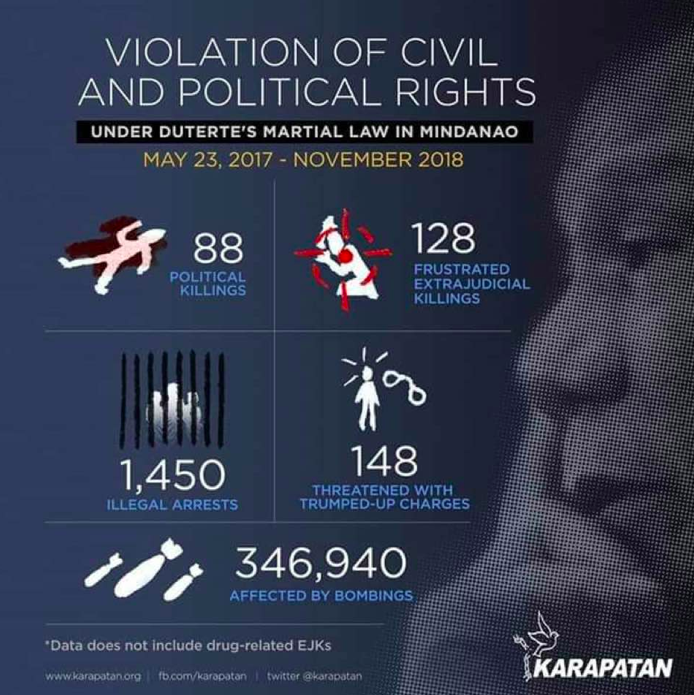
The psychologizing of the dissenting views within the POW population was a way to dismiss their authenticity as political and moral expressions of conscience.

Eugene Wilber, Edison Miller, and the Peace Committee were integral to the first history of the POW affair written by John Hubble in 1976. But Hubble used the dissidents as negative referents against which to define the “good” POWs, the ones who not only fought with courage before capture but continued the mission as “prisoners at war” in counter distinction to “prisoners of war”. The “prisoner at war” is the protagonist, à la John Smith in the American captivity narrative, the centerpiece of the Nation’s founding mythology; the “war” in that story being as much about the struggle within the individual and collective Self as it was between captives and captors. The strength to resist the attraction of the Other—as the temptation of Pocahontas is portrayed in the John Smith legend—and refuse favorable treatment, entailed the repression of desire, the deferment of worldly comfort out of a commitment to principle and religious faith. The memoirs of the Vietnam War POWs record the Christian intonations of their resistance to the temptations proffered by the guards, and even an embrace of torture to validate their virtue—the strength of their virtue confirmed by the bad POWs who succumbed to temptation.29

The rebel POWs had no place in the Smithian narrative. And with the loss of the war having marginalized the otherwise honorable tradition of American dissent—the Thomas Paines, Jane Adams, and Martin Luther Kings—there were no associations with which to associate the POW dissidents. What, exactly, was to be remembered? The GI and veterans’ movements had begun at a time when the anti-war movement was peaking in the late 1960s; they were embraced as allies in the general and larger movement and written into its historical accounts. By contrast, the story of anti-war POWs unfolded after the war was over and the anti-war movement was dissolving.

Antiwar Warriors: A Place in the American Story?

Service members, POWs, and veterans who spoke against the war remain contested figures in Vietnam war remembrances. Easily scapegoated for the loss of the war—their words were said to have demoralized their comrades still in the fight and lent aid and comfort to the enemy, according to their detractors. The efforts to discredit their dissent as psychological disorder nevertheless had a sympathetic tonality that bent some critics toward understanding if not forgiveness. Viewed as tragic figures caught in the fog of war, on the other hand, their courageous stances blended into an ill-focused victim-veteran figure destined to fade from social memory.

Their displacement from memory was abetted by broader anxieties left by the war. Public upset that war had been mismanaged by Washington and hampered by people-of-conscience naively misled by leftwing propaganda was a recipe for McCarthyite conspiracism. Stirred by Hollywood film and the revanchist Reagan-Bush presidencies in the 1980s, the conspiracy theorists fantasied a sellout of the military mission by an intelligentsia highly placed in media and governmental circles, aka the “Washington insiders.”30

The storyline of an enemy inside the gates rendered the history of in-service dissent a mere footnote in a larger narrative of national degeneration as cause for the defeat in Vietnam. It wasn’t just that returning veterans were said to have been spat on by protestors—they were neglected and forgotten by an ungrateful American public as well, and POWs, the good ones, were “left behind,” abandoned in Southeast Asia by a government hastening to forget the ignominy of a lost and unpopular war.

The memory of the Vietnam veterans who lent the credibility of their uniforms to the cause of peace has largely been displaced by that of veterans victimized by the war as successive administrations have waged new wars from Iraq and Afghanistan to Libya and Syria. That displacement has diminished their appeal as role models for a new generation of would-be resisters and deterred the out-reach of civilian peace activists for allies within the military.

When the Iraq Veterans Against the War base-tour bus stopped at the Navy base in New London, CT in 2006, I asked Tom Barton, one of the organizers about the response they were receiving from the local groups hosting them. “Everywhere we go,” he complained, “all people want to talk about is PTSD. Do these guys look fucked-up to you?” he asked, waving his arm toward the IVAW members. No, I answered, before beginning a conversation about the way anti-war Vietnam veterans’ voices had been silenced and the legacy of their missing voices in our political culture.31

A full accounting of the whys and wherefores of the war in Vietnam, and the legacy of GI resistance for the country today, is an ongoing project. The story of the silencing of dissenting voices of service members and POWs is one of the biggest gaps in the historical record, one that is only beginning to be filled.

*

Note to readers: please click the share buttons below. Forward this article to your email lists. Crosspost on your blog site, internet forums. etc.

Jerry Lembcke is the author of The Spitting Image: Myth, Memory, and the Legacy of Vietnam and Hanoi Jane: War, Sex, and Fantasies of Betrayal. He is Associate Professor Emeritus at College of the Holy Cross in Worcester, MA and a Distinguished Lecturer at the Organization of American Historians.

Notes

The 13-episode The War in Vietnam produced for public television in 2017 by Ken Burns and Lynn Novick touch on themes of in-service dissent but in ambiguous ways. I reviewed the film for Public Books  here.

The history of the coffee houses is written by David L. Parsons in Dangerous Grounds: Antiwar Coffeehouses and Military Dissent (UNC Press, 2017). For GI Press history, see James Lewes’s Protest and Survive: Underground GI Newspapers During the Vietnam War (Praeger Press, 2007).

Neither Cortright nor Zeiger mention the POW dissidents.

The military constraints on civilian reporters were tighter than sometimes believed today. It was not easy for reporters to get out of major cities and military installations. When they did, they were sometimes “given a story” by a field unit’s “public affairs liaison” and put on a plane back to Saigon. See Cortright (p. 269) for references to the Army’s inquiries into dissent.

The major news breakthroughs came in 1969 due, in part, to growing public pessimism about the war after the Tet Offensive of 1968 and the presence in the military of an older and better-educated cohort of draftees that came in with the post-Tet callup. See my “Contradictions of 1969: Drafted for War, The Westmoreland Cohort Opted for Peace” in The American Historian, May 2018.

I was one of those on the 19-month plan.

A month after the action for which he was decorated, Kerrey led a raid on Thanh Phong village in which his men knifed to death its inhabitants. Later critics called the deaths murder, charges that dogged Kerrey in the latter years of his career. See here

See Andrew Hunt, The Turning: A History of Vietnam Veteran’s Against the War (NYU Press, 2001).

Just after the October 15, 1969 Moratorium Day against the war, H.R. Haldeman, an aide to President Richard Nixon, said, “The trick here is to try to find a way to drive the black sheep from the white sheep within the group that participated in the Moratorium . . .”

10 The University of Northern Colorado chapter of VVAW, of which I was a member, was banned from a Veterans Day parade in the early 1970s. Working around the ban, we followed behind the parade stepping to a solemn “death march” cadence.

11 For an analysis of Kerry’s speech and responses to it, see David Thorne and George Butler, The New Soldier: Vietnam Veterans Against the War.

12 John R. Coyne The Impudent Snobs: Agnew vs. The Intellectual Establishment (Arlington House Press, 1972).

13 Erving Goffman, Stigma: Notes on the Management of Identity (Penguin, 1964); Liz Szabo, “Cost of Not Caring: Stigma Set in Stone—Mentally Ill Suffer in Sick Health System.” USA Today, 2014.

14 See Daniel Ellsberg, Secrets: A Memoir of Vietnam and the Pentagon Papers (Penguin, 2003).

15 The Times article was Jon Nordheimer’s, “”Postwar Shock Besets Ex-GIs” August 21, 1971. See Peter G. Bourne, Men, Stress, and Vietnam (Little, Brown 1971).

16 As “lore,” the origins of ideal American veteran are obscure and largely figments of imagination. The GI Joe figurine was created in the early 1960s, too late for it to have been more than a cultural expression during the 1960s and 1970s. More likely, Americans expected their soldiers to look and act like John Wayne playing Marine Sergeant John Stryker in The Sands of Iwo Jima (1949) or Audie Murphy (said to be the most decorated veterans of WWII, playing himself in To Hell and Back (1955).

17 A 1971 survey by the Harris Poll conducted for the U.S. Senate reported 99% of Vietnam veterans polled saying they were welcomed home by friends and family, and 94% of the veterans polled saying their reception from their age-group peers was friendly. Only 1% of veterans in that poll described their homecoming as “not at all friendly.”

18 The binary nature of the spat-upon veteran is developed more fully in my The Spitting Image: Myth, Memory, and the Legacy of Vietnam, Pp. 5, 53-55, 104, 124.

19 The blackout of news about shot down U.S. pilots may never have been as great as some Americans believe today. In John Hubble’s book P.O.W.: A Definitive History of The American Prisoner-of-War Experience in Vietnam, 1964-1973, which is regarded as the “official story,” he records (pp. 51-52) pilot Larry Guarino’s arrival in Hao Lo Prison in June of 1965 and his telling Bob Peel, who had been captured earlier, that he had “read about” his capture and that “your name has been officially released as definitely captured.”

20 In “Antiwar P.O.W.s: A Different Mold Seared by Their Combat Experience” The New York Times Steven V. Roberts on July 15, 1973 reported, “All members of the peace committee—the men say that they never organized a formal group or gave themselves a name. . . .”

21 The quoted words are Nick Rowe’s in Stuart Rochester and Frederick Kiley’s Honor Bound: American Prisoners of War in Southeast Asia, 1961-1973. Rochester and Riley write (p. 193) that POWs got news of Quaker Norman Morrison’s self-immolation in November 1965, the Bertrand Russell War Crimes Tribunal, and (p. 412) the 1968 Democratic National convention.

22 When jungle prisoners Smith and McClure were released in late November/early December 1965, the American news media and superiors in Washington characterized them as either “turncoats” or victims of “brainwashing,” according to Rochester and Kiley (p. 249). The notion of brainwashing was popularized in the accounts of Korean War POWs who choose to stay in North Korea after the war. Brainwashing, however, never gained the same credibility in the case of Vietnam POWs.

23 Craig Howes’s Voices of the Vietnam POWs (pp. 110-111) is a reliable source for the struggle between SROs and PCs. The quoted “excommunicated” is his. The SRO’s attempt to control their own imprisoned peers was based on their reading of the military Code of Conduct. Post-war legal proceedings judged the Code to be a nonbinding guide to the behavior of captives, not an inviolable set of orders which the PCs were legally obligated to follow. The SROs also played the “buyout” card, offering Wilber and Miller the chance for “reinstatement” as commanding officers in the chain of command they had configured. See Rochester and Kiley, p. 553.

24 The “weakness” theory had its predecessor in official accounts of Korean War POWs: some had turned against the war and even elected to stay in North Korea when released. See Albert D. Biderman’s 1963 book March to Calumny: The Story of American POWs in the Korean War (Pp. 166-167) for the weakness thesis.

25 Hubble (p. 109) attributes the Kushners’ motivations to “naivete, weakness, and mental illness.” Rochester and Kiley (p. 565) add “lacked strength and intelligence and discipline” to the list.

26 See Seymour Hersh’s coverage of the Wallace interview in the April 2, 1973 New York Times.

27 The New York Times, May 23 “Ex-P.O.W.s Cheer Nixon” made no mention of the dissidents, nor did its June 2 story “400 Ex-P.O.W.s are Given $400,000 Dallas Reception.” Tom Wilber, Eugene’s son, is a source of information on the behind the scenes shenanigans against the family. 

28 Like for other antiwar veterans, the diagnostic framing of their views functioned politically and culturally more than medically. Press reports at the time portrayed POWs as healthy and later medical reports confirmed that. POW memoirs written as late as the mid-1980s make no mention of PTSD or trauma.

29 Pauline Turner Strong, Captive Selves, Captivating Others: The Politics and Poetics of Colonial Captivity Narratives.

30 The John Birch Society peddled the hardcore paranoia of an enemy-inside-the-gates.

31 Barton was, at the time, the editor of G.I. Special Newsletter.

All images in this article are from APJJF

  • Posted in English @as @as
  • Comments Off on GI, Veteran, and POW Voices of Conscience: Recovering the Voices of GI Resistance to the War in Vietnam
  • Tags:

The 71st anniversary of Sri Lanka’s independence from British rule was celebrated on February 4 in a “gallant ceremony” at the Galle Face Green in Colombo. Geopolitical rivalry, foreign intervention and constitutional reform for political devolution, however, are posing serious threats to the island’s sovereignty and environmental and human well-being. Even the country’s nominal “flag independence” is severely threatened.

Beginning in 1505, Sri Lanka’s coastal lowlands were successively colonized by the Portuguese, the Dutch and the British until the entire island came under the British with the capture of the Kandyan kingdom in 1815. Colonial rule was maintained through deliberate policies to divide and conquer local communities, cultivate patronage and collude with local elites. Colonial plantations undermined local subsistence agriculture and the ecological balance, while Western religion and ideologies of progress and civilization weakened the people’s historical pride in their cultures and the island’s sovereignty.

In the early years following independence, Sri Lankan governments introduced policies to nationalize plantations and other private enterprises, foster local industries, and develop local culture and identities. The 1972 constitution replaced the island’s colonial name “Ceylon” with “Sri Lanka,” declaring the country to be a “free, sovereign, independent and democratic socialist republic.” These designations remain on paper but many of the post-colonial policies backfired, giving rise to massive youth unemployment and violent social class and communal conflicts.

Reversing autarkic economic policies, a newly elected Sri Lankan government introduced an Open Economy in 1977 giving free rein to foreign investment and imports and to privatizing hitherto state-owned sectors such as transport and telecommunications. The speed-up of economic “liberalization” and the dismantling of the traditions of state welfare, urged on by the World Bank and the International Monetary Fund, made 1977 a turning point in the economic and political history of the island.

Still, it was not a radical departure in that it signified an acceleration of capitalist development begun with colonial plantations in the 1830s. Notwithstanding promises of prosperity and freedom for all, the post-1977 period saw the emergence of the horrific armed conflict over Tamil separatism that lasted for more than 30 years, until 2009.

Deepening foreign control

In the years following the 2015 elections and a change in political leadership, Sri Lanka’s economic crisis, foreign debt, geopolitical rivalry and foreign intervention have all intensified posing serious threats to the island’s independence, peace and security. The Indian Ocean (along with the Western Pacific) is expected to become the center of future world politics, strategy and economics and one of the most strategically contested regions in the world. China, the US, India and also Japan and other states are struggling for influence over Sri Lanka, which is strategically located in the heart of the Indian Ocean. Sea lanes of the Indian Ocean are considered to be the busiest in the world with more than 80% of global seaborne oil trade estimated to be passing through them.

Sri Lanka is central to China in its massive import of energy and export of goods. The US-backed political leadership in Sri Lanka tried to break ties with China upon coming into office in 2015. However, faced with the necessity of Chinese economic support, notwithstanding India’s concerns over Chinese encirclement, Sri Lanka has committed itself to active participation in the Maritime Belt and Silk Road initiative, China’s extensive network of ports and maritime facilities connecting the Pacific and Indian Oceans.

In January 2017, the Sri Lankan government announced a deal granting China a 99-year lease of Hambantota Port in the south in exchange for US$1.1 billion in debt relief. The debt-for-equity swap raises concerns over the loss of the island’s strategic state assets and economic sovereignty, and the long-term impact on the Sri Lankan people.

Another massive Chinese project in Sri Lanka is the Port City being built in Colombo on 269 hectares of land reclaimed from the Indian Ocean. This $1.4 billion project by the state-owned Chinese engineering firm China Communications Construction Company (CCCC) is the largest single foreign direct investment in Sri Lankan history.

Environmental activists have pointed out that excavation of sand along the coast is destroying the habitats of various species including corals, while disturbing the ecological balance and the livelihood of those in the fishing and related industries. The Sri Lankan government suspended the project in 2015 but it was resumed in 2016 and is now rapidly moving forward. The new set of environmental regulations the government is said to have negotiated with CCCC is yet to be made public.

The Port City, called “Sri Lanka’s ‘new Dubai’” by British newspaper The Guardian, “with its own business-friendly tax regime and regulations – and possibly a different legal system to the rest of Sri Lanka,” has serious implications for the island’s sovereignty and independence. Sri Lankan activists are concerned about the power a majority-state-owned Chinese corporation would wield as landlord of the territory it leases in the Port City.

There is concern that the Port City will be a separate entity where only a certain class of wealthy people, mostly foreigners, will live while services would be provided by Sri Lankans receiving little economic benefit

There is also concern that the Port City will be a separate entity where only a certain class of wealthy people, mostly foreigners, will live while services would be provided by Sri Lankans receiving little economic benefit.

Efforts are also under way by neighboring India to integrate Sri Lanka (as well as other smaller neighbors like Myanmar, Nepal and Bhutan) firmly within its sphere of economic and political influence. Based on a memorandum of understanding signed between the Indian and Sri Lankan governments in April 2017, India has been invited to develop the West Container Terminal in the Colombo Port as a joint venture with the Sri Lanka Ports Authority.

According to The Diplomat, the Colombo port “is one of the busiest ports in South Asia and an important trans-shipment hub in the region.” After a visit to the island by Japanese Foreign Minister Taro Kono in January 2018, plans have been made for Japan to build an LNG (liquefied natural gas) terminal in the Colombo Port and a floating storage regasification unit. Both the FSRU and LNG terminal projects are to be joint ventures by the Sri Lanka Ports Authority with both Japan and India.

The disagreement between Sri Lankan President Maithripala Sirisena and Prime Minister Ranil Wickremesinghe regarding control of the island’s ports is said to have been a key issue that led to Sirisena’s dismissal of Wickremesinghe as PM last November (he was reinstated in December). Wickremesinghe, backed by International Trade Minister Malik Samarawickrama, wanted port development, specifically the East Container Terminal of the Colombo Port, on the basis of an Indian investment. Sirisena, on the other hand, had argued that it was vital to keep the seaport “within the ambit of the Sri Lankan government.”

Another highly controversial agreement between India and Sri Lanka is the proposed Economic and Technology Cooperation Agreement (ETCA). Unlike earlier bilateral trade deals with India, this Indo-Sri Lanka trade deal covers trade in services, especially information technology, shipbuilding and engineering. Although the ETCA proposal is yet to be made public, given the asymmetry in size and economic and political power of the two countries, it has generated tremendous opposition from professional bodies in Sri Lanka. They are fearful that inundation of doctors and other professionals from India would displace Sri Lankans in their own country.

There are also criticisms in the country of the bilateral trade agreement signed between the governments of Sri Lanka and Singapore in January 2018 on grounds that Sri Lanka would lose millions of dollars each year due to elimination of tariffs for Singapore exports, among other negative effects.

In reverting attention to growing Indian involvement in Sri Lanka, it is necessary to consider India’s plan to build a sea bridge and tunnel, at a cost of more than $5 billion from the Asian Development Bank, to connect the southern tip of India with the northwest of Sri Lanka. Sri Lanka’s territorial integrity, sovereignty and unique cultural heritage were maintained historically through its physical separation from its large and powerful neighbor. As such, there is fear particularly among the Sinhala Buddhist majority that the easy influx of Indian Hindus and Muslims into Sri Lanka through the planned bridge would change the demographic make-up of Sri Lanka turning them into a minority in the island.

It is also believed that in the long term, the bridge could well threaten the territorial integrity of India itself by providing the basis for the long-held Tamil separatist dream of Greater Eelam combining Tamil Nadu and northern Sri Lanka, renewing conflict and violence in the process.

In August 2016 the first joint operation between the US and Sri Lankan militaries took place in Jaffna with participation of TNA (Tamil National Alliance) politicians at the launch. Since 2016, US Navy ships have visited Colombo, and US Seventh Fleet vessels and the aircraft carrier USS John C Stennis have visited the eastern port of Trincomalee. Trincomalee, the second-deepest natural harbor in the world, is considered to be of great strategic military value in the Indian Ocean. Last December, the US Navy announced the setting up of a logistic hub in Sri Lanka to secure support, supplies and services at sea.

On December 31, US President Donald Trump signed the Asia Reassurance Initiative Act to strengthen the US strategic position in Asia vis-à-vis China. According to recent reports, between January 24 and 29 this year, Bandaranaike International Airport in Sri Lanka was “used for US military planes to bring in supplies, and for aircraft aboard the John C Stennisto fly in, load, and ferry them back.”

The Sri Lankan government has not responded to questions regarding the violation of Sri Lankan sovereignty inherent in these acts. Indeed, has Sri Lanka been turned into a theater for the foremost geopolitical struggle of the 21st century?

Constitutional reform

An October 2015 UN Human Rights Council Resolution co-sponsored by the US and Sri Lankan governments called on the Sri Lankan government to devolve power as the means to political settlement, reconciliation and human rights. This infamous resolution has to be understood in the broader context of US strategic interests in Sri Lanka. High-level US government officials have admitted a direct link between the United Nations resolution and a new constitution for Sri Lanka and have offered assistance to draft and monitor its adoption, claiming “a shared responsibility to help this process through.”

In September 2016, the United States also signed a partnership with Sri Lanka allowing the US House of Representatives to “work with” the Sri Lankan Parliament to help develop an “accountable, effective and independent” legislature, thereby raising issues about external interference in the internal affairs of a sovereign state. Sri Lanka’s treatment as a client state was also evident in “unwarranted interference” by diplomats of the US and its allies the UK, Canada and the European Union during the crisis caused by the Sri Lankan president’s dismissal of the prime minister last October.

The current government in Sri Lanka does not have a mandate to introduce a new constitution and change the governance structure from a unitary to a federal state. Moreover, the “National Government” that initiated the constitution-making process in March 2016 was replaced in October 2018 with a minority government without a legal or moral basis for continuing constitutional reform. Nevertheless, constitutional reforms backed by the US and its allies that are under consideration could be adopted by Parliament in the near future.

The proposed reforms would provide a framework for each province to become constitutionally independent with the freedom to secede from a federal union. Although only Tamil politicians claiming to represent the Northern Province have been clamoring for separation, the proposed federal structure is likely to encourage other politicians to take up secession and call for new names and flags for their regions as well. The political fragmentation and destabilization engendered by the draft constitution could result in several warring mini-states, greater foreign political and military intervention and deeper economic control over local assets.

Sri Lankans from all ethnic, religious, social-class and political backgrounds need to understand the geopolitical threats facing the country and the dangers of proposed constitutional reforms, and stand up for Sri Lanka’s sovereignty and territorial integrity. It is important for us to put aside narrow ethno-religious divisions promoted by self-interested politicians and foreign interests and come together to protect the ecological integrity and sustainability of our island home, which is severely threatened by climate change – rising sea levels, frequent droughts, floods, landslides and the like.

*

Note to readers: please click the share buttons below. Forward this article to your email lists. Crosspost on your blog site, internet forums. etc.

This article was originally published on Asia Times.

Featured image is from Asia Times

  • Posted in English @as @as
  • Comments Off on Demise of Sri Lanka’s Independence. Deepening of Foreign Control: China, US, India, Japan
  • Tags:

China Creates, Macau Burns and Robs

February 4th, 2019 by Andre Vltchek

  • Posted in English @as @as
  • Comments Off on China Creates, Macau Burns and Robs

The Criminalization of Filipino Children

January 25th, 2019 by Prof. Phoebe Zoe Maria Sanchez

Over 30,000 have been slaughtered for Duterte’s drug war but none of them comes from comprador drug lords. Now, even 9 year olds have to be criminalized.

While the festivity of the Holy Child was celebrated here in Cebu City this January, the Philippine House Justice Committee, successfully passed the criminalization of children. This was done via the passage of amendments to HB 9344, lowering of the age of criminal liability to 9 years old.

Despite the incentivization of law enforcers to apprehend syndicates, Duterte’s police state had lawmakers pursue the alternative solution by taking children as criminals believed to be employed by syndicates to carry out crimes. Again, this is seen as a means to cover up the Duterte Regime’s heinous slaughter of children such as Kian De Los Santos, Joshua Laxamana, Julius Sebastian and Reynaldo de Guzman among others who were murdered or tortured and accused as drug couriers.

The same is true with Duterte’s Memorandum Order No. 32 and Executive Order No. 70 justifying joint military and police operations in search, arrests and slaughtering civilian communities to end insurgency rather than directly engaging the insurgents themselves, or even better by rectifying the erroneous semi-feudal and semi-colonial Philippine State. Duterte and his cohorts remain legitimating and sustaining massive killings and attacks at all fronts except within its own ranks, ironically in the name of protecting the state when it is dismembering and destroying the social, political structure of Philippine society.  The pattern is that police operational procedures are regularly violated. Hence, the incentivization of ‘rogue cops’ as law enforcement policy is the main stratagem employed regularly.

These developments indicate how Filipino legislators today are likewise, unmindful of the absence of criminal justice policies as a realm of democratic governance that is embedded in the Constitution. The Senate, in the same manner, appear to have a lack of understanding of their power to check against abuses of other branches of government.

It must also be noted that despite some 30,000 cases of extra-judicial killings under the Duterte Regime, its anti-drugs war never targeted the faucet or source of drug production or the drug compradors themselves, but only small and poor users. Hence, the anti-drugs war is devoid of the sincere and genuine intent of arresting drugs trade in the country but simply appears as a masquerade for Duterte to enthrone himself as the country’s another fascist dictator.

Apparently, the policy lowering the age of criminal liability only favors the rich families whose children are not left out to augment incomes for food on the table.  The irony is that the state has not even provided the basic welfare for children. It is proven in the current shortage crises of Philippine education, where of the 4 million youths supposed to be in school, had only accommodated 2.3 million. Or, where only 27.7% of the 2.3 million have enjoyed free tuition fee due to its stringent implementing rules and guidelines (IRG). The shortage had sustained the lack of some 130,000 classrooms if 30 student class size had to be implemented, and with same number of lack of teachers items who are poorly paid. The shortage is also felt further with the lack of some 2.5 million chairs and the same number of lack of books covering 8 competencies.

*

Note to readers: please click the share buttons above. Forward this article to your email lists. Crosspost on your blog site, internet forums. etc.

Prof. Phoebe Zoe Maria Sanchez is an Associate Prof. of History and Sociology at the University of the Philippines Cebu.

Mounting Social Anger Seen in Two-day Strike Against Indian Government

January 10th, 2019 by World Socialist Web Site

Tens of millions of workers throughout India yesterday joined the second day of a 48-hour national protest strike against the hated pro-investor economic “reforms” of the Hindu supremacist Bharatiya Janatha Party (BJP)-led government.

While the capitalist media largely tried to black-out the strike, it was supported by broad sections of the working class, both in the so-called formal and informal sectors. Moreover, the strike cut across the caste and communal divisions that the ruling capitalist class has used for decades to channel social discontent along reactionary lines.

The large turnout reflects mounting working-class anger toward Prime Minister Narendra Modi’s big business-backed government. During its four-and-a-half years in office, it has dramatically intensified a decades-long assault on the Indian working class, one of the largest in the world. This has included savage austerity measures, acceleration of privatisation, promotion of contract-labour, the gutting of environmental and workplace safety standards, and onerous tax increases on working people.

Chief among those taking part in the stoppage were coal miners, postal workers and dockers, as well as bank, insurance, telecommunication, transport and tea estate workers. Workers from government-owned industries were joined by those from global companies like Bosch, Toyota, Volvo, CEAT, Crompton and Samsonite.

Indicating the sharp class tensions and vicious response of the employers and governments, there were numerous reports of violent clashes, sackings and arrests of striking workers. In several states, such as West Bengal and Tamil Nadu, public sector workers defied government threats of dismissals, pay cuts and other disciplinary retaliation.

The most significant conflict erupted at the Daikin air-conditioning plant in the Neemrana industrial hub of Rajasthan, where 12 workers were arrested yesterday on trumped-up charges of rioting and attempted murder, with similar charges against some 700 unnamed workers. This was after police and security guards attacked a rally of about 2,000 strikers, using lathis (heavy iron-tipped sticks), rubber-coated pellets and tear gas shells on Tuesday.

This repression occurred less than 70 kilometres from the Maruti Suzuki car assembly plant at Manesar, in the neighbouring state of Haryana, where 13 workers have been sentenced to life imprisonment on frame-up murder charges. The 13 are the target of a company-government witch hunt for leading strikes and a plant occupation in 2011–12 against sweatshop conditions and precarious contract jobs.

According to reports, the impact of the two-day strike was substantial in key states, including Haryana and Rajasthan, as well as Maharashtra and Goa in the west, Punjab in the north, Kerala, Karnataka and Tamil Nadu in the south and West Bengal and Odisha in the east.

Private hospital workers and workers from the “unorganised” sector, including in the beedi and construction industries, as well as in retail and distribution, joined the strike in many states.

In Kerala, both state-owned and private buses were off the road. Public bus services were stopped in Karnataka and Haryana, where the Gurgaon-Manesar industrial belt is located.

In Mumbai, India’s financial centre and second largest city, most banks and government offices were shut down and port operations were crippled. About 32,000 workers from the city’s public transport service continued an indefinite strike for the second day, demanding higher wages and better working conditions, in defiance of a government Essential Services Maintenance Act (ESMA) order outlawing the strike.

However, the trade unions did not mobilise some of the most important and powerful sections of the working class, such as railway workers. Airports continued to function, with little to any disruption. That reflected the political perspective of the union bureaucracies.

The strike was called by ten central unions and politically led by the Stalinist Communist Party of Indian (Marxist) or CPM. Among the unions were the CPM-affiliated Center of Indian Trade Unions (CITU) and the All India Trade Union Congress (AITUC), controlled by the other main Stalinist party, the Communist Party of India (CPI). They were joined by the Congress-led Indian National Trade Union Congress (INTUC) and the Labour Progressive Front (LPF), which is affiliated to the DMK, a right-wing party based in Tamil Nadu.

The Kerala state government, which is led by the CPM, encouraged participation. However, underscoring the pro-business nature of the Stalinist parties, it struck an agreement with the CITU to exempt passenger train services and the tourism sector, citing likely financial losses.

Likewise, the unions did not call out autoworkers in Oragadam, on the outskirts of Chennai, which has been dubbed the “Detroit of India” because major automakers have factories there.

Just last November, the unions shut down two-month-long strikes involving over 3,000 workers from three companies operating in Oragadam—Yamaha, Royal Enfield and Myoung Shin India Automotive—without meeting any of the workers’ major demands. In its deal with Yamaha, the CITU pledged “industrial peace” and a “freeze” on sit-in strikes.

By joining the two-day strike, millions of workers have demonstrated their mounting hostility to the pro-market measures imposed by successive governments since 1991, when the Indian elite set out to transform the country into a cheap labour platform for global corporations.

This is the 18th national strike led by the CITU since 1991. But all the central and state governments formed by the parties with which the unions have been allied, including Congress, regional parties like the DMK and the Stalinist CPM and CPI, have ruthlessly pursued the same “investor-friendly” policies. This includes CPM-led state governments in West Bengal, Tripura and Kerala.

India’s much-vaunted “rise” has provided gargantuan wealth to a tiny capitalist elite while condemning the vast majority of people to poverty and economic insecurity, in which any misfortune—from illness to a job loss—can push a family into the social abyss.

Whereas India counted only two billionaires in the mid-1990s, it now boasts about 130—the fourth largest concentration in the world. Meanwhile, more than 70 percent of the population struggles to survive on less than $2 per day. Modi routinely seeks to entice global investors by emphasising that wages in India are no more than a quarter those in China.

The BJP won office in 2014 by pledging to create jobs. This has proven a cruel hoax. A Center for Monitoring Indian Economy study released this week estimated the unemployment rate rose in December to 7.4 percent. If those who have disappeared from the labour force since September 2016 are counted, the true rate is almost 13 percent—that is, more than 50 million unemployed.

To pursue the great-power ambitions of the ruling class, India also has formed a “global strategic partnership” with US imperialism and dramatically increased military spending. With the fifth biggest military budget globally, India now spends two-and-a-half times more on its military than on providing health care to its 1.3 billion people.

Underscoring the government’s callous indifference to the concerns of working people, Finance Minister Arun Jaitley issued a tweet yesterday denouncing the strike. The multi-millionaire accused the “Left trade unions” of seeking “to manufacture a protest on non-existent issues.”

The two-day strike is a part of an emerging international upsurge of the working class, from the Yellow Vest protests in France against the Macron government to US teachers and autoworkers, and Sri Lankan plantation workers who are demanding a doubling of their wages.

All over the world, in their struggles, workers are coming up against the unions and so-called “Left” parties that once claimed to represent their interests. The Indian unions called the strike with the aim of containing the growing anger of the working people and rural toilers, and channelling it behind electoral manoeuvres to bring to office an alternative capitalist government, whether led by the big business Congress Party or regional and caste-based parties.

That is why the Stalinist-led unions failed to make any reference to the fate of the Maruti Suzuki workers. They fear their militant example, and even more importantly, they recognise that a campaign linking the defence of the victimised workers to the struggle against poverty wages and precarious employment would blow up their alliance with the Congress Party and their corporatist relations with big business.

The Stalinists also utilised the strike to push for a dialogue with Modi’s government, including on its latest labour legislation. The CITU yesterday issued a statement appealing to the government to “immediately put on hold all the anti-worker amendments to the labour laws and take immediate concrete action on all the demands raised by the joint trade union movement.”

ICFI/WSWS supporters campaigned among striking workers in Chennai and Kolkata on both days, circulating WSWS articles on the strike and discussing the central political issues facing the workers, and above all, the need for a socialist program to fight the government-corporate offensive.

*

Note to readers: please click the share buttons above. Forward this article to your email lists. Crosspost on your blog site, internet forums. etc.

All images in this article are from AsiaNews.it

First, are the dualities. Duterte called for peace and the left sat in the peace process.  But the country’s armed forces continue to attack poor peasant communities.

Anti-corruption campaigns turned sour when Duterte ordered a hero’s burial for dictator President Marcos. He said he will protect small communities, but ordered the bombing of Lumads (national minorities). He said he will stop casualization and contractualization of labor, but he continues to sustain Art. 106-109 of the labor code legitimizing casualization and contractualization of labor. Rido, which is a cultural dispute in Muslim society was labeled an ISIS activity. Thereafter, he legitimized aerial bombings and declared Martial Law in Mindanao. He promised land redistribution to farmers, but subjected land reform to the concurrence of landlords in congress.

An estimated number of 346,000 individuals died in Marawi City under Duterte’s Martial Law. Thousands also died in the anti-drugs war. Incidents of political killings grew in number after red tagging, that took place in backward agricultural communities, like Guihulngan City, Negros Oriental.  Six civil society political leaders and members were murdered successively at Guihulngan City.

This paper looks into the spate of killings in Philippine society.

In 2016, the literature of death in Philippine reality came with the constant rhetoric of death in president Rodrigo Roa Duterte’s public speeches. His speeches corresponded to numbers of deaths in streets, and in far flung communities. An account of 8,000 deaths were recorded toward the end of 2016 (Karapatan 2016). But victims were not all drug traders.  Most victims were merely poor individuals and homeless citizens, and some youths mistakenly shot for the sake of the show of the anti-drugs campaign.[i]After two years of Duterte’s administration, drug killings had risen to an outstanding 23,000 individuals. Reportedly, most victims died for the reason that “they fought against their arresting officer/s,” from reports of police officers themselves.

In the more remote areas, victims were not drug lords or drug users but ordinary farmers or peasants cultivating cadastral lands and non-cadastral lands (Karapatan Central Visayas 2017).

For instance, six civil society political leaders and members were murdered at Guihulngan City, Negros Oriental from late July to early September 2017. The murder of Karapatan human rights defender Mrs. Emilisa Badayos and farmer leader Elioterio Moises after a fact-finding mission at Bayawan City, Negros Oriental followed thereafter.[ii] The two were gunned down after conducting a fact finding mission despite Negros Provincial Ordinance No. 5, that unconstitutionally prohibits human rights fact finding investigation in communities of Negros Oriental province. In Cebu Province, an average of 3 persons are murdered every day.

A pattern of cases similar to these took place all over Philippine country-side.

Then the president called the attention of the left publicly reprimanding that it was the communists’ people’s army who violated and sabotaged the peace process victimizing government’s military forces.[iii]

All efforts to agree for peace gradually dwindled, while the killings rose in number.  The police and the Armed Forces of the Philippines (AFP) were later inaugurated as the institutional foundations of the Duterte regime.

Source: SVSTQC

Hence, Philippine political structure and culture, for the second time in the country’s history hoist up the military and police institutions. A design that first took place during the declaration of Martial Law during dictator Marcos’ presidential proclamation number 1081 of Sept. 21, 1972. This time without any formal presidential proclamation, the “anti-drugs war” was made a ploy for legitimation. Hence, Duterte’s administration uses ambiguation for what is legitimate or illegitimate positioning coercive rule in a populist fascist style governance.

With this norm, Duterte commenced via the burial of dictator Ferdinand Marcos, in a hero’s burial. The left who suffered most in the Marcos regime, went to court and the streets to oppose Duterte’s move with civil society groups. However, drowned with foibles between supporters of Duterte and those of the “yellow administration” of the previous Aquino government, major political scenarios became muddled in turn.

The Unraveling of Duterte’s Fascist Rule

In Early 2017, Martial Law was declared at Mindanao to resolve the so-called “Marawi Crisis”.[iv] A newsfeed of the Marawi situation was that of the Vietnamese War from the 1960s. Two weeks later, the news headline said the Armed Forces of the Philippines (AFP) assisted civilians to evacuate Marawi City.  But the picture at the newsfeed showed Honduran soldiers during a Central American conflict of the 90s. These prove the complexities of the machinery of Duterte regime’s ambiguation.

The faking of issues and fabrication of stories made the political and economic life appear impersonal or insulated from public concerns. The norm of half-truth making, not really honest to goodness public service and not really meaningful social relations, or roles that government front line service ought to play have become blurry and incomprehensible. Low talk presidential speeches with the rhetoric of death and swearing, leave the masses to cogitate and disentangle the meaning system of government and governance.

The Marawi conflict is traced to “rido”.  A rido is a cultural dispute emanating from at least two feuding clans.  Until today, Martial Law sustained in Mindanao.[v] Certain areas were flattened by a series of aerial bombardments called “friendly fire” for the intent of Duterte’s “Build, Build, Build” policy supported by loans from China and the IMF-WB.

The drug related deaths continue to rise. Volumes and volumes of deaths take place with Martial Law in Mindanao, as well as deaths of peasants, farmer leaders and many other civil society leaders.  In two years’ time, political killings heightened with the inclusion of town mayors, some government officials, police and drug operatives and Catholic priests active in the anti-mining campaigns.

Is Duterte’s Might A Right?

The situation above accounts for a scheme of legitimation by illegitimation and/or schemes of illegitimation by legitimation. As it is, the state’s monopoly of coercion is presented in a manner of misrecognition and/or recognition Duterte style. Whether duality is meant to confuse the means to an end, or against an end of a means what is apparent is that a three-pronged war exists as game plan of Duterte’s Administration. It is where the last two wars (the Anti-Muslim/Minority War and the Anti-Communist War) followed the first “operation tokhang double barrel reloaded”[vi] as Duterte’s raison d’etre for a greater usurpation of power and design of a populist authoritarian rule.

Source: siquey tuvilla

After big drug financier Peter Lim and drug comprador and triad leader Kerwin Espinosa were freed from jail, presidential son “Paulo” and officer Faeldon were also acquitted of the 6.4 B drug controversy, putting to jail a wharehouse man in their stead. Hence, the anti-drugs war comes plainly as a mask for all ambiguities, disambiguities and dramaturgy.[vii] As it appears, Duterte’s anti-drugs war has no intent to formally provide a system of de-judicialization of the poor’s involvement in drug crimes and drug criminals in a scientific criminal procedure, nor does it intend to sincerely apprehend the source and find the faucet of drugs trade. It is on the contrary, a mode of regulation to boost the drugs trade, and facilitate capital accumulation via the heightened demand and supply of drugs in market trade schemes.

Two years passed and the count of deaths and various atrocities had battered daily news feeding Philippine society horrible accounts of bloody “charges” thru breakfast, lunch and dinner. Hence:

As result, the norm today shows liminal predation amidst surface harmony, where constant massacre takes place underneath social relations causing entrenchment of poverty, deprivation and exclusion. A kind of concordant discordance is in the atmosphere where underneath malfunctions of democratic institutions, are tacit arrangements of killings orchestrated through memorandum orders, crackdowns and reward booties for the military and police operations.

The fascist norm still prevails today, amidst a regressive tax policy appropriating wealth by reverse flow. In 2018, with the first implementation of the recent Tax Reform Acceleration and Inclusion (TRAIN) Program of the Duterte administration, excise taxes on petroleum products and double value added taxes on consumer goods and services hit hard on incomes and food requirements in the massive poor Filipino households. The year 2019 and 2020 will see the second and the third rounds of TRAIN Law implementation and hopes to find if the massive poor people of the country will still survive. This amidst still the on-going killings and continued attacks on human rights. Hence,

*

Note to readers: please click the share buttons above. Forward this article to your email lists. Crosspost on your blog site, internet forums. etc.

Prof. Phoebe Zoe Maria Sanchez is an Associate Prof. of History and Sociology at the University of the Philippines Cebu.

Notes

[i] http://newsinfo.inquirer.net/890257/police-paid-to-kill-drug-suspects-plant-evidence-reuters-reportDownloaded 8/1/18.  http://newsinfo.inquirer.net/941177/sws-most-filipinos-believe-not-all-summoned-for-oplan-tokhang-are-addicts-pushers-sws-survey-illegal-drugs-oplan-tokhang. Downloaded 8/1/18, http://news.abs-cbn.com/war-on-drugs/part2 Downloaded 8/1/18, https://www.hrw.org/report/2017/03/02/license-kill/philippine-police-killings-dutertes-war-drugs Downloaded 8/1/18

[ii] https://www.panaynews.net/more-rampant-brutal-fearless-bayawan-shooting-kills-2-hurts-1/Downloaded 8/2/18.

[iii] http://newsinfo.inquirer.net/867966/dute rte-lifts-ceasefire-with-npaDownloaded 8/1/18

[iv] http://news.abs-cbn.com/focus/06/13/17/the-mautes-and-marawi-city-a-familys-quest-for-vengeance. Downloaded 8/2/18. https://www.rappler.com/nation/189922-warning-revenge-killings-clan-feuding-marawi. Downloaded 8/2/18. https://www.sunstar.com.ph/article/156316/Lidasan-Understanding-the-complex-situation-in-Marawi-Downloaded 8/2/18.

[v] http://cnnphilippines.com/news/2017/05/24/marawi-crisis-timeline.html . Downloaded 8/2/18

[vi] http://www.pnp.gov.ph/news-and-information/773-pnp-activates-drug-enforcement-group-double-barrel-reloaded-tokhang-revisitedDownloaded 7/31/18

[vii] https://www.rappler.com/nation/201598-ombudsman-panel-clears-paolo-duterte-manases-carpio-shabu. Downloaded7/31/18.

All images in this article are from the author.

As workers prepare to begin construction of a new U.S. military base in Henoko Bay in Okinawa, Japan, U.S. environmentalists are gearing up for legal action and blasting the destructive project. The planned base could wipe out the Okinawa dugong, one of Earth’s most endangered marine mammals.

As early as  Friday ships could start dumping tons of dirt and sand into Henoko Bay. This landfill is part of a process of destroying and paving over many acres of rich coral and seagrass habitat crucial to the handful of surviving Okinawa dugongs, a manatee relative.

But the U.S. Department of Defense’s base plan still faces legal action by the Center for Biological Diversity and other U.S. conservation groups. Under the U.S. National Historic Preservation Act, American officials must avoid or mitigate harm to places or things of cultural significance to another country. Dugongs are cultural icons in Okinawa.

“We will never stop fighting to protect the Okinawa dugong from extinction at the hands of the U.S. military,” said Peter Galvin, cofounder of the Center. “This base is an environmental atrocity. Wiping out these gentle, culturally important animals would forever stain America’s international reputation.”

Briefing begins in January in the groups’ appeal to the 9th Circuit Court of Appeals, which ruled last year that the issue deserved a full hearing. The appeal challenges an adverse district court ruling.

The U.S. base is also opposed by Okinawa’s new governor, Denny Tamaki, who has strongly urged Japan’s Defense Ministry to halt construction. Okinawa’s assembly recently approved holding a popular referendum on the base.

Background 

A landmark 2017 ruling by the 9th Circuit U.S. Court of Appeals affirmed the right of conservation groups to sue to compel the U.S. military to fully consider the base’s impacts. The plaintiffs, including the Center, Turtle Island Restoration Network and Okinawan residents, are represented by Earthjustice.

Dugongs have long been revered by native Okinawans and even celebrated as “sirens” that bring friendly warnings of tsunamis. The dugong is listed as an object of national cultural significance under Japan’s Law for the Protection of Cultural Properties. Under the U.S. National Historic Protection Act and international law, the United States must avoid or mitigate harm to places or things of cultural significance to another country.

*

Note to readers: please click the share buttons above. Forward this article to your email lists. Crosspost on your blog site, internet forums. etc.

BJP Loses the Semi Final

December 16th, 2018 by Countercurrents.org

In a crucial election to five assemblies in what is billed as a semi final before the 2019 general elections, Prime Minister Narendra Modi’s ultra Hindu nationalist Bharatiya Janata Party drew a blank. It lost massively in Chattisgarh, a state where it held power for four consecutive terms. The Chief Minister Raman Singh was defeated in his constituency too. In Rajasthan Congress party managed to secure a simple majority. In the Hindi heartland, Madhya Pradesh, BJP is all set to be unseated, where Congress party is sure to form a government with the support of smaller parties. In Telegana, the regional party Telegana Rashtra Samiti led by K Chandra Shekhar Rao has won the election with a massive majority. In the North Eastern state of Mizoram, The Mizo National Front has won the election with a handsome majority.

The election results are a people’s no confidence motion against the Narendra Modi government which is becoming unpopular by day. It is clear that BJP which came to power on the charisma of Modi is losing his charm with the voters.

The Modi government is facing opposition from all quarters. Yesterday, Reserve Bank of India Governor Urjit Patel resigned over attempt by the government to encroach over its autonomy.

In another development yesterday, Upendra Kushwaha, a Modi cabinet minister and the chief of the RLSP (Rashtriya Lok Samata Party) quit the cabinet and the NDA alliance. In a revealing resignation letter he wrote, “You have systematically dismantled the functioning of the cabinet that is mandated in the constitution. The union cabinet has been reduced to a mere rubberstamp, simply endorsing your decision without any deliberation. Ministers and officers posted in ministries have become figureheads as virtually all decisions are taken by you, your office and the BJP president”. He also alleged that the government’s priority was “not to work for the poor and oppressed, but to fix political opponents by hook or crook.”

The infamous note ban of 2016 and the implementation of Good and Service Tax (GST) has broken the back of the small traders and farmers. On 30th November around 100,000 farmers from across the country converged and marched to the parliament of India in New Delhi demanding a special session to discuss their problems. The farmers also demanded a nationwide waiver of farm loans amid rising fertilizer costs and other agricultural inputs.

Indian banks are also on the brink of collapse as bad loans by corporates mount.

If the Congress party had patched together an alliance with Bahuja Samaj Party (BSP) led by Ms. Mayawati, it could have won the elections with a thumping majority. The alliance didn’t happen due to the hard bargaining of Mayawati. Early lessons learnt from the election results – BSP has to stop playing one-upmanship and work towards building the grad alliance. When the country is falling apart Behen Mayawati can’t do navel-gazing.

*

Note to readers: please click the share buttons above. Forward this article to your email lists. Crosspost on your blog site, internet forums. etc.

Featured image is from Countercurrents

Stand with Okinawa

December 13th, 2018 by Moé Yonamine

The Henoko base construction is framed by the history of colonization and racism against Okinawans, as well as by our ongoing resistance as we attempt to end the long era of U.S. occupation.

***

“Don’t cry here,” an 86-year-old Okinawan grandmother I had never met before told me. She stood next to me and took my hand. I had been visiting my family in Okinawa with my four children early in August and had traveled to Henoko, in the northeastern region of our main island, to join the protest against the U.S. military’s relocation of the U.S. Marine Corps Air Station from Futenma, located in the center of an urban district, to Camp Schwab, in a more remote coastal region. My teenage daughter, Kaiya, and I had spent the day with a crowd of elders holding protest signs in front of the gates of Camp Schwab. Rows and rows of more than 400 trucks hauling large rocks passed by, ready to outline an ocean area for the new base, equivalent to the size of 383 football fields. Our beautiful, tropical ecosystem with all of its internationally proclaimed and protected biodiversity was to soon be crushed, destroying coral and marine life. This, despite the overwhelming opposition of Indigenous island people. I began to cry as I held up my protest sign.

“Grandma is going to cry when I get home tonight so I will be crying with you,” she said squeezing my hand. “Here, we fight together.” We watched as trucks flooded through the gate of the military base where Japanese police had pushed us away moments before. With tears in her eyes she said, “It wouldn’t be strange if we all jumped in front of every one of those trucks, because this is our ocean. This is our island.”

Four months have passed since I joined the Okinawan elders back home and so many have continued to hold sit-ins every week — for some, every day — despite being forcefully removed by Japanese riot police. Meanwhile, the concrete blocks and metal bars have been dropped into the ocean on top of the coral to outline where the base will be constructed. Governor Takeshi Onaga, who had succeeded in halting the base construction, died from cancer in August and the Okinawan people elected a new governor, Denny Tamaki, by an overwhelming majority — based on his promise that he would stop the Henoko destruction. More than 75,000 Okinawans showed up in an island-wide protest during typhoon weather to show the world how strongly we oppose this base construction. Yet, the Japanese central government announced that on December 13th (UST) — this Thursday — they will resume the landfill with sand and concrete. Authorities argued that building a new Henoko base is necessary in order to maintain the U.S.-Japan security alliance; and U.S. government leaders touted the base’s location for regional security.

But if built, there will be no reversing the damage to our ocean, our coral, and our sea life.

The Henoko base construction is framed by the history of colonization and racism against Okinawans, as well as by our ongoing resistance as we attempt to end the long era of U.S. occupation. Okinawa was once an independent kingdom; it was colonized by Japan in the 17th century and during World War II became the victim of the bloodiest battle in the history of the Pacific, where more than a third of our people were killed within three months, including members of my family. Ninety-two percent of Okinawans were left homeless.

The United States then took the land from the Okinawan people, created military bases, and imposed a new constitution on Japan that took away Japan’s right to have an offensive military. Henceforth, the U.S. military would “protect” Japan with bases throughout Japanese territory. However, three-quarters of all U.S. bases on Japanese territory are on Okinawa, even though Okinawa makes up only 0.6 percent of the total landmass that Japan controls. Okinawa’s main island alone is only 62 miles long, and an average of one mile wide. It is here that 73 years of U.S. base occupation has created environmental destruction, air pollution and noise pollution, and exposed survivors and families to the sights and sounds of war. Frequent violent crimes against women and children by U.S. military personnel regularly bring out hundreds of thousands of protesters to demand justice and humanity and the complete removal of U.S. bases.

And the occupation continues. Now, the Japanese central government enforces the construction of yet another base — this one in the ocean itself, in the Henoko region of Okinawa. This new chapter in the ongoing invasion of Okinawa disregards the sovereignty, self-determination and human rights guaranteed by United Nations resolutions. The Okinawan people have voted overwhelming to oppose the base construction — for more than 20 years, since the base was first proposed.

The marine habitat of Henoko is second only to the Great Barrier Reef in biodiversity. More than 5,300 species live in Oura Bay, including 262 endangered species like the dolphin-like dugong and sea turtles. Already this week, the Ryukyu Shimpo reported that two of the closely monitored dugong are missing, with predictions that the noise level of the construction has already hindered their ability to graze on seaweed beds.

For me, the Henoko struggle is about honoring my people’s existence and our right to protect our native land. I draw inspiration from the Australian students’ protest to stop the Adani coal company from building coal mines in Queensland, and from the Kanaka Maoli people’s movement to block the destruction of Mauna Kea in Hawai’i for an 18-story telescope. Okinawa is my home, my ancestral home. To have it destroyed is unfathomable.

Of course, what’s happening in Okinawa is not an isolated outrage. The United States has more than 800 military bases in more than 70 countries across the globe. And each of these places are, or were, people’s homes — just like my people’s in Okinawa. The devastation of Henoko is part of a larger, world-wide U.S. imperialist footprint. What happens in Okinawa matters for Indigenous peoples everywhere. What happens in Okinawa matters for sovereignty fights everywhere. What happens in Okinawa matters for fragile ecosystems everywhere.

As I write, I’m receiving reports from Okinawa announcing the arrival of more ships carrying sand and concrete ready to pour the outline of the 205 hectare area. With only four days left before this destruction of irreplaceable biodiversity, a fellow Okinawan American activist and I created a hashtag campaign to demand the stopping of the base construction in Henoko: #standwithokinawa.

Please post your solidarity message, demanding your representatives take part in protecting Henoko, and connect with organizations and allies to help us fight for our rights as Okinawan people. In addition, organize international solidarity efforts to amplify the urgency of stopping the base construction. Sign the petition to President Trump demanding that the United States stop the landfill of Henoko here.

In the words of one auntie at the sit-in this past summer, “It hasn’t been the governments or politicians that have stopped this heliport construction over the last five years. It has been ordinary people; volunteers, the elderly and people who just care about Okinawa. And that’s going to be who changes this now. Ordinary people, many, many of us together.” We need the world with us. Stand with Okinawa.

*

Note to readers: please click the share buttons above. Forward this article to your email lists. Crosspost on your blog site, internet forums. etc.

This work is licensed under a Creative Commons Attribution-Share Alike 3.0 License

Moé Yonamine ([email protected]) teaches at Roosevelt High School in Portland, Oregon, and is an editor of Rethinking Schools magazine. Yonamine is part of a network of Zinn Education Project teachers developing original people’s history curriculum. She is the author of “The Other Internment: Teaching the Hidden Story of Japanese Latin Americans During WWII,” “‘ANPO: Art X War’: A Film Tackles the U.S. Occupation of Japan,” a film review with teaching activities of “ANPO: Art X War,” a documentary about visual resistance to U.S. military bases in Japan, and “Uchinaaguchi: The Language of My Heart.”

The Kisan Mukti March in India is a powerful example of Huey P. Newton’s idea of revolutionary suicide. On November 29-30, tens of thousands of farmers and rural people from across India marched on New Delhi flying communist flags and chanting revolutionary slogans. It was this year’s fourth major demonstration of farmers in the Indian capital that have protested against the unbearable poverty in the country’s rural areas.

Crushing debt and deteriorating economic and social conditions in recent decades have driven many Indian farmers to take their own lives. Almost 300,000 farmers have committed suicide since 1995.[i] Speaking to Newslick, an elderly man from Nalanda who participated in the march said that “I have seen way too many people succumb to pressure and commit suicide, but now is the time to take on the government and make our voices heard.”[ii]

Image result for Huey Newton

Huey Newton defined reactionary suicide as “the reaction of a man who takes his own life in response to social conditions that overwhelm him and condemn him to helplessness.”[iii]  Revolutionary suicide, on the other hand, accepts the likelihood of death, but struggles wholeheartedly against capitalism and imperialism:

“It is better to oppose the forces that would drive me to self-murder than to endure them. Although I risk the likelihood of death, there is at least the possibility, if not the probability, of changing intolerable conditions. But before we die, how shall we live? I say with hope and dignity; and if premature death is the result, that death has a meaning reactionary suicide can never have. It is the price of self-respect.”[iv]

Often hailed by liberal propagandists as “the world’s largest democracy”, the Indian state is really the world’s largest dictatorship of the bourgeoisie. Two-thirds of its people live on less than $2 a day[v] while its top 1% holds 73 of its wealth.[vi] The caste system, which was intensified by British colonialism to keep the Indian people divided, retains a strong hold on society.

Since the collapse of the Soviet Union, the Indian state has increasingly abandoned social democratic policies and moved towards further integration into the U.S.-led imperialist system. Two and a half decades of neoliberal economic policies has led to an extremely dire situation for rural Indians, who comprise the majority of the population.

This reactionary trend will not last. With the Kisan Mukti March, the workers and farmers of India have struck fear into the heart of Prime Minister Modi and his far-right government. They are carrying on the legacy of Shaheed Bhagat Singh, whose bravery and strength exemplified revolutionary suicide.

*

Note to readers: please click the share buttons above. Forward this article to your email lists. Crosspost on your blog site, internet forums. etc.

Nathaniel Dupont is an independent geopolitical analyst based in Vancouver, British Columbia.

Notes

[i] Sainath, P. “Maharashtra Crosses 60,000 Farm Suicides.” People’s Archive of Rural India, 21 July 2014,ruralindiaonline.org/articles/maharashtra-crosses-60000-farm-suicides.

[ii] Pal, Sumedha. “Kisan Mukti March: ‘It’s Time to Take on the Govt and Make Our Voices Heard’.” NewsClick, 29 Nov. 2018,www.newsclick.in/kisan-mukti-march-its-time-take-govt-and-make-our-voices-heard.

[iii] Newton, Huey P. Revolutionary Suicide. Penguin Books, 2009, p.2

[iv] Ibid., 3

[v] “Poverty in India: Facts and Figures on the Daily Struggle for Survival.” SOS Children’s Villages Canada,www.soschildrensvillages.ca/news/poverty-in-india-602.

[vi] “Income Inequality Gets Worse; India’s Top 1% Bag 73% of the Country’s Wealth, Says Oxfam.” Business Today, Business Today, 23 Jan. 2018, www.businesstoday.in/current/economy-politics/oxfam-india-wealth-report-income-inequality-richests-poor/story/268541.html.

Author’s Note

This is a slightly expanded version of the talk delivered by the author upon the occasion of the launch of his The State of the Japanese State at Foreign Correspondents Club of Japan (FCCJ), Tokyo, on 17 October 2018.1 It traces the evolution of Japan, especially under Abe Shinzo, as a “client state” (defined by Wikipedia as “a state that is economically, politically, or militarily subordinate to another, more powerful state”) of the United States. It considers what I now refer to as Mark One and Mark Two versions of that “client state” in the post-Cold War era, and discusses the persistent challenge to the clientelist frame arising from the Okinawan refusal to submit to it. It raises finally the possibility of either a Mark Three or of Japan’s future sloughing off client state status altogether. Taking off from the book, it goes beyond it.

The Dependent State 

It is more than 10 years since I began using the term “client state” (zokkoku) to refer to post-war and contemporary Japan, particularly the early 21st century Japanese state of Abe Shinzo,2 adopting the generic term “clientelism” to refer to the patron-client character of the US-Japan relationship. I borrowed the term not from any radical critic but from the arch-conservative and former Deputy Prime Minister Gotoda Masaharu, who used it with the implication of absent or lost sovereignty. I use it to mean a state that spontaneously chooses servitude, insisting on the “alliance” with the US as its charter (with de facto priority over the constitution), on the absolute privilege of the US military presence in Japan, especially in Okinawa, and on either constitutional revision or revision of its interpretation (so as to allow “collective security” and “normal” military power (i.e. war).

I returned to the question of the Client State, considering especially its comparative dimension, in 2013,3 in discussions with John Dower in 2014,4 and most recently, in my June 2018 The State of the Japanese State. Others employ a similar framework. In 2016, Shirai Satoshi and Uchida Tatsuru entitled their book “Zokkoku minshushugi” (Client State Democracy),5 and in 2018 Shirai published an important study entitled “Kokutairon – Kiku to seijoki” (National Polity Theory – The Chrysanthemum and The Stars and Stripes) comparing the emperor-centred polity of pre-1945 Japan with the servile-to-America post-1945 70-odd years, suggesting that both polities over time became exhausted, plunging Japan into existential crisis. 6 It became a non-fiction best-seller.

The servile or zokkoku line was rooted in the defeat in war and seven-year long occupation of Japan by the United States. The foundations of the state – the constitution of 1946 and the San Francisco Treaty of 1951 – laid then, have remained more or less unaltered. Though a measure of sovereignty was returned to Japan in 1952, through the four post-1952 decades of the Cold War the client state relationship persisted, sank deep roots, and was relatively stable. The focus of the present essay is the quarter-century post-Cold War era, during which the relationship has occasionally been contested but the client (Japan) has insisted that the patron (the United States) continue its patron role, occupying bases and determining key policies.

As the foundations of long-term dependence were laid, the Japanese emperor, Hirohito, till war’s end Commander-in-Chief of the Imperial Japanese Army and high-ranking war crime suspect, became a favoured instrument of US purpose and architect of the post-war state. It was at his suggestion that Okinawa was severed from Japan under the San Francisco Treaty settlement, that the country’s security was made to depend on “initiatives taken by the United States, representing the Anglo-Saxons,”7 and (with his enthusiastic support) that Japan gave a positive answer to John Foster Dulles’ question: “Do we get the right to station as many troops in Japan as we want where we want and for as long as we want? That is the principle question.”8 Japan is unique in today’s world in that its state structure was essentially designed and built to the interests of a foreign occupying power.

From Hirohito in the 1940s to today’s Abe, the clientelist path of submission to the global super-power made sense on the understanding that US global dominance and benevolence would continue. Today both assumptions seem at best shaky. The geo-political and economic underpinnings of the clientelist assumption have been rudely shaken. The US, now 16% of global GDP, is expected to decline to 12% by 2050 while China already 18%, is expected to rise to 27% during the 2030s.9 As for the Japan-China relationship, China’s GDP, one-quarter of that of Japan as of 1991, surpassed it in 2001,10 and, if the CIA World Factbook 2017 is to be believed, it is already more than 4-times that of Japan ($21.27 trillion to $4.92 trillion). That shift in relative weight disturbs and challenges. The worry begins to spread that the two centuries of “Anglo-Saxon” hegemony, launched by the gunboats of the 19th century and maintained by overwhelming military might into the 21st, might be coming to an end.

The awareness has been slowly growing over the quarter-century since the end of the Cold War, among politicians, both “conservative” and “progressive,” and much of Japanese civil society, that it is inappropriate for Japan, now a great economic power, to remain locked in servility to its erstwhile conqueror and occupier, that it is time to move from subservience to autonomy. But how would such a posture be articulated? Would the US tolerate it? Broadly speaking, the most influential responses have been on the right from Abe Shinzo and his colleagues in organs such as Nihon Kaigi, and on the left from relatively liberal figures such as Hosokawa Morihiro (Prime Minister, 1993-4) and, a decade later, Hatoyama Yukio of the Democratic Party of Japan (DPJ).

Clientelism, Mark One, 1993-2010

Abe Shinzo, first seated in the Diet in 1993, called for an end to the “post-war regime” and for fundamental revision of the US-imposed post-war system. He wanted to substitute for the post-war state’s liberal democratic model a blend of neo-nationalism, historical revisionism, and neo-Shinto, rooted in the kokutaior national polity of pre-war and wartime Japan and with the Yasukuni cult a core element in the national psyche. The Abe of that Mark One era became actively involved in:

The Liberal View of History movement, launched 1995,

The Committee to Produce New History Texts (Tsukurukai) in 1997,

The Dietmembers Association “for the passing on of correct history” in 1995,

Nihon Kaigi [Japan Conference] (established 1997),

The Shinto Politics League (founded 1969 but prominent from the late 1990s).

He imagined Japan, beneath the emperor, as a unique, superior, “beautiful country” as he put it in his 2006 book,11 or, as then Prime Minister Mori put it in 2000, “a land of the gods centred on the emperor.”

During Abe’s first term, 2006-7, he appears to have believed it possible to “cast off” post-war strictures and become a “normal” state (with a fresh constitution and unshackled armed forces) while yet somehow continuing Japan’s “client state” relationship to the United States. But how was he simultaneously to affirm and negate nationalism, to be at once assertive and yet dependent? What did Abe mean when he spoke of “taking Japan back” (Nihon o torimodosu)? From whom would he take it “back”? Where would he take it to? What did it signify that he denied or equivocated about war responsibility, Comfort Women and Nanjing, and insisted on rewriting Japanese history to make people proud? Whether or not he was conscious of the contradiction, Abe’s Mark One agenda was at odds with that of Washington’s “Japan handlers” (as they came to be known). During that first term, he kept away from Yasukuni and made only tentative steps towards constitutional revision, but his antipathy for the US-imposed institutions and his fundamentalist ideology nevertheless worried Washington. Mission incomplete, he resigned in September 2007.

If Abe’s early post-Cold War project to equivocate the Client State was plainly a reordering from the right, there were also significant challenges to it from the left. Both the liberal Hosokawa Morihiro government of 1993-94, and the Democratic Party of Japan’s government of 2009-10 envisaged a Japan-US relationship based on equality and a shift in the country’s axis from US-centred uni-polarism towards multi-polarism. The “autonomists” (as some would call them) attempted to formulate an independent foreign policy tied to the United Nations and to disarmament, equidistant from China and the US, reducing or eliminating US military bases, interpreting the constitution’s Article 9 strictly and favouring positive engagement in the construction of an Asian or East Asian community. But the contest was hopelessly unequal.

The Hosokawa government was relatively short-lived and never seriously pursued a “beyond clientelism” agenda although it did produce one major paper offering tantalizing outlines for such a policy. 12 A second “autonomous” line project evolved between 2005 and 2012 under the Democratic Party of Japan, reaching a climax with the government of Hatoyama Yukio in 2009-2010. In its 2005 Manifesto the DPJ declared a commitment to “…do away with the dependent relationship in which Japan ultimately has no alternative but to act in accordance with US wishes, replacing it with a mature alliance based on independence and equality.” Even before it took office, its most effective leader, Ozawa Ichiro, famously suggested that US bases, notably those in Okinawa, were no longer necessary and that the 7th Fleet should suffice for US needs.

Washington’s response to the Hosokawa and the Hatoyama challenges was unequivocally negative. Instead it spelled out the principles appropriate to a Japanese client state in a 1995 report, commonly known after its primary author (Joseph Nye) as the “Nye Report.” Any diminution of US military hegemony was unthinkable since East Asian security depended on the “oxygen” of US military presence and therefore on preservation of the bases and retaining 100,000 soldiers based in Japan and Korea. It meant denying full sovereignty to both East Asian countries. The US would continue to exercise the right to dictate policy.13

Nye, together with Richard Armitage and the East Asian scholar-bureaucrats who made up the Centre for Strategic and International Studies (CSIS), followed that 1995 report by others in 2000, 2007, 2012, and again in 2018, on the US-Japan relationship and the stance required of Japan.14 These policy papers spelled out the legal and institutional reforms to reinforce the Alliance and consolidate Japan’s servility.

The Nye/CSIS frame of thinking was/is predicated on distrust of Japan and belief in the need for US military occupation to continue indefinitely. It reflects not just bitter memories of the war experience but also the paternalism of General MacArthur to whom the Japanese (in 1951) were a juvenile and immature people aged just twelve years old compared to the 45-years old Anglo-Saxons and Germans,15 and the view of Henry Kissinger (a senior adviser and counsellor to CSIS) – as he put it in conversation with Zhou Enlai in 1971 – of the Japanese people as erratic and dangerous, needing to be restrained. It was the military dominance of the United States, according to Kissinger, that “keeps Japan from pursuing aggressive policies.”16 The Marine Corps’ Major General Henry Stackpole referred to the same concept in 1990, as the “cap in the bottle,” as if the US forces were occupying bases in Japan in order to protect Asiafrom Japan.17

For threatening to dissolve the mechanism of clientelism, the DPJ government of Hatoyama Yukio (September 2009 to May 2010) was subject to a relentless barrage of warnings, threats and insults, of a kind that only a superior state could possibly issue to its subordinate or client. No other major ally had ever been subjected to anything like it. Lying, deception, secret deals, cover-up and manipulation characterized the alliance.18

The attempt to formulate a post-Clientelist, “autonomous” line national direction failed both in 1993-5 and in 2009-10.

Clientelism, Mark Two, 2012-2017

During those years between his first and second government (2007-2012) Abe appears to have concluded that he would have to strip off his “nationalist” garb and concentrate on performing the tasks expected of a subordinate state, steering the country into a new and deeper phase of Clientelism, Clientelism Mark Two it might be called.

Just months before his return to office, CSIS issued its third Report, cautioning Japan to think carefully as to whether or not it wanted to remain a “tier-one” nation.19 By that it meant was Japan ready to do what was required of it by the US, to “stand shoulder-to-shoulder,” send naval groups to the Persian Gulf and the South China Sea, relax its restrictions on arms exports, increase its defence budget and military personnel numbers, maintain its annual subsidy to the Pentagon ($7 to $8 billion per year by way of “host nation” or “omoiyari” (sympathy) budget,20 press ahead with construction of new base facilities in Okinawa, Guam, and the Mariana Islands, and revise either its constitution or the way it is interpreted so as to facilitate “collective self defence,” i.e. merging its forces with those of the US for dispatch to regional and global battlefields. If Japan balked at any of this, Washington intimated, it would simply slide into “tier-two” status, and that, clearly, would be beneath contempt.

Just months after his December 2012 electoral triumph, Abe hastened to Washington. Though his reception at the White House was cold, across town at CSIS his Japan handler peers listened appreciatively as he responded to the Armitage challenge:

“Secretary Armitage, here is my answer to you.

Japan is not, and will never be, a Tier-two country.”21

He meant: We will do as we are told.

The CSIS demands thereby were adopted as Japanese government policy. The long-established interpretation of the constitution was changed in 2014 – and fleshed out with a security legislation package adopted in 2015 – to allow Japanese forces under certain conditions to be dispatched abroad on missions of Collective Self-Defence (i.e. to behave as a real “Tier One” country). But if he thought that his general compliance on strategic and military matters would persuade Washington to withdraw its objections to his neo-nationalist ideology and his commitment to Yasukuni, he was wrong. When he went ahead, in December 2013, to make a formal Yasukuni visit the Clinton administration issued a stinging rebuke – publicly expressing “disappointment.” Challenged, he stepped back. Henceforth, and to this day, however painful it must be to him, he has kept away from Yasukuni. 22 Instead, he re-focussed his message. “Positive pacifism,” which he adopted as an alternative watchword, was music to Washington’s ears because it meant cooperation in US military and strategic agendas. However bizarre the notion, for Abe the United States was the epitome of “positive pacifism.”

Thus Abe during the years of his second government (from December 2012) abandoned his radical constitutional agenda and neo-nationalist principles to perform a purer form of clientelism, with no more talk of “taking Japan back” or of “going beyond the post-war system.” In April 2015, he was therefore (at last) honoured with a state visit to Washington, an address to a joint sitting of the two Houses of Congress, and a press conference with the president. The bilateral relationship was acclaimed as an “alliance of hope” and declared (by Joseph Nye) to be in “the best condition in decades.”23

By 2017, the priorities of his government were very different from those he had professed when first assuming office twelve years earlier. In this Clientelism Mark Two, the sometime nationalist fire-brand intent on remaking the state in accord with a grand post-Cold War, post-servile programme morphed into a faithful servant of the US cause, a conventional LDP leader,24 prioritizing the alliance even if it meant sacrificing his own domestic support base, as indeed he did, watering down his constitutional revision program to a feeble, contradictory minimum,25 and bowing to American pressure to adopt, in December 2015, a “final and irrevocable” solution to the Comfort Women issue by agreement with the government of South Korea, angering his supporters.

Following Donald Trump’s advent to the presidency in 2017, Abe paid especial care to nurture the bilateral relationship. With no other world leader did Trump so relish rounds of golf or consult so often, whether directly or by telephone. As the personal relationship seemed to flower, Abe committed Japan to a new level of incorporation in the projection of US hegemony over global land, sea, space, and cyber-space. In an impromptu, but revealing, exchange in November 2017, Trump had this to say,

“So one of the things, I think, that’s very important is that the Prime Minister of Japan is going to be purchasing massive amounts of military equipment, as he should. And we make the best military equipment, by far. He’ll be purchasing it from the United States. Whether it’s the F-35 fighter, which is the greatest in the world — total stealth — or whether it’s missiles of many different kinds, it’s a lot of jobs for us and a lot of safety for Japan and other countries.”26

Put on the spot, Abe responded saying, “we will be buying more from the United States. That is what I’m thinking.” After their meeting, Abe was true to his word, having cabinet confirm the Japanese purchases of several dozen F-35 fighters, two Aegis Ashore missile defense systems, and one, or more likely two, aircraft carriers. Already by the end of the fifth year of his second term, he had increased by 4.5 times (compared to the five preceding years) the amount spent by Japan on weapons and weapon systems, almost all of US make. And in 2018, the LDP (Abe’s party) called on government to double defence expenditure to reach the NATO (nominal) level of 2 per cent of GDP.27


Okinawa – The Client State’s (Reluctant) Client State

The price of Japan’s post-San Francisco Treaty “peace state” was Okinawa’s “war state.”28 Even after its nominal “reversion to Japan from US military control in 1972, it still constituted the base of the pyramid of military-firstism, Japanese subordination to American military power. The political history of Okinawa in the subsequent 46 years has been one of resistance to the assigned status of Client State of the United States’ Client State of Japan.

The two governments (US and Japan) made various agreements, in 1996, 2006, 2009, 2010, 2011, 2013, and again in 2017, to construct on a reclaimed site offshore from Henoko on Oura Bay in Okinawa’s north a “replacement facility” for the Futenma Marine Corps base currently located in the middle of Ginowan township adjacent to the prefectural capital, Naha. The project was rejected by Okinawa from the start, first by a Nago City plebiscite in 1997, and since then by numerous resolutions of the Okinawan parliament and successive statements by representative public figures. However, in December 2013 then Governor Nakaima Hirokazu bowed to immense pressure from the Japanese government and consented, despite the pledge to the contrary upon which he had been elected, to grant permission for reclamation of a site at Henoko on Oura Bay in the north of the island for the Futenma replacement base. The prefecture was outraged. Nakaima was dismissed from office in a subsequent gubernatorial election, defeated by a massive 100,000 votes by Onaga Takeshi, who stood on a platform of opposition to any such construction.

Despite the clear expression of prefectural sentiment against it, preliminary site works were undertaken in 2015. They were delayed or blocked by various legal and administrative steps on the part of Governor Onaga, and completely halted through much of 2016. In December 2016, however, the Supreme Court ruled against Okinawa. Survey and construction works resumed in the following April and continued through mid-2018. Convoys of trucks, sometimes 300 or more in a single day, plied the Okinawan highways while ships laden with materials circled the island. Sea-walls snaked out across the Bay. The project steadily moved forward.

For Okinawa, in other words, Japan’s clientelist national polity called for transformation of one of nature’s greatest natural treasure-houses into a fortress from which the United States could continue indefinitely projecting its power over East Asia in accord with the San Francisco formula. It was, as I have noted,

“counter to the moves towards regional peace, cooperation and community, counter to the principle of regional self-government spelled out in the constitution, counter to the principles of democracy and counter to the imperative of environmental conservation.”29

In June 2018, the government made known its intention to commence the actual reclamation from 17 August. That prompted Governor Onaga to declare, on 27 July, that he was initiating formal steps for rescission of the reclamation license. However, with the strain of constant pressure and confrontation with the government of the country a likely contributory factor, Onaga fell ill, underwent surgery for removal of a cancerous pancreatic tumour in April and after a further brief spell in hospital died on 8 August. The prefectural revocation process nevertheless continued, and from 31 August works were again suspended.30

Again, however, the state moved quickly to strike down the prefecture’s protest. The government’s Okinawan Defence Bureau called on Ishii Kei-ichi, Minister of Land, Infrastructure, and Transportation, to review the revocation under the Administrative Appeal Act and to issue an order cancelling its effect. There could be little doubt of the outcome as one section of government was called upon to review and pronounce on the legitimacy of the acts of another. As the Ryukyu shimpo put it (unusually posting its own editorial on the web in English),

“To begin with, the Administrative Appeal Act was passed with the purpose of supporting citizens’ rights and interests when a government agency acts illegally or inappropriately. Therefore, the government itself cannot use the same law in this way … For the government to abuse the system made for a regular citizen by insisting that the ODB [Okinawa Defence Bureau, the Okinawan section of the Department of Defence] is a ‘private entity’ is tantamount to fraud. The government is once again taking unthinkably tyrannical measures …”31

A statement issued over the signatures of 110 administrative law specialists from throughout Japan declared the government to be acting “illegally … lacking in impartiality or fairness,” and that it “failed to qualify as a state ruled by law.”32 Fraudulent or not, on 30 October Minster Ishii did as was required of him, finding the rescission “unreasonable” and “likely to undermine relations of trust with Japan’s security ally, the United States.”33 He suspended the effect of the prefectural revocation order, whereupon, brushing aside outraged Okinawan protests, the Okinawa Defense Bureau (for the government) ordered works at Oura Bay resumed. After a two-month suspension, they resumed on 3 November.

In the interim, Tamaki Denny – widely seen as Onaga’s political heir, inheriting his commitment to stop Henoko works – was elected Governor. The election result, despite an unprecedented level of national government intervention to try to secure the election of a more amenable candidate, made clear the prefecture’s continuing refusal to be cowed. It was undoubtedly a bitter blow to Abe that the people of Okinawa should have overwhelmingly rejected his candidate for Governorship of Okinawa immediately after has own triumph in being elected re-head of his party and de facto head of government for three more years.

Tamaki Denny, elected Governor of Okinawa, 30 September 2018

The struggle between nation state and prefecture thus goes on. Despite the bitterness of that confrontation, it is the Okinawans, ironically, who take Abe (the Abe of Clientelism Mark One) literally in seeking to go “beyond the post-war system” and to “take back” Japan. For them, of course, it is Okinawa that is to be taken back. All attempts over decades by the two governments (including especially intense efforts by Prime Minister Abe through the seven years of his second term) to persuade, buy off, or intimidate the people of Okinawa into submission to the clientelist, military-first prescription have failed. The dispute will return to the courts in the near future, at which point the government can confidently expect to be victorious. However, even with the state’s more-or-less assured judicial victory, without Governor Tamaki’s consent, resumption of works at Henoko/Oura Bay seems improbable, for reasons now as much technical as political or ecological. Specialist engineers doubt that the massive concrete and steel structure planned, in its present design, could be stably imposed on the site. They insist (as did the prefecture in its formal statement of revocation of the Nakaima license,34 that for the project to proceed the original design would have to be fundamentally redrawn to take into account factors only recently come to light, such as the soft, “mayonnaise-like” floor of Oura Bay and the active fault line that bisects it.35

Whether Governor Tamaki will have the fortitude to withhold his consent as the government struggles to drastically revise its reclamation and construction plan remains to be seen. If the prefecture chooses to refuse cooperation at every step, court proceedings following court proceedings, the project will be indefinitely postponed and the US government may come to doubt its wisdom and viability. Such doubts may indeed already be spreading, as the editorial board of the New York Times’ unusually harsh denunciation of the base construction project as “an unfair, unwanted and often dangerous burden on Japan’s poorest citizens” suggested.36

However, a qualification has to be entered. Tamaki takes a narrow view of the Okinawan “base problem,” essentially confining his objections to the Henoko project. He takes no position on the helipad works in the Yambaru forest of the north or on the Abe government’s rapidly advancing plans for the extension of military (i.e., Japanese Self-Defence Force) facilities through the Southwest islands adjacent to Okinawa island itself, notably Miyako, Ishigaki, and Yonaguni. Moreover, he inherits from Onaga support for the “return” of Naha Military Port, promised by agreement between the two countries in 1974, an astonishing 44-years ago. Such “reversion,” like that of Futenma, was made dependent on construction of an alternative, for which the adjacent Urasoe City, like Nago in the case of Henoko, was designated. As “reversion” of Futenma Marine Air Station was predicated on construction of the much expanded and upgraded Henoko facility, likewise that of Naha Military Port was to mean major new base construction at Urasoe. On current estimates, that transfer might occur in 2028.37

Naha Military Port, Aerial Photo from Global Security

Furthermore, Governor Tamaki was no sooner elected than he indicated a readiness to consider one of the key “Japan handler” demands for the Japanese client state: the transformation of military bases in Okinawa from single (US or Japan) management and use to “joint” facilities.38 The publication of his interview clarifying this stance appeared in the right-wing national newspaper, Sankei Shimbun, almost simultaneously with the report of the CSIS paper making precisely that demand as part of a design to reinforce the US-Japan alliance. By signalling readiness to consider the base-sharing and close cooperation of Japanese and US forces long favoured by alliance managers in Washington, Tamaki was consenting to a key part of the clientelist agenda.39 He confirmed this pro-Security Treaty, pro-base stance in speeches in Tokyo and New York in November 2018.40

Clientelism, Mark Three? 2018 –

Late in 2018, the question is this: is it possible, as Abe Shinzo contemplates the agenda for his third term as Prime Minister, that he might begin to formulate a Mark Three version of the Abe state, establishing a measure of independence of his erratic and overbearing trans-Pacific partner without antagonizing it, and seeking a new, substantially autonomous role as member of an East Asian or Northeast Asian community?41 Can he square the circle?

While struggling to maintain his posture of loyal follower, crucial support of the US-led alliance system directed against Russia, China, and North Korea, from 2017 Abe began to show interest in alternative, even opposite schemes, notably the Xi Jinping and Vladimir Putin designs for a post-San Francisco Treaty order.42 It meant paying attention to the Russian and Chinese-led BRICS, the Chinese Belt and Road Initiative (BRI), the Shanghai Cooperation Organization (SCO) and the (Russian) Eastern Economic Forum.

Meeting at Vladivostok in September 2017, China, Russia, North and South Korea, and Japan (Abe himself), in the absence of the United States, discussed plans for opening multiple lines of cooperation and communication across the region, extending Siberian oil and gas pipelines to the two Koreas and Japan and opening railways and ports linking Japan and Korea across Siberia to China, Russia, and beyond. South Korea’s President Moon also elaborated on what he called “Northeast Asia-plus,” extending and consolidating those vast, China- and Russia-centred geo-political and economic groupings through promotion of “nine bridges of cooperation” (gas, railroads, ports, electricity, a northern sea route, shipbuilding, jobs, agriculture, and fisheries).43

Even before the Vladivostok meetings, Japan and Russia had defined a set of “priority projects” for cooperation, ranging across the development of Eastern Siberia and Northern Russia, especially resources (oil and gas), but also infrastructural, at their most ambitious including a railway crossing by tunnel under the Soya [La Perouse] Strait between Hokkaido and Sakhalin and a bridge across the Mamiya [Tartar] Strait between Sakhalin and Siberia (just 7.3 kilometres at its narrowest point), establishing a through rail link from Japan via the Trans-Siberian and BAM railway systems to China, Russia, the Indian sub-continent, the Middle East and Europe,44 including a “through Korea” (i.e. across North Korea) rail link.

Under the Vladivostok formula, the Beijing Six Party Talks formula of 2003–2008 would become “Five Plus One,” with the United States reduced to non-participant “observer.” Unstated, but plainly crucial, North Korea would accept the security guarantee of the five (Japan included), refrain from any further nuclear or missile testing, shelve (“freeze”) its existing programs and gain its longed for “normalization” in the form of incorporation in regional groupings, the lifting of sanctions and normalized relations with its neighbour states.

For Japan, the various grand designs emanating from Beijing, Moscow, or Seoul held the potential for it to open a path to re-negotiate its relationship with the US beyond clientelism and towards an equal bilateral relationship, with bases liquidated, leading in due course to diplomatic recognition of North Korea and the resumption of the Japan-North Korea reconciliation process that was begun but then suspended under Prime Minister Koizumi (in 2002). In such a scenario, North and South Korea would become points of Japanese engagement in the process of Northeast Asian and Siberian cooperation and community building, towards the ultimate goal of a post-San Francisco regional peace and cooperation community replacing the “hub and spokes” US-hegemonic, San Francisco Treaty system. The Vladivostok conferences (of 2017 and 2018) showed that grand schemes, hitherto little more than pipe dreams, were on drawing boards in Moscow and Tokyo as well as Beijing, Seoul, and Pyongyang.

China contacts notably warmed in 2018. The two countries are said to have agreed at Vladivostok in September 2018 to coordinate their response to US trade war pressures. Weeks later, Abe undertook the first visit by a Japanese leader to China since 2011, heading a Japanese delegation comprising not only Foreign and Trade Ministers but a large contingent of Japanese business leaders. Abe and Chinese Premier Li Keqiang spoke of transformation of the bilateral relationship “from competition to collaboration,” and discussed possible projects for collaboration, including “about fifty” infrastructural projects in third countries around the world.45 They also agreed to open negotiations on East China Sea cooperative development, implying a readiness to set aside the conflicting claims to the Senkaku/Daioyu islands that for seven years had proved an insuperable obstacle to negotiations.

Image on the right: Prime Minister Abe with President Xi Jinping, Beijing, October 2018  (Photo by Ministry of Foreign Affairs, Tokyo)

For Abe to proceed with such plans would be to relativize and downgrade the Ampo security relationship, something which he has repeatedly insisted he will not do.

The delegation of Japanese executives to Beijing that Abe led in 2018, at 500-strong – was even larger than the Hatoyama-Ozawa mission of 2009 that stirred virtual apoplexy on the part of the US government and a reversal that swept Hatoyama’s government from office less than a year later. Then, Hatoyama was suspected of a scheme to recast the region’s diplomatic and security frame by construction of a Northeast Asian community. Now, Japan handlers in Washington must wonder, as they contemplate the Abe celebrations in Beijing, whether they are facing a re-run of Hatoyama.

The newly warmed and cooperative Japan-China relationship does not sit easily with the steadily chilling US China one. The Abe mission occurred just weeks after a major speech by US Vice-President Mike Pence that has been widely seen as marking a new US-China Cold War.46 Pence denounced China’s “whole-of-government approach” apparently designed to “push the United States of America from the Western Pacific,” and declared intent to maintain and if necessary intensify punitive sanctions against it. Japan’s commitment to a new East Asian collaborative system certainly struck a different note. It remains to be seen how Abe, evidently chafing at the clientelist bit, will deal with US pressure for all countries wishing to maintain close ties with the United States to drastically cut their trade and investment links to China.47

Conclusion

Abe’s initial attempt (Clientelism, Mark One) to liquidate the post-war, American-granted regime and construct in its stead a state that blended military, diplomatic and economic servility to the United States with a Shintoist, “beautiful” and “new” Japan, and a comprehensively revised constitution. It was plainly unacceptable to Washington. Clientelism, Mark Two, of 100 per cent support for the US, reached a peak at the time of “America First” in 2017, and it seemed for a time that however erratic, violent or damaging (to Japan) the policies required, Abe would cling to it. Although vacillating on the question of state posture, Clientelism Mark One and Mark Two versions shared much common agenda, setting aside the democratic, citizen-based, anti-militarist Japan, widening state prerogatives, circumscribing citizen rights, reinforcing national security. However, as he began his third and final term, there were signs that Abe might be close to the limits of his tolerance.

CSIS’s 2018 report made elliptical reference to “cracks” that were “starting to show in the alliance.” One wonders, what cracks? Japan is known to have been unhappy with the US over the Trump withdrawal from TPP and later from the Iran nuclear agreement and the moves in the direction of trade war with China, as well as Trump’s apparently casual comment to a Congressman in September 2018 that the current “good relations with the Japanese leadership” might end “as soon as I tell them how much they have to pay,”48 which must have shocked, and perhaps angered Abe. Likewise there have been doubts in Tokyo as to whether the US and Japan were really on the same page when it came to North Korea policy, perhaps especially once Trump began to speak of his “love” for the North Korean leader. Such doubts may have led to the “secret” (i.e. without American consent) meetings between Japan and North Korea in Vietnam in July 2018.49 If such developments are what CSIS refers to as “cracks,” they appear to be highly consequential ones, with the potential of widening onto a fissure that could threaten the San Francisco treaty system.

Prime Minister Abe declares repeatedly that Japan is a country of universal values, democratic, recognizing basic human rights and the rule of law, while virtually all members of his government belong to an organization, Nihon Kaigi, whose rightist, blend of neo-conservatism, neo-nationalism, and historical revisionism would in any other contemporary democratic state be seen as extremist or ultra-nationalist and therefore beyond the pale. To be able to advance universalist democratic principles, and to play the global role of which it ought be capable in the struggle for the cause of humanity in an epoch of climate change, global warming, and species loss, for the outlawing of nuclear weapons, the substitution of renewables for nuclear and fossil fuel energy systems, and for regional and global peace, will depend on Japan first accomplishing national sovereignty, a path beyond clientelism. How to get a government that will do this is the problem the Japanese people face.

The series of high-level international conferences in 2018 addressing Korean issues show how suddenly war preparation can give way to peace cooperation and long-frozen diplomatic logjams break-up. If a peace treaty to end the Korean War can suddenly – even shockingly as was the case in 2018 – be put onto the bargaining table, so can the closure and return of the American bases in Okinawa, and the liquidation of the dominance of Japan and Korea by the United States that Hirohito in 1947 and Joseph Nye in 1995 insisted was indispensable. Clientelism need not be forever.

*

Note to readers: please click the share buttons above. Forward this article to your email lists. Crosspost on your blog site, internet forums. etc.

Gavan McCormack is emeritus professor at the Australian National University and a founding editor of the Asia-Pacific Journal: Japan Focus.

Notes

The State of the Japanese State: Contested Identity, Direction and Role Folkestone, Kent: Renaissance Books, 2018.

Client State: Japan in the American Embrace, New York, Verso, 2007 (in Japanese from Gaifusha, Korean from Changbi, and Chinese from Social Science Academic Press of China, all 2008). See especially the discussion in the Japanese edition.

For my analysis of the British and Australian cases, and brief reference to Korea, Israel, and Latin America, see my “Zokkokuron,” in Kimura Akira and Magosaki Ukeru, Owaranai ‘Senryo’ (The Unending Occupation), Kyoto, Horitsu Bunkasha, 2013, pp. 18-38. (English version at “Japan’s Client State (Zokkoku) Problem,” The Asia-Pacific Journal – Japan Focus, June 24, 2013).

See our Tenkanki no nihon e – Pakkusu Amerikana ka, Pakkusu Ajia ka, Tokyo, NHK Shuppan shinsho No 423, Tokyo, January 2014. 

Uchida Tatsuru and Shirai Satoshi, Zokkoku minshushugi, Tokyo, Toyo keizai, 2016.

Shirai Satoshi, Kokutai-ron – Kiku to seijoki, Tokyo, Shueisha shinsho, 2018. And for a short statement of his thesis, “Okinawa to kokutai,” Days Japan, vol. 15, No. 10, October 2018, pp. 4-11.

For further discussion, see my The State of the Japanese State, pp. 9 ff.

Ibid, p. 15.

OECD, The Long View: Scenarios for the World Economy to 2060

10 Terashima Jitsuro, “Noryoku no ressun,” No 192, “Chugoku no kyodaika kyokenka wo seishi suru, Nihon no kakugo,” Sekai, April 2018, pp. 42-47 at p. 42. See also IMF, World Economic Outlook, 2018.

11 Abe Shinzo, Utsukushii kuni e, Tokyo, Bungei shunju, 2006. 

12 Boei mondai kondankai, “Nihon no anzen hosho to boeiryoku no arikata – 21 seiki e mukete no tenbo (The Modality of the Security and Defence Capability of Japan – The Outlook for the 21st Century), Higuchi ripoto, 12 August 1994.

13 Gavan McCormack and Satoko Oka Norimatsu, Resistant Islands – Okinawa versus Japan and the United States [Rowman and Littlefield, 2012, second, expanded edition, 2018], p. 64.

14 Richard L. Armitage and Joseph S. Nye, eds, “More Important than Ever: Renewing the US-Japan Alliance for the 21st Century,” Washington, CSIS, October 2018.

15 MacArthur told a US Senate Committee on 5 May 1951, “If the Anglo-Saxon was say 45 years of age in his development, in the sciences, the arts, divinity, culture, the Germans were quite as mature. The Japanese, however, in spite of their antiquity measured by time, were in a very tuitionary condition. Measured by the standards of modern civilization, they would be like a boy of twelve as compared with our development of 45 years.” (John Dower, Embracing Defeat: Japan in the Wake of World War ll, New York, W.W. Norton, 1999, p. 550). MacArthur’s view matched that of Hirohito, who referred disparagingly to the Japanese people as “lacking in education,” marked by “a willingness to be led,” and prone to “sway from one extreme to the other.” (most likely between April and July 1946, see Dower, “A message from the Showa emperor,” Bulletin of Concerned Asian Scholars, 31, 4, 1999, pp. 19-24.)

16 Memorandum of conversation,” 9 July 1971, Department of State, Foreign Relations of the United States, 1969-1976, vol. 17, China, 1969-1972.

17 Fred Hiatt, “Major General, US troops must stay in Japan” Washington Post, 27 March 1990.

18 For details, see The State of the Japanese State, especially chapter 3.

19 Richard Armitage and Joseph S. Nye, “The US-Japan Alliance: Anchoring Stability in Asia,” CSIS (Centre for Strategic and International Studies), August 2012. This report, published months before the 2012 presidential election, laid out the position expected to be the kernel of East Asian policy for the incoming administration.

20 Gavan McCormack and Satoko Oka Norimatsu, Resistant Islands: Okinawa confronts Japan and the United States, pp. 193-6.

21 Japan is back,” Abe Shinzo speech to CSIS, 22 February 2013.

22 While abandoning Yasukuni, he compensated by performing comparable, emperor-centred rituals at Ise Shrine.

23 The State of the Japanese State, p. 40.

24 See discussion in Kaji Yasuo, “”Abe ‘kaiken’ an no meiso ga shisa suru mono,” Sekai, April 2018, pp. 178-190.

25 Retaining Article 9’s two current paragraphs but adding a third, declaring the legitimacy of the Self-Defence Forces as a National Defence Army (kokubogun). The adoption of such a third clause implied that the SDF until the moment of revision had not been constitutionally legitimate. (At time of writing the formal constitutional revision package was yet to be announced, but this author assumes it will be minimalist and in line with the pattern suggested here, designed to establish the principle of revision while postponing the “real” agenda to a more propitious time.

26 Remarks by President Trump and Prime Minister Abe of Japan in Joint Press Conference,” Tokyo, Japan,” The White House, Office of the Press Secretary, November 06, 2017.

27 “Boeihi ‘tai-GDP 2%’ meiki, jimin boei taiko teigen no zenyo hanmei,” Sankei shimbun, 25 May 2018.

28 For details, see McCormack and Norimatsu, op. cit.

29 The State of the Japanese State, pp. 246-7

30 For details see my “The Abe state and Okinawan protest – High Noon 2018,” The Asia-Pacific Journal- Japan Focus, 7 August 2018. 

31 “The Japanese government suing to allow land filling is a reckless trampling of democracy,” editorial, Ryukyu shimpo, 18 October 2018 (in English).

32 “Henoko shin kichi, gyoseiho kenkyusha 110 nin no seimeibun zenbun,” Okinawa taimusu, 31 October 2018.

33 Kyodo, “Okinawa governor meets top gov’t official over US base transfer,” The Mainichi, 6 November 2018,

34 See, for example, the letter from Governor Onaga to Nakashima Koichiro, head of the ODB, “Futenma hikojo daitai shisetsu kensetsu jigyo ni kansuru sokuji koji teishi yokyu nado ni tsuite, ” Prefectural press release, 17 July, 2018

35 The State of the Japanese State, pp. 246-7.

36 The Editorial Board, “Toward a smaller American footprint on Okinawa,” New York Times, 1 October 2018.

37 Naha Port,” Global Security.org (accessed 10 November 2018)

38 Tamaki Deni-shi, Jieitai to Beigun no kichi kyodo shiyo kyogi mo, intabyu de hyomei, okinawa ken chijisen,” Sankei shimbun, 2 October 2018.

39 See the CSIS reports of 2012 and 2018 cited in footnotes 15 and 20 above.

40 To the Foreign Correspondents Club of Japan on 9 November and to New York University on 11 November. See discussion in Kihara Satoru, “Okinawa, Bei sentoki FA18 no suiraku wa nani o shimesu ka,” Ari no hitokoto, 15 November 2018. 

41 “Japan is worried about its alliance with America,” The Economist, 6 September 2018.

42 The following discussion of the Vladivostok meetings follows that in my The State of the Japanese State, pp. 145-149.

43 Moon daitoryo,” op. cit.; James O’Neill, “North Korea and the UN sanctions merry go round,” New Eastern Outlook, 18 September 2017. 

44 At 43 kilometres long and up to 70 meters deep, the Soya Strait would be an expensive project but probably no more technically difficult than the existing Japanese Seikan tunnel under the Tsugaru Strait between Honshu and Hokkaido (53 kilometres long and 140 meters deep). Kiriyama Yuichi, “Shiberia tetsudo no Hokkaido enshin, Roshia ga keizai kyoryoku de yobo,” Shukan ekonomisuto, 15 November 2016, p. 22.

45 Yohei Muramatsu, “Sino-US trade war casts shadow over economic forum in Beijing,” Nikkei Asian Review, October 27, 2018. Steven Lee Myers and Motoko Rich, “Shinzo Abe says Japan is Chna’s ‘partner’ and no longer its aid donor,” New York Times, 26 October 2018. See also David Hurst, “Abe wants ‘new era’ in China-Japan relations,” The Diplomat, 26 October 2018.

46 Hudson Institute, “Remarks by Vice President Pence on the Administration’s Policy toward China,” Foreign Policy, 4 October 2018. 

47 It seems likely that Japan will soon be put to the test on this if the US insists, as expected, on inclusion in the bilateral US-Japan trade deal about to be negotiated of a clause such as in the US-Mexico-Canada Agreement (USMCA) adopted on 1 October 2018 blocking any agreement with China not endorsed by the US. (Lee Jeong-ho, Keegan Elmer, and Zhou Xin, “China ‘threatened with isolation’ by veto written into US-Mexico-Canada trade deal,” South China Morning Post, 3 September 2018.)

48 Tyler Duirden, “USDJPY tumbles after Trump hints at Japan trade war next,” Zerohedge, 6 September 2018.

49 Danielle Demetriou, “Japan and North Korea held secret meeting as Shinzo Abe ‘loses trust’ in Donald Trump,” Telegraph News Online, 29 August 2018.

  • Posted in English @as @as
  • Comments Off on Grappling with Clientelism: The Japanese State and Okinawa Under Abe Shinzo

Opening remarks

The year 2018 has witnessed extraordinary changes in the Korean peninsula.1 So many, in fact, that the initial amazement may have worn off a little, and discontent with the pace of change may have set in. But even a brief recapitulation of major occurrences will remind us what an amazing year it has been.

The year began with the North Korean leader Kim Jong Un’s New Year Address in which he promised DPRK participation in the PyeongChang Winter Olympic Games and proposed a new beginning in inter-Korean relations. North Korean athletes and artists did come to the Games, along with a high-level official delegation that met with President Moon Jae-in and other important South Korean officials. But a truly historic breakthrough occurred at the April 27 meeting of the two leaders in Panmunjom, producing the Panmunjom Declaration, which promised a drastic improvement in North-South relations and full denuclearization of the Korean peninsula. The meeting, though filled with dramatic moments, was more business-like than the two previous inter-Korean summits (of 2000 and 2007), yet the informal and business-like atmosphere, with live television coverage of much of the event, had an even greater impact on popular consciousness in South Korea and abroad. This was presumably the case in North Korea too, though without live coverage there, viewers received only an ample broadcast of taped scenes.

Kim Jong Un and Donald Trump at the Singapore summit

The US-DPRK summit in Singapore on June 12, the first ever between the two countries, was another historic breakthrough. In their Joint Statement the two leaders promised to work for a new relationship between the hitherto hostile countries, while Chairman Kim reaffirmed his commitment to full denuclearization. I shall come back later to the meaning of the Singapore agreement, but I should note that between the first Moon-Kim meeting and the Singapore summit a second inter-Korean summit occurred in Panmunjom in May, after Trump suddenly canceled the scheduled Singapore meeting. The two Korean leaders met, quite business-like and unannounced, for an emergency consultation to get the negotiation process moving again.

While progress in US-DPRK relations has been limited—though stopping joint US-ROK military exercises must mean a lot more to the DPRK than they publicly acknowledge—unprecedented events have continued to transpire between two Koreas. The opening of the Joint Liaison Office in Kaesung in September must be counted a landmark: not only do the two Koreas now have a venue for daily official contact, but the very notion of a ‘joint’ office (located in the same building), rather than respective liaison offices of North and South, implied a commitment to a partnership evolving toward something more than mere coexistence.

President Moon’s visit to Pyongyang on September 18, 2018 for his third summit with Chairman Kim was another historic occasion. Particularly noteworthy was the fact that an ‘Agreement on the Implementation of the Historic Panmunjom Declaration in the Military Domain’ was signed as an annex to the Pyongyang Declaration, which soon led to some unprecedented changes in the conflict-prone peninsula. The return of the Joint Security Area (JSA) in Panmunjom to a genuinely shared zone (i.e. without the demarcation line that Moon and Kim crossed both ways on April 27, to the huge delight of millions of Korean viewers) was not strictly unprecedented but rather a return to the status quo ante of 1976. On the other hand, the removal of guard posts and land mines within the highly militarized Demilitarized Zone (DMZ) represents a reversal of a process that began soon after the Armistice Agreement in 1953. The joint survey work in the Han and Imjin River estuary is also something entirely new under the 65-year old armistice regime. The latest news as I write is that on November 30, South Korea sent a train for the first time in a decade—actually the first ever since the Korean War, as this time it will travel beyond Kaesong all the way to Sinuiju, the city facing Dandong, China across the Yalu River, and later to a riverside station near the Russian border. The purpose is to conduct joint surveys in preparation for reconnecting the rail lines between the two Koreas.2

Image on the right: Kim Jung Un and Moon Jae-in at Mt Paektu

While in North Korea, President Moon broke precedent again when he spoke to some 150,000 Pyongyang citizens, and the two leaders went to the Paektu Mountain (a place charged with symbolic and emotional meaning for the Korean people) and enacted dramatic scenes of friendship and mutual trust. Whether Mr. Trump or any other foreign leader can actually reverse, rather than merely slow down, the momentum produced by the Pyongyang summit and its aftermaths is a subject of reflection that this paper proposes to undertake.

While awaiting future developments, including Chairman Kim’s return visit to Seoul (agreed to for this year but with possibility of postponement) and the announced but not yet definitely scheduled second meeting between Trump and Kim, I would like to raise a few points of a somewhat theoretical nature for the sake of greater intellectual clarity.

First, current changes in the peninsula cannot be adequately grasped without taking into account the crucial role of South Korea’s Candlelight Revolution. This in turn assumes that the Candlelight Revolution does indeed add up to a real revolution—a point that obviously calls for sober analysis and open-minded reflection.

Secondly, adequate consideration of the foregoing proposition would entail an understanding of what I have called Korea’s ‘division system’ and of its role as part of the reigning world-system.3

I shall then return to the current situation and suggest possible ways to further advance the changes in the peninsula and bring them to their full world-historical significance.

Candlelight demonstrations of 2016-17 and their aftermath

Downtown Seoul in Candlelight demonstration 2016

The series of candlelight demonstrations in South Korea between late October 2016 and early March 2017 have received considerable media attention outside Korea as well, and I do not intend to report on them in detail. Some 17 million people in all participated, according to the People’s Action against President Park Geun-hye, a loose coalition of civic groups that managed the logistics of weekly events. At a peak point in early December more than two million people reportedly came out nationwide. The demonstrations for all their lack of organized leadership were entirely peaceful and orderly, full of festive humor and innovative actions. In the upshot President Park Geun-hye was impeached by the National Assembly in December 2016 and then removed from office by ruling of the Constitutional Court in March 2017. In the ensuing election the main opposition candidate Moon Jae-in was elected and took office in May. Whatever factors have gone into the making of the extraordinary changes in the Korean peninsula in 2018, the presence of a South Korean government espousing peace and democracy should be counted one of the most important.

The demonstrations were so extraordinary in size and tenacity and so remarkable in their peaceful, spontaneous and orderly qualities that from early on many participants in and celebrators of the events applied the term ‘revolution’. Those very qualities, however, could be cited as features that diverge from a real revolution. Moreover, the removal of the incumbent president and subsequent coming into office of a new one all took place within the existing constitutional and legal framework.

Identification of the demonstrations with candlelight revolution as such would also be inadequate from quite the opposite viewpoint: that is, unless the series of demonstrations (also called ch’otpul hangjaeng, ‘candlelight resistance movement’) are perceived as only the initial phase of an ongoing revolution, their revolutionary impact would be limited to the launching of a new government and the ensuing reform measures. Against this view, there are also scholars who argue that, since the demonstrations themselves did not add up to a real revolution, it is up to the new government to carry out a revolution.4 That, however, would be a forlorn hope indeed, for if the demonstrations did not already possess a revolutionary élan, no constitutionally elected government could initiate a revolution so late in the day.

A more satisfactory approach would thus call for an examination of the precise nature of the revolutionary élan in the candlelight demonstrations and of how, if at all, that élan has been extended into the new regime and into North-South relations. Here I must first note that the interim period between the dismissal of Park Geun-hye and election of Moon Jae-in represented a special phase of its own. Moon did win handily (though not overwhelmingly) with 41% of the vote in a four-part race. But the fact that the campaign had to be conducted within the existing constitutional and legal framework severely hampered the revolutionary fervor of candlelight citizens. The laws and regulations governing the electoral process had largely been designed to limit civic participation, and Moon himself carried out a rather defensive campaign. Dangers inherent in an electoral phase may be most dramatically seen in the May 1968 revolution in France ending in a big Gaullist victory in the snap National Assembly elections called by the government. In South Korea 2017, the presidential election had a different outcome partly because Park Geun-hye’s regime lacked the strengths of De Gaulle’s and the crimes and misdemeanors of her government were much more heinous. But the difference in the result also illustrates the power of the revolutionary impulse in the initial phase capable of surviving perils of the electoral phase.

But was the peaceful overthrow of the Park government a real revolution, after all? I say yes, because what the citizens accomplished was not what it appeared to be on the surface, a reactivation of the country’s (largely democratic) 1987 constitution. Rather, it was the activation for the first time of the constitution as such. While South Korea’s written constitutions have been more or less democratic (with the important exception of the blatantly anti-democratic ones of Park Chung-hee’s Yushin rule, 1972-79, and Chun Doo-hwan’s ‘Fifth Republic’, 1980-87), there has always operated an unwritten rule that constitutional guarantees of civil and human rights could be arbitrarily suspended in view of the exigencies of the peninsula’s division and inter-Korean confrontation. I have called this a ‘hidden constitution’5, which reached a new high of virulence under Lee Myung-bak and Park Geun-hye, at last prompting citizens to rise up to suspend, though not yet fully abrogate, that hidden constitution and punish the perpetrators. In that sense, the candlelight demonstrations accomplished, or at least initiated, “a more essential revolution that changed a country where constitutions were not observed into one where they were.”6

The candlelight revolution thus cannot be understood apart from the particular nature of South Korea as a divided country, a component of the peninsula’s division system. The same goes for subsequent developments under Moon Jae-in’s not very revolutionary-looking government. Because the candlelight demonstrations ousted the reigning president and brought in a new government within the existing constitutional framework, in a way instituting real constitutional rule for the first time, Moon’s ‘candlelight government’ had to respect the constitutional and legal constraints inherited from pre-revolutionary days. The resultant project of ‘carrying on the revolution by non-revolutionary means’ would ordinarily mean a cover for abandoning the revolution itself—as in fact occurred under the transitional government after the April Student Revolution of 1960.[7] However, when combined with determined moves toward a radical transformation of the division system, the phrase could acquire a more substantive meaning. Changes in the peninsula this year, accomplished mostly through the president’s executive powers and prerogatives, have been well-nigh revolutionary, and may lead to the truly revolutionary consequence of the formation of an inter-Korean commonwealth—which in its initial stage of a rather loose combination I like to call the Association of Korean States. I shall have more to say on this later.

On the domestic scene, too, attempts to eradicate the hidden constitution by bringing to justice those who under its protection indulged in corruption and flagrant abuses of power, have proceeded mostly through the executive power of prosecution, i.e., with minimum help from the National Assembly where the Free Korea Party, the old party of Lee Myung-bak and Park Geun-hye, still holds more than a third of the seats and has so far blocked most reform legislation. On the economic front the government’s record remains more limited, due in part to unpropitious global conditions and structural problems inherited from previous governments, but also on account of the inevitably greater reliance on legislation in this field and arguably some inexpert management by the executive branch. Moreover, because under the division system domestic and inter-Korean issues are closely intertwined, President Moon’s failure to sustain citizens’ support for domestic reasons could weaken his initiatives on the inter-Korean front, while further progress in North-South relations (including economic cooperation) will no doubt help him in his political and economic endeavors at home.


Some further thoughts on revolution

To argue that the candlelight revolution is a peculiarly Korean phenomenon and owes its revolutionary nature to the peninsula’s sui generis division system does not mean indulging in ‘Korean exceptionalism’. Rather, it is an attempt to understand general principles in their concrete application to particular conditions, and in so far as those conditions are quite peculiar, the general principles might be illuminated with all the greater clarity and concreteness. In a way this corresponds to Lukács’s (originally Marxian) notion of ‘typicality’ in literature—characters and situations far from the average becoming more truly representative of total historical reality through the artist’s faithful delineation.8

The French Revolution of 1789 and the Bolshevik Revolution of 1917 shared features of foundational violence, radical transformation in political and economic relations, resort to violent and often extra-legal measures and far-reaching international repercussions, so that they have provided the textbook models of ‘real revolution’. But aside from the fact that there is no transcendental law prescribing that all ‘real revolutions’ resemble them, the two great revolutions, as Hannah Arendt notes, failed to consolidate the aims of their leaders into a lasting political order—in contrast to an earlier one, the American Revolution of 1765 (or 1776) to 1783, which created a durable constitution and republic designed by the revolutionaries themselves.9

This is not the place to discuss Arendt’s views in detail,10 but another notable fact regarding the textbook model is that very few revolutions on that model have succeeded since 1917. True, socialist revolutions have occurred and built durable political structures in places like China, Cuba and Vietnam, but each of them combined the character of a war of national liberation—as did in fact the American Revolution (also called the War of Independence). Then there were communist takeovers in Eastern Europe after the Second World War aided by the victorious Red Army. Except for Yugoslavia (whose communist government has also not endured), these were hardly genuine revolutions and speedily collapsed once the Soviet Union disintegrated. What they offered instead were venues for a new kind of revolution: failed ones in the cases of Hungary 1956 and Czechoslovakia 1968, a more successful transition to post-communism in Poland through the struggles of the Solidarity Union and subsequent electoral victories, and a series of peaceful anti-communist revolutions after the fall of the Soviet Union, of which the ‘Velvet Revolution’ of Czechoslovakia 1989 would stand out as the most impressive instance.

The twentieth century, despite the Russian and other violent revolutions and wars, must also be counted as an age when organized peaceful mass action increasingly bore fruit. Though not usually called a revolution, the non-violent anti-colonial resistance of the Indian masses (from the 1930 Salt March on) led by Gandhi accomplished profound changes in Indian national life and probably made as great an impact on human history as any ‘real revolution’. In the latter half of the century one meets with numerous examples of peaceful or mostly peaceful revolutions in addition to those in Eastern Europe, e.g., Portugal 1974, Iran 1979, the Philippines 1986, Mongolia 1990. Preceding most of them was South Korea’s April 1960 Student Revolution, involving bloodshed but only because the police opened fire on peaceful demonstrators. South Korea’s June 1987 mass uprising not only abolished dictatorship but, unlike the April Revolution, did not permit a full reversal of democratization, although Lee Myung-bak and Park Geun-hye labored for one.

The Candlelight Revolution of the twenty-first century carries on this national and global tradition. Its roots in Korea’s history actually go farther back, notably to the March First Independence Movement of 1919, a nationwide non-violent uprising that did not succeed in ending Japanese colonial rule but brought about larger breathing space for Koreans for nearly two decades and, outside the country, launched the Provisional Government of the Republic of Korea in Shanghai the same year, representing a decisive break with any idea of reviving the defunct monarchy. Insofar as the March 1 Movement was literally nationwide, i.e., peninsula-wide, it enjoyed an advantage over the candlelight demonstrations, which were limited to the peninsula’s southern half.

Yet the Candlelight Revolution is an unprecedented achievement in two respects. First, recollection of its historical roots—among which one must add the Kwangju Democratic Uprising of 1980 and the massive anti-Lee Myung-bak candlelight demonstrations in the first decade of the 21st century—reminds one that it was an incremental achievement, building on previous attempts at a peaceful revolution, especially on the success of the June 1987 Democratization Movement. I have indicated how, under the peculiar condition of the division system, the Candlelight Revolution despite its faithful adherence to the existing constitutional and legal framework could be more revolutionary than even the overturning of the military dictatorship in 1987. Nevertheless, it was the earlier achievement that made it difficult from the start to brutally suppress peaceful mass action as in the days of Park Chung-hee and Chun Doo-hwan, and virtually impossible when mass action on an unprecedented scale in 2016-17 came to combine such deep and widespread popular anger with exemplary orderliness and festive humor. This incremental nature would differentiate the Candlelight Revolution from those, say, of the Arab Spring, where democratic transition occurred for the first time, often resulting in return to dictatorship or extreme chaos.

Secondly, South Korea’s Candlelight Revolution may have been the first instance in the world of full utilization of information technology. True, telecommunication and SNS (social network service) were important in the Arab Spring and many other instances (including South Korea’s 2008 candlelight demonstrations), but with technologically advanced and highly wired people like South Koreans in 2016-17 the impact far exceeded even that in 2008. This factor, when combined with the first feature of building on an earlier civic revolution, provided an entirely new terrain for peaceful revolution.

In noting the global trend toward peaceful revolutions (or at any rate the paucity of successful ‘classical’ revolutions) and suggesting the Candlelight Revolution as a significant nodal point in that trend, I for one do not wish to advocate absolute pacifism. Clearly non-violence is in principle preferable to violence, and one admires the courage of those embracing non-violence at any cost. Yet, the distinction between violence and non-violence is sometimes not clear-cut, and real-world revolutions are bound to display elements of both. More importantly, we should not dismiss the debt owed to the bloodshed, voluntary or involuntary, that has helped to widen the road to peaceful revolutions. In South Korea, for instance, not only did unarmed but rock- and firebomb-throwing demonstrators play a sizable role in the June 1987 uprisings (contributing to the later success of the entirely nonviolent Candlelight Revolution), but in May 1980 Kwangju it was the hastily formed citizens’ army that drove out the murderous martial law forces and won the space for several days of utopian communal peace. The fact that not a single person was hurt or arrested in the anti-government demonstrations of 2016-17 makes the Candlelight Revolution exceptional in that regard as well, and will remain a model to strive for—but not one to be fetishized.

Toward an Association of Korean States

The character of the Candlelight Revolution entails a more than academic debate. For we also face the practical problem of adequately gauging the importance of its input into the current peace process and fully utilizing that input in order to bring the process to its intended goal.

On the face of it, North Korea’s Chairman Kim Jong Un has played the most proactive role in the dramatic changes of 2018, beginning with his New Year address and including his bold pledges of complete denuclearization. President Donald Trump, too, has contributed with sizable impact and exceptional visibility. Yet whatever North Korea’s confidence gained from its successful buildup of nuclear capability, or the strategic judgment on Kim’s part to announce a willingness to trade that capability for security guarantees and opportunities for economic prosperity, it is doubtful that the whole process would have started at all if South Korean citizens had not risen up and produced a new government determined to reject any military solution by the United States and ready to engage Pyongyang in a common endeavor to build peace.11

At any rate, as subsequent events unfolded, it has become increasingly clear that progress even in DPRK-US relations seems impossible without South Korea’s proactive intervention and mediation at almost every step. Some praise President Moon’s diplomatic skills in handling Trump, and I have no intention to denigrate his skills. But he can display those skills and put them to maximum use because, as the head of the ‘candlelight government’, he is acting from a position of strength that neither of his liberal predecessors, Kim Dae-jung nor Roh Mu-hyun, enjoyed. Kim Dae-jung at any rate possessed virtually unmatched personal diplomatic and political skills, but he came to power heading a rather shaky coalition with the conservative Kim Jong-pil, and could not in any case fall back on the argument, when dealing with foreign leaders, that as a ‘candlelight president’ he had no choice but to comply with the popular mandate for a peaceful peninsula.

Kim Jong Un, despite his firmer one-man grip on power, has little leverage to compel the U.S. to respond in good faith, once he has opted to renounce nuclear weapons. He can naturally refuse, and will certainly keep refusing, any unilateral denuclearization (which he never promised anyway) that the U.S. demands before it lifts sanctions to any substantial degree. As a matter of fact, the Joint Statement signed by him and Trump at the Singapore summit stipulated a radically different approach: rather than focusing on a timetable of disclosure, inspection, dismantlement, etc. premised on mutual distrust, to start from trust-building and multi-track moves toward a new US-DPRK relationship and to achieve a negotiated denuclearization on that basis.

On the American side, too, leverage for speedy settlement seems quite limited. Whether Mr. Trump realizes or not what a historic shift he signed onto in Singapore, he lacks in any case the power and clarity of purpose to implement that shift. Not only does most of American mainstream opinion, but probably the views of many of his own staff, seem to harbor endemic mistrust of North Korea—i.e., mistrust going beyond healthy skepticism to betray an imperial dismissal of any wrongdoing on the part of the Empire12–which often results in outright distortion of facts even by the respectable press.13 No doubt mistrust of Trump adds fervor to those anti-North Korea sentiments, and while I have no intention to enter the debate on the president’s personal qualities, it appears that he has done much to destroy America’s traditional liberal values at home and weaken the multilateral structures abroad that the American elite labored to set up over the decades for a smoothly functioning U.S. hegemony. Indeed, what to make of Trump’s relatively constructive role in the Korean peninsula within this larger picture would seem to present an intellectual challenge of its own.

On a certain view of U.S. hegemony, however, Trump’s generally destructive role and his constructive moves in the particular Korean case could prove quite compatible. Multilateral mechanisms such as the United Nations, NATO, IMF, WTO, APEC and others designed to enable (and also to cover up) U.S. domination of the world either no longer meet American expectations or function to benefit only the nation’s elite, thus fanning the legitimate wrath of many ordinary Americans that, however partially, Trump represents. From Korea’s vantage point, the so-called Pax Americana, which helped sustain and was in turn bolstered by the peninsula’s division system, hardly promised real peace for the population. Not only did Korea suffer high military tension and continuous threats of war, but ordinary Koreans north and south have had to endure severe limitations on democratic and human rights and on national autonomy.14 Thus, where American elite opinion finds in Trump’s moves for rapprochement with North Korea another instance of his irresponsibility and erratic behavior, Koreans can only welcome his assault on the peninsula’s status quo. Indeed, if Bruce Cumings is to be believed, the Korean War was more important than the Vietnam War in that “it was the occasion for transforming the U.S. into a country that the founding fathers would barely recognize,”15 and Trump would be displaying his irresponsibility to the full when he is helping to undo Korea’s division system so essential to that transformation. Except that those mainstream critics in America who blame Trump and his misdeeds for the decline of U.S. hegemony and the shrinking benefits even to ordinary Americans of Pax Americana must be judged equally short-sighted and errant.

Trump’s accomplishment—assuming he does accomplish a good deal of what he is promising—will be difficult to reverse largely because of the South Korean government and the civic power behind it. In fact, South Korea’s role is likely to go beyond simple mediation in DPRK-US negotiations and increasingly serve as an essential provider of security guarantees. In contrast to complete denuclearization of the Korean peninsula, a difficult but in principle not an impossible task, there can be no such thing in human history as a complete security guarantee. Even in the realm of humanly possible guarantees, a peace agreement and diplomatic recognition by the United States will need to be supplemented not only with collateral guarantees by concerned foreign powers but more importantly through a closer political association of the two Koreas. For if the U.S. reverses its policy, there is no power to stop it. However, North Korea’s status as the partner of U.S. ally South Korea in some inter-Korean commonwealth or confederation would give greater security than any promises made by the American government.

The idea of a commonwealth is not a hastily manufactured vision, but has been South Korea’s government policy ever since the Rho Tae-woo regime in the late 1980s. It was incorporated into the inter-Korean agreement in 2000 in Article 2 of the June 15 Joint Declaration, which found similarities between the South’s proposal of a commonwealth and the North’s of a “low-stage federation.”16 Since even a low-stage federation or confederation could not realistically come to pass without a prior stage of two-state commonwealth, the latter should start, realistically, from a lower level of its possible forms. I have argued for ‘najŭn tangye ŭi yŏnhapje’ or a low-stage commonwealth, which in English I prefer to call an Association of Korean States with ASEAN or The Association of Southeast Asian Nations in mind, a far lower form of combination than the European Union.

There is an additional guarantee that such an association will have to provide. Although Pyongyang is not saying so explicitly, even full rapprochement with the U.S. will leave it with another grave threat to its stability, namely, the very presence of a more prosperous and internationally prestigious neighbor to the south. Many speculate whether North Korea will follow a variant of the Chinese or the Vietnamese model in its prospective economic reforms and opening to the outside world. To be sure, North Korean leaders surely would prefer the Chinese-Vietnamese model to the Soviet-East European model of transition in which the political power of the Communist Party as well as its socialist economic institutions were eliminated. But there exists a crucial difference between North Korea and both China and Vietnam: the latter embarked on the path of reform and opening as unified nations—Taiwan’s cross-straits separation from China is not comparable to the national division in today’s Korean peninsula—and did not have the problem of a South Korea or its equivalent on its hands. Hence, North Korea will need the ‘security guarantee’ of some institutionalized inter-Korean framework ensuring a mutually agreed level of stability, while pledging to move on in due course toward an agreed stage of fuller integration. Nor does the ultimate goal of this phased process need to be set as a unitary nation-state.

Progress on this road will not only be essential to full denuclearization of the peninsula—which is not to say that the achievement of an association amounts to a prerequisite to denuclearization—but to the implementation of the domestic agenda of the Candlelight Revolution. Without continuous progress in inter-Korean relations and a heightened degree of institutionalization of that progress, the peculiar task of ‘carrying out the revolution by non-revolutionary means’ will soon lose momentum, even as advance on the domestic front will be necessary for continuation of South Korea’s proactive role on diplomatic and inter-Korean fronts.17

In closing, I must note that a low-level inter-Korean association is already in the making. Work on its construction began—or strictly speaking, restarted—with the dramatic events of 2018, particularly the April 27 Panmunjom Declaration and the opening of the Inter-Korean Joint Liaison Office on September 14. I say ‘restarted’ because the October 4 Declaration by Roh Mu-hyun and Kim Jong Il in 2007 was intended as ‘principles of implementation of the June 15 Joint Declaration’ and was followed by a flurry of inter-Korean meetings and efforts at building new organs of exchange and cooperation. Those moves were stalled when Lee Myung-bak came to power, totally stopped after the sinking of the naval ship Cheonan in 2010,18 and confrontation between North and South only became worse under Park Geun-hye. It was direct action by candlelight citizens that put a brake on such a deplorable and dangerous trend, and it will need continuous input by those citizens (though not necessarily in the form of mass assemblies and demonstrations) to keep the positive changes of 2018 on course and keep their unique revolution alive.

This partially explains why full denuclearization of the Korean peninsula must be arduous and extended, yet is full of possibilities for both Korea and the world.

*

Note to readers: please click the share buttons above. Forward this article to your email lists. Crosspost on your blog site, internet forums. etc.

Nak-chung Paik is Editor Emeritus of the South Korean literary-intellectual journal, The Quarterly Changbi, and Professor Emeritus of English Literature, Seoul National University

Notes

The present essay partially draws on my keynote speech, “The Historical Significance and Remaining Challenges of the Candlelight Movement,” at the Candlelight International Forum on Plaza Democracy and Prospects of Social Change, Seoul Global Center, Seoul, Korea, 24 May 2018, and on three similar talks given subsequently at the University of Virginia (UVA Symposium on Korea, September 28), Harvard University (Korea Institute Kim Koo Forum, October 4) and the University of Chicago (Center for East Asian Studies Special Lecture, October 8).

Actual work on reconnection is at present subject to UN sanctions. In fact, the joint survey was initially blocked by the UN Command in Korea (i.e., by the United States), but another milestone was passed when the UN Security Council on November 23, 2018 granted exemption by a unanimous vote.

For my notion of the division system, see Paik Nak-chung, The Division System in Crisis: Essays on Contemporary Korea, tr. Kim Myung-hwan et al., University of California Press, 2011, especially the Foreword by Bruce Cumings and Author’s Preface to the English-Language Edition; also Paik Nak-chung, “Toward Overcoming Korea’s Division System through Civic Participation,” Critical Asian Studies vol. 45 no. 2 (June 2013), 279-290.

E.g., Kim Chongyŏp (Kim Jong-yup), “Toward a New Stage of the Candlelight Revolution [촛불혁명의 새로운 단계를 향하여], The Changbi Quarterly [창작과비평] 176, Summer 2017, 2-5. It must be noted, however, that the same author later somewhat revised his position, suggesting that the candlelight citizens may have had an intuitive insight into the revolutionary nature of their actions and may indeed have realized the ‘utopia of revolution’, i.e., the dream within revolutions of becoming a festive occurrence free of violence. (Kim Chongyŏp, The Division System and the 1987 Regime [분단체제와 87년체제], Changbi Publishers 2017, 469.)

See my “The Historical Significance and Remaining Challenges of the Candlelight Movement.”

Paek Nakch’ ŏng (Paik Nak-chung), “Let Us Not Keep Still in the New Year, Either” [새해에도 가만있지 맙시다], Changbi Weekly Commentary, 28 December 2016.

The phrase was used by Hŏ Chŏng, head of the transition government, to define one of his basic policy objectives in May 1960 after consultation with U.S. Ambassador Walter McConaughy.

“The type, according to Marx and Engels, is not the abstract type of classical tragedy, nor the idealized universality as in Schiller, still less what Zola and post-Zola literature and literary theory made of it: the average. What characterizes the type is the convergence and intersection of all the dominant aspects of that dynamic unity through which genuine literature reflects life in a vital and contradictory unity—all the most important social, moral and spiritual contradictions of a time.” Georg Lukács, “Marx and Engels on Aesthetics,” Writer and Critic and Other Essays, ed. & tr. A. Kahn, Merlin Press 1970, 78.

Hannah Arendt, On Revolution [1963], Penguin Classics 2006, 133 et passim.

10 I wish, however, to note in passing what seems to me a serious lacuna in her reflections. When she cites—in addition to the difference in the character of preceding monarchies (146)—as a major difference between the two eighteenth century revolutions the “natural abundance” (209) of pre-revolutionary America that exempted the American Revolution from the necessity represented by the large presence of the poor (as in France and later Russia), she recognizes the contribution of the black laborer and black slavery, but nowhere notes the earlier wholesale dispossession of Native Americans’ land and resources. That violence of settler colonialism must be counted the single most important factor giving white settlers relative immunity from Arendt’s ‘necessity’.

11 As Sŏ Chaechŏng (J. J. Suh) persuasively argues in his on-line column, “The Warmth of Candlelight, the Spring Winds of Peace” [촛불의 따뜻함, 평화의 봄바람], Changbi Weekly Commentary, March 21, 2018. 

12 Perhaps a legacy of settler colonialism for which perfidy belongs exclusively to the Indians. Trump no doubt shares the mentality, except that he seems to have picked Kim Jong Un as a candidate for the ‘good Indian’.

13 For a recent example see the front page lead article in The New York Times by David Sanger and William Broad, “In North Korea, Missile Bases Suggest a Great Deception” (November 12, 2018), and Leon Sigal’s commentary the following day in 38 North, “The New York Times’ Misleading Story on North Korean Missiles”.

14 Naturally, limits on autonomy work in different ways north and south: fairly obvious military and diplomatic subservience to the U.S. in South Korea, and in the north, the DPRK’s inability in the international arena to obtain what it needs, such as diplomatic recognition, trade openings and benefits of international aid, and reparation and compensation from Japan for its colonial rule.

15 Bruce Cumings, The Korean War: A History, Random House 2010, 207.

16 This is a literal rendering of the Korean ‘najŭn tangye ŭi yŏnbangje‘, as the dictionary meaning of yŏnbang is federation. But Pyongyang has always translated Kim Il Sung’s proposal for a Koryŏ Yŏnbang Konghwaguk as ‘Korean Confederal Republic’, so that with the qualifier ‘low-stage’ added, Kim Jong Il would not have been stretching the point too much when he assured Kim Dae-jung, in response to the latter’s and his aide’s argument why yŏnbangje would not do at the present stage, that he saw no real difference between the President’s idea and his own. See the eye-witness account by the same aide, Lim Dong-won, Peacemaker: Twenty Years of Inter-Korean Relations and the North Korean Nuclear Issue. A Memoir, Walter H. Shorenstein Asia-Pacific Research Center, Stanford University, 2012, 46-47. The South Korean idea of yŏnhap is often rendered as ‘confederation’, but as it postulates two sovereign states and no single government, not even a confederal one, the term commonwealth or association would be more appropriate.

17 In this regard I have serious problems with those intellectuals (generally classified as ‘progressives’) who, with prospects for peace becoming brighter this year, have begun calling for ‘peace without unification’, legitimately criticizing calls for immediate and/or full reunification as counterproductive to peace but going further to imagine a permanent (and presumably amicable) coexistence of two divided states in a denuclearized peninsula—without providing any roadmap toward denuclearization or amicable separation. This is not the place to fully address the issue, but I have tried to do so in Korean on several occasions. See, inter alia, Paek Nakch’ŏng, “Reunification with Civic Participation and Peace in the Korean Peninsula” [시민참여형 통일과 한반도 평화], Tonghyang kwa chŏnmang [동향과 전망] 104, Autumn-Winter 2018, Pak Yŏngryul Publishers, 9-54, and “What Kind of North-South Association Shall We Make?” [어떤 남북연합을 만들 것인가], The Changbi Quarterly 181, 17-34, also available in Japanese: Peku Nakuchong [白樂晴], “What Kind of North-South Association Shall We Make?” [いかなる南北連合をつくるのか], tr. Aoyagi Junichi, Sekai [世界], October 2018, 219-228.

18 For my thoughts on the incident, see my The Division System in Crisis, chapter 13 “Reflections on Korea in 2010,” 187-92.

Featured image is from Antiwar.com

Genetically modified (GM) cotton in India is a failure. India should reject GM mustard. And like the Green Revolution, GM agriculture poses risks and is unsustainable. Regulatory bodies are dogged by incompetency and conflicts of interest. GM crops should therefore be banned.

You may have heard much of this before. But what is different this time is that the claims come from distinguished scientist P.C. Kesaven and his colleague M.S. Swaminathan, renowned agricultural scientist and geneticist and widely regarded as the father of the Green Revolution in India.

Consider what campaigner and farmer Bhaskar Save wrote in his now famous open letter in 2006:

“You, M.S. Swaminathan, are considered the ‘father’ of India’s so-called ‘Green Revolution’ that flung open the floodgates of toxic ‘agro’ chemicals, ravaging the lands and lives of many millions of Indian farmers over the past 50 years. More than any other individual in our long history, it is you I hold responsible for the tragic condition of our soils and our debt-burdened farmers, driven to suicide in increasing numbers every year.”

Image on the right: Bhaskar Save from thankindia.wordpress.com

Back in 2009, Swaminathan was saying that no scientific evidence had emerged to justify concerns about GM crops, often regarded as stage two of the Green Revolution. In light of mounting evidence, however, he now condemns GM crops as unsustainable and says they should be banned in India.

In a new peer-reviewed paper in the journal Current Science, Kesaven and Swaminathan state that Bt insecticidal cotton has been a failure in India and has not provided livelihood security for mainly resource-poor, small and marginal farmers. These findings agree with those of others, many of whom the authors cite, including Dr K.R. Kranthi, former Director of the Central Institute for Cotton Research in Nagpur and Professor Andrew Paul Gutierrez and his colleagues.

The two authors conclude that both Bt crops and herbicide-tolerant crops are unsustainable and have not decreased the need for toxic chemical pesticides, the reason for these GM crops in the first place. Attention is also drawn to evidence that indicates Bt toxins are toxic to all organisms.

Kesaven and Swaminathan note that glyphosate-based herbicides, used on most GM crops, and their active ingredient glyphosate are genotoxic, cause birth defects and are carcinogenic. They also note that GM crop yields are no better than that of non-GM crops and that India already has varieties of mustard that out-yield the GM version which is now being pushed for.

The authors criticise India’s GMO regulating bodies due to a lack of competency and endemic conflicts of interest and a lack of expertise in GMO risk assessment protocols, including food safety assessment and the assessment of environmental impacts. They also question regulators’ failure to carry out a socio-economic assessment of GMO impacts on resource-poor small and marginal farmers.

Indeed, they call for “able economists who are familiar with and will prioritize rural livelihoods, and the interests of resource-poor small and marginal farmers rather than serve corporate interests and their profits.”

In the paper, it is argued that genetic engineering technology is supplementary and must be need based. In more than 99% of cases, the authors argue that time-honoured conventional breeding is sufficient. In other words, GM is not needed.

Turning to the Green Revolution, the authors say it has not been sustainable largely because of adverse environmental and social impacts. Some have argued that a more ‘systems-based’ approach to agriculture would mark a move away from the simplistic output-yield paradigm that dominates much thinking and would properly address concerns about local food security and sovereignty as well as on-farm and off-farm social and ecological issues associated with the Green Revolution.

In fact, Kesaven and Swaminathan note that a sustainable ‘Evergreen Revolution’ based on a ‘systems approach’ and ‘ecoagriculture’ would guarantee equitable food security by ensuring access of rural communities to food.

There is a severe agrarian crisis in India and the publication of their paper (25 November) was very timely. It came just three days before tens of thousands of farmers from all over India gathered in Delhi to march to parliament to present their grievances and demands for justice to the Indian government.

According to the Charter of Indian Farmers, released to coincide with the farmers’ march in Delhi:

“Farmers are not just a residue from our past; farmers, agriculture and village India are integral to the future of India and the world.”

Successive administrations in India have however tended to view Indian farmers as a hindrance to the needs of foreign agricapital and have sought to run down smallholder-based agriculture – the backbone of Indian farming – to facilitate the interests of global agribusiness under the guise of ‘modernising’ the sector, thereby ridding it of its ‘residue’ farmers.

To push this along, we now have a combination of World Bank directives and policies; inappropriate commodity cropping; neoliberal trade and a subsequent influx of (subsidised) agricultural imports; and deregulation, privatisation and a withdrawal of government support within the farm sector, which are all making agriculture economically unviable for many farmers.

And that’s the point, to drive them out of agriculture towards the cities, to change the land laws, to usher in contract farming and to displace the existing system of smallholder cultivation and village-based food production with one suited to the needs of large-scale industrial agriculture and the interests of global seed, pesticide, food processing and retail corporations like Monsanto-Bayer, Cargill and Walmart. The aim is to lay the groundwork to fully incorporate India into a fundamentally flawed and wholly exploitative global capitalist food regime.

And integral to all of this is the ushering in of GM crops. But as Kesaven and Swaminathan imply, GM agriculture would only result in further hardship for farmers and more difficulties.

Of course, these two authors are not the first to have questioned the efficacy of GM crops or to have shown the science or underlying premises of GM technology to be flawed. Researchers whose views or findings have been unpalatable to the GMO industry in the past have been subjected to vicious smear campaigns.

Despite the distinguished nature of the two scientists (or more likely because they are so distinguished and influential) who have written this current paper, we may well witness similar attacks in the coming days and weeks by those who have a track record of cynically raising or lowering the bar of ‘credibility’ by employing ad hominem and misrepresentation to suit their pro-GMO agenda.

And that’s because so much is at stake. India presents a massive multi-billion-dollar market  for the GMO industry which already has a range of GM crops from mustard and chickpea to wheat, maize and rice in the pipeline for Indian agriculture. The last thing the industry wants is eminent figures speaking out in this way.

And have no doubt, GM crops – and their associated chemical inputs – are huge money spinners. For example, in a 2017 article in the Journal of Peasant Studies, Glenn Stone and Andrew Flachs note that Indian farmers plant the world’s largest area to cotton and buy over USD 2.5 billion worth of insecticides yearly but spend only USD 350 million on herbicides. The potential for herbicide market growth is enormous and industry looks for sales to reach USD 800 million by 2019. Moreover, herbicide-tolerant GM traits are the biotechnology industry’s biggest money maker by far, with 86 per cent of the world’s GM acres in 2015 containing plants resistant to glyphosate or glufosinate. However, the only GM crop now sold in India is Bt cotton.

If we move beyond the cotton sector, the value capture potential for the GMO biotech sector is enormous. Clearly, there is much at stake for the industry.

The negative impacts of the Green Revolution can be reversed. But if commercial interests succeed in changing the genetic core of the world’s food supply, regardless of warnings about current failures of this technology and its unintended consequences at scientific, social and ecological levels, there may be no going back. Arrogance and ignorance passed off as ‘scientific’ certainty is not the way forward. That was a salient point when Bhaskar Save outlined his concerns about the impacts of the Green Revolution to Swaminathan back in 2006.

Scientists can and do change their views when presented with sufficient evidence about the flaws and negative impacts of technologies. This is how science and debate move forward, something which seems lost on the industry-backed scientists and ideologues who tout for GM.

It also seems lost on politicians who seem more intent on doing the bidding of foreign agricapital rather than listening to Indian farmers and following a more appropriate agroecologically-based route for rural development.

*

Note to readers: please click the share buttons above. Forward this article to your email lists. Crosspost on your blog site, internet forums. etc.

Colin Todhunter is a frequent contributor to Asia-Pacific Research.


seeds_2.jpg

Seeds of Destruction: Hidden Agenda of Genetic Manipulation

Author Name: F. William Engdahl
ISBN Number: 978-0-937147-2-2
Year: 2007
Pages: 341 pages with complete index

List Price: $25.95

Special Price: $18.00


This skilfully researched book focuses on how a small socio-political American elite seeks to establish control over the very basis of human survival: the provision of our daily bread. “Control the food and you control the people.”

This is no ordinary book about the perils of GMO. Engdahl takes the reader inside the corridors of power, into the backrooms of the science labs, behind closed doors in the corporate boardrooms.

The author cogently reveals a diabolical world of profit-driven political intrigue, government corruption and coercion, where genetic manipulation and the patenting of life forms are used to gain worldwide control over food production. If the book often reads as a crime story, that should come as no surprise. For that is what it is.

Concepts of Nonsense: Australian Soft Power

November 30th, 2018 by Dr. Binoy Kampmark

Soft power was always a term best suited for eunuchs.  It relies on persuasion, counsel and an air of seduction.  It does not imply actual force as such (often, that side of the bargain is hidden).  At its core are the presumed virtues of the product being sold, the society being advertised to others who are supposedly in the business of being convinced.  Joseph Nye came up with it in the groves of academe as the Cold War was coming to an end, and every policy maker supposedly worth his or her brief insists upon it.  (Since 1990, Nye has done another shuffle, attempting to market another variant of power: from soft, power has become erroneously sentient – or “smart”.)

Nye himself already leaves room for the critics to point out how the concept is, essentially, part of an advertising executive’s armoury, the sort an Edward Bernays of foreign affairs might embrace.  It co-opts; it suggests indirectness; it is “getting others to want what you want” by shaping “the preferences of others”; it employs popular culture and concepts of political stability.  In a vulgar sense, it inspires envy and the need to emulate, stressing desire over substance.

The Australian Department of Trade and Foreign Affairs is currently chewing over soft power, having been tasked with reviewing it by Julie Bishop when she was foreign minister.  Australian think tanks have been all praise for its mystical properties.  All rely on fictional measurements and surveys such as The Soft Power 30 index, which sounds awfully like a heavily carbonated soft drink.

The Australian Foreign Policy White Paper from 2017 also does its bit: it reads like a designer product flogged to the appropriate customers.  “Australia’s ability to persuade and influence others is underpinned by some enduring strengths.  Among these are our democracy, multicultural society, strong economy, attractive lifestyle and world-class institutions.”

This less than modest appraisal should immediately trigger the little grey cells of any sceptic.  Australia remains plagued by a policy towards refugees that would rank highly with most despotic states; it maintains, relative to other states, a low GDP-aid percentage and remains almost dangerously cosy to Washington.  Then there is that issue of seasonal bloodletting of leaders that led the BBC to call the country the “coup capital of the democratic world.”

In truth, such concepts are frustratingly inchoate, the sort of piffle best kept in obscure management manuals and textbooks chocked with political sloganeering.  “Isn’t soft power like Fight Club?” came a seemingly puzzled foreign policy official to Caitlin Byrne, writing for The Strategist of the Australian Strategic Policy Institute.  “And the first rule of Fight Club is that you don’t talk about Fight Club.”

Even Byrne concedes that soft power, in terms of language, is slippery and problematic. “Many equate ‘soft’ with ‘weak’ and ‘superficial’ or, worse still, ‘subversive’.  These terms rarely sit easily with those in the business of advancing national interests.”  Recipients of such power can also be resentful, co-opted by the venture. (No one genuinely wants to be considered a case for charity.)

But such commentary is convinced there is a story to tell and, in the case of Canberra’s apparatchiks, Australia affords them ample opportunities.  “[T]he aim of soft power – to help shape an environment that is positively disposed to Australian foreign policy interests and values over the long term – is not to be dismissed if Australia is to navigate its way in a more contested region.”

Most recently, Australia’s tetchy Prime Minister Scott Morrison (daggy cap and all), has been busy pushing Australian credentials in the immediate region, throwing $2 billion at a new Australian Infrastructure Financing Facility for the Pacific.  Another billion is also sought for Australia’s export financing agency.

What is striking in this endeavour is the language of ownership, part proprietary and part imperial.  “This is our patch,” Morrison explained to those at Lavarack Barracks in Townsville on Thursday. “This is where we have special responsibilities.  We always have, we always will.  We have their back, and they have ours.”  These are the vagaries of power.  “Australia has an abiding interest in a Southwest Pacific that is secure strategically, stable economically and sovereign politically.”  Diplomatic posts will be established in Palau, the Marshall Islands, French Polynesia, Niue and the Cook Islands, all newly modelled sets of eyes.

In other instances, however, Australian policy makers want to do things on the cheap, showing a characteristic stinginess that praises Australian power and its institutional heft while trimming back services that might supply a “softer” edge.  Australia’s broadcasting capacity, notably in the short-wave sense, has diminished. Soft-power, note the propagandists, has been muted.

In January 31, 2017, the Australian Broadcasting Corporation ended shortwave broadcasts to the South Pacific, concluding a tradition that had lasted eight decades. “The choice is dumb,” suggested Graeme Dobbell, “because it misunderstands the central role radio still plays in the South Pacific.”  This has left the problematic question open as to what other Australian suppliers – of the commercial variety – will do to replace the content of the national broadcaster.

Most of all, and most critically, proponents of soft power in Australia fear a crowding, and crowding out threat: that of China, which operates as the putative cuckoo keen on pushing out the chicks of others.  This, aligned to the issue of creating more debt for the region, suggests potential exhaustion in the region.

Australia, ever sluggish and drugged by presumptions of allegiance from its Pacific neighbours (our backyard!), has previously ignored the increasingly important role Beijing is playing with the island states.  A growing, even paranoid interest is now being shown towards the presence of Chinese aid and funded projects in the region.  There are also measures, tied to US strategic interests, of frustrating the efforts of such Chinese giants as Huawei, from achieving a greater measure of influence.

Morrison’s cavalier volunteering of taxpayer funded projects to lure Pacific neighbours away from Beijing’s “few-strings attached” load and aid program is something that will be looked at with enthusiasm if for no other reason that double dipping will be on offer.  From Papua New Guinea to Fiji, the options to milk the greed of powers have never been better, whatever nonsense soft power might entail.  The problem of debt, however, will remain the lingering nuisance at the feast.

*

Note to readers: please click the share buttons above. Forward this article to your email lists. Crosspost on your blog site, internet forums. etc.

Dr. Binoy Kampmark was a Commonwealth Scholar at Selwyn College, Cambridge.  He lectures at RMIT University, Melbourne. He is a frequent contributor to Global Research and Asia-Pacific Research. Email: [email protected]

  • Posted in English @as @as
  • Comments Off on Concepts of Nonsense: Australian Soft Power

Australia: The Disgruntled Former Prime Minister Turnball

November 30th, 2018 by Dr. Binoy Kampmark

The disgruntled former prime minister is a rather large, and growing club, on the Australian scene.  The country has become known for its killing seasons, those occasions when spear wielding apparatchiks within respective political parties feel the need to execute (politically speaking) their leaders in hurried fashion. Those leaders, in turn, seek revenge and catharsis.  None, it seems, seek obscurity, forever aggrieved by the instigator of their fall.

The latest addition to the club is lawyer, merchant banker, and failed pro-republic campaigner Malcolm Turnbull, who is now without the leadership of his party or a seat in the Australian parliament, one he resigned as the daggers were being sheathed.  If he could not have the prime ministership, his party could not have the seat of Wentworth. 

Attempting to maximise the effect of his deposition, Turnbull began a campaign of ennobling self-effacement and cleansing. This involved, firstly, evacuating to New York and then extolling his views about a “live-by-the-sword, die-by-the-sword approach.” To a young leadership group in New York, Turnbull explained how “when you stop being prime minister, that’s it.”  

His approach to politics would, he argued, be different from his disgruntled predecessors who had similarly been pushed onto their party’s respective swords. 

“There is no way I’m going to be hanging around like an embittered Kevin Rudd or Tony Abbott – well, seriously, I mean, these people are just sort of like miserable, miserable ghosts.”

Rudd was quick on the counter, directing a “quick reality check” to Turnbull in a tweet

“[H]aving told the world you’ve left politics behind, you seem to be in the media every day talking about it.” 

Turnbull would also do to notice that Rudd left parliament some five years ago. “Why not come over for a cuppa?”

Turnbull, having himself accused his predecessors of irate, narcissistic reflections lengthily bitter, took a very public, generously provided platform from the Australian Broadcasting Corporation’s Q&A program Thursday last week to counter that gang of nine behind palace coup.

It was also a display replete with its liberal approaches to what might be loosely called the factual record.  The disgruntled former prime minister, by definition, must extol and inflate virtues, making predecessor and successor look poor.  A million jobs, he claimed without demur, were created whilst he was prime minister.  The figure, more accurately, was 793,783.  Business, supposedly, was responsible for that creation; in actual fact, the figures from the Australian Bureau of Statistics showed an increase in public sector jobs during the Turnbull period.

Most blatantly of all, Turnbull, in an act of brazenly adopted innocence, ignored the policy failings that characterised a period of misrule and mismanagement.  Despite claiming to be a prime minister of infrastructure, the figures over the 2015-2018 period, as gauged by the Construction Activity: Chain Volume Measures document of the Australian Bureau of Statistics, show mixed results: $95.48 billion in 2015-6; $86.99 billion in 2016-7 and $105.47 billion in 2017-8.  Contrast that with engineering construction work totalling $113.63 billion in 2014-5 and $136.07 billion in 2013-4.

Most damnably, Turnbull was left pure and untouched on the issue of his messy and bungling role behind the national broadband network (NBN), a fiasco that will forever dog his period in office.  The global credit ratings agency S&P Global Ratings rubbished the entire NBN operation with stinging lashings, claiming that Australia’s governments had “underestimated the complexity of the NBN roll out” warning of the need for writedowns and additional government funding, “potentially in the form of debt relief or direct subsidies.”

In October last year, Turnbull reiterated an approach he had developed when communications minister: heap blame upon the Labor government for putting him in the mess. 

“Well, it was a mistake to go about the way they [Labor] did; setting up a new government company to do it was a big mistake.” 

Money invested was money lost.

Simon Jarman, a resident of Northcote in Victoria, was far from impressed with such characteristic Turnbull deflections and ducking.  On a task for the World Bank in impoverished Moldova for a time, he reflected on having speeds of up to 100mbps reliably for up to $20 a month. 

“Back here, for $80 a month,” went his letter in The Age, “I’m forced to work with the technological equivalent of a horse and cart.” 

That’s innovation for you.

At virtually every significant turn, Turnbull was found wanting, capitulating to the right wing heavies under the pretext of preserving an open church, yet looking weak and unconvincing for not maintaining the upper hand.  On energy and power prices, he faltered; on the issue of environment, he stumbled.  In terms of immigration and national security, one could be forgiven for thinking that he had surrendered total control to the behemoth of the Home Affairs department run by his nemesis, Peter Dutton. This, from a legally trained mind not indifferent to the importance of civil rights. 

Neither audience nor interlocutor, Tony Jones, seemed too keen on ruffling or disturbing any self-inflicted illusion on the Q&A program.  This was Turnbull’s chance to shine in aggrieved wonder and hurt.  He accused the right of the Liberal party of intimidation and bullying.  He warned his fellow party members that losing the political centre would result in political defeat.  There was even a risk, at one point, of feeling pity. 

It is ultimately hard to pity a being who profited from the very acts that he accused his counterparts of committing against him.  Turnbull’s justification? – his own assassination of Abbott in 2015 had been executed for soundly articulated reasons (the “economy, stupid” line comes to mind); his opponents were mere political suicides without vision and full of malice.  “Revenge,” as Sir Francis Bacon famously observed, “is a wild kind of justice; which the more man’s nature runs to, the more ought law to weed out.”  Such lessons are lost on disgruntled ex-prime ministers.

*

Note to readers: please click the share buttons above. Forward this article to your email lists. Crosspost on your blog site, internet forums. etc. 

Dr. Binoy Kampmark was a Commonwealth Scholar at Selwyn College, Cambridge.  He lectures at RMIT University, Melbourne.  He is a frequent contributor to Global Research and Asia-Pacific Research. Email: [email protected]

Big Mouthed Blue-Eyes: Frank Sinatra in Australia

November 30th, 2018 by Dr. Binoy Kampmark

“A funny thing happened in Australia. I made one mistake. I got off the plane.” — Frank Sinatra on his 1974 visit to Australia

The demigods are rarely tempered, and Frank Sinatra, who considered himself one, along with a horde of adulating fans, was one who rarely faced the sharp tongue or chastising hand.  Accusations about mob connections, thuggery and darker impulses were usually pillowed by an aura.  When he visited an Australia coming out of social sclerosis in the 1970s (for one, the first progressive government in almost a generation was in power), he encountered the attention of scavengers desperate for the man and his story.

This was not always so.  Sinatra had shown affection for Australia on previous visits, showing a fondness for both audiences and the orchestras.  In Sydney, feeling in an ingratiating mood, he once claimed that,

“There are three best places for musicians: Los Angeles, London and Sydney, Australia.”

The year was 1974, and the Australian Women’s Weekly wondered, without a trace of prophetic irony, if Sinatra would “keep smiling in Australia”.  In the second week of July, Sinatra and his motley crew arrived in Sydney on a 12-seat Gulfstream private jet, courtesy of Harrah’s Casino, Nevada.  The schedule involved two concerts in Melbourne and three in Sydney.  On getting to Sydney, Sinatra was given digs at the Boulevard.  (Drab and unspectacular, Australia’s hospitality could not boast formidable hotel sets, though the Boulevard was considered better than most.) John Pond, the hotel’s public relations manager, was informed about Sinatra’s desire to have kitchen facilities and did his level best to please.

During the trip, it became clear that the press vultures down under were distinctly untutored on matters of a private realm.  There was no sense of a cordon sanitaire, nor even a mild acceptance of a celebrity’s privacy.  The press crew, scum crusted and emboldened, were not briefed of the Sinatra demi-god status, nor of his desire for solitude.  Nor did they have an inkling of his desire to stay on Olympus.  He was flesh, quarry and show.   

Tabloid allure proved irresistible, and journalists such as Gail Jarvis of Channel Nine are reminiscent of assassins who recount the tale of stalking then slaying their victims. This was, according to Jarvis, a country “starved of personalities”. (No larrikins?  No characters worthwhile mentioning?)  It made Sinatra necessary dynamite.

There was chase from Melbourne’s Tullamarine airport on the freeway; there were moments of vulnerability for Sinatra in his car at specific points when he might be ambushed.  The Australian public were none too impressed either. They were paying to see a performer expected to perform and make room to be accessible.  They could not understand why a figure of such stature would issue injunctions on media appearances, or even see the fans.

The tension duly bit.  At Festival Hall, Melbourne, Sinatra was unimpressed about the journalist pack.  A crotchety diatribe followed. “They keep chasing us.  We have to run all day long.  They’re parasites who take everything and give nothing.”  The dagger was dug in deeper.  “And as for the broads who work for the press, they’re the hookers of the press.  I might offer them a buck and a half, I’m not sure.”  For good measure, Sinatra also described reporters as “pimps’, perennial “bums”, “crazy” and all in need of pox.  

Such splenetic views were typical of Sinatra.  His first appearance at Carnegie Hall in nine years on April 8, 1974 was not merely a show of mellow tones and performance. It featured salvos of dripping hostility at various members of the press.  Barbara Walters and Rona Barrett starred as the targets, the latter deserving special mention: “What can you say about her that hasn’t already been said about… leprosy?”  The comments barely registered on the US talk scene; all that mattered was whether the voice remained intact after a brief retirement.

The Australian reaction, in waspish contrast, was venomous.  Former ABC journalist Margot Marshall, with white washing hindsight, suggested that all female journalists in Australia at the time were feminists.  “Our backs got up and we thought ‘we’re not going to put up with this!’” 

Sinatra had to be taught a lesson.  The second Melbourne concert was duly cancelled; his private jet at Tullamarine was grounded; and, in joining the plebeian classes in a commercial flight to Sydney, Sinatra found himself besieged in his Sydney hotel.  Australia’s unwashed reporters wanted an apology, and three unions obliged in taking the matter up.  The Professional Musicians Union and the Australian Theatrical and Amusement Employees Association took the position that no apology meant, effectively, no tour.  An additional personal apology was also sought for Sinatra’s alleged manhandling, along with his bodyguards, of a cameraman and photographers. 

Then, Australia had unions with more than a mild bark. They could frustrate sporting tours by denying services (the use of grounds; ticketing; cleaning; hospitality); they could restrict the movement of undesirables.  They could, as it turned out, also ground celebrity singers and performers whose transport they refused to refuel.    

The then president of the Australian Council of Trade Unions, Bob Hawke, was very keen to reach some understanding with Sinatra, though the entire episode seemed to never rise above the puerile and adolescent.  “His attack on journalists was bad enough,” expressed a wounded Victorian secretary of the Australian Journalists Association, Graham Walsh, “but what made it worse was the way he used an audience to do it”. 

Hawke had a sinister warning during the long imbibing session with Sinatra: “If you don’t apologise your stay in this country could be indefinite.  You won’t be allowed to leave Australia unless you can walk on water.”  Sinatra was expected to sign some statement, approved by the parties, that he had been in the wrong.  Sinatra, in turn, wanted his own set of apologies from the press.  A modest compromise was reached.  He conceded to having “regrets”, in the process getting Hawke, a future Australian prime minister, suitably inebriated.

The subject of Sinatra’s media siege and rocky tour made it into celluloid format, at least in a fashion.  The Night We Called It A Day came out in 2003, with a curiously cast Dennis Hopper playing the harassed Sinatra.  (Tom Burlinson more than held up the vocal side of things.)  But the wounds healed fairly quickly, and Sinatra found his legs again back home in freedom’s land.  At Madison Square Garden that same year, he told his audience that, “Ol’ Blue Eyes is back.  Or, as they say in Australia, ‘Ol’ Big Mouth is back!”

*

Note to readers: please click the share buttons above. Forward this article to your email lists. Crosspost on your blog site, internet forums. etc.

Dr. Binoy Kampmark was a Commonwealth Scholar at Selwyn College, Cambridge.  He lectures at RMIT University, Melbourne.  He is a frequent contributor to Global Research and Asia-Pacific Research. Email: [email protected]

Featured image is from The New Daily

Shark Attack in Queensland: Fearing Monsters in the Whitsundays

November 7th, 2018 by Dr. Binoy Kampmark

It begins with a gruesome account: a tourist, paddleboarding and swimming in an idyllic setting baked by sun – in this case, Cid Harbour in the Whitsundays, Queensland – attacked by a shark.  He suffers a massive loss of blood; he goes into cardiac arrest.  The accounts that follow are just as predictable as the consequences of the shark’s work: a hunt for the animal, a debate about how best to curb future attacks, and an attempt to minimise adverse publicity for the tourist industry.

The death of medical researcher Daniel Christidis sent jitters through dive boat operators in the region.  Local dive boat operator Tony Fontes remained philosophical.

“People are willing to take the risk of swimming in waters that are potential risk of a jellyfish, using precautions like stinger suits, and I’m sure that tourists will do the same with sharks.”   

Marine biologists such as Blake Chapman have also made it into the news with cautionary notes, but there is a feeling that calm heads are about to be lost. 

“We really need to be smarter than what we have been and actually learn from these things as opposed to just going out and killing animals.” 

The increased number of attacks could, surmised Chapman, be the result of a range of factors: the movement of shark food sources in the area, increased rainfall or changes in water temperature.  According to Inspector Steve O’Connell, the Whitsunday area was not famed for its vicious shark attacks, featuring the odd “minor” nip and bite without more. 

So far, Queensland Tourism Minister Kate Jones has resisted caving into demands that permanent drum lines be placed at Cid Harbour, while Fisheries Minister Mark Furner issued an unequivocal warning:

“We can’t be clearer – don’t swim in Cid Harbour.” 

The shark mauling was Cid Harbour’s third in the last few months (Two took place in September, one on a 12-year-old, Hannah Papps, whose leg required amputation; another, Tasmanian tourist Justine Barwick, who has returned to her home state to convalesce.)   

Related image

Source: Brisbane Times

With each attack, calls for further action in what resembles a guerrilla campaign are made.  The human tribe, going on ritualistic rampage, demands retribution.  The September attacks precipitated an all too familiar reaction: a needless, bloody cull that did little to either address the issue of swimmer safety nor the behaviour of the animals in question. 

In 2014, when surfer Sean Pollard lost an arm and his other hand near Esperance, the West Australian Barnett government took little time to implement what it termed an “imminent threat” policy.  A shark spotted near a popular beach was essentially fair game, to be pre-emptively slaughtered irrespective of how many people might be swimming or present in the area at the time.  To make matters that much murkier, Pollard himself expressed doubt as to which animal was necessarily responsible for his injuries.  Two bronze whalers came to mind. 

Such policies, as Christopher Pepin-Neff observes in The Conversation, are based on the slippery foundations of myth:

“individual large sharks pose a threat because they are territorial.  A shark that bites someone is likely to do it again, and even if there is not an incident now, it is better to kill the shark because it may return.”

These are the fictional “rogue” sharks, “problem” animals which supply the stuff of fantasy for confused policy makers more disposed to vengeance than accommodation. 

Not being of the cuddly sort, sharks lie in the disturbed archive of the human unconscious, a monster that all too readily becomes a target and focus when an attack is reported. 

“Myths and monsters,” Marina Warner reminds us, “have been interspliced since the earliest extant poetry from Sumer: the one often features the other.” 

We are not only fearful, but wish to be entertained by fear.  When the more innovative instincts of the human species kicks in, the monster can serve various useful purposes, be it as weaponry or medicine with fictive, healing properties.    

In August, the opening of The Meg, an adaption of the first of Steve Alten’s six-book horror sci-fi series, again featured that old monster versus man motif, with the naval captain, Jonas Taylor doing battle with this intimidating resident of the sea, the megalodon.  (To give the trope added ballast, Taylor is played by veteran action hero, Jason Statham, “the most fearsome type of human being to have ever lived” muse Luke Holland and Stuart Heritage in The Guardian.)  Reduced to celluloid and animation, a remarkable animal becomes the marine nightmare dangerous and nigh impossible to tame, terrifying humans young and old.  The obvious point – that humans don’t tend to feature high on a shark’s menu list – is assiduously avoided.     

As Vivienne Westbrook of the Oceans Institute based at the University of Western Australia cautions,

“fictionalised versions, with their threatening fins, chomping jaws and general grudge against humanity, have tended to blind us to what is truly amazing about sharks in our oceans.”

But being blind is actually what the human species is rather good at, relapsing into fits of retribution that serve no purpose other than to satisfy a brief communal lust for revenge.  The monster, even one whose predecessors have been on this planet for 450 million years, will be hunted and killed – by the tens of millions, if need be.

*

Note to readers: please click the share buttons above. Forward this article to your email lists. Crosspost on your blog site, internet forums. etc. 

Dr. Binoy Kampmark was a Commonwealth Scholar at Selwyn College, Cambridge.  He lectures at RMIT University, Melbourne. He is a frequent contributor to Global Research and Asia-Pacific Research.  Email: [email protected]

  • Posted in English @as @as
  • Comments Off on Shark Attack in Queensland: Fearing Monsters in the Whitsundays

Ghosts of Hiroshima

November 5th, 2018 by Charles Pellegrino

You could not make these landscapes up and have people believe it. Even as fiction, no one would believe it. That is why, for over sixty years, I kept what I saw to myself… until the day others [who] spoke about it, were called liars, [supposedly] because the atom bombs could not have happened that way. For people underneath an A-bomb to have become shadows on the wall, and charcoals, before they could fall to the ground, no one wanted to believe it. But it happened.

  • Miyuki Broadwater, a child of Nagasaki

Prologue: BEYOND THE SPECTRUM

In 1948, a former OSS agent named Walter Lord—who had interrogated (or, from a certain point of view, “interviewed”) many of Japan’s surviving naval officerswas struggling to turn a series of non-job-related interviews into his first book: A Night to Remember.

The book itself was defeating Walter. Although he now had enough material for a second book (fated to become the basis for a film titled, Tora! Tora! Tora!), he feared that neither book would ever be published. Walter had not yet found “the music of the words,” had not yet found his voice.

About the spring of that same year, he came across a novel by another struggling writer, named Morgan Robertson, who in 1898 had published a science fiction story about a futuristic luxury Atlantic steamshipthe largest floating object ever built by human hands, destined to make its acquaintance with hubris and an iceberg on a cold April night, during its first and last voyage.

The novel was an obscure “penny dreadful” —which, commercially, had failed miserably. It was regarded in its day as a story-line so improbable and so contrived that no reader could be expected to suspend disbelief. As it turned out, scientific and historical reality eventually caught up with and exceeded science fiction.

On a cold April night in 1912, the Royal Mail Steamship Titanic struck an iceberg during its maiden voyage, just like Morgan Robertson’s fictional ship. It struck on the starboard side, just as Robertson’s ship did. It was filled with some of the world’s richest and most famous people, just like Robertson’s ship.

The science fiction ship was 800 feet long; Walter’s real-life Titanic was 882.5 feet long. Both ships were nearly 70,000 tons displacement with three large and remarkably powerful propellers, capable of accelerating each vessel above 22 knots. The crews of both ships were complacent about racing ahead at nearly full speed into the night toward an ice field they’d been warned lay directly ahead—because each ship was believed “unsinkable.”

And stranger still, Walter Lord thought, that Morgan Robertson had named his science-fictional ship, the Titan.

And it happened again.

Decades later, after interviewing Walter about the Japanese experience of World War II, a colleague stumbled upon another strange science fiction novel—a two-volume story, in fact, published by the firm of M.F. Mansfield, in 1908.

Titled, Beyond the Spectrum, the tale read as if someone had thrown open a window, showcasing technology that did not exist in 1908. In that year, the most advanced airplanes in the world were “spit-and-glue flimsies” —barely more than glorified kites with motors; and yet the author wrote of a great human change arising from a global war fought in the air, on the high seas, and deep under them. The skies became filled with flying fortresses and gleaming metal fighter planes. At the war’s start, Japanese-Americans were herded out of U.S. cities and driven like cattle to internment camps, where whole families were held behind barbed wire and machine gun towers. In the fictional Beyond the Spectrum war, America’s entry into the conflict began on a December morning, when naval forces from the Empire of Japan bombed Manila and Hawaii from the air.

The war itself, as it stimulated technological advance, led up to a split second that ended up mirroring, as if by prophetic warning, key aspects of the moment in which our species entered its nuclear adolescence.

Beyond the Spectrum concludes its war with America’s development and threatened mass-manufacture of a weapon that blazes forth with a fearful light (including deadly wavelengths beyond what the human eye can normally see—exactly as occurred above Hiroshima and Nagasaki). The fictional weapon’s light was capable of inflicting burns out to a distance of several miles. The 1908 novel described smoldering ships limping into port, driven by stokers or anyone else who happened to be located below deck at the moment of detonation, because the flash was so intense that it burned or blinded officers and crew who had been on the bridge or anywhere else topside.

And, how strange to think that the author of Beyond the Spectrum died in frustration and obscurity, in much the same way that an 1898 novel about “the wreck of the Titan” went out of print almost as soon as it hit the bookshelves: A tale too fantastical to seem believable, even by the likes of H.G. Wells or Jules Verne. “And strangest of all” Walter remarked, “to see, on the cover of Beyond the Spectrum, Morgan Robertson’s name—again.”

The fictional weapon was called a “sun bomb” and it marked the moment at which humanity was forcefully awakened to the possibility that civilization would die of civilization.

The real weapon was called atomic—“unleashing the power of the sun” —and it marked the beginning of a challenging new phase for civilization, filled with peril, but also with a certain amount of promise. This is a phase through which we seem on the verge (if we are wise, and pay attention) of being able to sustain the kind of civilization that can actually thrive on Earth—and afterward, as H.G. Wells once envisioned our kind, we may stand up as a child stands upon a footstool, and reach out among the planets, and beyond.

Thus begins an inevitable stage in the life of any electronic civilization’s history, a phase that (succeed or fail) must be so brief and so rare as to now be happening only once among all the stars in our galaxy (if other civilizations have evolved, they long ago succeeded or failed). With such grace do we move forward, as probably the newest, brightest, and most interesting creatures around.

This is the story of a human awakening, of a clock that began ticking at 8:15 AM, August 6, 1945—toward what end, no one knows. Truly no one. Our odyssey begins precisely where it began for our entire species—during that first one hundred millionth of a second above Japan.

***

I remember the very strong scent of cherry-wood sap. I remember the cherry blossoms in spring. On August 6, I saw the orchards of Hiroshima aflame. It smelled like cherry pie.

– Memories of a young girl, Case # 2016-B (1985)

SUNRISE

The day Homo sapiens became adult began with unsettling calm and beauty.

As dawn approached, only gentle breezes stirred. Even the usual buzz of cicada song seemed oddly subdued. Southward, the sea sparkled like a field of polished beads, brass bright against the universe. On an inland lake, the air was still, with the reflection of a castle reproduced in such exquisite detail, that if koi were not occasionally gulping at the water’s surface, the lake would have been indistinguishable from a carefully polished mirror1.

Near the lake’s shore, during that first chip of time, turtles were raising their golden eyes above the koi—each turtlehead, a set of twin periscopes gazing in opposite directions. Even reptilian brains would have registered almost immediately that something had gone terribly wrong with the sunrise—the second dawn of the day. Faster than nerves could respond, faster than water could begin to ripple, the turtles were blind and the tops of their shells were bleached. The mirror-lake reflected cicadas in flight, and dragonflies, and birds, all blazing forth like dazzling diamonds. One whole side of Hiroshima Castle also flared, in eerie, stunning silence.

From young Matsuda Toshihiko’s perspective, more than fifteen city blocks south of the castle, the sun was shining from the north, so brightly that the Matsuda boy was about to leave his shadow on a wall in his mother’s garden. He appeared to be bending down to reach for his jacks and marbles, or to pull out a weed. During the next few milliseconds, the wall behind the boy was flash-printed with his shadow, and also with ghost images of the plants that surrounded him. The leaves, though barely more than paper-thin, were providing his skin with some small measure of protection from the searing white glare. On the wall print behind him, marking the moment of the sun’s awakening, could be seen the shadow of a leaf that had just detached from its vine and though falling, would never reach the ground. Nearby lay five glass marbles. They would be found days later—melted and re-solidified into green blobs.

Deep within the Matsuda boy’s radius from the hypocenter, young Aoyama Nenkai’s mother must have been outdoors and already at work, on the same patch of ground she had been working every other morning by 8:15. She tended a temple garden with a half dozen monks. The vegetable patch was adjacent to an eerily shock-cocooned landmark that history would one day name, “the Peace Dome.” On this particular day, Mrs. Aoyama had saved her son’s life by having suddenly, as if in a panic, rushed him out of their home and away to his school’s work detail nearly an hour early. Nenkai’s last memory of his mother was her inexplicable command, “You must hurry.”

“Maybe she had a premonition,” Nenkai would reflect, years later. “I just don’t know.” At Moment Zero and nearly a mile behind the boy, ash and blood-derived steam exploded away from the place where his mother had been standing, and from anyone else working in the garden2. The jets of carbon and steam erupted at more than five times the boiling point of water. Atoms of iron separated from blood. Bones became incandescent. And a moment later Mrs. Aoyama was not. And the monks were not. And during the last third of a second before a wave of plasma and compressed air reached the ground, save for shadows of newly forged carbon steel boiling like coffee on the pavement, save for flaring ash, the people walking nearby were not. And as the blast wave plowed roof tiles into the river and the water flash-froze many thousands of tile surfaces turning suddenly to lava, the tiles themselves recorded for futurity, the thermal shock that melted their outermost layers within only one small part of a second. And within that same tiny chip of time, the outline of someone sitting on the steps of an office building was traced on the stone surface lying outside the person’s shadow—traced by a hundred thousand steam-catapulted granite flakes that sprang from the rock like kernels of popcorn, almost directly beneath the false sunrise. The effects on slabs of stone and tile revealed much about what happened to people near the heart of the detonation.

Only a short walk from the garden where Mrs. Aoyama and the monks became a vapor in the heavens, in a house where no one and nothing should ordinarily have survived, Shigeyoshi Morimoto received a quick and intensive education in the strange physics of shock cocoons. Morimoto was one of Japan’s four champion kite-makers—which was why he and the three other “kite-men” had been drafted and transported to Hiroshima to design high-altitude observation platforms for ship convoys. At a quarter past eight on the morning of August 6, 1945, Morimoto was so close to the bomb that had he been located outdoors and unshielded, the gamma rays and the neutrons that fell upon him would have killed him even without a flash strong enough to burn shadows onto walls and concrete walkways. The multi-tiered, heavily tiled mansion in which Mr. Morimoto was standing, shook and compressed around him and the two cousins he had been visiting; but the combination of roof tiles and three layers of thick wooden beams overhead attenuated the gamma ray bursts by a factor of about seven, and possibly as high as ten. Rooms filled floor-to-ceiling with shelves of books further attenuated the rays, and also the blast of compressed air that quickly followed. In a sense, the cousins were being safeguarded by their thousands upon thousands of books. They were safeguarded by culture. The compression of the upper three floors occurred as if the building had been designed with lifesaving crumple zones of wood and shelves (or protective shells) of thick paper in mind, simultaneously absorbing and deflecting the force of the uranium fist, and cocooning the Morimoto family so gently that they survived near the center of Hiroshima with only a few minor bruises3.

Another Morimoto relative, thirteen-year old Tomiko, had left her mother’s one-story house in a hurry that morning, after exchanging some harsh words, and slamming the door behind her. At Moment Zero, Tomiko was at a school factory-work assignment, 1.2 miles away from the detonation point and preparing to go indoors. She heard a plane’s engines growing suddenly very loud, and when a silent flash enveloped the world, her entire body was shielded in shadow. To her, the flash was red—“like morning sun reflecting off the ocean.” Her school training, though intended for protecting oneself from a much smaller conventional bomb falling much nearer, acted in conjunction with a shadow thrown propitiously over her body. She had dropped immediately to the ground, opened her mouth to let the blast from any sort of bomb press the air out of her lungs without rupturing them, while closing her eyes as tightly as possible, pushing her eyelids into cupped hands. When she looked up again, the factory was gone—not just hidden behind a sudden storm of smoke and black dust, but simply gone. The building had nonetheless served a purpose, in shielding her.

Within this very same neighborhood, Morimoto Tomiko’s house was also gone, and her mother with it. She remembered how even in these days of strict rationing to the point of a hunger that never went away, her mother had managed to hoard a small amount of rice, and serve her a breakfast of miso soup and seaweed. She would only realize much later that her mother, while claiming each morning not to be hungry, must have been giving Tomiko almost all the food she had saved.

(I’m not hungry, Mother had said, sending me away to school with what must have been the only lie she ever told me.)

And while putting on her shoulder bag for the school work detail—“I’m so sorry,” Tomoko would lament, decades later, “I was only thirteen, and as many at that age, often in a bratty mood. I had unkind words. And, oh—I never wanted to tell this: All my life, I have been sorry that the last she saw of me, putting on my shoulder bag, I was angry and slammed the door. That’s why I want to say to everyone, when you walk out that door, please, please, leave only with a hug, or some word of love. I had no idea; but you do not want to be like me. I always, always feel remorse.”

The silent false sunrise did not only smash factories and crack concrete in Hiroshima. It sometimes left a crevice one’s soul.

Those witnesses nearest the hypocenter, like the Morimoto child who would forever regret her last words to her mother, seemed never to have heard the blast. The kite-maker, Morimoto the Elder, was among those who insisted that the shockwave, when it crushed the mansion, arrived as a disconcertingly silent explosion.

Another to whom the false sunrise came in silence was seventeen-year old Kuabara Kimiko. She happened to be no more than a fifteen minute walk from the Morimoto mansion, at the city’s Central Broadcast Center. Much military-related information was passing through the center, including coordinates for B-29 sightings. The structure was therefore “bunkered up,” or “hardened” against attack; and all of the glass was bulletproof.

Kimiko had been made late for work by a series of B-29 air-raid alerts—not her fault, but she had been reprimanded anyway. In this particular station, men operated all of the electronic equipment and the young female conscripts from local schools were obliged to clean the offices, polish the glass, and trim the many rapidly growing bushes that were obscuring the view outside. On this morning, Kimiko would ordinarily have been outdoors by 8:15 AM, exposed to the full fury of the rays and the surge of superheated air; but earlier fly-overs by B-29s, surveying and radioing out weather conditions over the target, had done more than leave Kimiko quietly seething over a humiliating and undeserved scolding. The planes had altered her schedule, and put another person outside in her place. And thus was Kimiko tidying the station manager’s office when she heard a voice call excitedly from the courtyard: “It’s a B-29 flying up there!”

A woman went to the window and saw a commotion in the sky that apparently frightened her. She managed to blurt out fragments of sentences—about seeing something like a long silvery light-bulb gleaming in the sunlight and falling fast, falling really fast somewhere in the direction of the Dome—before she ducked from the window and dove toward the floor, shouting to everyone, “Get down!”

A plane’s engines were droning out there, droning loud, as if it might crash. Kimiko dismissed the Get down! order as just another of many false alarms she had heard lately, so in the final countdown to Moment Zero, she simply wanted to see the plane that had been making all the commotion—becoming more distant, and less noisy, and doubtless less easy to see with each passing second. A siren started to wail and went dead.

She never reached the window.

“The flash was red,” Kimiko would record—“the same light that occurs the moment you strike a match, but far more intense.” In immediate obedience to her air raid training, she covered her eyes and ears and squatted down on the floor. The transition from flash to smoky darkness seemed to have occurred within the same instant, accompanied by the strangest of sensations: “In the darkness, I felt as if in a state of weightlessness, with a crackling feeling spreading throughout my body. Not that it was painful, but it was such a bizarre sensation that I thought I must be dying.” During these seconds, Kimiko did not notice the bulletproof glass coming apart or that it had, itself, been transformed into uncountable thousands of little bullets. At least three of the speed-slung fragments cut through her left cheek, but people in front of, behind, and beside her were shot dead.

When she climbed out to the other side of a broken steel door, there were huge clouds where minutes before had been nothing except blue sky. And the lighting! The clouds, and the colors, belonged to another planet. And then, as if to emphasize the point, half of a basketball scoreboard crashed to earth like a meteor. Other meteors followed: the lid of a grand piano… part of a wagon, still attached to a harness and the hindquarters of a horse… the roof of a streetcar… A tennis ball bounced down from above… A roasted turtle pounded down, along with dozens of other objects that had no business being in the sky.

All of this, Kimiko was certain, had begun in silence. She was located just within a one-mile radius from the hypocenter.

“I’m certain,” she would tell history. “It began with no sound of an explosion. No sound at all.”

With increasing distance, the noise did grow perceptible, then bone-rattling. Almost two miles away from the hypocenter, almost a mile past Morimoto Tomiko and Kimiko, sixteen-year-old Haruno had been an engineering student at the railway’s streetcar division, where young women were treated with much more respect than at Kimiko’s location. At Moment Zero, Haruno was taking a quick breakfast break in the girl’s dormitory when a blast that she thought might deafen her, nearly ripped the roof off the building. Outside, a cloud in the shape of some hellishly deformed flower was thundering six miles high and still rising—and below it, in the direction of home, the center of the city was swirling and boiling, and sending up whirlwinds of flame. Perplexed, and with her ears still ringing, Haruno knew only two facts. First: “People are injured and dying everywhere, and will need help.” Second: “My mother is directly beneath that cloud.”

On the other side of the mushroom cloud’s stem, at Haruno’s same radius from the detonation point, a ship designer named Yamaguchi Tsutomu was permanently deafened in one ear by the blast wave.

He had been living in the city for only a few weeks, and during each of those weeks, a foreboding grew within him: Hiroshima will be destroyed today. It seemed to be the last thought he had before falling asleep, and the first thought that came to him when awakened by uneasy dreams. In those dreams, the Emperor was the harbinger of death. It was madness. Incongruous. Madness. Yamaguchi’s parents, like the parents of everyone else he knew—and like most everyone in his own generation—had worshipped photos of the Emperor and his family, in much the same way that ancient Romans worshipped their emperors as living gods, before their empire fell in flames and ruin. He could not understand why during an earthquake or an air raid, each family grabbed and protected its photo or painting of the Emperor before grabbing its own life-saving evacuation rucksack. He could not fathom how people worshipped a man and his children, as descendants of the sun itself, based on the mere luck of family rank.

Yamaguchi kept his failure to comprehend to himself, naturally. Here in Hiroshima, based merely on rumors that he once questioned the wisdom of war, the artist Nakazawa Harumi had been abducted by the police for many months of foot-breaking and finger-breaking torture. The artist’s whole family was cut off from food rations, and shunned. Possibly because his paintings were once hung in the great Industrial Hall (the same building whose dome now stood defiantly against the sky), Nakazawa’s family was among the lucky ones. Elsewhere throughout the city, other families, having been pointed at and judged guilty by accusation alone, simply disappeared.

Yamaguchi, too, was among the lucky ones. Now nearing the end of his twenties, his scoring on IQ tests and his talent for drawing, combined with his ability to work out the physics that simplified hull structures even before he sat down to “show the math,” had compelled one commander or another to pull him out of the military reserves, and assigned him to design ships at various naval yards south of Hiroshima. From his many work stations, Yamaguchi concluded, based on the increasingly primitive materials from which he was being asked to contrive designs, that Japan had been running out of everything for more than two years, and would soon be down to wooden hulls and oars—while America, with it’s industry revved all the way up, must be cranking out new ships and planes at an obsessive-compulsive rate.

And I’m a lucky elite, he thought acidly, at least once each day.

Two very long years ago, his infant son died from a common cold that degenerated into bacterial pneumonia—which could easily have been treated if not for a lack of medicine, even for the families of “elites”.

When the government controls the food and finances of everyone, it quickly runs out of everyone else’s money, and food, and medicine. This thought, too, Yamaguchi kept to himself, and for all the correct reasons. When the government sent him and two fellow engineers north to the shipyards of Hiroshima, almost no one aboard the train had found it possible to disbelieve the never-ending propaganda explaining how suffering was only temporary because Japan was winning the war—notwithstanding certain disturbing revelations. From time to time, the train’s windows became a gallery of charred landscapes.

Yamaguchi and his two colleagues, Sato and Iwanaga, saw clearly that America’s futuristic “B-sans” owned the air, and industrial centers were being fire-bombed out of existence at the mere will of someone who must be saying, “Just pick a target.” During the train ride, they had expected to find most of Hiroshima already firebombed—and yet, they had arrived at, “a glimmering oasis of life in a vast, national desert of destruction.”

Up to this moment, what had troubled Yamaguchi most about Hiroshima, compared to what he knew was happening to other cities, was precisely the glimmering beauty of the rivers and the undisturbed greenery that surrounded them. Add to this, the quiet—“a quiet that could be felt.” It was the quiet one knows if imagining a cheetah stalking its prey, padding about in the forests, waiting for the perfect moment to pounce.

What the young engineer had dreaded even more than that dark gallery, was how the train to Hiroshima took him away from his wife, and from his new son—who, this time and at least in this little corner of history, were both staying alive and in good health.

After many a phone call to upper management at Mitsubishi Corp., Yamaguchi and his two friends had convinced at least one sufficiently high-ranking commander that there was little to be accomplished in supply-poor Hiroshima and their skills could be better applied closer to home, on the better equipped south island that included Nagasaki. This morning, final clearance for the trip homeward was finally in-hand.

At breakfast, during this last morning of the old world, Yamaguchi’s friend Iwanaga had asked, “Should we buy our train tickets today or just show up at the station?”

Yamaguchi thought about it for a moment. As a general rule, the trains were no longer accessible to civilians. Service was restricted almost exclusively to those traveling on official government business. “I doubt it will be busy,” he replied, “so we can just show up at the station and… Oh, no. My name stamp!”

Their schedule for the day had changed so suddenly that the stamp was still in a desk at one of the Mitsubishi buildings, and Yamaguchi would need it when he reached the south office.

“Don’t worry. I’ll be back within a half hour,” he said, and rushed out.

“Hope the next train isn’t leaving too soon,” Sato had called after him. “We don’t want to be waiting all day.”

“I’ll be quick, believe me!” He had thought of adding, We’ve plenty of time, but thought better against saying it, because he really did not believe it. Few people wanted to get away from this city more quickly than Yamaguchi Tsutomu. After running a sixth of a mile along the main road, he decided to take a shortcut through a potato field and was approaching a woman dressed in a black mompe, when three parachutes suddenly bloomed overhead and something like the power of a thousand flood-lamps flashed before his eyes. Responding instantly with his navy air-raid training, Yamaguchi dove to the ground and rolled into the nearest irrigation ditch, simultaneously protecting his head with his hands. Even with his ears covered, the sound that came to him was Earth-shattering. His eyes were closed and buried in mud but he could see and feel the glare of the fireball, as if the light were shining through the back of his skull and striking his retinas—which, in fact, it was. He would report later that it seemed as though the sun had fallen to Earth, and that even the mountains let out a scream.

The ground roared and quivered, snapped and leaped, tossing Yamaguchi out of the ditch and some four or five feet into the air. In later years, he would be unable to tell for certain whether it was the ground shock or the air blast or some convergence of both that had coughed him out of the ditch and made him airborne. His world became confusion and tumult filled with rushing dust and occasional clearings in the dust, through which he viewed… “things—irrational things.” At the very moment he seemed on the verge of falling back again onto the potato field, the fireball imploded over the city and rose at stupendous speed, creating a vacuum effect that for a second or two appeared truly determined to draw the engineer further from the face of the Earth and toward the center of the city; but instead the implosion merely levitated him for what would be recalled as an impossibly long time on a cushion of air and thick dust, and he guessed that at no point was he any more than six feet above the ground. Through one of the clear-air openings in the sea of dust—even as he still drifted over the field—Yamaguchi glimpsed distant rows of houses warping out of shape and flying toward him in pieces. He felt like a mere leaf, tossed upon a lake of rushing black fog. Then, abruptly, he and all the larger pieces of the houses (including whole rooms full of furniture in mid-flight) dropped to the ground. Smaller pieces continued flying toward the city center without him—and, miraculously, without ever having struck him along the way.

After Yamaguchi regained his composure, he realized he had been dropped into a new ditch, some unknown number of paces from the one into which he had dove. Sitting up, and looking around while checking for fractured bones, he beheld a blizzard of burning paper and shreds of smoldering clothing falling out of the sky, flickering like thousands of tiny lanterns and incense burners in the limbs of knocked-down trees and on the leaves of potato plants. It appeared to him that the contents of an entire office building had been hoisted into the heavens, then ripped up, blown apart, scorched, and strewn about. He could not find the sun—or, at least, not the real sun he had known. The blue sky appeared to have been erased and darkness prevailed, making Yamaguchi feel as if he were in the depths of the ocean. Pieces of buildings were still in flight. “I could hear the sound of flying roof tiles shattering in the air,” he would write later – “objects falling, and the noise of all manner of destruction. It was impossible to identify each noise or its cause.”

Sitting in a mud pool, Yamaguchi became suddenly aware that one whole side of his body was intensely hot. The exposed skin on his left arm had been literally roasted brownish-black, like the skin of an overcooked chicken. Even then, before he knew anything about atomic bombs, the engineer began to suspect he had just survived a heat ray of some sort; and he realized that his white shirt and his light-colored pants had reflected the rays and spared him much. The woman in the black mompe had run toward the center of the field, where, standing upright, she exposed her entire body to the full fury of the flash, while clothed in the all-absorbing equivalent of India ink. Yamaguchi glanced around in every direction, but he never did see a trace of her again.

When the noise and the black dust subsided and Mr. Yamaguchi looked up again, he saw a pillar of fire and ash reaching into the stratosphere. Only much later would he find a way to describe it: “Like a giant tornado enclosed within a volcanic plume, but the base of it did not move. Only the top of the monster seemed active, growing higher and wider.”

When this cloud falls to the earth, Yamaguchi told himself, every living thing will die. He realized that even if he survived the cloud—which soon splashed him with oily yellow mist, the B-29s might return. Suddenly, all the burning of his body went away, to be replaced at once by the image of his young wife and child alone at home. He contrived a plan, then, to find a train or an automobile that was still working, or a horse that was still alive and, by any means necessary, to find a way out of Hiroshima, and toward home.

Home, was Nagasaki.

***

Author’s Postscript: Yamaguchi Tsutomu left Hiroshima to join history’s most exotic minority: The approximately forty people who survived the atomic bombings of both Hiroshima and Nagasaki. Of these forty, he is one of only two known to have been located within the nearly impossible to survive zone of Ground Zero, each time. Of these two, only Yamaguchi was exposed above ground, to the effects of the bomb, both times.

Yamaguchi Tsutomu, The Calming Waters

In December 2009, as his film Avatar premiered in Japan, James Cameron and I visited with Mr. Yamaguchi, who by that time had become, to me, one of life’s great teachers. He gave both of us paintings he had created. To Jim: A beautiful dragon in some sort of struggle, to keep near him because something bad was coming. To me, he gave a painting of fireflies near a waterfall, and instructed that I must keep the calming waters of this painting near me, because the storm was coming.

We were honored and surprised to receive these paintings from Tsutomu Yamaguchi in December 2009. He warned that a difficult time was coming – that Jim (center would have to wrestle with the dragon, and that I should always keep his painting of the calming waters, and the fireflies, near (I do).

Maybe, as others in Japan had warned, he knew that it was a career danger to be writing books on this subject in America without the “required” chapter justifying the use of the atomic bombs (as for example, the repeated justifications in Bill O’Reilley’s book, Killing the Rising Sun). Maybe he had heard something of the “Nuke Lies” movement in America (whose members claim “shadow people” were painted, and “Hiroshima and Nagasaki did not happen that way”… and, after that, they can start to get nasty). Or maybe, as some say, he had a premonition.

We’ll never know. Mr. Yamaguchi passed away in January 2010.

In any case, his prediction was correct. A storm of nuclear denialism did come; Jim and I survived it. Mr. Yamaguchi’s lessons, and his painting, “The Calming waters,” are close to me, always.

His lessons are also kept close to Jim Cameron’s heart. Cameron has written: “Yamaguchi-san felt the blast of nuclear fire twice, and believed that he became one of a handful of double atomic bomb survivors for a reason, so that he could spread a message of hope and forgiveness. He became a more highly evolved human. If he could forgive, having become witness to the unimaginable not once, but twice, then couldn’t anyone, anywhere, forgive wrongs, real or imagined, that drive human warfare?”

In May of 2016, as President Barack Obama was preparing for his visit to Hiroshima, James Cameron and I were asked by Mr. Yamaguchi’s daughter, Toshiko, to write a paragraph for the visit.

It read: “In Hiroshima there is a ‘Tree of Hope’—which survived the first atomic bomb and which is prophesied to continue growing until the day humans banish nuclear weapons from the Earth. One day the tree will be forgotten, either because human civilization has changed its way of thinking and eliminated nuclear weapons, and the tree becomes just another tree—or because nuclear weapons have eliminated us, and there is no one left to water it.”

***

Update on a Film Project:

Currently, two of the Avatar sequels are deep into production. The film option (on my Hiroshima/Nagasaki books) was renewed in December 2017. Although Cameron’s warning to the future about what atomic bombs really did, will have to await completion of at least the first two Avatar sequels, Cameron recently had this to say, during an interview with journalist Ian Punnett: “When I do focus on Hiroshima, then I will huddle with Charlie and whatever experts I can. Charlie put me in contact with a number of people in Japan, and I was privileged to go over and meet a couple of the survivors, most memorably, a man named Tsutomu Yamaguchi, who was a double survivor, who had become a peace advocate. I met him only a few days before his death from cancer, of course. He sort of passed the baton to Charlie and me, so we have a sacred trust to, at some point, make this film.”

*

Note to readers: please click the share buttons above. Forward this article to your email lists. Crosspost on your blog site, internet forums. etc.

Charles Pellegrino, with Jesse Stoff, produced the original math and modeling that predicted the discovery of icebound seas under certain moons of the outer Solar System—including the water geysers on Saturn’s moon Enceladus (verified in 2005). The now-accepted “Europa Theory” —which linked Stoff’s and Pellegrino’s 1975 math to the 1977 discovery of deep-ocean hydrothermal vent life by Robert Ballard’s team, led to Pellegrino joining Ballard during the autumn 1985 robotic expedition to the East Pacific Rise. This expedition also led by chance to Titanic submersible dives, followed by a best selling trilogy about the Titanic expeditions.

Notes

Koi are colored mutations of the common brown carp – interbred for their colors.

The content of human blood is essentially seawater. At only 500 degrees C (as in the marina, AD 79, Pompeii’s sister city of Herculaneum), people vaporize, essentially instantly. At this location in Hiroshima, it was closer to 1500 degrees C (15x the boiling point of water). These are temperatures at which the entire water content in one’s body flashes to vapor in 1/20th of a second. Death occurs in 1/200th of a second, with no perception, at all, of pain.

Crumple zones (originally invented for the Lunar Module) are engineered into cars. They gradually absorb the force, compressing the entire impacting area of a vehicle – or, in this case, a building that serendipitously had crumple zones built into it, facing the blast.

All images in this article are from The Asia-Pacific Journal: Japan Focus.

A sign of desperation before the firing squad is jitteriness and the desperate sense that history needs revision.  You were not the one responsible for the debacles and the cockups; everybody and everything else was.  You knew who was guilty, and needed to tell everybody about it.  You bluster, you boast and you stumble; you look more buffoon than statesman; more clown than king.

Australian Prime Minister Scott Morrison, along with his deputy Josh Frydenberg, had just witnessed an event without modern parallel in Australian politics: a by-election swing against the sitting government without peer, the unlosable seat that slipped through the fingers of the conservative establishment.  More to the point, a seat in Sydney with a conservative pedigree stretching over a century had fallen to an independent, the former Australian Medical Association President Kerryn Phelps who managed to tick the necessary boxes of a social progressivism alloyed to the centre (think climate change, an appropriately adapted energy policy, lukewarm humanitarianism).

Morrison’s nerves were less those of Leonidas’ three hundred Spartans at Thermopylae facing the Persian forces than a cavalry charge before modernised panzer divisions.  Beside him was the Liberal’s candidate, Dave Sharma, who seemed to become a puppet at points, drawn to the prime minister, then held tightly to avoid escape.  “Today,” he explained, “is a tough day.”  The prime minister droned, he explicated and he, tediously, hoped that his troops would be regenerated by a tonic of Liberal values.

It did not take him long to move into a manic exposition about the greatest threat of all: the Labor Party’s Bill Shorten.  Ignore, suggested Morrison, the bloodletting in his own party, or that the previous prime minister had held the seat of Wentworth and was currently gloating in New York with a Cheshire Cat’s grin.  Ignore the near fastidious bankruptcy of his government on matters environmental, on the humanitarian catastrophe unfolding on Nauru, on the dangers of fiddling with embassies, notably when involving the Israel-Palestine issue.

Then, just before dashing for the exit, he suggested that those values held by his own party were those shared with the war ravaged participants of the Invictus Games.

“Tonight I had the great privilege of joining those, and I don’t want to make a political point of this, at the Invictus Games but Invictus is all about the indomitable spirit. But you know we’ve got an indomitable spirit in this party.”

For all Morrison’s tawdry and pedestrian efforts, he claims to be rather good on the marketing side of things, better briefed on the more instinctive side of the voters.  He was part of a tourism campaign that produced the vulgar tits-and-bum “So where the bloody hell are you?” campaign.  He mined prejudice as Immigration Minister, becoming the standard bearer for the “Stop the Boats” policy of the Abbott government.  (Refugees in detention centres in perpetuity good; refugees finding their way to Australia risking drowning, bad.)

In a vain effort to seduce the Australian voter, he has attempted to make analogies that would be far better kept at a gathering of withered, porridge-fed minds.  Forrest Gump was recruited.

“With independents,” Morris condescendingly lectured those on the Wentworth electoral roll, “you certainly don’t know what you are ever going to get.”  It all had to with that “good old box of chocolates – you never know what you are going to get when it comes to voting independent.”

Another contemptible effort on the prime minister’s part to mollify estranged Australian voters came through Twitter, featuring a video where he discusses the “Canberra bubble” and its hermetic repellence.  “The Canberra bubble is what happens down here when people get caught up with all sorts of gossip and rubbish and that’s probably why most of you switch off any time you hear a politician talk.”  With jaw dropping incredulity, he proceeds to explain that, “What’s important is that we have to stay focused on the stuff that really matters and is real.”

In discussing that reality, Morrison puts one foot up as he leans against his desk, ever workmanlike, and throws candied optimism at his pretend audience.  The job figures have been excellent; and the legislation reducing the company tax rate for small and medium businesses to 25 percent has been passed.  “We’re just gettin’ on with it.”  Except in areas where he is not, a point that Phelps hammered home during her campaign.

The Canberra bubble is vogue for politicians watching the rapid demise of their job prospects.

“Outside the Canberra bubble,” tweeted Nationals MP Darren Chester back in August, “there’s 25 million Australians dealing with real issues today.  I’m appalled and bitterly disappointed with the events in Parliament House today.”

Chester could not wait to return to Gippsland “and spend time with some normal people.”  Notably, his own party is considering going the way of the Liberals in what will feature the beheading of yet another leader in federal politics, this time the cadaverous pale-sheeted Michael McCormack.  His own reality – survival before the bull of Barnaby Joyce’s next charge – is to increase his credentials by bribing the electorate: some 16 projects funded by the $272 million regional growth fund.

The gruesome reality for “Scomo” is that Shorten need merely hibernate till the next federal election, a bear waiting nature’s call to awake and feed.  Forget dull, data heavy policy announcements, the yawn promoting press conferences, the debates that induce both soporific tendencies and amnesia. Forget the sloganeering from ALP President Wayne Swan, who boasts that the current cohort has the most comprehensive suite of policies any opposition has ever had.  Perhaps, and here the Labor Party have form, the suicidal impulse that seems to manifest a few weeks prior to an election, can be averted.  This is a government that has been generous to a fault in gifting the opposition the next electoral victory.

Truth be told, Sharma was composed and chivalrous, even if he did feel, subsequently, that the former member of Wentworth might have done better. (A Turnbull letter of endorsement? A smile of approval?)  Qualities of graciousness and sporting acknowledgment are alien in the modern Australian political scene, and it is perhaps appropriate that he was rehearsing for his repeat performance come 2019, when the Morrison government risks being buried without honours or much fanfare.

No one needs to be romantic or even hopeful that this result will shatter the withering seal that is Canberra.  Phelps is sincere enough to wish for a change in Australian politics, though it is clear that such desires can be misplaced. Canberra draws in fecund idealists and leaves them barren.  It chews them, masticates over them, and spits out the undesirables.  It also encourages the massacre of leaders in deranged orgies of bloodletting, witnessed by media spectators with ringside seats.

The current state of politics is corroded beyond recognition, picked bare by the party apparatchiks, focus group philosophy and a staleness that has turned many voters into the mould of apathy and disgust.  Should the new member of Wentworth be firm, resolutely irritating for the voters of her seat, she would have at least taken that first step to make Parliament do something it has long ceased to do: be representative.

*

Dr. Binoy Kampmark was a Commonwealth Scholar at Selwyn College, Cambridge.  He lectures at RMIT University, Melbourne.  He is a frequent contributor to Global Research and Asia-Pacific Research. Email: [email protected]

  • Posted in English @as @as
  • Comments Off on Australian Politics: Wentworth Blues, Another Nail in the Scomo Coffin

With over 800 million people, rural India is arguably the most interesting and complex place on the planet. And yet it is also one of the most neglected in terms of both investment and media coverage. Veteran journalist and founder of the People’s Archive of Rural India P. Sainath argues that the majority of Indians do not count to the nation’s media, which renders up to 75 percent of the population ‘extinct’.

According to the Centre for Media Studies in Delhi, the five-year average of agriculture reporting in an Indian national daily newspaper equals 0.61 percent of news coverage, while village-level stories account for 0.17 percent. For much of the media, whether print or TV, celebrity, IT, movements on the stock exchange and the daily concerns of elite and urban middle class dwellers are what count.

Unlike the corporate media, the digital journalism platform the People’s Archive of Rural India has not only documented the complexity and beauty of rural India but also its hardships and the all too often heartbreaking personal stories that describe the impacts of government policies which have devastated lives, livelihoods and communities.

Rural India is plagued by farmer suicides, child malnourishment, growing unemployment, increased informalisation, indebtedness and an overall collapse of agriculture. Those involved in farming and related activities are being driven to migrate to cities to become cycle rickshaw drivers, domestic servants, daily wage labourers and suchlike.

Hundreds of thousands of farmers in India have taken their lives since 1997 and many more are experiencing economic distress or have left farming as a result of debt, a shift to (GM) cash crops and economic liberalisation. According to this report,  the number of cultivators in India declined from 166 million to 146 million between 2004 and 2011. Some 6,700 left farming each day. Between 2015 and 2022 the number of cultivators is likely to decrease to around 127 million.

The core problems affecting agriculture centre upon the running down of the sector for decades, the impact of deregulated markets and profiteering corporations (Monsanto and its Bt cotton seeds being just one case in point), increasing debt and lack of proper credit facilities, the withdrawal of government support, spiralling input costs and the effects of cheap, subsidised imports which depress farmers’ incomes.

The root causes of India’s agrarian crisis have been well documented, not least by policy analyst Devinder Sharma, who says:

“India is on fast track to bring agriculture under corporate control. Amending the existing laws on land acquisition, water resources, seed, fertilizer, pesticides and food processing, the government is in an overdrive to usher in contract farming and encourage organized retail. This is exactly as per the advice of the World Bank and the International Monetary Fund as well as the international financial institutes.”

From the geopolitical lending strategies of institutions like the World Bank to the opening up of food and agriculture to foreign corporations via WTO rules and the US-India Knowledge Initiative on Agriculture, there is an ongoing strategy to displace the existing system of smallholder cultivation and village-based food production with one suited to the interests of global seed, pesticide, food processing and retail corporations like Monsanto-Bayer, Cargill and Walmart.

In outlining the nature of the agrarian crisis, P. Sainath encapsulates the drive towards corporate farming in five words:

“Predatory commercialization of the countryside.” He uses another five words for the outcome (referring to the mass migration from rural India): “The biggest displacement in history.”

By deliberately making agriculture economically non-viable for smallholder farmers (who form the backbone of food production in the country) the aim is to lay the groundwork to fully incorporate India into a fundamentally flawed and wholly exploitative global food regime that is undermining the country’s food security and food sovereignty as well as its health, soils, water supply and rural communities.

Rural India is in crisis. And with hundreds of millions destined to be forced to migrate to cities if current policies persist, the suffering will continue because the urban centres are not generating anything near the required levels of employment to soak up those whose livelihoods are being eradicated in the countryside. Jobless ‘growth’ haunts India, which is not helped by a global trend towards increasing automation and the impacts of artificial intelligence.

There are growing calls for liberating farmers from debt and guaranteeing prices/levels of profit above the costs of production. And it is not as though these actions are not possible. It is a question of priorities: the total farm debt is equal to the loans provided to just five large corporations in India.

Where have those loans gone? A good case has been put forward for arguing that the 2016 ‘demonetisation’ policy was in effect a bail-out for the banks and the corporates, which farmers and other ordinary folk paid the price for. It was a symptom of a country whose GDP growth has been based on a debt-inflated economy (the backbone of neoliberalism across the world). While farmers commit suicide and are heavily indebted, a handful of billionaires get access to cheap money with no pressure to pay it back and with little or no ‘added value’ for society as a whole.

The trigger point of the Mandasur farmer’s uprising in Central India in 2016, in which six farmers were shot dead was the demonetisation action. It meant that farmers faced a severe crash-crunch on top of all the other misery they faced. This was the last straw. That incident epitomised the fact that agriculture has been starved of investment while corporations have secured handouts. Farmers have been sacrificed on the altar of neoliberal dogma: food has been kept cheap, thereby boosting the disposable income and consumer spending of the urban middle classes, helping to provide the illusion of GDP ‘growth’ (corporate profit).

But both urban and rural Indians are increasingly coming together to help place farmers’ demands on the national political (and media) agenda. For instance, a volunteer group called Nation for Farmers, comprising people from all walks of life, is in the process of helping to mobilise citizens in support of the All India Kisan Sangharsh Co-ordination Committee’s (AIKSCC) march to parliament that is planned for the end of November.

The AIKSCC is an umbrella group of over 200 farmers’ organisations, which is calling for a march to Delhi by farmers, agricultural labourers and other distressed rural Indians from all over the country. The aim is to mobilise up to one million people. A similar march took place early in 2018 from Nashik to Mumbai. This time, however, the aim is to place the issues on the agenda of the nation’s parliament.

On behalf of the AIKSCC, two bills – The Farmers’ Freedom from Indebtedness Bill (2018) and The Farmers’ Right to Guaranteed Remunerative Minimum Support Prices for Agricultural Commodities Bill (2018) – have already been placed before parliament and are awaiting discussion. While the AIKSCC has focused on ensuring proper minimum support prices for farmers, there is now also the demand for a special 21-day joint session of parliament where the AIKSCC’s concerns can be heard.

To this end, the organisers of the march have written to the President of India Ram Nath Kovind. In their letter, they say that the agrarian crisis has now reached “civilizational proportions”.

They argue:

“… successive governments have witnessed the destruction of the countryside and the unchecked destitution of farmers and yet little has been done to alleviate their misery. They have witnessed the deepening misery of the dispossessed, including the death by suicide of well over 300,000 farmers these past 20 years.”

The letter makes clear to the president that the AIKSCC is fighting to save the livelihoods of tens of millions of rural Indians and has organised a ‘Kisan Mukti March’ to Delhi for three days from 28 to 30 November. The president is urged to pay heed to the demand for a special, 21-day joint session of parliament, dedicated entirely to discussing the agrarian crisis and related issues.

The letter states:

“We request your intervention as the President of the Republic of India and the Constitutional head to ensure that a crisis of this scale that renders 70 percent of Indian citizens vulnerable is addressed by a joint session of the Parliament of this country… Surely the precariousness of the lives of millions of citizens merits the undivided attention of Parliament and thereby its commitment to find enduring solutions.”

A special parliamentary session is called for because – after numerous protests, petitions, pleadings by distressed farmers, labourers, forest communities, fisher folk and the foot soldiers of India’s literacy and health care programmes – have failed to garner the attention of successive governments to the agrarian crisis.

The aim is that any special session on the crisis will be rooted in the testimonies of its victims, who need to be heard from both outside and inside the parliament. The session would enable them to address their fellow citizens and representatives from the floor of the parliament and explain the impact of devastating farming policies, the lack of rural credit and fair prices, and the unbearable violence of privatising water, healthcare and education.

We can only hope that the media and its well-paid journalists might be galvanised into action too!

Visit the website where you can read the letter to the president in full, sign the petition, publicise the issues and get involved. 

*

Note to readers: please click the share buttons above. Forward this article to your email lists. Crosspost on your blog site, internet forums. etc.

Colin Todhunter is a frequent contributor to Asia-Pacific Research.


seeds_2.jpg

Seeds of Destruction: Hidden Agenda of Genetic Manipulation

Author Name: F. William Engdahl
ISBN Number: 978-0-937147-2-2
Year: 2007
Pages: 341 pages with complete index

List Price: $25.95

Special Price: $18.00


This skilfully researched book focuses on how a small socio-political American elite seeks to establish control over the very basis of human survival: the provision of our daily bread. “Control the food and you control the people.”

This is no ordinary book about the perils of GMO. Engdahl takes the reader inside the corridors of power, into the backrooms of the science labs, behind closed doors in the corporate boardrooms.

The author cogently reveals a diabolical world of profit-driven political intrigue, government corruption and coercion, where genetic manipulation and the patenting of life forms are used to gain worldwide control over food production. If the book often reads as a crime story, that should come as no surprise. For that is what it is.

Part of the ongoing civil lawsuit involving former Asahi reporter Uemura Takashi and Nishioka Tsutomu (formerly a professor of history at Tokyo Christian University), included the September 5, 2018 cross examination of Nishioka. Uemura initiated the lawsuit in part to restore his honor, impugned since 2014 when Nishioka published a series of articles in the weekly magazine, Shukan Bunshun, discrediting Uemura’s 1991 reporting about the former comfort woman, Kim Hak-sun, the first South Korean survivor to come forward publicly. These articles led to Uemura’s dismissal from his teaching positions in Japan as well as tremendous personal anxiety because Nishioka’s supporters used these false allegations to target Uemura’s family members with death threats.

On September 5, in Tokyo District Court for the first time Nishioka admitted to having intentionally misquoted Uemura’s initial articles and to adding text not found in the original documents. This acknowledgement challenges not only Nishioka’s claims against Uemura but also extends to the better publicized Sapporo lawsuit between Uemura and the famous right-wing former television star-cum Prime Minister Abe political advisor, Sakurai Yoshiko. The lawsuit against Sakurai Yoshiko has been filed at Sapporo district court because she attacked not only Uemura but also Hokusei Gakuen University which had hired Uemura as a part-time lecturer. The Sapporo ruling is set for November 9th, and as Uemura’s legal efforts enter their final stage (the Tokyo lawsuit’s closing arguments will be November 28th), Nishioka’s distortions and malfeasance are finally coming to light.

Image on the right: Mr.Uemura talking with supporters at court following his September 5th testimony. Photo by Takanami Atsushi

In 1991, Uemura published an article about Kim Hak-sun, the first Korean survivor of the comfort women system to come forward publicly and tell her story. In Nishioka’s 2014 response to those articles, he asserted that: 1) Uemura added the following statement that he (Nishioka) maintained Kim did not say, “I was taken to the battlefield as a member of the ‘girls’ volunteer corps’ (jyoshi teishintai);” and also 2) that Uemura omitted clarification that Kim stated that she “was sold by (her) parents to a brothel owner for 40 yen.” According to Nishioka, Kim allegedly said, “My parents sold me and I was forced to become a comfort woman,” claiming that this statement appeared in both a 1991 article in the South Korean left-leaning newspaper, Hankyoreh, and in Kim’s December 1991 complaint against the Japanese government.

In Nishioka’s 2014 Shukan Bunshun publications, he wrote that even though Uemura knew that Kim had acknowledged that her parents had sold her, “Uemura failed to mention this fact and wrote as if she had been ‘taken by force by the Japanese Army.’ It is not an exaggeration to say that (Uemura’s) articles were fabricated.” Nishioka’s article appeared with the headline: “Comfort Woman Fabricator: Asahi Shimbun Reporter,” triggering an avalanche of nearly 250 emails to the university that had recently employed him (as well as countless phone calls). Uemura, who had been scheduled to begin teaching following his retirement from journalism later that year, was forced to forfeit his new position due to countless accusations, blackmail, and threats against the university.

Additionally, Nishioka claimed that Uemura published his articles to influence a lawsuit against the Japanese government brought by his mother-in-law, a leading member of a Korean feminist organization. These subsequent assertions resulted in an even greater backlash against Uemura and his family with Nishioka’s supporters “doxxing” Uemura (“doxxing” is the term for publication without permission on the Internet of private information including photos, addresses, and phone numbers). As a result of heinous harassment, police security was deemed necessary for Uemura’s daughter to attend high school.

In the midst of this, on October 23, 2014 Shukan Bunshun published a conversation essay between Nishioka and Sakurai Yoshiko (the famous television personality) in which they redoubled the fuel in the “trash Uemura” fire by stating that the Uemura family should “stop playing the victim.” As a result, Uemura was unable to find employment at any Japanese university and currently teaches as a visiting professor in Korea.

Under the current courtroom examination, it has become clear that Nishioka’s claims regarding Kim and the article in the Hankyoreh newspaper are not supported by any evidence. In fact, and to the contrary, television news footage from Kim’s famous 1991 press conference confirmed that at the outset she had clearly stated, “I was a ‘teishintai’… and I was forcibly taken by the (Japanese) Army.” Furthermore, the statement “Sold by my parents for 40 yen to a brothel” never once appeared in the written complaint (although this statement in particular has become a rallying cry for the denialists). In light of this, Nishioka acknowledged before the court that, “My memory was wrong.” Also, he said, “I summarized with my own words,” and, “I will consider making a correction after this trial if necessary.”

Finally, in a moment of high drama, Nishioka admitted he had made a mistake with his citations, yet when Uemura’s attorney asked why, Nishioka repeatedly murmured, “I did not check the original text,” and “I did not notice,” and avoided further clarification. At this juncture, audible gasps filled the courtroom: Nishioka admitted for the first time that he had inserted a sentence into the text of the Hankyoreh news article that he famously translated into Japanese in an attempt to prove that Kim Hak-sun was lying and that Uemura had fabricated his story. Nishioka’s translation of the Korean text has been used repeatedly as key evidence to defame Uemura. Its citation in Nishioka’s book, An Introduction to the Comfort Women Issue, as well as its re-quotation in numerous other publications, including the monthly right-wing magazine, Seiron, only amplified criticism of Uemura.

In short, on September 5, 2018, the public learned it was the history-denying historian, Nishioka, who fabricated evidence — not the journalist, Uemura.

The original Hankyoreh article reported Kim Hak-sun stating that, “My father-in-law who had taken me (to China) also seemed to lose me to the Japanese military by force without ever receiving payment at the time.” Nishioka never once quoted this section of the article. Put simply, Nishioka inserted a sentence of his own while translating the Korean article into Japanese, and he knowingly omitted Kim’s testimony that she was taken by force.

The court also rejected Nishioka’s allegation that Uemura’s mother-in-law coerced him to write the article, with Uemura’s lawyer demonstrating that the Asahi Seoul-based bureau chief had given Uemura information regarding Kim Hak-sun’s story during a phone call and encouraged him to cover it. Nishioka’s lies were exposed during his examination and have crystallized the truth at the heart of this case.

The question is clear: “Who is the fabricator in this story?”

*

This article was translated and adapted from here.

Note to readers: please click the share buttons above. Forward this article to your email lists. Crosspost on your blog site, internet forums. etc.

Mizuno Takaaki is a Professor of International Studies, Kanda University, and former Asahi reporter

Featured image: Mr. Nishioka leaving court following his September 5th testimony. Photo by Takanami Atsushi

  • Posted in English @as @as
  • Comments Off on “Sold for 40 Yen”: Nishioka Tsutomu Admits Fabricating Evidence on the “Comfort Women”

As I was reading, on board an Air Canada flight from Mexico City to Vancouver, The Globe and Mail coverage of the horrors that have been unraveling for several days on the island of Sulawesi, I felt two powerful and contradictory emotions: I wanted to be there, immediately, ‘on the ground’, in the city of Palu, filming, talking to people, doing everything possible to help… and at the same time, I sensed that I was ‘already there’, so many times before, whenever the nightmares like those in Sulawesi were taking place all over the Indonesian archipelago.

And I wrote about them, I documented them, I was sending warnings, but nothing was done. The government (or I’d rather call it the ‘Indonesian regime’), is expert in hearing nothing and doing nothing, ignoring all frontal criticism. The same goes for the Indonesian elites. They are blind as they are deaf, as long as they can grab, steal and then, do absolutely nothing for the welfare of the Indonesian people.

Look, in 2004, I was there, right after the tsunami hit Aceh. It took me just a few days to arrive. More than 200,000 people died! The same stuff: a powerful earthquake, then tsunami. Well, nobody really knows how many vanished, but 240,000 is the absolute minimum! A quarter of a million! That is 100 times more than a number of those who died during 9-11 in New York.

In Banda Aceh, I lived in a tiny house that had been flooded just a few days earlier, in a room where two children died; two little girls. There were stuffed animals all over, wet, soaked wet, everywhere. The bodies of the children were taken away. I swear I thought I heard their voices every single night –voices talking to me, pleading with me…. After sundown, the family would lock me inside the house, simply in order to protect both me and the house, from the looters.

What was left of Banda Aceh

The Indonesian state did nothing to help the people. In Aceh, as well everywhere,where the disasters hit, the relief operations immediately become a huge commercial operation. ‘Compassion’? Solidarity? Get real! Please get real. Everything became a ‘commodity’, even the excavation of the corpses; even burying them was done for a fee – for an incredibly high fee. After all, Indonesia is one of the most turbo-capitalist countries on Earth. Death is a good business.Everything is. The bigger the natural disaster, the more dead bodies there are – it all immediately turns into huge commerce, at least for some.

I can show you the photos, but better not, as the faint-hearted would puke, or faint. Do you know how the bodies look, if they are left rotting in a pit, in the tropical heat, for several days? Better not ask. But you know why they were there? Because the relatives could not pay bribes, to have them buried!

In Aceh, everyone was complacent, including the UN. Indonesia is hardly criticized by the West – it is Washington’s, Canberra’s and London’s great chum, perfectly corrupt, capitalist, anti-Communist and anti-Chinese. The West does not care about the rest.

Do you know that the Indonesian police and army were going from posko to posko, from local NGO tents to others, demanding money, bribes, in order not to destroy drinking water deposits for the victims; water that was delivered from abroad. If bribes were not paid, they used their knives, cutting through the plastic deposits.

While people were dying from thirst and hunger.  

Then the Vice-President of Indonesia, Jusuf Kala, to boost his popularity among the Muslim cadres, kicked out dozens of Indonesian doctors, volunteers, from the heavy Hercules transport planes. Engines were running, at Halim Airport in East Jakarta. Instead of doctors and their gear, he stuffed the aircraft with several hundred religious zealots. Later, they landed in Banda Aceh, saw corpses, took selfies, puked, and eventually flew back to the capital.

Should I go on or are you getting the point?

Like now in Sulawesi, in Aceh, all the warning signals ‘miraculously’ failed. And there was never enough of the national relief supplies. 

You know why? Because Indonesia is a failed state. Because nothing works there. Because nobody gives a damn about anything, except money and the religious rituals (of any denomination, to be precise).

But you will never read it in the pages of The Globe and Mail, or The New York Times.

Ruins of Aceh

I saw disasters in Indonesia, I saw ‘sectarian’ and religious killings, and I saw genocides, from East Timor to Aceh, Central Java, from Lombok to Ambon. And periodically, I feel that I cannot take more of the same, but the situation is so horrific, that in the end I always come, again and again, and I film, document. It is because I feel that I have to come, that it is my ‘internationalist’ duty; because if I don’t come, then really, damn it, who will?

*

But once again: why do these horrors happen?

Indonesia is, according to the UN, the most ‘disaster-prone country’.

But why? Is it really because of nature, because of that proverbial ‘Ring on Fire’ on which it is sitting?

No, of course not!

Look, basically it is like this: no matter how the statistics are ‘massaged’, no matter how the UN grazes on the pathetically distorted data coming from the Indonesian authorities, the country is extremely poor. Most people there are miserably poor. And even what they call the ‘middle class’, or at least most of it, would hardly qualify as the middle class anywhere else.

All this is being covered up, by 5 and 4-star hotels in every provincial capital, and by monstrous luxury hotels in Jakarta and Bali. Plus, mass-produced shopping malls were constructed everywhere. And those tremendous, out of place mosques made of marble, flooded with Saudi/Wahabi money.

But Jakarta and of course every single island of Indonesia, is inhabited by the poor, extremely poor people. The great majority of the Indonesians lives in destitution, but it does not know how poor and miserable it actually is (there is no opposition mass media to inform them, and no decent school to educate them about their conditions). Everything is make-believe, or pop, or however you choose to call it. 

I filmed in Borneo and in Surabaya, where people shit into the rivers, and then use the same water to brush their teeth and wash dishes (I have it all clearly documented, on film), but if you ask people about their misery, they would get offended, or even attack you, because they have been brainwashed into believing that they are living some kind of biasa (normal) lives. They know nothing about the surrounding world, and they have been conditioned into not being able to compare. China, Bolivia – these are different planets for them.

In Aceh, or in Sulawesi, or even in Central Java, local kampungs (villages in both rural and urban areas) are made like shit, and they are made of shit, and there is almost no government supervision, because everything can be simply bought, or because there is no one who would like to supervise anything (it is easier to steal money than to work).

A great majority of the dwellings in Indonesia are absolutely unfit for being inhabited by human beings!

Anyone who would like to prove it, could easily do so. Thousands of PhDs could be made on this and similar topics, but the Indonesian academia (and media) is paid and scared into being quiet, and so the ‘academics’ (who often happened to double, ‘as government or public employees’) are writing bizarre works, instead of laboring on behalf of the Indonesian people, who are thoroughly poor and hopelessly ignorant of their condition.

Such submissiveness, such cowardice, kills people.

But who cares, as long as the West says and writes that Indonesia is a ‘normal’ and ‘democratic’ country.

Indonesian elites are living from plundering the natural resources, and stealing from the poor. Indonesia used to be incredibly rich, insanely wealthy; not unlike another failed state – Saudi Arabia, which is still relatively rich (but full of social disparities and injustice), because of the oil. Indonesia used to have everything under and above its surface, but most of it is now gone! The West helped to trigger the 1965 anti-Communist coup, and since then, everything was robbed and disappeared into the deep pockets of the local gangsters – corrupt and unpatriotic new rich, foreign companies, and their servants at the top government positions.

The masses are unprotected. Communism and socialism are basically banned, and so is atheism. If someone, like the former left-leaning Governor of Jakarta, tries to improve his city and lives of the Indonesian people, he is thrown into jail, in his case, for ‘insulting Islam’. 

And so, whenever natural disaster strikes, all lies immediately collapse, together with the shacks and other terrible dwellings, in which most of the Indonesian people live. But they collapse only for those who are well aware of the conditions inside the country, never for the masses.

But things are never reported as such. There is always a plentitude of ‘objective’ or ‘scientific’ reasons, for the country’s failure to protect its people.

Early tsunami warnings equipment? Well-planned villages that would be earthquake-resistant? The use of the high-quality design and materials, which would be fit for the seismic and geographical condition of each particular area of the country? The money that should be allocated to such ‘frivolous’ designs, found in such places as, most likely, in Australia, or Singapore; could be found in the huge villas of Indonesian officials and ‘business people’, or in the luxury vehicles shamelessly licking the edges of countless slums of Jakarta.

How many tasteless palaces were already built from the misery of the Sulawesi people? And how many of them will be built now, after this?

In Banda Aceh, recently, the city planners were seriously discussing, at a national conference, how to turn tsunami ‘heritage’ into a tourist attraction, not unlike that of Hiroshima or Nagasaki. They should, but it ought to be a monument to corruption, the total collapse of human decency, and greed.

Now the government of Indonesia says that it is open to receive help from abroad. What great benevolence! One does not know whether to laugh or to throw up! Does the cynicism of Indonesian regime know no bounds? All like during the Aceh disaster!

Instead of allocating state funds (there are plenty of them, especially from the plundering of natural resources or Borneo/Kalimantan, Papua, Sumatra and yes, Sulawesi itself!) that are going to buy the Prada skirts of the official’s wives, or the new fake-baroque palaces, let the foreigners ‘come and save the poor’.

I remember in Aceh, while the Singaporeans and Japanese and others were digging corpses out of the mud, countless local ‘crews’ and ‘relief workers’ were crouching nearby, smoking kretek, pointing fingers at the foreigners and laughing at them, for ‘working too hard’.

But it is ‘all fine’; it is biasa

*

And so, here is conclusion: Those thousands of people in Sulawesi who recently vanished, or who are still vanishing, did not die because of some earthquake, or tsunami. They vanished because they are poor, because their rulers have no morals, and because society abandoned them, basically already collapsed.

Indonesia is losing both its people and its resources. But the people, the majority of them poor, have absolutely no understanding of their condition.

In Aceh, after the tsunami, some were using the fact that one big mosque survived intact, in the middle of the total desolation, as a proof that there was some kind of divine intervention. The reality was different: the mosque survived because the Gulf States pumped millions of dollars into it. It was made of marble and granite, while the ‘houses’ around it were made of mud and shit. 

The poor died in both Aceh and Sulawesi, simply because all over Indonesia, the poor (and I have to repeat – the poor form the great majority of the citizens) were robbed of absolutely everything. Unless they learn how to fight; how to protect themselves, many more will continue to die, aimlessly.

*

Note to readers: please click the share buttons above. Forward this article to your email lists. Crosspost on your blog site, internet forums. etc.

This article was originally published on New Eastern Outlook.

Andre Vltchek is a philosopher, novelist, filmmaker and investigative journalist. He has covered wars and conflicts in dozens of countries. Three of his latest books are Revolutionary Optimism, Western Nihilism, a revolutionary novel “Aurora” and a bestselling work of political non-fiction: “Exposing Lies Of The Empire”. View his other books here. Watch Rwanda Gambit, his groundbreaking documentary about Rwanda and DRCongo and his film/dialogue with Noam Chomsky “On Western Terrorism”. Vltchek presently resides in East Asia and the Middle East, and continues to work around the world. He can be reached through his website and his Twitter.

All images in this article are from the author.

  • Posted in English @as @as
  • Comments Off on What Killed Thousands of Indonesians — The Quake or the Misery?
  • Tags:

India can’t indefinitely “balance” between Russia and the US as it’s impossible for it to fulfill all of its stated commitments to both of them, meaning that the country will have to eventually choose which of the two it wants to lean closer towards in spite of the consequences that this will have for its relationship with their rival, and the trigger event that will force it to make a decision one way or another is whether it’ll comply with the US’ forthcoming reimposition of sanctions against Iran.

India’s decision to ink the S-400 contract with Russia during President Putin’s visit to the country is monumentally symbolic in the sense that it shows that New Delhi isn’t afraid to “defy” the US’ CAATSA sanctions threats, even though there’s a plausible probability that it’ll earn a waiver from Washington due to its gradual reduction of Russian arms purchases over the years and its overall fulfilment of US national security interests as it relates to “containing” China. The US might therefore look the other way and refuse to implement its threatening sanctions against India so long as its Great Power partner puts the S-400s to use against China and Pakistan, as it’s expected to do. Even if this happens, then India still can’t maintain its delicate “balancing” act for much longer because it’s impossible for the country to fulfill its contradictory commitments to Russia and the US.

The Russian-American-Indian Triangle

On the one hand, India openly flouted the Trump Administration’s threats to sanction it for purchasing the S-400s and at least officially says that it will continue doing business with Iran. This latter promise relates to not only continuing to purchase its energy resources but also conducting trade with Russia via the Iranian-transiting North-South Transport Corridor (NSTC), both of which would be in open violation of the US’ planned imposition of sanctions against the Islamic Republic early next month. There’s also been talk for the past couple of years of India signing a Free Trade Agreement (FTA) with the Russian-led Eurasian Economic Union (EAU). Altogether, these commitments would tie India closer to the emerging Multipolar World Orderand probably go a long way towards improving its relations with China by default, possibility facilitated by their shared Russian partner’s backchannel mediation.

On the other hand, however, India might never have been sincere in its statements about ignoring American sanctions against Iran as judging by reports that its private companies have dramatically decreased their import of the country’s resources in recent months. The US said that it’s working to help India replace Iranian energy, possibly with its own and/or Saudi Arabia’s, and there remains the distinct possibility that New Delhi secretly negotiated a sanctions waiver for the S-400s in exchange for complying with Washington’s forthcoming sanctions regime. Moreover, Trump claimed that Indian representatives reached out to his government to negotiate a FTA with the US as soon as possible, which is totally incompatible with its desire to reach one with the EAU too. In addition, the US will not tolerate India trading with Russia via Iran and strengthening the Islamic Republic’s economy.

As for what India itself is trying to achieve, it believes that it’s so crucial of a geostrategic fulcrum in Eastern Hemispheric affairs that no Great Power can risk its ire and take a chance that New Delhi will turn against them in response to any pronounced pressure that they might try to put on it to go along with their preferred policies. Ideally, India thinks that it can indefinitely play Russia and the US off against one another in order to continue benefiting from this heated competition over its “loyalty”, but for as attractive of a plan as that might sound on paper or have seemed to have at least superficially been up until this point, it’s impossible to sustain it in the near future once America reimposes its anti-Iranian sanctions next month. This will inevitably force India to choose one over the other.

A “Zero-Sum” Game?

For starters, India will probably fail to reach FTAs with both the EAU and the US because the latter will not allow the former to have “backdoor” access to the American marketplace through its own overlapping deal with New Delhi. The US is also very unlikely to support Russian-Indian trade in general, let alone that which passes through Iran via the NSTC and contributes to relieving the heavy pressure that Washington wants to put on the Islamic Republic’s economy through its forthcoming sanctions. About those, the whole purpose is to push Iran to the breaking point where the HybridWar goals of Regime Tweaking (political concessions), Regime Change, and Regime Reboot (“Balkanization” through constitutional reform) succeed, and India’s FTA with the EAU and its attendant commitment to the NSTC would therefore undermine the US’ grand strategic plans in this respect.

As it stands, it appears as though the US might waive its CAATSA sanctions against India but probably won’t do so when it comes to the “secondary” ones related to Iran, both in terms of importing its energy resources and conducting trade across the NSTC that would inevitably benefit the Islamic Republic. There is a chance, however, that the second-mentioned half of the latter sanctions could hypothetically be waived if the US calculates that it’s better to have India “contain” China in Central Asia and Pakistan in Afghanistan via this Iranian-transiting trade route, but that’s only in the realm of educated conjecture for now. Thus, India’s real choice will come down to which of the two parties it wants to pursue a FTA with, either the EAU or the US, which will in turn shape the country’s geostrategic role in the New Cold War.

Two Visions Of The Future

India could still, at least in theory, sign a FTA with the EAU while abiding by the US’ anti-Iranian sanctions so long as it discontinues its work on the portion of the NSTC that runs through the Islamic Republic and stops purchasing the country’s energy resources. The government, however, has at least signaled that it doesn’t want to compromise on its stance towards Iran, which if sincerely expressed, would definitely lead to problems in its relationship with America. India thinks that it’s much too important of a partner in the US’ “China Containment Coalition” for Washington to walk away from it out of fury that New Delhi didn’t go along with its anti-Iranian sanctions regime, but that might be a bit of an arrogant presumption to make given how serious the Trump Administration is about enforcing its economic punishments against the Islamic Republic.

Therefore, another vision of the future presents itself in which India pulls away from the NSTC and greatly decreases its purchase of Iranian energy resources in order to reach the best possible FTA with the US. This scenario wouldn’t see the FTA with the EAU going anywhere except possibly resulting in some symbolic agreements, if that. Although the argument has been made many times before by Russian analysts that there are advantages to choosing their country over the US, the objective reality is that the American economy is much larger than Russia’s by an incomparable magnitude, and that India is predisposed to choose Washington over Moscow if it was forced by America to decide between them for a FTA. Still, that possible development shouldn’t be interpreted as “anti-Russian” because India will still cooperate with its decades-long partner in the military, nuclear energy, and other fields.

That said, India would only be able to maintain its CAATSA sanctions waiver so long as it continues to roll back its purchase of Russian arms and gradually replace them with American, “Israeli”, and French ones, among many others. Similarly, the US and its partners will definitely try to take Russia’s market share in other spheres such as the nuclear energy one, though just like the military domain, it’ll be a decades-long work in a progress that won’t yield immediate results. Nevertheless, the writing is on the wall because India also needs the US to “contain” China just as much, perhaps even more, than the US needs it to do the same, and barring any unexpected Russian-mediated rapprochement between New Delhi and Beijing, the so-called “China factor” will continue to guide India closer to the US than to Russia if the proverbial “push came to shove”.

Concluding Thoughts

The signing of the long-awaited and much-speculated-upon S-400 deal between Russia and India is a welcome move by the South Asian Great Power in the direction of upholding its delicate “balancing” act between Moscow and Washington, but for as symbolic of a “crowning achievement” as this event might seem, it would be premature to celebrate it as a geostrategic victory of sorts. India didn’t “defy” the US because it might even earn a sanctions waiver so long as Trump believes that the country will continue proportionately reducing its purchase of Russian arms and/or satisfying US national interests abroad, especially if the S-400s are put to use against the US’ Chinese and Pakistani rivals. In addition, India will be forced to choose whether to comply with the US’ forthcoming anti-Iranian sanctions regime or not, and it’s unlikely – though not impossible – that it’ll be granted a waiver if it refuses.

The issue of investing in the Iranian-transiting NSTC for facilitating Russian-Indian trade is also a very sensitive issue for the US because of the positive knock-on effect that it’ll have for the Islamic Republic’s economy, thereby counteracting some of the planned consequences of America’s sanctions against it even though this could also lead to India contributing to the “containment” of China in Central Asia and of Pakistan in Afghanistan as some in Washington might see it. On top of that, the Trump Administration is keen to eliminate all “backdoors” to its marketplace that third parties have exploited through its FTAs with various countries, so there’s close to no way that it would ever sign such a deal with India if New Delhi already decides to clinch a similar agreement with the EAU. What all of this means is that India’s “balancing” act is soon coming to an end and it’ll have to choose between Russia and America.

*

Note to readers: please click the share buttons above. Forward this article to your email lists. Crosspost on your blog site, internet forums. etc.

This article was originally published on Eurasia Future.

Andrew Korybko is an American Moscow-based political analyst specializing in the relationship between the US strategy in Afro-Eurasia, China’s One Belt One Road global vision of New Silk Road connectivity, and Hybrid Warfare. He is a frequent contributor to Global Research.

  • Posted in English @as @as
  • Comments Off on The Russia -US -India Geopolitical Triangle: Will India’s “Balancing Act” Between Russia and the US Break Down Over Iran?

To be both handicapped and poor is the situation of several million Vietnamese. Through social programmes and income-generating schemes, the Red Cross assists this vulnerable group and their families. Among the beneficiaries are victims of Agent Orange, a powerful defoliant whose deadly effects still linger more than 30 years after the end of the war.

Dayhas just dawned, and all seems well in Dong Nai province: green paddy fields shimmer under the early morning sun, a host of colourful craft jostle for space in the floating markets, bicycles and mopeds criss-cross the countryside. But the beauty of the countryside cannot hide the poverty of most of the people who live there, especially those who are disabled. This is the case of the Dao family. They live in the village of Phu Hun, some 60 kilometres north of Ho Chi Minh City (Saigon).

History catches up

The destiny of 60-year-old Dao Trung Dinh and his 56-year-old wife Trân Thi Nhõ traces Viet Nam’s recent history. While he was serving in the South Vietnamese army, his wife-to-be was cooking for Vietcong resistance fighters. This did not prevent them meeting at the end of the war 30 years ago: their union symbolized, on a private level, the political reunification of the two Viet Nams.

Despite having survived the atrocities of the war, Dao Trung Dinh and his wife did not avoid the war’s cruel legacies. Four of their eight children were born with malformations and died soon after. Of the four others, two are handicapped: for 15-year-old Trung Lanh, the first signs of paralysis appeared five years ago. Today, he is confined to his bed, his limbs completely atrophied. As for their 25-year-old daughter Thi Thanh Hong, she has a motor disability and suffers from asthma.

The family lives in constant fear that the two other girls, so far spared, might in their turn develop a disabling illness. Thanks to the programme run by the Red Cross for destitute handicapped people, Thi Thanh Hong was able to undergo surgery on her legs and do a sewing course. Today, she is able to supplement the family income, which comes mainly from selling lottery tickets in the street.

The war’s legacy

The Dao family’s misfortune has a name: Agent Orange. Both mother and father were directly exposed to this highly toxic defoliant — dioxin — sprayed in large quantities by the United States forces during the war in the 1970s. They are in no doubt that the chemical is to blame for the premature death of their children and the disability of the other two. Agent Orange entered the food chain and caused untold congenital disabilities. To this day, many children are born with severe handicaps. True, statistical proof is lacking and medical research in this field is still in its infancy, but the fact remains that the concentration of deformities and severe handicaps among newborns during and after the war, as well as the above average incidence of cancers of different kinds among adults and former combatants would suggest a strong correlation with the use, during the war, of dioxin and other lethal chemicals. The Vietnamese Red Cross estimates that 150,000 children are handicapped as a result of Agent Orange, a significantly higher number than their adult counterparts.

A pioneering Red Cross programme

Improving the long-term quality of life of severely handicapped people, ensuring that their families have a regular income, paying for the education of disabled children and providing them with a home and medical assistance: these are some of the ambitious goals of the Red Cross’s assistance programme for destitute handicapped people, including victims of Agent Orange. This pilot community project is implemented in the rural areas of the country’s ten provinces. Most importantly, it is run in close cooperation with the local branches of the Red Cross, which need support in carrying out activities in their communities. The level of vulnerability of the family is the main criterion for selection; the cause of the handicap, whether it be Agent Orange or something else, is secondary. Launched four years ago, the programme, endowed with US$ 900,000, has to date assisted more than 4,000 families or 17,000 people. It also benefits from the financial support of the Swiss and American Red Cross.

Assistance to ensure subsistence

Dang Tih Thu Van is 41 years old. He lives in the same village as the Dao family. Born during the war without legs, he has great difficulty getting around. When he was born, the first sprayings of Agent Orange had already taken place, but the link with his deformity cannot be clearly established.

The Red Cross has provided him with a boat and a fishing net, tools which allow him a basic level of self-sufficiency. The purpose is to help destitute people like him to have a basic minimum to live by, independently of the cause of their infirmity, explains American Red Cross delegate Marcie Friedman, who directs the programme with dynamism and professionalism.

The needs are identified directly with the people concerned so as to define the type of aid best-suited to each individual situation. In this way, 20-year-old Hoi Xa from the village of Huan Hung, who is blind, was able to learn Braille, and her family, who lives from farming, was given a cow to boost its income in the long term. Other families have received one or more pigs as part of the programme or have been granted a loan at advantageous rates to build a new house.

A mother’s burden

“When she was three, our daughter Thanh Quan had a very high fever, rapidly followed by symptoms of paralysis. Within two years, she had completely lost the use of her limbs; her body refused to obey the slightest command. The doctors said they could do nothing. Now Thanh Quan is 14, and I have to look after her as if she were a baby.” The voice of Ngô Thi Ngoc, her 37-year-old mother, is steeped in sadness. The suffering of her daughter, whom she carries in her arms, is also her own: places in daycare centres for severely handicapped children are cruelly lacking in Viet Nam. The families, most often the mothers, carry the burden alone.

The four younger children are in good health. Thanks to the intervention of the Red Cross, Thanh Quan can receive, in the event of an acute attack, ambulatory treatment at the regional hospital, but the medicines do not come free. For her father, a self-employed electrician, tools donated by the Red Cross are a precious lifeline.

*

Note to readers: please click the share buttons above. Forward this article to your email lists. Crosspost on your blog site, internet forums. etc.

Karl Schuler works in the international cooperation division of the Swiss Red Cross.

Featured image: The Red Cross of Viet Nam offers medical and social assistance to disabled people in Dong Nai province. 
(Source: Karl Schuler / Swiss Red Cross)

Australian Complicity: Nauru and Silencing Journalism

October 11th, 2018 by Dr. Binoy Kampmark

Journalism is getting something of a battering in Australia.  At the parliamentary level, laws have passed that would be inimical to any tradition versed in the bill of rights.  (Australia, not having such a restraining instrument on political zeal, can only rely on the bumbling wisdom of its representatives.) At the executive level, deals have been brokered between Canberra and various regional states to ensure minimum coverage over the treatment of refugees and asylum seekers.  Secrecy is all fashion. 

Adding to this is the triumph of a certain breed of lazy, compliant journalist.  The image of the ragtag journo long lost in the speculative tripe of Evelyn Waugh’s Scoop has been replaced by a tedious, technocratic lout who should, time permitting, be put out to a distant pasture.  We are now dealing with compromised dispatches, press releases that yoke the reasoning and analysis that would barely pass muster in the lower grades of a half credible primary. The investigative journalist has, for the most part, disappeared, leaving a few brave scribblers to toil in the wilderness.  

The corporate angle on this is fairly unremitting: wedged between the Murdoch behemoth (populist, ragged Herald Sun, or the screaming ideological The Australian) and the Fairfax machine (given a progressive tag), the options for the enterprising press writers are narrow.  From the perspective of covering the brutal refugee policy Australia insists on pursuing, the Murdoch press tend to earn the medals of the island authorities in Manus and Nauru.  Fairfax shuffles along in the background with the occasional note of condemnation.

The restrictions placed on covering the policy of the Australian government, and those paid subsidiaries on Nauru and Manus remain on par with the secrecy protocols of the Cold War.  Since its inception, the Australian policy towards boat arrivals ultimately sent to those isolated island reaches has smacked of colonial patronage, with the regulations to boot. 

Elevated to the levels of high secrecy under the term Operation Sovereign Borders, “operational details” in dealing with boat arrivals, as they are termed, have been a matter of clandestine value. The degrees of control have also extended to covering camp conditions, a matter policed by such brutish little laws such as the Australian Border Force Act 2015 (Cth).  Under that bit of legislative nastiness, those who obtain “protected information” in the course of their employment in the border force apparatus can be punished for two years for disclosing such information except to authorised personnel. 

Prior to the passage of the ABFA, the Australian government made it its business to hound a number of Save the Children employees working in the Nauru Regional Processing centre. Their sin had been to disclose information on the lamentable conditions in the centre. 

The levels of media management regarding reporting on the conditions in Nauru has been extreme.  Amnesty International has called this a veritable “wall of secrecy”, designed to conceal “a system of deliberate abuse”.  The Nauru government has periodically limited access by journalists to the island, a process made craftier by the hefty visa application fee.  In 2014, the non-refundable fee of $200 jumped to $8000.

Over the last few years, the small island state has insisted on controlling the journalistic pool.  A conspicuous target here has been the ABC itself, which was banned from entering the country to cover the Pacific Islands Forum in September.  In a government statement posted in July, “It should be noted that no representative from the Australian Broadcasting Corporation will be granted a visa to enter Nauru under any circumstances.” 

This decision had been occasioned by “this organisation’s blatant interference in Nauru’s domestic politics prior to the 2016 election, harassment of and lack of respect towards our President in Australia, false and defamatory allegations against members of our government, and continued biased and false reporting about our country.” Other outlets, such as the more palatable A Current Affair, The Australian and Sky News, have received no such accusations.   

Sky News journalist Laura Jayes even had the high visa application fee waived by the Nauru government when seeking entry in 2016.  She also revealed who the main targets of such a ruinously costly regime were: “Nauru officials would openly admit the fee was to deter the ABC and Guardian.” 

The thin-skinned disposition of those authorities was not condemned by the then Turnbull government, a point unsurprising given the close media management being conducted between Australia and Nauru. What has since transpired is that suggestions by officials in Canberra that Australia’s role in the affair is minimal must be taken with a pinch of coarse salt.   

A document tendered to federal court as part of a Nauruan medical transfer case is enlightening. “The governments of Australia and Nauru,” it goes, “will agree to media and visitor access policy and conditions of entry, taking into consideration the requirements of section 13 of the Asylum Seekers (Regional Processing Centre) Act 2012.”  Those “seeking access to a Centre will be required to obtain permission from the Secretary of Justice and to sign a media access agreement.” Nothing, it seems, must be left to chance in letting Australians know what is taking place in those outposts of torment and misery.

*

Note to readers: please click the share buttons above. Forward this article to your email lists. Crosspost on your blog site, internet forums. etc.

Dr. Binoy Kampmark was a Commonwealth Scholar at Selwyn College, Cambridge.  He lectures at RMIT University, Melbourne.  He is a frequent contributor to Global Research and Asia-Pacific Research. Email: [email protected]

  • Posted in English @as @as
  • Comments Off on Australian Complicity: Nauru and Silencing Journalism

The Oral History of a Japanese Soldier in Manchuria

October 11th, 2018 by Prof. Oguma Eiji

Introduction 

This is an excerpt from “Return from Siberia: A Japanese Life in War and Peace, 1925-2015”. The book, which was published in May 2018, is based on a series of interviews with a Japanese man who was born in 1925 and served in the Japanese army before being interned in Siberia following Japan’s surrender at the end of World War II. This excerpt describes his experience as a soldier in Manchuria and his journey to Siberia after being conscripted into the army in November 1944.

The Background of the Interview Project

The man, Oguma Kenji, is my own father. The interviews that formed the basis for this book were conducted between May 2013 and August 2014.

The project began in order to provide Hayashi Eiichi, a PhD candidate at the time, the opportunity to interview an old veteran. Mr. Hayashi was studying the history of Japanese soldiers who remained in Asian countries after World War II. When I began our interviews, I had no intention of publishing the results. However, I was struck by the fact that my father was an ideal interview subject for a historian. Not only were his recollections vivid, but his memories were not distorted by excessive emotion; he recounted what he had felt and observed quite honestly and without adornment. In addition, he kept many photos, letters, documents, and books concerning his family.

With the PhD candidate’s permission, I continued to conduct interviews myself and eventually used them as the basis for this manuscript. As I visited my father regularly, the interviews were useful to avoid silence due to lack of topics to discuss with him. The first draft was written in the summer of 2014. My father checked the content of the manuscript and made corrections for accuracy without manipulating or embellishing the facts. Of course I also checked historical facts and context.

Each chapter was subsequently serialized in the Japanese journal Sekai from issue number 861 (October 2014) to 870 (June 2015), then published in book form in Japanese by Iwanami Publishers in June 2015. A Korean edition was published in commemoration of the seventieth anniversary of the end of WWII in August 2015 by Dong-A Press and a Chinese edition (traditional orthography) in September 2015 by Lien-ching Press in Taiwan. A second Chinese edition (simplified orthography) was published in January 2017 in the People’s Republic of China by Imaginist Press. The Korean TV broadcasting company MBC broadcast a one hour documentary film “Father and Me” on August 15, 2016. This excerpt is drawn from the English edition published by International House of Japan in May 2018.

The Contents of the Book

The uniqueness of the book is that it provides the history of a common man who lived through the 20th century. Historians know a lot about the conception of the war from the perspective of the high command, the state, and the court. Sociologists and economists also know a great deal about economy, society and political and cultural discourses of the era. However, relatively little is known from the perspective, experience, and perception of soldiers and common people. Although there are some memoirs of men serving in the military, most were written by young officers or student soldiers with an educated middle-class or elite upbringing. Moreover, such memoirs are frequently colored by emotions and exaggeration. In contrast, Kenji, a graduate of a commerce school, is of modest class origins and his stance is conveyed honestly and without adornment.

Kenji was born in 1925 in the small town of Saroma in Hokkaido and was raised in a family that ran a small tempura shop in downtown Tokyo. His story started from memories of that time: how he had moved to Tokyo from his birthplace, Hokkaido, in the depression in the early 1930s, how his family kept fish for Tempura without electricity, how middle-class and lower class children were divided in his primary school, how his two brothers and a sister passed away due to tuberculosis, hard work and malnutrition. When he was conscripted in November 1944, nine months before Japan’s surrender, neighbors in Tokyo were already terrified of air raids and were indifferent to the enlistment of a youth. His grandfather wept at the departure of his only surviving grandchild. This is the contents of Chapter 1 of the book.

This excerpt, Chapter 2, depicts his life in the Japanese army and his journey to Siberia. Chapters 3 and 4 describe life in the labor camp in Siberia including malnutrition, hard labor, extreme cold of minus 40 degrees, deaths of his colleagues, and the communist re-education described as the “democratic movement.” Chapters 5 and 6 depict his hard time in the difficult economic situation after he returned to a bombed out Japan in 1948, including 12 job changes and 5 years in a tuberculosis sanatorium. He succeeded in opening a small sporting goods shop in the economic boom of the 1960s (Chapter 7 and 8) and was also involved in a wartime compensation lawsuit against the Japanese government (Chapter 9). He joined the lawsuit to help a former Korean-Chinese-Japanese soldier who met with Kenji in the labor camp in Siberia. The Korean lived in Manchuria and was conscripted to Japanese army in 1945, then gained Chinese nationality after he returned to his hometown from Siberia in 1948.

In this book I have attempted to portray the ups and downs of Kenji’s personal experience in the context of the history of East Asia—not only Japan, but the Soviet Union, China and Korea—that shaped his life. In addition, the book depicts not only his wartime experience, but his everyday life in prewar and postwar Japan. Since many war memoirs fail to include such information, we often learn little about the social background of the individual prior to the war, or the lives that survivors led after they returned home. Moreover, this book introduces a social science perspective. It considers contemporary economics, politics, and law while depicting, through the experience of a single individual, the conditions of social mobility, educational achievement, employment opportunities, and industrial structure during the era.

The Common Sense of a Common Man

Most interesting from the perspective of an historian might be Kenji”s common sense responses, which are rarely found in other narratives. For example, Kenji recalls his feeling at the time he was informed of Japan’s defeat by officers in Manchuria. He says; “When they told us, I was upset; I hadn’t thought that Japan could lose. But after about twenty minutes I thought to myself, ‘Wait a minute. This means I can go home and see my family,’ and that made me happy. You couldn’t let that show, so I kept quiet about it, but I think everyone felt that way.”

The typical narrative of Japanese conservatives is that Japanese people accepted the defeat with resentment. Some counter narratives claim that Japanese felt relieved by the end of war. However, Kenji’s complicated feeling could not be categorized within either of these narratives. He was resentful at first, but felt relieved within minutes. However, putting aside preexisting narratives, the feeling can be understood as the common sense of human beings.

This common sense, which might seem at odds with many other narratives, can be found in many parts of the book. In Chapter 3, Kenji says that “After the end of the war in 1945 I’d used my Rising Sun flag as a carryall (furoshiki). I hadn’t had room for anything other than survival” in Siberia. But in Chapter 4, when he got news of General Tōjō Hideki’s failed suicide attempt and Tōjō’s arrest by US Occupation forces in September 1945, Kenji recalls “when I heard that the general who had commanded us never to be taken prisoner had bungled his suicide and been taken prisoner himself, I was filled with scorn…. My feelings were all the stronger since I’d heard that Hitler had gone down fighting.” Such an ideological morality became the basis for his accusation of the Emperor after he returned from Japan in 1948 in Chapter 5. “I’d been in the army, so I naturally felt that the emperor, as the supreme commander who had issued the declaration of war, ought to take responsibility for the defeat.” His common sense led him to remain sympathetic toward his Korean-Chinese-Japanese fellow soldier who had filed suit against the Japanese government. In Chapter 9 Kenji’s 1997 testimony before a Japanese court was this: “Here is my request to our country: My request for postwar compensation of this kind has no statute of limitations. Stop trying forever to evade responsibility. Cease burdening future generations with this negative legacy.” His application was turned down, but Kenji says “A great many of my comrades were killed as a result of being drafted into a senseless war and then put to senseless labor…Maybe it was useless to say such things to the judges, but I decided to speak my mind in any case.” He disliked communism because of his Siberian experience but he regularly voted for the Japan Socialist Party because he hated conservatives who refused to accept responsibility for the suffering of the people including his family.

I dare not classify or evaluate his actions and feelings within existing frameworks. What I tried to do was record the reality of the common people of that era through Kenji’s memoir. I thought that was my role as a sociologist/historian, one that might open the way to dialogue between polarized narratives.

Reactions from Asian Countries

The book has attracted the attention of many readers in Japan, Korea, Taiwan, and China. Posts from Chinese readers carried this book to No.7 among history/culture books in 2017 at China’s Douban book review website. Some posts said that this is an interesting common man’s history referring to the episode of his use of the rising sun flag. Some confessed that they changed their stereotypes of Japanese soldiers as typical villains portrayed in Chinese TV programs. Some showed regret at not having listened to the voices of their parents so that China would not have such an oral history of Chinese soldiers. Some praised Kenji’s eloquent testimony in court even though he had little education. Some saw the value of learning about the majority of Japanese people who were not “Salarymen”. Indeed, the majority of Japanese were not “Salarymen” in big corporations in 1960 when the college entrance rate was 10%, and regular workers in big corporations with over 500 employees have never exceeded 30% of the Japanese workforce.

The same goes for reactions in Taiwan and Korea. Some Taiwanese told me that Kenji’s court testimony was touching. A young Taiwanese said that he sympathized with Kenji’s unstable job history, which seemed to resemble that of the younger generation in Taiwan. Korea’s MBC broadcasting network made a documentary film “Father and Me” which documented my journey to visit the former labor camp in Siberia and subsequently four cities for discussion with three Korean returnees from Siberian internment and one Korean whose father was a returnee from Siberia. The story of making the film is included in the English edition of the book.

In Japan, the book was reviewed by newspapers including The Financial Times (Nikkei). I received a prize from a famous publishing company in 2015. Reactions from Japanese readers shown in Japanese book review websites were not very different from those of Chinese readers. Liberals praised Kenji’s action in the lawsuit, conservatives evaluated highly his survival spirit in the war and living in poverty. Even rightists admitted that the book reflected the common sense of the Japanese people.

Of course, there were some criticisms. Korean newspaper The Dong A-Ilbo Online reviewed the book on August 15, 2015 and said; “We cannot unconditionally pardon Kenji just because he was an ordinary soldier. He would have killed his opponents to survive had he been sent into battle against the Chinese army or the Korean independence army.” As described in the excerpt on Kenji’s days in Manchuria, he did not have a gun due to lack of supplies and any opportunity to fight. However, I do not deny the possibility noted by Dong A-Ilbo.

Nevertheless, the Dong A-Ilbo review also said “aside from the fact that he was Japanese, you can read the book like a story of our parents and grandparents who lived a tumultuous modern history.” The review concluded: “though it might be roundabout, peace comes from a common conscience that seems powerless.”

I hope that you gain something from this excerpt and the book. My father will become 93 years old on October 30 in this year. He is still fine so far.

Postcard sent by Kenji to his father Yūji in February 1945. Army censorship permitted little more than stereotypical content. “I am training diligently night and day, so don’t worry about me.”

Chapter 2

In the Army

On 25 November 1944, Kenji presented himself at the headquarters of the Eighth Field Artillery Regiment in Tokyo for induction into the Imperial Japanese Army as a private second-class. Soon after his arrival, one of the veteran soldiers taking care of the new recruits told them, “You won’t be here long. You’re shipping out for Manchuria.”

The army was another world. After he changed into the officially issued military uniform, all personal clothing had to be returned to his family. The new recruits handed over their civilian clothing and reluctantly bid farewell to their families in the yard in front of the bar- racks. Kenji’s father Yūji and grandfather Ishichi had come to see him off. Ever since his stroke, Ishichi had been partially paralyzed on his right side. Kenji would never forget the image of him dragging his leg as he came to bid farewell to his grandson.

When his father heard that Kenji was bound for the much colder climate of Manchuria, he took off the vest he was wearing and tried to give it to Kenji. But Kenji, who had been instructed not to bring any items of civilian clothing, refused it. As he said his final farewells to his father and grandfather, Kenji nearly wept.

After several days in the barracks, on the morning of 3 December the recruits boarded a train at Shibuya Station, heading west. Four days previously, on 29 November, Tokyo had suffered its first night raid by US bombers.

1

The army transport train, with Kenji and several hundred other sol- diers aboard, stopped briefly at Nagoya, where they were served hot tea by members of the Women’s National Defense Association. Passing through Kōbe in the middle of the night, they arrived at the port of Moji on the evening of 4 December. After waiting for several days in barracks, they were loaded onto a transport ship, sailing for Busan on the Korean peninsula on 8 December.

Once at sea, they assembled on deck for an address by an army cadet. This date, the anniversary of the attack on Pearl Harbor and the imperial declaration of war on the United States and Great Britain, was observed throughout the Japanese empire with such cer- emonies—though this would be the last year to be marked in this way. Eight months later, on 15 August 1945, Japan would surrender to the Allied forces.

Kenji recalls: “The young cadet was our transport officer. I suppose they were pretty short on regular officers at that point. The seas were rough, and as the bow of the boat rose and fell with the waves, this young cadet, who was right in the bow, bobbed up and down so vio-lently that he could barely stay on his feet as he delivered his lecture.” Arriving in Busan on the evening of 8 December, they spent sev- eral nights in a school on the west side of the harbor before embarking for Manchuria on a train equipped with passenger cars. Military trains stopped frequently en route to meet the demands of the transport timetables. After spending days in transit, during which they slept aboard the train, they arrived on 28 December or so at the quarters of the Seventeenth Signal Regiment, stationed at Mudanjiang (now a city in Heilongjiang Province in China).

The new recruits with whom Kenji had been transported were from prefectures in northern Japan, including Niigata. In the Imperial Japanese Army, the conscription system was administered according to the family’s official domicile. His father had kept Niigata as the offi- cial domicile for the family, so that was where Kenji was registered for the draft.

“Almost all my classmates from Waseda Jitsugyō commerce school were conscripted into Tokyo units the following year. They ended up serving a very short time in the home islands, digging trenches in preparation for the last stand against the American invasion, but Japan surrendered in August and after the war ended they were able to go home right away. Simply because I was registered in Niigata, I got sent to Manchuria and was then interned in Siberia. A person’s fate can be determined by very trivial things.

“When the veteran soldier at our induction told us we were going to Manchuria, I think it was out of pity for us, and to let us say a last farewell to our families. The destination of any military unit was clas- sified information, and ordinarily would not have been divulged. I think he sympathized with these poor nineteen-year-old recruits. After all, he’d had to say goodbye to his own family.”

Arriving in Mudanjiang, Kenji and his comrades were in uniform but had no weapons or other equipment. All they had been given when they left Tokyo was a thick section of bamboo they were told to use as a mess kit and a canteen.

“When we arrived in Mudanjiang with these bamboo containers dangling from cords around our necks, the veteran soldiers there gave us some very strange looks. One of them said, ‘Is that all there is by way of supplies back home these days?’ That about summed it up. All we had was our uniforms. We were a completely unarmed unit.”

The Seventeenth Signal Regiment, to which Kenji and the other recruits had been sent, was a unit of the First Area Army. This was an element of the Kwantung Army, which had once prided itself as being the cutting edge of the Imperial Japanese Army in North Asia, but its best units had already been redeployed to the fighting in the South Pacific. Sent as replacements for these seasoned troops, the young recruits were hastily trained and formed into units.

At the base, officers and noncommissioned officers were allocated separate quarters, but the common soldiers lived communally in bar- racks units (naimuhan). Their personal effects and letters were subject to inspection and censorship, and the only privacy they had was in the latrine. Normally the barracks unit would consist of a dozen or so men, with veteran soldiers charged with teaching a roughly equal number of young recruits. But with the wartime mass mobilization, the number of raw recruits had expanded dramatically. In the com- pany of the Seventeenth Signal Regiment to which Kenji belonged, there were five barracks units of about forty men each—and about 150 out of the total of 200 men were greenhorns.

“Having sent its best troops to the South Pacific, the Kwantung Army was little more than a skeleton force. We were young con- scripts, not older reservists who had been called up. Even so, like myself, many were not very robust physically.”

By 1944, when Kenji was inducted, eligibility for service had been lowered to include individuals classified B-3 in the conscription exams. In addition, the maximum age for service had been raised from forty to forty-five, while the standard age for conscription was lowered from twenty to nineteen. Kenji had been called up as a result of these changes in the conscription system. Among the five barracks units in Kenji’s company, the fourth and fifth had a large number of conscripts who were not in very good physical condition; Kenji was assigned to Unit Four.

In those days, upon induction into the Imperial Japanese Army, new recruits spent three months in a barracks unit undergoing basic training, and then would be classified for further service according to their performance in training and their prior educational level. Individuals who had completed secondary school or higher were eligi- ble after three months to take officer candidate exams. If they passed, they would be promoted to private first-class. Then, on the basis of their performance during their next three months of service, they would be divided into Class A (officer) and Class B (noncommissioned officer) candidates, and at the end of their first full year of service they would be promoted to the appropriate rank.

Individuals with no more than a higher elementary school edu- cation could be promoted to private first-class if they performed with excellence during the three months of basic training, in what was called the “first cut.” Then, three months later, the “second cut” deter- mined who would advance to the rank of superior private, opening the way to promotion to NCO rank.

A fairly large percentage of soldiers who failed to be promoted after the first three months of basic training managed three months later to pass the “second cut” and advance to the rank of private first- class. And even those who failed both cuts would be promoted to pri- vate first-class at the end of their first year. But a soldier who had a poor work attitude or habit, or who was seen as a troublemaker by his superiors, might find himself a permanent private first-class who never saw another promotion. The institutional culture of the mili- tary not only valued academic achievement, but was also competitive with regard to performance.

As a secondary school graduate, Kenji was eligible to sit for the officer candidate exam, and when he was inducted in Tokyo he was placed in charge of six other new recruits. At Fuji Telecommunications he had been an efficient worker, but during the long period of train travel to Manchuria in the bitter cold of winter he developed a severe case of diarrhea that weakened him considerably. “As I lost strength, my judgment dulled and my thinking got cloudy. Although I’d ini- tially been given a leadership position, I was slow to respond to orders, couldn’t think quickly enough, and made a lot of mistakes. I was pretty worthless, as far as the army was concerned.”

Kenji’s performance was poor, but after completing three months of basic training he still sat for the officer candidate exam, in part because each company was competing with the others in terms of how many candidates it could field.

“When heading to the regimental headquarters to take the exam, we were made to stand in four columns in order of our performance ratings. I was about the fifth from the end of the line.”

Almost inevitably, Kenji failed the exam. He also failed to make the second cut at six months, remaining a private second-class until the surrender. As only about a quarter of the men failed both cuts like this, Kenji must have been a very poor soldier indeed.

The barracks chief, an NCO, was nominally in charge of train- ing the new recruits, but in fact it was the veteran soldiers who dom- inated the process. Life in the barracks unit followed an absolutely fixed routine—reveille, dressing, inspection, meals, training, clean- ing and other chores, sleep—and if your reactions were slow or the maintenance of your rifle poor, or if one of the “vets” was simply in a bad mood, you would be punched or slapped. “There was never a day I didn’t get hit. I often counted how many times it happened in one day.” Such beatings by veteran soldiers were termed “unofficial pun- ishment” and forbidden by regulations, but were actually endemic to the Japanese military at the time.

Prior to the Second Sino-Japanese War, the term of service in the army was two years, after which soldiers were demobilized. But with the expansion of the war effort, this became impossible, and the num- ber of three- and four-year soldiers rapidly grew. Naturally enough, soldiers who had lost hope of demobilization and were confined to these barracks units grew restive and intractable. A culture developed honoring time in service over rank, and basic training began to take on the character of a hazing conducted by the seasoned soldiers.

According to Kenji, “Not all of the vets were violent. It seemed like the quickest to lash out were mostly guys who hadn’t advanced as fast as their peers.” The ones who stayed private first-class year after year reigned over their juniors regardless of rank, and were addressed not as “Private” but as “Sir Veteran Soldier” (kohei-dono). At the end of February 1945 a directive explicitly forbidding “unofficial punish- ment” was promulgated. But Kenji remembers that “the second- and third-year soldiers were running riot. The ban was completely ineffec- tive.” The expansion of the war and the deterioration of Japan’s mili- tary position were factors in the rampant abuse, which could not be reined in simply through formal directives. In fact, it was this sort of petty bureaucratism, even more than the violence, that left Kenji with some of his strongest impressions of the Imperial Japanese Army.

“We had to memorize what were called the ‘Regulations,’ which included the Infantry Manual, the Operational Duties Manual, and the Imperial Rescript to Soldiers and Sailors. But they didn’t care whether you understood the content or not—you simply had to par- rot it back word for word. One of the ‘vets’ would say, ‘The Imperial Rescript lists five precepts the soldier must observe and practice. What are they?’ You couldn’t simply answer, ‘The five are loyalty, cour- tesy, courage, honesty, and frugality.’ You had to say, ‘One: The sol- dier should consider loyalty his essential duty. Two: The soldier must always observe proper courtesy…’ and so on. And even with the Infantry Manual, which was about combat tactics, you had to answer with the exact wording of the original—it had to be ‘maintain vig- ilance of your surroundings’ and not ‘watch out for what is around you.’ It was all empty form; you had to make a show of doing exactly what your superiors told you.

“It was the same with equipment or supplies. Submitted paperwork had to be very precise about the numbers and amounts issued, but if the paperwork was in order and the numbers added up, that was all that mattered. If there were shortfalls in the barracks unit, somebody would be held responsible, so stuff got stolen from other companies to make up the difference. There was a lot of such thievery going on.

“For example, there was a drying yard where the new recruits would dry the laundry, and if a company did not mount a spe- cial guard over it, things would be stolen by soldiers from other companies. When you were washing dishes after mess, if you dropped anything and reached down to get it something else might be stolen, so you had to put your foot on what you dropped to prevent someone from getting at it, finish the washing, and only reach down when you had called out to a buddy to keep an eye on everything.

“I had my shirt stolen, and one of the ‘vets’ helped me out by steal- ing someone else’s. So I can’t moralize about this, but no one was thinking about the big picture. All anyone cared about was not get- ting held responsible for anything by their superiors.”

After entering the army, Kenji began to smoke the cigarettes that were issued as part of their rations. New recruits had absolutely no free time, and the few moments when they were in the latrine or given a break during training to smoke were the only times they could relax without fear of reprimand.

Midway through basic training, Kenji sent a photo of himself to his father, Yūji. “The army back then was very much concerned with keeping up surface appearances, so they had us send these pictures to our families to show that we were all healthy and happy and ful- filling our duties. Everything was censored, so of course you couldn’t write to them about how you were being beaten every day.” Kenji’s letters home from the army went to Yūji, as his grandfather Ishichi had become too old and frail to entrust with any business that might need taking care of on Kenji’s behalf.

After completing his three months of basic training, Kenji was assigned to the Second Air Signal Regiment, stationed at Ning’an, about twenty kilometers southwest of Mudanjiang. This was a unit of the Second Air Army responsible for wireless communications between the airfield and its planes, as well as ground communications within and out of the air base. Kenji, in poor physical condition and underperform- ing, remained a private second-class. He felt humiliated, because other secondary school grads who had entered with him and had, like him, been assigned as group leaders were now already officer candidates. In the Second Air Signal Regiment, the best soldiers were assigned to First Company—Kenji was put in Eighth Company.

Kenji’s new barracks was on the outskirts of town about two kilo- meters east of the Ning’an rail station; the small airfield was located near the station. The three months of basic training had been extremely tense and terribly busy; after arriving in Ning’an he suddenly had a lot of time on his hands. There were no longer any airplanes in this area, so the Second Air Signal Regiment had nothing to do.

“I only saw one airplane the entire time I was there. Around May of 1945, a single-engine training plane touched down briefly and flew off again. That was it. We didn’t have much by way of communications equipment, either. Since it wouldn’t do to have the regiment completely idle, they’d sent us off occasionally to do construction and maintenance work at the airfield, but most of the time there wasn’t much to do. So we farmed a bit, or harvested edible wild plants.

“While we were loafing around like this, in April 1945 some of the other companies got a sudden influx of new recruits, who were subjected to brutal hazing. Like us, this batch seemed to have been shipped out purely to be taken prisoner by the Soviets and sent to Siberia.”

The Second Air Signal Regiment was primarily composed of young conscripts who, like Kenji, were new recruits freshly dis- patched from the home islands. There was a shortage of officers as well. Normally a company would be commanded by a captain, but Kenji’s Eighth Company was headed by a young second lieutenant just out of accelerated training. The battalion commander was a superan- nuated major who had retired from service but had been called back to active duty.

“Once when I was out working in the fields I saw the elderly bat- talion commander ride up on a horse. It was the only time I ever laid eyes on him. And of course I never even saw the regimental commander.”

Kenji was given basic instruction in code transmission and field medicine, but never had the opportunity to apply what he had learned. During basic training at Mudanjiang he had been issued a rifle of his own, but in the Second Air Signal Regiment there was only one rifle for every four or five men. The only weapon everyone had was a long bayonet nicknamed the “burdock knife.” Kenji does not remember ever wearing a helmet.

In basic training Kenji was taught how to clean and service his rif le, but not how to shoot it, and right to the surrender he never had occasion to pull a trigger. The only time he ever fired a rifle was once in his third year at Waseda Jitsugyō, as part of the mandatory secondary school military instruction program. The first-year soldiers were not allowed to leave the barracks, so Kenji never went to visit the shops in Ning’an, never went to a comfort station, and never had any contact with the Chinese population.

As mentioned earlier, the Kwantung Army had been gutted to provide experienced troops for the South Pacific battlefront and the defense of Okinawa and the home islands and so, beginning in January 1945, a number of completely new units were created within it. Core personnel for the units were drawn from existing units, aug- mented by fresh recruits from Japan and veterans among Japanese col- onists in Manchuria who were called up locally. But these new units were inadequate in both training and equipment.

The Second Air Signal Regiment was a long-established unit, but by the time Kenji joined it key personnel had been siphoned off and replaced with new recruits, so in reality it was in a sorry state, as Kenji discovered. Despite the tide of war clearly turning against the Japanese forces, nothing was done to prepare trenches or other defense works, nor did the soldiers receive any real training. Kenji explains: “The army was a bureaucracy. Orders came down to organize a unit and station it somewhere, and this would be done, at least on paper—but without orders, nothing would happen. From basic training we were beaten if we didn’t follow orders to the letter, but we weren’t taught to think for ourselves and no one expected us to. It never even occurred to us to think of what we would do if the enemy suddenly showed up.” Similar recollections are common in the postwar memoirs of other veterans of the Imperial Japanese Army. Even in the fiercely con- tested battlefields of the Pacific such as Saipan and Leyte, the troops were left to loaf about and did little to prepare for attack until the enemy was almost upon them. What Kenji experienced appears to have been far from unusual.

Meanwhile, the war situation continued to deteriorate. The Philippine front collapsed. American forces landed on Iwo Jima in February and on the main island of Okinawa in April. On 10 March 1945, a massive firebombing raid on Tokyo killed more than a hun- dred thousand people.

There was no way for ordinary soldiers overseas to stay informed of the enormity of what was happening. In March 1945, Kenji received a postcard from a former classmate at Waseda Jitsugyō saying, “Recently carrier planes have been appearing in the skies over Tokyo.” This was a reference to a raid from US aircraft carriers that had struck Tokyo on 15 February. Mail to and from the military was censored: “What he wrote was about as much as you could get past the censors at that point.” In April, he received a postcard from Ishichi saying that he and Kochiyo had been forced to relocate to Okayama.

With ample leisure after being stationed with the Second Air Signal Regiment, Kenji had time to read the newspapers posted in the canteen—which no longer had food for sale. According to Kenji, about all that was left in stock was toilet paper. But he did go there to read the newspapers, which were full of stories of kamikaze raids off Okinawa sinking enemy carriers and battleships. Kenji was shocked to learn, after the war, that those had all been lies.

But the Japanese military was unable to see the situation objec- tively. The international news, which Kenji continued to follow as he had been in the habit of doing since secondary school, played up information that was even slightly favorable to Japan. In July 1945, a month before Japan’s surrender, Churchill’s cabinet resigned when the Conservatives lost the House of Commons election to the Labour Party. This news was written large on the blackboard in front of the officers’ briefing room at Second Air Signal Regiment headquarters.

The massive 10 March 1945 air raid on Tokyo happened to coin- cide with Army Day, commemorating the Japanese victory in the Battle of Mukden during the Russo-Japanese War. Kenji and other first-year soldiers, who at that point were still undergoing basic train- ing, were assembled in a lecture hall to listen to an address by the company commander, a captain in his late twenties who had gradu- ated from the Imperial Japanese Army Academy. The gist of his talk: “When the end comes, we must die by our own hand rather than be taken prisoner. At that time, take a hand grenade, charge into the midst of the enemy, and take as many of them with you as you can!”

Nineteen-year-old Kenji was not in any position to judge the situation objectively. Even when instructed in this way to carry out a suicide attack rather than surrender, the most he thought once he was back in barracks was, “I wonder if I could really do that . . . Probably not.”

“It was a given that we were supposed to die rather than be cap- tured, and I couldn’t think beyond that. It seemed the only choice were to kill yourself, be killed by the enemy, or take a few of them with you in death.”

In May they were told that Hitler had died in combat and Germany had surrendered. Hitler had of course committed suicide, but the German government had announced that he had died fight- ing Soviet forces in front of the Reich Chancellery. That was what was conveyed to Kenji, who says, “I thought, ‘Hitler had the courage of his convictions.’ What I didn’t think about was what the German defeat meant for Japan.”

On 26 July 1945 the Allies issued the Potsdam Declaration calling for Japan’s unconditional surrender. Kenji read the newspaper report of this in the canteen. “The article was brief, but it mentioned that Japan would maintain sovereignty over the four main islands, and I thought to myself, ‘At least they’ll let us keep the territory we had up to the time of the First Sino-Japanese War.’ Up to that point all I had been hearing about was the ‘Anglo-American devils’ and how they were going to massacre us all, so it seemed surprisingly generous to me that they intended to let Japan survive as a country.”

Kenji’s heretofore peaceful existence was shattered on 9 August 1945. At dawn that day, Soviet forces attacked across the Manchurian border.

2

The Soviet attack was carried out with overwhelmingly superior force. The German surrender had freed the Soviets to redeploy troops from the European front, allowing them to assemble a force of 1,580,000 men, 5,556 tanks and self-propelled artillery, and 3,446 aircraft. Against this, Japan’s Kwantung Army was able to field only about 700,000 men and about 200 tanks and 200 airplanes.

The Kwantung Army was taken completely by surprise. Its lead- ers believed that the Soviet army had exhausted itself on the European front and that any plans it might have for advancing into Manchuria would begin in September at the earliest, or at latest in the coming year. Even so, on 10 July 1945 the Kwantung Army commenced an “all-out mobilization” of 250,000 men from among Japanese colonists in Manchuria to f lesh out its troop strength, but the result merely expanded the number of nominal units, poorly equipped and trained.

Since the central command of the Kwantung Army had not anticipated the Soviet offensive, the front-line units were not combat ready. Some of these units had reported as early as 3 August that large Soviet forces were massing near the border, but central command did not change its assessment of the situation. As a result, the attack of 9 August was a surprise for the Japanese forces.

On that day Kenji was assigned to night watch. At 5:00 am he com- pleted his shift, reported to his replacement that there was no unu- sual activity, and went back to the barracks to go to sleep. Suddenly, a trumpet sounded. It was actually an emergency warning, but he mis- took it for reveille and shouted, “Everybody up!” Others took up the cry, and all the soldiers arose. They started heading to the barracks yard to form ranks for inspection as they normally would, but an order was issued that no one was to leave the building. They waited there, learning about 6:30 am that the trumpet had signaled an emer- gency and that the Soviet forces were attacking.

When orders f inally came, they were to bring rations, signal equipment, and other supplies to the railway station at Ning’an. The enlisted men had no way to judge what was going on, and simply car- ried out the orders they were given.

“Every available cart and man was mobilized to load all the sup- plies and equipment onto freight cars. The army always wanted everything orderly, so you never set foot in the barracks in boots; you had to change into indoor shoes. But on the following day, 10 August, we were all running around the buildings with our boots on, so there was a real sense of emergency.”

The train with Kenji and his unit on board departed for Mudanjiang on the afternoon of 10 August. The Kwantung Army had issued an order for withdrawal into South Manchuria. “The boxcars were filled with supplies and equipment, and the soldiers loaded in on top of that. I had neither a rifle nor a helmet. I think the officers rode in passenger cars.”

As they approached the outskirts of Mudanjiang, a report came in that the city was under Soviet bombardment, and the train was halted. When they got down out of their boxcars to look around, they saw Soviet planes dive-bombing the streets of Mudanjiang. When the air raid was over, the train entered the station. It was raining, but the flames of the burning city lit the night as brightly as day.

There were some 60,000 Japanese residents of Mudanjiang, and the station was filled with Japanese civilian families seeking refuge. But the Imperial Japanese Army had no thought of using military trains to evacuate them.

“At any rate, no civilian refugees boarded our train. I think almost all of them were left at the station. At the time no consideration or thought was given to such people.”

There were approximately 1.5 million Japanese colonists living in Manchuria then. The Kwantung Army was well aware that it would be impossible to stop a Soviet advance at the Manchurian border, and had developed a strategy to withdraw to a line of defense near the Korean border. Prior evacuation of civilians was rejected because it would give away this plan of operations. So even before the fighting started, a de facto decision had been made to abandon any attempt to protect the Japanese civilian population. Quite understandably, this became a source of great resentment against the army among former Japanese colonists in Manchuria.

Map of main railways in Siberia, based on map in Japanese prisoners of war in Siberia by Kurihara Toshi. (Iwanami Shinsho, 2009.)

After the Soviet incursion began, the Kwantung Army did engage in some evacuation efforts, but priority was given to the families of military personnel and government officials. There were about 140,000 Japanese colonists in Hsinking (now Changchun), the capital of the Japanese puppet state of Manchukuo, which, since its establish- ment in 1932 following the Japanese invasion of Manchuria in 1931, lay under the de facto control of the Kwantung Army and the large number of Japanese civilian bureaucrats dispatched to help administer it. The semi-governmental South Manchurian Railway Corporation (Mantetsu), founded in 1906 after Japan’s victory in the Russo-Japanese War, also possessed significant influence in the region.

From before dawn until midday on 11 August, eighteen railway trains evacuated some 38,000 Japanese from Hsinking: approximately 20,310 were members of military families, 750 were family members of embassy and other government officials, and 16,700 were family members of employees of Mantetsu.4 A bit of simple arithmetic sug- gests that fewer than 300 ordinary civilians were evacuated.

In cities like Mudanjiang that were closer to the Soviet border, the situation was even more dire, although there is little detailed infor- mation available. Mudanjiang was occupied by Soviet forces on 13 August, and there was a massacre of Japanese civilians. In Akai tsuki (Red Moon), a novel by Nakanishi Rei based on his personal experi- ence as a civilian in Mudanjiang, military men and their families are evacuated from the city on a special train that ordinary civilians are not allowed to board without permission.5 It is estimated that, of the approximately 1.5 million Japanese civilians in Manchuria, ultimately about 180,000 died.6

The military train carrying Kenji and his unit passed through Harbin and arrived on 15 August in the city of Fengtian (now Shenyang). It was on this day that the emperor announced Japan’s sur- render to the Japanese people in an unprecedented radio broadcast. Kenji and his comrades did not hear the broadcast, but a rumor went around that Japan had surrendered, which the officers roundly denied, calling it impossible.

Kenji and his unit spent 17 August in Fenghuangcheng, between Fengtian and Andong (now the city of Dandong in Liaoning Province), where they were finally informed of Japan’s defeat. Kenji recalls his feelings at that time:

“When they told us, I was upset; I hadn’t thought that Japan could lose. But after about twenty minutes I thought to myself, ‘Wait a min- ute. This means I can go home and see my family,’ and that made me happy. You couldn’t let that show, so I kept quiet about it, but I think everyone felt that way.”

The other thing that occurred to Kenji when he learned of the sur- render was, “Hey, now I won’t have to spend the rest of my life as a permanent private.”

“In Japan in those days, the Imperial Reservists Association was a very big deal. In local society, your rank when you were in the army followed you around. Particularly in rural areas you’d often hear things like, ‘He made superior private on the first cut. That’s the kind of guy you want your daughter to marry.’ A failed soldier like me would be stigmatized after being demobilized and sent home. But now that we’d lost the war, that seemed unlikely.”

It seems that at times of radical changes in the social order, when people cannot see what the future holds, it is difficult for them to alter established patterns of thought. Given the changes that were in store for a demilitarized Japanese society after the defeat, Kenji’s relief at not having to live under the stigma of being a poor soldier seems a bit wide of the mark, an example of not being able to see the future except as an extension of the social conventions of prewar Japan. Yet at the same time, Kenji was accurate in sensing the impending demise of militarism in Japanese society. If we look at history, the judgment of ordinary people may be wrong in some of the details, but it is fre- quently correct in grasping the broad outline of events.

The young second lieutenant who commanded Kenji’s Eighth Company attempted to commit ritual suicide the following morning with his army sword, and failed. The human abdomen is well padded with fat and difficult to pierce with a blade, so disemboweling oneself is no easy matter. In the Edo period (1603–1867), when a samurai com- mitted seppuku it was largely a formality—normally a second would be standing by to cut off the man’s head as soon as the cut to the abdo- men was made. Not knowing this, the young second lieutenant tried to disembowel himself, but ended up with no more than a wound that healed after a couple of weeks.

After being informed of the surrender, Kenji’s unit was transferred to Andong, just north of the mouth of the Yalu River on the border with Korea, and split up among different billets. Kenji and his com- rades stayed in a corporate dormitory that had been used by Japanese colonists. There was nothing to do, so they passed the time by talk- ing with the Japanese who were still there. This was how they learned of the atomic bombing of Hiroshima and Nagasaki, and the nearly total destruction of the Combined Fleet. They were told of the terrify- ing destructive power of the atomic weapons, but did not understand much about them.

Kenji and the others continued to wait in the corporate dorm for further instructions. On 28 August or so, they were ordered by one of their officers to put their weapons away in a corner of the dorm. Kenji only had a bayonet, but he was now officially disarmed.

While they were awaiting orders, the men received their August wages from company headquarters. Soldiers’ wages were ordinar- ily paid into national postal savings accounts, which the government then used to help finance the military budget. But now the postal ser- vice had broken down and they were paid in cash for the first time. Without anything better to do, the men spent the money buying things to eat from the Chinese.

“My wages were being paid into a postal savings account, but I’d never even seen the passbook for it, so when we got our pay this time, I realized for the first time that I was making about ¥15 [equivalent to about $500 today] a month. The army being a government bureaucracy, when it withdrew it had carted along all its paperwork, right down to our pay slips and the company commander’s seal.” Later, with the postwar inflation and the de facto writing off of government debt, the money in Kenji’s account would be rendered practically worthless.

From the company dorm they could easily see the railway bridge over the Yalu River defining the border between Manchuria and Korea. But no trains were passing on the bridge. Over meals, the sol- diers talked about this, saying, “When trains start crossing the bridge again, we’ll probably be able to go home.” A veteran first sergeant who was the company clerk warned the young soldiers spending their money on food, “You guys are going to have trouble coming up with the money for your return ticket.” Kenji thought, “Since it was the government that brought us here, what is this talk about us having to pay for the return trip?”

After more waiting in Andong, they were loaded into troop trains again, which made typically slow progress with many halts for sched- ule adjustments, reaching Fengtian on 15 September or so. It was in the streets of Fengtian that Kenji first saw Soviet troops.

A few days later, around 20 September, Kenji and the other Japanese prisoners of war were assembled in a walled campus in the Beiling district of Fengtian. There had been a medical college and a normal school there, but Kenji is unclear as to which campus it was. Other units and individual Japanese military personnel from the area were sent there along with Kenji’s Second Air Signal Regiment. “Orders were always given to us directly by our own officers. I imagine the Soviet forces intentionally maintained the Japanese army unit structure and gave orders for movement and assembly to the Japanese commanders.”

Eventually the POWs were formed into battalions of about a thou- sand men each for transfer. “The organization was carried out by the Japanese officers, I believe. At the Beiling campus, Kwantung Army officers handled the administrative work. We thought they were get- ting us organized for the return trip to Japan. Nobody had any infor- mation, and among the troops there were never even any rumors of Siberia. Soviet troops were standing guard in the assembly camp, but the orders were being given solely by Japanese officers. No one even imagined we were going to Siberia.”

The 29 August 1945 communication sent by the general head- quarters of the Kwantung Army to the Soviets concerning the treat- ment of captured Japanese military personnel contained the following statement: “Until such time as they can be repatriated [to the home islands] we earnestly hope that you will utilize them in any way con- ducive to cooperation with your forces.”7 In fact, the “Outline for Peace Negotiations,” drafted in July 1945 by former prime minister Konoe Fumimaro under orders from the emperor himself, earmarked Japanese army personnel and civilian auxiliaries in Manchuria to pro- vide labor to the Soviet Union as part of a war reparations plan. The hope had been that by offering this bargaining chip, the Japanese gov- ernment might have the Soviet Union serve as an intermediary in negotiations with the Allied powers.

However, the Soviet Union had already pledged at the February 1945 Yalta Conference to enter the war against Japan within two to three months after the cessation of hostilities against Germany, and in fact the Soviet attack on Manchuria took place almost exactly three months after the German surrender. After Japan surrendered, trans- port of Japanese POWs, planned in advance, was initiated by a top- secret order from Stalin dated 23 August 1945. The Japanese attempts to negotiate with the Soviets had been quixotic, but Kenji and his com- rades had no way of knowing any of the background to what was hap- pening to them.

Among the POWs at Beiling were many Japanese colonists drafted during the “all-out mobilization” that had taken place just before the surrender. Kenji recalls that one day around the middle of September a decidedly nonmilitary-looking group of Japanese showed up in Beiling, some of them still wearing wooden geta sandals.

“‘Hey, the locals have arrived!’ The word passed quickly among us. When we talked with the new arrivals, we learned that Japanese colonists who had been called up for military service had been demo- bilized and sent home immediately after the surrender. But then all former military personnel were ordered to present themselves at their local police headquarters to receive documents of demobilization. When they did, they were met by armed Soviet troops who escorted them to Beiling. I imagine that the Japanese military had been given a quota to fill by the Soviets, and had rounded out the numbers by call- ing these guys up again. In Beiling they were issued Japanese military uniforms that they were made to wear.

“Some guys had gone out to do a bit of shopping for their wives and stopped at the police station on their way home, only to wind up getting taken to the Beiling camp and sent to Siberia. They were bit- terly resentful of the neighborhood and block association leaders who delivered the orders but didn’t go themselves. Some of them said, ‘When we get back to Japan, we’re taking them to court!’ Others had sensed something fishy about this summons, and simply ignored it, but not many. Your ordinary honest soul was the most likely to trust his superiors and fall into the trap.”

Kenji told these local vets how his troop train had left the rest of the Japanese population behind when it withdrew through Mudanjiang. The men shrugged this off, saying, “That’s the army for you,” but they were worried about their families. “And for some of them that must have been a final farewell,” Kenji says.

Most of the POWs, Kenji included, did not attempt to escape from the Beiling camp. “Soviet guards were stationed at strategic points, and at night there was sometimes gunfire. I think a few local veter- ans who could speak Chinese or had families in the area managed to escape. But I didn’t know a word of Chinese. If I left my unit, how was I going to eat? So I just stayed with everyone in the battalion we had been formed into. I had no idea we were going to be sent to Siberia.”

After about a week at the assembly camp, Kenji boarded another train for transport out of Fengtian. The Second Air Signal Regiment had already shipped out. But Kenji was weakened by diarrhea; he and about twenty others in poor physical condition were left behind. “The army was a bureaucratic organization. If you got in the way, you got left behind. It makes perfect sense that they didn’t bother to protect civilians, either.”

But in this case, Kenji was fortunate.

“Looking back on it now, it was one of the reasons I survived. If I’d been sent to Siberia with my original unit, with no fresh men coming in, in the labor camp I would have been treated very badly at the very bottom of the pecking order. I would have been last in line for food. I’ve read a bunch of memoirs of Siberia published after the war, and there are many examples of this sort of thing—the death rate was highest among new recruits. If I’d been sent with my original unit, given my clumsiness and my poor physical condition, I probably would have been dead that first winter in Siberia.”

Kenji and the other stragglers f rom the Second Air Signal Regiment were incorporated into the newly formed Fengtian Fifty- Second Battalion. This was made up of a headquarters unit and six companies, amounting to about a thousand men altogether. Kenji was in Fourth Company, which had been cobbled together out of number of smaller units, stragglers like Kenji, and “locals” drafted in the all-out mobilization of July and August.

“The ‘locals’ were men in their thirties and forties and treated us stragglers from the Second Air Signal Regiment like children. But they’d been civilians until only recently, and the customs and prerog- atives of the army meant nothing to them. Because of this, even after we were sent to Siberia, at least in the camp I was in, former officers were not able to get away with overt attempts to pull rank or cheat on food distribution. This is another reason I was able to survive.”

Around 25 September, Kenji and the rest of the Fengtian Fifty- Second Battalion were loaded into a freight train departing from Huanggutun Station in the northern part of Fengtian. The train, pulled by a steam locomotive, was made up almost entirely of box- cars. There were only two passenger cars with standard seating, and the headquarters staff rode in these; everyone else was loaded into the boxcars, which had been divided into two levels with plank flooring to hold about a hundred men per car. There was a plank walkway along the roof of each car, and this was where the Soviet guards rode. The full moon was on 23 September that year; Kenji recalls thinking how beautiful the moon was, seen from the former campus on the eve of their departure.

When the train with Kenji and the others aboard departed from Fengtian, they all still believed that it was taking them home to Japan.

3

After leaving Fengtian, the train headed north. If they were being taken to Japan, it should have been going south. But the POWs still did not imagine they were being sent to Siberia.

“When the train headed north, we figured it must be going to the port of Vladivostok by way of Harbin. But we passed through Harbin, and were still going north. Then a rumor went round that the rail- way bridge had been destroyed in the fighting and we were going to Vladivostok by way of Blagoveshchensk. People never want to believe the worst. They always want to hold onto optimistic projections.”

The POWs squatted in more or less random groups on the two lev- els inside the boxcars. They had been thrown together so quickly that military organization had not really taken hold. “You just bunched together with familiar faces.”

Numerous other trains were carrying prisoners on the same track, forcing Kenji’s train to halt time and again when trains were backed up ahead. During the waits the train would take on coal and water. Most of the stations looked to be in the middle of nowhere, sur- rounded by flat plains. When the train halted it might be hours before it moved again; but once it started up again it seemed as if it would go on forever.

The boxcars had no toilets, so the men either waited for the next stop or did their business through holes in the floorboards. As long as the train was running, it was impossible to cook meals. Each man had been given about two kilos of Russian black bread, but it was so sour-tasting that everyone rejected it, preferring to eat the rice and other grains they had first been supplied with.

“When the locomotive stopped for water we’d have time to cook the grains or rice in the Japanese fashion—but this required lighting a fire. I’d never encountered Russian black bread before. It seemed pretty convenient, since you could survive on bread and water alone. When the train wouldn’t stop, we started out eating the grain raw, then finally started chewing on the bread.”

The train would stop without warning, precipitating frantic efforts to stock water and cook food. At each stop, there would be a tank of water for resupplying the locomotive. As they had no buckets, the POWs used their mess kits to collect water, which would have to last until the next stop.

The biggest problem with cooking during these stops was find- ing an adequate supply of fuel. Since formal unit organization was not functioning, groups of buddies would scour the surrounding area for dry grass, burnable wood, and threshed straw to feed the cook fires. Often they would find the immediate area had already been picked clean by earlier POW trains. With nothing left near at hand that would burn, they had to range farther afield, where some were way- laid by local thieves. When the train signal sounded, there was a great panic not to be left behind. It might seem odd to be so afraid of being left behind by a train that was taking you to internment in Siberia. But these men had very limited information on which to judge their situation. “I had no idea of what was going to happen to us. With no knowledge of the local languages, running away seemed futile. I just tried to keep up with everybody else.”

Many memoirs of Siberian internment recall that Soviet guards lied and answered “Domoy” (home) when asked where the trains were going, and that this was why there was so little resistance to being shipped to Siberia on the part of the Japanese troops. But Kenji says, “I heard rumors of the guards saying such things, but I never heard anything like it directly. At the time, everybody desperately wanted to go home and all sorts of hopeful rumors were flying about, so I think it likely that this was rumored more often than it was actu- ally said.”

According to the postwar newsletter published by surviving mem- bers of Kenji’s Fengtian Fifty-Second Battalion, no more than a couple of dozen members escaped after departing Fengtian.8 Kenji’s recollec- tion is that most of the escapes happened immediately after the train left Fengtian, and that the last occurred at Beian (now part of the city of Heihe in Heilongjiang Province).

“The Soviet soldiers on the roofs of the boxcars were equipped with submachine guns. I heard gunfire in the night on at least one occasion, so I think there were men trying to escape. The ones who did were probably guys who had been locally drafted and knew how to speak Chinese.”

When they stopped, local people would approach the train to bar- ter with the Japanese POWs. Kenji traded his military-issue leather belt for food. Such trades were usually for ready-to-eat items such as boiled corn-on-the-cob and steamed buns. Some of the colonists who had been drafted into the battalion at Beiling and outfitted with uni- forms traded their civilian clothes for food.

For Kenji, who had been abandoned by his original unit and was weak from diarrhea, the train trip was arduous. “When we stopped to get water and such, it was no problem for the guys who were smart and fast on their feet, but I was always slow off the mark. Since the unit had just been thrown together, there was no sense of group solidarity—if you couldn’t fend for yourself, no one was going to help you.”

Eventually, after passing through Harbin, the train pulled into Beian, where it stopped. The POWs spent a week waiting there, still on the train.

“In Beian, I saw that a Japanese war memorial in the central square had been knocked down. When I think about it today, it only makes perfect sense. The memorial was a symbol of the period of Japanese rule. Of course the local people wouldn’t just leave it stand- ing in the middle of the city square.”

Then, on about 10 October, the train proceeded to Heihe, on the Soviet border, where Kenji and the other prisoners disembarked. At Beian they had passed a train full of Japanese civilians headed south, but in Heihe there were no longer any Japanese. The streets of the city had been damaged by Soviet artillery fire. On the other side of the Amur River was Blagoveshchensk, administrative center of the Amur Oblast of the Soviet Union.

The POWs were put to work loading river barges hauling goods the Soviet army had looted from Manchuria, mostly foodstuffs such as soybeans and sorghum. The prisoners carried bags weighing around f ifty kilos apiece across gangplanks onto the barges, which were manned and operated by Russians. This work continued for about a week, at the end of which the POWs were ferried across the river in the same barges. Kenji remembers it as 17 October, because one of his fellow POWs said it was the date of the local festival back home.

It was raining when they arrived in Blagoveshchensk on the other side of the Amur, but no lodgings had been prepared for them. The POWs spent a night sheltering under the eaves of a building, and the next day dug trenches in the middle of a field. Using the tarps they carried as part of their field kit, they roofed these over, dug drainage ditches around the perimeter, and sheltered there from the rain—if not the cold. For about another week in Blagoveshchensk they were put to work unloading barges they had loaded on the other side.

From Blagoveshchensk there were trains running to join the main line of the Trans-Siberian Railway. After the men had worked for a total of more than ten days on both sides of the Amur River, the Fengtian Fifty-Second Battalion was loaded onto a train on the evening of 25 October, departing Blagoveshchensk in the middle of the night.

The next morning the POWs looked at the direction of the sun and debated whether the train was running northeast or southwest. The train shifted direction so many times that it was difficult to tell for sure. But that afternoon, the direction of the sun made it clear that they were westward bound, deeper into Soviet territory. Kenji recalls, “After that, everyone was pretty downcast, and no one had much of anything to say.”

Having entered the Soviet Union, they were now more stringently guarded, and not permitted to disembark except to relieve themselves. A kitchen car had been coupled to the train to which they had been transferred in the Soviet Union, and large metal pots of porridge were distributed to each of the cars carrying the prisoners, who no longer cooked outside. The black bread they had been issued in Fengtian was long gone, and even those who still had some mixed grain had no way of cooking it—though when something interfered with the food dis- tribution, they would nibble on it raw.

At least one soldier who, like Kenji, had been left behind by the Second Air Signal Regiment continued to decline physically during the long journey and eventually disappeared from the train.

“I think it was about the third day after we left Blagoveshchensk. It was a fourth-year soldier who was one of the ‘permanent privates.’ To remain a permanent private you either had to be a problem in terms of your thought or behavior, or else really be incompetent as a soldier. The reason for this guy was that he was somewhat mentally retarded. A person like that was a burden to a unit, which was why he had been left behind. He was always on the losing end of food distri- bution, work assignments, and so on.

“He couldn’t fetch water, or collect firewood, or cook, and it got to the point where all he did was lie in the boxcar. Some of his bud- dies looked after him for a while, but when things got tough, every- one was basically looking out for themselves. In the end, he became a kind of phantom no one even thought about anymore, and he just dis- appeared. I imagine that he was put off the train on the pretext he was going to a ‘hospital,’ but we were passing through quite desolate terri- tory without any towns in sight that might have had a hospital. There wasn’t any system set up for helping someone like that, and I doubt he survived.”

The same was later true in Siberia, but Kenji did not directly wit- ness anyone’s death. “This was true of most of us. It wasn’t like the movies or novels. People simply vanished at some point.”

On the afternoon of 28 October, about a month after departing Fengtian, the train passed through the central railway station of a major city and arrived at a switchyard outside the city. After being made to wait for an hour or so in the boxcars, the POWs were ordered to disembark in the darkness. They were divided into three groups: the first consisted of First and Second companies, the second of battal- ion headquarters and Third and Fourth companies (Kenji’s unit), and the third of Fifth and Sixth companies.

When they passed through the central rail station the POWs realized the city was Chita. Chita was the administrative center of the Chita Oblast of the Soviet Union (now Zabaykalsky Krai in the Siberian Federal District), and in the nineteenth century had been known as Tsarist Russia’s “City of Exiles.” Japanese military maps had shown no towns of any consequence west of Blagoveshchensk until Chita, so the prisoners realized from the scale of the city alone that it must be Chita.

After they disembarked from the train, a steam whistle sounded, indicating it was 5:00 pm. Kenji recalls what a truly mournful sound it was for these men who had no idea what was going to happen to them next. That day there had been a breakfast ration, but nothing afterward. The hungry men were ordered to start walking in the cold dusk; there was a hint of snow in the air. By this point, all that Kenji possessed was his mess kit and canteen, a tattered military blanket, and a rucksack containing a few other items of daily use.

After a month aboard trains, it was tough being made to march hungry and cold through the evening dark. One of the Japanese officers shouted, by way of encouragement, “It’s only a few kilometers more!” The men in one group carried on their shoulders the corpse of one of their number who had died aboard the train.

“They were probably made to carry the corpse to make sure the numbers worked out. The Soviet army transport officer had no doubt been ordered to deliver the entire number of prisoners to the camp. So he would have to deliver them, dead or alive, get the numbers checked by the camp commandant, and receive proper papers in acknowledg- ment. The military was like that—Soviet army, Japanese army, it was all the same.”

The avenues of this sprawling continental city were broad and empty—apart from an occasional streetlight, there were few signs of cars or people. The prisoners passed by concrete buildings and colossal bronze statues of figures they did not know, arriving after about two hours at a cluster of wooden structures. It had been a trip of about five kilometers, but at the time seemed terribly long. Kenji’s group stopped there, but the other groups were sent on farther. Kenji never saw them again.

Night was now fully upon them. The exhausted prisoners were in no state to think of what might come next. Relieved simply to have arrived somewhere, they decided who would sleep where in the huge three-tiered bunks and swiftly fell asleep.

For Kenji, this night was the beginning of three years in Twenty- Fourth District Camp No. 2 in Chita.

*

Note to readers: please click the share buttons above. Forward this article to your email lists. Crosspost on your blog site, internet forums. etc.

Oguma Eiji is a professor in the Faculty of Policy Management at Keio University. His research focuses on national identity and nationalism, colonial policy, and democratic thought and social movements in modern Japan.

Notes

Handō Kazutoshi, Soren ga Manshū ni shinkōshita natsu (Bungei Shunjū, 2002), pp. 231–32.

2Nakanishi Rei, Akai tsuki, vol. 1 (Shinchōsha, 2003), pp. 57–59.

3Handō, Soren ga, p. 354.

4Handō Kazutoshi, Soren ga Manshū ni shinkōshita natsu (Bungei Shunjū, 2002), pp. 231–32.

5Nakanishi Rei, Akai tsuki, vol. 1 (Shinchōsha, 2003), pp. 57–59.

6Handō, Soren ga, p. 354.

7Kwantung Army General Headquarters, “Washirefusukii [Vasilevsky] gensui ni tai- suru hōkoku,” 29 August 1945. Cited in Horyo taiken ki, vol. 1, Rekishi, sōshū hen, ed. Soren ni Okeru Nihonjin Horyo no Seikatsu Taiken o Kirokusuru Kai (Soren ni Okeru Nihonjin Horyo no Seikatsu Taiken o Kirokusuru Kai, 1998), p. 371.

8“Hokuryō [Beiling] kara Maizuru made,” Chita-kai kaihō 3 (1982), pp. 29–32. According to the appended note, this chronology (which covers from September 1945 to August 1948) was compiled at a 1981 meeting of the group based on a draft by Kenji recording his own recollections, which the other members worked together to expand.

  • Posted in English @as @as
  • Comments Off on The Oral History of a Japanese Soldier in Manchuria

Japan’s Integrated Approach to Human Security

October 11th, 2018 by Andrew Dewit

The Intergovernmental Panel on Climate Change’s Fifth Assessment Report (IPCC AR5)1 on human security identifies “Critical infrastructure and state capacity” as a major concern. The report points out that “Climate change and extreme events are projected to damage a range of critical infrastructure, with water and sanitation, energy, and transportation infrastructure being particularly vulnerable. Climate change is expected to exacerbate water supply problems in some urban areas that in turn pose multiple risks to cities.”2

Of course, for some observers, Japan seems an unlikely candidate to contribute to human security. The country is insular, governed by conservative nationalists, and ravaged by natural and other hazards. But Japan has long been engaged in bolstering human security through disaster risk reduction. The UNISDR’s 2015-30 Sendai Framework on Disaster Risk Reduction3 is heavily informed by Japanese expertise and experience.4 And Japan’s JPY 5 trillion-plus program of National Resilience – almost certain to exceed defence spending this year – strongly expresses the governance and other goals of the Sendai Framework. Japan’s approach is hardly sufficient to cope with climate threats to human security. But Japan affords some important, overlooked lessons in integrating hard and soft infrastructure. Japan’s approach maximizes the number of stakeholders and co-benefits, fostering pragmatic collaboration and bolstering human security.

Figure 1: Japan’s National Resilience Plan (Source: Japan Cabinet Secretariat (nd: 9).5)

Since 2014, Japan’s imperative of resilient adaptation, for lifeline infrastructures (water, communications, transport), has become institutionalized in a variety of new commissions and agencies, including the National Resilience Promotion Office.6 The policy is also inscribed in an expanding portfolio of national and subnational “National Resilience” plans that have legal precedence over other plans.7

As of August 1, 2018 the Japanese central government’s National Resilience umbrella programme is also matched by local programmes in all 47 prefectures and 135 cities and towns.8 Also, these numbers are growing, fostered by local collaboration and other means to diffuse the programme and facilitate its adoption by cash-strapped and people-poor local governments.

Figure 2: Japan’s National Resilience Budgets, 2018-2019 (Source: National Resilience Promotion Office, Cabinet Secretariat9)

The resilience budgets are also quite large. Figure 2 shows that the initial budgets between FY 2014 and 2018 are over JPY 3.5 trillion.10 This year, spending requests are accelerating, driven by this summer’s unprecedented disasters11 and other factors. The JPY 4.89 trillion request for FY 2019, when coupled with the inevitable supplementary budgets and expanding tax breaks,12 may see Japan spend more on resilience than the JPY 5.5 trillion requested for national defence.13

Figure 2 also shows that Japan’s National Resilience programme is evolving into full-fledged industrial policy. The focus of National Resilience increasingly centres on information technology (ICT, IoT, AI) to smarten power, water, communications, transport and other critical infrastructure as well as network them together. The most comprehensive and recent discussion of this use of smart technology is available (in Japanese) in Kashiwagi Takao’s Super-Smart Energy Society 5.0, published on August 27, 2018.14 An example of how smart technology is used in National Resilience is seen, in figure 2, in the development and deployment of advanced radars for bolstering meteorological data against extreme weather. These next-generation radars give rapid and pinpoint advance warning of impending rainfall. That situational awareness allows water managers to adjust dams, river protections, sewerage systems and other critical infrastructures to cope with the hydrological challenges. Tokyo Metropolitan Government’s (TMG) sewerage division is already doing this, using advanced radar and monitoring technologies, to manage its 16 million meters of pipes that move 2.2 million cubic metres of water per day.15 TMG’s use of advanced radars and other technologies can also be viewed in videos (in Japanese) produced by TMG and TV Asahi, and released between June 11 and 15 of 2018.16

Figure 3: Japan’s Topography (Source: MLIT 2007.17)

Figure 3 portrays the topographical reasons Japan’s National Resilience focuses on such challenges. Note also that Japan receives double the global average of rainfall, in increasingly concentrated bursts. Fully 70% of the country is mountainous, and nowhere in Japan is more than 150 kilometres from the sea. In consequence, Japan’s rivers are very steep and prone to flood. Moreover, 75% of the country’s assets and 50% of the population are crowded onto 10% of the land surface, largely flood plains close to the sea.18 So smart networking of critical infrastructures is literally a matter of life and death, livelihoods, and other key aspects of human security.

Figure 4: Japan’s Public Support for Resilience (Source: Author’s translations)

The evidence also indicates that Japan’s National Resilience initiative is powerfully supported by public opinion. Figure 4 notes, for example, that Japan’s authoritative “Environmental Consciousness Survey,” released in September of 2016, shows that the country’s strongest level of consensus for anything related to energy and the environment is the 77.8% support for using public funds to build resilience in the face of climate change.19Also, as we see in this table, the Tokyo Metropolitan Government’s annual surveys of residents’ opinions shows that disaster risk reduction (DRR) is frequently the top item of concern.20 And the Yomiuri newspaper confirmed this support in an opinion poll released on September 24, 2018. The poll showed that (in a multi-choice ranking) disaster resilience was the top priority (89%), beating out economic policy (85%) and policies relating to aging and social security (77%).21

I would also note that the “Environmental Consciousness Survey” also showed that there is 68.1% support for using ODA to build resilience in developingcountries.22

Figure 5: What Japan Does Well

As noted in the introduction, the IPCC AR5 report on human security identifies “Critical infrastructure and state capacity” as a major concern. It is especially worried about hydrologic threats, through intense rain, drought, sea-level rise, and other hazards. Japan is increasingly good at linking the soft and hard infrastructures of resilience, through inclusive planning and networking critical infrastructures.

In fact, Japan’s National Resilience institutionalizes the Sendai Framework. The Framework stresses the need for “prior investment,” so as to build resilience in the face of multiple hazards and reduce their impact. It also argues for “mainstreaming disaster risk reduction,” through an inclusive, whole of government approach that makes coping with hazards a priority in all planning initiatives. The Sendai Framework calls for “the full engagement of all State institutions of an executive and legislative nature at national and local levels and a clear articulation of responsibilities across public and private stakeholders, including business and academia, to ensure mutual outreach, partnership, complementarity in roles and accountability and follow-up.”23 Japan’s National Resilience is increasingly implementing that pro-active integration of hard and soft infrastructures.

Japan’s “National Resilience” is hardly perfect, which is why it is annually updated and revised. But as we have argued here, it is publicly supported, focused, responsive, collaborative, well-funded, and serves to unite innovative capacity on collective problems. National Resilience uses the very real threat of natural disasters and other hazards to reshape energy, environmental, urban, fiscal and related policy regimes. And we have seen that National Resilience has already led to broad collaboration among government agencies, the private sector and civil society. This collaboration is clear from the diverse involvement of NPOs, disaster professionals, local governments, business associations and other stakeholders in drafting the national and local resilience plans. It is also evident in the composition of the 19 working groups that compile sectoral studies (on green infrastructure, fire prevention, landslide countermeasures, underground infrastructure mapping, and other items) within the Association for Resilience Japan.24

Most countries face, or will confront, Japan’s sobering challenges on disaster risks, energy self-sufficiency, demographics, and scarce fiscal resources. So the Japanese case offers valuable lessons for how collaborative governance and smart technology can maximize the effective use of constrained fiscal, material, human and other resources, as well as time.

*

Note to readers: please click the share buttons above. Forward this article to your email lists. Crosspost on your blog site, internet forums. etc.

Andrew DeWit is Professor in the School of Policy Studies at Rikkyo University and an Asia-Pacific Journal editor. His recent publications include“Energy Transitions in Japan,” in Ted Lehmann (ed), The Geopolitics of Global Energy: The New Cost of Plenty and “Climate Change and the Military Role in Humanitarian Assistance and Disaster Response,” in Paul Bacon and Christopher Hobson (eds),  Human Security and Japan’s Triple Disaster(Routledge, 2014)

Notes

1The Intergovernmental Panel on Climate Change’s Fifth Assessment Report (AR5) is available here

2See Adger, Neil W and Juan M. Pulhin, et al. (2014). “Human Security,” in Climate Change 2014: Impacts, Adaptation, and Vulnerability. Part A: Global and Sectoral Aspects. Contribution of Working Group II to the Fifth Assessment Report of the Intergovernmental Panel on Climate Change

3An overview of the United Nation’s Office for Disaster Risk Reduction (UNISDR) Sendai Framework is available here

4On this, see DeWit, Andrew (2017) “Japan’s Energy Crisis and Policy Integration,” Rikkyo Economic Research, July

5Japan Cabinet Secretariat (nd) “Building National Resilience

6An overview of some of the agencies and commissions is available (in Japanese) here

7The central government’s National Resilience plans for 2014-2018 are available (in Japanese) here

8Links to Japan’s subnational National Resilience plans are available (in Japanese) here

9See (in Japanese) the budgets and their expenditure categories here

10The 2014-2019 National Resilience budgets are available (in Japanese) here

11On this, see McKirdy, Euan (2018) “Japan’s summer of deadly disasters: Earthquakes, floods, typhoons and heat,” September 8, 2018

12A summary of the FY 2019 proposed tax reductions and exemptions is available (in Japanese) here

13Japanese defence spending, whose 1% of GDP level is low relative to the US (3.1%) and EU countries (1.3%), gets overwhelming media attention, whereas its resilience investments are either overlooked or derided as pork barrel public works in international media and websites.

14See (in Japanese) Kashiwagi Takao (2018) Super-Smart Energy Society 5.0: here

15See (in Japanese) TMG (2017) “Tokyo’s Sewerages,” Tokyo Metropolitan Government, November, p. 4

16The link for the videos is available here

17See (in Japanese) MLIT (2007) “Looking at Dam Projects,” Ministry of Land, Infrastructure, Transport and Tourism (MLIT), Japan

18On this, see DeWit, Andrew (2017) Japan’s Energy Crisis and Policy Integration,” Rikkyo Economic Research, July

19See the chart (in Japanese) on p. 20 of the report here

20The Tokyo Metropolitan Government annual poll results are summarized (in Japanese) here

21See (in Japanese) “3rd Election as LDP President,” Yomiuri Shimbun, September 24, 2018, p. 14.

22See the chart (in Japanese) on p. 20 of the report here

23See United Nation’s Office for Disaster Risk Reduction (2015), “Sendai Framework for Disaster Risk Reduction 2015-2030,” p. 13::

24The diverse membership of the Association’s 19 working groups, together with reports and other details (such as meeting schedules), can be confirmed (in Japanese) here

Are China’s energy investments around the world promoting green and clean power generation in countries other than China, or are they exporting China’s dirty coal-fired power generation capacity to third countries? This is an important question, and much hangs on how it is answered. China’s Belt and Road is a conduit for polluting investments by Chinese policy banks around the world, argues Professor Kelly Sims Gallagher (The Fletcher School, Tufts University) in a Beyondbrics comment in the Financial Times on August 10, 2018. But when examined, this argument is not persuasive. If we use the same China Global Energy Finance (CGEF) database that Gallagher uses, it is easy to demonstrate the opposite finding, namely that China’s investments globally in power generation over the past five years have been more green than black.

In this commentary we use the CGEF data (housed at Boston University) to demonstrate that over the past five years, more than 50% of China’s investments in power generation projects around the world have been directed towards those sourced from water, wind and sun. Moreover, we demonstrate that China’s investments in clean and green energy projects around the world have increased as a proportion of total power generation investments from 20 percent to 55 percent – or a 35 percent increase in a decade, with the most recent results indicating that green investments globally outrank investments in black thermal power projects. The CGEF seeks to capture investments channelled via the China Development Bank (CDB) and the Export-Import Bank of China (China Eximbank) and we utilize the same data source to demonstrate the greening trends in China’s global energy investments.

The wider significance of this is that while China is now widely recognized as being a global leader in swinging towards a greening of its domestic power system, there is great suspicion that China is not translating this green drive across to its global investment activities. The CDB and China Eximbank combined have become by far the world’s largest sources of energy finance around the world (now channelled through the Belt and Road initiatives), and so what they do with their lending policies matters a great deal. That is why it is important to accurately characterize the real green shift that is under way in their global energy portfolios.

According to the CGEF database, China invested $25.6 billion in energy projects around the world in 2017 (encompassing investments in power generation, oil and coal extraction, and use of fuels in industry, agriculture and transport).1 Investments in electric power generation amounted to $14.6 billion, of which clean sources encompassing water, wind and sun amounted to just over $8 billion, or 55% of the total global investment in electric power generation. (Water accounted for $7.7 billion, wind for an unknown amount, and solar PV for $332 million ($0.332 billion).

This result in 2017, where clean energy investments by China around the world exceeded sums invested in fossil fuel power generation projects, is by no means anomalous. Referring to the BU database (CGEF) we find that for the past five years, 2013 to 2017, global investments by CDB and China Eximbank in energy projects amounted to $140.7 billion, with $62.7 billion being investment in power generation projects. Of this, no less than $33.1 billion was invested in clean WWS projects, i.e. more than 50% was directed to clean energy investment over the past five years. A further $9.7 billion was invested in nuclear power projects, leaving just on $20 billion for investment in thermal power generation projects around the world over the past five years.

Of course, the BU database on global energy investments by China is not perfect, and it has many notable gaps, such as no entries for Chinese wind power investments globally in the years 2017, 2016, 2014 and 2012; entries for nuclear power investments only for the years 2014 and 2015, neglecting investments made in other years; and neglecting investments in solar projects in 2014 and 2011. No doubt the BU faculty at the GDPC are working hard to remedy these deficiencies, not least through expanding consultation with the two banks involved. But for our critique of the statements from professor Kelly Sims Gallagher, these anomalies do not matter; we are confining ourselves to the same database that she has relied on in making her argument.

We now proceed to a detailed demonstration of the evidence supporting our assertions. In Table 1 we extract data from the BU database that shows China’s global energy investments by CDB and China Eximbank over the past ten years, 2008 to 2017, showing total energy investments encompassing fossil fuels and clean sources; as well as investments in total power generation (where we know that clean energy sources water, wind and sun are 100% utilized in power generation). We also reproduce BU’s allocation of these investments to countries linked to the BRI programs (numbering 62 countries, backlisted in the BU database even before the BRI was announced).

Table 1 China Global Energy Investment 2008-2017 (US$ Billion) (Data Source: BU Global Development Policy Center)

In Table 2 we report these results in terms of proportions, focusing on clean energy investments as a proportion of total energy investments overall over the past ten years, and more significantly as a proportion of total power generation investments. The fluctuating character of investments in WWS sources around the world for power generation is revealed, from 23% in 2008 and rising to a peak of 66% in 2013 and lows in 2009 (17%) and 2012 (24%) and finishing at 55% in 2017. Overall investments in power generation from WWS sources outrank investments in thermal power generation over the past five years (53% of the total) and account for 44% of investments in total power generation over the past decade. That is why it is worth separating the performance globally of China’s power generation investments over the past five years from those over the past decade, to bring out the greater greening intensity of the more recent period.

Table 2. WWS proportion in Total Power Generation Investment: China’s global vs. Domestic (Data Source: BU Global Development Policy Center and China CEC)

There is a clear trend over the past ten years to higher and higher levels of investment globally in power generation from WWS sources, as shown in the chart that characterizes the data in Table 2. We calculate the best line fitting these data, where the trend line is rising at an annual rate of 3.5% and is approaching 57% in the year 2017, i.e. to a point where Chinese green investments globally in power generation definitively exceed black investments (Figure 1).1

As a point of comparison we also include the rising proportion of investment in domestic power generation facilities from WWS sources, where China is known to be a world leader in such investments. This red line as point of comparison can be seen to be rising continually over the past ten years, from 41% in 2008 to 51% in 2017, or a 10% increase in investments in WWS sources as a proportion of investment in total power generation over a 10-year period. The result is that China’s investments in domestic power generation are utilizing clean sources for more than half of the total domestic investment (according to data from the China Electricity Council), i.e. the clean and green investments outweigh the black. It is notable that the proportion of power generation investments domestically in WWS sources exceed 50 % in each of the seven years from 2011 to 2017 (i.e. green sources outweigh black sources in each of these past seven years); it is also the case that green investments domestically have outranked thermal power investments in power generation over both the last 5 years and over the past decade. There is no doubt about the reality of China’s green shift in electric power generation in the domestic arena. What we are demonstrating in this note, using data from the BU CGEF, is that there is a comparable green shift in China’s energy investments globally, if not to the same degree as is found in China itself.

Figure 1. Total power generation investments in WWS sources by Chinese banks, compared with domestic investments in WWS sources

The green shift in terms of investment in power generation projects around the world by China is reinforced by the important initiative taken by the China Eximbank at the end of 2016 to issue its first green bond. This was a bond valued at RMB 1 billion and issued over a 5-year term. It marked the first issue of a green bond by a policy bank in China; earlier green bonds had been issued in China by commercial banks as well as the People’s Bank of China. The funds raised from the bond markets by this issue will be directed towards the financing of green projects around the world.3

*

Note to readers: please click the share buttons above. Forward this article to your email lists. Crosspost on your blog site, internet forums. etc.

John A. Mathews is Professor of Management, MGSM,Macquarie University, Australia, and formerly Eni Chair of Competitive Dynamics and Global Strategy at LUISS Guido Carli University in Rome.

Xin Huang is a research assistant and financial analyst. She has worked in the financial sector in Australia and China

Notes

The source can be found here.

We use standard Ordinary Least Squares to fit this straight line through the annual proportional data.

See the news release from China Exim Bank here.