The Limits of Chinese Power

October 13th, 2020 by Pepe Escobar

This article was originally published on Asia Times.

Everything about US-China hinges on the result of the upcoming US presidential election.

Trump 2.0 essentially would turbo-charge its bet on decoupling, aiming to squeeze “malign” China on a multiple Hybrid War front, undermine the Chinese trade surplus, co-opt large swathes of Asia, while always insisting on characterizing China as evil incarnate.

Team Biden, even as it professes no desire to fall into the trap of a new Cold War, according to the Dem official platform, would be only slightly less confrontational, ostensibly “saving” the “rules-based order” while keeping Trump-enacted sanctions.

Very few Chinese analysts are better positioned to survey the geopolitical and geoeconomic chessboard than Lanxin Xiang: expert on relations between China, US and Europe, professor of History and International Relations at the IHEID in Geneva and director of the Center for One Belt, One Road Studies in Shanghai.

Xiang got his PhD at SAIS at Johns Hopkins, and is as well respected in the US as in China. During a recent webinar he laid out the lineaments of an analysis the West ignores at its own peril.

Xiang has been focusing on the Trump administration’s push to “redefine an external target”: a process he brands, “risky, dangerous, and highly ideological”. Not because of Trump – who is “not interested in ideological issues” – but due to the fact that the “China policy was hijacked by the real Cold Warriors”. The objective: “regime change. But that was not Trump’s original plan.”

Xiang blasts the rationale behind these Cold Warriors: “We made a huge mistake in the past 40 years”. That is, he insists, “absurd – reading back into History, and denying the entire history of US-China relations since Nixon.” And Xiang fears the “lack of overall strategy. That creates enormous strategic uncertainty – and leads to miscalculations.”

Compounding the problem, “China is not really sure what the US wants to do.” Because it goes way beyond containment – which Xiang defines as a “very well thought of strategy by George Kennan, the father of the Cold War.” Xiang only detects a pattern of “Western civilization versus a non-Caucasian culture. That language is very dangerous. It’s a direct rehash of Samuel Huntington, and shows very little room for compromise.”

In a nutshell, that’s the “American way of stumbling into a Cold War.”

An October Surprise?

All of the above directly connects with Xiang’s great concern about a possible October Surprise: “It could probably be over Taiwan. Or a limited engagement in the South China Sea.” He stresses, “Chinese military people are terribly worried. October Surprise as a military engagement is not unthinkable, because Trump may want to re-establish a war presidency.”

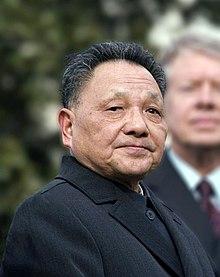
Image on the right: Prof. Lanxin Xiang

Interview with Prof. Xiang Lanxin - YouTube

For Xiang, “if Biden wins, the danger of a Cold War turning Hot War will be reduced dramatically.” He is very much aware of shifts in the bipartisan consensus in Washington: “Historically, Republicans don’t care about human rights and ideology. Chinese always preferred to deal with Republicans. They can’t deal with Democrats – human rights, values issues. Now the situation is reversed.”

Xiang, incidentally, “invited a top Biden adviser to Beijing. Very pragmatic. Not too ideological.” But in case of a possible Trump 2.0 administration, everything could change: “My hunch is he will be totally relaxed, may even reverse China policy 180 degrees. I would not be surprised. He would turn back to being Xi Jinping’s best friend.”

As it stands, the problem is “a chief diplomat that behaves as a chief propagandist, taking advantage of an erratic president.”

And that’s why Xiang never rules out even an invasion of Taiwan by Chinese troops. He games the scenario of a Taiwanese government announcing, “We are independent” coupled with a visit by the Secretary of State: “That would provoke a limited military action, and could turn into an escalation. Think about Sarajevo. That worries me. If Taiwan declares independence, Chinese invade in less than 24 hours. “

How Beijing miscalculates

Unlike most Chinese scholars, Xiang is refreshingly frank about Beijing’s own shortcomings: “Several things should have been better controlled. Like abandoning Deng Xiaoping’s original advice that China should bide its time and keep a low profile. Deng, in his last will, had set a timeline for that, at least 50 years.”

The problem is “the speed of China’s economic development led to hot headed, and premature, calculations. And a not well thought of strategy. ‘Wolf warrior’ diplomacy is an extremely assertive posture – and language. China began to upset the US – and even the Europeans. That was a geostrategic miscalculation.”

And that brings us to what Xiang characterizes as “the overextension of Chinese power: geopolitical and geoconomic.” He’s fond of quoting Paul Kennedy: “Any great superpower, if overstretched, becomes vulnerable.”

Xiang goes as far as stating that the Belt and Road Initiative (BRI) – whose concept he enthusiastically praises – may be overstretched: “They thought it was a purely economic project. But with such wide global reach?”

So is BRI a case of overstretching or a source of destabilization? Xiang notes how, “Chinese are never really interested in other countries’ domestic policies. Not interested in exporting a model. Chinese have no real model. A model has to be mature – with a structure. Unless you’re talking about export of traditional Chinese culture.”

The problem, once again, is that China thought it was possible to “sneak into geographical areas that the US never paid too much attention to, Africa, Central Asia, without necessarily provoking a geopolitical setback. But that is naiveté.”

Xiang is fond of reminding Western analysts that, “the infrastructure investment model was invented by Europeans. Railways. The Trans-Siberian. Canals, like in Panama. Behind these projects there was always a colonial competition. We pursue similar projects – minus colonialism.”

Still, “Chinese planners buried their head in the sand. They never use that word – geopolitics.” Thus his constant jokes with Chinese policy makers: “You may not like geopolitics, but geopolitics likes you.”

Ask Confucius

The crucial aspect of the “post-pandemic situation”, according to Xiang, is to forget about “that wolf warrior stuff. China may be able to re-start the economy before anyone else. Develop a really working vaccine. China should not politicize it. It should show a universal value about it, pursue multilateralism to help the world, and improve its image.”

On domestic politics, Xiang is adamant that “during the last decade the atmosphere at home, on minority issues, freedom of speech, has been tightening to the extent that it does not help China’s image as a global power.”

Compare it, for instance, with “unfavorable views of China” in a survey of nations in the industrialized West that includes only two Asians: Japan and South Korea.

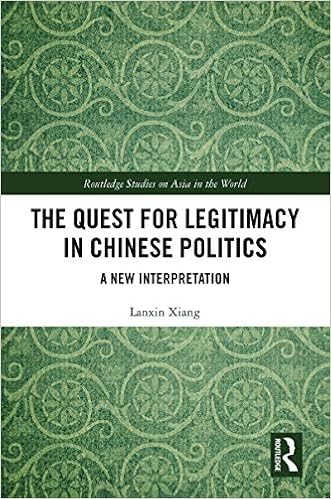
And that brings us to Xiang’s The Quest for Legitimacy in Chinese Politics – arguably the most important contemporary study by a Chinese scholar capable of explaining and bridging the East-West political divide.

This book is such a major breakthrough that its main conceptual analyses will be the subject of a follow-up column.

Xiang’s main thesis is that “legitimacy in Chinese tradition political philosophy is a dynamic question. To transplant Western political values to the Chinese system does not work.”

Yet even as the Chinese concept of legitimacy is dynamic, Xiang stresses, “the Chinese government is facing a legitimacy crisis.” He refers to the anti-corruption campaign of the past four years: “Widespread official corruption, that is a side-effect of economic development, bringing out the bad side of the system. Credit to Xi Jinping, who understood that if we allow this to continue, the CCP will lose all legitimacy.”

Xiang stresses how, in China, “legitimacy is based on the concept of morality – since Confucius. The communists can’t escape the logic.

Nobody before Xi dared to tackle corruption. He had the guts to root it out, arrested hundreds of corrupt generals. Some even attempted two or three coups d’état.”

At the same time, Xiang is adamantly against the “tightening of the atmosphere” in China in terms of freedom of speech. He mentions the example of Singapore under Lee Kuan Yew, an “enlightened authoritarian system”. The problem is” China has no rule of law. There are a lot of legal aspects though. Singapore is a little city-state. Like Hong Kong. They just took over the British legal system. It’s working very well for that size.”

And that brings Xiang to quote Aristotle: “Democracy can never work in bigger countries. In city-states, it does.” And armed with Aristotle, we step into Hong Kong: “Hong Kong had rule of law – but never a democracy. The government was directly appointed by London. That’s how Hong Kong actually worked – as an economic dynamo. Neoliberal economists consider Hong Kong as a model. It’s a unique political arrangement. Tycoon politics. No democracy – even as the colonial government did not rule like an authoritarian figure. Market economy was unleashed. Hong Kong was ruled by the Jockey Club, HSBC, Jardine Matheson, with the colonial government as coordinator. They never cared about people in the bottom.”

Xiang notes how, “the richest man in Hong Kong only pays 15% of income tax. China wanted to keep that pattern, with a colonial government appointed by Beijing. Still tycoon politics. But now there’s a new generation. People born after the handover – who know nothing about the colonial history. Chinese elite ruling since 1997 did not pay attention to the grassroots and neglected younger generation sentiment. For a whole year the Chinese didn’t do anything. Law and order collapsed. This is the reason why mainland Chinese decided to step in. That’s what the new security law is all about.”

And what about that other favorite “malign” actor across the Beltway – Russia? “Putin would love to have a Trump win. The Chinese as well, up to three months ago. The Cold War was a great strategic triangle. After Nixon went to China, the US sat in the middle manipulating Moscow and Beijing. Now everything has changed.”

*

Note to readers: please click the share buttons above or below. Forward this article to your email lists. Crosspost on your blog site, internet forums. etc.

Pepe Escobar is a frequent contributor to Global Research.

Introduction

The perceived failure of the Association of Southeast Asian Nations (ASEAN) to meaningfully address the issues and concerns of Southeast Asian peoples is viewed by the Asean Civil Society Conference/Asean Peoples’ Forum (ACSC/APF) as rooted in the ASEAN’s being locked in a market-centered and state-supported process conceived by regional and national elites to perpetuate their control over the region’s natural resources and productive capacities.

Under the mantra of “profits before people,” ASEAN leaders make decisions without the meaningful participation of the marginalized and disenfranchised peoples of the region and are accountable only to the narrow vested interests of economic elites and political oligarchies. This has only further widened the gap between rich and poor within and among countries, and caused unparalleled debasement of the environment. ACSC/APF notes that ASEAN’s continued adherence to a neoliberal model of development prioritizes corporate interests and elite groups over the interests of Southeast Asian peoples.

Given the above, this vision paper proposes charting new directions and crafting new modes of regional integration for Southeast Asian peoples in light of an in-house assessment by ACSC/APF that ten years of engagement with the official ASEAN process from 2005 to 2015 have been consistently characterized by “ambivalence, hesitation, resistance” by ASEAN governments leading to “disappointment and frustration…on the part of civil society” (Lopa 2016, 58). This paper recommends a radical restructuring of civil society engagements with Southeast Asian states by crafting a new regional peoples’ integration in order to implement an agenda independent of the state and the corporate-biased ASEAN process.

Premises

Several premises underpin the need for new directions and strategies for Southeast Asian civil society groups and movements. The first is to make a distinction between Southeast Asia as a geographic region and its peoples and diverse cultures and histories on the one hand, and ASEAN as a regional organization locked in a market-centered and state-supported process with a particular ideology and strategy of development on the other. This strategy was conceived and undertaken by regional and national elites to perpetuate their control over the region’s natural resources and productive capacities and rule over the greater masses of Southeast Asian peoples. Starting in 1967 as a mechanism to support the United States (US)-led Western faction of the Cold War, it has evolved into a tool of the neoliberal market-led agenda of development promoted by global capitalism.

Southeast Asia is a much greater entity than what ASEAN currently encompasses. Various scholars have argued that the region should not be confined to the ten ASEAN member states, but should include areas in other countries whose peoples bear similar cultural and ethnic characteristics as those who live in what has been normally referred to as Southeast Asia. In addition to Papua New Guinea and Timor Leste, both of which continue to be denied full ASEAN membership, references have been made of Southeast Asian historical affinities with parts of Northeast India and three southwestern provinces of China (Scott 2009, 13–14).3 Our vision of a region without borders is, therefore, not contingent on citizenship and location.

Secondly, the crucial decisions accompanying initiatives and developments in the ASEAN process have been made without the participation of the marginalized and disenfranchised peoples in the region. Thus, ASEAN’s leaders and the decisions they make are not accountable to the people, only to the narrow vested interests that their corporate allies and political oligarchies represent.

Thirdly, ASEAN’s guiding framework of “profits before people” and unbridled economic growth, which is encouraged and supported by international financial institutions (IFIs), has only further widened the gap between rich and poor within and among countries, and caused unparalleled debasement of the environment. As the ACSC/APF 2015 statement argued,

The failure of ASEAN to meaningfully address the people’s issues is deeply rooted in the organisation’s continued adherence to a neo-liberal model that prioritizes corporate interests and elite groups, including state-owned enterprises, over the interests of the people. (ACSC/APF 2015, 1)

Fourthly, ASEAN’s unbending adherence to the 17th century Westphalian state model which emphasizes absolute sovereignty and unrestricted territorial integrity has been a convenient shield by member governments and elites against being held accountable for actions that oppress peoples and debase nature. Moreover, as scholar-activist Kinhide Mushakoji has written, this model may no longer be that relevant in the age of 21st-century globalization, where porous boundaries and labor migration patterns have created dual and sometimes multiple identities of peoples transcending ethnic and cultural lines (Mushakoji 2014, 133–37). Mushakoji’s notion of “multi-ethnic, multi-identity, and multi-cultural societies” effectively clouds the concept of a distinct and singular national identity.

Southeast Asian civil society must, therefore, look and reach beyond the narrow boundaries of nation-states, territorial demarcations, and ethnic distinctions in order to develop a regional solidarity and identity based on common histories, aspirations, and a vision that would transcend the narrow confines of territories, nationalities, ethnic identities, and citizenships. The ACSC/APF, in its vision, goals, and objectives, should operate accordingly.

The above perspective is especially relevant in light of territorial disputes that characterize the region and the relationships among its nation-states. If identities are shared regionally and the notion of homogenous racial stereotypes are rejected, this would go a long way in easing tensions among nations and facilitating the peaceful resolution of disputes.

Click here to read the entire discussion.

*

Note to readers: Please click the share buttons above or below. Forward this article to your email lists. Crosspost on your blog site, internet forums, etc.

Featured image is from Focus on the Global South

Malaysia: A Clear Direction for the Present

October 12th, 2020 by Dr. Chandra Muzaffar

Malaysians at this moment are concerned about two different types of numbers. The overwhelming majority are worried about the recent spike in Covid 19 infections and the increase in the number of related deaths. There is a much smaller segment of the population that is focussed upon the number of members of Parliament that the leader of the Opposition Anwar Ibrahim can mobilise in his bid to oust current Prime Minister Muhyiddin Yassin and seize the post for himself.

If Covid deaths in Malaysia are small compared to many other countries, the impact of the coronavirus upon lives and livelihoods has been devastating. It has increased the destitution of the poor and vulnerable in our midst. In contrast, Anwar’s pursuit of numbers is linked to one man’s obsessive ambition to become Prime Minister. It is an obsession that has expressed itself on other occasions in the last 22 years. In 1998 he sought to undermine then UMNO president and Prime Minister Mahathir Mohamad through certain unscrupulous party functionaries when the nation was facing a massive financial and economic crisis.  In 2008, he attempted to topple the elected government of Prime Minister Abdullah Badawi through an unsuccessful bid to engineer cross-overs in parliament though Abdullah’s  Barisan coalition was just 8 seats short of a two-thirds majority. Today, he is trying again encouraged by the fact that Muhyiddin has only a razor thin majority in Parliament. However, he forgets that Muhyiddin is widely perceived as a leader who has managed Malaysia’s  twin health and economic crises with a sincere heart and a steady hand.

For Anwar and his supporters, Muhyuddin still lacks legitimacy because he had set aside his partners in the Pakatan Harapan government and instead teamed up with their foe, namely UMNO. While all these manoeuvres were not illegal, they continue to raise ethical issues. But how can these ethical issues be resolved if Anwar is now willing to collude with tarnished characters in UMNO in order to get rid of Muhyiddin and become Prime Minister ? It is not through morally questionable moves that one will be able to restore integrity to the political process.

Perhaps it is only through a general election that one can re-set the moral barometer. But after what has happened in Sabah, one has every reason to be apprehensive about a general election and how it could lead to an explosion of Covid  cases.  If it is judicious to avoid a general election, then what other avenues are available to ensure that there is a degree of stability in the political system?

One, the Conference of Rulers an entity which commands constitutional authority should at a time like this play a much more active role. As a collective institution it should not only advise and guide the legislature and the Cabinet but also ensure that political actors do not deviate from their entrusted responsibilities. In fact the King and individual Sultans have on a few occasions asked political leaders to concentrate upon the Covid and economic crises and not get embroiled in the constant pursuit of political power.

Two, in concrete terms, the Conference of Rulers could persuade the government and the opposition at both federal and state levels to establish a mechanism that would enable them to cooperate closely in finding solutions to the Covid and economic challenges. Genuine, sincere cooperation between the two could even result in more effective measures especially in the economy which would bring significant benefits to the people.

Three, such cooperation should lead to a situation where the leader of the government, the Prime Minister, and the leader of the Opposition are concerned solely with fulfilling their duties, undertaking their amanah, rather than undermining each other. The well-being of the people — not their own self-serving interests — would be their overriding passion.

Four, their commitment to the people would translate into policies and laws in the next few months which seek to curb certain unsavoury practices which have been detrimental to the national interest. For instance a law to curb ‘party hopping’ which some legislators are working on should be expedited. Similarly, the proposal to create an ‘ Ombudsman, first mooted in the early seventies,  which will endow  the office with autonomous powers to investigate and act against wrongdoings  that have not received due attention from the government department or agency concerned, should be prioritised without delay.

Five, the Dewan Rakyat and the Dewan Negara should also as soon as possible adopt resolutions that will re-affirm the clarion call of the Conference of Rulers to adhere to the 5 Aspirations and the 5 Principles of the Rukunegara as the “ moral compass” of the nation made on the 10th of October 2017. Given the prevailing atmosphere, the Aspirations and Principles serve as laudable guidelines.

If the five proposals made here and other similar ideas are implemented within the next 6 to 9 months, it is quite conceivable that the nation will be able to concentrate upon tackling the Covid challenge and the current economic woes. We would also be able to devote our time, energy and efforts towards implementing the 2021 Budget and adopting the 12th Malaysia Plan early next year. The nation will not be distracted by unproductive politics.

*

Note to readers: please click the share buttons above or below. Forward this article to your email lists. Crosspost on your blog site, internet forums. etc.

Dr Chandra Muzaffar has been writing about Malaysian politics since the early seventies. He is a frequent contributor to Global Research.

  • Posted in English @as @as
  • Comments Off on Omnibus Collisions: Coronavirus Policing and Overreach in Victoria

Preface and Translation by Bo Tao

Translator’s Preface

The article translated below was written by Yoshida Yutaka, emeritus professor at Hitotsubashi University, for a 2006 edited volume on various aspects of the battlefield experience of Japanese soldiers during the Asia-Pacific War.1 Since then, Yoshida has expanded his work on the topic into a full-length book, which was published in 2017 under the title, Nihongun heishi: Ajia-Taiheiyō sensō no genjitsu (Soldiers of the Japanese Military: The Reality of the Asia-Pacific War).2 The book has attracted a great deal of attention in Japan. It was awarded the Asia-Pacific Special Award and the Shinsho Award in 2019 and has sold over 200,000 copies.3 One of the key reasons the book has had such an impact is that there has been so little scholarly writing about the experiences of ordinary Japanese soldiers.

As is well known, in the decades immediately following the war, the horrors of the battlefield were taken up with powerful effect in Japanese literature and film. Takeyama Michio’s children’s novel, Biruma no tategoto (The Burmese Harp), for example, was published beginning in 1947 and was made into a film by director Ichikawa Kon in 1956.4 Ōoka Shōhei’s Nobi (Fires on the Plain), loosely based on Ōoka’s wartime experience as a military technician in the Philippines, was published in 1951 and was also made into a film by Ichikawa in 1959. Gomikawa Junpei’s six-volume novel, Ningen no jōken (The Human Condition), which relates the journey of an idealistic Japanese youth who becomes embroiled in the war as an Imperial Army soldier in Manchuria, was published beginning in 1956 and became the basis of a film trilogy directed by Kobayashi Masaki in 1959-61.

Following such early depictions of the war in film and literature, Japanese historiography on the Second World War began to appear in the 1960s.5 While the immediate postwar years saw many young people turn away entirely from military-related topics out of strongly-held antiwar beliefs, the Center for Military History at the National Institute for Defense Studies—a Ministry of Defense (Bōeichō)-operated think-tank founded in 1955—emerged as one of the few institutional hubs for war history research.6 The Center, many of whose members were former officers of the Imperial Japanese Army and Navy, began publishing detailed studies on Japan’s military campaigns in the mid-1960s, culminating in the massive 102-volume Senshi sōsho (1966-80). Written over the course of twenty-four years by a group of military officers-turned-officials who did not necessarily have historical training, the Bōeichō-commissioned project was meant to present an official version of the events of the war.7 As one might imagine, however, the work narrowly focused on the strategies and tactics of individual campaigns, offering the perspective of central command to the exclusion of that of soldiers in the field.8 Scholarly studies focusing on the experiences of the ordinary solider remained extremely rare, and military history (gunji shi) in general came to be seen as a highly specialized field populated mainly by those with prior military experience.9

Image on the right: Yoshida’s award-winning book, Nihongun heishi (2017)

There were also a number of professional historians who developed their own histories of World War II from within the academy. Fujiwara Akira (1922-2003), for example, used his experience as a former Imperial Army officer serving on the China front to produce Marxist-oriented studies influenced by the works of historians such as Inoue Kiyoshi (1913-2001) and Tōyama Shigeki (1914-2011).10 Hata Ikuhiko (1932-), on the other hand, drew upon postwar oral history interviews conducted with former elite officers of the Imperial Army and Navy under detention in Sugamo Prison, which allowed him to develop a unique brand of neo-nationalist scholarship.11 Ienaga Saburō (1913-2002), to take another example, recognized from early on the importance of the wartime experience of ordinary people, leading him to write the first historical overview of the Asia-Pacific War to take into account the perspectives of both soldiers and citizens.12 Furthermore, in the 1970s, Ōe Shinobu (1928-2009), a former cadet of the Imperial Army Air Academy, began producing rigorously researched studies on military history.13 The work of Ōe, who belonged to the group of scholars associated with Fujiwara Akira, helped to break down the barrier between Marxist and anti-Marxist historical scholarship.

While such scholars pioneered in developing new approaches to military history, soldiers’ war experiences still received relatively little attention. It was not until the 1990s that a major shift occurred with applying the methodologies of social history (shakaishi), people’s history (minshūshi), and local history (chiikishi) to the issues of war and the military. Notably, this was a movement led by a new generation of scholars who had no firsthand experience of war. Yoshida (b. 1954), who is among the senior members of this generation, views his main historiographical contribution as the reinterpretation (yomikae) of military history from the perspective of social history and people’s history.14 Through numerous works, he has sought to construct a bottom-up view of military history that takes into account not only the perspective of ordinary troops, but also their ties to broader society.15 In this regard, his work might be compared to that of his colleague Yoshimi Yoshiaki (b. 1946), whose now classic, Grassroots Fascism—originally published in 1987 under the title, Kusa no ne no fashizumu—has recently been translated by Ethan Mark and introduced in the Asia-Pacific Journal.16 Whereas Yoshida primarily focuses on the battlefield itself, Yoshimi combines the experience of ordinary soldiers with that of civilians on the home front. Both scholars highlight the day-to-day experiences of non-elite Japanese as active participants within the larger framework of the Asia-Pacific War and have helped to broaden the definition of both military history and social history.

Beyond the Japanese historiography, there have been a few attempts to describe the experience of Japanese commoners and ordinary soldiers in English. Among these, Haruko and Theodore Cook’s Japan at War: An Oral History (1992) is especially noteworthy, both for its content and the timing of its publication.17 Based on oral history interviews conducted in the late 1980s, the book offers a rare glimpse into how ordinary Japanese from different walks of life—military and civilian, men and women—perceived and remembered their wartime encounters in over sixty powerful individual vignettes. Writing at the end of the Shōwa period (1926-89), the Cooks benefited from a moment of national reflection about the bygone era that facilitated the collection of valuable firsthand testimonies about the war. Given the relatively unstructured manner of their sample selection, in which interviewees were solicited through newspaper ads and word-of-mouth, the voices represented are more diverse than the argument-driven examples chosen by Yoshimi in his Grassroots Fascism. Nevertheless, more than one third of the accounts describe the experiences of former soldiers who served on battlefields across China and the Pacific including several harrowing testimonies from the Battle of Okinawa. Because it is primarily a compilation of individual recollections rather than a sustained analysis of any single group, it is difficult to draw any systematic conclusions about the experience of Japanese soldiers as a whole.

More recently, English-language work on the war has focused on the home front, rather than the battlefront. Kenneth Ruoff’s Imperial Japan at its Zenith (2010), for example, highlights the importance of civic participation in sustaining the public fervor of the war years through the lens of tourism and consumerism.18 In Japan’s Carnival War (2019), Benjamin Uchiyama attempts to go beyond the familiar depictions of wartime Japan as a “dark valley” dominated by draconian state controls to emphasize the carnivalesque symbiosis (in the Bakhtinian sense) between official propaganda and actual cultural practice.19 In making his argument, Uchiyama considers the figure of the youth aviator-turned-kamikaze pilot as one of his key groups, offering an updated perspective on the cultural construction of one of the better-studied subgroups in Japanese military history.20 But the actual experience of the battlefield is not discussed. From the fields of theater and literary studies, James Brandon’s Kabuki’s Forgotten War (2009) and Sharalyn Orbaugh’s Propaganda Performed (2015) add to our understanding of the role played by different forms of popular entertainment—respectively, kabuki stage drama and kamishibai street theater—in mobilizing the domestic populace for the total war effort.21 The theme of popular mobilization is further echoed by Sabine Frühstück, whose Playing War (2017) explores the place of children in the ideological production of war, whether through the medium of war games or the exploitation of the “emotional capital” of images of children.22 Although still a work in progress, Sheldon Garon’s “transnational home front” project—to give another example—considers how the warring states of Japan, Germany, and Britain were actively investigating, emulating, and improving upon the defense and mobilization strategies of one another during World War II.23 In short, we now have a more detailed and nuanced picture of how various social groups and organizations on the home front—e.g. actors, artists, children, reporters, businesses, and religious groups—responded to the calls to contribute and commit themselves to the national cause.24

Along with the focus on home front affairs, the transnational approach as exemplified by Garon is another area in which there has been notable advance in recent English-language scholarship. Takashi Fujitani’s Race for Empire (2011), for example, engages in a transpacific comparative analysis of Japanese American soldiers who served in the U.S. army and Korean soldiers who were recruited or drafted into the Japanese army as imperial subjects during the Asia-Pacific War, highlighting the similarities between the ways in which the two regimes sought to manage their respective racialized minorities.25 Jeremy Yellen’s The Greater East Asia Co-Prosperity Sphere (2019), on the other hand, places the development of the titular Co-Prosperity Sphere vision in dialogue with its reception by political elites in the Philippines and Burma, thereby shedding light on the contested and negotiated nature of wartime imperialism.26 All of these works have situated Japan’s wartime experiences within broader currents of global history, yet they do little to illuminate the perspective of ordinary soldiers.27

In recent English-writing on the topic, perhaps the work that comes closest to Yoshida’s in terms of subject matter and sources is Lee Pennington’s Casualties of History (2015). In it, Pennington examines the history of wounded soldiers and physically disabled veterans of the Japanese army, who were known by the term shōi gunjin (“injured and sick servicemen”).28 In particular, his detailed description of the logistics of Japan’s field medicine operations—as told through the eyes of one combat amputee who was severely wounded during a “bandit suppression” campaign in north China in 1939—provides a compelling look at what ordinary Japanese soldiers experienced on the battlefield. Pennington pays close attention to the medical and societal treatment of the bodies of soldiers, as well as the institutional efforts to manage their physical and mental trauma through the creation of a state-sponsored welfare program for war-wounded veterans and their families.

Pennington’s study challenges common misconceptions about the low standards of emergency medicine provided by the Imperial Japanese Army, convincingly showing the sophisticated system of medical treatment and evacuation that was in place for wounded servicemen. Also revealing is his account of the Japanese government’s efforts to promote the image of disabled veterans as praiseworthy icons of sacrifice and bravery, a project of cultural reimagining that was subsequently reversed by the Allied Occupation’s abolition of the system of preferential treatment for military casualties that had been established during the war. Whereas Pennington focuses on soldiers who sustained debilitating injuries (specifically amputees), however, Yoshida takes a broader approach that addresses the ways in which the majority of troops encountered death on the battlefield, ranging from war wounds to disease, malnutrition, and drowning. Indeed, Yoshida’s focus on the grim realities of death, and the structural issues inherent in the Japanese military institution that contributed to such tragic outcomes, sets his work apart.

Research on the history of the Asia-Pacific War is a relatively new field that has only come into its own in recent years. Factors such as the unavailability of primary sources—including classified documents and materials confiscated by the U.S. military (which were later returned to Japan)—initially limited the scope of possible research topics. As a result, earlier studies tended either to produce overview histories of the entire war, or zoomed in on well-known, often controversial events such as the Nanjing Massacre, the “road” to Pearl Harbor, a handful of key strategic battles and campaigns, and perhaps the most widely debated of all, the atomic bombings of Hiroshima and Nagasaki. Their conclusions, moreover, became a proxy for ideological battles regarding the legitimacy of the war and the way in which it was brought to an end.

Lost among the political and moral debates were the stories of ordinary folk on whose shoulders the burdens of war disproportionately fell. The gradual declassification and publication of key historical documents, discovery of previously unknown private sources, and development of user-friendly digital databases, along with an increased interest in the lives of commoners, have greatly enriched the diversity of approaches and themes undertaken by scholars. Moving away from the grand narrative-style history centered on political and military leaders, recent scholarship has come to recognize that each individual group had its own unique stories, thus enabling a more sophisticated understanding of Japan’s wartime experience—as is reflected in the numerous studies featured in this review. Even then, however, the fate of ordinary soldiers and their unglamorous stints on the front lines have—with the notable exception of the student kamikaze pilots—remained a blind spot in the literature. It is to these men and their experiences that Yoshida turns, and through which we are able to gain an honest appreciation of the true costs of war.

***

Introduction

The purpose of this article is to reconstruct the battlefield experience of the ordinary Japanese soldier during the Asia-Pacific War. This is a project that is entirely distinct from both the official military histories written from the viewpoint of the staff and officers who strategized in command rooms removed from the battlefield and the kind of accounts produced by Yasukuni Shrine and its affiliated museum, the Yūshūkan, whose sole purpose is to commend and console the spirits of the soldiers who died in battle. Although research of this kind was rarely undertaken by historians in the decades after the war, one contribution that deserves special mention is Kuroha Kiyotaka’s “Aspects of Death in the Fifteen-Year War: Of ‘Statistics’ and ‘Poems,’” published in the journal Shisō in August 1971.29 This pioneering work was written at a time when the sources available to historians were still extremely limited. Above all, my goal is to take up Kuroha’s call for “the study of the realities of death” (shinikata no jitsugaku), which he posited as a counterpoint to “the aestheticization of death” (shinikata no bigaku). Wherever possible, I hope to draw on my understanding of recent developments in the fields of social, local, and people’s history (minshūshi), and incorporate insights developed by scholars working on such topics as “the body,” “the family,” and “funerary rites.”

Of course, in examining the history of the Asia-Pacific War as a war of aggression, there is a need to pursue what might be called “the study of the realities of killing” (koroshikata no jitsugaku) alongside research on war crimes, but on this issue, I refer readers to the work of Kasahara Tokushi.30 Even in the “Emperor’s military,” with its dominant philosophy that “from the outset, there can be no expectation of returning alive,” there were, in fact, various ways for soldiers to choose “life.” They could, for example, remove themselves from battle by surrendering or deliberately injuring themselves, or volunteer for positions away from the front lines.31 In this regard, there is, no doubt, also a need for “the study of the realities of survival” (ikinokori no jitsugaku), but that too lies beyond the scope of this article.

1. The Characteristics of Military Mobilization

Competition with Labor Mobilization

First, I would like to look at the special characteristics of military mobilization in Japan. The first characteristic is the severe competition between military mobilization and labor mobilization necessary for wartime production, as a result of the underdevelopment of Japanese capitalism. As Ōe Shinobu has pointed out, because of the low level of technical capital composition (shihon no gijutsuteki kōsei) in Japanese industry, it was necessary to retain a large number of skilled workers in the workforce; this was especially true in the villages, where labor-intensive small-scale farming was dominant.32 For this reason, there arose fierce competition between military and industry for the recruitment of able-bodied men, leading to a military mobilization rate that was much lower than in the Western powers.

This situation can be observed in the system of draft deferment for reservists, originally introduced as a general draft deferment system in 1927 and revised following an amendment to the Army mobilization plan implemented in May 1943. According to this amendment, many technicians, laborers, and railroad and communications workers who formed the core of the wartime domestic labor force were subject to draft deferment.33 As a result, the total number of workers who received deferments was approximately 380,000 in 1943, 700,000 in 1944, and 850,000 in 1945. It is also interesting to note that Imperial Palace staff—including imperial household chamberlains, physicians to the emperor, palace police, and fire officers—as well as members of the Imperial Diet, and secretaries in charge of military affairs in town and village-level administration were subject to deferment under the same amendment.34


Favoritism toward Active-Service Soldiers

Because the Imperial Navy was, with the exception of the final months of the war, by and large a volunteer corps, most of the reservists called up during the war served in the Imperial Army. The Army, however, could not free itself from a mobilization ideology favoring active-service soldiers (gen’ekihei), resulting in a distrust of soldiers called up from the conscript reserves who did not have military experience. Once the Sino-Japanese War broke out, since most of the active-service soldiers were organized into an elite division in preparation for an anticipated clash with the Soviet Union, many special divisions, drawn from the ranks of the second reserves, were created and sent into battle in China. As a result, first reserve (yobieki) and second reserve (kōbieki) soldiers made up the majority of the Japanese troops in China.

The first and second reserve soldiers who had previously served in the military were relatively old, and many were married with a family. Because of this, they were not as physically strong, and many went into battle bearing anxieties about loved ones back home. Their morale, in other words, was not very high.

As the Sino-Japanese War developed into a protracted conflict without a clearly defined objective, the first and second reserve troops became the central troublemakers whose calculating, battle-hardened outlooks posed a fundamental challenge to military discipline.35 Out of a sense of despair and reckless self-abandon, such soldiers not only repeatedly committed acts of plunder, rape, arson, and murder against Chinese civilians, but also at times behaved violently and with contempt toward superior officers, posing a threat to military discipline.36 To address such issues, the central command moved to demobilize and repatriate first and second reserve troops in China, replacing them with active-service soldiers or younger soldiers from the conscript reserves. As a matter of fact, the percentage of active-service soldiers within the Army’s total forces significantly increased: 37.3% in 1937, 54.5% in 1938, 68.1% in 1939, 71.5% in 1940.37

Another factor that accelerated the discharge of first and second reserve troops was the population problem. Since many soldiers with families had been called up for service, the birth rate in 1938 dropped to 27.2 (births per 1,000 population), compared to 30.9 the previous year. Noting that the birth rate recovered to 29.4 in 1940 as a result of roughly 120,000 discharges in each of 1939 and 1940, clearly this demobilization contributed to restoring the birth rate.38 This was a factor that led to the sending of large numbers of active-service soldiers and young soldiers from the conscript reserves to the China front.39

2. The Body of the Mobilized Soldier

The Deterioration of Soldiers’ Physical Conditions

We shall consider next the physical conditions of the young men eligible for conscription. According to the physical examination records for young conscripts, there was no large difference in their average height or weight between 1935 and 1941: respectively 160.3 cm and 52.95 kg in 1935, versus 160.8 cm and 53.14 kg in 1941.40

However, according to a May 1942 report, “On the Physical Strength of Young Conscripts,” compiled by the Army Ministry’s Medical Bureau, the body-mass ratio (weight divided by height) of conscripts examined since 1939 exhibited a downward trend, eliciting concern from the central command.41 In the eyes of an anonymous Army Ministry official, the decrease in the body-mass ratio suggested that:

The young men these days have a poor physique; tall but skinny and weak looking. More and more men are coming to exhibit the weaknesses of an urbanite: thin chests, slender arms, and pale faces. This is extremely alarming.42

The official went on to state that he believed the reason for this state of affairs came from the “concentration of youth in cities, and especially the absorption of youth from the countryside into urban factories and other places with poor facilities to promote health.” Such problems were associated with the development of heavy industry and increased urban migration following the outbreak of the Sino-Japanese War.

Another factor affecting the physical condition of young men was the rapid upsurge in tuberculosis. Although Japan’s total mortality rate continued to decrease between 1932 and 1944, tuberculosis mortality, particularly for men ages 20 to 24 increased rapidly. According to Aoki Masakazu, this was due to the growth in the heavy and chemical industries, and the fact that the expanding military itself was becoming a hotbed for the mass infection of tuberculosis.43 Moreover, it was not until 1940 that X-ray radiography was introduced to the military’s physical examinations for conscripts.


Figure 1. Classes of Service in the Imperial Japanese Army, circa 1940 Adapted from U.S. War Department, Handbook on Japanese Military Forces  (Washington, D.C.: U.S. Government Printing Office, 1944), 3. (BT)

The largest problem, however, was that the military had no choice but to begin recruiting even those in poor physical condition to reach troop quotas. As has already been discussed, the expansion and prolongation of the Sino-Japanese War made the procurement of active-service soldiers and conscript reserves critical. This forced the military to reform its conscription system. The conscription system initially categorized youth into six categories based on a physical examination: Class A (kōshu), Class B-1 (dai-ichi otsushu), Class B-2 (dai-ni otsushu), Class C (heishu), Class D (teishu), and Class E (boshu) (see Figure 1). In theory, Class A and Class B conscripts were deemed fit for active service, while Class C conscripts were to serve in the National Army (kokumin heieki; a lower-ranking reserve force); Class D conscripts were deemed unfit for service, and Class E conscripts would be reexamined the following year. Before the outbreak of the Sino-Japanese War, roughly speaking, Class A conscripts entered into service as active-service soldiers, Class B-1 conscripts as first reserve troops, Class B-2 as second reserve troops, and Class C entered the second National Army. In practice, being assigned to the second reserve troops or the National Army was akin to being exempted from military service.

With the expansion and prolongation of the Sino-Japanese War and an increasing need for more troops, however, Class B-1 conscripts were mobilized as active-service soldiers, with Class B-2 conscripts entering the first reserve. As a result, by 1939, a Class B-3 category was newly instituted in order to fill the second reserve forces. The central command decided that, while not ideal, some Class C conscripts could be transferred to Class B-3 in order to mobilize them as reserve troops.44

In order to accommodate the growing demand for troops, standards for conscription were greatly reduced through revision of the Army physical examination rules in 1940. According to the aforementioned “About the Physical Strength of Young Men” (1942), this 1940 revision deemphasized the previous concern of examiners to “discover underlying illnesses or abnormalities,” and encouraged them to pass conscripts to Class B-3 or above, even if they were “ill or mentally unbalanced,” as long as such symptoms were “deemed not to interfere with their military duty.”

This revision not only resulted in recruits who were in poor health or physical condition, but many men with mental disabilities. At the Kōnodai Army Hospital—a military hospital, expanded following the Sino-Japanese War, which specialized in the treatment of mental disorders—the percentage of patients with intellectual disabilities grew from only 0.9% in 1938 to 13.9% by 1945. According to Asai Toshio, a military physician at Kōnodai Hospital who conducted “group mental examinations” for several units toward the end of the war, those with intellectual disabilities reached 3 to 4%, revealing a “high ratio of intellectually limited conscripts, even among those in Class A who appeared to be in good physical condition.” In response, Central command developed a standardized “group mental examination methodology” in 1944 with the help of the Army Military Medical School and Kōnodai Hospital, and partially implemented it in the conscription examination the following year.45

Deterioration in Military Provisions

One notable characteristic of Japan’s war footing was that the strengthening of wartime organization proceeded hand in hand with the deterioration in people’s standards of living. The government’s attempt to promote the rapid industrialization and militarization of society with limited resources had the effect of reducing people’s standards of living to the bare minimal level. Although a higher standard of provisions was maintained in the military than for civilians, even military rations deteriorated with the worsening war situation. According to a report submitted to the GHQ on September 5, 1945, by the Army Ministry, due to the “worsening war situation and the depletion of domestic food reserves,” the nominal daily provisions for the average soldier on the Japanese home islands (naichi) was reduced to 2,900 calories—the “actual caloric value” (jissai kyūyō netsuryō) measuring at 2,800 calories with a regional disparity of around 500 calories.46 The standard caloric intake recommended for mainland soldiers at the time was 3,400 calories. On the other hand, the “amount of labor required of each soldier had increased rapidly in preparation for the decisive battle on the mainland and fortification efforts,” which was estimated to require at least 3,200 calories per person. As a result, malnutrition became a persistent problem, with the soldiers’ prewar average body weight of 60 kg falling to 54 kg by the end of the war.

On January 15, 1945, Vice Minister of the Army Ministry Shibayama Kenshirō sent out a notice (Rikumitsuno. 149) calling attention to the “rapid decline in the physical strength of the domestic troops,” which “provided much cause for concern,” and led him to emphasize the maintenance of physical health and the necessity for a self-supporting system with regard to provisions. On January 26, he issued a directive (Rikumitsu no. 301) ordering troops on the home islands to be responsible for procuring 10% of staple foods, 30% of vegetables, and 5% of meat products on their own.47

However, setting up a system of self-sufficiency while preparing for a fight on the mainland was challenging, and individual soldiers ended up buying food from neighborhood farmers on the black market or, at times, resorted to stealing in order to stave off hunger. Manabe Motoyuki, a private first class who was drafted into the Shikoku Infantry Regiment, discusses the practice of soldiers buying black-market rice:

It was the Japanese military’s proud tradition to fully and thoroughly guarantee the livelihood of its soldiers; it was only thus that they could demand the soldiers’ undivided and absolute obedience…However, many soldiers were buying rice on the black market…Any rice purchased with one’s own funds is considered “personal property.” Once soldiers start depending on private property to support their daily livelihood, the military’s tradition loses its foundation. This is because personal provisions give birth to a personal mentality, producing fissures in the absolute obedience most cherished by the Japanese military.48

On the other hand, the situation was more grievous for troops stationed overseas. Once the Japanese forces lost command of the sea and air, their supply route was completely cut off. Let us look at a document produced in the final stages of the war by the Ōmori corps of the Fifth Division Eleventh Infantry Regiment, which fought various battles in New Guinea. “Since all squadrons within the corps transitioned to a complete self-supporting basis,” the physical strength of the troops has deteriorated, and the average body weight has dropped by 4 to 6 kilograms.49 By January 1945, the daily caloric intake was only around 1,700 calories. In order to address this situation, the document recommended adjusting the soldiers’ work so that they were not wasting energy on aimless tasks. In other words, it ordered troops not to use their labor preparing for the decisive battle but to focus exclusively on conserving energy. Needless to say, this could no longer be called an army.

The Late Mechanization of the Japanese Military

The “Imperial Army” was extremely slow to mechanize. The infantry, which comprised the “main combat force,” generally moved around on foot, and the primary mode of transportation for artillerymen and machine gun squadrons within infantry regiments was not car but horse. Even the transport corps, which was tasked with supplying food and ammunition, depended largely on transportation by horseback and horse-drawn carriage. When it came to movement and transport, the Japanese Army relied heavily on its foot soldiers and horses.

Japanese soldiers on the march, 1939.

For this reason, the full uniform and equipment load carried by foot soldiers on long marches—which included a helmet, knapsack, ammunition pouch, backup ammunition, and provisions—could reach up to 20 to 30 kilograms. For example, the load of an average rifleman serving in a company during the First Changsha Operation of September 1941 was 25.175 kg.50 According to a study by the Army Medical Corps, the “maximum efficient load was between 35 to 40% of one’s own body weight.”51 As the average body weight of prewar soldiers was roughly 60 kg, according to the aforementioned 1945 report to the GHQ, 25.175 kg already exceeded this recommended limit.

The outbreak of the Pacific War on December 8, 1941 made the soldiers’ burden even more demanding. Once the Allied forces began their counteroffensive in late 1942, Japan lost command of sea and air, rendering supplies by large-scale munition transport ships extremely difficult thereafter. Moreover, the transportation of combat units was prioritized over logistics units. This, combined with the character of isolated islands in the South Pacific and New Guinea, meant that Japanese supplies depended on so-called “man-powered carriage” (jinriki tansō). A study of the transport corps, Shichōheishi (1979), elaborates:

Especially on isolated islands as well as in New Guinea, which was similarly hard to navigate, even the motorcars that were brought onto land with much difficulty had a limited range of operation. In addition, many transport corps regiments left their horses behind, causing many battlegrounds to rely on man-powered carriage; it was virtually impossible to compete with the material superiority of the [American] enemy.52

Furthermore, the Japanese Army did not possess the mechanical engineering capability to rapidly clear undergrowth, construct airfields, and build basic infrastructure such as roads. As a result, the ammunition and provision load for each individual soldier increased, with a fully equipped foot soldier carrying upwards of 50 kilograms. This was also true on the China front, where Japanese forces had lost command of the air to the Americans, making supply by ground or rail transport difficult. This in turn increased foot soldiers’ physical burden.53

Most problematic was the fact that a substantial segment of the troops who were forced to undertake such grueling marches were young soldiers with weak physical condition. Furthermore, due to the extensive mobilization of forces, the ratio of active-service soldiers to reserves in the army had been greatly reduced after 1941. For example, the 27th Division, engaged in battle on the China front, received reinforcements of approximately 2,000 troops in October 1943. However, a military physician reported that “the majority had previously contracted tuberculosis, and their age, along with their inferior physical status, caused us great alarm.”54 The same division would go on to participate in Operation Ichi-Gō in April 1944; their condition at the start of the operation was described as follows.55

The troops all bore an excessively heavy equipment load, with individual soldiers carrying a total of 45 kilograms. If my memory is not mistaken, the average weight of a soldier at the time was around 52 kilograms. The majority of the troops were either soldiers from the conscript reserves or new recruits with only two months of experience; less than half were active-service soldiers who had received proper training.56

According to this testimony, the division’s soldiers carried loads that amounted to 87 percent of their body weight, making it natural that there would be stragglers during forced marches. Fujiwara Akira, who had participated in this operation as a company commander in the 27th Division, recalled that the “accommodation of stragglers was the most challenging problem for a company commander,” adding that, “since it had a direct impact on our military capability, the depletion of troop strength as a result of marches was the biggest headache for me as the commander.”57

Kume Shigezō, a regimental adjutant to the 236th Infantry Regiment who participated in the Battle of Hunan-Guangxi (湘桂作戦) in 1944, recounted that constant forced marches caused “a breaking point in the soldiers’ fatigue; many of the conscript reserves who joined us in Hengyang fell out while on the march, with some going so far as to commit suicide with grenades or rifles; it was heartbreaking.”58 Stories of troops driven to suicide by the forced marches appear frequently in soldiers’ memoirs, a testament to the grueling nature of the Army’s relentless marching.

At the same time, shoddy military boots increased the suffering of the marching soldiers. In a hot and humid environment, the sewing thread holding the footwear issued by the Japanese Army to hold the shoe together would come apart, causing the sole to peel off. Because of this, it was a common sight to see “[military boots] all falling apart as if they had their mouths open after each operation.”59 Many soldiers also developed blisters on their feet after being supplied ill-fitting military boots. Hori Hajime, a member of the 4th Trench Mortar Unit who marched some 6,500 km as part of Operation Ichi-Gō, recalled that he was only provided with three pairs of military boots during the entire operation. The first pair “developed holes after only two months of use, causing gravel to enter the shoes every time [we marched].”60 Once the worsening strategic situation prevented the arrival of supply trains, usage of military boots was restricted or banned altogether. In 1945 soldiers were ordered to “try not to wear military boots, and instead wear the cloth-shoes (haizu) used by the Chinese.”

The situation was even more grievous on the South Pacific front. According to Hirao Masaharu, an Imperial Navy lieutenant who served as a medical officer in the Solomon Islands, his commanding officer issued an order “prohibiting the use of military boots by all soldiers below the rank of captain, in order to save them for the final battle,” forcing many troops to go barefoot. “Our toes, which used to open up smartly like that of a human, became like that of a beast,” writes Hirao with much shock: “we suddenly went from being civilized people of the twentieth century to primitive men of the stone age.”61

This kind of deterioration also affected military uniforms. The “unusual attire” of army officers became more noticeable from around 1944—for example, when older reserve officers responded to a call-up wearing outdated uniforms from the Taishō period (1912-1926). With supply ships sunk by enemy attack, officers were forced to wear civilian clothing, uniforms of non-commissioned officers, or even uniforms taken from Allied soldiers in order to make-do.62

On the Southern Pacific front where supply lines were completely cut off, troops’ attire was often nothing less than bizarre. Mori Tetsuju, an accountant for the 18th Army, relates his experience in an essay titled, “Supplies in Operations in Eastern New Guinea.”

All the equipment by this time was handmade. We made everything from patrol caps, haversacks, mosquito nets (made by stitching gauze together in a double layer), belts, and eating utensils, and wore straw sandals or simply attached a separated shoe sole to our feet with string. We carried our possessions by crafting a bag out of tent material or other pieces of cloth and tying it to our backs, or used a farmer’s shoiko [a wooden frame used for backpacking a load]. Our “marching uniform” also came to include a waterproof apron worn over the backside, so that we could sit down in marshy fields at a moment’s notice.63

Other sources corroborate the fact that, “after the Battle of Lae-Salamua in 1943, the standard outfit of “hip-apron, cane, and shoiko became popularized as the “New Guinea-style” military uniform.64

3. The Multiple Realities of Death in War

The Sino-Japanese War Period

Next, I would like to examine in greater detail the manner in which soldiers died. First, let us look at full-scale conflict against China. Table 1 lists Japan’s military casualty statistics during the Sino-Japanese War (1937-1941). Although the incompleteness of the available records means there may be a significant margin of error, the number of wounded is almost two to three times the number of deaths. In the Russo-Japanese War, the number of wounded soldiers (130,203) in the Army outnumbered deaths (60,031) by roughly a factor of 2.2.65 From the perspective of the lethality of the enemy’s weapons the Sino-Japanese War was similar to the Russo-Japanese War.
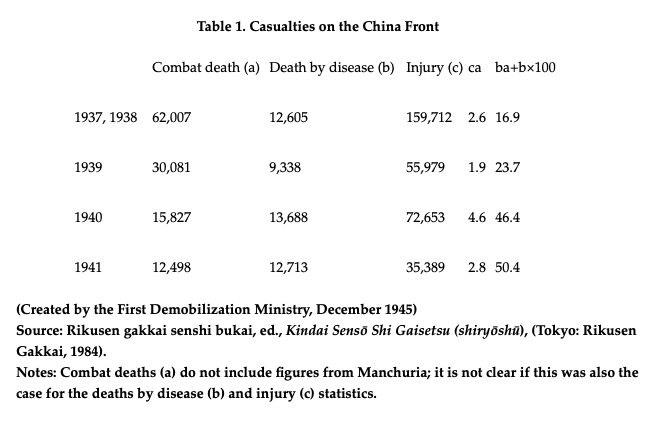
The issue of war deaths by disease (senbyōshi) is also important. Prior to the nineteenth century, war deaths by disease often greatly outnumbered combat deaths. During the Crimean War (1853-1856), the percentage of deaths by disease among in the French Army was 89.3% of total fatalities; for the Union Army in the American Civil War (1861-1865), the figure was 66.6%. In the First Sino-Japanese War (1894-1895), including the Japanese invasion of Taiwan, the percentage of deaths by disease among the total war fatalities was 89.4%. By the time of the Russo-Japanese War (1904-1905), however, improvements in military hygiene and sanitation and maintenance of a dependable supply line had resulted in this figure dropping to 26.3%.66 The Russo-Japanese War, in other words, was a watershed from an epidemiological standpoint. For the first time in military history combat deaths outnumbered deaths by disease.67

The ratio of war deaths by disease in the Sino-Japanese War, as shown by Table 1, was 16.9% in 1937-38, and 23.7% in 1939, thus not very different from the Russo-Japanese War. Once the war reached an impasse after 1940, however, the ratio of war deaths by disease jumped to 46.4%. By 1941, the number of deaths by disease overtook the number of combat fatalities. This was an inevitable outcome of the Japanese military repeatedly undertaking combat operations beyond its capabilities. It also proved to be an omen of what was to come.

War Deaths, Injuries, and Deaths by Disease

The Pacific War, which began in December 1941, had several distinctive characteristics. First, with the exception of the early successful campaigns, all direct Japanese military confrontations with Allied forces ended in crushing Japanese defeat. A postwar survey on naval hygiene by Isshiki Tadao, a Navy medical officer and major who worked in the Second Demobilization Ministry (Daini fukuinshō), indicated a total of 156,000 war deaths and 40,000 wounded for the Navy for the duration of the war. He provided the following explanation:

Although the wounded commonly outnumbered battle fatalities in previous campaigns by a factor of two to three, in this war the figures were completely reversed. There were approximately 3.5 times more combat deaths than wounded, resulting from advances in warfare such as the improvement in firearms and the fierceness of air strikes. This gives vivid expression to how relentless and cruel this war has been.68

These figures are clearly low (the Ministry of Health and Welfare puts the estimate of Navy war deaths at 457,800), and the Navy Command was almost certainly unable to accurately account for the number of wounded soldiers. Considering the rapid advances in military technology and the overwhelming gulf in war-making capacity between Japan and the Allied forces, however, it is highly probable that the number of deaths caught up with, and in some cases overtook, the number wounded.

Furthermore, this was the first war in which there were zero wounded soldiers in some battles. This phenomenon began in May 1943, in the series of gyokusai (fight to the death without surrender) battles starting with the Battle of Attu. In this engagement, all wounded soldiers who could walk were forced to participate in the final “banzai charge” through American lines, and those who were unable to move either had to commit suicide or be given a “final treatment” (shochi) by the medical officer or combat medic. Tatsuguchi Nobuo, a medical officer in training who died on Attu Island, wrote in his diary: “It has been decided that we will undertake a final charge, and that all inpatients are to commit suicide.”69 The Senjinkun (Code of Battlefield Conduct), issued in January 1941, prohibited Japanese soldiers from being taken prisoner by the enemy. Such peculiar “battlefield codes” (senjin dōtoku) led to this tragedy.

Some ex-soldiers indeed confessed to having administered “final treatments” to wounded and ill personnel. Ogawa Yasushi, for example, recollects his experience of “intravenously administering mercuric chloride” to wounded soldiers after having “first given them opium to numb their senses” during the January 1944 retreat in the Battle of New Britain. Ogawa regretted his actions; “If I depart for the nether world while concealing this truth,” he wrote, “I could not bear to face the Buddha, leading me to take up my pen.”70

The second major characteristic of this war was the large number of deaths by starvation. Of the 2.3 million total war dead (i.e. sum of combat deaths and deaths by disease) since the beginning of the Sino-Japanese War (1937), 1.4 million are estimated to have been fatalities caused by starvation due to malnutrition, or a more broadly defined category of “starvation” resulting from malaria and other diseases contracted because of nutritional immunodeficiency.71 From the perspective of the ratio of combat deaths to deaths by disease, the Japanese Army thus “reverted” to the levels recorded during the First Sino-Japanese War (1894-95).

The main reason why there were so many deaths by starvation was the severing of Japanese supply lines. The situation was especially dire for the garrisons at the South Pacific front which had been left behind enemy lines due to the U.S. military’s “island hopping” strategy. In a document produced by the General Staff Headquarters, Major Iwagoe warned against the dangers of “assuming that things can be worked out on the battlefield, without any thought given to supplying the units from the rear.”72 He further stated, “securing a communication and supply line at sea is vital to island operations,” concluding that, “marine logistics depend upon command of the air.” In the end, the loss of control of the air on the South Pacific front, combined with a lack of long-term strategic planning on the part of the military command, left deployed forces constantly under threat of starvation.

Soldiers on the China front did not fare much better. The U.S. Air Force’s advance into China cut supply lines and forced many physically compromised soldiers to undertake long marches—typified in Operation Ichi-Go—leading to severe physical deterioration. In terms of casualties, there were 11,100 combat deaths and 54,800 deaths by disease in 1942, 12,700 combat deaths and 65,100 deaths by disease in 1943, 11,300 combat deaths and 69,191 deaths by disease in 1944, and 8,900 combat deaths and 34,429 deaths by disease in 1945.73 Although deaths by disease are only estimates, and we cannot be sure if they include statistics from Manchuria, they nevertheless show that the number of deaths by disease skyrocketed after 1942, outnumbering combat fatalities by a factor of four to six. A considerable portion of these are thought to have been caused by a broadly defined “starvation.”

Underlying all of these developments was the fact that Japan’s military medicine and wartime hygiene infrastructure had fallen behind the times. Conduct regulations of Army field hospitals and sanitary corps had been based on wartime hygiene codes and guidelines established around the time of the Russo-Japanese War. The expansion of the Sino-Japanese War of 1937 naturally forced a reconsideration of the ways in which such issues were handled—rescue efforts on the front lines needed to be strengthened, and wounded soldiers needed to be treated as soon as possible after their injuries were sustained. A revision of the operations manual (sakusen yōmurei no. 3) in March 1940 reorganized the sanitary corps into a casualty evacuation detachment, and dispatched combat rescue detachments to the frontlines. Yet this still failed to effect changes in the wartime hygiene code or the Army’s overall war organization, leaving each division’s sanitary corps to enter the Pacific War ill-equipped to deal with the brutal realities of modern warfare.74

Slowness to adapt to the latest developments in military hygiene exacerbated the situation. As soon as the Pacific War began, a sizable number of the Japanese soldiers and officers serving in the South Pacific front contracted malaria. Shortages of medication such as quinine further accelerated this trend. In the words of the “Lessons Based on Operational Experiences in Eastern New Guinea,” sent to all army units by the Imperial General Headquarters in November 1943, “[In] combat units engaged in operational activity, after 1.5 months, symptoms of malaria began to appear; after 2.5 months, military strength was reduced by half; after 3.5 months, military strength was reduced to a third; after 5 to 6 months, only one-seventh of the soldiers could be said to be in good health.”75

Despite this state of affairs, the military failed to formulate timely countermeasures. The Health Bureau of the Army Ministry only published and distributed a “Manual for Malaria Prevention (For the Use of Commissioned Officers)” in August 1943, and the General Headquarters of the South Pacific army did not issue “Guidelines for Malaria Prevention in the South Pacific Army” until May 1945. Even the issue of countermeasures against malnutrition did not receive proper study until a full year after the February 1943 retreat from Guadalcanal.76

In contrast to the Japanese military’s failure to deal with the perils of malaria, the U.S. military successfully curbed the spread of infectious diseases through the use of the synthetic pesticide DDT.77 They similarly recognized early on that blood transfusion was critical for treating severely wounded soldiers, and established a system for sending large quantities of blood and blood products to the frontlines. The image of a medic conducting a blood transfusion in the midst of battle by stabbing a rifle into the ground by its bayonet and hanging a blood plasma bottle from the safety switch, came to symbolize the U.S. Army’s medical program.78 Japan was completely left behind on this front as well. Shiokawa Yūichi, a medical officer who served on the Burma Front from 1943, gave the following account: [p. 76-] “All the medical procedures I carried out on the battlefield were stopgap measures such as disinfecting wounds with antiseptic solution or applying a compression bandage to an injured joint; we never learned how to treat heavy bleeding at the Military Medical School. Neither was any thought given to blood transfusions.”79

Death by Drowning and Suicide Attack (tokkō)

The third characteristic of Japanese war deaths was the high level of “death by drowning” (kaibotsu) caused by the sinking of warships. According to Ikeda Sadae’s study of sunken warships during the Pacific War, the number of deaths by drowning totaled 182,000 Navy soldiers and paramilitary personnel, and 176,000 Army soldiers and paramilitary personnel.80 This amounts to 15.6% of the total casualties of all military and paramilitary personnel from the beginning of the Sino-Japanese War (2.3 million), and is 4.1 times the sum total of Army and Navy casualties of the Russo-Japanese War (88,133). In January 1945, the Army Division of the General Headquarters issued a circular on “How to Deal with Maritime Emergencies.” Compiled from interviews with the surviving members of transport ships that were sunk in the East China Sea, the document relates the tragic final moments on a sinking ship: “[There were] those who lost consciousness as soon as the enemy’s torpedo hit us; those who lost the will to survive after floating on the water for a while, realizing that they had a very slim chance of being rescued; those who attempted suicide to escape the pain of being submerged under water; those who began to hallucinate as a result of total exhaustion and fell into the ocean from the life raft; those who began to act violently out of mental imbalance; and those who passed away soon after they were rescued.”81

Although it is well-known that Allied submarine and aircraft effectively destroyed Japan’s sea transport network, internal factors also contributed to the large number of maritime casualties. As available shipping was reduced, individual vessels became “extremely overloaded.” This is why “a single sunken vessel caused a massive loss in one stroke.” The available tonnage to transport one person decreased from 3 to 5 tons in mid-1942 to 1.5 to 2 tons in mid-1943, and 0.5 to 1 ton by late 1943.82

The majority of the Army’s transport ships were actually requisitioned freighters, making them highly susceptible to sinking. The Allied forces used exclusive military transport ships or requisitioned passenger boats to transport troops, and a certain level of livability was taken into account. In contrast, Japanese transport ships were hastily modified freight vessels that used the main hold as the troops’ living quarters; soldiers slept in bunk beds, many of which were arranged in triple bunks called “silkworm shelves” (kaiko-dana). The only way to the deck—also the only emergency exit—consisted of a makeshift wooden staircase built at an extremely steep angle. Packing so many soldiers into such a confined space virtually guaranteed that many of them would not be able to make it out in the event of a torpedo attack, meaning that sinkings inevitably resulted in high casualties.83 According to Ōuchi, when listing the sunken transport vessels in the Pacific War in order of their death figures, the top thirty incidents account for 69,140 deaths. This alone would be roughly equivalent to the total number of Army deaths in the Russo-Japanese War.

The fourth characteristic of Japanese war deaths was the emergence of an extraordinary new type of death: tokkō. Tokkō [a shortened form of the Japanese term for “special attack”] refers to suicide attacks carried out by combat pilots crashing their planes directly into enemy warships. The first Kamikaze Tokkō Squadron was organized and launched by the Navy in October 1944 on the Philippines front, followed by the Army’s Banda and Fugaku Squadrons in November of the same year. Both the Navy and Army launched tokkō attacks in subsequent months, peaking during the Battle of Okinawa in March 1945. Tokkō attacks resulted in approximately 4,000 deaths. There were also marine tokkō by motorboats called “Shin’yō,” as well as underwater tokkō by manned torpedoes called “Kaiten.”

As the war situation worsened, the “tokkō spirit” was forced upon soldiers and officers. In September 1944, the Chief of the General Staff gave the following instructions to Yamashita Tomoyuki, Commander of the 14th Army Group as he was sent to the Philippines front, in a document titled “Strategies for a Certain Victory.”84 [p. 78-]

Against an enemy who now clearly has the upper hand, we will not be able to win using only ordinary methods. We must therefore break away from our conventional, lukewarm mindset and fully demonstrate our imperial army’s unique spirit of sacrifice for the nation. We must go forward in air, water, and on land, carrying the battle to the enemy and finding a way out of a fatal situation, using [suicide attacks] (tai-atari) to take down their warships and tanks, one by one. This is the method that will lead us to certain victory and strike terror into the enemy’s heart.

When the Army and Navy formulated their first joint plan of operations in January 1945 (“General Outlines of the Imperial Army and Navy Plan of Operations”) in anticipation of a decisive battle on the mainland, they made “surprise raids and tokkō attacks” an important element of the strategy.85 They had, it seems, run out of other options by this point.

I have thus far examined the different aspects of war death in some detail. It is worth noting before proceeding that commissioned and non-commissioned officers had a lower death rate than soldiers. Although it is difficult to prove this due to a lack of statistics that categorize war casualties according to rank, the first scholar to take up this issue was Fujiwara Akira.86 Discussing the Japanese garrison on Woleai Atoll—known in Japan as Mereyon Island—which had fallen behind enemy lines and was cut off from supplies, Fujiwara argued that there was an “undeniable correlation between the order of starvation and the individual’s rank” (Table 2). Sure enough, the lower the rank the higher the death rate, with ordinary soldiers having a death rate as high as 82 percent.
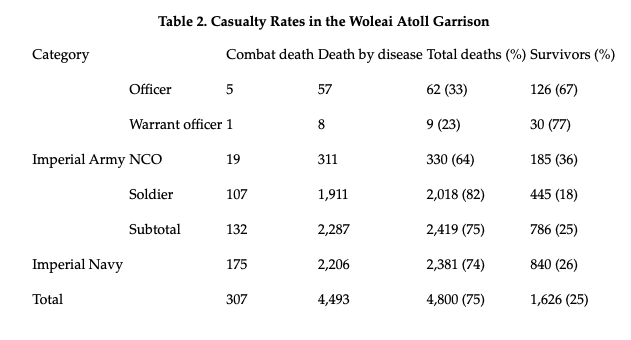
Writer Sawachi Hisae has also focused on this issue, analyzing the case of the 59th Infantry Regiment, about which we have detailed personnel records: 4 deaths among commissioned officers (0.56% of the total), 41 deaths for non-commissioned officers (5.76%), and 667 deaths for soldiers (93.68%).87 This regiment suffered heavy casualties from disease and starvation while defending Palau due to compromised supply lines. Given the makeup of military personnel in the Army in 1943—4.6% commissioned officers, 13.7% non-commissioned officers, and 81.7% soldiers—the lower death rate for officers and higher rate for soldiers is striking.88

4. The Frontline and the Home Front

Troop Morale

Soldiers on the frontlines constantly reminisced about home while fighting, motivated at least partly by concern for the families they left behind. Safeguarding the livelihood of family members on the home front was thus important to prevent the deterioration of troop morale. State initiatives to ensure this took the form of social welfare from the Military Relief Act (gunji fujo hō), enacted in July 1937, and military support organizations such as the Shōbukai, as well as stipends or allowances paid by the companies at which soldiers were employed before being conscripted. National expenditure did not completely cover the livelihood of the families left behind, and not all former workplaces provided stipends to conscripts’ families. However, the government placed a much higher priority on military relief when compared to the Russo-Japanese War. Scholarship on the principles and practices of such military relief efforts has greatly expanded in recent years. One representative work can be found in Gunshi Jun’s 2004 book, Gunji engo no sekai (The World of Military Relief).89

Soldiers were also preoccupied with the “chastity” of their wives. According to a 1939 report published in a Justice Ministry publication, not only had there been a “gradual increase in such objectionable and deplorable acts as adultery and elopement among the wives of soldiers at the front,” but also “not a few acts of sexual aggression such as molestation and sexual assault by unscrupulous men.”90 With regard to the perspective of the wives of soldiers at the front or war widows, vivid testimony is provided in Kikuchi Keiichi and Ōmura Ryō’s 1964 work, Ano hito wa kaette konakatta (He Did Not Come Back).91

Given the effect that such issues might have on troop morale, the state felt the need to intervene. For example, even though adultery was a crime that could only be applied to women in prewar Japan, “the government started to punish men [who committed such acts] by charging them with breaking and entering.” As a result, the number of men arrested for breaking and entering grew noticeably during the war.92

Major Horiguchi Masao of the Kenpeitai [military police] also commented on the impact of home affairs on troop morale, stating that “[soldiers] are always concerned about the home front, especially news about their family…since one of the most frequently mentioned issues is the chastity of one’s wife and the treatment of family members left behind, we must be careful how to counsel them, as this will profoundly affect their morale.”93

A problem that further vexed soldiers was the livelihood of wives and children in the event of their death; many were particularly concerned with the one-time benefits and pensions paid to bereaved families. For example, since the civil code strongly privileged the (male) head of the household, there were cases in which the father of the war dead tried to abuse the system and take away the rights to welfare benefits from the wife by forcing her into a divorce. Another major problem was that common-law wives did not have the right to receive such benefits.

Fujii Tadatoshi, who analyzed the wills of war dead, points out that “many of the wills specified to their parents, who in many cases held the relevant rights, that the one-time benefits, insurance, and pension [that would arise in the event of death] should go to his wife.”94 As mentioned in the aforementioned 1939 report, the soldiers’ “first priority was to guarantee the livelihood of one’s wife and children,” and the second priority was to “secure a stable retirement for their parents.”

The life insurance cases examined by Fujii require additional explanation. At the time of the Russo-Japanese War, various stipulations existed with regard to the payment of insurance benefits, ranging from “the charging of special insurance fees and the reduction of the benefits, to the non-payment of the promised money.” The total number of cases that actually paid out death benefits during this war among all life insurance policies totalled only 2,462.95 Once the Sino-Japanese War began, however, life insurance companies faced pressure from the armed forces to unconditionally provide benefits to the families of war dead. Furthermore, they were required to provide a maximum insurance payout of 2,000 yen if the individual signed a new contract. Furthermore, from April 1943, following an arrangement among life insurance companies, all war deaths resulted in an automatic payment of insurance benefits. It was thus that life insurance became popularized during the period of total war. The number of contracts for all life insurance firms by the end of 1941 was 24,225,000.96

So important was this system that the government had no choice but to intervene to help resolve disputes related to one-time benefits and pensions. In May 1938, the state strengthened its relief administration by establishing military relief consultation centers in each municipality to deal with all issues related to war-bereaved families. The centers were run by committees consisting of officials, assembly members, and special members. One of their primary duties was the “resolution of disputes regarding the payment of benefits and pensions or household registration involving bereaved family members.” In January 1941, the military protection bureau (gunji hogo-in) sent out “Guidelines for Dealing with War-Bereaved Families” to each regional governor, recommending the placement of a “woman consultant who could provide earnest advice to bereaved families” under the auspices of the municipal home front contribution society.97

In 1939, the government passed the Personal Arbitration Act to resolve the increasing number of disputes over welfare pensions, and the 1940 revision of the Pension Act recognized the right to welfare benefits for common-law wives and children born out of wedlock—as long as they took measures to acquire legal status. In 1941, court approval became necessary for the removal of a name from the family register, thereby placing restrictions on the abuse of the rights of household heads.98 The government and military generally took a position supportive of the conscripted soldier’s wife out of concern for the troops’ morale. As a result, some have argued that this was partially responsible for the dismantling of the “household system” (ie).99

It is noteworthy that in the case of bereaved families, the military on occasion got involved directly. According to a 1976 history of the Kenpeitai, the military police was forced to deal with cases including “a divorce crisis resulting from complications in the relationship between a soldier’s wife and her mother-in-law,” “the issue of whether a war widow should remarry with one of the deceased soldier’s brothers,” “a dispute over divorcing a war widow,” and “problems related to the payment of pensions to the bereaved family.”100 The author observes that “it was inevitable that the military police were forced to arbitrate from a position sympathetic to the wife’s interest” in cases of one-time benefits and pensions, and that the wartime military police performed the function of an “ad hoc family court.”

The government also used censorship to keep home front troubles from reaching the attention of frontline soldiers. According to the official bulletin of the Books Division of the Home Ministry’s Police Affairs Bureau [the department responsible for prewar censorship], all newspaper articles and publications concerning destitution on the Home Islands, sexual violation of wives of soldiers at the front, or domestic disputes involving home front families, were either banned or redacted. This censorship was so severe that in January 1938, the novel Richigi mono by Satō Haruo featuring a protagonist who develops romantic feelings toward the wife of a soldier at the front, was banned from publication. Anticipating that the war would be protracted, the government issued a notice in July 1938 called “Guidelines for Newspapers,” which ordered publishers to “be careful of any topics that deal with the destitution of bereaved families, suicide, and scandals, as these have the potential to cause anxiety among soldiers at the front.”101

The Issue of the Remains of the War Dead 

Another problem arose with the increasing number of war dead: bereaved families’ dissatisfaction concerning the sending home of their loved ones’ remains. Japanese funerary rites are carried out in the presence of the remains of the deceased, to which attendees pay respects.102 In the prewar period, since it was impossible for the bodies of soldiers who died in remote combat zones to be sent back, it became customary for their ashes to be returned. With the intensification of combat, however, the military could not afford to properly cremate each body, and it became common for soldiers to cut off their fallen comrades’ wrist or little finger in the midst of battle and send it home, cremated, after combat. This inevitably led to the sense on the part of the bereaved families that the remains of their loved ones were being handled with less consideration. This malaise was exacerbated by the fact that it took longer for the families to receive the remains after getting the official death notifications. A 1940 article in a publication by Kaikōsha, a club for Imperial Army officers, alluded to great unease concerning the treatment of the combat dead:

From the perspective of a bereaved family member, it goes without saying that soldiers’ remains are irreplaceable, and it is understandable for them to be concerned about the remains of their loved ones. However, one must also say that it reflects poorly on them to fixate on the issue of remains after their sons have gone off to war [knowing that they may not come back alive]; the reality of the battlefield is harsh, but that is the reality, so we must promote more understanding and awareness on the part of family members. There are also those who are dissatisfied with the handling of war dead remains or delay in sending them home, but the former is a groundless rumor that must be dispelled, and the latter is a problem that must be solved by increasing awareness of the realities of the battlefield.103

The military tried to address the issue by having soldiers prepare a lock of hair (ihatsu) in advance that could be used in lieu of bone remains (ikotsu). According to the “Notice Regarding the Additional Requirements of Troop Handbooks” issued in June 1939 by the Imperial Reservist Association, the military had mandated inclusion of an addendum in the Troop Handbooks (guntai techō) distributed to all reservists.104 The addendum instructed all conscripts to prepare a will in advance, and to “wrap up a lock of hair, a tooth, and a fingernail in paper and place it in your backpack.” It further warned, “these items will be subject to strict examination at the yearly inspection muster of reservists (kan’etsu tenko),” illustrating the importance the military attached to these mementos. The preparation of a will was likely meant to deal with the aforementioned issue of family disputes over welfare benefits.105

The situation regarding the remains of those killed in action took a turn for the worse following the outbreak of the Pacific War in December 1941. According to Niigata prefectural records, for example, it was so difficult to collect the remains after the Battle of Guadalcanal that “sand from the beaches of the island was taken home to be used in place of their remains.” When they could not even find something of this nature, locks of hair stored with the reserve troops were placed in the remains container (ikotsu bako) and sent to the family. If all else failed, the military simply sent home a remains container with a wooden memorial tablet (reiji/ihai) inside.106 As Ichinose Toshiya demonstrated clearly in his 2005 social history of the home front, in many cases the state could no longer guarantee traditional death ritual conventions.107According to a 1997 report published by the Health and Welfare Ministry, the remains of only half of the 2.4 million overseas war dead—including civilians and those who died in the Battles of Iwo Jima and Okinawa—ever found their way back home.108

Conclusion

The tragic realities of war would deeply influence postwar Japanese pacifism. They disrupted the sense of solidarity between officers and soldiers. They also developed into a generalized antipathy toward militarism and war as well as arousing deep-seated suspicion of the self-serving claims of the state. The consciousness of postwar Japanese was, in short, rooted in antiwar sentiment stemming from these traumatic war experiences.

This pacifism, however, would face challenges from two different directions. First was the issue of war responsibility that resurfaced in the late 1980s. Following the end of the Cold War, people of various Asian countries started to denounce Japan for its wartime conduct. As a result, attitudes of Japanese people, based on their self-identification as victims of war, began to show signs of vulnerability. Second was the fact that the generation that had experienced war became a clear minority within Japanese society around the turn of the twenty-first century. The peace consciousness that had been bolstered by war experience could no longer be sustained by direct experience in war by the majority.109

The writing of this article was in many ways inspired by this transition. The reason why I emphasized the “study of the realities of death” was that, as part of a generation that has not experienced war, I wanted to reconstruct the harsh realities of the battlefield in my own way. Another reason was my desire to understand the “difficult deaths” faced by Japanese soldiers—a topic emphasized in Oda Makoto’s 1991 work—as a prerequisite to approaching the multilayered question of “victimhood” (higai) and “aggression” (kagai) [with regard to the Japanese war experience toward Asia].110

Having finished writing, however, I am struck by the many inadequacies of this approach. I am especially aware that I may have focused too much on the extreme conditions on the battlefield. In his study of battlefield memories, Tomiyama Ichirō has argued that “the battlefield is neither an abnormality nor a madness detached from our daily lives; rather, the mundane activities of everyday life prepare the conditions of the battlefield.”111 It is true that I should perhaps have placed greater emphasis on the relationship between normality (nichijō-sei) and abnormality (hinichijō-sei). Even on the battlefield, there is neither constant combat nor perpetration of war crimes. The backlash from former soldiers toward the “comfort women” controversy, for example, probably stems from the fact that what had been experienced as a normal part of life at the front was now being criticized as a war crime. I would like to continue thinking about the meaning of this issue in the future.

*

Note to readers: please click the share buttons above or below. Forward this article to your email lists. Crosspost on your blog site, internet forums. etc.

Bo Tao (Ph.D. 2019, Yale University) is a Visiting Fellow at Waseda University. His research focuses on state-religion relations in modern Japan, transpacific encounters, and the history of Christianity in East Asia. He is currently working on a book manuscript about the Japanese Christian leader Kagawa Toyohiko (1888-1960). Contact him at [email protected] 

Notes

Yoshida Yutaka, “Ajia-Taiheiyō sensō no senjō to heishi,” in Senjō No Shosō: Iwanami Kōza Ajia-Taiheiyō Sensō 5 (Tokyo: Iwanami Shoten, 2006), 59-86. Since his retirement from Hitotsubashi University in March 2020, Professor Yoshida has become the director of The Center of the Tokyo Raids and War Damage.

Yoshida Yutaka, Nihongun heishi: Ajia-Taiheiyō sensō no genjitsu (Tokyo: Chūō Kōron Shinsha, 2017).

“Sensō he no ikari, kenkyū genten,” Asahi Shinbun, 2 February 2020.

Biruma no tategoto was nominated for the Academy Award for Best Foreign Language Film of 1956. Ichikawa later remade the movie in color with a new cast in 1985.

Although the 1950s did see the publication of a few books on the Asia-Pacific War, they were primarily eyewitness accounts written by former military officers. See Takagi Sōkichi, Taiheiyō kaisenshi (Tokyo: Iwanami Shoten, 1949); Hayashi Saburō, Taiheiyō sensō rikusen gaishi (Tokyo: Iwanami Shoten, 1951); Hattori Takushirō. Daitōa sensō zenshi (Tokyo: Masu Shobō, 1953), vols. 1-4.

This account of the development of postwar Japanese historiography on military history draws heavily on a guest lecture given by Yoshida at the Institute of Politics and Economy (Seiji keizai kenkyūjo) in September 2019. Yoshida Yutaka, “Sengo rekishigaku to gunjishi kenkyū: ‘Nihongun heishi’ o tegakari ni shite,” presentation notes, 20 September 2019. I have supplemented this with Fujiwara Akira, Tennō no guntai to Nicchū sensō (Tokyo: Ōtsuki Shoten, 2006).

Bōeichō bōeikenkyūsho senshi shitsu ed., Senshi sōsho, 102 vols. (Tokyo: Chōun Shinbunsha, 1966-1980); Toga Hiroshi, “Zen 102-kan kanketsu no ji,” Daitōa (Taiheiyō) sensō senshi sōsho furoku 102 (1980), 1-2.

Other characteristics of the work produced by the Center for Military History, originally known as the Office for War History (senshi shitsu), include its willingness to defend the decisions and actions taken by the prewar Japanese leadership, its bias toward central command, and the reproduction of institutional rivalries between the Imperial Army and Imperial Navy, owing to the initially large number of ex-Army officers within its ranks. Fujiwara, Tennō no guntai to Nicchū sensō, 230; Yoshida, “Sengo rekishigaku to gunjishi kenkyū,” 2.

One notable exception, as referenced by Yoshida in his introductory paragraph, is Kuroha Kiyotaka’s article published in the August 1971 issue of the journal Shisō. Kuroha based his analysis on a combination of statistical data and poems written by servicemen describing their battlefield encounters.

10 Fujiwara Akira, Gunjishi (Tokyo: Tōyō Keizai Shinpōsha, 1961). 

11 Hata Ikuhiko, Nitchū sensōshi (Tokyo: Kawade Shobō Shinsha, 1961); Hata Ikuhiko, Gun fashizumu undōshi: 3-gatsu jiken kara 2.26 go made (Tokyo: Kawade Shobō Shinsha, 1962).

12 Ienaga Saburō, Taiheiyō sensō (Tokyo: Iwanami Shoten, 1968). An English translation by Frank Baldwin is Ienaga Saburō, The Pacific War: World War II and the Japanese, 1931-1945, (New York: Pantheon Books, 1978). Yoshida points out that Ienaga’s work is limited to using the experience of ordinary soldiers to underline the Japanese military’s undemocratic and anti-rational tendencies. Yoshida, “Sengo rekishigaku to gunjishi kenkyū,” 2.

13 Ōe Shinobu, Nichi-Ro sensō no gunjishiteki kenkyū (Tokyo: Iwanami Shoten, 1976).

14 Yoshida, email communication to translator, 11 May 2020. 

15 Yoshida Yutaka, Tennō no guntai to Nankin jiken: mō hitotsu no Nitchū sensō shi (Tokyo: Aoki Shoten, 1998); Yoshida Yutaka, Nihon no guntai: heishi tachi no kindaishi (Tokyo: Iwanami Shoten, 2002).

16 Yoshimi Yoshiaki, Grassroots Fascism: The War Experience of the Japanese People, trans. Ethan Mark (New York: Columbia University Press, 2015). The original is Yoshimi Yoshiaki, Kusa no ne no fashizumu: Nihon minshū no sensō taiken (Tokyo: Tokyo Daigaku Shuppankai, 1987).

17 Haruko Taya Cook and Theodore F. Cook, Japan at War: An Oral History (New York: The New Press, 1992; reprinted 2008). For a collection of translations of private diaries, see Samuel Hideo Yamashita, Leaves from an Autumn of Emergencies: Selections from the Wartime Diaries of Ordinary Japanese (Honolulu: University of Hawai’i Press, 2005). Yamashita followed this book up with Daily Life in Wartime Japan, 1940-1945(Lawrence: University Press of Kansas, 2015), which attempted to construct a “history of everyday life” (Alltagsgeschichte) in wartime Japan using published diaries, letters, and memoirs. Through these works, Yamashita has allowed us to hear the forgotten voices of ordinary Japanese on the home front.

18 Kenneth J. Ruoff, Imperial Japan at Its Zenith: The Wartime Celebration of the Empire’s 2,600th Anniversary(Ithaca, N.Y.: Cornell University Press, 2010).

19 Benjamin Uchiyama, Japan’s Carnival War: Mass Culture on the Home Front, 1937-1945 (Cambridge, U.K.: Cambridge University Press, 2019).

20 As noted by Uchiyama, the kamikaze—known officially as the “special attack force” (tokkōtai)—represent one of the few areas concerning Japanese soldiers about which there is a sizable body of English-language scholarship. Some examples include Ivan Morris, The Nobility of Failure: Tragic Heroes in the History of Japan (New York: Holt, Rinehart and Winston, 1975); Emiko Ohnuki-Tierney, Kamikaze, Cherry Blossoms, and Nationalism: The Militarization of Aesthetics in Japanese History (Chicago: University of Chicago Press, 2002); M. G. Sheftall, Blossoms in the Wind: Human Legacies of the Kamikaze (New York: NAL Caliber, 2005); Emiko Ohnuki-Tierney, Kamikaze Diaries: Reflections of Japanese Student Soldiers (Chicago: University of Chicago Press, 2006), and chapter 6 of Yamashita, Daily Life in Wartime Japan, 1940-1945. See also Uchiyama, Japan’s Carnival War, 204-207.

21 James R. Brandon, Kabuki’s Forgotten War: 1931-1945 (Honolulu: University of Hawai’i Press, 2009); Sharalyn Orbaugh, Propaganda Performed: Kamishibai in Japan’s Fifteen Year War (Leiden: Brill, 2015).

22 Sabine Frühstück, Playing War: Children and the Paradoxes of Modern Militarism in Japan (Oakland, California: University of California Press, 2017). Frühstück’s book is not limited to the Asia-Pacific War and examines the series of modern wars beginning with the Sino-Japanese War of 1894-95.

23 While the book-length study is yet to be published, a concise summary of the project can be found in Sheldon Garon, “Transnational History and Japan’s ‘Comparative Advantage,’” The Journal of Japanese Studies 43, no. 1 (February 1, 2017): 65–92.

24 For an example of a recent dissertation that examines the wartime cooperation of Japanese Christian groups, see Bo Tao, “Imperial Pacifism: Kagawa Toyohiko and Christianity in the Asia-Pacific War” (Ph.D. diss., Yale University, 2020). Japanese Christians, who were particularly vulnerable to charges of “unpatriotic” conduct due to their adherence to a foreign religion, strove to prove their loyalty to the nation by staging wartime rallies, writing patriotic hymns, and organizing donation drives to help fund military aircraft.

25 Takashi Fujitani, Race for Empire: Koreans as Japanese and Japanese as Americans during World War II(Berkeley: University of California Press, 2011).

26 Jeremy A. Yellen, The Greater East Asia Co-Prosperity Sphere: When Total Empire Met Total War (Ithaca: Cornell University Press, 2019).

27 Fujitani does include the testimony of several Korean prisoners-of-war held captive by Allied troops. Even there, however, his main concern is with interrogating their motives for serving in the Japanese army, and not on their battlefield experiences per se. See Fujtani, Race for Empire, 239-298.

28 Lee K. Pennington, Casualties of History: Wounded Japanese Servicemen and the Second World War (Ithaca, New York: Cornell University Press, 2015).

29 Kuroha Kiyotaka, “15-nen sensō ni okeru senshi no shosō: ‘tōkei’ to ‘uta’ to,” Shisō, August 1971.

30 Kasahara Tokushi, “Chiansen no shisō to gijutsu,” in Senjō no shosō, Iwanami Kōza Ajia-Taiheiyō Sensō 5(Tokyo: Iwanami Shoten, 2006), 215-244.

31 A conscript who had attained a middle school education had the option of applying to become an officer candidate (kanbu kōhosei) upon entering the Army. Those who passed the exam had a number of possibilities to serve away from the frontlines. An officer candidate in the accounting department (keiri bu), for example, was eligible to become a low-ranking officer dealing primarily with financial accounts. This was a relatively safe post in the Army. This, of course, required one to have obtained a middle school education, which was not the case for around 80 percent of the conscript population—which had little leeway in selecting their place of service. Yoshida, email communication to translator, 19 April 2020. For more on this issue, see Yoshida Yutaka, Nihon no guntai: heishi tachi no kindaishi (Tokyo: Iwanami Shoten, 2002). (BT)

32 Ōe Shinobu, Shōwa no rekishi 3: Tennō no guntai (Tokyo: Shōgakukan, 1982). While the need to retain farmers in the countryside was recognized by the state, it became more and more difficult to enforce this policy once the war situation necessitated a greater degree of mobilization. As a result, the remaining sources of labor in villages during the latter stages of the war consisted primarily of women, children, and the elderly. Yoshida, email communication to translator, 19 April 2020. (BT)

33 The intended target of the draft deferment system was industrial and factory workers, and the “laborers” mentioned here did not include farmers. Yoshida, email communication to translator, 19 April 2020. (BT)

34 Jōestu shishi hensan iinkai, ed., Jōetsu shi tsushi hen 5 (Jōestu-shi, Niigata: Jōestu-shi, 2004).

35 First and second reserve troops formed the majority of the Japanese military presence in China. This was due to the Japanese Army’s prioritization of the Soviet threat, which led them to permanently station active-service divisions at the Russian border. As a result, only “special divisions” (tokusetsu shidan) consisting primarily of older reserve soldiers were available for deployment to the China front. Fujiwara Akira, Tennō no guntai to Nitchū sensō (Tokyo: Ōtsuki Shoten, 2006), 15. (BT)

36 First and second reserve troops had previously undergone an intensive two-year regimen as active-service soldiers and looked down on officers called in from the conscript reserve ranks—whom they regarded as inferior because of their lack of proper training—as well as reserve officers and non-commissioned officers who were younger. Being older than the average soldier, many were also married and thus anxious about the family they left back home, inwardly resenting the fact that they had been recalled to duty. Due to this combination of a lack of respect for their immediate superiors and a concern for home front affairs, once the war became protracted and the prospect of an early return dissipated, some older reserve troops turned to acts of violence and atrocity, as well as insubordination toward superior officers. Yoshida, email communication to translator, 19 April 2020; Fujiwara, Tennō no guntai to Nitchū sensō, 15. (BT)

37 Yoshida Yutaka, Nihon no guntai: heishi tachi no kindaishi (Tokyo: Iwanami Shoten, 2002).

38 Yoshida Yutaka, Gendai rekishigaku to sensō sekinin (Tokyo: Aoki Shoten, 1997).

39 Active-service soldiers, who would have been in their early twenties at this point, typically did not have families, and therefore were sent to the front lines to replace older troops who did have families. The same policy was applied to younger soldiers in the conscript reserves. (BT)

40 Rikugunshō, Shōwa 10-nen chōhei jimu tekiyō (Tokyo: Rikugunshō, 1936); Rikugunshō, Shōwa 16-nen chōhei jimu tekiyō (Tokyo: Rikugunshō, 1942).

41 “Kenpei taisaku shiryō tuzuri,” Bōeichō Bōei Kenkyūjo Senshibu.

42 Rikugunshō Heibika ichi-kain, “Chōhei kensa yori mitaru kenpei taisaku no jūyōsei ni tsuite,” Kaikōsha Kiji Tokugō 824 (1943).

43 Aoki Masakazu, Kekkaku no rekishi (Tokyo: Kōdansha, 2003).

44 Jōestu shishi hensan iinkai, ed., Jōetsu shi tsushi hen 5.

45 Shimizu Hiroshi, “Guntai to chiteki shōgaisha,” Kikan Sensō Sekinin Kenkyū (Spring 2003).

46 “Nihon busōgun no kenkō ni kansuru hōkoku,” Center for Military History (Senshibu), National Institute for Defense Studies.

47 Rikujō jieitai eisei gakkō, Eisei senshi: hondo kessen junbi (Not-for-sale item, 1979).

48 Manabe Motoyuki, Aru hi, Akagami ga kite (Tokyo: Kōjinsha, 1994).

49 “Kenpei taisakujō yori mitaru kyūyō jōshiki ni tsuite,” Koi Dai-5173 Squadron, Eisei kankei raikan tsuzuri, vol. 2, Center for Military History, National Institute for Defense Studies.

50 Nagao Goichi, Sensō to eiyō (Tokyo: Nishida Shoten, 1994).

51 Aoki Kesami, Kōgunbyō teiyō, (Not-for-sale item, 1936).

52 Shichōheishi Kankōkai ed., Shichōheishi (ge) (Not-for-sale item, 1979).

53 Yoshida, Nihon no guntai.

54 Dai 27-shidan eisei gyōmu yōhō,” Daitōa sensō rikugun eiseishi hensan shiryō, Center for Military History.

55 Operation Ichi-Gō (Ichi-gō sakusen, lit. “Operation Number One”), also known as tairiku datsū sakusen(“Continent Crossing Operation”), was a Japanese military campaign on the China front that took place in April-December 1944. It had two main objectives: to capture air bases in southeast China from which American bombers were launching attacks on Japanese shipping and naval assets, and to open a land route from China to French Indochina, which was under Japanese control at the time. The campaign mobilized 500,000 Japanese troops, 800 tanks, and 70,000 horses over 2,400 kilometers, and was the largest single military operation conducted by the Imperial Japanese Army. (BT)

56 As mentioned in the Translator’s Notes, soldiers from the first conscript reserve only received brief training totaling less than six months, while those from the second conscript reserve received no basic training. (BT)

57 Fujiwara Akira, Chūgoku sensen jūgunki (Tokyo: Ōtsuki Shoten, 2002).

58 Kume Shigezō, Sensō wa owatta (Not-for-sale item, 1991). The Battle of Hunan-Guangxi was part of the series of battles comprising Operation Ichi-Gō, which took place across three Chinese provinces (from north to south): Henan, Hunan, and Guangxi. (BT)

59 Wakamatsukai ed., Rikugun keiribu yomoyama banashi (Not-for-sale item, 1982).

60 Hori Hajime, Chūgoku kōgun: toho 6,500 kiro (Suzaka, Nagano Prefecture: Kawabe Shorin, 2005).

61 Hirao Masaharu, Kaigun gun’i senki (Tokyo: Tosho Shuppansha, 1980).

62 Sasama Yoshihiko, Zukan Nihon no gunsō (Tokyo: Yūzankaku Shuppan, 1970).

63 Mori Tetsuju, “Tōbu Nyū Ginia sakusen no kyūyō wa?” Jussei 7 (1978).

64 Wakamatsukai ed., Rikugun keiribu yomoyama banashi: zokuhen (Not-for-sale item, 1986).

65 Ōe Shinobu, Nichiro sensō no gunjishi teki kenkyū (Tokyo: Iwanami Shoten, 1976).

66 Ibid.

67 Sakai Shizu, Ekibyō no jidai (Tokyo: Taishūkan Shoten, 1999).

68 Koike Iichi ed., Kaigun imu eiseishi 3 (Tokyo: Yanagihara Shoten, 1986).

69 Bōeichō bōei kenshūsho senshi shitsu ed., Senshi sōsho hokutō hōmen rikugun sakusen 1 (Tokyo: Asagumo Shinbunsha, 1968).

70 Asahi Shinbun tēma danwa shitsu ed., Sensō (jō) (Tokyo: Asahi Sonorama, 1987).

71 Fujiwara Akira, Uejini shita eirei tachi (Tokyo: Aoki Shoten, 2001).

72 “Kaiyō sakusen ni okeru heitan teki kyōkun,” Center for Military History.

73 Rikusen gakkai senshi bukai ed., Kindai sensō shi gaisetsu (Tokyo: Rikusen Gakkai, 1984). The combat casualties do not include those in Manchuria.

74 Kurosawa Yoshiyuki, “Eisei hokyū no shiteki kōsatsu (dai 6 hō),” Bōei Eisei 32, no. 6 (1985).

75 Shirai Akio ed., “Senkunhō” Shūsei 1 (Tokyo: Fuyō Shobō Shuppan, 2003).

76 Rikujō jieitai eisei gakkō, Daitōa sensō rikugun eiseishi (Hitō sakusen) (Not-for-sale item, 1985).

77 Iijima Wataru, Mararia to teikoku (Tokyo: Tokyo Daigaku Shuppankai, 2005).

78 Douglas Starr, Ketsueki no monogatari, trans. Yamashita Atsuko (Tokyo: Kawade Shobō Shinsha, 1999). The original work is Douglas Starr, Blood: An Epic History of Medicine and Commerce (New York: Alfred A. Knopf, 1998).

79 Shiokawa Yūichi, Teihon Kikuheidan Gun’i no Biruma nikki (Tokyo: Nihon Hyōronsha, 2002).

80 Ikeda Sadae, Taiheiyō sensō chinbotsu kansen itai chōsa taikan (Tokyo: Senbotsu itai shūyō iinkai, 1977).

81 Shirai Akio ed., “Senkunhō” Shūsei 3 (Tokyo: Fuyō Shobō Shuppan, 2003).

82 Matsubara Shigeo, Daitōa sensō ni okeru rikugun senpaku senshi 1-3 (Not-for-sale item, 1970).

83 Ōuchi Kenji, Yusōsen nyūmon (Tokyo: Kōjinsha, 2003).

84 Yamada Akira and Matsuno Seiya eds., Daihon’ei rikugunbu jōsō kankei shiryō (Tokyo: Gendai Shiryō Shuppan, 2005).

85 Bōeichō bōei kenshūsho senshi shitsu ed., Senshi sōsho daihon’ei rikugunbu 10 (Tokyo: Asagumo Shinbunsha, 1975).

86 Fujiwara Akira, Tennōsei to guntai (Tokyo: Aoki Shoten, 1978).

87 Sawachi Hisae, Berau no sei to shi (Tokyo: Kōdansha, 1990).

88 Rikusen gakkai senshi bukai ed., Kindai sensō shi gaisetsu. Such death ratios were not necessarily a given, as can be seen in the high officer-to-enlisted soldier casualty rates of the British Army in WWI, where nearly half of all officers became casualties during the first year. Peter R. Mansoor and Williamson Murray, eds., The Culture of Military Organizations (Cambridge: Cambridge University Press, 2019), 168. (BT)

89 Gunshi Jun, Gunji engo no sekai (Tokyo: Dōseisha, 2004).

90 “Shina jihen ni okeru shussei (senshishō)-sha izoku kazoku no dōkō ni kansuru chōsa,” Shisō Geppō 55–56 (Tokyo: Bunsei Shoin, 1974).

91 Kikuchi Keiichi and Ōmura Ryō eds., Ano hito wa kaette konakatta (Tokyo: Iwanami Shoten, 1964).

92 Murata Hiroo, “Sensō to kazoku,” Katei Saiban Geppō 6, no. 12 (1954).

93 Horiguchi Masao, “Senji ni okeru guntai naimu kyōiku no chakuganten,” Kaikōsha Kiji Tokugō 803 (1941).

94 Fujii Tadatoshi, Heitachi no sensō (Tokyo: Asahi Shinbunsha, 2000).

95 Usami Kenji, Seimei hoken gyō 100 nen shiron (Tokyo: Yūhikaku, 1984).

96 Innami Hirokichi ed., Gendai Nihon sangyō hattatsu shi (Tokyo: Kōjunsha Shuppankyoku, 1966).

97 Ichinose Toshiya, Kindai Nihon no chōheisei to shakai (Tokyo: Yoshikawa Kōbunkan, 2004).

98 Hayakawa Noriyo, “Kazokuhō no kaisei,” in Nihon No Jidaishi 26, ed. Yutaka Yoshida (Tokyo: Yoshikawa Kōbunkan, 2004). The law regarding the removal of family register names is Article 749, Clause 3 of the Civil Code.

99 Kawaguchi Emiko, Sensō mibōjin (Tokyo: Domesu Shuppan, 2003).

100 Zenkoku kenyūkai rengōkai hensan iinkai ed., Nihon kenpei seishi (Not-for-sale item, 1976).

101 Shuppan keisatsu hō (Tokyo: Fuji Shuppan, 1982).

102 Namihira Emiko, Nihonjin no shi no katachi (Tokyo: Asahi Shinbunsha, 2004).

103 Rikugunshō onshōka ichi kain, “Guntai kanbu to shite senbotsusha izoku shidōjō no sankō,” Kaikōsha Tokuhō 60 (1940).

104 The instructions originated from Army Order no. 24, issued in May 1939.

105 Jōetsu shishi hensan iinkai, ed., Jōetsu shishi betsu hen 7 (Jōetsu-shi, Niigata: Jōetsu-shi, 2000).

106 Niigata ken minseibu engoka ed., Niigata ken shūsen shori no kiroku (Niigata-shi, Niigata: Niigata-shi, 1972).

107 Ichinose Toshiya, Jūgo no shakaishi (Tokyo: Yoshikawa Kōbunkan, 2005).

108 Kōsei shō shakai engo kyoku 50-nen shi henshū iinkai ed., Engo 50-nen shi (Tokyo: Gyōsei, 1997).

109 Yoshida Yutaka, Nihonjin no sensōkan (Tokyo: Iwanami Shoten, 2005).

110 Oda Makoto, “Nanshi” no shisō (Tokyo: Iwanami Shoten, 1991).

111 Tomiyama Ichirō, Senjō no kioku (Tokyo: Nihon Keizai Hyōronsha, 1995).
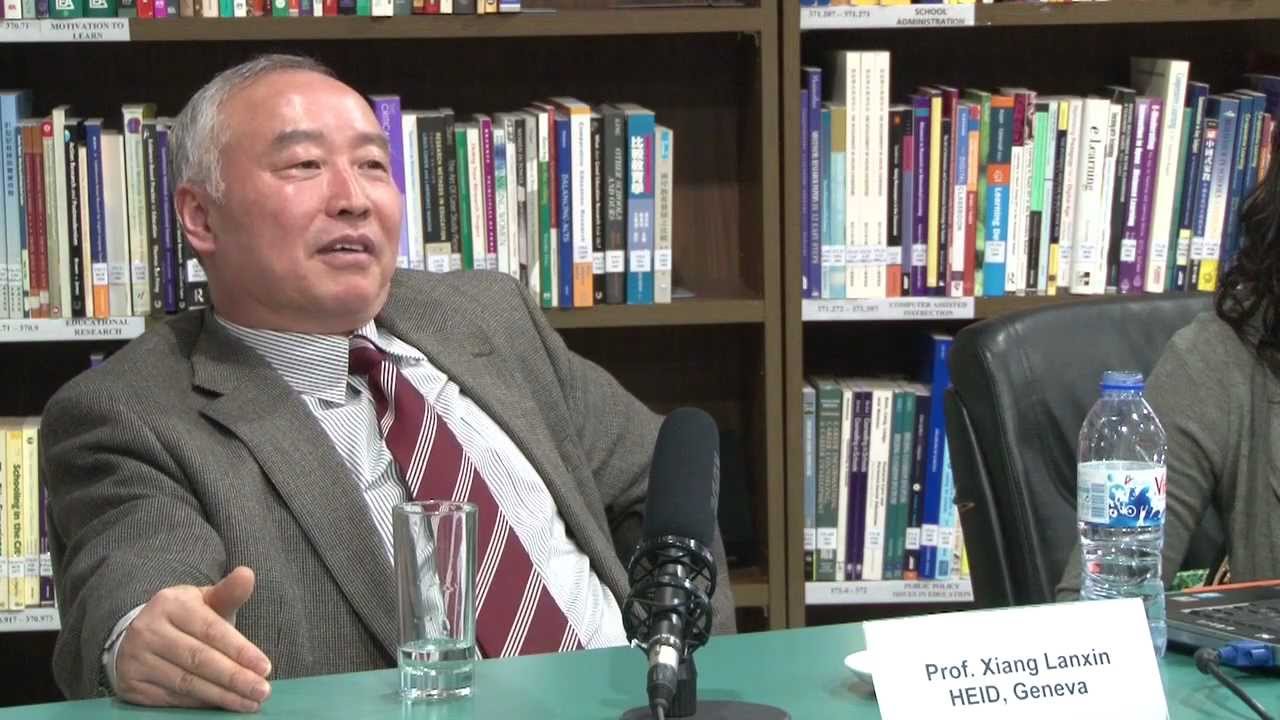
The Emptiness of Japan’s Values Diplomacy in Asia

October 7th, 2020 by Jeff Kingston

Introduction

Although Prime Minister Abe Shinzo (2006-07; 2012-2020) repeatedly touted Japan’s values-oriented foreign policy in Asia, there is little substance to this agenda. Like other nations, Tokyo downplays human rights and democratic values in favor of maintaining trade ties and securing geo-strategic advantage. (Brown and Kingston 2018) It is thus a values-free diplomacy of pragmatism and expediency, dealing with regional governments as they are, not as one might wish them to be.

Japan is certainly not unique in this regard, and takes its cues from Washington, but Abe invites scrutiny of the government’s record due to his persistent rhetorical grandstanding on shared values and democracy. (Harris 2020, 130, 198, 223, 304) Just as in his first New Year policy speech back in 2007, at the outset of 2013 Abe emphasized that he would, “develop a strategic diplomacy based on the fundamental values of freedom, democracy, basic human rights and the rule of law.” (Kantei 2013). He reiterated this commitment frequently during his premiership, for example in his 2018 New Year policy speech (Kantei 2018a) and in comments at the “Shared Values and Democracy in Asia Symposium” in 2016 (Kantei 2016), and again in 2018, where he called for, “a new era for Asia, an era in which we make freedom, human rights, and democracy our own and respect the rule of law.” (Kantei 2018b)

The Asahi Shimbun agreed that, “it is a sensible option for Japan to deepen ties with other countries with which it shares universal values,” but added, “Unfortunately, however, the diplomacy of the Abe administration did not come with matching action.” (Asahi 2020) In the US, the political obituaries on the Abe era often extol his foreign policy (Ignatius 2020; Cooper and Hornung 2020), but in terms of promoting shared values and democracy in Asia, Abe achieved little beyond empty gestures.

There is considerable tolerance for authoritarian governments and muted criticism of repressive regimes because Tokyo does not want to risk maintaining good ties and strategic interests for the sake of promoting democratic values and civil liberties. Proponents see this as sensible and invoke the principle of non-interference while critics assert that Japan is betraying its ostensible principles in supporting despots and working with illiberal regimes. Flashpoints across contemporary Asia are illuminating about this debate.

For example, Prime Minister Abe Shinzo is a conservative nationalist who cultivated a close relationship with Indian Prime Minister Narendra Modi. The potential of the Indian market and the strategic goal of offsetting China’s hegemonic ambitions in Asia are driving Japan’s embrace of India. Modi has won two elections in the world’s largest democracy (2014 and 2019) so at one level Japan’s closer ties with India during this period might highlight shared values. However, the Modi government’s Islamophobia, the surge of majoritarian intolerance and his remarkable tolerance for Hindu vigilantes murdering and harassing Muslims, render him an awkward partner. (Kingston 2019) The 2019 crackdowns on Islamic minorities in Kashmir and Assam are more troubling signs of malevolent majoritarianism in India, but the Japanese government has refrained from condemning any of this despite Abe’s lavish grandstanding on shared values.

Across the region there are ample opportunities for Tokyo to speak out on behalf of minorities, anti-democratic practices and the shrinking space for civil liberties, but the silence has been deafening. From the 2019 democracy protests in Hong Kong to the mass incarcerations of Uighurs and ethnocide waged against Tibetans, Japan has been circumspect with China on human rights. Japan’s diplomats have also been prominent apologists for the mass expulsions of Rohingya by the Myanmar military in 2017-18 and registered no disapproval of Sheik Hasina’s dubious 2019 landslide election victory in Bangladesh. President Duterte has been feted in Tokyo despite unleashing death squads on alleged drug dealers while Indonesia’s President Jokowi has also not been censured for escalating violence against ethnic Papuans. The 2014 military coup d’etat in Thailand? Cambodia’s fraudulent 2018 elections? Time after time Japan has averted its eyes, closed its ears and spoke no evil, providing succor to Asia’s despots through its inaction and thereby facilitating authoritarian creep.

Image on the right is from Asian Nikkei Review

It is striking that the only Asian nation to endure Japan’s venom in 2019-2020 was South Korea, a nation that shares democratic values and a market-oriented economic system. The shared past of these frenemies is a constant source of tension and politicization on both sides due to unresolved grievances relating to Japanese colonial rule 1910-45. In post-independence South Korea, the history issue was hastily buried under authoritarian rule, but with democratization in the late 1980s civic groups and politicians have exhumed ‘forgotten’ traumas such as the comfort women and forced labor that currently bedevil bilateral relations. Shared values here have taken a back seat to a fraught shared history.

This paper examines Japan’s passivity in addressing the gradual and incremental erosion of democratic institutions, practices and norms in 21st century Asia and the processes of authoritarian creep evident in the region. This phenomenon, what Lührmann and Lindberg term “autocratization”, appears to be gaining momentum in Asia involving a decline in both the quality and characteristics of democratic practices. (Lührmann and Lindberg 2019) Much of the relevant literature on democratic regression elucidates the internal dynamics of this process, but here the focus is on how Japan influences this trend. China is notorious as the patron of Asian autocracy, providing a model of authoritarian governance, and generous support to autocratic regimes and backsliding democracies without conditions. (Kroenig 2020; Bader 2016; Bell 2015) Less well known is Japan’s role as a prominent partner of Asian autocracies and illiberal democracies.

Image below is by ANSWER Coalition

The questions that animate the following analysis are: 1) why has Tokyo proclaimed support for democratization, human rights and the rule of law with increasing intensity over the past two decades?; 2) why does Japan fail to substantively support these values and ostensible priorities?; and 3) what are the consequences of Japan’s ambivalence about democratization and a values-oriented foreign policy?

Although rhetorically Japan supports democratization, it pursues a foreign policy where economic and geopolitical interests dictate against a values-driven statecraft. This pragmatic engagement is similar to trends in western foreign policy where many policymakers believe that, “In the disordered world of states, para-states and failed states, policies based on an abstract ‘international community’ that promotes universal norms of conduct cannot achieve coherence, let alone order.” (Jones and Smith 2015, 952)

Colonial and wartime legacies have made it problematic for Japan to lecture and pressure regional governments on their political systems and practices. Moreover, policymakers are skeptical about the transformative consequences of democracy and prefer to focus on promoting infrastructural development and institutional capacity building in order to improve living standards and governance. As such, Tokyo works with existing governments, including autocracies, and tries not to antagonize them through political meddling. Significantly, the escalating rivalry with China for regional influence reinforces Tokyo’s hesitation to promote democratic reforms for fear that it will lose clout by driving governments into Beijing’s unconditional embrace. (JCIE 2019a) Thus, Japan is not an advocate of autocracy, but does nothing to impede it, empowers repressive regimes and remains ambivalent about democratization. In this sense it is implicated, and a silent partner of backsliders and autocrats. The focus here is on the Japanese government’s policies in Asia, but prominent non-state actors such as the Sasakawa Peace Foundation and Nippon Foundation tend to complement rather than challenge government policies and try not to make waves. (Ismail and Ismail, 2019)

Democratization

Overall, despite recent backsliding, Asia has become more democratic over the past four decades with the exit of strongmen, a somewhat more vibrant press, more space for dissent, less trampling of civil liberties and transfers of power through elections. Japan can take little credit for this trend because it has been reluctant to intervene politically and remains equivocal about democratization. Japanese government officials and political leaders regularly invoke shared values, universal values, and democracy as background music to a foreign policy driven more by pragmatism. China’s accommodating approach to autocratization and Japan’s desire to counter Beijing’s growing regional influence limit Tokyo’s room for maneuver even if it were inclined to become more interventionist, which it isn’t. Japan engages with the governments in power regardless of how repressive they are and channels development programs through state institutions, minimizing interaction with civil society and liberal activists. Some Asian states may share Tokyo’s anxiety about a rising China, but also leverage Japan’s yearning for their support and its abiding unwillingness to intervene in their internal affairs. Asia’s democratic recession over the past decade is not Japan’s fault, but it has done nothing to counter this trend and seeks to remain an “all-weather” partner of regional regimes.

Mechanisms of vertical, horizontal, and diagonal accountability are crucial to maintaining democracy, but in recent years appear to be receding as autocratization surges globally. (V-DEM 2020) In liberal democracies, governments are held accountable in elections (vertical), through institutionalized checks-and-balances (horizontal) and by the media and civil society (diagonal). Over the past two decades, Japan has escalated its rhetorical support for such mechanisms in Asia, but this bombast has not translated into significant funding or substantive action to advance this agenda beyond the recipient state’s comfort zone. As elaborated below, Japan’s development assistance targeting democratization has been miniscule, but through a variety of programs under the umbrella of human security it does work to nurture stability, development and government institutions that are necessary to democracy. Certainly, these building blocks are crucial to sustainable democratization and thus this long-term, pragmatic approach merits some kudos, but there are few signs that Japan aspires to go beyond strengthening these foundations to foster democratic institutions, norms and practices.

In some limited ways, Tokyo supports free and fair elections (vertical) but refrains from criticizing or penalizing states that don’t conduct fair elections. Tokyo also funds institutional capacity building and human resource training to promote the rule of law and good governance, but is careful not to cross the line by insisting on judicial autonomy, independent oversight or watchdog institutions with teeth to boost checks and balances (horizontal). Additionally, Japan’s emphasis on regime compatible policies that entail marginalizing civil society while nurturing state media undermines diagonal accountability. Japanese officials prioritize maintaining harmonious relations and boosting recipients’ economic development over political advocacy. Ironically, although the Japanese government claims it promotes universal values, Tokyo’s accommodating stance towards Asian despots and democratic backsliders undermines this agenda and as a result Japan’s impact on democratization in Asia is quite limited and awkwardly similar to that of China. Indeed, Japanese experts openly worry that the impact of, “China’s foreign aid resembles that of Japan, as both emphasize noninterference and noninterventionist principles.” (JCIE 2019a, 14)

Although this paper focuses on the emptiness of Japan’s values diplomacy in Asia, clearly the US has far more to answer for as it has supported a rogues’ gallery of despots in post-WWII Asia when this suited Washington’s purposes. Its 21st century track record on democracy and human rights promotion is also deeply flawed and, like Japan, it genuflects at the altar of universal values, talking a better game than it plays. The US is far more aggressive in blasting non-democratic governments and imposing sanctions, but only leverages its influence very selectively to encourage reforms while cozying up to repressive regimes like Saudi Arabia.

National security concerns drive US assistance policy and Washington works comfortably with useful autocrats. Moreover, nearly one third of US development aid is earmarked for military assistance, making it both a security and export promotion scheme. The top five recipients of US aid in 2016 were Iraq (US$5.3 bn), Afghanistan (US$5.1 bn), Israel (US$3.1 bn), Egypt (US$1.2 bn) and Jordan (US$ 1.2 bn) and in each the vast majority of assistance is military related. (McBride 2018) This aid tends to strengthen repressive governments and insulates them from political pressures to reform. It is, therefore, important not to censure Japan as uniquely hypocritical in its meek democratization efforts. In terms of foreign policy, Tokyo has long taken its cues from Washington, a client-state deference that helps contextualize its feeble record on promoting human rights and democracy.

Cold War Asia

During the US occupation (1945-52), Washington made common cause with the conservative elite that ruled wartime Japan and helped insulate Tokyo from accountability for its rampage across Asia between 1931-45. (Dower 1999) The US wanted to retain bases in Japan and transform it into a showcase of the American system. Conservatives could deliver on this agenda even if their indelible links with the wartime rulers were somewhat inconvenient. One of the enduring ironies in postwar Japan is that this conservative establishment that waged war on the US became a bedrock of support for the US security alliance and hosting of American military bases.

The Cold War bargain that transformed Japan into a US client state helps explain much about how Japan engaged with Asia until the collapse of the Soviet Union. (McCormack 2007) The foundations of that engagement were established in the 1952 Treaty of San Francisco and the US-Japan Security Treaty. (Dower 2014) As part of the deal ending the formal US Occupation (1945-52), Japan was compelled to recognize Taiwan as the legitimate government of China and thus diplomatically distanced from Mao’s China. This US-imposed quarantine constrained trade ties, and postponed progress on China-Japan bilateral relations or reconciliation with Beijing until the 1970s following Richard Nixon’s normalization gambit. Instead, Japan’s ruling Liberal Democratic Party (LDP) nurtured close ties with Taiwan’s Kuomintang (KMT) government under Chiang Kai-shek. The KMT had done most of the fighting against the Japanese from 1937-45 but in the kaleidoscope of Cold War machinations Japan’s conservatives cozied up to their former adversaries. They remained staunch supporters of the authoritarian KMT from the late 1940s despite the White Terror (1949-1987) when Taiwan was a police state under martial law, crushing dissent and severely curbing civil liberties.

In the early 1970s, Joyce Lebra wrote admiringly of Japan’s wartime legacy in Asia, pointing to a trio of political leaders who had been trained and influenced by the Japanese military—Burma’s Ne Win, South Korea’s Park Chung Hee and Indonesia’s Suharto. (Lebra 1977) Since then their reputation has declined, but even in the 1970s, none could be described as avatars of democracy or human rights. Lebra pointed to the discipline and organizational skills imparted, but Ne Win is remembered for his erratic economic policies—the Burmese way to socialism that transformed one of Southeast Asia’s leading economies into a basket case. Park proved a much better poster boy for Japan’s regional legacy, helped considerably by Tokyo’s $500 million in loans and grants as part of the 1965 agreement on normalization of bilateral relations that was negotiated at Washington’s behest. In Cold War optics it was crucial for South Korea to overtake North Korea and become an exemplar of capitalism and Park delivered the “miracle on the Han” with dollops of help from Tokyo. As with Japan, favorable access to the US market was a key factor in this successful export-led development model. Park’s rigging of elections and repression of dissent did nothing to diminish his stature in Tokyo or Washington. He was also a useful despot in keeping a lid on unresolved grievances from the Japanese colonial era that have since erupted. Authoritarian rule stifled South Korean civil society, but with democratization in the late 1980s it has become a robust force seeking accountability for the comfort women and forced laborers, embarrassing Tokyo and roiling bilateral ties as the Cold War bargain of money for silence has unraveled.

Sukarno | president of Indonesia | Britannica

Tokyo also refrained from criticizing the mercurial Sukarno who derailed democracy in the late 1950s and subsequently presided over Indonesia’s economic chaos in the early 1960s. In the wake of an alleged communist coup attempt in 1965, Japan quickly pivoted to supporting General Suharto who placed Sukarno under house arrest and seized power. On Suharto’s watch, several hundred thousand Indonesians, allegedly communists, were massacred in 1965-66 with the complicity and active involvement of the army. (Roosa 2006) Subsequently, Tokyo led a bailout by donors under the auspices of the Inter-Governmental Group on Indonesia (IGGI), rolling over loans and providing fresh financing crucial to stabilizing the economy. (Kingston 1993) This too was inspired by Cold War calculations as the Vietnam War was going badly for the US and it feared the prospect of resource-rich and strategically located Indonesia joining the communist camp.

During Suharto’s New Order (1967-98) Japan was a leading investor, trading partner and donor of economic assistance, while averting its eyes from extensive corruption and human rights abuses. (Honna 2018) Tokyo remained supportive until the very end and was critical of the 1998 IMF bailout that imposed tough austerity measures that proved Suharto’s undoing. Since his ouster in 1998, subsequent Indonesian leaders have also enjoyed Japan’s strong support, not so much because they consolidated democratization but because Indonesia’s strategic and economic importance remains compelling, and the escalating regional rivalry with China raises the stakes.

Japan has also maintained good relations with a succession of governments in Burma/Myanmar from the time of independence until now. Tokyo has always been wary of imposing sanctions, reluctantly doing so only under US pressure. Thus, when the military mowed down pro-democracy protestors in 1988 and arrested thousands of dissidents, Tokyo didn’t denounce Yangon’s junta, maintaining economic assistance and good relations. When the generals held elections in 1990 and lost by a landslide to Aung San Suu Kyi’s National League for Democracy (NLD), Japan did nothing to nudge the generals into recognizing the results despite having enormous economic leverage. Japan also lobbied against US sanctions and only reluctantly abided by them.

Post-Cold War Democratic Transitions

Tokyo’s tolerance of authoritarian repression, human rights violations and corruption in Asia during the Cold War did not abate in the post-Cold War era. Japan was supportive of Suharto until his ouster in 1998 despite his glaring shortcomings and remained close to the military-led governments of Myanmar until Aung San Suu Kyi’s NLD won the 2015 national elections. Since she assumed power, Tokyo has worked to cultivate closer ties with Naypyidaw to the extent that Japan’s ambassador to Myanmar has been an ardent apologist for the military’s ethnic clearance operations targeting the ethnic Rohingya and cheerleader for Aung San Suu Kyi’s abortive effort to seek vindication in the International Court of Justice. (Kasai 2020) During Sri Lanka’s long civil war 1982-2009, Japan remained circumspect about human rights violations, and relations with the government of Mahinda Rajapaksa (2005-2015) were very good despite rampant nepotism and the horrific finale of the civil war on his watch in 2009 when security forces slaughtered some 40,000 civilians. Subsequently, Tokyo has refrained from criticizing Colombo for not pursuing accountability or reconciliation measures as it promised the international community. Countering China’s influence makes Tokyo reluctant to admonish repressive leaders or sanction states who prefer Beijing’s unconditional support. In the wake of the Tiananmen Square crackdown in 1989, Tokyo was also a reluctant participant in the US policy of isolating and condemning Beijing for its harsh treatment of pro-democracy activists while Japanese firms are remembered for quickly shedding scruples and making the most of opportunities opened by rivals’ withdrawal.

In most cases, Japan’s economic and strategic interests trump its values, but there are some notable exceptions. For example, in 1993 Japan dispatched troops to Cambodia to monitor and ensure free and fair elections. This was the first time the Japanese military had been sent overseas since WWII and required special legislation in the Diet authorizing their participation in the United Nations Transitional Authority for Cambodia (UNTAC) due to constitutional constraints on the military. Japan was a major donor and a Japanese diplomat, Akashi Yasushi, was installed as the head of UNTAC, an organization established with the mission of helping Cambodia transition from civil war and one-party rule to a peaceful multiparty polity. Despite various challenges, the elections went relatively smoothly. However, the party that won the vote was forced into a power sharing agreement with Hun Sen’s more heavily armed party. Akashi’s decision to broker this compromise may have been pragmatic, but this also constituted a betrayal of the democratic values that inspired such a high turnout. Having gained shared power, Hun Sen subsequently sidelined all rivals, suppressed dissent, muzzled the media and activists and became an authoritarian dictator. He has prevailed in a series of rigged polls ever since and has remained in power longer than any other leader in Asia. Even so, Tokyo has been silent about his transgressions and continues to provide support even as other donors have downgraded relations to protest his undemocratic and repressive practices. In countering China, which has no problem with authoritarian leaders as long as they are pliable, Tokyo only sees the downside of holding Hun Sen accountable and withdrawing support for one of Asia’s most notorious autocrats.

East Timor is a more encouraging example of Japan’s support for a successful democratic transition, but there the situation was more promising. The public’s enthusiasm for democracy after 24 harsh years of Indonesian occupation was evident in the UN referendum on independence in 1999 when an astonishing 98.6% of eligible voters turned out and 78.5% voted in support of independence. Japan also sent a PKO contingent to East Timor where they engaged in various infrastructure projects that won admiration and gratitude from locals. The Japanese Embassy was proactive in cultivating good relations with various factions while promoting human security initiatives and reconciliation efforts. (Interviews 2004 and 2007) Yet, there is also resentment about Japan’s unwavering support for Indonesia’s New Order regime that brutalized East Timor for nearly a quarter of a century. (Gorjau 2002)

Since 1998 Japan has supported Indonesia’s democratic transition under a succession of leaders. Marcus Mietzner argues convincingly that this assistance played a crucial role in the establishment of professional political polling organizations and this has had a very positive influence on Indonesia’s democratic transition and consolidation. (Mietzner 2009) However, Tokyo did not pressure Jakarta about the escalation of sectarian conflict under President Susilo Bambang Yudhoyono (2004-2014) or ongoing security forces’ abuses in West Papua under President Joko Widodo (2014-). For Japan, Indonesia is too important to risk bilateral ties for a crusade on human rights and as elsewhere in the region, China’s growing influence makes Tokyo even more reluctant to rock the boat.

Japan has also been supportive of Taiwan’s democratization, engaging in para-diplomacy that stops short of violating the one China policy, but offers moral support through symbolic gestures.(Kingston 2018) This shadow boxing is welcome in Taiwan, demonstrating it is not alone. Japan is also a major trading partner and investor while tourism has flourished. Nowhere else in the region is there such a mania for all things Japanese and this plays well in Japanese public perceptions. Unlike in South Korea, the colonial past is not a divisive issue and democratization has modified narratives of the past in Japan’s favor. (Vickers 2007) In 1997, moreover, Japan agreed to defense guidelines with the US that extended to Taiwan, suggesting that Tokyo offers more than just rhetorical support for its neighboring democracy, although this commitment remains untested.

Despite significant democratic backsliding in Thailand under a military junta that seized power in a 2014 coup, this has not had any discernible impact on bilateral ties. Furthermore, Vietnam’s one-party state also gets a pass as it shares Tokyo’s anxieties about China’s hegemonic ambitions. This rivalry has spurred Tokyo to provide Vietnam with US$20 bn over the past 2 decades despite a lack of progress on democratization and human rights. (Kliman and Twining 2014, 22)

JICA’s Ethos

The Japan International Cooperation Agency (JICA) operates the nation’s Official Development Aid (ODA) programs under the auspices of the Ministry of Foreign Affairs (MOFA), providing technical assistance, loans and grants focusing mostly on Asia. In contrast to other members of the Development Assistance Committee (DAC) that operates under the aegis of the Organization of Economic Cooperation and Development (OECD), Japan has provided relatively little aid for promoting democratization because it is ambivalent about a values-oriented foreign policy. (JCIE 2019a; Ichihara 2013)

Japan’s democratization initiatives have been inconspicuous and mostly rhetorical. (Ichihara 2019, Sugiura 2006)) Overall, from 1990-2008, Japan spent just 0.7 percent of its total foreign aid budget on democracy promotion efforts, compared to an OECD average of 5.8 percent, and 98 percent of that amount was allocated to state institutions, the highest in the OECD. (Ichihara 2013) From 2007-2016 Japan allocated just 2.1% of overall aid to democratization-related programs, ranking 26 out of 29 donor nations. (JCIE 2019a) Much of this recent increase is due to a sharp boost in aid for Afghanistan from 2011.

Disbursing almost all democracy-related aid to state institutions and sidelining civil society is favored by JICA because it emphasizes government capacity building to improve governance. This priority translates into strengthening tax and customs collection, improvement of statistical data gathering and auditing practices, and rule of law-related efforts such as promoting private property rights and regulations on trade and investment. Indirectly these efforts may contribute to democratization, but JICA does not intervene, bypasses civil society and prioritizes smooth relations with recipient nations. Its police-training programs are emblematic of this indirect and tentative approach.

Like other areas of Japan’s aid for strengthening state institutions, Japan’s police assistance tends to be only indirectly related to democratization and democratic consolidation. For the most part, it does not directly target democracy issues such as public accountability, corruption, and human rights violations by police. Instead, the hope is that technical assistance to improve police functions like criminal investigations and traffic management will contribute to a general improvement in police capabilities that will help further democratic consolidation. (Ichihara 2013)

The 1992 ODA Charter established principles for Japan’s development assistance policies and priorities, but these guidelines are not legally binding. More importantly, the charter does not mandate JICA to engage in democratization efforts, assist in building democratic institutions or work with civil society organizations. (MOFA 1992) Instead, it vaguely suggests that Japan should consider the state of democracy, market-oriented economic policies, military expenditures and human rights in recipient nations. Nonetheless, some of the largest recipients of Japanese democracy assistance are Cambodia, Jordan, Laos, Pakistan, and Vietnam, hardly paragons of universal values. In 2003 the ODA Charter was amended to include human security and peace building as key objectives, but due to the request-based nature of Japan’s development assistance Tokyo remains reactive rather than taking the initiative, limiting the impact on the ground.

There are strong historical reasons for Japan’s tepid commitment to using ODA as a tool for promoting democratization. It has trod carefully in Asia where memories of Japanese wartime depredations make it difficult for Tokyo to lecture governments on how to behave. Moreover, from the 1950s Japan’s development assistance to Asia began as reparations, linking aid to war responsibility in ways that constrained Tokyo from attaching conditions or demanding specific political outcomes.

Despite Abe’s sustained posturing on shared values and democratization, it is apparent that Japan has yet to achieve significant tangible results. In contrast to Abe’s pronouncements, JICA officials voice skepticism about democratization, and don’t think that democracy itself should be the main goal because it won’t solve pressing problems and could have unintended negative consequences. (GPAJ 2019) JICA asserts that, “Unlike the United States, Japan does not aim at the expansion of democratic government itself,” while also insisting, “Japan provides assistance to protect the democratic progress of developing countries as a part of developmental aid through the protection of basic liberties and the promotion of human rights.” (JICA 2004)

At a 2019 workshop in Washington, DC., JICA official Shiga Hiroaki explained that Japan stresses non-interference and that, “JICA does not support democracy promotion due to an entrenched belief among officials that development aid should be apolitical.”(GPAJ 2019) A colleague emphasized that, “Japan is interested in long-term capacity building of state institutions rather than strict adherence to the values and principles of democratic governance. Japan’s basic approach is to maintain inter-governmental relationship with any governments in spite of negligence to political and civil rights.” He added, “For the Japanese people, the most important value is harmony, i.e. to keep harmony among community members. Freedom is also important value but probably after harmony.” In Shiga’s view, this policy has been beneficial, helping Japan maintain good relations with autocrats like Suharto, Marcos and Mahathir.

Japan’s regime compatible non-interventionist approach to development assistance may well be more effective in mitigating some critical problems in recipient nations but is equally a recipe for bolstering the status quo regardless of universal values. Aid without conditions is welcome by recipients, whether from China or Japan, but this means it is not being used to promote democratization or human rights.

Human Security and Democratization

In the 1990s, the concept of human security became prominent in international development discourse. This concept stresses the need to promote freedom from fear and freedom from want. The primary aim is conflict prevention and reducing threats to human rights and as such human security has very clear political implications. In the 2003 ODA Charter, Japan embraced human security as central to its development assistance agenda although its emphasis differs.(Sato 2017, 38) Prioritizing freedom from want, Japan’s ODA targets poverty reduction and incrementally fostering conditions favorable to political stability rather than emphasizing a more explicitly political agenda of democratization or human rights. (Ichihara 2013) As one JICA official commented, the “Asian timeframe is different from that of Western countries”, suggesting that a gradualist approach to the democratic transition is better suited to prevailing conditions and maintaining stability. (Ichihara 2016) Constitutional constraints on Japan’s military also militate against humanitarian intervention to protect human security and are another factor driving Tokyo’s emphasis on a development-based approach.

Unlike Japan, other donors do advocate for political reforms and partner with CSOs even if they share some of Tokyo’s skepticism about the potential for democracy to catapult nations on a trajectory of development. Thomas Carothers examines the divergence between a developmental approach to assisting democracy (as embraced by Japan) and a more overtly political strategy. (Carothers 2009) In his view, the political approach is based on a relatively narrow conception of democracy that focuses on elections and political liberties and seeks to promote democratization by supporting pro-democracy parties and CSOs in their struggle against nondemocrats. In contrast,

the developmental approach rests on a broader notion of democracy, one that encompasses concerns about equality and justice and the concept of democratization as a slow, iterative process of change involving an interrelated set of political and socioeconomic developments. It favors democracy aid that pursues incremental, long-term change in a wide range of political and socioeconomic sectors, frequently emphasizing governance and the building of a well-functioning state.” (Carothers 2009, 5)

There is robust debate on the merits of each strategy, with critics of the political strategy arguing that it is too confrontational and risks triggering a counterproductive backlash from recipient governments. In contrast, critics of the development first strategy maintain that it is too regime friendly and bolsters repressive governments. As Carothers argues,

the developmental approach sometimes produces democracy programs that are indirect to the point of being toothless. Such programs allow democracy promoters to claim that they are supporting democracy in a country when all they may be doing is helping to burnish the specious reformist credentials of entrenched strongmen. (Carothers 2009, 10)

Japan’s human security approach to democratization is developmental and suffers from wishful thinking, relying on a “grab-bag of aid programs” in the hope they will somehow coalesce and catalyze political change. (Carothers 2009, 11) Channeling almost all democracy aid through government institutions explains why JICA’s record on promoting transparency and accountability is not inspiring, reinforced by an abiding reluctance to confront governments and urge political reforms consistent with these goals. Confronted with widespread democratic backsliding and authoritarian repression, Japan remains cautious and silent. As Ichihara bluntly argues, Japan remains, “reluctant to criticize Asian countries about a lack of democratic reform for fear of risking friendly relations with them.” (Ichihara 2014)

Although between 2000 and 2015 Japan spent US$4.5 billion on “democracy and governance” projects broadly defined, the government’s exceptional tolerance of human rights abuses, intrinsic to Japan’s regime compatible approach, raises questions about its actual commitment to human security and provokes domestic criticism. (Ichihara 2019) The efficacy of this low key, regime compatible approach attracts criticism because it often means no tangible reforms and little incentive for authoritarian governments to democratize or refrain from the repressive measures that ensure many Asians do not enjoy freedom from fear.

JICA also tends to shun civil society and promoting democratic values has not become a central feature of Japan’s regional diplomacy. Unlike other DAC members, JICA refrains from working with democratization activists and their organizations. DAC members allocate about 40% on average of their democracy aid to civil society groups compared to 1.1% by Japan. (Ichihara 2013) More recently, the Japan Center for International Exchange noted, “almost no funds were allocated to categories such as civil society development.” (JCIE 2019a,10)

Understandably, the US interventions in Iraq and Afghanistan have given democracy promotion a bad name. Critics contend it serves as an ideological fig-leaf for regime change and in both cases political developments have been uninspiring. Proponents maintain that, “Democracy assistance does not focus on determining outcomes but on nurturing democratic culture, practices and institutions” (Gershman and Allen 2006, 49) This view is consistent with JICA’s long-term perspectives although there are significant differences in how to nurture such processes and what role development assistance can play in incrementally laying the foundations of democratization. JICA works with the governments in recipient nations in a deferential manner even when undemocratic practices prevail and where liberal norms and values are flouted. Unlike other donors, Tokyo doesn’t work with those seeking political reforms.

Advocates maintain that aside from free and fair elections, democracy aid is essential for strengthening an independent media, promoting the rule of law and judicial independence, defending human rights, freedom of expression and association and empowering civil society. Japan, in some key respects, endorses this view, but fails to act accordingly. JICA finds common ground with critics that elections are no panacea and that procedural democracy doesn’t guard against repression. Japan’s longstanding ambivalence on democratization is somewhat vindicated by growing skepticism elsewhere about the benefits of democracy assistance. (Gershman and Allen 2006) Additionally, there are concerns that human rights-related aid generates a negative backlash for donors and aid workers. (Carothers and Brechenmaker 2014) The assault on democracy promotion has made it a more difficult and dangerous space to operate in as aid workers are subject to harassment and worse by repressive regimes that sometimes resort to deportations or revoke/deny visas. As a result of such tough operating conditions, democracy promotion has been in retreat and dictators have had success in taming such efforts. (Bush 2015)

It is intriguing that despite growing skepticism about democracy aid, Japan has increased its rhetorical support for it as a soft power play while not substantively doing very much. True, various capacity building and human resource projects may be sowing seeds of change, but there is no evidence that this is happening and JICA shies from more direct involvement and takes a timid stance on challenging anti-democratic governments. (JCIE 2019a) In helping nations improve their media and judicial systems, the key missing ingredient is autonomy because regime-friendly aid programs are channeled through the state, enhancing its capacity while largely ignoring civil society and dissidents. (Ichihara 2012)

The main strategic reasons why Japan pursues a regime-compatible approach to democracy are: 1) to maintain access to regional markets and resources while countering China’s growing influence, and; 2) strengthening relations with the US by espousing the rhetoric of shared values. This means walking a tightrope of not doing too much to displease recipients and not ignoring Washington’s professed preference for democratization. Japanese officials believe that Asian nations value Japan taking a principled stance on universal values that distinguishes it from China and that this will boost its soft power and political influence, but this may be little more than wishful thinking. (Ichihara 2017) However, if they are right, then it would behoove Japan to close the gap between its lofty rhetoric and meager efforts because not doing so reinforces perceptions that Tokyo is just going through the motions.

Democratic Branding and Outreach

Under PM Abe Shinzo (2006-07; 2012-2020), there clearly has been far greater rhetorical support for supporting democratization. In 2006, during Abe’s first stint as premier, Foreign Minister Aso Taro unveiled the Arc of Freedom and Prosperity (AFP), a grand gesture towards democratic values that faded quickly without a trace, jettisoned along with Abe in 2007 after an unremarkable year in office. (Taniguchi 2010) Following his political comeback in 2012, Abe touted universal values as the centerpiece of his foreign policy, but it is hard to discern any substantive support for democratization or human rights in Asia. Although he routinely endorses the rule of law, this mostly serves as coded censure of China’s conduct. Moreover, Abe’s stance is compromised by double standards, and there is, “a glaring disconnect between the Japanese government’s preaching and its practice on the issue of universal values.” (George Mulgan 2016)

In a speech launching the AFP, Foreign Minister Aso Taro said, “when it comes to talk of ‘universal values’ that are commonly held in the world in general, whether it be talk of democracy, or peace, freedom, or human rights, Japan will no longer hesitate to state its views.” (Aso 2006) Taking the very long view, he added that Japan must patiently nurture, “freedom and democracy, market economies, the rule of law, and respect for human rights expanding bit by bit, growing in the same way that a mere reef over time becomes an island, and later even a mountain range.” (emphasis added)

The AFP was a declaration of Japan’s aspirations and vision, a bold but vague statement of purpose rather than a detailed blueprint. A team of Japanese experts concluded that, “the concept of an Arc of Freedom and Prosperity represents an example where democracy support was linked to security concerns. In light of China’s rise to become a major power and its increasing influence in the region, Japan hopes to strengthen its ties with allies.” (JCIE 2019a) This aborted diplomatic foray aligned with the Bush Administration’s (2001-2009) ideological agenda and raised Japan’s regional profile in the hope of rekindling a sense of national purpose and marshalling support for containing China. (Zakowski 2018, 117-136) The AFP enjoyed strong support in the Bush Administration and followed the advice of key influencers in the bilateral relationship who pressed Japan to become more engaged on security issues. (Armitage and Nye, 2007)

The AFP had a very short lifespan, however, because there was strong opposition within the Ministry of Foreign Affairs (MOFA) where many officials regarded the AFP as overly confrontational towards China, and Abe’s successor PM Fukuda Yasuo (2007-08) agreed. (Zakowski 2018) In addition, the Arc was also abandoned because it never got any traction in Asia where it was seen as a containment strategy targeting China. Beijing’s hegemonic ambitions have provoked an arc of anxiety across the region, but that doesn’t mean governments are eager to openly oppose a nation that has enormous and growing leverage over their economies. While some Asian governments may regard China as a grave threat and welcome the US and Japan as strategic counterweights, they don’t want to have to choose sides.

For Japan, the hollow pontificating about promoting democracy and other universal values embodied in the AFP invites criticism, raising the question – why does it bother? As China’s economy surged and eclipsed Japan, policymakers sought to recast national identity and regional diplomatic strategies. What does Japan have to offer an Asia suddenly drawn by trade, aid and investment inexorably closer to China’s orbit of influence? What are Japan’s distinguishing characteristics beyond its economic strengths and how should these be projected in what amounts to a nation branding strategy? This branding strategy was a response to China’s growing regional influence and aimed at building Japan-friendly networks in Asia, while currying favor with President George W. Bush and his neo-con advisors. (Taniguchi 2010)

One of the spin doctors involved in promoting the concept maintains that the spirit of the AFP continues to inspire a values-oriented foreign policy. (Taniguchi 2010) Indeed, the Free and Open Indo-Pacific (FOIP) that Abe launched in 2016 is a reincarnation of the AFP, an equally nebulous vision designed to gild the Quad security cooperation between the US, Japan, Australia and India aimed at countering China. (Brown 2018) Notably, democracy is not included in the three pillars of the FOIP while related ODA is focused on connectivity (a counter to China’s Belt and Road initiative) and non-traditional threats to security. (Sahashi 2019) As a vision, FOIP represents a retreat from AFP on democracy, instead focusing on realizing the rule of law, prosperity, peace and stability with the Quad security partnership at its core. (Hanada 2019)

Democracy outreach provides a basis for strengthening ties to other nations and perhaps more importantly, provides useful packaging for Abe’s domestic audience. The Japanese public has grave reservations about Abe’s security agenda but by boosting security ties and joint military exercises with the US, India and Australia under the banner of a concert of democracies, Abe puts a soft power gloss on hard power ambitions. Given his well-known views on revising the Constitution to remove the pacifist Article 9 and his shredding of such constraints in 2015 with upgraded US-Japan Defense Guidelines and enabling legislation, the posturing on democratic outreach has been politically useful, creating an ideological fig-leaf for a more robust security posture.

The nostrums of shared values are thus invoked by Japan like background music to establish an appealing identity and to provide useful political cover for expanding security ties with other democratic nations. (Yachi 2013) The main goal of brandishing democratic commonalities is not about spreading or supporting universal values but rather is to facilitate a shift in Japan’s security policies and shrug off constitutional constraints under the banner of what Abe terms “proactive pacifism”.

New Charter, Old Thinking

In 2015 PM Abe’s government introduced the Development Charter, a new set of ODA guidelines that relaxes restrictions on military-related aid to allow funding for recipients’ armed forces provided that it is used for public-interest related functions such as disaster relief and reconstruction. (MOFA 2018a) However, it is very difficult to ensure that the money and equipment aren’t diverted to other military purposes. Under the new guidelines aid can be used to fund anti-terrorism activities and to upgrade maritime, space and cyber security capacities. The new Development Charter includes only a perfunctory nod towards democratization and human rights, mentioning them at the end of a long list of universal values, emphasizing instead stable development. (MOFA 2018a) Democratization remains merely a factor to “take into consideration” as opposed to a guiding principle or goal.

Dropping the ban on disbursement of ODA funds for military purposes overturns the 1992 ODA Principles and undermines Japan’s post-WWII pacifist identity enshrined in Article 9 of the Constitution prohibiting Japan from going to war and maintaining armed forces. This initiative is consistent with a series of changes in the nation’s security policies packaged as “proactive pacifism”. In mid-2014, Abe unilaterally reinterpreted Article 9 to allow for Japan to engage in collective self-defense (CSD), overriding his own party’s longstanding position and the prevailing consensus among legal scholars. Then in 2015 Abe agreed to new US-Japan Defense Guidelines that expand what Japan is committed to do militarily in support of the US in conflict zones and later that summer rammed CSD legislation through the Diet that provided a legal basis for Japan to do what it had already promised to Washington. This context is critical to understand the shift in Japan’s ODA policy in favor of funding military-related programs.

This broadening of the scope of Japan’s ODA guidelines followed the halving of the overall ODA budget between 2001-2014, intensifying competition for a shrinking pot of funding. (Ichihara 2016) In terms of democracy aid, the budget headline figure has doubled since 2003 to about $300 million in 2016 but includes funding for programs that are only tangentially relevant. (Ichihara 2019) Old habits persist as much of the ODA included under democracy aid is actually for governance rather than democracy and is still channeled through state institutions. Japan justifies this reticence in terms of keeping channels of communication open with authoritarian governments but is even more concerned that if it exerts too much pressure, Asia’s despots and backsliders will turn to a more accommodating Beijing. Thus, Tokyo appears to be more concerned with reassuring repressive regimes than nudging them towards political reforms, music to the ears of Asia’s autocrats and illiberal leaders.

There is a continuing blind spot when it comes to engaging civil society and promoting press freedom. Under Abe, ODA support for elections and civil society remains limited. Ichihara concludes, “Japan has also intentionally avoided strengthening civil society in a manner that bypasses governments, in order not to cause lowered trust in governments or to destabilize governance.” (Ichihara 2019) Similarly, Japan’s media assistance is mostly technical in nature and exclusively targets state-owned broadcasters and thus doesn’t foster an independent media.

The 2018 White Paper on Development Cooperation affirms that “it is important for Japan to actively assist developing countries, which are taking proactive steps toward democratization, and support their efforts to shift to democratic systems, including electoral assistance.” (MOFA 2018b) Support for the Cambodian elections in 2018 is the only example cited of such efforts, while there is far more detail on a vast array of programs related to security and military matters. Despite Sato’s (2017,40) assertion that JICA electoral assistance, “helps ensure the most fundamental democratic mechanism in Cambodia functions properly,” this ignores glaring irregularities in a series of rigged elections over the past two decades. Moreover, Cambodia remains an unseemly example as the 2018 elections were widely viewed as fraudulent. Nonetheless the LDP Secretary General Nikai Toshihiro sent a letter to President Hun Sen congratulating him on his dubious victory.

The apparent increase in Japan’s overall ODA in 2018 is not as encouraging as it seems. (DAC 2019) Significantly, the DAC agreed to change how ODA is calculated using a method that inflated Japan’s development assistance by 41%. The top five donors in 2018 were the US ($34.3 bn), Germany US$25 bn), the UK (19.4 bn), Japan (14.2 bn) and France (12.2 bn). According to DAC, using the previous methodology, Japan’s ODA in 2018 was US$10.2 billion, down 13.4% from 2017, the sharpest drop among the top five donors. (DAC 2019) Japan’s ODA also has by far the lowest grant component, less than half the DAC average. The upshot is that Japan’s democracy outreach is on a tight budget, competing with military support, and recipients have to do more with less under relatively ungenerous conditions.

At a 2019 US-Japan bilateral conference involving legislators and experts, participants expressed a shared sense of crisis about democracy’s global retreat. While Japan’s regime compatible approach is often criticized, participants agreed that the US also tends to defer to host governments in disbursing development assistance. Undaunted, American participants expressed their hopes that Japan would become more proactive in promoting universal values as “a core element of the Open and Free Indo-Pacific Vision.” (JCIE 2019b) However, shared anxieties with Washington, Canberra and New Delhi regarding China explain why Japan is ramping up security ties in Asia while shared values appear to have become more of a mantra than a lodestar.

Conclusion

Japanese development assistance has done a lot of good in Asia but the ethos of JICA militates against any sort of political initiative to promote democratization, human rights, civil liberties, press freedom or accountability. This means that JICA is not suited to carry out the values-oriented diplomacy PM Abe advocated. Moreover, the government remains wary about pressuring autocrats and democratic backsliders to promote political reforms consistent with that ostensible agenda due to the potential geopolitical and economic risks of doing so. This essay is not arguing that JICA should refocus its efforts or that Tokyo should be browbeating regional despots, but rather aims to expose the calculations behind Abe’s empty preaching on values. He talked up a values-oriented diplomacy, but this grandstanding has never really gained much momentum as Tokyo prioritizes a pragmatic foreign policy focused on securing its economic and geostrategic interests. Championing shared values is a gambit to bolster relations with the US, gain influence in Asia and to counter China’s growing regional clout. Paradoxically, precisely because Japan pursues this diplomacy as a geopolitical strategy to maintain a favorable balance of power and contain China’s expanding influence, it does little to promote those values. Japan has a track record of non-interference and values an apolitical approach to development assistance, meaning it has no carrots or sticks to induce reforms even if it wanted to. Containing China is more important to Japan’s leaders than expanding or defending democracy in Asia, and thus it refrains from actions that would jeopardize relations with authoritarian or illiberal governments. In addition, Tokyo is ambivalent about promoting universal values in Asia because the ravages of Japanese imperialism in Asia 1895-1945 continue to make it difficult for Japan to lecture its neighbors about human rights abuses and political reform.

While touting universal values, Tokyo steadfastly supports Asian despots and democratic backsliders. There is considerable posturing on human rights, civil liberties, the rule of law and democracy, but assistance to civil society and activist groups under repressive regimes is negligible. The crux of the problem is that Tokyo believes that its relations with undemocratic nations might be undermined to the extent that Tokyo insists that they embrace such values because China offers unconditional support. Thus, Japan’s rivalry with China reinforces Tokyo’s longstanding reluctance to use aid as an instrument of democratization and ensures that it averts its eyes from human rights abuses, electoral fraud, corruption and suppression of fundamental freedoms. Regional governments know the score and act accordingly, safe in the knowledge that Tokyo won’t cause them trouble. Japan’s emphasis on human security can’t hide the sobering reality that universal values and democracy are low priorities and that freedom from fear, ostensibly a key pillar of this doctrine, is ignored so as not to offend.

Japan has made very modest contributions to nurturing accountability in recipient states because it is committed to a regime-friendly approach. Very little of Japan’s aid goes to anything remotely related to democratization or promoting universal values. Japanese development officials are skeptical about the merits of democratization and value harmony and stability over political reform. Thus, they work through existing state institutions in ways that contribute to the capacity of authoritarian regimes, while shrinking from reform-friendly engagement by marginalizing civil society and shunning dissidents and activists in Japan’s development endeavors. In short, officials are not opposed to liberal democracy but also not prepared to risk anything to support it.

In the politics of the pragmatic, what is to be gained by promoting democratization and pressuring regional governments? This is an untested proposition since, with the exception of South Korea and North Korea, Japan doesn’t do pressure. Perhaps Tokyo has more leverage than it imagines, and, if properly incentivized, autocrats and backsliders might become more amenable to reforms if only to retain Japan as a counterweight to China. Substantive support for values is not necessarily incompatible with national interests, but Tokyo has not explored the possibilities. The costs of a values-free diplomacy in terms of these interests and nation-branding are probably underestimated in Tokyo as are the risks of maintaining harmonious relations with nasty regimes that abuse human rights and derail democracy. Corrupt dictatorships and illiberal democracies may appear stable, but such nations are potential volcanoes that might suddenly erupt and spew disorder, undermining Japan’s interests. Deploying development assistance in support of democratization might also enhance Japan’s regional standing and take advantage of China’s often clumsy and domineering diplomacy, but Tokyo apparently regards that as too quixotic. Regime compatible diplomacy may offer little upside for democratization but represents the type of risk averse strategy Japan favors.

Japanese politicians brandish values as a branding strategy, aligning Japan with the US and other democracies. Tokyo has expanded security ties with the US, Australia and India, the so-called Quad, as part of its balance of power strategy to contain China, but position this as part of a broader agenda of advancing shared values under the banner of a Free and Open Indo-Pacific. The Japanese public has been wary of PM Abe’s agenda of boosting security alliances and easing constitutional constraints on Japan’s armed forces so emphasizing the shared values of a concert of democracies has provided useful political cover. This discourse represents the velvet glove on Abe’s hard power aspirations, a legacy that his successors are likely to embrace.

Competition with China for influence in Asia, and anxiety in Tokyo that its clout is ebbing, ensures that it will continue to accommodate democratic backsliding in Asia and work with whomever is in power without conditions. In Myanmar, for example, Japan’s ambassador has strongly defended the military’s ethnic clearance operations targeting the Rohingya and supported Aung San Suu Kyi’s failed attempt to seek exoneration in the International Court of Justice. The Rajapaksa clan has regained power in Sri Lanka, but it is business as usual with no fuss over past human rights abuses or sidelined transitional justice mechanisms. Nepal’s leader prorogued parliament in July 2020 and state security in Bangladesh is running rampant under PM Sheik Hasina whose landslide reelection in 2019 was described by the New York Times as “farcical” and a sign of “a precipitous slide toward authoritarianism”. (New York Times 2019) India’s PM Modi found time in August 2020 while bungling his government’s pandemic response to lay a foundation stone for a controversial Hindu temple at a razed mosque site, stoking communal tensions and encouraging anti-Islamic vigilantes. In the Philippines, President Duterte is responsible for numerous extra-judicial killings under the pretext of a drug war, and the anti-terrorism law he enacted in July 2020 grants extensive powers to curb democracy and crackdown on dissent that is reminiscent of the Marcos-era martial law. Despite all of these developments antithetical to the values Japan touts in its diplomacy, Tokyo remains reticent and relations with these nations are unaffected. Since the Japanese government doesn’t seem to really care what happens, what is the point of pretending that it does?

Japan at times offers mild expressions of regret such as over China’s 2019 crackdown on pro-democracy protestors in Hong Kong, but this muted handwringing probably reassured Beijing more than the battered protestors. After initially refraining from joining the US, UK, Australia and Canada in condemning Beijing’s imposition of a national security law in June 2020 aimed at stifling Hong Kong’s pro-democracy movement, Abe belatedly supported the subsequent milder rebuke in a G7 statement expressing “grave concern” and urging China to reconsider its decision. However, given corporate Japan’s huge stake in China, Tokyo is reluctant to confront it even as Japanese lawmakers urged Abe to abandon his “weak kneed diplomacy” toward Beijing. (Kyodo 2020) Abe’s emphasis on easing of bilateral tensions since 2014 despite crackdowns in Xinjiang, Tibet and Hong Kong exemplifies the sway of economic interests and the emptiness of Japan’s values diplomacy.

Asia’s democratic recession is gaining momentum during the ongoing pandemic as leaders use the crisis as political cover to undermine democratic checks and balances, stifle dissent and entrench emergency powers. (Kingston 2020) If past is prologue, Japan will remain the silent partner of these autocrats, despots and backsliders across Asia while feigning support for democracy and universal values.

*

Note to readers: please click the share buttons above or below. Forward this article to your email lists. Crosspost on your blog site, internet forums. etc.

Jeff Kingston is Director of Asian Studies and Professor of History at Temple University, Japan. Most recently, he wrote The Politics of Religion, Nationalism and Identity (2019) andJapan (2019), edited Critical Issues in Contemporary Japan (2019, rev 2nd ed.)and Press Freedom in Contemporary Japan (2017) and co-edited Press Freedom in Contemporary Asia (2019)and Japan’s Foreign Relations with Asia (2018). His current research focuses on transitional justice and the politics of memory. 

Sources

Armitage, R. L., & Nye, J. S. 2007. “The U.S.–Japan Alliance. Getting Asia Right through 2020.” Washington, DC: Center for Strategic and International Studies.

Asahi, 2020. “Editorial: Abe’s ‘value-based’ diplomacy fell short of living up to promise”, Asahi Shimbun, September 3.

Aso, Taro. 2006. “Arc of Freedom and Prosperity: Japan’s Expanding Diplomatic Horizons.” Ministry of Foreign Affairs (MOFA), Nov. 30.

Bader, Julia. 2015. “China, autocratic patron? An empirical investigation of China as a factor in autocratic survival.” International Studies Quarterly 59: 23-33.

Bell, Daniel A. 2016. The China Model: Political Meritocracy and the Limits of Democracy. Princeton and Oxford: Princeton University Press.

Brown, James and Jeff Kingston (eds). 2018. Japan’s Foreign Relations with Asia, Abingdon, UK: Routledge.

Brown, James. 2018. “Japan’s Values-Free and Token Indo-Pacific Strategy.” The Diplomat, March 30.

Bush, S. 2015. The taming of democracy assistance: why democracy promotion does not confront dictators. Cambridge: Cambridge University Press.

Carothers, T. 2019. “Is democracy the problem?The American Interest, 16 January.

Carothers, Thomas and Saskia Brechenmacher. 2014.Closing space: democracy and human rights support under fire, Washington, DC: Carnegie Endowment for International Peace.

Carothers, Thomas. 2009.“Democracy Assistance: Political vs. Developmental?” Journal of Democracy, 20, 1: 5-19

Cassani, Andrea and Luca Tomini. 2019. Autocratization in Post-Cold War Political Regimes. London: Palgrave Macmillan.

Cooper, Zack and Jeffrey Hornung. 2020. “Abe’s resignation could leave Japan less secure-and destabilize its U.S. alliance”. Los Angeles Times. September 8.

DAC. 2019. Development aid drops in 2018, especially to neediest countries, Development Assistance Committee (DAC), Paris: OECD.

Dower, John. 1999. Embracing Defeat: Japan in the wake of WWII. NY: WW Norton.

Dower, John. 2014.“The San Francisco System: Past, Present, Future in U.S.-Japan-China RelationsAsia Pacific Journal Japan Focus, 12:8:2.

George Mulgan, Aurelia. 2016. ”Japan’s Double Standards on Freedoms and Rule of Law” The Diplomat. April 20.

Gershman, Carl and Michael Allen. 2006.“The assault on democracy assistance,” Journal of Democracy 17:2, 36–51.

Gorjau, Paulo. 2002. “Japan’s Foreign Policy and East Timor, 1975-2002,“ Asian Survey, 42: 5, 754-771.

GPAJ. 2019. “JICA and GPAJ Members engage in lively dialogue with Sasakawa USA Emerging Experts Delegation (SEED) on the importance of instilling democratic values and pursuing SDG Goals in Japanese and US Diplomacy.” Tokyo: Global Peacebuilding Association of Japan.

Hanada, Ryosuke. 2019. “The Role of U.S.-Japan-Australia-India Cooperation, or the “Quad” in FOIP: A Policy Coordination Mechanism for a Rules-Based Order.Strategic Japan Working Papers, Washington, DC: CSIS

Harris, Tobias. 2020. The Iconoclast: Shinzo Abe and the New Japan. London: Hurst.

Hess, Steve and Richard Aidoo. 2019.“Democratic backsliding in sub-Saharan Africa and the role of China’s development assistance.” Commonwealth & Comparative Politics 57, 421-444.

Honna, Jun. 2018. “Japan’s Post-Cold War Foreign Policy towards Indonesia,” in Brown & Kingston (ed.) Japan’s Foreign Relations in Asia, Abingdon,UK: Routledge, 262-275.

Ichihara, Maiko. 2019. International Power Structure and Strategic Motivations: Democracy Support from Japan and Indonesia.” JICA-RI Working Paper, No. 194. JICA Research Institute August 2019.

Ichihara, Maiko. 2018. Japan’s international democracy assistance as soft power: neoclassical realist analysis. Abingdon, UK: Routledge.

Ichihara, Maiko. 2017. “The Changing Role of Democracy in Asian Geopolitics.” Carnegie Endowment for International Peace, September 14.

Ichihara, Maiko, Niranjan Sahoo, and I Ketut Putra Erawan. 2016. “Asian Support for Democracy.” Carnegie Endowment for Peace, October 19.

Ichihara, Maiko. 2014. “Japan’s Strategic Approach to Democracy Support.” Carnegie Endowment for International Peace. Washington, DC. March 7.

Ichihara, Maiko. 2013. “Understanding Japanese Democracy Assistance.” Carnegie Endowment for International Peace, March 25.

Ichihara, Maiko. 2012. “Japanese Democracy Assistance: Weak Involvement of Civil Society Actors.” PhD Dissertation, George Washington University.

Ignatius, David. 2020. “Shinzo Abe was a better ally than we deserved”, Washington Post. August 30.

Ismail, Muhammad Takiyuddin and Amalin Sabiha Ismail, 2019. “The Role of Japanese Non-state Actors in Democracy Promotion in Malaysia”, Taiwan Journal of Democracy,15:2, 31-56.

JCIE. 2019a. “Japan’s Support for Democracy Related Issues: Mapping Survey.” Japan Center for International Exchange. Washington, DC.

JCIE. 2019b. “Joint Legislator-Expert Delegation on the Future of Democracy.” Japan Center for International Exchange. Washington, DC, September.

JICA. 2014. Governance Assistance of JICA, Japan International Cooperation Agency.

Jones, David Martin and M.L.R. Smith. 2015. ”Return to Reason: reviving political realism in western foreign policy.” International Affairs, 91: 5, 933–952.

Kantei 2013. “Policy Speech by Prime Minister Shinzo Abe to the 183rd Session of the Diet”. Prime Minister’s Office. January 28.

Kantei 2016 “Address by Prime Minister Shinzo Abe at the Shared Values and Democracy in Asia Symposium” Prime Minister’s Office. January 19.

Kantei 2018a. “Policy Speech by Prime Minister Shinzo Abe to the 196th Session of the Diet” Prime Minister’s Office. January 22.

Kantei 2018b. “Remarks by H.E. Mr. Shinzo Abe, Prime Minister of Japan, at the Symposium “Shared Values and Democracy in Asia” July 5

Kasai, Teppei. 2020. “Japan’s Misguided Alliance with Myanmar’s Abusive Military,” The Diplomat, March 10.

Kingston, Jeff. 2020. “COVID-19 and Authoritarian Creep in South and Southeast AsiaThe Asia Pacific Journal Japan Focus, 18:15:2, August 1.

Kingston, Jeff. 2018. “Shadow Boxing: Japan’s Paradiplomacy with Taiwan,” in Brown &

Kingston (eds), Japan’s Foreign Relations with Asia, Abingdon, UK: Routledge (2018) 201-217.

Kingston, Jeff. 1993. “Bolstering the New Order: Japan’s ODA Relationship with Indonesia” in Bruce Koppel and Robert Orr (eds). Japan’s foreign aid: power and policy in a new era. Boulder, CO: Westview Press. (1993) 41-62.

Kliman, D., & Twining, D. 2014. Japan’s Democracy Diplomacy. Washington, DC: The German Marshall Fund of the United States.

Kroenig, Matthew. 2020. The Return of Great Power Rivalry. Democracy versus Autocracy from the Ancient World to the U.S. and China. Oxford: Oxford University Press.

Kyodo. 2020. “Japan Caught in dilemma over Hong Kong in ties with mainland China,” July 1.

Lebra, Joyce. 1977. Japanese Trained Armies in Southeast Asia. NY: Columbia University Press.

Lührmann, Anna and Staffan I. Lindberg. 2019. “A third wave of autocratization is here: what is new about it?“ Democratization 26: 1095-1113.

McBride, James. 2018. “How Does the U.S. Spend Its Foreign Aid?” Backgrounder. Council on Foreign Relations, Oct. 1.

McCormack, Gavan. 2007.Client State: Japan in the American Embrace. NY: Verso.

Mietzner, Marcus. 2009. “Political Opinion Polling in post-authoritarian Indonesia: Catalyst or obstacle to democratic consolidation?” Bijdragen tot de Taal-, Land- en Volkenkunde, 165:1, 95–126.

MOFA. 2018a. “Japan’s Development Cooperation Policy- Development Cooperation Charter – White Paper on Development Cooperation.”

MOFA. 2018b. “Sharing Universal Values and Realizing a Peaceful and Secure Society “, White Paper on Development Cooperation Ministry of Foreign Affairs.

MOFA. 1999. Japan’s Official Development Assistance Charter, Ministry of Foreign Affairs, 30 June.

New York Times. 2019. “Bangladesh’s Farcical Vote,The New York Times, January 14.

Parameswaran, Prasanth. 2019. “The Future of Asia’s Quad: Managing the Perceptions Gap,” The Diplomat, March 20.

Roosa, John. 2006. Pretext for Mass Murder. Madison, WI: University of Wisconsin Press.

Sato, Yasunobu. 2017. “Japan’s Approach to Global Democracy Support: Focused on Law and Judicial Reform Assistance,” in Michael R. Auslin and Daniel E. Bob(eds), U.S.-Japan Approaches to Democracy Promotion. Washington DC: Sasakawa Peace Foundation USA, 37–44.

Tanaka, Akihiro. 2017. “Japanese ‘Armitage-Nye Report’ Launched”, Diplomacy 40, Japan Foreign Policy Forum, August 2.

Taniguchi, T. 2010. “Beyond ‘The Arc of Freedom and Prosperity.’” Washington DC: The German Marshall Fund of the United States.

Sahashi, Ryo. 2019. “The Indo-Pacific in Japan’s Foreign Policy”, Strategic Japan Working Papers, Washington, DC: CSIS.

Sugiura, Koichi. 2006. “Nihon no ‘minshuka gaiko’: 1990 nendai iko no nihon no minshukashien katsudo” [Japan’s ‘democratization diplomacy’: its democratization support activities since the l990s], in Contemporary Society 9: 23–41, 12.

V-DEM. 2020. Autocratization Surges-Resistance Grows: Democracy Report 2020. Gothenburg, Sweden: V-DEM Institute.

Vickers, Edward. 2007. “Frontiers of Memory: Conflict, Imperialism and Official History in the Formation of Post-Cold War Taiwan Identity,” in Rana Mitter (ed), War, Memory and the Post-Cold War in Asia. Harvard University Press (2007) 209–232.

Yachi, Shotaro. 2013. “Behind the New Abe Diplomacy: An Interview with Cabinet Advisor Yachi Shōtarō (Part One).Nippon.com, Tokyo: Sasakawa Peace Foundation, August 3.

Zakowski, Karol, Beata Bochorodycz, Marcin Socha. 2018. Japan’s Foreign Policy Making: Central Government Reforms, Decision-Making Processes, and Diplomacy. Springer: New York.

Featured image: Trump, Abe and Modi at 2017 ASEAN Summit (Source: APJJF)

  • Posted in English @as @as
  • Comments Off on Japan’s Economy of the Post-Abe Era. Powerless Fiscal and Monetary Policy

This article was originally published in 2018.

New huge wave of ‘China bashing’ is once again rolling from Europe and North America. Its water is filthy and murky. It tries to smear everything about the present Chinese system: from its own and unique democratic model, to its leadership, as well as the political, economic and social system.

I am periodically reminded that every year, just before China’s annual two sessions, there will be rising voices declaring that the People’s Congress play the role of rubber stamps, and China’s democracy can’t truly represent the people.

Criticism of the Chinese system sometimes comes from within the country, but more often it arrives from abroad. Even local critics are usually deeply influenced by the foreign perceptions.

China is often ‘analyzed’ and judged strictly by the Western norms and rules, and that is chauvinistic and amazingly patronizing.

My friend and colleague Jeff J. Brown, a leading expert on China, author of a book China Is Communist Damn It! wrote indignantly in his recent essay “Western Racism and Hypocrisy Foaming at The Mouth Over China’s Constitutional Changes”:

So-called “China experts” are piling on with all kinds of doomsday the-sky-is-falling scenarios… President Xi Jinping is being portrayed as megalomaniac, power hungry tyrant. His 1.4 billion citizens respectfully disagree.

This whole Western charade exudes the worst hypocrisy and at its core, racism. When was the last time the mainstream media got into a snit because a Western country changed its laws? In 2001, where was Western propaganda when George W. Bush & Co. forever destroyed any semblance of the US Constitution conferring civil and human rights to its citizens, when a false flag 9/11 gun was held to the heads of every congressman and senator, to sign the Orwellian named “Patriot” Act – literally in the middle of the night, never having a chance to read it? America’s corporate whore media was right there, screaming, Sign it! Save us! Protect us! This is how corrupt, Western “democracy” “works” …”

 A distinct Turkish professor Tugrul Keskin, from Shanghai University in China, calls recent trends in the West simply and correctly: Chinaphobia.

For decades and centuries, in the West, Chinese people suffered from spiteful racism and discrimination. In the United States, Chinese migrants were ridiculed and humiliated at best, and physically liquidated at worst. European powers attacked, occupied, divided and destroyed China, even succeeding in ransacking Beijing.

I wrote entire books (including Exposing Lies Of The Empire) and numerous essays, in which I argued that China, with thousands of years of tremendous history and culture, has undeniable right to be defined and judged by its own people and by its own measures.

But now let’s talk about democracy.

First of all, the expression democracy is derived from Greek language. It loosely means ‘rule of the people’. It doesn’t stipulate that a truly democratic country has to follow a Western multi-party/corporate model, or more concretely, a model in which big corporations and ‘powerful individuals’ are financing political campaigns (while backing the candidates), and de facto selecting the governments.

In the West, and in its ‘client states’, most of the ordinary people are destined to serve the corporate interests, and the government is there to make sure that they do not break ‘the rules’.

China simply cannot follow such model. Chinese people fought hard for their independence, they struggled during the great revolutionary war, and all this in order to create a system which would be serving the people. After great sacrifices, people of China achieved their goal. The system is theirs, it exists in order to improve their lives. It is not perfect, far from it, but it is rapidly evolving into perhaps the most humane system on our Planet.

Chinese corporations are there to serve the people, to serve the nation, and they are told what to do and how to behave by the government and by the Communist Party, not the other way around. Again, it is not as simple as that, and there are problems and setbacks and corruption, but the country is marching forward, irreversibly. Anyone who knows China, knows that the country is improving dramatically, and not only economically but also ecologically, socially and culturally.

There is no other country on Earth, which is changing lives of its ordinary people for better, so rapidly and with such determination. And it is happening because of the system, because of the Communist Party’s leadership, and because of the NPC. Some people ask me:

“Do you think China’s democracy, or the political system of Party’s leadership, and NPC can improve people’s livelihood?”

I always answer:

“Not only they can, but they do; day by day, year by year!”

Those who deny it either don’t know China, or are simply sore losers.

Unlike in the West, Chinese leaders are listening attentively to their people. China is ‘direct democracy’, and it functions without huge army of political parties. I don’t want to exaggerate and say that the ‘leadership in China is afraid of the people’, but is definitely respecting and listening to them.

It is nothing new: it has been this way for centuries and millennia, since the “Heavenly Mandate” was born. To rule, to be ‘at the top’, could never be taken for granted. To rule, in China, also means ‘to serve’. Arrogance and self-indulgence was rarely accepted, and when it was, it was a warning signal that the country was in decline.

Recently, in Claremont, Ca., I discussed China with a great U.S. Whiteheadean philosopher, John Cobb Jr., who has been, for years and decades deeply involved in China, particularly in the “Ecological civilization” project. He replied:

I think that in China, many leaders actually do genuinely care about the well-being of their nation.

Something that could be hardly said about the leadership in the West.

Image result for Deng Xiaoping

Deng Xiaoping

When Chinese people sent clear signals to the top that they want more economic freedoms, more consumer goods, and that they want to be able to freely travel abroad, Deng Xiaoping launched sweeping reforms.

Some people agreed with those reforms; some didn’t. But that is what the majority at that time, truly wanted. Party and the government were only responding to people’s demands.

Decades later, people got tired of so many elements of the market system; of growing inequality, environmental issues and negative by-products of the super-rapid economic growth. And they were listened to again. President Xi Jinping put great emphasis on the environment (“Ecological Civilization”), on the great Chinese culture, and above all on improving lives of all Chinese people no matter where they live. Powerful and progressive model of “Socialism with Chinese Characteristics” was reinvented, improved and put to work with new determination and zeal.

Result: soon, perhaps as early as by 2020, there will be no pockets of extreme poverty, anywhere on the territory of the People’s Republic of China. If this is not socialism, than what really is?

All this is clearly proof of the Chinese democracy at work. Even when there are protests, when people are demanding changes, look closely what many of them are holding in their hands: they are waving the little red flags of the Communist Party of China; definitely not some symbols of the Western regime.

What will be remembered about all this in hundreds of years from now?

While it cannot be denied that several Western countries gave at least some freedom and passable standard of living to their citizens, the price has been paid by the plundered continents, squashed under the Western colonialist and neo-colonialist heels. Tens of millions of non-white people died and are still dying, in order to fulfill tremendous greed and gluttony of so-called Western democracies. I saw it, unfortunately too often, with my own eyes. Only lives of the European and North American citizens are respected and protected, not at all the lives of those who are forced to serve them.

China showed to the world a totally opposite path. Everything in the PRC is created with hands of the Chinese people; with their brains, their muscles and their sweat. It is ‘clean’ and honest progress, not one that is resting on the corpses and blood of the millions of ‘others’.

And that is not all. Brainchild of President Xi, One Belt One Road, is essentially this: “sharing of China’s achievements and success with the rest of the world”, especially with the struggling and unfortunate countries.

China does not turn its success into religion. It believes that everything positive should be shared, that there should be progress, social justice and respect for different cultures. The entire world should be benefiting.

This is true internationalism, and true human decency, as well as unmistakable sign of ‘democracy’, serving all human beings, on truly global scale!

*

Note to readers: please click the share buttons above or below. Forward this article to your email lists. Crosspost on your blog site, internet forums. etc.

A shorter version of this essay appeared in Chinese press

Andre Vltchek is a philosopher, novelist, filmmaker and investigative journalist. He has covered wars and conflicts in dozens of countries. Three of his latest books are his tribute to “The Great October Socialist Revolution” a revolutionary novel “Aurora” and a bestselling work of political non-fiction: “Exposing Lies Of The Empire. View his other books here. Watch Rwanda Gambit, his groundbreaking documentary about Rwanda and DR Congo and his film/dialogue with Noam Chomsky “On Western Terrorism”. Vltchek presently resides in East Asia and the Middle East, and continues to work around the world. He can be reached through his website and his Twitter.

We repost this article from the late Andre Vltchek who, as a passionate activist and internationalist, stood up for justice, in defense of the poor, the persecuted and the oppressed. This was originally published in 2018.

Click here to go to Andre’s archive on APR.

***

Would you ever think of the third largest island on Earth – Borneo (known as Kalimantan in Indonesia) – as one of the cradles of the world’s democracy? Perhaps you wouldn’t, but you should.

While Europe was engaged in myriads of internal as well as expansionist wars, in the once lush, tropical Borneo, people who belonged to the ancient local cultures, used to decide things communally, by consensus, or should we use the Western term, “democratically”. Judged by today’s standards, they were also living the lives of determined ‘environmentalists’, showing great respect for the nature around them – for all living creatures, plants, deep forests, wide rivers as well as humble creeks.

True, local people – Dayaks – were often marked as “headhunters”, at least by the European Orientalists. But that was only one of many features of their culture. Dayaks spoke at least 170 languages and dialects, enjoying complex fabric of cultures, customs and laws.

The bottom line is: in many ways and for many centuries, traditional Dayaks were able to co-exist perfectly well with their island and with the surrounding environment. 

Dayak people surrounded by their nature

If left alone, that is what they would still be doing now – living their own lives, in their own place, and most likely, living well.

Unfortunately, that was not meant to be.

Borneo was attacked, colonized and devastated by European invaders. For a short period, the Japanese occupied the island, and then the Europeans came back again, before “independence” saw the island divided between three sovereign countries: Indonesia, Malaysia and Brunei Darussalam.

Things did not get much better. The brutality – almost madness – of the Indonesian plunder which took place after the 1965 Western-orchestrated military coup (backed by foreign mining and logging interests); the plunder of the natural resources of Kalimantan, has been legendary. For Jakarta and for its foreign handlers, the so-called transmigration made looting much easier, while turning local people into a minority and into serfs on their own land.

Dayak culture is now only truly ‘alive and well’ in a few untouched pockets in the deep interior.

There, people still remember and know how Borneo used to be. They also understand what should and could be done in order to save it. But no one seems to be willing to learn from them, or even to listen.

*

Travelling through the so-called Heart of Borneo (HOB) is not easy. But it is possible, and while collecting footage for our documentary films and for the book, we managed to visit, in May 2018, several remote communities located between the Indonesian city of Putussibau, and the border with Malaysia.

A couple that lost the house in Patussibau

Putussibau lies on the shores of the mighty Kapuas River – on its upper stream. Unlike other major cities in Indonesian Kalimantan, it is still mainly surrounded by untouched primary forests, as it lies inside the protected areas.

After the almost absolute devastation of Kalimantan that we have been witnessing in western and southern parts of the island for months, the HOB appeared to be remarkably pristine.

The inhabitants of various traditional ‘longhouses’ located tens of kilometers outside the city appeared to be very well-informed about the present state of Borneo, and even willing to fearlessly comment on the situation. They were also knowledgeable about the history and traditional cultures of their geographical area, and of the island in general.

Borneo native, Paulus Tulung Daun (image below), an old Dayak man who is the head of a traditional longhouse, explained:

“We, especially the Dayak Taman (the name of one Dayak sub-ethnic community living in  the interior of Borneo), have wisdom and traditions from our ancestors. We know how to live in harmony with the nature. That’s why here we don’t destroy the environment. Without nature, there is no life. We teach our young people, to keep this essential value in their daily existence, and we tell our children not to be easily influenced by the immigrants from other part of the country and from abroad; from those who are coming here and keep devastating Kalimantan. 

We will also continue to live in this longhouse because we believe that there is wisdom in living in a longhouse, compared to conventional houses. Here we live in harmony with the entire community; we help each other and share our possessions. All important decisions are made after the consultations with the members of our community.

Palm oil companies came to us on many occasions, offering to buy our lands, but we always refuse because we know that palm oil would bring harm to the nature and to our lives. In other places, I think people are lured by money and promises from the companies, so they sell all they have, and as a result lose their forest.”

A younger man, Hendri, joins the conversation. He is very enthusiastic; dreaming about working in the health sector and improving the lives of his community. It is soon clear that both generations are on a very similar wave:

“Selling land to the businesses is not a good idea. First, there is never a clear MoU between the companies/government and the local people, so we do not trust them.

Second, the palm oil could maybe bring some benefits, but only for the short-term period. But what about our future generations? We don’t want our water to be contaminated, we don’t want to lose our forests – to rob our children and grandchildren of their future.

“What about the gold mining?” We ask. It is clear than in other parts of Kalimantan, the ‘illegal’ (although in reality fully protected and even sponsored by the government, police and the military) extraction of gold from the rivers and shores has already poisoned entire communities and waterways with mercury and other highly toxic substances.

Hendri (known only by his first name) does not hesitate: 

We do now allow any gold mining here. In this traditional area, even when people cut down one single tree, without the permission of our leader, we will punish them using our customary law. So, we do not allow gold mining here at all, because we know how bad the devastation caused by the gold mining can get.”

We want to know about the “democratic principles” that have been governing the local communities and dwellings (like longhouses) for decades and centuries.

“Yes, in a way we live our own form of democracy, for many years and decades. But for us, it is just a natural form of life.”

*

Democracy. ‘Rule of the people’ in Greek. It is officially promoted by the West, but in reality, it disappears, is immediately blocked from being practiced in the places that are conquered and colonized by the Europeans and their offspring.

In Borneo, there was the LanFang Republic (Chinese: 蘭芳共和國).

According to the Lan Fang Chronicles (a multi-faceted project inspired by the histories and investigations of the 18th century Lan Fang Republic, which was founded by Hakka Chinese in West Borneo):

“The Lan Fang Republic was the first democratic republic in South East Asia, set up by the Hakka Chinese in West Borneo. Founded by Luo Fang Bo in 1777, the Republic existed for 107 years with 10 presidents until its reigns came to an end with the Dutch Occupation in 1884.The Chinese first came to Borneo as gold miners and formed various clans grouped by the area of their origins. Originally known as Lan Fang Kongsi (Company), Luo Fang Bo united all the Hakkas in the area to form the Lan Fang Republic.

After the Dutch invasion, the descendants fled across the region to Sumatra, Kuala Lumpur and Singapore. Many scholars believe that one of the descendants later became the founding father of Singapore. While the Hakkas are a minority in Singapore, it is the Hakkas who played an important part in the establishment of Singapore as a cosmopolitan city-state today.”

As quoted by various sources, including (Sarawak Museum Journal, Volume 19” 1971):

“As Dutch imperialism encroached upon modern-day Indonesia, Luo established the Lanfang Republic in 1777 (with its capital in East Wanjin) to protect the Chinese settlers from Dutch oppression… The settlers subsequently elected Luo as their inaugural president. Luo implemented many democratic principles, including the idea that all matters of state must involve the consultation of the republic’s citizenry. He also created a comprehensive set of executive, legislative, and judicial agencies. The Republic did not have a standing military but had a defense ministry that administered a national militia based on conscription…

While I discussed this impressive republic, in Nagasaki, Japan, with a leading Australian historian Geoffrey Gunn, he expressed great admiration for its achievements:

“Yes, it was enormously advanced. Not only politically, but also technologically – in terms of hydraulics, building dykes…”

Prof. Mira Sophia Lubis, a native of Kalimantan, who has been researching the island for many years, explained:

“In Jakarta and elsewhere, many people believe that the inhabitants of Kalimantan are too simple, lacking knowledge and intellectualism. But let’s face what really happened here: the great and progressive Lanfang Republic was destroyed by the Dutch colonialists. The Japanese then murdered almost all educated people in West Kalimantan, many of whom were of Chinese descent. And then, in many ways, Kalimantan has been marginalized by the government in Jakarta, especially during Suharto era.”

*

We drove with Mr. Hendri all the way to Ensanak Village, some 200 kilometers from Putussibau. There, again, oil palm plantations are covering enormous sprawls of land. “Protected areas” are far away from here. As everywhere else in the Indonesian Kalimantan, the creeks passing through these plantations are dark red or black from the carcinogenic chemicals that are used by the companies.

Mr. Hendri wanted us to talk to his relative, Mr. Mawan, who used to be a true firebrand activist, fighting against the oil palm plantations. He even used to block the company trucks and to initiate legal cases on behalf of the local communities.

But after the long and arduous journey, Mr. Mawan was unwilling to speak about the terrible ordeal of the local people. 

His tiny village was fully encircled by the plantations. There was no tiniest piece of pristine land left, in a radius of tens of kilometers. Yet he spoke about the benefits of the oil palm plantations, not about their devastating effects on the people.

“They bought him!”, shouted Hendri in the car, on the way back. “They keep buying our people.”

Back in Bali Gundi longhouse, chief Paulus Tulung Daun floated his important theory:

“People who go to schools in Indonesia, they think they are getting smarter, but in fact they end up working for the government and private companies, and they do nothing to help their villages and hometowns. As long as they get money they do not care anymore. In brief: The more “educated” people are, here, the more they support corporations. They return from schools and begin promoting destructive activities. Political system here, too – is clearly destructive.”

*

Putussibau may be in a somehow better state than other provincial cities of Kalimantan, such as Sintang (a city badly devastated by nearby gold mining). But even here, the situation for the local people is pitiful. The collapsing giant – Indonesia – is still somehow surviving because of the unbridled extraction of natural resources from Papua, Sumatra and Kalimantan, but it gives very little (or close to nothing) back to the people inhabiting these islands.

According to Greenpeace:

“Indonesia’s rainforests are a biodiversity hotspot, rich in endemic species, and vital in regulating the Earth’s climate. But these forests are being torn down for palm oil, pulp and paper plantations – making Indonesia the world’s third largest greenhouse gas emitter and threatening endangered species such as orang-utans with extinction.”

Indonesia is now the world’s largest producer of palm oil in the world (over 21 million tons), Malaysia being close second. This business generates incomes of tens of billions of dollars. Yet the native population in Indonesian Kalimantan remains dirt-poor.

In the evening, before leaving Patussibau, we crossed the river from the city center, to the area which was recently devastate by a landslide – Kedamin.

There we saw a parcel of land which literally broke in half, one part remined standing on the hill, while the other one collapsed and fell down to the river. The house was gone. There were only some debris left. 

The owners of the house – a man and his wife Yeni – were sitting on a makeshift bench shaded by what was left of a tarpaulin roof. 

Dispassionately first, they recounted what happened to them two weeks ago:

“The water of Kapuas River kept rising and it was moving with great speed. Suddenly it hit our house, at 3 am. Land facing the bank of the river suddenly cracked and fell down. Part of the house – the kitchen and the dining room – disappeared in the troubled waters. The remaining part of the house was reduced to rubble.”

At one point, the woman began to cry. Now she and her family have to rely on the help of neighbors and relatives. One of the neighbors had offered them a temporary shelter.

As always in such situations, the government did close to zero. It did not asses the danger before the tragedy occurred, it did nothing to reinforce the shore. After the family became homeless, it only offered one-time ‘relief’ – a blanket!

Local people can count on nothing. There is no place they can turn to when they need help. Everything has been taken away from Kalimantan, but nothing is being given back, with the exception of some “infrastructure” – meaning roads, which are built in order to facilitate even the greater extraction of the natural resources.

Not far from where Ms. Yeni was sitting, a man was defecating into the water, crouching on the jetty behind his house. A few meters down the stream, someone was washing clothes, and then bathing.

Clearly, in the cities, not much is left of the former glory of Borneo, and of the deep and proud Dayak culture!

*

Had it not been attacked, colonized and enslaved by the Dutch, British and Japanese invaders, had it not later been taken over by tremendous greed and Machiavellian politics streaming from Java, the island of Borneo would have most likely developed into one of the most traditional and at the same time, prosperous parts of the Southeast Asia.

Here, when left alone, both Dayak and Chinese people were co-existed peacefully. Both cultures had their own, democratic ways of governing. Both respected the nature. But both were too weak to fight the superior weapons and unbridled greed of the invaders. They were defeated, humiliated and forced into submission.

We know what followed. It is clearly visible all over the island: almost everything is burned, mined out and destroyed. The misery in which the people are forced to live, is appalling.

In the old longhouses, deep inside the forest, people still resist, by living their lives as they did before the occupation.

Inside those splendid longhouses, can be found the secrets of Borneo, as well as the answers to those countless questions, including the most burning of all: “why the disaster has taken place”.

There, in the minds and hearts of the local people – those people who are still able to resist the mainstream ‘education’ imposed from Jakarta and from abroad – may also lie solutions, the way forward and the salvation for this once most beautiful island on Earth. 

To support Borneo films and book, click here.

*

This article was originally published on New Eastern Outlook.

Andre Vltchek is a philosopher, novelist, filmmaker and investigative journalist. He has covered wars and conflicts in dozens of countries. Three of his latest books are his tribute to “The Great October Socialist Revolution” a revolutionary novel “Aurora” and a bestselling work of political non-fiction: “Exposing Lies Of The Empire”. View his other books here. Watch Rwanda Gambit, his groundbreaking documentary about Rwanda and DRCongo and his film/dialogue with Noam Chomsky “On Western Terrorism”. Vltchek presently resides in East Asia and the Middle East, and continues to work around the world. He can be reached through his website and his Twitter.

Mira Lubis is a lecturer and researcher in urban studies, Tanjungpura University, West Kalimantan.

All images in this article are from the authors;  Featured image: Near Malaysian border, total destruction

Vietnam Has Reported No Coronavirus Deaths – How?

October 5th, 2020 by Robyn Klingler-Vidra

Vietnam has reported its first ever COVID-19 death towards the end of July, roughly five months past the global pandemic announcement from the WHO. As of this writing, the Southeast Asian country has just a total of 35 deaths from the 1,096 confirmed cases.

What measures did Vietnam implement to keep the pandemic at bay?

APR, October 5, 2020

***

Vietnam – a developing country that has a large land border with China and a population of 97 million people – has not reported a single death from coronavirus. As of April 21, the country had reported 268 cases of COVID-19, the disease associated with the new coronavirus, with more than 140 people making a full recovery.

The reason why Vietnam has managed to keep patients from death’s door is down to a three-pronged government strategy. While these policy choices may not all be consistent with upholding civil liberties, they are proving essential to keeping the pandemic at bay.

Temperature screening and testing

Starting in February, anyone arriving at an airport in a major Vietnamese city had to go through compulsory body temperature screening and fill in a health self-declaration, stating their contact details and travel and health history. These measures are now mandatory for everyone entering major cities and some provinces by land too, and for everyone entering a government building or hospital.

Anyone with a body temperature of over 38C is taken to the nearest medical facility for more thorough testing. Those who are proven to have lied in their self-declaration, or who resist declaring altogether, can be criminally charged.

Businesses including banks, restaurants and apartment complexes have also implemented their own screening procedures.

There has also been intensive testing across the country. Testing stations have been set up across cities, which all citizens can attend. Communities who live near confirmed cases – sometimes an entire street or village – are swiftly tested and placed in lockdown.

Our own research on the development of affordable test kits found that by March 5, Vietnam had validated three different test kits, each costing less than US$25 (£20) and producing results within 90 minutes. These are all being manufactured in Vietnam. The cost of testing matters everywhere, but is particularly important in emerging economies like Vietnam and these affordable test kits have helped the government’s intensive testing strategy.

Targeted lockdowns

The second prong of Vietnam’s approach is quarantine and lockdowns. Since mid-February, Vietnamese people returning home from abroad have been quarantined for 14 days on arrival and tested for COVID-19. The same quarantine policy has been applied to foreigners coming to Vietnam. Anyone who has come into direct contact with an infected person, the details of whom are publicised, is encouraged to come forward for quarantine. If it’s discovered somebody has come into contact with someone who has tested positive, they will be put into mandatory quarantine.

In March, Vietnam started to lock down whole cities and specific areas in a city. Travelling between cities is now highly restricted. In Danang in central Vietnam, anyone who is not a registered resident of the city but wishes to enter has to submit to a 14-day quarantine at a government-approved facility which they must finance themselves.

Villages of 10,000 people have been fenced off on account of single cases. Bach Mai, a famous hospital of 3,200 people in Hanoi which is also a leading COVID-19 treatment centre, was even locked down in late March after one externally contracted staff member tested positive. Businesses, both state and private, are closed down, and the tourism and airline industries are essentially frozen.

Constant communications

From early January, the Vietnamese government has communicated widely to citizens about the seriousness of the coronavirus. Communications have been clear: COVID-19 is not just a bad flu, but something to be taken extremely seriously, so people are advised not to put themselves or others at risk.

A text sent via Zalo from the Ministry of Health looking for people who had visited Lucky Star Gym as one confirmed COVID-19 case went there. Below are some tips for staying well.Author provided

The government has been creative in its communications methods. Each day, different parts of the Vietnamese government – from the prime minister, to the Ministry of Health, Ministry of Information and Communications and provincial governments – text citizens with information. Details on symptoms and protection measures are communicated via text to mobile phones all over the country. The government has also partnered with messaging platforms, such as Zalo, to distribute updates. This is coupled with propaganda art across the country and newly designed stamps that further disseminate public health messages about the virus. Vietnam’s cities are adorned with posters that remind citizens of their role in stopping the spread of the virus.

At the same time, the government is revealing details of those who have COVID-19 or, in rare cases, have escaped quarantine – though the person’s name is not made public. For example, two new reports detailed the travel details of patients 237 and 243.

Even if some cases have not yet been detected by officials, there’s no doubt that the Vietnamese approach has been effective in reducing the spread of the virus. Combined, these measures mean Vietnam has not yet experienced any large scale community outbreak, which would devastate a city like Ho Chi Minh City with a population of 11 million and overwhelm the country’s public healthcare system.

The three prongs of Vietnam’s strategy may not be wholly consistent with liberal ideals, but they are working. The healthcare system has the time to treat each patient, and in so doing, keep the number of COVID-19 deaths at zero. Vietnam offers important lessons as COVID-19 is set to spread further across developing countries.

*

Note to readers: please click the share buttons above or below. Forward this article to your email lists. Crosspost on your blog site, internet forums. etc.

 is a Senior Lecturer in Political Economy, King’s College London.

 is a PhD Candidate, University of Bath.

  • Posted in English @as @as
  • Comments Off on Bt Cotton in India Is a GMO Template for a ‘Monumental Irreversible Catastrophe’

Neoliberal Death Knell for Indian Agriculture

September 18th, 2020 by Colin Todhunter

In a 2017 article, I asked what might a future India look like and concluded that, if current neoliberal policies continue, there could be dozens of mega-cities with up to 40 million inhabitants and just two to three hundred million (perhaps 15-20% of the population) left in an emptied-out countryside. And it could also mean hundreds of millions of displaced rural dwellers without any work.

The policies referred to have not only continued but have been given a massive boost in the form of three parliamentary bills: The Farmers Produce Trade and Commerce (Promotion and Facilitation) Ordinance, 2020; The Farmers (Empowerment and Protection) Agreement on Price Assurance and Farm Services Ordinance, 2020; and The Essential Commodities (Amendment) Ordinance, 2020.

The ordinances were issued by the Modi-led government in June and (according to official rhetoric) seek to create barrier-free trade for farmers and allow them to enter into agreements with private players prior to the production for sale of agri-produce.

Some have commended these bills, claiming they will completely ‘liberalise’ the farm economy, leading to greater flexibility and efficiency and offering freedom and choice to farmers and buyers of produce. Others claim they effectively serve to impose the tenets of neoliberalism on the sector, finally clearing the way to restructure the agri-food sector for the benefit of large commodity traders and other (international) corporations: smallholder farmers will go to the wall in a landscape of ‘get big or get out’, mirroring the US model of food cultivation and retail.

As reported in the Economic Times, the Congress party chief spokesperson Randeep Surjewala said his party will fight the government “tooth and nail” on this issue:

“These three draconian ordinances are a death knell for agriculture in India. They will subjugate the farmer at the altar of a handful of crony capitalists….”

He added that farmers would not be able to get a remunerative price for their crop under the current system of minimum support price and that his party will join with other parties to put up a joint opposition to the draconian ordinances of the BJP government aimed at:

“Subjugating the farming community and abolishing the livelihood of crores [tens of millions] of people who are aligned with the grain markets and other market systems”.

The proposed legislation will mean that mandis – state-run market locations for farmers (overseen by Agricultural Produce Market Committees)to sell their agricultural produce via auction to traders – can be bypassed, allowing farmers to sell to private players elsewhere (physically and online), thereby undermining the regulatory role of the public sector. In trade areas open to the private sector, no fees will be levied (fees levied in mandis go to the states and, in principle, are used to enhance market infrastructure to help farmers).

This could incentivise the corporate sector operating outside of the mandis to (initially at least) offer better prices to farmers; eventually, however, as the mandi system is run down completely, these corporations will monopolise trade, capture the sector and dictate prices to farmers.

Another outcome of the proposed legislation could see the unregulated storage of produce and speculation, opening the farming sector to free-for-all profiteering for the big players.

Randeep Surjewala argues that the three ordinances are also a direct attack on the federal structure of India (farming and mandis come under the jurisdiction of states), but the government did not even consider it appropriate to consult them before promulgating the ordinances.

Sitaram Yechury, leader of the Communist Party of India, tweeted:

“No amount of propaganda and spin can conceal such destruction of India and it’s economy. Withdraw these ordinances handing over our agriculture to multinational agribusinesses, further ruining our ‘annadaata’, demolishing India’s food security.”

The proposed legislation will enable transnational agri-food corporations like Cargill and Walmart and home-grown billionaire capitalists like Gautam Adani and his agribusiness conglomerate and Mukesh Ambini and his Reliance retail chain to decide on what is to be cultivated, how much of it is to be cultivated within India and how it is to be produced and processed. From seed to field to plate, the corporate take-over of the food and agriculture chain will be complete.

Smallholder and marginal farmers will be further forced out and those remaining in the sector will be squeezed, working on contracts for market-dominating global seed and agrochemical suppliers, trader, distributors and retail concerns. Industrial agriculture will be the norm (with all the devastating externalised health, social and environmental costs that the model brings with it).

It may make some wonder who is actually determining policy in India when hundreds of millions of ordinary people could lose their livelihoods. Instead of pursuing a path of democratic development, the Indian government has chosen to submit to the regime of foreign finance, awaiting signals on how much it can spend. The imperatives of global capital require nation states to curb spending and roll back interventions and support mechanisms so that private investors can occupy the arena left open. And this is exactly what we are seeing in agriculture.

Foreign capital and sections of India’s billionaire class are working to displace the prevailing agrifood model and recast it in their own image. Tens of millions of small-scale and marginal farmers are already suffering economic distress and leaving farming as the sector is deliberately made financially non-viable for them.

The Modi administration is fully on board with the World Bank’s pro-corporate ‘enabling the business of agriculture’ and other such policies aimed at further incorporating nation states into the neoliberal fold, while equating neoliberal policies with ‘development’. Other recent policies will also serve to accelerate current trends in Indian agriculture as we see with regard to the Karnataka Land Reform Act, which will make it easier for business to purchase and consolidate agricultural land (leading to landlessness and urban migration).

Both ongoing and proposed ‘reforms’ are ultimately about ‘liberalising’ agriculture to further ease the entrance of foreign agribusiness interests and serve the needs of India’s home-grown billionaires. The Modi government is predictably facilitating what could eventually lead to a trillion-dollar (value of the Indian economy according to Modi’s former associates at APCO Worldwide) corporate hijack of India three steps closer with the ‘ordinances’.

By bringing the full force of liberalisation to the farm economy and in the process fundamentally restructuring Indian society (around 60% of the population still rely on agriculture for their livelihoods), any remnants of economic sovereignty and sovereign state status will be hollowed out and India will become a fully incorporated subsidiary of global capitalism and its fundamentally flawed and exploitative food regime.

Of course, many millions have already been displaced from the Indian countryside and have had to seek work in the cities. And if the coronavirus lockdown has indicated anything, it is that many of these ‘migrant workers’ have failed to gain a secure foothold and were compelled to return ‘home’ to their villages. Their lives are defined by low pay, insecurity and callous treatment by the government.

It raises the question: what does the future hold for the hundreds of millions of others who will be victims of the dispossessive policies of neoliberal capitalism?

*

Note to readers: please click the share buttons above or below. Forward this article to your email lists. Crosspost on your blog site, internet forums. etc.

Colin Todhunter is a frequent contributor to Global Research and Asia-Pacific Research.

It was a calamity in cultural terms likened to the destruction of the Buddhist statues of Bamyan and the ancient city of Palmyra.  The explosive eradication of two Aboriginal sites in West Australia’s Juukan Gorge in May, said to be 46,000 years old, moved Peter Stone, the UNESCO chair in Cultural Property Protection and Peace, to call it “a black day for us all”.  This was not the dirty handiwork of Taliban zealots or Islamic State fanatics: the blasting had been an act of callous corporate desecration, a molestation of country, a renting of the earth.  

These sites in the Pilbara were not parochial statements or nationalist kitsch.  They were evidence of continuous occupation by humans through the last Ice Age, sporting artefacts such as a belt made from human hair 4,000 years old.  Such artefacts could be claimed as linking the Puutu Kunti Kurrama and Pinikura (PKKP) to immemorial ancestry.  As Stone remarked, “They are not only extremely important sites for Aboriginal communities, but also they were extremely important sites for archaeological understanding of the distant past in Australia.”   

PKKP representative John Ashburton’s statement was a sob of desperation. 

“Our people are deeply troubled and saddened by the destruction of these rock shelters and are grieving the loss of connection to our ancestors as well as our land.” 

The initial approach by the company was one of justification, mixed with modest regret.  Rio Tinto had a long standing relationship with the PKKP people.  They had secured all the necessary approvals in 2013, done the necessary jigs in law.  In a statement, the mining behemoth claimed that, “We are sorry that the recently expressed concerns of the PKKP did not arise through the engagements that have taken place over many years under the agreement that governs our operations in the country.”   

Commentators in the field of mining are brimming with explanations as to why Rio Tinto turned cultural vandal.  Deanna Kemp, director of the Centre for Social Responsibility in Mining at the University of Queensland, and Andrew Hopkins, sociologist at the Australian National University have a few.  There was “extreme production pressure” in the company’s iron ore division; the iron ore in the caves’ proximity was of such grade as to be irresistible, given demand for the company’s Pilbara blend.  West Australian law vested the company with authority to mine the area, one it exercised despite severe reservation and opposition.  The company’s structure is segmented: each product division – iron ore, aluminium, copper and diamonds, minerals and energy – reign separately.  When things shine, the system works, each division left to its own productive devices.  But lacking a central mechanism of oversight can be disastrous: the chance of reckless decisions with “disastrous human and environmental consequences”. 

Not that Rio was unaware of these deficiencies.  Modest efforts had been made within the company to put in place chains of command run by what is drearily termed in corporation-speak “functional executives”.  Product division chiefs were not entirely free of their gaze.  And one field of importance for the functional executives was the external function of dealing with indigenous relations, subsumed under the broader title of corporate relations.  The position had been historically weak, lacking a presence on the executive committee.   

Jean-Sébastien Jacques, on becoming chief executive in 2016, created a seat for the head of corporate relations at the big table.  But, note Kemp and Hopkins, the system did not work.  There was too much scatter, too many specialisations, too much scope.  News about the imminent destruction of the Juukan Gorge caves might have intruded upon the executive for corporate relations or the chief executive.  But the watch-dog failed to bark, largely because the focus of indigenous relations was, to put it mildly, minor.  Simone Niven, the distantly London-based head of corporate relations, was ignorant of the Juukan Gorge caves till days before the blasts, lacking knowledge of their significance.  The indigenous relations element was obscured in the shrubbery of corporate governance.  

The sense that heads on pikes were needed started to take hold at Rio Tinto.  A Parliamentary review was instigated.  Investors were concerned.  Superannuation funds such as UniSuper, HESTA and AustralianSuper were agitated.  The Australian Council of Superannuation Investors (ACSI) demanded changes to “ensure an incident of this nature does not happen again and what accountability there will be for the issues identified.”   

Interest centred on what might happen to Jacques, chief executive of iron ore Chris Salisbury, and Niven. The board, led by Simon Thompson, initially felt that withholding bonuses and releasing their own review of the incident by Michael L’Estrange were two ways of pacifying the critics.  ACSI chief Louise Davidson wondered whether the company felt that “4 million [British] pounds is the right price for the destruction of cultural heritage”.  Rio’s Australian directors L’Estrange, Megan Clark and Simon McKeon were accused by the Australian Financial Review of unconscionable weakness.  Dissent grew in the boardroom at what was a lamentably timorous response.  Stronger disciplinary measures were urged.  Eventually, the big three would face Rio’s own version of the gold gilded corporate guillotine.

Before the parliamentary committee, Rio has been subpar and deceptive.  Former Rio chief executive Sam Walsh had claimed in the press that instructions were issued in 2013 to the company’s general manager of mine operations Greg Lilleyman to ensure that the Juukan Gorge not be mined.  In response to the question on notice put by the committee, the company found no mention of the sites in any email correspondence.  Lilleyman also claimed to have “no recollection of Mr Walsh issuing any such direction.”   

The company seemed to relish misleading members of parliament.  Jacques, for instance, had been reported as telling employees at a Brisbane staff meeting to “Fit in or fuck off.”  The committee was intrigued: would such an environment be conductive to questioning the proposed destruction of the Juukan Gorge caves?  The company response: “Mr Jacques was expressing the sentiment that we will not tolerate any breaches of safety in our operations around the world, by any of our employees.”  Not quite, Joe Aston points out in the Australian Financial Review.  The FIFO remark was in response to dealing with “dead wood” in the company, an effort to remove those “stuck in the past”.  Nothing about safety; nothing about good conscience.

Aston also notes another example.  To a question put by MP George Christensen about who in Rio “knew or had an inkling about the significance of Juukan Gorge caves”, the answer was equally unsatisfactory, if not mendacious.  Unnamed managers are noted at stages in 2012 to 2014 as having such knowledge.  Senior executives are spared it.  References to rock shelters or sites did not specifically mention “Juukan”.  A falsehood, Aston claims, given that Rio received a final report of archaeologist Dr. Michael Slack on December 31, 2018 assigning the caves “the highest archaeological significance in Australia”.

The Rio Tinto Board Review was also a master class in hand washing exoneration.  The media release of the report noted that legal authority to destroy the Juukan rock shelters had been obtained; it merely “fell short of the Standards and internal guidance that Rio Tinto sets for itself, over and above its legal obligations.” The findings of the review revealed “no single root cause or error that directly resulted in the destruction of the rock shelters.”  Blame the systems, data sharing, engagement with the PKKP, poor decisions over time.  But the vandal, in all of this, should be spared.

Rio, in the fashion of the times, is making its own effort at cultural re-education.  On its website, the company informs us of an unreserved apology had been made to the PKKP people.  The destruction of the rock shelters should never have been happened; “we are absolutely committed to listening, learning and changing.”  Measures in cultural heritage governance, controls and approvals in iron had been strengthened.  Vague references are made to “increasing our focus on the importance of our relationships with Traditional Owners.”  More Indigenous leadership roles were needed.

Which brings us back to the gold gilded guillotine.  Tone deaf and lacking a scintilla of empathy, the company board has given Jacques, Salisbury and Niven a fond farewell: some $40 million between them.  It affirms a rule common from the company board room to university bureaucrats: incompetence and insensitivity has its rich rewards.

*

Note to readers: please click the share buttons above or below. Forward this article to your email lists. Crosspost on your blog site, internet forums. etc.

Dr. Binoy Kampmark was a Commonwealth Scholar at Selwyn College, Cambridge.  He lectures at RMIT University, Melbourne. He is a frequent contributor to Global Research and Asia-Pacific Research. Email: [email protected]

  • Posted in English @as @as
  • Comments Off on The “End of Poverty” Illusion: Global and East Asian Realities in the COVID-19 Pandemic

Pandemic Reflexes: Lockdowns and Arrests in Victoria, Australia

September 6th, 2020 by Dr. Binoy Kampmark

  • Posted in English @as @as
  • Comments Off on Pandemic Reflexes: Lockdowns and Arrests in Victoria, Australia
  • Posted in English @as @as
  • Comments Off on Is the Quadrilateral Security Dialogue (Quad) (US, Australia, India, Japan) Intent on Provoking Proxy War with China in the Solomon Islands?

Permitted Unlawfulness: The New Zealand Coronavirus Lockdown

August 24th, 2020 by Dr. Binoy Kampmark

“Limitation is essential to authority.  A government is legitimate only if it is effectively limited.” – Lord Acton

It is a study both troublesome and perplexing.  To what end can a state trample on human rights ostensibly to preserve such objects a public health?  The coronavirus lockdowns have become a feature of global politics and relentless mandatory intrusion, the health department made sovereign, assisted by vigorous policing.  States have used, and continue to use all manner of measures to confine individuals to homes, mask them, restrict movement, while, in some cases, shutting them up as dissenters and hurrying them into obscurity.  The end sought: viral suppression, flattening the curve, elimination.  But what might be saved in terms of health will be lost in terms of liberties. 

One country made the brave, somewhat quixotic journey to battle the coronavirus to elimination.  New Zealand’s Ardern government was determined to quash it.  In doing so, it imposed one of the most onerous of lockdowns over the course of March and April, 2020.

It was not without controversy, and Wellington lawyer Andrew Borrowdale took issue with its sheer expansiveness.  A particular point of interest for him were the early stages of the five-week lockdown, specifically the calls between March 26 and April 3 by Prime Minister Jacinda Ardern and her officials for New Zealanders to stay home under pain of penalty.  The timing is important here as the stay home restrictions were only formally passed on April 3.

The country’s 1956 Health Act provides for what is called a “Section 70” notice, issued by a Health Officer to restrict movement.  This can be done if the relevant minister has issued an Epidemic Notice pursuant to the Epidemic Preparedness Act of 2006.  This, the Prime Minister did on March 24.  Unfortunately for Ardern, the Director-General of Health Ashley Bloomfield’s Section 70 notice, which came into effect on March 26, only covered the closure of businesses.  It was, in other words, defective.  There had been, for instance, no formal instrument legitimising the need for New Zealanders to stay at home in their “bubbles” or not go to such public spaces as the beach. 

In an assessment by insolvency practitioner and columnist Damien Grant, Ardern proceeded to imperially “issue a slew of orders that were outside her remit.  Parliament had deliberately kept that power out of our elected representatives and placed it into the hands of competent medical officials.”  Those elected representatives were now running amok – at least for a short time. 

Other officials also did the same.  The then police commissioner Mike Bush, charges Grant, was operating outside his jurisdictional remit in saying “you’re better to stay on the comfort of your own couch or your own home than be cooling yourself on a very cool bench in a police cell.”

The result of this bungling in drafting was only rectified by another Section 70 notice, designed to square the implemented lockdown measures with what authorities could legally do. But it had taken nine days of over-extended and illegitimate power.

The finding by the New Zealand Supreme Court was not exactly a sweeping triumph for Borrowdale or his lawyer Tiho Mijatov, who had argued that generous and permissive interpretations of such health provisions should not happen even during the course of a pandemic emergency.  The court took with one and gave with another.  But with that, Borrowdale had made a salient and pressing point.  The three judges acknowledged that, even during “times of emergency, and even when the merits of the Government response are not widely contested, the rule of law matters.”  The executive was not entitled to behave absolutely.

While the court dismissed two out of the three grounds, they did accept Borrowdale’s first contention, in part.  They noted announcements by the executive between March 26 and April 3 stating or implying that all New Zealanders needed to “stay at home and in their ‘bubbles’ when there was no such requirement.”  These duly limited “certain rights and freedoms affirmed by the New Zealand Bill of Rights Act 1990, including in particular, the rights to freedom of movement, peaceful assembly and association.”  The court accepted “that the requirement was a necessary, reasonable and proportionate response to the COVID-19 crisis at that time” but it “was not prescribed by law.”

The substantive effect of the decision will be minimal, even if the lesson on illegitimate power is telling.  Prosecutions for breaching the lowdown rules will remain, for the most part, valid.  Attorney General David Parker emphasised the didactic point behind the measures: the State as instructor and guide on how to cope with a dangerous pandemic.  “The Government was trying to educate people about the health risks and transition them quickly to take actions that curtailed normal freedoms like staying at home to stop the spread of the virus.”  He claimed these actions to be a success.  “In the end the measures taken by the government worked to eliminate COVID-19, save lives and minimise damage to our economy.”

The virus, however, has shown a guile to throw off epidemiologists, health specialists, and politicians.  Like Galileo’s observation on the earth, it moves.  Even the harshest measures have not guaranteed elimination.  Where there is mobility, there is transmission.  Even the most sedentary of people will eventually feel the urge to step outside.  COVID-19, and more lockdown measures, are now in place in Auckland.  To date, Ardern’s reassurance, and one that may have to be revised in due course, is that community transmission has been prevented.  She is bound to be more legally attuned this time around.

*

Note to readers: please click the share buttons above or below. Forward this article to your email lists. Crosspost on your blog site, internet forums. etc.

Dr. Binoy Kampmark was a Commonwealth Scholar at Selwyn College, Cambridge.  He lectures at RMIT University, Melbourne. He is a frequent contributor to Global Research and Asia-Pacific Research. Email: [email protected]

Featured image is from Flickr

  • Posted in English @as @as
  • Comments Off on Permitted Unlawfulness: The New Zealand Coronavirus Lockdown

Scandalous underpayment has become common fare at Australia’s universities.  An inverse relationship can be identified here: the wealthier the institution, the more likely it will short change staff and avoid coughing up the cash.  If anything is coughed up, it will be meagrely rationed.  We are not all in this together. 

The casualization of the Australian university workforce is a process that has chugged along for three decades or so.  Doing so alleviates the need to pay an ongoing workforce in conditions that are less secure in terms of employment but more beneficial to the institution’s management line.  There is no need to pay sick leave; holidays are unremunerated.  Lengthy dry spells exist for such casuals during times where teaching does not take place.  They are voiceless, fearful and oppressed.

The University of Melbourne, for instance, possesses a chest of AU$4.43 billion in reserves. But keeping in the best traditions of nineteenth century capitalism and working poor exploitation, it has 72.9 percent of staff in insecure employment. 

Not happy with such a favourable state of affairs, universities have taken COVID-19 as a call to further axe, underpay and trim.  In July, a survey conducted by the University of Sydney Casuals Network in the Faculty of Arts and Social Sciences found that casual academics have been underpaid during the COVID-19 crisis.  The findings are grim: 77% concerned about losing employment; 82% reporting that extra unpaid work had been done in the first semester of 2020 and 60% “likely to leave academia.”   The move to online forms of course delivery have also seen employees within the Faculty incur additional expenses.   

What is discouragingly interesting in the survey is that coronavirus was merely a catalyst for inspiring a situation already rotten. It did not help that the University of Sydney’s reliance on its Chinese student base, as with a good number of Australian teaching institutions, was scandalously disproportionate. 

This month, the institution finally admitted that it had underpaid staff.  The errors, it assured critics, were unintentional.  Vice-Chancellor Michael Spence went so far as to suggest that the university had been vigilant in pursuing the matter.  The situation was revealed “after we proactively initiated a preliminary review of payroll records”.  With dreary predictability, it transpired that the “identified errors mainly affect some professional casual employees.”  While seemingly apologetic, Spence insisted on minimising the nature of the harm, with a view to placating the corporate investor: “we expect that the total amount involved will be less than 0.5% of our annual payroll cycle.”

The list of offenders is bulking.  In June, the University of New South Wales Business School was the subject of interest, having underpaid casual academic staff for a goodly number of years. 

“Any underpayments for existing or former casual academic staff identified in the review,” noted the university’s official publication, “will be fully rectified, including payment of additional superannuation and interest.”

The University of Melbourne is in the process of repaying up to 1,500 academics across four faculties in what was nothing less than wage theft.  Central to the dispute was a rebadging of tutorials as “practice classes”, a typical obscenity of management speak.  Different wording, different level of pay (a third, to be exact).  Cheerily for students and underpaid staff, only three minutes had been allocated to mark student assessments.  Within an hour, the marker was required to digest 4,000 words and comment on the assessments.  A miserable return for all, except for the miscellany of unnecessary departments and services that support the modern university.    

Others have also joined the underpayment club, much of it centred on the speedy manner academics are supposedly meant to dispatch assessments.  The University of Queensland, University of Technology Sydney (UTS) and Murdoch University have been identified for practices of low marking rates and, in some cases, ungraded assessments.

At RMIT, the marking rate has proven a touch more generous than its Melbourne University counterpart: a princely 10 minutes, but still absurdly small in halving the previous allocation.  It is now the subject of a claim being made to the Fair Work Commission by the National Tertiary Education Union.

Such employment practices in Australian universities have been aided and abetted.  Alison Barnes, the NTEU president, has mastered the art of speaking with a forked tongue.  She boasts about the NTEU recovering millions in lost wages for members and promises “to launch a wave of class action.  We do not believe wage theft is confined to the ten universities that have admitted to it.” 

The same sanctimonious Barnes, along with fellow national executives, attempted to foist a “national framework” upon members and university management to accept some 18,000 job losses across the tertiary sector along with reduced pay.  It was advertised in a manner least candid and most monstrous.  “The Jobs Protection Framework,” noted an NTEU propaganda booklet in May, “means everyone gets a lifejacket.  Casuals, fixed term, permanent, low paid, high paid, everyone.”

The measure was defeated by a grass roots revolt of some fury culminating in the NTEU Fightback campaign, a surprise to both union executives and management.  17 universities rejected the plan. But from the still burning cinders, some Vice-Chancellors saw conspiratorial hope.  La Trobe University Vice-Chancellor John Dewar urged colleagues to take heart: the collapse of the framework had not been “a complete failure because …. it has shown what could be done through a collaborative approach between unions and management”. 

Dewar’s assessment had a certain ring of truth to it.  Undeterred by its abysmal failure, the NTEU executive has gone full blackguard, making piecemeal deals with individual universities to achieve the same object.  This initiative is taking place alongside handholding gestures with big business in an effort to secure more Commonwealth government funding.  Barnes, for instance, is encouraged by the words of Business Council Executive Jennifer Westacott praising the need for leaders with a “humanities mindset”, one understanding of “the human condition.”  When will platitudes end?

The University of Adelaide was this month’s notable scalp for tertiary sector skulduggery, with Acting Vice-Chancellor Mike Brooks accepting a deal between management and the NTEU’s national executive “in principle”.  Under clause 19.2 of the agreement, wage reductions can be made to “an amount equivalent to a maximum total of 15 percent of staff member’s salary in any given pay period.”  Reductions will be achieved via the purchasing of compulsory leave, deferrals of pay rises, the scrapping of annual holiday pay loading.

The union movement is in freefall.  The rank-and-file have been abandoned by the executives within the NTEU who have long collaborated with university management through such beastly compromises as the Enterprise Bargaining Agreement.  The only enterprise shown in such agreements tends to be the bargaining away of basic rights and liberties.  Work casualization has been one of its most noxious fruits.  The battle, in short, is being waged both within the union movement and against university management. Much bloodletting is promised and the one word not mentioned in all of this: education.  Having been abandoned, humiliated and shamed, may it rest in undisturbed peace.   

*

Note to readers: please click the share buttons above or below. Forward this article to your email lists. Crosspost on your blog site, internet forums. etc.

Dr. Binoy Kampmark was a Commonwealth Scholar at Selwyn College, Cambridge.  He lectures at RMIT University, Melbourne. He is a frequent contributor to Global Research and Asia-Pacific Research. Email: [email protected]

Asian Network Mounts Week-long Protest vs Golden Rice

August 10th, 2020 by Stop Golden Rice Network

Stop Golden Rice Network (SGRN) will be launching its week long activity to protest the possible commercialization of Golden Rice this week. The campaign will comprise different sets of activities per day and will conclude on August 8, the “International Day of Action Against Golden Rice.” Now in its 7th year, the said day of action is to commemorate the historic event when more than 400 farmers, urban poor, youths, and consumers uprooted Golden Rice in Pili, Camarines Sur back in 2013. With the theme “Defend our Rice, Fight for our Rights,” the week-long protest aims to raise the public’s awareness of the “recent developments in Golden Rice and the current corporate agenda to food and agriculture amid COVID-19.”

SGRN is a regional campaign network geared towards strengthening network support and campaign collaboration against the onslaught of corporate control in food and agriculture. It has more than 30 members coming from India, Indonesia, Bangladesh, Philippines, Japan, Vietnam, Thailand and Sri Lanka among others, as well as several regional formations forwarding food sovereignty and campaigning against corporate control on food and agriculture.

“The pandemic exposed what we feared a long time ago – that our food system has become so flawed and weak, it will inevitably fail to sustain our needs,” said Cris Panerio, National Coordinator of farmer-scientist group MASIPAG.

In a recent post on the MASIPAG page, the farmer-scientist network collated statistics on the state of food security of the Philippines. It includes data from the Social Weather Stations pointing out to a whopping 4.2 million Filipino families who experienced involuntary hunger in the three-month government-imposed lockdown.

International movement of grassroots group People’s Coalition on Food Sovereignty (PCFS) also released a statement saying

“the signs are clear that food security amid the global pandemic is a time bomb if not addressed with a strong resolve to uphold the right to food and peoples’ welfare.”

“There are enough reasons to safely conclude that multinational corporations are exploiting the dire situation of our food system during COVID-19 as a pretext for further greedy gains,” Mr. Cris Panerio, MASIPAG National Coordinator, revealed.

According to Pesticide Action Network Asia Pacific, Bayer and Corteva AgriScience backed the Philippine government’s agricultural program “Plant, Plant, Plant.” This program has been hugely criticized by different farmer organizations and alliances to be prone to corruption. Bayer announced plans in March to penetrate the market in Mindanao (Southern Philippines) with a new product, Vt Double Pro Dekalb, which is genetically modified to be glyphosate-tolerant and resistant to the fall armyworm.

GM Free NZ noted that a variety of genetically engineered (GE) corn developed to survive spraying with up to twelve different pesticides risks exposing consumers in New Zealand or Australia to increased levels of toxic chemicals. Bayer Crop Science has applied to Food Standards Australia New Zealand (FSANZ) for approval of the most extreme ‘gene-stacked’ food ever grown. Food Standards Australia New Zealand (FSANZ) is calling for submissions on the latest GM corn MON 87429, resistant to the toxic sprays: glyphosate, dicamba, glufosinate, 2,4-D and eight aryloxyphenoxypropionate group herbicides (‘FOPs’). The seed is also coated with the systemic bee-killing neonicotinoid insecticide. GM Free NZ has also campaigned against the safety approval of Golden Rice last 2018.

In India, despite a moratorium on GM Bt eggplant was imposed last 2010, several GM crops are being planted without authorization from the government. According to a report, the government is investigating the distribution of illegally procured herbicide-tolerant Bt cotton seeds to pave way for the acceptance of the said crop. GM mustard and Bt Eggplant is still being relentlessly pushed for commercialization.In Bangladesh, news circulated that Golden Rice will approved by the Biosafety Core Committee under the environment ministry last November 15, 2019. While there were no updates yet, proponents are optimistic that the approval of the application in Bangladesh is very likely to push through. In August 2019, it was confirmed that Indonesia rice research centre (BB Padi) have grown Golden Rice in their testing field in Sukamandi, West Java.

Kartini Samon of research group GRAIN is wary of the growing influence of corporations on the local and international institutions on food and agriculture. “Global research on biofortified crops like GM provitamin A rice is led by the CGIAR system, which is the single biggest recipient of grants from the Gates Foundation. CGIAR has spent $500 million on biofortification since 2002. Of this, about $100 million has been spent on efforts to develop GM rice high in provitamin A. Money from the Gates Foundation is providing CGIAR and its Green Revolution model a new lease on life, this time in direct partnership with seed and pesticide companies” said GRAIN.

“We are in a global crisis. And we have no one else to blame but the tycoons behind programs that reoriented our agriculture, from a sustainable, need-based production into a profiteering business venture at the expense of millions of citizens across the globe,” Panerio added.

*

Note to readers: please click the share buttons above or below. Forward this article to your email lists. Crosspost on your blog site, internet forums. etc.

  • Posted in English @as @as
  • Comments Off on Selective Maritime Rules: The United States, Diego Garcia and International Law

COVID-19 and the Reification of the US-China “Cold War”

August 3rd, 2020 by Dr. Giulio Pugliese

  • Posted in English @as @as
  • Comments Off on COVID-19 and the Reification of the US-China “Cold War”
  • Posted in English @as @as
  • Comments Off on Covid-19, Hunger and Starvation in India. Globalist Takeover of India’s Public Health Policy

The Coronavirus Seal: Victoria’s Borders Close

July 7th, 2020 by Dr. Binoy Kampmark

The state of Victoria is being sealed off from the rest of Australia.  On Tuesday, at 11.59pm, the border with New South Wales will be shut with publicised resoluteness.  It is happening at the insistence of politicians across the country with a panicked urge.  On the way are reminders about the miracle that was federation in 1901.  That a Commonwealth was ever formed from the Britannic nuts and bolts of an invasive penal settlement was remarkable, given the otherwise innate hostilities, not to mention competitiveness, the states had shown to each other.   

The last time this happened was a touch over a century ago, when the borders were sealed in a response to the ravages of pneumonic influenza, inaccurately named Spanish flu.  The venture is going to be heavily policed.  Human personnel, drones and surveillance equipment will be deployed.  55 ground crossings including four major highways, 33 bridges, two waterways, various numbers of train stations and airports will be subjects of interest.  Even with this, there is scepticism.  Viruses will find their carriers and unwitting accomplices, however impressive the policing effort.

The closure, according to Victorian Premier Daniel Andrews, will be “enforced on the New South Wales side, so as not to be a drain on resources that are very focused on fighting the virus right now across our state.”  Residents in border towns must apply for permits for movement between the states.  As the ABC describes it, “Only permit holders, emergency services workers, freight drivers and returning travellers will be able to cross into New South Wales from Victoria.”  The penalties for breaching such rules are severe: $11,000 in fines or six months in jail.  Businesses on the border face ruin and considerable opacity in terms of regulations.

While that is happening, 3,000 residents in Flemington and North Melbourne continue their quarantine in the public housing towers that have been designated as COVID-19 hotspots.  Promises of assistance made by Andrews have yet to materialise in any meaningful way.  Mental health practitioners and social workers seem few and far between.  The government food supplies remain spectral.  That said, FareShare, despite being a charity, claims to have provided, at the prompting of the Department of Health and Human Services, Sunday roasts, vegetarian casseroles and family pies, supplemented by 3,500 quiches and 1,600 sausage rolls.  The charity has set up, according to The Advocate, “an emergency cool room packed with thousands of nutritious, cooked meals” in North Melbourne, though it is hard to see how these “cater to a range of cultural and dietary preferences”.  

The feeling that “prison food” is being supplied to “inmates” is unmistakable, though even that has been in short supply.  As Nine News reported with much fanfare, “A daughter and her elderly mother trapped in Melbourne’s public housing lockdown have broken down in tears, detailing how they have only been given four sausage rolls to eat in more than 48 hours.”  But no matter: this has provided charities such as FareShare with a few good publicity snaps.  The show of false remedies must go on. 

While this is taking place, the premier remains convinced that food and toys are making their way to the residents. 

“This is a massive task and the message to everybody in the towers… (is)those staff – thousands of them – are doing the very, very best they can and they will continue to do everything they can to support those who are impacted by this lockdown.”

One thing is distinctly not in short supply.  The police, some 500 of them, are out in force on all nine estates.  These armed officers have been shown to be as ill-informed as the residents.  Communal spaces continue being used; movement through the buildings is permitted.  The prospects of mass infection through the tenements seems likely.  Even the healthy stand condemned.

Residents are mouldering in desperation.  Papers with the pleas of “Treat us as Humans: Not Caged Animals” have been pasted against windows.  Malevolent attitudes, many traditionally prejudiced against public housing residents, have been given a good airing.  To that have come good dollops of racial presumption.  It all looks fitting for such critics: the darkies, the ill, the derelict, being fenced by police, monitored less for their safety than the greater good of society.  The diseased, as with epidemics in history, will be walled up. 

One of Australia’s most conspicuous reactionaries, One Nation leader and Senator Pauline Hanson, spoke approvingly of such measures.  Never one to shy away from the race card and its impurities, she suggested that the residents in the nine towers were “drug addicts” and “alcoholics”, which was not helped by the fact that they could not speak English.  Even this was a bit much for the good people of Channel Nine’s Today Show.  “The Today Show has advised Pauline Hanson,” came a statement from Nine’s Director of News and Current Affairs Darren Wick, “that she will no longer be appearing on our programme as a regular contributor.”  Perhaps hypocrisy is less palatable in the morning.

The spectacles unfolding in North Melbourne, Flemington and parts of the city convey an ugliness that has become normalised in certain countries.  Public health is not merely a matter for doctors and health practitioners but truncheons.  Another sentiment is also detectable: a certain delight at Victoria being made whipping boy and pariah of the states.  All this shows the power a virus can wield.  To coronavirus go the spoils. 

*

Note to readers: please click the share buttons above or below. Forward this article to your email lists. Crosspost on your blog site, internet forums. etc.

Dr. Binoy Kampmark was a Commonwealth Scholar at Selwyn College, Cambridge.  He lectures at RMIT University, Melbourne. He is a frequent contributor to Global Research and Asia-Pacific Research.  Email: [email protected]

Featured image: Police guard access to housing commission apartments under lockdown in Melbourne | AP

Spiked Concerns: The Melbourne Coronavirus Lockdown

July 6th, 2020 by Dr. Binoy Kampmark

It all looked like it was going so well for Australia and Victoria, in particular.  They could point to the mishandling of the Ruby Princess, a cruise ship that docked in Sydney and whose passengers disembarked chocked with coronavirus, precipitating 700 cases and some 21 deaths across the country.  It had, till now, been the single most contagious incident in the COVID-19 annals of the antipodes.  Victorians could hold their heads hubristically high.   

Then, the dreaded spike returned.  Before journalists had time to file, or arm chair warriors time to muster their thoughts, the coronavirus beast had gotten away from an Australian state that had prided itself in reining in numbers and playing the game of suppression.  Victoria’s quarantine regime was seemingly in tatters; COVID-19 had found its way through the channels of community transmission.   

Now, nine public housing towers in Flemington and North Melbourne with some 3,000 residents have gone into “complete lockdown”.  Residents are not permitted to leave their abodes for five days.  The police are holding the fort.

The hindsight wizards are all coming out from under the covers, ignoring that old wisdom that pandemic policy is an unruly, fickle thing.  The Andrews government has been accused of incompetence and hubris.  Greg Sheridan of the Murdoch stable of reactionary politics was jubilant at the failings of the premier.  “Daniel Andrews is now clearly the worst-performing, most unsuccessful premier or territory leader in Australia in managing the COVID-19 outbreak, despite being more authoritarian.”  Why, asked Fairfax press correspondent Peter Hartcher on Sunday, did Andrews not respect the plague lessons of old? 

A host of problems have surfaced to pull the carpet from under the state government.  Central and defective is the issue of the quarantine regime itself, one that seems to have fallen into a state of ruin.  With a rise in COVID-19 infections in late June, Andrews found himself scratching his confused head.  There were claims that the new outbreak might be traced to an errant cigarette lighter used by staff working in hotel quarantine.  They had kept their distance, claimed the premier “but sharing a lighter between each other”.  There were also “carpooling arrangements between staff, which mean they were in closer contact than we would like.”  A terrible understatement.

It did not take long for the critics to train their interest in the very idea of having security guards supervising the entire program.  Recruits with spotty levels of training, much of it horrendously so, were used to supervise the quarantined guests.  And it showed.  Various transgressions and malpractices took place.  Some security personnel had sexual congress with their guarded quarry, a point that delighted such outlets as the Herald Sun.  The number of guards listed on duty at any one time was inflated as part of an effort to charge more for fewer services.  Personal protective equipment was worn for extensive periods of time without change, and loose supervision meant that quarantined families could still visit each under for recreational pursuits.  Such practices were replicated at various hotels, leading to a spurring on of the contagion.

There have also been increasing numbers of returning travellers and residents who have refused to be tested for coronavirus.  In the rage that has followed, sinister motives and a good deal of malice have been imputed.  Conspiracy theories were underlined.  As Jane Williams and Bridget Haire suggest in The Conversation, such testing never yields “neutral” information.  “People may refuse medical testing (if they have symptoms) or screening (if no symptoms) of any type because they want to avoid the consequences of a positive result.”   Casual workers, for instance, face the perils of few if any sick days.  Jobs can be lost during the course of quarantine. 

The Andrews government now faces the coarsest of options, none of them palatable, few of them desirable.  To send armed police to effectively detain a vulnerable population, many immigrants, many with a less than sympathetic disposition to the boys and girls in blue, may not be the most politic of moves.  In this sense, the premier has his hands tied.  Saddled with the moniker “Red Dan” and now having the spectre of the Wuhan experiment of bordering up buildings manifest itself in Melbourne, risk scuppering any credible efforts.  In that most vulgar of terms, Andrews is wedged.  Individuals like Sheridan howl about the “politburo” style of the Victorian premier but would equally object to firm measures if they were not taken. 

The reaction from residents in the public housing towers is predictably rattled.  Sudanese national Awatif Taha, who has been a resident in the Flemington public housing flats for 18 years with her husband, paints a troubling scene of crowded tenement spaces, insufficient government services and poor channels of information.  Community leaders were not enlisted in the cause.  “So how do I feel about what happened on Saturday, with us being told we would not be allowed to leave our units for at least five days?  I feel really good, but it was a shock.  I don’t know why they didn’t talk to us before Saturday.” 

Sensitivity is being reiterated, but this is becoming a trope on a loop.  Articulating it somehow makes it manifest, but there is no sense yet how each resident in these towers will be given the tender reassurance and compassionate hand when they are also being considered the problem.  The premier has announced a scheme of hardship payments and around the clock support (food, medical and other services).  But these are people being held against their will, for their own good, and they are also being tarnished in the endeavour.  They are also being detained in facilities that are themselves conducive to infection.  As acting Australian Chief Medical Officer Paul Kelly describes it, such buildings “are vertical cruise ships, in a way.”  Pandemics, as with other destructive phenomena, fall unevenly upon populations.

There is also a fear that such selective approaches are merely delaying the inevitable, by which time the entire state will find itself returning to the severest of restrictions.  The Victorian government has already designated lockdown restrictions for those in “restricted postcodes”, but this has merely re-enforced perceptions of the suburban unwashed misbehaving in the margins while teasing out fears of a more punitive approach.  The “militarisation and policing crackdown,” warns advocacy coordinator of the Police Accountability Project Daniel Nguyen, “will disproportionately impact communities already weary of being targeted and exacerbate their sense of isolation during this lockdown.”  The prevalent perception is harsh: Stay there, you nasty lot, in the Bantustans of Broadmeadows and Keilor Downs.

The opposition, resoundingly trounced at the last state election, is doing what any aggrieved loser does: find faults in the government with fanatical dedication.  They have had much to play with of late.  But the insistence on using private contractors to deal with public health problems is hardly unique to the current Andrews government.  Unfortunately, and possibly perilously for the premier, the uniformed personnel were not there where they might have mattered most.

*

Note to readers: please click the share buttons above or below. Forward this article to your email lists. Crosspost on your blog site, internet forums. etc.

Dr. Binoy Kampmark was a Commonwealth Scholar at Selwyn College, Cambridge.  He lectures at RMIT University, Melbourne. He is a frequent contributor to Global Research and Asia-Pacific Research. Email: [email protected]

  • Posted in English @as @as
  • Comments Off on Spiked Concerns: The Melbourne Coronavirus Lockdown

There has been a lot of noise made in Australia about the need for broader protections when it comes to the fourth estate and the way it covers national security matters.  In a country lacking a backbone in terms of constitutional free speech, journalists are left at the mercy of authorities when it comes to exposing egregious abuses of power.  Consider, for instance, the exposure of war crimes committed by Australian forces via what has come to be known as the Afghan Files.

As Dan Oakes and Sam Clark, the two ABC journalists involved in putting together the file material wrote in July 2017,

“Hundreds of pages of secret defence force documents leaked to the ABC give an unprecedented insight into the clandestine operations in Australia’s elite special forces in Afghanistan, including incidents of troops killing unarmed men and children.”

The material, published in seven parts, should not surprise students of war.  In the brutality of the Afghan conflict, the killing of civilians became a casual, cruel matter.  In September 2013, a man and his six-year-old child were killed during the raid on a house.  This incident, along with another involving the killing of a detainee who had allegedly attempted to seize the weapon of an Australian soldier whilst in his custody, formed part of an investigation by the Inspector General of the Australian Defence Force. 

In 2013, an Afghan man was slain by Australian troops while riding his motorcycle.  The female passenger was injured.  The report in question noted the increasingly parlous state of Afghan-Australian relations in light of such incidents, involving the wanton killing of civilians by special forces.  Much of this stemmed from the sloppiness of Australian military protocol on the battlefield, shown to be hopelessly, and lethally inadequate.  There nomenklatura of the defence establishment spoke to the need of only targeting Afghans “directly participating in hostilities”, a distinction that was lazily made if and when it was made at all. 

These are but a few highlights that this cache of files revealed.  But at the core of these revelations was a failed pseudo-colonial mission that was ignoble, misguided and, for all the fanfare of salvation, a dismal failure.  It did little in terms of shoring up either Australian security or those of the Afghan population.  It failed in defeating the insurgent Taliban forces.  It had taken place on impulse, to assist a grieving US still licking its wounds after the terror attacks of September 11, 2001.  As with other empires, Afghanistan was reaffirmed as a graveyard for failed powers.  The Taliban, far from being defeated, showed their resoluteness and staying power.

The exposure of such defence documents should have sent policy makers and reformers into the corridors of the ADF.  Oakes and Clark deserved, at the very least, a modest acknowledgment of merit.  Instead, they and the ABC attracted the keen eye of the Australian Federal Police.  On June 5, 2019, AFP officers swanned in and cheerfully raided the offices of the national broadcaster in Sydney.  The home of News Corp journalist Annika Smethurst was also raided for reporting on a separate matter touching on a proposed expansion of surveillance powers held by the Australian Signals Directorate. Both raids were motivated by alleged breaches of official secrecy under the old version of the Crimes Act 1914 (Cth). 

These furnished the Australian public a chilling spectacle, and did something nothing else could have done: bring unity to a fractious field.  Journalists from Fairfax, News Corp and The Guardian Australia chorused in concern and consternation.  The Right to Know campaign was born, though remains, to date, an incipient venture.  In the words of the coalition,

“You have a right to know what the government you elect are doing in your name.  But in Australia today, the media is prevented from informing you, people who speak out are penalised and journalism that shines a light on matters you deserve to know about is criminalised.” 

The reason why the campaign has failed to yield rewards can be gathered by the continued investigation of Oakes and Clark and the mixed results of the campaign in the courts.  The ABC failed to invalidate the warrants executed to search their Sydney offices, with Federal Court Justice Wendy Abraham issuing a pointed reminder in February that the implied constitutional right to political subjects is not a personal right but one designed to restrict power. 

Smethurst and News Corp did modestly better in the High Court on April 15, but only in terms of result.  In invalidating the search AFP search warrant, the judges found against the police purely on the basis of vague drafting.  The warrant in question failed “to identify any offence under section 79(3)[of the Crimes Act]” and substantially misstated “the nature of an offence arising under it.”  Had the warrant been prescribed with greater clarity, they would still have stood as valid exercises of state power.  Smethurst and her colleagues probably kept the champagne on ice.

In September 2019, Attorney-General Christian Porter issued a direction under the Commonwealth Director of Public Prosecutions Act requiring the Director of Public Prosecutions to seek the approval of the AG in instances where a journalist is to be prosecuted.  When it was issued, weak pronouncements were made that this was a warning to the AFP not to pursue the scribblers of the fourth estate.  Porter brandished his credentials as a democrat, arguing that a free press was significant “as a principle of democracy”.  Given Porter’s insistence on prosecuting former ASIS officer Witness K and his lawyer, Bernard Collaery, for exposing a blatant wrong against a friendly country, such credentials can be dismissed as surplus baubles.

Little wonder, then, that the AFP has now confirmed submitting a brief of evidence to the Commonwealth Director of Public Prosecutions, acting on the July 11, 2017 referral received from the Chief of the Defence Force and then acting-secretary of defence.  Charges are recommended.  Oddly enough, the police have decided to single out Oakes and spare Clark.  Power, in the absence of restraint, is coldly arbitrary.

The final say on whether such charges will be laid resides with Porter, and we have every reason to be troubled by a discretion that is executive, political and non-judicial.  Oakes sees the higher principle at stake.  “Whether or not we are ever charged or convicted over our stories, the most important thing is that those who broke our laws and the laws of armed conflict are held to account.”

*

Note to readers: please click the share buttons above or below. Forward this article to your email lists. Crosspost on your blog site, internet forums. etc.

Dr. Binoy Kampmark was a Commonwealth Scholar at Selwyn College, Cambridge.  He lectures at RMIT University, Melbourne. He is a frequent contributor to Global Research and Asia-Pacific Research.  Email: [email protected]

  • Posted in English @as @as
  • Comments Off on Criminalising Journalism: Australia’s National Security Craze
  • Tags:

Killing Koalas: The Promise of Extinction Down Under

July 2nd, 2020 by Dr. Binoy Kampmark

The British conservationist Gerald Durrell once remarked that the koala was “the most boring of animals”.  Its brain size, proportionally the smallest of any mammal, evolved to cope with its slow metabolism.  But the spectacle of these singed, toasted animals was a terrifyingly cruel one to behold.  As good stretches of Australia burned over the last bushfire season, the sheer scale and intensity of this otherwise regular occurrence suggested something beyond remedy.  Fires bring with them bold destruction and vigorous promise.  What is taken can be renewed. 

That matter of renewal has been brought into question.  Environmental degradation, anthropogenic meddling and all around beastliness to country, has made Australia a titan of destructiveness.  In terms of mammals, its rate of extinction is grimly impressive, making it the leader in an inglorious pack.  As John Woinarski noted in 2018, “Over the last two hundred years at least 34 Australian mammal species and 29 birds have become extinct.”

A New South Wales Parliamentary committee has brought more bad tidings to further blot the copybook.  Published on June 30, 2020, Koala populations and the habitat in New South Wales suggests that the animal, in the absence of government intervention, is doomed to extinction by 2050.  The culprits of depredation have not changed, and the report reads like a doomsday call. 

The list of findings would make bruising reading to even the most stone-hearted property developer. The casualties for this particular marsupial during the course of the recent bushfires is said to be 5,000.  A warning is issued that the current estimated number of 36,000 koalas in New South Wales following the 2019-2020 bushfires “is outdated and unreliable”.  Continuous logging of NSW native forests “has had cumulative impacts on koalas over many years because it has reduced the maturity, size and availability of preferred feed and roost trees.”  Climate change had also compounded “the severity and impact of other threats, such as drought and bushfires, on koala populations.”  Firmer interventions by the state government were needed to address population declines.

Existing policies on koala protection were also found to be deficient.  The NSW Koala Strategy fell “short of the NSW Chief Scientist’s recommendation of a whole-of-government koala strategy with the objective of stabilising and then increasing koala numbers.”  It did not “prioritise and resource the urgent need to protect koala habitat across all tenures.” A question mark remained on the issue of translocation as a viable strategy of coping with species preservation.

The committee makes 42 recommendations, some of them eminently sensible.  But sensibility requires action; and action demands will.  Such will, it was noted by committee members, does not seem present at the government level.  Cate Faehrmann, the committee chair and member of the Greens, was exasperated in her foreword, claiming frustration at hearing “from government witnesses that the policies and laws in place to protect koalas and their habitat are adequate.”

Saving such a species can only commence in earnest at the council, local government level.  One recommendation insists on giving the reins to community groups by means of additional funding and support “so that they can plant trees and regenerate bushland along koala and wildlife corridors and explore mechanisms to protect these corridors in-perpetuity.” More funding is suggested for local councils to develop conservation programs and “conducting mapping […] for comprehensive koala plans of management.”

Other recommendations will irk industry, including the recommendation that the NSW government visit the destructive impacts of logging “in all public native (non-plantation) forests in the context of enabling koala habitat to be identified and protected”.  The logging and deforestation lobbies will be particularly worried about recommendation 41, which suggests the creation of the Great Koala National Park, an idea first put forth by the National Parks Association of NSW in 2015.  That association can hardly be accused of lacking money sense: establishing such a park, they suggest, “could become a globally significant tourist attraction.”  (This would hardly help in arresting pervasive environmental fragmentation.) 175,000 hectares of public state forests would be added to the existing protected complement, creating a total of 315,000 hectares reserve.

This is of little comfort to such opponents of the scheme as the Australian Workers’ Union of NSW, an organisation not exactly known for its green tendencies.  The committee report duly notes the union’s view that the park would result in a “catastrophic destruction of regional economies and jobs”.  Assistant Secretary Paul Noack even went so far as to dismiss the effectiveness of such a venture. Forget parks, he suggested; focus on creating “koala protection areas”. 

Noack need not be too bothered.  Inquiries of this sort always risk succumbing to reductive strategies and severe trimming. Then comes the matter of vacuous symbolism.  The koala draws the attention of the camera and the publicity minded bureaucrat, only to vanish from the policy discussion.  As the Australia Koala Foundation’s chief executive Deborah Tabart has remarked, “the koala has many powerful enemies”.    

In September 2011, an Australian Senate inquiry named The Koala – saving our national icon covered similar ground the NSW parliamentary report does.  Good habitat mapping and the identification of “a standardised set of methodologies in estimating koala populations” were recommended; a national koala monitoring and evaluation program was suggested.  But the report lacks bite and desperation.  Committee members, for instance, remarked on “the complexity of this multifaceted issue”, often political code for inertia.  Koala populations might have been in sharp decline in the Mulga Lands of Queensland, but were healthy on Kangaroo Island in South Australia.   

Such tentative observations did little to discourage the devastating land clearing that continues its remorseless march in Queensland and NSW.  Regional forest arrangements made over the last two decades have also been found to be woefully inadequate in NSW, Victoria, Tasmania and Victoria. 

Prior to the conflagrations over the course of 2019 and 2020, the Australian Koala Foundation was already spreading the gloomy word that the koala population in Australia stood at 80,000, making them “functionally extinct”.  A species considered as such is gazing over the precipice, essentially irrelevant or ineffectual in their ecosystem, incapable of reproducing or simply inbreeding.  As Christine Hosking remarked in The Conversation in May 2019, “It’s hard to say exactly how many koalas are still remaining in Queensland, New South Wales, Victoria, South Australia and the Australian Capital Territory, but they are highly vulnerable to threats including deforestation, disease and the effects of climate change.”   

In November 2019, Natasha Daly penned a corrective in the National Geographic, amassing a range of qualifying opinions.  There had been “erroneous declarations that the animals have lost most of their habit and are ‘functionally extinct’ making the rounds in headlines and on social media, illustrating just how quickly misinformation can spread in times of crisis.”  Chris Johnson, professor of wildlife conservation at the University of Tasmania, wished to dampen such apocalyptic calls.  “Koala populations will continue to decline because of lots of interacting reasons, but we’re not at the point where one event can take them out.”  Diana Fisher of the School of Biological Sciences at the University of Queensland suggested that the species was “threatened in some parts of its range and not in others.” 

Such views, in the aftermath of the latest round of lethal bushfires, must come across as a bit hair-splitting.  The vulnerability of the species has reached apocalyptic levels and human complacency, along with the usual crippling disregard shown through a lack of enforceable protections, might well prove to be the enemy of this animal.

*

Note to readers: please click the share buttons above or below. Forward this article to your email lists. Crosspost on your blog site, internet forums. etc.

Dr. Binoy Kampmark was a Commonwealth Scholar at Selwyn College, Cambridge.  He lectures at RMIT University, Melbourne. He is a frequent contributor to Global Research and Asia-Pacific Research. Email: [email protected]

Defending Australia: The Deputy Sheriff Spending Spree

July 1st, 2020 by Dr. Binoy Kampmark

There are few sadder sights in international relations than a leadership in search of devils and hobgoblins. But such sights tend to make an appearance when specialists in threat inflation either get elected to office or bumped up the hierarchies of officialdom. The sagacious pondering types are edged out, leaving way for the drum beaters. As the Roman general Vegetius suggested with solemn gravity in the 4th century, “Igitur qui desiderat pacem, praeparet bellum,” an expression that has come to mean that those desiring peace best ready for war.

Australia’s drum beating government has told its citizens rather pointedly that “we have moved into a new and less benign strategic era”. It is something that the federal government has never tired of stressing ever since the White Tribe of Asia developed fears of genetic and maternal abandonment, being thousands of miles from Britannia but uncomfortably close to the hordes of Asia. To the north lay the colours black, brown and yellow, tempered, for a time, by the powers of Europe. Henry Lawson, who had a fear or two tucked under his belt, reflected on this sentiment in his patchy Flag of the Southern Cross: “See how the yellow-men next to her lust for her, Sooner or later to battle we must for her”.

Such flag-wearing rhetoric can be found in the latest announcement by Prime Minister Scott Morrison to commit $270 billion to the defence budget over the next ten years. In real terms, this amounts to an additional increase of $70 billion from initial projections based on the 2016 Defence White Paper. His speech at the Australian Defence Force Academy gives the impression that Australia is thinking as an independent, autonomous agent, rather than a deputy sheriff for the Stars and Stripes. “The strategic competition between China and the United States means there’s a lot of tension in the cord and a lot of risk of miscalculation.”

Instead of committing to an easing of that tension, Morrison is keen to throw Australia into an increasingly crowded theatre of participants in the Indo-Pacific on the mistaken premise that things have dramatically changed. “And so we have to be prepared and ready to frame the world in which we live as best as we can, and be prepared to respond and play our role to protect Australia, defend Australia.”

That defence is, invariably, linked to that of the United States, which sees Australia as an essential cog in the containment strategy of the PRC. The idea that this new round of spending will assist Australia’s own independence from this project is misleading in the extreme. For one, the continuing stress on interoperability between the Australian Defence Force and its US counterparts remains a feature of spending decisions. Deputy Sheriffs know where and from whom to take their cues and stock from. Such weapons as the United States Navy’s AGM-158C Long Range Anti-Ship Missile (LRASM) are on the list of future purchases. There is also the promise of underwater surveillance systems, and research and development in what promises to be another frontier of an international arms race: hypersonic weapons or, as US President Donald Trump prefers to call them “super duper missiles”. (Some $9.3 billion has been allocated for the latter.)

The prime minister also revisits a term that is impossible to quantify, largely because of its fictional quality. Deterrence, ever elastic and rubbery, only has meaning when the hypothetical opponent fears retaliation and loss. To undertake any attack would, to that end, be dangerous. For decades, this fictional deterrent was kept up by the vast umbrella of the US imperium.

The sense that this umbrella might be fraying is being used as an excuse to beat the war drum and stir the blood. Senator Jim Nolan is one, insisting that “we must share some of the blame [for the likelihood of regional conflict] because we have ignored our century-long history of national unpreparedness, and have relied blindly on an assumed level of US power which, since the end of the Cold War, exists at a much lower and dangerous level, and looks less likely to deter regional conflict.” Nolan nurses a fantasy that seems to be catching: that Australia aspire to “self-reliance” and have “confidence that we could adjust in time required to defend ourselves and so, with a bit of luck, deter conflict impacting directly on us. At present, we are severely deficient.”

Morrison similarly opines that, “The ADF now needs stronger deterrence capabilities. Capabilities that can hold potential adversaries’ forces and critical infrastructure at risk from a distance, thereby deterring an attack on Australia and helping to prevent war”. To imagine that Australia would be able to deter a power such as China, even with projected purchases, is daftly entertaining. The term simply does not come into play.

This incoherence is of little concern to the family of strategists that inhabit the isolated climes of Canberra. When money and weaponry is promised, champagne corks pop. Peter Jennings of the Australian Strategic Policy Institute is duly celebrating, given his fixation with that one power “with both the capacity and the desire to dominate the Indo-Pacific region in a way that works against Australia’s interest”. He even has a stab at humour: “We’re not talking about Canada.”

Broad policy commitments to bloated military expenditure are always to be seen with suspicion. They come with warnings with little substance, and only matter because people of like mind find themselves on opposite sides of the fence warning of the very same thing. If you do not spend now, you are leaving the country open to attack. That most important question “Why would they attack us in the first place?” is never asked. Even at the height of the furious battles of the Second World War, Imperial Japan debated the merits of invading an island continent which would have needlessly consumed resources. Australia, in short, has never been an inviting target for anyone.

The dangers of adding to the military industrial complex, then, are only too clear. Countries who prepare for war in the name of armed security can encourage the very thing they are meant to prevent. Purchased weapons are, after all, there to be used. The result is the expenditure of billions that would better be spent on health, education and, ever pressingly, on redressing environmental ruination.

We are then left with the desperate sense of a psychological defect: the need to feel wanted and relevant on the big stage. This was very much the case when Prime Minister Robert Menzies committed Australian troops in 1965 to stem the Red-Yellow Horde in the steaming jungles of Vietnam. The language being used then was much as it is now: to deter, to advance national security, to combat an authoritarian menace in a dangerous region. Little weight was given to the subtleties of a nationalist conflict that was not driven by Beijing. Half-baked and uncooked strategy was served in the messes.

In adding their bloody complement to a local conflict that would eventually see a US defeat, Labor’s Arthur Calwell, himself a self-styled white nationalist, made a sober speech in denunciation. Australia was committing resources to “the bottomless pit of jungle warfare, in a war in which we have not even defined our purpose honestly, or explained what we would accept as victory”. Doing so was “the very height of folly and the very depths of despair.” Australia now finds itself committed to a defence strategy against a mirage dressed in enemy’s clothes masked in language that resists meaning or quantification.

*

Note to readers: please click the share buttons above or below. Forward this article to your email lists. Crosspost on your blog site, internet forums. etc.

Dr. Binoy Kampmark was a Commonwealth Scholar at Selwyn College, Cambridge. He lectures at RMIT University, Melbourne. He is a frequent contributor to Global Research and Asia-Pacific Research. Email: [email protected]

  • Posted in English @as @as
  • Comments Off on COVID-19 and the Dire Living Conditions of India’s Bottom Half Billion

It is one of the oldest professions, stacked with rules, conventions and protocols.  It is also tribal and hierarchical.  The law, presided over its executors, the judges, do not do transparency well.  It stands to reason: according to Charles Dickens, the business of the law is to make business for itself, creating its own impenetrable labyrinths and traps while insisting on its own policing.  Now, the high priests in Australia are asking searching questions about the case of former High Court justice Dyson Heydon. 

On Monday, the Sydney Morning Herald and The Age revealed the existence, and the findings of an independent inquiry, into claims that Heydon had sexually harassed six associates during his time on the High Court bench.  To that number were also a former judge and former head of the ACT Law Society, who allege indecent assault.

The Chief Justice of the Australian High Court, Susan Kiefel, revealed in her statement that the investigation, conducted by Vivienne Thom, had produced findings of “extreme concern to me, my fellow Justices, our Chief Executive and the staff of the Court.  We’re ashamed that this could have happened in the High Court of Australia.” 

The six recommendations seem odd, drafted, as it were, by someone who had just woken from an induced coma.  They include the development of “a supplementary HR policy relevant to the particular employment circumstances of the personal staff of Justices including associates”: more information in “induction” sessions; and an understanding that associates were under no obligation “to attend social functions”.  That this latter recommendation was even made suggests the ceremonial terror such powerful institutions wield: Whatever the judge says, goes.

Ceremonial terror is precisely the sort of thing that Heydon’s brother and sister justices could not have been ignorant of.  While parlour gossip can be just that, the tightness of the bench, and members of the legal profession, suggest a desire to look the other way even as an open secret screams before you.

Three of those who received Heydon’s unwanted attention are now seeking legal action for compensation against both the justice and the Commonwealth. 

“They were the best and brightest out of law school,” claimed their legal representative Josh Bornstein.  “This was their first job in the legal profession, working for one of the most powerful men.  They were in the early 20s, he was in his late 60s. In all three cases, they’ve abandoned the law.”

Such behaviour is also said to have taken place in Britain, where the justice proceeded to teach after mandatory retirement at the age of 70 in 2013.  His appointment as Visiting Professor to the Law Faculty at the University of Oxford was greeted with some fanfare – at least initially.  Law Faculty Dean Timothy Endicott was ecstatic

“We would wish to be very careful to keep an appropriately high standard of distinction for Visiting Professors; in our view, Justice Heydon is most clearly a lawyer of the highest academic distinction.” 

Endicott swooned over Heydon’s command of the “law of trusts”, and the fact that he was “a leading figure in the law of evidence”.

In undertaking his tasks of delivering lectures between 2014 to 2016, word got around; the Australians were talking about the judge’s reputation, and it certainly was not about either the law of evidence or trusts.  According to a former student,

“My first introduction to him was that the Australian law students at Oxford called him ‘Dirty Dyson’, that seemed to be a moniker he had widely.” 

A postgraduate student also complained to the university after being supposedly harassed in the Bodleian Library. Dirty Dyson’s stint also extended to invitations to awkward lunches.

Heydon, for his part, rejects “any allegation of predatory behaviour or breaches of the law” and that any conduct that “caused offence” was “inadvertent and unintended”.  His statement conveyed through his lawyers sought to take any legal sting out of the findings of the investigation, “an internal administrative inquiry” that “was conducted by a public servant and not by a lawyer, judge or a tribunal member. It was conducted without having statutory powers of investigation and of administering affirmations or oaths.”

The Australian Labor Party smell blood, and few could blame them.  Former opposition leader Bill Shorten is demanding the return of the fee he received while chairing the royal commission into trade unions, and stripping his Order of Australia. “This is a time to strip him of all his recognition and get him sorted.”   Memories of being closely examined by Heydon in 2014, with the justice calling Shorten an evasive witness, remain vivid.  

The fact that Heydon also accepted an invitation to deliver the annual Sir Garfield Barwick address at a Liberal Party event even as he performed his duties for the royal commission, did not help.  Exposing the invitation led to Heydon’s withdrawal of acceptance; subsequent calls that he step down from his role led to a less than searching investigation conducted by, of all people, Heydon himself.  In his words, he had “overlooked the connection between the person and persons organising the address and the Liberal party which had been set out in [an] April 2014 email.”

Those in the legal profession have been rushing to the platforms in the wake of the revelations. As a judge’s associate, Brooke Greenwood remembers “being warned of [Heydon’s] behaviour when retired justices returned for events – warnings passed on by successive cohorts of female associates trying to protect themselves and each other.”  She also “experienced sexual harassment” prior to starting at the court. “I complained.  It was one of the hardest things I’ve ever done.  I was terrified I would lose the job I loved and had always wanted to do.”

In 2018, the International Bar Association, in a joint-survey conducted with Acritas of 7,000 individuals in legal workplaces spanning 135 countries found endemic instances of bullying and sexual harassment. “One in three female respondents had been sexually harassed in a workplace context, as had one in 14 male respondents.”

Tentative suggestions are now being made that an equivalent Me Too movement in the legal profession is in the offing.  The lechers of power will be outed; the molesters will be run out of the profession.  But that would require a massive, top-to-bottom, back and forth reappraisal of a guild much petrified by convention and obsessed with self-policing.  In the meantime, Heydon’s fall may also take others with him.  “By the time this thing has washed through the system,” concludes Phillip Coorey in the Australian Financial Review, “there is every potential for more scalps.  Big names too.”

*

Note to readers: please click the share buttons above or below. Forward this article to your email lists. Crosspost on your blog site, internet forums. etc.

Dr. Binoy Kampmark was a Commonwealth Scholar at Selwyn College, Cambridge.  He lectures at RMIT University, Melbourne. He is a frequent contributor to Global Research and Asia-Pacific Research. Email: [email protected]

The death of at least 20 members of the Indian military during non-firearm clashes with China along their disputed frontier in Kashmir has been extremely demoralizing for this already distressed institution, but it’s all due to Modi’s major Himalayan mistake in thinking that he can reap immediately tangible benefits from his new American patron by making a show out of “containing” China.

Modi’s Latest Mistake Was His Worst One Yet

At least 20 members of the Indian military were killed during non-firearm clashes with China earlier this week along their disputed frontier in Kashmir, which crushed the morale of this already distressed institution. Publicly financed Russian international media outlet Sputnik, citing Indian government sources, reported that they died after Chinese soldiers attacked them with “stones” and “iron rods as well as batons wrapped in barbed wire”. Sputnik also said that “Many of the unarmed men (OneWorld Note: this means that they weren’t armed with firearms but could have conceivably had other weapons just like their Chinese counterparts did) jumped into the Galwan River in an attempt to escape.” Others, they reported, “who were critically injured at the standoff location died after exposure to sub-zero temperatures.” This epic disaster wouldn’t have happened, however, had it not been for Modi’s major Himalayan mistake in thinking that he can reap immediately tangible benefits from his new American patron by making a show out of “containing” China.

Systemic Demoralization In The Indian Armed Forces

Before explaining the strategic drivers behind India’s misguided strategy of aggression against China, it’s important to emphasize just how demoralizing of a development this was for the country’s armed forces. According to a report from Modern Diplomacy asking “Why more Indian soldiers die in suicides and fratricides than in combat?“, “One jawan (OneWorld Note: this means ‘soldier’) commits suicide every third day.” Quite clearly, there are deep systemic problems driving this epidemic in the military, including discrimination against soldiers by their superiors for ethno-religious or caste-based reasons, insufficient rations that leave some recruits on the brink of starvation, and a lack of support for their illegal occupation of Kashmir where most of the suicides take place and the latest clash with China occurred. Against this backdrop, one can only imagine how crushing it was to the Indian military’s already dismal morale to have so many of their members killed by the Chinese without a shot being fired and die of the cold simply because their military couldn’t rescue them.

“Paper Elephant”

Many in India had hitherto been brainwashed by their government-pressured media into thinking that China was a so-called “paper tiger”, but recalling that their country proudly associates itself with the image of the elephant (patient but powerful, as its proponents allege), India itself can be described as a “paper elephant” following the recent disaster in Kashmir. So many of its military members died in brutal face-to-face combat, not because someone pulled a trigger or pressed a button from far away. Others fled in fear and basically committed suicide by jumping off the mountains into a nearby river, while still others died unnecessarily of the cold because their military lacked the political will and/or physical means to rescue them. The Bollywood-propagated myth of India as a so-called “superpower” was conclusively shattered once and for all, which explains society’s literal shock at what happened and its leadership’s inability to even comment on the matter immediately after it transpired. The “politically inconvenient” fact is that the “paper elephant” was just shredded by a real tiger.

Ideology & Geopolitics

India should have known better than to have tested China’s resolve by invading its territory under the mistaken belief that the People’s Republic was supposedly just a “paper tiger”, but it did so anyhow for two interconnected reasons as the author wrote in his recent piece for CGTN about how “India Must Urgently Refrain From Its Strategy Of Regional Aggression“. The Hindu nationalist BJP wants to carve “Akhand Bharat” (Greater India) out of “Greater South Asia” (which includes parts of China’s Xinjiang and Tibet regions) so as to impose a “Hindu Rashtra” (Hindu fundamentalist state) upon the region. It’s been encouraged by the US in pursuit of this ideological-geopolitical goal since America regards India as a proxy for “containing” China. Prime Minister Modi thought that he could reap immediately tangible benefits from his country’s new ally through India’s failed foray, but America has thus far refrained from formally intervening in the conflict, whether militarily or diplomatically.

The American Proxy

Three of the author’s recent pieces shed some relevant insight on the US’ strategic aims in this proxy war and should be reviewed by the reader in order to familiarize themselves with its Machiavellian objectives:

In summary, the American goal is to misportray China as the “aggressor”, solidify its emerging trans-regional alliance against it in response, restructure supply chains away from the People’s Republic, and thus “contain” it.

“Saving Face”

The US will likely provide some tangible form of these envisioned benefits to India with time, but the fact that they haven’t immediately materialized in the aftermath of the recent clash has humiliated India as a country and especially its armed forces. The ultra-nationalist sentiment that the ruling party has cultivated over its past six years in power is at risk of backfiring against it since approximately 1,3 billion people have just realized that they’ve been lied to by their leaders this entire time about their civilization-state supposedly being a “superpower”, only to be exposed as the “paper elephant” that it’s always been. This dangerously means that the authorities might undertake another military foray against what they consider to be a less formidable military foe in order to “save face” and distract the agitated masses. This scenario could take the form of another false flag provocation against Pakistan like last February’s (with predictably similar self-inflicted humiliation), an attack against Nepal, or another “surgical strike” against Naga rebels hiding out in Myanmar.

Concluding Thoughts

There’s no going back to the status quo ante bellum wherein India unconvincingly tried to deceive China into thinking that its much-ballyhooed policy of so-called “multialignment” with the US wasn’t really a strategic pivot aimed at “containing” the People’s Republic. India learned the hard way that there’s a tremendous difference between its domestically-targeted propaganda against China and the cold reality of the Chinese military. Just as there’s no returning to the prior state of affairs between the two countries, so too is there no return to how the average Indian previously perceived of their military’s strength. The “paper elephant” was shredded into pieces by the Chinese tiger without a shot being fired, and the Indian military was unprecedentedly humiliated. The resultant demoralization that’s expected to take hold of the entire armed forces in the aftermath of Modi’s major Himalayan mistake will likely ensure that it’ll never regain its prior confidence, which could prove catastrophic when it comes to defending what it regards as its national interests.

*

Note to readers: please click the share buttons above or below. Forward this article to your email lists. Crosspost on your blog site, internet forums. etc.

This article was originally published on OneWorld.

Andrew Korybko is an American Moscow-based political analyst specializing in the relationship between the US strategy in Afro-Eurasia, China’s One Belt One Road global vision of New Silk Road connectivity, and Hybrid Warfare. He is a frequent contributor to Global Research.

China and India Increase Mutual Violence

June 18th, 2020 by Lucas Leiroz

Tensions have risen sharply on the China-India border. The two countries – which have the largest populations and the largest armies in the world, as well as nuclear weapons – started a recent conflict in the Himalayas, causing the death of dozens of people, recovering the scene of violence experienced in the early 1960s when both entered a war for the same reason, from which China emerged victorious.

In early May, tensions in the region increased after the Indian press said Chinese forces had set up tents, dug trenches and transported heavy equipment several kilometers into what India considered its territory. The move came after India built hundreds of kilometers’ road into access to a high-altitude air base. India blamed China for the situation. The case worsened after approximately 250 soldiers from both nations clashed on the night of May 5, in the Pangong lake area, leaving more than 100 wounded on both sides. The confrontation only ended after a meeting between local leaders.

“During the ongoing process in the Galwan valley, a violent confrontation occurred (…) with victims on both sides,” says an official statement from the Indian Army. China, meanwhile, asked India “not to take unilateral action or create problems”, and China’s Foreign Ministry spokesman, Zhao Lijian, said it was India, not China, that crossed over the border, “provoking and attacking the Chinese people, resulting in serious physical confrontation between border forces on both sides”.

The confrontation of narratives is a striking feature in conflict scenarios. But, in fact, while one government accuses the other, people die in clashes that could be avoided. In 1993 and 1996, China and India signed agreements on peacekeeping in disputed regions. India accuses China of violating the terms of these agreements. This is already the biggest clash between both countries since the end of the Sino-Indian war in 1962.

From all perspectives, a new war between India and China would be disastrous, not just for the Kashmir region, but for the whole world, which would deal with the risk of a nuclear war. A “small” nuclear war in the region would be enough to drastically reduce the world capacity for food production and circulation, in addition to causing a major migratory crisis and, consequently, political dissatisfaction in all affected countries. Still, China and India are members of the BRICS group and, in theory, this means that both countries should maintain friendly and mutual cooperation relations, aiming to increase their emerging powers at the dawn of a multipolar world. A war between two BRICS members is the worst case scenario for the group and the damage could be irreversible.

Still, there is no worse time for a war than a global pandemic scenario. However, international tensions around the world only tend to increase as the media coverage of the virus serves as an excellent excuse to ignore military movements and attacks. In the midst of the pandemic, some conflicts have been escalated, which is definitely a serious strategic blow for any country.

The West did not take long to try to assert its interests in the region. In late May, American President Donald Trump expressed an interest in “mediating” peace between both countries – he was the only head of state in the world who volunteered to do so. In his account on a social network, the American president wrote: “We have informed both India and China that the United States is ready, willing and able to mediate or arbitrate their now raging border dispute. Thank you!”. Trump’s readiness to guarantee peace in Asia is curious when the same president vehemently accuses China of creating the new coronavirus, which leads us to the question: is it really the peace that the United States wants to negotiate in Kashmir?

A war between China and India would benefit the West, destabilizing two great emerging powers with great growth potential, delaying the multipolar agenda. However, both countries are demonstrating their sovereignty and their ability to reach peace agreements without any outside interference. After a long meeting, the chancellors of China and India agreed to reduce the violence immediately, not going ahead with the possibility of war.

Although tensions are far from over and the border remains occupied by the military, China and India show a willingness to negotiate peace and, even more, a true sovereign attitude, dispensing with US mediation and arbitration and initiating independent talks, in which the chances of reaching an agreement are higher than with Washington trying to impose its agenda.

*

Note to readers: please click the share buttons above or below. Forward this article to your email lists. Crosspost on your blog site, internet forums. etc.

This article was originally published on InfoBrics.

Lucas Leiroz is a research fellow in international law at the Federal University of Rio de Janeiro.

Featured image is from InfoBrics

It has long been said that countries in Southeast Asia take a dim view of the fourth estate.  Various legal measures have been deployed against those irritable scribblers over the years: old, colonial-era security legislation; defamation suits; traditional forms of lengthy detention without charge.  Such states have mastered the supreme sensibility of their colonial forebears:  Maintain the appearance of propriety; inflict the harm under the cover of law.   

The Philippines has become something of an exemplar in this regard.  According to Joshua Kurlantzick of the Council on Foreign Relations, the country is particularly dangerous, boasting “one of the highest numbers of journalists killed of any country in the world”, with the International Federation of Journalists putting it ahead of, say, Cambodia, “whose overall media climate is more constrained.” 

President Rodrigo Duterte’s blustery coming to power in 2016 ushered in a feast of killing, but even prior to this, journalists had good reason to fear for their safety.  One particularly sanguinary episode stood out: the November 2009 massacre of 32 journalists in Maguindanao province in the southern Philippines.  In total, 58 were butchered, including relatives and supporters of the town mayor Esmael “Toto” Mangudadatu.  Mangudadatu had expressed his interest in running for the post of governor against then governor Andal Ampatuan Sr., whose son, Andal Ampatuan Jr., also had ambitions for office.  Mangudadatu tasked his pregnant wife, Genalyn to file the relevant papers for his candidacy.  At Ampatuan, the entire crew was ambushed by a hundred armed men in what has been touted as the worst single-day murder of journalists in the country’s history.  Andal Ampatuan Jr. already had the culprits in mind: the Moro Islamic Liberation Front.  A decade later, a judge in Manila found him guilty, along with several other members of the Ampatuan family, on multiple murder counts.

This might all make the treatment of Ressa seem mild by comparison.  On Monday, she was found guilty of cyber libel in connection with a story published on the news site she edits, Rappler.  The story had been penned by Rappler journalist Reynaldo Santos Jr, alleging links between businessman Wilfredo Keng and impeached chief justice Renato Corona.  Keng had supposedly lent his sports utility vehicle to Corona.  The property developer was also said to be under surveillance by the National Security Council for alleged involvement in drug smuggling and human trafficking.  Santos was also convicted and, along with Ressa, faces up to six years in prison.   

The beastly little instrument used in securing the convictions was the Cybercrime Prevention Act of 2012, though this outcome was achieved in rather laborious fashion.  For one thing, it came into force some months after the original story was filed, though another version of it corrected of typographical error was reposted in 2014. 

In 2017, Keng filed a cyber libel complaint over the article in question.  The National Bureau of Investigation cybercrime division had little time for it: the complaint had been filed out of time, given the date of the article’s publication.  But in 2018, the Department of Justice added a distinct, sharp twist to the saga, extending the life of cyber libel for up to 12 years and filing charges under two statutes, including the Cyber Crime Prevention Act.

The Manila Regional Trial Court Branch found that Rappler had not verified the information on Keng, nor did it publish his side of the story.  “The court finds that the subject [article] was republished with reckless disregard of whether it was false or not.  This clearly shows actual malice.”  While the site was not deemed liable, both Ressa and Santos were ordered to pay 200,000 Philippine pesos in moral damages and another 200,000 pesos in exemplary damages.  Keng felt vindicated, citing the standard argument that laws, whatever their content, needed to be obeyed.  “Ressa portrays herself as an alleged defender of press freedom and as a purported target of the Philippine government, but this in no way exempts her from respecting and following Philippine laws.”

David Kaye, the UN Special Rapporteur on the right to freedom of opinion and expression, urged the reversal of the verdicts, claiming that “the law used to convict Ms Ressa, and the journalist who authored the article which led to their prosecution, is plainly inconsistent with the Philippines’ obligations under international law”.  He also took issue with the Cybercrime Prevention Act, a distinctly harsh instrument designed to chill expression. 

The authorities have been getting tetchy with journalists of late.  Ressa could already see the warning signs with the closure of television station ABS-CBN.  Both have been keen to run copy on Duterte’s particularly vicious war on drugs and his less than competent handling of the COVID-19 pandemic.  Ressa already had an inkling of how grim things would become, managing, in 2015, to obtain a confession from Duterte, then Mayor of Davao City, that he had killed three people. “When I said I’ll stop criminality, I’ll stop criminality,” he boasted. “If I have to kill you, I’ll kill you.  Personally.”

Philippine authorities are particularly preoccupied with prosecuting cases for the charge of “spreading fake news” in connection with the COVID-19 response, the effect of which is to malign any constructive critique of such efforts.  In April, the PNP Anti-Cybercrime Group revealed that 24 suspects had been arrested on that charge, ostensibly for using social media portals.  Eight were also arrested for spreading false information. 

The hope for Ressa and Santos, slim as it might be, lies in the appeals process.  Ressa was stoic and reflective at the press conference after the hearing.  “Are we going to lose freedom of the press?  Will it be death by a thousand cuts, or are we going to hold the line so that we protect the rights that are enshrined in our constitution?”  Undeniably, those cuts run deep, a few cuts run deeper to freedom of expression that the laws of libel.

*

Note to readers: please click the share buttons above or below. Forward this article to your email lists. Crosspost on your blog site, internet forums. etc.

Dr. Binoy Kampmark was a Commonwealth Scholar at Selwyn College, Cambridge.  He lectures at RMIT University, Melbourne. He is a frequent contributor to Global Research and Asia-Pacific Research. Email: [email protected]

Entering a university should be, to some degree, unsafe.  Away from the gazing eyes of parents, institutional structures for the child, the entrant faces, or at least should face, the prospect of something truly daunting: To think, to entertain discomfort, to see old ideas and presumptions die gloriously in the inferno of learning.  None of this is easy, but all of it should be encouraged. 

The modern university is, however, an infantilizing coddle of an experience, a managerial pit-heap, and a spreadsheet-directed mire of gobbledygook.  It seeks cash.  It has “alignments” with industries.  It embraces “Five Year Plans” which would warm the boilersuit dictators of old.  It hires the legions of public relations as a matter of course.  All this serves to encourage an absence of thought, the dolling out of degrees for purchase, and a range of other additions that make the modern university susceptible to manipulation.

With all this in mind, the China-Australia “education wars” (dare one even go that far?) serve to show that learning is the last thing that matters in the debate.  Relations between Beijing and Canberra have cooled.  Australia’s education sector, having buried itself so deeply in its reliance on Chinese students, is bleeding.  Jobs are for the chop.  And the insistence by the Morrison government in taking the lead on the China containment agenda, from limiting the reach of Huawei to the issue of an inquiry into the origins and handling of the novel coronavirus, has served to irritate and estrange.

Retaliation has been forthcoming.  A trade war in all but declaration has broken out, a surely devastating thing for “the world’s most China-dependent economy”.  Beijing has imposed tariffs on Australian barley.  Beef exports from four Australian abattoirs banned.  Now, it is the turn of Australian universities and the Chinese student market.

China’s Education Bureau has decided to change its tune on the Australian education market, warning students that resuming classes in July might endanger them.  Students should “conduct a good risk assessment and be cautious about choosing to go to Australia or to return to Australia to study.”  It is also all tease and prodding, reversing the entire narrative on COVID-19.  If you do go to Australia, you might be at risk of the pandemic.

This warning also chimed with one that had been issued by the Chinese Ministry of Culture and Tourism on June 6. 

“Due to the impact of the COVID-19 pandemic, racial discrimination and violence against Chinese and Asian people in Australia have seen a significant increase.”

Australia’s Education Minister Dan Tehan, a truly rough, unwashed piece to behold, made sure to bring out the pom poms for the sector he is meant to be representing in a statement to the ABC. 

“Australia is a popular destination for international students because we are a successful, multicultural society that welcomes international students and provides a world-class education.” 

All of these platitudes underscore the one thing Tehan and Australian university Vice-Chancellors understand: cash.

As for the issue of pandemic safety, Tehan reminded any critics that Australia has been fairly credible when it comes to stifling the COVID-19 spread. (Cue the self-flattery, back-patting, congratulations.) 

“Our success at flattening the [coronavirus] curve means we are one of the safest countries in the world for international students to be based in right now.” 

Give the man an advertising position.

Students have found themselves in a geopolitical sandwich, and an unpleasant one it is too.  Chinese students have been telling the ABC that the issue is one of indignation between political representatives rather than the “people”, who have more important things to do, such as tolerate the increasingly commercialised tertiary sector.  One Mr Zhen, who is studying a Masters degree in biomedicine at the University of Adelaide, was keen to stay apolitical.  The June 6 travel warning had been unnecessary; the further warning for returning students had “gone too far”.  Another University of Adelaide student, postdoctoral candidate Primo Pan, conceded to enduring a few instances of racism during the pandemic, though had no desire to throw in the towel. 

“There was an increase in racism targeting Chinese people in Australia, but it’s still a safe place where your personal security is not threatened.”

Australian universities have their palace defenders.  He-Ling Shi of Monash University, knowing which side his bread is buttered on, insists that

“Australian universities have taken various measures and tried to help overseas students… and also facilitated their studies in Australia.” 

This is all too rosy, and even disingenuous. International students have been excluded from protective income measures that would have made retaining Australia as a destination viable.  The approach in terms of assistance packages has been piecemeal, shoddy and deeply bureaucratic.  Universities still demand top dollar from their students, and a generous, collective waiver of fees has not been embraced.  Such students are currency, and the contempt towards them shows.

The Chinese Education Bureau is correct, but in a way quite different to its assumption.  Students are being harmed, but not in the way they might realise.  They are certainly not being made to feel unsafe through rigorous academic standards of the sort Tehan boasts about.  Australian universities have adjusted admission standards and tailored courses that are less challenging in order to increase and retain foreign students.  Those exposing this farce have been attacked.  The function of learning has been replaced by the nature of process and delivery. 

*

Note to readers: please click the share buttons above or below. Forward this article to your email lists. Crosspost on your blog site, internet forums. etc. 

Dr. Binoy Kampmark was a Commonwealth Scholar at Selwyn College, Cambridge.  He lectures at RMIT University, Melbourne. He is a frequent contributor to Global Research and Asia-Pacific Research. Email: [email protected]

Pakistani Chief Of Army Staff (COAS) Bajwa visited the Afghan capital of Kabul earlier this week for talks with the country’s leadership as part of his country’s efforts to facilitate the ongoing peace process in the neighboring state, with the resultant rapprochement between both sides being a welcome development that also complicates India’s Hybrid War plans to exploit the landlocked country as a terrorist-spewing proxy against its rival.

A surprise development took place earlier this week after Pakistani Chief Of Army Staff (COAS) Bajwa visited the Afghan capital of Kabul for talks with its leadership as part of his country’s efforts to facilitate the ongoing peace process in the neighboring state. Pakistan’s Inter-Services Public Relations (ISPR) media wing of its armed forces published a press release about their meeting, but it should also be added that it was about much more than just the concise summary that they shared.

Pakistan believes that Kabul’s reluctance to release the 5,000 Taliban prisoners that was previously agreed to is dangerously threatening the nascent peace process, hence why COAS Bajma must have presumably emphasized the necessity of complying with this clause to his hosts. He would have also assured them of his country’s assistance in supporting a peaceful political solution to the long-running conflict in coordination with all of the neighboring stakeholders. After all, Pakistan is the obvious solution to Afghanistan’s economic problems, but bilateral trade can only surge upon the stabilization of their border. Once that’s achieved, and the prerogative rests with Kabul for doing so after Islamabad already fulfilled its responsibilities in this respect, then the several million Afghan refugees in Pakistan can have an early and honorable return to their homeland. Afterwards, people-to-people ties can flourish and more meaningful COVID aid can be disbursed.

What’s important to take note of amidst all of this is that India’s Hybrid War plans to exploit Afghanistan as a terrorist-spewing proxy against Pakistan have become more complicated following the nascent Afghan-Pakistani rapprochement of the past week. That development reduces, but crucially doesn’t completely eliminate, India’s ability to continue waging its campaign of terror against Pakistan from the landlocked country that its policymakers regard as providing them with so-called “strategic depth”.

This couldn’t have been possible without the US’ support, strongly suggesting that it’s decided to limit its Indian ally’s involvement in Afghanistan for the sake of protecting its strategic relations with Pakistan in pursuit of their much more closely aligned goals in that third country. So as to better understand the motivation behind the US encouraging its Afghan political proxies to reciprocate Pakistan’s peacemaking outreach to the point of their current rapprochement, here’s a simplified breakdown of all three main players’ interests in that country:

Pakistan

  • Peace
  • Repatriation of refugees
  • Promote regional connectivity as the global pivot state
  • Counter-Terrorism

India

  • Indefinite warfare
  • Exploit refugees as “Weapons of Mass Migration” against Pakistan
  • “Contain/Isolate” Pakistan from the rest of the region
  • Controlled chaos against Pakistan via Afghan-based terrorist proxies

US

  • Use India to economically “contain” China in the region through the Chabahar Corridor
  • Rely on Pakistan to diplomatically assist the Afghan peace process
  • Achieve reliable post-war economic access to Central Asia (N-CPEC+)
  • Selectively employ terrorist proxies for strategic ends

The US’ goals in relation to India are the first and fourth ones whereas those of pertinence to Pakistan are the second and the third. Considering that America allowed its Afghan proxies to enter into their current rapprochement with Pakistan, it can be concluded that its grand strategic goals in the contemporary context are best advanced by aligning closer with Pakistan’s than India’s.

This insight reveals that India’s US-backed role in Afghanistan might soon diminish since America wouldn’t need India in this respect to economically “contain” China through Chabahar if it actively invests in N-CPEC+ with this intention (even if that said intention isn’t shared by Pakistan which might only regard the US’ role as an apolitical investment). Nor, for that matter, would the US actively support Indian-backed terrorist groups there since they could endanger the safety of any of the its forthcoming N-CPEC+ investments in Pakistan.

Looking forward, Pakistan proverbially won a strategic battle with India in Afghanistan but has yet to win the war there since New Delhi’s pernicious influence is still pervasive. Nevertheless, the credible presumption that the US supports the Afghan-Pakistani rapprochement gives rise to cautious optimism that India’s new patron is reconsidering the wisdom of its prior assistance to its proxy there upon recalibrating its regional strategy in order to accommodate it to new realities.

*

Note to readers: please click the share buttons above or below. Forward this article to your email lists. Crosspost on your blog site, internet forums. etc.

This article was originally published on OneWorld.

Andrew Korybko is an American Moscow-based political analyst specializing in the relationship between the US strategy in Afro-Eurasia, China’s One Belt One Road global vision of New Silk Road connectivity, and Hybrid Warfare. He is a frequent contributor to Global Research.

Featured image is from OneWorld

  • Posted in English @as @as
  • Comments Off on The COVID-19 War in Japan: Is National Face-Saving More Important than the People’s Lives?
  • Posted in English @as @as
  • Comments Off on Oil Price Wars, Covid-19 Havoc and the Evolving US-China Trade War

The recent outbreak of coronavirus has already entrenched approximately 74,281 confirmed positive cases, with 2,415 deaths in India. It is not the aggressive virus that is haunting the nation alone, but an artificially inserted strain of communalism within it, that is bedevilling and importuning the Muslim community in India. From initially blaming China as the “creator of coronavirus”, the right-wing BJP narrative has moved conveniently over the last two months. Now, they are blaming and labelling Indian Muslims as the “super-spreaders of corona”. I have always maintained that the politics of Muslim identity in India goes beyond the deconstructed rationalization of religiously prescriptive and legislative Islamic discourse. It is, by its normative birth, focus on the knotty issue of electoral manifestation. For this reason alone, instead of interviewing in the formulations of riots against the ‘majoritarianism and minoritarianism congregation’, BJP government is fortifying and reinforcing the separationist tensions in India; and communalization of COVID-19, is BJP’s recent attempt.

Inserting a communal strain in coronavirus

Under Narendra Modi led Bhartiya Janta Party(BJP), communal carnage against Muslims has increased by 28% alone in the first three years of his position in central power. 10,399 communal incidents were reported between 2014 to 2017, wherein 1,605 people were killed, and 30,723 were injured, according to the home ministry data. A quick glance at the communal statistics, and one can easily extrapolate and deduce that the homogenization and methodization of carnage against Muslims in India has been normalized. Recently, the centre has attacked Islamic evangelical organization – The Tabighi Jamaat; the headquarter of which is situated in Nizamuddin, New Delhi, as the coronavirus hotspot, and Muslims who attended the annual meeting as the “super-spreaders of coronavirus”. Karnataka BJP MLA M.P. Renukacharya, who is serving as a political secretary to chief minister B.S. Yeddiyurappa, said,

”… those who attended the congregation and have not come out for treatment and escaped, the government should not protect them. It is not wrong to shoot them with a bullet.”

According to Deccan Herald, he further added, “all those who are spreading the virus are traitors and should be shot dead”. Soon after the release of his communal venom, a Hindu mob mercilessly attacked Ali, a 22-year-old Muslim man, who had recently returned home to his village – Harewali in Delhi, from a religious gathering. He was dragged, tortured and beaten until he bled his nose and ears. His attackers were heard accusing him of carrying the “corona jihad” against India. The madness doesn’t stop here. A week back, one of the largest electoral state in India – Uttar Pradesh, which is under the right-wing saffron leadership of  Yogi Adityanath, declared hotspots in Lucknow and named it after mosques. Lucknow’s Sadar Bazar hotspot is called ‘Masjid Ali Jaan (mosque) and nearby areas’. Similarly, other hotspots are named as ‘Mohammadiya Masjid(mosque) and nearby areas’ in Wazirganj’, and ‘Phool Bagh/Nazarbagh Masjid(mosque) and adjoining areas’.

India’s population of 1.37 billion has been under strict national lockdown since 25 March 2020. The national shutdown has left 122 million people out of employment, of which 75% of them are small traders and daily wage-laborers, according to Centre for Monitoring Indian Economy. Amid the economic disaster being experienced by the poor and migrant workers in India, BJP MP, Anant Kumar Hedge, denounced Tablighi Jamaat as “terrorist” and urged people to not allow ‘Muslim fruits and vegetable’ vendors (daily-wage workers) in their areas, claiming that they were intentionally spreading the virus through their produce. Soon after the release of his statement, several incidents were reported where Muslim vegetable vendors were disallowed from entering several neighbourhood on the suspicion that they are carrying and spreading the virus. Social media and mainstream media buzzed with news that Muslim vendors spit on the vegetables and fruits they sell, in order to infect and spread the virus. Five vegetable sellers were seen reporting the incident of being abused and barred from entering Hindu majority neighbourhood in Mahoba district, Uttar Pradesh.

What must be understood is how communal compartmentalization of  national health crisis has mobilized a momentum to isolate, alienate, besmirched and smeared the identity of Muslims in India. It particularly becomes daunting for women, as their body becomes a semiotic territory for violent communication from opposing forces in power. For this reason alone, I believe that sexualized violence during communal riots is neither incidental, nor a matter of sex. It is about establishing hegemony. For example,a 2015 tweet from BJP MP Tejasvi Surya was dug out by prominent Arab voices. It read,”95% Arab women have never had an orgasm in the last few hundred years. Every mother has produced kids as act of sex and not love”. The sexualization of Muslim women has become a ritual and methodized narrative of many BJP leaders, and their followers. Post the abrogation of Article 370 on 5th August 2019, Google search on ‘Kashmir girl pictures’ had abnormally increased. With social media flooding with conversations on buying property and women in Kashmir, one could see the heightened sense of entitlement among right-wing ideologues– privatization of Kashmiri land and the body of its women. The conditions were already worse before the pandemic, with stupendous rise in mob lynching and riots against Muslims in India. One could only imagine the plight of them now, amid the pandemic, for being accused as a “super-spreads” of COVID-19.

Final verdict

What must be understood is that when preservation of political power dribbles and works in self-interest of a political entity, communalism often ends up essentialising the very religious resources that it purportedly aims to  understand, resolve and combat. Communal compartmentalization has become one of the gnawing and lingering problems in India, and BJP’s divisive and percolating policy is fuelling, aggravating and antagonizing the exasperated state of Muslin in India. The singular and redefined ‘nationalism’ , which includes the formation of a Hindu majority nation, has led to nothing but – a divided nation, rival religious communities and the predicamental state of the Muslim quandary.

*

Note to readers: please click the share buttons above or below. Forward this article to your email lists. Crosspost on your blog site, internet forums. etc.

Featured image is from Pixabay

Sixty years ago this month, in June 1960, the largest and longest popular protests in Japan’s modern history reached a stunning climax. At issue was an attempt by Japan’s US-backed conservative government to pass a revised version of the US-Japan Security Treaty – the pact, abbreviated as Anpo in Japanese, which continues to allow the United States to maintain military bases and troops on Japanese soil to this day. The 1960 treaty was a significant improvement over the original treaty, which had been imposed on Japan by the United States as a condition for ending the US military occupation of Japan in 1952. For example, it added an explicit commitment that US troops stationed in Japan would defend Japan if Japan were attacked, and deleted an odious provision in the original treaty allowing US troops to be used to put down internal demonstrations in Japan. However, many on the left in Japan, and even many conservatives, chafed under the neocolonial domination of the United States and hoped to get rid of the Security Treaty entirely, in order to chart a more independent course for Japan within the Cold War international system. In order to show their dismay with any treaty whatsoever, these anti-treaty forces—which included leftist political parties, labor unions, student organizations, a variety of civic groups, and even some conservative business associations—sought to block passage of the revised treaty entirely, even though the new treaty was demonstrably better than the old one.

The anti-treaty movement began in the spring of 1959, while the final details of the new treaty were still being negotiated, and gradually ramped up over the course of 1959 and into 1960. Meanwhile, the opposition Japan Socialist Party used all manner of delaying tactics to try to stall passage of the treaty in the Japanese National Diet. By the time the protests climaxed in June 1960, an estimated 30 million people—about one-third of Japan’s population at the time—participated in some manner in cities, villages, and towns all across the nation. Although the 1960 Anpo protests ultimately failed to prevent passage of the treaty, which remains in effect to this day, they did succeed in bringing down reviled prime minister Kishi Nobusuke (the grandfather of Japan’s present prime minister Abe Shinzō), as well as preventing a planned visit to Japan by US president Dwight D. Eisenhower. The ambiguous outcome of these protests, and the revolutionary and counter-revolutionary reactions they engendered, hold many resonances with later protest movements such as the 1989 Tiananmen Square protests in China and recent protest movements in Hong Kong and the United States.

My recent book Japan at the Crossroads: Conflict and Compromise after Anpo (Harvard University Press, 2018) , charts the wide-ranging impact of these massive protests on US-Japan relations, Japanese domestic politics, and Japanese society, literature, and the arts. The following excerpt, from the book’s introduction, describes the dramatic climax of the protests in June 1960.

By the end of April 1960, the Japanese left had essentially been fully mobilized. The successful overthrow of dictatorial leaders that month in two other US Cold War satellite states, Turkey and especially neighboring South Korea, proved that unpopular regimes could be felled by peaceful mass movements, further fueling the protests in Japan, and the April 26 united action saw a significant increase in the size of the protests. Then on May 1, an American U-2 spy plane piloted by Francis Gary Powers was shot down over the USSR. The resultant furor led to the dissipation of the amiable “spirit of Camp David” that had prevailed between the United States and the USSR since the meeting between Eisenhower and Nikita Khrushchev the previous September, and ultimately resulted in the cancellation of the Paris Summit and Eisenhower’s planned trip to Moscow. It came to light that several U-2 spy planes were based in Japan, and with tensions rising between the free world and communist camps, it seemed a particularly inopportune time to be entering into a military alliance with one of the two sides, let alone hosting a visit by Eisenhower himself.

Meanwhile Prime Minister Kishi began quietly laying plans of his own. Having been repeatedly rebuffed in his efforts to bring the treaty to a vote on the floor of the Diet, in no small part because of the uncooperative stance taken by disgruntled factions within his own party, Kishi decided that more desperate measures would be needed. On April 14, he established a top-secret “Anpo Ratification Special Measures Committee” (Anpo Shōnin Tokubetsu Taisaku Iinkai) within his own faction, rather aptly nicknamed the “Anpo Kamikaze Squad” (Anpo Tokkōtai), to map out a strategy for forcing the treaty through the Diet at any cost. Although debate continued for more than a month, from this point onward Kishi had clearly already given up on the debate and was committed to taking “special measures” to ram the treaty through before the end of the current session.1

With the Diet session scheduled to end on May 26 and Eisenhower scheduled to arrive in Japan on June 19 for a visit commemorating the one hundredth anniversary of US-Japan friendship (1960 being the one hundredth anniversary of the first Japanese embassy to America), Kishi put his plans into action on May 19, 1960, exactly one month before Eisenhower was scheduled to arrive. That morning, in a sudden “sneak attack” that the leftist intellectual Hidaka Rokurō would later compare without irony to the devastating Japanese attack on Pearl Harbor in 1941, the LDP suddenly moved to extend the Diet session for fifty days.2

In response, Socialist Diet members and their burly, recently hired “secretaries” launched a sit-in in the hallways to prevent Speaker of the Lower House Kiyose Ichirō from reaching the rostrum to call for a vote. Barricaded in his office for several hours, Kiyose repeatedly appealed to the Socialists over the Diet building loudspeaker system to cease their disorderly behavior. At 11:00 p.m., Kiyose took the drastic measure of summoning 500 police officers into the Diet building. In front of the eyes of a stunned nation watching a live feed on NHK television, the police physically removed each struggling Socialist Diet member from the building, one by one. It was only the second time police had ever entered the Diet chambers, and the first and only time they ever physically removed Diet members.3

Finally, at 11:48 p.m. Kiyose, with the assistance of the police, was able to battle his way through the melee to the lower house rostrum and gavel for a vote, upon which the Diet session extension was immediately passed by those LDP members present. It was then that the second part of Kishi’s “sneak attack” was put into action. At midnight on May 20, just minutes after the extension was approved, Kiyose gaveled the new Diet session into order and immediately called for a vote on the treaty itself. In a famous and indelible image, the NHK television camera captured the LDP Diet members raising their hands to vote their approval, and then swung dramatically to the right to show that all the seats in the other half of the chamber, where the opposition parties normally sat, were empty.

Everyone had been expecting Kishi to try to extend the Diet session, but few people, even within his own party, had realized that he was also planning to ratify the treaty at the same time. This was a crafty maneuver because under Diet rules at the time, any treaty passed by the lower house would automatically be approved after thirty days, even without action by the upper house, as long as the Diet remained in session during that time. By passing the treaty through the lower house on May 20, Kishi ensured that the treaty would automatically be ratified at midnight on June 19, just in time for Eisenhower’s arrival in Japan later that day.

This so-called May 19 incident sparked an intense nationwide uproar, as many people who had previously had no interest in the treaty issue or even favored treaty revision felt deep outrage at Kishi’s “undemocratic” actions. Immense street protests became almost a daily occurrence in Japanese cities, and the movement quickly swelled to include a variety of unaffiliated actors and spontaneous actions. Support for the protests was running so high that the Sōhyō labor federation was able to organize three massive, nationwide general strikes of unprecedented size on June 4, 15, and 22.

A defining characteristic of the protests after May 19 was that they had become less of an anti-treaty movement and more of an anti-Kishi movement. Kishi was physically unattractive and had never been particularly popular with the masses. Moreover, his choice of tactics on May 19 served as a vivid reminder of aspects of his past that nobody had entirely forgotten—namely, that he had served as vice minister of munitions in the Tōjō Hideki cabinet at the height of the Pacific War, and after defeat had been imprisoned by the US Occupation as a suspected class-A war criminal in the infamous Sugamo Prison in Tokyo pending trial before being depurged as part of the “Reverse Course.”

It was a tribute to Kishi’s genius for backroom politics that he was able to overcome such a damning personal history to rise as high as the premiership less than a decade after being released from prison. However, as brilliant as he was at backroom wheeling and dealing, he was almost equally unbrilliant at forging connections with the average citizen, especially in an increasingly televised age. When his personal history was placed in context with his determined efforts to break the leftist Japan Teachers Union (Nikkyōsō) and revise Article 9 of the constitution, along with his mishandling of the 1958 Police Duties Bill, it was a relatively easy sell for his opponents to paint the treaty revision as part of an insidious master plan by Kishi to remilitarize Japan and return to the prewar system.4

Among his other flaws, Kishi had never been particularly adept at maintaining friendly relations with the Japanese press, and after the May 19 uproar the media smelled blood and turned on him with a vengeance, with even conservative newspapers calling for his immediate resignation and the dissolution of the Diet. Meanwhile, the Japanese business world (zaikai), increasingly concerned about the disruptive effect the ever-larger protests might ultimately have on business and Japan’s international trade, began to put intense back-channel pressure on Kishi to resign as soon as possible.

By this point the anti-treaty/anti-Kishi movement had gathered such support and momentum that even ordinary citizens, with no affiliation to any particular organization, began joining the protests. Much was made in the media of white-collar workers leaning out of their office windows to call out their support to the protesters, and housewives joining in marches with their baby carriages. It was at this stage that the capacity of the new medium of television to bring the protest movement into the living room played its most significant role. By June, newspaper reports described how schoolchildren had begun playing “demonstration,” marching around the schoolyard shouting the ubiquitous chant Anpo hantai! (Down with Anpo!).5 With massive protests occurring almost daily, a Yomiuri Shinbun editorial punned that in Japan, “democracy” (demokurashii) had come to mean “living by demonstration” (demo-kurashi).6

After May 19, some protestors seized on the fact that Eisenhower was scheduled to arrive on the day the treaty would be automatically ratified, and sought to direct the protests toward preventing Eisenhower’s visit. Thus when Eisenhower’s press secretary, James Hagerty, arrived at Haneda Airport on June 10, the car carrying him, Ambassador Douglas MacArthur II (the nephew of the general), and an aide encountered a crowd of more than 6,000 protesters blocking their way just outside the airport gates. In what became known as the “Hagerty incident,” the protesters rained blows on the car with their placards and flagpoles, rocked it back and forth, cracked its windows, and smashed its tail lights. Leaders climbed on the roof and led the crowd in chants of “Hagerty, go home!” (Hagachii gō hōmu) and “Don’t come Ike!” (donto kamu Aiku) until the car roof began to cave in. Riot police were called in to try to clear a path for the car to escape, but were resisted with a fierce round of rock throwing. Finally, after more than an hour, the three men managed to escape via a US Marines helicopter.7

Although a suggestion by Socialist Party chairman Asanuma Inejirō that MacArthur and Hagerty had deliberately driven into the crowd as a provocation was widely ridiculed by the Japanese press, a declassified embassy dispatch from MacArthur to the Department of State later revealed this to have been true.8 In any case, the Hagerty incident, particularly insofar as it represented a grave discourtesy to guests of the Japanese nation, came as a profound shock and represented a turning point after which public opinion, especially as reflected in editorials in the mainstream press, first began to turn against the protest movement.

A second, even larger shock resulted from the bloody clashes at the Diet on June 15. That day Sōhyō organized its second nationwide general strike, involving 6.4 million workers, with an estimated 30,000 shops closing down for the day in sympathy, 8,000 in Tokyo alone. As usual, a massive daylong protest was held in front of the National Diet Building. But this protest would be different from those that had come before.

In a fateful moment on June 15, students stormed the south gate of the Diet (parliament) building, eventually forcing their way in. Here they are met with police water cannon.

Around midafternoon, a column of approximately 1,000 artists, thespians, writers, and critics assembled at Hibiya Park and marched to the Diet. At 5:15 p.m., as the column was marching from the Main Gate of the Diet to another gate to present petitions to sympathetic Socialist Party Diet members, the marchers were attacked by a large group of right-wing counterprotesters from the “Imperial Restoration Action Corps” (Ishin Kōdō Tai). The bulk of the assault fell on members of the Modern Drama Association (Shingekijin Kaigi), who were attacked by burly men wielding wooden posts embedded with nails in addition to having their column of marchers rammed head-on by two trucks emblazoned with right-wing slogans. The attackers were heard to yell, “We’ll kill you!” (koroshite yaru) and “Beat them dead!” (tatakikorose). In total, eighty people (fifty-one men and twenty-nine women) suffered injuries, including eleven who were hospitalized for three weeks or more. Most injuries were to the back of the head, and one actor suffered permanent hearing loss.

Just minutes later, on the other side of the Diet compound, leftist student radicals smashed through the South Gate and swarmed into the Diet. The police fell back and the students proceeded to give speeches and sing songs for more than an hour. But just after 7:00 p.m., the police massed and retaliated, driving the students back toward the gate. It was during this initial counterattack that a Tokyo University undergraduate, Kanba Michiko, was trampled to death. News of her death spread quickly, and enraged the students. The battle shifted to the Main Gate again, where the students repeatedly attacked and counterattacked long into the night.

Finally at 1:00 a.m., the police were given permission to take more forceful measures. Around 1:15 a.m., the police set upon the students, as well as a number of bystanders including middle-aged professors and reporters, with truncheons and tear gas. Photographs from that night show the youthful bodies of the students, having been beaten bloody and unconscious, being carried away to ambulances. The Diet compound was strewn with rocks, shoes, broken placards, and pools of blood and water, as well as eighteen wrecked paddy wagons the students had overturned and set on fire.

The June 15 incident horrified much of the nation, and most appalling of all was the death of Kanba Michiko. Although Kanba was neither the first nor the last person to be killed in a battle with police during the postwar period, her death was particularly shocking because she was from the upper-middle class, the daughter of a university professor, and she was a student at the elite Tokyo University. Thus, her death was seen to be particularly wasteful in a way that, say, a mineworker’s might not have been. Most importantly, however, she was female. Until 1922, women in Japan had been barred by law from participating in political meetings of any kind, and even in the 1950s, after they had been theoretically liberated by the 1947 constitution, women had typically been prevented from participating in protest marches, on the excuse that it was too dangerous. One reason women’s rights activists found the 1960 protests so inspiring was that, because they were viewed as a peaceful, broadly supported movement to protect democracy, many activist women were finally allowed to participate in protest marches for the first time in their lives (although in most cases, they were required to march at the rear, for safety). The unspoken subtext to the shock voluminously expressed over the general “violence” of June 15 was that whereas such violent clashes might be tolerated to an extent if they had involved only men, violence could not be countenanced when it involved women—Kanba Michiko in particular, but also the theater actresses from the Modern Drama Association who had been battered by the right-wing counterprotesters.

In any case, the escalation perpetrated by the students and right-wing hooligans on June 15 finally provided the shock necessary to bring down the Kishi cabinet. Kishi held out for an entire day following the June 15 bloodshed, conferring with his cabinet deep into the evening of the 16th. According to several eyewitness accounts, the head of the National Police Agency, Kashiwamura Nobuo, informed Kishi that in light of the recent violence, he did not have confidence that the police could guarantee President Eisenhower’s safety. Enraged, Kishi responded that if the police were not up to the task, he would have to call out the Self-Defense Forces to suppress the protesters and protect Eisenhower. Indeed, Kishi informed the Americans that one regiment (about 2,000 men) in the Tokyo area had already been placed on alert and that he planned to mobilize an entire division for Eisenhower’s visit.9 However, Defense Agency chief Akagi Munemori was strongly opposed, arguing that deploying the Self-Defense Forces would be a provocation that might instigate a popular uprising. Lacking the support of the two key figures of his defense chief and the head of the national police, Kishi was forced to give in, announcing that he would ask Eisenhower to “postpone” his visit, and indicating that he himself would resign following the final ratification of the treaty.

On June 18, the day before the treaty was due to be automatically passed by the upper house, the protests reached their greatest size. In Tokyo alone an estimated 330,000 demonstrators jammed the streets around the Diet. At first the protests were as boisterous as usual, but as the final deadline of midnight, June 19 approached, the crowds became solemn, as they realized that despite all their efforts, the movement had failed to block the treaty. It was, in the words of the writer and critic Takeda Michitarō, “a kind of magnificent funeral for the entire postwar experience.”10 Many of the protesters sat where they were in silence until dawn before finally going their separate ways, stunned that the expenditure of so much energy and enthusiasm had seemingly all been for naught. With the resignation of Kishi himself on July 15, the energy went out of the movement and the protests died away. However, the wide-ranging impact of the 1960 Anpo protests on US-Japan relations and Japanese politics, society, and culture was only just beginning.

*

Note to readers: please click the share buttons above or below. Forward this article to your email lists. Crosspost on your blog site, internet forums. etc.

Nick Kapur received his Ph.D. in history from Harvard University and is presently Associate Professor of History at Rutgers University, Camden, where he teaches Japanese and East Asian history.

Notes

Hirata Tetsuo, Gendai Nihon no keisei (Tokyo: Kōkura Shobō, 1983), 147.

Hidaka Rokurō, ed., 1960-nen 5-gatsu 19-nichi (Tokyo: Iwanami Shoten, 1960), 46.

The first time was on June 2, 1956, in a clash over the law that did away with the locally elected school boards established during the US Occupation in favor of more centralized decision-making at the prefectural level. On June 3, 1954, police entered the Diet building, but not the actual Diet chambers. See Eiko Maruko Siniawer, Ruffians, Yakuza, Nationalists: The Violent Politics of Modern Japan, 1860–1960 (Ithaca, N.Y.: Cornell University Press, 2008), 143–150.

For example, Fukumoto Kunio, who at the time was the personal assistant of Kishi’s chief cabinet secretary Shiina Etsusaburō, recalled being dispatched by Shiina at the height of the crisis to meet with a group of top bankers at a geisha house in Yanagibashi where he was told, “The general desire of the financial world is that Kishi should resign and that Ike’s visit should be cancelled.” He was also told, “Please replace [Kishi] with Ikeda [Hayato].” When Shiina reported this to Kishi, Kishi reportedly became enraged and threatened to cut off loans from the Japan Development Bank. Fukumoto Kunio, Omote butai, ura butai: Fukumoto Kunio kaikoroku (Tokyo: Kodansha, 2007), 32–34.

Asahi Shinbun Hyakunen-shi Henshū Iinkai, ed., Asahi Shinbun shashi: Shōwa sengo hen (Tokyo: Asahi Shinbunsha, 1994), 289.

Quoted in Edward Whittemore, The Press in Japan Today: A Case Study (Columbia: University of South Carolina Press, 1961), 54–55.

This incident is described in the records of the Tokyo District Court, which are cited in Tanaka Jirō, Satō Isao, and Nomura Jirō, eds., Sengo seiji saiban shiroku, 5 vols. (Tokyo: Daiichi Hōki Shuppan, 1980), 3:245–246.

See MacArthur to Department of State, June 10, 1960, in Papers Relating to the Foreign Relations of the United States 1958–1960, vol. 18, Japan; Korea, ed. Madeline Chi and Louis J. Smith (Washington, D.C.: Government Printing Office, 1994), 331–332; and MacArthur to Department of State, June 12, 1960, reproduced in Documents on United States Policy toward Japan III: Japanese Internal Affairs as Seen by the American Diplomats, 1960, 9 vols., ed. Ishii Osamu and Ono Naoki (Tokyo: Kashiwa Shobō, 1997), 2:219–222.

MacArthur to Secretary of State, June 16, 1960, White House Office Records, Records of the Staff Secretary 1952–61, International Series, Box 9, Folder “Japan—Vol. III of III (1),” Dwight D. Eisenhower Presidential Library.

10 Quoted in Mainichi Shinbunsha, ed., Iwanami Shoten to Bungei Shunjū: Sekai, Bungei Shunjū ni miru sengo shichō (Tokyo: Mainichi Shinbunsha, 1996), 323.

Hell has, in its raging fires, ringside seats for those who like their spreadsheets.  The seating, already peopled by those from human resources, white collar criminals and accountants, becomes toastier for those who make errors with those spreadsheets.  Even in their self-celebrated expertise, blunders will happen.  

Few errors are as magisterial as that of the Australian government’s on JobKeeper.  In funding its job preservation scheme to cushion the shock of losses occasioned by the coronavirus pandemic, a miscalculation on the number of employees who should have been covered was revealed.  The initial coverage was ambitious: 6.5 million employees.  Treasury and the Australian Tax Office have now revised the figure, effectively halving it.  The “reporting error” occurred with respect to 1,000 business applications, a drop-in-the-ocean of 910,000 businesses who had put their names to the scheme.  A mind boggling $130 billion has been shaved and will now cost $70 billion.  Any comparisons on generosity – for instance, with the United Kingdom’s Coronavirus Job Retention Scheme – were invalidated.

Not that the scheme was that generous to begin with.  Anthony Forsyth, a sharply taloned legal eagle, teased out a few compromising details when the scheme was announced.  “Australia’s payment is 70% of the median wage.  The government’s claim that employees in retail and hospitality will get the median wage in those industries simply reinforces their low-paid status to begin with.”  Numerous other groups were also sidestepped with callous budgetary acumen.  Casual workers unable to show a period of employment of a year were simply ignored.  This knocked out the university sector, one increasingly rapacious in the way it uses such labour.  Ditto migrant workers or those on certain visas, the bread and butter recruitment for many small businesses.

The problem with such cockups is the opportunity they present.  More money to spend, surely a good bit of news.  But what on?  Those purposely excluded from the program might well be included now.  The original purpose of the initiative might be reiterated.  This is certainly the position taken by various state governments, including Tasmania’s Liberal Premier, Peter Gutwein, and the Labor Chief Minister of the Northern Territory, Michael Gunner.  According to Gunner, “if we can keep JobKeeper for longer, we should.  Industries like tourism and hospitality have been hit hard, so if it needs to be targeted, let’s make sure we look after them.” 

The misers in treasury will obviously wish it to be kept in the coffers, sugar coating the message that things are not as dire as all that.  No need to spend that much; besides, all of this represents a glorious saving.  As the ABC put it, “The JobKeeper bungle now means the Federal Government is essentially $60 billion richer, which is good news for the budget’s bottom line.”  This is all well and good for handbag economics, which focuses on the fiction that government expenditure somehow resembles the old housewife’s weekly expenses.  In a sophisticated world of Keynesian stimulus and necessarily invigorating injections to lift expectations, retaining such money is a sin.  But it is a sin the Morrison government is keen on committing.

Instead of seeking scalps and culprits to crucify, the optimists abound.  The savings will, according to Danielle Wood from the Grattan Institute, “mean the deficit is probably a bit smaller than we expected it to be.”  Assistant Treasurer Michael Sukkar was enthused by a chance to give incompetence a distracting gloss. “In the end, what it means is our country is less indebted than it otherwise would be.  This is all borrowed money; there’s not a pot of money that we have sitting aside waiting to be spent on programs like this.”  His superior, Josh Frydenberg, celebrated the “welcome news that the impact on the public purse from the program will not be as great as initially estimated.”

Frydenberg has shown little interest in seeking a reallocation.  There were no villains in the affair, no one set for the chopping block.  “This is a very uncertain time.  I’m not blaming Treasury’ I’m not blaming the ATO.  No underpayments were made, no overpayments were made.”  Such statements merely underline the manic myopia that governs decision making, even during the most debilitating of crises.    

Pop the corks, people, though Warren Hogan, formerly of the Treasury, is not convinced that any champagne be taken off the ice.  “There isn’t a sporting analogy for how big a miss this was.”  That size intrigued Federal Labor leader Anthony Albanese, who took to the cosmos for his comparisons.  “This is a mistake you could have seen from space.” 

Opposition Senate leader Penny Wong is also scouring the record for answers.  Her main target of interest: Treasurer Frydenberg, who had not, as yet “fronted up and taken responsibility”.  The Senate Committee into the COVID-19 response will, in due course, press the treasurer for some explanation, but he is bound to be in the pink, excited that he has more cash to play with.

Such are the times that incompetence over such matters, however monumental, will not lead to sackings, demotions or any measure of retribution.  The flames of hell are yet to come; in the meantime, there is a resounding cheer coming from the Treasury.  All that cash, and no initiative to spend it.  Things are really looking up.    

*

Note to readers: please click the share buttons above or below. Forward this article to your email lists. Crosspost on your blog site, internet forums. etc.

Dr. Binoy Kampmark was a Commonwealth Scholar at Selwyn College, Cambridge.  He lectures at RMIT University, Melbourne. He is a frequent contributor to Global Research and Asia-Pacific Research. Email: [email protected]

  • Posted in English @as @as
  • Comments Off on Budget Cockups in the Time of Coronavirus: Reporting Errors and Australia’s JobKeeper Scheme

The Australian press and a chorus of the country’s politicians painted a misguided, blotched picture: the Scott Morrison government had achieved its goal of convincing members of the World Health Assembly that an investigation into the origins of COVID-19 was a move worth taking.  “More than 100 countries, including Australia,” observed the ABC, “had already co-signed the motion for the probe into the global outbreak.”  The same network also noted that Australia “was the first nation after the US to call for an independent inquiry into the origins of COVID-19.”   

Prior to Tuesday’s vote at the World Health Assembly, government MPs were cheerful.  Australia had been noticed.  The European Union had also joined the party with its resolution seeking an “impartial, independent and comprehensive evaluation” of the “international health response to COVID-19.”  Senator Matt Canavan was in a celebratory mood, despite the cautious wording of the EU draft.  “I don’t think it’s a bad day at the office when we have tens of other countries, major countries, joining us in the cause.”  The Morrison government had been “massively vindicated” by an “outpouring from other countries in the world.” 

Australian minister for agriculture David Littleproud forgot the diminutive qualification in his family name, and had his own outpouring session.  “We should be damn proud as a nation that we have led the world, not only in understanding what the WHO has done, but understanding that wildlife wet markets’ role is in these pandemics.”

Even prior to the vote, it was clear that celebration in Australia was not only misplaced but premature and provincial.  The draft motion had avoided reference to China, or to Wuhan, where the outbreak is said to have originated. It also left the World Health Organization as the primary agent behind the investigation, provided it link arms with the World Organization for Animal Health.  The effort, according to the draft resolution, would involve “scientific and collaborative field missions” to “identify the zoonotic source of the virus and the route of introduction to the human population, including the possible role of intermediate hosts.”

Roughing up the WHO has been a pastime of late for those in Canberra.  In April, Australian foreign minister Marise Payne was curt about the organisation and what role it should perform in the investigative process.  “We need to know the sorts of details that an independent review would identify for us about the genesis of the virus, about the approaches in dealing with it, and addressing the openness with which information was shared.”  To charge the WHO with what it would otherwise be doing – inquiring into the origins of COVID-19 – was unwise.  “I’m not sure that you can have the health organisation which has been responsible for disseminating much of the international communications material, and doing much of the early engagement and investigative work, also as the review mechanism.”  Should an organisation that had so bungled, and so compromised its remit, be “a bit poacher and gamekeeper”?

Payne’s colleague, Australian health minister Greg Hunt was similarly bolshie in his comments, making a point of WHO laxity in the whole business.  “We do know there was very considerable criticism when we imposed on February 1 the China ban from some officials and the WHO in Geneva.”  Australia had done well to cope with the virus despite WHO efforts.  The stage was set.

On Tuesday, the draft motion passed.  No Australian draft measure had surfaced to challenge it.  Fingers pointing in China’s direction had been withdrawn.  Even the PRC had added their agreement, and scoffed at Australia’s peacocked confidence.  “The claim that the WHA’s resolution (is) a vindication of Australia’s call,” an emailed statement from the Chinese embassy in Australia noted, “is nothing but a joke.”

The news was also digested with varying degrees of thoroughness in Australia.  “The Morrison government has won unanimous support for its bid to set up an independent probe into the origins of the COVID-19 pandemic,” wrote Hans van Leeuwen of the Australian Financial Review, “but the victory was marred by equivocation from key players including the US and China.”  That Australia should have also been blushing was put aside, though Labor’s foreign affairs spokeswoman Penny Wong was quizzical about the volte-face.  “The government needs to explain why it changed its mind and now things the WHO is best placed to investigate the origins of the coronavirus.”

More broadly speaking, Australia’s misrepresented victory failed in achieving the inroads for its unquestioned, and most bullying of allies.  The Trump administration had wished for an “immediate investigation” into the coronavirus and to restore Taiwan’s observer status at the WHO.  It failed on both counts.  President Donald Trump’s threats, made in a petulant letter to the WHO Director-General Tedros Adhanom Ghebreyesus on Monday, had failed to have its desired impact.  “It is clear that the repeated missteps by you and your organization in responding to the pandemic have been extremely costly for the world.”  The body had 30 days to “commit to major substantive improvements”; otherwise, the president would make the “temporary freeze in United States funding to the World Health Organization permanent and reconsider our membership.”

Trump’s critique of WHO tardiness, a position that had been initially accepted by Morrison without demur, is recapitulated in the letter.  According to the President, the health organisation “consistently ignored credible reports of the virus spreading in Wuhan in early December 2019 or even earlier, including reports from the Lancet medical journal.”  Reports that directly conflicted with the official Chinese narrative were not investigated, “even those that came from sources within Wuhan itself.”

The swift response from The Lancet was dismissively cool, throwing ice at Trump’s fire.  “This statement is factually incorrect.”  No report was published in December 2019 referring to the outbreak in Wuhan. The first reports were published on January 24, 2020, describing the first 41 patients from Wuhan suffering from COVID-19 and the first instanced case of confirmed “person-to-person transmission of the new virus” was also published that day.  Trump’s allegations outlined in the letter were “serious and damaging to efforts to strengthen international cooperation to control this pandemic.” 

What matters now is the form the investigation will take.  It risks being mangled.  The WHO has been a victim of manipulation before, not least by the United States, and risks doing so again.  On the other side will be China.  The public relations crews will be busy; rivalries will again be replayed.

*

Note to readers: please click the share buttons above or below. Forward this article to your email lists. Crosspost on your blog site, internet forums. etc.

Dr. Binoy Kampmark was a Commonwealth Scholar at Selwyn College, Cambridge.  He lectures at RMIT University, Melbourne. He is a frequent contributor to Global Research and Asia-Pacific Research. Email: [email protected]

Battles Over Barley: Australia, China and the Tariff Wars

May 20th, 2020 by Dr. Binoy Kampmark

It promised to be bruising to both dignity and wallet.  However brazen Australian politicians have been drumming up support for an international inquiry into the origins of the novel coronavirus, the first ones to be slapped in anger would have to be those in agriculture.  Barley exporters find themselves facing a suffocating, and potentially market killing tariff, of 80.5 percent.  This Chinese tariff, as things stand, is set to be in place for five years.  As the PRC accounts for half of Australia’s barley exports (worth $A600 million in 2019), the losses promise to be far from negligible.  

The official explanation from China’s Ministry of Commerce was dry but damning.  “The Ministry of Commerce conducted an investigation in strict accordance with China’s relevant laws and regulations.”  The country’s own “domestic industry had suffered substantial damage” arising from subsidised Australian barley being sold in the country at below the cost of production; the measure, in effect, comprised an anti-dumping component (73.6 percent) with the rest made up by an anti-subsidy.

Even before the measure, there were murmurings from PRC officials that evidence showing that barley had been “dumped” on the Chinese market by Australian farmers was scant.  Nevertheless, investigations were initiated in November 2018.  Beijing wished to teach Canberra a lesson.  Australian exporters, members of industry and government submissions were duly made to MOFCOM seeking to rebut any claims of dumping, arguing that their “grain industry operates in an open, commercial and competitive global market”.  No countervailing subsidies were provided to Australian farmers, and exports sales were “made at values above the purchase price offered to growers, which is in turn above their cost of production”.

The outcome seemed pre-ordained.  Officially, Australia remains a near fanatical devotee of open agricultural markets, touting free-trade with uncritical, newborn enthusiasm.  (In a time of insular trade policies crowned by the US-China trade war, such a view seems charmingly anachronistic.)  Other reasons were seen to be at play.  Prior to the investigation, the PRC had watched Australian moves to muscle in on the supply of undersea internet cables between Australia, Papua New Guinea and the Solomon Islands.  Beijing had initially tickled the interest of the Solomon Islands in doing the same, using its communications company Huawei as the potential provider. 

But minds were duly changed; Canberra’s offer, outlined in its Memorandum of Understanding of July 11, 2018, was too good to refuse, despite Australia’s record on internet speeds being, to put it mildly, abysmal.  As Australia’s then Prime Minister, Malcolm Turnbull, explained, “We spend billions of dollars a year in foreign aid, and this is a very practical way of investing in the future economic growth of our neighbours in the Pacific.”  It was also a very practical way of shutting the door on Huawei as the conscience of charity was placated back in Australia.

The PRC subsequently noted the enthusiastic pledge by US Vice President Mike Pence that his country would work closely with Australia and Papua New Guinea to expand the Lombrum naval base on Manus Island to accommodate Australian guardian-class patrol boats.  The base offered promise as yet another US-friendly port to project power.  The announcement heralding the investigation came a few days later. The pundits wondered: startling coincidence, or punitive agricultural politics?

Beijing’s methods of economic retribution against those it finds fault with often avoid a dagger-in-the-front approach.  Violations of the internal rule-book and regulations is preferable to a formal acknowledgment of punishment for a foreign policy disagreement.  In 2017, South Korean conglomerate Lotte faced the closure of 74 of its 112 China-based supermarkets in apparent retaliation for Seoul’s installation of the US-backed Terminal High Altitude Area Defence (THAAD) missile defence system.  Lotte also seemed a plausible target, given its role in signing a deal suppling the ROK’s Defence Ministry with the land upon which to install the missile batteries.

The PRC also has another card to draw upon.  Australia, that self-described paragon of free trade, has been unhesitant in deploying its own economic retaliations ostensibly to protect local industries Canberra claims have been injured.  These take the form of anti-dumping and countervailing measures, both of which result in additional duties.  Even the World Trade Organization permits their use in cases of material injury, provided there is a causal link between the damage and the act of dumping.  Those deemed deserving of such treatment by Australian officials find their way onto the Dumping Commodity Register.  The current list is impressively long, featuring extant tariffs or ongoing inquiries into imposing them on Chinese wind towers, A4 Copy paper, aluminium zinc coated steel, ammonium nitrate, clear float glass, PVC flat electric cables and railway wheels.  The list goes on and includes, it should also be said, numerous other states.  

Behind the shrill calls of the free-trade enthusiasts lies a qualifying hypocrisy, with a general acceptance that such rules shield, according to international trade academic Simon Lacey, “Australian import-competing industries from the full and potentially crushing impact of free trade with China.”  But the Australian Productivity Commission thinks otherwise, arguing that there are “no convincing justifications for these measures, and they reduce the wellbeing of the Australian community.”

The wounding consequences of China’s barley play have been acknowledged by Australia’s farmers and certain politicians.  In the rueful words of the Western Australian Agriculture and Food Minister Alannah MacTiernan, “These tariffs effectively close WA’s largest barley export market and could result in a direct loss of up to $200 million to Western Australian farm incomes this coming year from reduced barley values and reduced wheat prices, as more farmers turn to wheat crops.”  The barley growers of the state had “been caught up in a much larger issue.”

A joint statement from the Grains Industry Market Access Forum, Australian Grain Exporters Council, GrainGrowers, Grain Producers Australia and Grain Trade Australia did not shy away from the scale of the decision.  “For a number of years China has been Australia’s largest barley export market and Australia is the largest supplier of barley to China.” The duty rendered Australian barley uncompetitive in the Chinese market.

The federal agricultural minister, David Littleproud, resists any suggestion that the barley wars are part of a broader trade conflict, or that the decision was linked to Canberra’s zealous pursuit of an independent COVID-19 inquiry.  Local producers, and the Australian public in general, have to be reassured that adventurism has not been the cause.  “The reality is they are separate.”  The investigations into Australian barley had “started 18 months ago, well before COVID-19 came into place and this was the juncture, coincidentally, of when it had to come to a decision.” 

This view was not shared by former Australian foreign minister, Alexander Downer.  Never one to let the plight of the wounded cloud his judgment, he was content that “we haven’t caved in and been bullied by [China] and we’ve got the investigation that we’ve wanted.”

This move in the barley market have pushed other exporters up the ranks.  France, Canada, even Argentina, seem like candidates for malt barley; the Black Sea appeals for feed barley.  Australia, for its part, is considering the WTO for redress, something it did to India over claims of sugar subsidies.  (That process grinds on in interminable slowness.)  “China, we think in this case, has made errors of fact and law,” claims trade minister Simon Birmingham.  But the hefty elephant in the room remains Canberra’s willingness to storm Beijing’s barricades on behalf of its chief security sponsor.  This is coming across more as an act of misguided allegiance than valiant heroism.  

*

Note to readers: please click the share buttons above or below. Forward this article to your email lists. Crosspost on your blog site, internet forums. etc.

Dr. Binoy Kampmark was a Commonwealth Scholar at Selwyn College, Cambridge.  He lectures at RMIT University, Melbourne. He is a frequent contributor to Global Research and Asia-Pacific Research. Email: [email protected]

Feudal Japan Edo and the US Empire

April 22nd, 2020 by Hiroyuki Hamada

After the warlord period of 15th century, Japan was united by a few families then by a shogun family.  The period is called Edo period.  They disarmed civilians and established a mild caste system.  The country was closed except for a few ports controlled by the central government, travel restrictions were put in place and certain technological developments were prohibited.  The period also had an interesting feature called sankinkoutai.   It forced regional leaders to march across the country in formal costumes along with their armies in order to alternate their residences between their home regions and the capital of the feudal Japan, Edo.  It also forced leaders’ wives and family members to remain in Edo at all time.  It was an elaborate system to keep the hierarchical structure intact.

The reign lasted a few centuries with no conflicts within the land until the US forced to open Japan in order to use its ports for whaling business.  I’ve been suspecting that the aim of some people among the ruling class circle is to establish such a closed hierarchical system which can function in a “sustainable“ manner.  But of course it is not exactly a system of equality and sharing as it would be advertised. The notion of “sustainable” is also very much questionable as we see blatant lies hidden behind carbon trade schemes, nuclear energy, “humanitarian” colonialism rampant in Africa and other areas and so on.

Image on the right: Tokugawa Ieyasu, first shōgun of the Tokugawa shogunate (Source: Wikimedia Commons)

I mentioned about the special feature, sankinkoutai, since I see an interesting parallel between it and “representative democracy” within the capitalist West today.  Of course, we don’t have such an obvious requirement among us, but similar dynamics occur within our capitalist framework.  Our thoughts and activities are always subservient to the moneyed transactions guided by the economic networks.  Our economic restrictions can force us to make decisions to do away with our needs—we might abandon our skills, interests, friendships, life styles, philosophies, ideologies, community obligations and so on.  In fact, some of us are forced to live on streets, die of treatable illness, suffer under heavy debt and so on as we struggle.  In a way, we surrender our basic needs as hostages to the system just as the Japanese regional leaders had to leave their family members under the watch of the Shogun family. Moreover, the more our thoughts differ from that of neoliberal capitalist framework, the more we must put our efforts in adjusting to it.  Some of us might be labeled as “dissidents”, and such a label can create obstacles in our social activities.  This functions similar to the fact that Japanese feudal regional leaders who were further away from the capital geographically had to put more efforts in marching across the country, requiring them to expend more resources. In capitalist system, this occurs economically as well—those who are already oppressed by the economic strife must spend more resources to conform to the draconian measures to survive.

Now, one might wonder why regional leaders had subjected themselves to such an inhumane scheme.  The march across the country was considered as a show of strength and authority—it was a proud moment to put on their costume to show off. The populations across the country were forced to respect this process with reverence and awe.  There were strict regulations regarding how to treat such marches.

This situation can be compared to our political process—Presidential election in particular, in which our powers and interests are put in the corporate political framework to be shaped, tweaked and distorted. Sanctioned by capitalist mandates and agendas, political candidates march across the nation while people proudly cheer their favorite ones.  The more complacent to the capitalist framework the candidates are, the more lavish the marches.  This forces the contents of political discourse to remain within the capitalist framework while excluding candidates and their supporters whose ideas are not subservient to it. “Representative democracy” within a capitalist framework can be one of the most strong ways to install values, beliefs and norms of the ruling class into minds of the people whose interests can be significantly curtailed by those ideas.  All this can be achieved in the name of “democracy”, “free election” and so on.

Since people’s minds and their collective mode of operations are deeply indoctrinated to be a part of the capitalist structure, any crisis would strengthen the fundamental integrity of the structure.  I heard a Trump supporter saying that “people should be shaking up a little”. That’s actually a very appropriate description.  You shake their ground, people try to hold onto whatever they think is a solid structure. Some of us might however try to hold onto a Marxist perspective for example. That of course provokes triggering reactions by those who goes along with the capitalist framework, because they are particularly threatened, sensing that their entire belief system might fall. Examination of facts and contexts during the time of crisis can generate divisions and opportunities to control and moderate opposing views.

Capitalist institutions are dominated by this mentality which might explain the extremely quick mobilization of the draconian restrictions and the demand for more restrictions during the time of “crisis”.  Economic incentives as well as self-preservation within the system force people to engage actively in unquestioning manner.  For example, we have observed concerted efforts in mobilizing media, government agencies, legal system and so on to “combat” “drug issues”, “inner-city violence” and so on which has led to mass incarceration, police killings and “gentrification” of primarily minority communities.  Needless to say, 9/11 has created enormous momentum of colonial wars against middle eastern countries.  No major media outlets or politicians questioned blatant lies surrounding WMD claim against Iraq for example.  As a result, many countries were destroyed while one out of hundred people on the planet became refugees.  Draconian regulations became normal, racism and xenophobia among people intensified and the term “global surveillance” became a household term.

This situation require further examination since there are a few layers which must be identified.  First, we must recognize that there is an industry that commodifies “dissenting voices”.  The people who engage in this have no intention of examining the exploitive mechanism of capitalist hierarchy.  Some of them typically chose topics of government wrongdoings in contexts of fascist ideologies (jews are taking over the world, for example), space aliens and so on.  The angles are calibrated to keep serious inquiries away but they nonetheless garner major followings.  When certain topics fall into their hands, discussing them can become tediously unproductive as it prompts a label “conspiracy”.  It also contributes in herding dissidents toward fascist ideology while keeping them away from understanding actual social structure.

Second point is related to the first, when the topic enters the realm of “conspiracy”, and when we lose means to confirm facts, many of us experience cognitive dissonance.  The unspoken fear of the system becomes bigger than any of the topics at hand, and some of us shut down our thought process. As a result, we are left with hopelessness, cynicism and complacency.  This is a major tool of the system of extortion.  It makes some of us say “if there is a President who tries to overthrow capitalism, he or she will be assassinated”.  Such a statement illustrates the fact that understanding of violent system, fear and complacency can firmly exist in people’s minds without openly admitting to it.

Third, aside from the unspoken fear toward the destructive system, there is also unspoken recognition that the system is inherently unsustainable to itself and to its environment.  The cultish faith in capitalist framework is upheld by myths of white supremacy, American exceptionalism and most of all by our structural participation to it.   Any cult with an unsustainable trajectory eventually faces its doomsday phase.  It desires a demise of everything, which allows cultists to avoid facing the nature of the cult.  It allows them to fantasize a rebirth.  This in turn allows the system to utilize a catastrophic crisis as a spring board to shift its course while implementing draconian measures to prop itself up.  “The time of survival” normalizes the atrocity of structural violence in reinforcing the hierarchical order, while those with relative  social privilege secretly rejoice the arrival of “the end”.

Any of those three dynamics can be actively utilized by those who are determined to manipulate and control the population.

Now, there is another interesting coincidence with the Japanese history.  The title Shogun had been a figurehead status given by the imperial family of Japan long before the Edo period.  Shogun is a short version of Seiitaishogun, which can be translated as Commander-in-Chief of the Expeditionary Force Against the Barbarians. The tilte indicates the nature of the trajectory more bluntly than the US presidency which is also Commander in Chief–which has engaged in numerous colonial expeditions over the generations.    But as I mentioned above, the Edo period was not a time of fighting “barbarians”, it was a time of a closed feudal system and its hierarchy was strictly controlled by its customs and regulations.  The current trajectory of our time prompts one to suspect that the inevitable path to be a similar one.

Our thoughts and ideas have been already controlled by capitalist framework for generations.  We knowingly and unknowingly participate in this hostage taking extortion structure.  While shaken by crisis after crisis, we have gone through waves of changes, which have implemented rigid social restrictions against our ability to see through lies and rise above the feudal order of money and violence.

I must say that I do understand that above discussion is very much generalized.  One can certainly argue against validity of the parallel based on historical facts and contexts.  Some might also argue that Edo period to be far more humane on some regards, in terms of how people related to their natural surroundings, or the system being actually sustainable, for instance.  But I believe that my main points still stand as valid and worthy of serious considerations.  Also, it is not my intention to label, demean and demonize policy makers of our time in cynical manner. My intention is to put the matter as a topic of discussion among those who are concerned in a constructive manner.  The comparison was used as a device for us to step back from our time and space in evaluating our species’ path today.

Lastly, as I describe the historical trajectory of the US empire, one can not not examine the nature of the current coronavirus situation.  Although the event is still very much developing some of us have already raised many questions.  This article is from a Chinese state media outlet repeating some questions regarding the origin of the Coronavirus. The questions are serious ones which can easily topple entire official US narratives on the matter and beyond.

If the illness has originated from the US military facility as it has been concluded by some, and the US has covered it up and blamed the illness on China, the US didn’t only exposed its own citizens to the virus, but it knowingly caused deaths and sufferings among its own people. It erroneously blamed China for not acting fast enough against the situation, while adding the coronavirus deaths to the US annual flu deaths—which is always high due to its dysfunctional healthcare system.

According to the allegations, some elected officials might have even profited from this murderous situation.

Subsequently, it stands to reason to question what has motivated the US to act in such a drastic manner against the virus after knowingly tolerating the deaths being caused by the virus for a few months.

Some points to keep in mind are:

1. A social crisis exacerbates structural violence against already oppressed population leading to augmentation of ruling class interests.

2. A crisis allows bailout measures for those who are already being served by the system generously.

3. A crisis allows codification of draconian policies to further restrict already oppressed population.

4. A crisis justifies the existence of the authoritarian system.

5. All of the above are various aspects of capitalist hierarchy to serve itself by harming its own people.

Please also refer to articles by Cory Morningstar on the topic.

When a crisis situation is identified in mobilizing the population, one common technique to contain dissenting voices is a use of false equivalency.  For example, in discussing the US imperial war against Syria, one might have said that Russia was bombing just like the US.  However, needless to say, Russia was invited by Syrian government to fight West backed al-Qaeda affiliated terrorist groups in Syria.  The liberation efforts by the Syrian Arab Army and its allies brought back Syrian people to their own communities which were devastated by the US proxy war against Syria.

Instances of falsly equating actions by the Chinese government and that of the US government must be pointed out in discussing the virus situation.  Chinese government detecting a disease epidemic so that it can allocate sufficient medical care to its people is very different from the US totally ignoring medical threats regularly and suddenly decides to “care” in aimlessly draconian ways.

This Facebook post by Phil Greaves concisely lays out the differences.  The post refers to Britain but it also applies to the US.

“China:

  • Lockdowns in only the most affected areas.
  • Quarantine and hospital treatment for ALL suspected cases.
  • Masks provided for everyone, no “two-meter” bullshit.
  • 200 million CPC members & volunteers mobilised to serve the elderly & vulnerable with food and medicine.
  • ALL wages paid in full for anyone off work due to the virus, for the entire duration.
  • 95% production regained after 4 weeks.

Britain:

  • Nationwide house-arrest.
  • Shuts down nearly the entire economy, sacks millions of workers, does not guarantee pay for even half of them.
  • Gives the banks hundreds of billions.
  • Massively reduces healthcare capacity.
  • Allows supermarket chains to exploit panic buyers.

Economic depression inevitable.”

It is also very different for the Chinese government to regulate circulation of false information in order to implement its policies effectively from the US censoring legitimate questions about its ineffective policies and its active policies to harm its own people and “others”.

The differences in the approach of the two countries toward the peoples across the globe during this time of crisis are also very clear.  While China is reaching out to other countries to help their struggles—sending medical equipments and experts to those countries, the US is actively punishing some of the hardest hit countries with trade sanction, trade embargo and demonization campaigns against them.

Corona panic incident is yet another milestone in clearly marking inhumanity of the imperial order perpetuated by the western hegemony.

*

Note to readers: please click the share buttons above or below. Forward this article to your email lists. Crosspost on your blog site, internet forums. etc.

The Illiberal Turn in Indonesian Democracy

April 17th, 2020 by Iqra Anugrah

Introduction

The series of mass protests that have rocked Jakarta and other major urban centers in Indonesia in September and October of 2019 and the state’s repressive response to the protests are indicative of a worrying trend affecting Indonesian democracy.1 On the surface, formal political processes seem to be working – the 2019 concurrent presidential and legislative elections, despite its massive scale and a deepening polarization among Indonesian voters, were held peacefully.2 Furthermore, as a gesture of national unity after a polarizing presidential election, Joko Widodo, commonly known as Jokowi, controversially appointed his vociferous rival for the presidency in both 2014 and 2019 elections, Prabowo Subianto, as the defense minister in the new cabinet after winning a second term. 

It is important to assess other recent trends. Toward the end of Jokowi’s first term, the parliament, the People’s Representative Assembly (Dewan Perwakilan Rakyat, DPR) attempted to pass several controversial laws relating to the criminal code, corruption eradication, land, labor, mining, and natural resources. The new corruption eradication law, despite its name, will actually weaken the authority of the Corruption Eradication Commission (Komisi Pemberantasan Korupsi, KPK). Moreover, the laws on land, labor, mining, and natural resources will pave the way for capital expansion into the countryside at high socio-ecological cost. The proposed new criminal code has the potential to criminalize social movement activists and infringe on civil and political rights in the name of preserving public order. For example, the code contains several draconian articles on the following matters: 1) insulting the head of state and state symbols, 2) treason, 3) blasphemy, and 4) consensual cohabitation and sexual activities outside of marriage, among others.3

Such political maneuvering, coupled with the government’s heavy-handed approach to mass demonstrations in Papua in protest of systemic racism have triggered the emergence of perhaps the biggest wave of mass protest since 1998.4 A new generation of university and vocational school students, with no memory of and direct experience in the 1998 reform or reformasi movement, have been at the forefront of this new wave of protest, joined by workers and a variety of civil society groups. Under the banner of #ReformasiDikorupsi (the reform era is corrupted), this mass movement has been protesting against the creeping curtailment of civil, political, and socio-economic rights via the controversial laws.

The government has responded to these protests with mass arrests, several killings, the criminalization of activists, and repressive measures against even emergency medical responders. The climate of fear created by such an approach is unprecedented in the last 20 years.

Although these developments are worrying, they are just the symptoms of a larger and possibly more disturbing trend affecting Indonesian democracy. While Indonesia can be said to be a functioning electoral democracy, there has been a significant contraction of democratic space, especially in non-electoral realms and in the periphery, accompanied by the continuing influence of oligarchic power in several policy arenas. Combined together, this trajectory slowly leads to an increasingly illiberal and oligarchic turn in Indonesian democracy.

The analysis here assesses the trajectory of Indonesian democracy over the past 15 years. The first section lays out the analytical framework to understand this trajectory. The second and third sections discuss the dynamics of Indonesian politics under Susilo Bambang Yudhoyono (2004-2014) and Jokowi (2014-2019) respectively. In these chronological sections, this paper will assess the quality of democracy under each administration in three arenas: democratic practices at the national level, oligarchic influence in politics, and local agrarian politics. The fourth section offers concluding remarks.

An Analytical Framework to Assess the Trajectory of Indonesian Democracy

To better assess the quality of a democracy, it is necessary to look at more than just institutional, attitudinal, and behavioral dimensions of democracy. Analyzing these indicators alone might give the impression that Indonesian democracy, generally speaking, is performing well. There is a regular alternation of power via electoral democracy as “the only game in town” with the possibility of not only winning but also losing the elections for competing parties.5 Moreover, public support for democracy remains high.6However, this is just one side of the story.

In order to evaluate democratic quality more comprehensively, it is necessary to consider other dimensions. If democracy is understood as an opportunity for the expansion of rights, then the notion of democratic quality should also entail the deepening of political space as well as the extension of rights to previously marginalized groups, such as the lower-classes, minorities, and civil society groups.7 Indeed, while the institutional and electoral aspects of democratic politics are important, it is also imperative to look at the participatory and social dimensions of democracy.8

It is therefore inadequate to merely look at interactions and conflicts among political actors, both among elites and citizens alike. This section will examine the intersection between electoral politics and the broader dynamics of political economy to better understand the trajectory of Indonesian democracy. Political economy is defined here as the struggle over political power, especially state power, and economic resources and benefits among competing social forces. Indeed, it has long been posited that domination over the commanding heights of political institutions and economic sectors can suppress democratic space and quality.9

This is why it is necessary to challenge some existing observations on Indonesian democracy and electoral dynamics. David Adam Stott’s article in this journal which makes a case for cautious optimism for the second Jokowi presidency.10 While Stott’s presentation of what he considers the key achievements of Jokowi’s first term and their broader political, economic, and social context has value, he overlooks certain issues. For instance, how intra-elite competition masks their social cohesiveness as a class, the long-standing conflict between elites and the electorate’s aspiration for more meaningful popular participation, and the impact of these phenomena on Indonesian politics. He also seems to be rather preoccupied with macro-indicators rather than providing a more convincing explanation of how Jokowi’s second term might disrupt the old patterns of Indonesian politics that cripple its democracy.

Another assessment is put forward by two senior Indonesia watchers, Edward Aspinall and Marcus Mietzner.11 They argue that Indonesia is experiencing a slow process of decoupling between religious and cultural pluralism and democratic norms, where the commitment to protect pluralism might rely too much on arbitrary state power, thereby jeopardizing democratic norms. Although this assessment points to several factors leading to unhealthy polarization and democratic decline in Indonesian politics in recent years, it misses the influence of recent global and national dynamics of political economy on democratic decline and rising illiberal populism. This is a surprising omission given their other analyses of Indonesian politics actually pay greater attention to political economy.12

Here, this paper tries to offer a more nuanced view. It is fair to say that Indonesia under Yudhoyono’s 10 year-tenure was in better shape politically compared to the tumultuous early years of the reform period (1998-2001). However, to ascribe either the slow stabilization of democratic process (2002-2004) or the institutional stability of Yudhoyono’s years as “the golden years” of democracy would be an overstatement.13 Such an assessment overlooks the complex trajectory of post-Suharto Indonesian democracy. Behind the veneer of democratic stability lies a set of problems with serious consequences for the quality of democracy itself.

Hence, a more political economy-oriented reading of Indonesian democratic trajectory and quality is needed. In order to do so, this paper will look at three aspects of democratic politics in the last 15 years: national political trends, oligarchic influence in politics, and local agrarian politics. Regarding the first, how the presidents handled the structural challenges facing them and exercised their agencies amidst existing political constellations will be examined. With regard to oligarchic influence in politics, it will be gauged by looking at the interaction between the state, the capitalist class and wealthy politicians, and the influence of these moneyed interests on politics.14 Lastly, the state of local agrarian politics will be used as another important yardstick to measure democratic quality and illiberalism given the close connection between rural democratization and the democratization of the polity more generally.15Furthermore, there is ample evidence to suggest that elite domination over land and rural resources have detrimental consequences for democratization and democratic deepening, a point that is especially pertinent in the Indonesian context.16

Democratic Stagnation under the Yudhoyono Administration

A closer look at the trajectory of Indonesian democracy during the presidencies of Yudhoyono and Jokowi reveals worrying signs. This is not to say that Indonesian democracy was not consolidated throughout this period. Again, looking at the major institutional indicators of democratic consolidation alone – peaceful transfer of power via elections, commitment to political (but not necessarily social and economic) democracy, and existing protection of basic rights in general – one can safely say that Indonesian democracy has been consolidated. However, its quality has been slowly compromised to the point of reaching a critical level. To understand this process of quality regression, one needs to look more closely at the state of national and local politics in the last 15 years, especially the last five years under Jokowi’s first term.

The ten years of the Yudhoyono presidency is commonly seen as the period of solidifying democratic consolidation.17 While this assessment is fairly accurate, Yudhono’s tenure of economic and democratic stability actually came with a cost, one that also shaped the course of Indonesian politics under the Jokowi administration.

Yudhoyono, a consensus-seeker and member of the late Suharto-era elite, succumbed to the cartelized tendency of Indonesia’s political party system, in which parties and politicians have miniscule programmatic orientations and prefer to share power liberally across political divisions. He did this by making concessions to the political elites by forming a grand coalition that included both his supporters and some of his competitors when he took power after the 2004 and 2009 presidential elections.18 He also gave cabinet positions to parties who previously competed against him including Golkar, the former ruling party of the authoritarian era.19

However, this moderate political stance and mode of governing also means that Indonesia missed the opportunity to implement much-needed structural reforms to deepen democracy and move the economy forward from a commodity boom-driven, oligarchs-benefitting economy.20 It is true that Yudhoyono as president operated under heavy political pressures from established political actors, but his indecisive governing style also contributed to an inability to push for reforms, a consensus shared by many observers of Indonesian politics.

The impact of this missed opportunity on Indonesian democracy is clearly visible in three sectors: the overall quality of democracy at the national level, oligarchic influence in politics, and local agrarian politics. At the national level, while Yudhoyono maintained a degree of democratic stability, his overly cautious approach on pressing issues and penchant for appeasing the political class meant that some hard-gained democratic gains were compromised.

Such appeasement was most visible in Yudhoyono’s response to the national parliament’s attempt to pass a regional election law scrapping direct elections for local government heads towards the end of his second term in 2014. The proposed law was controversial because it attempted to return the power to vote for local government heads back to the regional parliaments – essentially taking the voting power away from local citizens.21 After much public pressure, Yudhoyono eventually issued a government regulation in lieu of law (perppu) that cancelled the controversial measure.22 Although Yudhoyono eventually succumbed to the public pressure, his wait-and-see approach and the tug of war that he had with the parliament showed the tendency among political elites to bend the rules for their own benefit. As the political analyst Dirk Tomsa pointed out, Yudhoyono had several opportunities to make a clear stance on this issue, but most of the time he preferred to take a middle-of-the-road position until it was clear that the Indonesian public did not welcome either the law or his indecisiveness.23

Moreover, Yudhoyono’s refusal to act more decisively on several critical political issues, often for the sake of strengthening his electoral base, also contributed to the normalization of illiberal tendencies in Indonesian democratic politics. This was apparent in the protection women’s and minority rights, where Yudhonoyo’s seemingly reformist rhetoric was not consistent with his lack of effort to combat gender-based discrimination, improve the livelihood of poor women, and protect religious minorities.24 Again, this lack of commitment was mostly a result of his appeasement of more conservative elements within his administration and some religious conservative groups and vigilantes such as the Indonesian Ulema Council (Majelis Ulama Indonesia, MUI) and the Islamic Defenders Front (Front Pembela Islam, FPI).25 Yudhoyono himself saw the need for cultivating an Islam-friendly image – he founded a prayers’ association (majelis zikir) and tried to build relations with several Islamic organizations.26 Yudhoyono’s own view of state-religion relations was neither secularist nor scripturalist.27 But when it comes to dealing with rising Islamic conservatism, his administration opted to adopt a wait-and-see attitude, leaving the tensions between religious conservatives and largely progressive civil society actors unresolved.28 Yudhoyono’s appeasement and indecisiveness eventually contributed to a political climate that was supportive of social conservatism and enabled such conservatism to become increasingly embedded.29

In addition to such lukewarm support for democratic norms, Yudhoyono also undermined the quality of Indonesian democracy by leaning on oligarchics for support. As a member of the old political elite who had first served in parliament under the authoritarian New Order regime, he chose the route followed by many other New Order-era elites post-Suharto politics: building his own oligarch-backed political party, the Democratic Party (Partai Demokrat, PD).30 Later, he became an oligarch himself, extended his influence in politics through his party and related media outlets as a kingmaker, and finally built his own dynasty by promoting his children into politics – his oldest son, Agus Harimurti Yudhoyono, ran as a gubernatorial candidate in the 2017 Jakarta gubernatorial election, whereas his second son, Edhie Baskoro Yudhoyono, has been serving as a national Member of Parliament (MP) from PD since 2009.31

Lastly, the trajectory of local democracy under Yudhoyono’s two terms was hardly glowing, as seen in agrarian politics under his presidency. Yudhoyono branded himself as a champion of the rural poor armed with an expertise in rural economy – he holds a PhD in agricultural economics from Bogor Agricultural University, a premier university for agricultural and rural studies in Indonesia. But under his administration, Indonesia experienced a steep increase in instances of agrarian conflict. According to the 2014 report from the Consortium for Agrarian Reform (Konsorsium Pembaruan Agraria, KPA), there were some 1500 agrarian conflicts involving almost one million agricultural households and more than 6.5 million hectares of land during Yudhoyono’s tenure (2004-2014).32Furthermore, the same report shows that the number of cases of agrarian conflicts also increased significantly, from 89 in 2009 to 472 in 2014, or more than five times. Most of these conflicts were disputes over land ownership and access between local communities versus state and corporate authorities. In addition, the share of employment in agriculture also dropped significantly while the total area of agricultural land remained more or less the same in Yudhoyono’s second term, suggesting the increasing rate of agrarian dispossession in his second term.33

These data reveal not only the severity of agrarian conflict under Yudhoyono’s government but also the contraction of local democratic space due to the domination of rural political and economic resources by elite interests. It is important to note that many local regions, despite rapid urbanization across the country, retain small town and rural characteristics. Hence, the state of local agrarian politics has a major influence on the quality of local democracy.

In these agrarian conflicts, the contraction of local democratic space occurs mainly through the use of political manipulation and intimidation from state and corporate authorities against poor communities in land dispute cases. This form of soft repression might be sporadic and overall does not decrease the vibrancy and fairness of electoral politics at the local level. Nevertheless, the common deployment of elite-backed intimidation creates a sense of fear and vigilance among the local citizenry and civil society actors.34

This might seem an unfair assessment of Yudhoyono’s legacy in local and rural politics. After all, he implemented several policies designed to benefit the rural population in far-flung areas, such as conditional cash transfers and accelerated land title certification.35However, these policies are best seen as a semi-technocratic way to cushion the negative impacts of market forces and elite domination in local regions rather than an attempt to promote a more assertive citizens’ participation and seriously address structural political economy challenges that limit such popular participation. Whatever benefits these policies brought were also offset by Yudhoyono’s neglect of rural livelihoods to the detriment of the quality of local democracy.

In the end, the balance sheet for the quality of Indonesian democracy under Yudhoyono’s ten-year presidency is a mixed one: Indonesian democracy successfully consolidated at the cost of stagnation. This opened the way for an anti-systemic challenger to attempt to break the democratic system through authoritarian or illiberal means. This was manifested by the rise of an oligarchic authoritarian populist, Prabowo Subianto, who fought Jokowi in the 2014 presidential election.36

A Dimming Hope under Jokowi’s Presidency

The fiercely contested 2014 presidential election between Jokowi and Prabowo was seen as a watershed moment in Indonesian democracy. At that time, the two candidates provided contrasting political visions. The former, virtually an outsider in Indonesia’s entrenched elitist politics, had a notable record in local governance as the mayor of Solo and the governor of Jakarta and was seen by some as a symbol of hope. The latter, by contrast, was a prominent member of the New Order elite with a questionable human rights record, a populist demagogue longing for a return to authoritarian rule. After a fierce electoral battle and a massive last-minute civil society mobilization, Jokowi won the presidential election, a sign of the continuation of democratic stability and the possibility of democratic deepening for many.

Soon, however, this hope was dashed. Jokowi might be the popularly-elected president, but he faced a hostile parliament as well as vested interests in his own political party and coalition. In other words, he was held captive by these political constellations since day one. Faced by this possible deadlock, Jokowi had two options at the start of his first term: either to push for a clean break with the old establishment and further mobilize his voters, who had been galvanized by his civil society-backed campaign, or play the same old game – capitulating to the oligarchic interests.

Jokowi opted for the latter option, a move that disappointed many of his supporters. Upon closer inspection, however, this should not come as a surprise: Jokowi, who is part of the emerging and increasingly politically-assertive middle class, has a penchant for technocratic and developmentalist solutions for political problems.37 This means that while Jokowi’s realm of action has been indeed limited by the political constellation surrounding him, his policy decisions are also shaped by his own agency and political preferences, as demonstrated by his performance at national and local levels.

At the national level, this interplay between structural forces of political circumstances around Jokowi and his own agency is reflected in two areas. First, Jokowi chose to form a grand coalition cabinet, a pattern that he carried on from his predecessors.38 He decided to include some of the opposition parties into his cabinet. This implies not only the continuing decline of check and balance mechanism, but also the repetition of what has been termed ‘promiscuous’ power sharing among political elites.39 Secondly, Jokowi quickly ignored elements of civil society-supported human rights and social justice agenda in his election campaign and subsequent policies and instead focused on a pro-investment, pro-infrastructure, and pro-stability agenda.40 While a massive push for economic growth and social stability is needed for a middle-income economy such as Indonesia, such a push can only become sustainable if it also promotes popular participation among the lower classes and a social democratic, redistributionist agenda. Unfortunately, these participatory and redistributionist elements have been absent in Jokowi’s developmentalism.

An example of this is Jokowi’s refusal to take decisive action on a number of contentious issues, such as public debates surrounding the legacy of the 1965 massacre and the controversial construction of a cement factory in Kendeng mountainous region of Central Java that dispossessed local communities from their land.41 Jokowi stayed silent for the most part when conservative groups tried to silence public discussion on the 1965 massacre or when members of the army tried to intimidate dissenting opinions by labelling them communist sympathizers. With regard to the controversial cement factory construction, he met some representatives of community members affected by the construction in Kendeng region, but did little beyond hearing their complaints and essentially let the construction proceed.

Another step that Jokowi took that contributed to the deeper illiberal turn in Indonesian politics was his heavy-handed response to the increasingly combative Islamist mass protests surrounding the 2017 Jakarta gubernatorial election.42 This mobilization, which was triggered both by the comment regarding the use of Koranic verses for political gains by the then governor of Jakarta, Basuki Tjahaja Purnama or Ahok, and his massive urban eviction policy, was a reaction born out of social and economic marginalization that took increasingly nativist and racist undertones. While this wave of Islamist populism was indeed illiberal, the government’s response toward it was also illiberal, indiscriminately prosecuting Islamist and populist figures, including those who express their dissent peacefully. In the words of the veteran Indonesia analyst Marcus Mietzner, “Jokowi’s administration pursued a criminalization strategy against populists that violated established legal norms. As a result the government’s attempt to protect the democratic status quo from populist attacks turned into a threat to democracy itself.”43

Moreover, Jokowi also did very little to balance oligarchic influence in politics. It is true that he promoted an expansion of basic public services, such as the public healthcare system and education expansion.44 However, he did little to promote a more redistributive development agenda. In fact, his first term coincided with growing inequality between both the rich and the poor and also between urban and rural areas. A report from Oxfam, a leading poverty eradication organization, shows that in 2016 “the wealthiest 1 percent of the population owned nearly half (49 percent) of total wealth” and in the same year “the collective wealth of the richest four billionaires was…more than the total wealth of the bottom 40 percent of the population.”45 The same report also shows that unequal access to basic electricity services and road networks between rural and urban areas as well as land ownership domination by corporations and wealthy individuals exacerbate rural-urban inequality.46 Other analyses have also echoed these findings and underlined how increasing inequality might hurt economic growth in the long run.47 His emphasis on macroeconomic stability, an area in which he scored pretty well, overlooks how socio-economic inequality and dispossession can translate into further political marginalization of middle-class and lower-class citizens.

Nowhere is this more visible in the influence of oligarchs on both local and national elections in recent years. Numerous civil society organizations and coalitions report that mining and energy corporations, plantation estates, and oligarchs with ties to them have been the primary source of campaign financing for many candidates in local executive head elections. These are the local politicians that have the power to grant licenses for mining and plantation operations once they enter office.48 At national level, such corporations and oligarchs also provided a large part of campaign financing for both Jokowi and Prabowo in both the 2014 and 2019 presidential elections.49

Such oligarchic influence, combined with Jokowi’s emphasis on political and macroeconomic stability, confines the scope of policy influence of ordinary citizens and civil society by tilting the balance of power even further in favor of powerful established interests. This leaves little or no room for more progressive candidates from civil society to contest elections. Jokowi was initially seen as such a candidate but has himself been co-opted by oligarchs having entered national-level politics It also means the continuation of the same pattern of freewheeling patron-clientelism in which the “free market” logic of vote buying reigns, connecting politicians and voters in a non-programmatic, transactional relationship.

Lastly, Jokowi’s record in agrarian politics also contributes to the deterioration of local democracy. He claimed that his flagship agrarian policies – land titling, social forestry and budget allocation for village governments – would solve the many problems that local communities face. However, these policies do not address the structural inequality in land ownership and access and the contraction of democratic space that it creates, not to mention that are merely just the continuation of Yudhoyono’s agrarian policy package.50 Jokowi’s pro-capital orientation in rural development also outweighs the supposed benefits of his agrarian policies, as demosntrated by the continuing eruption of agrarian conflicts, many of which emerged in protest at his signature infrastructural projects during his first term.51 In many cases, Jokowi’s administration has responded to these rural protests rather repressively, thereby reviving the climate of fear that limits the development of a more assertive and autonomous rural civil society in local democratic spaces.52

Herein lies the irony of the Jokowi presidency: elected as a political outsider with a pro-reform platform, he has succumbed to pressure from oligarchs and other conservative elites. Admittedly, Jokowi’s position within his own political party, the Democratic Party of Indonesia-Struggle (Partai Demokrasi Indonesia-Perjuangan, PDI-P) has been tenuous, as he had to secure support from the long-time matriarch of PDIP, Megawati Soekarnoputri, for his nomination as a presidential candidate in 2014.53

Inadvertently, this capitulation to elite vested interests paved the way for the resurgence of illiberal tendencies in Indonesian politics and led to perceptions of a decline in Indonesian democracy. This also meant that the 2019 presidential election was conducted in a different atmosphere to that of 2014: far from being a battle for a more democratic future, the 2019 presidential election represented an intra-oligarchic competition, albeit couched in pluralistic or populist rhetoric.

The 2019 Presidential Election and Its Aftermath

The popular enthusiasm that animated the 2014 presidential election and the early days of the Jokowi presidency now have been replaced by increasing cynicism across Indonesia’s political spectrum. In the regional context is especially noteworthy that the logistically challenging election was held successfully and peacefully. Moreover, the mass mobilization of the Indonesian public to participate in the 2019 concurrent presidential and legislative elections demonstrates the depth of popular support for the post-Suharto democratic process. According to Saiful Mujani Research and Consulting (SMRC), a leading pollster in Indonesia, the voter turnout rate reached 80 percent, well above the 2014 elections (69 percent for the presidential election and 75 percent for the legislative election).54 However, as in 2014 the electoral process was marred by misinformation and fake news, and was noteworthy for the lack of substantive policy debates between the Jokowi and Prabowo camps.

What came after the election, however, surprised many especially those active in civil society. Prior to the parliament’s passing of several controversial laws, the government arrested several activists in a workers’ demonstration criticizing the pro-capital direction of the proposed revisions of the existing law on labor relations and at another protest demanding the end of militarism in Papua and racism against Papuans.55 In both cases, the police arrested the protesters on dubious pretexts and by doing so might have undermined the rule of law and civil rights of the demonstrators.56

The situation then worsened when the parliament proposed several laws that would weaken the power of the KPK and the broader anti-corruption campaign, substantively limit civil and political rights, restrict workers’ right to strike and ease the expansion of corporate investment in rural areas. The parliament also refused to approve an anti-sexual violence bill and a domestic workers’ rights bill, two draft laws seen as crucial for many in civil society. This, coupled with parliament’s lack of transparency in discussing the laws, soon triggered a cross-class protest movement, one of the biggest mass protests since the fall of the authoritarian Suharto regime in May 1998.

The Jokowi government responded to these mass protests repressively, in a manner not seen since the anti-Suharto protests of 1998. However, this response also escalated the initially sporadic protest movement into a nationwide campaign to return to the heyday of the 1998 post-Suharto democratic reforms. The movement made several demands of the government – to uphold the hard-earned achievements of democratic reforms; end militarism and criminalization of activists including in Papua; address corporate-led environmental degradation; and resolve human rights violations.57 This movement garnered substantial public support and sympathy. A recent empirical study shows that Indonesians across the political divide support tougher anti-corruption measures and feel unrepresented by the existing political class, a sentiment shared by many who active in the mass demonstrations.58 Indeed, the protest movement, at least in its initial stage, was backed by a wide range of groups that typically do not get along with each other in politics.

It is not difficult to gauge the logic behind the government’s repression of the protesters. It is simply the extension of Jokowinomics: political stability through electoral means and economic growth driven by a commodity and infrastructural boom. Bitter quarrels between the president and an assertive parliament have been replaced by a coalescing of interests and governing notions between the two that also reinforces the dominance of the oligarchs. Jokowi also stressed that he will not issue a government regulation in lieu of law or a perppu regulation to replace the newly-passed corruption eradication law that hampers the work of the KPK, despite criticism from the public and civil society.59 While Indonesia still has a robust electoral politics, this growing reactionary conservatism nonetheless shows the longevity of what the late Benedict Anderson called “bourgeois electoralism.”60

Jokowi’s new developmentalism is also reflected in the make up of his new cabinet.61 While some old faces remain, some of his new ministerial appointments have sparked intense public debate.62 The former general-turned-businessman, Luhut Binsar Pandjaitan, retains his portfolio as the coordinating minister of maritime and investment affairs, suggesting that he will continue to serve as the unofficial political adviser for the president. The market-friendly economist, Sri Mulyani Indrawati, also continues as finance minister, showing Jokowi’s commitment to macroeconomic stability. But Jokowi also appointed some new figures. Some new appointments show Jokowi’s continuing commitment to a stable investment climate. For example, Bahlil Lahadalia, the current chairperson of the Association of Young Indonesian Businesspeople and a self-made entrepreneur focusing on natural resources, becomes the new head of the investment coordinating board. Jokowi also surprisingly appointed Nadiem Makarim, the young founder of the ride-hailing service start-up, Gojek, as the new education minister, presiding over a ministry which, critics argue, is the symbol of the deepening of market logic in the education system.

Other appointments potentially threaten the practice of participatory politics. For instance, Jokowi appointed Tito Karnavian, the national police head who had gained notoriety for his handling of various mass demonstrations, as the internal affairs minister. He also tapped another former general, Fachrul Razi, as the religious affairs minister. These appointments are controversial because these are supposed to be held by civilians. The appointment of former high-ranking military and police officers to these portfolios violates the spirit of civilian supremacy and harks back to the Suharto era.

By far the biggest surprise has been the appointment of Prabowo Subianto as the defense minister. This is alarming not only from a human rights viewpoint, but also from an accountability perspective – what was the point of having an election if the leader of the opposition accepts a major appointment in the government instead of performing the role of watchdog from outside the government? Prabowo’s appointment also nullifies the rationale of supporting Jokowi as the lesser-evil between the two, since the lesser-evil has now appointed his authoritarian rival to his cabinet. Prabowo’s fiery persona, military background, and familiarity with international affairs might help Jokowi’s handling of defense affairs, but his brashness might also pose a challenge to Jokowi’s dream of stable governance.63 Observers have rightly warned that Prabowo might overstep the boundaries beyond his ministerial portfolio in his attempt to dominate security affairs and prepare his political comeback.64 The omens for Jokowi’s second term and, more importantly, Indonesian democracy, are not good.

Concluding Remarks

A reassessment of Yudhoyono’s legacy and Jokowi’s track record shows how the long slow process of democratic stagnation, increasing illiberalism, and declining quality unfolds over time. Initially there were high hopes for the improvement of democratic quality under the supposedly pro-reform president, Jokowi. Alas, these turned out to be empty hopes. Jokowi capitulated to oligarchic and conservative interests instead of pushing for bold reforms that characterized his term as Jakarta governor. He has matured as a politician, but not as a reformer that many expected him to be. Worse, his administration countered illiberal Islamist mobilization with its own version of nationalist and statist illiberalism. Therefore, in the span of five years, Indonesia went from an energized democratic polity to a low-quality democracy. For example, from an institutionalist perspective, the Freedom House annual report now ranks Indonesia as a “partly free country.”65 This erosion of the institutional quality of democracy is a sign of the broader democratic decline stemming from structural issues affecting Indonesian politics.

Indonesia still performs relatively well compared to many of its regional neighbors and other Asian democracies. After all, Indonesia has twice elected Jokowi as president rather than someone like the Hindu nationalist Modi in India.66 There is a degree of truth in this assessment. Indeed, with the notable exception of enduring anti-Chinese sentiment and its uncivil political implications, the politicization of ethnic sentiments for illiberal political ends has largely subsided.67 Indonesia also fares better than some other Asian democracies, despite – or perhaps because of – the endurance of its patronage politics.68

However, stability itself does not guarantee that democratic quality will remain stable and unchanged. This is the point of this article. While post-authoritarian Indonesia has not produced a Rodrigo Duterte, Hun Sen, Jair Bolsonaro, or Viktor Orbán, Jokowi is not a committed pluralist and reformist democrat. His track record so far shows that he is more than happy to discard democratic norms for ad hoc technocratic solutions and political appeasement. This approach, a result of enduring intra-oligarchic competition, ultimately contributes to a further decline in Indonesian democratic quality. Viewed from both regional and global perspectives, Indonesia is part of the new wave of illiberal populist mobilization in both established and newer democracies.69

It might be too soon to predict the trajectory of Indonesian democracy under the second Jokowi presidency. However, looking at the current political situation, it seems that state elites and their associated economic backers are positioned to promote their own narrow self-interests at the expense of popular participation, as shown in the government’s repressive handling of mass protests of October 2019. This deepening of oligarchic and illiberal currents in Indonesian politics – two sides of the same coin – is likely to continue throughout the remaining period of Jokowi’s second term. The proof? The government’s proposed pro-capital omnibus laws that aim to promote investment expansion by sidelining public participation, a move that triggered another wave of demonstrations by labor unions and civil society organizations.70

Students, activists, and members of various community organizations and unions have already expressed grave concern about the future of democratic rights in Jokowi’s second term. I am afraid that they might be right.

*

Note to readers: please click the share buttons above or below. Forward this article to your email lists. Crosspost on your blog site, internet forums. etc.

Iqra Anugrah is a Japan Society for the Promotion of Science (JSPS) Postdoctoral Fellow at the Center for Southeast Asian Studies, Kyoto University. His main research interests deal with questions of democracy, development, statecraft, social movements, and political theory, with a focus on agrarian politics in contemporary Indonesia. He thanks the reviewers for the critical and constructive comments on the manuscript. The writing of this article was made possible by institutional and financial support from JSPS.

Notes

Devina Heriyanto, “No, Indonesian students are not taking to the streets only to fight sex ban”, The Jakarta Post, 27 September 2019 (https://www.thejakartapost.com/community/2019/09/27/no-indonesian-students-not-taking-to-streets-only-to-fight-sex-ban.html).

Ben Bland, “Indonesia’s incredible elections: why Indonesian elections are unlike any other in the world”, Lowy Institute, 2019 (https://interactives.lowyinstitute.org/features/indonesia-votes-2019/); Ben Bland, “Indonesia: don’t over react to Jakarta violence”, The Interpreter at Lowy Institute, 24 May 2019 (https://www.lowyinstitute.org/the-interpreter/indonesia-don-t-over-react-jakarta-violence).

For more details, see Addi M Idhom, “Isi RUU KUHP dan Pasal Kontroversial Penyebab Demo Mahasiswa Meluas”, Tirto.id, 25 September 2019 (https://tirto.id/isi-ruu-kuhp-dan-pasal-kontroversial-penyebab-demo-mahasiswa-meluas-eiFu).

On mass protests and riots in Papua, see Marchio Irfan Gorbiano and Karina M. Tehusijarana, “Jokowi sidesteps riots, human rights on Papua trip”, The Jakarta Post, 28 October 2019 (https://www.thejakartapost.com/news/2019/10/28/jokowi-sidesteps-riots-human-rights-on-papua-trip.html).

On the notion of democratic stability understood as democracy becoming the only game in town, see Juan J. Linz and Alfred Stepan, “Toward Consolidated Democracies,” Journal of Democracy 7, no. 2 (1996): 14-30, especially 15-16. On the idea of democratic consolidation as the system where parties lose power, see Adam Przeworski, Democracy and the Market: Political and Economic Reforms in Eastern Europe and Latin America (Cambridge: Cambridge University Press, 1991), 10.

Saiful Mujani, R. William Liddle, and Kuskridho Ambardi, Voting Behavior in Indonesia since Democratization: Critical Democrats (New York: Cambridge University Press, 2018).

Guillermo A. O’Donnell and Philippe C. Schmitter, Transitions from Authoritarian Rule: Tentative Conclusions about Uncertain Democracies (Baltimore: Johns Hopkins University Press, 1986), 12.

Evelyne Huber, Dietrich Rueschemeyer, and John D. Stephens. “The Paradoxes of Contemporary Democracy: Formal, Participatory, and Social Dimensions,” Comparative Politics 29, no, 3 (1997): 323-342.

Wright Mills, The Power Elite (New York: Oxford University Press, 1956) and John T. Sidel. “Economic Foundations of Subnational Authoritarianism: Insights and Evidence from Qualitative and Quantitative Research,” Democratization 21, no. 1, (2014): 161-184.

10 David Adam Stott. “Indonesia’s 2019 Elections: Democracy Consolidated?” The Asia-Pacific Journal: Japan Focus 17, no. 6 (2019): https://apjjf.org/2019/06/Stott2.html

11 Edward Aspinall and Marcus Mietzner. “Southeast Asia’s Troubling Elections: Nondemocratic Pluralism in Indonesia,” Journal of Democracy 30, no. 4 (2019): 104-118.

12 For instance see Edward Aspinall and Ward Berenschot, Democracy for Sale: Elections, Clientelism, and the State in Indonesia (Ithaca and London: Cornell University Press, 2019) and Marcus Mietzner, “Indonesia: Why Democratization Has not Reduced Corruption,” in Handbook on the Geographies of Corruption, ed. Barney Warf (Cheltenham: Edward Elgar Publishing, 2018), 350-364.

13 Keep in mind, for example, that the Megawati presidency (2001-2004) relaunched a massive counterinsurgency effort against the separatist Free Aceh Movement (Gerakan Aceh Merdeka, GAM) in Aceh Province, a policy that caused substantial internal displacement of local residents and numerous human rights violations. On this issue, see Husein Abdulsalam, “Catatan Kekerasan HAM pada Zaman Megawati Berkuasa,” Tirto.id, 8 September 2017 (https://tirto.id/catatan-kekerasan-ham-pada-zaman-megawati-berkuasa-cwbD).

14 For key references on oligarchic interests in Indonesian politics, see Richard Robison and Vedi R. Hadiz, Reorganising Power in Indonesia: The Politics of Oligarchy in an Age of Markets (London and New York: Routledge, 2004) and Jeffrey A. Winters, Oligarchy (New York: Cambridge University Press, 2011). On the importance of measuring the influence of money in democracy, see Adam Przeworski, “Capitalism, Democracy, Science,” in Passion, Craft, and Method in Comparative Politics, eds. Gerardo L. Munck and Richard Snyder (Baltimore: Johns Hopkins University Press, 2007), 456-503.

15 Jonathan A. Fox. “Editor’s Introduction-The Challenge of Rural Democratization: Perspectives from Latin America and the Philippines,” Journal of Development Studies 26, no. 4 (1990): 1-18.

16 See for example Frances Hagopian, “The Politics of Oligarchy: The Persistence of Traditional Elites in Contemporary Brazil” (PhD Dissertation, Massachusetts Institute of Technology, 1986) and Adaner Usmani. “Democracy and the Class Struggle,” American Journal of Sociology 124, no. 3 (2018): 664-704l.

17 Edward Aspinall, Marcus Mietzner, and Dirk Tomsa, “The Moderating President: Yudhoyono’s Decade in Power,” in The Yudhoyono’s Presidency: Indonesia’s Decade of Stability and Stagnation, eds. Edward Aspinall, Marcus Mietzner, and Dirk Tomsa (Singapore: ISEAS, 2015), 1-21.

18 On cartelistic tendencies among Indonesian political parties, see Kuskridho Ambardi, Mengungkap Politik Kartel: Studi Tentang Sistem Kepartaian di Indonesia Era Reformasi (Jakarta: Kepustakaan Populer Gramedia, 2009) and Dan Slater. “Party Cartelization, Indonesian Style: Presidential Power Sharing and the Contingency of Democratic Opposition,” Journal of East Asian Studies 18, no. 1 (2018): 23-46.

19 Dan Slater and Joshua Wong. “The Strength to Concede: Ruling Parties and Democratization in Developmental Asia,” Perspectives on Politics 11, no. 3 (2013): 729 and BBC News Indonesia, “SBY perkuat Koalisi, Aburizal jadi ketua harian,” 8 May 2010 (https://www.bbc.com/indonesia/berita_indonesia/2010/05/100508_sbyperkuatkoalisi).

20 On Indonesia’s commodity boom under Yudhoyono’s presidency especially in coal and palm oil sectors, see Hal Hill, “The Indonesian Economy during the Yudhoyono Decade,” in The Yudhoyono Presidency: Indonesia’s Decade of Stability and Stagnation, eds. Edward Aspinall, Marcus Mietzner, and Dirk Tomsa (Singapore: ISEAS, 2015), 281-302.

21 Michael Buehler, “The reassertion of the state,” New Mandala, 30 September 2014 (https://www.newmandala.org/the-reassertion-of-the-state/)

22 Sabrina Asril, “Batalkan Pilkada Tak Langsung, Presiden SBY Terbitkan 2 Perppu!” Kompas.com, 2 October 2014 (https://nasional.kompas.com/read/2014/10/02/21435921/Batalkan.Pilkada.Tak.Langsung.Presiden.SBY.Terbitkan.2.Perppu.)

23 Sabrina Asril, “Batalkan Pilkada Tak Langsung, Presiden SBY Terbitkan 2 Perppu!” Kompas.com, 2 October 2014 (https://nasional.kompas.com/read/2014/10/02/21435921/Batalkan.Pilkada.Tak.Langsung.Presiden.SBY.Terbitkan.2.Perppu.)

24 Melani Budianta, Kamala Chandrakirana, and Andy Yetriyani, “Yudhoyono’s Politics and the Harmful Implications for Gender Equality in Indonesia,” in The Yudhoyono Presidency: Indonesia’s Decade of Stability and Stagnation, eds Edward Aspinall, Marcus Mietzner, and Dirk Tomsa (Singapore: ISEAS, 2015), 199-216 and Robin Bush, “Religious Politics and Minority Rights during the Yudhoyono Presidency,” in The Yudhoyono Presidency: Indonesia’s Decade of Stability and Stagnation, eds Edward Aspinall, Marcus Mietzner, and Dirk Tomsa (Singapore: ISEAS, 2015), 239-257.

25 Robin Bush, “Religious Politics and Minority Rights during the Yudhoyono Presidency,” 245-254.

26 Liputan 6, “Majelis Zikir SBY Berdoa buat Bangsa,” 11 February 2005 (https://www.liputan6.com/news/read/95426/majelis-zikir-sby-berdoa-buat-bangsa).

27 Sasaki Takuo, “The Politics of Moderate Islam: From the Rise of Yudhoyono to the Ahmadiyah Decree,” in Islam in Contention: Rethinking Islam and State in Indonesia, eds Ota Atsushi, Okamoto Masaaki, and Ahmad Suaedy (Jakarta/Kyoto/Taipei: Wahid Institute, CSEAS Kyoto, CAPAS, 2010), 255-281, especially 266-268.

28 See for instance Abubakar Eby Hara, “Pancasila and the Perda Syari’ah Debates in the Post-Suharto Era: Toward a New Political Consensus,” in Islam in Contention: Rethinking Islam and State in Indonesia, eds Ota Atsushi, Okamoto Masaaki, and Ahmad Suaedy (Jakarta/Kyoto/Taipei: Wahid Institute, CSEAS Kyoto, CAPAS, 2010), 35-75, especially 60 and Abdur Rozaki, “The Pornography Law and the Politics of Sexuality,” in Islam in Contention: Rethinking Islam and State in Indonesia, eds Ota Atsushi, Okamoto Masaaki, and Ahmad Suaedy (Jakarta/Kyoto/Taipei: Wahid Institute, CSEAS Kyoto, CAPAS 2010), 121-138, especially 133.

29 Secular or religiously-moderate politicians’ appeasement to Islamist pressure and agenda is not unique to Yudhoyono. They feel the need to do so because they perceive that Islamic groups with conservative agendas have the ability to mobilize voters. Whether these groups really have mass bases might not matter so much; what matters is the aappearance of it. For a thorough treatment on this topic, see Michael Buehler, The Politics of Shari’a Law: Islamist Activists and the State in Democratizing Indonesia (Cambridge: Cambridge University Press, 2016).

30 Jeffrey Winters. “Oligarchy and Democracy in Indonesia,” Indonesia 96 (2013): 11-33, especially 27-28.

31 John McBeth, “SBY’s dynastic ambitions,” The Strategist, 27 February 2017 (https://www.aspistrategist.org.au/sbys-dynastic-ambitions/)

32 Konsorsium Pembaruan Agraria, Catatan Akhir Tahun 2014: Membenahi Masalah Agraria – Prioritas Kerja Jokowi-JK Pada 2015 (Jakarta: Sekretariat Nasional Konsorsium Pembaruan Agraria, 2014).

33 On these agricultural statistics, see Pusat Data dan Sistem Informasi Pertanian, Statistik Lahan Pertanian Tahun 2010-2014 (Jakarta: Kementerian Pertanian, 2015).

34 This sentiment is confirmed by many members of peasant unions and agrarian activists in various regions whom I interviewed during fieldwork in Indonesia from mid-2015 to mid-2017 and from late-2018 to mid-2019.

35 On Yudhoyono’s conditional cash transfer and land title certification policies, see Chris Manning and Riyana Miranti, “The Yudoyono Legacy on Jobs, Poverty and Income Distribution: A Mixed Record,” in The Yudhoyono Presidency: Indonesia’s Decade of Stability and Stagnation, eds. Edward Aspinall, Marcus Mietzner, and Dirk Tomsa (Singapore: ISEAS, 2015), 303-324, especially 313-316 and Noer Fauzi Rachman, “The Resurgence of Land Reform Policy and Agrarian Movements in Indonesia” (PhD Dissertation, University of California, Berkeley, 2011, especially chapter 4) respectively.

36 On Prabowo’s profile and oeuvre, see Edward Aspinall. “Oligarchic Populism and Economic Nationalism: Prabowo Subianto’s Challenge to Indonesian Democracy,” Indonesia 99 (2015): 1-28.

37 For further elaboration on the social base of Jokowi’s political ascendancy and his developmentalist orientation, see Max Lane, Decentralization and Its Discontents: An Essay on Class, Political Agency and National Perspective in Indonesian Politics (Singapore: ISEAS, 2014) and Eve Warburton. “Jokowi and the New Developmentalism,” Bulletin of Indonesian Economic Studies 52, no. 3 (2017): 297-320 respectively.

38 Dan Slater. “Party Cartelization, Indonesian Style.”

39 On the notion of promiscuous power sharing, see Dan Slater and Erica Simmons. “Coping by Colluding: Political Uncertainty and Promiscuous Powersharing in Indonesia and Bolivia,” Comparative Political Studies 46, no. 11 (2012): 1366-1393.

40 Eve Warburton. “Jokowi and the New Developmentalism.”

41 See for instance Vedi R. Hadiz. “Indonesia’s Year of Democratic Setbacks: Towards a New Phase of Deepening Illiberalism?” Bulletin of Indonesian Economic Studies 53, no. 3 (2017): 261-278 especially page 274 and Ihsanuddin, “Bertemu Jokowi, Petani Kendeng ini Menangis Tuntutannya Tak Dipenuhi,” Kompas.com, 22 March 2017 (https://nasional.kompas.com/read/2017/03/22/15154681/bertemu.jokowi.petani.kendeng.ini.menangis.tuntutannya.tak.dipenuhi?page=all).

42 Tom Power. “Jokowi’s Authoritarian Turn and Indonesia’s Democratic Decline,” Bulletin of Indonesian Economic Studies 54, no. 3 (2018): 307-338.

43 Marcus Miezner. “Fighting Illiberalism with Illiberalism: Islamist Populism and Democratic Deconsolidation in Indonesia,” Pacific Affairs 91, no. 2 (2018): 261-282, especially page 261.

44 David Adam Stott. “Indonesia’s 2019 Elections: Democracy Consolidated?”

45 Luke Gibson. “Toward a More Equal Indonesia,” Oxfam Briefing Paper, February 2017, 1-47, especially 2.

46 Luke Gibson. “Toward a More Equal Indonesia,” 2.

47 Matthew Wai-Poi, “Rising Divide: Why Inequality is Increasing and What Needs to be Done,” 31 May 2016 (https://indonesiaatmelbourne.unimelb.edu.au/rising-divide-why-inequality-is-increasing-and-what-needs-to-be-done/) and Asep Suryahadi, “Is Higher Inequality the New Normal for Indonesia?” 27 November 2018 (https://indonesiaatmelbourne.unimelb.edu.au/is-higher-inequality-the-new-normal-for-indonesia/).

48 Koalisi Bersihkan Indonesia, Coalruption: Shedding Light on Political Corruption in Indonesia’s Coal Mining Sector (Jakarta: Koalisi Bersihkan Indonesia, 2018).

49 Jaringan Advokasi Tambang, “2019 Election is Driven by Mining and Energy’s Business Interest,” 12 February 2019 (http://www.jatam.org/2019/02/12/2019-election-is-driven-by-mining-and-energy-s-business-interest/).

50 Iqra Anugrah, “Movements for Land Rights in Democratic Indonesia,” in Activists in Transition: Progressive Politics in Democratic Indonesia, eds. Thushara Dibley and Michele Ford (Ithaca: Cornell University Press, 2019), 79-98.

51 Iqra Anugrah, “Farmers, fishers and local folk a casualty in Indonesia’s embrace with vested interests,” Channel News Asia, 22 June 2019 (https://www.channelnewsasia.com/news/commentary/farmers-fishers-local-folk-interested-in-indonesia-elections-11535260)

52 On Jokowi’s handling of rural protests, see for example Konsorsium Pembaruan Agraria, Masa Depan Reforma Agraria Melampaui Tahun Politik: Catatan Akhir Tahun 2018 Konsorsium Pembaruan Agraria (Jakarta: Sekretariat Nasional Konsorsium Pembaruan Agraria, 2019).

53 Edward Aspinall and Marcus Mietzner. “Indonesian Politics in 2014: Democracy’s Close Call,” Bulletin of Indonesian Economic Studies 50, no. 3 (2014): 347-369.

54 “Indonesia Sees Record Turnout in Historic Election, Braces for Fallout,” The Jakarta Globe, 17 April 2019 (https://jakartaglobe.id/context/indonesia-sees-record-turnout-in-historic-election-braces-for-fallout).

55 Personal conversation with activists in Jakarta, August 2019.

56 See Akbar Ridwan, “Satu Buruh dan 8 Mahasiswa Masih Ditahan Polisi,” Alinea.id, 16 August 2019 (https://www.alinea.id/nasional/satu-buruh-dan-8-mahasiswa-masih-ditahan-polisi-b1XkZ9m2S) and KontraS, “Bebaskan Semua Tahanan Politik Papua dan Wujudkan Perdamaian di Papua Berdasarkan Undang-undang Otonomi Khusus Papua,” Kontras.org, 13 September 2019 (https://kontras.org/2019/09/13/bebaskan-semua-tahanan-politik-papua-dan-wujudkan-perdamaian-di-papua-berdasarkan-mandat-undang-undang-otonomi-khusus-papua/).

57 Devina Heriyanto, “No, Indonesian students are not taking to the streets only to fight sex ban.”

58 Eve Warburton, “Indonesia’s pro-democracy protests cut across deep political cleavages,” New Mandala, 3 October 2019 (https://www.newmandala.org/indonesias-pro-democracy-protests/).

59 Stanley Widianto, “Indonesia president says no plan to drop controversial anti-graft bill,” Reuters, 1 November 2019 (https://www.reuters.com/article/us-indonesia-corruption/indonesia-president-says-no-plan-to-drop-controversial-anti-graft-bill-idUSKBN1XB43K).

60 Benedict Anderson, The Spectre of Comparisons: Nationalism, Southeast Asia, and the World (London and New York: Verso, 1998), 267.

61 For a full list of Jokowi’s new cabinet, see Marchio Irfan Gorbiano, “Breaking: Jokowi announces his new Cabinet. Here’s the line up,” The Jakarta Post, 23 October 2019 (https://www.thejakartapost.com/news/2019/10/23/breaking-jokowis-new-cabinet-announced-here-is-the-lineup.html).

62 Liam Gammon, “What was that election for again?” New Mandala, 25 October 2019 (https://www.newmandala.org/what-was-that-election-for-again/)

63 Curie Maharani and Evan A. Laksmana, “Prabowo’s Uphill Tasks as Indonesia’s New Defense Minister,” The Diplomat, 31 October 2019 (https://thediplomat.com/2019/10/prabowos-uphill-tasks-as-indonesias-new-defense-minister/).

64 Aaron Connelly and Evan A. Laksmana, “Jokowi Offers Prabowo a Piece of the Pie,” Foreign Policy, 31 October 2019 (https://foreignpolicy.com/2019/10/31/indonesia-democracy-general-jokowi-offers-prabowo-a-piece-of-the-pie/).

65 See https://freedomhouse.org/report/freedom-world/2019/indonesia.

66 Dan Slater and Maya Tudor, “Why Religious Tolerance Won in Indonesia but Lost in India,” Foreign Affairs, 3 July 2019 (https://www.foreignaffairs.com/articles/india/2019-07-03/why-religious-tolerance-won-indonesia-lost-india).

67 Edward Aspinall. “Democratization and Ethnic Politics in Indonesia: Nine Theses,” Journal of East Asian Studies 11, no. 2 (2011): 289-319.

68 Edward Aspinall. “The Surprising Democratic Behemoth: Indonesia in Comparative Asian Perspective,” Journal of Asian Studies 74, no. 4 (2015): 889-902.

69 On this point, see Joshua Kurlantzick, “Southeast Asia Recap 2018: Democracy Continues to Suffer,” Council on Foreign Relations, 21 December 2018 (https://www.cfr.org/blog/southeast-asia-recap-2018-democracy-continues-suffer), Robert R. Kaufman and Stephen Haggard. “Democratic Decline in the United States: What Can We Learn from Middle-Income Backsliding?” Perspectives on Politics 17, no. 2 (2019): 417-432, and Vedi R. Hadiz and Angelos Chryssogelos. “Populism in World Politics: A Comparative Cross-Regional Perspective,” International Political Science Review 38, no. 4.

70 Jefferson Ng, “Jokowi’s Macron Moment: Moving Fast of Moving Together?” New Mandala, 29 January 2020 (https://www.newmandala.org/jokowis-macron-moment/).

Abe Shinzo and Japan’s One-Strong (Ikkyo) State

April 2nd, 2020 by Prof. Gavan McCormack

One Strong

Abe Shinzo has exercised extraordinary influence over the Japanese state. On 20 November 2019, as he passed his 2,587th day in office (over eight years) he became modern Japan’s longest-serving Prime Minister. But what are the sources of this longevity and what will be the consequences for Japan and the Asia-Pacific? Probably few, even among his close supporters, suggest that he has been exceptionally popular. His parliamentary dominance rests on a combination of political apathy, absence of credible opposition, and a well-funded political party machine honed by more than half a century of Cold War and post-Cold War parliamentary dominance. From a narrow electoral base, during his second term of office that followed the general election of December 2012, Abe moved to concentrate an unprecedented measure of control over the levers of state, nominating his close associates to special policy advisory committees and to head the Cabinet Legislative Bureau, the National Security Council, the Bank of Japan, the Nuclear Regulatory Commission, and the national broadcaster (NHK). He also paid close attention to the cultivation of the major national media groups. In October 2017 the support of just 17.9 per cent of eligible voters (48.2% of the vote) in the small seat electorate division was sufficient to secure the Abe camp 61.1% of the parliamentary seats. In September 2018 Abe extended his party leadership position to three terms (nine years from 2012) and so anticipated steering the country through the 2020 Olympic Games and beyond to the adoption of a new constitution before retiring in glory late in 2021. Coronavirus upset that design by causing the Olympics to be held over for at least a year, but early signs were that Abe would turn that delay to his political purposes.

Such is the degree of concentration of power in the hands of the executive and the enfeebling of the elected parliament that government under Abe is sometimes referred to as “ikkyo” (“one strong,” with implications of dictatorial). Yet the more power is concentrated in “one strong” hands, the more enemies sharpen their knives, allies grumble, and public stocks fall, leaving a prospect of increasing uncertainty. The other Japanese term increasingly employed in reference to the Abe government is “sontaku” (anticipatory compliance, or preemptive ingratiation, with implications of indirect rule), in which case cronyism is rampant and orders are perceived and implemented without actually having to be uttered. That the Prime Minister would probably want to help his friends with certain projects, such as (in the following analysis) a Shintoist Elementary School or a Veterinary College, or to promote certain “grand” state projects such as the JR Tokai or a Casino, could be taken for granted without the issue of any instruction to that effect. Sycophancy becomes a defining bureaucratic virtue. Such a state is likely to be severely tested by the coronavirus affair of 2020.

“One strong” implies “many weak.” There is a discrepancy between Abe’s political principles and commitments and those of the majority of electors who choose him. Roughly half the Japanese people oppose Abe’s core concern, constitutional revision, especially as it relates to Article 9 (the clause that offends him by renouncing “force or threat of force as means of settling international disputes” and resolving not to possess “land, sea, and air forces, as well as other war potential.)”1 Despite public opposition often at levels of 70 per cent or more, his governments have enacted – often by forcing through the Diet – major legislation, especially bills with serious implications for security and human rights and freedom of expression – including the Revised Education Basic Law of 2006, the Secrets Law of 2013, the Security laws of 2015 (opening the door to war in support of an ally), the Integrated Resort (Casino) law of 2016 and the Conspiracy Law of 2017. More than half opposed the raising of the consumption tax from 8 to 10 per cent when Abe pushed that through in 2019. A similar percentage (75 per cent) opposes the country’s reliance on nuclear power, although the government is committed to reviving (and expanding) the national grid, much of it still offline in the aftermath of the Fukushima disaster of 2011.

Appropriate to the world that the Oxford Dictionary dubbed in 2016 the realm of “post-truth,” government in Japan in many respects came to confront rather than represent the people. Surveys regularly show a high proportion of people who disbelieve and distrust the Prime Minister even while, not uncommonly, they vote for him, saying they see no alternative. Young voters in particular tend to be swayed by social media and digital news sources heavily weighted towards the government line. As under Trump in the US, so in Japan under Abe post-truth gathers strength.

From 2017, however, scandals arose one after the other, exposing the strengths as well as the weaknesses of the Abe “one strong” state. What follows is a brief account and assessment of some of the most important of the scandals embroiling the Abe regime: the Moritomo school, Kake Veterinary College, JR Tokai Linear Super-Express, Casino/Integrated Resort, and Shinjuku Flower Viewing affair. A final note addresses the significance of the corona virus of 2020 (declared a “pandemic” by WHO from 11 March 2020), in which the tendencies identified in the earlier cases – irresponsibility, cover-up, manipulation of the record, irrationality – become more evident even as the stakes become higher.

1) The “Abe Shinzo Commemorative Elementary School”

Moritomo Gakuen School Site, March 2017

In what was to become known as the Moritomo Gakuen (Moritomo School) affair, a plot of national land was sold in June 2016 at one-seventh its estimated value to close associates and personal friends of the Prime Minister and his wife who were intent on establishing a primary school in addition to the existing kindergarten. With the name “Abe Shinzo Commemorative Elementary School,” Abe’s wife Akie its honorary principal, and the 1890 Imperial Rescript on Education as the school’s educational philosophy, it would be an unflinchingly reactionary institution. Treated as a sacred document and memorised by the kindergarten (and, prospectively, the elementary school) children, the 1890 Rescript had been central to the modern (early 20th century) Japanese state’s emperor worship.2 It called on the Japanese people to be “good and faithful subjects” who

“…offer yourselves courageously to the State; and thus guard and maintain the prosperity of Our Imperial Throne coeval with heaven and earth [and] render illustrious the best traditions of your forefathers.”

In offering no greater glory than death in the imperial cause it seemed almost absurdly out of sync with the 21st century, yet the remarkable fact is that at the existing Moritomo kindergarten children of three to five years of age were beginning their day bowing before portraits of members of the imperial family, singing the “Kimigayo” anthem, reciting the Rescript and shouting rightist slogans such as “Japanese adults should make sure South Korea and China repent over treating Japan as villain,” and “refrain from teaching lies in history textbooks.”3 However improbable, the Rescript’s statement of political principle was widely endorsed in ruling Japanese circles. The Prime Minister’s wife was effusive in praise of the projected institution and its Shintoist spirit. Lecturing at the kindergarten on 5 September 2015, she praised the projected school as in keeping with her husband’s views. Other prominent figures in the ruling Liberal Democratic Party, including Education Minister Matsuno Hirokazu and Defence Minister Inada Tomomi also endorsed the Rescript’s moral and educational value and Education Vice-Minister Yoshiie Hiroyuki saw no problem with it being recited at morning assembly.4 On 31 March 2017, the Abe cabinet adopted a resolution critically confirming that, although it should not be used exclusively, it was “impossible to deny the usefulness of the Imperial Rescript in the teaching of moral education.” Significantly, no member of the Abe government saw the Rescript as fundamentally at odds with the democratic principles of post-war educational reform and the 1947 Constitution.

In Better Days – Kagoike Yasunori and Junko, with Abe Akie, Prime Minister’s wife (center) at Moritomo Gakuen School Site, 25 April 2014

In February 2017, as the national daily Asahi shimbun published a bombshell story to the effect that the publicly-owned land for the school site had been sold to the Moritomo group for a sum estimated to be about 14 per cent of its market value. A storm broke over this affair. Prime Minister Abe and his wife both distanced themselves from their sometime friends, principal Kagoike Yasunori and his wife Junko. References to the Prime Minister and his wife were abruptly deleted from the school’s home page and its name was changed from “Abe Shinzo Commemorative” to “Mizuho no Kuni” (Land of Abundant Ears of Rice) Elementary School. Dramatically, Abe declared that he would resign from office and from the Diet if he or his wife were shown to have had any involvement in the sale of the site to Moritomo.5 As evidence began to leak out about the nature of the extraordinary deal between the Japanese state and the Moritomo group, the government fended off charges of impropriety by outright denial, while saying that all relevant materials had been destroyed. Between late February and April 2017 the Ministry of Finance undertook an extensive secret vetting process, making “dozens of deletions” to 14 documents concerning the sale.6 In particular, it saw to it that all reference by name to Prime Minister Abe Shinzo, his wife Abe Akie, Finance Minister Aso Taro, and the Nippon Kaigi organization (the ultra-nationalist, historical revisionist organization to which all parties to this affair, including the Prime Minister and virtually all members of his government, belonged) was deleted.7 Having done that, it then released the fake documents to the Diet.

The pressure in the Ministry, which is generally regarded as the centre of power and arbiter of legitimacy in the Japanese state, to cooperate in this gross illegality must have been intense. One official (54-year old Akagi Toshio, upon whom more below) committed suicide. Another, who came to prominence as Ministry spokesman in denying any wrongdoing before the Diet in the early months of the affair, resigned once the malfeasances were exposed. Needless to say, whoever was responsible, the sale of government property at virtual gift price and the subsequent planned deletion or doctoring of public documents were highly irregular and potentially serious criminal acts.

As the gap widened between the “official” (doctored) version of events and the “real” version gleaned from materials leaked by whistle-blowers, government credibility collapsed. On 22 June 2017 parliamentary opposition parties demanded a special session of the Diet to discuss the affair. Under Article 53 of the constitution the government is obliged to summon the Diet for special session if demanded by “a quarter or more of the total members of either House.” Though that requirement was met, the Abe government stonewalled, at first ignoring the demands.8 Then, after 98 days, it took the sudden initiative of dissolving the Diet, not in response to the demand under Article 53, however, but only to call fresh general elections. As the miasma surrounding the Moritomo affair was thickening, Abe succeeded in evading closer investigation.9

The person who might be most able to offer light on the circumstances was Moritomo’s former proprietor and principal, Kagoike Yasunori. Kagoike’s allegation before the Diet on 16 March 2017 of special treatment and of having received a Prime Ministerial gift for the new school of one million yen (about $8,800), delivered by the Prime Minister’s wife, was highly embarrassing.10 It was also ironic since perhaps nobody in early 21st century Japan took more seriously than Kagoike the Abe creed of “beautiful Japan,” the “land of abundant ears of rice,” and the values of the Imperial Rescript. It is perhaps because Kagoike and his wife, Junko, were both ideological allies (also Nippon Kaigi members) and personal friends of Prime Minister Abe and his wife Akie, that the fallout between them when it came was spectacular. Both Kagoike and his wife were arrested in late July 2017 on charges of fraudulently seeking public subsidies for the school. Refusing to “confess” or cooperate with the prosecutors, they were then detained for just under 300 days, denied any human contact save with their lawyers, confined (in the case of Mr Kagoike) in a windowless cell where he was able to know night from day only by observing the demeanour of his captors and (in the case of Mrs Kagoike) in a cell without heating or cooling despite Osaka’s seasonal extremes of heat and cold.

By the time they were released on bail ten months later (May 2018), although public and parliamentary attention to the affair had somewhat waned, many questions nevertheless remained, including the extraordinarily low purchase price, the matter of the one million yen Prime Ministerial present,11 the question of whether the Prime Minister’s wife’s enthusiastic association with it could be considered a “private” matter, and, not least, the significance of the adoption by high officials in early 21st century Japan of the educational philosophy of 20th century fascism and militarism. Both the Prime Minister and other government spokespersons strived to dispose of the matter by simple denials. Although they were subject to occasional Diet questioning, there was no formal investigation.

In August 2019 the Osaka Prosecutors Office closed the case against 38 government bureaucrats (of the Ministry of Finance) responsible first for the “peculiar” discounted sale to Moritomo and then for tampering with or discarding public documents with a view to covering up high-level wrongdoing.12What the Ministry officials had done, the Prosecutors ruled, was “from the standpoint of ordinary citizens, outrageous” but no intent to deliberately damage the state had been shown.13 Thus absolved from legal consequences, the Ministry announced it was imposing administrative punishments on its officials who had a hand in the affair. The Minister himself (Aso Taro, who was also Deputy Prime Minister and a close associate of Prime Minister Abe) apologized but refused to resign. Instead, he imposed on himself a modest salary cut as mark of contrition.14 The official who in 2016 had supervised the knockdown price sale of the site resigned to accept formal responsibility in the wake of its exposure, but then months later was promoted to head the National Tax Office, in effect rewarded for his law-breaking efforts.15

The unresolved question is: on whose authority was the original deal struck and on whose authority was the cover-up subsequently undertaken? It is unthinkable that bureaucrats could have acted in either case on their own initiative. But it is also – if in a different sense – unthinkable that the responsibility for either should attach to the Prime Minister or his wife. Consequently the tortured logic of the formula by which government sought to resolve the matter.

Unlike Abe Shinzo and Abe Akie, however, to whose defence the resources of the Japanese state could be mobilized, Mr and Mrs Kagoike (Yasunori and Junko) faced the full powers of the state alone. Their indictment and trial was framed to focus exclusively on their criminal responsibility, while ignoring that of the officials they dealt with, turning a blind eye to the possible criminal conspiracy in the actual land sale and the lying and subsequent cover-up and deception of the National Diet. For both Kagoikes the public prosecutors sought seven-year sentences. In verdicts handed down on 19 February 2020, they were convicted of unlawfully receiving a total of 170 million yen (about $1.5 million) in central and local government subsidies for construction of the elementary school.16 Yasunori was sentenced to five years in prison and Junko (found not guilty on some of the charges relating to overcharging and inflating the number of teachers employed) to three years suspended for five years. Following the judgement, Yasunori was released on payment of a 12-million yen bond (ca $107,000).

The case settled little. If Kagoike and his wife were guilty of defrauding the state of the sum of 170 million yen, they did so driven not by personal greed but by the need to gain subsidies to make up for their unrealistic school funding plan.17 However, the officials in the Japanese Treasury had defrauded the Japanese state of a four and a half-times larger sum, (approximately 800 million yen) in effect giving away state property and then going to extraordinary lengths to cover up what they had done. Few will see the judicial outcome as just, and some will instead incline to believe that in so ruling the court itself was complicit in continuing to cover-up high level state crimes.

In March 2020, the affair took a sudden dramatic new turn. The widow of Akagi Toshio, the Osaka-based Department of Finance bureaucrat who had committed suicide in 2017, launched a suit for damages against the Department and her husband’s then superior, Sagawa Nobuhisa, for having driven Toshio to death by their pressures to break the law by doctoring the Department’s records on the land sale, especially by deleting all reference to the Prime Minister and his wife. She revealed the suicide note her husband had left, in which he made serious allegations against his superiors, referring in some detail to the intense pressure he had been subject to. “It’s so scary,” he wrote, “that I will lose my mind.”18 The dramatic exposure of the Akagi note may or may not have the effect the dead man had sought, a reopening of the formal investigation of the affair, but at least it reopened it in the public mind. A Bungei Shunju survey found 87.8 per cent of people wanting a reopened investigation into the Mnistry of Finance’s responsibility for possible crimes.

2) Kake Gakuen Veterinary College

As the dust of controversy still swirled over the Moritomo affair, a fresh scandal arose over an unrelated private educational institution. Kake Gakuen. Kake is a mammoth educational foundation in Western Japan, running institutions from pre-school to post-graduate. It is headed by Kake Kotaro, a close Abe personal friend, frequent golfing companion and family intimate from the time they both studied at University of Southern California in the 1970s.19 On 15 occasions between 2007 and 2014, the Kake group sought official approval for establishment of a veterinary school in Okayama University of Science in Imabari City, Ehime Prefecture. In 2015, it reformulated that application to fall within the ambit of a proposed “strategic special economic zone” under Abe’s “three arrows” design for stepped-up economic growth, and the application suddenly began to move forward. It was approved in November despite the statement of opposition in October issuing from the Japan Veterinarian Medical Association which found that the project failed to meet any of the established criteria.20 Suspicions then began to circulate over the possibility that the decision in Kake’s favor might have been influenced by his close personal friendship with the Prime Minister.

As accusations and counter-accusations grew, it also came to light that Imabari City had provided the land (a 16.8 hectare site of estimated value around Y3,675 million or $33 million) without charge as well as meeting a significant proportion (9.6 billion yen) of the total project cost of 19.2 billion yen (ca. $172 million).21 Documents purporting to date from September-October 2016 and to be from the Ministry of Education, circulating widely early in 2017 and then published in Asahi Shimbun on 17 May, pointed to a highly irregular procedure in which the Prime Minister’s “will” and the wishes of the “highest level of government” were crucial in determining that the school should go ahead.22

A week later, former Education Vice-Minister Maekawa Kihei stepped forward to confirm that the documents were genuine at a press conference and subsequent newspaper interview with Mainichi Shimbun, and later personal account in the monthly Bungei shunju.23 Days before Maekawa published his bombshell, the Yomiuri Shimbun began to circulate scurrilous rumors against him, alleging that he frequented “dating” establishments where he sometimes paid the bill for young women (with the implication that he was paying for sexual services).24 The Cabinet office was assumed to have “leaked” this information in a bid to silence Maekawa and his inconvenient witness.25 However, it later transpired that since his retirement from the Ministry in January 2017, Maekawa had been an active member of an NGO asociation concerned with research and action to address child poverty. The allegations of impropriety went nowhere,26 despite the fact that his testimony of direct pressure from a senior Abe adviser to hurry up the process raised serious unanswered questions.

Maekawa found the process starting from the initial overtures from the prime minister’s office in late August to the decision in November 2016 to have been highly “irregular” or “dodgy” [yugamerareta].” He referred to intervention by Kiso Isao, special adviser to the Prime Minister and a board member of Kake Educational Institution, in late August 2016, to urge acceleration of the procedure: “I think he visited me in the capacity of a special adviser to the Cabinet.” Maekawa described having been “summoned to the prime minister’s office” about the plans on two occasions in September and October 2016 by Izumi Hiroto, a special adviser to the Prime Minister. “As far as I remember, Izumi said to me (in September), ‘[t]he prime minister can’t tell you to do this directly, so I am telling you to do it instead.’” At a subsequent, 17 October, meeting, Izumi followed up by directing Maekawa to “reach an early conclusion.”27 Maekawa added that, “the discussions that should have taken place did not,” and that “[t]he prime minister’s secretary and adviser have become much more influential and important than any of the Cabinet ministers.”28

Even after the authenticity of the Kake documents in circulation (sufficient to constitute a prima facie case of improper exercise of influence against the Prime Minister) had been confirmed by multiple sources from within the Ministry (including Maekawa), the Minister announced that a search had failed to turn up any such documents. Abe and his government (including Chief Cabinet Secretary Suga Yoshihide) dismissed the matter as one based just on “weird documents” (kaibunsho), vehemently denied any wrongdoing and refused to consider any official investigation.29

However, simple denial was not enough. Following an emergency meeting of Abe’s closest aides, Suga reversed himself, reopening the investigation and “finding” 14 of the 19 “weird documents.” Suga continued to claim, however, that they did not demonstrate any direct association of the “Prime Ministerial will” with the decision.30 Further material turned up in July 2017 confirming Maekawa’s account and indicating that Deputy Chief Cabinet Secretary Hagiuda Koichi had “conveyed Abe’s will on the school project” to the Ministry of Education, setting the specific deadline of April 2018 for it to open.31 By 2018 no less than five senior government officials had testified that they had striven to advance the Kake cause on behalf of the Prime Minister. Abe continued to insist that he had known nothing about the case till it became a public matter in January 2017.32

Although it is not clear how exactly veterinary science might be given an ultranationalist twist, such an element is not to be dismissed. Kake’s middle schools are noted for their adoption of rightist history and civics texts, offering a “Japan is beautiful” patriotic education, an orientation to constitutional revision and an end to the post-war regime.33 And when in due course the veterinary school opened (April 2018) the entrance exams held to determine the first student intake pre-determined that Korean applicants be awarded zero on the interview component of their application (for which 50 out of 200 points were awarded), irrespective of their actual ability. It meant that all eight of the 69 applicants who happened to be South Korean nationals were eliminated, including the person who topped the entire cohort on the written papers.34 It goes without saying that such practice was blatantly discriminatory.

3) JR Tokai’s Linear Super-Express

Slightly different in character, yet extremely serious in its economic and environmental implications, is the case of the JR Tokai (railroad company) project for the construction of a linear (magnetic levitation) super express rail link between Eastern and Western Japan (Tokyo and Osaka). The cost has been estimated at a fabulous nine trillion yen (over $80 billion). That would make it one of the grandest and most expensive infrastructural projects in the world. It is to cost slightly more than China’s south-north water transfer project (78 billion as of 2014), and not quite matching the international space station (which cost well over one hundred billion dollars but was covered by a consortium of rich counties over many decades). Perhaps the most startling comparison is with Japan’s Oedo municipal subway that runs for 44 kilometers under densely populated Tokyo and cost about 1.3 trillion yen,35 meaning that the linear project is some 5.5 times greater. Construction commenced early in 2016 on a deep, mostly underground (at depths to 1,400 meters) route, along which linear trains would travel at speeds up to 505 kph. The first section, linking Tokyo with Nagoya, was originally scheduled for 2045 but in 2016 that date was brought forward to 2027 following the grant of three trillion yen in low interest (0.8%) credit by the national government. Since there was a thirty-year period of grace before any repayment was required, it amounted to a huge state gift to a supposedly private company run by a close friend of the Prime Minister.

In August 2018, the national economic daily, Nikkei Bijinesu, referred to the project as a “land-based Concorde” and pointed out that JR Tokai’s head, Kaneko Shin, had met with Prime Minister Abe on at least forty-five occasions during the decision-making process,36 thus suggesting that the affair should be viewed through the same lens as the Moritomo and Kake cases, as an example of rampant cronyism. The project continues. For the steadily shrinking and aging population of 21st century Japan, it is hard to imagine any project more unnecessary and more comprehensively risky than a transport system rocketing people up and down the country deep underground at fabulous speed. When the anticipated magnitude 8-plus “Nankai Trough” quake hits Japan’s capital region, estimated as a 60-70 per cent probability within 30 years and 90 per cent within 50 years, it does not bear thinking of what will become of those caught deep underground.37

One recent account concludes that it is “deficit-breeding, energy-wasting, environmentally-destructive, and technologically unreliable … a guaranteed fiasco.”38 And it has the potential not only of its own collapse and of serious ecological disaster but of bringing down the existing Tokaido shinkansen by poaching its customers. Abe refers to this project as a dream, but it is a dream he did much to inflict on the nation which has real potential to become a nightmare.

4) The Casino Project

Gambling is nominally forbidden under Article 185 of the Criminal Code. There are, however, significant exceptions and Japan is in fact a gambling super-power, with the Welfare Ministry estimating 3.6 per cent of people (3.2 million) at some level of dependency.39 The pachinko pinball slot machine industry is substantial (with an estimated revenue equal to six times that of Macao’s casinos) and betting is allowed on horse, motor boat, and cycle racing. Leisure and construction groups within the ruling Japanese Liberal-Democratic Party establishment have long pushed for revision of the law to allow casino-style licensed gambling and both Prime Minister Abe and Deputy Prime Minister Aso Taro have been key figures in the parliamentary casino lobby. Both served as its “principal advisers” from the time that group was set up in the Diet in 2010.40 Internationally, the global gambling industry had also long called for restrictions to be lifted so as to allow a Macao- or Las Vegas-style casino business.41 They pointed out that Japan was the only OECD country without legalized casino gambling. Public opposition, however, was formidable. Because of it, casino-promotion forces tended to downplay the word “gambling” and prefer instead to use the term “Integrated Resort,” representing the IR as part of the path to national greatness, to be built and managed by the private sector and to attract many millions of visitors while being carefully controlled to prevent abuses.

The Abe government in its second term beginning 2012 adopted the casino as a priority national policy project to drive economic growth. Later, as the 2020 Olympic Games loomed, the casino became also the formula to help overcome the recession otherwise anticipated in their wake. Secure in their dominance of both houses of the Diet, in December 2016 after a paltry six hours debate – part of which LDP members used to recite Buddhist scriptures so as to fill in time – they forced through the Diet an “Integrated Resort Promotion Law.”42 The words “casino” and “gambling” were conspicuously absent.

There was, however, rather more to the Abe decision to drive the country along the gambling path to greatness than this. In February 2017, just months after adoption of the new law, on the occasion of the first meeting between Abe and the new US President, Trump explicitly urged that Japan look favourably on the proposal that the Las Vegas and Macao gambling tycoon Sheldon Adelson be granted one of the forthcoming three Japanese casino licenses for his Las Vegas Sands Corporation.43 Adelson was a major Trump benefactor, having contributed $20 million to his presidential election fund in 2016 and an additional $5 million for the inauguration ceremony (and having committed multi-millions for Trump’s 2020 presidential campaign). On the eve of the Abe visit to the US for his first Trump meeting in February 2017, Adelson flew to Washington for a meeting with Trump, Jared Kushner (the president’s son-in-law) and Secretary of State Rex Tillerson. When he joined Abe at the breakfast table the next morning there can be no doubt that subjects for discussion included the future of the Japan casino industry following adoption of the new law. We cannot know for sure that President Trump intervened to promote the Las Vegas Sands cause, but it would certainly be no surprise if he had done so.

For the record, Abe later denied any such exchange with the President and/or the gambling tycoon, but he has not been pursued over the matter in either parliament or media, and the implications are such that whatever the truth, he would be sure to issue denials.44

In fact, the Abe practice makes it increasingly difficult to discover the truth. Many government committees no longer take minutes and, when such records do exist, the Abe government encourages bureaucrats to delete them as soon as possible and/or to doctor them appropriately to ensure that no embarrassing or incriminating trace of government (Abe) intervention remain.

What is clear, however, is that upon return to Tokyo from his meetings with Trump and Adelson in Washington and Florida, having established a rapport with the President that attracted world-wide attention, Abe moved the casino project into high gear. In April, convening for the first time the official promotion body, he announced that Japan’s “Integrated Resorts” would be tightly regulated, “clean casinos,” no less.45 Shortly after these meetings, Adelson flew to Tokyo for high-level meetings with senior figures in Abe’s Liberal-Democratic Party, and later that year flew in for a Las Vegas Sands event featuring British football’s super-star David Beckham and American rock guitarist Joe Walsh of The Eagles. Beckham notably declared “Las Vegas Sands is creating fabulous resorts around the world, and their scale and vision are impressive.”46 In due course an enabling law was forced through the Diet almost without debate in July 2018,47 despite opposition levels in the country that (according to The Economist), were above 80 per cent.48

On Christmas Day 2019, however, Akimoto Tsukasa, a key associate of the Prime Minister, responsible within the cabinet through much of 2017 and 2018 for IR/casino matters, was arrested on suspicion of having received about 3.7 million yen ($33,800) in bribes from the Chinese online betting firm 500.com, which he then distributed to at least five other Diet members in the attempt to win favour for a casino license for the village of Rusutsu in Hokkaido.49

It remains to be seen whether this affair will be contained by the arrest of Akimoto (and possibly some or all of the other Diet member beneficiaries of Chinese gambling largesse) and whether Sheldon Adelson’s Las Vegas Sands and Macao interests were involved. The commitment of the Abe government to opening the national gambling market seemed undimmed, but 70 per cent of people are of the view that the government should think again, and only 21 per cent thought the plan should go ahead unchanged.50 The amount involved in the casino scam thus far unfolding may have been trivial, especially in the context of the global gaming industry, but Abe had been heavy involved in the promotion, insisting it would be clean and unproblematic, and the arrests were a blow to him.51

Prime Minister Abe Shinzo, with wife Akie, and supporters at Flower Viewing Party, Shinjuku Gyoen, Tokyo, 13 April 2019

On 13 April 2019, the Abe government convened a mass “cherry blossom-viewing” garden party at Shinjuku Gyoen gardens in Tokyo. The event itself was not controversial. It had been held annually, with up to 10,000 people invited, since 1952. But under the second Abe government (from December 2012) the number of invitees increased steadily. In 2019 the Abe government invited 18,200 people, supposedly those who had distinguished themselves in politics, the arts, culture, entertainment, and so on, but in practice most had been nominated by the ruling party, the Prime Minister’s prefectural support group, and even his wife.52 850 people also accepted invitations to a dinner on the eve of the flower party at an up-market Tokyo hotel (New Otani Banquet Hall) for which they paid a modest sum (5,000 yen).

On 9 May 2019, suspicious that the flower party may have been rather more than it seemed, the Japan Communist Party’s Miyamoto Toru rose in the Diet to seek release of the guest list, only to be told that it no longer existed. As later transpired, its 800 pages had been dumped into a giant government shredder (a “Nakabayashi NSC-7510 Mark 3”)53 within one hour of Miyamoto seeking access to them. Such an admission fed suspicion. 69.2 per cent of people simply did not believe the Prime Minister’s explanations on the flower-viewing affair.54

Early in 2020, the focus of public and media interest in this affair shifted from the missing guest list to the question of payment: had Abe, the government, or the Liberal Democratic Party paid part or all of the cost? If so, the prima facie case for seeing the party and the dinner as breaching the Political Funding law (forbidding the wining and dining of constituents) was clear. Abe assured the Diet, however, that although the pre-party dinner had been hosted by his supporters’ association, it was the hotel that set the 5,000-yen price although it did not issue any quotes or detailed statements. An Abe staff member had collected the money at the entrance and handed it to the hotel in return for receipts written by hand and with the addressee line blank. That seemed improbable and, later, a spokesman for ANA Hotels (that alternated with Hotel New Otani in hosting large government events) said that it was impossible:

“there are no cases in which detailed statements are not issued to event hosts, it has never issued receipts with the addressee blank; and it does not collect fees from individual participants instead of the host of an event.”55

The contradiction with Abe’s account was plain. It looked like a fresh case of Abe and his associates making up facts as required by circumstances. As the disbelief in Abe’s story spread. his office proceeded to have “talks” with the hotel, whereupon ANA changed its story.

“My office,” said Abe, “checked with the hotel and they said they were merely responding to Ms Tsujimoto [Constitutional Democratic Party representative who asked the Diet question] in general terms. They said that speaking of individual cases would infringe on the confidentiality of operations, so individual cases were not included in their response to Tsujimoto.”56

The hotels, in other words – not surprisingly since the Prime Minister and Government were major customers – had no wish to contradict the Prime Minister. While the Diet and the people brooded over these improbable exchanges between Prime Minister and hotel and the unlikely claim that any hotel would host so many people, so cheaply while issuing only blank receipts, the immediate consequence was further erosion of confidence in the Prime Minister. This time, unlike other scandals, his own direct personal involvement was clear and blame could not easily be shifted to bureaucrats. There would be no such party in 2020.

5) Coronavirus

As this article was being revised for publication, the coronavirus struck, profoundly affecting the entire world. Here is not the place for a detailed account of the Abe government’s response to the outbreak but it seems appropriate to point to some aspects of the still unfolding crisis that are indicative of the structural nexus common to it and to the cases considered above. No other event had such potential, on the one hand to reinforce and on the other to challenge, Abe’s “one strong” state: to reinforce by means of “emergency powers” given to the Prime Minister under the “special measures law to deal with the new influenza and other related diseases” adopted by the Diet on 13 March 2020, which was a logical extension of his steady appropriation of powers discussed above; or to challenge, in the sense of causing social and economic pain for which blame might attach to the Prime Minister for the way he had handled, or mishandled, things.

Abe’s support figures have not exactly plummeted under these recent shocks and scandals, but in the early months of 2020 were sliding, in the 30-40 per cent range, and the number of those who did not support him was either equal or slightly greater than that of those that did. Even after the outbreak of the mystery illness was first reported in early December in and around Wuhan City in Hubei, Japan allowed direct flights to and from Wuhan (38 per week) to continue.57 As the outbreak reached a crisis point in Wuhan in January and spread throughout the country, Chinese visitors to Japan hit a record of more than 920,000 in that month.58 Abe and his government are widely seen to bear some blame for having detained the Diamond Princess cruise ship with its 3,700 passengers and crew offshore from Yokohama for several weeks from 3 February, allowing the ship to serve as incubator spreading the disease, first among the detainees themselves and then more widely once the passengers and crew disembarked on 21 February.59 As Isabel Reynolds wrote in The Japan Times, “The Abe government waited until Feb. 1 to bar visitors with symptoms, tested only a tiny fraction of possible cases in the initial days, and moved suddenly last week to quarantine arrivals from China after the pace of infections there had begun to slow.”

On 15 February Chief Cabinet Secretary Suga brushed off questions about the virus, refusing to treat it seriously, and even when the US and other countries restricted entry by Chinese (or foreign nationals who had been in China, Abe welcomed visitors for the New Year festival.60 Only on 26 February did the government belatedly call for all public (sporting cultural, etc) events at which crowds of people might be expected to gather to be cancelled or postponed and, the following day, 27th, Abe “requested” all schools and other educational institutions to close for approximately four weeks from 2 March until the opening of the spring school year in April. The country was thrown into confusion especially by this latter order (framed as request for “self-regulation” but coming from the Prime Minister it was tantamount to an order). It was especially controversial as it seems to have been taken against the advice of Cabinet Secretary Suga and without consulting the Minister for Education. The confusion was compounded by the fact that the Prime Minister’s call for all schools and universities to be closed was followed by a directive from the Minister for Health requesting operators of kindergartens and nursery schools to remain open.

Anger and dismay was the common response to this sequence of measures. One former Minister of Health (2006) who had also served as Governor of Tokyo (2014-2016) referred to the Abe government’s handling of the crisis as “disastrous” and blamed Abe for having “stayed too long in power.”61 Under the prevailing “sontaku politics,” the Prime Minister’s office was indeed all powerful, Masuzoe complained.62 The mayor of Chiba, Toshihito Kumagai, went even further, saying the school closure “could result in a breakdown of Japanese society.63

As of mid-March 2020, Japan accounted for 1,423 confirmed COVID-19 cases, 697 of them attributable to the Diamond Princess and another 14 to returnees on charter flights from China, and 28 deaths (7 from the ship). However, these relatively low figures owe much to the fact that the government’s priority has consistently been to minimize the disease in order not to upset the scheduled opening of the Tokyo Olympic and Paralympic Games in July. The testing regime has been anything but rigorous, as the comparison with neighboring South Korea shows: by the end of February 2020 Japan had tested 8,100 and confirmed 1,023 cases, while South Korea had tested 200,000 and confirmed 7,000 cases. Kami Masahiro of Japan’s Medical Governance Research Institute reckoned in early March that the published figures for Japan amounted just to the “tip of the iceberg.”64 The real figure is likely very much greater and an explosive leap in infection is highly possible. The Japanese media recounts many cases of people seeking but being unable to gain access to test facilities. While South Korea tends to rank well above Japan in international infection tables, in realistic terms the official Japanese figure of infected should be multiplied by approximately ten.

The crisis was widening and deepening, By March 2020, 62 countries or regions had imposed restrictions (such as mandatory self-isolation) on entry of Japanese people or people from Japan and other countries while Japan had imposed restrictions on the entry of people from 29 countries or regions.65 Even as Abe’s powers remained short of actual emergency, the ruling assumption on the part of the bureaucracy was that priority should attach to his Olympic dream and Japan should at all costs escape censure or criticism over its handling of the coronavirus matter and stick to the established Olympic schedule. Having gained the Olympics in September 2013 by (falsely) assuring the IOC that the Fukushima catastrophe had been resolved and was “under control,” in the early months of 2020 Abe seemed intent on conducting them at any cost, yielding only with extreme reluctance to the pleas of the IOC, President Trump, and prominent athletes for them to be caurried over.66

The tendency of the Abe “one strong”) state – evident in the Moritomo, Kake, casino, linear, and flower viewing affairs – of treating Prime Ministerial-favored projects as “national policy” might, if continued through the corona virus, have disastrous consequences. The New York Times wrote in early March of the Prime Minister who “made only brief appearances at strategy meetings, and spent his evenings wining and dining friends and cabinet ministers, appearing at parties even as the government called on people to avoid public gatherings.”67 That suggested a “one strong” leader whose strength was illusory.

7) Conclusion

During the three years from February 2017, when Moritomo and Kake first drew public attention, Abe has weathered more-or-less successfully the storm of successive scandals. As of the beginning of 2020 his support among the Japanese people was about the same as that of Donald Trump among the American, following the latter’s acquittal in Congressional impeachment proceedings. For both, it seemed that the hubris born of near absolute power fed a febrile atmosphere in which cronyism and corruption thrived. Both had their fingers in dubious pies, but while the one is globally notorious, the other is seen – outside Japan at least – as above suspicion.

If there is a hidden thread that ties together the parties to the series of Japanese scandals it might be the Nippon Kaigi organization. Virtually all parties, government and private sector and including Prime Minister and his wife, the Kagoikes, Kake Kotaro, the mayor of Imabari City, as well as virtually all members of Abe’s cabinet, were and are members or supporters. An inclination on the part of Nippon Kaigi members to help fellow believers in a post-conservative radical rightist or neo-Shinto cause can reasonably be assumed. Though the term is not commonly applied to the Japanese case, in major respects, including the cases discussed in this short paper, the Abe government has been practicing the politics of post-truth, in which those who hold power determine what is to be known as truth. The same Japan where Treasury officials would order the doctoring of official documents to help the government out of a predicament of its own making (Moritomo) and where the Prime Ministerial will was a key political consideration (Kake) also saw other revelations of official, high-level deception and obfuscation or data fixing.68

Looking back over the past three years, when support for the government dropped at the time of the Moritomo affair in June 2017 to a potentially critical level below 30 per cent, Abe was saved by the North Korean missile and nuclear tests that made it possible for him to shift public attention from scandals to security. In September that year, he seized the initiative, dissolved the parliament, and called a general election (October) in which he regained a dominant position in the Diet even if with much reduced trust or popularity. From the following year, circumstances again developed to his favor. He and his advisers could concentrate on stirring a “celebratory” mood, shifting public attention to public events marking the transition from Heisei to Reiwa and the imperial abdication and accession. As that phase passed in 2019, and even as the flower-viewing affair simmered and Abe’s explanations looked more and more dubious, in early 2020 he could hope that his star would rise again thanks to the Olympic and Paralympic Games. That the Games had to be postponed was an undoubted blow to that design but might yet be turned to his advantage. If in due course the summer Olympics are indeed carried out in July-August 2021 as a grand “recovery” event, that would potentially clear the way for his re-election in September 2021 to head his party, which would mean a fourth spell as Prime Minister. Leading the country through Coronavirus and Olympics over the coming year and a half would make it very difficult for critics and opponents to pursue his responsibility for the series of scandals that have marked his third term.

At time of writing, the coronavirus had certainly shaken the government and the personal standing of the Prime Minister but support levels seemed to be holding at around 40 per cent,69 even though three-quarters of the people disbelieve him and his government in relation to one or other scandal. It might mean that Abe is unlikely to be able to pursue his constitutional revision goal, but since the adoption of the security legislation of 2015 enabling Japanese forces to be committed to war if and when required by Washington, the US was no longer pressing for revision. It might therefore no longer be necessary.70 With no plausible alternative Prime Ministerial candidate on the horizon he might yet do as he had done in 2017, recover from the nadir.

However, the more successful Abe becomes at centralizing power in and around his office and crushing opponents or critics, the less democratic the country becomes, the more enemies he creates and the more potentially vulnerable he becomes to exposure. While maintaining the frame of a democratic state, Abe has presided over the consolidation of something quite different: an authoritarian, neo-Shinto ikkyo/sontakustate. Whether it would prove viable in the long term remains to be seen.

*

Note to readers: please click the share buttons above or below. Forward this article to your email lists. Crosspost on your blog site, internet forums. etc.

Gavan McCormack is emeritus professor of the Australian National University in Canberra, a fellow of the Australian Academy of the Humanities, and a founding editor of The Asia-Pacific Journal: Japan Focus.

Notes

Support LDP constitutional revision, 37 per cent; oppose: 49:0 per cent (Kyodo, August 2018) and support 31, oppose 46 (Asahi shimbun, July 2019) and support 32 oppose 56 (Kyodo, July 2019), “Seron chosa, Abe kaiken e no hantai tsuyoku, Akahata, 25 July 2019.

The Imperial Rescript on Education, 1890, https://en.wikisource.org/wiki/Imperial_Rescript_on_Education/

For my discussion of the early stages of the affair, see The State of the Japanese State, pp. 210-213.

“Chorei de no kyoiku chokugo no rodoku ‘mondai no nai koi’ bunka fukudaijin, “ Asahi shimbun. 7 April 2017. See also Tomohiro Osaki, “Imperial Rescript on Education making slow, contentious comeback,” Japan Times, 11 April 2017.

“Abe shusho, ‘Watakushi ya tsuma kanyo nara jinin’ kokuyuchi kakuan haraisage de,” Asahi shimbun, 17 February 2017.

Reiji Yoshida, “Finance Ministry admits to doctoring official papers on Moritomo land scandal,” Japan Times, 12 March 2018.

On Nihon Kaigi, see McCormack, The State of the Japanese State, pp. 29-30.

The government could defend its inaction by pointing out that Article 53 included no provision as to time limit.

Lawrence Repeta, “Backstory to Abe’s snap election – the secrets of Moritomo, Kake and the ‘Missing’ Japan SDF activity logs,” The Asia Pacific Journal – Japan Focus, 15 October 2017 https://apjjf.org/2017/20/Repeta.html

10 According to Kagoike Yasunori’s sworn testimony before the Diet on 23 March 2017.

11 Which Kagoike theatrically tried to return to the prime minister by accosting him on Tokyo streets.

12 “Prosecutors close Moritomo land sale case with zero indictments,” Asahi shimbun, 8 May 2019.

13 “Prosecutors close Moritomo land sale case,” Ibid.

14 The “one-year salary cut” he announced referred to his annual ministerial allowance of about 1.7 million yen ($15,600), not his Diet member salary. (Mari Yamaguchi, “Japan’s finance minister takes pay cut, officials punished,” Associated Press, 4 June 2018.)

15 Daigo Satoshi, “Sagawa kokuzeicho chokan o himen seyo,” Shukan kinyobi, 29 September 2017, pp. 12–13.

16 Kyodo, “Moritomo Gakuen couple in Abe cronyism found guilty of fraud,” Japan Times, 19 February 2020.

17 An editorial in Kahoku shimpo drew my attention to this point. (Moritomo hojokin sashu hanketsu, giwaku no kakushin wa harete inai,” Kahoku shimpo, 21 February 2020.)

18 “Moritomo jisatsu shokuin, isho zenbun kokai, ‘Subete Sagawa kyokucho no shiji desu’,” Shukan bunshun, 26 March 2020. See also Reiji Yoshida, “Suicide note reignites Moritomo scandal that rocked Abe administration,” Japan Times, 18 March 2020.

19 The following account draws in part upon my The State of the Japanese State, pp. 213-215.

20 Kataoka Nobuyuki, “Imabari-shi to Kake gakuen no keikaku jitsugen wa muri da,” Shukan kinyobi, 2 June 2017, pp. 18–19.

21 “Moritomo mondai ni kokuji, Kake giwaku ni mo hyojo shita ‘Nihon kaigi’ no sen,” Nikkan gendai, 7 June 2017.

22 “Outline of negotiations with Cabinet Office secretary,” (Naikakufu shingikan to no uchiawase gaiyo), 26 September 2016, reproduced in Mainichi Shimbun, 2 June 2017.

23 Maekawa Kihei, “Maekawa Kihei zen bunka jimujkan shuki, waga kokuhatsu wa yakunin no kyoji da,” Bungei shunju, July 2017, pp. 94–105

24 “Jinin no Maekawa, zen bunka jikan, deai-kei ba ni dehairi,” Yomiuri Shimbun, 22 May 2017.

25 “Kantei retteru hari shippai, Maekawa zen jikan ‘ii hito episodo zokuoku,” Nikkan gendai, 3 June 2017.

26 “Abe kantei ga shubun sagashi ni yakki, Maekawa zen bunka jikan ‘kuchi fuji tembo’ mo,” Nikkan gendai, 30 May 2017.

27 “Gov’t attempts to bury Kake scandal only deepening suspicions, Mainichi Shimbun, editorial, 31 May 2017; “Ex-education vice minister slams gov’t process for fast-tracking Kake project, Mainichi Shimbun, 5 June, 2017; “Suspicions Abe gov’t trying to run out Diet clock on Kake affair,” editorial, Mainichi Shimbun, 6 June, 2017. And, on Kake and the relationship with the Prime Minister, Koizumi Kohei and Kamei Hiroshi, “Sontaku ya boryaku no ura de ‘otomodachi’ yugu, Abe kancho ni sukuu kake gakuen jinmyaku,” Nikkan gendai, 7 June 2017.

28 “Ex-Education Minister,” op. cit.

29 “As investigative reports grow, Suga rebuffs demand to reopen Kake probe,” Japan Times, 8 June 2017.

30 “Suga shi ‘kaibunsho’ hatsugen wa tekkai sezu ‘kotoba no hitori aruki zannen’,” Ryukyu shimpo, 15 June 2017.

31 “Close-up Gendai,” NHK TV, 19 June 2017; see “Kake scandal continues to plague Abe administration with discovery of new document,” The Mainichi, 21 June 2017. The College did in fact open on time in April 2018.

32 Reiji Yoshida, “Breaking down the Kake Gakuen scandal: Who is lying, Abe or his political opponents?” Japan Times, 1 June 2018.

33 “Moritomo, Kake, kaiken sengen … subete no ura ni ‘Nihon kaigi’ no ijo,” Nikkan Gendai, 9 June 2017. See also Koizumi Kohei and Kamei Hiroshi, “Sontaku ya boryaku no ura,” op. cit.

34 “Kankokujin nyukensei o zen-in fugokaku, Kake gakuen ju-I gakubu no ‘fusei nyushi, giwaku,” Yahoo Japan, 4 March 2020.

35 Sugiyama Junichi, “Kaigyo 26 nen toei chikatetsu no’ kuronin’ Oedosen, tsui ni kuroji ka?” Norimono nyusu, 22 July 2017

36 Forty-five occasions since the formation of the (second) Abe government in December 2012 (Kaneda Shinichiro, “Zaito 3-cho en tonyu, rinea wa dai-3 no Mori Kake mondai,” Nikkei Bijinesu, 2 August 2018). See also my own analysis (McCormack, The State of the Japanese State, pp. 183-4).

37 Robin Harding and Steve Bernard, “Japan: the next big quake,” Financial Times, 18 May 2016. For a recent authoritative analysis of the quake prospect, Ishihashi Katsuhiko, “Cho koiki daishinsai ni do sonaeru ka,” Sekai, March 2020, pp. 80-93.

38 Aoki Hidekazu and Kawamiya Nobuo, “End game for Japan’s construction state – The linear (Maglev) Shinkansen and Abenomics,” The Asia-Pacific Journal – Japan Focus, 15 June 2017.

39 Kyodo, “An estimated 3.2 million Japanese addicted to gambling,” Japan Times, 30 September 2017.

40 “Abe seiken chusu ni, kajino giren menba zurari,” Akahata, 9 September 2014.

41 McCormack, The State of the Japanese State, p. 189.

42 Torihata Yoichi, “Kajino-ho seiritsu,” Sekai, February 2017, pp. 29-32 at p. 29.

43 Justin Elliott, “Trump’s patron-in-chief,” ProPublica, 10 Ocober 2018, https://features.propublica.org/trump-inc-podcast/sheldon-adelson-casino-magnate-trump-macau-and-japan/

44 Elliott, op. cit. See also Tomohiro Osaki, “Japan’s top government official denies Trump asked Abe to ‘strongly consider’ giving casino license to one of his benefactors,” Japan Times, 1 October 2018.

45 “Kurin na kajino no jitsugen e, suishin honbu hatsu kaigo,” NichitereNews 24, 4 April 2017.

46 Quoted in Elliott, op. cit.

47 Utsunomiya Kenji, “Seiki no gukyo, kajino-ho kyoko,” Shukan kinyobi, 10 August 2018, p. 55.

48 “Japanese government has legalised casinos, but they are not popular,” The Economist, 2 February 2017.

49 “Five other lawmakers may be involved in Japan’s casino-bribery scandal,” Nikkei Asia Review, 2 January 2020.

50 “Over 70% want gov’t to review casino plan: poll,” The Mainichi, 12 January 2020.

51 Katagiri Nobuyuki, “Kajino oshoku, kakudai no kanosei,” Shukan Kinyobi, 10 January 2020, pp. 34-5.

52 Eric Johnston, “Cherry blossom-viewing party: Breaking down Abe’s latest cronyism scandal,” Japan Times, 27 November 2019.

53 Simon Denyer, “Government shredded in paper secrecy,” Sydney Morning Herald, 29 November 2019.

54 Eric Johnston, op. cit.

55 “Japan PM and hotel differ on how controversial pre-sakura party dinner was handled,” The Mainichi, 18 February 2020. 

56 “Japan PM and hotel differ,” ibid.

57 Nishiyama Takanori, “Abe seiken, kansensha kazu o sukunaku, ‘kaizan’,” Shukan kinyobi, 21 February 2020, p. 11.

58 Isabel Reynolds, “Japan plays COVID-19 catch-up with rushed state-of-emergency bill,” Japan Times, 11 March 2020.

60 Nishiyama, and multiple Japanese media reports.

61 Dooley, etc, op. cit.

62 Masuzoe Yoichi, “Masuzoe Yoichi – dakara ieru, shin gata uirus “kosei rodosho’ koko ga abunai,” 4 March 2020. http://ironna.jp/article/14445/

63 Quoted in Satoshi Sugiyama, “Abe’s bold school cosure move appears spurred by criticism of irus response,” Japan Times, 28 Feb 2020.

64 Will Ripley, Sandhi Sidhu, Junko Ogura and Emiko Jozuka, “Japan’s coronavirus infection rate could be ‘tip of the iceberg,’ as experts call for more testing,” CNN, 5 March 2020. https://edition.cnn.com/2020/03/05/asia/japan-coronavirus-infection-levels-hnk-intl/index.html/ 

65 Magosaki Ukeru, “Tokyo gorin ga shingata koronauirus no ‘rutsubo’ ni naru kikensei,” Nikkan Gendai, 13 March 2020. https://www.nikkan-gendai.com/artiles/iew/news/270341/

66 Magosaki, op. cit.

67 Ben Dooley, Motoko Rich and Hisako Ueno, “Anger in Japan over virus begins to focus on Prime Minister,” New York Times, 7 March 2020.

68 Notably the “loss” and then “doctoring “ of Self-Defense Forces daily activity logs on the South Sudan deployment of 2016-7 (on which see Repeta, op. cit) or the 2019 doctoring of labour statistics to support the Prime Minister’s “Abenomics” success story by showing rising wages and good times even as wages and conditions actually worsened (“Seifu tokei ‘shinrai yuraida’ 75%, naikaku shijiritsu wa kiko, Mainichi shimbun seron chosa,” Mainichi Shimbun, 3 February 2019. https://mainichi.jp/senkyo/articles/20190203/k00/010/146000c/

69 Jiji in early March reported 39.3 per cent “support” and 38.8 percent “non-suport” for the Abe government (“Abe seiken shiji yokobai 39%,” 13 March 2020. NHK at almost the same time found “support” and non-support at 43 percent and 41 per cent. (Bloomberg, 9 March 2020).

70 Tawara Soichiro, “Waga sokatsu – Taikenteki sengo media-shi,” (13), Sekai, January 2020, pp. 243-251.

Later this month, India’s Supreme Court will hold a lengthy hearing on the commercialisation of genetically modified (GM) mustard, which would be the country’s first GM food crop. The court has asked the chair of the Technical Expert Committee to be present and says that the decision on GM mustard cannot be kept pending. The TEC has come out against using genetically modified organisms (GMOs) in Indian agriculture.

As lead petitioner in a public interest litigation  challenging the government-backed push to commercialise this crop, Aruna Rodrigues has over the past few years submitted much evidence to the court alleging the science and field tests for GM mustard have been fraudulent and the entire regulatory regime has been dogged by malfeasance and a dereliction of duty.

To date, cotton is the only officially sanctioned GM crop in India. Those pushing for GM food crops (including the government) are forwarding the narrative that GM pest resistant Bt cotton has been a tremendous success which should now be emulated with the introduction of GM mustard. Ever since its commercialisation in 2002, however, the issue of Bt cotton in India has been a hotly contested issue. Bt cotton hybrids now cover over 95% of the area under cotton and the seeds are produced by the private sector. But critics argue that Bt cotton has negatively impacted livelihoods and fuelled agrarian distress and farmer suicides.

In a recent piece appearing in ‘The Hindu’, Imran Siddiqi, an emeritus scientist at the Centre for Cellular and Molecular Biology in Hyderabad, argued that India’s cotton yields fall behind those of other major cotton producing countries. He attributes this to the decision to use hybrids seeds made by crossing two parent strains having different genetic characters. These plants have more biomass than both parents and capacity for greater yields. But they also require more inputs, including fertiliser and water, and require suboptimal planting (more space). Siddiqi notes that all other cotton-producing countries grow cotton not as hybrids but varieties for which seeds are produced by self-fertilisation.

A key difference is that varieties can be propagated over successive generations by collecting seeds from one planting and using them for the next. For hybrids, farmers must purchase seed for each planting. Using hybrids gives pricing control to the seed company and also ensures a continuous market.

Siddiqi says that the advantages of varieties are considerable: more than twice the productivity, half the fertiliser, reduced water requirement and less vulnerability to damage from insect pests due to a shorter field duration. He concludes that agricultural distress is extremely high among cotton farmers and the combination of high input and high risk has likely been a contributing factor.

Meanwhile, seed companies and Monsanto that issued licenses for its Bt technology have profited handsomely from an irresponsible roll-out to poor marginal farmers who lacked access to irrigation and the money to purchase necessary fertiliser and pesticides. Bt hybrids perform better under irrigation, but 66% of cotton in India is cultivated in rain fed areas, where yields depend on the timing and quantity of variable monsoon rains. Unreliable rains, the high costs of Bt hybrid seed, continued insecticide use, fertiliser inputs and debt have placed many poor smallholder farmers in a situation of severe financial hardship.  Prof A P Gutierrez argues that Bt cotton has effectively put these farmers in a corporate noose.

Cultivating knowledge 

It was against this backdrop that Andrew Flachs conducted fieldwork on cotton cultivation over four consecutive cotton growing seasons during 2012-2016 and a later visit in 2018 in the South Indian state of Telangana. His new book ‘Cultivating Knowledge: Biotechnology, Sustainability and the Human Cost of Cotton Capitalism in India’ (University of Arizona Press 2019) is based on that research.

A trained environmental anthropologist and assistant professor at Purdue University in the US, Flachs draws on anthropology and political ecology to show how the adoption of GM seeds affects livelihoods, values and identities in rural areas. By looking at everyday relationships and how farmers make choices, Flachs avoids falling into the pro/anti-GMO dichotomy that has polarised the debate on Indian cotton for the past 18 years. Instead, he looks at farmers’ aspirations, what it means to ‘live well’ and what ‘sustainability’ means in the everyday world of cotton cultivators.

Although some critics of GM cotton claim that the technology is directly responsible for fuelling suicides and farmer distress, Flachs is careful to locate the narrative of agrarian crisis against the overall backdrop of neoliberal reforms in Indian agriculture, the withdrawal of public sector extension services and exposure to commercial seed, pesticide and unstable global commodity markets (and spiralling input costs). 

In an increasingly commercialised countryside, independent cultivators have become dependent on corporate products, including off-farm commodified corporate knowledge. In the past, they cultivated, saved and exchanged seeds; now, as far as cotton cultivation is concerned, they must purchase GM hybrid seeds (and necessary chemical inputs) each year. 

Flachs mentions former Minister of Agriculture Sharad Pawar who once stated that farmers decide to use GM cotton seeds based on rational decision making because GM gives better yields. Indeed, this kind of thinking underpins much of the rhetoric of the pro-GMO lobby. But such decision making is far from the truth (moreover, Prof Glenn Stone has shown how ‘facts’ about yields have been constructed and that these ‘facts’ become mere distortions of the actual reality)

With hundreds of different GM seeds brands available in local seed stores, it becomes clear in ‘Cultivating Knowledge’ that environmental learning and the type of decision making referred to by Pawar do not exist. Confusion, social learning, ‘herding’ and emulation are the norm. Seed choices are not based on rational, cost-benefit decision making whereby farmers plant and compare crop performances and opt for the best ones. Their choices of seeds are based on the advice of (unscrupulous) seed vendors, newspaper reports, advertising and what other farmers are opting for.

Caste and social status play a major role in who is listened to, who is emulated and who is given short shrift by seed vendors. If a (high status) farmer opts for a certain seed, for example, another farmer will emulate. But even the high status farmer is not necessarily basing his seed decision of testing in the field: he too is emulating others, opting for whatever brand is ‘popular’ that season.

Similarly, Flachs notes that if your neighbour sprays pesticides four times a day, you do it five times to be ‘responsible’, to make sure you are taking care of your crop; to make sure you don’t become infested and are then seen as the culprit for allowing your neighbours’ fields to be infested too. This, even though you overuse dangerous chemicals and become contaminated with pesticide spray or your food crop that your kids will eat becomes contaminated.

As Flachs implies – in a runaway neoliberal landscape, these types of risks (the overuse of pesticides, taking out loans, seed preferences) become regarded as ‘natural’, as the outcome of individual choices, rather than the expression of political structures or macro-economic policies. In the brave new world of neoliberalism that India began to embrace in the early 1990s, responses to the ‘invisible’ hand of the market, the performance of questionable on-farm practices and financial distress have therefore been internalised and have become associated with a notion of personal responsibility, which can result in self-blame, shame and even suicide.     

Flachs notes that many cotton farmers also grow food crops. Here, in stark contrast to cotton, farmers still activate their own indigenous knowledge and environmental learning about seeds and cultivation, not least because they tend to still save their (non-corporate) seeds. For now, at least, the predatory commercialisation of the countryside has not yet penetrated every aspect of rural life.      

While Bt cotton farmers are losing their traditional knowledge and skills, Flachs says they still have to make decisions and ‘perform’ the act of farming, taking into account potential risks and what other farmers are doing.

For cultivators of Bt cotton, chasing the dream of a better life means striving for higher yields, even if this entails greater debt and rising input costs. And each year, as fresh seed brands appear, in the hope of hitting a jackpot yield, Flachs indicates that last year’s brand is ditched in favour of a new one. In the meantime, debts increase and maybe one in four seasons a farmer will attain a good enough yield to break even.

In ‘Cultivating Knowledge’, negotiating risk and gambling on seeds, weather and pesticide use are very much part of what has become a chase for ‘better living’ and an integral part of the corporate cotton seed and chemical treadmill. Gambling more or less everything certainly does not bode well for poor, marginalised farmers. And it’s a treadmill that is difficult to get off – even though Bt cotton was sold under the promise of reduced pesticide use, levels of usage are now higher that than before Bt cotton was introduced but non-GM seeds have all but disappeared from seed shops.

Whether farmer’s lives have improved because of the GM technology – or to be precise, the way it has been rolled out – is open to debate, especially if we consider what Gutierrez says about the corporate noose around farmers’ necks and also consider alternative possibilities (for instance, GM straight line varieties), which could have been pursued. Moreover, as Flachs notes, with a glut of cotton, does the world need more of it anyway? Perhaps farmers – aside from adopting different routes for cotton cultivation – would have been better served by planting food crops. These are the ‘counterfactuals’ that seem to be overlooked when discussing GM cotton in India.

Cotton cultivation (including organic cotton growing which Flachs also discusses) in India is very much a social performance. Flachs indicates that the field is a stage where notions of community obligation and personal aspiration are played out within the context of heavily socially stratified communities.

Key to this performance is the concept of sustainability. Both sides of the GM debate talk a good deal about sustainable agriculture. But Flachs discusses what sustainability means to farmers. Is it about a quest for higher yields above all else? Or is it about debt-free sustainable livelihoods and ecological care of the land. In the chase for yields – set against rising input costs, debt, the threat of bankruptcy and suicide, a free-for-all GM seed market with often unscrupulous vendors, the increasing use of dangerous pesticides –  what are the impacts on farmers’ quality of lives?

Is the outcome ‘better living’ for farmers and their families? Or does an air of desperation or insecurity prevail within cotton cultivating communities? These are the questions that readers will be compelled to ask themselves while reading ‘Cultivating Knowledge’. And it will become clear just what the human cost of cotton capitalism for many Indian farmers really is.

When people talk about rolling out GM food crops to uplift the conditions of farmers and make farming more ‘sustainable’, they should abandon such generalisations and consider how farmers and farming communities face up to the challenges of increasing pest resistance, dependency on unregulated seed markets, the eradication of environmental learning, a lack of extension services and the loss of control over their productive means. 

As Andrew Flachs says:

“Given that intimate local ecological knowledge has been shown to be crucial for sustainable endeavors, the GM seed market erodes rather than builds local efforts at sustainability…  These seeds make cotton farming less sustainable on Telangana cotton farms because they have created a system in which farmers can’t learn much about their seeds or apply that knowledge when they’re at the market buying seeds next year.”

For Flachs, organic cotton production (that also has its own set of issues to deal with), which provides safety nets and encourages ecologically and socioeconomically beneficial practices on farms, can help redefine what ‘success’ means in Indian cotton. While this may not in itself address the structural nature of the agrarian crisis, Flachs concludes that it offers some hope for incentivising local knowledge and technology that allows farmers to live well – and most importantly, to live well on their own terms.  

*

Note to readers: please click the share buttons above or below. Forward this article to your email lists. Crosspost on your blog site, internet forums. etc.

Colin Todhunter is a frequent contributor to Global Research and Asia-Pacific Research.

Is Singapore About to Become a U.S. Military Hub Against China?

January 30th, 2020 by Paul Antonopoulos

Singapore, a small but well-armed island nation in Southeast Asia, with 72,000 troops in the army, was approved by the United States in early January 2020 to acquire 12 F-35Bs, along with necessary equipment such as spare engines, parts, electronics, equipment, and simulators, at a contract price of $2.75 billion. The Singaporean Air Force has 316 aircraft, 16 squadrons and 14,800 troops at four Air Force bases, with most of the offensive power being 40 F-15s and 60 F-16s. The Air Force is impressive but not so much compared to other regional and great powers. Singapore’s Defense Minister, Ng Eng Hen, emphasized that the American made war planes is intended to gradually replace the F-16 fighter that is now mostly used by the Singaporean Air Force – and this could be a gamechanger against Chinese interests in the region. 

With Singapore’s acquisition of these aircraft, it could drastically change the arms balance in the South China Sea region where China and the U.S. are competing, and even beyond. This small island nation has a close alliance with the United States and has also joined the United Kingdom, Australia, New Zealand and Malaysia – all Commonwealth countries – in a military agreement known as the Five Powers Defence Arrangements. Singapore is also providing full support to the U.S. by allowing them use of the Paya Lebar Air Force Base, and U.S. warships can call at Sembawang Naval Base. The visits by U.S. Presidents Barack Obama and Donald Trump to the Paya Lebar base during their visit to the region also demonstrates Washington’s trust in Singapore and recognizes the critical geostrategic location of Singapore on international trades.

The Paya Lebar Air Base is home to 40 F-15s, and is also home to five aerial refuelling aircraft, the KC-130B. Changi East Air Base is equipped with 20 F-16s and four A330 MRTT aerial refuelling aircraft. The A330 MRTT’s are essentially a refuelling machine tied to a fighter. This greatly increases the radius of action. Not only can the F-35 be refuelled in the air, but it can also land on allied, especially American, aircraft carriers. For example, an American Wasp-class assault ship can support the F-35’s offensive actions.

Singapore is located on a junction of the Malacca Straits, a crucial sea lane in Southeast Asia that has about 50,000 mercantile ships pass through every year. The Malacca Straits, strategically and economically, is one of the most important sea lanes in the entire world, in equal importance to the Suez and Panama Canals. This is because the Malacca Straits is the main sea route connecting the Indian Ocean with the Pacific Ocean. The route runs along the southern shore of the island and Singapore controls the airspace above it, making it one of the most important sea lanes in the world, especially for international Chinese trade and the Belt and Road Initiative. It is for this reason that Singapore has become another flashpoint in the China-U.S. rivalry in the region as any blockage of this sea lane from Chinese ships will significantly impact China’s economy.

Although Singapore is more aligned with the U.S., its air force does not match its ambitions. However, the acquisition of the U.S.-made F-35’s aims to create the island country into a powerful Small Power in one of the most important geostrategic locations in the world. The F-35 creates many advantages in the Malacca Straits for the U.S. and Singapore. In the event of a war in the region the Straits could be closed to China, creating significant economic and logistical problems for China’s engagement with the rest of the world.

In this way, Singapore’s acquisition of modern aircraft means not only increased control of the Straits, which is critical for military and commercial navigation, but also the possibility for the U.S. and Singapore to quickly dispatching reinforcements to areas where potential combat in the South China Sea, Taiwan and the Korean Peninsula, could occur. With Singapore’s F-35B, the small island country can also appear in unexpected places all across the region to assist their American allies in anti-China operations.

It is likely that Washington is turning Singapore into an important U.S. hub in the region to enact and serve its interests and prevent the ever-increasing influence of China in Southeast Asia. With Singapore becoming a regional hub for the U.S. military, there is the possibility that the U.S. Air Force can reduce its reliance on air refuelling and facilitates in possible combat operations.  Therefore, there is little doubt that Singapore’s latest acquisition of these powerful warplanes is to further consolidate Singapore’s alliance with the U.S. and Commonwealth states who overwhelmingly represent the Old Order of the world system and are yet to accept the realities of the Multipolar System.

*

Note to readers: please click the share buttons above or below. Forward this article to your email lists. Crosspost on your blog site, internet forums. etc.

This article was originally published on InfoBrics.

Paul Antonopoulos is a Research Fellow at the Center for Syncretic Studies.

  • Posted in English @as @as
  • Comments Off on The TEPCO Trial: Prosecution and Acquittal after Japan’s Fukushima Nuclear Meltdown

A common claim is that genetically modified organisms (GMOs) are essential to agriculture if we are to feed an ever-growing global population. Supporters of genetically engineered (GE) crops argue that by increasing productivity and yields, this technology will also help boost farmers’ incomes and lift many out of poverty. Although in this article it will be argued that the performance of GE crops to date has been questionable, the main contention is that the pro-GMO lobby, both outside of India and within, has wasted no time in wrenching the issues of hunger and poverty from their political contexts to use notions of ‘helping farmers’ and ‘feeding the world’ as lynchpins of its promotional strategy. There exists a ‘haughty imperialism’ within the pro-GMO scientific lobby that aggressively pushes for a GMO ‘solution’ which is a distraction from the root causes of poverty, hunger and malnutrition and genuine solutions based on food justice and food sovereignty.

Last year, in the journal Current Science, Dr Deepak Pental, developer of genetically engineered (GE) mustard at Delhi University, responded to a previous paper in the same journal by eminent scientists PC Kesavan and MS Swaminathan which questioned the efficacy of and the need for genetically modified organisms (GMOs) in agriculture. Pental argued that the two authors had aligned themselves with environmentalists and ideologues who have mindlessly attacked the use of genetic engineering (GE) technology to improve crops required for meeting the food and nutritional needs of a global population that is predicted to peak at 11.2 billion. Pental added that aspects of the two authors’ analysis are a reflection of their ideological proclivities.

The use of the word ‘mindlessly’ is telling and betrays Pental’s own ideological disposition. His words reflect tired industry-inspired rhetoric that says criticisms of GE technology are driven by ideology not fact.

If hunger and malnutrition are to be tackled effectively, the pro-GMO lobby must put aside this type of rhetoric, which is designed to close down debate. It should accept valid concerns about the GMO paradigm and be willing to consider why the world already produces enough to feed 10 billion people but over two billion are experiencing micronutrient deficiencies (of which 821 million were classed as chronically undernourished in 2018). 

Critics: valid concerns or ideologues?

The performance of GE crops has been a hotly contested issue and, as highlighted in Kevasan and Swaminathan’s piece and by others, there is already sufficient evidence to question their efficacy, especially that of herbicide-tolerant crops (which by 2007 already accounted for approximately 80% of biotech-derived crops grown globally) and the devastating impacts on the environment, human health and food security, not least in places like Latin America.  

We should not accept the premise that only GE can solve problems in agriculture. In their paper, Kesavan and Swaminathan argue that GE technology is supplementary and must be need based. In more than 99% of cases, they say that time-honoured conventional breeding is sufficient. In this respect, conventional options and innovations that outperform GE must not be overlooked or sidelined in a rush by powerful interests like the Bill and Melinda Gates Foundation to facilitate the introduction of GE crops into global agriculture; crops which are highly financially lucrative for the corporations behind them.  

In Europe, robust regulatory mechanisms are in place for GMOs because it is recognised that GE food/crops are not substantially equivalent to their non-GE counterparts. Numerous studies have highlighted the flawed premise of ‘substantial equivalence’. Furthermore, from the outset of the GMO project, the sidelining of serious concerns about the technology has occurred and despite industry claims to the contrary, there is no scientific consensus on the health impacts of GE crops as noted by Hilbeck et al (Environmental Sciences Europe, 2015). Adopting a precautionary principle where GE is concerned is therefore a valid approach.

As Hilbeck et al note, both the Cartagena Protocol and Codex share a precautionary approach to GE crops and foods, in that they agree that GE differs from conventional breeding and that safety assessments should be required before GMOs are used in food or released into the environment. There is sufficient reason to hold back on commercialising GE crops and to subject each GMO to independent, transparent environmental, social, economic and health impact evaluations.

Critics’ concerns cannot therefore be brushed aside by claims that ‘the science’ is decided and the ‘facts’ about GE are indisputable. Such claims are merely political posturing and part of a strategy to tip the policy agenda in favour of GE.

In India, various high-level reports have advised against the adoption of GE crops. Appointed by the Supreme Court, the ‘Technical Expert Committee (TEC) Final Report’ (2013) was scathing about India’s prevailing regulatory system and highlighted its inadequacies and serious inherent conflicts of interest. The TEC recommended a 10-year moratorium on the commercial release of all GE crops.

As we have seen with the push to get GE mustard commercialised, the problems described by the TEC persist. Through her numerous submissions to the Supreme Court, Aruna Rodrigues has argued that GE mustard is being pushed through based on outright regulatory delinquency. It must also be noted that this crop is herbicide tolerant, which, as stated by the TEC, is wholly inappropriate for India with its small biodiverse, multi-cropping farms.

While the above discussion has only scratched the surface, it is fair to say that criticisms of GE technology and various restrictions and moratoriums have not been driven by ‘mindless’ proclivities.

Can GE crops ‘feed the world’? 

The ‘gene revolution’ is sometimes regarded as Green Revolution 2.0. The Green Revolution too was sold under the guise of ‘feeding the world’. However, emerging research indicates that in India it merely led to more wheat in the diet, while food productivity per capita showed no increase or actually decreased.  

Globally, the Green Revolution dovetailed with the consolidation of an emerging global food regime based on agro-export mono-cropping (often with non-food commodities taking up prime agricultural land) and (unfair) liberalised trade, linked to sovereign debt repayment and World Bank/IMF structural adjustment-privatisation directives. The outcomes have included a displacement of a food-producing peasantry, the consolidation of Western agri-food oligopolies and the transformation of many countries from food self-sufficiency into food deficit areas. And yet, the corporations behind this system of dependency and their lobbyists waste no time in spreading the message that this is the route to achieving food security. Their interests lie in ‘business as usual’.

Today, we hear terms like ‘foreign direct investment’ and making India ‘business friendly’, but behind the rhetoric lies the hard-nosed approach of globalised capitalism. The intention is for India’s displaced cultivators to be retrained to work as cheap labour in the West’s offshored plants. India is to be a fully incorporated subsidiary of global capitalism, with its agri-food sector restructured for the needs of global supply chains and a reserve army of labour that effectively serves to beat workers and unions in the West into submission.     

Global food insecurity and malnutrition are not the result of a lack of productivity. As long as these dynamics persist and food injustice remains an inbuilt feature of the global food regime, the rhetoric of GE being necessary for feeding the world will be seen for what it is: bombast.

Although India fares poorly in world hunger assessments, the country has achieved self-sufficiency in food grains and has ensured there is enough food (in terms of calories) available to feed its entire population. It is the world’s largest producer of milk, pulses and millets and the second-largest producer of rice, wheat, sugarcane, groundnuts, vegetables, fruit and cotton.

According to the United Nations Food and Agriculture Organization (FAO), food security is achieved when all people, at all times, have physical, social and economic access to sufficient, safe and nutritious food that meets their dietary needs and food preferences for an active and healthy life.

Food security for many Indians remains a distant dream. Large sections of India’s population do not have enough food available to remain healthy nor do they have sufficiently diverse diets that provide adequate levels of micronutrients. The Comprehensive National Nutrition Survey 2016-18 is the first-ever nationally representative nutrition survey of children and adolescents in India. It found that 35 per cent of children under five were stunted, 22 per cent of school-age children were stunted while 24 per cent of adolescents were thin for their age.

People are not hungry in India because its farmers do not produce enough food. Hunger and malnutrition result from various factors, including inadequate food distribution, (gender) inequality and poverty; in fact, the country continues to export food while millions remain hungry. It’s a case of ‘scarcity’ amid abundance.

Where farmers’ livelihoods are concerned, the pro-GMO lobby says GE will boost productivity and help secure cultivators a better income. Again, this is misleading: it ignores crucial political and economic contexts. Even with bumper harvests, Indian farmers still find themselves in financial distress. 

India’s farmers are not experiencing financial hardship due to low productivity. They are reeling from the effects of neoliberal policies, years of neglect and a deliberate strategy to displace smallholder agriculture at the behest of the World Bank and predatory global agri-food corporations . Little wonder then that the calorie and essential nutrient intake of the rural poor has drastically fallen.

However, aside from putting a positive spin on the questionable performance of GMO agriculture, the pro-GMO lobby, both outside of India and within, has wasted no time in wrenching these issues from their political contexts to use the notions of ‘helping farmers’ and ‘feeding the world’ as lynchpins of its promotional strategy.

GE was never intended to feed the world

Many of the traditional practices of India’s small farmers are now recognised as sophisticated and appropriate for high-productive, sustainable agriculture. It is no surprise therefore that a recent FAO high-level report has called for agroecology and smallholder farmers to be prioritised and invested in to achieve global sustainable food security. It argues that scaling up agroecology offers potential solutions to many of the world’s most pressing problems, whether, for instance, climate change and carbon storage, soil degradation, water shortages, unemployment or food security.  

Agroecological principles represent a shift away from the reductionist yield-output industrial paradigm, which results in among other things enormous pressures on soil and water resources, to a more integrated low-input systems approach to food and agriculture that prioritises local food security, local calorific production, cropping patterns and diverse nutrition production per acre, water table stability, climate resilience, good soil structure and the ability to cope with evolving pests and disease pressures. Such a system would be underpinned by a concept of food sovereignty,  based on optimal self-sufficiency, the right to culturally appropriate food and local ownership and stewardship of common resources, such as land, water, soil and seeds.  

Traditional production systems rely on the knowledge and expertise of farmers in contrast to imported ‘solutions’. Yet, if we take cotton cultivation in India as an example, farmers continue to be nudged away from traditional methods of farming and are being pushed towards (illegal) GE herbicide-tolerant cotton seeds. Researchers Glenn Stone and Andrew Flachs note the results of this shift from traditional practices to date does not appear to have benefited farmers. This isn’t about giving farmers ‘choice’ where GE seeds and associated chemicals are concerned. It is more about GE seed companies and weedicide manufactures seeking to leverage a highly lucrative market.  

The potential for herbicide market growth in India is enormous and industry looked for sales to reach USD 800 million by 2019. The objective involves opening India to GE seeds with herbicide tolerance traits, the biotechnology industry’s biggest money maker by far (86 per cent of the world’s GE crop acres in 2015 contain plants resistant to glyphosate or glufosinate and there is a new generation of crops resistant to 2,4-D coming through).

The aim is to break farmers’ traditional pathways and move them onto corporate biotech/chemical treadmills for the benefit of industry. 

Calls for agroecology and highlighting the benefits of traditional, small-scale agriculture are not based on a romantic yearning for the past or ‘the peasantry’. Available evidence suggests that (non-GMO) smallholder farming using low-input methods is more productive in total output than large-scale industrial farms and can be more profitable and resilient to climate change. It is for good reason that the FAO high-level report referred to earlier as well as the United Nations Special Rapporteur on the Right to Food, Prof Hilal Elver, call for investment in this type of agriculture, which is centred on small farms. Despite the pressures, including the fact that globally industrial agriculture grabs 80 per cent of subsidies and 90 per cent of research funds, smallholder agriculture plays a major role in feeding the world.

That’s a massive quantity of subsidies and funds to support a system that is only made profitable as a result of these financial injections and because agri-food oligopolies externalize the massive health, social and environmental costs of their operations. 

But policy makers tend to accept that profit-driven transnational corporations have a legitimate claim to be owners and custodians of natural assets (the ‘commons’). These corporations, their lobbyists and their political representatives have succeeded in cementing a ‘thick legitimacy’ among policy makers for their vision of agriculture.

From World Bank ‘enabling the business of agriculture’ directives to the World Trade Organization ‘agreement on agriculture’ and trade related intellectual property agreements, international bodies have enshrined the interests of corporations that seek to monopolise seeds, land, water, biodiversity and other natural assets that belong to us all. These corporations, the promoters of GMO agriculture, are not offering a ‘solution’ for farmers’ impoverishment or hunger; GE seeds are little more than a value capture mechanism.

To evaluate the pro-GMO lobby’s rhetoric that GE is needed to ‘feed the world’, we first need to understand the dynamics of a globalised food system that fuels hunger and malnutrition against a backdrop of (subsidised) food overproduction. We must acknowledge the destructive, predatory dynamics of capitalism and the need for agri-food giants to maintain profits by seeking out new (foreign) markets and displacing existing systems of production with ones that serve their bottom line.  And we need to reject a deceptive ‘haughty imperialism’ within the pro-GMO scientific lobby which aggressively pushes for a GMO ‘solution’.

*

Note to readers: please click the share buttons above or below. Forward this article to your email lists. Crosspost on your blog site, internet forums. etc.

Colin Todhunter is a frequent contributor to Global Research and Asia-Pacific Research.

They are disgruntled and have every right to be.  Whatever one’s feelings about tennis, expecting athletes to perform in subpar conditions is a rank matter that should see officials taken to task. But administrators of a game are often distant from the practice of the game itself.  Being on different, cognitive paths, the players can be left stunned by decisions that have the estranging effect of being made in committee. 

The pressing issue at the Australian Tennis Open this year is the air quality that has had a ruinous effect on wildlife.  Australia’s unprecedented summer of conflagration, marked by plumes so expansive they are moving out across the Pacific, was bound to affect sporting tournaments.  On Tuesday, a warning advising people to stay indoors in Melbourne was issued.  This did not prevent spectators making their way to Melbourne Park, equipped with breathing masks.  Nor did it prevent players from taking to the courts to do battle.

The first casualty was Slovenian player Dalila Jakupović, ranked 210 by the Women’s Tennis Association.  With some reluctance, the plucky player withdrew from her qualifying match on Monday against Switzerland’s Stefanie Vögele.  Coughing fits had become impossible to ignore.  “It was very dangerous to play in those conditions yesterday,” she subsequently said.  Nor did it stop with her.  “I think all of the players yesterday suffered more than the ones playing today because not all matches are going to be finished today.”  Players complained of “headaches”, “chest pains” and breathing problems.

Canada’s Genie Bouchard and Australia’s own Bernard Tomic also faced delays during their sessions.  “I’m never one to stop playing,” Bouchard would claim, “but I definitely started felling unwell and I had to call the trainer because it was tough to breathe and I felt a bit nauseous.”  The spectacle of Bouchard suffering and her opponent, Xiaodi You, being reduced to near immobility, said much of an increasingly absurd spectacle.

All of this left Bouchard perplexed.  “It’s not healthy for us.  I was surprised, thought we would not be playing today but we don’t have much choice.”  She insisted in her explanation to ABC News that she was a hardened professional, not asthmatic and more than capable.

Other matches have been abandoned.  An exhibition match between Maria Sharapova and Germany’s Laura Siegemund was called off after both players felt distinctly off with respiratory issues.

The players have been less than impressed.  Ukraine’s world No. 5 Elina Svitolina was eyeing the World Air Quality Index, and revealed her concerns on Twitter. “Why do we need to wait for something bad to happen to do an action”?  American Nicole Gibbs felt cheated, wondering if she had played in hazardous conditions without being sufficiently informed.  Others like Britain’s Harriet Dart were careful before going out on court, mindful of staying indoors. 

For all these utterances, few came close in incandescent rage than Liam Brody’s determined salvo. “The more I think about the conditions we played in a few days ago,” he fumed, “the more it boils my blood.  We can’t let this slide.”  Most off-putting for Brody was the email from both the ATP and AO, deemed “a slap in the face”.  “Citizens of Melbourne were warned to keep their animals indoors the day I played qualifying, and yet we were expected to go outside for high intensity physical competition?”

Within Brody’s revolt lies the broader problem with lower ranked tennis players.  When they splutter and suffer on the courts, the protective padding is nowhere to be seen.  Where, posed Brody, “is the protection for players , both male and female?”  Canadian player Vasek Pospisil seconded the idea of a player’s union.  Fellow countryman Brayden Schnur insisted that establishment stars such as Rafael Nadal and Roger Federer needed to take the lead and escape their sponsorship cocooned Nirvana.  “It’s got to come from the top guys.”  A swipe of some pettiness duly followed.  “Roger and Rafa are a little bit selfish in thinking about themselves and their careers.” 

This Australian Open seems to be coming full circle, linking ecological disaster to matters of health and elite players who collect their sponsorship moneys without asking too many questions.  Squeaky clean Federer has found himself in the cross fire of the climate change skirmishes, criticised for leaving his wallet open for the likes of Credit Suisse, a company with an extensive portfolio of shares in fossil-fuel industries.  His cool and polished counter, largely directed at climate change activist Greta Thunberg, claimed that he took “the impacts and threat of climate change very seriously” and appreciated “reminders of my responsibility as a private individual”.  The choking fires in Australia had also moved him and his family. 

The response from AO officials has been laced with smidgens of callousness layered by indifference.  There are no emergency measures of the sort taken by Beijing just prior and during the 2008 Olympic games.  (These, as researchers found on closer inspection, led to improvements in cardiovascular health.)  Australian Open tournament director and Tennis Australia chief executive Craig Tiley is using an old trick: nothing to worry about; the experts have it all in hand.  “This is a new experience for us all, how we manage air quality and therefore we have got to rely on those experts that advise us how best to continue.”

Air-quality testing boffins, he tried to reassure sceptics, had been busy, including environmentalists, scientists and meteorologists.  Criticism of the conditions could be put down to ignorance.  “Air quality is a very complex and confusing issue.”  No pressing concerns had been registered by such bodies as the Environmental Protection Authority.   

Tiley also claimed to have the support of the relevant bodies, including the Association of Tennis Professionals and the Women’s Tennis Association.  Any speculation about the event being cancelled could be scotched.  “There is a lot of speculation about the Australian Open not happening.  The Australian Open is happening.” 

None of the options for sporting officialdom are appealing.  In the name of health, postponement and cancellation are serious options.  But all of this requires a degree of selfless professionalism that is not in evidence so far.  Perhaps Svitolina is right: something drastically harmful will need to manifest before something is actually done.  Tiley prefers to be fatalistic.  Such conditions would have to come to be accepted over time.  “It is potentially the new normal.”

*

Note to readers: please click the share buttons above or below. Forward this article to your email lists. Crosspost on your blog site, internet forums. etc.

Dr. Binoy Kampmark was a Commonwealth Scholar at Selwyn College, Cambridge.  He lectures at RMIT University, Melbourne. He is a frequent contributor to Global Research and Asia-Pacific Research. Email: [email protected]

India’s demand that thousands of Kashmiri detainees sign a bond that commits them to not to make any comments on “recent events” as a condition for their release after they were previously apprehended without charge for five months already is the definition of an undemocratic practice which exposes the fundamental hypocrisy behind the self-professed “world’s largest democracy”.

Sputnik reported that India demanded that that thousands of Kashmiri detainees sign a bond that commits them to not make any comments on “recent events” as a condition for their release after they were previously apprehended without charge for five months already. So as not to be accused of misportraying the report in question, its contents are being republished below in full prior to being analyzed by the author:

“Thousands were detained under India’s Public Safety Act, a law that allows authorities to imprison someone for up to two years without charge or trial, in Jammu and Kashmir before the Narendra Modi-led government revoked Articles 370 of the Constitution, stripping the state of its special status on 5 August.

The detained people, who are being released after five months of imprisonment, have to sign a bond where they say they will not make any comment or statement on the “recent events” in Jammu and Kashmir.

The bond, signed under Section 117 of the Code of Criminal Procedure (CrPC), includes Section 107, which states that the executive magistrate has the power to apprehend any individual for not more than a year on information that a person is likely to disturb peace and public tranquillity.

I undertake that in case of release from the detention, I will not make any comment(s) or statement(s) or make public speech(s), (or) hold or participate in public assembly(s) related to the recent events in the State of Jammu and Kashmir, at the present time, since it has the potential of endangering the peace and tranquillity and law and order in the State or any part thereof for a period of one year,” section two of the bond reads.

Nearly 4,000 people were arrested and some political leaders were detained after the revocation of Article 370, over fears of outbreaks of unrest and “most of them were flown out of Kashmir because prisons here have run out of capacity”, news agency AFP had quoted an official as saying.

The government bifurcated the state into two federally-administered territories – Jammu and Kashmir and Ladakh. The union territory then imposed a communications clampdown as new charges for mobile phone services were imposed. Postpaid mobile calling and messaging services along with broadband internet have been resumed, but internet services remain suspended. India’s apex court has termed the restrictions unconstitutional.

A delegation of envoys from 15 countries such as the United States, South Korea, Vietnam, Bangladesh, Maldives, Morocco, Fiji, Norway, Philippines, Argentina, Peru, Niger, Nigeria, Togo and Guyana visited the Jammu and Kashmir on 9 January.”

There are many observations that can be made from Sputnik’s report, the most obvious of which is the very fact that one of Russia’s main publicly funded international media outlets is reporting on something very unflattering for India’s international reputation. This speaks both to the outlet’s efforts to remain somewhat “impartial” regarding regional events and also Russia’s own efforts to “balance” regional affairs.

The second point is that the widespread awareness of India’s “lawfare” against what the government is “officially” supposed to regard as its own “citizens” contradicts its self-professed claim of being the “world’s largest democracy”. No substantively real democracy would force people who were detained without charge to sign a bond prohibiting them from commenting on “recent events”.

That policy in effect prohibits them from discussing any possible human rights abuses during their imprisonment, notwithstanding the fact that detaining them in the first place without charge is arguably among them. As such, they could have their bond revoked and be re-arrested if they violate the terms of their release by opining on their UNSC-recognized disputed region’s annexation.

Moreover, considering that their very imprisonment without charge was due to “recent events”, the state might further abuse its “writ” by jailing them if it’s discovered that they shared their personal experiences over the past five months in prison with trusted family and friends, blogged about it on social media, or spoke to local, national, or international media about it.

Another point of pertinence is what Sputnik reported about the released detainees’ obligation not to participate in any public assembly related to recent events either. Protests sometimes spontaneously erupt after Friday prayers, so it’s foreseeable that someone who might not have any intention to participate in such assemblies might simply be caught in the action, which thus intimidates them against practicing their religion.

What’s all the more ironic about this is that India is staging carefully choreographed tours of the occupied region for foreign envoys in order to project the image that everything is fine and dandy, yet those visiting dignitaries aren’t allowed to speak to any of the former detainees on pane of the latter being imprisoned for violating the terms of their release.

The US has no problem with this undemocratic practice and instead chooses to remain silent as a quid pro quo for India choosing to team up with it in pursuit of their shared goal of “containing” China. On the other hand, the US regularly criticizes China for its anti-terrorist and deradicalization program in Xinjiang, yet foreign dignitaries and even journalists are allowed to speak to former detainees, unlike in Indian-Occupied Kashmir.

Trump just tweeted over the weekend that “The government of Iran must allow human rights groups to monitor and report facts from the ground on the ongoing protests by the Iranian people. There can not be another massacre of peaceful protesters, nor an internet shutdown. The world is watching.” He’s not, however, making any such demand of India despite New Delhi doing the exact same thing as Iran is accused of.

India has committed wanton acts of violence against the Kashmiris over the years and proudly detained thousands of them without charge since last August, to say nothing of having shut down their internet service for over five months already. It’s not being criticized, though, because the US has grand strategic interests in remaining on its good side, playing “bad cop” only when it concerns trade ties and Russian arms imports.

The takeaway from all of this is that India is more like the world’s largest fascist state (especially when considering the recent political violence carried out by the “Modi Mob” against protesting students) than the “world’s largest democracy”, but that most of the world chooses to remain silent either because they’re eyeing its enormous market potential like Western nations are or its growing oil demand like many Muslim ones are.

It was therefore a journalist service to the rest of the world that Sputnik thought it fitting to inform its global audience about India’s undemocratic treatment of Kashmiri detainees who were already in custody for over five months without charge. That in and of itself is a gross violation of human rights, but it’s made all the worse by these victims being unable to share their experiences without fear of being thrown back into prison.

*

Note to readers: please click the share buttons above or below. Forward this article to your email lists. Crosspost on your blog site, internet forums. etc.

This article was originally published on OneWorld.

Andrew Korybko is an American Moscow-based political analyst specializing in the relationship between the US strategy in Afro-Eurasia, China’s One Belt One Road global vision of New Silk Road connectivity, and Hybrid Warfare. He is a frequent contributor to Global Research.

Featured image is from OneWorld

The Indian authorities are right in saying that the protesters are misled, but they’re wrong in claiming that this is because of fake news about the “Citizenship (Amendment) Bill” since the truth is that most of the country was duped for decades into thinking that India was really a secular state all along when this was never actually the case, hence why so many people are reacting the way that they are because Modi finally shattered their illusions by showing that India’s founding myth was a total lie.

***

The “Coalition Of Malcontents”

India’s been engulfed in protests since the promulgation of the so-called “Citizenship (Amendment) Bill” (CAB, also known as CAA with the last “A” standing for “Act”) granted citizenship to supposedly persecuted non-Muslim minorities from Afghanistan, Bangladesh, and Pakistan who came to the country before 2015 while also creating a fast-track to citizenship for any others who follow them. This development triggered a wave of unrest not seen in the country since the 1975-1977 “emergency” because it brought disparate dissatisfied groups together under a common banner in opposing this piece of legislation. The Assamese fear that their native culture will be “replaced” by an even larger-scale influx of Bangladeshi “Weapons of Mass Migration” (this time Hindu ones instead of Muslims), while indigenous Muslims see the writing on the wall and finally realize that they’re officially second-class citizens since allegedly persecuted people of other faiths have an easier chance receiving citizenship than their fellow co-confessionals abroad who might one day migrate to India. The country’s leftist-secular opposition to the ruling BJP “Hindu nationalists” (Hindutva), meanwhile, are appalled at the government’s efforts to turn their constitutionally secular state into a “Hindu Rashtra“.

Source: OneWorld

It’s this last-mentioned development that acts as the common denominator uniting the three most prominent elements of the protest movement, though everything isn’t as clear cut as they make it seem. In fact, the Indian authorities are right in saying that the protesters are misled, but not in the way that the state claims. They’re not being provoked by the tactical use of fake news, but rather, they realized that their country’s founding myth about secularism was a total lie after Modi finally shattered their illusions by showing India’s true face. Whatever one’s opinion about the BJP might be, nobody can accuse them of being “inauthentic” since they embody what India has truly stood for since independence, even if some of the ideological trends that they most heavily promote such as Hindutva remained just below the surface for decades. Contrary to what was previously thought by many, India never was a truly secular state despite what was enshrined in its constitution, and the best example for proving this rests with the experiences of its Sikh community.

Anti-Sikh Suppression

The Indian Constitution wrongly regards Sikhs, who constitute the world’s fifth-largest religion, as Hindus. This was the “legal” genesis of India’s gradual evolution into the full-fledged “Hindu Rashtra” that the BJP is now actively promoting. The Hindu personal and family laws, marriage act, succession act, and adoption act have since been imposed upon the Sikhs, which violates their religious freedoms and factually proves that India isn’t at all a secular state. Furthermore, while many regard Congress as being the champions of Indian secularism, this also isn’t true at all since it was under them that these laws were first promulgated. Not only that, but it was the Congress-led government that actively connived with the BJP’s ideological RSS forefathers to carry out “Operation Blue Star” against the Sikh’s holiest temple in 1984, after which “Operation Woodrose” was commenced to systematically cleanse Indian Punjab of this minority on the pretext of so-called “anti-terrorist operations” that reportedly killed over 100,000 people in the ensuing decades.

The slow-motion genocide of the Sikhs (occasionally punctuated by acute acts of state-supported violence) has mostly been met with silence by the Indian population at large as well as the international community which for their own reasons decided not to draw too much attention to this “politically inconvenient” fact. Congress’ supporters couldn’t contradict their leaders’ narratives that the party is a “secular” force fighting against the RSS’ (and later the BJP’s) Hindutva agenda, while those latter two tacitly supported those developments because they advanced their religious-ideological causes. Indian Muslims, meanwhile, were either unaware of these crimes or might have felt the ones being committed against them by the state deserved more attention. As for foreign powers, they’ve always been trying to court India, and each of them knows that calling out its artificial secularism would make it less likely that they could enter into mutually beneficial relations with one another (whether of an economic, political, military, and/or strategic nature).

The “Overton Window”

The age-old adage of “see no evil, hear no evil” aptly applies to India, though Modi finally shattered its founding myth of “secularism” by going overboard with his party’s Hindutva agenda in recent years, which in turn triggered the ongoing massive protests precisely because it made this issue impossible to ignore any longer. Instead of being directed against India’s approximately 24 million Sikhs, it’s now directly affecting its nearly 200 million Muslims, thus increasing the number of potential victims by close to a magnitude of 10 and affecting a population almost equal to the combined number of people in Mexico and Germany. The hidden hand of Hindutva pulled this off because it successfully manipulated the “Overton Window” concept by gradually making modern-day India’s de-facto religious foundations (unconvincingly disguised under the thin veneer of constitutionally enshrined “secularism” despite the aforementioned religious laws that are also discriminatory against Sikhs) the socio-cultural standard, which thus made the BJP’s radical moves seem “natural”.

India has therefore arrived a moment of reckoning whereby it’s experiencing its most fundamental identity crisis since independence. The founding myth of secularism has been shattered, yet those who are the most upset by it were also inadvertently complicit in allowing everything to get to this point. Practically everyone stayed silent when the Sikhs were “legally” subsumed under Hinduism by the supposedly “secular” Congress government, and ditto when that same party connived with the RSS to massacre that minority from 1984 onward. There’s unfortunately much more political capital to be made in promoting Muslim causes than any other minority’s in India, hence why the government didn’t start experiencing intense internal and international criticism until it started to openly discriminate against its entire Muslim community through the CAB/CAA and not just against the ones in Occupied Kashmir like it always has regardless of whichever party was in power at the time.

Concluding Thoughts

None of this is to suggest that the ongoing protests themselves are misguided — they aren’t — but just that it’s those who are participating in them that are misguided if they really think that India was ever anything other than a de-facto religious state. There’s nothing wrong in principle with a state being based on religious, secular, or ideological (ex: communist) values, but the model that it ultimately implements shouldn’t be at the expense of a critical mass of its minorities. That didn’t happen in either case with India, which attempted to hide its “soft” Hindutva founding long enough for Gramsci’s “cultural hegemony” to kick in and “justify” the “hard” implementation thereof under Modi. In addition, the very vision of imposing a “Hindu Rashtra” goes against the interests of the 20% of its non-Hindu population, which is the definition of a critical mass of minorities seeing as how they number at least 240 million in this country of approximately 1.2 billion people. It’s sad that so many people stayed silent when the Sikhs were victimized, but that’s finally changing now that Muslims are affected.

*

Note to readers: please click the share buttons above or below. Forward this article to your email lists. Crosspost on your blog site, internet forums. etc.

This article was originally published on OneWorld.

Andrew Korybko is an American Moscow-based political analyst specializing in the relationship between the US strategy in Afro-Eurasia, China’s One Belt One Road global vision of New Silk Road connectivity, and Hybrid Warfare. He is a frequent contributor to Global Research.

Featured image is from OneWorld

  • Posted in English @as @as
  • Comments Off on The Indian Protesters Are Misled, but Not in the Way that Modi Says
  • Tags: ,

Incendiary Extinctions: Australian Fires and the Species Effect

January 10th, 2020 by Dr. Binoy Kampmark

Cocooned as it is from the world of science scepticism, the handling of the bush fire catastrophe unfolding in Australia is going to one of the more notable (non)achievements of the Morrison government.  They were warned; they were chided; they were prodded.  But the measures lagged and the flames came. 

To a certain extent, this remains unfair.  Australian governments, across colours and persuasions, have found managing the environment a problematic, and inconvenient affair.  Being a country rich in resources readymade for digging and export, environment ministers have become the executing tribunes of mining rights and interests before the preservation of flora and fauna species.  Miners, rights, not Earth rights, are what counts.  Talk of climate change responses is heavily weighted in favour of pro-emission and polluting measures; greening projects look like acts of ecological pantomime.  Australia remains a country transfixed and terrified by Nature, even as it mangles or ignores it.

With that in mind, the flames that continue to consume Australia have not merely destroyed agriculture, property and human life; they have had an impact on animal species that remains hard to measure.  As a general rule, these events now have the makings of the unprecedented, at least in terms of human records.  There are fire fronts that stretch like scars of battle across terrain.  Smoke plumes half the size of Europe have been noted.

Updates on the progress of the flames resemble a relentless disaster narrative.  Over 25.5 million acres of land, or territory the size of South Korea, is a figure that has caught the eye of news outlets.  Images from NASA’s Earth Observatory, its Suomi-NPP satellite and the Himawari 8 Japanese satellite of the Japanese Meteorological Agency, have shown the international print being left by the fires.

Little wonder that the more terrestrial assessments of impacts have turned their focus on species extinction, a point that was bound to happen given Australia’s already unflattering honour of having the highest rate of mammal extinction on the planet.  They are far more than the shrieks and howls of pain coming from koalas as they are incinerated to death, or the charred remains of kangaroos left in a funereal silver-ash landscape.   It is the post-apocalyptic aftermath, when species find themselves in a world of ash and remains, with food and shelter miserably scarce. 

The extinction literature, speculative and more solidly grounded, is burgeoning.  Six Australian professors have stuck to the safe, if dark premise by claiming in The Conversation that “most of the range and population of between 20 and 100 threatened species will have been burnt.  Such species include the long-footed potoroo, Kangaroo Island’s glossy black cockatoo and the Spring midge orchid.”

Another unnerving estimate from January 3, and applicable to the state of New South Wales alone, put the toll of birds, mammals and reptiles affected by the conflagrations at 480 million.  (The number did not include insects, bats or frogs.)  “Many of the affected animals are likely to have been killed directly by the fires, with others succumbing later due to the depletion of food and shelter resources and predation from introduced feral cats and red foxes.” 

Within five days, an updated assessment from Professor Chris Dickman almost doubled the initial NSW figures.  Across the continent, a billion animals are said to have perished.  In an interview with National Public Radio in the US, Dickman suggested that the figures were exceptionally staggering.  “I think there’s nothing quite to compare with the devastation that’s going on over such a large area so quickly.  It’s a monstrous event in terms of geography and the number of individual animals affected.”

The disaster for such species is one of ongoing affects; the fire leaves the initial destructive mark, with these being particular savage.  According to wildlife rescue volunteer Sarah Price, “We are not seeing the amount of animals coming into care or needing rescuing that we would normally anticipate.”  The implication is hard to avoid: “We think a lot perished in the fires.” 

Some animals might well survive the scorching, but insatiable and uninterrupted land clearing coupled with the busyness of introduced fauna varieties does the rest.  The impacts of fire events also remove habitat sanctuaries for wildlife, be they layers of fallen leaves, specific shrubs important as food sources, or log and tree hollows.   

Should there ever be an ecological tribunal vested in powers to assess government actions over the years on the subject, the failure to put in measures to protect species from calamity may well have to top the list.  A reckless, occasionally malicious stupidity might count as motivation, but by then, not much will be left to protect.  Any punishment will be left without a purpose.

The management of biodiversity and ecosystems, involving measures taken to bolster and buffer against the next catastrophe – for they will be more – matter far more.  The discussion, as it stands, remains asphyxiated by the smoke and rage, with an overwhelming focus on human suffering, the calls for donations to human survivors, the search for compensation.  The earth and its non-human inhabitants remain the statistics of silent suffering and, after this event, some will go the way of their doomed ancestors. As ever, Australia remains, as Dickman claims, the canary in the coal mine in terms of climate effects and human response.  And the canary is not looking too good.

*

Note to readers: please click the share buttons above or below. Forward this article to your email lists. Crosspost on your blog site, internet forums. etc. 

Dr. Binoy Kampmark was a Commonwealth Scholar at Selwyn College, Cambridge.  He lectures at RMIT University, Melbourne. He is a frequent contributor to Global Research and Asia-Pacific Research. Email: [email protected]

Featured image is from Wikimedia Commons

Tens of millions of Indian workers, youth and rural toilers joined a one-day nationwide general strike yesterday to protest the Bharatiya Jananta Party (BJP) government’s pro-investor and communalist policies.

Since winning re-election last May, with massive big business and corporate media support, the BJP government of Prime Minister Narendra Modi has dramatically escalated its assault on the working class. Through changes to the country’s labour laws, it is promoting the proliferation of precarious contract-labour jobs and further limiting workers’ right to strike and organise. It has also dramatically accelerated the privatisation of public sector enterprises, moving forward with plans to sell off India’s railways, open up the coal industry to private investors, and privatise Air India and Bharat Petroleum. It has also provided big business with another bonanza by slashing the corporate tax rate by 8 percentage points, or more than a quarter.

At the same time, with the aim of splitting the working class and mobilising its Hindu-supremacist base as a battering ram against mounting social opposition, the Modi government has taken a series of provocative steps targeting the country’s Muslim minority. These include illegally abolishing the special, semi-autonomous constitutional status of Jammu and Kashmir, hitherto India’s only Muslim-majority state, and, last month, rushing into law a discriminatory Citizenship Amendment Act (CAA).

Yesterday’s strike was called by 10 central union federations, and had the explicit support of the Stalinist parliamentary parties—the Communist Party of India (Marxist) or CPM and the Communist Party of India (CPI)—and the implicit support of the big business Congress Party, with whom the Stalinists are closely aligned.

Key union demands—formulated in a 12-point charter—include measures to provide jobs for the unemployed, now estimated to number 73 million or almost 8 percent of the workforce; basic social protections for all workers; and increases in pensions and the derisory minimum wage. The strike also demanded the repeal of the CAA and the scrapping of the government’s plan to force all of the country’s 1.3 billion residents to prove their entitlement to Indian citizenship, a scheme transparently aimed at intimidating and harassing the Muslim minority.

The corporate media, big business, and the Modi government are all trying to downplay the impact of yesterday’s protest strike.

However, while the strike’s size and scope did vary across states and sectors of the economy, there is no doubt that it had a massive impact overall, and that yesterday’s action attested to both the growing militancy and the immense social power of the working class.

According to the Stalinist-led Centre of Indian Trade Unions (CITU), 35 million bus, truck, and auto rickshaw drivers joined the strike. In many urban centres, including in the eastern Indian states of West Bengal, Odisha, and Bihar, and in Kerala in the southwest, much or most of public transport was shut down.

Bank workers also joined the strike in huge numbers to protest the BJP government’s plans to merge and privatise many state-owned banks, which, like India’s financial system as a whole, are weighed down by massive corporate debts.

Many government workers joined the strike in defiance of threats of reprisals issued by the BJP-led central government and various state governments. A central government order stated that workers who joined the strike would face “consequences,” including “deduction of wages” and “appropriate disciplinary actions.”

News reports indicate that industrial workers, including in India’s globally connected auto sector, came out in force. Outlook India reported that workers walked out at Honda Motorcycle and Scooter’s Manesar, Haryana, plant and numerous auto parts plants in the Manesar-Gurgaon industrial belt, which lies on the outskirts of India’s capital, Delhi. The strike also crippled production at the Bajaj Auto plant in Chakan, Maharashtra, and at Volvo bus and truck, Toyota car, and Bosch auto parts, and Vikrant Tyres plants in neighbouring Karnataka. Hundreds of thousands of Coal India workers in Jharkand and across India, and jute plantation workers in West Bengal also joined the strike.

The power sector was heavily hit by the strike, with electricity production down by as much as 5 percent, as 1.5 million engineers and other power workers walked out.

There was also huge support for the strike from the extremely poorly paid, state-funded Anganwadi or rural child care workers, the vast majority of whom are women.

In some states, there were mass arrests of strikers and strike supporters. In Tamil Nadu, the AIADMK state government, an ally of the BJP, ordered police to arrest protesters in the state capital, Chennai, and in Coimbatore, a textile manufacturing centre, where more than a thousand people were detained.

In West Bengal, led by the Trinamool Congress (TMC), a right-wing regional rival of the BJP, there were clashes between security forces, TMC goons, and strike supporters. After strike supporters blocked trains, Chief Minister Mamata Banerjee went on a tirade, accusing the CPM and its Left Front allies of seeking “cheap publicity by calling bandhs [strikes] and hurling bombs at buses.”

According to the Newsclick website, farmers and agricultural workers joined rallies, road blockades and other protests in nearly 480 of India’s 732 districts, and students at 60 universities boycotted classes.

Yesterday’s strike took place amid the countrywide wave of mass protests that erupted in response to the passage of the discriminatory CAA. These protests, while spearheaded by Muslim youth, have cut across the communal, caste and ethnic divisions that the ruling elite has long cultivated so as to set working people against each other.

Roiled by the seemingly sudden, but in reality deeply-rooted, emergence of mass opposition, the BJP government has responded with massive state repression—including lethal police violence, blanket bans on protests, and Internet shutdowns—and by ratcheting up its promotion of Hindu communalism.

In late December, Indian Army Chief Bipin Rawat, flouting elementary democratic-constitutional principles, rallied to the government’s support, labeling the anti-CAA agitation as “violent” and chastising students for “misleading” the nation. Modi has since promoted him to be India’s first Chief of Defence Staff.

Last Sunday evening, in an outrage for which even the Hindu has held the BJP government responsible, members of the ABVP, the student group linked to the BJP and its fascistic ideological mentor, the RSS, savagely assaulted students at Delhi’s Jawaharlal Nehru University (JNU). More than 40 students had to be hospitalised, many with serious injuries after being attacked with iron rods, field-hockey sticks and stones.

JNU has been an especial target of the BJP government and Hindu right since at least 2016, because of its long association with left-wing activism and socialist politics.

Meanwhile, global and domestic capital are demanding that the BJP government introduce a new wave of “big bang” neo-liberal reforms, so as to attract the investment needed to pull the Indian economy out of an accelerating slowdown.

In line with these demands, the BJP government has reportedly decided to slash its annual spending in the remaining three months of the 2019-2020 fiscal year by 2 trillion rupees (US$27.87 billion) or the annual equivalent of 7 percent. Even so, due to a massive revenue shortfall, the budget deficit is expected to swell from a planned 3.3 percent of GDP to 3.8 percent.

To gird itself to contend with mounting economic turbulence and working-class opposition, the Modi government is moving to further strengthen the Indian bourgeoisie’s reckless and incendiary anti-China alliance with Washington. On Tuesday, as Trump was discussing the next steps in the US war drive against Iran following his criminal assassination of Iranian Revolutionary Guard General Qassem Suleimani, Modi telephoned the US president. According to a White House statement, Modi and Trump discussed “ways to further strengthen the United States-India strategic partnership in 2020.”

The mounting working-class challenge to the Modi regime is part of a global upsurge in the class struggle. The past year that has seen major strikes and sustained, and in some cases insurrectionary, protest movements around the world, including in Chile, Ecuador, Haiti, Mexico, the United States, France, Britain, Algeria, Sudan, Lebanon, and Sri Lanka.

As everywhere, the pressing task in India is to politically arm the growing working-class counter-offensive with an international socialist programme and revolutionary leadership.

In diametrical opposition to the needs and aspirations of the tens of millions of workers and youth who joined yesterday’s strike, the unions and Stalinist parties are seeking to channel the mass opposition to the BJP and the bitter fruits of three decades of India’s capitalist “rise” behind the Congress Party and a parade of right-wing ethno-chauvinist and caste-ist parties. For them, yesterday’s strike was a manoeuvre aimed at burnishing their “militant” credentials, the better to contain, defuse and suppress working-class opposition.

Their hostility to genuine class struggle is epitomised in their callous abandonment of the 13 Maruti Suzuki workers jailed for life on frame-up murder charges for the “crime” of leading resistance to contract labour and a brutal work-regime, and their pleas for Modi to resume regular meetings of the tripartite Indian Labour Conference.

For decades, in the name of opposing the Hindu supremacist BJP, the CPM, CPI and their respective union affiliates, the CITU and All India Trades Union (AITUC), have supported right-wing governments, most of them Congress-led, that implemented pro-market policies and pursued ever-closer relations with Washington.

In a statement distributed to strikers yesterday, “Indian workers need a revolutionary socialist program me to fight Modi, capitalist austerity, and communal reaction,” the World Socialist Web Site explained:

“The only viable strategy to defend democratic rights and defeat communalist and fascist reaction in India, and around the world, is one based on the international class struggle and the independent political mobil is ation of the working class against the decrepit capitalist order.”

*

Note to readers: please click the share buttons above or below. Forward this article to your email lists. Crosspost on your blog site, internet forums. etc.

India’s Democracy Is Facing an Existential Threat

January 9th, 2020 by Prof. Vijay Prashad

India’s Vice President M. Venkaiah Naidu made a curious comment on 28 December. “Express dissent in a democratic way,” he said. Before he became the Vice President – a largely symbolic role – Naidu was the President of the Bharatiya Janata Party (BJP), the far-right political organization that now governs India. Naidu made his comment in the context of nation-wide protests against an exclusionary set of laws and policies pushed by his party. These laws and policies include the Citizenship Amendment Act (CAA), the National Population Register (NPR), and the National Register of Citizens (NRC). These laws and policies deeply discriminate against India’s 200 million Muslims.

Peaceful protests have been taking place across the country. Every public event seems to be transformed into a demonstration against not only these laws, but the government itself. In Kolkata – from where I write these words – the annual Rainbow Pride Walk combined Gay Pride with opposition to these laws. Signs at the march read, “No CAA” and “No to Fascism.” The Indian flag – not often seen at these events – was everywhere, a symbol of the fight over how ‘India’ should be understood.

Street signs indicate widespread opposition to these laws and policies from a range of political parties: everyone, except the BJP, seems to be against them. It has invigorated a serious debate about whether India’s State remains secular, and whether Indian society contains resources for secularism.

Secularism

Secularism in the Indian context means that the State should respect and tolerate all religions; Indian society should equally be tolerant of religious diversity.

What secularism has not meant is that the State should drive a policy for the secularization of society, which would include promotion of rationality over mysticism and the taxation of religious institutions.

Even the weak form of Indian secularism is in dispute now with the BJP pushing for the Indian State and Indian society to be dominated by their own rigid and narrow view of Hinduism. The BJP’s divisive politics threatens the secular compact with India’s large non-Hindu population, particularly the 200 million Muslims who live scattered across this vast country. The BJP’s political and cultural logic is against the respect and toleration of Islam and of Muslims. It is a politics of cultural suffocation, impracticable for India’s social and cultural diversity.

BJP leaders – including Prime Minister Narendra Modi – continue to use the language of secularism to justify their political agenda. Over the course of the past decade, the Indian State and the courts have formulated policies that accommodate the demands of minority groups, including on regressive grounds (such as laws of marriage and divorce).

In the name of secularism, the BJP has gone after these laws, using their existence to suggest that it is not the BJP but Muslims who are not secular; an illustration of this is the BJP’s attempt to undercut the Muslim Personal Law by a Uniform Civil Code. By this sleight of hand, the BJP masquerades as a defender of the Indian compact even as it undermines it. This confusion now seems to be over. The BJP’s strong anti-Muslim agenda over the definition of citizenship cannot be easily defended as the BJP’s commitment to secularism; it is seen for what it is – far-right bigotry.

Federalism

One mechanism to preserve the diversity of India has been to emphasize the federal system over a central State. India is divided into twenty-eight regional states and nine union territories. One of these states – Jharkhand – had a provincial election as these protests cascaded. The ruling BJP state government was defeated, and a coalition of a regional party – the Jharkhand Mukti Morcha – and the Congress Party won the election. At the swearing in of the new chief minister – Hemant Soren – political leaders from a range of non-BJP parties came to make the ceremony into a political rally. These leaders – chief ministers of states and leaders of political parties, including the Communists – argued that this election was a mandate against the BJP.

By March 2018, the BJP (with its allies) ruled over 21 states, which account for 70 per cent of India’s population. It appeared as if the BJP was unassailable. Then the BJP’s fortunes at the state level fell, with the BJP losing power in five important states – Madhya Pradesh, Rajasthan, Chhattisgarh, Maharashtra, and Jharkhand.

Many of the non-BJP ruled states have said that they will not honor the slate of discriminatory laws. This is a direct political challenge to the BJP. If the non-BJP opposition parties which gathered to celebrate Soren’s victory in Jharkhand are able to form a principled alliance, then it is likely that they will weaken the BJP’s political power.

Federalism is a defensive barrier against the authoritarianism of the BJP. So too is the attempt by opposition parties to isolate the BJP. A combination of the BJP’s arrogance and its failure to subordinate India’s diversity has shown that its authority is not derived from public acceptance of its agenda but from money and muscle power.

Muscle

Unable to defend its discriminatory agenda, the BJP has taken recourse to raw police power. BJP leader Yogi Adityanath, who is the Chief Minister of India’s largest state – Uttar Pradesh (population: 200 million) – has shut off the internet in key areas and used the full force of the police to beat, arrest, and intimidate anyone who opposes the BJP policy. Of the twenty-seven people killed across India over these protests, nineteen were killed in Uttar Pradesh. A fact-finding team found that Yogi was running a “reign of terror” in the state against protestors.

When five women drew chalk drawings (kolam) with slogans against the discriminatory laws in Chennai (Tamil Nadu), they were arrested; when three lawyers went to the police on behalf of the women, the police arrested the lawyers. They join the thousands who have been arrested or held in preventative detention. Meanwhile, the internet has been cut off for large parts of the country. Two foreign nationals who had protested the laws – including a German student – have been deported. A fact-finding team found that the Delhi Police – which is controlled by the BJP government – was “unrelenting and cruel” in its behavior at Delhi’s Jamia Milia Islamia University.

Vice President Naidu warned that dissent should be expressed in a democratic way. He was merely reflecting reality, since the protests have all been extraordinarily peaceful and respectful; the protestors have reclaimed the Indian flag and its Constitution and are holding fast to the view that they have the law and the public sentiment on their side.

It is the documented behavior of the BJP officials and of the police that needs to be chastised by the Indian Vice President. The violence that has taken place is the violence of the BJP’s hooligans and of the police, not the violence of the dissenters (as noted by many observers, including Human Rights Watch). It has become formulaic for the BJP to accuse its opponents of being “anti-national”; now public sentiment suggests that it is the BJP which is anti-national.

In January, the trade unions and the left parties have called for a week of protests from 1 January onwards, which will culminate in a general strike on 8 January. Last year’s trade union strike brought 180 million people onto the streets. If the momentum of these protests remains, then this strike on 8 January will be enormous; it could weaken the BJP’s political power fatally.

*

Note to readers: please click the share buttons above or below. Forward this article to your email lists. Crosspost on your blog site, internet forums. etc.

This article was produced by Globetrotter, a project of the Independent Media Institute.

Vijay Prashad is author of Red Star Over the Third World (LeftWord, 2017) and the Chief Editor of LeftWord Books.

Featured image is from The Bullet

  • Posted in English @as @as
  • Comments Off on India’s Democracy Is Facing an Existential Threat
  • Tags:

Capitalism and the Gut-Wrenching Hijack of India

January 7th, 2020 by Colin Todhunter

In India, the ‘development’ paradigm is premised on moving farmers out of agriculture and into the cities to work in construction, manufacturing or the service sector, despite these sectors not creating anything like the number of jobs required. The aim is to displace the existing labour-intensive system of food and agriculture with one dominated by a few transnational corporate agri-food giants which will then control the sector. Agriculture is to be wholly commercialised with large-scale, mechanised (monocrop) enterprises replacing family-run farms that help sustain hundreds of millions of rural livelihoods while feeding the urban masses.

Renowned journalist P Sainath encapsulates what is taking place when he says that the agrarian crisis can be explained in just five words: hijack of agriculture by corporations. He notes the process by which it is being done in five words too: predatory commercialisation of the countryside. And he takes five works to describe the outcome: biggest displacement in our history.

Why would anyone sanction this and set out to run down what is effectively a productive system of agriculture that feeds people, sustains livelihoods and produces sufficient buffer stocks?

Part of the answer comes down to India being the largest recipient of World Bank loans in the history of that institution and acting on its directives. Part of it results from the corporate-driven US-Indo Knowledge Agreement on Agriculture. On both counts, it means India’s rulers are facilitating the needs of Western capital and all it entails: an inherently predatory economic model based on endless profit growth, crises of overproduction and overaccumulation and market saturation and a need to constantly seek out, create and expand into new, untapped (foreign) markets to maintain profitability.

And as a market for proprietary seeds, chemical inputs and agricultural technology and machinery, India is vast. The potential market for herbicide growth alone for instance is huge: sales could reach USD 800 million by 2019 with scope for even greater expansion. And with restrictions on GMOs in place in Europe and elsewhere, India is again regarded as a massive potential market. And it’s the same for Western food processers and retailers too; the entire sector will be captured from seed to plate.

Saving capitalism

Or course, this trend predates the current administration, but it is as if Modi was especially groomed to accelerate the role of foreign capital in India. Describing itself as a major global communications, stakeholder engagement and business strategy company, APCO Worldwide is a lobby agency with firm links to the Wall Street/corporate US establishment and facilitates its global agenda. Modi turned to APCO to help transform his image and turn him into electable pro-corporate PM material. It also helped him get the message out that what he achieved in Gujarat as Chief Minister was a miracle of economic neoliberalism, although the actual reality is quite different.

A few years ago, APCO stated that India’s resilience in weathering the global downturn and financial crisis has made governments, policy makers, economists, corporate houses and fund managers believe that the country can play a significant role in the recovery of global capitalism.

Decoded, this means capital moving into regions and nations and displacing indigenous systems of production and consumption. Where agriculture is concerned, this hides behind emotive and seemingly altruistic rhetoric about ‘helping farmers’ and the need to ‘feed a burgeoning population’ (regardless of the fact this is exactly what India’s farmers have been doing).

Modi has been on board with this aim and has proudly stated that India is now one of the most ‘business friendly’ countries in the world. What he really means is that India is in compliance with World Bank directives on ‘ease of doing business’ and ‘enabling the business of agriculture’ by facilitating further privatisation of public enterprises, environment-destroying policies and forcing working people to take part in a race to the bottom based on ‘free’ market fundamentalism.

APCO has described India as a trillion-dollar market. It talks about positioning international funds and facilitating corporations’ ability to exploit markets, sell products and secure profit. None of this is a recipe for national sovereignty, let alone food security. For instance, renowned agronomist MS Swaminathan has stated: “Independent foreign policy is only possible with food security. Therefore, food has more than just eating implications. It protects national sovereignty, national rights and national prestige.”

Despite such warnings, India’s agrarian base is being uprooted. When agri-food corporations say they need to expand the use of GMOs or other technologies or invest in India under the guise of feeding the world or ‘modernising’ the sector, they’re really talking about capturing the market that’s still controlled by peasant agriculture or small-scale enterprises. To get those markets they first need to displace the peasantry and local independent producers.

Politicians are clever at using poor management, bad administration and overblown or inept enterprises as an excuse for privatisation and deregulation. Margaret Thatcher was an expert at this: if something does not work correctly because of bad management, privatise it; underinvest in something, make it seem like a basket case and sell it; pump up a sector with public funds to turn it into a profitable, efficient enterprise then sell it off to the private sector. The tactics take many forms.

And Indian agriculture has witnessed gross underinvestment over the years, whereby it is now wrongly depicted as a basket case and underperforming and ripe for a sell off to those very interests who had a stake in its underinvestment.

Historian Michael Perelman has detailed the processes that whipped the English peasantry into a workforce ‘willing’ to accept factory wage labour. Peasants were forced to leave their land and go to work for below-subsistence wages in dangerous factories being set up by a new, rich class of industrial capitalists. Perelman describes the policies through which peasants were forced out of agriculture, not least by the barring of access to common land. A largely self-reliant population was starved of its productive means.

Today, we hear seemingly benign terms like ‘foreign direct investment’ and making India ‘business friendly’, but behind the rhetoric lies the hard-nosed approach of modern-day capitalism that is no less brutal for Indian farmers than early industrial capitalism was for English peasants. The intention is for India’s displaced cultivators to be retrained to work as cheap labour in the West’s offshored plants. India is to be a fully incorporated subsidiary of global capitalism, with its agri-food sector restructured for the needs of global supply chains and a reserve army of labour that effectively serves to beat workers and unions in the West into submission.

India’s spurt of high GDP growth was partly fuelled on the back of cheap food and the subsequent impoverishment of farmers: the gap between farmers’ income and the rest of the population has widened enormously. While underperforming corporations receive massive handouts and have loans written off, the lack of a secure income, exposure to international market prices and cheap imports contribute to farmers’ misery of not being able to cover the costs of production.

As independent cultivators are bankrupted, the aim is that land will eventually be amalgamated to facilitate large-scale industrial cultivation. Those who remain in farming will be absorbed into corporate supply chains and squeezed as they work on contracts dictated by large agribusiness and chain retailers.

The long-term plan is for an urbanised India with a fraction of the population left in farming working on contracts for large suppliers and Wal-Mart-type supermarkets that offer highly processed, denutrified, genetically altered food contaminated with chemicals and grown in increasingly degraded soils according to an unsustainable model of agriculture that is less climate/drought resistant, less diverse and unable to achieve food security. This would be disastrous for farmers, public health and local livelihoods.

The 2009 International Assessment of Agricultural Knowledge, Science and Technology for Development report recommended agroecology to maintain and increase the productivity of global agriculture. The recent UN High Level Panel of Experts report concludes that agroecology provides greatly improved food security and nutritional, gender, environmental and yield benefits compared to industrial agriculture. Both reports note the vital importance of smallholder farming.

India needs to adopt a rural-centric approach to development and resist being incorporated further into the globalised food regime dominated by Western agri-food conglomerates. It must move away from a narrowly defined notion of food security and embrace the concept of food sovereignty. This notion of food security has been designed and enacted by Western corporations that have promoted large-scale, industrialised corporate farming based on specialised production, land concentration and trade liberalisation. This has led to the widespread dispossession of small producers and global ecological degradation.

What we have witnessed is an international system of chemical-dependent, agro-export mono-cropping and big infrastructure projects linked to loans, sovereign debt repayment and World Bank/IMF directives, the outcomes of which have included a displacement of the peasantry, the consolidation of global agri-food oligopolies and the transformation of many countries into food deficit regions.

Across the world, we have seen a change in farming practices towards mechanised industrial-scale chemical-intensive monocropping and the undermining or eradication of rural economies, traditions and cultures. We see the ‘structural adjustment’ of regional agriculture, spiralling input costs for farmers who have become dependent on proprietary seeds and technologies and the destruction of food self-sufficiency.

In effect, we see a globalised ‘stuffed and starved’ food regime that benefits the rich countries at the expense of the poor. Given the ecological devastation, water resource depletion (and pollution), soil degradation and the dependency relations that form part of this system, global food security has been undermined.

Whether it involves the transformation of Africa from a net exporting food continent to a net importer or the devastating impacts of soy cultivation in Argentina, localised, traditional methods of food production have given way to global supply chains dominated by policies which favour agri-food giants, resulting in the imposition of a model of agriculture that subjugates remaining farmers and regions to the needs and profit margins of these companies.

Food sovereignty

On the other hand, food sovereignty encompasses the right to healthy and culturally appropriate food and the right of people to define their own food and agriculture systems. ‘Culturally appropriate’ is a nod to the foods people have traditionally produced and eaten as well as the associated socially embedded practices which underpin community and a sense of communality. But it goes beyond that.

People have a deep microbiological connection to soils, processing and fermentation processes which affect the gut microbiome – the up to six pounds of bacteria, viruses and microbes akin to human soil. And as with actual soil, the microbiome can become degraded according to what we ingest (or fail to ingest). Many nerve endings from major organs are located in the gut and the microbiome effectively nourishes them. There is ongoing research taking place into how the microbiome is disrupted by the modern globalised food production/processing system and the chemical bombardment it is subjected to.

Capitalism colonises (and degrades) all aspects of life but is colonising the very essence of our being – even on a physiological level. With their agrochemicals and food additives, powerful companies are attacking this ‘soil’ and with it the human body. As soon as we stopped eating locally-grown, traditionally-processed food, cultivated in healthy soils and began eating food subjected to chemical-laden cultivation and processing activities, we began to change ourselves. Along with cultural traditions surrounding food production and the seasons, we also lost our deep-rooted microbiological connection with our localities. We traded it in for corporate chemicals and seeds and global food chains dominated by the likes of Monsanto (now Bayer), Nestle and Cargill.

Aside from affecting the functioning of major organs, neurotransmitters in the gut affect our moods and thinking. Alterations in the composition of the gut microbiome have been implicated in a wide range of neurological and psychiatric conditions, including autism, chronic pain, depression and Parkinson’s Disease.

Science writer and neurobiologist Mo Costandi has discussed gut bacteria and their balance and importance in brain development. Gut microbes controls the maturation and function of microglia, the immune cells that eliminate unwanted synapses in the brain; age-related changes to gut microbe composition might regulate myelination and synaptic pruning in adolescence and could, therefore, contribute to cognitive development. Upset those changes and there are going to be serious implications for children and adolescents.

In addition, UK-based environmentalist Rosemary Mason notes that increasing levels of obesity are associated with low bacterial richness in the gut. Indeed, it has been noted that tribes not exposed to the modern food system have richer microbiomes. Mason lays the blame squarely at the door of agrochemicals, not least the use of the world’s most widely used herbicide, glyphosate, a strong chelator of essential minerals, such as cobalt, zinc, manganese, calcium, molybdenum and sulphate. Mason argues that it also kills off beneficial gut bacteria and allows toxic bacteria.

To ensure genuine food security (and good health), India must transition to a notion of food sovereignty based on optimal self-sufficiency, agroecological principles and local ownership and stewardship of common resources – land, water, soil, seeds, etc. Agroecology outperforms the prevailing resource-depleting, fossil-fuel dependent industrial food system in terms of diversity of food output, nutrition per acre, soil health and efficient water use.

Moreover, it is important to note that such a system would not be reliant on oil or natural gas. Virtually all of the processes in the modern food system are now dependent on finite fossil fuels, from the manufacture of fertilisers and pesticides to all stages of food production, including planting, irrigation, harvesting, processing, distribution, shipping and packaging. The industrial food supply system is one of the biggest consumers of fossil fuels.

A food system so heavily reliant on fossil fuel is fragile to say the least, especially given the geopolitical machinations that affect the supply and price of oil. Consider the UK, for instance, which has to import 40% of its food; and much of the rest depends on oil to produce it, which also has to be imported.

The scaling up of agroecology has the potential to more effectively tackle hunger, malnutrition, environmental degradation and climate change. By creating securely paid labour-intensive agricultural work, it can also address the interrelated links between labour offshoring by rich countries and the removal of rural populations elsewhere who end up in sweat shops to carry out the outsourced jobs.

The principles of agroecology include self-reliance and localisation. This model does not rely on shipping food over long distances, corporate owned or controlled seeds or proprietary inputs. It is potentially more climate resilient, profitable for farmers and can make a significant contribution to carbon storage (and draw down carbon from the atmosphere), water conservation, soil quality and nutrient-dense diets.

However, this represents a challenge to international capital: low input, agroecological models of food production and notions of independence and local self-reliance do not provide opportunities to global agribusiness or international funds to exploit markets, sell their products and cash in on APCO’s vision of a multi-billion-dollar corporate hijack of India.

*

Note to readers: please click the share buttons above or below. Forward this article to your email lists. Crosspost on your blog site, internet forums. etc.

Colin Todhunter is a frequent contributor to Global Research and Asia-Pacific Research.


  • Posted in English @as @as
  • Comments Off on Capitalism and the Gut-Wrenching Hijack of India

Some Devastating Facts About the Australian Bushfires

January 6th, 2020 by True Publica

We found an interesting Tweet thread, which has some very interesting facts about the Australian bushfires. For the sake of not distorting the thread as it’s not our Twitter account, this thread is published here unamended (apologies for the bad language but context is important here). We’ve checked out some of the claims (but not all due to time constraints) and they seem to check out. The main image is the current bushfire map (source link).

It starts with the original Tweet from @manwithoutatan:

The thread continues:

One-seventh of the state of Victoria is on fire. The fire front in the state of New South Wales is so long that, if you made it a straight line, it would stretch from Sydney to Afghanistan. The fires are being fought by volunteers.

The Australian government refuses to discuss the fact that the NSW fires have now been burning for three months, and will still be burning in three months. Climate change is a “political issue” that shouldn’t be discussed at this time, apparently.

Many of the volunteer firefighters are unemployed; their benefits have been suspended because, while they’re saving people and habitats and homes, they can’t apply for the requisite number of jobs per week the government expects them to continue receiving benefits.

The Australian Prime Minister, at the height of the crisis, went on holiday to Hawaii, which his office first denied and then insisted he was trying to get home, but it’s impossible to get flights from Honolulu to Sydney (???)

The New South Wales emergency services minister has also gone on holidays. And in the midst of this, the prime minister has declared that the country should take heart from its brave and courageous…cricketers, who are playing against New Zealand.

Also, while the entire country faced catastrophic fire warnings (so no barbecues, people!), the cities all had fireworks displays. One, in Adelaide, very unsurprisingly caused a (thankfully limited) brush fire. Millions were spent on these. But not to pay the firefighters.

It is true that Australia has bushfires every year, but the sheer scale of this event is unprecedented, as well as the fact that the fire season is now so long that typical preventative initiatives, such as backburning, are far too dangerous.

The devastation in Australia right now FAR exceeds the Amazon fires or the California fires by MANY ORDERS OF MAGNITUDE, and there is no expectation that it will recede for at least several more months. In parts of Sydney, breathing the air is equivalent to a pack of cigarettes.

Public buildings have been forced to close in Sydney and the capital, Canberra, because the smoke is concentrating in the ventilation systems, and is setting off building fire systems.

The average temperature across the entire country has been above 40C (105F). Australia is roughly the size of the contiguous United States. Imagine it being that temperature on average ANYWHERE in the country, from Denver to Boston, Seattle to New York.

And that firefront? Imagine an unbroken line of fire, stretching from New York to Los Angeles, then back to New York, then heading back to Los Angeles and getting at least as far as Indiana. That’s the firefront in JUST ONE STATE.

So, if you were wondering why I keep yelling that ScottMorrisonMP is a coward who must resign, this is why. He didn’t start this, no. But he is the prime minister who, in this moment of Armageddon, continues to insist that climate change is not worth talking about.

And it is HIS people who, learning that two people had been killed, quipped that it was okay because they “probably voted Green.” This man is a gormless quisling who fiddles (at resorts in Hawaii) while Australia burns, and he comes back to sing the praises of coal. Fuck him.

I’d like to clarify a point here: having originally said that volunteer firefighters “want to be there” and none will be paid, the federal government has now approved that firefighters who have taken days off work will now be paid $300/day for a maximum 20 days.

Some more facts:

Sydney’s famed New Years Eve fireworks went ahead despite the fires. A petition calling on the government to cancel the display and give the funds to firefighters and farmers instead got more than 280,000 signatures.

New South Wales’ Rural Fire Services Commissioner Shane Fitzsimmons said this wildfire season is the worst ever on record.

fire tracker map (main image) maintained by researchers in Western Australia shows that they are also threatening areas around every major city in the country.

Australia experienced its hottest-ever drought conditions in 2019, and the country has experienced record-breaking heat over the past few weeks.

Australia is one of the highest per-capita emitters of carbon dioxide in the world, according to Climate Analytics, an advocacy group that tracks climate data.

On Wednesday, bushfires burned in all directions outside of Sydney, including a fire near the Blue Mountains which has already destroyed an area larger than the state of Rhode Island.

Thousands of lightning strikes earlier this week sparked dozens of fires, reports the Adelaide Advertiser across Southern Australia.

*

Note to readers: please click the share buttons above or below. Forward this article to your email lists. Crosspost on your blog site, internet forums. etc.

Featured image is from the author

War, Rape and Patriarchy: The Japanese Experience

January 3rd, 2020 by Yuki Tanaka

Until the late 1980s in Japan, the term ʻwar crimesʼ conjured up images of the inhumane treatment or murder of enemy soldiers, especially prisoners of war. By describing and perceiving women in wartime as civilians who held the ʻhome frontʼ during the war, commentators seem to have perpetuated the belief that women were not the direct victims of war. However, the eruption of the socalled ʻcomfort womenʼ issue in the late 1980s created awareness throughout Japan that such an idea is both discriminatory and unrealistic. Despite the existence of many books and articles documenting the ordeal of the comfort women, only in the 1990s did the matter become a subject of nationwide debate. It is therefore necessary for the Japanese people as a whole to question not only why and how these crimes were committed but also why it took so long for knowledge of the crimes to become public.

Incidentally, the term ʻcomfort women,ʼ the official phrase used by the Japanese Imperial forces, was nothing but a euphemism as the women were in reality ʻsex slavesʼ of the Japanese military. The expression ʻcomfort womenʼ itself has long been and still is a significant factor hindering many Japanese people from comprehending the true nature of this military violence against women. Yet, the term ʻcomfort womenʼ is now widely used even by progressive historians, feminist scholars and activists who fervently call for justice for the victims of Japanese military sex slave system. Albeit reluctantly, in this chapter I therefore use this old-fashioned phrase instead of the term ʻJapan’s military sex slaves.ʼ

Two important ideological structures that are fundamental to the Japanese nationalist mentality underlie the comfort women issue. The first of these is xenophobia, which is closely related to the Japanese emperor ideology. The second is the contempt with which women are held in Japanese society and the exploitation of their sexuality by Japanese men. The comfort women issue did not initially gain the attention of the Japanese public, because the Japanese tend to avoid confronting these two nationwide discriminatory attitudes. The recent change in awareness may be related to the fact that not only is the women’s movement in Japan gaining strength, but also that the whole society, through its increased internationalisation, is becoming less insular and more aware of the impact of Japanese actions on other cultures. Yet a phenomenon that can be called ʻcomfort women bashing,ʼ that is, the backlash from nationalistic right-wing organisations against such civil movements calling for justice for the war victims, has also been increasing, especially over the last several years.1

However, to see the comfort women affair as a crime committed uniquely by the Japanese is to risk dismissing such acts as aberrations and not recognising their full significance as part of a larger pattern of how war makes women victims. By analysing how all wars affect women, the Japanese people can provide some scholarly and intellectual foundations for the study of war and thereby contribute to the establishment and maintenance of peace.

Rape and The Tokyo War Crimes Tribunal

The necessary materials for such an exercise can be found among the large number of testimonies and other evidence presented at the Tokyo War Crimes Tribunal held immediately after the Asia- Pacific War. The most significant case among these was the rape and massacre of Chinese women by the Japanese 10th Army and 16th Division in Nanjing (known in English as Nanking) in December 1937. Although in Japan this incident is known as the ʻNanjing Massacre,ʼ it is often referred to by non-Japanese as the ʻRape of Nanjing,ʼ a more accurate description of the rape and massacre of numerous Chinese women. The event was described by American missionary James McCallum in his diary, which was presented in evidence at the Tokyo War Crimes Tribunal:

Never have I heard or read of such brutality. Rape! Rape! Rape! We estimate at least 1000 cases a night, and many by day. In case of resistance […] there is a bayonet stab or bullet. We could write up hundreds of cases a day.

– International Military Tribunal for the Far East

(hereafter IMTFE) 1946: 4467

Other evidence presented to the tribunal was a report prepared by a British resident in Nanjing, Iver Mackay, which contains the following information:

On the night of December 15 a number of Japanese soldiers entered the University of Nanking buildings at Tao Yuen and raped 30 women on the spot, some by six men […]. At 4 p.m. on December 16 Japanese soldiers entered the residence at 11 Mokan Road and raped the women there. On December 17 Japanese soldiers went into Lo Kia Lu No. 5, raped four women and took one bicycle, bedding and other things […]. On December 17 near Judicial Yuan a young girl after being raped was stabbed by a bayonet in her abdomen. On December 17 at Sian Fu Wua a woman of 40 was taken away and raped. On December 17 in the neighbourhood of Kyih San Yuin Lu two girls were raped by a number of soldiers. From a primary school at Wu Tai Shan many women were taken away and raped for the whole night and released the next morning, December 17. (ibid.: 4526f)

Numerous concrete examples of horrific rape and massacre in Nanjing were recorded in the proceedings of the tribunal. Evidence that Filipinas and Dutch women presented at the Tokyo War Crimes Tribunal is also valuable documentation (ibid.: 3904– 43, 4459, 4464–6, 4476, 4479, 4526–36, 13638–52; Blackman 1989: 20f).

Overall, the incidents of rape and massacre of civilian women by Japanese soldiers, especially in the Nanjing case, have been substantially investigated in numerous books and articles, and a clear general picture of the event has emerged.2 Also, Japanese soldiers raped and murdered British nurses in Hong Kong and massacred Australian nurses on Banka Island (ibid.: 13454–76).

To gain a picture of activities of the Japanese military brothels in the Pacific region is still difficult because most of the relevant documents were burned soon after the war. However, it can be presumed that a large number of Asian women were sent far away from their homes and into forced prostitution.

The Establishment of ‘Comfort Stations’

The comfort houses were first established in Shanghai before World War II, possibly as early as 1932. During the Shanghai incident in January 1932, Japanese soldiers raped many Chinese women, and the deputy chief of staff in Shanghai, Okamura Yasuji, set up a comfort station in order to prevent further rape (Utsumi et al. 1992: 37; Yoshimi 1992: 26). In 1938, after the Nanjing massacre, the Japanese forces adopted the general policy of setting up comfort stations in various places in occupied China and ʻrecruitingʼ comfort women to staff them, not because of their concern for the Chinese victims of rape by Japanese soldiers but because of their fear of creating antagonism among the Chinese civilians. Thus, many so-called military leisure houses were established where Japanese forces were stationed (Yoshimi 1992:28f). The word ʻrecruitʼ is, of course, an official euphemism; in reality many women were forcibly pressed into prostitution. It is now widely known from various testimonies that the Japanese military forces were directly involved in procuring large numbers of women for sexual slavery. Many Korean women were also exploited in this way and later spoke of their ordeals. It is also clear from the autobiography of Nogi Harumichi, the captain of the Ambon naval police force, that military police, who were supposed to prevent such military crimes, collaborated to procure women for enforced military prostitution (Yamada 1982: 160–72; Nogi 1975: 137–54).

There were three different types of comfort stations: those run directly by the Japanese Army; those ostensibly privately owned and run but in reality under tight control of the Army and only for the use of military personnel; and those privately owned and frequented by civilians but operating under an agreement with the Army to provide ʻspecial servicesʼ for military personnel. The second type was the most common, and these stations were usually located next to military supply bases or in the centre of towns in which soldiers were stationed. Units located in more remote places usually had comfort stations directly attached to the barracks. If the unit moved, its comfort station would move with it. Smaller units, which did not have comfort stations, would often have comfort women sent to them for short periods from the larger comfort stations in the towns. However, in the regions where anti-Japanese guerrilla movements were strong and widespread such as northern China and the Philippines, the Japanese troops directly secured comfort women. Furthermore, their methods were wanton: abduction, rape and continuous confinement for the purpose of sexual exploitation. In these cases, ʻsexual slavery hostagesʼ rather than ʻcomfort womenʼ is a more appropriate term to describe the circumstances endured by the victims (Tanaka 2002: 44–50, 2016).

The buildings for the comfort stations were provided by the Army, which also took charge of such matters as hygienic measures, hourly rates for ʻservicesʼ and designation of days on which members of particular units were permitted to visit (Centre for Research and Documentation on Japan’s War Responsibility 1994: 9).

There seem to be four major reasons the Japanese military decided that comfort stations were necessary. As I have mentioned previously, Japanese military leaders were very concerned about the rape of civilians by members of the Japanese armed forces. But they were not motivated by concern for those civilians. For good strategic reasons, they believed that the antagonism of civilians in occupied territories toward their conquerors was exacerbated by such behaviour. They also believed that a ready supply of women for the armed forces would help to reduce the incidence of rape of civilians.3 What the military leaders apparently did not consider was the possibility that the highly oppressive culture of their armed forces might be contributing to the problem and that at least part of the solution would thus be to reform the military structure.

The military leaders also believed that the provision of comfort women was a good means of providing their men with some kind of leisure. Unlike Allied soldiers, the rank and file of the Japanese armed forces did not have designated leave periods or limited tours of duty. The military leaders had been advised by senior staff that they should make greater provision for both the health and well-being of their men, including such measures as extended leave back home. However most of those suggested measures were never implemented. The notable exception was the provision of comfort women (Centre for Research and Documentation on Japan’s War Responsibility 1994: 9f).

The leaders were also concerned about the incidence of venereal disease among the armed forces. They believed that venereal disease threatened to undermine the strength of their men (and hence their fighting ability) and that it could also potentially create massive public health problems back in Japan once the war was over.4 The leaders believed that a regulated system, such as the comfort houses, would enable them to take effective preventive health measures. It must be said that the measures they employed were thorough even if not completely effective. Those ʻrecruitedʼ were mostly young, unmarried women because it was believed they were the least likely to be carrying venereal diseases. Army doctors regularly checked the health of the comfort women to ensure that they had not contracted a venereal disease and also provided condoms for the men to use. According to the Centre for Research and Documentation on Japan’s War Responsibility, during the war the Army Accounts Department and the Supply Headquarters were responsible for sending condoms to forces stationed overseas, and officials ensured a ready supply. In 1942, for example, 32.1 million condoms were sent to units stationed outside Japan (Centre for Research and Documentation on Japan’s War Responsibility 1994: 17). Records suggest a similar thoroughness with medical examinations of comfort women; most of them were examined for venereal disease every ten days. However, such measures could not prevent venereal disease, even if they went some way toward reducing its incidence. For instance, according to a report by medical officers of the 15th Division in northern China in 1942 and 1943, each month 15 to 20 percent of comfort women were found to be suffering from venereal disease. Evidence from former comfort women suggests the figure could have been much higher (ibid.: 37f).5

The fourth concern the leaders had was security. They believed that private brothels could be infiltrated by spies easily. Alternatively, it was thought that the prostitutes working in them could easily be recruited as spies by the Allies. Kempeitai (military police of the Imperial Japanese Army) members were frequent visitors to comfort stations and kept close tabs on the women to ensure that no spies were among them (Yoshimi 1992: 354).

Why were comfort women almost invariably from Korea, Taiwan, China or various places in Southeast Asia? This might seem odd at first, given that the Japanese were notoriously racially prejudiced against the peoples of these countries. However, racial prejudice provides part of the answer to the question because that very racism helped make these women suitable for the role of comfort women.

The Japanese military forces did not believe Japanese women should be in that role because they were supposed to be bearing good Japanese children who would grow up to be loyal subjects of the emperor. While there were Japanese prostitutes during the war, most of these were in a different position from the comfort women. They mainly worked in comfort stations that served highranking officers, and they experienced much better conditions.

Another reason non-Japanese were used as comfort women can be found in international law. In 1910, following an agreement by a number of European nations, the law suppressing trade in women for the purposes of prostitution was proclaimed in Paris. Japan later became a signatory. In 1921 a similar international law banned trade in women and children. Once again, Japan became a signatory. In February 1938 the Japanese Ministry of Home Affairs issued orders to the governors of each prefecture to ensure that only prostitutes over age 21 were issued with authorisations to ply their trade. However, officials believed these laws were not applicable to Japan’s colonies and this, combined with the belief in the superiority of Japanese women and the suitability of women of other races for prostitution, cemented the decision to use women from colonies and occupied territories as comfort women. Young unmarried women in the colonies and occupied territories were thus treated by the Japanese as a resource for that purpose (Centre for Research and Documentation on Japan’s War Responsibility 1994: 12).7

It is impossible to deny that the Japanese military was directly involved in organising comfort stations and recruiting women to work in them. Relevant documents discovered since the late 1980s and the recent testimonies of former comfort women, who only now feel able to speak freely about their ordeals, have added details about what happened. The Japanese government, however, is still withholding pertinent documents that could give a clearer picture, especially about who in the lines of command should bear individual responsibility.

However, it appears from the available evidence that orders to recruit women for comfort stations directly controlled by the military army came from the headquarters of each dispatched army—that is, from the chiefs of staff of each army. Those orders would then have been conveyed to staff officers in various divisions and carried out by the Kempeitai. The Kempeitai usually operated by forcing the elders of villages in the occupied territories to round up all of the young women (Centre for Research and Documentation on Japan’s War Responsibility 1994: 13–5).

As for the putatively private brothels, the owners were assisted by the Kempeitai in the task of recruiting local women. Most of these women were forcibly taken to the brothels from their villages. Some women, however, were led to believe that they were going to do some other kind of job, such as working in a factory, only to find out too late that they had been deceived (ibid.: 22–4).

In January 1942 the minister for foreign affairs, Tōgō Shigenori, instructed his staff that comfort women should be issued with military travel documents. After that time, comfort women did not require a passport for overseas travel.8 This indicates that involvement in decision-making about comfort women went all the way to the top levels of government. Other documents reveal a similar picture about high-level involvement. In March 1942 the headquarters of the South Area Army made plans to set up comfort stations throughout the Asia-Pacific region. One recovered document shows that orders were issued to Taiwan headquarters to recruit 70 comfort women and send them to Borneo. The commander in Taiwan, Lieutenant General Andō Rikichi and the chief of staff, Major General Higuchi Keishichirō, instructed the Kempeitai to select three brothel owners to assist them in the task of gathering the comfort women. Seventy women were in fact sent to Borneo from Taiwan; all carried military travel documents with the seal of the head of general affairs of the Ministry for the Army, Tanaka Ryūkichi and his junior, Kawara Naoichi. Because the minister of the army at this time was Prime Minister Tōjō Hideki, he bore final responsibility for the ordeals of the comfort women (ibid.: 146).

Comfort women were transported to the front lines in Army ships or on Army railways or trucks. On a few occasions comfort women were even flown by Army planes to the front lines. The head of Army supplies was responsible for controlling transport and must have been ultimately responsible for decisions made about the transport of the women (ibid.: 17).

Less evidence is available about the role of the Navy than about that of the Army in the exploitation of comfort women. However, according to documents written by Rear Admiral Nagaoka Takasumi, head of general affairs of the Ministry for the Navy, on 30 May 1942, the Navy was to dispatch comfort women to various naval bases throughout Southeast Asia. For instance, 45 women were to be dispatched to the Celebes, 40 to Balikpapan in Borneo, 50 to Penan and 30 to Surabaya. This was the second dispatch of comfort women to these bases. These documents were sent to Rear Admiral Nakamura Toshihisa, chief of staff of the Southwest Area Fleet. As with the Army, Navy involvement went to the very top ranks. Admiral Shimada Shigetarō, the minister for the Navy, can therefore also be held responsible for the ordeals of the comfort women (Yoshimi 1992: 365–75; Shigemura 1955: 224f).

The available evidence thus gives a clear picture that the very top ranks of both the Army and the Navy were directly involved in decision making concerning the comfort women and that other arms of government, such as the Ministry of Foreign Affairs, collaborated with them, also with high-level involvement. The comfort women case could well be historically unprecedented as an instance of state-controlled criminal activity involving the sexual exploitation of women. The history of ʻcamp followersʼ (military prostitutes) in European wars provides a strong contrast because evidence suggests that the relevant decisions were made by those on the ground and not back in the metropolitan corridors of power. We Japanese thus have a special responsibility to acknowledge the crimes of our forebears in subjecting the comfort women to their ordeals and, especially, a responsibility to demand that our government gives adequate compensation to the survivors.

The comfort women were treated as ʻmilitary supplies,ʼ but relevant documents were either hidden or destroyed at the end of the war. Therefore, it is impossible to know how many women were exploited; the best estimates range from 80,000 to 100,000. According to the Japanese military plan devised in July 1941, 20,000 comfort women were required for every 700,000 Japanese soldiers (Yoshimi 1992: 83f), or one woman for every 35 soldiers. There were 3.5 million Japanese soldiers sent to China and Southeast Asia, and therefore an estimated 100,000 women were mobilised. Eighty per cent of these women are believed to have been Koreans but newly available evidence shows that many from Taiwan, China, the Philippines and Indonesia were also used. Recent testimony by Malaysians indicates that the Japanese forces set up comfort stations in which local Malaysian women were housed (Hayashi 1993). Thus, it is clear that, under the excuse of preventing rape, the Japanese forces exploited large numbers of Asian women as well as women from Allied nations. Although this was the official justification for the programme, it should not be forgotten that these estimated 100,000 women were themselves victims of rape. The following testimony by a former Korean comfort woman drives home the point:

I was nearly killed several times during my time as a ʻcomfort woman.ʼ There were some military men who were drunk and were brandishing swords at me while making demands for perverted sex. They drove their swords into the tatami, then demanded sex from me […]. Afterwards the tatami was full of holes from them driving their swords into it […]. The threat they were making was obvious–if I didn’t co-operate they would stab me.

(Kankoku Teishin-tai Mondai Taisaku Kyōgikai 1993:125)

Following the attack on Pearl Harbor in December 1941, the comfort women system—that the Japanese Imperial forces established originally in China in the early 1930s ostensibly for the purpose of preventing rape—quickly expanded to almost every corner of the Asia-Pacific region. It became hitherto the largest and most elaborate system of trafficking women in the history of mankind, and one of the most brutal. The scale of operation was unprecedented in several ways, as follows: 1) The number of women involved—estimated to be between 80,000 and 100,000; 2) the international scope of the operation—Korean, Chinese, Taiwanese, Indonesian, Dutch, Melanesian women were exploited; 3) the scale of the military-organised system required for procuring women—Ministry of Army, Ministry of Navy, Ministry of Foreign Affairs and other official agencies were involved; 4) the length of time over which the system operated—thirteen years between 1932 and 1945–and the degree of violence inflicted upon women; 5) the geographical breadth of Japan’s wartime empire where the system was administered—the entire Asia-Pacific region.10

Was the exploitation of women in military brothels effective in preventing widespread random sexual violence by Japanese soldiers? In June 1939, Hayao Takeo, then a lieutenant in the Japanese military as well as a professor at the Kanazawa medical college, submitted to the authorities a secret report about particular battlefield problems and control measures. In one chapter he analysed the cases of rape by Japanese soldiers and found that it was impossible to prevent rape by setting up military brothels and that many Chinese civilians, whenever they saw Japanese soldiers, feared being raped by them (Yoshimi 1992: 232). He also stated that the Japanese soldiers who did not rape women in Japan suddenly became very violent and considered themselves free to rape Chinese women. In addition, he said that commanding officers often turned a blind eye to rape, believing that rape was necessary to enhance soldiers’ fighting spirits (ibid.: 229). Thus Dr. Hayao clearly recognised the two essential issues regarding rape in war. First, on the battlefield in a foreign country, where soldiers are outside the jurisdiction of their own laws of rape, it is extremely difficult to prevent rape, regardless of the availability of prostitutes at military brothels. Second, many officers deem it necessary for their soldiers to rape women in order to stimulate aggression. This was also clear from the testimonies of former Japanese soldiers who said they were given condoms before embarkation, despite officers’ instructions not to rape women.11 But was this behaviour peculiar to soldiers of the Japanese forces?

Sexual Violence by Allied Soldiers in Japan

There is no documentary evidence of mass rape by the Allied soldiers during the Pacific War. However, there are many anecdotal testimonies by Okinawans about rape committed by U.S. soldiers during the Okinawa battle between March and August 1945. For example, according to Ōshiro Masayasu, an eminent Okinawan historian who recorded much information on this battle, almost all the women of a village on Motobu Peninsula on Okinawa were raped by a troop of U.S. marines (Masayasu 1988: 171–3).12

This was also the case in the occupation of Japan in 1945. From the day they landed, U.S. soldiers engaged in the mass rape of Japanese women. The first reported case was at 1:00 p.m. on 30 August 1945. Two marines went into a civilian house in Yokosuka and raped a mother and daughter at gunpoint. The marines had landed three and a half hours earlier. There were four reported cases that day in Yokosuka alone (Yamada 1982: 34–6). On 1 September there were 11 rapes reported in Yokosuka and Yokohama. In one of these cases a woman nearly died after she was gang-raped by 27 US soldiers. After that the incidence of rape spiralled upward throughout the period of the occupation and the standard atrocities began to occur: young girls raped infront of their parents, pregnant women raped in maternity wards and so on. Over a period of 10 days (30 August–10 September 1945) there were 1,336 reported cases of rape of Japanese women by U.S. soldiers in Kanagawa prefecture (where Yokosuka and Yokohama are situated) alone. If these figures are extrapolated to cover the whole of Japan–and if it is assumed that many rapes went unreported–then it is clear that the scale of rape by U.S. forces was comparable to that by any other force including the Japanese Imperial forces during the war. Yet according to an official U.S. report, only 247 U.S. soldiers were prosecuted for rape in the latter half of 1945, and these figures include prosecutions for rape in occupied Europe (Brownmiller 1975: 77). Clearly there were many soldier-rapists at large in the occupied areas who were not prosecuted.

U.S. forces occupied the bulk of Japan, but some areas such as Hiroshima were occupied by British Commonwealth occupation forces (BCOF) composed of Australian, New Zealand and Indian soldiers under the command of British officers. These forces also participated in the rape of civilians. A Japanese prostitute made the following comment about Australian soldiers who landed at Kure (the port of Hiroshima) in November 1945:

Most of the people in Kure stayed inside their houses, and pretended they knew nothing about the rape by occupation forces. The Australian soldiers were the worst. They dragged young women into their jeeps, took them to the mountain, and then raped them. I heard them screaming for help nearly everynight. A policeman from the Hiroshima police station came to me, and asked me to work as a prostitute for the Australians—he wanted me and other prostitutes to act as a sort of ʻfirebreak,ʼ so that young women wouldn’t get raped. We agreed to do this and contributed greatly. (Yamada 1982: 90f)

The Japanese government had discussed ways of dealing with the anticipated problem of mass rape by occupation forces in the week following surrender and before their arrival. On 21 August 1945, Prime Minister Prince Higashikuni Naruhiko called a meeting of several of his ministers to discuss the issue; attendees included the health, internal affairs and foreign ministers and the attorney-general. This was dubbed the ʻcomfort women meeting.ʼ They decided to set up a Recreation and Amusement Association (RAA) for the occupation forces. A special government fund of 30 million yen was allocated to the project, and the head of the Japanese police force was ordered to take all measures necessary to assist such an organisation (Harada 1989: 136). In fact, the government had already taken the first steps toward establishing this organisation four days earlier. Governors and police chiefs of all prefectures had been instructed to procure women from geisha houses, brothels and nightclubs in sufficient numbers to staff a nationwide organisation of brothels. In Tokyo the chief of police summoned all owners of brothels and nightclubs and requested their cooperation in such a project (Ōshima 1986: 166; Yamada 1982: 25–7). The Japanese politicians who had procured tens of thousands of non-Japanese comfort women during the war now turned to the procurement of their own women for the benefit of soldiers who had recently been their enemies.

According to an internal report, more than 20,000 Japanese women were mobilised into the RAA by the end of 1945. At its peak more than 70, 000 women worked for the organisation. As the demand for women to staff the organisation outstripped the supply of professional prostitutes, geishas and the like, other groups of women were drafted, including high school students (who had been put to work in munitions factories toward the end of the war) from Saitama, Hiroshima and Kawasaki. These young women were not allowed to return home after the surrender and were forced to work in the brothels of the RAA (Yamada 1982: 7, 42f). The case of the girls from Hiroshima was particularly sad: They had been put to work in Kure and had thus survived the atomic bombing of Hiroshima, in which their families had perished and their homes had been destroyed. They had nowhere to return to and were offered no alternative to service in the RAA. These young women were also victims of rape.

The first brothel the RAA established, named Komachien (which loosely translates as ʻThe Babe Gardenʼ), was in Ōmori, a suburb of Tokyo, and it opened on 27 August 1945. Hundreds were established soon after all over Japan. One of these brothels was managed by the mistress of General Ishii Shirō, who headed the notorious Unit 731, a Manchukuo unit that had developed biological weapons and tested them on more than 3,000 Chinese prisoners. The establishment of comfort women brothels did little to minimise the incidence of mass rape by Japanese forces during the war; the same could be said of the RAA project during the occupation.

It is a harsh irony that while the accounts of mass rape and rape in the form of enforced prostitution committed by Japanese forces during the war were heard in the Tokyo trials—and judgment and sentence being passed on the perpetrators—the same practice was continuing throughout occupied Japan with the active participation of Allied forces and the approval of the high command of the occupying forces.13

War, Rape and Patriarchy

Why do soldiers rape?

It is perfectly understandable that soldiers should want to have sex, if only as a temporary escape from the horrors they encounter daily. That such a respite is positive is reflected in the following comment by a Vietnam veteran:

A man and a woman holding each other tight for one moment, finding in sex some escape from the terrible reality of the war. The intensity that war brings to sex, the ʻlet us love now because there may be no tomorrow,ʼ is based on death. No matter what our weapons on the battlefield, love is finally our only weapon against death. Sex is the weapon of life, the shooting sperms sent like an army of guerrillas to penetrate the egg’s defences—the only victory that really matters. Sex is a grappling hook that pulls you out, ends your isolation, makes you one with life again. (Broyles 1991: 79)

However, it must be remembered that consensual sex and rape are dramatically different undertakings (even if the boundary is blurred in some people’s accounts of their actions), and it would be very wide off the mark to account for an act of rape as a distorted outlet for an individual’s sex drive. Wartime rape is a collective act on a number of levels. As another returned soldier from Vietnam put it: “They only do it when there are a lot of guys around. You know, it makes them feel good. They show each other what they can do–‘I can do it,’ you know. They won’t do it by themselves” (Brownmiller 1975: 107).

Indeed, rape in war is typically gang rape. They serve as a sharing of the ʻspoilsʼ of war and a strengthening of the exclusively male bonds among soldiers. Fierce combat forms strong and intimate links among soldiers, and gang rape is both a by-product of this and a means by which such bonds are maintained in noncombat situations. There is also strong psychological pressure on soldiers to be brave and to be prepared for immediate physicalcombat, and this is especially so in the presence of other soldiers. The need to dominate the ʻother,ʼ the enemy, is imperative in battle with other men. In a non-combat situation, women readily become the ʻotherʼ and the target of the desire for domination by groups of tightly bonded men. The violation of the bodies of women becomes the means by which such a sense of domination is affirmed and reaffirmed. In an extreme situation such as war, in which the killing of the enemy is regarded as an act worthy of praise, the moral basis for the condemnation of crimes such as rape falls away, and the moral codes adhered to by soldiers in peacetime lose their validity (ibid.: 32).

The internal power relations of armies work on a strict class system, and enlisted soldiers are always subject to the orders of officers. This creates a contradiction whereby soldiers whose principal task is to dominate and subjugate the enemy must subordinate themselves to the unquestionable authority of their officers. This contradiction is intensified in the battlefield where, for the individual soldier, the imperative to dominate the enemy is literally a matter of life or death, and the need for the officer class to dominate and have unquestioned authority over groups of soldiers becomes strategically imperative. Such a contradiction creates both a high degree of tension and a context in which violence is the standard mode for the release of tension. Consequently, the rape of women perceived as the ʻenemyʼ or ʻbelonging to the enemyʼ becomes a frequently used form of release–a reprehensible behaviour, escaping the disciplinary matrix, that is really the underbelly of the disciplinary system. Incidents in which women are raped in front of their families— especially in front of their fathers, husbands or brothers—are common because the violence enacted on the women also serves to humiliate enemy men and to reinforce their subjection to the occupying force. The more absolute the relation of domination between officers and enlisted men within an army, the more heightened is the contradiction between their relations to the subjugated enemy and their situation within their own force. Consequently, their behaviour toward the enemy—soldiers, male civilians and women—becomes more violent.

Rape in war has a number of different effects. During periods of heavy fighting, it serves to perpetuate and intensify the aggressiveness of soldiers. After victory or in noncombat periods, it serves to maintain the sense of dominance and victory and is oftenviewed by soldiers as the legitimate spoils of war. The Japanese army is not the only force to have used or condoned rape as a device for maintaining the group aggressiveness of soldiers. In the Falklands War of 1982, British soldiers being transported to the war zone by ship were shown violent pornographic films as a way of stimulating their aggressiveness prior to battle. As seen in the Bosnian conflict, rape can be employed on the front line as one of a range of strategies. War and rape are fundamentally related. It is foolish to imagine that the provision of large numbers of involuntary prostitutes (which is itself a form of rape) could prevent the mass or gang rape that is a general feature of modern war.

Moreover, soldiers in battle cannot avoid a further—and irresolvable—contradiction. War is usually presented as an exclusively male activity, a masculine bonding ritual, an activity in which women have no place (Enloe 1983: 15). Yet this is a fantasy of war. The reality is that war and battles frequently occur in areas occupied by civilians and that women are usually present as civilians near the front line. War is presented as an activity that demands physical strength and toughness and is seen as an occasion for the exclusive celebration of these attributes as singular masculine virtues. Therefore, the very existence of military forces is regarded as a living symbol of masculine dominance over the allegedly ʻweakerʼ sex. In such a patriarchalideology, it is strongly believed that a woman’s place is on the home front and not in battle. This ideology demands that women be absent from battle, but its maintenance also requires that such dominance be repeatedly reinforced, especially when women are in fact present in the male domain of the battlefield, either as implicated civilians or as military nurses. Thus, women must be both present and absent at the same time. War as a masculine activity is a continuing attempt to resolve such a contradiction,and yet its very existence is founded on this contradiction. The final recourse in the face of such a contradiction is to eliminate women altogether—hence the frequency with which women are massacred after rape.

Strongly in evidence is a backlash from many military men against what they perceive as an invasion of their domain by women. Many men want to maintain all-male workplaces, and they often respond to the ʻthreatʼ of women being present by sexual harassment of those women. This seems to be a particularly common phenomenon in the military, and the kinds of sexual harassment that occur seem to be more extreme than in other workplaces. There have been many rape cases reported in the armed forces of a number of countries in recent times.14 

War is an inherently patriarchal activity, and rape is the most extreme expression of the patriarchal drive toward dominance of the ʻotherʼ. In peacetime, such tendencies are held in check by the rule of law and internalised moral codes. In war the rule of law is often absent, internalised moral codes disintegrate and these normal checks on such activities are largely replaced by incentives. Rape is unique to human beings; it does not form part of animal behaviour. Despite the fact that it is often characterised as ʻanimal activityʼ, rape is profoundly cultural and patriarchal. As Virginia Woolf indicated in Three Guineas (1938), war is not just a military problem but is a problem created by a male-dominated society, and therefore war is closely related to other traditionally male activities such as law and organised religion (Woolf 1992: 151–414). To prevent war requires first destroying the male-dominated culture that creates war and then creating a new culture that ensures real equality between men and women. The same could be said of rape in war.

The eleven (male) judges at the Tokyo War Crimes Tribunal who heard the cases of mass rapes by Japanese soldiers probably never thought that the crimes they were investigating were closely related to their own status in the pre-eminently patriarchal world of the law. Just as Freud failed to see male sexuality as a weapon against women (Brownmiller 1975: 11), the judges of the tribunal failed to see these crimes committed by Japanese forces as a general characteristic of patriarchy.

Author’s note: This article is based on parts of the new edition of my book Hidden Horrors: Japanese War Crimes in World War II (2018), reproduced here courtesy of Rowman & Littlefield.

*

Note to readers: please click the share buttons above or below. Forward this article to your email lists. Crosspost on your blog site, internet forums. etc.

Yuki Tanaka is Research Professor, Hiroshima Peace Institute, and a coordinator of The Asia-Pacific Journal. He is the author most recently of Yuki Tanaka and Marilyn Young, eds., Bombing Civilians: A Twentieth Century History and of Yuki Tanaka, Tim McCormack and Gerry Simpson, eds., Beyond Victor’s Justice? The Tokyo War Crimes Trial Revisited. His earlier works include Japan’s Comfort Women and Hidden Horrors: Japanese War Crimes in World War II.

Sources

Blackman, Arnold C. 1989. The Other Nuremberg: The Untold Story of the Tokyo War Crimes Trials. Glasgow: Fontana.

Brownmiller, Susan. 1975. Against Our Will: Men, Women, and Rape. London: Secker and Warburg.

Broyles, William jr. 1991. ʻWhy men love warʼ, in Walter H. Capps (ed), The Vietnam Reader, pp. 68–81. New York: Routledge.

Centre for Research and Documentation on Japan’s War Responsibility. Jūgun Ianfu Mondai no Shiteki Narabi ni Hōteki Kenkyū. (unpublished paper).

Dō, Tomio. 1973. Nitchū Sensō Shiryō, Vols. 8 and 9. Tokyo: Kawade Shobō.

Enloe, Cynthia.1983. Does Khaki Becomes You? The Militarization of Women’s Lives. London: Pluto Press.

Harada, Katsumasa ed. 1989. Shōwa Niman-nichi no Zenkiroku: Dai 7 Kan ʻHaikyo kara no Shuppatsuʼ. Tokyo: Kodansha.

Hayashi, Hirofumi. 1993. ʻMarei Hantō no Nippongun Ianjo,ʼ Sekai, May.

Honda, Katsuichi. 1972. Chūgoku e no Tabi. Tokyo: Asahi Shimbun-sha.

Kankoku Teishin-tai Mondai Taisaku Kyōgikai. 1993. Shōgen: Kyōsei Renkō Sareta Chōsenjin Gun-ianfutachi. Tokyo: Akashi Shoten.

Masayasu, Ōshiro. 1988. Okinawa-sen: Minshū no Me de Toraeta Sensō. Tokyo: Kobunken.

Nankin Jiken Chōsa Kenkyū Kai. 1992. Nankin Jiken Shiryō-shū. Tokyo: Aoki Shoten.

Nogi, Harumichi. 1975. Kaigun Tokubetsu Keisatsutai: Anbon-tō BC-kyū Senpan no Shuki. Tokyo: Taihei Shuppan.

Ōshima Yukio. 1986. Genshoku no Sengo-shi: Sengo o Nipponjin wa dō Ikita Ka. Tokyo: Kodansha.

Shigemura, Minoru. 1955. ʻTokuyōin to iu Na no Butaiʼ, Tokushū Bungei Shunjū, Vol.1.

Tanaka, Yuki. 2018. Hidden Horrors: Japanese War Crimes in World War II, 2nd Edition. Lanham: Rowman & Littlefield.

Tanaka, Yuki. 2017. ‘“Comfort Women Bashing” and Japan’s Social Formation of Hegemonic Masculinity’, in Michael Lewis (ed), ‘History Wars’ And Reconciliation In Japan and Korea: The Role of Historians, Artists and Activists, pp. 163–82. New York: Palgrave Macmillan.

Tanaka, Yuki. 2016. ʻIntroductionʼ, in Maria R. Henson/Sheila S. Coronel/Cynthia Enloe/Yuki Tanaka (eds), Comfort Woman: A Filipina’s Story of Prostitution and Slavery Under the Japanese Military, 2nd Edition, pp. xi–xxxvi, Lanham: Rowman & Littlefied.

Tanaka, Yuki. 2002. Japan’s Comfort Women: Sexual Slavery and Prostitution during World War II and the US Occupation. London: Routledge.

United States. Department of Defense. Office of the Inspector General. The Tailhook Report: The Official Inquiry Into The Events Of Tailhook 1991. New York: St. Martin’s Press.

Utsumi, Aiko et al. 1992. Handobukku Sengo Hoshō. Tokyo: Nashinoki-sha.

Woolf, Virginia. 1992. A Room of One’s Own and Three Guineas. Oxford: Oxford University Press.

Yamada, Sadashi. 1982. Kempei Nikki. Tokyo: Shinjimbutsu Ōrai-sha.

Yamatani, Tetsuo ed. 1992. Okinawa no Harumoni. Tokyo: Bansei-sha.

Yoshimi, Yoshiaki. 1992. Jūgun Ianfu Shiryōshū. Tokyo: Ōtsuki Shoten.

Notes

1 For details of Japanese nationalist ʻcomfort women bashing,ʼ see Tanaka 2017; 2016.

2 For example, see Dō 1973; Katsuichi 1972; Nankin Jiken Chōsa Kenkyū Kai 1992.

3 This idea is clear from the instructions for dealing with Chinese civilians, which were issued on 27 June 1938, by Okabe Naozaburō, chief of staff of the North China Area Army, to all subordinate units. For details, see Yoshimi 1992: 209f.

4 A report prepared by the medical section of the North China Area Army in February 1940 warned that a soldier suffering from venereal disease required an average of 86 days’ hospitalisation; thus the spread of such a disease would weaken the strength of the Army considerably. For details of this report, see Yoshimi 1992: 237. On the concern of the military about the potential effect on Japanese public health of venereal disease brought home by soldiers, see a report prepared by a senior officer of the Ministry of the Army on 18 June 1942, reproduced in ibid.: 171f.

5 The fact that seven of 19 comfort women interviewed by the Centre for Research and Documentation on Japan’s War Responsibility had suffered from venereal disease also indicates a high rate of venereal disease among the comfort women.

6 Concerning the reasons for the exploitation of non-Japanese women, in particular Koreans, as military sex slaves, see Chapter 2 ‘Procurement of comfort women and their lives as sexual slaves’ in Tanaka 2002.

7 For evidence that some minors from colonies and occupied territories were forced to become comfort women, see Yoshimi 1992: 102f, 135–7, 304.

8 This instruction appears in the telegram sent by Tōgō to the head of foreign affairs in the government-general of Taiwan on 14 January 1942. It is reproduced in Yoshimi 1992: 143.

9 An open question is whether Emperor Hirohito also bore responsibility because of his position as grand marshal, the highest position in the Japanese Imperial Forces, even if he was not informed about this matter.

10 For more details of special characteristics of the comfort women system and its historical background, see Epilogue of Tanaka 2002.

11 Unpublished private memoirs written by a former soldier of the Kantō Army, which I obtained a few years ago, clearly testify to such action. However, the author’s name is not disclosed here for the sake of privacy.

12 The Japanese forces brought many Korean comfort women to Okinawa well before the battle started, but accurate numbers of these women are unknown. Research indicates that some of these Korean women were forced to serve Americans after the Japanese forces were defeated. For details, see Yamatani 1992: 169.

13 For more details of sexual violence committed by the Allied occupation soldiers against Japanese women immediately after the war and the RAA’s activities, see Yuki Tanaka, Japan’s Comfort Women: Sexual Slavery and Prostitution During World War II and the US Occupation.

14 Recently a number of cases of rape and sexual harassment within the military have been reported in Australia. In the United States, too, there have been reports of this phenomenon, which increased noticeably during and after the Gulf War. For example, at a U.S. Navy convention held at the Hilton Hotel, Las Vegas, in September 1991, which celebrated the Gulf War victory, 90 sexual assaults were reported. The victims in 83 cases were women, either female officers or wives who accompanied their husbands to the convention. About five percent of 4,000 participants were female naval officers. Some male officers were wearing T-shirts that had ʻWomen Are Propertyʼ written on the back and ʻHe-Man Women Haters’ Clubʼ printed on the front. For details of sexual harassment at this convention, see United States. Department of Defense. Office of the Inspector General 1993.

Featured image is from Wikimedia Commons

India’s Infringement over Nepal Border Area

January 3rd, 2020 by Ishaal Zehra

  • Posted in English @as @as
  • Comments Off on India’s Infringement over Nepal Border Area

Australia Burns: Fireworks, Bush Fires and Denial

January 2nd, 2020 by Dr. Binoy Kampmark

As 2020 approached, the sense that the barbarians were not only at the gates but had breached the walls of indifference had come to the fore.  But these were not conventional human forms; rather, they were the agents of conflagration, driving people to the sea, forcing them from homes and consuming territories the size of small countries.  Australia was burning.

Then it became clear that the barbarians might have been among us all along, the dedicated wreckers of the biosphere, the climate change denialists who cling to a tradition highlighted by the smug authors of Genesis 1:26: that the non-human world is there for the conquest of humanity.  Unfortunately for the smug scribblers of the Bible, the earth has not been too compliant in this regard.

As the continent scorched, the annual, exorbitant display of Sydney’s fireworks that mark the opening of the new year seemed a touch vulgar.  This was not a time to be solemn or mournful; the bread and circuses had to continue coming.  The presenters of the ABC’s New Year’s Eve show attempted to put on a brave face, turning it to a donations run for those who had suffered loss in the bush fires.  Even as they did, a floating haze was evident; Sydney could not escape from the reality that it was surrounded by flames.

Australian towns are starting to sound like besieged forts and desperate holdouts.  The Victorian seaside town of Mallacoota has been elevated to something like a First World War Verdun against the onslaught of fire.  Thousands had gathered on Tuesday at the boat ramp.  Pictures of a blood red sky have been taken, most notably that of Allison Marion’s picture of her son, Finn.  But will the flames pass?  The question is never far away from those engaged.  For those directly fighting the flames, deaths are accumulating.  Men like Sam McPaul of the Morven Rural Fire Brigade have become the fallen warriors of hoses and salvation.

The Morrison government, despite the calamities, would not let up in its boastful assertions on environmental soundness.  Energy minister Angus Taylor, who is Australia’s de facto environment minister (that portfolio has little relevance in Australia, except for granting mining approvals) took to The Australian to claim that the country had a record that should make people proud.  “Australia meets and beats its emissions-reduction targets, every time.”  The Kyoto targets were outdone by 129 million tonnes; the 2020 targets will be met by 411 million tonnes.

But the technique of such praise is always slanted; Australia was positively virtuous in climate change policy, yet was only “responsible for only 1.3% of global emissions, so we can’t single-handedly have a meaningful impact without the co-operation of the largest emitters such as China and the US.”

Australia had been fighting climate change as dedicated troopers against the odds.  Pity that the odds were themselves compounded by his government’s own scepticism at the very idea that disastrous burning events might be an effect of climate change.  Selective accounting is the panacea sought in this regard, and Taylor does so by picking figures that exclude, for instance, emissions from the fossil fuels Australia digs and exports.  Like an arms exporter with an amoral compass and a mind for the selective, the claim here is that Australia cannot be responsible for what others do with the earth’s loot, despite actually providing them in the first place.

Those actually versed with export and production figures tend to raise their eyebrows when Taylor takes to the podium of praise.   Frank Jotzo, director of the Centre for Climate and Energy Policy at the ANU Crawford School of Public Policy, was politely damning.  “I would characterise [Taylor’s article] as a selective use of statistics that make Australia’s emissions trajectory look good, when in reality it does not look good at all.”

A study by Climate Analytics published in July 2019 does much to shred the Taylor worldview in this regard.  As the authors note with severity, “Australia is the world’s largest coal (thermal + metallurgical) exporter, accounting for 29% of traded coal globally in 2016 and will soon be the world’s largest natural gas (LNG) exporter.  As a consequence, Australia’s global carbon footprint is very significant, with exported fossil fuel emissions currently representing around 3.6% of global emissions.”

Hardly insignificant, and even more damnable considering that Australia is in the big league when it comes to per capita emissions of carbon, including exports.  China, for instance, is surpassed by a factor of 9; the US by 4, India by 37.

The prime minister is proving unconvincing in his efforts to fight the storm.  A tweeted statement from Scott Morrison gave the impression that this was merely another housekeeping exercise to complete, the fires manageable interruptions to the perfect Australian life.  “Federal Government, especially our Defence Forces, are working together with the Victorian Government to respond to Victorian bushfires.  VIC CFA are leading the response.”  He noted how both he and the Victorian premier had been in “regular contact” admitting that, “Reports of persons unaccounted for are very distressing.”

His new year address sank like an unprized lead balloon.  He conceded that 2019 had not been without difficulties.  “But the one thing we an always celebrate in Australia is that we live in the most amazing country on earth and the wonderful Aussie spirit that means we always overcome whatever challenges that we face that we always look optimistically into your future.”  Australia remained exemplary as a “place to raise kids”.  The disasters, on the other hand, have not been singular.  “Whatever our trials, whatever disasters have befallen us, we have never succumbed to panic.”  A true man of advertising, to the last.

*

Note to readers: please click the share buttons above or below. Forward this article to your email lists. Crosspost on your blog site, internet forums. etc.

Dr. Binoy Kampmark was a Commonwealth Scholar at Selwyn College, Cambridge.  He lectures at RMIT University, Melbourne. He is a frequent contributor to Global Research and Asia-Pacific Research. Email: [email protected]

Featured image is from Wikimedia Commons

  • Posted in English @as @as
  • Comments Off on Australia Burns: Fireworks, Bush Fires and Denial

The People of India Are Taking It to the Streets

December 30th, 2019 by Prof. Vijay Prashad

  • Posted in English @as @as
  • Comments Off on The People of India Are Taking It to the Streets