Myanmar Military Seizes Power

February 2nd, 2021 by The Irrawaddy

The military’s mouthpiece channel, Myawaddy TV, has announced that acting President U Myint Swe has declared the country to be under a nationwide state of emergency for one year under Article 417 of the 2008 Constitution.

U Myint Swe, a former general, was appointed by the military as Vice President to represent the armed forces in the National League for Democracy (NLD)-led government, whose powers were assumed by the military in a coup early on Monday morning.

The broadcaster read out a statement saying that “the country’s legislative, administrative and judicial powers are transferred to the military’s commander-in-chief, in accordance with Article 418 of the military-backed 2008 Constitution, until the actions are taken against [alleged irregularities in] voter list checking and [approval].”

Defending the military’s action to stage a coup, the statement accused the Union Election Commission of failing to address voter list irregularities and said it was forced to act because the government had rejected the military’s demands, including the postponement of the new Parliament, which was slated to convene its first session on Monday morning.

Senior NLD leaders including Daw Aung San Suu Kyi and President U Win Myint were detained a few hours before the takeover was announced.

The NLD’s chief ministers and ministers in the states and regions were also detained.

NLD lawmakers preparing to attend the opening of the new Parliament today were also arrested. Shortly before they were detained, a number of NLD lawmakers posted video announcements on social media that were apparently prepared ahead of time in anticipation of a possible coup; others livestreamed the arrival of soldiers at a residential compound for lawmakers in Naypyidaw.

Reports have emerged that critics of the military have also been detained.

The Irrawaddy has been unable to contact its bureau chief in Naypyidaw, where communications have been shut down.

*

Note to readers: please click the share buttons above or below. Forward this article to your email lists. Crosspost on your blog site, internet forums. etc.

Featured image is from The Irrawaddy

US Pressure on China; The Thai Connection

February 2nd, 2021 by Christopher Black

The change of guard in the American White House has proved that nothing has changed from the Trump regime with respect to US foreign policy. President Biden and his party continue the American propaganda attacks on Russia, China, Iran, North Korea, Venezuela, Cuba and other nations that try to march to their own tune, and will continue preparations for aggressive actions focused on Russia, Iran and China, in other words for war against those nations.

Already, in just the first week of Biden’s presidency we have witnessed the attempt to weaken Russia internally with the Navalny gambit being used as a device to undermine Russia. The Navalny scenario cannot succeed but the Americans will not stop at that. During that same week, Biden diverted the aircraft carrier, USS Roosevelt, a ship named after a president who a number of historians believe did not die a natural death, from its recent mission of threatening Iran in the Persian Gulf, to a new mission of threatening China in the South China Sea and Taiwan Straight, and China’s important sea trade routes that are concentrated in that region.

While the Democratic Party accused Trump of being a Russian agent, his supporters claim Biden is a Chinese agent. Americans take these absurd claims seriously because they need to believe in foreign scapegoats who they can punish for the failures of their own government and an economic, social and political system that is incapable of solving the many problems facing that declining power and its people.

But the propaganda has become so constant and intense that it takes on a life of its own and becomes an important factor in making decisions. It has been successful in creating hostility and bigotry towards China and Russia that the hegemon uses as a pretext to increase its preparations for war against both countries if they do not bend down and kiss America’s feet.

The American-NATO encirclement of Eurasia progresses with NATO building up its offensive capabilities in the west from the Baltic down to the Mediterranean, through the Black Sea, the Middle East, Afghanistan, to the east with its huge build up of forces in the Pacific, its constant provocations in Chinese territorial waters, in Hong Kong, in western China and its support of the renegade regime in the province of Taiwan. This has reached such a level that China, frustrated with refusal of the Americans to answer continuous calls for dialogue is prepared for war over Taiwan if that is what it takes to defend China’s sovereignty.

But these direct military threats are not the only means they are using to attack and undermine Russia and China.  They use regional alliances, economic blockades, labelled as “sanctions,” cyber warfare, all forms of hybrid warfare to try to weaken them.

The situation in Thailand is a prime example of this strategy. One of the few nations of southeast Asia to escape European imperialism and colonialism, it maintains its independence while trying to balance between competing powers in the region. After the Second World War it cooperated with the United States in its war against Vietnam and fought against communists in its own country, allowed the US to use some of its military bases for their operations and engaged in annual joint military exercises called Cobra Gold.

During most of that time the Americans were not too concerned with “human rights” or “democracy” in Thailand. But since the rise of China from the devastation caused by the west’s colonialism, the invasion and occupation by the Japanese and has succeeded in establishing socialism, a better life for its people and become a world economic power, Thailand has come to regard China as a more reliable and sympathetic regional partner than the United States both in terms of economic issues and with respect to security.

The decline of the influence of the United States in the region and the rise of China’s influence, particularly since the inception of the Belt and Road Initiative, has led logically to Thailand seeking closer relations with China, something which the United States cannot tolerate.

The United States has tried to restore its influence in the region but aside from Japan, and South Korea, still occupied by US forces, and Australia, which enthusiastically supports the US aggression, it has not succeeded in luring other Asian nations away from good relations with China.  But it has not stopped trying, and if it cannot persuade or force a government to adhere to its will, it goes to the next step of attempting to overthrow the existing government and replacing it with one more willing to be its vassal.

The Arab Spring, so-called was an example of this strategy.  Libya was the result.  The Americans have tried this with Vietnam, and The Philippines, among other nations, and is trying with Thailand. To do this it sings the worn out tune of “democracy” of “human rights” and demands the “democratisation of Thailand” and an overthrow of its constitutional monarchy.

That these calls are sheer hypocrisy the world knows all too well.  The United States has never supported any democratic government, whether socialist or capitalist, that does not serve its interests and has supported dictatorships the world over. Where is democracy in Afghanistan occupied by the US, and its allies, for 20 years? Where in Iraq, in Rwanda, in Libya, the former Yugoslavia, or any other country it has invaded or whose government it has overthrown? Where is the democracy in the United States where only two political parties are allowed to share power, each almost a mirror image of the other, and representing not the people but two factions of capital, one of which, represented by Trump, a nationalist faction, and the other, now represented by Biden, a “globalist” faction, which seeks to break the world into small pieces they can easily to dominate for their profit.

Just as it has tried in Hong Kong, in Belarus, in Myanmar, in other places around the world from Africa to Latin America, the United States is increasing its attempts to undermine the Thai government in order to replace it with one that will serve its interests and which will be opposed to China’s influence in the region and its Belt and Road Imitative.  One of the Americans’ key strategies to accomplish this objective is by backing what they calls “democratic groups,” or “ the civil society,” and “human rights” groups.

On December 3, 2020 nine US Senators submitted to the Foreign Relations Committee of the US Congress a Resolution aimed at Thailand which among things,

“Calls on the United States Government to support the right of the people of Thailand to peacefully and democratically determine their future;

and, Unequivocally states that a military coup to resolve the current political crisis would be counter-productive and risk further undermining bilateral relations between the United States and Thailand.”

In other words the United States is directly interfering in the internal affairs of Thailand, something that it will not tolerate from other nations with respect to itself as we saw in the recent US elections and the false American claims of Russian and Chinese influence in the elections.

The United States also tries to manipulate the Thai people, especially the youth, through numerous so-called non-governmental organisations funded by the battalion of agencies it has created to support and encourage them. It flows funds and expertise and personnel through a number of its agencies set up to interfere in other nations under the guise of “supporting democracy” including the National Endowment For Democracy, USAID, the CIA The Peace Corps and related agencies. It also uses military-technical cooperation aimed at gaining influence over young officers in the armed forces, and scholarships to American universities for students they have identified as useful to them in the future.  It’s influence has also been exerted through outside agents, for example some of the British and US financed and controlled “protestors” from Hong Kong travelled to Bangkok land Thai “democracy” activists visited Hong Kong last year to stir up trouble and advised local groups on tactics, even styles of dress and colour codes.

To get some idea of the extent of American interference in Thai domestic politics we need only look at a US State Department Fact Sheet for Thailand, which brags about, “the US Peace Corps Volunteers, active in Thailand since 1963,”

The Peace Corps has long been known as a conduit for the CIA to infiltrate nations and gain influence over people. They go on to state,

‘The US government funds more than 30 exchange programs in Thailand to connect Thai youth, students, educators, artists, athletes and rising leaders to their counterparts in the USA and the ASEAN region…” 

This is not done out of the goodness of their heart but to identify and control youth who regard as potentially useful to them as collaborators willing to advance US interests over Thai national interests. They add,

“Thailand’s alumni community from US government programs is robust, with more than 5,000 members hailing from the Fulbright Program, International Visitors Leadership Program, the Young South East Asian Leadership Initiative and other programs.  The Leadership Initiative has grown to nearly 15,000 members in Thailand since its inception in 2013, 500 of whom have travelled to the US,” and they should have added for indoctrination.

The American organisation USAID (Agency For International Development is very active in Thailand. Their fact sheet states that,

“Recognising the numerous opportunities for and challenges to democracy in Thailand, USAID has committed to working with civil society, the media, and independent agencies to strengthen government transparency and accountability and bring together citizens and government to build a more fair and just society.’

It is astonishing that such a statement can be made when they have not succeeded in establishing a just and fair society in the United States, but America is famous or notorious for its hypocrisy.  And, of course, the “challenges” in their view are the Thai government itself, whose constitutional monarchy established in 1932 is not good enough for the Americans to tolerate thought it tolerates them and absolute monarchies among many of its allies, from many NATO countries to the Gulf States.

One of the main tools used to interfere in nations targeted by the USA is the National Endowment For Democracy, whose function used to be under the aegis of the CIA.  It states on its website that in 2017 (the latest year available on their site but we can assume nothing has changed since then) that, 

‘The Endowment prioritized countries in Asia that faced “fundamental democratic deficits” and states that it has switched significant resources to Thailand.’

It then lists a number of groups and organisations in Thailand to which it has given funds, all having the objective of bringing “democratic values” to Thailand, meaning in reality funding groups used to manipulate the people into overthrowing the present government to replace it with, not a better one, but one willing to supports US interests instead of its own, willing to surrender Thai sovereignty.

The list includes a number with the words “human rights” included in their name. Other examples are the Union For Civil Liberty, Café Democracy, The Thai Volunteer Service, The Solidarity Centre, the EnlawThai Foundation, online media platforms such as 101 Perecent Company Ltd. and The Isaan Record,

US influence is also exerted by the Soros Open Society Foundation, whose name reflects not a respect for democracy but for the opening up of national economies to the free flow of western capital to make profit. George Soros has a bad reputation in Thailand as it believed by many that he helped crash the Thai currency in 1997, harming the Thai people, but profiting him. Soros also funds the Thai journal Prachatai and various ngos as well as the US organisation, Human Rights Watch, to which he gave 100 million dollars in 2010 and which on January 13, 2021 issued a statement condemning the Thai government for repression of protests and encouraging students to carry out further protests.

One can imagine what the US government would do if Russia or China or Thailand called for protestors for democracy in the US to increase their activities there.  But of course, the Americans are an exceptional people, above all laws and morality, always asserting their right to judge others while denying the right of others to judge them.

In their important 1999 paper on military theory, “Unrestricted Warfare,” two Chinese Army Colonels, Qiao Liang and Wang Xiansiu, now both generals, I believe, advanced the idea that the first rule of unrestricted warfare is that there are no rules, with nothing forbidden. They then examined the use of full spectrum warfare and why it is the only strategy to adopt in order to resist a powerful aggressor who does not obey international rules but makes up its own, such as the United States which, as they point out, cannot even be trusted to obey its own rules. How can anyone trust a nation that seems to have the same motto as the Mediterranean pirate chief in the middle ages who said, “Law? I make up my own laws and I take what I want.”

The United States has adopted this type of warfare for its own purposes and the undermining of a nation from within is one of their most dangerous types of this kind of warfare.

Thailand, like Russia, China, and other nations, must ever be alert to the dangers represented by the many tentacles of American influence that have spread across the world and threaten world peace and security. They must demand that the United States respect and adhere to the fundamental principles of international law enshrined in the Charter of the United Nations; the sovereignty of nations, the right to self-determination of and non-interference in nations, and the peaceful resolution of disputes between nations. The Americans want us to forget about those principles. But we cannot. We will not.”

*

Note to readers: please click the share buttons above or below. Forward this article to your email lists. Crosspost on your blog site, internet forums. etc.

Christopher Black is an international criminal lawyer based in Toronto. He is known for a number of high-profile war crimes cases and recently published his novel Beneath the Clouds. He writes essays on international law, politics and world events, especially for the online magazine “New Eastern Outlook.”

He is a frequent contributor to Global Research.

The final stretch of a cross-border fiber optic cable is set to be laid by China in Pakistan to create the Digital Silk Road (DSR), Nikkei Asia reports. The DSR is part of the broader Chinese Belt and Road Initiative (BRI).

The fiber cable will link to the Pakistan East Africa Connecting Europe (PEACE) submarine cable in the Arabian Sea, to service countries participating in BRI, and Europe. It is currently being laid between Pakistan’s Rawalpindi city and the port cities of Karachi and Gwadar. The $240-million project, which is in partnership with China’s Huawei Technologies, was approved by the government last week.

The laying of sea cable in Pakistan’s territorial waters will begin in March, following government approval this month for Cybernet, a local internet service provider, to construct an Arabian Sea landing station in Karachi.

The Mediterranean section of the cable is already being laid, and runs from Egypt to France. The 15,000 kilometer-long cable is expected to go into service later this year.

Read full article here.

*

Note to readers: please click the share buttons above or below. Forward this article to your email lists. Crosspost on your blog site, internet forums. etc.

Featured image is from Pixabay.com / Gerd Altmann

Cowardly History: Australia Day and Invasion

February 2nd, 2021 by Dr. Binoy Kampmark

It’s the sort of stuff that should have been sorted years ago in Australia: a murderous, frontier society ill disposed to the indigenous populace; the creation of a convict colony that was itself an act of invasion rather than settlement; the theft of land and its rapacious plunder.   

Even some of the rough colonists were not oblivious to such a crude record.  Henry Parkes, in planning the Centenary celebrations as New South Wales premier in 1888, was asked by a fellow politician what he would be doing for the poor and needy for the occasion.  Wealthy landed citizens had been promised a banquet of much quaffing and gorging.  As a gesture, Parkes considered the distribution of food parcels.  “Then we ought to do something for the Aborigines,” came the response.  The answer from the premier was coldly revealing: “And remind them that we have robbed them?”

But the use of such language is frowned upon by flag waving brigades advocating uplift and encouragement, those who can only ever babble about the exceptional country, the remarkable social experiment, the wonders of a Britannic transplant that found itself at the other side of the earth.

Generally speaking, Australia Day is not exactly one of patriotic feverishness.  As the BBC describes it, Australians tend to mark the occasion more as “a late summer festival than a solemn national day its founders intended it to be”.  The more serious ones find time to acknowledge such words as “a fair go” and “mateship”, along with “democracy” and “freedom”.

For the most part the date is a scribble on the calendar, commemorating January 26, 1788 when Captain Arthur Phillip took formal possession of the land that would become the colony of New South Wales.  The British flag was raised in Sydney Cove, if only because sources of fresh water had been identified.  The actual date of the arrival of the First Fleet in Botany Bay was a week prior.  And so, deceptions are born and lies established.

By 1935, January 26 came to be known as Australia Day in all states bar New South Wales, which preferred the even duller appellation of “Anniversary Day”.  Three years later, various Indigenous groups sought a different title: January 26 would be known as a Day of Mourning and Protest.  Victorian Aboriginal activist William Cooper saw little reason to dissemble: the day the British arrived was a memorial to the death of the Aboriginal people.

In recent years, the casualness has come off the gloss of the occasion.  There have been campaigns launched to Save Australia Day, spearheaded by Mark Latham, former federal Labor opposition leader and now stable mate of right wing commenters in the country.  In 2018, Latham’s effort involved television, radio and social media advertisements fearful of an Orwellian future of censorship.  “In an environment where you have so much political correctness, where certain words, themes and values are banned in public institutions, I think the Big Brother approach, that dystopian theme, is very appropriate.”

Latham’s sentiment here that a history focused on the grim and the brutal is not constructive, being merely conducive to morbid reflection.  “A lot of terrible things happened in the 19th and 20th centuries, no one’s wiping that history away, but we can’t rewrite that history.”  Nor speak of it, it would seem.

The national broadcaster, the Australian Broadcasting Corporation, has also found itself thickly involved in such disputes of title, despite pretending not to be.  In attempting to keep an open church on terminology, the organisation has managed to aggravate all concerned.  As the network says in a statement, “Australia Day” is the “default terminology” used.  “We also recognise and respect that community members use other terms for the event, including ‘26 January’, ‘Invasion Day’ and ‘Survival Day’, so our reporting and coverage reflect that.”

Prior to this year’s coverage of Australia Day events, the ABC felt the need to clarify its position after suggesting that the terms were flexible and elastic in their deployment.  “Given the variety of terms in use, and the different perspectives on the day that the ABC is going to cover over the course of the long weekend, it would be inappropriate to mandate staff use any one term over others in all contexts.”

That need for clarification was driven by criticisms over an article published by the network originally titled “Australia Day/Invasion Day 2021 events for Sydney, Melbourne, Canberra, Brisbane, Perth, Adelaide, Hobart and Darwin.”  This was less than pleasing to the Communications Minister Paul Fletcher, who represents a conservative government already cranky with various news reports from the organisation.  The ABC had “clearly got this one wrong” in referencing both terms for the day and presuming them to be interchangeable.  “The name of Australia Day is reflected in legislation across Australia.  More important, it is reflected in the usage of the overwhelming majority of Australia.”

The pro-market, libertarian Institute of Public Affairs was also livid, and had some advice for Prime Minister Scott Morrison.  The government, suggested IPA communications director Evan Mulholland, could “refuse to fund a public broadcaster that doesn’t respect Australian values.”  In a sour mood to deceive, Mulholland also toyed with a moral argument.  “If Australia was invaded, not settled then native title ceases to exist.  Does the ABC support the abolition of native title?”

Showing a distinct lack of backbone, the broadcaster, despite Fletcher insisting that it retained “editorial independence” proceeded to amend the headline.  “Australia Day is a contentious day for many.  Here are the events being held on January 26”.  A minor triumph for cowardice over substance.

*

Note to readers: please click the share buttons above or below. Forward this article to your email lists. Crosspost on your blog site, internet forums. etc.

Dr. Binoy Kampmark was a Commonwealth Scholar at Selwyn College, Cambridge.  He lectures at RMIT University, Melbourne. He is a frequent contributor to Global Research and Asia-Pacific Research. Email: [email protected]

Featured image is from Pixabay

Indian Farmers on the Frontline Against Global Capitalism

February 1st, 2021 by Colin Todhunter

In a short video on the empirediaries.com YouTube channel, a protesting farmer camped near Delhi says that during lockdown and times of crisis farmers are treated like “gods”, but when they ask for their rights, they are smeared and labelled as “terrorists”.

He, along with thousands of other farmers, are mobilising against three important pieces of farm legislation that were recently forced through parliament. To all intents and purposes, these laws sound a neoliberal death knell for most of India’s cultivators and its small farms, the backbone of the nation’s food production.

The farmer says:

“Corporates invested in Modi before the election and brought him to power. He has sold out and is an agent of Ambani and Adani. He is unable to repeal the bills because his owners will scold him. He is trapped. But we are not backing down either.”

He then asks whether ministers know how many seeds are needed to grow wheat on an acre of land:

“We farmers know. They made these farm laws sitting in air-conditioned rooms. And they are teaching us the benefits!”

While the corporations that will move in on the sector due to the legislation will initially pay good money for crops, once the public sector markets (mandis) are gone, the farmer says they will become the only buyers and will beat prices down.

He asks why, in other sectors, do sellers get to put price tags on their products but not farmers:

“Why can’t farmers put minimum prices on the crops we produce? A law must be brought to guarantee MSP [minimum support prices]. Whoever buys below MSP must be punished by law.”

The recent agriculture legislation represents the final pieces of a 30-year-old plan which will benefit a handful of billionaires in the US and in India. It means the livelihoods of hundreds of millions (the majority of the population) who still (directly or indirectly) rely on agriculture for a living are to be sacrificed at the behest of these elite interests.

Consider that much of the UK’s wealth came from sucking $45 trillion from India alone according to renowned economist Utsa Patnaik. Britain grew rich by underdeveloping India. What amount to little more than modern-day East India-type corporations are now in the process of helping themselves to the country’s most valuable asset – agriculture.

According to the World Bank’s lending report, based on data compiled up to 2015, India was easily the largest recipient of its loans in the history of the institution. The World Bank thus exerts a certain hold over India: on the back of India’s foreign exchange crisis in the 1990s, the IMF and World Bank wanted India to shift hundreds of millions out of agriculture.

In return for up to more than $120 billion in loans at the time, India was directed to dismantle its state-owned seed supply system, reduce subsidies, run down public agriculture institutions and offer incentives for the growing of cash crops to earn foreign exchange.

The plan involves shifting at least 400 million from the countryside into cities.

The details of this plan appear in a January 2021 article by the Research Unit for Political Economy, ‘Modi’s Farm Produce Act Was Authored Thirty Years Ago, in Washington DC’. The piece says that the current agricultural ‘reforms’ are part of a broader process of imperialism’s increasing capture of the Indian economy:

“Indian business giants such as Reliance and Adani are major recipients of foreign investment, as we have seen in sectors such as telecom, retail, and energy. At the same time, multinational corporations and other financial investors in the sectors of agriculture, logistics and retail are also setting up their own operations in India. Multinational trading corporations dominate global trade in agricultural commodities. For all these reasons, international capital has a major stake in the restructuring of India’s agriculture… The opening of India’s agriculture and food economy to foreign investors and global agribusinesses is a longstanding project of the imperialist countries.”

The article provides details of a 1991 World Bank memorandum which set out the programme for India. It adds:

“At the time, India was still in its foreign exchange crisis of 1990-91 and had just submitted itself to an IMF-monitored ‘structural adjustment’ programme. Thus, India’s July 1991 budget marked the fateful start of India’s neoliberal era.”

It states that now the Modi government is dramatically advancing the implementation of the above programme, using the Covid-19 crisis as cover: the dismantling of the public procurement and distribution of food is to be implemented by the three agriculture-related acts passed by parliament.

The drive is to drastically dilute the role of the public sector in agriculture, reducing it to a facilitator of private capital and leading to the entrenchment of industrial farming and the replacement of small-scale farms. The norm will be industrial (GMO) commodity-crop agriculture suited to the needs of the likes of Cargill, Archer Daniels Midlands, Louis Dreyfus, Bunge and India’s retail and agribusiness giants as well as the global agritech, seed and agrochemical corporations. It could result in hundreds of millions of former rural dwellers without any work given that India is heading (has already reached) jobless growth.

As a result of the ongoing programme, more than 300,000 farmers in India have taken their lives since 1997 and many more are experiencing economic distress or have left farming as a result of debt, a shift to cash crops and economic liberalisation. The number of cultivators in India declined from 166 million to 146 million between 2004 and 2011. Some 6,700 left farming each day. Between 2015 and 2022, the number of cultivators is likely to decrease to around 127 million.

We have seen the running down of the sector for decades, spiralling input costs, withdrawal of government assistance and the impacts of cheap, subsidised imports which depress farmers’ incomes.

Take the cultivation of pulses, for instance. According to a report in the Indian Express (September 2017), pulses production increased by 40% during the previous 12 months (a year of record production). At the same time, however, imports also rose resulting in black gram selling at 4,000 rupees per quintal (much less than during the previous 12 months). This effectively pushed down prices thereby reducing farmers already meagre incomes.

We have already witnessed a running down of the indigenous edible oils sector thanks to Indonesian palm oil imports (which benefits Cargill) on the back of World Bank pressure to reduce tariffs (India was virtually self-sufficient in edible oils in the 1990s but now faces increasing import costs).

The pressure from the richer nations for the Indian government to further reduce support given to farmers and open up to imports and export-oriented ‘free market’ trade is based on nothing but hypocrisy.

On the ‘Down to Earth’ website in late 2017, it was stated some 3.2 million people were engaged in agriculture in the US in 2015. The US goverment provided them each with a subsidy of $7,860 on average. Japan provides a subsidy of $14,136 and New Zealand $2,623 to its farmers. In 2015, a British farmer earned $2,800 and $37,000 was added through subsidies. The Indian government provides on average a subsidy of $873 to farmers. However, between 2012 and 2014, India reduced the subsidy on agriculture and food security by $3 billion.

According to policy analyst Devinder Sharma subsidies provided to US wheat and rice farmers are more than the market worth of these two crops. He also notes that, per day, each cow in Europe receives subsidy worth more than an Indian farmer’s daily income.

The Indian farmer simply cannot compete with this. The World Bank, World Trade Organisation and the IMF have effectively served to undermine the indigenous farm sector in India. The long-term goal has been to displace the peasantry and consolidate a corporate-controlled model.

And now, by reducing public sector buffer stocks and introducing corporate-dictated contract farming and full-scale neoliberal marketisation for the sale and procurement of produce, India will be sacrificing its farmers and its own food security for the benefit of a handful of billionaires.

*

Note to readers: please click the share buttons above or below. Forward this article to your email lists. Crosspost on your blog site, internet forums. etc.

Colin Todhunter is a frequent contributor to Global Research and Asia-Pacific Research.

Viral Inequality and the Farmers’ Struggle in India

February 1st, 2021 by Colin Todhunter

According to a new report by Oxfam, ‘The Inequality Virus’, the wealth of the world’s billionaires increased by $3.9tn (trillion) between 18 March and 31 December 2020. Their total wealth now stands at $11.95tn. The world’s 10 richest billionaires have collectively seen their wealth increase by $540bn over this period. In September 2020, Jeff Bezos could have paid all 876,000 Amazon employees a $105,000 bonus and still be as wealthy as he was before COVID.

At the same time, hundreds of millions of people will lose (have lost) their jobs and face destitution and hunger. It is estimated that the total number of people living in poverty could have increased by between 200 million and 500 million in 2020. The number of people living in poverty might not return even to its pre-crisis level for over a decade.

Mukesh Ambani, India’s richest man and head of Reliance Industries, which specialises in petrol, retail and telecommunications, doubled his wealth between March and October 2020. He now has $78.3bn. The average increase in Ambani’s wealth in just over four days represented more than the combined annual wages of all of Reliance Industries’ 195,000 employees.

The Oxfam report states that lockdown in India resulted in the country’s billionaires increasing their wealth by around 35 per cent. At the same time, 84 per cent of households suffered varying degrees of income loss. Some 170,000 people lost their jobs every hour in April 2020 alone.

The authors also noted that income increases for India’s top 100 billionaires since March 2020 was enough to give each of the 138 million poorest people a cheque for 94,045 rupees.

The report went on to state:

“… it would take an unskilled worker 10,000 years to make what Ambani made in an hour during the pandemic… and three years to make what Ambani made in a second.”

During lockdown and after, hundreds of thousands of migrant workers in the cities (who had no option but to escape the country’s avoidable but deepening agrarian crisis) were left without jobs, money, food or shelter.

It is clear that COVID has been used as cover for consolidating the power of the unimaginably rich. But plans for boosting their power and wealth will not stop there. One of the most lucrative sectors for these people is agrifood.

More than 60 per cent of India’s almost 1.4 billion population rely (directly or indirectly) on agriculture for their livelihood. Aside from foreign interests, Mukesh Ambani and fellow billionaire Gautam Adani (India’s second richest person with major agribusiness interests) are set to benefit most from the recently passed farm bills that will lead to the wholesale corporatisation of the agrifood sector.

Corporate consolidation

A recent article on the grain.org website, ‘Digital control: how big tech moves into food and farming (and what it means)’, describes how Amazon, Google, Microsoft, Facebook and others are closing in on the global agrifood sector while the likes of Bayer, Syngenta, Corteva and Cargill are cementing their stranglehold.

The tech giants entry into the sector will increasingly lead to a mutually beneficial integration between the companies that supply products to farmers (pesticides, seeds, fertilisers, tractors, drones, etc) and those that control the flow of data and have access to digital (cloud) infrastructure and food consumers. This system is based on corporate centralisation and concentration (monopolisation).

Grain notes that in India global corporations are also colonising the retail space through e-commerce. Walmart entered into India in 2016 by a US$3.3 billion take-over of the online retail start-up Jet.com which, in 2018, was followed by a US$16 billion take-over of India’s largest online retail platform Flipkart. Today, Walmart and Amazon now control almost two thirds of India’s digital retail sector.

Amazon and Walmart are using predatory pricing, deep discounts and other unfair business practices to lure customers towards their online platforms. According to Grain, when the two companies generated sales of over US$3 billion in just six days during a Diwali festival sales blitz, India’s small retailers called out in desperation for a boycott of online shopping.

In 2020, Facebook and the US-based private equity concern KKR committed over US$7 billion to Reliance Jio, the digital store of one of India’s biggest retail chains. Customers will soon be able to shop at Reliance Jio through Facebook’s chat application, WhatsApp.

The plan for retail is clear: the eradication of millions of small traders and retailers and neighbourhood mom and pop shops. It is similar in agriculture.

The aim is to buy up rural land, amalgamate it and rollout a system of chemically-drenched farmerless farms owned or controlled by financial speculators, the high-tech giants and traditional agribusiness concerns. The end-game is a system of contract farming that serves the interests of big tech, big agribusiness and big retail. Smallholder peasant agriculture is regarded as an impediment to be replaced by large industrial-scale farms.

This model will be based on driverless tractors, drones, genetically engineered/lab-produced food and all data pertaining to land, water, weather, seeds and soils patented and often pirated from peasant farmers.

Farmers possess centuries of accumulated knowledge that once gone will never be got back. Corporatisation of the sector has already destroyed or undermined functioning agrarian ecosystems that draw on centuries of traditional knowledge and are increasingly recognised as valid approaches to secure food security.

And what of the hundreds of millions to be displaced in order to fill the pockets of the billionaire owners of these corporations? Driven to cities to face a future of joblessness: mere ‘collateral damage’ resulting from a short-sighted system of dispossessive predatory capitalism that destroys the link between humans, ecology and nature to boost the bottom line of the immensely rich.

Imperial intent

India’s agrifood sector has been on the radar of global corporations for decades. With deep market penetration and near saturation having been achieved by agribusiness in the US and elsewhere, India represents an opportunity for expansion and maintaining business viability and all-important profit growth. And by teaming up with the high-tech players in Silicon Valley, multi-billion dollar data management markets are being created. From data and knowledge to land, weather and seeds, capitalism is compelled to eventually commodify (patent and own) all aspects of life and nature.

Foreign agricapital is applying enormous pressure on India to scrap its meagre (in comparison to the richer nations) agricultural subsidies. The public distribution system and publicly held buffer stocks constitute an obstacle to the profit-driven requirements of global agribusiness interests.

Such interests require India to become dependent on imports (alleviating the overproduction problem of Western agricapital – the vast stocks of grains that it already dumps on the Global South) and to restructure its own agriculture for growing crops (fruit, vegetables) that consumers in the richer countries demand. Instead of holding physical buffer stocks for its own use, India would hold foreign exchange reserves and purchase food stocks from global traders.

Successive administrations have made the country dependent on volatile flows of foreign capital via foreign direct investment (and loans). The fear of capital flight is ever present. Policies are often governed by the drive to attract and retain these inflows. This financialisation of agriculture serves to undermine the nation’s food security, placing it at the mercy of unforeseen global events (conflict, oil prices, public health crises) international commodity speculators and unstable foreign investment.

Current agricultural ‘reforms’ are part of a broader process of imperialism’s increasing capture of the Indian economy, which has led to its recolonization by foreign corporations as a result of neoliberalisation which began in 1991. By reducing public sector buffer stocks and introducing corporate-dictated contract farming and full-scale neoliberal marketisation for the sale and procurement of produce, India will be sacrificing its farmers and its own food security for the benefit of a handful of unscrupulous billionaires.

As independent cultivators are bankrupted, the aim is that land will eventually be amalgamated to facilitate large-scale industrial cultivation. Indeed, a recent piece on the Research Unit for Political Economy site, ‘The Kisans Are Right: Their Land Is At Stake‘, describes how the Indian government is ascertaining which land is owned by whom with the ultimate aim of making it easier to eventually sell it off (to foreign investors and agribusiness). Other developments are also part of the plan (such as the Karnataka Land Reform Act), which will make it easier for business to purchase agricultural land.

India could eventually see institutional investors with no connection to farming (pension funds, sovereign wealth funds, endowment funds and investments from governments, banks, insurance companies and high net worth individuals) purchasing land. This is an increasing trend globally and, again, India represents a huge potential market. The funds have no connection to farming, have no interest in food security and are involved just to make profit from land.

The recent farm bills – if not repealed – will impose the neoliberal shock therapy of dispossession and dependency, finally clearing the way to restructure the agri-food sector. The massive inequalities and injustices that have resulted from the COVID-related lockdowns are a mere taste of what is to come.

The hundreds of thousands of farmers who have been on the streets protesting against these bills are at the vanguard of the pushback – they cannot afford to fail. There is too much at stake.

*

Note to readers: please click the share buttons above or below. Forward this article to your email lists. Crosspost on your blog site, internet forums. etc.

Colin Todhunter is a frequent contributor to Global Research and Asia-Pacific Research.

Mahatma Gandhi’s Enduring Message of Non-Violence

February 1st, 2021 by Bharat Dogra

In a world increasingly troubled by violence and strife Mahatma Gandhi’s message remains highly relevant today, 73 years after the assassination of this man of peace.

Gandhi’s work and writings covered a very wide range of activities, but perhaps what present-day  world needs to learn most from Gandhi is his overwhelming emphasis on non-violence to resolve any conflict or to confront any injustice. More than that, he emphasised non-violence as an entire way of life, emphasising its importance in our daily life (even relationships within family) as much as in huge movements for justice and freedom. Non-violence (ahimsa) for Gandhi is all-encompassing, bringing in its range not only all human beings but also all forms of life. Non-violence in action is considered  far from adequate – it should extend to our innermost thoughts.

Gandhi’s concept of non-violence is so pervasive that it will not only help the cause of world peace – rightly practiced it’ll help to significantly bring down the incidence of domestic violence and mental stress as well. The movement for animal rights or compassion to animals will also benefit from a wider spread of Gandhi’s ideas.

About the role of non-violence in his own life, Gandhi wrote

“I have been practicing with scientific precision non-violence and its possibilities for an unbroken period of over fifty years. I have applied it in every walk of life, domestic, institutional, economic and political. I know of no single case in which it has failed. Where it has seemed sometimes to have failed, I have ascribed it to my imperfections. (Harijan, 6-7-40, pp. 185-86)

Gandhi had big hopes from harnessing the tremendous force of non-violence. He wrote, (Harijan 10.12.38 p. 377) “more powerful than all the armaments, non-violence is a unique force that has come into the world”. Elsewhere he said

“We are constantly being astonished these days at the amazing discoveries in the field of violence. But I maintain that far more undreamt of and seemingly impossible discoveries will be made in the field of non-violence. (Harijan, 25.8-40, p. 260)

The path of non-violence is noble, but it is not easy. As Gandhi says (Harijan 14.5.38)

“If the method of violence takes plenty of training, the method of non-violence takes even more training and that training is much more difficult than the training for violence.“

A votary of Ahimsa has to be incorruptible, fair and square in his dealings, truthful, straightforward and utterly selfless. He must have also true humility. (Harijan, 20.5.39, p.133)

“The very first step in non-violence is that we cultivate in our daily life, as between ourselves, truthfulness, humility, tolerance, loving kindness. Honesty, they say in English, is the best policy. But in terms of non-violence, it is not mere policy. Policies may and do change. Non violence is an unchangeable creed. It has to be pursued in face of violence raging around you. (Harijan, 2.4.38, p. 65)

“Non-violence, to be a potent force, must begin with the mind. (Young India, 2-4-31, p. 58)

“…unless there is a hearty co-operation of the mind the mere outward observance will be simply a mask, harmful both to the man himself and to others. The perfect state is reached only when mind and body and speech are in proper co-ordination. (Young India, 1.10.31, p. 287)

“The alphabet of Ahimsa is best learnt in the domestic school, and I can say from experience that, if  we secure success there, we are sure to do so everywhere else.” (Harijan 21.7.40, p. 214)

“If one does not practice non-violence in one’s personal relations with others and hopes to use it in bigger affairs, one is vastly mistaken. Non-violence, like charity, must begin at home. (Harijan, 28-1-39, p. 441)

Gandhi captured the spirit of non-violent struggle in the following words –

“I seek entirely to blunt the edge of the tyrant’s sword, not by putting up against it a sharper edged weapon, but by disappointing his expectation that I would be offering physical resistance. The resistance of the soul that I should offer instead would elude him. It would at first dazzle him and at last compel recognition from him, which recognition would not humiliate him but would uplift him.”

For Gandhi religion was clearly a place for peace and there was absolutely no room in his thinking for religious differences turning violent. He wrote,

“I believe in the fundamental truth of all great religions of the world. I believe that they are all God given, and I believe that they were necessary for the people to whom these religions were revealed. And I believe that, if only we could all of us read the scriptures of different faiths from the standpoint of the followers of those faiths we should find that they were at bottom all one and were all helpful to one another.” (Harijan 16.2.34 P.5-6)

Gandhi saw clearly that the aggressiveness of the great powers is rooted in greed. He said world peace “is clearly impossible without the great powers of the earth renouncing their imperialistic designs. This again seems impossible without these great nations ceasing to believe in soul-destroying competition and to desire to multiply wants and therefore increase their material possessions. (Harijan 16.5.36 P.109)

The ideal he urged to his own countrymen was “we will exploit none just as we will allow none to exploit us.” (Young India 16.4.31 page-9). He added “I should reject that patriotism which sought to mount upon the distress or the exploitation of other nationalities.”

In fact Gandhi was an internationalist much ahead of his times. He wrote,

“The better mind of the world desires today not absolutely independent States warring one against another, but a federation of friendly inter-dependent States. (Young India, 26-12-24, p. 425)

‘The structure of a world federation can be raised only on foundation of non-violence, and violence will have to be totally given up in world affairs. (Gandhiji’s Correspondence with the Goverenment – 1942-44, (1957), p. 143)

‘Federation is undoubtely a greater and nobler end for free nations. It is a greater and nobler end for them to strive to promote Federation than be self-centred, seeking only to preserve their own freedom. (Harijan, 9-8-42, p. 265)

Speaking optimistically of his vision of a future world  he wrote,

“The world of tomorrow will be, must be, a society based on non-violence. That is the first law: out of it all other blessings will flow.

“… An individual can adopt the way of life of the future – the non-violent way – without having to wait for others to do so. And if an individual can do it, cannot whole groups of individuals? Whole nations? Men often hesitate to make a beginning, because they feel that the objective cannot be achieved in its entirety. This attitude of mind is precisely our greatest obstacle to progress – an obstacle that each man, if he only wills it, can clear away.

“…Equal distribution – the second great law of tomorrow’s world as I see it – grows out of non-violence. It implies not that the world’s goods shall be arbitrarily divided up, but that each man shall have the wherewithal to supply his natural needs, no more.  (The Mind of Mahatma Gandhi, PP 458-60).

“…only truthful, non-violent and pure hearted socialists will be able to establish a socialistic society in India and the world..” So what we see in his vision is a socialist society based on non-violence.

*

Note to readers: please click the share buttons above or below. Forward this article to your email lists. Crosspost on your blog site, internet forums. etc.

Bharat Dogra is a journalist and author. His recent books include Man Over Machine ( Gandhian ideas for our times) and Protecting Earth for Children.

It’s Facebook versus India’s Farmers

January 29th, 2021 by Satya Sagar

The tug-of-war between Indian farmers and government over new laws facilitating corporate takeover of the country’s agriculture is getting uglier by the hour and likely to get quite bloody too.

And when the blood does flow, it will not only be the hands of Indian corporates that will be drenched in red but also those of global investors backing them.

The Modi regime is using a few stray incidents of violence during the tractor rally by farmers on 26 January in New Delhi as an excuse for a brutal crackdown against them. Supporters of the ruling party, in an openly fascist move, are also stoking mob violence against the farmers, many of whom are from the Sikh religious minority.

Watching the evolving situation anxiously, along with many Indians, are also a bunch of big investors sitting in remote foreign capitals. At stake for them are billions of dollars funneled through Indian corporates like Mukesh Ambani’s Reliance Industries and the Gautam Adani Group, who are their battering rams to smash open the doors of India’s vast agricultural trade and online food purchase markets.

Leading the pack is the baby-faced Facebook founder Mark Zuckerberg whose company invested USD 5.5 billion dollars (Rs 43,573 crore) last year in Ambani-owned Jio Platforms, to combine forces and establish full-stack domination of the Indian food sector[1]. Jio Platforms runs India’s largest mobile network service Jio  and other digital businesses of Reliance.

“India is a special place for us. We are also committing to work together on some critical projects that we think are going to open up a lot of opportunities for commerce in India” Zuckerberg was quoted as telling media after inking the deal with Reliance in early 2020. (It was not a coincidence that within just a few months of this investment the Modi government approved the three farm laws too[2]).

No, Facebook or Reliance are not planning to dirty their hands and plough the fields of Punjab. The idea is primarily  to dominate India’s rapidly growing e-grocery market size which is expected to touch  US$18 billion by 2024[3]. E-commerce companies selling essential items experienced a huge upsurge in demand during the Covid-19 lockdown in India, considered one of the biggest markets of the future.

Facebook-owned WhatsApp, which was recently allowed to  provide online payment services, has an estimated 400 million subscribers in India. They will be  targeted as a potential customer base for Jio Mart, a network of grocery stores owned by Jio Platforms, that is already present in over 200 Indian cities and delivers groceries, dairy items, fruits, vegetables.

Jio Mart also hopes to use  WhatsApp to integrate thousands of mom-and-pop stores into the online retail network. (These small store owners are likely to meet the same fate as Indian farmers, ending up as appendages to the Ambani or some other corporate empire)

Reliance, while soliciting loads of foreign money is ironically pitching itself as an ‘Indian’ and ‘nationalist’ alternative to foreign  owned rivals like Amazon and Flipkart, who together control over 60% of the country’s overall e-commerce market currently. The online commerce market in India is predicted to reach US$ 99 billion by 2024  and US$200 billion by 2026[4].

All these plans however will come to nought if the three new farm laws are not in place, as they provide the legal basis for entry of large corporates into the highly fragmented and diverse Indian food production, processing and distribution market.  The laws create a national framework for contract farming in agriculture, deregulate pricing, purchase and storage of many basic food products and facilitate online sales of agricultural produce.

Essentially the laws will allow entities like Jio Platforms to control the entire supply chain for food and related items – procuring  at low prices from farmers, stocking and processing for value addition, booking orders online and delivering the final product to either domestic or even overseas consumers as needed.

In the immediate term, farmers from Punjab and Haryana  leading the current agitation see the new laws as a threat to minimum support prices they have been getting from the government for crops like wheat and rice. In the long run, farmers across India fear being left to the mercy of corporates with deep pockets and robbed of both income and independence.

What’s happening in the Indian context is part of a global trend where Big Tech companies, large asset management funds together with agrobusinesses are aiming to ‘disrupt’ existing, disorganised agricultural markets and establish monopoly control. Given the essential nature of food, controlling their production, sales and distribution is expected to be a money-spinner in perpetuity.

While Facebook is the biggest investor in Jio Platforms, following closely is Google with US$4.5 billion. Others pouring money into the Ambani venture include  Public Investment Fund, which is the sovereign wealth fund of Saudi Arabia, with US$1.5 billion; KKR, a large US investment fund with US$1.5 billion;  Mubadala and ADIA, both investment funds based  in Abu Dhabi with US$1.2 billion and US$750 million and TPG Capital, a global asset management firm with US$600 million[5].

Of course, not all these investors investing in Jio Platforms are specifically interested in the future of Indian agriculture per se. They can clearly sense that partnership with the likes of Ambani and Adani offers  big returns on investment because of their political clout in India.

Over the years both the Ambanis and Adani groups, who are also Narendra Modi’s biggest corporate donors, have used their influence to frame policies that gives them advantage over all their rivals within the corporate world. With domestic politicians in their pocket both groups have then proceeded to sell themselves to the highest foreign bidders. In other words, if Mark Zuckerberg were the equivalent of Robert Clive then Ambani and Adani are the contemporary Mir Jafars and Jagat Seths helping him conquer India.

The Modi government’s insistence on imposing the farm laws despite massive opposition is not just about Indian agriculture either. They are also a way of signaling to all foreign investors that the Indian government is firmly on their side and willing to put down its own people – with bullets if needed- to protect their profits. Government advisors worry that not being ‘tough’ enough with the agitating farmers could result in a fall in ‘confidence’ of investors and stop the flow of big money.

While the Modi regime and the likes of Ambanis and Adanis are being rightly targeted by farmers unions it is time they also went after their international backers, who are the paymasters behind the ‘business friendly’ legislation.

That is why the next big tractor rally, if I may suggest, should be organized outside the Facebook Inc. or Google headquarters in California. From Mark Zuckerberg to Sundar Pichai to Mohammad bin-Salman, the Prince of Saudi Arabia, anyone trying to profit from the blood of Indian farmers should be named and shamed before the entire world.

*

Note to readers: please click the share buttons above or below. Forward this article to your email lists. Crosspost on your blog site, internet forums. etc.

Satya Sagar is a journalist who can be reached at [email protected]

Notes

[1] https://www.techradar.com/news/facebook-floats-jaadhu-holdings-to-do-business-with-jio

[2] https://www.outlookindia.com/newsscroll/cabinet-clears-ordinances-for-agriculture-market-reforms/1855142

[3] https://economictimes.indiatimes.com/industry/services/retail/online-grocery-to-become-18bn-industry-in-india-by-2024-report/articleshow/78315160.cms?from=mdr

[4] https://www.ibef.org/industry/ecommerce.aspx

[5] https://www.techradar.com/in/news/reliance-jio-investments

Featured image is from Countercurrents

With the spread of COVID-19 steadily worsening in Japan since the onset of winter — daily records for infections and deaths continue to be broken — the fate of the Tokyo Summer Olympics is again very much in doubt.

This week, former International Olympic Committee vice-president Kevan Gosper caused consternation in Japan when he suggested the United Nations might have to decide whether the Olympics and Paralympics can go ahead this year.

Japanese medical experts are also increasingly uncertain about the feasibility of the games being held. Even if vaccinations proceed around the world, it would still be extremely risky to allow in over 15,000 foreign athletes, plus tens of thousands of coaches, officials, sponsors and members of the media.

The Japanese public seems to agree. A recent poll by public broadcaster NHK showed 77% of those surveyed want the Tokyo Games either cancelled or postponed again.

Prime Minister Yoshihide Suga has nevertheless reaffirmed the government’s determination to hold the Olympics beginning on July 23. In his opening speech for the first session in the Japanese parliament on Monday, Suga vowed the government would bring the pandemic under control as soon as possible.

So, why is the government clinging to the hopes of holding the Olympics in the face of such challenges — and what are the potential costs?

Suga’s leadership is off to a bad start

Put simply, Suga’s political fortunes depend on it. If the Tokyo Olympics are cancelled, his premiership is almost certainly doomed and his ruling Liberal Democratic Party would no doubt face a harsher electoral challenge from the more organised opposition parties.

It has been a rough start for Suga since he took over from Shinzo Abe last September, largely due to his poor handling of the pandemic.

The conservative LDP government has consistently prioritised the economy over public health. With the backing of the Japan Business Federation, the powerful lobby group of Japan’s large corporations, for instance, Suga continued Abe’s “Go To Travel” campaign, which subsidised domestic tourism and support for the hospitality sector. He reluctantly suspended the program last month after it was blamed for spreading COVID-19 around the country.

Suga has also resisted taking stronger action to control the pandemic. He was finally forced to yield to pressure from local leaders and reintroduce a state of emergency for the Tokyo metropolitan region on January 7. This has since been expanded to other major urban areas, covering half of Japan’s population until at least February 7.

But this is less extensive than the month-long national state of emergency declared last April. The new measures still rely on voluntary cooperation by the public and businesses, with people being urged to stay home, and restaurants and bars asked to close by 8pm. Because the restrictions are not mandatory, some restaurants have started to break ranks.

Legislation is being considered in the Diet to introduce penalties such as imprisonment or fines for non-compliant individuals and businesses, but opposition parties have objected to any punitive enforcement measures.

The Suga government has also been criticised for a relatively low rate of testing, poor contact tracing and the slow roll-out of a vaccine, which is not due to start until the end of February.

To counter these concerns, Suga has appointed the ambitious administrative reform minister Taro Kono to take charge of distributing the Pfizer-BioNTech vaccine for the entire population.

One in six people in ‘relative poverty’

The economy has not been faring much better. While the official unemployment rate is around 3%, at least half a million Japanese have lost their jobs in the past six months. One in six are considered to be in “relative poverty”, with incomes less than half the national median.

About 40% of workers are employed in lower-wage, non-regular jobs, especially in the service industries, and have been the most vulnerable in the pandemic-related recession. Women, in particular, have been hit hard.

While the economy showed signs of growth in the last six months, it is expected to slow down again in the first quarter of 2021 before stabilising. However, the IMF is expecting a “gradual recovery” for the year, thanks to stimulus measures implemented by the government.

The Olympics loom over upcoming elections

Hosting the Olympics has always held an immense amount of political prestige, so failing to do so would be yet another blemish for the new government and could doom its prospects in the next national election, due by October 21.

Suga will also face another ballot for his party leadership on September 30. There are some rumours that a power-broker in the party, Toshihiro Nikai, could withdraw his support for Suga in favour of another candidate. One name being floated as a possible replacement is [Seiko Noda][https://www.japantimes.co.jp/news/2021/01/03/national/politics-diplomacy/suga-leadership-longevity/], who could become the first female prime minister of Japan if this came to pass.

If the Olympics are cancelled, this would also have major implications for the popular Tokyo governor, Yuriko Koike, a fierce backer of the games. She was re-elected in a landslide last year, but her party could suffer in local elections this July if the games don’t go ahead.

Then there is the financial cost to the country. After the postponement last March, the official cost of the games rose by 22% to US$15.4 billion, though audits by the government have shown the true cost to be $25 billion.

The government, too, is responsible for all of the costs, with the exception of $6.7 billion in a privately funded operating budget.

This would add to the huge fiscal deficit and public debt the government has run up due to its stimulus spending to counter the pandemic. The draft budget submitted to the Diet this week was estimated at a record 106.6 trillion yen, or US$1 trillion.

The Olympic torch relay is due to start in Fukushima on March 25, which presents a deadline for a final decision on whether the games can proceed.

The IOC has said the Olympics cannot be delayed any furtherand will have to be cancelled if they cannot begin safely in July.

Unless the Suga government can quickly tackle the pandemic more effectively, it may soon find hosting the games has slipped beyond its control — and its political fate along with it.

*

Note to readers: please click the share buttons above or below. Forward this article to your email lists. Crosspost on your blog site, internet forums. etc.

 is Professor, Faculty of International Studies, Kyoritsu Women’s University.

Modi Blinks in Farmer Feud as Biden Checks In

January 29th, 2021 by Sumit Sharma

After an almost two-month deadlock with Indian farmers protesting against new farm laws, the Narendra Modi government finally blinked. Agriculture Minister Narendra Tomar on Wednesday offered to suspend the laws for 12 to 18 months pending discussions with farmers, offering a potential off-ramp to the crisis.

Farmers’ leaders did not respond immediately to the offer but were due to discuss it on Friday. However, they are unlikely to give up their demands that all three laws be repealed. Earlier, the Supreme Court offered to suspend the laws for a committee of experts to review them. The farmers rejected this overture.

Observers are speculating on the timing of the government’s concessions, which came hours before the inauguration of US President Joe Biden.

“Is it a coincidence that Modi government blinks in talks over farmers protests the day Trump leaves and President Joe Biden is sworn in?’’ former senior diplomat K C Singh tweeted.

India can’t afford any displeasure from a new administration that has said it will prioritize rights in its foreign policy. India depends critically on the US for defense equipment, technology, investment and its support at international forums, especially as it tries to block Chinese companies and investment.

Chinese forces have been occupying Indian territories in Ladakh since May, tying down its troops and using up resources amid the pandemic and an economic slowdown.

‘’They realize when irrational domestic policies start impacting your image abroad, especially in their parliaments,’’ Singh responded to a query. “Democrats are much more attuned to values than an egotistical Trump.’’

Weighing heavy is also Modi’s vocal support for Donald Trump in September 2019 at a gathering of 50,000 Indian-Americans at NRG Football Stadium in Houston, titled “Howdy Modi.”

Several diplomats raised objections at the time to the perils of getting involved in another country’s domestic politics.

Other US Democrats including new Vice President Kamala Harris and Pramila Jayapal, chair of the Congressional Progressive Caucus, have disapproved of the months-long curfew and Internet lockdown in Jammu & Kashmir after Modi’s government withdrew the contested region’s special status in August 2019.

Sikhs in the US, Canada and the UK, too, have been raising the issue of the farm laws in overseas forums. Sikh farmers from Punjab have been leading the protests in Delhi that have gathered tens of thousands.

Farmers say the laws would increase their vulnerability in getting fair prices for their produce and increase their risk of losing their land to corporates. The government has not been able to dispel their fears despite many rounds of talks between ministers and farmer unions over two months.

At least 70 farmers have died while blocked on highways outside Delhi, leaving them no choice but to live and sleep under their tractor trolleys in the freezing winter.

Adding more international pressure, a January 5 letter by Tanmanjeet Singh Dhesi, a Sikh MP from Slough in the UK, and signed by 100 MPs addressed to Prime Minister Boris Johnson expressed concerns over the laws.

Last month, Canadian Prime Minister Pierre Trudeau expressed his solidarity with farmers and expressed his concern for them. Trudeau has two Sikhs in his government. In retaliation, New Delhi ordered a demarche on Canadian diplomats.

Besides the possibility of international pressure increasing with a new administration in Washington, the farmers have repeatedly said they will leave only after the laws are repealed, whether it takes months or years. The latest move by the National Investigative Agency naming 50 farmers with likely links with terrorists has been widely panned as trumped up.

A proposed rally of thousands of tractors from all neighboring states on January 26, when India celebrates its Republic Day in Delhi with a march-past of army, navy and air force and watched by Indians across the globe, may have also prompted the government to back off. Many protesting farmers are ex-soldiers.

As the protests drag on, the government is losing more support and face. Farmers from elsewhere in the country could also soon turn up to lend their numbers and support.

Also weighing on Modi’s government are elections in five states by May. Modi’s BJP party sees the elections as critical to its future growth and survival and wouldn’t want its chances to get spoilt.

Incidents such as damage to telecom towers in Punjab also highlight farmers’ allegations of the government’s proximity to some top industrialists. Farmers are highlighting news of industrialists having built grain barns and other infrastructure even before the farm laws were passed.

*

Note to readers: please click the share buttons above or below. Forward this article to your email lists. Crosspost on your blog site, internet forums. etc.

Featured image: Farmers’ protest in India. (Source: Green Left Weekly)

  • Posted in English @as @as
  • Comments Off on Modi Blinks in Farmer Feud as Biden Checks In

An intergovernmental organization representing countries that produce the bulk of the world’s timber has thrown its support behind a decade-long effort to protect the last remaining primary forest in the Malaysian state of Sarawak.

In its November 2020 meeting, the International Tropical Timber Organization (ITTO) endorsed a proposal by the Forest Department Sarawak (FDS) for what’s been called the Baram Peace Park. The proposed park would cover 2,835 square kilometers (1,095 square miles) of northeastern Sarawak on the island of Borneo, incorporating a hodgepodge of undulating forests, past and current timber and oil palm concessions, and agricultural lands for the thousands of Indigenous people who live in the area.

“The project objectives contribute strongly to ITTO’s mandate to promote sustainable forest management in the tropics, including through empowering and engaging with local communities,” the ITTO told Mongabay in a written statement.

Peter Kallang, chairman of the Malaysian NGO SAVE Rivers, said the ITTO’s backing is “one step ahead after all the years of working on it.” But he also acknowledged that the ITTO’s stamp of approval did not mean that the park would come to fruition.

With the endorsement, the ITTO and the Sarawak state government will now search for other member countries to donate about 40% of the park’s roughly $2 million price tag. The prospective donor or donors will likely be one of the 38 tropical timber-consuming countries that are also members of the ITTO. Kallang said Japan or Switzerland, which both purchase timber from Sarawak, could provide more than $800,000 for the project.

The balance of the financing would come from the state government.

Image on the right: Peter Kallang, chairman of SAVE Rivers, in the Upper Baram. Image by John C. Cannon/Mongabay.

“They have been quite open to us,” Kallang said of FDS.

Peter Kallang, chairman of SAVE Rivers, in the Upper Baram. Image by John C. Cannon/Mongabay.

The former chief minister of Sarawak, Tan Sri Haji Adenan Satem, had been an ally of the park’s proponents. But Adenan’s death in 2017 has stretched the timeline for the park’s formation, and questions remain about funding.

Without the commitment of funds from donors, the proposal “is unlikely to be implemented,” FDS director Hamden Mohammad said in a statement, according to the newspaper Dayak Daily.

Hamden also said the government had never settled on the “Baram Peace Park” name. The proposal, which the forest department submitted to the ITTO, calls it the “Upper Baram Forest Area,” named for the Baram River, a major conduit draining the rain-soaked forests of northern Sarawak and carrying that water out to the South China Sea.

Hamden did not respond to requests for an interview with Mongabay.

Kallang said “Baram Peace Park” was simply the most recognizable name for the area, the one that local Indigenous groups and international NGOs involved in the effort have used for years. The SAVE Rivers website notes that the name of the park “will ultimately be determined by the communities involved.”

Logs from the Upper Baram ready for transport at a timber yard in northern Sarawak. Image by John C. Cannon/Mongabay.

Logs from the Upper Baram ready for transport at a timber yard in northern Sarawak. Image by John C. Cannon/Mongabay.

‘Stop the chop’

In the past year, other hurdles have arisen, seeming to dim the park’s potential to safeguard Sarawak’s last patches of intact rainforest. In April 2020, the government approved a logging concession for Sarawak-based Samling Plywood that overlaps with the future park. Kallang said the logging threatens the “core area,” home to nearly 790 km2 (305 mi2) of relatively undisturbed forest. The concession also reportedly encroaches on slivers of the forest used by nearby Indigenous communities.

“The communities are grateful for the support of the Upper Baram Forest Area,” said Komeok Joe, CEO of the Indigenous Penan organization KERUAN, according to the Dayak Daily. “However, despite the ITTO’s endorsement, Samling continues to extract timber within the area of the park.”

Samling did not respond to several requests for comment from Mongabay.

The proposed park area is home to the last remaining primary forest in Sarawak. Image by John C. Cannon/Mongabay.

The proposed park area is home to the last remaining primary forest in Sarawak. Image by John C. Cannon/Mongabay.

SAVE Rivers and KERUAN, along with two international NGOs, the Borneo Project and the Bruno Manser Fund, said Samling hadn’t sought permission to harvest timber from the concessions from communities nearby — communities that these organizations and members themselves say rely on the resources found there: According to the NGOs, Indigenous groups like the Penan collect medicinal plants, harvest building materials, and hunt in the forests. And the free-flowing tributaries of the Baram are a vital source of water and generate electricity through micro-hydropower installations that don’t require damming streams or rivers. Industrial-scale logging, the likes of which have whittled away as much as 80% of Sarawak’s old-growth forests, could jeopardize all of that, says the coalition supporting the Baram park.

“If you really look,” Kallang said, “in fact, there is no forest in the Upper Baram left which is not being leased out for logging.”

In June 2020, the coalition started a petition to the Geneva-based Programme for the Endorsement of Forest Certification (PEFC). PEFC is the world’s largest sustainability certification organization by land area covered. In the petition, SAVE Rivers and its allies say that communities weren’t adequately consulted about the Samling concession.

The “stop the chop” petition argues that harvesting timber without communities’ consent should not be allowed under the Malaysian Timber Certification Scheme (MTCS). Companies must obtain certification to export Sarawak’s timber from Malaysia — a point reiterated by the U.S.-based Borneo Project’s Fiona McAlpine in a Mongabay commentary in July.

The Ba Balong River, a tributary of the Baram in northeastern Sarawak. Image by John C. Cannon/Mongabay.

The Ba Balong River, a tributary of the Baram in northeastern Sarawak. Image by John C. Cannon/Mongabay.

Members of the communities affected by the timber licenses told the Borneo Project that they’ve registered complaints with Sarawak authorities. But the Malaysian Timber Certification Council (MTCC), which is in charge of the certification scheme, responded in August that it had never received any “formal complaint.” The Borneo Project posted a subsequent response in September, saying that community members did not know a formal mechanism existed for submitting complaints.

The MTCC also contended that the petition confused the process for issuing concessions in Sarawak.

“The ‘Stop the Chop’ petition against MTCC was misdirected as it gave the allusion that such license or permit was approved by MTCC which was incorrect,” Siti Syaliza Mustapha, senior manager for the Forest Management Certification Unit in MTCC, told Mongabay in an email. “The decision to grant the legal right of managing the forest in accordance with the state’s land-use planning is the sole prerogative of the Sarawak State Government.”

Still, Syaliza added that the MTCC takes complaints about certification “very seriously and it is our key endeavour to ensure the highest standards of sustainable forest management are maintained by all forest managers who have voluntarily agreed to abide by these standards through certification.”

She also said the MTCC had participated in several meetings with SAVE Rivers and the Switzerland-based Bruno Manser Fund in the fall of 2020 “to address the issues and concerns” and “obtain mutual understanding on the issues raised and how PEFC and MTCC could provide further support to their plights.”

A rice paddy surrounded by forest in the Upper Baram. Image by John C. Cannon/Mongabay.

A rice paddy surrounded by forest in the Upper Baram. Image by John C. Cannon/Mongabay.

Mapping out conservation

The idea of a park in the Upper Baram began in the 2000s with the Penan people. As they watched the tide of industrial logging lapping ever closer to their communities and surrounding forests, they sought a way to protect the forest they depend on. Over the years, KERUAN and the Penan partnered with SAVE Rivers, the Bruno Manser Fund and the Borneo Project, as well as other Indigenous communities and government agencies.

In 2016, they stopped the construction of a hydropower dam that would have flooded low-lying forests and displaced communities. That same year, they created the Baram Conservation Initiative not only to support the formation of the Baram Peace Park, but also to secure land rights and find new ways to encourage economic development that don’t involve the destruction of the forest.

By 2017, 63 Penan communities, supported by KERUAN and the Bruno Manser Fund, had plotted out the locations of critical hunting areas and sources of food like the sago palm, of rivers and hillsides, and of culturally important burial grounds and past settlements, on a set of 26 maps. The maps were developed over more than a decade to serve as a record for the Penan communities.

“The Penan, more than any other community here in Sarawak … are really working hard on conserving the area because their livelihood is threatened,” Kallang said. “They have this mapping to use as one of the bullets … to fight in the struggle.”

A hand-drawn map by the Penan. Image by John C. Cannon/Mongabay.

A hand-drawn map by the Penan. Image by John C. Cannon/Mongabay.

Eighteen of those Penan communities would fall inside the park’s boundaries. Other Indigenous communities, including the Kenyah, Kelabit and Saban, would also lie within its borders.

Kallang also said that keeping the core areas of forest untouched was critical to encouraging the resurgence of wildlife in the region. In “a stepping stone toward the Baram Peace Park,” the Borneo Project has been working with technicians from Indigenous communities in and around the proposed park to catalog the species living in the Upper Baram and gather information on land use as part of the Baram Heritage Survey.

Around half of the 2,835 km2 earmarked for the park is degraded land, and another quarter or so is farmland. Still, in a recent video update of the ongoing work shared by the Borneo Project, participants in the survey said they had found hornbills, gibbons, sun bears, pangolins, and tiny deer known as muntjacs in the proposed area.

KERUAN CEO Komeok Joe, center, celebrates the completion of the maps of the Penan homeland in 2017. Image by John C. Cannon/Mongabay.

KERUAN CEO Komeok Joe, center, celebrates the completion of the maps of the Penan homeland in 2017. Image by John C. Cannon/Mongabay.

Kallang envisions the park serving as a corridor running through the remaining high-quality forest in the heart of Borneo and connecting Pulong Tau National Park in Sarawak with Kayan Mentarang National Park in the Indonesian province of North Kalimantan. The gargantuan Kayan Mentarang covers more than 10,000 km2 (3,900 mi2) — more than three times the size of Yosemite in the U.S. It reportedly teems with wildlife, including the critically endangered Bornean orangutan (Pongo pygmaeus). Kallang said he hopes the park might just facilitate the return of orangutans into this part of Sarawak.

Working toward these goals has been a long struggle, and Kallang said he knows it’s not over yet. He said he remains hopeful, though when he spoke with Mongabay in 2017, he admitted that at times he’s not always sure such efforts will succeed.

“I wouldn’t be human if I didn’t,” Kallang said at the time.

Doubts aside, though, support from the ITTO means that, three years later, a park in Sarawak’s Upper Baram is “one step” closer to becoming a reality.

*

Note to readers: please click the share buttons above or below. Forward this article to your email lists. Crosspost on your blog site, internet forums. etc.

John Cannon is a staff features writer with Mongabay. Find him on Twitter: @johnccannon

Featured image: Three peaks jut from the forest within the boundaries of the proposed park. Image by John C. Cannon/Mongabay.

India’s Farmers Are Right to Protest Against Agricultural Reforms

January 28th, 2021 by Prof. Sanjay Ruparelia

The massive campaign organized by India’s farmers against laws to deregulate the agricultural sector has entered its ninth week. The government in New Delhi, led by the Bharatiya Janata Party (BJP), has tried to negotiate a compromise. But its attempts to placate the farmers have thus far failed.

The strength of the mobilization has now compelled the government to suspend the laws for 18 months and form a new committee including representatives of the government and the farmers to address their grievances.

The farmers’ leaders insist that the laws must be completely repealed. Reportedly, more than 50 of their members have died, taking their lives in desperation or succumbing to illness during the cold winter nights. The thousands of farmers encircling the capital insist they will remain until their demands are met.

They are right to protest.

The agricultural sector only contributes about 15 per cent of national income, yet more than half of India’s workers depend on it for their livelihood. The vast majority are small farmers, sharecroppers and landless laborers who struggle to stay afloat on precarious wages, shrinking plots and the vagaries of the monsoon.

The costs of production continue to rise. Growing indebtedness, either to informal moneylenders or formal banks, has tragically compelled thousands to take their lives over the past two decades. Inadequate public investment in roads, irrigation and cold storage and poor credit facilities have severely constrained the productivity of Indian agriculture. Systematic reform is long overdue.

Last week, the Supreme Court of India stayed the implementation of the agricultural reforms, appointing an expert committee to find a solution. Yet its members support the laws, leading the farmers’ representatives to dismiss them as pro-government mediators.

The court has damaged its already weakened credibility by failing to articulate plausible constitutional grounds for its sudden and arbitrary involvement. High judicial intervention has inflamed the situation, rather than ending it.

Why the farmers revolted

Advocates of the three landmark reforms passed by the Indian parliament last September claim they will expand the choice farmers have. They argue that allowing large corporations to dominate the sector will spur land consolidation, investment in mechanization and generate economies of scale that will enhance productivity.

Instead of selling their crops to the government at a minimum support price in local state-regulated markets, farmers can now sell their harvest via contracts to a much wider range of private actors in a national market. As a result, farmers’ incomes will rise and food prices will decline.

Yet, consider the fine print of these laws and the larger economic realities facing small farmers in India. The vast national marketplace in the making will only be available to those who can afford to get their produce across state borders.

The majority of farmers will still have to sell their crops locally. There is also a very real risk that agricultural deregulation will lead to farmers being paid less than the minimum support price. That has already happened in some Indian states where similar reforms were tried.

The new laws also expose small farmers by removing the courts from resolving disputes that are likely to take place. India’s legal system is infamously backlogged, but compelling small farmers to seek redress through local administrative processes leaves them vulnerable to the influence of large corporations. Massive power asymmetries will encourage corporate oligarchies.

Canada has traditionally pushed for greater deregulation of Indian agriculture at the World Trade Organization. Prime Minister Justin Trudeau’s remarks a few weeks ago defending the farmers’ right to protest peacefully drew a sharp rebuke from New Delhi. It also led commentators in Canada to criticize the prime minister for placating a political constituency at the expense of national economic interest.

But what may be in Canada’s national interest could easily come at the expense of millions of small farmers, sharecroppers and landless workers, who are right to fear being forced off the land to face harsh economic insecurity.

Reinvigorating democracy

When he was first elected in 2014, Prime Minister Modi famously promised to create 10 million good jobs in construction, manufacturing and infrastructure every year to absorb India’s growing labour force.

Yet aggregate economic growth has significantly declined during his tenure. Private investment has stagnated while unemployment has risen. Hence, tens of millions of migrants continue to travel to the cities in different seasons to work in the informal sector, returning to their villages to sow and harvest various crops to make ends meet.

Historically, India has struggled to replicate the expansion of labour-intensive industrialization that enabled the economic transformation of North America, Western Europe and East Asia. The greater capital intensity of production in our 21st-century economies makes it harder than ever.

All of this was known before the government introduced these laws through an executive order over the summer while India struggled to contain the pandemic. Rather than consult farmers’ unions and state-level governments, the BJP government transformed the executive order into legislation in September. It then rammed the legislation through parliament via a voice vote, refusing opposition demands for the laws to be sent to parliamentary committee for further scrutiny.

The high-handed passage of these laws was characteristic of the BJP, whose deeply majoritarian ideology has sought to undermine the legitimacy of opposition, status of minorities and separation of powers in the world’s largest democracy. The dramatic political mobilization of India’s farmers, whose legitimate concerns were never heard, provided a desperately needed check.

Highly organized and strategically encamped at key entry points surrounding New Delhi, the farmers’ protest movement is the most powerful India has witnessed in decades. It is forcing the BJP government to relearn the art of democracy.

*

Note to readers: please click the share buttons above or below. Forward this article to your email lists. Crosspost on your blog site, internet forums. etc.

 is Jarislowsky Democracy Chair and Associate Professor of Politics, Ryerson University.

Featured image is from OneWorld

Indigenous youths harboring from a military-led counterinsurgency in the Philippines may soon lose the only safe space they have known for the past two years.

Under a nearly 40-year pact, the 17 campuses of the University of the Philippines are off-limits to the country’s military and police. Since 2019, a group of 68 Indigenous students and teachers have taken refuge at the UP campus in Quezon City, where they attend a makeshift school following the forcible closure of more than 160 schools catering to Indigenous communities, or lumad, in the southern island of Mindanao.

But in a letter dated Jan. 15 this year to the UP president, National Defense Secretary Delfin Lorenzana unilaterally declared an end to the pact, effectively stripping the sanctuary status of the campuses of the country’s leading public university.

Lorenzana cited “recent events” that identified UP students as members of the outlawed Communist Party of the Philippines and its armed wing, the New People’s Army (CPP/NPA), and said that “national security issues” and the safety of students against rebel recruiters are the main driving forces for the termination of what’s known as the UP-DND accord or the Enrile-Soto accord.

“The Department is aware that there is indeed an ongoing clandestine recruitment inside UP campuses nationwide for membership in the CPP/NPA and that the ‘Agreement’ is being used by the CPP/NPA recruiters and supporters as shield or propaganda so that government law enforcers are barred from conducting operations against the CPP/NPA,” the letter, addressed to UP President Danilo Concepcion, says.

The Department of National Defense (DND) says it will not “station military or police” on campuses and will not “suppress activist groups, academic freedom and freedom of expression.” The DND has nothing to gain from suppressing these activities, Lorenzana wrote: “We want them [the youth] to see their Armed Forces and Police as protectors worthy of trust, not fear.”

But despite the secretary’s reassurances, the news has triggered alarms for Indigenous students, who could now be targeted in military raids. The development threatens a repeat of the military attacks on Indigenous schools that occurred after President Rodrigo Duterte declared martial law in Mindanao in 2017, says Ruis Valle of the Save Our Schools Network (SOSN).

In 2018, the military conducted a series of campaigns and operations to crack down on lumad schools in Talaingod, in Mindanao’s Davao del Norte province, after Duterte threatened in 2017 to bomb the schools. He had accused the CPP/NPA of using the schools as training grounds.

Since then, more than 160 schools catering to Mindanao’s Indigenous inhabitants have been bombed or transformed into military detachments, and completely shut.

The group of Indigenous students and teachers who sought sanctuary at UP’s Quezon City campus have consistently called for the reopening of Indigenous schools forced to close by the government, the SOSN says. It adds the now-scrapped UP-DND accord “served as a protective barrier for lumad children from direct military and police harassment.”

Human rights and environmental groups have also expressed concern at the DND’s latest move, calling the accord’s termination an attack on UP “as a democratic space.” Since 2012, the university has “opened its doors to the lakbayan and kampuhan of indigenous people, national minorities, and farmers protesting mining plunder, land grabs, and other attacks against their ancestral lands,” the Kalikasan People’s Network for the Environment, an NGO, said in a statement to Mongabay.

The university has also been “one of the few safe spaces” for environmental and human rights defenders to mobilize amid the government’s militaristic approach to the COVID-19 pandemic. Duterte signed a controversial anti-terrorism law during the lockdown, which critics say worsens an already fragile climate for environmental defenders and Indigenous groups in the Philippines. Eco-watchdog Global Witness rates the country the most dangerous for environmental and land defenders in Asia.

“The University of the Philippines is one of the pillars of academic freedom and critical thinking in the country,” Kalikasan said. “It is because of this freedom and critical thinking that the University can produce great minds that have excelled in different fields, including environmental protection and defense.”

Displaced students from the Manobo Indigenous group harbouring at the University of the Philippines have been calling for the reopening of schools forced to close by President Rodrigo Duterte and against the contested anti-terrorism law. Image courtesy of the Save Our Schools Network

The ban on military operations within university grounds was signed in 1982 by the defense chief at the time, Juan Ponce Enrile, and student leader Sonia Soto, to protect students from the forced abductions and unlawful arrests that ran rampant during martial law in the 1970s. It was upheld in 1989 after state forces arrested a staffer of The Collegian, UP’s campus newspaper, for allegedly killing a U.S. Army officer.

The unilateral termination of the UP-DND accord has the support of President Duterte, according to palace spokesman Harry Roque, himself a UP alumnus and former law professor.

“Secretary Lorenzana is the alter-ego of the president so of course the president supports the decision of Secretary Lorenzana,” he told reporters in a Jan. 19 online press briefing. Roque added in Tagalog: “In England, there is no distinction between a campus and a city. In Europe, the police is in the campuses and there have been no violations in academic freedom.”

While Roque’s claim is correct, that has only been the case very recently. Up until 2019, Greece had legislation declaring its campuses no-go zones for the police. In scrapping the law in August that year, the country’s conservative government made the same justification that the Philippine government is now making: that the schools are being used to shield lawlessness and criminal elements.

As the debate over the termination of the UP sanctuary accord rages on, teachers and guardians of the Indigenous students at the Quezon City campus say they’re worried about the students’ mental health.

The young people have been anxious and depressed for about a year following the onslaught of both the COVID-19 pandemic and the unabated military attacks on their schools, said Rose Hayahay, a math teacher. The difficulty of online and modular modes of learning has also taken its toll on the students, she added. “The recent news have put added anxiety for all of us here,” she said.

*

Note to readers: please click the share buttons above or below. Forward this article to your email lists. Crosspost on your blog site, internet forums. etc.

Featured image: The University of the Philippines campus in Diliman, Quezon City, Metro Manila. Image by Ramon FVelasquez via Wikimedia Commons Public Domain

China Risks a Himalayan Water War with India

January 25th, 2021 by Bertil Lintner

China-India tensions in the Himalayas is shifting from confrontation and saber-rattling over contested border territory to a potentially more destabilizing conflict over water flows from the world’s highest mountain range.

The heart of the issue is China’s plan to construct a mega-dam on the Yarlung Zangbo River, which flows through Tibet and eventually becomes the Brahmaputra when it enters India.

Precise technical details are lacking, but regional media reports indicate it will likely dwarf the massive Three Gorges Dam on the Yangtze River and generate three times as much electricity for distribution in China.

The Yarlung Zangbao Dam plan is moving ahead without China discussing or entering into water-sharing agreements with downstream India or Bangladesh.

China’s apparent lack of consultations with downstream neighbors follows a pattern that has already sparked controversy and angst in Southeast Asia.

China has built eleven mega-dams on the Mekong River, causing water levels there to fluctuate widely without prior notice in Myanmar, Laos, Thailand, Cambodia and Vietnam.

In late December, China reduced water discharge from a dam to test its equipment near the town of Jinghong in southern Yunnan province from 1,904 cubic meters to 1,000 cubic meters per second, according to reports.

It took almost a week for China to inform the downstream countries of the move, which wasn’t enough time for downstream countries to prepare, resulting in disruptions in shipping and commerce. Water levels had already dropped a meter at Thailand’s Chiang Saen, where the Mekong forms the border with Laos,

China’s announcement was made only after the Washington-based Stimson Center’s Southeast Asia Program’s Mekong Dam Monitor, which uses satellite imagery to keep tabs on water levels along the river, notified the Mekong River Commission, a regional cooperation organization of which China is not a member.

Some analysts believe China is using its leverage over water flows as a stick to win concessions from downstream Southeast Asian states on other issues, including in regard to its Belt and Road Initiative.

It’s possible China is trying to establish a similar dynamic with India with its Yarlung Zangbao Dam designs. But if a water-sharing agreement isn’t reached, the dam could cause more bilateral conflict than compromise in the future.

After Indian and Chinese forces fatally clashed in Ladakh in the western Himalayas in June last year and a 2017 border stand-off near the border with Bhutan, anger is building in India over China’s unilaterally decided hydroelectric power scheme.

Indian newspaper editorials and private think tanks such as the New Delhi-based Center for Policy Research have produced critical reports and commentaries on the issue, saying the dam will adversely affect the livelihoods of downstream communities.

In Bangladesh, which maintains cordial relations with China, protests over the Yarlung Zangbao Dam have also been heard.

On December 1, Reuters quoted Sheikh Rokon, secretary-general of the Bangladeshi environment campaigners Riverine People, as saying multilateral discussions should be held before China builds any dams and that “China’s downstream neighbors have a legitimate cause for concern. Water flow will be disrupted.”

The water controversy is heightening already inflamed anti-Chinese sentiments in India, and thus could have an impact on regional security. China claims most of the Indian state of Arunachal Pradesh, where the Brahmaputra flows across the border, and refers to it as “South Tibet.”

Indians stage a protest against China killing Indian soldiers during a Himalayan border standoff, on June 17, 2020. Photo: Twitter

In 1962, India and China fought a short but bitter border war in that area and although the situation has been mostly peaceful since then, the actual border remains undemarcated and heavily militarized on both sides.

Perhaps in an attempt to probe India’s defenses — or just as a provocation meant to underline its territorial claims — Chinese troops have in recent years made frequent incursions across the de facto but not de jure border.

They have frequently painted Chinese characters on rocks in remote areas to stake Beijing’s claim. In September, the Chinese abducted and then released five Indian youths who had gone hunting in northern Arunachal.

In the first week of January, in apparent response, New Delhi announced a series of new road-building projects in Arunachal, evidently meant to strengthen India’s hold of the China-claimed territory.

Since the confrontation in Ladakh, India has also established more outposts along the 1,126-kilometer line of actual control that separates Arunachal from China-controlled Tibet.

Before that, in 2017, India announced that it would construct two Advanced Landing Grounds — or small airstrips — in northern Arunachal. That move came after China had renamed six places in Arunachal to make them sound Chinese.

For its part, China has begun the construction of a railroad that will run parallel to the Arunachal frontier and connect the city of Chengdu in China’s Sichuan province with Linzhi in Tibet.

It will be the second railroad project that connects Tibet with the rest of China, the first being the line from Xining in Qinghai province to Tibet’s capital Lhasa, which was completed in 2005.

According to the communist party mouthpiece the Global Times, the new line “will not only accelerate and enhance overall economic development of the Tibet region, but will play an important role in safeguarding border stability.”

Map: Facebook

In a likely related development, huge numbers of people — some say as many as two million, or nearly two-thirds of the entire population of Tibet — have been resettled in what China is euphemistically calling “comfortable housing” and “vocational training programs.”

They are officially part of Beijing’s efforts to eradicate poverty but which critics claim are efforts to bring a potentially unruly ethnic minority, the Tibetans, under stricter governmental control.

Over the decades, Tibetans in their droves have fled to and now reside in India, not least Tibetan spiritual leader Dalai Lama. Some analysts have speculated India could play a “Tibet card” to stir instability in Tibet if relations deteriorate significantly.

It is by now clear that infrastructural developments, military build-ups and now water sharing disputes in the region are hardening Indian attitudes towards China — and vice versa as India moves to ban Chinese tech in line with outgoing Donald Trump’s tech war policies.

The Global Times ran an op-ed this month penned by Qian Feng, director of the research department at the National Strategy Institute at Tsinghua University, which predicted that “India’s public opinion about the border issue will be replaced with [Covid-19] vaccine priorities in 2021.”

He wrote, “Indian society’s overall negative attitude toward China will continue to intensify as a result of continuously malicious hyping up of the ‘China threat’ theory by certain Indian media outlets and elites.”

Qian also opined that “public anger against China has been stirred up by the [Narendra] Modi administration.”

If China moves ahead with its Yarlung Zangbo Dam project, those sentiments will only rise concomitant with diminished downstream water flows into India. That could be the spark that brings Asia’s two giants to blows in what may or may not play out as a repeat of their fateful 1962 clash.

*

Note to readers: please click the share buttons above or below. Forward this article to your email lists. Crosspost on your blog site, internet forums. etc.

Featured image: China and India could soon be on the verge of a major water conflict. Image: Facebook

Why ‘Asian Era’ Will be Globally Embraced

January 22nd, 2021 by Prof. Wang Wen

The prelude of an Asian Era has begun. About 100 years ago, Japanese scholar Okakura Tenshin, Indian poet Rabindranath Tagore and Chinese scholar Liang Qichao all called for Asianism. A century has past during which numerous thinkers have conceived of Asia’s rise. Now, the Asian Era is coming.

The signing of the Regional Comprehensive Economic Partnership (RCEP) on November 15 brought together ASEAN nations, Japan, South Korea, China, Australia and New Zealand into one of the most diverse and populated trade blocks on Earth.

It marks a new age for Asian regional cooperation that features multilateralism and trade liberalism. In terms of the global recovery process during the post-pandemic era, this new configuration can accomplish many things.

By 2025, China’s GDP is expected to catch up with or even surpass that of the US. India may surpass Germany to become the world’s fourth-largest economy. European countries will be falling into a depression unseen in 500 years since Portuguese explorer Ferdinand Magellan started his global voyage in 1520. The US’ status as the world’s largest economy will be nearing its end. For the first time, three Asian countries will be among the four major economies in the world.

From the perspective of national governance, East Asian countries, which put emphasis on order in their culture, show more efficiency in fighting against the pandemic, compared with European countries and the US, which purportedly value freedom more. Therefore, Asian countries are also revitalizing their economies faster than other parts of the world. It is anticipated that by 2030, Asia will, “contribute roughly 60 percent of global growth.”

Asia’s revival and the rise and fall of great powers in the region over the past five centuries is a different story. Asian leaders do not aspire to construct an “Asian alliance,” let alone build an “Asian empire” to replace the US. Nor to do something as grandiose as to “save the world” like some missionary. By contrast, the goal of leaders from Asian countries, especially East and Southeast Asia, tends to focus on domestic affairs. They strive to satisfy the needs of the public in light of their national situations.

Asian countries advocate “learning by doing” and excel in exploiting external capital, talents, experiences and lessons. Since the 1990s, East Asia has maintained peace and cooperation for three decades. It has seen the fastest growth in terms of investment and trade. Japan and South Korea have made full use of state capitalism to promote export-oriented economics. ASEAN members have solidified and become an important part of the multi-polar world. Since joining the WTO in 2001, China has learned how to allocate global resources.

Among the seven continents in the world, Asia is the largest, has largest population and the oldest civilizations. It is also the continent with the most complex ethnicities, religion, geography and history. So far, this complexity has prevented Asia from establishing any community associated with “integration.” There is no single currency like the Euro, nor is there a unified intra-continental political organization like the European Union, African Union, or the Community of Latin American and Caribbean States. It lacks an economic integration organization like the North American Free Trade Agreement. Even the Asian Games, in which all members on the continent are supposed to take part in, had been incomplete by the absence of Turkey and Israel. No one expected that this puzzle of many places would gradually become a respectable entity unto itself.

However, we can expect that the code of conduct of Asians will become increasingly respectable in the post-pandemic era. Asian values that are more conducive to human development will find growing global appeal. This will be the case with countries like China, Japan and South Korea as these Asian countries demonstrate they can strike delicate balances between the government and market, mercantilism and justice, rights and responsibilities, freedom and self-discipline – as well as individuals and society.

As Indian American scholar Parag Khanna says in his new book, The Future Is Asian, “in the 19th century, the world was Europeanized. In the 20th century, it was Americanized. Now, in the 21st century, the world is being irreversibly Asianized.”

There are another two books that I also recommend. One is The New Asian Hemisphere: The Irresistible Shift of Global Power to the East, written by Kishore Mahbubani, former dean of the Lee Kuan Yew School of Public Policy at National University of Singapore. Another is Easternization: Asia’s Rise and America’s Decline From Obama to Trump and Beyond written by Gideon Rachman, chief foreign affairs columnist for the Financial Times.

The “Asian Era” will increasingly be understood and embraced globally.

Chinese people are driving progress in their own way. Since 2013, China has put forward the Belt and Road Initiative and the vision of “a community with shared future for mankind.” We have every reason to believe that China is advancing the “Asian Era” in the right direction.

Surely, the prologue to the “Asian era” has been a long one in the making. Yet this reminds me of the spirit of perseverance of Yu Gong, a figure from an ancient Chinese story called The Foolish Old Man Removes the Mountains, or Yu Gong Yi Shan in Chinese. In the story, the 90-year-old Yu Gong’s perseverance and hard work to remove the mountain in front of his house along with his descendants moves a God, who finally orders the mountains separated.

I believe Asian countries also have Yu Gong’s spirit. The “Asian Era” has started and will for sure have its ultimate arrival in the annals of history.

*

Note to readers: please click the share buttons above or below. Forward this article to your email lists. Crosspost on your blog site, internet forums. etc.

The author is professor and executive dean of Chongyang Institute for Financial Studies at Renmin University of China. [email protected]

Featured image is by Liu Rui/GT

Boris Johnson Has Done Modi a Favour

January 22nd, 2021 by M. K. Bhadrakumar

Prime Minister Narendra Modi’s invitation to British Prime Minister Boris Johnson conferring on the latter the great honour of being the chief guest at the Republic Day on January 26 was a hasty and premature move. True, the Oxford vaccine can turn India’s dismal future around, but the idea of inviting a British dignitary should have been reserved, thoughtfully, for the 2022 Republic Day, which is the 75th anniversary year of India’s independence from British rule. 

Great anniversaries are invested with symbolism. Indians are becoming so crass that they are losing their sense of history. Be that as it may, on balance, Johnson seems to have performed, perhaps unwittingly, a ‘rescue act’ by regretting Modi’s invitation. The good thing is that we still have the opportunity to invite a British dignitary to the 2022 Republic Day and jointly celebrate Great Britain’s profound contribution to India’s transformation from medieval feudalism to the modern era.  

Any whichever way one were to look at Modi’s invitation to Johnson, to my mind, it had all the hallmark of External Affairs Minister S. Jaishankar. The zest with which Jaishankar performed at his joint press conference on Dec. 15 with the visiting British Foreign Secretary Dominic Raab gave the tale away. His infectious enthusiasm conveyed the impression that Jaishankar found a quick replacement for the outgoing US Secretary of State Mike Pompeo who has been his close friend, confidante and guide ever since he became minister in 2019.

Of course, it would be a gross misjudgment to imagine that someone like Raab, an accomplished intellectual and erudite mind, could ever be a cowboy of the western world.  But the ‘China bug’ is creating havoc with our thought processes. There is not a soul in sight among India’s elites today who has not been bitten by that bug.

Our foreign policy may have consequently become somewhat spicy, but from a long term prospective, it is in jeopardy of losing its versatility, agility and pragmatism. Diplomacy based on a single maxim restricts foreign policy options — ‘Hello, Minister, if you have a problem with China, come and have a cuppa with me.’ 

At any rate, we are deluding ourselves if we think that Britain is on a collision course with China. Of course, things have changed since the halcyon days in 2016 when then British PM David Cameron visualised a “Golden Era” in UK-China relations. Britain since beat a retreat over Hong Kong. And it can’t be to Britain’s liking that the lone Anglo-Saxon outpost in the Asia-Pacific, Australia, is being punished by Beijing for crossing its ‘red lines’ and trespassing into its national sovereignty. 

But Britain is not all Five Eyes, either. On its rich tapestry of history, a steamy soap opera like Hong Kong cannot leave enduring impact. Apart from the BBC, no one of consequence in London seems obsessed with Hong Kong anymore.

Although back in April last year, it was a former head of Britain’s MI6, John Sawers, who first alleged that China concealed crucial information about the novel coronavirus outbreak and so should answer for its deceit,  Britain has decided not to pursue the campaign further and  has, kind of, slunk away from the podium, leaving Australian PM Scott Morrison as the night watchman. (Gareth Evans has written a delightful blog titled Australia’s China Problem on Morrison’s goof-up, which can be useful reading for the Indian establishment.) 

Post-Brexit Britain is planning to go ‘global’ after having parted company with the EU. It is a hazardous journey. Hard times lie ahead. The British economy has shrunk by 11 percent (lower than India’s) and the current lockdown exacerbates matters further. In all probability, a return to pre-pandemic times cannot happen before 2023.

The national debt is touching new heights and it seems inevitable that the Bank of England, Britain’s central bank, may rack up the pace of its asset-purchase plan to shore up the financial system. Brexit has been a historical blunder. The trade deal with the EU wears a deceptive look, since it may create downstream problems. Compulsory export declarations and lumbering red tape in trade procedures in the longer term are bound to lead to diminished British market access to the mainland. Johnson has run out of ideas. 

Again, the EU-China investment agreement of Dec. 30 means that Britain will run into European headwinds as China’s financial, manufacturing and services markets are set to be further opened to Berlin, Paris, Rome, Madrid, Athens, Brussels, etc. For example, Germany will almost certainly take away a good slice of Britain’s auto exports to the Chinese market.

The answer lies in a UK-China Free Trade Agreement, while prospects of a UK-US FTA have receded further. Suffice to say, Britain has no choice but to revive a friendly relationship with China, whose investments will be badly needed for the resuscitation of its infrastructure; whose tourists and students bring in big money; whose own domestic infrastructure investment to solidify growth is of such staggering proportions that can be highly lucrative British business; whose people’s disposable income is steadily rising and consumption power is visibly growing for British products which are in demand among Chinese consumers. 

In sum, the $15 trillion Chinese economy, which is more than five times Britain’s, is irreplaceable. And China’s economy is set to grow by more than 8 percent annually in 2021 and 2022, according to World Bank/IMF estimates. Conceivably, the lure of a “Golden Era” of UK-China relations will remain and Beijing is looking forward to it.   

Therefore, the big question is: What is it that Jaishankar can offer to Raab to draw Britain into the Quad? Hosting the newly-built British aircraft carrier on its maiden voyage across the Indian Ocean? Jaishankar should not have embarked on another misadventure like Howdy Modi. 

Without doubt, when Britain goes global, India should be part of it. Britain still has so much to offer. Britain’s multicultural society holds valuable lessons for our ruling elite. The two economies have so much complementarity. Britain’s internationalism can help us figure out how to come out of the hole we’ve dug ourselves in. We don’t need to hinge India-UK relations on shared hostility toward China. 

*

Note to readers: please click the share buttons above or below. Forward this article to your email lists. Crosspost on your blog site, internet forums. etc.

Asia’s Deadliest COVID Country to Resist Vaccination

January 21st, 2021 by John Mcbeth

“My fellow Indonesians, at 9:42 this morning I took the major step as an Indonesian of receiving the coronavirus vaccine and freeing myself from the pandemic,” President Joko Widodo wrote on his Facebook page on December 13 as the Christmas-New Year Covid-19 infection rate set new records across the country.

With a reassuring “Safe and Halal” sign as a backdrop, the 59-year-old president launched the first round of inoculations of the Chinese Sinovac vaccine, whose efficacy rate is 65.3%, according to third phase trials conducted in Bandung, south of Jakarta.

But none of the volunteers were over 59, the most vulnerable age group, and there is concern about a similar trial conducted by Brazil’s Butantan Institute which recorded an efficacy rate of only 50.4%, barely above the World Health Organization’s (WHO) threshold to establish and maintain herd immunity.

Although Sinovac recently received emergency approval from the Food and Drug Monitoring Agency (BPOM) and the Indonesian Ulema Council (MUI), the Widodo government will clearly have to do more to earn public trust as it prepares for one of the world’s biggest inoculation programs.

All vaccines must receive halal certification from the MUI to ensure they are permissible under Islamic law, an important step in the Muslim-majority nation, where it could become a serious impediment if not addressed.

Two years ago the council refused to sign off on a measles vaccine, declaring it to be haram because it was suspected of containing a pork-derived gelatin stabilizer used in some cases to prevent degradation during storage and transport.

A Saiful Mujani Research & Consulting survey last month found that only 37% of respondents were willing to take what might be the life-saving jab, with 40% uncertain and 17% saying they would refuse it, mostly because of concerns over safety and effectiveness.

Health experts say even with a smooth rollout through hospitals and 10,000 first-level health clinics, it will be at least 15 months before the program reaches the percentage required for herd immunity among Indonesia’s 270 million-strong population.

The government estimates it will need 427 million doses, factoring in a wastage of 15%, to vaccinate a targeted 181.5 million citizens, with Widodo saying he wants that done by mid-2022.

Some experts fear it may take three to four years, but with newly-appointed Health Minister Budi Sadikian, a proven manager, now at the helm there is optimism that the government now has the life-saving task in hand.

Although only a drop in the bucket, the three million doses of Sinovac already available will initially go to healthcare workers, business people, community leaders, civil servants and members of the police and armed forces.

The government has signed deals for a further 125 million doses of Sinovac, which is expected to be available to inoculate another 65 million Indonesians, and 50 million vials each of the AstraZeneca (Britain) and Novavax (US) vaccines.

But negotiations with Pfizer have reached a stalemate over the US drug company’s insistence on a government-to-business contract for 50 million doses, along with the specialized cold storage facilities to store the vaccine at the required -70 degrees Celsius.

Image below: Honesti Basyir takes questions from the press. Image: Facebook

Honesti Basyir, president director of state-owned Bio Farma, Indonesia’s only vaccine manufacturer, says Pfizer wants to be immune of lawsuits resulting from any short or long-term side effects that may emerge during the rollout of the vaccine.

Indonesia has still to complete a “cold chain” across the archipelago to handle the distribution of the vaccine, with Covid-19 Task Force spokesman Wiku Adisasmito indicating that it will be confined mainly to large urban centers.

Jakarta is also seeking 108 million free doses from GAVI, an alliance led by the WHO, the Bill & Melinda Gates Foundation, UNICEF and the World Bank which was created two decades ago to improve vaccination access for the world’s children.

Already considered to be unstated, Indonesia’s daily infection rate has doubled from 8,000 to as much as 14,000-plus in the past two weeks, a direct result of intra-provincial travel during the Christmas-New Year holiday break.

That has boosted total infections over the 900,000 mark, with the death toll verging on 26,000, or 250-300 a day.

Officials say isolation and intensive care units are at 80% capacity as the government implements a stricter set of health protocols in Java and on the tourist island of Bali to contain the latest surge, the worst since the crisis began.

East Java leads with 6,779 deaths, followed by Central Java with 4,375, Jakarta on 3,673 and West Java with 1,294 – Indonesia’s four most populous provinces that contribute to about 60% of the national total.

The lowest number of deaths have been recorded in West Kalimantan (28) and in West Sulawesi (57), the scene of last week’s 6.2 earthquake which killed more than 50 people and collapsed hundreds of buildings.

In Asia, a region that appears to have escaped the full brunt of the pandemic, Indonesia has the highest number of deaths per million at 5.52%, according to Statista. But its data shows that is still far less than countries in Europe and most other parts of the world.

Foreign nationals have been banned from entering Indonesia until January 28 to prevent the entry of the more infectious Covid-19 strains discovered in Britain, South Africa and Brazil. Domestic tourists can only travel internally after undergoing a swab anti-gen test and obtaining a digital health card.

“The greatest challenge (to the vaccination program) is our geographic landscape,” says Wiku, a health policy and infectious disease expert. “To address that we are working closely with the military and the police to ensure there is smooth distribution.”

But he also warned that much also depends on the availability of supply, an issue amplified by Health Minister Sadikan this week when he said the government may allow for private vaccination schemes after the completion of the first phase of the program to help fill any gap.

Officials say they will not force the vaccine on people, but will wait before imposing sanctions, which include a 100 million rupiah fines for those who don’t comply with quarantine restrictions or hinder the implementation of a vaccination program.

“The people are not ready because they don’t understand,” Wiku told foreign correspondents. “We need more consistent public education. It’s very difficult to explain to people in rural areas, but with the right cultural approach we can convince them.”

*

Note to readers: please click the share buttons above or below. Forward this article to your email lists. Crosspost on your blog site, internet forums. etc.

Featured image is by ABEL F. ROS | Qapta.es 

  • Posted in English @as @as
  • Comments Off on Farmers’ Protests Reflect Existential Crisis of Indian Agriculture

The Australian government’s treatment and acknowledgment of First Nations peoples will be under fire from several countries participating in a UN hearing this week.  

Countries including Uruguay and Sweden have submitted questions ahead of the hearing on Wednesday on the measures being taken to reduce rates of Indigenous incarceration. And Germany has questioned why there has been a delay in raising the age of criminal responsibility from 10 to 14 years old.

Despite Aboriginal and Torres Strait Islanders making up just 2 per cent of the national population, they constitute 27 per cent of the prison population.

The United Kingdom has also submitted questions over the government’s plan to work with, and listen to, Indigenous elders and provide a national voice to Parliament for Indigenous people.

The questions are part of the UN Human Rights Council’s universal periodic review process (UPR) that happens about every five years.

In a submission to the review, the Australian government said that since the last review Australia had made significant achievements in the realisation of human rights, including addressing family and domestic violence, human trafficking and modern slavery, and the legalisation of same-sex marriage.

The submission said that it welcomed the opportunity to discuss “achievements and opportunities for improvement in protecting and promoting human rights”.

Indigenous leaders say taking action is critical 

Priscilla Atkins, the CEO of the North Australian Aboriginal Justice Agency, told Pro Bono News the fact that so many UN countries had pulled this issue into focus was “embarrassing”.

“Australia has failed to make any progress on these issues since the last hearing in 2015,” Atkins said.

“It’s a critical time for the Australian government to reimagine our justice system and urgently commit to ending the over-incarceration and death in custody of our people.”

She said that it was also important that community organisations kept the pressure on following the review to ensure change was achieved.

“Change can happen. We saw it last year when the ACT committed to raising the age of criminal responsibility,” she said.

The UPR working group will hand down its final recommendations to the Australian government on 22 January.

*

Note to readers: please click the share buttons above or below. Forward this article to your email lists. Crosspost on your blog site, internet forums. etc.

Maggie Coggan is a journalist at Pro Bono News covering the social sector.

  • Posted in English @as @as
  • Comments Off on Australia’s Treatment of Aboriginal and Torres Strait Islanders Under UN Microscope
  • Tags:

Australian coal exports to China plummeted last year. While this is due in part to recent trade tensions between Australia and China, our research suggests coal plant closures are a bigger threat to Australia’s export coal in the long term.

China unofficially banned Australian coal in mid-2020. Some 70 ships carrying Australian coal have reportedly been unable to unload in China since October.

This is obviously bad news for Australia’s coal exporters. But even if the ban is lifted, there’s no guarantee China will start buying Australian coal again – at least not in huge volumes.

China is changing. It’s announced a firm date to reach net-zero emissions, and governments in eastern provinces don’t want polluting coal plants taking up prime real estate. It’s time Australia faced reality, and reconsidered its coal export future.

First, the coal ban

In May last year, China’s government effectively banned the import of Australian coal, by applying stringent import quotas. As of last month coal exports to China from Newcastle, Australia’s busiest coal exporting port, had ceased.

In 2019, Australia exported A$13.7 billion worth of coal to China. This comprised A$9.7 billion in metallurgical coal for steel making and A$4 billion in thermal coal for electricity generation.

The latest official Australian data shows these export levels fell dramatically between November 2019 and November 2020. Comparing the two months, metallurgical and thermal coal exports to China were down 85% and 83% respectively.

Several Chinese provinces experienced power blackouts in late 2020. China’s state-backed media said the shortages were unrelated to the ban on Australian coal. Instead, they blamed cold weather and the recovery in industrial activity after the pandemic.

We dispute this claim. While Australian coal accounts for only about 2% of coal consumption in China, it helps maintain reliable supply for many power stations in China’s southeast coastal provinces.

Coal mining in China mostly occurs in the western provinces. Southeast coastal provinces are largely economically advanced and no longer produce coal. Instead, power stations in those provinces import coal from overseas.

This coal is cheaper than domestic coal, and often easier to access; transport bottlenecks in China often hinder the movement of domestic coal.

Beyond the trade tensions

Experience suggests trade tensions between Australia and China will eventually ease. But in the long run, there is a more fundamental threat to Australian coal exports to China.

Data from monitoring group Global Coal Tracker shows between 2015 and 2019, China closed 291 coal-fired power generation units in power plants of 30 megawatts (MW) or larger, totalling 37 gigawatts (GW) of capacity. For context, Australia decommissioned 5.5 GW of coal-fired power generation units between 2010 and 2017, and currently has 21 GW of coal-fired power stations.

The closures were driven by factors such as climate change and air pollution concern, excess coal power capacity, and China’s move away from some energy-intensive industries.

Our recently published paper revealed other distinctive features of the coal power station closures.

First, China’s regions are reducing coal power capacity at different rates and scales. In the nation’s eastern provinces, the closures are substantial. But elsewhere, and particularly in the western provinces, new coal plants are being built.

In fact, China’s coal power capacity increased by about 18% between 2015 and 2019. It currently has more than 1,000 GW of coal generation capacity – the largest in the world.

Second, we found retired coal power stations in China had much shorter lives than the international average. Guangdong, an economically developed region of comparable economic size to Canada, illustrates the point. According to our calculation, the stations in that region had a median age of 15 years at closure. In contrast, coal plants that closed in Australia between 2010 and 2017 had a median age of 43 years.

This suggests coal power stations in China are usually retired not because they’ve reached the end of their productive lives, but rather to achieve a particular purpose.

Third, our study showed decisions to decommission coal power stations in China were largely driven by government, especially local governments. This is in contrast to Australia, where the decision to close a plant is usually made by the company that owns it. And this decomissioning in China is usually driven by a development logic.

Coal plant closures there have been faster and bigger than elsewhere in the country, as governments replace energy- and pollution-intensive industries with advanced manufacturing and services.

And as these regions become richer, the value of land occupied by coal power plants and transmission facilities grows. This gives governments a strong incentive to close the plants and redevelop the sites.

In coming years, southeast China will increasingly shift to renewable-based electricity and electric power transmitted from western provinces.

Securing our energy future

Coal power stations in China’s eastern coastal regions will continue to close in coming years, and power generation capacity will be redistributed to western provinces. For reasons outlined above, that means power generation in China will increasingly rely on domestic coal rather than that from Australia.

China’s coal exit is in part due to its strategy to peak its carbon emissions before 2030 and achieve net-zero by 2060. Australia must realistically appraise its coal export prospects in light of the long-term threat posed by shifts in China and other East Asian nations.

The Morrison government, and industry, should re-double efforts to rapidly expand renewable energy in Australia. Then we can leave coal behind, and emerge as a renewable energy superpower.

*

Note to readers: please click the share buttons above or below. Forward this article to your email lists. Crosspost on your blog site, internet forums. etc.

Authors:

Associate professor, University of Newcastle

Scientia Associate Professor in International Relations / International Political Economy, UNSW

Professor Emeritus, Macquarie Business School, Macquarie University

Senior Lecturer in International Relations, Discipline of Politics & International Relations, Macquarie School of Social Sciences, Macquarie University

While trying to find sustainable, durable solutions to problems which have been building up over a long time, it is very helpful to keep in mind that the outward manifestation  is not necessarily the real problem or its core. This is very evident in the context of  farming where a number of serious problems have been building up over the last several decades.

In many areas the seeds and crop varieties which had evolved keeping in view the specific agro-ecological conditions of an area have been displaced from the fields of farmers. The self-reliance of farming communities in terms of the most basic input of seeds has been lost in vast areas. If the market provides only seeds which grow well only with chemical fertilizers and with even more specific pesticide and herbicide requirements then this has to be followed regardless of the economic costs and health hazards that may be involved. These changes increase pressures on farmers to change the cropping calendar based on new changes imposed from outside, and this in turn increases the pressure for ever-increasing mechanization of farming , which is facilitated by the availability of luring credit, inviting small farmers to invest more than they can afford in  costly machines, with heavy payback schedules. This increases costs of farmers and risks of farmers considerably, and the increasing possibility of debts piling up. This problem increases with high interest rates, corruption in credit, sales of products of dubious quality, uses of heavy handed methods for recovery of loans.

With the excessive use of chemical fertilizers, pesticides and herbicides, organic content of soil declines, friendly organisms which keep on contributing to enhancing  fertility and organic matter suffer holocaust and overall natural fertility declines, so that desperate farmers have to spend more and more on chemical fertilizers to maintain yields. Poisonous pesticides kill friendly insects and birds, including invaluable pollinators, in huge numbers , even as harmful targeted pests may develop immunity. Hence over a period, the factors that contribute to farming bounty without any economic costs decline, resulting in  depletion of natural  fertility and rising of costs.

The focus of technology based development leads to neglect of social dimensions of progress. Inequalities have existed for a long time resulting in concentration of land in the hands of a few households in many villages, although the situation may be better in some other villages. Often there is neglect of sections considered to be lower in rural social hierarchy, who are often also landless, leading to increasing alienation and sometimes even hostility. Farmers often forget the livelihood needs of landless farm workers needs while going in for expensive mechanization, while landless workers become more inclined towards migration based livelihoods. There are growing fissures in community life as various sections form their own wider support groupings. Even though debts are rising, there is an increase in cash passing through hands. In some cases this leads to a rise in unaffordable wasteful expenditure, and what is worse, in increasing consumption of liquor and other substance abuse. Superstitions and regressive trends proliferate despite the outward signs of modernity, and when frustrations increase due to economic problems or social alienation/humiliation , these can be easily directed towards religious fundamentalism, communalism, sectarianism and the followings of various dubious , self-styled godmen and gurus, or else find another kind of outlet in crime.

All these accumulating problems create a distressing and tense situation when farmers do not get a fair price, or get less than expected or promised price for their produce. This may happen due to cheating by business interests, or a failure of government resulting from inefficiency, failure to allocate adequate resources for this purchase and the necessary infra-structure. In a situation of the government having very inadequate support for ensuring fair price for all, the bigger and more influential farmers corner the bulk of the benefits using various tricks. One of these is that taking advantage of the inability of small farmers to wait their turn in government purchase, the bigger farmers or traders may buy the produce of the small farmers at a much lesser price than the announced government price, and then sell it to the government in due course in the name of small farmers. Hence government records may continue to show significant procurement from small farmers, while the reality may be quite different.

As the immediate problem is the denial or delay of what is perceived to be a just and remunerative price, the entire focus may shift to this for getting some immediate relief, or else it may shift to writing off , or least postponement, of some loans or interest payments due to farmers. This is a response to the most obvious and visible current manifestation of the problem, and not to the many-sided, complex realities of the wider, deeper problem of rural distress and crisis.

It is important to realize this wider dimension of the existing problems, so that solutions do not remain confined to only those aspects which are more dominant at the level of outward manifestation and visibility. A much more holistic, comprehensive, deeper   response is actually needed at several levels.

*

Note to readers: please click the share buttons above or below. Forward this article to your email lists. Crosspost on your blog site, internet forums. etc.

Bharat Dogra is a journalist and author. His recent books include Planet in Peril and Protecting Earth for Children.

Featured image is from Countercurrents

Differentiation, classification, quantification, and specification.[1] . . . These are the four basic “mathematical” aspects of human experience that lead to knowledge. Well, we’re not talking here of mathematics as we know it in the academic sense. This is not “school” mathematics. Notwithstanding, these are what we get into when we study mathematics. But we can go beyond “purely academic” mathematics and apply them to life experience. In other words, there is something “mathematical” in life as we get more focused on certain issues that need analysis because the fundamental task of mathematics is analysis. In the present discussion, I wish to focus more specifically on the issue of differentiation and classification applied to certain important matters concerning Philippine politics.

There are people who are good at maths. In fact, many believe that in many cases, being so is a gift, i.e., a talent. We’ve got professional mathematicians, statisticians, maths professors, engineers, architects, among others. But there are those who, more than being afraid of maths, are actually resentful of it. They don’t like maths and they mean maths that they had in school.

Nevertheless, we have not been aware that maths is one basic stuff in life, take it, or leave it. Forget the numbers, the operations, the equations, and everything related to it in school. Just think of its more practical functions which in the present discussion involve differentiation and classification. We have failed in these areas a lot of times. We have got used to “zooming into” or “telescoping” individual instances that need differentiation. We fail to differentiate. We’ve got the tendency to put all the eggs in one basket, so to speak because we see them as all the same when in fact, they only have certain similar features but are actually different from each other.

As a case in point, we have failed to differentiate between showbiz and politics and sports and politics as well. We have failed to distinguish, for example, Manny Pacquiao in the boxing ring and Manny Pacquiao running for a government post. Telescoping the situation is committing the failure of properly analyzing that boxing is different from taking responsibility for matters of the legislature. We have got used to always cheering for him every time he enters the ring because we know he is an ace pugilist, a champion. And we likewise cheered for him when he entered the august hall of the Philippine Senate while entertaining the inaccurate notion that if he was good in the ring, he should also be in the Senate. And we were dead wrong.

Classification is another “mathematical” aspect where we’ve got into and been misled as we’ve done it inaccurately. We’ve classified things wrongly and all the ensuing circumstances that have been going on just fail to fit into the right boxes. It is another failure of analysis as we have allowed ourselves to be influenced and beguiled by the made-up stories of paid scriptwriters tasked to perfume the persona of a self-proclaimed hero whose achievements are artificially and superficially glossed over his real less impressive person and performance.

On this issue, Rodrigo Roa Duterte, the incumbent president of the Philippines, is a leading example. Filipinos have misclassified him and a lot of those who have committed this one heck of a misdoing now constitute a group of a much-maligned bunch of stupid and brainless mob called DDS or “Digong Diehard Supporters” (a spin-off of the original DDS which were the notorious henchmen of Duterte when he was the mayor of Davao City, known as the “Duterte Death Squad”). The misclassification of Duterte as an able government leader has led the country to an intensification of crimes, widespread corruption, and the general mismanagement of the national economy.

Mathematics, more than meets the eye, have more significant functions in our daily lives. And as have been pointed out at the beginning, we are not talking here of the more technical and specific field to which we were formally introduced in school and which many of us nowadays have learned to hate.

*

Note to readers: please click the share buttons above or below. Forward this article to your email lists. Crosspost on your blog site, internet forums. etc.

Prof. Ruel F. Pepa is a Filipino philosopher based in Madrid, Spain. A retired academic (Associate Professor IV), he taught Philosophy and Social Sciences for more than fifteen years at Trinity University of Asia, an Anglican university in the Philippines.

Note

[1] Cf. “How Fundamental is Mathematics?” https://ruelfpepa.wordpress.com/2015/05/13/the-fundamental-role-of-mathematics/?fbclid=IwAR3dL2LPu5njureWyvK-i7Koh54v4qSMxSFY7QavayuSB7lgW5s4w4gOJ0s

An upgrade to a road that cuts through one of Southeast Asia’s last great swaths of intact rainforest is driving deeper encroachment by humans into blocks of forest that may spread into a national park.

The road runs 36 kilometers (22 miles) between the districts of Karo and Langkat in Indonesia’s North Sumatra province, and for a long time was no more than a dirt track, a 4.1-km (2.5-mi) stretch of which runs through Gunung Leuser National Park.

Authorities recently upgraded the road, paving it over with asphalt, despite calls from UNESCO not to do so. The national park is part of a wider UNESCO World Heritage Site.

It’s also part of the Leuser Ecosystem, the last place on Earth where critically endangered rhinos, tigers, elephants and orangutans still coexist in the wild — but which has also been eaten away at in recent years by human encroachment for oil palm cultivation and illegal logging.

More than 450,000 hectares (1.1 million acres) of the Leuser Ecosystem have been deforested, leaving 1.8 million hectares (4.4 million acres) of intact rainforest as of 2019, according to data from the NGO Forest, Nature and Environment of Aceh (HAkA).

Activists say they fear more forests and habitat of key species will be lost in near future the newly paved road provides easier access into previously untouched forest areas, eventually carving into the national park itself. The Bukit Barisan public forest park, a neighboring block of forest that isn’t subject to the same degree of protection as Gunung Leuser National Park, has already been impacted by the upgrades to the road, groups say.

The forest park has lost 1,200 hectares (3,000 acres) of its tree cover for houses and coffee plantations, according to monitoring by the Indonesian Forum for the Environment (Walhi), the country’s largest green group. Officials say the people clearing the forest are evacuees forced out of their homes by ongoing eruptions of the nearby Mount Sinabung volcano. They say these people have set up houses and plantations inside the 51,000-hectare (126,000-acre) public forest park by taking advantage of the new access opened by the upgraded road.

The number of households dotted around the road when it was still a dirt track was 31, according to official data, but mushroomed to 296 in 2019, following the paving.

Sean Sloan, a scientist at James Cook University in Australia who carried out a study in 2018 on the impact of infrastructure development in the wider Leuser Ecosystem, said it’s only natural for settlements to start appearing after a road has been upgraded.

“The history of the Leuser Ecosystem evidences that settlement occurs widely and seemingly illegally along roads once they’re asphalted and made well,” he told Mongabay. “And so to make another road along the ecosystem further improves the point.”

Dana Tarigan, director of Walhi’s North Sumatra chapter, said he suspected many of the settlers who have encroached into the public forest park aren’t Sinabung evacuees, but rather part of an organized land grab using the volcanic eruptions as cover to clear the forests and occupy the land.

“In the beginning, there might have been evacuees [among the people who moved into the area], but it has turned into an organized crime and the evacuees are being used as a shield,” Dana told Mongabay.

He added that the rate of forest clearing — 1,200 hectares in just two years — was far too intensive to have been carried out by a group of a few hundred impoverished evacuees.

“What tools do they use to cut down such a large area?” he said. “What kind of evacuees, who supposedly have nothing, could encroach into 1,200 hectares of forest?”

Some of the settlers have begun selling the land they cleared, making from 30 million rupiah ($2,100) per hectare for an empty lot, to 150 million rupiah ($10,600) per hectare for land planted with crops like coffee.

“There have been underhanded dealings going on, with illegal settlement by people from outside Karo,” Dana said.

To date, the forest incursion has been confined to the Bukit Barisan public forest park. But as the amount of cleared area expands, the settlements are now less than a kilometer (0.6 miles) from Gunung Leuser National Park. A local activist keeping track of the encroachment says in some areas the land clearing is within a few dozen meters of the national park.

That means it’s only a matter of time before people started cutting into Gunung Leuser National Park, Dana said.

Aerial photograph, taken by a drone, of the Karo-Langkat road that bisects the North Sumatra province section of Gunung Leuser National Park. Image courtesy of Gunung Leuser National Park authority.

Impact on wildlife habitat

The incursion is already affecting the region’s rare and threatened wildlife, including orangutans. In 2020, there were at least two reports of orangutans seen fleeing from forest areas being cleared.

Muhammad Yusrizal Adi Syaputra, a law lecturer at the Medan Area University in Medan, the North Sumatra capital, carried out an analysis of the road project and its impacts. He said there was a potential for a decline of 28-36% in bird and mammal populations within a 2.6-km (1.6-mi) radius of the road, and a 25-38% decline within a 17-km (10.5-mi) radius.

Sloan said that while the recently upgraded road itself might not cut through the core of the Leuser Ecosystem, it’s still a major concern.

“As far as random roads go, it’s probably not the most detrimental, but it fits into a larger pattern of laxed regulation, indifference, and piecemeal destruction,” he said.

The worst-case scenario is if the road cuts off an area of forest, isolating it entirely, according to Sloan. He adds there’s a specific area of forest in the national park that could be easily isolated this way from the rest of the park.

“It might house a few dozen orangutans, but that population would die out” if the forest becomes isolated, Sloan said.

In its 2020 World Heritage Outlook report, the IUCN also noted the presence of Sumatran orangutans close to the Karo-Langkat road.

“Sumatran orangutan, which are critically endangered are known to inhabit the area of the road and therefore the road will likely fragment its habitat,” the IUCN said in the report.

Forest encroachment in the Leuser Ecosystem. Image by Junaidi Hanafiah/Mongabay-Indonesia.

World Heritage Site

Sloan said he was surprised that the proposal to upgrade the road had been approved under UNESCO’s watch, given that the U.N. body had recommended the Indonesian government to cease all infrastructure projects that might threaten Gunung Leuser National Park. The park is part of a UNESCO World Heritage Site called the Tropical Rainforest Heritage of Sumatra (TRHS) that has been listed as a World Heritage in Danger since 2011 due to “serious and specific” infrastructure threats.

In 2013 and 2018, the IUCN conducted monitoring missions to assess the state of the TRHS, including threats and the required corrective measures. The two missions highlighted the Karo-Langkat road as infrastructure that required immediate attention as it bisected Gunung Leuser National Park, including areas frequently used by tigers, elephants and orangutans.

Based on the result of the missions, UNESCO’s World Heritage Committee requested the Indonesian government stay committed to not building any new roads within the TRHS and to ensure any road upgrades are only permitted if they could be shown to not cause any negative impact on the area’s Outstanding Universal Value.

But in 2018, the IUCN mission learned that two road upgrades inside the TRHS had been recently approved without environmental impact assessments, including the proposal to upgrade the Karo-Langkat road through the national park.

The proposal was made by local officials and lawmakers, who said the road had to be upgraded to develop the local economy and provide an evacuation route in case of natural disasters. In 2016, the Ministry of Environment and Forestry rejected the proposal on the grounds that Gunung Leuser National Park is a World Heritage Site.

After years of trying to get the project approved by the central government, the local government finally managed to obtain a letter from the environment ministry in 2018 that greenlit the project as long as an academic study was conducted first.

Based on that letter, the provincial government allocated 14 billion rupiah ($981,000) for the project in 2018, and construction began shortly after that. But Gunung Leuser National Park authorities reportedly blocked the project, triggering protests from local communities and officials.

Baskami Ginting, the speaker of the North Sumatra provincial legislature, said the letter from the ministry should have been enough for the project to proceed. After the initial objection from the national park authorities, the project resumed and now had been completed.

The IUCN expressed concern over the completion of the project in its report, saying the government had ignored the committee’s call to not proceed with these upgrades until environmental impact assessments had been undertaken.

Medan Area University’s Yusrizal said the road wasn’t lacking only a proper environmental impact assessment, but also a legal basis.

“It’s better if the environment ministry gives a permit, but it has to be clear, such as a permit to construct a road,” Yusrizal told Mongabay. “But until now, I haven’t found the legal basis [for the road construction]. I’ve just found a cooperation agreement to construct the road.”

The national park authority says it is working with the Ministry of Public Works and Housing to ensure that the UNESCO-requested strategic environmental assessment and mitigation plan is prioritized in its 2020–2021 work plan and budget.

*

Note to readers: please click the share buttons above or below. Forward this article to your email lists. Crosspost on your blog site, internet forums. etc.

Featured image: A Sumatran orangutan with a leaf in its mouth. The Leuser Ecosystem is home to roughly 85 percent of the species’ remaining population. Image by Rhett A. Butler/Mongabay.

In this interview, Pradeep Mehta who is the founder Secretary General of the Jaipur-based Consumer Unity and Trust Society (CUTS International), talks about the establishment of his organization, its geographical spread, the challenges it has faced over the years and future perspectives.

Established in 1983, the Jaipur-based Consumer Unity and Trust Society (CUTS International) is a leading economic policy research, advocacy and networking, non-governmental group in India, with offices in Nairobi, Lusaka, Hanoi, Accra, Geneva and Washington DC.

Besides working for his organization, Pradeep Mehta is an honorary Adviser to the Commerce and Industries Minister of India, Trade, Commerce and Industry, Minister of Zambia and to the Director General of the World Trade Organization (WTO). In spite of his heavy working schedule, he found time to discuss a few business issues with Kester Kenn Klomegah. Here are the interview excerpts.

***

Kester Kenn Klomegah: How did the founders come about the unique idea to establish CUTS International as a non-profit NGO? What were some of the driving factors?

Pradeep Mehta: The genesis of CUTS International can be found in the importance of communication in influencing the political economy of growth and development. A monthly wall newspaper ‘Gram Gadar’ (Village Revolution) was launched by CUTS in the very beginning in 1983 which became a means for people in rural areas to access information about government schemes and programmes meant for them and their rights. The wall newspaper is still published regularly and has been instrumental in providing a forum for the oppressed classes to get justice. This wall newspaper, in earlier days, was followed by several campaigns like virulent coin shortage, medical negligence and compensation, and many more supporting consumer rights and protection issues.

Campaigns around issues which affect a common person helped people appreciate their rights as consumers. One successful campaign was run on shortage of sticks in match boxes. Match box  is a commodity used by the poorest of the poor and richest of the rich. The average shortage was 15% and many of sticks either did not have a proper head or too large. The price of the match box is really small. However, the campaign pitched the total turnover in India which was around Rs. 20 million and hence the annual loss to a consumer was around Rs. 3.00 million, which everyone could relate to.

One of the main driving factors for CUTS International was the existence of socialism in India Other than ‘Gram Gadar’ and the campaigns, which got excellent response and recognition, one of the key drivers for the formation of CUTS International was an amendment in 1984 in the Monopolies & Restrictive Trade Practices Act (MRTPA), 1969 in India to cover unfair trade practices which mainly included misleading advertising and other deceptive practices, which are broadly understood as consumer protection issues. CUTS brought forward many complaints, including the matchbox case, before the Monopolies and Restrictive Trade Practices Commission and succeeded in many cases which resulted in pro consumer policy changes.

There was no organized consumer movement in the state of Rajasthan then, which lead to the establishment of CUTS, which was registered in June 1984.

The second driver which resulted in expanding our work on trade and economics was our participation in the triennial conference of the International Organization of Consumer Unions (now renamed as Consumers International) in July 1991 in Hong Kong. Here two hot topics were discussions on the Uruguay Round of GATT talks which was ultimately signed as World Trade Organization in April 1994 and the Code of Conduct for Transnational Corporations. There were a few sessions on these issues which were dominated by Northern Consumer Groups while those from the South, such as CUTS, from India were clearly out on a limb. This led to the realization that these issues will have to be dealt with as they will have an impact on the developing world also.

Following that, CUTS, with the support of Friedrich Ebert Stiftung, floated the South Asia Watch on Trade, Economics and Environment (SAWTEE), a network of CSOs in South Asia in 1994 to build capacity to cope with the pains of transition arising from globalization and the WTO. This initiative lead to the establishment of the CUTS Centre for International Trade, Environment and Economics on demands made by African CSOs at UNCTAD IX in Midrand, South Africa in June 1996 to help them in capacity building on global economic issues and expand South-South Cooperation among the Civil Society.

Noted trade economist, Jagdish Bhagwati agreed to chair the Advisory Board. Following that SAWTEE was transferred to Nepalese partners, who registered the organization in Kathmandu. Because of legal limitations, they could not have a board with non-Nepalese citizens and thus they established an Advisory Board and elected CUTS Secretary General, Pradeep S. Mehta, its chairman. SAWTEE is now a well-established independent NGO working on trade and development issues in Nepal and the South Asia region. It was established in 1997 and registered in 1999,

In April 2000, UNCTAD organized the ‘Asia Pacific Regional Seminar on Competition Law and Policy’ in Jaipur in partnership with CUTS and the MRTP Commission. At this meeting, representatives of DFID, World Bank, UNCTAD and WTO got together and agreed to support CUTS International in its first ever overseas project on assessing competition law reforms in seven Commonwealth developing countries of Asia and Africa. For more please visit our website: www.cuts-international.org.

KKK: Since its establishment, which of the marked achievements you are most passionate with here?

PM: Well as mentioned above, our very first initiative ‘Gram Gadar’ was revolutionary, so much so that it reached the most remote rural areas in Rajasthan state and the response was very motivating to do more good for the society. The consumer protection work that CUTS International supported was also acknowledged in a big way by media well as policy makers and led to policy changes. For example the Consumer Protection Act, 1986 in India, just after the adoption of the UN Guidelines on Consumer Protection, 1985.

Perhaps the most marked achievement has been the formulation of competition laws in nearly 30 developing countries after the arrival of the WTO in 1995. Until then only about 35 countries had a competition law, but today the number has crossed 140 and counting. This included countries like India, South Africa, Tanzania, Zambia, Pakistan, Sri Lanka and Kenya which scrapped their old competition law and adopted a total new and modern one. CUTS is rightfully the catalyst for this change other than many developing countries adopting a competition law for the first time.

All this was achieved in spite of opposition from both left wing and right wing forces. Since a Multilateral Competition Law was an issue being discussed at the WTO and it was opposed by several developing countries supported by leftist forces, countries like Malaysia, Bangladesh dragged their feet.

On the other hand, right wing forces believed that a competition law would be a hurdle to business and trade policy is sufficient to promote competition in the market place. Today, both Malaysia and Bangladesh have competition laws and have taken CUTS technical assistance to implement their laws. CUTS has also provided technical assistance to many other developing country government agencies, including India. One can read more about some of the pioneering cases in our publication.

KKK: Why Asian and African regions have become important, what directions are particularly attractive in the continent for CUTS International?

PM: As stated just above, we became international by working on competition regime in seven Commonwealth developing countries in Asia and Africa. We also worked on trade policy issues with the civil society and governments in the two continents.  For example, governments in India, Kenya and Zambia have associated CUTS with their trade policy apparatuses.

On the other hand, many NGOs and think tanks in Asia and Africa reached us seeking support to develop their capacity and that looked like a good opportunity to promote our mission and build a network of like-minded organizations and also for promotion of South-South cooperation among the civil society. Our deep work on trade, investment, competition and development issues in Africa led to being consulted by the African Union Commission and the United Nation Economic Commission for Africa on competition and investment provisions in the African Continental Free Trade Area (AfCFTA).

KKK: Specifically, what are your views about the investment opportunities for foreign investors in Africa region?

PM: Investment opportunities are good, it is a growing region. The current Covid-19 pandemic has certainly caused a setback but that is for the whole world.

KKK: What advice would you offer to potential investors who are considering pursuing business, say, in Asia and Africa?

PM: My advice is to have patience, things move slowly in Africa. The word ‘deadline’ does not exist in their dictionary and governance deficit is high. Despite all this, opportunities are good.

KKK: What challenges still remained to overcome in your company’s operations? Is Asia easier than Africa in doing business?

PM: We did not face any particular challenges in expanding our operations. I think mostly because we work on areas where there is a vacuum and/or much space. On your other question, my answer is ‘No’, both Asia and Africa are the same.

KKK: In what ways would you argue that, despite the difficulties, Africa is unique for business for China? And that compared to other foreign players in Africa?

PM: Chinese have deep pockets and have a big appetite for natural resources. Aided by the governance deficit in Africa, the Chinese are able to work on highly profitable ventures easily. Compared to Chinese investors, western investors are already there since the colonial times but have not gone deeper. Further, they are also prevented by their laws to indulge in corruption abroad. As far as India is concerned, it has excellent historical ties with all African countries and is providing software support in terms of capacity building etc. It is not competing against China’s exposure in hardware projects, though also providing technical support to many African countries.

KKK: Do you cooperate with international institutions, and which foreign countries are involved in the company?

PM: Yes definitely, we do cooperate and associate with World Bank, United Nations, UNCTAD, OECD and in our mission to promote consumer sovereignty we have received support as well from foundations such as Ford Foundation, Asia Foundation, MacArthur Foundation, NOVIB, HIVOS and international Institutions and NGOs such as Oxfam. We also get support from government agencies in UK, Norway, Sweden, USA, India, Finland, Switzerland, Germany, France etc.

KKK: Entrepreneurship is very challenging. What keeps you motivated working for this NGO? And the future vision for CUTS International?

PM: Being the founder Secretary General of CUTS International, I have had a very satisfying period working for CUTS since its establishment in 1983 in India, which continues until now. In particular, the way we were able to connect the voices and concerns at the grassroots with the policy landscape and amplify its reach at an international level, and achieving positive changes was very motivating. We were able to connect Institutions and build capacities of different agencies helping them to achieve phenomenal success and that keeps me further motivated.

At a personal level to change to nonprofit work from for profit work in 1990 was highly satisfying and self-actualizing. For seven years before that, I was a volunteer at CUTS struggling to establish it as a sound research and advocacy group. I gave up my business career to devote full time to CUTS because I realized that without full time attention one cannot achieve progress. Besides, we did not have such funding to engage professionals.

CUTS future vision is to grow as a civil society-UNCTAD and expand the capabilities in the sphere of trade, regulation and good governance, our three verticals, across the global South and international capitals, such as Geneva, Washington, Bangkok, Nairobi, Santiago and so forth.

Towards achieving this vision, CUTS has initiated the process of institutionalizing its learnings. In pursuing this agenda, we are a rare Southern NGO which has established centres in three regions of Africa, one in Hanoi and one each in Geneva during 2000s and Washington DC in 2018. Each of these centres are registered under local laws and under a local board with either one or two representatives from CUTS India. In India, it operates out of three centres.

Another successful initiative was to establish an independent CUTS Institute for Regulation and Competition in New Delhi in 2008 as a dedicated centre for law and economics. Another initiative on the anvil is setting up CUTS Institute of Rural Development and Empowerment in Jaipur, Rajasthan. This will be an experiential platform linking grassroots to classrooms and vice versa.

*

Note to readers: please click the share buttons above or below. Forward this article to your email lists. Crosspost on your blog site, internet forums. etc.

  • Posted in English @as @as
  • Comments Off on India’s Consumer Unity and Trust Society (CUTS) Aims to Develop Links with the UN, World Bank, UNCTAD
  • Tags:

Indian Farmers on the Frontline Against Global Capitalism

January 18th, 2021 by Colin Todhunter

In a short video on the empirediaries.com YouTube channel, a protesting farmer camped near Delhi says that during lockdown and times of crisis farmers are treated like “gods”, but when they ask for their rights, they are smeared and labelled as “terrorists”.

He, along with thousands of other farmers, are mobilising against three important pieces of farm legislation that were recently forced through parliament. To all intents and purposes, these laws sound a neoliberal death knell for most of India’s cultivators and its small farms, the backbone of the nation’s food production.

The farmer says:

“Corporates invested in Modi before the election and brought him to power. He has sold out and is an agent of Ambani and Adani. He is unable to repeal the bills because his owners will scold him. He is trapped. But we are not backing down either.”

He then asks whether ministers know how many seeds are needed to grow wheat on an acre of land:

“We farmers know. They made these farm laws sitting in air-conditioned rooms. And they are teaching us the benefits!”

While the corporations that will move in on the sector due to the legislation will initially pay good money for crops, once the public sector markets (mandis) are gone, the farmer says they will become the only buyers and will beat prices down.

He asks why, in other sectors, do sellers get to put price tags on their products but not farmers:

“Why can’t farmers put minimum prices on the crops we produce? A law must be brought to guarantee MSP [minimum support prices]. Whoever buys below MSP must be punished by law.”

The recent agriculture legislation represents the final pieces of a 30-year-old plan which will benefit a handful of billionaires in the US and in India. It means the livelihoods of hundreds of millions (the majority of the population) who still (directly or indirectly) rely on agriculture for a living are to be sacrificed at the behest of these elite interests.

Consider that much of the UK’s wealth came from sucking $45 trillion from India alone according to renowned economist Utsa Patnaik. Britain grew rich by underdeveloping India. What amount to little more than modern-day East India-type corporations are now in the process of helping themselves to the country’s most valuable asset – agriculture.

According to the World Bank’s lending report, based on data compiled up to 2015, India was easily the largest recipient of its loans in the history of the institution. The World Bank thus exerts a certain hold over India: on the back of India’s foreign exchange crisis in the 1990s, the IMF and World Bank wanted India to shift hundreds of millions out of agriculture.

In return for up to more than $120 billion in loans at the time, India was directed to dismantle its state-owned seed supply system, reduce subsidies, run down public agriculture institutions and offer incentives for the growing of cash crops to earn foreign exchange.

The plan involves shifting at least 400 million from the countryside into cities.

The details of this plan appear in a January 2021 article by the Research Unit for Political Economy, ‘Modi’s Farm Produce Act Was Authored Thirty Years Ago, in Washington DC’. The piece says that the current agricultural ‘reforms’ are part of a broader process of imperialism’s increasing capture of the Indian economy:

“Indian business giants such as Reliance and Adani are major recipients of foreign investment, as we have seen in sectors such as telecom, retail, and energy. At the same time, multinational corporations and other financial investors in the sectors of agriculture, logistics and retail are also setting up their own operations in India. Multinational trading corporations dominate global trade in agricultural commodities. For all these reasons, international capital has a major stake in the restructuring of India’s agriculture… The opening of India’s agriculture and food economy to foreign investors and global agribusinesses is a longstanding project of the imperialist countries.”

The article provides details of a 1991 World Bank memorandum which set out the programme for India. It adds:

“At the time, India was still in its foreign exchange crisis of 1990-91 and had just submitted itself to an IMF-monitored ‘structural adjustment’ programme. Thus, India’s July 1991 budget marked the fateful start of India’s neoliberal era.”

It states that now the Modi government is dramatically advancing the implementation of the above programme, using the Covid-19 crisis as cover: the dismantling of the public procurement and distribution of food is to be implemented by the three agriculture-related acts passed by parliament.

The drive is to drastically dilute the role of the public sector in agriculture, reducing it to a facilitator of private capital and leading to the entrenchment of industrial farming and the replacement of small-scale farms. The norm will be industrial (GMO) commodity-crop agriculture suited to the needs of the likes of Cargill, Archer Daniels Midlands, Louis Dreyfus, Bunge and India’s retail and agribusiness giants as well as the global agritech, seed and agrochemical corporations. It could result in hundreds of millions of former rural dwellers without any work given that India is heading (has already reached) jobless growth.

As a result of the ongoing programme, more than 300,000 farmers in India have taken their lives since 1997 and many more are experiencing economic distress or have left farming as a result of debt, a shift to cash crops and economic liberalisation. The number of cultivators in India declined from 166 million to 146 million between 2004 and 2011. Some 6,700 left farming each day. Between 2015 and 2022, the number of cultivators is likely to decrease to around 127 million.

We have seen the running down of the sector for decades, spiralling input costs, withdrawal of government assistance and the impacts of cheap, subsidised imports which depress farmers’ incomes.

Take the cultivation of pulses, for instance. According to a report in the Indian Express (September 2017), pulses production increased by 40% during the previous 12 months (a year of record production). At the same time, however, imports also rose resulting in black gram selling at 4,000 rupees per quintal (much less than during the previous 12 months). This effectively pushed down prices thereby reducing farmers already meagre incomes.

We have already witnessed a running down of the indigenous edible oils sector thanks to Indonesian palm oil imports (which benefits Cargill) on the back of World Bank pressure to reduce tariffs (India was virtually self-sufficient in edible oils in the 1990s but now faces increasing import costs).

The pressure from the richer nations for the Indian government to further reduce support given to farmers and open up to imports and export-oriented ‘free market’ trade is based on nothing but hypocrisy.

On the ‘Down to Earth’ website in late 2017, it was stated some 3.2 million people were engaged in agriculture in the US in 2015. The US goverment provided them each with a subsidy of $7,860 on average. Japan provides a subsidy of $14,136 and New Zealand $2,623 to its farmers. In 2015, a British farmer earned $2,800 and $37,000 was added through subsidies. The Indian government provides on average a subsidy of $873 to farmers. However, between 2012 and 2014, India reduced the subsidy on agriculture and food security by $3 billion.

According to policy analyst Devinder Sharma subsidies provided to US wheat and rice farmers are more than the market worth of these two crops. He also notes that, per day, each cow in Europe receives subsidy worth more than an Indian farmer’s daily income.

The Indian farmer simply cannot compete with this. The World Bank, World Trade Organisation and the IMF have effectively served to undermine the indigenous farm sector in India. The long-term goal has been to displace the peasantry and consolidate a corporate-controlled model.

And now, by reducing public sector buffer stocks and introducing corporate-dictated contract farming and full-scale neoliberal marketisation for the sale and procurement of produce, India will be sacrificing its farmers and its own food security for the benefit of a handful of billionaires.

*

Note to readers: please click the share buttons above or below. Forward this article to your email lists. Crosspost on your blog site, internet forums. etc.

Colin Todhunter is a frequent contributor to Global Research and Asia-Pacific Research.

Featured image: Farmers’ protest in India. (Source: Green Left)

Philippines: ‘Drug War’ Killings Rise During Pandemic

January 18th, 2021 by Human Rights Watch

The Philippine government’s “drug war” killings intensified during the Covid-19 pandemic in 2020, as did unnecessary arrests during lockdowns, Human Rights Watch said today in its World Report 2021. Attacks by the police, military, and unidentified gunmen on leftist activists, community and Indigenous leaders, human rights defenders, and journalists also increased during the year.

“The Duterte administration appeared to take advantage of Covid-19 curfews in 2020 to expand its gruesome and bloody ‘war on drugs,’” said Phil Robertson, deputy Asia director at Human Rights Watch. “At the same time, government ‘red-baiting’ of leftist activists, rights defenders, and others have put them at greater risk of deadly attack.”

In the 761-page World Report 2021, its 31st edition, Human Rights Watch reviews human rights practices in more than 100 countries. In his introductory essay, Executive Director Kenneth Roth argues that the incoming United States administration should embed respect for human rights in its domestic and foreign policy, in a way that is more likely to survive future US administrations that might be less committed to human rights. Roth emphasizes that even as the Trump administration mostly abandoned the protection of human rights, other governments stepped forward to champion rights. The Biden administration should seek to join, not supplant, this new collective effort.

The rights situation in the Philippines worsened during the pandemic, as the government imposed strict lockdown measures that resulted in the arrest and incarceration of tens of thousands of Filipinos, in conditions that greatly increased their health risk. In the early days of the lockdown, police subjected curfew violators – including children – to abusive treatment.

“Drug war” killings in the Philippines in 2020 increased by more than 50 percent during the early months of the pandemic. The police reported in November that since Rodrigo Duterte became president, nearly 8,000 alleged drug suspects had been killed during police operations. In June, the United Nations Office of the High Commissioner for Human Rights validated many of these killings. Domestic human rights groups and the governmental Commission on Human Rights believe the actual toll is triple that figure.

Philippine rights monitors reported in 2020 that more than 160 political activists had been killed since Duterte became president in 2016. A number of the victims had earlier been “red-tagged” or red-baited by the Philippine military, the police, and local anti-communist groups. Among those targeted for “red-tagging” were celebrities who expressed support for groups that the government accused of having communist links.

The media also came under renewed attack. In June, a court convicted Maria Ressa, prominent head of the news website Rappler, on politically motivated charges of cyber libel stemming from Rappler’s persistent reporting on the “drug war.” In July, the Duterte-controlled Philippine Congress voted not to extend the franchise of ABS-CBN, the country’s largest television network, which had often criticized the government’s “drug war,” forcing the network’s closure.

“As respect for human rights in the Philippines spirals downwards, concerned governments, and UN agencies will need to press the Duterte government harder to halt its atrocities and hold those responsible to account,” Robertson said.

Read full HRW report here.

*

Note to readers: please click the share buttons above or below. Forward this article to your email lists. Crosspost on your blog site, internet forums. etc.

Featured image: Protest by local human rights groups, remembering the victims of the drug war, October 2019.
(CC BY-SA 4.0)

Wildfires Ravage Nepal Mountains

January 15th, 2021 by Nepali Times

Athree month drought in central and eastern Nepal has sparked wildfires across the Himalaya which has shrouded the mountains in smoke, adding to the urban and crossborder pollution.

The big forest fires in Pathibhara in eastern Nepal and below Mt Machapuchre in Kaski raged for a week, and spent themselves. But major fires are out of control in Manang, Rasuwa, Lamjung and Sindhupalchok, destroying huge tracts of high montane forest.

The most serious and widespread are the fires in Manang Valley around Chame. The vegetation on the slopes and undergrowth in the forests are tinder dry, and the authorities say they have caught fire accidentally because of people grazing livestock, or gathering firewood.

The fire in Manang started as far back as 26 November, and has since spread into the Marsyangdi and Dudh Khola valleys.

Under-equipped Nepal Police and Army officials have been largely unsuccessful in controlling the fire, which is whipped up by high winds.

Efforts by local volunteers, Nepal Police, Nepal Army and Nepal Armed Police have been largely unsuccessful in controlling the fire whipped up by high winds because of lack of equipment, and because the blaze is fanned by strong up-valley afternoon winds.

Forest fire in Manang has been raging for over a month, after an unusually dry and warm winter.

Part of the rapidly spreading forest wildfire near Chame on Tuesday. In the past months it has destroyed over 700 hectares of forests rich in endangered wildlife and Hiamalayan plant species.

The fire has destroyed over 700 hectares of forest rich in endangered wildlife and Himalayan plant species.

The effect of the fires is visible even in satellite images. This NASA image (pictured below) taken at noon on 12 January shows smoke shrouding the river valleys of the Marsyangdi, Budi Gandaki, Bhote Kosi, Sun Kosi and the Arun.

The above image is a composite based on NASA Worldwide image and the Fire Information Resource Management System (FIRMS) both from 12 January.

The smoke is also blowing into Kathmandu Valley and it combined with the city’s own pollution and cross border smog on Tuesday afternoon to send the Air Quality Index soaring to above 200 in the ‘Very Unhealthy’ zone.

The satellite images also show ground fog covering the Tarai and Chitwan on Tuesday morning.

*

Note to readers: please click the share buttons above or below. Forward this article to your email lists. Crosspost on your blog site, internet forums. etc.

Featured image: The fire in Manang started on 26 November and is still raging as seen in these pictures taken on Tuesday. Photos: NABIN LAMICHHANE/RSS

Why Pakistan Won’t be Next to Normalize with Israel

January 15th, 2021 by Prof. Efraim Inbar

The Abraham Accords have brought about peace between Israel and the UAE and Bahrain, with Sudan and Morocco also set to develop full diplomatic relations with Israel.

The guessing game is on as to which Arab or Muslim country night be next to recognize Israel. Pakistan is often mentioned in this regard and the Pakistani media have speculated about this too.

But near-term Pakistani-Israeli peace is unlikely because of Pakistani domestic constraints and Islamabad’s foreign policy orientation.

Public debate in Pakistan regarding an approach to Israel is not a new phenomenon, and it is no longer taboo to advocate for normalization of relations. The leader of Pakistan in 2003, General Pervez Musharraf, advocated publicly for warming relations with Israel.

In September 2005, Pakistani Foreign Minister Kurshid Kasiri met his Israeli counterpart Silvan Shalom in Istanbul – a rare public meeting – but it failed to thaw relations between the two countries.

There have been other secret meetings between leaders of the two countries. There are journalists and even religious leaders that have spoken publicly about the need for Pakistan to open up to Israel.

What is equally clear is the great opposition to rapprochement with Israel, particularly among various Islamist circles that carry considerable political weight.

Moreover, anti-Semitic convictions are widespread in Pakistan. According to a 2019 Pew poll, 74% of Pakistanis held unfavorable views of Jews.

The official government position requires “a just settlement” to the Palestinian issue before a change in policy towards the Jewish state can be considered.

Recently, Prime Minister Imran Khan even admitted to resisting pressures from the US (and another unidentified country believed to be Saudi Arabia) to establish diplomatic ties to Israel.

It remains unclear, however, whether the Pakistani political elite can emulate Egypt, Jordan, and the Gulf states in decoupling the Palestinian issue from the potential benefits of building ties to Israel. A corollary unknown is the ability of more pragmatic elements of the Pakistani political elite to act against popular sentiments.

Pakistan’s enmity towards Israel is of no real advantage to Pakistan. Arab states have not really supported Pakistan on the Kashmir issue. By boycotting Israel, Pakistan forfeits much needed Israeli expertise in agriculture, telecommunications, water management, medical services and high tech.

A relationship with Israel also could open doors in Washington, where Pakistan is increasingly under suspicion for cooperation with China and Islamist terrorists.

Pakistan should be under no illusion that Israel will give up what Narendra Modi has called “a strategic partnership” between India and Israel. The India-Israel tie involves strategic coordination, cooperation against terror, transfer of military technology, co-production of weapons, and arms sales.

Moreover, India is a huge and lucrative market for a variety of Israeli products and services. India is also a rising global power that in realpolitik terms is much more important than its western neighbor.

Finally, for Israel the alternative to India’s economic and strategic weight is China. China’s interactions with Israel are strictly limited to the economic realm due to American concerns about transfer of military or dual-use technology to its global rival.

The repeated discussions in Pakistan about ties with Israel are followed with interest only by the narrow Israeli foreign policy community. Most Israelis do no know much about Pakistan. Generally, its image is associated with Islamist terrorists that attacked, inter alia, Jewish targets in India in 2008.

The fact that Osama bin Laden found refuge in Pakistan reinforced this image. A growing number of Israelis, partly former backpacker hikers (over 20,000 per year), feel sympathy towards India, which is seen as the largest democracy displaying tolerance for Jews.

Nevertheless, Israel would welcome in principle any approach by an important Muslim state such as Pakistan. Israel always seeks to expand its international recognition and legitimacy.

Israel also has an interest in diluting the religious dimension of conflict in the ethno-religious Israeli-Palestinian conflict. In contrast to the more secular West, Israelis understand the importance of religious matters in politics.

A global coalition of more than 50 countries have this week pledged to protect over 30% of the planet’s lands and seas by the end of this decade. Their reasoning is clear: we need greater protection for nature, to prevent further extinctions and protect the life-sustaining ecosystems crucial to human survival.

The globally recognised tool to safeguard marine biodiversity is to designate a “marine protected area”. But not all protected areas are created equal.

The level of protection these areas provide depends on the activities permitted in their boundaries. For example, in “fully” protected areas, no plants or animals can be removed or harmed. Meanwhile, “partially” protected areas allow various extractive activities to occur, such as fishing and sometimes even mining.

Australia prides itself on having one of the largest marine protected area networks in the world, which includes iconic locations such as the Great Barrier Reef, Jervis Bay in New South Wales, Wilson’s Promontory in Victoria and Rottnest Island in Western Australia. But only one quarter of this network is fully protected.

The remaining three quarters are only partially protected, with vast areas allowing fishing, aquaculture and mining exploration. This is despite industrial-scale extraction of resources going against international guidelines for protected areas.

So why is this a problem? Our two recent research papers show partially protected areas don’t contribute much to wildlife conservation, yet take valuable conservation resources away from fully protected areas, which need them more.

The gap between fully and partially protected areas

Our landmark study, published today, looked at marine protected areas in southern Australia. We gathered social and ecological data, including conducting 439 interviews, across five states and 7,000 kilometres of coastline.

We found partially protected areas had no more fish, invertebrates or algae than unprotected areas. Fully protected areas, by comparison, had 30% more fish species and over twice the total weight of fish compared to unprotected areas.

We also found partially protected areas were no more of an attraction to locals and visitors than unprotected areas — they had similar numbers and mix of users, such as walkers, swimmers, fishers and divers.

On the other hand, fully protected areas were attractive to locals and visitors for their abundant wildlife and level of protection. They had twice as many divers and more than three times as many snorkelers compared to unprotected areas.

What’s more, swimmers, divers and snorkelers said they experience significantly more marine life in fully protected areas, but not partially protected areas.

Defying public expectations

Image on the right: A sea fan, part of the abundant wildlife in in Lord Howe Island. John Turnbull, Author provided via The Conversation

Red coral with scuba diver in the background

The Australian marine protected area network has been moving further away from public expectations. In a 2020 social study, researchers found Australians are generally confused about what activities are permitted in these areas.

Survey respondents were presented with the full list of activities allowed within partially protected areas, and asked to indicate which activities they understood to be permitted or prohibited within marine protected areas in Australia.

Overwhelmingly, they believed marine protected areas offer strict protection to the marine environment, preventing all types of extractive uses, including recreational fishing.

The majority of Australia’s marine protected area network allow for commercial fishing, but few respondents were aware of this. Fewer still were aware large areas permit destructive activities, such as bottom trawling, which can destroy the seabed. The research team also documented many cases where protection has been downgraded, such as the Solitary Islands and Jervis Bay Marine Parks in NSW.

It’s clear Australians expect the marine protected area network to adequately safeguard our unique wildlife. Yet these findings show their views are in stark contrast to the reality of marine environmental protection.

A matter of money

There are costs associated with partially protected areas – they consume conservation resources and occupy space that could otherwise be allocated to more effective protection. In fact, research from 2011 found areas with a mixture of partial and full protection are up to twice as expensive to manage than a simpler fully protected area.

Partially protected areas do have a role in our overall marine network, but they should be used for specific purposes such as enabling traditional management practices, protecting important breeding sites, or acting as buffer zones around fully protected areas.

The recent changes to Australia’s marine reserve networkrepresent an extremely worrying trend, as fully protected areas such as in the Coral Sea and Batemans Bay have been opened up to fishing.

Given the uncertainty surrounding the effectiveness of partially protected areas globally, at a time when we face increasing challenges from climate change and loss of biodiversity, the findings of our two recent Australian studies indicate we should be aiming for more fully protected areas, not less.

If the world is to protect 30% of all lands and seas by the end of this decade, those protected areas need to be monitored closely to ensure they are delivering on their goals and expectations.

*

Note to readers: please click the share buttons above or below. Forward this article to your email lists. Crosspost on your blog site, internet forums. etc.

Authors:

Postdoctoral research associate, UNSW

Lecturer Head, Cook Research Group; School of Biological Sciences , Monash University

Professor and Dean of Science, UNSW

, Senior Research Associate in Ecology, UNSW

Post doctoral researcher at the School of Marine and Atmospheric Sciences, Stony Brook University (The State University of New York)

Featured image: Purple dragon (Flabellina rubrolineata) in Nelson Bay. Fully protected areas have 30% more marine life than unprotected areas. John Turnbull, Author provided via The Conversation

Will Costs Continue to Cage Laos’ Regional Connectivity?

January 15th, 2021 by Buavanh Vilavong

This article was originally published in January 2018 by East Asia Forum.

Laos is among the fastest growing economies in Southeast Asia: economic growth has averaged 7.8 per cent over the past decade. Despite the slow recovery of the global economy, the country’s growth rate was 6.9 per cent in 2017 and is expected to be 7 per cent in 2018. This is buoyed by an expansion in electricity production, manufacturing and agriculture, and it occurs despite a slight drop in tourist arrivals.

Merchandise trade in Laos has expanded 20 per cent annually on average over the past ten years. But Laos conducts most of this trade with its immediate neighbours: Thailand, China and Vietnam account for 85 per cent of Lao trade volume. This is primarily because Laos is the only landlocked nation in the region, and being landlocked raises international trade costs by up to 50 per cent. As such, an improvement in transport connectivity is critical for Laos’ development.

Even when landlocked status is put to one side, insufficient transport infrastructure is one of the biggest challenges for Laos. At present, road transport is the dominant mode of transport, constituting 70 per cent of the country’s total freight traffic. Laos has no significant rail or water transport.

Laos has leveraged its geopolitical situation to transform the country’s position from being ‘landlocked’ to ‘land-linked’. The construction of the Lao–Chinese railway began in December 2016. The cost of this mega-project is expected to reach US$6 billion; 70 per cent will be funded by China and the remainder will be funded by Laos. This 427 kilometre railway link is foreseen to be finished by 2021 and will form part of the Kunming–Singapore pan-regional connectivity route, which was 12 per cent complete as of November 2017.

Laos is also working with Vietnam to prioritise the construction of a 600 kilometre rail link between its capital Vientiane and Vietnam’s seaport Vung Ang. This project aims to improve Laos’ access to the sea. Both countries also plan to construct a six-lane highway to connect their two capitals — another mega project that will cost US$4.5 billion.

These projects add to the regional connectedness efforts that Laos has already made with Thailand and Myanmar. The first Lao–Thai Friendship Bridge, which was partially financed by the Australian government, began operations in 1994. Four international bridges over the Mekong now connect Laos’ capital and other economically important cities to Thailand. These friendship bridges now extend to more nations than Thailand: Laos opened its first friendship bridge with Myanmar in May 2015.

Although transport infrastructure is expected to improve thanks to investments in the pipeline (including a railway link from China), Laos was among the world’s bottom 10 in a recent survey on logistics performance. The country’s overall ‘logistics performance index’ (a weighted average of key ease-of-shipping indices) was 2.07 in 2016, which is down from 2.39 in 2014. Laos remained behind all other ASEAN members in almost all aspects including efficiency in border clearance, trade and transport infrastructure and logistics competence. The only areas where Laos did not score last were timeliness and international shipments, in which Laos scored comparably to Myanmar.

According to the Japan External Trade Organization, Laos has the highest logistics costs in the region. It costs US$2500 to ship a 40 foot container from Vientiane to Yokohama compared with US$1200 from Phnom Penh or US$1000 from Hanoi. The cost of transit from Vientiane to Bangkok is US$1700, of which 40 per cent is attributed to clearing customs and transport-related procedures at the Lao–Thai border checkpoint.

This highlights the critical importance of improving not only transport infrastructure but also administrative efficiency in order to better connect Laos to the region and restore growth to its historical average. Hence, customs modernisation efforts are underway particularly in the organisation of clearance procedures. A chief example is the introduction of the UN-designed Automated System for Customs Data, which has reduced the time for customs clearance.

It is essential that the current efforts continue in order to boost customs enforcement and to ensure effective regulation, as trade volumes are expected to increase when the ASEAN Economic Community (which was officially launched in December 2015) begins operating in full swing.

Improved regional connectivity will also help Laos compete internationally. Production networks are becoming a prominent feature of global trade. The associated dispersion of manufacturing across different countries to exploit locational advantages presents opportunities for Laos to tap into segments of regional supply chains appropriate to its level of development. But this will be only be possible if Laos has the necessary connectivity infrastructure.

Laos is already engaged with production networks in food processing and garments. It has also begun to tap into other elements of labour-intensive assembly such as electronics components, lens polishing, medical equipment and automotive wire harness. Laos needs to reduce its logistics costs before it can further connect to entrenched regional networks of production.

*

Note to readers: please click the share buttons above or below. Forward this article to your email lists. Crosspost on your blog site, internet forums. etc.

This article is part of an EAF special feature series on 2017 in review and the year ahead.

Buavanh Vilavong is a PhD candidate at the Crawford School of Public Policy, the Australian National University.

Featured image is from East Asia Forum

  • Posted in English @as @as
  • Comments Off on Will Costs Continue to Cage Laos’ Regional Connectivity?
  • Tags:

The feeling from Rory Medcalf of the Australian National University was one of breathless wonder.  “The US government,” he wrote in The Strategist, “has just classified one of its most secretive national security documents – its 2018 strategic framework for the Indo-Pacific, which was formally classified SECRET and not for release to foreign nationals.” 

Washington’s errand boys and girls in Canberra tend to get excited by this sort of thing.  Rather than seeing it as a blueprint for imminent conflict with China, a more benign reading is given: how to handle “strategic rivalry with China.”  Looming in the text of the National Security Council’s US Strategic Framework for the Indo-Pacific (SFIP) is a generous doffing of the cap to Australia’s reckless, self-harming approach towards China.  As an unnamed senior US official (of course) told Axios, the Australians “were pioneers and we have to give a lot of credit to Australia.”  Australian senior intelligence advisor John Garnaut is given high praise for his guiding hand.  When war breaks out between Beijing and Washington, we know a few people to thank.

The SFIP, declassified on January 5, is very much a case of business as usual and unlikely to shift views in the forthcoming Biden presidency.  The timing of the release suggests that the Trump administration would like to box its predecessor on certain matters, notably on China.

In a statement from National Security Advisor Robert C. O’Brien, the SFIP “provided overarching strategic guidance for implementing the 2017 National Security Strategy within the world’s most populous and economically dynamic region”.  The National Security Strategy, in turn, recognised “that the most consequential challenge to the interests of the United States, and those of our allies and partners, is the growing rivalry between free and repressive visions of the future.”  Beijing is cast in the role of repressive force in “pressuring Indo-Pacific nations to subordinate their freedom and sovereignty to a ‘common destiny’ envisioned by the Chinese Communist Party.”

The imperium’s interests, according to the SFIP, must be guarded (“strategic primacy in the Indo-Pacific region”); a “liberal economic order” must be promoted while China is to be prevented “from establishing new, illiberal spheres of influence”.  North Korea is deemed of high importance in terms of whether it threatens the US and its allies, “accounting for both the acute present danger and the potential for future changes in the level and type of threat posed” by Pyongyang.  The US is also to retain “global economic leadership while promoting fair and reciprocal trade.”

One of the “top interests” of the US in the Indo-Pacific is identified in pure power terms: retaining “economic, diplomatic, and military access to the most populous region in the world and more than one-third of the global economy”.  Washington is keen to preserve “primacy in the region while protecting American core values and liberties at home.”  But there is the spoiling presence of China, aspirational superpower, and keen for its bit of geopolitical pie.  “Strategic competition between the United States and China will persist, owing to the divergent nature and goals of our political and economic systems.”

China is ever the cheeky opportunist, seeking to “circumvent international rules norms to gain an advantage.”  Beijing “aims to dissolve US alliances and partnerships in the region” exploiting “vacuums and opportunities created by these diminished bonds.”  With this in mind, US defence strategy should be “capable of, but not limited to: (1) denying China sustained air and sea dominance inside the ‘first island chain’ in conflict; (2) defending the first-island-chain nations, including Taiwan; and (3) dominating all domains outside the first island-chain.”

The document also acknowledges an untidy region of shifting power balances and increased defence spending, which will “continue to drive security competition across the Indo-Pacific”.  Japan and India are singled out for special mention in that regard.  A measure of angst is registered: “Loss of US pre-eminence in the Indo-Pacific would weaken our ability to achieve US interests globally.”

The authors of the SFIP are unashamed about the fistful of principles that will maintain US power, the sort that masquerades in popular language as the “liberal rules-based order”.  Desirable objectives include the US being the “preferred partner” of “most nations” in the region; and that these powers “uphold the principles that have enabled US and regional prosperity and stability, including sovereignty, freedom of navigation and overflight, standards of trade and investment, respect for individual rights and rule of law, and transparency in military activities.”  No wobbling will be permitted; allies will have to get in line.

India, “in cooperation with like-minded countries,” figures as a shining hope.  Its rise is deemed essential, serving as “a net provider of security and Major Defense Partner”.  What is envisaged is a strategic partnership “underpinned by a strong Indian military able to effectively collaborate with the United States and our partners in the region to address shared interests.”

For its spiky anti-China message, the nature of the economic relationship with Beijing is hard to ignore, provided it is conducted on US terms.  The strategy is, to that end, most Trumpian in character, emphasising the need to “prevent China’s industrial policies and unfair trading practices from distorting global markets and harming US competitiveness.”

In what has become a tradition of the Trump administration, the Framework document does not tally with messages from other equivalent national security assessments.  The officials of empire are not speaking with a coherent voice.  The 2019 Indo-Pacific Strategy Report by the Department of Defense, for instance, makes good mention of Russia as a “revitalized malign actor”.  (Pentagon pundits can never seem to give the bear, or their paranoia, a rest.)  Despite tardy economic growth occasioned by Western sanctions and a fall in oil prices, Moscow “continues to modernize its military and prioritize strategic capabilities – including its nuclear forces, A2/AD systems, and expanded training for long-range aviation – in an attempt to re-establish its presence in the Indo-Pacific region.”

The authors of the Framework document are, in sharp contrast, barely troubled by Moscow and, surprisingly, sober on the issue.  “Russia will remain a marginal player in the Indo-Pacific region relative to the United States, China and India.”  Abhijnan Rej of The Diplomat could not help but find this inconsistency odd.  “So Russia is a threat in a public document but not one in a classified one?”

As for India, the 2019 IPSR does much to avoid exaggeration and elevation.  “Within South Asia, we are working to operationalize our Major Defense Partnership with India, while pursuing emerging partnerships with Sri Lanka, the Maldives, Bangladesh and Nepal.”  The Pentagon notes an increase in the “scope, complexity and frequency of our military exercises” with India.  But for all that, New Delhi hardly remains a jewel of defence strategy relative to such traditional allies as South Korea and Japan.

The SFIP, in contrast, makes a bold stab at linking the goals of maintaining US regional supremacy with New Delhi’s own objectives.  This is bound to cause discomfort in the planning rooms, given Indian Prime Minister Narendra Modi’s rhetoric on regional multipolarity.  An article of faith in Indian policy on the matter is ensuring that no single power dominates the region.  Another potential concern is the prospect that India is being thrown into the US-China scrap.

Medcalf concludes his assessment of the framework document with his own call for what promises to be future conflict.  “America,” he insists, “cannot effectively compete with China if it allows Beijing hegemony over this vast region, the economic and strategic centre of gravity in a connected world.”  The conflict mongers will be eagerly rubbing their hands.

*

Note to readers: please click the share buttons above or below. Forward this article to your email lists. Crosspost on your blog site, internet forums. etc.

Dr. Binoy Kampmark was a Commonwealth Scholar at Selwyn College, Cambridge.  He lectures at RMIT University, Melbourne. He is a frequent contributor to Global Research and Asia-Pacific Research.  Email: [email protected]

In recent times India has been passing through the most difficult period of its post-independence history. The most sacred constitutional precept of social  (including inter-faith) equality and harmony is badly threatened, while economic inequality and the grip of a few top billionaires on economy have been increasing like never before. Destruction of environment and bio-diversity are rampant, and the safeguards to protect environment after years of struggle and effort have been dismantled repeatedly. Resistance and dissent are met by increasing repression as well as in various manipulative devices.

In this situation there is need for increasing unity of all people who believe in equality, justice, unity in diversity, inter-faith harmony and wider peace at all levels, protection of environment and bio-diversity. People have to set aside their smaller differences and agree on broader unity on more basic issues and to protect all from the onslaughts of authoritarianism, crony-capitalism integrated with  wider imperialism and neo-colonialism. In other words, all those who believe in justice, equality and protecting environment should be united to protect our country and its people from exploiters, whether they are exploiters from within the country or outside the country, or a collusion of both.

In all times there should be basic unity of all forces of equality, communal harmony, justice and environment protection but in present times of fast increasing difficulties of the country and its people, in times of great disruption of livelihoods and denial of basic health and food needs than before, this need increases all the more. So why the hesitation in achieving more unity and united action?

Some people see a divide among people desiring justice and harmony along the lines of the great struggles led by Gandhiji and Shahid Bhagat Singh during the freedom movement. Both of them, and their close colleagues, were all very great leaders with very inspiring qualities and very memorable contributions. Both were firmly committed to freedom, justice and equality, both were able to very significantly advance this commitment in their own ways. Both were also great social reformers, both fought against colonial rule all their life and yet were great believers in international fraternity. Both were deeply committed to communal harmony.

What, then, were their differences? Most people symbolize Gandhi mainly in terms of peace, which is right. Many people symbolize Bhagat Singh ( and his close colleagues) mainly in terms of violent acts against colonial rule. This is not correct at all. Bhagat Singh clearly said that sometimes in exceptional circumstances a violent act may be justified but the overall and wider commitment is to non-violent struggle. He and his close colleagues asked youth not to resort to guns and bombs but to work among farmers and workers on longer-term basis to resist exploitation and create new systems based on justice and equality. His more senior colleague Ram Prasad Bismil left a similar message to youth in his autobiography.

So actually there is no great divide in the paths of Gandhiji and Bhagat Singh but rather  somewhat different paths of reaching  similar goals. In the context of Bhagat Singh and colleagues the most central theme is justice and while the value of non-violence is appreciated, justice being more central to their thinking, sometimes violence to achieve justice is also all right for them. But for Gandhiji non-violence is non-negotiable and has to be practiced in all contexts.

Both the great men and their followers are entitled to the rationality of their viewpoints. Let us also not forget that Bhagat Singh became a martyr at the age of only 23 and there was greater realization of value of non-violence in his later years which may have increased further with the passage of time. But the more important point here is that these differences are not so great that there cannot be more unity and united action among those who believe strongly in similar objectives of justice and equality , communal harmony and unity in diversity. It makes much more sense to speak of how these two paths can be mutually supportive and complementary in achieving common objectives of justice , equality, harmony and democracy.

Today as India negotiates exceptionally  difficult times  the country needs both Gandhi and Bhagat Singh and India needs the unity of their followers and all those who respect them sincerely to create a country based on justice, equality, harmony  peace, real democracy and environment protection.

*

Note to readers: please click the share buttons above or below. Forward this article to your email lists. Crosspost on your blog site, internet forums. etc.

Bharat Dogra is a veteran journalist and author. His recent books include When The Two Streams Met and Man Over Machine.

Featured image is from Countercurrents

China would like the world to believe that the Middle East and North Africa region does not rank high on its totem pole despite its energy dependence, significant investment and strategic relationships with the region. In many ways, China is not being deceptive. With relations with the United States rapidly deteriorating, China’s primary focus is on what it views as its main battleground: the Asia–Pacific. China is nonetheless realising that remaining aloof in the Middle East may not be sustainable.

In assessing the importance of the Middle East and North Africa region to China, the glass seems both half full and half empty with regard to what it will take for China to secure its interests. In the final analysis, however, the glass is likely to prove to be half full. If so, that will have significant consequences for Chinese policy towards and engagement in the region.

Indeed, measured by Chinese policy outputs such as white papers or level of investment as a percentage of total Chinese overseas investment, the Middle East and North Africa region does not emerge as a priority on Beijing’s agenda even if virtually all of it is packaged as building blocks of its Belt and Road Initiative (BRI).

It was only in 2016 that China published its first and only Middle East-related white paper, devoted to the Arab states rather than the region as a whole. Apart from rehashing China’s long-standing foreign policy principles, the paper highlighted opportunities for win-win cooperation in areas ranging from energy, trade and infrastructure, but also technology, nuclear development, and space.[1]

Investment figures tell a similar story. Of the US$2 trillion in Chinese overseas investment between 2005 and 2019, a mere US$198 billion or under 5 per cent went to the Middle East and North Africa.[2]

The region is unlikely to climb Beijing’s totem pole any time soon, given the dramatic decrease in Chinese foreign investment in the last four years to about 30 per cent of what it was in 2016[3] and expectations that Middle Eastern and North African economies will significantly contract as a result of the coronavirus pandemic and sharp downturn in energy markets.[4]

Half Full Rather Than Half Empty

What turns the glass half full is the fact that the Middle East fulfills almost half of China’s energy needs.[5] Moreover, some of China’s investments, particularly in ports and adjacent industrial parks in the Gulf, Egypt and the eastern Mediterranean,[6] are strategically important. What was once primarily a Belt and Road “string of pearls” linking Indian Ocean ports has evolved into a network that stretches from Djibouti in east Africa through Oman’s port of Duqm and the United Arab Emirates’ Jebel Ali port into a near dominant position in the eastern Mediterranean and onwards into the Indo–Pacific.

China already exerts influence in the eastern Mediterranean region through its involvement in ports in Greece, Turkey, Israel and Egypt. It has expressed interest in the Lebanese port of Tripoli and may well seek access to the Russian-controlled ports of Tartus and Latakia if and when it gets involved in the reconstruction of war-ravaged Syria. This was one reason that the Trump administration warned the Israelis that China’s engagement in Haifa, where they have built their own pier, could jeopardise continued use of the port by the US Sixth Fleet.[7]

Asserting the importance of the Middle East, Niu Xinchun, director of Middle East Studies at China Institutes of Contemporary International Relations (CICIR), wrote back in 2017: “The politics and security of the Middle East [are] inextricably related to China. This is the first time in history that China has possessed political, economic and security interests in the Middle East simultaneously.”[8] CICIR is widely viewed as China’s most influential think tank.

More recently, however, Niu has taken what seems like an antipodal position, maintaining that the Middle East does not feature prominently in China’s strategic calculations. In a webinar in May 2020, he said: “For China, the Middle East is always on the very distant backburner of China’s strategic global strategies … Covid-19, combined with the oil price crisis, will dramatically change the Middle East. [This] will change China’s investment model in the Middle East.”[9] Niu emphasised that China considers the Asia–Pacific rather than the Middle East as its primary battleground for differences with the United States.

This shift was part of a game of shadow boxing to subtly warn the Gulf, and particularly Saudi Arabia, to dial down tension with Iran to a point where it can be managed and does not spin out of control.

To ensure that its message is not lost on the region, China could well ensure that its future investments contribute to job creation, a key priority for Middle Eastern states struggling to come to grips with the economic crisis as a result of the pandemic and the sharp fall in oil demand and prices. Middle East political economy scholar Karen Young noted that Chinese investment has so far focused on a small number of locations and had not significantly generated jobs.[10]

Subtle Messaging

Subtle Chinese messaging was also at the core of China’s public response to Iranian leaks that it was close to signing a 25-year partnership with the Islamic republic that would lead to a whopping US$400 billion investment to develop the country’s oil, gas and transportation sectors.

China limited itself to a non-committal on-the-record reaction and low-key semi-official commentary. Foreign Ministry spokesman Zhao Lijian, a “wolf warrior” or exponent of China’s newly adopted more assertive and aggressive approach towards diplomacy, was exceptionally diplomatic in his comment. “China and Iran enjoy traditional friendship, and the two sides have been in communication on the development of bilateral relations. We stand ready to work with Iran to steadily advance practical cooperation”, Zhao said.[11]

Writing in the Shanghai Observer, a secondary Communist party newspaper, Middle East scholar Fan Hongda was less guarded. Fan argued that the agreement, though nowhere close to implementation, highlighted “an important moment of development” at a time that US–Chinese tensions allowed Beijing to pay less heed to American policies. In saying so, Fan was echoing China’s warning that the United States was putting much at risk by retching up tensions between the world’s two largest economies and could push China to the point where it no longer regards the potential cost of countering US policy as too high.[12]

Diplomacy with “Chinese Characteristics”

Nonetheless, China’s evasiveness on the Iran agreement constituted a recognition that the success of its Belt and Road initiative and its ability to avoid being sucked uncontrollably into the Middle East’s myriad conflicts depends on a security environment that reduces tension to manageable proportions and ensures that disputes do not spin out of control.

“Beijing has indeed become more concerned about the stability of Middle Eastern regimes. Its growing regional interests combined with its BRI ambitions underscore that Middle East stability, particularly in the Persian Gulf, is now a matter of strategic concern for China,” said Mordechai Chaziza, an expert on China–Middle East relations.[13]

Reflecting what appears to be a shift in China’s approach to regional security, Chinese scholars Sun Degang and Wu Sike described the Middle East in a recently published article as a “key region in big power diplomacy with Chinese characteristics in a new era”. Sun and Wu suggested that Chinese characteristics would involve “seeking common ground while reserving differences”, a formula that implies conflict management rather than conflict resolution. The scholars said Chinese engagement in Middle Eastern security would seek to build an inclusive and shared regional collective security mechanism based on fairness, justice, multilateralism, comprehensive governance and the containment of differences.[14]

A Blunt Rebuke

But China’s conflict management diplomacy may not go down well with the Gulf Arabs, notably Saudi Arabia, judging by what for Saudi media was a blunt and rare recent critique of the People’s Republic. In a game of shadow-boxing in which intellectuals and journalists front for officials who prefer the luxury of plausible deniability, Saudi Arabia responded bluntly in a column authored by Baria Alamuddin, a Lebanese journalist who regularly writes columns for Saudi media.

Alamuddin warned that China was being lured to financially bankrupt Lebanon by Hizballah, the Iranian-backed Lebanese Shi’a militia. She suggested in a column published by Arab News, the kingdom’s primary English-language newspaper, that Hizballah’s seduction of China was occurring against the backdrop of a potential massive 25-year cooperation agreement between the People’s Republic and Iran. “Chinese business and investment are welcome, but Beijing has a record of partnering with avaricious African and Asian elites willing to sell out their sovereignty. Chinese diplomacy is ruthless, mercantile and self-interested, with none of the West’s lip service to human rights, rule of law or cultural interchange”, Alamuddin charged.[15] She quoted a Middle East expert from a conservative US think tank as warning that “vultures from Beijing are circling, eyeing tasty infrastructure assets like ports and airports as well as soft power influence through Lebanon’s universities.”[16]

Abandoning Saudi official and media support for some of the worst manifestations of Chinese autocratic behaviour, including the brutal crackdown on Turkic Muslims in Xinjiang and the repression of democratic expression and dissident, Alamuddin did not mince words.

Alamuddin went on to assert that “witnessing how dissident voices have been mercilessly throttled in Hong Kong, Tibet and Xinjiang, Lebanese citizens are justifiably fearful that their freedoms and culture would be crushed under heavy-handed, authoritarian Chinese and Iranian dominance, amid the miserable, monolithic atmosphere Hizballah seeks to impose.”[17]

A Hair in the Soup

Further complicating Chinese efforts to nudge the Middle East towards some degree of stabilisation are China’s technology and military sales with no constraints on their use or regard for the potential geopolitical fallout. The sales include drone and ballistic missile technology as well as the building blocks for a civilian nuclear programme for Saudi Arabia, which would significantly enhance the kingdom’s ability to develop nuclear weapons should it decide to do so at some point in future.

These sales have fuelled fears, for different reasons, in Jerusalem and Tehran of a new regional arms race in the region.[18] Israel’s concerns are heightened by the Trump administration’s efforts to limit Israeli dealings with China that involve sensitive technologies while remaining silent about Chinese military assistance to Saudi Arabia.[19]

Washington’s indifference may be set to change, assuming that the recent rejection by the US Embassy in Abu Dhabi of an offer by the UAE to donate hundreds of Covid-19 test kits for screening of its staff was a shot across the Gulf’s bow. A US official said the tests were rejected because they were either Chinese-made or involved BGI Genomics, a Chinese company active in the Gulf, which raised concerns about patient privacy.[20]

The American snub was designed to put a dent in China’s “Silk Road” health diplomacy centred on its experience with the pandemic and predominance in the manufacturing of personal protective and medical equipment as well as pharmaceutics.

A Major Battlefield

Digital and satellite technology in which Chinese telecommunications giant Huawei’s 5G cellular technology rollout is but one component seems set to be a major battlefield. US officials have warned that the inclusion of Huawei in Gulf networks could jeopardise sensitive communications, particularly given the multiple US bases in the region, including the US Fifth Fleet in Bahrain and the forward headquarters of the US military’s Central Command, or Centcom, in Qatar.[21]

US Assistant Secretary of State for Near Eastern Affairs David Schenker said the United States had advised its Middle Eastern partners in the region to take “a careful look at investment, major contracts and infrastructure projects.” He warned that certain engagements with China could “come at the expense of the region’s prosperity, stability, fiscal viability and longstanding relationship with the United States.”

Schenker cautioned further that agreements with Huawei meant that “basically all the information and your data is going to Huawei, property of the Chinese Communist Party”. The same, he said, was true for Chinese health technology. “When you take a Covid kit from a Chinese genomics company, your DNA is property of the Chinese Communist Party, and all the implications that go with that.”[22]

The rollout of China’s BeiDou Satellite Navigation System (BDS), which competes with the United States’ Global Positioning System (GPS), Russia’s GLONASS and Europe’s Galileo,[23] sets the stage for battle, with countries like Saudi Arabia, the UAE, Egypt and Turkey having signed up for what is known as China’s Digital Silk Road Initiative.[24] So far, Pakistan is the only country known to have been granted access to BeiDou’s military applications, which provide more precise guidance for missiles, ships and aircraft.[25]

Promoting “the development of the digital service sector, such as cross-border ecommerce, smart cities, telemedicine, and internet finance (and) … technological progress including computing, big data, Internet of Things, artificial intelligence, blockchain, and quantum computing,” the initiative will enable China to enhance its regional influence and leverage in economics as well as security.[26] China’s state-owned international broadcaster, China Global Television Network (CGTN), implicitly anticipated US resistance to its Middle Eastern partners being roped into a Chinese digital world when it declared that “a navigation system is like a gold key of your home that should be kept only in your own hands, not others.”[27]

The successful launch in July of a mission to Mars, the Arab world’s first interplanetary initiative, suggested that the UAE was seeking to balance its engagement with the United States and China in an effort not to get caught in the growing divergence between the two powers. The mission, dubbed Hope Probe, was coordinated with US rather than Chinese institutions, including the University of Colorado Boulder’s Laboratory for Atmospheric and Space Physics and NASA’s Mars Exploration Program Analysis Group (MEPAG). It launched from Japan’s Tanegashima Space Center.[28]

You Can Run, But You Can’t Hide

A continuously deteriorating relationship between the United States and China is a worst-case scenario for Middle Eastern states. It would progressively reduce their ability to walk a fine line between the two major powers. That would be particularly true if US efforts to force its partners to limit their ties to the People’s Republic compel China into defiance by adopting a more geopolitically assertive posture in the region.

Ironically, the US desire to recalibrate its engagement with the Middle East and a realisation on the part of Saudi Arabia and Iran that their interests are best served by a reduction of tension rooted in an arrangement based on a non-aggression agreement could serve as a catalyst for a new Gulf security architecture. This could involve embedding the US defence umbrella, geared to protect Gulf states against Iran, into a multilateral structure that would include rather than exclude Iran and involve Russia, China and India.

A more multilateral security arrangement potentially could reduce pressure on the Gulf states to pick sides between the United States and China and would include China in ways that it can manage its greater engagement without being drawn into the region’s conflicts in ways that frustrated the United States for decades.

None of the parties are at a point where they are willing to publicly entertain the possibility of such a collective security architecture. Even if they were, negotiating a new arrangement is likely to be a tedious and tortuous process. Nonetheless, such a multilateral security architecture would ultimately serve all parties’ interests and may be the only way of reducing tension between Saudi Arabia and Iran and managing their differences, which would in turn help China secure its energy and economic interests in the region. This reality enhances the likelihood that the glass is half full in terms of China ultimately participating in such a multilateral security arrangement, rather than half empty, with China refraining from participation.

*

Note to readers: please click the share buttons above or below. Forward this article to your email lists. Crosspost on your blog site, internet forums. etc.

This article first appeared in Middle East Insights of the National University of Singapore’s Middle East Institute

Dr James M Dorsey, an award-winning journalist, is a senior research fellow at the Middle East Institute, National University of Singapore. He is also a senior fellow at the S Rajaratnam School of International Studies, Nanyang Technological University.

Notes

[1] Ministry of Foreign Affairs, People’s Republic of China, “China’s Arab Policy Paper”, 13 January 2016, https://www.fmprc.gov.cn/mfa_eng/zxxx_662805/t1331683.shtml#:~:text=Since%20the%20establishment%20of%20diplomatic,fields%20has%20been%20constantly%20deepened.&text=The%20Chinese%20government%20has%20issued,development%20of%20China%2DArab%20relations.

[2] American Enterprise Institute, “China Global Investment Tracker”, https://www.aei.org/china-global-investment-tracker/.

[3] Agatha Kratz speaking on “China and the Mediterranean Region in and Beyond the Pandemic, German Marshal Fund”, 3 July 2020, https://www.gmfus.org/events/china-and-mediterranean-region-and-beyond-pandemic.

[4] James M Dorsey, “Turning Gulf Security Upside Down”, Insight 238, Middle East Institute Singapore,  6 July 2020, https://mei.nus.edu.sg/publication/insight-238-turning-gulf-security-upside-down/.

[5] Michal Meidan, “China’s Energy Security at 70”, The Oxford Institute for Energy Studies, October 2019, https://www.oxfordenergy.org/wpcms/wp-content/uploads/2019/10/Chinas-energy-security-at-70.pdf.

[6] James M Dorsey, “Syria lures but will China bite?”, The Turbulent World of Middle East Soccer, 12 June 2020, https://mideastsoccer.blogspot.com/2020/06/syria-lures-but-will-china-bite.html.

[7] Dorsey, “Syria lures but will China bite?”

[8] Niu Xinchun, “China’s Middle East Strategy under the ‘Belt and Road’ Initiative”, Foreign Affairs Review 04/2017.

[9] Niu Xinchun speaking on “How are China’s Relations with the Middle East Evolving During the COVID-19 Pandemic?”, Chatham House, 19 May 2019, https://www.facebook.com/watch/?v=2721841274725780.

[10] Karen Young, “The false logic of a China–US choice in the Middle East”, Al-Monitor, 30 June 2020, https://www.al-monitor.com/pulse/originals/2020/06/false-logic-china-us-choice-mideast-economic-political-power.html.

[11] Ministry of Foreign Affairs, People’s Republic of China, Foreign Ministry Spokesperson Zhao Lijian’s Regular Press Conference on 6 July 2020,  https://www.fmprc.gov.cn/mfa_eng/xwfw_665399/s2510_665401/2511_665403/t1795337.shtml.

[12] “Iran announced a 25-year comprehensive cooperation plan with China. Can China–Iran relations get closer?”, Shanghai Observer, 20 June 2020, (观察家 | 伊朗宣布与华25年全面合作计划,中伊关系能否进一步走近?)https://www.shobserver.com/news/detail?id=264494.

[13] Mordechai Chaziza, “Religious and Cultural Obstacles to China’s BRI in the Middle East”, The Begin-Sadat Center for Strategic Studies, 12 June 2020, https://besacenter.org/perspectives-papers/china-middle-east-obstacles/.

[14] Sun Degang and Wu Sike, “China’s Participation in Middle East Security Affairs in the New Er: -Ideas and Practice Exploration” (中东研究】孙德刚 吴思科:新时代中国参与中东安全事务-理念主张与实践探索), Shanghai International Studies University, July 2020.

[15] Baria Alamuddin, “Chinese and Iranian vultures circling over Beirut”, Arab News, 2 August 2020, https://www.arabnews.com/node/1713456.

[16] Danielle Pletka, “Lebanon on the Bbrink”, American Enterprise Institute, 9 May 2020, https://www.aei.org/op-eds/lebanon-on-the-brink/.

[17] Baria Alamuddin, “Chinese and Iranian vultures circling over Beirut”.

[18] Phil Mattingly, Zachary Cohen and Jeremy Herb, “US intel shows Saudi Arabia escalated its missile program with help from China”, CNN, 5 June 2020, https://edition.cnn.com/2019/06/05/politics/us-intelligence-saudi-arabia-ballistic-missile-china/index.html.

[19] Mattingly, Cohen and Herb, “US intel”; Timothy Gardner, ”US approved secret nuclear power work for Saudi Arabia”, Reuters, 28 March 2019, https://www.reuters.com/article/us-usa-saudi-nuclear/us-approved-secret-nuclear-power-work-for-saudi-arabia-idUSKCN1R82MG.

[20] Interview with author, 8 June 2020.

[21] Interview with author, 10 July 2020.

[22] Middle East Institute, “Shifting Dynamics and US Priorities in the Middle East: A Conversation with David Schenker”, 4 June 2020, https://www.mei.edu/events/shifting-dynamics-and-us-priorities-middle-east-conversation-david-schenker.

[23] Ben Westcott, “China’s GPS rival Beidou is now fully operational after final satellite launched”, CNN Business, 24 June 2020, https://edition.cnn.com/2020/06/24/tech/china-beidou-satellite-gps-intl-hnk/index.html.

[24] Belt and Road News, “China’s Global Digital Silk Road is arriving in the Middle East”, 16 September 2019, https://www.beltandroad.news/2019/09/16/chinas-global-digital-silk-road-is-arriving-in-the-middle-east/.

[25] Maria Abi-Habib, “China’s ‘Belt and Road’ Plan in Pakistan takes a military turn”, The New York Times, 19 December 2018, https://www.nytimes.com/2018/12/19/world/asia/pakistan-china-belt-road-military.html.

[26] Huang Yong, “Construction of digital Silk Road lights up BRI cooperation”, People’s Daily, 24 April 2019, http://en.people.cn/n3/2019/0424/c90000-9571418.html.

[27] Kristin Huang, “China’s answer to GPS complete as final BeiDou satellite launches”, South China Morning Post, 23 June 2020, https://www.scmp.com/news/china/science/article/3090186/chinas-global-aspirations-lift-beidou-satellite-launches-orbit?utm_source=Twitter&utm_medium=share_widget&utm_campaign=3090186.

[28] Jesse Yeung, “The UAE has successfully launched the Arab world’s first Mars mission”, CNN, 21 July 2020, https://edition.cnn.com/2020/07/19/middleeast/uae-mars-hope-launch-intl-hnk-scn-scli/index.html.

The Indian intelligentsia has an incredible propensity to swallow the self-serving arguments of metropolitan capitalism that are typically supposed to constitute ‘economic wisdom,’ and nowhere is this more evident than in the case of India’s food economy. There are a plethora of center-page articles in newspapers these days suggesting that Indian kisans (farmers) should move away from producing food grains toward other crops, which is actually a demand that metropolitan countries have been making for quite some time. These countries have a surplus of food grains, and so they want India to import food grains from them to meet the excess of India’s domestic demand over domestic production. This would take the country back to the pre-Green Revolution days, and now members of the Indian intelligentsia are echoing, in various ways, this metropolitan demand to diversify away from food grains.

One of their arguments is that the kisans from the states of Punjab and Haryana are caught in a ‘cereal trap’ where they keep producing cereals that are not very profitable for them and of which the country now has a surplus because they are lured by the provision of a minimum support price (MSP) that reduces their risk. Sometimes the argument is put differently: the Punjab and Haryana kisans have to move away from MSP-supported activities to other more lucrative ones, for which Modi, perhaps precipitately, is providing a way through his three agriculture laws.

This entire position, apart from echoing the demand of advanced countries, and supporting the Modi government implicitly or explicitly, also shows the same contempt for kisans as shown by the government; these intellectuals are of the view that a bunch of ignoramuses cannot see what is good for them, but Modi can. But let us ignore the motives and prejudices of these intellectuals and just examine their argument.

There is no gainsaying that there are massive food grain stocks with the Food Corporation of India (FCI) at present and that this has become a regular feature of the Indian economy of late. But to conclude from this that India grows more than enough food grains for its requirements is the height of folly. A country that in 2020 ranked 94th among 10 7 hunger-afflicted countries, according to the Global Hunger Index, cannot be said to be self-sufficient in food grains even if it has surplus stocks. This is not just an arbitrary judgment. Whenever the amount of purchasing power in the hands of the people has increased, stocks have tended to dwindle, which means that the stock buildup has been caused by a shortage of purchasing power in people’s hands rather than their having as much food as they want.

The solution to the stock buildup, therefore, is to put purchasing power in the hands of the people through transfers and through an enlargement in the scope of the Mahatma Gandhi National Rural Employment Guarantee Scheme. Ironically, doing so would not cost the government anything. If the government borrows say Rs 100 (a little more than a dollar) from banks to make these transfers, and if this amount that comes into the hands of the working people is spent on food grains, then it would come back to the FCI. The FCI, in turn, would repay this amount to the banks from whom it had borrowed for buying food grains from the kisans. As the FCI is part of the government itself, this means that what the right hand of the government would have borrowed from banks (for transfers), the left hand of the government would be paying back (through the FCI); there would be no net increase in the indebtedness of the government as a whole. But because the FCI, though government-owned, is off-budget (it was not till the early 1970s), there would be an increase in the fiscal deficit in the budget, which, however, is utterly inconsequential.

In other words, once the crop has been bought from the kisans, handing it to people rather than holding it as stocks will have no ill effects whatsoever; on the contrary, it is immensely beneficial for multiple reasons: it allays hunger, improves people’s living standards and reduces the cost of stockholding.

We assumed above that all the purchasing power coming into the hands of the people is spent on food grains, but even if a part of it is spent on other goods, it still remains entirely beneficial in a demand-constrained economy. True, the fiscal deficit will go up in this case in an authentic sense and not just spuriously as in the previous case, but this would have no ill effects whatsoever; on the contrary, it would provide a stimulus for economic recovery by increasing the degree of capacity utilization in non-food grain sectors.

But if instead of putting purchasing power into the hands of the people to lift food grain stocks, the land that is currently growing food grains is devoted to some other use, then that would amount to condemning the people forever to mass hunger. Since hunger is because of the lack of purchasing power with the people, a change in land use, from food grains to other uses, can reduce hunger only if the total employment generated directly and indirectly by such a shift is higher than before. Now, even if we assume that employment per acre is the same whether the acre is devoted to food grains or some other crop, such a shift in land use will not reduce hunger, as the purchasing power in the hands of the people will remain the same as before. So the panacea for reducing hunger is not a shift of acreage away from food grains but putting purchasing power in people’s hands. And as for the argument that kisans should move toward agro-processing, that is unexceptionable, but does not constitute an argument for reducing acreage under food grains.

There is, in fact, a very common misconception here. If an acre devoted to producing food grains fetches less income than the same acre devoted to some other crop, then a shift away from food grains is supposed to be beneficial. The misconception lies in the fact that it is not the income earned per acre that matters for society but how much employment is generated directly and indirectly through such a shift (assuming all along that food grains can be imported without any problems at the going prices, which itself is a completely falseassumption in a world of imperialism). If the shift of an acre from food grains to some cash crop for export doubles the income for the landowning kisan but halves the employment generated on that acre, including what gets generated through multiplier effects, i.e., the expenditure of the higher incomes, then there would be a massive increase in destitution in the countryside. This will lead to the landowning kisans losing their higher income since the corporates who buy from them for exporting would bid down their purchase price because of the much greater destitution around. It is therefore not the apparent income gain but the employment effect of a shift of acreage that must be taken into consideration. (And even that is not enough because of imperialist arm-twisting of any country that becomes food-import-dependent.)

If the solution to stock accumulation lies in putting purchasing power in people’s hands, the solution to lack of profitability for kisans in food grain production lies in raising the MSP and the procurement prices for food grains. It would be argued of course that if the MSP and procurement prices are raised, then that would raise food prices for the consumers, but this is a non-sequitur. Procurement prices can be raised without raising issue prices through an increase in the food subsidy. And anyone objecting to such an increase in food subsidy on the grounds that there is a shortage of resources to meet the subsidy bill should remember that any redistribution in society, any attempt to improve income distribution, entails taxing some to subsidize others. Anyone who cries over the peasants’ meager income but is unwilling to advocate the use of fiscal means for rectifying it is being utterly dishonest, merely shedding crocodile tears for the peasants while actually carrying forward, unwittingly perhaps, an imperialist agenda. And all this is quite apart from the fact that what appears at first sight as the easy way to raise peasants’ income, through a shift toward more lucrative cash crops, can make them pauperized when the prices of these crops crash in the world market, as they inevitably would since they are subject to wide fluctuations (from which the MSP system protects peasants).

The peasants gathered on the Delhi border understand all these issues much more clearly than either Modi or the intelligentsia advocating a shift away from food grains. Ironically, it is the latter group who are suggesting that the peasants are ignoramuses!

*

Note to readers: please click the share buttons above or below. Forward this article to your email lists. Crosspost on your blog site, internet forums. etc.

Originally from Globetrotter

Featured image is from Pixabay

China’s Mission to Nepal Gains Traction

January 11th, 2021 by M. K. Bhadrakumar

There can be no two opinions that China has huge stakes in Nepal’s stability. The leitmotif of the visit to Kathmandu by the delegation from the Chinese Communist Party Central Committee led by the vice-minister of the international department of the Central Committee Guo Yenzhou needs no explanation. 

Historically, external powers have used Nepal’s porous border to stage covert operations in Tibet to destabilise China. Tibet has radically transformed in the past several decades and if foreign interference continues, as evident from the latest move by the US to legislate the Tibetan Policy and Support Act, it stems from Washington’s containment strategy toward China. 

Beijing will not brook such interference and is seeking out like-minded countries that have experienced the bitter lemons of American exceptionalism. President Xi Jinping’s telephone conversation with Russian President Vladimir Putin on Monday testifies to the two countries’ firm support for each other on issues concerning each other’s ‘core interests’. A subsequent  commentary by Xinhua speaks for itself. 

To be sure, the CCP delegation’s visit to Nepal has a big backdrop, although Indian analysts with their tunnel vision and zero-sum mindset don’t wish to see it. The delegation travelled to Kathmandu on a ‘damage control’ mission. 

The following elements stand out: China rejects the easy route of ‘divide and rule’ to take advantage of the political and constitutional crisis in Kathmandu. Nor is it prescriptive. The CPC delegation has instead tapped the vast reservoir of goodwill that exists in Nepal toward China to consult all protagonists on the political and ideological spectrum, including the non-communist Nepali Congress, the main opposition party. 

Actually, at a meeting on Tuesday, the visiting delegation transmitted a personal invitation from President Xi to the Nepali Congress President Sher Bahadur Deuba to visit China as an honoured guest to participate in the historic centenary celebrations of the Chinese Communist Party next year. It is a breathtaking gesture. 

Deuba’s aides cited him as accepting the invitation and responding that the friendship between Nepali Congress and the Communist Party of China goes back decades and nurtured since the premiership of BP Koirala, the founding leader of the party.

The Indian analysts should make a careful note that the Nepalese political class has welcomed the CCP delegation’s goodwill mission. It is both a moment of truth and of introspection for India’s policymakers. Ideally, the CPC delegation might as well have been Yogi Adityanath’s or Nitish Kumar’s mission. How come India lost the plot in its vital relationship with Nepal? What went wrong? Who is at fault? How can India regain its footing? 

Fundamentally, India needs to think through its regional strategies. India needs a stable environment for its own development. A neighbourhood of unstable, insecure states is not in India’s interests. Therefore, regional stability ought to be the top priority. But India aspires to be a regional power. Now, that aspiration entails India’s acceptability, which is directly related to its good-neighbourly policies and its success in projecting itself as an attractive finished product. 

To comprehend the interconnection between all these elements, Pakistan’s analogy can be useful. Pakistan wasted several decades in its obsession with India’s rise. It neglected rare opportunities to make good in life, frittered away resources and lost its sense of priorities in what ultimately turned out to be a wasteful and futile enterprise to debilitate a big neighbour that was much stronger in comprehensive national power. 

Suffice to say, paranoia can cause self-inflicted wounds.  The Chinese mission to Kathmandu must be dispassionately assessed. The Foreign Ministry spokesman Zhao Lijian said in Beijing,

“For a long time, the Communist Party of China has maintained close and friendly exchanges with the major political parties in Nepal, which has played a positive role in enhancing political mutual trust, deepening mutual learning of state governance, promoting cooperation, and consolidating traditional friendship.” 

On the contrary, the route India took has been bullying and it ultimately isolated India. By treating Nepali politicians as shabby buffoons to be pampered one day and collared another day, India badly exposed itself. A belief got entrenched in the Nepalese mind that we are a dangerous neighbour with evil intentions, undependable and far too self-centred and cynical. Tragically, this was despite all the unique advantages India enjoyed as Nepal’s indispensable neighbour. 

Schadenfruede, as Germans call it — deriving vicarious pleasure out of someone else’s misfortune — is never a good thing, be it in the life of an individual or a nation, especially for an ancient civilisation like India with a tumultuous history of moments of shame, humiliation and sorrows as much as success, glory and triumph. 

Now, there is no certainty that the Chinese mission will be an enduring success. Time will tell. Spokesman Zhao summed up the mission this way: “As the country’s friend and close neighbour, we hope relevant parties in Nepal can take into account the national interests and the big picture, properly manage internal differences and commit themselves to political stability and national development.” It is an unpretentious mission focused on Nepal’s stability.   

Intra-party feuds involving personality clashes, vaulting ambitions and sheer lust for power are hard to mediate. When it comes to a communist party, that is even more so. The Chinese commentators have noted that ‘the disputes seem unlikely to be resolved anytime soon’, as the two key figures K.P. Sharma Oli and Pushpa Kamal Dahal ‘refuse to budge.’ The gloomy prognosis is that Nepal ‘may fall into political instability once again only after just two years.’ 

The Chinese commentators acknowledge that the merger of the two communist parties in 2018 (where China played a role) ‘has not yet been fully realised’ and a split may well ensue, which of course, will be detrimental to Nepal’s political stability and the future of the communist movement itself. All the same, another election can only produce a hung parliament and that means Nepal will lapse back to coalition politics and the era of defections and chronic instability may return.  

Beijing does not have false hopes. Having said that, the tidings since Sunday when the CPC delegation arrived in Kathmandu show some positive signs. At a 2-hour meeting with the Chinese delegation, Prime Minister Oli has been cited as saying that Nepal and China have promoted and strengthened the bilateral relations to a new height in recent years and China has been supporting Nepal as a close neighbour and a friend of Nepal. 

Across the political spectrum, there is overwhelming appreciation that Nepal needs Chinese support and assistance. Equally, the communist factions in Nepal hold the CPC in high esteem and the two sides have enjoyed excellent relations. Thus, communist leader Madhav Kumar Nepal’s remarks yesterday are of interest when he said that a split in the Nepal Communist Party can be averted and the rival faction is ‘ready to forget everything’ if Oli accepts his mistakes. 

Make no mistake, while Dahal is reputed to be a mercurial personality, he also has a rare capacity to be flexible. All things considered, the probability is that the Chinese mission may gain traction. It has a creative underpinning in the consensus among the Nepali political elite that the country can ill afford a mid-term election. 

Nepal’s economy has fared relatively well in the past two years and even in the conditions of the pandemic, the momentum is not lost. The foreign exchange reserves have gone up, exports are doing well, remittances from abroad remain substantial and current account position is no longer in deficit. The Nepalese elites are aware that China’s goodwill and continued help can make a critical difference. 

*

Note to readers: please click the share buttons above or below. Forward this article to your email lists. Crosspost on your blog site, internet forums. etc.

Featured image: Nepal’s Prime Minister K P Sharma Oli (R) received the vice-minister of International Department of Chinese Communist Party Central Committee Guo Yezhou (L) at Kathmandu, Dec. 27, 2020

A Non-Partisan View of Farmers’ Movement

January 11th, 2021 by Bharat Dogra

The ongoing farmers’ movement in India has evoked strong feelings on both sides. This has been praised to an awesome extent; on the other hand very unfair criticism has been inflicted  on it repeatedly. It will be useful at this stage to attempt an unbiased appraisal of this movement.

Strengths of Movement

The most persistent demand of this movement for the repeal of the three controversial laws is a highly justified demand. This has already been discussed in detail in these columns ( the reader may kindly refer to article titled A Comprehensive Analysis of the Three Controversial Farm Laws by this writer in Countercurrents.org dated December 23  2020). In addition it may be mentioned that while these laws do not have any provision for the taking over the land of farmers, as rightly and strongly emphasized by government representatives, the overall impact of the tendencies promoted by these laws will be to accelerate the trend of farmers becoming landless which is already taking place at the rate of 100 farmers becoming landless every hour. The people of India as well as farmers worldwide have reason to be grateful to the ongoing farmers’ movement in India for giving a timely warning regarding the real trends and intentions of the three controversial farm laws and for leading the strong opposition to them.

Secondly the ongoing farmers’ movement deserves our support for promoting the unity of people and our national unity at several levels. It has promoted  unity of farmers and promoted unity of farmers with  workers. It has promoted regional unity by promoting unity of farmers of various regions, particularly unity at the level of Punjab and Haryana which is very welcome. This movement has promoted unity of various faiths and religions. It has promoted communal harmony at a time when very powerful forces have been trying repeatedly to disrupt it.

Thirdly, this movement deserves much praise for its courage and determination which has been visible ever since this movement started. Along with courage there has been discipline and patience, a commitment to peaceful struggle, a great achievement. This exemplary courage has given a lot of strength to the overall resistance to increasingly authoritarian tendencies in India, as seen in a large number of arbitrary arrests and repression of activists and movements. In a situation of increasing darkness the courage and determination of farmers brings hope.

These three strengths are enough to qualify the movement for our support.

Limitations of Movement

Nevertheless it is important to point out that despite its obvious strengths the ongoing farmers’ movement also suffers from a number of limitations. The landless constitute the poorest segment of our rural population and their number is even higher than that of landowning farmers. What should be the agenda for them? What is the overall agenda for justice and equality for rural areas. This most important issue has not been clear yet despite nearly six weeks of the movement.

Secondly for sustainable livelihoods of farmers and for healthy, safe food, ecologically protective farming along lines of social agro-ecology is most important, ( for details please see Countercurrent.org dated November 25 2020—article titled Social Agro-Ecology is the Key…) but there has been no clear commitment yet from the farmers’ movement  that they want to move away from present day ecologically destructive farming towards ecologically protective  farming. While righting asking for removing penal provisions for stubble burning they should at the same time have said that they are committed to reducing this. While justifiably  asking for retaining subsidized irrigation, they should have said that they will also work for promoting water conservation. On the whole the farmers’ movement needs to come out clearly in favor of ecologically protective farming for protecting sustainable livelihoods of future generations. In addition it should add a women-led social reform effort to its agenda.

Conclusion

If a non-partisan appraisal of the farmers’ movement is required in one sentence, then here it is—the ongoing farmers’ movement is brave, it is needed, it is welcome, its main demand of repeal of three controversial laws is great, but it badly needs to have a wider perspective of justice and ecology.

You cannot create a great and lasting movement by just negating something ( the three bad laws), you also have to clearly and carefully define a much broader agenda of changes which the farming and food system needs and our villages need.

*

Note to readers: please click the share buttons above or below. Forward this article to your email lists. Crosspost on your blog site, internet forums. etc.

Bharat Dogra is a journalist and author. His recent books include Planet in Peril, Protecting Earth for Children, Earth Without Borders, When the Two Streams Met in Freedom Movement  and Man Over Machine.

Featured image is from Countercurrents

India says it will go ahead with the purchase of Russia’s S-400 air defense system despite the US sanctions threat, reminding Washington of New Delhi’s independent foreign policy.

“India has always pursued an independent foreign policy. This also applies to our defense acquisitions and supplies which are guided by our national security interests,” said the Ministry of External Affairs spokesperson Anurag Srivastava in a Friday statement as quoted by Time of India daily.

The ministry further emphasized that while India and the US have a “complete world strategic partnership,” New Delhi maintains “a particular and privileged strategic partnership with Russia.”

The development came after a US Congressional report had recently warned that India’s purchase of the Russia-built S-400 air defense system may provoke American sanctions.

The report, prepared for members of the US Congress to take “informed decisions,” said, “India’s multi-billion dollar deal to purchase the Russian-made S-400 air defense system may trigger US sanctions on India under the Countering America’s Adversaries Through Sanctions Act (CAATSA).”

Despite its name, the act has been brandished by Washington against allied nations mulling weapons deals with Russia — namely India and Turkey.

This is while Russia’s ambassador to India, Nikolay Kudashev, emphasized recently that both New Delhi and Moscow regarded all sanctions except those imposed by the UN Security Council as illegal.

He also underlined that the proposed deal for supplying the S-400 to India was “advancing well.”

Washington last month imposed CAATSA on Turkey for “knowingly engaging in a significant transaction” with Rosoboronexport, Russia’s major weapons export company, by procuring the same S-400 system.

It further described the measure as a clear signal that the US will not tolerate “significant transactions” with Russian defense and intelligence sectors.

Moscow and New Delhi originally signed a general agreement on the sale of five units of the air defense systems back in October 2016. They signed the contract for the procurement, worth 5.43 billion dollars, in October 2018.

The US has so far made numerous attempts to scuttle the deal, warning New Delhi that the Russian systems could purportedly restrict India’s “interoperability” with American systems. Washington has also hinted that it could subject the Asian country to economic sanctions over the purchase.

Russia announced in February 2020 that it has started the production of a batch of S-400 missile defense systems for India under a deal the two countries reached two years earlier, despite the threat of sanctions by the US against New Delhi over the purchase of the advanced air defense system.

The S-400 Triumph missile defense systems, designed and produced by Russian state-owned company Almaz-Antey, are capable of engaging targets at a distance of 400 kilometres and at an altitude of up to 30 kilometres.

The missile system can destroy aircraft as well as cruise and ballistic missiles. It can also be used against land-based targets.

“The Almaz-Antey concern has begun manufacturing the S-400 systems for India, and Russia will deliver the S-400s to India within the timeframe stipulated by the contract,” Russia’s Industry and Trade Minister Denis Manturov declared at the time.

Manturov added that training centers had already been set up in India to prepare the Indian operators of Russia’s most advanced long-range air defense platform.

Also in January 2020, a senior US State Department official called on New Delhi to reconsider purchasing the Russian air defense system or face the “risk of application of sanctions” under CAATSA.

*

Note to readers: please click the share buttons above or below. Forward this article to your email lists. Crosspost on your blog site, internet forums. etc.

Featured image is from Sputnik/ Sergey Malgavko

In September 2020, the United States Coast Guard (USCG) released a new USCG IUUF Strategic Outlook. The USCG created such a comprehensive position and strategy in reiterating the U.S.’s strong commitment to the war against illegal, unreported and unregulated fishing, known as IUUF, all over the world. The document recognizes IUUF as the biggest threat to maritime security, even more dangerous than piracy.

The document shows that IUUF has a huge impact not only on fisheries in the U.S. but also on fisheries stocks all over the world. For instance, it shows that 93% of the world’s major marine fish stocks are classified as fully exploited, overexploited, or significantly depleted, and that it also results in tens of billions of dollars of lost revenue for legal fishers every year.

Indeed, IUUF has been a huge threat to all countries all over the world. In Southeast Asia particularly, IUUF has been a major challenge. In Indonesia alone, there are several estimates for how Indonesia suffers from IUUF. It is estimated that Indonesia suffers $3 billion in losses annually from IUUF. Mas Achmad Santosa, CEO of the Indonesian Ocean Justice Initiative (IOJI), an NGO, argues that the huge prevalence of IUUF in Indonesia is because of the economic benefit from IUUF, and weak governance and law enforcement.

During Susi Pudjiastuti’s tenure as Indonesia’s minister of maritime affairs and fisheries, Indonesia took serious measures in combating IUUF. The policy of sinking foreign fishing vessels that conduct IUUF in Indonesian waters was claimed to be effective in reducing IUUF practices in Indonesia. Susi, who left office in 2019, also actively championed globally at many international conferences for IUUF to be recognized as a form of transnational organized crime.

Indeed, international support and awareness to recognize IUUF as a common threat to all nations is necessary to strengthen global efforts in eradicating IUUF. Even though there have been some international conventions and measures in combating IUUF, state-to-state cooperation in any form is also necessary.

Even though the USCG outlook on IUUF does not explicitly mention any particular region as a priority, the South China Sea will surely be one of the most important regions in countering IUUF, considering the huge number of IUUF cases and overfishing in the area. Therefore, it is likely that the U.S. might strengthen cooperation against illegal fishing in the disputed area.

However, many Southeast Asian countries view the outlook with suspicion, especially given the U.S.-China rivalry in the region and other tensions in the South China Sea. Indeed, IUUF in the South China Sea has been a major concern for all coastal states. Overfishing and environmental damage are getting worse and need an immediate response.

Southeast Asian states might worry that the U.S. will use the U.S.-led global effort against illegal fishing to increase its military presence in the South China Sea. Member states of the Association of Southeast Asian Nations (ASEAN) surely do not expect that the U.S. will bring more militarization into the South China Sea to eradicate IUUF in the region.

Instead of increasing its military presence in the South China Sea to eradicate IUUF, what the U.S. should do to help the coastal states in the South China Sea is joint training, capacity building, sharing information, and transfer of technology to detect IUUF in the region. The USCG, therefore, could have more cooperation with the coast guards of the coastal states without immediately increase its military presence in the region and countering IUUF in the disputed area itself. Because considering the sensitiveness of the disputed area, claimant states should secure their territorial claims without any major involvement from other parties.

Yet it seems that U.S. president-elect Joe Biden will still be focusing on the U.S. presence in the South China Sea, following from President Donald Trump’s policy to rebalance China in the region. U.S. strategy has to do it in the right way, by not increasing tensions in the region. Indeed, it is very important for the claimant states that peace and security are maintained in the area while the negotiation of a code of conduct for claimants is carried out. And a more militaristic U.S. approach in dealing with IUUF in the disputed region will only increase tensions in the region.

Therefore, even though more international cooperation and awareness in combating IUUF is necessary, the war against IUUF, especially in the South China Sea, should be done in the right way by having more coast guard-to-coast guard and law enforcement cooperation instead of a militaristic approach.

*

Note to readers: please click the share buttons above or below. Forward this article to your email lists. Crosspost on your blog site, internet forums. etc.

Aristyo Rizka Darmawan is a researcher and lecturer in international law at the University of Indonesia and a Young Leader at the Honolulu-based Pacific Forum Foreign Policy Research Institute. His research focuses on the law of the sea and foreign policy in Asia Pacific. He holds a master’s degree in international law from the Fletcher School of Law and Diplomacy at Tufts University.

Featured image: Under former minister Susi Pudjiastuti, the Indonesian fisheries ministry seized illegal foreign fishing vessels like this one and blew them up at sea. Image courtesy of the ministry.

Axed Railway Raises Malaysia-Singapore Trust Deficit

January 11th, 2021 by Nile Bowie

Not long after ringing in the new year, disappointment set in for those on both sides of the Causeway separating Singapore and Malaysia.

On January 1, the two countries announced the termination of a multi-billion-dollar high-speed rail (HSR) that would have directly linked the city-state to Malaysia’s capital Kuala Lumpur.

News of the much-anticipated project’s cancellation came as a blow to frequent travelers who shuttle between the two neighboring Southeast Asian states, with leaders from both sides offering conflicting explanations for why the rail link, once touted by Singapore’s Prime Minister Lee Hsien Loong as a “game-changer” for bilateral relations, was axed.

According to a joint statement, the two countries were unable to reach a consensus on continuing the project after Malaysia’s government proposed several changes to reduce costs in light of the economic impact of the Covid-19 pandemic.

Slated for completion by 2031, the rail link would have cost an estimated US$14.9 billion to $19.8 billion.

The 350-kilometer, or 218-mile, HSR would have cut the travel time between the two cities down to about 90 minutes from the more than four hours it now takes by car. According to official estimates, the rail link would have contributed $5 billion in gross domestic product (GDP) to Malaysia and Singapore, as well as create 111,000 jobs by 2060.

With the growth-spurring development project stopped in its tracks, observers say the episode has eroded investor confidence in Malaysian Prime Minister Muhyiddin Yassin’s government, which is under pressure from opposition critics as well as state governments who want the proposed HSR to continue without Singapore’s inclusion.

Under the terms of a legally-binding bilateral agreement between the two countries, Malaysia is required to compensate the government of Singapore for various costs incurred in relation to the HSR, obligations that authorities in Putrajaya have said they will honor. The specific amount to be paid has not been disclosed for confidentiality reasons.

Mustapa Mohamed, Malaysia’s economic affairs minister, recently stated that the total compensation costs owed to Singapore would be “much lower” than the S$270 million ($204 million) spent by the city-state on the project, and that the total costs would be disclosed after the amount was finalized pending an agreement with the city-state.

Though the compensation is “not punitive in nature” but rather a reimbursement, according to the minister, those funds could conceivably become a political lightning rod at a time when spending is needed elsewhere as the country attempts to bounce back from its worst recession ever, amidst a setback for meaningful economic integration.

“What would have been a win-win situation for bilateral relations is now a situation in which Malaysia has missed out on an opportunity to boost its national economy through interconnectivity,” said Mustafa Izzuddin, a visiting professor of international relations at the Islamic University of Indonesia.

After being stuck in limbo for more than two years after the ambitious project was put on hold at Malaysia’s request, the cancellation of the HSR was not entirely unexpected. Key developments related to the rail link played out against the backdrop of major political change across three different Malaysian government administrations.

First announced in February 2013, the two countries signed a breakthrough rail agreement three years later during Malaysian Prime Minister Najib Razak’s tenure, stipulating that both governments would take responsibility for developing, constructing and maintaining the civil infrastructure and stations for the HSR within their own countries.

Najib and his ruling Barisan Nasional (BN) coalition were toppled at elections in 2018. The historic change of government saw the HSR put on pause, with then-premier Mahathir Mohamed’s Pakatan Harapan (PH) alliance leading an effort to review major Najib-approved infrastructure projects in a bid to curb mounting national debts.

After taking power, Mahathir said the HSR project was “not beneficial” to Malaysia and that it could cost the country 110 billion ringgit ($27.3 billion), much higher than an earlier estimate of 72 billion ringgit ($17.9 billion) under Najib’s government.

In September 2018, Singapore agreed to Malaysia’s proposal for a two-year postponement of the project.

Deferment of the project saw Malaysia pay S$15 million ($11.3 million) in abortive costs. Mahathir resigned as prime minister in February 2020, leading to incumbent Muhyiddin Yassin’s appointment under the helm of a new government, which requested to further extend the suspension period for the project from May 2020 to December 31.

As recently as November 2020, Malaysian Finance Minister Tengku Zafrul Aziz stated that the government intended to proceed with the HSR in light of the “positive multiplier effect” it would have on the economy. But bilateral talks appeared to be falling through by December as Muhyiddin’s government sought amendments to the 2016 agreement.

Among the changes sought were measures to allow Malaysia to appoint local contractors and consultants rather than have tenders be jointly conducted with Singapore as the deal required, and the removal of an assets company that had previously been agreed upon to supply the train system and operate the railway network, on cost-saving grounds.

Ong Ye Kung, Singapore’s transport minister, said in Parliament on January 4 that Putrajaya’s proposal to remove the assets company, which would have been liable to both countries, was the main stumbling block that led to the project’s discontinuation and constituted a “fundamental departure” from the original agreement.

As neither country had experience running a high-speed rail line, the “centerpiece” of the HSR project was for both sides to agree to an “open and transparent international tender” for a “best in class industry player” to run the assets company, said Ong.

“This will minimize the possibility of future disagreements and disputes over the long duration of the project.”

Ong also dispelled suggestions that Malaysia’s proposal for the HSR to connect to Kuala Lumpur International Airport had stoked fears of Singapore losing its aviation hub status.

Instead, he said the main concern was the technical issue of the HSR sharing tracks with the existing Express Rail Link, which runs at half the proposed HSR’s speed.

“Reneging on the HSR agreement may well result in a trust deficit between potential foreign investors and Malaysia,” said academic Mustafa, “and may well also raise the question of whether Malaysia can still be viewed as a trustworthy and reliable partner which can rise above domestic politics.”

The project’s termination on mutual, non-acrimonious terms would not impact bilateral ties given that “relations between Malaysia and Singapore are on an even keel and multifaceted, defined not by the HSR project,” he added, alluding to the two countries’ far-reaching economic ties that span trade, investments and cross-border labor flows.

In a Facebook post, former premier Najib claimed that Muhyiddin’s Perikatan Nasional (PN) government wanted to remove the assets company in order to select vendors for the HSR without the involvement of Singapore, which he described as a departure from his initial vision for both countries to be responsible for the construction of the rail link.

He added that Malaysia’s economy would lose “trillions of ringgit” in benefits from the HSR project and alleged the government would go ahead with a railway line between Kuala Lumpur and the southern state of Johor, claiming that a “crony” private company has already been chosen to be the contractor and operator for the project without any tender.

Malaysia’s economic affairs minister has denied these allegations and said that any form of the project would be carried out on an open tender. Mustapa has said the government plans to conduct a detailed study to explore all alternatives in the wake of the HSR’s cancellation, including the viability of a domestic high-speed rail network.

State governments in Melaka and Johor, where towns and cities in and around proposed HSR stations stood to gain, have urged the government to resume the project, but with the rail service terminating in Johor rather than Singapore, which economists generally agree wouldn’t be financially feasible without passengers from the wealthy city-state.

Carmelo Ferlito, an economist and chief executive officer at the Center for Market Education (CME), a non-profit think tank based in Kuala Lumpur, sees the termination of a rail link between Singapore and Kuala Lumpur, which had been one of the world’s busiest flight corridors prior to the pandemic, as a lose-lose situation.

“The future of transportation in Malaysia is rail. It is not efficient or sustainable to travel within via airplanes and roads,” said Ferlito. “A cargo and passenger integrated railroad planned in accordance with commercial principles and fully funded with private capital would create a better system from a financial and environmental perspective.”

Both governments have acknowledged the benefits of a rail link and haven’t ruled out discussions on a new bilateral proposal in the future, though Singapore’s transport minister has said any such talks should begin “on a clean slate” after Malaysia’s recompense is settled. Observers don’t see a rebooted HSR project on the cards anytime soon.

“The current political leadership in Malaysia prefer to develop or enhance the domestic transport network rather than include a neighboring country Singapore in their thinking,” Mustafa told Asia Times. “I can’t see the HSR with Singapore being revisited in the near future. It is as good as dead in the water.”

*

Note to readers: please click the share buttons above or below. Forward this article to your email lists. Crosspost on your blog site, internet forums. etc.

Additional reporting by Alysha Chandra.

Featured image: The Malaysia-Singapore high-speed rail project has come untracked. Image: Facebook

Cambodia Demolishes US-built Naval Facility

January 8th, 2021 by Joseph Thomas

For the second time, Cambodia has demolished a US-constructed naval facility at Ream Naval Base, operated by the Royal Cambodian Navy.

The facility, built in 2017, was a relatively small boat maintenance building.

US State Department-funded media outlet Voice of America in an article titled, “Cambodia Demolishes Second US-Built Facility at Ream Naval Base,” would note:

The Cambodian defense minister on Tuesday said that another United States-built facility at the Ream Naval Base had been demolished recently, confirming satellite images released by a think-tank early this week.

The article also noted:

The US Embassy in Phnom Penh on Tuesday expressed its displeasure at the demolition of facilities it had funded at the Ream Naval Base.

“We are disappointed that Cambodian military authorities have demolished another maritime security facility funded by the United States, without notification or explanation,” said US Embassy spokesperson Chad Roedemeier in an email.

US media and the Washington-based Center for Strategic and International Studies who first broke the story have speculated that the move was made in preparations for Chinese-built facilities to take their place, though Cambodia itself has so far denied this.

Inroads by China in Cambodia, particularly if they were military in nature, would further check US attempts to reassert itself in the Indo-Pacific region. It would also provide China a strategic location to protect the passage of vessels engaged in commerce (mainly carrying Chinese-made goods abroad and raw materials back home) especially if progress is made regarding nearby Thailand and the much-discussed Kra Canal or an alternative land bridge that would allow ships to bypass the lengthy trip around Singapore and through the Malacca Strait more than 1,000 km to the south.

Explaining Cambodia’s Undeniable Tilt Toward Beijing 

Whether or not Cambodia replaces US facilities with those built by China, one thing cannot be denied and that’s the hard pivot from West to East Cambodia has made in recent years.

The expanding ties between Cambodia and China have only been spurred further by coercive strategies adopted by Washington in an attempt to halt or reverse this trend. Similar pressure on Cambodia from the European Union has prompted statements from Phnom Penh openly vowing to replace any gaps in trade with further and closer ties with China.

The simmering tensions are best illustrated by an episode in late 2019 mentioned in a Reuters article titled, “Cambodian PM says China ready to help if EU imposes sanctions,” which stated:

China will help Cambodia if the European Union (EU) withdraws special market access over its rights record, Cambodian Prime Minister Hun Sen said on Monday as he announced a 600 million yuan ($89 million) Chinese aid package for his military.

More recently, the EU has continued attaching political obligations to economic relations with Cambodia, only further encouraging greater ties between it and nearby China.

DW in an article titled, “EU to slap sanctions on Cambodia over human rights,” would claim:

The EU “will not stand and watch as democracy is eroded,” the bloc’s top diplomat Josep Borrel said while announcing trade sanctions on Cambodia. The Asian country has been ruled by strongman Hun Sen for 35 years.

The article cites Kem Sokha and his disbanded political party as one key issue the West is pressuring Cambodia over. But what is not mentioned is the extensive US and European support that has created and directed Kem Sokha’s opposition party over the years, constituting foreign interference in Cambodia’s internal affairs, a matter Cambodian Prime Minister Hun Sen addressed directly, as the article noted:

The nation’s leader Hun Sen, who has ruled Cambodia since 1985, previously said that the country would “not bow its head” to EU criticism. He also said that it was more important to maintain independence and sovereignty than retaining trade privileges.

While both the US and EU have insisted this pressure is owed to “human rights concerns,” in reality the West has been funding and supporting opposition figures like Kem Sokha within Cambodia for decades in the hope of eventually ousting the current government in Phnom Penh headed by Prime Minister Hun Sen and replacing it with a pro-Western regime.

Snowballing Effect of Multipolarism 

China’s offer of economic trade, investment, military hardware and infrastructure development absent of Western-style political interference has shifted the calculus in Phnom Penh increasingly in favour of its continuous shift from West to East.

What is working in Cambodia’s favour is the fact that China is rising economically both in the region and around the globe. At the same time, the West, who insists on adhering to its dated and coercive brand of foreign policy and international relations, is fading economically and even militarily.

When nations like Cambodia express upon the global stage indifference to Western threats of sanctions and appear able or even willing to replace trade gaps left by Western stubbornness and coercion with greater trade with China, it sends a signal to other nations in the region and around the world that tolerating such stubbornness and coercion is no longer necessary.

As smaller nations once fearful of Western pressure and even retaliation begin slipping out from under the shadow of Washington’s once formidable global hegemony, the process of transforming the world from a Western-dominated unipolar order to a more multipolar world will only accelerate further.

Cambodia’s decision to knock down a rather simple structure shouldn’t have been a news item in the West, but apparently the realization of just how much the US has alienated the region may finally be beginning to sink in.

What remains to be seen is if the US and its European allies can recognize the global tidal changes taking place and can find a constructive place within this new world to work alongside other nations rather than insisting on ruling above them all, a prospect all but entirely relegated to history.

*

Note to readers: please click the share buttons above or below. Forward this article to your email lists. Crosspost on your blog site, internet forums. etc.

Joseph Thomas is chief editor of Thailand-based geopolitical journal, The New Atlas and contributor to the online magazine “New Eastern Outlook”.

Featured image is from NEO

Mass Protests by Indian Farmers

January 7th, 2021 by Sabrangindia

Over the last 22 days of 2020, farmers’ struggle jotted down 28 more protests on India’s map. These are just the bare facts as the final moments of the 2020 resistance included Vehicle Jathas, indefinite strikes and solidarity protests from the grassroot-level workers of India. In all, farmers have been protesting for 37 days at the borders of Delhi, the Indian capital while the countrywide protest has built up over months.

India’s farmers have lived up to the people’s history of this country by once again uniting peasants in a single movement against the oppressive policies of an authoritarian and majoritarian regime. Remember the three laws that farmers have been unitedly protesting were pushed through Parliament without debate with the primary stake-holders: the famers. From allegations of Khalistani intentions to political theories, to Maoist infiltration to the insult of being called the protest of a few, India’s Annadaatas (food growers) have persevered through it all.

On December 19, Sabrangindia brought you the first map. This updated Naqsha (Map) further breaks down this resolve of the Indian farmer, by further charting the movement’s activity into monthly phases of September protests (blue), November protests (red), December protests (green) and January 2021 protests (dark green) to portray the steady and upward growth of farmers’ unrest.

Source: Sabrangindia

Separate categories of ‘Solidarity statements’ (star-marked), ‘Bharat Bandh (December 8, 2020)’ (circled), ‘Workers for Farmers’ (green star-marked) provide a unique view as to how non-agricultural elements of Indian society have pitched in for the farmers’ struggle.

Routes of widespread jathas have also been accordingly mapped.

*

Note to readers: please click the share buttons above or below. Forward this article to your email lists. Crosspost on your blog site, internet forums. etc.

Nearly a century after its founding in 1921, the Chinese Communist Party (CCP) again trumpeted the ideological contributions of its paramount leader.  The insertion into the Party Constitution of a reference to “Xi Jinping Thought on Socialism with Chinese Characteristics for a New Era” in 2018 was the first time since Mao Zedong (in 1945) that a sitting CCP leader received such recognition. Unlike Mao’s successor Deng Xiaoping, who famously pronounced that the (political) color of a cat did not matter so long as it caught mice, Xi Jinping donned the mantle of ideological authority once worn by Chairman Mao. Not surprisingly, contemporary observers ponder the continuing relevance of Maoism in post-Mao China.1

The discussion of Xi Jinping’s Maoist tendencies evokes a previous debate, conducted during the Cold War, over the authenticity and import of Maoism itself. Benjamin I. Schwartz introduced the term “Maoism” into the English lexicon in his 1951 book Chinese Communism and the Rise of Mao.2 Tracing the development of Chinese Communism in its early years, Schwartz argued that the essence of Maoist ideology reflected practical lessons drawn from the experience of concrete political struggle rather than derived from pure theory. Maoism, Schwartz proposed, was a pragmatic strategy of revolution that (in its initial iteration) grafted useful elements of Marxism-Leninism, most notably a disciplined and hierarchical Communist Party, onto a mobilized peasant mass base.3

While Schwartz described the CCP as “an elite of professional revolutionaries which has risen to power by basing itself on the dynamic of peasant discontent,” he focused not on the social and economic problems that had created the “objective conditions” for discontent, but on “the ideas, intentions and ambitions of those who finally assume the responsibility for meeting them.”4 In other words, Schwartz undertook a kind of intellectual/political/psychological history that situated his subjects in the world of strategic struggle rather than in some disembodied dialogue with the Marxist canon. His primary sources were the writings and speeches of the principal CCP leaders, the official resolutions and other documents issued by the Party, and the unofficial letters and memoirs of a wide range of participants and engaged observers – in Chinese, Japanese, Russian, German and English. Beginning with the co-founders of the CCP, Chen Duxiu and Li Dazhao, and continuing with subsequent Communist leaders Qu Qiubai, Li Lisan and Wang Ming, Schwartz shows how the Party line shifted repeatedly in tandem with the changing political circumstances of the day and the predilections of paramount leaders. Only in the final two chapters (Chapters 12 and 13) does he address the ascendency of Mao Zedong and his revolutionary strategy.

The discussion of Mao occupies less than 15% of the book, but it was Schwartz’s treatment of Maoism as a distinctive strategic ideology that sparked debate. Schwartz observes that Mao’s rural revolution was forced to deviate from the dictates of Marxist-Leninist orthodoxy after the Nationalists’ crackdown in 1927 cut the Communist Party off from its previous foothold among factory workers in Shanghai and other industrial cities.5 The CCP’s turn from urban proletariat to rural peasantry marked “the beginning of a heresy in act never made explicit in theory.”6 According to Schwartz, then, Maoism originated as an unacknowledged yet highly consequential departure in practice from the strictures of Soviet doctrine. A decade later, however, when war with Japan allowed the CCP to “harness nationalist sentiment to its own cause” there occurred a “profound change in the psychology of the Communist leadership which may itself spring from nationalist sentiment.” The result was that in wartime Yan’an “Mao was now sufficiently self-confident to take the initiative in the field of theoretical formulation . . . intent on proving that developments in China represented a unique and original development in the course of human history.”7

With our twenty-twenty hindsight, Schwartz’s argument about the origins and evolution of Maoism seems commonsensical and incontrovertible. But that was not the situation when his book first appeared. Schwartz’s thesis that Mao’s revolutionary recipe “was not planned in advance in Moscow, and even ran counter to tenets of orthodoxy which were still considered sacrosanct and inviolate in Moscow at the time” directly challenged the reigning “totalitarian model” that depicted the People’s Republic of China as a replica of the USSR.8 His stress on the significance of Maoism as a distinctive ideology not only contradicted the proclamations of Soviet propagandists; it also disputed the firmly held beliefs of many vehemently anti-Soviet scholars. As Schwartz noted, “An immense effort is currently being made by orthodox Stalinist historiography to present the Chinese Communist success as the result of Stalin’s own prescience and masterly planning. It is strange to note that this myth has been accepted and even insisted upon by many who regard themselves as the Kremlin’s bitterest foes.”9

Schwartz’s challenge to a generic “totalitarian model,” applicable to Communist and fascist regimes alike, elicited dissent from its defenders.10 The most acerbic was a series of diatribes penned by Karl August Wittfogel, a former German Communist who had fled Hitler’s Third Reich to become a vocal critic of Communism in both the Soviet Union and China. A professor of Chinese history at the University of Washington, Wittfogel had gained notoriety in the field by accusing fellow Sinologist Owen Lattimore of Communist sympathies at the McCarran hearings on the “loss” of China.11 In Wittfogel’s view, Chinese Communism was a carbon copy of Russian Communism. He rejected the notion that Mao Zedong had been an innovator in any sense of the word; every strategic move and ideological justification that marked the Chinese revolutionary experience, he insisted, could already be found full-blown in Leninism. For Wittfogel, Chinese Communist doctrine did “not exhibit any originality, ‘Maoist’ or otherwise.”12

Mao’s revolutionary road, according to Wittfogel, was Russian designed and Russian engineered. To be sure, Schwartz also credited Lenin with substantial influence on the course of Chinese Communism, but he did not believe that the Chinese revolution was merely the duplication of a familiar Bolshevik blueprint. As Schwartz replied, “Now it is, of course, true that Lenin opened the doors to all subsequent developments of world Communism. This does not mean, however, that he marched through all doors which he opened and that all the developments of Stalinism in the Soviet Union and of Maoism in China are simply untroubled applications of Lenin’s teachings.”13

This early Cold War controversy over the meaning of Maoism, rather than an arcane academic exercise, was actually a debate over the future of the Communist bloc. Schwartz’s contention that Maoism in China (like Titoism in Yugoslavia) reflected a departure from orthodox Russian doctrine anticipated the advent of fissures within the Communist world stemming from disparate national experiences and attendant “isms”: “the fate of doctrine may in the course of time have a profound effect on the relationship among Communist states such as China, Jugoslavia [sic] and the Soviet Union which are not directly subject to each other.”14 Here was a prescient insight that Chalmers Johnson would later elaborate in Peasant Nationalism and Communist Power when he argued that the Chinese and Yugoslavian states’ defiance of Soviet domination was a product of their both having risen to power on the backs of peasant nationalist revolutions.15 By the time that Johnson’s book was published in 1962, the Sino-Soviet split was already a visible fait accompli.

Occurring on the heels of the toxic Congressional hearings on the “loss” of China, the debate over Maoism reflected a deep divide in academic and policy circles.16 Advocates of the totalitarian model such as Wittfogel and some of his colleagues at the University of Washington asserted that Schwartz and his Harvard colleagues, in identifying the existence of an alternative Maoist path, constituted a dangerous cabal that – if not guilty of Maoist sympathies themselves – were at the very least naive about the Communist monolith. In the inaugural issue of The China Quarterly in 1960, Wittfogel’s “The Legend of Maoism” referred to the Harvard scholars as a “‘Maoist’ group” and detailed their inter-connections in a quasi-conspiratorial tone: “Suffice it to say that in substance the ‘Maoist’ thesis was first outlined in 1947 by John K. Fairbank; that Prof. Fairbank was the ‘teacher and guide’ of Benjamin Schwartz who in 1951 coined the term ‘Maoism’ and elaborated on its meaning; that Prof. Fairbank fulfilled editorial functions in the preparation of the Documentary History of Chinese Communism, a collection of documents with explanatory introductions mainly written by Prof. Schwartz and Conrad Brandt and published in 1952; and that in 1958 Prof. Fairbank reasserted the ‘Maoist’ thesis . . . ”17

Even after Soviet advisers had abruptly withdrawn from China following Mao Zedong’s announcement of his radical Great Leap Forward in 1958, Wittfogel continued to dismiss as “fictitious” the suggestion that the CCP might act contrary to the desires of Moscow. To Wittfogel’s mind, the claim that China’s alternative revolutionary tradition had facilitated a tendency toward nationalistic independence, although ostensibly academic, betrayed a nefarious political motive: “This argument, known as the ‘Maoist’ thesis, is historical in form, but political in content.”18 Chiding Schwartz and company for an “inadequate understanding of the doctrinal and political Marxist-Leninist background,” Wittfogel accused them of having concocted a “legend of ‘Maoism’.”19 Former Communist and member of the Frankfurt School of critical theory that he was, Wittfogel assumed the role of doctrinal arbiter: “The authors of the Documentary History, who created the ‘Maoist’ myth in 1951-52, had ample opportunity in subsequent studies of Chinese thought to correct their errors. But instead of doing so, they kept repeating their key conclusions . . . based on an inadequate reproduction of Lenin’s ideas … and on the misrepresentation of Mao’s behavior.”20

The “faulty views” of Schwartz and his colleagues were politically dangerous, Wittfogel contended, because they undermined American resolve to win the Cold War: “Their damaging consequences are not restricted to their impact on purely academic understanding. For the political confusion they have engendered has strongly affected opinion-molders and policy-makers in this country, and has thus hampered the development of a clear, consistent and far-sighted policy for coping with the Chinese Communist threat. In this important respect, these views have done a distinct disservice to the free world . . . . The survival of the free world hangs in the balance.”21

In Wittfogel’s account, the dangers posed by “Maoism” had spread far beyond the ivory tower, yet he looked to the academy for rectification:

It has been said that the battle of Waterloo was won on the playing fields of Eton. Today, the ideas which the scholars and opinion-molders hold are no less crucial for the decisions the policy-makers will make. Where, then, we may ask, are the schools, the universities, the foundations and research centers that will determine victory – or defeat – in the present cold war?22

Public intellectuals imbued with the proper political outlook, he suggested, were needed to fill the breach.

With Harvard having allegedly concocted a dangerous “’Maoist’ thesis,” another academic institution would have to produce the antidote. Thankfully, such a remedy was close at hand due to the scholarly efforts of Wittfogel and his cold-warrior colleagues (George Taylor, Franz Michael, Donald Treadgold, and others) who had assembled at the University of Washington’s newly founded Far Eastern and Russian Institute. Wittfogel claimed to speak for the group: “It is vital to our survival that the record be set straight, and a small but growing number of Far Eastern specialists are doing just that. A realistic comparative study of the historical roots of Chinese and Soviet Communism is possible. And such a study enables us to remove the widespread misconceptions regarding the character and intent of the present Chinese and Soviet regimes.”23 Among the many publications by scholars at the Far Eastern and Russian Institute expounding on the totalitarian model, no doubt Wittfogel had in mind above all his own forthcoming Oriental Despotism: A Comparative Study of Total Power.24 Wittfogel’s study attributed the origins of Chinese and Russian totalitarianism to age-old traditions of state domination in both societies.

Irritated by the barrage of criticism directed at him and his colleagues, the usually unflappable Benjamin Schwartz returned fire with a sharp rejoinder entitled “The Legend of the ‘Legend of Maoism’.” “For some years now,” he wrote, “Prof. Wittfogel has been obsessed with the view that Fairbank, Schwartz and Brandt (an indivisible entity) have committed an ‘error’ (not an accidental error!) which has led to incalculably evil results in our struggle with world Communism.”25 Schwartz rejected “Wittfogel’s conception of Marxism-Leninism as a ‘doctrine and strategy of total revolution,’ as a ready-made science of power with established recipes for dealing with all situations – a science which is never surprised by new contingencies.”26 Instead of this formulaic totalism, Schwartz reminded readers that his primary goal in Chinese Communism and the Rise of Mao had been to trace the actual process by which Mao gained control of the Chinese Communist movement, creating the conditions for Maoism to become the dominant strategic and policy line within the CCP. The implications of Maoist departures (in practice if not always in acknowledged ideological doctrine) were, moreover, continuing to unfold: “the end of the story is not yet in sight.”27

Schwartz readily acknowledged that in seeking to explain the opaque development of Chinese Communism, “we have all committed errors,” but he emphasized that his own conception of Maoism derived from an effort to understand the lived experience of Mao and his comrades as they groped in fits and starts toward a workable strategy of revolution. As such, his empirical method differed fundamentally from Wittfogel’s theoretically-predetermined mode of scholarship, whose claim for correctness resided in a supposedly authoritative grasp of Marxist-Leninist doctrine. Schwartz called on Wittfogel to discard his superiority complex in favor of a less rigid approach: “It is in fact high time that Prof. Wittfogel overcame the illusion that his particular experiences and his particular ‘theories’ vouchsafe for him some peculiar access to an understanding of Communism not available to the rest of us.”28

Published some seven decades ago, Benjamin Schwartz’s study of Maoism has remarkable resonance today for our understanding of ideology in contemporary China as well as for our methods of scholarship. His grounded yet dynamic conception of ideology –as an articulation of practical strategy on the part of individual leaders with important implications for subsequent political developments – is a useful corrective to arguments that Xi Jinping Thought can be ignored simply because it does not make major theoretical advances beyond Mao Zedong Thought, to say nothing of classical Marxism-Leninism. Xi himself presents his ideas as building on three central principles of Mao Zedong Thought: “seeking truth from facts” (pragmatism), the “mass line” (populism), and “independent sovereignty” (patriotism).29 The core concepts are repurposed to address contemporary challenges. Manifestly motivated by a desire to avoid what he regards as fatal missteps of Soviet leaders from Khrushchev to Gorbachev that led to the eventual collapse of the USSR, Xi – much like Mao at Yan’an – strives to sum up key lessons extracted from the CCP’s own experience as it has departed from the Russian prototype. Benjamin Schwartz was ahead of his day in realizing that Communist leaders were not necessarily more restrained by doctrinal orthodoxy than other politicians. But, he insisted, this did not mean that their ideology or utterances were insignificant; on the contrary, their speeches and writings provide critical insight into the origins and long-term implications of their political strategies.

For Schwartz, in the end the crucial point was less Mao’s doctrinal deviation than the claim to ideological originality on the part of a leader whose concrete political accomplishments had made him confident enough to seek to project his and his country’s influence on the world stage. As Schwartz observed in 1965, this process of asserting the CCP’s ideological independence, first evident in Yan’an, accelerated after 1956 following Khrushchev’s denunciation of Stalin and Mao’s launch of the Hundred Flowers Campaign, as the PRC gradually distanced itself from the Soviet orbit in favor of declaring an alternative “Maoist vision.”30 Roderick MacFarquhar would describe the events of 1956-57 as “a major turning point in the history of the People’s Republic,” marked by Mao’s advocacy of a “new militancy at home and abroad” that would ultimately result in the Cultural Revolution.31

Schwartz’s characterization of the Maoist vision of 1956 could easily have been written of the work report delivered by Xi Jinping at the 19th Party Congress some sixty years later:

The vision involves not only a conception of the good society of the future but also a sanctified image of the methods by which this vision is to be achieved. Certainly Marxist-Leninist-Stalinist ideology is one of the main sources of this vision, but this does not preclude the possibility that in some of its aspects it coincides with certain traditional Chinese habits of thought and behavior.32 

Xi’s three hour and twenty minute work report touted the value of “Chinese wisdom” and the “Chinese approach” in crafting political solutions for global challenges. As he stated boldly, “We have every confidence that we can give full play to the strengths and distinctive features of China’s socialist democracy, and make China’s contribution to the political advancement of mankind.” Xi took a page right out of Mao’s Hundred Flowers playbook by zeroing in on what he identified as the “principal contradiction” (主要矛盾) currently facing Chinese society; namely, “the people’s ever-growing need for a better life” versus the country’s “unbalanced and inadequate development.”33 Setting a date of 2035, two decades in the future, for the full attainment of “socialist modernization,” the CCP’s paramount leader offered a familiar formula for reaching this future vision: the Communist Party must continue to “lead in everything.”

History does not repeat itself, but contemporary CCP theoreticians and propagandists do comb the historical record for ideological inspiration and legitimation. Studies of the Maoist past are therefore of more than academic interest in understanding current and future political developments. While it would be facile to equate the disquiet generated in the Communist world at the time of Mao’s Hundred Flowers Campaign, in the wake of destalinization and the Hungarian Revolt, with the current disarray in the capitalist world, brought about by Brexit and the Trump presidency, catalytic moments of international disorder do seem to create opportunities for the assertion of an alternative Chinese ideological authority.34Such openings merit systematic comparative attention.

In trying to plumb the enduring importance of CCP ideology, however, the post-Mao China field until very recently has offered few signposts. For nearly four decades after Mao’s death, political scientists largely acceded to Deng Xiaoping’s famous maxim that the “black cat, white cat” distinction did not matter; under the pragmatic imperatives of market reforms, the ideological correctness of the Mao era had seemingly been relegated to the dustbin of PRC history. In reality, of course, Deng’s formulation of “Socialism with Chinese Characteristics” carried its own ideological and political implications, as would Jiang Zemin’s “Three Represents” and Hu Jintao’s “Scientific Development Outlook.” But under Xi Jinping, ideology in the PRC has reclaimed an explicit primacy and global ambition that scholars can no longer ignore; from Xi’s articulation of a “China Dream” to his latest “Thought for a New Era,” the project of publicizing and popularizing the “visionary” ideas of the top leader again occupies a commanding place on the CCP’s agenda.35 The astonishing amount of Propaganda Department support earmarked for the study of Xi Jinping’s “theoretical innovations” attests to the priority that the Party puts on this all-out ideological effort.36

Like Mao Zedong, Xi Jinping portrays his vision as a continuation of China’s revolutionary tradition. In his 2020 New Year’s greeting, Xi recalled retracing the route of the Red Army so as to tap into an “inexhaustible source of motivation during our Long March of the New Era.” Xi, like Mao, also stresses his close connection to the peasantry: “As usual, no matter how busy I was, I spent time visiting people in the countryside.”37 Despite this apparent endorsement of revolutionary populism, Xi’s own tightly disciplined governance is actually a far cry from Mao’s tumultuous rule. Xi Jinping’s obsession with Party control is more reminiscent of the leadership style of Mao’s nemesis, former head of state Liu Shaoqi, than of the mercurial Great Helmsman himself.38 Yet Xi shares with Mao a penchant to herald the Chinese experience as a development model with wide reaching application. Even after the stain of the Covid-19 crisis, in his speech before the UN General Assembly in September 2020 Xi Jinping unabashedly hailed China’s “new development paradigm” as a post-pandemic panacea for global recovery.39

Communist parties are prone to portray their ideology as a blueprint for future action, but classic studies of ideology reveal that it is more usefully regarded as a summation of past and present experience: “The pedigree of every political ideology shows it to be the creature, not of premeditation in advance of political activity, but of meditation upon a manner of politics. In short, political activity comes first and a political ideology follows after.”40 As Benjamin Schwartz recognized, when the CCP spotlights the “visionary” thought of its paramount leader, it is presenting an authoritative outline of what it deems to be proven practical political theory.

Benjamin Schwartz’s work has much to teach us not only about the legacy of Maoism and its contemporary relevance, but about research methods more generally. His admonitions against a doctrinaire mindset that makes truth claims based on adherence to theoretical orthodoxy are well worth remembering. If these days few scholars attempt to force their analyses into the old procrustean bed of Marxist-Leninist Theory, other theoretical straightjackets can nonetheless be found in abundance. From Rational Choice Theory at one pole to Post-Modern Theory at the other, social scientists and humanists alike advance arguments on grounds of stale theoretical authority rather than fresh research discovery. While Schwartz’s scholarship was certainly not atheoretical, his theories – like Maoism itself – derived from empirical investigation. Citing a Hunan proverb, Mao Zedong once likened the Chinese revolution to straw sandals; with no preset pattern, they “shaped themselves in the making.”41 Benjamin Schwartz’s Chinese Communism and the Rise of Mao adopts a similarly open-ended and responsive approach.

The 19th Congress of the Chinese Communist Party in October 2017 offered poignant reminders that even in heralding a “New Era” guided by Xi Jinping Thought, the CCP self-consciously recalls previous chapters in its eventful past. A banner festooned across the back wall of the auditorium in the Great Hall of the People proclaimed, “不忘初心” (Don’t forget our original intention). To be sure, the Party’s claims to historical continuity are often highly contrived, but its assertions of revolutionary and cultural lineage are nonetheless central to its identity. Xi Jinping himself often invokes the adage “吃水不忘挖井人” (When drinking the water, don’t forget those who dug the well) – a phrase associated with Mao’s legacy. At the opening ceremony of the 19th Party Congress, he called upon delegates to bow their heads in silence to remember the contributions of Chairman Mao and other early leaders of the CCP. Taking a cue from those whose history and politics we study, we too might be advised at this advent of a “new era” to recall the achievements of our own intellectual ancestors.

*

Note to readers: please click the share buttons above or below. Forward this article to your email lists. Crosspost on your blog site, internet forums. etc.

Elizabeth J. Perry is Henry Rosovsky Professor of Government at Harvard University and Director of the Harvard-Yenching Institute. She is the author or editor of over twenty books including, most recently, Ruling by Other Means: State-Mobilized Movements (Cambridge University Press, 2020). Her research focuses on the history of the Chinese revolution and its implications for contemporary Chinese politics.

Notes

Roderick MacFarquhar, “Does Mao Still Matter?” in Jennifer Rudolph and Michael Szonyi, eds., The China Questions: Critical Insights into a Rising Power (Cambridge: Harvard University Press, 2018): Chapter 3; Sebastian Heilmann and Elizabeth J. Perry, eds., Mao’s Invisible Hand: The Political Foundations of Adaptive Governance in China (Cambridge: Harvard University Press, 2011).

Benjamin I. Schwartz, Chinese Communism and the Rise of Mao (Cambridge: Harvard University Press, 1951). The Chinese Communist Party itself has always referred to Mao’s ideological contributions simply as “Mao Zedong Thought” (毛泽东思想), in contrast to the “isms” (主义)of Marxism, Leninism, and Stalinism. In coining the term “Maoism,” Schwartz was thus implying a degree of originality and importance that elevated Mao into the pantheon of leading Communist theorists.

Schwartz, 1951: 189.

Schwartz, 1951: 199, 2.

Elizabeth J. Perry, Shanghai on Strike: The Politics of Chinese Labor (Stanford: Stanford University Press, 1993).

Schwartz, 1951: 191.

Schwartz, 1951: 201.

Schwartz, 1951: 5. For classic statements of the totalitarian model, which presented the framework as equally applicable to Communist and fascist regimes, see Hannah Arendt, The Origins of Totalitarianism(New York: Schocken Books, 1951); and Carl Joachim Friedrich, Totalitarian Dictatorship and Autocracy(Cambridge: Harvard University Press, 1956).

Schwartz, 1951: 5.

10 Peter S.H. Tang, Communist China Today (New York: Praeger, 1957); Richard L. Walker, China Under Communism (New Haven: Yale University Press, 1955); Richard L. Walker, The Continuing Struggle: Communist China and the Free World (New York: Athene Press, 1958); Franz H. Michael and George E. Taylor, The Far East in the Modern World (New York: Henry Holt, 1956).

11 Robert P. Newman, Owen Lattimore and the “Loss” of China (Berkeley: University of California Press, 1992): 334-335.

12 Karl A. Wittfogel, “The Historical Position of Communist China: Doctrine and Reality,” The Review of Politics, Vol. 16, No. 4 (October 1954): 464.

13 Benjamin Schwartz, “On the ‘Originality’ of Mao Tse-tung,” Foreign Affairs, Vol. 3, No. 1 (October 1955): 74-75.

14 Schwartz, 1955: 76.

15 Chalmers A. Johnson, Peasant Nationalism and Communist Power: The Emergence of Revolutionary China, 1937-1945 (Stanford: Stanford University Press, 1962).

16 On Wittfogel’s role in the hearings, see Stanley I. Kutler, The American Inquisition: Justice and Injustice in the Cold War (New York: Hill and Wang, 1982): 201; and Ellen Schrecker, No Ivory Tower: McCarthyism and the Universities (New York: Oxford University Press, 1986): 165.

17 Karl A. Wittfogel, “The Legend of ‘Maoism,’” The China Quarterly, No. 1 (January – March 1960): 76, 73. On the occasion of his sixtieth birthday in 1967, John Fairbank would “confess” to this “conspiracy” by composing some humorous doggerel that concluded with the lines: 

The files, when examined, will demonstrate
That this “Fairbank” so-called was a syndicate
Who were busy writing memos and in other ways
During Benjamin Schwartz’s earlier phase.

John King Fairbank, Chinabound: A Fifty-Year Memoir (New York: Harper and Row, 1982): 448.

18 Karl A. Wittfogel, “Peking’s ‘Independence’,” The New Leader (July 20-27, 1959): 13.

19 Wittfogel, (Jan-March) 1960: 75.

20 Wittfogel, (April-June) 1960: 28-29.

21 Wittfogel, 1959: 17.

22 Wittfogel, 1959: 17.

23 Wittfogel, 1959: 17.

24 Karl A. Wittfogel, Oriental Despotism: A Comparative Study of Total Power (New Haven: Yale University Press, 1957).

25 Benjamin Schwartz, “The Legend of the ‘Legend of Maoism’,” The China Quarterly, No. 2 (April – June 1960): 35.

26 Schwartz, 1960: 36.

27 Schwartz, 1960: 36.

28 Schwartz, 1960: 42.

29 Xi Jinpiing, “Uphold and Properly Apply the Spirit of Mao Zedong Thought” (坚持与运用好毛泽东思想活的灵魂) in Talks on Governing the Country (谈治国理政) (Beijing: 2014): 25-31.

30 Benjamin I. Schwartz, Communism and China: Ideology in Flux (Cambridge, MA: Harvard University Press, 1968): 171ff.

31 Roderick MacFarquhar, The Origins of the Cultural Revolution: Contradictions Among the People, 1956-1957 (New York: Columbia University Press, 1974): 317.

32 Schwartz, Communism and China: 171-172; Chris Buckley, “China Enshrines ‘Xi Jinping Thought,’ Elevating Leader to Mao-like Status,” New York Times (October 24, 2017).

33 On the central role of “contradictions” in CCP ideology, see Franz Schurmann, Ideology and Organization in Communist China (Berkeley: University of California Press, 1970): Chapter I.

34 The historical parallel is far from exact, however: at the 8th Party Congress in 1956, Mao’s Thought was dropped from the Party Constitution.

35 Elizabeth J. Perry, “The Populist Dream of Chinese Democracy,” Journal of Asian Studies, vol. 74, no. 4 (December 2015); Chen Cheng, The Return of Ideology: The Search for Regime Identities in Postcommunist Russia and China (Ann Arbor, MI: University of Michigan Press, 2016); Zeng Jinghan, The Chinese Communist Party’s Capacity to Rule: Ideology, Legitimacy and Party Cohesion (New York: Palgrave, 2016).

36 That more than twenty major Chinese universities within a week of the 19th Party Congress had alreadyestablished new departments for the teaching of Xi’s Thought is further evidence of its political significance.

37 Full text: Chinese President Xi Jinping’s 2020 New Year speech – CGTN

38 On Liu Shaoqi’s leadership style, see Lowell Dittmer, Liu Shaoqi and the Chinese Cultural Revolution (New York: Taylor and Francis, 1998).

39 Full text: Xi Jinping’s speech at General Debate of UNGA – CGTN

40 Michael Oakeshott, Rationalism in Politics (New York, Basic Books: 1962): 118-119.

41 Mao Zedong, “Speech at a Supreme State Conference” (January 28, 1958). Quoted in John Bryan Starr, Continuing the Revolution: The Political Thought of Mao (Princeton, NJ: Princeton University Press, 1979): ix.

A Deadly and Disastrous 2020 for the Philippines

January 7th, 2021 by Mong Palatino

A major volcanic eruption, massive flooding in several regions, surging COVID-19 cases, and a  worsening human rights situation are among the disasters that made the lives of Filipinos more miserable in 2020.

After more than four decades of inactivity, Taal Volcano erupted again in January 2020. Taal, one of the world’s smallest active volcanoes, is located south of the capital Manila. Its eruption covered many towns in ash, displaced thousands in the southern Tagalog region, and disrupted the bustling tourism hub surrounding the volcano and Taal Lake.

Residents were slowly rebuilding their communities when the COVID-19 pandemic arrived not just in the region, but also the country and the rest of the world. President Rodrigo Duterte placed most of the Philippines under lockdown in March to contain the spread of the deadly virus.

The government’s pandemic lockdown is described as among the harshest and longest in the world. Critics assailed the failure of authorities to consider how the lockdown, which included the shutdown of public transportation, would negatively affect the lives of millions of workers and small businesses. Activists say that the militarist framework for enforcing the lockdown led to further human rights abuses. Duterte was accused of ignoring the advice of scientists to prioritize mass testing and contact tracing instead of simply herding people into their homes. Despite months of strict lockdown measures, the Philippines has recorded the second-highest number of COVID-19 cases in Southeast Asia.

The government’s pandemic response was so severely criticized by the public that even Duterte’s allies in the Senate signed a letter urging the president to replace the country’s health secretary.

The decision to rely on lockdowns as the default measure in dealing with the pandemic stalled out the Philippine economy, which triggered a record number of job losses. Schools at all levels were not allowed to reopen, commercial establishments did not operate for months, and curfews starting at 8 p.m. led to business closures.

While many are reeling from the impact of the lockdown, lawmakers hastily passed an Anti-Terrorism Law which the opposition described as a draconian measure aimed at stifling dissent. It was during this period that Duterte’s threat to close down media giant ABS-CBN was realized when Congress rejected the broadcaster’s franchise renewal application.

Drug-related killings did not stop even during the pandemic. According to monitoring by human rights groups, Tokhang (anti-drug) operations increased this year. There was also a surge in extrajudicial killings targeting activists, journalists, leftist leaders, and lawyers despite the imposition of hard lockdown regulations in most barangays (villages).

Restrictions on the movement of people were being eased in November when five successive typhoons wrought havoc in the eastern stretch of Luzon, the country’s biggest island. One of the typhoons, Goni, was the world’s strongest this year. The typhoons unleashed flooding, which reached levels similar to the devastation caused by typhoons Haiyan (Yolanda) in 2013 and Ketsana (Ondoy) in 2009. The flooding destroyed houses, crops, and livelihoods in rural communities that have yet to recover from the economic fallout caused by the pandemic. The flooding was blamed on quarrying, logging, and mining activities, which resulted in the denudation of watersheds. In Cagayan province, the release of water by dam operators inundated farms and communities.

Duterte’s absence in coordinating relief and rescue operations was noticeable. Online commenters noted that Duterte was always quick to ask for emergency powers from Congress yet he was conspicuously and consistently absent during the flooding emergency. Duterte retorted that he was regularly briefed about the situation in Luzon while attending other matters in the southern island of Mindanao.

The pandemic tested Duterte’s leadership and it got mixed reactions from the public. Supporters cite Duterte’s high approval rating as proof that the majority are satisfied with his handling of the health crisis. But critics mention the inefficiencies of the pandemic task force led by retired generals as a basis to blame Duterte’s government for the country’s high number of COVID-19 cases.

Guilty or not for exacerbating the suffering of Filipinos in 2020, Duterte is facing a potentially tougher challenge in 2021 as the economic crisis continues to unravel while political parties compete for the support of voters ahead of the 2022 presidential elections. Opposition forces are expected to be more vigorous in pushing for accountability after the International Criminal Court’s chief prosecutor declared this month that they have found “reasonable basis to believe” that Duterte’s war on drugs is responsible for crimes against humanity.

*

Note to readers: please click the share buttons above or below. Forward this article to your email lists. Crosspost on your blog site, internet forums. etc.

Mong Palatino served for two terms in the House of Representatives in the Philippines representing the youth sector.

Talks between farmers and the Centre are all set to take place on December 30 afternoon as the Sanyukta Kisan Morcha sends a letter to the government confirming the appointment on December 29, 2020.

However, they reminded the central government that discussion should focus on:

  1. Modalities to be adopted to repeal the three Central Agricultural Laws
  2. Procedure and provision for legal guarantee, procurement of profitable MSP as suggested by the National Farmers Commission for all farmers and agricultural commodities;
  3. Amendments to the “Commission Ordinance for Air Quality Management in the National Capital Region and adjoining areas, 2020” to exclude farmers from the penal provisions of the Ordinance
  4. Procedure for withdrawal of draft ‘Electricity Amendment Bill 2020’ to protect the interests of farmers.

“A rational solution to the relevant issues would require that our dialogue run according to this agenda,” said farmer leaders.

Additionally, Swaraj India leader Yogendra Yadav sent a video voicing concerns of farmers organisations. The video may be viewed below:

In a press release, the All India Kisan Sangharsh Coordination Committee (AIKSCC) dismissed all rumours of alternate issues to be discussed in the meetings stating that there is no “possibility of any discussion in tomorrow’s talks until the agenda of repeal of the three farm Acts and the Electricity Bill 2020 is taken up first.”

It also asked the Agriculture Minister, whose department talked of making decisions on “issues, logic and facts” in the government letter, to keep in mind that the option of repealing the laws has been his table for the last seven months.

Regarding the Farmers (Empowerment and Protection) Agreement on Price Assurance & Farm Services Act, the Farmer’s Produce Trade and Commerce (Promotion and Facilitation) Act and the Essential Commodities (Amendment) Act, the AIKSCC said:

“It is illogical for the government to assert that these Acts benefit farmers. Crores of farmers who know the reality of Companies better than him have been sitting at his doorstep for over a month. The Acts will undermine government mandis, help bind farmers in contracts, create a large chain of middlemen for supervision, supply, etc., input costs, reduce prices, raise farmer debts and lead both to increased alienation from land and suicides.”

Dubbing the laws, ‘Contract Acts’, farmer leaders said they provide for farmers borrowing by mortgaging and for recovery of dues from land. They alleged the government is deliberately misleading the nation by asserting that it will promise MSP and procurement, while its own NITI Ayog Vice Chairman Ramesh Kumar wrote that the government has massive storage problems and has no intention to buy.

Addressing local protests, the organisation hailed nearly 10,000 farmers who assembled in Patna on Tuesday in solidarity the farmers’ struggle. They decried the lathi-charge that took place. Similarly, they thanked the massive turnout witnessed at Thanjavur, Tamil Nadu.

“AIKSCC has hailed all the participating farmers and their organizations for the exemplary discipline they have shown in their peaceful protest, despite repression. With rising BJP propaganda against farmers their fear of losing land and markets to Corporate rises,” said the AIKSCC.

*

Note to readers: please click the share buttons above or below. Forward this article to your email lists. Crosspost on your blog site, internet forums. etc.

Featured image is from aajkitaazanews.com

  • Posted in English @as @as
  • Comments Off on Hearts Full of Scepticism, Indian Farmers Agree for Talks with Delhi Government

US Government Role in Thailand’s “Student Protests”

December 30th, 2020 by Tony Cartalucci

This article was originally published in August 2020.

The Southeast Asian Kingdom of Thailand has tilted too far toward China for Washington’s liking. 

The country – with nearly 70 million people and the second largest economy in Southeast Asia – counts China as its biggest trade partner, its largest source of foreign direct investment, the largest source of tourism with China providing more tourists per year than all Western nations combined, and a key partner in developing infrastructure including the already under-construction China-Laos-Thailand-Malaysia-Singapore high-speed rail link that will only further cement these ties.

Thailand is also replacing its aging US military hardware with Chinese alternatives including Chinese-made main battle tanks, armored personnel carriers, infantry fighting vehicles, naval vessels including the Kingdom’s first modern submarines, and jointly developed projects like the DTI-1 multiple rocket launcher system. Thailand and China have also conducted joint military exercises in recent years.

To reverse this trend – the United States is attempting to destabilize Thailand politically and economically – topple the current government and place into power a political opposition led by abusive billionaires who have specifically vowed to roll back Thai-Chinese relations.

This has manifested in protests the Western corporate media has claimed are “student-led” and “organic” despite what are clearly centrally led protests with easily identifiable leaders tied directly to US government funding.

The protests are leveraging a nation-wide network created by US government organizations like the National Endowment for Democracy (NED), USAID, and other funding mechanisms to overwrite Thailand’s indigenous institutions with Western-style alternatives across Thailand educational, labor, media, and political spaces.

The protests also have direct ties to US-backed opposition parties including those of fugitive billionaire Thaksin Shinawatra’s Pheu Thai Party and corrupt billionaire Thanathorn Juangroongruangkit of Future Forward/Move Forward Party and even foreign opposition movements the US is funding in China’s territories of Taiwan and Hong Kong.

Thailand’s US-backed Billionaire-led Opposition

Thailand’s political opposition – while portrayed by the Western media as “progressive liberals,” is in fact run by two corrupt billionaires.

One – Thaksin Shinawatra – is a convicted criminal who currently hides abroad as a fugitive. Despite this – he still openly runs his political party Pheu Thai – as New York Times would note in their 2013 article, “Thaksin Shinawatra of Thailand Wields Influence from Afar.”

Thaksin also runs a number of nominee parties operating in lockstep with Pheu Thai – including Future Forward/Move Forward Party headed by fellow billionaire Thanathorn Juangroongruangkit.

Thaksin had served as Thai prime minister from 2001-2006 and openly and repeatedly served US interests at the expense of Thailand’s own best interests.

These ties and interests included:

  • In the late 1990’s, Thaksin was an adviser to notorious private equity firm, the Carlyle Group. He pledged to his foreign contacts that upon taking office, he would still serve as a “matchmaker” between the US equity fund and Thai businesses. It would represent the first of many compromising conflicts of interest that would undermine Thailand’s sovereign under his rule.
  • Thaksin was Thailand’s prime minister from 2001-2006. Has since dominated the various reincarnations of his political party – and still to this day runs the country by proxy, via his nepotist appointed sister, Yingluck Shinawatra.
Since being ousted from power in a 2006 military coup, Thaksin Shinawatra has been represented by US corporate-financier interests via lobbying firms including, Kenneth Adelman of the Edelman PR firm (Freedom HouseInternational Crisis Group,PNAC), James Baker of Baker BottsRobert Blackwill of Barbour Griffith & Rogers (BGR)Kobre & KimBell Pottinger (and here) and most recently by Robert Amsterdam of Amsterdam & Partners.

Ahead of Thailand’s 2019 elections Thaksin Shinawatra would create a myriad of nominee political parties in the event one or more of his core parties were disbanded by courts for the obvious fact he is a fugitive and those acting on his behalf are aiding and abetting a criminal.


Click here to read full article.

*

Note to readers: please click the share buttons above or below. Forward this article to your email lists. Crosspost on your blog site, internet forums. etc.

With consumption, travel and commuting all suppressed due to the COVID-19 pandemic, researchers from the Global Carbon Project calculate carbon dioxide emissions fell a record 7% in 2020. One key driver was lower demand for fossil fuels, including coal, the consumption of which is expected to fall by 8% this year — the largest drop since the end of World War II.

For many in Indonesia’s government, this is no reason to celebrate. Coal is the country’s largest export, and the pandemic has severely impacted Indonesia’s coal industry. The country, which in 2019 was the world’s biggest thermal coal exporter, has seen demand drop in key export markets including China and India. Domestic consumption is also at risk, as electricity demand from coal-fired power plants drops, exacerbating existing concerns around overcapacity.

The Indonesian government’s solution? Support the coal industry, in part by building local demand through a new technology: coal gasification, turning solid coal into the liquid fuels methanol and dimethyl ether (DME) that can replace imported liquefied petroleum gas (LPG).

“The Indonesian coal industry is trying to secure their market domestically,” said Andri Prasetiyo, program manager with Trend Asia, a Jakarta-based NGO. “The coal gasification conversation is coming up because global coal demand is decreasing.”

Coal industry advocates and proponents in the Indonesian government say gasification plans will benefit the economy by enabling the use of more domestic energy, preserving jobs and investment in the coal industry. However, critics have raised concerns about the environmental and climate impacts of this coal-based technology, and question the wisdom of government spending on a project with questionable economic viability.

A worker operates an excavator at an open pit-coal mine in Samboja, East Kalimantan, Indonesian Borneo. Image by Kemal Jufri/Greenpeace.

Coal gasification plans attracting major players, big investments

Converting coal into a liquid fuel is not new. In fact, this technology has been around for more than a century. It was a key energy source in Europe before World War II, but was largely replaced by petroleum and natural gas since the 1940s.

It has really only been since the turn of the millennium, after coal electricity generation peaked in Europe and the U.S., that the global coal industry began pushing gasification. To date, large-scale coal gasification exists only in coal-rich but LPG-poor China, but even there it has fallen out of favor due to persistent high costs and growing climate concerns. South Africa also has a small gasification industry that provides fuel for domestic use.

In Indonesia, coal gasification plans are quite far along. State-owned coal miner PT Bukit Asam is looking to build a gasification plant that would start operation in 2023 or 2024, while the country’s largest private coal miner, PT Bumi Resources, plans to invest more than $1 billion into a similar facility. In June, a U.S.-based company, Air Products, announced it was investing $2 billion in what it calls a “world-scale” project in Bengalon, in East Kalimantan province, in partnership with two other private coal giants: PT Bakrie Capital, part of the Bakrie Group that also controls Bumi Resources, and PT Ithaca Resources.

“Air Products will be the owner/operator taking coal and selling methanol back to PT Bakrie Capital,” said Ian Reid, a combustion technology specialist at the IEA Clean Coal Centre, an industry-supported program under the auspices of the International Energy Agency. “Air Products own the Shell and [General Electric] gasification technologies, which represent the majority of gasification installations worldwide.”

It is unclear how emissions or waste from coal gasification plants will be regulated. In 2020, Indonesia passed two sweeping pieces of legislation which included clauses seen as highly favorable to extractive industries. A revision to the coal and mineral mining law was passed in May with strong support from the Indonesian Coal Mining Association. It makes it easier for the industry to extend permits, quadrupled the maximum size of traditional mining zones, and allowed permissions for mining activities in river- and seabeds.

For gasification proponents, however, the biggest and most beneficial change came with the passing of the highly controversial omnibus law on job creation in October. Alongside clauses that lessened requirements for environmental impact assessments, weakened land rights, and eliminated an existing 30% minimum forest area requirement, were regulations that eliminated royalties for coal destined for downstream value-added domestic use — like gasification. The change means less revenue for both Jakarta and local governments, but provides a windfall for miners, and cost savings for gasification plants.

“It shows how powerful the coal industry is, to influence public policy and regulations. They successfully revised the mineral and coal law and the omnibus law,” Prasetiyo said. “It’s a grand policy to help the coal industry survive and generate profits.”

There is potentially more. Indonesia’s parliament is currently debating a new and renewable energy law, with the goal of helping expand alternative energies to help meet Indonesia’s Paris Agreement commitments. But the concern is exactly how “new” is defined.

“Coal gasification is considered part of new energy,” Prasetiyo said. “The discussion is not focusing on wind and solar, but on coal gasification and nuclear.”

Coal barges on the Mahakam river in Samarinda, East Kalimantan. Image by Kemal Jufri/Greenpeace.

The clean coal debate

These regulatory changes, and the government’s robust support for coal gasification plans, have raised concerns that Indonesia will be further locked into its dependence on coal, leading to increased greenhouse gas emissions and the ongoing devastation of landscapes in coal-mining regions of the country.

“This coal gasification project is dangerous,” Prasetiyo said. “It will make it harder for Indonesia to achieve its Paris Agreement commitments, will have no significant benefit for the economy, and will harm the environment because it will result in more coal exploitation.”

Coal advocates say the technology has improved in recent years, and that gasification should be considered a “next generation clean coal technology,” for which both pollution and greenhouse gas emissions would be limited.

“Gasification can meet the pollution criteria of clean coal use with available technologies, even though more process steps are involved for product purification than in petroleum or gas installations,” Reid said. He added he hopes to see this technology used in the Kalimantan facility.

Others are more skeptical that gasification can ever be made clean. Even if the plant itself has pollution control technology, there are numerous venues for leakage due to the long journey that coal must take from mining to gasification, and then all the downstream applications such as chemical plants and vehicles.

“The only way that it would have zero climate impact if there was zero methane leakage from the coal mine, and everywhere that the fuel is combusted there was carbon capture and sequestration, and that was 100 percent effective,” said Jonathan Buonocore, a coal, climate and public health expert at the Harvard T.H. Chan School of Public Health.

Ghee Peh, an energy finance analyst at the Institute for Energy Economics and Financial Analysis (IEEFA), a U.S.-based think tank, agrees, saying the technology is inherently dirty.

“You’re crushing 4.5 tons of coal, pressuring it, and eventually you’re going to burn it,” Peh said. “How can that not have a CO2 impact? It’s just a really bad idea for the environment.”

Economically, the plan could also be incredibly costly, requiring significant government subsidies to make the gasification plants cost-effective, and investment in ensuring that downstream chemical plants can accept coal-based fuels in place of LPG. A recent analysis from the IEEFA estimated that the Bukit Asam plant would lose $377 million per year and result in consumers spending more for less energy. And that is beyond the infrastructure costs.

“It’s insane the amount of money they are going to need,” said Peh, who conducted the analysis. “$2 billion for the plant, and then another $1 billion to convert downstream plants, and then the market will be loss-making every year.”

Aerial view of the PT Borneo Indobara coal mine in South Kalimantan, part of Indonesian Borneo. Image by Daniel Beltran/Greenpeace.

Exploring the options

Peh said he would ideally like to see an open discussion, based on the economic and environmental facts, about whether or not coal gasification is a feasible energy source for Indonesia and if government investment would not be better used to support the country’s nascent renewable energy sector.

“Indonesia as a nation does not necessarily have to go down this route,” he said. “Its people deserve an open discussion about all these options.”

Prasetiyo agreed, saying there’s a lot of opportunity to redirect Indonesia away from coal dependence toward a more decentralized, sustainable energy future.

“The decrease of coal prices should be the moment when the government shifts to renewable energy,” he said. “Instead, when coal is facing pressure internationally, they are trying to secure the domestic market.”

At this stage, though, the priorities of the government, and President Joko Widodo, who in October ordered an acceleration of the coal derivative industry, seem to be on making an old energy new, and not on joining neighbors India, China, Vietnam or Thailand in shifting toward renewables.

*

Note to readers: please click the share buttons above or below. Forward this article to your email lists. Crosspost on your blog site, internet forums. etc.

Surveys have been conducted into granting town status to Shwe Kokko Myaing village, a controversial China-backed project in Myawaddy Township, Karen State.

The Moei River village on the Thai border, about 16km north of Myawaddy was once a Democratic Karen Buddhist Army (DKBA) base and now has 10,867 villagers in 1,647 homes.

Work began on the Shwe Kokko new city project in 2017, sparking criticism over its lack of transparency, land confiscations, confusion over the scale of construction, the influx of Chinese money, suspected illicit activity and concerns about the social impact of casinos.

Known as “China Town” or the Shwe Kokko project, the planned new city is reported to be a US$15-billion (19.45-trillion-kyat) collaboration between the Border Guard Force (BGF), a military-backed armed group led by Colonel Saw Chit Thu and formerly known as the DKBA, and a Hong Kong-registered company, Yatai International Holding Group.

A satellite photo of the Shwe Kokko project.

Both Myanmar’s military and government have asked for a suspension of the project after the scale of the construction far exceeded the proposal submitted to the investment authorities.

In 2018, the BGF requested the Karen State government to designate Shwe Kokko Myaing and the 5,260-hectare site as a town. But the state government turned down the request. Shwe Kokko Myaing village covers less than 121 hectares.

“They want to gain town status by combining Shwe Kokko Myaing with other villages. There are forests in the proposed site,” said Myawaddy Township general administrator U Phyo Zaw Ko Ko.

The BGF has submitted a request for town status for more than 590 hectares reaching the Chinese-backed project. Recent land surveys were carried out under the direct supervision of the Karen State administrator.

From rebel camp to town 

In 1977-80, the Karen National Union (KNU) established the Kawmoora camp which played an important role for the armed group, both militarily and financially, by the Moei River to the south of Shwe Kokko Myaing. The base housed the KNU’s 101st Special Battalion, a special unit responsible for protecting the group’s leader, General Saw Bo Mya.

The DKBA split from the KNU, and when Myanmar’s military attacked the Kawmoora camp, the DKBA reportedly assisted the government troops.

There were fierce clashes between 1984 and 1995. Many villagers fled to Thailand and the KNU was forced out of Kawmoora.

Shwe Dingar Myaing Hotel at the Shwe Kokko project. / Htet Wai / The Irrawaddy

This followed Col. Saw Chit Thu’s rise in the DKBA. Shwe Kokko Myaing village emerged as the armed group resettled to the north of Kawmoora.

In 2010, 13 battalions, including the one led by Col. Saw Chit Thu, transformed into the BGF. He was appointed general secretary of the border force and Shwe Kokko Myaing became the BGF headquarters.

Chinese-backed new city

The project is a joint venture between Chit Lin Myaing Co run by the BGF and the Yatai group. The Chinese firm is due to put up the capital and the profits are due to be shared with Chit Lin Myaing Co. on a 70-30 basis.

The project is due to feature international-standard hotels, casinos, luxury villas and other entertainment centers.

The government granted a permit for the construction of luxury homes on 10 hectares with an investment of US$22.5 million (30 billion kyats) but the project has already far exceeded the plans.

Construction work at the Shwe Kokko project. / Htet Wai / The Irrawaddy

Villagers asked the government to control the project due to concerns over an influx of Chinese citizens and illicit activities involving the armed group. The United States Institute of Peace also reported that investors have ties to Chinese criminal gangs.

President Office’s spokesman U Zaw Htay said in July that it is difficult to control projects like Shwe Kokko in ethnic areas due to the involvement of armed groups. The government said it will form an investigation committee.

Land surveys were conducted to designate Shwe Kokko Myaing as a town while the central government has reportedly not mentioned violations of investment regulations and the controversial Chinese investment.

Myawaddy residents have alleged that there is a tacit agreement between the government, military and BGF to proceed with the project. They are also concerned that the BGF will have greater authority if the area gains town status.

Others have said the project is the government’s attempt to regain control of the area from the BGF.

Karen State administrators conduct a land survey. / Tay Zar Aung

To gain town status an area must meet 21 criteria, including having a school, hospital, football pitch, garbage dump and cemetery. There must be at least an administration office, police station and agricultural and livestock offices.

U Phyo Zaw Ko Ko said: “Shwe Kokko meets the requirements with almost all the infrastructure. Even Sukali and Wawlei [other towns in Myawaddy Township] are not as lively as Shwe Kokko. It can become a town. It is up to the Union government to decide.”

Lower House lawmaker U Sein Bo for Myawaddy Township said upgrading the village will benefit residents.

“If it becomes a town, there will be an administrative structure. The BGF may have its own responsibilities but it is under the control of the Ministry of Defence. If there is a civilian administration, there will be more division of responsibilities,” said U Sein Bo.

*

Note to readers: please click the share buttons above or below. Forward this article to your email lists. Crosspost on your blog site, internet forums. etc.

Translated from Burmese by Thet Ko Ko 

  • Posted in English @as @as
  • Comments Off on Myanmar Government Eyes Town Status for Controversial China-Backed Project
  • Tags: ,

US President Donald Trump signed into law on Sunday the historic Tibet bill. US Congress had passed this bill on December 21. The Tibetan Policy and Support Act (TPSA), which supports Tibet in key areas, even includes possible sanctions against Chinese authorities should they try to appoint the next Dalai Lama themselves and calls for building an international coalition to ensure such appointment is only carried out by the Tibetan Buddhist community. The bill has bipartisan support and demands Beijing allow Washington to set up a consulate in the Tibetan capital of Lhasa. Finally, it has safety provisions regarding the Tibetan environment calling for greater international cooperation to monitor this issue besides providing funds.

The Act also allocates $6 million for Tibetans living in India and 3 million for Tibetan governance, as well as $575,000 for scholar exchange programs, $675,000 for scholarships, and $1 million every year for the Special US Coordinator on Tibet. The Act also extends to Taiwan (another hot topic in the region), supporting its participation in United Nations bodies.

China sees such move as interference in its internal affairs and has responded by announcing it could start imposing visa bans against US officials.

In 1995, the Chinese government arrested Gedhun Choekyi Nyima (aged 6 then) who was identified by the Dalai Lama as a reincarnation of the Panchen Lama who is the second most important figure in Tibetan Buddhism after the Dalai Lama himself. Gedhun Choekyi Nyima remains detained by Beijing, residing along with his family in an undisclosed location since 1995. In light of this incident, there are concerns over the choice of the next Dalai Lama. The current one, Tenzin Gyatso, the 14th Dalai Lama, is now 85 years old. From a Chinese perspective, Tibet is a domestic issue and the current 14th Dalai Lama (exiled in India) is a separatist. The Dalai Lama, besides being a spiritual leader for Tibetan Buddhists, is the Head of state of the Central Tibetan Administration in exile based in Dharamshala, India.

Foreign Ministry spokesperson Wang Wenbin warned last week after Congress passed the bill, that such “meddling in China’s internal affairs” could harm “cooperation and bilateral relations” between Washington and Beijing. Lobsang Sangay (president of the Central Tibetan Administration), stated that the Act sends a “powerful message” of “justice and hope” for Tibetans.

Over 80,000 in exile Tibetans currently reside in India, and 150,000  others live in other countries, especially the US and in Europe.

On November 23, Lobsang Sangay, Head of Tibet government-in-exile, visited the White House for first time in six decades. In October, the US named Robert Destro as its Human Rights Envoy for Tibet, a post which had been vacant since 2017.

The environmental provisions are clearly aimed at some Chinese projects in the Tibetan region. Retired Indian official Amitabh Mathur stated that after Trump signing the bill, “it’s time for India to also follow suit” blacklisting companies engaged in environmental damage through mining and other actions.

The Tibet issue can potentially increase Chinese-Indian tensions, especially after the Ladakh standoff. Tensions are already high. On December 14, Indian Chief of Defence Staff General Bipin Rawat commented that there was Chinese development work going on in Tibet but this should not be a cause for concern because India was “ready for any eventuality”.

China in fact plans to build a historic hydropower project in Tibet on the Yarlung Zangbo River, which also passes through Bangladesh and India. New Delhi is concerned that Chinese activities there could have ecological impacts. Part of the Tibet Autonomous Region, controlled by China, is claimed by India: the Aksai Chin region which is part of the larger Kashmir region claimed by India. India has often been accused by Beijing of using the Tibet issue as a kind of bargaining card.

Tibet is also important for China to access Pakistan (a traditional Indian rival) since Beijing has orchestrated the China Pakistan Economic Corridor infrastructure projects since 2013. The China Pakistan Economic Corridor complements the so-called Western Development plan, which includes Xinjiang, Tibet and Qinghai. One could say that in a number of ways, the Tibetan issue lies at the heart of India-China relations and tensions.

US President-Elect Joe Biden dreams of a great US-India alliance – after the new BECA US-India defence deal, and now such dream might become closer to reality. This new development regarding Tibet might place India in a position to be pressured to strongly support Tibet, further increasing Chinese-Indian tensions. As of now, India has its hands tied, so to speak. Should New Delhi take a clear stand on Tibet now, Chinese retaliation would be sure to follow. However, should the QUAD group (US, India, Japan and Australia) in fact become a kind of Asian NATO or something resembling it – as China fears – would India feel empowered enough to pursue such line of action regarding Tibet in the near future?

For Beijing, its interests in Tibet (as well as in the South China Sea) are essential; should New Delhi meddle into it, Beijing will retaliate. Tensions could then escalate, maybe even leading to a new Chinese-Indian war – ironically over the same border issue of the 1962 war.

Biden is expected to continue pursuing a kind of “dual containment” policy on both China and Russia. Nonetheless Biden has signaled, that the US under his presidency will antagonize Russia mainly, trying to isolate it from Europe as a kind of rogue state – while treating China more “cordially”, so to speak, as a competitor while trying to forge closer ties with India and other Chinese rivals to “counter” Beijing. That being so, Biden would be expected to back off from some of Trump’s policy regarding Tibet. However, the bipartisan support for the bill in the Congress, under the guise of “human rights” and “care for the environment” narrative will pressure him into not backing off. So, as is also the case with Trump’s support for Morocco (Trump’s “parting gift” to his successor, as it has been described), Biden might find himself with his hand tied too, in a way.

Once more, a US move has heightened tensions and may also have created a dilemma for all parties involved.

*

Note to readers: please click the share buttons above or below. Forward this article to your email lists. Crosspost on your blog site, internet forums. etc.

This article was originally published on InfoBrics.

Uriel Araujo is a researcher with a focus on international and ethnic conflicts.

Credits to the owner of the featured image/taken via InfoBrics

Japanese government has approved a hike in military spending to address an “increasingly tough” security environment, as the country struggles under the world’s largest debt and the pandemic-induced economic slump.

Japan’s cabinet approved on Monday the record-high $1.03 trillion budget proposal for the next fiscal year starting in April 2021. The package includes a stimulus for the economy which has been severely affected by the coronavirus pandemic and a hike in defense spending.

The military will receive $51.7 billion for new planes, missiles and aircraft carriers with greater range and power. “We will strengthen the capacity necessary for national defense… in order to keep pace with the security environment which is becoming increasingly tough,” said Chief Cabinet Secretary Katsunobu Kato at a briefing.

Some of the money will fund the development of long-range cruise missiles and warships, as well as an advanced stealth fighter jet by Mitsubishi Heavy Industries Ltd. with help from Lockheed Martin Corp. Six Lockheed stealth fighters will also be purchased.

Read full article here.

*

Note to readers: please click the share buttons above or below. Forward this article to your email lists. Crosspost on your blog site, internet forums. etc.

  • Posted in English @as @as
  • Comments Off on Stealth Fighters and Long-range Missiles: Japan’s Cabinet Greenlights Record-breaking Military Budget
  • Tags: ,

A Dalit and a Brahmin

December 29th, 2020 by Sophie Michel

This article was written by Sophie Michel, a 12 year old American girl, living in the United States. She is Global Research’s youngest author.

***

“I hear the lower castes are finding this lack of monsoons rather difficult for their crops,” droned Aashka’s father at their lavish supper (as usual), in the midst of her father’s normal dull conversing with the other Brahmins.

The table was long and elegant and filled every night with rich Brahmins, such as Aashka’s family.  Most of them were reserved old men, who hardly spoke to Aashka save for reprimanding her that if she kept up her unladylike behavior she’d surely be reincarnated as a stick bug.  Some women were present of course, their faces drawn and lifeless as if no thoughts swam behind their dark eyes and extravagant cosmetics.

“I have heard this as well,” said Priest Sadiva, a burly old man at the end of the table.

“It’s as if they have no idea where to find the food that does exist, for looking at this table, it obviously is present if you know where to look.”  He chuckled at his own joke.

“Dalits, Shudras and Vaishyas are being buried by the cartload.” said Priest Safal, a sour man who Aashka always avoided. “But they wouldn’t have achieved Moksha anyhow; they led lives of great disregard for Brahman, the force that brings us all together.”

Aashka felt a familiar itchy heat rising inside her, as if somewhere inside her, a caged starling was struggling to escape.  You didn’t achieve Moksha in your past life either, she thought to herself.

“That’s unfair, Priest Safal, that really is!” she finally blurted. “They are not trying to starve, and they are decent people, just like any of us.”

Aashka looked around the table, as everyone looked sharply up at her.  The women gasped.

If I’m referring to this lot, I’m not sure the phrase ‘Decent like you’ ‘is very effective, a little voice in the back of her brain piped up.

“Aashka,” said her father harshly. “We have not worked hard in our past lives, studying our faith, to achieve Karma like this, to become the religious leaders to our people and compliment those who are below us.”

Priest Safal’s wife spoke up. “Sahistha,” she said, speaking to Aashka’s father. “Children should  be seen and not heard. I am afraid your daughter has no hope of ever achieving Moksha, letting her soul be liberated with Brahman.  She has a complete disregard for Atman.”

That’s more words than she’s spoken all year, thought Aashka.  Then she noticed her stepmother staring at her with a look of cold resentment and embarrassment plastered to her face.  Aashka’s real mother had become ill and passed away just over two years previously, the day before Aashka’s eleventh birthday.  Her father had married again last spring, and Aashka hated him for it.  Her mother had been the nicest thing about her life.

“Servant, please escort Aashka from the table. Thank you. May Brahma bless you.” said Aashka’s father stiffly, with a note of restrained fury in his voice.

The following morning, Aashka woke to find all the other Brahmins gone, and her father praying.  Aashka found her step-mother at the dining room table, being served breakfast by an ungainly young man who kept stumbling, apparently over his own feet.  Without acknowledging the presence of Aashka, her step-mother nibbled away slowly at her meal.  The young man served Aashka Aloo Paratha (flatbread stuffed with potato) and shuffled back towards the kitchen, tripping on his way out.

“What’s wrong with him?” asked Aashka.

“Aashka!” scolded her step-mother, her eyes widening into her signature “you’re-on-thin-ice” look.

“Sorry,” said Aashka, “Only, why’d he keep falling over himself?”

Aashka’s stepmother looked over her shoulder to make sure they were alone.

“The stupid boy,” she drawled, “is new on the job and very nervous.”

“We should give him some food.”

Aashka’s stepmother did a double take. “Whatever for?”

“Priest Safal said people of lower castes are being buried by the cartload. And he looks very thin. I’m worried,” said Aashka.

“It’s not for us to mingle with Shudras.”

“I know, I know.  Anyway, may I go out?  I must…must pray at the temple for Brahma to forgive me for my er…rudeness last night.”

“Very well.” Aashka’s step-mother went back to her eating with a somber face.  “And you’ll go again later as well.  You have a lot of apologizing to do.”

Aashka set out to town with half her Aloo Paratha still in her pocket.  She ran briskly, but kept her face down, hoping nobody would recognize a Brahmin girl running in such a rushed and improper fashion.  Aashka was not going to pray near the cattle.

The streets were more crowded than usual, as Aashka neared the poorer side of town.  Shudras were holding bowls out, begging for just a bit of rice.  Dalits were lurking in the shadows, eyes full of what they knew to be unrealistic longing.  Aashka put her hand over the warm flatbread in her pocket, tempted to stop right there and give it to the first person who asked.

No, she told herself. You know someone who needs this badly.

She was beginning to stick out like a sore thumb, and she knew it.  Her clothes were too luxurious to be a member of the lower castes.  People turned to stare at her, shocked that she was still healthy and well-fed-looking.  For most people around here had been getting very thin lately, scarily thin. Dalit boys trudged past with their ribs sticking out like knives.  Girls brushed by with legs jutting out under dresses that were so thin it almost looked like they were floating.

You’re almost there, Aashka told herself,  please don’t get all wish-washy.

For Aashka was what her Mama had called a “mirror-girl.”  Anytime Aashka saw other people feeling sad, she would feel almost as bad as them.  Right now, there were a lot of starving, disconsolate people out, and Aashka felt it was almost too much for her as she plowed on.

She finally reached her destination, a tiny hut at the end of the street, and pushed inside.  A baby was crying in the corner, a woman rocked her back and forth in her thin arms.  A boy stood at the door, relieved at Aashka’s appearance.  The boy was Agavoli.

Agavoli was Aashka’s best friend.  “What was your excuse, this time?” asked Agavoli, with an amused light in his eyes.

“I told my stepmother I was praying at the temple, praying to Brahma to forgive me for my dreadful sins.  She ate it up like a kitten to cream,” Aashka smirked.

Again, Agavoli’s eyes lit up, as if a candle burned within them.  Agavoli never laughed.  You had to know him well to figure out that this was his method of doing so.

“What would you do if she found out?  Or your father, if he found out?”

“I don’t want to think about it.” said Aashka, shaking her head.

Agavoli’s mother, Mrs. Tanwar, bustled over, with Diya, the baby girl of the family, in her arms.  “Oh hello, Aashka dear, so good to see your face during this terrible famine,” she crooned.

Diya let out a gurgly laugh, sucking her thumb.

“Mama!”

“Yes, Diya, I’m Mama.  Good!” said Mrs. Tanwar with a weary smile.

Aashka thought back to the day she met Agavoli’s family.  Her mother had died that morning, forehead blazing, whispering to Aashka, “Continue what I started, dear.”  Aashka had begun to weep long and hard, her body convulsing, making more noise than she ever had.  Then she noticed her father, sitting stiffly, not even crying, just shaking his head back and forth, back and forth.

“You monster!” she had cried. “Don’t you even feel?  Well, don’t you!?!?”

And she had ran out, ran, ran, ran until she stumbled into Agavoli, at the time a complete stranger, who had been running in the opposite direction, crying.  Aashka could tell he was a Dalit from the way he was dressed, but against all she’d been taught, she did not back away.

“What’s happened to you?” she asked timidly.

“What’s happened to you?” Agavoli had countered.

Then Aashka had found out that Agavoli’s father had just died, the same as her mother.

“Aashka! Aashka?”

It was Agavoli.

“Oh, yes, sorry.” said Aashka, coming back to the present.  “I have brought you some food.”

“Ooh!” said Agavoli gleefully, “What is it?”

“Agavoli! Manners!” scolded his mother while Aashka simultaneously pulled out her offering and said, “Aloo Paratha.”

“Sorry mother,” said Agavoli, but in a sidetone to Aashka, “May I have it?”

Aashka handed him the flatbread, and with a look of someone who was rather tempted to disobey, handed it to his mother to be evenly divided.

“Eat up,” said his mother, “I’ve got to go now clean the farm stalls out down the street.”

An hour later found Aashka running up her mansion’s steps, breathing hard but trying to look pulled together, as if she’d just come back from praying, not giving food to her Dalit friends.

But when she got in, her father and step-mother were in an uproar.

“You-you…you!” screamed her step-mother in an unbound fashion miraculously out of character.  (Aashka might have even laughed at it if not for the confusion seeping through her, like a thick fog.)

“Never!” wheezed her father madly, “Never will I let you out of my sight again!  Terrible…my reputation…no daughter of mine…”  And with that, he collapsed into a chair.

“What’s going on?!” cried Aashka, alarmed.

“Oh I think you know what’s going on well enough!” shouted her step-mother hoarsely, “Priest Safal saw you conversing with a Dalit boy, that’s what’s going on!”

 Oh noThey’d seen her with Agavoli.  Everything was ruined.  His family would starve without her help.  Oh no!

“W-why was Priest Safal over there?”

“Priest Safal was preaching to a group of dirty Shudras, that’s why!”

Suddenly, Aashka’s father stood up, and grabbed Aashka by the scruff of her neck.  Aashka saw his strong sturdy hand, flying through the air towards her face, saw her step-mother hastily disguising a look of surprise.

 SLAP. SLAP. SLAP

One Week Later

Priest Safal asked, “More deaths by starvation?”

“Oh yes, and the latest is a baby girl,” said Aashka’s father, as he rolled his eyes.  Lately, he had been getting preaching jobs with the lower castes, teaching them the paths to Moksha, which he thought to be a grand waste of time with “people like them.”  Aashka was always being dragged along lately, since she had lost her father’s trust.

“Knowledge – Having a true understanding of all Hindu concepts.  Work – Doing things that are good for your community.  Devotion – Spending your entire life loving Brahma,” she would hear her father say in his deep, leader voice again and again.

But at the mention of a dead baby girl, her ears pricked up with worry.

“What’s the baby’s name?” she piped up.

Her father looked at her warningly.

“Just some worthless Dalit girl named Diya Tanwar.”

“Diya Tanwar?  DIWA TANWAR?!!?” Aashka cried, filling with dread.

Aashka’s father began to turn purple. “I’m afraid you’ll have to excuse us Priest Safal.”

The man waddled away, and then Aashka’s father looked down at her, murderously.

“AND DOES SHE MEAN ANYTHING TO YOU!?”

Aashka hesitated.  Agavoli’s sister was dead.  Agavoli’s sister was dead.

“Actually,” she said, as a lump rose in her throat.  Don’t cry, she told herself.  Don’t you dare.  “Yes she does! She is-was…my best friend’s sister!”

Aashka’s father looked simply livid.  Aashka’s hand flew to the bruises on her face.

“HAVE I NOT TOLD YOU NOT TO MENTION THAT BOY?!” he roared.

“I-I wish I was a Dalit too!”

Aashka’s father went silent. She was reminded strongly of a bomb about to explode.

Aashka looked timidly at her father’s big hands, scared to show her true feelings.

Gogetoutdon’targuejustGETOUT, she told herself.

And she turned on her heels and dashed away to Agavoli.

Six months later

Aashka walked with Agavoli to an empty field.  No sign on it read “graveyard,” but the two of them knew very well that this was where all Dalits were buried.

Agavoli scattered some wildflowers over the meadow and the two of them were silent for a minute as they…remembered.

After Diya died, Aashka’s father had it.  He had sent Aashka out onto the streets with a big basket of food to fend for herself and make sure to not forget ‘Atman,’ the spiritual component of the universe.  Aashka had felt sad at first, which surprised her, but she had known what to do, of course.  She had gone to the Tanwar’s and mourned with them; then they had gotten busy. Traded tears for dried meat to preserve on the walls. Traded sadness for rice. Traded remembrances for cheese that would keep for months. Traded emotions for potatoes.

And nobody seemed to remember Aashka the Brahmin anymore. Upper castes eyes slid from Agavoli to her, disgusted expressions never changing.  Aashka was fine with that.

She prayed every day, whispering to Brahma, “Please believe that I am the good person I claim to be.”

And that was enough for her.

*

Note to readers: please click the share buttons above or below. Forward this article to your email lists. Crosspost on your blog site, internet forums. etc.

This short story was originally published on Behind the Curtain.

Sophie Michel is a 12-year-old writer with a social conscience from the United States of America.

China Building Great Wall on Its Soft Southern Underbelly

December 28th, 2020 by Bertil Lintner

Political observers and Western diplomats are confounded over why China, in sharp contrast to its various, proposed connectivity initiatives in Myanmar such as superhighways and high-speed rail lines, is building a high-tech wall along its 2,227-kilometer border with Myanmar.

Is the wall, replete with high-voltage fences, surveillance cameras and infrared sensors, to contain the spread of Covid-19, which is running rampant in Myanmar after an initial period of denial of having any infections? In September, the Chinese border city of Ruili went into near-lockdown after people who had crossed the border from Myanmar tested positive for the virus.

Or is it, as the US-based broadcasting station Radio Free Asia reported in mid-December, to prevent Chinese dissidents from fleeing the country? Or does Beijing aim to contain the cross-border trade in drugs, wildlife products and other illegal items?

Or is it mere muscle-flexing against a weaker neighbor, as Lower House lawmaker Sai Tun Aye suggested in an interview with the Myanmar website The Irrawaddy on November 26: “Our country is weak on all sides. We always experience some kind of bullying [from China].”

China and Myanmar share a long and volatile border. Image: Twitter

While Covid-19 and drug-smuggling cannot be ruled out as motives for building the wall, local sources along the border say they are not aware of any case in recent years of dissidents trying to escape to Myanmar from China.

It is much more likely that China wants to control the possible flow of “anti-state activities” — as any challenge to the supremacy of the ruling Communist Party is usually called — in the other direction.

While most of the border between China and Myanmar’s Shan state is controlled by ethnic armed organizations such as the United Wa State Army (UWSA), the National Democratic Alliance Army (NDAA) and a local force in the ethnically Chinese district of Kokang, which all have close relations with China’s security agencies, it is a different story in Kachin state in the north.

On November 27, the popular, privately-run but still strongly nationalistic Chinese website Toutiao published a long, unsigned article headlined ”Speaking English and believing in Christ, is Kachin State in northern Myanmar pro-American?”

The article, which has all the hallmarks of state-approved propaganda, points out that the Kachins, called Jingpo in China, are the same people and, erroneously, that the Kachin Hills were once Chinese but “before 1941”, included in the then British colony Burma.

The border areas controlled by the UWSA, the NDAA and the Kokang group are not a problem, the author asserts, because they want to remain part of Myanmar.

The “hidden goal” of the Kachin rebels, though, is independence, the author wrote — and the Kachin people have always been close to the Americans.

They got their written language, based on Roman script, from American missionaries and they fought alongside US forces against the Japanese during World War II. The article has a picture of a statue of a “Kachin ranger” and an American soldier at the US embassy in Yangon.

The establishment of a Kachin state after Myanmar’s independence from Britain in 1948 was done with US and British support, the author claims and, in April 2014, General Sumlut Gun Maw, then deputy commander of the Kachin Independence Army (KIA), was “invited” to the United States.

“In recent years,” the author wrote, “The KIA’s ties with the United States have continued unabated.” In fact, the author asserts, a Kachin organization identified as “the Wenbang League”, which is headquartered in Thailand, “is supported by the US Central Intelligence Agency” and wants to establish an independent nation which would include the Jingpo-inhabited areas of Yunnan in China.

“Wenbang” must be the Chinese way of writing “Wunpawng”, a name that the Kachins in Myanmar use to denote all their various tribes. The group is most likely the Kachin National Organization, a political Kachin NGO which does have a presence in Thailand and is made up mainly of Kachin exiles living in Britain and the United States.

Therefore, it is clear, the author writes, that “the Americans want to stir up trouble in southern China using the Kachin as pawns.” Relations between the KIA and the Vatican are also close — the overwhelming majority of the Kachins are actually Baptists — and European and American organizations are involved in helping people in Kachin state who have been displaced because of the war between the KIA and Myanmar government forces.

More worryingly, if the author is to be believed, is that Kachins in Myanmar have “continuously conducted intelligence operations in China and secretly recruited troops and cadres from the Jingpo ethnic group in China.”

That, the author says “is annoying China”, and so is the KIA’s support for the Arakan Army in Rakhine state, which, indeed, was set up with help from the Kachins in 2009. But there seems to be light at the end of the tunnel, the author suggests, as many Kachins now are learning Chinese and Chinese investment is propping up the war-hit economy of Kachin state.

The Toutiao article could be dismissed as ramblings by an ill-informed freelance writer, but the prominence it was given on the website — and positive responses in the commentaries’ column — suggests tacit approval from at least the government’s censors, which monitor everything that is published in China.

It also fits into a broader pattern of concern about the activities of Christian groups and communities on both sides of the Myanmar-Chinese border. Western Sinologists point out that community-based faith movements – whether they are Christian, Muslim, or Falun Gong – are seen as a more serious threat to the moral authority of the ruling communists than political dissidents, who can easily be imprisoned or sent off into exile in the West.

In September 2018, the UWSA’s political wing, the United Wa State Party, issued a statement — written in Chinese and in a language resembling that normally used by Chinese communist institutions rather than hilltribe Wa — instructing all its military officers and administrators to “find out what the [Christian] missionaries are doing and what their intentions are.”

The announcement also banned the construction of new churches and religious teaching in schools in the Wa Hills.

The announcement came after John Cao, an ethnic Chinese pastor and permanent US resident, was arrested in China in March 2018 and, in June, sentenced to seven years in prison for “illegally crossing the China-Myanmar border.”

According to Christianity Today, a US-based website, Cao had helped to build 16 schools that served around 2,000 children in the Wa Hills. With the help of Christians in China, Cao had also been able to bring in 100 tons of clothing and other supplies to the desperately poor region.

Christianity was introduced into the area in the 1920s by American Baptist missionaries and, although not a majority among the Wa, the church has a considerable following. In the early 1970s, the Wa Hills were taken over by the China-supported Communist Party of Burma, but following a mutiny among the mainly Wa rand-and-file of its army in 1989, the UWSA was formed.

United Wa State Army soldiers in a collective salute. Photo: Twitter

The end of communist rule released a Christianity renaissance in the Wa Hills with, at least in the beginning, some Thailand-based American missionaries, some with a military background, playing a vital role.

In more recent years, Cao may be the only “foreign” missionary who made it to the Wa Hills, but many other church workers there are Kachins from Myanmar, which could explain the belief that the Americans are behind it all – and not only for spreading the Christian gospel.

It would be too facile to say that the concerns expressed in the Toutiao article are the only reason for China building yet another wall, but, local sources say, it is certainly a plausible explanation — and a more relevant one than the fear of Chinese dissidents fleeing to Myanmar.

If everything goes to plan, the construction of the wall will be finished by October 2022, which also belies the notion that it is being built to contain the spread of Covid-19.

China wants to secure its soft, southern underbelly which is one of few frontier areas through which “reactionary ideas” and other undesirable, foreign ideas can enter the country.

In future, the long and hitherto porous Myanmar-Chinese border will be fortified and — for the sake of Beijing’s national security — anyone crossing it will be clearly identified and likely closely monitored upon entering China.

*

Note to readers: please click the share buttons above or below. Forward this article to your email lists. Crosspost on your blog site, internet forums. etc.

Featured image: A still image taken from a social media video in September, 2020, shows a section of a fence erected by China in the town of Wanding, Yunnan, on its border with Myanmar. Image: Twitter

The Gold Comes Off: A COVID-19 Outbreak in Sydney

December 23rd, 2020 by Dr. Binoy Kampmark

Australia has various advantages as an island continent.  It is monumental and only accessible in the most impractical ways.  It is discouragingly far and almost impossible to invade without a huge investment of personnel and material.  The decision to place convicts on the island by the British was audaciously cruel and illogical, setting a precedent for future decisions by Australian governments to send undesirables to distant, inaccessible outposts, at cost.

But distance has not spared the country from the COVID-19 pandemic.  Assisted by human error and misjudgement, quarantine defences were breached as they will no doubt continue to be.  In Victoria, it proved most costly, leading to community transmission in a deadly second wave with a single-day peak of 725 cases in August.  In the largest state in the country, New South Wales, pride was taken at developing a contact tracing system to deal with arrivals from outside Australia. Withering judgment, notably by the Morrison federal government, was cast on hapless Victoria.  New South Wales received gushing praise.

Praising NSW was silly in its unequivocal confidence.  Viruses care little for reputations.  In time, the “gold” standard of NSW containment proved to be gilded. Hit the gilding, and you realise it might be gold leaf.

It came in the form of that will be known in the epidemiological sagas as the Avalon outbreak.  Confirmed cases were found this month at the Avalon RSL and the Avalon Bowling Club in Sydney’s Northern Beaches.  Genomic testing suggests that the strain in the Northern Beaches cluster is a variant of the virus currently circulating in the United States.  According to epidemiologist Catherine Bennett, no one quite knows how this particular international strain found its way into the community.  NSW Premier Gladys Berejiklian has also confirmed that, “health experts have yet to identify how the cluster was transmitted into the community or how it started in Avalon.”  The event that seeded the virus remains inscrutable.

Politics being what it is, criticism of the Berejiklian government, having the same political stripes of the federal government, was always going to be muted.  The federal government made sure their Liberal counterparts at the state level would not be chastised and sprayed for any errors.  This, despite the public health stumbles regarding the Ruby Princess, a cruise ship with 2,650 passengers who were allowed to disembark when it docked in Sydney on March 19.

That decision proved critical: 900 infections resulted, along with 28 deaths.  The Report of the Special Commission of Inquiry into the Ruby Princess did not mince words: “In light of all the information the (NSW Health) Expert Panel had, the decision to assess the risk as ‘low risk’ – meaning, in effect, ‘do nothing; – is as inexplicable as it is unjustifiable.”  The inquiry also had words on  “the directive to allow passengers to onward travel interstate and internationally after disembarkation on March 19”.  The move “did not appropriately contemplate or comply with the terms of the Public Health Order that came into effect on March 17.”

Berejiklian found herself apologising “unreservedly to anybody who is continuing to suffer, or has suffered unimaginable loss because of mistakes that were made within our health agencies.”  Lessons had been learnt, she declared, and such “circumstances should and will never happen again in New South Wales.”

Abundant criticism has instead been directed at the Labor government of Dan Andrews for quarantine breaches in Victoria that led to a second surge.   When strict curfew and lockdown regulations were imposed on Melbourne, the federal treasurer Josh Frydenberg wished for their lifting.  “More than 1,000 jobs are being lost every day on this premier’s watch,” he spluttered in October.  “The bloody-mindedness is unforgivable.  The stubbornness is unforgivable.”

Even now, the NSW state government is being incautiously proud, assuming that its tracing system is without peer.  In the hyperbolic assertion of Berejiklian, “We do have, I believe, one of the best if not the best contract tracing team on the planet.”  A tedious Morrison continues to toot the claim that “NSW is the gold standard,” having handled the pandemic in exemplary fashion where others “faltered”.

Refusing to adopt the dramatic, and at times draconian policy of the Andrews lockdown formula, especially given the Christmas period, the Berejeklian government is gambling on prowess and precision.  Premier Berejiklian, for instance, has urged people not to use public transport without wearing a mask or frequent a supermarket or place of worship without one.  “It would just be crazy” not to do so.

A more localised containment approach has been adopted, with a focus on the Northern Beaches area.   Residents leaving their home face fines of $1100 unless undertaken for approved reasons.  The area has now been divided for the Christmas period into two zones with slightly different regulations.

For all its self-praise, the government has done much to stifle discussion on flaws in its own quarantine policy, not least its approach to handling the isolation of flight crews.  A degree of latitude has been permitted to airline staff to self-isolate in hotels of their own choice.  Only now has this approach changed, with thirteen crewmembers of an LATAM Chile flight from South American fined $1,000 for leaving their hotel to attend various city venues.  The airlines, for the most part, feel that quarantine conditions are not the province of the state government.  The Australian airline Qantas, for instance, would prefer exemptions for their crew to remain while they manage their own quarantine arrangements.  What could go wrong?

Whatever happens in terms of managing the Sydney outbreak does not detract from the distinct inconspicuousness, if not absence, of the prime minister.  From the start of the pandemic, Morrison has made the states and territories the chief custodians of public health defence.  His biosecurity eye has been stubbornly closed.

As has been pointed out by the veteran journalist Paul Bongiorno, this has been nothing short of a grand abdication of responsibility.  “Early in the pandemic at the first meeting of Scott Morrison’s national cabinet – the rolling summit of the state and territory leaders – according to a source close to the meeting, the states were shocked when the Prime Minister came to the meeting with no quarantine plan.”  It took the promptings of Premier Andrews, backed by other state and territory leaders, to create a state-funded hotel quarantine scheme.

In its interim report, the Australian Senate inquiry into the Morrison government’s approach to the coronavirus found that it “did not have adequate plans in place either before, or during the pandemic.  Not only did it fail to heed warnings prior to COVID-19 about the National Medical Stockpile of personal protective equipment, there were inadequacies in its approach to pandemic planning exercises.”  Specific sectors also suffered, as there was no developed “COVID-19 plan for the [aged care] sector, which was unprepared and ill-equipped to protect the safety of residents when the pandemic hit.”

With such outbreaks, questions will gather, and remain unanswered.  Sounding a touch stringent, but nonetheless relevant, Magda Szubanski suggested that “the only thing preventing this country from having a normal, healthy, prosperous life” was permitting the continued arrival of overseas travellers.  In a remark, she asks the nagging question: “surely the issue is – why do we not have a coherent, tough, effective FEDERAL quarantine approach to international travellers?  God knows we can manage with asylum seekers?”  Certainly something for the prime minister to chew over.

While Andrews will always be saddled with the errors, misjudgements and desperately poor decisions of the initial quarantine arrangements, his critics were unwise to assume the throne of judgment.  Eventually, the riverbanks would break elsewhere.  Other states would have to face a viral surge, their defences and containment measures bypassed and mocked.  As with all absolute measures to seal off a community, breaches will take place and exceptions made.

In all of this, Morrison remains silent on matters that remain within the jurisdiction of the Commonwealth.  To date, there have been no announcements about revising quarantine exemptions for returning diplomats, aircrew or the specially chosen ones.  The prospects for another seeding event remain; the gold has come off the standard.

*

Note to readers: please click the share buttons above or below. Forward this article to your email lists. Crosspost on your blog site, internet forums. etc.

Dr. Binoy Kampmark was a Commonwealth Scholar at Selwyn College, Cambridge.  He lectures at RMIT University, Melbourne. He is a frequent contributor to Global Research and Asia-Pacific Research. Email: [email protected]

Featured image is CC BY 4.0/Wikimedia Commons

Cash-strapped Pakistan has returned $1bn to Saudi Arabia as the second instalment of a $3bn soft loan, and is turning to China to help pay the rest.

Saudi Arabia has historically never asked Pakistan to repay its loans.

But earlier this year, the kingdom broke diplomatic norms and pushed Islamabad to repay the $3.3bn loan after Pakistan’s foreign minister admonished Saudi Arabia for not criticising India’s crackdown in Kashmir.

Islamabad sent its army chief General Qamar Javed Bajwa to Saudi Arabia in August to solve the diplomatic spat, but he was snubbed and denied an audience with Crown Prince Mohammed bin Salman. 

Last year, Saudi Arabia reportedly strong-armed Pakistan into not attending an Islamic summit that was dubbed the rival of the Organisation of Islamic Cooperation.

‘China has come to our rescue’ 

Pakistan, which has $13.3bn in central bank foreign reserves, could face issues clearing the next Saudi instalment.

Pakistani officials told Reuters that their country planned to give another $1bn, with the help of China.

“China has come to our rescue,” a Pakistani foreign official told Reuters.

A finance ministry official said that Pakistan’s central bank was in talks with Chinese commercial banks. He noted that the option for a debt swap option was also on the table.

“We’ve sent $1bn to Saudi Arabia,” the financial official said, stating that it planned to send another billion next month. The first $1bn was paid back in July.

Although a $1.2bn surplus in its current account balance and a record $11.77bn in remittances in the past five months have helped support the Pakistani economy, having to return the Saudi money is still a setback.

Washington has raised concerns about Pakistan turning to China, fearing it will fall into a debt trap.

In 2018, Sri Lanka handed over its Hambanthota port to China after it failed to repay Chinese loans to build it.

*

Note to readers: please click the share buttons above or below. Forward this article to your email lists. Crosspost on your blog site, internet forums. etc.

On the freezing grassland in Siziwang Banner, North China’s Inner Mongolia Autonomous Region, a Chinese national flag was placed right next to the re-entry capsule of Chang’e-5 lunar probe, whose epic predawn landing on Thursday provided the perfect climax to China’s latest moon missions—an epic moon sample return mission.

Such a moment recalled China’s first-ever fabric national flag that was unfolded on the moon by the Chang’e-5 lander on December 3, another highlight of the mission.

“These moments would be treasured for years to come, and would always inspire curiosity to seek more space marvels,” said one stargazer.

The safe landing of the long-awaited Chang’e-5 marked a perfect end to its 23-day journey to the moon, bringing back with it a precious parcel containing not just lunar samples, but also the hopes and expectations to advance humanity’s understanding of Earth’s celestial neighbor.

Chinese President Xi Jinping on Thursday early morning sent an immediate congratulatory message after the return of the capsule, the Xinhua News Agency reported.

Xi, also general secretary of the Communist Party of China Central Committee and chairman of the Central Military Commission, extended greetings to all members who participated in the Chang’e-5 mission in his congratulatory message.

China’s lunar probe mission Infographic: Deng Zijun/GT

Read full article here.

*

Note to readers: please click the share buttons above or below. Forward this article to your email lists. Crosspost on your blog site, internet forums. etc.

First Duterte Crushed Marawi, Now He Is Ignoring It

December 20th, 2020 by Criselda Yabes

Six months after the end of the 2017 battle of Marawi in the southern Philippines, residents were allowed into ground zero for just a few hours to retrieve whatever they could of their possessions destroyed in the five months of fighting and bombing. But they could not return, until today, to their ruined lakeside city, to pick up the pieces of their lives.

Over time, this officially Islamic city in the southern island of Mindanao has turned into a surreal desert of rubble, where vegetation has slowly crept through the shattered houses. Among the few living things were patches of eggplants, squash, tomatoes; an outgrowth of green covered a section of the battle area once occupied by houses.

For more than three years now, the painful memories of that battle, the longest and largest seen in decades of Muslim insurgency, have gradually receded. The gaping wound that remains is the fate of the shrinking land of Muslim Mindanao in this Catholic-majority country.

It turns out that Manila’s promises to rebuild and rehabilitate were mostly empty. After first offering a grand plan to turn the ruins into something akin to Dubai, the task force overseeing the former battle area of 250 hectares has moved at a snail’s pace and has achieved little more than setting up some maritime outposts by the shore. The few mosques that have been rebuilt were completed thanks to private donors.

President Rodrigo Duterte was telling the truth when he taunted the rebels to, “go ahead, do it,” prior to the attack on Marawi. Two millennial brothers of the Maute family, from their hideout in a godforsaken town south of Marawi City, had aligned themselves with Islamic State and recruited hundreds of youths with the promise of creating a new province. They were all killed in the battle, which saw over 1,000 people killed.

All hopes of improving the miserable situation of the nearly 50,000 families who lost their homes have now fallen on the Bangsamoro Autonomous Region in Muslim Mindanao, or BARMM, that was created in early 2019.

But it too had a slow start in forming a parliament mainly hand-picked by Duterte to make laws in five Muslim-dominated provinces, nearly all considered to be the poorest in the country. Its leaders kept their distance from the task force in the Marawi aftermath, wary of being drawn into allegations of corruption and lack of transparency.

More than anything, the aftereffects of the battle are threatening to explode the ancient issues of land ownership that has been the core grievance raised by generations of minority Muslim Filipinos. With only half of the displaced families able to show registered titles, those who could not “will be left to their own devices ticking toward future neighborhood disagreements, if not rido,” according to a recent BARMM summary report.

Rido is the violent outcome of clan feuds that can erupt at any time; in fact, people thought the Battle of Marawi was just another clan feud when it first erupted, not realizing that it would lead to a siege involving battalions of government troops to defeat pro-ISIS rebels.

As an afterthought perhaps, BARMM has decided to enter the fray, carving out a budget of 517 million pesos ($11 million) for 2021 for Marawi’s rehabilitation efforts. Otherwise, it risked losing the ability to restore governance where others failed before them. It also allotted a further 500 million pesos in 2020, partly to aid victims of the COVID pandemic but mostly for the rehabilitation effort, but is still awaiting reports from field offices as to how the funds were distributed.

The BARMM is racing against time already squandered by a national government that had sweeping powers — but failed to use them — to put Marawi back together under a Mindanao-wide martial law that lasted until the end of 2019.

That would have relieved BARMM of the heavy responsibility of putting Marawi back on its feet. According to BARMM’s confidential summary report “families feel defeated, and they could only swallow their maratabat, or pride, because everyone else is drowned by the insensitivity and slow progress of the rehabilitation.” The failure of the task force could now mean going back to the old power structures, with Mindanao racked once again by warlords, ethnic divides, poverty, and violence.

Two things could have got the ball rolling in practical terms: first, by seeding enough fresh capital to fire the entrepreneurial skills that the Maranao tribe of Marawi is known for, those successful business owners who expanded the city into a commercial hub; second, by decentralizing the main city, and spreading people to nearby towns according to the idea of “build it and they shall come.” Local politicians stopped before it could take off because of petty differences with rival political families.

Today, the only real progress is a major road network fanning out from the former battle area, which is being built thanks to funding from Japan. Earlier this year, the public highways department approved plans for promenades, a market and other structures with grants from China.

But there again, there have been interminable delays, with some projects still awaiting approval and others bogged down in squabbles over procurement. At this rate, it seems the wild greens in the ruins are moving faster than the bureaucracy.

*

Note to readers: please click the share buttons above or below. Forward this article to your email lists. Crosspost on your blog site, internet forums. etc.

Criselda Yabes is a journalist based in the Philippines. She is author of “The Battle of Marawi,” her tenth book, which was published in September.

Featured image is from New Eastern Outlook

Between 28 November and 14 December, I visited the ongoing farmers’ protest at the Singhu and Tikri borders between Delhi and Haryana, and Ghazipur border between Delhi and Uttar Pradesh. The agitation began on 26 November as part of a “Delhi Chalo” rally to protest three recently enacted farm laws. As the protests progressed, I witnessed that labourers and people from working class communities started to join the farmers in solidarity. I heard talk of “kisan-mazdoor ekta,” or farmer-worker unity, and the conversations among protesters seemed to be about the rights of both farmers and labourers.  

On 14 December, several members of trade unions were present at the Singhu border. I found a small book stall set up on the road by the Inqlabi Mazdoor Kendra, a workers’ organisation. The subjects of the books ranged from the proletarian class to peasant and industrial revolutions. Four members of Inqlabi Mazdoor Kendra were distributing pamphlets to the visitors. The pamphlets spoke about the unity of farmers and labourers, and contained information about recently passed controversial labour laws as well as the farm laws. “This is the time to unite and show our strength as these farm bills are not only against farmers but also against the labour class,” Nitesh, a member of the Inqlabi Mazdoor Kendra, told me. “We have extended our support to this movement and joined hands with the farmers.”

I also spoke to Shyambir Shukla, a member of central working committee of the Inqlabi Mazdoor Kendra. “We organised protests in Uttarakhand, Uttar Pradesh and other places on 5th, 8th and 14th December,” he told me. “There is a huge support coming for farmers from the labour class. This is a movement against the capitalist and fascist approach of the government. We will be fighting together until we get justice.” Shukla added that the Mazdoor Adhikar Sangharsh Abhiyan, a workers’ rights collective which consists of 15 labour organisations, including the Inqlabi Mazdoor Kendra, has given its full support to the farmers.

On 11 December, the Joint Platform of Central Trade Unions and Sectoral Federations/Associations, a joint front of at least ten trade unions, released a press statement which expressed “whole hearted support” and “rock-like solidarity” with the farmers. “The Joint Platform of CTUs and Sectoral Federations/Associations call upon the workers, employees and their unions, irrespective of affiliations, to be ever vigilant and extend our active solidarity to the call of Farmers’ Joint Struggle in the coming crucial period,” the release stated.

Labour organisations have also been protesting against four new labour codes introduced by the Narendra Modi government—The Code of Wages, the Industrial Relations Code, the Social Security Code, and the Occupational Safety, Health and Working Conditions Code. These codes replaced 44 existing labour laws. Together, they diluted and repealed various longstanding legal provisions that ensured the rights and security of workers. They also excluded a large number of establishments from complying with and enforcing labour laws.

“We have been protesting against the labour code introduced by the government. Even on 26 November there were protests across Delhi and other parts of the country against the labour code,” Amjad Hassan, the national secretary of the Indian National Trade Union Congress, a trade union affiliated to the Congress party, told me. “Now we have decided to support the farmers and raise our voice for them and us jointly. Labour organisations from across the nation have started coming to the borders to show their solidarity on the spot for the farmers.”

Trade union members told me that in the initial days of the farmers’ agitation, they were protesting in solidarity in their own localities, in front of district administration headquarters or company offices. But they soon realised that they should join the farmers at the protest sit-ins on the various points along the Delhi border. Since the second week of December, the presence of labour organisations has been increasing at the places where the farmers are protesting. Trade union activists added that workers from Punjab, Haryana, Madhya Pradesh, Uttar Pradesh and Rajasthan have joined the farmers’ protest.

“This farmer movement has given an opportunity to show kisan-mazdoor ekta,” Thaneshwar Dayal Adigaur, the convenor of the Nirman Mazdoor Adhikar Abhiyan, a Delhi-based construction workers’ organisation, told me. “The fight of the working class against the labour code is similar to the protest of farmers against the farm bills. So, we must raise our voice together.”

Farmers’ organisations have welcomed the support of the trade unions. “The ongoing historical struggle against the three farm laws has taken a shape of mass movement,” Vikram Singh, the joint secretary of All India Agricultural Workers Union, told me. “Apart from the other sections of the society, working class is playing a very important role in this struggle. Agricultural workers in the rural India are part of this struggle from very beginning as the impact of the laws is similar for them also. This is the first layer of worker-peasant unity.” Singh said that both workers and farmers are united against the “pro-corporate” policies of the central government. He added that while there have been joint struggles in the past where workers and farmers have come together on common issues, their unity during the farmers’ protest marked a new chapter in history.

“All the mobilisations in last twenty days have seen this unity growing,” he continued. “Workers have understood that this struggle of farmers is not only for farmers but for ensuring food security of India and saving the rural economy. When farmers are fighting against farm laws which will push them to the mercy of brutal market laws and uncertainty, workers are also fighting against the codification of labour laws which puts them in the same situation.”

I spoke to AR Sindhu, the secretary of the Centre of Indian Trade Unions, or CITU, a national trade union. She has been actively protesting at the Singu, Tikri and Ghazipur borders. “The labour codes and farm acts were passed in September at the same time. Trade unions called for protests against the labour codes across the nation on 23 September and it happened successfully. The trade unions supported the farmer’s protests against the farm acts on 25 September too. In that way, the labour class and farmer community both have been together in fighting for their rights and against these laws. The trade unions have been continuously supporting the farmers protests on the ground and have associated themselves with farmers. You can say that sentiment of the labour class is attached to the farmers which is clearly visible at the borders. Now this is a movement for farmers and labour class both because both are integrated with each other.”

*

Note to readers: please click the share buttons above or below. Forward this article to your email lists. Crosspost on your blog site, internet forums. etc.

Akhilesh Pandey is a journalist based in Delhi.

Featured image: Trade unions protest in Delhi’s Shaheedi Park. Several trade unions and workers’ organisations have joined the ongoing farmers’ protest against three recently enacted farm laws. SHAHID TANTRAY FOR THE CARAVAN

Why Japan Lags in the COVID-19 Vaccine Race

December 19th, 2020 by Matt Aizawa

For readers who might wish to compare its message with the usual image of a competent Japanese pharmaceutical industry – one that remains among the largest in the world after the US and China, with a world market share of approximately 7% – here’s a recent news item Asia Times asked me to unpack:

Japan-made coronavirus vaccines may not be available until 2022.

Coronavirus vaccines developed in Japan are unlikely to become available for practical use until at least 2022, according to industry officials.

Only one company in Japan is conducting a trial of a vaccine.

Foreign rivals lead the development of vaccines because know-how has been accumulated even in peacetime from the perspective of national security, an official at a major Japanese pharmaceutical firm said.

“We can make a vaccine for another coronavirus pandemic swiftly if we accumulate know-how,” a KM Biologics official said.

The disconnect between past successes and current acceptance of lack of know-how needn’t be all that mystifying.

Industry sources paint the big picture for us:

The pharmaceutical market in Japan has shown small growth rates in the past years. A complex regulatory and pricing process, as well as the regular price cuts, have made it difficult for pharmaceutical companies to introduce new innovative products.

Another reason for the stagnant market is the promotion of generic drugs adopted by the government since 2007 in order to reduce the healthcare expenditures in Japan. The volume share of generics has more than doubled during the last decade and is still on the rise.

This could partially explain why Japan apparently will be relying at first on foreign vaccines, with Pfizer and AstraZeneca both reportedly running tests in the country.

That said, I have additional thoughts addressing the cited news story – including what may be its most provocative sentence, the one about a “national security” angle that is said to have kept the Japanese industry from acquiring know-how.

Does that mean the Japanese government has not been pushing companies to develop such know-how while governments in some other countries have?

My short answer: Yes, but what’s new? This, after all, is post-World War II Japan.

My slightly longer answers:

  • The most cost-effective way to hold down Covid-19 is a mask.  Japan has one of the highest mask-wearing rates and one of the lowest death rates from Covid 19: fewer than 3,000 died in the past 12 months out of a population of 126,000,000.
  • Yes, you still get waves. The current third wave is peaking and cases should drop toward January, but the fourth wave should be in March. But we are not talking millions of cases and hundreds of thousands of deaths as in other countries that cannot keep their masks on. Japan’s strategy of using masks to buy time has worked very well.
  • A 100-yen mask probably has more than 90% efficacy if worn by over 95% of the community. That’s almost as good an outcome you’d get from a messenger RNA-based vaccine refrigerated at minus 80 degrees centigrade and inoculated at 5,000 yen per arm – twice.
  • Unlike Taiwan, South Korea and Hong Kong, Japan did not experience MERS or SARS. The nation thinks it is a first-world nation that practices first-rate public hygiene. Complacency? Yes, some of that. But common sense says: Wear a mask.
  • National security considerations for a country that retired its last F4 Phantom, a Vietnam-era relic, just last month? Again complacency? Yes, some of that. But common sense, too. It is not the vintage of the jet that counts. In a truly defense-only strategy it is the kill rate of the anti-aircraft missile, whether launched from a stealthy F35 or from a shoulder of an illiterate teenager. Think mask.
  • Japanese scientists would be the first to acknowledge that Japan is behind the front line pharmas of the US and EU when it comes to DNA/RNA based pharmaceuticals. The nation is still allergic to recombinant technology whether it be for food or medicine. Blame that on the Ministry of Education.
  • Japanese medical professionals would be the first to complain that the Health Ministry has a tendency to take its time approving anything new. This is the legacy of thalidomide, HIV-infected supplements for hemophiliacs and other missteps in the past. The nation rewards caution more than it rewards those first across the ever-changing finish line.
  • How a society addresses its technological challenges is revealing. American astronauts discovered that they could not use ballpoint pens (patented in 1888) in low-gravity space; they asked for a new technology. How did the Russian cosmonauts address the issue? Pencils.
  • While we wait for the vaccine, wear a mask.

*

Note to readers: please click the share buttons above or below. Forward this article to your email lists. Crosspost on your blog site, internet forums. etc.

A retired Tokyo-based analyst for a major US investment bank, Matt Aizawa now crunches numbers beside a lake north of the city.

Featured image is from https://www.vperemen.com

Health and Wealth in India – Farmers’ Lives Matter

December 18th, 2020 by Colin Todhunter

  • Posted in English @as @as
  • Comments Off on Health and Wealth in India – Farmers’ Lives Matter

Government does away with session citing Covid concerns, but Opposition parties see refusal to hold even a truncated session as means to avoid addressing pressing issues

***

The Winter Session of the Parliament has been cancelled this year. It will be merged with the Budget Session next year. The matter came to light when Parliamentary Affairs Minister Prahlad Joshi responded to a letter by Congress MP Adhir Ranjan Chowdhury.

Chowdhury had requested in a letter to Speaker Om Birla, a session to discuss the new farm laws. But Joshi shot down the entire session blaming it on “the extraordinary situation arising out of Covid-19 pandemic” and “the recent spurt in cases, particularly in Delhi”.

Joshi said that the government was inclined to hold the session at the earliest suggesting January 2021 as the start of a combined session.

However, the Shiv Sena feels that this is just an elaborate ploy to avoid discussing important issues. An editorial in the Shiv Sena mouthpiece Saamna said, “What kind democratic practice is this? The country will remain alive only if voices from the opposition benches are strong in a democracy. The democratic traditions in Parliament inspire the country. Prime Minister Narendra Modi must follow these traditions.” It reminded how even Presidential elections were not cancelled in the US because of the pandemic, “but we are not allowing even a four-day winter session of the Parliament?”

The Saamna editorial chastised BJP members for taking to the streets “for reopening of temples, but refusing to open the temple of democracy”.

The decision to scrap the Winter Session altogether does appear to be odd in light of a session conducted in September despite the pandemic raging on.

*

Note to readers: please click the share buttons above or below. Forward this article to your email lists. Crosspost on your blog site, internet forums. etc.

Featured image is from sentinelassam.com

  • Posted in English @as @as
  • Comments Off on Parliament’s Winter Session Cancelled, Shiv Sena Smells a Rat

How 70 years of CIA deceit and mainstream media complicity convinced the American public that North Korea was the Bad Guy and the U.S. was the Good Guy—when it was almost always the other way around

***

In the United States today, North Korea is the standard reference point for modern-day totalitarianism: a land of darkness that is considered a dangerous security threat because of the development of nuclear missiles capable of striking the U.S.

A.B. Abrams’ new book, Immovable Object: North Korea’s 70 Years at War with American Power (Clarity Press, 2020), shows that the common perceptions in the U.S. of North Korea are mostly wrong.

Though the Kim dynasty has ruled through autocratic methods, it has also adopted rational and at times intelligent policies, which have enabled North Korea to weather unprecedented outside hostility and develop into something of a military powerhouse.

Between July and November 2017, North Korea successfully test-fired three intercontinental range ballistic missiles (ICBMs) and a more sophisticated miniaturized thermonuclear warhead, which demonstrated beyond much reasonable doubt that one of America’s oldest adversaries had gained the capability to strike the U.S. mainland, with U.S. intelligence later confirming the viability of both ICBM designs tested as well as their warheads.[1]

North Korea as such is no military pushover and may be gaining the upper hand in the long war with the United States—which is a source of pride for its people.

Engagement Range of Hwasong-15 ICBM [Source: militarywatchmagazine.com]

Amidst the backdrop of U.S. sanctions, Pyongyang has recently undergone a major construction boom. [Source: 38north.com]

Roots of the Conflict

The conflict between the U.S. and North Korea, or Democratic People’s Republic of Korea (DPRK), is rooted in North Korea’s defiance of the U.S.-led world order.

The DPRK’s founding father, Kim Il-Sung, was the son of prominent Korean nationalists Kim Hyong Jik and Kang Pan Sok and a leader of the Manchurian partisan exiles in the Soviet Far East who fought against Japanese colonial occupation.

During Japan’s colonization of Korea from 1910 to 1945, it promoted industrialization and built the Suiho dam—the second largest in the world after the Hoover dam—while also developing a draconian surveillance apparatus and repressing political dissent.

The United States followed Japan in its hostility to left-wing, nationalist movements, and construction of a police state apparatus in South Korea, which relied on many former Japanese collaborators.

The U.S. had divided the Koreas artificially at the end of World War II and installed a client regime in the south led by Syngman Rhee, who was flown in on General Douglas MacArthur’s plane after having spent years in exile.

CIA reports from the time showed a stark contrast between Kim and Rhee’s leadership.

Under Kim’s direction, industrial output and state industry increased exponentially in the DPRK, with average salaries of factory and office workers increasing by 83 percent. A successful program of land reform also offered new opportunities for rural farmers, and many benefited from state-subsidized health care and education.

Syngman Rhee (right) waltzes with General Douglas MacArthur. [Source: wilsoncenter.org]

The Rhee government, by contrast, triggered a social rebellion through economic policies that were designed to tie South Korea’s economy with Japan—which the U.S. was trying to build up as a junior partner in the Cold War—along with a heavy reliance on Japanese collaborators and intolerance for dissent.

Before the official outbreak of the Korean War, the Rhee regime, with the support of U.S. military and police advisers, had killed at least 100,000 of its own people, including through the brutal suppression of a left-wing uprising in the southern island of Cheju-do.

In the late 1940s, the Kim regime promoted the peaceful reunification of the Koreas through free elections. The U.S. government blocked these elections because they knew that Kim would win—similarly to Vietnam in 1956 when they knew that Ho Chi Minh would win at least 80 percent of the vote.

Despite a professed commitment to democracy, the U.S. trampled on Korea’s sovereignty in order to fulfill its imperial ambitions in Southeast Asia, which the U.S. had ringed with military bases due to its victory in the Pacific War.

The Korean War

The official narrative maintains that the North started the Korean War by invading South Korea on June 25, 1950. However, Abrams’ account provides strong evidence that it was the other way around.

Bent on achieving what he could never do through the ballot box, Rhee’s forces staged raids into the North, and then on June 25th struck first when they attacked the border city of Haeju. The South Koreans would later amend their claim to state that they had attacked Haeju at a later date as part of a counter-offensive—long after announcing the successful capture of the city.

American government officials at the time were elated by the outbreak of the Korean War–Secretary of State Dean Acheson said that “the Korean War came along and saved us.”

This was because it gave an excuse to prevent major cutbacks in military spending after World War II, and strike a blow at communist China, which entered the war in support of the DPRK.

Furthermore, the United States military used Korea, like Vietnam subsequently, as a testing ground for new weapons systems, including super-bazookas and napalm, or jellied gasoline, which burns the flesh.

The North Korean population also served as guinea pigs for medical experiments on prisoners of war (POWs), and for techniques of germ warfare that had been learned from Japanese war criminals who had been secretly invited to give lectures at the U.S. Army Biological Warfare Center at Ft. Detrick, Maryland, at the end of World War II.

[Source: whowhatwhy.org]

General Douglas MacArthur, who had previously led the war effort against imperial Japan, stated that as one who had seen as much “blood and disaster as any living man,” he had never seen such devastation as that experienced in Korea during the Korean War. “It just curdled my stomach the last time I was there.” Subsequently MacArthur referred to the war as “a slaughter never heard of in the history of mankind.”

According to the Truth Commission that was established decades after the war ended, South Korean (ROK) troops committed six times more atrocities than the North Korean People’s Army (KPA). American troops also torched villages, raped local women, and committed dozens of massacres, some of which were motivated by pure racial bigotry.

Summary executions carried out by the South Korean army under U.S. oversight at Taejon in the summer of 1950. [Source: wikipedia.org]

A fighter pilot, David Tatum, told Time magazine that “I figured if we had to kill ten civilians to kill one soldier who might later shoot at us, we were justified.”

Retreating American forces destroyed cultural relics such as the shrine of Mo Ran bon and the Yen Myen Sa temple of the Buddha in Pyongyang and tortured and mistreated POWs far more systematically than the North Koreans and Chinese.

Painting of American brutality at the Sinchon Museum of American War Atrocities in North Korea. [Source: peacehistory-usfp.org]

The losses North Korea suffered during the war had few parallels in history, with conservative estimates placing the death toll at 20 percent of the population. The U.S. Air Force dropped between 635,000 and 698,000 tons of bombs compared to 503,000 tons dropped on the Japanese empire during the entirety of the Pacific War.

Thatched huts go up in flames after B-26 bombers unload napalm bombs on a village near Hanchon, North Korea, on May 10, 1951. [Source: peacehistory-usfp.org]

In November 1950, a single American firebombing raid on the city of Sinuiju destroyed 2,100 of the 3,017 state and municipal buildings, 6,800 of 11,000 houses, 16 of 17 primary schools, and 15 of 17 places of worship. Eighty percent of the deaths caused by the bombing were women and children, with survivors forced to live in underground caves. The attack was intended to maximize casualties beginning with the use of incendiaries followed by explosives, and time bombs which prevented rescue work.

General Emmet O’Donnell, the head of the bomber command in Asia who formerly oversaw the firebombing of Tokyo, testified that within three months of the war’s outbreak “almost all of the Korean peninsula was just a terrible mess”; as a result of the air campaign “almost everything is destroyed. There is nothing standing worthy of the name.”

In 1953, the U.S. Air Force targeted crucial Yalu river irrigation dams–flooding whole towns and destroying the DPRK’s rice crop which the already malnourished population needed to subsist. One report stated that “the westerner can little conceive the awesome meaning which the loss of this staple commodity has for the Asian–starvation and slow death.” These comments epitomize the horrible human consequences of the Korean War, which ended in stalemate with the country permanently divided at the 38th parallel.

Afterwards, General MacArthur and other military commanders acknowledged that they had underestimated the fighting capabilities of the Chinese and North Koreans whom MacArthur described as “a tough opponent, well led.”

Today, North Koreans consider the Great Fatherland Liberation War a victory, which solidified the legitimacy of the Kim dynasty. In the U.S., by contrast, the Korean War is little commemorated or talked about—largely because it contradicts the nation’s righteous self-conception.

Monument in Pyongyang commemorating Great Fatherland Liberation War. [Source: uritours.com]

The War Continues

After the Korean War ended, U.S. intelligence reports indicated that the Rhee government was actively contemplating launching another attack on the North and had threatened use of the hydrogen bomb.

The Eisenhower administration’s Korea policy under NSC 5702/2, dated August 9, 1957, allowed U.S. forces to provide support for a unilateral ROK military initiative against the DPRK.

By January 1958, the U.S. had stationed approximately 150 nuclear warheads across four different weapons platforms in the ROK, which stimulated development of the North’s own nuclear program through collaboration with the Soviet Union.

Tensions boiled over in January 1968 when the KPA captured a U.S. Navy surveillance warship, the U.S.S. Pueblo—allegedly in coordination with the Vietminh who just seven days later launched the Tet offensive against U.S. forces in South Vietnam.

[Source: usspueblo.org]

Cables since declassified show that the Pentagon was ready to use nuclear weapons to force Pyongyang to comply with American demands over the incident—much as threats to use them had helped to facilitate favorable terms to the Korean War armistice.

In April 1959, when a U.S. Navy aircraft was shot down over the Sea of Japan by North Korean MiG-21 fighters after it had penetrated North Korean airspace, President Richard Nixon in a state of inebriation gave authorization for a nuclear attack that, according to CIA agent George Carver, the military took seriously.

[Source: washingtonpost.com]

Luckily, cooler heads prevailed, though a tense military standoff endured in which the threat of nuclear war remained high.

Proxy Wars

Besides enhancing the threat of nuclear Armageddon, the U.S.-North Korean conflict resulted in proxy wars like in Vietnam, where North Korea dispatched pilots to fly air defense missions for the Vietnam People’s Air Force. Fourteen North Korean pilots were killed.

Former Vietnamese deputy defense minister and former Vietnam War pilot, Tran Hanh, stated: “we found [the North Korean pilots] to be very brave. Their national pride was so high…they feared nothing, even death.”

Kim Il-Sung reportedly stressed the importance of assisting the Vietnamese struggle in a 1965 meeting with a visiting Chinese delegation. He stated: “If the American imperialists fail in Vietnam, then they will collapse in Asia …We are supporting Vietnam as if it were our own war. When Vietnam has a request, we will disrupt our own plans in order to try and meet their demands.”

A number of reports indicate that KPA forces participated in ground battles alongside Vietcong insurgents and that KPA psychological warfare specialists aided the Vietminh. President Kim Il-Sung stressed the importance of fortifications in his discussion with the Vietminh leadership, and instructed them to dig caves and place factories half inside.

Besides the Vietnamese struggle, Kim Il-Sung provided economic and military support to Egypt following the 1967 Six-Day War and during the 1973 Yom Kippur War with Israel, which the United States was heavily supporting.

Also in the late 1970s, Kim’s regime dispatched 1,500 personnel to train and advise the Cuban-backed People’s Movement for the Liberation of Angola (MPLA), which fought against U.S. proxies allied with apartheid South Africa, and supported the African National Congress (ANC) and South West Africa People’s Organization (SWAPO) liberation forces in Namibia, and Robert Mugabe’s government in Zimbabwe, which was a target of U.S. sanctions.

Kim Il-Sung with SWAPO delegation in Namibia. [Source: asiabyafrica.com]

In 1982, North Korea contributed to Lebanon’s defense after it was invaded by Israel with U.S. backing, and assisted Hezbollah in constructing an underground armory, bunker and communications network that proved decisive in thwarting Israeli war aims in the 2006 Israeli-Hezbollah War.

Since that time, North Korea has assisted Iran and Libya—before the 2011 overthrow of Muammar Qaddafi—to develop a nuclear deterrent, and dispatched Special Forces units to Syria to engage jihadi forces backed by the U.S. during its war to topple Bashar al-Assad.

The above policies place in context the unremitting U.S. hostility toward North Korea, and plans for regime change, which are designed to remove a principal supporter of Washington’s global adversaries.

North vs. South

The U.S. first imposed sanctions on North Korea during the Korean War and then expanded them in the 1980s, with the goal of completely isolating North Korea from the world economy.

The DPRK nevertheless remained a strong economic performer compared to other socialist bloc countries throughout the Cold War. This was in part because of the high technical levels of education, even in rural areas, and construction of amazing hydroelectric dams and the deepest underground public railway system in the world, which benefited from DPRK’s experience building underground defenses during the Korean War.

Built in the 1970s, the Pyongyang metro is one of the deepest in the world at 360 feet underground. [Source: wikipedia.org]

While the DPRK quickly rebuilt its infrastructure after the war, South Korea remained one of the poorest countries in the world until Syngman Rhee was forced out of power by student-led demonstrations in 1960.

Under Rhee, 24% of ROK’s Gross National Product (GNP) relied on prostitution that serviced U.S. soldiers who continued to occupy the country. Kim Ae Ran, a 58-year-old former prostitute, said in 2009 that “our government was one big pimp for the U.S. military.”

The South’s economy began to boom in the 1970s under General Park Chung Hee, who provided more adept economic management than Rhee, and benefited from massive injections of Japanese capital.

The former Director of South Korea’s Central Intelligence Agency (KCIA), Brigadier General Kim Hyong-Uk, testified to the U.S. Congress in 1977, nevertheless, that it was the North Korean population which “most likely feels less deprived than their southern counterparts,” because there were “no visible gaps between the haves and have-nots [in North Korea].”

These comments help explain the continued viability of the Kim dynasty in a period when the North’s economic output was being eclipsed.

Surviving the 1990s

The 1990s were a particularly trying decade for the DPRK. In 1994, Kim Il-Sung died, and was replaced by his son, Kim Jong-Il. The DPRK had recently lost many of its key trading partners with the collapse of the socialist bloc.

To add insult to injury, the country suffered a series of natural disasters, including devastating floods in the breadbasket provinces in the south and west, which destroyed 1.5 million tons of grain reserves that had been stored underground. As well, 85% of the country’s power generating capacity was lost and around 5.4 million people lost their homes.

Propaganda poster depicting Kim Jong-Il’s leadership during the arduous march. [Source: youtube.com]

Under normal circumstances, the international community would have intervened to alleviate the humanitarian crisis known in North Korea as the “arduous march.”

Rather, however, the Clinton administration pushed for the ratcheting up of economic sanctions and blocked oil from coming into the country in an attempt to sow discontent and facilitate regime change.

CIA agents stationed on the Chinese border offered desperate farmers a bag of rice for cow’s tails in an attempt to further ruin North Korea’s agricultural economy. Without oil or electricity and the use of tractors, cows were being used to plough the local fields, and so their removal was designed to induce starvation.

Deadly Geopolitical Game

The North Korean people had long been pawns in a deadly geopolitical game in which all measures of cruelty were adopted. A parallel was with Iraq, where sanctions designed to undermine Saddam Hussein’s regime led to the deaths of at least 500,000 children.

In the North Korean case, UNICEF and the World Food Program were prevented from providing vitamin A supplementation to children, which resulted in the deaths of at least 2,772 of them.

The impact of the sanctions on medical equipment related to reproductive health was estimated to have killed 72 pregnant women and 1,200 infants in the late 2010s.

The imperative of North Korea’s developing a nuclear deterrent in the face of the sanctions and America’s regime change efforts was recognized by top U.S. officials such as James Clapper, the director of national intelligence under Barack Obama. He referred to the North Korean nuclear program as “their ticket to survival.”

In June 1994, the Clinton administration nearly went to war over North Korea’s nuclear program. The crisis started when Kim Il-Sung’s government refused an International Atomic Energy Agency (IAEA) request to inspect its nuclear facility at Yongbyon because they felt they were being singled out and that the inspection teams would be infiltrated by intelligence agents.

After the U.S. threatened a preemptive military strike, former President Jimmy Carter traveled to Pyongyang, met with Kim, and brokered an agreement in which the DPRK agreed to freeze its nuclear program in return for new nuclear reactors that did not produce weapons-grade plutonium along with oil to help meet its energy needs.

Selig S. Harrison, a State Department official who played an important role in the negotiations, later asserted that, while North Korea had lived up to its end of the bargain and ceased operating the Yongbyon reactor, the Clinton administration failed to adhere to its own commitments, notably by failing to remove economic sanctions which the North saw as crucial to solving its economic problems, especially its food shortage. The Clinton administration further failed to provide promised oil deliveries or fund light water reactors.[2]

Having lost complete trust in the U.S. by this point, North Korea pulled out of the nuclear agreement in 2002 and accelerated its development of a nuclear weapon.

From the Axis of Evil to Trump

The George W. Bush administration poured gasoline on the fire when it designated North Korea as part of its “Axis of Evil,” along with Iraq, Iran, and other alleged state sponsors of terrorism.

[Source: usrussianrelations.org]

The U.S. Congressional Research Service’s East Asia specialist, Larry Niksch, wrote at the time that “regime change in North Korea [was] the Bush administration’s main policy objective,” which was to be achieved through renewed economic pressure through sanctions and interdiction of Korean shipping lanes intended to provoke a collapse of government and, if this failed, Defense Secretary Donald Rumsfeld was considering a “broader plan for massive strikes against multiple targets.”

After a brief thaw in Bush’s second term, the Obama administration renewed a hard-line approach, increasing economic pressure and informational war, and launching cyber-attacks—the Stuxnet worm–on the DPRK’s nuclear infrastructure.

Obama’s liberal base largely supported these policies alongside conservatives because they had been conditioned to think of the U.S. as fighting a good fight against an evil Asian communist regime.

For years, the mainstream media had demonized North Korea and broadcast stories of North Korean defectors, who were paid for promoting disinformation about the DPRK.

In 2017, Kim Jong-Un was condemned for assassinating his half-brother, Kim Jong-Nam, at the Kuala Lampur International Airport in Malaysia, though a Malaysian investigation did not find any proof that Kim Jong-Un was involved. The North Korean security services were subsequently accused of torturing to death an American college student, Otto Wambier, though proof was again absent.

Secretary of State Madeleine Albright indicated that she had been seriously misinformed by anti-North Korean propaganda and prejudice when visiting Pyongyang in 2000, stating that she had been briefed on what kind of weirdo Kim Jong-Il was, but found him to be well-prepared for their meeting, charming, smart, technically adept with regards to military matters, and well informed.

The public’s stereotypical views about North Korea were reflected in the 2014 Hollywood film, The Interview, Sony’s top-grossing digital release, which adopted “racist images and tropes,” according to one reviewer, and celebrated the gory execution of North Korea’s caricatured leader.

For years, the mainstream media had demonized North Korea and broadcast stories of North Korean defectors, who were paid for promoting disinformation about the DPRK.

In 2017, Kim Jong-Un was condemned for assassinating his half-brother, Kim Jong-Nam, at the Kuala Lampur International Airport in Malaysia, though a Malaysian investigation did not find any proof that Kim Jong-Un was involved. The North Korean security services were subsequently accused of torturing to death an American college student, Otto Wambier, though proof was again absent.

Secretary of State Madeleine Albright indicated that she had been seriously misinformed by anti-North Korean propaganda and prejudice when visiting Pyongyang in 2000, stating that she had been briefed on what kind of weirdo Kim Jong-Il was, but found him to be well-prepared for their meeting, charming, smart, technically adept with regards to military matters, and well informed.

The public’s stereotypical views about North Korea were reflected in the 2014 Hollywood film, The Interview, Sony’s top-grossing digital release, which adopted “racist images and tropes,” according to one reviewer, and celebrated the gory execution of North Korea’s caricatured leader.

Abrams’ book is most significant in helping readers to understand the DPRK’s long staying power and in debunking media stereotypes, which have helped validate aggressive regime-change policies.

As much as Americans think that the North Koreans are crazy, North Koreans have far more grounds for believing that the reverse holds true.

They are the ones holding the upper moral hand in a conflict that was started by the United States and needs to be ended by it.

*

Note to readers: please click the share buttons above or below. Forward this article to your email lists. Crosspost on your blog site, internet forums. etc.

Jeremy Kuzmarov is managing editor of CovertAction Magazine and author of four books on U.S. foreign policy, as well as an extended essay on the Korean War called “Barbarism Unleashed.”
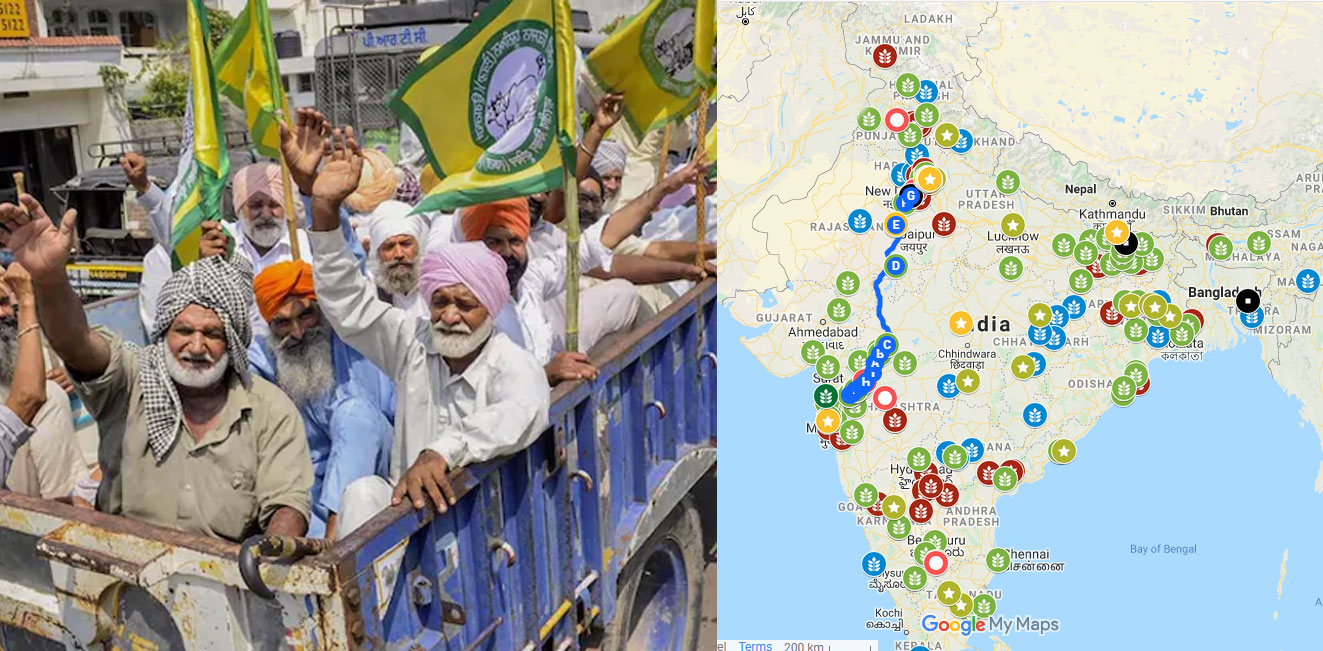
Notes

[1] Joby Warrick, Ellen Nakashima, and Anna Fifield, “North Korea now making missile-ready nuclear weapons, U.S. analysts say,” Washington Post, August 8, 2017; Jeffrey Lewis, “The Game Is Over, and North Korea Has Won,” Foreign Policy, August 9, 2017.

[2] The U.S. claimed that North Korea violated the agreement by proliferating missile and nuclear technology to Iran, Pakistan, and Syria, and in 1998 North Korea began to test three-stage rockets in an attempt to build its long-range ballistic missile capability.

Featured image is from CovertAction Magazine