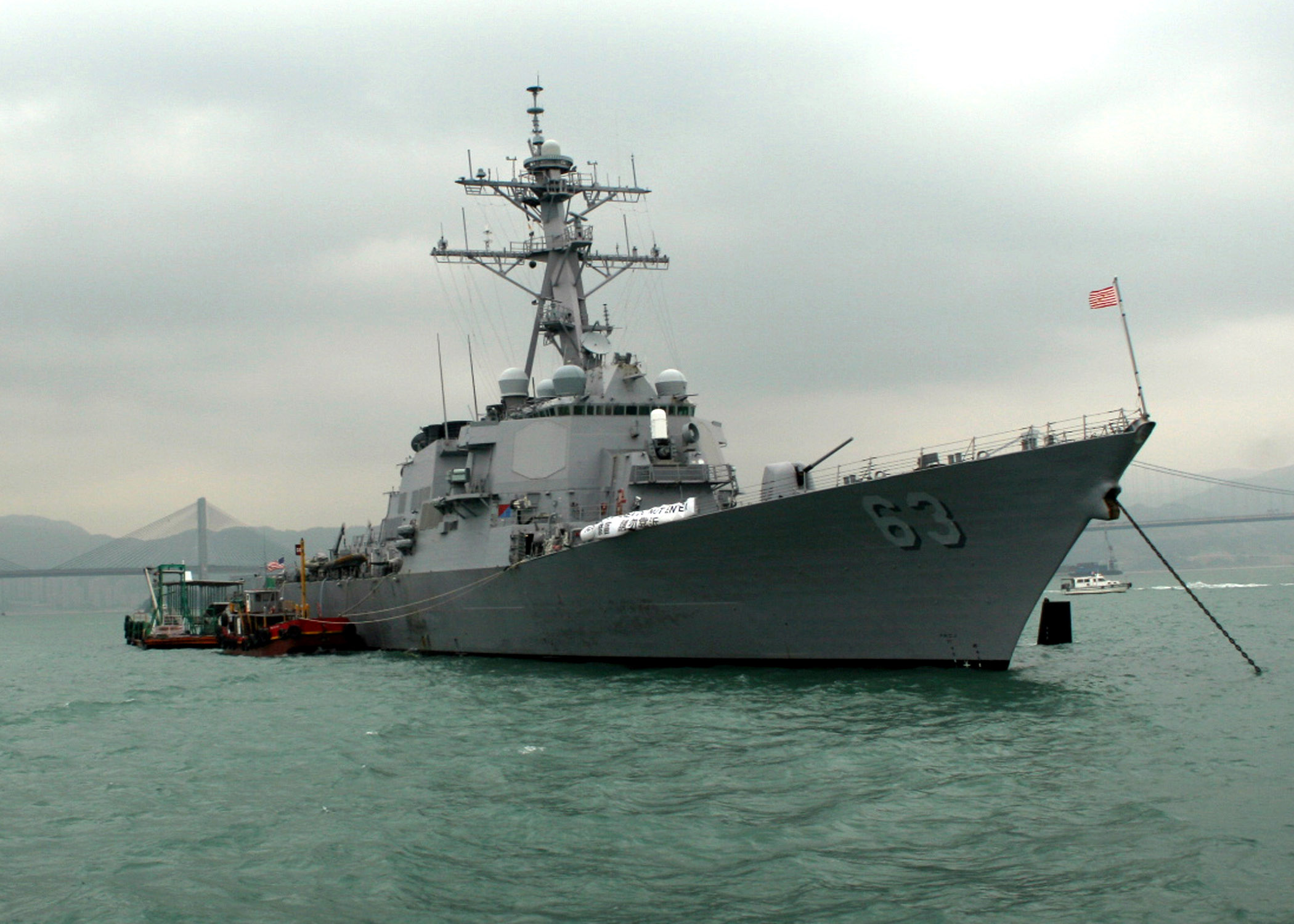
It was all a funny business, but it is very clear that the Australian relationship with France, at least when it comes to matters of defence, has changed over the years. From being belligerents keen to pursue nuclear testing in the Pacific, to being “cheese eating surrender monkeys” prior to the Coalition of the Confused’s attack on Iraq in 2003, France has stormed into fashion as a military supplier for the Royal Australian Navy.

The French military industrial complex, involving heavy state direction and motivated by Colbert’s principles of dirigisme, has long been one of the most active in terms of economic activity. Even as the French economy sags in tired despair, the selling of arms has proven lucrative. In the business of producing the machines of death, the French do splendidly. In recent times, it has done spectacularly so, with defence contracts with a string of Arab countries, and India.

What of the wicked Frenchman stereotype of the Pacific, flaunting his military hardware? Some Australians would remember the reaction to the 1996 nuclear tests in French Polynesia, when there were boycotts of French goods. (Sales of BeBoeuf Beujolais particularly suffered.) Matters were similarly hostile over the destruction of Greenpeace’s Rainbow Warrior in 1985 by French commandos, and the seizure of the Rainbow Warrior II and MV Greenpeace after crossing the French-imposed 12-mile exclusion zone imposed around the Moruroa test site.

Fewer would remember the longevity of the French-Australian defence relationship, stretching back to the defence contracts of the 1960s, when the French Dassault Mirage III replaced US Sabre jet fighters over the problematic Lockheed F-104 Starfighter.

In 2014, it seemed that Japan would thunder forth with the offer the then Abbott government wanted: a contract to build 12 or so submarines. But the Japanese group failed to confirm that it would boost local skilled jobs in Australia, even as it was being outmanoeuvred by German and French contenders. Industrial partners in the defence side of things were few and far between, and Japan’s diplomats were caught asleep. The French, in particular, smelt a catch, employing Sean Costello, the CEO of the Australian branch of the French defence contractor DCNS, to dangle the line in front of Canberra.In November 2014, DCNS CEO Herve Guillou convinced French Defence Minister Jean-Yves Le Drian to visit Australia.  In Albany, French and Australian officials congregated to commemorate the first sailing of Australian soldiers to France in the First World War.

A $50 billion contract dully followed, and will see 12 French-designed submarines from DCNS (of which 62 per cent is owned by the French government) supplied to the RAN. A few French media sources, notably Le Parisien, even went so far as to call it “the contract of the century”, showing how easy it is to catch the bug of comforting militarism.[1] Some good deal of breast-beating followed, suggesting that the genius of French industry was behind the triumph. Forget the Germans, and the Japanese – the French can do just as well.

Timing on such occasions is everything, and French ceremonial acknowledgement should not be understated. This year marks the centennial since Anzac (Australian and New Zealand Corps) troops were first deployed to the Western Front in the murderous trenches of the First World War. The Australian Governor General, who is the putative representative of the Queen as Australia’s head of state, was wined and dined with keen interest.

The French have every reason to cheer about this. President François Hollande can argue that he brought home the bacon for a much needed economic boost. It has been predicted that thousands of jobs will be created in Cherbourg, Nantes and Lorient (all in all 4,000). Dirigisme has worked again. The return to Australia, for seeking out a contract of minimal worth in security, but considerable cost to the budget, will be far poorer. History will record it as one of the most expensive public endeavours in Australian history, and a risky one at that.

Submarine projects have a habit of being bungling in execution and costly in consequence. Spain’s S-80 Isaac Peral Submarine, hailed initially as the most advanced non-nuclear submarine in the world, cost $680 million and was found to be 75 to 100 tons overweight. According to the good engineers at Navantia, the firm responsible for what the Spanish Ministry of Defence called “deviations”, such a difference was critical enough to prevent resurfacing after submergence.[2]

No matter the risks, says Turnbull. This is the traditional bribe needed for his government ahead of an election to shore up votes in South Australia, which is still being promised an indigenous component to the submarine construction. More to the point, it is being sold as a sovereign Australian venture, despite the previous disasters of the Collins submarine program.

In so doing, it also eases matters with the Chinese – if only for the one basic fact that the defence contract did not go to Japan. Tokyo has been making militaristic murmurings for some time, hoping that such an arrangement would boost its defence industry. Hideaki Watanabe, head of the Ministry of Defence’s procurement agency, dejectedly announced that, “We will do a thorough analysis of what impact the result will have on our defence industry.”[3]

Costello is bubbling with enthusiasm. “We set them up in Australia with French technology. We transfer that fully into the company and we require that supporting company in Australia to go on and further develop a bigger business … so that they can in turn come back to support us. So there’s a virtuous cycle that is developed.”

However much a marriage Le Drian deems it, much can change over the course of 50 years.[4] The most important point will be whether the submarines even work. History, on that score, has not smiled favourably on Australian endeavours in that regard.

Dr. Binoy Kampmark was a Commonwealth Scholar at Selwyn College, Cambridge. He lectures at RMIT University, Melbourne. Email: [email protected]


  • Posted in Asian @as
  • Comments Off on Australia’s French Connection and the Submarine Saga. France, Military Supplier for Royal Australian Navy

Terrorism is an issue that’s usually taken quite seriously in India, which makes it all the more surprising that its ruling establishment has taken to politicizing it in order to pressure China. A rather curious event transpired this week when India extended an electronic visa to Uighur separatist leader and accused terrorist Dolkan Isa but then quickly rescinded its decision a couple of days later after China protested. He was invited into the country to attend a large gathering of anti-Chinese groups in the northern city of Dharamsala, apparently in response to India’s consternation with China’s successful efforts at blocking a UN discussion about suspected Pathankot mastermind Masood Azhar.

India’s sudden policy reversal was an uncharacteristic act of diplomatic clumsiness and revealed a lot about its bungling strategic calculi, which is ultimately attributable to the internal power struggle that’s going on behind the scenes in New Delhi between advocates of the unipolar and multipolar worlds.

The present article uses the interconnected case studies of Masood Azhar and Dolkan Isa to demonstrate how New Delhi has politicized terrorism in attempting to hammer a split in the Chinese-Pakistani Strategic Partnership.

It begins by explaining the ulterior motive that India had in mind when it sought to internationalize the Pathankot issue with Pakistan. Afterwards, it details how India sought to deceptively present its visa issuance to Isa as “fighting fire with fire” against China in order to ‘legitimize’ its preplanned asymmetrical aggression. Finally, the last part of the piece shows how India has backtracked in symbolism only by still deciding to go forward with hosting the multitude of anti-Chinese groups, and how this conclusively proves that New Delhi has decisively pivoted towards the unipolar world.

Premeditated Internationalization

India fell victim to a terrorist attack against its Pathankot air force base at the beginning of January, and it’s been demanding justice for what happened ever since then. New Delhi accused Masood Azhar of being the mastermind behind the operation and called on Islamabad to extradite him to India. Pakistan of course refused, but instead of India treating this like the bilateral problem that it actually is and such similar situations always have been up until this point, New Delhi internationalized the dispute by involving the UN. It called upon the global body to designate Azhar a terrorist, which would then force Pakistan to hand him over or face multilateral sanctions.

The narrative is convincing – India’s archrival Pakistan is harboring a terrorist that it refuses to extradite, and New Delhi must therefore ask the international community to pressure Islamabad so that justice can ultimately be served. The problem, however, is that the situation just isn’t that misleadingly simple. The author wants to clearly state that he’s not defending the crimes that Azhar is being accused of, but merely showing how the suspected terrorist is being exploited by India as a political instrument against China. New Delhi and Islamabad have always been at each other’s throats since independence, so it’s no surprise that one or the other would resort to uncouth measures against their chief competitor – and again, the author is not justifying this on either end. But what’s new in this dynamic is how India has now tried to turn its bilateral problems with Pakistan into a form of asymmetrical weaponry against China.

India’s Ministry of Foreign Affairs is obviously well aware of the strength of the Chinese-Pakistani Strategic Partnership, particularly as it’s embodied in the $46 billion China-Pakistan Economic Corridor through contested Kashmir, so it can’t plead ignorance in claiming that it didn’t think that Beijing would block New Delhi’s UN move about Azhar. Instead, observers must look at India’s decision to internationalize this bilateral issue with Pakistan as a purposeful provocation that was premeditated to put China in a challenging strategic position. The idea was to give China a binary choice – sell out one of its oldest and most trusted allies and sacrifice the strategic partnership, or defend Pakistan and fall victim to India’s preplanned information attack that Beijing is also “defending terrorism”. China  never interferes in the domestic political process of any country, let alone its chief partner Pakistan, so staying true to its international values, it expectedly refused to give in to India’s ‘normative’ blackmail and resolutely blocked New Delhi’s proposal at the UN.

Fighting Fire With Fire?

China’s refusal to go along with India’s premeditated internationalization of the bilateral Azhar problem that it has with Pakistan triggered New Delhi’s preplanned escalatory “response”. Having already anticipated how Beijing would respond, New Delhi waited a little bit and then leaked to the press that it issued an electronic visa to Dokun Isa, one of the leaders of the US-based “World Uighur Congress” separatist organization and an accused terrorist that’s even on Interpol’s Red Corner Notice. India’s social and mainstream media frenziedly supported their government upon hearing of the audacious announcement, with regular Twitter users aggressively boasting that “#ModiSlapsChina” and more official outlets arguing that this was a “tit-for-tat” measure in response to Beijing’s policy towards Azhar. A strong effort was expended across all media platforms to promote the message that India was only doing this because China had ‘started it’, and the high level of coordination that was unmistakably observed during this brief period of time suggests that this was a state-supported information campaign.

The whole purpose behind this operation was to give India a cover of ‘plausible deniability’ for when it would inevitably be accused of aggressively pursuing an enhanced anti-Chinese policy. The reader should bear in mind that India just hosted US Secretary of Defense Ashton Carter and agreed in principle to the so-called “Logistics Support Agreement”, a euphemism for indefinitely rotating American troops out of India’s air, land, and sea bases on a case-by-case basis and stationing them within operational proximity to China’s Tibetan and Yunnan borders. The author wrote about the implications of this and more in a recent article for the Russian Institute of Strategic Studies, and it’s suggested that the reader peruse it in order to acquire a more detailed situational understanding about India’s unipolar policy pivot. The reason that this is being brought up at the moment is because the timing of Isa’s visa announcement coincides with the week after Carter left India, sparking educated speculation about whether this entire incident was coordinated with the US as part of a secret American-Indian strategy against China. It could be that New Delhi and Washington expected Beijing to respond in a manner which could be distortedly reported on by them as “hostile” and thus be used to ‘legitimize’ a more publicly presentable strategic relationship between them, in effect turning the entire Chinese-Indian Himalayan border region into a mainland version of the South China Sea and ‘rationalizing’ the “Logistics Support Agreement” after the fact.

Additionally, try as the Indian side might, its information operations against China were not as successful as they may have hoped in convincing the world that New Delhi was simply ‘fighting fire with fire’ against Beijing. There’s a chasm of difference between China refusing to allow a UN motion to proceed and India inviting an accused terrorist on to its territory to take part in a large gathering of similarly antagonistic and violent anti-Chinese groups. In fact, even hosting that meeting in the first place is a major escalation of the Chinese-Indian Cold War that the author investigated late last year. If observers spend the time to actually conduct a sober comparison of China’s passively benign diplomatic action and India’s proactive hostility in going out of its way to organize such a meeting and invite such a high-profile terrorist front man to personally attend, they’ll realize that India had actually cooked this scheme up long ago and that the entire Azhar affair is nothing more than a convenient distraction to cover its tracks.

The Charade

In a move that no one could have expected, India reversed its decision about Isa almost as quickly as it made it and before the anti-China information campaign could reach its anticipated climax. This puzzling change of heart wasn’t planned, but is symptomatic of the extreme schizophrenia that’s wracking the Indian establishment at the moment. The country is torn between two competing factions – those which want India to align with the US against Pakistan and China, and the ones which favor a bold break with the past and the beginning of an entirely new era of multipolar relations within BRICS and the SCO. The unipolar camp is responsible for issuing Isa’s visa, leaking the information to the press, and managing the anti-Chinese information campaign, while the multipolar one seems to have somehow pulled the right levers behind the scene and got the Ministry of External Affairs to walk back its shameful decision.

This institutional split between pro-American unipolar elements and pro-multipolar BRICS/SCO ones didn’t just come to the surface because of the Azhar-Isa scandal, but was on bloody display for nearly half a year while India blockaded Nepal (a charge which it officially denied) and emboldened the violent terror of its ethnic Madhesi kin. The author wrote in October how this marked a new stage in the Chinese-Indian Cold War (one which was briefly overshadowed by the Maldives), and the essence of the rivalry boiled down to India over-imposing itself as it has typically done on its northern neighbor, except this time it went too far by trying to gerrymander its planned federal units. While there certainly were preexisting ethnic and regional conflicts in Nepal before all of this happened, India’s short-sighted policy of hegemonic dominance dramatically backfired and took the country to the brink of civil war. Although this was averted due to a series of political compromises on all sides, the ‘collateral damage’ that this created was that China had for the first time in its history broke India’s strategic stranglehold on Nepal and emerged as a competing rival there.

Never before had Indian policy been so careless than it had been in Nepal, nor had it ever resulted in such a stunning strategic defeat as had happened over the past half a year. The Ministry of External Affairs had spent years cultivating a hard-won and highly respected reputation across the world as being a bastion of wisdom and caution, and its diplomats were never known to make such reckless moves. While initially writing off such an experience as freak occurrence, the author now believes that when it’s seen in the immediate continuum of the subsequent Azhar-Isa scandal, that it’s possible to see shades of distinct American influence over India’s foreign policy. New Delhi would never have behaved so aggressively in Nepal had it not been for a trusted external actor ‘advising’ it to do so, nor would it have plotted something as Machiavellian as using the internationalization of the Azhar scandal to ‘justify’ the Isa provocation against China. These two examples defy Indian political tradition and indicate that a secondary force is exerting strong influence on its establishment and pressing it to make these uncharacteristic decisions. This “x” factor is none other than the US, and the degree of strategic collaboration between the two sides was on public display when Carter visited India a few weeks ago and announced that “The American-Indian relationship is one that will define the 21st century.”

Having exposed the covert leadership role that the US has recently acquired over India’s foreign policy, it’s now relevant to turn back to the Dharmsala gathering that Isa was supposed to attend. This event is organized by the US-based “Initiatives For China” and brings together a multitude of ethnic and political terrorist groups. Its purpose is to provide a platform for multilateral coordination in devising anti-Chinese policies, and it’s shocking that India would ever agree to let such a gathering be hosted on its soil. But then again, in hindsight, it couldn’t be more natural if one accepts the thesis that the US is largely controlling India’s foreign policy at this point. Washington wants nothing more than to intensify the Cold War between New Delhi and Beijing and set both Asian Great Powers on the trajectory of mutually assured strategic destruction in order to stymie the SCO and sabotage the New Silk Road projects through Pakistan. Looked at in this manner, then the presumed ‘victory’ that the multipolar camp was thought to have celebrated in getting Isa’s visa revoked actually turns out to be nothing more than a charade, since it in effect didn’t change anything when it comes to New Delhi’s hosting of the anti-Beijing insurgent meeting and India’s potential support for their future activities. While it’s possible that friendly multipolar forces did pull off a victory of sorts in pushing back against the unipolar pro-American establishment that has seized control of India, their actions weren’t enough to effect tangible change and put the brakes on India’s strategic collision course with China.

Concluding Thoughts

India was earlier thought of as an indispensable member of BRICS, but recent events are proving that its loyalty to what was assumed to have been the shared vision of multipolarity is in serious question. India’s emulation of aggressive American strategy vis-à-vis Nepal and the Western-like Machiavellian cunning that it displayed in plotting the Azhar-Isa scandal against China are causes of serious concern. Furthermore, the visit of US Secretary of Defense Carter just a few weeks ago, the promise to sign the “Logistics Service Agreement” and cooperate on building India’s first-ever domestically produced aircraft carrier, and India’s overall realignment towards the US raises the question of whether India could even be regarded as being in the multipolar camp anymore or not.

Looking back on it, it seems as though India was never a fully pledged multipolar partner, anyhow. Granted, it’s taken strong steps in pursuing economic multipolarity through the BRICS New Development Bank and has made commendable progress in promoting the institutional principles of BRICS as a whole, but what it’s always sorely lacked was an unwavering commitment to geopolitical multipolarity. The rivalry with Pakistan has become such an obsession that many decision makers in the Indian establishment appear to only see everything as a zero-sum game between New Delhi and Islamabad. Coupled with the newfound obsession in “containing China”, inspired by the ‘friendly guidance’ of American strategists and the incessant fear mongering that unipolar-controlled Indian media outlets have been ginning up, India can’t currently countenance having any pragmatic relations with either of them because of the unrealistically high strategic security dilemma that’s been artificially created.

Even worse from the perspective of India’s elite, the China-Pakistan Economic Corridor will have to traverse through contested Pakistani-administered territory that New Delhi officially claims as its own, causing a panicked hysteria among the decision-making adherents of the zero-sum doctrine that China and Pakistan are ‘teaming up’ against India. Under these extreme conditions of American-manufactured “reactionary nationalism”, it’s very difficult for any genuine multipolar influences to gain a foothold inside of India’s present establishment, let alone to have their pragmatic ideas be heard without being accused of near-treason. Although it’s possible that they somehow managed to pull off their minor symbolic victory in having Isa’s visa rescinded, they didn’t make a dent in convincing the establishment of the need to cancel the anti-China insurgent meeting in Dharamsala and pulling out all support for these terrorist groups.

Right now, the prospects look regrettably dim that sincere multipolar influences will make a comeback in the Indian establishment anytime soon, so it’s in the grand strategic interests of Russia and China to thenceforth regard everything that India does with the utmost of suspicion and begin painfully asking themselves whether the US has in fact succeeded in turning the South Asian giant into a Trojan Horse for sabotaging BRICS, the SCO, and the emerging multipolar world order in general.

  • Posted in Asian @as
  • Comments Off on India: “Politicizing Terrorism” in Order to Pressure China

The following article award winning author and Co-founder of Physicians for Social responsibility Dr. Helen Caldicott proceeds to examine the medical implications of the ongoing Fukushima crisis.

For her analysis on Chernobyl see:

The Medical Implications of the 1986 Chernobyl Nuclear Disaster By Helen Caldicott, April 25, 2016.

It has been estimated by the authors of the Chernobyl report that by the year 2009, 23 years after the accident, some one million people had died.

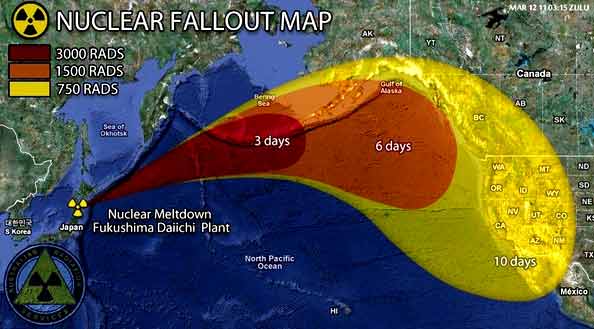
The people in Japan were lucky in that 80% of the radiation resulting from the March 2011 Fukushima disaster blew across the Pacific Ocean in the first few days of the accident. The wind then changed and blew the radioactive plumes over the north west of Japan and south to Tokyo.

Large numbers of people were and still are exposed to high levels of radiation, both from external gamma rays beaming from radioactive elements on the ground, as well as internal doses from elements breathed into the lungs and incorporated into food.

Disinformation

In terms of the medical effects of Fukushima there is a cone of silence that has been placed over the release of documented data related to patients and their associated illnesses. In fact a report noted that many doctors have been ordered not to inform their patients that their symptoms could be related to radiation. This leaves the population and in particular the parents in a state of despair. They need to know the truth about their situation and that of their children.

In Fukushima Prefecture, it was the prefectural government that entered into an agreement with IAEA in the area of decontamination and radioactive waste management, whereas Fukushima Medical University entered into an agreement with IAEA in the area of the survey of radiological effect on human health. […] “The Parties will ensure the confidentiality of information classified by the other Party as restricted or confidential.” […] if either the prefectures or IAEA decide to classify information for “they contribute to worsening of the residents’ anxiety,” there is a possibility that such information as the accident information, as well as radiation measurement data and thyroid cancer information may not be publicized. […] IAEA has published reports, after the Chernobyl nuclear accident, stating “there were no health effects due to radiation exposure.” […] Tokyo Shimbum Dec 31, 1014

It is obvious that there is collaboration between the WHO and the IAEA and also the Japanese government and the “nuclear village” to hide, to lie and to cover-up vital medical information that must be made available to the Japanese population. The IAEA has also set up an office in Fukushima, and TEPCO and the Japanese government are constructing a large cancer hospital in Fukushima.

To make the situation worse about release of data relating to the accident, Prime Minister Abe has passed a secrecy law which will almost certainly intimidate the media from keeping a very close watch over the tenuous plant.

Radioactive Releases

What is known is that three times more noble gases escaped from the Fukushima accident than at Chernobyl. These gases, xenon, krypton and argon are inhaled into the lungs, are absorbed and deposited in fatty tissue of the body.

They are very high energy gamma emitters – like X rays, and they can therefore cause lung cancer, and cancers of other organs of the body.

It is also been estimated that about the same amount of cesium was released from Fukushima as at Chernobyl.

So based on the number of mortalities and illnesses in the countries around Chernobyl which were not as densely populated as Japan, and considering the very high density of the Japanese population, one would have to assume that similar morbidities and mortalities would occur in Japan over the coming decades.

Thyroid Cancer

Already of the 270,000 Fukushima children under the age of 18 examined for thyroid cancer a total of 75 have suspected or are confirmed to have thyroid cancer. The official line is that these cancers could not possibly be related to radiation because of the short incubation time of 2-3 years, however this correlates with the Chernobyl data which demonstrated  early thyroid cancer presentation.

Fish

The situation at the Fukushima Daichi plant gets worse by the day. 400 tons of very radioactive water have been discharged to the Pacific ocean on a daily basis ever since the accident causing fish to concentrate the radioactive elements in their flesh and bones. Some fish have been found to carry extremely high radiation levels – 12,400 Bc/K when the limit for food in Japan is 100 Bc/k. Of course no radiation is safe and the more radioactive food that is eaten the more these elements accumulate in bodily organs increasing the radiation dose. Some fresh water fish have also been found to be very radioactive, for instance 2657 Bc/k in a fish from the Mono River in NW Fukushima.

The fishermen are very concerned about the ongoing oceanic releases as well as the fact that TEPCO is considering discharging the very radioactive water it is currently storing in temporary tanks, after it has been “filtered” for many isotopes. Previous attempts have failed, and this new equipment, ARM from the US will almost certainly not remove the many isotopes before discharge. In particular tritium cannot be filtered, it accumulates in the food chain, and it causes brain tumors, congenital malformations, and many other cancers and it remains radioactive for 120 years.

Remedial Situation

As hundreds of tons of water pour down from the mountain behind the Fukushima reactors complex, it then travels beneath the damaged reactors becoming radioactive as it mixes with the three molten cores. TECO now plans to pump this mountain water before it enters the reactor area and divert it to the sea. However this technique will only suck more of the radiation beneath the reactors to mix with mountain water which will make the situation worse.

Recently TEPCO announced that it had been wrong about the measurements of strontium 90 being found in the water in various wells near the reactors and that the measurements last June, 2013 were actually 5 times higher than they originally announced and are now at 5 million Bc/liter. One wonders whether TEPCO covered up these findings so that the Olympic Committee would choose Tokyo for the games.

Much of the reactor complex now stands on liquefied mud. The buildings of unit 3 and 4 were quite severely structurally damaged by the initial earthquake. In the event of an earthquake greater than 7 on the Richter scale it is predicted that either one or both of these building could collapse. Unit 4 would plunge to the ground along with its cooling pool containing over 200 tons of extremely radioactive fuel. This fuel would then spontaneously ignite releasing 10 times more cesium than was released at Chernobyl. Such a catastrophe would severely pollute much of Japan including Tokyo and the northern hemisphere. It will take TEPCO more than 14 months to remove these fuel bundles from the pool and they are doing it manually instead of by computer control. This is a very delicate procedure and there is a possibility of rods breaking releasing radiation causing the workers to evacuate, or a fission reaction to occur which would also lead to evacuation.

An earthquake beneath unit 3 could also cause the building to collapse onto the molten core releasing huge amounts of radiation. Another earthquake could rupture over 1000 fragile metal tanks now holding thousands of tons of highly radioactive water which would drain into the Pacific Ocean.

Radioactive wastes are being carted around Japan and incinerated thus exporting radiation to other prefectures and cities, while the ashes are being dumped in Tokyo Bay where the athletes will swim during the 2020 Olympics.

Considering all these dangerous events that are now occurring and could occur in the future it would seem extremely unwise for young fit athletes who have trained so assiduously  be exposed to any radiation at all. It is a dangerous situation to contemplate.

Workers

Workers who are engaged at unit 4 to remove spent fuel rods from the pool are receiving high doses of radiation according to TEPCO so TECPO is contemplating putting lead plates between the men and the pool.  It is true that the workers at the plant are not adequately monitored nor are their radiation records carefully kept, nor their health routinely examined and medical records monitored. We know what happened to the liquidators at Chernobyl and almost certainly similar illness will pervade the Fukushima workers, some of whom are homeless men recruited by the Yakuza.

General Population

13% of the Japanese mainland is now contaminated with radioactive elements which will last for hundreds to thousands of years and will be concentrated in the food. Ten million people live in highly radioactive areas, so much so that the government has raised the accepted dose from 1 mS per year to 20 mS per year (which is the equivalent of 1000 chest X rays /year) – nuclear workers are allowed 50mS per year. Children are 10 to 20 times more sensitive to radiation effects than adults. Thousands of children are now locked inside, they wear masks and they are eating radioactive food and experiencing increased obesity as they get virtually no exercise.

The Environment

Dr Timothy Mousseau, an evolutionary biologist has been examining the birds and insects in the exclusion zones of Chernobyl and Fukushima. 40% of the male swallows are sterile or have abnormal sperm, many have tumors, crooked wings and other congenital abnormalities and mutations, many have cataracts and the insects are similarly deformed.

What happens to animals and insects happens to us, but because many generations appear in a year we then can postulate what will happen to future generations of humans as mutations are passed down to our descendants.

  • Posted in English @as @as
  • Comments Off on The Medical Implications of the 2011 Fukushima Nuclear Disaster

People’s Liberation Army Navy (PLAN) officials acknowledged the existence of the first indigenously built aircraft carrier for the PLAN on December 31st, 2015. The carrier is based on the same Soviet era template as the Liaoning currently in service, and is being built in the same Dalian shipyard as its predecessor.

The Liaoning was a development of the Admiral Kuznetsov Class carrier Varyag purchased from the Ukraine in 1998 and totally refitted in the Dalian Shipyards. The Liaoning was commissioned on September 25th, 2012 after extensive sea trials and has been in service with the PLAN in the role of a training platform by which the Chinese Navy aims to learn and perfect the complex process of aircraft carrier operations.

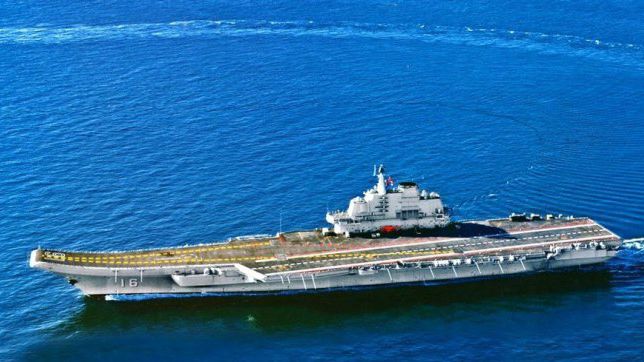
Known as Carrier 16, the Liaoning (image below) is a conventional aircraft carrier that utilizes a skip ramp to launch aircraft. This design limits the size and weight of the aircraft that can be employed, a major limitation overcome by the steam catapults of larger aircraft carriers and the new electro-magnetic catapults in use on the new USS Gerald Ford Class now entering sea trials. The relatively small size of the Liaoning further limits the number of aircraft that can be carried, serviced and stowed onboard. A total of 24 J-15 fighters, 6 Z-18 anti-submarine warfare helicopters, 4 Ka-31 early warning helicopters, and 2 Harbin Z-9 rescue helicopters are carried.


The J-15 fighter is the naval version of the J-11B which is based on the Russian Su-33, and can only be launched via the skip ramp with a reduced weapons payload of approximately 2,000 lbs. with a maximum fuel load. Thus, the J-15 can only be utilized from the Liaoning with either a reduced range or reduced weapons payload. The aircraft is limited in both interceptor and strike roles due to the inherent limitations of the skip jump design.

Chinese naval planners are already hard at work to rectify the shortcomings of the Liaoning in the follow-on vessels, Carrier 17 which is being constructed, and Carrier 18 which is already in the planning stages. Carrier 17 is being designed with greater underdeck hangar space, possibly denoting a higher compliment of aircraft, and it is surmised that Carrier 18 will be equipped with steam catapults to overcome the limitations inherent in the skip jump design.

Military analysts speculate that the PLAN will build and operate at least three aircraft carriers. This will allow for one vessel to be in operational service, one engaged in training operations and one undergoing maintenance at any given time. China has wisely utilized the Liaoning as a training platform by which to learn and perfect its aircraft carrier operations and to learn what is most desirable in any future aircraft carrier design, as it is becoming obvious that the first three vessels are just the beginning of a more ambitious program.

The largest unknown concerning the PLAN’s current aircraft carrier program is how they intend to use these costly and complex vessels operationally. The vessels lack a large and powerful strike aircraft component and have a limited range due to their conventional propulsion. Consequently, the carriers would have to remain within the range of land-based ASW and early warning and surveillance aircraft such as the Tu-154 and Y-8 AWACS, because they lack their own fixed-wing ASW and EWACS assets, and would require underway replenishment from a fleet based supply vessel and fuel replenishment ship. It would appear that the new Type 901 fleet supply vessel currently under construction in southern Guangdong province is meant to service the fledgling carrier battle group. Details are sketchy, but the two vessels planned are estimated to be between 40,000 and 45,000 tons displacement, twice the displacement of the Type 903A fleet tankers currently undergoing sea trials.

Possible future strategic uses of a PLAN Carrier Battle Group include deployment in the South China Sea to effectively increase Chinese Area Control/Access Denial capabilities. Potential regional adversaries such as Taiwan, Vietnam and the Philippines would have to alter their strategic calculus to account for the added threat of a Chinese Carrier Battle Group in the region when considering any future warfare scenarios.

The armed forces of Taiwan have taken notice of the threat and conducted war games recently that involved the addition of a PLAN CBG in a hypothetical invasion of the island nation. It is most likely that the first three aircraft carriers are just a developmental stepping stone to a much more flexible, capable and powerful class of aircraft carrier. If it is one thing that the PLAN has shown in recent decades, it is committed and capable of developing and fielding modern, complex warships and weapons systems in its quest to stand on a level playing field with any potential adversary, chief amongst them the United States.

  • Posted in Asian @as
  • Comments Off on Video: China’s New Aircraft Carrier Force, Challenges US Naval Hegemony?

Myanmar’s political transition is being hailed by Western politicians, special interests, and its media as “historic” and a new beginning for “democracy” in the Southeast Asian nation.

However, even before Myanmar political opposition leader Aung San Suu Kyi’s party rose to power, the facts contradicted the fiction Western politicians and pundits had spent decades crafting. Even before elections, global awareness around Suu Kyi’s failure to condemn violence against the nation’s Rohingya minority had been growing.

Articles like the Guardian’s “Why is Aung San Suu Kyi silent on the plight of the Rohingya people?,” would point out that:

[Myanmar’s] opposition leader appears to be cowed by her need to dampen ethnic tensions and win votes from an electorate in the thrall of Islamophobia

So too has awareness been growing regarding the fact that some of Suu Kyi’s staunchest supporters were directly involved, in fact, leading the violence against the Rohingya. Despite attempts to portray these supporters as actually “opponents” of Suu Kyi and her political party, it is already becoming clear that Suu Kyi is rewarding them by targeting their enemies and allowing them to more openly indulge in their violence now that they are in power.

Suu Kyi’s Non-Democratic Democracy, and Inhumane Human Rights… 

After the elections, Suu Kyi was banned from holding the presidency because of her numerous ties to foreign interests including her previous marriage to a foreigner and her having children with foreign citizenship – British citizenship no less – Britain being Myanmar’s former colonial master. Despite the ban, Suu Kyi pledged to “rule above” the president, a man she hand-selected to serve as her proxy.

The Guardian in its article, “Aung San Suu Kyi unlikely to take seat in Myanmar government,” inexplicably attempts to explain (emphasis added:

The democracy champion, who spent 15 years under house arrest and is the daughter of the nation’s revolutionary hero, has vowed to be “above the president”, fuelling speculation over her role in the country’s first democratically elected government in more than five decades.

The Guardian never makes it clear how an unelected leader vowing to rule “above” an elected president constitutes a “democracy champion” or the country’s “first democratically elected government in more than five decades.” Clearly those who were elected are not actually leading the nation, and instead of democracy, Myanmar has been given a poorly-crafted, admittedly disingenuous stand-in for it.

Such a move to illegally rule “above” the elected president can only be interpreted as a direct contravention of both the principles of democracy and the rule of law. Suu Kyi and her political party have decided to observe these principles and laws when convenient and advantageous, and trample them when they become obstacles.

Compounding these already alarming developments is Suu Kyi’s treatment of political prisoners. She is being lauded by the West for releasing over 100 political prisoners – mostly her own foreign-funded supporters – while arresting and jailing her opponents.

The Associated Press in its article, “Myanmar frees over 100 political prisoners, but jails 2,” reports that:

More than 100 political prisoners in Myanmar have been freed under an amnesty ordered by the country’s new de facto leader, Aung San Suu Kyi, as her first official act.

AP then notes that:

The move was praised by human rights advocates, but a jarring note was struck when two peace activists the same day Friday were each sentenced to two years with hard labor for activities bringing them into contact with an armed ethnic rebel group that has been battling the central government…

…Both are also Muslims, a minority that has faced increasing pressure and violence in recent years in overwhelmingly Buddhist Myanmar.

These two jailed political prisoners are undoubtedly only the beginning. Despite attempts to portray Suu Kyi’s political party and the xenophobic, racist, bigoted “saffron” movement that supports her as “adversarial,” jailing and otherwise legalizing oppression and even genocide against the Rohingya and other “undesirables” is the clearest indication yet that such an adversity does not exist.

Suu Kyi, her political party, and her supporters, even before taking power, have dealt with opponents with the same degree of intolerance and violence as they have accused the military-led government of. Suu Kyi’s “saffron monks” regularly raid Rohingya villages and refugee camps committing mass murder and arson while the faux-monk’s political networks regularly campaign for stripping Myanmar’s Rohingya population of the few remaining rights they have left, while barring efforts to give them full citizenship despite many having lived in Myanmar for generations.

Suu Kyi’s obvious and expanding crimes against the people of Myanmar will only continue. Her party’s policy, beyond rhetorical pandering to “democracy” and inviting in foreign corporations to buy-out and run the country for her, is in fact, not a policy. As the people of Myanmar continue to suffer under political and economic instability, opposition against Suu Kyi will grow, and with it will come increasing intimidation and violence to suppress it.

In reality, the only thing that has changed for Myanmar is the fact that it is no longer associating primarily with its Asian neighbors, but is instead gravitating toward Wall Street, Washington, London, and Brussels – the centers of power who for decades have funded Suu Kyi’s political movement and her various supporters. The promise of “democracy” and “self-determination” dangled over Myanmar’s head is a promise it will never realize so long as Myanmar’s government is beholden to and representative of foreign interests, rather than the interests of the people it was allegedly “elected” to represent.

In a wider, geopolitical context, the transformation of Myanmar into a Western proxy has serious implications for the region, allowing it to become a hub for destabilization against its Southeast Asian neighbors and China. The fact that Suu Kyi is already guilty of or associated with egregious human rights violations documented but kept under wraps by Western “human rights” fronts, means that at any time should Suu Kyi’s loyalty to her foreign sponsors falter, so will the West’s ability to keep her image as a “democracy champion” intact. Like her counterparts in Riyadh, another nation bent into servile obedience to the West with its own atrocities used as blackmail against it, Myanmar begins this new chapter of its collective history bound to the will of its former colonial masters.

For the West, it really is “progress” for them. For Myanmar, it is a step 68 years backwards.

Tony Cartalucci, Bangkok-based geopolitical researcher and writer, especially for the online magazine New Eastern Outlook”.

  • Posted in Asian @as
  • Comments Off on Myanmar’s Political Transition: Aung San Suu Kyi “Non-Democratic Democracy”

Par Andre Damon, 02 avril 2016

Ce jeudi, les dirigeants des États-Unis, la Chine, la Grande-Bretagne, la France, l’Italie, l’Inde et plus de cinquante autres pays se réunissent à Washington pour un sommet biennal sur la sécurité nucléaire. Le sommet sera consacré à des déclarations d’unité et de collaboration internationale totalement creuses face à une récente vague d’attaques terroristes en Europe.

Par Dr. Vladimir Prav et Bruno Paul, 03 avril 2016

Cet article est une introduction au paradigme de la « guerre réseaucentrique » (Net-centric warfare), dont les concepts ont été formalisés et élargis depuis les années 1990 par le ministère de la défense américain, en s’inspirant d’autres sources.

Par John Pilger, 02 avril 2016

Ce texte est la version revue d’une allocution de John Pilger à l’Université de Sydney, intitulée A World War Has Begun.

isis guerreL’inexorable guerre factice des USA contre Daech.

Par Tony Cartalucci, 02 avril 2016

Le pipeau total de la guerre des USA contre le soi-disant État Islamique était récemment démontré par A+B lors d’une séance du Comité du Services des Armés du Sénat US [US Senate Armed Services Committee (SASC)].

1ère partie de l’entrevue accordée par le Président syrien au Directeur général de l’agence russe Sputnik [Texte intégral]

  • Posted in English @as @as
  • Comments Off on Vers une guerre mondiale, nucléaire, “réseaucentrique”, et “factice”

The majority of studies on regional formation in East Asia (both Northeast and Southeast Asia) have focused on economic integration and institutional build-up initiated by states. Developments in the field of contemporary society and culture, however, have been largely overlooked. This study seeks to shed light on the way popular culture influences our perception of regions by examining some recent developments in the study of translational dissemination of popular culture across Asian societies. The paper argues that popular culture plays a constructive role in shaping the East Asian region by creating transnational markets for cultural commodities and by disseminating communalities of lifestyles and concepts, which are based on the experience of consuming the same cultural products by different people in different parts of East Asia.

Introduction

East Asia1 in the last two decades has experienced a cultural renaissance rooted in economic growth and booming urban consumerism, and manifested in the dense circulation of popular culture products, such as movies, pop music, animation, comics, television programs, and fashion magazines, not to mention their derivative products such as games, food, toys, accessories, etc. The “Korean Wave,” better known as “Hallyu“, which is the focus of this special issue, constitutes an important part of these developments. While many of these popular culture confluences and “waves” originated in Europe and the United States, a significant proportion is now produced and disseminated locally or within the Asian region. Confluences of Korean, Japanese and popular cultures, in particular, have not only intensified in recent decades, reaching consumers of different national and linguistic boundaries, but have also inspired a variety of transnational popular-culture collaborations and co-productions involving creative personnel from different parts of Asia. The result is that in virtually every big city in East Asia, it is possible to find a variety of imported popular cultural products that are regularly disseminated, indigenized, hybridized, and consumed.

Some of these dramatic developments in East Asia’s popular culture market have been well-documented and analyzed, especially in anthropology and cultural studies. This literature provides substantial testimony for the proliferation of the various popular culture confluences and contains rich information and analysis relating to the practices and “meanings” of popular culture in an age of globalization. These studies have focused mainly on the representational and ideological aspects of popular culture, in particular the consumption/reception of, say, Korean TV dramas, Japanese anime or a Hong Kong-made movie. The overwhelming majority of the studies, many of them employing a close reading of media-as-texts, do this kind of analysis (Otmazgin 2008. Recent examples include Allen and Sakamoto 2006; Fitzsimmons and Lent 2013; Fung 2013; and Iwabuchi 2004).

Curiously, however, none of these studies of popular culture have been incorporated into political science, economics, and geography disciplines, especially in relation to the processes of region making. Very few studies have actually looked at the constructive role played by networks and mechanisms of distribution and consumption of popular culture in East Asia, or examined the cultural linkages they facilitate between communities across this region (Otmazgin 2013: 3). While issues related to the impact of trade, finance, industry and technology on creating an integrated region in East Asia have been extensively analyzed in the available literature, popular culture has not.

Given the long history of dissemination of popular culture across the region, and the more recent state policy regarding it and the development of major media alliances, why has culture barely figured in the critical discussion on region-making? While ASEAN (The Association of Southeast Asian Nations), for example, has emerged as a hub of East Asian community- building, and to some extent norm-setting, its cultural impact as far as popular culture is concerned has been far less visible. Why so? Given that a large number of people in East Asia spend many hours every day in front of their television screens, go to movies, listen to music, and generally spend more time than before on cultural consumption, can’t we assume that these practices have an impact on their lives and perceptions of other places? Perhaps they introduce new images and options and create new social and symbolic references? To use international relations scholar Andrew Hurrel’s term (1994: 65), can we think of popular culture, including practices and discourses about popular culture, as creating a sense of “we-ness”?

In the case of East Asia, the dense circulation of popular culture plays a constructive role in shaping the way people perceive a “region.” This circulation has an impact not only on the institutional aspect of regional formation, e.g. the creation of transnational markets and the consequential collaboration between all those involved in this process (companies, agents, promoters, distributors, retailers, etc.), but also on the dissemination of lifestyle commonalities and concepts, which are based on the experience of consuming the same cultural products by different people in different parts of East Asia. Popular culture consumption creates a special bond based on a shared experience between consumers. In this way, the circulation of popular culture puts East Asian fans, especially city residents, into a new cultural realm and invigorates a feeling of common-ness. This may suggest widening our understanding of a regional “community”-not only people of similar ethnic, national, or local belonging but a community of people from different locations who are exposed to the same cultural commodities and share the consequential perceptions, lifestyles and thoughts they offer. Specifically regarding Hallyu, this paper suggests that cultural consumption is creating a sense of community among fans in the sense that it serves as a shared language for transnational communication that enhances a sense of “we-ness” and, at least for some, eventually constitutes part of their identity.

What constitutes the “region” of East Asia?

According to Anthony Payne and Andrew Gamble’s (2004: 16) definition of regionalism, which is typical of the international relations (IR) approach to this term, “Regionalism is a state-led or states-led project designed to reorganize a particular regional space along defined economic and political lines.” Holly Wyatt-Walter (1995: 77) defines regionalism similarly, as “a conscious policy of states or sub-state regions to coordinate activities and arrangements in the greater region.” Regionalism thus refers to ideological and rhetorical concepts of regional institutionalization and regional identity. Regionalism also represents adeliberate attempt by states or their agents to create formal mechanisms for dealing with common issues in the pursuit of mutual benefits.

Regionalization, on the other hand, refers in this literature to an indirect and bottom-up process that increases the proximity between markets, institutions, and communities, in geographical and conceptual domains broader than two states.

The majority of studies of region-making in East Asia have concentrated on the process of building regional institutions through trade mechanisms and regime build-up initiated by national governments (Liu and Régnier 2003; Yoshimatsu 2008: 24). Others argue that “regional dynamism” and cross-border economic activities, more than formal agreements between governments or a shared historical or cultural “Asian” background, have promoted formation of the region (for example, Buzan 1998; Frost 2008; Funabashi 1993; Harvie, Kimura, and Lee 2005; and Pempel 2005). This sort of market-led regional dynamism continues despite an obvious lack of strong regional institutionalization in East Asia-especially when compared to the EU. (Katzenstein 2005).

However, the construction of regions is not only the result of economic dynamism and state-led initiatives, but also other processes emerging from populations within a certain geographical area (Hettne 2005: 548). Cultural anthropologist Arjun Appadurai challenges the theoretical understanding of regional formation, arguing that the concept of the region is not based on any “natural” formation and that there is no way that regions should be defined. According to him, “the large regions that dominate our current maps for area studies are not permanent geographical facts[…]Regions are best viewed as initial contexts for themes that generate variable geographies, rather than as fixed geographies marked by pre-given themes” (Appadurai, 2000: 7). In this sense, academic interaction is important to “hav[ing] elaborated interests and capabilities in constructing world pictures whose very interaction affects global processes” (Ibid: 13). Here Appadurai conveys the idea of regional formation being a matter of attribute emanating from social and cultural interactions and not by state actors or economic activity. Although Appadurai does not clearly explain how regions should be defined, his vision is far-reaching in the challenge he presents to the theoretical literature.

The study of regional formation in East Asia thus requires a methodological and interdisciplinary pluralism that considers a variety of possible regionalizing factors, including new definitions for regions. As contested by Peter J. Katzenstein, “geographic designations are not “real”, “natural”, or “essential”, but are “socially constructed and politically contested and thus open to change” (Katzenstein, 1997: 7). In the following paragraphs I suggest that popular culture is one such force, nested within other factors and processes, which shape the way the East Asian region is being appropriated and perceived.

Popular culture and region-making

Looking at the regional flow of popular culture in East Asia, especially in cities, may advance our empirical and theoretical understanding of how regionalization actually works and more basically what constitutes a “region.” For one thing, it overturns conventional wisdom on who the driving forces and actors of integration are, showing that regionalization rather than regionalism is a superior concept for understanding this part of the world. Such investigation redirects one’s attention away from the state and highly institutionalized arrangements and looks instead at the more dispersed agency involved in the creation and marketing of culturally oriented commodities. Examining the actual operations and networks which drive the dissemination and consumption of popular culture not only reveals the bottom-up logic of regionalization, but also illuminates the actual practices and processes of regionalism. It shows the collaboration and interlinking of companies, the creation of transnational cultural platforms, the distribution of products, and the (belated) policy initiatives of governments.

 Image: The culture of consumerism in East Asian cities

Secondly, popular culture play a constructive role in pulling people closer together by providing them with a shared experience invigorated by the consumption of cultural commodities. The commodification, production, marketing, pirating, and consumption of popular cultures first encourage collaborations between companies and individuals involved in these processes. Moreover, these activities also construct new frameworks for delivering images, ideas, and emotions, which can invigorate feelings of proximity and belonging. In a free-market economy, dense (and often uncontrolled) circulation of popular culture has the potential to weaken individual states’ control over the inflow of culture and hamper their efforts to utilize culture for their own purposes, such as nation-building. In other words, it creates a new sort of community that stretches beyond the reach of the state and may challenge it. The spread of popular culture help people in East Asia to develop a common language made up of the same sounds, images, and texts available through music and smartphones, TV and movie screens, in comic publications, on commercial billboards, or via the Internet. These commodities and images do not have to be uniquely East Asian, as long as they are shared by wide segments of the East Asian population.

Image: Asian pop music in a Music Shop in Hong Kong

Third, the growing involvement of a few states in East Asia in the media and cultural industries has intensified the inner-regional flow of popular culture. Following the commercial success of these industries, the governments of South Korea, Japan, and China now see popular cultural products as both a profitable economic sector and a means to attain “soft power.” Recent initiatives by these governments indicate that they actively intervene in order to foster the growth of this sector within their national economies and are developing their own export-oriented cultural industries for specific purposes (Otmazgin 2011). In Japan, for example, no fewer than thirteen governmental ministries and agencies are in one way or another involved in promoting the so-called “content industries” (Zykas 2011). A recent example is the establishment in July 2011 of the Creative Industries Division within the Ministry of Economy, Trade and Industry (METI), to supervise the promotion of “cool” Japan abroad and assist Japanese small and midsize culture-related firms develop a global strategy. In South Korea, the government is promoting the country’s “creative industries” (music, movies, television etc.) as an export industry by investing in infrastructure and sponsoring promotional campaigns abroad (Shim 2008: 30). According to Korea Finance Corporation, in 2012 the Korean game industry’s exports reached US$2.6 billion, the music industry exported US$235 million, while exports of TV shows and Korean dramas reached US$234 million and movies were about US$ 20 million (Ha 2014). In China, following the country’s entry into the World Trade Organization (WTO) in 2001, the state has permitted foreign companies to own up to 49 percent of film companies, which has helped open the market and initiate new productions (Su 2014). These all are expected to boost popular culture production in East Asia even further and increase governmental involvement. Let us look next at East Asia’s popular culture market more closely.

The regionalization of taste

In East Asia, as in other parts of the world, American popular culture continues to loom over the markets. American products are successfully marketed in most places where local income levels have reached a certain standard. However, in spite of the global projection of America’s cultural power, regional popular culture confluences have also developed and intensified, substantially decentralizing the world’s cultural structure and refuting the notion that East Asia’s popular culture scene will continue to be dominated by American or Western cultures. Most visible are Chinese, Japanese, and of course Hallyu, which have reached global audiences in Europe, North and South America, and even the Middle East. Their greatest visibility and impact still remains within the cultural geography of East Asia (Lent and Fitzsimmons 2012; Fung 2013).

The growth in intra-regional trade and consumption of popular culture in East Asia is related to several socio-cultural and technological changes. These include the emergence of a large pool of middle-class consumers who have time and money to spend, the advent of social media where cultural content is delivered and consumed almost instantly, the dissemination of accessible devices for consuming popular culture such as DVD players and smart phones, and the easing of political control over the importation of culture as part of neo-liberal policies toward the media industries (Chua 2000; Jin 2007; Otmazgin and Ben-Ari 2012). These have all encouraged entrepreneurs, as well as the popular culture industries and their promoters, to seek new expansion opportunities beyond their immediate domestic market.

Chinese popular culture, now freed from the totalitarian understanding of culture and the arts and its complete subjection to the desires of the Chinese Communist Party, has been flourishing, not only in Mainland Chinabut also along China’s economic sphere in other parts of Asia. China’s economic ties with the rest of East Asia provide the infrastructure for the spread of Chinese popular culture as well. In turn, the feedback from Asian audiences encourages cultural creativity in China and convinces the Chinese industries to look beyond their immediate domestic audiences. The culture and entertainment sections of local newspapers in Singapore, Bangkok, and Manila constantly depict Chinese music, TV, and movie artists, making Pan-Asian Chinese pop culture a reality. The fact that the non-China Chinese popular culture is sometimes glitzier and more fluid, makes it popular among Chinese in China and eventually contributes to the melding of transnational Chinese audiences from different parts of East Asia.

Beijing, Shanghai, Hong Kong, and Taipei have evolved as incubator sites for Chinese cultural production, especially in animation, digital television, and video games, in spite of the state censorship that still sometimes interferes. Chinese pop music, in both Mandarin and Cantonese, is increasingly popular among young Chinese audiences in East Asia. Taiwan has recently replaced Hong Kong as the regional hub of Mandarin-language pop and is the source of approximately 80 percent of sales of Mandarin music. China’s young generation of movie directors is producing a wide range of films dealing with social issues related to contemporary Chinese society. For example, many movies deal with China’s Cultural Revolution in a way that leaves no doubt as to the critical way they see this period (Tobari 2007). The Chinese comic-book industry (manhua) initially absorbed many influences from Japanese manga starting as far back as the 1960s, but has recently been developing its own recognizable identity away from the Japanese model (Berndt 2012). In 1993, the first Chinese manga magazine was launched (manga taisho/ manga king), which included not only manga translated from Japanese but also original stories by young Chinese manga artists (Seno 2007: 115-116). This new creativity is expressed not only in a wide range of movie, anime, TV and comic-book productions but also in urban theater shows dealing with contemporary social issues, as well as contemporary arts and avant garde culture in urban studios, such as 798 art village in Beijing. These processes create a sort of Chinese popular culture language regionalism that encompass different parts of East Asia.

Image: Japanese fashion magazines sold in Hong Kong

Japanese cultural products are widely distributed throughout East Asia. During the 1990s and the early 2000s, Japanese music, television programs, animation, and comics have carved out an integral position in East Asian markets, introducing young consumers to a variety of new consumption opportunities and lifestyles. Japanese music artists, such as Hamasaki Ayumi and Utada Hikaru are widely known in the region. (Utada Hikaru has sold more than one million copies of her three albums over the last six years in Thailand alone!) Japanese television programs and animation series such as DoraemonTiger Mask, andDetective Conan are constantly broadcast on public television and cable channels in Singapore, Thailand, Malaysia, and Indonesia. Japanese manga are routinely translated into Thai, Bahasa, and Tagalog too. Japanese fashion magazines are also an effective distribution of contemporary culture and lifestyle. In bookshops and kiosks across this region’s big cities, it is possible to find translated or original versions of famous Japanese fashion magazines such as CanCan, JJ, ViVi, COOL, Cutie, Vita, Myojo, Brand, andnonno, which keep East Asian youth updated about the latest fashions from Tokyo.

In recent years, Korean popular culture is also leaving a strong mark on East Asia’s cultural scene, creating the Hallyu, as it is known among fans. In about a decade, South Korean television dramas, movies, music, and fashion have gained immense popularity throughout the region, adding a variety of new images and consumption opportunities. With a marketing strategy that mixes television exposure, commercials, and music, South Korean idols have also become phenomenally popular throughout the region. Wŏn Pin and Sŏng Sǔng-hǒn, for example, are widely known to young audiences for their parts in the hit television drama Autumn Fairy Tale (2000). Other famous South Korean idols include Chang Dong-gǒn (Friend), Cha T’ae-hyǒn (My Sassy Girl), Lee Chǒng-jae (Il Mare), Kwǒn Sang-u (My Tutor Friend) and Pae Yong-jun (Winter Sonata). More recently, the phenomenal success of Psy’s “Gangnam Style,” has brought Korean pop to the heart of the mainstream, both in Asia and beyond. Even more recently, Korean fashion is also gaining momentum. Korean designers’ brands such as Lie Sang Bong, Doii, Big Park, Kumann Yoo Hye-jin, Steve J and Yoni P, pushbutton, ARCHE, and Ko Soyǒng are massively imported and sold in fashion shops across Asia together with orchestrated campaigns presenting the latest work by young Korean designers.2

These popular culture confluences create a new economy of products shared by a selective section of the population-especially young urban residents with an elevated standard of living. Increasingly for these people, popular-culture consumerism has become an integral way of life, which creates a bond with other people who share the same urban lifestyle. In other words, for them, popular culture has become an important factor in value production-not only in the economic sense but also in the social and cultural sense. East Asia’s culture and media industries, for their part, are encouraged by both market forces and by their respective governments to think beyond their immediate domestic markets and seek opportunities in new markets in Asia. Put differently, these developments encourage trans-nationality where the nation state ceases to be the main framework of production and consumption and, instead, foreign audiences are considered by producers to be an integral part of their popular-culture community.

Image: Anime gathering (cosplay) in Bangkok

As a result of all this activity, East Asian urban consumers today have multiple popular culture preferences, deriving from multiple centers. Millions of youth in places like Singapore, Hanoi, Kuala Lumpur, Bangkok, and Jakarta can covet the latest fashions from Tokyo, listen to the same genre of American pop music, watch Chinese dramas on television or online, read Japanese comic books, and go with friends to watch the latest Korean movie. Through the dissemination of popular culture, people in different places can, for example, watch a certain genre of animation program throughout their childhood and listen to the same genre of music as teenagers. If they eventually meet, they will have a lot more in common than if these products had not been available.

Imagining the East Asia region through popular culture

A few important questions arise from the relationship between popular culture and the regionalization process in East Asia: Is popular culture a significant enough phenomenon that it should be recognized as contributing to the creation of this specific “region”? Is popular culture important enough to make people within East Asia feel distinct and share a common identity? Is popular culture’s distinctiveness based in the fact that its consumption, even more than its production, is value-shaping to a greater degree than other products? The available literature on popular culture only partly addresses these questions while, as noted above, the political science literature on regions ignores them altogether. While cognizant of the region-specific cultural resonance and asymmetry of intra-Asian flows, the literature on popular culture in East Asia does not systematically explore the implications of popular culture for regionalization. However, the statistics on the export of Japanese and Korean TV programs, for example, suggest that there is a geographical reach, scope and limit to the networking and patterns of popular culture flow and consumption, that is creating an imagined East Asian region. The geographical field tends to vary from one product to another, however, as does the density and directionality of this flow. The East Asia “region” is thus a convenient but notoriously slippery term, since Japanese and Korean popular culture flows have less visibility in, say, Cambodia, Myanmar or the Indian market, than they do in Taiwan, China, and the major cities of East Asia.

Nevertheless, a few important conclusions can be drawn by looking at the dissemination and acceptance of popular culture across East Asia. First, market forces-and not governmental policies-are at the heart of the process, promoting and spurring the construction of new cultural linkages. The dissemination of popular culture in East Asia is essentially the result of bottom-up processes not directly guided by the states-and at times even taking place in spite of them. Second, as noted above, the dissemination of popular culture is centered on cities and their middle class residents rather than encompassing the entire population as a whole. In this sense, the regional acceptance of popular culture in East Asia is fragmented: a certain part of the population (overwhelmingly urban middle classes) are more “regionalized” than those who live in rural areas because they are more exposed to the transnational flow of popular culture. This connective-ness between cities and their inhabitants is not an equal process, but a socially selective one. Third, the East Asian region is not isolated from economic and cultural developments in the wider Asian region or globally. Nevertheless, there is a concentration of certain popular culture flows and influences found most intensively in the cultural geography of urban East Asia (such as Japanese fashion magazines, Chinese pop music, and Korean idol culture).

The fact that a common popular culture is central to the lives of many consumers in East Asia, especially in cities, suggests that region-making is not simply a matter of institutionalization but also of practice. Rather than viewing region-making as simply the deterritorialization and disentanglement of national boundaries by economic and political forces, as typically described in the literature on region-making in East Asia, we can also view it as something that happens through the cumulative practices of groups of people who, over a period of time, are geared toward some common lifestyle. Consequently, as Alder and Greve argue (2009: 59), the boundaries of regions may be determined by the practices that constitute them, a pattern of relations indicative of what Emilian Kavalski (2009: 10) calls “community of practice.”

The dissemination and acceptance of popular culture may also introduce a new meaning to the concept of “community” as not only a group of people living under the banner of the nation state or belonging to a certain ethnicity or religion, but also urban residents living in different cities in different countries bound by shared behaviors and practices encouraged by the inflow and practice of popular culture. This definition, however, points to the creation of large swathes of excluded populations that are not part of urban popular culture consumer culture.

In summary, conceptualizing East Asia as a region based on popular culture requires going beyond the conventional tools provided by geographers and scholars of international relations (IR) and requires a methodologically pluralistic approach open to considering how a variety of socially and culturally embedded practices and behaviors affect regional formation.

References

Alder, E., and P. Greve. 2009. “When Security Community Meets Balance-of-Power.” Review of International Studies 35, no. 1:59–84.

Allen, Matthew and Rumi Sakamoto, eds. 2006. Popular Culture, Globalization and Japan. New York: Routledge.

Appadurai, Arjun. 2000. “Grassroots Globalization and the Research Imagination.” Public Culture 12, 1: 1-19.

Berndt, Jaqueline (ed). 2012. Mahwa, Manga, Manhua: East Asian Comic Studies. Leipziger Universitaetsvlg.

Buzan, Barry. 1998. “The Asia-Pacific: What Sort of Region in What Sort of World?” In Asia-Pacific in the New World Order, ed. Anthony McGrew and Brook Christopher. London and New York: Routledge.

Chua, Beng-Huat. 2000. “Consuming Asians: Ideas and Issues.” In Consumption in Asia: Lifestyles and Identities, Beng-Huat Chua, ed. 1–34. (London: Routledge).

Chua, Beng Huat, and Koichi Iwabuchi. 2008. “Introduction: East Asian TV Dramas: Identifications, Sentiments and Effects.” In East Asian Pop Culture: Analysing the Korean Wave, edited by Beng Huat Chua and Koichi Iwabuchi, 1–12. Aberdeen: Hong Kong University Press.

Fitzsimmons, Lorna and John Lent (eds.). 2013. Popular Culture in Asia: Memory, City, Celebrity. London: Palgrave Macmillan.

Frost, Ellen L. 2008. Asia’s New Regionalism. Boulder, Colo.: Lynne Rienner Publishers.

Funabashi, Yoichi. 1993. “The Asianization of Asia.” Foreign Affairs 72, no. 5:75–85.

Fung, Anthony. 2013. Asian Popular Culture: The Global (Dis)continuity. London: Routledge.

Ha, Jeonghoon. 2014. “Game Hallyu: Implications of the Game Industry Success,” The ASAN Institute for Policy Studies Newsletter, September 22.

Harvie, Charles, Fukunari Kimura, and Hyun-Hoon Lee, eds. 2005. New East Asian Regionalism: Causes, Progress and Country Perspectives. Cornwall: Edward Elgar Publishing Limited.

Hettne, Björn. 2005. “Beyond ‘New’ Regionalism.” New Political Economy 10, no. 4:543–571.

Hettne, Björn, Inotai András, and Shukle Osvaldo, Eds. 1999. Globalization and the New Regionalization. Hampshire: Palgrave Macmillan Press.

Iwabuchi, Koichi (ed.) 2004. Feeling Asian Modernities: Transnational Consumption of Japanese TVDramas. Hong Kong: University of Hong Kong Press.

Jin, Yong Dal and Dong-Hoo Lee. 2007. “The Birth of East Asia: Cultural Regionalization through Co-Production Strategies.” Spectator 72, no. 2:31–45.

Jung, Sun. 2011. “K-pop, Indonesian Fandom, and Social Media.” In Race and Ethnicity in Fandom, edited by Robin Anne Reid and Sarah Gatson. Special issue, Transformative Works and Cultures. 8. Accessed on November 23, 2013.

Katzenstein, Peter. 2005. A World of Regions: Asia and Europe in the American Imperium. Cornell Studies in Political Economy. Ithaca, N.Y.: Cornell University Press.

Katzenstein, Peter J. 1997. “Introduction: Asian Regionalism in Comparative Perspective.” In Network Power: Japan and Asia, ed. Peter J. Katzenstein and Takashi Shiraishi. Ithaca: Cornell University Press.

Kavalski, Emilian. 2009. “‘Do as I Do’: The Global Politics of China’s Regionalization.” In China and the Global Politics of Regionalization, ed. Emilian Kavalski, 1–16. Surrey, Burlington: Ashgate.

Lent, John and Fitzsimmons, Lorna, eds. 2012. Asian Popular Culture in Transition. (London: Routledge).

Liu, Fu-kuo, and Philippe Régnier. 2003. “Prologue: Whither Regionalism in East Asia?” In Regionalization in East-Asia: Paradigm Shifting?, ed. Liu Fu-kuo and Philippe Régnier. London: Routledge Curzon.

Oh, Ingyu. 2009. “Hallyu: The Rise of Transnational Cultural Consumers in China and Japan,” Korea Observer 40 (3): 425–459.

Oh, Ingyu, and Gil-Sung Park. 2012. “From B2C to B2B: Selling Korean Pop Music in the Age of New Social Media,” Korea Observer 43 (3): 365–397.

Otmazgin, Nissim. 2013. Regionalizing Culture: The Political Economy of Japanese Popular Culture in Asia. Honolulu: University of Hawai’i Press.

Otmazgin, Nissim. 2011. “A Tail that Wags the Dog? Cultural Industry and Cultural Policy in Japan and South Korea.” Journal of Comparative Policy Analysis: Research and Practice 13, No. 3:307–325.

Otmazgin, Nissim. 2008. “Japanese Popular Culture in East and Southeast Asia: A Time for a Regional Paradigm?” The Asia Pacific Journal: Japan Focus, February 8.

Otmazgin, Nissim and Ben-Ari, Eyal. 2012. “Cultural Industries and the State in East and Southeast Asia.” In Popular Culture and the State in East and Southeast Asia, Nissim Otmazgin and Eyal Ben-Ari, eds. 3–26. (London: Routledge).

Payne, Anthony and Gamble, Andrew. 2004. The New Regional Politics of Development. London: Palgrave.

Pempel, T. J. 2005. Remapping East Asia: The Construction of a Region. Edited by T. J. Pempel. Ithaca, N.Y.: Cornell University Press.

Seno Takumasa. 2007. “Manga kara Kaosu e- Chugokumanga no Henbo (from Manga to Chaos: Change in Chinese Manga,” inGendai Chugoku no Popura Karucha (Contemporary Popular Culture), Ajia Hougaku, No. 97 (March), pp. 115-116.

Shim, Doobo. 2008. “The Growth of Korean Cultural Industries and the Korean Wave.” In East Asian Pop Culture: Analyzing the Korean Wave, ed. Beng-Huat Chua and Kōichi Iwabuchi, 15–31. Hong Kong: University of Hong Kong Press.

Su, Wendy. 2014. “Cultural Policy and Film Industry as Negotiation of Power: The Chinese State’s Role and Strategies in its Engagement with Global Hollywood 1994-2012,” Pacific Affairs, Vol. 84, No. 1.

Tobari, Haruo. 2007. “Shinjidai no Chugokueiga-Kiso wo Kizuita daiyonseidai” (New Age of Chinese Movies: Fourth Generation Directors,” in Gendai Chugoku no Popura Karucha (Contemporary Popular Culture), Ajia Hougaku, No. 97 (March), pp. 6-16.

Wyatt-Walter, Holly. 1995. “Regionalism, Globalism and World Economic Order.” In Regionalism and World Politics: Regional Organization and International Order, edited by Louise Fawcett and Andrew Hurrell, 74–121. Oxford: Oxford University Press.

Yoshimatsu, Hidetaka. 2008. The Political Economy of Regionalism in East Asia: Integrative Explanation for Dynamics and Challenges. London: Palgrave Macmillan.

Zykas, Aurelijus. 2011. “The Discourses of Popular Culture in 21st Century Japan’s Cultural Diplomacy Agenda.” In The Reception of Japanese and Korean Popular Culture in Europe, ed. Takashi Kitamura, Kyoko Koma and SanGum Li. Kaunas: Vytautus Magnus University.

Notes

This article includes extracts from Nissim Otmazgin. 2013. Regionalizing Culture: The Political Economy of Japanese Popular Culture in Asia, Honolulu: University of Hawai’i Press. I wish to thank Laura Hein and two unnamed reviewers for excellent comments on previous versions of this paper.

In this paper, “East Asia” refers to both Northeast Asia and Southeast Asia, especially to urban centers, which are the main sites for the reproduction and consumption of imported popular cultures.

Lee, Woo-young. “Hallyu Buoys Korean Fashion,” The Korea Herald, March 28, 2013, pp. 1, 6.

  • Posted in Asian @as
  • Comments Off on A New Cultural Geography of East Asia: Imagining A ‘Region’ through Popular Culture

The Southeast Asian nation of Thailand has found itself repeatedly in the spotlight regarding labor practices, and in particular those among its shrimp and fishing production industry where Western media sources continue to focus on the use of migrant workers and the appalling conditions they toil under.

However, the West’s sudden fascination with Thai shrimp and fishing industries should strike the world as somewhat suspicious, or at least hypocritical.

After all, the West, and the United States in particular, imports a sizable percentage of its oil from Saudi Arabia, a nation with the absolute worst human rights record on Earth – where enemies of the state are literally beheaded in public by a regime that has reigned for decades absent any semblance of democracy or interest in the will and well-being of its own people. Yet despite that, media campaigns like that aimed at Thailand since 2014, are utterly absent regarding Saudi Arabia – and it has been that way for decades – transcending various presidential administrations.

What’s most ironic about Thailand’s current human rights situation is that the current  government is in the middle of undoing a decade of corruption, abuses, and rackets created by a very much US-backed regime ousted from power in 2014 – a regime these same Western media interests knew was overseeing human rights abuses, and for years helped it cover them up just as it does in Saudi Arabia today.

The Rest of the Story 

In Thailand on May 22, 2014, over a decade of impunity was brought to an end when the regime of US-backed dictator Thaksin Shinawatra [image right] was finally ousted from power in the second military coup aimed at uprooting him and his political networks.

Thaksin Shinawatra had, since coming to power in 2001, aided and abetted the US in everything from the invasion and occupation in Iraq by sending Thai troops to participate, to hosting the US CIA’s abhorrent rendition program, to an attempt to illegally pass a US-Thai free trade agreement that was ultimately defeated by Shinawatra’s opponents.

In return for Shinawatra’s infinite utility to Wall Street and Washington, he and his political networks have been endowed with immense US backing, ranging from a myriad of Washington lobbyists working on Shinawatra’s behalf in the Western media, to US State Department funded nongovernmental organizations (NGOs) to this day attempting to undermine and overthrow Thailand’s various institutions working against Shinawatra and the special interests from abroad he represents. The US ambassador himself has attempted to intervene on multiple occasions on behalf of pro-Shinawatra agitators.

At the time of the 2014 coup, Shinawatra was already in self-imposed exile in Dubai, United Arab Emirates after a 2006 coup ousted him from power – while his sister, Yingluck Shianwatra symbolically held the office of prime minister in his absence. There was never any doubt, however, over whether or not Thaksin Shinawatra was still running his powerful political network from afar, which included among other things, control over the nation’s police.

Under the Shinawtra crime family, a myriad of abuses took place which included human trafficking, exploitation of labor, and just before being ousted, the robbery of over a million of Thailand’s rice farmers of their annual harvests which were stockpiled by the regime in warehouses, sold on the black market, and promised subsidies never paid. Shinawatra’s control over the nation’s police ran deep, with Shinawatra himself having been a high-level bureaucrat within the police force before becoming prime minister in 2001.

It would be the incoming military-led government that ousted Shinawatra that would finally pay back the farmers and begin undoing the criminal networks including those among the police that flourished under Shinawatra’s rule.

This included attempting to enforce long-standing laws aimed at cleaning up the fishing industry, which includes Thailand’s lucrative shrimp harvesting and processing sectors. After the 2006 coup, the military-led government even then attempted to reform migrant labor laws. The attempt was unsuccessful. The same year the laws were passed, Shinawatra’s proxies would find their way back into power. And despite the fact that migrant labor was a burning issue even then, the silence from the West was not only deafening, it was telling.

While a regime sat in power that bent to Wall Street and Washington’s every whim, it was rewarded with silence from the West’s media and NGOs who for years silently documented migrant worker abuse but did nothing to bring attention to it. Ironically, it is only now, with a government attempting to finally enforce longstanding migrant labor laws targeting human trafficking and slavery US mega-retailers have long benefited from, that the West has decided to put pressure on the Thai government.

As a matter of fact, the coup was in May of 2014, and the first salvos aimed at the incoming government were fired by the Western press beginning the very next month.

Hypocrisy, Not Human Rights

The suspicious timing of the West’s sudden concern is no coincidence. The West is pressuring Thailand, even threatening sanctions not because of human rights abuses it has suddenly found out about, but because of human rights abuses it knew about for a decade and ignored until a government it didn’t like came into power.

Pressure on Thailand over migrant labor issues is only one facet of a much larger, concerted campaign to undermine the current government and help return the Shinawatras to power.

The current military-led government has brought Thailand on an entirely alternate – and for Washington – an unacceptable path.

Bangkok is pivoting toward Beijing, economically, politically, and militarily. As the US attempts to shun the new government in Bangkok by rolling back military cooperation, the Thai and Chinese air forces held their first ever joint exercise. A myriad of weapon and infrastructure deals have also been struck or are in the process of being negotiated with China.

Last year, Thailand refused Western demands that Uyghurs fleeing China, suspected of terrorism, be allowed to continue on to Turkey where Beijing accused them of seeking to join the ranks of the notorious Islamic State terrorist organization.

Only months after sending the suspected terrorists back to China, Bangkok suffered a terrorist attack itself, carried out by NATO-backed terrorists from Turkey as reprisal. Since then, two Washington-backed “activists” from China were also sent home to face justice, despite Western demands the two be allowed to travel onward to Canada to seek political asylum.

The move was condemned publicly by the US ambassador to Thailand, and followed by a flurry of media attacks on all fronts, including among other things, aviation safety reviews, hotel labor conditions, and migrant labor reforms among Thailand’s shrimp industry.

All of this leads us right back to Saudi Arabia.

The United States imports double digit percentages of its oil from Saudi Arabia. It, along with its European allies, also exports billions in weapons to the regime in Riyadh.

Reports in the news about Saudi Arabia’s barbaric regime and the abhorrent human rights conditions that exist within Saudi Arabia are nonexistent in the West. Saudi Arabia has existed as an unquestioning, unflinchingly obedient proxy of US foreign policy in the Middle East for decades, waging multiple proxy wars at great personal expense on behalf of Wall Street and Washington. In exchange, the West has clearly granted Saudi Arabia with unlimited impunity within which it has created one of the most depraved states in modern existence.

It is clear the West does not care about human rights. What’s worse, is that it not only selectively enforces penalties for those it accuses of violating human rights, in the case of Thailand, it is targeting the only government in over a decade that has attempted to improve human rights through not only new legislation, but through actually trying to enforce it.

Recent headlines aimed at further undermining Thailand’s current government, even admit deep within their reports that progress is indeed being made.

At the end of the day, whether it is the petroleum one finds in their gas tank, or any given item on the shelf in one of America’s many Walmarts, one would be hard pressed to find anything that has not been produced and put there through the exploitation of human labor under conditions unacceptable anywhere in the West itself. If foreign labor was toiling under favorable conditions and fairly compensated, there would be no point of using foreign labor in the first place. Large multinational corporations importing these goods from all over the developing world know this which is why they outsourced labor overseas to begin with.

It is the West itself that has, and still does, eagerly encourage this unjust disparity everywhere it can – and only “takes a stand” when politically profitable, and in Thailand’s case, when the exploitation that has gone on for years may finally come to an end.

Tony Cartalucci is a Bangkok-based geopolitical researcher and writer, especially for the online magazine New Eastern Outlook”

  • Posted in Asian @as
  • Comments Off on U.S. Double Standards Human Rights: Thailand vs. Saudi Arabia

Terrorisme international. “Qui sont les vrais sorciers?”

March 30th, 2016 by Mondialisation.ca

Par Manlio Dinucci, 29 mars 2016

« L’ennemi obscur qui se cache dans les angles sombres de la terre » (comme l’avait défini en 2001 le président Bush) continue à broyer des victimes, les dernières à Bruxelles.

Par Claude Jacqueline Herdhuin, 29 mars 2016

Attentat à Lahore revendiqué par les talibans pakistanais, qui ont déclaré avoir visé spécifiquement la communauté chrétienne. Mais selon l’inspecteur de police adjoint, Haider Ashraf, la majorité des victimes sont musulmanes.

Par Valentin Vasilescu, 28 mars 2016

Conformément à l’annexe 9 de la Convention (installations) de l’aviation civile faite à Chicago en 1944 et dont la Belgique fait partie, un aéroport ouvert au trafic international de passagers doit fournir deux flux distincts. Le flux des départs assure l’embarquement des passagers à bord des avions et le flux de sortie pour les passagers débarquant des avions.

Par Alex Lantier, 28 mars 2016

Après la constitution d’une commission parlementaire d’enquête multipartite le 24 mars au soir, une crise gouvernementale s’est ouverte en Belgique, le siège tant de l’Union européenne que de l’alliance militaire de l’OTAN.

Par Thierry Meyssan, 28 mars 2016

On ne sait pour le moment qui a commandité les attentats de Paris et de Bruxelles. Plusieurs pistes ont été énoncées. Cependant, seule l’hypothèse d’une opération décidée par la Turquie est aujourd’hui étayée. Thierry Meyssan relate le conflit secret qui hante les relations entre l’Union européenne, la France et la Turquie depuis cinq ans.

Par Jules Dufour, 27 mars 2016

Les attentats de Paris et de Bruxelles pourraient servir la cause de certains partisans de l’Europe unie, estime le spécialiste des questions européennes Pierre Lévy.

  • Posted in English @as @as
  • Comments Off on Terrorisme international. “Qui sont les vrais sorciers?”

Par Claude Morin, 23 mars 2016

La visite du président Obama à Cuba a créé tout un événement médiatique. Il convient de s’interroger sur les objectifs de ce voyage dont la portée symbolique semble l’emporter sur les retombées politiques. J’en distinguerais trois.

Obama-APUne explication cohérente de la politique étrangère d’Obama. Décisions économiques et militaires.

Par Eric Zuesse, 11 mars 2016

La politique étrangère relève à la fois de l’économique et du militaire. L’interprétation de la politique étrangère du Président Barack Obama présentée ici n’oublie ni sa politique économique, ni ses décisions militaires, et cette analyse montre bien qu’il poursuit les politiques de ses prédécesseurs à la Maison Blanche.

J’ai écouté avec attention la conférence de presse qui a suivi les échanges des deux dirigeants. Je n’ai perçu aucun changement chez Obama quant aux objectifs de changement de régime à Cuba.

Lors d’une conférence de presse à La Havane, le président américain Barack Obama a essayé de donner une tape sur l’épaule du président cubain Raul Castro. Son geste a été mal accueilli par le leader cubain, qui s’est empressé de le saisir par le poignet et de lever son bras en l’air.

Par Salim Lamrani et Sébastien Madau, 25 mars 2016

Salim Lamrani, est un universitaire spécialiste des relations entre Cuba et les Etats-Unis. Il revient sur la question des droits de l’Homme, point de divergence entre les deux pays.

  • Posted in English @as @as
  • Comments Off on Obama à Cuba : Continuité dans la formulation de la politique étrangère américaine

Je risque de subir des attaques ad hominem pour avoir transmis ces informations qui vont contredire les mythes qu’entretiennent tant les progressistes que les conservateurs au sujet du gouvernement états-unien, mais tout ceux qui reconnaissent que la presse a, jusqu’à maintenant, nié avoir caché le fait incontestable que George W. Bush a consciemment menti et falsifié les preuves concernant les armes de destruction massive de Saddam, ceux-là vont étudier ces informations et leur source de manière équitable et sans préjugés et les considérer comme exactes et honnêtes.

Parfois, pour atteindre la vérité d’une situation, il est nécessaire de se baser sur le témoignage de gens que l’on pourrait ordinairement juger comme méprisables. Le FBI ne serait pas capable de résoudre de nombreux cas sans cela, ni moi non plus, et c’est triste à dire. Ne rejetez donc pas ce qui va suivre si les informations viennent d’un enquêteur que, personnellement, je déteste, comme cela peut être aussi votre cas.

Je pense que le libertaire Roger Stone, qui est le plus talentueux des enquêteurs du parti Républicain, après avoir été le plus talentueux des magouilleurs de Richard Nixon, après avoir débusqué l’hypocrisie d’Eliot Spitzer qui payait des prostitués, après avoir travaillé pour des hommes politiques que je déteste et détruit les carrières de ceux que j’admirais, Roger Stone, donc, est une star du journalisme d’investigation. Je sais aussi, après toutes ces années, que tous ses reportages sur les magouilles dénoncées ont été, alors que le temps passait, confirmés. En résumé, même si je n’aime pas l’homme et suis en désaccord avec ses idées politiques, je respecte son travail de journaliste. Alors voilà ce qu’il annonce au cours d’une courte interview avec le complotiste Alex Jones (un autre libertaire), le samedi 12 mars, et je pense que le pays entier doit entendre les informations de Stone, au moins pour y réfléchir :

Une rapide transcription de son interview :

Je pense que tout le pays a entendu les nouvelles à propos des violentes manifestations [au discours de Trump] dont la responsabilité a été mise sur les partisans de Bernie Sanders…  C’est une opération sous fausse bannière. Ce ne sont pas des partisans de Sanders. C’est une opération dirigée par des supporters de Hillary Clinton, payée par George Soros et Move-On, par David Brock de Media Matters for America, fondation aussi financée par George Soros et par le discret milliardaire Jonathan Lewis. Lewis fut identifié par le Miami New Times comme un homme mystérieux. Il a hérité d’environ un milliard de dollars de son père Peter Lewis… [Fondateur de la Progressive Insurance Company]. Jonathan Lewis a, de manière intéressante, retiré son soutien au Comité national démocrate à cause de la loi sur l’immigration qu’il jugeait injuste envers les homosexuels. De toute façon, c’est une opération réalisée pour Hillary Clinton. L’idée de base, clairement visible, est d’éloigner les électeurs de Sanders d’un potentiel report sur Trump. En d’autres termes, ils réalisent que les électeurs ayant perdu leur travail à cause de tous les traités mondialistes de libre-échange qui ont asséché le pays, et qui auraient voté pour Sanders, risquent de reporter leurs voix sur Trump quand Sanders sera hors jeu ; tout ceci est donc une tentative pour disqualifier Trump et le faire passer pour un être toxique, raciste, bigot; tout ceci est une tromperie. Ce jeu trouble est dirigé par Brock. Brock était, autrefois, un ami et camarade dans la lutte pour la liberté mais il a basculé du mauvais côté, avec les Clinton, pour l’argent, beaucoup, beaucoup d’argent et ceci est, malheureusement, sa petite magouille. Par contre il y a eu des fuites dans leur opération et mes sources sont très fiables. Tout ce travail collaboratif à Washington est une opération de Hillary Clinton. Franchement, Je ne vois pas vraiment Bernie Sanders ayant quoi que ce soit à voir avec cela. Je ne suis pas d’accord avec Bernie, mais je le respecte et ce n’est pas son travail ni celui de son équipe.

Jones explique alors pourquoi il respecte les enquêtes de Stone puis dit :

Quand j’ai vu tous ces gens avec des chemises Bernie criant «à l’attaque», vous voyez, des gens tirant en l’air en gueulant «nous soutenons Bernie», c’est visiblement une manière de le descendre, d’en faire un révolutionnaire radical, de rendre, par comparaison, Hillary meilleure et aussi de faire passer Trump pour un raciste quand les médias vont filmer cela. Vous avez tout à fait raison… Pour être clair : vous avez des sources à l’intérieur disant que c’est Soros/Brock Media Matters, qui reconnaissent agir sous direction de la Maison Blanche, qui tiennent des réunions hebdomadaires, il y a l’ancien directeur de transition d’Obama… Nous avons assisté la montée en pression de la campagne présidentielle cet été, cet automne, qui entache toute l’élection. Et voila où nous en sommes. C’est la salve d’ouverture…

[Stone continue]

Je pense qu’Hillary comprend que Trump va perdre le vote de certains Républicains de l’establishment s’il est investi. D’un autre côté, cela a peu d’importance à cause de sa large gamme d’électeurs. Juste maintenant, dans l’Ohio, les démocrates et indépendants de la Vallée Mahoning, ces gens qui ont perdu leur boulot à cause des grands traités mondialistes de libre-échange sont tous en train de voter pour Trump dans la primaire républicaine. Et on a été témoin de la même chose dans le Michigan. Ce qui fait réaliser à Clinton que les électeurs pour cause économique de Sanders, ne sont pas des électeurs d’extrême-gauche, elle ne va pas les récupérer. Ils ne vont pas suivre Hillary, ces ouvriers en col bleu qui viennent de réaliser qu’ils ont été sacrifiés au nom de l’économie du nouvel ordre mondial, ils sont une cible facile pour Trump. Et cela terrifie Clinton, d’où cette petite manœuvre, cette magouille de David Brock pour résoudre deux problèmes à la fois. Cela permet de casser Bernie parce que, après tout, ces personnes sont violentes, et cela disqualifie Trump pour un vote potentiel en le montrant comme un raciste ou un bigot. C’est une vraie danse kabuki. Et je pense qu’il est important que Trump réalise que ce n’est pas une campagne de Sanders qui perturbe ses meetings, c’est une opération menée par Hillary Clinton.

[Jones demande plus de détails. Stone continue]

Hillary Clinton a chargé un certain membre du Congrès d’aborder le milliardaire John Lewis pour participer aux frais de cette opération. Ce n’est pas que pour Chicago. Vous allez voir ces bruyants manifestants, ces comploteurs, se montrer à d’autres meetings de Trump… Voila à peu près tout ce que je puis dire…

Voila l’interview.

La campagne de Hillary Clinton va énormément bénéficier de cette tactique :

  1. Cela éloigne le débat des sujets économiques pour le réorienter vers le racisme, les conflits ethniques.
  2. Cela associe Sanders à des supporters violents.
  3. Cela associe Trump au racisme en ayant des supporters de Bernie noirs qui perturbent les meetings de Trump.
  4. Alors que Sanders, son opposant actuel, et Trump, son futur opposant, sont diffamés, Hillary s’en sort indemne.

Ces explications ont donc du sens et correspondent tout à fait à la personnalité de Hillary Clinton. J’y crois donc.

Eric Zuesse


Article original en anglais : Credible Account Says Clinton Is Behind Violent Protests at Trump Rallies, Washington’s Blog, le 12 mars 2016

Traduit par Wayan, relu par Ludovic pour le Saker Francophone.

  • Posted in English @as @as
  • Comments Off on Selon des informations crédibles, Clinton serait derrière les manifestations violentes lors des discours de Trump.

North Korea Punished for Helping Liberate Africa

March 18th, 2016 by Andre Vltchek

Soon, most likely, there will be new brutal sanctions imposed against North Korea. And there will be massive provocative military exercises held, involving the US and South Korean (ROK). In brief, it is all ‘business as usual’: the West continues to torture DPRK; it is provoking it, isolating, demonizing and dehumanizing it, making sure that it wouldn’t function normally, let alone thrive.

The submissive Western public keeps obediently swallowing all the shameless lies it is being served by its mainstream media. It is not really surprising; people of Europe and North America already stopped questioning official dogmas long time ago.

North Korea (DPRK) is depicted as some insane, starving, subnormal and underdeveloped hermit state, whose leaders are constantly boozing and whoring, murdering each other, and building some primitive but lethal nukes, in order to destroy the world.

Those of us who are familiar with DPRK know that all this is one bundle of fat, shameless lies. Pyongyang is an elegant, well functioning city with great public housing, excellent public transportation, public places and recreational facilities, theatres, sport facilities and green areas. And despite those monstrous sanctions, the countryside is much more prosperous than what one sees in the desperate Western ‘client’ states like Indonesia and Philippines.

DPRK free public housing - is it what the West hates about DPRK?

DPRK free public housing – is it what the West hates about DPRK?

DPRK traffic controller now

DPRK traffic controller now

one of hundreds free public spaces in DPRK

one of hundreds free public spaces in DPRK

one of many Pyongyang theatres copy

one of many Pyongyang theatres

At least there is something; there have at least been a few decent reports that have been written about those grotesque lies and the Western propaganda.

But the essential question remains: ‘Why is the West so obsessed with demonizing North Korea?’

And the answer is simple: Like Cuba, North Korea dared to step on the toes of Western colonialism and imperialism. Sacrificing its sons and daughters, it helped to liberate many African countries, and it provided assistance to the most progressive forces on the most plundered and devastated continent.

This is one thing that the West never forgives. It lives off the unbridled plunder of all continents; it essentially thrives by looting its colonies. Those countries that assisted the liberation struggles, those nations that fought for freedom of the colonized world – Soviet Union/Russia, China, Cuba and the DPRK – were designated by Western ideologues as the most ‘dangerous’ and ‘evil’ places on Earth.

In Europe and North America, conditioned masses (they have been actually profiting from the colonialism and neo-colonialism for decades and centuries), are stubbornly refusing to comprehend this main reason why the Empire has made the people of North Korea suffer so terribly for years and decades.

*

My comrade, Mwandawiro Mghanga, Chairperson of SDP and also a Member of the Executive Committee of Africa Left Networking Forum (ALNEF) based in Dakar Senegal, wrote for this essay:

 “The Social Democratic Party of Kenya (SDP) condemns the unjustified sanctions against North Korea (DPRK) instigated by imperialism led by the United States of America. We are aware that imperialism has never stopped its cold and hot war against DPRK that through one of the greatest patriotic, heroic and revolutionary anti-colonial and anti-imperialist national liberation armed struggles succeeded in winning true independence in the northern half of Korea. When it invaded North Korea, US imperialism like Japanese colonialism earlier, suffered one of the most humiliating military defeats it will never forget in its reactionary history. We also know that the US and the West hates DPRK with venom for refusing to be a puppet of imperialism like South Korea. A dirty false propaganda war is waged against DPRK for refusing the capitalist and neo-colonial path of slavery, under-development and exploitation of person by person and instead choosing the path of development for freedom and humanity, socialism.

 We in Africa will not accept to be cheated by imperialists who have always been part and parcel of our problems. Imperialism is not and has never been a friend of Africa but its enemy. African patriots and revolutionaries will never allow imperialism to tell us who our friends are. For we know whom our friends are! And North Korea has always been Africa’s true friend. When the whole of the African continent was under Western colonialism, Korea under the revolutionary leadership of comrade Kim Il Sung was fighting Japanese colonialism and showing solidarity with Africa at the same time. After DPRK, in the name of socialist internationalism increased its moral, military and other material support to African countries in their struggle for liberation from colonialism, imperialism and apartheid. Immediately after independence from colonialism in the 1960s, thousands of Africans, including Kenyans, received free higher, technical and specialised education in the DPRK. DPRK not only offered arms, finance and other material solidarity to Namibia, South Africa, Angola and Mozambique in the war against apartheid and imperialism, but it also actually sent internationalist revolutionaries to Africa to fight side by side with Africans for Africa. DPRK fought with Egypt and Africa during the 1967 war against the brutal Zionist regime of Israel supported by the Western countries. Today DPRK is together with African countries in the demand for a new just international order. In this DPRK is blamed by imperialism and imperialist puppet regimes for being in the forefront and showing by its own example that a new just international order cannot be but anti-capitalist, anti-imperialist, it must be socialist.”

North Korean internationalism is legendary, just as Cuban internationalism is. And this is the least that we can do right now, when the country is facing new tremendous and brutal challenges – to recall how much it gave to the world; how much it had already sacrificed for the sake of humanity!

I spoke to people in Windhoek, who with tears in their eyes recalled North Korea’s struggle against (South African) apartheid-supported regimes in both Namibia and Angola. Naturally, South African apartheid used to enjoy the full support of the West. To repay that favor, South African troops joined the fight against North Korea and China during the Korean War.

As mentioned by Mwandawiro Mghanga, North Korea fought against Israel, its pilots flew Egyptian fighter planes in the 1973 Arab-Israeli War. DPRK took part in the liberation struggle in Angola and it fought in Rhodesia (now Zimbabwe), Lesotho, and Namibia and in the Seychelles. It provided assistance to the African National Congress and its epic struggle to liberate South Africa from apartheid. In the past, it had aided the then progressive African nations, including Guinea, Ethiopia, Zimbabwe, Mali and Tanzania.

Arthur Tewungwa, Ugandan opposition politician from the Uganda People’s Congress Party (UPC) compares the involvement of the DPRK and the West in his country and the African Great Lakes region:

 “Uganda benefited from its relationship with North Korea in the 1980s when it helped the government to fight against the Museveni rebels who were supported by the US and UK. Morally, compared to the DPRK, the latter two have no leg to stand on with all the bloodshed they triggered in the Great Lakes Region.”

*

Has North Korea been fully abandoned, left to its fate? Has it been ‘betrayed’?

Christopher Black, a prominent international lawyer based in Toronto, Canada:

 “…The fact that the US, as part of the SC is imposing sanctions on a country it is threatening is hypocritical and unjust. That the Russians and Chinese have joined the US in this, instead of calling for sanctions against the US for its threats against the DPRK and its new military exercises, which are a clear and present danger to the DPRK, is shameful. If the Russians and Chinese are sincere why don’t they insist that the US draw down its forces there so the DPRK feels less threatened and take steps to guarantee the security of the DPRK?  They do not explain their actions but their actions make them collaborators with the USA against the DPRK.”

The situation is bleak, but most likely not fatal; not fatal yet.

Jeff J Brown, a leading China expert based in Beijing, does not hide his optimism when it comes to the Sino-Russian relationship with the DPRK:

“There is not a lot that North Korea does in the international arena, that Baba Beijing does not have its hand in. They are two fraternal communist countries and 65 years ago, the Chinese spilled a lot of blood and treasure to save North Korea from the West. Mao Zedong’s son died on the Korean War battlefield, fighting against Yankee imperialism. There are two million ethnic Koreans living along the border with North Korea and another half a million Northerners living and working in China. Koreans are a recognized minority in China. No other country in the world understands North Korea like China does. This closeness is emblematic of their common border, the Yalu River, which is so shallow, you can wade across it. They also share boundaries with another key ally, Russia. China is North Korea’s very, very big brother and protector. Frankly, vis-à-vis the upcoming UNSC sanctions against North Korea, I think the West is getting played like a drum, and it is the drum that gets the crap pounded out of it.”

Of course both China and Russia have their long land borders with North Korea -roads and railroads inter-connecting all three countries. According to my sources in Moscow and Beijing, it is highly unlikely that the two closest allies of the DPRK would ever go along with the new sanctions, whether they are officially ‘supporting them’, or not.

But the logic used by Christopher Black is absolutely correct: it is the West that should be suffering from the toughest sanctions imaginable, not DPRK.

It is the West, not North Korea, which has murdered one billion human beings, throughout history. It is the West that colonized, plundered, raped and enslaved people in all corners of the planet. What moral mandate does it have to propose and impose sanctions against anyone?

We are living in a twisted, truly perverse world, where mass murderers act as judges, and actually get away with it.

North Korea spilled blood for the liberation of Africa. It showed true solidarity with robbed, tortured people, with those whom Franz Fanon used to call the “Wretched of the Earth”. That is why, according to perverse logic (which has roots in the Western religious and cultural fundamentalism), it has to be punished, humiliated, and even possibly wipe off the face of the earth.

Not because it did something objectively ‘bad’, but because the objectivity lost its meaning. Terms ‘good’ and ‘bad’ are now determined by only one criterion: ‘good’ is all that serves the interests of the Western Empire, ‘bad’ is what challenges its global dictatorship.

If you save the village that had been designated by the Empire as a place to be raped and pillaged, you will be punished in the most sadistic and brutal manner. North Korea did exactly that. Except that it did not save just one village, but it helped to liberate an entire continent!

Andre Vltchek is a philosopher, novelist, filmmaker and investigative journalist. He covered wars and conflicts in dozens of countries. His latest books are: “Exposing Lies Of The Empire” and  Fighting Against Western Imperialism.  Discussion with Noam Chomsky: On Western TerrorismPoint of No Return is his critically acclaimed political novel. Oceania – a book on Western imperialism in the South Pacific. His provocative book about Indonesia: “Indonesia – The Archipelago of Fear”. Andre is making films for teleSUR and Press TV. After living for many years in Latin America and Oceania, Vltchek presently resides and works in East Asia and the Middle East. He can be reached through his website or his Twitter.

  • Posted in Asian @as
  • Comments Off on North Korea Punished for Helping Liberate Africa

Five years after Japan’s natural and nuclear disasters of March 11, 2011 (3-11), few observers can find a positive legacy among the irradiated ruins. Fukushima rightly remains an icon of the folly of building fragile large-scale power and other lifeline systems in the face of patent threats. Indeed, Japan has become a byword for failure, whether at Fukushima or in its “Abenomics” growth strategy.

But in point of fact, 3-11 has made Japan a world leader in building resilience – in critical energy, water, transport and other lifeline infrastructures – against increasingly frequent disasters confronting Japan, the Asia-Pacific and the world. Though little known, even in specialist circles, Japan’s deeply institutionalized and well-funded programme of “National Resilience” (kokudo kyoujinka) is far more advanced than its counterpart initiatives in North America, the EU and elsewhere. As we shall see below, Japan’s resilience programme, including both public and private sector spending, totaled over JPY 24 trillion (USD 210 billion) in 2013 and is projected to grow dramatically by 2020. Moreover, Japan’s disaster resilience centres on renewable energy, storage and efficiency, and has become a core element of Abenomics.

Japan’s National Resilience

First, let us present the evidence. The governing Liberal Democratic Party (LDP) politicians and disaster-resilience technocrats in the Cabinet Secretariat’s National Resilience Council (hereafter, NRC)1, the Association for Resilience Japan (hereafter, ARJ)2, and other new institutions are building an economic paradigm based on National Resilience. As part of the resilience project, the NRC undertook a survey of private-sector firms’ current and projected spending in late 2015. The survey determined that private-sector spending on resilience was about JPY 11.9 trillion (USD 105 billion) in 2013. That total can be broken down into “core” market segments (goods and services) that are directly focused on resilience, and “related” market segments (again, goods and services) that address aspects of resilience. The survey found that the core markets totaled roughly JPY 8 trillion (USD 71 billion) and the related markets a further JPY 4 trillion (USD 35 billion). (Note that as of this writing, JPY 1 trillion=USD 8.78 billion.)

The NRC’s analysis also estimated that the core and related markets would likely double in size by 2020.3 As can be seen in the figure “Japan’s Private-Sector Spending in Core and Related Resilience Markets, 2013-2020,” the three biggest (core and related) sectors are:

1) electric vehicles, at JPY 2.6 trillion in 2013 and projected to be JPY 6.13 trillion in 2020

2) renewable energy (solar), at JPY 2.26 trillion in 2013 and JPY 3.88 trillion in 2020 (high estimate)

3) power generation and transmission bolstering, JPY 958 billion in 2013 and JPY 1.02 trillion in 2020

The figure shows that if one excludes electric vehicles and other “related” market segments, then renewable energy is the largest market in Japan’s private-sector spending. And renewable energy-related spending is even larger than the solar numbers indicate. This is because the JPY 2.26 trillion spent on solar systems in 2013 was accompanied by JPY 59.5 billion on biomass, JPY 23.5 billion on geothermal, and JPY 22.3 billion on wind power, for a total of JPY 2.37 trillion on renewable energy generation systems. In addition, batteries and other energy storage equipment totaled just over JPY 103 billion, while efficiency-enhancing energy management systems amounted to just under JPY 334 billion.

Moreover, using the NRC’s high estimate of JPY 3.88 trillion for the solar market in 2020, Japan’s total resilience-centred renewable market is projected to increase to JPY 4.04 trillion by 2020. In addition, the markets for batteries and other storage equipment are slated to expand to JPY 469 billion. And spending on energy management systems is expected to grow to just under JPY 570 billion.

In other words, Japan’s total private-sector investment in disaster-resilient renewable energy, storage and energy management is estimated to be a JPY 4.92 trillion market by 2020. That figure is likely to be an underestimate, in light of global trends, but even so it is an impressive increase from the JPY 2.81 trillion in 2013. Note also that the NRC also projects that the core market in National Resilience will total between JPY 11.8 and 13.5 trillion in 2020. Thus, renewable energy generation, storage and management are estimated to be between 36% to 42% of core markets in Japan’s private-sector expenditures on National Resilience by 2020.

The NRC’s documents also reveal that public-sector spending on National Resilience totaled JPY 12.4 trillion in 2013, or slightly more than the JPY 11.9 trillion in private sector investment. Much of the public-sector investment was also devoted to renewable-energy generation, transmission and storage, in Japan’s profusion of smart communities, disaster-relief shelters, and other applications.4 It is therefore clear that in post 3-11 Japan, building resilience in both the public and private sectors has become explicitly and powerfully linked to renewable energy systems and their enabling storage and transmission technologies. Indeed, Furuya Keiji, the LDP’s first cabinet minister of National Resilience and Disaster Reduction (2012-2014) devoted an entire section of his June 2014 book on National Resilience to renewable energy.5

Returning to the attached figure on private-sector National Resilience spending, we can see that other core markets include earthquake-proofing of building and equipment, reinforcement of transport systems (roads and railroads), disaster-relief robotics, communications resilience, and training of specialist leadership. In addition to electric vehicles, the related markets include insurance, information security, and the linear bullet train (in development). It is debatable that the latter will bolster disaster resilience, but the LDP’s rationale for including it is that it encourages the distribution of people and facilities away from the undeniably excessive over-concentration of population and core business and government functions in Metropolitan Tokyo, perhaps the most disaster-threatened megacity on the planet.6 In any event, apart from the linear bullet train and several roads and seawalls, most of the rest of the investment does appear likely to increase resilience in the face of disasters and other patent threats (such as cyber-attack or supply shocks of energy and other materials).

Fiji After Cyclone Winston

Miami experiencing climate change

Moreover, Japan’s public- and private-sector investments in resilient infrastructures and services could lead to significant export sales. One reason is irrefutable local evidence of climate threats. The evidence includes such phenomena as the unprecedentedly large Cyclone Winston that hit Fiji on February 20 this year. Winston killed 40 and left 350,000 (40% of the population) in need, including 250,000 who lack access to water and sanitation and 112,800 in need of shelter.7 Other evidence includes sea-level rise, such as that affecting the cities in Florida that are desperate to get the attention of Marco Rubio, Donald Trump and the other denialist Republican candidates for the Presidential nomination. As the March 4 Reuters reports, “[m]ayors of 21 cities in Florida on Friday [March 4] called on the moderators of next week’s presidential debates in Miami to ask candidates how they would deal with rising sea levels caused by climate change, a concern of the state’s coastal communities.”8

Another reason overseas resilience markets are likely to expand is a growing international consensus on the urgent imperative of building robust critical lifeline infrastructures. For example, resilient infrastructure received an enormous boost from the COP21 climate talks in Paris last December.9 In late January of this year, the Davos Summit of the World Economic Forum recognized that the global risk with the greatest potential impact was recognized failure of climate change mitigation and adaptation.10 The costs are mounting, and being quantified. In its 2015 report on the “Triple Dividend of Resilience,” the World Bank Group warned that annual losses from natural disasters were roughly USD 50 billion in the 1980s, but have climbed to between USD 150-200 billion per year at present, and are shortly expected to deliver over USD 300 billion in damage, annually, to the built environment alone.11 And there is a rapidly increasing volume of built environment: Estimates suggest that global infrastructure investment between 2010 and 2030 will be close to USD 100 trillion.12 If this infrastructure – comprising power generation, transport, buildings, water services, and other essential items – is not resilient to climate change-driven ravages, then a lot of lives will be lost or impoverished.

National Resilience as a Narrative

Japan’s National Resilience initiative has received scant attention, not only in English but also in Japanese. Many observers have simply dismissed the institutions and policies associated with National Resilience as wasteful public works.13 For others, unfamiliar with the pace of climate change, in addition to the enormous scale of built infrastructure and the implications of its vulnerability to disasters, National Resilience likely appears to be a distraction from the business of reigniting Japan’s sputtering economic growth.

But Japanese disaster experts’ job is to pay serious attention to threats, and in the wake of 3-11 they have gained increasing influence in policymaking. This fact is no surprise: their country was hit with history’s costliest natural and nuclear disaster on 3-11. Japanese governments, businesses and the public (especially in the Tohoku and Kanto areas) endured months of damaging power outages following the disaster. The protracted, indeed, continuing crisis, delivered a powerful lesson on the vulnerability of conventional, centralized power systems and other critical infrastructures. The evidence shows that post-311 Japan has become a world leader in reassessing the costs and benefits of distributed power and other robust, lifeline infrastructure.14

The Aftermath of 3-11 in Japan

Japan’s Institutions of National Resilience

Driven by the lessons of 3-11 and its aftermath in their own country, Japanese engineers, urban planners, energy experts and other actors have become part of a global discourse and rapidly expanding practice of resilience. This global project is not simply about technology. It also includes new modes of financing, governance and other elements relevant to reshaping core infrastructures crucial to our daily lives.15 After 3-11, this international movement has been further galvanized by Superstorm Sandy’s blow to New York City in late October of 2012, Typhoon Haiyan’s devastation of a large swathe of the Philippines in November of 2013, and Cyclone Winston’s destruction of Fiji last month. In tandem with these major disasters, bouts of intense rain and other extreme weather regularly overwhelm power, transport, waterworks, and other systems.16 Building resilience has thus become a priority for key international organizations. One of these is the “Critical 5” member nations (Australia, Canada, New Zealand, the United Kingdom, and the United States), where resilience is described as a “shared narrative.”17

The striking fact is that Japan’s National Resilience initiative is bigger and better-funded than its counterparts overseas, which are hindered by climate denial, fiscal austerity, inadequate resources, and other hurdles. Japan’s programmes do not have such hurdles, and it involves the nation’s most prominent experts on energy, disaster studies, engineering, spatial planning, and other critical areas of expertise. Within Japan, these world-class experts are increasingly networked in new interdisciplinary governmental and quasi-governmental institutions, such as the NRC and the ARJ noted earlier. For example, the ARJ was formally inaugurated on July 1, 2014, and includes 16 working groups in which politicians, bureaucrats, academics, business and representatives from subnational governments collaborate. These working groups address the myriad aspects of resilient communities, from smart energy systems through to building sustainable and equitable local economies.18

The February 20 “kickoff meeting” of the National Resilience Community

The ARJ also organizes civil society, such as the “National Resilience Community” that had its kickoff meeting on February 20 of this year (as shown in the above photo). In addition, the ARJ holds regular, well-attended, conferences open to all. The most recent was the February 2, 2016, “Advanced Energy Local Government Summit 2016,” which highlighted local projects on solar, wind, biomass, geothermal, small hydro and other resilient, local clean power and energy efficiency. The event also included a presentation by the Ministry of Internal Affairs and Communications, which oversees local governments, on the important role of local-government-led energy.19 The ARJ also confers awards for especially noteworthy resilience projects. On March 15, for example, the ARJ will present the “Advanced Energy Local Government Award” to one of 18 contenders. A leading candidate is Setouchi City’s massive 230 megawatt (MW) megasolar project (depicted below).20 Moreover, the ARJ’s work is very explicit that resilience is a growth paradigm, and a core element of Abenomics.21

Setouchi City’s 230 MW Solar Project, Contender for Resilience Japan’s March 15, 2016
“Advanced Energy Local Government Award”

There is much to be lamented about the Abe regime’s politics and policies, including its response to Fukushima, its revisionist history, and its anti-democratic instincts. And there are aspects of the National Resilience package that need to be revised. But in an era of accelerating climate change and other threats, Japan’s institutions and policies for promoting resilience deserve serious attention as a global benchmark. Not only does Japanese resilience centre on clean energy, it also bolsters local governments, the keystone for reviving democratic politics. For these and other reasons, Japan’s “National Resilience” is a very promising legacy of 3-11.In short, none of this institution-building and impressive activism has been hidden; it has simply been overlooked due to the focus on failure at Fukushima as well as the neoliberal dominance of the discourse on economic policy options. As to the latter, none of the advocates of “blood on the floor” structural reform in Abenomics have noticed that resilient communities have become an increasingly salient theme. For example, prominent keywords in the 138-page (in English) June 2013 Revitalization strategy – the 3rd arrow of Abenomics – were “energy,” “big data,” “ICT,” “disaster” and “resilient infrastructure.”22 Subsequent iterations of the growth strategy, among the central agencies, have since seen increased emphasis on these critical elements.23 Other programmes and budgets have expanded at the national and subnational levels, and with a focus on resilience through distributed energy and the associated infrastructure.24 Surely there is no bigger or more urgent structural reform than bolstering the resilience of the built environment.

Notes

1See the Cabinet Secretariat’s National Resilience Council’s website.

2See the Association for Resilience Japan website.

3See (in Japanese), “Concerning the size and estimates for the private-sector market in national resilience,” February 1, 2016, Cabinet Secretariat’s National Resilience Council, p. 5.

4On the public-sector spending, see Andrew DeWit, “Japan’s “National Resilience Plan”: Its Promise and Perils in the Wake of the Election”, The Asia-Pacific Journal, Vol. 12, Issue 51, No. 1, December 22, 2014.

5See (in Japanese), Furuya Keiji, “National Resilience: the Challenges of Transitioning to a Resilient Society,” June 2014, PHP Books, pp. 157-70.

6For a comparison the scale of the threats confronting Tokyo, see the last section of Andrew DeWit, “Japan’s Resilient, Decarbonizing and Democratic Smart Communities”, The Asia-Pacific Journal, Vol. 12, Issue 50, No. 3, December 15, 2014.

7See “Fiji and UN appeal for $38 million to relieve ‘catastrophic loss’ after Cyclone Winston,” UN News Centre, March 4, 2016.

8See Valerie Volcovici, “Florida mayors press presidential debate moderators for climate airtime,” Reuters, March 4, 2016.

9For example, building resilience was a key theme for subnational governments. See “Cities and Regions Launch Major Five-Year Vision to Take Action on Climate Change,” UNFCCC Newsroom press release, December 8, 2015.

10See Oliver Cann, “What are the top global risks for 2016?” World Economic Forum, January 14, 2016.

11See “The Triple Dividend of Resilience,” The Global Facility for Disaster Reduction and Recovery, World Bank Group, 2015.

12See the relevant section in the World Economic Forum’s 2013 “The Green Investment Report”.

13For example, see (in Japanese) “PM Abe’s Big Treat to his Region,” Sentaku, March 2013.

14For an overview, see Andrew DeWit, “3.11 and Japan’s Shift to Smart, Distributed Power,” Asia Policy 17, January 2014.

15See, for example, Michael Puckett “Financing the Next Generation of Resilient Power,” Clean Energy Finance Forum, November 25, 2014.

16One example was the August 20, 2014 mudslides in Hiroshima, which were part of a protracted period of very unusual rainfall. See Andrew DeWit, “Hiroshima’s Disaster, Climate Crisis, and the Future of the Resilient City”, The Asia-Pacific Journal, Vol. 12, Issue 35, No. 2, September 1, 2014.

17See “Role of Critical Infrastructure in National Prosperity: Shared Narrative,” Public Safety Canada, October 15, 2015.

18The list of the Association for Resilience Japan’s 16 working groups, their membership, and related information, is available (in Japanese) here.

19list of the February 2 event’s panels (in Japanese).

20Information on the event (in Japanese) is here.

21See, for example, Andrew DeWit, “Disaster Risk Reduction and Resilience as Structural Reform in Abenomics,” The Asia-Pacific Journal, Vol. 13, Issue 1, No. 3, January 5, 2015.

22See “Japan Revitalization Strategy,” Japan Cabinet Office, June 14, 2013.

23One recent example is the Ministry of Internal Affairs and Communications (MIC) May 30, 2014 discussion (in Japanese) of its “Distributed Energy Infrastructure Project”.

24For example, see the fiscal and other data in Andrew DeWit,

  • Posted in Asian @as
  • Comments Off on Fukushima: Japan’s “National Resilience” and The Legacy of 3-11

The Giant Lie About Fukushima

March 13th, 2016 by Prof. Karl Grossman

 With the third anniversary of the start of the Fukushima Daiichi nuclear catastrophe coming next week, the attempted Giant Lie about the disaster continues—a suppression of information, an effort at dishonesty of historical dimensions.

It involves international entities, especially the International Atomic Energy Agency, national governmental bodies—led in Japan by its current prime minister, the powerful nuclear industry and a “nuclear establishment” of scientists and others with a vested interest in atomic energy.

Deception was integral to the push for nuclear power from its start. Indeed, I opened my first book on nuclear technology, Cover Up: What You Are Not Supposed to Know About Nuclear Power, with:  “You have not been informed about nuclear power. You have not been told. And that has been done on purpose. Keeping the public in the dark was deemed necessary by the promoters of nuclear power if it was to succeed. Those in government, science and private industry who have been pushing nuclear power realized that if people were given the facts, if they knew the consequences of nuclear power, they would not stand for it.”

Published in 1980, the book led to my giving many presentations on nuclear power at which I’ve often heard the comment that only when catastrophic nuclear accidents happened would people fully realize the deadliness of atomic energy.

Well, massive nuclear accidents have occurred—the 1986 Chernobyl disaster and the Fukushima catastrophe that began on March 11, 2011 and is ongoing with large discharges of radioactive poisons continuing to be discharged into the environment.

Meanwhile, the posture of the nuclear promoters is denial—insisting the impacts of the Fukushima catastrophe are essentially non-existent. A massive nuclear accident has occurred and they would make believe it hasn’t.

“Fukushima is an eerie replay of the denial and controversy that began with the atomic bombings of Hiroshima and Nagasaki,” wrote Yale University Professor Emeritus Charles Perrow in the Bulletin of the Atomic Scientists last year. “This is the same nuclear denial that also greeted nuclear bomb tests, plutonium plant disasters at Windscale in northern England and Chelyabinsk in the Ural Mountains, and the nuclear power plant accidents at Three Mile Island in the United States and Chernobyl in what is now Ukraine.”

The difference with Fukushima is the scale of disaster. With Fukushima were multiple meltdowns at the six-nuclear plant site. There’s been continuing pollution of a major part of Japan, with radioactivity going into the air, carried by the winds to fall out around the world, and gigantic amounts of radioactivity going into the Pacific Ocean moving with the currents and carried by marine life that ingests the nuclear toxins.

Leading the Fukushima cover-up globally is the International Atomic Energy Agency, formed by the United Nations in 1957 with the mission to “seek to accelerate and enlarge the contribution of atomic energy to peace, health and prosperity throughout the world.”  

Of the consequences of the Fukushima disaster, “To date no health effects have been reported in any person as a result of radiation exposure from the accident,” declared the IAEA in 2011, a claim it holds to today.

Working with the IAEA is the World Health Organization. WHO was captured on issues of radioactivity and nuclear power early on by IAEA. In 1959, the IAEA and WHO, also established by the UN, entered into an agreement—that continues to this day—providing that IAEA and WHO “act in close co-operation with each other” and “whenever either organization proposes to initiate a program or activity on a subject in which the other organization has or may have a substantial interest, the first party shall consult the other with a view to adjusting the matter by mutual agreement.”

The IAEA-WHO deal has meant that “WHO cannot undertake any research, cannot disseminate any information, cannot come to the assistance of any population without the prior approval of the IAEA…WHO, in practice, in reality, is subservient to the IAEA within the United Nations family,” explained Alison Katz who for 18 years worked for WHO, on Libbe HaLevy’s “Nuclear Hotseat” podcast last year.

On nuclear issues “there has been a very high level, institutional and international cover-up which includes governments, national authorities, but also, regrettably the World Health Organization,” said Katz on the program titled, “The WHO/IAEA—Unholy Alliance and Its Lies About Int’l Nuclear Health Stats.” Katz is now with an organization called IndependentWHO which works for “the complete independence of the WHO from the nuclear lobby and in particular from its mouthpiece which is the International Atomic Energy Agency. We are demanding that independence,” she said, “so that the WHO may fulfill its constitutional mandate in the area of radiation and health.”

“We are absolutely convinced,” said Katz on “Nuclear Hotseat,” “that if the health and environmental consequences of all nuclear activities were known to the public, the debate about nuclear power would end tomorrow. In fact, the public would probably exclude it immediately as an energy option.”

WHO last year issued a report on the impacts of the Fukushima disaster claiming that “for the general population inside and outside of Japan, the predicted risks are low and no observable increases in cancer rates above baseline rates are anticipated.”

Then there is the new prime minister of Japan, Shinzo Abe, who last year insisted before the International Olympic Committee as he successfully pushed to have the 2020 Summer Olympics in Tokyo (180 miles from Fukushima): “There are no health-related problems until now, nor will there be in the future, I make the statement to you in the most emphatic and unequivocal way.”   Abe has been driving hard for a restart of Japan’s 54 nuclear power plants, all shut down in the wake of the Fukushima catastrophe.

His is a totally different view than that of his predecessor, Naoto Kan, prime minister when the disaster began. Kan told a conference in New York City last year of how he had been a supporter of nuclear power but after the Fukushima accident “I changed my thinking 180-degrees, completely.” He declared that at one point it looked like an “area that included Tokyo” and populated by 50 million people might have to be evacuated. “We do have accidents such as an airplane crash and so on,” Kan said, “but no other accident or disaster” other than a nuclear plant disaster can “affect 50 million people… no other accident could cause such a tragedy.” Moreover, said Kan, “without nuclear power plants we can absolutely provide the energy to meet our demands.” Japan since the accident began has tripled its use of solar energy, he said, and pointed to Germany as a model with its post-Fukushima commitment to shutting down all its nuclear power plants and having “all its power supplied by renewable power” by 2050. The entire world could do this, said Kan. “If humanity really would work together… we could generate all our energy through renewable energy.”

A major factor in Abe’s stance is Japan having become a global player in the nuclear industry. General Electric (the manufacturer of the Fukushima plants) and Westinghouse have been the Coke and Pepsi of nuclear power plants worldwide, historically building or designing 80 percent of them. In 2006, Toshiba bought Westinghouse’s nuclear division and Hitachi entered into a partnership with GE in its nuclear division. Thus the two major nuclear power plant manufacturers worldwide are now Japanese brands. Abe has been busy traveling the world seeking to peddle Toshiba-Westinghouse and Hitachi-GE nuclear plants to try to lift Japan’s depressed economy.

As for the nuclear industry, the “Fukushima accident has caused no deaths,” declares the World Nuclear Association in its statement “Safety of Nuclear Power Reactors…Updated October 2013.”   The group, “representing the people and organizations of the global nuclear profession,” adds: “The Fukushima accident resulted in some radiation exposure of workers at the plant, but not such as to threaten their health.”

What will the consequences of the Fukushima Daiichi nuclear disaster be?

It is impossible to know exactly now. But considering the gargantuan amount of radioactive poisons that have been discharged and what will continue to be released, the impacts will inevitably be great. The claim of there being no consequences to life and the prediction that there won’t be in the future from the Fukushima catastrophe is an outrageous falsehood.

That’s because it is now widely understood that there is no “safe” level of radioactivity. Any amount can kill. The more radioactivity, the greater the impacts. As the National Council on Radiation Protection has declared: “Every increment of radiation exposure produces an incremental increase in the risk of cancer.”

There was once the notion of there being a “threshold dose” of radioactivity below which there would be no harm. That’s because when nuclear technology began and  people were exposed to radioactivity, they didn’t promptly fall down dead. But as the years went by, it was realized that lower levels of radioactivity take time to result in cancer and other illnesses—that there is a five-to-40-year “incubation” period

Projecting a death toll of more than a million from the radioactivity released from Fukushima is Dr. Chris Busby, scientific secretary of the European Committee on Radiation Risk who has been a professor at a number of universities. . “Fukushima is still boiling radionuclides all over Japan,” he said. “Chernobyl went up in one go. So Fukushima is worse.”

Indeed, a report by the Institute for Science in Society, based in the U.K., has concluded: “State-of-the-art analysis based on the most inclusive datasets available reveals that radioactive fallout from the Fukushima meltdown is at least as big as Chernobyl and more global in reach.”

A death toll of up to 600,000 is estimated in a study conducted for the Nordic Probabilistic Safety Assessment Group which is run by the nuclear utilities of Finland and Sweden.

Dr. Helen Caldicott, a founder of Physicians for Social Responsibility, told a symposium on “The Medical Implications of Fukushima” held last year in Japan: “The accident is enormous in its medical implications. It will induce an epidemic of cancer as people inhale the radioactive elements, eat radioactive vegetables, rice and meat, and drink radioactive milk and teas. As radiation from ocean contamination bio-accumulates up the food chain…radioactive fish will be caught thousands of miles from Japanese shores. As they are consumed, they will continue the the cycle of contamination, proving that no matter where you are, all major nuclear accidents become local.”

Dr. Caldicott, whose books on nuclear power include Nuclear Madness, also stated:  “The Fukushima disaster is not over and will never end. The radioactive fallout which remains toxic for hundreds to thousands of years covers large swaths of Japan will never be ‘cleaned up’ and will contaminate food, humans and animals virtually forever.”

Arnie Gundersen, a former nuclear industry senior vice president, has said: “The health impacts to the Japanese will begin to be felt in several years and out to 30 or 40 years from cancers. And I believe we’re going to see as many as a million cancers over the next 30 years because of the Fukushima incident in Japan.”

At Fukushima, “We have opened a door to hell that cannot be easily closed—if ever,” said Paul Gunter, director of the Reactor Oversight Project at the U.S.-based group Beyond Nuclear last year.

Already an excessive number of cases of thyroid cancers have appeared in Japan, an early sign of the impacts of radioactivity.  A study last year by Joseph Mangano and Dr. Janette Sherman of the Radiation and Public Health Project, and Dr. Chris Busby, determined that radioactive iodine fall-out from Fukushima damaged the thyroid glands of children in California.  And the biggest wave of radioactivity in the Pacific Ocean from Fukushima is slated to hit the west coast of North America in the next several months.

Meanwhile, every bluefin tuna caught in the waters off California in a Stanford University study was found to be contaminated with cesium-137, a radioactive poison emitted on a large scale by Fukushima. The tuna migrate from off Japan to California waters. Daniel Madigan, who led the study, commented: “The tuna packaged it up [the radiation] and brought it across the world’s largest ocean. We were definitely surprised to see it at all and even more surprised to see it in every one we measured.”

There is, of course, the enormous damage to property. The Environmental Health Policy Institute of Physicians for Social Responsibility (PSR) in its summary of the “Costs and Consequences of the Fukushima Daiichi Disaster” cites estimates of economic loss of between $250 billion and $500 billion. Some 800 square kilometers are “exclusion” zones of “abandoned cities, towns, agricultural land, homes and properties” and from which 159,128 people have been “evicted,” relates PSR senior scientist Steven Starr. Further, “about a month after the disaster, on April 19, 2011, Japan chose to dramatically increase its official ‘safe’ radiation exposure levels from 1 mSv [millisievert, a measure of radiation dose] to 20 mSv per year—20 times higher than the U.S. exposure limit. This allowed the Japanese government to downplay the dangers of the fallout and avoid evacuation of many badly contaminated areas.”

And last year the Japanese government enacted a new State Secrets Act which can restrict—with a penalty of 10 years in jail—reporting on Fukushima. “”It’s the cancerous mark of a nuclear regime bound to control all knowledge of a lethal global catastrophe now ceaselessly escalating,” wrote Harvey Wasserman, co-author of Killing Our Own, in a piece aptly titled “Japan’s New ‘Fukushima Fascism’.”

Meanwhile, back in the U.S., the nation’s Nuclear Regulatory Commission has over the past three years consistently refused to apply “lessons learned” from Fukushima. Its chairman, Dr. Gregory Jaczko, was forced out after an assault led by the nuclear industry after trying to press this issue and opposing an NRC licensing of two new nuclear plants in Georgia “as if Fukushima had never happened.”

Rosalie Bertell, a Catholic nun, in her book No Immediate Danger, wrote about the decades of suppression of the impacts of nuclear power and the reason behind it: “Should the public discover the true health cost of nuclear pollution, a cry would rise from all parts of the world and people would refuse to cooperative passively with their own death.”

Thus the desperate drive—in which a largely compliant mainstream media have been complicit—to deny the Fukushima catastrophe, a disaster deeply affecting life on Earth.

Karl Grossman, professor of journalism  at the State University of New York/College of New York, is the author of the book, The Wrong Stuff: The Space’s Program’s Nuclear Threat to Our Planet. Grossman is an associate of the media watch group Fairness and Accuracy in Reporting (FAIR). He is a contributor to Hopeless: Barack Obama and the Politics of Illusion.


  • Posted in Asian @as
  • Comments Off on The Giant Lie About Fukushima

The Fukushima disaster is not over and will never end.

The radioactive fallout which remains toxic for hundreds to thousands of years covers large swaths of Japan will never be ‘cleaned up’ and will contaminate food, humans and animals virtually forever.” -Dr. Helen Caldicott [1]

LISTEN TO THE SHOW

Play

Length (58:59)

Click to Download audio (MP3 Format)

Nuclear expert Arnold Gundersen called it, “the biggest industrial catastrophe in the history of mankind.”[2]

It’s been five years since a tsunami triggered by a magnitude 9.0 earthquake struck the Fukushima Daiichi nuclear facility resulting in three meltdowns and the release of copious amounts of radioactive debris into the atmosphere and the Pacific Ocean.[3]

Mainstream press reports do not seem to reflect the severity of this ongoing disaster. For example, on the eve of the five year anniversary, Canada’s national broadcaster, the CBC, virtually ignored the radiation concerns. The report stated that there were “zero deaths or cases of radiation sickness as a result of radiation exposure” and attributed this low mortality to “the quick-thinking, preventative actions taken by the Japanese government.” [4]

Such reporting is misleading. As Gundersen explained in a June 2011 interview:

 “One cigarette doesn’t get you, but over time they do. These [hot particles] can cause cancer, but you can’t measure them with a Geiger counter. Clearly people in Fukushima prefecture have breathed in a large amount of these particles. Clearly the upper West Coast of the US has people being affected. That area got hit pretty heavy in April (2011).” [5]

We know that radioactive Plutonium 239 has escaped into the ocean from Fukushima. According to Dr. Helen Caldicott, a single microgram of this toxic substance can cause leukemia and bone cancers. [6]

Not only has the mainstream media failed to address these environmental perils, it has also failed to adequately report on the extent of the cover-up by Japanese, U.S. and international authorities. In a 2014 article for Counterpunch, State University of New York/College of New York journalism professor Karl Grossman detailed the Japanese government’s efforts to defend the nuclear industry at the expense of the welfare of the public. For instance, the Japanese government increased the maximum allowable radiation exposure level from 1 mSv (millisievert) per year to 20 mSv per year, allowing authorities to reduce the number of required evacuations.

In his free internet e-book, independent journalist Hatrick Penry has unveiled an even more comprehensive account of multi-agency involvement in a cover-up of the severity of the situation. Among his discoveries were NOAA tracking of major 60 kilometre mile long plumes of radioactive clouds along the Japanese coast and officials statements acknowledging Spent Fuel Pools #3 and #4 “going dry.”

On the occasion of this anniversary, the Global Research News Hour brings listeners two related interviews on the topic of Fukushima and lessons learned.

The first interview is with Linda Pentz Gunter, international specialist for the environmental advocacy group ‘Beyond Nuclear.’ In this conversation, Gunter addresses the question of whether nuclear is being seriously explored as an alternative to the climate-ravaging fossil fuel industry. She also outlines aspects of the Fukushima cover-up, and why international bodies and media are failing to hold nuclear and government agencies to account.

In the final half hour, Portland-based Mimi German, Earth activist and founder of Radcast.org, speaks more about the cover-up, the nuclear situation in the U.S. and the consequences for society and all life on earth.

For more on Fukushima, please read Global Research’s comprehensive report.


LISTEN TO THE SHOW

Play

Length (58:59)

Click to Download audio (MP3 Format)


The Global Research News Hour airs every Friday at 1pm CT on CKUW 95.9FM in Winnipeg. The programme is also podcast at globalresearch.ca .

The show can be heard on the Progressive Radio Network at prn.fm. Listen in every Monday at 3pm ET.

Community Radio Stations carrying the Global Research News Hour:

CHLY 101.7fm in Nanaimo, B.C – Thursdays at 1pm PT

Boston College Radio WZBC 90.3FM NEWTONS  during the Truth and Justice Radio Programming slot -Sundays at 7am ET.

Port Perry Radio in Port Perry, Ontario –1  Thursdays at 1pm ET

Burnaby Radio Station CJSF out of Simon Fraser University. 90.1FM to most of Greater Vancouver, from Langley to Point Grey and from the North Shore to the US Border.

It is also available on 93.9 FM cable in the communities of SFU, Burnaby, New Westminister, Coquitlam, Port Coquitlam, Port Moody, Surrey and Delta, in British Columbia Canada. – Tune in every Saturday at 6am.

Notes:

1) http://www.counterpunch.org/2014/03/03/the-giant-lie-about-fukushima/

2) Dahr Jamail, June 16, 2011, “Fukushima: It’s much worse than you think”, Al Jazeera;http://www.aljazeera.com/indepth/features/2011/06/201161664828302638.html

3) ibid

4) http://www.cbc.ca/news/world/5-years-after-fukushima-by-the-numbers-1.3480914

5)  http://www.counterpunch.org/2014/03/03/the-giant-lie-about-fukushima/

6) http://www.globalresearch.ca/the-fukushima-endgame/5420188

  • Posted in Asian @as
  • Comments Off on Fukushima At Five: Reflections on the Crime, the Cover-up and the Future of Nuclear Energy

First published in December 17, 2014.

This article by Professor Michel Chossudovsky was granted the 2015 Project Censored Award.

Ranked No. 5 among the 25 most censored news stories.

Nuclear radiation resulting from the March 2011 Fukushima disaster –which threatens life on planet earth– is not front page news in comparison to the most insignificant issues of public concern, including the local level crime scene or the tabloid gossip reports on Hollywood celebrities.

The shaky political consensus both in Japan, the U.S. and Western Europe is that the crisis at Fukushima has been contained. 

The truth is otherwise. Known and documented, the ongoing dumping of highly radioactive water into the Pacific Ocean constitutes a potential trigger to a process of global radioactive contamination. 

This water contains plutonium 239 and its release into the Ocean has both local as well as global repercussions.  A microgram of plutonium if inhaled, according to Dr. Helen Caldicott, can cause death:

Certain isotopes of radioactive plutonium are known as some of the deadliest poisons on the face of the earth. A mere microgram (a speck of darkness on a pinhead) of Plutonium-239, if inhaled, can cause death, and if ingested, radioactive Plutonium can be harmful, causing leukemia and other bone cancers.

“In the days following the 2011 earthquake and nuclear plant explosions, seawater meant to cool the nuclear power plants instead carried radioactive elements back to the Pacific ocean. Radioactive Plutonium was one of the elements streamed back to sea.” (decodescience.com).

It would appear that the radioactive water has already penetrated parts of the Japanese coastline:

Environmental testing of shoreline around the nuclear plant (as well fish, especially Tuna) showed negligible amounts of Plutonium in the seawater. The Plutonium, from what little is reported, sank into the sediments off the Japanese coast.”  (Ibid)

A recent report suggests that the Japanese government is intent upon releasing the remaining radioactive water into the Ocean. The proposed “solution” becomes the cause of radioactive contamination of both the Japanese coastline as well as the Pacific Ocean, extending to the coastline of North America.

While the chairman of the Nuclear Radiation Authority recognizes that the water in the tanks is heavily “tainted”, a decision has nonetheless been taken to empty the tanks and dump the water into the Ocean:

The head of Japan’s nuclear watchdog said contaminated water stored at the crippled Fukushima No. 1 nuclear power plant should be released into the ocean to ensure safe decommissioning of the reactors.

Shunichi Tanaka, the chairman of the Nuclear Regulation Authority, made the comment Dec. 12 after visiting the facility to observe progress in dismantling the six reactors. The site was severely damaged in the tsunami generated by the 2011 earthquake.

I was overwhelmed by the sheer number of tanks (holding water tainted with radioactive substances),” Tanaka told reporters, indicating they pose a danger to decommissioning work. “We have to dispose of the water.”

With regard to expected protests by local fishermen over the discharge, Tanaka said, “We also have to obtain the consent of local residents in carrying out the work, so we can somehow mitigate (the increase in tainted water).”

Tanaka has said previously that to proceed with decommissioning, tainted water stored on the site would need to be released into the sea so long as it had been decontaminated to accepted safety standards.

“While (the idea) may upset people, we must do our utmost to satisfy residents of Fukushima,” Tanaka said, adding that the NRA would provide information to local residents based on continuing studies of radioactive elements in local waters.

The inspection tour was Tanaka’s second since he became NRA chief in September 2012. He last visited in April 2013.

During his visit, Tanaka observed work at a trench on the ocean side of the No. 2 reactor building, where highly contaminated water is being pumped out. He also inspected barriers set up around the storage tanks to prevent leaks of tainted water.

Tanaka praised the completion in November of work to remove all spent nuclear fuel from the No. 4 reactor building, as well as changes to work procedures that he said allows for the completion of the work at the No. 2 reactor trench.  Hiromi Kumai , NRA Head Signals Massive Release of Tainted Water to Help Decommission Fukushima Site Asahi Shimbun December 13, 2014

The contradictory statements of  the NRA chief  avoid addressing the broader implications, by giving the impression that the issue is local and that local fishermen off the Fukushima coast will be consulted.

Additional articles and videos on Fukushima and Nuclear Radiation are available at Global Research’s Dossier on The Environment


TEXT BOX

 Nuclear Radiation: Categorization

At Fukushima, reports confirm that alpha, beta, gamma particles and neutrons have been released:

“While non-ionizing radiation and x-rays are a result of electron transitions in atoms or molecules, there are three forms of ionizing radiation that are a result of activity within the nucleus of an atom.  These forms of nuclear radiation are alpha particles (α-particles), beta particles (β-particles) and gamma rays (γ-rays).

Alpha particles are heavy positively charged particles made up of two protons and two neutrons.  They are essentially a helium nucleus and are thus represented in a nuclear equation by either α or .  See the Alpha Decay page for more information on alpha particles.

Beta particles come in two forms:  and  particles are just electrons that have been ejected from the nucleus.  This is a result of sub-nuclear reactions that result in a neutron decaying to a proton.  The electron is needed to conserve charge and comes from the nucleus.  It is not an orbital electron.  particles are positrons ejected from the nucleus when a proton decays to a neutron.  A positron is an anti-particle that is similar in nearly all respects to an electron, but has a positive charge.  See the Beta Decay page for more information on beta particles.

Gamma rays are photons of high energy electromagnetic radiation (light).  Gamma rays generally have the highest frequency and shortest wavelengths in the electromagnetic spectrum.  There is some overlap in the frequencies of gamma rays and x-rays; however, x-rays are formed from electron transitions while gamma rays are formed from nuclear transitions. See the Gamma Rays  for more” (SOURCE: Canadian Nuclear Association)

A neutron is a particle that is found in the nucleus, or center, of atoms. It has a mass very close to protons, which also reside in the nucleus of atoms. Together, they make up almost all of the mass of individual atoms. Each has a mass of about 1 amu, which is roughly 1.6×10⁻²⁷kg. Protons have a positive charge and neutrons have no charge, which is why they were more difficult to discover.” (SOURCE: Neutron Radiation)

“Many different radioactive isotopes are used in or are produced by nuclear reactors. The most important of these are described below:

1. Uranium 235 (U-235) is the active component of most nuclear reactor fuel.

2. Plutonium (Pu-239) is a key nuclear material used in modern nuclear weapons and is also present as a by-product in certain reprocessed fuels used in some nuclear reactors. Pu-239 is also produced in uranium reactors as a byproduct of fission of U-235.

3. Cesium (Cs-137 ) is a fission product of U-235. It emits beta and gamma radiation and can cause radiation sickness and death if exposures are high enough. …

4. Iodine 131 (I-131), also a fission product of U-235, emits beta and gamma radiation. After inhalation or ingestion, it is absorbed by and concentrated in the thyroid gland, where its beta radiation damages nearby thyroid tissue  (SOURCE: Amesh A. Adalja, MD, Eric S. Toner, MD, Anita Cicero, JD, Joseph Fitzgerald, MS, MPH, and Thomas V. Inglesby MD, Radiation at Fukushima: Basic Issues and Concepts, March 31, 2011)


  • Posted in Asian @as
  • Comments Off on The Fukushima Endgame: The Radioactive Contamination of the Pacific Ocean

It was just yesterday when we observed the record collapse across the Japanese curve when first the 10Y JGB plunged to an all time low -0.10%, followed promptly by 30Y yields dropping 21bps – the biggest absolute drop in over 3 years and biggest percentage drop ever – to a record low 47bps following Japan’s 30Year auction on Monday night.

As we further noted, since Kuroda unleashed NIRP, the entire JGB curve has been crushed and the Monday night rush for long duration debt flattened the curve to record lows.


What a difference a day makes.

Just 24 hours later trading of Japan’s government bond futures was halted for less 30 second after the price of the contracts dropped as much as 0.6 percent. As Bloomberg reports, the dynamic circuit breaker on the Osaka Securities Exchange was activated at 12:32 p.m. and was applied to March contracts according to Masaki Takahashi, who works in the market management department at the Osaka Securities Exchange.

The website of the OSE parent Japan Exchange’s website said the circuit breaker is triggered “to temporarily halt trading in order to allow investors to calm down when the market is overly volatile.”

The reason for the trading halt is that a day after sliding to the lowest yield on record, on Wednesday the benchmark 10-year bond tumbled, pushing yields up eight basis points to minus 0.015 percent as of 2:51 p.m. Yields rebounded after dropping more than five basis points to a record minus 0.1 percent Tuesday. The selloff was triggered after an increase in selling into the BOJ’s POMO when the bid-to-cover ratio for debt with 10 to 20 years to maturity rose to 3.58 from 2.93 last week, indicating stronger investor demand to sell, and that investors were looking to offload inventory to the BOJ.

“Weak outcome of BOJ’s bond purchase, especially 10y-25y tenor, spurs selling JGBs given that yesterday’s rally was excessive move,” says Takenobu Nakashima, quantitative strategist at Nomura Securities.

The BOJ’s bond operation result spurred JGB selling “given that yesterday’s rally was excessive,” Nakashima said.

Here is the dramatic surge in yields, the biggest jump since February 12.


And here is the moment the price collapsed triggering the circuit breaker.


And so the market chaos even among the “safest” of securities, the result of central bank intervention, continues. Bloomberg’s Richard Breslow summarized it best;

Even with QEs creating what look an awful lot like bubbles, it’s been fair to say, those distortions reflected the reaction function of how central bankers interpreted the state of play. Yield levels, let alone negative rates, and volatility are making these guideposts increasingly questionable.

If you look at the yield curves of much of the world, you’d be hard pressed not to conclude we are very much still experiencing a severe global recession. Central bankers may strongly disagree, yet Japanese 10-year JGBs haven’t seen 2% this century. German bunds have backed up to 21bps. Both are likely to increase QE. The U.S. is tightening (?) and 10- year yields are still down 42bps on the year

The Fed wants to raise rates but insists on re-investing the take on its massive portfolio. They act like fund managers protecting their AUM.

The Osaka Stock Exchange had to invoke circuit breakers today on the March JGB future for excessive volatility. Buying panic yesterday to front-run today’s QE buying led to panic selling today into BOJ bids 22 bps through Monday’s close. Oh, and did I mention, ahead of an auction tomorrow. The take-away is mayhem, not analysis.

And now we look forward to an even greater surge in volatility first ahead of tomorrow’s ECB meeting, and then first the Fed and BOJ next week, who – just like everyone else – have no idea what is going on any more.

  • Posted in Asian @as
  • Comments Off on Record Financial Collapse: Plunge In Japan’s Government Bonds Triggers Circuit Breaker, Halts Market…

Featured image: Kim Jung Un, the supreme leader of the DPRK 

As expected, the North Korean leadership has escalated its rhetoric in the wake of the United Nations Security Council’s (UNSC) new, harsh sanctions on Pyongyang.

Whenever the international community speaks or acts against North Korea, it responds with threats of ‘attacks’ against Washington and/or Seoul. This time North Korea, it is alleged, has fired half a dozen rockets about 100 to 150 kilometres into the sea off its eastern coast. It is meant to be a warning to South Korea.

Most analysts dismiss it as ‘mere posturing’. No one expects North Korea to go beyond this though there is perhaps much more anger in Pyongyang over the recent UNSC Resolution. They are the toughest sanctions ever imposed on Pyongyang. Key sectors of the economy are targetted. This includes mineral exports and North Korea’s access to international transport systems. This is the fifth time that the UNSC has imposed sanctions on North Korea. The first was after it tested an atomic device in 2006. The UNSC vote this time was unanimous. China’s endorsement of harsh sanctions in particular has hurt North Korea which knows that China is its only real ally.

This is why while supporting sanctions against its ally, China has also emphasised the importance of opening a dialogue with North Korea. It does not want North Korea to be pushed against the wall. Beijing knows that if North Korea becomes even more isolated, it may become even more irrational and aggressive. Russia is also of the view that dialogue should be the priority. It is hoping that the comprehensiveness of the sanctions will persuade Pyongyang to enter into serious talks with its neighbours and other actors such as the United States.

For both China and Russia, dialogue is vital for yet another reason. They fear that the situation precipitated by North Korea’s nuclear test in January and long-range rocket launch in February may be exploited by South Korea and the US to tighten their military grip over the entire region. In fact, formal talks have begun between Seoul and Washington on the possible deployment of an advanced US missile defence system in South Korea. The THAAD system is an anti-ballistic missile system which smashes into enemy missiles either inside or outside the Earth’s atmosphere during their final flight phase. China and Russia are strongly opposed to the deployment of the THAAD system since it will impact adversely upon the military balance in the region and increase tensions among states that are already confronted with major bilateral issues.

In the ultimate analysis, the real challenge confronting North Korea and South Korea; China and Japan; Russia and the United States is not so much North Korea’s posturing or the efficacy of UN sanctions. The only way to dissuade countries outside the formal ‘nuclear weapons club’ from acquiring nuclear weapons is to ensure that ALL states without exception eliminate their nuclear weapons stockpiles and refrain from manufacturing nuclear weapons and indeed, all weapons of mass destruction. It is utterly hypocritical of the US or Russia or China to demand that North Korea refrain from nuclear testing when none of the big powers is making any move towards total nuclear disarmament.

The time has come for the citizens of the world to mount a massive global campaign for the elimination of all nuclear weapons and all weapons of mass destruction.

Dr. Chandra Muzaffar is the President of the International Movement for a Just Wolrd (JUST).

  • Posted in Asian @as
  • Comments Off on North Korea and the Nuclear Question. The Political Isolation of the DPRK. China and Russia Endorse Sanctions

Islamophobia and the “Negative Media Portrayal of Muslims”

February 29th, 2016 by Dr. Belinda F. Espiritu

Originally published on Global Research in April 2015:

There is a current obsession in mainstream media and academic discourse pertaining to Islam and the West. This current obsession is tinged with negative signifiers with the global media’s predominantly negative portrayal of Islam and Muslims, depicting Muslims generally as violent, fanatical, bigoted, or as extremists and terrorists.

Islamophobia, fear of Islam and Muslims, has intensified with the 9/11 bombing of the World Trade Center in New York, the Taliban’s fundamentalist proscriptions and restrictions in Afghanistan, the Charlie Hebdo attack in France, and the emergence of the self proclaimed “Islamic State group (ISIS) which allegedly shows videos of the beheadings of their prisoners who are more often journalists.

There are factual analyses which show that ISIS is supported covertly by US-NATO forces, just as the Taliban was supported by the US to fight against the Soviet Union,  and that the 9/11 World Trade Center bombing was used as a pretext to wage war against Afghanistan (October 2001) and oil-rich Iraq (March 2003). These were often labeled as conspiracy theories, but more in-depth investigations and analysis can bring out the truth behind each of these geopolitical events.

The point is that Islam has been consistently portrayed by global media as a violent-prone religion that is diametrically opposed to the West. The question of “Islam and the West” has been the theme of various academic conferences in US, Europe, and other countries including Malaysia; it has also been the theme of analytical writings, discourses, and publications. These trends illustrate the significance of the topic, which has significance for other countries in Asia and Africa where Muslims can be found.

F. A. Noor (2007) argued that “Muslim identity and the concerns of Muslims are increasingly being defined in terms of an oppositional dialectic that pits Islam and Muslims against the rest of the world” (p. 261), as Islamophobia has become the mainstream media discourse “where images of Muslims as murderous fanatics abound in movies, videos and computer games” (p. 267).

He proposed that the solution to the present predicament faced by Muslims the world over can be found in the corpus of Islamic theology and praxis itself, particularly in the concept of tawhid, which refers to the unity of all creation and the fundamental equality of the singular human race. The idea of tawhid reminds Muslims that all human beings are equal and are thus entitled to their own share of respect and dignity.

As hostility and misperceptions between Muslims and Christians persist in an alleged  “clash of civilizations”, Noor (2007) asserted that there is the urgent need for Muslims to get out of this rut by shifting their focus to other issues and concerns that are more universal in nature such as the debate over globalization, specifically,

“the environmental movement, the pacifist movement against war and the trade of arms, the campaign for equal labor, the campaign against exploitation of children and most recently the wave of anti-globalization….” (p. 274).

When Muslim concerns for justice, equity, rights and freedom are articulated in the context of a borderless world where the audience is not only Muslims but the world as a whole, that will be the time when “the image of Islam and Muslims will stand above the crude and poisonous images we see today” (p. 276).

In relation to Noor’s ideas propounded above, it is essential to counteract the predominantly negative media portrayal of Islam and Muslims with a condensed exposition of the phenomenon of Sufism, which is barely portrayed or understood by Western media, through the writings of two Turkish Sufi spiritual masters, namely: Osman Nuri Topbas on Sufi spirituality, and Bediuzzaman Said Nursi on the need for Christians and Muslims to unite in a critique of modern civilization. It is the nature of media to report on the novel, the sensational, the bizarre, the dramatic, the extraordinary but not the ordinary occurrences in life. Hence, with regard to Islam, it does not report about peace-loving Muslims, or Muslims’ striving for holiness and daily jihad against their egos and natural temptations, or peaceful coexistence between Muslims and Christians in different parts of the world. Through an exposition of Sufism, it will be shown that Muslims who genuinely seek the path to holiness and union with God will never be murderous in their hearts but will be filled with profound gentleness and compassion for all.

Sufism: The pursuit of holiness, purification, and the way of love

The riches of Islamic spirituality are best seen in the phenomenon of Sufism, which Osman Nuri Topbas (2011) defined as “the effort to pursue a lifestyle that is harmonious with the essence of religion, by virtue of purifying oneself from material and moral defects, and embodying, in their place, a beauty of moral conduct” (p. 31).

Sufism existed from the earliest centuries when some Muslims stressed the potential of the Qur’anic message to effect an inner transformation of the believer by adopting many of the harsh ascetical practices of the Christian monks of the desert (Michel, 1997). By the 13th century, Order or Brotherhoods of Sufis existed, each with its own form of prayer and patterns of spiritual exercises, often with its own distinctive dress, lodges, and methods of initiation. They commonly stressed the transforming power of God’s love in human hearts and understood Islam as a path to attain union of love and will with God (Michel, 1997). Sufism is still very much alive and active in many parts of the Islamic world such as in West Africa, the Maghrib, Egypt, Sudan, South Asia, Egypt, Turkey, Pakistan, and Indonesia. Modern Muslim publications in the last four countries mentioned attest to the resurgence of interest in Sufism, but it is in Turkey where Rumi came from that Sufism is thriving at its best.

Sufism has its branches depending on the method or tariqah used. The first is the path for the good which focuses on the deeds of worship and piety; the second is the path for the virtuous which concentrates on purifying the human soul through spiritual exercises and services; and the third is the path for lovers which aims at attaining the same goal through love. Osman Nuri Topbas (2011, pp. 32-49) expounded on a few definitions of Sufism offered by saints in accordance with the spiritual manifestations they were privileged with:

The Sufi way personifies exemplary character traits and propriety. The Sufi way is about purifying the heart and the soul.

The Sufi way is a ceaseless spiritual combat against the ego and all kinds of natural temptations that place Muslims away from the path of the Almighty.

Sufism means sincerity (ikhlas) which means offering all acts of worship solely for the sake of the Almighty, without any other consideration intruding on the heart.

Sufism means standing upright on the straight path which means acting in accordance with the morals and regulations according to the Quran and Sunnah.

The Sufi way is obedience and submission to God which entails establishing sentiments of contentment and submission to God deep in the heart as to come closer to Him and feel his Divine Gaze watching over him all the time.

Osman Nuri Topbas quoted Ibrahim Effendi, the renowned Sheikh of the Sufi Lodge of Aksaray, who eloquently defined the Sufi path in verses such as follows:

Being a Sufi, is to kindle the candle of the heart with a flame Divine,

And hence throwing it in the fire of love, to burn forever more….

Being a Sufi is acquaintance with the ways of the Lord;

And hence to reach out a helping hand and cure to the needy.

Being a Sufi is to become joyous and bewildered in Divine presence,

To be in amazement before the secrets of the Divine.

Being a Sufi is to reach East and West in the blink of an eye;

To hence care for all people and offer them shelter.

Being a Sufi is to surrender the soul to the beloved and become free;

To remain with the beloved forever more.

The verses above are only a few of the eloquent, sublime verses written by Ibrahim Effendi as quoted by Osman Nuri Topbas in his book on Sufism. With such sublime aspirations of a Sufi on the path to holiness and considering that Sufism is the spirit of Islam, Talibans, Abu Sayyaf, and ISIS cannot be properly called Muslims but are rather deviants and aberrations of Islam and humanity.

A critique of neo-imperialism and modern civilization: Bediuzzaman Said Nursi on Christian-Muslim cooperation

There are reasons why Muslims feel anger and antipathy towards the West, particularly towards America. In earlier times, the anger was due to the imperialist expansions of the British Empire in Muslim lands. In contemporary times, Noor and Moten (2007) explained that Muslims are angry to see their co-religionists killed in Afghanistan by the U.S. forces and a thriving Iraq illegally invaded and occupied with untold death and destruction.

They are also against the Americans’ unbalanced, pro-Israeli policy in the Palestinian-Israeli conflict with its backing of Israel’s continued occupation of Palestinian lands characterized by brutal and bloody incursions into Palestinian camps. These neo-imperialist actions by the US and NATO forces are part of a larger scheme to put nations under political, cultural, and economic hegemony of the global elites, including those who govern the Bretton Woods institutions (World Bank, IMF)  and the WTO. Both the Christians and Muslims need to critique, expose, and denounce the neo-imperialist actions of U.S. and its allied forces.

Muslims stand antithetical to the West in their theocentric way of life whereas the West is marked by the separation of church and state, causing widespread secularism and humanism. Bediuzzaman Said Nursi (as cited in Michel, 2005, pp. 87-88) was able to identify clearly the five negative principles on which modern civilization was founded:

Might makes right,

Self-interest and competition,

The law of the jungle, everyone for himself,

My race and nation are superior,

I have a right on whatever I want.

Nursi rightly saw that if people build civilization on the principles of conflict, competition, and enmity, the result will inevitably be war and mutual destruction. This was proven by the onslaught of the two World Wars which ravaged many nations in the world, and the continuing war or threat of wars among nations at present. Said Nursi also saw that the enemy of human happiness and ethical uprightness is unbelief, irreligion, which implies that people decide to find their own path through life without seeking divine guidance. Facing the common enemy of unbelief, Nursi called on Muslims to unite not only with their own fellow believers but also with the truly pious Christians to offer to the modern world a vision of human life and society in which God is central and God’s will is the norm of moral values.

Western civilization has brought much good and progress to many people but various currents of thought in Western history have enabled negative qualities of modern civilization to emerge and sometimes predominate over the good. Nursi identified two negative developments in Western civilization which has spread its influence throughout the world (as cited in Michel, 2005, pp. 29-30). The first is that Western civilization became distant and estranged from true Christianity and based its personal and societal views on the principles of an anthropocentric Greco-Roman philosophy which exalted the human person to the center of the universe and pushed God to its margins. The second is the appalling inequality in the means of livelihood of people due to its unchecked market policies. These negative currents, according to Nursi, seek to destroy both Muslims and Christians by alienating them from the source of spiritual and moral values and by creating enmity between Christians and Muslims. Nursi rejects capitalist culture and decadent civilization which he calls the Second Europe, that which is founded not on Christian ethics but on philosophy rather than religion. The backbone of this global decadent civilization with the primary goal of sensual pleasure is American “popular culture”; hence, for Said Nursi, the clash of civilizations is essentially the clash between decadent civilization and virtuous civilization, with Islamic civilization being the pillar of “virtuous civilization” (Aydin, 2005).

Nursi interpreted the Qur’an’s injunction to come to a ‘common term’ with the People of the Book to mean that Muslims and Christians should come to a mutual awareness of their common mission to bear witness to the Divine values in the midst of modern civilization. He expressed through his writings that far from being divided by a supposed ‘clash of civilizations’, Muslims and Christians “are called to work together to carry on a critical civilizational dialogue with the proponents of modernity” (Michel, 2005, p. 31).

Conclusions

The predominantly negative media portrayal of Islam and Muslims needs to be balanced by widespread knowledge of peace-loving Muslims who pursue the path towards union of love and will with God. Such is the phenomenon of Sufism which has existed since the earliest centuries and is still active and thriving in many parts of the Islamic world particularly in Turkey. True Muslims, like true Christians, sincerely pursue the path of holiness to attain union of love and will with God; hence, murderous and cruel groups like the ISIS, the Talibans, and the Abu Sayyafs are not true Muslims but are rather deviants and aberrations of Islam. Muslims’ anger towards the West, particularly towards America, is due to the latter’s neo-imperialist actions such as its unjust invasion of Iraq, its war in Afghanistan, its backing of Israeli intrusions in Palestinian camps, and its spread of global capitalist values throughout the world. Said Nursi rightly saw that Christians and Muslims need to unite in a common mission to bear witness to the divine values in the midst of modern civilization. The author agrees with Nursi because there are really deep commonalities in Islamic spirituality and Christian spirituality, and it is on the level of spirituality that these two major religions can find their unity and convergence.

Belinda F. Espiritu is an associate professor of communication and Coordinator of the Mass Communication Program of the University of the Philippines Cebu. She has conducted research in Turkey focussing on the writings of Osman Nuri Topbas and Bediuzzaman Said Nursi. 

Works Cited

Aydin, N. (2005). Virtue vs. decadence: The struggle of civilizations within the global village, in Ian Markham and Ibrahim Ozdemir, Eds. Globalization, ethics and Islam: The case of Bediuzzaman Said Nursi. Cornwall: Ashgate Publishing Limited.

Michel, T., S.J. (1997). A Christian looks at Islamic spirituality. Zamboanga City: Silsilah Publications.

Michel, T., S.J. (2005). Said Nursi’s views on Muslim-Christian understanding. Istanbul: Nesil Printing.

Noor, F. A. (2007). Mediating the mediated image of Islam: Multiple audiences, differentiated constituencies in the global age, in Abdul Rashid Moten and Noraini M.

Noor, Eds. Terrorism, democracy, the west & the Muslim world. Malaysia: Thomson Learning.

Topbas, O. N. (2011). Sufism: A path towards the internalization of faith (Ihsan). Istanbul: Erkam Publications.

  • Posted in English @as @as
  • Comments Off on Islamophobia and the “Negative Media Portrayal of Muslims”

Note from the editor of Tom Dispatch: In October 2001, the U.S. launched its invasion of Afghanistan largely through proxy Afghan fighters with the help of Special Operations forces, American air power, and CIA dollars.  The results were swift and stunning. The Taliban was whipped, a new government headed by Hamid Karzai soon installed in Kabul, and the country declared “liberated.”

More than 14 years later, how’d it go? What’s “liberated” Afghanistan like and, if you were making a list, what would be the accomplishments of Washington all these years later?  Hmm… at this very moment, according to the latest reports, the Taliban control more territory than at any moment since December 2001.  Meanwhile, the Afghan security forces that the U.S. built up and funded to the tune of more than $65 billion are experiencing “unsustainable” casualties, their ranks evidently filled with “ghost” soldiers and policemen — up to 40% in some places — whose salaries, often paid by the U.S., are being pocketed by their commanders and other officials.  In 2015, according to the U.N., Afghan civilian casualties were, for the seventh year in a row, at record levels.  Add to all this the fact that American soldiers, their “combat mission” officially concluded in 2014, are now being sent by the hundreds back into the fray (along with the U.S. Air Force) to support hard-pressed Afghan troops in a situation which seems to be fast “deteriorating.”

Oh, and economically speaking, how did the “reconstruction” of the country work out, given that Washington pumped more money (in real dollars) into Afghanistan in these years than it did into the rebuilding of Western Europe after World War II?  Leaving aside the pit of official corruption into which many of those dollars disappeared, the country is today hemorrhaging desperate young people who can’t find jobs or make a living and now constitute what may be the second largest contingent of refugees heading for Europe.

As for that list of Washington’s accomplishments, it might be accurate to say that only one thing was “liberated” in Afghanistan over the last 14-plus years and that was, as TomDispatch regular Alfred McCoy points out today, the opium poppy.  It might also be said that, with the opium trade now fully embedded in both the operations of the Afghan government and of the Taliban, Washington’s single and singular accomplishment in all its years there has been to oversee the country’s transformation into the planet’s number one narco-state.  McCoy, who began his career in the Vietnam War era by writing The Politics of Heroin, a now-classic book on the CIA and the heroin trade (that the Agency tried to suppress) and who has written on the subject of drugs and Afghanistan before for this site, now offers a truly monumental look at opium and the U.S. from the moment this country’s first Afghan War began in 1979 to late last night. Tom

*      *      *

How a Pink Flower Defeated the World’s Sole Superpower

America’s Opium War in Afghanistan

By Alfred W. McCoy

After fighting the longest war in its history, the United States stands at the brink of defeat in Afghanistan. How can this be possible? How could the world’s sole superpower have battled continuously for 15 years, deploying 100,000 of its finest troops, sacrificing the lives of 2,200 of those soldiers, spending more than a trillion dollars on its military operations, lavishing a record hundred billion more on “nation-building” and “reconstruction,” helping raise, fund, equip, and train an army of 350,000 Afghan allies, and still not be able to pacify one of the world’s most impoverished nations? So dismal is the prospect for stability in Afghanistan in 2016 that the Obama White House has recently cancelled a planned further withdrawal of its forces and will leave an estimated 10,000 troops in the country indefinitely.

Were you to cut through the Gordian knot of complexity that is the Afghan War, you would find that in the American failure there lies the greatest policy paradox of the century: Washington’s massive military juggernaut has been stopped dead in its steel tracks by a pink flower, the opium poppy.

For more than three decades in Afghanistan, Washington’s military operations have succeeded only when they fit reasonably comfortably into Central Asia’s illicit traffic in opium, and suffered when they failed to complement it. The first U.S. intervention there began in 1979. It succeeded in part because the surrogate war the CIA launched to expel the Soviets from that country coincided with the way its Afghan allies used the country’s swelling drug traffic to sustain their decade-long struggle.

On the other hand, in the almost 15 years of continuous combat since the U.S. invasion of 2001, pacification efforts have failed to curtail the Taliban insurgency largely because the U.S. could not control the swelling surplus from the county’s heroin trade. As opium production surged from a minimal 180 tons to a monumental 8,200 in the first five years of U.S. occupation, Afghanistan’s soil seemed to have been sown with the dragon’s teeth of ancient Greek myth. Every poppy harvest yielded a new crop of teenaged fighters for the Taliban’s growing guerrilla army.

At each stage in Afghanistan’s tragic, tumultuous history over the past 40 years — the covert war of the 1980s, the civil war of the 1990s, and the U.S. occupation since 2001 — opium played a surprisingly significant role in shaping the country’s destiny. In one of history’s bitter twists of fate, the way Afghanistan’s unique ecology converged with American military technology transformed this remote, landlocked nation into the world’s first true narco-state — a country where illicit drugs dominate the economy, define political choices, and determine the fate of foreign interventions.

Covert Warfare (1979-1992)

The CIA’s secret war against the Soviet occupation of Afghanistan during the 1980s helped transform the lawless Afghan-Pakistani borderlands into the seedbed for a sustained expansion of the global heroin trade. “In the tribal area,” the State Department would report in 1986, “there is no police force. There are no courts. There is no taxation. No weapon is illegal… Hashish and opium are often on display.” By then, the process had long been underway.  Instead of forming its own coalition of resistance leaders, the Agency relied on Pakistan’s crucial Inter Service Intelligence (ISI) and its Afghan clients who soon became principals in the burgeoning cross-border opium traffic.

Not surprisingly, the Agency looked the other way while Afghanistan’s opium production grew unchecked from about 100 tons annually in the 1970s to 2,000 tons by 1991. In 1979 and 1980, just as the CIA effort was beginning to ramp up, a network of heroin laboratories opened along the Afghan-Pakistan frontier.  That region soon became the world’s largest heroin producer. By 1984, it supplied a staggering 60% of the U.S. market and 80% of the European one. Inside Pakistan, the number of heroin addicts went from near zero (yes, zero) in 1979 to 5,000 in 1980 and 1,300,000 by 1985 — a rate of addiction so high the U.N. called it “particularly shocking.”

According to the 1986 State Department report, opium “is an ideal crop in a war-torn country since it requires little capital investment, is fast growing, and is easily transported and traded.” Moreover, Afghanistan’s climate was well suited to this temperate crop, with average yields two to three times higher than in Southeast Asia’s Golden Triangle region, the previous capital of the opium trade. As relentless warfare between CIA and Soviet surrogates generated at least three million refugees and disrupted food production, Afghan farmers began to turn to opium “in desperation” since it produced such easy “high profits” which could cover rising food prices. At the same time, resistance elements, according to the State Department, engaged in opium production and trafficking “to provide staples for [the] population under their control and to fund weapons purchases.”

As the mujahedeen resistance gained strength and began to create liberated zones inside Afghanistan in the early 1980s, it helped fund its operations by collecting taxes from peasants producing lucrative opium poppies, particularly in the fertile Helmand Valley, once the breadbasket of southern Afghanistan. Caravans carrying CIA arms into that region for the resistance often returned to Pakistan loaded down with opium — sometimes, the New York Times reported, “with the assent of Pakistani or American intelligence officers who supported the resistance.”

Once the mujahedeen fighters brought the opium across the border, they sold it to Pakistani heroin refiners operating in the country’s North-West Frontier Province, a covert-war zone administered by the CIA’s close ally General Fazle Haq. By 1988, there were an estimated 100 to 200 heroin refineries in the province’s Khyber district alone. Further south in the Koh-i-Soltan district of Baluchistan Province, Gulbuddin Hekmatyar, the CIA’s favored Afghan asset, controlled six refineries that processed much of the opium harvest from the Helmand Valley into heroin. Trucks of the Pakistani army’s National Logistics Cell, arriving in these borderlands from the port of Karachi with crates of weaponry from the CIA, left with cargos of heroin for ports and airports where it would be exported to world markets.

In May 1990, as this covert operation was ending, the Washington Post reported that the CIA’s chief asset Hekmatyar was also the rebels’ leading heroin trafficker. American officials, the Post claimed, had long refused to investigate charges of heroin dealing by Hekmatyar, as well as Pakistan’s ISI, largely “because U.S. narcotics policy in Afghanistan has been subordinated to the war against Soviet influence there.”

Indeed, Charles Cogan, former director of the CIA’s Afghan operation, later spoke frankly about his Agency’s choices. “Our main mission was to do as much damage as possible to the Soviets,” he told Australian television in 1995. “We didn’t really have the resources or the time to devote to an investigation of the drug trade. I don’t think that we need to apologize for this… There was fallout in term of drugs, yes. But the main objective was accomplished. The Soviets left Afghanistan.”

The Afghan Civil War and the Rise of the Taliban (1989-2001)

Over the longer term, such a “clandestine” intervention (so openly written and bragged about) produced a black hole of geopolitical instability never sealed or healed thereafter.

Lying at the northern reaches of the seasonal monsoon, where rain clouds arrive already squeezed dry, arid Afghanistan never recovered from the unprecedented devastation it suffered in the years of the first American intervention. Other than irrigated areas like the Helmand Valley, the country’s semi-arid highlands were already a fragile ecosystem straining to sustain sizeable populations when war first broke out in 1979. As that war wound down between 1989 and 1992, the Washington-led alliance essentially abandoned the country, failing either to sponsor a peace settlement or finance reconstruction.

Washington simply turned elsewhere as a vicious civil war broke out in a country with 1.5 million dead, three million refugees, a ravaged economy, and a bevy of well-armed warlords primed to fight for power. During the years of vicious civil strife that followed, Afghan farmers raised the only crop that ensured instant profits, the opium poppy.  The opium harvest, having multiplied twentyfold to 2,000 tons during the covert-war era of the 1980s, would double during the civil war of the 1990s.

In this period of turmoil, opium’s ascent should be seen as a response to the severe damage two decades of warfare had inflicted. With the return of those three million refugees to a war-ravaged land, the opium fields were an employment godsend, since they required nine times as many laborers to cultivate as wheat, the country’s traditional staple. In addition, opium merchants alone were capable of accumulating capital rapidly enough to be able to provide much-needed cash advances to poor poppy farmers that equaled more than half their annual income. That credit would prove critical to the survival of many poor villagers.

In the civil war’s first phase from 1992 to 1994, ruthless local warlords combined arms and opium in a countrywide struggle for power. Determined to install its Pashtun allies in Kabul, the Afghan capital, Pakistan worked through the ISI to deliver arms and funds to its chief client Hekmatyar.  By now, he was the nominal prime minister of a fractious coalition whose troops would spend two years shelling and rocketing Kabul in fighting that left the city in ruins and some 50,000 more Afghans dead. When he nonetheless failed to take the capital, Pakistan threw its backing behind a newly arisen Pashtun force, the Taliban, a fundamentalist movement that had emerged from militant Islamic schools.

After seizing Kabul in 1996 and taking control of much of the country, the Taliban regime encouraged local opium cultivation, offering government protection to the export trade and collecting much needed taxes on both the opium produced and the heroin manufactured from it. U.N. opium surveys showed that, during their first three years in power, the Taliban raised the country’s opium crop to 4,600 tons, or 75% percent of world production at that moment.

In July 2000, however, as a devastating drought entered its second year and mass starvation spread across Afghanistan, the Taliban government suddenly ordered a ban on all opium cultivation in an apparent appeal for international recognition and aid. A subsequent U.N. crop survey of 10,030 villages found that this prohibition had reduced the harvest by 94% to a mere 185 tons.

Three months later, the Taliban sent a delegation headed by its deputy foreign minister, Abdur Rahman Zahid, to U.N. headquarters in New York to barter a continuing drug prohibition for diplomatic recognition. That body instead imposed new sanctions on the regime for protecting Osama bin Laden. The U.S., on the other hand, actually rewarded the Taliban with $43 million in humanitarian aid, even as it seconded U.N. criticism over bin Laden. Announcing this aid in May 2001, Secretary of State Colin Powell praised “the ban on poppy cultivation, a decision by the Taliban that we welcome” and urged the regime to “act on a number of fundamental issues that separate us: their support for terrorism; their violation of internationally recognized human rights standards, especially their treatment of women and girls.”

The War on Terror (2001-2016)

After a decade of ignoring Afghanistan, Washington rediscovered the place with a vengeance in the aftermath of the 9/11 attacks. Only weeks later, in October 2001, the U.S. began bombing the country and then launched an “invasion” spearheaded by local warlords. The Taliban regime collapsed, in the words of veteran New York Times reporter R.W. Apple, with a speed “so sudden and so unexpected that government officials and commentators on strategy… are finding it hard to explain.” Although the U.S. air attacks did considerable physical and psychological damage, many other societies have withstood far more massive bombardments without collapsing in this fashion. In retrospect, it seems likely that the opium prohibition had economically eviscerated the Taliban, leaving its theocracy a hollow shell that shattered with the first American bombs.

To an extent not generally appreciated, for the previous two decades Afghanistan had devoted a growing share of its resources — capital, land, water, and labor — to the production of opium and heroin. By the time the Taliban outlawed cultivation, the country had become, agriculturally, little more than an opium monocrop. The drug trade accounted for most of its tax revenues, almost all its export income, and much of its employment. In this context, opium eradication proved to be an act of economic suicide that brought an already weakened society to the brink of collapse. Indeed, a 2001 U.N. survey found that the ban had “resulted in a severe loss of income for an estimated 3.3 million people,” 15% of the population, including 80,000 farmers, 480,000 itinerant laborers, and their millions of dependents.

While the U.S. bombing campaign raged throughout October 2001, the CIA spent $70 million “in direct cash outlays on the ground” to mobilize its old coalition of tribal warlords to take down the Taliban, an expenditure President George W. Bush would later hail as one of history’s biggest “bargains.” To capture Kabul and other key cities, the CIA put its money behind the leaders of the Northern Alliance, which the Taliban had never fully defeated. They, in turn, had long dominated the drug traffic in the area of northeastern Afghanistan they controlled in the Taliban years. In the meantime, the CIA also turned to a group of rising Pashtun warlords who had been active as drug smugglers in the southeastern part of the country.  As a result, when the Taliban went down, the groundwork had already been laid for the resumption of opium cultivation and the drug trade on a major scale.

Once Kabul and the provincial capitals were taken, the CIA quickly ceded operational control to uniformed allied forces and civilian officials whose inept drug suppression programs in the years to come would, in the end, leave the heroin traffic’s growing profits first to those warlords and, in later years, largely to the Taliban guerrillas. In the first year of U.S. occupation, before that movement had even reconstituted itself, the opium harvest surged to 3,400 tons. In a development without historical precedent, illicit drugs would be responsible for an extraordinary 62% percent of the country’s gross domestic product (GDP) in 2003. For the first few years of the U.S. occupation, Defense Secretary Donald Rumsfeld “dismissed growing signs that drug money was being funneled to the Taliban,” while the CIA and the U.S. military “turned a blind eye to drug-related activities by prominent warlords.”

In late 2004, after nearly two years in which it showed next to no interest in the subject, outsourcing opium control to its British allies and police training to the Germans, the White House was suddenly confronted with troubling CIA intelligence suggesting that the escalating drug trade was fueling a revival of the Taliban. Backed by President Bush, Secretary of State Powell then urged an aggressive counter-narcotics strategy, including a Vietnam-style aerial defoliation of parts of rural Afghanistan. But U.S. Ambassador Zalmay Khalilzad resisted this approach, seconded by his local ally Ashraf Ghani, then the country’s finance minister (and now its president), who warned that such an eradication program would mean “widespread impoverishment” in the country without $20 billion in foreign aid to create “genuine alternative livelihood[s].”

As a compromise, Washington came to rely on private contractors like DynCorp to train Afghan manual eradication teams. However, by 2005, according to New York Times correspondent Carlotta Gall, that approach had already become “something of a joke.” Two years later, as the Taliban insurgency and opium cultivation both spread in what seemed to be a synergistic fashion, the U.S. Embassy again pressed Kabul to accept the kind of aerial defoliation the U.S. had sponsored in Colombia. President Hamid Karzai refused, leaving this critical problem unresolved.

The U.N.’s Afghanistan Opium Survey 2007 found that the annual harvest was up 24% to a record 8,200 tons, which translated into 53% of the country’s GDP and 93% of the world’s illicit heroin supply. Significantly, the U.N. stated that Taliban guerrillas had “started to extract from the drug economy resources for arms, logistics, and militia pay.” A study for the U.S. Institute of Peace concluded that, by 2008, the movement had 50 heroin labs in its territory and controlled 98% of the country’s poppy fields.  That year, it reportedly collected $425 million in “taxes” levied on opium traffic, and with every harvest, it gained the necessary funds to recruit a new crop of young fighters from the villages. Each of those prospective guerrillas could count on monthly payments of $300, far above the wages they would have made as agricultural laborers.

In mid-2008, to contain the spreading insurgency, Washington decided to commit 40,000 more American combat troops to the country, raising allied forces to 70,000. Recognizing the crucial role of opium revenues in Taliban recruitment practices, the U.S. Treasury also formed the Afghan Threat Finance Cell and embedded 60 of its analysts in combat units charged with launching strategic strikes against the drug trade.

Using quantitative methods of “social network analysis” and “influence network modeling,” those instant civilian experts would often, according to one veteran analyst, “point to hawala brokers [rural creditors] as critical nodes within an insurgent group’s network,” prompting U.S. combat soldiers to take “kinetic courses of action — quite literally, kicking down the door of the hawala office and shutting down the operation.” Such “highly controversial” acts might “temporarily degrade the financial network of an insurgent group,” but those gains came “at the cost of upsetting an entire village” dependent on the lender for legitimate credit that was the “vast majority of the hawalador’s business.” In this way, once again, support for the Taliban grew.

By 2009, the guerrillas were expanding so rapidly that the new Obama administration opted for a “surge” in U.S. troop strength to 102,000 in a bid to cripple the Taliban. After months of rising troop deployments, President Obama’s new war strategy was officially launched on February 13, 2010, in Marja, a remote market town in Helmand Province. As waves of helicopters descended on its outskirts spitting up clouds of dust, hundreds of Marines sprinted through fields of sprouting opium poppies toward the town’s mud-walled compounds. Though their target was the local Taliban guerrillas, the Marines were in fact occupying the capital of the global heroin trade. Forty percent of the world’s illicit opium supply was grown in the surrounding districts and much of that crop was traded in Marja.

A week later, U.S. Commander General Stanley McChrystal choppered into town with Karim Khalili, Afghanistan’s vice president, for the media rollout of a new-look counterinsurgency strategy that, he told reporters, was rock-solid certain to pacify villages like Marja. Only it would never be so because the opium trade would spoil the party. “If they come with tractors,” one Afghan widow announced to a chorus of supportive shouts from her fellow farmers, “they will have to roll over me and kill me before they can kill my poppy.” Speaking by satellite telephone from the region’s opium fields, a U.S. Embassy official told me: “You can’t win this war without taking on drug production in Helmand Province.”

Watching these events unfold nearly six years ago, I wrote an essay for TomDispatch warning of a defeat foretold. “So the choice is clear enough,” I said at the time. “We can continue to fertilize this deadly soil with yet more blood in a brutal war with an uncertain outcome… or we can help renew this ancient, arid land by re-planting the orchards, replenishing the flocks, and rebuilding the farming destroyed in decades of war… until food crops become a viable alternative to opium. To put it simply, so simply that even Washington might understand, we can only pacify a narco-state when it is no longer a narco-state.”

By attacking the guerrillas but ignoring the opium harvest that funded new insurgents every spring, Obama’s surge soon suffered that defeat foretold. As 2012 ended, the Taliban guerrillas had, according to the New York Times, “weathered the biggest push the American-led coalition is going to make against them.” Amid the rapid drawdown of allied forces to meet President Obama’s December 2014 deadline for “ending” U.S. combat operations, reduced air operations allowed the Taliban to launch mass-formation attacks in the north, northeast, and south, killing record numbers of Afghan army troops and police.

At the time, John Sopko, the U.S. special inspector for Afghanistan, offered a telling explanation for the Taliban’s survival. Despite the expenditure of a staggering $7.6 billion on “drug eradication” programs during the previous decade, he concluded that, “by every conceivable metric, we’ve failed. Production and cultivation are up, interdiction and eradication are down, financial support to the insurgency is up, and addiction and abuse are at unprecedented levels in Afghanistan.”

Indeed, the 2013 opium crop covered a record 209,000 hectares, raising the harvest by 50% to 5,500 tons. That massive harvest generated some $3 billion in illicit income, of which the Taliban’s tax took an estimated $320 million, well over half its revenues. The U.S. Embassy corroborated this dismal assessment, calling the illicit income “a windfall for the insurgency, which profits from the drug trade at almost every level.”

As the 2014 opium crop was harvested, fresh U.N. figures suggested that the dismal trend only continued, with the areas under cultivation rising to a record 224,000 hectares and production at 6,400 tons remaining near historic highs. In May 2015, having watched this flood of drugs enter the global market as U.S. counter-narcotics spending climbed to $8.4 billion, Sopko tried to translate what was happening into a single all-American image. “Afghanistan,” he said, “has roughly 500,000 acres, or about 780 square miles, devoted to growing opium poppy. That’s equivalent to more than 400,000 U.S. football fields — including the end zones.”

In the fighting season of 2015, the Taliban decisively seized the combat initiative and opium seemed ever more deeply embedded in its operations. The New York Times reported that the movement’s new leader, Mullah Akhtar Mansour, was “among the first major Taliban officials to be linked to the drug trade… and later became the Taliban’s main tax collector for the narcotics trade — creating immense profits.” After months of relentless pressure on government forces in three northern provinces, the group’s first major operation under his command was the two-week seizure of the strategic city of Kunduz, which just happened to be located on “the country’s most lucrative drug routes… moving opium from the poppy prolific provinces in the south to Tajikistan… and to Russia and Europe.” Washington felt forced to slam down the brakes on planned further withdrawals of its combat forces.

Amid a rushed evacuation of its regional offices in the threatened northern provinces, the U.N. released a map in October showing that the Taliban had “high” or “extreme” control in more than half the country’s rural districts, including many where they had not previously been a significant presence. Within a month, the Taliban unleashed offensives countrywide that aimed at seizing and holding territory, threatening military bases in northern Faryab Province and encircling entire districts in western Herat.

Not surprisingly, the strongest attacks came in the poppy heartland of Helmand Province, where half the country’s opium crop was then grown and, said the New York Times, “the lucrative opium trade made it crucial to the insurgents’ economic designs.” By mid-December, after overrunning checkpoints, winning back much of the province, and setting government security forces back on their heels, the guerrillas came close to capturing that heart of the heroin trade, Marja, the very site of President Obama’s media-saturated surge rollout in 2010.  Had U.S. Special Operations forces and the U.S. Air Force not intervened to relieve “demoralized” Afghan forces, the town and the province would undoubtedly have fallen. By early 2016, 14-plus years after Afghanistan was “liberated” by a U.S. invasion, and in a significant reversal of Obama administration drawdown policies, the U.S. was reportedly dispatching “hundreds” of new U.S. troops in a mini-surge into Helmand Province to shore up the government’s faltering forces and deny the insurgents the “economic prize” of the world’s most productive poppy fields.

After a disastrous 2015 fighting season that inflicted what U.S. officials have termed “unsustainable” casualties on the Afghan army and what the UN called the “real horror” of record civilian losses, the long, harsh winter that has settled across the country is offering no respite. As cold and snow slowed combat in the countryside, the Taliban shifted operations to the cities, with five massive bombings in Kabul and other key urban areas in the first week of January, followed by a suicide attack on a police complex in the capital that killed 20 officers.

Meanwhile, as the 2015 harvest ended, the country’s opium cultivation, after six years of sustained growth, slipped by 18% to 183,000 hectares and the crop yield dropped steeply to 3,300 tons. While U.N. officials attributed much of the decline to drought and the spread of a poppy fungus, conditions that might not continue into 2016, long-term trends are still an unclear mix of positive and negative news. Buried in the mass of data published in the U.N.’s drug reports is one significant statistic: as Afghanistan’s economy grew from years of international aid, opium’s share of GDP dropped steadily from a daunting 63% in 2003 to a far more manageable 13% in 2014. Even so, the U.N. says, “dependency on the opiate economy at the farmer level in many rural communities is still high.”

At that local level in Helmand Province, “Afghan government officials have also become directly involved in the opium trade,” the New York Times recently reported. In doing so, they expanded “their competition with the Taliban… into a struggle for control of the drug traffic,” while imposing “a tax on farmers practically identical to the one the Taliban uses,” and kicking a portion of their illicit profits “up the chain, all the way to officials in Kabul… ensuring that the local authorities maintain support from higher-ups and keeping the opium growing.”

Simultaneously, a recent U.N. Security Council investigation found that the Taliban has systematically tapped “into the supply chain at each stage of the narcotics trade,” collecting a 10% user tax on opium cultivation in Helmand, fighting for control of heroin laboratories, and acting as “the major guarantors for the trafficking of raw opium and heroin out of Afghanistan.” No longer simply taxing the traffic, the Taliban is now so deeply and directly involved that, adds the Times, it “has become difficult to distinguish the group from a dedicated drug cartel.” Whatever the long-term trends might be, for the foreseeable future opium remains deeply entangled with the rural economy, the Taliban insurgency, and government corruption whose sum is the Afghan conundrum.

With ample revenues from past bumper crops, the Taliban will undoubtedly be ready for the new fighting season that will come with the start of spring. As snow melts from the mountain slopes and poppy shoots spring from the soil, there will be, as in the past 40 years, a new crop of teenaged recruits ready to fight for the rebel forces.

Cutting the Afghan Gordian Knot

For most people globally, economic activity, the production and exchange of goods, is the prime point of contact with government, as is manifest in the coins and currency stamped by the state that everyone carries in their pockets.  But when a country’s most significant commodity is illegal, then political loyalties naturally shift to the clandestine networks that move that product safely from fields to foreign markets, providing finance, loans, and employment every step of the way. “The narcotics trade poisons the Afghan financial sector and fuels a growing illicit economy,” John Sopko explains. “This, in turn, undermines the Afghan state’s legitimacy by stoking corruption, nourishing criminal networks, and providing significant financial support to the Taliban and other insurgent groups.”

After 15 years of continuous warfare in Afghanistan, Washington is faced with the same choice it had five years ago when Obama’s generals heli-lifted those Marines into Marja to start its surge. Just as it has been over the past decade and a half, the U.S. can remain trapped in the same endless cycle, fighting each new crop of village warriors who annually seem to spring fully armed from that country’s poppy fields. At this point, history tells us one thing: in this land sown with dragon’s teeth, there will be a new crop of guerrillas this year, next year, and the year after that.

Even in troubled Afghanistan, however, there are alternatives whose sum could potentially slice through this Gordian knot of a policy problem. As a first and fundamental step, maybe it’s time to stop talking about the next sets of boots on the ground and for President Obama to complete his planned troop withdrawal.

Next, investing even a small portion of all that misspent military funding in rural Afghanistan could produce economic alternatives for the millions of farmers who depend upon the opium crop for employment. Such money could help rebuild that land’s ruined orchards, ravaged flocks, wasted seed stocks, and wrecked snowmelt irrigation systems that, before these decades of war, sustained a diverse agriculture. If the international community can continue to nudge the country’s dependence on illicit opium down from the current 13% of GDP through such sustained rural development, then perhaps Afghanistan will cease to be the planet’s leading narco-state and just maybe that annual cycle can at long last be broken.

Alfred W. McCoy, a TomDispatch regular, is the Harrington professor of history at the University of Wisconsin-Madison. He is the author of the now-classic book The Politics of Heroin: CIA Complicity in the Global Drug Trade, which probed the conjuncture of illicit narcotics and covert operations over 50 years. His more recent books include Torture and Impunity: The U.S. Doctrine of Coercive Interrogation and Policing America’s Empire: The United States, the Philippines, and the Rise of the Surveillance State.

  • Posted in English @as @as
  • Comments Off on Opium in Afghanistan: How a Pink Flower Defeated the World’s Sole Superpower

In December 2015, Urasoe City pledged to conduct a survey of former base employees to ascertain the extent of contamination at Camp Kinser, a 2.7 square kilometer US Marine Corps supply base located in the city.1 Urasoe’s director of planning, Shimoji Setsuo, announced that the municipality would work with prefectural authorities to carry out the investigation and he would also request funding from the national government. This is believed to be the first time that such a large-scale survey of former base workers has been launched in Japan.

Triggering Urasoe’s decision were Pentagon documents released under the U.S. Freedom of Information Act (FOIA) revealing serious contamination at Camp Kinser.2 According to the reports, military supplies returned during the Vietnam War leaked substances including dioxin, polychlorinated biphenyls (PCBs) and insecticides within the base, killing marine life. Subsequent clean-up attempts were so ineffective that U.S. authorities worried that civilian workers may have been poisoned in the 1980s and, as late as 1990, they expressed concern that toxic hotspots remained within the installation.

Following the FOIA release, United States Forces Japan (USFJ) attempted to allay worries about ongoing contamination at Camp Kinser. Spokesperson Tiffany Carter told The Japan Times that “levels of contamination pose no immediate health hazard,” but she refused to provide up-to-date environmental data to support her assurances. Asked whether USFJ would cooperate with Urasoe’s survey, Carter replied that they had not been contacted by city authorities. She also ruled out health checks for past and present Camp Kinser military personnel.3

Last year, suspicions that Camp Kinser remains contaminated were heightened when wildlife captured by Japanese scientists near the base was found to contain high levels of PCBs and the banned insecticide DDT.4

Japanese officials are blocked from directly investigating pollution in U.S. bases because the Japan-U.S. Status Of Forces Agreement does not authorize them access. Although an amendment to the Status of Forces Agreement (SOFA) last September gave Japanese authorities the right to request inspections following a toxic spill or imminent return of land, permission remains at the discretion of the U.S.5 Consequently, until now research has been limited to land already returned to civilian usage. These checks suggest that the problem of U.S. military contamination on Okinawa is chronic. In recent years, a range of toxins exceeding safe levels have been discovered on the island such as mercury, lead and cadmium.6

Three generations of suffering: Former South Vietnamese Army soldier Le Van Dan (left) blames the U.S. military for the health problems afflicting himself and his family. He suffers from skin and heart diseases, his daughter struggles to breathe, one grandchild has cerebral palsy, and another is bedridden.

In November, the Okinawa Defense Bureau revealed that a housing area in Kamisedo, Chatan Town, was contaminated with dioxin at levels 1.8 times environmental standards. The problem came to light after residents complained of offensive smells emanating from the land which used to be a U.S. military garbage dump prior to return in 1996.7 Meanwhile, in December, Japanese officials released test results on three more barrels unearthed from the Pentagon’s defoliant dumpsite in Okinawa City. The barrels, the latest of 108 found beneath a children’s soccer pitch, measured dioxin levels between 83 and 630 times environmental standards.8

The World Health Organization categorizes dioxin as “highly toxic” and links it to cancer, damage to the immune system and reproductive and developmental problems.9

On Okinawa, awareness of the dangers of dioxin is low. Last year in Okinawa City, for example, laborers at the former soccer pitch were photographed working without safety equipment, and storm water was pumped into a local conduit without any tests for contamination.10

Now expert advice is coming from a country with tragic experience of Pentagon dioxin poisoning: Vietnam.

“On Okinawa, people still don’t know about the risks. The problem is very new for them but they need to take action as soon as possible,” Phan Thanh Tien, Vice President of the Da Nang Association for Victims of Agent Orange / Dioxin (DAVA), said last month.

Created in 2005, DAVA has been raising Vietnamese people’s awareness of the dangers of dioxin left in the environment from the Pentagon’s usage of defoliants in the Vietnam War. Between 1962 and 1971, during Operation Ranch Hand, the U.S. military sprayed 76 million liters of herbicides in southeast Asia. Named after the colored stripes around the barrels, many of these herbicides such as Agents Pink, Purple and – by far the most common – Orange, were heavily contaminated by dioxin during the production process.11

During the Vietnam War, U.S. forces stored approximately 18 million litres of defoliants at Da Nang Airbase and sprayed them over nearby countryside to kill food crops and strip supply routes of jungle cover. The Pentagon particularly targeted rice, sweet potato and cassava crops.

According to U.S. veterans, these defoliants were shipped via Okinawa, America’s most important staging post for the Vietnam War.12 Former service members contend that defoliants were stockpiled at numerous bases – including Camp Kinser, then known as Machinato Service Area – and sprayed to keep runways and perimeter fences clear. Veterans also claim that surplus and damaged barrels of defoliants were buried within Okinawa’s bases.

These burials allegedly took place at Kadena Air Base, Camp Schwab, MCAS Futenma and Hamby Yard, in Chatan Town. At the time, the burial of surplus chemicals – including Agent Orange – was official U.S. military policy. For example, the FOIA documents detailing contamination at Camp Kinser also describe the burial of 12.5 tons of ferric chloride on the installation and the disposal of pesticides at Camp Hansen, Kin Town.

U.S. Department of Veterans Affairs records show more than 200 retired service members are sick with illnesses they believe are caused by exposure to Agent Orange on Okinawa. A number of military documents corroborate their claims. These include a U.S. army report citing the presence of 25,000 barrels of the defoliant on the island prior to 1972 and the latest FOIA release which describes the discovery of “dioxin (agent orange component)” at Camp Kinser.13

“America’s use of Agent Orange in Vietname was a war crime; it was chemical warfare.  Today, we are starting to see the fourth generation of victims, so you can even call it a form of biological warfare”, says Pha Hanh Tien, vice-president of the Da Nang Association For Victims of Agent Orange/Dioxin.

Despite this evidence, the Department of Defense continues to deny that Agent Orange was ever on the island. In 2013, it published a report which concluded that there were no “records to validate that Herbicide Orange was shipped to or through, unloaded, used or buried on Okinawa.” The report caused anger among U.S. veterans claiming dioxin exposure on Okinawa since none of them was interviewed for the report, nor were any environmental tests of Okinawa bases conducted.14 The same Pentagon-funded scientist who wrote the report later attributed the discovery of dioxin beneath Okinawa City’s soccer pitch to the disposal of kitchen or medical waste.15

Such denials do not surprise DAVA vice president Phan. For decades, he explained, the U.S. government has been trying to mislead people about the impact of dioxin in Vietnam, too. For example, during the war, it assured people that defoliants would only harm trees.

“They lied. They knew about the human impact but they said nothing,” said Phan.

According to DAVA, today there are approximately 5,000 dioxin victims in Da Nang, which has a total population of 1 million. Nationwide, the Vietnamese Red Cross calculates 3 million are sick; DAVA estimates the number as closer to 4 million.16 DAVA – and the national organization Vietnam Association for Victims of Agent Orange / Dioxin – helps these survivors with vocational training, rehabilitative therapy and business start-up loans.

Le Van Dan is one of those helped by DAVA – and he knows firsthand the truth that contradicts the Pentagon’s lies.

During the war, he fought on America’s side in the South Vietnamese Army and he witnessed U.S. planes spraying the mountain ridges near Da Nang; later he saw the dead trees left in their wake. The U.S. military had assured the Vietnamese public that the spray was harmless so he and his fellow soldiers drank the local water and ate the fruit and vegetables. Today, the 66-year old suffers from skin and heart diseases, his daughter struggles to breath, one grandchild has cerebral palsy and another is bedridden.

Vietnam’s Ministry of Health categorizes 17 illnesses as related to dioxin – including cancers of the prostate and lung, type 2 diabetes and spina bifida. The U.S. government recognizes a similar list of dioxin-linked diseases – and it compensates sick American veterans who served in Vietnam. But it does nothing to help dioxin-poisoned Vietnamese people.17

The U.S. government’s refusal to acknowledge the human impact of Operation Ranch Hand angers Phan: “America’s use of Agent Orange in Vietnam was a war crime; it was chemical warfare. Today, we are starting to see the fourth generation of dioxin victims so you can even call it a form of biological warfare. And the problem still isn’t over.”

A number of dioxin hotspots remain on former U.S. military land in Vietnam; one of them is at Da Nang Air Base, today the site of the city’s international civilian airport. Although the U.S. government refuses to recognize the human impact of its dioxin in Vietnam, at Da Nang Airport it has engaged in environmental clean-up work since 2012. The estimated date of completion is later this year.18

Many have praised the cleanup as a positive first step – albeit one that is long overdue. The U.S. has also promised to help to remediate dioxin hotspots in other former bases in Vietnam.

This stands in stark contrast to Japan, including Okinawa, where SOFA places the financial burden of cleaning up U.S. military contamination entirely on Japanese taxpayers – and Tokyo has made no attempts to make the U.S. more responsible.

In November 2014, Phan visited Okinawa to attend the island’s first international symposium about military contamination and the inadequacies of SOFA.19 When he inspected the dioxin dumpsite in Okinawa City, he noted that it carried the same distinct odor as Da Nang Airport’s hot-spot. Given Japan’s reputation for technological expertise, Phan was surprised by the low safety standards at the site such as the lack of warning signs and tarpaulins to prevent the spread of contaminated dust.

Now Phan worries about what Urasoe’s base workers’ survey might uncover.

“When Da Nang airport was enlarged before 2007, the workers didn’t wear protective gear so they were exposed to dioxin. Prior to working at the site, these men had children born in perfect health. But afterwards, a number of them had children born with cerebral palsy and mental deficiencies,” he said.

Phan’s message for Okinawan authorities is clear.

One-hundred-and-eight barrels and counting: Work continues in December to remove dioxin from the U.S. military’s defoliant dump site in Okinawa City, which until recently had been used as a children’s soccer pitch.

“First they need to prevent the spread of dioxin from the dumpsite to outside. Stop pumping waste water into the river. Then they need to inform the public of the problem. Finally there needs to be research to check the health of residents in the area – particularly the children.”

Phan believes Urasoe’s survey is a move in the right direction. But to fully address the issues, action must originate from the national level.

“The Japanese government needs to research and push America to reveal the truth. But the Japanese government doesn’t want to damage its relationship with America. This is why they stay silent – even when Okinawa’s land is poisoned by dioxin.”

In May 2015, Welsh journalist, Jon Mitchell, was awarded the Foreign Correspondents’ Club of Japan Freedom of the Press Award for Lifetime Achievement for his reporting about human rights issues – including military contamination – on Okinawa. He is the author of Tsuiseki: Okinawa no Karehazai(Chasing Agent Orange on Okinawa) (Kobunken 2014) and a visiting researcher at the International Peace Research Institute of Meiji Gakuin University, Tokyo. Mitchell is an Asia-Pacific Journal contributing editor. This is a revised and expanded version of an article that appeared in The Japan Times.


  • Posted in Asian @as
  • Comments Off on What Lessons Can Vietnam teach Okinawa about U.S. Military Dioxin?

For decades the US has sought to stitch together a united front stretching from Central Asia, across Southeast Asia, and even into East Asia itself to encircle and contain China.

From the 70 year occupation of Japan, to the Korean and Vietnam wars, to the 15 year occupation of Afghanistan, to political meddling and attempted regime change in Southeast Asia up to and including today, the United States has invested untold of sums in its bid to maintain what US policymakers openly call American “primacy” in Asia.

The most recent manifestation of this policy of encirclement and containment has focused prominently on Southeast Asia, both through the Trans-Pacific Partnership (TPP) free trade agreement, and the US’ sponsorship of an ongoing South China Sea dispute.

America’s Anti-China US-ASEAN Summit  

AFP’s article, “US says Asean summit Obama plans to host this month is ‘not anti-China’, ” would claim of the upcoming US-ASEAN summit that:

A summit with Southeast Asian leaders that US President Barack Obama is hosting later this month is “not anti-China”, a State Department official said.

The meeting will bring leaders from the 10-nation Association of Southeast Asian Nations (Asean) at the Californian resort of Sunnylands on February 15-16.

It is the same venue where Obama and President Xi Jinping held an unusually informal summit in 2013. This time, however, China is not invited.

However, several lines down, AFP admits:

The US administration has focused on bolstering Asean as a counterpoint to Chinese regional power.

AFP then mentions the ongoing conflict in the South China Sea:

Several Asean states are embroiled in an increasingly bitter spat with China over disputed territory in the South China Sea.

AFP admits that US Assistant Secretary of State for East Asia Daniel Russel has this “bitter spat” in mind as the summit nears:

“This is a direct challenge to the question of whether the countries in the region and the claimants in the South China Sea, and particularly China… would be guided by the universal principles and the rule of law.”

And of course, it is the United States who has declared itself arbiter in all maters regarding “universal principles and the rule of law.” In fact, the chief justification the United States cites regarding its continued presence in Asia Pacific is the perceived need of its military and political might to preserve international “rule of law,” even as it tramples such principles both in Asia, and worldwide.

The upcoming summit is most certainly anti-China – at least from Washington’s point of view – but the “cruising altitude” Assistant Secretary Russel claims is being achieved in the region by American foreign policy may be more wishful thinking than actual, tangible gains.

Sino-ASEAN Tensions Prodded Along by Washington

For the US to claim its intentions in Southeast Asia have nothing to do with China, but then to showcase its only apparent success, the continued dispute in the South China Sea with China, is the first indication of just how deeply in trouble US foreign policy is in the region.

It claims that “several ASEAN states” are embroiled in the dispute, but upon closer examination it is revealed that the United States itself is spurring these confrontations on, even going as far as assembling US-led legal teams to represent nations like the Philippines in international cases brought up against Beijing. Such moves are then followed by incensed op-eds in Western newspapers complaining about how half-hearted nations like the Philippines appear to be regarding the dispute, despite America’s stalwart backing.

In other instances, the US has attempted to coerce nations into joining the dispute – most notably Thailand – who, after ousting US-backed dictator Thaksin Shinawatra in 2006 and his sister, Yingluck Shinawatra in 2014, has repeatedly refused to become involved, and instead, has bolstered ties with Beijing in a series of economic and even military deals that have invited both covert terrorism aimed at Bangkok, as well as open condemnation and political meddling by Washington.

In 2015, the NATO-terrorist organization, the “Grey Wolves,” were implicated in a bombing in downtown Bangkok that killed 20, mostly Chinese tourists, after Bangkok extradited several suspected terrorists back to China who were en route to Turkey and eventually onward to the battlefield in Syria. Along with Western-backed terrorism, Bangkok has suffered from ongoing campaigns aimed at undermining both its tourist and export industries.

Indonesia has also been targeted by an array of political and terroristic attacks from Western-sponsored NGOs and militant groups as Jakarata increasingly drifts away from Western influence, and toward at least a more balanced relationship with Beijing.

Likewise, MalaysiaMyanmar, and Laos have all become pivotal battlegrounds where economic pressure, political meddling, and terrorism have been employed by the West to coerce politicians to abandon strengthening ties with Beijing, and in hopes of hamstringing a growing number of pan-Asian infrastructure projects initiated by China ranging from roads and rail, to dams, ports, and pipelines.

In exchange, the US has only entangling military commitments, domineering “free trade agreements,” and constraining political requirements to offer its potential “allies” in the region.

Talk is Cheap, But Necessary to Buy Time  

The terrorist-economic-political front opened up against states across Southeast Asia for their unwillingness to “rebalance” the region hand-in-hand with Washington is probably why most ASEAN states are attending the otherwise provocative US-ASEAN summit in the first place.

It is unlikely they will bring with them anything more than the most minimal amount of lip-service required to prevent more bombings, political sedition, and further economic warfare from being aimed at them both individually and collectively.

In the meantime, the summit can be a reminder to Southeast Asia of just how important it is to find alternatives to America’s “primacy” in Asia – requiring both stronger ties with China, and stronger ties with other nations beyond Washington’s influence to balance both China’s growing power and Washington’s dangerous desperation as its power wanes.

The summit also serves as impetus for each respective nation in ASEAN to look within themselves to find new sources of economic and political strength.

Washington’s many policymakers have increasingly admitted all they can do is buy time in Asia and that the rise of China is inevitable. Their “buying time” at the expense of Southeast Asia’s prosperity and stability will leave a dominant China with weakened neighbors exhausted from years of attempting to fulfill Washington’s doomed containment strategy.

Instead, Southeast Asia must rise with China to ensure a more balanced geopolitical equation exists when all of Asia reaches the top, together. This cannot be done within the confines of Washington’s containment strategy. An alternative must be found, and it will not be found amid any US-ASEAN summit.

Tony Cartalucci is a Bangkok-based geopolitical researcher and writer, especially for the online magazineNew Eastern Outlook”.

  • Posted in Asian @as
  • Comments Off on US Claims its Anti-China US-ASEAN Summit is “Not Anti-China”

“Princes of the Yen: Central Banks and the Transformation of the Economy” reveals how Japanese society was transformed to suit the agenda and desire of powerful interest groups, and how citizens were kept entirely in the dark about this.

Based on a book by Professor Richard Werner, a visiting researcher at the Bank of Japan during the 90s crash, during which the stock market dropped by 80% and house prices by up to 84%. The film uncovers the real cause of this extraordinary period in recent Japanese history.

Making extensive use of archival footage and TV appearances of Richard Werner from the time, the viewer is guided to a new understanding of what makes the world tick. And discovers that what happened in Japan almost 25 years ago is again repeating itself in Europe. To understand how, why and by whom, watch this film.

“Princes of the Yen” is an unprecedented challenge to today’s dominant ideological belief system, and the control levers that underpin it. Piece by piece, reality is deconstructed to reveal the world as it is, not as those in power would like us to believe that it is.

“Because only power that is hidden is power that endures.”

A film by Michael Oswald

You can follow Richard Werner (Author of the Book) on Twitter at @ProfessorWerner

『円の支配者』

Princes of the Yen DVD is available from:
http://queuepolitely.org/shop/
http://filmgods.co.uk/index.php/shop/

Reviews:

“Mastery of filmmaking. An engaging and dynamic narrative supported by visual aesthetics” – Simeon Roberts – Film Critic, http://filmgods.co.uk/

“Essential viewing if you’ve any interest at all in economics or politics” – Steve Morrissey
Film Reviwer & Critic, http://www.moviesteve.com/review-prin…

“Blows open the widely held consensus that ‘independent’ central banks are a force for economic good.” Josh Ryan-Collins – New Economics Foundation and co-author of “Where Does Money Come From?”

“A fascinating look at the need for better public understanding of just how much money can affect the world we live in.” Ben Dyson – Founder Positive Money & co-author of ‘Modernising Money’

Website: http://princesoftheyen.com/
How central banks create money: http://princesoftheyen.com/central-ba…

Help us spread the word:
Rate this film on IMDB: http://www.imdb.com/title/tt4172710/
Rate it and comment on youtube.
Share the film with your network.

Interested in translating? please contact us for the .srt file at [email protected]
Translations in progress: French, Bulgarian, Indonesian.

Translations Completed: Portuguese, Spanish, Japanese, Italian, Korean, German, Slovenian.

  • Posted in Asian @as
  • Comments Off on Video: “Princes of the Yen”. The Bank of Japan During the Financial Crash

American Aggression against China

February 8th, 2016 by Christopher Black

On January 30th the United States committed a deliberate act of aggression against China when it sent the guided missile destroyer USS Curtis Wilbur within the 12 nautical mile territorial limit of one of the Paracel Islands in the South China Sea. The islands are claimed historically by China, though Vietnam also has filed claims to the islands under the Law of the Sea Convention. The Americans state that Taiwan also claims the islands but since Taiwan is just a province of China I will ignore that claim here.

The Chinese have the superior historical and present claim and the islands have long been administered by China. Chinese forces, either Kuomintang or communist, have occupied them since 1946. The Chinese have both civilian and military facilities located on the largest of them, Woody Island, including a hospital, a bank schools, an airport, a seaport and a town hall and have built a large sea port on Duncan Island. The islands are also popular with Chinese tourists.

The territorial disputes were settled long ago when the French tried to incorporate the islands into their Vietnamese territories but after the Sino-French War of 1884-85 France recognised the islands, as well as the Spratly Islands, as Chinese territories. In 1933 the French stabbed China in the back and seized the islands but were then displaced by the Japanese in 1938.

The islands reverted to Chinese control at the end of the Second World War. There was a brief war between Vietnam and China over the islands in 1974 but the Chinese succeeded in maintaining their control of the islands. The Vietnamese still contest this but the fact is that China’s historical claim and influence on the islands dates as far back as the 7th century A.D. and has been continuous since that time.

The law that applies in this situation is the United Nations Convention on the Law of the Sea (UNCLOS) which was negotiated between 1973 and 1982 and came into full force in 1994. Almost every country in the world has become a party to the Convention except for the United States which has refused to sign due to concerns it has about certain sections dealing with deep sea mineral mining. However, the United States has always recognised the Convention as a codification of customary international law and therefore has accepted the 12 nautical mile territorial limit, allowed all nations, including itself, as the law.

It is well to keep in mind that in 1988, President Reagan issued a proclamation extending American territorial waters to 12 nautical miles for national security purposes. Further, the United States was a party to the negotiations regarding modifications to the treaty that were made in 1994 and once again affirmed, at that time, that it recognised the Convention as general international law.

In May 2007, President Bush recommended that the US Senate ratify the Convention. In January 2009 at her senate confirmation hearing, Hillary Clinton argued, before the Senate, that the Convention be ratified. She argued for it again before the US Senate Committee on Foreign Relations in 2012 and both the Chairman of the Joint Chiefs of Staff, Martin Dempsey and the Secretary of Defence, Leon Panetta, joined her in urging a quick ratification of the Convention, as did several senior generals and admirals. However, the Republicans succeeded in blocking ratification until today, on the grounds that any law that limits the ability of the United States to do what it wants in the world is against American “interests.”

Nonetheless, the point is that the United States recognises that all nations are entitled to claim a 12 nautical mile territorial limit as China claims over the Paracel Islands. Even if the competing claim by Vietnam was valid the limit still applies. Yet the Americans now arrogantly claim that they can go where they please and do as they like and that these limits do not apply with respect to these islands, or, in fact, to any Chinese borders.

The American government, as reported by CNN, stated that it sent its war ship into the 12-mile limit to challenge “excessive maritime claims that restrict the rights and freedoms of the US and others.” Who the others are was not stated. The statement was absurd on its face since no nation can send its war ships into another nations 12-mile limit without permission of that nation. To do so is considered a hostile act, an act of war.

An American military spokesman for the US government, Commander Bill Urban, told CNN, “This operation demonstrates, as President Obama and Secretary Carter have stated, the United States will fly, sail and operate anywhere international law allows. That is true in the South China Sea, as in other places around the globe.” The absurdity of his statement and the American position lies in the fact that international law does not permit them to send their warships inside any other nations 12 mile limit without permission of that nation and they know it. Once again, the Americans display a contempt for international law, and an arrogance towards the rest of the world, that seem to be without limit.

The American government and media bragged about the fact that “neither China, nor Vietnam was notified of their (US) intention to send their war ship inside the 12 mile limit.” The only right foreign ships, and in particular foreign military vessels, have to pass inside the 12 mile limit is in a case of “innocent passage” that is when a ship is merely transiting the area and it must be with the permission of that nation. But no war ship can pass inside territorial waters in a show of power or for any hostile reason whatsoever. But this is exactly what the American ship did, crossed into Chinese territory with hostile intent.

So, while the Americans blow hard about complying with international law it is they who, once again, vigorously violate it. The Chinese government has rightly and strongly protested this hostile act. Foreign Ministry spokesman, Lu Kang, stated the next day that the “United States is …pursuing maritime hegemony in the name of “freedom,” which was opposed by all developing countries and added that the American action was “both dangerous and irresponsible.”

The United States is pushing China to respond to its aggression but the Chinese have exercised a great deal of restraint over the years in the face of a series of American provocations from spy planes over-flying its air space to a series of naval exercises in the Pacific and South China Sea that are clearly aimed at China and are all part of America’s “pivot to the Pacific,” a shifting of the concentration of its military forces to confront China, in fact a preparation for war on China. The question is how far the Americans are willing to push.

But they are pushing everywhere, like bullies on a drunk, roaming down a street beating and shoving aside anyone they meet. Recently the Iranians detained two small American patrol craft attached to the American fleet in the Persian Gulf that entered Iranian waters. The presence of those boats in those waters at that time has given rise to a lot of speculation about their purpose but no answers, except the obvious one of preparing for hostilities of one type or another. The Americans continue to press Russia in the Black Sea using both naval and air forces and are openly committing aggression against Syria by sending their military units into Syria, allegedly to fight ISIS, without the permission of the Syrian government. And, at the same time as their ship violated Chinese territorial waters, the Americans blasted Russia by claiming Russian planes had violated Turkish airspace, a claim the Russians vehemently denied and labelled the claim what it was, a provocation.

The double standards, the hypocrisy, the constant barrage of absurd statements by American officials about international law as they ravage it, are enough to make anyone doubt their sanity. But unless we can talk about a national psychopathy with respect to the United States and the elite that governs it, and there is a lot of evidence that we can, we are forced to realise that the world is faced by the threat of a gangster nation, a nation that lives for one purpose only, conquest and domination of the planet.

Once again the United Nations proves itself either a useful tool of the United States and its dependencies or completely irrelevant to what is going on. Once again democracy is shown to be an illusion as the desire of all the peoples of the world for peace and cooperation among nations is ignored and worse, the desire for peace is called unpatriotic or treasonous; and the puppets in the mass media are as guilty as their puppet masters as they manipulate the minds of the citizens they claim to inform and stir up the hot blood of war.

And so we wait, sweat dripping off our brows, our faces grim, our muscles tensed wondering where the next blow will fall, when the next provocation will take place, when the fuse will finally blow and annihilate us all.

Christopher Black is an international criminal lawyer based in Toronto, he is a member of the Law Society of Upper Canada and he is known for a number of high-profile cases involving human rights and war crimes, especially for the online magazine “New Eastern Outlook”.

  • Posted in Asian @as
  • Comments Off on American Aggression against China

The Strait Times published an opinion piece by the London-based Rob Edens. Wishfully titled, “South-east Asia fast becoming unfriendly territory for China,” it attempts to portray Southeast Asia as increasingly pivoting West toward Washington, coincidentally just as Washington was “pivoting” East toward Asia.

Edens’ attempts to outline Beijing and Washington’s respective strategies in the region by stating:

On the one hand, China’s “One Belt One Road” initiative, for instance, is focused on physical infrastructure; improving road, rail and air networks overland between neighbouring states as a means to oil the cogs of commerce and bring new customers into China’s fold. On the other hand, the US-led Trans Pacific Partnership (TPP) maintains a discourse of freer trade in the Pacific region, opening up new markets overseas by relaxing tariffs and increasing various standards relating to the process of manufacture.

Lost on Edens appears to be the fact that physical infrastructure built beyond China’s borders becomes a long-term asset for those who cooperate in its construction, while Western “free trade” is in all reality, submission to foreign economic hegemony. Many aspects of “free trade” agreements are in fact, stripped verbatim from treaties that defined Colonial Europe and its subjugation of Southeast Asia.

“Free Trade” is Code for Economic Hegemony 

Edens seems to believe that “free trade” is a viable incentive to lure Southeast Asia away from China. However, upon historical examination, it is more a means to coerce it away.

Thailand in the 1800’s, then the Kingdom of Siam, was surrounded on all sides by colonized nations. Gunboats would eventually turn up off the coast of Siam’s capital and the Kingdom made to concede to the British 1855 Bowring Treaty. Upon examining these terms imposed via “gunboat policy,” how many of them echo verbatim the terms found among modern “free trade” economic liberalization?

  1. Siam granted extraterritoriality to British subjects.
  2. British could trade freely in all seaports and reside permanently in Bangkok.
  3. British could buy and rent property in Bangkok.
  4. British subjects could travel freely in the interior with passes provided by the consul.
  5. Import and export duties were capped at 3%, except the duty-free opium and bullion.
  6. British merchants were to be allowed to buy and sell directly with individual Siamese.

Compared to modern day examples of “free trade,” and in Iraq’s case, free trade imposed once again by the barrel of a gun, it is nearly impossible to distinguish any difference.

The Economist would enthusiastically enumerate the conditions of “economic liberalization” imposed upon Iraq in the wake of the 2003 US invasion in a piece titled “Let’s all go to the yard sale: If it all works out, Iraq will be a capitalist’s dream.” They are as follows:

  1. 100% ownership of Iraqi assets.
  2. Full repatriation of profits.
  3. Equal legal standing with local firms.
  4. Foreign banks allowed to operate or buy into local banks.
  5. Income and corporate taxes capped at 15%.
  6. Universal tariffs slashed to 5%.

Iraq is a perfect modern day example of a nation overrun by brute force and made to concede to an entire restructuring of its economy, giving foreign powers not only access to their natural resources, markets, and population, but uncontested domination over them as well. It was absolute subjugation, both militarily and economically. It was modern day conquest. And it is something Washington seeks to repeat elsewhere, including Southeast Asia.

It’s America’s “Island Dispute” with China, Not Southeast Asia’s

Edens would continue claiming:

However, regional attitudes are changing, largely as a result of the bullish stance China has taken in recent years over territorial disputes. The nations of South-east Asia are increasingly reluctant to accept any threats to their sovereignty in the form of Beijing’s repeated incursions into their exclusive economic zones.

However, it should be noted that the US itself in its own policy papers has noted that these “disputes” are being intentionally provoked by Washington itself, often with ambassadors and envoys repeatedly finding themselves attempting to pressure nations across Southeast Asia to “join” the dispute. The goal of using Southeast Asia as a collective Western-dominated bloc to encircle and contain China with has been stated US policy since the release of the Pentagon Papers in 1971.

 A relatively recent example of this can be seen when US Ambassador to Thailand Glyn Davies berated the Thai government for not “adding its voice” to calls for China to “peacefully resolve conflicts over its appropriation of islands in the South China Sea.” Similar messages and accompanying political and economic threats, have been delivered to other capitals across Southeast Asia.

Edens doesn’t seem to understand that what he is watching is a dispute created by Washington, and a confrontational reaction from across Southeast Asia extorted out of each respective nation by Washington.

Edens mentions the Philippines and their legal dispute with China brought before the Hague. He fails to mention that the legal team representing the Philippines is in fact headed by Washington-based law firm Foley Hoag and that their representative is in fact an American.

The New York Times would reveal this in their report, “In Victory for Philippines, Hague Court to Hear Dispute Over South China Sea,” as well as reveal one of the “incentives” likely being used to encourage the Philippines to continue participating in what is mainly Washington’s confrontation with Beijing:

The Philippines — represented by an American lawyer, Paul Reichler, of the Washington law firm Foley Hoag — contends that it has the right to exploit oil and gas in waters in a 200-nautical-mile exclusive economic zone extending from territory that it claims in the South China Sea.

Dangling the spoils of victory over the government in Manila – in this case, oil – along with less public threats over what will happen if Manila does not cooperate, is likely what has caused the Philippines to squander diplomatic currency with Beijing, money in unnecessary military expenditures, and both time and energy that could be better spent invested in its own future in Asia Pacific, rather than Washington’s.

Nations Not Cooperating Will Suffer Washington’s Wrath 

Edens then turns his attention toward Thailand, claiming:

 In the grip of a military junta since last year, the former Land of Smiles is slowly being turned into some southern version of a North Korea.

One might forgive the London-based writer for thinking so, apparently having never set foot in Thailand before or after the coup, and apparently only reading what he sees in the British papers.

In reality, up to and including the day before the coup, US-backed dictator Thaksin Shinawatra was mass murdering his opponents in the streets with a paramilitary political front known as the “red shirts,” all while building a hereditary dictatorship that saw not only himself as prime minister, but also his brother-in-law and sister as well.

More relevant is the fact that during Shinawatra’s decade plus grip on power, he capitulated to every demand made by Washington, including sending troops to Iraq, hosting the CIA’s abhorrent rendition program, and attempting to illegally pass a US-Thai free trade agreement without parliamentary approval.

Since Shinawatra’s ouster from power in 2006, and more recently his sister’s ouster from power in 2014, he and his political dynasty have received unswerving support from the West, seeking to undermine Thailand’s existing political institutions, and reinstall the Shinawatras back into power.

These facts are never mentioned by Edens, nor is it explained how Thailand is being turned into “North Korea” by the military simply for intervening and putting a stop to obvious abuses of both power and human rights, or subsequently arresting members of this political group – a group that has employed terrorism and pursued open, armed insurrection.

Edens is making it clear, intentionally or not, that nations failing to heed the demands of Washington will be isolated and undermined, rhetorically, politically, economically, and even militarily, just as it is doing to China.

China Seeks Collaborators, Washington Seeks Colonies  

Edens claims that Thailand has become a “prime breeding ground for Chinese foreign policy.” In some respects that is true. Thailand seeks a regional partner, not a foreign master. China has not placed any preconditions on Thailand regarding its internal politics in exchange for regional political and military cooperation or joint economic expansion.

In reality, it is likely Southeast Asia collectively prefers this arrangement with Beijing, over the preconditions and client regime status mandated by Washington. What Edens and others in the West attempt to hold up as “evidence” of growing tension in Southeast Asia is more likely the result of backdoor meetings and insinuated threats prodding weaker capitals in the region continuously toward wider confrontation with China. However, none of this is sustainable.

Even as Edens and others hold up evidence that their strategy of tension is working, those on the ground in Southeast Asia can see the waning influence of the West, increasing awareness of the poorly hidden coercion used by the West to cling to the influence it has remaining, and the slow and steady influence of China.

China is a regional neighbor, unlike Washington who attempts to impose its agenda from the other side of the planet. China benefits from a stronger Asia, while Washington sees any rising power or region as a threat that must be controlled, and failing that, divided and destroyed.

It would be wrong to say the rest of Asia is not watching China’s rise with caution. It would also be wrong to say that China does not possess the potential to some day equal or exceed the unwarranted power and influence Washington has wielded in the region. But it would be equally wrong to say that Asia prefers very real Western subjugation to a potential Chinese variety. It seeks a multipolar region where all nations rise together and a balance of power and a respect for national sovereignty is maintained. That is a balance collaboration with the West simply will not yield.

So despite Edens optimistically claiming the “ball” is “squarely in Washington’s court,” the truth is after centuries of the West using and abusing Asia, Asia now is using the West, to raise itself up before pushing it out.


Tony Cartalucci is a Bangkok-based geopolitical researcher and writer, especially for the online magazine New Eastern Outlook”.
http://journal-neo.org/2016/02/04/beijing-vs-dc-the-battle-for-southeast-asia/

  • Posted in Asian @as
  • Comments Off on Beijing vs. Washington: The Battle for Southeast Asia. “Free Trade” and US Economic Hegemony

China’s Path into Africa Blocked

February 4th, 2016 by Prof. Patrick Bond

On Dec. 4-5, Chinese leaders visited Johannesburg’s central business district to pledge $60 billion to help industrialise the African continent. More than 40 African heads of state were in attendance for the Forum on China-Africa Cooperation (Focac).

To me, Focac’s most impressive feature was the hard-sell by Beijing’s local allies. In an unprecedented display of bias, the English-language daily newspaper (the Independent group) considered the most important in South Africa’s four largest cities – Johannesburg, Cape Town, Durban and Pretoria – ran non-stop, mind-numbingly positive “sunshine journalism.”

The Independent chain’s most intelligent reporters and commentators were flummoxed by a harsh reality they dared not mention: China has amplified African under-development over the past third of a century.

To illustrate, consider enthusiastic Sunday Independent claims by a prominent international relations expert, University of the Witwatersrand Professor Garth Shelton: “China’s ongoing engagement with Africa is a major success story and constitutes a positive example of co-operative interdependence.”

The evidence is useful to consider because Shelton is not a state spin-doctor; he is a leading scholar whose lines of argument are hegemonic, e.g. “Commodity exports to China provide a foundation for economic growth across the African continent.”

But from 2002-11, this was true only if ‘growth’ is measured simply as rising Gross Domestic Product (GDP), uncorrected for depletion of non-renewable resources (what is termed ‘Natural Capital’, drawn down). If that correction is made, Africa’s wealth drains out rapidly, not to mention other ‘Resource Curses’: ecological wreckage, social displacement in mining areas, systemic corruption and serious economic distortions.

Not according to Shelton: “Increased African raw material exports to China significantly benefit national economies.” No, even the World Bank admitted in its 2014 Little Green Data Book that once we apply Natural Capital accounting, 88 percent of Sub-Saharan African countries are net losers from mineral and petroleum exports.

Moreover, the price cycle has since turned, with most commodity exports worth less than half their 2011 peak value. Having overproduced, China has even redirected its own production of semi-processed commodities back to African countries that were formerly net suppliers. South Africa’s largest steel factory (Arcelor Mittal, owned by an Indian) spent 2015 closing five foundries and the second largest (Evraz Highveld, owned by a Russian) declared a form of bankruptcy.

South Africa’s trade and industry minister (Rob Davies, a Communist Party leader) was compelled to impose a 10 percent price surcharge, notwithstanding the SA currency’s crash from R6/$ in 2011 to R14.5/$ today. Frustrated Nigerian steel manufacturers have a similar story.

Such frenetic overproduction at the world scale is one of the main reasons the Focac promise of Africa’s next-wave economic growth – industrialization – is a pipe dream. The first waves of cheap Chinese imports began a third of a century ago, as structural adjustment policies shrunk Africa’s disposable income, decimating local clothing, textiles, footwear, appliances and electronics industries.

Moreover, Chinese manufacturers’ demand for oil, gas and coal is the main factor – along with irresponsibility by the EU, the US, India and other consumers of African fossil fuels – behind climate change. When the leaders of China, South Africa, India, Brazil and the US signed the Copenhagen Accord in December 2009 (as an undemocratic side-deal to the UN negotiations then underway), they replaced the Kyoto Protocol’s binding provisions with voluntary pledges. This set the stage for the Paris deal now coming to fruition, with its 3+ degree pledges assuring runaway climate change. Copenhagen fused sub-imperial BRICS countries (minus Russia) with.

Shelton expresses faith that “As the Chinese middle class expands, the range of export opportunities to China will become enormous.” But that class has a profound problem: over-indebtedness and with it, the inability to convert real estate collateral to cash. The middle-class strategy of property speculation has come unstuck what with massive overbuilding of residential real estate, followed by a 20 percent crash in 2014-15, a problem far worse in the provincial cities. The ratio of real estate to GDP (23 percent) in China is three times higher today than the US at its most property-bubbly in 2007.

In any case it is most unlikely African countries can produce consumables for the middle class that are of the bulk volume to achieve economies of scale and hence lower prices. And today there is a world glut not only in over-supplied raw materials from Africa, e.g. coal, for which Chinese import demand is 120 million tonnes/year for the foreseeable future after a peak of 150 million tonnes in 2013 (a 20 percent crash). More generally, world trade has also been shrinking over the last year, after stagnating since 2011.

Though Shelton claims that “Africa benefits from access to reasonably priced Chinese manufactured products,” the continent’s currencies are crashing, so prices of imports have soared. China’s ability to keep its products cheap was based on its currency being artificially undervalued.

This is much harder now that the yuan is considered an IMF world reserve currency. But Chinese prices are still ‘reasonable’ because Beijing rejects worker rights and health (and bans non-sweetheart trade unions), severely damages natural environments both locally and globally, continues the apartheid-style rural-urban migrant labor system, and uses marketing prowess pioneered in the U.S. to foist consumption of especially shabby products, whose planned obsolescence is even more rapid than U.S. corporations’ slovenly standards.

In rebuttal, says Shelton, “China-Africa trade grew from only $10 billion in 2000 to over $200 billion in 2015.” True, but that left Africa with a widening trade deficit today, as well as a payments deficit – i.e., profit outflows to multinational corporate headquarters, whether Western or BRICS – resulting in today’s Sub-Saharan African annual current account deficit: now more than $50 billion. (Illicit outflows makethis far worse.)

From 2007-15, finding hard currency to cover the worsening trade and payments imbalances entailed vast amounts of lending from Chinese creditors to African countries. The sub-continent’s foreign debt suddenly doubled, by $200 billion, and the impact of macro-economic imbalances will devastate Africa’s finances for years to come.

The typical neoliberal path out of this dilemma is opening up African borders for more Foreign Direct Investment, as Focac promised. According to Shelton:

“Growing Chinese investments in Africa benefit local economies and create new commercial opportunities in domestic markets. China’s investments in hydrocarbons, mining, dams, road and rail systems, as well as infrastructure and telecommunications, are immensely beneficial for Africa’s development.”

There were indeed profitable projects during the short-lived commodity boom, but also mega-deals that revealed limits to the hyped infrastructure and mining investment drive. In Southern Africa, Zimbabwe’s main diamond mines were looted by the Chinese and Zimbabwean military in cahoots, Botswana’s coal-fired power-plant failed, and Zambia’s disastrous hydro-electricity expansion suffered allegations of sub-standard Chinese equipment. Other notorious mega-project failures, according to the Wall Street Journal, include China Railways in Nigeria ($7.5 billion) and Libya ($4.2 billion), Chinese petroleum in Angola ($3.4 billion) and Nigeria ($1.4 billion), and Chinese metal investors in the DRC and Ghana ($3 billion each).

“China’s successful development model,” concluded Shelton, “holds wide appeal in Africa where states are seeking to escape the poverty trap.” But a centralized dictatorship, cheap labor prohibited from organizing, a mass market still to be indebted beyond salvation, Western consumerism, and several planets worth of resources are fantasies that only weakly disguise the role Focac has set for itself.

That role is simple: facilitating neo-colonialism, with Johannesburg elites like Shelton lubricating the journey by pretending there are no made-in-China African potholes.

  • Posted in English @as @as
  • Comments Off on China’s Path into Africa Blocked

Many claim that books and films– politicians too—are frequently the result of a deliberate marketing strategy, that they’re designed by a team according to formulae based on earlier successes and applied like an algorithm to the market:–to win. “The Martian” may be one of these made-to-order productions, containing as it does, all essential ingredients– a star actor, an ethnically diverse cast, a futuristic theme, spectacular cosmic sets, high tech knowhow, and a heroic American plot.

Americans will never tire of their need for muscular heroes engaged in the struggle between good and bad, challenging the forces of nature, triumphing in a valiant rescue. But maybe such needs are not limited to American tastes. Who doesn’t seek heroic resolutions and reassurance that a man’s (sic) intelligence and ingenuity will save us from human folly and tame the power of nature?

I can’t help wondering if Crown Publishers, who plucked “The Martians” from a self-published unknown (Andy Weir), and 20th Century Fox– within months of the book’s release they secured film rights, released the film in under two years, and rapidly snagged an Oscar nomination– had been searching for this very story. Following the new “Star Wars” and building on the popularity of space science and its spectacular recent discoveries, a human drama on Mars was inevitable.

The movie’s plot is as credible as a person washed up on that desert island in “Castaway”. In “The Martian” we have a cosmonaut botanist Watney (Matt Damon) lost in future space (on Mars), using his wit and science knowhow to survive, and doing so on less than Tom Hanks had available in “Castaway”.

In the end our space hero is rescued by the woman spaceship commander and her multi-ethnic crew, after tense months of negotiations between them and officials at NASA headquarters on earth. This drama equals that of “Apollo 13”, with Damon’s heroism matching that of Hanks (again). Except that “The Martian” tags a new partner: China.

Filmmaking, like any industry, is sensitive to marketing statistics. Examining these, one begins to speculate about what drives films like “The Martian”. In 2014, one research agency announced how film entertainment worldwide was expected to grow from $88.3 billion in 2015 to $104.6 billion in 2019. Another survey notes how the international box office market is expanding rapidly in the Asian-Pacific region, where, we are advised, China is the market to watch. Thus film companies have their sights set on China’s filmgoers.

Overseas auto sales may be declining but entertainment is an expanding revenue source for the USA. From science fiction (“The Terminator” series) to children’s education (“Sesame Street”), hundreds of US produced TV series and films are translated into dozens of languages and franchised for production by other countries. Futuristic spectacles like “The Martian” become big foreign revenue earners. Everyone enjoys drama; when it’s combined with credible science, special effects and a hero like Matt Damon, it’s a box office success.

It’s also a political winner. As poet Amiri Baraka emphasized and filmmaker Spike Lee reinforces in his productions, everything is political. On the surface, unlike a Lee film, “The Martian” lacks any explicit political message. There are no fearless Marine snipers, no gallant lawyers defending minority rights, no environmentalists challenging corporate polluters, no journalists doggedly pursuing truth at any price.

“The Martian”’s subtext lies in its demonstration of the brilliance of the American scientist and how far his team will go to save one American life. This film is also on target with its ethnic diversity. (Although the hero is still a white man.) While some personalities differ slightly from the book’s characters, they nevertheless represent what’s described as an A-1 cast: stranded Mars cosmonaut Watney (Damon); smart women, headed by the space ship’s commander Lewis (Jessica Chastain); Purnell (Donald Glover), a genius African American mathematician; Martinez (Michela Pena), a compassionate Latino pilot; and Ng (Ben Wong), the capable Chinese Jet Propulsion Lab director. Finally, we have Dr. Kapoor (Chiwetel Ejiofor), charged with the rescue of Damon, declaring that his mother is from India. (Everyone except a hijab-crowned physicist, an Arab geneticist, and a Native American chemist is present.)

If we look back at the 1995 all-white-all-male “Apollo 13” cast, it’s clear we’ve advanced on some fronts. Of course “Apollo 13” was based on reality while “The Martian”, like “Star Trek”, is futuristic. And for America, true ethnic parity, while not science fiction, is not present-day reality.

The main hidden text of “The Martian” is found in the role of China– Communist China, not the scientist played by Ben Wong. China enters the story at the moment of NASA’s despair and saves their seemingly doomed rescue plan. From their Beijing headquarters, watching the drama on live TV, Chinese space officials determinedly put aside their own project and offer to rocket supplies to the stricken Americans. A possible American failure is turned into an international victory, and Damon (he’s always Damon on screen) is reunited with his spaceship. Cheers erupt among crowds watching the rescue in Times Square, in London’s Trafalgar and at Tiananmen Square. (A good time was had by all.)

  • Posted in English @as @as
  • Comments Off on “The Martian”: This Hollywood Heroism is Also for Chinese Viewers

President Xi Jinping’s three-nation tour in the Middle East heralds a shift from US regime change to Chinese economic development.

President Xi’s tour took place amid a perilous moment in the region. Saudi Arabia is struggling with the plunge of oil prices, rapidly rising debt and a war against Yemen. In Egypt, opposition is increasing against the perceived successors of President Hosni Mubarak’s three-decade long rule. In Iran, sanctions have been lifted after decades of international insulation.

In one way or another, all three countries are also involved in Syria’s civil war, battles against the Islamic State and regional conflicts, along with Russia, the U.S. and European powers; the continuing Israel-Palestine conflict; and the economic and religious Sunni-Shi’a friction which contributes to regional rivalries, splits several Arab states internally and has been historically manipulated by foreign powers.

Xi’s tour signals a shift away from the “divide and rule” colonial legacies to economic development.

Economic development with Chinese characteristics               

In his first stop in Riyadh, Saudi Arabia, President Xi met Saudi King Salman bin Abdulaziz Al Saud and Deputy Crown Prince Mohammad bin Salman. It was the climax of longstanding rapprochement. Saudi Arabia established diplomatic relations with China only after the Cold War in 1990. By the early 2010s, China supplanted the US as Saudi Arabia’s largest crude oil client.

At the same time, bilateral trade has soared to $74 billion. China is Saudi Arabia’s largest trade partner. During Xi’s visit, Saudi Aramco and China’s Sinopec signed a $1.5 billion agreement for strategic cooperation. China also plays a role among Saudi Arabia’s military suppliers.

In Egypt, President Xi met President Abdel Fattah al-Sisi, amid Cairo’s controversial measures to suppress the 4-year anniversary of the 2011 uprising. Egypt was the first country in Africa and the Arab world to establish diplomatic relationship with China in 1956. Nevertheless, bilateral strategic cooperation was initiated only in 1999 and a comprehensive strategic relationship two years ago. In 2014, total bilateral trade amounted to $12 billion. That’s when Beijing established a $100 billion economic and trade cooperation zone in Egypt. China is discussing potential investments in large Egyptian infrastructure projects. Beijing is also expected to lend Egypt’s central bank $1 billion to assist its efforts to shore up foreign reserves.

President Xi’s last stop was Tehran, where he met his Iranian counterpart Hassan Rouhani and the supreme leader Ayatollah Ali Khamenei. Since 2011, China has been Iran’s leading customer for oil exports, even as the West ramped up sanctions against Tehran. Iran, said President Rouhani, would not forget “friends who helped us” in a difficult time.

In 2014, bilateral trade amounted to $52 billion. China is Iran’s largest trade partner. In Tehran, the two countries opened a “new chapter” in bilateral ties by agreeing to expand trade to $600 billion in the next decade. To Beijing, Iran is a critical hub along the new Silk Road route. To Tehran, China means great economic opportunities in the post-sanctions era.

In brief, President Xi’s three-nation tour codified China’s presence in the Middle East as a major energy buyer, major importer, infrastructure builder, and peace broker.

U.S. history of regime changes          

If China’s effective presence in the Middle East began to increase in the early 21st century, the U.S. role originates from the postwar era. After the 1945 Yalta Conference, which effectively divided Europe, President Roosevelt’s subsequent meeting with Saudi King Abdel Aziz Ibn Saud led to a secret agreement, which required Washington to provide Riyadh military security in exchange for secure access to supplies of oil.

For more than six decades, that pact prevailed, despite Washington’s periodic debates about US need for energy self-sufficiency. But in the past decade, it has begun to crumble with the U.S. shale gas revolution. Moreover, the spread of terror and counter-insurgencies pose questions about the viability of interventionist policies in the Middle East. The US approach has been predicated on strategic alliances and – whenever such alignments have not been viable – on regime change.

In March 1949, the CIA sponsored the coup d’etat by Col. Husni al-Za’im, which overthrew democratic rule in Syria.

In 1953, the CIA helped Shah Mohammad Reza Pahlavi to remove the democratically elected Prime Minister Mohammed Mossadegh, which destabilized Iran’s inclusive development for decades, paving the way to the 1979 the Islamic revolution.

During the 1958 Lebanon crisis, President Eisenhower first applied the doctrine under which the U.S. would intervene to protect regimes it saw threatened by international communism. In the Kennedy era, CIA planned a coup against Abd al-Karim Qasim’s Iraq.

With the 1970s energy crises, the proclivity for intervention intensified. During the Yom Kippur War, President Nixon authorized a strategic airlift to deliver weapons to Israel, which led to decades of massive military aid to Israel, despite continued settlement violations in the occupied territories. Meanwhile, the CIA armed Kurdish rebels fighting Iraq’s Ba’athist leadership.

Under Reagan, Washington sent troops to Lebanon during the Lebanese Civil War until the Beirut barracks bombing. During the 1980s Iran-Iraq War, U.S. warships escorted Kuwaiti oil tankers against Iranian attacks, while attacking Iran to pressure Tehran to a ceasefire with Iraq. In 1986, Libya was bombed in response to terrorism.

After the Cold War, the U.S. led a coalition to remove Iraq from Kuwait in the Gulf War. In 2003, U.S. invasion of Iraq toppled the government of Saddam Hussein, unleashing a decade of instability and giving rise to the brutal Islamic State. In 2011 the U.S. participated in a Western coalition that launched a military intervention in Libya and covert operations elsewhere in the Middle East. And when Syria was swept by a civil war, the U.S. joined in, along with France and the U.K.

The list of U.S. interventions in the region is long and bitter.

One region, two approaches              

The historical roots of regime change originate from the 19th century imperialism and 20th century colonialism. In the Bush era, regime change was an explicit neoconservative objective; in the Obama era, it has been implicit in assertive liberal internationalism. As a result, America is not seen as an honest broker in the region.

In contrast, the Chinese approach builds on non-interference, stabilization and economic development. Historically, China and the Arab world share a history of imperial disintegration, colonial humiliation and struggle for sovereignty and territorial integrity. Although the relations between China and the Arab world go back to the 1955 Bandung conference of the Non-Aligned Movement, economic cooperation began to intensify with the opening of the Sino-Arab Cooperation Forum in 2004.

In the past decade, this cooperation has broadened on the back of economic cooperation. With the “One Road, One Belt” initiative, it has potential to contribute dramatically to economic development. But while it differs diametrically from U.S. policies, it is not positioned against U.S. interests in the region. Indeed, some U.S. administration officials see the Chinese presence in the region as a real opportunity to de­escalate growing Saudi-Iranian friction.

What we are witnessing in the Middle East today and what President Xi’s tour signals is not just bilateral trade expansion, but a new secular tend that heralds the rise of multi-polarity in the region.

Dr Steinbock is the CEO of Difference Group and has served as research director at the India, China and America Institute (USA) and visiting fellow at the Shanghai Institutes for International Studies (China) and the EU Centre (Singapore). For more, see www.differencegroup.net  

  • Posted in Asian @as
  • Comments Off on China’s President Xi in the Middle East: From U.S. Regime Change to Chinese Economic Development?

The year 2016 might turn out to be a decisive one in the long-running contest between the Japanese state and Okinawa prefecture over the construction of a new base for the US Marine Corps at Henoko on Oura Bay, although it seems that this is far from being the first time on which I have written of a prospective year of crisis and change in what has become known as the “Okinawa problem,” only to find as the year wore on that the crisis steadily deepened without resolution. It is clear anyway that this will be a year of elections and court proceedings, and that it will also almost certainly be one of deepening confrontation between the popular Okinawan resistance on one side and the forces of the Abe state with their monopoly of violence and growing readiness to use it on the other. 1

It was the November 2014 victory (by 100,000 votes) of Onaga Takeshi in election for Governor of Okinawa on an explicit “everything in my power to prevent construction of the Henoko base” platform that brought the crisis to its present pitch. Once in office, Onaga appointed a “Third Party” (experts) committee to advise him on the legality of his predecessor’s sudden and unexpected decision (in December 2013) to allow the base. That Committee reported in July 2015 that it had found multiple legal flaws,2 and that, in particular, the landfill permit failed to meet the criteria for “appropriate and rational use of the national land” and so violated the Public Waters Reclamation. On October 13, 2015, Onaga therefore cancelled the reclamation license, and by doing so precipitated a series of court actions and a political contest that has continued ever since.

Elections

In the year ahead, three important elections are to be held: in January for mayor of Ginowan City, in June for the Okinawan Prefectural Assembly, and in July for the upper house (House of Councillors) in the national diet.

About one quarter of the area of Ginowan City is taken up by the US Marine Corps’ Futenma Air Station. US forces occupied the site around 70 years ago, when the residents of the area had been rounded up into detention centres even before the formal Japanese surrender at the end of the war, and have continued to occupy it, in breach of international law even if with the consent, or encouragement, of the government of Japan, ever since then. When the city goes to the polls on January 24 to choose a new mayor, the question of what is to be done about Futenma is a major issue, but the will of the people matters less than the will of the two faraway governments, in Tokyo and in Washington. Nothing has changed in that respect over the four decades since Okinawa nominally reverted to Japanese rule, nor can it be expected to change in 2016.

The balance is said to be delicately poised between Sakima Atsushi, the incumbent mayor who is supported by the LDP and New Komeito (and by the Abe government) and Shimura Keiichiro, a relatively unknown former prefectural official who has declared himself one of the Onaga “All Okinawa” camp.

Sakima was first elected mayor in 2012, by the narrow margin of 900 out of 45,000 votes. Facing then a well-known opponent of any base substitution within Okinawa, Iha Yoichi, (Ginowan mayor for two terms, 2003-2010), Sakima too adopted a “no Futenma substitute within Okinawa” stance. That is to say, he refsed to endorse the Henoko project as a quid pro quo for closure of Futenma. However, in 2013, he was part of the collective Okinawan “tenko” or conversion under pressure, abandoning his campaign political pledge and shifting to support the Abe government’s position, i.e. favouring construction of a major new “Futenma Replacement” US facility at Henoko. Governor Nakaima, elected in 2010 on an “anti-substitute base” platform, also surrendered, dramatically, to such pressure late in 2013, as did the LDP prefectural party organization itself, and much of its membership. Okinawan conservative ranks thus split. Those that resisted the fierce pressure from the Abe government in Tokyo to fall into line with national policy evolved the “All Okinawa” political platform, of which Onaga Takeshi, Governor from December 2014, became the principal avatar.

Incumbent Ginowan Mayor, Sakima Atsushi, January 2016 Candidate for Mayor of Ginowan, Shimura Keiichiro, January 2016

Both the Abe government and Governor Onaga insist that this election will not be decided solely on the base issue, but both attach great importance to it. The Abe government even ordered an almost four-week suspension of works at the Henoko site,3 evidently anxious to avoid attention focussing on the base issue out of fear that its preferred candidate might lose if his past reversal or his pro-base position became focus of the election.

For Onaga the election is also obviously important. A victory in Ginowan would show the strength of continuing support for his “All Okinawa” cause (currently he has the backing of only two of the prefecture’s 14 town and city mayors) and perhaps create a momentum that might flow on to the nationally important Upper House elections to be held in the coming summer.

Sakima’s strategy for the 2016 election is to call for early return of Futenma but to avoid taking any public position on Henoko. His campaign is said to have been organized and calibrated in the Prime Minister’s office in Tokyo, where his success ranks high on the list of government priorities. It might be, nominally, a “local” election, but it weighed as much as a “national” one. Government emissaries (including prominent corporate sector representatives keen to promote the base project) avoided street meetings and concentrated on closed door gatherings with important sectoral groups, including the construction groups expected to profit most from Henoko construction.4

Sakima could boast that his city administration had won a substantial (four-fold) increase in central government subsidy, and promise on that basis benefits such as free medical care and subsidized school lunch for the city’s children, without making any point of the fact that the price paid for such largesse was submission to Tokyo’s wishes on base policy.5 His opponent, Shimura, based his position on support for Governor Onaga and “all Okinawa,” meaning that he stood for unconditional return of Futenma and opposed the shifting of its burden elsewhere in the prefecture (i.e. Henoko, in Nago City). In “normal” circumstances, the mayor standing for election to a second term would have a significant advantage, but the contest in Ginowan was unpredictable and the level of external interest exceptionally high. Some interpreted the rumours that circulated in the city (and beyond) of Ginowan being “rewarded” with a Disneyland project as part of a desperate Abe government effort to protect its candidate’s campaign.6

Prefectural Assembly elections are to be held in June 2016. For the political and judicial battle that lies ahead, the importance of Onaga’s retention of control over the Okinawan parliament, the Prefectural Assembly (where he now holds 27:21 majority support), is plain. Abe would dearly like to reverse that balance. Then in July there will be (national) Upper House elections, at which the Abe government’s Minister for Okinawa, Shimajiri Aiko, will be standing for re-election. She is a darling of the Abe government because of the role she played in 2013 in helping the national LDP win back control over the rebellious Okinawa branch. For her role in leading Okinawan LDP Diet members (and other figures such as Ginowan mayor Sakima) to abandon their public pledges of opposition to base construction, she won his deep gratitude and, as a devoted Abe follower and fierce critic of the Okinawan anti-base movement, rose meteorically within the government thereafter. Her status in the national government give her formidable patronage powers in relation to Okinawa that she will undoubtedly use to advance the Henoko cause, but her checkered political career has also won her many enemies.

Abe will do everything possible to win both the Ginowan mayorship and the Shimajiri seat in the House of Councillors, and it would be a nightmare for him to possibly lose both. As one figure connected to the government was quoted to say, “This is the most important election for determining the fate of the government.”7 It goes without saying that the kind of interventions Abe and his government make in Okinawan elections are anti-democratic and unconstitutional and would be unimaginable elsewhere in Japan

The Courts

In judicial terms, Chief Cabinet Secretary Suga Yoshihide made clear even before Onaga’s October 2015 cancelation order that site works would proceed irrespective of any order from the Governor. Contracts were let, materials moved, workers hired, a momentum generated. Then came Onaga’s order, followed the next day by the complaint lodged by Okinawa Defense Bureau (OBD) with the Ministry of Land, Infrastructure, Transport and Tourism (MLITT), asking it to review, suspend, and nullify Onaga’s revocation under the Administrative Appeal Act.8 It amounted to one section of the Abe government (the ODB, part of the Ministry of Defense) appealing to another (MLITT), so the outcome could scarcely be in doubt. ODB maintained that there were no flaws with the land reclamation approval made in late 2013 and that Governor Onaga’s revocation disposition was illegal. Onaga presented a 950-page dossier in which he outlined the prefectural case, 9 but, following a cabinet meeting on October 27, MLITT minster Ishii Keiichi suspended the Onaga revocation order,10 on grounds that otherwise it would be “impossible to continue the relocation” and because in that event “the US-Japan alliance would be adversely affected.” 11 The government also authorized a resumption of site works, insisting there was no alternative to the Henoko project and that it amounted to a “burden reduction” for Okinawa even though plainly the new base was to be bigger, more multi-functional, more modern, and almost certainly permanent.

On October 20, 2015, a group of 12 Ginowan citizens (increased by late December to 89) launched a suit demanding cancelation of Governor Onaga’s order, complaining that the Third Party report the Governor had relied on was “biased” and “flawed” and that Onaga’s cancelation order, if implemented, would have the effect of leaving Ginowan citizens facing more-or-less permanent noise and other nuisance from Futenma.12 This pro-government, pro-Henoko construction judicial intervention was only the first of a series that continued through the following months.

When works resumed on October 29, 2015, they government referred to them as “main works” (hontai koji), evidently in order to have them seen as a fait accompli and even though the necessary boring survey was still incomplete. On November 17 the government launched a suit in the Naha branch of the Fukuoka High Court under the Administrative Appeals Law demanding the Governor retract his order and submit to its authority. Abe repeatedly spoke of Futenma return, but only on condition that there be an alternative, and with the understanding that such an alternative had to be in Okinawa, and in Okinawa it had to be at Henoko.

Governor Onaga, for his part, presented the totally different story, of the inequitable and increasing military base burden on Okinawa, built upon the initial illegal seizure of Okinawan land and in defiance of the clearly and often expressed wishes of the Okinawan people. It was a burden increase, not reduction. The struggle against it was a struggle for justice and democracy and for the protection of Oura Bay’s extraordinary natural biodiversity, worthy, as the prefecture saw it, of World Heritage ranking. Onaga summarily rejected the “advice” (of October 27) and then the “instruction” (November 6) from the MLITT minister to withdraw his cancellation order.13

Okinawan Governor Onaga announces his Decision, October 13, 2015. (Photo: Jiji Press/AFP/Getty Images)

On November 2, 2015, he launched a prefectural complaint against the Abe government with the rarely consulted Council for Resolving Disputes between Central and Local Governments.”14 Despite the fact that it would be hard to imagine anything that could better qualify as dispute between those two wings of government, it took barely six weeks for the Council to decide, without calling upon any evidence (and declaring its “verdict” by means of a press conference) that the complaint was “beyond the scope of matters it could investigate.”15 Okinawa prefecture soon made clear that it intended to contest this decision by appeal to the Naha District Court.

On December 25, Onaga launched a prefectural suit in the Naha court to have the October ruling by the Minister set aside. State and prefectural authorities thus sued each other (or made formal complaint in the case of the Disputes Resolution Council) over the same matters, and for the most part in the same Naha court.16 Never before had the national government of Japan faced off in the courts against any self-governing region like this.

While the prefecture insists it is a breach of its constitutional entitlement to self-government for the state to impose the Henoko construction project on it by unilateral, forceful decision, the state, for its part, argues that base matters are its prerogative, having nothing to do with local self-government, and being a matter of treaty obligations are not subject to any constitutional barrier. Onaga also pointed to what he saw, on expert advice, as fatal flaws in the land reclamation approval process. He objected to the ODB’s use of the Administrative Appeal Act, for which purpose the state was pretending to be just like a “private person” (ichishijin) complaining under a law specifically designed to allow individual citizens complaining of unjustified or illegal acts by governmental agencies to seek redress, and noted that, while the state sought relief as an aggrieved citizen it deployed its full powers and prerogatives as state under the Local Self-Government Law to sweep aside prefectural self-government and to assume the right to proxy execution of an administrative act (gyosei daishikko). The state was in his view thus adopting a perverse and arbitrary reading of the law.

The state also pressed for a “speed” trial, with no need for witnesses, while the prefecture argued that the issues were of such significance that it called for greatest care and attention to witnesses, not least the Governor himself.17 And, somewhat ominously, the court asked the Governor what would be his attitude should the court’s decision go against him.18

Onaga Takeshi thus ended his first year in office as Governor embroiled in two suits against the government of Japan, one as plaintiff and one as defendant, and committed to enter (before the end of January 2016) upon a third quasi-judicial proceeding by way of appeal against the decision of the Disputes Resolution Council.

Whatever the outcome of the various proceedings now underway, at least in the two court actions the defeated party is bound to appeal, and it will be up to the Supreme Court to make a ruling. Overall, the national government appears to be engaged on a constitutional coup: stripping the Governor and prefectural government of powers vested in them by the constitution and the Local Government Act and seeking at all costs to justify the MLITT minister’s reinstatement or “proxy execution” of the land reclamation approval.19 It is hard to imagine that any ruling, including that from the Supreme Court, will really resolve matters. It will, however, have a profound impact in determining whether Japan merits the claim made repeatedly by Prime Minister Abe to be a country ruled by law. There were grounds for thinking that, instead, it would prove to be one ruled by “men,” i.e. the government of the day.20

Precedents

Judicial precedents are not encouraging for Okinawa. In December 1959, the Supreme Court held in the “Sunagawa case” that matters pertaining to the security treaty with the US are “highly political” and concern Japan’s very existence, so that the judiciary should not pass judgement on them. That ruling, on expansion of the existing US base at Tachikawa, in effect elevated the Security Treaty above the constitution and immunized it from any challenge at law, thus entrenching the US base presence. It would be surprising if the 2016 court, addressing the project to create a new base at Henoko, did not follow it.

Another precedent addresses more directly the Okinawa base issue. It is just 20 years since then Okinawan Governor Ota Masahide (Governor 1990-1998) was arraigned before the Supreme Court facing the demand by the Prime Minister that he exercise his duties of state under the Local Self-Government Law to sign the proxy lease agreements on privately owned land appropriated by the US military (which he had refused to do). Ota made an eloquent plea, but the court dismissed it, contemptuously, in a two-sentence judgement.21 For Ota, the Supreme Court ruling was the last word. He submitted and signed the proxy lease agreements.

In the case of civil suits too, by Okinawan citizens and civic groups against the government of Japan, the record points to similar judicial inclination to endorse the state, dismissing the Okinawan case against it. One long-running (2009-2014) suit brought by a citizen group to have the environmental impact study on Henoko reopened because of its being fundamentally unscientific was dismissed at both initial hearing and later on appeal court, the latter issuing a judgement so brief that it took just 30 seconds to read out.22 Other long-running suits have been pursued against the government over the intolerable levels of noise and nuisance emanating from the US bases. Between 2002 and 2015, courts have issued altogether seven judgements on this matter, repeatedly accepting evidence (in the words of the most recent judgement of Naha District Court in June 2015) that the 2200 plaintiffs of Ginowan City did indeed suffer “mental distress, poor sleep, and disruption to their daily lives” from “serous and widespread” violations that “could not be defended on any ground of public interest” and that they should therefore be paid 754 million yen (approximately $9 million) compensation. Courts have refused to order a stop to that nuisance. By so doing, they in effect concede that the US military is beyond and above the law, and that the government of Japan is complicit in enforcing its ongoing illegality and the accompanying suffering of its people. As Ryukyu shimpo commented, “how could a government that enforced continuing illegality upon the citizens of one of its regions be considered a law-ruled state?”23

The base issue continues to divide Okinawa as the Abe government strives to divide and conquer it, cultivating sufficient local interest groups to accomplish its purpose. Following the pro-Abe and pro-Sakima suit launched by the 21 Ginowan citizens in late October, a group of twenty citizens living in the vicinity of the Henoko base construction site launched a fresh suit before the Naha court on December 24, 2015, seeking a cancelation of the Abe government’s base construction plans on grounds of noise and other nuisance they could anticipate that the project to bring them. Their constitutional entitlement to a peaceful existence was no less, they insisted, than that of the people of Ginowan. They made their claim out of an urgent sense of justice and entitlement, although knowing full well that justice ranked below the interest of the state in serving the US military.24

Direct Action

As for how Governor Onaga would react if all Okinawan claims were simply dismissed, the Ota precedent is sobering and Onaga’s lifelong membership of the LDP makes one incline to think he would be even less inclined to resist a Supreme Court order than Ota. Yet prediction is not straightforward. Though unashamedly conservative, Onaga prioritizes his identity as Okinawan over ideology and “all Okinawa” is his core slogan. It may be only a straw in the wind but, in November 2015, Onaga’s wife, Mikiko, promised the protesters assembled at the Camp Schwab gate that if all other steps had been taken (bansaku tsukitara) and still the project had not been stopped, she and her husband would come to join them in direct action (Ryukyu shimpo, November 8, 2015). They would stop the construction at all costs, even, in other words, by civil disobedience. This, needless to say, highlights the unique and uniquely problematic nature of Okinawa within the Japanese state and the depth of the contradiction on which the relationship is built.

Coast Guard officers in daily confrontation with protesters outside Camp Schwab or on Oura Bay

Should the decision, or series of decisions, go against Okinawa, and should the Governor (and his wife) then join the direct action resistance at Henoko, the government could, if it so chose, then sweep them away from the gate of Camp Schwab, beating, arresting, and if necessary indicting them, and press ahead with construction. This is essentially what government has been doing for well over a year, though as yet on a small scale. It does so with impunity because its actions escape national media scrutiny and (on the whole) international attention. But if would be a different matter to subject the highly popular Governor in person to such measures, especially because it would mean ordering the prefectural police, who nominally are under the Governor’s command, to arrest him. Such evidence of open clash between wings of the government of Japan would weaken the US military ties that Abe is intent on strengthening, upset the Pentagon, and expose Japan to the world as an anti-democratic state that deployed violence against its own citizens.

Apart from the political and judicial contest, however, it may be that the really crucial area of confrontation is that between the forces of the Abe state and the people of Okinawa gathering every day at the gate of the Camp Schwab site to try to block construction works by direct, non-violent action. The daily gathering that Onaga Mikiko addressed in November 2015 has continued now for well over 500 days, since July 2014. The violence of riot police on land and Coastguard at sea takes its toll of the protesters, who number on a day-to-day basis between 50 and 500 or so, but their morale remains high. They believe they are currently forcing a stoppage of works on roughly one day a week, and plan to step that up to two, three, etc.

As I have noted elsewhere, the crisis today pits the “irresistible force” of the nation state against the “immovable object” of the Okinawan resistance and, in that sense, it has a certain tragic quality. Prime Minister Abe has staked so much on completing and handing over the new facility to the US Marine Corps that it is almost unimaginable that he could ever abandon it. Governor Onaga is in a similar, if opposite, position. Even if he were to submit to a court ruling, and withdraw his opposition (which, for reasons already given above, seems unlikely), far from resolving matters that would further infuriate the Okinawan people and heighten their resentment of their own government and of the base system. The supposed linchpin of the regional security system would then become its Achilles heel.

As writs were issued and injunctions sought late in 2015 and early 2016 to prevent (or to impose) base construction, Abe’s government appeared to be striving to evade any possible adverse judicial ruling by pushing the works with all possible speed beyond a point of no return. 25 The government that did not hesitate in July 2014 to change its interpretation of the constitution to suit its political agenda was in 2016 manipulating the law and intervening in unprecedented ways to try to determine the outcome of a city mayoral election, to impose its will on a recalcitrant prefecture. For the Okinawan resistance to prevail against such a desperate and unprincipled state, it will have to widen the current struggle and gain the support not just of “All-Okinawa” but of an “All-Japan” citizen alliance and an accompanying global movement.

Gavan McCormack is an honorary professor of Australian National University, editor of the Asia-Pacific Journal, and author of many texts on aspects of modern and contemporary East Asian History, including Resistant Islands: Okinawa Confronts Japan and the United States, Boulder: Rowman and Littlefield, 2012 (co-authored with Satoko Oka Norimatsu). His work is widely published in Japanese, Korean and Chinese, as well as English. For some of his recent essays (other than those accessible at this site), see “Okinawa as sacrificial victim,” Le Monde Diplomatique, October 2015, pp. 6-7, and “Chauvinist nationalism in Japan’s schizophrenic state,” in Leo Panitch and Greg Albo, eds, The Politics of the Right, Socialist Register 2016, London, The Merlin Press, 2015, pp. 231-249.


  • Posted in English @as @as
  • Comments Off on Battle Stations—Okinawa in 2016. Controversial Plan to Establish New US Marine Corps Base

Moscow continues the military reinforcement of the Russian Kuril Islands as well as the de facto annexation of the occupied Japanese islands Iturup, Kunashir, Shikotan and the Habomai Archipelago under the guise of cultural and economic development of what Russia describes as its “South Kuril Islands”.

Russian Defense Minister Sergey Shoigu said on Tuesday that Moscow plans to complete the development of military facilities in the arctic islands as well as “infrastructure developments” in the Kuril Islands in 2016. Shoigu said:

“Basically, it is necessary to complete everything on the islands. Then we proceed to the second stage of the construction and creation of our bases in the Arctic. … This year we should complete the formation of the whole infrastructure on the Kuril Islands.”

Russia is, along with the United States, Canada, Norway and others scrambling for resources in the Arctic as a warmer climate has made both shipping routes and resources in the region accessible. Russia has, as have others, legal territorial claims in the increasingly attractive, although harsh Arctic region.

Moscow’s “cultural development” of what Russian diplomats like to designate as Russia’s South Kuril Islands is, however, legally questionable and disputed by Japan. The so-called South Kuril Islands consist of three islands located in the North of Japan, or the southwestern extremity of the Kuril Islands, as Moscow designated the disputed territory. They include the islands of Kunashir, Iturup, Shikotan as well as the Habomai archipelago.

Kuril_Northerm territories_Japan_Russia

In August 2015 the otherwise skillful Russian Foreign Minister Sergey Lavrov displayed what was widely perceived as an unusual display of arrogance and victor’s justice when he commented on the Japanese government’s objections about Russia’s “social and cultural development” of the occupied territories, saying:

“Unacceptable comments from Japan on the trips by Russian government officials to the Southern Kuril Islands have come again recently. … We would like to recall we do not plan taking account of the Japanese government members’ opinions as we arrange the itineraries for members of the government. These trips, including the one that government officials make as part of a federal program for social and economic development of the Kuril Islands (the Sakhalin region), will continue. … We are compelled to state that the Japanese side is again demonstrating overtly its negligence of the commonly recognized results of World War II as it multiplies publicly its ungrounded claims to the Southern Kuril Islands. … Such actions look particularly deplorable on the background of the forthcoming 70th anniversary since the end of World War II.”

It is noteworthy that Russia, 70 years after the end of WW II still has not signed a peace treaty with Japan and that Moscow continues dragging its feet in that regard. Several independent analysts noted that Moscow uses the prospect of a peace treaty – or lack thereof – to blackmail Japan rather than settling the dispute legally and in accordance with intentional and human rights law.

Japan does not recognize the Russian occupation or annexation of what Tokyo describes as Japan’s northern territories. Tokyo considers Moscow’s so-called program for social and economic development as an attempt to change the demographics and to lay the foundations for a permanent, arguably illegal annexation.

Dr. Christof Lehmann is the founder and editor of nsnbc. He is a psychologist and independent political consultant on conflict and conflict resolution and a wide range of other political issues. His work with traumatized victims of conflict has led him to also pursue the work as political consultant. He is a lifelong activist for peace and justice, human rights, Palestinians rights to self-determination in Palestine, and he is working on the establishment of international institutions for the prosecution of all war crimes, also those committed by privileged nations. On 28 August 2011 he started his blog nsnbc, appalled by misrepresentations of the aggression against Libya and Syria. In March 2013 he turned nsnbc into a daily, independent, international on-line newspaper. He can be contacted at nsnbc international at [email protected]

  • Posted in Asian @as
  • Comments Off on Russia Continues Confronting Japan with De Facto Annexation of Disputed Islands

Japan plans to use Self-Defense Force units to drive away “Chinese naval ships” from waters near the disputed Diaoyu Islands, a move that experts say will break the currently controlled status-quo and may lead to escalated tensions or even open confrontation in the East China Sea.

Analysts have also said that Japan may want to play up East China Sea tensions to suppress the domestic opposition before its controversial security bill comes into effect in March.

Responding to Japan’s warning, China’s foreign ministry spokesperson Hong Lei said Tuesday that China’s resolve in upholding territorial sovereignty is unswerving when it comes to the Diaoyu Islands but urged Japan to exercise restraint.

“An escalation of tensions in the East China Sea is the last thing we want to see. We are willing to properly manage and settle the relevant issue through dialogue and consultations,” Hong said.

The status-quo in the East China Sea has been controlled so far as both China and Japan have dispatched only coast guard vessels to patrol the area, a situation that will change once Japan dispatches military vessels, analysts said.

Japan’s Chief Cabinet Secretary Yoshihide Suga said on Tuesday that “if a foreign naval vessel transits our waters for [purposes] other than ‘innocent passage,’ we will order a sea patrol and take the step of having the Self-Defense Force unit order withdrawal.”

Japan had informed China of its decision in November and Japan’s government had approved the course of action last May, Suga was quoted as saying by Reuters.

Suga’s comments come after a report in the Yomiuri Shimbun that Japanese naval ships would be sent to urge “Chinese naval ships” to leave if they come within about 22 kilometers of the islands for reasons other than “innocent passage.”

According to international law, a passage is innocent if it is not prejudicial to the peace, good order or security of the coastal state.

“By introducing its military into the disputes over the East China Sea, Japan has unilaterally escalated tensions and it may lead to war,” Wang Pin, a researcher on Japanese studies with the Chinese Academy of Social Sciences, told the Global Times Tuesday.

Warning measures

According to Japan’s Defense Ministry, the Self-Defense units will first send warnings to “Chinese naval vessels” and ask them to leave. If the Chinese vessels refuse to comply, the Self-Defense units will take certain measures to drive them off.

A representative from Japan’s Defense Ministry told the Global Times on Tuesday that China’s vessels can be “allowed” to pass as long as they don’t violate the United Nations Convention on the Law of the Sea and pose no threats to the coastal countries’ peace and order.

“Japan’s claim has no legal basis. The Diaoyu Islands belong to China, thus our vessels do not need Japan’s approval to pass the nearby waters of the islands. Japan is using the so-called international law to cover up its own misdeeds and is trying to shift the blame to China,” Wang said.

The Diaoyu Islands are a sticking point between the two countries. In 2014, China and Japan agreed to gradually resume political, diplomatic and security dialogues while acknowledging different positions on the Diaoyu Islands.

The status-quo in the East China Sea has been controlled so far as both China and Japan have only dispatched coast guard vessels to patrol the area. If Japan unilaterally uses its Self-Defense units, China will deploy its naval force in return, which will greatly increase the chance of open confrontation, Wang said.

“In that sense, Japan’s move to deploy Self-Defense units is an aggressive military provocation. The escalated tensions will pose a great threat to regional stability,” Wang further noted.

Raised concerns

“Japan’s claim signals a potential threat to the stability of East China Sea, which should raise China’s concerns,” said Hu Lingyuan, a professor from the Japanese Research Center at Shanghai-based Fudan University.

Japan’s controversial security bill that allows its military to operate overseas for the first time since the end of World War II will take effect in March despite widespread public opposition. The country is trying to play up the East China Sea tension to suppress domestic opposition as well as mislead the public into supporting the Japanese military’s overseas operations in the future, Hu said.

“Japan’s wild ambition has been thoroughly exposed as it calls for mutual cooperation on one hand but deteriorates regional stability on the other,” Hu said.

“Japan should think twice before taking any action. In the face of military provocation, China will definitely respond with its naval power, as Japan’s claim will pose great threats to China’s national interests and territorial integrity,” Wang said.

  • Posted in Asian @as
  • Comments Off on Japan Threatens East China Sea Stability, Plans to “Drive away Chinese Naval Ships”

The South China Sea Crisis and the “Battle for Oil”

January 13th, 2016 by Brian Kalman

This article first published in January 2016 analyzes the ongoing confrontation between the US and China in relation to the South China Sea.

A long brewing crisis of both regional and global proportions has been festering in the South China Sea in recent years between claimants to a variety of islands, reefs and shoals and more importantly access to oil and natural gas resources that are worth trillions of dollars. Although this dispute, or more accurately put, many individual and interlocking disputes, have gained in importance in recent years, they have been a bone of contention for centuries.

The discovery of vast stores of oil and natural gas and the assertiveness of a resurgent China have brought a long dormant dispute back to a level of international importance.

The “dispute” may be broken down into three main areas of argument.

The first is the matter of delineating territorial waters and economic exclusivity zones (EEZ) for each individual nation that borders the South China Sea and how these areas may often overlap.

The second issue are the legal rights to exploration and exploitation of oil and natural gas, mineral and renewable resources in the overlapping EEZs as well as the international sea zone that lies outside territorial and EEZ areas.

The third matter of contention is the free passage of international commercial traffic and warships through United Nations delineated “International” waters.

At first glance it may seem easy to rely on the United Nations Convention of the Law of the Sea (UNCLOS, 1982) to resolve these issues; however, a number of factors make this quite difficult.

UNCLOS exists in part to establish the legal status of territorial waters and to lay down a framework to determine who has the right to harvest the bounty of the world’s oceans both between nations with maritime borders and those that are land locked. It also sets up a legal framework for dispute resolution. This dispute resolution framework exists partly due to the fact that the adopted method for delineating EEZs often leads to overlapping EEZs between one or more nations. This is the case in the South China Sea.

To add to the legal ambiguity, there are historical factors that only magnify the ambiguity. For example, who has right to the ownership of islands that no one has ever built permanent settlements on when their location was known for centuries? Now that vast oil and natural gas fields may lie under these remote areas that cannot independently support human habitation, a number of nations are claiming historical precedent to ownership regardless of their lack of utilization and the generally laissez faire attitude toward their sovereignty for hundreds of years.

China submitted an official case to the United Nations in 2009, laying out the Chinese claim to most of the South China Sea. What has come to be known as the “Nine Dash Line Claim” (which China has asserted in one form or another for years) asserts that almost the entire South China Sea is the sovereign waters of the Peoples Republic of China. China sights both historical factors and their interpretation of UNCLOS to support this claim. A group of nations bordering the South China Sea, and who have conflicting claims refute the Chinese position. A number of nations without any legal claim to these waters for purposes of territorial waters or EEZs, also refute the Chinese claim for a number of significant reasons.

Territorial Waters and the EEZ

The UNCLOS clearly specifies how the borders of a nation’s territorial waters are to be established and delineated:

Article 2

 Legal status of the territorial sea, of the air space over the territorial sea and of its bed and subsoil

  1. The sovereignty of a coastal State extends, beyond its land territory and internal waters and, in the case of an archipelagic State, its archipelagic waters, to an adjacent belt of sea, described as the territorial sea.
  2. This sovereignty extends to the air space over the territorial sea as well as to its bed and subsoil.
  3. The sovereignty over the territorial sea is exercised subject to this Convention and to other rules of international law.

Furthermore:

Article 3

Breadth of the territorial sea

Every State has the right to establish the breadth of its territorial sea up to a limit not exceeding 12 nautical miles, measured from baselines determined in accordance with this Convention.

Article 4

Outer limit of the territorial sea

 The outer limit of the territorial sea is the line every point of which is at a distance from the nearest point of the baseline equal to the breadth of the territorial sea.

Furthermore, it less clearly specifies how the extent and borders of a nation’s Economic Exclusivity Zone (EEZ) are to be established and delineated:

Article 55

Specific legal regime of the exclusive economic zone

 The exclusive economic zone is an area beyond and adjacent to the territorial sea, subject to the specific legal regime established in this Part, under which the rights and jurisdiction of the coastal State and the rights and freedoms of other States are governed by the relevant provisions of this Convention.

Article 56

Rights, jurisdiction and duties of the coastal State in the exclusive economic zone

  1. In the exclusive economic zone, the coastal State has:

(a) sovereign rights for the purpose of exploring and exploiting, conserving and managing the natural resources, whether living or non-living, of the waters superjacent to the seabed and of the seabed and its subsoil, and with regard to other activities for the economic exploitation and exploration of the zone, such as the production of energy from the water, currents and winds;

 (b) jurisdiction as provided for in the relevant provisions of this Convention with regard to:

(i) the establishment and use of artificial islands, installations and structures; 44

(ii) marine scientific research;

(iii) the protection and preservation of the marine environment;

 (c) other rights and duties provided for in this Convention.

  1. In exercising its rights and performing its duties under this Convention in the exclusive economic zone, the coastal State shall have due regard to the rights and duties of other States and shall act in a manner compatible with the provisions of this Convention.
  2. The rights set out in this article with respect to the seabed and subsoil shall be exercised in accordance with Part VI.

Article 57

Breadth of the exclusive economic zone

The exclusive economic zone shall not extend beyond 200 nautical miles from the baselines from which the breadth of the territorial sea is measured.

(United Nationals Convention of Law of the Sea, 1982)

Obviously, these definitions were created by lawyers, as they are somewhat ambiguous and leave ample room for limitless future argument; such arguments guaranteeing lawyers a livelihood since time immemorial. They have created a patchwork of overlapping EEZs and legally agreed to or disputed territorial waters delineations.

China’s claim

The UNCLOS attempts to legally delineate territorial waters and provide for established EEZs for the benefit of coastal nations. That being said, it is quite easy to see that China has a much easier to justify claim, both historically and legally to most of the Paracel Islands. The majority of them lie in their EEZ, they have built settlements and installations on some of the islands, and they have fought and won at least two past naval engagements with Vietnam (in 1974 and 1988) to enforce sovereignty. A justifiable claim to the Spratly Islands or Scarborough Shoal by China is another matter altogether. The map below easily illustrates the established EEZs (as proposed under UNCLOS, which China is a signatory).

Map of EEZs and International waters in the South China Sea.

Conflicting claims in the South China Sea

Apparently, China has decided to push their claim to a majority of the South China Sea by actually establishing habitation and extensive facilities of both commercial and military significance on a number of islands in both the Paracel and Spratly Island chains, as well as around Scarborough Shoal (although to a lesser extent there).

China is clearly embracing the old adage that “ownership is nine tenths of the law”. When one considers this strategy alongside the significant Chinese modernization and expansion of its naval area control and denial capability in the past two decades, it is obvious that China aims to overthrow the current status quo. The old status quo does not support China’s interests, so they aim to change it. Other parties to the conflict, most notably the United States desire to maintain the status quo.

Chinese land reclamation efforts at Fiery Cross Reef in the Spratly Islands August 2014 – January 2015.

Chinese land reclamation efforts at Fiery Cross Reef in the Spratly Islands August 2014 – January 2015.

Vietnam has chosen a more tactful and nuanced approach. Vietnam has decided to seek international diplomatic support for its claims, diplomatic mediation, as well as a robust yet less ambitious naval modernization strategy. While the United States pledged $18 million (USD) to help Vietnam protect its territorial waters and coastline in June of 2015, a long-standing U.S. arms embargo is still in effect. Vietnam had been reliant on Russian naval arms for 40 years; however this is changing as Vietnam looks to supplement its relatively small navy with western armaments and patrol craft.

Vietnam has chosen the strategy of building a more powerful and robust coastwise navy, planning to acquire more modern vessels of small displacement such as patrol boats, corvettes and frigates. This will bolster Vietnam’s territorial defense capabilities, while not fomenting an arms race that they have no hope of winning with their larger neighbor China.

Indigenously produced Patrol Boat TT-400TP of the Vietnam Peoples’ Navy underway.

Three US Arleigh Burke Class DDGs on maneuvers in the Pacific.

The United States and the Issue of Freedom of Navigation in the International Waters

The issue of freedom of navigation in international waters in the South China Sea is a valid concern by many “neutral” parties. This is a centuries old concept; that there should always be free and uninhibited commercial and military traffic (both on the water and now in the air as well) on internationally recognized waterways of the high seas. These international free transit corridors are a core foundation of international trade and cooperation that must always maintain their neutrality and absence of sovereignty. They, quite simply put, belong to all nations and individuals of the world for the purposes of transportation and commerce.

This age old concept is essential to maintaining what should be a universally embraced concept of equality amongst all peoples and all sovereign nations of the world and their equal and unequivocal right to commerce and peaceful pursuits on the high seas. The determination of the United States to defend this concept is honorable, just and essential; however, it is not through righteousness and altruism alone that the government of that nation has adopted such a stance. At some point in the past, when the United States still held the moral high ground and obeyed international law in all respects one could honestly come to such a conclusion; but any concept of truly altruistic intent in the geopolitical maneuvering of any nation is naïve. All nations act in their own interests, regardless of the nation, or the era of human history.

Three US Arleigh Burke Class DDGs on maneuvers in the Pacific.

Three US Arleigh Burke Class DDGs on maneuvers in the Pacific.

The United States has an undeniable interest in keeping the South China Sea an international waterway, free of any national controls. An estimated $5 trillion (USD) in international trade passes through this waterway annually. It also has many self-serving interests in keeping the resources of this area divided amongst a host of claimants.

As we have seen all too often in recent history, such as in the Middle East, the United States’ foreign policy has focused on the dissolution and fragmentation of power and resources of any potential single benefactor other than itself. In extremely simplified terms, it is a classic divide and conquer strategy. Sowing discord and disagreement in a regional dispute, while inserting an outside international influence of a military nature of magnified proportions, will do nothing but enflame the situation and lead not only to a regional naval arms race, but force all parties to look for a military solution where a combination of diplomacy and proportional military deterrence would have naturally provided a more equitable answer over time.

The simple fact is that the United States realizes that time favors China in this dispute. China has far more resources in diplomatic, economic and military terms to throw at determining this dispute in its favor than all of the other claimants combined. The United States needs to use its military power in a way that nullifies all parties involved and not as a buttress to the claims of those parties that it favors.

Conclusions

The current territorial disputes in the South China Sea have been festering for centuries, but the relatively recent discovery of significant oil and natural gas deposits in the area have added a sense of urgency and veracity that had been historically absent. As the nations in the region scramble for the necessary resources they will need to grow and prosper in the coming decades, they will inevitably be faced with disputes over legal rights to resources and sovereignty, and will be challenged to find a means by which to resolve these disputes. There currently exist both positive and negative influences on both the efforts of de-escalation and conflict resolution.

All parties involved apparently have legitimate claims to certain areas in dispute dependent upon legal grounds and historic precedent. None possess a legitimate claim to all of the areas that they have stipulated should fall under their UNCLOS jurisdiction or sovereignty. China clearly has no legally defensible claim under UNCLOS, or supported by any historical evidence of particular merit to all of the area included in their “Nine Dash Line” claim.

China is relying upon their own ingenuity, industry and force of will to develop these areas and make them their own in very material terms. They are occupying and developing islands that have never been used for human habitation of any significance, by anyone in the course of human history, at a scale that is unprecedented. In such a case, do they not have a claim of sovereignty to these islands, and if they do, to what internationally recognized extent? Does a nation that peacefully develops a previously barren area of the world not have any claim of sovereignty over it, when many nations claim sovereignty over land that has changed hands many times as a result of war and conquest? What legitimizes the claim of the United States to Saipan or Guam, or the claim of Britain to Gibraltar other than the argument of the legitimacy of imperial conquest or the favorable outcome of war in their favor? This is the very status quo foundation of sovereignty that China is challenging.

The United States can use its military might and diplomatic influence to mediate in an impartial manner in the cause of international law and the honorable and indispensable concept of freedom of navigation on the high seas. This would be a welcomed endeavor in the eyes of most nations of the world. The United States can also play a destructive and counterproductive role as the outside agitator and schoolyard bully, as it so often has done in international affairs in recent years. We can only hope that in the U.S., statesmanship and wisdom overcomes imperial hubris, and that in China, pragmatism overcomes ambition.

  • Posted in Asian @as
  • Comments Off on The South China Sea Crisis and the “Battle for Oil”

GMO promoters enthuse about how GM crops will be able to help the poor and hungry, far in the future, writes Claire Robinson. But they are silent about the currently-planted GM crops – 99% of them herbicide-tolerant or insecticidal. Could it be because opponents of the technology are being proved right at every turn?

Insofar as reason and science are concerned, the GMO industry has lost. All they have is golden rice and gene editing. But they don’t even have those. Both have thus far failed to live up to their promises and are kept afloat largely by wishful thinking.

Over the course of 2015, I became convinced we’re winning the GMO debate.

And paradoxically, what convinced me was the experience of facing off against pro-GMO lobbyists in person and in print.

What did they say to convince me? Here’s a quick guide.

1. Everyone hates Monsanto

Dr. Shanta Karki studies rice plants being grown at IRRI's Biotech labs, which have worked on the development of Golden Rice. From the image collection of the International Rice Research Institute (IRRI) on Flickr (CC BY-NC-SA).

Dr. Shanta Karki studies rice plants being grown at IRRI’s Biotech labs, which have worked on the development of Golden Rice. From the image collection of the International Rice Research Institute (IRRI) on Flickr (CC BY-NC-SA).

In Europe at least, even the most die-hard promoters of GMOs refuse to defend Monsanto and claim to despise the company. Even Vivian Moses, chairman of the industry-funded pro-GMO information serviceCropgenwriting today on how the “biotech industry is winning the war” on GMOs, concedes that

Monsanto was cast as the prime villain for seeking to import GM soya into Europe … Certainly the industry remains unpopular in some quarters: Monsanto in particular is still seen by activist protesters as a large and visible target.

So, the GMO enthusiasts say, we should forget about Monsanto and embrace ‘public good’ GMOs instead. The problem with that is in the real world it is Monsanto that is the dominant force in the marketplace.

In any case it makes little difference whether it’s Monsanto or a public research institution that owns the patent on a GMO. The profit motive rules either way and takes precedence over issues of public health, the environment, and scientific integrity.

Through intellectual property mechanisms, the public research institutions that develop GMOs effectively become indistinguishable in their behaviour from corporations. We are treated to the unedifying spectacle – already common – of scientists and academics acting as salespeople.

2. Don’t mention the GM crops we actually grow

Over 99% of all GMOs grown worldwide are engineered to survive being sprayed with herbicides or to express an insecticide. Opponents of GM crops often speak about the fact that these GM crops are failing under the weight of herbicide-resistant superweeds and Bt toxin-resistant pests.

They talk about the rapid decline of the monarch butterfly due to its main food plant beingwiped out by the Roundup herbicide sprayed on GM crop fields. They point out thatRoundup stands accused of causing birth defects and cancer in Argentine people and of being a ‘probable’ human carcinogen.

They even show the uninspiring vision of what’s in the GMO commercialization pipeline: GM crops that tolerate being sprayed with even more herbicides – and potentially more toxic ones at that.

They can talk about all these things. But it will be a one-sided conversation. Because in spite of the ubiquity of these GM crops in those countries that have adopted GMOs, GMO promoters don’t want to talk about them. At all.

3. Talk a lot about golden rice and gene editing

What GMO promoters do want to talk about is:

  • GMO golden rice, which they say will save poor people from vitamin A deficiency, and
  • Gene editing, which they say will save GM technology from its old problems of imprecision and unpredictability – problems that until now they have always sought to deny!

What do these two hopes for the GMO future have in common? Mostly that they are about future promise, not actual delivery. GMO golden rice has been beset by basic R&D problems and disappointing yields in field trials.

And gene editing has not so far proved the revolution in precision that has been claimed. The limited research that has been carried out shows numerous off-target effects.

In fact, public interest scientists say new GM techniques like gene editing give rise to GMOs that must be labeled under European law.

But GMO promoters insist that the products of gene editing must not be classified as GMOs. Their reasoning is not scientific. It is geared to ensuring that these products will dodge regulation and avoid being stigmatized in the marketplace.

The take-home lesson is that this technology is too fragile to survive the transparency that’s increasingly being demanded by consumers.

4. Don’t ask too many questions about golden rice or gene editing

When it’s pointed out that GM golden rice still isn’t ready to use despite swallowing tens of millions in research funding, and that experiments show gene editing isn’t yet precise or predictable, GMO promoters have no answers. They don’t reply with contradictory evidence. Neither do they admit they’re wrong. They merely say, “Research must continue.”

Meanwhile, the Philippines has gone a long way towards solving its vitamin A deficiency problem without GMOs. Undoubtedly the problem would be completely solved if a fraction of the funding wasted on trying to genetically engineer beta-carotene (vitamin A precursor) into rice had been spent on techniques that are already proving effective at combatting malnutrition.

And non-GM breeding continues to outstrip GM in supplying safe, nutritious, and high-performing crops that thrive in a wide variety of conditions. That’s despite the fact that GM keeps being pushed at the expense of approaches that we already know work!

5. Don’t mention two of the most prominent GMO lobbyists

GMO lobbyist and climate science denier Patrick Moore made history last year by getting caught on camera telling a journalist he’d be happy to drink a glass of Monsanto’s Roundup herbicide – and then running away when the journalist offered him a glass.

If you’re not impressed, you’re not alone. Since his refusal to walk the pro-GMO talk and his irresponsible promotion of a toxic herbicide as a beverage, other GMO promoters have started to view Moore as an embarrassment and a no-go topic for discussion.

Likewise with Kevin Folta, a pro-GMO scientist with a massive social media presence whomade the fatal error of not telling the truth about his links to the industry. Folta retains a circle of vicious online defenders. But people who have attended public meetings where he has appeared tell us that he has lost credibility even among GMO supporters.

It looks as if these formerly high-profile pro-GMO spokespeople are now being airbrushed from history.

‘Forward-looking statements’ and broken promises

Our conclusion about the state of the GMO debate from studying the best arguments that the GMO lobby can muster is this. Insofar as reason and science are concerned, they’ve lost. All they have is golden rice and gene editing.

But they don’t even have those. Both have thus far failed to live up to their promises and are kept afloat largely by wishful thinking and ‘forward-looking statements’, as Monsanto likes to call them.

In countries like the UK that have pro-GMO governments, forward-looking whimsy, fuelled by the promise of profits from intellectual property rights on GMOs, may be enough to keep the research funding pipeline flowing for a few years. But that pipeline is running counter to the mainstream. The global rejection of GM foods is growing.

The US government was the first to embrace GMOs – but American consumers are rejecting them in droves. In 2014, non-GMO foods and beverages generated $200 billionin sales and the total global market for non-GMO products is predicted to almost double by 2019. And Campbell’s, the world’s largest soup company, has just announced that it will label GMO ingredients in its products in the interests of transparency.

The two countries other than the US that grow the most GMOs are facing a public health crisis. In Argentina, 30,000 doctors and health professionals have demanded a ban on glyphosate, the herbicide that over 80% of GM crops are grown with.

In Brazil, after the WHO’s classification of glyphosate as a ‘probable carcinogen’, the national cancer institute blamed GM crops for placing the country in the top ranking globally for pesticide consumption and called for a massive shift to agroecological farming.

Meanwhile, two-thirds of European countries, including all parts of the UK other than England, have rejected those GM crops already in the approvals pipeline.

GM Bt cotton in India and Pakistan is increasingly in meltdown. In the Philippines, a Supreme Court ruling has put a stop to GMO field trials and approvals. Since the Philippines is the country targeted for GM golden rice, one of the GMO lobby’s great hopes for the future now faces an extra obstacle.

The GMO food venture appears to be at death’s door – unless gene edited foods are exempted from labelling. If they are, these ‘hidden GMOs’ could lead to a collapse of consumer confidence in the food market as a whole.

Is the food industry willing to take a bullet for the GMO industry? Probably not – but citizens will have to make a lot of noise to ensure that this attempted deception doesn’t succeed.

So when it comes to Vivian Moses’s claim today that “Supermarket opposition has softened in the UK” and that “much of the European public has become bored with the issue”, it’s up to us to prove him wrong.

Claire Robinson is an editor at GMWatch.

  • Posted in Asian @as
  • Comments Off on How GMO Lobbyists Taught Me “We’re Helping the Poor and Hungry”

Does North Korea Need Nukes to Deter US Aggression?

January 10th, 2016 by Mike Whitney

Here’s your U.S. foreign policy quiz for the day:

Question 1– How many governments has the United States overthrown or tried to overthrow since the Second World War?

Answer: 57  (See William Blum.)

Question 2– How many of those governments had nuclear weapons?

Answer— 0

Does that mean North Korea needs nuclear weapons to deter US aggression?

Yes and no. Yes, nuclear weapons are a credible deterrent but, no, that’s not why North Korea set off a hydrogen bomb last Tuesday. The reason North Korea detonated the bomb was to force the Obama administration to sit up and take notice. That’s what this is all about. North Korea’s supreme leader, Kim Jong Un, wants the US to realize that they’re going to pay a heavy price for avoiding direct negotiations.  In other words, Kim is trying to pressure Obama back to the bargaining table.

Unfortunately, Washington isn’t listening. They see the North as a threat to regional security and have decided that additional sanctions and isolation are the best remedies. The Obama administration thinks they have the whole matter under control and don’t need to be flexible or compromise which is why they are opting for sticks over carrots.  In fact, Obama has refused to conduct any bilateral talks with the North unless the North agrees beforehand to abandon its nuclear weapons programs altogether and allow weapons inspectors to examine all their nuclear facilities. This is a non-starter for the DPRK. They see their nuclear weapons program as their “ace in the hole”, their only chance to end persistent US hostility.

Now if we separate the “hydrogen bomb” incident from the longer historic narrative dating back to the Korean War, it’s possible to twist the facts in a way that makes the North look like the “bad guy”, but that’s simply not the case.   In fact, the reason the world is facing these problems today is because of US adventurism in the past. Just as ISIS emerged from he embers of the Iraq War, so too, nuclear proliferation on the Korean peninsula is a direct result of failed US foreign policy in the ’50s.

US involvement in the Korean War precluded a final settlement, which means the war never really ended.  An armistice agreement that was signed on July 27, 1953, ended the hostilities, but a “final peaceful settlement” was never achieved, so the nation remains divided today. The reason that matters is because the US still has 15 military bases in South Korea, 28,000 combat troops, and enough artillery and missiles to blow the entire country to smithereens.  The US presence in South Korea effectively prevents the reunification of the country and a final conclusion to the war unless it is entirely on Washington’s terms.  Bottom line: Even though the cannons have stopped firing, the war drags on, thanks in large part to the ongoing US occupation.

So how can the North normalize relations with the US if Washington won’t talk to them and, at the same time, insists that the North abandon the weapons program that is their only source of leverage?  Maybe they  should do an about-face, meet Washington’s demands, and hope that by extending the olive branch relations will gradually improve. But how can that possibly work, after all, Washington wants regime change so it can install a US puppet that will help create another capitalist dystopia for its corporate friends. Isn’t that the way US interventions usually turn out? That’s not compromise, it’s suicide.

And there’s another thing too: The leadership in Pyongyang knows who they’re dealing with which is why they’ve taken the hardline. They know the US doesn’t respond to weakness, only strength. That’s why they can’t cave in on the nukes project.  It’s their only hope.  Either the US  stands down and makes concessions or the stalemate continues. Those are the only two possible outcomes.

It’s worth noting, that before Syria, Libya, Iraq, Nicaragua, El Salvador, Vietnam and the long catalogue of US bloodbaths across the decades, there was the Korean War. Americans have swept it under the rug, but every Korean, North and South, knows what happened and how it ended. Here’s a short  refresher that explains why the North is still wary of the US 63 years after the armistice was signed.  The excerpt is from an article titled “Americans have forgotten what we did to North Korea”, at Vox World:

In the early 1950s, during the Korean War, the US dropped more bombs on North Korea than it had dropped in the entire Pacific theater during World War II. This carpet bombing, which included 32,000 tons of napalm, often deliberately targeted civilian as well as military targets, devastating the country far beyond what was necessary to fight the war. Whole cities were destroyed, with many thousands of innocent civilians killed and many more left homeless and hungry….

According to US journalist Blaine Harden…

“Over a period of three years or so, we killed off — what — 20 percent of the population,” Air Force Gen. Curtis LeMay, head of the Strategic Air Command during the Korean War,told the Office of Air Force History in 1984. Dean Rusk, a supporter of the war and later secretary of state, said the United States bombed “everything that moved in North Korea, every brick standing on top of another.” After running low on urban targets, U.S. bombers destroyed hydroelectric and irrigation dams in the later stages of the war, flooding farmland and destroying crops……

You can glimpse both the humanitarian and political consequences in an alarmed diplomatic cable that North Korea’s foreign minister sent to the United Nations… in January 1951:

“On January 3 at 10:30 AM an armada of 82 flying fortresses loosed their death-dealing load on the city of Pyongyang …Hundreds of tons of bombs and incendiary compound were simultaneously dropped throughout the city, causing annihilating fires, the transatlantic barbarians bombed the city with delayed-action high-explosive bombs which exploded at intervals for a whole day making it impossible for the people to come out onto the streets. The entire city has now been burning, enveloped in flames, for two days. By the second day, 7,812 civilians houses had been burnt down. The Americans were well aware that there were no military targets left in Pyongyang….

The number of inhabitants of Pyongyang killed by bomb splinters, burnt alive and suffocated by smoke is incalculable…Some 50,000 inhabitants remain in the city which before the war had a population of 500,000.”

(“Americans have forgotten what we did to North Korea“,  Vox World)

Get the picture? When it became clear that the US was not going to win the war, they decided to teach “those rotten Commies” a lesson they’d never forget. They reduced the entire North to smoldering rubble condemning the people to decades of starvation and poverty.  That’s how Washington fights its wars: “Kill ’em all and let God sort it out.”

This is why the North is building nukes instead making concessions; it’s because Washington is bent on either victory or annihilation.

So what does North Korea want from the United States?  

The North wants what it’s always wanted. It wants the US to stop its regime change operations,  honor its obligations under the 1994 Agreed Framework, and sign a non aggression pact. That’s all they want, an end to the constant hectoring, lecturing and interference.  Is that too much to ask? Here’s how Jimmy Carter summed it up in a Washington Post op-ed (November 24, 2010):

 Pyongyang has sent a consistent message that during direct talks with the United States, it is ready to conclude an agreement to end its nuclear programs, put them all under IAEA inspection and conclude a permanent peace treaty to replace the ‘temporary’ cease-fire of 1953. We should consider responding to this offer. The unfortunate alternative is for North Koreans to take whatever actions they consider necessary to defend themselves from what they claim to fear most: a military attack supported by the United States, along with efforts to change the political regime. (“North Korea’s consistent message to the U.S.”, President Jimmy Carter, Washington Post)

There it is in black and white. The US can end the conflict today by just meeting its obligations under the terms of the Agreed Framework and by agreeing that it will not attack North Korea in the future. The path to nuclear disarmament has never been easier, but the chances of Obama taking that road are slim at best.

  • Posted in Asian @as
  • Comments Off on Does North Korea Need Nukes to Deter US Aggression?

Quand la Maison blanche et le Pentagone ne sont pas d’accord.

January 1st, 2016 by Pierre Van Grunderbeek

Le récent article de Seymour Hersh qui a été publié sur le site du très sérieux London Review of Books [1] n’a pas fait les choux gras des médias français.

Comme toujours, Seymour Hersh met en avant des informations de première importance.  Il s’agit ici de divergences d’analyses entre la DIA, l’agence de renseignements du Pentagone, et les conseillers de Barack Obama.

Une autre information a bien retenu l’attention de ces médias.  La mort de Zahran Allouche, l’autoritaire commandant de Jaish Al-Islam (l’Armée de l’islam).


Il a été ciblé par un bombardier, sans doute russe, alors qu’il tenait une réunion secrète dans la Ghouta Est avec une brochette de commandants locaux.

Zahran Allouche était le fils d’un prédicateur salafiste et il était originaire de la Ghouta.   Il avait le plein soutien de l’Arabie saoudite, un pays qui le lui fournissait les fonds et les armes pour payer ses hommes et pour lutter contre l’armée loyaliste.  Il se rendait fréquemment en Arabie saoudite pour discuter des besoins de ses troupes et pour définir les objectifs militaires avec les services de sécurité saoudiens.

Les récentes avancées de l’armée loyaliste ont coupé la plupart des voies d’approvisionnement de la Ghouta et la population y est affamée.  Un vaste réseau de tunnels permet encore à cette région de maintenir le contact avec l’extérieur mais la situation y devient de plus en plus précaire.

L’armée qu’il commandait est composée de plusieurs dizaines de milliers d’hommes (de vingt à quarante mille) et il était un farouche adversaire de l’État islamique qu’il avait chassé de la région.

Il n’y a évidemment aucun lien entre ces deux informations sauf peut-être l’attaque chimique qui a eu lieu le 21 août 2013.

La première partie de l’article de Seymour Hersh est un recueil de confidences d’un ex-conseiller de l’État-major interarmes.

À l’été 2013, toutes les analyses de la DIA confirmaient que si Bachar al Assad était militairement battu, une prise de pouvoir par les islamistes s’ensuivrait immanquablement.

Jaish Al-Islam, une rébellion takfiriste soutenue par l’Arabie saoudite et commandée par Zahran Allouche, aurait pris Damas.   Jabhat al-Nosra (le front de la victoire), un groupe djihadiste affilié à Al-Qaïda, aurait pris les villes du centre de la Syrie et Alep tomberait sous la coupe d’islamistes proches des Frères musulmans soutenus par la Turquie et le Qatar.

L’État islamique (DAECH) n’existait pas encore en Syrie mais l’État islamique en Irak et au Levant venait d’apparaitre en Syrie et se battait aux côtés de Jabhat al-Nosra pour prendre Raqqa aux troupes loyalistes.

À cette époque, la CIA complotait depuis plus d’un an avec le Royaume Uni, l’Arabie Saoudite, le Qatar et avec l’aval du président des États-Unis pour expédier des armes et des marchandises dans le but de renverser Bachar al Assad.  Les armes partaient de Libye jusqu’en Syrie via la Turquie.

Ce qui avait débuté comme une opération secrète pour armer et soutenir les rebelles modérés s’était transformée en un programme technique, militaire et logistique à cheval sur la frontière turque pour toutes les forces d’opposition, y compris Jabhat al-Nosra et les autres groupes islamistes radicaux.

Les soi-disant rebelles modérés s’étaient évaporés et l’Armée syrienne libre n’était qu’un mirage stationné sur une base aérienne en Turquie. Le constat était peu réjouissant : il n’y avait aucune opposition modérée viable face à Bachar al Assad et les USA armaient des extrémistes.

Le directeur de la DIA, le Lieutenant General Michael Flynn, continuait à envoyer des rapports alarmistes au président mais il semblait que l’administration ne voulait pas entendre la vérité.

Les commandants du JCS (État-major interarmes) partagèrent alors les informations avec leurs collègues allemands, israéliens et russes en se disant que leurs analyses seraient soufflées à Bachar al Assad.

En été 2013, l’AAS (l’armée loyaliste) tenait les villes et les groupes rebelles n’arrivaient plus à avancer.  Ces groupes rebelles, renforcés par des djihadistes et des mercenaires étrangers payés par les États du Golfe ou de riches donateurs continuaient à publier des vidéos d’exécutions et de tortures sur des prisonniers et des civils syriens.

Les médias commencèrent à parler d’intervention militaire pour mettre fin à cette effusion de sang.  Une zone d’exclusion aérienne était envisagée mais il fallait pour cela l’aval de Conseil de Sécurité de l’ONU.

En juin 2013, au G8 de Dublin, Vladimir Poutine tint bon contre les sept autres membres et refusa jusqu’au bout de donner l’accord de la Russie pour une telle opération.


Sauf à violer la Charte des Nations Unies, la situation était bloquée.

Barack Obama commis alors une bourde qui aurait pu avoir de lourdes conséquences.

Il répondit à la question d’un journaliste en disant que l’utilisation d’armes chimiques par Bachar al Assad autoriserait les États-Unis à lancer des frappes sur la Syrie sans l’aval de CS de l’ONU.

Les journalistes, qu’on aurait dits avides d’encore plus de sauvagerie, se mirent alors à scruter les bulletins d’informations à la recherche de l’acte qui obligerait Barack Obama à tenir sa parole.

L’occasion se présenta ce fameux 21 août 2013.  Un bombardement chimique sur la Ghouta orientale fit entre 350 et 1700 morts (suivant les sources) parmi la population civile.

Pour les médias, pour les dirigeants politiques et pour l’opinion publique, il ne faisait aucun doute que Bachar al Assad était le responsable du massacre.

Barack Obama était sous la pression des médias qui le poussait à faire intervenir ses bombardiers.  Il savait que les rebelles étaient prêts à se lancer à l’assaut des grandes villes syriennes.  Les bombardements franco-étasuniens auraient mis l’armée régulière en déroute comme en Irak.

Bien sûr, il connaissait les rapports de la DIA et il avait lu que la chute de Bachar al Assad signifiait l’arrivée des Islamistes partout en Syrie mais ce n’était pas du tout le scénario prévu au départ par les États-Unis.

Nous savons que ce qui était privilégié, c’est un départ de Bachar al Assad et son remplacement par un président pro-occidental.  L’armée et l’administration syrienne devant assurer la continuité de gestion de l’État jusqu’à son éventuel démembrement suivant le bien connu projet de remodelage du Moyen-Orient.

Ma conviction personnelle est que ce n’est pas qu’un changement de régime qui était envisagé pour la Syrie, c’était surtout un changement d’alliance avec une rupture avec l’Iran, avec la Russie et avec le Hezbollah.

Mais Barack Obama était prisonnier de sa parole.  Que vaudrait encore la parole d’un président des États-Unis s’il se défaussait de sa promesse dans un cas pareil.

Il pouvait lancer quelques frappes symboliques mais il se serait quand-même déjugé.

Il y a un autre élément dont il faut tenir compte pour comprendre la valse-hésitation de Barack Obama.  Le budget de la Défense venait de subir une forte coupe budgétaire et le JCS (État-major interarmes) était réticent à se lancer dans une action militaire aux contours mal définis pouvant entrainer les États-Unis dans un bourbier comme en Irak.

Le sauvetage est alors venu en deux temps.

John Kerry a dit en répondant à un journaliste qu’il n’y avait pas de possibilité d’éviter l’intervention aérienne excepté si une chose tout-à-fait improbable arrivait comme par exemple si Bachar al Assad se débarrassait de ses armes chimiques.

Vladimir Poutine a répondu dans les 48 heures que Bachar al Assad est d’accord de se débarrasser de ses armes chimiques.  On se demande parfois si ce n’était préparé à l’avance tellement que c’était bien coordonné.

Nous connaissons la suite.  Barack Obama a d’abord invoqué l’accord du Congrès.  Ensuite il a accepté l’offre russe et Bachar al Assad a donné ses armes chimiques pour qu’on les détruise.

Bien sûr, tout le monde n’a pas été dupe de cette fameuse attaque chimique de la Ghouta qui était tombée à point nommé.

Deux éminents experts du prestigieux MIT ont démontré quelques mois plus tard que ces obus chimiques ne pouvaient avoir été tirés d’une zone gouvernementale.  [2]

Seymour Hersh, déjà lui, fut un des premiers à publier et à commenter ce rapport à la fin 2013.

Il reste quelques détails à prouver mais il est clair qu’on avait presque commencé une guerre avec un « false flag » comme motif.  Si ce ne sont les troupes loyalistes, c’est alors forcément les rebelles islamistes de Jaish Al-Islam qui sont responsables du massacre pour un motif bien simple : ils savaient que cela provoquerait l’intervention aérienne franco-étasunienne qui leur permettrait de reprendre l’offensive sur Damas.

Depuis ces deux dernières années, nous avons pu nous apercevoir tous les jours que les islamistes n’accordent aucune considération à la vie humaine et il n’y a aucune raison de croire qu’il en était autrement en août 2013.

Si on continue dans les déductions, on constate que c’était bien Zahran Allouche qui était le commandant des rebelles de cette zone.  Il devait certainement en savoir des choses sur cette attaque chimique.  Il ne parlera plus maintenant et c’est dommage.

Il reste encore à savoir qui a trahi pour indiquer le lieu où le groupe se réunissait.

L’article de Seymour Hersh parle aussi d’un rapport de l’ambassadeur étasunien en Syrie, William Roebuck de décembre 2006,  qui analysait les failles du gouvernement Assad et proposait une liste des méthodes « susceptibles d’augmenter la probabilité » d’opportunités de déstabilisation. Il recommandait que Washington travaille avec l’Arabie Saoudite et l’Égypte pour développer les tensions sectaires.  L’ambassade se chargeait aussi de donner de l’argent à des dissidents politiques locaux.

Cette partie de l’article prouve que la contestation en Syrie n’avait rien de spontané.  Elle était bien préparée de longue date.  Cela indique aussi que les États-Unis utilisent des méthodes tout-à-fait illégales pour renverser des gouvernements.  Il n’y a aucune raison de croire que ce genre de méthodes se limitait uniquement à la Syrie, bien au contraire.  Cela confirme bien que toutes les soi-disant révolutions de couleurs spontanées sont le résultat d’une manipulation de petits groupes par les ambassades étasuniennes.  Tous les lecteurs assidus de sites sérieux le savent depuis longtemps.


L’histoire des prisonniers d’Al Qaïda livrés par la CIA à la Syrie pour y être torturés est déjà connue depuis longtemps.  La Syrie n’est d’ailleurs pas le seul pays concerné.  Il est maintenant mal venu pour les journalistes et pour les ONG d’accuser la Syrie de violation des droits de l’homme sans lancer en parallèle les mêmes accusations contre la CIA.

Un autre point intéressant relevé par l’article est que le Pentagone avait réussi à faire parvenir aux rebelles des armes obsolètes provenant de stocks de l’armée turque en 2013.  Cela expliquerait les avancées de l’ASS en été de la même année.  Malheureusement, l’Arabie saoudite, le Qatar et la Turquie décidèrent d’augmenter le financement des groupes islamistes y compris l’État islamique qui avait fait son apparition en Syrie en cette fin 2013.  Ces groupes prirent alors le contrôle d’énormes territoires dans l’est du pays.

À la fin de 2013, la CIA continuait à former des combattants qui rejoignaient les groupes islamistes dès leur passage en Syrie.

Une accusation qui revient souvent dans les confidences du conseiller de l’État-major concerne la Turquie et le rôle négatif de son président,  Recep Tayyip Erdoğan, dans la crise syrienne.  Il était évident que pour la DIA, le président turc ne concentrait pas ses efforts sur le remplacement de Bachar al Assad par une personnalité pro-occidentale.  Son ambition est d’avoir une zone d’influence sur les zones nord de l’Irak et la Syrie qui étaient des parties de l’Empire ottoman il y a un siècle et de peut-être régler son problème kurde en coupant le PKK de ses bases arrière.

La deuxième partie de l’article analyse la situation actuelle en Syrie et les rapports conflictuels entre les présidents Obama et Poutine.  Cela reste intéressant mais ce sont des informations qui n’apportent pas d’éléments nouveaux.

La conclusion de l’article est un appel à travailler ensemble, donc avec les Russes, pour venir à bout de l’État islamique et de stabiliser la Syrie en gardant pour cela Bachar al Assad à la tête du pays jusqu’à ce que la situation soit stabilisée.  Des élections pourront avoir lieu ensuite.

C’est l’avis de nombreux experts ne faisant pas partie du cercle néo-conservateur ainsi que de nombreux anciens diplomates.

Cet avis n’est pas majoritaire au Congrès mais en privé, de plus en plus de députés approuvent cette idée.

En septembre dernier, le général Dempsey a pris sa retraite et a été remplacé par le général Joseph Dunfort à la tête de l’État-major interarmes.  Lors de son audition devant la Commission sénatoriale des  forces armées, il avait déclaré que la Russie est une menace existentielle pour les États-Unis et que la Turquie est un des alliés les plus importants.

Barack Obama a maintenant un général beaucoup plus en accord avec son entourage idéaliste (idéaliste dans le sens « uniquement idéal pour les intérêts des États-Unis)  à la tête de l’État-major.  Il n’y aura plus de contestation indirecte.

Le lieutenant général Michail T. Flynn avait été remplacé à la tête de la DIA en août 2014.

Revenu à la vie civile, il continue à clamer lors de nombreuses interviews que les décisions de Barack Obama sont incompréhensibles. (lien)

Conclusion.

Cette contestation de la Politique du Président par le Pentagone est assez étonnante et même rare dans l’histoire des États-Unis.

On peut dire qu’il y d’un côté des analyses réalistes basées sur des informations récoltées sur place ainsi que sur des photos aériennes et de l’autre, une approche idéologique tout-à fait déconnecté de la réalité qui tend vers la recherche de la suprématie des États-Unis.  Les décisions sont dans ce cas toujours prises en veillant à ce qu’elles n’avantagent pas un concurrent géopolitique.

En 2013, les tenants de l’école réaliste étaient John Kerry, Chuck Hagel, des généraux du Pentagone dont Martin Dempsey et Michail T. Flynn.

Il ne reste que John Kerry en fonction.  On constate de plus en plus souvent que ses déclarations sont contredites par Susan Rice, une proche conseillère de Barack Obama.

Cela ne donne pas plus de cohérence à la diplomatie actuelle des États-Unis.

En Syrie, la Russie s’est placée au centre du jeu.  Presque cinq ans de guerre a été le temps nécessaire qui a permis à Vladimir Poutine de préparer son armée pour intervenir intelligemment en Syrie.


Les experts du Pentagone estiment dans leurs calculs que le coût de l’intervention pour la Russie est de 1 à 2 milliards de dollars par an entièrement prélevés sur le budget de l’armée.

Ce coût serait supportable pour 4 à 5 ans sans problème.

Cela change complétement la donne.  La Russie est maintenant incontournable et quelle que soit la solution qui sera négociée en Syrie, il faudra tenir compte de ses intérêts.

Barack Obama est discrédité sur le dossier syrien et, sauf grande surprise, il le laissera à son successeur.

C’est le prix à payer pour avoir eu une politique étrangère confuse et incompréhensible pendant son dernier mandat.

Ceci est une constatation réaliste qui se base sur la détermination de Vladimir Poutine à défendre les intérêts existentiels de la Russie qu’il estime fondamentalement menacés.  Cela ne concerne aucunement une considération préférentielle pour la Russie.

L’alternative est une guerre contre la Russie dont on devine les conséquences désastreuses pour tous les belligérants.

Traduction intégrale de l’article de Seymour Hersh en français sur le site “Les Crises”.  [3]

Pierre Van Grunderbeek


[1] http://www.lrb.co.uk/v38/n01/seymour-m-hersh/military-to-military

[2]http://www.agoravox.fr/actualites/international/article/la-syrie-et-le-rapport-du-mit-147902

[3]http://www.les-crises.fr/echanges-entre-militaires-par-seymour-hersh/

  • Posted in English @as @as
  • Comments Off on Quand la Maison blanche et le Pentagone ne sont pas d’accord.

Politique: on est pas sorti de l’auberge!

December 27th, 2015 by Mondialisation.ca

résolution 2254Du Communiqué de Genève à la Résolution 2254- Les relations Washington-Moscou

Par Thierry Meyssan, 25 décembre 2015

Les termes de la Résolution 2254 confirment pour l’essentiel ceux du Communiqué de Genève adopté il y a trois ans.

djadistesMise à jour d’une nouvelle filière de trafic d’armes pour les jihadistes

Par Valentin Vasilescu, 25 décembre 2015

Une enquête du BIRN montre que, depuis 2011, les États-Unis, l’Arabie saoudite et les Émirats arabes unis ont acheté en Bulgarie pour plus de 600 millions de dollars de matériel de type soviétique pour les groupes armés luttant contre la République arabe syrienne.

Par Selma Benkhelifa, 25 décembre 2015

Ces images ne sont pas prises en Syrie, mais dans l’est de la Turquie où l’armée assiège des quartiers et les villes kurdes de Cizre, Silvan, Nusaybin et Mardin. De telles exactions n’avaient plus eu lieu depuis les années 90, époque où la Turquie était unanimement décrite comme une dictature militaire.

Par Bruno Adrie, 26 décembre 2015

Pablo Iglesias laisse clairement entendre qu’il n’est plus question de quitter l’Alliance. Son projet consiste maintenant à « reformuler les fonctions de cette organisation ». Il souhaite dorénavant doter l’Europe et l’Espagne d’une « plus grande autonomie stratégique » au sein de l’organisation « en approfondissant la Politique européenne de sécurité et de défense (PESC) pour faire face aux relations avec notre voisinage et aux problématiques globales depuis une perspective exclusivement européenne ».

Par Ariel Noyola Rodríguez, 28 décembre 2015

(…) alors que c’est une excellente nouvelle pour le monde que la Chine et d’autres pays, ayant des taux de croissance élevés du produit intérieur brut (PIB), aient réussi à obtenir une participation accrue au sein du FMI et ont deux sièges de plus au Conseil d’administration, qui en compte vingt-quatre, les États-Unis continuent d’exercer une domination écrasante.

  • Posted in English @as @as
  • Comments Off on Politique: on est pas sorti de l’auberge!

Par Manlio Dinucci, 22 décembre 2015

La résolution 2254 sur la Syrie, approuvée à l’unanimité par le Conseil de sécurité de l’ONU, souligne « le lien étroit entre un cessez-le-feu et un processus politique parallèle ». Désamorçant le conflit, cela favoriserait un ralentissement des tensions au Moyen-Orient. Mais il y a un problème …

Par Pepe Escobar, 22 décembre 2015

Le nouveau plan : donner le contrôle de la Syrie du Nord aux rebelles modérés anti-Assad (dominés par al-Qaïda) et tolérer le groupe EI battu mais consolidé dans l’ouest du pays.

Par Thomas Gaist, 22 décembre 2015

Comme l’indique un article paru dans le Guardian dimanche, les États-Unis et l’OTAN s’apprêtent à mener de nouvelles opérations militaires sur le territoire libyen.

Par Guillaume Borel, 22 décembre 2015

Fixé par défaut à une durée de douze jours,  l’état d’urgence a été prolongé le 20 novembre pour une durée de trois mois, dans l’attente d’une modification de la constitution destinée à aménager certaines dispositions existantes, notamment les articles 16 et 36.

central-banks-economy 2La réinvention du rôle de la banque : projets en cours de la Russie à l’Islande en passant par l’Équateur

Par Ellen Brown, 22 décembre 2015

Les développements mondiaux dans la finance et la géopolitique incitent à repenser la structure de la banque et la nature de l’argent lui-même.

  • Posted in English @as @as
  • Comments Off on La banque, le Moyen-Orient, et la dérive autoritaire du gouvernement français

The Japanese Maritime Self Defense Force (JMSDF) of today has matured a great deal since the warships of the Imperial Japanese Navy were parceled out amongst the victors, scrapped or sunk at the end of World War II. Long decades of pacifist defense policy coupled with non-interventionist foreign policy helped maintain peace in a quite hostile neck of the woods. Imperial Japan wrought destruction, brutal occupation and various crimes against humanity upon many of its neighbors prior to and during the war. This legacy has not been forgotten.

The security agreement between Japan and the United States has changed greatly under the Shinzo Abe and Barak Obama administrations, with Japan being seen as a peer in the overall, shared defensive strategy of the two nations in the region. Japan has been called upon to increasingly modernize its fleet, fully integrate its communications, fire control and tracking systems, and weapons systems with those of the U.S. Navy. Prime Minister Abe has altered the defense posture of the island nation, to the chagrin of a majority of its citizens, to allow for the offensive deployment of the JDF in various U.S.-led “Multinational” enterprises.

These developments have not escaped the notice of Japan’s neighbors, most notably China. Japan’s modernization of its fleet and the increase in the potency of both defensive and offensive platforms has largely occurred in response to a modernizing and more capable Chinese naval presence in the region. The further integration of the Japanese and the U.S. naval forces, the total compatibility of their systems, and their joint strategic planning are forcing China to recalculate and fine-tune their more assertive foreign policy in both the South China Sea and East China Sea.

Brief Overview:

The Imperial Japanese Navy of World War II was one of the most powerful navies in modern history. Japan had a surface fleet of battleships, heavy cruisers, cruisers and destroyers that was on par or superior to any navy of the era. Her naval aviation arm was far more advanced than any other nation at the time, with only the United States being able to rival her to any degree of parity.

With the defeat of Imperial Japan at the conclusion of World War II, Japan was forced to surrender unconditionally, and forfeit what remained of the Imperial Navy. Many powerful assets remained and were either divided amongst the victors or scrapped. After all repatriation of Japanese military forces had been completed, all vessel of destroyer tonnage or below were divided up amongst the U.S.S.R, China, the UK and the U.S. Vessels above this tonnage were either scrapped or sunk in deep ocean waters. An empire with a long and proud naval history was rendered impotent.

A great deal has changed since the end of World War II, the implementation of the Potsdam Declaration, and the acceptance of Article 9 of the Constitution of Japan in 1947. The acceptance of Article 9 presaged the age of official Japanese pacifism, or more accurately an era of a posture of non-interventionist self-defense. It is a credit to the people of Japan, regardless of their brutal militarism of the mid-twentieth century that this state of affairs has lasted as long as it has.

Japan has maintained a Japanese Maritime Self Defense Force of very capable organization and function over at least the past five decades; however, the updated security agreement between Japan and the United States that has come into being under the Obama administration holds Japan to be a peer with the United States in establishing a viable offensive and defensive naval, aviation and Anti-Ballistic Missile (ABM) capability in providing for the defense of Japan as well as the overall naval strategy of the United States in the Pacific.

A resurgent Chinese power in the region has lead the Japanese government to reevaluate its pacifist Constitution, realign itself with past foes and take a much more robust defensive posture. The Peoples Liberation Army Navy has been modernizing at a rapid rate and China has more assertively staked its claim to a number of disputed areas both in the South China and East China Seas. The Japanese government moved to solidify its legal claim to the Senkaku (Daioyu) Islands, by buying three of them from the private Japanese owner in the Spring of 2012. This only further enflamed the situation and both powers have been sending Coast Guard vessels and aircraft to the islands in an ever increasing rattling of sabers. China responded by establishing a new air-defense identification zone over the islands in 2013.

Further, Japan carried out naval drills with the United States in the South China Sea for the first time in the summer of 2015. This was a show of solidarity and cooperation with the U.S. at a time when the U.S. has been mounting sorties with warships and military aircraft within twelve miles of the artificial islands that China has constructed in the Spratly Islands. Japan has also pledged to donate older patrol boats to the Philippine Navy in an attempt to bolster that nations rival claims in the region. The “South China Sea Crisis” will continue to evolve in complexity as the man-made islands become operational and China challenges the centuries old established precedents of international maritime law.

Current Organization and Deployment

The JMSDF is commanded by the Maritime Chief of Staff. The Self Defense Fleet consists of the following components:

  • Fleet Escort Force
    • Escort Flotilla 1 (Yokosuka)
      • Escort Squadron 1
      • Escort Squadron 5
    • Escort Flotilla 2 (Sasebo)
      • Escort Squadron 2
      • Escort Squadron 6
    • Escort Flotilla 3 (Maizuru)
      • Escort Squadron 3
      • Escort Squadron 7
    • Escort Flotilla 4 (Kure)
      • Escort Squadron 4
      • Escort Squadron 8
    • Fleet Training Command
    • 1st Replenishment Squadron
    • 1st Transportation Squadron
  • Fleet Air Force
    • Fleet Air Wing 1 (Fixed wing patrol aircraft and Helicopters)
    • Fleet Air Wing 2 (Fixed wing patrol aircraft and Helicopters)
    • Fleet Air Wing 4 (Fixed wing patrol aircraft and Helicopters)
    • Fleet Air Wing 5 (Fixed wing patrol aircraft and Helicopters)
    • Fleet Air Wing 21 (Helicopters)
    • Fleet Air Wing 22 (Helicopters)
    • Fleet Air Wing 31 (Fixed wing patrol, ASW, intelligence, liason and support aircraft)
    • Fleet Squadron 51 (Fixed wing patrol aircraft and Helicopters)
    • Fleet Squadron 6 (Fixed wing transport aircraft)
    • Fleet Squadron 1 ( Medium and Heavy Lift Helicopters)
  • Fleet Submarine Force
    • Submarine Flotilla 1
      • Submarine Squadron 1
      • Submarine Squadron 3
      • Submarine Squadron 5
    • Submarine Flotilla 2
      • Submarine Squadron 2
      • Submarine Squadron 4
    • Submarine Training Command
  • Mine Warfare Force
  • Fleet Research & Development Command
  • Fleet Intelligence Command
  • Oceanographic Command
  • Air Training Command
    • Shimofusa Air Training Group
    • Tokushima Air Training Group
    • Ozuki Air Training Group
  • Maritime Material Command
  • Vessel and Aviation Supply Depots
  • Training units and schools
  • Communications command

JMSDF Districts

The JMSDF is responsible for guarding the waters of five military districts. Each district has a regional escort fleet element and shore-side support element or major naval base. Regional escort fleets are comprised of Destroyer Escorts (DDE), patrol craft, minesweepers and ancillary craft. Four of the districts are Home Port for the four Escort Fleet Flotillas. Each flotilla is comprised of one Helicopter Destroyer (DDH) as the command platform, and 7 DDGs/AWDs in escort.

JMSDF-Districts

Fleet Vessels

The JMSDF is comprised of over 130 combatant, mine countermeasures, support, training and ancillary vessels as follows:

  • Helicopter Destroyers (DDH): 4 (One vessel to be replaced in 2016)
  • Landing Ship Tank (LST): 3
  • Guided Missile Destroyers (DDG): 12
  • Destroyers (DD): 25
  • Destroyer Escorts (DE): 6
  • Minesweepers (MS): 27
  • Patrol Boats (PB): 6
  • Attack Submarines Diesel Electric (SSK): 17 (with 5 more planned)
  • Replenishment Ships: 5

Most Powerful Vessels

The four Escort Fleet Flotillas of the JMSDF are comprised each of one DDH acting as a command ship and 7 DDGs/DDs. The DDH vessels of the JMSDF are very modern and flexible Anti-Submarine (ASW) and power projection vessels. As a nation comprising of over 6,852 islands, with most of the landmass constituting the 4 main islands, rapidly deployable naval and amphibious forces are essential to defense strategy. Each Escort Fleet Flotilla has the power to defend one of the 5 naval districts from attack from guided missiles, aircraft, surface vessels and submarines, and have the inherent ability to land troops via helicopter, landing craft or hovercraft.

Izumo Class DDA

While carrying the designation of Helicopter Destroyer, many military analysts have studied the design of the JS Izumo DDH-183 and surmised that she is very capable of carrying a number of VSTOL aircraft in addition to her compliment of ASW/MCM and troop carrying helicopters or tilt-rotor aircraft such as the V-22 Osprey. As Japan is slated to take delivery of the F-35A from the US, if and when this aircraft ever becomes operational in light of its many development setbacks and problems, it is not a stretch to imagine Japan taking delivery of the F-35B VSTOL version for future use on the JS Izumo and her soon to be completed sister vessel JS Kaga DDH-184. The JS Izumo was commissioned in late March of 2015 and is soon to be followed by the JS Kaga in Late March of 2017.

Izumo Class vessels in service:

  • JS Izumo DDH-183

Specifications:

Displacement (Loaded): 27,000 tons

L.O.A.:  248 meters (814 ft.)

Beam:   38 meters (185 ft.)

Draft:    7.5 meters (25 ft.)

Deck Area: Approx. 8,000sq. meters

Speed: 30+ knots

Range: Not disclosed

Complement: 370 crew and 400 troop landing force

Weapons Systems: 2 x Phalanx CWIS, 2 x SeaRAM CWIS

Aircraft: 7 to 28 ASW/MCM or troop carrying helicopters. Can accommodate medium or heavy helicopters.

JS Izumo stern view. Note that there is no Well Deck

It is notable that the Izumo Class DDHs do not have a well deck and thus do not have the capability of delivering troops and equipment in an amphibious fashion. They were designed to provide a long range ASW/MCM capability, command and control and limited air assault and HADR capability. With a large internal hangar deck, and a large aircraft elevator, the vessels are more than capable of carrying a sizeable number of F-35B VSTOL aircraft if this were to be so desired at some future date. This number would most likely not exceed 10 to 12 fixed wing VSTOL aircraft due to the amount of space required for fuel, maintenance and armaments. Accommodation of the aircrews and maintenance crews for the aircraft would be possible if substituted for that originally designed for the air assault troops.

Hyuga Class, Helicopter Destroyers DDH

The Hyuga Class vessels’ keels were laid and they were commissioned between 2006 and 2011. JS Hyuga DDH-181, and JS Ise DDH-182 are extremely capable, long range ASW/MCM platforms. In many ways they can be seen as smaller versions on the Izumo Class, but with a number of differences.

The Hyuga Class DDHs are beautiful examples of a modern ASW warship designed to achieve localized naval dominance in the seaways of Japan, denying any enemy submarine force from threatening maritime or naval traffic within the territorial waters of Japan. When coupled with the advanced DDGs and DDs of the JMSDF with their anti-missile and anti-aircraft capabilities and added ASW/MCM capabilities, an Escort Fleet Flotilla is able to control and deny access to the territorial waters of Japan.

Like the larger Izumo class, these vessels lack a well deck and do not have the capacity to launch amphibious forces via landing craft or amphibious vehicles. The JS Hyuga and the JS Ise have already demonstrated their usefulness in HADR operations, with both vessels having participated in humanitarian support and evacuation operations in response to the 2011 Tohoku earthquake and tsunami (JS Hyuga and Ise) and the 2013 typhoon Haiyan which struck the Philippines (JS Ise).

Hyuga Class vessels in service:

  • JS Hyuga DDH-181
  • JS Ise DDH-182

Specifications:

Displacement (Loaded): 19,000 tons

L.O.A.:  197 meters (646 ft.)

Beam:   33 meters (108 ft.)

Draft:    7 meters (23 f.)

Deck Area: Approx. 6,500sq. meters

Speed: 30+ knots

Range: Not disclosed.

Complement: 360 – 371 crew

Weapons Systems: 2 x Phalanx CWIS, 16 cell Mk1 VLS (16 Sea Sparrow, 12 RUM-139 VL ASROC),

2 x triple 324mm torpedo tubes, 12.7mm machine guns

Aircraft: 4 to 18 ASW/MCM or troop carrying helicopters. Can accommodate medium or heavy helicopters.

Landing Ship Tank (LST)

The JMSDF has three Osumi Class LSTs; however, their design is more appropriately described as a Dock Landing Ship (LSD), as they have no bow doors and ramp for forward beaching of the vessel to discharge amphibious forces. This is facilitated by a well deck and stern door where a complement of 2 LCAC hovercraft are launched. The vessels have a complement of 330 troops for amphibious of helicopter landing, but sufficient space is available for up to 1,000 troops in an emergency situation or for a short duration. The vessels have sufficient space for 10 x Type 10 MBTs. The vessels carry a complement of 8 helicopters and carry 2 x 20mm Phalanx CWIS for close in air defense. Money has been allocated to research the refitting of all the vessels of the Osumi Class to field V-22 Osprey tilt-rotor aircraft instead of traditional helicopters, as well AAV7s for amphibious troops transport.

Osumi Class vessels in service:

  • JS Osumi LST 4001
  • JS Shimokita LST 4002
  • JS Kunisaki LST 4003

Guided Missile Destroyers

The JMSDF operates three different classes of DDG, from the Hatakaze Class of the 1980s, to the most recently commissioned Atago Class. All of these vessel are very capable warships and are joined in their duties by smaller yet equally capable DDs. The Atago Class DDGS are easily one of the most powerful surface warfare platforms in the world.

Atago Class DDG

There are currently two commissioned Atago class DDGs in the JMSDF. These vessels are often seen as larger and more capable versions of the 4 Kongo Class DDGs that immediately preceded them into active service. The Atago’s chief advances over the Kongo are the greater guided missile capacity of the larger vessels, the larger bridge (command and control center of the vessel) and the full aft hanger that can accommodate one SH-60K helicopter. This makes the vessels more flexible and capable of a variety of duties, and give them a longer range ASW capability.

Most importantly, the two Atago Class vessels have been updated with the most recent AEGIS software as well as the capability of carrying the SM-3 Block 1A Standard missile. The SM-3 coupled with the AEGIS BMD 3.0 upgrades makes the Atago a more powerful Ballistic Missile Defense (BMD) platform. It is theorized that just two such vessels will be able to fully cover the Japanese home islands from ballistic missile threats. With 6 DDGs in the JMSDF equipped in such a fashion (2 Atago, 4 Kongo), 2 vessels would be constantly deployed while 2 could be in port or conducting training while a further 2 could be in dry-dock for maintenance. It has also been suggested that Japan may look to build two additional Atago Class vessels; however, in light of Japan’s poor economic outlook the funds for such an acquisition are in question.

Atago Class vessels in service:

  • JS Atago DDG-177
  • JS Ashigara DDG-178

Specifications:

Displacement: 10,000 tons full load

L.O.A.:  165 meters (541 ft.)

Beam:   21 meters (68.9 ft.)

Draft: 6.2 meters (20.3 ft.)

Speed: 30+ knots

Complement: 300 crew

Sensors/Processing Systems: AN/SPY-1D(V) passive electronically scanned phased array radar. AEGIS.

Weapons Systems:

  • 96 cell MK-41 VLS (64 cells forward, 32 aft) equipped with SM2-MR or SM-3 ABM and RUM-139 ASROC.
  • 2 x missile canisters for 8 Type 90 (SSM-1B) missiles.
  • 2 x Type 68 triple torpedo tubes (Mk 46 or Type 93 torpedoes)
  • 2 x 20mm Phalanx CWIS
  • 1 x 127mm (5 in.) Mk 45 Mod 4 deck gun

Aircraft: Hangar for 1 x SH-60K helicopter assigned.

Kongo Class DDG

The four Kongo Class DDGs were commissioned by Japan between the years 1993 – 1998. They are very similar in design and function to the U.S. Navy Arleigh Burke Class DDGs, with the added requirement of being capable of acting as fleet command vessels. It had originally been planned to build six of these vessels; however, the decision was made to opt for the Atago design after the first four vessels had been completed. It is surmised that this was the result of an added BMD threat from North Korea and the fielding of the advanced Type 052D DDGs by the Chinese PLAN. The Atago is a more capable vessel than the Chinese Type 052D in terms of sensors and processing systems; however the Chinese vessels (3 in class) have a larger offensive missile capability.

The Kongo has been fitted with the later AEGIS systems and BMD 3.0 software coupled with the SM-3 Block 1A missile. Kongo class vessels have fired the SM-3 in successful anti-ballistic missile tests starting in 2007. The four Kongo Class DDGs will serve with the two Atago Class DDGs to make up the naval component of the Japanese BMD system.

Kongo Class vessels in service:

  • JS Kongo DDG-173
  • JS Kirishima DDG-174
  • JS Myoko DDG-175
  • JS Chokai DDG-176

Specifications:

Displacement:    9,500 tons fully loaded.

L.O.A.:  161 meters (528.2 ft.)

Beam:   21 meters (68.9 ft.)

Draft:    6.2 meters (20.3 ft.)

Speed:   30+ knots

Range: 5,200 nautical mi.

Complement:     300 crew

Sensors/Processing Systems: AN/SPY-1D(V) passive electronically scanned phased array radar. AEGIS.

Weapons Systems:

  • 90 cell MK-41 VLS (29 cells forward, 61 aft) equipped with SM2-MR or SM-3 ABM and RUM-139 ASROC.
  • RGM-84 Harpoon SSM or Type 90 SSM
  • 2 x Type 68 triple torpedo tubes (Mk 46 or Type 93 torpedoes)
  • 2 x 20mm Phalanx CWIS
  • 1 x 127mm (5 in.) Oto-Breda compact deck gun.

Aircraft: Deck landing area for 1 x SH60K helicopter.

Destroyers (DD)

The JMSDF fields a wide range of destroyers. The most advanced of these small warships are the new Akizuki Class. The Akizuki Class DDs are the newest commissioned vessels of the Japanese navy. Weighing in at 6,800 tons fully loaded, they are 2,700 tons lighter than the Kongo Class DDGs; however, they are meant to escort these vessels and the DDHs of an Escort Fleet Flotilla and protect them from aerial and submarine threats.

Considering their small displacement, these vessels are bristling with weaponry and the most advanced indigenous sensor package available in the ATECS (Advanced Technology Command System) battle management system. Often referred to as the Japanese AEGIS, ATECS is fully compatible with the U.S. system and its weapons components. These DDs are also equipped with an advanced AAW system as well as the OQQ-22 ASW system. The vessel makes use of a stealthy upper hull/conning tower design. There is an aft hangar on the vessel as well as a landing area, which allows for the assignment of an SH-60K helicopter full time as well as the ability to operate two helicopters if the need arises.

Akizuki Class vessels in service:

  • JS Akizuki DD-115
  • JS Teruzuki DD-116
  • JS Suzutsuki DD-117
  • JS Fuyuzuki DD-118

Akizuki aft helicopter hangar

Specifications:

Displacement:    6,800 tons fully loaded.

L.O.A.:  150.5 meters (493.7 ft.)

Beam:   18.3 meters (60 ft.)

Draft:    5.3 meters (17.4 ft.)

Speed: 30+ knots

Complement:     200 crew

Sensors/Processing Systems:      ATECS Advanced Technology Command System

Weapons Systems:

  • 32 cell MK-41 VLS equipped with RIMM-162 ESSM (SAM), RUM-139 ASROC or Type 07 ASROC.
  • 8 Type 90 SSMs
  • 2 x HOS 303 triple torpedo tubes (Mk 46 or Type 93 torpedoes)
  • 2 x 20mm Phalanx Block 1B CWIS
  • 1 x 127mm (5 in.) deck gun

Aircraft: Hangar for 1 x SH-60K helicopter equipped.

Guided Missile Submarine (SSK), Diesel Electric

The JMSDF operates two different classes of diesel electric attack submarines. The Oyashio Class of 11 boats built in a ten year period between 1998 and 2008, and the Soryu Class of which 6 of 12 planned boats have been built starting in 2009. Submarine design and capabilities are a well-kept secret amongst all navies of the world and thus the capabilities of all modern submarines are hard to verify. Any capabilities are hard to confirm, but it is widely accepted that the Soryu Class submarines are perhaps the most advanced diesel electric attack submarines in the world.

As stated earlier, Japan is a nation of islands and thus a capable submarine force is essential to securing the sea lane supply lines that keep the nation alive. Controlling these maritime arteries in a time of war is essential to Japan’s survival, and thus denying an enemy access to these areas with either surface warfare assets or submarines is essential. Given the small geographical area of the home islands of Japan, the long endurance of nuclear powered submarines is not necessary, and Japan has wisely opted for a diesel electric submarine fleet. Modern diesel electric submarines are extremely quiet, an essential survival characteristic in modern submarine warfare, and modern battery technology provides for efficient operation and long endurance. Coupled with high tech sonar, radar and communications systems and state of the art weapons systems, the Soryu is a most effective and deadly submarine warfare platform.

Soryu Class vessels in service:

  • JS Soryu SS-501
  • JS Unryu SS-502
  • JS Hakuryu SS-503
  • JS Kenryu SS-504
  • JS Zuiryu SS-505
  • JS Kokuryu SS-506

Specifications:

Displacement:    2,900 tons surfaced/4,200 tons submerged

L.O.A.:  84 meters (275.5 ft.)

Beam:   9.1 meters (29.8 ft.)

Speed:   13 knots surfaced/ 20knots submerged

Range:  6,100 nautical miles

Complement:     65 crew

Weapon Systems:    6 x HU 606 533mm torpedo tubes for 30 loads of a mixture of Type 89 torpedoes and Harpoon missiles.

Patrol Boat Guided Missile (PG)

Although not a key component of JMSDF naval strategy, the newest PGs fielded by the Japanese are quite interesting in their design and capabilities. The Hayabusa Class PGs are fast, have good endurance and are heavily armed for their size. They also have a stealthy hull and superstructure design. These craft are able to respond to naval threats in shallow and confined waters, especially in and around the many small islands that are scattered about the four larger home islands. They could also police the outlying islands, such as the Ryukyu and Senkakus. Japan and China currently both claim ownership of the Senkakus and the dispute has been a cause of tension between the two nations in recent years. These PGs could react rapidly to any hostile incursion by warships, or respond to acts of piracy in the more remote island chains of Japan.

Hayabusa Class vessels in service:

  • JS Hayabusa PG-824
  • JS Wakataka PG-825
  • JS Otaka PG-826
  • JS Kumataka PG-827
  • JS Umitaka PG-828
  • Shiritaka PG-829

JS Wakataki PG-825 test firing an SSM

Specifications:

Displacement:    240 tons fully loaded

L.O.A.:  50.1 meters (164 ft.)

Beam:   8.4 meters (28 ft.)

Speed:   42- 46 knots

Complement:     21 crew

Weapon Systems:    2 x aft mounted twin launchers for SSM1-B or Type 90 SSM, 1 x 76mm Oto-Breda deck gun, 2 x 12.7mm M2 machine guns

Aviation

The naval aviation component of the JMSDF is made up of maritime patrol, surveillance, and ASW/MCM fixed wing aircraft and helicopters. The newest maritime patrol aircraft in the JMSDF inventory is the Kawasaki P-1. The P-1 will eventually take the place of all of the aging P-3 Orions in the JMSDF inventory. It has greater speed and range than the P-3, and has more technologically advanced ASW/MCM and surveillance capabilities. It can carry a weapons load of 18,000 lbs., including anti-ship missiles such as the Type 91, as well as torpedoes.

The Japanese Air Self Defense Force (JASDF) does provide many powerful assets in supporting the JMSDF. These include the F-2 advanced fighter aircraft which is an indigenous version of the U.S. F-16 produced by Mitsubishi, with notable improvements over the original design. The F-2 is equipped with an AESA (Active Electronically Scanning Array Radar). The payload was increased and an additional 4 hard points for ordinance were added. Although primarily utilized as an air superiority fighter, it is equally suited to anti-ship duties. The F-2 can carry 4 Type 88 anti-ship missiles and is a frightening prospect for any enemy surface vessels when so equipped.

Another U.S. fighter that has been widely used in the JASDF is the F-15, or F-15J as it is known in Japanese service. It is planned to replace the F-15Js with F-35As when and if these aircraft become available. As a future recipient of the F-35A, it is widely theorized that Japan could order a small number of F-35B VSTOL aircraft if deemed necessary to equip the Izumo Class DDHs at some point in the future dependent upon changing contingencies and threats in the region.

Conclusion

Japan faces great geo-political challenges of both global and regional scope. While it is refreshing to see Japan take a more independent and robust role in its own defense, it is at the same time troubling to see her further entrench herself in the overall military strategy of the United States in the region. No one should demand that Japan abandon a robust BMD capability in the face of a number of potential adversaries in the region that both possess nuclear weapons and the means to effectively deliver them via modern, long range ballistic missiles.; however, integrating this BMD system with the greater BMD umbrella of the United States sends a counter-productive message to these same neighbors.

A strong and increasingly militarily independent Japan could couple strength with friendly diplomacy and trade with an ever stronger China as well as Vietnam, South Korea and the Philippines. Having no direct stake in the South China Sea territorial dispute, other that freedom of navigation and trade, Japan could be a potential peace maker and moderator. This positive role in dispute resolution would most likely reap positive rewards in its independent dispute with China over the Senkaku Islands. An official government apology to China for their horrible treatment at the hands of Imperial Japan from the Invasion of 1931 through the years of World War II, is long overdue and would carry a great deal of diplomatic weight in future relations.

Japan will be hard pressed to win a naval arms race with the Chinese in the long run, as their economy has been stagnant for decades with a debt to GDP ratio of 230% as of 2014. China has the time and the resources to close the technology gap with Japan in the long run. The newest Type 052D DDGs of the PLAN are evidence of this closing gap, not to mention the PLAN’s conventional aircraft carrier program that is successfully advancing at a strong pace.

Japan undoubtedly has the most powerful and flexible navy in the Asia Pacific region. Its vessels either rival or surpass those fielded by the U.S. Navy, let alone the navies of its neighbors and potential adversaries. Their most advanced vessels are a mixture of high-tech battle management systems, sensors and powerful armaments, married to stealthy and efficient hull designs. The organization of the Fleet Escort Flotillas provides for a rapidly deployable and flexible defensive naval arm while also providing a viable outer ring of BMD capability. The only question is how Japan will decide to utilize their naval power in the coming decades. Will it be used in the pursuit of ensuring their independence and peaceful relations with their regional partners, or in the self-destructive pursuit of U.S. hegemony in the region?

Brian Kalman is a management professional in the marine transportation industry. He was an officer in the US Navy for eleven years. He currently resides and works in the Caribbean.

  • Posted in Asian @as
  • Comments Off on US-Japan Military Alliance: Japan’s Maritime Self-Defense Forces (JMSDF). The Most Powerful Naval Force in the Asia-Pacific Region

Par Barry Grey, 18 décembre 2015

Comme l’on s’y attendait, la Réserve fédérale américaine a annoncé mercredi une hausse d’un quart de pourcent du taux d’intérêt des fonds fédéraux, le taux d’intérêt que les banques font payer l’une à l’autre pour les prêts à un jour des réserves conservées à la banque centrale.

Un debat important (…) fait suite à une proposition présentée par le Patriarcat de Moscou de l’Église orthodoxe. La proposition, qui ressemble à bien des égards aux modèles bancaires islamiques sans intérêts, a été dévoilée la première fois en décembre 2014, face à la profondeur de la crise du rouble et au prix du pétrole en chute libre.

Par Marie-Pia Rieublanc, 17 décembre 2015

Neuf millions de Mexicains vivent sans accès à l’eau potable. Le gouvernement s’apprête pourtant à renforcer la politique de libéralisation du secteur, en partie responsable de la situation actuelle. Les multinationales détiennent déjà d’immenses concessions d’eau…

Par Estelle Leroy-Debiasi, 18 décembre 2015

Des dizaines de milliers d’Argentins ont manifesté, hier, à Buenos Aires contre une série de mesures prises par le président Mauricio Macri, par décrets, en une semaine depuis son investiture du 10 décembre dernier, quelque 29 « Decretos de Necesidad y Urgencia (DNU).

Par Pierre Gottiniaux, 15 décembre 2015

Depuis la fin du XIXe siècle, Porto Rico est une sorte de colonie des États-Unis qui ne dit pas son nom.

  • Posted in English @as @as
  • Comments Off on Dette, chômage et pauvreté. Quels alternatifs à l’Occident usurier?

Revue de presse: un peu de sérieux!

December 16th, 2015 by Mondialisation.ca

Par Thierry Meyssan, 16 décembre 2015

La presse occidentale parle peu des opérations militaires en Syrie sinon pour affirmer sans la moindre preuve que la Coalition bombarderait avec succès les jihadistes de Daesh, tandis que la Russie tuerait des civils innocents. Il est de fait difficile de se faire une idée de la situation actuelle, d’autant que chaque camp fourbit ses armes en vue d’un plus vaste affrontement. Thierry Meyssan décrit ici ce qui se prépare.

Avec ses origines obscures, ses rituels initiatiques et ses poignées de mains secrètes, la franc-maçonnerie intrigue. Nombreux sont ceux qui se questionnent sur les véritables intentions de ce cercle fermé auquel on ne peut appartenir que si l’on est recruté. La franc-maçonnerie est-elle une sorte d’éminence grise du pouvoir de la République française? Influence-t-elle clandestinement les élus ou ses membres sont-ils eux-mêmes des élus au cœur des décisions? La franc-maçonnerie est-elle la religion de l’État français?

Les marchés boursiers mondiaux ont chuté vendredi 11 décembre, alors que les prix du pétrole atteignaient de nouveaux planchers, menaçant de crash le marché des obligations de pacotille et de déclencher une nouvelle crise financière. La nervosité des investisseurs fut accrue par la perspective d’une augmentation prochaine des taux d’intérêts par la Réserve fédérale américaine pour la première fois en près d’une décennie.

Syria_2292665bL’Observatoire syrien des droits de l’homme: un outil de propagande de la presse occidentale.

Par Steven MacMillan, 14 décembre 2015

Depuis que la Russie a débuté ses opérations militaires en Syrie contre les forces terroristes travaillant pour le compte de l’Otan et des pays du Golfe, de douteux comptes rendus sont apparus dans les médias occidentaux prétendant que la Russie a ciblé et tué des civils. Pourtant la majorité de ces organes de presse qui sont apparemment le must du journalisme en Occident publient des articles qui ne sont basés que sur une ou deux sources assez discutables.

Par Valentin Vasilescu, 15 décembre 2015

Pendant la Guerre froide, les Soviétiques avaient créé un réseau pour l’approvisionnement énergétique de l’Europe, épousant trois des quatre orientations stratégiques du « Théâtre d’action militaire » (TAM) du continent européen. Un TAM représente un espace géographique de la taille d’une partie d’un continent dans lequel sont menées les opérations militaires proprement dites. Les « orientations stratégiques » sont des bandes de terres imaginaires, en profondeur, qui permettent d’effectuer les opérations militaires.

  • Posted in English @as @as
  • Comments Off on Revue de presse: un peu de sérieux!

The Global Economic Crossroads

ASEAN’s solid growth in the past few decades has made it an enviable partner for many, and the economic bloc has entered into several high-profile free trade agreements (FTAs) in the past couple of years. As of the end of 2015, it has bilateral FTAs with Australia and New ZealandChinaIndiaJapan, and South Korea, essentially making it the formal economic crossroads between these leading world economies. Furthermore, it’s currently engaged in free trade negotiations with the EU and the Eurasian Union, which if ultimately sealed, would give ASEAN free trade rights with almost the entirety of the supercontinent with the exception of the Mideast and a small handful of other countries. With the convergence of so many economic interests over ASEAN, it’s only a matter of time before this smattering of bilateral agreements is expanded into a multilateral framework that progressively includes each of the given parties.

Such an arrangement would represent a major victory for Eurasia and the multipolar world because it would tie each of the Great Powers together and make them collectively more interdependent on one another than either of them individually would be with the US. This is obviously a long-term vision and isn’t something that can be actualized in the scope of just a few years, but the path is already being paved the closer that ASEAN comes to inking free trade deals with the EU and the Eurasian Union. The increasingly intertwined FTAs that these respective economic partners reach with one another will inevitably bring them all closer together with time, despite existing political and structural differences between some of them such as the current American-dictated chill in the EU’s relations with the Eurasian Union.

TTIP Tramples Everything

If given the chance to behave freely, the EU would likely intensify bilateral ties with the Eurasian Union as evidenced by Junker’s late-November 2015 outreach to the bloc, but US grand strategy has always been based on keeping the two divided, hence the manufactured Ukrainian Crisis and subsequently planned New Cold War. Should a breakthrough in bilateral relations occur, perhaps due to the structural changes that Balkan Stream and the Balkan Silk Road would generate inside the EU if either of them is successfully completed, then it’s probable that their overlapping economic interests in ASEAN (independently negotiated up until that point) could represent the perfect catalyst for banding together and formalizing a larger and more inclusive economic framework between all actors. The reasoning behind this is because the current American-attributed deterioration of EU-Eurasian Union relations is the only ‘non-natural’ structural impediment preventing all of the supercontinent’s trade blocs from cooperating on the all-inclusive scale suggested above.

From the American strategic standpoint, however, this would represent the ultimate failure of its divide-and-rule policy in Eurasia, and it’s for this institutional reason why the US is so adamant about pursuing the Transatlantic Trade and Investment Partnership (TTIP) with the EU. In the event that this neo-imperialist proposal ever enters into force, then the US would have the dominant say in deciding whether its junior EU ‘partner’ is allowed to continue its existing free trade negotiations with Japan andIndia. More likely than not, it would indefinitely freeze these already-stalled processes in order to consolidate its economic control over the bloc, and only after it exercises indisputable control over it will Washington allow the talks to proceed. By that point, the goal would be to link TTIP and the TPP (which will be expanded upon shortly, but whose Asian component will be led by Japan) together to make the US the institutionally essential actor between them, and then complete the unipolar-dominated economic envelopment of Eurasia by bringing India into the mix to some capacity.

"Stop Fast Track" rally in Washington D.C., April 2015.

“Stop Fast Track” rally in Washington D.C., April 2015.

This strategy is contingent on the US using the New Cold War hype that it’s created to scare its partners into agreeing to the TTIP and TPP out of the manufactured perception that they need to contain Russia and China, respectively. In the scenario being describe above, if the US doesn’t succeed in pushing through TTIP and the EU independently aligns itself with either of those major Asian economies (let alone that it begins free trade negotiations with China), then the US could rapidly lose its present preeminence over the EU economy.

In a short time, Brussels might finally come to the conclusion that everyone else in the world has already arrived at and realize that the future of the global economy rests in the East, not the West, and enter into wider and freer trading relations with the rest of its prospective partners. This would of course naturally include Russia and the Eurasian Union, and with the two economies already converging on their own as it would be (remembering that it’s only because of American-attributed political impediments that they aren’t doing so already), it’s foreseeable that they could coordinate their respective FTAs with ASEAN as a final stepping stone before engaging in a similar one amongst themselves.

Multilateral Backup Plans

As positive of a picture as the above section paints, it probably won’t happen for at least the coming decade, if at all, seeing how serious the US is in ‘playing for keeps’ within the New Cold War rivalry. Whether through the institutional workings of the TTIP or outside of it via more unscrupulous measures if the said agreement isn’t passed by that time, the US will do everything in its power to prevent the EU from expanding its independent economic relations with the Eurasian Union, China, and ASEAN. It might potentially be allowed to deepen its ties with Japan and India (per the unipolar grand strategy described previously), but even that is debatable unless the US feels assured enough that it can maintain control over the bloc after those prospective agreements are clinched. It probably wouldn’t have the confidence to do so unless it formally controlled the EU through TTIP, thus making these potential free trade areas unlikely, at least in the short- to medium-term timeframes, barring of course any unexpected geopolitical shifts. For the most part, then, the EU can be safely discounted from any serious discussions about intra-Eurasian free trade zones, but that doesn’t mean that such dreams should be discouraged simply because the bloc realistically can’t take part in them for a while (if at all).

TPPRCEPChartRCEP And FTAAP:

To compensate for the expected non-participation of the EU inside the envisioned multipolar economic frameworks, a few modified proposals have been suggested. Two of the most talked about are the Regional Comprehensive Economic Partnership(RCEP) and the Free Trade Area of the Asia-Pacific (FTAAP), both of which are actively supported by China. The RCEP is the formalization of a multilateral FTA between ASEAN and each of its already-existing free trade partners (Australia, China, India, Japan, New Zealand, and South Korea), while the FTAAP takes things a lot further and proposes a grandiose free trade zone among all the countries that constitute the Asia-Pacific Economic Cooperation (APEC) forum, thereby including Russia, the US, and a few other Western Hemispheric countries but at the expense of a full free trade deal with ASEAN as a whole (Myanmar, Laos, and Cambodia are not APEC members).

Nevertheless, it’s still significant that most of the countries within the bloc would be participants in that framework, highlighting just how important ASEAN economies are for transregional free trade deals nowadays. At the same time, however, the inclusion of the US would greatly erode the multipolar flexibility of the intended grouping and turn it into more of an apolitical economic organization that can’t be used in a relative way to weaken the US’ unipolar standing. It’s probable that Russia and China only support this idea so as to score political points of their own in contrasting it with the US’ exclusionary TPP plans that threaten to undermine both Great Powers’ existing trade connections and future opportunities with the involved states.

Russia’s Vision For GEFTA:

The latest proposal to be brought up for creating a multilateral transregional trading bloc came from Russia and was pronounced during President Putin’s Address to the Federal Assembly on 4 December, 2015. The Russian leader announced his country’s intention to form an economic partnership between the Eurasian Union, ASEAN, and SCO states (including the two ascending members of India and Pakistan), arguing that the new organization would “make up nearly a third of the global economy in terms of purchasing power parity.” This is the most realistic of the three suggestions and the most likely to be implemented in practice. China already has a FTA with Pakistan(the ‘zipper’ of Eurasian integration), and the Eurasian Union is exploring the possibility of sealing similar deals with India and official SCO-prospect Iran. Of note, Russia and China are also engaged in a trilateral partnership with Mongolia that could predictably become a free trade area sometime in the future as well.

Assuming that Moscow will be successful in reaching these (and there’s no reason to doubt that at the moment), then joining the Eurasian Union and the SCO together in an economic partnership would be a natural fit, with ASEAN offering a perfect complementary touch that would economically excite all of the members. Furthermore, India and Pakistan’s inclusion into the discussed framework would likely lead to the rest of the South Asian Association for Regional Cooperation (SAARC, and which has its own internal free trade area) joining in as well, which would then push the proposed organization’s ranks to also include Afghanistan, Bangladesh, Bhutan, the Maldives, Nepal, and Sri Lanka. Taken together, Russia’s vision amounts to a Grand Eurasian Free Trade Area (GEFTA) that’s supposed to encompass the vast majority of Asia and one day merge with the EU, with the notable exclusions for now obviously being the European economies (both EU and non-EU-member states), the Mideast (except for perhaps Syria and Israel [an odd combination to be sure, but pursued forentirely separate reasons]), the Koreas, and Japan.

The Indian Impediment Opens Up An ASEAN Opportunity

Even assuming a minimum of external (American) interference in trying to offset Russia’s vision, it’s foreseeable that India will present a major challenge for GEFTA’s implementation. India and China are engaged in a very intense security dilemma at the moment that neither side publicly wants to acknowledge, and under such conditions, it’s not likely that either of them is serious about pursuing a FTA with the other. From New Delhi’s perspective, India has no motivation whatsoever to sacrifice what it feels to be its national economic interests by entering into a FTA with China, no matter if it’s in RCEP or GEFTA. Relating to RCEP, India already has FTAs with Japan and South Korea, and it doesn’t believe that including Australia and New Zealand into the proposed multilateral framework would compensate for the economic unbalancing that it thinks it would experience through the tariff-free trade with China that it would have to agree to as part of the deal. With respect to GEFTA, the concerns are very similar. India is currently in a free trade relationship with ASEAN and might eventually enter into one with Iran after the latter proposed such an idea in spring 2015. With progress looking quite positive in reaching a free trade deal with the Eurasian Union one day soon, India doesn’t see any need to jump into GEFTA when it’s already all but assured to receive every benefit that it would be seeking out of the arrangement minus the foreseen complications that would happen if it has to do so with China as well (and to which its leadership presently sees no benefit).

India’s expected absence from GEFTA doesn’t translate into the vision’s failure, but it does raise its dependency on ASEAN’s inclusion in order to be geopolitically broad-based enough to become a defining point in the global economy. By itself, the Eurasian Union and its bilateral free trade arrangements are positive developments in and of themselves, especially if they lead to a prospective Eurasian Union-China FTA that multilaterally incorporates the other deals reached prior to that point (such as with Iran), but multipolarity would be infinitely more enhanced through the addition of ASEAN to this accord. Vietnam is already party to such a deal with the Eurasian Union, and even though it’s a robust component of the bloc’s partnership portfolio, its mutual potential pales in comparison to if both economic groupings had their own inclusive bloc-to-bloc pact. One of the steps in advancing this possibility would be for Russia to make efficient use out of ASEAN’s SEZs in Myanmar, Laos, and Cambodia in order to reach individual FTAs with the rest of the organization’s mainland members (including Thailand, whom Medvedev offered the possibility to in spring 2015) so that they can collectively lobby their insular counterparts in this direction.

To be continued…

Andrew Korybko is the American political commentaror currently working for the Sputnik agency, exclusively for ORIENTAL REVIEW. This article is a select chapter from his second book that will focus on the geopolitical application of Hybrid Wars.

  • Posted in Asian @as
  • Comments Off on ASEAN and the New Cold War Battle for Eurasia’s Economic Future

Following nearly eight years of negotiations, 12 Pacific Rim countries – Australia, Brunei, Canada, Chile, Japan, Malaysia, Mexico, New Zealand, Peru, Singapore, the United States and Vietnam – have agreed to take part in the Trans-Pacific Partnership Agreement (TPPA), a sweeping trade deal that affects some 40 percent of the global economy.

The International Movement for a Just World (JUST) has closely monitored the TPPA throughout the negotiation period and regards several aspects of the draft text as deeply troubling from the perspective of regional stability, economic feasibility, social justice, and national sovereignty. While advocates of the deal have attempted to allay public criticism, there is a need to reaffirm concerns shared by wide segments of society across all the participating nations.

The TPPA aims to enforce a common regulatory framework structured around the norms of American trade policies that govern rules for tariffs and trade disputes, patents and intellectual property, foreign investment, and other areas such as environmental regulations and internet governance.

Despite a level of secrecy that barred even elected public representatives of participating countries from access to the deal’s draft text during the negotiating process, advisors from major multinational corporations played a consistent, key role in forming the deal’s proposed measures.

This is no ordinary trade deal – it is a fundamental aspect of Washington’s pivot-to-Asia policy, involving the large-scale refocusing of American corporate and military muscle within the heart of the ASEAN region.

The TPPA aims at nothing less than formulating new rules for international trade around core US strategic interests, and in the process overshadowing key functions of the World Trade Organization (WTO), a comparatively more even platform for discussing issue of global trade.

The agreement does not include China. The exclusion of the region’s largest economy and world’s second-largest (and by some measures largest) economy is no accident. It is a central aspect of the TPPA’s strategic policy function: harnessing the power of the developing nations throughout ASEAN as an economic counterweight to Beijing for the benefit of the United States.

As the TPPA is implemented, it is possible that friction could occur between Washington and Beijing, as the former reaps preferential treatment from the agreement, which in turn could affect relations between China and certain ASEAN states to the detriment of peace and stability in the region.

Only 4 out of 10 ASEAN states are party to the agreement’s founding group; the trade ties that will emerge from the TPPA, which will reflect the inclusion of some ASEAN states and the exclusion of others, could be inimical to intra-ASEAN harmony.

The most egregious aspect of the trade deal is the Investor-State-Dispute Settlement (ISDS) mechanism, which would allow corporations to seek restitution against states in an international arbitration court for the contraction of their potential future profits as a result of government regulations.

ISDS-enforced agreements effectively put global multinational companies on a level legal playing field with national governments, thereby limiting the scope of domestic policies that governments can undertake without potentially being challenged for impinging on investor rights.

Acquiescing to ISDS provisions systematically undermines the integrity of public institutions in participating countries and their domestic arbitration instruments while significantly lowering the bargaining power of domestic labour and rights advocacy groups.

The agreement encompasses numerous areas of concern that intimately relate to human health and well-being – from unimpeded entry of genetically modified products into domestic markets, the gradual elimination of tariffs on alcoholic beverages and tobacco, the neglect of any measures to combat climate-disrupting emissions spurred on increased shipping and mass consumption, to the drastic extension of patents on pharmaceutical products that will impede access to affordable medicines. Furthermore, proposed regulations of the internet will require Internet Service Providers (ISPs) to more actively monitor users to enforce copyright protections at the expense of individual privacy.

In actuality, the TPPA obliges signatory countries to reshape their national laws and economic policies to conform to a neo-liberal agenda set by giant multinational corporations, to the benefit of local elites at the expense of the region’s working classes and poor.

The agreement’s political undercurrents are apparent in view of the unprecedented measures that the US is attempting to push through that codify legislation to combat the boycott, divestment and sanctions (BDS) movement against Israel – essentially designed to discourage governments around the world from participating in BDS activities by leveraging the incentive of free trade with the US.

The economic policies pushed by the US and its allies – backed to the hilt by multinational corporate interests ­– are demonstrably against the public good and show disregard for national sovereignty and political independence.

Facing notable domestic opposition, each country must now assess its own situation and decide whether or not to agree to the deal’s terms. It should not be forgotten that Malaysia withdrew from a Malaysia-US Free Trade Agreement negotiation in 2009 because the deal being negotiated was perceived to be against national interests.

JUST believes that Malaysia would be better off showing similar courage in the face of the TPPA. It isn’t a question of ‘losing out’ or being ‘left behind’. ASEAN itself has initiated its own vision for free trade, the Regional Cooperation for Economic Partnership (RCEP), with negotiations expected to be completed next year.

ASEAN and the region as a whole would be better positioned to throw its weight behind a trade architecture that is inclusive, formulated on a truly level playing field and capable of demonstrating greater respect for national sovereignty and social priorities.

  • Posted in Asian @as
  • Comments Off on The Trans Pacific Partnership Agreement (TPPA): This is No Ordinary Trade Deal. A Fundamental Aspect of Washington’s “Pivot-to-Asia” Policy

Attentats à Bamako et Paris: à qui profite le crime?

November 29th, 2015 by Mondialisation.ca

Par Michel Collon, 26 novembre 2015

L’écrivain Michel Collon se penche sur la création de Daesh et l’opération Cyclone menée par la CIA dans les années 1980.

Par Dr. Paul Craig Roberts, 29 novembre 2015

Si l’attaque a reçu le feu vert de Washington, Obama a t’il alors été doublé par les néo-conservateurs en contrôle de son gouvernement ou Obama est-il lui-même complice de l’acte ?

Par Al Manar, 26 novembre 2015

La résolution 2249 du Conseil de sécurité de l’Organisation des Nations Unies, qui prépare la guerre contre la Syrie, vient d’être publiée. Votée vendredi 20, elle était sous embargo jusqu’à ce lundi 23, à 18h30 heure de New York, mais s’avère foncièrement identique au projet rédigé et diffusé en anglais par la France.

Par Kla TV, 26 novembre 2015

Après la première frayeur, une autre vague est aussitôt venue, apparemment sans transition, une vague de mesures de sécurité de politique extérieure et intérieure. La France a encore plus intensément bombardé l’Etat souverain de Syrie et en France on assiste à un durcissement des lois et un élargissement du pouvoir de l’Etat.

Par Prof Michel Chossudovsky, 27 novembre 2015

Et en ce qui concerne le Mali, la CIA coordonne ses activités en liaison avec ses partenaires et homologues des services français, dont la Direction du renseignement militaire (DRM) et la Direction générale de la sécurité extérieure (DGSE).

  • Posted in English @as @as
  • Comments Off on Attentats à Bamako et Paris: à qui profite le crime?

Russia-China Relations and the Downing of Russia’s Jet Fighter by Turkey

November 25th, 2015 by Prof Michel Chossudovsky

The downing of a Russian jet fighter over Syria’s airspace was undertaken  by Turkey in consultation with Washington and Brussels. Turkey did not take this decision without getting the greenlight from the Pentagon. 

Is this an act of  revenge against Russia for bombing the US-sponsored Islamic State in Syria? 

The unspoken truth is that Russia is undermining US-NATO’s ground operations inside Syria. The latter are made up of  various Al Qaeda affiliated  formations which de facto constitute the foot-soldiers of the Western alliance. These ISIS and Al Nusrah rebel forces are in turn led by intelligence operatives and Western special forces, many of whom are deployed by private mercenary companies on contract to US-NATO.

The downing of Russia’s plane by Turkey is a clear act of provocation. What is its broader intent?

How will it backlash at the diplomatic level? Is military escalation contemplated by Washington?

A covert war of stealth is currently unfolding which could evolve towards direct military confrontation between US-NATO and Russia.

The Role of China

From a strategic and military standpoint of view, Russia’s main ally is China, which until recently has been the object of military threats in the South China sea under Obama’s pivot to Asia.

What has been Beijing’s response to the downing of Russia’s aircraft by Turkey? What future role would China play in a scenario of military confrontation and escalation directed against the Russian Federation?

US-China Military Relations

In the course of the last few months, both the US and Britain have been playing a game of friendly diplomacy and economic cooperation with China’s president Xi Jinping. President Xi Jinping’s visit to the US and his meetings with president Obama were intended to strengthen Sino-US ties.

Is the West attempting to Co-opt China? What bearing do these developments have on China and its strategic alliance with Russia?

According to US analysts, relations between the U.S. military and the People’s Liberation Army (PLA) are said to have “improved” in recent years “amid growing tensions between the United States and China” in the South China Sea.

The two countries have held frequent joint military exercises (theoretically limited to humanitarian assistance/disaster relief). In June 2015, a China-US army dialogue mechanism was signed with a view to “boosting army cooperation”

Central Military Commission Vice-Chairman Fan Changlong, who has just completed a visit to the US, urged Washington to reduce its military activities both in the air and in the waters of the South China Sea when meeting US government and military leaders.

Fan and US army Chief of Staff Raymond Odierno witnessed the signing of the dialogue mechanism at the National Defense University in Washington on June 15 2015.

This is the first cooperation document to be signed by the two armies in recent years.

Guan Youfei, director of the Foreign Affairs Office of the Ministry of National Defense, said afterward that the two armies could hold joint exercises on land next year.

Guan said the two sides discussed mutual trust mechanisms for reporting major military operations and the code of conduct on military encounters in the air and at sea, both signed last year. (China Daily, June 15, 2015, emphasis added)

In August 2015, China and Russia launched major war games entitled ‘Joint Sea 2015 II,’ described it as an “unprecedented show of military cooperation,” (See RT, August 30, 2015). The drills involved the deployment of “a total of 22 ships, 20 aircraft, 40 armored vehicles, and 500 marines from the two countries, including the Varyag missile cruiser, flagship of the Russian Pacific fleet; and the Shenyang destroyer, the Chinese flagship, participated in the active phase of the exercises”(RT, August 30, 2015)

US-China Joint Navy Exercise

The conduct of major China-Russia war games in late August did not foreclose China’s decision to the holding of military drills some three months later (November 16-21) with the United States. This time the US Navy Pacific Fleet and the People’s Liberation Army Navy (PLAN) conducted a “friendly” joint US-China military exercise off the coast of Shanghai in the East China Sea.

According to the U.S. Navy, the Arleigh Burke-class guided-missile destroyer USS Stethem (DDG 63) arrived in Shanghai on the 16th of November with  a mission to promote “maritime cooperation and reinforce a positive naval relationship with the People’s Liberation Army Navy (PLAN) East Sea Fleet.” (The Diplomat, November 18, 2015)

While U.S. sailors stood at attention when entering the port, around 70 Chinese sailors held up a bilingual sign that said “Welcome US Navy Destroyer USS Stethem to Shanghai.”

This was a friendly military exercise coupled with social events. The scale was by no means comparable to that of the August Sino-Russian Joint Sea 2015 II held off the coast of Vladivostok in August. Nonetheless, in the course of this 5 days mission, the commander of the U.S. Pacific Fleet, Admiral Scott Swift held consultations with his Chinese counterpart  commander of the China’s East Sea Fleet, Admiral Su Zhiqian:

After the port visit, the USS Stethem will hold naval drills with the People’s Liberation Army Navy, including a joint rescue operation with Chinese warships near the estuary of the Yangtze River, as well as communications exercises involving the Code for Unplanned Encounters at Sea (CUES).

In a bitter irony, these joint exercises took place following the dispatch of “the USS Lassen, another Arleigh Burke-class destroyer, within 12 nautical miles of China’s man-made islands”. These US maneuvers in the South China Sea were considered by Beijing as an act of provocation instigated by the US Navy.

In turn, the US has mobilized a military alliance of  several Southeast Asian countries against the People’s Republic of China (PRC), not to mention the establishment of the US sponsored Republic of Korea Naval base on Jeju Island, which lies within proximity of China’s coastline. The naval base constitutes a threat to China (rather than to North Korea).

The November Sino-US military exercise in the East China Sea are part of a propaganda campaign which consists in tacitly instilling a pro-US perspective within the ranks of the People’s Liberation Army (PLA):

“This is our second visit to China in three months,” said Lt. Erika Betancourt, Stethem’s operations officer. “The strides we have made in our partnership and operational cooperation improve both our ability to conduct exercises and our interactions at sea.” US Navy News Service, November 23, 2015)

While the November joint military exercises were largely symbolic, the important question is:

Are they indicative of an “About Turn” in Sino-US military relations— i.e. a shift from overt threats under Obama’s “Pivot to Asia” towards “military cooperation” and “dialogue”.

Defense News (November 16, 2015) intimates that a redirection of US military strategy in relation to China is unfolding: “US, Chinese Navies Train Together Despite Tensions”. 

USS Stethem (image left)

The ship’s commanding officer, Harry Marsh, told reporters the visit was intended to “build mutual trust” between the two navies.

US sailors, he said, would learn about their counterparts’ “maritime experiences, so that when we operate at sea we can do it safely, and we understand what they are doing and what we do”.

The stopover comes shortly after the US sailed a warship near artificial islands being built by Beijing in the South China Sea.

Harris downplayed the friction [between the US and China]: “Countries may have some disagreements, yet our navies are able to operate safely at sea.“(Defense News) 

The Role of Military Alliances

Alliances are fundamental in the history of war. The First World war was in part the result of a destabilization and shift in military alliances.

Strategic alliances are often characterized by “cross-cutting coalitions” between opposing sides which in some cases lead to destabilizing the broader structure of military alliances.

Unquestionably, Washington’s intent is to establish a “cross-cutting” relationship with the People’s Republic of China with a view to eventually undermining and destabilizing China’s alliance with Russia.

US foreign policy in relation to China could be described as  a “threaten-cooperate” strategy. It’s an ambivalent relationship which involves a quid pro quo. “Pivot to Asia” versus “military cooperation”. It consists in “threatening” China with a view to forcing China to “cooperate” with the US.

Will China succumb to this diabolical agenda?

Is Washington attempting to rebuild its strategic relations with China with a view to eventually weakening and isolating Russia?

While the Chinese political leadership is divided, there is nonetheless a strong pro-American lobby in China both within the Shanghai business community, the media as well as among intellectuals in elite universities and the Beijing-based think tanks such as the  Chinese Academy of Social Sciences (CASS).

Sino-US cooperation in the military sphere inevitably has a bearing on Moscow’s strategic relationship with Beijing.

The US Navy held friendly military exercises with China’s PLA Navy  less than a week prior to a blatant act of military aggression against the Russian Federation, which is China’s closest ally.

In recent developments, Turkey has acknowledged in a letter addressed to U.N. Secretary-General Ban Ki-moon and the 15 members of the UNSC that “it had shot down on an unidentified plane that violated Turkish airspace and defended its right to do so”.

While China and Russia are the core members of the Shanghai Cooperation Organization (SCO), they have also developed important bilateral relations in military affairs.  For Moscow, the Sino-Russian military alliance is central to its ability to play a key “stabilizing role” in global politics.

The consolidated position of our countries is having a stabilizing effect on the international situation,”  according to Russia’s defense minister Sergei Shogu on an  official visit to Beijing in September.

“The Russian defense chief added that military cooperation remained the main basis of Russia and China’s strategic partnership” (emphasis added), following the conduct of  the biggest ever joint Sino-Russian naval drill in Russia’s Far East.  “By broadening their military cooperation, Russia and China will protect the security of their sovereign territories, the Russian defense chief said.” (RT,  September 2, 2015)

The question is how will China respond to an act of military aggression by a NATO member State directed against the Russian Federation?

We are at a dangerous crossroads: With regard to Turkey, any act of military reprisal by Russia (which at this stage seems unlikely) could potentially lead to military action by NATO against the Russian Federation, invoking the clause of “collective security” (article 5 of the Washington Treaty). Moreover, the aggressive action by Turkey could be followed by subsequent acts of aggression and/or provocation against Russia with a view to triggering (i.e. justifying) a process of military escalation.

What position will China take when the issue of Turkey’s downing of Russia’s war plane over Syria is brought to the UN Security Council?

The position taken by China could be decisive in preventing a process of military escalation.

Escalation would consist in an enlarged US-NATO-Israel led war against the broader Middle East-Central Asian region, extending from North Africa and the Eastern Mediterranean to China’s Xinjiang-Uighur Western frontier with Afghanistan and Pakistan. (see map below).

At the time of writing, no significant statement has as yet emanated from the Chinese government.

UPDATE:  

China’s Ministry of Foreign Affairs issued a bland statement regarding the downing of Russia’s SU-24 jet by Turkey. It did not express condemnation of  Turkey’s aggressive act, nor does the statement reflect support for Russia, China’s closest military ally.

“Chinese Foreign Ministry spokesman Hong Lei said China was paying close attention to the incident and that many circumstances “needed further clarification”. “China supports the international fight against terrorism, and we hope all sides strengthen their communication and coordination,” Hong told a regular press briefing. (AsiaNewsChannel, November 25, 2015)


  • Posted in Asian @as
  • Comments Off on Russia-China Relations and the Downing of Russia’s Jet Fighter by Turkey

Author’s note: This article is dedicated to Li Baodong, China’s Vice-Minister of Foreign Affairs, who inspired this work, and to Jeanette Himmel, China’s brave, beautiful daughter.  With special thanks to Mrs. Eleanor R. Seagraves, who encouraged me throughout these years.

INTRODUCTION

On August 24, 2015, Chinese Ambassador Wang Min introduced an extraordinary exhibit of photos at United Nations Headquarters, entitled:  “Remembering for Peace, a Commemoration of the Anniversary of the Victory of the Chinese People’s War of Resistance against Japanese Aggression/The World Anti-fascist War and the Founding of the United Nations.”

One of the most titanic achievements in the history of the world was the victory of China against Japanese fascism in World War II, a victory over almost insurmountable obstacles, and in the deadliest of circumstances..  But this almost superhuman triumph was won by the Chinese people, led by men and women of genius, inspired by the noblest humanitarian spirit, a heroic combination of combustible force which vanquished the most venal, sadistic and genocidal onslaught of the Japanese aggressors.   During the course of their 14 year invasion of China, the Japanese military killing machine left millions of Chinese dead, human beings upon whom they inflicted hideous atrocities prior to murder.  The death toll of Chinese in the war was 35 million.

China’s victory against fascism in World War II was unique in many respects.  The struggle was almost a decade longer than the war in Europe, and China was in the midst of a horrific civil war at the time of the Japanese invasion of Manchuria in 1931.  The European nations overrun by fascist Germany and Italy were at least nominally intact at the time of the nazi invasion.  Heroic partisan resistance in France, Italy, Spain, Greece, and elsewhere throughout Europe  contributed to the nazi defeat, but it was the extraordinary power of the Soviet defense against the nazi invasion and the fierce indomitable spirit of the Soviet people that ultimately defeated the nazi war machine:  the Soviet victory at Stalingrad broke the will of the Hitler coalition.  At least 30 million Soviet citizens were killed in the war.

Part 1:   The Split Within the Kuomintang, Sun Yat-sen Betrayed, the 1927 Massacre in Shanghai, the Long March

China, by contrast, was just emerging from the subjugation and humiliation of colonial oppression by European powers, which had carved up China for centuries, deliberately degrading and further impoverishing the Chinese people by the enforced imposition of opium.  The newly liberated  Chinese Republic, established by the revolutionary leader Dr. Sun Yat-sen, was torn apart in 1927, after his death, when the right wing of the Kuomintang betrayed the principles of Dr. Sun, and slaughtered the emerging Communist party in a betrayal so unexpected and horrific that it contained the seeds of one of the deadliest civil wars in history.  Few Communists survived the bloodbath, many of the victims were roasted to death in locomotive boilers.  The  Chinese Communist Party had deplored the destitution of the majority of the Chinese people, and sought to transform China into a more egalitarian society, restoring hope to a broken people.  The decimation of the party hurled the Chinese people back into enslaving poverty, despair and rampant starvation. Chiang Kai-chek, was the Judas who betrayed the Communists in Shanghai in 1927, and then proceeded to betray China throughout the early years of the Japanese invasion.

The Communists who survived the Shanghai massacre began the famous Long March to the Northwest, led by Mao Tse-tung, Chou En-lai, Ju De, Ho Lung, Lin Piao, and so many others, and always with the support of the widow of Sun Yat-sen, the noble Soong Ching-ling, a woman of greatest personal and intellectual integrity, who remained in China, often at peril to her own life, throughout the decades of civil war and Japanese aggression.  Madame Sun Yat-sen was the daughter of Charlie Soong, one of the richest men in China, and, indeed in the world.  It was said of the three Soong sisters that “one loved money, one loved power and one loved China”  Soong Ching-ling dedicated her life to the Chinese people, and to the progressive humanitarian ideals of her husband, China’s first President.

Another feature unique to the Chinese war against fascism was the bitter hatred between two of the major protagonists:  throughout the war and beyond, Soong Ching-ling, a brilliant political analyst, recognized that her brother-in-law, Chiang Kai-chek was plundering the Chinese economy and destroying the nation, and she expressed her disgust with her brother-in-law with ferocious courage.  Indeed, her refusal to align herself with the psychotic anti-Communists earned her a large FBI file in the United States.  She endured poverty, the danger of assassination by her own sister, but she never wavered in her passionate love for the great masses of the Chinese people, and for the leaders who were fighting to salvage China from subjugation by foreign invaders, and the degradation of horrific poverty.  Although she protected Chou-En-lai (upon whose head a price of $60,000 had been placed by Chaing Kai-chek) by arranging for him to travel safely in her own limosine, knowing the anti-communists would stop short of blowing up her own car, and she helped innumerable others in this, and in many other ways, she was unable to prevent the torture and murder of some of her dearest friends, assassinated by her brother-in-law Chiang, and she was the victim of slander and vicious attacks on her impeccable character.

Although the Chinese are charitable to Chiang Kai-chek, attributing to him some effort to repel the Japanese invaders, in fact, Chiang admired Hitler and Mussolini, and there was significant danger that he would join the Axis, allying with Japan to exterminate the Chinese Communists. It was the Chinese Communists who initially fought most fiercely against the Japanese invaders, and after 1936 joined together with the left-wing of the Kuomintang in the newly created United Front, while Chiang Kai-chek preferred “accommodation” with his country’s invaders.

To understand the colossal scope of the victory, it is crucial to place the Chinese struggle against fascism in historic context, following their famous, epic “Long March,” an almost 6,000 mile “strategic retreat,” to sanctuary in the northwest, begun in 1928, following the massacre in Shanghai.  According to some estimates, of the 100,000 Communists who began the Long March, 90,000 perished, some were murdered, some died of illness, or starvation, and at one point, lacking water, the survivors had to drink their own urine.  Heroism is not a strong enough word to describe these Chinese, determined to endure and prevail in the noblest cause, to raise the masses of Chinese people from the hellish depths of poverty and degradation, and endow their lives with human dignity.  Throughout, they were barbarously attacked by the right wing anti-communist forces who had usurped the Kuomintang, ordered by Chiang Kai-chek to attack the Communists instead of fighting the Japanese invaders.

Edgar Snow’s memorable description, from “Red Star Over China” is quoted here at length:

“…suffering, sacrifice, and loyalty, and then through it all, like a flame, an undimmed ardor and undying hope and amazing revolutionary optimism of those thousands of youths who would not admit defeat by man or nature or God or death—all this and more seemed embodied in the history of an odyssey unequaled in modern times.   The journey took them across some of the world’s most difficult trails, unfit for wheeled traffic, and across the high snow mountains and the great rivers of Asia.  It was one long battle from beginning to end.  The crossing of the Tatu River was the most critical single incident of the Long March.  Had the Red army failed there, quite possibly it would have been exterminated….the river flowed faster and faster.  The crossing became more and more difficult…Chiang Kai-shek’s airplanes had found the spot, and heavily bombed it.  Enemy troops were racing up from the southeast, others approached from the north.  A hurried military conference was summoned by Lin Piao.  Ju De, Mao Tse-Tung, Chou En-lai, and P’eng The Huai had by now reached the river.  They took a decision and began to carry it out at once.  Some 400 li to the west of An Jen Ch’ang, where the gorges rise very high and the river flows narrow, deep and swift, there was an iron-chain suspension bridge called the Liu Ting Chiao—the Bridge Fixed by Liu.  It was the last possible crossing of the Tatu east of Tibet…..  If they captured the Liu Ting Chiao the whole army could enter central Szechuan.  If they failed, they would have to retrace their steps through Lololand, re-enter Yunnan, and fight their way westward toward Likiang, on the Tibetan border – a detour of more than a thosand li which few might hope to survive…There could be no slackening of pace, no halfheartedness, no fatigue.  “Victory was life,” said Peng The-huai, “defeat was certain death.”…The Bridge Fixed by Liu was built centuries ago, and in the manner of all bridges of the deep rivers of western China.  Sixteen heavy iron chains, with a span of some 100 yards or more, were stretched across the river, their ends embedded on each side under great piles of cemented rock, beneath the stone bridgeheads.  Thick boards lashed over the chains made the road of the bridge, but upon their arrival  the Reds found that half this wooden flooring had been removed, and before them only the bare iron chains swung to a point midway in the stream.  At the northern bridgehead an enemy machine-gun nest faced them, and behind it were positions held by a regiment of White troops….And who would have thought the Reds would insanely try to cross on the chains alone?  But that was what they did.”

“No time was to be lost.  The bridge must be captured before enemy reinforcements arrived.  Once more vounteers were called for.  One by one Red soldiers stepped forward to risk their lives, and, of those who offered themselves, thirty were chosen.  Hand grenades and Mausers were strapped to their backs, and soon they were swinging out above the boiling river, moving hand over hand, clinging to the iron chains.  Red machine guns barked at enemy redoubts and spattered the bridgehead with bullets.  The enemy replied with machine-gunning of his own, and snipers shot at the Reds tossing high above the water, working slowly toward them.  The first warrior was hit, and dropped into the current below;  a second fell, and then a third.  But as others drew nearer the center, the bridge flooring somewhat protected these dare-to-dies, and most of the enemy bullets glanced off, or ended in the cliffs on the opposite bank.”

“Probably never before had the Szechuanese seen fighters like these –men for whom soldiering was not just a rice bowl, and youths ready to commit suicide to win.  Were they human beings or madmen or gods?  Was their own morale affected?  Did they perhaps not shoot to kill?  Did some of them secretly pray that these men would succeed in their attempt?  At last one Red crawled up over the bridge flooring, uncapped a grenade, and tossed it with perfect aim into the enemy redoubt.  Nationalist officers ordered the rest of the planking torn up.  It was already too late.  More Reds were crawling into sight.  Paraffin was thrown on the planking, and it began to burn.  By then about twenty Reds were moving forward on their hands and knees, tossing grenade after grenade into the enemy machine-nest.”

“Suddenly, on the southern shore, their comrades began to shout with joy. ‘Long live the Red Army!  Long live the Revolution! Long live the heroes of Tatu Ho!’  For the enemy was withdrawing in pell-mell flight.  Running full speed over the remaining planks of the bridge, through the flames licking toward them, the assailants nimbly hopped into the enemy redoubt and turned the abandoned machine gun toward the shore.”

“More Reds now swarmed over the chains, and arrived to help put out the fire and replace the boards.  And soon afterwards the Red division that had crossed at An Jen Ch’ang came into sight, opening a flank attack on the remaining enemy positions, so that in a little while the White troops were wholly in flight—either in flight, that is, or with the Reds, for about a hundred Szechuan soldiers here threw down their rifles and turned to join their pursuers.  In an hour or two the whole army was joyously tramping and singing its way across the River Tatu into Szechuan.  Far overhead angrily and impotently roared the planes of Chiang Kai-shek, and the Reds cried out in delerious challenge to them.  For their distinguished bravery the heroes of An Jen Ch’ang and Liu Ting Chiao were awarded the Gold Star, highest decoration in the Red Army of China.”

“According to data furnished to Edgar Snow by Commander Tso Ch’uan, the Reds crossed eighteen mountain ranges, five of which were perennially snow-capped, and they crossed twenty-four rivers.  They passed through twelve different provinces, occupied sixty-two cities and towns, and broke through enveloping armies of ten different provincial warlords, besides defeating, eluding, or outmaneuvering the various forces of Central Government troops sent against them.  They crossed six different aboriginal districts, and penetrated areas through which no Chinese army had gone for scores of years….However one might feel about the Reds and what they represented politically, it was impossible to deny recognition of their Long March—the Ch’ang Cheng, as they called it—as one of the greatest exploits of military history…  The Communists rationalized, and apparently believed, that they were advancing toward an anti-Japanese front, and this was a psychological factor of great importance.  It helped them turn what might have been a demoralized retreat into a spirited march of victory.  History has subsequently shown that they were right in emphasizing what was undoubtedly the second fundamental reason for their migration:  an advance to a region which they correctly foresaw was to play a determining role in the immediate destinies of China, Japan and Soviet Russia.  The Reds passed through provinces populated by more than 200,000,000 people., freed many slaves, preaching ‘liberty, equality, fraternity’.  Millions of the poor had now seen the Red army and heard it speak, and were no longer afraid of it.  The Reds explained the aims of agrarian revolution and their anti-Japanese policy.” (1)

Finally established in their base at Yenan in the northwest, by 1935 Mao Tse-tung’s Communists organized anti-Japanese resistance, and their heroic patriotism inspired nationwide adulation and support.  By this time, the Kuomintang, originally founded by Sun Yat-sen as a progressive, revolutionary party, had been split apart along the lines of the civil war, with a right wing, reactionary faction led by Chiang Kai-chek, who had usurped ledership of the party, and an increasingly embittered and humiliated progressive left wing of the party, ashamed of its passivity and capitulation to Japan.

At the beginning of the split in the Kuomintang, Madame Sun Yat-sen scathingly denounced her brother-in-law’s usurpation of the party, stating:

“Some members of the party executive are so defining the principles and policies of Dr. Sun Yat-sen that they seem to me to do violence to Dr. Sun’s ideas and ideals….all revolution must be based upon fundamental changes in society;  otherwise it is not a revolution, merely a change of government.  In Dr. Sun’s Third Principle we find his analysis of social values and the places of the labor and peasant classes defined.  These classes become the basis of our strength in our struggle to overthrow imperialism, and cancel the unequal treaties that enslave us, and effectively unify our country.  They are the new pillars for the building of a new, free China….Dr. Sun’s policies are clear.  If certain leaders of the party do not carry them out consistently then they are no longer Dr. Sun’s true followers, and the party is no longer a revolutionary party, but merely a tool in the hands of this or that militarist…a machine, the agent of oppression, a parasite fattening on the present enslaving system.  Revolution in China is inevitable.”

Later Madame Sun Yat-sen, in even more searing words continued:

“The reactionary Nanking Government is combining forces with the imperialists in brutal repressions against the Chinese masses.  Never has the treacherous character of the counter-revolutionary Kuomintang leaders been so shamelessly exposed to the world as today.  Having betrayed the Nationalist revolution, they have inevitably degenerated into imperialist tools and attempted to provoke war with Russia.  But the Chinese masses, undaunted by repression and undeceived by lying propaganda, will fight only on the side of revolution.  Terrorism will only serve to mobilize still broader masses and strengthen our determination to triumph over the present bloody reaction.”

Soon afterward,  Tai Ch’i-tao, one of the leaders of the party’s hard right-wing faction confronted Madame Sun, who retorted:  “rest assured that no one considers the Nanking Government as representative of the Chinese people!  I speak for the suppressed masses of China and you know it.  Is it not disgraceful to set foreign spies against me?  …the Kuomintang was created as a revolutionary organization.  It was never meant to be a Reform Society, otherwise it would be called that.”

Tai asked her:  “May I ask what is your idea of a revolutionist?  There seem to be various definitions.”

Madame Sun replied:

“One who is dissatisfied with the present system and works to create a new social order in the stead that will benefit society at large….I have noticed nothing but the wanton killing of tens of thousands of revolutionary youths who would one day replace the rotten officials.  Nothing, but the hopeless misery of the people, nothing but the selfish struggling of the militarists for power, nothing but extortion upon the already starving masses, in fact, nothing but counter-revolutionary activities…..Do you suppose for one moment that Dr. Sun organized the Kuomintang as a tool for the rich to get still richer and suck the blood of the starving millions of China?  There is only one way to silence me Mr. Tai.  Shoot me or imprison me.  But whatever you do, do it openly like me, don’t surround me with spies.”

Tai replied:  “If you were anyone but Madame Sun, we would cut your head off.”

Madame Sun retorted:  “If you were the revolutionaries you pretend to be, you’d cut it off anyway.”

According to Sterling Seagrave, in “The Soong Dynasty,”:

“When Hitler came to power in 1933, Chiang asked for military help.  Hitler sent von Seeckt and Lieutanant General Georg Wetzell.  The Generalissimo’s determination to fight communists rather than the Japanese was to Hitler’s liking…..Von Seeckt’s strategy brought famine to the mountain populations and his scorched earth tactics devastated the towns and villages.  Estimates of the dead varied widely.  Edmund Clubb said 700,000 KMT troops participated against 150,000 Communist guerrillas.  Edgar Snow said the Communists suffered 60,000 casualties, and that in all a million people were killed or starved to death.  ‘Of that million dead, therefore, at least 940,000 were not ‘Communist bandits.’”

Following the Japanese invasion of Manchuria, according to Seagrave:

“The Chinese were outraged when Chiang Kai-shek inexplicably refused to take arms against the Japanese invaders, merely exhorting his people to ‘maintain a dignified calm.’    Rioters in Shanghai attacked Japanese business establishments and demanded that war be declared.   The Generalissimo’s standing sank to an abysmal low.  There was unsavory gossip that a secret ‘deal’ existed between Chiang and Tokyo—possibly a pact struck originally at the time of the Shanghai Massacre to assure Japanese support for Chiang’s takeover.  According to this rumor, Chiang could not act against Japan, or Tokyo would reveal the secret pact.  Other gossip singled out Chiang’s Defense Minister, General Ho Ying-chin, and Chiang’s chief political advisor, Tai Ch’i-tao, as leaders of a pro-Japanese faction with a suspiciously strong hold on the Generalissimo. It was also whispered that Chiang and members of Madame Chiang’s family were linked to powerful Japanese cartels with industrial and busness holdings in Shanghai….At no point did Chiang Kai-shek challenge the Japanese, although his armies vastly outnumbered the invaders.  He simply cabled an appeal to the League of Nations, then withdrew his government from Nanking to Loyang for safety…. T.V. Soong (Madame Sun Yat-sen’s brother), shaken by what he had observed of the Japanese assault of Chapei,  began to draw some dangerous conclusions.  ‘If China is placed before the alternative of communism and Japanese militarism with its military domination, then China will choose communism.’  (March, 1932)

“While T.V Soong was tryng to persuade Chiang to forget the Chinese Communists and defend China against Japanese aggression, the Japanese, Germans, and Italians were all encouraging Chiang to love Japan and kill Reds. Both Italy and Germany were anxious to cultivate allies.  China was particularly important because it formed the eastern border of Soviet Russia.  It was axiomatic that if Russia could be kept busy on the East, she was less of a threat on the west.  The Generalissimo daily became more enamored of the Nazi military and police state.” (2)

Part 2:  The Xian Incident, The United Front, The Japanese Invasion, The Mobilization of a Nation, Mao Tse-tung, Franklin Delano Roosevelt, The Ultimate Victory of China

The Japanese committed a fatal error early after their invasion of Manchuria, an error so costly it contributed significantly to their ultimate defeat.  Japanese assassins murdered Old Marshal Chang Tso-lin, father of the Young Marshal Chang Hsueh-liang, a fascinating, progressive and extremely intelligent leader of the patriotic left-wing of the Kuomintang.

By 1935 the Young Marshal recognized that the humiliation of his patriotic soldiers and of a great part of the Chinese people, who were shamed by Chiang’s capitulation to the Japanese invaders, and his plundering of the treasure of the nation, was increasing the strength and credibility of the Communists, who, almost alone were fighting the Japanese invaders.  The Young Marshal secretly met with Chou-En-lai to organize the United Front alliance, and he ordered his troops to stop fighting the Communists.

Finally, a strategy which promised to repel the Japanese invaders had been adopted by the alliance between the Communist Party, represented by Chou en-lai, and the Kuomintang, represented by the Young Marshal.  But Chiang Kai-chek raged against this only hope of freeing China. With no alternative to the total enslavement of China, Chang Hsueh-liang executed an action of supreme audacity, a brilliant manoeuver that significantly contributed to turning the tide of battle against Japanese fascism.  On December 12, 1936, the Young Marshal, together with General Yang Hu-cheng, kidnapped Chiang Kai-chek, to compel him to stop killing the Communists, who were the only force resisting Japan, and to order all the guns of the Kuomintang to be turned, instead, against the Japanese invaders.

It is one of the great paradoxes of history that it was the Chinese Communists who saved the life of Chiang Kai-chek, who could so easily have been killed in Xian in 1936, in reprisal for the many thousands of Communists hideously tortured to death at the order of Chiang Kai-chek in 1927 in Shanghai.  But the Communists were, first, humanists, and secondly, perhaps anticipated that the death of Chiang could precipitate a takeover of the Kuomintang by an even more extreme reactionary faction.  Recognizing that the progressive faction of the Kuomintang, represented by the Young Marshall Chang Hsueh-liang would be important allies in combatting the Japanese, they not only spared Chiang’s life, they agreed to set him free, and to allow him to continue as head of the government at Nanking.  General Yang Hu-cheng, who had helped the Young Marshal throughout this momentous “Xian incident” was promised safety by Chiang, but, in violation of this promise, Chiang ultimately ordered the murder of General Yang and his entire family.

1937:   Nanking

As described by Iris Chang in “The Rape of Nanking,”:

“In November 1937, during several high-level military conferences on the issue of defending or abandoning Nanking, Tang, virtually alone among Chiang’s advisers, spoke up in support of providing a strong defense.  …Perhaps Chiang knew that his adviser was in no shape to do battle with the seasoned Japanese military and had appointed him merely to make it appear as if the Chinese were really going to put up a strong defense.  What we do know is that during the latter half of November..Chiang ordered most government officials to move to three cities west of Nanking –Changsha, Hankow, and Chungking—stoking rumors among the few officials left behind that they had been abandoned to whatever fate the Japanese planned for them……On December 8, Chiang Kai-shek, his wife and his adviser fled the city by plane.  There was no longer any doubt.  The Japanese siege of Nanking was about to begin……Even a bad air force is better than no air force.  And that was the situation presented to Tang.  On December 8, the day Chiang and his advisers left the city, so too did the entire Chinese air corps.  Tang fought the next four days without the benefit of any strategic aerial data on Japanese movements, rendering even the expensive Chinese fort guns on the hills and mountains around Nanking much less effective.  Second, the government officials who moved to Chungking took with them most of the sophisticated communications equipment;  thus, one part of the army could not talk to another…..  But worse news awaited Tang, and this time the bad news would come not from the enemy’s successes but from Chiang himself…..Orders had come directly from Chiang, General Gu Zhutong informed Tang, for a massive retreat of Tang’s Forces.  Unable to hold the line and under pressure, Tang complied.  It was a decision that resulted in one of the worst disasters of Chinese military history.”

“Even by the standards of history’s most destructive war, the Rape of Nanking represents one of the worst instances of mass extermination….The Rape of Nanking should be remembered not only for the number of people slaughtered but for the cruel manner in which many met their deaths.  Chinese men were used for bayonet practice and in decapitation contests.  An estimated 20,000-80,000 Chinese women were raped.  Many soldiers went beyond rape to disembowel women, slice off their breasts, nail them alive to walls.  Fathers were forced to rape their daughters, and sons their mothers, as other family members watched.  Not only did live burials, castration, the carving of organs, and the roasting of people become routine, but more diabolical tortures were practiced, such as hanging people by their tongues on iron hooks or burying people to their waists and watching them get torn apart by German shepherds.  So sickening was the spectacle that even the Nazis in the city were horrified, one proclaiming the massacre to be the work of ‘bestial machinery.’”…The Japanese not only disemboweled, decapitated and dismembered victims but performed more excruciating varieties of torture.  Throughout the city they nailed prisoners to wooden boards and ran over them with tanks, crucified them to trees and electrical posts, carved long strips of flesh from them, and used them for bayonet practice.  At least one hundred men reportedly had their eyes gouged out and their noses and ears hacked off before being set on fire.  Another group of two hundred Chinese soldiers and civilians were stripped naked, tied to columns and doors of a school, and then stabbed by zhuizi – special needles with handles on them – in hundreds of points along their bodies, including their mouths, throats and eyes..  The incidents mentioned above are only a fraction of the methods that the Japanese used to torment their victims.  The Japanese saturated victims in acid, impaled babies with bayonets, hung people by their tongues.  One Japanese reporter who later investigated the Rape of Nanking learned that at least one Japanese soldier tore the heart and liver out of a Chinese victim to eat them.  Even genitals, apparently were consumed…” (3)

Japan’s barbarism was universal throughout China.  The account given by Iris Chang in “The Rape of Nanking” is corroborated by the American journalist Harrison Forman, in his “Report From Red China,” published in 1945. (Pages 118-119):

“Several of the Japanese admitted candidly that they had killed civilians, and for this they blamed their army training:  they had been taught that the Chinese were little more than animals and that they themselves were superior beings.  An account ran as follows: ‘In July, 1941 I was assigned to the Military Dog-Training Institute at Changsintien, southwest from Peiping.  One day they brought about fifty Chinese civilians into a high-walled courtyard.  Major Kato ordered us to take positions along the wall, and when we were settled he cried, ‘Sergeant Oisi, begin the attack!’  A little door on the far side of the courtyard opened and a pack of sharp toothed dogs came bounding out and made straight for the throats of the screaming Chinese, who tried to beat them off with their fists.  The spouting blood only made the dogs more ferocious, and they literally tore their victims to pieces.  Eventually all the Chinese lay dead of their mutilations, and the glutted dogs were led away.’”

“Such episodes are terribly hard to read, I know but because they are a part of every soldier’s knowledge in invaded China I continue to quote them.”  “Another account:  ‘In May 1940 the Third Company of the 39th Battalion, Ninth Independent Mixed Brigade, was garrisoned at Sanchio in Chihsien, Shansi Province.  One day Second Lieutanant Ono said to us: ‘You have never killed anyone yet, so today we shall have some killing practice.  You must not consider the Chinese as a human being, but only as something of rather less value than a dog or a cat.  Be brave!  No one moved.  The lieutenant lost his temper.  ‘You cowards!’ he shouted.  ‘Not one of you is fit to call himself a Japanesee soldier.  So no one will volunteer? Well then, I’ll order you.’ And he began to call out names:  ‘Otani—Furukawa—Ueno—Tajima!’(My God—me too!)  I raised my bayoneted gun with trembling hands, and—directed by the lieutenant’s almost hysterical cursing—I walked slowly toward the terror-stricken Chinese standing beside the pit—the grave he had helped to dig.  In my heart I begged his pardon, and—with my eyes shut and the lieutenant’s curses in my ears—I plunged the bayonet into the petrified Chinese.  When I opened my eyes again, he had slumped down into the pit.  ‘Murderer!  Criminal! I called myself.’

“There were many more such stories.  That such things have occurred not once but thousands of times, I know.” (4)

Among the war crimes committed by Japan during the World War II invasion of China was the establishment of Unit 731, a germ warfare development facility in operation from 1937-1945.  Grotesque experiments of the effects of various germ warfare substances were tested on human prisoners of war from China, Korea, and the USA, who were used as human guinea pigs.  These experiments led to the agonized deaths of many thousands of victims of these monstrous experiments by the Japanese fascists, experiments which had their counterpart in similar sadistic nazi “medical” experiments on human prisoners (called the “Lapins”) in the Ravensbrueck concentration camp, and other barbarous facilities in Germany and their conquered territories.

The unifying leader of China’s resistance to Japan was Mao Tse-tung, one of the greatest political and military strategists in history.  A study of the military writings of Mao Tse-tung from 1928-1949 reveals a brilliant intelligence and a personality of enormous psychological strength.  From May 1938 his focus is exclusively on mobilizing the entire Chinese people to resist the Japanese aggressors, and his writings are concentrated on “Problems of Strategy in Guerrilla War Against Japan,”  “The Central point of the problem is the unity of the entire Chinese people and the building up of a nation-wide anti-Japanese front.  This is what we have long been advocating.”

“Question:  If the war drags on for a long time and Japan is not completely defeated, would the Communist Party agree to the negotiation of a peace with Japan and recognize her rule in Northeastern China?”

“Answer:  ‘No.  Like the people of the whole country the Chinese Communist Party will not allow Japan to retain an inch of Chinese territory.’”

Mao consistently recognized China’s anti-fascist struggle as an integral part of the world anti-fascist war, a life and death struggle between reactionary fascist imperialism and the progressive forces of humanity.  His extraordinary insight into the significance of developments at every stage of the war, and the amazing accuracy of his analysis of events during each battle proved of vital importance both tactically and strategically in planning successful military campaigns against the Japanese.  His profound understanding of the needs and the will of the Chinese people enabled him to win the allegiance of hundreds of millions of Chinese patriots, to coordinate the struggle effectively with the progressive and patriotic sectors of the Kuomintang, and ultimately to lead the Chinese nation to victory against the Japanese invasion.

In a series of lectures he delivered at the Yenan Association for the Study of the War of Resistance against Japan, Mao Tse-tung delivered a relentlessly honest appraisal of the war being confronted, and with perfect dialectic clarity described and predicted the course of the war:

“41.  In the three stages the changes in relative strength will proceed along the following lines.  In the first stage the enemy is superior and we are inferior in strength.  With regard to our inferiority we must reckon on changes of two different kinds from the eve of the War of Resistance to the end of this stage.  The first kind is a change for the worse. China’s original inferiority will be aggravated by war losses, namely decreases in territory, population, economic strength, military strength and cultural institutions.  Toward the end of the first stage the decrease will probably be considerable, especially on the economic side.  This point will be exploited by some people as a basis for their theories of national subjugation and of compromise.  But the second kind of change, the change for the better must also be noted.  It includes the experience gained in the war, the progress made by the armed forces, the political progress, the mobilization of the people, the development of culture in a new direction, the emergence of guerrilla warfare, the increase in international support, etc.  What is on the downgrade in the first stage is the old quantity and the old quality, the manifestations being mainly quantitative.  What is on the upgrade is the new quantity and the new quality, the manifestations being mainly qualitative.  It is the second kind of change that provides a basis for our ability to fight a protracted war and win final victory.” (5)

On October 12, 1942 Mao Tse-tung wrote:  “The battle of Stalingrad is not only the turning point of the Soviet-German war, or even of the present anti-fascist world war, it is the turning point in the history of all mankind.”  By this point Soviet soldiers, American soldiers, Canadian soldiers, and what was virtually an international brigade had joined the Chinese resistance.

This year, on May 8, 2015, The New York Times published a disgraceful falsification of the reality of the Chinese struggle against fascism, stating:  “it was not the Communists who bore the brunt of the fighting against the Japanese during World War II, when 14-20 million Chinese died.  Rather, it was the Nationalists under Chiang Kai-shek backed by the United States and General Joseph W. Stilwell who deployed most of the troops against the Japanese.”  The New York Times’  fraudulent allegation is refuted by General Joseph Stilwell, himself, in two words:  when asked how much Chiang Kai-chek had contributed to the war against Japan, General Stilwell replied that Chiang Kai-chek’s contribution to the struggle against Japanese fascism was “practically zero.”  General Stilwell’s words are corroborated by virtually every major Western reporter in China during the war, as well as most Chinese.  (The sole exception is the Luce publications, which are outrageous propaganda organs which fired some of the most brilliant and knowledgeable journalists who were courageous enough to confront Luce with the truth).  It was almost universally recognized that only after Chiang Kai-chek was kidnapped by the Young Marshall Chang Hsuieh-liang in Xian, in 1936, and forced to fight against the Japanese invaders, that Chiang grudgingly turned his guns, at least temporarily, against the Japanese, diverting them from targeting the Chinese Communists, who were, until Xian, the only ones fighting the Japanese invaders.

In fact, the Communists wholeheartedly honored their commitment to the United Front, changing their name to the Eighth Route Army, and on September 25, 1937 defeated the Japanese in Pinxinguan, Shanxi, winning the first major battle against the Japanese aggressors.

By November, 1937 Shanghai fell to Japan, and by March 1940 a puppet government allied with Japan was established in Nanjing, with Wang Ting Wei as president, taking command of millions of Kuomintang troops.  In August, 1940, the Eighth Route Army fought the puppet government in Nanjing, for six months, and sent a half-million men to battle the Japanese in North China, where they fought 1,824 battles against the Japanese invaders.  By September 1940, Japan, Germany and Italy formed the Axis, and following the Japanese attack against Pearl Harbor on December 7, 1941,  Franklin Delano Roosevelt committed the United States to supporting China against Japan.  World War II had exploded, threatening to enslave the world by fascism,  jeopardizing the very survival of humanity.

 Throughout these years, Japan had continued their onslaught against China, from the Marco Polo Bridge Incident that “officially” began the Sino-Japanese war in 1937, to the occupation of Shanxi, Guangzhou, Wuhan, Hebei, meeting fierce resistance by United Front forces, and especially the Eighth Route Army.  The atrocities perpetrated by the Japanese in Nanking in 1937 were systematically inflicted upon the Chinese in the other territories invaded by the Japanese military.

In a remarkable new book entitled “Roosevelt and Stalin,” written by the Bennington College graduate Susan Butler, she documents:

“Stalin now voiced doubts about the question of Chinese participation.  Roosevelt answered to Stalin that he recognized China’s weakness.  (No one knew better than he just how unstable China was, or how weak Chiang’s government.  In 1938 Roosevelt had arranged to give Chiang a $100 million loan because his government had run out of money.  Things had not improved at Cairo, Chiang had just asked him for a $1 billion gold loan.)  FDR was concerned that if he pushed Chiang too hard, and didn’t give him enough support, the generalissimo might make a deal with Japan. (He wasn’t worried that the Chinese Communists would ever surrender.)  But it was the future of the United Nations—always uppermost in his mind—that most worried him, for if the United Nations was to work, it needed China.  As Roosevelt wrote, ‘I really feel that it is a triumph to have got the four hundred and twenty-five million Chinese in on the Allied side.  This will be very useful 25 or 50 years hence, even though China cannot contribute much military or naval support for the moment.’  He now told Stalin he was thinking of the already astoundingly large Chinese population, whose sheer numbers would ensure it a major role no matter what its government;  ‘After all China was a nation of 400 million people, and it was better to have them as friends rather than as a potential source of trouble.’…Roosevelt touched on other subjects he had discussed with Chiang, most notably that there had been a promise that Chinese Communists would be taken into the Chinese government before there were national elections and that elections would take place as soon as possible after the war.” (6)

After the war, Chiang violated his promise to Roosevelt.  As Sterling Seagrave comments:  “Chiang was husbanding his resources for a renewal of his war with the Communists.  By 1940-1941 Chiang’s sphere of influence had shrunk while the Communists’ area had expanded at the expense of the Japanese.  In the Red area soldiers, guerrillas and peasants were fighting furiously against Japan, and with results.  But each time the Reds enlarged their perimeter and repelled the Japanese, Chiang had his army attack the Communists instead of the Japanese.  It was a war within a war.”

In 1941 the Communist New Fourth Army, under Kuomintang command, was planning to retake control of the Japanese-held railway from Nanking to Shanghai.  General Ku Chu t’ung, a collaborator with the Japanese, sabotaged this plan, arrested the Kuomintang general in command of the New Fourth Army, and the butchery of 5,000 Kuomintang soldiers ensued, resulting in the de facto collapse of the United Front.

By 1943 many Chinese and Americans protested that Roosevelt’s lend-lease assistance to China was being diverted and stolen, from the war against Japan, by reactionaries.  Among the voices of protest were Madame Sun Yat-sen, John Service, John Gunther, and other reliable witnesses.  The Luce publications were simultaneously feeding the American public the drivel of anti-Communist propaganda, deceiving the American public about the reality of the Sino-Japanese war, and thereby undermining the effectiveness of the remaining United Front resistance to Japanese aggression.  But through it all, despite the de-facto resumption of the civil war and the attempted demolition of China from both without, and collaborators within, the Chinese people, led by the United Front of Communists with the Progressive faction of the Kuomintang, and supported by the huge majority of impoverished, patriotic Chinese, endured the impossible and the overcame the unthinkable, and ultimately victoriously celebrated the end of the war against Japanese fascism when, on September 9,  1945 in Nanjing, Yasuji Okamura, representing Japan, signed the “instrument of surrender” to China.

CONCLUSION

Following the defeat of Japanese fascism, the civil war in China resumed on a scale of ferocity and horror seldom matched in human history.  Finally, ultimate victory was won by the Communists, whose humanitarian policies and arduous commitment to justice won them the loyalty of the masses of the Chinese people.  On October 1, 1949 the People’s Republic of China was established, completing the work of Sun Yat-sen begun a half century before.  Dr. Sun’s widow, Soong Ching-ling stood on the Gate of Heavenly Peace in Beijing, celebrating the Liberation, next to Mao-Tse-tung, Chou En-lai, Ju De, and the other heroes who fought for “liberty, equality, fraternity,” hailed by hundreds of millions of Chinese.  It was a celebration of almost a century of virtually superhuman struggle and dedication to social and economic justice.   The dream of Sun Yat-sen.  that  China would emerge from the enslavement and shame of colonial domination, and the impoverishment of millions of its citizens, to hold the status of a great world power has today become a reality

NOTES                                                                                                                                                                                          

(1)     Edgar Snow, “Red Star Over China,” Published by Grove Press, Inc.  Bantam Edition, March 1978, excerpts quoted from Snow’s account of the Long March, pages 186-206.

(2)    Sterling Seagrave, “The Soong Dynasty,” Published by Harper and Row, 1986, excerpts quoted from pages 290, 303-304, 320.

(3)    Iris Chang, “The Rape of Nanking,” Published by Penguin Books, 1998, excerpts quoted from pages 68-74, 87-88.

(4)    Harrison Forman, “Report From Red China,” Published by Henry Holt and Company, 1945, excerpts quoted from pages 118-119.

(5)    Selected Military Writings of Mao Tse-Tung, Published by Foreign Languages Press, Peking, 1972, excerpt quoted from page 215.

(6)    Susan Butler, “Roosevelt and Stalin,” Published by Alfred A. Knopf, 2015, excerpts quoted from pages 95-96.

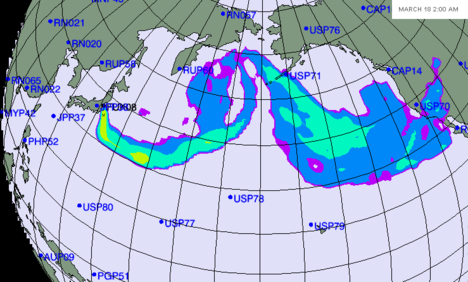
  • Posted in Asian @as
  • Comments Off on The Chinese People’s Struggle Against Japanese Fascism In World War II: The Longest War; Supreme Victory

Malaria in the Asia-Pacific Region

November 13th, 2015 by J. Kevin Baird

Despite its relative invisibility to most people living in the urban Asia-Pacific, endemic malaria occurs across the region. The unique character of Asian-Pacific malaria includes a serious problem of drug resistance, dominance of a particularly difficult species to control and treat, and another that normally dwells in monkeys but often infects humans. Most nations in the region with endemic malaria have called for its elimination by the year 2030. Meeting that ambitious goal will require mobilizing technical and financial resources, and social and political will. Malaria is a formidable foe fully capable of defeating half-hearted efforts to eliminate it.

Introduction

Many well-educated people think of malaria as a single disease that is largely, if not entirely, isolated to the African continent. This includes many living in the enormous urban centers of the Asia-Pacific. They go about their daily lives in gleaming modern cities with convenient access to professional clinical care. Some may worry about dengue fever, and an unlucky few will actually contract it. Others will be more anxious about threats like MERS-CoV or particular strains of influenza that are much less common than dengue, but with much higher fatality rates. There are no vaccines or cures for these viral infections. Malaria, by comparison, is not only thought of as a distant threat, but is also widely believed to be completely preventable and curable with inexpensive simple therapies. This is an illusion borne of a well-to-do urban worldview. In truth, the Asia-Pacific region is rife with endemic malaria and it faces challenges in mitigating and eliminating this serious problem.

The challenges are steep. There is no vaccine against malaria. Emerging strains of drug-resistant malaria threaten incurable infections. Some infections cannot be treated safely and patients suffer repeated clinical attacks over many months. Other infections derive from forest-dwelling monkeys. About two billion throughout the Asia Pacific live at risk of the infection and tens of millions contract it each year.1 Unknown numbers, perhaps as many as two hundred thousand each year, do not survive the malaria attack.2 This article explores the Asia-Pacific malaria problem and the misplaced broad public complacency regarding it.

The highest risk in urban centers is not malaria itself, but ignorance of or indifference to the malaria occurring in rural areas. The educated, empowered and endowed sectors of Asia-Pacific metropolises can act against malaria in the region if they see and understand the formidable problem and the challenges faced in eliminating it from the region. This article aims at such awareness.

What is Malaria?

Malaria is a term that encompasses a wide variety of diseases caused by single-celled parasites in the genus Plasmodium. There are over 170 species in this genus that infect particular species of mammals, birds and reptiles. Only 5 species are known to routinely infect humans: Plasmodium falciparum, Plasmodium vivaxPlasmodium malariae, Plasmodium ovale, and Plasmodium knowlesi. Among these, P. falciparum and P. vivax cause the vast majority of infections. All of these parasites follow a complicated life cycle that depends upon particular species of mosquitoes in the genus Anopheles. The ability to transmit malaria by these species varies among them like the ability to play chess among humans – from those who don’t know how to grand masters. While it is true that mosquitoes carry malaria from one person to another, in a strictly biological sense the parasites use humans to carry malaria from one mosquito to another – the plasmodia have sex in the mosquito, which makes it, and not us, the definitive host for these parasites. Figure 1 illustrates the life cycle of P. vivax, which is only slightly different from the other species, but in an important way to be explained later in this article.

Figure 1. The extraordinary complexity in the
life cycle of malaria parasites, with the human
liver at lower left, the human blood stream at
lower center, and the gut and salivary glands
of anopheline mosquitoes at upper right.
From the WHO as adapted from Mueller et al.3

About a week or so after being bitten and infected, people begin to show symptoms as parasites emerge from the liver and begin infecting red blood cells. The invasion, rupture and reinvasion of red blood cells account for the cyclical nature of the intense fever and chills of a malaria attack. If the infection is not properly diagnosed, or the patient waits too long before seeking treatment, the infection can progress to death in people who lack a partial immunity by prior chronic exposure to malaria. This is true of all of the species of malaria, but especially P. falciparumP. knowlesi, and P. vivax. Even with prompt diagnosis and appropriate treatment, these infections (excepting P. malariae) lead to intense illness with complete debilitation for at least several days. It is a devastating illness and fatal if not properly managed. The causes of death by malaria are many, including coma, severe anemia, respiratory distress, liver or kidney failure, and shock.

One of the primary reasons malaria tends to be almost invisible is its affinity for impoverished and isolated rural areas, and its aversion to urban environments. Access to quality healthcare in cities bodes poorly for parasite survival. Further, the anopheline mosquito vectors do not survive in urban environments and are not found there. The single known exception to this rule is a particular species, Anopheles stephensi, which thrives in the massive cities of India and causes a great deal of malaria in them. That species adapted to breeding in sunlit pools of clean rooftop water created by air conditioning units. Most mosquito vector species, however, have no tolerance of urban grime. Malaria victimizes the poorest of the poor in rural settings, those having limited access to rudimentary health care that governments struggle to deliver to the many remote peripheries of modern civilization. These people are among the most invisible to us, and they suffer tremendously in vast numbers from malaria and other diseases endemic to the Asia-Pacific.

Malarious Asia-Pacific

A glance at a world map of the levels of malaria prevalence reveals what most residents of the Asia-Pacific do not realize – that malaria is not solely an African problem, it is all around us right here in the region, and quite a lot of it. The two maps of Figure 2 show the distribution of the two dominant species of parasites that cause malaria, P. falciparum and P. vivax. Wherever there is color, even if blue, indicates stable transmission of malaria, meaning it is almost always present. The dark grey areas indicate unstable transmission, where malaria is only sometimes present. Figure 3 zooms in on the Asia-Pacific and reveals the extraordinary patchwork of transmission, both broad swaths of persistent stable transmission along with a scattering of both very high risk and risk-free pockets.

Figure 2. Maps showing the distribution of malaria risk globally for Plasmodium falciparum (top) and Plasmodium vivax (bottom). See color keys in Figure 3. Courtesy of the Malaria Atlas Project, University of Oxford, United Kingdom.

Notice that the distribution of P. vivax reaches much farther north than P. falciparum. There are a couple of important reasons for this. First, this species develops quicker at lower ambient temperatures in its cold-blooded mosquito host, allowing it to thrive in temperatures P. falciparum cannot tolerate. Secondly, P. vivax is able to place dormant forms in the human liver (called hypnozoites, see Fig.1), providing it a safe haven during the harsh winters on the Korean Peninsula, for example, when there can be no mosquitoes to transmit them.

Figure 3. Maps showing the distribution of malaria risk in the Asia Pacific for Plasmodium falciparum (top) and Plasmodium vivax(bottom). “PR” indicates prevalence rate, or the percentage of residents found infected by malaria parasites in population surveys of blood by microscopic examination. The scales between P. falciparum and P. vivax differ for biological and epidemiological reasons. Courtesy of the Malaria Atlas Project, University of Oxford, United Kingdom.

The World Health Organization monitors malaria reporting globally, and in 2013 it estimated a total of 11.2 million cases of P. vivax in the Asia-Pacific, along with 25 million cases of P. falciparum.4 That’s 36.1 million attacks of malaria in the region. Some scientists believe these WHO estimates are underestimated by a large degree.5 Remarkably, in the instance of P. vivax, over 80% of all attacks globally occur in the Asia-Pacific, making this principally a regional problem.

Malaria Problems of the Asia Pacific

Malaria as a public health problem varies tremendously around the globe with respect to difficulties faced in striving to solve it. Malariologists in Africa wrestle with very different technical issues from those managed by malariologists in the Asia-Pacific. It is important to understand that technical progress and health dividends in Africa will not necessarily translate to the same in the Asia-Pacific. A brief exploration of three malaria problems unique to the region will serve to emphasize that important point: artemisinin-resistant P. falciparum, primaquine therapy against P. vivax, and monkey malaria. The challenge in Africa is a very heavy burden of infection by a single species of parasite P. falciparum, which until today remains sensitive to the frontline drugs against it. The species P. vivax is virtually absent from most of Africa, as are the malarias transmitted from monkeys or apes to humans.

Artemisinin-resistant P. falciparum

Forty years ago the drug chloroquine served as the primary treatment for all malarias worldwide. The extraordinary history of the development of this workhorse drug includes Nazi agents in Algiers and Allied capture of an experimental formulation of the drug in 1943.6 Licensed in the USA in 1946, its useful life began to unravel at the border between Thailand and Cambodia in the 1960s. The parasite P. falciparum evolved a means of surviving chloroquine, and with continued use the resistant strains overwhelmed and dominated the sensitive strains. Over the ensuing 20 years, those resistant strains spread around the globe. Millions are thought to have lost their lives to infections by resistant strains treated with what had become a useless drug.7 Eventually, after a great deal of research and advocacy for change, chloroquine was replaced with a new class of drugs called the artemisinins – discovered by a medical science unit of the Chinese Army working in support of the North Vietnamese during the war with the Americans (by the 2015 Nobel laureate Dr. Y. Tu).8 That warfare drives critical advances in malaria therapy that cease in peacetime is a sad testament to its low priority when it is only attacking and killing civilians. This is changing, however. In 1999, the Medicines for Malaria Venture at Geneva was created for taking up the important business of discovering, evaluating and licensing medications affordable to the poor who are most affected by malaria. They have made great strides with generous support from sponsors and donors.9

The artemisinin combined therapies (ACTs, artemisinin plus a partner drug) today comprise the frontline against sickness and death caused by malaria. Thanks to their broad implementation, along with many preventive measures like mosquito nets and practical diagnostics for malaria, global mortality due to malaria has fallen by half since 2000.10 Unfortunately, the drug resistance drama that played out in western Cambodia with chloroquine fifty years ago, is today repeating itself – resistance to ACTs was detected in the same area in 2008 and has since spread much wider (Figure 4). No one understands exactly why, but western Cambodia seems to be a cradle of drug resistant malaria. It seems likely that the decades-long unregulated use of artemisinin alone during the strife and warfare in Cambodia, without the partner drug of ACTs (which is there in order to delay onset of resistance) selected for those resistant mutants. The threat of this menace causing a surge in malaria mortality is not mere hyperbole – it is real because we have no practical therapeutic options in our global malaria medical kit. The specter of untreatable falciparum malaria looms over the globe, and it is an Asian-Pacific responsibility to manage the problem.

Figure 4. Map illustrates penetration of
artemisinin-resistant P. falciparumin
the Mekong of Southeast Asia as of
January 2014. Tiers refer to confirmed
resistance (1, red), likely 

(2, yellow), absent (3, white).
From the World Health Organization.

Primaquine Therapy of P. vivax Malaria

As explained, P. vivax places dormant forms in the human liver that can cause repeated clinical attacks up to about 2 or 3 years after a single infectious bite by a mosquito.

The only drug that kills these dormant forms is called primaquine – another product of World War II, the Asia-Pacific War in particular.11 The Dutch on Java in 1941 produced over 95% of the world’s supply of quinine, and when the Allies lost access to that supply they turned to synthetic drugs. One of those caused the only therapy against dormant liver stages to become especially toxic.

The US Army then launched a search for a new drug in 1943, and in 1952 primaquine was licensed for this use.

In many respects, primaquine is woefully inadequate as a drug. Its many problems are rooted in its toxicity to people with an inherited blood disorder called glucose-6-phosphate dehydrogenase (G6PD) deficiency. People having that disorder lead healthy lives of normal longevity, but become seriously ill when exposed to specific drugs that destroy their red blood cells.

Primaquine is one of those drugs, and the doses needed for treating P. vivax can cause death in the most severe types of G6PD deficiency.

Unhappily, G6PD deficiency is a highly prevalent human genetic disorder (typically about 8% of people in malaria-endemic nations), impacting 400 million people globally, most of them living in the Asia-Pacific (Figure 5).

Even worse, the most severe types of G6PD deficiency dominate those found in the Asia-Pacific.12

The diagnosis of G6PD deficiency is relatively simple in a laboratory setting. If accomplished, the G6PD normal majority enjoys the enormous clinical benefit of primaquine therapy without risk of harm. However, in the impoverished rural tropics where the vast majority of malaria patients live, such services are almost universally absent. Recent work vigorously strives to address this serious problem that denies most patients with P. vivax access to safe primaquine therapy.13

Another unfortunate fact is the strains of P. vivax occurring in the Asia- Pacific are among the most aggressive with respect to how frequently and often they will cause repeated attacks from the dormant liver stages. Scientists and doctors long thought P. vivax infection to be inherently benign and not threatening, but over the past decade studies at hospitals in rural areas revealed it as very often associated with severe illness and death.14 It is perhaps likely that most of those poor outcomes derive from the repeated multiple attacks from the untreated liver forms of the parasite. In the absence of G6PD diagnostics, care providers must choose between risk of serious harm caused by primaquine, or harm caused by the infection by withholding the treatment.

Monkey Malaria

Another problem of malaria unique to the Asia-Pacific is infection by P. knowlesi. This species is very different from the other four species infecting humans because we are not its natural host. Humans acquire P. knowlesi in forests inhabited by macaques, the animal that P. knowlesi naturally infects. The first known report of human infection by this species appeared in 1965 – in an American CIA agent working at night in the forests of peninsular Malaysia.15 He returned to Washington where he was correctly diagnosed only in a most extraordinary series of coincidences worthy of CIA intrigue. This lone infection for decades was considered a one-off event and it was widely believed that P. knowlesi did not routinely infect humans.

In 2004, Malaysian scientist Balbir Singh and his colleagues at the University of Malaya at Sarawak unveiled a serious threat from this species.16 Not only was P. knowlesi infecting humans, but it was doing so often and ending in death for many.17 The infection had been diagnosed as P. malariae (which it closely resembles under the microscope). However, true P. malariae malaria is usually relatively benign (although chronic infections can cause irreversible and ultimately fatal kidney failure). Patients were coming in with what seemed to be that species but with very aggressive infections and acute disease states. Professor Singh and his team solved the mystery. Today we know that most of the malaria that occurs on Malaysian Borneo is in fact P. knowlesi. A map of the areas of known risk of P. knowlesi infection reveals it to be uniquely Asian-Pacific (Figure 6).

Figure 6. Map illustrates relative likelihood of
human exposure to infection P. knowlesi
naturally occurring in forest-dwelling macaques.
Courtesy of the Malaria Atlas Project,
University of Oxford, United Kingdom.

Eliminate Malaria!

Beginning about a decade ago, momentum began building to mobilize resources to eliminate malaria transmission, leading ultimately to its eradication as a human health problem.18. Taking the personal encouragement and example of Bill & Melinda Gates expressing malaria elimination as a vision, WHO Director General Margaret Chan announced in 2008 that WHO would embark on a global malaria control strategy that aimed to eliminate malaria. This represented a fundamental paradigm shift of strategy and tactics in malaria control as a public health endeavor. Deliberately and aggressively attacking malaria where it was not highly prevalent, or striving to interrupt transmission where it was highly prevalent, had long been viewed as impractical and even dangerous.19The danger lies in failure. During the 1950s and 1960s the WHO (largely spurred by the US State Department and US funding) undertook the Global Malaria Eradication Program (GMEP).20 Huge strides were made in reducing malaria, especially in the Asia-Pacific. However, in 1969 the WHO abandoned the campaign, leaving behind malaria control programs that were no longer functional. Further, research on malaria effectively ceased after the program commenced due to optimism regarding successful global eradication. Between 1970 and 2000 global burdens of malaria morbidity and mortality surged powerfully due to technical, material, and personnel deficiencies spurred by the GMEP. Elimination strategy invites risk of rebounds of malaria in the wake of failure.

The year 2030 is the declared goal for the elimination of malaria transmission across the Asia-Pacific. In 2008 malaria technical experts formed the Asia Pacific Malaria Elimination Network that draws them together with the national malaria control programs of 18 nations with declared malaria elimination goals. They aimed to support those programs in shifting from control to elimination strategy and tactics where deemed feasible. Mobilizing political and fiscal support and momentum, the Asia Pacific Leader’s Malaria Alliance was created in 2013 by the heads of national governments in the region. The risks of powerful rebounds of malaria with failure to achieve real elimination are soberly acknowledged and impel the urgency of full commitment to the task.

The problems with malaria in the Asia-Pacific summarized here will challenge elimination goals. Each of those three major challenges requires solutions unique to the malaria of this region. Acknowledging these as problems of the Asia-Pacific appropriately focuses regional attention, enthusiasm, and resources for attacking them vigorously. The temptation to passively wait for others in distant regions to deal with their own unique malaria problems to pass along the technical fruit of their labors must be resisted. They cannot deliver the goods the Asia-Pacific requires. These are our problems to solve.

Recommended citation: J. Kevin Baird, “Malaria in the Asia-Pacific Region”, The Asia-Pacific Journal, Vol. 13, Issue 44, No.1, November 9, 2015.

J. Kevin Baird served for 22 years on active duty in the US Navy Medical Service Corps as a malaria specialist, principally in the Asia-Pacific, retiring in 2006 with the rank of Captain. He is currently Professor of Malariology at the Centre for Tropical Medicine, Nuffield Department of Medicine, Oxford University and directs the Eijkman-Oxford Clinical Research Unit on behalf of that university and the Eijkman Institute for Molecular Biology in Jakarta, Indonesia. Prof. Baird has resided in Indonesia for over 20 years and is co-author of the book War Crimes in Japan-Occupied Indonesia: A Case of Murder by Medicine, Potomac Books 2015, with Sangkot Marzuki, former director of the Eijkman Institute and current President of the Indonesian Academy of Science.


Vivian Blaxell, Yellow Blood: Hepatitis C and the Modernist Settlement in Japan


References

1 World Health Organization. World Malaria Report 2014. Geneva.

2 Hay SI, Gething PW, Snow RW. India’s invisible malaria burden. Lancet 2010; 376: 1716-17.

3 Mueller I, et al. Key gaps in the knowledge of Plasmodium vivax, a neglected human malaria parasite. Lancet Infectious Diseases 2009; 9: 555-66.

4 Ibid, WHO

5 Ibid, Hay SI, Gething PW, Snow RW

6 Coatney GR. Pitfalls in a discovery: the chronicle of chloroquine. American Journal of Tropical Medicine and Hygiene 1963; 12: 121-8.

7 Attaran A, et al. WHO, the Global Fund, and medical malpractice in malaria treatment. Lancet 2004; 363: 237-40.

8 Tu Y. The discovery of artemisinin (qinghaosu) and gifts from Chinese medicine. Nature Medicine 2011; 17: 1217-20.

9 See here.

10 Murray CJ, et al. Global, regional and national incidence of mortality for HIV, tuberculosis, and malaria during 1990-2013. Lancet 2014; 384: 1005-70.

11 Baird JK. Resistance to therapies for infection by Plasmodium vivaxClinical Microbiology Reviews 2009; 22: 508-34.

12 Howes RE, et al. G6PD deficiency prevalence and estimates of affected populations in malaria endemic nations: a geostatistical model-based map. Public Library of Science Medicine 2012; 9: e1001339.

13 World Health Organization. Control and elimination of Plasmodium vivax malaria: a technical brief. Geneva. 2015.

14 Baird JK. Evidence and implications of mortality with acute Plasmodium vivax malaria. Clinical Microbiology Reviews 2013; 26: 36-57.

15 Baird JK. Malaria zoonoses. Travel Medicine Infectious Diseases 2009; 8: e2780.

16 Singh B, et al. A large focus of naturally acquired Plasmodium knowlesi infections in human beings. Lancet 2004; 363: 1017-24.

17 Cox-Singh J, et al. Plasmodium knowlesi in humans is widely distributed and potentially life threatening. Clinical Infectious Diseases 2008; 46: 165-71.

18 Malaria: control vs elimination vs eradication. Lancet 2011; 378: 1117.

19 See here.

20 Baird JK. Resurgent malaria at the millennium: control strategies in crisis. Drugs 2000; 59: 719-43.

  • Posted in Asian @as
  • Comments Off on Malaria in the Asia-Pacific Region

The Devastating Impacts of the TPP Trade Deal on Vietnam

November 13th, 2015 by Chuck Searcy

Now that the United States, Vietnam, and ten other nations have signed the TPP (Trans-Pacific Partnership) – and the text, finally, has been released to the public – the U.S. Congress and the other countries’ legislative bodies must decide whether to ratify the agreement.

Negotiations were secret, until the document was signed. Before the release of the text a few days ago, even members of Congress were not allowed to see the agreement, except for certain members who were shown only a few pages of certain sections, alone, in a locked room.

Now that the text has been released, the early reviews are in. It seems quite certain that ordinary Americans will not benefit from the TPP. Most will lose.

That also appears to be the case for the people of Vietnam.

Why should citizens of both countries be concerned?

This year is the 20th anniversary of the diplomatic normalization of relations between the U.S. and Vietnamese governments. The anniversary is being touted by both sides as a sort of milestone, and for good reason. Forty years since the end of the war that devastated Vietnam, a legacy of unexploded ordnance and Agent Orange remains, along with poverty and other reminders of the costs and consequences of the war. People of good will on both sides of course are looking for opportunities to cooperate and ways to work together that will benefit the people of both our countries.

But the TPP will not bring cooperation or benefits to American or Vietnamese citizens. It is a carefully contrived and very complicated expansion of corporate power over both governments. In the case of Vietnam, this corporate influence may actually threaten the country’s sovereign rights as an independent nation with its own laws and regulations.

During this ratification period – which may take up to two years in the case of Vietnam, according to Mr. Tran Quoc Khanh, Deputy Minister of Industry and Trade – representatives of the National Assembly will certainly seek to understand the costs and benefits to Vietnam. Members of the U.S. Congress will do the same, although Congress will only be allowed a yes or no vote. The U.S. Congress will not be allowed to alter or improve any of the text of the agreement.

Nonetheless, this will be a critical time. Now that the full text of the agreement has becomes public, Americans and Vietnamese should engage in dialogue and carefully scrutinize the entire TTP Agreement. Key, substantive questions have already been identified in recent months by the experts who assembled the pieces of the TPP puzzle that were leaked. That process is now going forward apace, as new details have emerged with release of the text. Some concerns include:

– Vietnam will begin to lose important elements of national sovereignty, most within a five-year deadline, if the TPP goes into effect.

– Public-interest policies and any laws that threaten a U.S. corporation’s profits. U.S. corporations will be above the government of Vietnam and above Vietnamese law.

– Disagreements would not be settled in Vietnamese courts or international courts, but by a panel of lawyers picked by corporations.

The agreement includes ISDS (Investor-State Dispute Settlement) provisions, by which a panel of lawyers picked by the corporations – not judges in Vietnamese or international courts – will rule on the lawsuits. Section 28.9(2)(a) of the Agreement says that one panel member each is chosen by each party, and under (2)(d), the chair (and third panel member) is chosen together by the parties, or, if necessary, chosen randomly from a list of qualified people on a roster. It seems likely that the drafters of the agreement sought a legal procedure that would fit all signatory nations, but now there are unintended consequences. Only a small number of lawyers are deemed qualified to serve on these panels. That group is potentially incestuous, since the corporations will have a strong say in suggesting names for the roster.

Recently published texts suggest the TPP agreement will expand1 and investors and allow the corporations to sue countries in international tribunals for damages the legal rights of corporations caused by such as financial regulations and protections for workers and the environment)

These secretive2 tribunals – three lawyers – would likely have a vested interest in the corporations that suggested or picked them. They are apt to impose huge, punitive fines against Vietnam. ISDS will constrain the scope of legitimate regulation, making it harder for Vietnam and other nations to achieve improved labor and environmental standards. In short, ISDS will constrain Vietnam’s policy space to manage its own economic development. The government of Vietnam will no longer be beholden to its citizens but, instead, will be beholden to foreign corporations.

This is not speculation. Similar cases have already been filed.

Even the possibility of paying a tribunal’s huge fines plus legal costs can push governments to surrender their rights of sovereignty; dilute labor, environmental, or other regulations; and avoid passing such regulations altogether. The U.S. non-profit, Public Citizen, cited examples3 in Canada, where just the threat of ISDS action may have led policymakers “to think twice about enacting protections that could expose the government to a costly investor-state dispute.”

Philip Morris, a U.S. cigarette company, has filed suits against Australia4 and Uruguay,5 arguing those nations’ laws mandating health warnings on tobacco products are an expropriation of the company’s property and have cut into profits for Philip Morris. A Swedish energy firm has sued the government of Germany for restrictions on coal-fired6 and nuclear7 power plants. Veolia, a French waste-management company, is suing Egypt to overturn that nation’s minimum-wage law. Eli Lilly pharmaceutical company is fighting8 Canada’s efforts to reduce the price of medicine through limited drug patents in order to protect its citizens. Eli Lilly is accusing Canada of not letting the company make the profit the corporation wants.

The number of companies that could sue Vietnam is growing.

As of the end of May 2015, U.S. companies in Vietnam had 742 projects worth over $11 billion. Major American firms – including Coca-Cola, PepsiCo, IBM, Cargill, Microsoft, Citigroup, Chevron, Ford, General Electric, AES (formerly, Applied Energy Services), and UPS – have moved into the Vietnamese market. Some Americans who established these companies in Vietnam did so out of empathy and the wish to address post-war poverty; they may not realize that, under the TPP, the company they introduced could impinge on Vietnam’s sovereignty.

Sectors important to Vietnam’s economic security would fall under the TPP.

Some in the government of Vietnam may already be worried about such legal suits, which could dismantle its laws and regulations protecting the environment, citizens’ health, children’s education, and national sovereignty. Vietnam’s 2005 Investment Law lists four sectors:

  1. prohibited sectors
  2. encouraged sectors
  3. conditional sectors applicable to both foreign and domestic investors
  4. conditional sectors applicable only to foreign investors.

If a U.S. company claims Vietnam is prohibiting the company from investing in Sector 1 (activities seen as “detrimental to national defense, security and public interest, health, or historical and cultural values”), under the TPP, can that foreign company sue Vietnam? The leaked texts of the TPP make it very doubtful that Vietnam’s negotiators secured any written guarantees that Vietnam’s sovereignty will be respected. If sued under the TPP, Vietnam’s national sovereignty would not be protected.

The same question applies to Sector 3, (activities “having an impact on national defense, security, social order and safety; culture, information, press and publishing; finance and banking; public health; entertainment services; real estate; survey, prospecting, exploration and exploitation of natural resources; ecology and the environment; and education and training.”) Under the TPP, can foreign companies sue Vietnam for restricting their involvement in that sector? Can foreign-owned banks licensed to operate in Vietnam demand the same high-profit incentives they enjoy in the United States or in other countries? Must Vietnam stop its anti- smoking campaign?

In June 2015, the U.S.-ASEAN Business Council said the TPP will make Vietnam increasingly attractive to U.S. investors. Why? Because the TPP will allow companies to operate with impunity, overriding Vietnam’s national sovereignty.

The U.S. Business Coalition for TPP spent $118 million in the fourth quarter of 2014, $126 million in the first quarter of 2015, and $135 million in the second quarter of 2015, for a total of $379 million in three quarters.

The TPP could skew regulations worldwide in favor of the banks, manufacturers, and pharmaceutical companies that aggressively lobbied9 for the TPP. Further, with the Citizens United Supreme Court decision allowing U.S. corporations to engage in unlimited campaign expenditures to support or oppose candidates, we can be sure U.S. corporations will engage in heavy, financial lobbying to pressure for TPP passage during the upcoming election.

The TPP includes patents on new pharmaceutical products. These patents prevent development of the cheaper generic drugs that have made medicines affordable for Vietnamese. The people of Vietnam should be asking, “Will our families be forced to replace cheaper generic medicines with multi-national brand names protected by the TPP?” Americans should be asking, “Do we want to force the people of Vietnam to pay the same high prices that we pay for drugs?”

Vietnam is the world’s second largest rice exporter, yet the TPP will lead to a decrease in agricultural sales in domestic and export markets. Unfortunately, Vietnam is one of the top five nations most threatened by rising seas due to climate change. The nation’s two large deltas – the “Red River and Mekong Rice Baskets” – are already in danger, yet the TPP will allow U.S. corporations to sue Vietnam because of the environmental policies and regulations designed to protect those fragile deltas, the citizens, and Vietnam’s food sovereignty. In particular, U.S. pesticide companies are apt to sue Vietnam for implementing so successfully the FAO-initiated IPM (Integrated Pest Management) program, which protects the environment and improves yields by teaching pest-control techniques other than pesticides and uses chemical pesticides only when absolutely needed.

Decisions about controversial introduction of GMO seeds and crops will be made outside of Vietnam. The Vietnamese government will no longer have sovereignty in such matters.

Vietnamese farmers and agricultural producers should be asking, “How will TPP affect our ability to compete in world markets, against huge corporations?”

A major effort has gone into lobbying in Vietnam for the TTP, with highly paid American consultants, an orchestrated international and domestic press, and the U.S. Embassy’s year-long, 20-year-anniversary celebration pushing the TTP while the contents of the agreement were cloaked in secrecy. As noted above, corporations have undertaken an even bigger lobbying effort in the United States.

Some of the very rich in Vietnam will probably benefit. A small percent of wealthy Americans and major corporate shareholders will make more money. Ordinary people and the poor will lose. That is always the case when agreements are written in secret.

The ratification period is critical. The “people’s representatives” – legislative bodies in the United States, Vietnam and other signatory nations – will be debating the full text of the TPP recently disclosed. During this time of legislative approval or disapproval of such a sweeping agreement, ordinary citizens in Vietnam, the United States, and other nations must raise their voices.

Chuck Searcy is a Vietnam veteran; Lady Borton worked with all sides during the war. Both have worked in Vietnam since before normalization of US-Vietnam diplomatic relations 20 years ago.

  • Posted in Asian @as
  • Comments Off on The Devastating Impacts of the TPP Trade Deal on Vietnam

 The Pakistani military strategists rely on their nuclear arsenal as a main counter-measure against a possible Indian aggression.

On October 19, Foreign Secretary of Pakistan Aizaz Chaudhry officially confirmed that Islamabad has plans to use low-yield nuclear weapons to impede advancing Indian troops in case of a military conflict. The Pkiastan’s attitude is a response to a new Indian military doctrine, named “Cold Start”. New Delhi denies the existence of Cold Start as a concept, attributing the terminology to off-the-cuff remarks by Indian officers. Nonetheless, India has been implementing a strategy that has greatly alarmed Pakistan, driving Islamabad to invest in tactical nuclear weapons and alter its own nuclear posture.

Indeed, it’s nothing new in a new Indian military doctrine. New Delhi started to develop it after the conflict between countries in 2011. After the December 13, 2001 attack on the Indian parliament building in New Delhi by suspected Kashmiri militants, India launched Operation Parakram which failed. It took India’s strike corps nearly three weeks to reach the Pakistani border, by which time Pakistan had effectively mobilized its own defenses. The very same time, international pressure on India became acute and India was pushed to abandon the plans of intervention.

Subsequently, the Indian military has adopted a far more proactive strategy relying on immediate offensive operations against Pakistan. The offensive will be spearheaded by eight cohesive operational maneuver groups with significant artillery and immediately air support. They are deployed close to the Pakistani border at a higher level of readiness and able to launch operations within 96 hours. The strategy aims to achieve shallow territorial penetrations in Pakistan — not exceeding 80 kilometers. If this occurs, Islamabad will be in a complicated situation to use nuclear weapons at own territory amid the knowledge that Indian battle groups would not aim to advance deeper into Pakistan.

Islamabad is aware of the widening gap in conventional military capabilities between itself and India and has taken an asymmetric approach to the new threat, building up and relying on an arsenal of tactical nuclear weapons, lower yield nuclear weapons designed for direct use on the battlefield against enemy forces. Pakistan is calculating that tactical nuclear weapons would essentially counter India’s conventional military superiority. Although it is a nuclear power, India does not operate or plan to develop tactical nuclear weapons. So, Pakistan will have an advance. In turn, this situation is conducting additional risks of a wider escalation into a strategic nuclear exchange that might include non-military targets such as cities.

Thus, India has adopted a quick-launch posture which will be hardly de-escalated by international diplomacy’s measures. It won’t be enough time for this. In turn, the Pakistani defense and deterrence capabilities are grounded on a usage of the tactical nuclear weapons.

This is raising the possibility of a full-scale nuclear war in South Asia in case of a potential conflict between Pakistan and India. Furthermore, India’s rapid response doctrine can be triggered by a terrorist attack as, for instance, the Lashkar-e-Taiba’s 2008 Mumbai attacks.

Considering the fact that India and Pakistan actively use militant groups against each other, any terror attack could conduct a full-scale conflict. Separately, Saudi Arabia is financing a major part of the Pakistani nuclear program. The Saudi authorities likely consider the Pakistani asymmetric strategy as a useful approach for themselves. Considering a low combat potential of the Saudi military forces, tactical nuclear weapons could become the only security guarantee for the current regime in Riyadh. At a later stage, the nuclear cooperation between Saudi Arabia and Pakistan will probably lead to the Riyadh’s attempt to become a nuclear state without any additional exploration in the sphere.

  • Posted in Asian @as
  • Comments Off on The India-Pakistan Confrontation. The Dangers of Nuclear Conflict in South Asia?

As the world’s media hails Burma’s first elections since 1990 and the country’s ‘democratic transition’ from military rule, Guy Horton warns against the delusional thinking that underlies these optimistic narratives. The reality is one of murder, genocide and systematic discrimination – in which Aung San Suu Kyi herself is complicit through her silence.

I was listening to the BBC World Service. Over the airwaves I could hear the Secretary General of the United Nations warmly welcoming the ceasefire. A few minutes later I heard a prolonged bombardment of mortar shells.

As Burma is gripped in election frenzy, one could be forgiven for believing a genuine democratic transition is taking place. This, sadly, is very far from the truth, however.

Our understanding is distorted by what George Orwell in1984 called“doublethink”“The act of . . . simultaneously accepting two mutually contradictory beliefs as correct.”

Rohingya Genocide. Artwork by AK Rockefeller via Flickr (CC BY-SA).

Rohingya Genocide. Artwork by AK Rockefeller via Flickr (CC BY-SA).

Elsewhere he described the process of ‘doublethink’ in more detail:

To know and not to know, to be conscious of complete truthfulness while telling carefully constructed lies, to hold simultaneously two opinions knowing them to be contradictory and believing in both of them, to use logic against logic … to forget what is necessary to forget … consciously to induce unconsciousness and then too become unconscious of the act of hypnosis you had just performed. (George Orwell, Necker and Warburg Ltd. p.184, part 1, ch.3. p.32)

In short, perpetrator and victims of doublethink can believe their own delusions. This appears to have happened in Burma since 2010: people generally believe a genuine political transition is taking place. This is untenable and illogical in face of the facts, but that is the point of doublethink: to render meaning meaningless.

Burma doublethink and consequent delusion are both wrong. Ongoing repression and destruction inflicted within the context of the totalitarian 2008 Constitution is the truth. Basic facts speaks for themselves.

Systematic persecution on a monstrous scale

Since the ‘democratic transition’ and the ‘ceasefire’ talks began, well over 300,000 ethnic peoples, including, amongst others, Kachin, Kokang, Shan and Rohingya, have been terrorised out of their homes and, if one includes the de facto forced concentration of the Rohingya in north Rakhine State, close to one and a half million people have been systematically persecuted.

This is not peace. This is not a democratic transition. It is systematic violence and re-consolidation of Bamar military power. Aung San Suu Kyi and the NLD has largely maintained a complicit silence on this and the vacuum has been filled with rabid Buddhist racism.

Let’s begin with a specific example of dealing with the contradictions of doublethink from my own experience.

The events took pace in January 2013 in Ma Ja Yang, Kachin State in northern Burma about 7.30 on a misty, bird song filled morning. I was listening to the BBC World Service. Over the airwaves I could hear the Secretary General of the United Nations warmly welcoming the ceasefire.

A few minutes later I heard a prolonged bombardment of mortar shells. Throughout Kachin State thousands of Burmese troops massed in frontal attacks drawn from all over Burma. Helicopter gunships and fighter bombers had flown over the town a few days earlier resulting in the deaths of children.

Everybody knew this was happening. Film footage had been shown on world media of attack helicopters, fighter bombers and intense trench warfare. The BBC knew because they were in nearby Lai Za. Over the State as a whole a 120,000 Kachin civilians have been terrorised out of their homes.

A man wept next to me after describing his daughter bayoneted to death in front of him. An eight year old boy looked at me with stone eyes after watching his mother shot in front of him.

But the narrative of ‘peace’ must not be interrupted

These realities could not, however, be allowed to disturb the Secretary General’s Ceasefire narrative. Thus the Secretary General of the United Nations duly welcomed the ceasefire even as the 120 mm mortar bombs came crashing down.

Nothing, including the reports from his own UN appointed Special Rapporteurs for Human Rights implicitly alleging Crimes against humanity for years, could, or can be, allowed to disturb the dominant narrative of ‘peace’ and ‘democratic transition’. Nothing, not even an extra one and a half million persecuted people in Burma as a whole, can be allowed to disturb the delusion of doublethink.

What can have enabled sustained misrepresentation of the truth for so long? The usual suspects: passive complicity, (knowing the truth but failing to do anything about it even when you are in a position to do so), complacency, ignorance, self interest, language deficits, knowing which slice of bread funders are likely to butter, the myopia of the Yangon bubble, cannot, however, adequately explain a delusion of this magnitude being perpetuated for so long, so persuasively endorsed by ‘experts’, and so passively recycled by the media.

Something deeper than hypocrisy is at work. It is likely the perpetrators believe ‘the great delusion’.

Let us take another obvious example of doublethink, this time from the the media. Timemagazine carried a front page article praising Burma’s democratic transition titled ‘Burma unbound‘, involving, amongst other things, the usual downplaying and disregarding of the hundreds of thousands of victims of State sponsored violence; the intimidation and coercion inflicted during the 2010 election and the bogus nature of the 2008 Constitution Referendum reslult.

Later in the same year it carried, again on its front cover, a ‘contradictory’ article on Ashin Wirathu: The face of Buddhist terror. In terms of bifocal doublethink both are equally ‘correct’ but how can they be?

Let’s think about the significance of Wirathu before analysing this article. He is not just a hate filled individual ‘monk’. He speaks for much of the Bamar community and his ideas on race, religion and marriage are now the ‘law’ of the land. He has become, in the moral vacuum left by Aung San Suu Kyi and the NLD, the unacknowledged legislator of Myanmar. In condemning Wirathu, Time was condemning much of the racist and religious prejudices close to the heart of the military controlled regime.

The secret is to remain unaware of the contradiction

So what is Time‘s ‘Burma’? The unrealistic optimism of “Burma unbound”, or the grim“Face of Buddhist terror?” How and why did the West’s leading news magazine depict two ‘contradictory realities’ within months of each other and present both as equally valid Truths?

Why, in the earlier Kachin State example, did the Secretary General of the United Nations endorse the ‘peace process’ when he knew his own UN appointed Special Rapporteurs for Human Rights have implicitly alleged continual ‘crimes against humanity’ for years? How is any ‘peace process’ compatible with systematic, military assaults on ethnic villagers and land grabs?

Orwell’s ‘1984’ concept of doublethink helps explain the conundrum: “Accepting two contradictory beliefs as correct … differs from hypocrisy and neutrality because the person is completely unaware of any conflict or contradiction.”

Let’s take another example: the persecution of the Rohingya and the level of intentionality underlying it. The New York Times limited responsibility to government “complacency”, a level below even criminal negligence; the recent Yale report identified “sound evidence of genocide”, i.e. an intention to destroy a people in whole or in part.

These are both serious respected institutions of American public life. How can the destruction of the Rohingya be both the result of trivial ‘complacency’ and the intent to commit genocide? Doublethink would have us believe both contradictory realities are true.

Doublethink is additionally alarming because it functions at the highest levels. The EU Commissioner for External Affairs reportedly described the Government’s early response to the violence instigated against the Rohingya as “appropriate”; the former Prime Minister of Norway, called their systematic persecution “an internal Myanmar matter”.

Likewise Aung San Suu Kyi, through her spokesperson, dismissed the slow motion genocide of the Rohingya in similar words, then apparently he was later dismissed for pointing out Buddhism was a compassionate, inclusive religion, before getting on with the serious business of politics. As Orwell also observed, “The more a society drifts from the Truth, the more it will hate those who speak it.”

The inconvenient truths the world has chosen to forget

It is not, however, just the reality of doublethink which is so alarming: it is its longevity. This is clear from reading the UN Special Rapporteur for Human Rights reports and General Assembly Resolutions since 1992. In addition, Orwell pointed out, above all, that doublethink requires its perpetrators to forget.

So let’s see what’s been forgotten during Burma’s ‘democratic transition’:

  • the 2008 Constitution is illegitimate;
  • the drafting process of the Constitution was illegitimate. It was drawn up in total secrecy.
  • the implementation process was illegitimate. It was inflicted through fear and intimidation.
  • the content of the Constitution:
    • consolidates the military dictatorship, reconfigures it and prohibits a democratic transition;
    • enshrines the ‘right to violate the rule of law’ by empowering the army to overthrow the civilian government;
    • enables the state to own all land and water and everything above and below all land and water;
    • retains 25% of all parliamentary seats for the military rendering constitutional change impossible;
    • keeps key cabinet posts like internal affairs, defence and border areas in military hands;
    • effectively prevents federalism.
  • the Constitution cannot realistically be amended.
  • the 2010 election was fraudulent and characterised by fear and intimidation.
  • the ‘laws’ passed by the resulting illegitimate parliament consequently have no legitimacy.
  • the election of Aung San Suu Kyi in 2010 was not ‘a Mandela moment’, but consolidated the delusion of democratic transition in the wilfully gullible international community.
  • this 2015 current election is neither free nor fair because, amongst other things, 25% of the seats are reserved for the military.
  • the speaker of the lower house was recently removed in a nocturnal ‘palace coup’.
  • the ‘peace process’ has masked sustained military assaults against the Kachin, Shan, Kokang and others and systematic persecution of the Rohingya and Moslems in general.
  • the ‘peace process’ cannot deliver genuine federalism nor, therefore, a just and lasting peace.
  • in many ceasefire areas, land grabs and gangster capitalism replace ethnic cleansing, a process misrepresented as ‘development’.
  • the Burma military recently twice ‘succeeded’ in bombing the world’s emerging super power, China, killing Chinese nationals.
  • the census result came in about 9 million people fewer than predicted over a period when UN Special Rapporteurs alleged “crimes against humanity” and “elements of genocide” may have been inflicted.
  • there has reportedly been a long term nuclear programme in Russia conducted for ‘medical purposes’ by a regime which spends one of the lowest proportions of its GDP on health in the world
  • about 20% of the electorate have reportedly been excluded from this election.


No matter what the outcome, this is no time for celebration

In conclusion, we should remain very sceptical about this election and not repeat the absurd euphoria that accompanied Aung San Suu Kyi’s release and subsequent by election victory.

If, as seems probable, her party becomes the largest in the Parliament, it is likely to be the prisoner of the 2008 Constitution and have to kow tow to Buddhist nationalism and fundamentalism. The deputy leader of the NLD reportedly prostrated himself before Wirathu recently.

Moreover, her personal actions since her release raise questions as to what she really believes. She sided with the military on the Lepadaung mine confrontation, shared the podium with the generals just after their massive attack on the Kachin, and has disregarded allegations of crimes against humanity and genocide inflicted on ethnic peoples in a manner which appears to go beyond the compromises required of realpolitik.

If her party triumphs it is not so much whether she could bring the army under the rule of law, but if she has the political will to do so.

When President Obama came to Office he understandably, but naively, offered the Burma military an outstretched hand. The response has been a colossal sleight of hand.

On that morning in January 2013 I had to make a ‘hard choice’ between ‘two mutually contradictory beliefs’: the Secretary General’s Neverland which I wanted to believe, or the reality of falling mortar bombs and the anguish of victims next me which I had to believe.

I chose the latter. I chose the truth. I chose not to collude with doublethink and promote delusion. I chose to shoot both those elephants in the room stone dead. And I chose never to forget.

Guy Horton has worked on Burma and its border areas since 1998. His 2005 report, ‘Dying Alive‘ and supporting video footage, received worldwide coverage and contributed to the submission of Burma to the UN Security Council in January 2007. As a result of the report, the UN Committee on the Prevention of Genocide carried out an investigation and placed Burma / Myanmar on the Genocide Watch list.

Since 2005 Guy Horton has focussed on establishing a coalition of governments, funders, institutions and leading international lawyers with the aim of getting the violations investigated and analysed so that impunity can be addressed. He is currently a researcher at the School of Oriental and African Studies, University of London.

He was short-listed for the post of UN Special Rapporteur for Human Rights in Myanmar 2014.

  • Posted in Asian @as
  • Comments Off on Myanmar: The Atrocious Delusion of Burmese ‘Democracy’

Japan’s Abe Shinzo government is commonly held to be in thrall to nuclear power, not least because it came into office in December 2012 committed to nuclear restarts and other policies promoted by the nuclear village. Yet clearly much has changed over the past three years. The Abe government’s repositioning on energy is evident in an accelerating shift away from support for the nuclear village, in spite of a few restarts, and towards an increasingly impressive commitment to energy efficiency and renewable energy. The evidence is striking: On top of proposing massive increases in its fiscal 2016 expenditures on energy efficiency and renewables, which we reviewed in October,1 the cabinet is about to undertake an administrative review targeting billions of yen in controversial nuclear-related expenditures.

Specifically, from November 11 to 13, 2015 Japan will undergo an administrative review of YEN 13.6 trillion worth of expenditure requests in the over YEN 102 trillion proposed budget for fiscal 2016. This “Fall Review” (Aki no rebyuu) will be open to the public and broadcast online, as was the case with previous administrative review processes.2 But among the many unusual aspects of this year’s initiative is that the review will be overseen by the resolutely antinuclear Liberal Democratic Party cabinet minister (since October 7, 2015) Kono Taro.

Kono’s team of outside advisors will also include such explicitly antinuclear experts as the Japan Renewable Energy Foundation’s (JREF) Director Ohbayashi Mika3 and JREF Senior Research Fellow, Fujitsu Research Institute Research Fellow and Tsuru University Professor Takahashi Hiroshi.4 Kono and his colleagues in the LDP have been working hard in advance of the review to draw attention to its focus on nuclear-related expenditures, resulting in significant and steadily increasing press coverage. In addition, Kono has taken the apparently unprecedented step of producing a 1-hour video, released on November 9, to explain the process and its focus on nuclear-related expenditures. He prefaces his detailed arguments about the content of the review with (at the 5:50 mark) an unambiguous declaration that he not only cleared the substance of the review with Prime Minister Abe, but also received the latter’s encouragement.5

Kono Taro explains his review Ohbayashi Mika Takahashi Hiroshi

The Administrative Review

These “Fall Review” procedures were initiated by the Democratic Party of Japan Government, in 2010. They also matter, as is evident from the fact that the Fall Review of 2014 (for the FY 2015 budget) resulted in over YEN 360 billion in cuts and repayments to public funds.6 The previous year had seen even deeper cuts, amounting to roughly YEN 500 billion in expenditure reductions.7

Of the Japanese central government’s over 5000 spending programs, 55 have been chosen for this year’s review. While that number may seem small, as noted earlier these programs total over YEN 13.6 trillion and thus represent over 10% of the proposed YEN 102 trillion fiscal appropriations for the 2016 budget. Given that Japan’s public debt load of 226% of GDP is unprecedented in the history of the OECD,8 the pressure for cuts is likely to be stronger than in previous years. Particularly significant is the fact that the items slated for review are heavily oriented towards energy. Indeed, fully 24 of the 55 items are energy- and environment-related, and the vast majority of those are devoted to nuclear facilities as well as to measures related to achieving the recycling of nuclear waste in breeder reactors.9

The Nuclear Fuel Carrier Kaieimaru

One target that is ripe for scrutiny is the Kaieimaru, a nuclear fuel ship built in 2006 and used four times to transport a total of 16 tonnes of spent fuel to the Tokai Mura facility10 in Ibaragi Prefecture. Since the vessel has not been used to transport fuel since its most recent trip in 2009, Kono has included it in the review. Between 2010 and 2014, the cost of its upkeep totalled just under YEN 5.8 billion, and its projected costs to 2031 would see an additional YEN 18.1 billion spent on it. The ship has been featured in recent television broadcasts, including a TBS broadcast on November 9, and has featured in the Japanese Wall Street Journal,11 the Tokyo Shimbun,12 and other national and local press. Kono has skillfully chosen a striking symbol of extravagance for review.

An additional nuclear-related facility targeted by Kono’s review is the “Recycle Equipment Test Facility (RETF).” This is yet another costly and risky element of Japan’s very controversial accumulation of infrastructures and programs to reprocess spent nuclear fuel. The RETF’s construction began in January 1995, and has received tens of billions of yen worth of investment even though it has not been used. Precisely 20 years ago, Shaun Burnie, Senior nuclear campaigner with Greenpeace Germany, warned that the true importance of the RETF, and the great risk that it poses: “is that it and the facilities that will follow will give Japan access to plutonium that is even purer than weapons-grade. The reason for this is that the plutonium produced in the uranium blanket of FBRs (ed. “fast breeder reactors”) and reprocessed by the operators is what is called supergrade. With a large-scale deployment of FBRs in Japan, and the reprocessing facilities to support the reactors, large quantities of weapons grade material will be available for non-peaceful use.”13

Japan’s “Recycle Equipment Test Facility

In their 2010 book In Defence of Japan: From the Market to the Military and Space Policy, Saadia M. Pekkanen (Professor, University of Washington) and Paul Kallender-Umezu (PhD Candidate, Keio University) cite Burnie, showing that his concern remains quite relevant. Indeed, they add to the warning by emphasizing that “the point about supergrade plutonium is that very little is required to produce nuclear warheads (possibly 800 to 900 grams); it is thus especially suitable for miniaturized nuclear warheads like MRIV-type ICBMs.14

The above examples are especially noteworthy, but are only two of the nuclear–related items up for consideration in this administrative review. Others include subsidies for securing uranium from overseas projects, storing the uranium, locating and constructing nuclear facilities, as well as funds for PR supporting nuclear power in the Japanese public debate.15

What is almost as impressive as the focus on nuclear is the complete absence of any targeting of expenditure programs for efficiency and renewables. Japan’s FY 2016 budget allocations for these items show dramatic increases over the current fiscal year. So one would hardly be surprised to see at least a couple of renewable-related programs put on the table, if only to placate the presumably outraged nuclear interests. But the only clearly non-nuclear energy programs included in the review relate to carbon-capture and storage (CCS). And if putting CCS on the block indicates that Japan is backing away from coal, that is another reason for applause.

Let us conclude with a note on Kono Tarohimself. He is a major figure in the Liberal Democratic Party, first elected in 1996. Like many LDP members, he comes from a family of politicians. But unlike most LDP politicians, he is resolutely antinuclear and is a strong internationalist. His website comes with Korean and Chinese versions as well as an English version.

In the wake of March 11, 2011 (3-11) natural and nuclear disasters, centred on the Fukushima Daiichi plant, Kono became well-known among international observers as a strong opponent of the domestic nuclear village and its plans to increase Japan’s dependence on nuclear to over 50% of power by 2030 as well as recycle waste in breeder reactors.

In addition to numerous public appearances, books, and interviews in which he was critical of the nuclear village and its dominance of the Japanese power industry, he maintained a blog with regular contributions critical of the Fukushima incident and its aftermath. He also criticized the Abe government’s efforts to restart nuclear reactors.

Kono Taro enters Abe Cabinet, Oct 7, 2015

But when Abe undertook his October 7, 2015 cabinet revision, Kono surprised many by entering the cabinet as Minister in charge of Administrative Reform as well as Civil Service Reform, Consumer Affairs and Food Safety, Regulatory Reform and Disaster Management (the latter three portfolios being Minister of State positions).16

Upon entering the cabinet, Kono’s blog posts became inaccessible. Not a few observers interpreted Kono’s simultaneous entry into the cabinet and suspension of his heavily antinuclear blog as an indication that he had been effectively silenced as an exponent of abandoning nuclear and ending Japan’s dangerous and expensive effort to create a plutonium-based nuclear economy.

However, this interpretation ignored Kono’s argument that he could be more effective in achieving his objectives from within the cabinet than from without.

The proof of the pudding is, as they say, in the eating. It would appear that Kono is setting up a feast this week. And it certainly merits attention from those interested in Japan’s fiscal sustainability, its energy policy on the eve of climate talks in Paris, its plutonium problem, and the ongoing transformation of the LDP.

Andrew DeWit is Professor in Rikkyo University’s School of Policy Studies and an editor of The Asia-Pacific Journal. His recent publications include “Climate Change and the Military Role in Humanitarian Assistance and Disaster Response,” in Paul Bacon and Christopher Hobson (eds) Human Security and Japan’s Triple Disaster (Routledge, 2014), “Japan’s renewable power prospects,” in Jeff Kingston (ed) Critical Issues in Contemporary Japan (Routledge 2013), and (with Kaneko Masaru and Iida Tetsunari) “Fukushima and the Political Economy of Power Policy in Japan” in Jeff Kingston (ed) Natural Disaster and Nuclear Crisis in Japan: Response and Recovery after Japan’s 3/11 (Routledge, 2012). He is lead researcher for a five-year (2010-2015) Japanese-Government funded project on the political economy of the Feed-in Tariff.

Notes

1 On the budget increases and other green measures, see Andrew DeWit, “Japan’s Bid to Become a World Leader in Renewable Energy”, The Asia-Pacific Journal, Vol. 13, Issue 39, No. 2, October 5, 2015.

2 An introduction (in Japanese) to this and previous years’ administrative review processes is available at the Japanese Cabinet Secretariat’s website.

3 Ohbayashi’s JREF profile is here.

4 On the participation of Ohbayashi and Takahashi, see (in Japanese) “List of 30 Participants in Administrative Review Released,” Nikkei Shimbun, November 11, 2015.

5 The broadcasts (in Japanese) are available at: (part 1), (part 2)

6 See (in Japanese) “Reflection of the Fall Review in the FY 2015 Budget (Outline),” MOF Budget Bureau, January, 2015.

7 Kansai University Professor (Public Finance) Uemura Toshiyuki explains the 2013 process and its outcome in detail (in Japanese) in “Towards a half-trillion yen in cuts to the 2014 budget,” January 30, 2014.

8 See p. 4 OECD Economic Surveys, Japan, April 2015. OECD.

9 On this, see (in Japanese) “Power Facility Location Disbursements and others are the focus of Administrative Review,” Denki Shimbun, November 9, 2015.

10 On the facility, see Japan Atomic Energy Agency, “Nuclear Fuel Cycle Engineering Laboratories,” (no date).

11 See (in Japanese) “Nuclear-related budgets slated for review: Monju, Nuclear Fuel Ship,” October 30, 2015.

12 See (in Japanese) “Maintenance for Spent-Fuel Ship Costs YEN 5.9 Billion,” Tokyo Shimbun, October 29, 2015.

13 See p. 38 in Shaun Burnie, “50 Years after Nagasaki: Japan as Plutonium Superpower,” in (ed by Douglas Holdstock and Frank Barnaby) Hiroshima and Nagasaki: retrospect and prospect. Frank Cass: London, 1995.

14 See their footnote 27 on p. 357. Saadia M. Pekkanen and Paul Kallender-Umezu, In Defence of Japan: From the Market to the Military and Space Policy. Stanford University Press: 2010.

15 The full list of items is available [in Japanese] in the “Projects for Consideration in the Annual Fall Public Review,” Cabinet Office, Japan, October 30, 2015.

16 See the list of posts at the English-language site “Prime Minister of Japan and His Cabinet”.

  • Posted in Asian @as
  • Comments Off on In the Wake of Fukushima: Japan’s Dangerous Nuclear Waste on the Cutting Board. Towards a Renewables Future?

There is no historical controversy as contentious or long-lasting as the North Korean and Chinese charges of U.S. use of biological weapons during the Korean War. For those who believe the charges to be false — and that includes much of American academia, but not all — they must assume the burden of explaining why the North Koreans or Chinese made up any bogus claims to attack the credibility of U.S. forces. Because they had no reason to do that.

It is a historical fact that the United States carpet-bombed and napalmed North Korea, killing nearly 3 million civilians thereby.

In other words, massive war crimes are already self-evident, and if there is any mystery, it is how historical amnesia and/or callous disregard for crimes such as those committed by the U.S. and its allies in Korea, or the millions killed by the U.S. in Southeast Asia, can go ignored today.

But the U.S. media and academia largely ignore evidence of U.S. use of weapons of mass destruction in its wars against independence struggles and for imperial dominance, or hock their wares to support propaganda that claims such crimes never took place. Evidence to the contrary, such as the 1950s International Scientific Commission investigation into U.S. use of bacteriological weapons in the Korean War, or the many confessions under interrogation by U.S. Air Force personnel, were generally suppressed. (I published myself the ISC’s summary report earlier this year.)

The suppression of the ISC investigation was, as Chaddock points out, at least in part because ISC chair, Sir Joseph Needham, was not shy in mentioning the connections between the US use of BW in Korea and China and Japanese use of biological experimentation and warfare against China during World War II. This was of high sensitivity to the U.S. as they publicly denied that, having made a deal with Shiro Ishii and the Japanese war criminals of Unit 731 to not prosecute them if US scientists from Fort Detrick and the CIA could get Japanese data and samples — of human tissues gathered via vivisection! — and use them for the US’s own secretive BW program in the early years of the Cold War.

One man with evident integrity and unwilling to let the truth be buried is Dave Chaddock. His book, This Must Be the Place: How the U.S. Waged Germ Warfare in the Korean War and Denied It Ever Since, is a superb exercise in historical rebuttal. The falsifications and lies and secrets propounded by the U.S. on the issue of its crimes has been going on for decades now. For instance, the U.S. populace did not learn of its government’s post-war deal with Nazis, or its amnesty of the Japanese Imperial Army’s Unit 731, until nearly 40 years had passed from the time of these events. If the book seems partisan at times, it is understandably the passion of someone outraged at what he has discovered — just as many who have served in America’s imperial wars returned home outraged, and too often broken, by what they had seen and endured.

Chaddock builds on the seminal work of Stephen Endicott and Edward Hagerman, whose 1998 book, The United States and Biological Warfare: Secrets from the Early Cold War and Korea, laid out the best case we have thus far for proving the U.S. BW campaign really did take place. Chaddock takes on Endicott and Hagerman’s critics, and has a particularly trenchant critique of the discovery of Soviet documents that indicate the BW evidence was “faked.” The documents were oddly serendipitously discovered at the time Endicott and Hagerman were publishing their book. (The actual documents have not been publicly released, if they in fact exist.) Chaddock shows that the Soviet “fake”, as presented, could not possibly have covered all the sites and evidence of biological weapons used in as short a time as given to create such a fantastic fraud.

Chaddock also takes on the controversy that surrounded the testimonies (“confessions”) of downed flyers interrogated by North Korean and Chinese captors. The flyers’ testimony was considered very convincing at the time, and the U.S. scrambled to find a way to discredit it. (The U.S. separated the flyers’ upon repatriation, with one group claiming they were tortured, and the other insisting they told the truth. All were threatened with court-martial if they did not recant.)

This Must Be the Place is unique in delving into the actual matter of the U.S. flyers’ confessions themselves. Chaddock makes a number of convincing observations. He notices that many of the flyers spoke to their shock at being told the U.S. was involved in germ warfare. One said he was shocked “beyond words,” while Air Force Colonel Walker “Bud” Mahurin described how pilots in his command reacted to his revelations surrounding the U.S. “campaign of germ warfare” with looks of “great shock.”

There is certainly more that could be unearthed about these confessions, and their aftermath, revelations that would add to Chaddock’s heavily documented analysis. For one thing, it is of high interest that Boris Pash, then chief of the Army’s Criminal Investigation Division (CID), and formerly a member of the secretive Counter Intelligence Corps (CIC), not to mention the head of security on the Manhattan Project and the leader of the mysterious Alsos Mission, AND also a CIA assassin, was involved in the interrogations of the returned flyers, and the threats to prosecute some of them. Also of high importance is the fact the record of those interrogations have been “lost” by the military.

The CIA and military created a cover-story that the men that confessed to use of BW had been “brainwashed.” This so-called brainwashing was then used as an excuse to increase funding in their own mind-control programs, the most famous of which was MKULTRA. The CIA pushed the “brainwashing” story even though, as a memo by then CIA chief Allen Dulles showed the Agency knew there was “little scientific evidence to support brainwashing.”

Nevertheless, CIA efforts to push the “brainwashing” charges included recruiting the leading members of a generation (or two) of social science and psychological/psychiatric academics and practitioners, whose experiments on use of drugs like LSD, and on sensory deprivation, and mock torture at government “survival” camps, led ultimately to an institutional use of torture by the U.S. government itself after 9/11. Chaddock details much of this history, and as with other topics he covers, refers readers to ample numbers of sources and references. His bibliography is an important assemblage of modern literature on the entire controversy.

Given the scare campaigns that are still used by the West about use of chemical or biological weapons by any country dubbed “evil” by the U.S., Chaddock’s book takes on added relevance, if not urgency.

Chaddock’s book is a real treasure. It presents in an entertaining and convincing fashion what Chaddock himself calls the “overwhelming evidence” of BW use by the Americans during the Korean War.

This is a time when independent thinking is in short supply. Curiosity and a zest for fact and truth are not traits highly valued today, particularly not when it comes to politics or historical controversies. But if you are someone who really wants to know the truth, who wants to see what someone who has spent a good deal of time researching this subject has to say, then Chaddock’s book is just the thing for you.

Jeffrey Kaye is a psychologist in private practice in San Francisco, where he works with adults and couples in psychotherapy. He worked over 10 years professionally with torture victims and asylum applicants. Active in the anti-torture movement since 2006, he has his own blog, Invictus. He has published previously at Truthout, Alternet, and The Public Record.

David Swanson interviews Chaddock in the this audio clip from Talk Nation Radio:


  • Posted in Asian @as
  • Comments Off on How The U.S. Waged Germ Warfare in the Korean War And Denied It Ever Since

China’s Renminbi as a World Currency, Endorsed by the City of London

November 5th, 2015 by Ariel Noyola Rodríguez

The Government of China promotes the internationalization of «the people’s currency» (‘renminbi’) through a policy of alliances that does not take ideological barriers into account. In an initial stage the diplomatic forces of the yuan were concentrated in the Asia Pacific region,  but in a second stage, it became necessary to gain the support of the West. After the President Xi Jinping visited London, between the 19th and the 23rd of October, the bases of the «golden age» between China and the United Kingdom were established. 

Beijing wants the yuan to be converted into a world reserve currency. It is true that the road to full convertibility is still a very long one. China has seen the presence of their currency increased more than any other country in recent years. The yuan is today the second most utilized currency for commercial financing, and the fourth most demanded for cross-border payments, according to data from the Society of World Interbank Financial Telecommunications (SWIFT).

The strategy of the Asian giant to yuan-ize the global economy is centred in ‘gradualism’. The Chinese leaders are in no hurry. The Communist Party [of China] is conscious of the fact that any false movement can provoke ‘financial wars’ against them. Both the Federal Reserve and the US Treasury Department resist a movement that the dollar and Wall Street would see their influence in world finances diminish.

The Chinese Government takes precautions, since to reach long term objectives, it is better to move step by step, under cover, than to assume high risks. For this reason, in the first place, China added the support of the Asian continent, either underwriting swap agreements, or installing Offshore Clearing Banks (OCB), or giving investment quotas for participation in the Renminbi Qualified Foreign Institutional Investor Program (RQFII).

In a second initiative, the Chinese Government looked at Northern Europe. To position their currency in the big leagues the technical advice of Western countries was key. China began by raising the level of their ‘strategic association’ with the United Kingdom, which in spite of the decline in its economy remains a major player  in the conduct of international finance. It is not for nothing that the City of London has the biggest exchange market in the world and brings together the greatest number of ‘over the counter’ operations. [In turn, the Governor of the Bank of England is a former official of Goldman Sachs, GR Editor].

In mid-1913 the United Kingdom became the first country to promote the use of the yuan in Europe. Germany, France, Switzerland and Luxembourg entered the competition through the installation of OCB to facilitate the use of the «people’s currency» (‘renminbi’). Nevertheless, none of these constituted a serious threat to the United Kingdom. The City of London has more than half of operations denominated in yuan in the European continent.

As the economy of the United Kingdom is in a state of stagnation, and closely threatened by deflation (a fall of prices), the Government of David Cameron desperately insists on strengthening his ties with Asia-pacific countries, especially with China, that even with their deceleration of the last few years, contributes 25% of the growth of the world Gross Domestic Product (GDP).

For the UK Chancellor of the Exchequer  – and the favorite of the Conservative Party to occupy the post of Prime Minister in 2020 – George Osborne, the world today witnesses a new geopolitical and economic configuration, in which China plays the preponderant role. Business affairs are no longer concentrated in the United States and the European Union. Because of this, for the City of London, commercial opportunities and investment with Beijing are more important than the commandments of alignment with Washington.

One proof of this is that last March the United Kingdom was added to the convocation of the China’s Asian Infrastructure Investment Bank (AIIB), the institution that ended the domination of the World Bank and the Asian Development Bank in Asia.

[All roads seem to lead to Goldman Sachs GR Editor]. Jim O’Neill, former employee of Goldman Sachs, who invented the acronym BRICS (Brazil, Russia, India, China and South Africa) in 2001, is currently an advisor to the British Treasury; for him it is surely clear that economic prosperity is found in the Asian region.

The United States which has sent a warship through the Spratly archipelago, accuses China of «cybernetic espionage» and «manipulation of exchange». In contrast, the United Kingdom shows itself to be the principal partner of China in the West. The «golden age» between the two countries is not a novelty, it has been put together rapidly over the last decade. Between 2004 and 2014 commercial exchange between China and the United Kingdom went from 20 to 80 billion US dollars, while Chinese investment in British territory grew at an annual rate of 85% since 2010.

During the visit of President Xi Jinping to London, from the 19th to the 23rd of October, the Government of David Cameron gained more oxygen for the economy. China engaged hundreds of million of dollars in investment, from the construction of the nuclear power plant of Hinkley Point to the establishment of a high-speed train from London to Manchester. At the same time, the possibility of connecting the stock markets of Shanghai and London is under study, with which financial paper denominated in yuan would be acquired by a greater number of investment agents.

The recognition of the Government of David Cameron will be decisive in coming weeks. The United Kingdom has already announced that it will vote in favor of the incorporation of the yuan in the Special Drawing Rights (SDR), the basket created by the International Monetary Fund (IMF) in 1969, currently integrated with the US dollar, the euro, the Japanese yen and the pound sterling.

According to the calculations of diverse analysts cited by Reuters, if the IMF approves addition of the yuan to the SDR, the global demand of the ‘renminbi’ will be increased to the equivalent of 500 billion US dollars, and as such, will be saved in the reserves of central banks in a proportion of approximately 5%, well above the Australian and Canadian (each almost 2%), but well below the euro (20.5%) and the US dollar (60%).

In a word, the United States will not be able to undermine the ascent of the yuan. The turbulence of the Shanghai Stock Market in the past few months will not overcome the confidence that the United Kingdom has in the development of the Chinese economy, but on the contrary, their gamble is more ambitious: thanks to the City of London, Beijing is at the point of moving the yuan-ization forward at an unprecedented scale…

Ariel Noyola Rodriguez is an economist who graduated from the National Autonomous University of Mexico.

Translation: Jordan Bishop.

  • Posted in Asian @as
  • Comments Off on China’s Renminbi as a World Currency, Endorsed by the City of London

Global Conflict and the Geopolitics of US-China Relations

November 1st, 2015 by Prof Michel Chossudovsky

With reports emerging that China has signed on to Russia’s military coalition in Syria at the same time that the Chinese are signing new cooperation agreements with the US, the question is once again being raised:

What is the nature of China-US rivalry?

Today Michel Chossudovsky talks about the forces in both countries that are manipulating this conflict and what it means for the prospects of future war.

This is the GRTV Feature Interview with our special guest, Michel Chossudovsky.


  • Posted in Asian @as
  • Comments Off on Global Conflict and the Geopolitics of US-China Relations

In India, genetically modified (GM) mustard is edging closer to becoming the first officially approved GM food crop to be placed on the commercial market. This is despite a series of official reports that recommend against introducing GMOs to India. The Technical Expert Committee (TEC) Final Report is the fourth official report exposing the lack of integrity, independence and scientific expertise in assessing GMO risk.

The four reports are: The ‘Jairam Ramesh Report’ of February 2010, imposing an indefinite moratorium on Bt Brinjal, overturning the apex Regulator’s approval to commercialise it; the Sopory Committee Report (August 2012); the Parliamentary Standing Committee (PSC) Report on GM crops (August 2012) and the TEC Final Report (June-July 2013).

The TEC recommends an indefinite moratorium on the field trials of GM crops until the government devises a proper regulatory and safety mechanism. Prominent campaigner Aruna Rodrigues argues that official regulators have hidden all data about GM mustard from the public and the independent scientific community, which is against constitutional provisions and the orders of the Supreme Court. She concludes this means one thing: mandatory rigorous biosafety protocols have not been carried out and the data pertaining to ‘mustard DMH 11’ therefore needs to be concealed.

Rodrigues asserts that the secrecy surrounding GM mustard exemplifies the appalling state of regulation and smacks of corruption. She concludes the Indian government is using underhand means to introduce GM crops into Indian agriculture and that there appears to be no place for science or transparency in this process.

The Coalition for a GM Free India is therefore demanding that the Union Minister for Environment, Forests and Climate Change, Prakash Javadekar, immediately intervenes to stop the processing and approval of this GM mustard and makes public all the information regarding the safety tests of the GM Mustard.

On the back of a news report confirming that an application for approval for commercialisation of GM mustard has been moved with the apex regulatory body GEAC (Genetic Engineering Appraisal Committee in the Ministry of Environment, Forests & Climate Change), the Coalition for a GM Free India has reminded the government about the serious consequences.

Rajesh Krishnan, Convenor of Coalition for a GM-Free India, says that the GM mustard hybrid has been created mainly to facilitate the seed production work of seed manufacturers, whereas farmers already have a choice of non-GM mustard hybrids in the market, in addition to high yielding mustard varieties. He also argues that, more importantly, there are non-GM agro-ecological options like System of Mustard Intensification yielding far higher production than the claimed yields of this GM mustard of Delhi University.

Krishnan says:

This GM mustard is also a backdoor entry for various other GM crops in the regulatory pipeline – while herbicide tolerance as a trait has been recommended against by committee after committee in the executive, legislative and judiciary-based inquiry processes in India related to GM crops, this GM mustard uses herbicide tolerance. Contamination is inevitable of all other mustard varieties, while India is the Centre of Diversity for mustard. This is clearly one more GMO that is unwanted and unneeded and is being thrust on citizens in violation of our right to choices, as farmers and consumers.

Kavitha Kuruganti, Convenor of Alliance for Sustainable & Holistic Agriculture (ASHA), has been seeking biosafety data pertaining to GM Mustard without any success. She argues that:

GEAC is functioning in a highly secretive fashion, and while the nation does not know what is happening inside the regulatory institutions with applications like this GM mustard, biosafety data is being repeatedly declined by the regulators. What are the regulators hiding and whose interests are they protecting?

She goes on to ask:

Why should the regulators be trusted for their safety assessment when in the case of both Bt cotton and Bt brinjal, the Supreme Court Technical Expert Committee (SC TEC) which took up a sample biosafety analyses in 2013 showed that the regulators were wrong in concluding the safety of these GMOs?

The Supreme Court in 2008 had ordered that biosafety data be placed in the public domain when petitioners argued that unless the toxicity and allergenicity data are made known to the public, the applicants and concerned scientists in the country would not be in a position to make effective representations to the concerned authorities.

An indefinite moratorium was placed on Bt brinjal (GM eggplant) in 2010. The regulators sought public feedback on that particular food crop and the Government of India took up public consultations before taking a final decision on Bt brinjal’s commercial cultivation fate in india.

Kuruganti continues:

However, this current Government seems to be keen to conduct regulatory processes in a secretive fashion. Our past requests to meet with the Environment Minister to share our concerns met with no success. As the government gets more secretive and opaque around regulation, the public has a right to know what are they afraid of, if everything is safe and scientific?

The claim is that GM mustard will provide yield increases of 25-30%. However, Aruna Rodrigues argues that higher yields are not the result of these particular transgenes but rather a direct result of hybridisation of normal crop genes. This is basically a case of deception: the use of high-yielding hybrids is a deliberate ploy to camouflage the yield attributable to the hybrid and assign it to the GM crop instead. She says that this is precisely the story that ensued with Bt cotton (which is now having disastrous consequences for many farmers) and that thread wove its way through Bt brinjal and now, openly for mustard. Rodrigues says that the fraud is unprecedented and the case surrounding GM mustard in India is evidence of unremitting regulatory delinquency.

The secrecy and regulatory delinquency that Rodrigues talks of is integral to the speeding up of the wider agenda of restructuring Indian agriculture for the benefit of an increasingly impatient Western agribusiness cartel. These companies are pushing an unsustainable and poisonous industrialised model of farming on India based on a never-ending stream of petro-chemical inputs, commodity crops and corporate (GM) seeds (see this).

This is already impoverishing farmers and driving them out of agriculture and will ultimately have tremendously negative consequences in terms of the nation’s food sovereignty and security as well as its health (see this).

  • Posted in Asian @as
  • Comments Off on Seeds of Corruption: “Unneeded, Unwanted and Unsafe,” the Case of Genetically Modified Mustard in India

 The Economist had published an article titled, “And the law won: The rise and fall of China’s civil-rights lawyers says much about the Communist Party’s approach to the rule of law.”

The long-winded and pretentious title would have been more accurate if instead of “China’s civil-rights lawyers,” it said “US-backed agitators.” Because that is precisely who the Economist is writing about, a deep and extensive network built upon millions upon millions of dollars of funding by the US State Department for so-called “nongovernmental organizations” across China, many headquartered or primarily backed by organizations in Hong Kong (NED support for: ChinaHong KongTibetXinjiang).

50819106433

This network was in part exposed during Hong Kong’s so-called “Umbrella Revolution,” which failed spectacularly after the various US-backed NGOs leading it and their sponsors were exposed.

However, despite the dishonest means by which the Economist frames their article, the content itself if understood in the proper context is very informative. In fact, the content itself directly contradicts the title.

Weiquan, or Rights Protection 

The Economist first defines “weiquan,” or rights protection, and explains that the most popular and successful “civil-rights lawyers” posed as working behind  this principle. However, their primary example, Pu Zhiqiang along with several others, admittedly spent most of their time attacking the Chinese government, not defending the rights of anybody. The Economist would explain:

The evidence against Mr Pu includes tweets in which he ridicules Chinese propaganda, calls China’s ethnic policies “absurd” and appears to question the legitimacy of party rule. The charges are ironic: Mr Pu made his name defending the free-speech rights of journalists and writers. He can expect to spend several years in jail, a fate already being suffered by other prominent activists such as Xu Zhiyong, a moderate advocate for legal rights, who was sentenced last year to four years in prison for disrupting public order. Gao Zhisheng, a fierce critic of the party who took on politically sensitive clients, has been repeatedly abducted, tortured and imprisoned over the last several years. He was finally released from prison in August but little has been heard of him since.

Attacking the Chinese government or “defending” those who did, is a far cry from the principles of “weiquan” which include standing up against and exposing corruption, defending victims of land grabs and other exercises in the abuse of power. One is aimed at agitation, division and the undermining of sociopolitical stability, the other is aimed at strengthening it. And while many agitators may take on cases involving the latter, they do so only to legitimize their primary focus on the former.

Throughout the Economist’s article, examples of the Chinese government giving in on legitimate grievances is noted as part of the success of many of these agitators who attached themselves to these legitimate causes. Many of these causes were already being fought for long before US-funded and backed agitators showed up, and only to help fuel their other more nefarious activities. The Economist would note:

In the end, however, the lawyers fell victim to their own success. The party became suspicious of their networks, and their rapid deployment at scenes of confrontation with officialdom, such as protests by residents enraged at the bulldozing of their houses by government-backed developers. In 2006 Luo Gan, then China’s security chief, urged that “forceful measures” be used against saboteurs of the system who operate “under the guise of weiquan”. That is when the men on the cover of Asia Weekly, already by then under intense official scrutiny, became China’s most wanted. President Xi is now finishing the job of locking them away.

China’s security chief himself in his statement regarding America’s stable of agitators accuses them of hiding behind “weiquan,” indicating that “weiquan” or rights protection in and of itself is not what Beijing has taken issue with. Beijing realizes the importance of stemming the abuse of its people’s rights by wanton corruption and abuse of power. If left unchecked, regardless of Beijing’s philosophical or ideological beliefs, such abuse will inevitably lead to instability, and more so with foreign-funded networks specifically seeking to create such conditions.

China Targets Agitators By Separating Legitimate/Illegitimate Opposition 

In the end, the Economist’s article is about China shutting down networks of agitators posing as “right protectors,” not because Beijing believes protecting the rights of its people is unimportant, but specifically because of the damage to real rights advocates Washington’s networks are causing and the inevitable instability it will lead to.

When protesters bring to Beijing a specific grievance and seek a specific solution, even the Economist appears to admit Beijing is willing to consider such cases. However, when opposition brings legitimate grievances, but instead of a specific solution only seeks to undermine Beijing, the book is thrown at them.

Still, in the minds of many well-intentioned individuals, they cannot differentiate between legitimate protests and foreign-funded sedition and agitation. The network the Economist mentions is backed, referenced, their organizations and affiliates funded and supported by the US State Department, its National Endowment for Democracy and the immense networks of parallel NGOs and government agencies both in the US and in Europe that serve as their willing accomplices not only in China but all around the world.

Beijing’s best bet is to continue improving its responses to legitimate grievances and truly seeking to improve the lives of the people living under its rule, while differentiating and exposing the game agitators play. Separating agitators clearly from the many legitimate causes they use to camouflage themselves with is an essential step to channeling social tension from the streets in the form of protests, and into other directions where the actual source of the tensions can be practically dealt with.

The Economist admits these “civil-rights lawyers” have been bested, but in doing so, they admit the US’ formidable network of global agitators no longer has free reign in China.

Ulson Gunnar, a New York-based geopolitical analyst and writer especially for the online magazine “New Eastern Outlook”. 

  • Posted in Asian @as
  • Comments Off on China Turns Tables on “US-Backed Agitators” in Hong Kong

China’s plans for 400 nuclear reactors threaten global catastrophe, writes Oliver Tickell. In the normal way of things we could expect major accidents every few years, but with 300 reactors along China’s seismically active coast, a major tsunami would be a Fukushima on steroids – wiping out much of China and contaminating the whole planet.

“China shows the way to build nuclear reactors fast and cheap.” That was the bullish headline in a Forbes magazine article last week.

It went on to praise the scale of the planned nuclear investment in China’s new Five-Year Plan that runs from 2016 to 2020. Under the plan the government is to invest over US$100 billion to build seven new reactors a year until 2030.

“By 2050”, James Conca wrote for Forbes, “nuclear power should exceed 350 GW in that country, include about 400 new nuclear reactors, and have resulted in over a trillion dollars in nuclear investment.”

Now Conca is pretty enthusiastic about this. But the reality is a potential nuclear nightmare in the making. Experience to date shows that we should, on average, expect a major nuclear accident to take place for every 3,000 to 4,000 years of reactor operation. And with over 400 reactors running at once, it doesn’t take long to clock up those 3,000 years.

In fact, you could reasonably expect a major Chernobyl or Fukushima level accident every seven to ten years – in China alone, if it pursues nuclear build on that scale.

Just how safe is China anyway

Now if China had a fantastic record of safety in its construction and other industries, maybe the odds shoold be made a bit longer. Swiss-style reactors might come in at only one big foulup every 10,000 years, for example.

But that’s not China. This August past we had the massive fire and multiple explosions at the Port of Tianjin, that killed almost 200 people and devastated several square kilometres of the industrial zone.

It later transpired that over 7,000 tonnes of hazardous chemicals were stored there, among them sodium cyanide, calcium carbide and ammonium and potassium nitrate, many of them kept in breach of regulations. The owners had links to the highest echelons of the Chinese state – something that may have ensured very light touch regulation.

China has also experienced some recent high speed train crashes, the worst in July 2011. Two bullet trains collided head-on on a viaductin Wenzhou, Zhejiang province owing to faulty signalling, killing 40 people. The accident was blamed by the Chinese government itself on “design flaws and sloppy management”, according to the BBC.

China also has a notoriously poor safety record in a range of industries from construction to coal mining.

If anything we should expect China’s nuclear industry to be rather less safe that the western average, especially given the cacophony of new reactor designs and variations thereof under construction simultaneously at multiple sites with absolutely no history of operation – safe or otherwise.

Another factor is the secrecy that surrounds nuclear contruction and operation in China. These matters simply are not reported on other than in glowing terms in the official press. And secrecy is all too often a cover for poor practice and cut corners.

So in fact there’s a good case for thinking that Chinese reactors might pop, not one in every 3,000 to 4,000 years of operation, but rather more often. Every 2,000 years perhaps? At that rate we could expect a couple of major nuclear catastrophes every decade.

Cheap? Some scepticism is in order

Where Forbes celebrates the wonderfully low cost of Chinese nuclear power we must also be a little sceptical. for example, “Six Chinese-designed 1000 MW reactors at Yangjiang will be a huge nuclear power base for China General Nuclear, and will cost only US$11.5 billion for over 6000 MWe, a third of the cost in western countries.”

Or at Changjang Unit 1, on Hainan Island,

“The total cost of this first pair of Chinese-designed 600 MW units is only about US$3.15 billion.” While at Fangchenggang, “Six reactors are planned at this site at a total cost of about US$12 billion … It seems as though 5 years and about $2 billion per reactor has become routine for China.”

How do we know what these reactors really cost? The fact is, we don’t. With China’s nuclear corporations under the control of various organs of state including the Communist Party and the Peoples Liberation Army, official statistics and accounts can simply not be relied upon.

Nuclear construction in China must be cheaper than in the US and Europe due to lower labour costs. But if it really is that much cheaper it can only be at a huge safety penalty.

Take the construction problems and delays at the two current EPR sites in Europe at Flamanville, France, and Olkiluoto, Finland, both now running about three times over original cost estimates. Many of the delays have been caused by safety failures. Over, for example, the flawed metallurgy of the Flamanville reactor vessel and concerns over the reliability of key valves in the cooling system.

Now of course, if you simple ignore such problems and press ahead with construction to meet the targets set down a five-year plan, construction is a whole lot quicker and cheaper. But the chances of reactors popping in years to come is also considerably greater.

Tsunami risk – not if but when

It’s also instructive to look at the map of nuclear reactors scheduled for completion in the next decade provided by Forbes. The great bulk of them – 77 reactors in all – are built along China’s east and south coasts, for two reasons: that’s where the demand is, and that’s where the cooling water is readily available, from the sea.

But of course that’s just the ones due to be completed in the next decade. If the full plan for 400 reactors by 2050 is fulfilled, probably some 300 of them would be sea-facing.

There are, of course, nuclear hazards to inland reactors from flooding on the Yellow and Yangtse rivers and tributaries. But a much greater danger arises from the sea. China’s south and east coasts face out to seismically active waters. And as the Japanese discovered at Fukushima, nuclear power, earthquakes and tsunamis make a dangerous combination.

Interest in the danger of tsunamis on China’s south and east coast was stimulated by the two Hengchun Earthquakes off  Taiwan in December 2006, which damaged buildings and disrupted communications by severing undersea cables.

One recent study put the risk of a powerful tsunami greater than 2m in height striking Hong Kong or Macau at about 10% over the coming century, mainly due to seismic activity in the Manila Trench. But head further north and east and the chances go up significantly to 13.34% at Shantou in Guangdong province.

And it may be more than that, the authors note: “This probability estimate may increase with a recent rise in the earthquake activities, which started with the 1999 Chi-Chi earthquake, because the Taiwan region has a earthquake cycle time of around 80-100 years.”

What is certain is that the tsunami hazard is real and substantial. Literature of historical seismic records of this region is “abundant”, the authors write. The northern Manila Trench near Taiwan is “is likely to have avery large earthquake in the future. In addition the regionis a volcanic belt. If volcano and earthquake occur in concert, a much larger tsunami disaster would develop.

“Although the southern part of the Manila Trench is far away from the coast of China, the local historical records of this region have many tsunami earthquakes up to the magnitude of around 8.0. Since the oceanic portion of the South China Sea is mostly deep, tsunamic waves generated in the Manila Trench region can reach the coast of China with little loss in energy.

“The wave energy can then be released in the shallow water region, and can impose a tremendous tsunami hazard to the coastal regions.”

The world’s first truly global nuclear catastrophe

I have done no study of the tsunami vulnerability of all the 300 nuclear reactors that could end up being built along China’s east and south coasts. But at least one – the CANDU reactor shown in the photo (above right) at Qinshan, where seven reactors are currently operational, looks vulnerable in the extreme.

And the consequences of a really big earthquake and tsunami hitting China’s coastal array of 300 nuclear reactors would be catastrophic. Many dozens of reactors could be struck down, each doing their own ‘Fukushima’.

This would not just bring massive radioactive contamination to China’s most developed, prosperous, productive and populated regions, but spread around the world in air and sea currents to make the world’s first truly global nuclear catastrophe.

The only good news in all this is that nuclear construction in China is not proceeding anything like as fast as Forbes magazine claims. Most of the more modern ‘Generation III’ reactors are well behind in their completion times, echoing the European experience with the failed EPR design.

We can only hope that construction difficulties persist and abound – and that China’s rulers realise that investments in solar, wind and other renewables are a quicker, surer, safer way to bring power to the masses – and one that poses no existential threat to their country, and the world.

Oliver Tickell edits The Ecologist.

  • Posted in Asian @as
  • Comments Off on China’s Nuclear Energy Boom Threatens Global Catastrophe. Coastal Array of 300 Nuclear Reactors Vulnerable to Earthquakes and Tsunamis

A peer-reviewed study published last year in the British Journal of Nutrition, a leading international journal of nutritional science, showed that organic crops and crop-based foods are between 18 to 69 percent higher in a number of key antioxidants such as polyphenolics than conventionally-grown crops. Numerous studies have linked antioxidants to a reduced risk of chronic diseases, including cardiovascular and neurodegenerative diseases and certain cancers. The research team concluded that a switch to eating organic fruit, vegetable and cereals – and food made from them – would provide additional antioxidants equivalent to eating between one and two extra portions of fruit and vegetables a day.

Moreover, significantly lower levels of a range of toxic heavy metals were found in organic crops. For instance, cadmium is one of only three metal contaminants, along with lead and mercury, for which the European Commission has set maximum permitted contamination levels in food. It was found to be almost 50 percent lower in organic crops. Nitrogen concentrations were also found to be significantly lower in organic crops. Concentrations of total nitrogen were 10 percent, nitrate 30 percent and nitrite 87 percent lower in organic compared to conventional crops. The study also found that pesticide residues were four times more likely to be found in conventional crops than organic ones.

The research was the biggest of its kind ever undertaken. The international team of experts led by Newcastle University in the UK analysed 343 studies into the compositional differences between organic and conventional crops.

The findings contradict those of a 2009 UK Food Standards Agency (FSA) commissioned study which found there were no substantial differences or significant nutritional benefits from organic food. The FSA commissioned study based its conclusions on only 46 publications covering crops, meat and dairy, while the Newcastle University-led meta-analysis is based on data from 343 peer-reviewed publications on composition difference between organic and conventional crops.

There has been for a long time serious concerns about the health impacts of eating food that has been contaminated with petro-chemical pesticides and fertilisers. Over the past 60 years, agriculture has changed more than it did during the previous 12,000. And much of that change has come about due to the so-called ‘green revolution’, which has entailed soaking crops with petrochemicals. Coinciding with these changes has been the onset and proliferation of numerous diseases and allergies.

The global agritech/agribusiness sector is in effect poisoning our food and the environment with its pesticides, herbicides, GMOs and various other chemical inputs. Journalist Arthur Nelson has written that as many as 31 pesticides could have been banned in the EU because of potential health risks, if a blocked EU paper on hormone-mimicking chemicals had been acted upon.

Christina Sarich recently reported that there are currently 34,000 pesticides registered for use in the US. She states that drinking water it is often contaminated by pesticides and more babies are being born with preventable birth defects due to pesticide exposure. Chemicals are so prevalently used that they show up in breast milk of mothers.

Illnesses are on the rise too, including asthma, autism and learning disabilities, birth defects and reproductive dysfunction, diabetes, Parkinson’s and Alzheimer’s diseases and several types of cancer. Sarich says that their connection to pesticide exposure becomes more evident with every new study conducted.

Important pollinating insects have been decimated by chemical herbicides and pesticides, which are also stripping the soil of nutrients. As a result, for example, there has been a 41.1 to 100 percent decrease in vitamin A in 6 foods: apple, banana, broccoli, onion, potato and tomato. Both onion and potato saw a 100 percent loss of vitamin A between 1951 and 1999.

In Punjab, India, pesticides have turned the state into a ‘cancer epicentre‘, and Indian soils are being depleted as a result of the application of ‘green revolution’ ideology and chemical inputs. India is losing 5,334 million tonnes of soil every year due to soil erosion because of the indiscreet and excessive use of fertilisers, insecticides and pesticides. The Indian Council of Agricultural Research reports that soil is become deficient in nutrients and fertility.

We can carry on down the route of chemical-intensive, poisonous agriculture, with our health and the environment continuing to be sacrificed on the altar of corporate profit. Or we can shift to organic farming and investment in and reaffirmation of indigenous models of agriculture as advocated by the International Assessment of Agricultural Knowledge Science and Technology (IAASTD) report.

In this respect, botanist Stuart Newton’s states:

“The answers to Indian agricultural productivity is not that of embracing the international, monopolistic, corporate-conglomerate promotion of chemically-dependent GM crops… India has to restore and nurture her depleted, abused soils and not harm them any further, with dubious chemical overload, which are endangering human and animal health.” (p24).

Newton provides insight into the importance of soils and their mineral compositions and links their depletion to the ‘green revolution’. In turn, these depleted soils cannot help but lead to mass malnourishment. This is quite revealing given that proponents of the ‘green revolution’ claim it helped reduced malnutrition. Newton favours a system of agroecology, a sound understanding of soil and the eradication of poisonous chemical inputs.

Over the past few years, there have been numerous high level reports from the UN and development agencies putting forward similar arguments and proposals in favour of small farmers and agroecology, but this has not been translated into real action on the ground where peasant farmers increasingly face marginalisation and oppression.

According to Vandana Shiva, for instance, the plundering of Indian agriculture by foreign corporations is resulting in a forced removal of farmers from the land and the destruction of traditional communities on a scale of which has not been witnessed anywhere before throughout history. On a global level, not least because peasant/smallholder farming is more productive than industrial farming and because it feeds most of the world, this is undermining the world’s ability for feeding itself. It is also leaving to denutrification: not only in terms of specific items containing less nutrients than before, as described above, but because people are being forced to rely on a narrower range of foodstuffs and crops as monocropping replaces a biodiverse system of agriculture.

The increasingly globalised industrial food system is failing to feed the world but is also responsible for some of the planet’s most pressing political, social and environmental crises – not least hunger and poverty. This system – not forgetting the capitalism that underpins it – and the corporations and institutions (IMF, World Bank, WTO) that fuel it must be confronted, as must the wholly inappropriate and unsustainable urban-centric model of ‘development’ being forced through at the behest of these corporations in places like India.

Organic farmer and activist Bhaskar Save describes how this urban-centric model has served to uproot indigenous agriculture in India with devastating effect:

“The actual reason for pushing the ‘Green Revolution’ was the much narrower goal of increasing marketable surplus of a few relatively less perishable cereals to fuel the urban-industrial expansion favoured by the government. The new, parasitical way of farming… benefited only the industrialists, traders and the powers-that-be. The farmers’ costs rose massively and margins dipped. Combined with the eroding natural fertility of their land, they were left with little in their hands, if not mounting debts and dead soils… Self-reliant farming – with minimal or zero external inputs – was the way we actually farmed, very successfully, in the past. Barring periods of war and excessive colonial oppression, our farmers were largely self-sufficient, and even produced surpluses, though generally smaller quantities of many more items. These, particularly perishables, were tougher to supply urban markets. And so the nation’s farmers were steered to grow chemically cultivated monocultures of a few cash-crops like wheat, rice, or sugar, rather than their traditional polycultures that needed no purchased inputs.”

Even if proponents of the ‘green revolution’ choose to live in a fool’s paradise by ignoring the ecologically and environmentally unsustainable nature of the system they promote and merely mouth platitudes about organic being less productive, they might like to look at the results Bhaskar Save achieved on his farm. They might also like to consider this analysis which questions the apparent successes claimed by advocates of the ‘green revolution’. And they should certainly consider this report based on a 30-year study which concluded that organic yields match conventional yields and outperform conventional in years of drought. That report also showed that organic agriculture builds rather than deplete soil organic matter, making it a more sustainable system.

But why let science get in the way of propaganda? These proponents have already paved the way for extending the the corporate control of agriculture and the ‘green revolution’ with their GMOs and further chemical inputs – all underpinned of course by endless deceptions and neoliberal ideology wrapped up as fake concern for the poor.

  • Posted in Asian @as
  • Comments Off on Poisoned Food, Poisoned Agriculture: Getting off the Chemical Treadmill

(Please read Part I prior to this article)

The first part of the series addressed the Nationwide Ceasefire Accord (NCA) and the strategic geography resulting thereof, while this concluding section forecasts the three progressively intensifying post-election scenarios for where the polarized tension is headed. Because of its length, it’s divided into parts A and B, with the first one focusing on the post-election internal situation prior to the resumption of civil war, and the latter addressing what could foreseeably occur when hostilities break out once more.

Cold Peace Before A Hot War

Backdrop:

The elections have ended and Suu Kyi is content enough with its results that she doesn’t stir any anti-government destabilization. Intense polarization still remains over the NCA, and her camp (the National League for Democracy and affiliated pro-federalization rebel groups) is at loggerheads with the government, with the national reconciliation process largely coming to a standstill as both sides try to hedge against and outmaneuver the other via a complex series of political and ethnic alliances inside the newfound “democracy”. What’s really happening is that each bloc is consolidating its position in anticipation of what increasingly looks to be a renewed outbreak of civil war sometime in the future. As the country holds its breath, the India-Thailand Highway quickly fulfills its role in making Myanmar the integral connector country between India and ASEAN (and profits handsomely because of it), while China’s anticipated Indian Ocean corridor never sees the light of day and the security of its underperforming oil and gas pipelines de-facto becomes dependent on the (expensive) ‘goodwill’ of Suu Kyi and her friendly pro-federalization forces.

Suu Kyi/Rebels:

Beijing’s Buddy

Suu Kyi and her rebel friends dig in their positions both politically and physically, confident that the electoral results they just received give them a strong enough mandate to hold out against any forthcoming government pressure. They don’t anticipate the government going on any military offensives anytime soon, but they’re taking no chances and are arming themselves to the teeth just in case it gets any tempting ideas amidst the NCA and federalization deadlock. Always the skilled political opportunist, Suu Kyi does her utmost to position herself as Beijing’s most prized strategic asset in Myanmar. After all, she paid a landmark visit to the Chinese capital earlier in the year where she was wined and dined by the country’s top officials, including President Xi, in what was a telltale sign that Myanmar’s largest neighbor has given her its political blessing.

Corridor Blackmail

The reason behind China’s moves is simple to understand – Suu Kyi holds enough influence over the peripheral pro-federalization rebel groups in Shan State and the nationalist Buddhist monks in Rakhine State so as to literally be the deciding factor over whether China’s expensive oil and gas pipeline investments remain safeguarded or sabotaged. China may not like playing risky opposition politics with any of its ‘partners’, let alone one as strategically important and geographically close as Myanmar, but it almost has no pragmatic choice other than to engage with and de-facto ally itself with Suu Kyi. If China didn’t have influence over the border rebel groups before, then it surely does now, either directly in pursuit of a long-term effort to cut Suu Kyi out of the equation or indirectly through “The Lady” herself.

Playing With Fire

Also, it’s important to mention that the upping of China’s bilateral relations with Arakan National Party leader Aye Maung immediately before the election has ‘paid off’ in this scenario, since his hard-core anti-Muslim party cadres ‘keep the peace’ between the nationalist Buddhists and any potentially insurgent Rohingya’s, but they paradoxically increase the chances that a robust uprising will inevitably transpire the moment that the central government’s grip has loosened. The reason that China has taken the controversial path of supporting such a sub-state ethnic nationalist strongman such as Maung could be because it wants to diversify the ‘security dependence’ of its pipeline terminals away from Suu Kyi and her proxies, while still being fearful enough of anything labeled “Muslim” so as ‘justify’ its reliance on a crackdown-prone stand-in and thus ignore the potential destabilization blowback that’s obviously brewing.

“The China Whisperer”

Finally, because of the influence that she wields over Beijing’s pipelines, Suu Kyi could be said to have emerged as the “China Whisperer”, in that she has positioned herself as the main actor in Myanmar capable of talking to the Chinese and actually having them listen. This is actually quite dangerous, however, because she might leverage her influence in order to get China to back her federalist plans and support her allied ethnic proxies in Kachin and Shan States. In fact, if she plays her cards just right and is successful in becoming the ultimate wedge between Beijing and Naypyidaw, then she might even be able to convince China to arm her and her allies, especially if she tantalizingly frames the country’s polarized situation as a proxy competition between China (which supports Suu Kyi) and India (which supports the government).

Government:

Losing Ground With A Tough Sell

The government is expected to push forward with the NCA and firmly ensure that it is not amended in any way so as to support a federalized system. This is going to make it a very tough sell to many in the public who harbor pro-Suu Kyi, and thus, pro-federalization, sympathies. In fact, as Suu Kyi and her rebel ethnic allies use their government-provided parliamentary perches to proselytize their federalization ‘gospel’, more and more citizens will openly come to side with them and their federalized approach to solving the country’s civil war. This is expected to weaken the government’s support among the population, and can be said to represent a ‘pre-revolution’ of ‘ideological engineering’ prior to the coming hostilities. As the government loses ever more ground with the governed and becomes shockingly aware of this shift in support, it may predictably try to play up the economic benefit that its ‘pro-democratic opening-up’ has brought to the country, although as the population becomes accustomed to their rapidly increased standard of living, it’s expected that they’ll take such ruling party benefits for granted and not be persuaded to reconsider their political pivot.

From ASEAN Road To Indian Inroads

Partly as a natural consequence of increased trade relations with India, but also because of the need to counter-balance Suu Kyi and her ilk’s de-facto patronage from China, Naypyidaw will likely move closer to India, which for its part will be more than pleased to have ‘poached’ what used to be one of China’s closest allies just a few years ago. This new strategic partnership is expected to transform the Southeast Asian state by turning it into a bridgehead for Indian influence further into ASEAN, owing mostly of course to the India-Thailand Highway that will enhance New Delhi’s economic clout in the region. Myanmar will receive the given residual economic benefits for its transit state status, and could very well become a pivotal node between both points due to its concrete potential to cheaply and massively produce a variety of goods.

Depending upon the level of complex economic interdependency that results between the two (which in any case is expected to be quite large due to how advantageous the relationship will be for each), India might even feel compelled to deepen its political and military ties with Myanmar as well. If this happens, then it could see India, not China as had been the case for the past two decades, becoming the state’s greatest foreign patron, both on the international political arena and in terms of weapons shipments and technical cooperation. If developments move in this direction concurrently with China’s deepening partnership with Suu Kyi and her pro-federalization allies (more out of blackmailed pipeline necessity than any objective reason, as one should recall), then the two Asian giants could enter into a proxy collision course when the two internal sides finally resume the civil war.

Meltdown In Myanmar

Backdrop:

As was inevitably expected, the two blocs in Myanmar, the unionists and the federalists, the central government and Suu Kyi & allies, militarily clash, and the on-edge and ultra-tense country immediately descends back into all-out civil war. It doesn’t matter what the spark was or who’s responsible for having set off, as both sides had become distraught enough with the other’s recalcitrance in the NCA and federalization debate that they had reached the conclusion long ago that armed force would ultimately be the only way to resolve the impasse. While the central government, as explained in Part II, could technically prosper simply by holding onto its formal and allied rebel territories due to the India-Thailand Highway that runs across this corridor, it may have become ‘trigger happy’ and anxious if it felt it was losing the support of the majority Burmese population to Suu Kyi and her federalization platform and that another Color Revolution attempt was imminent.

Such a destabilizing asymmetrical reversal behind the government’s ‘own lines’, despite the misleading veneer of stability brought about by an Indian-assisted economic boom, could push it into making the riskiest calculation in its history, which would be to renew the civil war, but this time with the full intent of going as deep into the rebel’s territory as possible and cleaning them out once and for all. On the opposition’s side, they may have been fretting for a while that their covertly supplied Chinese arms might not be enough, nor of proper quality, to match or deter the Indian ones being delivered to Naypyidaw, thus leading them to commence a ‘first strike’ out of perceived tactical and military necessity. The problem becomes even more pronounced if either of the two external patrons (India for Naypyidaw, China for Suu Kyi and the rebels) ‘advises’ their respective side to preemptively engage in hostilities, or if they’re tricked by their proxy into supporting it in doing so in spite of not fully understanding the enormously complex and destabilizing situation that they’re getting themselves into.

Suu Kyi/Rebels:

In any forthcoming conflict, the federalization bloc’s most important strategic weapon is the potential to launch Color Revolution unrest in Yangon, Mandalay, and/or other large cities throughout the Burmese heartland. Succeeding in this manner would decimate the government’s backbone of support and greatly facilitate its collapse and subsequent replacement by Suu Kyi and the federative rebels. If that can’t be achieved quickly enough or happens to be quickly squashed by the military in its early stages, then they’ll likely resort to more conventional means to weaken the establishment, namely through formal armed struggle. It’s impossible for the rebels to ever capture Naypyidaw (which is more like the world’s largest military base as opposed to a ‘civilian-run’ capital), but if carried out properly, then a feigned ‘suicide attempt’ against it could create just enough of a diversion to deflect the military’s attention away from more tactically important targets for regime change such as Mandalay (located in the north and somewhat near the rebels’ existing area of activity), be it through their outright militant capture or Color Revolution seizure.

Complementary with the tactic of opening up other more ‘diversionary’ fronts, the rebels could leverage the support that Suu Kyi has among the country’s hyper-nationalist Buddhists such as the “Burmese Bin Laden” to provoke a massive anti-Muslim pogrom in Rakhine State that would surely tie up the military’s attention. It may not care so much about the Muslims themselves or even China’s pipelines, but what scares Naypyidaw the most is that the globally publicized killings of the vulnerable minority group that has garnered worldwide sympathy to could be used as an excuse for a multilateral international intervention into its affairs, and thus shift the balance decisively against it in this latest stage of civil warfare. Pertaining to this train of thought, the rebels might employ the last resort (or perhaps, their strategic first resort, depending on how it’s viewed at the time) of trans-border Naga terrorism against India in order to lure it into the mix. Although this might seem counterproductive considering that India is expected to side with the central government, it could achieve the major goal of prompting a sudden increase of Chinese technical support to their side, perhaps even culminating in a formal intervention to protect Beijing’s economic assets and act on the security dilemma that it believes it has with India in the country (especially if the Indians formally intervene there first, whether under an anti-terrorist justification or whatever other argument).

Government:

From a military standpoint, the government’s main objectives are to secure the cities from Color Revolution mayhem and rebel seizure (especially in the case of Mandalay), stabilize Rakhine State, and move ‘in for the kill’ against Kachin State. The first two imperatives are understandable when one considers the abovementioned rebel strategy, but thus far, the analysis hasn’t spoken too much about the Kachins and their leadership role in Myanmar’s civil war. For the most part, the country’s northernmost province operates as a pseudo-independent state despite the military’s scattered presence there since a 1994 offensive, and the Kachin Independence Organization (KIO) and its militant Army wing are Myanmar’s second-largest rebel faction with an estimated 10,000 troops and another 10,000 reservists.

As written about in Part I, the KIO hosts the National Socialist Council of Nagaland – Khaplang (NSCN-K) and the Arakan Army, as well as a handful of Shan State rebel factions, so it’s essentially become the nucleus of the country’s rebel activity. If the KIO were to be crushed, then it would shatter the cohesiveness and support that all of the country’s other non-NCA rebel groups (save for theUnited Wa State Army, the country’s strongest rebel group, which firmly controls a small amount of critical territory along the Chinese border) receive from their training safe havens in the province. However, this is much easier said than done, as not only has the KIO proven itself to be a formidable fighting force, but the densely forested and hilly geography makes it exceptionally difficult for ‘outsiders’ to control. If it can succeed in going against the odds and wiping the rebels out of their primary nest inside the country, then the military can have a much higher chance at successfully wiping out the rebels once and for all, while still tolerating the powerful United Wa State Army’s existence in their secluded and very small corner of the country.

GMS-TransportCorridor_30_Lo-Res_30Finally, a few words must be said about forecasted fighting in Chin and Kayin States, the home of the Chin and Karen rebel organizations (all significant ones of which signed the NCA and are now aligned with the government). For the most part, none of the rebel groups signing on to the NCA are expected to actively engage in fighting on the government’s behalf and would likely remain neutral during any resumption of civil warfare, but the Chin and Karen groups are the only exceptions. Both would defend their territories against any outside rebels, and the latter could potentially even intervene in Mon State to the south (which hosts the anti-NCA New Mon State Party) if the federal rebels attempt any kind of destabilization there.

This isn’t because of any ‘loyalty’ they have to the government, but rather out of concrete economic self-interest, since both have a critical stake in keeping the Indian and Thai borders open and safe so as to reap the benefits from the India-Thailand Highway, and the Karen are also concerned about retaining benefits from the East-West portion of the Greater Mekong Subregion Economic Corridor that runs through its territory (and also, incidentally, through Mon State). If somehow the Chin and Karen rebels were to join the anti-government federalists in any forthcoming resumption of civil war, however, it could potentially represent one of the greatest strategic pivots of the entire conflict and quickly lead to the government’s collapse.

The Graveyard Of Great Powers

Backdrop:

The civil war is raging throughout every part of the country by this point, and India and China, mainland Asia’s two largest economies and the world’s most populous states, are becoming ever concerned about the security of their major strategic investments in Myanmar, the India-Thailand Highway and the China-Myanmar oil and gas pipelines, correspondingly. They’re also backing two opposing sides, with New Delhi throwing its lot behind Naypyidaw while Beijing sides with the rebels (whether openly or not) and Suu Kyi (if she’s even still alive by this point, that is). The peak danger is that either state wouldn’t’ even be planning for an intervention per say, but that they’d find themselves unwittingly drawn in by the magnetic pull of centripetal events and their own strategic insecurities stemming from their security dilemma with one another. The movement of one Asian Great Power into the battlefield (or even rumors thereof) is enough to prompt the other to go in as well, and with both indirectly, and possibly even directly, clashing in the pivotal Indian Ocean state, it could turn out that the mangled remnants of the then-former Union of Myanmar become the graveyard of their 21st-century multipolar ambitions.

Rumors And Sabotage:

There is perhaps no easier way to formally draw India or China into the Myanmar internecine conflict than for either of them to believe (possibly false and manipulated) rumors about the other going in first. If India catches wind of reports stating that China has a certain amount of on-the-ground special forces operating in eastern Myanmar (Kachin and/or Shan States) and assisting the rebels with their anti-government offensive against Mandalay or the diversion (perhaps a genuine push if aided by Beijing) to take Naypyidaw, then they might quickly react by dispatching their own contingent to the country to help prop up the government. Likewise, the same goes for China, and if it believes some (potentially unsubstantiated) reports that India is operating inside the country’s northwestern regions against Naga terrorists, for example, it might feel compelled to intervene and prop up its own allied rebels nearby, especially if it has reason to fear that India could target them next or as part of its comprehensive anti-Naga offensive. Succinctly put, the fog of war, coupled with the gigantic security dilemma between India and China, could prove to be the deadly mix that draws them deeper into Myanmar at the point of the state’s self-destruction. Similarly, any planned sabotage by the rebels against India and/or China’s infrastructure projects would obviously be justifiable enough grounds for either of them to intervene in the conflict if they so choose, which, it needs to be said, might have been the rebels’ strategic goal all along for a multitude of reasons.

Cross-Border Incidents:

Aside from the above reasons for either Asian Great Power to directly get involved in Myanmar, a much more pressing one for each of them could be the incidence of cross-border raids against their territory. For example, recall the author’s suggestion in Part I to keep the NSCN-K in the back of one’s mind, as now is the precise moment when that factor of near-uncontrollable destabilization becomes most relevant. The resumption of all-out civil war in Myanmar could lead to an environment where the Naga terrorist group and its United Liberation Front of West South East Asia successionists-in-arms feel that it’s an opportune moment to once more strike against India, perhaps betting that New Delhi won’t risk the gamble of getting sucked into the Myanmar quagmire by responding. Quite possibly, however, they might miscalculate, especially given that India has genuine security interests that would be advanced by moving in to completely take out the terrorist group without any political considerations for Naypyidaw getting in the way this time. In the same spirit, if Kokang or other believed-to-be pro-Chinese rebels either went rogue in attacking China (unlikely) or in provoking the Myanmar military into accidental cross-border shelling like has happened before (much more likely), it could definitely preempt a forceful response by China, especially if Beijing is already contemplating a concentrated push to assist its proxies. Remember – any cross-border action by India or China, be it in response to a provocation or out of their own initiative, will result in an immediate and most likely symmetrical response from the other, and in such a tense international atmosphere between the two by this time, even simple rumors of such action could be enough to make one or the other ‘jump the gun’ and lunge into Myanmar.

The Rohingya Rescue (And Counter-Response):

The final external intervention scenario deals with the consequences of large-scale violence against the Rohingyas in Rakhine State. The Muslims are expected to be cautiously allied with the government because of its responsibility in keeping the opposition Buddhist national mobs at bay, but during a complete breakdown of law and order, the state obviously wouldn’t’ be able to keep its commitment to the globally recognized minority group. Therefore, the situation arises where India, which has more Muslims than Pakistan despite being a Hindu-majority state, might either feel obligated to stage a ‘humanitarian intervention’, or at least cloth its actions with such rhetoric, especially if the international (Western) community presses it to act on their behalf. Automatically, this would elicit an instantaneous response from China, which justifiably would be concerned that its Indian rival is trying to seize control of its strategic oil and gas terminals along the coast. At this point, it’s difficult to predict exactly how Beijing would react, but it could either intervene directly in the east and/or ‘play the Pakistan card’ to divert India’s strategic focus back to its traditional western direction. Nonetheless, the two sides are guaranteed to enter into a formal and very tense Cold War if the Indian military moves anywhere near China’s Indian Ocean resource terminals, no matter what (humanitarian) justifications it gives for doing so.

Concluding Thoughts

The Nationwide Ceasefire Accord (NCA) that was just signed, precisely because of the fact that its signatories do not encompass the breadth of the country, provides the most clear-cut indication of the battle lines that would be drawn if civil war were to resume in the near future. Such a negative scenario could realistically occur amidst a post-electoral fallout between the government and Suu Kyi & her rebel allies, or some period afterward as the government and opposition become militantly frustrated with a NCA standstill and frozen federalization talks, respectively. The resultant outbreak of violence is expected to engulf the entire country, as both sides fight an existential struggle for their survival, which would see the government moving to squash the rebel once and for all, while the rebels try to finally overthrow the government that they’ve been fighting against for the past 70 years (both through militant and potential asymmetrical Color Revolution means).

In the heated fray that’s sure to follow, India and China seem primed to intervene, both out of their own economic self-interests in safeguarding their major strategic infrastructure projects through the country. It’s not that they’re eager to do so, but that they feel pressured to because of the extraordinarily intense security dilemma running between them. In the event that one of them takes the initiative in making a move in that direction (whether in response to a cross-border incident or infrastructure sabotage provocation), it’s a sure bet that the other will follow. Two rival Great Powers operating in the same battlespace wouldn’t be unprecedented, however, since it’s already happening with the US and Russia in Syria, but it if occurs between India and China, then this would shatter BRICS and the SCO and spell the beginning of an ultra-tense Cold War standoff between the world’s most populous states. This grand strategic result is the reason why it’s possible that an outside third-party such as the US might find a way to leverage the influence that it has with its on-the-ground proxies during the conflict in order to create the conditions necessary to bring this about, as an Indian-Chinese proxy war over Myanmar and the resultant Cold War that comes from it could be perhaps the greatest blow that multipolarity suffers this century.

Andrew Korybko is the American political commentaror currently working for the Sputnik agency, exclusively for ORIENTAL REVIEW.

  • Posted in Asian @as
  • Comments Off on Myanmar Post Elections Scenarios: “Cold Peace Before A Hot War”

Note: This article was first published in January 2015

I retired 10 years ago after a long career as a research scientist for Agriculture Canada. When I was on the payroll, I was the designated scientist of my institute to address public groups and reassure them that genetically engineered crops and foods were safe. There is, however, a growing body of scientific research – done mostly in Europe, Russia, and other countries – showing that diets containing engineered corn or soya cause serious health problems in laboratory mice and rats.

I don’t know if I was passionate about it but I was knowledgeable. I defended the side of technological advance, of science and progress.
In the last 10 years I have changed my position. I started paying attention to the flow of published studies coming from Europe, some from prestigious labs and published in prestigious scientific journals, that questioned the impact and safety of engineered food.

I refute the claims of the biotechnology companies that their engineered crops yield more, that they require less pesticide applications, that they have no impact on the environment and of course that they are safe to eat.

There are a number of scientific studies that have been done for Monsanto by universities in the U.S., Canada, and abroad. Most of these studies are concerned with the field performance of the engineered crops, and of course they find GMOs safe for the environment and therefore safe to eat.

Individuals should be encouraged to make their decisions on food safety based on scientific evidence and personal choice, not on emotion or the personal opinions of others.

We should all take these studies seriously and demand that government agencies replicate them rather than rely on studies paid for by the biotech companies.

The Bt corn and soya plants that are now everywhere in our environment are registered as insecticides. But are these insecticidal plants regulated and have their proteins been tested for safety? Not by the federal departments in charge of food safety, not in Canada and not in the U.S.

There are no long-term feeding studies performed in these countries to demonstrate the claims that engineered corn and soya are safe. All we have are scientific studies out of Europe and Russia, showing that rats fed engineered food die prematurely.

These studies show that proteins produced by engineered plants are different than what they should be. Inserting a gene in a genome using this technology can and does result in damaged proteins. The scientific literature is full of studies showing that engineered corn and soya contain toxic or allergenic proteins.

Genetic engineering is 40 years old. It is based on the naive understanding of the genome based on the One Gene – one protein hypothesis of 70 years ago, that each gene codes for a single protein. The Human Genome project completed in 2002 showed that this hypothesis is wrong.

The whole paradigm of the genetic engineering technology is based on a misunderstanding. Every scientist now learns that any gene can give more than one protein and that inserting a gene anywhere in a plant eventually creates rogue proteins. Some of these proteins are obviously allergenic or toxic.

I have drafted a reply to Paul Horgen’s letter to the Comox Valley Environmental Council. It is my wish that it goes viral as to educate as many people as possible rapidly. Any and all social media is fine by me. This can also be used as a briefing note for the councilors of AVICC or anywhere else. Thank you for your help.

I am turning you towards a recent compilation (June 2012) of over 500 government reports and scientific articles published in peer reviewed Journals, some of them with the highest recognition in the world. Like The Lancet in the medical field, or Advances in Food and Nutrition Research, or Biotechnology, or Scandinavian Journal of Immunology, European Journal of Histochemistry, Journal of Proteome Research, etc. This compilation was made by a genetic engineer in London, and an investigative journalist who summarized the gist of the publications for the lay public.

GMO Myths and Truths – an evidence based examination of the claims made for the safety and efficacy of genetically modified crops. A report of 120 pages, it can be downloaded for free from Earth Open Source. “GMO Myths and Truths” disputes the claims of the Biotech industry that GM crops yield better and more nutritious food, that they save on the use of pesticides, have no environmental impact whatsoever and are perfectly safe to eat. Genetic pollution is so prevalent in North and South America where GM crops are grown that the fields of conventional and organic grower are regularly contaminated with engineered pollen and losing certification. The canola and flax export market from Canada to Europe (a few hundreds of millions of dollars) were recently lost because of genetic pollution. Did I mention superweeds, when RoundUp crops pass their genes on to RoundUp Resistant weeds. Apparently over 50% of fields in the USA are now infested and the growers have to go back to use other toxic herbicides such as 2-4 D. Many areas of Ontario and Alberta are also infested. The transgenes are also transferred to soil bacteria.

A Chinese study published last year shows that an ampicillin resistance transgene was transferred from local engineered crops to soil bacteria, that eventually found their way into the rivers. The transgenes are also transferred to humans. Volunteers who ate engineered soybeans had undigested DNA in their intestine and their bacterial flora was expressing the soybean transgenes in the form of antibiotic resistance. This is genetic pollution to the extreme, particularly when antibiotic resistance is fast becoming a serious global health risk. I can only assume the American Medical Association will soon recognize its poorly informed judgement.

In 2009 the American Academy of Environmental Medicine called for a moratorium of GM foods, safety testing and labeling. Their review of the available literature at the time noted that animals show serious health risks associated with GM food consumption including infertility, immune dysregulation, accelerated aging, dysregulation of genes associated with cholesterol synthesis, insulin regulation, cell signaling, and protein formation, and changes in the liver, kidney, spleen and gastrointestinal system. Monsanto writes “There is no need to test the safety of GM foods”. So long as the engineered protein is safe, foods from GM crops are substantially equivalent and they cannot pose any health risks.” The US Food and Drug Administration waived all levels of safety testing in 1996 before approving the commercialization of these crops. Nothing more than voluntary research is necessary, and the FDA does not even want to see the results. And there is certainly no need to publish any of it. If you remember 1996, the year that the first crops were commercialized, the research scientists of the US FDA all predicted that transgenic crops would have unpredictable hard to detect side effects, allergens, toxins, nutritional effects, new diseases. That was published in 2004 in Biotechnology if you recall seeing it.

I know well that Canada does not perform long term feeding studies as they do in Europe. The only study I am aware of from Canada is from the Sherbrooke Hospital in 2011, when doctors found that 93% of pregnant women and 82% of the fetuses tested had the protein pesticide in their blood. This is a protein recognized in its many forms as mildly to severely allergenic. There is no information on the role played by rogue proteins created by the process of inserting transgenes in the middle of a genome. But there is a lot of long term feeding studies reporting serious health problems in mice and rats. The results of the first long term feeding studies of lab rats reported last year in Food and Chemical Toxicology show that they developed breast cancer in mid life and showed kidney and liver damage. The current statistic I read is that North Americans are eating 193 lbs of GMO food on average annually. That includes the children I assume, not that I would use that as a scare tactic. But obviously I wrote at length because I think there is cause for alarm and it is my duty to educate the public.

One argument I hear repeatedly is that nobody has been sick or died after a meal (or a trillion meals since 1996) of GM food. Nobody gets ill from smoking a pack of cigarette either. But it sure adds up, and we did not know that in the 1950s before we started our wave of epidemics of cancer. Except this time it is not about a bit of smoke, it’s the whole food system that is of concern. The corporate interest must be subordinated to the public interest, and the policy of substantial equivalence must be scrapped as it is clearly untrue.

Thierry Vrain is a former research scientist for Agriculture Canada. He now promotes awareness of the dangers of genetically modified foods.

.
Originally published in: Prevent Disease.

  • Posted in Asian @as
  • Comments Off on Former Pro-GMO Scientist Speaks Out On The Real Dangers of Genetically Engineered Food

The economic perspectives that Japan brings in evidence that the «non-conventional» monetary policies implemented by some central banks of industrialized are an absolute failure. The Japanese economy not only fails to register sustained economic growth but has regressed to the fall of prices according to official data. The recovery plan of Prime Minister, Shinzo Abe, is dead: as already happened from the middle of the decade of 1990, Japan is sinking into economic stagnation and deflation, even as the public debt continues to grow.

The past three months tell us that the panorama of the world system is daily more preoccupying. Both for the geopolitical tensions in Syria, as well as the economic tendencies that touch the recession. For the fourth time this year, the International Monetary Fund (IMF) reduced their estimates of growth: the global economy will expand 3.1% in 2015, the lowest rate since 2009.

The process of recovery of the United States is very weak, while the European Economic and Monetary Union and the United Kingdom continue to undergo the risk of deflation (the fall of prices). The countries of Latin America and the Asian Continent, for their part, are themselves not exempt from the economic world turbulence. After the international credit crunch in the first months of 2009, the greater part of emerging economies avoided falling into a deep crisis. The Latin American countries slowed down but did not fall into depression.

The same thing happened with the countries of the Asian-Pacific region: China continued with the purchase of a great quantity of commodities, with which the primary exporters of the capitalist periphery resisted more in the face of the collapse when compared with the industrialized nations. Now the situation is very different, the recession advances in South America and the slowdown gathers strength in the Asian Continent.

The Group of 7 (G-7, made up of Germany, Canada, the United States, France, Italy, Japan and the United Kingdom) are trapped in a structural crisis. The United States, the Euro Zone and the United Kingdom launched an enormous quantity of monetary and fiscal stimuli to avoid the deepening of the debacle.

Nevertheless these policies, rather than dynamizing production and promoting the creation of massive employment, precipitated the accumulation of public debt and stock market growth. The crisis was not resolved, although its more destructive aspects were contained for a few months.

In Japan the first symptoms of a return to deflation –the fall of prices – were already present. When the Prime Minister, Shinzo Abe, began his mandate in December of 2012, promised to bring the country out of this situation. With serious shortages since 1980, and a crisis of basic goods, the Japanese economy sank into stagnation in the early 1990s, and was threatened with a fall of prices.

The government of Abe gambled its political capital on a recovery plan (known as «Abenomics») supported with the so-called «three arrows»: structural reforms, fiscal stimuli (20.2 trillion yen) and the programme of quantitative flexibility (an increase of the monetary base with an annual amount equivalent to 16% of the GDP, 80 trillion yen).

In large terms, the objective is to increase business productivity and competition of Japan in the global economy. The labour market was liberalized to eliminate barriers to capitalist exploitation. In order to join the Trans-Pacific Partnership (TPP), pushed by the United States, Abe proposes to open sectors of agriculture and health care, among others, although internal resistance still doesn’t allow this.

He has also lowered the taxes on corporations in order to promote productive investment, and he has increased the Value Added Tax from 6 to 8% in order to avoid a fiscal aperture. Finally, a programme of injection of liquidity was established in order to encourage the take off of the economy.

The Japanese economy fell to -1.2% between April and June (in annual terms). And there are signs that the recession will not cease in the final 2 trimesters of the year. In spite of the aggressiveness of the Bank of Japan’s policy, the inter-annual rate of inflation (if one excludes food and energy) continues without growth. In August it fell to -0.1%. This is the first time that it registered negative rates since April of 2013.

The depreciation of the Yen of over 30% to the dollar has still not dynamized foreign trade   sufficiently. Industrial production (machinery, automobiles, electronic appliances, etc.) has fallen and the level of consumption of families is not enough to raise internal demand. The public debt has almost reached 250% of the GDP; the degradation of solvency is such that the Standard & Poors agency had no alternative and in mid September reduced the qualification of the sovereign debt of the Asian country from A+ to AA-.

The Governor of the Bank of Japan, Haruhiko Kuroda, maintains that the fall in economic activity involves a situation that will soon be overcome, since it is transitional: both the fall in the price of oil, along with the drastic deceleration of China are obstacles that prevent the plan of «Abenomics» from overcoming stagnation and deflation.

Without doubt, among the countries of industrial capitalism, Japan is in one of the major economic dramas for over two decades. At the beginnings of October, the Central Bank repeated that it would not cancel the possibility of expanding its programme of monetary stimuli if the situation became more critical. Nevertheless, it is obvious that it does not serve to administer higher doses of a medicine that in place of curing simply prolongs the disaster.

Translation: Jordan Bishop.

Ariel Noyola Rodriguez is an Economist who graduated from the National Autonomous University of Mexico

  • Posted in Asian @as
  • Comments Off on “Abenomics” Fails to Resolve Japan’s Economic Crisis. The Shortcomings of “Monetary Stimuli”