MLK Day, January 15, 2018. Originally published by Washington’s Blog and Global Research in January 2013.

*      *      *

 Very few Americans are aware of this historical 1999 civil law suit of the King Family against the US Government. (Shelby County Court), Tennessee

Coretta Scott King: “We have done what we can to reveal the truth, and we now urge you as members of the media, and we call upon elected officials, and other persons of influence to do what they can to share the revelation of this case to the widest possible audience.” – King Family Press Conference, Dec. 9, 1999.

From the King Center on the family’s civil trial that found the US government guilty in Martin’s assassination:

After four weeks of testimony and over 70 witnesses in a civil trial in Memphis, Tennessee, twelve jurors reached a unanimous verdict on December 8, 1999 after about an hour of deliberations that Dr. Martin Luther King, Jr. was assassinated as a result of a conspiracy. In a press statement held the following day in Atlanta, Mrs. Coretta Scott King welcomed the verdict, saying ,

“There is abundant evidence of a major high level conspiracy in the assassination of my husband, Martin Luther King, Jr. And the civil court’s unanimous verdict has validated our belief. I wholeheartedly applaud the verdict of the jury and I feel that justice has been well served in their deliberations. This verdict is not only a great victory for my family, but also a great victory for America. It is a great victory for truth itself. It is important to know that this was a SWIFT verdict, delivered after about an hour of jury deliberation.

The jury was clearly convinced by the extensive evidence that was presented during the trial that, in addition to Mr. Jowers, the conspiracy of the Mafia, local, state and federal government agencies, were deeply involved in the assassination of my husband. The jury also affirmed overwhelming evidence that identified someone else, not James Earl Ray, as the shooter, and that Mr. Ray was set up to take the blame. I want to make it clear that my family has no interest in retribution. Instead, our sole concern has been that the full truth of the assassination has been revealed and adjudicated in a court of law… My husband once said, “The moral arc of the universe is long, but it bends toward justice.” To-day, almost 32 years after my husband and the father of my four children was assassinated, I feel that the jury’s verdict clearly affirms this principle. With this faith, we can begin the 21st century and the new millennium with a new spirit of hope and healing.”

TRANSCRIPTS

View Full Trial Transcript>

View Transcript of King Family Press Conference on the Verdict

KING FAMILY STATEMENT ON MEDIA REQUESTS REGARDING THE MEMPHIS VERDICT

The King family stands firmly behind the civil trial verdict reached by twelve jurors in the Memphis, Tennessee courtroom on December 8, 1999.

An excerpt from remarks made by Mr. Dexter Scott King, Chairman, President, and CEO of The King Center, during the December 9, 1999 press conference regarding the verdict that may be used in support of this family decision:

“We can say that because of the evidence and information obtained in Memphis we believe that this case is over. This is a period in the chapter. We constantly hear reports, which trouble me, that this verdict creates more questions than answers. That is totally false. Anyone who sat in on almost four weeks of testimony, with over seventy witnesses, credible witnesses I might add, from several judges to other very credible witnesses, would know that the truth is here.”

The question now is, “What will you do with that?” We as a family have done our part. We have carried this mantle for as long as we can carry it. We know what happened. It is on public record. The transcripts will be available; we will make them available on the Web at some point. Any serious researcher who wants to know what happened can find out.”

The King family feels that the jury’s verdict, the transcripts of the conspiracy trial, and the transcripts of the King family’s press conference following the trial — all of which can be found on The King Center’s website — include everything that that family members have to say about the assassination.

Therefore, the King family shares the conviction that there is nothing more to add to their comments on record and will respectfully decline all further requests for comment.

Related Downloads

Assassination Trial – Family Press Conference.pdf

Assassination Trial – Full Transcript.pdf

Excerpt from Verdict  [Global Research Editor, emphasis added, for further details see full transcript]

(Verdict form passed to the Court.)

THE COURT: I have authorized
this gentleman here to take one picture of
you which I’m going to have developed and
make copies and send to you as I promised.
Okay. All right, ladies and
gentlemen. Let me ask you, do all of you
agree with this verdict?
THE JURY: Yes (In unison).
THE COURT: In answer to the
question did Loyd Jowers participate in a
conspiracy to do harm to Dr. Martin Luther
King, your answer is yes. Do you also find
that others, including governmental agencies,
were parties to this conspiracy as alleged by
the defendant? Your answer to that one is
also yes. And the total amount of damages
you find for the plaintiffs entitled to is
one hundred dollars. Is that your verdict?
THE JURY: Yes (In unison).
THE COURT: All right. I want
to thank you ladies and gentlemen for your
participation. It lasted a lot longer than
we had originally predicted. In spite of
that, you hung in there and you took your
notes and you were alert all during the
trial. And we appreciate it. We want you to
note that our courts cannot function if we
don’t have jurors who accept their
responsibility such as you have.
I hope it has been a pleasant
experience for you and that when you go back
home you’ll tend tell your friends and
neighbors when they get that letter saying
they’ve been summoned for jury duty, don’t
try to think of up those little old lies,
just come on down and it is not so bad after
all.
I know how much you regret the fact
that you won’t be able to come back for the
next ten years. I don’t know, I may or may
not recognize you if I see you on the street
some day, but if you would see me and
recognize me, I sure would appreciate you
coming up and reminding me of your service
here.
To remind you of your service, we
have some certificates that we have prepared
for you. They look real good in a frame.
Not only will they remind you of your service
here, but they will remind you also of that
wonderful judge who presided over this. We
do thank you very much on behalf of everyone
who has participated in this trial.
You were directed not to discuss the
case when you were first sworn. Now that
your verdict has been reached, I’m going to
relieve you of that oath, meaning that you
may or may not discuss it. It is up to you.

No one can force you to. And if you discuss
it, it will only be because you decide that
you wanted to.
I guess that’s about all except that
I want to come around there and personally
shake your hand. You are what I would call
Trojans.
Having said that, as soon as I get
around there and get a chance to shake your
hands, you’ll be dismissed.
(Judge Swearengen left the bench
to shake the jurors hands.)
THE COURT: Those of you who
would like to retain your notes, you may do
so if you want to.
I guess that’s about it. So
consider yourselves dismissed and we thank
you again.
Ladies and gentlemen, Court is
adjourned.
(The proceedings were concluded
at 3:10 p.m. on December 8th, 1999.)

DANIEL, DILLINGER, DOMINSKI, RICHBERGER, WEATHERFORD
(901) 529-1999
2287
COURT REPORTERS’ CERTIFICATE
STATE OF TENNESSEE:
COUNTY OF SHELBY:
We, BRIAN F. DOMINSKI, MARGIE
DAUSTER, SARA ROGAN, KRISTEN PETERSON and
SHERYL WEATHERFORD, Reporters and Notaries
Public, Shelby County, Tennessee, CERTIFY:
1. The foregoing proceedings were
taken before us at the time and place stated
in the foregoing styled cause with the
appearances as noted;
2. Being Court Reporters, we then
reported the proceedings in Stenotype to the
best of our skill and ability, and the
foregoing pages contain a full, true and
correct transcript of our said Stenotype
notes then and there taken;
3. We am not in the employ of and
are not related to any of the parties or
their counsel, and we have no interest in the
matter involved.
WITNESS OUR SIGNATURES, this, the
____ day of ___________, 2000.
___________________________
BRIAN F. DOMINSKI
Certificate of Merit
Holder; Registered
Professional Reporter,
Notary Public for
the State of Tennessee at
Large ***
DANIEL, DILLINGER, DOMINSKI, RICHBERGER, WEATHERFORD
(901) 529-1999
2288
___________________________
MARGIE ROUTHEAUX
Registered
Professional Reporter,
Notary Public for
the State of Tennessee at
Large ***
___________________________
SARA ROGAN
Registered


  • Posted in English @as @as
  • Comments Off on MLK Day: Court Decision, U.S. “Government Agencies” Found Guilty in Martin Luther King’s Assassination

The radiation effects of the Fukushima Daiichi Nuclear Power Plant triple meltdowns are felt worldwide, whether lodged in sea life or in humans, it cumulates over time. The impact is now slowly grinding away only to show its true colors at some unpredictable date in the future. That’s how radiation works, slow but assuredly destructive, which serves to identify its risks, meaning, one nuke meltdown has the impact, over decades, of 1,000 regular industrial accidents, maybe more.

It’s been six years since the triple 100% nuke meltdowns occurred at Fukushima Daiichi d/d March 11th, 2011, nowadays referred to as “311”. Over time, it’s easy for the world at large to lose track of the serious implications of the world’s largest-ever industrial disaster; out of sight out of mind works that way.

According to Japanese government and TEPCO (Tokyo Electric Power Company) estimates, decommissioning is a decade-by-decade work-in-progress, most likely four decades at a cost of up to ¥21 trillion ($189B). However, that’s the simple part to understanding the Fukushima nuclear disaster story. The difficult painful part is largely hidden from pubic view via a highly restrictive harsh national secrecy law (Act on the Protection of Specially Designated Secrets, Act No. 108/2013), political pressure galore, and fear of exposing the truth about the inherent dangers of nuclear reactor meltdowns. Powerful vested interests want it concealed.

Following passage of the 2013 government secrecy act, which says that civil servants or others who “leak secrets” will face up to 10 years in prison, and those who “instigate leaks,” especially journalists, will be subject to a prison term of up to 5 years, Japan fell below Serbia and Botswana in the Reporters Without Borders 2014 World Press Freedom Index. The secrecy act, sharply criticized by the Japanese Federation of Bar Associations, is a shameless act of buttoned-up totalitarianism at the very moment when citizens need and in fact require transparency.

The current status, according to Mr. Okamura, a TEPCO manager, as of November 2017:

“We’re struggling with four problems: (1) reducing the radiation at the site (2) stopping the influx of groundwater (3) retrieving the spent fuel rods and (4) removing the molten nuclear fuel.” (Source: Martin Fritz, The Illusion of Normality at Fukushima, Deutsche Welle–Asia, Nov. 3, 2017)

In short, nothing much has changed in nearly seven years at the plant facilities, even though tens of thousands of workers have combed the Fukushima countryside, washing down structures, removing topsoil and storing it in large black plastic bags, which end-to-end would extend from Tokyo to Denver and back.

As it happens, sorrowfully, complete nuclear meltdowns are nearly impossible to fix because, in part, nobody knows what to do next. That’s why Chernobyl sealed off the greater area surrounding its meltdown of 1986. Along those same lines, according to Fukushima Daiichi plant manager Shunji Uchida:

”Robots and cameras have already provided us with valuable pictures. But it is still unclear what is really going on inside,” Ibid.

Seven years and they do not know what’s going on inside. Is it the China Syndrome dilemma of molten hot radioactive corium burrowing into Earth? Is it contaminating aquifers? Nobody knows, nobody can possibly know, which is one of the major risks of nuclear meltdowns, nobody knows what to do. There is no playbook for 100% meltdowns. Fukushima Daiichi proves the point.

“When a major radiological disaster happens and impacts vast tracts of land, it cannot be ‘cleaned up’ or ‘fixed’.” (Source: Hanis Maketab, Environmental Impacts of Fukushima Nuclear Disaster Will Last ‘decades to centuries’ – Greenpeace, Asia Correspondent, March 4, 2016)

Meanwhile, the world nuclear industry has ambitious growth plans, 50-60 reactors currently under construction, mostly in Asia, with up to 400 more on drawing boards. Nuke advocates claim Fukushima is well along in the cleanup phase so not to worry as the Olympics are coming in a couple of years, including events held smack dab in the heart of Fukushima, where the agricultural economy will provide fresh foodstuff.

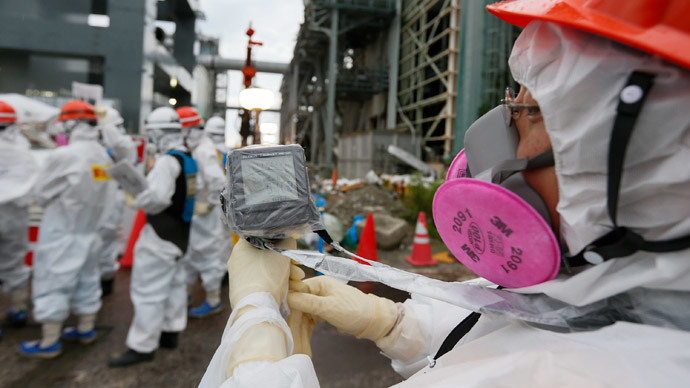
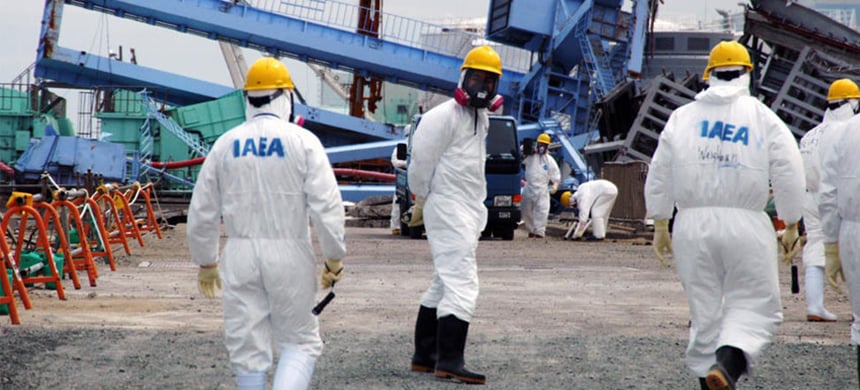
IAEA Experts at Fukushima Daiichi Nuclear Power Plant Unit 4, 2013 (Source: Wikimedia Commons)

The Olympics are PM Abe’s major PR punch to prove to the world that all-is-well at the world’s most dangerous, and out of control, industrial accident site. And, yes it is still out of control. Nevertheless, the Abe government is not concerned. Be that as it may, the risks are multi-fold and likely not well understood. For example, what if another earthquake causes further damage to already-damaged nuclear facilities that are precariously held together with hopes and prayers, subject to massive radiation explosions? Then what? After all, Japan is earthquake country, which defines the boundaries of the country. Japan typically has 400-500 earthquakes in 365 days, or nearly 1.5 quakes per day.

According to Dr. Shuzo Takemoto, professor, Department of Geophysics, Graduate School of Science, Kyoto University:

“The problem of Unit 2… If it should encounter a big earth tremor, it will be destroyed and scatter the remaining nuclear fuel and its debris, making the Tokyo metropolitan area uninhabitable. The Tokyo Olympics in 2020 will then be utterly out of the question,” (Shuzo Takemoto, Potential Global Catastrophe of the Reactor No. 2 at Fukushima Daiichi, February 11, 2017).

Since the Olympics will be held not far from the Fukushima Daiichi nuclear accident site, it’s worthwhile knowing what to expect, i.e., repercussions hidden from public view. After all, it’s highly improbable that the Japan Olympic Committee will address the radiation-risk factors for upcoming athletes and spectators. Which prompts a question: What criteria did the International Olympic Committee (IOC) follow in selecting Japan for the 2020 Summer Olympics in the face of three 100% nuclear meltdowns totally out of control? On its face, it seems reckless.

This article, in part, is based upon an academic study that brings to light serious concerns about overall transparency, TEPCO workforce health & sudden deaths, as well as upcoming Olympians, bringing to mind the proposition: Is the decision to hold the Olympics in Japan in 2020 a foolish act of insanity and a crude attempt to help cover up the ravages of radiation?

Thus therefore, a preview of what’s happening behind, as well as within, the scenes researched by Adam Broinowski, PhD (author of 25 major academic publications and Post Doctoral Research Fellow, Australian National University): “Informal Labour, Local Citizens and the Tokyo Electric Fukushima Daiichi Nuclear Crisis: Responses to Neoliberal Disaster Management,” Australian National University, 2017.

The title of Dr. Broinowski’s study provides a hint of the inherent conflict, as well as opportunism, that arises with neoliberal capitalism applied to “disaster management” principles. (Naomi Klein explored a similar concept in The Shock Doctrine: The Rise of Disaster Capitalism, Knopf Canada, 2007).

Dr. Broinowski’s research is detailed, thorough, and complex. His study begins by delving into the impact of neoliberal capitalism, bringing to the fore an equivalence of slave labor to the Japanese economy, especially in regards to what he references as “informal labour.” He preeminently describes the onslaught of supply side/neoliberal tendencies throughout the economy of Japan. The Fukushima nuke meltdowns simply bring to surface all of the warts and blemishes endemic to the neoliberal brand of capitalism.

According to Professor Broinowski:

“The ongoing disaster at the Fukushima Daiichi nuclear power station (FDNPS), operated by Tokyo Electric Power Company (TEPCO), since 11 March 2011 can be recognised as part of a global phenomenon that has been in development over some time. This disaster occurred within a social and political shift that began in the mid-1970s (ed. supply-side economics, which is strongly reflected in America’s current tax bill under consideration) and that became more acute in the early 1990s in Japan with the downturn of economic growth and greater deregulation and financialisation in the global economy. After 40 years of corporate fealty in return for lifetime contracts guaranteed by corporate unions, as tariff protections were lifted further and the workforce was increasingly casualised, those most acutely affected by a weakening welfare regime were irregular day labourers, or what we might call ‘informal labour.”

In short, the 45,000-60,000 workers recruited to deconstruct decontaminate Fukushima Daiichi and the surrounding prefecture mostly came off the streets, castoffs of neoliberalism’s impact on “… independent unions, rendered powerless, growing numbers of unemployed, unskilled and precarious youths (freeters) alongside older, vulnerable and homeless day labourers (these groups together comprising roughly 38 per cent of the workforce in 2015) found themselves not only (a) lacking insurance or (b) industrial protection but also in many cases (c) basic living needs. With increasing deindustrialisation and capital flight, regular public outbursts of frustration and anger from these groups have manifested since the Osaka riots of 1992.” (Broinowski)

The Osaka Riots of 25 years ago depict the breakdown of modern society’s working class, a problem that has spilled over into national political elections worldwide as populism/nationalism dictate winners/losers. In Osaka 1,500 rampaging laborers besieged a police station (somewhat similar to John Carpenter’s 1976 iconic film Assault on Precinct 13) over outrage of interconnecting links between police and Japan’s powerful “Yakuza” or gangsters that bribe police to turn a blind eye to gangster syndicates that get paid to recruit, often forcibly, workers for low-paying manual jobs for industry.

That’s how TEPCO gets workers to work in radiation-sensitive high risks jobs. Along the way, subcontractors rake off most of the money allocated for workers, resulting in a subhuman lifestyle for the riskiest most life-threatening jobs in Japan, maybe the riskiest most life-threatening in the world.

Japan has a long history of assembling and recruiting unskilled labor pools at cheap rates, which is typical of nearly all large-scale modern industrial projects. Labor is simply one more commodity to be used and discarded. Tokyo Electric Power Company (“TEPCO”) of Fukushima Daiichi fame adheres to those long-standing feudalistic employment practices. They hire workers via layers of subcontractors in order to avoid liabilities, i.e. accidents, health insurance, safety standards, by penetrating into the bottom social layers that have no voice in society.

As such, TEPCO is not legally obligated to report industrial accidents when workers are hired through complex webs or networks of subcontractors; there are approximately 733 subcontractors for TEPCO. Here’s the process: TEPCO employs a subcontractor “shita-uke,” which in turn employs another subcontractor “mago-uke” that relies upon labor brokers “tehaishilninpu-dashi.” At the end of the day, who’s responsible for the health and safety of workers? Who’s responsible for reporting cases of radiation sickness and/or death caused by radiation exposure?

Based upon anecdotal evidence from reliable sources in Japan, there is good reason to believe TEPCO, as well as the Japanese government, suppress public knowledge of worker radiation sickness and death, as well as the civilian population of Fukushima. Thereby, essentially hoodwinking worldwide public opinion, for example, pro-nuke enthusiasts/advocates point to the safety of nuclear power generation because of so few reported deaths in Japan. But, then again, who’s responsible for reporting worker deaths? Answer: Other than an occasional token death report by official sources, nobody!

Image result for TEPCO

Furthermore, TEPCO does not report worker deaths that occur outside of the workplace even though the death is a direct result of excessive radiation exposure at the workplace. For example, if a worker with radiation sickness becomes too ill to go to work, they’ll obviously die at home and therefore not be reported as a work-related death. As a result, pro-nuke advocates claim Fukushima proves how safe nuclear power is, even when it goes haywire, because there are so few, if any, deaths, as to be inconsequential. That’s a boldfaced lie that is discussed in the sequel: Fukushima Darkness – Part 2.

“As one labourer stated re Fukushima Daiichi: ‘TEPCO is God. The main contractors are kings, and we are slaves’. In short, Fukushima Daiichi clearly illustrates the social reproduction, exploitation and disposability of informal labour, in the state protection of capital, corporations and their assets.” (Broinowski)

Indeed, Japan is a totalitarian corporate state where corporate interests are protected from liability by layers of subcontractors and by vested interests of powerful political bodies and extremely harsh state secrecy laws. As such, it is believed that nuclear safety and health issues, including deaths, are underreported and likely not reported at all in most cases. Therefore, the worldview of nuclear power, as represented in Japan at Fukushima Daiichi, is horribly distorted in favor of nuclear power advocacy.

Fukushima’s Darkness – Part 2 sequel, to be published at a future date, discusses consequences.

  • Posted in English @as @as
  • Comments Off on Fukushima Darkness: Radiation of Triple Meltdowns Felt Worldwide
  • Tags:

Recently the Indian Cabinet approved key changes in India’s foreign direct investment (FDI) policy by allowing 100 percent FDI (from current 49%) under automatic route for single brand retail trading and construction development paving the way for global players. During April-September, 2017-18, FDI inflows grew 17 percent on year at USD 25.35 billion. In the financial year 2016-17, total FDI inflows hit an all-time high of USD 60.08 billion, as compared with USD 55.46 billion a year ago.

While India is opening up its markets to be developed by borrowed foreign investment there is a fundamental question that remains to be answered or rather even asked by experts. While the Western European countries are themselves still reeling under the pressure of the 2008 financial crisis that shook not just their economic but societal and even security foundations and brought them to the verge of bankruptcies; where would all these FDI investment monies come from? This simple question if answered would lay bare the entire charade of Foreign Direct Investment in India as well as the American Dream. It is really amusing that none from the entire 1.3 billion population of India has been able to ask this humble question.

Retail Apocalypse

Gullible Indians must be thinking the foreign retail markets must be doing really well and the companies making a lot of profit so much so that now they are expanding their base of operations in India as well. They sure are coming to India but not because they‘re expanding their business but because they are shifting their base of operations. Why? Because the 2008 crisis sent the American retail sector (along with others) crashing to its doom now known as the Retail Apocalypse.

The Retail Apocalypse refers to the closing of a large number of American retail stores since the crisis and is expected to peak in 2018. The Atlantic describes the phenomenon as “The Great Retail Apocalypse of 2017.” Of the 1,200 shopping malls across the US, 50% are expected to close by 2023. More than 12,000 stores are expected to close in 2018. Now these same bankrupt companies would be opening up shop in India via non-existent FDI.

Infographic by Visual Capitalist

As the Forbes contributor Blake Morgan puts it,

An apocalypse is the final destruction before the end of the world, so the popular phrase “retail apocalypse” would be the end of retail as we know it.

Although she is partly correct in her assessment that this “isn’t the end of the world but start of something exciting,” how that change would come about is a billion dollar FDI question.

American Nightmare

While Indians were fighting over should or should not they celebrate the New Year this is what Christmas Day looked like for thousands of homeless people in the dark and dingy underbelly of Downtown Los Angeles in United States of America. The shocking footage – captured using a car dash camera – shows the brutal reality of life on the street in the notorious Skid Row district where nine toilets are shared by some 2,000 people, according to a June report titled ‘No Place to Go‘. The three-minute clip was originally published on Instagram by LA street artist Plastic Jesus then on LiveLeak by Nick Stern in the ‘Citizen Journalism’ video category.

In a 2015 book titled $2.00 a Day: Living on Almost Nothing in America, the sociologist Kathryn J. Edin and her colleague H. Luke Shaefer estimated that there are nearly 1.5 million American households who are living on fewer than $2 a day. Nobel Prize-winning economist, Angus Deaton in a recent interview to the Atlantic goes on to compare the poverty in Mississippi to that in India. In a memorable quote Deaton says,

“If you had to choose between living in a poor village in India and living in the Mississippi Delta or in a suburb of Milwaukee in a trailer park, I’m not sure who would have the better life.”

Paul Theroux author of Deep South: Four Seasons on Back Roads has compared some American towns with those in Zimbabwe –

“It is possible to impoverish an American community to the point where it is indistinguishable from a hard-up town in the dusty heartland of a third world country.”

Though ranked as one of the wealthiest nations, the US is home to some of the poorest communities in the world. The wealthiest one per cent of American households own 40 percent of the country’s wealth, according to a November report by economist Edward N. Wolff. That same one per cent of households own more wealth than the bottom 90 per cent combined, the Washington Post reported.

Same is the story with the European nations (now falling like dominos) who unknowingly absorbed monstrous proportions of toxic US debt thinking it was a genuine investment. Only in 2008 when the German banks wanted to offload some of their US real-estate investment it was a revelation for the US regulator about the extent of fraud committed by the US banks, insurance companies and Wall Street brokerage firms; leading to what we know now as US Meltdown of 2008 and Eurozone Crisis of 2012 and if not prudent will be called the Indian Crisis of 2020.

Western-European economies are still reeling under the pressure of this financial crisis and the Chinese together with the Russians are pushing them further into recession. As recently as in January last year the global elite met at the World Economic Forum in Davos expressing their fears about the global liquidity crunch and the implications it may have on their economies. What they fear is that the meltdown may spell the end of the supremacy of the banking houses of London and New York as financial centers. It is here that India comes into picture. That this announcement to open up Indian markets has come right before another meeting in Davos on Jan 22nd is also very telling.

What is at stake here is the western way of life itself branded and marketed as the American Dream. It is to protect this American Dream from turning into a Nightmare that India is being drawn into this spiral of debt economics.

Evolution of FDI

In 2008 this economic tumor ripped through the US and by 2011 it had spread to most parts of Western Europe. It resulted in large scale unemployment and inflation leading to several protests and had left behind a trail of crippled and near bankrupt economies. Even today, western economies are coping with the after effects of this economic crisis and few are still in recession. To squeeze every dollar they could into their economies, most nations resorted to wage-cuts, reduction in public spending, mass layoffs, austerity measures etc.

With no end to their woes in sight, the Americans along with their European partners resorted to strategies which are reminiscent of the colonial era. The coalition entered into war with Libya with the noble objectives of spreading democracy, rule of law and human rights and ultimately fleeced the country of $ 2 trillion which prevented the collapse of these economies and gave them some breathing room. The western governments realized that the economic crisis was intrinsically linked to the standard of living of their people which if not protected could lead to the political radicalization of the entire west and could wind the clock back to the time when they were struggling to counter spread of soviet ideology in their countries.

While most countries were still reeling under the shock of recession, Dubai, which was afflicted by what was famously known as the Dubai Flu of 2009, came out of its effects relatively quickly. How that came about is worth looking at. Little known to many, UAE is a conglomerate of either 12-14 sheikdoms of which Ras-al-Khima, Abudabi, Dubai and Sharjah are well known. They miraculously came out of depression by virtue of a financial experiment that most western countries were skeptical of, but its eventual success led these nations to quickly adopt it. The experiment was a carefully drafted strategy which was devised by political pundits, banking and economic wizards and its script began to unfold in India since mid 2011.

India’s Biggest Scam – Round-Tripping Black Money as FDI

We were told that demonetization would combat the black economy and also crack a whip on the funding sources of terrorist outfits by curbing the circulation of Fake Indian Currency Notes. Far from it we are again in the midst of mindless terror acts across the Red Corridor and the Kashmir region and our currency notes itself printed by foreign companies blacklisted for being a threat to India’s security. What we were not told about the black money however, was that while Indian govt. was cracking a whip on the informal economy the actual black money was already being routed back into India legally via FDI (now rubber stamped by foreign corporations).

While the government is busy waging war on black money, international watchdog Global Financial Integrity has estimated that black money worth as much as USD 21 billion was taken out of India illegally in 2014. In its latest report, GFI also threw some light upon illegal inflow of funds, with India being identified as the parking spot for around USD 101 billion, 11 percent more than in the corresponding period a year ago.

Titled ‘Illicit Financial Flows to and from Developing Countries: 2005-2014’, the report said that between USD 620 billion and USD 970 billion was drained out across all emerging market countries, primarily through the trade fraud route. In all, illegal inflows and outflows were estimated to constitute 14-24 percent of total developing country trade between 2005 and 2014. This is called Round Tripping. One of the leading puzzles related to cross border flow of investment is the phenomenon of ‘Round Tripping FDI’. Just ask yourself this – why the biggest sources of FDI are tax havens?

This bizarre Saga of bankrupt western economies and their multinational business houses’ incredulous economic plan to Develop India with non-existing FDI is the subject matter and is explained in detail in GreatGameIndia’s FDI Series – Foreign countries Dictating India Series.

Infographic from GreatGameIndia’s FDI – Foreign countries Dictating India Series

Slowly and steadily but surely, India is being integrated into the Anglo-American architecture and this parasitic relationship is being normalized symbolically through single-handed policies and high-profile events repeatedly where every Indian protocol or institution is being blatantly disregarded or bypassed.

While this is the current state of the Western European economies, it is a tragedy that Indian policy makers are blissfully ignorant or purposefully conniving to download this now defunct American Dream into India either by tricking the populace through outright bluff and bluster of sloganeering or in many cases oppressively against the will of its own people. But than, why should there be an Indian Apocalypse to save the American Dream turning into a Nightmare?

“FDI in retail will bring back East India Company regime” said the current Indian government few years ago when it was in opposition. It is worthwhile to note that patriot Americans themselves are fighting these multinational corporations and banks that collapsed their economy. It is through this mandate of wresting back power from these forces of globalization that Donald Trump won the election. But then, why should America be Great Again at the expense of India being a Slave Again?


Shelley Kasli is the Co-founder and Editor at GreatGameIndia, a quarterly journal on geopolitics and international affairs. He can be reached at [email protected].

Featured image is from UK India Business Council.

  • Posted in English @as @as
  • Comments Off on Opening India’s Economy to Corporate America: “Retail Apocalypse” to Save the American Dream?
  • Tags: ,

This article by Professor James Petras first published by GR in August 2016 brings to the forefront the ongoing conflict between the US and China. 

China and the United States are moving in polar opposite directions: Beijing is rapidly becoming the center of overseas investments in high tech industries, including robotics, nuclear energy and advanced machinery with collaboration from centers of technological excellence, like Germany.

In contrast, Washington is pursuing a predatory military pivot to the least productive regions with collaboration from its most barbaric allies, like Saudi Arabia.

China is advancing to global economic superiority by borrowing and innovating the most advance methods of production, while the US degrades and debases its past immense productive achievements to promote wars of destruction.

China’s growing prominence is the result of a cumulative process that advanced in a systematic way, combining step-by-step growth of productivity and innovation with sudden jumps up the ladder of cutting edge technology.

China’s Stages of Growth and Success

China has moved from a country, highly dependent on foreign investment in consumer industries for exports, to an economy, based on joint public-private investments in higher value exports.

China’s early growth was based on cheap labor, low taxes and few regulations on multi-national capital.  Foreign capital and local billionaires stimulated growth, based on high rates of profit.  As the economy grew, China’s economy shifted toward increasing its indigenous technological expertise and demanding greater ‘local content’ for manufactured goods.

By the beginning of the new millennium China was developing high-end industries, based on local patents and engineering skills, channeling a high percentage of investments into civilian infrastructure, transportation and education.

Massive apprenticeship programs created a skilled labor force that raised productive capacity.  Massive enrollment in science, math, computer science and engineering universities provided a large influx of high-end innovators, many of whom had gained expertise in the advanced technology of overseas competitors.

China’s strategy has been based on the practice of borrowing, learning, upgrading and competing with the most advanced economics of Europe and the US.

By the end of the last decade of the 20th century, China was in a position to move overseas. The accumulation process provided China with the financial resources to capture dynamic overseas enterprises.

China was no longer confined to investing in overseas minerals and agriculture in Third World countries.  China is looking to conquer high-end technological sectors in advanced economics.

By the second decade of the 21st century Chinese investors moved into Germany, Europe’s most advanced industrial giant.  During the first 6 months of 2016 Chinese investors acquired 37 German companies, compared with 39 in all of 2015.  China’s total investments in Germany for 2016 may double to over $22 billion dollars.

In 2016, China successfully bought out KOKA, Germany’s most innovative engineering company.  China’s strategy is to gain superiority in the digital future of industry.

China is rapidly moving to automate its industries, with plans to double the robot density of the US by the year 2020.

Chinese and Austrian scientists successfully launched the first quantum-enabled satellite communication system which is reportedly ‘hack proof’, ensuring China’s communications security.

While China’s global investments proceed to dominate world markets, the US, England and Australia have been trying to impose investment barriers. By relying on phony ‘security threats’, Britain’s Prime Minister Theresa May blocked a multi-billion dollar Chinese investment-heavy nuclear plant (Hinckley Point C). The pretext was the spurious claim that China would use its stake to “engage in energy blackmail, threatening to turn off the power in the event of international crises”.

The US Committee on Foreign Investment has blocked several multi-billion dollar Chinese investments in high tech industries.

In August 2016 Australia blocked an $8 billion-dollar purchase of a controlling stake in its biggest electricity distribution network on specious claims of ‘national security’.

The Anglo-American and German empires are on the defensive.  They increasingly cannot compete economically with China, even in defending their own innovative industries.

In large part this is the result of their failed policies.  Western economic elite have increasingly relied on short-term speculation in finance, real estate and insurance, while neglecting their industrial base.

Led by the US, their reliance on military conquests (militaristic empire-building) absorb public resources, while China has directed its domestic resources toward innovative and advanced technology.

To counter China’s economic advance, the Obama regime has implemented a policy of building economic walls at home, trade restrictions abroad and military confrontation in the South China Seas – China’s strategic trade routes.

US officials have ratcheted up their restrictions on Chinese investments in high tech US enterprises including a $3.8 billion investment in Western Digital and Philips attempt to sell its lighting business.  The US blocked ‘Chen China’s planned $44 billion takeover of Swiss chemical group ‘Syngenta’.

US officials are doing everything possible to stop innovative billion dollar deals that include China as a strategic partner.

Accompanying its domestic wall, the US has been mobilizing an overseas blockade of China via its Trans-Pacific-Partnership, which proposes to exclude Beijing from participating in the ‘free trade zone’ with a dozen North America, Latin American and Asian members.  Nevertheless, not a single member-nation of the TPP has cut back its trade with China.  On the contrary, they are increasing ties with China – an eloquent comment on Obama’s skill at ‘pivoting’.

While the ‘domestic economic wall’ has had some negative impacts on particular Chinese investors, Washington has failed to dent China’s exports to US markets.  Washington’s failure to block China’s trade has been even more damaging to Washington’s effort to encircle China in Asia and Latin America, Oceana and Asia.

Australia, New Zealand, Peru, Chile, Taiwan, Cambodia and South Korea depend on Chinese markets far more than on the US to survive and grow.

While Germany, faced with China’s dynamic growth, has chosen to ‘partner’ and share, up-scale productive investments, Washington has opted to form military alliances to confront China.

The US bellicose military alliance with Japan has not intimidated China.  Rather it has downgraded their domestic economies and economic influence in Asia.

Moreover, Washington’s “military pivot” has deepened and expanded China’s strategic links to Russia’s energy sources and military technology.

While the US spends hundreds of billions in military alliances with the backward Baltic client-regimes and the parasitical Middle Eastern states, (Saudi Arabia, Israel), China accumulates strategic expertise from its economic ties with Germany, resources from Russia and market shares among Washington’s ‘partners’ in Asia and Latin America.

There is no question that China, following the technological and productive path of Germany, will win out over the US’s economic isolationist and global militarist strategy.

If the US has failed to learn from the successful economic strategy of China, the same failure can explain the demise of the progressive regimes in Latin America.

China’s Success and the Latin American Retreat

After more than a decade of growth and stability, Latin America’s progressive regimes have retreated and declined.  Why has China continued on the path of stability and growth while their Latin American partners retreated and suffered defeats?

Brazil, Argentina, Venezuela, Uruguay, Paraguay, Bolivia and Ecuador, for over a decade, served as Latin America’s center-left success story.  Their economies grew, social spending increased, poverty and unemployment were reduced and worker incomes expanded.

Subsequently their economies went into crisis, social discontent grew and the center-left regimes fell.

In contrast to China, the Latin American center-left regimes did not diversify their economies:  they remained heavily dependent on the commodity boom for growth and stability.

The Latin American elites borrowed and depended on foreign investment, and financial capital, while China engaged in public investments in industry, infrastructure, technology and education.

Latin American progressives joined with foreign capitalist and local speculators in non-productive real estate speculation and consumption, while China invested in innovative industries at home and abroad.  While China consolidated political rulership, the Latin American progressives “allied” with strategic domestic and overseas multi-national adversaries to ‘share power’, which were, in fact, eagerly prepared to oust their “left” allies.

When the Latin commodity based economy collapsed, so did the political links with their elite partners.  In contrast, China’s industries benefited from the lower global commodity prices, while Latin America’s left suffered.  Faced with widespread corruption, China launched a major campaign purging over 200,000 officials.  In Latin America, the Left ignored corrupt officials, allowing the opposition to exploit the scandals to oust center-left officials.

While Latin America imported machinery and parts from the West; China bought the entire Western companies producing the machines and their technology – and then implemented Chinese technological improvements.

China successfully outgrew the crisis, defeated its adversaries and proceeded to expand local consumption and stabilized rulership.

Latin America’s center-left suffered political defeats in Brazil, Argentina and Paraguay, lost elections in Venezuela and Bolivia and retreated in Uruguay.

Conclusion

China’s political economic model has outperformed the imperialist West and leftist Latin America.   While the US has spent billions in the Middle East for wars on behalf of Israel, China has invested similar amounts in Germany for advanced technology, robotics and digital innovations.

While President Obama and Secretary of State Hillary Clinton’s “pivot to Asia” has been largely a wasteful military strategy to encircle and intimidate China, Beijing’s “pivot to markets” has successfully enhanced its economic competitiveness.  As a result, over the past decade, China’s growth rate is three times that of the US; and in the next decade China will double the US in ‘robotizing’ its productive economy.

The US ‘pivot to Asia’, with its heavy dependence on military threats and intimidation has cost billions of dollars in lost markets and investments.  China’s ‘pivot to advanced technology’ demonstrates that the future lies in Asia not the West. China’s experience offers lessons for future Latin American leftist governments.

First and foremost, China emphasizes the necessity of balanced economic growth, over and above short-term benefits resulting from commodity booms and consumerist strategies.

Secondly, China demonstrates the importance of professional and worker technical education for technological innovation, over and above  business school and non-productive ‘speculative’ education so heavily emphasized in the US.

Thirdly, China balances its social spending with investment in core productive activity; competitiveness and social services are combined.

China’s enhanced growth and social stability, its commitment to learning and surpassing advanced economies has important limitations, especially in the areas of social equality and popular power.  Here China can learn from the experience of Latin America’s Left.  The social gains under Venezuela’s President Chavez are worthy of study and emulation; the popular movements in Bolivia, Ecuador and Argentina, which ousted neo-liberals from power, could enhance efforts in China to overcome the business- state nexus of pillage and capital flight.

China, despite its socio-political and economic limitations, has successfully resisted US military pressures and even ‘turned the tables’ by advancing on the West.

In the final analysis, China’s model of growth and stability certainly offers an approach that is far superior to the recent debacle of the Latin American Left and the political chaos resulting from Washington’s quest for global military supremacy.

  • Posted in English @as @as, Mobile
  • Comments Off on China’s Pivot to World Markets, Washington’s Pivot to World Wars…

To Liberate Cambodia

January 10th, 2018 by Robert J. Burrowes

A long-standing French protectorate briefly occupied by Japan during World War II, Cambodia became independent in 1953 as the French finally withdrew from Indochina. Under the leadership of Prince Norodom Sihanouk, Cambodia remained officially neutral, including during the subsequent US war on Indochina. However, by the mid-1960s, parts of the eastern provinces of Cambodia were bases for North Vietnamese Army and National Liberation Front (NVA/NLF) forces operating against South Vietnam and this resulted in nearly a decade of bombing by the United States from 4 October 1965. See ‘Bombs Over Cambodia: New Light on US Air War’.

In 1970 Sihanouk was ousted in a US-supported coup led by General Lon Nol. See ‘A Special Supplement: Cambodia’. The following few years were characterized by an internal power struggle between Cambodian elites and war involving several foreign countries, but particularly including continuation of the recently commenced ‘carpet bombing’ of Cambodia by the US Air Force.

On 17 April 1975 the Communist Party of Kampuchea (CPK), otherwise known as the Khmer Rouge, took control of Cambodia. Following four years of ruthless rule by the Chinese-supported Khmer Rouge, initially under Pol Pot, they were defeated by the Vietnamese army in 1979 and the Vietnamese occupation authorities established the People’s Republic of Kampuchea (PRK), installing Heng Samrin and other pro-Vietnamese Communist politicians as leaders of the new government. Heng was succeeded by Chan Sy as Prime Minister in 1981.

Hun Sen (2016) cropped.jpg

PM Hun Sen

Following the death of Chan Sy, Hun Sen became Prime Minister of Cambodia in 1985 and, despite a facade of democracy, he and the Cambodian People’s Party (CPP) have been in power ever since. This period has notably included using the army to purge a feared rival in a bloody coup conducted in 1997. Hun Sen’s co-Prime Minister, Prince Norodom Ranariddh, was ousted and fled to Paris while his supporters were arrested, tortured and some were summarily executed.

The current main opposition party, the Cambodia National Rescue Party (CNRP) was founded in 2012 by merging the Sam Rainsy Party and the Human Rights Party. Emblematic of Cambodia’s ‘democratic’ status, more than two dozen opposition members and critics have been locked up in the past year alone and the CNRP leader, Kem Sokha, known for his nonviolent, politically tolerant views, is currently imprisoned at a detention centre in Tboung Khmum Province following his arrest on 3 September 2017 under allegations of treason, espionage and for orchestrating anti-government demonstrations in 2013-2014. These demonstrations were triggered by widespread allegations of electoral fraud during the Cambodian general election of 2013. See ‘Sokha arrested for “treason”, is accused of colluding with US to topple the government’.

On 16 November 2017 the CNRP was dissolved by Cambodia’s highest court and 118 of its members, including Sokha and exiled former leader Sam Rainsy, were banned from politics for five years.

Cambodian Society

Socially, Cambodia is primarily Khmer with ethnic populations of Chinese, Vietnamese, Cham, Thai and Lao. It has a population of 16 million people. The pre-eminent religion is Buddhism. The adult literacy rate is 75%; few Cambodians speak a European language limiting access to western literature. Most students complete 12 years of (low quality public) school but tertiary enrollment is limited. As in all countries, education (reinforced by state propaganda through the media) serves to intimidate and indoctrinate students into obedience of elites. Discussion of national politics in a school class is taboo and such discussions are rare at tertiary level. This manifests in the narrow range of concerns that mobilize student action: personal outcomes such as employment opportunities. Issues such as those in relation to peace, the environment and refugees do not have a significant profile. In short, the student population generally is neither well informed nor politically engaged.

However, many other issues engage at least some Cambodians, with demonstrations, strikes and street blockades being popular tactics, although the lack of strategy means that outcomes are usually limited and, despite commendable nonviolent discipline in many cases, violent repression is not effectively resisted. Issues of concern to workers, particularly low wages in a country with no minimum wage law, galvanize some response. See, for example, ‘Protests, Strikes Continue in Cambodia: Though their occupations differ, Cambodian workers are united in their push for a living wage’. Garment workers are a significant force because their sector is important to the national economy. Land grabbing and lack of housing mobilize many people but usually fail to attract support beyond those effected. See, for example, ‘Housing Activists Clash With Police in Street Protest’. Environmental issues, such as deforestation and natural resource depletion, fail to mobilize the support they need to be effective.

Protests, Strikes Continue in Cambodia

Protests, strikes continue in Cambodia (Source: @ASCorrespondent/Twitter)

Having noted that, however, Cambodian activists require enormous courage to take nonviolent action as the possibility of violent state repression in response to popular mobilization is a real one, as illustrated above and documented in the Amnesty International report ‘Taking to the streets: Freedom of peaceful assembly in Cambodia’ from 2015.

Perhaps understandably, given their circumstances, international issues, such as events in the Middle East, North Korea and the plight of the Rohingya in neighbouring Myanmar are beyond the concern of most Cambodians.

Economically, Cambodians produce traditional goods for small local households with industrial production remaining low in a country that is still industrializing. Building on agriculture (especially rice), tourism and particularly the garment industry, which provided the basis for the Cambodian export sector in recent decades, the dictatorship has been encouraging light manufacturing, such as of electronics and auto-parts, by establishing ‘special economic zones’ that allow cheap Cambodian labour to be exploited. Most of the manufacturers are Japanese and despite poor infrastructure (such as lack of roads and port facilities), poor production management, poor literacy and numeracy among the workers, corruption and unreliable energy supplies, Cambodian factory production is slowly rising to play a part in Japan’s regional supply chain. In addition, Chinese investment in the construction sector has grown enormously in recent years and Cambodia is experiencing the common problem of development being geared to serve elite commercial interests and tourists rather than the needs (such as affordable housing) of ordinary people or the environment. See ‘China’s construction bubble may leave Cambodia’s next generation without a home’.

Environmentally, Cambodia does little to conserve its natural resources. For example, between 1990 and 2010, Cambodia lost 22% of its forest cover, or nearly 3,000,000 hectares, largely to logging. There is no commitment to gauging environmental impact before construction projects begin and the $US800m Lower Sesan 2 Dam, in the northeast of the country, has been widely accused of being constructed with little thought given to local residents (who will be evicted or lose their livelihood when the dam reservoir fills) or the project’s environmental impact.

Beyond deforestation (through both legal and illegal logging) then, environmental destruction in Cambodia occurs as a result of large scale construction and agricultural projects which destroy important wildlife habitats, but also through massive (legal and illegal) sand mining – see ‘Shifting Sand: How Singapore’s demand for Cambodian sand threatens ecosystems and undermines good governance’ – poaching of endangered and endemic species, with Cambodian businesses and political authorities, as well as foreign criminal syndicates and many transnational corporations from all over the world implicated in the various aspects of this corruptly-approved and executed destruction.

In the words of Cambodian researcher Tay Sovannarun:

‘The government just keeps doing business as usual while the rich cliques keep extracting natural resources and externalizing the cost to the rest of society.’ Moreover, three members of the NGO Mother Nature – Sun Mala, Try Sovikea and Sim Somnang – recently served nearly a year in prison for their efforts to defend the environment and the group was dissolved by the government in September 2017. See ‘Environmental NGO Mother Nature dissolved’.

Cambodian Politics

Politically, Cambodians are largely naïve with most believing that they live in a ‘democracy’ despite the absence of its most obvious hallmarks such as civil and political rights, the separation of powers including an independent judiciary, free and fair elections, the right of assembly and freedom of the press (with the English-language newspaper The Cambodia Daily recently closed down along with some radio stations). And this is an accurate assessment of most members of the political leadership of the CNRP as well.

Despite a 30-year record of political manipulation by Hun Sen and the CPP – during which ‘Hun Sen has made it clear that he does not respect the concept of free and fair elections’: see ‘30 Years of Hun Sen: Violence, Repression, and Corruption in Cambodia’ – which has included obvious corruption of elections through vote-rigging but also an outright coup in 1997 and the imprisonment or exile of opposition leaders since then, most Cambodians and their opposition leaders still participate in the charade that they live in a ‘democracy’ which could result in the defeat of Hun Sen and the CPP at a ‘free and fair’ election. Of course, there are exceptions to this naïveté, as a 2014 article written by Mu Sochua, veteran Cambodian politician and former minister of women’s affairs in a Hun Sen government, demonstrates. See ‘Crackdown in Cambodia’.

Moreover, as Sovannarun has noted: most Cambodians ‘still think international pressure is effective in keeping the CPP from disrespecting democratic principles which they have violated up until this day. Right now they wait for US and EU sanctions in the hope that the CPP will step back.’ See, for example, ‘The Birth of a Dictator’. He asks:

‘Even assuming it works, when will Cambodians learn to rely on themselves when the ruling party causes the same troubles again? Are they going to ask for external help like this every time and expect their country to be successfully democratized?’

The problem, Sovannarun argues, is that

‘Cambodians in general do not really understand what democracy is. Their views are very narrow. For them, democracy is just an election. Many news reports refer to people as “voters” but in Khmer, this literally translates as “vote owners” as if people cannot express their rights or power beside voting.’

Fortunately, recent actions by the CPP have led to opposition leaders and some NGOs finally declaring the Hun Sen dictatorship for what it is. See, for example, ‘The Birth of a Dictator’. But for Sovannarun,

‘democratization ended in 1997. The country should be regarded as a dictatorship since then. The party that lost the election in 1993 still controlled the national military, the police and security force, and the public administration, eventually using military force to establish absolute control in 1997. How is Cambodia still a democracy?’

However, recent comprehensive research undertaken by Global Witness goes even further. Their report Hostile Takeover ‘sheds light on a huge network of secret deal-making and corruption that has underpinned Hun Sen’s 30-year dictatorial reign of murder, torture and the imprisonment of his political opponents’. See ‘Hostile Takeover: The corporate empire of Cambodia’s ruling family’ and ‘Probe: Companies Worth $200M Linked to Cambodian PM’s Family’.

So what are the prospects of liberating Cambodia from its dictatorship?

Mu Sochua after her verdict by Court on 4 August 2009. (Source: Wikimedia Commons)

To begin, there is little evidence to suggest that leadership for any movement to do so will come from within formal political ranks. Following the court-ordered dissolution of the CNRP on 16 November 2017 – see ‘Cambodia top court dissolves main opposition CNRP party’ – at the behest of Hun Sen, ‘half of their 55 members of parliament fled the country’. And this dissolution was preceded by actions that had effectively neutralized the opposition, with two dozen opposition members (including CNRP leader Kem Sokha) and critics imprisoned in the past year alone, as reported above, and the rapid flight of Opposition Deputy President Mu Sochua on 3 October after allegedly being notified by a senior official that her arrest was imminent. See ‘Breaking: CNRP’s Mu Sochua flees country following “warning” of arrest’. But while Mu Sochua called for a protest gathering after she had fled, understandably, nobody dared to protest: ‘Who dares to protest if their leader runs for their life?’ Sovannarun asks.

Of course, civil society leadership is fraught with danger too. Prominent political commentator and activist Kem Ley, known for his trenchant criticism of the Hun Sen dictatorship, was assassinated on 10 July 2016 in Phnom Penh. See ‘Shooting Death of Popular Activist Roils Cambodia’ and ‘Q&A With Kem Ley: Transparency on Hun Sen Family’s Business Interests is Vital’. Ley was the third notable activist to be killed following the union leader Chea Vichea in 2004 – see ‘Who Killed Chea Vichea?’ – and environmental activist Wutty Chut in 2012. See ‘Cambodian Environmental Activist Is Slain’. But they are not the only activists to suffer this fate.

In addition, plenty of politicians, journalists and activists have been viciously assaulted by the security forces and members of Hun Sen’s bodyguard unit – see, for example, ‘Dragged and Beaten: The Cambodian Government’s Role in the October 2015 Attack on Opposition Politicians’ – and/or imprisoned by the dictatorship. See ‘Cambodia: Quash Case Against 11 Opposition Activists: No Legal Basis for Trumped-Up Charges, Convictions, and Long Sentences’. In fact, Radio Free Asia keeps a record of ‘Cambodian Opposition Politicians and Activists Behind Bars’ for activities that the dictatorship does not like, including defending human rights, land rights and the natural environment.

Moreover, in anotherrecent measure of the blatant brutality of the dictatorship, Hun Sen publicly suggested that opposition politicians Sam Rainsy and Kem Sokha ‘would already be dead’ had he known they were promising to ‘organise a new government’ in the aftermath of the highly disputed 2013 national election result. See ‘Rainsy and Sokha “would already be dead”: PM’. He also used a government-produced video to link the CNRP with US groups in fomenting a ‘colour revolution’ in Cambodia. See ‘Government ups plot accusations with new video linking CNRP and US groups to “colour revolutions”’.

In one response to Hun Sen’s ‘would already be dead’ statement, British human rights lawyer Richard Rogers, who had filed a complaint asking the International Criminal Court (ICC) to investigate the Cambodian ruling elite for widespread human rights violations in 2014, commented that it was simply more evidence of the government’s willingness to persecute political dissidents. ‘It shows that he is willing to order the murder of his own people if they challenge his rule’. Moreover: ‘These are not the words of a modern leader who claims to lead a democracy.’ See ‘Rainsy and Sokha “would already be dead”: PM’. Whether Hun Sen is even sane is a question that no-one asks.

So what can Cambodians do? Fortunately, there is a long history of repressive regimes being overthrown by nonviolent grassroots movements. And nonviolent action has proven powerfully effective in Cambodia as the Buddhist monk Maha Gosananda, and his supporters demonstrated on their 19-day peace walk from Siem Reap to Phnom Penh through war ravaged Khmer Rouge territory in Cambodia in May 1993, defying the expectations of the United Nations Transitional Authority in Cambodia (UNTAC) coordinators at the time that they would be killed by the Khmer Rouge. See ‘Maha Gosananda, a true peace maker’. However, for the Hun Sen dictatorship to be removed, Cambodians will be well served by a thoughtful and comprehensive strategy that takes particular account of their unique circumstances.

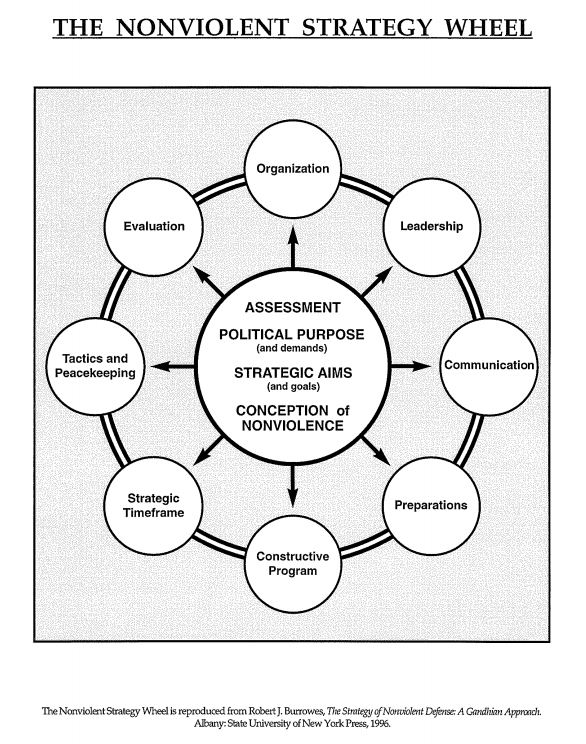
A framework to plan and implement a strategy to remove the dictatorship is explained in Nonviolent Defense/Liberation Strategy with Sovannarun’s Khmer translation of this strategy here.

This strategic framework explains what is necessary to remove the dictatorship and, among consideration of many vital issues, elaborates what is necessary to maintain strategic coordination when leaders are at high risk of assassination, minimize the risk of violent repression while also ensuring that the movement is not hijacked by government or foreign provocateurs whose purpose is to subvert the movement by destroying its nonviolent character – see, for example, ‘Nonviolent Action: Minimizing the Risk of Violent Repression’ – as well as deal with foreign governments (such as those of China, the European Union, Japan and the USA) who (categorically or by inaction) support the dictatorship, sometimes by supplying military weapons suitable for use against the domestic population.

Sovannarun is not optimistic about the short-term prospects for his country: Too many mistakes have been repeated too often. But he is committed to the nonviolent struggle to liberate Cambodia from its dictatorship and recognizes that the corrupt electoral process cannot restore democracy or enable Cambodians to meaningfully address the vast range of social, political, economic and environmental challenges they face.

*

Robert J. Burrowes has a lifetime commitment to understanding and ending human violence. He has done extensive research since 1966 in an effort to understand why human beings are violent and has been a nonviolent activist since 1981. He is the author of ‘Why Violence?’ His email address is [email protected] and his website is here.

Featured image is from The Cambodia Daily.

Australian Foreign Minister Julie Bishop declared in September 2017 that the emerging US-India-Japan-Australia Indo-Pacific “quadrilateral dialogue” would be founded on “respect for international law and the rules-based order.”1 The reassurance was welcome, but it will mean some big changes, probably on all four sides, most of all for the US, which does not recognize itself as being bound by any rules, remains aloof from the International Criminal Court and commits war crimes including military interventions unauthorized by the UN (therefore acts of aggression), assassination and torture on a daily basis.

As for Japan and Australia, they both appear to rank the US relationship above any principled application of law and to positively embrace the role of “client state” of the violent and lawless United States,2 while India as of 2017 seemed to be following a similar path with its quadrilateral partners.3 In July 2017, it banned all trade with North Korea except for food and medicine, and pledged to support steps to further isolate and pressure the country. These were drastic measures since India was North Korea’s third largest trading partner till 2015-16.4

“North Korea as it is, not as we wish it to be…”5

This paper considers the most recent escalation of the “North Korea crisis,” and the various agendas for addressing it, not just the emergent “Indo-Pacific” quadrilateral but specific Japanese and Australian aspects, the United Nations, Russia and China. North Korea’s nuclear weapon tests – in 2006, 2009, 2013, 2016 (twice) and 2017 (possibly a hydrogen bomb) – and its missile tests, culminating in several of apparently intercontinental range (ICBM) in July and September 2017, defy UN directives, draw condemnation on all sides and expose the consequences of decades of failure to address the structural problems at the heart of the Northeast Asian region. The Indo-Pacific quadrilateral constitutes a significant new framing of the North Korean problem.

Two main sets of proposals now rest on global tables: that by the US and its allies, notably Japan and Australia, demanding North Korean submission as precondition for any negotiation, and the call for freeze and negotiations, such as proposed by China and Russia and supported by other states such as Germany and France and by prominent US figures such as former Defense Secretary William Perry.6

As China’s Foreign Minister put it in May 2017, the latter proposal entails

“that, as a first step, the DPRK suspend its missile and nuclear activities in exchange for a halting of large-scale US-ROK military exercises. This ‘double suspension’ approach can help us break out of the security dilemma and bring the parties back to the table.”7

North Korea for at least the past several decades has sought talks on resolving its highly abnormal situation. What it wants, according to Jimmy Carter, ex-president and presidential envoy who negotiated a way through the crisis of 1994, is a peace treaty with the United States and an end to economic sanctions.8 It also wants to “normalize” relations with Japan and to reach a formal, very belated reckoning with Japan over its colonial record. Its demands are rarely treated seriously. In January 2015 it called on the US to suspend its planned war games in return for which it would abstain at least provisionally from nuclear testing, but Obama’s Washington gave no response.9 A little later, William Perry, who as Secretary of Defense from 1994 to 1997 had brought North Korea and the US close to a negotiated settlement, looked back on almost two decades of failed US policy and urged the US to deal with “North Korea as it is, not as we wish it to be,” to give up for the time being the hope of dismantling its nuclear program (recognizing that it is simply too late) and to concentrate on three No’s: no new weapons, no better weapons, no transfer of nuclear weapons or technology.10 North Korea took note of this widely publicized “Perry process” formula and its state-run media declared a readiness to suspend all further testing if the US would turn to winding up the Korean War (with a peace treaty and “normalization”).11 Instead of pursuing the Perry path, however, the US set about rehearsing “special operations” designed to “decapitate” the North Korean regime (i.e. to capture and/or assassinate its leader, Kim Jong-un).12 The scene was thus set for the crisis of 2017.

Following explicit threats (as in March 2017) that the US had exhausted its “strategic patience,” its “sword stands ready” and “all options are on the table” and there was no room for negotiation,13 the US began to mobilize massive force around the Korean peninsula, with no less than three nuclear aircraft carrier fleets in Asia-Pacific waters,14 multiple destroyers and submarines, backed from time to time by Japan’s mini-aircraft carrier, the 19,500-ton Izumo, and its two Aegis-equipped destroyers, Ashiura and Samidare. US Air Force B-1 bombers, known to inflict especially high levels of fear on Koreans because of their nuclear bomb-carrying role, fly in periodically from Guam and criss-cross the peninsula, escorted by fighters of Japan’s Air Self Defence Force and South Korea’s Air Force. There are roughly 50,000 US troops deployed in US bases in Japan and Korea, and Japan’s Yokosuka is the US 7th Fleet’s home port. March and August are periods of especially high tension, as the US and its allies engage in massive war-rehearsing exercises (Operation Key Resolve in March and Ulchi Freedom Guardian in August), this year (2017) especially ramping up intimidation. These exercises rehearse the invasion and destruction of North Korea.

Yet North Korea refuses to be “compelled.” Simply to “denuclearize” without resolving the problems that led it to “nuclearize” in the first place, would be to present itself naked and defenceless to its enemies. Its goose-stepping soldiers, bizarre mass games and overweight young leader feed into the construction of it as uniquely distorted and “evil.” Its long-continuing existential crisis means that its message to the world is presented in shrill tones that do more to conceal than to communicate its essential legitimacy and reasonableness. As a result, no country in modern history has been so friendless, loathed and contemned. Yet the truly remarkable fact is that North Korea exists at all, having fought the United States and the US–led, UN-authorized, coalition of the willing to a standstill 64 years ago that left the country devastated (with millions dead). Despite unremitting pressure and nuclear threat ever since then, it has refused to submit.

Utterly dwarfed in terms of conventional weapons, and increasingly inferior not only to the United States but also to South Korea (which is about double its size in terms of population and perhaps 10 times greater in terms of GDP), North Korea appears to have concluded that its only plausible defense lies in nuclear weapons and delivery systems. Such a perception can hardly be seen as irrational. North Korea is sometimes described as a “guerrilla state” or “partisan state” (Japanese historian Wada Haruki’s term),15 in reference to the siege mentality cultivated over many decades confronting powerful enemies intent on crushing it, and sometimes as a “porcupine” (prickly, obsessively defensive) state. Its DNA is strong on defense, and has no place for submission to enemies.

Kim Jong-un, Chairman of the Workers Party and Supreme Leader of North Korea, visits the Kumsusan Palace, where the bodies of Kim Il Sung and Kim Jong Il rest, 16 February 2017 (75th birthday of the former North Korean leader Kim Jong Il , The Day of the Shining Star, Kwangmyŏngsŏng-jŏl). (Source: Korean Central News Agency, KCNA)

This is not to say that there are no serious issues of concern over human rights – there obviously are – but to recognize that the conditions under which the state exists – of unresolved war, sanctions, isolation – are such that normalcy cannot be expected, or for that matter demanded, save in the context of a comprehensive resolution.16 Only in the frame of a process of diplomatic “normalization” is North Korea likely to be brought in from the cold of more than 100 years as colony, divided state, and global outsider and its political practice to move or begin to move from dictatorship to democracy.

In 2013-14, the United Nations commissioned the Australian jurist, Michael Kirby, to survey and report on the state of human rights in the country. The ensuing report singled North Korea out as an essentially criminal regime, in which

“systematic, widespread and gross human rights violations have been and are being committed …. In many instances, the violations … constitute crimes against humanity … The gravity, scale, and nature of those violations reveal a state that does not have any parallel in the contemporary world.” 17

This assessment is used to justify sanctions that punish an entire people. The state that had been for almost the entirety of its existence subject to nuclear intimidation18 is designated a threat, rogue regime, and ultimate “other.” Revulsion helps justify genocidal threat, revamped regional alliances and stepped-up militarization, new weapons and missile “defence” systems, and war “games” that rehearse resumption of the Korean War.

Hankyoreh21 Cartoon No.1168, by Kwon Beom-cheol, Hankyoreh cartoonist 26 June 2017

As North Korea conducted its 2017 missile tests, in particular two of apparent ICBMs, President Trump emerged briefly from his New Jersey golf resort to threaten it with “fire and fury, and frankly power the likes of which this world has never seen before.”19 That elicited an equally pugnacious response from the commander of North Korea’s army, General Kim Ryak Gyom, that “sound dialogue is not possible with such a guy bereft of reason”20 and a warning that it was preparing to launch missiles towards the American territory (and major military facilities) of Guam.

In August, the Foreign and Defense Ministers of the US and Japan agreed “to pressure North Korea … to compel [italics added] it to take concrete actions to end its nuclear and ballistic missile program and to achieve the complete, verifiable, and irreversible denuclearization [CVID] of the Korean peninsula.”21 Trump tweeted that the US military was “locked and loaded,” ready for action against North Korea.

Then, on 3 September, came the test explosion of what appeared to be a hydrogen bomb, North Korea’s 6th and by far most powerful nuclear test,22 followed by the 15 September intermediate range ballistic missile, which soared over Northern Japan on a 3,700 kilometre trajectory out into the Pacific . . . demonstrating the capability to reach not only Okinawa but also Guam.

The US position (as denoted by the CVID formula) is that it will only meet North Korea provided it first surrenders. Japan’s Prime Minister Abe made this same point in his “op-ed” contribution to the New York Times in September 2017,23 and Australian Foreign Minister Bishop has said the same on multiple occasions.

But nobody who has ever studied North Korea or its history believes that it will submit to pressure or intimidation, or abandon its nuclear and missile programs short of a comprehensive settlement of its security concerns. So the US demands the impossible, and the mobilization of massive forces just offshore to back it up can only be seen as part of a dual design: to induce submission or to provoke North Korea to take some action that would justify mass “retaliation.”

As Trump continued to contemplate the option of war, in August he told Republican Congressman Lindsey Graham that there would indeed be many deaths, but

“they’re going to die over there, they’re not going to die here.”24

On 19 September, he addressed the United Nations General Assembly (in a speech for which it is hard to think of any match in terms of its ferocity), deriding Kim Jong-un by referring to him as “rocket man . . . on a suicide mission,” threatening that North Korea stood to be “wiped out,” and the US would be “forced to totally destroy” it unless it submitted.25 Days later, Kim Jong-un responded in person that

“I will surely and definitively tame the mentally deranged US dotard with fire,” making Trump “pay dearly” for his speech threatening North Korea’s “total destruction.”

North Korean Foreign Minister Ri Yong-ho added days later before the UN General Assembly that Trump was the one “on a suicide mission,” whose “insult to the supreme dignity” of North Korea had made “inevitable” a rocket’s “visit to the US mainland.”

The stance of the US and its allies in threatening, denouncing, and refusing to negotiate is patently illegal and criminal. The clauses from the Charter cited above are unambiguous and, according to the World Court (the ICJ) in its Advisory Opinion (1996) on the Threat or Use of Nuclear Weapons, the legality of a threat stands or falls on the same legal grounds as if the threat were carried out.”26 US threats over many decades culminating in Trump’s to “destroy” or “annihilate” North Korea constitute crimes under both the Charter and the 1948 Geneva Convention to which the United States is a party.27

While the quadrilateral to which Australian Minister Bishop referred unite in condemning and punishing North Korea for its nuclear and missile tests, they turn a collective blind eye to India’s development of a weapons program outside the confines of the Non Proliferation regime (NPT) – current estimates put its nuclear arsenal at well over one hundred nuclear weapons – and, of course, to the thousands of tests conducted by the US. Neither Australia nor Japan take serious exception to this. Both tacitly encourage India, the one by providing it with a nuclear power generating plant and the other with uranium. No other country has been subject to anything comparable to North Korea’s 67 years’ exposure to threat of nuclear extermination coupled with economic and political pressures including sustained blockade. Consequently, the one country in today’s world that might have claim to justification for the “threat or use of nuclear weapons” under the ICJ’s 1996 “Advisory Opinion,” on grounds of an “extreme circumstance of self-defence, in which the very survival of a State would be at stake,” would have to be North Korea.28 It may be mistaken, but not necessarily unlawful, while the unlawfulness of all the other nuclear weapon countries, ignoring their obligation under Article 6 of the Non Proliferation Treaty to set about denuclearizing, is plain.29 Bizarrely, the one country that could plead legal justification for possessing nuclear weapons is the one whose possession much of the world unites to denounce.30

US Clients – Japan and Australia

Where much of the world recoiled in horror from such mutual brinksmanship, the Abe and Turnbull governments associated themselves unconditionally with it, encouraging Trump in his obduracy while India moved decisively to align itself with them. Nobody in the Japanese, Australian or Indian governments is on record as protesting against the US threats. Prime Minister Abe had in April 2017 showed strong support for the cruise missiles Trump launched against Syrian targets and made clear his approval for the American threat to North Korea that “all options” were on the table.31 His then Defence Minister, Inada Tomomi, reiterated that position. “All options” obviously included war and nuclear weapons. Japanese SDF vessels and planes participated in war rehearsal exercises, escorting US aircraft carriers and B-1 bombers on their missions designed to intimidate and terrorize, i.e. rehearsing attack on North Korea.

There was understandable sense of resentment at the North Korean missiles in 2017 passing “over” Japanese territory, but since they passed “over” Japan at a height of somewhere between 500 and 800 kilometres, well above the so-called Karman Line (at 100 kilometres) that defines the beginning of “Outer Space,” and since outer space is “not subject to claims of national sovereignty,” Japan had no standing to protest.32 Nevertheless, the government spent considerable sums on advertisements designed to feed fear of North Korea.33 Japanese railway companies, including the Tokyo subway system, suspended their service, cities and towns conducted public drills, and children learned to crawl under their desks in readiness for possible nuclear attack. TV programs were interrupted with “J-Alert” messages announcing launch of missiles. The nuclear shelter construction industry thrives.34 The North Korean “threat” helps Abe justify stepped up military spending (roughly $46 billion in the latest budget), militarization of the frontier islands (Ishigaki, Miyako, and Yonaguni), and the construction of facilities for the US Marine Corps in Northern Okinawa and in Guam and the Marianas. It also helps prepare the ground for revision of the constitution (Abe’s lifelong ambition). Deputy Prime Minister Aso Taro was not alone in attributing Abe’s substantial electoral victory of October 2017 to the North Korean threat.35

Despite the aggressive tone of Japanese government comment, and the deep-seated ill-will on both sides, it is just fifteen years since the “Pyongyang Declaration” issued by the Japanese and North Korean leaders on the occasion of Prime Minister Koizumi Junichiro’s visit to Pyongyang in September 2002. Then, the two countries came close to a historic settlement.36 Japan apologized in a spirit of “humility,” expressing “deep remorse and heartfelt apology” for the “tremendous damage and suffering to the people of Korea through its colonial rule in the past,” and North Korea’s Kim Jong-il apologized for the abduction of Japanese citizens [in 1977-1983] and promised “appropriate measures so that these regrettable incidents, that took place under the abnormal bilateral relationship, would never happen in the future.”37

Since then, however, the question of abduction of Japanese citizens has defied resolution and preoccupied Japanese attention. North Korea in 2004 returned those it said were the surviving victims, only to have Japan respond by declaring that abduction was the single most important issue (ranking above nuclear weapons or missiles) and that there could be no normalization of relations until all abductees were returned, “all” including those who North Korea said were no longer living. Following a Japan-DPRK agreement in Stockholm in May 2014, North Korea again undertook to investigate, but when it reported once again that there were no survivors the process collapsed. During 2017, President Trump also adopted the Abe cause of the abductees, referring to it both in his UN speech and in his Tokyo speech in November. Yet the only way forward on resolving the hostage issues, as specialists suggest, is likely to be for Japan first to recognize and normalize diplomatic relations with North Korea and then to conduct its own investigation from its embassy in Pyongyang. The US initiative under President Obama in 2016 in opening diplomatic relations with Cuba is cited as an example that Japan might choose to follow.38

UN Security Council, Voting Sanctions on North Korea, September 2017

As for Australia, Prime Minister Malcolm Turnbull declared on radio that “In terms of defence we are joined at the hip” and it would promptly join if needed for any resumption of the Korean War. 39 He later added, as if seeking approval in Washington and Tokyo, reference to the government of North Korea as “a criminal organization operating under the guise of a state.”40 Even after the adoption of the September package of sanctions and the abusive Trump UN speech, Foreign Minister Julie Bishop opined, that “I believe there is more we can do in exerting political, diplomatic and economic pressure on North Korea.”41 She favoured “autonomous sanctions” that went beyond the UN-ordered ones.42 An example soon arose. Australia refused visas to an under-19 North Korean soccer team to compete in the Asian Football Federation championships.

“Hosting the team,” said Foreign Minister Bishop, “would be contrary to the government’s strong opposition to North Korea’s illegal nuclear and missile development programs.”43

It was precisely the sort of collective punishment principle against which, rightly, Australia might take exception when practiced by North Korea. No politician or public figure in Australia had any word to say on behalf of the North Korean under-19s.

Contrary to popular understanding, responsibility for the breakdown of past negotiated agreements has been far from one-sided.44 The introduction of nuclear weapons to the peninsula in the first place, the refusal to take seriously obligations under the Non-Proliferation Treaty to “negotiate in good faith to achieve a precise result – nuclear disarmament in all its aspects – and the inclusion of North Korea on the nuclear target list were all breaches of the Non-Proliferation Treaty.

For its part, from time to time North Korea has engaged in negotiations in which it showed readiness for negotiated solutions, periodically suspending and promising to negotiate away its nuclear weapons and programs, notably between 1994 and 2002 under the so-called “Agreed Framework” and again in 2005-6 under the Beijing Six-Party conference agreement, and again in 2007 at the time of major negotiations between North Korea and the United States in Berlin and Beijing. It was the US then that was described, by Jack Pritchard (formerly the State Department’s top North Korea expert) as “a minority of one … isolated from the mainstream of its four allies and friends”45

Strongly backed, or urged on, by Japan, the US was able to sink the agreements hammered out around the various tables and ensure that nothing short of surrender and submission on North Korea’s part would suffice.46 C. Kenneth Quinones, a former State Department official with considerable experience of negotiating with North Korea, said that he had been able on no less than three occasions in 2005 to find a basis for agreement between the North Korean and US governments, only to have his efforts sabotaged by the Bush/Cheney/Rumsfeld leadership. He referred to North Korea as being “very precise and consistent in their positions” while by contrast the track record of the then Bush administration was “not one of diplomacy but rather one of vacillation, inconsistency and, ultimately, undercutting the position and the efforts of its own diplomats.”47 South Korea’s chief negotiator at the Six Party talks in 2006 and 2007, Chun Young-woo, spoke of his sense that the North Korean participants at those talks felt “besieged, squeezed, strangled, and cornered by hostile powers” and noted the tone of “visceral aversion” or “condescension, self-righteousness or a vindictive approach” on the part of the major parties (by which he plainly meant first and foremost, the United States).48 Jeong Se-hyun, Unification Minister in South Korea between 2001 and 2004, has also written recently of the “mistaken” impression that North Korea never honours its international agreements, saying (in respect of the Beijing “Six Party” negotiations of 2003-8) that the United States also bears responsibility.49

The UN

According to the UN Charter’s Article 2 (3), disputes between states must be settled by peaceful means and (4) “All members shall refrain in their international relations from the threat or use of force against the territorial integrity or political independence of any state …” [italics added]. Article 33 further specifies the obligation of parties to any dispute likely to endanger international peace and security to “first of all, seek a solution by negotiation inquiry, mediation, conciliation … or other peaceful means of their own choice.” By ruling out negotiations with North Korea and insisting only on submission, the US, Japan and Australia ignore or breach this clear rule (and Japan breaches also the proscription on the “threat or use of force as means of settling international disputes” in its own constitution). Going beyond that, President Trump has also not only insulted the North Korean leader from the platform of the UN General Assembly but actually threatened his country with “total destruction,” by “fire and fury, and frankly power the likes of which this world has never seen before.”50 That surely qualifies as threat. It is even genocidal, and therefore criminal behaviour, not only on the part of those (Trump) who utter it but on the part also of those like Abe and Turnbull (to whom perhaps now India’s Modi is to be added) who endorse and encourage it.

The United States and Japan have also played key roles in steering through the UN Security Council the series of sanctions culminating in the eighth set (under Resolution 2371 of 6 August 2017) which forbade, inter alia, the export of coal, iron, iron ore, lead, lead ore and seafood, and the ninth (under Resolution 2375 of 11 September) which banned North Korean textile exports, froze or capped crude oil and refined petroleum imports and banned new labour export contracts.51

The impact of these measures, affecting the country’s major exports, imports, and foreign currency earners, would – or should – be expected to bring the country to its knees. It is possible they may not actually work that way as, at least until 2017, despite the then already severe sanctions, visitors reported North Korea to be bustling and even, astonishingly, thriving,52 suggesting that, having lived with sanctions for more than half a century, it has cultivated a will to survive that is stronger than that of its enemies to have it collapse, but the intent is plain – to cause collapse and/or surrender – and that intent is criminal. From 2017, as the country suffers both partial failure of the 2017 harvest (due to severe drought), 53 and the unprecedentedly severe sanctions prescribed by Resolutions 2371 and 2375, it may not “thrive” much longer. Even so, however, the likelihood is that stepped up pressure will be counter-productive, reinforcing the regime’s determination not to surrender even if, as Vladimir Putin put it, it means the people having to eat grass.54 The indiscriminate and plainly hostile steps mandated by the Security Council, reinforced by the autonomous measures and all supported by the US, Japan, Australia, and India, are not only illegal but help the regime rally internal support and crush dissent.

Beyond the already comprehensive sanctions, hostile governments, notably the US, Australia and Japan, work to cut North Korea off completely from international trade or banking, urging countries around the world “to cut trade links with Pyongyang to increase North Korea’s financial isolation and choke off revenue sources.”55 Only a very fine line divides such measures from outright war. Neither side would appreciate the analogy but today’s North Korea in its isolation, desperation and determination to unite around its leader resembles no country so much as Japan in 1941. Knowing that Japan then chose Pearl Harbour rather than submission, the analogy is not reassuring.

As exports are slashed and energy imports squeezed, it will be the ordinary and under-privileged rather than North Korea’s power elites who will suffer. It amounts to collective punishment. That too is strictly forbidden in international law. Only sanctions carefully tailored to apply to those who act in the name of the government and bear responsibility for its offensive actions may be legitimate. There is some dispute over the number of victims, including children, from the sanctions applied by the UN to Iraq from 1990, but US ambassador to the UN, Madeleine Albright was unapologetic years later saying that, although it was a “hard choice,” the price, even if it included deaths of half a million children “was worth it.” The point is clear that that those imposing sanctions bear an obligation to ensure they impact only upon those who are in a position of power, not on innocent civilians. Despite the UN’s targeting of an entire people in North Korea for punishment, opposition is scarcely to be heard. The equation of North Korea with “evil” has turned the country into the ultimate “other.” There is reason to wonder if the United Nations itself, by the ordering of collective punishment of the entire North Korean people for offenses committed by their government, may be acting criminally.

Hayes and von Hippel comment:

“The immediate, primary impacts will be on welfare: people will be forced to walk or not move at all, and to push buses rather instead of riding in them. There will be less light in households due to less kerosene, and less on-site power generation. There will be more deforestation to produce biomass and charcoal used in gasifiers to run trucks, leading to more erosion, floods, less food crops, and more famine, There will be less diesel fuel to pump water to irrigate rice paddies, to process food into foodstuffs, and to transport agricultural products to markets before they spoil.”56

Furthermore, the UN as an organization bears a peculiar responsibility, rarely remembered, for the “Korean problem,” first by its dividing the country in 1947, and then by war from 1950, when it intervened against its own charter in the Korean civil war and when multiple, still unassuaged, war crimes were committed. Whoever started the war, it was the forces of the United Nations that devastated the country, and an overwhelming proportion of casualties were civilian. The northern side, whatever its moral qualities or the justice or otherwise of its cause, simply did not have the capacity to mete out comparable indiscriminate death to the civilian population by bombing, strafing, napalming, blasting dams or destroying food crops57 The most horrendous incidents of massacre, at places such as Taejeon and Nogunri, then blamed on the “communists,” were revealed much later to have been committed by “our” side. In the most shocking incident, later known as the Taejeon Massacre, between 5,000 and 7,500 civilians were slaughtered in what the US Army described as an event “worthy of being recorded in the annals of history along with the Rape of Nanking, the Warsaw Ghetto, and other similar mass exterminations.” Circulated and given widespread publicity around the world in I953 and later, this horror story helped fix the image of North Koreans as brutal savages. We now know, however, as I wrote in 1983, that this worst atrocity of the war was committed by forces acting in the name of the United Nations.58

Much more detail has been revealed about it by the South Korean government’s Truth and Reconciliation Commission.59 Overall, that Commission, following intensive investigations in the period between 2005 and 2010, confirmed that in the first year of the war alone about 100,000 people were massacred by US, South Korean (and other) forces under the UN flag.60

In 2017, following a seven year hiatus in its work under right-wing governments, researchers have resumed their work and concluded that “around 1 million civilians were killed by the government-led massacres during the [Korean] war.”61 “Government-led,” when referring to the Korean War that began on 25 June 1950, means under the aegis of the United Nations (with not only the United States but also Australia in a prominent role). For UN intervention today to have moral credibility, its responsibility for such war crimes and for almost seven decades-long neglect of (and therefore continuing complicity) in US nuclear intimidation, should be faced. It is an uncomfortable thought that the global community itself, through the UN, even while taking a self-righteous stance towards North Korea, might have been guilty of successive war crimes against it.

Putin, Moon, and the Eurasian Project

Currently “on the table” in regard to the “North Korea problem,” are two contrasting proposals: the US-Japan-Australia (perhaps joined by India) demand for unconditional North Korean submission and the Russian-Chinese proposal (for the most part shared by South Korea), condemning the North Korean missile and nuclear tests but urging “three Nos” to freeze the existing status quo, taking steps to defuse tensions, respect the DPRK’s “justified concerns” and create a peninsular “peace and security mechanism.”62 The former has no vision for the region other than to shore up US hegemony but the latter does, and it is a bold and ambitious one.

South Korean President Moon and Russian President Putin, Vladivostok, September 2017 

In a remarkable 6-7 September 2017 meeting that passed almost unnoticed in the Western and Japanese media,63 the two Koreas (South and North), Japan, Russia and China met at Vladivostok under the auspices of the Eastern Economic Forum (EEF), a relatively new (established in 2015) Russian initiative to promote the development of its Eastern zone. The five states (absent only the United States) of the Beijing Six Party Conference proceeded in low key, consensual mode, to endorse (or in the case of North Korea at least “not oppose”) what has been called the Putin plan.64 It dealt essentially with economic cooperation, railways and pipelines, but its implications are far from mundane.65

The Vladivostok parties looked to open multiple lines of cooperation and communication across North Korea, extending Siberian oil and gas pipelines to the two Koreas and Japan and opening railways and ports linking them across Siberia to China, the Middle East, South Asia, and Europe. South Korea’s President Moon projected his understanding of this within the frame of what he called “Northeast Asia-plus,” which involved construction of “nine bridges of cooperation” (gas, railroads, ports, electricity, a northern sea route, shipbuilding, jobs, agriculture, and fisheries),66 embedding the Korean peninsula in the frame of the Russian and Chinese-led BRICS, the Belt and Road Initiative (BRI) and Shanghai Cooperation Organiziation (SCO) organizations, extending and consolidating those vast, China- and Russia-centred geo-political and economic groupings.

Though billed as “economic,” and having no explicit “security” element, the Vladivostok conference was nevertheless one that would go a long way towards meeting North Korea’s security concerns and making redundant its nuclear and missile programs. Under it, the Beijing Six Party Talks formula of 2003-8 would become “Five Plus One,” with the United States reduced to non-participant “observer.” Unstated, but plainly crucial, North Korea would accept the security guarantee of the five (Japan included), refrain from any further nuclear or missile testing, shelve (“freeze”) its existing programs and gain its longed for “normalization” in the form of incorporation in regional groupings, the lifting of sanctions and normalized relations with its neighbour states, without surrender.

Perhaps the most remarkable feature of this Vladivostok agenda is the participation of the Japanese Prime Minister Abe and his Foreign Minister Kono Taro. The Abe government had till then matched Trump in uncompromising hostility to North Korea, and had just weeks earlier formally agreed with the US that CVID, North Korean submission, was the only way forward. Yet they appear to have responded positively to the Putin plan, which suggested that a diplomatic “Plan B” might be under active consideration in Tokyo, and that Vladivostok might mark a first step towards a comprehensive, long overdue, post-Cold War re-think of regional relationships.

The Moon-Putin Plan held the potential not only for resolving the North Korea problem, sidelining the US, but also for transforming Japan-Russia and Japan-China relations. It could be expected to lead in due course to diplomatic recognition and a resolution of the complaints of the parties, completing the Japan-North Korean reconciliation process that was begun but then suspended under Prime Minister Koizumi (in 2002).

The challenge was greatest for Japan, calling for it to re-negotiate its relationship with the US away from clientelism towards an equal, friendly bilateral relationship, gradually liquidating US military bases and having East China Sea neighbour countries construct their relationships afresh, independently, North (and South) Korea would become points of Japanese engagement with the burgeoning regional development groupings, steps in the path of regional cooperation and community building. It was an unlikely agenda for a Prime Minister as apparently dedicated to Japan’s role as US “client state” as Abe, but Japanese reports suggest that Abe was seriously considering taking an initiative (reversing his stance to date) along the lines of this Putin or Moon-Putin plan),67 but that US pressure was being brought to bear to put the kibosh on any such radical shift.68

It is a measure of how the world has changed that it should have been left to the Russian and Chinese presidents and Foreign Ministers to articulate moderation, reason, and law, calling for negotiation without pre-conditions, insisting on North Korea’s right to survive, and making a comprehensive (if still lacking in specificity) proposal for integrating North Korea into a community with its neighbours. Russian president Putin, even while accepting the US and Japanese demand for ever stricter sanctions, nevertheless insisted that ramping up pressure by itself was futile and dialogue without pre-conditions the way forward.69

“Do you really think that because of the imposition of some sanctions, North Korea will abandon its course towards development of weapons of mass destruction? Under these circumstances, winding up military hysteria will not bring us any good. All of this can lead to a global catastrophe on the planet and huge numbers of human casualties. There is no other way apart from a peaceful and a diplomatic one to resolve the North Korea nuclear problem.”

Germany’s Merkel and France’s Macron share this basic approach and oppose the hard-line US-Japan-Australia coercion formula.70 UN Secretary-General Antonio Guterres too warns that “fiery talk can lead to fatal misunderstandings … the solution must be political — this is a time for statesmanship — we must not sleepwalk our way into war.”71

The ultimate prospect of a trans-Pacific regional peace and cooperation community to replace the “hub and spokes” US-hegemonic, San Francisco Treaty system would, needless to say, have momentous implications.

Russia-Japan

As for the Japan-Russia relationship, the territorial dispute over the “Northern islands” (the Southern Kuriles) between Russia’s Kamchatka Peninsula and Japan’s Hokkaido, seized by the then Soviet Union in the final month of World War II) remains unresolved. However, Prime Minister Abe has met more than a dozen times with Putin in the five years of his second term and the two have established a certain rapport. When he hosted a Putin visit in December 2016 to his home prefecture of Yamaguchi, speculation was rife that they might strike an agreement for the return, or partial return, to Japan of the islands. It did not happen but the prospect may have become a little less far-fetched.

Reversion to Japan of the two smaller island groups (7 per cent by area of the territory as a whole), Habomai and Shikotan, had been agreed in principle in 1956, only to have Japan withdraw under pressure from a United States fearful that reconciliation between Japan and the Soviet Union might lead to Japan slipping out of the bi-polar Cold War system into neutralism. The disposition of the two larger islands, Kunashiri (Kunashir) and Etorofu (Iturup), however, presents greater difficulty. These are very large islands indeed, Etorofu even two and a half-times larger than Okinawa Island at the country’s other extremity. A transfer of sovereignty after nearly 70 years would not be easy, but with a positive disposition on both sides an acceptable formula should be conceivable, with a suitable face-saving formula, perhaps postponing their legal disposition to an indeterminate future while focussing in the interim on cooperative development and conservation.

Discussions between the two countries are by no means confined to territory and islands. The two have drawn up their lists, whittled down by 2016 to thirty “priority projects” ranging widely across the development of Eastern Siberia and Northern Russia, especially resources (oil and gas), but also infrastructural projects (pipelines, railroads and ports). There is bound to be some correspondence between the multilateral “Vladivostok” agenda discussed above and the projects on the table in bilateral Russo-Japanese negotiations. Both look to a grand transformation. At their most ambitious, the bilateral Russo-Japanese plans include a railway crossing by tunnel under the Soya [La Perouse] Strait between Hokkaido and Sakhalin and a bridge across the Mamiya [Tartar] Strait between Sakhalin and Siberia (just 7.3 kilometres at its narrowest point), establishing a through rail link from Japan via the Trans-Siberian and Baikal-Amur railway system to China, Russia, and beyond.72

Normalizing relations with either or both of North Korea and Russia would undoubtedly be difficult for Japan to explain to Washington, but it would go a long way towards recasting the region’s diplomatic and security frame and a Japan that could contemplate doing either would no longer be a client state. The Vladivostok conference showed that such mammoth schemes, hitherto little more than pipe dreams, were back on drawing boards in Moscow and Tokyo as well as Beijing, Seoul, and Pyongyang. On all sides the agenda of bridges and tunnels of communication replacing confrontation and military build-up and linking Japan and Korea with the Eurasian continent is “on the table.” It is certainly a more attractive prospect than what is on the Trump-Abe-Turnbull table.

*

Gavan McCormack is emeritus professor of the Australian National University and an editor of The Asia-Pacific Journal. His works on Korea include Cold War Hot War: An Australian Perspective on the Korean War, (Sydney, Hale and Iremonger, 1983), and Target North Korea: Pushing North Korea to the Brink of Nuclear Catastrophe, (New York, Nation Books, and Sydney, Random House Australia, 2004). 

Notes

1David Wroe, “Australia weighs closer regional four-way ties,” Sydney Morning Herald, 1 September 2017.
2See my Client State: Japan in the American Embrace, London, Verso 2007. Also “Japan’s Client State (Zokkoku) problem,” The Asia-Pacific Journal – Japan Focus, 24 June 2013
3The four met at the ASEAN summit in Manila on 12 November 2017, “as a first step towards deeper cooperation to baance Chinas strategic expansion.” (David Wroe, “Safety in numbers as forur-way security meeting hedges China,” Sydney Morning Herald, 14 November 2017.
4Samuel Ramani, “India’s u-turn on North Korea policy,” The Diplomat, 19 July 2017. (According to Ramani, Indian motives may include the hope that “cooperation with the United States against the DPRK could cause Washington to reciprocate with a harsher stance towards Pakistan.”)
5William J. Perry (Secretary of Defense, 1994-1997), “How to contain North Korea,” Politico, January 10, 2016
6Perry, op. cit. 
7Chinese Foreign Minister Wang Yi, Quoted in Fu Ying, “The Korean nuclear issue: past, present, and future – A Chinese perspective,” John L. Thornton China Center at Brookings, Strategy Paper 3, May 2017, pp. 1-24, at p. 23.
9Wada Haruki, “Kita chosen kiki to heiwa kokka Nihon no heiwa gaiko,” Sekai, July 2017, pp. 96-104, at p. 99.
10Perry, op. cit.
11Wada, p. 99.
12On Oplan 5015, the “decapitation strike,” see Choe Sang-hun,”“North Korean hackers stole US – South Korean military plans, lawmaker says,” New York Times, 10 October 2017.
13On the mixed Washington signals of the early months of 2017, see Lee Jin-man, “The Many North Korea Policies of the Trump Administration,” Atlantic Monthly, April 2017.
14Franz-Stefan Gady, “3 US carrier groups enter Asia-Pacific ahead of Trump’s visit,” The Diplomat, 25 October 2017.
15Wada Haruki, Kin Nissei to Manshu konichi senso, Tokyo, Heibonsha, 1992.
16See Gavan McCormack, Target North Korea: Pushing North Korea to the Brink of Nuclear Catastrophe, New York, Nation Books, 2004, especially chapters 3 and 4.
17For my discussion of the Kirby report, “Human rights and humanitarian intervention: the North Korea case,” Seoul, Journal of Political Criticism, vol. 16, No 5, 2015, pp. 151-171.
18For declassified materials documenting this, Associated Press, “US repeatedly threatened to use nukes on N. Korea: declassified documents,“ 9 October 2010. 
19Peter Baker and Choe Sang-hun, “Trump threatens ‘fire and fury’ against North Korea if it threatens US,” New York Times, 8 August 2017
20“North Korean military says Trump is ‘bereft of reason’,” CBS News, 9 August 2017.
21US Department of State, Joint Statement of the Security Consultative Committee, Washington, 17 August 2017. 
22It may ave reached 250 kilotons, almost 17 times greater than the Hiroshima weapon. (Michele Ye Hee Lee, “North Korea’s latest nuclear test was so powerful it reshaped the mountain above it,” Washington Post, 14 September 2017.
23“Shinzo Abe: Solidarity against the North Korean threat,” New York Times, 17 September 2017.
24Uri Friedman, “Lindsey Graham reveals the dark calculus of striking North Korea,” The Atlantic(online), August 2017. 
25Jesse Johnson, “Trump threatens total destruction of North Korea,” Japan Times, 20 September 2017.
26International Court of Justice, “Advisory opinion on the legality of the threat or use of nuclear weapons,” 6 July 1996.
27Francis Boyle (University of Illinois) quoted in “Washington’s ‘game of chicken’ with North Korea could have catastrophic consequences,” Sputnik, 19 September 2017, ibid.
28International Court of Justice, op. cit.
29The International Court of Justice unanimously interpreted Article VI of the Non-Proliferation Treaty as implying an obligation on the part of nuclear weapon states to “pursue in good faith and bring to a conclusion negotiations leading to nuclear disarmament in all its aspects under strict and effective international control.”
30Broinowski suggests North Korea might even have a case under Article 51 of the UN Charter which maintains the right to self-defence when a sovereign state is under direct attack by a foreign power (Adam Broinowski, “Picking up the pieces amid the US-North Korea nuclear standoff,” Pearls and Irritations, 25 August 2017)
31Wada, op. cit. Lee Jin-man, “The many North Korean policies of the Trump administration,” The Atlantic Monthly, April 2017.
32See the entry for “Outer space,” Wikipedia, and sources cited there.
33Ide Hiroyuki, “’Kyofushin surikomi’ ni hihan dai,” Shukan kinyobi, 7 July 2017, p. 5.
34Michael Penn, “North Korea’s threat boosts bomb shelter sales in Japan,” Al Jazeera, 28 June 2017.
35Aso made, and then withdrew, this comment. See Kyodo, “Test-happy Pyongyang accuses Abe of ‘hysteric’ campaigning to win election,” Japan Times, 26 October 2017
36Ministry of Foreign Affairs, “Japan-DPRK Pyongyang Declaration,” Pyongyang, 17 September 2002. 
37Wada Haruki and Gavan McCormack, “The Strange Record of 15 Years of Japan-North Korea Negotiations,” Japan Focus, 28 September 2005. 
38Wada, op. cit.
39Katherine Murphy, “Australia will back US in any conflict with North Korea, Turnbull says,” The Guardian (Australia), 11 August 2017. 
40Lindsay Murdoch, “PM ramps up thetoric calling N Korea ‘cunning rriminals.” Sydney Morning Herald, 13 November 2017
41David Wroe,“Bishop vows further sanction pressure against N Korea,” Sydney Morning Herald, 20 September 2017
42Julie Bishop, “Failure to check North Korea could embolden ohers to pursue deadly weapons,” Sydney Morning Herald, 12 October 2017.
43Tom Minear,”North Korea’s under-19 soccer team blocked from entering Australia,” Herald-Sun, 10 October 2017
44Tim Shorrock, “Diplomacy with North Korea has worked, and can work again,” The Nation, 5 September 2017.
45Charles L. (Jack) Pritchard, “Six Party Talks Update: False Start or a Case for Optimism,” Conference on “The Changing Korean Peninsula and the Future of East Asia,” sponsored by the Brookings Institution and Joongang Ilbo, 1 December 2005.
46See my Target North Korea: Pushing North Korea to the Brink of Nuclear Catastrophe, New York, Nation Books, 2004; also “Difficult Neighbors — Japan and North Korea,” in Gi-Wook Shin, Soon-won Park, and Daqing Yang, eds, Rethinking Historical Injustice and Reconciliation in Northeast Asia, London and New York, Routledge, 2007, pp. 154-172.
47C. Kenneth Quinones, “The United States and North Korea: Observations of an Intermediary,” lecture to US-Korea Institute at SAIS, Johns Hopkins University, 2 November 2006, audio link at: 
48Chun Young-woo, “The North Korean nuclear issue,” speech to Hankyoreh Foundation conference, Busan, 25 November 2006.
49Jeong Se-hyun, Shin Dong-A, September 2017, pp. 
50Peter Baker and Choe Sang-hun, “Trump threatens ‘fire and fury’ against North Korea if it threatens US,” New York Times, 8 August 2017
51Security Council Resolutions 2371, 5 August 2017, and 2375, 11 September 2017.
52The (South) Korean Bank of Korea estimates a North Korean economic growth rate in 2016 of 3.9 percent, its best outcome in 17 years and, though from a low base, far above its neighbour states. Reuters, “Kita chosen Keizai seicho, 16 nen wa 3.9%, 17 nen buri no okisa – Kankoku ginko,” 21 July 2017.
53The failure of the summer rains in 2017 had already caused the country to be “unable to properly feed its people, including soldiers…” (Justin McCurry, “Drought and now sanctions add to North Korea’s hardships,” Guardian Weekly, 1 September 2017)
54Justin McCurry and Tom Philips, “Putin calls for dialogue to avert a catastrophe,” Guardian Weekly, 8 September 2017.
55Acting Assistant Secretary of State Susan Thornton. Countries that have bowed to such pressure include India, Philippines, Mexico, Peru, Egypt, and Uganda (Gregory Elich, “Trump’s war on the North Korean people,” Counterpunch, 19 September 2017.)
56Peter Hayes and David von Hippel, “Sanctions on North Korean oil imports: Impacts and efficiency,” NAPSNet Special Report, September 05, 2017, 
57See my discussion in Stewart Lone and Gavan McCormack, Korea since 1850, New York, St Martin’s Press, 1993, especially pp. 120-122. And for pages of this book on Taejeon, see here.
58Ibid, pp. 120-122
59The Commission was active between 2005 and 2010. (Gavan McCormack (with Kim Dong-choon), “Grappling with Cold War History: Korea’s embattled Truth and Reconciliation Commission,” Japan Focus, 21 February 2009.)
60Gregory Henderson, then a US embassy official, gave this figure in his 1968 work, Korea – The Politics of the Vortex, Cambridge, Mass, 1968, p. 167.
61Choi Ha-young, “Moon sheds light on dark history,” The Korea Times, 21 August 2017. 
63For two exceptions, Pepe Escobar, “Mr Trump, Tear down this (Korean) wall,” Asia Times, 16 September 2017, and Tanaka Sakai, “Puchin ga Kita chosen mondai o kaiketsu suru,” Tanakanews online, 20 September 2017. 
64Putin was host of the meeting, but in a sense the proposal might better be referred to as “Putin-Moon” because of the significant South Korean input.
66“Moon daitoryo,” op. cit; James O’Neill, “North Korea and the UN sanctions merry go round,” New Eastern Outlook, 18 September 2017. 
67Well-known Japanese public intellectual and media figure Tahara Soichiro reports having been summoned for discussion by Abe, whereupon he outlined a regional plan along the lines suggested here, drawing an enthusiastic response from the Prime Minister. (Tahara Soichiro, in Shukan Asahi, 22 September 2017, as noted in Jinbo, op. cit., at p. 72.)
68According to sources noted by Jinbo Taro, “Media hihyo” (119), Sekai, November 2017, pp. 65-72.
69Vladimir Putin, Press Conference, 5 September 2017, quoted in “Former nuclear inspector: calling North Korea ‘nuclear capable’ is a ‘gross exaggeration’,” The Real News, 5 September 2017. 
70“Kita Chosen – atsuryoku ippendo wa Nichibei dake,” Tokyo shimbun, 12 October 2017.
71UN Chief: Millions live under shadow of DPRK nuclear threat,” Voice of America, 19 September 2017, 
72At 43 kilometers long and up to 70 meters deep, the Soya Strait would be an expensive project but probably no more technically difficult than the existing Japanese Seikan tunnel under the Tsugaru Strait between Honshu and Hokkaido (53 kilometers long and 140 meters deep). Kiriyama Yuichi, “Shiberia tetsudo no Hokkaido enshin, Roshia ga keizai kyoryoku de yobo,” Shukan ekonomisuto, 15 November 2016, p. 22.
  • Posted in English @as @as
  • Comments Off on North Korea and a “Rules-Based Order” for the Indo-Pacific, East Asia, and the World

An interesting theme concerning Syria is the involvement of the People’s Republic of China in the conflict. While China’s diplomatic and economic assistance has been constant, its military contribution to Syria is less known. It is important for China and Russia to contain and defeat the terrorist phenomenon in the Middle East, as well as to defang the strategists in the US deep state who are unceasing in their efforts to employ jihadism as a weapon to destabilize Eurasia’s integration projects.

The Jihad International, under the economic and strategic guidance of the United States, has recruited tens of thousands of terrorists over the years and sent them to Syria. Among these, a significant number come from the Uighur ethnic group, situated in the autonomous Chinese province of Xinjiang, particularly from the city of Kashgar, geographically located in the extreme west and close to the borders of Kyrgyzstan and Tajikistan.

The employment of ethnic and religious minorities to destabilize the majority of a given population has been an ancient artifice repeatedly relied upon by great powers. We thus remember how radical Islam was used in Chechnya to strike the Russian Federation at its “soft underbelly” in the south-west of the country. Two wars and repeated terrorist attacks show the area has yet to be fully pacified. The Wahhabis, a Sunni (anti-) Islamic minority, have shown themselves to be the perfect spark to ignite the tensions between Shiites and Sunnis in the Middle Eastern region and beyond. The case of the Uighur Islamist extremists in Xinjiang is no exception, and the Chinese central government is well aware of the potential danger from an internal uprising or targeted sabotage in the region. Not surprisingly, there has been a tightening of security measures in the region, with exercises against terrorist attacks and riots carried out by police and paramilitary groups. Beijing does not underestimate the danger posed by populations susceptible to foreign manipulation.

While the economic support for Uyghur Islamist separatists more likely derives from Turkey than Saudi Arabia (for historical reasons), it is worth highlighting the highly proactive attitude of China in addressing the issue. As well as beefing up internal security and having a policy of zero tolerance towards such extremist ideologies, Beijing has since 2011 been contributing economically and diplomatically to the Syrian war against the jihadists.

Official estimates place about 5,000 Chinese Uyghur terrorists in Syria, and Beijing’s strategy has reflected the one already implemented in the Russian Federation. Rather than waiting for highly trained killers to return home, it is better to confront the danger in a foreign land, thereby gaining a strategic and tactical advantage over those financing and manipulating terror, which is to say the American deep state and its military and security apparatus.

Thus far, there has been a continuous support of the Syrian government coming from Beijing, both economic and diplomatic. However, rumour over the last few weeks has it that Chinese special forces and war veterans will be deployed to Syria to eliminate the Islamist threat breathing down on China’s western border.

As always, when Beijing decides to move, it does so under the radar, with extreme caution, especially militarily. Chinese military strategists intend not only to act pre-emptively against internal destabilization, but to also respond asymmetrically to American involvement in the South China Sea and other areas lying within the China’s sphere of influence. The insertion of Chinese troops into the Middle East (albeit in limited numbers) would signal an epochal change in the region, a change that was instigated by the Saudi-Israeli-American trio in an effort to employ controlled chaos through Islamist terrorism but which is proving to be a chaos that they are incapable of controlling.

Preventing the spread of terrorism in Asia, and more generally in Eurasia, is understandably an important goal for Russia and China, especially in view of ambitious infrastructure projects like the Belt and Road Initiative (BRI). Much of the success of this project will depend on how well the Chinese government and its partners (Pakistan, Afghanistan and Turkey in particular) will be able to prevent destabilization through the fanning of ethnic and religious tensions along the route of the BRI, such as in Pakistan.

China’s foray into Syria will involve a few special-forces units, namely: the Shenyang Military Region Special Forces Unit, known as the “Siberian Tigers”; and the Lanzhou Military Region Special Forces Unit, known as the “Night Tigers”. These units will have responsibilities for advising, training and conducting reconnaissance. Similar to the Russian engagement in Syria, Chinese involvement will remain as hidden and limited as possible. The Chinese goal, unlike the Russian one, concerns the gaining of urban-warfare experience, in addition to hunting jihadists, and more generally, to test Chinese military readiness in war conditions, experience of which is lacking in Beijing’s recent experience.

China’s involvement in Syria is less obvious than that of the Russian Federation. The strategic objectives of the Chinese vary greatly from that of the Russians, especially vis-a-vis the Russian ability to project forces a long way from home.

The Chinese and Russians are increasing their operational capabilities, both in terms of defending their territorial boundaries as well as in their ability to project their power as a result of increased naval and aerospace capabilities. Syria offers Beijing the perfect opportunity to include itself in the global fight against terrorism, thereby preventing possible terrorist insurgencies at home. Further, it serves to send a clear message to rivals like the United States who might have thoughts of using Islamic terrorists to destabilize China. Beijing is aware of the perverse employment of terrorism to advance geostrategic goals by its Western adversaries and has no intention of succumbing to waves of attacks or chaos coordinated by the Western powers. Prevention is better than cure, and Russia and China seem to have completely embraced this philosophy by deciding, in different ways, to assist allies like Syria, Egypt and Libya to fight terrorism.

In terms of diplomacy and economic aid, the Sino-Russian contribution could prove decisive in linking the Middle East and North Africa to major projects under development, such as the BRI (Belt and Road Initiative) and the Eurasian Union. We are still at the preliminary stage for the time being, even as 2018 could end up being the year that major conflicts in the Middle East and North Africa (MENA) region end, with the prospect of economic reconstruction being at the forefront.

*

Federico Pieraccini is an independent freelance writer specialized in international affairs, conflicts, politics and strategies.

This article was originally published by Strategic Culture Foundation.

Featured image is from the author.

  • Posted in English @as @as
  • Comments Off on Protecting China’s Belt and Road Initiative from US-Led Terrorism

The Communist Party Nepal (Unified Marxist Leninist UML) won 80 seats under FPTP while their Left Front partner CPN (Maoist Center) won 36 seats. The ruling Nepali Congress (NC) could gain only 23 seats. The Communists won 116 seats out of 165 in total. Two parties based in Madhes, in southern Nepal, the Rastriya Janata Party-Nepal (RJPN) and the Sanghiya Samajbadi Forum (SSF), combined to secure 21 seats; other fringe parties won the remaining five seats.

In the proportional system for the 110 seats, UML got 33.25 per cent vote while Congress came second with 32.78 per cent. The Maoist Center got 13.66 per cent votes.

In total, out of the 275 seats in the House of Representatives, the left alliance holds 174 (121 for the CPN-UML and 53 for the Maoists), the NC 63, the RJPN 17, and the SSF 16.

The Congress was at the losing end in the FPTP system as the Communists united and put up joint candidates under a 60/40 formula in favor of UML. It was mainly one-against-one race in the elections under the new 2015 constitution that made the difference in favor of Communists unlike the past parliamentarian practices, when three main parties were contesting against each other during the last 2013 and 2008 general elections.

The newly constituted seven provinces also saw a massive victory for UML. Six out of seven provinces were won over by UML and the process of forming new provincial governments is under way.

The two main parties of Nepal, UML and Maoist Center, had decided prior to the elections, not only to form the alliance but also to merge within six months to form one united Communist party. This was approved very well by the people as this brings the two parties into a binding contract to unite and not just an election alliance.

There were celebrations in the street of the Katmandu after this historic victory of the Communists. This was the first time that Communists have an almost two third majority in Nepal, the most poverty stricken country of South Asia. The UML and Maoist Center have been in power several times since 1994 but always for a short time and as part of coalitions.

The appeal of UML for a stable and strong government worked very well among the Nepali masses who were tired of weak coalition government of opposite ideologies. The Nepali Congress was also taught a lesson for their impression of a pro-Indian party.

CPN-UML chairman Khadga Prasad Sharma Oli (left) shakes hands with the chairman of the Communist Party of Nepal (Maoist Centre), Pushpa Kamal Dahal, aka Prachanda. (Source: The Bullet)

The Indian Blockade

India’s blockade of September 2015 was remembered very well by Nepali masses who had to make kilometers of lines to fetch petrol for vehicles after most supplies from India were stopped.

This was after the Madheshi community protested over the issue of constitutional rights. Madheshis are mainly located in Terai area of Nepal and were unhappy with the rights they had within the first constitution of Nepal. The blockade choked imports of not only petroleum, but also medicines and earthquake relief material. The United front of Madheshi parties could win only one province and around 10 per cent of the total votes during the present elections.

During the election campaign, Nepali Congress leaders said that a victory by the left alliance would bring a totalitarian regime to power; that a one party system and age old communism has failed miserably in the world. These arguments failed to impress the general public. Over the last three decades, the CPN-UML has transformed itself into a democratic force; voters were not convinced that its victory would lead to one-party communist rule. UML at best could be termed as left social democrats. They had adopted multi-party system in their constitution.

Women’s Participation

A total of 41 women candidates contested in the first round of elections to the House of Representatives and State Assemblies, in 32 districts out of 75. Of them, 18 women are contesting in the House of Representatives and the rest in the State Assemblies. Only five women won the elections in the FPTP system on the open seats contest. The Nepal constitution guarantee at least 33 per cent of women’s representation in the parliament – that means 91 women in a parliament of 275. Only five were elected, rest of the 86 women would be elected through the proportional system to qualify the general election in accordance with the constitution.

The UML Leadership

The UML is led by KP Sharma Oli (65) who joined the Communist movement at the age of 13. Inspired by Indian Communist leader Charu Majumdar, known as “father of Naxalbari peasant movement of Bengal” he spent fourteen consecutive years in jail from 1973 to 1987. He was elected Member of Parliament for the first time in 1991 then 1994 and 1999. He lost to Maoists in 2008 general elections but won comfortably in 2013 and 2017. He has served in important ministries during the past 21 years and was also Prime Minister of Nepal from October 2015. He resigned in August 2016 after the Maoists ditched the Left Alliance government to join the Congress. Pushpa Kamal Dhar, known as Prachanda, leader of the Maoists, was elected Prime Minister. However, before the present elections, Prachanda opted to form the Left Alliance and won 36 seats in the FPTP system and around 13 per cent of the votes in PR system.

A Short Note on History of Communists

Nepali Communists are not traditional communists. Realizing the negative effects of the collapse of the Soviet Union, CPN UML was formed on January, 1991 through the unification of the Communist Party of Nepal (Marxist) and the Communist Party of Nepal (Marxist-Leninist). The party has led four governments before the present landslide victory. The UML surprised many internationally, when they took over power for the first time briefly for nine months through elections in 1994 at the time when there was massive propaganda against socialism. Many brushed aside this victory as “communists governing under a king.”

In this present period of right wing surge, it is very pleasant to see that Nepal is a sizable country where Communist parties of various stripes cumulatively enjoy the support of the majority of the country’s voters – even if it is the only remaining one.

However, this is not an accidental landslide victory of the CPN UML and Maoist Center. It took years of hard work with a Nepali touch unlike the other CPs of the region that they were able to keep, sustain, consolidate and muster this mass support of the working class. The Communist Party Nepal formed in 1949, in India, has gone through various phases of development, from being a party in exile to a party with significant presence in every part of Nepal. It has seen dozens of splits within its ranks and has allied to various international trends within the communist movement. However the urge of unity among various factions and groups which identify as Communist was always at the centre of their strategy.

From Maoism to Left social democratic ideology, from armed struggle to parliamentarianism, from war to peace, the Communists of Nepal in various forms were always known as communists. This identity as Communists has been very strong among their ranks and with good reasons. The term never brought them a negative response. It was always a vote winning term.

The predecessors of UML and Maoist Center have always learned to live and survive in most difficult circumstances and keep their support intact. While all political parties were banned between 1960s – 1980s, they managed to work along with the dictates of the King. They worked through Panchayats established as an alternative to parliament1 and tried to popularize their ideas. The main debate among them was how to be popular among the masses with their own name.

The decade’s long rift between the Kingdom and the Congress, the main party of the bourgeoisie, was very well maneuvered by various groupings of Communists in their favor. They sided one against the other. However, most of them were never afraid to go to jail. And many spent years behind bars.

The Maoists

The Maoists, during 10 years of armed struggle from 1996 to 2006, used a combination of armed attacks on police and official buildings and personnel while negotiating with the government and the King. The rejection of negotiation was not written in the dictionary of their strategy. So was UML leadership who was always ready to find a way out of the crisis.

It was the Maoist determination to abolish the office of the King that won the day after the 2008 parliamentarian elections when Maoist emerged surprisingly as the second largest party trailing behind Congress. This was a great victory for Nepal to get rid of the King through a combined strategy of mass movement and elections.

After abolishing the office of the King, the main challenge was writing a new constitution that could guarantee all the basic rights of all the communities, no matter how small. The challenge was not met without years of negotiations and sacrifices of various governments.

Maoist splits continued during the 2008/2013 power period through coalition governments along opposite parties and fellow Communists. They were bitterly divided on the issue of the path of the ‘revolution’. One faction of Maoism advocated a boycott of 2013 election, a strategy that failed miserably. However the damage was done as Maoists emerged as third party rather than the second position they had before, losing a significant layer of mass support to the UML.

Maoists under the charismatic leadership of Prachanda made various overnight U-turns in terms of forming coalitions and alliances. However, the cleverest timely move by the Maoist Center was to form an election alliance with UML prior to the 2017 elections and decide to start a merger process of the two parties. Had they not made this move, they would have lost badly in the present elections. A political scenario of a three way race in the present election would have benefited the Congress and thus another unstable government, probably based on another kind of alliance.

The Constitution

The year 2015 saw the acceptance of the constitution with 90 per cent parliamentary support. The yearlong boycott of Madheshi parties and the economic blockade of Nepal by India was well fought by the vast majority of Nepal. They succeeded in bringing back the Madheshi parties to main stream politics by making some amendments to the constitution in agreement with those advocating the boycott.

A Positive Development and Real Challenge

The Communist’s alliance landslide victory is a positive development in the South Asian region. It is like a wave of fresh cool air in an over-heated region of the Indian subcontinent. The real challenge begins now. The massive victory has raised expectations. Reforms are on the agenda. However, reforms under capitalism can never be of permanent nature. The capitalist path in the longer run is a road to distraction and losing mass support of the Communist’s ideology. They have to move ahead on the road of parliament to abolishing capitalism and remaining elements of feudal society. They know best how to do it, if they want to do it.

*

Farooq Tariq is the national spokesperson, and former general secretary, of Pakistan’s Awami Workers’ Party formed in 2012 by the coming together of three existing parties. He was previously national spokesperson of Labour Party Pakistan.

Note

1. Panchayats are a system of local organization used at village and town level for example in India.

  • Posted in English @as @as
  • Comments Off on Nepal: Communists Win Parliamentary Elections by a Landslide, Celebrations in Katmandu
  • Tags:

Flaunting British Neo-Imperialism in Asia-Pacific

January 9th, 2018 by Joseph Thomas

For over a century, the British Empire exerted control over Asia-Pacific, outright colonising India, Burma, Malaysia, Hong Kong, Singapore and Australia while influencing and encroaching upon greater China, Siam and beyond.

It exploited the people and natural resources of the region, fuelled conflict as it waged war with rival European powers seeking to carve out their own colonies in Asia and left an enduring impact on the region, including ethnic and territorial feuds still unfolding today, e.g. the Rohingya crisis in present-day Myanmar.

Rather than make restitution for its decades of war, conquest and exploitation, the United Kingdom today eagerly seeks to reassert itself in the region alongside the United States who has also spent over a century in the region pursuing what US policymakers openly admit is American “primacy.”

The Diplomat, a US-European geopolitical publication focused on Asia-Pacific, described this development in its article, “The British Are Coming (to Asia).”

The article featured a single image, that of the HMS Queen Elizabeth, one of the UK’s newest warships and its largest. It is one of two “colossal warships” UK Foreign Secretary Boris Johnson recently pledged to send across the globe to aid Washington in its growing confrontation with Beijing.

The author, US Air Force Major John Wright currently serving as Japan Country Director, International Affairs, Headquarters Pacific Air Forces, Honolulu, Hawaii, attempts to construct a positive argument for the UK’s involvement thousands of miles from its own shores.

The article admits that the US has few capable allies in the region willing to “comply with mutual defence needs beyond their own territory.” It admits that the US has increasingly looked beyond Asia for partners. The UK then, is about as beyond Asia as any potential partner could be.

The article notes that the UK has already deployed warplanes to Japan in addition to the aforementioned future deployment of British warships to the region. It also suggests that:

…the U.K. could revive the old trick of acting as a “fleet in being;” its ability to steam where and when it pleased while possessing no major territory would throw off regional rivals’ military calculus and force them to commit precious reconnaissance assets to monitoring the United Kingdom.

In other words, a European military would be deployed in and harass “rivals” across Asia alongside US warships already engaged in regional meddling. This, the author concludes, “would be a great benefit to stabilising the security troubles of the region.”   

Yet, when considering what actually drives “security troubles of the region,” it is evident that the presence of US forces far beyond US territory, for example, stationed in South Korea and conducting military exercises along North Korea’s borders in a deliberate attempt to provoke Pyongyang is the problem, not the solution. The addition of British warships and aircraft in the region will only further multiply “security troubles” evident in the author’s own comments regarding the need for “regional rivals” to commit to tracking and keeping in check British warships.

0226d1

Omitted from Major Wright’s nostalgic review of the UK’s historic role in Asia-Pacific was the concept of “gunboat diplomacy,” where the British Empire coerced Asian states into making lopsided concessions to London or face British naval firepower. Chunks of Siam were carved off under threat of British “gunboat diplomacy,” Hong Kong was outright seized by it and other nations likewise were forced by threat of military aggression to make concessions that benefited only the British.

US “primacy” in Asia-Pacific today closely resembles British “gunboat diplomacy.” While literal gunboats training cannons on the capitals of targeted states is no longer feasible, other means of coercion are. These include options categorised under “soft power” including US-European-funded opposition groups which may or may not include armed components. There is also economic warfare. When Thailand ousted US-proxy Thaksin Shinawatra and his political allies from power, the US pursued a campaign of economic sabotage aimed at Thailand’s seafood industry and tourism sector.

The US also employs terrorism as seen in the Philippines where Manila’s failure to heed US demands was swiftly followed by the appearance of militants from the Islamic State (IS) armed and funded by Washington’s allies in Riyadh. The militant group’s sudden appearance pressured Manila to continue accommodating the US military’s presence on its territory.

Of course, just as the British Empire hid naked imperialism behind the fig leaf of “spreading civilisation,” modern-day neo-imperialism hides behind the pretext of bringing “stability” as well as fostering “democracy” and “human rights” to the four corners of the globe. In reality, UK warships confronting “regional rivals” thousands of miles from London is a direct attempt to upend stability in Asia-Pacific. The British imposing their will upon Asia through the threat of military might undermines regional and national self-determination, the very opposite of fostering democracy.  And a nation imposing its will by threat of force is an obvious affront human rights.

Despite these obvious facts, we can expect publications like The Diplomat to continue promoting US-British meddling across Asia-Pacific. We can also expect the many aspects of US-European “soft power” across the region to likewise promote such meddling. However, it should be noted, that Washington’s need to find allies in Asia as far beyond Asia as northwest Europe illustrates America’s waning influence in Asia to begin with. British involvement in Asia-Pacific will only delay the inevitable removal of US influence from the region. The only question is, for how long and at what cost to both the British taxpayers and the people of Asia who must stave off attempts to disrupt, destabilise and destroy their hard-earned independence and achievements post-British Empire.

*

Joseph Thomas is chief editor of Thailand-based geopolitical journal, The New Atlas and contributor to the online magazine “New Eastern Outlook”.

All images in this article are from the author.

  • Posted in English @as @as
  • Comments Off on Flaunting British Neo-Imperialism in Asia-Pacific

The most fundamental human right is the right to life. While legitimately criticized for the one party state, the death penalty, censorship, urban air pollution and harsh treatment of dissidents, China has been hugely successful in radically reducing infant mortality and maternal mortality in Tibet and in China as a whole.

In stark contrast, the war criminal US Alliance occupation of neighbouring Afghanistan continues to be associated with an under-1 infant mortality and maternal mortality incidence that is 7 times higher and 4-12 times higher, respectively, than that in Tibet – evidence of gross violation of the Geneva Convention and the UN Genocide Convention by the US Alliance.

Tibet became part of China in the 13th century under the Yuan dynasty [1], this happening at about the same time that the English were establishing control over the Celtic regions of Britain (Cornwall, Wales, Scotland and Ireland) and 6 centuries before the American Empire achieved its fullest “official” extent in the late 19th century with incorporation of elements of the Spanish Empire (Puerto Rico, the Philippines, and part of Cuba) [2].

Now human mortality (human death) is the bottom line in any consideration of the moral justification or humanitarian legitimacy of political systems, including empires. Key indicators are maternal mortality (the mortality rate of women during pregnancy, at or after delivery, and measured as maternal deaths per 100,000 live births), and infant mortality (measured as under-5 infant deaths per 1,000 live births).

A further key indicator is avoidable mortality (avoidable deaths, excess mortality, excess death, premature death, untimely death or deaths that should not have happened) that is measured as annual avoidable deaths from deprivation per 100 of population (avoidable deaths as a percentage of population per year). Avoidable deaths can be computed as the difference between the actual mortality in a country and the deaths expected for a peaceful, decently governed country with the same demographics (birth rate, age distribution). On a global comparative basis a “good”, baseline mortality rate for poor, high birth rate countries is about 4 deaths per 1,000 of population per year [2].

In 2003 the avoidable death rate (as a percentage of population per year) was about 0.97% (non-Arab Africa), 0.39% (Pacific), 0.38% (South Asia), 0.31% (Eastern Europe), 0.26% (Central Asia, Iran and Turkey), 0.26% (South East Asia), 0.25% (Arab North Africa and Middle East), 0.05% (Western Europe), 0.03% (Latin America and Caribbean), 0.01% (East Asia), 0.0% (Overseas Europe i.e. US, Australia, Canada, New Zealand and Apartheid Israel), and notably 0.0% for China, Cuba, Taiwan, South Korea and Japan [2]. In contrast, annual avoidable deaths from deprivation as a percentage of population in US Alliance-occupied Afghanistan was a shocking 1.75% and indicative of gross violation of the Geneva Convention and the UN Genocide Convention by the US Alliance. [2].

The UN Population Division provides detailed demographic data for all countries (e.g. population, births, deaths, and infant deaths but not avoidable deaths from deprivation) [3] and a useful finding for quickly estimating avoidable deaths from deprivation is that for impoverished, high birth rate countries, annual avoidable deaths are about 1.4 times the annual under-5 year old infant deaths [2].

With this background established we can now turn to infant mortality, maternal mortality and avoidable mortality in Southwest China’s Tibet Autonomous Region and compare this with that in China, US Alliance countries and in Tibet’s neighbour, US Alliance-occupied Afghanistan.

(1). China’s health success in the Tibet Autonomous Region versus a genocidal health disaster in US Alliance-occupied Afghanistan .

The China Daily reports (2017):

“Maternal mortality rate [in China ] declined to 199 per 1 million population [19.9 per 100,000 live births] last year, despite a rising number of births brought by the universal second-child policy, the country’s top health authority said on Friday. The figure for 2015 was 201 per 1 million [20.1 per 100,000 live births], according to the National Health and Family Planning Commission. Meanwhile, mortality rates for children under 5 decreased to 10.2 per thousand [live births] last year” [4].

These reports are consonant with CIA Factbook estimates of presently 12 under-1 infant deaths per 1,000 live births and 27 maternal deaths per 100,000 live births in China [5, 6]. By way of comparison, the CIA Factbook estimates a shocking circa 10-fold greater 110.6 under-1 infant deaths per 1,000 live births and 396 maternal deaths per 100,000 live births in US Alliance-occupied Afghanistan that borders upon the Tibet Autonomous region [5, 6].

According to China and UK health experts (2009):

“China represents one of the few success stories in maternal health. The maternal mortality ratio (MMR), estimated at 1500 deaths per 100 000 live births in the 1950s, decreased to an estimated 88 deaths per 100 000 live births in 1990”.

Related image

Source: The Economist

However the MMR was much higher in Tibet than in other regions of China (the Eastern being the best, the Central the next best, the Western region being worse and Tibet the worst) [7].

However the MMR has subsequently fallen further in Tibet according to the official Chinese news agency Xinhua (2016):

“Southwest China ‘s Tibet Autonomous Region saw record low maternity and infant death rates in 2015 thanks to improved healthcare conditions, according to the regional health and family planning commission. The mortality rate of Tibetan women during pregnancy, at or after delivery was halved from about 23 per 10,000 people [230 per 100,000 live births] in 2009 to 10 per 10,000 [100 per 100,000 live births] last year [2015], statistics released by the commission showed. In addition, the mortality rate of infants in Tibet was reduced to 16 per thousand [live births] in 2015 from 21 per thousand [live births] in 2009. During the period, the proportion of Tibetan women who gave birth in the hospital increased from about 51 percent to 90 percent. When the plateau region was liberated in 1951, its maternal and infant death rates stood at 5,000 per 100,000 people [live births] and 430 per thousand [live births] respectively” [8].

According to a joint report by the WHO (the World Health Organization), UNICEF (the United Nations Childrens’ Fund), UNFPA (The United Nations Population Fund, formerly the United Nations Fund for Population Activities), the World Bank Group and the UN Population Division, in the period 1990-2015 the MMR (Maternal Mortality Ratio, maternal deaths per 100,000 live births) fell from 97 to 27 in China as compared to a fall from 1,340 to 396 in Afghanistan [9].

However a recent report in the UK Guardian suggests an even greater Maternal Mortality and health disaster in Occupied Afghanistan:

“In one unpublished study, the Afghan government found an average level of maternal deaths between 800 and 1,200 for every 100,000 live births, according to aid workers in Kabul who have seen the research. If accurate, this would mean that women in Afghanistan – despite more than 15 years of international aid aimed at improving maternal mortality figures – may be dying from maternal complications at rates similar to those found in Somalia and Chad , and only surpassed by South Sudan . In another review, the UN Population Fund (UNFPA) found as many as 1,800 maternal deaths a year in the remote Afghan province of Ghor . Nine out of 11 provinces had higher death rates than the number normally used by donors. Both the UNFPA mortality numbers and the government’s own survey have yet to be released. A spokesman for the ministry of public health said the survey was not ready to be publicised yet, and declined to discuss findings…In addition, a 2013 study by the Institute for Health Metrics and Evaluation at the University of Washington reported 885 annual maternal deaths in Afghanistan. According to the researchers, that was an increase of 24% on a decade earlier. In Afghanistan , reality often conflicts with official statistics. The UK government, for instance, claims that 85% of Afghans are now covered by basic health services. Yet, in a 2014 Médecins Sans Frontières report, four out of five Afghans said they did not use their closest public clinic because they believed the quality of services and availability of staff was so poor. According to the UN Office for the Coordination of Humanitarian Affairs, 9 million Afghans [population 35 million] are without access to basic health services” [10].

In summary, infant mortality (under-1 infant deaths per 1,000 live births) is 12 ( China ), 16 ( Tibet ), 6 ( USA ) and 111 (US Alliance-occupied Afghanistan ). The Maternal Mortality Ratio (MMR) (maternal deaths per 100,000 live births) is 20- 27 ( China ), 100 ( Tibet ), 14 ( USA ) and 400-1,200 (US Alliance-occupied Afghanistan ).

As explained below, this constitutes evidence of horrendous US Alliance war crimes in Occupied Afghanistan in gross violation of the Geneva Convention relative to the Protection of Civilian Persons in Time of War [11] and thence of the UN Genocide Convention [12].

(2). Mass infant mortality and mass maternal mortality in US Alliance Occupied Afghanistan is a war crime violating the Geneva and Genocide Conventions.

Killing in war occurs not just through violence (active killing) but also through avoidable death from imposed deprivation (passive mass murder) [2]. Mass mortality in a Subject population occurs in gross violation of Articles 55 and 56 of the Geneva Convention relative to the Protection of Civilian Persons in Time of War that unequivocally states that the Occupier must supply its Subjects with life-sustaining food and medical services “to the fullest extent of the means available to it” [11].

Genocide is defined by Article 2 of the UN Genocide Convention that states:

“In the present Convention, genocide means any of the following acts committed with intent to destroy, in whole or in part, a national, ethnic, racial or religious group, as such: a) Killing members of the group; b) Causing serious bodily or mental harm to members of the group; c) Deliberately inflicting on the group conditions of life calculated to bring about its physical destruction in whole or in part; d) Imposing measures intended to prevent births within the group; e) Forcibly transferring children of the group to another group” [11].

The UN Population Division informs that the annual number of births in Occupied Afghanistan is 1,155,458 (2015). The infant mortality (under-1 infant deaths per 1,000 live births) of 111 for US Alliance-occupied Afghanistan means that 111 x 1,155.5 = 128,261 under-1 year old infants die each year in Occupied Afghanistan. If the US provided life-sustaining food and medical services to its conquered Afghan subjects “to the fullest extent of the means available to it” (i.e. to yield an under-1 infant mortality of 6 deaths per 1,000 live births as in the US ) then Occupied Afghanistan under-1 infant deaths would only total 6 x 1,155.5 = 6,933. Failure of the US Alliance to observe the unequivocal demands of the Geneva Convention results in the avoidable death of under-1 Afghan infants totalling 128,261 – 6,933 = 121,328 each year or 40 times the carnage in the US Government’s 9-11 false flag atrocity (3,000 killed). Over the 16 years of the Afghan War this US Alliance mass murder of infants amounts to the death of 16 years x 121,328 per year = 1.9 million under-1 year old Afghan infants.

Similarly, the Maternal Mortality Ratio (MMR) (maternal deaths per 100,000 live births) of 400-1,200 for US Alliance-occupied Afghanistan means that (400-1,200) x 11.55 = 4,620- 13,860 Afghan women suffer maternal mortality each year as compared to 14 x 11.55 = 162 if the US Alliance observed the Geneva Convention. Thus the failure of the US Alliance to observed the Geneva Convention kills 4,458- 13,698 Afghan women each year. The Afghan maternal mortality due to US Alliance war crimes over the 16 years of the Afghan War is accordingly 71,000-219,000.

Now the racist moral degenerates who dominate the West ( US imperialists, US lackeys, genocidal racist Zionists) may well argue that Afghanistan is a poor and remote country and that the noble, US-led Coalition that has “liberated” Afghanistan cannot be expected to work medical miracles overnight. However China with an annual per capita GDP of merely $8,126 (as compared to America ’s $56,054) [13] has indeed obtained remarkable health outcomes in remote, rural and poor Tibet that borders on Occupied Afghanistan. The infant mortality rate in the Tibet Autonomous Region is 7 times lower than in Occupied Afghanistan and the Maternal Mortality Ratio in Tibet is 4-12 times lower than that in US-occupied Afghanistan . We can now consider the relative wealth and health outcomes of the individual member countries of the US Alliance that has been devastating Occupied Afghanistan in gross violation of the Geneva Convention and the UN Genocide Convention .

(3). The war criminal European US Alliance invaders have very high per capita income, very low infant mortality and very low maternal mortality.

In order to quantitatively compare the abilities of the US Alliance members to meet their Subject life-sustaining obligations as Occupiers under the Geneva Convention, one can compare the very high annual per capita incomes of the US Alliance nations with the correspondingly very low infant mortality and maternal mortality achieved in these countries.

Below are listed US Alliance participants in the Afghan Holocaust and Afghan Genocide in order of (a) numbers of military deaths in Occupied Afghanistan (2015) as a measure of degree of participation [14], with (b) under-1 infant deaths per 1,000 live births [5, 15], (c) perinatal maternal deaths expressed as deaths per 100,000 live births [6], and (d) GDP nominal per capita in US dollars per person [13]:

United States (a) 2,271 military deaths, (b) 5.8 under-1 infant deaths per 1,000 live births , (c) 14 maternal deaths per 100,000 live births, (d) $56,054 per person GDP nominal per capita;

United Kingdom (a) 453, (b) 4.3, (c) 9, (d) $44,162; Canada (a) 178, (b) 4.5, (c) 7, (d) $43,206 ; France (a) 88, (b) 3.2, (c) 8, (d) $36,304; Germany (a) 57, (b) 3.4, (c) 6, (d) $41,686; Italy (a) 53, (b) 3.3, (c) 4, (d) $30,462;

Poland (a) 44, (b) 4.4, (c) 3, (d) $12,355; Denmark (a) 43, (b) 4.0, (c) 6, (d) $53,149; Australia (a) 41, (b) 4.3, (c) 6, (d) $51,352; Spain (a) 35, (b) 3.3, (c) 5, (d) $25,865 ; Georgia (a) 32, (b) 15.2, (c) 36, (d) $3,491;

Netherlands (a) 25, (b) 3.6, (c) 7, (d) $44,332; Romania (a) 28, (b) 9.4, (c) 31, (d) $9,121; Turkey (a) 15, (b) 17.6, (c) 16, (d) $9,126; Czech Republic (a) 10, (b) 7.9, (c) 4, (d) $17,562; New Zealand (a) 10, (b) 4.4, (c) 11, (d) $38,294;

Norway (a) 10, (b) 2.5, (c) 5, (d) $74,186; Estonia (a) 9, (b) 3.8, (c) 9, (d) $17,122; Hungary (a) 7, (b) 4.9, (c) 17, (d) $12,351; Sweden (a) 5, (b) 2.6, (c) 4, (d) $50,687; Latvia (a) 4, (b) 5.2, (c) 18, (d) $13,704; Slovakia (a) 3, (b) 5.1, (c) 6, (d) $16,082;

Finland (a) 2, (b) 2.5, (c) 3, (d) $42,148; Jordan (a) 2, (b) 14.2, (c) 58, (d) $4,940; Portugal (a) 2, (b) 4.3, (c) 10, (d) $19,239; South Korea (a) 2, (b) 3.0, (c) 11, (d) $27,397; Albania (a) 1, (b) 11.9, (c) 29, (d) $3,984;

Belgium (a) 1, (b) 3.4, (c) 7, (d) $40,278; Lithuania (a) 1, (b) 3.8, (c) 10, (d) $14,384; Montenegro (a) 1, (b) 5.8 [Serbia figure], (c) 7, (d) $6,424; Croatia (a) 0, (b) 9.3, (c) 8, (d) $11,479; Greece (a) 0, (b) 4.6, (c) 3, (d) $17,788;

Iceland (a) 0, (b) 2.1, (c) 3, (d) $50,936; Japan (a) 0, (b) 2.0, (c) 5, (d) $34,629; Macedonia (a) 0, (b) 7.4, (c) 8, (d) $4,836; Slovenia (a) 0, (b) 3.9, (c) 9, (d) $20,690.

These data for the Occupiers are in stark contrast to the corresponding horrendous data for Occupied Afghanistan: (a) 5.6 million deaths from violence, 1.4 million (as determined from comparisons with the Iraq War for which expert survey data is available [16, 17]), or from imposed deprivation, 4.2 million [2, 16-18]), (b) 110.6 under-1 infant deaths per 1,000 live births , (c) 400-1,200 maternal deaths per 100,000 live births, (d) $623 per person GDP nominal per capita [13].

Indeed, as noted above in section (2), China with an annual per capita GDP of merely $8,126 (as compared to America’s $56,054) [13] has obtained an infant mortality in the Tibet Autonomous Region that is 7 times lower than that in Occupied Afghanistan and a Maternal Mortality in Tibet that is 4-12 times lower than that in US-occupied Afghanistan.

The Occupiers are overwhelmingly extremely prosperous European states which can evidently each afford to provide Occupied Afghanistan with greatly increased life-sustaining food and medical services if provided “to the fullest extent of the means available” and which would guarantee correspondingly very low infant mortality and maternal deaths – but clearly fail to do so as evidenced by the shocking infant mortality and maternal mortality in Occupied Afghanistan. . Even the poorest of the Occupiers (Georgia, Jordan, Albania and Macedonia ) have per capita incomes an order of magnitude greater than that of Occupied Afghanistan and infant mortality and maternal mortality that are an order of magnitude lower than that in Occupied Afghanistan.

The US Alliance Occupiers are in gross violation of Articles 55 and 56 of the Geneva Convention relative to the Protection of Civilian Persons in Time of War that both demand that an Occupier must proved the conquered Subjects with life-sustaining food and medical services “to the fullest extent of the means available to it” [11].

An analogy from civil society is germane – a kidnapper will be prosecuted for depriving his victims of their liberty but if any of his victims die from deprivation in his custody he will also be charged with murder. Indeed highly abusive parents will be charged with murder if deliberate deprivation of their children results in death.

Wartime analogies from WW2 are also germane. Thus the WW2 Jewish Holocaust was associated with 5-6 million deaths from (a) violence or (b) imposed deprivation but the precise relative extents of (a) active killing (by shooting, gassing and other violent means) versus (b) passive killing (through deprivation of life-sustaining food and medical services) is not clear [19-22]. However whether a person is killed by violence or through imposed deprivation, the death is just as final and the crime just as abhorrent. Western Mainstream treatment of the WW2 Jewish Holocaust focuses on violent deaths and largely ignores the WW2 European Holocaust of which it was a part (30 million Slavs, Jews and Gypsies killed by violence or deprivation) [2]. Of course, ignoring past or present genocide or holocaust atrocities is far, far worse than repugnant genocidal denial or holocaust denial because the latter at least admits the possibilities of refutation and public discussion.

Also largely ignored by racist Western Mainstream journalists, politicians and academics is the WW2 Chinese Holocaust and Chinese Genocide (35 million Chinese deaths from violence or imposed deprivation, 1937-1945) [23] and the WW2 Indian Holocaust and Indian Genocide (Bengali Holocaust, Bengali Genocide, 1942-1945 Bengal Famine) in which the British with Australian complicity deliberately starved 6-7 million Indians to death for strategic reasons (Australia withholding food from starving Indian from its huge wartime grain stores) [2, 24-30]. Indeed the Bengali Holocaust (Bengal Famine) was the first WW2 atrocity to be described as a “holocaust (by N.G. Jog in a 1944 book entitled “Churchill’s Blind-Spot: India ” [30]) . However these massive WW2 holocausts are largely ignored and the term “the Holocaust” is taken in the Zionist-subverted, Zionist-perverted and racist West to exclusively mean only the WW2 Jewish Holocaust atrocity.

Present day genocides that are also resolutely ignored by Western Mainstream media include (deaths from violence plus war-imposed deprivation in brackets) the Palestinian Genocide (2 million, WW1-present) [31], the Iraqi Genocide (4.6 million, 1990-2011; 9 million, WW1-2011) [17, 18], Somali Genocide (2.2 million, 1992-present) [2, 18], and the Afghan Genocide (5.6 million, 2001-present) [2, 16, 18]. The ongoing Muslim Holocaust and Muslim Genocide (aka the US War on Terra or the US War on Muslims) has so far involved 32 million Muslim deaths from violence, 5 million, or deprivation, 27 million, since the US Government’s 9-11 false flag atrocity that may also have involved Apartheid Israel and Saudi Arabia [32, 33].

Although the Awful Truth about horrendous infant mortality and maternal mortality in Occupied Afghanistan and other targets of US imperialism is readily available from Mainstream sources such as the UN Population Division [3] and the CIA Factbook [5, 6] , Western Mainstream journalist, politician, commentariat and academic presstitutes resolutely look the other way. Even anti-war activists fail to report the horrendous numbers, either because they prefer rhetoric to arithmetic or because they don’t want to frighten the horses. Many activists are insufficiently activist or activism lite by being climate lite, socialism lite, anti-Apartheid lite, and anti-war lite. The sad reality is that activists who have public visibility in the Mainstream media would be quickly rendered invisible if their messaging was too strong. At the heart of this problem of soft, weak, deficient and compromised activist messaging is immense and increasing wealth inequality that subverts democracy and cripples effective free speech [34-36]. Of course, no messaging is too strong when it comes to mass murder of women and children such as that being perpetrated by the war criminal US Alliance in Occupied Afghanistan.

Final comments

Some journalists have spoken out about this ongoing passive mass murder of the innocent. Thus on May 12, 1996, Madeleine Albright (US UN Ambassador and later US Secretary of State, 1997-2001) defended UN sanctions against Iraq on a “60 Minutes” segment in which anti-racist Jewish American journalist Lesley Stahl asked her

“We have heard that half a million children have died. I mean, that’s more children than died in Hiroshima. And, you know, is the price worth it?”

Madeleine Albright notoriously replied

“We think the price is worth it” [37].

In 2005, an anti-racist Jewish Australian writer (myself) made a nation-wide broadcast on Australia’s ABC (the Australian equivalent the UK BBC) in which I exposed Australian complicity in Iraqi mass mortality due to war-imposed deprivation [38, 39]. I have endlessly argued the case for the millions of such innocent victims of passive mass murder by the serial war criminal US Alliance [40]. The Silence has been Deafening but we cannot give up. Peace is the only way but silence kills and silence is complicity.

The present article identifies the overwhelmingly rich, European countries involved in the ongoing passive mass murder of Afghan women and children by the serial war criminal US Alliance. The war casualties of these nations provides a measure of complicity in the ongoing Afghan Holocaust and Afghan Genocide. Mass murder of children and women is utterly abhorred by all civilized people, who will be compelled to act by

(a) informing everyone they can, and

(b) urging Boycotts Divestment and Sanctions (BDS) against all those countries, corporations, parties and politicians involved in this continuing horrendous crime against Humanity.

*

Notes

[1]. “Tiber”, Wikipedia: https://en.wikipedia.org/wiki/Tibet

[2]. Gideon Polya, “Body Count. Global avoidable mortality since 1950”, including an avoidable mortality-related history of every country from Neolithic times and is now available for free perusal on the web :http://globalbodycount.blogspot.com.au/ 

[3]. UN Population Division, “World Population Prospects 2017”: https://esa.un.org/unpd/wpp/

[4]. Wang Xiaodong, “Maternal mortality declines and births increase”, China Daily, 20 January 2017: http://www.chinadaily.com.cn/china/2017-01/20/content_28011989.htm

[5]. CIA, The World Factbook, “Infant mortality”, https://www.cia.gov/library/publications/the-world-factbook/fields/2091.html

[6]. CIA, The World Factbook, “Maternal mortality”: https://www.cia.gov/library/publications/the-world-factbook/rankorder/2223rank.html

[7]. Gao Yanqiu, Carine Ronsmans and  An Lin, “Time trends and regional differences in maternal mortality in China from 2000 to 2005”, Bulletin of the World Health Organization 2009;87:913-920: http://www.who.int/bulletin/volumes/87/12/08-060426/en/

[8]. Xinhua, “ Tibet slashes maternity, infant mortality rates”, New China, 18 January 2016: http://news.xinhuanet.com/english/2016-01/18/c_135020798.htm

[9]. WHO, UNICEF, UNFPA, World Bank Group and the UN Population Division, “Trends in Maternal Mortality, 1990-2015”: http://apps.who.int/iris/bitstream/10665/194254/1/9789241565141_eng.pdf?ua=1

[10]. Sune Engel Rasmussen, “Maternal death rates in Afghanistan may be worse than previously thought”, Guardian, 31 January 2017: https://www.theguardian.com/global-development/2017/jan/30/maternal-death-rates-in-afghanistan-may-be-worse-than-previously-thought

[11]. “Geneva Convention (IV) relative to the Protection of Civilian Persons in Time of War: https://www.un.org/ruleoflaw/files/Geneva%20Convention%20IV.pdf

[12]. “Article 2 of the UN Genocide Convention”: http://www.edwebproject.org/sideshow/genocide/convention.html

[13]. “List of countries by GDP (nominal) per capita”, Wikipedia: https://en.wikipedia.org/wiki/List_of_countries_by_GDP_(nominal)_per_capita

[14]. “Coalition casualties in Afghanistan ”, Wikipedia: https://en.wikipedia.org/wiki/Coalition_casualties_in_Afghanistan

[15]. “List of countries by infant mortality rate”, Wikipedia: https://en.wikipedia.org/wiki/List_of_countries_by_infant_mortality_rate

[16]. “Afghan Holocaust, Afghan Genocide”: http://sites.google.com/site/afghanholocaustafghangenocide/

[17]. “Iraqi Holocaust, Iraqi Genocide”: http://sites.google.com/site/iraqiholocaustiraqigenocide/

[18]. “Muslim Holocaust Muslim Genocide”: https://sites.google.com/site/muslimholocaustmuslimgenocide/

[19]. Martin Gilbert, “Jewish History Atlas” (Weidenfeld and Nicolson, London, 1969)

[20]. Martin Gilbert “Atlas of the Holocaust”(Michael Joseph, London, 1982)

[21]. Gideon Polya, “UK Zionist Historian Sir Martin Gilbert (1936-2015) Variously Ignored Or Minimized WW2 Bengali Holocaust ”, Countercurrents, 19 February, 2015: http://www.countercurrents.org/polya190215.htm

[22]. Eric Silver, “An interview with David Irving, Confronting Hitler’s defender”, Action Report, 4 June 2000: http://www.fpp.co.uk/online/00/05/Silver.html

[23]. “Backgrounder: China ’s WWII contributions in figures”, New China, 3 September 2015: http://news.xinhuanet.com/english/2015-09/03/c_134582291.htm

[24]. Gideon Polya, “Australia And Britain Killed 6-7 Million Indians In WW2 Bengal Famine”,  Countercurrents, 29 September, 2011: http://www.countercurrents.org/polya290911.htm

[25]. Gideon Polya, “Jane Austen and the Black Hole of British History. Colonial rapacity, holocaust denial and the crisis in biological sustainability”, now available  for free perusal on the web: http://janeaustenand.blogspot.com/2008/09/jane-austen-and-black-hole-of-british.html

[26]. Madhusree Muckerjee, “Churchill’s Secret War. The British Empire and the ravaging of India during World War II” (Basic Books, New York , 2010)

[27]. Colin Mason, “A Short History of Asia . Stone Age to 2000AD” (Macmillan, 2000)

[28]. “Bengali Holocaust (WW2 Bengal Famine) writings of Gideon Polya”, Gideon Polya:  https://sites.google.com/site/drgideonpolya/bengali-holocaust

[29]. Gideon Polya (2013), “Review: “The Cambridge History Of Australia” Ignores  Australian Involvement In 30 Genocides”,  Countercurrents, 14 October, 2013: http://www.countercurrents.org/polya141013.htm

[30]. N.G. Jog, “Churchill’s Blind-Spot: India ”, New Book Company, Bombay , 1944

[31]. “Palestinian Genocide”:  http://sites.google.com/site/palestiniangenocide/

[32]. Gideon Polya, “Paris Atrocity Context: 27 Million Muslim Avoidable  Deaths From Imposed Deprivation In 20 Countries Violated By US Alliance Since 9-11 ”, Countercurrents, 22 November, 2015: http://www.countercurrents.org/polya221115A.htm

[33]. “Experts: US did 9-11”: https://sites.google.com/site/expertsusdid911/

[34]. Gideon Polya, “Planetary salvation compromised by activism-lite, climate-lite, anti-Apartheid-lite & anti-war-lite nweakness”, Countercurrents, 15 November 2017: http://www.countercurrents.org/2017/11/15/planetary-salvation-compromised-by-activism-lite-climate-lite-anti-apartheid-lite-anti-war-lite-weakness/

[35]. “Mainstream media censorship”: https://sites.google.com/site/mainstreammediacensorship/home

[36]. “Mainstream media lying”: https://sites.google.com/site/mainstreammedialying/

[37]. Lesley Stahl and Madeleine Albright quoted in “Madeleine Albright”, Wikipedia:http://en.wikipedia.org/wiki/Madeleine_Albright

[38]. Gideon Polya, “Australian complicity in Iraqi mass mortality”, ABC Radio National, Ockham’s Razor, 28 August 2005: http://www.abc.net.au/radionational/programs/ockhamsrazor/australian-complicity-in-iraq-mass-mortality/3369002#transcript

[39]. Gideon Polya, “Australian complicity in Iraqi mass mortality” in “Lies, Deep Fries & Statistics” (edited by Robyn Williams, ABC Books, Sydney, 2007

[40]. Gideon Polya: https://sites.google.com/site/drgideonpolya/home

  • Posted in English @as @as
  • Comments Off on China’s Tibet Health Success versus Passive Mass Murder of Afghan Women and Children by US Alliance
  • Tags: ,

American Polynesia, Rising Seas and Relocation

January 6th, 2018 by Laray Polk

In the next 30 to 50 years, rising sea levels caused by global warming will subsume low-lying islands in the Pacific Ocean. Inhabitants will have to relocate, but there are few choices. Among nations (with the exception of Fiji and New Zealand) there is little preparation for the inevitable migration of Pacific Islanders. Which nations should commit to the processes of equitable relocation?

The following article will address this question through historical context and colonial occupation; current legal debates surrounding climate change and maritime migration; and the potential rights of “deterritorialized” states, such as retention of exclusive economic zones. Historical context includes an examination of U.S. insular territories in the Pacific and the continued exercise of presidential authority over island possessions.

There are strong arguments to be made that the United States has ethical obligations to assist Pacific Islanders as sea levels continue to rise, with assistance taking many forms. The U.S. is obligated namely because it is the second largest emitter of greenhouse gases, and the largest carbon emitter historically; it has extensively tested atomic and hydrogen bombs and biochemical agents in the Pacific Ocean (Marshall Islands, Christmas Island, Johnston Atoll); has commercially profited from the Pacific ecosystem since the early days of whaling; and in addition to American Samoa, Guam, and the Commonwealth of the Northern Mariana Islands, possesses eight insular territories referred to as “United States Minor Outlying Islands.”1

The U.S. Minor Outlying Islands are Baker Island, Howland Island, Jarvis Island, Johnston Atoll, Kingman Reef, Midway Islands, Palmyra Atoll, and Wake Island. (A ninth minor outlying island, Navassa Island, is located in the Caribbean Ocean, near Haiti.) Around these insular territories is an exclusive economic zone (EEZ) of 200 nautical miles. The National Oceanic and Atmospheric Administration defines the EEZ as “the zone where the U.S. and other coastal nations have jurisdiction over natural resources,” such as fisheries, energy, and other mineral resources.

When the zones of the eight minor outlying islands are combined with those of American Samoa, Guam, Hawaii and the Northern Mariana Islands, it forms a U.S. EEZ in the Pacific Ocean of 2.2 million square miles.2 The United States, seen in this light, is not a distant observer to the Pacific Islanders’ plight but an invested neighbor with shared history; a history defined in large part by commercial exploitation and continuing military entanglements.

Over-wash event, Ejit Island, Marshall Islands. (Photo courtesy of Alson Kelen)

American Polynesia

The U.S. Minor Outlying Islands in the Pacific are small, low-lying formations of more biological use to birds and sea turtles than humans, but they have considerable strategic value. The islands are often referred to militarily as “picket fence” outposts. Most have airstrips, three have seaports, and two have lagoons that can accommodate seaplanes.3 Seven of the eight territories, however, didn’t begin as military acquisitions; American citizens claimed them under the U.S. Guano Islands Act of 1856.4 In the beginning, what could be found on the surface of “guano islands” had economic value. In the 21st century, economic value is in the control of their territorial waters and exclusive economic zones.

The Guano Islands Act “legalized” the taking of islands by American merchants in search of seabird guano, a powerful fertilizer used to enrich depleted agricultural land in the United States.5 The best guano (huano) came from Peru’s Chincha Islands, but American entrepreneurs grew impatient with what they perceived as an unfair monopoly. The 1856 act supplied the means to bypass the Peruvian marketplace by allowing U.S. citizens, such as Alfred G. Benson and James W. Jennett, to create their own guano empires in the remote reaches of the Pacific Ocean and the Caribbean Sea. And it gave the U.S. President authority “to employ the land and naval forces of the United States to protect the rights of the discoverer or of his widow, heir, executor, administrator, or assigns.”

Sixty-four noncontiguous island territories in the Pacific were claimed under the act, which provided an opportunity to reinvent plantation culture abroad as disagreements over slavery were reaching a boiling point in the continental United States.6 Guano extraction on isolated islands was disproportionately performed by Pacific Islanders, and overseen by white supervisors. As Jimmy M. Skaggs writes in The Great Guano Rush, there was no 19th-century job “as difficult, dangerous, or demeaning as shoveling either feces or phosphates on guano islands.” Whether laborers were contracted, coerced or outright kidnapped, there was no means for escape once sequestered on remote islands. And while most “American guano mining operations were unquestionably more humane” than those on Peru’s Chinchas Islands, “none were pleasant.”7

Once divested of guano, some islands were planted with coconut palms for the production of copra, which went beyond the original intent of the act (i.e., allegedly to facilitate a supply of affordable guano for the benefit of American farmers). Over time these small insular possessions became stepping-stones for larger ambitions. According to Gregory T. Cushman in Guano and the Opening of the Pacific World,

U.S. claims under the 1856 Guano Islands Act represent an important landmark not only in the history of U.S. imperialism but also for the place of remote islands in global geopolitical history… In later years, these islands took on new geopolitical importance as coaling stations, relay points for undersea telegraph cables, and eventually as air bases.”

The United States is an Ocean Nation. The U.S. EEZ [shown in dark blue] is the largest in the world, spanning over 13,000 miles of coastline and containing 3.4 million square nautical miles of ocean—larger than the combined land area of all fifty states. (Caption and map by NOAA)

“By the end of World War I,” writes Cushman, “nearly every insular territory in the Pacific Basin except on the southern rim was theoretically subject to some distant government.”8 The U.S. territorial realm, in this Pacific mosaic of foreign powers, is known as “American Polynesia.”9

In 1859, German geographer E. Behm named the U.S. territorial realm in the Pacific, “American Polynesia.” The term appeared in his article on guano island claims, published in Petermanns Mitteilungen.Two maps accompanying the article. The one above illustrates each foreign country’s possessions lassoed in a distinct color.(Permission to reprint courtesy Gotha Research Library of the University of Erfurt, SPA 4° 000100 005)

Detail of Behm’s map.

Guano to Nuclear Testing

The early annexation of guano islands by commercial interests explains why access to Christmas Island (Kiritimati) for testing nuclear weapons, first by the U.K., then the U.S., was easily facilitated. How economic rivalry in the 19th century turned to military alliance in the 20th century involves a more complex telling.

Americans and the British both mined islands claimed under the Guano Islands Act, though not simultaneously.10 If American interests didn’t continuously work or occupy islands they claimed title to, the British seized the territory for the Crown. American claimants would object, mainly from afar, while other objections were registered by a visit to the island from the U.S. Navy (none resulted in military confrontation of any real consequence).11 Ownership disputes over guano islands turned to partnership, however, in the late 1950s when the British government sought to conduct full-scale H-bomb tests in the Pacific Ocean.

In a post-Lucky Dragon world, there were few willing partners.12 Australia and New Zealand, both Commonwealth states, declined Britain’s request to use adjacent waters. Australia had a 50-kiloton limit on tests and an embargo on thermonuclear weapons. New Zealand rejected Britain’s use of the nearby Kermadec Islands because Prime Minister Sidney Holland feared it would be “a political H-bomb.”13

That left territories in the central Pacific: Christmas and Malden Islands. A.G. Benson’s U.S. Guano Company had claimed both islands in 1858. A few years later, the British took possession, leasing Christmas Island to Lever’s Pacific Plantations in 1902. Plantation workers, described by various sources as Tahitians (1937) and Gilbertese (1956), lived in two principal settlements on the island, named London and Paris, as well as “small camps scattered among the coconut groves.”14

On the basis of sovereignty disputes, the U.K. informed the United States in 1955 of its plans to use both islands to test megaton thermonuclear weapons, with Christmas Island serving as the main base. The U.S. had no objections. Likewise, the British wouldn’t object when the U.S. launched Operation Dominic in 1962, which included atmospheric testing at Christmas Island using U.K.-built infrastructure.15

Those not consulted were the Islanders themselves. During the British operation, codenamed Grapple, work in the coconut groves ceased and their labor subverted to jobs in support of military operations, in order “to allow more British military personnel to undertake tasks directly related to the nuclear weapons program.”16

Sovereignty disputes came to a partial resolution in 1979. That year, the Republic of Kiribati declared its independence from the U.K. and the U.S. signed the Treaty of Tarawa. The treaty relinquishes U.S. ownership of Christmas Island, now called Kiritimati, and 13 other islands claimed under the Guano Islands Act. While the treaty recognizes Kiribati’s territorial sovereignty of the islands, it comes with a caveat: “any military use by third parties of the islands…shall be subject to [U.S.] consultation.”

The treaty also leaves open the future construction of U.S. facilities on three of the surrendered islands: Canton, Enderbury, and Hull.17

Kiritimati Island (formerly Christmas Island) was discovered by Captain James Cook in 1777. The majority of the island’s inhabitants work on coconut plantations and in copra production. The island’s major airbase is on the northeast side of the island. Nuclear tests were conducted on Kiritimati Island by the British in 1957 and 1958 and by the United States in 1962. (Caption by CIA/Image by NASA)

Guano, Nuclear Testing, Chemical Weapons

Another guano claim converted for U.S. military use is Johnston Atoll (Kamala), located about 800 miles southwest of Honolulu. The atoll, claimed by the Pacific Guano Company in 1857, consists of four islands on a coral reef platform, all of which have been artificially expanded by blasting, dredging, and reconstruction programs. According to NOAA, the U.S. Navy began preparing the atoll for military operations in 1939 by enlarging the main island (also named Johnston). Construction lasted until 1942, followed by a second phase in 1963. That year, Johnston and Sand Islands were further enlarged and two artificial islands created, called Akau and Hikina. Johnston, by far the largest of the four, is 16 times its original size and resembles an aircraft carrier.18

One phase of expansion on Johnston Island involved construction of a launch pad for high-altitude missile tests for Operation Dominic in the 1960s. Two of the tests were aborted, with radioactive contamination falling on the runway. Forty years later, in 2002, the Air Force “finished burying thousands of cubic meters of plutonium-contaminated waste in a 25-acre landfill on the atoll.”19

Other uses of the atoll include open-air biochemical testing; chemical weapons storage; and destruction of nerve agents VX and Sarin, sulfur mustard gas, and Agent Orange. Stockpiles of chemical weaponry were transported from Okinawa, Germany, and the Solomon Islands and incinerated on site using the Johnston Atoll Chemical Agent Disposal System (JACADS).20

Military operations on Johnston Atoll officially ceased in 2005. The atoll is now a designated wildlife refuge and national monument, with jurisdiction split three ways. The emergent lands of the atoll—that is, the four visible islands—are still under the administrative authority of the Air Force, while waters from 0 to 12 nautical miles (nm) seaward are protected as units of the National Wildlife Refuge System administered by the U.S. Fish and Wildlife Service. From 12 nm to 200 nm seaward, NOAA manages fishery-related activities. At this writing, commercial fishing is not allowed.

The prohibition on fishing is due to President Barack Obama’s expansion of Johnston Atoll’s monument boundary in 2014. The new boundary includes “the waters and submerged lands to the extent of the seaward limit of the Unites States Exclusive Economic Zone up to 200 nautical miles.” That means the EEZ is essentially a conservation area where commercial fishing is off-limits. For this reason, the expansion of monuments in the Pacific Ocean is a contentious issue with the current U.S. president.21

Satellite photo of Johnston Atoll, about 1,390 km (860 mi) west of Hawaii. Four islands compose the total landmass of 2.6 sq km. Johnson and Sand islands are both enlarged natural features, while Akau and Hikina are two artificial islands formed by coral dredging. Johnston Island, by far the largest, contains an airstrip. (Caption by CIA/Image by NASA)

Guano, Nuclear Testing, Chemical Weapons, Monuments

Since the beginning of U.S. territorial expansion in the Pacific, the status of the guano islands has been a reflection of presidential priorities and world events involving commerce and war. The true value of these small islands and atolls is their malleability and adaptive uses, which includes utilization of the exclusive maritime zones that surround them and the airspace above them. The fluid conversion of insular possessions has historically been achieved through the singular authority of presidents. It remains true today.

As one example, Johnston Atoll became a designated U.S. Wildlife Refuge once it had been divested of guano and seabirds (Pres. Calvin Coolidge, 1926); placed under control of the Navy (Pres. Franklin D. Roosevelt, 1934); declared a naval defense sea area (Pres. Roosevelt, 1941); designated a national monument with a boundary of 50 nm (Pres. George W. Bush, 2009); monument boundary was increased to 200 nm (Pres. Barack Obama, 2014); and by executive order, was placed under review as a monument created since 1996 under the Antiquities Act (Pres. Donald Trump, 2017).

The Pacific Remote Islands Marine National Monument, established by President Bush in 2009, includes Johnston Atoll and six other U.S. Minor Outlying Islands: Wake, Baker, Howland, Jarvis, Kingman Reef, and Palmyra Atoll. The eighth minor outlying island, Midway, is included in the Papahānaumokuākea Marine National Monument in Hawaii. All of these islands, with the exception of Wake, were initially claimed under the Guano Islands Act.22

Several national monuments in the Pacific are currently under presidential review, along with stateside monuments of 100,000 acres or more created by presidential proclamation since 1996.But unlike those in the continental U.S., President Trump’s preoccupation with insular territories has little to do with land area, and everything to do with control of the surrounding waters, in particular, the 200 nm boundary designated as the EEZ. In a final report to the president, Interior Secretary Ryan Zinke recommends revising the boundary of the Pacific Remote Islands Marine National Monument to allow for commercial fishing. That is, trimming back Obama-era monument boundaries that currently serve as conservation areas.23

It’s worth noting that the establishment of an exclusive economic zone extending 200 nm from shore is an international standard set forth in the 1982 UN Convention on the Law of the Sea, or UNCLOS. The U.S. had a major hand in crafting the treaty, also known as the “constitution for the oceans,” and continues to benefit from its provisions. The U.S., however, has yet to ratified it.24

Marine National Monuments: Marianas Trench (blue), Pacific Remote Islands (green), Rose Atoll (red), and Papahānaumokuākea (purple). See this map for competing perspectives on marine monuments. (Map by Robert O’Conner, NMFS Pacific Islands Regional Office)

Guano Islands and Decolonization

It remains to be seen if Trump’s boundary revisions of monuments created and/or enlarged by other presidents will withstand legal challenge. Of course, the larger legal question in the Pacific is how these island possessions, now national monuments, have remained steadfastly in the hands of the U.S. at all. The process by which the bulk of islands claimed under the Guano Islands Act have been relinquished is instructive. There’s little evidence that the U.S. government has been self-compelled to return them, even when the language of the law makes it clear that the U.S. is in contravention of its own statute.

First, there is an abandonment clause in the Guano Islands Act (found in Title 48 of the United States Code). Chapter 8, section 1419 states there is nothing “obliging the United States to retain possession of the islands, rocks, or keys, after the guano shall have been removed from the same.” According to legal historian C.D. Burnett, “The aim of the Guano Islands Act was simple…[to] supply Americans with affordable guano, nothing more.” 25 Second, as outlined in section 1411, a U.S. citizen can take an island, rock, or key if it is “not occupied by the citizens of any other government.” In 1859, A.G. Benson claimed seven islands known to be inhabited by native populations: Penrhyn, Rierson, Humphrey’s, Danger, Duke of Clarence, Duke of York, and Swains.26

Benson’s claims didn’t meet the legal threshold for possession, but all seven were bonded, certified, and appeared on lists published by the U.S. Treasury Department.27 These claims remained on the books until eventually running aground of international efforts to decolonize the Pacific after World War II. Neither the claimant nor his heirs ever mined those islands, though British workers did.28 Six of the seven were incorporated into British colonies, and one made a part ofAmerican Samoa in 1925.

After World War II, the UN led efforts to create trusteeships that ideally would afford colonized peoples some measure of self-determination and independence.29As a result, U.S.-U.K. claims and counterclaims to guano islands loosened, with some formally surrendered by treaty. Between 1979 and 1980, the U.S. relinquished a total of 21 insular territories claimed under the Guano Islands Act. Fourteen islands were handed over to the independent Republic of Kiribati; three islands to the small island nation of Tokelau, a non-self-governing territory of New Zealand; and four atolls to the Cook Islands, a self-governing nation in free association with New Zealand. The islands and atolls are as follows:

Treaty of Tarawa, Republic of Kiribati (signed 1979, ratified 1983)

  • Canton (Kanton)
  • Enderbury
  • Hull (Orona)
  • Birnie
  • Gardner (Nikumaroro)
  • Phoenix (Rawaki)
  • Sydney (Manra)
  • McKean
  • Christmas (Kiritimati)
  • Caroline
  • Starbuck
  • Malden
  • Flint
  • Vostok

Cook Islands-United States Maritime Boundary Treaty (signed 1980, ratified 1983)

  • Penrhyn (Tongareva)
  • Rierson (Rakahanga)
  • Humphrey’s (Manihiki)
  • Danger (Pukapuka)

Treaty of Tokehega, New Zealand (signed 1980, ratified 1983)

  • Duke of Clarence (Nukunonu)
  • Duke of York (Atafu)
  • Bowditch (Fakaofo)

Islands claimed under the Guano Islands Act that have not been surrendered are often identified on maps as “U.S.A. territory.” But that’s not the nomenclature the U.S. government uses. The United States Code defines “Guano Islands” as “possessions,” not territories.30 It’s an ambiguous term for an ambiguous future. As sea-level rise threatens to overtake low-lying islands and atolls, the international community will be watching to see what measures the U.S. may take in retaining control over its insular possessions and attendant 200 nm exclusive economic zones in the central Pacific Ocean.

Nationhood and EEZs

While the U.S. has flexibility in transforming the EEZ of its island possessions into proving grounds, strategic no-go zones, conservation areas and national monuments, island nations do not. The economies of most island nations are dependent on selling offshore fishing rights within their EEZ.

In the central and western Pacific Ocean, the tuna catch alone is worth $5.8 billion a year. In 2016, island nations and territories merged their estimated 6 million square miles of EEZs to form “the world’s largest tuna fishery bloc,” which helped negotiate the U.S. Tuna Treaty on favorable terms to Pacific nations. Sixteen Island parties signed the treaty, which allows U.S. vessels to fish their waters. By collectively negotiating fees and terms, territories disadvantaged by size, like Tokelau, can be assured yearly payments. Size is one element in the calculus of managing resources. Other considerations include how rich in tuna a given area might be, and what kinds of anchorage and facilities are located nearby. Tokelau has an abundance of tuna but no ports. Neighboring Samoa has ports and a processing plant. By pooling strengths and weaknesses, signatories to the treaty are bolstering one another’s economies.31

According to journalist Latif Nasser, the EEZ represents a valuable set of assets less visible than those attached to land. While the loss of land to sea-level rise is troubling, so too is the loss of surrounding waters. It’s a concern that has prompted Nasser and others to ask: “What will become of these gigantic ocean possessions [EEZs] when the tiny patches of land that anchor them disappear or become unlivable? The prospect is an unprecedented puzzle for the international community.”32

One piece of the puzzle is the legality of artificially modifying an island for the purpose of retaining an EEZ. It may seem complex in light of the vigorous debate over China’s island-building program in the South China Sea, but it’s not. The South China Sea dispute falls within the purview of general international law, not maritime law, because it’s first and foremost a sovereignty dispute (Vietnam, the Philippines, Taiwan, Malaysia, and Brunei all have competing claims to islands located there). A.H.A Soons, a scholar and practitioner of international law, provides a straightforward answer for small island nations who want to modify their emergent land: “Any coastal State (including small island nations) are allowed to artificially maintain/enlarge their islands.”33

Rate of Rising Seas

Pacific island nations and territories are at different stages of addressing the pressing issues of sea-level rise. Discussions involving retention of EEZs—and the rights and financial security maritime zones confer—represent the long game, and enters into a conceptual realm of “What is nationhood, if a nation no longer exists?” Legitimate answers to questions of this magnitude would require changes in international law, a notoriously slow process. As scientific data on climate change feedbacks demonstrate, island nations and territories need answers now.

The Intergovernmental Panel on Climate Change predicts the oceans will rise by between 11 and 38 inches by the end of the century, with the potential to submerge low-lying islands. A report from 2016, written by former NASA scientist James Hansen and 16 co-authors, predicts that without serious mitigation of greenhouse gas emissions, global sea level is likely to increase “several meters over a timescale of 50 to 150 years.”34 If less than one meter of sea-level rise has the potential to cause an island to disappear by 2100, then Hansen’s numbers portend something more urgent. The question, then, is not when will islands be submerged, but when will sea-level rise make life on low-lying islands impossible.

The answer to that question is close at hand for a number of Pacific islands. Sea-level rise increases both the frequency and magnitude of flooding caused by high tides and storms; saltwater intrusion destroys freshwater sources and the prospect of productive agriculture. Writer and filmmaker Jack Niedenthal, who lives in the Marshall Islands, says that on the island of Kili, “there have been huge changes since about 2011.” That was the first year the island was heavily flooded, and he says it’s happened every year since. Kili, which averages an elevation of 6 feet, is home to many displaced families originally from Bikini Atoll.35

The population there, he says, is trying to raise awareness of climate change with the rest of the world, but it’s challenging. “I find it stunning that there are still so many climate change deniers out there. In the Marshall Islands, we are building numerous seawalls, some very large, others are just building them with old tires and broken down cars.”

Future Proofing Islands

One concern discussed in the international community is the importance of delimiting islands before they physically disappear. Under the Law of the Sea Convention, or UNCLOS, the exclusive economic zone is measured seaward from the baseline. The baseline is measured along the coast of emergent land at the low-water mark. Consequently, if sea-level rise alters coastlines or overtakes emergent land permanently, what happens to the baseline? What happens to the corresponding EEZ? And to what extent will island nations retain control over their EEZs if an island is gone and its inhabitants dispersed?

Rosemary Rayfuse, a professor of international law at the University of New South Wales, specializing in maritime law and climate change, recommends island nations “future proof” their EEZs by establishing baselines now. On that front, she says there has been some movement, with “Australia helping some of the South Pacific Island States to rewrite their baselines legislation and delimit their maritime boundaries.”36

A.H.A. Soons has proposed rights for a “disappearing” state, and his paper from 1990 offers ways in which an emigrating population could retain its EEZ, and even use it to advantage in negotiating land on a neighboring island.37 The idea of legal status for disappearing or “deterritorialized” states, says Rayfuse, “is a controversial one that will undoubtedly take many years to gain any traction—if ever.”

If EEZs and other maritime zones disappear along with emergent land, there’s the real possibility those areas could become “high seas.” According to the Law of the Sea Convention, high seas is defined as “the seabed and ocean floor and subsoil thereof, beyond the limits of national jurisdiction” and considered “the common heritage of mankind.” In other words, it means areas of the ocean where both living and nonliving resources are fair game.38

Freedom and Fear in the High Seas

At a climate change symposium in 2015, Fiji’s Foreign Affairs secretary Esala Nayasi explained the dilemma of Islanders succinctly: “These are people who are on the verge of losing their land that they call home, losing their critical basic necessities and infrastructure, culture, identity and traditional knowledge. This is no longer a news story, it is happening now.”

Nayasi’s sense of urgency is reflected in policy. Among nations, the Republic of Fiji is in the vanguard of relocation efforts. In 2014, the government’s climate change program assisted the village of Vunidogolo in moving to higher ground and provided the means for economic transition. The new village includes “30 houses, fish ponds and copra drier, farms and other projects.” There are 34 more villages slated for relocation within in its territory.39 Because Fiji is a combination of high and low islands, it’s geographically advantaged (though not immune to climate disruption). For other nations such as Tuvalu, comprised of nine coral atolls with a mean elevation of 2 meters, all choices look the same.

The Republic of Fiji has both high and low islands. None of Fiji’s islands are impervious to the effects of climate change, such as increasingly destructive storms, higher rates of disease, and saltwater intrusion of farmland. (Image by NASA/Aqua-MODIS)

Options for relocation are limited in other ways, such as the exclusion of “climate change refugees” from the 1951 Refugee Convention. Under the convention, there are five grounds to qualify for refugee status and fleeing the catastrophic conditions caused by climate change is not one of them. It hasn’t stopped legal challenge in several recent cases in New Zealand. Asylum-seeker Ioane Teitiota from Kiribati lost his case, and was deported in 2015. Sigeo Alesana from Tuvalu had his asylum application declined, but he won his immigration case based partially on the “vulnerability of the couple’s children to illnesses as a result of poor water quality.” According to Radio New Zealand, it’s the first time climate change has been successfully used in an immigration case.40

Perhaps the biggest legal stride in New Zealand is Prime Minister Jacinda Ardern’s recent announcement of plans for a special refugee visa for Pacific Islanders, starting with 100 places annually. “We are anchored in the Pacific,” Ardern told reporters. “Surrounding us are a number of nations, not least ourselves, who will be dramatically impacted by the effects of climate change. I see it as a personal and national responsibility to do our part.”41

Conclusions

Large nations with continental landmass are not immune to what worries small island nations and territories. According to the Union of Concerned Scientists, “As the planet heats up, seas are now rising at an accelerating rate—especially along the U.S. East Coast and Gulf of Mexico.” Investing in million-dollar seawalls—here or there—will not be enough; an even larger investment is needed. An investment that requires industrialized nations to do what is scientifically, technically and financially possible to mitigate the causes of sea-level rise, while also assisting in building a legal framework that provides peace of mind for Pacific Islanders. Currently the onus to adapt is on island nations. It is a suggestion disproportionally unjust. It is unjust not only since the “Pacific islands region as a whole accounts for 0.03% of the global emissions of COdespite having approximately 0.12% of the world’s population,”42 but because a significant part of the problem is that global warming is precipitated by the rich and powerful countries and the islands are among the poorest and least equipped places in the world to cope with the challenges of rising waters.

The U.S. Minor Outlying Islands—Baker Island, Howland Island, Jarvis Island, Johnston Atoll, Kingman Reef, Midway Islands, Palmyra Atoll, and Wake Island—will suffer the same fate as neighboring islands with similar elevations. The loss of U.S. islands, however, will not be as traumatic. Four are uninhabited and three have a fluctuating population of 40 or less, made up of U.S. Fish and Wildlife staff and scientists. Wake Island, the most populous, has 100 U.S. military service members and contractors on premises. Under U.S. stewardship, none of these insular possessions, or other guano islands, has ever had an enduring human legacy tied with place beyond transient plantation or military culture.43

Data provided by U.S. Air Force and U.S. Fish and Wildlife Service (2017)

The U.S. government, with the exception of the Pentagon, is in official denial concerning a major cause of climate disruption: the unabated burning of fossil fuels.44 The current administration has no interest in reducing CO2 emissions or admitting the country’s hand in environmental catastrophe. What will be of interest to U.S. policymakers when the low-lying islands and atolls in the Pacific Ocean begin to disappear is likely to center on the retention of EEZs and other maritime entitlements associated with U.S. insular possessions. If there is to be any U.S. involvement in “adaptation” in this part of the world, preserving these zones is high on the list; Pacific island nations and territories should be included in those efforts. Subsequent to resource depletion, war, nuclear testing and contamination, engagement with the Pacific Ocean ultimately means taking care of the people who live there.

*

Laray Polk is an American writer and artist. In 2013, she co-authored a book with Noam Chomsky, Nuclear War and Environmental Catastrophe (Seven Stories Press). The title has been translated into Spanish, French, Turkish, and Japanese. She can be reached at [email protected].

Notes

1“United States Minor Outlying Islands” is the international designation (ISO 3166). The United States Code (48 U.S.C. sec. 1411) defines the islands as insular possessions “appertaining to the United States.”

2Calculations based on data from Marine Regions.

3CIA World Factbook.

4The act is at 48 U.S.C. sec. 1411-19.

5For a discussion of guano’s importance to 19th-century agriculture, see Richard A. Wines, Fertilizer in America: From Waste Recycling to Resource Exploitation (Philadelphia: Temple University Press, 1985).

6The actual number of islands resolves to 36 when duplicate claims and nonexistent islands are factored in. See “Places Claimed and/or Acquired under the U.S. Guano Islands Act,” in Jimmy M. Skaggs, The Great Guano Rush: Entrepreneurs and American Oversees Expansion (New York: St. Martin’s Press, 1995), 230-236.

7Ibid., 159. For a firsthand perspective of a guano laborer, see the letters of J.M. Kailiopio in Gregory Rosenthal, “Life and Labor in a Seabird Colony: Hawaiian Guano Workers, 1857-70,” Environmental History 17 (October 2012): 744-782.

8Gregory T. Cushman, Guano and the Opening of the Pacific World: A Global Ecological History (New York: Cambridge University Press, 2014), 82.

9E. Behm, “Das Amerikanische Polynesien und die politischen Verhältnisse in den übrigen Theilen des Grossen Oceans im J. 1859,” Petermanns Geographische Mitteilungen 5 (1859): 173-194.

10Two islands claimed by both countries, Canton and Enderbury, were shared from 1939 to 1979 under an agreement called the Anglo & American Consortium. Both islands were relinquished when Kiribati declared independence from the U.K. and the U.S. signed the Treaty of Tarawa.

11See U.S.S. Narragansett visit to Christmas Island in Edwin H. Bryan, American Polynesia and the Hawaiian Chain, rev. and enl. ed. (Honolulu: Tongg Pub. Co., 1942), 139. Cf. to Benson ‘s Lobos Islands incident in Great Guano Rush, 21-32.

12Laray Polk, “Lucky Dragon,” CounterPunch, April 5, 2007.

13Nic Maclellan, Grappling with the Bomb: Britain’s Pacific H-Bomb Tests (Canberra: ANU Press, 2017), 36.

14American Polynesia, 140.

15For a complete history of this alliance see “The President—John F. Kennedy,” Grappling with the Bomb, 267-279.

16Ibid., 242.

17For residual problems with a similar treaty, the Treaty of Tokehega, see Gilbert Wong, “Swains Island Paradise Lost?” New Zealand Herald, November 10, 1990.

18Calculation based on the 1923 Tanager Expedition survey (41.32 acres), reproduced in American Polynesia, and median measurements from 2017 satellite imagery (662.59 acres).

19Katharine Q. Seelye, “Radioactive Dump on Pacific Wildlife Refuge Raises Liability Concerns,” New York Times, January 27, 2003.

20Jan TenBruggencate, “Army Completes Chemical Weapons Mission at Johnston,” The Honolulu Advertiser, April 11 2001; Jon Mitchell, “25,000 barrels of Agent Orange Kept on Okinawa, U.S. Army Document Says,” The Japan Times, August 7, 2012.

21For further complexity of the issue, see Fili Sagapolutele, “Gov. Lolo’s Letter to DOI Cites Trump’s ‘America First’ Policy as Hope for Our Tuna Industry,” Samoa News, July 17, 2017.

22According to some sources Midway Islands (Middlebrook Islands and Shoal) weren’t claimed under the Guano Islands Act. A summary of an expedition by Capt. Brooks, printed in the Polynesian, August 13, 1859, presents evidence to the contrary: “As an extensive deposit of guano was found on one of the islands, possession was taken of the group and notices left to that effect.” The Navy took formal possession of Midway on August 28, 1867.

23Juliet Eilperin, “Zinke Backs Shrinking More National Monuments and Shifting Management of 10,” Washington Post, December 5, 2017. See also Christopher Pala, “Loss of Federal Protections May Imperil Pacific Reefs, Scientists Warn,” New York Times, October 30, 2017.

24For obstacles to ratification, see Roncevert Almond, “U.S. Accession to the Law of the Sea Convention? A Challengefor America’s Global Leadership,” The Asia-Pacific Journal 15, vol.13, no.2 (July 2017): 1-11.

25C.D. Burnett, “The Edges of Empire and the Limits of Sovereignty: American Guano Islands.” American Quarterly 57, no. 3 (2005): 780.

26In 1862, chemist J.D. Hague recorded six of the seven as inhabited by native populations in his article, “On Phosphatic Islands of the Pacific Ocean,” Am. Journ. Sci., 2nd ser., vol. 34, no.101 (September 1862): 224-243.

27U.S. State Department, Office of the Legal Advisor, “The Sovereignty of Guano Islands in Pacific Ocean,” vol. 3, ed. E.S. Rogers and Frederic A. Fisher (Washington, D.C., 1933): 570-976. Available online from the University of Hawaii at Manoa Library.

28The British didn’t have a legal prohibition on mining inhabited islands, much to the detriment of Nauru and Ocean(Banaba) Islands. See Great Guano Rush, 137.

29The South Pacific Commission, now the Pacific Community, may have been more influential in post-war planning because it brought together Islanders “who accelerated regionalism’s emergence.” See Steven R. Fischer, The History of the Pacific Islands, 2nd rev. ed. (Basingstoke, UK: Palgrave, 2013), 221.

30Other territories defined as U.S. possessions include the Virgin Islands, Guam, and American Samoa. See 10 U.S.C. sec.101 and 37 U.S.C. sec. 101.

31Lealaiauloto Aigaletaulealea Tauafiafi, “Pacific Celebrate U.S. Tuna Treaty Renewal: Why, How Much, and Who are the Winners?” Pacific Guardians, June 12, 2016; “Tokelau’s Tuna Success—Testament to Pacific Solidarity’s Multimillion Dollar Effect,” Pacific Guardians, August 12, 2016.

32Latif Nasser, “When Island Nations Drown, Who Owns Their Seas?” Boston Globe, October 19, 2014.

33Soons, email comm., December 28, 2017. For discussion of what constitutes an island or a rock under UNCLOS, see T.Y. Wang, “Japan is Building Tiny Islands in the Philippine Sea,” Washington Post, May 20, 2016.

34James Hansen, Makiko Sato, Paul Hearty, Reto Ruedy, Maxwell Kelley, Valerie Masson-Delmotte, et al., “Ice Melt, Sea-Level Rise and Superstorms: Evidence from Paleoclimate Data, Climate Modeling, and Modern Observations that 2 °C Global Warming Could be Dangerous,” Atmos. Chem. Phys. 16, (March 2016): 3762. 

35For more on the plight of Bikini Islanders, listen to Jack Niedenthal’s interview with Koro Vaka’uta, Radio New Zealand, March 26, 2015; and his interview with Jenny Meyer, Radio New Zealand, August 7, 2015.

36Rayfuse, email comm., May 7, 2017.

37 A.H.A. Soons, “The Effects of a Rising Sea Level on Maritime Limits and Boundaries,” Netherlands Intl. Law Review 37 (1990): 230.

38Law of the Sea Convention, Part VII, Sec. 1, Art. 87.

39Fiji presided over the UN Climate Change Conference (COP23) held in Bonn, Germany in 2017. Serafina Silaitoga, “Villagers to Move into New Homes,” The Fiji Times, January 15, 2014.

40“Climate Change Part of Refuge Ruling,”Radio New Zealand, August 4, 2014. To read more about Alesana and his family, see Anke Richter, “Hell and High Water: When Climate Change Comes Lapping at Your Door,” North & South, June 2017 (posted online here).

41Jonathan Perlman, “NZ Plans Special Visa for Climate Refugees,” The Straits Times, December 11, 2017.

42Climate Change 2001: Impacts, Adaptation And Vulnerability, Contribution of Working Group II to the Third Assessment Report of the Intergovernmental Panel on Climate Change, ed. J. J. McCarthy, O. F. Canziani, N. A. Leary, D. J. Dokken, and K. S. White (UK: Cambridge University Press, 2011), 867.

43Archaeological evidence suggests these islands were of significant cultural use by Polynesian long-distance voyagers. Bryan’s American Polynesia describes ruins and objects associated with individual islands: Howland (paths, pits); Washington (ruins, stone work, canoe); Fanning (ruins, adzes, fishhook); Christmas (ruins); Malden (platforms, grave, house sites); Caroline (graves, adzes, temple platform, marae); Nassua (shell adzes, pearl-shell breast ornaments); Hull (ruins); Phoenix (ruins); and Sydney (ruins).

44Christian Parenti, “Military Soothsayers,” Tropic of Chaos: Climate Change and the New Geography of Violence (New York: Nation Books, 2011), 13-20.

  • Posted in English @as @as
  • Comments Off on American Polynesia, Rising Seas and Relocation

First published in August 2016, this article documents US war plans directed against China, Russia and North Korea. In relation to ongoing threats against North Korea, it should be understood that from a strategic point of view, North Korea is a stepping stone towards  China and Russia.

From a geopolitical and geographic standpoint, North Korea is a buffer state, with Russia and China on its Northern borders. 

Highlights;

The Contemporary Context involves a scenario of a nuclear attack on Russia. “Kill the Russians”: The New Cold War is no longer Cold

A former CIA Official is calling for “Killing of Russians”.  The US media and the State Department applaud. (scroll down for more details)

And below is RAND Corporation scenario of a future war against China. The study entitled War with China: Thinking the Unthinkable was commissioned by the US Army. 

Michel Chossudovsky,  December 29, 2017

***

Introduction

It is important to focus on Southeast Asia and East Asia in a broader geopolitical context. China, North Korea as well as Russia are potential targets under Obama’s “Pivot to Asia”, involving the combined threat of missile deployments, naval power and pre-emptive nuclear war.

We are not dealing with piecemeal military endeavors. The regional Asia-Pacific military agenda under the auspices of US Pacific Command (USPACOM) is part of a global process of US-NATO military planning.

US military actions are carefully coordinated. Major military and covert intelligence operations are being undertaken simultaneously in the Middle East, Eastern Europe, sub-Saharan Africa, Central Asia and the Asia Pacific region. In turn, the planning of military operations is coordinated with non-conventional forms of warfare including regime change, financial warfare and economic sanctions.

To  order Michel Chossudovsky’s book from Global Research click image 

The current situation is all the more critical inasmuch as a US-NATO war on Russia, China, North Korea and Iran is part of the US presidential election debate. War is presented as a political and military option to Western public opinion.

The US-NATO military agenda combines both major theater operations as well as covert actions geared towards destabilizing sovereign states. America’s hegemonic project is to destabilize and destroy countries through acts of war, support of terrorist organizations, regime change and economic warfare.

While, a World War Three Scenario has been on the drawing board of the Pentagon for more than ten years, military action against Russia and China is now contemplated at an “operational level”. U.S. and NATO forces have been deployed in essentially three major regions of the World:

  1. The Middle East and North Africa. Theater wars and US-NATO sponsored insurgencies directed against Afghanistan, Iraq, Libya, Syria, Yemen  under the banner of the “Global War on Terrorism”
  2. Eastern Europe including Poland and Ukraine, with military maneuvers, war games and the deployment of military hardware at Russia’s doorstep which could potentially lead to confrontation with the Russian Federation.
  3. The U.S. and its allies are also threatening China under President Obama’s “Pivot to Asia”.
  4. Russia is also confronted on its North Eastern frontier,  through the deployment of NORAD-Northcom
  5. In other regions of the World including Latin America and sub-Saharan Africa, US intervention is geared towards regime change and economic warfare directed against a number of non-compliant countries: Venezuela, Brazil, Argentina, Ecuador, Bolivia, Cuba, Salvador, Honduras, Nicaragua.

In sub-Saharan Africa, the thrust has largely used the pretext of “Islamic terrorism” to wage counterterrorism ops under the auspices of the US Africa Command (USAFRICOM).

In South Asia, Washington’s intent is to build an alliance with India with a view to confronting China.

Pivot to Asia and the Threat of Nuclear War 

Within the Asia Pacific region, China, North Korea and Russia are the target of a preemptive nuclear attack by the US. It is important to review the history of nuclear war and nuclear threats as well US nuclear doctrine as first formulated in 1945 under the Truman administration.

HIROSHIMA AND NAGASAKI

“We have discovered the most terrible bomb in the history of the world. It may be the fire destruction prophesied in the Euphrates Valley Era, after Noah and his fabulous Ark…. This weapon is to be used against Japan … [We] will use it so that military objectives and soldiers and sailors are the target and not women and children. Even if the Japs are savages, ruthless, merciless and fanatic, we as the leader of the world for the common welfare cannot drop that terrible bomb on the old capital or the new. …  The target will be a purely military one… It seems to be the most terrible thing ever discovered, but it can be made the most useful.” (President Harry S. Truman, Diary, July 25, 1945)

“The World will note that the first atomic bomb was dropped on Hiroshima a military base. That was because we wished in this first attack to avoid, insofar as possible, the killing of civilians..” (President Harry S. Truman in a radio speech to the Nation, August 9, 1945).

[Note: the first atomic bomb was dropped on Hiroshima on August 6, 1945; the Second on Nagasaki, on August 9, on the same day as Truman’s radio speech to the Nation]

(Listen to Excerpt of his speech, Hiroshima audio video)

Hiroshima after the bomb

Is Truman’s notion of “collateral damage” in the case of nuclear war still relevant? Publicly available military documents confirm that nuclear war is still on the drawing board  of the Pentagon.

Compared to the 1950s, however, today’s nuclear weapons are far more advanced. The delivery system is more precise. In addition to China and Russia, Iran and North Korea are targets for a first strike pre-emptive nuclear attack.

US military documents claim that the new generation of tactical nuclear weapons are harmless to civilians. B61 mini-nuke depending on the model has a variable explosive capacity (one third to almost 12 times a Hiroshima bomb).

NUCLEAR DOCTRINE AND POLITICAL INSANITY

Let us be under no illusions, the Pentagon’s plan to “blow up the planet” using advanced nuclear weapons is still on the books.

The tactical nuclear weapons were specifically developed for use in post Cold War “conventional conflicts with third world nations”.  In October 2001, in the immediate wake of 9/11, Defense Secretary Donald Rumsfeld envisaged the use of the B61-11 tactical nuclear bomb in Afghanistan. The targets were Al Qaeda cave bunkers in the Tora Bora mountains.

Rumsfeld stated at the time that while the “conventional” bunker buster bombs “‘are going to be able to do the job’, … he did not rule out the eventual use of nuclear weapons.” (Quoted in the Houston Chronicle, 20 October 2001, emphasis added.)

The use of the B61-11 was also contemplated during the 2003 bombing and invasion of Iraq as well as in the 2011 NATO bombings of Libya.

In this regard, the B61-11 was described as “a precise, earth-penetrating low-yield nuclear weapon against high-value underground targets”, which included Saddam Hussein’s underground bunkers:

 ”If Saddam was arguably the highest value target in Iraq, then a good case could be made for using a nuclear weapon like the B61-11 to assure killing him and decapitating the regime” (Defense News, December 8, 2003).

Picture: B61-11 tactical nuclear bomb. In 1996 under the Clinton administration, the B61-11 tactical nuclear weapon was slated to be used by the US in an attack against Libya.

B61-11 tactical nuclear bomb. In 1996 under the Clinton administration, the B61-11 tactical nuclear weapon was slated to be used by the US in an attack against Libya.

All the safeguards of the Cold War era, which categorized the nuclear bomb as “a weapon of last resort”, have been scrapped. “Offensive” military actions using nuclear warheads are now described as acts of “self-defense”. During the Cold War, the doctrine of Mutually Assured Destruction (MAD) prevailed, namely that the use of nuclear weapons against the Soviet Union would result in “the destruction of both the attacker and the defender”.

In the post Cold war era, US nuclear doctrine was redefined. There is no sanity in what is euphemistically called US foreign policy.

At no point since the first atomic bomb was dropped on Hiroshima on August 6th, 1945, has humanity been closer to the unthinkable…

Nuclear War is Good for Business

Spearheaded by the “defense contractors” (Lockheed Martin, Northrop Grumman, Boeing, British Aerospace  et al), the Obama administration has proposed a one trillion dollar plan over a 30 year period to develop a new generation of nuclear weapons, bombers, submarines, and intercontinental ballistic missiles (ICBM) largely directed at Russia and China.

War with Russia: From the Cold War to the New Cold War

Blowing up Russia, targeting Russian cities is still on the Pentagon’s drawing board.  It is also supported by enabling legislation in the US Congress.

The US House of Representatives H.Res. 758 Resolution

On 18 November 2014,  a major resolution H. Res. 758 was introduced in the House of Representatives. Its main thrust consists in portraying Russia as an “Aggressor Nation”, which has invaded Ukraine and calling for military action directed against Russia.

In the words of Hillary Clinton, the nuclear option is on the table.  Preemptive nuclear war is part of her election campaign.

Source: National Security Archive

According to 1956 Plan, H-Bombs were to be Used Against Priority “Air Power” Targets in the Soviet Union, China, and Eastern Europe.

Major Cities in Soviet Bloc, Including East Berlin, Were High Priorities in “Systematic Destruction” for Atomic Bombings.  (William Burr, U.S. Cold War Nuclear Attack Target List of 1200 Soviet Bloc Cities “From East Germany to China”, National Security Archive Electronic Briefing Book No. 538, December 2015

Excerpt of list of 1200 cities targeted for nuclear attack in alphabetical order. National Security Archive

The above declassified document provides an understanding of the magnitude of a first strike nuclear attack with more than 1000 Russian cities targeted.

The Contemporary Context involves a scenario of a nuclear attack on Russia. 

“Kill the Russians”: The New Cold War is no longer Cold

A former CIA Official is calling for the “Killing of Russians”.  The US media and the the State Department applaud:


Pivot to Asia: China is threatened by the US military in the South China Sea and the East China Sea

WAR WITH CHINA IS CURRENTLY ON THE DRAWING BOARD OF THE PENTAGON AS OUTLINED IN A RAND REPORT COMMISSIONED BY THE US ARMY


According to the Rand report:

Whereas a clear U.S. victory once seemed probable, it is increasingly likely that a conflict could involve inconclusive fighting with steep losses on both sides. The United States cannot expect to control a conflict it cannot dominate militarily.

http://www.rand.org/content/dam/rand/pubs/research_reports/RR1100/RR1140/RAND_RR1140.pdf

Attack China Preemptively (“In Self Defense”)

The report is notoriously ambiguous. It focusses on how a war can be avoided while analyzing the circumstances under which a preemptive war against China is a win for the US:

The need to think through war with China is made all the more important by developments in military capabilities. Sensors, weapon guidance, digital networking, and other information technologies used to target opposing forces have advanced to the point where both U.S. and Chinese military forces seriously threaten each other. This creates the means as well as the incentive to strike enemy forces before they strike one’s own. In turn, this creates a bias toward sharp, reciprocal strikes from the outset of a war, yet with neither side able to gain con- trol and both having ample capacity to keep fighting, even as military losses and economic costs mount.

The presumption of this report is that China is threatening us, which justifies pre-emptive warfare. There is no evidence of  a Chinese military threat.  Within the realm of trade and investment, China’s constitutes a potential competitor to US economic hegemony.  According to James Petras: 

To counter China’s economic advance, the Obama regime has implemented a policy of building economic walls at home, trade restrictions abroad and military confrontation in the South China Seas – China’s strategic trade routes.

The purpose of the RAND report is that Chinese policymakers will read it. What we are dealing with is a process of military intimidation including veiled threats:

While the primary audience for this study is the U.S. policy community, we hope that Chinese policymakers will also think through possible courses and consequences of war with the United States, includ ing potential damage to China’s economic development and threats to China’s equilibrium and cohesion. We find little in the public domain to indicate that the Chinese political leadership has given this matter the attention it deserves.

The Report outlines “Four Analytic Scenarios” on how a war with China could be carried out:

The path of war might be defined mainly by two variables: intensity (from mild to severe) and duration (from a few days to a year or more). Thus, we analyze four cases: brief and severe, long and severe, brief and mild, and long and mild. The main determinant of intensity is whether, at the outset, U.S. and Chinese political leaders grant or deny their respective militaries permission to execute their plans to attack opposing forces unhesitatingly.

The concluding comments of the report underscore the potential weakness of China in relation to US-allied forces “…they do not point to Chinese dominance or victory.”

The report creates an ideological war narrative. It is flawed in terms of its understanding of modern warfare and weapons systems. It is largely a propaganda ploy directed against the Chinese leadership. It totally ignores Chinese history and China’s military perceptions which are largely based on defending the Nation’s historical national borders.

Much of the analysis focusses on a protracted conventional war over several years. The use of nuclear weapons is not envisaged by the RAND report despite the fact that they are currently deployed on a pre-emptive basis against China. The following assertions are at odds with US nuclear doctrine as defined in the 2002 nuclear posture review, which allows the use of tactical nuclear weapons in the conventional war theater:

It is unlikely that nuclear weapons would be used: Even in an intensely violent conventional conflict, neither side would regard its losses as so serious, its prospects so dire, or the stakes so vital that it would run the risk of devastating nuclear retaliation by using nuclear weapons first. We also assume that China would not attack the U.S. homeland, except via cyberspace.

While the US, according to the report, does not contemplate the use nuclear weapons, the report examines the circumstances under which China might use nukes against the US to avoid defeat. The analysis is diabolical:

Thus, it cannot be entirely excluded that the Chinese leadership would decide that only the use of nuclear weapons would prevent total defeat and the state’s destruction. However, even under such desperate conditions, the resort to nuclear weapons would not be China’s only option: It could instead accept defeat. Indeed, because U.S. nuclear retaliation would make the destruction of the state and collapse of the country all the more certain, accepting defeat would be a better option (depending on the severity of U.S. terms) than nuclear escalation. This logic, along with China’s ingrained no-first-use policy, suggests that Chinese first use is most improbable. (p. 30)

In other words, China has the option of being totally destroyed or surrendering to the US. The report concludes as follows:

In a nutshell, despite military trends that favor it, China could not win, and might lose, a severe war with the United States in 2025, especially if prolonged. Moreover, the economic costs and political dangers of such a war could imperil China’s stability, end its development, and undermine the legitimacy of the state. (p 68)

Southeast Asia

Washington’s objective is to draw South East Asia and the Far East into a protracted military conflict by creating divisions between China and ASEAN countries, most of which are the victims of Western colonialism and military aggression: Extensive crimes against humanity have been committed against Japan, Vietnam, Cambodia, Korea, the Philippines, Indonesia. In a bitter irony, these countries are now military allies of the United States. Below are selected clips confirming extensive US war crimes and crimes against humanity:


US WAR CRIMES AND CRIMES AGAINST HUMANITY

Indonesia 

Up to one million killed in Indonesia, the CIA acknowledges 105,000, The lists of Communist sympathizers (and their family members) were established by the CIA 

Korea

Vietnam

THE LIST OF US CRIMES IS EXTENSIVE: 37 “VICTIM NATIONS” SINCE WORLD WAR II

China and ASEAN 

Bilateral economic relations with China are slated to be destabilized. The Trans Pacific Partnership (TPP) is a US hegemonic project which seeks to control trade, investment, intellectual property, etc in the Asia Pacific region.

The RAND report states in so many words that maritime territorial disputes in the South China Sea and East China Sea would have a devastating impact on Asian countries, extending from India to Japan:

 The possibility of a Sino-U.S. war drawing in other powers and many states cannot be excluded: In addition to Japan, perhaps India, Vietnam, and NATO would be on the U.S. side; Russia and North Korea would be on China’s side. Fighting could spread beyond the region. War aims could expand, and as they did, so would the costs of losing. Even if nuclear weapons were not used, China might find other ways to attack the United States proper.  (p. 65)

US Deployments in the Asia-Pacific. China is encircled with US Military bases

Source Antiwar.com

THAAD MISSILE DEPLOYMENT IN SOUTH KOREA DIRECTED AGAINST CHINA

THAAD missiles are deployed in South Korea, against China, Russia and North Korea.  Washington states that THAAD is solely intended as a Missile Shield against North Korea.

THAAD System

THE JEJU ISLAND  MILITARY BASE DIRECTED AGAINST CHINA 

Less than 500km from Shanghai

THE REMILITARIZATION OF JAPAN UNDER PRIME MINISTER ABE’S GOVERNMENT
Japan is firmly aligned behind the US. It is a partner in the Jeju Island military base. Recent reports confirm Japan’s deployment of surface to ship missiles in the East China sea.
Japan is planning to deploy a new type of missile to the East China Sea, where Tokyo is engaged in a tense territorial dispute with Beijing. The decision marks a significant milestone in the drive by Prime Minister Shinzo Abe’s government and the ruling Liberal Democratic Party (LDP) to remilitarize Japan. The planned missile system will be designed locally, by the country’s expanding defence industry, rather than being supplied by the United States or another ally.

The Japanese media has intimated that “the missile will have a built-in capacity to strike at land targets”.

The US had military cooperation agreements with South-Korea, Philippines, Japan, Vietnam, Cambodia. More recently Malaysia has become a treaty ally of the US. under Washington’s pivot to Asia. According to South Front:

“This is seen as a major shift in Malaysia’s foreign policy which maintained a limited relationship during the tenure of former premier Mahathir Mohamad who openly opposed attempts of the West to create a unipolar world.

US PROPOSED MILITARY BASE IN SABAH, EASTERN MALAYSIA? 

At stake from Washington’s standpoint is the control of strategic waterways.

The Malaysian government has entered into a close relationship with the US characterized by purchase of US military equipment, the conduct of US-Malaysia war games in 2014.

According to unconfirmed reports, a US military base is contemplated by the Kuala Lumpur government. The purpose of these initiatives is ultimately to destabilize bilateral relations between Malaysia and China.

America’s War on Terrorism  in South and Southeast Asia

The counterterrorism strategy applied in the Middle East and Africa is also contemplated in Southeast Asia. It is used as a pretext to justify military deployments including the construction of military bases.

The potential target countries are: Pakistan, Bangladesh, Thailand, Malaysia, Indonesia, Philippines.  Also of significance in discussing  America’s Pivot to Asia, US intelligence also supports Islamist insurgencies in the Xinjiang Uighur autonomous region.

The Global War on Terrorism is a Big Lie. Al Qaeda is a Creation of US Intelligence

From the outset of the Soviet-Afghan war in 1979 to the present, various Islamic fundamentalist paramilitary organizations became de facto instruments of US intelligence and more generally of the US-NATO-Israel military alliance.

The US has actively supported Al Qaeda affiliated terrorist organizations since the onslaught of the Soviet Afghan War.  Washington has engineered the installation of Islamist regimes in Afghanistan and Pakistan. It has destroyed the fabric of secular societies.

Confirmed by Israeli intelligence media,  the Al Qaeda opposition fighters in Syria are recruited by US-NATO and the Turkish high command.

They are the foot-soldiers of the Western military alliance, with special forces in their midst. The Al Qaeda affiliated “moderate” terrorist organizations in Syria are supported by Saudi Arabia and Turkey.

The counter-terrorism agenda is bogus. It’s a criminal undertaking. What is being bombed is the civilian infrastructure of a sovereign country.

For further details see Global Research’s War on Terrorism Dossier

The above text is a point by point thematic summary of Prof. Michel Chossudovsky‘s presentation at the the University of the Philippines Cebu Conference on ASEAN and the World.  UP Cebu, Cebu, 24-25 August 2016


Order Directly from Global Research Publishers

Michel Chossudovsky

original

The US has embarked on a military adventure, “a long war”, which threatens the future of humanity. US-NATO weapons of mass destruction are portrayed as instruments of peace. Mini-nukes are said to be “harmless to the surrounding civilian population”. Pre-emptive nuclear war is portrayed as a “humanitarian undertaking”.

While one can conceptualize the loss of life and destruction resulting from present-day wars including Iraq and Afghanistan, it is impossible to fully comprehend the devastation which might result from a Third World War, using “new technologies” and advanced weapons, until it occurs and becomes a reality. The international community has endorsed nuclear war in the name of world peace. “Making the world safer” is the justification for launching a military operation which could potentially result in a nuclear holocaust.

original

America’s hegemonic project in the post 9/11 era is the “Globalization of War” whereby the U.S.-NATO military machine —coupled with covert intelligence operations, economic sanctions and the thrust of “regime change”— is deployed in all major regions of the world. The threat of pre-emptive nuclear war is also used to black-mail countries into submission.

This “Long War against Humanity” is carried out at the height of the most serious economic crisis in modern history.

It is intimately related to a process of global financial restructuring, which has resulted in the collapse of national economies and the impoverishment of large sectors of the World population.

The ultimate objective is World conquest under the cloak of “human rights” and “Western democracy”.

  • Posted in English @as @as, Mobile
  • Comments Off on The Strategies of Global Warfare: War with China and Russia? Washington’s Military Design in the Asia-Pacific

This article was first published by GR on September 18, 2017

Trump calls for escalation of the war in Afghanistan. Why? Is it part of the “Global War on Terrorism”, going after the bad guys, or is it something else? 

Unknown to the broader public, Afghanistan has significant oil, natural gas and strategic raw material resources, not to mention opium, a multibillion dollar industry which feeds America’s illegal heroin market. 

These mineral reserves include huge veins of iron, copper, cobalt, gold and lithium, which is a strategic raw material used in the production of high tech batteries for laptops, cell phones and electric cars.

The implication of Trump’s resolve is to plunder and steal Afghanistan’s mineral riches to finance the “reconstruction” of a country destroyed by the US and its allies after 16 years of war, i.e  “War reparations” paid to the aggressor nation?  

Screenshot: The Independent.

An internal 2007 Pentagon memo, quoted by the New York Times suggests that Afghanistan could become the “Saudi Arabia of lithium.” (New York Times, U.S. Identifies Vast Mineral Riches in Afghanistan – NYTimes.com, June 14, 2010, See also BBC, 14 June 2010, see also Michel Chossudovsky, Global Research, 2010).

While it could take many years to develop a mining industry, the potential is so great that officials and executives in the industry believe it could attract heavy investment…

“There is stunning potential here,” Gen. David H. Petraeus, commander of the United States Central Command, said… “There are a lot of ifs, of course, but I think potentially it is hugely significant.”

“This will become the backbone of the Afghan economy,” said Jalil Jumriany, an adviser to the Afghan minister of mines. (New York Times, op. cit.)

What this 2007 report does not mention is that this resource base has been known to both Russia (Soviet Union) and China going back to the 1970s.

While the Afghan government of President Ashraf Ghani has called upon President Donald Trump to promote US. investments in mining, including lithium, China is in the forefront in developing projects in mining and energy as well as pipeline projects and transport corridors.

China is a major trading and investment partner with Afghanistan (alongside Russia and Iran), which potentially encroaches upon US economic and strategic interests in Central Asia

China’s intent is to eventually integrate land transportation through the historical Wakhan Corridor which links Afghanistan to China’s Xinjiang Uyghur autonomous region (see map below).

Afghanistan’s estimated $3 trillion worth of unexploited minerals, Chinese companies have acquired rights to extract vast quantities of copper and coal and snapped up the first oil exploration concessions granted to foreigners in decades. China is also eyeing extensive deposits of lithium, uses of which range from batteries to nuclear components.

The Chinese are also investing in hydropower, agriculture and construction. A direct road link to China across the remote 76-kilometer border between the two countries is in progress. (New Delhi Times, July 18, 2015)

Afghanistan has extensive oil reserves which are being explored by China’s National Petroleum Corporation (CNPC).

Source Mining News, August 2010

“War is Good for Business” 

The US military bases are there to assert US control over Afghanistan’s mineral wealth. According to Foreign Affairs, there are more U.S. military forces deployed there [Afghanistan] than to any other active combat zone”, the official mandate of  which is “to go after” the Taliban, Al Qaeda and ISIS as part of the “Global war on Terrorism”.

Why so many military bases? Why the additional forces sent in by Trump?

The unspoken objective of US military presence in Afghanistan is to keep the Chinese out, i.e hinder China from establishing trade and investments relations with Afghanistan.

More generally, the establishment of military bases in Afghanistan on China’s Western border is part of a broader process of military encirclement of the People’s Republic of China.–i.e naval deployments in the South China sea, military facilities in Guam, South Korea, Okinawa, Jeju Island, etc. (see 2011 map below)

Pivot to Asia

Under the Afghan-US security pact,  established under Obama’s Asian pivot, Washington and its NATO partners have established a permanent military presence in Afghanistan, with military facilities located close to China’s Western frontier.  The pact was intended to allow the US to maintain their nine permanent military bases, strategically located on the borders of China, Pakistan and Iran as well as Turkmenistan, Uzbekistan and Tajikistan.

US military presence, however, has not prevented the expansion of trade and investment relations between China and Afghanistan. A strategic partnership agreement was signed between Kabul and Beijing in 2012. Afghanistan has observer status in the Shanghai Cooperation Organization (SCO).

Moreover, neighboring Pakistan –which is now a full member of the SCO–, has established close bilateral relations with China. And now Donald Trump  is threatening Pakistan, which for many years has been the target of  America’s “undeclared drone war”.

In other words, a shift in geopolitical alignments has taken place which favors the integration of Afghanistan alongside Pakistan into the Eurasian trade, investment and energy axis.

Pakistan, Afghanistan, Iran and China are cooperating in oil and gas pipeline projects. The SCO of which Turkmenistan, Uzbekistan and Tajikistan are full members is providing a geopolitical platform for the integration of Afghanistan into the Eurasian energy and transport corridors.

China is eventually intent upon integrating Afghanistan into the transport network of Western China as part of the Belt and Road initiative.

Moreover, China’s state owned mining giant, Metallurgical Corporation of China Limited (MCC) “has already managed to take control of the huge copper deposit Mes Aynak, which lies in an area controlled by the Taliban.  Already in 2010, Washington feared “that resource-hungry China will try to dominate the development of Afghanistan’s mineral wealth which would upset the United States”… After winning the bid for its Aynak copper mine in Logar Province, China clearly wants more” (Mining.com)

China and the Battle for Lithium

Chinese mining conglomerates are now competing for strategic control of the global Lithium market, which until recently was controlled by the “Big Three” conglomerates including Albemarle’s Rockwood Lithium (North Carolina), The Sociedad Quimica y Minera de Chile and FMC Corporation, (Philadelphia) which operates in Argentina. While the Big Three dominate the market, China now accounts for a large share of global lithium production, categorized as the fourth-largest lithium-producing country behind Australia, Chile and Argentina. Meanwhile China’s Tianqi Group has taken control of Australia’s largest lithium mine, called Greenbushes. Tianqi now owns a 51-percent stake in Talison Lithium, in partnership with North Carolina’s Albemarle.

This thrust in lithium production is related to China’s rapid development of the electric car industry:

China is now “The Center Of Lithium Universe”. China is already the largest market for electric cars. BYD, Chinese company backed by Warren Buffett, is the largest EV manufacturer in the world and Chinese companies are producing the largest amount of lithium chemicals for the batteries. There are 25 companies, which are making 51 models of electric cars in China now. This year we will see over 500,000 EVs sold in China. It took GM 7 years to sell 100,000 Chevy Volts from 2009. BYD will sell 100,000 EVs this year alone! (Mining.com, November 2016 report)

The size of the reserves of Lithium in Afghanistan have not been firmly established.

Analysts believe that these reserves which are yet to be exploited will not have a significant impact on the global lithium market.

  • Posted in English @as @as, Mobile
  • Comments Off on More American Troops to Afghanistan, To Keep the Chinese Out? Lithium and the Battle for Afghanistan’s Mineral Riches

China Shifts Course, Is A Global Financial Crisis Brewing?

December 28th, 2017 by Dr. Jack Rasmus

First published by GR on October 29, 2017

The past year the US and global ‘real’ economies have enjoyed a moderate recovery. Much of that has been due to China stimulating its economy to ensure real growth in anticipation of the Communist Party’s convention, which has just ended. China’s president Xi and central bank (Peoples Bank of China) chair, Zhou, have announced, post-convention, that China’s real growth will slow and have warned a global ‘Minsky Moment’ (i.e. financial crisis) may be brewing. China will now try, once again, to tame its shadow bankers and speculators who have been feeding China’s debt and bubbles, and prepare for the global financial instability that is brewing.

The global financial bubbles–in stocks, bonds, currencies (crypto and real), derivatives, real estate, etc.– have been fueled since 2008 by capitalist central banks–led by the US Federal Reserve and followed even more aggressively by the European Central Bank and Bank of Japan. Central bank ‘free’ money has boosted stock and other financial asset prices into bubble territory and produced historic capital gains profits for corporations, professional investors, and the wealthiest 1% households in the US and worldwide.

The world’s approximately 1500 billionaires’ wealth now totals more than $6 trillion–and that is only the officially admitted figure. More is not accounted for in the dozens of tax havens worldwide in which they park their money aware from public and tax collectors’ view. US and other governments meanwhile are feverishly trying to pass even more tax cuts for billionaires and multi-millionaires, so they can keep even more $ trillions for themselves. Financial speculation has become the primary means by which the super-rich enrich themselves even more–with the help of central bankers and elected and their paid-for government tax cutters.

Central banks have enabled their wealth acceleration by providing virtually free money for them to invest in financial markets through borrowing (debt) and leverage. Government tax cutters also let them keep more and more of the free money, profits, and their financial capital gains. Financial bubbles are the consequence. More and more financial writers have begun to write articles in the mainstream business press forewarning of the growing bubbles that are the engines of the the super-rich wealth acceleration.

The central banks and their policy of free money have created their own contradictions however. They have enriched the rich as never before, but have enabled and fueled the bubbles that threaten it all. After 8 years of pumping free money into private banks, corporations, and investors, the US central bank has this past year begun a desperate effort to raise interest rates and try to slow the flow of liquidity from the ‘free money firehose’ since 2008 that have produced a tripling of corporate profits, a quadrupuling of US stock prices, bitcoin and crypto currency bubbles, and $6 trillion of corporate bond debt issuance, passed on to shareholders in dividend and stock buyback payouts. But the massive money and capital income growth has produced financial asset bubbles that are now growing alarmingly as well. So the Fed over the past year has tried to raise interest rates a little to slow down the bubbles. It will be too little, however, as I have argued elsewhere the central bank cannot raise rates much higher without precipitating a financial credit crunch that will generate the next recession. So the Fed talks tough on rates but does very little. The central banks of Europe and Japan do even less. Global banks and investors are addicted to the free money from the central banks and that policy will change little apart from token adjustments and talk.

The Fed’s (and all central banks’) dilemma is that raising rates and selling off its balance sheet (that will also raise rates) will cause the dollar to rise in global markets, cause in turn currency collapse in emerging markets that will sharply reduce US multinational corporations’ profits offshore. The Fed will not jeopardize US multinational corporations’ offshore profits therefore by raising rates too much. Higher rates will also shut down the US construction sector, already weak (new residential housing is declining), and reduce US consumption spending that is also barely growing, based on debt and savings reductions instead of real wage growth. So the Fed is engaged in a charade of raising rates. And whomever Trump reappoints to the Fed chair after Janet Yellen won’t matter. The same free money policies will continue. The system is addicted to free money and low rates for years to come–and that will continue feeding financial bubbles.

The Fed, like all central banks today, has become an institution whose main task is to continue subsidizing capital and capital incomes. As the Fed raises rates tokenly, other State institutions (Congress, Presidency) are also embarking on massive tax cuts for corporations and investors to offset the moderate hikes in interest rates coming from the Fed. More than $10 trillion in corporate-investor tax cuts occurred under Bush-Obama. More is coming under Trump.

In the 21st century, advanced capitalist economies are increasingly being subsidized by their states–monetarily by their central banks with free money and fiscally by their governments with more and more tax cuts. Both left (central banks) and right (legislatures) the State is increasingly engaged in reducing capital costs and thus subsidizing capital incomes. This is the primary emphasis of ‘neoliberal’ policy in the 21st century global and US capitalist economy.

The weaker capitalist sectors–Europe and Japan–are engaged in even more aggressive central bank free money provisioning. Europe’s central bank has just announced a ‘sleight of hand’, fake change in monetary policy: reducing its monthly free money injection (which has been benefiting mostly going to Germany and France bankers and corporations), while extending the period over which it will continue its program. It will provide less per month but for longer. Just moving the money around, as they say. Not really reducing anything.

The Bank of Japan has been even more generous to its bankers, investors and businesses. The Bank of Japan has refused to engage in a free money/higher rates charade (US) or language manipulation to fake a reduction in the free money flow (Europe). Japan’s central bank has announced it will continue buying and subsidizing corporate bonds, private stocks, and other financial assets, at an historic pace, thus contributing to propping up financial markets with no end in sight. Not suprisingly, Japan stock and financial markets are also on a tear, rising to levels not seen in 20 years. Similarly, financial asset markets have begun to escalate as well in Europe.

As I have indicated in my just released book, ‘Central Bankers at the End of Their Rope'(see book icon on this blog, jackrasmus.com, and the several book reviews), capitalist central banks are the original primary culprits of the free money policies adopted by all advanced capitalist economies–a policy that has been fueling debt and leverage, and stoking financial asset markets now entering bubble territory once again–i.e. creating the ‘Minsky Moment’ of financial instability about which China’s PBOC central bank chair, Zhou, has just forewarned.

Two big decisions will occur in the US in the first week of November: Trump will announce his new nominee for the chair of the US Federal Reserve Bank and the right wing-dominated US House of Representatives will define the Trump corporate-investor tax cuts further.

Whomever leads the Fed, there will be no real change in policy set in motion decades ago by Greenspan, continued by his protege, Ben Bernanke, and extended by Janet Yellen. Free money will continue to flow from the Fed (and even freer by the central banks of Europe and Japan). Whether Powell, Taylor, Cohn or whomever are appointed, the policy of free money will continue. Rates will not be allowed to rise much. The private bankers and investors want it that way. And their ‘bought and paid for’ politicians will ensure it continues. Meanwhile, the Trump tax cuts will additionally subsidize corporations and investors at an even greater rate with Trump’s multi-trillion tax cuts. The Trump tax cuts (which follow more than $10 trillion under Obama and Bush) will enable US Corporations to continue paying record dividends and stock buybacks to enrich their shareholders. The $6 trillion in dividends and stock buybacks since 2010 will be exceeded by even trillions more. Income inequality trends in the US will therefore continue to accelerate unabated.

It is true the global economy has ‘enjoyed’ a brief and mild growth spurt in 2017, as noted previously. That growth has been driven by China’s stimulus and by business inventory investing in anticipations of Trump tax and other deregulation (also cost reduction) policy driven changes. But the growth of the summer of 2017 will soon slow significantly. Now China will purposely slow, as policy shifts to rein in its own financial bubbles and in part prepare for a global ‘Minsky Moment’ crisis that is coming.

Meanwhile, the Trump bump in US economic growth will also fade in 2018, driven up until now largely by inventory investing by business that won’t be realized in sales and revenue in 2018. Working-middle class household consumption has been based on debt and savings reduction instead of real wage income recovery this past year. That is not a basis for longer term growth. US autos and housing are already fading. Simultaneously, escalating costs of healthcare insurance premiums will cut deeply into consumer spending in 2018. And government spending will also slow, as Congress cuts social programs in order to offset deficits created by the massive tax cuts for corporations and investors.

In Europe, political instability forces will keep a lid on economic recovery there (a ‘hard’ Brexit, Catalonia independence uncertainty, new breakaway regions in Italy soon also voting for independence, the rise of right wing governments in eastern europe, etc.). In Japan, business interests will continue to ignore prime minister Abe pleas to raise wages, as they have for years, while Japan gives the green light to become the global financial center for crypto-currency speculative investing.

Consequently, odds are rising there will be a recession in the US, and globally, by late 2018 or early 2019. That will likely be accompanied soon, before or after, by a new ‘Minsky Moment’ of financial instability that will exacerbate the real economic downturn.

In recent weeks, as host of my Alternative Visions radio show on the Progressive Radio Network, I have been focusing discussion on the growing financial bubbles and instability in the US and global economy that has been growing beneath the surface. I’ve also been dissecting the fundamental weaknesses in the US real economy that have gone unnoticed (or noted) by the mainstream press and economics establishment. The US real economy is thus no where as healthy as the 3% official GDP growth rates maintain. It can slow rapidly even in terms of official GDP numbers once it becomes clear that Trump tax cuts won’t create jobs or wage growth, and that tax cut driven deficits will mean no meaningful infrastructure fiscal spending by Congress.

The following, most recent of my Alternative Visions radio show, of October 27, 2017, thus addresses further these various preceding themes (as did my prior radio shows did in October). To listen to the show(s):

Go to

http://prn.fm/alternative-visions-china-shifts-course-global-minsky-moment-grows-10-27-17/

Or

http://alternativevisions.podbean.com

This article was originally published by Jack Rasmus.

  • Posted in English @as @as
  • Comments Off on China Shifts Course, Is A Global Financial Crisis Brewing?

South Korea: The Movement to RELEASE All Prisoners of Conscience!

December 28th, 2017 by The Korean Committee to Save the Victims of ‘Lawmaker Lee Seok-ki Insurrection Conspiracy Case'

Ahn Jin-geol, the Secretary General of People’s Solidarity for Participatory Democracy, participated in the “Companion”, the walking march for the release of all prisoners of conscience in Korea. He said he had a heavy heart and was sick at heart when he saw Lee Kyung-jin, a sister of Lee Seok-ki who is holding a sit-down in front of the Blue House. Moreover, he said that many civil society organizations in Korea had thought they should have gathered more strength to let all prisoners of conscience free.

Celebrating Christmas, Ahn said

“On this day, justice and peace must flow over the country we love. Everyone who is unjustly detained in prison should come out and laugh with their family, friends and acquaintances. But now there are still some immoral forces. Also, I couldn’t keep my stuffiness hidden because the current government could not make a decision reading their countenance.”

Despite freezing weather, Lee Seokki’s sister Lee Kyungjin holds the 16th all night demonstration in front of the Blue House on December 27.

Quoting Martin Luther King Jr, Ahn said

“Just as the famous saying that injustice anywhere is a threat to justice everywhere, if Han Sang-gyun and Lee Seok-ki are in prison, the justice of the Republic of Korea is still far away.”

Finally, Ahn asserted that if many NGOs and activists face problems they think differently, they criticize or they think they should discuss, all the problems should be discussed between stakeholders. So he said the government can not label them as dangerous things.

Many civil society groups are giving voice of solidarity. Although the special pardon on Christmas had not progressed, we pray that unjustly imprisoned people will be released before the end of this year.

As for the new government’s various activities in order to liquidate the deep-rooted evils across the society, Archbishop Kim Hee-jung of Archdiocese of Gwangju said,

“the fruit of cleaning up old evils is not only punishing people but rearranging laws and system.”

Archbishop Kim Hee-jung said

“The contents of liquidation are not outrageous. In the meantime, we have suffered and seen the outflow of national wealth, and the young in Korea are calling the nation ‘Hell’. We should rearrange the order of the society.”

Furthermore he said,

“Recently, religious groups are carrying on campaign for the release of prisoners of conscience including Lee Seok-ki and Han Sang-gyun. They said the constitutional freedom in our country and they talked about their opinion not military uprising. Especially, the Court and authority didn’t give enough information to the people. It is a matter of killing and saving a person, so I opposed the dissolution of the Unified Progressive Party in order to keep the Constitutional values.”

Celebrating Christmas, Archbishop Kim Hee-jung held a press conference on December 21.

Many leader of religious groups are calling for the release of all prisoners of conscience. Now it’s time for the government to make a decision.

Please support the KCSL!

We really need your support and partnership. Through your help, we will be able to improve the situation regarding on human rights and peace in Korea. Here’s our banking account.”

KB (국민은행) : 292501-01-212646 Jung Jin Woo (정진우 구명위)

There has been a recent buzz promoted around the so-called Quadrilateral Security Dialogue (Quad) – a coalition of sorts counting the United States, India, Australia, and Japan as members. Promoted by familiar corporate-financier funded policy think thanks, the Quad is being portrayed as a step past Washington’s ill-fated “pivot to Asia” to address its waning power in the region.

Understanding that the US “pivot” was meant to co-opt and coerce Southeast Asia into forming a united front aimed at containing China’s economic, diplomatic, and military rise in the region in order to preserve and perhaps even expand US primacy in Asia Pacific, helps explain why it ultimately failed, and goes far in explaining what the Quad is and why it is being so eagerly promoted.

The Pivot’s Failure and Declining American Power 

Southeast Asia, through the supranational Association of Southeast Asian Nations (ASEAN) resisted attempts by Washington to realign regional policy to suit US interests at the cost of ASEAN’s growing ties with Beijing.

There were various components to the pivot including US efforts to undermine, overthrow, and replace with obedient client regimes the governments of several ASEAN states including Myanmar, Thailand, and Malaysia.

The expansion of US “soft power” across ASEAN was a part of this component, particularly through the US State Department’s ongoing long-term efforts via the National Endowment for Democracy (NED) and its “Young Southeast Asian Leaders Initiative” (YSEALI) launched in 2013.

These efforts have so-far failed, with only limited success in placing a US client regime in power in Myanmar in the form of Aung San Suu Kyi and her National League for Democracy (NLD) party.

Elsewhere – in 2014 – the US-backed government of Yingluck Shinawatra, sister of long-time US ally Thaksin Shinawatra, was ousted in a military coup. Protests in Malaysia led by the US-funded and directed “Bersih” front have yet to materialize substantial results. And in Cambodia, the government under Prime Minister Hun Sen has begun an aggressive campaign to uproot and expel the US State Department’s media and opposition fronts including the arrest of opposition leader Kem Sokha and the dissolution of his Cambodia National Rescue Party – a move that may be replicated in some form or another by other ASEAN states if successful.

Another component was a series of artificial conflicts the US manufactured and then served as mediator in resolving surrounding the ongoing South China Sea territorial dispute. ASEAN collectively refused to become involved, and even supposed claimants in the dispute – Vietnam and the Philippines – have drifted away from the hardline approach proposed by the US to confront Beijing.

At one point, the Philippines even dismissed a supposedly “international court ruling” in its favor arranged by a team of US lawyers, and instead pursued bilateral negotiations with Beijing.

The final component of America’s pivot to Asia was the proliferation of terrorism sponsored by Washington’s closest allies in the Middle East. This included a 2015 bombing in Bangkok allegedly carried out by Turkish militants and the sudden appearance and spread of the so-called “Islamic State” (ISIS) in the Philippines.

ISIS’ arrival and occupation of the southern Philippine city of Marawi was particularly “serendipitous” for US foreign policy – coming at a time when the Philippines had rebuked US involvement in the South China Sea dispute, Washington’s interference in the Philippines’ internal political affairs, and began calling for the complete removal of US military forces from its territory. ISIS’ arrival thus provided an all-too-convenient pretext for the US to not only remain in the Philippines, but to expand its footprint there.

The “Quad” Picks Up Where the Pivot Tripped and Fell 

At the heart of Asia-Pacific, America finds itself increasingly unwelcomed and increasingly resorting to confrontation in a “pivot” that was supposed to unify the region behind Washington’s regional agenda rather than against it.

To address this, Washington has moved to the absolute edges of Asia-Pacific in search of willing allies – resulting in the “Quad.” India finds itself at the very western edge, Australia to its very south, and Japan to its very east. The US itself, is in no shape, form, or way located in or adjacent to Asia save for its overseas military presence in Korea, Japan, the Philippines, and Australia – a fact that casts immediate doubts over the legitimacy of the coalition’s agenda.

Western editorials regarding the Quad make no attempt to conceal the true intentions of this US-led initiative – to contain China.

The South China Morning Post in an op-ed titled, “US, Japan, India, Australia… Is Quad the First Step to an Asian NATO?” would claim:

The new strategy to confront China head on with a unified front underscored a growing regional competition between Beijing and Washington. The Quad meeting came as the US appeared to be shifting strategic focus. As Trump was visiting East Asia, he too referred to the region as the “Indo-Pacific” rather than the “Asia-Pacific” – a clear shot at Beijing.

The Diplomat in its piece titled, “US, Japan, India, and Australia Hold Working-Level Quadrilateral Meeting on Regional Cooperation,” would note regarding the statements produced from the dialogue, that:

The Australian and the U.S. statements touched on all seven of the issues highlighted above under the aegis of a “free and open Indo-Pacific.” Japan’s statement omitted any mention of enhancing “connectivity,” which, for India and the United States, has come to mean offering an alternative vision to China’s ambitious Belt and Road Initiative.

The piece would go on to state:

Meanwhile, India’s statement on Saturday’s meeting omitted any explicit reference to freedom of navigation and overflight, respect for international law, and maritime security. Delhi has however, in various bilateral statements and declarations with each of the other quadrilateral participants, voiced support for these principles. 

Both the Indian and Japanese omissions aren’t a statement of disinterest, but rather intended to assuage concerns in Beijing that the reconvened quadrilateral will explicitly attempt to contain China.

The Diplomat would conclude by noting much work would be required to offer the rest of Asia incentives to uphold “the status quo regional architecture and a rules-based order,” (read: US primacy in the region) “versus China’s competing vision.” Considering that fact and that even among the Quad, there is an obvious disconnect between each members’ agenda and with reality in regards to containing China, Washington faces a difficult, uphill battle in doing this.

Convincing India or Australia to refuse cooperating with, benefiting from. and thus enabling China’s rise will be an increasingly difficult proposition over time. For Southeast Asia, refusing to engage constructively with China ranges from difficult to impossible. Many states in Southeast Asia have already signed agreements and are beginning construction on portions of China’s One Belt, One Road (OBOR) initiative. This includes Laos and Thailand which are constructing high speed rail lines that will ultimately connect China’s southern city of Kunming to Malaysia and Singapore through both nations.

Southeast Asia’s armed forces are also increasingly turning to China both for new hardware and for joint training exercises – two realms once dominated by the United States, but no longer.

Hammering a Quad Peg into a Round Hole 

It is clear that part of Washington’s uphill battle then will consist of destabilizing and removing from power those governments in the region overseeing joint projects with China, and placing into power governments that will either delay or abandon such projects. This goes far in explaining the uptick in overt political interference by the US, including directly through US embassies in nations like Thailand and Cambodia where opposition groups are openly sheltered and shielded by US embassy staff.

In Thailand, the US along with the EU have been pressuring the interim government to hold premature elections in hopes of returning Shinawatra to power. In Cambodia, the US and EU are threatening sanctions against the government for its moves against US-funded and directed opposition groups. And in Myanmar, the US has engineered violence on both sides of the Rohingya crisis, threatening to upend stability should joint projects with China not be abandoned.

In essence, the US plans to continue all of the activities it has pursued during its “pivot to Asia” – including political subversion, confrontation with Beijing, and even terrorism. The Quad is not an alternative for ASEAN to turn to instead of Beijing, it is an alternative for ASEAN to turn to as a means of escaping US coercion and subversion.

The Quad is a Threat to Three out of Four Members

The success or failure of nations like Cambodia, Thailand, and Myanmar in navigating around Washington’s provocations will determine the overall success or failure of Washington’s Quad initiative. And even for India, Japan, and Australia, a destabilized Southeast Asia in no way serves their best interests – whether the respective leadership of each Quad member recognizes this or not.

Genuinely constructive ties between Quad members and a stable Asia would benefit the region as a whole and provide a windfall of benefits to each respective nation. This is a point that has not gone unnoticed in Beijing or by ASEAN members. As much as Washington sees India, Australia, and Japan as a counterbalance to China, these three nations are seen as potential economic and security alternatives to Washington’s increasingly unwelcomed role in Asia Pacific.

While Washington seeks to co-opt and dash the other members of the Quad onto the rocks of confrontation with a rising China for the sake of preserving its own regional primacy, China may seek to offer a safe and calm harbor instead. Economic ties between China and Quad-member Australia are already significant with China serving as Australia’s largest trade partner.  India also does considerable business across Asia and increasingly with China.

Washington’s plans to continue interfering in the region for the sake of its own primacy may well drive the Quad to at the very least transform into a trilateral effort – seeking to cut deals with China on their own terms without compromising or setting back their own interests for the sake of Washington.

Without the Quad, the US will have to search even further for partners in its quest for Asian primacy. With the UK signaling interest in sending warships around the planet to assist the US in provoking the Chinese off their own shores, perhaps Asia-Pacific will be relabeled once again – from Indo-Pacific to Anglo-Pacific, and the Quad replaced by an Anglo-American Duo.

Tony Cartalucci is a Bangkok-based geopolitical researcher and writer, especially for the online magazine “New Eastern Outlook” where this article was originally published.

Featured image is from the author.

  • Posted in English @as @as
  • Comments Off on The Quad: US Searches Edge of Asia for Allies to Contain Beijing

You might as well imagine a large red flag fluttering from the summit of Mount Everest. That’s what the outcome of the parliamentary and provincial elections in Nepal suggests. The Communists have won both decisively. In the parliament, the Communist alliance will hold close to a two-thirds majority. The government that this majority forms will not only be able to last the full five year term – the first time this would have happened since Nepal adopted parliamentary democracy in 1990 – but it will be able to revise the 2015 Constitution.

Both the parliamentary and provincial results show that the Communists won across the country from the countryside to the cities. Even though they have a strong mandate to govern according to their agenda, the likely Prime Minister K. P. Oli said carefully,

“We have seen in the past that victory often tends to make parties arrogant. There is apprehension that the state will become oppressive. Winners tend to become indifferent to their responsibility.”

This is not something the Communist government will do, said Oli.

What allowed the Communists to win so conclusively? The incumbent, the Nepali Congress, was wracked by corruption scandals, infighting, and the lack of any vision for the country. In 2015-16, when the Indian government closed its border to landlocked Nepal, the Congress could not find the words to condemn India. The Communists, particularly Oli, did not hold back. Nationalist sensibility drained from the Congress toward the Communists. But further, the Congress came to the people for this election with an incoherent alliance, cobbling together a coalition that included the Madhesi parties and the monarchist parties – parties of minority populations and the king. There was no way that this haphazard alliance could appeal to the people.

The Communists, on the other hand, went to the people with a very simple slogan: “Prosperity Through Stability.” Since Nepal emerged from the monarchy in 1990, it has been racked by troubles. Failure to create a democratic process sent one section of the Communists to open up a decade-long armed insurgency that ran from 1996 to 2006. About 17,000 people died in this war, which ended with a new democratic process through a Constituent Assembly. The monarchy was abolished in 2008 and the Constituent Assembly drafted the Constitution of 2015. Nonetheless, there have been 10 prime ministers in the decade since the armed insurgency ended and there has been precious little in the way of social development for the people. It was time for something other than corruption and despondency.

Two of the main flanks of Nepali Communism – the Maoists and the Communist Party of Nepal (Unified Marxist-Leninist – UML) – decided to go to the polls together and to pledge that they would form a newly united party after the elections. This second call – for the creation of a newly unified party – promised even more stability than the electoral alliance. It showed that the Communists – who had previously been at each other’s throats – could come together on a joint program. If they could hold that unity, then perhaps they would be able to deliver stable government for five years. This perhaps was most appealing about their campaign. It paid off at the ballot box.

Himalayan Communism

While Communism came to China and India in the 1920s, it missed Nepal, which is sandwiched between the two countries. Harsh repression by the monarchy prevented any progressive movements from taking root in the country. It was not till the 1940s that Communism made any impact inside Nepal. A brave strike by the workers of the Biratnagar jute and cloth mills in 1947 drew in communist activists, such as Man Mohan Adhikari. Adhikari was exiled to India. He, along with Nepali students in India, worried that the Nepali elite – the Ranas – were ready to join with the imperialist powers to set up a military base in Nepal. This would draw Nepal into the orbit of the West and surrender its independence. These students and activists were influenced by the Communist Party of India. One of them, Pushpa Lal Shrestha, translated the Communist Manifesto into Nepali in 1949. Later that year in Calcutta (India), Pushpa Lal Shrestha, Adhikari and others founded the Communist Party of Nepal.

In the first decade of its existence, the Communist Party called for the end of the monarchy and the establishment of a republic. It also called for the creation of a Constituent Assembly. Deep divides inside the party over the question of the monarchy and elections tore it apart. Splits were inevitable. Armed struggle came on the table at the Fourth Convention in 1965. The question of armed struggle divided the movement till 2006.

After 2006, armed struggle fell off the table. It had cost the country far too much. The bulk of the Nepali left, however, had not taken up the gun. It had built popular struggles against the monarchy, feudal authority and capitalist property relations. The United Left Front, which was formed in 1990 to fight for a democratic system in the Jan Andolan, was guided by what would become the Communist Party of Nepal (Unified Marxist-Leninist), one of the main pillars in the current Communist alliance. They were the backbone of the fight to restore democracy.

The other pillar of the current alliance is the Maoists, who have now accepted parliamentary democracy. It is these two parties that will likely merge in the new year into one of the most formidable political forces in Nepal.

The Maoist leader Pushpa Kamal Dahal (also known as Prachanda) arrived in his constituency of Chitwan to celebrate the victory.

“Both the processes of government formation and party unity would move ahead simultaneously,” he said.

Prachanda – from the Maoists – will take over as leader of the party, while Oli – from the UML – will be the prime minister. The broad currents of Nepali communism, which emerged out of the formation of the party in 1949, will now come together.

Agenda

What will be the agenda of the new government? K. P. Oli, who will be prime minister of the Communist government, has said that he wants to put stability of the government at the front. But stability itself is not enough. Nepal suffers from great poverty and from great weakness in its infrastructure. Oli has said that he will welcome investment to build Nepal’s basic infrastructure, including a Chinese railroad from Tibet into Nepal. This is not a tilt toward China, as some suggest. It is more likely a carefully calibrated position by the Nepali communists to stand mid-point between India and China – the regional behemoths. Pragmatism is the name of the game, not fealty to China on ideological grounds.

All parties in Nepal – including the monarchists – want their country to graduate from the Least Developed Country status by 2022. What differentiates them is the path toward that goal. The Communist alliance pledges that per capita income will rise to the equivalent of $5,000 per year from a meager $862 per year at present. To raise the per capita income would require investment in education and health as well as to dramatically increase jobs for young people (currently two million out of 28 million Nepalis find work outside the country).

Where will the government raise resources for all this? An end to corruption will save the treasury a great deal of money. But more than that, more efficient use of tax money will provide the means for development. Fiscal federalism is a major part of the Left’s agenda. It hopes to devolve 50 per cent of the resources to provincial and municipal governments. It is hoped that they will better use the money toward local development. The bet is that a stable government will draw in money and tourists to Nepal – and that the money can be used to develop organic agriculture and clean energy (including hydropower) that will lighten the burden of importing energy.

Oli has asked all parties to join the Communist alliance in trying to raise the living standards of the Nepali people. This is clever politics. It would mean that the Communist agenda would become the national agenda. It would put pressure on the dominant classes and the dominant castes to accede to a policy of social development. That would be one small step forward for Nepal.

Vijay Prashad is the Chief Editor of LeftWord Books and the Director of Tricontinental: Institute for Social Research. He is the author of 25 books, the most recent ones being Red Star Over the Third World (LeftWord, 2017) and The Death of the Nation and the Future of the Arab Revolution (University of California Press, 2016).

Featured image is from the author.

  • Posted in English @as @as
  • Comments Off on Communists Sweep the Nepali Elections, a Blow to the Establishment Parties
  • Tags:

The Worldwide Network of US Military Bases

December 16th, 2017 by Prof. Jules Dufour

Global Research Editor’s Note

This important analysis and review of US military might by award winning Canadian geographer Professor Jules Dufour,  was first published by Global Research in 2007.  Jules Dufour passed away after a long illness in August 2017. 

US military presence around the World has expanded dramatically in the course of the last five years.  This study is largely based on data for the period 2001-2005.

*      *      *

The Worldwide control of humanity’s economic, social and political activities is under the helm of US corporate and military power. Underlying this process are various schemes of direct and indirect military intervention. These US sponsored strategies ultimately consist in a process of global subordination.

Where is the Threat?

The 2000 Global Report published in 1980 had outlined “the State of the World” by focusing on so-called  “level of threats” which might negatively influence or undermine US interests.

Twenty years later, US strategists, in an attempt to justify their military interventions in different parts of the World, have conceptualized the greatest fraud in US history, namely “the Global War on Terrorism” (GWOT). The latter, using a fabricated pretext  constitutes a global war against all those who oppose US hegemony. A modern form of slavery, instrumented through militarization and the “free market” has unfolded.

Major elements of the conquest and world domination strategy by the US refer to:

1) the control of the world economy and its financial markets,

2) the taking over of all natural resources (primary resources and nonrenewable sources of energy). The latter constitute the cornerstone of US power through the activities of its multinational corporations.

Geopolitical Outreach: Network of Military Bases

The US has established its control over 191 governments which are members of the United Nations. The conquest, occupation and/or otherwise supervision of these various regions of the World is supported by an integrated network of military bases and installations which covers the entire Planet (Continents, Oceans and Outer Space). All this pertains to the workings of  an extensive Empire, the exact dimensions of which are not always easy to ascertain.

Known and documented from information in the public domaine including Annual Reports of the US Congress, we have a fairly good understanding of the strucuture of US military expenditure, the network of US military bases and  the shape of this US military-strategic configuration in different regions of the World.

The objective of this article is to build a summary profile of the World network of military bases, which are under the jurisdiction and/or control  of the US. The spatial distribution of these military bases will be examined together with an analysis of the multibillion dollar annual cost of their activities.

In a second section of this article, Worldwide popular resistance movements directed against US military bases and their various projects will be outlined. In a further article we plan to analyze the military networks of other major nuclear superpowers including  the United Kingdom, France and Russia.

I. The Military Bases

Military bases are conceived for training purposes, preparation and stockage of military equipment, used by national armies throughout the World. They are not very well known in view of the fact that they are not open to the public at large. Even though they take on different shapes, according to the military function for which they were established; they can broadly be classified under four main categories :

a) Air Force Bases (see photos 1 and 2);

b) Army or Land Bases;

c) Navy Bases and

d) Communication and Spy Bases.

Photo 1. Air Base of Diego Garcia located in the Indian Ocean

Image:Diego Garcia (satellite).jpg

Reference : http://fr.wikipedia.org/wiki/Image:Diego_Garcia_%28satellite%29.jpg

Photo 2. Diego Garcia. An Aerial View of two B-52 and six Kc-a135

Reference : http://www.globalsecurity.org/military/facility/images/diego-garcia-ims7.jpg

II. More than 1000 US Bases and/or Military Installations

The main sources of information on these military installations (e.g. C. Johnson, the NATO Watch Committee, the International Network for the Abolition of Foreign Military Bases) reveal that the US operates and/or controls between 700 and 800 military bases Worldwide.

In this regard, Hugh d’Andrade and Bob Wing’s 2002 Map 1 entitled “U.S. Military Troops and Bases around the World, The Cost of ‘Permanent War'”, confirms the presence of US military personnel in 156 countries.

The US Military has bases in 63 countries. Brand new military bases have been built since September 11, 2001 in seven countries.

In total, there are 255,065 US military personnel deployed Worldwide.

These facilities include a total of 845,441 different buildings and equipments. The underlying land surface is of the order of 30 million acres. According to Gelman, who examined 2005 official Pentagon data, the US is thought to own a total of 737 bases in foreign lands. Adding to the bases inside U.S. territory, the total land area occupied by US military bases domestically within the US and internationally is of the order of 2,202,735 hectares, which makes the Pentagon one of the largest landowners worldwide (Gelman, J., 2007).

Map 1. U.S. Military Troops and Bases around the World. The Cost of «Permanent War» and Some Comparative Data

Source: http://www.unitedforpeace.org/article.php?id=884

Map 2. The American Military Bases Around the World (2001-2003)

Source : http://www.globalpolicy.org/empire/intervention/index.htm

Source : http://www.nobases.org

Map 3 US Military Bases Click here to see Map 3

The Map of the World Network “No Bases” (Map 3) reveals the following:

Based on a selective examination of military bases in North America, Latin America, Western Europe, the Middle East, Central Asia, Indonesia, the Philippines and Japan, several of these military bases are being used for intelligence purposes. New selected sites are Spy Bases and Satellite-related Spy Bases.

The Surface of the Earth is Structured as a Wide Battlefield

These military bases and installations of various kinds are distributed according to a Command structure divided up into five spatial units and four unified Combatant Commands (Map 4). Each unit is under the Command of a General.

The Earth surface  is being conceived as a wide battlefield which can be patrolled or steadfastly supervised from the Bases.

Map 4. The World and Territories Under the Responsibility of a Combatant Command or Under a Command Structure

Source : http://www.defense.gov/home/features/2009/0109_unifiedcommand

Territories under a Command are: the Northern Command (NORTHCOM) (Peterson Air Force Base, Colorado), the Pacific Command (Honolulu, Hawaii), the Southern Command (Miami, Florida – Map 5), The Central Command (CENTCOM) (MacDill Air Force Base, Florida), the European Command (Stuttgart-Vaihingen, Germany), the Joint Forces Command (Norfolk, Virginia), the Special Operations Command (MacDill Air Force Base, Florida), the Transportation Command (Scott Air Force Base, Illinois) and the Strategic Command (STRATCOM) (Offutt Air Force Base, Nebraska).

Map 5. The Southern Command

Source : http://www.visionesalternativas.com/militarizacion/mapas/mapabases.htm

NATO Military Bases

The Atlantic Alliance (NATO) has its own Network of military bases, thirty in total. The latter are primarily located in Western Europe:

Whiteman, U.S.A., Fairford,
Lakenheath and Mildenhall in United Kingdom,
Eindhoven in Netherlands,
Brüggen, Geilenkirchen, Landsberg, Ramstein, Spangdahlem, Rhein-Main in Germany,
Istres and Avord in France.
Morón de la Frontera and Rota in Spain,
Brescia, Vicenza, Piacenza, Aviano, Istrana, Trapani, Ancora, Pratica di Mare, Amendola, Sigonella, Gioia dell Colle, Grazzanise and Brindisi in Italy,
Tirana in Albania,
Incirlik in Turkey,
Eskan Village in Soudi Arabia and
Ali al Salem in Koweit (http://www.terra.es/actualidad/articulo/html/act52501.htm )

III. The Global Deployment of US Military Personnel

There are 6000  military bases and/ or military warehouses located in the U.S. (See Wikipedia, February 2007).

Total Military Personnel is of the order of  1,4 million of which 1,168,195 are in the U.S and US overseas territories.

Taking figures from the same source, there are 325,000 US military personnel in foreign countries:

800 in Africa,
97,000 in Asia (excluding the Middle East and Central Asia),
40,258 in South Korea,
40,045 in Japan,
491 at the Diego Garcia Base in the Indian Ocean,
100 in the Philippines, 196 in Singapore,
113 in Thailand,
200 in Australia,
and 16,601 Afloat.

In Europe, there are 116,000 US military personnel including 75,603 who are stationed in Germany.

In Central Asia about 1,000 are stationed at the Ganci (Manas) Air Base in Kyrgyzstan and 38 are located at Kritsanisi, in Georgia, with a mission to train Georgian soldiers.

In the Middle East (excludng the Iraq war theater) there are 6,000 US military personnel, 3,432 of whom are in Qatar and 1,496 in Bahrain.

In the Western Hemisphere, excluding the U.S. and US territories, there are 700 military personnel in Guantanamo, 413 in Honduras and 147 in Canada.

Map 3 provides information regarding military personnel on duty, based on a regional categorization (broad regions of the world). The total number of military personnel at home in the U.S. and/or in US Territories is 1,139,034. There are 1,825 in Europe 114, 660, 682 in Subsaharian Africa, 4, 274 in the Middle East and Southern Asia, 143 in the Ex-USSR, and 89,846 in the Pacific.

IV. The Operational Cost of the Worldwide Military Network

US defense spending (excluding the costs of the Iraq war) have increased from 404 in 2001 to 626 billion dollars in 2007 according to data from the Washington based Center for Arms Control and Non-Proliferation. US defense spending is expected to reach 640 billion dollars in 2008.

(Figure 1 and http://www.armscontrolcenter.org/archives/002244.php ).

These 2006 expenses correspond to 3.7% of the US GDP and $935.64 per capita   (http://en.wikipedia.org/wiki/Military_of-the_United_States).

Figure 1. U.S. Military Expenditures since 1998

At 2007 prices, 1998 military spending was $364.35bn. 2008’s is approximately $643.9bn

Source : http://www.globalissues.org/Geopolitics/ArmsTrade/Spending.asp

According to Fig 1, the 396 billion dollars military budget proposed in 2003 has in fact reached 417.4 billion dollars, a 73% increase compared to 2000 (289 billion dollars). This outlay for 2003 was more than half of the total of the US discretionary budget.

Since 2003, these military expenditures have to be added to those of the Iraq war and occupation The latter reached in March 2007, according to the National Priorities Project, a cumulative total of 413 billion dollars.

(http://www.janes.com/defence/news/jdi/jdi050504_1_n.shtml),

(http://nationalpriorities.org/index.php?option=com_wrapper&Itemid=182 ).

Estimates of the Defense Department budget needs, made public in 2006 in the DoD Green Book for FY 2007 are of the order of  440 billion dollars.
(http://www.dod.mil/comptroller/defbudget/fy2007/index.html )

Military and other staff required numbered 1,332,300. But those figures do not include the money required for the “Global World on Terrorism” (GWOT). In other words, these figures largely pertain to the regular Defense budget.

A Goldstein of the Washington Post, within the framework of an article on the aspects of the National 2007 budget titled «2007 Budget Favors Defense», wrote about this topic:

“Overall, the budget for the 2007 fiscal year would further reshape the government in the way the administration has been striving to during the past half-decade: building up military capacity and defenses against terrorist threats on U.S. soil, while restraining expenditures for many domestic areas, from education programs to train service”

(http://www.washingtonpost.com/wp-dyn/content/article/2006/02/04/AR2006020401179.html ).

V. US Military Bases to Protect Strategic Energy Resources

In the wake of 9/11, Washington initiated its “Global War on Terrorism” (GWOT), first in Afghanistan and then in Iraq. Other countries, which were not faithfully obeying Washington’s directives including Iran, North Korea, Syria and Venezuela have been earmarked for possible US military intervention.

Washington keeps a close eye on countries opposed to US corporate control over their resources. Washington also targets countries where there are popular resistance movements directed against US interests, particularly in South America. In this context, President Bush made a quick tour to Brazil, Uruguay, Colombia, Guatemala and Mexico «to promote democracy and trade» but also with a view to ultimately curbing and restraining popular dissent to the US interests in the region. .

(http://www.voanews.com/spanish/2007-03-08-voa1.cfm)

The same broad approach is being applied in Central Asia. According to Iraklis Tsavdaridis, Secretary of the World Peace Council (WPC):

“The establishment of U.S. military bases should not of course be seen simply in terms of direct military ends. They are always used to promote the economic and political objectives of U.S. capitalism. For example, U.S. corporations and the U.S. government have been eager for some time to build a secure corridor for US.-controlled oil and natural gas pipelines from the Caspian Sea in Central Asia through Afghanistan and Pakistan to the Arabian Sea. This region -has more than 6 percent of the world’s proven oil reserves and almost 40 percent of its gas reserves. The war in Afghanistan and the creation of U.S. military Bases in Central Asia are viewed as a key opportunity to make such pipelines a reality.”

(http://stopusa.be/campaigns/texte.php?section=FABN&langue=3&id=24157 ).

The US. are at War in Afghanistan and Iraq. They pursue these military operations until they reach their objective which they call “VICTORY”. According to Wikipedia (http://en.wikipedia.org/wiki/Deployment_of-the_U.S.-Military), American troops fighting in these countries number 190,000.  The “Enduring Freedom” Operation in Iraq alone has almost 200,000 military personnel, including 26,000 from other countries participating to the US sponsored “Mission”. About 20,000 more could join other contingents in the next few months. In Afghanistan, a total of 25,000 soldiers participate to the operation (Map 6 and Map 7).

Map  6.  Petroleum and International Theatre of War in the Middle East and Central Asia

Source : Eric Waddell, The Battle for Oil, Global Research, 2003

Map 7. American Bases Located in Central Asia

Source : http://www.heartland.it/

Map 8. Oil Fields in Latin America

Source : http://www.visionesalternativas.com/militarizacion/mapas/mapahegem.htm

VI. Military Bases Used for the Control of Strategic Renewable Resources

US Military Bases in foreign countries, are mainly located in Western Europe: 26 of them are in Germany, 8, in Great Britain, and 8 in Italy. There are nine military installations in Japan (Wikepedia).

In the last few years, in the context of the GWOT, the US haa built 14 new bases in and around the Persian Gulf.

It is also involved in construction and/or or reinforcement of 20 bases (106 structured units as a whole) in Iraq, with costs  of the order of 1.1 billion dollars in that country alone (Varea, 2007) and the use of about ten bases in Central Asia.

The US has also undertaken continued negotiations with several countries to install, buy, enlarge or rent an addional number of military bases. The latter pertain inter alia to installations in Morocco, Algeria, Mali, Ghana, Brazil and Australia (See Nicholson, B., 2007), Poland, Czech Republic (Traynor, I., 2007), Ouzbekistan, Tadjikistan, Kirghizstan, Italy (Jucca, L., 2007) and France.

Washington has signed an agreement to build a military base in Djibouti (Manfredi, E., 2007). All these initiatives are a part of an overall plan to install a series of military bases geographically located in a West-East corridor extending from Colombia in South America, to North Africa, the Near East, Central Asia and as far as the Philippines (Johnson, C., 2004). The US bases in South American are related to the control and access to the extensive natural biological , mineral and water resources resources of the Amazon Basin. (Delgado Jara, D., 2006 and Maps 9 and 10).

Map 9. The Biological Wealth of Latin America

Source : http://www.visionesalternativas.com/militarizacion/mapas/mapahegem.htm

Map 10. Freshwater Resources in Latin America

Source : http://www.visionesalternativas.com/militarizacion/mapas/mapahegem.htm

VII. Resistance Movements

The network of US military bases is strategic, located in prcximity of traditional strategic resources including nonrenewable sources of energy. This military presence has brought about political opposition and resistance from progressive movements and antiwar activists.

Demonstrations directed against US military presence has developed in Spain, Ecuador, Italy, Paraguay, Uzbekistan, Bulgaria and in many other countries. Moreover, other long-termer resistance movements directed against US military presence have continued in South Korea, Puerto Rico, Guam, the Philippines, Cuba, Europe, Japan and other locations.

The Worldwide resistance to US foreign military bases has grown during the last few years. We are dealing with an International Network for the Abolition of US Military Bases.

Such networks’ objective is to broadly pursue disarmament, demilitarization processes Worldwide as well as dismantle US military bases in foreign countries.

The NO BASES Network organizes educational campaigns to sensitize public opinion.  It also works to rehabilitate abandoned military sites, as in the case of Western Europe.

These campaigns, until 2004, had a local and national impact.

The network is now in a position to reach people Worldwide. The network itself underscores that “much can be gained from greater and deeper linkages among local and national campaigns and movements across the globe. Local groups around the world can learn and benefit from sharing information, experiences, and strategies with each other”

(http://www.no-bases.org/index.php?mod=network&bloque=1&idioma=en )

“The realisation that one is not alone in the struggle against foreign bases is profoundly empowering and motivating. Globally coordinated actions and campaigns can highlight the reach and scale of the resistance to foreign military presence around the world. With the trend of rising miniaturization and resort to the use of force around the world, there is now an urgent and compelling need to establish and strengthen an international network of campaigners, organisations, and movements working with a special and strategic focus on foreign military presence and ultimately, working towards a lasting and just system of peace»

(http://www.no-bases.org/index.php?mod=network&bloque=1&idioma=en )

The Afghanistan and Iraq wars have, in this regard, created a favourable momentum, which has contributed to the reinforcement of the movement to close down US military bases in foreign countries:

“At the time of an International anti-war meeting held in Jakarta in May 2003, a few weeks after the start of the Iraq invasion, a global anti-military Bases campaign has been proposed as an action to priorize among global anti-war, justice and solidarity movements»  (http://www.no-bases.org/index.php?mod=network&bloque=1&idioma=en).

Since then, the campaign has acquired greater recognition. E-mail lists have been compiled ([email protected]  and [email protected] ) that permit the diffusion of the movement members experiences and information and discussion exchanges. That list now groups 300 people and organizations from 48 countries. A Web site permits also to adequately inform all Network members. Many rubrics provide highly valuable information on ongoing activities around the World.

http://www.no-bases.org/index.php?mod=network&bloque=1&idioma=en

In addition, the Network is more and more active and participates in different activities. At the World Social Forums it organized various conferences and colloquia. It was present at the European Social Forum held in Paris in 2003 and in London in 2004 as well as at the the America’s Social Forum in Ecuador in 2004, and at the Mediterranean Social Forum in Spain in 2005.

One of the major gatherings, which was held in Mumbai, India, in 2004, was within the framework of the World Social Forum. More than 125 participants from 34 countries defined the foundations of a coordinated global campaign.

Action priorities were identified, such as the determination of a global day of action aiming at underscoring major issues stemming from the existence of US military bases. The Network also held four discussion sessions at the Porto Alegre Social Forum in 2005. One of those pertained to the financing of the Network’s activities.

It is important to recall that the Network belongs to the Global Peace Movement. Justice and Peace organizations have  become more sensitized on what was at stake regarding US military bases.

Map 11. Social and Resistence Movements in Latin America

Source : http://www.visionesalternativas.com/militarizacion/mapas/mapahegem.htm

The Quito and Manta International Conference, Ecuador, March 2007

A Network World Conference for the Abolition of Foreign Military Bases was held at Quito and at Manta, Ecuador, from March 5 to 9 2007

(http://72.14.205.104/search?q=cache:SmEvQwFUeiAJ:www.abolishbases.org/pdf/CalltoEcuadorFlyer-Francais.pdf+R%C3%A9seau+mondial+des+bases+militaires&hl=fr&gl=ca&ct=clnk&cd=3&lr=lang_fr ).

The objective of the Conference was to underscore the political, social, environmental and economic impacts of US military bases, to make known the principles of the various Anti-Bases movements and to formally build the Network, its strategies, structure and Action Plans. The main objectives of the Conference were the following:

–           Analyze the role of Foreign Military Bases and other features of military presence associated to the global dominance strategy and their impacts upon population and environment;

–           Share experiences and reinforce the built solidarity resulting from the resistance battles against Foreign military Bases around the World;

–           Reach a consensus on objectives mechanisms, on action plans, on coordination, on communication and on decision making of a Global Network for the abolition of all Foreign military Bases and of all other expressions of military presence; and

–            Establish global action plans to fight and reinforce the resistance of local people and ensure that these actions are being coordinated at the international level.

Conclusion

This article has focussed on the Worldwide development of US military power.

The US tends to view the Earth surface as a vast territory to conquer, occupy and exploit. The fact that the US Military splits the World up into geographic command units vividly illustrates this underlying geopolitical reality.

Humanity is being controlled  and enslaved by this Network of US military bases. .

The ongoing re-deployment of US troops and military bases has to be analyzed in a thorough manner if we wish to understand the nature of US interventionism  in different regions of the World.

This militarization process is characterized by armed aggression and warfare, as well as interventions called “cooperation agreements”. The latter reaffirmed America’s economic design design in the areas of trade and investment practices. Economic development is ensured through the miniaturization or the control of governments and organizations. Vast resources are thereby expended and wasted in order to allow such control to be effective, particularly  in regions which have a strategic potential in terms of wealth and resources and which are being used to consolidate the Empire’s structures and functions.

The setting up of the International Network for the Abolition of Foreign Military Bases turns out to be an extraordinary means to oppose the miniaturization process of the Planet. Such Network is indispensable and its growth depends on a commitment of all the People of the World. It will be extremely difficult to mobilize them, but the ties built up by the Network among its constituent resistance movements are a positive element, which is ultmately conducive to more cohesive and coordinated battle at the World level.

The Final Declaration of the Second International Conference against Foreign Military Bases which was held in Havana in November 2005 and was endorsed by delegates from 22 countries identifies most of the major issues, which confront mankind. This Declaration constitutes a major peace initative. It establishes  international solidarity in the process of  disarmament. .

(http://www.csotan.org/textes/texte.php?type=divers&art_id=267 ).

 References

COMITÉ DE SURVEILLANCE OTAN. 2005. Las bases militares : un aspecto de la estrategia global de la OTAN. Intervencion del Comité Surveillance Otan en la Conferencia Internacional realizada en La Habana 7-11.11.2005. 9 pages.

DELGADO JARA, Diego. 2006. Bases de Manta, Plan Colombia y dominio de la Amazonia. Militarizacion de la Hegemonia de EE. UU. En América latina. 17 pages.

EQUIPO DE COMUNICACIÓN CONFERENCIA NO BASES. 2007. La gente del mundo no quiere bases militares extranjeras.   

GELMAN, J. 2007. Terratenientes. Rebelion. 26 de Febrero de 2007,  http://www.rebelion.org/noticia.php?id-47353

Ghana to host US Military Base? February 26, 2006. 

JOHNSON, C.,  America’s Empire of Bases. January 2004.

JOHNSON, C.  America’s Empire of Bases. Janvier 2004 .

JOHNSON, C. 2005. The Sorrows of Empire. Militarism, Secrecy, and the End of the Republic. Henry Holt, April 2005, Paperback. 389 pages.

JOHNSON, C., 2007.. 737 U.S. Military Bases = Global Empire.  February 19, 2007

JUCCA, L., 2007. Italians protest over U.S. base expansion. Sat Feb 17, 2007.

MANFREDI, E. 2007. Djibouti : Hôtel Corne d’Afrique, grande base américaine. Le GRAND SOIR.info. Édition du 23 mars 2007.

NEW INTERNATIONALIST. 2004. The Bases of Resistance, December 2004, Issue 374.

NICHOLSON, B. 2007. Secret New Us Spy base to Get Green Light. February 15, 2 007. 

TRAYNOR, I. 2007. US EXPANDS, Builds New Military Bases in Europe.  The Guardian, anuary 22, 2007.

TSAVDARIDIS, I., 2005. Military Bases around the world and in Europe – the role of the USA and NATO. Novembre 2005. Stop USA / STOP United States of Agression. 

VAREA, C., Las bases Militares de EEUU en Iraq. 4 mai 2006. Nodo50.

Web Sites  

An Internet Guide to United States Military Bases Around the World :

http://www.libsci.sc.edu/bob/class/clis734/webguides/milbase.htm

APPEL A UN RASSEMBLEMENT INTERNATIONAL en Mars 2007, Équateur, Pour  l’abolition de toutes les bases militaires

Bases y Ejercicios Militares de EE.UU. El Comando Sur.

BUILDING A GLOBAL ANTI-MILITARY BASES MOVEMENT
 

Campana. Un mundo sin bases militares . Asemblea de Organizaciones y Movimientos contra la guerra, la OTAN y el Neoliberalismo (Madrid), Nodo50.

Challenges to the US Empire, http://www.globalpolicy.org/empire/challenges/challengesindex.htm.

Washington veut installer une base militaire en Algérie. Le Quotidien d’Oran, 20 juillet 2003. 

Empire? http://www.globalpolicy.org/empire/index.htm

International Conference against Foreign Military Bases. Final Declaration.

[Fsmed-general] for all that are against foreign military bases:
http://www.grups.pangea.org/pipermail/fsmed-general/Week-of-Mon-20060206/001002.html

FUENTES DE AGUA EN AMÉRICA LATINA :
http://www.visionesalternativas.com/militarizacion/mapas/mapahegem.htm

Abdulhafeth Khrisat, Impérialisme américain et politique militaire, ,  Université Mu’tah 

Interview with Chalmers Johnson, Part 1. An Empire of More Than 725 Military Bases.

Liste des bases militaires américaines dans le monde.

Major Military Bases World-Wide,
http://www.globalsecurity.org/military/facility/sites.htm

Military Bases Around The World, http://www.fsmitha.com/com/bases.htm

Military Bases around the world and in Europe – the role of the USA and NATO , Iraklis Tsavdaridis, Secretary of the World Peace Council (WPC) 8th November 2005, From the Greek Committee for International Detente and Peace (EEDYE), Presented on November 8, 2005 at the International Conference on Foreign Military Bases in Havana/Cuba organized by MOVPAZ :

http://stopusa.be/campaigns/texte.php?section=FABN&langue=3&id=24157  

Military of the United States : http://en.wikipedia.org/wiki/United_States_armed_forces

MOVIMIENTOS SOCIALES DE RESISTENCIA EN AMÉRICA LATINA 

No a la instalacion de una base de la OTAN en Zaragoza :
http://www.ecologistasenaccion.org/article.php3?id_article=6261

OTAN – Le grand jeu des bases militaires en terre européenne :

http://www.mondialisation.ca/index.php?context=viewArticle&code=DIN20060509&articleId=2414

Protestas contra bases militares de EEUU en Espana :
http://spanish.peopledaily.com.cn/spanish/200104/02/sp20010402_46341.html

RIQUEZA DE LA BIODIVERSIDAD EN AMÉRICA LATINA

US Military Troops and Bases Around the World :
http://www.globalpolicy.org/empire/intervention/2003/0710imperialmap.htm

U.S. Military Troops and Bases Around the World /united for peace & justice:
http://www.unitedforpeace.org/article.php?id=884

US Military Expansion and Intervention :
http://www.globalpolicy.org/empire/intervention/index.htm

YACIMIENTOS PETROLEROS EN AMÉRICA LATINA :
http://www.visionesalternativas.com/militarizacion/mapas/mapapetrol.htm

Jules Dufour is President of the United Nations Association of Canada (UNA-C) – Saguenay-Lac-Saint-Jean branch and Research Associate at the Centre for Research on Globalization (CRG).  He is Emeritus Professor of Geography at the University of  Quebec, Chicoutimi.

In 2007, Professor Jules Dufour became Chevalier de l’Ordre national du Québec, a distinction conferred by the Quebec government, for his contributions to World peace and human rights,  his numerous scholarly writings and the work he accomplished in the context of national and international commissions on issues pertaining to regional development, human rights and the protection of the environment.

Translated from the French, first published on Global Research’s French language website: www.mondialisation.ca

Article in French, 10 avril 2007.

It barely registered a murmur across the Australian press, though it caused the traditional ripples over the protester fraternity.  Christian activists, collectively known as the Pine Gap Pilgrims, had received sentences pursuant to the Defence (Special Undertakings) Act 1952 (Cth), a cold war relic used by the Australian government to conceal the nature of Canberra’s association with the joint US-Australian signals facility.

The prosecution of Margaret Pestorius, Paul Christie, Jim Dowling, Franz Dowling, Andy Paine and Tim Webb centred on their entering of the clandestine base in September 2016 had been obstinate and typical.

The grounds advanced by Michael McHugh SC for the government made weak reference to the history of peaceful protest that had marked the practice of Australian democracy. He even drew a curious precedent from the archives of history about how the Suffragettes had, in their day, shown the way on civil disobedience.  They, it should be noted, were deemed to have acted illegally, though ultimately successfully, in their cause.

The Crown certainly got what it wanted in terms of verdicts, but Justice John Reeves was not proving totally cooperative to the holy shrine of US power in Australia.  The judge had initially given an inkling that the charade around Pine Gap and its secrecy might continue.  For one, he found little to accept the defence made under the Commonwealth Criminal Code that the conduct of the six in trespassing had been in response to a sudden or extraordinary emergency.

The nature of that emergency was drawn from the targeting information for drone strikes supplied by the facility, disruption of which would purportedly save lives. The ruling effectively took a good deal of the carpet from under the protestors, given that the jury was disallowed form considering that evidence in reaching their verdict.

On December 4, the court refused to impose prison sentences, despite the guilty jury verdict.

“I do not accept the Crown’s submission,” said the judge dismissively, “that your offences potentially struck at the heart of national security.” 

All six were fined for unlawful entry to the tune of $1,250 to $5,000, and Paine was found guilty of the additional charge of carrying a photographic defence on the base.

The judge felt that the actions of the younger Pilgrims did not warrant custodial sentences.  Jim Dowling was a considered a more complex matter, him of the serial non-violent direct action type with a mischief making record dating back to 1986. 

Justice Reeves’ preference was not to flatter Dowling’s notoriety (he had been committed for 27 similar trespass offences), but to make him pay the highest fine of the six.

“If I imprison you, I think that would likely to make you a martyr to your cause, rather than to underscore the law breaking to which you were involved in.”

The role of these committed protestors can, in a broader sense, be seen as a fact-finding one.  Tipped with the express purpose of making sure Australia desists in its folly of being the unwitting janissaries of US-led war efforts, they seek to puncture the veil of secrecy that has made more than a mild mockery of Australian democracy and parliamentary credibility.

During the course of trial, testimony was elicited by various figures which formed the public record.  Former Greens Senator Scott Ludlam spoke with conviction from the stand. 

“There are moral and ethical questions,” he charged; “there are also deep legal questions about the authorities relied upon by the United States Government to undertake drone assassinations in at least six countries that I am aware.” 

Ludlam’s point has been made before: complicity expands rather than contracts, and Australian funding and hosting of the base invariably places risks to Australian citizens from the perspective of drone strikes, and, in another sense, the vantage point of future prosecutions for crimes against humanity.

With each provocation, with each daring exposure of the ludicrousness of secrecy, crumbs are filling the gaps, data filling the files.

“Since our action,” claims Paine, “more evidence has emerged detailing the role of Pine Gap in extrajudicial assassinations, in nuclear weapons targeting and in illegal mass surveillance.”

During the course of the trial, Paine insisted that the prosecution’s purpose was always going to be founded in the realms of dull and constipated procedure.

“While the prosecution has been concerned with facts about land titles and fences, we hope to ask deeper questions in the court about what is the moral and ethical responsibility of a person who is aware of extreme and unjustifiable violence happening within their own country.”

One of the most moving displays of the proceedings came from Pestorious herself, whose faith in moving minds remained powerful through the case.  In the final hearings, she appeared in her wedding dress, a tribute to her late husband who had been one of the Pine Gap Four found guilty for entering the prohibited surrounds, then acquitted on appeal in 2005.

She urged the jury to consider the silence and denial behind the making of war, its sowing of grief, its sheer relentlessness.  In everything, even the most depressing, and the most clandestine, was a crack, and that crack would, in time, let light in.

These prosecutions have only yielded some success for bureaucrats in Canberra.  The applecart on Australian-US relations has certainly not been upset, but the public is being supplied bigger, and juicier morsels about the risks posed by running the base.  To hide behind the petticoats of power – but at what cost?

Dr. Binoy Kampmark was a Commonwealth Scholar at Selwyn College, Cambridge.  He lectures at RMIT University, Melbourne.  Email: [email protected]

  • Posted in English @as @as
  • Comments Off on Peaceful Protest against the Joint US-Australia Pine Gap “Spy Hub”: The Fate of the “Pine Gap Pilgrims” Activists

Current US ambassador to the Philippines, Sung Kim, recently congratulated the Philippines’ armed forces and the US military for their successful completion of KAMANDAG, a joint military exercise held for the first time this year.

The US embassy in the Philippines on its website noted that:

KAMANDAG, which will run until October 11, is an acronym for the Filipino phrase “Kaagapay Ng Mga Mandirigma Ng Dagat,” or “Cooperation of Warriors of the Sea,” emphasizing the close partnership between the Philippine and United States militaries. KAMANDAG will increase overall U.S. and Philippine readiness, improve bilateral responsiveness to crises in the region, and further reinforce our illustrious decades-long alliance. Leading up to the commencement of KAMANDAG, AFP and U.S. forces completed bilateral humanitarian and civic assistance projects at schools earlier this month in Casiguran, Aurora.

The embassy also made particular note that the exercise would “increase counterterrorism capabilities,” which is particularly convenient considering the current crisis Manila faces on its southern island of Mindanao, where parts of the city of Marawi are still being held by militants linked to the Islamic State.

News outlets including across the United States and Europe, have noted that fighting in Marawi is backed by foreign interests and includes foreign fighters. Reuters in an article titled, “ISIS-Linked Mmilitants Fighting in Marawi City are ‘Paralysed’: Philippine Army,” would report:

The battle for Marawi has raised concern that ISIS, on a back foot in Syria and Iraq, is building a regional base on the Philippine island of Mindanao that could pose a threat to neighboring Indonesia, Malaysia and Singapore too. 

Officials have said that, among the several hundred militants who seized the town, there were about 40 foreigners from Indonesia and Malaysia but also fighters from India, Saudi Arabia, Morocco and Chechnya. 

The strike on Marawi City suggested to many that pro-Islamic State factions wanted to establish it as a Southeast Asian “wilayat” – or governorate – for the radical group, a view reinforced by video footage the military found last week showing the fighters plotting to cut the town off completely.

With militants in Syria and Iraq clearly the recipients of extensive state sponsorship, particularly from the United States and its closest regional allies, it stands to reason that their ambitions thousands of miles away in the Philippines are likewise state-sponsored.

As to why the US and its allies would sponsor terrorism in the Philippines, the answer is surprisingly simple and straight forward.

US Seeks to Keep Its Foot in the Door

With the election of Philippine President Rodrigo Duterte, US-Philippine relations became increasingly strained. Beyond the political leadership in Manila, overall pragmatic considerations regarding Washington’s waning influence in Asia Pacific and Beijing’s rise have put increasing distance between the United States and its former colonial holdings in the Philippines.

Manila’s unwillingness to help Washington leverage tensions in the South China Sea against Beijing have become a particular point of contention, hindering Washington’s attempts to use the Philippine armed forces as a proxy to hem in Chinese interests across the region.

Increasing political pressure to end America’s military presence in the Southeast Asian state has left Washington searching for reasons to remain.

In 2014, the Enhanced Defense Cooperation Agreement (EDCA) was signed between the Philippines and the US. Reuters would describe the defence pact in its January 2017 article, “Philippines says U.S. military to upgrade bases, defense deal intact,” which claimed:

EDCA allows the expansion of rotational deployment of U.S. ships, aircraft and troops at five bases in the Philippines as well as the storage of equipment for humanitarian and maritime security operations. 

Lorenzana said Washington had committed to build warehouses, barracks and runways in the five agreed locations and Duterte was aware of projects and had promised to honor all existing agreements with the United States.

The article also made mention of strained relations between Washington and Manila as well as the inroads Beijing was making in terms of defence cooperation with the Philippines.

Barring any crisis, it would have appeared that geopolitical momentum was working in Bejing’s favour, while irreversibly eroding US influence both in the Philippines and across the region.

Then, in May of 2017, Islamic State-linked militants stormed the city of Marawi, tipping off full-scale military operations including airstrikes conducted by Philippine warplanes.

The BBC would quickly summarise the US problem, its reaction and an all-too-convenient solution in its article, “Marawi siege: US special forces aiding Philippine army,” which stated:

US special forces are helping the Philippine military retake the southern city of Marawi from IS-linked militants, the Philippine army says. 

The forces are providing technical help and are not fighting, it said. 

President Rodrigo Duterte had earlier threatened to throw out US troops amid strained relations since taking office.

The US military was threatened with eviction, US-allied state sponsored terrorism appeared suddenly on the Philippines’ shores and now the US finds itself with a new purpose for its otherwise unwelcome, unwarranted military presence within the Southeast Asian archipelago nation state.

Why Might KAMANDAG be Significant?

President Duterte had cancelled other joint US-Philippine military exercises in an overall process of downgrading US-Philippine defence relations, according to The Diplomat in its article, “How Much Will Duterte Wreck the US-Philippines Military Alliance?

The article also seems to suggest that while the US military may not be able to enjoy wider access and use of the Philippines to forward-deploy vis-à-vis Beijing during President Duterte’s term in office, in the future this might change.

And while this would have seemed unlikely as Beijing moved closer regarding economic and military cooperation with Manila, with the sudden and overwhelming presence of the Islamic State in the Philippines, the US finds itself already in position to “assist” and with a new justification to propose an expanded military presence there, including reinstating or implementing new joint-military exercises like KAMANDAG.

It is unlikely that this has gone completely unnoticed by policymakers in Manila, and whatever short-term achievements Washington may have gained by this disturbing and intentional use of terrorism as a tool of geopolitical coercion, it will likely lose in the long-term not only in regards to Manila, but regarding Washington’s relations with other capitals across Southeast Asia.

Attempts to use terrorism sponsored by Washington’s closest Persian Gulf allies in Myanmar also appear to be a means of introducing a US military presence there, a nation that borders China directly. Just as in the Philippines, the US will propose a military presence predicated on counterterrorism. It has also tried to utilise this pretext in neighbouring Thailand, but with little success.

And while the Islamic State claims it intends to build a global caliphate built on a foundation of Saudi-centred Wahhabism, it appears to be doing more in helping the United States build a global order built on a foundation of perpetually “fighting terrorism” its own allies are underwriting with impunity. How long this rouse can sustain US influence globally and within Southeast Asia regionally versus the more constructive alternatives offered by Beijing, including infrastructure and economic opportunities remains to be seen.

Joseph Thomas is chief editor of Thailand-based geopolitical journal, The New Atlas and contributor to the online magazine “New Eastern Outlook”.

All images in this article are from NEO.

  • Posted in English @as @as
  • Comments Off on “Counterterrorism” in Mindanao: The ISIS Helps the U.S. Keep its “Military Foot” in the Philippines’ Door

Prime Minister Abe Shinzō has made Work Style Reform (hatarakikata kaikaku) part of his core policy agenda, promising above all to remedy the Japanese way of work’s two greatest problems: dangerously long work hours and grossly unequal wage gaps between regular and non-regular workers. However, critics charge that the proposals will likely aggravate these problems, given that labor policymaking is dominated by conservative business and political leaders bent on deregulation. This paper examines the current Work Style Reform proposals, explaining how the work hour reduction and equal pay for equal work proposals are being promoted to the public, and why they ultimately fail as reforms from the worker point of view. Despite these serious problems, the government’s effective marketing has helped to defuse potential resistance and the reform plans may become law in 2018.

Top-down labor reform plans

Japanese business leaders have long insisted that rigidities in the Japanese Employment System are a drag on economic performance, so it was natural for Abe Shinzō to renew his long-standing commitment to labor reform as a core policy goal upon becoming prime minister for the second time in December 2012. Abe’s original labor reform agenda emphasized liberalization of agency temporary work (now accomplished), easier dismissal of regular employees, and deregulation of work hours. But the government has continuously repackaged its employment reform agenda, and last year released it as Hatarakikata Kaikaku, or Work Style Reform. The revised agenda still made addressing the nation’s long work hours one of its central objectives, but suddenly added eliminating unequal and unfair pay gaps to its priorities.

Conditions are propitious for reform. Unemployment has fallen to 2.8%, and severe labor shortages are forcing some employers to raise pay for non-regular workers, or even, on occasion, to convert them into properly paid regular employees. The list of proposed reforms is long and comprehensive, but it prioritizes the alleviation of long work hours and drastic inequality in pay and status, clearly the two biggest problems in the nation’s employment system. The former results in thousands of deaths and disabilities yearly, while structural inequality means that millions of workers and families live on the edge of poverty. Furthermore, both problems are rightly regarded as obstacles to greater gender equality in workplaces, and to raising the country’s low birthrate — long work hours make it difficult for childrearing women to pursue professional careers, and low incomes discourage many couples from having as many children as they would like.

But while the Abe Government is targeting the right problems, it is pushing the wrong remedies. Work Style Reform, if implemented as currently proposed, will almost certainly do more to strengthen the control of employers over the work force than to improve the treatment of workers. This is largely because the policymaking process continues to be dominated by business leaders and by conservative government officials strongly opposed to enhanced regulation and worker involvement in governance processes. The result is that the reforms on the two key policies head in totally different directions. The proposed reform of work hours would deregulate rather than tighten the current rules, which are already ridiculously slack. In contrast, the equal work for equal pay proposal eschews the job evaluation processes successfully utilized to promote fair compensation in other countries in favor of employers’ subjective evaluation, based on the concept of “balanced treatment,” that is more likely to increase inequality than alleviate it.

Policymaking background

Labor reform plans during Abe Shinzō’s first term as prime minister (2006-2007) failed ignominiously. Angry public criticism forced him to withdraw a proposed exemption from overtime pay, under which the 70% of white-collar workers earning over 4,000,000 yen per year in salary – millions of middle-class workers – would lose their right to receive overtime premiums no matter how long they worked. He ultimately resigned as prime minister after barely one year. However, Abe’s second term, now the third longest in Japanese history, has been far more successful, largely because of opposition party weakness but also because of much better marketing of his policies. Immediately after resuming the prime ministership, Abe announced the launch of Abenomics, an ambitious and attention-grabbing policy package to jumpstart the long-stagnant economy. The first two of the famous Three Arrows of Abenomics were monetary easing and fiscal stimulus, which at least appeared to boost growth, but benefited primarily large firms, while the third (and more painful) arrow, structural reform, did not take flight.

By 2015, the momentum of Abenomics was clearly waning, leading the prime minister to unveil a series of new initiatives, including a new Three Arrows and two initiatives intended largely to promote women’s workplace participation, the “Dynamic Society of One Hundred Million” and “Creating a Society in which all Women Can Shine” (though these programs stopped well short of implementing or even specifying an approach that might significantly move toward gender equality). Typically for this prime minister’s initiatives, the various policies and goals overlapped and fluctuated confusingly, but the major objectives included growing the economy by 20% by 2021 (from roughly 500 trillion yen to 600 trillion yen),1 greatly expanding childcare and elder care services, and raising the birthrate from the present 1.45 to 1.8 (in order to maintain the population at the 100 million level). The keys to unleashing high growth are seen as raising productivity and encouraging stronger economic participation by women.

Advertisement for a television program about single mothers: “There’s no spare time for tears!”

Unfortunately for reform prospects, the employment system has historically differentiated sharply between regular and non-regular workers (Gordon 2017). This differentiation has helped to drive the problem of long work hours (since bona fide regular workers are promised strong job and livelihood protection in return for accepting on-demand overtime) and has also facilitated the steady development of employment segmentation since the 1970s. While employers in all countries have pursued dispatch work and other modes of flexible employment, the institutionalized use of women as complementary workers made it especially easy for Japanese managers to shift them into non-regular employment after 1985, when the passage of the Equal Employment Opportunity Law made it formally illegal to discriminate against female employees and job-seekers. Following a sharp recession in the late 1990s, a sharp rise in the numbers of non-regularly employed young men helped to turn economic inequality into a major social issue, but the majority of non-regular workers continue to be women, and a growing number of them are single mothers, who must be breadwinners for their families (Kobayashi 2015).

Evincing awareness of the continuing unease about inequality, the Prime Minister once again strengthened (rhetorically, at least) the employment reform campaign in mid-2016. On June 1, exhibiting his penchant for sloganeering, Abe proclaimed, “We will enact equal pay for equal work, and the term non-regular work will be swept from this country.” Critics retorted that the term would be eliminated but that unequal employment conditions would continue, just under different names.2 In August, with the Upper House election underway, Abe proclaimed Work Style Reform to be the “greatest challenge” facing Japan, and he established a new Cabinet level office, the Ministry in Charge of Work Style Reform, installing LDP stalwart Katō Katsunobu as minister. In September 2016 the Government launched the Council for the Realization of Work Style Reform (Hatarakikata Kaikaku Jitsugen Kaigi).

In practice, the Work Style Reform agenda essentially continues the strong push for employer-friendly reform made by Abe since the beginning of his prime ministership, with the usual re-marketing and a bit of reorientation. As seen in the table below, the agenda consists of nine items with the potential to greatly change employment practices in Japan; none are truly new, but the Abe Government has arguably pressed them harder than previous administrations. At least two other important reforms demanded by the LDP’s backers in the employer community, kinsen-teki kaiketsu (monetary resolution, a scheme to enable companies to dismiss regular workers upon payment of severance) and expanded use of gentei seishain(limited regular employee, intended to be a an employment status midway between regular and non-regular employee), are not on the list, even though they are being intensively pursued outside of the work style reform framework.3

Table 1. Major Items in the Work Style Reform Action Plan

  1. Improve the treatment of non-regular employees through Equal Work for Equal Pay and other measures.
  2. Raise both labor productivity and wages.
  3. Correct long work hours by limiting overtime hours and other measures.
  4. Improve education (including re-training and re-employment schemes) to aid the movement of workers into growth industries.
  5. Promote the use of telework and other flexible work arrangements.
  6. Better utilize youth and women by establishing gender-neutral social insurance and tax schemes.
  7. Help older workers to continue working.
  8. Strengthen the childcare and eldercare systems.
  9. Encourage employment of foreign workers.

Source: Office of the Prime Minister, Government of Japan (2016).

Despite the Government’s positive messaging, the odds of achieving reform that will benefit the average worker or lower income workers are slim because the policymaking process is controlled by business leaders and their conservative political allies. The general labor reform agenda is being spearheaded, not by the Ministry of Health, Labour and Welfare (MHLW), but instead by advisory councils attached to the Prime Minister’s Office and by the Ministry of Economy, Trade and Industry (METI). To be sure, MHLW has not always been a dependable labor ally, but its policy deliberation councils (shingikai) at least guarantee equal voice for labor unions in debating labor policies. In contrast, the two advisory councils that undertake important labor initiatives, the Council on Industrial Competitiveness (Sangyō Kyōsōryoku Kaigi) and the Council on Regulatory Reform (Kisei Kaikaku Kaigi), include no labor representatives. Moreover, METI has interjected itself into labor reform policymaking, partly in accordance with its usual concern for raising economic productivity, and partly to carve out new turf. Many of the members of the two advisory councils have important ties to METI, further buttressing the Ministry’s influence. This pattern has continued in the Council for the Realization of Work Style Reform. The Council includes only a single labor representative, Kōzu Rikio, the chief of Rengo, Japan’s largest labor union federation.

Equal pay for equal work

Closing the pay gap

The Council for the Realization of Work Style Reform at first made reducing inequality between regular and non-regular workers its main objective, especially by establishing the equal pay for equal work principle. Non-regular workers currently constitute 37.4% of the working population, and the problems of this employment status mostly concern women and younger workers. Even though female job seekers are increasingly landing permanent positions, 56% of female employees are non-regular workers. Half of those non-regulars are part-timers, who constitute nearly 60% of working women (Ministry of Internal Affairs and Communication 2017). The predominance of non-regular, especially part-time labor, among women, is a product of Japanese management’s long-term effort to “win greater flexibility…in the context of a fully institutionalized postwar system of ‘regular’ employment for men,” which dovetailed with the cultural understanding that it is natural and ideal for female workers to be subordinate in the workplace (Gordon 2017, 13). The Abe Administration’s concern is not so much with the growth of non-regular employment among women per se but with the large pay gap suffered by part-timers. Statistics show that part-timers earn 43% less per hour than full-time workers (Japan Institute of Labour Policy and Training 2016). The Abe Administration claims that such low wages are a disincentive to women to choose to work part-time while taking care of family duties. In order to raise female labor participation, the Abe Administration considers reducing the pay gap to be a top work style reform priority.

The issue faced by younger workers is involuntary non-regular employment, which has arisen from Japanese firms’ determined effort to cut labor costs (Osawa, Kim and Kingston 2013). Since the 1990s, companies reduced recruitment of costly regular workers, which resulted in more young workers reluctantly taking non-regular jobs (Genda 2001). Research has shown that male non-regular workers find it hard to marry or start a family, which exacerbates Japan’s population decline (Nagase 2002). Even though the Abe Administration does not particularly consider the equal pay for equal work legislation a solution to young workers’ issues, it aims to “enable every worker to have the hope of a better future” (Hatarakikata Kaikaku Jitsugen Kaigi 2017, 2). Reducing the pay gap is seen as a way to stimulate and motivate every worker, and thereby raise labor productivity, which is another stated goal of Work Style Reform. However, critics of the plan are concerned that it could ultimately reduce the wage gap by enabling lower wages for regulars, while the fortunes of non-regular workers would be only marginally improved.

Prime Minister Abe addressing the Council for the Realization of Work Style Reform

The Equal Pay for Equal Work Guideline, presented in December 2016, set out the first blueprint for equal pay for equal work legislation (Hatarakikata Kaikaku Jitsugen Kaigi 2016). The Guideline distinguishes between two different ideas of equal pay for equal work, and proposes to apply them selectively depending on the type and purpose of compensation. One is the idea of “equal treatment,” that is, forbidding discriminatory treatment and providing benefits equally to all workers. The Guideline aims to apply the equal treatment principle to allowances, such as transportation allowances, condolence leaves, and sick leaves. It would also ensure equal access to cafeterias and locker rooms for all workers. In other words, the principle of equal treatment is applied to allowances and benefits that are to be provided to all employees who work for the same company, regardless of their employment status or duties.

However, regarding the “core” compensations that significantly shape the workers’ economic wellbeing, i.e. base wages, bonus payments, and wage raises, the Guideline adopts the second principle of “balanced treatment.” Here, the idea is that equal pay will depend on there being no differences between workers and their work. If there are differences, their pay can reflect it. So base wages, bonus payments, and pay raises will be provided equally or differentially depending on employer appraisal of the situation of each worker and how compensations are determined in each workplace. The factors considered in assessing the similarities and differences of each worker are job content and responsibility, whether the worker is subjected to job changes, job rotation, work place transfers, and “other factors” that may include achievements, motivation, and experience.

Derived from the Guideline, draft legislation entitled Outline of the Bill to Promote Work Style Reform was presented in September 2017 (Rōdōseisaku Shingikai Rōdōjōken Bunkakai 2017). The proposal called for making revisions to the Part-Time Workers Law, the Labor Contract Law, and the Dispatched Workers Law respectively. Currently, the Labor Contract Law contains a balanced treatment clause for fixed-term contract workers, but includes no equal treatment clause. The Dispatch Workers Law contains neither of the clauses. The Part- Time Workers Law contains both clauses but without the precise wordings sought by the Council.4

The Outline’s equal treatment clause (entitled, Prohibition of Discriminatory Treatment Against Part-time/Fixed Term Workers Comparable to Ordinary Workers) states that the employer shall not engage in discriminatory treatment in terms of wages, bonuses, and other compensation if part-time/fixed-term workers’ job descriptions and the range in which changes in job assignment are expected to take place are equal to those of the regular workers throughout the entire period of employment (Rōdōseisaku Shingikai Rōdōjōken Bunkakai 2017, 44). The clause is relatively clear as it stands, and would not much change the existing equal treatment clause in Article 9 of the Part Time Workers Law. However, the balanced treatment clause (entitled Prohibition of Unreasonable Treatment) is rather opaque. It prohibits setting “differences that would be recognized as unreasonable” for base wages, bonuses, and other compensation (Ibid). The Guideline may once again provide readers with an idea of what this clause may exactly mean.

According to the Guideline, (un)reasonableness is to be assessed in each case by considering the rationale behind the types of compensation and how they correspond to the actual work situation of each worker. Wage systems adopted in Japanese companies are diverse, yet most workplaces consider multiple factors, such as work experience, age, ability to perform tasks, and achievement. The Guideline suggests that if a portion of the base wage is determined by experience, the employer is to equally pay the same part of the base wage to non-regular workers with the same work experience. In cases where the workers’ experience differs, the pay will reflect the difference. If a part of the base wage is decided by achievement, the employer must equally pay the same part of the base wage to the non-regular workers who have performed on equal terms and achieved the same goals. If achievement differs between the workers, the pay will reflect the difference. If a part of the base wage is calculated according to years of service, the same proportion of base wage based on years of service must be provided to non-regular workers who have been working the same number of years.5

More than anything else the Outline emphasizes forcing employers to explain differential treatments to workers. Upon request by the non-regular worker, the employer will be required to describe how their treatment differs from “ordinary workers,” inform the worker of factors taken into consideration in determining the differential treatment, and give a rationale for that treatment (Ibid., 46).

Criticisms from progressive labor

Progressive labor unions and lawyers’ associations have criticized the equal pay for equal work scheme pursued by the Abe Administration and the Council for the Realization of Work Style Reform on the grounds that the legislation will most likely do little to redress existing inequalities, and may even serve to justify and ossify them. The critics assert that the equal treatment statute will have little impact on non-regular workers, because it uses changes in job assignment as a criterion for assessing the equivalence of workers. The Labor Lawyers Association of Japan (LLAJ, Nihon Rōdō Bengodan) and the Japan Lawyers’ Association for Freedom (JLAF, Jiyū Hōsōdan) have both suggested that the job assignment clause will deny most non-regular workers equal treatment. The majority of non-regular workers are assigned to particular jobs, and even though they may change job assignments, they are not expected to rotate among jobs on a regular basis, nor are they subject to workplace transfers. In other words, the premises behind the usage of regular and non-regular workers differ at most work places even in cases where non-regular and regular workers may be working on equivalent jobs at any given moment. In short, the equal treatment clause will not apply to many of the non-regular workers. The equal treatment clause proposed in the Outline hardly differs from the existing clause in the existing Part Time Workers Law, which has had very little effect in closing the pay gap between part-timers and regular workers. One estimate of the proportion of non-regular workers who may benefit from the equal treatment clause showed that only 21% of fixed term workers were subject to changes in job assignments, with the related figure for part-time workers falling below 3% (Japan Institute for Labour Policy and Training 2011).

Regarding the balanced treatment clause, the National Confederation of Trade Unions (NCTU, or Zenrōren), JLAF, and LLAJ all oppose the phrase “differences that would be recognized as unreasonable.” These progressive labor groups call for a phrasing that is closer to European Union directives on the principle of non-discrimination, i.e., the employer shall not treat non-regular workers differently from regular workers “unless different treatment is justified on objective grounds,” such as differences in job description or performance. Such phrasing will lean more heavily towards equal treatment than balanced treatment. More importantly, the EU directives will make the employer liable in providing evidence for the “objective grounds” in treating workers differentially, while the worker concerned will only have to show that he or she is being treated differently. As the current draft stands, labor and management will both be liable for convincing the judge that the differential treatment is “(un)reasonable.” Court cases that turned on the existing wording have recognized the unequal treatment between non-regular and regular workers but have ruled that the difference cannot be recognized as being unreasonable.

One of several cases that challenge the large pay gap is the Metro Commerce case. The plaintiffs are four female non-regular workers, who worked as sales clerks at the subway kiosks operated by Metro Commerce, a wholly owned subsidiary of Tokyo Metro. These veteran workers had renewed their fixed term contracts to build up job tenure of between 7 to 10 years. Their suit demanded equal treatment with regular workers based on Article 20 of the Labor Contract Law, which prohibits unreasonable differences in treatment. Plaintiffs alleged that they were underpaid in terms of base wage, bonus, and overtime payments, and they received no family and housing allowances. So far the women have fared poorly in court. In March 2017, the judges of the Tokyo District Court dismissed the case, ruling that even though the differential treatment was due to differences in employment status, the differences in treatment could not be said to be unreasonable. Labor lawyers and union activists are concerned that the Prohibition of Unreasonable Treatment clause in the Outline provides ample room for such logic to continue to prevail (Nihon Rōdō Bengodan 2017; Ito 2017).

Finally, the Work Style Reform campaign does not include the idea of regulating the usage of non-regular workers. It rather promotes the growth of non-regular workers under the slogan “diverse work styles.” Labor law deregulation over the years has allowed for the extended usage of non-regular workers. The Labor Standards Act was revised in 2004 to extend the one-year limit on fixed term contracts to three years in general and to five years for workers with expertise knowledge, skills, or experience. The Dispatch Workers Law was amended in 2015 to lift the restrictions placed on usage and period of employment, thus allowing employers to use temporary agency workers indefinitely if the workplace does not use the same temp worker continuously for over three years on the same job. The NCTU, LLAJ, and JLAF argue that it is critical to place restrictions on the employment of non-regular workers while legislating equal treatment principles.

Discussion: Another justification for differential treatment?

How much of the Guideline will actually become law remains to be seen, but the impact on the non-regular workers will be a far cry from the goal of “expanding the middle class” proclaimed by the Action Plan (Hatarakikata Kaikaku Jitsugen Kaigi 2017). Compensation will be fully corrected only for a rather small proportion of non-regular workers who work on terms equal to those of regular workers for the entire duration of their employment. The vast majority can, at best, expect only small increases.

The tradeoff for even these modest monetary gains will be strong cultural pressure exerted on all workers to work harder and become more productive. The Action Plan claims that the Work Style Reform “will banish the term ‘non-regular employment’ from this country” (Ibid., 3). Given the nature of the proposed equal pay for equal work legislation, this implies that the Work Style Reform will eliminate the principle, “You’re paid less because you’re a non-regular worker,” and replace it with a new set of legal justifications for unequal treatment based on other factors including career tracks, achievements, motivations, and skills. The new principle will be, “You’re paid less because you are on a different career track,” “because you contribute less,” or “because you lack motivation,” which are ultimately reducible to the subjective claim, “because you lack ability in our estimation,” which could even open the door to reducing the wages of regular workers.

The bottom line is that although the equal pay for equal work legislation is intended to increase labor participation and labor productivity, in its repeated references to motivation and ability, the Equal Pay for Equal Work Guideline marks a new stage in using “equality” to legitimize unequal treatment. Historically speaking, the practice of differential treatment based on gender became subject to regulation with the enactment of the Equal Employment Opportunity Law. Employers responded to the EEOL by introducing the dual sōgōshoku (career) and ippanshoku (general, i.e., non-career) occupational tracks. Eventually, corporate efforts to minimize labor costs blossomed into the employment-status based treatment that is common today. The Abe Government’s current move to banish unequal treatment based on employment status introduces a new principle that legitimates differential treatment based on the employer’s subjective evaluation of worker ability. The Outline states that the legislation shall guarantee the employment opportunity of part-time and fixed-term workers “according to their motivations and skills….” (Rōdōseisaku Shingikai Rōdōjōken Bunkakai 2017, 43). What these passages collectively show, together with the equal pay for equal work bill, is that the Council for the Realization of Work Style Reform is keen on defining “fair treatment” as “differential treatment based on worker’s ability.” If this principle is enshrined in law, workers will find it extremely difficult to challenge unequal treatment.

The message implied by the repeated reference to motivation and skill is that if the worker in question is not happy with the treatment, he or she should work harder, proactively acquire more skills, be self-motivated to be more productive, and contribute more to the work place and the Japanese economy. In other words, the Work Style Reform and the equal pay for equal work legislation will either pressure workers to accept pay differences as a reflection of their lack of ability, or push them to work harder and become deserving of equal treatment. Discrimination based on employment status is bad enough, but legitimation of class position based on a person’s ability unilaterally judged by the employer is notoriously hard to escape, and, according to Richard Sennett (2003), it injures a person’s sense of self-respect.

Reforming the working day

At the launch of the Council for the Realization of Work Style Reform in the fall of 2016, the prime minister proclaimed the reduction of long work hours as a core objective, explaining, “If we correct long work hours, we will improve work-life balance, and it will become easier for women and elders to find work.” (Asakura 2017, 118) As noted above, however, the equal work for equal pay agenda was initially the first priority. That changed early in 2017 after the government awarded compensation to the mother of a 24-year-old Dentsu employee, Takahashi Matsuri, who had thrown herself from the roof of an employee dormitory late in 2015 after months of overwork, sleep deprivation, and harassment by her bosses made her depressed and suicidal.

With headlines of another overwork-induced death splashed across the front pages, Prime Minister Abe and the Council for the Realization of Work Style Reform sought to mollify public anger by replacing work-life balance with the ending of karōshi, deaths resulting from overwork, as the greatest objective of the work hour reduction campaign (Asakura 2017). As part of the marketing effort, Sakakibara Sadayuki, chief of the employers’ association Nippon Keidanren, called for setting numerical limits on work hours — a measure long vehemently opposed by employers — while Prime Minister Abe sent an offering of flowers on December 25, the anniversary of Takahashi’s death, and invited her mother to his official residence for a four-hour visit in February 2017. The Prime Minister pledged to achieve work style reform so that, “her death would not be in vain.” (Mainichi Shinbun 2017)

Statutory inadequacies

In reality, the Abe Government’s remedies are cosmetic, and its proposed reforms to the Labor Standards Act, purported to bring time-saving efficiencies, are more likely to cause even greater amounts of hidden overwork. The major problem is that the centerpiece of the government work hour agenda is deregulation, yet the existing rules are already riddled with loopholes that make the current legal limits on hours meaningless. Or, regulations simply go unenforced since enforcement and inspection are inadequate.

Under current law, one working day is 8 hours and one working week is 40 hours. In principle, overtime is not permitted. However, if an Article 36 overtime agreement (saburoku kyōtei) is reached between labor’s representatives and management, and filed at the Labor Standards Office (LSO) as stipulated by the Labor Standards Act, virtually unlimited overtime can become legally permissible. The minimum overtime premium is 25% above the hourly wage, rising to 50% for overtime in excess of 60 hours per month. It is common for firms to have in these agreements a “special clause”(tokubetsu jokō)that allows unlimited overtime in emergency situations. Emergency situations may be unilaterally declared at management’s discretion. According to a review conducted by the MHLW, these overtime agreements often permit 100 or even 200 hours of overtime work per month, far in excess of the Ministry guidelines, which suggest limits of 45 hours per month and 360 hours per year (Satō 2017). A MHLW investigation of selected firms found work hour violations in 70% of them (Kisei Kaikaku Suishin Kaigi 2017). Hours exceeding the limits established by Article 36 agreements, and failure to pay overtime wages, were the most common infractions. Surveys of Japanese full-time workers consistently report unpaid overtime averaging about 240 hours a year (Morioka 2013). However critics are quick to note that even when overtime is fully compensated, the premium rate of 25% above regular hourly salary is so low that it is not a disincentive for ordering overtime. In sum, both direct control of overwork, through limits on hours, and indirect control, through high overtime premiums, are lacking in Japan (Noda 2000).

The black (square) and blue (triangle) lines of the graph show the national annual averages of both scheduled hours and hours actually worked for all workers in enterprises of five or more employees. The decline is largely due to increased use of part-time workers, whose average hours are also falling. On the other hand, the average hours of full-time workers red (diamond) line have barely declined at all, despite some forty years of policymaking, worker activism, and public education campaigns. The graph does not show unpaid overtime, which is also commonly reported by full-time workers. Between 20 and 25% of full-time employed men aged 30-45 reportedly put in 60 or more hours per week, enough to put them over the “karoshi line.” (Source: MHLW Monthly Labor Statistics)

Despite evidence of widespread violations, the MHLW cannot monitor workplaces properly. In 2016 there were 3241 Labor Standards Inspectors, responsible for supervising more than 4-million companies: inspectors are each responsible for an average of almost 1300 firms; only 3% of firms can be surveyed each year (Kisei Kaikaku Suishin Kaigi 2017). Employer participation in Ministry surveys is largely voluntary and the Ministry is wary of alienating employers because they need this important data to compile labor statistics. Consequently, on-site visits are rare and generally limited to the worst cases. The budget for hiring more inspectors is inadequate and politically sensitive. The MHLW inspectors themselves are badly overworked. An inspector showed one of the authors a cabinet overflowing with current case files. He also displayed his datebook, in which he recorded his daily arrival and departure from work so that his wife would have evidence to use if she needed to file a claim for karoshi.

This inspector’s daily bookkeeping habit points to a legal loophole that is a major cause of karoshi cases: enforcement is difficult because work hours recordkeeping requirements for employers are lax. It is especially easy to take advantage of white-collar salaried employees. Office workers who are “permanent employees” of their corporations generally accept that their work will be unlimited in terms of duties, hours, and locations. They will do whatever is asked, no matter how long it takes, or where it takes them. And courts have ruled that the open-ended demands of this kind of employment are legal. In return, employers must provide secure employment; it is very difficult to terminate employees. In this mutual employment embrace, employees are at the mercy of employers. When Japan’s economy was growing, workers benefitted because businesses invested in labor. In today’s comparatively stagnant economy, labor is increasingly devalued. Full-time workers face growing pressures from employers to work without concern for time, and the MHLW lacks the manpower to compel employers to end the widespread practices of not recording and not compensating overtime. Even when employers are caught abusing workers in high-profile cases, the fines are small, and managers are not individually punished.

Although the underlying problems are clear, some of the Abe Government’s proposed remedies for overwork come across as neoliberal comic relief. For example, take “No Overtime Day,” one day per week (typically Wednesday) when employees are urged not to work overtime. Some companies schedule semi-compulsory conviviality on those evenings, but whether workers enjoy drinks with colleagues or not, work not completed on No Overtime Day must be made up either by taking work home or doing it in the office at some other time. A recent survey revealed a trend of workers starting work earlier, before work hours officially begin (NHK Hōsō Bunka Kenkyūsho 2015).

Then there is “Premium Friday,” which the Abe government rolled out with fanfare in February 2017. On the last Friday of each month, workers are to leave work at 3PM. Premium Friday epitomizes the government’s preferred approach to regulation of work hours: voluntary, consumption oriented, and generally ineffectual (Brasor 2017). Premium Friday participation rates are in the single digits. It was momentarily good PR, but even the Prime Minister has stopped observing it. These almost laughable remedies do next to nothing to help workers and their families cope with overwork.

While “No Overtime Day” and “Premium Friday” were public relations ploys, the proposed revisions to legal regulations could put workers at serious risk. The dangers are partially disguised by nominal new protections. For example, the Action Plan calls for inserting “historic” first limits on overtime into the Labor Standards Act. A monthly limit of “up to” 100 hours, and a limit of 80-hours of overtime on average across a two to six month period are proposed. If enacted, the new provision would legalize overtime work at the exact threshold that the MHLW uses to award workers’ compensation to karoshi victims or their families. In combination with existing provisions for authorizing holiday work, as much as 960 hours of overtime per year could be allowed (Okunuki 2017).

Such long hours would be a natural consequence of the proposed expansion of self-discretionary work systems and increased use of performance-based pay. The government and business leaders have argued (especially before the Takahashi tragedy) that, unlike time-based compensation, self-discretion in work hours creates incentives for increased efficiency, allowing workers to better balance work and life. Campaigners opposed to the reforms pointedly note that workers don’t control their workloads, therefore self-discretion is a dangerous illusion. They fear that in coming years more and more workers will be dragooned into self-discretionary work, in which all responsibility for required overtime would be placed on workers (Rengo 2017).

Like self-discretionary labor, the Sophisticated Professional Labor System, a new version of Mr. Abe’s 2006 white-collar exemption from overtime and other work hours regulations, is a sort of Trojan horse. The plans call for initially applying it only to the small percentage of relatively high salaried, non-executive employees making more than 10,750,000 yen per year. The business lobby, however, continues to demand the 2006 salary threshold of 4,000,000 yen a year, a level that brought banner headlines about the “Overtime Pay Zero Law” that helped end the first Abe administration as workers realized that overtime uncounted would also mean overtime uncompensated. After Abe’s 2012 return to power, however, Labor Minister Shiozaki in 2015 tacitly agreed to increase the number of workers covered by this “zero overtime pay” proposal. He was caught on tape at a closed-door meeting responding to business leaders’ complaints about the high salary threshold, saying that the first step is to establish the principle. “Birth them small, then raise them up big. For the time being, let’s just push [the law] through” (Nikkan Gendai 2015).

Lowering the salary threshold would expand the number of workers in the Sophisticated Professional Labor System, who would thus become exempt from several other key provisions of the Labor Standards Act: the 8-hour day and 40-hour week, requirements for rest days and rest periods during the day, overtime agreements, and premiums for holiday and night work. The reforms also call for expanding employment types, making way for varied treatment and working conditions on the basis of labels, even as workplace customs promote longer, more intense, and increasingly uncompensated work for all. This is sure to add confusion to a legal environment in which workers already have difficulty understanding their rights.

Inadequate compliance with the spirit of the law

Because the Labor Standards Act was established in the aftermath of World War II, when Japan’s economy was weak, it set only minimum standards, which employers are supposed to strive to exceed. In place of close controls and punishments, the LSA favors encouragement and education. The MHLW tries to reward and promote firms that exemplify good behavior, and punishments are imposed only rarely. The benefits of ignoring the injunction to meet the minimum labor standards outweigh the risks of getting caught. The temptation to ignore regulations is especially great in tough economic times, and workers tend to cooperate for the sake of the company and their own employment security.

Japan’s enterprise-dependent unions are ineffective defenders of individual worker’s rights to rest and overtime pay. On the other hand, the business community is unified in its devotion to increasing flexibility. It has long been common to hear sentiments such as that expressed in 2011 by Toyota Managing Director, Ijichi Takehiko, “Unless we can quickly get a system introduced in which young people can work without concern for time, Japanese manufacturing will be in big trouble. […] Restrictions on overtime and other labor regulations are fetters on growth.” (Tokyo Shimbun 2012) In 2017, the business elite is near to realizing its long-cherished goal of trivializing work hour regulations.

Although employers’ attitudes and treatment of workers reflect trends evident in the historical character of time consciousness in Japanese labor-capital relations (Smith 1986), the employer benevolence that was long a counterbalancing factor is increasingly absent now. Today there are thinly veiled expectations for continuous effort, anecdotally represented by sayings such as, “If you don’t come to work on Saturday, then don’t bother coming in on Sunday.” Watanabe Miki, notorious founder of the Watami Group (and now a member of parliament), is more explicit: “Twenty-four hours a day, 365-days a year, work until you die.”

Conclusion

Despite receiving only a modest plurality of the vote in the October 2017 national election, the Liberal Democratic Party’s resounding victory and resultant control of parliament leave Mr. Abe poised to become the longest-serving prime minister in Japanese history. The way is thus clear to passing the labor reform agenda outlined above. Historically, drastic workplace inequalities (Gordon 2017) and dangerously long work hours are the most troubling problems in Japanese employment system. They increasingly threaten economic growth and even the birthrate, yet Japan’s business and political leaders continue to propose measures that will strengthen management control rather than redress these serious workplace issues. The current equal pay for equal work proposal centers on a complex codification that will produce some modest improvements but leave the most important issues to management discretion; the proposed limits on overtime work enable further deregulation, although many workplaces are hardly regulated by the existing laws.

The Abe Government has attempted, with considerable success, to mask the problems its policies will cause for workers through energetic marketing (Nagai 2017). At the September 2016 launch of the Council for the Realization of Work Style Reform, work hour reduction was lauded as a work-life balance measure, but messaging shifted abruptly to karoshi prevention following the overwork-induced death of Takahashi Matsuri. Nevertheless, surveys find that the message emphasizing individual differences appeals to a significant portion of young workers, who support the principle of being paid according to their workplace performance (Konno 2017). Similarly, while the equal pay for equal work legislation may do little to improve the economic wellbeing of non-regular workers, it may spread the neoliberal culture of self-blame and individualistic ethic of hard work.

Disclaimer: Unless otherwise indicated, translations from Japanese are our own.

Shinji Kojima teaches sociology courses in the College of Asia Pacific Studies at Ritsumeikan Asia Pacific University. His research examines how globalization shapes inequality, with a particular focus on employment issues faced by non-regular workers in Japan and East Asia generally. 

Scott North is Professor of Sociology in the Osaka University Graduate School of Human Sciences. His research and teaching are concerned with work, leisure, and family life in contemporary Japan. 

Charles Weathers teaches labor relations and political economy in the Graduate School of Economics at Osaka City University Graduate School, and is presently focusing on public sector and public service labor problems in Japan. 

Sources

Asakura, Mutsuko. 2017. “Nan no Tame no Rōdō Jikan Tanshuku nanoka (What is the Reason for Reducing Work Hours?).” Sekai 901:118-125.

Brasor, Philip. 2017. “Premium Friday Is Not about Taking a Holiday.” The Japan Times.

Genda, Yuji. 2001. Shigoto no naka no Aimai na Fuan: Yureru Jakunen no Genzai (A Nagging Sense of Job Insecurity: The New Reality Facing Japanese Youth). Tokyo: Chuo Koronsha.

Gordon, Andrew. 2017. “New and Enduring Dual Structures of Employment in Japan: The Rise of Non-Regular Labor, 1980s-2010s.” Social Science Japan Journal 20(1): 9-36.

Hatarakikatakaikaku Jitsugen Kaigi (The Council for the Realization of Work Style Reform). 2016. “Dōitsurōdō Dōitsuchingin Gaidorain (The Equal Pay for Equal Work Guideline).” December 20.

Hatarakikatakaikaku Jitsugen Kaigi (The Council for the Realization of Work Style Reform). 2017. “Hatarakikata Kaikaku Jikkō Keikaku (The Action Plan for the Realization of Work Style Reform).” March 28.

Ito, K. 2017. Executive Officer of NCTU, personal communication, November 9.

Japan Institute for Labour Policy and Training. 2011. “Koyōkeitai ni yoru Kintō Taigu ni tsuite no Kenkyukai Hōkokusho (A Report: Research Group on Equal Treatment Principles by Employment Status).” July. Tokyo: JILPT.

 Japan Institute for Labour Policy and Training. 2016. Detabukku Kokusai Rodo Hikaku 2016 nenban(Databook of International Labour Statistics 2016). Tokyo: JILPT.

 Kisei Kaikaku Suishin Kaigi. 2017. “Rōdō Kijyun Kantoku Gyōmu no Minkan Katsuyō Tasukufōsu Torimatome (Taskforce Report on the Usage of Private Sector Labor Standards Inspectors).”

Kobayashi, Miki. 2015. Rupo: Boshi Katei (Report: Single Mothers). Tokyo: Chikuma Shinsho.

Konno, Haruki. 2017. “‘Hatarakikata Kaikaku’ wa Naze Wakamono ni Shiji Sareru noka? (Why Do Young People Support the ‘Work Style Reform’?).” Sekai 901: 133-142.

Mainichi Shinbun. 2017. “Abe Shushō, Hatarakikata Kaikaku ni Ketsui, Takahashi Matsuri-san Haha to Menkai (Prime Minister Abe, Determined to Achieve Work Style Reform, Meets mother of Takahashi Matsuri).” February 22.

Mainichi Shinbun. 2017. “PM Abe shifts to prioritizing fiscal reconstruction over economic growth.” August 17.

Ministry of Health, Labour and Welfare. 2017. “Shigoto to Seikatsu no Chōwa no tame no Jikangai Rōdō Kisei ni Kansuru Kentōkai (Panel to Consider Regulation of Overtime to Achieve Work-life Compatibility).”

Ministry of Internal Affairs and Communication. 2017. Rōdōryoku Chōsa Chōki Jikeiretsu

Data Shōsai Shukei (Labor Force Survey, Time-Series Data, Detailed Aggregate Data). Tokyo: Ministry of Internal Affairs and Communications.

Morioka, Koji. 2013. Karōshi wa Nani o Kokuhatsu Surunoka (What Does Karoshi Reveal to Us?). Tokyo: Iwanami Shoten.

Nagai, Yasutoshi. 2017. “Koramu: Honebutohōshin ni Utsuru Gen’eki Sedai Futanzō no Kinmirai (Column: Increased Near future Burden for the Current Working Generation Reflected in Government’s Policy Plans).” Reuters, June 13.

Nagase, Nobuko. 2002. “Jakunesō no Koyō no Hiseikika to Kekkon Kōdō (Nonstandardization of Youth Employment and Marriage).” Jinkō Mondai Kenkyu 58(2):22-35.

NHK Hōsō Bunka Kenkyūsho. 2015. “Kokumin Seikatsu Jikan Chōsa Hōkokusho (Report on the 2015 National Time Use Survey).”

Nikkan Gendai. 2015. “Tēpu Bakuro…Shiozaki Kōrōshō ga Zangyōdai Zero Hōan ‘Toriaezu Tōsu’ (Caught on Tape…Minister of Health, Labour and Welfare Shiozaki on the Zero Overtime Pay Proposal, ‘For now, let’s just get it passed.’)” April 28.

Nihon Keizai Shinbun. 2017. “17-nendo no Jisshitsu Seichōritsu ha 1.6%, 18-nendo ha 1.2% Seichō NEEDS Yōsoku (Fiscal 2017’s Real Growth Rate at 1.6%, Fiscal 2018 at 1.2% Growth, NEEDS Forecast).” October 25.

Nihon Rōdō Bengodan. 2017. “Rōdō Rippō no Dōkō to Rōdōsha no Genjō (The Current Labor Law Legislations and the State of Workers).” Kikan Rōdōsha no Kenri 321: 2-53.

Noda, Susumu. 2000. “Rōdō Jikan Kisei Rippō no Tanjō (The Birth of Legal Regulation of Work Hours).” Nihon Rōdō Hō Gakkai Shi (Japan Labor Law Association Journal) 95: 81-112.

Office of the Prime Minister, Government of Japan. 2016. Hatarakikata Kaikaku Jitsugen Kaigi (Council to Realize Work Style Reform).

Office of the Prime Minister, Government of Japan. 2017. “Action Plan for the Realization of Work Style Reform.” Council for the Realization of Work Style Reform. Provisional English translation. March 28.

Okunuki, Hifumi. 2017. “Overtime Deal Marks Total Capitulation by Labor.” The Japan Times. March 26. http://www.japantimes.co.jp/community/2017/03/26/issues/overtime-deal-marks-total-capitulation-labor/?

Osawa, Machiko, Myoung Jung Kim and Jeff Kingston. 2012. “Precarious Work in Japan.” American Behavioral Scientist 57(3): 309-334.

Rengo. 2014. “Shinjidai no ‘Nihonteki Keiei’ kara 20 nen (The New Age of ‘Japanese Management’ 20 years on).” DIO 27(295): 4-16.

Rōdōseisaku Shingikai Rōdōjōken Bunkakai. 2017. “Hatarakikata Kaiakau o Suishin suru tame no Kankei Hōritsu no Seibi ni kansuru Hōritsuan Yōkō (Outline of the Legislative Bill to Promote the Work Style Reform).” September 15.

Satō, Yūichi. 2017. “Shushoku Ninki Kigyō no 6 wari ga Karōshi Kijun Koe 225 Sha no 36 Kyōtei de Hanmei Toppu wa Nippon Insatsu no Jikangai 1920 Jikan (Sixty percent of the Most Popular Companies for Job Seekers Cross the Karoshi Line, Investigation of Article 36 Agreements at 225 Firms Reveals Nippon Insatsu as Worst: 1920 Hours of Annual Overtime Permitted).” March 20.

Sennett, Richard. 2003. Respect: The Formation of Character in an Age of Inequality. London: Penguin Books.

Smith, Thomas C. 1986. “Peasant Time and Factory Time in Japan.” Past and Present 111: 165-97.

The Mainichi. 2017. “PM Abe shifts to prioritizing fiscal reconstruction over economic growth.” August 17.

Tokyo Shinbun. 2012. “Karōshi Shakai, Tomaranu Chōjikan Rōdō (Jō) ‘Otto no Shi Nandatta’: Toyota Yurumu Zangyō Kisei (Karoshi Society, Continuing Long Work Hours (Part 1) ‘What Did My Husband Die For?’ Toyota’s Loose Overtime Limits).”

Notes

Strong export performance has allowed Japan to experience continuous economic growth since 2012, one of the longest periods in Japanese history, but the rate of growth has been sluggish, largely because of weak domestic consumption amid people’s economic anxieties. NEEDS, the economic thinktank for Nihon Keizai Shinbun (Japan Economic Newspaper) projects that growth will reach 1.6% for 2017, up from 1.3% in 2016, but will fall back to 1.2% in 2018 (Nihon Keizai Shinbun 2017). Abe’s insistence that he will raise the consumption tax next year suggests that he may have, once again, shifted policy priorities, this time from growth to fiscal reconstruction to mollify conservative politicians (The Mainichi 2017).

This is not mere sarcasm. Japanese companies often confer opaque titles such as “career staff” on non-regular workers, much as America’s Walmart terms its employees “associates.”

Expanding child and eldercare support, also major policy priorities, are largely being handled through different policymaking processes even though they are listed among the Work Style Reform items.

The Outline suggests deleting Article 20 (Prohibition of Unreasonable Work Conditions) from the Labor Contract Law, expanding the application of the Part-Time Workers Law to include the Fixed-Term Contract Workers, and including both clauses in the Dispatched Workers Law. The application of the equal pay for equal work principle to temporary agency workers would be more complex than for part-timers and fixed-term workers, because it is not clear whether they should be compared with the regular workers in their workplaces or the regular workers employed by the temp agency.

The same logic is applied to bonus payments and wage raises. Employers are urged to review their wage-setting principles and to be clear about how much of which type of compensation corresponds to what skill or service provided by the employee, and apply the principle to workers by evaluating the work situation of each worker.


  • Posted in English @as @as
  • Comments Off on Long Hours and Unequal Wage Gaps in Japan: Abe Shinzō’s Campaign to Reform the Japanese “Way of Work”

Margaret Mead: Where Are You Now?

December 1st, 2017 by Barbara Nimri Aziz

Featured image: Margaret Mead

“I have spent most of my life studying the lives of other peoples — faraway peoples — so that Americans might better understand themselves.” Margaret Mead.

The famed anthropologist’s insights were in demand during the volatile 1960s when so many social norms were discarded. She regularly appeared on television, called on to help steer forlorn parents into the modern era of social excesses– drugs, free sex, self-determination –and a perceived decline of the nuclear family.

Mead gained recognition for her kindly accounts of male-female relations and child rearing among Samoans and Balinese Islanders in the 1920s and 1930s. Those field studies demonstrated how gender roles differed from one society to another depending as much on culture as on biology. A clear thinker and gifted writer, Mead’s books gained her worldwide fame.

Later, breaking with academic tradition, the noted anthropologist applied findings from those exotic field studies of Pacific Islanders to contemporary America behavior. And why not? Doesn’t one expect cross cultural studies to identify universals and suggest ways one people’s solutions may solve problems elsewhere. Thus my question: where are today’s anthropologists to help us address, and redress, ugly truths about our highly advanced (sic) culture? This appeal stems from the newly recognized (cultural) problem of unchecked predatory behavior by men, mainly against women; and about women’s habitual silence in the face of sexual harassment.

While daily revelations continue, many commentators are joining the debate over how misogynist our society is. How can we explain the bad habits of so many powerful men? Noted classicist Mary Beard’s Women and Power, a Manifesto, a book based on earlier lectures, draws on Greek and Roman antiquity to explain the ‘silence’ of women in the sphere of speechmaking. Although written before today’s revelations, one reviewer finds Beard’s argument a “dreadfully convincing” explanation of how sexual harassment persists.

“Mute women; brutal men; shame as a mechanism for control… all ring too loudly for comfort”, concludes Rachel Cooke.

From another perspective, masculinity as portrayed in film, author Nancy Schoenberger examines how director John Ford, working with John Wayne early in the actor’s career, fashioned the American icon of masculinity.

According to one reviewer, Schoenberger suggests that

“when masculinity no longer has an obvious function, as men become less socially relevant… (become) recognition-starved… ‘being a man’ expresses itself most primitively, as violence”.

Then, journalist Barbara Ehrenreich, known for her well-researched exposés on women and work, reminds us how “class-skewed our current view of sexual harassment is”. She turns the lens away from film stars to point to widespread sexual abuse of women working as housemaids, waiters and factory employees.

Steven Rosen puts sexual misconduct in a historical context, with a look at the rise of sex crimes, how they are defined and how they at times served as morality tales to shame and punish perpetrators. Drawing on the 2017 U.S. Bureau of Justice Statistics report, he offers some sobering facts—e.g. incidents of sex crimes in the U.S. rose 37% between 2005 and 2014”. The number of jailed sex offenders in the country is already staggering, and likely to rise with convictions expected to emerge from this season’s public accusations.

Peter Montague citing A Sexual Profile of Men in Power by Samuel and Cynthia Janus, reminds us how deeply rooted this problem is. Conducted between 1969 and 1976, the Janus’ research demonstrates how what we are learning in today’s news headlines about men in power was known and documented half a century ago.

Back to anthropology and what it might offer: one anthropologist whom we might consider a contemporary Margaret Mead is Helen Fisher. An expert in love and sexuality in our time, she is now a Fellow at the Kinsey Institute and a professor of anthropology at Rutgers University. Her 1982 The Sex Contract was followed by Anatomy of Love in 1992, establishing her authority in the natural history of love and the sex drive.

Unlike Mead, a cultural anthropologist whose conclusions are based on outwardly observable behavior, oral accounts and attitudes, Fisher is a biological anthropologist. She represents the rise of socio-biology in the 1980s which views behavior as more chemically and hormonally driven, and thereby quantitatively measurable. (Cultural anthropologists maintain their more qualitative approach.) Fisher’s generation of socio-biologists flourished with the application of sophisticated methods of measuring human chemistry and identifying genetic coding.

Cultural anthropologists, especially women researchers, meanwhile turned attention to a subject they had overlooked—women. Students of Margaret Mead were taught how we were ‘honorary men’ with easy and wide access to our subject society. Awakened by the feminist movement, we realized our predecessors had largely ignored women, so, starting in the early 1990s, we set out to undertake a more balanced view of human society. Many earlier interpretations of human history were overturned as a result of our research. We gained new perspectives of women’s role in society. There was new attention to girls’ puberty rights (boys’ rituals of manhood were well documented), to marriage and motherhood, goddesses, food preparation and symbolism, and to women’s work in general.

Margaret Mead at work

Sexual perversion–I categorize the kind of predatory behavior we are witnessing today as perversion– generally by men in power vis-à-vis women, never attracted much attention in cross-cultural studies. Which may explain why we find almost no anthropologist, not even Fisher, joining the fray to help explain predatory sex.

How universal is it, and how do other societies address it? I have no doubt that doctoral theses are being designed as we speak: What about public masturbation among the ‘fierce’ Yanomamo? Do polyandrous Tibetan women use their sexual dominance to harass others, men or women? Can Tuvan shamans drive the demons out of their sexual predators? Is non-consensual sex acceptable in Inuit society? What about the matriarchal Native Americans; they may have some insights on sexual harassment. And how do San Bushmen of Central Kalahari treat sexual miscreants like Weinstein, Sandusky, and Stacey?

It will be a decade before studies of that kind can bear fruit. Meanwhile, our desperate and embarrassed public have immediate, doable solutions: make way for more women to move into positions of power—in journalism, film-making, management, sports, and government; women need help to toughen up and call men out; we can create an environment to speak out not as victims belatedly but as feisty, shameless advocates; ensure human resource offices are proactive and will streamline how they handle complaints.

So very many people- men and women– and institutions are affected, we can be confident that whatever sexual harassment we experience, it is never personal.

All images in this article are from the author.

It was just a local rumor in a remote Himalayan village. Now it’s a history lesson for children across Nepal.

I doubt if an entry in grade 10 English textbooks is what a normal anthropologist aspires to? I certainly never dreamed of it. But it happened. 

Am I thrilled? You bet.

My longtime colleague in Nepal, Sukanya Waiba, informed me yesterday that her nation’s standard grade 10 textbook added an exercise for students based on the history of a rebel lady. The extract is from “Heir to a Silent Song”my 2001 book on the revolutionary activist Shakti Yogmaya who lived from about 1860 to 1941.

(Happily, the passage includes a selection of her fierce poems too.)

What more could a student of culture and history ask of her labor? This news means far, far more than reviews of my book in a prestigious literary or academic journal—there were none; it surpasses any academic honor.

Imagine: my unearthing of a controversial Nepali leader denounced, slandered, then purposely concealed from her nation’s history almost 80 years ago, is today offered to the nation’s schoolchildren. No matter that 36 years have transpired since I began my journey into this woman’s political career. (It’s always the time to review, correct and deepen our histories.)

I’ve constantly argued that anthropology, at its best, is a recording of history.

In 1981 when I began that work, Nepal was ruled by a dictator monarch; free political expression was prohibited just as during Yogmaya’s life. Years of review and reflection on my side were necessary. It took time for me to digest what I had learned in that remote hill settlement. I needed daring and astute Nepali colleagues to support my pursuit. My teachers – (scientists call them ‘informants’)–all now diseased, were Hindu ascetics, mostly elderly women, in 1981. But when their leader was alive, young and resolute they were members in her revolutionary movement.

Yogmaya’s political philosophy survived in a secretly published collection of her utterances– beautiful and poignant quatrains. These needed time to comprehend and translate. Combined with the oral testimonies, those poems made Yogmaya’s position in history irrefutable.

My personal political growth, a maturity essential to write about any revolutionary, would require much more time. So did my writing. (Standard anthropology templates proved unable to embrace this history.)

Since 2001, others in Nepal have enthusiastically taken up traces I gathered and they are fleshing out the story and moving Yogmaya into her rightful place in their history. Before these gratifying developments within Nepal, political acumen awakened in me and I began to grow in an altogether different direction. Pursuing Yogmaya was for me an epiphany. By 1989 I left Nepalis to struggle with their historical inheritances. I turned my attention to my own Arab heritage.

  • Posted in English @as @as
  • Comments Off on Revolutionary Activist Shakti Yogmaya in Nepal’s Grade Ten Schoolbooks!

The number of people sitting outside AIIMS, waiting to be treated, reflects the grim reality of health sector in states like Uttar Pradesh, Bihar, Haryana, etc.

“I am counting the last days of my life, along with waiting to get operated; whichever comes soon will end my ordeal,” said attendance Mishra from West Champaran district of Bihar. He visited countless hospitals in various states, in hopes of being treated, in the last one year; but all doctors failed to diagnose that he was suffering from mouth cancer and they referred him to AIIMS.

aiims1

AIIMS: Indias premier Hospital displays  grim state of health services in India

aiims2

Bus stops outside AIIMS turns into beacon of light for the poor patients

Santoshi Devi and Manoj Kumar Sahu from Kanpur district wait for their seven year old son, who was hit by a bike while he was crossing the road, to be treated. After getting treated for 5 months in Lala Lajpat Rai hospital in Kanpur, doctors suddenly referred the child to AIIMS saying that they did not have the necessary machines for surgery.

According to the 60th AIIMS Annual Report of the year 2015-2016, most of the outstation patients were from UP followed by Bihar, which reflects the dire state of health facilities in two of the most populous states of India.

Amit Gupta, chief spokesperson of AIIMS, said that 50% of the patients coming to AIIMS do not even need AIIMS-like facilities. According to him, these patients could be treated in their home states as well.

 “Simple surgeries like uncomplicated Hernia, Hydrocele and other smaller surgeries are cramping the system of AIIMS,” said Gupta.

Speaking about the massive rush, he added

“It is the failure of the system that everybody is flocking to AIIMS. It was not envisioned for AIIMS to be treating common ailments but it was established to deal with complex cases.”

An Internal Committee Constituted by AIIMS under the supervision of Chandralekha in 2013, who was faculty head at anesthesiology department stated that in ICU with 225 Beds and Surgical block with 121 beds. The problem ranges from congestion to  shortage of manpower, medicine and funds. But report concluded that on  equipment front the picture is not so grim. All ICUs have modern beds, advanced technology and facilities. AIIMS 60th Annual report also reflects the numerous problems such  as manpower shortage, as there is huge gap between the number of patients coming to AIIMS and the patients who undergo treatment in AIIMS. According to the Report, year 2015-2016, witnessed outpatient attendance at 18,33,156 but only 1,02,037 fortunate patients got treated in AIIMS. This huge gap alludes to the manpower shortage in AIIMS, as per report the sanctioned faculty strength in AIIMS is 882 but in position faculty strength is 718, so there is need for 182 more faculty members to be recruited. Even number of technicians are not as per sanctioned strength, number of technicians for ECG and ventilator is also less than required which is exacerbating the situation. Even in job category A,B,C which comprises technicians and staff members other than doctors are also less than the sanctioned strength.

In the Emergency wing AIIMS, shortage of resident doctors is also affecting the services, as per report there is shortage of resident doctors who are temporarily employed, they left their job to appear in entrance examination for pursuing MD (Master in Medicine) thus creating large number of Doctors positions vacant. This is situation every six month, when tenure of resident doctors ends or when they left job to pursue higher studies.

“Within last ten years we have increased faculty strength from 300 to 600  and we are working hard to recruit more and more doctors and nurses at every level said ,” said spokesperson of AIIMS.

The central government is resorting to every available option to increase the number of beds so that more patients can be treated. Currently, AIIMS has a total bed strength of 2,500 but with further development of the trauma center, AIIMS’ bed strength will directly go up by 2,000.

“Even if we get 10,000 beds, this problem will persist,” said Gupta.

He added that states should take cognizance of the fact that referring patients to AIIMS should be the last resort. State administration should equip hospitals with the required facilities to treat patients. This will help the system to reduce the inconvenience caused to patients who are forced to spend months and years on pavements and metro stations outside the hospital.

  • Posted in English @as @as
  • Comments Off on India’s Health Crisis: State Hospitals’ Neglect Aggravates Crisis in the Clinics of the “All India Institute Of Medical Science” (AIIMS)

In showing numerous instances of concordance and amity among Muslims and Sikhs that occurred during the Mughal era, Prof Dalip Singh’s Sikh history differs from the trend of Mughal/Musalman-bashing characterizing most of Mughal-Sikh Orientalist historiography. During the Mughal rule, ordinary Sikhs and Muslims as well as their leaders endeavored to maintain peaceful coexistence between these two communities of faith.

However, it cannot be denied that there were conflicts that occurred between the Sikh Gurus and the Mughal rulers who were contemporaneous with the former. Prof Dalip Singh took a novel approach in looking at these conflicts as caused not by religious commitment of the Mughal bureaucracy to Islam but primarily caused by political and pragmatic State concerns.

This article is an evaluation, rejoinder, and analysis of Prof Dalip Singh’s views regarding the tolerant nature of Sikh and Muslim relations in Mughal India by analyzing the conflicts that transpired during this particular timeframe and by determining whether the conflicts that occurred between the two communities were mainly due to religious reasons as alleged by Orientalists or due rather to political, economic, and pragmatic exigencies and State considerations.

By recovering and highlighting the various historical instances of Muslim-Sikh rapprochement that existed in medieval Mughal India, the article endeavors to promote a culture of dialogue and mutual respect between these two faith-traditions based on their shared history of amity.

Introduction: Context and Commitment of the Article

Prof Dalip Singh—an eminent academic authority on Sikh Studies, senior-researcher of Sikh Research and Education Center (SREC) based in Chesterfield, Missouri, USA—had written six voluminous books as well as numerous scholarly articles on the history, philosophy, and theology of Sikhism. His books are veritable sources of information on the history of Sikhism and the dynamics of the relationship between Sikh and Muslim citizens during the Mughal Empire’s era of ascendancy in India. These books are very helpful resources in the presentation of the flow of events describing the relations between the ten Gurus of Sikhism and the Mughal emperors contemporaneous with these Gurus.

Guru Nanak with Bhai Bala, Bhai Mardana and Sikh Gurus

Guru Nanak with Bhai Bala and Bhai Mardana and Sikh Gurus (Source: Wikimedia Commons)

The rise of Mughal rule directly coincided with the flourishing of the spiritual ministry of Guru Nanak, the founder of the Sikh faith and the subsequent ministries of the nine Sikh Gurus succeeding him. Utilizing Prof Dalip Singh’s books as bases of reference, I will evaluate and analyze his views regarding the dynamics of Sikh and Muslim relations in Mughal India by highlighting and analyzing the conflicts that transpired during this particular time-frame and determine whether the conflicts that occurred between the two communities—namely Sikh and Muslims—were mainly due to religious reasons or due rather to political, economic, and pragmatic exigencies of the time.

The Historical Milieu of the Sikh Gurus’ Relations with the Mughal Emperors

The founder of Sikhism, Guru Nanak (1469-1539 CE) had witnessed the defeat of the Turkic Lodhi rulers of Delhi and the rise of the Mughal regime under the leadership of the descendant of Timur, the victorious Babar Padshah. The defeated Turkic Lodhi rulers and the Mughal victors were professing Sunni Muslims. Both camps were related by bloodline to the great Turko-Mongol clan of conquerors (the Al-Khanids and the Timurids) who ruled Middle East, Central Asia, and North India.

The change of rulership in the throne of Delhi—from the Lodhi dynasty to the new Timurid-Mughal conqueror, Babar—established more firmly the hegemonic hold of Sunni Islam in the Indian Subcontinent. The tenth and last Guru of the Sikhs, Gobind Singh (1675-1708 CE) struggled against the ultra-orthodox Mughal Emperor Aurangzeb. Guru Gobind Singh fought Aurangzeb on egalitarian principles, and not because of religious differences between them. This conflict was triggered by the emperor’s apparent partiality and favoritism towards Muslims at the expense of his Hindu and Sikh subjects. While struggling against the oppressive and elitist policies of the Mughals, the Sikh Gurus also fought against the caste-ridden and discriminatory social practices of medieval Hinduism. This, in a gist, is the historical milieu and framework of the development of Sikhism as an egalitarian religio-philosophical faith.

Brahminic “Historical Myths” Purporting to Divide Sikhs and Muslims in Mughal India

Reading Prof Dalip Singh’s books, I noticed the objectivity of his historical descriptions regarding the relations between the Sikh Gurus and the Mughal Muslim rulers. Prof Singh identified what he calls “Orientalist and Brahminic historical concoctions” regarding many alleged events that transpired between the Sikh Gurus and the Mughal rulers [See, Dalip Singh, Eight Divine Guru Jots (Light).

Chesterfield, Missouri: Sikh Research and Educational Center, 2004; pp. 180-181]. Such historical myths purport to enlarge and blow out of proportion the Muslim-Sikh conflicts. According to Prof Dalip Singh, Brahmin historians who were schooled in the Orientalism that was in vogue among British and continental European universities and who were intensely opposed to the egalitarian and monotheistic message of Sikhism “concocted” these historical myths. Moreover, these “Orientalist and Brahminic historical concoctions” have adverse effects on the harmonious relations between Sikh and Muslim communities [Ibid., pp. 182-197].

Prof Singh’s aim in re-evaluating Sikhism’s history is to sort-out, reject, and dismiss “myths” that tend to destroy the cordial and concordant relations between Muslims and Sikhs in medieval Mughal India. Take for example his strong denial of the popular story propagated by Brahmin historians (a story that is unfortunately believed by most Sikhs as factual history) that a Pathan mercenary under the order of Emperor Bahadur Shah martyred Guru Gobind Singh. Prof Singh utilized more than one-sixth of the total pages of his book, Life of Guru Gobind Singh to prove that the story is an “Orientalist and Brahminic concoction” intended to sow discord among Muslims and Sikhs.

He analyzed the factual events surrounding the last eighty days prior to the assault of Guru Gobind Singh’s life to show that the story is a total fabrication. Likewise, he also narrated the harmonious, amicable, fraternal, and friendly relations that existed between the Mughal emperor Bahadur Shah and Guru Gobind Singh [Cf. Dalip Singh, Life of Sri Guru Gobind Singh Ji. Chesterfield, Missouri: Sikh Research and Educational Center, 2002; pp. 312-336]. He showed that Guru Gobind Singh and Emperor Bahadur Shah (Prince Shah Alam before his coronation) developed close friendship right at the start of the latter’s enthronement to the Mughal throne. The emperor was a well-wisher of the Guru who offered the Guru a Mughal robe of honor symbolizing imperial camaraderie and royal favor. Bahadur Shah even assured the free movement of the Guru throughout the whole breadth of Mughal territories. Furthermore, the emperor issued a firman (edict) guaranteeing the safety of the Guru and his disciples during the whole duration of his reign [Ibid., pp. 289-291, 302-304].

It appears that Wazir Khan of Sirhind was the mastermind of the Guru’s murder. Wazir Khan sensing the Guru’s closeness with the emperor had been sending hit men and spies to find opportunity to murder the Guru. Wazir Khan was afraid that the Guru—who was now a very close friend of Emperor Bahadur Shah—would settle scores with him as retaliation for the former’s murder of the Guru’s sons [Ibid., pp. 328-331]. According to Prof Dalip Singh, the Pathan and his assistant before they were killed in an encounter with the Sikhs, directly confessed that it was Wazir Khan who deputed them to murder Guru Gobind Singh. Emperor Bahadur Shah, who was at that time in Maharashtra—hearing of the murderous assault on the Guru’s life—right away dispatched his surgeon (an Englishman named Mr. Cole) to treat the Guru’s wounds. Furthermore, the emperor issued immediately a strong directive to round-up the 700 Pathans in the immediate vicinity where the crime was committed; as they may have harbored the Pathan assassin and his assistant. Guru Gobind Singh asked the Emperor not to do so since that act would entail punishing the innocents who may not be directly or indirectly involved in the reprehensible act [Ibid., pp. 329-330].

It is not my aim to prove whether Prof Dalip Singh’s abovementioned assessment regarding the historical circumstances surrounding the death of Guru Gobind Singh is correct or not. My purpose in narrating the above historical analysis is to show the commendable efforts of Prof Singh in removing and weeding-out what he termed as “Orientalist-Brahminic historical concoctions” that may unduly affect an objective and just appraisal of Muslim-Sikh history during the Mughal era. Such gestures of fairness coming from a Sikh historian are indeed praiseworthy since there is no dearth of history books that exaggerate unhistorical polemics against the Mughal rulers. As I see it, Prof Singh set the tone of historical factualness and unbiased objective research by removing many unfounded and propagandistic misinformation regarding the Sikh Gurus’ relationship with the Mughal emperors.

Cordial and Harmonious Relations between Sikhism and Islam during the Mughal Era

Babur, founder of the Mughal Empire (Source: Wikimedia Commons)

Prof Singh noted various conflicts between Muslims and Sikhs and between the Gurus and the Mughal royalty. Nevertheless, he also emphasized that Muslims, particularly the Sufis, and their disciples (i.e., the ordinary Muslim masses), reached out and helped the Gurus in performing pious activities, in proclaiming the doctrine of monotheism, and in declaring the egalitarian message of liberation from caste inequities. For instance, Bhai Mardana, a Muslim musician, assisted and served Guru Nanak from the start of his ministry until the Guru’s demise [See, Dalip Singh, Life of Guru Nanak Dev Ji and His Teachings. Chesterfield, Missouri: Sikh Research and Educational Center, 2004; pp. 33-36].

The Sunni-Sufi saint, Hazrat Mian Mir maintained fraternal friendship with Guru Arjan and remained constantly by the latter’s side all throughout the period of the Guru’s imprisonment and eventual martyrdom. Hazrat Mian Mir successfully achieved rapprochement between the Emperor Jahangir and Guru Hargobind [See, Eight Divine Guru Jots (Light), op.cit. pp. 178-179, 213]. It is also interesting to mention that it was Hazrat Mian Mir—who was a Muslim saint and not a Sikh for that matter, who laid the chief cornerstone of the holiest Sikh shrine, the Harmandir Sahib (the Shrine of the One God) in Amritsar, Punjab. Furthermore, the sacred scripture of Sikhism, Shri Aadi Guru Granth Sahib, contains numerous hymns and spiritual poetry composed by Muslim saints, poets, and bards [Ibid., pp. 179-180]. The above facts show not only the tolerant and all-inclusive nature of Sikhism but likewise, these facts provided historical instantiations of the deep friendship and goodwill that existed between the religious leaders of both communities.

Likewise, in the lifetime of Guru Gobind Singh, many Muslim awliya (Sufi saints) enlisted themselves as the Guru’s well-wishers, as example take the case of Sayyed Bhikha Shah who consecrated the Guru during the latter’s infancy and foretold of the Guru’s future spiritual greatness [Life of Sri Guru Gobind Singh Ji, op.cit., pp. 30-31]. Pious Muslims like Pir Budhu Shah and his followers wholeheartedly helped the Guru to the extent that Pir Budhu Shah sacrificed his sons to defend Guru Gobind Singh from the armed attacks of the Hindu pahari-rajas (hill-chieftains) of Himachal [Ibid., pp. 190-192]. The Muslim soldiers, Nabi Khan and Ghani Khan as well as the Sunni saint, Hazrat Sayyid Muhammad Nurpuri, helped Guru Gobind Singh escape the mercenaries of Wazir Khan, the governor of Sirhind [Ibid., pp. 227-230].

These historical facts, and many more, were narrated to emphasize that a broad section of Muslims from the saintly class (Sufi sheikhs), the Mughal soldiers, mystical poets, as well as ordinary Muslims, enthusiastically aided the Sikh Gurus in their noble cause for a tolerant, caste-free, and egalitarian India. Furthermore, these narrations show that there were numerous instances of amity, concord, and friendship between the Sikh Gurus and their followers, and the Muslim Sufi saints and their disciples (i.e., the ordinary Muslim masses).

Not Islamic Doctrines Per se but Mughal Discriminatory Policies that Caused Sikh-Mughal Conflicts

Prof Dalip Singh brings home two very important points in his analysis of Sikh-Muslim relations in medieval India. Firstly, the conflicts between the Sikh Gurus and the Mughal emperors were brought about by the Mughal’s elitist and discriminatory policies towards non-Muslims. Secondly, the caste-oriented Brahmins who detested Sikhism’s egalitarian ideology, and who were firmly opposed to Sikhism’s cutting criticisms of Hindu idolatry, ritualism, and casteism, oftentimes fan the Mughal emperor’s conflict with the Sikh Gurus [Eight Divine Guru Jots (Light), op.cit. pp. 16-24]. Prof Singh also brings into the fore the part played by obscurantist, casteist, divisive and communalist Brahmins in fomenting conflicts between Sikhs and Muslims. He identified the role of Brahminic machinations in creating divisions between these two egalitarian religions. Unfortunately, most Sikh histories fail to show the Brahminic instigations in the Sikh-Muslim conflicts. Prof Singh stands out in contrast with other historians in his emphasis that most of the troubles that were experienced by the Gurus were not only due to the oppression of the Mughal Padshahs (Emperors) but also due to the plots of upper caste Hindus who were fearful of the teachings of the Gurus against casteism. These Brahmins slandered the Gurus before the Mughal authorities [Ibid., p. 209-ff].

Baba Sri Chand Ji’s statue. Sculpture by Amrit Singh Khalsa (Source: Sikhi Wiki)

Prof Singh enumerated many examples of Brahmin machinations against the Gurus. The immediate successor of Nanak, Guru Angad, suffered from the disruptive plots of Brahmins who wanted him removed from the “guruship” for his spirited campaign against the caste system [Ibid., pp. 13-17]. According to Prof Singh, there were Brahmins who aggressively supported the Udassi sect of Guru Nanak’s ascetic son, Baba Sri Chand in order to create division among the Sikhs at the crucial time when the infant Sikh community suffered bereavement during the demise of Guru Nanak [Ibid., pp. 17-19]. Similarly, a yogi-ascetic by the name of Shiv Nath Tapa—in collusion with local Brahmins—jealous of the rising popularity of Guru Angad among the masses; and envious of the general acceptance among the ordinary people of the Guru’s institution of casteless dining (Guru ka langar), vehemently endeavored to remove the Guru from preaching his doctrine of pristine monotheism and social egalitarianism in the town of Khadur and other outskirt areas [Ibid., pp. 22-24]. Likewise, Chandu, the person who is responsible for the martyrdom of  the fifth Guru Arjan; Pandit Krishan Lal who vehemently opposed the preaching of the eighth Guru Harkrishan; the upper-class Brahmins and hill-chieftains (pahari rajas)—these are not Muslims. These are all Hindus who intensely opposed the Sikh Gurus and caused them much suffering [Ibid., pp. 13-24, 209, 177-178, 312-313; See also, Life of Sri Guru Gobind Singh Ji, op.cit. pp. 166-177].

Sikhism’s Concept of Righteous Warfare Compared with Islam’s View of a Just Struggle (Jihad)

Kirpan.jpg

A kirpan (top) and its sheath – a sword or knife carried by Sikhs (Source: Wikimedia Commons)

Prof Dalip Singh explained at length the full significance and the metaphorical symbolism of the sword that Guru Gobind Singh required for devout Sikhs to perpetually carry in their person. The sword signifies the righteous authority of the One God [See, Dalip Singh, Sword: Symbol of Divine Authority. Chesterfield, Missouri: Sikh Research and Educational Center, 2002; pp. 45-52, 97-98]. It further signifies the ideal way of life for Sikhs, viz, that true Sikhs should be submissive to the divine authority of God in the service of truth, integrity, human dignity, and justice even to the point of martyrdom (shahadat) [Ibid., pp. 53-64]. The Sikh sword is not meant for its wielder to aspire for brute power and wealth—it is to be utilized for seva (service): service and submission to God’s authority, service to the Khalsa or Sikh community, and service to the whole of humanity.

This is the full religious significance of the sword in Sikhism. All the Sikh Gurus strongly detest and explicitly forbid aggressive warfare; i.e., warfare for the sake of power grabbing and warfare that involves massacre of innocent non-combatants [Ibid., p. 54]. Therefore, those wars entered-to by Sikhs that contravene the regulative principles laid down by the Gurus were devoid of religious legitimacy because such wars run counter to the Sikh tenets concerning righteous warfare (dharam yuddh). Thus, Sikhism should not be blamed for wars waged by Sikhs that go against the regulative directives set forth by the Sikh Gurus [Ibid., pp. 55-56].

As of this juncture, let me say that the Sikh teaching on defensive warfare is in perfect consonance with what Islam taught regarding jihad. When Prophet Muhammad sanctioned the use of the sword in a righteous struggle, he solemnly warned the Muslims that the sword is to be used only as the last resort and in self-defense for the sake of truth, justice, and humanity so that there will be no oppression and persecution that will overwhelm the Islamic community [Al-Qur-an 22:39; 2:190,193; 8:61]. Maulana Muhammad Ali Lahori, an eminent scholar in Quranic exegesis (tafseer Qur’aniyyah), in commenting and in summarizing the above pertinent passages in the Al Qur-an related to jihad says unequivocally that these passages explicitly proscribed and condemned in clear and certain terms aggressive warfare in the name of religion.

Even defensive warfare has Shar’i (Qur-anic) regulative principles characterized by fairness and humaneness to the enemy combatants. In no way are non-combatant civilians be included in a defensive warfare. Maulana Muhammad Ali exhorted Muslims to pay special care and attention to the Shar’i conditions laid down by the Qur-an and Sunnah (practice of the Prophet) concerning legitimate and defensive warfare [See, Maulana Muhammad Ali, The Holy Qur-an: Translation and Commentary. Columbus, Ohio: Ahmadiyya Anjuman Ishaat Islam Lahore Press, op.cit., 1998]. Warfare in the perspective of Islam and Sikhism is only utilized as the last resort for the defensive protection of the oppressed from the arrogant oppressors. Both religions believe that the sword is never intended for offensive or aggressive warfare. Defense for the rights and dignity of the human person is the only reason for drawing the sword—and only as the last recourse. Islam and Sikhism do not condone force and compulsion—both faiths stand for peace, tolerance, and amity [See Maulana Muhammad Ali Lahori, The Religion of Islam. Columbus, Ohio: Ahmadiyya Anjuman Ishaat Islam Lahore, USA Inc., 1990; pp. 405-443]. Islam however provides for the just defense of ones’ faith, life, and property. In the same vein, the sixth Guru, Hargobind and tenth Guru, Gobind Singh (as the last preceptor of Sikh lineage of spiritual masters) provided for defensive struggle against oppression (but not aggressive war) in their act of arming the Sikhs with sword.

I strongly believe that the parallel and analogous teaching of both Sikhism and Islam regarding just, defensive, and righteous warfare can be positively harnessed and be efficiently utilized as collaborative venues for interfaith dialogue between these two religions. Furthermore, interfaith dialogue on the nature of what constitutes just warfare in Sikhism and in Islam can be effective settings for mutual forgiveness and reconciliation of historical animosities between Sikhs and Muslims since both communities will be able to reflect and analyze for themselves that the numerous wars that they waged against each other in the past did not have any religious warrants or justifications—and therefore the raison d ’etre in many of these past wars were only for greed and thirst for power, and thus devoid of spiritual significance.

Not the Islamic Shariah Per se but Political Pragmatism and Discriminative Policies of Mughal Bureaucracy that Persecuted and Oppressed the Sikhs

Prof Dalip Singh did not hesitate to narrate the grave injustices perpetrated by the Mughal Padshahs to the Sikhs and to their Gurus; but I truly marvel at the proper balance and intellectual prudence shown in Prof Singh’s nuanced analysis of the actuations of the Mughal Sultans vis-à-vis Sikhs. Let us take the example of Emperor Aurangzeb. His decisions were always affected by pragmatic considerations of appeasing bigoted Muslims and Hindus who constantly flattered him in his royal durbar (court). Prof Singh argued that Aurangzeb’s decisions were not specifically dictated by his commitment to Islamic Sunni orthodoxy; rather they were largely dictated by political pragmatism. He pointed out that during the ministry of Guru Harkrishan, the Sikh masands (feudal overlords) and the rival claimant to guruship, Ram Raie should be equally pointed out as among those who greatly persecuted the Guru and caused him much distress. They were the ones who presented their case to Aurangzeb and instigated the emperor to persecute Guru Harkrishan. The Sikh masands further appealed to the emperor to make Ram Raie the Guru instead of Harkrishan. In short, Emperor Aurangzeb’s commitment to orthodox Sunni Islam did not have anything to do with his decision to imprison by house arrest Guru Harkrishan; rather it was Aurangzeb’s political and pragmatic move to please and to win-over to his side the rebellious Sikh masands and the rival claimant to the guruship, Ram Raie [See, Eight Guru Jots (Light), op.cit., pp. 307-320].

Emperor Jahangir receiving his two sons, an album-painting in gouache on paper, c 1605-06.jpg

Emperor Jahangir receiving his two sons, Khusrau and Parviz, an album-painting in gouache on paper, c. 1605-06 (Source: Wikimedia Commons)

Prof Singh deeply disagreed with most Sikh historians in their allegation that Guru Arjan was martyred because he committed treason against the reign of Emperor Jahangir by supporting the rebellion of Prince Khusro (the ill-fated son of Jahangir). Prof Singh reasoned that Guru Arjan was a peacemaker as shown in all his religious writings. In these writings, he exhorted the Sikhs to live in amity with everyone and to abide by the laws of the land. The Guru was a staunch advocate of inter-religious harmony as shown in the material as well as spiritual help that he accorded with impartiality to the needy Hindu, Muslim, and Sikh masses [Ibid., pp.169-203]. Given these facts, it would be unthinkable that Guru Arjan supported the rebellion of Khusro.

Prof Singh also opposed the allegation that Guru Arjan was penalized for rebellion, which in the Mughal times was public execution, according to the Shariah law [Ibid., pp. 184-185]. He argues—and I believe, rightly so—that in the Mughal era, penal provisions in the Shariahlaw was not applied to persons who are not Muslims. Legally speaking, Shariah is defined as “the entire law and regulations taken or inferred from Divine Revelation (Qur-an) and Prophetic Traditions (Sunnah) governing Muslims in their individual and collective lives as Muslims from the cradle to the grave (sic)” [See, Bayazid Kurdi Shafii, Shari Kya Hain? (What is Shariah?). Peshawar: Kitabistan Fiqhiyyah, 1979; pp. 50-53. Emphasis and italics, mine. See also, Huseyin Hilmi Işik, Seadet Ibadiyye (Endless BlissVolume 3. Istanbul: Wakf Ihlas Gazetçelik, 1980; pp. 57-69]. The Mughal rulers enforced the Shariah Law solely on the Muslim subjects and not to the kufurat (unbelievers), a technical term for non-Muslims [Cf., Ahmet Tuluykan, Kitab-e Dowleh Islamiyeh (Book of Islamic Treasuries). Kutahya, Turkey: Ruhani Sohbetleri, 1942; pp. 34-47]. It is therefore erroneous to claim that Guru Arjan, a non-Muslim, was punished according to the mandates of the Shariah. The Mughal officers in Lahore murdered the Guru, under the instigation of Chandu, a Hindu who was jealous of the Guru’s fame. The Guru’s martyrdom was also due to the slanders and intrigues of fundamentalist bigots (both Muslims and Hindus) in the court of Emperor Jahangir who for pragmatic reasons to remain in power, approved of the Guru’s execution; and never because of the Islamic Law (Shariah), which solely governed the life of Muslims.

I must admit that both Mughal royal chronicles, Tuzukh-e-Jahangiri and Tuzukh-e-Alamgiri narrated that the executions meted to both Guru Arjan and Guru Tegh Bahadur were punishments for propagating a different religion in contradistinction to Islam; however I cannot belittle the fact that the clear provision stipulated by preeminent fiqh (Islamic jurisprudence) scholars like Hazrat Imam Abu Hanifa concerning the jurisdiction of the Shariah clearly stands out—that non-Muslims (kafir) cannot be punished on account of Muslim Law since the Shariah, as explained by the four Imams of Sunni fiqh governs only the Islamic Ummah (community of believers).

To properly understand Emperor Jahangir’s verdict of putting to death Guru Arjan and whether such an order was based on Shariah considerations, it is relevant to provide direct quote from the Tuzukh-e-Jahangiri, which was Jahangir’s own personal memoir. The Tuzukh states:

In Goindwal, which is on the bank of river Beas, there was a Hindu named Arjan. Masquerading in the mantle of sanctity and piety, to the extent that he had lured many from the simpletons among the Hindus, and even from the unwary and dumb adherents of Islam, by his conduct and pretensions; and they had trumpeted far and wide his supposed holiness. They called him Master, and from every corner, ignorant hoi polloi crowded to venerate and place their trust in him. For approximately three or four generations, their business is becoming popular among the dimwitted masses. I therefore intend to put a stop to this vain affair and bring him to Islam, the right path [Kareem Maksod Zishan, Tuzukh-i-Jahangiri: Literal Translation with Chronological Introduction. Chittagong, Bangladesh: Bangla Institute of South Asian Studies, 1965; p. 144].

The abovementioned quote is the only text in the Tuzukh that directly mentioned Guru Arjan and his religious activities. In the above text, Jahangir definitely identified the Guru by his name, Arjan. This text did not say anything to conclusively prove that Emperor Jahangir commanded the execution of Guru Arjan using the Shariah Law as the legal basis. I must stress that this particular quote from the Mughal royal chronicle, Tuzukh-e-Jahangiri did not support the allegation that the execution meted to Guru Arjan was punishment for propagating a different religion in contradistinction to Islam. The above text only shows Emperor Jahangir’s animosity towards Guru Arjan. The text however showed that Jahangir, in order to put an “Islamic sense or flavor” to his animosities against Guru Arjan, expressly stated that he wanted to “bring him [i.e., the Guru] to Islam”—i.e., the Emperor intended to convert the Guru to the Islamic faith [Ibid].

It must be clearly reiterated that even if one argues that Emperor Jahangir invoked the penal code of the Shariah as the legal basis in putting Guru Arjan to death (a point that the Tuzukh did not assert); still, one must not forget the fact that the clear provision stipulated by preeminent fiqh (Islamic jurisprudence) scholars like Hazrat Imam Abu Hanifa concerning the jurisdiction of the Shariah still clearly stands out—that non-Muslims (kafir) cannot be punished on account of Muslim Law since the Shariah, as explained by the four Imams of Sunni fiqhgoverns only the Islamic Ummah (community of believers). Punishing a non-Muslim by appealing to the Shariah is at best misguided and erroneous if one adheres faithfully to the clear pronouncement of Hazrat Imam Abu Hanifa as to the non-inclusion of kafirs from the domains of Shariah jurisdiction [Cf., Huseyin Hilmi Işik, Seadet Ibadiyye (Endless BlissVolume 3, op. cit., p. 59. See also Bayazid Kurdi Shafii, Shari Kya Hain? (What is Shariah?), op. cit., p. 53].

Selimiye Camii ve Mavi Gökyüzü.jpg

Hanafi (Source: Wikimedia Commons)

It should be borne in mind that the Islam which spread in Mughal Northern India, and adhered to by the ulama (religious functionaries) in Mughal court is the Sunni Hanafi school of fiqh. If these ulama prescribed Shar’i penalty to execute both Guru Arjan and Guru Tegh Bahadur, these ulama were declaring something contrary to Islamic Law—their ruling (fatwa) can be considered null and void from the very beginning. Thus, it appears to me that the Mughal emperors Jahangir and Aurangzeb outwardly feigned allegiance to Islam by publicly executing the Gurus Arjan and Tegh Bahadur, and allowed their respective chroniclers to write that the Gurus were executed for propagating a different religion. All the above measures were done by the Mughal emperor for propagandistic agenda; to placate and appease the rising ultra-orthodox Naqshbandi ulama whose influence were steadily growing in the Mughal durbar as shown in the meteoric rise of Hazrat Imam Rabbani Ahmad Sirhindi whose spiritual mastership (Pir-Mureedi) was acknowledged and sought-after by many ashraf (Central Asian Turks) nobles in the courts of both Jahangir and Aurangzeb [Cf. Eight Guru Jots (Light), op.cit., pp. 184-190].

If the Islamic Shariah was not supposed to be the legal corpus used in giving capital punishment to non-Muslims (kufurat) since technically the Shariah was to be exclusively and solely applied to Muslims, then what punitive law did the Mughal Emperors use in penalizing non-Muslims, in particular the martyred Gurus Arjan and Tegh Bahadur? This question will be tackled in the next subsection.

The Mughal Rule was not an Islamic State in terms of Shariah Specifications but an Empire Governed by Turko-Mongol Traditions and Conventions 

To properly understand the Mughal policies in its dealings with Sikhism, it should be stressed that the Mughal Empire in India was never an Islamic State, nor was it intended to be a theocratic empire. Of course, I admit that within the Mughal administration, there were Sunni mullahs and Sufi mystics of varied persuasions and doctrines; in the same manner that there were also Hindu nobilities (i.e., the Rajputs) and Brahmin councilors. There were even agnostic philosophers in the officialdom of the Mughal emperors. Religious pluralism and multiculturalism existed in the Mughal court even during the reign of the ultra-orthodox Sunni Muslim Aurangzeb [See, Halid Rufa’i, Turkic and Mughal Governance: The Case of Ottoman and Timurid Sultanates. Istanbul: Khas Turk Publishers, 1973; pp. 145-147]. Objectively speaking, the Mughal Empire and its distant “cousin”, the Ottoman Sultanate in Turkey were pluralistic regimes. Yet there were times that orthodox Muslim nobles wanted to assert and were at times successful to some degree, in forcing the emperors to buy their own brand of Islamic fundamentalism.

As this was in the case of Aurangzeb’s reign (and to some extent during Jahangir’s rule) when the conservatist Naqshbandi order of Sufis headed by Hazrat Imam Rabbani Ahmad Sirhindi became influential in the Mughal court. In his spiritual letters, collectively known as, Maktubat, Hazrat Ahmad Sirhindi repeatedly complained that the Mughal bureaucracy was very lenient towards the practices of non-Muslims; by tolerating and even by encouraging them. He asked the Mughal nobles to exert their utmost efforts in compelling the Mughal Padshah to implement pro-Muslim political and economic policies. The ashraf nobles who aligned with Hazrat Ahmad Sirhindi were relatively successful in persuading Emperor Aurangzeb to establish semblance of orthodox Islamic rule during his reign [Cf. Halid Rufa’i, op. cit., pp. 147-149. See also, Haleem Sarwar Zia. Mujaddad alf Sani al Sirhindi and His Role in the Islamic Renaissance of Central Asia. Karachi, Pakistan: Maktab-i-Irfan wal Islamiyya, 1959; pp. 225-226]. Nevertheless, in the general span of its existence, the Mughal Rule (likewise, the Osmanlı or Ottoman Rule in Turkey) was essentially pluralist, tolerant, cosmopolitan, and openly secular.

According to Dr Alp Aqaoğlu, a scholar of medieval Mongol-Turkic governance, the criminal and penal laws implemented in Mughal India were not based on the Qur-an and Shariah. The penalties inflicted by Mughals and Turks were not based on the Qur-an but on the customary “yasa-yarligh Chagtai Changgiz Khani” (i.e., traditional penal laws as practiced by Chughtai Turkic-Mongols and as inaugurated by Genghis Khan and his immediate successors) [See, Prof. Alp Aqaoğlu, Sirkarı  Maghul ve Vilayetı Turk (The Rule of the Mughals and the Government of the Turks). Iznik, Turkey: Yeni Kutuphane, 1967; pp. 21-59].

Therefore, the relatively brutal punitive laws of Mughal India were rooted in the customary criminal laws of the Mongols (yarligh or yasa), and were never based on Islamic Shariah. Halil Inalçik, professor of ancient and medieval Turkish administrative systems likewise added that the Ottoman Sultans of Turkey and the Mughal Padshahs (Emperors) of India never intended to establish an “Islamic rule”—in the strictest signification of the term—during their periods of ascendancy. Both regimes established the millat or mazhab system of governance in their respective domains. This system entailed that all millat (cultural groups) or mazhabs (Urdu and Turkic term for religious communities) within the Ottoman (and Mughal) realm were autonomous and therefore, free to establish their own religious and communal laws in their respective territorial domains; provided that these millat give their allegiance to the Padshah, pay the tributary taxes as token acknowledgment of the Padshah’s sovereignty, and provided further that the customary laws of the respective millats did not challenge the authority of the Padshah or the religious sensibilities of the Muslim majority [Halil İnalçik, The Ottoman Empire: The Classical Age, 1300-1600. New York: Praeger Publishers, 1973; pp. 65-75, 89-118].

The preservation and expansion of their power in India were the overriding goals of the Mughal emperors. Their professed allegiance to Islam was likewise based on self-interest and political pragmatism, i.e., whether their allegiance to Islamic orthodoxy will conduce or add to their security of power and territorial expansion [See, L.S. Stavrianos, The Ottoman Empire.New York: Rinehart Press, 1957; pp. 8-31]. The Mughal Rule was never an Islamic rule in the strict Shariah meaning of the term; instead, the Mughals only pragmatically utilized Islam for their own political convenience. Even an eminent orthodox Naqshbandi Sufi Muslim saint like Hazrat Imam Rabbani Ahmad Sirhindi was likewise imprisoned by Emperor Jahangir when the former became critical of the policies of the latter; thus proving the contention that the Mughal Padshahs were moved not by bonafide Islamic zeal but by court intrigues and by pragmatic acts to ensure the maintenance of their power [Cf., Eight Divine Guru Jots, op.cit., pp. 137-139. See also Haleem Sarwar Zia. Mujaddad alf Sani al Sirhindi and His Role in the Islamic Renaissance of Central Asia, op.cit., pp. 225-226]. These facts further confirm and establish the contention that Guru Arjan never rebelled against the Shariah Law nor was he punished on account of the Islamic Law. His death was due to the intrigues sown by intolerant and bigoted religionists, both Muslims and Hindus; and not because of the Shariah penal code per’se.

Sikhism as an Independent, Monotheistic, and Egalitarian Religion and the Ever-present Danger of Hindu Assimilation Posed by Brahminic and Hinduttva Ideology on Contemporary Sikhism 

Prof Dalip Singh showed in his writings the arduous and painstaking revolutionary efforts made by all Sikh Gurus starting from Guru Nanak down to Guru Gobind Singh to distinguish the Sikh Khalsa from Hinduism. The Gurus imbue the Sikhs with egalitarian ideals to contrast starkly the societal inequalities of caste-conscious Hinduism. Beginning with Guru Nanak’s denunciations of the evils of casteism and idolatry, continuing with Guru Angad’s institution of communal kitchen and congregational dining (Guru ka langar) to break down caste barriers, and culminating in Guru Gobind Singh’s formation of the democratic and casteless Khalsa (Sikh community)—all these instill in the Sikhs the ideals of fraternity, justice, and equality.

In their foresight, the Gurus of Sikhism insisted that the Sikhs are a distinct community. This insistence was made so that Sikhs will not be assimilated by the caste-ridden and idolatrous Hindu way of life, which were clearly against the Gurus’ egalitarian and monotheistic ideals. The Gurus knew the strength of the Brahministic sway in Indian culture and mentality. They knew that if Sikhs will not be vigilant, there is a grave danger that the prevalent ethos of Hinduism will water down the Sikh ideals of egalitarianism and staunch monotheism—thus making it another sect of Hinduism like what happened to other egalitarian and anti-caste religious movements of India in the past. It was the spiritual genius and progressive forethought of the Gurus that made possible the survival of Sikhism as an independent world religion. In his writings, Prof Dalip Singh alerted the Sikhs regarding the grave threat and the consequent danger of falling into the trap of Hindu assimilation and Brahminic syncretism [Dalip Singh, Eight Divine Guru Jots (Light). Chesterfield: Missouri: Sikh Research and Educational Center, 2004; pp. 137-139].

Looking at contemporary India’s track record vis-à-vis its policy of state secularism; pitted against the emergence of an extremely aggressive Hindu fundamentalism (Hinduttva) in present day India, and judging from current events, I can sadly say that during the last four decades, India failed miserably in implementing the lofty ideals of secularism. The destruction of the Golden Temple in Amritsar with Indira Gandhi’s persecutions of Sikhs in the 1980s; the destruction of Babri Masjid with the encouragement of the Hindu fundamentalist party, Bharatiya Janata Parishad in the 1990s; the killing of hundreds (if not thousands) of Muslims (i.e., Gujarat Carnage) in 2002; and the sporadic burning of Christian churches in Orissa and in places where Harijan Christians reside; these and many other instances show that the Brahminist communal forces are bent on making India a Hindu theocracy at the disastrous expense of the rights of other religious minorities. These turn of events were contrary to Mahatma Gandhi’s vision of a “truly pacifist, pluralist, tolerant, and secular India” [Daniel Birch and Ian Allen, Gandhi. San Francisco CA: Field Educational Publications; 1969; pp. 47]. As for India’s performance in honoring the Sikh’s right for autonomy after the Partition, my historical readings showed that India was not too conscientious in fulfilling most of its promises to the Sikhs. Judging from what I have seen in the militant resurgence of Hindu fundamentalism and Brahmin racism in present-day India, I feel that the Sikhs have to be very cautious regarding these recent developments, since the real dangers of cultural assimilation, marginalization, and ultimate cultural annihilation of the Sikhs are ever present, and pressures are being exerted by fundamentalist Brahmins to make Sikhism into another insignificant sect of disarrayed Hinduism.

Conclusion

Prof Dalip Singh’s research in Sikh history is unique since it puts a concordant perspective on the history of Muslim-Sikh relations in Mughal times without sacrificing historical facts. He was able to place a proper and balanced outlook to a very touchy issue in medieval Indian history. To write an objective and just appraisal of Sikh-Muslim relations coming from a Sikh scholar whose sole goal is to sincerely rectify historical mistakes for the sake of concord between the two communities, is indeed a very laudable accomplishment. Personally, I am very tired of reading lopsided Sikh history books that always portray Sikhs and Hindus as “bhai-bhai” (brothers) and the Muslims as their common “dushman” (enemies). Oftentimes, these biased books engage in Muslim bashing without giving due credit to a very concrete historical fact that there were hundreds, nay, thousands of ordinary Muslims (and many Muslim Sufi saints) who were on the side of the Gurus in their struggle against Mughal injustice, oppression, and tyranny.

Prof Dalip Singh amply recorded that there were many Muslims who, while remaining committed Muslims, were themselves true Sikhs (disciples) of the Gurus. These Sikhi-Muslims, as they were often called even laid their precious lives, the lives of their loved-ones, and their properties for the egalitarian cause of the Gurus. It is sad to see that many books on Sikh history only showed the sufferings of the Gurus in the hands of Mughal rulers, but failed to highlight the sinister treatments meted to the Gurus by the elitist, racist and caste-conscious Brahmins. I am therefore grateful to Prof Dalip Singh’s intellectual prudence, circumspect research, and objective treatment of historical facts. I truly admire his courageous and daring crusade of rectifying Sikh history and of exposing the myths propagated by historians who are infected by Brahminic propaganda to pit Sikhs against Muslims. Indeed, I found his views on Muslim-Sikh relations in the Mughal Era, to be more authentic, lucid, and conducive in producing a more harmonious, tolerant, and concordant rapport between the contemporary adherents of Islam and the Sikh faith.

A Brief Note on the Article

This article is an updated, detailed and expanded version of my conference paper which was first delivered in a lecture-forum entitled, “Hindu, Muslim, and Sikh Relations in Medieval Mughal India” held at Guru Nanak Sikh Temple, Martillo St., Marikina City, Philippines on July 02, 2008. Years before, the first seminal drafts of this paper were written with full concurrence and approval of Dr. Dalip Singh of Sikh Research and Educational Center based in Chesterfield, Missouri, USA. Prof Singh himself, through constant e-mail communications with the author of this paper, had thoroughly reviewed the draft and made valuable comments of its contents. In the same manner, I am extremely grateful to Prof. Dr. Devinder Singh Chahal, the present chair of the Institute for Understanding Sikhism (IUS) based in Quebec, Canada for his valuable critique and intellectual guidance in pointing-out parts of the paper that needs to be further reflected-upon, strengthened, or reconsidered from a different vantage point. 

Prof. Henry Francis B. Espiritu is Associate Professor-VI of Philosophy and Asian Studies at the University of the Philippines (UP), Cebu City. He was former Academic Coordinator of the Political Science Program at UP Cebu from 2011-2014. He was also the former Coordinator of Gender and Development (GAD) Office at UP Cebu from 2015-2016. His research interests include Islamic Studies particularly Sunni jurisprudence, Islamic feminist discourses, Islam in interfaith dialogue initiatives, Islamic environmentalism, Classical Sunni Islamic pedagogy, the writings of Imam Al-Ghazali on pluralism and tolerance, Turkish Sufism, Muslim-Christian dialogue, Middle Eastern affairs, Peace Studies, Mughal Studies and Public Theology.

Sources

A.) Primary Sources:

Singh, Dalip. Eight Divine Guru Jots (Light). Chesterfield , Missouri : Sikh Research and Educational Center, 2004.

__________. Life of Sri Guru Gobind Singh Ji. Chesterfield , Missouri : Sikh Research and Educational Center, 2002.

__________. Life of Guru Nanak Dev Ji and His Teachings. Chesterfield , Missouri : Sikh Research and Educational Center, 2004.

__________. Sword: Symbol of Divine Authority. Chesterfield , Missouri : Sikh Research and Educational Center, 2002.

B. Secondary Sources:

Ali, Maulana Muhammad. The Holy Qur-an: Translation and Commentary. Columbus , Ohio : Ahmadiyya Anjuman Ishaat Islam Lahore Press, 1998.

______________________. The Religion of Islam. Columbus , Ohio : Ahmadiyya Anjuman Ishaat Islam Lahore Press, 1990.

Aqaoğlu, Alp. Sirkarı Maghul ve Vilayetı Turk (The Rule of the Mughals and the Government of the Turks). Iznik , Turkey : Yeni Kutuphane, 1967.

Birch, Daniel and Allen, Ian. Gandhi. San Francisco CA : Field Educational Publications, 1969.

Inalçik, Halil. The Ottoman Empire : The Classical Age, 1300-1600. New York : Praeger Publishers, 1973.

Işik, Huseyin Hilmi. Se’adet Ibadiyye (Endless Bliss) Volume 3. Istanbul : Wakf Ihlas Gazetçelik, 1980.

Rufa’i, Halid. Turkic and Mughal Governance: The Case of Ottoman and Timurid Sultanates. Istanbul : Khas Turk Publishers, 1973.

Shafii, Bayazid Kurdi. Shari Kya Hain? (What is Shariah?). Peshawar , Pakistan : Kitabistan Fiqhiyyah, 1979.

StavrianosL.S. The Ottoman Empire . New York : Rinehart Press, 1957.

Tuluykan, Ahmet. Kitab-e Dowleh Islamiyeh (Book of Islamic Treasuries). Kutahya , Turkey : Ruhani Sohbetleri, 1942.

Zia, Haleem Sarwar. Mujaddad alf Sani al Sirhindi and His Role in the Islamic Renaissance of Central Asia. Karachi , Pakistan : Maktab-i-Irfan wal Islamiyya, 1959.

Zishan, Kareem Maksod. Tuzukh-i-Jahangiri: Literal Translation with Chronological Introduction, 4th edition. Chittagong , Bangladesh : Bangla Institute of South Asian Studies, 1965.

  • Posted in English @as @as
  • Comments Off on Muslim-Sikh Relations in Medieval India: Deconstructing the Orientalist Myth of “Perpetual Communal Conflict”

Prologue:Why I wrote this article

On November 8th night when I came to know about the move I skimmed through my Facebook timeline. I was aghast. Even prominent liberals were applauding this anti-people move. When I visited the news sites, even the progressive ones were praising this bold master stroke by Modi. When I received the morning papers I was in for a rude shock. Not a word against this monumental blunder. Some papers even carried articles by ‘experts’ that it will flush out black money, even though it would cause ‘minor inconveniences’ for the people. Some one had to call the bluff. I wrote this article in despair, desperation and anger.

At the stroke of midnight November 8, 2016, Prime Minister of India, Narendra Modi imposed an undeclared economic emergency on India. With a stroke of pen he wiped out Rs 15 lakh crores in cash from the system. What prompted this drastic step? What will be the fall out of the action for Indian economy is a  billion dollar question.

First let us hear what are the reasonings of the government.  This what PM Modi said in an unprecedented address to the nation at 8 PM last night.

“In the past decades, the spectre of corruption and black money has grown. It has weakened the effort to remove poverty.

There comes a time in the history of a country’s development when a need is felt for a strong and decisive step. For years, this country has felt that corruption, black money and terrorism are festering sores, holding us back in the race towards development.

Terrorism is a frightening threat. So many have lost their lives because of it. But have you ever thought about how these terrorists get their money? Enemies from across the border run their operations using fake currency notes. This has been going on for years. Many times, those using fake five hundred and thousand rupee notes have been caught and many such notes have been seized.

On the one hand is the problem of terrorism; on the other is the challenge posed by corruption and black money.

To break the grip of corruption and black money, we have decided that the five hundred rupee and thousand rupee currency notes presently in use will no longer be legal tender from midnight tonight, that is 8th November 2016.

So, in this fight against corruption, black money, fake notes and terrorism, in this movement for purifying our country, will our people not put up with difficulties for some days? I have full confidence that every citizen will stand up and participate in this ‘mahayagna’.

New notes of five hundred rupees and two thousand rupees, with completely new design will be introduced.”

So, according to the government’s logic the demonitisation is to fight corruption, black money and terrorism. Well and good. They why the re-introduction of new 500 and even a new Rs 2000 note? Will this not be easier for black money hoarders, corrupt officials and terrorists to handle 2000 note? Then why is this surgical strike on economy?

First thing first.

The all important Uttar Pradesh (UP) elections are coming up. Modi came to power promising to bring back black money stashed in overseas banks and deposit into everyone’s bank account 15 lakh rupees each. Two and half years have passed since this promise made. Not a single rupee appeared in anyone’s bank account. He had to show his electorates that he is doing something to tackle black money. No one should ask how can Modi bring back black money hoarded in Swiss banks or elsewhere by demonitisation. One can blissfully forget that big money hoarders don’t stash their cash under their beds but in the safety of overseas banks in Switzerland, Mauritius or Maccau. Who is Modi fooling? The majority of poor Indians who are leading a life with just Rs 32 to spend a day.

And to the argument on corruption, here is a fact:

The Indian Express reported that “twenty-nine state-owned banks wrote off a total of Rs 1.14 lakh crore of bad debts between financial years 2013 and 2015, much more than they had done in the preceding nine years.” RBI refused to give the names of the beneficiaries. We can’t imagine that that the largesse went small loan holders. If it isn’t corruption, what else is?

What about the black money converted into gold and real estate?

Well, the corruption, black money, terrorism argument falls flat on its face. Then what must have been the government’s other motive?

Scrutinising Modi’s speech closely will give some more clues.

He said, from midnight onwards “…..The five hundred and thousand rupee notes hoarded by anti-national and anti-social elements will become just worthless pieces of paper.”

Here he gives it away. “Anti-national and anti-social elements”! All those who hold a 500 Rupee note or 1000 Rupee note is an anti-national! If you follow the argument to its logical conclusion most of Indian citizens have joined the long list of anti-nationals that this government has been making ever since it assumed office in 2014. Modi further says, “ ….in this movement for purifying our country, will our people not put up with difficulties for some days? I have full confidence that every citizen will stand up and participate in this ‘mahayagna’.”

Purify the country? De ja vu! Haven’t you heard this same rhetoric from Europe half a century before? What was the ‘final solution’?

Modi also draws from Aryan mythology and calls his mission a ‘mahayagna’. Nothing surprising to hear from the Prime Minister of a secular nation who calls himself “I’m a Hindu nationalist because I’m a born Hindu”.  These subtle insinuations will have a big impact on the coming UP elections, where Modi’s BJP is trying to consolidate Hindu votes against the ‘Muslim threat’. Remember that BJP orchestrated a riot in Muzaffarnagar in Western UP and boasted about it to gain to rich dividends. BJP won 72 of 80 seats in UP in 2014 parliament election.

Behind Modi’s move there is also the ambition of the PM to make India a cashless country. Even Sweden, one of the most advanced countries in the world, could not fulfill this ambition. How can India with a 80% or more of rural population achieve this? Recently hackers breached and the stole the details of 3.2 million debit cards in India. This breach is a warning that the move to cashless world is fraught with security dangers. Moreover, one can suspect, if this demonitisation is an act to help now emerging e-payment wallet companies like PayTM. PayTM has come out with a 2 page jacket advertisement praising Modi on demonitisation. Modi’s buddy Mukesh Ambani is introducing JioMoney, an e-payment wallet on January 1, 2017, the day after the time to change old notes ends.

Is that all to the story? I think there is more to it than meets the eye.

Here are some facts.

  • Market capitalization of Public sector banks fell from 4.5 lakhs in Jan 2015 to 2.7 lakhs  in January 2016
  • Public sector banks sitting on over Rs 7 lakh crore stressed assets, including Non Performing Assets and restructured loans.
  • The Hindu Businessline reported that the sharp deterioration of public sector banks’ finances in the last couple of years has shaken investors’ confidence.
  • The Business Standard reported that  the Reserve Bank of India had to buy a lot of bonds from the secondary market – Rs 2.1 lakh crore in the past 12 months, to help banks come in a neutral liquidity zone now.
  • The Business Standard again wrote -unless a bank lends money, it can’t create more money. Since banks have slowed their lending exercise, enough money is not getting created and therefore, the multiplier has slumped to a multi-year low. This gap in money creation has led to liquidity shortage, prompting RBI to step in with bond purchase support.
  • The Business Standard again wrote -Liquidity in the banking system has again become tight because of a number of reasons. Apart from the weak money multiplier, currency in circulation has risen among the public because of festive demand. Holding cash means taking money away from banks and this contributes to the liquidity shortage. According to Credit Suisse estimates, the currency in circulation increased by Rs 2.6 lakh crore over the past 12 months.

From above all these reports it is amply clear that the Indian banks were facing a liquidity crisis. Ever since Modi came to power he was trying with all his might to kick start the economy. Like Donald Trump in USA his mantra was to make “India a manufacturing hub”. In spite of all his efforts, according to available data manufacturing output did not pick up but actually fell over the past few years.

Modi might have thought or his advisers coaxed him to believe that to kick start the economy and ‘make India great again’ a surgical strike on economy was necessary. RBI was helpless since it could not increase liquidity for fear of igniting inflation. So the last card on the table was to call back all the money in circulation and deposit it in banks thereby foisting the wobbling banking industry, and the chance of increasing liquidity after the pain of the surgery was over.

Look at the timing of the announcement. It was just after Diwali, the biggest festival in India, when largest amount of cash is in circulation.  India has physical cash circulation of Rs 17 lakh crore , of which 88 per cent is Rs 500 and Rs 1,000 notes. According to the RBI press conference after the announcement of the PM, there are 16.5 billion ‘500-rupee’ notes and 6.7 billion ‘1000-rupee’ notes in circulation right now.  Roughly Rs 15 lakh crores was sucked back from the   system. 15 lakh crore rupees will go back into banks. And there is restriction on how much you can withdraw from your account. Now it is Rs 20,000 for a week. There lies the catch.

The banks will lend out the money ‘confiscated from you’, several times the amount by fractional reserve banking.  Who will benefit? Not the poor farmers who are committing by their thousands every month. Not the children who are dying of malnutrition in several parts of the country. Not the small manufacturers who are struggling to keep up their businesses? Who will benefit? The crony capitalists that props up the Modi regime. This demonetization is the biggest crony capitalist neo-liberalist coup that has ever taken place in India. Never doubt it, India will have to pay a heavy price for it.

Last night, after the news broke, I looked at my wallet and found some ‘anti-national’ notes in it. I wanted some ‘nationalist’ notes to survive for the ‘hard days’ ahead. I went to several ATMs. Most of them had only 500, 1000 notes. One which I saw had a long  line of people standing in front of it. I went to a less crowded ATM machine. There was a small queue. One man who was in the cabin was furiously withdrawing money, keeping us all waiting. One gentleman got angry and barged into the ATM and asked him to stop and leave.

People are getting infuriated. Panic is spreading. Two days of complete banking ban, limits on withdrawal when the banks open. What will someone do in case of a medical emergency? A life support machine costs Rs 75000 in rent for a day! That’s for the people who are linked to banks.

What about nearly 80% of Indians who don’t have access to banks, or don’t depend on banks for their daily lives? How much hardship they’ll have to pay to change whatever little ‘anti-national notes’ they hold. If they have a bank account, and if they choose to go to bank, their money will be sucked into the loan they owe to the bank, which most in rural India do.

Some financial experts are worried about breaking the money chain. They are worried that breaking it will bleed the economy and getting it back on track will be a hard task. Who will suffer? The poor people of India. Real wages could plunge.  Deflation is a real possibility.  Will the poor and the middle classes remain mute spectators, while their wealth being sucked up by the banks and eventually the crony capitalists? Like that man in the ATM, will they revolt? If they revolt the financial emergency will turn to political emergency.

Meanwhile, the rich crony capitalists will laugh all the way to the bank.

Binu Mathew is the editor of www.countercurrents.org and can be reached at [email protected]. This article was originally published by Countercurrents where the image was also sourced.

  • Posted in English @as @as
  • Comments Off on India’s Demonetization, Modi’s “Economic Emergency” and “Black Money”: What Does that Mean for the Common People

US journalists and commentators, politicians and Sinologists spend considerable time and space speculating on the personality of China’s President Xi Jinping and his appointments to the leading bodies of the Chinese government, as if these were the most important aspects of the entire 19th National Congress of the Communist Party of China (October 18-24, 2017).

Mired down in gossip, idle speculation and petty denigration of its leaders, the Western press has once again failed to take account of the world-historical changes which are currently taking place in China and throughout the world.

World historical changes, as articulated by Chinese President Xi Jinping, are present in the vision, strategy and program of the Congress.  These are based on a rigorous survey of China’s past, present and future accomplishments.

The serious purpose, projections and the presence of China’s President stand in stark contrast to the chaos, rabble-rousing demagogy and slanders characterizing the multi-billion dollar US Presidential campaign and its shameful aftermath.

The clarity and coherence of a deep strategic thinker like President Xi Jinping contrasts to the improvised, contradictory and incoherent utterances from the US President and Congress.  This is not a matter of mere style but of substantive content.

We will proceed in the essay by contrasting the context, content and direction of the two political systems.

China:  Strategic Thinking and Positive Outcomes

China, first and foremost, has established well-defined strategic guidelines that emphasize macro-socio-economic and military priorities over the next five, ten and twenty years.

China is committed to reducing pollution in all of its manifestations via the transformation of the economy from heavy industry to a high-tech service economy, moving from quantitative to qualitative indicators.

Secondly, China will increase the relative importance of the domestic market and reduce its dependence on exports.  China will increase investments in health, education, public services, pensions and family allowances.

Thirdly, China plans to invest heavily in ten economic priority sectors.  These include computerized machinery, robotics, energy saving vehicles, medical devices, aerospace technology, and maritime and rail transport.  It targets three billion (US) dollars to upgrade technology in key industries, including electrical vehicles, energy saving technology, numerical control (digitalization) and several other areas.  China plans to increase investment in research and development from .95% to 2% of GDP.

Moreover, China has already taken steps to launch the ‘petro-Yuan’, and end US global financial dominance.

  China has emerged as the world’s leader in advancing global infrastructure networks with its One Belt One Road (Silk Road) across Eurasia. Chinese-built ports, airports and railroads already connect twenty Chinese cities to Central Asia, West Asia, South-East Asia, Africa and Europe.  China has established a multi-lateral Asian Infrastructure Investment Bank (with over 60 member nations) contributing 100 billion dollars for initial financing.

China has combined its revolution in data collection and analysis with central planning to conquer corruption and improve the efficiency in credit allocation.  Beijing’s digital economy is now at the center of the global digital economy.  According to one expert, “China is the world leader in payments made by mobile devices”, (11 times the US). One in three of the world’s start-ups, valued at more than $1 billion, take place in China (FT 10/28/17, p. 7).  Digital technology has been harnessed to state-owned banks in order to evaluate credit risks and sharply reduce bad debt. This will ensure that financing is creating a new dynamic flexible model combining rational planning with entrepreneurial vigor (ibid).

As a result, the US/EU-controlled World Bank has lost its centrality in global financing.  China is already Germany’s largest trading partner and is on its way to becoming Russia’s leading trade partner and sanctions-busting ally.

China has widened and expanded its trade missions throughout the globe, replacing the role of the US in Iran, Venezuela and Russia and wherever Washington has imposed belligerent sanctions.

While China has modernized its military defense programs and increased military spending, almost all of the focus is on ‘home defense’ and protection of maritime trade routes.  China has not engaged in a single war in decades.

China’s system of central planning allows the government to allocate resources to the productive economy and to its high priority sectors. Under President Xi Jinping, China has created an investigation and judicial system leading to the arrest and prosecution of over a million corrupt officials in the public and private sector.  High status is no protection from the government’s anti-corruption campaign: Over 150 Central Committee members and billionaire plutocrats have fallen.  Equally important, China’s central control over capital flows (outward and inward) allows for the allocation of financial resources to high tech productive sectors while limiting the flight of capital or its diversion into the speculative economy.

As a result, China’s GNP has been growing between 6.5% – 6.9% a year – four times the rate of the EU and three times the US.

As far as demand is concerned, China is the world’s biggest market and growing.  Income is growing – especially for wage and salaried workers.   President Xi Jinping has identified social inequalities as a major area to rectify over the next five years.

The US:  Chaos, Retreat and Reaction

In contrast, the United States President and Congress have not fashioned a strategic vision for the country, least of all one linked to concrete proposals and socio-economic priorities, which might benefit the citizenry.

The US has 240,000 active and reserve armed forces stationed in 172 countries.  China has less than 5,000 in one country – Djibouti.  The US stations 40,000 troops in Japan, 23,000 in South Korea, 36,000 in Germany, 8,000 in the UK and over 1,000 in Turkey.  What China has is an equivalent number of highly skilled civilian personnel engaged in productive activity around the world.  China’s overseas missions and its experts have worked to benefit both global and Chinese economic growth.

 The United States’ open-ended, multiple military conflicts in Afghanistan, Iraq, Syria, Libya, Yemen, Niger, Somalia, Jordan and elsewhere have absorbed and diverted hundreds of billions of dollars away from productive investments in the domestic economy.  In only a few cases, military spending has built useful roads and infrastructure, which could be counted a ‘dual use’, but overwhelmingly US military activities abroad have been brutally destructive, as shown by the deliberate dismemberment of Yugoslavia, Iraq and Libya.

The US lacks the coherence of China’s policy making and strategic leadership.  While chaos has been inherent in the politics of the US ‘free market’ financial system, it is especially widespread and dangerous during the Trump regime.

Congressional Democrats and Republicans, united and divided, actively confront President Trump on every issue no matter how important or petty.  Trump improvises and alters his policies by the hour or, at most, by the day.  The US possesses a party system where one party officially rules in the Administration with two militarist big business wings.

US has been spending over 700 billion dollars a year to pursue seven wars and foment ‘regime changes’ or coups d’état on four continents and eight regions over the past two decades.  This has only caused disinvestment in the domestic economy with deterioration of critical infrastructure, loss of markets, widespread socioeconomic decline and a reduction of spending on research and development for goods and services.

 The top 500 US corporations invest overseas, mainly to take advantage of low tax region and sources of cheap labor, while shunning American workers and avoiding US taxes.   At the same time, these corporations share US technology and markets with the Chinese.

 Today, US capitalism is largely directed by and for financial institutions, which absorb and divert capital from productive investments, generating an unbalanced crisis-prone economy.  In contrast, China determines the timing and location of investments as well as bank interest rates, targeting priority investments, especially in advanced high-tech sectors.

Washington has spent billions on costly and unproductive military-centered infrastructure (military bases, naval ports, air stations etc.) in order to buttress stagnant and corrupt allied regimes.  As a result, the US has nothing comparable to China’s hundred-billion-dollar ‘One Belt-One Road’ (Silk Road) infrastructure project linking continents and major regional markets and generating millions of productive jobs.

 The US has broken global linkages with dynamic growth centers.  Washington resorts to self-defecating, mindless chauvinistic rhetoric to impose trade policy, while China promotes global networks via joint ventures.  China incorporates international supply linkages by securing high tech in the West and low cost labor in the East.

Big US industrial groups’ earnings and rising stock in construction and aerospace are products of their strong ties with China. Caterpillar, United Technologies 3M and US car companies reported double-digit growth on sales to China.

In contrast, the Trump regime has allocated (and spent) billions in military procurement to threaten wars against China’s peripheral neighbors and interfere with its maritime commerce.

US Decline and Media Frenzy

 The retreat and decline of US economic power has driven the mass media into a frenzy of idiotic ad hominem assaults on China’s political leader President Xi Jinping.  Among the nose pickers in print, the scribes of the Financial Times take the prize for mindless vitriol. Mercenaries and holy men in Tibet are described as paragons of democracy and ‘victims’ of a …flourishing modernizing Chinese state lacking the ‘western values’ (sic) of floundering Anglo-American warmongers!

To denigrate China’s system of national planning and its consequential efforts to link its high tech economy with improving the standard of living for the population, the FT journalists castigate President Xi Jinping for the following faults:

1.)    For not being as dedicated a Communist as Mao Zedong or Deng Xiaopeng

2.)    For being too ‘authoritarian’ (or too successful) in his campaign to root out corrupt officials.

3.)    For setting serious long-term goals while confronting and overcoming economic problems by addressing the ‘dangerous’ level of debt.

While China has broadened its cultural horizon, the Anglo-Saxon global elite increases possibility of nuclear warfare.   China’s cultural and economic outreach throughout the world is dismissed by the Financial Times as ‘subversive soft power’. Police-state minds and media in the West see China’s outreach as a plot or conspiracy.  Any serious writer, thinker or policymaker who has studied and praised China’s success is dismissed as a dupe or agent of the sly President Xi Jinping.  Without substance or reflection, the FT  (10/27/17) warns its readers and police officials to be vigilant and avoid being seduced by China’s success stories!

China’s growing leadership in automobile production is evident in its advance towards dominating the market for electric vehicles.  Every major US and EU auto company has ignored the warnings of the Western media ideologues and rushed to form joint ventures with China.

China has an industrial policy.  The US has a war policy.  China plans to surpass the US and Germany in artificial intelligence, robotics, semi-conductors and electric vehicles by 2025.  And it will —because those are its carefully pronounced scientific and economic priorities.

Shamelessly and insanely, the US press pursues the expanding stories of raging Hollywood rapists like the powerful movie mogul, Harvey Weinstein, and the hundreds of victims, while ignoring the world historic news of China’s rapid economic advances.

The US business elites are busy pushing their President and the US Congress to lower taxes for the billionaire elite, while 100 million US citizens remain without health care and register decreased life expectancy!  Washington seems committed to in State-planned regression.

As US bombs fall on Yemen and the American taxpayers finance the giant Israeli concentration camp once known as ‘Palestine’, while China builds systems of roads and rail linking the Himalayas and Central Asia with Europe.

While Sherlock Holmes applies the science of observation and deduction, the US media and politicians perfect the art of obfuscation and deception.

In China, scientists and innovators play a central role in producing and increasing goods and services for the burgeoning middle and working class.  In the US, the economic elite play the central role in exacerbating inequalities, increasing profits by lowering taxes and transforming the American worker into poorly-paid temp-labor – destined to die prematurely of preventable conditions.

While Chinese President Xi Jinping works in concert with the nation’s best technocrats to subordinate the military to civilian goals, President Trump and his Administration subordinate their economic decisions to a military-industrial-financial-Israeli complex.

Beijing invests in global networks of scientists, researchers and scholars.   The US ‘opposition’ Democrats and disgruntled Republicans work with the giant corporate media (including the respectable Financial Times) to fund and fabricate conspiracies and plots under Trump’s Presidential bed.

Conclusion

China fires and prosecutes corrupt officials while supporting innovators.   Its economy grows through investments, joint ventures and a great capacity to learn from experience and powerful data collection.  The US squanders its domestic resources in pursuing multiple wars, financial speculation and rampant Wall Street corruption.

China investigates and punishes its corrupt business and public officials while corruption seems to be the primary criteria for election or appointment to high office in the US.  The US media worships its tax-dodging billionaires and thinks it can mesmerize the public with a dazzling display of bluster, incompetence and arrogance.

China directs its planned economy to address domestic priorities. It uses its financial resources to pursue historic global infrastructure programs, which will enhance global partnerships in mutually beneficial projects.

It is no wonder that China is seen as moving toward the future with great advances while the US is seen as a chaotic frightening threat to world peace and its publicists as willing accomplices.

China is not without shortcomings in the spheres of political expression and civil rights.  Failure to rectify social inequalities and failure to stop the outflow of billions of dollars of illicit wealth, and the unresolved problems with regime corruption will continue to generate class conflicts.

But the important point to note is the direction China has chosen to take and its capacity and commitment to identify and correct the major problems it faces.

The US has abdicated its responsibilities.  It is unwilling or unable to harness its banks to invest in domestic production to expand the domestic market.  It is completely unwilling to identify and purge the manifestly incompetent and to incarcerate the grossly corrupt officials and politicians of both parties and the elites.

Today overwhelming majorities of US citizens despise, distrust and reject the political elite.  Over 70% think that the inane factional political divisions are at their greatest level in over 50 years and have paralyzed the government.

80% recognize that the Congress is dysfunctional and 86% believe that Washington is dishonest.

Never has an empire of such limitless power crumbled and declined with so few accomplishments.

China is a rising economic empire, but it advances through its active engagement in the market of ideas and not through futile wars against successful competitors and adversaries.

As the US declines, its publicists degenerate.

The media’s ceaseless denigration of China’s challenges and its accomplishments is a poor substitute for analysis.  The flawed political and policy making structures in the US and its incompetent free-market political leaders lacking any strategic vision crumble in contrast to China’s advances.

  • Posted in English @as @as, Mobile
  • Comments Off on China’s Strategic Economic Planning versus America’s Failed Capitalism

Introduction

Nippon Kaigi [The Japan Conference], established in 1997, is the largest right-wing organization in Japan. The organization is a major supporter of the current Prime Minister Abe Shinzo, and both Japanese and foreign media report that Abe, and many of his cabinet, are prominent member of its Diet Members League. Despite Nippon Kaigi’s influence on governmental policies of Japan, the organization was little known to the general public until 2015. In 2016, however, numerous books and magazine articles focusing on Nippon Kaigi were published, some becoming best sellers. This created a “Nippon Kaigi boom” in the publishing world.2

These 2016 works on Nippon Kaigi, however, were not the first. A number of journalists, scholars and activists have long paid attention to the history and activism of Nippon Kaigi. Tawara Yoshifumi, a leading specialist on education and textbook adoption issues, and the secretary general of Children and Textbooks Japan Network 21, has published articles and books that on Nippon Kaigi over the years.

The article translated here appeared in the December 2016 volume of the magazine, Heiwa Undō (Peace Movement), and summarizes his most recent book Nippon Kaigi no Zenbō: Shirarezaru Kyodai Soshiki no Jittai [The Complete Picture of Nippon Kaigi: The Unknown Reality of an Mammoth Organization.] (Kadensha 2016.) In the book, Tawara utilized data on Nippon Kaigi accumulated over a long period of time to describe Nippon Kaigi’s history, organizational structure, “grassroots” movement style, and goals.

Tawara traces the history of the right-wing movement that led to the formation of Nippon Kaigi from the 1970s, starting with a movement to legalize imperial era names. The two organizations that played significant roles in this movement, namely, Nihon wo Mamoru Kokumin Kaigi [National Conference to Protect Japan] and Nihon wo Mamoru Kai [Association to Protect Japan], merged in 1997 to form Nippon Kaigi. Tawara points out that unlike these organizations, Nippon Kaigi appointed business leaders and intellectuals as board members and hid its right-wing priorities, but the nature of the organization remained unchanged. Tawara then introduces various affiliated organizations of Nippon Kaigi, such as its Diet Members’ League and Local Assembly Members’ League, its women’s section called Japan Women’s Association, and Nihon Seinen Kyōgikai [Japan Youth Council]. Nippon Kaigi has various front organizations for independent issues, such as the Utsukushii Nippon no Kenpō wo Tsukuru Kokumin no Kai [National Citizens’ Association to Create a Beautiful Constitution for Japan] promoting constitutional reform. Mobilizing local branches and various affiliated organizations across Japan in national and local levels, Tawara shows, Nippon Kaigi operates a “grassroots right-wing movement,” while maintaining strong ties with the Abe administration.

Tawara emphasizes that Nippon Kaigi presents the Constitution, education, and defense as a set of interlocking issues, an approach shared with Prime Minister Abe’s policy priorities. Tawara particularly focuses on two issues: education and the Constitutional amendment. Tawara’s greatest contribution centers on education, reflecting his long-term commitment to issues of education and textbooks, from Ienaga Saburō’s textbook trials beginning in 1965 to the present.

Tawara shows how the Abe administration’s concept of Kyōiku Saisei [education rebuilding] seeks to overturn the foundations of contemporary education. The 2006 revision of the Fundamental Law of Education, which defined the goal of education not to serve students but the state by emphasizing patriotic education, was a major victory of the first Abe administration (2006-7). This had a tremendous impact on the direction of education – not simply in schools but also in communities and even in families (the revised Law includes an article on “family education”.) Abe’s modification of the Board of Education system in 2014 made it much easier for governors and mayors to intervene in education and the textbook adoption process. Under this new system, Tawara notes, members of the Nippon Kaigi Local Assembly Members League have played significant roles in promoting a conservative and revisionist history and civic textbooks published by Ikuhōsha (connected with the Japan Education Rebuilding Organization) and Jiyūsha (connected with the Society for History Textbook Reform).

Moreover, under the second Abe administration, “moral education” (dōtoku) was introduced as an “official subject” (i.e., with grades assigned, based on evaluation of degree of patriotism among other rubrics) in elementary and junior high schools, which has been criticized for potentially interfering with children’s freedom of thought. As of September 2017, the adoption process of elementary school moral education textbooks to be used from 2018 is under way. The textbook published by Kyōiku Shuppan includes members of the Japan Education Rebuilding Organization among its editors, and has an especially patriotic content, with photos of conservative politicians, including Abe Shinzo, in the text.3 In the translated text, Tawara stresses the danger of the next Gakushū Shidō Yoryō [Education Guideline], which fundamentally changes the guidelines for all aspects of schools, families and communities. Tawara insists that the aim of education became two-fold in the new guideline: to strengthen “human resources” for the sake of the state by promoting patriotism, and also in the service of large corporations by promoting neoliberal policies.

Currently the most important goal for Nippon Kaigi is undoubtedly to amend the post-war Constitution. Nippon Kaigi founded the National Citizens’ Association to Create a Beautiful Constitution for Japan in 2014, to promote a constitutional revision movement based on a “national referendum” to be held during Abe’s administration. The organization has actively pursued approaches introduced in the 1970s to pass legislation that requires the use of imperial era names, ranging from a massive “10 million” signature drive, collecting petitions from local assemblies, holding gatherings in such major venues as Nippon Budōkan of Tokyo, conducting small study group meetings across Japan, distributing leaflets and a DVD, and broadcasting videos on YouTube. It is important to note that while there is no doubt that amendment of Article 9 receives the greatest attention, Nippon Kaigi calls for seven important constitutional revisions including the making of a new clause on emergency powers and the addition of a family protection clause to Article 24.5 On May 3, 2017, Prime Minister Abe delivered a video message at a symposium held by the National Citizens’ Association. There, he called for making “explicit the status” of the self-defense forces in Article 9 of the Constitution by the year 2020. Clearly, Article 9 has become a priority for Nippon Kaigi.

On August 15 this year, I visited the booth of the National Citizens’ Association to Create a Beautiful Constitution for Japan at a street near Yasukune Shrine. There flags and signs included “Write the SDF into the Constitution” and “Thank you, SDF,” along with a photo of journalist Sakurai Yoshiko, who is also one of the co-chairs of the National Citizens’ Association. I also received a flyer “Thank you, SDF.” Despite heavy rain, Nippon Kaigi was holding a gathering in a tent on the grounds of the shrine. The main speaker was LDP Upper House representative and former SDF member Sato Masahisa discussing the importance of the SDF and the need to revise the Constitution. It was obvious that the goal of amending the Constitution by 2020, by writing the SDF into Article 9 of the Constitution, remains a Nippon Kaigi priority as it is of the Abe administration.

The flags at the booth of the Association to Create a Beautiful Constitution for Japan in front of Yasukuni Shrine on August 15, 2017.

The flyer “Thank you, SDF” by the National Citizens’ Association to Create a Beautiful Constitution for Japan.

Picture book, Jieitai tte Naani? [What is the SDF?] (Author: Sonoda Haru, Meiseisha 2017), sold at the Nippon Kaigi booth of Yasukuni Shrine on August 15, 2017. The book is recommended by LDP Upper House Representative, Sato Masahisa.5

On September 28, Prime Minister Abe Shinzo dissolved the lower house of the parliament, and a snap election was held on October 22. Abe’s LDP and its coalition partners secured a major victory, with more than half of the seats won by the LDP. As the LDP and the Komeito Party that currently form a coalition government, gained two-third of the Lower House, which is the number of votes needed to assure a national referendum for constitutional revision, the likelihood is that a proposal to hold a national referendum will be submitted to the Diet in the very near future. Under Japan’s national referendum law, a majority (more than 50%) vote is required to amend the Constitution, with no stipulation as to the minimum number of votes cast. Since 2014, with its “10 million signature campaign,” the priority for Nippon Kaigi has been holding a successful national referendum to amend the constitution.

The new Kibō no Tō (Party of Hope) led by Tokyo governor Koike Yuriko was formed immediately before the election, absorbing a significant number of candidates from the then-biggest opposition party, the Democratic Party of Japan. Koike, a former LDP representative, was once the vice president of the Nippon Kaigi’s Diet Members’ League. Like Abe, she supports constitutional revision, and in a press conferenceheld on September 22, she indicated her commitment to constitutional revision efforts, and encouraged further discussion of the issue in her new party. In 2003, Koike stated in Voice magazine that she considers it possible for Japan to arm itself with nuclear weapons. Journalist Aoki Osamu reports that Koike may not have a very close relationship with Nippon Kaigi compared to other conservative politicians at this moment, but it is entirely possible that she may become closer to Nippon Kaigi in future.6 Breaking with the practice of previous Tokyo governors, including conservative Ishihara Shintarō, Koike declined to send eulogies to the commemoration of Korean victims massacred at the time of the Great Kanto Earthquake in 1923, which also suggests her historical revisionist stance.7 Akahata reported on September 28 that six members of the Party of Hope belong to the Nippon Kaigi Diet Members’ League. The Party of Hope struggled in the election, failing to become the main opposition party, while the LDP scored a landslide victory. On the other hand, a newly established Rikken Minshu-tō [Constitutional Democratic Party] led by Edano Yukio, former DPJ politician who did not join the Party of Hope, won 55 seats, and became the second biggest party in the Lower House after the LDP. The party’s platform included opposition to the revision of the Article 9, the Constitution’s peace clause.

The National Citizens’ Association to Create a Beautiful Constitution for Japan announced plans to hold a “National Citizens’ Rally” in Tokyo on October 25 to promote constitutional revision. The National Citizens’ Association is inviting representatives from the LDP, Komeitō Party, Nippon Ishin no Kai and the Party of Hope to forge a cross-party coalition, especially to revise the Article 9. The struggle regarding constitutional revision will become much more intense in the coming months. (TY)

What is the Aim of Nippon Kaigi, The Ultra-Right Organization that is a Pillar of Japan’s Abe Administration?

What is Japan’s largest ultra-right organization, Nippon Kaigi, whose slogan is “Build a nation with pride”? On its official website, Nippon Kaigi explains: “We, the Nippon Kaigi, are a civic group that presents policy proposals and promotes a national movement for restoring a beautiful Japan and building a proud nation.” Nippon Kaigi is a national movement organization with a nationwide grassroots network that was established on May 30, 1997 by the merger of Nihon wo Mamoru Kokumin Kaigi [National Conference to Protect Japan] and Nihon wo Mamoru Kai [Association to Protect Japan]. We will briefly look at these two organizations.

Forerunners of Nippon Kaigi

The Nihon wo Mamoru Kai was a religious-affiliated rightwing organization formed in April 1974 as a Shintō and Buddhist-affiliated religious group by the (then) chief abbot, Asahina Sōgen, of Kamakura’s Enkakuji Temple. The central religious association at the time of its founding was Seichō-no-Ie [House of Growth]. In July 1978, springing from the Nihon wo Mamoru Kai, the Gengō Hōseika Jitsugen Kokumin Kaigi [National Conference to Establish Reign Era Name Use as Law] Legislate Era Names (chaired by the late Ishida Kazuto, a former Supreme Court judge) was formed.8 Centered on this organization, a “national movement” [kokumin undō] was launched, and on June 6, 1979, the Diet passed a bill on era names, making the practice into law.

This rightwing organization, having successfully led a movement to pass a law formalizing era names, reorganized in October 1981 into the Nihon wo Mamoru Kokumin Kaigi (or Kokumin Kaigi — National Conference), as a standing rightwing organization for promoting a “national movement” to revise the Constitution and establish a unity government.9

At its launch, its officials included Chairman Kase Shunji (Japan’s first ambassador to the United Nations; now deceased), Steering Committee Chairman Mayuzumi Toshirō (musician, later chairman of Kokumin Kaigi; deceased), Secretary General Soejima Hiroyuki (permanent consultant to Meiji Shrine, former senior member of the Nippon Kaigi; deceased), Executive Secretary Kabashima Yūzō (currently Executive Secretary of Nippon Kaigi).

The first issue of Kokumin Kaigi’s official organ Nihon no Ibuki [Japan’s Breath of Energy] was issued on April 15, 1984. It was not a monthly publication then, and prior to the launching of Nippon Kaigi, about 113 issues had been published. Even after it became the official organ of Nippon Kaigi, it continued to be published with the same name, and labeled, “an opinion magazine aiming at building a country that has pride” (As of Nov. 2016, the total number of issuespublished is 348).

In a keynote report at the inaugural plenary meeting of the Kokumin Kaigi, then-Steering Committee Chairman Mayuzumi Toshirō outlined the basic goal of “revising” the Constitution and forming a nation centered on the Emperor:

In order to protect Japan, there are two major problems: that of defense or protecting

the country with physical military power, and of education or protecting the country

with our minds and spirit. In unifying these two, the Constitution is a main obstacle, but

I believe that the heart of protecting the country boils down to how we perceive our

nation state or, in other words, how we perceive the role of the Emperor.

When we call for amending the Constitution, it depends first of all on our thinking about

the national consciousness. We also must consider starting from the establishment

of a clear national polity linked to the Emperor. In other words, I believe that if

there is to be a proper national consciousness, the problems of the Constitution,

education, and defense must be approached by starting from the root problem of the

mind – that is to say, the establishment of a proper patriotic spirit. (Nihon no Ibuki, #2,

July 15, 1984)

In October 1982, Kokumin Kaigi held a “Conference to Consider the Textbook Problem,” and proposed an independent textbook. Then, in December 1983, by consolidating rightwing forces, the “National Conference to Normalize Textbooks” was established, and the organization began to write a history textbook. It was Kokumin Kaigi that worked on the task.

At the plenary meeting of the Kokumin Kaigi, Secretary General Soejima Hiroyuki (now deceased, but at the time, permanent consultant to Meiji Shrine), who had proposed a “Basic Policy for a National Movement in Showa 59 (1984),” stated: “In tackling such tasks as publishing a textbook, I would like to lay the ideological groundwork for constitutional revision” (Nihon no Ibuki, #2, July 15, 1984). In this way, Kokumin Kaigi positioned the publishing of a high-school history textbook as “forming an ideal flow” toward meeting the goal of amending the Constitution in order to create a national polity centered on the Emperor. Moreover, placing the Constitution, defense, and education on the agenda, Kokumin Kaigi considered it necessary to publish a high school Japanese history textbook that would nurture a national consciousness or patriotism. The association issued an officially approved textbook that passed the Ministry of Education’s screening, Shinpen Nihon Shi [New Edition of Japanese History] (Hara Shobō, now published by Meiseisha as Saishin Nihon Shi [Most Recent Japanese History]), in commemoration of the 60th year of the reign of the Showa Emperor.

After that, Kokumin Kaigi, while making constitutional revision its central goal, developed other tactics, such as education and the textbook issue, a movement to justify Japan’s war of aggression and its atrocities, a movement to respect and love the Imperial Household, a movement to denounce the displays of peace materials in halls set up by local authorities across the country. At this time, Kokumin Kaigi strengthened its ties with rightwing Diet members in the LDP and other parties, becoming the central organization of the rightwing movement.

Mergers Lead to Birth of Nippon Kaigi: Business executives became officials.

On May 30, 1997, Kokumin Kaigi merged with the Nihon wo Mamoru Kai to launch Nippon Kaigi as an organization dedicated to amending the Constitution and to promoting Imperial rule.

Looking at Kokumin Kaigi’s officials and members, most people could conclude that it was a rightwing organization, but after it became Nippon Kaigi, it hid its rightwing nature by appointing as officials, others such as business executives, university professors, and intellectuals. However, its true nature did not change. Among the first generation of chairmen of the Kokumin Kaigi was the late Tsukamoto Kōichi (then chairman of an intimate apparel company, Wacoal). He was succeeded as the second chairman (June 2000-December 2001) by Inaba Kōsaku (now deceased), who was then head of the Japan Chamber of Commerce and Industry. Former Supreme Court justice Miyoshi Tōru became the third chairman in December 2001, and on April 16, 2015, Takubo Tadae, a former journalist and college professor, was appointed the fourth chairman, with Miyoshi becoming the honorary chair.

The executive secretary is now Kabashima Yūzō (chairman of Nihon Kyōgikai [Japan Council] and Nihon Seinen Kyōgikai[Japan Youth Council]), who was the executive secretary of both organizations when they merged in 1997. The vice chairs are Anzai Aiko (musician), Odamura Shirō (former president of Takushoku University, representative of worshippers at Yasukuni Shrine), Kobori Keiichirō (professor emeritus at Tokyo University), Tanaka Tsunekiyo (president of Jinja Honchō [Association of Shinto Shrines]). The director is Amitani Michihiro (chief priest at Meiji Jingū and head of the association of worshippers at Meiji Jingū). The executive director is Matsumura Toshiaki (executive director of Nippon Kaigi). Those listed as consultants are Ishii Kōichirō (president of Bridgestone Bicycle), Kitashirakawa Michihisa (executive director of Jinja Honchō), Takatsukasa Naotake (head of Ise Shrine). Among those named above, five of the 12 officers are connected to religious organizations, and five are officials of rightwing organizations, such as Kaikōsha and Eirei ni Kotaeru Kai [the Association to Respect Deceased Soldiers (at Yasukuni Shrine). Of the 40 representative committee members, 16 are associated with religious organizations, such as the head priest at Yasukuni Shrine (as of July 1, 2016).

After its founding, Nippon Kaigi launched an organizational system, starting with the establishment of headquarters in prefectures across the country, and specialized

committees. (According to records of Nippon Kaigi, in August 1997, “headquarters in the prefectures were established one after another.”)

In order to conduct research on a new Constitution and promote the revision of the current Constitution, Nippon Kaigi took over Shin Kenpō Kenkyū Kai [New Constitution Study Group] (headed by Vice Chairman Odamura Shirō), which Kokumin Kaigi had established in June 1995. And in June 1997, it established “the Seisaku Kenkyūkai [Policy Committee] to Consider the Current Situation and Policy Agenda” (headed by then Executive Director Ōhara Yasuo). In January 1999, Nippon Kaigi launched the Kokusai Kōhō Iinkai [International Public Relations Committee’ For Broadcasting Japan’s New Image to the World] (chaired by the committee member, Takemoto Tadao), and in March, it established the “Nihon Kyōiku Kaigi [the Japan Educational Conference] for Promoting Educational Reforms” (chaired by Adviser Ishii Koichirō, with Takahashi Shirō (currently a board member of the Japan Education Rebuilding Organization [Nihon Kyoiku Saisei Kikō] as principal investigator.

Along with the New Constitution Study Group, the Policy Committee, the International Public Relations Committee, and the Japan Educational Conference, the Japan Women’s Association [Nihon Josei no Kai] and the Japan Youth Council [Nihon Seinen Kyōgikai] functions as its daily operations organizations of Nippon Kaigi. In addition, in response to various challenges of the times, various affiliated front organizations rose to carry out specialized activities. Among them, there was a particular front organization for the constitutional revision movement, as explained below, and another for activities related to the historical consciousness issue, which Sankei Shimbun now calls the “history wars.” For this purpose, on October 1, 2016, Nippon Kaigi established the “Historical Awareness Research Committee” [Rekishi Ninshiki Mondai Kenkyūkai]. When the organization was established, it was chaired by Takahashi Shirō, and its vice chairman and executive secretary was Nishioka Tsutomu, and one of its advisers was Sakurai Yoshiko.10 It is made up of key “theorists” of Nippon Kaigi. On the issue of historical views toward the comfort women and the Nanjing Incident, the organization states: “Anti-Japan views of history have damaged Japan’s diplomacy and damaged our country’s honor and national interests.” It also states: “In response to criticism of Japan regarding historical consciousness, we will present materials for rebuttal, based on historical facts.”

Closely-Linked Round-Table Conference of Diet Members of Nippon Kaigi

On May 29, 1997, the day before Nippon Kaigi was launched, the LDP’s Obuchi Keizō and Mori Yoshirō (both of whom later became prime ministers), together with then Shinshintō [New Frontier Party] member Ozawa Tatsuo, formed a non-partisan Round Table Conference of Diet Members of Nippon Kaigi (a.k.a. Nippon Kaigi Diet Members League), with the aim of fully backing and linking to Nippon Kaigi. After it was launched, Nippon Kaigi was closely aligned with these Diet Members and promoted various maneuvers behind the scenes, such as efforts to revise the Constitution and the Basic Education Law. The group also promoted the adoption of a textbook that distorted Japanese history. In order to Support the Japanese Society for History Textbook Reform [Atarashii Rekishi Kyōkasho wo Tsukurukai] that predated the Nippon Kaigi Diet Members League, in February 1997, Nippon no Zento to Rekishi Kyōiku wo Kangaeru Wakate Giin no Kai [The Young Diet Members For Japan’s Future and History Education (a.k.a. Textbook Parliamentarians’ League) was launched centered on Nakagawa Shōichi (now deceased), Abe Shinzō, and Etō Seiichi. In February 2004, the word “young” was removed from the association, and it had an extremely close relationship with the Nippon Kaigi Diet Members League.

At its launch, the Nippon Kaigi Diet Members League had 189 members from both chambers. The number continued to increase, and as of November 2015, there were 281 members (mostly LDP), and the members of the Nippon Kaigi Diet Members League were the largest force in both houses with around 40 percent of the 717 Diet members. This rightwing league was behind the launching of the three Abe cabinets. Abe was the League’s key person as party president and prime minister. In the 3rd Abe Cabinet, 16 out of the 20 (80 percent) of the ministers are members of the Nippon Kaigi Diet Members League.

The Nippon Kaigi, with its close ties to the Diet Members League, is now running Japanese politics. One example can be seen in the Ministry of Education, Culture, Sports, Science and Technology (MEXT), which from 2002 has distributed, to all elementary and middle-school children, supplemental educational pamphlets called Kokoro no Nōto [Notes for the Heart] (four levels: 1st and 2nd graders, 3rd and 4th graders, 5th and 6th graders, and middle-school use). The materials promote official moral values, starting with love of country, and are aimed at controlling the minds of children.

Nippon Kaigi proposed that such materials be drafted and disseminated, and in March 2000, Upper House member Kamei Ikuo (now deceased), a Nippon Kaigi Diet Members League member, brought the subject up in the Diet. Then Education Minister Nakasone Hirofumi, also a League member, replied that he would consider the proposal, and almost immediately, it was budgeted. A week later, then Parliamentary Vice-Minister of Education Kawamura Takeo, another League member, replied in the Diet: “We will publish and distribute (the pamphlets) to schools across the nation.” In March 2001, at a general meeting on policies proposed, Nippon Kaigi touted the success of this one, stating, “Taking the opportunity of Diet interpellations on the House floor, the MEXT minister decided to draw up a moral educational material to be titled Notes for the Heart. A frightful precedent was created in which the request of a rightwing group was brought up in the Diet by lawmakers linked to it, and then was implemented as national policy.

Further, Notes for the Heart was later completely revised and distributed in April 2014 to elementary and middle schools across the country as Watashi tachi no Dōtoku [Our Moral Values.The Education Minister Shimomura Hakubun and MEXT made use of the teaching materials mandatory. The Abe administration and MEXT in March 2015 elevated moral education to a regular classroom subject, calling it a “special subject.”

Our Moral Values for the first and second grade students of elementary schools.

And for fiscal 2018, approved textbooks will be published, fully carrying out the new policy. Even for 2015, in order to promote the policy before it is put into effect and the textbook published, the Ministry ordered that Our Moral Values be used as a “textbook” and that it be used jointly with the approved textbooks after it came out.

In addition, the author of the textbook Our Moral Values, Kaizuka Shigeki (professor at Musashino University, who is a member of MEXT’s round-table of promoting moral values as educational material, as well as a board member of the Japan Organization for Educational Reform) has been promoting the issuance of educational material on morality, asserting that the book Our Moral Values would become a model for approved textbooks. (For more detail, see Textbook 21’s booklet Sweeping Criticism! Children Being Warped by the Moral Education Textbook ‘Our Moral Values’, 2014.

Sweeping Criticism! Children Being Warped by the Moral Education Textbook ‘Our Moral Values’, Gōdō Shuppan, 2014.

Nippon Kaigi’s Development of a Grass-Roots Rightwing Movement

Nippon Kaigi is Japan’s largest rightwing unity organization. It promotes a policy aimed to make Japan a nation centered on the Emperor, a nation that can fight in wars, by revising the Constitution. It has set up headquarters in prefectures across the country and branch organizations in the regions. Its slogan is “Build a nation that has pride.” Prime Minister Abe’s slogan, “Beautiful Country Japan” [Utsukushi Kuni Nihon] , has also been used by Nippon Kaigi

In September 2001, Nippon Kaigi established as its organization for women, Nihon Jyosei no Kai [Japan Women’s Association] (then chaired by Anzai Aiko, who was vice chairperson of the Nippon Kaigi; the following chair was Onoda Machie.)11 What became the central campaign of this women’s association was the so-called “gender backlash,” that is, repeated attacks on such issues as gender equality measures, separate surnames for married couples, and gender equal education.

Currently, Nippon Kaigi is making every effort to advance constitutional revision, which Prime Minister Abe has been promoting. Targeting a female audience, it has hosted “cafes” across the country, where “women get together to chat about the Constitution.” The Japan Women’s Association is taking up that challenge.

In addition, the rightwing Nihon Seinen Kyōgikai [ Japan Youth Council], founded in 1970 by Etō Seiichi (now an assistant to Prime Minister Abe), Takahashi Shirō (board member of the Japan Education Rebuilding Organization), and former education committee chairman for Saitama Prefecture), Kabashima Yuzō, et al., has now become in effect Nippon Kaigi’s youth organization. This organization is carrying out secretariat activities for Nippon Kaigi; it is an “action squad” which carries out a “national caravan” campaign several times a year.

Nippon Kaigi is the central organization of such activities as a round-table conference of intellectuals to “reform Japanese education” by promoting amendments to the Fundamental Law of Education (Private Ad Hoc Committee on Education, established in 2003 and chaired by Nishizawa Jun’ichi, as well as “Japan and the Constitution in the 21st Century”, a group that promotes revising the Constitution, a.k.a. Private Ad Hoc Committee on the Constitution, established in 2001 and then headed by Miura Shumon. ) This group has generated a “national movement” to amend the Constitution, and every March, it holds a rally, sponsored by the Private Ad Hoc Committee on the Constitution, to call for constitutional revision.

On May 3, 2016, the Private Ad Hoc Committee on the Constitution, together with the Utsukushii Nippon no Kenpō wo Tsukuru Kokumin no Kai [National Association to Create a Beautiful Constitution for Japan” (Kokumin no Kai)], sponsored the 18th public forum on the Constitution, titled, “Calling for an Initiative to Realize Speedy Revision of the Constitution! We Propose that Each Political Party Hold Discussions on the Constitution to Respond to the Emergency Situation” (1,200 people attended according to the organizers).

In a video message, Prime Minister Abe, who was then travelling abroad, exhorted the assembly: “Do not fall into a brain-dead state of not daring to even lay a finger on the Constitution or even avoid debating it. We will create with our own hands a constitution appropriate for the times.

Let us unite to revise the Constitution.” The LDP President’s special assistant, Shimomura Hakubun, was present and asserted to the crowd: “There are many people who feel it is thanks to the presence of Article 9 in the Constitution, that Japan has not been drawn into war.” He cited as an example the Great East Japan Earthquake as a situation demanding an emergency provision in the Constitution: “Since the terms of Diet members are limited by the Constitution, we cannot legally make an exception. If an emergency situation occurs, the terms should be extended as a special case. No one would have any reason to oppose this” (as reported by Asahi Shimbun, May 4, 2016).

In a keynote address, Sakurai Yoshiko rejected constitutionalism, saying: “The notion that the Constitution is a basic set of rules that pits the state against the people and fetters the state does not suit Japan.” She continues, “We must aim at having our own Constitution that protects what is characteristic of Japan.” She proposed: “Why not make a fresh start by proposing a provision for emergency situations that one might call the biggest campaign pledge of each political party?” Many speakers insisted on the emergency powers provision, and the declaration presented asserted that “lack of provision for emergency powers is a fundamental flaw in the Constitution” and deemed the provision of emergency powers an “urgent task” that would strengthen the government’s authority in such situations. It called for “an early motion for constitutional reform, as well as a popular referendum.”

Prime Minister Abe, his administration, and the LDP share this view. Moreover, in addition to Shimomura and Sakurai, also attending were Matsubara Jin (Democratic Party, Lower House member), Eguchi Katsuhiko (adviser to the Diet members’ group Initiatives from Osaka [Osaka Ishin no Kai]), Nakayama Kyoko (head of the Nihon no Kokoro wo Taisetsu ni suru Tō [The Party for the Japanese Kokoro]), Uchida Fumihiro (secretary general of the Kokumin no Kai), Hara Masao (former mayor of Koriyama City in Fukushima Prefecture), Nishi Osamu (professor emeritus of Komazawa University), Aoki Shōgo (vice chairman of the Junior Chamber International Japan), Yamamoto Mizuki (student, Faculty of Law, Keio University), and Momochi Akira (professor emeritus of Nihon University).

With the return of the Abe administration presenting an ideal opportunity, Nippon Kaigi developed a “national movement” to amend the Constitution and campaigned to have local assemblies issue “position papers calling for early realization of constitutional revision.” The concrete realization of these efforts would become the Kokumin no Kai, an organization that I explain in detail below.

Nippon Kaigi, since its establishment, has set up prefectural headquarters, and at present, it has an office in every prefecture. Moreover, from 2000, it started to establish local branches. This project did not proceed well at first. However, from 2006 and 2007, the organization put its efforts into establishing branches, aiming at 300 nationwide. It began that effort in order to counter the launching of 9-jō no Kai, the Article 9 Association, and the activities of that group across the country. The Article 9 Association was established in June 2004 by nine prominent people,12 and in response to their appeals, branches were established across the country in different localities and sectors. Membership in the Article 9 Association by 2006 surpassed 5,000 people. Through a series of lectures across the nation, the Article 9 Association, as well as the activities of related local or specialized groups, public opinion toward constitutional revision greatly changed. In a public opinion poll in 2004 by the Yomiuri Shimbun, 65 percent were found to approve amending the Constitution, while 22 percent disapproved. But by 2006, the same poll showed the approval rate to have dropped to 55 percent, while the disapproval rate rose to 32 percent. Then, in the 2007 poll, approval plummeted to 46.2 percent, with the disapproval rate rising to 39.1 percent, or around three times that of 2004.

In 2007, the gap between approval and disapproval had narrowed to only seven points. (Currently, the approval and disapproval rates are about the same.) In order to compete with the Article 9 Association, Kokumin no Kai worked to establish local branches. At the end of September 2016, there were 250 branches (author’s survey), and those cities with more than 10 branches included Tokyo (19), Saitama (17), Kumamoto (17), Okayama (13), Aichi (12), Niigata (10), and Hiroshima (10). There were also prefectures, like Nagano (4), Shiga (4), and Tottori (4), where branches were few but still covered the entire prefecture.

These prefectural headquarters and branches were linked to such organizations as the Nippon Kaigi Local Assembly Members’ League [Chihō Giren], the Japan Women’s Association, and the Japan Youth Council. In each locality they developed grassroots rightwing and constitutional revision movements.

The main efforts of the movements were such activities as promoting the revision of the Constitution, adopting the school textbook published by Ikuhōsha by the Nihon Kyōiku Saisei Kikō [Japan Education Rebuilding Organization] and Kyōkasho Kaizen no Kai [the Textbook Improvement Association], as well as the one published by Jiyūsha of the Society for History Textbook Reform. Other activities included efforts to distort history by justifying Japan’s war of aggression and atrocities, and denying the system of military “comfort women” and the Nanjing Incident. They also included pressuring school boards of education to require schools to display the Hinomaru national flag and sing the Kimigayo national anthem. In addition, prefectural assemblies were pressured to display the flag, and in the schools, even homework and tests were monitored for content, leading to further pressure on school boards and schools themselves. In addition, there were activities to stir up nationalism over territorial issues.

Formation and Activities of the Nippon Kaigi Local Assembly League

Nippon Kaigi Chihō Giin Renmei (Chihō Giren) [Nippon Kaigi Local Assembly Members League], chaired by Kanagawa Prefecture assembly member Matsuda Yoshiaki, was established on November 11, 2007, under the slogan “Building a Country with Pride, Starting with Local Assemblies.” As of March 2016, it was supported by 1,633 members (author’s survey), and, breaking this figure down, there were two governors, 31 mayors, 795 assembly members, and 805 local heads. (Because this organization is an assembly members’ league, once a member becomes governor or mayor, they cease to be a member, but I included them in the list so that we can know their political stance.)

When we look at the share the league holds in prefectural assemblies, we find that they make up more than 70 percent in Yamaguchi, more than 60 percent in Yamagata, Ibaraki, and Ehime, more than 50 percent in Miyagi and Nagasaki, and over 40 percent in Akita, Gumma, Saitama, Chiba, Tokyo, Gifu, Shizuoka, Kyoto, Okayama, Fukuoka, Miyazaki, and Kagoshima. Such an unusual situation also prevails in 19 prefectures, where Nippon Kaigi has hijacked the assemblies with over 40 percent being members. Moreover, in city assemblies, 47.7 percent of the Osaka City assembly and 43.8 percent of the Yashiro City assembly in Kumamoto Prefecture are members.

The Local Assembly Members League, by working through local assemblies, is developing such activities as promoting the adoption of textbooks published by Ikuhōsha and Jiyūsha, denouncing other textbooks, and organizing constitutional revision activities in the local area. Assembly members belonging to The Local Assembly Members League have blocked the adoption of history textbooks published by Jikkyō Shuppan during the process of selecting textbooks for high schools. Members have intervened with questions in the local assemblies, and they have pressured local school boards, aiming to block the adoption of this textbook. For example, in Saitama Prefecture, during the school textbook adoption process in 2013, the high school, as well as the Board of Education, chose the textbook published by Jikkyō Shuppan. To reverse this decision, the education committee of the prefectural assembly held two sessions when the assembly was in recess, and denounced the authors of the Jikkyō textbook, and summoned and examined the principals of the eight schools that adopted the Jikkyō textbook. The assembly then passed a resolution to reverse their choice. The Local Assembly Members League was behind this campaign. Similar cases of using the assembly to pressure for schoolbook choices occurred in Chiba Prefecture, Kanagawa Prefecture, Yokohama City, and Kawasaki City. In all cases, The Local Assembly Members League members organized the campaign. In Osaka, the campaign was led by the assembly members of Osaka Ishin no Kai [The Osaka Restoration Association].

Branches of Nippon Kaigi linked up with the Local Assembly Members League to promote their cause. In connection with history education and textbook adoption, the Nippon Kaigi and its related organizations (members and local branches) have begun to submit petitions and appeals to the local assembly, with the Local Assembly Members League members becoming facilitators, bringing up those issues in the assemblies, and making it easier for textbooks published by Ikuhōsha and Jiyūsha to be adopted.

In 2014, the Abe administration revised the board-of-education system, making it easier for the heads of local government to intervene in the education system and textbook selection. Given this change, such organizations as the Japan Education Rebuilding Organization and the Society for History Textbook Reform, which have close ties to Nippon Kaigi, are calling on their local organizations, members and supporters to recruit assembly members who will cooperate in choosing textbooks during assembly sessions, as well as engage in joint activities to promote “education rebuilding.” In response to this, Nippon Kaigi developed activities to link up with other local assembly leagues and branches so that junior high school textbooks selected in 2015 would be those proposed by Ikuhōsha and Jiyūsha.

On the issue of the Hinomaru national flag and Kimigayo national anthem, as well, maneuvers behind the scenes are linking local assembly leagues and local branches of Nippon Kaigi across the country. For example, a petition circulated by the local branch of Nippon Kaigi in 2013 in Nakano Ward in Tokyo called on all public elementary and middle schools to display the national flag daily. Three Ward assembly members belonging to the Local Assembly Members League introduced the petition and worked to persuade other assembly members to support it. Then, at a full session, the number of approvals and disapprovals was tied. However, with the approval of the assembly leader, the petition was adopted. A similar movement toward schools and petitions on the floor of local assemblies seeking to display the national flag was promoted by cooperation between both organizations. It is expected that such activities will be increased in the future.

Kokumin no Kai’s Movement to Collect 10 Million Signatures

The task that Nippon Kaigi has put most of its efforts into has been the promotion of a grassroots campaign to revise the Constitution, a long-cherished goal that has united it with the Abe administration.

At New Year’s in 2016, an unusual scene could be seen within the grounds of Shinto shrines, crowded with people paying their first visits of the year. At Shinto shrines all over Japan, the shops and donation boxes had signs exhorting worshippers to sign a petition calling for constitutional revision. The petitions stated, “I approve of revising the Constitution.” At Nogi Shrine in Tokyo, there were banners displayed with such slogans as, “Aiming for a proud Japan,” and, “The Constitution is ours.” There was a tent holding a large framed poster of Sakurai Yoshiko. On the poster was printed, “Let us, the people, make a beautiful Japanese Constitution with our own hands”; and, “We are now collecting 10 million signatures. Please cooperate.”

The signatures to urge constitutional revision were not the work of limited number of shrines. The religious corporation Jinja Honchō, The Association of Shinto Shrines, reportedly encompasses 80,000 shrines nationwide who “aligned with the movement of the ‘National Association to Create a Beautiful Constitution for Japan (Kokumin no Kai),’ and promoted a signature campaign based on the actual situation in each shrine.” (Tokyo Shimbun, 1/23/2016) Based on a directive from the Association of Shinto Shrines, the prefectural shrine associations ordered shrines under their jurisdiction to collect signatures.

Although the signature campaign was carried out by the Kokumin no Kai, it is an organization for constitutional revision established by Nippon Kaigi on October 1, 2014.

On November 13, 2013, Nippon Kaigi held a convention of representatives from all over the country under the slogan “Bring about Constitutional Revision!” (800 participated, according to the sponsor). The body passed a resolution at the meeting calling for amending the Constitution within three years. Those attending the convention and giving speeches included Sakurai Yoshiko, who gave the keynote speech, Takaichi Sanae (then LDP Policy Affairs Research Chairperson), Hiranuma Takeo (Diet representative of the Japan Restoration Party [Nihon Ishin no Kai]), Matsubara Jin (Diet Steering Committee Chairman of the DPJ), Asao Keiichirō (Secretary General of Your Party), and Etō Seeichi (Prime Minister’s assistant).

The meeting opened with such slogans as “Bring about a national referendum to amend the Constitution, one written by the people’s own hands!” and “Pass resolutions in all prefectural assemblies and 1,742 local assemblies demanding a national referendum!” Miyoshi Toru, then chairman of Nippon Kaigi, in his remarks as the representative of the convention’s sponsor, stated: “This convention aims to bring about constitutional revision through the powerful efforts of Nippon Kaigi.” In the written resolution of the convention, it was decided to “establish headquarters for amending the Constitution in all 300 election districts in order to attain half of the national referendum votes for amending the Constitution.” It also called for planning the formation of a grand national alliance to promote a national movement to approve constitutional revision (Nihon no Ibuki, January 2014).

After a year of preparation, Kokumin no Kai emerged. It was described as a “national organization to develop at the grass-roots level a movement to promote amendment of the Constitution.” At the meeting to formally establish the organization, co-leader Sakurai Yoshiko gave a speech titled, “Breathe Life into Constitutional Revision!” It was followed by a speech by Hasegawa Michiko (professor emeritus of Saitama University and NHK board member), titled, “Conditions for an Independent State and Paragraph 2 of Article 9.” The co-leaders of Kokumin no Kai are key members of Nippon Kaigi: Takubo Tadae, chairman of the Nippon Kaigi (professor emeritus of Korin University), honorary chairman Miyoshi Tōru (former Supreme Court justice), and Sakurai Yoshiko. Listed as promoters were 40 well-known rightwing figures connected to Nippon Kaigi, and appointed as Kokumin no Kai members were 500 people representing various circles. These included The Association of Shinto Shrines’ President Tanaka Tsunekiyo, Hyakuta Naoki (Writer, Commentator and former member of the NHK Board), Hasegawa Michiko, Sugiyama Koichi (composer), Yayama Taro (critic, Representative director of the Association to Revise Textbooks, associated with the Ikuhosha Publishing Company).

Seven Topics and Explanations in the Leaflet of Kokumin no Kai

As explained above, Kokumin no Kai is conducting a campaign to collect collect 10 million signatures supporting constitutional revision. The signature form includes a space for writing in one’s name, address, and telephone number. If there is a national referendum, it is expected that 60 million would vote. The 10 million who signed their names would form the base for a predicted 30 million votes of approval.

Displayed on the front of the signature form is a color photo of four children against the backdrop of Mt. Fuji, with the following slogans: “With your cooperation, we will reach 10 million signatures of approval to bring about constitutional revision”; and, “For a beautiful Japan, for our children.” On the back of the form, there is the name of the person who is introducing the supporter, as well as the names, addresses and telephone numbers of 10 supporters. There is also a leaflet, made up of three pages of A-4 sized sheets of paper. It has the same slogans as the signature form, and on the back is a message from Sakurai Yoshiko, titled, “Rainbow of Hope for a Beautiful Japan – People’s Power to Revise the Constitution.” The contents consist of seven statements that promote constitutional revision.

The front and back pages of the signature form for the 10-million signature campaign by Kokumin no Kai.

The seven headings and explanatory notes in the leaflet are exactly the same as another educational flier on constitutional revision, titled, “Let us now begin a national debate on amending the Constitution,” which was issued by Nippon Kaigi during the national convention of representatives in November 2013, as mentioned above. At that time, Miyoshi stated, “We are raising seven themes promoting constitutional revision.” This example is proof that the Kokumin no Kai is an organization run by Nippon Kaigi.The organization, in its founding declaration, stated: “Conditions have been prepared for passing a National Referendum Law that would set in motion the process for amending the Constitution, and a national referendum to propose that the Diet amend the Constitution would then be carried out.” It went on to state, “We will begin the activities listed below, aiming at bringing about constitutional revision in two years, having gathered the number of votes needed in the Diet for adoption of the referendum measure, and then carrying out a national referendum coinciding with the next Upper House election in 2016.”

The three activities mentioned are:

  1. Promote a signature campaign among Diet members, as well as a resolution campaign among local assemblies, seeking early realization of constitutional revision.
  2. Establish “associations of prefectural residents” across all 47 prefectures, and promote an educational movement that will rouse public opinion to favor constitutional revision.
  3. Promote an expanded movement of 10 million supporters for creating a Constitution for abeautiful Japan.

The organizations engaged in promoting Kokumin no Kai’s signature campaign and educating the public on the “constitutional revision” are the prefectural headquarters of Nippon Kaigi and local branches, the assembly members who belong to the Nippon Kaigi Local Assembly Members’ League, and the Japan Women’s Association. In order to carry out the activities of the Kokumin no Kai, Nippon Kaigi sponsored rallies in regional blocks (Hokkaido, Tohoku, Kanto, Hokuriku, Tokai, Kinki, Shikoku, Chugoku, and Kyushu), calling for early amendment of the Constitution. Block rallies, covering the entire country, continued until the end of December 2014 with lecturers including Kokumin no Kai coleaders Sakurai Yoshiko and Takubo Tadae.

Following the rallies, Kokumin no Kai by November 3, 2015 had established the associations of prefectural residents in all 47 prefectures aiming at creating a constitution for a beautiful Japan. It also developed in each region street-corner campaigns and signature collecting activities. Further, it introduced a system of promoters to expand the number of supporters to 10 million. The roles of each promoter (organized in committees) were to: 1) make daily efforts to build public opinion in favor of amending the Constitution; 2) to expand the number of supporters by over 30 people; and 3) once the Diet to amend the Constitution was in session, to promote an expanded movement of supporters calling for Diet approval of a national referendum.

In addition, contributions were solicited (minimum of 5,000 yen per person) for a “Constitutional Revision Movement Fund.” Such organizations as the Nippon Kaigi prefectural headquarters and branches, as well as the Japan Women’s Association, carried out the establishment of such organized activities and directed signature campaigns.

At the founding plenary of the Kokumin no Kai, the members of Nippon Kaigi Diet Members’ Association, such as Upper House representative Etō Seiichi (Prime Ministerial Assistant), Lower Hosue representative Hiranuma Takeo (The Party for Future Generations), Lower House representative Matsubara Jin (Democratic Party of Japan), Upper House representative Matsuzawa Narufumi (Your Party) attended and gave greetings. (Positions of Diet members as of November 2015.)

Prime Ministerial Assistant Etō Seiichi delivered the following important remarks, under the title, “The Final Switch”:

The time is upon us to press the final switch. The LDP, since its founding, has flown the banner of Constitutional revision, but in 2003, when the LDP fell from power, its leaders proposed that the party should remove the plank about establishing an independent Constitution from its platform. At that time, 10 young LDP members, including the late Nakagawa Shōichi and Abe Shinzō, argued heatedly against that in a party leaders’ study group of about 30 lawmakers. As a result, during the debate, arguments were made that if the LDP were going to drop its efforts to amend the Constitution, they should dissolve the party.

Accordingly, it was decided that the LDP would ‘draft a constitution that would be appropriate for the current era.’ Now, the key members at that time have formed a second Abe administration (2012 present). In other words, it is no exaggeration to say that the Abe Cabinet was founded for the ultimate purpose of amending the Constitution. (Nihon no Ibuki, November 2014)

10,000 Person Convention Held at Nippon Budōkan (Chiyoda Ku, Tokyo).

On November 15, 2015, Kokumin no Kai held a “10,000 Person Convention at Nippon Budōkan: We Must Now Revise the Constitution!” From all over the country, 11,300 people (sponsor’s number) gathered for the rally. Prime Minister Abe, as LDP president, provided a video message shown on a giant screen on stage.

At the convention, it was reported that the signature campaign to gather 10 million supporters for “creating a Constitution for a beautiful Japan” that Kokumin no Kai was promoting had reached 4,452,991 names, and that 417 members in the Diet from various parties had signed up as supporters (422 according to the website of the Nippon Kaigi Local Assembly Members’ League, that 31 prefectural assemblies had issued resolutions, and that the Kenmin no Kai (Prefectural Residents’ Association), which was collecting signatures, were established in all 47 prefectures.

Local assembly resolutions as of October 2016 had been passed in 35 prefectures and in 51 city and town assemblies. Moreover, as of the end of October 2016, 7.54 million people had signed petitions, and the targets in 24 prefectures had been reached (Miyagi, Yamagata, Gumma, Chiba, Niigata, Toyama, Ishikawa, Gifu, Shizuoka, Aichi, Osaka, Hyogo, Nara, Wakayama, Okayama, Ehime, Kochi, Fukuoka, Saga, Nagasaki, Kumamoto, Aichi, Miyazaki, and Kagoshima).

The Kokumin no Kai is showing all over the country a documentary film (DVD) on constitutional revision. It is titled, “The World Has Changed: How about Japan?” It was produced by Hyakuta Naoki, supervised by Sakurai Yoshiko and Momochi Akira, and narrated by actor Tsugawa Masahiko.

The Abe Administration and Nippon Kaigi’s Policy of Education Rebuilding [Kyōiku Saisei]

Nippon Kaigi present the Constitution, education, and defense as one set of issues, which coincides with Prime Minister Abe’s own policy approach. The Abe administration, under the rubric of “Education Rebuilding”, has sought to overturn conventional education from its very foundation. It aims to thoroughly change the classroom environment and school textbooks based on the Fundamental Law of Education of 2006. It has sought to change the original goal of education from being for the sake of children to one of being for the sake of the state, national interests, and global corporate interests. The coming version of the Gakushu Shidō Yōryō [Education Guidelines] promotes Abe’s “education rebuilding” policy.

The Abe administration has two policy aims: 1) economic policy (Abenomics), which seeks to make large companies more competitive so that they can succeed in the global market; and 2) amending Article 9 of the Constitution to make Japan into a “war-waging” country. For that second policy goal, he rammed security legislation through the Diet in September 2015 (war laws) in violation of Article 9 of the Constitution.

The Abe administration’s “education rebuilding” policy was realized with the passage of the revised Fundamental Law of Education in 2006. The policy aims to create “human resources” (jinzai) to carry out the goals of the new law. Abe’s “education rebuilding” policy aims at 1) the cultivation of human resources sought by large corporations seeking to win in global competition; and 2) education that will produce a “national army” and supporters of the same. In both aims for human resources education, there must be inculcated in the schools a sense of “patriotism” and “morality,” and in order to realize these aims, the system of education and type of textbook are essential. The Abe administration stresses that “education rebuilding is the foundation for realizing a society in which there is “dynamic engagement of all 100 million citizens” [ichioku sōkatsuyaku].

Setting up a council to carry out education rebuilding, the Abe administration moved forward at a fast pace with various “educational reforms” to nurture such human resources. The main reforms included: 1) strengthening control over the contents of education; 2) nurturing effective human resources for the sake of the large corporations; and 3) controlling school administrators and teachers.

To accomplish that, the system of screening textbooks was revised. What had been treated as a “special course” of “moral education” [dōtoku] was elevated to the status of official subject entailing evaluation, (on a par with courses such as mathematics). The education guidelines were greatly revised to make this possible.

The next version of the education guidelines comprehensively control the education system with the state setting not only the contents of what is being taught but also the instructional method used by teachers, the way schools should be run, and even the relationship between schools and the home and local community. The system has changed from one in which the dignity of children is respected and the aim is character development to one shifted 180 degree toward creating “human resources” that will serve the state, national interests, and the interests of corporate giants. (Regarding this point, please see Textbook 21’s book, Dai Mondai! Kodomo Fuzai no Shin Gakushū Shidō Yōryō: Gakkao ga Ningen wo Sodateru ba de nakunaru. [Huge Problem Ahead! The New Education Guidelines Ignore Children’s Views, Schools No Longer Will Be Places to Nurture Human Beings!] Gōdō Shuppan 2016, Japanese Only.)

Conclusion 

As we have seen, Nippon Kaigi is Japan’s largest far right organization and a powerful citizens’ body supporting the Abe administration. Nippon Kaigi and Nippon Kaigi Diet Members League have strengthened their links and are promoting through a “grassroots rightwing movement” centered on such organizations as Kokumin no Kai, which is a front organization of Nippon Kaigi, the Constitutional revision advocated by the Abe administration, to result in the creation of a “war-waging” country.

The importance of the Nippon Kaigi Diet Members League, which penetrated the first, second, and third Abe cabinets, has grown greater than that in any other cabinet. The second cabinet reshuffle of Abe’s third term, has resulted in 16 out of 20 ministers (80 percent) being members of the Nippon Kaigi Diet Members League. Three of the prime minister’s assistants and two of his deputy chief cabinet secretaries are members of the Nippon Kaigi Diet Members League. It might be said that the Cabinet has been hijacked by Nippon Kaigi, and that it has taken political control over Japan.

It is critical to inform the Japanese people about the actual state and nature of this organization and its Diet Members League. I think that this is also the role of the media, as well as peace groups and civic groups.

***

Tawara Yoshifumi is the Executive Secretary of Children and Textbooks Network Japan 21. He is a pioneer following the activities of Nippon Kaigi and related organizations, as well as the issues surrounding textbooks and education. He has published numerous books and articles on the topic, including a book on Nippon Kaigi last year, entitled Nippon Kaigi no Zenbō!: Shirarezaru Kyodai Soshiki no Jittai[The Full Picture of Nippon Kaigi!: The Reality of the Uknown Large Organization] (Kadensha 2016).

Tomomi Yamaguchi is an associate professor of Anthropology at Montana State University. She is a co-author (with Nogawa Motokazu, Tessa Morris-Suzuki and Emi Koyama) of Umi wo Wataru Ianfu Mondai: Uha no Rekishisen wo Tou [The “Comfort Woman” Issue Goes Overseas: Questioning the Right-wing “History Wars”], Iwanami Shoten, 2016, and contributed a chapter in Shūkan Kin’yōbi, Narusawa Mueno ed., Nippon Kaigi to Jinja Honchō [Nippon Kaigi and the Association of Shintō Shrines](Kinyobi 2016). She is also an author of “Press Freedom under Fire: “Comfort women,” the Asahi Affair and Uemura Takashi” in Jeff Kingston ed., Press Freedom in Contemporary Japan, Routledge, 2017.

Translation by Asia Policy Point, Senior Fellow William Brooks and Senior Research Assistant Lu Pengqiao

Notes

1Original Japanese article published in the December 2016 issue of the monthly magazine Peace Movement [Heiwa Undō].

2At least eight books that include Nippon Kaigi in their titles were published in 2016-7, in addition to special issues of magazines and newspapers.

3See Tawara Yoshifumi, “Kyōiku Shuppan Shōgakkō Dōtoku Kyōkasho Mondai ni Tsuite” (About the Problem of Moral Education Textbook for Elementary School Students by Kyōiku Shuppan).

4See Carl Goodman, “The Threat to Japanese Democracy: The LDP Plan for Constitutional Revision to Introduce Emergency Plans” on the danger of an emergency clause. As for the LDP proposal to introduce a family protection clause as part of Article 24, the proposed language makes the family, not the individual, the basic unit of the society, and requires family members to help each other (which could lead to decreased governmental assistance for struggling families, childcare and elderly care.) See “Nippon Kaigi calls for Constitution to define family, cites ‘sazae-san’as Japan ideal.” The Mainichi, November 3, 2016. 

5Nippon Kaigi’s book sales website.

6Aoki Osamu, “Koike Yuriko shi, Nippon Kaigi honryū kara hazureta aikokusha.” [Ms. Koike Yuriko, a patriot who is off from the mainstream Nippon Kaigi.] AERA, November 14, 2016. 

7Koike says no to eulogy for Koreans killed in 1923 quake.” The Asahi Shimbun, August 24, 2017. 

8The requirement for the use of reign era names, instead of the Western calendar years, would signify that it goes back to prewar practice, and its association with the imperial reign is particularly problematic, especially when it is required by law.

9The word, “yokusan,” used by Tawara here to explain these rightwing organization is used in the case of the pre-war Taisei Yokusan Kai, the Imperial Rule Assistance Organization.

10As of September 2017, the organization’s chairman is Nishioka Tsutomu, and Takahashi Shirō is the vice chairman.

11Currently the organization has no chairperson.

12The nine people were: writer Inoue Hisashi (deceased), philosopher Umehara Takeshi, writer Oe Kenzaburo, constitutional scholar Okudaira Yasuhiro (deceased), activist and writer Oda Makoto (deceased), critic Kato Shuichi (deceased), writer Sawachi Hisae, critic Tsurumi Shunsuke (deceased), and activist and the wife of former Prime Minister Miki, Miki Mutsuko (deceased.)

All images are from The Asia-Pacific Journal: Japan Focus.

  • Posted in English @as @as
  • Comments Off on What Is the Aim of Nippon Kaigi, the Ultra-Right Organization that Supports Japan’s Abe Administration?

Agent Orange on Okinawa: Six Years On

November 4th, 2017 by Jon Mitchell

Featured image: Workers at the U.S. military dioxin dumpsite near Kadena Air Base. November 2016. Jon Mitchell

In 2011, The Asia-Pacific Journal: Japan Focus published the first detailed research into the usage of U.S. military defoliants, including Agent Orange, on Okinawa.1 Six years later, official documents, photographs and testimonies from hundreds of veterans suggest Vietnam War defoliants were stored, sprayed and buried throughout the island.

In 2014, all components of Agent Orange were discovered at a former military dumpsite in Okinawa City; 2in June 2015, nearby water was found to be contaminated with dioxin, the poison which makes defoliants so dangerous, at 21,000 times safe levels.3

The U.S. Department of Veterans Affairs has reluctantly begun to award compensation to veterans claiming exposure on the island. To date, at least seven service members have been granted assistance — including those exposed on Kadena Air Base, Naha Military Port and the Northern Training Area.4

However because the Pentagon denies that defoliants were ever present on Okinawa, many more veterans have been refused support from the VA.

Now new evidence has emerged on the usage of defoliants on Okinawa: interviews with the veterans who inventoried them at Kadena Air Base, indications that missing supplies of Agent Pink, a defoliant more toxic than Agent Orange, ended up on the island and the case of a U.S. Airman whose death in 2014 suggests that dioxin contamination remains a threat to Okinawa today.

During the Vietnam War, Kadena Air Base was one of the busiest airports on the planet as an estimated one million military flights shuttled troops and supplies to the conflict.5 Such a massive operation required a well organized logistical workforce; two of those involved were Allan Davis and his future wife, Eileen.

Allan was stationed at Kadena with the 824th Supply Squadron from 1968 to 1971.

“I was responsible for counting and inventorying Agent Orange. It came to the ports at Naha and other locations on Okinawa. The barrels had federal stock numbers and were entered into the base computer system.”

Eileen, a USAF computer specialist, worked at Kadena Air Base between 1969 and 1971; her duties involved making records of all assets on the installation, including Agent Orange.

“Agent Orange was sprayed as a weed killer for vegetation control around the perimeter of the military base and I was subject to herbicide exposure.”

Today both husband and wife are sick with illnesses they believe were caused by Agent Orange; Eileen suffered a miscarriage, their surviving son was born with a birth defect and she required a hysterectomy at the age of 25.

Corroborating the Davis’s assertions that Agent Orange was present at Kadena is a 1971 U.S. Army report produced by Fort Detrick, the center for the Pentagon’s bio-chemical weapons research. Titled “Historical, logistical, political and technical aspects of the herbicide/defoliant program,” the document details the military’s herbicide campaign against Vietnam and it cites a stockpile of herbicides at Kadena Air Base.6

Kadena Air Base has a history of contamination stretching back decades. Jon Mitchell.

Other veterans were exposed there, too.

According to VA records, a U.S. Marine truck driver who transported barrels of Agent Orange from Okinawa’s ports for storage at Kadena Air Base between 1967 and ’68, developed prostate cancer as a result of his exposure. The VA awarded him compensation in 2013.

However, the Davis’s are facing an uphill struggle to receive similar assistance because, according to VA regulations, prior decisions do not set a precedent for other cases.

So just how many veterans have claimed they are sick from Agent Orange exposure on Okinawa?

The VA says it doesn’t keep records.

In response to a request under the U.S. Freedom of Information Act, in May 2015 Bertha Brown, Compensation Service FOIA officer, stated that the Veterans Benefits Administration “does not track claims for Agent Orange (AO) exposure based on Okinawa service.”

But the Board of Veterans Appeals maintains a publicly-accessible database of rulings. Detailed searches reveal that at least 250 service members have filed plausible claims for compensation for exposure to Agent Orange on Okinawa.

However, these 250 are merely the tip of the iceberg. The database only lists cases which the VA initially rejected, then the veteran chose to appeal and a ruling was issued. Unknown is the number of veterans who applied for help in the first place, those who were immediately awarded benefits, those who chose not to appeal their denials or those who died before they could do so. Some claims can take up to a decade for a verdict to be reached. This has given rise to a saying among veterans:

“The VA will delay and deny until all of us die.”

In some of the cases where Okinawa veterans have won their claims, the deciding factor has been testimonies — or “buddy statements” — from fellow service members. To collate such accounts and assist those exposed, the author has begun to collate such statements on his homepage .

Name: John Ponticelli ([email protected])
I was Tdy in Okinawa Kadena AFB 3 times: 1967-68-69. My job as an ACFT mech, entailed many duties: field maintenance, flight mech, tire shop mech.
On several occasions we were ordered to spray a herbicide (defoliant) on the cracks of the flight line, fence lines and hangars without protective gear. Within a day of the spraying the weeds were dead. I was told it was agent orange.
As of now I am a borderline diabetic, have heart disease. quadruple bypass and a mitro valve replacement. In addition to the spraying I was continually exposed to several now considered toxic and hazardous chemicals which left me with no or very little sensation in my fingers and my finger nails turned white. Some were Mek, jp4, hydraulic oil, acft cleaning solvents.
When I applied to the VA I was told there was never any agent orange used in Okinawa. I need other vets who can verify that they sprayed defoliants also.

New information suggests that Agent Orange was not the only – or the worst – defoliant sprayed on Okinawa.

During the Vietnam War, the U.S. military used at least 12 different types of herbicides in southeast Asia to kill crops and destroy jungle where enemies could hide. Many of these defoliants were stored in barrels painted with colored stripes which identified their formulae and lent them their nicknames; for example Agent Orange, the most commonly-used defoliant.

Another of these defoliants was Agent Pink. In 2003, the scientific journal, Nature, estimated Agent Pink contained dioxin at an average of 65.5 parts per million – a concentration of up to 22 times higher than Agent Orange.7 Researchers also revealed the Pentagon had ordered at least 464,000 liters of Agent Pink but the USAF only had records for spraying 50,000 liters; the remainder was missing.

Now it appears that some of that Agent Pink found its way to Okinawa.

Between 1975 and 1976, U.S. Marine Daniel Glanz was stationed on Camp Foster. During this time, he witnessed Marines and Okinawan base workers spraying herbicides around the barracks.

Glanz also saw the barrel from which they filled their equipment.

“None of us ever exchanged dialogue concerning the presence of the barrel, but the pink band around its middle stood out like a neon sign. We understood its purpose but gave little thought as to its potential harm to us.”

Glanz only realized the significance of what he had seen many years later when he heard about Caethe Goetz.

Goetz, whose account was reported by The Japan Times in August 2011, was a Marine stationed at Camp Foster at the same time as Glanz.8 Sprayed with herbicides while walking on the base, she developed multiple myeloma which her doctors believed was a result of dioxin poisoning. Her children and grandchildren also developed illnesses associated with chemical exposure.

As with so many other veterans, Goetz’s claims were denied by the U.S. government. She continued to campaign for the military to come clean about its usage of defoliants on Okinawa until her death in November 2012.

Throughout the mid-1970s, Okinawa was inundated with surplus supplies from the war in Vietnam including herbicides, pesticides and solvents. According to documents released in 2015 under FOIA, careless storage of these chemicals at Machinato Service Area (today named USMC Camp Kinser) caused a series of fish kills and widespread contamination from dioxin, the toxic pesticide DDT and carcinogenic PCBs.9

The author at Yomitan Village Hall where he lectured on military contamination. November 2016.

In recent years, wildlife trapped near Camp Kinser showed high levels of PCBs and DDT, suggesting that the base is still contaminated today.10

An 8,700-page cache of military reports also obtained under FOIA reveals extensive ongoing contamination on Kadena Air Base, too.11 The documents show pollution from substances including PCBs, dioxin, PFOS, asbestos and lead.

Alarmingly obvious in these Kadena Air Base reports is the negligence with which the military acted on the installation throughout much of the twentieth century. No records had been kept for the disposal of toxic PCBs – and possibly other hazardous substances – in the 1960s and ’70s. Moreover checks of on-base drinking water supplies were only conducted from one tap once a year until at least 1999.

Lax safety standards at Kadena Air Base might now be returning to haunt the 20,000 USAF members and their families living and working on the installation.

“John loved the Air Force. He was a true hero and a patriot who gave his life for his country. But he has received no recognition for his sacrifice because the military won’t acknowledge the cause of his disease.”

Jennifer Agger’s husband, John, spent a total of six years on Kadena Air Base, with his final tour ending in 2006.

In 2014, at the age of 36, he died of pancreatic cancer.

Since the disease was so unusual for a man of his age, post-mortem tests were ordered. They revealed levels of dioxin in his tissue so high, his doctor noted, that “if found in a food, would be 2-3 times above the acceptable safety limited for consumption.”

The same doctor surmised:

“the evidence seems to me very strongly suggestive of a link between John’s pancreatic cancer and his exposure to dioxins.”

Determined to alert current service members stationed at Kadena Air Base of the risks, Jennifer took the post-mortem results to her congress member who contacted the USAF.

“I received essentially a canned statement from the USAF. Even after reiterating my concerns, I received a second letter that was word for word the same.”

Such opacity seems sadly all too common.

Among the veterans I’ve interviewed during the past five years, three of them – including Goetz – have died waiting for the military to respond to their concerns or those of their families. Scott Parton, the shirtless Marine pictured in the now well-known photograph of a barrel of Agent Orange at Camp Schwab, died in April 2013. Gerald Mohler, a Marine exposed to herbicides near Camp Courtney, died in September 2013.

US veterans were not the only ones exposed. It seems that Okinawan residents were also exposed.

In July 1968, 230 Okinawan children swimming at a beach in Gushikawa (today Uruma City) suffered chemical burns to their bodies. According to a U.S. soldier and Okinawan base employee, the shoreline had recently been sprayed with large volumes of Agent Orange to clear vegetation. Dozens of deformed frogs had also been discovered in the vicinity.12

At Camp Schwab, high rates of cancers among employees have been attributed to the defoliants they were ordered to spray in the 1960s and ’70s.

Given the persistence of dioxin below ground, it is unsurprising that the number of former military sites where it has been detected is rising. The soccer pitch in Okinawa City where 108 barrels were found. A residential area in Chatan. An old airfield in Yomitan. A shuttered military housing area at Nishi Futenma.

Because SOFA does not allow checks within bases, nobody knows the extent of dioxin contamination on currently-operational U.S. installations. Likewise the Okinawa prefectural authorities and Japanese government have never conducted any epidemiological surveys of local residents or former military employees.

Masami Kawamura, director of the Informed-Public Project, an Okinawa-based organization working on environmental issues, blames this on apathy at both the prefectural and national level.13

In 2012, prefecture officials indicated they’d consider running health checks if firm evidence of contamination was ever found, she explains.

“But even after high levels of dioxin were discovered in Okinawa City, they did nothing. It is as if they don’t want to create extra work for themselves.”

“Also Okinawa Defense Bureau tries to downplay the severity of contamination. They take the side of the U.S. government over the side of Okinawan residents. That’s why they hire scientific experts chosen to deny the presence of defoliants.”

This is a revised and expanded version of an article which appeared in The Japan Times on April 27, 2016.

Jon Mitchell is a British Journalist and correspondent for Okinawa Times. He was awarded the Foreign Correspondents’ Club of Japan Freedom of the Press Award for Lifetime Achievement for his reporting about human rights issues – including military contamination – on Okinawa.

Notes

1Jon Mitchell, “US Military Defoliants on Okinawa: Agent Orange,” The Asia-Pacific Journal Vol 9, Issue 37 No 5, September 12, 2011.

2Jon Mitchell, “Okinawa Dumpsite Offers Proof of Agent Orange: Experts Say,” The Asia-Pacific Journal, Issue 38, No. 1, September 23, 2013.

3For example, see this Ryukyu Shimpo article – “Dioxin 21,000 times regular levels in Okinawa City barrel” – June 30, 2015.

4The author’s homepage maintains an updated list of veterans’ VA wins, including links to decisions to the Board of Veterans’ Appeals, can be found here.

5Jon Mitchell, “Vietnam: Okinawa’s Forgotten War“, The Asia-Pacific Journal, Vol. 13, Issue 15, No. 1, April 20, 2015. 

6Jon Mitchell, “Herbicide Stockpile at Kadena Air Base, Okinawa: 1971 U.S. Army report on Agent Orange,” The Asia-Pacific Journal, Vol 11, Issue 1, No. 5, January 14, 2013.

7Jeanne Stellmanet al. “The extent and patterns of usage of Agent Orange and other herbicides in Vietnam,” Nature. Vol 422, 681.

8Jon Mitchell, “Okinawa vet blames cancer on defoliant,” The Japan Times, August 24, 2011.

9Jon Mitchell, “FOIA Documents Reveal Agent Orange Dioxin, Toxic Dumps, Fish Kills on Okinawa Base. Two Veterans Win Compensation, Many More Denied“, The Asia-Pacific Journal, Vol. 13, Issue 40, No. 1, October 5, 2015. 

10For example, see “Mongooses near U.S. bases have high PCB levels,” Kyodo, August 19, 2013.

11Jon Mitchell, “Contamination at Largest US Air Force Base in Asia: Kadena, Okinawa”, The Asia-Pacific Journal, Vol. 14, Issue 9, No. 1, May 1 2016.

12Jon Mitchell, Tsuiseki: Okinawa no Karehazai (Tokyo, Japan: Koubunken, 2014).

13See also, Jon Mitchell, “Informed-Public Project seeks environmental justice on Okinawa,” The Japan Times, November 19, 2016.

  • Posted in English @as @as
  • Comments Off on Agent Orange on Okinawa: Six Years On

Featured image: King Maha Vajiralongkorn

Not even a day had passed after the funeral rites for Thailand’s revered and respected former head of state, King Bhumibol Adulyadej before the Western media began launching attacks on his heir and current Thai head of state, King Maha Vajiralongkorn.

It is a development widely predicted – with the United States and its European partners long-eager to pursue regime change in Thailand as part of a wider strategy to either control or destabilize Southeast Asia as a means of hindering China’s regional and global rise.

First Shots 

The AFP in its article, “Protected by draconian law, King Rama X begins to make his mark,” would cite rumors and half-truths in an attempt to depict Thailand’s new head of state as a shadowy, unpopular, and despotic figure that remains “unpredictable.”

The article claims that Thailand’s “draconian law” prevents criticism of its highest institution, citing the arrest of a “student activist” for sharing a BBC article slandering the head of state.

What AFP and other articles consistently and intentionally fail to mention is that these “student activists” are US and European funded and directed agitators, enjoying direct support from the US, British, and EU diplomatic missions in Thailand. Embassy staff often accompany their agitators to police stations and appearing in public with their family members.

Canadian embassy staff publicly supporting the family of the above mentioned jailed “student activist” Jatupat Boonpattararaksa, exposing such “activism” as little more than foreign-backed agitation and subversion.  

In other words, those targeted by Thailand’s “draconian law” are engaged in both treason and sedition and could easily be charged and sentenced for either – or both – and are instead granted lesser sentences, many of which are pardoned long before they are fully served.

Similar articles have been appearing in the BBC, CNN, AP, and other mainstays of Western propaganda before and after the passing of King Bhumibol Adulyadej last year and upon the succession of his son and heir.

The Reality of Thailand’s Monarchy

Thailand’s monarchy represents an entire institution and spans centuries with the current dynasty being nearly 300 years old. It has united and protected Thailand from foreign domination – leaving Thailand as the only nation in Southeast Asia to avoid colonization.

On all sides Thailand – then called Siam – was surrounded by colonized Southeast Asian states. It remains the only Southeast Asian state to avoid Western colonization. 

When French, British, and later American imperialism swept through Asia, finding and exploiting socioeconomic and cultural fault lines in each nation to divide and conquer them along, the unifying nature of Thailand’s highest institution and its cunning geopolitical maneuvering left Thailand a bastion of stability and strength that remains to this day unconquered.

Over the centuries, the monarchy has reinvented itself. Thailand – then known as Siam – voluntarily abolished slavery in a period of time when in Western nations conflict and race wars were waged – the effects of which still reverberate in modern Western society. The Thai monarchy has also – for over 80 years – been a constitutional monarchy unlike the West’s closest allies in the Middle East – several of which are some of the last absolute monarchies on Earth.

As is in the case of any nation targeted by Western destabilization – any attempt at all to rein in agitators and even outright terrorists is condemned by the West’s network of faux-rights advocates and its media as “draconian.” At a time when the United States bemoans alleged Russian interference in its own domestic political affairs, its meddling abroad in places like Thailand and its neighbors in Southeast Asia continues unabated.

Today, the unity and geopolitical maneuvering characteristic of earlier heads of state continues.

Thailand has incrementally shifted away from the United States and its influence in Asia Pacific toward its regional neighbors including China.

At a time when the United States’ Trans-Pacific Partnership (TPP) lies in ruins, major infrastructure projects have been inked between Bangkok and Beijing and are beginning construction including a network of high-speed railways that will interlink Thailand’s major cities as well as link Thailand with its neighbors and with China.

Thailand is also systematically replacing its Vietnam War-era US-made arsenal with Chinese, Russian, and European equipment. It is replacing its main battle tanks with Chinese VT-4s, as well as its armored personnel carries with Chinese-made systems.

The acquisition of Chinese submarines, joint-development of multiple rocket launcher systems with China, and an increasing number of joint Thai-Chinese military exercises marks a dramatic shift away from the West, and focused more within Asia itself. It is a process that has been unfolding for years, carefully cultivated by Thailand’s independent institutions at a time when its “elected leaders” backed by the West sought to bankrupt, divide, and derail the nation.

The transition from King Bhumibol Adulyadej to King Maha Vajiralongkorn will have no impact on this process. The Thai monarchy is above all, an institution that consists of not only the head of state, but a circle of highly skilled and experienced advisers whom King Maha Vajiralongkorn has retained from his father’s council ensuring continuity for this well-thought out policy.

The only real change that has occurred is the perceived window of opportunity the West has to target and sow doubt in the minds of Thais and the world regarding Thailand’s sensitive transition as a means to once again attempt to destabilize and divide the country.

In the Following Months 

The United States and its European partners maintain an extensive network of foreign-funded fronts in Thailand posing as “nongovernmental organizations” (NGOs). They include media fronts and faux rights advocates like Prachatai, the Issan Record, Thai Netizens, iLaw, and Thai Lawyers for Human Rights – all funded  by the US State Department via the National Endowment for Democracy (NED) and US-based corporate foundations like convicted financial criminal George Soros’ Open Society.

The majority of their activity focuses not on actual rights advocacy, but on attacking and undermining Thailand’s independent institutions – namely the military and monarchy – and both promoting the opposition as well as covering up the abuses, impropriety, violence, and the foreign-backed nature of the opposition.

There is the Foreign Correspondents Club of Thailand (FCCT) based in downtown Bangkok in which most Western media outlets house their offices and where they regularly hold joint events aimed at “making news” rather than reporting it. This includes providing Western-funded agitators with a platform and an international audience, as well as inviting Western diplomats to come and comment on Thailand’s internal political affairs.

There is also US proxy Thaksin Shinawatra, his Pheu Thai Party (PTP), and his ultra-violent street front, the United Front for Democracy Against Dictatorship (UDD) also known simply as the “red shirts.” Shinawatra – ousted from power in 2006 and his sister ousted from power in 2014 – has been the recipient of US support since the 1990s. Since 2006 he has received lobbying services from some of the largest firms in Washington while his political network receives Western support and funding within Thailand.

Often, all three – foreign correspondents from outlets like AP, AFP, and the BBC, along with PTP and UDD leaders, and members from America’s network of faux-NGOs can be seen meeting at the FCCT at the same time along with foreign diplomats from the US, British, and EU diplomatic missions in Thailand.

This interconnected network has and will continue over the next several months to mount pressure on the military-led government to rush through with elections the US hopes it can sufficiently manipulate to place a PTP-led government into power. From there, the continued division and destruction of Thailand will continue.

What the West fears most is further delays in Thailand’s next election, further eroding its proxy’s political momentum which is already suffering greatly as its populist policies have been put on hold and as the current, military-led government addresses many of the socioeconomic plights PTP has exploited for well over a decade to acquire political dependence from the nation’s populous northeast region.

And as Thailand’s new head of state fulfills his role, the window will close on doubts – real or imagined among the Thai population – over “unpredictability.” A diminished PTP together with a stable economy, military, and monarchy will close the window of opportunity further still for would-be regime changers in Washington, London, and Brussels.

With the facts in hand, articles pushed out by the Western media attempting to malign Thailand’s leadership can be exposed and their effect on manipulating public perception diminished. Ensuring that such propaganda gains no traction is the best inoculation against the firestorm of violent regime change that has consumed other nations. While genuine activists and media members have helped expose and derail US plans in places like Syria, preventing conflict from erupting in the first place is better still.

Tony Cartalucci is a Bangkok-based geopolitical researcher and writer, especially for the online magazine New Eastern Outlook.”

This article was originally published by New Eastern Outlook.

All images are from the author.

  • Posted in English @as @as
  • Comments Off on Pivot to, or Brawl in Asia? West Already Targeting Thailand’s New King

Featured image: The Fukushima disaster of March 11, 2011

Introduction: Nuclear Energy in Asia

by Mel Gurtov

The Fukushima nuclear disaster of March 2011 has raised serious questions about nuclear power.

In our work since Fukushima, we have tried to answer two questions: What is the current status of nuclear energy in Asia? Does nuclear power have a future in East Asia? By answering those questions, we hope to contribute to the global debate about nuclear energy. To be sure, questions of such magnitude can rarely be answered with a simple ‘yes’ or ‘no’. Decisions on energy are made at the national level, on the basis of both objective factors such as cost-effectiveness and notions of the national interest, and less objective ones, such as influence peddled by power plant operators, corruption, and bureaucratic self-interest. Nevertheless, by closely examining the status and probable future of nuclear power plants in specific countries, the authors of this volume come up with answers, albeit mostly of a negative nature. At the start of 2017, 450 nuclear power reactors were operating in 30 countries, with 60 more under construction in 15 countries. Thirty-four reactors are under construction in Asia, including 21 in China. The “Fukushima effect” has clearly had an impact in Asia, however. In China, no new construction took place between 2011 and 2014, although since then there has been a slow increase of licenses. Nevertheless, the full story of China’s embrace of nuclear power, as told in this volume by M. V. Ramana and Amy King, is that the onset of a ‘new normal’ in economic growth objectives and structural changes in the economy have led to a declining demand for electricity and the likelihood of far less interest in nuclear power than had once been predicted. On the other hand, in South Korea, which relies on nuclear power for about 31 per cent of its electricity, Lauren Richardson’s chapter which is presented here, shows that the Fukushima disaster and strong civil society opposition have not deflected official support of nuclear power, not only for electricity but also for export.

Meanwhile, the 10 countries that comprise the Association of Southeast Asian Nations (ASEAN) are divided about pursuing the nuclear-energy option, with Vietnam deciding to opt out in 2016, and Cambodia, Indonesia, Malaysia, and the Philippines at various stages of evaluation. Even so, the chapter by Mely Caballero-Anthony and Julius Cesar I. Trajano shows that only about 1 per cent of ASEAN’s electricity will derive from nuclear power in 2035, whereas renewables will account for 22 per cent.

How viable nuclear power is finally judged to be will depend primarily on the decisions of governments, but increasingly also on civil society. ASEAN has established a normative framework that emphasises safety, waste disposal, and non-proliferation; and civil society everywhere is increasingly alert to the dangers and costs, above-board and hidden, of nuclear power plants. As Doug Koplow’s chapter shows, for example, the nuclear industry, like fossil fuels, benefits from many kinds of government subsidies that distort the energy market against renewable energy sources. Costs are politically as well as environmentally consequential: even if construction begins on a nuclear power plant, it will be cancelled and construction abandoned in 12 per cent of all cases. It is important to note that of the 754 reactors constructed since 1951, 90 have been abandoned and 143 plants permanently shut down. When construction does proceed, it takes between five to 10 years on average for completion (338 of 609), with some 15 per cent taking more than 10 years. And, in the end, old and abandoned reactors will have to be decommissioned, as Kalman A. Robertson discusses, with costs that may double over the next 15–20 years. As Robertson points out, the problem of safe disposal of radioactive waste and the health risk posed by radiation released during decommissioning should be factored into the total price that cleanup crews and taxpayers will eventually pay. On top of all that, there isn’t much experience worldwide in decommissioning. Then there is the issue of trust in those who make decisions. Tatsujiro Suzuki’s chapter shows that in Japan, the chief legacy of Fukushima is public loss of trust in Japanese decision-makers and in the nuclear industry itself. Several years after the accident, costs continue to mount, a fact that pro-nuclear advocates elsewhere in Asia might want to consider. They also need to consider the issue of transparency for, as Suzuki shows, the nuclear industry has consistently dodged the fairly obvious lessons of Fukushima with regard to costs, nuclear energy’s future, and communication with the public. Similarly, in Taiwan, as Gloria Kuang-Jung Hsu’s study shows, transparency about safety issues has been notoriously lacking, and a history of efforts to obfuscate nuclear weapon ambitions means that constant vigilance over nuclear regulators is necessary. Of course, if public opinion does not count in a country—say, in China and Vietnam—the issue of trust is muted. But we know that, even there, people are uneasy about having a nuclear power plant in their backyard. Issues of hidden cost and public trust are also embedded in the biological and health threat posed by nuclear energy. Tilman A. Ruff, a long-time student of radiation effects on human health, demonstrates how these effects have been underestimated. He offers a detailed explanation of what exposure to different doses of radiation, such as from the Fukushima accident, means for cancer rates and effects on DNA. Timothy A. Mousseau and Anders P. Møller, who have undertaken field research for many years on the genetic effects of the Chernobyl accident, look at how nuclear plant accidents affect the health of humans and other species. Combined, these two chapters offer a potent, often overlooked, argument against the nuclear option.

This introduction by Mel Gurtov and the following article by Lauren Richardson are adapted from Peter Van Ness and Mel Gurtov, eds., Learning From Fukushima. Nuclear Power in East Asia. Australian University Press.

***

Protesting Policy and Practice in South Korea’s Nuclear Energy Industry 

by Lauren Richardson

Japan’s March 2011 (3/11) crisis spurred a revival in anti-nuclear activism around the globe. This was certainly the case in South Korea, Japan’s nearest neighbour, which was subject to some of the nuclear fallout from Fukushima. This chapter examines the puzzle of why the South Korean anti-nuclear movement was apparently powerless in the face of its government’s decision to ratchet up nuclear energy production post-3/11. It argues that its limitations stem from the highly insulated nature of energy policymaking in South Korea; the enmeshing of nuclear power in the government’s ‘Green Growth Strategy’; and certain tactical insufficiencies within the movement itself. Notwithstanding these limitations, the movement has successfully capitalised upon more recent domestic shocks to the nuclear power industry, resulting in a slight, yet significant, curtailing of the South Korean government’s nuclear energy capacity targets.

Introduction

The March 2011 (3/11) earthquake in northeastern Japan and ensuing nuclear meltdown at the Fukushima Daiichi plant had profound reverberations for the global nuclear industry. In the wake of the disaster, countries as far-reaching as Germany and Switzerland brought their nuclear energy programs to a complete halt. Closer to the source of the calamity, the Taipei government initiated a gradual phase-out of its nuclear reactors and suspended plans for the construction of a fourth nuclear plant. These policy shifts were precipitated by nationwide anti-nuclear demonstrations that erupted in response to the Fukushima crisis. Somewhat surprising, however, was that Japan’s nearest neighbour, South Korea, reacted to the complete contrary. Despite the fact that Korean territory was subject to some of the nuclear fallout from Fukushima (see Hong et al. 2012), the South Korean government proceeded to ratchet up its nuclear energy program post-3/11 and pushed ahead with plans to become a major exporter of nuclear technology. Indeed, within only months of Japan’s disaster, South Korean President Lee Myung-bak reiterated his administration’s goal of doubling the number of domestic reactors, and reaffirmed nuclear technology as a primary export focus.

This response was puzzling for a number of reasons. First, similarly to the cases of Germany, Switzerland, and Taiwan, the South Korean anti-nuclear movement expanded to unprecedented proportions in the aftermath of Fukushima, yet ostensibly to no avail. This expansion was driven by a marked decline in public trust in the safety of nuclear reactors, and witnessed activists mounting a formidable challenge to nuclear energy policy. Moreover, since overthrowing the nation’s long-standing authoritarian regime in the late 1980s, South Korean civil society has evolved to wield powerful influence across a variety of policy domains; activists, though, were apparently powerless in the face of their government’s decision to increase nuclear-generating capacity. This is somewhat perplexing given that, in the very same year of the Fukushima calamity, South Korean civic groups contributed to undercutting a proposed security accord between Seoul and Tokyo, and ‘comfort women’ victims compelled their foreign ministry to pursue compensation from Japan more vigorously on their behalf―to name but two realms of policy influence.

Why then was South Korea’s anti-nuclear movement unable to subvert the South Korean government’s nuclear energy policy? Does the movement’s lack of evident success suggest that it exerted no tangible influence on nuclear energy development in South Korea? What factors have served to impede its effectiveness? This chapter addresses these questions through an analysis of the movement’s campaign to alter policy and practice in the South Korean nuclear energy industry, from the late-1980s to 2016. As the challenges encountered by the movement stem in part from the structural development of nuclear energy in South Korea, the chapter begins by outlining the evolution of this process. It proceeds to assess the efficacy of the anti-nuclear movement in pre- and post-Fukushima contexts, with reference to its aims and pressure tactics. It then assesses the reasons behind the government’s lack of responsiveness to the movement, before finally examining two emergent encumbrances to nuclear energy policy.

The chapter advances three broad arguments. First, the anti-nuclear movement has had considerable success in preventing the construction of nuclear waste disposal sites; this endeavour has been more fruitful than strategies that sought to undermine the establishment of new nuclear power plants. Second, the movement’s inability to abort nuclear energy production stems from the highly insulated nature of energy policymaking in South Korea, the enmeshing of nuclear power in the government’s ‘Green Growth Strategy’, and certain tactical insufficiencies in the anti-nuclear movement. Third, notwithstanding these limitations, the movement has capitalised upon recent domestic shocks to the nuclear power industry, resulting in a curtailing of the government’s nuclear energy capacity targets.

The evolution of South Korea’s nuclear energy policy

Since its post-Korean War (1950‒53) inception, energy policy in South Korea has been driven by the need to spur economic growth, minimise dependence on imports, and ensure long-term energy security. In the late 1950s, the South Korean government opted to develop a nuclear power program as a means to fuel the restoration of its war-shattered economy. Officials presumed that nuclear reactors would provide a stable source of energy, facilitate export-oriented growth, and reduce the nation’s reliance on costly oil, coal, and gas imports. Toward this end, Seoul joined the International Atomic Energy Agency (IAEA) in 1957, and thereafter enacted Framework Act No. 483 on Atomic Energy (1958) and established an Office of Atomic Energy (1959).

Under the iron grip of a succession of authoritarian leaders from the 1960s to the late 1980s, nuclear energy legislation proceeded mostly unhindered by public resistance. Indeed, the Park Chung-hee dictatorship (1961‒79) was quick to charge would-be demonstrators with violating anti-communism and national security laws, and resorted to barrages of tear gas and martial law to restrain them. It was against this backdrop that the nation’s first reactor, a small research unit, was brought to criticality in 1962. Some 10 years later, the Park government commissioned the construction of the Kori nuclear power plant in the port city of Busan, and this began generating in 1978 (Hwang and Kim 2013: 196).

In addition to the authoritarian milieu, South Korea’s alliance with the United States constituted a further driving force in its development of nuclear energy. Once Seoul embarked on its nuclear power program, a confluence of interests emerged between the American nuclear industry, business conglomerates (chaebol) and officials in South Korea. Nuclear power companies in the US had a specific agenda to promote the advancement of nuclear technology in non-communist countries, and thus viewed South Korea as an attractive business prospect. In fact, the American firm Combustion Engineering (later incorporated into Westinghouse Electric) supplied South Korea with its first nuclear reactor in 1978―the Kori-1 unit―and thereupon imparted technological know-how to the fledgling industry.

The Fukushima disaster of March 11, 2011

The US government, meanwhile, sought a degree of control over its ally’s nuclear energy policy; this was predicated on dissuading South Korea from developing an indigenous nuclear weapons capability. Prompted by mounting military pressure from Pyongyang and the withdrawal of thousands of US troops from South Korea in 1971, Park started harbouring aspirations of nuclear weapons development and proliferation (Hayes and Moon 2011). Through the enactment of the Agreement for Cooperation between the Government of the United States of America and the Government of the Republic of Korea Concerning Civil Uses of Atomic Energy in 1972, Washington attempted to curb these ambitions by pledging to provide nuclear materials and technology to Seoul on the condition that they be used exclusively for energy production purposes. The terms of the agreement further undermined Seoul’s nuclear weapons potential by prohibiting uranium enrichment and limiting its fuel cycle options and raw material supply. When the Korea Atomic Energy Research Institute attempted to circumvent these terms by purchasing reprocessing plants from Belgium in the mid-1970s, the US and Canadian governments thwarted the deal by exerting financial leverage vis-à-vis Seoul, and Washington further threatened to cut off support for its ally’s nuclear power program (Hayes and Moon 2011: 51‒3). Under the weight of this pressure, Park eventually abandoned his weapons development and proliferation plans at the end of the decade.

Throughout the early to mid-1980s, the expansion of South Korea’s nuclear energy capacity proceeded mostly unencumbered by civic dissent. This was largely owing to the preoccupation of the populace with achieving democratisation (Leem 2006). In this context, the state-owned Korea Electric Power Company (KEPCO) oversaw the construction of an additional eight reactors, through the assistance of American nuclear firms. By the end of the decade, South Korea’s nuclear energy industry had evolved to supply 45 per cent of the nation’s energy needs and had virtually attained technical self-reliance. Nuclear power thus became closely correlated with South Korea’s rapid industrialisation and economic rise.

The bottom-up movement against nuclear energy

As the transition to democracy began in the late-1980s, however, the nuclear energy industry began to encounter significant social resistance. After a decade of sustained civil uprisings against the authoritarian leadership, South Korean citizens started to question Park’s development model, in particular its driving force of nuclear energy. This questioning, which was fueled by increasing political liberalisation, gradually gave rise to a nascent anti-nuclear movement. In its early stages, this movement remained fairly localised around nuclear reactor sites. Yet the Fukushima crisis served to galvanise and encourage its transnational expansion. Although the movement’s overarching objective of achieving a nuclear-free South Korea ultimately proved abortive, it did succeed in stymieing the construction of a number of nuclear waste disposal sites. This section examines the movement’s opposition tactics before and after 3/11.

Phase 1: Pre-Fukushima

The South Korean anti-nuclear movement emerged as an amalgamation of various environmental and other civic-minded groups. Spurred in part by the numerous nuclear power plant-related accidents that had occurred by the end of the 1980s, including the Chernobyl disaster, citizens joined forces to prevent further environmental damage and curb the nation’s steadily increasing pollution. As a first step they jointly established the National Headquarters for Nuclear Power Eradication, and thereupon launched a bottom-up campaign against nuclear energy.

One of the first major rallying points of the movement was the matter of radioactive waste disposal. Given that close to 50 per cent of the nation’s electricity was being derived from nuclear power by the 1980s, spent fuel repositories were reaching capacity and the storage of radioactive waste had begun to pose a formidable challenge. Activists perceived this state of affairs as a potential environmental disaster. When the government first announced its candidate sites for nuclear waste disposal in 1986―and every instance thereafter―impassioned civic resistance thus followed. Brandishing messages about the dangers of nuclear materials, citizens staged large-scale protests at government complexes and proposed waste sites. These early grassroots efforts met with overwhelming success: over a period of eight years, the anti-nuclear movement thwarted the construction of 12 nuclear waste disposal sites (Sayvetz 2012).

In an attempt to circumvent further public obstruction, the South Korean government began targeting remote locales to play host to waste depositories. In the mid-1990s, officials designated Gulup Island, a small landmass off South Korea’s western coast, as a potential site. This plan was instigated without public consultation and when news of it was leaked to the public, anti-nuclear activists rallied in anger. The Korean Federation for Environmental Movements (KFEM) elected to head a campaign to prevent the site’s construction. Boasting a membership of more than 13,000, the KFEM worked in tandem with various civic groups to advocate for the Gulup Island residents, who were strongly averse to the prospect of a nuclear waste dump in their residential vicinity (Sayvetz 2012). In a show of broad-based consensus against the proposed site, the KFEM convened mass rallies and filed an oppositional petition that attracted thousands of signatures.

When the government belatedly agreed to convene a public hearing regarding the site, representatives from a number of civic groups voiced their concerns about the presence of a geological fault on the island. Their apprehensions, however, ostensibly fell on deaf ears. Public pressure thus continued to mount, and in the Spring of 1995, over 300 residents in the nearby Deokjeok Island―who were also fearful of the site’s potential consequences―staged a protest in front of the Ministry of Science and Technology in Seoul. Faced with this unrelenting opposition, government officials were impelled to solicit experts from the IAEA to conduct a survey on the proposed site. Their findings revealed the presence of a fault, confirming residents’ suspicions that the site was particularly perilous for the storage of nuclear waste. In light of this development, the central government decided to abort the Gulup Island plan in November 1995.

The movement continued to challenge the construction of radioactive waste sites throughout the 1990s and into the early twenty-first century. These attempts tended to remain localised in nature and dissipated once a proposal was successfully undermined.

Phase 2: Post-Fukushima

Following the meltdown of the three reactors in Fukushima, South Korea’s anti-nuclear movement underwent somewhat of a resurgence. This was characterised by the mobilisation of a broader spectrum of activists and an increase in the breadth of the movement’s anti-nuclear activities. As images of the triple meltdown at the Fukushima Daiichi plant filtered through South Korean media outlets, various religious groups, unions, co-ops, professional associations, non-governmental organisations, academics, and parents groups joined the appeal for a nuclear-free future. The 3/11 crisis moreover spurred the South Korean movement to transnationalise its anti-nuclear efforts through joining forces with like-minded activists in the region. This was instigated by a group of Catholic South Korean dioceses who pledged to form an East Asian civil society network with anti-nuclear activists in Japan and China; their objective was to present a united front of opposition to the nuclear power industry regardless of the tensions between their respective countries. As described in their initial prospectus, ‘the more we share information on the dangers on nuclear power and spread technology and wisdom regarding natural energy, the more East Asia will become the center of peace, not conflict; of life, not destruction’ (East Coast Solidarity for Anti-Nuke Group 2012). Under the nomenclature of the East Coast Solidarity for Anti-Nuke Group, the group debuted on the first anniversary of the Fukushima disaster with a declared membership of 311 citizens, signifying that the South Korean movement was no longer a domestic phenomenon localised around nuclear waste sites.

In accordance with the expansion of its constituents, the movement increased the scope of its anti-nuclear efforts in the aftermath of Fukushima. Moving beyond the initial focus of countering the construction of new waste storage sites and plants, activists began to advocate more broadly for the cessation of nuclear energy production; accordingly, they targeted existing plants. The logic driving the movement’s post-Fukushima campaign was essentially fourfold: (1) uranium sources will eventually be exhausted, and therefore nuclear energy is not a viable permanent energy source; (2) most of the developed countries around the world are no longer constructing new nuclear reactors and, since Fukushima, are seriously rethinking their nuclear energy policies; (3) when factoring in the social costs, nuclear energy cannot be considered cost-effective; and (4) as the mining and processing of uranium produces carbon dioxide emissions, nuclear power cannot be conceived of as an environmentally friendly source. Meanwhile, the overarching logic informing the movement was that Japan’s ‘March 11 disaster has proven that nuclear power plants are not safe’ (Nagata 2012).

First among the anti-nuclear movement’s post-3/11 objectives was to nullify the lifespan extensions of the nation’s two oldest nuclear reactors―Kori-1 and Wolsong-1. The former unit, which was already running beyond its technological lifespan, had experienced a number of technical problems in the Spring of 2011, and was consequently temporarily shut down. Yet shortly thereafter nuclear officials declared it suitable for operation and allowed it to resume power generation. Likewise, the latter unit, which began operating in 1983 at a plant in North Gyeongsang province, was taken offline for extended maintenance in June 2009. As its operating license was due to expire in 2012, Korea Hydro & Nuclear Power (KHNP) spent ₩560 billion (US$509 million) on refitting the unit with the hope of prolonging its lifespan. Ultimately, the reactor was cleared for restart in June 2011.

These decisions by nuclear energy officials were made in close succession to the Fukushima disaster, and thus aroused fears among local residents of a similar catastrophe occurring in their own vicinity. Under the banner of a group called Collective Action for a Nuclear Free Society, residents demanded that the life extensions of the reactors be nullified. Toward this end, they staged protests in front of the Nuclear Safety and Security Commission (NSSC) in Seoul, where officials deliberated the fate of the reactors, and chanted anti-nuclear slogans. In spite of these objections, however, nuclear officials permitted Kori-1’s continued operation. And although they agreed to shut down Wolsong-1 at the conclusion of its lifespan in November 2012, they later backtracked, granting permission for it to restart in February 2015 and operate for a further 10 years. These two decisions constituted a major setback for the movement.

In addition to focusing on aged reactors, the anti-nuclear movement continued on its mission to abort the construction of new nuclear power plants. Activists concentrated on the candidate sites of Samcheok and Yeongdeok, two cities on the east coast of South Korea in which the government proposed to build eight new reactors (four at each site). The local government of Samcheok had originally agreed to host a nuclear power plant in 2010. Yet following the Fukushima disaster, anti-nuclear sentiment swept throughout the city, culminating in the formation of the Pan-Citizen Alliance for Cancelling the Samcheok Nuclear Power Plant. To signal their changed stance on nuclear power to the central government, the city residents elected a new mayor, Kim Yang-ho, who had campaigned on an anti-nuclear platform. In order to elicit a collective anti-nuclear expression, Kim held a referendum in October 2014. As he anticipated, the majority of citizens indicated their opposition to the plant’s construction: among the 69.8 per cent of the voting population who participated in the referendum, 85 per cent voted against the proposed site. Due to the fact that the referendum was not legally sanctioned, however, the national government declared it non-binding and thus ignored the result.

In the second candidate city of Yeongdeok, a similar outcome transpired. Being a rural and coastal county with a dwindling population and struggling economy, Yeongdeok residents had initially been enthused about the prospect of economic revitalisation that a nuclear power plant would offer. Not only would it bring much needed employment opportunities, but the South Korean government had pledged to provide ₩1.5 trillion (US$1.35 billion), over a 60-year period, to compensate for any potential associated dangers. Having lost their earlier (2005) bid to host a storage site for low-level radioactive waste, the citizens of Yeongdeok were particularly keen to secure the nuclear power plant venture. Their enthusiasm quickly dissipated, however, in the face of Japan’s 3/11 disaster. Indeed, residents had not foreseen the possibility of tsunami damage to the plant when originally submitting their host bid. In the aftermath of Fukushima, local citizens thus called for a county referendum to overturn the plan. In this instance, the mayor was unwilling to support the initiative and therefore residents organised it on their own accord. Perhaps owing to this lack of official backing, the referendum failed to attract the requisite one-third of voters for it to hold legal sway (Kim 2015). In any case, national officials dismissed both the Samcheok and Yeongdeok voter outcomes on the grounds that central government projects are not subject to local referenda results.

Evidently, the pressure tactics of the South Korean anti-nuclear movement have produced mixed results. Early protests were successful in undermining nuclear waste site proposals and plans for the construction of a small number of nuclear power plants. Yet in the post-Fukushima period, the movement largely failed in its aims to abrogate the lifespan extensions of aged reactors and reverse site selection decisions for new nuclear power plants.

Explaining the limited policy change

Despite the magnitude of the Fukushima crisis and ensuing tide of pressure from the anti-nuclear movement, Seoul’s nuclear power policy showed no immediate signs of deceleration―at least on the surface. The disaster only prompted limited government measures aimed at counteracting potential contamination from Japan’s meltdown, and enhancing the safety of domestic nuclear installations. In the two months following 3/11, all 30,000 passengers that entered South Korea from Japan (by ship or aircraft) were screened for radioactivity; only two people, however, required decontamination (Korean Government 2011). Over the same two months, the central government ordered nuclear officials to carry out a special safety inspection of all nuclear power plants throughout the country, yet ultimately no abnormalities were detected. Finally, in June 2011, the South Korean National Assembly passed a bill to establish the Nuclear Safety and Security Commission, a regulatory body tasked with protecting public health and safety.

Together these measures constituted the extent of the South Korean government’s responsiveness to 3/11 and the subsequent pressure from the anti-nuclear movement. South Korea continues to stand as the sixth largest consumer of nuclear energy in the world, second in Asia only to Japan. There remain 24 nuclear reactors operating nationwide, with another five under construction. Government officials continue to emphasise the safety and low-cost efficiency of nuclear power, while largely eschewing the development of renewable energy sources. Expanding the nuclear energy industry is still a national strategic priority, as exemplified in the Ministry of Science and Technology’s (2006) Third Comprehensive Plan for Nuclear Energy Development (2007‒11). The government predicted in this report that the nation would derive 59 per cent of its electricity from nuclear power sources by 2030.

In addition to these domestic ambitions, nuclear energy technology has evolved to become a major export industry for South Korea. The Ministry of Knowledge Economy intends to export another 80 reactors, worth a total of US$400 billion, by 2030. The nation secured its first major international contract in 2009, when KEPCO signed a US$40 billion deal to construct four nuclear reactors for the United Arab Emirates (UAE). Undeterred by the Fukushima meltdown, President Lee embarked on an official visit to the UAE on 13 March 2011―a mere two days after Japan’s crisis began to unfold―to reaffirm his plans for future energy cooperation. Besides the UAE deal, Seoul has secured a US$173 million contract to build a nuclear research reactor in Jordan, and to construct several reactors in Saudi Arabia worth a total of US$2 billion. Other target export countries for South Korea’s nuclear industry include China, Finland, Hungary, Indonesia, Malaysia, Turkey, and Vietnam.

What explains the failure of the anti-nuclear movement to subvert the development of nuclear energy in South Korea? Pressure tactics cannot singularly account for the limited policy change. Rather, a combination of three factors have served to militate against substantial nuclear power reform. These include (1) the highly insulated and top-down nature of nuclear energy policymaking in South Korea; this has restricted the number of legislative handles around which activists can mobilise to influence policy decisions; (2) the centrality of nuclear energy to the South Korean government’s Green Growth Strategy, a factor that has legitimated its continued expansion; and (3) shortcomings in the anti-nuclear movement’s pressure strategy, specifically, its laxness in articulating a feasible alternative energy strategy to nuclear power.

The insularity of nuclear power policymaking

The primary hurdle faced by the movement has been the elite-driven nature of policymaking on nuclear energy. In contrast to the many other policy domains in South Korea which allow for substantial input from citizens, decisions on nuclear energy continue to be formulated exclusively by government officials and technocrats, in a highly insulated environment. The key actors engaged in this process include the Ministry of Commerce, Industry and Energy; the Ministry of Trade, Industry and Energy; the Ministry of Science, ICT and Future Planning; the NSSC; and various chaebol and bureaucratic authorities. Each of these institutions is in turn informed by pro-nuclear politicians and technocrats, producing an iron triangle of decision-making that excludes civil society. This triangular structure was particularly reinforced with the installation of Lee―a former chaebol leader (Hyundai executive)―as South Korean president in 2008.

As a corollary of this elite-driven process, nuclear energy policy is implemented through a top-down dynamic. This has been characterised by a ‘decide-announce-defend’ sequence (Norman and Nagtzaam 2016: 250), whereby the central government enacts a policy, proceeds to impose it on local government and citizens, and then seeks to placate any objections by offering financial rewards and other incentives. This sequence was vividly evinced in the Gulup Island fiasco. As this strategy, though, has proved abortive on a number of occasions, the government has attempted since 2004 to move toward a slightly more consultative mechanism that incorporates citizens’ preferences. Activists continue, however, to face significant barriers in shaping the nuclear energy agenda. The elite-driven and top-down dynamic of the policy process has in fact steered their pressure tactics away from government lobbying, toward the more viable strategy of obstructing policy implementation.

Nuclear power as ‘green’ energy

A further inhibiting factor for the movement has been the enmeshing of nuclear power in the South Korean government’s Green Growth Strategy. Essentially, this has added another layer of insularity to nuclear energy policy in South Korea.

As a consequence of South Korea’s rapid industrialisation over the last few decades, its greenhouse gas emissions virtually doubled between 1990 and 2005―an increment exceeding most of the OECD (Organisation for Economic Co-operation and Development) countries. At the same time, Seoul’s annual mean temperature increased by 1.5degrees Celsius, surpassing the global average of 0.7 degrees Celsius (von Hippel, Yun, and Cho 2011). These developments, coupled with an emergent international consensus on the need to address climate change, forced the South Korean government to consider ways to curtail its carbon dioxide emissions. Being at once low-carbon and cost-effective, nuclear energy was seized upon by South Korean officials as a convenient solution to the nation’s environmental and climate woes, and also as a means to deal with rising energy demands. In 2009, the Lee administration announced a national Green Growth Strategy premised on three major objectives: reducing fossil fuel use, tracking greenhouse gas emissions, and establishing several new nuclear power plants. Renewable energy was relegated only a marginal status under the plan.

This linking of nuclear power to the national environmental and climate strategy was institutionalised through the government’s Five Year Plan for Green Growth (2009‒13), and the Framework Act on Low Carbon, Green Growth(2010). As a result of this process, the political opportunity structure surrounding nuclear energy became less favourable to activists. The discursive framing of nuclear power as both a means to reduce carbon emissions and promote energy independence, enabled the South Korean government to legitimise its plans to expand nuclear power domestically and export nuclear technology abroad. Indeed, Lee boasted to his constituencies that the planned export of four reactors to the UAE would equate to ‘40 million tons of carbon mitigation’ (Lee 2010: 11‒12).

To challenge this stance of the government, the anti-nuclear movement has attempted to counter-frame nuclear power as an environmentally unfriendly energy source. As previously mentioned, activists have argued that the mining and processing of uranium produces carbon dioxide emissions. The movement has furthermore underscored the clause of the South Korea‒US atomic energy agreement that prohibits the reprocessing of spent fuel, and thus renders the necessity of environmentally hazardous radioactive waste sites. As many of South Korea’s nuclear power plants are located in coastal areas that are subject to occasional earthquakes, activists have also raised the possibility of the occurrence of a Fukushima-style disaster. This counter-frame, however, has yet to tip the cost-benefit analysis of nuclear energy by the wider populace. Indeed, there remains an overriding belief within South Korean society that nuclear power holds the key to combating climate change, as argued by the government.

Tactical insufficiencies in the anti-nuclear movement

The limited policy change in nuclear energy development can further be attributed to insufficiencies in the tactics of the anti-nuclear movement. Throughout their campaign against nuclear power, activists have neglected to formulate a feasible alternative energy source. Instead of demanding new policies (Hermanns 2015: 276), they have tended towards the reactionary tactics of undercutting policy implementation and emphasising the hazards inherent in nuclear energy. In view of the fact that South Korea is lacking in natural resources and its economy is structured around manufacturing, this approach of the movement has been problematic for the offsetting of nuclear power. In the absence of a strategy delineating how the nation’s energy needs might otherwise be met―accounting both for energy security issues and projected industrialisation―it is improbable that the South Korean government would eschew nuclear power as a major energy source. Formulating such a strategy is all the more necessary in light of the nation’s dense population, relatively small landmass, and mountainous terrain, all of which render certain forms of renewable energy―such as wind farms―less conceivable than in other countries.

And while the anti-nuclear movement has significantly increased in scope since Fukushima, its pressure tactics have not resulted in a marked change in public opinion vis-à-vis nuclear power. According to annual polls conducted by the Korea Nuclear Energy Agency, South Korean citizens have upheld consistent views about the importance of nuclear-generated energy throughout recent years, with national support for nuclear power plants hovering between 80 per cent and 90 per cent―even after Fukushima. This has served to further bolster the government’s mandate to expand its nuclear energy program. The 3/11 disaster did, however, result in lowered perceptions regarding the safety of nuclear reactors and radioactive waste management in South Korea, with 39 per cent and 24 per cent of survey respondents expressing their confidence in these respective realms. Additionally, polls conducted one year prior to and one year after Fukushima indicated a decline of 8 per cent (from 28 per cent to 20 per cent) in local acceptance of nuclear power (Dalton and Cha 2016). These statistics reflect the fact that opposition to nuclear power is highly localised to rural areas―where nuclear power plants and waste sites are concentrated―while support for nuclear power rests with the larger cities, such as Seoul, where the power-brokers reside and nuclear power plants are a rare sight.

In effect, the downturn in local approval of and confidence in the safety of nuclear reactors has complicated the policy implementation process in South Korea. At the same time, though, the sustained broad-based support for nuclear power generation has functioned to attenuate the pressure tactics of the anti-nuclear movement.

New challenges to South Korea’s nuclear energy industry

Notwithstanding the limitations of the anti-nuclear movement in shaping energy policy in South Korea, recent years have seen the emergence of two new challenges to the government’s nuclear power strategy. Manifesting both endogenously and exogenously, effectively these have sent shockwaves throughout the industry, forcing Seoul to curb its generating capacity ambitions. For its part, the anti-nuclear movement has seized upon these shocks as opportunities to whip up further opposition to nuclear energy among South Korea’s populace.

Corruption scandals

The first of these challenges manifested as a series of corruption scandals implicating nuclear officials, and a consequent erosion of public trust in nuclear energy regulation. As part of Seoul’s bid to expand its nuclear-generating capacity, 11 new reactors had been planned for construction in the period 2012‒21. This proposal was derailed, however, when it was found—during a routine inspection—that the plant manager had covered-up a reactor power failure (KHNP 2012). When the reactor in question had lost power, the emergency diesel generator failed to start, signalling a host of potential dangers. The plant manager refrained from reporting the mishap due to a fear of inciting a public backlash and ‘worsening the plant’s credibility’ (IAEA‒NSNI 2012: 3).

Given Kori’s location in South Korea’s second most populous city of Busan, this act of cover-up provided ample opportunity for the anti-nuclear movement to stoke public concerns about regulatory practices. Thus, amidst the controversy, the KFEM and the No Nukes Busan Citizen Countermeasure Commission simulated a radioactive leak (on the scale of the Chernobyl disaster) at the plant, to determine the probable effects. The results were published in a report, and predicted that such an accident would produce roughly 900,000 casualties in Busan, and ₩628 trillion (US$533 billion) worth of property damage (Yi 2012). This scenario, which was reminiscent of the safety regulatory failure at the Fukushima Daiichi plant, struck widespread fear in the minds of residents. While a panel of experts from the IAEA proceeded to declare the two reactors as safe, their assurances failed to allay the concerns of local citizens who were quickly losing trust in nuclear officials (IAEA 2012).

On the heels of this incident a second corruption scandal occurred, further highlighting the lack of transparency in the regulation of nuclear power plants in South Korea. This unravelled in November 2012, when regulators discovered that at least 5,000 small reactor components at the Yeonggwang nuclear power plant lacked proper certification, and that at least 60 of the quality assurance certificates for these components were fake. After launching an official investigation, the KHNP announced that between 2003 and 2012, the plant had been supplied with a total of 7,682 items with forged quality certificates (LaForge 2013‒14). In light of these revelations, the KHNP was compelled to shut down two of the plant’s six reactors until the dubious reactor components were replaced. As citizen protests erupted over the controversy, nuclear authorities were prompted to inspect the components of all 23 reactors nationwide. This led to the discovery of copious forged safety certificates for reactor parts at the Kori and Wolseong plants. Consequently, the Kori-2 and Shin Wolseong-1 units were shut down in June 2013, and Kori-1 and Shin Wolseong-2 were ordered to remain offline while the unauthorised parts were refitted. In the ascription of culpability for these scandals, 100 people were indicted on bribery charges, including a former chief executive of the KHNP and a vice-president of KEPCO (LaForge 2013‒14).

Once again these events triggered an upsurge in anti-nuclear ferment in South Korea. Citizens attributed the corrupt practices in safety certification to the culture of secrecy shrouding the nuclear energy industry. These sentiments were evinced in protests that erupted in response to the shut down of the Yeonggwang reactors, which attracted as many as 2,500 citizens. Calling for an overall safety review of South Korea’s nuclear power plants, participants burned effigies of the KHNP and brandished placards claiming, ‘We feel uneasy!’ To placate the public outcry, Cho Seok, the chief executive officer of the KHNP, issued a public apology in September 2013 conceding that the corruption scandals constituted the ‘utmost crisis’ ever faced by the nuclear sector, and vowed to reform South Korea’s corporate culture.

Together these controversies engendered a loss of overall public trust in the government’s capacity to regulate nuclear energy production. This outcome was inevitably reinforced by the parallels that citizens drew between the regulatory shortcomings at Fukushima Daiichi and that of their national nuclear power plants.

Cyber-attacks on nuclear power plants

The second formidable challenge to South Korea’s nuclear energy program emerged in the form of a cyber-attack. This occurred in December 2014 when a hacker leaked the partial blueprints and operating manuals for three domestic nuclear reactors, in addition to the personal data on 10,000 KHNP employees (Baylon, Livingstone, and Brunt 2015). The material was first published online via a blog, and then on a Twitter account under the profile ‘president of the anti-nuclear reactor group’. The hacker, whose identity was unknown (the South Korean government suspected Pyongyang), issued a threat to the effect that unless three specific reactor units―Kori-1, Kori-3, and Wolseong-2―were shut down by Christmas, they would systematically be destroyed and further data would be published online. ‘Will you take responsibility when these blueprints, installation diagrams and programs are released to the countries that want them?’ the hacker threatened in Korean. The three nuclear reactors at the centre of the controversy had long been targeted by the anti-nuclear movement, given their close proximity to populous areas.

Despite having accessed the reactors’ blueprints and manuals, however, the hacker was unable to obtain critical technical data pertaining to the nuclear facilities; indeed, this information is stored securely within the KHNP’s control monitoring system, which is separate from its internal network. The attacks nevertheless prompted the government to raise its cyber-crisis alert level to ‘attention’―the second on a five-step scale―and to run a series of cyber-warfare drills on its various nuclear power plants. More worrisome for government and nuclear officials was that the cyber-attack and its attendant threats provided further fuel for the anti-nuclear movement and stirred greater social unrest among residents in the Kori and Wolseong plant vicinities. In the eyes of local citizens, the susceptibility of the KHNP’s internal server to cyber-attacks constituted yet another danger associated to nuclear energy production. These apprehensions were buttressed by the hacker’s pronouncement that anyone living in proximity to the plants should vacate their homes immediately (McCurry 2014).

What was the combined impact of these challenges on South Korea’s nuclear energy program? In short, the rise in anti-nuclear sentiment in relation to the scandals essentially reined in the government’s nuclear power aspirations. Faced with unprecedented criticism over the safety standards and regulatory practices at domestic nuclear power plants, South Korea’s Ministry of Trade, Industry, and Energy was compelled to drastically lower the national nuclear energy capacity target. Whereas the initial goal was to attain 59 per cent capacity by 2030, in the aftermath of the scandals, this was reduced to a more modest 22‒29 per cent (by 2035) (Ministry of Trade, Industry, and Energy 2014: 40). The justification provided for this revision was the need to avoid ‘excessive expansion’ of nuclear energy, and doubtlessly was premised on the increasing concerns of citizens. As a further ramification, the KHNP agreed to permanently shut down the Kori-1 reactor in June 2017 on the advice of the central government, rendering it the first of South Korea’s nuclear power units to enter the decommissioning phase. The controversies moreover necessarily imposed a significant financial burden on the KHNP: a congressional hearing in October 2013 estimated this cost to be as high as US$2.8 billion (Cho 2013).

The overarching effect of the scandals is that South Korea’s nuclear energy industry has been rendered more accountable to the public. This status quo is being reinforced by the recent corruption charges levelled against the Park Geun-hye administration, and the consequent presidential impeachment proceedings. As allegations emerged that President Park―daughter of Park Chung-hee―had colluded with a confidante in the embezzlement of large sums of public funds, over a million South Korean citizens took to the streets in protest. Their refusal to accept their president’s apology and to continue to call for her resignation, is stark evidence of society’s diminished tolerance for government malfeasance.

Conclusion: The post-Fukushima legacy of the South Korean anti-nuclear movement

The Fukushima disaster of March 2011 was a vivid reminder for the world that nuclear power plants can cause catastrophic damage. A number of governments accordingly aborted or considerably slowed the pace of their nuclear energy programs, taking heed of rising concerns about the safety of nuclear reactors among their populaces. Yet, as we have seen, South Korea conversely pushed ahead with its ambition to become a foremost nuclear powerhouse after 3/11. This was in spite of the anti-nuclear movement gaining significant traction and mounting a concerted effort to alter policy and practice in the industry. The aim of this chapter has been to explain the limited effect of the movement through an examination of its anti-nuclear campaigns in pre- and post-Fukushima contexts.

It found that, owing to the fact that nuclear power became firmly ensconced in Seoul’s energy policy long before the advent of anti-nuclear activism, the movement faced formidable structural obstacles from its incipient stages. This entrenchment of nuclear energy occurred as a consequence of decades-long dictatorial rule, the US‒South Korea alliance, and the export-oriented development model installed by former President Park Chung-hee. Early collaboration among activists on opposing nuclear energy was hampered primarily by two factors: the dictates of authoritarian leadership and the preoccupation of the South Korean citizenry with achieving democratisation.

Once the anti-nuclear movement eventually materialised in the late-1980s, it proceeded to challenge various facets of nuclear energy policy with mixed results. In the earlier stages of its campaign, activists attained a degree of success in thwarting the construction of new nuclear power plants and radioactive waste disposals. They largely failed, though, in their post-Fukushima objectives of countering the lifespan extension of reactors due for decommissioning, and overturning county-level agreements (enacted pre-3/11) to host new nuclear power plants.

This limited policy change, it was argued, cannot solely be understood in terms of deficiencies within the movement. Rather, a combination of factors have served to constrain the opportunity structure for activists, including the insulated and top-down nature of nuclear energy policymaking in South Korea, and the integrality of nuclear power to the government’s Green Growth Strategy. For its part, the movement has neglected to formulate a viable alternative to nuclear energy, which has long constituted a driving force of economic growth for the nation.

While the anti-nuclear movement failed to achieve a phase-out of nuclear power in South Korea, it would be imprecise to conclude that its efforts have been ineffectual. In fact, activists have succeeded in politicising nuclear energy and weakening its public support base. This process was facilitated by the recent revelations of endemic corruption within the industry (and government writ large), as well as the cyber-attacks targeting the more notorious nuclear reactors in the country. The movement capitalised upon these scandals to mobilise further anti-nuclear sentiment, and to fuel public mistrust in the regulation of nuclear energy. As a result, the South Korean government’s policy of expanding nuclear energy is now subject to an increasingly hostile domestic atmosphere, which stands in sharp contrast to the earlier authoritarian era. Furthermore, the movement partially eroded the government’s monopoly over nuclear energy, by compelling the industry to enhance its transparency, improve the safety of existing reactors, and to conform to greater public scrutiny. But perhaps the most significant legacy of the movement thus far, is that it helped to persuade the government to scale back its target for nuclear power generation by as much as 30 per cent.

Nevertheless, South Korea remains on track to cement its status as a nuclear power stronghold. In order to change this status quo, the anti-nuclear movement will need to exert constant pressure, citing the lessons of Fukushima, and to formulate a feasible alternative to nuclear energy. This in turn will help the South Korean government to resolve its dilemma of being reliant on nuclear reactors to sustain economic growth and reduce carbon dioxide emissions, on the one hand, and subject to rising anti-nuclear views from its electorate, on the other.

If Seoul continues to pursue the further development of nuclear power without establishing a consultative mechanism that adequately incorporates the views of South Korean citizens, effectively it will only add greater fuel to the anti-nuclear movement. As surmised by Yeon Hyeong-cheol of the KFEM:

Nuclear power plants are directly connected to the lives of the residents, yet the government has ignored citizens’ opinions and insisted on a policy in favour of expanding nuclear power plants. Now that we have confirmed the [anti-nuclear] thoughts of the citizens, we will actively engage in movements to close down old nuclear power plants and to oppose the construction of new nuclear power plants nationwide (Choi 2014).

Dr. Lauren Richardson is a Teaching Fellow in Japanese-Korean Relations and Politics at the University of Edinburgh, and incoming Lecturer and Director of Studies in the Asia-Pacific College of Diplomacy at the Australian National University.

Mel Gurtov is Professor of Political Science and International Studies emeritus in the Hatfield School of Government, Portland State University, Portland OR 97201 and an Asia-Pacific Journal Contributing editor. His most recent book is coedited with Peter Van Ness, Learning From Fukushima. Nuclear Power in East Asia, Australian National University Press.

Sources

Baylon, Caroline, David Livingstone, and Roger Brunt, 2015. Cyber security at civil nuclear facilities: Understanding the risks. Chatham House Report. London: Royal Institute of International Affairs.

Cho, Mee-young, 2013. Stung by scandal, South Korea weighs up cost of nuclear energy. Reuters, 28 October.

Choi, Seung-hyeon, 2014. Referendum on Samcheok nuclear power plant ends in overwhelming opposition, a true victory for citizen autonomy: Expected to accelerate anti-nuclear movements in other regions. Kyunghyang Shinmun, 10 October.

Dalton, Toby, and Minkyeong Cha, 2016. South Korea’s nuclear energy future. The Diplomat, 23 February.

East Coast Solidarity for Anti-Nuke Group, 2012. Pamphlet. Seoul.

Hayes, Peter, and Chung-in Moon, 2011. Park Chung Hee, the CIA, and the bomb. Global Asia 6(3): 46‒58.

Hermanns, Heike, 2015. South Korean nuclear energy policies and the public agenda in the 21st century. Asian Politics & Policy 7(2): 265‒82.

Hong, G. H., M. A. Hernández-Ceballos, R. L. Lozano, Y. I. Kim, H. M. Lee, S. H. Kim, S.-W. Yeh, J. P. Bolivar, and M. Baskaran, 2012. Radioactive impact in South Korea from the damaged nuclear reactors in Fukushima: Evidence of long and short range transport. Journal of Radiological Protection 32(4): 397‒411.

Hwang, Hae Ryong, and Shin Whan Kim, 2013. Korean nuclear power technology. In Asia’s Energy Trends and Developments, vol. 2, edited by Mark Hong and Amy Lugg, 193‒204. Singapore: World Scientific.

IAEA (International Atomic Energy Agency), 2012. IAEA completes expert mission to Kori 1 nuclear power plant in Republic of Korea. Press release, 11 June.

IAEA (International Atomic Energy Agency)‒NSNI (Division of Nuclear Installation Safety), 2012. Report of the expert mission to review the station blackout event that happened at Kori 1 NPP on 9 February 2012, Republic of Korea. 4‒11 June. http://kfem.or.kr/wp-content/uploads/2012/07/1419321177_zkGfGz.pdf (accessed 6 February 2017).

KHNP (Korea Hydro & Nuclear Power), 2012. IAEA completes expert mission to Kori 1 nuclear power plant in Republic of Korea. Press release, 13 June. (accessed 6 February 2017).

Kim, Se-jeong, 2015. Referendum on nuke plant turns invalid. Korea Times, 13 November.

Korean Government, 2011. Policy Issue 0: Report of the Korean government response to the Fukushima Daiichi nuclear accident. https://www.oecd-nea.org/nsd/fukushima/documents/Korea_2011_08Policy00GovernmentResponsetoFukushimaAccident.pdf (accessed 25 January 2017).

LaForge, John, 2013‒14. Defective reactor parts scandal in South Korea sees 100 indicted. Nukewatch Quarterly Winter: 7.

Lee, Myung-bak, 2010. Shifting paradigms: The road to global green growth. Global Asia 4(4): 8‒12.

Leem, Sung-Jin, 2006. Unchanging vision of nuclear energy: Nuclear power policy of the South Korean government and citizens’ challenge. Energy & Environment 17(3): 439‒56.

McCurry, Justin, 2014. South Korean nuclear operator hacked amid cyber-attack fears. The Guardian, 23 December.

Ministry of Science and Technology, 2006. Je 3-cha wonjaryeok jinheung jonghap gyehoek [Third comprehensive plan for nuclear energy development]. Seoul: Ministry of Science and Technology.

Ministry of Trade, Industry, and Energy, 2014. Je 2-cha eneoji gibbon gyehoek [The second national energy plan]. Seoul: Ministry of Trade, Industry, and Energy.

Nagata, Kazuaki, 2012. Fukushima puts East Asia nuclear policies on notice. Japan Times, 1 February.

Norman, Andrew, and Gerry Nagtzaam, 2016. Decision-Making and Radioactive Waste Disposal. Abingdon: Routledge.

Sayvetz, Leah Grady, 2012. South Koreans stop plan for nuclear waste dump on Gulup Island, 1994–95. Global Nonviolent Action Database. (accessed 25 January 2017).

Von Hippel, David, Sun-Jin Yun, and Myung-Rae Cho, 2011. The current status of green growth in Korea: Energy and urban security. Asia-Pacific Journal 9(44)4: 1‒15.

Yi, Whan-woo, 2012. Potential nuclear risk. Korea Times, 21 May.

  • Posted in English @as @as
  • Comments Off on The Post-Fukushima Legacy: Nuclear Energy in Asia, South Korea’s Nuclear Energy Industry

In the two days demolition drive by Delhi Development Authority (DDA) in assistance with Delhi Police demolished more than 1000 houses at Kathputli Colony, in West Delhi on October 30th and October 31st 2017. During the demolition, Police lathicharged on the residents mercilessly and also shot some Tear gas on them. On the basis of a Public Notice served on October 25th to evict the place in 5 days, they carried out this drive. They demolished some 100 houses on day one with 5 Bulldozers on place and they came with greater force on next days to brutally demolishing the rest. The gross Human Rights Violation was done by Delhi Police in two days where they just behaved like they are meant to Peace and Tranquility but they have been brought by DDA to bring as much fear they can create through their Lathis and Abusive Languages. They beat anyone who tried to say a word, they pushed anyone, they grabbed the collars of anyone who resisted, be it man, woman or a child.

People from different communal groups living in the vicinity of each other for decades now. In the early 1970s, a handful of performers from Rajasthan settled in West Delhi’s Shadipur region. Artists who were primarily puppeteers and musicians often moved throughout the capital to perform and over a period of time Shadipur became a convenient location for the same. Over time, they were joined by a variety of artists and people from states like Andhra Pradesh, Maharashtra, Bihar, Orissa and Jharkhand and together they formed a single settlement known as Kathputli colony (The term refers to string puppet theatre).

Raheja Plan

Raheja Plan

The Actual Case:

Kathputli Colony was planned for the In-Situ Slum Redevelopment under Rajiv Was Yojana in 2009  through Public Private Partnership where contract was given to Raheja Developers (Can also be read Builders at many places) for this at Rs 6.22 Crore. Raheja developed a plan of 170 Premium and 2800 EWS Flats for the area. People were happy with the project initially when the first survey was done. There were some 2631 eligible beneficiaries as per the first survey. To which the builders slyly added an Office Complex and Mall on his “share” of 35% of the land, while They were allotted only 18% in the contract. This then raised the height of the 2800 EWS flats to 15 stories. It enraged the residents as they didn’t want such a tall dwelling unit and such change in plan.

Secondly, The survey was done after the plan where Raheja developed a plan for 2800 families and families in Survey came out to 2631. It also raised the questions that how was it possible that Raheja with the numbers and planned the units for such exact families.

Thirdly, People were sent to the Transit Camp for a duration of 2 years by Force, by Greed or By Fear to Anand Parbat whereas many people refused to go and after a long struggle they go a High Court Order in their favour in March 2014 for a Resurvey where DDA accepted that there are more families than the last survey and they planned to shift them to Narela till the Project is completed. Narela is situated on the outskirts of Delhi and is more than 30 KMs from their current location which lacks the basic services for living.

Kathputli16

Kathputli15

Kathputli14

Kathputli13

Kathputli12

Kathputli11

Kathputli10

Kathputli9

Kathputli8

Kathputli7

Kathputli6

Kathputli5

Kathputli4

Kathputli3

The Current Situation

As of now, after the two days of demolition just 50 or 60 houses have remained in Kathputli Colony till the article was finally drafted. The notice for this demolition was served on October 25th but people didn’t know about it as there were no Public Announcement or Individual Notification done. People were forced out from their houses and anyone who refused to go were beaten by Police. By the afternoon all the nearby shops were closed, the entry and exit points were seized by Police. No one was allowed to enter in to the colony. Looking at such scary scenes, People were very scared. One elderly woman hung herself as her house was demolished. She is still critical in hospital, some social activists (Ex MP Annie Raja and others) were also thrashed and manhandled by Police.

One of the residents said that their children are missing from afternoon and they didn’t return till late evening. A father in 60s was performing the post death rituals of his son when he was thrown out from his house and he was wandering with those stuff to perform the ritual. There are many such stories in the Colony from two days. Police didn’t let people sleep in nights as they came every hour to ask them to leave or they will throw them. The Police from Ranjit Nagar Police Station were the main culprits here. They also open fired in night whose evidence (A Bullet) was produced by residents in the morning when I was interacting with them and they also brought it to the Press Conference organised by National Alliance for People’s Movements and Delhi Solidarity Group. Other Organisations like Basti Bachao Sangharsh Smiti is also working with people to help them to face this hard time.

In a Public Interest Litigation filed for the case, High Court has ordered a Stay for ten days and has asked the SHO of Ranjit Nagar to maintain the Status Quo strictly. A bigger struggle on the violation of Human Rights is still to be fought.

Ankit Jha is a Social Worker who has done Masters in Social Work from Delhi School of Social Work, University of Delhi and now working on urban housing rights issues.

All images in this article are from the author.

  • Posted in English @as @as
  • Comments Off on Home Demolition in Delhi: Thousands Rendered Homeless, Kathputli Artists’ Colony Demolished, Death of Democracy!

Unfolding Peasant Rebellion in India

October 30th, 2017 by Sandeep Banerjee

On the Sept 22, 2017, during a march of All India Kisan Sangharsh Co-ordination Committee, one of its leaders Mr Yogendra Yadav (henceforth YY) told us:

“So, what we are witnessing is the beginning of something that can only be described as a peasant rebellion”[1] Because, there were outbursts of peasants’ movement in several states of India in the last 12-14 months, and also, “Second, they are being run by different organisations, but the demands are actually common. Every single protest boils down to two demands: fair and remunerative price and complete loan waiver…. This de-facto common agenda has emerged in the formation of the All India Kisan Sangharsh Co-ordination Committee, bringing together more than 150 farmer organisations. So, there is a possibility.”[2]

Interestingly, we are hearing this on the 100th year after a revolution the fulfilled the demands of peace, land and bread; when state confiscated all land without compensation and peasants got control over almost all land of the country. Also we are crossing 50th year after the Naxalbari rebellion that started when nine peasant women and a child died in police firing in Naxalbari, a village in West Bengal, in May 1967 during left rule, where peasants had forcibly sequestered land of the landlords; and subsequently a great peasants’ struggle developed against landlords, usurers and village vested interests that spread over India challenging the rule[3].

It may be noted that some peasants’ organisations of “Naxalite” parties (different CPIMLs) along with those of the CPI and CPIM etc left parties are there inside the abovementioned ‘All India Kisan Sangharsh Co-ordination Committee’.

Demand of “fair and remunerative price” or MSP (Minimum Support Price) was being heard since almost 40 years. It became much heard during the Nasik Movement in 1980. Demand of “loan waiver” is also an old one; it was even demanded by a Chief Minister of a state, 30 years earlier in Haryana[4]. These movements cropped up from Maharashtra, Karnataka, Western UP, Haryana etc ‘advanced’ states.

But during 1977-87 there were also echoes of some ‘old’ type, voices against landlords, usurers and village vested interests from Andhra, Telangana, Bihar, Jharkhand, etc states. It was then only 10-20 years from the Naxalbari Peasants struggle. From Punjab where an intense semi-religious Khalistan movement was going on we heard electricity workers and peasants raising a slogan – “Na Hindu Raaj na Khalistan, Raaj Kare Mazdoor, Kisan. (Neither Hindu rule or Khalistani rule, we want the rule of workers and peasants.)”[5]. In Bihar and Jharkhand there were peasants’ movements even after the Arwal killing where 30 peasants died in police firing in 1986.

So there were two kinds of fights. One was putting such demands and acting in such a way as to challenge the agrarian system and also the law and order of the system. There was a revolutionary seed inside such fights. The other type of fight takes as granted the present socio-economic system and seeks some remedy so that peasants (mostly in simple commodity production) can carry on and mainly the farmers (to whom agriculture is a ‘business’) can get a ‘profit’ and thrive.

Subsequently, one came in forefront and the other retreated. Words like agrarian revolution, democratic revolution, means of production etc. de facto retreated. Demands more and more were centred on prices of produces than production relations. Land to the tillers was seen to me ‘no more viable’ or even ‘impractical’. Agriculture was seen as less of a necessity, livelihood, way of life and more of an investment where profitable return was the chief parameter. The ‘lefts’ were proud and happy with their ‘land reform’ in West Bengal which surpassed figures of other states even though touching only 6% of total land under agriculture which passed hands (from the landlords to the peasants); a figure which blushes in shame in front of post WWII land reform in Japan or South Korea.

In the mid-1990s several factors of agriculture again became important to the economy as a whole. Let us see some pertinent points. Firstly, the evils of chemically pushed hybrid (HYV) agriculture started getting manifested – more and more chemical needed to get same level of yield, depletion of groundwater, depletion of micro-nutrients and exhaustion of soil are some significant ones. Secondly, liberalisation led to reduction in subsidies (starting from 1993-94), which in turn moved up prices of fertilisers in an uneven way (increase in prices of P and K was more than that of N, leading to worsening of N:P:K input ratio). Thirdly, diminishing return in agriculture was amply apparent. And fourthly, shift towards commercial agriculture, away from basic foods, increased vulnerability.

As all answers were to be sought in market (and everybody knew revolution is not at all a practical word and equality is just a utopia, haven’t you seen what happened in Russia, East Europe, China!), the question of influencing the biggest player, the state, came to forefront: Lowering of input price (= subsidy, loan waiver) and increasing the output price (= MSP). History, geography, economics etc all worked hand in hand so well to shape this inside the popular consciousness that we could understand this ‘situation’ even without the help of our learned friend YY. Only some small detail are missing here in this generalisation, for example, demand for irrigation water[6], outbursts against insufficient electricity supply[7] etc which are all related to basic needs of green revolution.

Still, the land question did not die. In the last 10 years it is also present sometimes in the news served by big media. Let us see some examples.

1. In July 2007 in Nellore district of Andhra Pradesh we saw “If the police brutally throw them out of occupied lands, they are returning back with greater determination the next day. In Nellore, where there has been a most atrocious attack on women, children and old by the police, the people refused to vacate the lands despite our people trying to persuade them to retreat temporarily…[8]. CPIM and other ‘opposition’ parties quickly called a state wide general strike for a day and withdrew the movement for land.

2. In 2008-09 in Malwa region of Punjab we found Dalit peasants capturing govt. owned lands. We hear story of a woman peasant who was undaunted in her fight even after being in jail twice for the fight.[9]

3. “Holding banners and flags and raising slogans, nearly a thousand landless farmers who arrived from different parts of the district marched from Ambedkar Circle to the office of Deputy Commissioner here on Wednesday demanding cultivable lands for landless and residential plots for homeless.”[10] And this was from Raichur, Karnataka, in July 2016.

4. Shortly after that we hear slogans in Gujarat— તમે તમારું ગાયનું પૂંછડું રાખો અને અમને અમારી જમીન આપો (you keep your cow’s tail, and give us our land)[11]. That was when thousands of Dalits marched from Ahmedabad to Una, Gujarat, in August 2016.

But there is a warning sign. If leaders of these movements gets in a parliamentary grouping with target of winning next parliament and assembly elections and ‘reforming’ the system from within, well, we have seen in the past how efficiently bourgeois parliament (and even state governments) can accommodate and reform these parties or groups or platforms and make all of them system-slaves.

Some last words:

1. We have seen above few peasants movements with demand of land. Interestingly, most of them took place in so called advanced or developed states of India. This only shows the presence of the demand in the mind of the peasants. We find in history how difficult it is to conclude that certain sections have become agro-labourers and they do not have this land demand anymore. We may recall a story from Russia during early soviet years; interested readers may read that given in the footnote section.[12]

2. If an averaging happens in India a peasant household will get a maximum of, say 0.75 Ha in WB, about 1 Ha in Andhra Pradesh, about 1.75 Ha in Madhya Pradesh and so on[13]; which is meagre and will not bring a lifelong solution to Indian peasants. But a democratic revolution is only a start of a solution. Most likely, to overcome the size and ability constraints they will move towards making cooperatives and eventually to social ownership of social means of production.

3. Our learned friends YY only mentioned the ‘ecological’ crisis of agriculture when he stared the talk but did not put any ‘demand’ or emphasis corresponding to that. But shifting from this green revolution to natural agriculture is now imperative. Is there any peasants’ organisation which is taking it up seriously?

Sandeep Banerjee is an activist who writes on political and socioeconomic issues and also on environmental issues. Some of his articles are published in Frontier Weekly, a 50 year old magazine from Kolkata.
He lives in West Bengal, India.

Notes

[1]. Oct 04, 2017 · 08:00 am, Manas Roshan in Scroll.in https://scroll.in/article/851846/interview-we-are-witnessing-the-beginning-of-a-peasant-rebellion-in-india-says-yogendra-yadav

[2] ibid

[3] https://www.marxists.org/reference/archive/mazumdar/1968/06/x02.html

[4] http://indiatoday.intoday.in/story/haryana-chief-minister-devi-lals-grand-loan-waiver-plans-go-awry/1/337755.html “After sitting in the chief minister’s chair, I will call my finance minister and the chief secretary. I will ask them to draft an order waiving all loans taken by my brothers in the villages. You will all be free from the burden of loans the moment your man Devi Lal signs the order and puts the Haryana Government’s seal on it.” And he did it.

[5] http://www.massline.info/India/ht_MassRevLineDuringKhalistani.htm See also https://www.straight.com/news/389916/gurpreet-singh-khalistani-separatists-killings-leave-legacy-sorrow-canada-and-us

[6] Farmers hold SDM as hostage, 30 hurt in police lathi charge http://www.thehindu.com/2004/10/27/stories/2004102711260500.htm Then, “The tehsil town of Gharsana and the neighbouring Raola in Sriganganagar district of Rajasthan were brought under curfew on Tuesday morning after the previous night’s clashes between the police and the farmers agitating for irrigation water. The troops deployed late on Monday evening took over Gharsana town, which was till the other day virtually under the control of farmers who had laid siege to the Dan Mandi area for the past seven days. The troops carried out flag marches in the town.” http://www.thehindu.com/todays-paper/tp-national/curfew-in-two-rajasthan-towns/article3062885.ece

[7] Farmers stage dharna in protest against power supply disconnection http://www.thehindu.com/2004/06/02/stories/2004060210030300.htm

[8] Peoples Democracy 2007, July1, Interview with B V Raghavulu, “We Will Continue & Intensify The Land Struggle” http://archives.peoplesdemocracy.in/2007/0701/07012007_raghavulu%20intrv.htm

[9] Interested readers may read the full story here http://www.hardnewsmedia.com/2009/08/3134

[10] Landless farmers demand agricultural lands, residential plots, Raichur, July 20, 2016
http://www.thehindu.com/news/national/karnataka/Landless-farmers-demand-agricultural-lands-residential-plots/article14499308.ece

[11] Dalit Asmita Rally August 6, 2016 http://sandesh.com/dalit-asmita-raily-ahmedabad-to-una/

[12] It was in March 1919. Lenin was addressing “Session of the First Congress of Farm Labourers of Petrograd Gubernia” and he ended his speech declaring the hope of formation of ‘All-Russia Farm Labourers’ Union’ soon. But some queer comments cropped up from those ‘farm labourers’ or whom they thought to be agricultural proletariat. They demanded, in front of Lenin, private vegetable plots and permission to keep and raise animals! Lenin was amazed. He said, “If private vegetable plots, animals, poultry, and so forth, were permitted again, we should revert to the small farming that had existed hitherto. If that were the case, would it be worthwhile to have all this bother. Would it be worthwhile establishing state farms?” https://www.marxists.org/archive/lenin/works/1919/mar/13.htm

[13] Agriculture Census 2011 http://agcensus.dacnet.nic.in/statesummarytype.aspx

Featured image is from ScoopWhoop.

  • Posted in English @as @as
  • Comments Off on Unfolding Peasant Rebellion in India

During the 1990s, the United States planned to break up Yugoslavia and build America’s largest military base in Kosovo (Camp Bondsteel) a strategic location giving the US access to the oil-rich Caspian Sea, which would also threaten Russia’s defence capabilities. In order to achieve their goals, the CIA imported fighters from Afghanistan who went on a rampage of killing and destruction. A mass media disinformation campaign blamed a proportion of the crimes of the CIA-backed fighters on their victims – mostly Serbs.

Between 1992 and 1995, CIA terrorists murdered 2383 Serbs in Srebrenica. When the Bosnian Serb army finally arrived in the town, they fought the terrorists. Between five hundred and one thousand Muslim locals were executed. No one knows how many of them were terrorists.

The Western media used images of detained Muslim men to say that a massacre of innocent young men had taken place. The heinous ethnic cleansing of 150 Serbian villages was ignored. The CIA’s ‘Kosovo Liberation Army’ is accused of having slaughtered all before them but the ‘international community’ cried ‘genocide’ when many of them were rounded up and shot. Serbian Christians were the Empire’s scapegoats. Srebrenica is still invoked today to justify ‘humanitarian intervention’ and Rohingya activists in the Empire’s capital cities are now calling for a humanitarian carpet bombing of Burmese citizens.

Muslims who refuse to face up to such historical realities ought to realise that they have no monopoly on suffering and victimisation. When the Empire needs scapegoats, it finds them no matter what their religion or ethnicity.

Burmese patriots would be well advised to study the destruction of Yugoslavia as multi-ethnic states with religious divisions are easily broken apart when imperialism decides impotent fiefdoms are more easily manipulated than patriotic nation states.

In November 2011, President Obama declared that the Asia-Pacific region was a ‘top priority’ of US security policy.

US policy in Asia consists of containing Chinese influence in the region through control of the Association of South East Asian Nations (ASEAN) and the encirclement of China. The US already has military bases along the South East Asian coast but needs to have extensive military projection capacity in inland Asia. The breaking up or balkanisation of strategic states whose stability is vital to Chinese security would serve US geopolitical interests in Asia.

Since Thailand’s former Prime Minister Thaksin Shinawatra lobbied on behalf of the Myanmar government, resulting in their inclusion in ASEAN, US sanctions against the country proved futile. Forcing the Burmese junta to accept US intelligence asset Aung San Suu Kyi as de facto president has not ‘opened up’ the country to US interests at a pace and scale acceptable to Washington. In fact, Aung San Suu Kyi has thus far proved that she has a mind of her own and has taken an increasingly nationalist line, to the chagrin of her Western liberal sycophants. The human rights icon appears to have rediscovered her Asian roots and thus her portrait has fallen from the halls of Western imperial academia.

Terrorist groups financed by the Saudis and backed by the United States, seek to carve out a separate state encompassing parts of Bangladesh and North Rakhine – what they call Arakanistan or the Islamic Republic of Rahmanland, which would adhere to a strict State-Wahhabi ideology. A document appeared in 2012 signed by London-based Amir Ilham Kamil and Farid L. Shyaid proclaiming the creation of such a state.

Although the authenticity of the document cited above cannot be verified, the concept of a state called Arakanistan has been openly discussed for some time in the Bangladeshi media and some books.

Bangladesh’s Prime Minister Sheikh Hasina has criticized the British government for not doing enough to prosecute known Islamist terrorists in its territory. Critics of the war on terrorism have pointed out the deep and constant collusion of the British security services with Al-Qaeda terrorists.

Hasina’s government is facing a potential nightmare. There are credible reports that Bangladesh’s Directorate General of Forces Intelligence (DGFI) is training and protecting ARSA terrorists.

The training is reportedly being conducted in conjunction with Pakistan’s Inter-Services Intelligence (ISI).

A Wahhabi enclave in Myanmar would give the US another base of operations for geopolitical war games in Asia and upset China’s expanding One Belt-One Road and New Silk Road policy. Such a Kosovo-like state would be in US strategic interests as it would allow Washington to control the Bay of Bengal and prevent a land route for Chinese importation of Middle Eastern oil. The US would then be able to block Chinese oil supplies in the Straits of Malacca. China’s exploitation of the Shwe gas field discovered in 2004 is another major concern for Washington.

Myanmar has moved closer to China in recent years with the construction of pipelines set to pump oil from KyaukPhyu deep-sea port in the Bay of Bengal to Kunming in China’s Yunnan province. The deep sea port in KyaukPhyu is due to have an annual capacity of 7.8 million tonnes of bulk cargo.

The Teellong China-Oil and Gas line project, running from the Bay of Bengal to China’s Yunnan province, was built at the cost of 2.46 billion dollars. It jointly owned by the China National Petroleum Corporation and the Myanmar Oil and Gas Enterprise. It is estimated that the pipelines will eventually be able to pump up to 12 billion tonnes of oil per year.

The KyaukPhyu Special Economic Zone, spanning more than 1700 hectares, is another China-Burmese joint venture which aims to industrialise the country’s underdeveloped Western region, in particular Rakhine State. As noted in her State Councillor’s Aung San Suu Kyi’s recent speech in Naypyidaw, economic underdevelopment is a key factor driving ethnic and religious violence in Rakhine State.

Naypyidaw and Moscow signed an important defense agreement in June last last year. Myanmar’s Defence Minister Myint New said his country hoped to strengthen military ties with Russia in the near future.

The cooperation with Russia is a concern for US interests.

Russian diplomacy has corroborated the Burmese military’s version of events, following the August 25th terrorist attacks. At the recent UN Security Council meeting to discuss Myanmar Russia’s UN ambassador Vassily Nebenzia said:

“In recent days we’ve received an illustration of the fact that ARSA were responsible for the massacre of civilians. What was also found were cashes of improvised explosive devices. There is information that the extremists forced members of the Hindu community in border villages to leave their homes and to migrate to neighboring Bangladesh with the Muslims. Furthermore, there is information that terrorists burned entire villages and that evidence confiscated from the fighters.

Photographs were confiscated from the terrorists which were in all likelihood meant to be used as reports to the leadership of ARSA or its foreign sponsors. This information is confirmed by the earlier statement of Naypyidaw when they said that the initiators of the outbreak in Rakhine State had the objective of maximally increasing the scale of the humanitarian disaster and transferring the responsibility for it to the government.”

US President Donald Trump has called for “strong and swift action” from the UN Security Council. French president Emmanuel Macron has also accused the Burmese government of genocide. Russia has warned the West not to interfere in other countries’ internal affairs. Given the pro-Rohingya position of the United States, one can assume some level of CIA backing for the Rohingya terrorists. However, it is unclear how the Trump administration will respond if the Islamic State, who are now active in Rakhine, manage to occupy territory. The US may simply ‘assist’ Naypyidaw in managing the CIA’s terrorists, while continuing to covertly feed the insurgency.

Fake news and the ‘iceberg of misinformation’

Many examples of fake news published by the Rohingya organizations have been cited. The most notorious examples have been photos of the 2010 Chinese earthquake disaster where Buddhist monks helped bury the victims. The tragic scenes were photo-shopped by pro-Rohingya websites to claim that Buddhists had massacred Rohingya. All the cases of fake news are too numerous to mention here but the BBC have done a good job, for once, in highlighting the most notorious examples.

However, in spite of admitting that preposterous lies have been spread to support the theory that the Burmese government is committing genocide against the Bengali minority in Rakhine State, the BBC continues to claim that such a genocide is in fact taking place; but it has produced no evidence whatsoever to back up those claims.

Shortly after the August 25th terrorist attacks, the Deputy Turkish Prime Minister Mehmet Simsek published more fake news about Burmese massacres of Rohingya, calling for the international community to intervene. After the fake news was proven by Burmese authorities, Simsek was forced to admit he had published disinformation.

Shortly after the terrorist attacks in August, Agence France Press (AFP) published video footage of Burmese Buddhist villagers fleeing the violence claiming they were Rohingya. The news agency was later forced to admit it had lied.

It was not the only report of people fleeing the violence mislabeled as ‘Rohingya’.

Many Hindu villagers told reporters they had been called Rohingya too.

It should be mentioned here that ‘Rohingya’ is a term used by activists linked to agencies and NGOS outside the country. It is not a term used by Bengali Muslims to describe themselves. Bengali Muslims recently told reports that they never use that term.

Many eye witnesses accounts, including those whose family members were massacred by terrorist groups, have not been investigated by the Western mass media.

One Hindu woman told Burmese reporters:

 “In there, they [ARSA terrorists] came, dressed in black, only their eyes could be seen.

Then they caught us; they had bombs, axes, choppers, knives, bullets.

They held us on one side of the area.

They slaughtered my family members one by one.

Then some Muslims ordered – ‘slaughter them too’.

My husband, father-in-law, mother- in-law and one of my sister-in-laws were slaughtered in front of my eyes.

One of the sons of my sister-in-law was hijacked by Muslims [ARSA terrorists].”

Again the horrific report was ignored by the Western media in spite of their claims to be concerned for the victims of violence. Was it because the killers here did not match the editorial spin?

Another video posted online tells the story of a Rakhine Buddhist and his family who were attacked by a mob of Bengali terrorists. He says he used to have Muslim friends but now no longer trusts the Muslim community in Rakhine. It is easy to call such people pejorative terms but communal hatred is growing with every call by Muslim communities across the world to ‘stop the genocide of the Rohingya’. The video shows the horrible reality of ethnic conflict, where fear and hatred eat up the souls of men.

The Burmese government has accused Western NGOs of collaborating with terrorists. The UN’s World Food Programme has confirmed that their food is going to terrorists. And photos have emerged of NGOs meeting the terrorists. Western NGOs really do ‘care’ about innocent civilians. Burmese State Councilor Aung San Suu Kyi has called Western propaganda against her country an “iceberg of misinformation – perhaps, the truest words the Noble Peace Laureate has ever uttered.

Gearóid Ó Colmáin, AHT Paris correspondent, is a journalist and political analyst. His work focuses on globalization, geopolitics and class struggle. His articles have been translated into many languages. He is a regular contributor to Global Research, Russia Today International, Press TV, Sputnik Radio France, Sputnik English , Al Etijah TV , Sahar TV Englis, Sahar French and has also appeared on Al Jazeera. He writes in English, Irish Gaelic and French.

Rohingya girl in Sittwe, Myanmar. Image credit: Carsten S./ flickr

  • Posted in English @as @as
  • Comments Off on Balkanisation, Myanmar and the US “Pivot to Asia” directed against China

How the West Re-colonized China

October 29th, 2017 by James Corbett

This GRTV video was first published on August 26, 2015

The “Chinese dragon” of the last two decades may be faltering but it is still hailed by many as an economic miracle.

Far from a great advance for Chinese workers, however, it is the direct result of a consolidation of power in the hands of a small clique of powerful families, families that have actively collaborated with Western financial oligarchs.

This is the GRTV Backgrounder on Global Research TV, with James Corbett and Michel Chossudovsky.  


  • Posted in English @as @as
  • Comments Off on How the West Re-colonized China

Around the world activists who are strategic thinkers face a daunting challenge to effectively tackle the multitude of violent conflicts, including the threat of human extinction, confronting human society in the early 21st century.

I wrote that ‘activists who are strategic thinkers face a daunting challenge’ because there is no point deluding ourselves that the insane global elite – see ‘The Global Elite is Insane’ – with its compliant international organizations (such as the UN) and national governments following orders as directed, is going to respond appropriately and powerfully to the multifaceted crisis that it has been progressively generating since long before the industrial revolution.

For reasons that are readily explained psychologically – see Love Denied: The Psychology of Materialism, Violence and War’and, for more detail, see Why Violence? and Fearless Psychology and Fearful Psychology: Principles and Practice– this insanity focuses their attention on securing control of the world’s remaining resources while marginalizing the bulk of the human population in ghettos, or just killing them outright with military violence or economic exploitation (or the climate/ecological consequences of their violence and exploitation).

If you doubt what I have written above, then consider the history of any progressive political, social, economic and environmental change in the past few centuries and you will find a long record of activist planning, organizing and action preceding any worthwhile change which was invariably required to overcome enormous elite opposition. In short, if you can identify one progressive outcome that was initiated and supported by the global elite, I would be surprised to hear about it.

Moreover, we are not going to get out of this crisis – which must include ending violence, exploitation and war, halting the destruction of Earth’s biosphere and ongoing violent assaults on indigenous peoples, ending slavery, liberating occupied countries such as Palestine, Tibet and West Papua, removing dictatorships such as those in Cambodia and Saudi Arabia, ending genocidal assaults such as those currently being directed against the people of Yemen and the Rohingya in Myanmar, and defending the rights of a people, such as those in Catalonia, to secede from one state and form another – without both understanding the deep drivers of conflict as well as the local drivers in each case, and then developing and implementing sound and comprehensive strategies, based on this dual-faceted analysis of each conflict.

In addition, if like Mohandas K. Gandhi, many others and me you accept the evidence that violence is inherently counterproductive and has no countervailing desirability in any context – expressed most simply by the Reverend Martin Luther King Jr. when he stated ‘the enemy is violence’ –  then we must be intelligent, courageous and resourceful enough to commit ourselves to planning, developing and implementing strategies that are both exclusively nonviolent and powerfully effective against extraordinarily insane and ruthlessly violent opponents, such as the US government.

Equally importantly, however, it is not just the violence of the global elite that we must address if extinction is to be averted. We must also tackle the violence that each of us inflicts on ourselves, our children, each other and the Earth too. And, sadly, this violence takes an extraordinary variety of forms having originated no later than the Neolithic Revolution 12,000 years ago. See ‘A Critique of Human Society since the Neolithic Revolution’.

Is all of this possible?

When I first became interested in nonviolent strategy in the early 1980s, I read widely. I particularly sought out the literature on nonviolence but, as my interest deepened and I tried to apply what I was reading in the nonviolence literature to the many nonviolent action campaigns in which I was involved, I kept noticing how inadequate these so-called ‘strategies’ in the literature actually were, largely because they did not explain precisely what to do, even though they superficially purported to do so by offering ‘principles’, ‘guidelines’, sets of tactics or even ‘stages of a campaign’.

I found this shortcoming in the literature most instructive and, because I am committed to succeeding when I engage as a nonviolent activist, I started to read the work of Mohandas K. Gandhi and even the literature on military strategy. By the mid-1980s I had decided to research and write a book on nonviolent strategy because, by then, I had become aware that the individual who understood strategy, whether nonviolent or military, was rare.

Moreover, there were many conceptions of military strategy, written over more than 2,000 years, and an increasing number of conceptions of what was presented as ‘nonviolent strategy’, in one form or another, were becoming available as the 1980s progressed. But the flaws in these were increasingly and readily apparent to me as I considered their inadequate theoretical foundations or tried to apply them in nonviolent action campaigns.

The more I struggled with this problem, the more I found myself reading ‘The Collected Works of Mahatma Gandhi’ in a library basement. After all, Gandhi had led a successful 30 year nonviolent liberation struggle to end the British occupation of India so it made sense that he had considerable insight regarding strategy. Unfortunately, he never wrote it down simply in one place.

A complicating but related problem was that among those military authors who professed to present some version of ‘strategic theory’, in fact, most simply presented an approach to strategic planning (such as using a set of principles or a particular operational pattern) or an incomplete theory of strategy (such as ‘maritime theory’, ‘air theory’ or ‘guerrilla theory’) and (often largely unwittingly) passed these off as ‘strategic theory’, which they are not. And it was only when I read Carl von Clausewitz’s infuriatingly convoluted and tortuously lengthy book On War that I started to fully understand strategic theory. This is because Clausewitz actually presented (not in a simple form, I hasten to admit) a strategic theory and then a military strategy that worked in accordance with his strategic theory. ‘Could this strategic theory work in guiding a nonviolent strategy?’ I wondered.

Remarkably, the more I read Gandhi (and compared him with other activists and scholars in the field), the more it became apparent to me that Gandhi was the only nonviolent strategist who (intuitively) understood strategic theory. Although, to be fair, it was an incredibly rare military strategist who understood strategic theory either with Mao Zedong a standout exception and other Marxist strategists like Vladimir Lenin and Võ Nguyên Giáp understanding far more than western military strategists which is why, for example, the US and its allies were defeated in their war on Vietnam, Laos and Cambodia.

Some years later, after grappling at length with this problem of using strategic theory to guide nonviolent strategy and reading a great deal more of Gandhi, while studying many nonviolent struggles and participating in many nonviolent campaigns myself, I wrote The Strategy of Nonviolent Defense: A Gandhian Approach. I wrote this book by synthesizing the work of Gandhi with some modified insights of Clausewitz and learning of my own drawn from the experience and study just mentioned. I have recently simplified and summarized the presentation of this book on two websites: Nonviolent Campaign Strategy and Nonviolent Defense/Liberation Strategy.

Let me outline, very simply, nonviolent strategy, without touching on strategic theory, as I have developed and presented it in the book and on the websites.

Nonviolent Strategy

You will see on the diagram of the Nonviolent Strategy Wheel that there are four primary components of strategy in the center of the wheel and eight components of strategy that are planned in accordance with these four central components. I will briefly describe the four primary components.

Burrowes-NonviolentStrategyWheel-med

Source: Nonviolent Campaign Strategy

Before doing so, however, it is worth noting that, by using this Nonviolent Strategy Wheel, it is a straightforward task to analyze why so many activist movements and (nonviolent) liberation struggles fail: they simply do not understand the need to plan and implement a comprehensive strategy, entailing all twelve components, if they are to succeed.

So, to choose some examples almost at random, despite substantial (and sometimes widespread) popular support, particularly in some countries, the antiwar movement, the climate justice movement and the Palestinian and Tibetan liberation struggles are each devoid of a comprehensive strategy to deploy their resources for strategic impact and so they languish instead of precipitating the outcomes to which they aspire, which are quite possible.

Having said that a sound and comprehensive strategy must pay attention to all twelve components of strategy it is very occasionally true that campaigns succeed without doing so. This simply demonstrates that nonviolence, in itself, is extraordinarily powerful. But it is unwise to rely on the power of nonviolence alone, without planning and implementing a comprehensive strategy, especially when you are taking on a powerful and entrenched opponent who has much to lose (even if their conception of what they believe they will ‘lose’ is delusional) and may be ruthlessly violent if challenged.

For the purpose of this article, the term strategy refers to a planned series of actions (including campaigns) that are designed to achieve the two strategic aims (see below).

The Political Purpose and the Political Demands

If you are going to conduct a nonviolent struggle, whether to achieve a peace, environmental or social justice outcome, or even a defense or liberation outcome, the best place to start is to define the political purpose of your struggle. The political purpose is a statement of ‘what you want’. For example, this might be one of the following (but there are many possibilities depending on the context):

  • To secure a treaty acknowledging indigenous sovereignty between [name of indigenous people] and the settler population in [name of land/country] over the area known as [name of land/country].
  • To stop violence against [children and/or women] in [name of the town/city/state/country].
  • To end discrimination and violence against the racial/religious minority of [name of group] in [name of the town/city/state/country].
  • To end forest destruction in [your specified area/country/region].
  • To end climate-destroying activities in [name of the town/city/state/country].
  • To halt military production by [name of weapons corporation]in [name of the town/city/state/country].
  • To prevent/halt [name of corporation] exploiting the [name of fossil fuel resource].
  • To defend [name of the country] against the political/military coup by [identity of coup perpetrators].
  • To defend [name of the country] against the foreign military invasion by [name of invading country].
  • To defend the [name of targeted group] against the genocidal assault by the [identity of genocidal entity].
  • To establish the independent entity/state of [name of proposed entity/state] by removing the foreign occupying state of [name of occupying state].
  • To establish a democratic state in [name of country] by removing the dictatorship.

This political purpose ‘anchors’ your campaign: it tells people what you are concerned about so that you can clearly identify allies, opponents and third parties. Your political purpose is a statement of what you will have achieved when you have successfully completed your strategy.

In practice, your political purpose may be publicized in the form of a political program or as a list of demands. You can read the five criteria that should guide the formulation of these political demands on one of the nonviolent strategy websites cited above.

The Political and Strategic Assessment

Strategic planning requires an accurate and thorough political and strategic assessment (although ongoing evaluation will enable refinement of this assessment if new information emerges during the implementation of the strategy).

In essence, this political and strategic assessment requires four things. Notably this includes knowledge of the vital details about the issue (e.g. why has it happened? who benefits from it? how, precisely, do they benefit? who is exploited?) and a structural analysis and understanding of the causes behind it, including an awareness of the deep emotional (especially the fear) and cultural imperatives that exist in the minds of those individuals (and their organizations) who engage in the destructive behavior.

So, for example, if you do not understand, precisely, what each of your various groups of opponents is scared of losing/suffering (whether or not this fear is rational), you cannot design your strategy taking this vital knowledge into account so that you can mitigate their fear effectively and free their mind to thoughtfully consider alternatives. It is poor strategy (and contrary to the essence of Gandhian nonviolence) to reinforce your opponents’ fear and lock them into a defensive reaction.

Strategic Aims and Strategic Goals

Having defined your political purpose, it is easy to identify the two strategic aims of your struggle. This is because every campaign or liberation struggle has two strategic aims and they are always the same:

  1. To increase support for your campaign by developing a network of groups who can assist you.
  2. To alter the will and undermine the power of those groups who support the problem.

Now you just need to define your strategic goals for both mobilizing support for your campaign and for undermining support for the problem. From your political and strategic assessment:

  1. Identify the key social groups that can be mobilized to support and participate in your strategy (and then write these groups into the ‘bubbles’ on the left side of the campaign strategy diagram that can be downloaded from the strategy websites), and
  1. identify the key social groups (corporation/s, police/military, government, workers, consumers etc.) whose support for the problem (e.g. the climate catastrophe, war, the discrimination/violence against a particular group, forest destruction, resource extraction, genocide, occupation) is vital (and then write these groups into the columns on the right side of the campaign strategy diagram).

These key social groups become the primary targets in your campaign. Hence, the derivative set of specific strategic goals, which are unique to your campaign, should then be devised and each written in accordance with the formula explained in the article ‘The Political Objective and Strategic Goal of Nonviolent Actions’. That is: ‘To cause a [specified group of people] to act in the [specified way].’

As the title of this article suggests, it also explains the vital distinction between the political objective and the strategic goal of any nonviolent action. This distinction is rarely understood and applied and explains why most ‘direct actions’ have no strategic impact.

You can read appropriate sets of strategic goals for ending war, ending the climate catastrophe, ending a military occupation, removing a dictatorship and halting a genocide on one or the other of these two sites: Nonviolent Campaign Strategic Aims and Nonviolent Defense/Liberation Strategic Aims.

The Conception of Nonviolence

There are four primary conceptions of nonviolence which have been illustrated on the Matrix of Nonviolence. Because of this, your strategic plan should:

  1. identify the particular conception of nonviolence that your campaign will utilize;
  1. identify the specific ways in which your commitment to nonviolence will be conveyed to all parties so that the benefits of adopting a nonviolent strategy are maximized; and
  1. identify how the level of discipline required to implement your nonviolent strategy will be developed. This includes defining the ‘action agreements’ (code of nonviolent discipline) that will guide activist behaviour.

It is important to make a deliberate strategic choice regarding the conception of nonviolence that will underpin your strategy. If your intention is to utilize the strategic framework outlined here, it is vitally important to recognize that this framework is based on the Gandhian (principled/revolutionary) conception of nonviolence.

This is because Gandhi’s nonviolence is based on certain premises, including the importance of the truth, the sanctity and unity of all life, and the unity of means and end, so his strategy is always conducted within the framework of his desired political, social, economic and ecological vision for society as a whole and not limited to the purpose of any immediate campaign. It is for this reason that Gandhi’s approach to strategy is so important. He is always taking into account the ultimate end of all nonviolent struggle – a just, peaceful and ecologically sustainable society of self-realized human beings – not just the outcome of this campaign. He wants each campaign to contribute to the ultimate aim, not undermine vital elements of the long-term and overarching struggle to create a world without violence.

This does not mean, however, that each person participating in the strategy must share this commitment; they may participate simply because it is expedient for them to do so. This is not a problem as long as they are willing to commit to the ‘code of nonviolent discipline’ while participating in the campaign.

Hopefully, however, their participation on this basis will nurture their own personal journey to embrace the sanctity and unity of all life so that, subsequently, they can more fully participate in the co-creation of a nonviolent world.

Other Components of Strategy

Once you have identified the political purpose, strategic aims and conception of nonviolence that will guide your struggle, and undertaken a thorough political and strategic assessment, you are free to consider  the other components of your strategy: organization, leadership, communication, preparations, constructive program, strategic timeframe, tactics and peacekeeping, and evaluation.

For example, a vital component of any constructive program ideally includes each individual traveling their own personal journey to self-realization – see ‘Putting Feelings First’– considering making ‘My Promise to Children’ to eliminate violence at its source and participating in ‘The Flame Tree Project to Save Life on Earth’ to preserve Earth’s biosphere.

Needless to say, each of these components of strategy must also be carefully planned. They are explained in turn on the nonviolent strategy websites mentioned above.

In addition to these components, the websites also include articles, photos, videos, diagrams and case studies that discuss and illustrate many essential elements of sound nonviolent strategy. These include the value of police/military liaison, issues in relation to tactical selection, the importance of avoiding secrecy and sabotage, how to respond to arrest, how to undertake peacekeeping and the 20 points to consider when planning to minimize the risk of violent police/military repression when this is a possibility.

Conclusion

The global elite and many other people are too insane to ‘walk away’ from the enormous violence they inflict on life.

Consequently, we are not going to end violence in all of its forms – including violence against women, children, indigenous and working peoples, violence against people because of their race or religion, war, slavery, the climate catastrophe, rainforest destruction, military occupations, dictatorships and genocides – and create a world of peace, justice and ecological sustainability for all of us without sound and comprehensive nonviolent strategies that tackle each issue at its core while complementing and reinforcing gains made in parallel struggles.

If you wish to declare your participation in this worldwide effort, you are welcome to sign the online pledge of ‘The People’s Charter to Create a Nonviolent World’.

Given the overwhelming violence that we must tackle, can we succeed? I do not know but I intend to fight, strategically, to the last breath. I hope that you will too.

Robert J. Burrowes has a lifetime commitment to understanding and ending human violence. He has done extensive research since 1966 in an effort to understand why human beings are violent and has been a nonviolent activist since 1981. He is the author of Why Violence? His email address is [email protected] and his website is here.

  • Posted in English @as @as
  • Comments Off on A Nonviolent Strategy to End Violence and Avert Human Extinction. The Teachings of Gandhi and Martin Luther King

Samedi, trois semaines après la répression contre le référendum du 1ᵉʳ octobre sur l’indépendance catalane, le Premier ministre espagnol Mariano Rajoy a invoqué l’article 155 de la Constitution espagnole pour suspendre l’autonomie catalane.

L’action a fait se précipiter 450 000 personnes dans les rues de Barcelone pour s’y opposer plus tard dans la journée, signe que les mesures antidémocratiques qui vont être appliquées en vertu de l’article 155 provoqueront un conflit violent avec la population catalane.

Ces mesures sans précédent permettent au gouvernement du Parti populaire espagnol (PP) de démettre le Premier ministre catalan Carles Puigdemont et ses ministres de leurs fonctions, de s’arroger le droit d’organiser des élections régionales, et de prendre le contrôle des institutions économiques de la Catalogne, la force de police régionale Mossos d’Esquadra et les médias publics catalans. Des plans ont été finalisés pour envoyer des gardes civils et des soldats afin d’établir de fait une occupation policière et militaire.

Ce vendredi, les mesures de Rajoy seront présentées au Sénat espagnol, où le PP a une majorité absolue, pour approbation. Elles ont le soutien du Parti socialiste espagnol (PSOE) et du Parti des Citoyens, ainsi que de l’Union européenne et du gouvernement Trump.

Face à l’assaut du PP, la bourgeoisie régionale catalane est dans la tourmente. Dans une tentative d’empêcher que la réaction contre Rajoy sorte des canaux officiels, elle a poursuivi une politique d’appel au PP et au PSOE pour le dialogue, ainsi qu’à la justice espagnole et à l’intervention de l’UE. Lundi, la Commission européenne a à nouveau indiqué que son attitude à l’égard de la Catalogne n’avait pas changé. « La position est bien connue », a déclaré un porte-parole de la Commission. « Nous avons toujours dit que nous respectons l’arrangement constitutionnel et juridique de l’Espagne. »

Lundi également, le Parlement catalan a indiqué qu’il organiserait une session plénière jeudi matin pour donne sa réponse à Madrid. Sergi Sabrià, porte-parole de la gauche républicaine catalane (ERC), a accusé le PP, le PSOE et Citoyens de « gaspiller » l’« opportunité de dialogue » offerte par la suspension de la déclaration d’indépendance de Puigdemont la semaine dernière. Il a dit que la meilleure réponse « à l’article 155 et au coup d’État » est de déclarer l’indépendance.

Le Parti des Candidatures pour l’Unité Populaire (CUP), parti sécessionniste petit-bourgeois, exige que l’indépendance soit déclarée immédiatement, menaçant autrement de « désobéissance civile massive ».

Le ministre des Affaires étrangères de Catalogne, Raul Romeva, a déclaré à la BBC que les institutions catalanes réagiraient avec défiance. Il a dit, en se référant à la population de la région : « Ce n’est pas une décision personnelle […] C’est une décision de 7 millions de personnes ».

Il a poursuivi : « Je n’ai aucun doute que tous les fonctionnaires en Catalogne continueront à suivre les instructions fournies par les institutions élues et légitimes que nous avons actuellement en place. »

Albert Donaire, un porte-parole d’une section de la force de police régionale appelée « Mossos pour l’indépendance », a exhorté le gouvernement régional à déclarer une république catalane avant que l’article 155 ne prenne effet et que le ministère espagnol de l’Intérieur ne prenne le contrôle des Mossos. Les Mossos resteront « fidèles au parlement [catalan] et au gouvernement », a déclaré Donaire.

Une grève des étudiants a été annoncée pour le 26 octobre par le groupe « Universités pour la République » pour réclamer la libération « immédiate » des militants catalans emprisonnés, Jordi Sànchez et Jordi Cuixart.

L’invocation de l’article 155 a provoqué une crise dans la section catalane du PSOE, le Parti socialiste de Catalogne (PSC). À son apogée dans les années 1990, le PSC détenait 52 des 135 sièges du parlement catalan et obtenait environ 38 % des voix. Lors des dernières élections en 2015, cependant, le nombre de députés du PSC a chuté à 16 ayant obtenus 13 pour cent des voix, en grande partie à cause de la colère contre les mesures d’austérité qu’il a imposées dans le cadre d’un gouvernement de coalition régionale.

Le PSC est divisé par rapport au soutien du PSOE pour l’article 155. Le leader du PSC, Miguel Iceta, a rejeté les appels au sein du parti à s’opposer « frontalement » à l’article 155. Au lieu de cela, il a rencontré Puigdemont, le pressant de convoquer de nouvelles élections affirmant que cela arrêterait la dissolution du gouvernement et la tenue d’élections forcées. « Nous nous tournons vers le président Puigdemont avec une double option : organiser des élections basées sur la légalité actuelle ou utiliser le processus d’une audience au Sénat pour proposer un dialogue. C’est notre position », a expliqué Iceta.

Cependant, la Gauche républicaine catalane (ERC) demande à davantage de municipalités de rompre leurs accords de coalition avec le PSC. Le député ERC Gabriel Rufian a déclaré : « Vous ne pouvez pas gouverner avec ceux qui participent à la brutalité de l’État. Nous devons mettre fin aux pactes municipaux avec le PSC / PSOE. »

Dimanche, un communiqué signé par sept dirigeants actuels et anciens du PSC a rejeté l’application « abusive et absolue » de l’article 155, affirmant qu’avec le soutien du PSOE espagnol à la politique intransigeante du PP, le PSC « peut déjà faire ses adieux à la construction d’un gouvernement majoritaire alternatif pendant de nombreuses années ».

Joan Majó, cofondateur du PSC et ex-ministre de l’Industrie du Premier ministre Felipe González (1982-1986), a démissionné, déclarant que, sans s’aligner sur le mouvement indépendantiste catalan, il était « de plus en plus en désaccord » avec de nombreuses politiques du PSC « concernant la relation entre la Catalogne et l’État ».

Le soutien du PSC à l’article 155 a également causé des problèmes à la maire de Barcelone, Ada Colau, qui compte sur le PSC pour maintenir sa coalition en Comú au pouvoir. Cherchant à détourner la critique sur ses relations étroites avec le PSC, Colau a dit qu’elle était « inquiète » par la « dérive » du leader du PSOE, Pedro Sánchez. Le maire adjoint, Jaume Asens, a promis que BComú entreprendra d’analyser « les implications de l’application de l’article 155 ».

L’application de l’article 155 a également été une menace agitée au Pays basque. L’ancien ministre de la Santé et président du parti régional du PP, Alfonso Alonso, a prévenu que la région avait « tous les ingrédients » pour se retrouver dans « la même situation » que la Catalogne. Il a déclaré que c’était la responsabilité de son parti « d’empêcher » que ces « ingrédients » ne se mélangent.

Alonso a pris la parole aux célébrations pour marquer les 40 ans de « démocratie » en Espagne et le sixième anniversaire du moment où l’organisation terroriste basque ETA « a reconnu sa défaite » et abandonné ses armes.

Au cours de son discours, Alonso a déclaré que, comme en Catalogne, le « nationalisme est au pouvoir » au Pays basque, en référence au Parti nationaliste basque (PNV). Il y a des « forces radicales qui justifient toujours des positions violentes », a-t-il poursuivi, faisant allusion à EH Bildu (une réincarnation de l’aile politique de l’ETA Batasuna). Il ajoute que « les populistes de Podemos sont la troisième force » et que Gure Esku Dago est une Assemblée nationale basque « naissante ».

Le coordinateur général de EH Bildu, Arnaldo Otegi, a déclaré que « la dérive autoritaire de l’État » par rapport à la Catalogne « atteindra certainement » le Pays Basque. Il a appelé à un « exercice urgent de responsabilité politique » pour défendre « l’unité nationale et démocratique » entre les partis opposés à l’application de l’article 155.

Paul Mitchell

Article paru en anglais, WSWS, le 24 octobre 2017

  • Posted in Uncategorized
  • Comments Off on Le gouvernement catalan dans la tourmente après la suppression de l’autonomie par l’Espagne

This article was first published by Global Research in July 2017

The Afghan war is sparked for an array of interests and it needs to flare up to secure a dozens of regional objectives. It can be claimed that the Taliban is a pretext to drain the undergrounds of rare earth elements and siphon off the black money out of drug trafficking or Russia is an alleged reason to ramp up the multi-billion dollar arms sales or the “war on terrorism” is a pretext to establish further military bases.

To ride the Afghan war, there has to be a litany of motives. Regional rivalries are not so sharp and deep nor potential to wreck Afghanistan as much. Admittedly, India and Pakistan are immersed in a feud that has stretched to the Afghan soil thanks to Washington’s authorization of Pakistan in times of Jihad to intervene in Afghanistan on its behalf. If we sum up the entire bombings that represent the two archenemies’ [India and Pakistan] proxy war in Afghanistan, it may constitute a tiny fraction.

By the same token, Saudi-Iran or US-Iran proxy war in Afghanistan is not in full-swing and leaves little to the imagination or doubt. It also account for not more than a fragment of violence.

Then what really drives the war machine? And importantly what is claiming so many Afghan lives a day?

The allegations over India and Pakistan’s confrontation in Afghanistan are unfounded. Actually, it is overblown to cast shadow over the main causes of the war, yet a struggle for mounting clout on Kabul regime is undeniable. Pakistan’s condition, among others, for a halt to terrorism and bringing Taliban to negotiation table is that Afghanistan should break off multidimensional ties to India. The proponents of this idea are false or turning a blind eye to the genuine concerns. This can also be refuted out of a stark reality that this hostility has not gone as far as to destabilize Afghanistan so largely because of the Afghan government’s warming to India. Is the multimillion dollars project of rising ISIS in Afghanistan an outcome of this potato-small issue?

India is of the opinion that Washington needs Pakistan for its Afghanistan conspiracy theory even though this country has obviously named Pakistan a state sponsor of terrorism in international forums and platforms. But Washington has still showered concessions upon Pakistan for not paying lip service. To appease the regional allies countering Pakistan and respond to international calls for solid counterterrorism measures, Washington has at most revealed its determination to stop approving budgets in military or civilian aid to Pakistan, which has later been cleared from suspension.

Image result for General Pervez Musharraf

Former President of Pakistan General Pervez Musharraf (Source: Wikipedia)

Former president of Pakistan General Pervez Musharraf in an interview with AFP said:

“India’s domination in Afghanistan is a threat to Pakistan; Indians want to turn Afghanistan against Pakistan”.

This commentary or fewer others just like it may have shaped up the minds and viewpoints of a comfort majority who seek the root causes of the Afghan war, though it is dimming the other side of the war played by the US-led coalition.

The key to a miraculous remedy to Afghanistan’s violence is within the reach of the Afghan government and its international military partners. The centralization of security on the Afghan borders with Pakistan to block unlawful crossings could give an immediate fix to the current US fiasco in Afghanistan. If the free flow of arms and mercenaries across the border from Pakistan into Afghanistan freezes, the peace may descend on the earth in Afghanistan.

The myth of a proxy war between the nemesis neighbors is a treacherous media hype, consciously or unconsciously. This media trend helps Pakistan to promote terrorism in the shadows of the exaggerated proxy war with India. According to Amar Sinha, Indian ambassador in Kabul, the flurry of media stories of a proxy war is meant to justify Pakistan’s support of terrorism. But now is there someone to pose who is behind Pakistan’s support to extremism.

Yes, the US is juggling all the sides of the war very meticulously that barely allows minds to turn at it. Some, but not all, American authors depict the Afghan war as a  product of deep-seated India-Pak row, which is making room for the US to carry on its multitasking process.

If the US was an arbitrator and only an observer of the war, it would have far earlier went into talks with India for a peaceful solution. We can deduce that, in the first place, India – with almost zero engagement in war- and then Pakistan are the targets of media’s war on terrorism. The latter country is no doubt an accomplice in the Afghan slaughter, but it is now entangled in the war agenda of Washington and despite going through ups and downs along the history, it understands that it may get severely hurt if it backs down from the support to Washington and most likely face the fate of Saudi Arabia in 2003.

Image result

Indian Home Minister Rajnath Singh (Source: Wikipedia)

Although, the world and domestic media pin the Afghan war on Pakistan and India’s hostility, India asserts it is in no battle with Pakistan and it is all media falsehood to disguise the real scenario. Indian Home Minister Rajnath Singh told media in March 2015 that:

“Pakistan is exploiting terrorism as a weapon in its proxy war against India”

What Indian high ranks actually mean to suggest here is that Pakistan take advantage of the ongoing US bogus counterterrorism battle and the US-facilitated outreach to the supreme Afghan authorities against India. Pakistan, not India, has set eyes on India’s deals with Afghan government and has not spared counterattacks on all of them.

The US is wishful of implicating India in Afghan conflict and deliberating over deployment of Indian forces alongside NATO soldiers in Afghanistan. This way, further fuel is added to the animosity which may possibly be used by the US to divert focus from its war agenda into minuscule encounters as such. The two states shares lengthy borders and there is no striking sign of clash in sight.

Pakistan is the lackey state of Washington taking infamy and risk of seclusion in the world. Its affinity with Washington and harboring of terrorists for a symbolic Afghan war is robbing it of large-scale economic opportunities. China’s economic corridor extending across the Baluchistan province and other restive regions is now grappling with major setbacks and is on the brink of cancellation.

The other element on top of Pakistan is China that nudges India into a solidified relationship with Afghan government. In 1960s, China went to war with India over territorial dispute and therefore edging towards Pakistan as well as making every effort to thaw tension between Afghanistan and Pakistan.

States like Syria, Iraq, Yemen and Ukraine have remained battlegrounds for proxy wars. Israel fired no single bullet in Syrian war which is the most concerned for it, and has had ample cash and arms pouring into the war zone from Arab region kingdoms and others. The proxies and puppet states in today’s global war have no second option in addition to agreeing. The superpowers initiate a proxy war in a fashion that most of the blames and war crimes become the sole liabilities of the lackey states.

  • Posted in English @as @as
  • Comments Off on India-Pakistan Proxy War in Afghanistan Is a Media Fabrication

Introduction by Douglas Valentine

Michael Maclear’s 1975 documentary, Spooks and Cowboys, Gooks and Grunts (Part 1) is more relevant now than ever. Forty-two years after its release, it exposes the suppressed, shameful truths that have corrupted America since the Vietnam War. The documentary makes it perfectly clear that “we” have always known what was going on – and that “we” have perfected the means of denying and obfuscating it.

Maclear’s documentary stands in stark contrast to the current Ken Burns documentary, The Vietnam War, which is nothing more than historical revisionism, sprinkled with massive doses of cognitive dissonance, served up as healing.

While Burns assiduously avoids connecting the conflicts of the Vietnam War to America’s on-going experiment in technofascism, Maclear’s documentary is straightforward in stating several shameful truths. Foremost, that the CIA has corrupted not only the military, but America’s political and judicial systems; and that, through its secret control of the media, the CIA’s power to create the official version of history has left veterans of the Vietnam War, as well as every subsequent generation of Americans as well, in a state of neurotic delusion.

This is what Guy Debord meant when he said,

“Secrecy dominates this world, and foremost as the secret of domination.”

While Burns falsely characterizes the war as a tragedy engendered by decent men with good intentions, Maclear offers incontrovertible proof that it was a war of imperial aggression in the pursuit of counterrevolution.

Maclear gets to the heart of the matter by focusing on the CIA’s Phoenix program, which Burns spends all of two minutes on. Through interviews with Bart Osborn and Jeff Stein, both veterans of Phoenix, Maclear shows what happens to combat veterans when they are made to function as judge, jury, and executioner of civilians. Mass murder and computerized genocide are the terms used in the documentary.

While Burns places combat veterans on an unassailable pedestal, and makes America’s involvement in the Vietnam War “noble” based on their sacrifices, Maclear shows how the war managers indoctrinated the troops with lies, and then aimed them at innocents. As Maclear explains, by 1968, the CIA knew American military forces could not win the “hearts and minds” of the Vietnamese people, so they turned to eliminating, through torture and terror, members of the revolution’s civilian infrastructure, as well as anyone who could be said to be sympathetic to it.

Burns has no stomach for this hard truth, or the fact that Phoenix, as Maclear made perfectly clear 42 years ago, has become not only the template for policing the American empire, but for the SWAT teams and militarized police forces that control America’s political and social movements on behalf of their corporate masters in the war industry.

I’ll close this brief introduction by honoring Bart Osborn, who, along with several other Phoenix veterans, testified to Congress about the Phoenix program. Based on the testimony of these veterans in 1971, four Congresspersons stated that Phoenix was a policy of waging war crimes and violated the Geneva Conventions.

In 1973, Osborn, along with Air Force veterans Perry Fellwock and Tim Butz, formed the Committee for Action-Research on the Intelligence Community (CARIC) in response to revelations about the CIA’s role in Watergate. CARIC exposed individual CIA officers and operations through its publication, CounterSpy.

At the same time in 1973, Norman Mailer and several of his associates created The Fifth Estate to counter the CIA’s secret intervention in America’s domestic political and social affairs. In January 1974, CARIC and The Fifth Estate combined to create the Organizing Committee for a Fifth Estate. The plan was to organize groups on campus and in communities to investigate and expose the CIA. CounterSpy was its publication.

If only such organizations existed today.

Before the security forces and complicit media subverted CARIC and its efforts to expose the CIA, CARIC worked with the British Corporation Granada Television Inc, to produce a documentary on political prisoners in Vietnam.

Titled A Question of Torture, it too has also been suppressed, but is well worth viewing as an antidote to the Burns propaganda film, as well as to the duplicitous Vietnam War narrative Americans have had shoved down their throats for the past 40 plus years.

In the absence of any organizations dedicated to exposing the CIA, war crimes have since become official US policy, at home and abroad.

Video Copyright, Michael Maclear, 1975

  • Posted in English @as @as, Mobile
  • Comments Off on Video: The Vietnam War and the Phoenix Program: “A Computerized Genocide”

Mainstream Media Islamophobia and Women’s Rights in Muslim Countries

October 20th, 2017 by Prof. Henry Francis B. Espiritu

First published by Global Research in March 2015

Some years ago, I had an engaging discussion with one of my very insightful students of Philosophy in my university.  She asked me whether Islam has provisions for women’s rights and gender equity and if it has, why is it that Muslim countries are apparently anti-women in their cultural expressions as proven in the way mainstream mass media portray the customs and traditions of these Muslim countries. This perceptive question of my student deserved a candid and thorough response.

The question is actually two pronged; first, it asked whether Islam has anything to offer for gender fairness specifically to the womenry. My categorical answer to this query is a resounding “Yes!”  In this article, I will extensively demonstrate why I responded affirmatively to the first part of the query by quoting pertinent provisions provided by the Qur-an for the emancipation of women.  Likewise, I will endeavor to effectively respond to the second part of my student’s question: assuming that there are Islamic provisions for women’s rights, why are Islamic countries apparently perceived by Western mainstream media and by non-Muslims as anti-women?

Western Mainstream Media Must Not Equate the Cultural Patterns Prevalent in So-Called Muslim Countries as Necessarily Islamic

Firstly, it should be made clear to us that the so-called “Islamic culture” prevalent in many “Islamic countries” may not be truly and authentically Islamic. This may sound ironic, but this assertion is assuredly true!  Upon their conversion to Islam, these countries may still have carried with them unnecessary baggage of pre-Islamic customs and traditions that are not only un-Islamic but may even be outright anti-Islamic. Hermeneutically speaking, these pre-Islamic cultural expressions and idiosyncrasies persisting in so-called Islamic countries may even inform or misinform, dictate and influence the aforesaid societies’ understanding of Islam. For instance, although the Maranaws of southern Philippines are nominally referred to as Muslims, it does not follow that their customary laws on revenge-killing (i.e., rido) are Islamic; and although the Bangladeshi population is predominantly Muslim, it does not mean that their traditions or customs regarding dowry is Islamic.  My point is this: there must be clear delineation in identifying what is a culture-bound custom and what is truly an Islamic provision as found in the Qur-an. This is the crux of the problem of the Western media’s bias against Islam; when it judges Islam, it tends to haphazardly label the cultural patterns of Muslim countries as Islamic cultural patterns without investigating whether or not these patterns have any warrant in the Qur-anic revelation.

At this stage of my discussion, let me say that the canons of the Qur-an are the normative and regulative authority by which one should base one’s judgment on whether a particular custom is Islamic since the Qur-an is the pristine source of the Muslim Shariah (Divine Law) from which a given conduct is determined as either “Islamic” or “un-Islamic”.  It is imperative that we stop judging Islam as “anti-women” by simply basing this judgment on our observations of the cultures of these so-called Muslim countries.  Only by going back to the authoritative standard of Islam, which is the Qur-an, can we see that far from being anti-women, genuine Islam contains sufficient provisions for gender fairness and equity.

Western Mainstream Media’s Portrayal of Islam May Not Necessarily Be the Accurate Picture of Reality and May Unduly Condition Our Prejudices Against Islam

Some people may say; “But pictures do not lie!  Muslim women crouching behind thick veils are powerless to assert their rights in an Islamic country.” Let me say that pictures seemingly cannot lie but they can be outright selective and partial in their portrayal of things and events because they are shot at angles based on slanted or sometimes twisted frames of focus chosen by the person taking the pictures; for whatever purpose the pictures may serve him or her. Likewise, news reports can be selective, slanted, twisted, skewed and downright unfair.

How can one judge Islam and the Muslim World when one has only a limited angle or a twisted spectacle from which one bases one’s judgment? Islam is both a universal and cosmopolitan way of life since Islam embraces plurality and diversity of cultures. The geographical, cultural and racial terrains of Islam’s domains are very diverse indeed! Islam’s realm stretches from the archipelagic Southeast Asia to the Indian Subcontinent; from the Afghanistan highlands to the Iranian steppes; from the well-watered lands of Tigris and Euphrates to the deserts of the Arabian Peninsula; from the heart of the Nile to the wastelands of African Sahara and from thence to Turkey, Albania, Bosnia in Eastern Europe and up to the various Central Asian Turkic republics.

Presently, Islam is the fastest growing religion in Great Britain, Continental Europe and the United States.  It is indeed stupefying to take into account all these cultural diversities found in the world of Islam; for instance, an Indian Muslim is culturally different from a Bulgarian Muslim as a Malaysian Muslim is culturally different from an Algerian adherent of Islam.

I am not minimizing the fact that there are so-called Muslim countries that discriminate and oppress women. I think we should denounce these countries which in their patriarchalism, oppress and marginalize women. However, what is important is take into account the cosmopolitan, pluralistic and diverse world of Islam when making generalized adverse judgments on Islam as a Weltanschauung (worldview).

By showing this great diversity, I venture to say that it is indeed unfair for the Western media to hastily judge Islam without taking into consideration this overall picture of Islam’s cosmopolitan pluralism. It is the media’s solemn duty in the name of fairness to exhaust all angles of representation in as far as Islamic diversity is concerned before the media ventures to ascribe undesirable judgments on Islam and Muslims.

Western Mainstream Media must be Aware that Present Interpretations of Islamic Precepts or Principles Implemented in “Islamic Countries” May Be Misinterpretations or Misunderstanding of the Original Qur-anic Intents and Purposes

The third point that I would like to raise in response to the first part of my student’s query is this: there are interpretations of Islamic principles that are accepted as normative in a particular “Islamic” country that may well be a misinterpretation of the Qur-anic intents and purposes as envisioned by the Prophet of Islam.  What I mean by this is that there are Qur-anic verses that are interpreted in terms of rigid anti-women cultural patterns prevalent among Islamic countries which upon closer scrutiny are in fact misrepresentations of the egalitarian intents of the Prophet Muhammad.  Let us take the issue of hijab as an example. Hijab/hijb is an Arabic word which means to cover, to conceal, to put things in privacy. When used in relation to Islamic adab (ethics), hijab means modesty, propriety and prudence in one’s dealings with the opposite sex (Cf. Al-Qamus al Arabiyyah al Misriyyah [Cairo Concise Arab Dictionary]. Cairo: al Maktabah Dar’ul Ilmiyyah, in the entry, Hijab.). Presently, in Islamic countries, hijab is unanimously taken to mean the literal veiling of women as in actual veiling from head to foot. However, in the original contextuality of the Qur-anic pronouncement, hijab essentially refers to the virtue of modesty in ones’ dealings with the opposite sex; a command which according to Maulana Muhammad Ali, an eminent Qur-anic exegete and translator, is not only limited to women but to men as well. (Maulana Muhammad Ali, Commentary on the Holy Qur’an., pp. 132-133.).

Maulana Muhammad Ali points out that the mandate for hijab does not primarily refer to the rigidified custom of veiling or seclusion (purdah) nor is its implementation limited to female believers only; hijab is a moral call to sexual modesty, prudence, and moderation aimed at all Muslims, men and women alike. The egalitarian basis of hijab, a gender-neutral mandate is found in the Qur-an; however, it is the interpretation or implementation of the “hijab principle” among Muslim countries that is misleading faulty and anti-women.

Now, let us look at the Qur-anic text exhorting for hijab and let us pay attention to the intent and purpose of this specific Qur-anic text:

Say to the believing men that they cast down their looks and guard their private parts; that is purer for them. Allah is aware of what they do. Say to the believing women that they cast down their looks, and guard their private parts and not display their ornaments as what appears thereof; and let them wear their head-coverings over their bosoms (Surah Nur:30, 31).

Notice that in these verses, the command for hijab is given to both Muslim men and women.  The verses exhort “believing men” as well as “believing women” the virtues of modesty and sexual propriety in their dealings with each other. In the course of time however, the exhortation to modesty mutates itself into a set of rigid commandments pertaining to inflexible dress codes governing women alone, i.e., wearing of thick chador (veil) that covers a woman’s face down to her ankles. What is very disturbing in this interpretation is that the dress-code implementation is not applied to nor enforced on the “believing men” who are likewise required to observe hijab as stated in the above-mentioned verse. In so-called Islamic societies, the interpretation of the Qur-anic verse is skewedly and arbitrarily implemented with extreme rigidity solely on the “believing women.” This situation is a sorry example of misinterpreting the spirit and the egalitarian intention of the Qur-an and of the Prophet of Islam.

It is in the spirit of Islamic modesty for women to dress modestly and to wear a simple head-veil that adequately covers her body, in the same way that males are to wear prudent clothing for modesty’s sake. Both are required by the Qur-an to manifest reserve and modesty in their conduct with each other. But to discomfort women by unnecessarily insisting that they cover their whole faces, thereby impeding their movements, is altogether a strange matter which is against the very purpose of the egalitarian exhortation of the Qur-an for hijab. A simple veil on the head for the woman and a simple fez for the man, together with modest clothing for both, adequately fulfill the Qur-anic exhortation for hijab; but to go beyond this simplified and uncomplicated exhortation is already an excessive and unwarranted burden which the Prophet did not impose upon Muslim women!

Maulana Muhammad Ali strongly emphasized that the ethical imperative for hijab does not in any way mean hampering the movement nor does it mean inconveniencing the life of the womenry. To forcefully bring home this historical fact, a direct quote from Maulana Muhammad Ali is appropriate. The Maulana says:

As regards the seclusion of women, the Qur-an never prohibited women from going out of their houses for their needs. In the time of the Prophet, women went regularly to mosques, and said their prayers along with men, standing on separate row. They also joined their husbands in the labour of the field; they even went with the army to the field of battle, and looked after the wounded, removing them from the field if necessary, and helped fighting-men in many other ways. They could even fight the enemy in an emergency. No occupation was prohibited to them, and they could do any work they chose. (Maulana Muhammad Ali, Introduction to the Study of the Holy Qur-an, op.cit., p. 132.).

Therefore the directive for hijab does not mean seclusion of women from public affairs (purdah) as practiced in some so-called Muslim countries. Women during the time when the Prophet of Islam was still alive and even during the periods of the Rightly Guided Caliphs of Sunni Islam were very active in the public life of the Muslim Ummah (faith-community).

A concrete example to prove this point is the fact that the wife of the Prophet, Hazrat Aishah Siddiqah was a teacher of Islamic sciences to both male and female Companions. Hazrat Aishah Siddiqah was considered to be the very first mufti (legal luminary) of Islam from whose legal, ethical and spiritual directives the Holy Companions derive rulings for the Ummah after the Holy Prophet’s demise. Fatima Mernissi, The Forgotten Queens of Islam, Minneapolis, Minnesota: University of Minnesota Press, 1993; pp. 66-69.). It must be plainly pointed-out that the Holy Companions, in consulting a women jurisprudent par excellence, namely Hazrat Aishah, concerning legal rulings and theological opinions in the affairs of the Islamic community simply followed the Prophet’s command found in the hadith sharif (Prophetic tradition):

“Learn your religion from Aishah, my Humeyra (the fair-one). Listen to her words like a bee attending to his beehive.” (See: Abdelhalim Abu Shaka, The Emancipation of Woman at the Time of the Prophet, Los Angeles: Muslim Women’s League, 1990; pp. 150-152; quoting from thehadith sharif, Fazail-e-Sayyidatina Aishah Siddiqah [Exemplary Virtues of our Lady Aishah Siddiqah].).

Understanding Islam According to the Qur-an and the Intention of the Prophet:  the Basis for Genuine Gender Equity and the Remedy against the Islamophobia of Western Mainstream Media

As of this juncture, let it be said that the essential ethical intention of the Holy Qur-an is to provide social equity and equal rights for both men and women. The Qur’an clearly showed the Prophet Muhammad’s unmistakable intention of treating women as equal with men by mentioning both men and women in many verses in the Qur-an. For instance, the Qur-an says:

And the believers, men and women are friends of one another. They enjoin good and forbid evil and keep up prayer and pay the poor rate, and obey Allah and His Messenger. As for these, Allah will have mercy on them. Surely Allah is Mighty, Wise (Surah Bara’at:19).

The abovementioned verse clearly articulates equity between the male and female gender in that the Qur’an considers women and men as protectors (waliy-yun) to each other; both men and women are required to do pious acts as proofs of their essential equity and their intrinsic value as human persons.

Another proof of the intrinsic equity between male and female gender is the fact that men and women have their innate autonomy as persons of free volition to follow or not to follow divine commands. In the discourse of the Qur-an, both males and females are tasked with ethical and spiritual responsibilities and in the Hereafter, both will be given just requital of their deeds without taking into consideration their gender differences. The Qur-an explicitly declares the following verses:

Whoever does evil, he is requited only with the like of it; and whoever does good, whether male or female, and he is a believer, these shall enter the Garden, to be given therein sustenance without measure (Surah Mu’min: 40).

Whoever does good, whether male or female, and he is a believer, We will certainly make him live a happy life, and We will certainly give them their reward for the best of what they did (Surah Nahl:97).

Men shall have the benefit of what they earn and women shall have the benefit of what they earn (Surah Nisa:32).

The eminent commentator of the Holy Qur-an, Maulana Muhammad Ali, noted that the Qur-anpractically manifests ontological equity between males and females in its pages. The Holy Qur-an declares that there is no difference between men and women and both can reach the highest divine station if they practice righteous deeds. (See the Maulana’s commentary of Ahl Imran:195, Nisa:124, Nahl:97).

A Call for Societal Advocacy and Engendered Activism: Towards a Genuine Islamic Understanding of Gender Equity according to the Gender Egalitarian Intention of the Prophet Muhammad

Given the unequivocal commitment of the Holy Qur-an for the intrinsic equity between men and women, why is the Islamic Ummah (faith-community) lagging behind in acknowledging gender equity? Why is it that all we see around are the pitiful conditions of the womenry happening in so-called Muslim countries? Let me begin answering this question by quoting a prophetic saying or hadith sharif of the Prophet Muhammad.

The Holy Prophet was reported to have said that;

 …the guilt of the oppressor is not lesser than the guilt of the oppressed.  The oppressor is certain to be punished severely due to his injustice and cruelties committed towards the oppressed (sic). But the oppressed is likewise accountable for not exerting his utmost to fight against oppression… Similarly, ignorance is a great sin and an appeal to be excused from the law on account of ignorance is unacceptable (sic). (Amjad Soharwardi, Hazrat Baba Jilani our Master: A Humble Servant of the Blessed Prophet. Chittagong, Bangladesh: Panja Pir Pustak, n.d., p. 78.).

Based on the abovementioned Prophetic Tradition (hadith sharif), ignorance can be a cause of oppression. Ignorance of the real teachings of Islam, specifically ignorance of the Qur-an in its textual and historical contexts can lead to oppression and those who are ignorant of their rights as given in the Qur-an are the ones likely to be oppressed. This important point strongly calls for Muslims to know intimately their religion and likewise exhorts non-Muslims to sympathetically understand and seriously research the historical contextualities of Islamic practices as found in the Qur-an.

It is outright unfair for Western mainstream media to blame Islam for the misconduct of its adherents in the same manner that it is wrong to blame the whole of Christianity for the cruelty and bloody excesses of medieval papism or for the barbarism of the Catholic Counter-Reformation that produced the blood-thirsty Spanish Inquisition. On the other hand, while it is justified to claim that Western media, cultural patterns among Muslim countries, and faulty interpretations of the Qur-an wrongly shape our views on Islam and women, this claim should not be used as a flimsy excuse for both Muslims and non-Muslims to absolve themselves from their responsibilities and culpabilities. It is indeed high-time now for all of us to break these chains of ignorance and oppression by empowering ourselves to seriously study, research and ascertain what the pristine normative source of Islam, i.e., the Qur-an itself has to say about women. We, likewise, have a duty to inform others who are ignorant of these liberative provisions on the equal rights of women as found in the Qur-an.

Furthermore, Muslims in particular need to zealously endeavor to implement the egalitarian teachings of the Prophet, right were they are, i.e., in their own immediate cultural milieu. They need to be reminded that the social teachings of Islam are clear on this matter: viz, oppression and ignorance go hand in hand, hence in order to fight oppression, it is incumbent to first empower oneself with knowledge. Therefore, our advocacy for women’s emancipation and gender equity should be global, all-inclusive and educative, since it is not Muslim women alone but women in general who are enslaved by sexist prejudices, patriarchal oppressions, and chauvinist discriminations.

It is already a cliché to say that knowledge is power, but I feel that we need to be reminded of this fact, time and again.

We also need to be reminded that evading our responsibility to correct erroneous notions made by Western mainstream media about Islam and women is a manifestation of weakness and cowardice. My student’s perceptive query that prompted me to write this article was indeed a preliminary but vital step in the right direction—religious dialogue towards gender sensitivity. Yes, Muslims and Christians, or any persons of goodwill for that matter, can respect, cherish and celebrate their creedal differences while cooperating in the lofty goal to free women from the bondage of chauvinism, sexism, machismo and gender inequity.

The issue of gender fairness can indeed be a cooperative venture towards human understanding, international amity and global solidarity among peoples of the world whatever their religions and beliefs may be. Let us cooperate with each other to make this advocacy for women’s empowerment a living reality in our midst.

Professor Henry Francis B. Espiritu is Associate Professor of Philosophy and Asian Studies at the University of the Philippines (UP), Cebu City. His research interests include Islamic Studies particularly Sunni (Hanafi) jurisprudence, Islamic feminist discourses, the writings of Imam Al-Ghazali and Turkish Sufism. You may freely contact him at his email address: [email protected].

  • Posted in English @as @as
  • Comments Off on Mainstream Media Islamophobia and Women’s Rights in Muslim Countries

Introduction:

The several works of American literature set in Okinawa or about Okinawans include travel narratives, war diaries, memoirs, biography, fiction, drama, and musical theater Perhaps the earliest, Francis L. Hawks’s 1856 Narrative of the Expedition of an American Squadron to the China Seas and Japan, is an account of Commodore Matthew C. Perry’s gunboat diplomacy of 1853–1854 when he forced his demands on leaders of what was then the Ryukyu Kingdom, allowing Americans to land, travel, and trade there. Hawks also provides informative and colorful descriptions of the local residents, architecture, and natural environment.1

A century later, Okinawa commanded all of America’s attention in the spring of 1945 during the last and worst battle of the Pacific War. Two Okinawan immigrants to the United States published autobiographical accounts in English of mid-20th-century Okinawa, including the battle and its aftermath. In “My Story: A Schoolgirl in the Battle of Okinawa,” Masako Robbins describes her long ordeal as the daughter in an impoverished family, sold by her father into prostitution, who barely survived the battle. Jo Nobuko Martin’s novel A Princess Lily of the Ryukyus (1984) depicts the horrifying ordeal of the Princess Lily Student Corps of high school girls, the author among them, and their teachers, who were drafted as combat nurses during the Battle of Okinawa. 237 out of 240 died in the fighting, and several committed suicide, having been told by the Japanese military they would be raped if captured by U.S. soldiers. Writing from the American side of the battle, Pulitzer Prize–winning author Ernie Pyle accompanied U.S. forces as a war correspondent. His account in The Story of Ernie Pyle (1950) begins with American battleships’ shelling of Okinawa and ends the day he was killed by a Japanese sniper on the offshore island of Iejima.

More than 12,500 Americans died in the Battle of Okinawa, which took the lives of approximately 94,000 Japanese soldiers and 160,000 Okinawan civilians, between one-quarter and one-third of the prefecture’s population at the time. The widespread devastation left most residents homeless, destitute, or both. During the months that followed, the American military placed thousands in refugee camps, sometimes for more than a year, supplying food, shelter (mostly tents), and medical treatment for the wounded and ill. U.S. occupation personnel supervised the distribution of relief aid and the construction of homes and public buildings; they were also tasked with bringing “democracy”to Okinawa, which many Americans considered feudalistic.

The contradiction between American espousals of democracy and policies imposed top-down under U.S. military rule soon became obvious to Okinawans, and to at least some American military personnel. One of them, Vern Sneider, published a satirical novel, The Teahouse of the August Moon, in 1951. Later adapted into two plays and a film starring Marlon Brando as an Okinawan, it is probably the best-known work of American literature set in Okinawa. Lucky Come Hawaii (1965) by Jon Shirota depicts the experience of Okinawans in Hawaii, focusing on the strained relations among resident ethnic groups following the Japanese attack on Pearl Harbor. It was the first novel by an Asian American writer to become a bestseller. Among later postwar works, In the Realm of a Dying Emperor: Japan at Century’s End by Norma Field (1993) provides retrospectives on the Battle of Okinawa. “Memorial” by Gary Snyder and The Yokota Officers Club (2001) by Sarah Bird depict effects of the grossly disproportionate military presence in Okinawa which continues to this day.

My Story: A Schoolgirl in the Battle of Okinawa

Masako Shinjo Summers Robbins wrote My Storyin English, which she learned after coming to the United States from Okinawa with her first American husband in 1952. Her account of life in prewar, wartime, and early postwar Okinawa compels the reader to experience the history of this tumultuous era from the perspective of a daughter in an impoverished family. As a child in the 1930s, she was sold by her father to a brothel in Naha, Okinawa’s capital city. Drafted by the Japanese military as a combat medic during the Battle of Okinawa, she barely survived sheltering in a cave that collapsed around her from shelling. After spending several months in a refugee camp at the end of the battle, her family returned to their village to find their home destroyed. Her strength, resourcefulness, and resilience through these horrifying ordeals are nothing short of astounding.

Of her childhood at the family home in the Imadomari section of Nakijin Village on the Motobu Peninsula of northern Okinawa, she writes,

“We were so poor that we didn’t have a decent door to close when we all went to bed.”3

Later, she describes her life after her father sells her to a woman managing what she calls “a house, not a home,” and the fear and disgust she felt when the woman sold her virginity to a wealthy businessman. After U.S. firebombing in October of 1944 destroyed most of Naha City, including the brothel where she worked, she felt relieved that “now [the woman] had no power over me.”4

Six months after the bombing of Naha, U.S. forces invaded Okinawa Island on April 1, 1945. Masako watched from a cave shelter as U.S. Navy ships offshore fired cannon barrages.

“The American ships were so close that, as we lay on the ground watching, we could see sailors moving about on deck, or in the distance a kamikaze attack.”5

After U.S. forces occupied the central and northern regions in fighting that caused heavy casualties on both sides and among Okinawan civilians, Masako and the other women refugees were moved from shelter to shelter by the Japanese army in its long, chaotic retreat under fire to the southern portion of the island in which thousands more soldiers and civilians died. She tells how Japanese soldiers seized food from Okinawan homes, killing a family who tried to hide one cup of rice, and how they killed a baby inside a cave shelter whose crying, they said, might attract the attention of the enemy.

In late June American soldiers captured Masako and a friend from her school days hiding in a sugar cane field.

“We were quickly surrounded by what seemed like fifty American soldiers standing in the sugar cane. All had weapons and they were pointed at us.”6

Civilian refugees in the Battle of Okinawa

Robbins describes the months that followed, most of which she spent in refugee camps where the internees, prohibited from returning to their villages, were fed and sheltered, but where some American soldiers raped young women and girls. Later, she is hired to work in the post-exchange at the Okuma Officers Rest Center in northern Okinawa. This was one of the many installations the U.S. military took over from the Japanese army, greatly expanding them and building vast new bases for their occupation (1945–1972), which lasted twenty years longer than the Allied occupation of mainland Japan. The grossly disproportionate U.S. military presence remains to this day.

Princess Lily of the Ryukyus by Jo Nobuko Martin

In December, 1941, the author was a teenage schoolgirl in Naha when the principal called all students and teachers into the auditorium for an emergency assembly.

“I have an official announcement from Imperial Headquarters,” Mr. Masaoka began . . . He paused about five seconds to prepare us for the news. “We have just declared war on Britain and the United States . . . Our mighty bombers have wiped out an entire unit of the American fleet at Pearl Harbor.”7

Soon makeshift military training was added to the school curriculum.

We had no metal for weapons, but bamboo grew abundantly in backyards and in the countryside. Bamboo was light and supple, and made excellent spears; . . . straw dummies with the heads of Churchill or Roosevelt were fashioned.8

Six months after the October 10, 1944, air attack that destroyed the capital city of Naha, U.S. forces landed on the Keramas, just off the coast of Okinawa Main Island, in late March of 1945. Thus began the last and worst battle of the Pacific War, taking some 230,000 lives, more than half of them Okinawan civilians, and destroying most standing structures.

Nobuko, as one of the Himeyuri student medics, had made her way through an “iron tempest” of “falling . . . shells” to the underground field hospital where she’d been assigned.

Wounded men lay on bunk beds lining the walls. In addition to the usual musty odors associated with cave life, there was the stench of putrefying flesh, pus, and medicines. The air was thick with fluffy soot from the many kerosene lamps on the walls . . . In the operating room under a naked electric bulb two masked doctors in white were bending over the operating table. A nurse stood by, holding a tray with gleaming instruments. Their patient groaned in pain. To eyes accustomed to the yellowish light from kerosene lamps, the white, glowing electric light was blinding, and the brightly illuminated operating room contrasted harshly with its shadowy surroundings. The scene reminded me of a horror movie I had once seen, in which a mad doctor was performing an operation on a screaming victim.9

American soldiers and Japanese POW’s

In late June, Nobuko, her classmates, and other refugees heard a loudspeaker announcement in Japanese from a U.S. Navy ship off the coast of southern Okinawa Island. “The war is over. Come out. We won’t hurt you.”

We had been moving northward along the coral beach for fifteen minutes or so when, all of a sudden, there they were—fifty of them, at least—huge men with rifles! . . .

I turned around. Someone took hold of my shoulder . . . “Where are you going?” he asked, in Japanese. It was bookish, heavily accented Japanese, but quite comprehensible.

. . . I stared up at him for a moment. He had blue eyes—blue eyes! . . .10

Later, much later, some of us learned a Japanese officer named Akamatsu had ordered the inhabitants of [Kerama] island to commit mass suicide to avoid being captured . . . Hand grenades were distributed. There was one grenade for twenty to thirty people—Not nearly enough for a clean, instant death for everybody. Those who did not die immediately used clubs, axes, grubbing hoes, razors or rocks to finish each other off.11

Ernie Pyle

In ordering their suicides, the Japanese military had told Okinawans that if they were captured, the Americans would torture them for information, then rape the women before killing all of them. In a dispatch dated April 23, 1945, less than one week before he was killed in the battle, American war correspondent Ernie Pyle described how some civilians reacted after realizing they’d been misled:

After a few days the grapevine carried the word to them that we were treating them well so they began to come out in droves and give themselves up. I heard one story about a hundred Okinawan civilians who had a [Japanese] soldier among them, and when they realized the atrocity stories he had told them about the Americans were untrue, our MPs had to step in to keep them from beating him.12

The Story of Ernie Pyle

Pulitzer Prize–winning author Ernie Pyle’s writing about Okinawa, where he accompanied U.S. forces as a war correspondent, starts with a premonition of his own death there. As the American invasion force in navy ships headed for the island, he wrote,

“Sometimes I get so mad and despairing I can hardly keep from crying . . . I worry so much about what might happen to me, I’ve even gotten to brooding about it and sometimes can’t sleep.”13 “On the last day we changed our money into newly manufactured ‘invasion yen,’ drew two days K-rations, took a last bath, and packed our kits before supper. We had a huge turkey dinner. ‘Fattening us up for the kill,’ the boys laughingly say.”14

While the temporary calm prevailed, he recorded his impressions of Okinawa, praising the local scenery in a description reminiscent of Bayard Taylor’s account of Perry’s arrival in Ryukyu ninety-two years earlier. The landscape that had reminded Taylor of “the richest English scenery” impressed Pyle for “the similarity with the villages of Sicily.”

Since this island is the closest to Japan we’ve landed on we seem to feel this really is Japan, rather than just some far outpost . . . There are tropical-like trees . . . All through the country are narrow dirt lanes and now and then a fairly decent gravel road . . . We had read about what a worthless place Okinawa was, but I think most of us have been surprised about how pretty it is.15

Pyle gives his impressions of local residents:

Okinawan civilians we bring in are pitiful. The only ones left seem to be real old or real young. And they all are very, very poor . . . The people here dress as we see Japanese dressed in pictures: women in kimonos and old men in skin-tight pants . . . We found two who spoke a little English. They had once lived in Hawaii. One was an old man who had a son (Hawaiian-Japanese) somewhere in the American Army! . . .

They were obviously scared to death . . . After all the propaganda they’ve been fed about our tortures, it’s going to be a befuddled bunch of Okinawans when they discover we brought right along with us, as part of the intricate invasion plan, enough supplies to feed them, too!16

He writes of American aircraft carriers barraging Okinawa with thousands of shells, and of planes launched from aircraft carries dropping bombs armed with napalm. “The ghostly concussion set up vibrations in the air—a sort of flutter—which pained your ears and pounded upon you as though . . . with invisible drumsticks.”17 His description seems to mirror Masako Robbins’s account from the other side in the battle of “bombing and gunfire from offshore . . . The American ships were so close that, as we lay on the ground watching, we could see sailors moving about on deck.”18 Just before going ashore with Marines in a small landing craft, Pyle again contemplates the possibility that he will not survive the invasion. “There’s nothing romantic whatever in knowing that an hour from now you may be dead.”19

Pyle shared the Marines’ astonishment at the total absence of Japanese resistance to the regiment’s initial landing on the beaches of central Okinawa.

“You wouldn’t believe it,” he wrote. “And we don’t either. It just can’t be true. And yet it is true. The regiment of Marines I am with landed this morning, on the beaches of Okinawa absolutely unopposed, which is indeed an odd experience for a Marine. Nobody among us dreamed of such a thing. We all thought there would be slaughter on the beaches . . . We don’t expect this to continue, of course.”20 And he quotes the first words he heard spoken by a marine on Okinawa. “Hell, this is just like one of MacArthur’s landings!”21

Later, Pyle describes the capture of two Japanese soldiers:

“They were real Japanese from Japan, not the Okinawan home guard . . . Fortunately, they happened to be the surrendering kind, rather than the fight-to-the-death kind, or they could have killed several of us.”22

His observation is important for countering the widespread impression of Japanese soldiers as monolithically committed to joyful “banzai” suicides honoring the emperor to avoid the shame of capture. In fact, although many fought until they were killed, and some strapped explosives on themselves to attack tanks and bunkers, thousands also surrendered in Okinawa and were held in prisoner-of-war camps during and after the battle.

The calm that initially greeted Pyle and the Marines soon ended, and the counterattack began, as it had earlier at Iwo Jima, by Japanese soldiers firing from fortified caves and bunkers. According to the official history of operations in Okinawa, the Seventy-Seventh Marine Division, which had fought on Guam and Leyte in the Philippines, “was to meet the stiffest opposition in its experience.” Pyle biographer Lee Graham Miller quotes a marine officer’s description of the enemy on Iejima Island just off the coast of northern Okinawa:

“He killed until he was killed. He remained hidden until our troops passed him, and then he fired at their backs. He came out of hiding at night, every night, to kill as many Americans as he could before he was cut down; he made a living bomb of himself and threw himself under tanks and into foxholes against groups of GIs.”23

In the six days of fighting on Iejima, the Seventy-Seventh lost 172 killed and 902 wounded. Almost five thousand Japanese died. On April 18, 1945, Ernie Pyle was traveling with four Marines in a jeep. Coming under machine gun fire, they jumped out to take cover in a ditch by the roadside, where he was struck by a sniper’s bullet in the left temple and died instantly.24 A monument stands there today honoring perhaps the best-known American correspondent of World War II.

At This Spot

The 77th Infantry Division

Lost a Buddy

ERNIE PYLE

18 April 1945

The Teahouse of the August Moon

Ernie Pyle was one of more than 12,500 Americans to die in the Battle of Okinawa. It took the lives of approximately 94,000 Japanese soldiers and 160,000 Okinawan civilians, between one-quarter and one-third of the prefecture’s resident population at the time. The widespread devastation left most residents homeless, destitute, or both. During the months that followed, the American military placed thousands in refugee camps, sometimes for more than a year. As Pyle noted, the U.S. invasion force had prepared for this chaotic aftermath, supplying food, shelter (mostly tents), and medical treatment for the wounded and ill. Starting in 1946, the U.S. Congress voted funds for GARIOA, Government Aid and Relief in Occupied Areas, which not only delivered food supplies and materials to rebuild destroyed communities but later provided college scholarships for Okinawans to study in the U.S. However, GARIOA failed to address the hundreds of serious crimes, especially rape, committed by U.S. soldiers, the military’s forcible seizures of farmers’ lands for construction and expansion of American bases, and the daily violations of human rights under U.S. military occupation.

Marlon Brando as Okinawan interpreter in film of “Teahouse of the August Moon”

U.S. occupation personnel supervised the distribution of relief aid and the construction of homes and public buildings, but they were also tasked, as in mainland Japan, with “reforming” Okinawan society, considered by many Americans to be backward and “feudal.” This was to be accomplished by implementing American conceptions of democracy, or “demokurashii,” a word invoked so often in Japanese that it became a punchline for jokes about the occupiers. The contradiction between American espousals of democracy and policies imposed top-down under U.S. military rule soon became obvious to Okinawans, and to at least some American military personnel. One of them, Vern Sneider, was assigned as commander of Tobaru, a village of five thousand in central Okinawa. Based on this experience, he published a satirical novel, The Teahouse of the August Moon,25 in 1951, adapted in 1953 by John Patrick for a Pulitzer Prize–winning Broadway play,26 in 1956 for a film starring Marlon Brando in the role of the commander’s Okinawan interpreter,27 and in 1970 for a Broadway musical, “Lovely Ladies, Kind Gentlemen.”28 The Teahouse of the August Moon, in its four incarnations, is probably the best-known work of American literature set in Okinawa.

The curtain opens on Patrick’s play with a monologue by the interpreter Sakini giving the audience a history lesson in a stereotypical “oriental” patois. From the perspective of today’s sensitivities, it must be remembered that Teahouse is a satire of American images and attitudes and of Okinawan responses to them.

Lovely ladies, kind gentlemen: Please to introduce myself. Sakini by name. Interpreter by profession. Education by ancient dictionary. Okinawan by whim of gods. History of Okinawa reveal distinguished record of conquerors. We have honor to be subjugated in fourteenth century by Chinese pirates. In sixteenth century by English missionaries. In eighteenth century by Japanese war lords. And in twentieth century by American Marines. Okinawa very fortunate. Culture brought to us . . . Not have to leave home for it. Learn many things. Most important that the rest of the world not like Okinawa. World filled with delightful variation. In Okinawa . . . no locks on doors. Bad manners not to trust neighbors. In America . . . lock and key big industry. Conclusion? Bad manners good business. In Okinawa . . . wash self in public bath with nude lady quite proper. Picture of nude lady in private home . . . quite improper. In America . . . statue of nude lady in park win prize. But nude lady in flesh in park win penalty. Conclusion? Pornography question of geography. But Okinawans most eager to be educated by conquerors. Deep desire to improve friction. Not easy to learn. Sometimes painful.29

Yet the “painful” cultural “friction” in Teahouse is felt much more by the occupying Americans than by the occupied Okinawans. At one point, Colonel Wainwright Purdy, the commander of the central island region, who is hoping for a promotion to brigadier general, says in frustration, “My job is to teach these natives the meaning of democracy, and they’re going to learn democracy if I have to shoot every one of them.”30

In one major misunderstanding early on, Captain Jeff Fisby, commander of Tobiki Village and a central character in the story, has unwittingly given permission to Mr. Motomura, a wealthy man from Awasi Village, to reside in Tobiki. Only later does he learn that Mr. Motomura had been expelled from Awasi for corrupt activities. They involved two geisha, whom he now presents to Captain Fisby as a “gift of gratitude” for permission to live in the village.

[He] turned to Sakini. “But I can’t own geishas,” he protested.

Sakini scratched his head. “Don’t understand, boss. A very honorable profession.”

Fisby groped for words, tried to think. Then he smiled. “Well, it’s just not allowed, Sakini. You see, once there was a great man in our country. We called him the Great Emancipator.”

“The great who?”

“Emancipator. And he said that people can’t own other people, so—” Fisby shrugged and eased himself back into the swivel chair, pleased with his explanation.

Sakini considered carefully. “Boss, did the Great Emancipator say you can’t own geishas?”

In self-defense, Fisby edged forward on the chair. “Well, not exactly. In the first place, I don’t think he knew about geishas.”

Sakini nodded slyly. “Everything all right then, boss. You own.31

The two geisha, who, it turns out had been the cause of the breakdown in social order at Awasi, have the same effect in Tobiki. They distract the men from their assigned reconstruction tasks, sew jealousy among the women, and sabotage Captain Fisby’s pet project of constructing a school with U.S.-aid-funded materials and labor, which the villagers vote unanimously must be used instead to build a teahouse for the geisha to entertain. Unable to resist their demands for “democracy,” Fisby resigns himself to arrest and court martial with the visit to Tobiki of Colonel Purdy along with a congressional committee monitoring the expenditure of U.S. aid funds and the progress of occupation policies. Instead, the story ends happily as the congressmen are deeply impressed by the entrepreneurial spirit in Tobiki and “American get-up-and-go in the recovery program.” Besides the success of the teahouse, the villagers are running a lucrative business brewing potato brandy in home distilleries. “The Pentagon is boasting. Congress is crowing. We’re all over the papers,” exults Colonel Purdy.32

Risa Nakayama compares the novel, play, and film versions of “Teahouse” in her article “Perverted Okinawa: De-Okinawanization in the Adaptation of The Teahouse of the August Moon.”33

Because Vern Sneider, the author of the novel, stayed in Okinawa during and after World War II, the way he describes Okinawa and Okinawans is more or less realistic . . . On the other hand the film, and the play adapted by John Patrick, apply a form of slapstick comedy, using stereotyped characters.34

Nakayama notes that the play’s director, Robert Lewis, had initially wanted an Asian actor in the role of Sakini but had settled on David Wayne in “yellow face.” For the film, Brando was chosen over others for his box-office draw (Mickey Rooney was also considered for the role) at a time when it was common for white actors to play Asians in Hollywood films, sacrificing verisimilitude in favor of star power. Nakayama also notes the “juvenilization” of Okinawan characters as one aspect of what today would be called “Orientalism.”35

Author James D. Houston also writes of the “child-like” characters in the play version of Teahouse, but calls it an early breakthrough for literary and dramatic portrayals of Asians by American writers:

In a way it’s a miracle that in 1952 such a play was produced at all: a bilingual production with dialogue in both English and Japanese, with an Asian character in a leading role, an Asian we are actually allowed to like, rather than encouraged to mistrust which had been the norm, in film and fiction, from the days of the Gold Rush onward.36

Lucky Come Hawaii by Jon Shirota

Jon Shirota was born on Maui in 1928, the son of immigrants from Okinawa. His writing depicts the Okinawan immigrant experience in Hawaii, focusing on the strained relations among resident ethnic groups—Caucasian, mainland Japanese, Okinawan, Chinese, Filipino, Portuguese, and Native Hawaiian. “Shirota gives his Okinawan characters cultural and ethnic traits that distinguish them from other Japanese,” explains Katsunori Yamazato.

The troubled relations between Okinawa and the rest of Japan have continued since1879, when the Ryukyu Kingdom was annexed by the rising East Asian empire of [Japan]. Even after Okinawans settled in Hawai’i and the United States, they must struggle for an identity of their own, Japanese and yet undeniably Okinawan.37

Lucky Come Hawaii, originally published by Bantam Books in 1965 and reissued by University of Hawai’i Press in 2010, was the first novel by an Asian American writer to become a bestseller. Shirota adapted the story as one of a series of plays produced in Honolulu, Los Angeles, New York, and Tokyo. It is set during and after the Japanese attack on Pearl Harbor on December 7, 1941. That day Kama Gusuda, an Okinawan immigrant and the central character, is delivering one of the pigs he raises to a Chinese restaurant in Honolulu. The elderly proprietor Lin Wo suddenly informs a stunned Gusuda, “God-tem Jap-anee! Kill ’em lotsa ’Melican sailah and soldiah, Pear’s Har-bah! . . . You no heah radio, Gusuda?” . . . God-tem Jap-anee! . . . Al’time kill, kill. Kill ’em lotsa Chineee in China. Now kill ’em lotsa ’Melican soldiah and sailah.”38

Shirota portrays reactions to the attack among characters of the various ethnicities, focusing on a split between first- and second-generation Okinawans. Gusuda and other immigrants are proud of Japan’s military successes and expect to benefit from an anticipated Japanese conquest of Hawaii. However, the younger Okinawans born and raised there worry about rising anti-Japanese sentiment and the U.S. government’s interrogations and detentions of local residents wrongly suspected of planning sabotage. Young men soon feel pressures to join the U.S. military in order to prove their loyalty. Another of the older immigrants, Mr. Higa, paints a rising sun flag on his roof so that Japanese planes in the successful invasion he anticipates won’t bomb his house.

“Japanese soldiers are too brave for the Americans,” he explains. “Whenever the ’Merican soldiers come across the Japanese soldiers they’re sure to run.” But, hearing about the interrogations, he hurriedly washes off the flag. Gusuda’s second-generation daughter Kimiko wonders, “How foolish can people be? . . . Those superstitious fools, starting a war! Wanting to die for the Emperor because he was supposed to be a God—a descendant of the Sun.39

Through the characters’ recollections, Shirota portrays the immigrant experience and mainland Japanese prejudice against Okinawans in Hawaii. “The Naichis [mainland Japanese] are always looking down on us, [but] they’re no better . . . Like us, they had to come to Hawaii because they were poor back in Japan.”67Shirota writes that Gusuda recalls “the hardships he himself had gone through back in Ginoza Village in Okinawa. Everyone had always been so poor and hungry there.”40

He arrived in Waipahu, Oahu, near Pearl Harbor in 1905. He had never worked so hard in his life: cutting sugar cane with a heavy bolo knife under the scorching tropical heat . . . six days a week . . . After living in Waipahu for two years, convinced he could never return to Okinawa a wealthy man, he paid a local marriage broker . . . to have a picture bride sent from Okinawa.41

Lucky Come Hawaii concludes with MPs, guns drawn, bursting into the home of a Japanese American family falsely reported to possess a short-wave radio, which turns out to be a phonograph playing children’s songs.

Get your hands up!” the Sergeant bellowed, stabbing his automatic at the frail-looking, middle-aged Japanese man in sleeping kimono, and two pajama-clad girls, about eight and ten . . . A small phonograph on the floor kept on playing soft Japanese music . . . “Peterson, search the house for that radio set,” the Sergeant ordered. “And I don’t give a damn if you wreck the joint finding it.” . . .

“Hey, Sarge,” the driver said . . . “[T]here ain’t no radio set in this heah house. I’ve searched everywhere.” . . . The Sergeant said, “These people ain’t got no business listening to Jap music.” He picked up the record off the phonograph and crushed it over his knee, [then] bent down to grab a handful of other records.42

Among the two thousand men, women, and children of Japanese ancestry arrested, detained, and interned in Hawaii, no evidence of espionage or sabotage was found, and no charges were ever filed.

The author of two other novels, Shirota adapted Lucky Come Hawaii as a play produced in Los Angeles, Hawaii, and New York in the early 1990s. His 1999 play Leilani’s Hibiscus43 was produced in Los Angeles, Hawaii, and New York and, in a Japanese translation by Katsunori Yamazato, in Tokyo and Okinawa. Set in Hawaii during the early postwar period, it features seven characters, two of whom are speaking posthumously at their grave site, who reminisce about their lives filled with hardship as immigrants working on the plantations, as soldiers serving in Okinawa, and as members of a minority facing discrimination.

Fifty-year-old Yasuichi Gusuda immigrated to Hawaii in the 1930s but chose to return to Okinawa in 1941 just before the start of the Pacific War. “Bad timing,” he says.74 He recalls his uncle, who asks, “What happened to her family?” “They all jumped off the cliff: her father, mother, two older sisters and a baby brother,” answers Ichiro, who then reveals for the first time that the girl he rescued is his wife, Mayumi.46

Shirota’s play “Voices from Okinawa” takes place more recently, at the time of the Iraq War.47 As during the Korean and Vietnam Wars, the U.S. military used its bases in Okinawa to train troops and store weapons for the wars in Iraq and Afghanistan. The central character, Kama Hutchins, lives in Hawaii and is in Okinawa to trace his family’s roots as part of his PhD thesis on immigration. “I’m one-quarter Okinawan, three-quarters American . . . My grandmother married an American, and her daughter, my mother, married an American.”48

Most of the play addresses the ubiquitous effects of the U.S. postwar occupation and military presence in Okinawa. Kama explains one of its effects to his Okinawan student, Yasunobu Hokama:

Did you know that millions of American military have come and gone through Okinawa since 1945 . . . leaving behind offspring with tall noses and round eyes? The influence of Americans is everywhere today: music, language, clothing.49

Yasunobu explains why he is learning English:

I am barber. My barbershop near Kadena Air Base. Most of my customers GIs. GIs sure talk funny. Always say, “Gotcha.” What they got, I don’t know. Even when speaking to just-a-one man, they say “Y’all.” I come to Naha English School so I can speak like ’Mericans in ’Merica; not on’y like GIs in Okinawa.50

Much of the play’s dialogues are filled with such humor, but when Kama meets his relatives, he learns about the devastating consequences of the sixty-year military presence. His great-aunt tells him how she has been offered “millions of yen” to lease her land for a military base, but that she is determined to stay in the home where she has lived all her life. The woman who is the principal of the English school where he teaches supports her decision. “Lease, sell—what’s the difference? More army camps, more abused young girls.” Referring to the 1995 rape of an elementary schoolgirl by three American serviceman, the principal adds, “She was just twelve years old!”51 In act 2 Kama’s great-aunt tells him a U.S. Army interpreter, a Japanese American soldier, came and threatened to burn her house and sugar cane field if she refused to sign a lease and move out.

“A Monument on Okinawa”

The work of Pulitzer Prize–winning poet Gary Snyder reflects an immersion in Buddhist spirituality and a devotion to environmental preservation. He lived in Japan for several years and translated Japanese poetry. His 1958 poem “A Monument in Okinawa” on the shrine dedicated to the Himeyuri student nurses (discussed in the section above, Princess Lilies of the Ryukyus by Jo Nobuko Martin) evokes their compulsory suicides during the Battle of Okinawa and shows how militarization of the island has continued.84The families of farmers whose land was seized by U.S. occupation forces for base expansion and construction in the 1950s, as well as many others, were forced in the devastated local economy to find gainful employment in the “military service” sector.

“One hundred twenty schoolgirls

Committed suicide together here.”

Dead now thirteen years,

Those knot-hearted little adolescents

In their fool purity

Died with a perverse sort of grace;

Their sisters who live

Can be seen in the bars—

The agreeable hustlers of peace.52

Devoid of the sentimentality and nationalistic overtones in Japanese films and manga on the Himeyuri schoolgirls, this poem radiates a tone of bitter irony in describing their “fool purity” and the “perverse grace” in their deaths. The irony seems to turn cold when Snyder depicts women, many compelled to work in GI bars by economic circumstances in Okinawa under U.S. military occupation, as “agreeable hustlers.” They might smile agreeably for their customers but could hardly be said to enjoy their work. Perhaps the poem’s ultimate irony is Snyder’s reference to the “peace” in Okinawa, a bastion of weapons, troops, and warplanes for America’s wars in Korea and Vietnam, and more recently in Iraq and Afghanistan.

The Yokota Officers Club

The daughter of an Air Force officer stationed at Kadena Air Base during the Cold War, Sarah Bird has written two novels set in Okinawa. The Yokota Officers Club53 features tumultuously comic scenes of a military family’s life on base and their visits to the adjacent base town (in both senses of the word) Her novel reveals the rigid hierarchy among American officers’ wives that results in bullying of the younger women among them. The story concludes with tense drama when the main character’s father, an air force pilot, narrowly escapes death in a dangerous reconnaissance mission over the Soviet Union.

Returning to the airbase one afternoon shortly after arriving in Okinawa, the family encounters a protest demonstration against B-52s in Okinawa that were flying bombing missions to Southeast Asia.

Back at Kadena, the knot of demonstrators at Gate Three has swollen by several hundred. The new protesters are not the polite suit-jacketed crowd that was there the other day. A Japanese man in Trotsky glasses, his hair in a spiky brush-cut, marches back and forth in front of the demonstrators, yelling into a bullhorn, and beating his fist in the air in time with his message. Like many of the other new demonstrators, he has a look of pasty-faced fanaticism that I recognize from the ringleaders of the protest movement in college. This time many signs are in English.

NUCLEAR NO! U.S. BASE GO! DISMISS B52S FROM OKINAWA.

“Do you think they mean ‘remove’?” [my sister] asks.”54

Bird pointedly contrasts the Okinawan world of crowded streets and cramped living conditions with the wide-open spaces and comfortable living quarters for American military personnel and their dependents on base.

On base, we move from a chaotic, congested world crowded with small vehicles and small people into a world where armored personnel carriers and broad-beamed six-footers roam an orderly, expansive landscape of boulevards, runways, and fields, most of them ringed with white-painted rocks.

Among the most expansive of the many rolling spaces on-base is a parade ground.55

Bird describes what the family sees driving through Koza, Okinawa’s most notorious base town, just outside the largest air force and army bases on the island.

Koza is like a low-rent tropical Bourbon Street populated by roving groups of GIs. The white boys are unmistakable in their newly plucked haircuts, JC Penney Dacron shirts and trousers, and the twitchy air that comes from their effort to channel homesickness and vulnerability into swaggering machismo.

Pawnshops, tattoo parlors, tailor shops, and optical, electronics, and T-shirt shops are scattered among the bars: Ace High, Okay Joe, New Pussycat No. 3, Gentilemans Club, Stateside Bar. Promises of SEXY FLORR SHOW! or GIRLS! GIRLS! GIRLS! or GO-GO SHOW! are illustrated with posters of dark-haired girls—either totally naked or encumbered only with go-go boots, pink baby dolls, and a whip—thrusting out perfect breasts . . .Bar girls flood out of [a] club. My father watches the girls tug the men inside.

“There’s your American fighting man. There’s your sentinel of liberty.”56

Koza, Okinawa, 1960s

Above the East China Sea

Based on her extensive research in Okinawan history and culture, Bird’s Above the East China Sea juxtaposes the horrifying ordeal of Tamiko, an Okinawan high school girl drafted to serve in 1945 as a combat medic during the Battle of Okinawa, with the story of Luz, an American military dependent sent with her family some sixty years later to the vast complex of bases in Okinawa. Both teenagers contemplate suicide. Tamiko is told by Japanese forces to leap from high cliffs to her death in the ocean to avoid capture by the Americans. “The soldiers, either Japanese or American, will kill us as soon as the sun rises.”57Luz is overcome with grief for her sister Codie, the person she is closest to. In a troubled relationship with her mother, Luz feels abandoned when Codie enlists in the air force. On her first deployment, she is killed by mortar fire at an air base in Afghanistan. Luz peers “a hundred feet straight down at the base of the cliffs . . . That’s where I’d land. Death would be instantaneous.”58

The loss of family members in war and Okinawan rituals for communicating with spirits of the dead connect these two narratives that take place in disparate times and cultures, but in the same lush environment of this subtropical island subjected to the continuing violence of militarization by Japan and the United States.

This article is excerpted and adapted from “Okinawa in American Literature” in the Oxford Research Encyclopedia of Literature (2017).

Steve Rabson is Professor Emeritus of East Asian Studies, Brown University. He was stationed in Okinawa as a U.S. Army draftee in 1967-68., and is an Asia-Pacific Journal contributing editor.

Notes

Francis L. Hawks, Narrative of the Expedition of an American Squadron to the China Seas and Japan(Mineola, NY: Dover, 2000). See Steve Rabson, “Perry’s Black Ships in Japan and Ryukyu: The Whitewash of History,” Asia-Pacific Journal, Volume 14, Issue 16, Number 9, August 15, 2016. http://apjjf.org/2016/16/Rabson.html

Masako Shinjo Summers Robbins, “My Story: A Schoolgirl in the Battle of Okinawa,” Asia-Pacific Journal 13.8.4, February 23, 2015. http://apjjf.org/2015/13/7/Masako-Shinjo-Summers-Robbins/4286.html

Ibid.

Ibid.

Ibid.

Ibid.

Jo Nobuko Martin, A Princess Lily of the Ryukyus (Shimonoseki, Japan: Shin Nippon Kyoiku Tosho, 1984), 18-19.

Ibid., 25.

Ibid., 80–81.

10 Ibid., 349–350.

11 Ibid., 70–71.

12 David Nichols, ed., Ernie’s War: The Best of Ernie Pyle’s World War II Dispatches (New York: Random House, 1986), 414.

13 Lee Graham Miller, The Story of Ernie Pyle (New York: Viking, 1950), 410.

14 Nichols, Ernie’s War, 203.

15 Miller, Story of Ernie Pyle, 413–414.

16 Ibid., 408.

17 Ibid., 415

18 See Note 2.

19 Miller, Story of Ernie Pyle, 415.

20 Nichols, Ernie’s War, 404.

21 Miller, Story of Ernie Pyle, 416.

22 Ibid., 418.

23 Ibid., 422.

24 Ibid., 425.

25 Vern Sneider, The Teahouse of the August Moon (New York: Signet, 1956).

26 John Patrick, The Teahouse of the August Moon (New York: G. P. Putnam’s Sons, 1952).

27 The Marlon Brando Collection: Julius Caesar; Mutiny on the Bounty 1962; Reflections in a Golden Eye; The Teahouse of the August Moon; The Formula (Warner Home Video, DVD, 2006).

28 Lovely Ladies, Kind Gentlemen was a musical based on John Patrick’s play and screenplay. After three previews, the Broadway production opened on December 28, 1970, at the Majestic Theatre, where it ran for only nineteen performances.

29 Patrick, Teahouse of the August Moon, 8.

30 Ibid., 23.

31 Sneider, Teahouse of the August Moon, 25–26.

32 Patrick, Teahouse of the August Moon, 174.

33 Risa Nakayama, “Perverted Okinawa: De-Okinawanization in the Adaptation of The Teahouse of the August Moon,” Okinawa Kōgyō Kōtō Senmon Gakkō Kiyo (Bulletin of Okinawa National College of Technology) 5 (2011): 33–43.

34 Ibid.

35 Ibid.

36 James D. Houston, “Dancing among the Ghosts: An Okinawa Journal,” Manoa 8.1 (Summer 1996): 97.

37 From Katsunori Yamazato, preface to Frank Stewart and Katsunori Yamazato, eds., Voices from Okinawa (Honolulu: University of Hawai’i Press, 2009), vii–viii.

38 Jon Shirota, Lucky Come Hawaii (New York: Bantam, 1965), 5–6.

39 Ibid., 90.

40 Ibid., 72.

41 Ibid., 73.

42 Ibid., 75.

43 Ibid., 246-247.

44 Ibid., 63.

45 Ibid., 65.

46 Ibid., 68.

47 Ibid., 94-133.

48 Ibid., 94-95.

49 Ibid.

50 Ibid., 79.

51 Ibid., 110.

52 Gary Snyder, Left Out in the Rain: New Poems, 1947–1985 (New York: Farrar Straus & Giroux, 1986).

53 Sarah Bird, The Yokota Officers Club (New York: Random House, 2001).

54 Ibid., 119.

55 Ibid., 120.

56 Ibid., 26-27.

57 Sarah Bird, Above the East China Sea (New York: Alfred A. Knopf, 2014), 3.

58 Ibid., 5.

All images in this article are from the author.


  • Posted in English @as @as
  • Comments Off on American Literature on the Battle of Okinawa and the Continuing US Military Presence

When US Ambassador to the UN, Nikki Haley, stated of North Korea (4th September 2017): “When a rogue regime has a nuclear weapon and an ICBM pointed at you, you do not take steps to lower your guard. No one would do that”, she unwittingly put her finger on why the DPRK has been conducting missile tests and stating that they have ever bigger, better and longer range capabilities.

There is no certainty that either of the latter is the case, but the tiny country has been subject to nearly seventy years of vilification and ever more threatening behavior from the US and allies, with the language of Donald Trump, from near day one of his Presidency of the US regime reaching ever more apocalyptic heights.

UN Secretary-General António Guterres has stressed that dialogue and communication are vital:

“Confrontational rhetoric may lead to unintended consequences … The solution must be political. The potential consequences of military action are too horrific.”

One can only hope “diplomat” Haley – who told the UN Security Council:

“The time has come to exhaust all of our diplomatic means …” and that North Korea was “begging for war” – was listening.

This of a country which in living memory had every town, village and its capital city near erased from the map by the United States and lost at least twenty percent, some estimates state nearer thirty percent, of it’s population of then just nine million people.

Pyongyang 1953. totally destroyed

Pyongyang rebuilt today (Trump Doesn’t like it, competes with Trump Tower?)

In 1953 when the US had destroyed all and there was nothing left to bomb they turned to bombing the dams, flooding the rice fields and causing starvation. North Korea’s government and the country’s collective and inherited memory have not forgotten and are simply attempting to insure such a horror never again afflicts their small nation.

There has been no empathy, knowledge of history, compassion in the Trumposphere. The five times draft dodger, has threatened “fire and fury” along with legality-detonating assassination of the Head of State, referring to him as “Little Rocket Man”, adding that he and his government: “won’t be around much longer.”

Kindergarten Level Rhetoric

Trump is also threatening generating the potential extinction of life on earth. His obsession with “if we’ve got nuclear weapons why don’t we use them” argument goes back decades – but his kindergarten level rhetoric shows a frightening disconnect from statesmanship, diplomacy – and reality. This is not conjecture. Twenty seven eminent psychiatrists have put their reputation on the line writing in the just published book “The Dangerous Case of Donald Trump” (1)

“that he is dangerously mentally ill and presents a clear and present danger to the nation …  (exploring) Trump’s symptoms and potentially relevant diagnoses (they) find a complex, if also dangerously mad, man.”

When Secretary of State Rex Tillerson told journalists whilst on a recent visit to Beijing that the State Department had: “a couple of, three channels open to Pyongyang” and “We can talk to them … we do talk to them”, Trump tweeted: “save his energy” as “we’ll do what has to be done!”

“I told Rex Tillerson, our wonderful Secretary of State, that he is wasting his time trying to negotiate with Little Rocket Man,” wrote the President from his golf club in Bedminster, New Jersey.

How cheap human life is to a man who has never witnessed, indeed five times evaded, seeing the carnage even one bullet can do. In context, it has just come to light (3) that:

“President Donald Trump said he wanted what amounted to a nearly tenfold increase in the U.S. nuclear arsenal during a gathering this past summer of the nation’s highest ranking national security leaders, according to three officials who were in the room …

“According to the officials present, Trump’s advisers, among them the Joint Chiefs of Staff and Secretary of State Rex Tillerson, were surprised. Officials briefly explained the legal and practical impediments to a nuclear buildup and how the current military posture is stronger than it was at the height of the build-up. In interviews, they told NBC News that no such expansion is planned.

“The July 20 meeting was described as a lengthy and sometimes tense review of worldwide U.S. forces and operations. It was soon after the meeting broke up that officials who remained behind heard Tillerson say that Trump is a ‘moron.’ “

Trump has vociferously denied the report, predictably falling back on his seemingly miniscule vocabulary and calling it “fake news”, even threatening the broadcaster’s licence. So far he hasn’t threatened to nuke their New York headquarters.

Back to North Korea and the President’s chilling ignorance. On 1st October he tweeted:

“Being nice to Rocket Man hasn’t worked in 25 years, why would it work now? Clinton failed, Bush failed, and Obama failed. I won’t fail.”

Kim Jong-un is thirty three and was formally announced as his father’s successor on 26th December 2011. He has thus been power just short of six years. Twenty five years ago he would have been eight years old.

In the last such manoeuvres in August one South Korean defense official told the newspaper Chosun Ilbo that this year’s exercises would include: “a nuclear war game for the first time.” 

USS Theodore Roosevelt Dispatched to the Korean Peninsula, October 12

Currently, in addition to the massive war games, the US has been overflying North Korea with B-52 bombers, with further exercises taking place in and with South Korea and in the last days also with Japan. It should also be remembered that the US has in the Pacific (3):

Total military personnel

87,000

US 7th Fleet

 50-70 ships and subs including …

Up to 14 destroyers and cruisers

1 aircraft carrier

Up to 12 nuclear powered submarines

140 aircraft

In South Korea

23,468 personnel

300+ tanks

In Guam

3,831 personnel

B52 bombers and fighter jets

In Hawaii

40,000 military personnel

200 ships including …

5 aircraft carriers

1,060 aircraft

Moreover, as has been pointed out (4):

“In Donald Trump’s first six months in office, he dropped over 20,650 bombs in approximately seven countries, which killed thousands of civilians. By comparison, Kim Jong-un bombs the ocean.”

The same source makes a vital point, ignored by media and politicians:

“The media’s insistence that North Korea will never give up its weapons systems is completely disingenuous when one reads the entire context of the statements offered by Kim Jong-un’s government. On July 4, Kim’s statement read as follows:

“The DPRK would neither put its nukes and ballistic rockets on the table of negotiations in any case nor flinch even an inch from the road of bolstering the nuclear force chosen by itself unless the U.S. hostile policy and nuclear threat to the DPRK are definitely terminated.” 

Indeed – and with arch hawk retired Lt. Colonel Ralph Peters writing an op-ed in the New York Post (4th September): “Better a million dead North Koreans than a thousand dead Americans” and with the Pyongyang government and people well aware of what happened to Libya which was persuaded to give up its weapons programme and Iraq which had done the same after 1991. Of course Kim Jong-un and his colleagues are going to try to persuade that they can give as good as they fear getting in hope of avoiding annihilation.

Given the reckless rhetoric of Trump and others, as the New York Times puts it (5):

“Congress has been sufficiently alarmed to consider legislation that would bar the president from launching a first nuclear strike without a declaration of war by Congress.

“ …  As things stand now, the Atomic Energy Act of 1946, passed when there was more concern about trigger-happy generals than elected civilian leaders, gives the president sole control. He could unleash the apocalyptic force of the American nuclear arsenal by his word alone, and within minutes.” 

Moreover:

“A New York Times analysis found the U.S. could use 1,103 nuclear warheads and decimate China, Russia, North Korea, Iran, Libya, Iraq, and Syria … and still have 2,897 left.”

Given that the man who tweets casually about “fire and fury” and smirks as he talks of “calm before the storm”, took the nuclear “football” (briefcase) down to his Florida Mar-a-Lago resort and allowed its minder to have “selfies” taken with it, him and guests, it seems pretty clear that the current incumbent of the White House still resides in the fantasy land of reality shows with no grasp of the potential global pyromaniacal armageddon he jokes about unleashing.

Twenty seven eminent psychiatrists of course, have far more disturbing diagnoses.

Apparently he likes watching movies.

Perhaps someone should give him a copy of  “The Day After.”

Notes

1.    https://www.amazon.com/ Dangerous-Case-Donald-Trump- Psychiatrists/dp/1250179459

2.    https://www.nbcnews.com/ politics/donald-trump/trump- wanted-dramatic-increase- nuclear-arsenal-meeting- military-leaders-n809701

3.    https://www.theguardian.com/ world/2017/sep/04/north-korea- nikki-haley-sanctions-nuclear- test-begging-for-war

4.    https://nworeport.me/2017/09/ 17/north-korea-offers-to-give- up-their-nukes-media-blackout/

5.    https://www.nytimes.com/2017/ 10/11/opinion/trump-korea-war- competence.html?action=click& pgtype=Homepage&clickSource= story-heading&module=opinion- c-col-left-region&region= opinion-c-col-left-region&WT. nav=opinion-c-col-left-region

Featured image is from The New Republic.

  • Posted in English @as @as, Mobile
  • Comments Off on North Korea and Trump’s “Reality Free Zone”: Tweeting About Armageddon

Why U.S. and Saudi Arabia Back Rohingya in Myanmar

October 12th, 2017 by Sara Flounders

Featured image: British colonial forces in Myanmar, known at the time as Burma.

Demonstrations, protests and online petitions have appeared worldwide to defend the struggle of the Rohingya people who have been driven from Myanmar into exile. What is of concern is that political forces with no history of or interest in defending the rights of these oppressed people, including the U.S. and Saudi regimes, have joined this effort.

While he was threatening People’s Korea, Iran and Venezuela in his United Nations speech, U.S. President Donald Trump also demanded that the U.N. Security Council take “strong and swift action” to end violence against Myanmar’s Rohingya population.

U.S. government officials, including U.S. Ambassador to the U.N. Nikki Haley, Secretary of State Rex Tillerson and Vice President Mike Pence, have called for immediate action and delivery of humanitarian aid to the Rohingya.

Since Washington and Riyadh are inflicting a murderous war on millions of people in Yemen, not to mention in other parts of the world, working-class movements and anti-imperialist forces around the globe are asking what is behind their sudden concern for a small ethnic group in Southeast Asia. Could it have something to do with geopolitical maneuvering in Myanmar between China and the U.S.?

As a huge developing economy with central planning, significant state ownership and cash reserves, China is in a position to offer extensive infrastructure development. China’s One Belt One Road project and other economic plans are attracting great interest.

U.S. policy is increasingly geared toward disrupting these development plans with vastly expanded militarization and regional wars. This is the strategy behind the Pentagon’s “Pivot to Asia.” A Western network of nongovernmental organizations and Saudi-backed extremists are part of the disruption.

Myanmar and the Rohingya

Myanmar, earlier called Burma, is a formerly colonized, underdeveloped and extremely diverse nation of 51 million people. It has 135 distinct ethnic groups among its eight nationalities.

Myanmar is a resource-rich, strategically important country bordering China, Bangladesh, India, Thailand and Laos. It’s important to Wall Street banks and U.S. policy makers as a major exporter of natural gas, and there are plans to make it a conduit for oil.

Within Myanmar, the Rohingya people are an oppressed ethnic group of approximately 1 million people. A majority of Rohingya are Muslim, though they make up less than half of Myanmar’s Muslim population, which is scattered throughout the mostly Buddhist country.

The Rohingya are considered stateless. They live in the state of Rakhine, on the Bay of Bengal, and share a long border with Bangladesh.

In articles on Myanmar and the Rohingya, Reuters News (Dec. 16, 2016), Chicago Tribune (Aug. 31), Wall Street Journal (Sept. 13) and the think tank Center for Strategic and International Studies (Sept. 7), all reported Saudi support for the Rohingya struggle.

The group carrying out armed resistance in Myanmar, known as Harakah al-Yaqin (HaY, Faith Movement in Arabic) and now called the Arakan Rohingya Salvation Army, is headquartered in Mecca, Saudi Arabia. Ataullah abu Ammar Junjuni, a Pakistani national who lived in Saudi Arabia, is the leader of ARSA. This group led a coordinated attack on 30 Myanmar military posts on Aug. 25.

The Myanmar military responded with a wave of repressive attacks on the Rohingya that drove tens of thousands of people over the border.

U.S./Saudi crimes in Yemen

Meanwhile, the Saudi kingdom is carrying out a genocidal war on Yemen, enforcing a blockade of food and aid against the poorest country in Southwest Asia. This war is only possible using U.S.-made jet aircraft and bombs. The Saudi military cannot fly its own jet aircraft or carry out bombing runs without direct U.S. assistance and in-air refueling. In addition, the Pentagon is now carrying out at least one covert strike every two days in Yemen.

Yemen is caught in “the world’s largest hunger crisis,” which is “man-made” and is starving “an entire generation.” (Washington Post, May 19)  According to U.N. figures, more than 7 million Yemenis are close to famine.

The World Health Organization has warned of “the worst cholera outbreak in the world” in Yemen. (CNN, Oct. 4) The U.N. counted 777,229 cholera cases as of Oct. 2, many of them in children.

Saudi bombing of sanitation and sewage infrastructure in this impoverished country is a major cause of the deadly epidemic. Yet this desperate crisis was not on the U.N.’s agenda, and is barely mentioned in the media as world leaders met in New York in September. The media focus was on Trump’s talk of aiding the Rohingya.

The U.S. State Department has pledged to provide “emergency shelter, food security, nutritional assistance, health assistance, psychosocial support, water, sanitation and hygiene, livelihoods, social inclusion, non-food items, disaster and crisis risk reduction, restoring family links, and protection to over 400,000 displaced persons in Burma and in Bangladesh.”

Remember that the U.S. military is engaged in bombing, drone attacks, targeted assassinations and starvation sanctions against at least eight Muslim countries on any given day: Syria, Libya, Yemen, Iraq, Afghanistan, Pakistan, Somalia and Sudan.

The Kingdom of Saudi Arabia provides no rights for any of the peoples living within its borders. Minority religious communities and millions of immigrant workers, even after living there for generations, are not counted as citizens. Its vast oil wealth is owned by one family: the House of Saud.

Saudi Arabia has played its reactionary role by funding extremist groups, often with the quiet support of the U.S., in Afghanistan, Syria and across the Middle East. Increasingly in South Asia, Saudi-influenced political and religious extremism is having an impact.

Saudi Arabia spends over $1 billion to fund 560 Wahhabi mosques and Islamic centers in Bangladesh, which borders  Myanmar. This means a new center of reaction in almost every village and town in Bangladesh. Similar funding has been long underway in India and Pakistan.

U.S. pivot to Asia

U.S. and Saudi support for the Muslim Rohingya is based on the U.S. declared “pivot to Asia.” For U.S. strategists, it is a way to block Chinese influence in a strategic region.

Eighty percent of China’s needed oil and much of its trade passes through the Malacca Straits — a narrow choke-point between Indonesia and Singapore — and into the increasingly tense South China Sea. U.S. aircraft carrier battle groups stationed there could easily blockade this movement of needed resources.

To counter U.S. aggressive moves, China’s development programs are aimed at diversifying and finding ways around a direct confrontation with U.S. military power.

China is building a deep-sea port, industrial park, and gas and oil pipelines at Kyauk Pyu in Myanmar on the Bay of Bengal. This would provide China with an alternative route for energy imports from the Middle East that avoids the Malacca Straits. The multibillion-dollar construction project is also enormously beneficial to Myanmar’s economy, aiding development of its gas fields. U.S. and Saudi intervention in the escalating Rahingya struggle threatens this development project.

There is no region in the developing world, whether in Asia, Africa or Latin America, where U.S. imperialism, in its present stage of decay, plans to assist desperately needed economic development. The U.S. economy is geared to super-profits through war, weapons sales and onerous debt. U.S. imperialism can only continue its domination by disrupting the development of any potential competitors or economic bloc of competitors.

Divide-and-rule tactics

By consciously supporting and inflaming both sides of a national struggle, the cynical Western imperialist powers are employing a longtime divide-and-rule tactic meant to dominate a whole region by becoming the outside arbiter.

U.S. imperialists have done this in many international crises. In Iraq, the U.S. built bases in the Kurdish region while claiming to support the unity of the Iraqi state. Playing on this division has strengthened the ruinous involvement of the Pentagon in the region.

In the Philippines a sudden insurgency of a minority Muslim population on the island of Mindanao has become the latest excuse for the U.S. to offer joint training and stationing of its troops there.

Myanmar refugee camps in Bangladesh may become recruitment areas for the Islamic State group (ISIS) and staging grounds for future interventions, said Forbes, a magazine about corporate finance, last July 11.

Pentagon plans for expanded intervention, coordinated with Saudi organization and funding, can be seen in this warning by the Center for Strategic and International Studies:

“There is legitimate concern that the violence will attract outside forces. Now that thousands of battle-hardened, ISIS-affiliated foreign fighters are seeking new missions beyond a shrinking Islamic State in Syria and Iraq, new opportunities to defend Muslims will inevitably appeal to them.” (Sept. 7)

All the countries of the region, including Bangladesh, Myanmar and China, have every interest in a peaceful reconciliation for the Rohingya people. The region needs coordinated development, not the enormous disruption of war.

This article was originally published by Workers World.

  • Posted in English @as @as
  • Comments Off on Why U.S. and Saudi Arabia Back Rohingya in Myanmar

En 2014, une étude de Princeton avait conclu que les USA n’étaient plus une démocratie, mais une oligarchie : les choix des électeurs n’y influencent que marginalement, voire pas du tout les orientations politiques et sociales, qui sont entre les mains d’une micro-élite économique. Et, comme en avait déjà pris acte Danielle Mitterrand en 2005, toute la zone économique atlantique, et les autres alliés des USA, sont dans le même cas.


i voter changeait quelque chose, ils l’interdiraient. Dire cela peut sembler un peu désinvolte, mais penchons-nous sur les événements récents.

En janvier 2015, le peuple grec, fatigué et écoeuré de l’austérité et de la chute du niveau de vie, a voté pour Syriza, un parti radical anti-austérité. La coalition de la gauche, qui avait seulement été formée onze ans auparavant, a gagné 36,3% des votes et 149 des 300 sièges du Parlement hellénique. Le peuple grec entretenait des espoirs raisonnables de voir la fin de leur cauchemar austéritaire. La victoire de Syriza a été saluée par toute la gauche progressiste d’Europe.

Mais que s’est-il ensuite passé ?

Des pressions ont été appliquées sur la Grèce par « la Troïka » pour qu’elle accepte des termes exigeants en échange d’un nouveau repêchage. Syriza a consulté le peuple en juin 2015 par référendum avant d’accepter les termes.

« Dimanche, nous ne décidons pas simplement de rester dans l’UE, nous décidons de vivre dignement en Europe, » a déclaré Alexis Tsipras, le leader de Syriza. Le peuple grec a dûment donné à Tsipras le mandat qu’il demandait, en rejetant les termes du renflouement par 62,3% de ‘non’.

Et pourtant, tout juste deux semaines après le référendum, Syriza a accepté un package de mesures qui comprenait encore plus de coupes sombres dans les pensions et des augmentations de taxes encore plus fortes que celles de l’offre précédente.
Pour la différence que leur vote a fait, la population grecque aurait tout aussi bien pu rester à la maison le 27 juin.

De nombreux partisans de Donald Trump pensent sûrement la même chose.

Trump a gagné les élections en attirant les électeurs de la classe ouvrière et en offrant la perspective de la fin de la politique étrangère fondée sur « l’interventionnisme libéral » militaire. Et pourtant, au bout de neuf mois de présidence, la croyance selon laquelle Trump allait rompre avec ce qui l’avait précédé est en lambeaux. Les membres conservateurs nationalistes de son équipe ont été purgés, et Trump s’est révélé aussi belliqueux que ses prédécesseurs. Plutôt que de drainer le marécage de la politique washingtonienne comme il l’avait promis, Trump s’est mis à y patauger.

Les événements de 2017 prouvent sans l’ombre d’un doute, comme je l’ai déjà écrit ici, que les USA sont un régime et non une démocratie authentique, et que, quoi qu’ils aient promis lors de leur campagne électorale, tous ceux qui arrivent à la Maison-Blanche – un jour ou l’autre – sont forcés de s’aligner sur le Parti de la guerre/Wall Street/l’Etat profond.

Les Britanniques aussi ont eu leur leçon sur la façon dont la « démocratie » fonctionne quand les gens ne votent pas comme les puissants le leur demandent. Le 23 juin 2016, de façon justifiée ou non, 52% des votants ont décidé de quitter l’UE. Mais 15 mois plus tard, de plus en plus de gens pensent que la Grande-Bretagne, soit ne quittera jamais l’UE, soit restera dedans sauf nominalement. Le gouvernement n’a activé l’article 50 qu’en mars, après que les cours de justice aient décidé que le Brexit devait être déclenché par un vote du Parlement.

La semaine dernière, le Premier ministre Theresa May a demandé à l’UE une période de transition de deux ans, après le départ de la Grande-Bretagne en 2019. Il n’est pas difficile d’imaginer que la période de transition s’étendra indéfiniment. « J’ai exprimé cette crainte longtemps avant le discours affligeant de Theresa May à Florence, et je ne vois rien qui me rassure quant aux possibilités de respect des résultats du référendum, »écrit Peter Hill, ancien rédacteur en chef du Daily Express.

Les chances du maintien de la Grande-Bretagne dans l’UE au moins jusqu’en 2022 sont aujourd’hui de 3 contre 1. Et elles s’amenuisent tous les jours.

Ici encore, est-ce que les gens qui ont voté pour le Brexit en 2016 voulaient cela ? La question ici n’est pas que nous pensions, ou non, que quitter l’UE soit une bonne idée, mais la façon dont le référendum n’a pas débouché sur le résultat escompté.

Ce ne sont pas les seuls exemples de gens qui n’obtiennent pas ce pourquoi ils sont voté. En 2008, les Irlandais ont voté pour rejeter le Traité de Lisbonne de l’UE. Cela a-t-il clôt l’affaire ? Pas du tout. On les a fait re-voter – un an plus tard – et cette fois, l’UE a obtenu le résultat qu’elle voulait. [NdT : En France, en 2005, les électeurs avaient rejeté le projet de Constitution européenne à 55%. Dont les termes, repris par le Traité de Lisbonne, ont été imposés, nolens volens, peu de temps après par Nicolas Sarkozy et le Parlement.]

En mai 2012, le candidat du Parti « socialiste » François Hollande remportait une victoire décisive aux élections présidentielles. Comme Syriza, il avait promis d’en finir avec l’austérité.

« Je suis sûr que dans de nombreux pays, il y a un soulagement, un espoir pour qu’enfin, l’austérité ne soit plus inévitable », avait-il déclaré. Mais devinez quoi. Hollande n’a pas tué l’austérité. Un an après, il soutenait une nouvelle salve de coupes sombres, remettant au goût du jour le vieil adage, « plus ça change, plus c’est la même chose ».

Cela n’aurait pas surpris les étudiants français de politiques hongroises, étant donné que la même chose s’était produite en Hongrie dans les années 1990. Avec les élections de 1994, le Parti socialiste de Gyula Horn avait balayé le Forum démocrate hongrois, parti de centre-droite, en promettant de préserver les meilleurs aspects du système « communiste goulash » hongrois. Horn a attaqué les privatisations énergétiques, et promis de privilégier les intérêts des travailleurs hongrois. Mais les forces du capital occidental n’avaient pas l’intention d’autoriser la survie du moindre vestige de socialisme dans les anciens pays du bloc de l’Est.

Sous la pression des institutions financières occidentales, Horn a spectaculairement retourné sa veste, mettant à la porte ses ministres authentiquement de gauche, et appointant un professeur d’économie néolibéral appelé Lajos Bokros pour imposer un programme d’austérité brutal, qui était bien pire que tout ce que le gouvernement précédent avait proposé. Il a aussi accéléré les privatisations.

Vous voyez le schéma ?

Ce que les exemples cités illustrent est que, quels que soient nos votes, les individus des coulisses – les hommes d’argent, les bureaucrates, ceux qui ne veulent pas voir la fin du mondialisme néolibéral parce qu’ils en profitent – n’accepteront pas passivement le verdict du peuple. Si les « masses » votent « mal », par exemple pour Trump, pour Syriza, pour le Brexit ou pour Hollande ou Horn, ils trouvent des moyens de rapidement ramener les choses à leur condition habituelle.

Je pense qu’il y a là des leçons importantes pour le Parti travailliste britannique, qui pourrait être à la veille de prendre le pouvoir. Comme beaucoup de gens cette semaine, j’ai été très impressionné par le discours délivré par le leader des Travaillistes, Jeremy Corbyn.

Corbyn s’est engagé à développer « un nouveau modèle de gestion économique pour remplacer les dogmes ratés du néolibéralisme ».

Ce qui est une hérésie pour les élites néolibérales pro-guerre.

Les sondages d’opinion démontrent que le Parti travailliste, qui a enregistré sa plus grande augmentation de parts des votes depuis 1945, a une confortable avance. Les chiens d’attaque des élites économiques ont aboyé contre Corbyn depuis le premier jour, et il serait totalement naïf de penser que cela s’arrêterait s’il obtenait les clés du 10, Downing Street. [NdT : Résidence du Premier ministre britannique.] En fait, la guerre contre Jeremy et ses proches collaborateurs ne fera que s’intensifier. La bonne nouvelle est que le Parti travailliste se prépare déjà à une fuite des capitaux et à une guerre contre la livre sterling s’il est élu. Paul Mason, un observateur pro-travailliste, a dit que les premiers six mois d’un gouvernement Corbyn seraient comme ‘Stalingrad’.

Bien sûr, vous pourriez dire que des personnages comme Trump, Hollande et Tsipras n’avaient jamais été totalement sincères quant à leur programme, et qu’ils avaient dit ‘ce qu’il fallait dire’ pour être élus. Mais même quand les politicien sont à 100% authentiques, comme semble l’être le vétéran de l’activisme anti-guerre Jeremy Corbyn, les pressions qu’ils subissent pour céder aux puissances des coulisses sont immenses, tout particulièrement s’ils s’obstinent à proposer des politiques dont les élites économiques néolibérales ne veulent pas.

L’histoire récente nous révèle que dans les « démocraties » occidentales modernes, les votes en eux-mêmes ne déterminent pas les résultats. Ce qui compte est ce qui vient après.

Neil Clark 
Paru sur RT sous le titre Trump, Syriza & Brexit prove voting is only small part of the battle

Traduction et note d’introduction Entelekheia

  • Posted in Uncategorized
  • Comments Off on Trump, Syriza et le Brexit prouvent que voter n’est qu’une minuscule partie de la bataille

Whether part of a pre-planned strategy or not, large-scale migration flows often destabilize the destination country, and India and Myanmar are bracing for the geopolitical consequences of the Bangladeshis within their borders acquiring a firmer sense of identity separateness from their hosts.

Ivy League researcher Kelly M. Greenhill’s revolutionary concept about “Weapons of Mass Migration” claims that immigration processes can be abused as a Machiavellian ploy to influence state actors, whether the source country, transit ones, or the destination state, and none of this necessarily has to occur with all parties’ complicity or even knowledge. In most of the cases that she studied in her research, Greenhill noted that the migrants themselves usually have no idea that they’re being used as pawns in a larger power game, and it’s from this perspective that one should approach the issue of Bangladeshi migrants in India and Myanmar.

Background Briefing

To start off, the issue is incredibly complicated, as many arguments have been made about the indigenousness of the Bangladeshis in these two countries, with the most common simplified version being that they’ve had a presence in Northeastern India and Myanmar’s Rakhine State even before the arrival of the British. Of note, the UK obtained these regions as a result of the 1826 Treaty of Yandabo that ended the First Anglo-Burmese War, and it was from this point onwards that the Myanmarese (and especially the Buddhist Bamar ethno-majority and their Buddhist Arakan minority in Rakhine State) say that the British-assisted influx of Muslim Bangladeshis occurred. As for Northeastern India, the millions of Bangladeshis that live in this already restive region arrived during and after the 1971 war.

For the purpose of clarification, ethnic Bengalis in the Indian state of West Bengal are not referred to as Bangladeshis in this analysis, as they had been living in their home region for generations and did not migrate there from the territory of modern-day Bangladesh, and are therefore considered as a separately classified demographic in the context of this piece.

Moving along, the topic of Bangladeshis (or suspected/alleged Bangladeshis, as is the case of the Rohingya) in India and Myanmar has become increasingly politicized and even violent. The Rohingya Crisis is the most well-known indication of that, though what comparatively fewer people are aware of is that something much larger is on the verge of happening in Northeastern India as well. The government of Assam has vowed to “detect-delete-deport” upwards of 20 million Bangladeshis suspected of illegally living in the region, and given New Delhi’s unsupportive attitude towards the infinitely much smaller 40,000 Rohingya in the country, it’s doubtful that the Hindutva supremacist national authorities will do anything to stand in their way.

Bangladesh ethnic map

Irredentist Precedents

If anything, they’ll probably facilitate this process on national security grounds, as there’s been considerable fear in the region that these “Weapons of Mass Migration” are irreversibly changing local demographics. Again, it must be emphasized that this isn’t a condemnation of every Bangladeshi living in Northeastern India, nor any oblique hint that they’re “complicit in a conspiracy” to Islamize the region in the run-up to “justifying” irredentist claims by Dhaka, but just that this is nevertheless the geopolitical consequence regardless of intentions and could be manipulated in this direction, ergo the relevance of Greenhill’s “Weapons of Mass Migration” concept. Such suspicions aren’t without precedent either, as the earlier cases of the Albanians, Kurds, and possibly in the future, even the Mexicans, demonstrate.

About the Albanians, they migrated en mass to the Serbian Autonomous Province of Kosovo and Metohija and were actually assisted by Tito’s communist government in this regard. Afterwards, they eventually agitated for “independence” and initiated a terrorist campaign to this end, one which saw the direct intervention of NATO’s conventional forces in their support. Concerning the Kurds, they’re scheming for their own state and are on the verge of declaring a “second geopolitical ‘Israel’” in Northern Iraq following their separatist referendum. As for the Mexicans, irredentist ultra-nationalists believe that they should instrumentalize their tens of millions of diaspora compatriots in the US in order to “reconquer” the chunk of the modern-day Western USA that they lost to Washington after the 1848 Mexican-American War.

Albanian boys in Kosovo, 1999

Albanian boys in Kosovo, 1999

Trouble Brewing

In all three aforementioned examples, major conflicts have already erupted (Albanians) or are latently developing (Kurds, and to a lesser extent, Mexicans), proving that the instance of contiguous cross-border diasporas could serve as a trigger for regional destabilization if not properly handled by all sides. The Bangladeshi diaspora in South Asia is a case in point, as it’s already contributed to violence in Myanmar and holds the very real potential to do so in Northeastern India if New Delhi tries to expel the roughly 20 million Bangladeshis that are living there. As can be observed from the Rohingya case in Rakhine State, international media is very sympathetic to the plight of expelled Muslim Bangladeshis (or those presumed to be closely related to them like the Rohingyas), so it’s likely that they’ll hold the same stance regarding India’ proposed deportation of their compatriots in the Northeast too.

Just like with the Rohingya, however, there’s a chance that some of the Bangladeshi cross-border diaspora might resort to militancy in advancing their cause, which is especially concerning when it comes to Northeastern India because of the much larger border that the country shares with what is increasingly turning into Bangla-Daesh. An analogous counterpart to the so-called “Arakan Rohingya Salvation Army” (ARSA, which is classified as a terrorist organization by Myanmar) could realistically sprout up in Northeastern India, too, though the sheer difference in population sizes and scale could lead to much more devastating humanitarian consequences than in Rakhine State. Accordingly, it can be expected that the global Muslim community (Ummah) would support the cause of the Indian-based Muslim Bangladeshis just as they do the Myanmarese-based ones, therefore spiking the risk that the conflict could quickly become internationalized through the participation of non-state actors (“volunteers”).

Prospective Options

The problem is that there is no “simple” way to deal with this ever-likely scenario, as India has its own subjectively defined national-social security interests which contradict the humanitarian ones of the Bangladeshi migrants in its Northeastern region. New Delhi can’t realistically expel approximately 20 million people without experiencing major soft power blowback and potentially engendering a militant resistance campaign, one which could predictably be hijacked by terrorist groups. On the other hand, passively allowing the present migration and migrant birthrate trends to continue will inevitably result in changing the demographics of the frontier states, thereby inadvertently contributing to more Hobbesian conflict in the already restive Northeast. It could also drive future irredentist claims by ultra-radical Bangladeshi nationalists inspired by the “Kosovo precedent”. Taking all of this into account, a few suggestions can be offered for how all sides should navigate the coming imbroglio.

The first thing is that India will probably not succeed in deporting even a fraction of the 20 million migrants that it’s expecting to expel, at least not peacefully. Rapid and large-scale population transfers of the kind being proposed by Assam have only happened in wartime conditions of “ethnic cleansing”, meaning that this is the only “solution” that India can pursue if it’s serious about removing the Bangladeshis. That doesn’t mean that it should do this, but just that there is no other way to accomplish its stated goal aside from this measure. On the other hand, the Bangladeshi government is already under heavy pressure because of the half a million Rohingya that have flooded into its borders as a result of the Tatmadaw’s anti-terrorist “clearance” operations in Rakhine State, so it’s unlikely that the state would be able to deal with almost forty times as many “repatriated” migrants, both in the logistical-humanitarian sense and also in terms of withstanding opposition pressure for the ruling party to stand down due to any perceived mishandling of the forthcoming crisis.

Unfortunately, the larger dynamics point to a complex interstate conflict transpiring, but that doesn’t mean that cooperation should be automatically ruled out. Instead of serving as a barrier between the two nations, the Bangladeshi migrant diaspora in Northeastern India could function as a bridge connecting them together and intertwining their geopolitical fates. Bangladesh has been treated as India’s neighborhood underlining since Modi’s historic 2015 visit to the country and the subsequent agreements that were signed at the time, but it could attempt to equalize the relationship by tacitly implying that New Delhi has much more to lose than to gain by trying to expel them. If this realization can be conveyed, then the migrant community could become the “glue” that sticks the two countries together and promotes deeper cross-sectoral integration, similar in a sense to how the Mexican one in the US furthers the globalist objective of one day creating a “North American Union”.

Concluding Thoughts

Bangladeshi regional migration is an important factor affecting the stability of South Asia, having already been blamed – whether rightly or wrongly – for causing unrest in Myanmar’s Rakhine State and on the brink of doing so in Northeastern India if Assam goes through with its promise to deport what could amount to nearly 20 million people back to Bangladesh. The point of this analysis wasn’t to discuss the merits of why the Bangladeshis (or presumably closely related people, as in the case of the Rohingyas) are in Myanmar and Northeastern India in the first place, but to rather approach this emotive hot-button issue from a cold analytical distance in order to better understand the overall dynamics at play and their most likely trajectories. Considering that, the situation with Bangladeshi migrants is worrisome because of the very high conflict potential that it creates, especially in regards to the vast numbers involved when it comes to Northeastern India.

There’s no delicate way to say this, but the issue of Bangladeshi regional migration is shaping out to be a ticking time bomb that’s slated to explode in the coming future, provided of course that the issue isn’t properly dealt with by all sides first.

It’s indisputable that there’s a “national awakening” of sorts taking place concerning Bangladesh and its contiguous cross-border diaspora in Myanmar and India, the latter of which could also one day even come to involve Bengalis in West Bengal if their different religious identities can be overcome and replaced by a feeling of ethno-cultural solidarity with one another. The concept of a “Big/Greater Bangladesh” driven by the “export” of “Weapons of Mass Migration” hangs heavy over Indian decision-makers’ heads after the Albanian and Kurdish precedents, which is why it’s such a sensitive issue for them and might contribute to the ruling Hindu supremacist authorities overreacting in an inappropriately violent manner and inadvertently advancing the same scenario that they so desperately want to avoid.

The worst fear, however, is that the situation will be exploited by extra-regional actors such as the US in order to spread “creative chaos” to South Asia as a means of offsetting the emerging Multipolar World Order and/or punishing India for any future reservations that it might have in remaining committed to the declining US-led Unipolar World Order. This is a very dangerous scenario which is extremely difficult to safeguard against because of the disproportionate impact that non-state actors (terrorists, etc.) could have in worsening the situation and driving all sides closer to a multisided conflict. It’s precisely this scenario that all responsible regional stakeholders want to avoid, though it’s possible that some irresponsible non-state ones such as fundamentalist religious groups and ultra-nationalist extremists might actually welcome it because they think that it could advance their own interests. For these pressing reasons, India and Bangladesh need to urgently discuss this issue sooner than later in order to preempt what looks to be a future Hybrid War crisis in the making.

Andrew Korybko is an American Moscow-based political analyst specializing in the relationship between the US strategy in Afro-Eurasia, China’s One Belt One global vision of New Silk Road connectivity, and Hybrid Warfare.

All images in this article are from the author.

  • Posted in English @as @as
  • Comments Off on Bangladeshi Regional Migration Could Plunge South Asia into War

This text was originally published in November 2010.

Let us reflect on president Trump’s recent threats at the UN General Assembly to wage a nuclear war against North Korea, which could lead to triggering a Third World War.

In the words of Fidel Castro, “In a Nuclear War the Collateral Damage would be the Life of All Humanity”

Introductory Note

From October 12 to 15, 2010, I had extensive and detailed discussions with Fidel Castro in Havana, pertaining to the dangers of nuclear war, the global economic crisis and the nature of the New World Order. These meetings resulted in a wide-ranging and fruitful interview.

The first part of this interview published by Global Research and Cuba Debate focuses on the dangers of nuclear war.

The World is at a dangerous crossroads. We have reached a critical turning point in our history.

This interview with Fidel Castro provides an understanding of the nature of modern warfare: Were a military operation to be launched against the Islamic Republic of Iran, the US and its allies would be unable to win a conventional war, with the possibility that this war could evolve towards a nuclear war.

The details of ongoing war preparations in relation to Iran have been withheld from the public eye.

How to confront the diabolical and absurd proposition put forth by the US administration that using tactical nuclear weapons against Iran will  “make the World a safer place”? 

A central concept put forth by Fidel Castro in the interview is the ‘Battle of Ideas”. The leader of the Cuban Revolution believes that only a far-reaching “Battle of Ideas” could  change the course of World history. The  objective is to prevent the unthinkable, a nuclear war which threatens to destroy life on earth.

The corporate media is involved in acts of camouflage. The devastating impacts of a nuclear war are either trivialized or not mentioned. Against this backdrop, Fidel’s message to the World must be heard;  people across the land, nationally and internationally, should understand the gravity of the present situation and act forcefully at all levels of society to reverse the tide of war.

The “Battle of Ideas” is part of a revolutionary process. Against a barrage of media disinformation, Fidel Castro’s resolve is to spread the word far and wide, to inform world public opinion, to “make the impossible possible”, to thwart a military adventure which in the real sense of the word threatens the future of humanity.  

When a US sponsored nuclear war becomes an “instrument of peace”, condoned and accepted by the World’s institutions and the highest authority including the United Nations, there is no turning back: human society has indelibly been precipitated headlong onto the path of self-destruction.

Fidel’s “Battle of Ideas” must be translated into a worldwide movement. People must mobilize against this diabolical military agenda.

This war can be prevented if people pressure their governments and elected representatives, organize at the local level in towns, villages and municipalities, spread the word, inform their fellow citizens regarding the implications of a thermonuclear war, initiate debate and discussion within the armed forces.

What is required is a mass movement of people which forcefully challenges the legitimacy of war, a global people’s movement which criminalizes war. 

In his October 15 message (see video below), Fidel Castro warned the World on the dangers of nuclear war:

There would be “collateral damage”, as the American political and military leaders always affirm, to justify the deaths of innocent people. In a nuclear war the “collateral damage” would be the life of all humanity. Let us have the courage to proclaim that all nuclear or conventional weapons, everything that is used to make war, must disappear!”

The “Battle of Ideas” consists in confronting the war criminals in high office, in breaking the US-led consensus in favor of a global war, in changing the mindset of hundreds of millions of people, in abolishing nuclear weapons.  In essence, the “Battle of Ideas” consists in restoring the truth and establishing the foundations of World peace.

Michel Chossudovsky, Global Research, Centre for Research on Globalization (CRG),

Montreal, Hiroshima Day, August 6, 2015 

“The conventional war would be lost by the US and the nuclear war is no alternative for anyone.  On the other hand, nuclear war would inevitably become global”

“I think nobody on Earth wishes the human species to disappear.  And that is the reason why I am of the opinion that what should disappear are not just nuclear weapons, but also conventional weapons.  We must provide a guarantee for peace to all peoples without distinction

“In a nuclear war the collateral damage would be the life of humankind.  Let us have the courage to proclaim that all nuclear or conventional weapons, everything that is used to make war, must disappear!”

“It is about demanding that the world is not led into a nuclear catastrophe, it is to preserve life.”

Fidel Castro Ruz, Havana, October 2010. 


CONVERSATIONS

Professor Michel Chossudovsky: I am very honored to have this opportunity to exchange views concerning several fundamental issues affecting human society as a whole. I think that the notion that you have raised in your recent texts regarding the threat against Homo sapiens is fundamental.

What is that threat, the risk of a nuclear war and the threat to human beings, to Homo sapiens?

Commander in Chief Fidel Castro Ruz: Since quite a long time –years I would say- but especially for some months now, I began to worry about the imminence of a dangerous and probable war that could very rapidly evolve towards a nuclear war.

Before that I had concentrated all my efforts on the analysis of the capitalist system in general and the methods that the imperial tyranny has imposed on humanity.  The United States applies to the world the violation of the most fundamental rights.

During the Cold War, no one spoke about war or nuclear weapons; people talked about an apparent peace, that is, between the USSR and the United States, the famous MAD (Mutual Assured Destruction) was guaranteed.  It seemed that the world was going to enjoy the delights of a peace that would last for an unlimited time.



Michel Chossudovsky: … This notion of “mutual assured destruction” ended with the Cold War and after that the nuclear doctrine was redefined, because we never really thought about a nuclear war during the Cold War.  Well, obviously, there was a danger –as even Robert McNamara said at some point in time.

But, after the Cold War, particularly after September 11 [2001],  America’s nuclear doctrine started to be redefined.

Fidel Castro Ruz: You asked me when was it that we became aware of the imminent risk of a nuclear war, and that dates back to the period I talked to you about previously, barely six months ago.  One of the things that called our attention the most regarding such a war danger was the sinking of the Cheonan during a military maneuver. That was the flagship of the South Korean Navy; an extremely sophisticated vessel.  It was at the time when we found on GlobalReasearch the journalist’s report that offered a clear and truly coherent information about the sinking of the Cheonan, which could not have been the work of a submarine that had been manufactured by the USSR more than sixty years ago, using an outdated technology which did not require the sophisticated equipment that could be detected by the Cheonan, during a joint maneuver with the most modern US vessels.

The provocation against the Democratic Republic of Korea added up to our own earlier concerns about an aggression against Iran.  We had been closely following the political process in that country. We knew perfectly well what happened there during the 1950s, when Iran nationalized the assets of the British Petroleum in that country- which at the time was called the Anglo Persian Oil Company.

In my opinion, the threats against Iran became imminent in June [2010], after the adoption of Resolution 1929 on the 9th of June, 2010, when the United Nations Security Council condemned Iran for the research it is carrying out and the production of small amounts of 20 per cent enriched uranium, and accused it of being a threat to the world.  The position adopted by each and every member of the Security Council is known: 12 member States voted in favor –five of them had the right to veto; one of them abstained and 2 –Brazil and Turkey- voted against. Shortly after the Resolution was adopted –the most aggressive resolution of of them all– one US aircraft carrier, embedded in a combat unit, plus a nuclear submarine, went through the Suez Canal with the help of the Egyptian government.  Naval units from Israel joined, heading for the Persian Gulf and the seas nearby Iran.

The sanctions imposed by the United States and its NATO allies against Iran was absolutely abusive and unjust.  I cannot understand the reason why Russia and China did not veto the dangerous Resolution 1929 of the United Nations Security Council.  In my opinion this has complicated the political situation terribly and has placed the world on the brink of war.

I remember previous  Israeli attacks against the Arab nuclear research centers.  They first attacked and destroyed the one in Iraq in June 1981.  They did not ask for anyone’s permission, they did not talk to anybody; they just attacked them and the Iraqis had to endure the strikes.

In 2007 they repeated that same operation against a research center that was being built by Syria.  There is something in that episode that I really don’t quite understand:  what was not clear to me were the underlying tactics, or the reasons why Syria did not denounce the Israeli attack against that research center where, undoubtedly, they were doing something, they were working on something for which, as it is known, they were receiving some cooperation from North Korea.  That was something legal; they did not commit any violation.

I am saying this here and I am being very honest: I don’t understand why this was not denounced, because, in my opinion, that would have been important. Those are two very important antecedents.

I believe there are many reasons to think that they will try to do the same against Iran:  destroy its research centers or the power generation centers of that country.  As is known, the power generation uranium residues are the raw material to produce plutonium.

 

Michel Chossudovsky:  It is true that that Security Council Resolution has to some extent contributed to cancelling the program of military cooperation that Russia and China have with Iran, especially Russia cooperates with Iran in the context of the Air Defence System by supplying its S-300 System.

I remember that just after the Security Council’s decision, with the endorsement of China and Russia, the Russian minister of  Foreign Affairs said: “Well, we have approved the Resolution but that is not going to invalidate our military cooperation with Iran”. That was in June.  But a few months later, Moscow confirmed that military cooperation [with Iran] was going to be frozen, so now Iran is facing a very serious situation, because it needs Russian technology to maintain its security, namely its [S-300] air defence system.

But I think that all the threats against Russia and China are intent upon preventing the two countries from getting involved in the Iran issue. In other words, if there is a war with Iran  the other powers, which are China and Russia, aren’t going to intervene in any way; they will be freezing their military cooperation with Iran and therefore this is a way [for the US and NATO] of extending their war in the Middle East without there being a confrontation with China and Russia  and I think that this more or less is the scenario right now.

There are many types of threats directed against Russia and China. The fact that China’s borders are militarized –China’s South Sea, the Yellow Sea, the border with Afghanistan, and also the Straits of Taiwan- it is in some way a threat to dissuade China and Russia from playing the role of powers in world geopolitics, thus paving the way and even creating consensus in favour of a war with Iran which is happening under conditions where Iran’s  air defence system is being weakened.   [With the freeze of its military cooperation agreement with Russia] Iran is a “sitting duck” from the point of view of its ability to defend itself using its air defence system.

Fidel Castro Ruz:  In my modest and serene opinion  that resolution should have been vetoed.  Because, in my opinion, everything has become more complicated in several ways.

Militarily, because of what you are explaining regarding, for example, the commitment that existed and the contract that had been signed to supply Iran the S-300, which are very efficient anti-aircraft weapons in the first place.

There are other things regarding fuel supplies, which are very important for China, because China is the country with the highest economic growth.  Its growing economy generates greater demand for oil and gas.  Even though there are agreements with Russia for oil and gas supplies, they are also developing wind energy and other forms of renewable energy. They have enormous coal reserves;  nuclear energy will not increase much, only 5% for many years. In other words, the need for gas and oil in the Chinese economy is huge, and I cannot imagine, really, how they will be able to get all that energy, and at what price, if the country where they have important investments is destroyed by the US.  But the worst risk is the very nature of that war in Iran.  Iran is a Muslim country that has millions of trained combatants who are strongly motivated.

There are tens of millions of people who are under [military] orders,  they are being politically educated and trained, men and women alike.  There are millions of combatants trained and determined to die.  These are people who will not be intimidated and who cannot be forced to changing [their behavior]. On the other hand, there are the Afghans –they are being murdered by US drones –there are the Pakistanis, the Iraqis, who have seen one to two million compatriots die as a result of the antiterrorist war invented by Bush.  You cannot win a war against the Muslim world; that is sheer madness.

Michel Chossudovsky:  But it’s true, their conventional forces are very large,  Iran can mobilize in a single day several million troops and they are on the border with Afghanistan and Iraq, and even if there is a blitzkrieg war, the US cannot avoid a conventional war that is waged very close to its military bases in that region.

Fidel Castro Ruz: But the fact is that the US would lose that conventional war. The problem is that nobody can win a conventional war against millions of people; they would not concentrate their forces in large numbers in a single location for the Americans to kill them.

Well, I was a guerrilla fighter and I recall that I had to think seriously about how to use the forces we had and I would never have made the mistake of concentrating those forces in a single location, because the more concentrated the forces, the greater the casualties caused by weapons of mass destruction….


From left to right: Michel Chossudovsky, Randy Alonso Falcon, Fidel Castro Ruz

Michel Chossudovsky: As you mentioned previously, a matter of utmost importance: China and Russia’s decision in the Security Council, their support of Resolution 1929, is in fact harmful to them because, first, Russia cannot export weapons, thus its main source of income is now frozen.  Iran was one of the main customers or buyers of Russian weapons, and that was an important source of hard currency earnings which supported Russia`s consumer goods economy thereby covering the needs of the population.

And, on the other hand China requires access to sources of energy as you mentioned. The fact that China and Russia have accepted the consensus in the UN Security Council, is tantamount to saying: “We accept that you kill our economy and, in some ways, our commercial agreements with a third country”.  That’s very serious because it [the UNSC Resolution] not only does harm to Iran; is also harms those two countries, and I suppose –even though I am not a politician –that there must be tremendous divisions within the leadership, both in Russia and in China, for that to happen, for Russia to accept not to use its veto power in the Security Council.

I spoke with Russian journalists, who told me that there wasn’t exactly a consensus within the government per se; it was a guideline.  But there are people in the government with a different point of view regarding the interests of Russia and its stance in the UN Security Council.  How do you see this?

Fidel Castro Ruz: How do I see the general situation? The alternative in Iran –let me put it this way –the conventional war would be lost by the US and the nuclear war is not an alternative for anyone.

On the other hand, nuclear war would inevitably become global.  Thus the danger in my opinion exists with the current situation in Iran, bearing in mind the reasons you are presenting and many other facts; which brings me to the conclusion that the war would end up being a nuclear war.


Filming of Fidel’s message on October 15. From left to right: Fidel Castro, TV crew, Michel Chossudovsky, Randy Alonso Falcon

Michel Chossudovsky: In other words, since the US and its allies are unable to win the conventional war, they are going to use nuclear weapons, but that too would be a war they couldn’t win, because we are going to lose everything.

Fidel Castro Ruz: Everyone would be losing that war; that would be a war that everyone would lose. What would Russia gain if a nuclear war were unleashed over there? What would China gain?  What kind of war would that be? How would the world react? What effect would it have on the world economy? You explained it at the university when you spoke about the centralized defence system designed by the Pentagon.  It sounds like science fiction; it doesn’t even remotely resemble the last world war.  The other thing which is also very important is the attempt [by the Pentagon] to transform nuclear weapons into conventional tactical weapons.

Today, October 13th, I was reading about the same thing in a news dispatch stating that the citizens of Hiroshima and Nagasaki were drawing up strong protests about the fact that the US had just carried out subcritical nuclear tests.  They’re called subcritical, which means the use of the nuclear weapon without deploying all the energy that might be achieved with the critical mass.

It reads:  “Indignation in Hiroshima and Nagasaki because of a United States nuclear test.”…

 “The Japanese cities of Hiroshima and Nagasaki that suffered a nuclear attack at the end of WW II, deplored today the nuclear test carried out by the US on September last, called sub critical because it does not unleash chain nuclear reactions.

“The test, the first of this kind in that country since 2006, took place on September 15th somewhere in Nevada, United States.  It was officially confirmed by the Department of Energy of that country, the Japan Times informed.”

What did that newspaper say?

“I deeply deplore it because I was hoping that President Barack Obama would take on the leadership in eliminating nuclear weapons”, the governor of Nagasaki, Hodo Nakamura, stated today at a press conference.

A series of news items related to that follows.

“The test has also caused several protests among the citizens of Hiroshima and Nagasaki, including several survivors of the atomic bombs attacks that devastated both cities in August of 1945.

“We cannot tolerate any action of the United States that betrays President Barack Obama’s promise of moving forward to a world without nuclear arms, said Yukio Yoshioka, the deputy director of the Council for the Victims of the Hiroshima Atomic Bomb.

“The government stated that it has no intention of protesting.”  It relegates the protest to a social level and then said: “With this, the number of subcritical nuclear tests made by the United States reaches the figure of 26, since July 1997 when the first of them took place.”

Now it says:

“Washington considers that these tests do not violate the Comprehensive Nuclear Test Ban Treaty (CTBT) since they do not unleash any chain reactions, and therefore do not release any nuclear energy, and so they can be considered to be laboratory tests.”

The US says that it has to make these tests because they are necessary to maintain the “security of its nuclear arsenal”, which is the same as saying: since we have these great nuclear arsenals, we are doing this in order to ensure our security.

Michel Chossudovsky:  Let us return to the issue of the threat against Iran, because you said that the US and its allies could not win a conventional war.  That is true; but nuclear weapons could be used as an alternative to conventional warfare, and this evidently is a threat against humanity, as you have emphasized in your writings.

The reason for my concern is that after the Cold War the idea of nuclear weapons with a “humanitarian face” was developed, saying that those weapons were not really dangerous, that they do not harm civilians, and in some way the nuclear weapons label was changed.  Therefore, according to their criteria, [tactical] nuclear weapons are no different from conventional weapons, and now in the military manuals they say that tactical nuclear weapons are weapons that pose no harm to civilians.

Therefore, we might have a situation in which those who decide to attack Iran with a nuclear weapon would not be aware of the consequences that this might have for the Middle East, central Asia, but also for humanity as a whole, because they are going to say: “Well, according to our criteria, these [tactical] nuclear weapons [safe for civilians] are different from those deployed during the Cold War and so, we can use them against Iran as a weapon which does not [affect civilians and] does not threaten global security.”

How do you view that?  It’s extremely dangerous, because they themselves believe their own propaganda.  It is internal propaganda within the armed forces, within the political apparatus.

When tactical nuclear weapons were recategorized in 2002-2003, Senator Edward Kennedy said at that time that it was a way of blurring the boundary between conventional and nuclear weapons.

But that’s where we are today; we are in an era where nuclear weapons are considered to be no different from the Kalashnikov. I’m exaggerating, but somehow nuclear weapons are now part of the tool box –that’s the word they use, “tool box” –and from there you choose the type of weapon you are going to use, so the nuclear weapon could be used in the conventional war theatre, leading us to the unthinkable, a nuclear war scenario on a regional level, but also with repercussions at the global level.

Fidel Castro Ruz: I heard what you said on the Round Table [Cuban TV] program about such weapons, presumably harmless to people living in the vicinity of the areas where they are to be targeted,  the power [explosive yield] could range from one-third of the one that was used in Hiroshima up to six times the power [explosive yield] of that weapon, and today we know perfectly well the terrible damage it causes.  One single bomb instantly killed 100,000 people.  Just imagine a bomb having six times the power of that one [Hiroshima bomb], or two times that power, or an equivalent power, or 30 per cent that power.  It is absurd.

There is also what you explained at the university about the attempt to present it as a humanitarian weapon that could also be available to the troops in the theatre of operations.  So at any given moment any commander in the theatre of operations could be authorized to use that weapon as one that was more efficient than other weapons, something that would be considered his duty according to military doctrine and the training he/she received at the military academies.

Michel Chossudovsky:  In that sense, I don’t think that this nuclear weapon would be used without the approval, let’s say, of the Pentagon, namely  its centralised command structures [e.g. Strategic Command]; but I do think that it could be used without the approval of the President of the United States and Commander in Chief.  In other words, it isn’t quite the same logic as that which prevailed during the Cold War where there was the Red Telephone and…

Fidel Castro Ruz: I understand, Professor, what you are saying regarding the use of that weapon as authorized by the senior levels of the Pentagon, and it seems right to me that you should make that clarification so that you won’t be blamed for exaggerating the dangers of that weapon.

But look, after one has learned about the antagonisms and arguments between the Pentagon and the President of the United States, there are really not too many doubts about what the Pentagon decision would be if the chief of the theatre of operations  requests to use that weapon because he feels it is necessary or indispensable.

Michel Chossudovsky: There is also another element.  The deployment of tactical nuclear weapons now, as far as I know, is being undertaken by several European countries which belong to NATO.  This is the case of Belgium, Holland, Turkey, Italy and Germany.  Thus, there are plenty of these “little nuclear bombs” very close to the theatre of war, and on the other hand we also have Israel.

Now then, I don’t think that Israel is going to start a war on its own; that would be impossible in terms of strategy and decision-making.  In modern warfare, with the centralization of communications, logistics and everything else, starting a major war would be a centralized decision.  However, Israel might act if the US gives Israel the green light to launch the first attack.  That’s within the realm of possibilities, even though there are some analysts who now say that the war on Iran will start in Lebanon and Syria with a conventional border war, and then that would provide the pretext for an escalation in military operations.

Fidel Castro Ruz: Yesterday, October 13th, a crowd of people welcomed Ahmadinejad in Lebanon like a national hero of that country.  I was reading a cable about that this morning.

Besides, we also know about Israel’s concerns regarding that, given the fact that the Lebanese are people with a great fighting spirit who have three times the number of reactive missiles they had in the former conflict with Israel and Lebanon, which was a great concern for Israel because they need –as the Israeli technicians have asserted – the air force to confront that weapon.  And so, they state, they could only be attacking Iran for a number of hours, not three days, because they should be paying attention to such a danger.  That’s the reason why, from these viewpoints, every day that goes by they are more concerned, because those weapons are part of the Iranian arsenal of conventional weapons. For example, among their conventional weapons, they have hundreds of rocket launchers to fight surface warships in that area of the Caspian Sea.  We know that, from the time of the Falklands war, a surface warship can dodge one, two or three rockets.  But imagine how a large warship can protect itself against a shower of weapons of that kind.  Those are rapid vessels operated by well-trained people, because the Iranians have been training people for 30 years now and they have developed efficient conventional weapons.

You yourself know that, and you know what happened during the last World War, before the emergence of nuclear weapons.  Fifty million people died as a result of the destructive power of conventional weaponry.

A war today is not like the war that was waged in the nineteenth century, before the appearance of nuclear weapons.  And wars were already highly destructive.  Nuclear arms appeared at the very last minute, because Truman wanted to use them.  He wanted to test the Hiroshima bomb, creating the critical mass from uranium, and the other one in Nagasaki, which created a critical mass from plutonium.  The two bombs killed around 100,000 persons immediately.  We don’t know how many were wounded and affected by radiation, who died later on or suffered for long years from these effects. Besides, a nuclear war would create a nuclear winter.

I am talking to you about the dangers of a war, considering  the immediate damage it might cause.  It would be enough if we only had a limited number of them, the amount of weapons owned by one of the least mighty [nuclear] powers, India or Pakistan.  Their explosion would be sufficient to create a nuclear winter from which no human being would survive.  That would be impossible, since it would last for 8 to 10 years.  In a matter of weeks the sunlight would no longer be visible.

Mankind is less than 200,000 years old.  So far everything was normalcy.  The laws of nature were being fulfilled; the laws of life developed on planet Earth for more than 3 billion years.  Men, the Homo sapiens, the intelligent beings did not exist after 8 tenths of a million years had elapsed, according to all studies.  Two hundred years ago, everything was virtually unknown.  Today we know the laws governing the evolution of the species.  Scientists, theologians, even the most devout religious people who initially echoed the campaign launched by the great ecclesiastical institutions against the Darwinian Theory, today accept the laws of evolution as real, without it preventing their sincere practice of their religious beliefs where, quite often, people find comfort for their most heartfelt hardships.

I think nobody on Earth wishes the human species to disappear.  And that is the reason why I am of the opinion that what should disappear are not just nuclear weapons, but also conventional weapons.  We must provide a guarantee for peace to all peoples without distinction, to the Iranians as well as the Israelis.  Natural resources should be distributed.  They should!  I don’t mean they will, or that it would be easy to do it.  But there would be no other alternative for humanity, in a world of limited dimensions and resources, even if all the scientific potential to create renewable sources of energy is developed. We are almost 7 billion inhabitants, and so we need to implement a demographic policy.  We need many things, and when you put them all together and you ask yourself the following question:  will human beings be capable of understanding that and overcome all those difficulties? You realize that only enthusiasm can truly lead a person to say that he or she will confront and easily resolve a problem of such proportions.

Michel Chossudovsky:  What you have just said is extremely important, when you spoke of Truman.  Truman said that Hiroshima was a military base and that there would be no harm to civilians.

This notion of collateral damage; reflects continuity in [America’s] nuclear doctrine ever since the year 1945 up until today.  That is, not at the level of reality but at the level of [military] doctrine and propaganda.  I mean, in 1945 it was said: Let’s save humanity by killing 100,000 people and deny the fact that Hiroshima was a populated city, namely that it was a military base.  But nowadays the falsehoods have become much more sophisticated, more widespread, and nuclear weapons are more advanced.  So, we are dealing with the future of humanity and the threat of a nuclear war at a global level. The lies and fiction underlying [US] political and military discourse would lead us to a Worldwide catastrophe in which politicians would be unable to make head or tails of their own lies.

Then, you said that intelligent human beings have existed for 200,000 years, but that same intelligence, which has now been incorporated in various institutions, namely the media, the intelligence services, the United Nations, happens to be what is now going to destroy us.  Because we believe our own lies, which leads us towards nuclear war, without realizing that this would be the last war, as Einstein clearly stated. A nuclear war cannot ensure the continuation of humanity; it is a threat against the world.

Fidel Castro Ruz: Those are very good words, Professor.  The collateral damage, in this case, could be humanity.

War is a crime and there is no need for any new law to describe it as such, because since Nuremberg, war has already been considered a crime, the biggest crime against humanity and peace, and the most horrible of all crimes.

Michel Chossudovsky.-  The Nuremberg texts clearly state: “War is a criminal act, it is the ultimate act of war against peace.” This part of the Nuremberg texts is often quoted. After the Second World War, the Allies wanted to use it against the conquered, and I am not saying that this is not valid, but the crimes that they committed, including the crimes committed against Germany and Japan, are never mentioned.  With a nuclear weapon, in the case of Japan.

Michel Chossudovsky.-  It is an extremely important issue for me and if we are talking about a “counter-alliance for peace”, the criminalization of war seems to me to be a fundamental aspect. I’m talking about the abolition of war; it is a criminal act that must be eliminated.

Fidel Castro Ruz –  Well, who would judge the main criminals?

Michel Chossudovsky.- The problem is that they also control the judicial system and the courts, so the judges are criminals as well. What can we do?

Fidel Castro Ruz   I say that this is part of the Battle of Ideas.

It is about demanding that the world not be spearheaded into a nuclear catastrophe, it is to preserve life.

We do not know, but we presume that if man becomes aware of his own existence, that of his people, that of his loved ones, even the U.S. military leaders would be aware of the outcome; although they are taught in life to follow orders, not infrequently genocide, as in the use of tactical or strategic nuclear weapons, because that is what they were taught in the [military] academies.

As all of this is sheer madness, no politician is exempt from the duty of conveying these truths to the people. One must believe in them, otherwise there would be nothing to fight for.        

Michel Chossudovsky .- I think what you are saying is that at the present time, the great debate in human history should focus on the danger of nuclear war that threatens the future of humanity, and that any discussion we have about basic needs or economics requires that we prevent the occurrence of war and instate global peace so that we can then plan living standards worldwide based on basic needs;  but if we do not solve the problem of war, capitalism will not survive, right?          

Fidel Castro Ruz.– No, it cannot survive, in terms of all the analysis we’ve undertaken, it cannot survive. The capitalist system and the market economy that suffocate human life, are not going to disappear overnight, but imperialism based on force, nuclear weapons and conventional weapons with modern technology, has to disappear if we want humanity to survive.

Now, there something occurring at this very moment which characterizes the Worldwide process of disinformation, and it is the following: In Chile 33 miners were trapped 700 meters underground, and the world is rejoicing at the news that 33 miners have been saved. Well, simply, what will the world do if it becomes aware that 6,877,596,300 people need to be saved, if 33 have created universal joy and all the mass media speak only of that these days, why not save the nearly 7 billion people trapped by the terrible danger of perishing in a horrible death like those of Hiroshima or Nagasaki?

Michel Chossudovsky. -This is also, clearly, the issue of media coverage that is given to different events and the propaganda emanating from the media.

I think it was an incredible humanitarian operation that the Chileans undertook, but it is true that if there is a threat to humanity,  as you mentioned, it  should be on the front page of every newspaper in the world because human society in its totality could be the victim of a decision that has been made, even by a three-star general who is unaware of the consequences [of nuclear weapons].

But here we are talking about how the media, particularly in the West, are hiding the most serious issue that potentially affects the world today, which is the danger of nuclear war and we must take it seriously, because both Hillary Clinton and Obama have said that they have contemplated using nuclear weapon in a so-called preventive war against Iran.

Well, how do we answer? What do you say to Hillary Clinton and Barak Obama regarding their statements pertaining to the unilateral use of nuclear weapons against Iran, a country that poses no danger to anyone?      

Fidel Castro Ruz.- Yes, I know two things: What was discussed. This has been revealed recently, namely far-reaching arguments within the Security Council of the United States.  That is the value of the book written by Bob Woodward, because it revealed how all these discussions occurred. We know the positions of Biden, Hillary, Obama, and indeed in those discussions, who was firmer against the extension of the war, who was able to argue with the military, it was Obama, that is a fact.

I am writing the latest reflection, actually, about that. The only one who got there, and gave him advice, who had been an opponent because of his Republican Party membership, was Colin Powell. He reminded him that he was the President of the United States, encouraging advice.

I think we should ensure that this message reaches everybody; what we have discussed. I think many read the articles you have published in Global Research.  I think we need to disclose, and to the extent that we have these discussions and harbor the idea of disclosure. I am delighted every time you argue, reasonably, and put forth these issues, simply, in my opinion, there is a real deficit of information for the reasons you explained.

Now, we must invent. What are the ways to make all this known? At the time of the Twelve Apostles, there were 12 and no more, and they were given the task of disseminating the teachings a preacher transmitted to them. Sure, they had hundreds of years ahead of them. We, however, we do not have that. But I was looking at the list of personalities, and there are more than 20 prominent people who have been working with Global Research, prestigious people, asking the same questions, but they do not have hundreds of years, but, well, very little time.

Michel Chossudovsky. –  The antiwar movement in the United States, Canada and Europe is divided. Some people think the threat comes from Iran, others say they [the Iranians] are terrorists, and there is a lot of disinformation in the movement itself.

Besides, at the World Social Forum the issue of nuclear war is not part of the debate between people of the Left or progressives. During the Cold War there was talk of the danger of nuclear conflict, and people had this awareness.

At the last meeting held in New York on non-proliferation, under the United Nations, the emphasis was on the nuclear threat from non-state entities, from terrorists.

President Obama said that the threat comes from Al Qaeda, which has nuclear weapons.  Also, if someone reads Obama’s speeches he is suggesting that the terrorists have the ability of producing small nuclear bombs, what they call “dirty bombs”. Well, it’s a way of [distorting the issues] and shifting the emphasis.

Fidel Castro Ruz. – That is what they tell him [Obama], that is what his own people tell him and have him believe.

Look, what do I do with the reflections? They are distributed in the United Nations, they are sent to all governments, the reflections, of course, are short, to send them to all the governments, and I know there are many people who read them. The problem is whether you are telling the truth or not. Of course, when one collects all this information in relation to a particular problem because the reflections are also diluted on many issues, but I think you have to concentrate on our part, the disclosure of essentials, I cannot cover everything.

Michel Chossudovsky. – I have a question, because there is an important aspect related to the Cuban Revolution. In my opinion, the debate on the future of humanity is also part of a revolutionary discourse.  If society as a whole were to be threatened by nuclear war, it is necessary in some form, to have a revolution at the levels of ideas as well as actions against this event, [namely nuclear war].

Fidel Castro Ruz .- We have to say, I repeat,  that humanity is trapped 800 meters underground and that we must get it out, we need to do a rescue operation. That is the message we must convey to a large number of people. If  people in large numbers believe in that message, they will do what you are doing and they will support what you are supporting. It will no longer depend on who are those who say it, but on the fact that somebody [and eventually everybody] says it.

You have to figure out how you can reach the informed masses. The solution is not the newspapers. There is the Internet, Internet is cheaper, Internet is more accessible. I approached you through the Internet looking for news, not through news agencies, not through the press, not from CNN, but news through a newsletter I receive daily articles on the Internet . Over 100 pages each day.

Yesterday you were arguing that in the United States some time ago two thirds of public opinion was against the war on Iran, and today, fifty-some percent favored military action against Iran.

Michel Chossudovsky .- What happened, even in recent months, it was said: “Yes, nuclear war is very dangerous, it is a threat, but the threat comes from Iran,” and there were signs in New York City  saying: ” Say no to nuclear Iran, “and the message of these posters was to present Iran as a threat to global security, even if the threat did not exist because they do not have nuclear weapons.

Anyway, that’s the situation, and The New York Times earlier this week published a text that says, yes, political assassinations are legal.

Then, when we have a press that gives us things like that, with the distribution that they have, it is a lot of work [on our part]. We have limited capabilities to reverse this process [of media disinformation] within the limited distribution outlets of the alternative media. In addition to that, now many of these alternative media are financed by the economic establishment.            

Fidel Castro Ruz.- And yet we have to fight.

Michel Chossudovsky .- Yes, we keep struggling, but the message was what you said yesterday. That in the case of a nuclear war, the collateral damage would be humanity as a whole.

Fidel Castro Ruz.- It would be humanity, the life of humanity.

Michel Chossudovsky.-   It is true that the Internet should continue to function as an outreach tool to avoid the war.

Fidel Castro Ruz.- Well, it’s the only way we can prevent it. If we were to create world opinion, it’s like the example I mentioned: there are nearly 7 billion people trapped 800 meters underground, we use the phenomenon of Chile to disclose these things.

Michel Chossudovsky .- The comparison you make with the rescue of 33 miners, saying that there are 33 miners below ground there to be rescued, which received extensive media coverage, and you say that we have almost 7 billion people that are  800 meters underground and do not understand what is happening, but we have to rescue them, because humanity as a whole is threatened by the nuclear weapons of the United States and its allies, because they are the ones who say they intend to use them.        

Fidel Castro Ruz.- And will use them [the nuclear weapons] if there is no opposition, if there is no resistance. They are deceived; they are drugged with military superiority and modern technology and do not know what they are doing.

They do not understand the consequences; they believe that the prevailed situation can be maintained. It is impossible.

Michel Chossudovsky. – Or they believe that this is simply some sort of conventional weapon.           

Fidel Castro Ruz. – Yes, they are deluded and believe that you can still use that weapon. They believe they are in another era, they do not remember what Einstein said when he stated he did not know with what weapons World War III would be fought with, but the World War IV would be fought with sticks and stones. I added there: “… there wouldn’t be anyone to handle the sticks and stones.” That is the reality; I have it written there in the short speech you suggested I develop.

Michel Chossudovsky .- The problem I see is that the use of nuclear weapons will not necessarily lead to the end of humankind from one day to the next, because the radioactive impact is cumulative.

Fidel Castro Ruz. – Repeat that, please.

Michel Chossudovsky. – The nuclear weapon has several different consequences: one is the explosion and destruction in the theater of war, which is the phenomenon of Hiroshima, and the other are the impacts of radiation which increases over time.           

Fidel Castro Ruz.- Yes, nuclear winter, as we call it. The prestigious American researcher, University of Rutgers (New Jersey) Professor Emeritus Alan Robock irrefutably showed that the outbreak of a war between two of the eight nuclear powers who possess the least amount of weapons of this kind would result in “nuclear winter”.

He disclosed that at the fore of a group of researchers who used ultra-scientific computer models.

It would be enough to have 100 strategic nuclear weapons of the 25,000 possessed by the eight powers mentioned exploding in order to create temperatures below freezing all over the planet and a long night that would last approximately eight years.  Professor Robock exclaims that it is so terrible that people are falling into a “state of denial”, not wanting to think about it; it is easier to pretend that it doesn’t exist”.  He told me that personally, at an international conference he was giving, where I had the honor of conversing with him.

Well, but I start from an assumption: If a war breaks out in Iran, it will inevitably become nuclear war and a global war. So that’s why yesterday we were saying it was not right to allow such an agreement in the Security Council, because it makes everything easier, do you see?

Such a war in Iran today would not remain confined to the local level, because the Iranians would not give in to use of force. If it remained conventional, it would be a war the United States and Europe could not win, and I argue that it would rapidly turn into a nuclear war. If the United States were to make the mistake of using tactical nuclear weapons, there would be consternation throughout the world and the US would eventually lose control of the situation.

Obama has had a heated discussion with the Pentagon about what to do in Afghanistan; imagine Obama’s situation with American and Israeli soldiers fighting against millions of Iranians. The Saudis are not going to fight in Iran, nor are the Pakistanis or any other Arab or Muslim soldiers. What could happen is that the Yanks have serious conflicts with the Pakistani tribes which they are attacking and killing with their drones,  and they know that. When you strike a blow against those tribes, first attacking and then warning the government, not saying anything beforehand;  that is one of the things that irritates the Pakistanis. There is a strong anti-American feeling there.

It’s a mistake to think that the Iranians would give up if they used tactical nuclear weapons against them, and the world really would be shocked, but then it may be too late.

Michel Chossudovsky .- They cannot win a conventional war.          

Fidel Castro Ruz .- They cannot win.

Michel Chossudovsky. – And that we can see in Iraq; in Afghanistan they can destroy an entire country, but they cannot win from a military standpoint.          

Fidel Castro Ruz. – But to destroy it [a country] at what price, at what cost to the world, at what economic costs, in the march towards catastrophe? The problems you mentioned are compounded, the American people would react, because the American people are often slow to react, but they react in the end. The American people react to casualties, the dead.

A lot of people supported the Nixon administration during the war in Vietnam, he even suggested the use of nuclear weapons in that country to Kissinger, but he dissuaded him from taking that criminal step. The United States was obliged by the American people to end the war; it had to negotiate and had to hand over the south. Iran would have to give up the oil in the area. In Vietnam what did they hand over? An expense. Ultimately, they are now back in Vietnam, buying oil, trading. In Iran they would lose many lives, and perhaps a large part of the oil facilities in the area would be destroyed.

In the present situation, is likely they would not understand our message. If war breaks out, my opinion is that they, and the world, would gain nothing. If it were solely a conventional war, which is very unlikely, they would lose irretrievably, and if it becomes a global nuclear war, humanity would lose.

Michel Chossudovsky.- Iran has conventional forces that are …significant.

Fidel Castro Ruz.-   Millions.

Michel Chossudovsky.-  Land forces, but also rockets and also Iran has the ability to defend itself.

 Fidel Castro Ruz.-   While there remains one single man with a gun, this is an enemy they will have to defeat.

Michel Chossudovsky.-  And there are several millions with guns.

 Fidel Castro Ruz.-   Millions, and they will have to sacrifice many American lives, unfortunately it would be only then that Americans would react, if they don’t react now they will react later when it will be too late; we must write, we must divulge this as much as we can.   Remember that the Christians were persecuted, they led them off to the catacombs, they killed them, they threw them to the lions, but they held on to their beliefs for centuries and later that was what they did to the Moslems, and the Moslems never yielded.

There is a real war against the Moslem world.  Why are those lessons of history being forgotten?  I have read many of the articles you wrote about the risks of that war.

Michel Chossudovsky.-  Let us return to the matter of Iran.  I believe that it is very important that world opinion comprehends the war scenario.  You clearly state that they would lose the war, the conventional war, they are losing it in Iraq and Afghanistan, Iran has more conventional forces than those of NATO in Afghanistan.

 Fidel Castro Ruz.-   Much more experienced and motivated.  They are now in conflict with those forces in Afghanistan and Iraq and one they don’t mention: the Pakistanis of the same ethnic group as those in the resistance in Afghanistan. In White House discussions,  they consider that the war is lost, that’s what the book by Bob Woodward entitled “Obama’s Wars” tells us.  Imagine the  situation if in addition to that, they append a war to liquidate whatever remains after the initial blows they inflict on Iran.

So they will be thrust into a conventional war situation that they cannot win, or they will be obliged to wage a global nuclear war, under conditions of a worldwide upheaval.  And I don’t know who can justify the type of war they have to wage; they have 450 targets marked out in Iran, and of these some, according to them, will have to be attacked with tactical nuclear warheads because of their location in mountainous areas and at the depth at which they are situated [underground].  Many Russian personnel and persons from other nationalities collaborating with them will die in that confrontation.

What will be the reaction of world opinion in the face of that blow which today is being irresponsibly promoted by the media with the backing of many Americans?

Michel Chossudovsky.-  One issue, Iran, Iraq, Afghanistan, they are all neighbouring countries in a certain way.  Iran shares borders with Afghanistan and with Iraq, and the United States and NATO have military facilities in the countries they occupy.  What’s going to happen? I suppose that the Iranian troops are immediately going to cross the border.

Fidel Castro Ruz.-   Well, I don’t know what tactic they’re going to use, but if one were in their place, the most advisable is to not concentrate their troops, because if the troops are concentrated they will be victims of the attack with tactical nuclear weapons. In other words, in accordance with the nature of the threat as it is being described, the best thing would be for them to use a tactic similar to ours in southern Angola when we suspected that South Africa had nuclear weapons; we created tactical groups of 1000 men with land and anti-air fire power.  Nuclear weapons could never within their reach target a large number of soldiers. Anti-air rocketry and other similar weapons was supporting our forces.  Weapons and the conditions of the terrain change and tactics must continuously change.

Michel Chossudovsky.-  Dispersed.

Fidel Castro Ruz.-   Dispersed, but not isolated men, there were around 1000 men with appropriate weapons, the terrain was sandy, wherever they got to they had to dig in and protect themselves underground, always keeping the maximum distance between components.  The enemy was never given an opportunity to aim a decisive blow against the 60,000 Cuban and Angolan soldiers in southern Angola.

What we did in that sister country is what, a thousand strong army, operating with traditional criteria, would have done.  Fine, we were not 100 000, in southern Angola there were 60,000 men, Cubans and Angolans; due to technical requirements the tactical groups were mainly made up of Cubans because they handled tanks, rockets, anti-aircraft guns, communications, but the infantry was made up of Cuban and Angolan soldiers, with great fighting spirit, who didn’t hesitate one second in confronting the white Apartheid army supported by the United States and Israel.  Who handled the numerous nuclear weapons that they had at that moment?

In the case of Iran,   we are getting news that they are digging into the ground, and when they are asked about it, they say that they are making cemeteries to bury the invaders. I don’t know if this is meant to be ironic, but I think that one would really have to dig quite a lot to protect their forces from the attack which is threatening them.

Michel Chossudovsky.-  Sure, but Iran has the possibility of mobilizing millions of troops.

Fidel Castro Ruz.-   Not just troops, but the command posts are also decisive.  In my opinion, dispersion is very important.  The attackers will try to prevent the transmission of orders.  Every combat unit must know beforehand what they have to do under different  circumstances.  The attacker will try to strike and destabilize the chain of command with its radio-electronic weapons.  All those factors must be kept in mind.  Mankind has never experienced a similar predicament.

Anyway,  Afghanistan is “a joke” and Iraq, too, when you compare them with what they are going to bump into in Iran: the weaponry, the training, the mentality, the kind of soldier…  If 31 years ago, Iranian combatants cleaned the mine fields by advancing over them, they will undoubtedly be the most fearsome adversaries that the United States has ever come across.

Our thanks and appreciation to Cuba Debate for the transcription as well as the translation from Spanish.

Fidel’s Message on the Dangers of Nuclear War

Recorded on the last day of the Conversations, October 15, 2010 the original Global Research/Cuba Debate video (our copyright) was removed on alleged copyright infringements alongside many other Youtube postings.

TRANSCRIPT

The use of nuclear weapons in a new war would mean the end of humanity. This was candidly foreseen by scientist Albert Einstein who was able to measure their destructive capability to generate millions of degrees of heat, which would vaporize everything within a wide radius of action. This brilliant researcher had promoted the development of this weapon so that it would not become available to the genocidal Nazi regime.

Each and every government in the world has the obligation to respect the right to life of each and every nation and of the totality of all the peoples on the planet.

Today there is an imminent risk of war with the use of that kind of weapon and I don’t harbour the least doubt that an attack by the United States and Israel against the Islamic Republic of Iran would inevitably evolve towards a global nuclear conflict.

The World’s peoples have an obligation to demand of their political leaders their Right to Live. When the life of humankind, of your people and your most beloved human beings run such a risk, nobody can afford to be indifferent; not one minute can be lost in demanding respect for that right; tomorrow will be too late.

Albert Einstein himself stated unmistakably: “I do not know with what weapons World War III will be fought, but World War IV will be fought with sticks and stones”. We fully comprehend what he wanted to convey, and he was absolutely right, yet in the wake of a global nuclear war, there wouldn’t be anybody around to make use of those sticks and stones.

There would be “collateral damage”, as the American political and military leaders always affirm, to justify the deaths of innocent people.

In a nuclear war the “collateral damage” would be the life of all humanity.

Let us have the courage to proclaim that all nuclear or conventional weapons, everything that is used to make war, must disappear!

Fidel Castro Ruz

October 15, 2010

WWIII Scenario

Monsanto’s Violence in India: The Sacred and The Profane

September 30th, 2017 by Colin Todhunter

First published in March 2017

Foreign capital is dictating the prevailing development agenda in India. There is a deliberate strategy to make agriculture financially non-viable for India’s small farms, to get most farmers out of farming and to impose a World Bank sanctioned model of food production. The aim is to replace current structures with a system of industrial (GM) agriculture suited to the needs of Western agribusiness, food processing and retail concerns.

The aim here is not to repeat what has been previously written on this. Suffice to say that the long-term plan is for an overwhelmingly urbanised India with a fraction of the population left in farming working on contracts for large suppliers and Walmart-type supermarkets that, going on current evidence (see 4th paragraph from the end here), will offer a largely monoculture diet of highly processed, denutrified, genetically altered food based on crops soaked with chemicals and grown in increasingly degraded soils according to an unsustainable model of agriculture that is less climate/drought resistant, less diverse and unable to achieve food security.

Thanks to its political influence, Monsanto already illegally dominates the cotton industry in India with its GMOs. It is increasingly shaping agricultural policy and the knowledge paradigm by funding agricultural research in public universities and institutes. Its practices and colonisation of institutions have led to it being called the ‘contemporary East India Company‘ and regulatory bodies are now compromised and riddled with conflicts of interest.

Monsanto is hard at work with its propaganda campaign to convince us all that GM food is necessary to feed the world’s burgeoning population. Its claims are hidden behind a flimsy and cynical veil of humanitarian intent (helping the poor and hungry), which is easily torn away to expose the self-interest that lies beneath.

With an obligation to maximise profits for shareholders, Monsanto seems less concerned with the impacts of its products on public health (whether in Argentina or the US) or the conditions of Indian farmers due to its failed GM cotton and more concerned with roll-outs of its highly profitable disease-associated weed-killer (Roundup) and its GM seeds.

To ensure it remains ‘business as usual’, part of the relentless message is that there is no alternative to the chemical-intensive/GMO treadmill model of farming (which by now, any informed person should know is nothing but a lie). Monsanto has done every foul thing possible (including bribery and fakery) to ensure its business model dominates and that critics are smeared or crushed. As a result, we have an increasingly dominant model of unsustainable industrialised food and agriculture dominated by green revolution ideology and technologies (and wedded to and fuelled and driven by powerful commercial and geopolitical interests), which involves massive social, environmental and health costs.

Rejecting Monsanto’s neocolonialism

In 2015, trade and agricultural policy analyst Devinder Sharma asked the following questions during a debate on Indian TV about rural population displacement and farming:

“Why do you want to move the population just because Western economists told us we should follow them? Why? Why can’t India have its own thinking? Why do we have to go with Harvard or Oxford economists who tell us this?”

His series of questions strike at the heart of the prevailing development paradigm in India. It is a model of development being dictated by the World Bank and powerful transnational agribusiness corporations like Monsanto and Cargill.

Monsanto’s mindset is based on the conquering and control of nature.

Let us turn briefly to Raj Patel:

“Modern farming turns fields into factories. Inorganic fertilizer adds nitrogen, potassium, and phosphorous to the soil; pesticides kill anything that crawls; herbicides nuke anything green and unwanted—all to create an assembly line that spits out a single crop… .”

Contrast this with the ethos and principles of agroecological approaches to farming, which works with nature, as set out here.

Monsanto’s business model thrives within a system of capitalism and a system of agriculture propped up by the blood money of militarism (Ukraine and Iraq), ‘structural adjustment’ and strings-attached loans (Africa) or slanted trade deals (India) whereby transnational agribusiness drives a global agenda to suit its interests and eradicate impediments to profit. And it doesn’t matter how much devastation ensues or how unsustainable its model is, ‘crisis management’ and ‘innovation’ fuel the corporate-controlled treadmill it seeks to impose.

Devinder Sharma is thus right to ask why can’t India have its own thinking.

And India does have its own thinking. Environmental scientist Viva Kermani:

“It can quite easily be said that Hinduism is the world’s largest nature-based religion that recognises and seeks the Divine in nature and acknowledges everything as sacred. It views the earth as our Mother, and hence, advocates that it should not be exploited. A loss of this understanding that earth is our mother, or rather a deliberate ignorance of this, has resulted in the abuse, and the exploitation of the earth and its resources.”

Kermani notes that centuries before the appearance of the modern-day environmental movement and Greenpeace, the shruti (Vedas, Upanishads) and smruti (Ramayana, Mahabharata, Puranas, other scriptures) instructed people that the animals and plants found in India are sacred; that like humans, our fellow creatures, including plants have consciousness; and, therefore, all aspects of nature are to be revered. She adds that this understanding of and reverence towards the environment is common to all Indic religious and spiritual systems: Hinduism, Buddhism and Jainism.

According to Kermani, the Vedic deities have deep symbolism and many layers of existence. One such association is with ecology. Surya is associated with the sun, the source of heat and light that nourishes everyone; Indra is associated with rain, crops, and abundance; and Agni is the deity of fire and transformation and controls all changes. So much importance was given to trees, that there was also Vrikshayurveda – an ancient Sanskrit text on the science of plants and trees. It contains details about soil conservation, planting, sowing, treatment, propagating, how to deal with pests and diseases and a lot more.

On the other hand, Kermani notes that the Western religions, especially Christianity, viewed this nature worship as paganism, failing to recognise the scientific and spiritual basis of the relationship between man and nature and how this is the only way to sustain ecological balance. Christians were made to turn all their love and adoration for nature towards their one and only god, who was a jealous god. The elements of nature then became devoid of all divinity and were left to be conquered by man.

Whereas the Christian belief is that nature is destructive and therefore has to be conquered, according to Kermani, the Dharmic view propagates conservation of the nature and advices man to live in harmony with nature without indulging in exploitation. Hindus strongly believe that the world is one family and thus the divine is also seen in animals and are protected. The deification of animals, therefore, has led to the protection of many species of animal. The recognition that every animal played a role in creating an ecological balance, allowed people to live in harmony with animals.

Kermani concludes by saying:

“Today’s environmental crisis demands a response. The world is grappling to find solutions to multiple crises of the environment. Technology is considered the panacea. For Hindus, the environment is not protected because of the selfish urgency to save biodiversity and hence save human future, but because it is the Dharmic way of life and hence a righteous duty that all humans are obliged to perform.”

And before critics say this is all well and good, but how can India possibly feed itself without chemicals, without Monsanto or Bayer, without agritech inputs? Such people should know that India is self-sufficient in many staples and was traditionally more productive prior to the imposition of green revolution ideology and technology. Moreover, such ideology and technology has undermined an indigenous farming sector that once catered for the diverse dietary needs and climatic conditions of India and it has actually produced and fuelled drought, degraded soilsillnesses and malnutrition, farmer distress and many other issues.

Playing god

Similar processes that destroyed the essential link between humans and nature played out in the West long ago. Many of the ancient pagan rituals and celebrations (that early Christianity incorporated and co-opted) helped humans come to terms with some of the most basic issues of existence (death, fertility, good, evil, love, hate, etc.) and served to sanctify their practical relationship with the natural environment and its role in sustaining human life. The planting and harvesting of crops and various other seasonal activities associated with food production thus became central to various beliefs and customs.

For example, Freyfaxi marks the beginning of the harvest in Norse paganism, while Lammas or Lughnasadh is the celebration of the first harvest/grain harvest in Paganism and Wicca and by the ancient Celts.

Humans celebrated nature and the life it gave birth to. Ancient beliefs and rituals were imbued with hope and renewal, and people had a necessary and immediate relationship the sun, seeds, animals wind, soil and rain and the changing seasons that nourished and brought life.

Discussing Britain, Robert W Nicholls explains:

“The cults of Woden and Thor were superimposed on far older and better-rooted beliefs related to the sun and the earth, the crops and the animals, and the rotation of the seasons between the light and warmth of summer and the cold and dark of winter. These ancient beliefs were so well established that whatever the name of the great god who for the moment was favored by the state rulers, whether Mithras or Woden – or Christ – the old practices, so essential for the fertility of the crops and for good luck in life, were maintained in farming communities until Christian decrees and the feudal system led to their final attrition.”

Nicholls reaffirms the importance of agriculture in these beliefs by adding:

“Little is known about the religious beliefs that sustained the rural population of pre-Christian Britain… The range of pagan deities – earth, water, fire, the sun, stone, and wood – supported as they were by agrarian production, suggests a religion that had a sound practical base. Two illusive figures appear as a backdrop to rural beliefs and demonstrate a male-female, winter-summer bipolarity: an ancient Earth Mother, who preceded the rise of later goddesses and grain deities, and a horned god of the hunt, who was the pivotal focus of a totem cult of stag masqueraders.”

In the 1950s, Union Carbide produced a series of images that depicted the company as a ‘hand of god’ coming out of the sky to ‘solve’ some of the issues facing humanity. One of the most famous images is of the hand pouring agrochemicals on Indian soils. As Christianity co-opted traditional pagan beliefs to achieve hegemony, corporations steeped in the Western mindset that Kermani speaks of have also sought to depict themselves in a god-like, all-knowing fashion.

But in more modern times, instead of using spiritual/religious ideology to secure compliance, they have relied on neoliberal economic faith and dogma and have co-opted science and scientists whose appeals to authority (not logic) have turned them into the high priests of modern society.

Whether it is fueled by Bill Gates, the World Bank’s neoliberal-based rhetoric about ‘enabling the business of agriculture’  or The World Economic Forum’s ‘Grow’ strategy, the implication is that the India’s and the world’s farmers must be ‘helped’ out of their awful ‘backwardness’ by the West and its powerful corporations – all facilitated of course by a globalised, corrupt system of capitalism.

The same farmers who Viva Kermani says have “legitimate claims to being scientists, innovators, natural resource stewards, seed savers and hybridisation experts. Instead, they were reduced to becoming recipients of technical fixes and consumers of the poisonous products of a growing agricultural inputs industry.”

The same farmers whose seeds and knowledge was stolen by corporations to be bred for proprietary chemical-dependent hybrids, now to be genetically engineered.

And what is the result of the war on nature, farmers, traditional agriculture and the environment?

We see the capturing of markets and global supply chains for the benefit of transnational corporations involved in food production. We see the destruction of natural habitat in Indonesia to produce palm oil. We see the use of cynical lies (linked to palm oil production) to corrupt India’s food system with genetically modified seeds. We witness the devastating impact on farmers and rural communities. We see the degradation of soils, health and water resources.

And we see Monsanto making huge annual profits, and its CEO Hugh Grant and VP Robb Fraley being amply rewarded. Grant brought in just under $12m in 2015. Fraley raked in just under $3.4m. In January 2015, Monsanto reported a profit of $243m (down from $368m the previous year). Greed and ego trump all else. Farmer suicides are little more than collateral damage. And environmental degradation is a price worth paying.

In India today, we have a BJP-led government that espouses politically expedient Hindu nationalist sentiments. And yet it is selling out the nation to foreign interests whose beliefs and actions are opposed to much of what traditional Hinduism stands for in terms of its ecological heritage. Where is the logic?

The logic is fairly easy to decipher: what is happening has little to do with Hinduism or nationalism, however defined, and everything to do with a Wall Street backed Indian political elite suffering a severe bout of Stockholm syndrome, in awe of its captors.

  • Posted in English @as @as
  • Comments Off on Monsanto’s Violence in India: The Sacred and The Profane

First published in February 2017

My name is Bruce Gagnon and I work for the Global Network Against Weaspons & Nuclear Power in Space – this is our 25th year of operation.  I specialize on space technology and the missiles that are used by the military today.  Every thing the Pentagon does today is directed by space technology.

Most of the destroyers built at BIW carry advanced SM-3 interceptor missiles (Standard Missile -3) that are key elements in Pentagon first-strike attack planning.

Living in Bath I’ve felt a special responsibility to learn about the military role of the warships built at BIW.  They have nothing to do with defending the coastline of the US – the Zumwalt destroyer ‘christened’ on June 18, 2016 at BIW is a stealth, forward deployed, attack weapon to be aimed at China. I became particularly interested in where these ships will go when they head to the Asia-Pacific.

So in recent years I have travelled to places like Japan, South Korea, Australia, Philippines and Okinawa where the US is deploying a growing military presence under a strategy called ‘Asia-Pacific pivot’ created by President Obama and former Secretary of State Hillary Clinton.  The pivot requires more ports-of-call for our warships, more airfields for our planes and more barracks for our troops.

The idea is to send 60% of US military forces into the Asia-Pacific in order to encircle China and Russia.  Imagine if the reverse was happening and China (or Russia) were lining up ships along our coasts and putting troops and bases near our borders in Canada or Mexico.  We’d go ballistic.

The reason I missed the jury selection process was because I was attending my son’s wedding in Taiwan at the same time.  From there I went to Okinawa for a week and stood beside local people who have been protesting outside a US Marine base daily for more than 900 days straight.

The reason for their protests is simple: the Marine base sits beside pristine Oura Bay which is now being measured for a twin-runway airfield for US war planes. The runways will sit on top of endangered coral reefs.   People make a living from this sacred water body where endangered sea mammals now live. Two million cubic meters of landfill will be put on top of the coral reefs in order to build the ten meter high airfield. There are presently 32 US military installations on Okinawa taking up 20% of the island.  The people have been protesting regularly since 1952 against US bases but you’d never know that in the United States because these protests are not reported in our corporate run media.

This is just one example of many as the US now has well over 800 military bases spread around the world.

I was compelled to sit in the roadway at BIW on June 18 as a cry to the American people. Look at what we are doing!  I tried to give voice to the many people (mostly farmers and fishermen) I’ve met in these places who are seeing their way of life destroyed because of expanding US bases in their communities.

We can’t afford endless war nor can we afford the $4-7 billion for each of the Zumwalt destroyers. Climate change and growing poverty are our real problems but there is sadly no money or political interest to deal with these issues here at home.

Even my neighbor who works at BIW told me the day after our arrests that we can’t keep paying for these warships.

We could save lives and the planet if we convert BIW to build commuter rail systems, wind turbines, solar and tidal power systems. This would both create more jobs and address climate change.

A study at UMASS-Amherst Economics Dept. called “The US Employment Effects of Military and Domestic Spending Priorities” says that we would double the jobs at a place like BIW if we built rail systems there.  The study reports that military spending is capital intensive while every other kind of investment is labor intensive.  That means more jobs when we build things we really need.

On May 21, 2015 a protest was held by the workers at BIW that shut down Washington Street in front of BIW for well over an hour.  I was contacted by a union member who invited me to march in that protest.  The person even called the union hall and spoke with the president of S6 to ask if it was OK that I came.  He said sure as long as I didn’t bring a sign.  They were protesting the growing outsourcing of work to non-union sources.  I arrived just before noon and stood around in the big crowd for about half an hour.  There were many hundreds of workers along Washington Street.

Finally the march started off down by the South Gate on Washington Street.  The entire street was shut down and no one was arrested – including me who was marching along in the crowd.  Traffic had to have been blocked for well over an hour.

We must think of our children and grand kids.  What do they need to survive?  More war or a real future on our planet?

I am not guilty of any crime – other than not doing enough to help stop this madness.  Our demands and our actions on June 18 were perfectly reasonable.

I wanted to alert our community to a larger crime – the crime of continued preparation for endless war and destruction of life on our beautiful and sacred Mother Earth.

My decision to sit down in the road was influenced by the oath I took when I joined the military. I took seriously my oath to defend the constitution and our country and I now believe what I was doing on June 18 was in line with that oath.

Thank you.

  • Posted in English @as @as
  • Comments Off on Space Technology, Global Warfare, The Pentagon “First Strike Attack Plans”. Growing US Military Presence in “Asia-Pacific Pivot”

Expanding Horizons Key to BRICS’ Second Golden Decade

September 29th, 2017 by Zhao Minghao

The first BRICS foreign ministers’ meeting was convened in September 2006, which marked the foundation of the BRICS mechanism. In the 10 years since then, BRICS has become an important international economic bloc representing some of the world’s key emerging economies and developing countries.

In that time, BRICS member states have increased their share in the global economy from 12 percent to 23 percent, their trade has grown from 11 percent to 16 percent, and investment has increased from 7 percent to 12 percent. Most importantly, the contribution made by BRICS economies to global economic growth now stands at more than 50 percent.

With the Trump administration’s “America First” policy in play, the global economy now faces the major risk of declining multilateralism. If both developed and emerging economies continue to turn more inward-looking and back away from coordinating their macro-economic policies, the flickering flame of global economic recovery could be snuffed out.

In recent months, many economists including Managing Director of the International Monetary Fund (IMF) Christine Lagarde have stated that the global economy is finally showing positive momentum 10 years after the financial crisis. The US, Europe and Japan have witnessed steady growth and Russia, Brazil and South Africa have reportedly improved economic figures as well. China and India, meanwhile, have maintained medium to high economic growth rates.

The BRICS Xiamen Summit aims to usher in the second golden decade of the mechanism.

First, BRICS nations aim to set down new measures to boost trade in services, investment and e-commerce. In 2015, export of BRICS members’ trade in services reached about $540 billion, a mere 11.3 percent of the world’s total. With the middle classes expanding in BRICS countries, there is plenty of opportunity for cooperation in healthcare, tourism, education and other sectors.

In addition to this, BRICS countries have been committed to implementing schemes to facilitate investment, including measures to improve efficiency in the administrative approval process and the openness of industries. The BRICS E-commerce Working Group was established in August to help develop small- and medium-sized e-commerce enterprises into the new driving force behind the bloc’s future economic and trade cooperation.

Second, BRICS nations are looking to proactively promote the improvement of global governance. Apart from reform of existing international mechanisms such as the UN Security Council and the IMF, BRICS countries have already established cooperation mechanisms in anti-terrorism, space, cyber security, and energy security. As major energy exporters and consumers, BRICS countries will also deepen cooperation in increasing strategic energy reserves, developing renewable energy and enhancing energy efficiency.

Third, BRICS member nations are looking to enhance cooperation on national and regional security hotspots. During the seventh Meeting of High Representatives for Security Issues in July, it was agreed that deeper political and security cooperation would be the key to strengthening the BRICS mechanism. The political situation in the Middle East and North Africa was the main focus of attention, while issues relating to Afghanistan were made on several occasions in the joint declaration [1].

Most importantly, the Xiamen Summit put forward the concept of “BRICS Plus.” This places the focus on BRICS member countries to deepen relations with other developing countries to support and safeguard their interests, with the ultimate goal of expanding its international influence. Talks between BRICS and African state leaders were arranged during the 2013 BRICS Summit in Durban, South Africa, while India invited leaders of countries that border the Bay of Bengal to the Goa Summit last year. This year, leaders of countries such as Mexico, Egypt and Tajikistan are attending the Xiamen Summit as part of the BRICS Plus initiative.

There is no doubt that BRICS cooperation is not without its challenges. China, Russia and India need to better manage the negative impact of geopolitical factors between their countries, and help build a stronger collective identity for the economic bloc. BRICS also needs to focus on turning cooperation documents into real actions instead of dwelling on empty talk.

It is estimated that by 2021, the BRICS New Development Bank will have made $32 billion in loans. The bank’s African office also started operations in South Africa in August.

It is clear that such international mechanisms under the BRICS framework need to play a more complimentary role in global governance to a much greater extent in the future than they do now.

Zhao Minghao is a research fellow with The Charhar Institute and adjunct fellow at the Chongyang Institute for Financial Studies at Renmin University.

This article was originally published by Global Times (China).

Note

[1] “BRICS Leaders Xiamen Declaration”, Voltaire Network, 4 September 2017.

Featured image is from the author.

  • Posted in English @as @as
  • Comments Off on Expanding Horizons Key to BRICS’ Second Golden Decade

There Is No Rehabilitating the Vietnam War

September 27th, 2017 by Robert Freeman

Featured image: The Vietnam War, writes Freeman, “must be remembered and condemned for the debacle it actually was.” (Image: vietnamfulldisclosure.org)

Since the day it ended, in 1975, there have been efforts to rehabilitate the Vietnam War, to make it acceptable, even honorable. After all, there were so many sides to the story, weren’t there? It was so complex, so nuancical. There was real heroism among the troops.

Of course, all of this is true, but it’s true of every war so it doesn’t redeem any war. The Vietnam War is beyond redemption and must be remembered and condemned for the calamity that it was. The Vietnam War was “one of the greatest American foreign policy disasters of the twentieth century.”

Those are not the words of a leftist pundit or a scribbling anti-American. They are the words of H.R. McMaster, the sitting National Security Advisor to the President of the United States.

Why must Vietnam be remembered and condemned for the debacle it actually was?

First, the U.S. betrayed its own ideals in the War. In 1946, Vietnamese president Ho Chi Minh approached U.S. president Harry Truman asking for the U.S.’s help in evicting the French who had occupied Vietnam as a colony since the 1860s. Hadn’t the U.S. itself once fought a war of independence to rid itself of European colonial domination?

Indeed, the opening words to the Vietnamese Declaration of Independence were borrowed in sacramental reverence from the American Declaration. They echo to every patriotic American:

“All men are created equal. They are endowed by their Creator with certain unalienable rights, and among these are Life, Liberty, and the pursuit of Happiness.”

French soldiers fight off a Viet Minh ambush in 1952. (Source: Wikimedia Commons)

But Ho was a communist. So, Truman turned him down and helped the French instead. That was the “original sin” that made it impossible for the U.S. to ever “win the hearts and minds” of the Vietnamese people. It is what ultimately doomed the War to failure. But that wasn’t the only cardinal sin the U.S. committed against its own putative ideals.

Eisenhower violated the 1954 Geneva accords that had settled the war with the French and set up a puppet regime in the south. Hence “South” Vietnam, which, not surprisingly, quickly disappeared once the Americans left. He crammed a wealthy Catholic mandarin from New Jersey—Ngo Diem—on the people who were overwhelmingly poor, Buddhist, and peasants.

Diem, with Eisenhower’s blessing, then boycotted the elections for national unification that had been agreed to in the accords. Eisenhower wrote later that the reason for the boycott was that “Our guys would have lost.” When Diem could no longer suppress the swelling rebellion against his divisive, hyper-oppressive rule, Kennedy had him assassinated.

Second, the U.S. carried out apocalyptic violence on Vietnam, vastly beyond any conceivable moral standard of proportionality. It dropped three times more tons of bombs on Vietnam than were used by all sides in all theaters in all of World War II combined. Vietnam is about the size of New Mexico and at the time had a population greater than New York and California put together.

The U.S. lost 58,000 lives in the War. But more than four million southeast Asians—Vietnamese, Cambodians, Laotians—were killed, most of them civilians. That’s 69 southeast Asians killed for every 1 American. That is not a war. That is a massacre, and on a scale approaching the Holocaust.

The U.S. sprayed 21 million gallons of carcinogenic defoliants on Vietnam, including the notorious Agent Orange. More than half of the nation’s forests were destroyed. Vietnam was the greatest intentionally man-made environmental catastrophe in the history of the world. Children are still being born with birth defects from the residual poisoning.

On neighboring Laos, which, in 1965 had a population of 2.4 million, the U.S. dropped 270 million cluster bombs. That’s 113 cluster bombs for every man, woman, and child in the country. More than 80 million of the bombs are still unexploded today.

It’s important to remember that neither Vietnam, nor Laos, nor Cambodia for that matter, ever attacked the United States. They never wanted to attack. They never tried to attack. They never had the capacity to attack. They had simply wanted their own way of life.

Finally, the War was founded on and prosecuted with relentless lying. Your mother once taught you, as all good mothers do, that if you have to lie about something it’s wrong.

The “intelligence” agencies lied to us, unremittingly, about the threat from a nation of pre-Industrial Age farmers on the other side of the world who, after nearly a century of colonial domination, simply wanted to be left alone by western imperial powers.

Five successive presidents lied to the American people about the need for the War and its likely winnability. None of them wanted to appear to be “soft on communism.” None wanted to be “the first American president to lose a war.”

The Pentagon Papers revealed that the military was saturated with lies, from field level body counts to strategic reviews of progress. Truth tellers were drummed out of the service, ensuring that only lies got passed up the chain. The lies wouldn’t be discovered until it was too late.

In fact, it is precisely our lying about the Vietnam War, both then and now, and our knowledge of those lies, without ever having openly, unambiguously repudiated them, that continues to make the War seem dishonorable.

The dishonor, of course, belongs not to the millions of soldiers who served there but rather to the War itself. It belongs to the institutions—both public and private—that profited from the War and lied to justify it, and to the people whose silence and knowing acquiescence made them complicit in the lies.

It belongs to those who put our soldiers, our children, in the perverse situation not of doing honorable things honorably, but of having to try to do dishonorable things honorably. For, despite the loftiest motives we might invent for its beginnings, that is unquestionably what the War ultimately became.

In March 1965, before the insertion of American ground troops that would make the War irreversible, before the vast majority of the bombings and killings would be perpetrated, a Pentagon briefing for Johnson stated that the true goals in the War were, “…70% to avoid a humiliating U.S. defeat; 20% to keep South Vietnam (and adjacent territories) from Chinese hands; and 10% to permit the people of Vietnam a better, freer way of life.”

That is what the psychotic savagery of Vietnam was all about. It was not bumbling goodwill gone awry as the rehabilitationists would have us believe. It was not to bring democracy; not to defend against communism; not to help the Vietnamese people. It was “to avoid a humiliating U.S. defeat.” Those are the official, though at the time secret, words of the U.S. government.

Kennedy and McNamara (Source: Wikimedia Commons)

We can summon an even greater authority than H.R. McMaster to confirm that the War was wrong. Robert McNamara was the U.S. Secretary of Defense in both the Kennedy and Johnson administrations. He is the unquestioned architect and chief strategist of the War.

In his memoirs McNamara wrote,

“We of the Kennedy and Johnson administrations who participated in the decisions on Vietnam acted according to what we thought were the principles and traditions of this nation. We made our decisions in light of those values. Yet we were wrong, terribly wrong. We owe it to future generations to explain why.”

There are no two more disparate authorities on the War than these two men. They represent the old and the new, Democrat and Republican, civilian and soldier, actor and critic, introspective and retrospective. Yet they reach the same, damning conclusion.

There is enormous pressure and a lot of money working to rehabilitate Vietnam, to put the guilt and the shame of it behind us. But it was precisely the guilt of the people, their shame at what was being done in their name, and their courage to denounce it that made it impossible for their government to carry out the savagery any longer. Would that we had that kind of guilt, shame, and courage among us today.

Remember: if we had to lie about it, it was wrong. That is as true today as it was then, is it not? And wrong does not get made right by the louder or repeated repetition of original lies. Or, by the artful contrivance of newer, slicker, more personable ones.

Forgetting that lesson, or, worse, laundering it out of our memory so that we might go forward with cleansed consciences and fortified zeal for still more predation, would be a betrayal of itself that only the American people can resist.

Robert Freeman writes about economics and education. He is the author of The Best One-Hour History series which includes World War I, The Vietnam War, The Cold War, and other titles.

This work is licensed under a Creative Commons Attribution-Share Alike 3.0 License

This article was first published in December 2011. Does the DPRK constitute a security threat to the USA?

The American people should, in the words of Vietnam War Veteran Brian Willson  “place themselves in the position of people living in targeted countries. That North Korea, a nation of 24 million people, i.e., one-twentieth the population of the U.S., many of them poor, a land slightly larger in area than the U.S. state of Pennsylvania, continues to be one of the most demonized nations and least understood, totally perplexes the Korean people.”

What most people in America do not know –and which is particularly relevant when assessing the “threats” of the DPRK to World peace– is that North Korea lost thirty percent of its population as a result of  US led bombings in the 1950s. US military sources confirm that 20 percent of North Korea’s population was killed off over a three period of intensive bombings:

After destroying North Korea’s 78 cities and thousands of her villages, and killing countless numbers of her civilians, [General] LeMay remarked, “Over a period of three years or so we killed off – what – twenty percent of the population.” It is now believed that the population north of the imposed 38th Parallel lost nearly a third its population of 8 – 9 million people during the 37-month long “hot” war, 1950 – 1953, perhaps an unprecedented percentage of mortality suffered by one nation due to the belligerance of another.” (quoted in Richard Rhodes, “The General and World War III,” The New Yorker, June 19, 1995, p. 53.)

In comparison, during the Second World War the United Kingdom lost 0.94% of its population, France lost 1.35%, China lost 1.89% and the US lost 0.32%. During the Korean war, North Korea lost 30 % of its population, which means that every single family in North korea lost a loved one in the course of the Korean War.

These figures of civilian deaths in North Korea should also be compared to those compiled for Iraq by the Lancet Study (John Hopkins School of Public Health). The Lancet study estimated a total of 655,000 Iraqi civilian deaths, following the US led invasion (March 2003- June 2006).

The US never apologized for having killed 30 percent of North Korea’s population. Quite the opposite. The main thrust of US foreign policy has been to demonize the victims of US led wars.

For more than half a century, Washington has contributed to the political isolation and impoverishment of North Korea. Moreover, US sponsored sanctions on Pyongyang have contributed to destabilizing the country’s economy.

North Korea has been protrayed as part of an “axis of evil”. For what?

The unspoken victim of US military aggression, the DPRK is portrayed as a failed war-mongering “Rogue State”, a “State sponsor of terrorism” and a “threat to World peace”. These stylized accusations become part of a consensus, which we dare not question. The Lie becomes the Truth. North Korea is heralded as a threat. America is not the aggressor but “the victim”.

Washington’s intent from the very outset was to destroy North Korea and demonize an entire population. The US has also stood in the way of the reunification of North and South Korea.

People across America can put politics aside and relate to the suffering and hardships of the people of North Korea. War Veteran Brian Willson provides a moving assessment of the plight of the North Korean people:

“Everyone I talked with, dozens and dozens of folks, lost one if not many more family members during the war, especially from the continuous bombing, much of it incendiary and napalm, deliberately dropped on virtually every space in the country. “Every means of communication, every installation, factory, city, and village” was ordered bombed by General MacArthur in the fall of 1950. It never stopped until the day of the armistice on July 27, 1953. The pained memories of people are still obvious, and their anger at “America” is often expressed, though they were very welcoming and gracious to me. Ten million Korean families remain permanently separated from each other due to the military patrolled and fenced dividing line spanning 150 miles across the entire Peninsula.

Let us make it very clear here for western readers. North Korea was virtually totally destroyed during the “Korean War.” U.S. General Douglas MacArthur’s architect for the criminal air campaign was Strategic Air Command head General Curtis LeMay who had proudly conducted the earlier March 10 – August 15, 1945 continuous incendiary bombings of Japan that had destroyed 63 major cities and murdered a million citizens. (The deadly Atomic bombings actually killed far fewer people.).Eight years later, after destroying North Korea’s 78 cities and thousands of her villages, and killing countless numbers of her civilians, LeMay remarked, “Over a period of three years or so we killed off – what – twenty percent of the population.” It is now believed that the population north of the imposed 38th Parallel lost nearly a third its population of 8 – 9 million people during the 37-month long “hot” war, 1950 – 1953, perhaps an unprecedented percentage of mortality suffered by one nation due to the belligerance of another.

Virtually every person wanted to know what I thought of Bush’s recent accusation of North Korea as part of an “axis of evil.” I shared with them my own outrage and fears, and they seemed relieved to know that not all “Americans” are so cruel and bellicose. As with people in so many other nations with whom the U.S. has treated with hostility, they simply cannot understand why the U.S. is so obsessed with them.”(Brian Willson, Korea and the Axis of Evil, Global Research, October 12, 2006 emphasis added)

Regime Change: What Lies ahead for North Korea?

While US-NATO led wars waged in the wake of what is euphemistically called the post War era, have resulted in millions of civilians deaths, America is upheld as the guardian of democracy and World Peace.

In a bitter irony, Washington’s “peace-making role” in relation to North Korea was casually reconfirmed in a statement by Secretary of State Hillary Clinton following the death of the DPKR’s leader Kim Jong Il.  Clinton “urged North Korea’s new leadership to embrace “the path of peace”: “We are deeply concerned with the well-being of the North Korean people and our thoughts and prayers are with them during these difficult times.”

The State Department spokesperson clarified that Clinton’s words did not constitute as an expression of “condolence” but rather were meant as “a signal of our expectations and hopes for the new regime.” pointing to a scenario of  US sponsored “democratization” and “regime change” under the banner of “Responsibility to Protect” (R2P).

In the words of Hillary Clinton, Washington’s mandate is the “well-being of the North Korean people”, of which, lest we forget, 30 percent were killed in the 1950s during a 37 month-long “humanitarian bombing campaign”…


Featured image: Senator Nick Xenophon (Source: Wikimedia Commons)

It was never spectacular, but the Australian media scape is set to become duller, more contained, and more controlled with changes to the Broadcasting Services Act.  In an environment strewn with the corpses of papers and outlets strapped for cash, calls for reforming the media market have been heard across the spectrum.

The foggy deception being perpetrated by the Turnbull government, assisted by the calculating antics of South Australian senator Nick Xenophon, is that diversity will be shored up by such measures as the $60 million “innovation” fund for small publishers while scrapping the so-called two-out-of-three rule for TV, radio and press ownership. Such dissembling language is straight out of the spin doctor’s covert manual: place innovation in the title, and you might get across the message.

As Chris Graham of New Matilda scornfully put it,

“The Turnbull government is going to spend $60 million of your taxes buying a Senator’s vote to pass bad legislation designed to advantage some of the most powerful media corporations in the world.”[1]

Paul Budde of Independent Australia was similarly excoriating.[2]

“To increase power of the incumbent players through media reforms might not necessarily have an enormous effect on the everyday media diversity, but it will allow organisations such as the Murdoch press to wield even greater power over Australian politics than is already the case.”

As the statement from Senator Xenophon’s site reads,

“Grants would be allocated, for example, to programs and initiatives such as the purchasing or upgrading of equipment and software, development of apps, business activities to drive revenue and readership, and training, all of which will assist in extending civic and regional journalism.”[3]

The communications minister Mitch Fifield went so far as to deem the fund “a shot in the arm” for media organisations, granting them “a fighting chance”. 

The aim here, claims the good senator, is to throw down the gauntlet to the revenue pinchers such as Facebook and Google while generating a decent number of recruits through journalism cadetships. Google, claimed Xenophon in August, “are hoovering up billions of dollars or revenue along with Facebook and that is killing media in this country.”[4]

Google Australia managing director Jason Pellegrino had a very different take: you only had to go no further than the consumer.

“The people to blame are you and I as news consumers, because we are choosing to change the behaviour and patterns of (how) we are consuming news.”

Xenophon’s patchwork fund hardly alleviates the consequences that will follow from scrapping of the rules on ownership. Having chanted the anti-Google line that its behaviour is distinctly anti-democratic, his agreement with the government will shine a bright green light for cash-heavy media tycoons keen on owning types of media (radio, television, papers) without limits. The line between commercial viability and canned journalism run by unelected puppet masters becomes all too real, while the truly independent outlets will be left to their social Darwinian fate.

Labor senator Sam Dastyari saw the Turnbull-Xenophon agreement has having one notable target, and not necessarily the social media giants who had punctured the media market with such effect. 

“They are doing in the Guardian. You have thrown them under the bus.”[5]

The measure is odd in a few respects, most notably because regional papers were hardly consulted on the measure. This, it seemed, was a hobby horse run by the senator through the stables of government policy. In the end, the horse made it to the finishing line.

The very idea of linking government grants to the cause of journalism constitutes a form of purchasing allegiance and backing. How this advances the cause of civic journalism, as opposed to killing it by submission, is unclear. The temptation for bias – the picking of what is deemed appropriately civic, and what is not, is all too apparent.

The package supposedly incorporates an “independence test” by which the applicant publisher can’t be affiliated with any political party, union, superannuation fund, financial institution, non-government organisation or policy lobby group. Further independence is supposedly ensured by the Australian Communications and Media Authority (ACMA), which will administer the fund.

The decision about which organisation to fund is already implied by the scale of revenue. The cut-off point, for starters, is an annual turnover of not less than $300,000 in revenue. The other end of the scale is a ceiling of $30 million, which, for any media outlet, would be impressive.

This media non-reform package also comes on the heels of another dispiriting masquerade: an attempt to import a further layering of supposed transparency measures on the ABC and SBS, a position long championed by senator Pauline Hanson. This reactionary reflex, claimed the fuming crossbench Senator Jacqui Lambie, was “the worst lot of crap I have seen”, the sort of feculence designed to punish the public broadcaster for being “one step ahead when it comes to iView and their social media platforms.”[6]

Between the giants of Google and Facebook, and a government happy to sing before the tycoons, a small publishing outlet is best going it alone in an already cut throat environment, relying on the old fashioned, albeit ruthless good sense, of the reader. Have trust that the copy will pull you through, or perish trying to do so.

Dr. Binoy Kampmark was a Commonwealth Scholar at Selwyn College, Cambridge.  He lectures at RMITUniversity, Melbourne.  Email: [email protected]

Notes

  • Posted in English @as @as
  • Comments Off on The Demise of Civic Journalism: Australia’s Xenophon-Turnbull Deal

Video: Taliban Attacks NATO Convoy

September 17th, 2017 by South Front

On Friday, a Taliban suicide bomber driving a car bomb slammed into a convoy of NATO forces near Kandahar Airbase in Trank Pul area of Kandahar province.

Kandahar provincial governor spokesperson, Fazal Bari Baryalai, said the attack “totally destroyed” one of the vehicles carrying Romanian soldiers.

NATO’s spokesperson confirmed a “small number” of soldiers were wounded. However, the Taliban news agency Voice of Jihad claimed that at least seven NATO soldiers were killed in the attack.

According to Afghan sources, Afghan Army bases in Abgarmak and Chinaee areas in Ghormach district of Faryab province in northern Afghanistan are under the Taliban siege for two months now.

Afghan Defense Ministry spokesman Dawlat Waziri said that the Afghan army is now working to reopen the way to the bases. Meanwhile, the Afghan military airdrops supplies to the besieged soldiers.

The Taliban is expanding rapidly in northern Afghanistan, especially in Faryab province. On Thursday, Voice of Jihad announced that the Taliban captured 5 villages – Qarai, Chakna, Balai Bam and Jawdana – in the province.

If you’re able, and if you like our content and approach, please support the project. Our work wouldn’t be possible without your help: PayPal: [email protected] or via: http://southfront.org/donate/ or via: https://www.patreon.com/southfront

  • Posted in English @as @as
  • Comments Off on Video: Taliban Attacks NATO Convoy

India: Has Demonetization Achieved its Stated Objectives?

September 13th, 2017 by Kavaljit Singh

On August 30, 2017, the Reserve Bank of India released its Annual Report for 2016-17 which revealed that 98.8 percent of scrapped currency notes has come back into the Indian banking system. This mind-blowing statistics has put a serious question mark over the efficacy of demonetization move because it was anticipated by the government that a large portion of scrapped currency notes might not come back into the banking system.

On November 8, 2016, Prime Minister Narendra Modi announced the demonetization move under which high-value currency notes of Rs 500 and Rs 1,000 – referred to as Specified Bank Notes – ceased to be legal tender with effect from November 9, 2016. In his address to nation, PM Modi said

“From midnight November 8, 2016 today, Rs 500 and Rs 1,000 notes are no longer legal tender.”

People were asked to deposit scrapped currency notes in their bank accounts by 30th December and were allowed to exchange them with notes of other denominations subject to certain limits and conditions.

The central government and the RBI outlined three key objectives of demonetization: to curb black money and corruption by preventing hoarding of cash; to prevent counterfeiting of currency notes; and to fight against terrorism by cutting off cash funding of terrorist groups operating in India.

Due to the withdrawal of legal tender character of Rs 500 and Rs 1,000 notes, about 15.44 trillion rupees worth of the currency notes (about 86 percent of the total currency) were removed from circulation. In ‘Currency Management’ chapter of annual report, the RBI noted: “Subject to future corrections based on verification process when completed, the estimated value of SBNs received as on June 30, 2017, is 15.28 trillion.” In simple words, 98.8 percent of banned currency notes returned into the banking system after the demonetization. Hence, the expectation that the demonetization would force people to destroy their illegitimate cash in order to escape scrutiny from tax authorities simply did not materialize.

Why Delay?

These statistics have been eagerly awaited as the exact figure of the returned currency notes would reveal the effectiveness of demonetization move. It is beyond comprehension why the RBI took so long to reveal the official data. In the initial weeks of demonetization drive, the RBI was releasing the data pertaining to return of banned currency notes but this practice was stopped midway without any explanation.

Till July 2017, the RBI had maintained that it could not tell the exact amount of banned notes received by it as the counting process is not yet over. Until the RBI released its annual report on August 30, the official numbers were not publicly revealed even though many critics had estimated that the return of banned currency notes would be higher than 95 percent.

Gaming the System

The overarching objective behind the demonetization move was to flush out black money or illegally-acquired cash from the financial system. The RBI data lends credence to widely held claims that people hoarding black money gamed the system by converting their illegal currency into legal tender through various means including parking banned currency notes in the bank accounts of poor and low-income individuals. Millions of bank accounts were opened during a massive financial inclusion scheme – Jan Dhan Yojana – in 2014. Post-demonetization, a surge in deposits in Jan Dhan Yojana bank accounts was witnessed in both urban and rural areas. Of course, this is not the entire story as other creative methods were used by black money hoarders to convert and use banned currency notes.

In addition, significant amounts of black money in the form of new currency notes was sized across the country during the demonetization period thereby questioning the logic of whole exercise as an effective and credible deterrence to black money. In sum, the very objective of demonetization to eliminate black money from the economy stands defeated.

Changing Goalposts

When it appeared to the government that bulk of illegal currency might return to the banking system, it began shifting the goalposts by adding new objectives of demonetization move. Hence, policy objectives such as promoting digital transactions and taking country towards a “cashless” economy (subsequently modified to a “less-cash” economy) were added later. The goal to make India a cashless economy seems more as an afterthought plan. These objectives, despite desirable, were not listed in the earlier official notifications.

Using a Sledgehammer to Crack a Nut

How far the demonetization policy has been able to achieve other stated objectives? Let’s begin with fake Indian currency notes (FICNs) which the currency demonetization exercise was expected to curb its circulation and thereby reining the activities of anti-social elements.

In order to justify the demonetization move, Niti Aayog member Bibek Debroy claimed that fake notes worth Rs 20,000 million are in circulation. In reality, the government has not detected a large volume of fake currency notes in circulation within the country despite eight months have passed after demonetization. The RBI’s annual report also noted that the face value of fake Indian currency notes (FICNs) of Rs 500 and Rs 1000 denomination was merely Rs 410 million during 2016-17. If the total face value of FICNs is so meagre, why massive disruption in economic activity was caused by demonetization? Wouldn’t it have been better to curb the circulation of counterfeit currency through printing of new currency notes containing high security features that are difficult to replicate?

As far as the impact on terror funding is concerned, there is very little evidence to suggest that the demonetization has curtailed it significantly.

The Dream of a Cashless Economy

Another much-touted objective of demonetization was to promote the use of digital transactions and move towards a “cashless” economy. There is no denying that the number of digital transactions (via Paytm, MobiKwik and other electronic payment methods) grew rapidly in November and December 2016 in the aftermath of demonetization but such transactions have started showing a declining trend since March 2017 when cash money supply became normal.

It is worth noting here that much of the increase in digital transactions took place in urban areas where people have easy access to PoS machines, internet banking and mobile wallets. Whereas in the rural areas where people still rely on cash, digital and other kinds of cashless transactions will take years to penetrate because of lack of electricity, internet and other infrastructure. Hence, a shift in payment patterns may happen gradually throughout the country.

Rather than banking on demonetization which is essentially a one-off event, the government should develop a long-term perspective on how to create favorable ground conditions for promoting digital transactions and moving towards a less-cash economy over the long run. Nothing is stopping the central government to take steps in this direction.

Furthermore, it would be erroneous to treat all cash transactions as part of illegal money as millions of poor households and small businesses daily use cash for legitimate transactions.

New Offshoots?

Despite growing economic concerns, the government has vigorously defended the demonetization move on the grounds that the benefits will accrue over the medium and long term.

The government claims that one of the major offshoots of the demonetization drive would be significant rise in direct tax collections. It expects that the number of income tax payers would increase substantially as demonetization has brought many people under the tax net. The government is of the view that the widening of tax base would improve India’s tax-to-GDP ratio which remains very low as compared to other emerging economies.

Two points are important to note. The first point is that it is too early to make any assessment of the impact of demonetization on India’s direct tax base. The direct tax data available till now does not suggest a dramatic improvement in the tax base post-demonetization. Perhaps one needs to wait till 2018 to know whether demonetization led to widening of tax base and tax collections.

The second point is that the increase in income tax collections during 2016-17 should be largely attributed to Income Declaration Scheme (2016) which came into effect from June 1, 2016. The Scheme gave an opportunity to people who have not paid full taxes in the past to declare the undisclosed income and pay taxes. The government expects to collect Rs 300,000 million in tax revenue under this one-off scheme.

The Finance Ministry also claims to investigate a vast number of suspicious cash deposit transactions reported by the banking system. Using the advance data analytics tools, the income tax department has identified 556000 individuals whose tax profiles are found inconsistent with the money deposited by them during the demonetization period. Given the limited manpower with the income tax department, investigating such a large number of new cases is not going to be an easy task.

Furthermore, the manner in which Indian tax authorities have handled the recent cases of tax evasion inspire little confidence. Take the case of leaked Panama Papers which were released last year. The Indian tax authorities have yet to net a “big fish” listed in Panama Papers. There are more than 500 Indians named in the Panama Papers but the tax authorities have made little progress on that front.

A larger point is that some of the purported long-term gains such as investigation of suspicious transactions and widening of tax base could be well pursued without demonetization which disrupted the economy activity and caused severe hardship to common man. The income tax and other authorities have all the necessary policy instruments at their disposal to use them in the pursuit of these objectives.

At What Cost?

Some of the economic and social costs of the demonetization decision are summarized below:

  • India’s GDP growth slipped to a three-year low of 5.7% in the first quarter (April-June) of fiscal 2017-18. The disruption caused by demonetization played a role in the slowdown along with other factors such as GST (goods and services tax) destocking.
  • Demonetization had a debilitating impact on India’s vast informal sector, which employs more than 90 percent of country’s workforce. The cash crunch badly affected the daily wage labourers, street vendors and informal sector workers who rely solely on cash for income and expenditure. There are several reports highlighting the massive job losses in the labour-intensive sectors in the aftermath of demonetization.
  • Consumer confidence fell sharply during demonetization. The much anticipated pickup in discretionary consumer spending has not been observed despite remonetization.
  • Credit growth witnessed a historic low of 5.1 percent during the second half of 2016-17. In particular, bank loans to rural areas were badly affected as the growth in rural loans plummeted to 2.5 percent.
  • As part of remonetization of currency notes, the RBI had to incur massive expenditure on the printing of new currency notes. The costs of printing new notes were Rs 79,650 million, about 133% higher than the previous year. It also contributed to the decline in the RBI’s surplus payable to the central government from Rs 658,760 million in 2015-16 to Rs 306,590 million in 2016-17.
  • The poor execution of demonetization move resulted in long queues outside bank branches as people waited for hours to deposit and exchange the demonetized notes.

To conclude, the government needs to explain why it pursued a shock and awe strategy through demonetization when it already has a wide variety of policy instruments to achieve same objectives?

Kavaljit Singh works with Madhyam (www.madhyam.org.in), New Delhi.

  • Posted in English @as @as
  • Comments Off on India: Has Demonetization Achieved its Stated Objectives?

Energy Chaos in Australia: Closing the Liddell Power Station

September 13th, 2017 by Dr. Binoy Kampmark

Australia is having an energy crisis. A country with such abundant resources is incapable it seems, of handling matters of reliable supply, either in terms of affordability, or in terms of delivery. The situation has been further muddied by the inability of the parties in parliament to find common ground. The gloves are off, and there is blood in the chambers.

The blame game is being fanned with the enthusiasm of Tourette syndrome sufferers. The impoverished state of Australian political speak is evident in the use of various terms of derision. Labor frontbencher, Joel Fitzgibbon, has become “No coal Joel” to members of the government.

The leader of the opposition, Bill Shorten, has been labelled by the uninventive Prime Minister “Electricity Blackout Bill”. “There’s never been a more exciting time,” rues comedian Mark Humphries, “for crap nicknames.”[1]

A political form of schizophrenia has developed towards the energy market, though it had already announced its arrival with the previous Prime Minister, Tony Abbott. Apparently leaving matters to the market, the religious bread and butter of the conservative coalition government, is not the way to go on this one.

This interventionist approach has manifested itself in two ways. Companies, like AGL, are battered (at first glance) into making business choices that favour the LNP’s policy agenda. Monsters like Adani are rewarded with subsidies to further mine a commodity that is fast reaching economic obsolescence.

The Turnbull government, in a state of numbing panic, has badgered AGL boss Andy Vesey who is intent on moving his company from coal generation to renewables. This would see the coal fired Liddell power station in New South Wales’ Hunter Valley closed.

In horror, the government is intent on treating the energy issue as an ideological one, though it has shaped it as a matter of necessity more for their survival than anything else. This necessity was borne, supposedly, by the assessment by the Australian Energy Market Operator (AEMO) that much of the east and southern coast of the country could face the prospect of intermittent blackouts this scorching summer.[2] Just to add some zest to the forecast, the AEMO also suggested these might continue for many more summers.

Prime Minister Malcolm Turnbull and his colleagues, preferring to turn their minds away from the repeated comments by Vesey that the Liddell power station’s days were numbered, took the insistent route. Insist, for instance, that the station be sold to a third party rather than close. Insist that this agreement would enable the station to produce electricity for five years beyond 2022 so that it might make up for the possible 1000 megawatt shortfall in dispatchable base load power.

Coal, the Turnbull government has decided, cannot be factored out. Never mind what the penny counting banks say; or the somewhat unscrupulous energy companies themselves. Or the bleeding heart environmentalists and the cool calculating economists, the latter reminding the government that using coal for electricity is no longer viable.

As one of the doyens of the Australian science establishment, Alan Finkel, noted in his independent review of Australia’s national electricity market, wind and solar sources are proving more attractive, with coal losing its economic edge.[3] Listening to members of the government coalition, and you might be tempted to think otherwise.

Caught in a dinosaur’s twilight zone, the Turnbull government has brought its knuckledusters to the political podium. The opposition Labor party has been clipped around the ears: Do you really want to be responsible for putting coal workers out of work in your electorate, No coal Joel?

The result of hectoring Vasey yielded a minor, if only distracting concession – 90 days, in fact – during which options to keep the station open, selling it, or finding a suitable market equivalent to ensure supply, will be considered. In the cocksure words of Energy Minister Josh Frydenberg, the outcomes would ensure that there would be no “adverse impact on consumers in terms of those price and reliability on the system.”

The bully of the show, in this case the prime minister, was less sure. AGL had not “articulated what [the plan] is, so we don’t know and, frankly, I don’t think they do either.” Naturally: having wished to close the plant and move off coal, the board was now being asked to revise, renege, and repudiate.

The Greens climate change spokesman Adam Bandt MP was unimpressed by the proceedings: Turnbull was simply delaying the sword of inevitability:

“All the government has done has forced AGL to bring forward its planning for new renewables. AGL’s board will discuss what they were going to discuss anyway.”[4]

Vesey’s own comments suggest that.

“Short term, new development will continue to favour renewables supported by gas peaking. Longer term, we see this trend continuing with large scale battery deployment enhancing the value of renewable technology.”[5]

Even after receiving a mock bruising from Turnbull, Vesey could still maintain the unflappable line on coal.

“In this environment, we just don’t see new development of coal as economically rational, even before factoring in a carbon cost.”

Turnbull’s handiwork had not extracted everything government members had wanted. Taking the truncheon to the energy companies has been fashionable of late down under, and the identifiable Vesey has certainly left his mark on members of the Coalition.

“It appears,” claimed an accusing Craig Kelly MP, “AGL speaks with forked tongue.”[6]

Less forked, perhaps, than realistic.

Dr. Binoy Kampmark was a Commonwealth Scholar at Selwyn College, Cambridge. He lectures at RMIT University, Melbourne. Email: [email protected]

Notes

  • Posted in English @as @as
  • Comments Off on Energy Chaos in Australia: Closing the Liddell Power Station

The next stage of the case involving the commercialisation of genetically modified (GM) mustard in India is to be heard on 15 September in the Supreme Court (SC). GM mustard could be India’s first commercially cultivated GM food crop, which could very well open the floodgates to the commercialisation of various other food crops that are in the pipeline.

Lead petitioner Aruna Rodrigues is seeking a moratorium on the environmental release of any genetically modified organisms (GMOs) in the absence of comprehensive, transparent and rigorous biosafety protocols in the public domain and biosafety studies conducted by independent expert bodies the results of which are made available in public domain.

The petitioners argue that the present circumstances warrant a prohibition on commercial release of DMH-11 mustard in view of the fact that:

  • Mustard is a crop of origin/diversity in India
  • DMH-11 and parental lines contain herbicide tolerant (HT) traits
  • DMH11 has failed to satisfy the prior requirement of ‘need’ of this crop as evidenced from the results of the open field trials
  • The conduct of Biosafety Research Level (‘BRL’) trials were comprehensively flawed and are invalid

In this ongoing saga, two government ‘additional affidavits’ were recently submitted to the SC, following the recommendations of the Genetic Engineering Appraisal Committee (GEAC) to permit the environmental release of DMH-11 and its transgenic parental lines.

The government says that only 15 kilograms of DMH-11 would be planted in the upcoming winter season (beginning from Oct 2017) to demonstrate its yield potential and commercial viability. It has revealed plans for hybrid seed production in preparation for commercial use in approx. two years.

It also reiterates its claims that DMH-11 is not a HT crop. It claims it has been developed through ‘hybridization technology’. The government averred that DMH-11 does not pose any risk to human/animal health or the environment. Furthermore, it urged that the DMH-11 and other hybrids using this technology are necessary to improve yields in mustard in India which has been ‘stagnant around 7-8 MT for the last 20 years’.

The government has not only projected the hybrid seed production of DMH-11 as an innocuous and harmless procedure, but also revealed its predisposed mind to permit commercialisation of GE Mustard.

Exposing the government’s claims

In response to this, Aruna Rodrigues has submitted a 45-page ‘Addtional Affidavit Reply’ (citing all relevant sources and in-depth arguments) to the SC to rebut the claims by the government.

The basis of the rebuttal is stated on pages 3 and 4:

“At the outset, it is stated that the above [government] Affidavits hide more than they reveal. The stand of the Central Government reflects a high degree of technical incompetence and a deliberate intent to obfuscate science. The claims made are also straightforwardly untrue; broad statements, without evidence, presented as fact.”

Based on the Report on Assessment for Food & Environmental Safety (AFES) submitted by the Sub-Committee of GEAC, the government argues that DMH-11 does not pose any risk to human/animal health or the environment.

In response to this, Rodrigues states:

“As such, the AFES Report is not a detailed scientific description of the biosafety of HT DMH-11. The dossier with the raw biosafety data submitted by CGMCP [Centre for Genetic Manipulation of Crop Plants at the University of Delhi, which has developed DMH -11] running into thousands of pages is still concealed, for which the Petitioners were constrained to initiate contempt proceedings against the Respondents which is currently pending for consideration by this Hon’ble Court.”

While Rodrigues expresses deep concern about the government’s attempts to confuse and even mislead on matters of core importance to biosafety, she is also concerned about minutes of a crucial GEAC meeting being suppressed.

The affidavit then discusses the recent report by the Parliamentary Standing Committee on Science & Technology, Environment and Forests: ‘Genetically Modified Crops and its Impact on Environment’.

The report is scathing in its criticism of the regulation and risk assessment of GMOs, including GM HT mustard. It finds relevant high-level agencies as shockingly casual in their approach to GMOs in agriculture and “takes serious note of the apathy of the concerned government agencies” about the impact of GMOs on the environment (including agriculture) and on human and animal health. It finds the current regulatory framework to lack rigour, expertise, transparency and is seriously ‘conflicted’ (conflict of interest).

The Committee strongly believes that unless the bio-safety and socioeconomic desirability is evaluated by a participatory, independent and transparent process and a retrieval and accountability regime is put in place, no GM crop should be introduced in the country. The report states that with GM mustard being an herbicide tolerant GMO, there is clear evidence on the adverse impacts of such GMOs from elsewhere in the world.

The Committee argues that the government should reconsider its decision to commercialise GM crops in the country and recommends that the whole process of evaluation should be carried out by an independent agency consisting of the people of impeccable credentials in the relevant field to ensure that there is no violation of the existing regulations in this regard.

The above findings are entirely in agreement with four previous official government reports. A short description of these reports is contained in the affidavit, followed by a discussion of the history of regulatory delinquency with special reference to events surrounding GM brinjal. Regrettably and alarmingly, in HT mustard DMH-11, India faces a repeat of the disastrous regulatory history of Bt brinjal, which was eventually prevented from being commercially cultivated.

The affidavit then goes on to deconstruct each aspect of the government’s case for GM mustard. It exposes a catalogue of deceptions and misrepresentations, not least the government’s newly concocted claim that HT stands for ‘hybridisation technology’ and not ‘herbicide tolerant’, which – given the evidence set out by Rodrigues in the affidavit – appears to be a desperate attempt to backtrack given the massive dangers and impracticalities associated with HT crops in a country like India.

As in previous court documents and in various other literature, it is made clear that GM mustard does not improve yields and that there is in fact no need for it. Much is also made of the field trails that were based on invalid tests, poor science and a lack of rigour and is supported by a good degree of technical data and argument. The conclusion is there has been a “regulatory vacuum” and the SC is being misled by the government.

Rodrigues is scathing in her criticisms, not least in the proven dangers posed by the herbicide glufosinate and the contamination of India’s mustard germplasm. The government’s actions indicate:

“a disregard for India’s priceless biodiversity, a heritage that we must ferociously guard and also status as a biodiversity ‘hot spot’… lip service is paid to the certain contamination of India’s germplasm from HT DMH 11. This is outstanding issue that Petitioners emphasise repeatedly, because it is critical. If the GM ‘genie’ escapes, it cannot be bottled again.”

Rodrigues adds:

“In reality, the ruse is to obtain the authorisation of this Hon’ble Court now, to ‘creeping commercialisation’ which will be undertaken in 2 stages. This first stage, (limited to 15 kg of seed), will be the backdoor entry to eventual full commercial release sometime in the future, when there is sufficient seed produced from this first stage for full commercial planting.”

Given the conflicts of interest at work in the regulatory process, the invalid field tests, the lack of transparency, the proven lack of need, the threat to India’s mustard biodiversity and the dangers of glufosinate to health and to agriculture in a nation of small farmers using a multi-cropping system, isn’t it time for the government to come clean? Isn’t it time to follow the recommendation set out in numerous high-level reports.

The developers at Delhi University, the government and the GEAC have been found out.

No one wants GM mustard. Not farmers, not the various states. And do we hear the public speaking out in favour of it?

The game is up. The emperor has no clothes. The fraud has been exposed.

For those who have not been following the issue of GM mustard in India and its implications, additional insight may be obtained by accessing Colin’s previous articles on the matter here.

  • Posted in English @as @as
  • Comments Off on GM Mustard and the Indian Government: The Game Is up, the Emperor Has No Clothes!

Foreign capital is dictating the prevailing development agenda in India. The aim is to replace current structures with a system of industrial agriculture suited to the needs of Western agribusiness, food processing and retail concerns (see this). The plan is for a fraction of the population left in farming working on contracts for large suppliers and large chain supermarkets offering a diet of highly processed, denutrified, genetically altered food based on crops soaked with chemicals and grown in increasingly degraded soils according to an unsustainable model of agriculture that is less climate/drought resistant, less diverse and unable to achieve food security.

Unfortunately, India’s political elites seem to be hellbent on capitulating to the needs of foreign players and their mindset that implies ‘poorer’ nations must be helped out of their awful ‘backwardness’ by the West and its powerful corporations and billionaire ‘philanthropists’. As with Monsanto and the Gates Foundation in Africa and the ‘helping’ of Africans by imposing a controlling system of agriculture, there is more than a hint of ethnocentricity and the old colonialist mentality at work.

The type of ‘development’ or ‘globalisation’ being rolled out by Washington and the World Bank is based on a need to homogenise cultures, production and consumption across the world because powerful transnational corporations’ business models rely on fast profits and global uniformity.

We need look no further than farming to see this at work. To understand what has happened to agriculture, whether in the West or in India, we must begin with the most basic element: how seeds have become increasingly uniform, less genetically diverse and subject to the control of corporate interests.

Eradicating seed diversity

In his report for The Ecologist, Oliver Tickell notes that for millennia, cereals were grown as ‘landraces’. Every field would include maybe half a dozen separate cereal species, divisible into as many as 200 varieties. Each would embody considerable genetic diversity. During the 19th century, however, farmers began to pick out specific lines that yielded higher returns under ideal agronomic conditions. Then, in search of greater stability and uniformity, crop breeders selected single seeds from these lines, bulked them up over successive plantings, then named and marketed them as distinct varieties.

Shortly before the first world war, these named varieties were hybridised in search of the ideal combination of agronomic qualities, putting together, for example, traits for large seed heads and short straw to increase yields yet further (under ideal conditions) and increase profitability for ‘efficient’ farmers.

As a result, plant breeders eradicated genetic diversity. As crops are genetically uniform, they can no longer evolve in the field to withstand insects and fungi and have to be constantly sprayed with pesticides. Moreover, the short straw length means that more of the plants’ energy goes into the grain – but then they can’t grow up above the weeds, so the system relies on repeated use of herbicides.

The use of these proprietary seeds and synthetic chemical inputs used to make them develop is a huge money-spinner for agribusiness companies. While in certain cases, yields have increased, there have been massive environmental, social and economic costs for the type of Green Revolution agriculture that has been rolled out, not least in terms of bad food and diets, degraded soils, water pollution and scarcity, poor health and the destruction of formerly largely self-sufficient rural communities and an increasing dependence on fossil fuels (transportation of food across greater distances, reliance on oil/hydrocarbon-based inputs) with all the implications that entails for climate change.

And as for climate change, genetically diverse crops are now needed more than ever; crops that have evolved to meet changing conditions, producing reliable yields all the time, rather than maximum yield when everything is just right but with the risk of total crop failure when you get flood, or drought, or some new insect or fungus or virus.

The eradication of seed diversity went much further than merely prioritising corporate seeds: it deliberately sidelined traditional seeds kept by farmers that were actually higher yielding. For example, the scientist R.H. Richharia was the director of the Central Rice Research Institute in Cuttack at the time of the Green Revolution in India.

Richharia’s research showed that several indigenous rice varieties gave high yields without the use of chemical fertilisers and pesticides. Unfortunately, these traditional varieties were ignored in favour of the newer corporate seeds. These traditional different varieties are ideal needed for different conditions. Richharia documented the existence of indigenous high-yielding varieties, early-maturing varieties, drought-resistant varieties, scented varieties, special flavour varieties and the like.

Once we began to see genetic diversity being eradicated in the field, what we also saw was a change in farming practices towards chemical-intensive monocropping, often for export or for far away cities rather than local communities, and ultimately the undermining or eradication of self-contained rural economies, traditions and cultures.

Cultural imperialism and the eradication of indigenous culture

Green Revolution technology and ideology imported from the West has merely served to undermine an indigenous farming sector that once catered for the diverse dietary needs and climatic conditions of India and it has actually produced and fuelled drought, degraded soilsillnesses and malnutrition, farmer distress and many other issues.

Environmental scientist Viva Kermani locates India’s traditional farming practices within the framework of deep-seated cultural and spiritual meaning. She notes that centuries before the appearance of the modern-day environmental movement, the shruti (Vedas, Upanishads) and smruti (Ramayana, Mahabharata, Puranas, other scriptures) instructed people that the animals and plants found in India are sacred; that like humans, our fellow creatures, including plants have consciousness; and, therefore, all aspects of nature are to be revered.

The Vedic deities have deep symbolism and many layers of existence. One such association is with ecology. Surya is associated with the sun, the source of heat and light that nourishes everyone; Indra is associated with rain, crops, and abundance; and Agni is the deity of fire and transformation and controls all changes. There was also Vrikshayurveda – an ancient Sanskrit text on the science of plants and trees. It contains details about soil conservation, planting, sowing, treatment, propagating, how to deal with pests and diseases and a lot more.

On the other hand, Kermani notes that the Western religions, especially Christianity, viewed this nature worship as paganism, failing to recognise the scientific and spiritual basis of the relationship between man and nature and how this is the only way to sustain ecological balance.

Similarly, Vandana Shiva outlines the traditional knowledge of women and the biodiversity that protects the earth are threatened by the monocultures, intensive chemical input, and large processing factories that come with GM Mustard – the next push in the treadmill of Green Revolution technology. Women’s caretaking of the seed, food and sacredness of mustard is to be stripped away, while local oil mills are shut down and corporations take over the value chain from seed-to-oil.

In trying to displace a traditional pre-existing system of production with one that is controlled by Western corporations (which, as Kermani implies, regards nature as something to be dominated and subjugated by corporations in a quest for power and profit), there is an underlying assumption that the Indian farmer is backward, ignorant and in need of ‘help’. This type of cultural hegemony helps legitimise the increasing economic domination of Indian food and agriculture by foreign interests.

But nothing could be further from the truth. As described in this paper in the Journal of South Asian Studies, for thousands of years farmers experimented with different plant and animal specimens acquired through migration, trading networks, gift exchanges or accidental diffusion. By learning and doing, trial and error, new knowledge was blended with older, traditional knowledge systems. The farmer possesses acute observation, good memory for detail and transmission through teaching and story-telling.

Moreover, the papers’s authors Marika Vicziany and Jagjit Plahe argue that smallholder farmers (the backbone of Indian agriculture) have traditionally engaged in risk minimising strategies. They took measures to manage drought, grow cereals with long stalks that can be used as fodder, engage in cropping practices that promote biodiversity, ethno-engineer soil and water conservation, use self-provisioning systems on farm recycling and use collective sharing systems such as managing common resource properties.

Farmers know their micro-environment, so they can plant crops that mature at different times, thereby facilitating more rapid crop rotation without exhausting the soil. By contrast, the authors argue that large-scale industrially-based agricultural production erodes biodiversity by depleting the organisms that live in soil, and making adverse changes to the structure of the soil and the kind of plants that can be grown in such artificially-created environments.

Vicziany and Plahe note that many of the practices of small farmers which were once regarded as primitive or misguided are now recognised as sophisticated and appropriate. For instance, the Food and Agriculture Organization of the United Nations estimates that globally just 20 cultivated plant species account for 90 percent of all the plant-based food consumed by humans. This narrow genetic base of the global food system has put food security at serious risk.

It is no surprise that various high-level reports have thus called for agroecology and smallholder farmers to be prioritised and invested in order to achieve global sustainable food security. Instead, what we see is (despite progress in Sikkim and Andhra Pradesh) the marginalisation of organic agriculture by corporate interests, not least in India by the powerful agrochemical lobby.

The authors conclude that traditional food production systems depend on using the knowledge and expertise of village communities and cultures in contrast to prioritising imported, industrial–commercial inputs. The widespread but artificial conditions created by the latter work against the survival of traditional knowledge, which creates and sustains unique indigenous farming practices and food culture.

Given that India is still very much an agrarian-based economy with the majority still employed in agriculture or agriculture-related activities, what we continue to see in India is an attack by foreign capital on the social, economic and cultural fabric of the nation.

Whether it is fuelled by Bill Gates, the World Bank’s neoliberal-based rhetoric about ‘enabling the business of agriculture’, or The World Economic Forum’s ‘Grow’ strategy, the implication is that the world’s farmers must capitulate to the West and its powerful corporations and a globalised, corrupt system of capitalism that will funnel profits to these companies while hooking farmers on a chemical treadmill.

What we currently see is the capturing of markets and global supply chains for the benefit of transnational corporations involved in food production. We see the destruction of natural habitat in Indonesia to produce palm oil. We see the use of cynical lies (linked to palm oil production) to corrupt India’s food system with genetically modified seeds. We witness the devastating impact on farmers and rural communities. We see the degradation of soils, health and water resources.

And, in places like India, we also see the transnational corporate commercialisation and displacement of localised productive systems: systems centred on smallholder/family farms that are more productive and sustainable, produce a healthier and more diverse diet, are better for securing local and regional food security and are the life-blood of communities.

Farms worked by farmers who Viva Kermani says have

“legitimate claims to being scientists, innovators, natural resource stewards, seed savers and hybridisation experts are being reduced to becoming recipients of technical fixes and consumers of the poisonous products of a growing agricultural inputs industry.”

The same farmers whose seeds and knowledge was stolen by corporations to be bred for proprietary chemical-dependent hybrids, now to be genetically engineered.

We also see the ripping up of India’s social fabric all for the bottom line of corporate profit.

Featured image is from Your Article Library.

  • Posted in English @as @as
  • Comments Off on Foreign Capital Dictates India’s Development Agenda: Cultural Imperialism and the Seeds of Catastrophe, Ripping Up India’s Social Fabric

Instead of unvarnished truth-telling crucial for global risk management in the face of existential nuclear, poverty and climate threats, humanity is fed fake news through lies of omission and commission by the Mainstream Yellow Press and effective free speech is only granted to dissenters who provide an acceptably soft version of the Awful Truth (e.g. corporate-backed, climate-lite 350.org that wants to reduce atmospheric CO2 to 350 ppm from the present disastrous 405 ppm CO2, as compared to 300.org that has a science-informed target of the pre-Industrial Revolution circa 300 ppm CO2).

“Inglorious Empire. What the British did to India” by Shashi Tharoor is a must-read and powerful but flawed and iconoclast-lite excoriation of 2 centuries of deadly British rule over India [my additions within square brackets]:

“[In 1947] The British left a society with 16 per cent literacy, a life expectancy of 27, practically no domestic industry and over 90 per cent living below what today we would call the poverty line. Today, the literacy rate is up to 72 per cent [74%], average life expectancy [68 years] is nearing the Biblical three score and ten, and 280 million people have been pulled out of poverty in the twenty-first century [30% of 1,324 million Indians or about 400 million are below the $1.90 per day poverty line]”.

By way of comparison, China has 95% literacy, a life expectancy of 76 years, and (unreported by Mainstream media) has eradicated deadly endemic poverty so that annual avoidable deaths from deprivation are zero (0) for socialist China as compared to 4.5 million for neoliberal India.

History is written by the victors, and even dissenting writers like Tharoor are only granted effective free speech by the Establishment because they wittingly or unwittingly soften the Awful Truth and “don’t frighten the horses”. Thus Tharoor variously totally ignored or hugely underestimated the 10 million Indian deaths in the 1769-1770 Great Bengal Famine; 10 million Indian deaths in a decade of British reprisals after the 1857 Rebellion; scores of Indian famine locations in a 2-century Indian Holocaust in which 1,800 million Indians died avoidably from imposed deprivation; 6-7 million Indian deaths in the UK-imposed and Australia-complicit WW2 Bengal Famine (i.e. not just the 4 million perishing in Bengal but also those in the neighbouring provinces of Assam, Bihar and Orissa); the 2-century British policy of subjugating several hundred million Indians by keeping them on the edge of starvation under the heel of well-fed British and “native” troops; and massive white-washing of the Indian Holocaust in part or in whole by generations of mendacious Mainstream journalists, writers, politicians and academics in the English-speaking world.

History ignored yields history repeated. Thus ignoring the ongoing Indian Holocaust (holocaust ignoring is far, far worse than repugnant holocaust denial that at least admits refutation and debate) means continuing annual avoidable deaths from deprivation totalling 4.5 million for neoliberal India as compared to zero (0) for socialist China; a continuing Global Avoidable Mortality Holocaust in which presently 17 million people die avoidably from deprivation each year on Spaceship Earth with neoliberal One Percenters in charge of the flight deck; and a worsening Climate Genocide in which an estimated 10 billion people will die this century unless requisite action is taken against man-made climate change, this predicted carnage including 2 billion Indians, 0.5 billion Bengalis, 0.3 billion Pakistanis and 0.3 billion Bangladeshis (global warming increases sea level, precipitation and hurricane intensity – one third of Bangladesh, population 165 million, is presently under water, the Caribbean is presently being devastated by 3 variously massive hurricanes, and the Paris Agreement upper target of a catastrophic 2 degrees Centigrade average temperature rise is now unavoidable in a worsening Climate Emergency, Climate Holocaust and Climate Genocide…

  • Posted in English @as @as
  • Comments Off on “Indian Holocaust” and Climate Genocide, Famine and Mass Poverty in Neoliberal India

China recently announced they will trade oil for yuan “backed” by gold. The story has gotten some press (none of it mainstream mind you), and many have questions as to what it really means. While quite complicated as a whole, when you break this down into pieces I believe it is a quite simple and logical end to Bretton Woods.

For a background, China has had an exchange open for about a year where gold can be purchased with yuan, though the volumes so far have been miniscule to this point.

China has also been all over the world inking trade deals (in yuan) and investing in all sorts of resources from oil to gold to grains, they have made no secret about this.

With the most recent example here. They have trade arrangements and treaties with Russia, Iran and many other non Western nations. They have also “courted” many Western nations privately (remember their meeting with the King of Saudi Arabia?) and actually lured many with their “Silk Road” plans via the AIIB which was huge news last year (but nearly forgotten by Americans at this point?).

We also know China has been a huge importer of gold for the last 4-5 years and done so publicly via Shanghai receipts and deliveries.

So what exactly does “oil for yuan” mean? In my opinion, China is basically leading a “mutiny FOR the bounty” (we’ll explain this shortly). The only things holding the dollar up from outright death for many years has been the oil trade (and other trade commerce) between nations and settled in dollars. Anyone wanting to buy oil had to first buy dollars in order to pay for the trade. Anyone getting out of step and suggesting they would accept currency other than dollars was dealt with swiftly and harshly (think Saddam and Mohamar). In other words, the U.S. military “enforced” the deal Henry Kissinger made with the Middle East (lead by Saudi Arabia) where ALL oil was settled in dollars. International trade settlement alone supported the dollar after the Nixon administration defaulted on its promise to exchange one ounce of gold for $35.

China is now suggesting THEY will be the ones to trade oil and not use the dollar for settlement. Instead, settlement will be in yuan. But why now?

I believe for one of two reasons or more likely both. First, and as we have recently spoken about, it very well may be that the US military technology has been cracked or leap frogged. It is looking like a distinct possibility and if so, China/Russia now have less fear of U.S. military “retribution”.

The other possibility pertains to gold. We have no way of knowing whether or not the “bottom of the barrel” as far as gold reserves is in sight but we can have a pretty good idea.

Physical demand for gold has exceeded mine supply by some 1,500 tons for the last 20 years, “Scrap” supply can not have made up the shortfall. The only place the gold to supply for delivery can have come from are Western (think Ft. Knox) vaults. If the Chinese know their “supplier” of gold is at or near zero, this could also explain “why now”. My bet is both, military technology AND lack of gold supply are at work here.

The next question is this, does China want to become the world’s reserve currency? I do not think so as they have seen economies of the issuers of the reserve currency destroyed time after time throughout history. Rather, China wants to lead the parade away from the dollar or at least steer it. Whether via a larger slice of the SDR pie, or another as yet to be introduced currency I do not know.

What we do know: the U.S. is broke and very likely nearly out of gold. The U.S. has “led” the world with an iron fist and trampled many in its wake …pissing off nations all the while over the last 20+ years in particular. China knows this and also knows the rest of the world will follow them just as school kids will follow the one who stands up to the school bully. Besides, on the surface it certainly looks like better (more fair) trade and settlement terms for anyone who goes along.

Wrapping this up, we need to know “what” all this means? Most importantly it means the world will have an alternative to settling in dollars …which means less overall demand for dollars. This alone will weaken the dollar much further than the huge move we have already seen. A weaker dollar will mean much higher prices (inflation) for the imported goods we no longer manufacture at home.

There is a bigger problem here that few are thinking of yet. How will the U.S. settle trade if the dollar becomes so weak it becomes shunned …AND we have no gold for international settlement left? This is a very serious question and one pertaining directly to the standard of living for Americans.

Answering the question as to the meaning of “mutiny for the bounty”, this is simple. You can think of “bounty” as “prosperity” if you will. Prosperity in today’s world means you produce goods and trade, trade, trade! By and large I believe the world wants peace and prosperity …which go hand in hand and are not mutually exclusive. If the world is offered a “more fair” way to settle trade, will they go for it? You bet! Especially if they are offered “cover” or protection from the U.S. military …for trading in a currency they deem more fair than dollars!

So it seems to me, China is leading a world that is ready to follow in a direction away from dollars. As for gold, it will explode in price in terms of a weakening dollar but there is potentially more. China without ANY DOUBT is THE largest holder of gold on the planet. It is for this reason China now has the ability to “price” gold wherever they want to. In other words, China can mark the price of gold to the moon which will do several things. It will make them the wealthiest nation on the planet while at the same time making it extremely expensive and difficult for anyone to catch up by amassing their own gold horde.

As to the yuan becoming gold backed, I doubt it in reality. I highly doubt they will ever “exchange” their current gold horde. It is more likely they will only exchange further gold accumulated from this point forward but that is a story for another day.

We have speculated for several years that China might try to supplant the dollar. It now makes sense and one would have to wonder why they wouldn’t lead the mutiny if they were to become the new captain?

This article was originally published by Jim Sinclair’s MineSet.

Featured image is from King World News.

  • Posted in English @as @as
  • Comments Off on Trading Oil for Gold: China’s Gold-Backed Petro-Yuan Market, Threatens the US Dollar?

Managing the decline of coal dependent cities will be a tricky balancing act for the government.

Between 2008 and 2010 the government identified 69 “resource depleted cities” of which 19 – more than one quarter – are in the northeastern provinces of Jilin, Liaoning and Heilongjiang. Once the heart of China’s heavy industry, the country’s northeast is in trouble; its oil fields and steel mills are struggling, and its coal mining sector is in chronic decline.This article originated as part of a Special Report on economic decline and rejuvenation in China’s former coal belt. In part two photographer Stam Lee explores Fuxin, a hollowed out pit town pinning its hopes on wind power in photo essay, accompanied by a report co-authored with chinadialogue reporter Feng Hao who expanded it for the Asia-Pacific Journal.In old mining villages near the pits of Fuxin in Liaoning Province in China’s northeast you can still find former miners like Huang Anyuan (above), who worked in coal mines for 30 years (Image: Stam Lee)
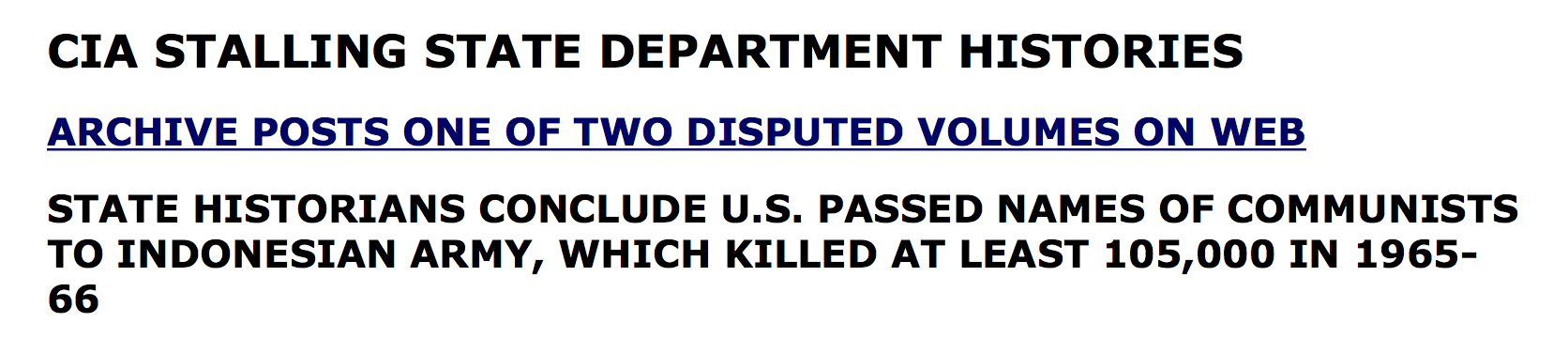
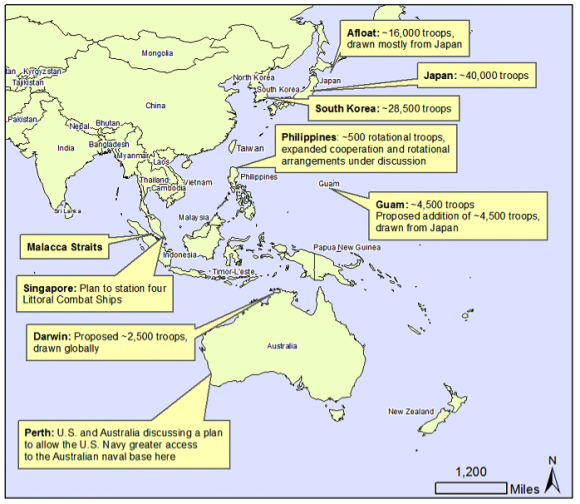
Most of these 19 cities primarily mined coal, but with the sector in decline, an urgent search is on for new economic opportunities. Many of the problems faced by the northeast reflect the broader need for China to shift to more sustainable economic development as environmental pressures force it to restore the environment and reduce carbon emissions in the context of a drive to promote renewable energy.

Resource depletion

It is getting harder to mine coal in China’s northeast. Most seams have been mined too extensively, with some pits descending over a kilometre down into the earth.

At those depths, the temperature and humidity become problematic for large machinery so more labour intensive methods are used. But higher labour costs mean that the cost of coal mining has rocketed to unsustainable levels.

According to a recent report, jointly published by the Chinese Academy of Social Sciences’ Institute of Urban and Environmental Studies and the Research Institute for Global Value Chains at the University of International Business and Economics, coal companies nationwide employ on average 11 people per 10,000 tonnes of coal output. However, industry leaders such as Shenhua and the China National Coal Group have reduced this to 4-5 people. In contrast, older northeast companies such as the Jilin Coal Group and Shenyang Coal Group employ around 21, and the Heilongjiang Coal Group employs 48 – more than four times the national average.

The additional labour increases costs. The Heilongjiang Coal Group pays 451 yuan to extract one tonne of coal, with labour costs accounting for 215 yuan. This compares to less than 200 yuan for one tonne of coal for Shenhua.

The government has also put pressure on the coal sector in the northeast through policies to reduce coal power generation and steel output, aimed at improving air quality. In 2016, China reduced coal consumption for the third consecutive year, leading many to believe that the country’s coal consumption had already peaked. In 2016, the industry was instructed to reduce coal output by about 500 million tonnes over the next three to five years from the current level of 3.8 billion tonnes per year as China sought to become a world leader in solar and wind power.

New jobs needed

The report estimates that by 2020 the coal sector will employ less than three million people, down from 5.29 million in 2013. This means that within seven years approximately 2.3 million miners will require reemployment.

Already during coal’s golden decade between 2004 and 2013, efficiency improvements reduced the need for labour. Between 2000 and 2012 the average number of employees per 10,000 tonnes of coal produced was reduced by more than half, from 29 to 14. Even without resource depletion and reductions in output, coal jobs in the northeast would have gradually been lost.

Gao Jinxue, party secretary of the Hengda Mining Group in Liaoning province told Xinhua that labor cost accounts for 45% of the company’s total cost. “It is not affordable”, said Gao. “This means we have to lay off some workers”. As far as the differences between state-owned enterprises and private enterprises, some hold the view that the state continues to “protect its own children”.

According to China’s State Administration of Work Safety, 14 large coal bases account for 92.3% of the country’s total output. The construction of these large coal bases was put forward by the State Council in 2014. There are 102 mining areas, mainly owned by large state-owned coal enterprises and local state-owned enterprises. Yet, in proportion to their volume and output, SOEs’ commitment to cut excess capacity appears to be low. For example, China’s 14 central enterprises’ original design capacity is 846 million tons, which should be reduced by 135 million tons. However, the target set by SASAC was only 31 million tons. In short, large state-owned mines will continue to dominate coal even as the sector shrinks.

The falling profitability of coal mining firms

 ​Source: ​International Institute for Sustainable Development

Looking for work

Former miners find it hard to find new jobs. Jiang Zhimin, deputy head of the China Coal Industry Association, said at the start of this year that in 2016 posts had been found for some by letting temporary workers go and moving others to new work. But as reduction in output continues, the coal industry is less able to find an alternative to making miners redundant.

With half of all miners over 45 years old and six out of ten educated to junior middle school level or less, finding new work is particularly challenging.

China’s large state-owned enterprises (SOE) are regarded as an extension of government, and a major SOE may have its own hospitals, schools, retirement homes and post office – it is a major part of life not just of its employees but for their children, too. The large state-owned coal mines of the north-east are a classic example of this.

“Only SOE or government jobs are regarded as real work,” says Wang Miao, an assistant researcher with the Research Institute for Global Value Chains. She has found that some miners prefer to stay in mines facing imminent closure, earning just 800 yuan a month, rather than try to find more lucrative work elsewhere.

Some miners, despite being forced to look for new jobs, keep their shovels and other mining implements at home, in the hope that one day they can return to mining. Wang Miao explained that the hope the industry will one day recover keeps many from leaving the sector altogether.

No way back

According to a report from the International Institute for Sustainable Development (IISD) there are countless global examples showing how reduced employment due to macro-level industrial policies can have profound social impacts – especially in subsidised industries. The dilemma for government to deal with the coal mining cities is that if changes are not made then the financial costs and environmental risks can be enormous, but if changes are rapid and drastic, a range of social problems may arise.

And once a transition is underway, it cannot be reversed. In this, China’s policy makers appear to have accepted that a transition is inevitable, unlike in the US where the Trump administration is looking to revive the flagging coal sector while ignoring environmental concerns.

There appears to be little hope for a revival of the coal industry, which must contest with China’s changing economic structure, the rise of service industries, and the development of new energy sources, says Huo Jingdong, deputy head of the Beijing Municipal Institute for Economic and Social Development.

A hard road ahead

In the short term, SOEs can be subsidised while they operate at a loss and reduce costs by cutting working hours and salaries, says Richard Bridle, senior policy advisor at IISD. But such fixes are not long-term solutions.

Cutting workers is the only option, argues Bridle, but it must go hand in hand with an effort to create new employment opportunities elsewhere so that miners can be reemployed. Fuxin, a coal city in Liaoning, is developing wind power generation and manufacturing. In 2016, the city had 1.89 gigawatts of installed wind power, accounting for 30% of the province’s total wind power generation. Fuxin now gets half of its power from the wind.

Commenting on this, Zhang Ying, an assistant researcher with the Institute of Urban and Environmental Studies, said that such efforts to replace jobs in mining cities are just getting underway and there are significant uncertainties over future funding and market prospects. Also, most of the replacement industries are in technology or capital intensive sectors so they won’t provide as many jobs as the labour intensive coal sector.

There appear to be few good examples to emulate internationally. The IISD notes in its report that Asturias in Spain offered early retirement to miners facing similar issues. This resolved short and medium term issuesm but meant there was little impetus for long term development.

There is one ray of hope though for the north-east’s mining cities in the form of regional transport projects. Liu Qiang, head of the Energy Research Office at the Chinese Academy of Social Sciences’ Institute of Quantitative and Technical Economics, says efforts to prop up failing cities should in some cases be abandoned in favour of developing city clusters around major regional cities such as Harbin, Changchun, Shenyang and Dalian. The good rail networks can be further developed, along with other types of communications infrastructure. He suggests that cities within a half-hour train journey should “huddle together for warmth.”

Waiting for the wind of fortune: Photo Essay on the transformation of Fuxin, once perhaps Asia’s largest open cast coal mine

Photographs by Stam Lee, text by Hao Feng

As the coal economy collapses, China’s first “resource drained” city is pinning its hopes of revival on wind power

Up on the hill you can hear the new turbines spinning in the strong breeze. Chen Fang, from the village of Taizigou, hopes the wind will bring rain so she can plant her seeds.

The Fuxin Haizhou Open-cast Mine, allegedly Asia’s largest open cast mine, was once the pride of the people of Fuxin. Despite being closed for many years, small fires can still be seen along in the 6-kilometre pit, spontaneously igniting in the coal layer. On December 28, 2001, Fuxin was officially designated as a resource-drained city by the State Council – the first such city.

Locals and tourists come in a steady stream to visit a memorial to coal miners who died in the mines between 1914 and 1946. Fuxin was founded and flourished on the coal economy, and was one of the first centres of energy production set up by the People’s Republic of China.

A model of the old mining area in the mining museum. In over half a century, 530 million tonnes of coal were extracted in Fuxin – loaded into 60-tonne trucks that cumulatively would circle the globe 4.3 times.

In the old mining villages near the pits you can still find some former miners living there. Huang Anyuan is one of them. He worked in the mines for 30 years before retiring. Five years ago the government offered him new accommodation available to those affected by subsidence but he gave this to his son while he and his wife stayed put.

Most of the buildings nearby were demolished last year. The water’s been cut-off so people have to fetch it themselves.

A pile of rubble now stands on the site of the old dormitory buildings. Like Huang Anyuan, many former residents have chosen to give their allocated new homes to their children, while they rent tiny rooms elsewhere.

As former mining villages have been demolished, one collector has been gathering old millstones.

In the 1980s and 90s depletion of coal seams and increasing extraction costs meant that the city’s coal-led economy started to fail – and with it the city. The Fuxin Mining Group closed 23 mines and laid off 129,000 workers, 28.8% of all its employees. 198,000 residents of the city, a quarter of the total, receive welfare payments designed to ensure a minimum standard of living.

In the areas populated by former miners there are many middle aged people with little to do. In some Fuxin households, a miner’s pension may be the only income for three generations.

As the coal industry collapsed, finding new jobs for those laid off became more urgent. But finding work for so many manual workers in such a short time and when there were no major employers or industries available was impossible. Some have opened small shops or other small businesses to earn spending money.

There are lots of barbecue stalls on the streets of Fuxin, more than other north-eastern cities. The locals say it’s partly because they love barbecue in the north-east, but also because this is the cheapest way to set yourself up in business after being laid off.

On a sunny weekend both banks of this river would be lined with middle-aged fishermen. Former city Party secretary Wang Qiong summarised the city’s economic transition plan as one of self-reliance supported by strong market and technology-led private firms.

If you want a seat on the train between Fuxin and Shenyang you need to book two days in advance. The city is finally recovering after 15 years of transition, and people are starting to come back.

Here in the transition zone between the Mongolian plateau and the plains west of the Liao river, the trees in the villages around Fuxin bend in the wind.

Over the past 15 years it is that wind that has provided the city with an alternative to coal energy.

The wind turbines offer a new view from the top of Tashan. By 2015 the city had 3.6 gigawatts of wind power capacity installed. The city’s leaders are keen for the sector to replace coal.

Fuxin has transitioned to an era of wind power. By the end of 2016 the city was supplying 1.89 gigawatts to the grid – 30% of Liaoning’s wind power generation.

In a new village built for coal miners in the Fuxin district of Xinqiu, Gao Yuan sells silk scarves. She is also waiting for the wind having tied a line between two trees and hung her scarves from it. The one yuan scarves flutter more in the wind, which is good for sales.

Fuxin has built a new industrial zone to the west. As of the end of 2015, Fuxin’s wind power manufacturers were producing output worth 20.1 billion yuan – 8.5 billion yuan in turbines, 9 billion in components, 1.5 billion in services, and 1.1 billion in materials.

The new energy sector has created over 5,500 jobs in Fuxin. One single wind power firm, Huaneng, pays almost 200 million yuan in taxes in the city – and this is while still entitled to tax reductions.

At 7’o’clock in the morning in Tazigou, a village in northeast China, the sky is dark, the wind strong, and you can hear the new turbines up on the hill spinning. “With this wind…”, Chen Fang forecasts a rainstorm, picks up her hoe and corn seeds and heads up the hillside from her home.

By 5’o’clock that afternoon she’s turned the earth and cleared rocks on her family’s one mu (670 square metres) of land underneath the turbines. The clouds have dispersed and the four turbines have stopped turning.

“Waited for nothing!” she sighs, muttering to herself. This is the fourth time this month she’s come up here, hoping the wind will bring rain so she can plant the spring corn. The wind comes and goes but the rain never falls. She’s starting to get anxious.

This hill, known as Tashan, lies to the southeast of Fuxin town in Liaoning province, about 5 kilometres from the city. Since March, when the snow melted, to now in early May there hasn’t been a single decent rain storm here on the transition zone between the Inner Mongolian plateau and the Liaohe plains (a farming area in Manchuria in northeast China).

Rain is precious in these parts, particularly for fields like this that have no irrigation. And it’s not just farmer Chen Fang who is waiting for wind.

Once Asia’s largest open-cast mine, the Fuxin Haizhou mine closed many years ago. But small fires can still be seen spontaneously igniting in the coal layer in pits for 6 kilometres. With no wind, the smoke and ash hang in the air and have become the main cause of complaint for residents in nearby Fuxin.

In a new village, built for coal miners in the Fuxin district of Xinqiu, Gao Yuan, a silk scarf seller, is also waiting for the wind – she’s tied a line between two trees to hang her wares from it. The windier it is the more the 1 yuan (US$0.15) scarves flutter and the more she sells.

From Tashan in Fuxin to the vast new windfarms in Inner Mongolia’s Hure Banner, everyone’s waiting for the wind.

Over the last fifty years Fuxin has provided the nation with 700 million tonnes of coal and 250 billion kilowatt hours of electricity. But the city, which was founded and flourished on the profits of coal power, is struggling as the coal runs out and is in dire need of an alternative source of growth.

The first resource-drained city

On December 28, 2001, Fuxin was officially designated as a resource-exhausted city by the State Council – the first city to have been designated so.

“Fuxin was founded because of coal, it flourished because of coal; it was one of the first centres of energy production set up by the People’s Republic of China. To develop the nation we tried to be number one, to mine more coal. Now, we’re the first resource-drained city.” Yang Zhonglin worked in Fuxin for 13 years between 2003 and 2016 and has been the city’s deputy Party secretary and Mayor. He has seen the city through its toughest decade.

Fuxin is a classic example of China’s mining cities. In the 1980s and 1990s depletion of coal seams and increasing costs meant that the city’s coal-led economy started to fail – and the city’s prosperity went down with it.

As the open-cast mine became stripped bare, so the miners dug their pits, deeper and deeper. Subsidence affects 101 square kilometres of land in Fuxin, where the miners’ huts only occupy 5 square kilometres. In 2000 over one third of local industrial firms were either closed or operating at half-capacity. The Fuxin Mining Group closed 23 mines and laid off 129,000 workers, 28.8% of its employees. A quarter of the city’s residents, 198,000 people, were on welfare payments available to ensure a minimum standard of living was met.

Subsidence is a common problem in mining areas and Xinqiu is one of the worst affected areas. Local media referred to two particularly shocking cases; in 1999, a vehicle travelling on a road in the south of the district, near Pit 8, was swallowed by a sink hole, disappearing as if by magic; and in 2000 a child named Huang Kai met a similar fate, falling “like a stone” into a disused mine when a sinkhole opened up beneath him.

Subsidence has caused Fuxin direct and indirect losses estimated at 1.5 billion yuan (US$223 million) but its also a daily hazard for residents who complain of entire buildings sinking without warning.

Walk into any as-yet undemolished buildings in an old mining dormitory complex and you can see the cracks in the walls. You can hear the wind howl through.

When Fuxin was designated as a resource-drained city, the economic commission’s transition office calculated that 28,000 homes had been damaged by subsidence to some degree across thirteen different affected areas.

A long and painful transition

Fuxin’s open-cast mine, supposedly Asia’s largest, is 4-kilometres long, 2-kilometresacross, and 350-metres deep. Send a drone 500-metres up and look down with a 120 degree lens and you can still only see a third of it. It’s a huge and spectacular sight, and once a source of great pride for Fuxin.

Over more than half a century, 530 million tonnes of coal were mined in Fuxin; loaded into 60-tonne trucks that travelled a distance equivalent to circling the globe 4.3 times. The Haizhou mine alone employed over 30,000 workers at its peak.

But those glories are passed now and what was once a source of pride has become a scar.

On March 30, 2001, the Dongliang and Ping’an mines, and the Xinqiu opencast mine, were shut down with State Council approval.

In April 2002 the Haizhou opencast mine, Asia’s largest, applied for bankruptcy due to depletion.

In June 2002 several other mines, run by the Fuxin Mining Bureau, also applied for bankruptcy.

Figures show that between 1996 and 2000 the city’s GDP grew by only 2.1% a year, 6.2 percentage points below the national average. Fuxin was also entirely reliant on one sector; with coal power accounting for 76% of its economy.

By the end of 2000, 25.3% of the city’s population had a monthly income below the minimum level set for living standards welfare (156 yuan, or US$23). An estimated 156,000 residents, 36.7% of the total, were out of work, and unemployed rates were higher than any other city in Liaoning province.

As the coal industry collapsed, finding new jobs for those laid off became more urgent. But to find work for so many manual workers in such a short space of time, when there were no major employers or industries available, was virtually impossible.

In the old mining villages near the pits you can still find some former miners – Huang Anyuan is one of them. He worked in the mines for 30 years and has now retired on a pension of 2,000 yuan (US$300) a month.

Five years ago the government tried to move him to new accommodation designated for those affected by subsidence, but he gave that new home to his son’s family, saying “there’s no factories here to work at, so my son was struggling, particularly when it came to buying a home.”

He and his wife continue to live in their two oft-repaired rooms. Most of the buildings nearby were demolished last year, and now that the water’s been cut off each day they must walk to fetch supplies.

Many others have also given the homes they’ve been allocated to their children. As their original homes have been demolished they are forced to rent tiny rooms elsewhere.

In some households a miner’s pension is the main income supporting three generations. Some former miners are in poor health and need to be cared for by their children. This means the young can’t travel to find work. As there aren’t suitable jobs close to home, they find themselves both caring for the elderly and living off them.

There are lots of barbecue stalls on the streets of Fuxin, more than in other northeastern cities, some reckon. A quick count in certain districts found up to 21 stalls or barbecue restaurants on a 500 metre street, and never less than five.

In the evening even more appear, rolled out on the back of three-wheel carts. The locals say it’s partly because of the love of barbecue in the northeast, but also because this is the cheapest way to set yourself up in business after being laid off.

Money blows in

Mr. Zhang (who prefers not to use his real name because of the sensitivity surrounding this issue) worked down in the mines for thirty years – now he works on top of a hill.

In the hills to the east of Fuxin, rows of turbine blades whirr round. Looking back towards the city from below the turbines you see the vast Haizhou opencast mine, a reminder of the city’s past.

Mr. Zhang works as a guard at the gate to the Huaneng Gaoshanzi Wind Power Farm. He’d worked in the mines since he was 18, so even this job, which is not particularly well paid, was hard to get. When asked about the change, he laughs openly: “I suppose the wind just blew me some money!”

Construction of the wind farm started in 2007, one of the first in Fuxin. Covering about 20 square kilometres, there are 67 turbines along the ridge, generating 100 megawatts of power. Mr Zhang is one of 20 employees, but he is only a temporary employee. Those (with permanent contracts) who run and maintain the turbines are all engineers with technical skills.

Those engineering jobs have been created by the wind power sector, and represent a change that has come to Fuxin with the new century – the arrival of wind power. By the end of 2016 the city was supplying 1.89 gigawatts to the grid, 30% of Liaoning’s total wind power generation.

The city’s leaders are keen to make use of this sector to replace coal, both as a source of energy and as an economic driver. According to the China Energy News the new energy sector has created over 5,500 jobs in Fuxin. One single wind power firm, Huaneng, pays almost 200 million yuan (US$30 million) in taxes in the city – and this is while still entitled to tax reductions.

And it isn’t just the power companies that are here, turbine manufacturers have also found a home in Fuxin.

As wind power has expanded, Dajin Heavy Industries has become one of the leading manufacturers of turbines, and one of the three such firms with a market listing. It has factories around the country and employs over 500 people in Fuxin alone.

Dajin originally made equipment for the coal power industry. In 2008 it set records when it built the steel structure for a 670 megawatt furnace for the Huaneng Group – the biggest, heaviest and most complex such structure ever built in China. It now builds the towers for turbines, and has recently added four more production lines.

As of the end of 2015, Fuxin’s wind power manufacturers were producing output worth 20 billion yuan (US$3 billion) — 8.5 billion yuan (US$1.3 billion) of turbines, 9 billion yuan (US$1.3 billion) of components, 1.5 billion yuan of services, and 1.1 billion yuan (US$223 million) of materials.

One insider in the city’s wind power manufacturing sector said that the only technically demanding part of the process is the welding, and that most miners could do this work after some simple training.

“Looking back over the last 15 years, we’ve made the right choices,” said Chen Zhihong, head of the city’s Development and Reform Commission in an interview with the Xinhua Daily Telegraph, adding that although these companies are small they are still growing. He thinks these companies need the resources that Fuxin has, and that there are good prospects for future growth.

He offered some data on the city’s economic transition. Compared with 2001, average disposable income in the city has gone from 4,300 yuan (US$ 630) to over 22,000 yuan (US$ 3,274). The percentage of total income derived from the coal sector has dropped from 49.8% to 16.9%, whereas for manufacturing it has risen from 4.8% to 23%, according to Chen.

“The biggest success is that we’ve brought people out of a slump, we’ve given them hope for growth,” Chen said.

In 2016, as coal mining output declined the need to find new jobs surged.

Will the emerging wind power sector be able to offer enough reemployment opportunities?

Running a wind farm isn’t labour intensive. And with slowing demand for electricity across China, could turbine manufacturing, which is heavily reliant on expansion of wind power, be able to keep growing? These aren’t just questions for Fuxin but for all China.

On May 7, as we left Fuxin, the wind was blowing again and the turbines spinning. And at 4’o’clock in the afternoon, the rain finally came. Only a light rain, but we hoped Chen Fang would, after a month of waiting below the turbines, be able to plant her corn.

Feng Hao is a researcher at chinadialogue.

  • Posted in English @as @as
  • Comments Off on China’s Cutback in Coal Mining: 2.3 Million New Jobs Required by 2020