Integrating Climate Resilience and Livelihood Protection

December 17th, 2025 by Bharat Dogra

With increasing importance of climate resilience, it is becoming more and more necessary to integrate promotion and protection of rural livelihoods with this objective and this has become an important concern of rural development initiatives. No question of sacrificing any development opportunities of small farmers or other livelihoods is involved here. It is all a matter of more thoughtful planning to integrate various important objectives.

Speaking of integration of livelihood protection and climate resilience, it is useful and interesting to look at the rural development initiatives of those organizations which have been able to achieve this integration well in tune with emerging needs of humanity and indeed all forms of life.

Seva Mandir is a leading voluntary organization of South Rajasthan which has been able to achieve very good integration in this context. Interestingly this was not always planned as an integrating strategy as the work of Seva Mandir started way back in 1968 when the importance of climate resilience had not been so widely realized. However as the protection and regeneration of green cover with community participation had been emphasized from the outset, it so turned out that the integration achievement of SEVA Mandir goes a long time back!

A big achievement of Seva Mandir has been in the context of regeneration of pastures and village common lands. This appears even more impressive where watershed development projects have also been taken up. A number of water conservation works have been taken up such as digging of various kinds of trenches, gabion structures and anicuts, check dams, field bunds and above all planting of trees. Estimates of Seva Mandir tell us that so far over 13 million trees have been planted under its various initiatives.

All this has been good for climate mitigation as trees absorb carbon. Improved soil can also absorb more carbon. However water conservation and pasture regeneration also help villagers in a big way to adapt to climate change as they have higher capacity to withstand drought situations and increasing heat conditions as well as other adverse and erratic weather patterns. In fact water conservation steps help not only in better capacity of facing drought threats but in addition also help in reducing or preventing flood situations at the time of excess rains. This has also become relevant in recent times as Rajasthan has been rather suddenly facing more flood and excess rain situations in times of climate change.

Seva Mandir’s work on pastures and watershed development has also prepared it well for playing a leading role in securing recognition for community forests under the Forest Rights Act. With such recognition for nearly 38000 hectares of community forests in areas in which Seva Mandir has good strength in the form of community institutions, this can be a future area of exemplary work of regeneration of degraded forest areas. 

More recent natural farming initiatives of Sewa Mandir can contribute to reducing the burden of fossil fuels in several villages while also helping farmers to reduce their costs.

Many-sided water and sanitation initiatives of Seva Mandir have also contributed to climate adaptation capacity of rural communities. Its work has been helpful in presenting an improved model for the development of peri-urban areas in ways that reduce the heat stress and conserve water, while also improving sanitation.

Seva Mandir has persistently worked with small farmers to improve their income in sustainable ways by improving the water and greenery base, while simultaneously increasing savings with the mobilization of self-help groups, saving and small enterprise groups particularly of women. All this increases the capacity of rural communities to withstand adverse weather situations in better ways by utilizing their savings instead of getting trapped forever in high interest debts. Improving diversity of crops is also helpful from the point of view of saving at least some crops in adverse weather situations. 

Adaptation capacity of animals and birds has also been increased with many water conservation, tree planting and green cover increasing works.

Climate resilience must also be seen in terms of increasing community strengths and improved, non-discriminatory social relationships. Such communities are much more likely to act with unity and sincere cooperation for protecting common interests in adverse weather situations. Seva Mandir’s persistent work for ending gender discrimination and increasing the social participation of women has added greatly to the strength of women as well as entire communities to face any difficult situations.

The increasing mobilization of people for development work including voluntary work or shramdan has increased the ability of communities to take up community work, such as for protecting water sources, in difficult times. This has been strengthened further by the creation of over 1000 community institutions. These community institution continue beyond the period of any project based interventions and add significantly to the strengths of communities to face any difficult situations. Hence these have added significantly to climate adaptation capacity.

Building further on existing strengths, Seva Mandir is in a good position to work for the creation of villages where fossil fuel burden can be reduced to a minimum. The work for the revival of bullocks, for which a government scheme is available now, can also be integrated with this. Similarly more government help for encouraging natural farming is also available.

*

Click the share button below to email/forward this article. Follow us on Instagram and X and subscribe to our Telegram Channel. Feel free to repost Global Research articles with proper attribution.

Bharat Dogra is Honorary Convener, Campaign to Save the Earth Now. His recent books include When the Two Streams Met, A Day in 2071, Man over Machine and India’s Quest for Sustainable Farming and Healthy Food. He is a regular contributor to Asia-Pacific Research.

Featured image is from the author


Global Research is a reader-funded media. We do not accept any funding from corporations or governments. Help us stay afloat. Click the image below to make a one-time or recurring donation.

Kabutra Devi lived in her very remote Himalayan village of Agastyamuni region (Uttarakhand). Due to access to government jobs, the economic condition of this family was reasonably good. Kabutra Devi could afford to live restfully at home at this old age. Still she insisted that every day she must go to work in the family’s farms.

Almost every morning she got up very early and after some time went to those fields which were nearer to home. It was only after working there for about two or three hours that she came back for food. Then after some rest in the late afternoon or early evening she once again went to farm and worked there.

Her youngest grandson Mohit was very attached to her and she also adored him. He was concerned—why should grandmother go to work and that too often in very cold weather conditions of this region?

One day he could not restrain himself and asked her—Grandma, why must you go to work when you should be resting and taking it easy at the time of old age?

Kabutra was quiet for some time and then said gently—When I was young so much was grown on our farms that we were self-reliant in meeting all food needs except salt. When nomadic traders came with salt bags tied on both sides of goats, we welcomed them and gave them equivalent weight of legumes and millets. Yes, perhaps we were too generous but we could afford to be generous because we had enough. Now for several years our fields are no longer bountiful. There is decline in farms and our people have to migrate in search of work. I feel very restless about this and feel a pain. I keep going to farms so that even if I can make a small contribution in my old age to improve farms and farming then I’ll like to do this.”

Then after a pause the grandmother told Mohit, “You’ll make me very happy if in your life you help farmers and villagers to improve their farming and food production.” Kabutra Devi died at the age of 83, but her grandson Mohit Rana never forgot her words. He has lived up to her expectations. He decided not to take up any routine jobs but to instead work for supporting rural livelihoods in innovative ways. This quest has brought him to Rajasthan where he is involved deeply in a team effort of a social enterprise called Heart in Hills (HIH) to develop edible oils sector in ways which help to improve oilseeds based livelihoods of farmers.

I heard this heart-touching story when I went to Hindaun city in Rajasthan to write about the progress and potential of HIH. Apart from covering this progress and how this was helped by a fellowship program of the Budha Institute, I was keenly interested in understanding the motivational forces which had inspired the three young entrepreneurs involved in this initiative to take up challenging tasks and persist with them.

Satyam Bhandari who leads this team effort also had significant things to say in this context. He said that disasters have been increasing in the Himalayan villages from where he comes and in particular the Kedarnath disaster had claimed many lives in his village and neighboring villages. As main earning members died in most cases, how were these families to survive?  This tragedy left a lasting impression on him and he became convinced that he must work to help rural livelihoods.

However when he came to the social sector the first opportunity he got was to promote education among some of the poorest households. Taking his work very sincerely he started staying with one family where two sons of school-going age were not going to school. The father said that the eldest son has to work to meet family needs while the younger son needs to stay home to look after a baby as both parents go for work. This experience also motivated him to work for improving rural livelihoods.

The third partner in this initiative Rohit Singh was inspired by his mother making big sacrifices to ensure that he got good education.

Thus in their own ways the three friends from distant hills now working in Rajasthan had been guided by either inspirational or tragic experiences from the past which had motivated them to take a road less travelled.

*

Click the share button below to email/forward this article. Follow us on Instagram and X and subscribe to our Telegram Channel. Feel free to repost Global Research articles with proper attribution.

Bharat Dogra is honorary convener, Campaign to Save Earth Now. His recent books include When the Two Streams Met, Earth without Borders, Navjivan and Hindi Cinema and Society. He is a regular contributor to Asia-Pacific Research.

Featured image is from the author


Global Research is a reader-funded media. We do not accept any funding from corporations or governments. Help us stay afloat. Click the image below to make a one-time or recurring donation.

Baba Adhav passed away at the age of 96 on Monday December 8. As one of the most successful organizers of workers from poorest and largely unorganized sections of society, Baba Advav became a legend in his lifetime. The inspirational impact of the struggles he led and motivated is very wide.

One of the important reasons for this success was his very high personal integrity and deep commitment to the cause of workers which has been admired by many of his opponents also. Another factor is that his struggles and the demands he raised were very innovative. When demands were raised in a way that at a practical level it was relatively less burdensome and hence more likely for the governments and various authorities to accept them then the chances of struggles becoming successful increased considerably. His innovativeness was also seen in low cost community kitchen which served healthy food to workers. Beyond this, Baba Adhav will always be remembered with great respect because of his very deep commitment at a wider level to creating a society based on equality, justice and dignity to all sections of society with special emphasis on those sections who have suffered injustice and inequality at historic level. He could be very firm ideologically on these and related issues, not making any compromises.

Yet at a personal level, he could be very gentle and friendly, as I realized when I went to interview him and write about his work, spending some days in Pune, resulting in the publication of two booklets and several articles. He was also committed deeply to his family, led by his wife Sheetaltai, a trained nurse who, on a lighter note, once listed him as ‘non-earning husband’. In fact, for some years Baba Adhav continued his practice as an ayurvedic doctor (indigenous medical system) but then gave it up to devote himself to the cause of workers. It was perhaps his base in indigenous medical system that enabled him to keep continuing to contribute in important ways to causes of justice even in his ninety plus years, and he could go on prolonged fasts even at this stage to press for various issues dear to him.

Unorganised workers form the bulk of India’s workforce, yet the majority of these workers face several serious problems including difficulties in accessing social security. Neglected by both the government and the bigger trade unions, many of these workers suffer from exploitation, health hazards and highly insecure working and living conditions. This dismal and dark situation is lighted only here and there by a few encouraging initiatives in various parts of India to mobilise these workers.

Some of the brightest and most sustained of these efforts which brought genuine relief and bigger hope to workers were led and inspired by Dr. Baba Adhav. His efforts to organise head-loaders (hamals) started way back in 1952 when he was only 22. It has been a tremendous achievement to sustain such an effort for almost 70 years, linking it time and again with wider national efforts so that the experience gained and models developed in his main work area in and Pune (Maharashtra) can reach a much wider number of workers.

Baba Adhav received The Times of India’s first Social Impact Award for Lifetime Contribution in 2011. As the newspaper reported, he got this award for “decades of selfless work to secure labour rights and social security for lakhs of people in the unorganised sector.” Earlier the ‘Week’ magazine, which named Baba Adhav the ‘man of the year’ in 2007, called him, tongue-in-check, ‘Coolie No. 1’ for all his labours to help head-loaders get their rights and dignity.

If such awards have came quite late in the life of Baba Adhav, jail terms came too early. In fact Baba Adhav served as many as 53 jail terms in his six to seven decades of struggles, the last one being in 2008. To sustain all this work and to keep expanding it for over 70 years in the middle of all these jail terms and other harassments was a monumental achievement, which becomes all the more inspiring when it is kept in mind that Baba Adhav neither sought nor received funds from the government or from foreign donors for his numerous activities.

Unlike several other initiatives for workers, this one has been marked less by rhetoric and more by innovative efforts. It was difficult to get enough funds for providing social security to head-loaders, so Baba Adhav and his colleagues thought up the idea of a levy on all payments made to head-loaders which could be used to provide provident fund, gratuity, bonus, insurance and other benefits to workers who lift heavy loads. 

While organising head-loaders, who would have thought that women who clean the grain also need to be protected and organised? But this effort included them too and held talks with merchants to improve their conditions.

Who would have thought that the few scattered people who collect used lubricating oil for re-refining can also be organised and protected from needless harassment? But this effort tried to include even such completely marginalised and neglected groups of workers.

As a result of the dedicated, continuing and sustained efforts of Baba Adhav and his associates, many such small and big unions (called panchayats) embracing the marginalised and unorganised workers have been organised in Pune. Some of the unions also reach other towns and villages of Pune district, while some other unions – like head-loaders – reach some of the most remote districts of Maharashtra as well (or more specifically the agricultural produce marketing committees of these districts).

These unions have brought improvements in working, living and social conditions of workers. This is most visible in the case of older unions like those of head-loaders or hamals. Earnings have increased, over 400 houses have been built and others are on way. A school provides good quality, free education to children of hamals and other workers. An information technology instruction unit is being started for senior students. Hamals get provident fund, gratuity and health insurance benefits, and now demand for pension is also picking up. Their union has made substantially successful efforts to implement an ILO resolution which limits the weight to be lifted by a head-loader to a maximum of 50 kgs. This has helped to reduce health hazards for workers, although other hazards continue for more specific loads like those of chillies and cement. As a result of many-sided improvements, children of hamals are now able to access college education and some of them are getting engineering education.

Even in the case of unions formed much later such as those of rag-pickers, already substantial gains have been achieved. Rag pickers have been protected from police harassment and exploitation by scrap traders. Child labour has been greatly reduced and many of them can now access education. Group life insurance cover has been provided. In addition medical insurance cover is provided by Pune Municipal Corporation. SwacH Coop project has helped to link improved livelihoods for rag pickers with environment protection. National and International linkages have helped to provide wide reach to innovative ideas and work. The union here (KKPKP) also provides the secretariat for a wider Alliance of Waste Pickers.

Similarly unions of domestic workers, vendors, rickshaw drivers and other unorganised sections have recorded important achievements. In the case of vendors, policy guidelines have been formulated by local authorities in addition to the 2007 national policy. These as well as the union’s support enable the vendors now to protect their livelihood rights more strongly then before, apart from resisting the illegal extortion made by the police and others. Even for those who are evicted, there is now a better chance for rehabilitation.

Domestic workers union wants reforms in the newly enacted legislation on the lines of the law for hamals. At the same time it is trying to speed up registration (which is essential in order to benefit from the new law) and this could not have been speeded up without the union’s support. Auto rickshaw union wants recognition of this work as a public utility and social security by a Board for those who work for the utility. 

Various unions are supported mainly by membership fees. Angmehanti Kashtkari Sangarsh Samiti provides an over-arching platform for various unions and workers organisations.

Social Entrepreneurship

However many of the economic gains could not have been sustained and protected but for the simultaneous setting up of several co-operative credit societies alongside the unions or panchayats, in order to enable head-loaders, rag-pickers, vendors and rickshaw-drivers to obtain credit at a low interest rate. It is this facility which enabled them to escape the clutches of moneylenders while at the same time also expanding their income-earning activities (such as by purchasing auto-rickshaws or expanding their retail vending business), constructing houses and educating their children.

Earlier most of the workers had to borrow from private moneylenders at a high interest rate of 5 to 10 percent per month. The high interest made it difficult to pay back the loan, or to invest profitably in any new entrepreneurial activity. Commercial banks did not encourage workers as customers or groups of customers with their small savings and needs.

On the other hand the setting up of their own cooperative credit societies with their own share capital enabled workers to obtain loans much more easily at a much lesser interest (compared to private moneylenders) while at the same time having a strong sense of ownership of the entire effort. This sense of ownership motivated them to contribute to the strength of the credit-ops by timely repayments of their loans.

At regular intervals new credit co-ops were started for head-loaders, vendors, auto-rickshaw drivers and rag-pickers. Keeping in view the high interest rates of moneylenders, the combined impact of these initiatives has been to save millions of Rs. for weakest section families which could then be used for small-scale entrepreneurial activities as well as for housing and meeting education expenses. The fact that frustrating delays and bribes could be altogether avoided at the time of obtaining loans increased the possibility of using easily accessible money for entrepreneurial activities.

A visit to well-maintained co-operative credit societies revealed the pride union workers take in their own credit institutions. A huge, financially self-sustaining community kitchen has been another example of social entrepreneurship initiatives. Another successful initiative has been SWaCH Coop., a wholly owned cooperative of self-employed waste-pickers and other urban poor. This has opened up new possibilities to some of the poorest people to obtain better livelihood opportunities which are linked to protection of environment in the form of more and better composting as well as greater opportunities for useful recycling of waste. As smartly dressed women drive waste-carrying vans and their pick-up vans are welcomed by citizens, this becomes an example of fighting poverty, providing dignity to the poorest while at the same protecting environment and creating a cleaner city.

Wider Role

As Baba Adhav says,

“Our effort is to combine improvement of living conditions, working conditions and social conditions. Hamals have higher earnings, bonus, provident fund and insurance. They have houses, their own school and community centre. But in addition we need social improvement, a sense of dignity and pride in their work, which is linked also to wider social change that can break the shackles of caste, hierarchy and narrow-minded discrimination in Indian society.”

Baba Adhav’s yearning for wider social change is inspired by the work of Mahatma Jyotirao Phule, Baba Ambedkar, Mahatma Gandhi, Chatrapati Shivaji and others greats of our history. Their teachings are spread among people with a special emphasis on contemporary needs and relevance. For example the teachings of Chatrapati Shivaji here are linked to his concern for protection of environment and for communal harmony.

Nitin Pawar, who has been closely associated with Baba Adhav’s many-sided work says,

“Although at the national level, it is Baba’s contributions to unorganised sector workers which have been most highlighted, it will be a great injustice to confine his work only to this aspect. He has striven for much wider mobilisations in many areas to end socio-economic injustice. Way back in 1972 at the time of a serious drought Baba worked tirelessly to end discrimination in access to water-sources in villages where-ever there was social discrimination. Then he fought a long battle for providing justice to nomadic and denotified tribes, and another one on behalf of devadasis or women who were victims of social oppression., so that pension could be provided to them. When he stopped his private medical practice due to wider social involvement, he helped to create public-spirited hospitals. He was closely involved with Hamid Dalwai’s efforts for social reforms among Muslims as well as for reforms in the Bohra community. During emergency he valiantly resisted slum-demolition and he was promptly sent to jail for 14 months. Whether working as President of the PUCL or in other ways, Baba contributed to civil liberties in many ways. He helped to set up a National Integration Committee and fought and resisted sectarian forces at several fronts.”

In fact Baba Adhav was much ahead of his times in taking up issues like displacement of farmers caused by dams and other projects. These efforts led to a rehabilitation policy in Maharashtra at an early stage.

Baba’s vision of social change has a special place for a wider role by women. Women dominate the membership of some of the unions like those of domestic workers, rag-pickers and, to a lesser extent, vendors.

A socialist, satyagrahi, and a satyashodhak (someone who yearns for truth to prevail) was how Baba Adhav liked to describe himself. He is all this and more, a symbol of hope for millions of workers and oppressed people. Even during his elderly years he did not hesitate to join national level struggles and efforts for new laws for social security and universal pensions. His wife Sheela remained for long the biggest support for his many-sided activities and achievements. Baba Adhav will be remembered for long as one of the most respected social activists in India, with his great work combining mass mobilisation for justice with social entrepreneurship initiatives for many decades. 

*

Click the share button below to email/forward this article. Follow us on Instagram and X and subscribe to our Telegram Channel. Feel free to repost Global Research articles with proper attribution.

Bharat Dogra is Honorary Convener, Campaign to Save Earth Now. His recent books include Planet in Peril, Man over Machine, When the Two Streams Met and Protecting Earth for Children.

All images in this article are from the author


Global Research is a reader-funded media. We do not accept any funding from corporations or governments. Help us stay afloat. Click the image below to make a one-time or recurring donation.

While frequent concern has been expressed regarding the degradation or even ‘vanishing’ of pastures or common grazing land of rural communities, the work of protecting whatever pastures still exist or regeneration of degraded grazing land has been frequently neglected. 

This has become a silent crisis which has been weakening the base of sustainable livelihoods in many villages. Hence any efforts to give adequate importance to regeneration and improvement of pastures and to take forward this task with the involvement of rural communities is highly desirable. 

Seva Mandir is a voluntary organization working in South Rajasthan which has placed great emphasis on regeneration of pastures as well on overall prioritization of community based protection of common lands. In 2023 this work was honored with the Elinor Ostrom Award, a prestigious world-level recognition for excellence in commons governance. Since 1985, Seva Mandir (SM) has also helped to develop shared, uncultivable private lands allowing families to grow fodder and minor forest produce.  This also motivated villagers to develop community pastures.

Jhadol Block of Udaipur district is an important region where the development and regeneration of many pastures has been taken up and considerable experience has accumulated with the field and community workers who have been active in taking forward this work with the help of rural communities.

As Bhanvar Singh of SM who has been in the forefront of these efforts says,

“In our area 67 pastures have been taken up for development and regeneration, and this has covered approximately 1000 hectares. This achievement must be seen in the context of the planning and care that is involved in the proper regeneration of any village pastures. There has to be a sustained dialogue with and among the villagers over a long time. Sensitivities of several people have to be considered. Hence the initial planning and resolving of conflict issues can take a long time, even before the actual development works start.”

One main reason why the preparations can take a long time is that in most cases there are illegal encroachments of pasture land, mostly by those who are more powerful and influential. Understandably, removing encroachments by the more powerful and influential persons can be difficult. Yet community members working together in committees have been able to achieve the removal of such encroachments in one pasture after another. The beauty of the process followed in such Seva Mandir initiatives has been that permanent hostilities could be avoided and settlements could be reached without any violence. This reflects a great level of trust between SM and community members on the one hand, and within the various members of village community organizations on the other hand.

However a more difficult to resolve dilemma emerges when an encroachment by a poorer person is discovered and discussed, as per land records. People explained a case where this person’s encroachment was also removed as per rules being the same for everyone but he was helped by the community members to make up for this loss in other ways. Perhaps some similar steps can be taken so that this becomes a general practice.

Once the conflicting issues have been resolved, the people are ready for the actual pasture regeneration work in the form of the boundary, the trenches for conserving rainwater, the pits for planting trees followed by the actual planting of trees. Then comes the next stage of caring for the trees and maintenance of other works. Those involved in the work recognize that all the three stages are important for the success of the work—the first stage of planning and conflict resolution, the second stage of the actual work and the third stage of follow-up care and maintenance.

To this we should add that in fact it is the creation of community organizations in the work area of the SM that plays a very important role in the success of such work. Without the preceding work having been done for the formation of community organizations, such as village development committees, and the establishment of relationships of trust based on such community mobilization, it would become very difficult for a work which involves conflict resolution and removal of encroachments to have a smooth sailing.

Once successfully completed, pasture regeneration work can be very helpful to ensure availability of fodder in easier ways, improving the base for animal husbandry related livelihoods as well as for reducing the drudgery and difficulties of women in particular. In addition of course the cause of moisture and water conservation is also helped. All this can become the base for other ways of strengthening sustainable livelihoods. From the perspective of climate resilience and adaptation, and to some extent from the point of view of mitigation also, this work is important.

However the entire potential will be better realized if this work is seen not as an isolated work but as a component of much wider protection of environment and even stronger sustainable livelihoods based on this. At present several villagers here are seeing a reduction of animal husbandry related activities due to bullocks being replaced rapidly by tractors for various kinds of work and dairy development being limited in other ways. In addition there are problems also with keeping only cows while rapidly discarding bullocks. However if an innovative model can be worked out which is based on natural farming, village-based food and milk processing and closer linkages with urban consumers for supplying healthy food then, along with pasture regeneration and water conservation, all this can together mean something more promising not just to present day small farmers but also to the upcoming new generation with new talents. There will be more scope in this model for many kinds of creativity and innovativeness which will excite the younger members of the community. Their educational and computer skills will also find much use in such efforts, particularly on the marketing side. At the same time, the entire initiative can be taken forward in ways, including promotion of natural farming and reducing greatly the footprint of fossil fuels in villages, that it will be very important from the perspective of climate adaptation as well as mitigation.

*

Click the share button below to email/forward this article. Follow us on Instagram and X and subscribe to our Telegram Channel. Feel free to repost Global Research articles with proper attribution.

Bharat Dogra is Honorary Convener, Campaign to Save Earth Now. His recent books include Planet in Peril, A Day in 2071, Man over Machine and Protecting Earth for Children. He is a regular contributor to Asia-Pacific Research.

Featured image is from the author


Global Research is a reader-funded media. We do not accept any funding from corporations or governments. Help us stay afloat. Click the image below to make a one-time or recurring donation.

  • Posted in English @as @as, Mobile
  • Comments Off on Pasture Regeneration Increases Sustainability and Resilience in Indian Villages

Jumli Bai is a 70-year-old woman living in Kakarmala village of Jhadol Block, South Rajasthan. Her vision is badly impaired. She has a lot of difficulty in hearing. She is a widow and lives alone.

Although she can access a small government pension and some free food grain, cooking any food on her own is also a problem. So she is entirely dependent on someone sparing some food for her. Under the present circumstances food availability for her remains highly uncertain and precarious. Her day is spent sitting here or there and hoping that she will get some food.

I met her at a meeting of elderly people in her village around noon time. She had not eaten anything till then, finally she could eat something here.

Her son is said to be alcoholic and does not help her at all, villagers said. She gets better treatment in her maternal home, but it is not at all easy for her to go there. She has to find someone to help her reach there.

Khomani Bai and Kakkoo Bai are two old women in the age group of 80 to 90 years. They live alone on their own. They still go to the hills for grazing goats. They were away for this at the time of my visit to Gairiyo ka Gura village in Udaipur district but other villagers told me that they also have to cook their food after returning from the pastures although they are in no condition to do this. They need medical help but do not have the time and opportunity for this. They are somehow carrying on as long as they can.

In the same village, 85-year-old Baggaji has increasing hearing and vision problems. He also lives alone although he is more fortunate in having a more caring son. 

Devli Bai is a 70-year-old widow in this village who has problems on daily basis in meeting her essential food needs. She carries herself with great dignity but on being asked repeatedly regarding any problems she mentioned the need for food.

A recent visit to four villages in South Rajasthan to study the problems of elderly people from weaker sections revealed several such instances of people in need for better support and nutrition. While many of them live alone, the situation becomes more difficult for those whose children are not fulfilling their responsibilities towards them, or else are unable to do so due to being away from village. One factor that has added to neglect is the increasing consumption of alcohol in villages. As several elders agreed in group discussions, in the case of those consuming alcohol the acceptance of responsibilities towards parental care is generally reduced.

These less discussed aspects of the life of elderly people are emerging into openness in the course of the implementation of an initiative called Prabal Yatra (PY) by ARTH voluntary organization for improving the health and welfare of elderly people. In the course of organizing meetings of elderly persons, several such examples of elderly people suffering high levels of distress and deprivation are coming to light as some of these persons are also coming to these meetings. Hence the first step of the silence being broken and their problems being highlighted has been taken in the course of the meetings of this initiative. 

One of the worst affected categories is of those elderly people who have been affected by serious mining dust related diseases like asbestosis and silicosis for which there is no easy cure. Those who suffered from these or more or less similar diseases with similar symptoms but were not identified or selected for various compensatory help and other relief have suffered the most and find themselves very helpless in their old age.

According to a community worker of PY Amritlal, there are a large number of such elderly people in stretches of former asbestos mines. He says that there are about 30 such elderly persons in a single village Ambavi.

As the experiences of PY have shown, efforts to help distressed old persons can give very heart-warming results. While help is needed in general by older people from poorer households, or by those who become victims of some accidental injury, what we are arguing here is that beyond this help there may be some older people in particularly desperate conditions who may need to be identified for some special assistance by the government. At the time of a serious drought situation in Bundelkhand region, I had visited several villages where I inquired particularly about such elderly people in very helpless condition, and some people were found to be living in very desperate conditions indeed. A voluntary organization had in fact started a cooked food program for them to which I also tried to contribute in a modest way. Moreover this experience left me with a lasting memory of those elderly people whom I had seen in very desperate condition.

The number of such persons may be three in a hamlet, six in another. The overall numbers may not be very high and hence a program of special help for them may not be very costly for the government or for any philanthropic organization trying to show what can be achieved in a limited cluster of villages.

A program like PY can be very useful in this task because of work that has been already done at the community level makes it possible to identify people who need such help properly with community participation and then to ensure that the help extended to such people reaches them regularly. One of the components of the package meant for them should be to provide at least one adequate cooked meal a day for them along with a pitcher of clean drinking water. 

While the number of such persons at a level of a single village may not to be too high, in normal times, but this may increase at the time of droughts, other calamities and high migration levels, and there should be adequate preparation for this too.

*

Click the share button below to email/forward this article. Follow us on Instagram and X and subscribe to our Telegram Channel. Feel free to repost Global Research articles with proper attribution.

Bharat Dogra is Honorary Convener, Campaign to Save Earth Now. His recent books include Protecting Earth for Children, Planet in Peril, When the Two Streams Met and A Day in 2071. He is a regular contributor to Asia-Pacific Research.

Featured image: Jumli Bai (Source: Bharat Dogra)


Global Research is a reader-funded media. We do not accept any funding from corporations or governments. Help us stay afloat. Click the image below to make a one-time or recurring donation.
The messiness of Australia’s social media ban for those under 16 as part of the Online Safety Act 2021 is becoming more apparent by the day. From December 10 this year, as announced by the commissar-minded eSafety Commissioner Julie Inman Grant, “age-restricted social media platforms will have to take reasonable steps to prevent Australians under the age of 16 from creating or keeping an account.” This, she declares, is “not a ban” but “a delay to having accounts.” Last month, the office formed the opinion “that Facebook, Instagram, Snapchat, Threads, TikTok, Twitch, X, YouTube, Kick and Reddit are age-restricted platforms.”

Showing a willingness to adapt to, if not outflank the regulations with gusto, curious teenagers are finding other platforms to indulge in. This has precipitated much fuss by the eSafety office to make sure that these discovered outlets are also brought within the scope of the ban. Lemon8, owned by TikTok parent company ByteDance, and the photo sharing app, Yope, have recently piqued the regulator’s interest. This promises to be a perennially futile exercise.

Cyber Safety Solutions founder Susan McLean is clearly on firm ground in dismissing the restrictions as moribund before they even come into effect.

“For every single bad thing that has been caused by a banned social media platform,” she attests to the Australian Financial Review, “I can provide you with a platform that is not going to be banned where the same thing has happened.”

McLean also points to another crippling problem: that the age restricting measures can themselves be circumvented on designated platforms.

“I’ve seen people scrunch up their face to look older, do full face and make-up tutorials.  There are masks you can buy, making your face a darker colour, which apparently makes it harder to tell your age.  God knows what’s true and what’s not.”

Then come the qualifications and exemptions that make such a regulation increasingly foolish even before it comes into effect. The commissioner seems of the view that children visiting Australia must have different standards of maturity altogether.  They will be exempt from the social media ban when visiting the country, able to lord this fact over any friends of similar age they might make locally. The locals are to be kept childishly pure and incorruptible.

The Digital Freedom Project (DFP) is keen to pursue the legality of the measure in the Australian High Court. The claim is that the laws are disproportionate and breach the constitutional right of freedom of political communication, a right divined by the High Court in a constitution that lacks any express mention of it. While accepting the principle that children need protection from online harms, the DFP asserts that “a measure is only constitutional if, in substance, it burdens political communication no more than is reasonably necessary to achieve that purpose.”

Two 15-year-olds, Noah Jones and Macy Neyland, are named as plaintiffs in the action. “We’re disappointed,” stated Jones, “in a lazy government that blanket bans under-16s rather than investing in programs to help kids be safe on social media.” Neyland, in a waspish mood, feels that, “If you personally think that kids shouldn’t be on social media, stay off it yourself, but don’t impose it on me and my peers.”

The Digital Freedom Project president John Ruddick, a Libertarian member of the New South Wales upper house, further added that the ban shifted the burden of parental responsibility to “unelected bureaucrats” and government apparatchiks. This valid assertion has done little to disabuse the Albanese government of this daft enterprise. 

“Despite the fact that we are receiving threats and legal challenges by people with ulterior motives,” snorted the Communications Minister Anika Wells in parliament, “the Albanese Labor government remains steadfastly on the side of parents, and not platforms.”

Of interest is whether this implied right extends to those under the age of 16. The implied right, unlike the free speech protections in the United States, is not personally vested in individuals. This legal misnomer acts, rather, as a fetter on excessive parliamentary interference upon discussions and engagements in political communication.  Former High Court Chief Justice Robert French, when assessing a South Australian law of similar design, opined that the restriction on content remains “neutral” and “not directed at political speech” even if it might cover it.  The stock approach of judges in Australia is to show reluctance in striking down parliament’s will, however mischievous and foolish, as long as the means of doing so are “reasonable and proportionate” for “a legitimate purpose consistent with Australia’s representative democracy.”

This government, much like its predecessors, has insisted on mandatory infantilisation as a principle of public policy. In doing so, it has shown a pathological mistrust not only of children’s intellectual fibre, but the capacity of parents to front up to their nurturing tasks in a digital world. The legislation has left many citizens with the false impression that harms will be redressed in a cogent way, when there is every likelihood that the appetite for social media will remain undiminished. The very idea that children might be enlightened in their use of technology will not feature, while their sheltered ignorance will be treasured.

*

Click the share button below to email/forward this article. Follow us on Instagram and X and subscribe to our Telegram Channel. Feel free to repost Global Research articles with proper attribution.

Dr. Binoy Kampmark was a Commonwealth Scholar at Selwyn College, Cambridge. He currently lectures at RMIT University. He is a Research Associate of the Centre for Research on Globalization (CRG). Email: [email protected]

Featured image source


Global Research is a reader-funded media. We do not accept any funding from corporations or governments. Help us stay afloat. Click the image below to make a one-time or recurring donation.

Beyond Personalities: The Real Power in Philippine Politics

In discussions about Philippine politics, the focus often falls on personalities: President Ferdinand Marcos, Jr., Vice President Sara Duterte, and the looming question of who might replace them. Yet, fixating solely on the names at the top misses the deeper structural issue. The true question is not who sits in these offices, but who ultimately chooses their replacements and the answer is painfully clear. It is the Filipino electorate, whose decisions are frequently shaped and swayed by local “warlords,” influential families, and entrenched power brokers.

These figures, operating largely behind the scenes, wield immense influence over political outcomes, often determining the trajectory of national leadership before voters even step into the ballot box. Understanding Philippine politics requires moving past the surface-level drama of personalities to see the networks of patronage and local power that truly govern political succession. Without acknowledging these dynamics, discussions about leadership risk being little more than speculation about names rather than an analysis of the forces that actually shape governance.

The Hidden Gatekeepers of Philippine Politics

These gatekeepers that consist of local strongmen, entrenched political families, and influential power brokers, effectively dictate the choices available to voters, ensuring that only hand-picked politicians rise to power. The electoral process, while ostensibly democratic, often functions more as a mechanism for legitimizing pre-determined outcomes than as a genuine avenue for change.

Change through conventional elections? Both history and political theory suggest it is highly unlikely. Machiavelli’s The Prince warns that those who hold power will go to great lengths to preserve it, manipulating appearances and public perception to maintain control. Likewise, Vilfredo Pareto’s concept of the “circulation of elites” illustrates that even when new figures appear on the political stage, they typically emerge from the same networks of influence, perpetuating the existing hierarchy rather than dismantling it.

Societal structures, deeply rooted in patronage, economic dependency, and localized authority, resist abrupt transformation. Reformist candidates may rise, but without disrupting these entrenched networks, their victories often amount to symbolic shifts rather than substantive change. In this light, understanding Philippine politics requires looking beyond the ballot, to the invisible architecture of power that quietly but decisively shapes the nation’s leadership.

The Limits of Ideological Promises

Even the promise of socialist solutions, often touted as pathways for meaningful reform, falls short in practice. These movements frequently present clever slogans and carefully crafted rhetoric designed to resonate with a so-called thinking public, projecting an image of intellectual rigor and moral clarity. Yet beneath the surface, their proposals often struggle to engage with the entrenched realities of local and national power structures.

The challenges of Philippine politics are not merely theoretical; they are rooted in decades, if not centuries, of patronage, elite dominance, and socio-economic inequality. Ideology alone cannot dismantle these networks or redistribute influence. Theory without concerted action, strategic engagement, and an understanding of the mechanisms of power remains insufficient to alter the forces that shape governance and policy.

In short, while socialist or reformist frameworks may inspire hope and offer a moral compass, their effectiveness is severely limited unless they directly address the entrenched systems that perpetuate inequality and control political outcomes. Aspirations without actionable strategies risk becoming little more than intellectual exercises, disconnected from the real levers of power in Philippine society.

The Imperative for Decisive Action

The Philippines needs more than words, debates, or incremental reforms. It requires decisive, concrete, and uncompromising action. Surface-level discussions, legislative tinkering, and well-meaning proposals cannot dismantle the deeply entrenched networks of patronage and local power that dominate political life. History is clear: no nation has ever achieved genuine government “of, for, and by the people” without revolution or upheaval that confronts existing structures head-on. True transformation demands bold steps that challenge the status quo rather than merely navigating around it.

Examples from other countries can offer inspiration and strategic insights, but they cannot replace the hard work of confronting the Philippines’ unique political realities. Electoral reform, while admirable in theory, remains largely ineffective if the electorate continues to be influenced, intimidated, or controlled by entrenched power brokers. Without addressing these structural forces, reforms risk being symbolic gestures rather than instruments of meaningful change.

Ultimately, the path forward requires a willingness to move beyond the comfortable rhetoric of debate and ideology, toward sustained, fearless action that tackles the roots of political dominance. Only by confronting the mechanisms of power directly can the promise of a truly participatory democracy begin to materialize.

Confronting Power: The Necessity of Action

The truth is uncomfortable but undeniable: words alone will not change the Philippines. Endless debates, promises, and intellectual exercises may raise awareness, but they do little to alter the entrenched networks that dictate political outcomes. Bold action, informed by historical lessons and rooted in the realities of local and national politics, is the only path forward. More than hope, transformation requires and demands strategic, uncompromising engagement with the structures of power that sustain inequality and political stagnation.

It is time to confront these structures directly, to challenge the influence of local strongmen, entrenched elites, and power brokers who continue to shape the electorate’s choices. Without decisive intervention, each election risks reproducing the same familiar order, cycling familiar names and maintaining the status quo under the guise of democratic process. Real change necessitates courage, vision, and an unflinching willingness to act before the system once again consolidates itself, leaving genuine reform perpetually out of reach. The nation cannot afford to wait since meaningful change demands confrontation, strategy, and decisive action today.

*

Click the share button below to email/forward this article. Follow us on Instagram and X and subscribe to our Telegram Channel. Feel free to repost Global Research articles with proper attribution.

Prof. Ruel F. Pepa is a Filipino philosopher based in Madrid, Spain. A retired academic (Associate Professor IV), he taught Philosophy and Social Sciences for more than fifteen years at Trinity University of Asia, an Anglican university in the Philippines. He is a Research Associate of the Centre for Research on Globalization (CRG).


Global Research is a reader-funded media. We do not accept any funding from corporations or governments. Help us stay afloat. Click the image below to make a one-time or recurring donation.
  • Posted in Mobile
  • Comments Off on Beyond Ballots: Why the Philippines Won’t Change Without Bold Action
  • Tags:

It began with the colourful confessions of former Australian Army rifleman Oisin Donohoe. In a report published in The Age on November 8, Donohoe made salty allegations that the private security intended for overseeing “unlawful noncitizens” transferred from Australia to Nauru would be staffed by members of the Finks outlaw motorcycle gang.

“It was pretty confronting to know that an outlaw motorcycle group was running a company that had got a government contract,” he stated with consternation. 

It was “mind-boggling” that such figures could participate in a “contract to oversee quite a significant national security item on the agenda.”

This was certainly taking the privatisation of security, a policy already revolting in its harm and depravity, to another order. Safe Hands Security, the labour-hire company responsible for recruitment, is steered by the Finks gang leader Ali Bilal and generously staffed by members of his bikie gang. Since February, the company has been negotiating with Nauru Community Security, the entity responsible for providing escort to the Nauru Regional Processing Centre in the form of a Quick Reaction Team (QRT).

According to Donohoe, no security clearance was needed for recruits, while Australian Federal Police were engaged in logistical matters relating to the transfers. Furthermore, he has evidence that Bilal was directly overseeing recruitment for the QRT.

In further bruising revelations for the Australian government, a second whistleblower, Assistant Secretary of Home Affairs Derek Elias, has shown how rotten the awarding and implementing of contracts regarding offshore detention has been. This decay was already noted in a 2023 investigation by The Age, The Sydney Morning Herald and 60 Minutes. A snaking money trail could be found slithering from the Home Affairs Department, only to terminate in the form of oily payments to businesses controlled by Nauru’s politicians. A good number benefited, including the resourceful current President David Adeang.

Risking public prosecution for disclosing protected information, Elias is eminently qualified to comment on this canker, having overseen the contract regime from 2019-2021. In an interview with 60 Minutes, he notes the rampant abuse of taxpayer dollars on inflated contracts, the payment for services never delivered, and expenditure on such luxury assets as mansions, yachts and art by unscrupulous contractors.

This grotesque résumé did nothing to stop Nauru being promised Australian largesse to the sum of A$2.5 billion to resettle a cohort of designated “unlawful citizens” who could not be indefinitely held in Australian detention. That shady understanding was reached between the Home Affairs Minister Tony Burke and a most eager President Adeang. Till that point, penal purgatory had been an Australian specialty for those arriving by boat without the lauded, legitimising paperwork. Then came the 2023 High Court decision in NZYQ which made it clear, much to the disgust of lawmakers, that holding refugees or asylum seekers without being able to return them to their countries of origin, or find resettlement in a third country, could not have the key thrown away. A vital, punitive arm of Australian refugee policy had been amputated by judicial fiat.

Releasing such individuals was the last thing either the Labor government or the Liberal-National coalition wished for. Incidents of recidivism were given bloated coverage. Those who had committed no offences were bundled together in the bilious rhetoric of hysteria. How, then, to get rid of them? A reliably venal vassal state famous for phosphate was ready and willing. The Australian Commonwealth was also eager to run roughshod over procedural fairness.  The Albanese government duly amended the Migration Act 1958 (Cth) in August to enable the deportation of noncitizens without notice or a right to appeal, supplementing existing, draconian machinery introduced in 2024 to jail those refusing to cooperate in their own deportation.

Sly and surreptitious, Canberra began the process of revitalising the Pacific outpost that has periodically served its sadistic ends since 2001, seemingly indifferent to the recommendations made by former domestic intelligence spy chief Dennis Richardson in his October 2023 review of regional processing arrangements. (An unclassified version of the report was released in February 2024). The payments are intended to come in the form of an initial sum of A$408 million followed by A$70 million worth of annual payments made over the course of 30 years. Finks promises to feature most prominently in this.

Nauru has also become an absurdly outgrown feature of Australia’s fixation with Chinese influence in the South Pacific. The Nauru-Australia Treaty of December 2024 reads like an open chequebook for the acquisitive Adeang and his grasping cronies. Australia, for instance, promises support for the Pacific island’s “economic resilience, fiscal stability and prosperity”, critical infrastructure such as “sustainable banking services”, collective security and “consultation on Nauru’s security and defence-related needs.” Such undertakings are done with a haughty caveat: that Australia can veto the involvement of any foreign power regarding Nauru’s critical infrastructure and security.

Given these considerations, Donohoe is adamant that Canberra’s professed ignorance regarding bikie involvement in the offshore detention system is unsustainable. “I don’t think there’s any way possible they [the federal government agencies] didn’t know.” The matter looks worse given his complaints to the Australian Tax Office, the Australian Securities and Investments Commission and the Australian Federal Police. And despite knocking at the door of senior Australian politicians on both sides of the aisle, only one, Jacqui Lambie, expressed a willingness to put questions to parliament.

The Home Affairs Department is playing Pilate in all of this, denying the existence of any contracts with Safe Hands. (The name is frightfully apposite.) With hand washing vigour, the department claims that there is no link between the refugee deal and the security arrangements being put in place on Nauru.

Private contractors tend to be the quotidian thugs of refugees and asylum seekers; having bikie gangs run the odious show may be a distinction without a difference. Organised crime long offered its attractions for government agencies, and courting its members so blatantly has its gruesome logic. But the Albanese government, again shown to be callous and injudicious, prefers secrecy. Referring the matter to another secretive body, the National Anti-Corruption Commission (NACC), will serve the cause of opacity further.

*

Click the share button below to email/forward this article. Follow us on Instagram and X and subscribe to our Telegram Channel. Feel free to repost Global Research articles with proper attribution.

Dr. Binoy Kampmark was a Commonwealth Scholar at Selwyn College, Cambridge. He currently lectures at RMIT University. He is a Research Associate of the Centre for Research on Globalization (CRG). Email: [email protected]

Featured image: Accommodation in the Nauru offshore processing facility. (CC BY 2.0)


Global Research is a reader-funded media. We do not accept any funding from corporations or governments. Help us stay afloat. Click the image below to make a one-time or recurring donation.

Keeping It Dull: Australia’s Compulsory Voting System

November 24th, 2025 by Dr. Binoy Kampmark

There has been an insufferable degree of smugness of late in the chatting classes about Australia’s electoral system. A special for Australian Broadcasting Corporation produced by veteran journalist Annabel Crabb has done much to swell the heads of officials, politicians and pundits. But the production called Civic Duty has to be seen alongside a general sense of puffed-up worth on Australia’s singular compulsory voting system. From the outset, the nature of the relationship between citizens (we might say subjects, given that Australia retains as its head of state the British monarch) and polity is made clear: you do not have a right to vote but an obligation to. Not doing so entails penalties and tribal disapproval.

Voting became compulsory through the Australian Commonwealth in 1924. The argument was a familiar one: people were simply not taking their electoral duties seriously enough. That voting was a right that might just as well be exercised by not voting was an argument few could fathom among the electoral moralists. With the gains of the Labour Party in the December 1903 elections, significant enough to eventually see them form a short-lived minority government, there was grumbling from the explorer turned politician Sir John Forrest. “What we have now,” he blustered in March 1904, “is government by minorities. The polling details of the December elections show that Australia is in the hands of minorities. That is all wrong.” As only majorities should rule, the electors had to be taught a lesson for their irresponsibility of choice. “If the people won’t use their voting privilege, then I think there should be compulsion.”

Dullness is the default position of the compulsory voting exercise, and pundits are delighted with that fact. Extremists, the colourful and the idiosyncratic are whittled down by forcing people to the ballot box. “Compulsory voting,” political theorist Anthoula Malkopoulou crows, “is known as the great leveller.”  It also dilutes right-wing populism, which the author thinks most appropriate, implicitly suggesting that the left-wing variant might somehow survive. (It does not.) Compulsory voting is therefore “preventive in that it structures the socio-political space in a manner that reduces the appeal of populist claims.”

A superb example of this celebration of the dull and drab in politics is supplied by Nick Dyrenfurth, Executive Director of the John Curtin Research Centre, and co-author Tony Shields. From the outset, their prejudice is thickly displayed: compulsory voting prevents the likes of Donald Trump ever winning leadership, showing that democracy, if exercised correctly, can prevent certain types from getting in. This political illiteracy is accompanied by the erroneous presumption that compulsory voting somehow “ensures that government reflects the whole community, not just the loudest or the wealthiest.” The authors never stop to consider what that reflection entails.

What becomes clear is that gamey flavour in politics is not something Australian political strategists, representatives or planners can cope with. It’s far better to have that sort of pungency boiled down to something reliable, stable and tolerable. “Compulsory voting,” Dyrenfurth and Shields explain, “also keeps parties anchored to the centre. To win, you must persuade a majority of voters, not merely fire up your base. Voluntary systems reward polarisation, as parties chase intensity over breadth. Our system rewards persuasion and compromise.”

Not true: the system indulges apathy from both the politician and the voter, only suggesting persuasion towards an argument. Ask most voters turning up on election day (and those increasingly doing their pre-poll) and you are bound to find little “breath” in terms of argument. In many cases, you are lucky to find any argument at all. Politics remains the preserve and industry of a small, solipsistic community of parties whatever their stripe, and compulsory voting lends nothing to enlighten the general voter.

Which brings us then to the serious flaw in compulsory voting: that it never accounts for how informed the voter is. At polling booths and stations, the elector will encounter an avalanche of how-to-vote-cards explaining why the party or candidate wishes you to vote in a certain way. Given that Australia also has a preferential system, this can prove critical, as a candidate may well win on the voting preferences of other, more like-minded contenders.

All of this is mighty fine when it comes to process but does nothing to tease out how knowledgeable the voter is. Ask any cohort of university students if they understand how many chambers make up federal parliament, let alone how many seats they are in each, and you are greeted with the embarrassed silence of failed civic education. What comes to mind is a form of Pavlovian conditioning. Don’t go deeply into the reasons for engaging in a course of conduct: just do it. This sentiment is well exemplified by Louise Rugendyke of the Fairfax press: Australians don’t really want to see how the famed “democracy sausage” is made when they turn up to vote; they just want to eat the wretched thing, assume they have done their duty and “not think about it for another three years.”

*

Click the share button below to email/forward this article. Follow us on Instagram and X and subscribe to our Telegram Channel. Feel free to repost Global Research articles with proper attribution.

Dr. Binoy Kampmark was a Commonwealth Scholar at Selwyn College, Cambridge. He currently lectures at RMIT University. He is a Research Associate of the Centre for Research on Globalization (CRG). Email: [email protected]

Featured image: A polling place in Australia (CC BY-SA 2.0)


Global Research is a reader-funded media. We do not accept any funding from corporations or governments. Help us stay afloat. Click the image below to make a one-time or recurring donation.
After a long walk on farm bunds followed by a more difficult but thankfully shorter negotiation of a stretch under the canopy of very thorny trees, I reached an impressive looking check dam in Dakhneshwar village of Bamaur block, Jhansi district (Uttar Pradesh). As Anguri and other women waiting here explained, this check dam has become the symbol of new hope for this village as they try to recover from adverse weather conditions experienced earlier in the year.

For such recovery, it was very important to ensure the availability of adequate water but water had become the biggest constraint for farmers here. In these conditions people here were very happy when SRIJAN voluntary organization selected this village for priority water conservation work under a project supported by HDFC Bank. 

Sazeed Khan, a civil engineer and member of the SRIJAN team explains,

“We adopted a highly participative approach so that villagers’ perceptions regarding the sites and planning for water conservation could be used properly to benefit from their understanding of local conditions.”

Team leader Pankaj Sharma adds,

“In our inter-actions with community members and particularly women we heard again and again that water is of the greatest importance for the development and indeed the survival of villagers and so we placed the highest importance on water conservation.”

In participative planning it emerged that a natural water channel flowing in the village held a lot of potential for helping the thirsty village but this potential had not been tapped so far and its rainwater torrent was simply flowing away rapidly without helping the people or their farming at all. So this became the center of the new efforts for water conservation.

While the construction of the check dam at an appropriate site helped to conserve rainwater for a long stretch, this capacity for water conservation was enhanced further significantly by digging about 50 ditches in this channel. Each ditch is of a significantly big size, about 20 meter long, 5 meter wide and 2.5 meter wide. It is given a slope, so that if any animal enters this to quench thirst in the dry season when less water remains, then the animal can climb back easily. Thus while a lot of water is stopped for villagers’ use by this check dam, even after this is exhausted then in dry times, up to a certain limit, some water is still available in the ditches or dohas. 

Beyond this, however, the check dam and the dohas in the water channel have a wider impact in terms of raising the water table and increasing the water availability from other sources. This helps farming, and also helps animals to get some more fodder while grazing. 

It is hoped that this can irrigate about 150 acres of farmland to a lesser or greater extent. There is some land which is just not being cultivated at present due to shortage of water. Now it’ll be possible to cultivate some of this land as well. 

Fertility of the land is enhanced by depositing silt dug from the ditches in them.  In addition other water conservation work including digging of farm ponds and construction of gavian structures as well as bunding work in fields have added further to water conservation. 

All this has brought a new hope to a village seeking to recover from earlier serious damage to crop during the kharif season.

In another nearby village Kuretha the need for water conservation initiative has been even more pressing in recent times. As Praveen, a woman of this village who is active in social initiatives says,

“Migration is at very high level in this village. When people find subsistence difficult, they have to migrate in search of work. Water is the most crucial factor that can increase possibilities of the people to be able to live in a satisfactory way in their village.”

What SRIJAN has been able to achieve here in the course of recent months is quite impressive. An earthern dam has been built here on a water channel. While this by itself would have helped to increase water table the prospects of this have been further improved significantly by creating an injection well close to this and some of the water from the earthern dam can find its way into this to more directly recharge and raise the water table. 

In addition an ancient water tank of this village has been de-silted recently. This had not been cleaned and de-silted not just for years but perhaps even decades, some villagers say, and as a result immense loads of silt had collected. The silt removed from here has helped to improve the fertility of farmland while the capacity of the tank to conserve rainwater has improved significantly. This has been helpful not just for the people of this village but also for a much wider area as such a good water source is not available for a considerable distance. 

.

.

Generally most discussion on water sources takes place in the context of the needs of people but in the context of real life situation of villages the needs of farm animals are also very important as these animals are crucial to the survival of these villages. The kind of water conservation efforts that are being made by SRIJAN are important also in this context as these are making available more water for animals during the dry season. Apart from quenching the thirst of farm animals, it is also important to consider the needs of stray animals as well as wild animals and birds. These water conservation efforts are helpful in this context too. 

In the course of discussions with these villagers an important issue raised by them related to inequalities of water distribution. As digging bore wells can be very expensive in these rocky villages small farmers cannot afford this while big farmers can withdraw a very big share of the limited availability of water, leaving very little for the smaller farmers and others.

Some of the biggest farmers having gained control of a very big share of the water often tend to use water in wasteful ways as they feel that they have plenty of water, despite the overall situation being of serious water scarcity. However when so much water is being extracted for wasteful use then the problems of the small farmers and weaker sections are increasing all the time. 

Hence such efforts as are being made here by SRIJAN with the help of common villagers particularly the weaker sections are very relevant as they emphasize the kind of initiatives which can benefit the entire community and within the community too special efforts are made to help the weaker sections to diversify their farm yield and grow more vegetables and fruits in addition to what they are growing already. These efforts in turn can progress only with better availability of water.

SRIJAN’s initiatives could not have come at a better time for these villagers as they were finding it very difficult to recover from the impact of the extensive harm caused to the previous kharif crop by adverse weather conditions. However these efforts have given them a new hope at a difficult time. They hope to get a better rabi or winter crop this time and thereby make up partly the losses they suffered earlier in the year. However beyond this immediate recovery, these water conservation efforts are very useful for longer term improvements on a sustainable basis also. Ultimately, this is even more important.

While all this is important and beneficial in normal times, this is even more significant in the difficult times of climate village when more erratic weather and rainfall can be expected more often. In such a situation the increased ability to conserve water can be helpful in reducing the adverse impacts of droughts as well as floods or other adverse weather conditions in different ways.

While generally most water conservation efforts are making it possible to extend the availability of water till some of the dry months (which have much less rainfall), nevertheless it still remains a challenge to make the water last till the two or three hottest months when the water crisis can be at its peak. It needs more time and even better efforts to move in this direction. This is not just a matter of being able to stop more rainwater. It may also be necessary to exercise more restraint by rural communities so that some of the irrigation requirements are reduced to try to ensure that water in some of these sources can last till the summer months as well. In addition the concept of greater water equality also needs to be raised and spread so that more equal and sustainable water-use patterns can be established.

*

Click the share button below to email/forward this article. Follow us on Instagram and X and subscribe to our Telegram Channel. Feel free to repost Global Research articles with proper attribution.

Bharat Dogra is Honorary Convener, Campaign to Save Earth Now. His recent books include Protecting Earth for Children, Planet in Peril, Man over Machine, A Day in 2071 and India’s Quest for Sustainable Farming and Healthy Food. He is a regular contributor to Asia-Pacific Research.

All images in this article are from the author


Global Research is a reader-funded media. We do not accept any funding from corporations or governments. Help us stay afloat. Click the image below to make a one-time or recurring donation.

  • Posted in Mobile
  • Comments Off on Water Conservation Emerging as the Strongest Source of Climate Resilience for The Villagers in Jhansi, India

Caregivers and progressives in the United States launched a national campaign exposing wage theft, discrimination, and worker misclassification, while condemning the Philippine government’s continued failure to protect and support Filipino caregivers. 

In a virtual press conference held last November 6, Migrante and Gabriela’s chapter in the US joined Filipino migrant careworkers who asserted their right to dignified work and shared their personal stories on abuse, exploitation, manipulation and mistreatment from their employers as well as how the Philippine government continued to turn a blind eye to their suffering.

.

Justice for Filipino Caregivers Press Conference | Photo courtesy of Gabriela USA

.

Data from Migrante USA show that 84 percent of Filipino workers in the US are in the service sector, with the majority working in health-related industries, including caregiving. The US health industry continues to expand and by 2028, healthcare and social assistance are projected to account for one-third of all new jobs in the country.

‘Modern Day Slavery’

Lei[1], a caregiver, shared what care workers across the US face. She said that wage theft is only one of the struggles they encounter as careworkers, but it does not end there. The live-in setup or living in the care home forced them to work for almost 12 hours a day or even 24 hours straight. 

“Our employer does not pay our overtime [pay] and many of us don’t even receive the salary they deserve,” Lei lamented. “No overtime [pay] and [the salary] is delayed and some even received below minimum wage,” she added. 

Lei also added that emotional manipulation is rampant in the care homes with employers retaliating once they start speaking up and standing up for their rights. Some employers threaten to fire workers if they complain, or cut their work hours resulting in even lesser pay, leaving workers with no choice but to either accept exploitation or lose their jobs. Some employers also use workers’ immigration status against them, saying, “You’re undocumented, you don’t have the right to speak.”

Another caregiver, Joy Alegre, shared her ordeal. Alegre has worked for Belle Home Care Agency owned by Filipino Nilda Dela Cruz since December 2024. According to Alegre, Dela Cruz has owed her more than $20,000 in wages and to this day, Alegre said Dela Cruz has not issued pay stubs for the correct hours.

“Even when I worked overtime, she gives me regular pay. She would let me work 13 hours a day until I complained about my pay stub. After that she cut my hours and threatened me that if I complain again, she would remove me,” Alegre said.

According to Alegre, Dela Cruz owns four registries and has also recently opened a foundation in the Philippines. 

“We work hard to support our families but because of her greed we are struggling and may even lose our housing. How dare she steal from us, to buy properties and go to the Philippines while we are the ones who are suffering?” Alegre said. 

PH Neglect and Corruption

Kai Marie, chairperson of Migrante USA, emphasized that essential services like caregiving have been privatized, with companies focused on profit while migrant workers bear the cost. 

Kai stated that it is the Philippine government’s duty to protect Filipinos overseas, including tens of thousands of caregivers, yet it has failed to do so. In some cases, she said the government even sides with or supports abusive employers by recruiting workers through the Department of Migrant Workers and then neglecting them when they face exploitation. 

She highlighted that the government profits from fees collected from thousands of Filipinos leaving the country daily, turning migration into a business while failing to protect workers from abuse. Kai traced this neglect back to Marcos Sr.’s labor export policies and warned that it continues under Marcos Jr. 

Jay[1], a caregiver, and a member of the Migrante San Francisco, encapsulated the exploitation and neglect they face, “We care for others, but the system does not care for us.” 

According to Jay, caregiving should be about compassion and dignity. But for many care workers like him, it has become endless work, with little rest, low pay, and no respect. 

Last May, Jay and other Filipino migrant workers went to the Philippine consulate in Los Angeles to ask for help. 

“We went there respectfully, hoping our government would listen. Instead, we were shouted at by the labor attaché, Macy Maglanque who refused to help us. That moment showed how deep the problem goes. When even those who are supposed to protect us, choose to be silent and be hostile instead of compassion,” Jay added.

The labor attaché, Maglanque, has been recently recalled to the Philippines by the Department of Migrant Workers to face investigation over her company’s role in flood control projects.

Jay, emphasized that the same corruption hurting people in the Philippines also impacts migrant workers abroad.

“These are not just corrupt individuals, but a system of corruption, where the class of wealthy and powerful Filipinos keep workers and caregivers like us, exploited and scared and ignored.” he added. 

Jay called for accountability, insisting that no one in power should be above the law.

“This fight is for every caregiver, every migrant worker, and every Filipino who deserves justice, dignity, and respect. We may be shouted down or ignored, but we will not be silent. We will keep fighting until the truth is heard and justice becomes real.”

Migrant caregivers like Jay play a vital role in caring for the United States’ aging population, yet they face rising cases of abuse amid heightened detentions and deportations, particularly in the current political climate.

According to Migrante USA, nearly 60 percent of overseas migrant workers are women who leave their families in the Philippines to earn a living and provide for them. Yet the same hard-earned money they send home often ends up in the hands of corrupt government officials who fund their lavish lifestyles, while caregivers abroad like Jay, Lei, and Joy continue to endure wage theft, long hours, and labor exploitation.

The care workers put forward various demands and are calling on Ferdinand Marcos Jr. to take concrete action to protect the rights and welfare of migrant workers. They demand an independent investigation into corruption and misconduct within the Department of Foreign Affairs and the Department of Migrant Workers, especially involving top officials in the U.S. They want any misuse of funds exposed and those involved held accountable. 

They also called on Marcos Jr. to acknowledge his family’s long history of corruption and to prioritize the safety and well-being of Filipino workers abroad over government budgets. The campaign is also urging the Philippine government to push for the removal of Trump’s one-percent remittance tax, which adds further burden to overseas Filipinos.

Caregivers are also demanding that abusive employers stop their exploitation of migrant workers. They stress that workers should not face retaliation or threats related to immigration status. They assert their right to fair pay, humane work hours, and safe conditions. The campaign calls for an end to “fixed” or “daily rate” systems that underpay workers, and to 24-hour on-call arrangements that deprive them of rest and days off. 

They emphasized that all migrant workers deserve dignity, fair compensation, and proper classification in their workplaces.

The campaign also issued demands to Philippine Ambassador to the US Jose Manuel Romualdez, the DFA, and the Migrant Workers Offices, urging these officials to publicly condemn and blacklist abusive Filipino employers, investigate their assets, and make sure workers receive any unpaid wages. 

The care workers call on the DMW to hold recruitment agencies accountable for violations and to provide swift, genuine assistance to distressed workers including the release of promised aid and legal support. The caregivers also demanded the DFA and consulates to take a stronger diplomatic stance against the criminalization and wrongful detention of overseas Filipino workers.

*

Click the share button below to email/forward this article. Follow us on Instagram and X and subscribe to our Telegram Channel. Feel free to repost Global Research articles with proper attribution.

Note

[1] Disclosure: Full name of one of the caregivers withheld upon request.

Featured image is from Bulatlat


Global Research is a reader-funded media. We do not accept any funding from corporations or governments. Help us stay afloat. Click the image below to make a one-time or recurring donation.
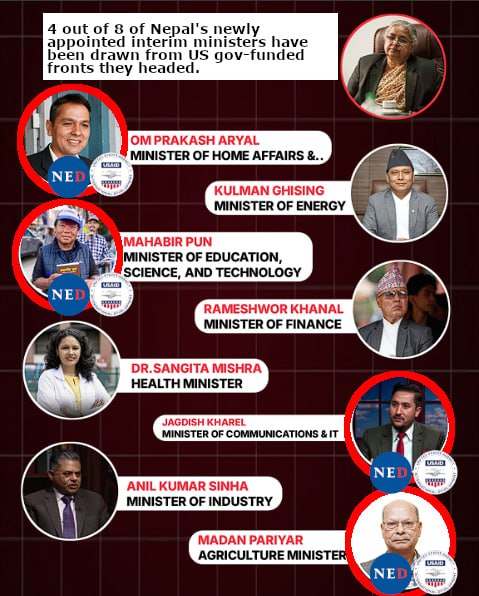
US Plans for China Blockade Continue Taking Shape

November 13th, 2025 by Brian Berletic

In 2018, the US Naval War College Review published a paper titled, “A Maritime Oil Blockade Against China—Tactically Tempting But Strategically Flawed.” It was only one of many over the preceding years discussing the details of implementing a maritime blockade as part of a larger encirclement and containment strategy of China.

At first glance the paper looks like US policy thinking considered, then moved past the idea of blockading China. Instead, the paper merely listed a number of obstacles impeding such a strategy in 2018—obstacles that would need to be removed if such a strategy were to be viable in the near or intermediate future—and obstacles US policymakers have been removing ever since.

More contemporary papers published, including those among the pages of the US Naval Institute (here and here), have updated and refined not just an emerging strategy to theoretically confront and contain China, but a plan of action taking tangible shape.

Cold War Continuity of Agenda

Throughout the Cold War and ever since its conclusion, the US’ singular foreign policy objective has been to maintain American hegemony over the globe established at the end of the World Wars. A 1992 New York Times article titled “U.S. Strategy Plan Calls for Insuring no Rivals Develop” made it clear the US would actively prevent the emergence of any nation or groups of nations from contesting American primacy worldwide.

In recent years this has included preventing the reemergence of Russia as well as the rise of China. It also involves surrounding both nations with arcs of chaos and/or confrontation—either through the destruction of neighboring countries through political subversion, or the capture of these nations by the US and their transformation into battering rams to be used against both nations.

Ukraine is an extreme example of this policy in action. The US is also transforming both the Philippines and the Chinese island province of Taiwan into similar proxies vis-à-vis China.

Beyond this, the US seeks to prevent the majority of nations currently outside US dominion from joining with and contributing to the multipolar world order proposed by nations like Russia and China.

This strategy of coercion, destabilization, political capture, proxy war, and outright war has been used to target both Russia and China directly, their neighbors, and a growing list of nations far beyond their near abroad.

Strengths and Weaknesses of American Primacy 

Enabling this strategy is America’s global-spanning military presence facilitated by its “alliance network.” This network of obedient client regimes both hosts US military forces and serves as an extension of US military, economic, and increasingly military-industrial power. US “allies” often pursue US geopolitical objectives at their own expense.

Again, an explicit example of this is Ukraine, which is locked in a proxy war with Russia, threatening its own self-preservation as a means of—as US policymakers described in a 2019 RAND Corporation paper—“extending Russia.”

While conflicts like that unfolding in Ukraine or the US-backed military build-up in the Philippines or on Taiwan has exposed a critical weakness of the United States—its lagging military industrial capacity vis-à-vis either Russia or China, let alone both nations—the US has demonstrated the ability to compensate through geopolitical agility the multipolar world is struggling to address.

This includes the ability of the US to mire a targeted nation in conflict in one location while moving resources across its global-spanning military-logistical networks toward pressure points in other locations, overextending the targeted nation and achieving success in at least one of the multiple pressure points targeted. The US successfully did this through its proxy war against Russia in Ukraine, which tied Russia up sufficiently for the US to finally succeed in the overthrow of the Syrian government, where Russian forces had previously thwarted US-sponsored proxy war and regime change.

It also includes the ability of the US to target partner or potential partner nations of Russia and China through economic, political, or even military means in ways Russia and China are unable to defend against—including through political subversion facilitated through America’s near monopoly over global information space.

These advantages the US still possesses also make potential maritime blockades very difficult for Russia and China to defend against.

Russian Energy Shipments as a Beta Test for Blockading China 

France recently announced seizing a ship accused of being part of Russia’s “ghost” or “shadow” fleet—ships refusing to heed unilateral sanctions placed by the US and its client states on Russian energy shipments.

This was just one of several first steps toward what may materialize into a wider and more aggressive interdiction or blockade of Russian energy shipments. This may also be a beta test for implementing a long-desired maritime blockade on China.

A rapid, full-scale blockade would cause energy prices to spike and could blow back to the US as negative economic consequences. By incrementally pressuring Russian energy shipments, the US can slowly adjust energy markets in an incremental manner to cushion a sudden shock the public would immediately notice and potentially react to.

Russia and the rest of the multipolar world’s response to this increasingly aggressive targeting of maritime shipping may determine whether or not the US adopts the strategy of maritime blockades on a wider scale.

Setting the Stage for a Blockade of China Has Already Begun  

The 2018 US Naval War College Review paper lays out the realities of a potential blockade against China in 2018, noting the various opportunities and risks associated with such a strategy.

The paper notes that 

“China’s reliance on seaborne oil supplies has risen steadily over the past decade and could rise further as domestic production declines” and that “the imported oil passes overwhelmingly through the Strait of Malacca and a handful of other passages that the U.S. Navy could seal off effectively.” 

It also talks extensively about a “distant blockade,” it says would be “imposed far from the Chinese coast, reducing the threat to U.S. forces from Chinese A2/AD systems.” 

This recognizes China’s growing military capabilities—military capabilities US policymakers admit are being developed and deployed to defend China, not project military power abroad—a fact US policymakers openly seek to exploit through America’s existing, global-spanning network of military power projection.

The paper includes a map marking various maritime chokepoints the US Navy then and today is capable of closing off beyond the reach of Chinese military power, backed by the growing US military footprint in the region, particularly across the Philippines, Japan (as well as its island province of Okinawa), as well as the Chinese island province of Taiwan itself.

It also mentions ongoing efforts by China to establish land routes to circumvent these maritime chokepoints, including the Myanmar-China oil pipeline, claiming:

A distant blockade also would need to interdict the Myanmar–China oil pipeline, which eventually could move as much as 440 kbd of crude oil from Kyaukpyu in coastal Myanmar to Yunnan Province in southwest China. Preventing tankers from off-loading at the Kyaukpyu terminal would require few, if any, naval platforms to remain on-site. The area could be declared an exclusion zone for the duration of a conflict, and if the Myanmar authorities failed to comply, the facility could be disabled via air strikes, aerial mining, or other kinetic action.  In short, U.S. forces likely would be able to neutralize rapidly China’s overland routes for seaborne oil imports to avoid the Strait of Malacca and other choke points farther east and prevent them from diverting forces needed to seal other maritime ingress routes.

Far from just theoretical war planning, this Myanmar-China oil pipeline has since been targeted by US-backed militants operating inside Myanmar, fighting the central government, and using the conflict as cover to strike at, compromise, and even destroy Chinese investments across the Southeast Asian country.

In February 2022, the US National Endowment for Democracy (NED) funded opposition media organization, The Irrawaddy, reported in its article“China-Backed Pipeline Facility Damaged in Myanmar Resistance Attack,” that:

An off-take station of the China-backed oil and gas pipelines was damaged when a local resistance group attacked regime forces guarding the facility in Mandalay Region…

And that:

Anti-Chinese sentiment swelled in Myanmar following the military coup last February, with many people believing Beijing had a hand in the takeover. At that time, there were calls for a boycott of Chinese products, along with calls to blow up the pipelines if China refused to condemn the regime. 

The calls prompted China to urge the regime to increase security for the pipelines. Since March last year, the regime has assigned extra forces to protect them. 

Likewise, the US has been backing extremists in southwest Pakistan to target the Chinese-built China-Pakistan Economic Corridor (CPEC) over the course of several years spanning the Obama, first Trump, Biden, and now second Trump administrations (including in 20212024, and 2025).

In other nations, like the Southeast Asian Kingdom of Thailand, US-sponsored opposition leaders like billionaire Thanathorn Juangroongruangkit have openly campaigned to stop Chinese infrastructure projects like high-speed rail lines as part of slowing down, stopping, or even reversing progress for China’s BRI network and thus eliminating the BRI as an alternative to circumvent a US-imposed maritime blockade on Chinese shipping.

The 2018 paper also identifies Russia as a primary alternative source for Chinese energy imports—which is one of the reasons the US is waging its ongoing proxy war against Russia through Ukraine and why the US is overseeing an expanding campaign to attack and destroy Russian refineries and other forms of energy infrastructure across Russia.

In other words, while US policymakers envisioned an opportunity for using US military power to attack and dismantle China’s Belt and Road Initiative infrastructure amid a US-Chinese conflict and other measures to cut China off from crucial energy imports, including from Russia, since then, the US has used armed extremists it funds and backs inside nations hosting Chinese BRI projects to begin attacking these projects before any direct US-Chinese conflict commences—together with a dangerously large proxy war being fought against China’s ally, Russia, to complicate or cut off significant alternative energy imports.

The paper concludes that any blockade should not be seen as a single, independent solution to eliminating an adversary and that the US must also continue building up the forces necessary to wage war against China as well.

Since the paper was published, the US has pursued both continued preparations for a maritime blockade of China itself, as well as build up a number of regional proxies to wage war against China, as the US wages proxy war against Russia in Ukraine and, increasingly, through the rest of Europe.

While this reality continues to take shape, political rhetoric in Washington attempts to disarm China and its allies from taking action to prepare for the inevitable confrontation the US is preparing for by creating the impression Washington seeks to “retreat” from the “Indo-Pacific” region to defend the “homeland” in the Western Hemisphere.

While some in the public and even across the alternative media have fallen for this rhetoric, it is unlikely anyone in Beijing, Moscow, or other BRICS capitals could be so naive—especially as these empty words from Washington are overshadowed by the US’ continued physical militarization of China’s periphery, continued regime change operations along China’s borders—most recently in Nepal—and the continued US proxy war against Russia aimed specifically at crippling its energy production capabilities—a key prerequisite for a successful maritime blockade of China.

To understand Washington’s strategy toward China, one should not look to the political rhetoric of “retreat” or “homeland defense” in the Western Hemisphere, but rather to the tangible actions taking place across the Asia-Pacific and beyond—the meticulous encirclement of China’s periphery, the sustained attacks on its critical overland energy and trade links (BRI/CPEC), the calculated incapacitation of Russia as a potential energy supplier, and the establishment of local proxy forces (the Philippines, Japan, separatists on Taiwan) prepared to wage war.

Far from an abstract or “flawed” concept relegated to think-tank papers, the maritime oil blockade—or wider general blockade against China—is being incrementally prepared in real-time. By systematically removing the very obstacles noted in the 2018 Naval War College Review paper, the US is demonstrating a clear, unwavering commitment to a multi-layered strategy of containment, coercion, and confrontation designed not just to prepare for conflict, but to make that conflict both inevitable and successful for the singular goal of maintaining global American hegemony.

*

Click the share button below to email/forward this article. Follow us on Instagram and X and subscribe to our Telegram Channel. Feel free to repost Global Research articles with proper attribution.

Brian Joseph Thomas Berletic, is an ex- US Marine Corps independent geopolitical researcher and writer based in Bangkok, writing under the pen name “ Tony Cartalucci ” along with several others.

Featured image is from TheAltWorld


Global Research is a reader-funded media. We do not accept any funding from corporations or governments. Help us stay afloat. Click the image below to make a one-time or recurring donation.
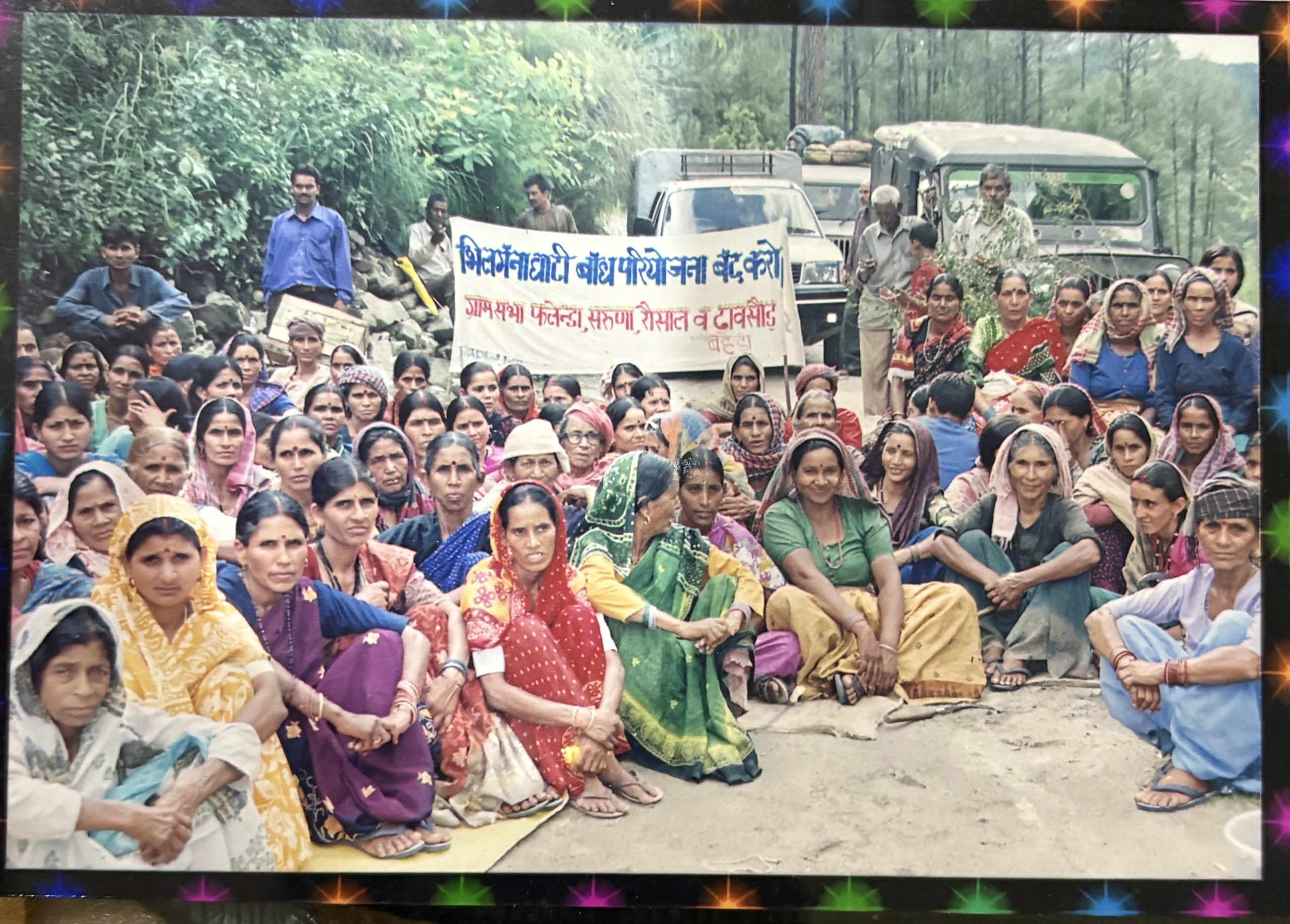
Indigenous Penan and Kenyah residents in Malaysian Borneo have filed a lawsuit and a complaint with Malaysia’s sustainable palm oil certifier, accusing palm oil company Urun Plantations of clearing natural forest within its concession along the Belaga River in violation of its lease and sustainability certification.

Urun Plantations agreed in late October to pause development activities after a palm oil mill suspended buying palm fruit from the plantation.

Satellite imagery and NGO field evidence indicate ongoing deforestation since 2023, while the company says it is only replanting previously developed land and denies breaching certification rules.

The company maintains the project has local support, with the dispute underscoring growing tensions in Malaysia’s Sarawak state over palm oil expansion into remaining forests and Indigenous territories.

***

Indigenous activists in central Sarawak state in Malaysian Borneo have declared victory, at least temporarily, after palm oil firm Urun Plantations agreed to a moratorium on clearing land in a disputed area.

Penan and Kenyah residents of the Long Urun region alleged that the plantation, which is certified as sustainable, was clearing natural forest that should remain standing — even as the plantation company maintains any land clearing was within legal guidelines.

.

aerial photo showing cleared land surrounded by intact forest

This Sept. 24, 2025 image shows land clearing in the Long Urun area. Image courtesy of The Borneo Project.

.

According to a press release from Indigenous rights and environmental protection NGO SAVE Rivers, community leaders reported that the Glenealy/Samling Belaga Mill, the last remaining mill within 50 kilometers (30 miles) still buying palm fruit from Urun Plantations, has suspended sourcing from the plantation.

The moratorium agreement also follows a recent media campaign by SAVE Rivers and environmental advocacy group The Borneo Project, which called on international palm oil producer SD Guthrie (formerly known as Sime Darby Plantation and one of the world’s largest producers of certified sustainable palm oil), to suspend purchases from the Glenealy/Samling Belaga Mill.

.

Satellite imagery shows deforestation within Urun Plantations’ concession. Image by Emilie Languedoc / Mongabay.

.

Eileen Clare Ipa, a resident of Long Urun’s Uma Pawa village, told Mongabay she was glad the company had stopped cutting trees, but she saw them still planting oil palm and doing maintenance on the cleared area. Ipa said she wants the company to leave that area to return to forest.

“I’m happy to hear that but at the same time I feel the moratorium, it is temporary, it is not permanent, so who knows? Three months, one year later, they could cut [the forest] down again,” she said.

The Origins of the Dispute

Residents say they originally accepted Urun Plantations, a 10,997-hectare (27,174-acre) concession along the Belaga River in Long Urun, in 2007. More recently, however, some have said they believe the company is violating the terms of its lease and sustainability certification, as well as state law.

Ipa said she and other Kenyah and Penan Indigenous locals still used the forest for cultivating fruit trees, fishing and gathering. The company, she said, had cleared her fruit trees, as well as naturally growing species like Bornean ironwood, Bornean camphor and meranti.

“The community is asking for respect and also [for Urun Plantations] to stop chopping forest because Ulu Belaga is the last forest remaining in the area,” she said in a September interview, referring to the forest around the Upper Belaga River.

.

Image by Emilie Languedoc / Mongabay

.

Satellite imagery from Global Forest Watch shows substantial clearing directly east of Urun Plantations’ site headquarters, in an area roughly 3 km (about 2 mi) wide, which increased in 2023 and 2024. The Borneo Project also shared photos of deforestation in a similar location, east of Urun Plantations’ site office.

In a response in early October, prior to the announcement of the moratorium, Urun Plantations told Mongabay that its workers were replanting land that was not natural forest, but rather an area previously developed between 1999 and 2009. In an email, Henry Choo, group general manager for parent company Sin Heng Chan (Malaya) Sdn. Bhd., added the company had investigated the complaint this year, in line with a company policy to investigate all complaints regarding customary land claims. [View Urun Plantations’ full response here.]

“In this case, unfortunately, the claims by these individuals after consultation with local leaders are in the company’s view not genuine,” Choo wrote, adding that “the vast majority of Long Urun residents — including fourteen out of the fifteen longhouses — also do not support these individuals’ claims.”

Still, a group of residents including Ipa are pursuing several routes to reach a lasting resolution over the alleged clearing, including sending complaints to Malaysia’s palm oil certification body and filing a lawsuit against the company and local officials.

Fiona McAlpine, communications director and project manager for The Borneo Project, told Mongabay that Urun Plantations appears to have encroached on an area of secondary forest, which would violate the terms of the Malaysia Sustainable Palm Oil certification, and potentially would not be tolerated by palm oil processors and distributors who try to avoid buying from plantations that clear forest or upset local residents.

“Some of what you can see on the satellite [imagery] is where they cleared existing palm oil [trees] that reached their term, and they replanted that area, but they just kept going and kept going into the forested area,” McAlpine said.

Land Use in Long Urun

.

aerial photo showing cleared land surrounded by intact forest

This September 2025 image shows land clearing in the Bateu Melintang area. Image courtesy of The Borneo Project.

.

The new clearing site in Long Urun exposes a dispute between residents and the plantation company in interpreting forest types and how companies can use land.

Urun Plantations was founded in 1995 as a state-backed joint venture. By 2008, Kuala Lumpur-based cooling systems conglomerate Sin Heng Chan, a listed company, had acquired the operation. The 10,997-hectare provisional lease area has been certified under the Malaysia Sustainable Palm Oil (MSPO) scheme since 2019, but only 4,062 hectares (10,037 acres) may be cultivated for palm oil, according to the certification document.

Ipa said this latest spate of clearing started in 2022, but mass deforestation began appearing on the Global Forest Watch platform from 2023. Residents held periodic blockades in the Long Urun area starting in late December 2024 through the first half of 2025, and still maintain a small but unguarded barricade post.

Residents from Long Urun also filed a letter of complaint to the MSPO’s dispute resolution board in May, alleging the forest clearing was illegal and occurred without sufficient community input.

MSPO officials did not respond to Mongabay’s requests for comment, and as of Nov. 1, residents had not received a response to their complaint.

To qualify as a sustainable producer of oil palm fruit bunches, from which palm oil is made, a company like Urun Plantations must offer affected communities the chance to give their free, prior and informed consent to a plantation project before it begins and amid any dispute with native customary landholders. It must also provide assistance to the community in the form of investments in public services. McAlpine of The Borneo Project said the certification scheme should prevent the company from engaging in new clearing of natural forest. She added she also witnessed tree trimmings and debris floating down the Belaga River, and tree cover loss near a rock formation called Batu Limbang, during three field visits between late 2024 and September 2025.

The MSPO’s “Principle 5” covers a range of environmental and biodiversity requirements, stating that palm oil companies should work to preserve remaining areas of high conservation value in their territory.  

Malaysian Senator Abun Suy Anyit, whose constituency includes this region of Sarawak, also pointed out on his Facebook page that residents believe the Sarawak palm oil plantation to be in violation of its provisional lease issued in 1997. That lease gave the company a 10-year grace period to clear forest on its 10,997 hectares up until 2007, after which it could no longer legally clear new land for plantations.

Choo, however, reiterated that the forest area cleared was neither primary nor natural forest, but an area where oil palm planting had previously been attempted. He said the company had excluded “all High Conservation Value (HCV) areas including watershed and steep areas” from its recent developments. He added the company had also paused land clearing on “greenfield development on mineral soil and peatland” as of Aug. 11 while creating a new sustainability plan with an NGO. (He didn’t name the NGO, citing a nondisclosure agreement.)

Choo said in an updated response to Mongabay that the moratorium on clearing forest had been in place since Aug. 11, but the company had also applied a moratorium to planting activities in the disputed area after meeting online with The Borneo Project in late October.

Residents have taken their dispute further, filing a lawsuit at Sarawak’s High Court in Bintulu in late June, alleging that both Urun Plantations and local officials have disrespected local Indigenous rights in the Long Urun area.

According to a disclosure to investors by parent company Sin Heng Chan, the lawsuit, filed by a law firm led by Senator Anyit, calls into question the company’s entire provisional lease, suggesting that it has conflicted with the community’s native customary land rights that span 54,478 hectares (134,618 acres), and thus ordering an injunction on development activity in the region.

The lawsuit also alleges that local officials — including from the Sarawak state government, land survey department, village headmen and village security and development committee — violated residents’ rights and deceived them.

Choo said the case was ongoing and the company was working to defend itself and “another local resident Mr Lesley Tingang, and the two longhouse leaders against these claims.” While not commenting on the claims, he added that residents, including individuals involved in filing the lawsuit, had signed an agreement approving company developments in 2007, and that Urun Plantations had again worked to resolve disputes with residents in 2016.

The residents’ lawyer recently received an affidavit from the company, Ipa said, asking them to drop the lawsuit on the grounds that it was frivolous. But Ipa said on Nov. 1 their lawyer was still interested in pursuing the case, and she was not willing to give up.

“If they are willing to come to the negotiation, but of course in that negotiation one of the points [we would want] would be that in ‘phase 11,’ where they destroyed … we want the company to not even do maintenance in the area,” Ipa said, using the company’s internal term for the disputed area. “Just leave it to become a forest.”

Fractured Relations

.

Community members at a blockade against Urun Plantations. Opponents of the project have held periodic blockades in the Long Urun area starting in late December 2024 through the first half of 2025 Image courtesy of SAVE Rivers and The Borneo Project.

.

This latest clash between a Sarawak-area developer and residents again threatens to divide Indigenous communities over advancing their villages or preserving forests.

In his response to Mongabay, Choo said only a small number of people were against Urun Plantations’ latest development, describing the blockades as being run by “a small group of approximately twenty individuals,” mostly from one family. He added the company has invested in the village security and development committee as part of its corporate social responsibility efforts, paying a total of 7.88 million ringgit ($1.9 million) as of September, and made 1,400 acres (567 hectares) within its concession area available for community use. The plantation project, he said, is supported by most of the leaders of the 15 Indigenous longhouses within the area impacted by the plantation.

Ipa, one of the protesting residents, said she wasn’t upset with the plantation’s activities in the past, but argued that Urun Plantations should have gotten more approval before expanding development. She said she also felt some of its recent practices were deceitful.

Ipa said she first felt disrespected when company workers cleared a patch of fruit trees on her land in Uma Pawa village, which she said started in 2022. When she tried to report this case to police, Ipa said, they asked her to prove her land ownership, making her feel like an “intruder.”

Residents were also surprised to learn that an unmarked attendance list had been used as a show of support, Ipa alleged. She said she’d heard that a blank list signed by Long Urun area residents, reportedly for Christmas donations, was being cited as approval for the company’s latest development.

“When we looked at the [list of] names, we asked the people we know, and they said they didn’t know this [Urun Plantations initiative] was part of its purpose,” she said. “They say they signed because [local leaders] asked us to sign.”

Ipa said she felt the village security and development committee was making decisions without the full consent of residents, and called on Urun Plantations to find a better way of obtaining residents’ free, prior and informed consent.

Celine Lim, managing director of SAVE Rivers, told Mongabay that based on other cases the NGO is involved with in Sarawak, communities are often divided by multiple competing interests: getting funding for their villages, protecting natural resources, and being influenced by state politics. In this case, she said, Urun Plantations’ decision to clear a new section triggered a divide between local officials and residents, who now want to renegotiate the terms of their agreement.

The moratorium on clearing in Long Urun is a vindication of community activists, Lim said in a statement.

“After nearly 2 years of standing firm, in spite of experiencing constant gaslighting narratives, these results are a vindication of the communities’ claims,” she said. “The fact that Urun Plantations is now halting forest clearing and seeking engagement with the affected communities is a testament to the power of local resistance and international solidarity.”

*

Click the share button below to email/forward this article. Follow us on Instagram and X and subscribe to our Telegram Channel. Feel free to repost Global Research articles with proper attribution.


Global Research is a reader-funded media. We do not accept any funding from corporations or governments. Help us stay afloat. Click the image below to make a one-time or recurring donation.

Putin’s senior aide Nikolai Patrushev gave an interview to Arguments and Facts about Japan on the 80th anniversary of its unilateral surrender in World War II in early September that’s important to raise wider awareness of after the appointment of its new ultra-nationalist prime minister. He began by reminding everyone that “Tokyo zealously cultivated an open racism that surpassed German Nazism in its absurdity and inhumanity. And the sovereignty of other countries was considered an empty phrase there.”

Patrushev then touched upon Imperial Japan’s failed geopolitical plot to turn the Sea of Japan into an inland sea and even seize Kamchatka so as “to gain undivided possession of the Sea of Okhotsk” too. He assessed that Japan’s current campaign for “’justice’ on the issue of the so-called ‘northern territories’” is just a disguise for a similar plot to obtain control over new marine (seafood and mineral) resources. Patrushev accordingly warned that it’s planning to make new claims to Russian maritime territory.

The emerging trend of misportraying Imperial Japan as the “victim” of Soviet aggression in 1945, despite the Allies having agreed in advance that the USSR would open up the Manchurian Front three months after the Nazis’ defeat, is meant to lend false legitimacy to these claims. This threat shouldn’t be downplayed, Patrushev warned, since Japan’s “Self-Defense Forces” de facto function as national armed forces, are NATO-backed, and are “systematically building a powerful and ultra-modern submarine fleet”.

In his words,

“Japan is one of the most powerful naval powers in the world today. Its fleet is capable of solving almost any task even in remote areas of the World Ocean. The Japanese Navy closely cooperates with the NATO fleet, and at any moment they can be integrated into Western coalition formats.”

Even more concerning are Japan’s nuclear breakthrough capabilities:

“it is capable of creating its own nuclear arsenal and means of delivery in a few years” if the decision is made, according to Patrushev.

Nevertheless, these threats shouldn’t be exaggerated either since Russia is “building up defensive potential in the Far East and strengthening our naval power in the Pacific Ocean”, thus meaning that it’s more than capable of defending itself from Japan. Rather,

“The threat lies not so much in the destroyers and missiles, but in the fact that the national consciousness of the Japanese is shifting from pacifism to rabid revanchism”, which he attributed to a long-running “aggressive propaganda” campaign.

The purpose is to precondition the population to accept the risks associated with Japan more actively advancing US interests in the region via the “Squad” (those two, Australia, and the Philippines), which is envisaged as the core of AUKUS+, the US’ desired NATO-like regional analogue. Japan’s place in the US’ Chinese Containment Coalition just rose as a result of the unexpected Sino-Indo rapprochement, prior to which the US wanted India to play a complementary role, so Japan is now at the forefront of this effort.

The trend is that New Cold War’s focus is shifting from US-led NATO’s containment of Russia in Europe to US-led AUKUS+’s containment of China in Asia, all while the TRIPP Corridor injects Western influence into the Eurasian Heartland to stir trouble for both. India’s Pakistani rival is also poised to play a supportive role on the Central Asian front if tensions with the Taliban abate. Altogether, Poland, Japan, Turkiye, and possibly Pakistan are now the US’ top containment allies, which isn’t lost on Russia, India, and China.

*

Click the share button below to email/forward this article. Follow us on Instagram and X and subscribe to our Telegram Channel. Feel free to repost Global Research articles with proper attribution.

This article was originally published on the author’s Substack.

Andrew Korybko is an American Moscow-based political analyst specializing in the relationship between the US strategy in Afro-Eurasia, China’s One Belt One Road global vision of New Silk Road connectivity, and Hybrid Warfare. He is a regular contributor to Global Research.

Featured image is from the author


Global Research is a reader-funded media. We do not accept any funding from corporations or governments. Help us stay afloat. Click the image below to make a one-time or recurring donation.

Fatima Bhutto and the Geography of Courage

October 30th, 2025 by Junaid S. Ahmad

From the start: when Fatima Bhutto rails against the “genocide” in Gaza, she finds her rhythms—moral urgency, lyrical indignation, a refusal to look away. Yet when you turn the lens back to Pakistan—its stolen elections, its silenced protestors, its military-state apparatus crushing dissent—her voice goes quiet. One might say: her indignation appears selective, or at least inconveniently quiet, where it would cost something. This is not just frustrating; it is rich in irony. A woman who once seemed the inheritor of a legacy of resistance—against dynasties, against state violence, against impunity—now appears to channel that fire almost exclusively at distant injustice, rather than at the injustice in her own backyard.

Let’s look at what the expectation was. Fatima, daughter of Murtaza Bhutto and granddaughter of Zulfiqar Ali Bhutto, carries a family name born of opposition to the entrenched military-political elite in Pakistan. Her memoir, “Songs of Blood and Sword,” was itself an indictment of internal betrayals and a brutal state system. So when she deploys the same moral clarity to Gaza—“only the innocent die in war,” she wrote—many of us cheered. Yet simultaneously the domestic scene in Pakistan—rigged elections (early 2024), brutal suppression of popular movements, the military-civil complex that continues to dominate and silence—is getting little from her in terms of the same sharp prose, the same uncompromising challenge.

One cannot help but ask: if she truly believed in the “us” she invokes in her recent tweet about Pakistan’s existential question in the recognition of Israel, then how is the “us” represented in the daily lives of Pakistanis whose votes were stolen, whose protests were thwarted, whose women languish in jail, whose mediators of power are unaccountable and brutal? How odd that she demands that Pakistan refuse to normalize with Israel—or states complicit in Gaza’s destruction—when she declines to insist that Pakistan refuse to normalize with its own regime of intimidating generals, pliant politicians, and unresponsive civil institutions. Why plead with the rulers to back away from one recognition while giving the rulers a free pass on the structural recognition of their own dominance?

This lack of symmetry matters. It’s not enough to decry atrocities abroad while failing to target one’s own state’s violence and duplicities. The credibility of moral outrage depends on consistency. When you invoke the Bhutto-legacy of resistance you set a standard. If you abandon it at home, you undermine it abroad.

Make no mistake: Pakistan’s regime today is a totalitarian nightmare. Elections were rigged and nullified in February 2024; the people do not forget the night raids, the rhetorical rigmarole — the murdered and bruised souls of those who dared protest for Palestine within Pakistan while the state took every opportunity to demonstrate its brutality. The intersection between Kashmir, Afghanistan, Pakistan’s internal security policy, and its relationship with the US and the Gulf powers—all feed into a ruthless domestic repression which remains under-discussed by many liberal voices. Why then does the mild rebuke to normalization appear front-page while the regime’s violence is reduced to whispers?

Perhaps it is the comfort of distance: Gaza is far enough away to criticize safely; the state in Pakistan stands much closer—and much stronger. Could it be that fear anchors the silence? Or convenience? Or perhaps the fact that speaking up at home means risking everything: blacklisting, barred entry, harassment, even worse. It is true: the cost at home is far more real. But if the Bhutto name is not used to risk something substantial, then it becomes part of the veneer of celebrity activism rather than of genuine solidarity. And this is where many of us feel betrayed: because we believed Fatima would channel the intellectual fire of her father and grandfather with the same audacity at home as she does abroad.

And yes, one might respond: she is based abroad; the pressures at home are heavy. But keynote: many dissidents worldwide operate from exile precisely so they can beef out the domestic tyranny from afar. Indeed, the vantage point of exile is not a barrier—but often an advantage. So, the question remains: why has she not persisted in exposing the full thick network of complicit elites, paramilitaries, generals and foreign patrons that underpin Pakistan’s regime?

Consider the hypocrisy of calling for Pakistan ‘not to recognize Israel’ when one offers no equivalent public walk to encourage Pakistanis to not recognize or normalize the military-establishment paradigm that has long held sway. The “normalization” she talks of in Gaza carries weight only if the speaker also rejects normalization at home—rejects the “business as usual” of elites exploiting ordinary Pakistanis. Why do we not see Fatima Bhutto drilling into that core? Why do we not hear her lament the women in Pakistani jails, the activists silenced, the protests dissipated, the stolen votes and squeaky elite compacts behind them? Because what we want isn’t just words about the genocide in Gaza—it’s the same words we want turned inward.

This is not to say one cannot or should not speak out for Gaza. Quite the opposite: we need those voices and thankfully have more of those, in all corners of the globe, since the establishment of the state of Israel in 1948. But when the same voice, the same platform, uses its fire for all but the home-front tyranny, we are left asking: are you being selective? Are you engaged merely in virtue signaling? Are you using the suffering of the distant “other” to enhance your own moral positioning, while conveniently stepping around the sufferings of the “us” you define but do not act for?

Let’s end on a provocative note: the absence of Fatima Bhutto’s full-tilt critique of Pakistan’s ruling classes speaks loudly. It speaks of fear or comfort or misaligned priorities. It speaks of how a regime can win not only through tanks and courts but through silencing voices that might demand accountability. Today, Pakistan’s military-political elite flaunt their impunity—while exiled critics, even those from storied political families, can choose to speak about Gaza but not about the paramilitary patrols in Karachi, or the vote-rigging in Islamabad, or the deep state’s covenants with foreign powers. The cost of speaking is there, yes—but if a voice keeps avoiding it, it becomes complicit by omission. The legacy of a Bhutto is not just eloquent rhetoric; it is brave confrontation—for all injustice, near and far.

Fatima Bhutto still could return to that trajectory. She still could channel her formidable prose against Pakistan’s tyrannies—with ferocity equal to her Gaza commentary. Because Pakistan too is bleeding. And because words mean something only when they bite back at power—especially at home. If she chooses silence now, the very legacy she claims becomes an emblem of what was lost: a promise of resistance unfulfilled. And that would be the real tragedy.

*

Click the share button below to email/forward this article. Follow us on Instagram and X and subscribe to our Telegram Channel. Feel free to repost Global Research articles with proper attribution.

Prof. Junaid S. Ahmad teaches Law, Religion, and Global Politics and is the Director of the Center for the Study of Islam and Decolonization (CSID), Islamabad, Pakistan. He is a member of the International Movement for a Just World (JUST – https://just-international.org/), Movement for Liberation from Nakba (MLN – https://nakbaliberation.com/), and Saving Humanity and Planet Earth (SHAPE – https://www.theshapeproject.com/).

Featured image is from Countercurrents


Global Research is a reader-funded media. We do not accept any funding from corporations or governments. Help us stay afloat. Click the image below to make a one-time or recurring donation.

[Scroll down for the Japanese translation]

Abstract

David McNeill discusses the new book, 側近が見た昭和天皇 天皇の言動でたどる昭和史 [The Showa Emperor as Seen by His Close Aides: Tracing Showa History Through the Emperor’s Words and Deeds] with the author, Ryuichi Kitano.

Introduction

Ryuichi Kitano has been a staff writer for The Asahi Shimbun since 1990. He has won numerous awards for his journalism and is the author of several books, including 側近が見た昭和天皇 天皇の言動でたどる昭和史 The Showa Emperor as Seen by His Close Aides: Tracing Showa History Through the Emperor’s Words and Deeds, 『朝日新聞の慰安婦報道と裁判』The Asahi Shimbun’s Comfort Women Reporting and Lawsuit, and 『フェイクと憎悪 歪むメディアと民主主義』Fake News and Hatred: Distorted Media and Democracy.

Prof. David McNeill (PDM): Would you outline the contents of your book and its main arguments? The book introduces the most up-to-date scholarship by historians on the Showa Emperor…

Ryuichi Kitano (RK): The emperor dealt with the war in his capacity as the supreme ruler under the Constitution of the Empire of Japan and as the supreme commander leading the military. The book asks what actions he took and what statements he made during crucial junctures before and after the war. Over the past decade, several key historical accounts have been  released. These include 百武三郎日記 (The Diary of Saburō Hyakutake), grand chamberlain from 1936 to 1944 during the prewar and wartime periods; and 昭和天皇拝謁記 (The Showa Emperor’s Private Journal)  by Michiji Tajima, who was grand-steward of the Imperial Household Agency from 1948 to 1953. These are diaries and records kept by close aides who served Emperor Showa before, during and after the war years. They represent firsthand accounts, written in real time, of the emperor’s private words spoken only to his inner circle, making them primary historical materials of the highest order. They give us a picture of the emperor as a human being.

PDM: The Showa Emperor was a taboo figure in the postwar years, but since his death we have had multiple accounts of his life. Is it fair to say that we now have a complete historical picture of his life and the decisions he made?

RK: The Showa Emperor’s Official Record (昭和天皇実録)were compiled by the Imperial Household Agency and published in 2014. The set comprises 61 volumes: 60 volumes of main text and one volume containing the table of contents and explanatory notes. Approximately 3,000 historical documents were used in the compilation, including about 40 previously unknown materials. Numerous previously unrecorded anecdotes, including those from the emperor’s childhood, which had been poorly documented, were revealed for the first time. On the other hand, direct quotations of the emperor are extremely rare; most entries are just summaries of his statements.

The Imperial Household Agency adopted a policy of recording only content based on reliable sources. Consequently, even previously known information not covered in the Showa Emperor’s Official Record is frequently omitted. These omissions include statements reportedly expressing displeasure over the enshrinement of Class-A war criminals at Yasukuni Shrine and the Emperor’s eleven meetings with General Douglas MacArthur, Supreme Commander of the Allied Powers (GHQ).

Professor Akira Yamada of Meiji University, an expert on modern Japanese and military history, notes that the official record “consistently emphasizes the narrative of a peace-loving emperor who avoided war, seemingly glossing over anything that contradicts that image.”1 It is known from the diaries of prewar and wartime chamberlains and military officers that Emperor Showa was deeply involved in the decision to go to war against the United States and provided detailed guidance on the conduct of the war even after hostilities began. These points, however, have been carefully omitted from the Showa Emperor’s Official Record.

PDM: One of the key issues of the wartime emperor is how much responsibility he had for starting and prolonging the war. Was he (as Herbert Bix, for example argues) a dynamic wartime leader, or merely a pawn of the military and political class? Has that debate finally been resolved?

RK: The conclusion I have reached is that the emperor was not merely a pawn of the military and politicians. As for whether he was an active wartime leader, I believe there were periods when he was, and periods when he was not. Nonfiction writer Masayasu Hosaka, an expert on Showa history, has spoken about the emperor’s views on war. I fully agree with his perspective, so I quote it below:

“I believe the emperor was neither a warmonger nor a pacifist; his fundamental stance was the preservation of the Imperial line. He would prefer not to fight if possible, but would wage war if necessary for the Imperial throne, and would choose peace if peace better safeguarded the throne. The process leading to the 1941 declaration of war against the United States shows the emperor initially being passive, thinking ‘I dislike war,’ yet gradually accepting it. This shift likely occurred because military leaders persistently persuaded him, arguing ‘If we do not fight, the nation cannot survive, and the Imperial throne cannot be protected.’ It becomes clear that, while he didn’t like to, he found himself in a position where he had no choice but to decide on war.”

PDM: Were you surprised by anything in the research? Do ordinary Japanese still have misunderstandings about the Showa Emperor? 

RK: Some of the emperor’s more candid remarks are cited by Tajima in 昭和天皇拝謁記 (The Showa Emperor’s Private Journal). Some surprised even me. Article 9 of the Japanese Constitution, enacted in 1947, renounced war and prohibited the maintenance of military forces. The emperor never publicly expressed his views on this in official settings. However, these memoirs revealed for the first time that he frequently voiced dissatisfaction with the provisions of Article 9 to aides like Tajima and repeatedly advocated for the necessity of rearmament through constitutional revision.

According to Tajima’s account, the emperor was not necessarily positive about postwar democracy and lamented that students participating in political movements was a “troublesome matter”. Analysis of handwritten drafts of waka poems believed to have been written by the emperor shortly before his death reveals for the first time that he sympathized with former Prime Minister Nobusuke Kishi. Kishi had faced strong student opposition while attempting to advance the revision of the Japan-U.S. Security Treaty and resigned after the Diet ratified the treaty.

PDM: The records reveal that Hirohito delayed ending the war, despite the urging of his Moscow envoy, Naotake Sato, former foreign Minister Mamoru Shigemitsu, and former Prime Minister Fumimaro Konoe to surrender immediately. In the meantime, the Americans bombed over 60 Japanese cities, including Hiroshima and Nagasaki, killing hundreds of thousands of people. Do most Japanese accept that he bears responsibility for this?

RK: First, I believe the vast majority of Japanese people have little knowledge or interest in the emperor. Even those with some knowledge or interest in the Imperial Family are not particularly well-informed about his actions and statements before and after the war, and many seem to simply believe the image of the “emperor who loved peace” disseminated by the government. However, a significant minority of Japanese do believe the emperor should bear responsibility for the war. This view is particularly common among left-leaning liberals who believe Japan should accept responsibility for its aggression against Asian nations.

Immediately after defeat, the view that the emperor should abdicate to take responsibility for the war held sway not only among leftists but also among government officials and former military officers – the leadership that had guided Japan before and during the war. Although the pre-war Constitution of the Empire of Japan granted the emperor immunity from legal and political accountability, the call for him to take moral responsibility remained strong.

According to the Tajima papers, the emperor himself stated, “For me, leaving my position would be an easy way to take responsibility. It is precisely because I feel this moral responsibility that I must make the painful effort to rebuild.” He expressed that remaining in his position was how he would fulfill his responsibility. In contrast, Tajima, who before becoming head of the Imperial Household Agency believed the emperor should abdicate to take responsibility, responded to the emperor’s statement by saying, “Given that not a single person in a position of authority before or during the war remains today, while His Majesty alone continues to reign, I think the abdication argument arises.” He thus frankly conveyed that the emperor’s argument that “it is precisely because I feel responsibility that I remain on the throne” would likely be difficult for the public to understand.

PDM: For some, the emperor is a ghostly figure, an empty symbol. But for others, he is still the core of Japanese identity. Sanseito, for example, recently urged “respect for the Imperial Rescript on Education” issued in 1890 by Emperor Meiji, which outlined the virtues that the “subjects” of the Japanese Empire were expected to uphold. How important is the emperor to contemporary Japan?

RK: In modern Japan, the emperor’s presence is scarcely noticed. We’re only reminded of his existence through news coverage of disaster relief visits or memorial services for war dead, or perhaps when people gaze with admiration at his splendid ceremonial attire during formal occasions.

Of course, for right-wing groups emphasizing Japanese identity, the emperor is a figure of immense importance. This explains why right-wing parties, including Nippon Ishin no Kai (Japan Innovation Party), emphasize the Imperial Rescript on Education and visits to Yasukuni Shrine.

However, the right wing believe the Imperial Household should conform to their idealized image of the emperor, irrespective of the facts. The most prominent example of this is the debate surrounding Imperial succession. Within the Imperial Family, Prince Hisahito of the Akishino family is the only male heir born in the past 50 years. Yet the right clings to the notion that succession through male-line descendants is Japanese tradition, strongly rejecting female emperors or succession through the female line.

In stark contrast to European monarchies that have recognized female succession, Japan still permits only succession through male-line descendants. This stems from the right’s fixation on the idea that the living emperor and his family should conform to their idealized vision. They have rejected perspectives such as respecting the emperor and the Imperial Family as human beings in their actual state, or the need to reconsider the male-line succession system to prevent the Imperial bloodline from terminating.

While Japanese public opinion polls show over 70% support for allowing female or matrilineal emperors, the voices of the roughly 30% of right-wingers who firmly oppose this are louder. Furthermore, the right holds significant influence among politicians, including Diet members. Consequently, despite discussions on female or matrilineal emperors beginning 20 years ago in 2005, it has not happened. In the debate surrounding imperial succession, it seems the strong minority holds more influence than the weaker majority.

***

Japanese Translation

Prof. David McNeill (PDM): Would you outline the contents of the book and its main arguments? The book introduces the most up-to-date scholarship by historians on the Showa Emperor…

本の内容と主な論点を概説していただけますか?本書は昭和天皇に関する歴史家による最新の研究を紹介していると言っても良いでしょう。

(答え)本書の内容は以下の通りです。

Ryuichi Kitano (RK): 第2次世界大戦で昭和天皇は、大日本帝国憲法上の「統治権の総攬者」、また軍を率いる「大元帥」として日本を率いる立場で戦争に臨みました。戦前、戦後の重要な局面で昭和天皇はどんな行動をとり、どんな発言をしたのでしょうか。

 戦前・戦中の1936年から1944年まで侍従長を務めた百武三郎による「百武三郎日記」や、戦後の1948年から1953年まで宮内府や宮内庁の長官を務めた田島道治による「昭和天皇拝謁記」などが、ここ10年足らずの間に相次いで公開されました。いずれも戦争の時代前後に昭和天皇に仕えた側近の日記や記録で、天皇が側近だけに語った肉声が、リアルタイムでつづられた一級の史料といえます。

 これら新史料を読み解き、人間・昭和天皇のどんな姿が明らかになったか。歴史研究者たちの研究の最前線を紹介するのが本書の主な目的です。

PDM: The Showa Emperor was a taboo figure in the postwar years, but since his death we have had multiple accounts of his life. Is it fair to say that we now have a complete historical picture of his life and the decisions he made?

昭和天皇は戦後、タブー視される存在でしたが、ご逝去後は数多くの伝記が刊行されました。今やその生涯と決断に関する歴史的全体像が明らかになったと言えるでしょうか?

RK:(答え)昭和天皇実録は、宮内庁書陵部が編修し、2014年に内容が公表されました。本文60冊と目次・凡例1冊の計61冊。編修には約3000点の史料が使われ、このうち「百武三郎日記」など約40点がこれまでに知られていない資料でした。

 これまでに記録が少ない昭和天皇幼少期など、初めて明らかにされた逸話も少なくありません。一方で、昭和天皇の発言が直接引用されることはきわめて少なく、要旨だけ紹介する形が多いといえます。

 宮内庁は「確実な資料に基づいた内容のみを記載する方針」をとり、すでに知られた内容でも「昭和天皇実録」に触れられていないものも少なくありません。たとえば、靖国神社のA級戦犯合祀に不快感を示したとされる発言や、計11回に及んだ連合国軍総司令部(GHQ)最高司令官のダグラス・マッカーサーとの会見などです。

 日本の近現代史や軍事史に詳しい山田朗・明治大学教授は「昭和天皇実録」について、「一貫して、平和愛好、戦争回避の姿勢だったというストーリー性を強く出し、そのイメージに反することにはふたをしているようです」と指摘しています。戦前・戦中の侍従武官や軍幹部の日記などから、昭和天皇は米国に対する開戦の意思決定に深くかかわり、開戦後もかなり細部にわたって戦争指導をしていたことが知られていますが、そうした点は「昭和天皇実録」から注意深く削除されているからです。

PDM: In particular, one of the key issues of the wartime emperor is how much responsibility he had for starting and prolonging the war. Was he (as Herbert Bix, for example argues) a dynamic wartime leader, or merely a pawn of the military and political class? Has that debate finally been resolved?

特に、戦時中の天皇に関する核心的な問題の一つは、彼が戦争の開始と長期化にどれほどの責任を負っていたかです。(例えばハーバート・ビックスが主張するように)彼は積極的な戦時指導者であったのか、それとも単なる軍部と政治家の操り人形に過ぎなかったのでしょうか? その議論はついに決着したのでしょうか?

RK:(答え)私が得ている結論は、天皇は「軍部や政治家たちの単なる駒」ではなかったということです。では「積極的な戦時指導者」だったかといえば、そうだった時期もあるし、そうではなかった時期もあると思います。

 昭和史に詳しいノンフィクション作家の保阪正康さんが昭和天皇の戦争観について語っている言葉があり、私もその考え方に全面的に賛同するので、以下に引用します。

 「昭和天皇は好戦主義者でも和平主義者でもなく、皇統の維持が基本的な立場だったと考えています。できれば戦いたくはないが、皇位のため必要なら戦争もするし、平和がほうが皇位を守れるなら平和を選択するということです。

 1941年の対米開戦にいたる過程で、天皇が初めは『戦争は嫌だ』と消極的だったのに、しだいに開戦を受けいれていくのは、軍事指導者が執拗に『戦わなければ国は存立しない、皇位を守れない』と説得したからでしょう。嫌だ嫌だと考えながらも、戦争を決断せざるを得ない立場になっていくことがわかる」

PDM: Were you surprised by anything in the research? Do ordinary Japanese still have misunderstandings about the Showa Emperor? 

調査で驚いた内容はありましたか?一般の日本国民は今でも昭和天皇について誤解を持っているのでしょうか?

RK: (答え)戦後の1948年から1953年にかけて宮内府や宮内庁の朝刊を務めた田島道治による「昭和天皇拝謁記」に、昭和天皇の率直な言葉が記されていました。そのなかに、私も驚かされた発言がいくつかありました。

 1947年に施行された日本国憲法の第9条で、戦争放棄と戦力不保持が定められました。昭和天皇は公の場では憲法に関する評価は決して公言しませんでした。しかし田島ら側近に対しては、9条にの規定にたびたび不満をもらし、憲法改正による再軍備の必要性を繰り返し説いていたことが、「昭和天皇拝謁記」の公表によって初めてわかりました。

 「昭和天皇拝謁記」によると、天皇は戦後の民主主義には必ずしも肯定的ではなく、学生らが政治運動に参加することについて「困ったことだ」と嘆いています。これは日米安保条約の改定に反対する1960年の学生らによる安保闘争についても同様とみられます。昭和天皇が死去する直前、最晩年に書いたとみられる和歌の肉筆草稿を読み解くと、安保条約改定を進めようとして学生らの強い反対運動に遭い、条約改定の国会批准成立後に退陣した岸信介元首相に対して同情的だったことが、この肉筆原稿で初めて明らかになりました。

PDM: The records reveal that Hirohito delayed ending the war, despite the urging of his Moscow envoy, Naotake Sato, former foreign Minister Mamoru Shigemitsu, and former Prime Minister Fumimaro Konoe to surrender immediately. In the meantime, the Americans bombed over 60 Japanese cities, including Hiroshima and Nagasaki, killing hundreds of thousands of people. Do most Japanese accept that he bears responsibility for this?

史料によれば、昭和天皇はモスクワ特使の佐藤直武、元外相の重光守、元首相の近衛文麿らが即時降伏を強く促したにもかかわらず、終戦を遅らせたことが分かります。その間、アメリカ軍は広島や長崎を含む60以上の日本都市を爆撃し、数十万人の命を奪いました。この責任を天皇が負うべきだと、大多数の日本国民は認めているのでしょうか?

RK: (答え)まず大多数の日本人は、天皇についての知識も関心もほとんどないと思います。皇室について少し知識や関心のある人でも、昭和天皇の戦前、戦後の言動についてはそれほど詳しくなく、政府が流布させた「平和を愛した天皇」というイメージをそのまま信じている人も多いと思われます。

 ただ少数ながらも、戦争についての責任を天皇が負うべきだと考える日本人はそれなりの割合で存在しています。とくに、日本がアジア諸国に対して加害責任を負うべきだと考える左派リベラル層に多いと思います。

 敗戦直後の日本では、左派だけでなく、政府幹部や元軍人など戦前・戦中の日本を率いた指導者層の間でも、天皇は戦争の責任をとって退位すべきだという意見が有力でした。戦前の大日本帝国憲法上、天皇は無答責、つまり法的・政治的な責任を問われない立場だったとはいえ、「道義的な責任を取るべきだ」という声が根強かったのです。

この「退位論」について、「昭和天皇拝謁記」によると天皇自身は、「地位を去るという責任の取り方は私にとって安易である。道義上の責任を感ずればこそ苦しい再建のための努力をするのである」と、天皇の地位にとどまることが責任を果たすということだと語っていました。これに対し田島道治は長官就任前は、天皇は責任を取って退位すべきだと考えていたので、天皇のこの発言についても、「戦争前や戦争中の要路の人は今一人もいないのに陛下お一人は引き続いておいでというところに、退位論など出ると思います」などと返し、「責任を感じればこその在位」という天皇の言い分は世間ではなかなか理解されないだろうことを、率直に伝えています。

PDM: For some, the emperor is a ghostly figure, an empty symbol. But for others, he is still the core of Japanese identity. Sanseito, for example, recently urged “respect for the Imperial Rescript on Education” issued in 1890 by Emperor Meiji, outlined the virtues that the “subjects” of the Japanese Empire were expected to uphold. How important is the emperor to contemporary Japan?

一部の人々にとって天皇は幽霊のような存在、空虚な象徴に過ぎないと言えます。しかし他の人々にとっては、今もなお日本的アイデンティティの核心です。例えば参政党は最近、明治天皇が1890年に発布した「教育勅語」への敬意を促し、日本帝国の「臣民」が守るべき徳目を概説しました。現代日本において天皇制度はどれほど重要なのでしょうか?

RK: (答え)現代日本では天皇の存在がほとんど意識されていません。ただ災害被災地のお見舞いや戦没者慰霊というニュースを通じて存在が意識されたり、儀式の際に華やかに盛装する姿に対するあこがれの視線が送られたりする程度だと思います。

 もちろん、日本人のアイデンティティーを重視する右派にとっては、天皇は非常に重要な存在といえます。参政党をはじめ右派政党が教育勅語や靖国神社参拝などを重視するのもその一環といえます。

 ただ、右派の天皇に対する視線は、天皇や皇族らの実際の人間像に即したものでは必ずしもなく、右派にとっての理想的な天皇像に実在の皇室が合わせるべきだという理想主義的なところがあります。その最たるところが皇位継承をめぐる議論です。天皇家ではここ40年間のうちに秋篠宮家の悠仁親王しか男子が生まれていません。しかし右派は男系男子による皇位継承こそ日本の伝統だとして執着し、女性天皇や女系天皇を強く拒否しています。

 欧州の君主国が相次いで女性の王位継承を認めているのとは対照的に、日本では依然として男系男子のみの継承しか認めない。これも右派にとっては、自分たちが理想とする天皇や皇室のあり方に生身の天皇や皇室が合わせるべきだという考え方にこだわるあまり、人間としての天皇や皇室をありのままの姿で尊重するとか、このままでは天皇家の血統が途絶えるから男系男子継承の制度を見直そうとかいった考え方を拒絶してきたからといえます。

 日本の世論調査では女性や女系の天皇を認めるべきだという意見が7割以上に達していますが、女性や女系天皇に断固反対する3割ほどの右派の意見のほうが声が大きく、また国会議員ら政治家の間でも有力であるため、女性や女系天皇は20年前の2005年から議論されているにもかかわらず、実現していません。皇位継承をめぐる議論では、強い少数派のほうが弱い多数派よりも影響力をもっているという状況だと思います。

*

Click the share button below to email/forward this article. Follow us on Instagram and X and subscribe to our Telegram Channel. Feel free to repost Global Research articles with proper attribution.

David McNeill is a professor at the Department of English Language, Communication and Cultures at Sacred Heart University in Tokyo. He was previously a correspondent for The Independent and The Economist newspapers and for The Chronicle of Higher Education. He is co-author of the book Strong in the Rain (with Lucy Birmingham) about the 2011 Tohoku disaster. He is an Asia-Pacific Journal editor. Follow David on Twitter @DavidMcneill3. E-mail: [email protected].

Featured image is from APJJF


Global Research is a reader-funded media. We do not accept any funding from corporations or governments. Help us stay afloat. Click the image below to make a one-time or recurring donation.

Addressing the entrenched problem of contractualization requires a multidimensional approach that goes beyond mere legislative prohibition. While previous administrations have introduced partial reforms such as Department Orders and executive directives aimed at regulating labor contracting, these measures have often lacked coherence, enforceability, and alignment with the broader goal of decent work. The persistence of loopholes within existing labor laws allows employers to continue engaging in “endo” (end-of-contract) practices under new guises, thereby undermining the spirit of reform. A genuinely transformative policy framework must therefore focus on closing these regulatory gaps while strengthening institutional mechanisms for monitoring, enforcement, and worker representation.

Central to this reform agenda is the institutionalization of security of tenure as a non-negotiable right rather than a contingent benefit. This entails stricter regulation of subcontracting and manpower agencies, the imposition of heavier sanctions for violators, and the establishment of clearer legal standards defining legitimate job contracting. Equally vital is the empowerment of labor unions and workers’ organizations, whose capacity to negotiate collectively remains a cornerstone of democratic labor governance. By ensuring meaningful participation of workers in decision-making processes, the state can begin to redress the entrenched imbalance of power between labor and capital.

Furthermore, policy reform must be anchored in the Decent Work Agenda of the International Labour Organization (ILO), which emphasizes employment creation, rights at work, social protection, and social dialogue as interdependent pillars of just labor relations. Aligning national labor policy with these global standards would not only advance the protection of Filipino workers but also reinforce the Philippines’ commitment to international human rights norms. Finally, reform must be accompanied by a broader cultural shift that revalues labor not merely as an economic input but as a central component of human development and national progress.

Only through comprehensive and sustained action grounded in principles of equity, justice, and participatory governance can the Philippines overcome the structural injustices that contractualization represents. In doing so, the nation may finally realize the constitutional vision of a society that honors labor as a vital force in building a just and humane social order.

The Origins of Contractualization in the Philippines

Contractualization, locally referred to as endo (short for “end of contract”), traces its origins to the broader economic restructuring that occurred in the Philippines during the late twentieth century. This period, particularly throughout the 1980s and 1990s, was marked by the government’s adoption of neoliberal economic policies which is a framework characterized by market liberalization, deregulation, and privatization. Under pressure from international financial institutions such as the International Monetary Fund (IMF) and the World Bank, the Philippine government pursued structural adjustment programs designed to open the economy to global competition and foreign investment. Within this paradigm, labor market “flexibility” emerged as a key policy objective, rationalized as necessary for enhancing business competitiveness and attracting foreign capital.

This shift fundamentally altered the landscape of labor relations in the country. Employers were encouraged, and in some cases incentivized, to outsource labor through third-party contractors or manpower agencies instead of hiring workers as regular employees. Such arrangements allowed firms to reduce operational costs, circumvent labor regulations, and avoid long-term financial obligations associated with regular employment such as social insurance, security of tenure, and separation benefits. What was initially framed as a pragmatic solution to economic inefficiency and global competitiveness gradually evolved into a mechanism for systematic labor exploitation.

By the 1990s, contractualization had become institutionalized across multiple sectors, including manufacturing, construction, retail, services, and even public institutions. The typical endo cycle involved the hiring of workers on five-month contracts conveniently timed to end before the six-month threshold required for regularization under Philippine labor law. This arrangement effectively denied workers the rights and benefits that come with regular employment, including health insurance, paid leave, and retirement pay. Over time, such practices entrenched a two-tier labor system: a small segment of regular employees enjoying relative stability, and a vast majority of contractual workers enduring economic precarity.

Far from fostering productivity or economic dynamism, the widespread reliance on short-term labor institutionalized job insecurity and weakened collective bargaining power. It fragmented the labor force, discouraged unionization, and normalized the disposability of workers in the pursuit of profit. Moreover, the prevalence of contractualization reflected the state’s complicity in prioritizing capital accumulation over social justice, revealing a pattern of policymaking that subordinated workers’ rights to the imperatives of globalization and market efficiency.

Thus, the origins of contractualization in the Philippines cannot be understood merely as an outcome of business adaptation or managerial strategy; they must be situated within a broader historical and ideological context of neoliberal restructuring. What began as a policy aimed at economic modernization ultimately produced a legacy of inequality and precarity that continues to shape the everyday realities of Filipino workers to this day.

Contractualization as an Anti-Labor Practice

Contractualization is widely condemned as an anti-labor practice because it fundamentally undermines the security, dignity, and rights of workers. These are rights that are explicitly protected under the Philippine Constitution and the Labor Code. Security of tenure is a cornerstone of labor law, designed to ensure that employees can earn a stable livelihood, plan for their futures, and participate meaningfully in economic and social life. By contrast, contractualization subverts this principle by tethering a worker’s employment to the arbitrary terms of short-term contracts, often lasting only a few months. Under such arrangements, workers face chronic uncertainty; they cannot confidently plan for long-term financial commitments, access social benefits, or invest in personal and professional development. The looming threat of non-renewal or termination creates a climate of fear and power imbalance, discouraging employees from asserting their rights or engaging in workplace advocacy.

In practice, contractualization reduces labor to a disposable commodity, valued not for skill, experience, or dedication, but solely for its cost-effectiveness and willingness to endure precarity. Workers are hired and terminated with little accountability, fostering a system in which economic survival hinges on submission to low wages and unstable working conditions. This dynamic not only strips employees of agency but also entrenches inequality between management and labor, eroding the capacity of workers to organize, bargain collectively, or demand fair treatment.

From a critical perspective, contractualization represents a modern form of exploitation, disguised under the language of “labor flexibility,” “competitiveness,” and “market efficiency.” While proponents argue that short-term contracts enhance business adaptability and attract investment, the social costs borne by workers are profound: heightened economic vulnerability, psychological stress, and exclusion from social protections such as health insurance, retirement benefits, and paid leave. By prioritizing capital accumulation over the welfare of human labor, contractualization exemplifies structural injustice, revealing a labor system that systematically favors profit over the fundamental rights and well-being of the working class.

Ultimately, contractualization is not merely a technical or administrative labor policy issue; it is a moral and social concern that challenges the ethical foundations of economic governance. It underscores the tension between neoliberal imperatives and human-centered labor rights, highlighting the urgent need for reforms that uphold security of tenure, dignity at work, and equitable access to the protections to which all Filipino workers are legally and morally entitled.

.

No photo description available.

Labor groups in Southern Tagalog region staged a protest titled Flores de Endo, carrying their economic and human rights demands to various agencies including Supreme Court, Department of Justice, Court of Appeals, and Department of Labor and Employment. (Source: UPLB Perspective)

.

The Spread of Contractualization to the Academe

What makes the current labor situation in the Philippines particularly alarming is that contractualization has spread beyond traditional industrial and service sectors into the academe, a domain that should, by its very nature, uphold principles of fairness, meritocracy, and intellectual integrity. In recent decades, universities and colleges, both public and private, have increasingly adopted the practice of hiring educators on short-term or fixed-term contracts, denying them regular appointments, security of tenure, and the benefits associated with stable academic employment. This trend reflects broader neoliberal pressures on higher education, including budgetary constraints, performance metrics, and the commercialization of knowledge, which have incentivized institutions to prioritize cost-cutting over the welfare of their faculty.

The erosion of academic labor rights carries profound consequences not only for educators but also for the quality and accessibility of education. Contractual professors, facing persistent job insecurity, often contend with excessive teaching loads, low pay, and minimal or no access to benefits such as health insurance, retirement plans, or professional development allowances. The constant uncertainty surrounding contract renewal creates a climate of anxiety that discourages long-term academic planning, research engagement, and pedagogical innovation. With little incentive to invest in curriculum development, mentorship, or scholarly work, contractual faculty are hindered from fulfilling the full scope of their professional responsibilities, directly impacting the quality of education delivered to students.

Moreover, the spread of contractualization in academia represents a paradoxical failure of institutions that are supposed to model social justice and critical inquiry. By commodifying intellectual labor and prioritizing short-term cost efficiency over the rights and development of educators, universities undermine the very values they are meant to instill: equity, fairness, and the pursuit of knowledge for societal good. The normalization of precarious employment in the academe not only perpetuates economic and professional vulnerability among educators but also risks producing a generation of students in an environment where faculty morale, academic rigor, and intellectual mentorship are compromised.

In this context, the extension of contractualization into higher education is emblematic of a broader systemic undervaluing of labor, revealing how neoliberal imperatives such as flexibility, market competitiveness, and cost containment have infiltrated even those spheres traditionally considered bastions of ethical and social responsibility. Addressing this issue, therefore, requires both targeted labor reforms within educational institutions and a broader societal recognition that academic labor, like all forms of work, deserves security, dignity, and respect.

Policy Implications and Potential Reforms

The infiltration of contractualization into the academe underscores the urgent need for comprehensive labor reforms that extend beyond traditional industrial sectors to encompass all forms of employment, including intellectual and educational labor. While previous policy efforts have targeted endo practices in private and public enterprises, the unique conditions of academic work characterized by teaching, research, and service responsibilities require tailored interventions that safeguard the rights and professional development of educators. At the heart of these reforms must be the principle of security of tenure, ensuring that qualified faculty are granted regular appointments with access to benefits, job stability, and protections against arbitrary dismissal.

Strengthening labor protections in higher education also entails enhancing regulatory oversight and institutional accountability. Government agencies, such as the Department of Labor and Employment (DOLE) and the Commission on Higher Education (CHED), must collaborate to monitor employment practices, enforce existing labor laws, and penalize institutions that exploit contractual arrangements to circumvent workers’ rights. Policies should mandate transparent hiring procedures, limit the use of short-term contracts, and require fair compensation and benefits aligned with the full scope of academic duties, including research, mentorship, and community service.

Beyond legal and institutional measures, reforms must promote the empowerment of academic workers through collective representation and unionization. Faculty unions and professional associations play a crucial role in negotiating equitable working conditions, advocating for policy change, and providing a platform for educators to assert their rights without fear of reprisal. By fostering a participatory culture within universities, these measures can address the structural imbalances that contractualization perpetuates.

Addressing the problem of contractualization in the academe should be guided by a broader commitment to social justice and human-centered development. The protection of educators’ rights is not merely a labor issue; it is intrinsically linked to the quality of education, the integrity of academic institutions, and the cultivation of an informed and critically engaged citizenry. Ensuring that academic labor is secure, dignified, and valued is therefore both a moral imperative and a practical necessity for nation-building.

The extension of contractualization into the academe illuminates the systemic nature of labor precarity in the Philippines and highlights the need for coordinated, rights-based, and sector-sensitive reforms. Only through a combination of legislative action, institutional accountability, and active worker empowerment can the nation begin to redress the structural inequities that undermine both workers’ rights and the broader public good.

The Case of Prof. Jose Mario de Vega

A striking and illustrative example of academic exploitation under contractualization is the case of Prof. Jose Mario de Vega, who served as an Associate Professor 1 at the National University in Manila. Despite having devoted two years and six months of service as a probationary full-time faculty member, contributing significantly to teaching, curriculum development, and student mentorship, Prof. de Vega was never granted regularization or a permanent appointment. His repeated contributions exceeded the standard probationary or contractual period, yet the university failed to recognize his rights to security of tenure. Without legitimate cause, explanation, or due process, he was ultimately issued an end-of-contract notice, effectively terminating his employment and abruptly ending his academic engagement.

Prof. de Vega’s case exemplifies how contractualization, when applied in the academe, takes on a particularly insidious dimension. Unlike many forms of labor, teaching and academic work are not merely transactional or procedural; educators are intellectual stewards, mentors, and critical shapers of societal knowledge and values. The precarious treatment of professors like de Vega undermines their capacity to perform these roles effectively, as constant job insecurity forces them to focus on immediate survival rather than long-term scholarly development, research, or innovation.

Furthermore, his experience highlights the structural inequities and moral failings embedded in the application of short-term contracts within higher education. By treating educators as disposable labor, institutions not only violate legal labor protections but also erode the integrity and mission of education itself. Such practices convey a troubling message: that the cultivation of knowledge and the formation of future generations are secondary to administrative convenience and cost-cutting imperatives.

Beyond the individual injustice suffered by Prof. de Vega, his case underscores a systemic problem that affects thousands of contractual faculty nationwide. It illuminates the broader consequences of academic contractualization: the erosion of faculty morale, the suppression of intellectual freedom, and the weakening of the institutional capacity to deliver high-quality education. The human and societal costs of this practice extend far beyond the university walls, affecting students, communities, and the nation’s intellectual and moral development.

In this context, Prof. de Vega’s story is not an isolated incident but a powerful symbol of the urgent need for reform. It serves as a call to action for policymakers, educational institutions, and society at large to recognize the dignity and rights of academic workers, to implement security of tenure, and to restore the principle that education should empower rather than exploit those entrusted with its delivery.

Conclusion

The persistence and expansion of contractualization in the Philippines reveal a labor system deeply skewed against workers, undermining both their rights and their dignity. From its origins in the neoliberal reforms of the 1980s and 1990s to its pervasive presence in manufacturing, services, and government institutions, this practice has systematically deprived Filipino workers of security of tenure, social protections, and long-term livelihood stability. What was originally promoted as a mechanism for labor market flexibility and economic competitiveness has instead evolved into a tool for exploitation, turning human labor into a disposable commodity measured solely by its short-term cost.

The spread of contractualization into the academe further underscores its insidious nature. By extending precarious employment practices to professors and educators, universities and colleges compromise the very principles they are meant to uphold: fairness, meritocracy, and the cultivation of knowledge. Contractual professors, burdened with excessive teaching loads, minimal benefits, and constant job insecurity, are unable to fully engage in research, mentorship, or professional development. The case of Prof. Jose Mario de Vega illustrates the human cost of this system: despite years of dedicated service, he was denied regularization and abruptly terminated, a stark reminder of how contractualization devalues not only labor but also intellectual stewardship.

Addressing these issues requires comprehensive, rights-based reforms that prioritize the welfare of workers across all sectors, including the academe. Legal protections must be strengthened, enforcement mechanisms enhanced, and avenues for worker empowerment, such as unionization and collective bargaining, fully supported. Educational institutions, in particular, must recognize that securing the rights of their faculty is integral to upholding the quality, integrity, and social mission of education itself.

Ultimately, contractualization in the Philippines is not merely an economic or administrative concern but a moral and societal issue. The dignity of labor, the protection of workers’ rights, and the cultivation of knowledge are inextricably linked. Ensuring security of tenure and fair treatment for all workers, including educators, is both a legal imperative and a foundational step toward a more just, equitable, and humane society. The experience of Filipino workers and academics alike demonstrates that when labor rights are neglected, the very structures meant to support progress, innovation, and social development are weakened. Confronting contractualization is therefore essential not only for workers but for the nation’s future.

*

Click the share button below to email/forward this article. Follow us on Instagram and X and subscribe to our Telegram Channel. Feel free to repost Global Research articles with proper attribution.

Prof. Ruel F. Pepa is a Filipino philosopher based in Madrid, Spain. A retired academic (Associate Professor IV), he taught Philosophy and Social Sciences for more than fifteen years at Trinity University of Asia, an Anglican university in the Philippines. He is a Research Associate of the Centre for Research on Globalization (CRG).

Featured image source


Global Research is a reader-funded media. We do not accept any funding from corporations or governments. Help us stay afloat. Click the image below to make a one-time or recurring donation.
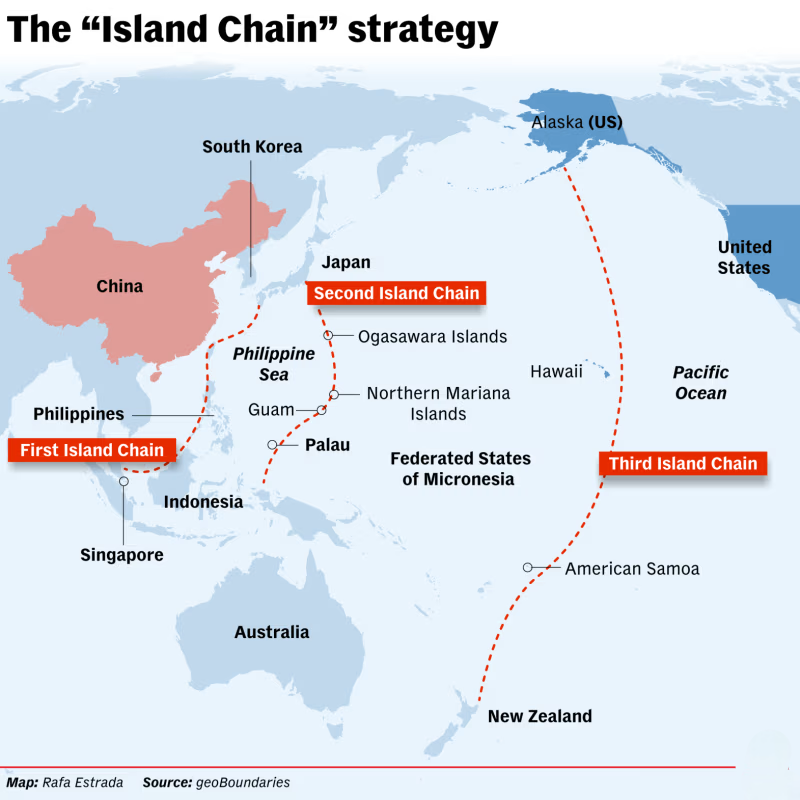
Lots of attention was drawn to the Great Nicobar Island Project (GNIP) last month, which aims to develop this namesake island in India’s Andaman and Nicobar Islands union territory, after Indian National Congress leader Sonia Gandhi published an op-ed at The Hindu lambasting it. Her criticisms mostly center on its potential environmental consequences while ignoring its geostrategic significance, thus prompting the ruling BJP spokesman to rhetorically ask on whose behalf she’s lobbying against it.

For background, India has been practicing what it calls the Act East Policy for over a decade after Prime Minister Narendra Modi rebranded the Look East Policy in 2014 to emphasize his proactive intentions, which aim to comprehensively strengthen ties between his civilization-state and ASEAN. The Trilateral Highway with Myanmar and Thailand was supposed to be this policy’s flagship project but has run into trouble due to the latest phase of Myanmar’s civil war. The GNIP is now envisaged as the new flagship.

As Savitri Mumukshu wrote on X,

“By developing Great Nicobar into a deep-sea port, airport, and military hub, India gains a vital strategic foothold just 160 km from the Malacca Strait, a vital chokepoint through which 80% of China’s oil imports and 40% of global trade pass. This allows India to monitor maritime traffic, project power across the eastern Indian Ocean, and quickly use naval and air assets”.

Some words will now be said about this insight in light of the nascent Sino-Indo rapprochement.

Mutually friendly rhetoric from the past few weeks aside, China and India are still veritably competitors with one another, if not still rivals. All that’s recently changed is that there now appears to be a renewed interest in responsibly managing border tensions with a view towards gradually growing bilateral trade. This is a significant achievement given the bad blood between them since summer 2020’s lethal clashes over the Galwan River Valley but neither is naively imagining that the other is now a trusted partner.

India practices what can be described as a Hyper-Realist foreign policy in the sense that its Minister of External Affairs explicitly details his country’s interests and openly seeks to advance them. This contrasts with most countries’ top diplomats, who usually only hint at what their interests are and then quietly pursue them. There’s no ambiguity when it comes to Indian foreign policy. The GNIP can therefore be interpreted as a means of counterbalancing what it considers to be China’s regional hegemonic policies.

It’s unimportant whether observers share India’s assessment of China’s regional approach since all that matters is that the GNIP is meant to become the new lynchpin of its Act East Policy. It’s outwardly driven by economic imperatives but crucially includes unstated military-strategic goals with respect to entrenching India’s envisaged role as the guardian of its eponymous ocean. These aren’t objectively threatening to China but are intended to counterbalance and deter it in case tensions one day return.

With all this insight in mind, while some critics of the GNIP might truly mean well, their advocacy against it inadvertently harms India’s grand strategic interests. The global systemic transition to multipolarity is such that Great Powers like India are independently advancing their interests vis-à-vis their peers like China. This isn’t a sign of unipolarity’s impending return like some members of the Alt-Media Community might fear but a natural development that stabilizes the emerging balance of power.

*

Click the share button below to email/forward this article. Follow us on Instagram and X and subscribe to our Telegram Channel. Feel free to repost Global Research articles with proper attribution.

This article was originally published on the author’s Substack.

Andrew Korybko is an American Moscow-based political analyst specializing in the relationship between the US strategy in Afro-Eurasia, China’s One Belt One Road global vision of New Silk Road connectivity, and Hybrid Warfare. He is a regular contributor to Global Research.

Featured image is from the author


Global Research is a reader-funded media. We do not accept any funding from corporations or governments. Help us stay afloat. Click the image below to make a one-time or recurring donation.
A tribute often paid to social activists is of their lifelong commitment. It is rare to find someone who got involved with social commitments in middle age and then very quickly established a reputation for complete honesty and limitless courage. This would be even more unexpected for a woman who had hitherto been confined mainly to family responsibilities in a middle-class Delhi household. However this is precisely what Nirmala Sharma achieved in Delhi, starting around 1991 at the age of 44 and continuing for about 25 years till her tragic death in the middle of several struggles.

Nirmala Sharma formed an organization called Jagriti Mahila Samiti (JSM or Committee for the Social Awakening of Women) which soon acquired a well-deserved reputation of taking up the cause of several distressed women in highly determined ways. Nirmala did not step back from helping these women even when she was personally beaten up by the oppressors of these women who had escaped law by paying bribes. She faced these oppressors and corrupt officials with courage right inside their homes, police stations and courts, fighting long legal battles in very adverse conditions.

As the reputation of her efforts spread fast, she was invited by one of the most well-established women’s organization to be a part of a function in memory of women victims, organized in collaboration with police. After homage and speeches were done, the meeting was announced to be over. Nirmala was on her feet, protesting that more should be discussed and done. She wanted to examine all the cases of women victims mentioned here to see in how many cases justice had been done and the culprits were punished. Within a few days she was involved in protests leading to her personal victimization when she took forward such issues on the streets.  

She widened the horizons of women’s issues to get seriously involved deeply in several efforts of getting relief for victims of slum demolitions and evictions of hawkers. Although these were very difficult struggles, several times she and her colleagues succeeded in getting significant relief for victims. She was also involved very deeply in anti-liquor movement and while most local people were afraid of the liquor mafias that were very active in many slums, she along with her colleagues personally raided the illegal storage places of these liquor mafias several times.

While taking up all these courageous activities, Nirmala continued to take good care of her family. A deeply religious person, several times when I went to meet her early in morning she was busy in her puja (worship). She derived strength from religion to keep alive her struggles to help the poorest people and highly distressed women. Although she came from a Brahmin family, she was in the forefront of helping dalits and her closest colleague was a Muslim woman Durdana Khan who too shared the beatings and insults Nirmala Sharma received in the course of her struggles.

Nirmala, Durdana and other colleagues did not hesitate to go to those places where there was a chance that they may be assaulted or hurt. From where did Nirmala, who had hardly ever seen a struggle before the age of 44, get this strength suddenly to be in the middle of several such struggles simultaneously? Nirmala’s elderly uncle was a freedom fighter. Her father Pandit Hotilal was a scholarly person who had so impressed the leading industrialist for whom he worked that the industrialist was keen to get his own children educated by him. Hotilal agreed, but at the same time continued to find the time to teach children from poor families, not accepting any honorarium from either the top industrialist or from the poor households. At the same time, he mobilized the workers to raise demands for better facilities for their colony, something the industrialist had to accept.

So probably the seeds of sensitivity to the problems of the distressed and the poor were already there in Nirmala, but the person who should get the most credit for launching Nirmala on the path of social movements was her husband Amarnath Sharma. An academic, he had annoyed his seniors by mobilizing the workers of the institute where he worked. A substantial part of his salary was spent on helping others in need. He was all the time encouraging Nirmala to do something for distressed people and particularly for women in a selfless way, but without joining any political party or electoral politics. He was the real mentor of Nirmala the social activist, but unfortunately he died from cancer in 1996. This was the biggest shock of her life for Nirmala, but her struggles continued. After some years Nirmala’s eldest son too died from cancer. The fact that she could continue her work involving struggles on almost daily basis in the middle of such personal setbacks speaks enormously for her very deep social commitments.

As a journalist who reported on her struggles in newspapers and also brought out supportive booklets, I met Nirmala Ji several times and she always impressed me with how deeply she cared for the people for whom she working. Here I am providing some glimpses of her work.         

Helping Distressed Women

Shanti’s world seemed to have collapsed when her husband was killed and their property was snatched. From a happy housewife she was reduced to a domestic servant washing dishes in some homes. Then someone told her about an organisation called Jagriti Mahila Samiti (JMS) which had helped several women like her.

“When she came to our office she did not even have any chappals (footwear) on her feet. What is worse, her traumatic experiences had shattered all her confidence,” recalled Nirmala Sharma, President of JMS.

Realising the urgency of her situation, JMS gave priority time to her and after several rounds of government offices and courts, her property was restored to her. What is more, JMS established a close bond with her and its various members made small contributions to facilitate the marriage of Shanti’s daughter.

Chandra Prabha had lost all hope of her ten-year old dispute with her estranged husband being settled and the dowry and other money being returned to her. But thanks to the effective action of JMS she could obtain a settlement of Rs. 3,55,000 within a short time of seeking this organisation’s help. This enabled her to start a new life.

These are only a few examples of hundreds of women who received effective help from JMS. When women victims of injustice came to JMS, its first effort was to fight this injustice. But in other cases where misunderstandings could be removed and an amicable settlement could be reached, JMS tries to work in this direction. Hundreds of family disputes were settled as a result of the intervention of JMS.

Wider Struggles

What is more, JMS took a broad view of women’s issues to include many issues related closely to the well-being of poor communities but which are quite often taken to be beyond the scope of a women’s organisation. For example JMS had been carrying out educational and other constructive work in a hut colony of Subhash Nagar, in West Delhi. This colony’s population included several widows as well as other households dependent mainly on the earnings of women. Several of these women worked in very difficult conditions as domestic servants to provide for their children. Once when most of the earning members of this colony had gone for work, without giving any notice this colony was demolished.

In such circumstances JMS took up opposition of this demolition as its main work for several days. Some persons objected to this as they felt that JMS should tackle only women-related issues. But for JMS it was clear that just now the biggest issue for these women as well as the entire community of these slums dwellers was the loss of their one and only shelter in the city. In such a situation to talk about education or any other issue would have appeared ridiculous to the affected women as well as their families squatting in the open without any shelters. So JMS boldly took the path of resisting and opposing this demolition.

During this movement some members of JMS including Nirmala Sharma were implicated in false cases and jailed. However, despite the repression unleashed on them the struggle continued and ultimately the huts were reconstructed on the same land in a better condition than before as a result of this struggle.

Similarly JMS fought a long and difficult struggle on behalf of vegetable vendors who were evicted from a place that had been allotted to them in Paschim Vihar. To protest against this JMS members and evicted vendors sat on a dharna-cum-fast in the bitterly cold weather of Delhi in December 1997 and January 1998. The police did not allow them to erect a temporary shelter. Finally the administration ordered an inquiry and found that the site had been legally allotted to the vegetable vendors but powerful persons were trying to grab this land. The vegetable vendors got back the land to sell their vegetables.

When Nirmala Sharma had gone to officials to obtain the records relating to this land, she was told by one official that she’ll not get the land records. He further threatened her to stop making such demands or else he will have her badly beaten by the police and implicated in cases. The fact that a social activist asking just for some information on land records could be threatened in such a bad way really hurt Nirmala who was then attracted to the right to information movement. She then played an important role in this movement in Delhi. She took this movement to the slum dwellers and several meetings were organised on this issue in slums and bastis of Delhi.

The growing fame of JMS as an honest and dedicated organisation led to people from outside Delhi also approaching this organisation for intervention in cases relating to atrocities against women. Nirmala Sharma went to investigate and/or settle several serious cases such as those in Kalota (Rajesthan), Hullaheri (Haryana) and Ferozepur (Punjab). As a recognition of the broad-based work of this women’s organisation Nirmala Sharma was appointed the Delhi Convener of the National Alliance for People’s Movements (NAPM).

Apart from JMS’s concentrated work in some slum clusters, it also took up issue based work which yielded good results for almost all the residents of Delhi. JMS took up a crusade against the corruption in Delhi Milk Scheme. This corruption was responsible for the denial of milk or the supply of adulterated milk to several people in Delhi. What started as a small struggle to improve milk distribution in Khyala village led to a wider movement with the cooperation of Delhi Milk Supply workers. Ultimately one of the most corrupt officers was removed and jailed. Many cases of corruption were exposed drawing attention to various types of malpractices. Khyala, where the struggle started, got new milk booths.

Similarly the anti-liquor efforts of JMS led to the exposure of several liquor mafias, particularly the large-scale distribution of liquor by them at election time. Sale and consumption of liquor in several slums declined considerably as a result of the efforts of JMS.

However, JMS activists regretted that their efforts could not go ahead further because of victimisation of several activists and implicating them in a number of false cases. Several of them were also been beaten up badly by the police as well as gangsters. Despite this, JMS continued its good work of combining several constructive activities with struggles for the rights of the poor for nearly 25 years. Few organisations have achieved so much within a span of a few years, that too in the middle of so much victimisation and hindrance. What is more, all this was achieved without any institutional funding or outside funding. JMS depended only on small donations made by its members and supporters for all its work. It received very useful support from a few dedicated lawyers who worked without any fees for JMS.

Protecting Dignity

P, a girl from a lower middle class family was forced by economic circumstances to marry a mentally challenged youth from a millionaire family. She decided to adjust herself somehow in the difficult conditions, but a worse fate awaited her. Taking advantage of her vulnerable situation, her father-in-law subjected her to sexual exploitation. In very adverse condition she had to tolerate this for some years, but when her eldest daughter reached an age where she could understand what was happening, she motivated her mother to revolt against this. The result was that both mother and daughter were treated in a most cruel way. 

It was at this stage that P. was given the address of JMS. JMS helped P. to face her exploiters (as well as officials in collusion with them) boldly and for the first time in the late years of this relationship of shame and exploitation, the millionaire got scared at the very real possibility of the public exposure of his misdeeds. For the first time he was willing to reach a compromise and compensate his victim. P. was most concerned about bringing up her daughters away from the shadow of this exploitation. So JMS helped her to reach a settlement in such a way that she could now live peacefully with her daughter in another city.

From complete loss of hope to a new life of hope – this is the story of many women who have come to JMS for help. U.R. is another such example. Her five year old daughter was raped by a relative who had also been responsible for driving her out of her home. With the help of JMS, a completely broken U.R. could arrange for some relief for her daughter and she could also get back her house.

As news of the dedicated work done by JMS spread beyond Delhi, it started getting appeals from other parts of the country for help. S, a girl from Hissar, was married in Ferozepur, where her husband and other members of his family badly mistreated her and thrashed her on several occasions. One day her husband pushed her from a second floor. S. sustained serious injuries. When this was brought to the notice of JMS, Nirmala Sharma herself went to Ferozepur and brought S. from there. For the first time S. felt that she had strong support and could send her tormentors to prison. However for the sake of her family she was still willing to give them a chance. So long talks followed as her husband admitted his mistakes and agreed to live with her separately in Delhi for some time. JMS continued to monitor for a long time to ensure that the husband didn’t go back to his old ways.

A. was frequently mistreated and occasionally physically beaten by her husband, a rich property dealer. Then without informing her he married another girl. A’s world appeared to crumble around her, but JMS helped her to get proper compensation.

However her parents acted in unseemly hurry to arrange her second marriage without properly checking the background of the groom. He started beating her soon after marriage and refused to take care of her daughter from her first marriage. JMS helped her again to get a settlement. In addition it helped her to get a part time job and start an independent life with her daughter.

Standing Up for the Poor

In 1999 the authorities again sent a demolition squad to Subhash Nagar hut colony. As the protesters were being beaten by the police, Nirmala Sharma offered herself for arrest to prevent injuries to many people. The case reached right up to the Union Urban Minister who decided that the demolition of this slum was unjustified. However as the huts and development complexes had been demolished, people had to construct new huts in nearby area. Thus their homes were protected for a second time within three years.

JMS succeeded in preventing evictions in several places like Rajiv Gadhi Camp (Punjabi Bagh), Madipur, Pitampura etc. In Raghubir Nagar old F Block JMS fought one of its most bitter battles to save the huts of nearly 4000 families. The livelihood of most of these families was closely tied to the old clothes market located nearby. The women of the families were the leading bread-winners as they exchanged steel utensils with old clothes, moving from house to house, street to street. This livelihood also led to proper use of old clothes (which would otherwise be thrown away) and made available cheaply priced ready-made clothes to the poorest sections. JMS emphasised all these aspects as it fought a valiant battle to save the livelihood and homes of these families. In this struggle Nirmala Sharma and her closest colleague Dudhana Khan were beaten up badly. Although they could not save the huts from demolition, they continued the struggle for getting all the necessary facilities at the resettlement site in Bakkarwala. Using right to information legislation JMS asked for all papers relating to the fund allocation for Bakkarwal resettlement work. Senior officials replied – we’ll cooperate and provide facilities, but please do not ask for old accounts and papers. But JMS said that we’ve to ensure that public funds are spent properly, so you’ve to show us the accounts.

JMS also struggled hard to successfully prevent the eviction of several hawkers and vendors, or if eviction had taken place before JMS was informed, then JMS successfully campaigned for marketing rights to be restored to vendors and hawkers.

One of the longest struggles took place in A-5 vegetable market in Paschim Vihar. Very powerful persons were trying to grab this land where a large number of vegetable vendors had been trying to earn their livelihood. Braving rain and bitterly cold weather, the dharna (sit-in) for protecting the rights of vegetable vendors continued for a long time. Finally the vendors got back their land after a long struggle. Similarly JMS was able to protect the right of vegetable vendors at Nangloi, hawkers at Uttam nagar and flowerpot sellers at various places to a considerable extent.

While crises situations were becoming quite frequent for JMS, in more normal times JMS was able to do exceedingly useful work as a ‘family counselling centre’, helping to protect hundreds of women and satisfactorily resolving disputes in hundreds of families. The high moral strength which JMS commanded helped it greatly in resolving disputes. JMS was careful to listen closely to both sides in a dispute. In most cases both sides felt that they got a satisfactory hearing. Nirmala Sharma told me that in 80% of the cases for which the help of JMS was sought, it was able to settle the dispute amicably to the satisfaction of both parties. In the remaining cases papers were prepared carefully for the police cell of crimes against women in such a way that it became easier to obtain justice. JMS also followed up several of its more difficult cases to ensure that promises made to women were actually honoured. JMS also prioritized to give more attention and time to poor women as they need its services the most.

JMS provided a socially harmonious environment in which persons of several communities, castes and religions could work together for common aims. Herself a deeply religious and spiritual person, Nirmala Sharma enjoyed the complete trust of her close colleagues from Muslim community. Despite being extremely busy in problems relating to the urban poor and particularly women, JMS found the time to play host to activists of other movements when they came to Delhi. Nirmala Sharma was one of the convenors of the Delhi Branch of the National Alliance for People’s Movement for a long time.

*

Click the share button below to email/forward this article. Follow us on Instagram and X and subscribe to our Telegram Channel. Feel free to repost Global Research articles with proper attribution.

Bharat Dogra is Honorary Convener, Campaign to Save Earth Now. His recent books include When the Two Streams Met (freedom movement), A Day in 2071, Man our Machine and Planet in Peril. He is a regular contributor to Asia-Pacific Research.

Featured image is from the author


Global Research is a reader-funded media. We do not accept any funding from corporations or governments. Help us stay afloat. Click the image below to make a one-time or recurring donation.

In some developed countries that boast of high productivity agriculture and producing surplus food for exports, this has been achieved at three very heavy costs. Firstly, small farmers have been increasingly driven out of production while big business interests are taking over. Secondly, the kind of farming based on protecting soil and environment is increasingly being neglected now. Thirdly, due to overuse of chemical fertilizers, pesticides and weedicides, there are increasing concerns regarding health hazards of food produced under this system to such an extent that even much poorer countries facing food shortages have been reluctant to accept such food.

While there is increasing recognition that such trends have been harmful for these rich countries, at the same time such serious mistakes can prove simply disastrous in a country like India where farming remains a much more important source of livelihoods and achieving self-reliance in producing safe and healthy food is of much higher importance. In India and several other countries it is of the greatest importance to create farming systems which can ensure sustainable livelihoods of small farmers, provide healthy and safe food while also protecting soil, water sources and environment. 

Among several efforts made in this direction, one initiated by SRIJAN social organization has been giving particularly promising results in many villages. Having visited about 25 of these villages, I have tried below to bring out 20 important aspects of these efforts that taken together can be said constitute a model for the progress of small farmers in India and can be also beneficial for the farming communities of several other countries placed in somewhat similar conditions. 

  1. One important aspect of this work is that it has moved steadily in the direction of promoting natural farming. SRIJAN takes forward this work in very creative and democratic ways, not imposing this on any farmer, but introducing it and its benefits to farmers, while at the same time facilitating its adoption in numerous ways and providing the example of small farmers who made a success of this in the middle of all the difficulties, in conditions in which normal farmers live and work.
  2. One such way is to facilitate some farmers to set up natural farming promotion centers (sometimes called bio-resource centers) within villages which prepare organic fertilizer and pest repellants based on cow dung and urine, leaves of some local plants, some jaggery etc. Thus some farmers who cannot produce their own organic inputs can purchase from here at a low price, much lower than that of commercially sold chemical fertilizers and pesticides. 
  3. Some of these centers also keep several implements and tools for farm and crop processing work so that farmers can hire these at low cost when needed, instead of buying these at a high price. This can also help to avoid heavy machinery not suitable for small farmers.      
  4. This model has given very high importance to water conservation and in many villages the work in fact starts with water conservation efforts which are carefully selected in close consultation with local communities so that new work as well as repair and restoration works can be selected to bring good benefits at a low cost.
  5. Another very sound strategy followed by SRIJAN is to integrate various development works closely with each other. Many villages have tanks that have silted up heavily over the years. Cleaning and de-silting them helps to increase their rainwater-retaining capacity and making available more water to villagers.  At the same time when huge mounds of highly fertile accumulated silt are brought out from tanks, these can be carried away by farmers to deposit in their fields so that natural fertility is improved to increase the possibility of success of natural farming. Similarly water conservation can be improved by digging ditches of certain requirements (called dohas) in natural rainwater drainage channels, making it possible for more rainwater to be retained, and here again the dug-out accumulated fertile silt can be deposited in fields or used to prepare field bunds. 
  6. Sometimes with the deposition of fertile silt and availability of more water, even land which was completely unproductive earlier can start giving good yield. There are several villages where on this basis cultivation land has increased in a big way in a few years.
  7. The seventh feature of the SRIJAN model is that it is based not just on approaching individual farmers but even more on mobilizing communities for various important tasks such as those relating to de-silting and water conservation. Strengthening of communities leads to the continuing of the good work even after the project is over and responsibility can be taken over by community organizations created for this purpose. 
  8. SRIJAN has also involved other voluntary organizations like the ABSSS and Arunodaya in these mobilization and implementation efforts in a big way. 
  9. SRIJAN makes good efforts to coordinate its development work with the development work of the government administration, while carefully retaining its priorities and core values. 10. The tenth aspect of the SRIJAN model is that within various communities SRIJAN places more emphasis on weaker sections including dalit, tribal and other backward or poorer communities. 
  10. 10.Among these communities also there is more emphasis on women. The response of several women farmers has been extremely encouraging and creative.
  11. 11.This model has helped in improving self-reliance of rural communities in various ways, particularly in terms of reducing dependence on agro-chemicals.
  12. 12.A related aspect is that the farming expenses of farmers have reduced significantly.
  13. 13.With reducing expenses and increased self-reliance, despite the difficulties in moving from chemical-intensive farming to natural farming, many farmers are able to manage the change, sometimes even improving yield while avoiding chemical fertilizers and pesticides. I have spoken to several farmers who have taken up natural farming under these initiatives on all or part of their farmland. Some of them stated clearly that they are already getting higher yield. Some said that the initial period may be difficult, but after some time the yield obtained earlier with chemical fertilizers is regained. Some said that even if initially there is somewhat reduced yield, on the basis of higher quality of produce they can make up the loss of income. Some farmers tend to switch over to natural farming over a period of some years, experimenting and taking notes all the time. However I did not meet any farmer who criticized natural farming, or regretted his efforts in this direction. All the farmers stated that costs of farming are reduced significantly with natural farming, and this is very important for small farmers.
  14. 14.Another initiative of SRIJAN is that farmers are encouraged to devote a part of their farmland to grow small orchards of fruit trees and multi-layer vegetable gardens using natural farming methods. Even on such small orchards and gardens, these farmers are often able to grow about 20 kinds of vegetables and three-four types of fruits in a year (although among fruits the emphasis has been more on guavas). This helps to bring in some cash income throughout the year.
  15. 15.These gardens also increase the nutrition of the family in a big way with vegetables and fruits becoming available at home in plenty like never before. The health quality of food grown with natural farming methods improves significantly, while hazards associated with chemical pesticides in particular are reduced. 
  16. 16.This model of farming is much more creative and farmers are happier and more enthusiastic working in this way. The vegetable gardens and fruit orchards in particular bring a lot of joy in the course of the growth of various plants and trees. The experimentation and learning tendencies have increased.
  17. 17.This brings us to another important part of these efforts—the extent to which these have increased hope among farmers, including women. This is a far cry from the stories of debts, depression and tensions we hear from several wider areas.
  18. 18.While this model has created positive results at an early stage, these are likely to increase further with the passage of time as results of water and soil conservation, better pollination and increasing biodiversity manifest themselves.
  19. 19.In addition these efforts also contribute much in terms of climate response, both mitigation and adaptation aspects. If additional funds are given to these farmers due to this contribution, then the success of these efforts will be even higher.
  20. 20.At some places farmer producer groups of women and companies based on them are being formed so that they can take up processing and value addition work, resulting in higher income for farmers.

Taking together, all these 20 aspects create a very interesting and promising model which can provide much hope to small farmers of India and several other countries. 

*

Click the share button below to email/forward this article. Follow us on Instagram and X and subscribe to our Telegram Channel. Feel free to repost Global Research articles with proper attribution.

Bharat Dogra is Honorary Convener, Campaign to Save Earth Now. His recent books include Planet in Peril, Protecting Earth for Children, A Day in 2071 and India’s Quest for Sustainable Farming and Healthy Food. He is a regular contributor to Asia-Pacific Research.

Featured image is from the author


Global Research is a reader-funded media. We do not accept any funding from corporations or governments. Help us stay afloat. Click the image below to make a one-time or recurring donation.

Afghanistan’s Foreign Minister Amir Khan Muttaqi has snubbed United States President Donald Trump with his forceful rejection of the latter’s demand for the ‘return’ of Bagram air base  by the Taliban. Elsewhere, five major Western countries — the United Kingdom, Canada, Australia, Portugal, and France — have announced their formal recognition of a Palestinian State highlighting their breach with Trump’s seamless support for the Zionist project of Greater Israel.

In between fall a number of shadows also indicative of the waning US influence to enforce its will on the international community. Russia denied the recent airborne incidents against eastern members of the NATO alliance, including the shooting down of Russian drones that entered Polish airspace, but one would, nonetheless, like to believe that Moscow is testing the US-led Western alliance’s limits. 

A transatlantic schism of sorts has surfaced over NATO’s impending defeat in the war in Ukraine. It is a parting of ways over the US’ retrenchment, which Europe sees as an existential danger. Even more galling to Europeans is Trump’s declaration that the US intends to annex Greenland. In fact, Denmark suspects that the CIA is undertaking intelligence operations to promote separatist sentiments among natives of Greenland with a view to eventually legitimising Trump’s ‘Anschluss’ as an act of self-determination by the people. But the European resistance to Trump’s best-laid plans is also gaining traction, with France and Germany shifting to a proactive mode to strengthen Greenland’s autonomy and identity.

Amidst these theatrical happenings, from the Indian perspective, the US-South Korea tariff war becomes a case study by itself. After the US imposed a 25 per cent tariff on South Korean imports, Seoul entered talks and, in late July, secured an informal agreement to reduce the tariff to 15 percent. Trump claims that the agreement included a South Korean package worth $350 billion for investments ‘owned and controlled’ by the US (on the pattern of a similar secret US-Japan deal recently, whose details are still kept under wraps). 

But Seoul wants to protect national interests while managing a vital economic relationship with Washington. Of course, such a massive outflow of investment funds will put financial stress on South Korea’s economy. 

What gives a cutting edge to the standoff is the backdrop of an attempt at an aggressive immigration crackdown on South Korean nationals in the US. Images of workers in handcuffs and chains caused deep outrage in South Korea. Indeed, New Delhi has also gone through such a traumatic, humiliating experience. But unlike New Delhi, Seoul decided that enough is enough. 

Seoul insisted that its nationals should be unshackled before the flight took off. South Korean President Lee Jae Myung later said modestly,

“The US wanted to handcuff our workers, but we insisted it should not be that way.”

The South Koreans ultimately prevailedVice foreign minister Park Yoonjoo accompanied the detainees to make sure they were not mistreated on the aircraft.

Of course, our government instead drew comfort that women and children were not handcuffed! When a small country like South Korea (population: 5.18 crore) stands up to defend its honour, why the Indian leadership behaved so pusillanimously is baffling.

New Delhi is delusional about Trump. He is hammering India with a master plan while also claiming he has a wonderful personal relationship with Prime Minister Narendra Modi. But respect is a two-way street. And that is not happening here.

On the contrary, when it comes to the US, India’s political elite inexplicably become wibbly-wobbly. They simply lumped the insults meted out by the likes of Treasury Secretary Scott Bessent, Commerce Secretary Howard Lutnick, or senior counsellor to the president Peter Navarro. Equally, they fail to react proportionately to the sanctions on the Indian project in Chabahar Port, which is a patently unfriendly act with potentially profound consequences for India’s geostrategy.

Simply put, why not suspend the so-called Logistics Exchange Memorandum Of Agreement (LEMOA) signed in 2016? It is a one-sided agreement that allows the US military to replenish from our bases, and access supplies, spare parts, and services from land facilities, air bases, and ports. Why should India get entangled in the ‘forever war’ in the Persian Gulf instigated by the US and Israel? 

Congress MP Manish Tewari hit the nail on the head when he said,

“The US is systematically turning on the screws on India. What happened with regard to the H-1B visa is no coincidence at all. If you look at it in context, the premature ceasefire announcement by the US at the instigation of Pakistan, subsequently, the felicitation and the feting of the Pakistani Army chief in the White House, followed by the 50 per cent tariffs which have been imposed by the US and even the Saudi-Pakistani defence partnership won’t have happened without the tacit support and blessing of the US. So, in a very systematic manner, for reasons which are inexplicable and understandable, the US is deliberately being belligerent towards India.”

The ‘mantra of Swadeshi’ in Modi’s address to the nation on September 21 touches on this issue as an underpinning of the GST reform. But for the mantra to “become the attitude of every Indian”, as the prime minister flagged, there is a formidable attitudinal problem, too. The point is, the ‘American dream’ and the ‘unipolar predicament’ are borne out of the same scenario of infinite regress. Indians need a cultural revolution. And it must begin from the top. Look at the raison d’être of the Trump Gold Card and the planned Trump Platinum Card.

*

Click the share button below to email/forward this article. Follow us on Instagram and X and subscribe to our Telegram Channel. Feel free to repost Global Research articles with proper attribution.


Global Research is a reader-funded media. We do not accept any funding from corporations or governments. Help us stay afloat. Click the image below to make a one-time or recurring donation.

The Irony of Resilience: Corruption’s Grip on the Filipino Soul

The spirit of the Filipino people, marked by their enduring patience, resourcefulness, and unwavering optimism, is a national characteristic that commands respect and admiration worldwide. It is this profound resilience that makes the country’s ubiquitous and systemic corruption all the more obscene, a moral catastrophe that strikes at the very heart of the nation. As high-profile investigations continue into the billions, perhaps even trillions, looted by Filipino politicians and their cronies over decades, the stark, brutal contrast between the obscene wealth of the powerful and the grinding poverty of the masses becomes almost unbearable. The question echoes with a tragic resonance: How can a nation so inherently rich in human spirit and potential be so ruthlessly exploited by the very officials sworn to serve it?

For decades, corruption has been the country’s quiet epidemic. It is a malignancy that is not merely occasional but pervasive, systemic, and deeply entrenched in nearly every level of government, from local barangay councils to national agencies. The cycle of scandals surfaces with predictable, depressing regularity: ghost projects that exist only on paper, padded contracts for substandard infrastructure, unexplained wealth flaunted on social media, and lavish lifestyles funded by public money. This stolen wealth was originally earmarked for essential public goods: the building of hospitals, the furnishing of classrooms, and the construction of vital farm-to-market roads that could lift rural communities out of isolation. Each revelation sparks a moment of brief, fierce public outrage, a flurry of screaming headlines, and then a slow, familiar fading into collective exhaustion and resignation.

The financial figures attached to this corruption are staggering, though they only tell part of the story. Billions of pesos vanish annually through procurement anomalies, infrastructure kickbacks, and the cynical misuse of disaster and calamity funds. This hemorrhage of public resources directly translates into human suffering. Across the archipelago, rural communities continue to live without the basic dignity of running water, adequate healthcare facilities, or reliable electricity. In the increasingly congested cities, paralyzing traffic chokes economic progress and steals countless hours from commuters; in the vast countryside, inter-generational poverty traps families in relentless cycles of debt and deprivation. Yet, for many high-ranking officials implicated in corruption, accountability remains stubbornly elusive. Judicial processes are intentionally stalled as trials drag on for years, crucial evidence mysteriously disappears or is suppressed, and powerful political dynasties deftly reinvent themselves through strategic name changes, alliances, and sophisticated public relations campaigns, ensuring their continuous hold on power.

And still, the people endure. They rise each morning to face the hardships created by a state that has failed them. Jeepney drivers continue their daily routes, struggling to turn a profit despite rising fuel costs and fierce competition; teachers make do with meager salaries and overcrowded classrooms; and farmers plant their crops in hope, praying that market prices won’t collapse before harvest. This deep, almost infinite patience is both admirable and tragic, a profound testament to the national capacity for resilience and a chilling reflection of how deeply injustice has been normalized within the social contract.

It is not raw apathy that sustains corruption, but a debilitating fatigue. Ordinary Filipinos have learned a hard lesson: they must survive despite the system, even as the very institutions meant to uplift and protect them have been slowly, deliberately hollowed out by greed. That quiet endurance, the same resilience that characterizes the poor and marginalized, stands in stark, unforgiving contrast to the rapacious greed and moral bankruptcy of those in power. And it is that unresolvable moral dissonance, more than any quantifiable loss, that continues to deeply wound and compromise the nation’s conscience, challenging its future with every stolen peso.

The Flood Control Crisis: A Monument to Corruption’s Devastation

The Philippines is currently reeling from a devastating flood control crisis, the most recent and arguably most cynical manifestation of the nation’s endemic corruption. Revelations have emerged that billions of pesos of public funds specifically designated to protect communities from natural disaster were systematically siphoned off through elaborate fraudulent schemes. The immediate, heartbreaking consequence is that communities remain dangerously vulnerable to devastating floods, their safety traded for illicit profit.

The financial scale of this particular scandal is difficult to reconcile and has become a point of contention among watchdog groups. The Department of Finance (DOF) has offered a conservative estimate, suggesting the Philippine economy lost up to ₱118.5 billion (approximately $2 billion USD) between 2023 and 2025 due solely to corruption within these flood-control projects. However, the environmental advocacy group Greenpeace has put forward a far more alarming figure, suggesting the real cost is closer to $18 billion. This higher estimate likely accounts not just for the diverted funds but also for the resulting economic damage, destroyed infrastructure, and loss of livelihood caused by the unmitigated flooding that the projects were meant to prevent.

The gravity of the crisis escalated with a direct, credible accusation that exposed the breadth of collusion between private contractors and public servants. Earlier this month, the owners of a construction firm bravely stepped forward, accusing nearly 30 House members (Congressmen) and several high-ranking officials from the Department of Public Works and Highways (DPWH) of routinely taking large cash payments called “kickbacks” in exchange for securing and manipulating project bids. This deeply troubling testimony underscores how deeply the rot permeates the system, involving legislators and the very agency tasked with implementing the nation’s infrastructure.

The scale and sheer moral repugnance of the scandal wherein funds meant to save lives are stolen has ignited widespread and fierce public outrage. This frustration culminated in a powerful display of civil action: on September 21, 2025, tens of thousands of Filipinos took to the streets in Manila and other major cities across the country.

These mass protests were not merely expressions of anger; they were a collective, urgent demand for accountability. Protesters unequivocally called for the immediate arrest and vigorous prosecution of every politician and official involved, regardless of their position or political ties. Crucially, they also demanded the full return of the stolen public funds, emphasizing that the money must be immediately redirected to the critical flood control projects and genuine disaster preparedness efforts it was originally intended for. The street demonstrations mark a clear refusal by the Filipino people to accept this latest, most dangerous episode of institutional greed.

The Corrosive Influence of Political Dynasties

Adding significantly to the complexity and persistence of corruption in the Philippines is the pervasive and deeply entrenched influence of political dynasties. These powerful familial networks are not just a quirk of the political landscape; they are a fundamental structural barrier to good governance and accountability.

A seminal study conducted by the Ateneo de Manila University provided empirical proof of this correlation, highlighting a stark reality: provinces and localities that are dominated by political dynasties consistently experience demonstrably higher corruption levels and possess more fragile governance structures. These families, who often treat public office as a hereditary right, systematically control local economies, leverage state resources for personal gain, and effectively capture key political institutions, including local councils, courts, and even police forces. This comprehensive control makes it incredibly difficult, if not impossible, to implement meaningful reforms, enforce regulations impartially, or hold officials accountable without facing systemic resistance.

The dominance of dynasties creates a closed-loop system of power and impunity. Since key political and bureaucratic positions are frequently held by relatives or long-time allies, checks and balances are severely weakened. Investigations into corruption are often stalled or buried, evidence disappears, and local prosecutors face immense pressure, resulting in the elusive accountability noted earlier. When a dynasty controls both the executive and legislative branches in a given area, the mechanisms designed to prevent graft simply fail to function, perpetuating a cycle of exploitation.

The persistence of political dynasties is therefore seen by many as the root cause that undercuts all other anti-corruption efforts. Critics and civil society groups argue that without directly addressing this structural issue, any campaign to combat corruption no matter how sincere or well-funded will ultimately remain ineffective. This has led to sustained and urgent calls for constitutional reforms specifically designed to limit the power of these familial monopolies. Such proposed reforms often center on enacting strict anti-dynasty laws, restricting the number of family members who can simultaneously hold office, and preventing the inter-generational transfer of political power, thereby opening the door to genuine political competition and, hopefully, cleaner governance.

A Nation’s Struggle for Justice: The Crossroads of Resilience and Reform

The enduring resilience of the Filipino people is more than a mere cultural trait; it is a profound testament to their strength, determination, and unyielding belief in a better future. Despite the systemic injustices and the suffocating challenges they face from natural disasters to institutionalized theft, they continue to rise up, channeling their fortitude into a sustained fight for justice and accountability.

The recent, massive street protests following the exposure of the flood control crisis which saw tens of thousands demanding arrests and the return of stolen funds are a powerful signal. They indicate that the traditional apathy fueled by fatigue is being eclipsed by a growing, urgent demand for fundamental change. The public’s willingness to mobilize is a clear, unequivocal refusal to accept the current status quo, demonstrating that while the people may endure hardship, they will not passively normalize deep-seated criminality. This wave of activism provides the essential moral leverage needed to push institutional reforms.

As investigations into the repulsive flood control scandal proceed, the world is watching. The Philippines stands at a critical historical pivot point, facing the ultimate test of its democratic institutions: Can the nation finally break free from the iron grip of corruption and successfully build a more just and equitable society?

The outcome of this struggle will depend on a delicate but necessary two-pronged effort. First, the government must demonstrate genuine political will by allowing investigations to run their course impartially, pursuing prosecutions aggressively, and implementing serious, structural reforms to procurement and accountability mechanisms. Second, and perhaps more crucially, the future hinges on the continued activism and moral resilience of its people. Sustained pressure from civil society, vigilance from media, and the consistent courage of whistleblowers are the only forces powerful enough to counteract the entrenched networks of political dynasties and their criminal enablers.

The battle is not just about recovering billions of pesos; it is about reclaiming the soul of the nation and restoring the moral contract between the state and its citizens. The enduring hope is that this time, resilience will not merely be about surviving injustice, but about actively conquering it.

*

Click the share button below to email/forward this article. Follow us on Instagram and X and subscribe to our Telegram Channel. Feel free to repost Global Research articles with proper attribution.

Prof. Ruel F. Pepa is a Filipino philosopher based in Madrid, Spain. A retired academic (Associate Professor IV), he taught Philosophy and Social Sciences for more than fifteen years at Trinity University of Asia, an Anglican university in the Philippines. He is a Research Associate of the Centre for Research on Globalization (CRG).

Sources

Mass protests erupt in Manila over flood-control corruption | Protests News | Al Jazeera

Protesters flood streets of Philippines over state corruption | Philippines | The Guardian

Philippines: Flood-Control Corruption and Youth Uprising

Flood control corruption an obscene plunder of much-needed climate funds–Greenpeace – Greenpeace Philippines

(5) POLITICAL DYNASTIES AND POVERTY: EVIDENCE FROM THE PHILIPPINES POLITICAL DYNASTIES AND POVERTY: EVIDENCE FROM THE PHILIPPINES

Featured image: Trillion Peso March – EDSA Shrine, Quezon City (CC0)


Global Research is a reader-funded media. We do not accept any funding from corporations or governments. Help us stay afloat. Click the image below to make a one-time or recurring donation.

  • Posted in Mobile
  • Comments Off on The Unbearable Contrast: Resilience Amidst Corruption in the Philippines
  • Tags: ,

Verified US funding behind four recently appointed ministers means HALF of the overall eight ministers announced so far have been drawn from US government-funded fronts they founded or headed.

.

.

.

.

.

There are two more ministers:

  • Dr. Sangita Mishra who worked at an extensively USAID-funded hospital – and was even mentioned in a US Embassy Nepal statement here. And more USAID funding for the hospital here, and;
  • Rameshwor Khanal who is an expert/advisor at several Western-funded/partnered “think tanks” in Nepal.

These two – alone – could be said to have “innocent” connections, but together with the other four overtly US-backed proxies – makes a definite pattern of standing up an overwhelmingly pro-US (and US-dependent) interim government. See this.

*

Click the share button below to email/forward this article. Follow us on Instagram and X and subscribe to our Telegram Channel. Feel free to repost Global Research articles with proper attribution.


Global Research is a reader-funded media. We do not accept any funding from corporations or governments. Help us stay afloat. Click the image below to make a one-time or recurring donation.
  • Posted in English @as @as
  • Comments Off on A Look at Nepal’s “Interim” Government Following US-backed Regime Change
  • Tags:

The trail of destruction including floods, landslides and land sinking in the Himalayan region that has sometimes led to even bigger floods in the plains below, as in Punjab, has at last led to wider realization of the very heavy costs of indiscriminate construction and ‘development’ work in the ecologically fragile region. The Supreme Court has also taken notice and one hopes that the authorities will at least listen to the highest court.

As someone who has been reporting on these issues for a long time and saw from close quarters how some of the earliest concerns raised by the chipko movement and anti-Tehri dam movements were sidelined by the authorities, I am deeply worried that those who are not aware of the vulnerability of the Himalayan region or are at least not sensitive towards the issues related to this may again ignore the warnings once the days of high visibility floods have passed. Therefore I’ll like to emphasize what some top experts have stated recently. 

In a recent detailed report on Kiratpur-Manali Highway titled ‘Himalayas Pay for NHAI’s Misstep’ (published in the Chandigarh/Himachal edition of The Times of India, September 18) the brilliant reporter Rohit Mullick after describing the numerous landslides and closures resulting from indiscriminate construction has quoted some eminent experts. One of them Om Narain Bhargawa, former director of Geological Survey of India, has stated,

“What has been done to the Himalaya is horrible. Vertical slope cutting is the main factor behind deforestation causing frequent landslides on this highway.”

S.P Sati, a well-known geologist from the Himalayan region has stated,

”The highway from Mandi to Kullu is built on a geologically weak terrain. It’s not made of hard rock but of loose material. If you cut such a hill vertically and use blasting and unscientific tunneling methods to widen a road, it further weakens and shakes up the entire hill system and disaster is bound to happen in such a scenario.”

A big question before us is—despite the clear opinion of very serious mistakes having been made will the NHAI and other project authorities, including builders of dams and promoters of other indiscriminate constructions, wake up regarding their responsibility of protecting environment and safety?       

The Indian Himalayas stretch majestically for nearly 2500 km across 13 states and union territories. Nearly 50 million people live here, but the number of people whose life is closely influenced by the Himalayas is many times more, with a heavy concentration in the densely populated Gangetic plains.

For all their outward grandeur, the Himalayas are geologically young and fragile formations, prone to disturbances. Most of this region falls in the highest seismicity zone. Hence policies for this region should take extra care to be protective towards the environment, particularly forests and rivers, towards the people living here and the much larger number of people influenced by what happens in the Himalayan region.

At the national level, people tend to discuss the Himalayan region in terms of tourism and pilgrimage destinations, but greater attention should be given to the lives and livelihoods of common people living in the Himalayan region as well as the need to protect environment in such ways that the impact of Himalaya locally and more widely remains protective. Cooperation with other Himalayan countries should also be based on sharing such concerns with them and minimizing conflict to the extent possible given the geopolitical realities.  

.

.

The Himalayas with their varying heights and slopes, peaks and valleys are suitable for preserving rich biodiversity. The traditional farming practices have made good use of this to provide a diversity of nutritious food, which is particularly rich in millets and herbs. Some farm scientists who were trained in green revolution monocultures could not appreciate these strengths and so very disruptive new crops and technologies were introduced at some places. Fortunately this mistake is being realized at several places. There are several initiatives to base farming more on organic and natural methods which are led by Sikkim but can be seen also in other places. This is welcome, but often a holistic approach of natural farming is missing in official efforts.

Forests are crucial for protecting Himalayan ecology, but with due care and understanding, they can also play the most important role in supporting sustainable livelihoods of local people. This would be based on providing people livelihoods in protecting forests and biodiversity, regenerating mixed natural forests with due place for more soil and water conserving indigenous trees , and giving people much better rights over sustainable use of minor forest produce. A rural economy based on such protective livelihoods, fruits and dry fruits, organic farm produce in raw and processed forms, supported further by eco-friendly tourism and pilgrimage can provide a firm livelihood base without endangering environment.

Unfortunately not just tourism but even pilgrimages are getting highly commercialized, with record numbers of helicopter sorties bringing pilgrims to their favored shrines. Instead of allowing all this to be guided mainly by commercial factors, we must bring in important factors like protecting environment and promoting livelihoods of common hill people. 

There has been a lot of controversy around several big development projects, particularly dam and highway projects. A time has come when the government should make room for a completely unbiased evaluation of the overall impact of these projects so that future policy is guided entirely by the most unbiased conclusion that can be drawn from the experiences so far. There are several concerns—loss of forests and trees, destabilization of slopes and land-slides, displacement of people among them—but a particularly serious concern is that of avoiding any massive disasters.

The role which hydel projects had played in aggravating the highly disastrous floods in Uttarakhand in 2013 has been widely discussed and even a committee appointed at the initiative of the Supreme Court had drawn attention to this. We cannot forget that about 6,000 human lives were lost in these floods, perhaps more. A big priority should be to avoid this kind of big disasters. More than one officially appointed committee has drawn attention to very serious risks associated with the Tehri Dam Project in Uttarakhand, for instance, and we should not ignore or neglect such well-documented warnings, supported by scientific evidence and voiced by eminent experts.

Sunderlal Bahuguna had devoted his life to protecting Himalayan ecology as well as sustainable livelihoods. He used to say—Ecology is permanent economy. He went on long foot marches to hundreds of villages to find practical ways of applying this principle. He as well as his companions contributed much in this direction.

They emphasized that ecological tasks cannot be taken up in social isolation. Hence they placed equal emphasis on justice for women and pleaded for wider social roles for them. Women have justified this trust by playing very important role in the chipko movement, anti-liquor movements and peace initiatives.

These activists also emphasized equal opportunities and empowerment of dalits as well as inter-faith harmony. Their work is a valuable guide for evolving a socio-economic and ecological agenda for the Himalayan region, integrating many-sided justice with environmental concerns.

Some Himalayan regions are affected by open or simmering discontent of people, and we have very recently seen manifestations of this. If very protective policies are evolved on the lines indicated above in participative ways by involving local people closely, keeping in view the real needs of people and integrating these with protection of environment, then there will be hardly any chances for discontent to increase. We must integrate protective policies at the environmental level and social level. 

*

Click the share button below to email/forward this article. Follow us on Instagram and X and subscribe to our Telegram Channel. Feel free to repost Global Research articles with proper attribution.

Bharat Dogra is Honorary Convener, Campaign to Save Earth Now. His recent books include Protecting Earth for children, Planet in Peril, Man over Machine and A Day in 2071. He is a regular contributor to Asia-Pacific Research. 

All images in this article are from the author


Global Research is a reader-funded media. We do not accept any funding from corporations or governments. Help us stay afloat. Click the image below to make a one-time or recurring donation.

From Palestine to the Philippines, Stop the US War Machine!

September 24th, 2025 by Jezile Torculas

  • Posted in English @as @as
  • Comments Off on From Palestine to the Philippines, Stop the US War Machine!

The International and Peaceful Network Australia (IPAN) has initiated an open letter calling on Defence Minister Richard Marles to stop sending weapons and parts to Israel.

The letter states that Australia has been continuing military exports to Israel as it commits mass murder in the Gaza Strip, including supplying the devices that open weapons bay doors for F-35 fighter jets and the Electro Optic Systems R400 cannon.

It also calls on Labor to cancel the $917 million defence contract with Israeli weapons corporation Elbit Systems.

It further warns that, under current arrangements, Australia and government ministers involved in the lethal trade are complicit in supporting and aiding Israel’s mass slaughter and starvation program in Gaza. Having ratified the 1948 Genocide Convention in 1949, Australia is required to prevent and punish a genocide, in times of peace or war, under its first article.

IPAN has listed a total of six international laws that require Australia to take action to stop the Gaza genocide.

Human rights lawyer and journalist Kellie Tranter, an IPAN patron, has uncovered details of Australia’s involvement in the supply chain of a key part for the F-35 which are being couriered to Israel. Green Left spoke with Tranter about this deadly trade.

Green Left (GL): What are the implications of Labor continuing to export weapons and parts, directly or via a third party, to Israel?

Kellie Tranter (KT): Australia is clearly in breach of its obligations under international law to do all that it can to prevent genocide by continuing to export weapons and/or parts and/or other materiel to Israel and probably also in having any commercial or diplomatic relations with Israel at all.

This is made clear by the ICJ’s 2024 Advisory Opinion on Israel’s illegal occupation of the Palestinian territories and by Special Rapporteur Francesca Albanese’s numerous reports.

Australia’s exports of essential parts for war machines — and I am far from confident that is the limit of what we export — with the knowledge it has had since November 2023 of the likelihood of a genocide being committed, there is a real risk of Australia being legally complicit in the genocide and of those in government whose acts facilitate, or give rise to, that complicity being personally in breach of international law.

As things stand, the implications of continuing to trade arms with Israel are relatively limited in terms of legal consequences. In reality, the implications will flow from the electorate’s awareness of our government’s duplicity in circumstances where doing anything to assist Israel in its almost universally abhorred genocide is subject to extreme public disapproval.

GL: The magnitude of the Gaza genocide was apparent to many in the early days. But ministers continue to deny that weapons are being sent to Israel. What do you think about the way the government has been handling the issue of weapons to Israel?

KT: The probability of a genocide being in progress was obvious in November 2023. Official documents we unearthed demonstrated the government’s awareness of that back then.

Labor also had the benefit of legal advice about the characterisation and lawfulness of Israel’s actions, which it has not shared with the public. So there can be no doubt that the export of whatever military supplies, or parts, or like materiel, has been done with the approval of our government with that knowledge.

This is important on the question of moral culpability as well as legal culpability.

Labor’s attempts to hide its actions behind verbal gobbledygook and, in some cases, outright lies reflects badly on its members’ integrity.

If the government thought it was doing the right thing or that what it was doing was justifiable, then it would be frank with the public about what it is doing, rather than be evasive or obstructive. It would explain why it is doing what it is.

We expect our government to act on our behalf in a principled and morally upright way. We see weapons exports to Israel as a breach of what our country should be doing and 300,000 of us demonstrated that a few weeks ago [over the Sydney Harbour Bridge].

GL: In Declassified Australia in November 2023, you revealed the F-35 weapons bay door devices are being produced in Australia and you recently produced evidence showing direct F-35 part exports to Israel. There have also been other revelations around plating, steel and weapons-related export licences to Israel. How would you describe the extent of the weapons’ trade with Israel?

KT: I’m not sure I can competently summarise the combined knowledge of the extent of the weapons trade with Israel at the moment. I have been one of many investigative journalists and activists, here and overseas, sifting records and otherwise seeking information about these exports.

For example, the recent direct exports to Israel discussed in Declassified Australia were brought to our attention by our Irish friends at The Ditch.

I have written articles from time to time about things I turned up, but I have never kept a tally of what the evidence, overall, shows. In fact, it would be difficult, if not impossible, to know the real extent of what the trade is, both in terms of actual military supplies, as commonly understood, and in terms of dual-use items that are being applied in the Israel genocide.

This information would be enlightening on both fronts, but the government does all it can — by denials and administrative obstruction — to keep it secret.

The important thing is that our combined efforts have unearthed enough information to reveal a little of our government’s real activities and demonstrate their mendacity. 

GL: IPAN opposes the AUKUS pact and the bipartisan embrace of the force posture initiatives, which allow the United States unimpeded access to Australia’s airfields and airport facilities. How do you assess the integration of the Australian and US militaries?

KT: I am, and have always been, appalled by the trend to military integration with the US. I cannot see any real benefit to Australia. The relationship with the US is not an equal alliance or true partnership; rather we are a subservient outlier that provides a convenient staging point for US ventures in our part of the world, and a useful ally to parade in attempting to lend legitimacy to any US predatory or inflammatory actions, including the South Pacific.

The legitimacy of the US as the leader of the free world has evaporated in the smoke and dust from the ruins of Gaza.

The recent Israeli attempt to murder the Hamas negotiators in Qatar, historically one of the strongest US allies in the Middle East, obviously with the foreknowledge of the US, speaks volumes for how much trust can be afforded to the US nowadays.

*

Click the share button below to email/forward this article. Follow us on Instagram and X and subscribe to our Telegram Channel. Feel free to repost Global Research articles with proper attribution.

Featured image is from Green Left


Global Research is a reader-funded media. We do not accept any funding from corporations or governments. Help us stay afloat. Click the image below to make a one-time or recurring donation.

ICC Member States Told, ‘Do not accept Duterte’

September 24th, 2025 by Ronalyn V. Olea

Human rights group Karapatan called on International Criminal Court (ICC) member states not to accept former Philippine President Rodrigo Duterte who has been charged with crimes against humanity.

Cristina Palabay, Karapatan secretary general, issued the appeal following Vice President Sara Duterte’s statement claiming that the family has already found a country willing to host her father.

“Do not let yourselves be used by this fascist and his daughter if you call yourselves as rights-respecting governments,” Palabay said during a press conference organized by Duterte Panagutin Europe, Sept. 22 in the Hague, the Netherlands. 

Palabay said that signatories to the Rome Statute should refuse to take custody of Duterte.

“This is both a plea and a stark reminder. We will be watching you.”

One of the counsels for the victims, Krissy Conti, reiterated their opposition to the request for interim release. Conti said that the Office of the Prosecutor has found no basis to agree to the temporary release.  She said that there are no guarantees that “Duterte will appear in court, that he will not obstruct the proceedings and that he will not continue to commit crimes.”

“He (Duterte) is a danger to the victims and to potential witnesses,” Conti said, adding that the Dutertes continue to have influence.  

Another lawyer, Enzo Recto of Bunyog, noted that Duterte supporters took to the streets yesterday and tried to instigate protests. Recto said that the incident showed Duterte’s power and influence.

Recto condemned Duterte’s lawyer’s dilatory tactics.

“They know that the evidence is strong and they cannot get away with it. So all they do is delay [the proceedings],” Recto said in Filipino.  

The ICC Pre-Trial Chamber 1 has postponed the confirmation of charges hearing which was originally scheduled on Sept. 23 to give time for the judges to decide on the request filed by Duterte’s camp.

Protests to Continue

Filipinos and their supporters announced that they will continue with the protest despite the postponement of the confirmation of charges hearing. 

“If the Duterte camp thinks that the people will be demoralized because of this postponement, they are wrong. The Filipino people demonstrated yesterday both here in Europe and in the Philippines our collective anger,” said Gary Martinez, Migrante Europe chairperson.  

Kim Berry, chairperson of Anakbayan United Kingdom, said that Duterte is only “playing sick,” and that his lawyer’s claim that he is unfit to stand trial is but “pure hypocrisy.”

Filipinos and international groups expressed solidarity with the families of victims of extrajudicial killings.

“This trial happened because of the constant organizing of families and organizations supporting them,” Berry said.

For Sadia Khan of the Asia Pacific Forum on Women, Law and Development (APWLD), “Repression in one country is a threat to justice everywhere.”

Khan underscored that across the region, the same tactics of supposed “counter-terrorist” laws, red-tagging of activists, silencing of journalists are used where women are disproportionately targeted. 

“Solidarity gives protection to those at risk,” Khan said, adding that the case against Duterte is also a warning to other authoritarian leaders.

Drew Miller, secretary general of the International Coalition on Human Rights in the Philippines (ICHRP), said that the international community will continue to stand in solidarity with the victims.

*

Click the share button below to email/forward this article. Follow us on Instagram and X and subscribe to our Telegram Channel. Feel free to repost Global Research articles with proper attribution.

Featured image: Leaders of Duterte Panagutin hold a press conference in the Hague, the Netherlands, Sept. 22. (Source: Bulatlat)


Global Research is a reader-funded media. We do not accept any funding from corporations or governments. Help us stay afloat. Click the image below to make a one-time or recurring donation.

It’s clearer than ever: the Albanese government is continuing its efforts to shut out China in wooing and seducing island states across vast expanse of the Pacific Ocean. Bilateral security treaties are being pursued as a matter of urgency. Prime Minister Anthony Albanese has, for instance, stated that he is open to closer defence ties with Fiji, which “could range from increased interoperability, the sort of training that we are seeing with the Pacific Policing Initiative, being expanded to increased engagement between our defence forces”.

The template, however, would seem to be the Pukpuk Treaty between Australia and Papua New Guinea (pukpuk being the pidgin word for “crocodile”). It was reported on September 15 that the PNG cabinet had, despite a few procedural hiccups, approved the pact, with a PNG cabinet submission observing that the treaty is intended “to prepare our militaries to be battle-ready and for a very bad day”. With exaggeration, the document also envisages a treaty with the bite of a crocodile in linking the militaries of the two countries.

While the contents of the treaty have yet to be published – the Albanese government is showing itself increasingly secretive – the Australian national broadcaster has seen a copy. There are also clues about what is expected. PNG Defence Minister Billy Joseph has said that a provision much like Article 4 in NATO’s founding treaty, obliging member states to consult when any one feels a threat to their territorial integrity, political independence or security, is in the offing. The existing 1977 Status of Forces framework will be modernised to include a mutual defence obligation, a hefty expenditure on weapons and equipment for PNG while permitting unimpeded access of Australian Defence Forces to facilities in PNG. PNG nationals will also be able to be recruited into the ADF, as will Australians wishing to be recruited into the PNG Defence Forces.

Despite celebrating five decades of independence, PNG has decided to throw a good bit of it away by surrendering the complete autonomy of its armed forces to Australian influence and control. Such arrangements are always advertised as ostensible exercises of “interoperability”, consultation and equality, with various domestic processes needing to be observed. In truth, this gives Canberra greater say over what Port Moresby will do with its armed forces and, by implication, its foreign policy.

Such greater say also risks involving Australia in a range of security concerns. Don Rothwell, an international law authority based at the Australian National University, sees the prospect of Canberra being snagged in PNG-Indonesia border issues arising from West Papua, and dirtying itself with “an active independence movement in Bougainville, which raises issues of PNG’s ‘political independence or security’.”

With the attraction of a pathway to Australian citizenship and the prospect of equal rates of pay as earned by members of the ADF, there is a genuine chance that PNG will see its own forces depleted while swelling the ranks of the ADF. In terms of planning, this looks like a fantastic instance of self-harm and diminishment.

International relations commentary rarely does a good line in ironic reflection. A piece in The Conversation by Ian Kemish does not disappoint, flecked with platitudes on “deep roots in shared history”, Australia being the “most trusted partner” to PNG, and sentimental guff about “partnership and equality”. Port Moresby had evidently felt that the relationship with Canberra was “unique – the only one that combines proximity, capability and an enduring sense of shared history.” Michael Shoebridge of the Strategic Analysis Australia think tank, described the pact as “a pretty big step”, with PNG saying “‘Yes we agree, you actually are our security partner of choice, and we mean it enough to put it into a treaty’.”

Australian self-interest, ever jittery about China’s regional influence, shines so brightly in these arrangements as to make such remarks feeble. Australian Defence Minister Richard Marles, often circuitous and waffly at press conferences, was candid in admitting that

“PNG is obviously on our northern flank. It really matters that we have the very best relationship we have with PNG in a security sense. And I’m really excited about the fact that this agreement is going to give expression to that.”

The need to keep PNG close to Australia’s military interests is also of ongoing interest to such anti-China hawks as the sacked and disgraced former secretary of the Department of Home Affairs, Mike Pezzullo. For some reason, press outlets think his predictable views matter. To The Australian Financial Review, he explained rather banally that “PNG would be in peril were it to be attacked by a foreign power.” He advised that Australia “for the first time in our bilateral relationship, commit to coming to PNG’s assistance in the event of it being attacked by a foreign power.” Any agreement that did not codify such an undertaking “would be, while useful, not reflective of our deep strategic interdependence.”

With each utterance on sovereignty from Canberra, officials in Port Moresby would do well to consider the implications of the pact. PNG may have existed as a nominally independent state for fifty years, but that independence is set to come to an end.

*

Click the share button below to email/forward this article. Follow us on Instagram and X and subscribe to our Telegram Channel. Feel free to repost Global Research articles with proper attribution.

Dr. Binoy Kampmark was a Commonwealth Scholar at Selwyn College, Cambridge. He currently lectures at RMIT University. He is a Research Associate of the Centre for Research on Globalization (CRG). Email: [email protected]

Featured image: Members of the Papua New Guinea Defence Force embark on a Royal Australian Navy ship during a training exercise in 2010. (Public Domain)


Global Research is a reader-funded media. We do not accept any funding from corporations or governments. Help us stay afloat. Click the image below to make a one-time or recurring donation.

Bullies, never able to hit upwards, always kick down. The United States beats their vassals in the Indo-Pacific and Europe with vulgar presumption. Their vassals kick down to their own appointees, expecting compliance and respect to various degrees. Australia, long known as Washington’s regional deputy sheriff, looks down on its Pacific Island neighbours as basket cases for charity, potential enclaves for terrorism, and vulnerable to the temptation of rival powers. The language of a relationship falsely described as friendship is better seen as one of financial asymmetry, strategic use and a mockery trapped in the formaldehyde of colonialism. Australians are both confused tourists and mercenaries in the region – and it shows.

On the sidelines of the 54th Pacific Islands Forum Leaders Meeting in Honiara in the Solomon Islands, Australian officials had made it clear that all Pacific Island media would have no role in covering the September 10 press conference with Australian Prime Minister Anthony Albanese, held, with boisterous irony, at a sports facility funded by the People’s Republic of China. Papua New Guinea’s National Broadcasting Corporation (NBC) was told that “the presser was only for Australian journalists.”

When he was asked by an Australian journalist, Stefan Armbruster, about the bar on Pacific journalists attending the press gathering, the words, delivered with snotty indifference were: “I don’t know what you are talking about mate.” Armbruster expressed his dissatisfaction with the whole matter, insisting that this had “to stop and Pacific journalists treated with respect.”

The Fijian Prime Minister, Sitiveni Rabuka, tried to soften matters by assuming that this was an entirely Australian matter, and therefore something for the Australian Prime Minister and his coddling minders.  Landlords, it would seem, must have their day, while native scribblers should repair elsewhere.

“The press conference was his so his press people would have made that arrangement, and they might have restricted access to it, and it’s got nothing to do with the Pacific Island Forum.”

The Fiji Sun was less accommodating, complaining that “the exclusion was both confusing and detrimental to the representation of regional media.” The decision threatened “to reinforce a narrative that Australia is more focused on controlling its own story than on being a responsible regional partner to Pacific communities.” Rarely has a paper been so relevantly sharp.

On September 12, the Pacific Freedom Forum released a message condemning the exclusion.

“This ‘shameful’ act represents a direct assault on press freedom and democratic principles within our Pacific region,” complained the PFF chair from the Solomon Islands, Robert Iroga. “You cannot claim to be part of the Pacific family while silencing Pacific voices. You cannot talk about partnership while blocking journalists from doing their jobs. This cannot happen in our region, at our own forum.”  He went on to fume that, “The decision to restrict media access exclusively to Australian outlets while excluding regional journalists demonstrates a troubling disregard for transparency and democratic accountability.”

Appositely enough, these complaints mirror a state of constrictive circumstances that affect Australia’s own relationship with the United States, the paternal bully and Freudian Daddy Canberra struggles to do without. Australian officials do little to enlighten the press corps in their country about what, exactly, is going on with such momentous agreements as AUKUS, or the next security bash with America’s uniformed finest. Canberra’s near criminal expenditure on nuclear powered submarines that Australia will never have with any degree of autonomy, in exchange for bolstering US naval shipyards and creating imperial naval hubs in Australia for deployments against China, is something that the Albanese government remains silent about. Their preference is to do things in plain sight.

Better information, without exception, is always to be found in the US State Department and the Pentagon. The US intelligence facility in Pine Gap in the Northern Territory, ostensibly described as a jointly run outfit with Australian personnel, does nothing to inform the residents of the territory, or of Australia, about its role in maintaining US hegemony. Guest lists to events on the base rarely feature locals, and certainly not the local political representative. The facilities have, with little doubt, been used for such unsavoury acts as directing drone strikes against areas of the world most Americans, or Australians, would be unable to locate, spells of strategic bombing, and sharing intelligence with allies no Australian journalist would ever be allowed to officially confirm.

It may well be that the Albanese government’s inexorable gravitation to secrecy is starting to look, rather disconcertingly, like that of his pathologically clandestine predecessor, Scott Morrison. Exuding the confidence that comes from a heaving electoral majority, and the concern that his policies might be subjected to greater scrutiny than he would wish, Albanese is embracing the dark magic of the controlled narrative, the heavily curated truth.  If so, such moves are cloddish, insensitive and foolish to the vulnerable island states whose support he so desperately needs.

“Not to put too fine a point on it,” suggests Dan McGarry of the Organised Crime and Corruption Reporting Project, “but if Australia wants the Pacific to choose it over China, maybe it should make the differences easier, not harder to see.”

*

Click the share button below to email/forward this article. Follow us on Instagram and X and subscribe to our Telegram Channel. Feel free to repost Global Research articles with proper attribution.

Dr. Binoy Kampmark was a Commonwealth Scholar at Selwyn College, Cambridge. He currently lectures at RMIT University. He is a Research Associate of the Centre for Research on Globalization (CRG). Email: [email protected]

Featured image source


Global Research is a reader-funded media. We do not accept any funding from corporations or governments. Help us stay afloat. Click the image below to make a one-time or recurring donation.

The Multi-Billion-Peso Scandal Plaguing Philippine Infrastructure

The ongoing Senate and House inquiries into alleged corruption within the Department of Public Works and Highways (DPWH) have exposed a systemic network of malfeasance, revealing how public funds intended for critical flood control projects were purportedly siphoned off through an intricate web of kickback schemes. This scandal, which has already led to the filing of graft and malversation charges against dozens of government officials and private contractors, highlights a deeply entrenched issue of institutionalized corruption in the Philippines.

At the core of the controversy are testimonies from contractors who have detailed a “triangle of power” involving lawmakers, government engineers, and a small group of favored construction firms. According to sworn statements, a significant portion of project funds allegedly ranging from 10 to 30 percent was demanded as a payoff, or “kickback,” for the awarding of contracts. Witnesses have described how these illicit payments were often delivered in cash to various officials, including members of Congress, with the amounts sometimes reaching into the tens of millions of pesos  for a single project. The modus operandi reportedly involved the insertion of so-called “ghost projects” into the national budget, where funds were allocated for projects that were either never completed, had already been finished, or were constructed with substandard materials to maximize profit.

The fallout from these revelations extends far beyond financial fraud. The scandal has laid bare the devastating consequences of corruption on a nation acutely vulnerable to climate change. With the Philippines experiencing increasingly severe typhoons and flooding, the failure to build adequate and resilient infrastructure directly imperils the lives and livelihoods of its citizens. The substandard and non-existent flood control projects have been directly linked to the enhanced severity of recent flooding events, leading to a public outcry and condemnation from a broad coalition of civil society groups, religious leaders, and business organizations.

In response to the mounting pressure, President Ferdinand R. Marcos, Jr. has ordered a comprehensive review of all flood mitigation projects and announced the creation of an independent commission with subpoena powers to investigate the widespread anomalies. The DPWH has also initiated its own internal cleansing, filing non-bailable charges against 25 individuals, including key engineers and contractors from the Bulacan First District Engineering Office. This crackdown signifies a critical moment in the government’s anti-corruption efforts, but it also raises questions about the scope of accountability, as public figures at the highest levels of government have also been implicated and are facing denials and challenges to their alleged involvement. The ongoing parallel investigations in the House and Senate are expected to continue to uncover new details, further intensifying a national debate over political accountability and the urgent need for a more transparent and equitable system of governance.

.

undefined

Sarah Discaya (third from left) and other construction company representatives take their oath as resource persons during the Senate Blue Ribbon Committee hearing on alleged flood control project anomalies on September 1, 2025 (Public Domain)

.

A Culture of Impunity that Robs a Nation’s Future

Corruption in the Philippines is not merely a political issue but a national affliction that permeates every layer of society. It manifests in countless forms, from the petty bureaucrat who subtly demands “coffee money” to process basic documents, to the entrenched political dynasties siphoning billions of pesos from public coffers under the guise of development projects. What makes the problem deeply alarming is not only its pervasiveness, but also the way it has been tragically normalized. Over time, many citizens have come to accept bribery, favoritism, and fraud as part of “how the system works,” creating a culture of resignation rather than resistance.

This normalization erodes public trust in institutions, leaving citizens disillusioned with a government that should serve them but often exploits them instead. It stunts economic development by discouraging both local and foreign investment, as businesses are forced to navigate a system where connections and under-the-table deals often matter more than merit or transparency. Worse still, corruption corrodes the very idea of accountability: public officials implicated in scandals are rarely punished, and in some cases, they are even re-elected, perpetuating a cycle of impunity.

At its core, corruption undermines democracy itself. It widens the gap between the wealthy and the poor, as resources intended for education, healthcare, and infrastructure are diverted to private pockets. It perpetuates inequality, disempowers ordinary citizens, and hinders progress on urgent national issues such as poverty alleviation and disaster resilience. Ultimately, corruption in the Philippines is not just about stolen money but more than anything else,  about stolen opportunities, stolen futures, and a nation held back from reaching its full potential.

The Pervasiveness of Corruption

Corruption in the Philippines spans a wide spectrum of severity, deeply ingrained in both everyday interactions and the highest levels of government. At its most trivial, it often appears in the form of petty bribery, what many call “under-the-table deals” or “tokens of appreciation” given to speed up transactions in an otherwise sluggish bureaucracy. A small “envelope” to secure a permit, a few bills to skip a line, or even gifts disguised as gestures of goodwill all contribute to a culture where irregular practices are seen as necessary to survive in a broken system. These acts may seem minor in isolation, but in their accumulation, they normalize corruption as part of the Filipino way of life.

Image: Mug shot of Janet Lim-Napoles, who is accused of masterminding the Priority Development Assistance Fund scam. (Public Domain)

undefined

At the other end of the spectrum are large-scale scandals that expose the staggering magnitude of corruption at the highest levels of governance. The infamous Priority Development Assistance Fund (PDAF) scam stands as a glaring example: billions of pesos, earmarked for projects meant to improve the lives of ordinary citizens through infrastructure, healthcare, and social welfare, were instead funneled into fake NGOs and private accounts. Such cases reveal not only the greed of individuals but also the weakness of institutions that allowed such schemes to flourish for years. These headline-grabbing scandals serve as reminders that corruption in the Philippines is not a matter of isolated wrongdoing but a systemic affliction deeply embedded in the country’s political and economic structures.

This continuum of corruption underscores both individual moral failure and structural flaws in governance. Rules and regulations, though often carefully crafted, are easily circumvented by those with influence and connections. Institutions that are meant to serve as safeguards such as oversight commissions, auditing bodies, and law enforcement are frequently politicized, undermining their impartiality and effectiveness. Even the judiciary, tasked with upholding justice, is not immune: it is sometimes weaponized against political opponents while offering protection to allies, eroding the public’s faith in fairness and accountability.

The end result is a cycle of impunity. Powerful figures, shielded by wealth, political dynasties, and entrenched patronage networks, operate without fear of meaningful punishment. Meanwhile, ordinary citizens, witnessing the repeated failure of justice, grow increasingly cynical. Many come to believe that resisting corruption is futile, resigning themselves to a system where survival often requires complicity. In this way, corruption not only robs the nation of resources but also corrodes its moral foundation, perpetuating a culture of distrust, disillusionment, and resignation.

Historical Inaction and the Illusion of Reform

The Philippines has never been short of voices demanding reform. From grassroots activists and whistleblowers to civil society groups and reform-minded politicians, the clamor for accountability has echoed throughout the nation’s modern history. Yet these calls have repeatedly run into a familiar wall: promises of reform that are never fully realized. Time and again, ambitious campaigns against corruption have been launched with great fanfare, only to wither in the face of political compromise, selective enforcement, or public fatigue. What remains is a pattern of half-measures and symbolic gestures that create the illusion of reform without dismantling the structures that enable corruption to thrive.

Image: Ferdinand Marcos Sr. (CC BY-SA 3.0)

undefined

The post-Marcos era illustrates this cycle vividly. The ouster of Ferdinand Marcos in 1986, fueled in part by anger over the regime’s plunder of public wealth, raised hopes for a new era of transparency and accountability. Institutions such as the Presidential Commission on Good Government (PCGG) were created to recover ill-gotten wealth, but decades later, billions remain unrecovered, tied up in endless litigation. Successive administrations from the reformist promises of Corazon Aquino to the “Daang Matuwid” (Straight Path) of Benigno Aquino III have similarly pledged to stamp out corruption. Yet each effort fell victim to the same pitfalls: entrenched patronage networks, political bargaining, and the unwillingness to prosecute allies with the same vigor applied to opponents.

By contrast, nations such as South Korea, Japan, Iceland, and Singapore have shown that the rule of law can transcend political convenience. South Korea has jailed former presidents. Japan has prosecuted cabinet officials. Iceland saw its prime minister resign over the Panama Papers scandal. Singapore, once plagued by corruption, built a robust system of accountability where even the most powerful are not above the law. These nations prove that anti-corruption campaigns can succeed when the state demonstrates genuine political will and impartial enforcement.

The Philippines, however, remains trapped in a cycle of selective justice. On the rare occasions when high-ranking officials are convicted, punishment is often delayed, softened, or overturned altogether. Presidential pardons, legal technicalities, and lengthy appeals reduce accountability to a negotiation rather than a certainty. This failure to hold elites accountable sends a dangerous message: in the Philippines, the law is rigid for the powerless but flexible for the powerful.

Over time, this historical inaction has eroded public trust and deepened cynicism. Citizens who have witnessed repeated waves of unfulfilled promises now view anti-corruption rhetoric with skepticism, dismissing it as little more than political theater. Reform, in this context, becomes an inspiring banner waved during elections or crises but rarely backed by genuine resolve. As long as accountability remains negotiable, corruption will continue to thrive, sustained not just by the greed of individuals but by the state’s enduring failure to enforce its own principles.

The Cultural Dimension: Corruption as a Way of Life

Corruption in the Philippines is not merely a political disease; it is also a cultural phenomenon woven into the fabric of everyday social relations. Deeply ingrained practices such as utang na loob (debt of gratitude), palakasan (preferential treatment through personal connections), and patronage politics shape how Filipinos interact with authority, distribute resources, and even define loyalty. While these values originated in traditions of kinship, reciprocity, and communal survival, they have been distorted in the modern political arena to justify and normalize corrupt behavior.

Utang na loob often creates obligations that blur the line between gratitude and exploitation. A public official who delivers services that should be a basic right such as healthcare, scholarships, or disaster aid may be rewarded not only with praise but with unquestioning political loyalty. Palakasan further entrenches inequality by privileging connections over merit: those with access to influential figures often bypass rules and procedures, while ordinary citizens must endure red tape and delays. These dynamics reinforce the perception that fairness is secondary to who one knows, perpetuating a sense of resignation among those excluded from such networks.

Patronage politics thrives on this cultural terrain. Political dynasties exploit these values by presenting themselves as benefactors, distributing cash handouts, food packs, or short-term jobs during election season. In return, they secure votes and reinforce their grip on power. The system is self-sustaining: politicians rely on corruption to amass the resources needed to “buy loyalty,” while citizens, conditioned by years of unmet needs, often view these favors as essential lifelines rather than manipulative tactics. What should be acts of governance become acts of generosity, fostering the illusion that citizens owe their well-being to political patrons rather than to just and functioning institutions.

This cultural entrenchment has created a vicious cycle. Citizens, bound by gratitude and survival instincts, vote for politicians who dispense favors, while those politicians, in turn, depend on corrupt practices to finance and sustain these favors. Breaking free from this cycle is extraordinarily difficult because it requires more than institutional reform; it demands a profound transformation of societal attitudes. It means redefining utang na loob in terms of loyalty to principles rather than personalities, practicing meritocracy over palakasan, and demanding accountability rather than favors from leaders.

Until this cultural shift occurs, reforms will remain fragile, and corruption will continue to masquerade as tradition. The challenge, therefore, is not just to create stronger laws but to reshape the very mindset that allows corruption to persist as an accepted, if not expected, way of life.

The Cost of Corruption

The price of corruption in the Philippines is staggering, not only in monetary terms but in its long-term social, political, and moral consequences. Various estimates suggest that the country loses hundreds of billions of pesos annually due to graft, bribery, and inefficiency. These figures, while enormous, only scratch the surface of the damage. Every peso lost to corruption represents a hospital that could have been built, a classroom that could have been furnished, or a road that could have connected isolated communities. Instead, funds are diverted into private pockets, leaving public services underfunded and millions of Filipinos trapped in poverty.

The human cost is most visible in sectors where government intervention is most needed. Public hospitals struggle with outdated equipment, chronic shortages of medicine, and insufficient staff salaries. These are conditions that literally put lives at risk. Schools in poor communities continue to lack basic facilities such as chairs, textbooks, and clean water, undermining the future of the nation’s youth. Infrastructure projects are delayed, overpriced, or substandard, often collapsing under the weight of corruption-driven shortcuts. In rural areas, corruption directly affects food security, as agricultural funds are misused or siphoned off, leaving farmers without adequate support.

Corruption also deepens inequality. The wealthy and well-connected are able to manipulate systems to their advantage by avoiding taxes, securing government contracts, or bypassing laws while the poor must endure the inefficiencies and injustices of a system stacked against them. This disparity fuels resentment and widens the socio-economic divide, creating a society where opportunity is determined not by hard work or merit but by access to networks of power and influence. In this sense, corruption is not simply theft; it is sabotage, systematically undermining the nation’s capacity for equitable development.

Beyond its domestic effects, corruption tarnishes the Philippines’ global reputation. Investors are discouraged by the unpredictability of doing business in an environment where contracts can be undermined, permits can be delayed, and regulations can be bent so long as the right palms are greased. International watchdogs, such as Transparency International, consistently rank the Philippines poorly in their corruption indices, reinforcing its image as a high-risk environment. This global perception limits foreign direct investment, reduces trade opportunities, and prevents the country from fully integrating into the competitive global economy.

The result is a vicious cycle: corruption stifles development, underdevelopment perpetuates dependence on corrupt systems of patronage, and the cycle repeats itself. Far from being a mere governance issue, corruption is a developmental chokehold draining resources, eroding trust, and weakening the very foundations upon which progress depends. Unless this cycle is broken, the Philippines risks remaining trapped in a state of arrested potential, where the dreams of its people are continually undermined by the dishonesty of a few.

Is There Hope for Reform?

The grim reality is that many Filipinos have come to believe that eradicating corruption is impossible. Decades of unpunished scandals, failed reform campaigns, and selective justice have fostered a sense of resignation. Citizens often view graft and patronage as inevitable, a condition of life that must be navigated rather than challenged. This resignation, while understandable, is deeply dangerous: it risks normalizing dysfunction as destiny, allowing corruption to perpetuate unchecked and further eroding public trust in institutions.

Yet the global record offers reason for cautious optimism. Countries that once struggled with systemic corruption demonstrate that entrenched graft can be confronted and curtailed with sufficient political will, robust institutions, and societal commitment. South Korea, for example, has imprisoned former presidents for corruption, signaling that no one is above the law. Singapore, once rife with malfeasance, implemented uncompromising anti-graft policies, supported by transparent institutions and rigorous enforcement. Iceland, in the aftermath of the 2008 financial crisis, prosecuted bankers and officials, demonstrating that even powerful actors can be held accountable when society demands justice. These examples underscore a critical lesson: corruption is not immutable, but it requires consistent and courageous intervention.

For the Philippines, the challenge is not the absence of laws. Its anti-graft statutes, rules on transparency, and mechanisms for accountability are comprehensive on paper. The weakness lies in implementation: enforcement is inconsistent, selective, and often politicized. High-ranking officials may evade consequences through legal loopholes or political influence, while lower-level offenders are penalized disproportionately. To overcome this, reforms must focus not only on laws but on institutions: the judiciary must be depoliticized, oversight bodies strengthened, and mechanisms created to protect whistleblowers and investigative journalists who risk retaliation to expose wrongdoing.

Equally important is cultivating a culture of accountability. This means fostering public awareness, encouraging civic engagement, and rewarding merit and integrity over patronage and connections. Education campaigns, community initiatives, and transparent reporting can gradually shift societal expectations, making corruption socially unacceptable rather than tolerated. Reform also requires leadership willing to model ethical behavior, enforce consequences impartially, and resist the temptations of political expediency.

However, even the most well-designed institutional reforms remain aspirational without a critical mass of collective will. Leaders must act decisively, and ordinary citizens must demand accountability rather than acquiesce to patronage networks. The road to meaningful change is arduous, but history demonstrates that systemic corruption can be challenged and curtailed when laws, institutions, and societal norms align in pursuit of integrity. While the struggle is long and fraught with setbacks, the possibility of a Philippines where transparency, justice, and public trust prevail is not beyond reach but it requires both courage and persistence to make it real.

Conclusion: A Hopeless Case, or a Challenge Unmet?

To declare Philippine society a hopeless case may feel, at times, justified. Centuries of betrayal, systemic inaction, and entrenched impunity create a narrative in which reform seems perpetually out of reach. The litany of scandals, half-hearted campaigns, and selective enforcement can understandably foster cynicism, leaving citizens resigned to a system where power is concentrated, accountability is rare, and justice is negotiable. In such a context, despair can feel like a rational response.

Yet such a conclusion, while emotionally satisfying, risks becoming self-fulfilling. The tragedy is not that reform is impossible, but that the nation has repeatedly failed to pursue it with the seriousness and consistency it demands. Other societies have faced similarly entrenched corruption and have overcome it through political courage, robust institutions, and collective societal insistence on accountability. The Philippines possesses the laws, the frameworks, and the civic potential to do the same; what is missing is the sustained courage to act upon them.

Corruption in the Philippines is less a problem of ignorance than a problem of inaction. Citizens, leaders, and institutions often know what must be done, yet the moral and political will to follow through is lacking. Patronage networks, dynastic politics, and cultural accommodations of loyalty over merit have long perpetuated the shadows of power, allowing greed and self-interest to override the public good. Until Filipinos, both leaders and ordinary citizens alike, collectively insist on integrity, transparency, and consequence for wrongdoing, these shadows will continue to prevail.

The choice before the nation is stark: despair or determination. It is a choice that extends beyond politics, beyond laws, and beyond mere rhetoric. Put simply, it is a choice that will shape the moral and developmental trajectory of the Philippines for generations to come. To embrace hope is not naïve; it is a call to courage, a recognition that systemic corruption can be confronted when society refuses to accept it as normal. The challenge is enormous, but history teaches that when accountability is demanded, and when citizens refuse complicity, even the most entrenched systems of corruption can be dismantled. The Philippines’ future will be defined not by its past failures, but by the collective resolve it summons today.

*

Click the share button below to email/forward this article. Follow us on Instagram and X and subscribe to our Telegram Channel. Feel free to repost Global Research articles with proper attribution.

Prof. Ruel F. Pepa is a Filipino philosopher based in Madrid, Spain. A retired academic (Associate Professor IV), he taught Philosophy and Social Sciences for more than fifteen years at Trinity University of Asia, an Anglican university in the Philippines. He is a Research Associate of the Centre for Research on Globalization (CRG).

Featured image: Senate Blue Ribbon Committee Chairman Rodante D. Marcoleta presides over the continuation of the Senate probe on anomalous flood control projects. (Source)


Global Research is a reader-funded media. We do not accept any funding from corporations or governments. Help us stay afloat. Click the image below to make a one-time or recurring donation.

Behind Indonesia’s Mass Protests

September 11th, 2025 by Rebecca Meckelburg

Nationally coordinated demonstrations of Indonesian workers took place on August 28 in major urban centres in Java, Sumatra and Sulawesi. Police responses were marked by sweeps, beatings of demonstrators and journalists and the killing of a 21-year-old motorbike taxi rider who was run over by an armoured police vehicle.

These events became the trigger for simultaneous demonstrations in at least 37 towns and cities across the archipelago on August 29–30. At the time of writing, there have been actions in 107 cities in 32 provinces since August 25.

The government and political observers have expressed shock at the mass scale of these simultaneous political actions that, in the words of President Prabowo Subianto, were completely unanticipated.

Yet, for many activists across the country, this moment became a national point of convergence for many localised political campaigns that have been more or less ongoing since 2015. These campaigns have included responding to local and regional issues of land rights and environmental protection, and many of them emerged as a result of the government’s national strategic project drive.

Growing Dissatisfaction

From late July, the Jolly Roger Straw Hat Pirate flag, featured in the Japanese anime series One Piece, began to appear in public places across the country, on the back of trucks or hoisted on poles in local kampongs (villages).

While the flag was not tied to particular political demands or demonstrations, it was recognised as an expression of widespread popular disappointment with central and regional governments, whose policies marginalise the needs and concerns of ordinary citizens. Hoisting the flag represented a political stance without the risk of police violence associated with organising or joining large-scale street actions.

This dissatisfaction stems from citizens struggling to survive in the face of a widespread cost-of-living crisis, large-scale job losses in the formal sector and new laws and policies that bring rising levels of uncertainty around democratic rights and economic security for the mass of precarious poor people in rural and urban areas.

.

woman cheers on protesters in Indonesia

A woman cheers on protesters in Yogyakarta. Photo: Meniirtjakarintan/Wikimedia (CC BY-SA 4.0)

.

The central government’s drive to maximise state revenues through tax reform at every level, since the second period of the Joko Widodo (Jokowi) government, is now being replicated at a regional level, as the central government pushes for districts to develop new revenue streams and reduce dependency on national budgets.

The new central government’s budget efficiency drive has left district governments with limited operational revenue since the beginning of this year — a gap that many district governments responded to by hiking land taxes — by as much as 200–1000% in the 2025 financial year.

Protests Sparked

In early August, these district land tax hikes in Central Java drew national attention, when residents in Pati district mobilised to oppose a 250% land tax hike.

Local responses were swift and dramatic as about 50,000 residents took to the streets on August 13, demanding the sacking of the district head and the revoking of the tax hike.

These actions were organised after the district head made public statements that he didn’t care if 5000 or 50,000 residents protested the new tax payments; they would not be revoked.

While he subsequently revoked the hikes and made a formal apology to the people of Pati, the demonstrations calling for his resignation remain ongoing.

Similar demonstrations took place in Bone district in South Sulawesi and Cirebon city in West Java.

Many proposed tax hikes in other districts have now been reviewed or withdrawn, after government officials observed the potential for rapid popular mobilisations.

In the week prior to August 29, local and regional actions took place in Java, Sulawesi, Kalimantan and Sumatra, with demands for Indigenous land rights and environmental protections against rapidly expanding nickel mining and deforestation, and for liveable wages and humane working conditions.

Since early this year, several major manufacturing and retail company closures have precipitated major job losses, with little alternative employment available in the formal sector. Earlier this year, national news outlets reported that 10 million young people with freshly minted bachelor’s degrees were unable to find professional jobs and were seeking work in door-to-door sales, selling food from home and even street sweeping.

To add insult to injury, wage rises and new housing allowances for national parliamentarians were announced in the days prior to the most recent demonstrations, triggering widespread anger and resentment.

While minimum wages vary across the country, estimates are that officials’ salaries can be as much as 40 to 140 times the minimum wage paid to workers in the formal sector. For those working precariously in the informal sector, most cannot scrape together even a minimum wage income each month.

Repression and Violence

The state’s response to these demonstrations at the national level has been to intensify repression, through direct violence against protesters, surveillance and doxing of those identified as field coordinators, random sweeps against young people on streets near demonstration sites and large-scale arrests.

More than 1000 people were arrested in Jakarta and Semarang combined, with comparatively large-scale arrests in other cities and towns. The military has been deployed to “safeguard” national and district parliaments, town squares and places where demonstrations are usually held, while riot police armed with tear gas and rubber bullets have been deployed to respond to demonstrations.

In Central Java, a provincial education department directive closed primary and junior high schools over September 1–3, while senior high school students had to attend school. Prabowo, while expressing his condolences for those killed in the mass demonstrations, affirmed that those responsible for protest actions could be charged with treason and terrorism.

In light of these developments, many local organising groups have suspended immediate plans for demonstrations while continuing to organise and consolidate their networks and defence for those arrested and activists targeted through doxing and surveillance.

While it is uncertain what will take place in the coming days and weeks, activists at the grassroots level are building new links with ordinary people in towns and villages who are angered by the government’s arrogance and disrespect for ordinary people’s demands for a secure livelihood and the right to free expression.

*

Click the share button below to email/forward this article. Follow us on Instagram and X and subscribe to our Telegram Channel. Feel free to repost Global Research articles with proper attribution.

Rebecca Meckelburg is a research fellow at the Institute for International Studies, Universitas Gadjah Mada and the Indo-Pacific research centre at Murdoch University.

Featured image: Protest actions have been held in 107 cities in 32 provinces across Indonesia, since August 25. Image: Green Left


Global Research is a reader-funded media. We do not accept any funding from corporations or governments. Help us stay afloat. Click the image below to make a one-time or recurring donation.

Trump’s Rare Earth Push Hits a Chinese Wall in Myanmar

September 11th, 2025 by Richard S. Ehrlich

President Donald Trump is miffed that the US is aced-out by China in processing rare earths that are especially prized for making strategic-use magnets.

Those magnets are critical to creating high-tech weaponry and equipment used by the military and aerospace industries, including for US warplanes needed to check China.

China hopes to strengthen its near-monopoly over the world’s military-grade processed dysprosium, terbium and other rare earth elements by securing rebel-held mines in Southeast Asia’s war-torn Myanmar while boosting support for its coup-installed military dictatorship.

“China intelligently went in and they sort of took a monopoly of the world’s magnets,” Trump told reporters on August 25 while discussing tariffs. “Nobody needed magnets until they convinced everybody 20 years ago, ‘let’s all do magnets.’

“It’ll take us probably a year to have them. We’re heavy into the world of magnets now, only from a national security standpoint.”

The US Embassy in Myanmar’s Chargé d’Affaires Susan Stevenson visited northern Kachin state’s capital Myitkyina between August 11 and 13, but reportedly did not meet the Kachin Independence Army (KIA) insurgents who control the mountainous state’s rare earth mines.

“[Stevenson] did not engage with KIA officials or members of the military regime during her visit,” the embassy’s spokesperson reportedly said.

“The visit was part of [Stevenson’s] ongoing familiarization travel, to better understand local socio-economic conditions throughout the country,” the spokesperson said, according to The Irrawaddy, an independent Myanmar news publication.

The US is locked out of the raw supplies of Myanmar’s mines that China now dominates, processing 90% of the world’s rare earth elements.

“Myanmar is now the single largest source of heavy rare earth elements globally,” said the London-based environmental watchdog Global Witness.

“The US has one operational rare earths mine, but it does not have the capacity to separate heavy rare earths, and has to send its ore to China for processing,” the British Broadcasting Corp (BBC) reported.

“There used to be US companies that manufactured rare earth magnets. Until the 1980s, the US was in fact the largest producer of rare earths. But these companies exited the market as China began to dominate in terms of scale and cost,” the BBC said.

Beijing expects Chinese money, political persuasion and Myanmar’s aerial bombardments in the mountainous north and east will eventually pacify insurgents where rare earth elements are being mined, and further secure their extraction.

During the past several years, alienation between Washington and Naypyidaw, Myanmar’s capital, enabled Beijing and Moscow to increase their support for Myanmar by providing weapons, investments and diplomatic backing in international forums.

Chinese energy firms now supply solar, wind, hydropower and gas to Myanmar to ease its expensive fuel costs.

China was helping to extract most of Myanmar’s rare earths for several years, but Beijing’s grip slipped in 2024 when insurgents seized some of the mines.

“Most of the HREE (heavy rare earth elements) from Myanmar originate from Kachin state, on the border with China,” Global Witness said.

“China, which controls, refines, produces, and stockpiles nearly 90% of the world’s rare earth supply, has long sourced a significant share of its raw materials from Myanmar’s northern border regions,” the Thailand-based Institute for Strategy and Policy, a think tank, said on July 11.

“Satellite imagery shows at least 370 mining sites in Kachin, mainly in Chipwi and Momauk townships. These sites contain nearly 3,000 in situ leaching ponds for mineral extraction,” the institute’s Nan Lwin said in a report titled, “Myanmar’s rare earths: Cries behind critical minerals.”

“According to our data, Myanmar’s rare earth exports to China exceeded US$3.6 billion in the past four years. That’s over five times higher than the same period before the [2021] coup,” Nan Lwin said.

Minority ethnic Kachin Independence Army (KIA) rebels, long engaged in a fight for autonomy from central military rule, gained control over Myanmar’s most valuable rare earth mines in 2024.

Before the insurgents’ victory, Beijing’s government-owned China Rare Earth Group worked with Myanmar’s regime, handling extractions and exports from Kachin state’s mines to China, while providing Chinese experts to oversee technical issues.

Beijing must now deal more directly with the KIA and is expected to funnel billions of dollars into the guerrillas’ coffers, emboldening their fight against the junta which China simultaneously supports.

A future ceasefire, however, could allow a more balanced sharing of China’s payments for the raw rare earths between the Kachin rebels and the Myanmar regime.

If Washington wants access to the rare earth mines, it would also have to deal directly with the KIA and ruling junta. Kachin state forms Myanmar’s northernmost tip and borders China and India. Transport routes out of Kachin state for shipment to the US would be problematic to secure.

Trucks currently drive northeast from Myanmar’s Kachin, Shan and Wa mines to China’s landlocked southern Yunnan province loaded with fresh, unprocessed rare earths, often in exchange for Chinese-made chemicals needed at the mines for extraction.

Those mines inject ammonium nitrate and other toxic chemicals into the sides of mountains and jungle pits, leaching out ores and concentrates while heavily poisoning soil and rivers.

Waste from the mines, including arsenic, has turned the Kok, Mekong and other rivers into toxic sewers near the mines, impacting the health of people in Myanmar and downriver in neighboring Thailand.

Rare earths include 17 chemically similar elements. Most of the elements are abundant on Earth but considered rare because finding them in a pure form is uncommon, and extracting and processing them is extremely difficult and expensive.

Beijing was estimated to possess at least 85% of the world’s dysprosium and terbium after embracing Myanmar’s military regime when it toppled an elected civilian government in a February 2021 coup.

Kachin state is where mostly dysprosium and terbium are being extracted – two of the world’s most expensive heavy rare earths.

Dysprosium is a soft metal prized by the military because it is extremely magnetic, and is also often used in the control rods in nuclear reactors because it absorbs neutrons.

Solid-state lasers, electric vehicles, wind turbines, computer databases and other equipment also benefit from its heat resistance.

Dysprosium’s name comes from “dysprositos,” a Greek word that can be translated as “hard to get.”

Terbium is a rare earth metal which helps illuminate fluorescent lights, LEDs, television screens, X-rays, pulsed lasers and other light-sensitive devices.

Both elements are needed by the US and other countries to create high-tech weapons and equipment for military and aerospace use.

“Critical minerals, including rare earth elements, are essential for national security and economic resilience,” the White House said in April.

“Processed critical minerals and their derivative products are key building blocks of our defense industrial base and integral to applications such as jet engines, missile guidance systems, advanced computing, radar systems, advanced optics and secure communications equipment.

“The United States remains heavily dependent on foreign sources, particularly adversarial nations, for these essential materials, exposing the economy and defense sector to supply chain disruptions and economic coercion,” the White House said.

China’s involvement in Myanmar was openly apparent when various ethnic groups scored major territorial victories in their decades-long quest for autonomy or independence in Shan state, with some gaining control over rich veins of rare earth deposits.

Beijing was able to help push Myanmar National Democratic Alliance Army (MNDAA) guerrillas into retreating from Lashio, a key Shan state city seized by the mostly ethnic Kokang rebel group, and agree to a ceasefire with the regime.

“Now, in the hillsides of Shan state in eastern Myanmar, Chinese miners are opening new deposits for extraction, according to two sources, both of whom work at one of the mines,” Reuters reported in June.

“At least 100 people are working day-to-night shifts excavating hillsides and extracting minerals using chemicals, the sources said.

“Those mines in Shan state are controlled by the powerful UWSA (United Wa State Army) rebels who often honor their commercial deals with China in exchange for weapons and other aid, despite Beijing’s support for the regime in Naypyitaw,” Reuters reported.

The Wa guerrillas in eastern Myanmar also lord over lucrative opium growing zones in mountains on Shan state’s border with China.

After the Kachin insurgents seized certain mines, Beijing predicted rare earths would become scarcer and prices would rise, which apparently became part of the reason China banned exports of processed rare earths to the US in April.

Myanmar’s military is locked in a civil war against the ethnic Kachin, Kokang, Shan, Ta’ang, Karen, Mon, Karenni, Arakan and various other minority ethnic insurgent groups along the country’s borders with Bangladesh, India, China, Laos and Thailand.

China asked Myanmar, also known as Burma, to allow Chinese security forces into the country to protect its rare earth investments. Naypyitaw, where the junta’s generals command the war effort, rejected the proposal.

Relations between Washington and Naypyitaw, meanwhile, are strained over the military’s 2021 coup, which toppled Aung San Suu Kyi’s National League for Democracy-led elected administration.

In June, Trump banned citizens from Myanmar and 11 other countries from entering the US, reputedly to guard against “foreign terrorists” and other problems. “We will not allow people to enter our country who wish to do us harm,” Trump said at the time.

Myanmar’s junta depends on Beijing’s weaponry, cash and diplomatic support, but now appears open to better relations with the US. Improved ties with Trump could enable the impoverished, resource-rich country to attract international investment and offset gains made by ethnic and pro-democracy rebels.

There are signs the US might be softening its tough stance against the Buddhist-majority country. In early July, Trump wrote to Myanmar’s ruling military leader Senior General Min Aung Hlaing, informing him that the US was raising its tax on imports from Myanmar to 40%.

“It’s certainly the first public indication I’ve seen of US acknowledgement of Min Aung Hlaing and the junta,” Richard Horsey of the International Crisis Group reportedly said.

The general responded in a rare letter hailing Trump and requesting normalization of economic relations. In exchange, the coup-maker general said Myanmar would reduce its 88% import tax on US goods to between zero and 7%.

“Reconsider easing and lifting the economic sanctions imposed on Myanmar, as they hinder the shared interests and prosperity of both countries and their peoples,” Min Aung Hlaing said.

Two weeks later, on July 24, without explanation, the US Treasury’s Office of Foreign Assets Control removed sanctions on some influential pro-regime individuals in Myanmar involved in technology and other businesses.

Myanmar’s “senior general acknowledged the [US] president’s strong leadership in guiding his country towards national prosperity with the spirit of a true patriot,” the country’s government-controlled media responded at the time.

Min Aung Hlaing also expressed gratitude to Trump for cancelling US government-funded Voice of America and Radio Free Asia’s Burmese language broadcasts, which had reported critically on the regime’s abuses and informed the country’s citizens on advances made by separatist rebels and pro-democracy forces.

The US State Department, however, maintained sanctions on Min Aung Hlaing for his brutal rule, which helped spiral Myanmar into broad civil war, encompassing wide swathes of the nation and resulting in thousands dead on both sides.

*

Click the share button below to email/forward this article. Follow us on Instagram and X and subscribe to our Telegram Channel. Feel free to repost Global Research articles with proper attribution.

Richard S Ehrlich is a Bangkok-based American foreign correspondent reporting from Asia since 1978, and winner of Columbia University’s Foreign Correspondents’ Award. Excerpts from his two new nonfiction books, “Rituals. Killers. Wars. & Sex. — Tibet, India, Nepal, Laos, Vietnam, Afghanistan, Sri Lanka & New York” and “Apocalyptic Tribes, Smugglers & Freaks” are available here.

Featured image: A rare earth mining site in Myanmar’s Shan state. Image: X Screengrab


Global Research is a reader-funded media. We do not accept any funding from corporations or governments. Help us stay afloat. Click the image below to make a one-time or recurring donation.

When I reached Udaipur a friend told me — You must be enjoying the cool weather of our city.

True, the cool breeze and the overwhelming greenery were uplifting and the waterfalls which had suddenly appeared in some of the surrounding hills were nice to see. However as I soon realized in the course of visiting several villages of Udaipur and neighboring Salumbar districts of Rajasthan state and speaking to several farmers and social activists, the outward appearance of friendly weather was highly deceptive as excessive late rain accompanied at some places by strong winds at the time of ripening of kharif crops had caused heavy damage to farmers.

Manna Lal, from a tribal community farmer in Rawach village, said that over 50 per cent of his crop has been ruined. This included corn and a local legume crop called Savla.

Shambhu Singh of Mazam village said that over 60% of his crop including corn, soya and green chilly has been lost.

Bhunwar Singh, a senior social activist, said that in his case and neighboring farmers, nearly 80 per cent of the crop has been lost.

While in some places I was told that the excessive rain now will at least help the next winter (rabi) crop of wheat, Bhanwar Singh said in fields submerged with too much water even the next crop will be adversely affected.

In some villages close to Udaipur city, which is a famous tourist destination, there were complaints of the Aayar river causing heavier damage to farmers because high value land on river bank had been encroached upon by rich and influential people, thereby reducing and obstructing the river’s capacity to carry away flood flows.

Invariably a deeper crisis will be suffered by the small farmers from weaker sections including tribal communities who already face serious malnutrition situation problems even in normal times, forcing them to migrate to distant cities in search of some livelihood support.

I spoke to a number of women health workers from several villages of Salumbar district who had gathered for a training. They were agreed that food shortage and malnutrition situation is going to worsen in the next six months or so before the next rabi crop is harvested, and the incidence of distress-driven migration is likely to rise too. They said that the government should improve and increase all those programs which contribute to food security. Supply of free food should increase beyond the present limit, and it should not be denied to anyone on account of not having the proper documents or non-matching of thumb-impression. Rural employment guarantee scheme should be scaled up with prompt wage payments. Implementation of women and child nutrition in the form of anganwadi scheme should improve.

In addition there is need for giving special attention to the category of highly vulnerable households including those suffering from serious disease, disability or other special vulnerability.

Ram Lal, a health worker who visits many villages regularly, said that during heavy rain he visited a household which had three TB patients and at the same time their fragile dwelling had been filled with rain water. As he said with a note of desperation—

“In these circumstances I did whatever I could but at times it becomes really difficult to decide a course of action that would bring more durable relief.”

Hence it is important for the government and the voluntary organization to identify such special need households and ensure that they get special food assistance in these times. The well-placed city people should also contribute generously.

The vulnerability of migrant workers and other workers to exploitative practices is likely to increase and protective steps for them should increase.

As per established procedures, the government has started its survey and assessment of crop damage. However smaller and more vulnerable farmers fear that their needs may not get adequate attention as the bigger farmers are able to influence the assessment procedures in their favor. The government should ensure that the smaller farmers and those from weaker sections get justice while providing compensation or insurance payment for crop damage.

While providing assistance, the government should not forget the landless people or tenants or sharecroppers. Migrant worker households with women saddled with too many responsibilities should get special attention. According to a preliminary assessment by a leading newspaper Rajasthan Patrika on September 8, 22 districts of Rajasthan have suffered significant damage and 15 districts have suffered over 50% crop damage.

In regions more used to coping with less rain than excess rain, farmers find it difficult to adjust with unexpected situations. Hence there is even more reason for the government to be ready to respond to more unexpected weather situations in times of climate change.

*

Click the share button below to email/forward this article. Follow us on Instagram and X and subscribe to our Telegram Channel. Feel free to repost Global Research articles with proper attribution.

Bharat Dogra is Honorary Convener, Campaign to Save Earth Now. His recent books include India’s Quest for Sustainable Farming and Healthy Food, Man over Machine, Planet in Peril, Protecting Earth for Children and A Day in 2071. He is a regular contributor to Asia-Pacific Research.

Featured image is from Kamlesh Sharma


Global Research is a reader-funded media. We do not accept any funding from corporations or governments. Help us stay afloat. Click the image below to make a one-time or recurring donation.

  • Posted in English @as @as, Mobile
  • Comments Off on Rajasthan Villagers in India Need Special Help Package to Cope with Heavy Damage from Excessive Rain
  • Tags: ,

In 1951, General Douglas MacArthur proclaimed that Taiwan was to become the US’s “unsinkable aircraft carrier” in the region, and the cornerstone of its First Island Chain strategy, a strategic maritime containment plan first conceived during the Korean War by American foreign policy statesman John Foster.

It proposed surrounding the Soviet Union and China with naval bases in the West Pacific to project power and restrict sea access. Today, the issue of Taiwan lies at the heart of China’s national interests, with the one-China principle serving as the foundation of China-US relations.

By willfully disregarding these realities and collaborating with forces advocating for ‘Taiwan independence,’ the United States is endangering peace and stability in the Taiwan Straits and causing distress among the populations on both sides of the Straits.

Although the Cold War has long since concluded, its terminology remains relevant. In place of the Soviet Union, China has emerged as the principal focus of the island chain strategy, as the United States aims to restrict and counteract Beijing’s growing military influence in the Indo-Pacific. Today, analysts caution that the evolving situation in the Second Island Chain, considered by militray strategists as a second line of defense, located further east and stretching from the Ogasarawa Islands south of Japan, through the US territories of Guam and the Northern Mariana Islands, down to Palau and parts of Micronesia, aimed at strengthening Washington and Beijing respective positions and limiting each other’s access, which could alter the dynamics in the disputed areas of the South China Sea and the Taiwan Strait.

.

.

On February 16, 2025, the U.S. State Department Bureau of East Asian and Pacific Affairs discreetly revised its bilateral relations fact sheet regarding Taiwan-U.S. relations, eliminating the longstanding statement:

“The United States does not support Taiwan independence.”

At first sight, this may appear to be a trivial administrative adjustment. However, within the framework of the strategic competition between China and the United States, this amendment could have significant geopolitical implications. The heightened foreign involvement in Taiwan by the United States and several of its allies has compelled the Chinese mainland to modify its Taiwan policy to mitigate the growing momentum for Taiwan independence on the island. In August 2022, Beijing published a white paper titled The Taiwan Question and China’s Reunification in the New Era. The white paper declared that the Chinese mainland “will not renounce the use of force, and we reserve the option of taking all necessary measures” to “guard against external interference and all separatist activities”, given “some external forces have tried to exploit Taiwan to contain China.” In line with the one-China principle, recognised globally (180 nations+)as a key norm in international relations, Taiwan is viewed as an internal issue for China to resolve without outside interference. This means no country should interfere in how China’s mainland chooses to resolve its Taiwan issue.

Most nations have shown respect for Beijing’s stance against Taiwan’s independence and its commitment to sovereignty. However, due to China’s growing economic and military power and rising tensions across the Strait, some countries, including the US, have increased military and security partnerships, sending stronger deterrence signals to Beijing and enhancing collaboration with Taipei to apply international pressure on China.  This week, a bipartisan group of U.S. senators have introduced a new bill to strengthen Taiwan’s undersea cables, which they claim aims to counter China’s grey zone tactics. However, a July 9, 2025, report from the US think tank ‘Defense Priorities,’ and prepared by Jennifer Kavanagh and Dan Caldwell, recommends the immediate withdrawal of US troops from Taiwan, concluding:

“The United States reportedly has 500 forces deployed as trainers on the island of Taiwan. This is not only provocative but pushes up against past commitments not to base U.S. forces on the island. The United States should learn from its mistakes in Europe, where constant revisions to U.S. commitments made to Russia not to expand NATO and not to base NATO forces along Russia’s border contributed to the current war in Ukraine.”

To better understand the current climate, Friends of Socialist China’s co-editor Carlos Martinez examines the United States’ strategy to undermine China, whilst analysing the motives behind the Trump administration’s recent escalation, and why it has backfired…

.

Taiwan as a potential trigger for a conventional U.S.-China conflict (Source: Globely News)

.

Carlos Martinez reports for Friends of Socialist China:

From Containment to Confrontation, From Cold to Hot: The US Drive to War on China

In the following article, Friends of Socialist China co-editor Carlos Martinez argues that the US-led New Cold War against China is failing. Despite extensive efforts to contain China’s rise – through tariffs, sanctions, and attempts at economic decoupling – China continues to grow economically and technologically. It now leads globally in multiple areas, including renewable energy, electric vehicles, and advanced manufacturing. Its global reach is expanding, as evidenced by its central role in BRICS, the Belt and Road Initiative, and its status as the top trading partner for three-quarters of the world’s countries.

The West’s tariffs and sanctions have clearly backfired, invigorating China’s domestic industries rather than weakening them.

However, Carlos warns that the failure of “cold” methods could well provoke a shift toward direct military confrontation. The article identifies Taiwan as the most likely flashpoint, with the US escalating arms sales to the island and increasing its military deployments in the region. In the last two decades, successive US administrations, Democratic and Republican alike, have undermined the One China policy and fanned separatist sentiment, in defiance of international law.

Military preparations, including AUKUS, the rearmament of Japan, and new US bases in the Philippines, reflect a growing bipartisan consensus in Washington in favour of war planning.

“This all adds up to accelerating preparations for war with China – a war with the objective of dismantling Chinese socialism, establishing a comprador regime (or set of regimes), privatising China’s economy, rolling back the extraordinary advances of the Chinese working class and peasantry, and replacing common prosperity with common destitution. Needless to say, this would be disastrous not just for the Chinese people but for the entire global working class”.

Carlos calls for resolute opposition to this dangerous escalation.

The New Cold War Is Not Working

The US-led ‘cold’ war against China is manifestly failing in its objectives of suppressing China’s rise and weakening its global influence.

China’s economy continues to grow steadily. In purchasing power parity (PPP) terms, it is by now the largest in the world. Its mobilisation of extraordinary resources to break out of underdevelopment and become a science and technology superpower appears to be paying substantial dividends, with the country establishing a clear lead globally in renewable energy, electric vehicles, telecommunications, advanced manufacturing, infrastructure construction and more. It is by far the global leader in poverty alleviation and sustainable development. Sanctions on semiconductor exports have not slowed down China’s progress in computing, and indeed have had an enzymatic effect on its domestic chip industry. The spectacular success of DeepSeek’s open-source R1 large language model indicates that the US can no longer take its leadership in the digital realm for granted.

Meanwhile, the West’s attempts to ‘decouple’ from China have yielded precious little fruit. While a handful of imperialist countries have promised to remove Huawei from their network infrastructure, and while sanctions on Chinese electric vehicles mean that consumers in the West have to pay obscene sums for inferior quality cars, China’s integration and mutually-beneficial cooperation with the world have continued to expand. China is the largest trading partner of approximately two-thirds of the world’s countries. Over 150 states are signed up to the Belt and Road Initiative. China lies at the core of BRICS and the Shanghai Cooperation Organisation.

Trump’s tariffs were meant to coerce China into accepting the US’s trade terms and to force other countries to unambiguously join Washington’s economic and geopolitical ‘camp’, thereby alienating China. Nothing of the sort has taken place. Even the normally supine European Union has denounced the tariffs and signalled its intention to expand trade with China.

In summary, the Project for a New American Century is not going well. Zbigniew Brzezinski famously wrote in his The Grand Chessboard: American Primacy and its Geostrategic Imperatives (1997) that “the most dangerous scenario would be a grand coalition of China, Russia, and perhaps Iran, an ‘anti-hegemonic’ coalition united not by ideology but by complementary grievances.” Precisely such an anti-hegemonic coalition exists, and is uniting the countries of Asia, Africa, Latin America, the Caribbean and the Pacific in a project of building a multipolar future, thereby posing an existential challenge to the so-called ‘rules-based international order’ based on the principles of unilateralism, war, destabilisation, coercion and unequal exchange.

From Cold War to Hot War?

So far, so positive. But we mustn’t forget that “war is the continuation of politics by other means”. If imperialist policy is not having its intended effect, there is a very real risk that the US ruling class and its hangers-on will resort to outright war in pursuit of their hegemonic ambitions.

Political power grows out of the barrel of a gun, said Mao Zedong. And while the US’s economic dominance may be waning, it still has an awful lot of guns with which to project political power. Donald Trump announced recently, sitting next to genocidal-maniac-in-chief Benjamin Netanyahu in the White House, that the next US budget will assign a record-breaking trillion dollars to the military. This is more than three times China’s military expenditure, and approximately ten times that of Russia. Meanwhile, the US has over 800 foreign military bases, a stockpile of around 5,500 nuclear warheads, and vast deployments of troops and weapons around the world, increasingly concentrated in China’s neighbourhood.

Taiwan as the Trigger

The flashpoint for a military attack on China would most likely be Taiwan Province, which has long occupied pride of place in the US’s encirclement campaign.

Taiwan has been part of China for many centuries. It was seized by Japan in 1895 and returned to Chinese control at the end of World War 2, as agreed at the Potsdam Conference. Defeated in the Chinese Civil War (1946-49), Chiang Kai-shek’s Kuomintang forces decamped to Taiwan and declared the island to be the true ‘Republic of China’. It would have been quickly integrated into the People’s Republic but for the Truman administration positioning the US Navy’s Seventh Fleet in the Taiwan Strait in 1950, calculating that de-facto American control would bring significant strategic advantages, including the ability to maintain a permanent nuclear threat against China, the Soviet Union and the DPRK.

In the words of the criminal warmonger General Douglas MacArthur, Taiwan was to become the US’s “unsinkable aircraft carrier” in the region, and the cornerstone of its First Island Chain strategy – a collection of military bases, weapons and troops deployed specifically to contain and encircle the People’s Republic of China.

Undermining of the One China Principle

Under the Shanghai Communiqué, issued in 1972 on the last evening of Richard Nixon’s historic visit to China, the United States “acknowledges that all Chinese on either side of the Taiwan Strait maintain there is but one China and that Taiwan is a part of China. The United States Government does not challenge that position”. As such, the US – along with 180 other countries – supports the One China principle and recognises the People’s Republic as the sole legal government representing the whole of China. However, the US has maintained close economic and military links with Taiwan, and adopts a posture of “strategic ambiguity” in its relations with the island.

In recent years, seeking to provoke conflict and undermine China, Washington has increased its support for Taiwanese separatists and ramped up its supply of weapons to the administration in Taipei.

Bipartisan Consensus on Escalation

Joe Biden stated multiple times – in clear contravention of the US’s commitments and with no basis in international law – that the US would intervene militarily if China attempted to use force to change the status quo concerning Taiwan. In 2023, Biden signed off on direct US military aid to Taiwan for the first time, with a BBC article observing that “the US is quietly arming Taiwan to the teeth”. Then-Speaker of the House of Representatives Nancy Pelosi’s 2022 trip to Taipei was the highest-level US visit to the island in a quarter of a century.

In January 2023, US Air Force General Mike Minihan sent a memo to the officers under his command saying “my gut tells me” there will be a war between the US and China in 2025 and that the trigger for that war would be Taiwan. The memo calls on US armed forces to “be prepared for deployment at a moment’s notice” in order to enter a war in the Taiwan Strait and “defeat China”.

Republicans are no less bellicose on this issue. Mike Pompeo, Trump’s secretary of state from 2018 to 2021, said in 2022: “The United States government should immediately take necessary and long overdue steps to do the right and obvious thing: that is to offer the Republic of China, Taiwan, America’s diplomatic recognition as a free and sovereign country.”

Trump’s new cabinet is packed with notorious anti-China hawks such as Marco Rubio (secretary of state), Pete Hegseth (defence secretary), Mike Waltz (national security advisor) and Peter Navarro (senior counsellor for trade and manufacturing).

An internal guidance memo circulated by Hegseth in March calls on the US military to “prioritise deterring China’s seizure of Taiwan and shoring up homeland defence”. A report in the Washington Post states that the document “outlines, in broad and sometimes partisan detail, the execution of President Donald Trump’s vision to prepare for and win a potential war against Beijing”. Incidentally, the memo also provides some useful context for the Trump regime’s moves towards extrication from the Ukraine conflict: since “China is the Department’s sole pacing threat”, the “threat from Moscow” will have to be “largely attended by European allies”. In other words, the US’s strategy constitutes a reiteration and deepening of the Obama-Clinton Pivot to Asia.

These escalations over Taiwan by successive US administrations are closely linked to the creation of the AUKUS nuclear pact between the US, Britain and Australia, as well as to the US’s encouragement of Japanese rearmament and the establishment of four new US military bases in the Philippines – “a key bit of real estate which would offer a front seat to monitor the Chinese in the South China Sea and around Taiwan”, according to the BBC.

This all adds up to accelerating preparations for war with China – a war with the objective of dismantling Chinese socialism, establishing a comprador regime (or set of regimes), privatising China’s economy, rolling back the extraordinary advances of the Chinese working class and peasantry, and replacing common prosperity with common destitution. Needless to say, this would be disastrous not just for the Chinese people but for the entire global working class.

The drive to war against China must be resolutely opposed.

*

Click the share button below to email/forward this article. Follow us on Instagram and X and subscribe to our Telegram Channel. Feel free to repost Global Research articles with proper attribution.

Featured image source


Global Research is a reader-funded media. We do not accept any funding from corporations or governments. Help us stay afloat. Click the image below to make a one-time or recurring donation.

Australia’s Lynas, the world’s largest rare earths miner outside China, plans to raise A$825mn (US$538mn) to boost stockpiles, expand capacity, and invest in magnet makers in Malaysia and the US, according to the Financial Times. Rare earths are critical for products ranging from weapons systems and electric vehicles to medical devices and bicycles.

“We want to be able to participate, either on an operational or a supply or an equity basis in this part of the supply chain,” said Amanda Lacaze, Lynas’s chief executive, during an investor call.

FT writes that the fundraising, which includes a fully underwritten share issue and an A$75mn share purchase plan for existing shareholders, comes as western governments push to counter China’s dominance of rare earths. Last month, Washington bought a stake in MP Materials and set a decade-long price floor nearly double current market rates. Lynas is in talks with the US, Australian, and Japanese governments over similar measures to support a non-Chinese supply chain.

Lynas has already benefited from Japanese financing to build out “light” rare earths production and, more recently, expanded into “heavy” rare earths.

“Lynas broke the Chinese monopoly on lights in 2013. This year, in 2025, we broke the Chinese monopoly on heavies,” Lacaze said.

Still, Lacaze warned of “significant uncertainty” around the company’s US defence-backed Seadrift project in Texas due to difficulties securing offtake agreements.

For the year ending June 30, Lynas reported revenue up 20 per cent to A$556mn but net profit fell to A$8mn from A$84.5mn a year earlier, reflecting production issues and rising costs tied to expansion.

As we have detailed repeatedly, last month, the US government bought a stake in MP Materials, the Las Vegas–based rare earths company, as part of a broader effort to reduce reliance on China for critical minerals. The move underscores Washington’s push to build a domestic supply chain for rare earths used in defense systems, electric vehicles, and other technologies.

MP Materials, which operates the Mountain Pass mine in California, is one of the few US-based producers and had previously held merger talks with Australia’s Lynas that collapsed in 2024.

*

Click the share button below to email/forward this article. Follow us on Instagram and X and subscribe to our Telegram Channel. Feel free to repost Global Research articles with proper attribution.

Featured image is from ZH


Global Research is a reader-funded media. We do not accept any funding from corporations or governments. Help us stay afloat. Click the image below to make a one-time or recurring donation.

China Accelerates Coal Plant Commissioning to 9-Year High

September 2nd, 2025 by Michael Kern

Despite record solar and wind capacity additions and booming renewable energy output, China is not giving up on coal, on the contrary. 

During the first half of 2025, China commissioned as much as 21 gigawatts (GW) of coal power, the highest amount in the first half of the year since 2016, the Centre for Research on Energy and Clean Air (CREA) and Global Energy Monitor (GEM) said on Monday in their H1 2025 biannual review of China’s coal projects. 

Projections are that coal capacity commissioned for the full year would exceed 80 GW.  

Globally, China is the leader in renewable energy capacity installations, but it is also a leader in coal-fired power and continues to be the key driver of record-high global coal demand. 

In addition, China is looking to boost its domestic coal demand and prices this year. Coal prices in China have been depressed this year, weighing on the profits and profitability of the coal producers.

Despite previous signs of slowdown in coal power last year and a clean energy boom so far this year, coal power remains strong in China, with new and revived projects the highest in a decade, clean energy proponents CREA and GEM said in their half-year report. 

The surge in coal plant commissioning follows the jump in coal project permitting in 2022 and 2023, when China was permitting, on average, two new coal power plants every week. The years 2022 and 2023 saw more than 100 GW of coal power capacity approved in each of the two years.

“This trend will likely continue into 2026 and 2027, unless policy action is taken,” the report said. 

Just 25 GW of coal projects were permitted in China in the first half of 2025, but new and revived projects came to 75 GW, the highest in a decade, and construction starts and restarts reached 46 GW, which is equivalent to the entire coal power capacity of South Korea, CREA and GEM found. 

“China’s clean energy boom is driving both economic growth and decarbonisation, but continued coal expansion risks holding it back,” said Qi Qin, lead author of the report and China Analyst at CREA.

“More coal power plants would not only waste investment, but also crowd out renewables–the real engine of China’s economic future.”  

*

Click the share button below to email/forward this article. Follow us on Instagram and X and subscribe to our Telegram Channel. Feel free to repost Global Research articles with proper attribution.

Michael Kern is a newswriter and editor at Safehaven.com and Oilprice.com.

Featured image is from OilPrice.com


Global Research is a reader-funded media. We do not accept any funding from corporations or governments. Help us stay afloat. Click the image below to make a one-time or recurring donation.

  • Posted in Mobile
  • Comments Off on China Accelerates Coal Plant Commissioning to 9-Year High
  • Tags: , ,

Devendra Bhai (1925-1999) was a scientist who chose to walk on a path less travelled by concentrating on harnessing science and technology to take forward the rural development ideas of Mahatma Gandhi. On August 31 the culminating event of his birth centenary was organized at the Indian Institute of Technology (IIT), Delhi.

This became a forum for not only discussing the contributions of Devendra Bhai but also many other similar initiatives and efforts, including those by young scientists and students.

Scientists of IIT said that while the Centre of Rural Development and Technology (CRDT) is the main center within IIT which takes up such initiatives, other departments have also not lagged behind and there have been several outstanding initiatives by students. Some of these like a watershed project in Gujarat (which had a wide impact) and various efforts to help artisan communities were much appreciated at this gathering.

Other scientists who had met Devendra Bhai at an early age stated that their path changed significantly after meeting him as they realized the importance of working closely in participatory ways with rural communities. One of them related the experiences of working closely with village blacksmiths and how this had given good results. 

In participatory work good ideas often came first come from community members. One village girl asked that as she is cycling on a somewhat dirty path frequently why can’t she tie a broom on the cycle in such a way that the path gets cleaned while she is cycling! This idea was developed further later by others. Other speakers mentioned several new useful tools that were developed in close consultation with farmers and artisans which also helped to reduce tiredness in work like weeding and harvesting. Instead of switching to ecologically destructive weedicides, a speaker said, we can have simple tools to reduce the tiredness relating to manual weeding. 

Providing a personal touch, Vibha Gupta, daughter of Devendra Bhai, recalled that her father was keen to observe his principles in daily life. Thus he insisted on never waking up his children from sleep, allowing them to take their own time, justifying this by saying that the rest period needed by children and imagination of children should not be disturbed. At the same time, he took care to encourage in children a sense of responsibility. When 12 year old Vibha went to board a train for a longer journey, Devendra Bhai went to the railway station to see her off. The child travelling alone had thought that he’ll tell some co-passenger to take care of her. Instead he told his daughter, “Now during the journey you must take care of the entire coach.” As Vibha tried to keep the coach clean, she won the affection and respect of everyone, and so everyone took care of her without being told to do so!

Vibha said that he never scolded any child or others, but if he felt that someone had made a serious mistake, his response was to himself observe a fast. Hence his fast became a means of some family member or close friend to genuinely realize a mistake and take remedial action.

Prof Shirish Kedare of Mumbai IIT said that the importance of the kind of work Devendra Bhai initiated had increased in times of climate change, particularly in the context of adaptation which needs increased resilience and self-reliance of villages. He also said that beyond the proper scientific initiatives, there is need for better understanding of development concepts so that the need for voluntary curbs on consumption and accumulation can be realized more often and more widely.

Dr. Narendra Mehrotra, who has played a very important role in the various initiatives relating to the birth centenary of Devendra Bhai, recalled his earlier days of young scientist movement when the guidance of Devendra Bhai had been very important and valuable.

Ajay Kumar of the Centre of Science for Villages and Dr. R. Mani and Dr. Ravichandaran of the Gandhigram Rural University, Madurai, said that these two institutes had served as very important centers for the work of Devendra Bhai and he had made an invaluable contribution to their progress.

Several important conceptual questions were also discussed such as how appropriate technology should be defined. There was widespread agreement that such work should be in response to the truly felt needs of communities. Some expensive supply-driven technologies imposed on people fail to have any durable beneficial impact at all.

While there is so much emphasis on encouraging talent from within rural communities, questions were raised why an outstanding achiever like farmer scientist Mangal Singh, inventor of Mangal Turbine (which lifts water from streams  without diesel or electricity and hence is even more useful in times of climate change) has been neglected and has suffered so much. Mangal Singh was also present at this meeting. Akhilesh Singh , involved in strengthening rural decentralization, said, “He is an inspiring example of what farmer or artisan scientists can achieve. So he should immediately get justice.”

Questions were also raised regarding why despite all the apparent emphasis on self-reliance, in reality this has been on the decline in most villages, particularly in the context of seeds and farming technologies.

Chandi Prasad Bhatt, leader of Chipko Movement, released books relating to the achievements and writings of Devendra Bhai. Video recordings of messages of eminent persons who had known Devendra Bhai were screened. Unnat Bharat Abhiyan, AVARD and CRDT with the help of others organized this event. Vote of thanks was given by Basant Singh, Convener.   

*

Click the share button below to email/forward this article. Follow us on Instagram and X and subscribe to our Telegram Channel. Feel free to repost Global Research articles with proper attribution.

Bharat Dogra is Honorary Convener, Campaign to Save Earth Now. His recent books include India’s Quest for Sustainable Farming and Healthy Food, Man over Machine, Planet in Peril, Protecting Earth for Children and A Day in 2071. He is a regular contributor to Asia-Pacific Research.

Featured image is from the author


Global Research is a reader-funded media. We do not accept any funding from corporations or governments. Help us stay afloat. Click the image below to make a one-time or recurring donation.

Over the last two decades, Australia has made a name for itself by pursuing barbaric policies towards refugees and asylum seekers arriving by sea. Priding these moves as noble and humanitarian, cruelty born of kindness, these have entailed attacking the right to seek asylum guaranteed under the United Nations Refugee Convention of 1951 and the obligations of a state signatory not to penalise, discriminate or return (refoul) those to a place which would imperil them.

From these policies grew the Pacific gulag – offshore refugee centres where desperate human beings were treated like hunks of undifferentiated meat to be “processed”. In such centres, sexual abuse, self-harm, mental ruin and suicide flourished with weedlike vigour, described by the Asylum Seeker Resource Centre as “cruelty by design”. The final, rather damaged product was never to enter Australia, to be resettled in less than accommodating places as the Pacific Island state of Nauru, or Manus Island in Papua New Guinea. Fractious locals in either case were not impressed by cultural incompatibilities. Periodically, Australia might also get a helping hand from New Zealand, always more willing to pull its weight on the issue of accepting desperate boat arrivals.

Over time, the number of people finding themselves in indefinite detention grew. As Australia lacks any constitutional protections against indefinite detention without charge, judges once saw fit to see this outcome as perfectly appropriate for refugees and asylum seekers. The shameful 2004 High Court case of Al-Kateb v Godwin saw the Commonwealth Solicitor-General argue, successfully, that a stateless Palestinian born in Kuwait, having arrived in Australia by boat without a visa, having also failed to get a protection visa, and having no prospect to be returned to Gaza or Kuwait, could be detained indefinitely.

This was a remarkable finding, enabling the Commonwealth to exercise punitive functions normally associated with the judiciary. The cold words of Chief Justice Murray Gleeson are worth remembering:

“A person in the position of the appellant might be young or old, dangerous or harmless, likely or unlikely to abscond, recently in detention or someone who had been there for years, healthy or unhealthy, badly affected by incarceration or relatively unaffected. The considerations that might bear upon the reasonableness of a discretionary decision to detain such a person do not operate.”

Then came the NZYQ decision in November 2023, in which the Australian High Court reversed itself. The judges found it unlawful for the government to continue detaining people in immigration detention where there was no real prospect of their practicable removal from Australia in the reasonably foreseeable future. To do so contravened the Constitution as such detention was not reasonably capable of being seen as necessary for a legitimate and non-punitive purpose. As such individuals could not be returned to their countries of origin for reasons of persecution or because of a refusal to accept them, release had to be granted.

A feverish panic broke out in the Albanese government. The government had lost one of its most important, sadistic weapons in the policy armoury. Hysterical demonisation followed regarding some 200 non-citizens who had to be released into the community. They were seen as exceptional in their defects, remarkable in their criminality (murderers, rapists, child molesters). They were to be treated as singular offenders, bound to reoffend and therefore in need of some form of permanent invigilation, incarceration or both. That recidivism remains a feature of Australians who are also released did not merit discussion, nor did the fact that many in the cohort in question had never been convicted of an offence.

The Albanese government, egged on by a yapping conservative opposition, went about the business of subverting the High Court’s decision as best it could. In November 2024, new laws were introduced permitting payment to third countries to accept unlawful non-citizens. Those refusing could be returned to detention.  With utmost secrecy, Home Affairs Minister Tony Burke reached out to Nauru, yet again, as Canberra’s favourite refugee dunghill. A bribe was in the offing.

In February, with sketchy details, the Albanese government revealed that it had reached an agreement with the Pacific nation to resettle three members of the NZYQ cohort of non-citizens, one of them convicted of murder, for an undisclosed sum. All had been granted 30-year resettlement visas and “would reside in individual facilities with a shared kitchen space, be free to move around the island and would have working rights”. They were deemed good enough for Nauru, whose government was keen on ruddy cash but not good enough for Australia, a country founded, most ironically, as a penal colony.

The transfer was also arranged despite the findings by the UN Human Rights Committee in two cases the month prior that Australia remained responsible for asylum seekers arbitrarily detained in offshore facilities in Nauru. Committee member Mahjoub El Haiba stated at the time that State parties cannot avoid their human rights responsibilities “when outsourcing asylum processing to another State”. Obligations remained “firmly in place” where states exercised “effective control over an area […] and cannot be transferred.”

The small arrangement was a taster of things to come. On August 29, timing the matter with the end-of-week lull in political interest, the Albanese government and Nauru signed a memorandum of understanding allowing the deporting of 280 members of the NZYQ cohort. Burke, who signed the MOU with Nauru’s President David Adeang, had done so after meeting the cabinet and the country’s entire Parliament. A wretchedly brief statement from the Australian Home Affairs office promised that the MOU contained “undertakings for the proper treatment and long-term residence of people who have no legal right to stay in Australia, to be received in Nauru.”

The staggering cost of the agreement involves the immediate payment of a vast and seedy sum of A$400 million, with A$70 million to follow in annual payments for associated costs. The enticing nature of these sums for Nauru’s government becomes even clearer given that this small state of under 12,000 people has an annual GDP, according to 2024 figures, of US$160 million. The misery of some can prove to be very profitable for others.

Jana Favero, deputy chief executive of the Asylum Seeker Resource Centre, had an appropriate response to the latest arrangements. “This deal is discriminatory, disgraceful and dangerous.” The Albanese government had “launched yet another attack on migrants and refugees. An attack that will result in the most significant of outcomes – mass deportation.” Greens Senator David Shoebridge also remarked that the government, instead of “building partnerships in the Pacific based on equality and respect” had preferred to force “our smaller neighbours to become 21st-century prison colonies.” For Nauru’s venal politicians, seduced would have been a more accurate word.

*

Click the share button below to email/forward this article. Follow us on Instagram and X and subscribe to our Telegram Channel. Feel free to repost Global Research articles with proper attribution.

Dr. Binoy Kampmark was a Commonwealth Scholar at Selwyn College, Cambridge. He currently lectures at RMIT University. He is a Research Associate of the Centre for Research on Globalization (CRG). Email: [email protected]

Featured image: Speaking out for refugees. Photo: Matt Hrkac


Global Research is a reader-funded media. We do not accept any funding from corporations or governments. Help us stay afloat. Click the image below to make a one-time or recurring donation.

One of the most inspiring efforts that I have covered in my nearly five decades of development journalism is that of the saving of Himalayan forests in Tehri Garhwal district approximately during the period of 1977-80.

I was fresh out of college with unlimited enthusiasm for reporting such initiatives. The most valuable gift I received from this coverage was in the form of friendships with activists as well as villagers which have continued at our family level for decades.

When I first started visiting Tehri Garhwal district, several actions of the Chipko movement in other parts of Uttarakhand (which was then a part of UP state) had already made news, but these had emphasized more the aspects of local forest rights and village-level, small-scale, forest product based units. It was in the nearly a dozen actions to save forests in Tehri Garhwal district that the ecological aspects got most emphasized.

While these efforts ultimately  succeeded in saving Himalayan forests over a vast area from commercial exploitation (however large-scale felling of trees for various development projects continued), these efforts are also important for contributing to the emergence of several new social movements in this as well as other regions. 

The core group of activists here were those inspired by Mahatma Gandhi to follow the path of non-violent struggles, the most senior being Sunderlal Bahuguna and Vimla Bahuguna, very ably supported by highly dedicated activists like Kunwar Prasun, Dhum Singh Negi, Vijay Jardhari and Pratap Shikhar. Several village women like Sudesha Devi, Bachni Devi and Saumpa Devi emerged in important activist roles in the course of these movements and chipko actions with their courage and determination to protect forests even in very adverse conditions (which also involved going to jail). We must also mention the great folk poet and activist Ghanshyam Sailani who was present at several movement sites and above all the great disciple of Mahatma Gandhi Sarla Behan who was like a mentor for leading activists.

These activists had a worldview based on combining ecological and justice concerns. Some of them, particularly Kunwar Prasun, were very firmly committed to rights of oppressed communities like dalits. Chipko activists maintained good relations with forest workers and also took up the cause of their rights and welfare.  

While chipko actions in Tehri Garhwal district took place in several places, Henvalghati (valley of Henval river), on Rishikesh –Chamba road, particularly its nearer villages like Jajal and Nagni, became a hub, while in the higher and more interior areas Badiyargad was another hub. Around 1977 some contractors here had resorted to excessive extraction of resin from chir pine trees and due to this the trees had been weakened. Chipko activists drew attention to this, organized protests and also symbolically applied mud on tree wounds to protect them. On investigation these complaints were found to be correct and some remedial actions were also taken.

However the bigger challenge was that of the forests being auctioned for commercial felling by contractors (and sometimes by the government’s own forest corporation). Activists and villagers asked the officials not to axe these trees, mostly located on steep slopes, due to the resulting high risk of landslides and floods, loss of water and soil conservation capabilities, as well as shortage of fodder and other essential needs for people. When officials did not agree and went ahead with auctions, people said that they’ll launch chipko movement to protect these trees. Officials and contractors responded with threats.

To mobilize villagers a leading activist Dhum Singh started a fast in a forest. Women responded by assuring him that they’ll do all they can to save trees. They then tied sacred protective threads on trees as a symbol of their resolve. At another spiritual gathering in Advani, villagers repeated this resolve and also said in daily life they’ll take all precautions not to harm trees in any way.

.

.

In Salet forest the contractors shrewdly gathered Kashmiri migrant workers to start felling of trees. Villagers took out a protest demonstration inside the forest and stopped it. Later villagers went back but two activists Dhum Singh Negi and Hukum Singh stayed behind. When later another attempt to axe trees was made, they could stop it by hugging trees. The Kashmiri workers were so impressed by the chipko movement that sacrificing their earnings, they moved away from the area.

When forest officials came to investigate why felling is being opposed, people greeted them with lanterns in daylight to symbolize their surprise that officials are unable to see the obvious need for stopping axing of trees.

In Advani forest villagers hugged trees to stop felling and took out demonstrations. When one villager sided with tree-fellers, his 13 year old son Kunwar Singh went on a fast and did not eat food till his father agreed to protect trees. On 31 January, 1978 the PAC police entered the forest so that felling of trees could take place with its support, but villagers and activists kept shouting slogans to protect forests and when efforts to axe trees were made they quickly moved to hug trees. Women were very active in hugging trees, and sometimes children also went with them. This continued for over two hours. Finally the police and the contactor withdrew from the forests. The gathered people shouted,

“The Himalaya has awakened today, the cruel axe has been chased away.”

Despite these successful protests, the officials again resorted to auctions of forests in early February, 1978 at a hall in Narendranagar. On 8 February villagers assembled here to protest, joined next morning by more women from Hanvalghati. Now when they entered the auction hall peacefully, the contractors ran away. At night the police arrested 23 of them, including 9 women. They were released only after 15 days, when the auction process was completed.

The next scene of tree-hugging to save 742 auctioned trees was in Amarsar forest, near Kangar villge. In December 1978, Dhum Singh Negi, Pratap Shikhar and some students played an important role in protecting these trees from being axed, although the contractor managed to cut some trees. Later many villagers including women came in a big procession to stop tree felling.

Next, forests in Badiyargad belt, particularly Malgaddi appeared to be a big challenge as over 2000 trees had been marked here for felling by the forest corporation on its own. People were alert regarding saving forest here as in recent times landslides had caused huge damage in this area (which was caused by earlier tree-felling). Activists including Kunwar Prasun and Vijay Jardhari went to many villages to mobilize people. In the last week of 1978, villagers took out processions in forests and announced their determination to save these trees. 

Despite this, felling of trees started in the first week of 1979. Villagers stopped this on some occasions, but on the whole felling continued. As the consciousness to protect trees spread beyond Malgaddi to dozens of other hamlets of Badiyargad, activists like Rajeev Bahuguna started a new way of connecting to people by asking all families to donate one roti (home-baked bread) each for the cause of protecting trees, as activists in forests would survive on this.

On January 9, Sunderlal Bahuguna started a fast in a remote forest of Badiyargad to demand the stop of tree felling and also wider change of forest policy. In the early stage of the fast Sunderlal continued to rush and hug trees like other activists, but soon he became too weak for this. Meanwhile his wife Vimla too had come to the forest while daughter Madhuri had participated in hugging trees to save them.

It is an indication of the great moral strength of the movement that activists continued in the middle of intense struggles to maintain good relations with forest workers and later also helped them to realize their pending wage payments.

On 22 January Sunderlal was arrested. There were several protests against this. On January 31 the government finally announced a ban on the felling of green trees in Badiyargad and Amarsar. Sunderlal’s fast also ended after about 24 days, amidst assurances that the government will consider a wider ban on felling of green trees.

Later in 1979 there was a movement to save the forest of Laasi. Here too there was a fast by Sunderlal. The villagers formed a forest protection committee. The contractor made several attempts to cut trees but was chased away by the villagers. Trees could not be cut despite bringing in the police. Finally before the end of the year the attempts to cut trees here were given up.

Around the same time there were successful efforts to save trees in Khuret village, which later led to wider efforts to end the water scarcity of this village.

A big danger appeared as plans to fell nearly 9000 trees were announced for Loital forest near Ranichauri. A campaign was launched to protect these trees in which Yogesh Bahuguna played an important role. Wisdom prevailed and these tree-felling plans were given up.

Meanwhile talks continued for wider policy steps. This was helped by the fact that Prime Minister Indira Gandhi, while she was in power, was very sympathetic to these demands and particularly to the efforts of Sunderlal Bahuguna. Finally a wider moratorium on green felling of trees in Uttarakhand was announced by the government.

Some years after this, a new threat appeared in Henvalghati as the government announced that thousands of trees will be felled in Henvalghati for laying down the power lines from Tehri Dam Project. Once again people mobilized, with Kunwar Prasun playing a leading role. A large number of trees could be saved, as the government agreed to significantly reduce the trees marked for felling.

These movements were also followed by efforts for regeneration and recovery of forests in degraded areas in Henvalghati, which had encouraging results.

These movements also created a support base for future work relating to opposition to Tehri dam project. After a stage, Sunderlal Bahuguna and Vimla Bahuguna devoted their life mainly to this for several years.

Meanwhile Vijay Jardhari and Kunwar Prasun became more active in Beej Bachao Andolan (save the seeds movement) dedicated to saving traditional diverse varieties of various crops.

Sunderlal organized Kashmir to Kohima foot march to take the message of the Chipko movement to the entire Himalayan region, also drawing in younger activists like Sahib Singh.

Pandurang Hegde, a gold medalist student from Delhi School of Social Work had come here during the movements. He learnt from here and started the appiko movement to save forests in Karnataka, achieving great success in saving the forests of the Western Ghats region.

Thus while these movements were great in their own way, these also had a much wider impact.

However the tree felling for development projects continued to increase in Uttarakhand or in Karnataka Western Ghats, and some of the gains made from stopping commercial exploitation in vast areas for a long time were undone by this.

Nevertheless the work of Chipko and Appiko activists remains a very inspiring example. As someone visiting these areas, particularly Tehri Garhwal, again and again could see, these activists and villagers were working for protecting trees with great dedication, sacrificing and risking a lot, year after year. I could learn a lot from them, and still cherish these visits, experiences and friendships.

At a time when Himalayan environment is so badly threatened leading to several disasters, it is all the more important to recall these inspiring experiences. 

*

Click the share button below to email/forward this article. Follow us on Instagram and X and subscribe to our Telegram Channel. Feel free to repost Global Research articles with proper attribution.

Bharat Dogra is Honorary Convener, Campaign to Save Earth Now. His recent books including Planet in Peril, Protecting Earth for Children, Man over Machine, A Day in 2071 and Guardians of Himalayas—Vimla and Sunderlal Bahuguna. He is a regular contributor to Asia-Pacific Research.

All images in this article are from the author


Global Research is a reader-funded media. We do not accept any funding from corporations or governments. Help us stay afloat. Click the image below to make a one-time or recurring donation.

  • Posted in Mobile
  • Comments Off on Remembering Those Great Efforts of Saving Himalayan Forests in Tehri Garhwal
  • Tags: ,

80 Years Since the Last World War: How Long to the Next?

August 22nd, 2025 by Prof. Tessa Morris-Suzuki

Eighty years after the end of the Asia-Pacific/Second World War, a subtle but crucial shift in global sentiment is taking shape. The spectre of war has morphed in a terrifying way. As the United Nations-centred framework created to maintain peace after World War II crumbles, and as the arms restriction regimes created to prevent global nuclear conflict are ditched, war talk is amplifying everywhere. Efforts to re-create these peace regimes in more effective and inclusive forms have been abandoned, replaced by rampant militarism and breathtakingly deceptive rhetoric about the nature of war itself. While new conflicts rage in Ukraine, the Middle East and elsewhere, there is a growing acceptance that a wider war – possibly including the use of ‘tactical’ nuclear weapons – is now likely, if not inevitable. 

In Britain, for example, the Starmer government’s 2025 National Security Strategy warns that ‘for the first time in many years, we have to actively prepare for the possibility of the UK homeland coming under direct threat, potentially in a wartime scenario’.[1] Its response (echoed in many nations throughout western Europe and beyond) is to ramp up military spending, shifting to ‘more investment in hard power and an emphasis on increasing the lethality of our armed forces’, all the while becoming ‘more unapologetic and systematic in pursuit of our national interests’.[2]

Meanwhile in Japan, the very notion of ‘self-defense’, which underpinned postwar interpretations of the peace constitution, has been overturned. Since the passing of the country’s 2015 ‘Peace and Security Law’, use of military force has been declared justified, not only in the case of an actual attack against Japan, but also in the case of an ‘existential crisis’ [sonritsu kiki]: a slippery concept covering conflicts overseas that are seen as a threat to ‘the survival of our country’ and ‘the lives, liberty, and right to pursue happiness of the people’.[3] Examples might include a blockade of the Straits of Hormuz, an attack on a ship carrying Japanese citizens, or even a cyberattack threatening serious damage to Japan.[4]

The redefinition of ‘self-defense’ has been accompanied by a series of major expansions of arms spending, the most recent spelled out in Japan’s 2025 Defense White Paper, which calls for ‘extended deterrence of the United States, centered on nuclear deterrence’, while also proposing a future expansion of self-defense in the next decade, ‘so that we can prevent or repel invasions earlier and at a greater distance’.[5] This call to arms is couched in the imagery of kawaii, with anime-style pictures of smiling young men and women in fetching uniforms, their eyes sparkling as they head off to the adventure of a military career.

.

Cover of the Japanese Ministry of Defense’s 2025 Defense White Paper.

.

Sanseitō, the far-right political party which achieved remarkable gains in Japan’s July 2025 Upper House elections, takes the rhetoric of war much further. The party’s leader, Kamiya Sōhei wants a Japanese debate about acquiring the nation’s own nuclear ‘deterrent’, and observes that ‘in the current situation, nuclear weapons are the best weapons’.[6] As his Sanseitō parliamentary colleague Saya puts it: ‘nuclear armaments are the most inexpensive [mottomo yasuagari], and are one of the most important measures to strengthen security’.[7]

It might be tempting to describe the world as reverting to the dark days of the 1930s, but a better analogy would be the years before the First World War, when nations responded to shifts in the global power balance by retreating into a suicidal cycle of mutual suspicion and militarized chauvinism. In the words of historian Christopher Clark, they became ‘sleepwalkers, watchful but unseeing, haunted by dreams, yet blind to the reality of the horror that they were about to bring to the world’.[8]

Eight decades after Hiroshima, Nagasaki and the end of World War II, the global balance of power is rapidly shifting again. But now, around the world, there are some 12,500 nuclear weapons[9], with explosive yields ranging from 10 tons to 50 megatons (50,000,000 tons). To understand the impact of a single fifteen kiloton (15,000 ton) bomb, you have only to look – but really look, one by one – at the many hundreds of drawings produced by survivors of the atomic bombing of Hiroshima. They provide just a microscopic glimpse of the reality of ‘hard power lethality’ in a nuclear world.

.

A gallery visitor looks at one of Maruki Toshi and Iri’s Hiroshima Panels,
Photograph by Joop van Bilsen, 1957, Netherlands National Archive, (Creative Commons CC0 1.0 Universal Public Domain Dedication)

.

At the height of the Cold War, the British government of Margaret Thatcher devised a campaign called ‘Protect and Survive’, including a pamphlet and radio and TV programs advising citizens how to prepare for nuclear attack (though the latter were never broadcast). The pamphlet was fiercely criticized, above all for utter failure to acknowledge that nuclear war would destroy the entire social and ecological structure of the nation and the world. One commentator described it as being ‘sinister yet pathetic’[10], and its publication fueled the British antiwar movement. 

In a response entitled ‘Protest and Survive’, historian E. P. Thompson observed: 

It has never been true that nuclear war is unthinkable… What is unthinkable is that nuclear war would happen to us. So long as we can suppose that this war will only be inflicted on them, the thought comes easily… We think others to death as we define them as the Other: the enemy: Asians: Marxists: non-people [and, we might add, Chinese: Russians: terrorists]… The deformed human mind is the ultimate doomsday weapon.

Allowing the world’s powerful nations again to become sleepwalkers, stumbling into the horrors of a nuclear armed conflict, would be the worst of all crimes against humanity and against the natural cosmos in which we have the unearned privilege to live. Eighty years after the end of the last world war, there can be nothing more important than stopping the slide into the next.

*

Click the share button below to email/forward this article. Follow us on Instagram and X and subscribe to our Telegram Channel. Feel free to repost Global Research articles with proper attribution.

Tessa Morris-Suzuki is Professor Emerita of Japanese History at the Australian National University. Her current research focuses on the history of the indigenous people of the Okhotsk Sea region, the history of whales and whaling in the Pacific, and representations of war and peace in art. Her most recent publications include Japan’s Living Politics: Grassroots Action and the Crises of Democracy (2020), On the Frontiers of History: Rethinking East Asian Borders(2020) and The Korean War in Asia: A Hidden History (edited, 2018). [email protected], https://tessamorrissuzuki.org/

Notes

  1. Cabinet Office, UK, National Security Strategy: Security for the British People in a Dangerous World, 24 June 2025, Confrontation, section 13, https://www.gov.uk/government/publications/national-security-strategy-2025-security-for-the-british-people-in-a-dangerous-world/national-security-strategy-2025-security-for-the-british-people-in-a-dangerous-world-html(accessed 23 July 2025).
  2. Cabinet Office, UK, National Security Strategy, Introduction, sections 7 and 8.
  3. Ministry of Defense, Japan, Bōei Hakusho, Reiwa 7-nen, Tokyo, Ministry of Defense, 2025, p. 207 and 235; also Nobuhisa Ishizuka, ‘Existential Threats and Deterrence: Japan’s Legal Pathway to Enhanced Collective Security in Asia’, American University International Law Review, vol. 40, issue 2, 2025, pp. 263‒218, see particularly pp. 289‒290.
  4. Ishizaka, ‘Existential Threats and Deterence’, pp. 291‒292.
  5. Ministry of Defense, Japan, Bōei Hakusho, pp. 203 and 209.
  6. ‘Sansei daihyō, yokushiryoku no arikata giron o, Beikoku no “kaku no kasa” gimonshi’, Kyōdo News, 21 July 2025, https://news.yahoo.co.jp/articles/78b95b3b54c9457c1e3dba9778c45489e518b695(accessed 23 July 2025).
  7. Sanseitō kōho no Saya shi, “kaku busō wa yasuagari” – Nyūtō mae ni chōheisei ni genkyū’, Asahi Shinbun, online edition, 18 July 2025, https://www.asahi.com/articles/AST7K3VNYT7KUTFK01KM.html (accessed 23 July 2025).
  8. Christopher Clark, The Sleepwalkers: How Europe Went to War in 1914, Harmondsworth, Penguin Books, 2013, p. 562.
  9. Arms Control Association, ‘2025 Estimated Global Nuclear Warhead Inventory’, https://www.armscontrol.org/factsheets/nuclear-weapons-who-has-what-glance (accessed 23 July 2025).
  10. Taras Young, quoted in Sian Cain, ‘“Sinister Yet Pathetic”: How the UK Was Primed for Nuclear War’, The Guardian, 31 October 2019, https://www.theguardian.com/books/2019/oct/30/uk-was-primed-for-nuclear-war-in-the-uk-taras-young-interview (accessed 25 July 2025).

All images in this article are from APJJF unless otherwise stated


Global Research is a reader-funded media. We do not accept any funding from corporations or governments. Help us stay afloat. Click the image below to make a one-time or recurring donation.

The neoliberalisation of Malaysia’s university system has driven the growth of expensive private institutions, accompanied by declining government funding for public universities. Amanda Shweeta Louis, Socialist Party of Malaysia (PSM) member and chairperson of their youth wing, Pemuda Sosialis, spoke to Green Left’s Isaac Nellist about the commercialisation of Malaysia’s education system, solidarity with Palestine and why young Malaysians are looking to socialism.

Shweeta Louis is a featured speaker at the Ecosocialism 2025: Ecosocialism not Barbarism conference in Naarm/Melbourne over September 5–7. Book your tickets and find out more here.

Isaac Nellist (IN): Can you tell us about the push to privatise Malaysia’s education system?

Amanda Shweeta Louis (ASL): The situation for students in Malaysia is challenging because our system is split into public and private universities, and both have shortcomings.

The last public university was built in 2007. It is common in capitalist countries for public universities to be limited in number and capacity, making entry extremely competitive.

In Malaysia, we have the Bumiputera quota, which dates back to the 1970s, and is designed to favour Malays and Indigenous people with affirmative action in public education to elevate their socio-economic status.

It was introduced to diffuse inter-ethnic tensions following the May 13 incident — a period of clashes between Malay and Chinese communities in May 1969 — and placate the Malay majority over the Malaysian Chinese and Indian communities.

This was intended as a temporary measure but is still in effect.

The government abolished race-based admissions to public universities in 2002, but the quota system remains in matriculation colleges. Some courses have a 90% quota, while others are exclusively for Bumiputeras.

The issue comes when public universities can’t accommodate everyone. This shows the government has stepped back from its responsibility of providing free, accessible education to all, opening the floodgates to the private sector.

The Private Higher Educational Institutions Act 1996 led to a mushrooming of private universities.

Right-wing race-based political parties have seized the opportunity to establish their own education institutions as a way to maintain their political hegemony.

Over the past decade, the government has been cutting spending on public education — in the 2010s, higher education received 6–8% of the national budget, now it is closer to 4%. Public universities are being told to do more with less.

The shrinking investment shows a gap between the “Madani” [civilised] government’s reformist rhetoric and reality.

They are not providing the affordable and quality access to higher education that they promised.

This is part of a broader neoliberal trend, where the cost is shifted from the state to individuals and their families.

The Ministry of Higher Education was created in 2004 to strengthen the sector, but it has become a tool for politicians to control universities.

Ministers have the power to appoint their cronies as vice-chancellors, making independence impossible.

To quote some research by New Mandala: “These lofty promises of the national higher education blueprint are often undermined by stagnant funding and outdated financial models … performance-based funding now rewards short-term metrics like publication counts and graduate employability rather than long-term goals such as academic excellence, critical thinking and socially impactful research.”

IN: How does this impact students?

ASL: Private education is very expensive — many young people graduate with debt.

The student loan system, called the PTPTN, is a state-sanctioned debt trap.

Graduates are burdened with repaying debts while earning low salaries and facing limited job opportunities. The minimum wage is only RM 1700 (A$615) a month.

My mother used her retirement funds for my education after I was unable to access the public university stream — this is the reality for thousands.

Our education system is a brutal engine of neoliberal exploitation — you pay so much for education, graduate into a terrible job market, carry debt, get a job you don’t like, and feel hopeless.

IN: How are students resisting this neoliberal push?

ASL: There are no strong student movements directly challenging the commodification of higher education. Some student groups engage in struggles for broader democratic rights, such as for the right to peaceful assemblies.

The PSM has consistently advocated for a fundamental solution — free public education.

We see education as a fundamental human right, essential for individual development, meaningful societal contribution and improving socio-economic conditions. Education should not be a commodity.

Achieving this would require a major expansion of public education infrastructure — building more public universities, colleges and institutions to increase capacity.

A crucial first step would be the government taking over some of the troubled financial institutions, so that there are already buildings available for education.

Ultimately, free education would significantly reduce the burden on young people already facing rising living costs.

IN: Malaysia has historically supported Palestine. As Israel’s genocide approaches the two-year mark, how has the government responded?

ASL: Malaysia has maintained a longstanding vocal diplomatic position in support of Palestine. The current government intensified this rhetoric, condemning the displacement and genocide and calling for decisive international action against Israel and the United States.

These official statements serve important roles in diplomatic channels, but the effectiveness and sincerity of the government is undermined by involvement in concurrent military engagements.

Malaysia participated in RIMPAC, the world’s largest international maritime warfare exercise. Israel also participated.

In the front, the government is pro-Palestine but behind closed doors they shake hands with those complicit in the genocide.

In July, we had a military training exercise with the US and Australian imperialist powers through Exercise Keris Strike, which they claim improves “regional security”.

This makes our words less credible.

Without real action, like imposing sanctions or kicking out the US embassy, words of condemnation just feel empty.

While we continue to operate with these military powers, we are prioritising strategic partnerships over stopping the genocide. It is heartbreaking.

IN: What about the grassroots movement for Palestine?

ASL: Gegar Amerika has been active in street actions and protests outside the US embassy.

At two protests, comrades were arrested; at another, two were called in for questioning.

We are all here for the same cause — a free Palestine — but the police, influenced by the government and the US embassy, are investigating us.

IN: Are young people in Malaysia looking towards socialist ideas as the solution to climate destruction, cost of living and war?

ASL: Absolutely. Young Malaysians are waking up to the harsh truth: capitalism sucks and it is destroying our future.

Especially when you graduate with debt, your pay check is used up on rent and the climate crisis is worsening.

Turning left becomes the only viable option.

There’s growing understanding that the system is rigged — we work so hard, for what? Profit is prioritised, while the planet burns.

Young people are also starved for community — we have lost “third spaces”.

The shopping complexes and “third spaces” available require you to buy something. We are seeing less parks and there are no public spaces that are free and open. Living under capitalism means there is no need for a public space that is not profitable.

Pemuda Sosialis’ numbers are surging — we are a vital force in PSM, making up 20% of the party.

For those who are unsure of what to do when life under capitalism gets too underwhelming, we need channel this energy into organisation under socialist principles.

Capitalism thrives by dividing struggles. We have climate activists working separately, workers over here, students over there. But fighting in isolation is what capitalism wants. It makes the movements easier to crush.

Socialism provides the framework to unite these struggles — we are fighting the same system.

Liberalism only offers reforms that don’t get to the root causes.

Pandering to the right is worse — it is hopeless. The right directs rage at migrants and the poor, while protecting the elites that actually caused the crisis.

Anger and frustration among youth needs proper direction. Without a clear ideology, this energy risks being misdirected or co-opted.

Socialist principles provide analysis and strategic focus for collective action aimed at fundamental change.

That’s why PSM’s socialist framework is vital — we connect the dots and unite the struggle into one fight against capitalism.

When nothing goes right, go left.

[Watch the full interview here. Find out more about the Ecosocialism 2025 conference here.]

*

Click the share button below to email/forward this article. Follow us on Instagram and X and subscribe to our Telegram Channel. Feel free to repost Global Research articles with proper attribution.


Global Research is a reader-funded media. We do not accept any funding from corporations or governments. Help us stay afloat. Click the image below to make a one-time or recurring donation.

Amidst growing concern that tribal communities had suffered from historical injustice in colonial times that needed to be corrected without further delay, the Forest Rights Act was passed in India in year 2006. There were high expectations among tribal communities that this will bring significant relief to them by regularizing the land cultivated by them, and by ending a lot of harassment caused to them due to lack of proper legal papers regarding the land cultivated by them. Now that nearly two decades have passed since the legislation was enacted, the government claims that considerable benefits have accrued to the tribal communities but many community representatives say that the implementation has fallen short of their expectations.

Ultimately the test of the implementation of the well-intentioned law is the extent to which the livelihood prospects and tribal rights have improved in various areas, and for this the progress of the legislation needs to be monitored carefully in unbiased ways.

Recently in the Parliament a question was raised regarding whether the government has updated record on this. While replying to this the government stated that a total of 5.1 million claims were filed till May 31, 2025 under this law. The government reply said that around 2.3 million individual forest rights claims and 121,705 community titles have been distributed while 1.8 million claims were rejected and 0.7 million were pending as on May 31.

This national level data gives us an overview but we need much more detailed information from various places where discontent regarding actual implementation has been reported. To give an example, at a recent protest demonstration in Jantar Mantar in Delhi there was a group from Kota area of Bilaspur district in Chattisgarh state which alleged that their claims have not been accepted despite repeated pleas and on the other their huts have been demolished and they have been harassed in numerous ways.

In all such cases the arrangements for speedy hearings and removal of grievances need to be improved significantly.

What should not be forgotten is that this was a law for significantly improving the conditions of tribal communities and had raised hopes regarding these. If at the implementation stage what happens is that too many claims are rejected and so the community members have much less land to cultivate than before, then we have this strange and sad situation of a law coming in with a lot of hope to improve community prospects but actually leading to lesser land and worsening livelihood opportunity for them. If and when this happens in any place, prompt remedial actions should be taken. In no place there should be a situation that as a result of the implementation of a protective law, the actual condition has deteriorated.

The situation is likely to turn troublesome in those areas where land rights of tribal communities are supposed to be protected carefully but ignoring this a lot of allotments are being made to industrial or mining interests. This has happened recently in Assam and the Gauhati high court has expressed serious concern over a state government decision to allot 3000 bighas (about 990 acres) of land in Dima Hasao district to a private company to set up a cement factory. As a report in The Hindustan Times pointed out on August 18, this land has been allotted in one of the two hill districts of Assam which is under the 6th Schedule of the Indian Constitution which specifies that priority should be given to the rights and interests of the tribal people of the area. Such arbitrary decisions can lead to serious disruptions in the livelihoods of local people and should be avoided.

On the other hand, some problems in the implementation of the Forest Rights Law have also been created by those people who have been opposing or created hurdles for this law based on claims that this will harm environment and forests. In reality, however, there is considerable space for integrating livelihoods of tribal communities with regeneration and protection of forests if available creative options are explored properly, particularly in vast stretches of degraded forest land. What is needed is a genuine desire for and sincere commitment to the welfare of tribal communities.

*

Click the share button below to email/forward this article. Follow us on Instagram and X and subscribe to our Telegram Channel. Feel free to repost Global Research articles with proper attribution.

Bharat Dogra is Honorary Convener, Campaign to Save Earth Now. His recent books include Protecting Earth for Children, Planet in Peril, Man over Machine and A Day in 2071.  He is a regular contributor to Asia-Pacific Research.

Featured image is from the author


Global Research is a reader-funded media. We do not accept any funding from corporations or governments. Help us stay afloat. Click the image below to make a one-time or recurring donation.

  • Posted in Mobile
  • Comments Off on Monitor Progress of India’s Forest Rights Law to Ensure Adequate Benefit to Tribal Communities
  • Tags: ,

The inter-mingling of various religions and cultures can often lead to very beautiful and stimulating results as people, saints and scholars are excited to discover the cultural and spiritual contributions of others and learn from them. Of course fanatic and violent people respond more with violence towards others, but there is a different story to be told of learning and respecting each other which can be very important at the level of ordinary people. Is it not a matter of great importance that the saints who emphasized inter-faith harmony are still remembered and respected the most in India even after several centuries have passed, while those who wrongly used violence in the name of religion are either forgotten or stand rejected in public esteem.

Muslim scholars came to India before any Muslim rulers did, and they came with the spirit of learning and not conquering. They carried back from India several works of wisdom and these were then translated into Arabic. Acknowledging this intellectual gift, Arab author Yaquibi wrote in the year 895,

“The Hindus are superior to all other nations in intelligence and thoughtfulness. They are more exact in astronomy and astrology than any other people. The Brahma Sidhanta is a good proof of their intellectual powers, by this book the Greeks and the Persians have also profited.”

Another Arab historian Qazi Said wrote,

“The Hindus have always been considered by all other people as the custodians of learning and wisdom.”

Thus the very first contacts were favourable, and these were strengthened subsequently at the upper level by certain liberal policies initiated by Emperor Akbar and several other Muslim rulers of the smaller kingdoms such as Bijapur, Mysore and Oudh. More important, at the grassroots level, these ties were strengthened by the Bhakti and Sufi movements which emphasized the unity of religions and attracted millions of followers.

Akbar started many great traditions. He respected and listened to the views of learned men from several religions including not only Hindus and Muslims but also the others. He gave liberal grants for maintenance of Hindu temples. He started a translation department to get the Ramayana, the Mahabharata and the Bible translated into Persian language.

In the Deccan kingdoms, a sixteenth century king Adil Shah followed a similar path. He established a very good library to look after which he appointed a Sanskrit scholar Vaman Pandit. His descendent Ibrahim Adil Shah was called the ‘friend of the poor’ and ‘world’s teacher’ due to his policies of benevolence and goodwill. In his songs he often pays respects to Saraswati, the Hindu Goddess of learning. He played an important role in the development of some Hindu religious places.

In Kashmir the 15th century king Zain-ul-Abdin was a scholar of Sanskrit as well as Persian, and played an important role in translating parts of the Upanishads into Persian. He publicly participated in Hindu festivals and constructed temples.   

In Bengal Pathan kings like Sultan Nazir Shah and Sultan Hussain Shah followed similar policies and arranged for the translation of Mahabharata and Bhagwat Puran into Bengali.

Similarly several Hindu kings placed great emphasis on inter-faith harmony. The valiant king Shivaji remembered for his great courage was also known for his respect for Muslim saints and places of worship. The great warrior king Rana Pratap had so much faith in his Muslim soldiers that one of the most important part of his valiant army was placed in their command.  

Some Hindu kings were eager and quick to take compensatory actions if without their knowledge and permission some harm was caused to another faith. A governor of the Vijaynagar empire at Mangalore committed some excesses and damaged four mosques. When this was made known to a higher officer called Baicheya Dannayaka and Emperor Devaraya II of the Vijaynagar empire, they ordered payment of compensation to the Muslims for repair of the four mosques.

King Jayasimha of the Solanki dynasty who ruled Gujarat in the first half of the 12th century was known for his sense of justice. When he came to know of the destruction of a mosque in Cambay then, having confirmed the news properly, he punished the culprits and gave 2,00,000 silver coins to the Muslims of Cambay to rebuild the mosque.

The Portuguese visitor Barbosa who visited the Vijaynagar  empire between 1512-14 said,

“The King allows such freedom that every man may come and go and live according  to his own creed without suffering any annoyance and without any enquiry, whether he is Christian, Jew, Moor or Heathen.”

It is a reflection of the open-mindedness and of efforts to build a society based on inter-faith harmony that some rulers openly expressed devotion to saints of other religions. Thus Bahmani Sultan Alla-ud-Din II (1436-58) was devoted to Narasimha Saraswati, a great Hindu sage. Ibrahim II, the Adilshahi ruler of Bijapur  was also a devotee of Narasimha Saraswati. He built a small shrine near his palace in Bijapur  and placed the paduka (footwear) of the saint here. At the same time, the joyous celebration of Hindu festivals in the courts of Akbar and some other Muslim kings, such as those of Oudh, is still remembered.

Even more important was the impact of the Bhakti and Sufi movements at the grassroots level. These poets and saints spoke against the artificial and ritualistic divisions among religions and instead emphasized the essential unity and harmony of all religions. They placed emphasis basically on the purity and depth of the relationship between God and the devotees. The strength of this relationship would render the various rituals and artificial impositions as insignificant. They wrote devotional songs and poems in the common people’s language, thereby eliminating the necessity of intermediaries in worship.

Thus despite several adverse factors and problems, a certain integration and assimilation of Hindu and Muslim population was certainly taking place before the advent of the British rule, but the colonial rulers did their best to destroy this unity.

Despite British efforts to divide and rule, the impact of this integration could be seen in the 1857 uprising against British rule in which Hindus united with the Muslims in an effort to oust the foreign rulers. This prompted the colonial rulers to initiate even more organised efforts to promote religion-based divides, but despite this glorious examples of inter-faith harmony could be seen time and again in the freedom movement led by Mahatma Gandhi, in the struggles led by Subhash Chandra Bose and in the struggles led by revolutionaries like Shahid Bhagat Singh. Some of the most respected and scholarly Muslim leaders of the freedom movement like Maulana Azad were also firm supporters of inter-faith harmony. Badshah Khan and the force of non-violent freedom fighters and volunteers in the cause of public service he created (Khudai Khidmatgars) provided one of the most inspiring examples of inter-faith harmony. The Hindus also responded with equal nobility to them when the soldiers of Garhwal led by Chandra Singh Garhwali refused to obey the orders of their British commanders to fire on the Khidmatgars, despite knowing that this will lead to lifelong or very long-term imprisonment. Mahatma Gandhi, dearest friend of Badshah Khan, was so devoted to the cause of inter-faith harmony that he often stated that he is willing to die for this cause, and eventually he did.

It is this heritage of mutual respect, cooperation and assimilation which the people of South Asia should never forget as this heritage can still help them a lot in bringing peace in South Asia. In fact this is not just a matter of peace, as some of the examples above reveal that very beautiful achievements bringing a lot of happiness and joy are possible with open-hearted inter-mingling of cultures.

*

Click the share button below to email/forward this article. Follow us on Instagram and X and subscribe to our Telegram Channel. Feel free to repost Global Research articles with proper attribution.

Bharat Dogra is Honorary Convener, Campaign to Save Earth Now. His recent books include When the Two Streams Met, Protecting Earth for Children, A Day in 2071 and Earth without Borders. He is a regular contributor to Asia-Pacific Research.

Featured image source


Global Research is a reader-funded media. We do not accept any funding from corporations or governments. Help us stay afloat. Click the image below to make a one-time or recurring donation.

US Tariffs Won’t Stop China’s Long Game in Southeast Asia

August 13th, 2025 by Dr. Bilal Habib Qazi

As the United States presses its “reciprocal tariffs” campaign against ASEAN members, Washington’s hard-nosed trade tactics are sending ripples far beyond the negotiating rooms of Singapore, Jakarta and Hanoi.

US negotiators may frame this as an effort to win better market access for American goods and chip away at Chinese expansion in Southeast Asia, but Beijing is watching closely and repositioning itself to turn US-ASEAN tensions to its long-term advantage.

The Trump administration’s strategy has been characteristically direct: levy hefty tariffs first and then issue a laundry list of concessions in return for partial relief.

This year, on April 2, the US implemented “reciprocal tariffs” ranging up to 49% on imports from certain ASEAN nations, including Vietnam and Cambodia, while others, such as Singapore, were subject to 10% duties.

Those came down after negotiations but are still in the range of 19-24% for top trading partners like Thailand (19%), the Philippines (19%), Vietnam (20%) and Malaysia (24%).

For most ASEAN economies, where the US is a key export market, forfeiting preferential access jeopardizes GDP growth, jobs and even political stability. The US calls for restricting Chinese exports and future compliance with possible future sanctions against Beijing puts ASEAN directly in the middle of a raging competition.

This is where China sees both a challenge and an opening. For 15 consecutive years, China has been ASEAN’s largest trading partner. In the first quarter of 2025, two-way trade hit $234 billion, with full-year figures projected to surpass $1 trillion, far ahead of US-ASEAN trade volumes.

The US push to force ASEAN to cut Chinese goods directly targets the integrated supply chains that underpin this relationship. But rather than counter with public threats, Beijing is moving toward a more subtle, calculated response: embedding itself more deeply in ASEAN’s economic fabric in ways that US tariff policy will struggle to unwind.

Another important prong is accelerating local production within ASEAN. Chinese enterprises are establishing or setting up factories inside Vietnam, Thailand, Indonesia and Malaysia, not to lower labor expenses, but to meet “rules of origin” for more products to contribute in the global supply chain.

The policy is not new. It is a rerun of the “China plus one” diversification strategy popular during the US-China trade war, but its pace is picking up speed. Regional trackers show that Chinese greenfield spending on ASEAN production reached a record US$26.4 billion level during 2023, surpassing US spending, which was around $7 billion.

Its logic is straightforward as by having the US specifically target products having as little as 10-20% Chinese content, direct production inside ASEAN makes Washington’s market-access blocking increasingly difficult. The move also binds ASEAN economies to Chinese industrial complexes all the more securely via supply deals, shared infrastructure and local employment integration.

Another dimension of Beijing’s counterplay is to diversify China’s outbound investment from its Belt and Road infrastructure construction to ASEAN’s production clusters, tech parks and logistic hubs.

As such, China ensures that while goods are technically “ASEAN-made,” financial, technological and logistical pillars thereof remain all strictly aligned with Chinese technology and funds. Such infrastructural presence makes it considerably harder for US trade policy to disrupt China’s presence in the region’s value chain.

At the same time, China is preparing to fill the inevitable gaps left by US-ASEAN trade adjustments. Many ASEAN negotiators have already signaled a willingness to buy more American agricultural products, aircraft and energy, often at higher cost than other suppliers,  to placate Washington.

But there are sectors where US goods are simply too expensive or fail to meet local requirements. In steel, electronics, textiles, and increasingly in renewable energy equipment, China remains the more competitive supplier.

If ASEAN reduces imports of these goods from China to comply with US demands, Beijing can redirect supply to domestic markets or other fast-growing partners, while simultaneously offering ASEAN cooperation in emerging sectors such as electric vehicle (EV) manufacturing and agricultural technology.

Such versatility is coming up trumps. During the first half of 2025, China’s shipments to Southeast Asia increased 16.6%, while those to the US fell 21.7%. These statistics indicate that although Washington can upset certain flows, it cannot readily compensate for the size and agility China brings to ASEAN’s broad economy.

Apart from goods, China fills a gap in services and finance. With US tariff policy casting a cloud over ASEAN export planning, Beijing is making financial markets in China accessible, developing renminbi settlement mechanisms and reinforcing measures facilitating trade and decreasing reliance on the US dollar. These measures cushion ASEAN economies against US policy fluctuations and integrate them further into China’s financial system.

Tone is no less significant than strategy. The warlike tack coming out of Washington, including reports of President Donald Trump boasting about countries “kissing my ass” to get tariff relief, has backfired on the US across the globe. Such language can generate domestic backlash against leaders who are perceived to be buckling under US pressure.

By contrast, Beijing has been careful to refer to its engagement as “mutually beneficial cooperation” and “win-win development.” Such gentler, inclusive language works better not only with ASEAN leaders but also resonates well with public opinion and is therefore politically easier for governments to uphold or deepen economic relationships with China.

China’s signal to ASEAN is already loud and clear: make the best possible deal with the US. Chinese Premier Li Qiang said,

Facing rising protectionism and unilateralism in some places of the world, we must be committed to expanding opening up and removing barriers.”  

The implicit message is also loud and clear: China will be waiting to invest, supply and promote. The message makes Beijing the pragmatic counterpart at a time when the US is coming across as unpredictable and crudely transactional.

Nevertheless, Beijing needs to be cautious. Push too hard, and it confirms Washington’s storyline of ASEAN overdependence on China. Move too gradually, and ASEAN nations might rearrange supply chains in a fashion that actually diminishes Chinese clout.

The sweet spot is measured by integration through more joint enterprises, increased domestic employment, vigorous technology diffusion and jointly designed R&D centers. These programs make Chinese engagement not only economically essential but also politically acceptable to a range of different ASEAN governments.

Trump’s “reciprocal tariffs” policy is designed to push ASEAN away from China. However, Beijing’s counter-steps, from localized production and diverted investment to plugging supply gaps and deepening financial links, underscore China’s long-game strategy in the region.

For ASEAN, the most sustainable course is still balancing diversified trade with both powers. For China, the key is to make its economic presence in Southeast Asia too deep and too valuable to be uprooted.

If Beijing can achieve this balancing act, the very policies designed to weaken its influence in the region could end up bolstering them, not through public posturing, but through low-key, measured integration driving the very heart of ASEAN’s economic future.

*

Click the share button below to email/forward this article. Follow us on Instagram and X and subscribe to our Telegram Channel. Feel free to repost Global Research articles with proper attribution.

Bilal Habib Qazi is an independent researcher based in Pakistan with a PhD in international relations from Jilin University in China. His research interests span geopolitics and strategic competition, foreign policy analysis, international security and regional order, as well as global governance and international organizations. He may be reached at [email protected]

Featured image is from Xinhua


Global Research is a reader-funded media. We do not accept any funding from corporations or governments. Help us stay afloat. Click the image below to make a one-time or recurring donation.

I left Delhi recently amidst very worrying reports of the village of Dharali being wiped out in the state of Uttarakhand. As I reached the hill area of the neighboring state of Himachal Pradesh, I found a trail of destruction in this neighboring state as well, forcing me into heavy traffic jams and obstructions caused by landslides. Looking out into the dark amidst lashing rains, I could form an idea that this heavy landslide was close to a village where I had come a few years back for reporting on a village ruined by heavy cutting of trees and lack of adequate caution in highway widening.

I managed to reach my home late in the night, but news continued to pour in next day from continuing problems on this highway (Kalka-Shimla). From elsewhere, in Chamba, there was a report that six persons (including four from a single family) had died when a boulder fell on a car. Newspapers reported that nearly 357 roads in Himachal Pradesh had been harmed or obstructed. Up to August 7 or so, the rainy season starting on June 20 had seen 58 flash floods, 30 cloudbursts and 51 landslides in this small state. 108 people had died, and 37 were missing, while the economic loss was estimated at INR 19520 million.

In recent years very extensive harm from disasters has been reported from the Himalayan region, particularly Uttarakhand and Himachal Pradesh. This is increasingly linked to very large-scale cutting of trees caused in the process of taking up various projects that are questionable ‘development projects’. Recently for a stretch of a highway I asked local people how many trees had been cut, and I was told “at least ten thousand”. I was very distressed. When I was reporting on the famous chipko or ‘hug the trees’ movement during the late 1970s in Uttarakhand, there used to be prolonged mobilizations of people against the commercial felling of even a few hundred trees (or even lesser) but here ten thousand trees had been cut without any trace of a mobilization to prevent this.

One reason for this is that a mistaken discourse on development has been created which justifies large-scale ecological ruin as being essential for development. Based on this, the authorities and big businesspersons have gone ahead with a development model based on too many excesses—excessive widening of highways, excess of dam and hydro power projects, excess of mining, excess of heavy building construction and even excess of the kind of tourism that does not go very well with the protection of environment.

Firstly, there is too much of all this beyond the carrying capacity of fragile hill environment and secondly, on top of this, several powerful companies and businesses try to cut on costs by neglecting important environmental safeguards and precautions.

All this ignores the well-established geological reality that Himalayas being one of the youngest mountain chains still in the process of formation must be handled very carefully in terms of not disrupting it by the use of explosives (for heavy construction or mining work), heavy construction work or indiscriminate mining, deforestation, tunneling and impounding of huge quantities of water in highly risky ways. All these have destabilized the massive but fragile and vulnerable hills and what is worse, this has happened in times of climate change when there is a greater tendency for rain to be highly concentrated in big downpours. 

This is not at all to say that dam and highway construction should stop, or that tourism should not be encouraged. However what can definitely be stated is that the kind of reckless development seen in recent times must be checked seriously, as the Supreme Court of India has also emphasized in a recent verdict. Instead there should be very cautious pursuit of development activities based on sustainability and safety.

While the recent pattern has enriched a few, the number of people either displaced or ruined by the resulting disasters and instability is very high. What is more, the Himalayas being a high seismicity belt, the disruption of slopes has led to the possibilities of any future earthquakes becoming much more destructive due to the various ecologically destructive activities.

Hence several concerned people as well as experts have been raising their voice for opposing the ecologically destructive development model for the Himalayan region and replacing this with an ecologically protective model. This is a call that should not be neglected any longer.

*

Click the share button below to email/forward this article. Follow us on Instagram and X and subscribe to our Telegram Channel. Feel free to repost Global Research articles with proper attribution.

Bharat Dogra is Honorary Convener, Campaign to Save Earth Now. His recent books include Guardians of the Himalaya—Vimla and Sunderlal Bahuguna, Planet in Peril, Protecting Earth for Children and A Day in 2071. He is a regular contributor to Asia-Pacific Research.

Featured image: A 100-metre stretch of Char Dham road was washed away. (HT)


Global Research is a reader-funded media. We do not accept any funding from corporations or governments. Help us stay afloat. Click the image below to make a one-time or recurring donation.

  • Posted in Mobile
  • Comments Off on Himalayan Tragedy of Landslides and Floods Can be Reduced Significantly with Ecologically Protective Policies
  • Tags: , ,

[We repost this important article by Greg Mitchell first posted on GR in 2020.]

Last month, I completed work on my first film, writing and directing a documentary titled Atomic Cover-up. Below you can watch via a link four brief clips. The story for me began, however, thirty-eight years ago this month. That day also helped set me on the path to spending four weeks in Hiroshima and Nagasaki soon after, and subsequently writing three books on the subject (including one to be published in July), hundreds of articles, and a lifelong engagement with political and ethical issues surrounding nuclear warfare.

In June 1982, the grassroots antinuclear movement in the U.S. (and much of the world) was cresting. The June 12th march and rally in New York City would draw well over half a million protesters, with some observers calling it the largest such gathering in the country’s history. Many new films with nuclear themes suddenly appeared, including the popular Atomic Cafe.

The Atomic Cafe (1982) – Re-Release Trailer

As someone who came of age in the 1950s and 1960s, I had experienced the terror of the most dangerous years of the nuclear arms race, but I had never attended an “anti-bomb” protest. My knowledge of the debate surrounding the dropping of two atomic bombs over Japan in 1945 was only skin-deep.

But one day in June 1982, I took notice when the Japan Society in New York announced it would screen the first movie drawing on footage shot in vivid color in Hiroshima and Nagasaki by an elite American military team, then suppressed for decades by the U.S. government. One of the U.S. Army officers who was part of that team would discuss the film and its suppression for the first time. I was a member of the Japan Society–they had even arranged my recent interview with film director Akira Kurosawa–and always loved a good “cover-up.” So I attended the event a few days later.

The film, produced in Japan, was called Prophecy. Someone connected with it introduced former Army lieutenant Herbert Sussan, who went on to a long career as a producer/director in the emerging television industry. He described being recruited near the end of 1945 from the Army’s famous wartime film studio in Hollywood (where he had met Ronald Reagan, among others) to join a major U.S. Strategic Bombing Survey project to shoot the first and only color footage documenting the destruction of Japanese cities from the air during the war. It seemed to offer a free, triumphant, trip for the young man until the crew arrived by train at their first stop: Nagasaki. He would be haunted by what he saw there, and then in Hiroshima, for the rest of his life.

The Prophecy (Part 1 of 6)

I suppose, no doubt to a lesser degree, I could say that I would be haunted by his words, and the film we would see, for the rest of my life.

Sussan described filming, in blazing color–still rarely used by documentarians at the time–the badly injured, burned or radiation-plagued patients in hospitals. The cameraman was often Akira “Harry” Mimura, from the major Toho studio who had shot Kurosawa’s first film, Sanshiro Sugata, and also worked in Hollywood.

Americans back home, to this point, he pointed out, had only been allowed to see grainy, black and white images of rubble in the atomic cities, never the victims, who were mainly women, elderly men and children. The U.S. had also seized, or banned publication in Japan of photographs of bombing victims taken by Japanese, a ban that remained throughout the Occupation years to 1952.

When he returned to New York after filming in numerous other bomb-ravaged Japanese cities, Sussan was determined to show the world what he had experienced, hoping that this might halt the building of new and bigger weapons and prevent a dangerous nuclear arms race with the Russians.

Instead, he found that all of the footage had been classified top secret and buried by the U.S. military. Some of it would eventually be used in training films, but none of it was shown to the public. The color images were just too revealing not only of unfathomable destruction of buildings, but above all the long-lasting damage to human bodies.

Seized at the same time by the U.S. and hidden for the next quarter of a century was all of the searing black and white footage shot earlier by the leading Japanese newsreel company, Nippon Eiga Sha.

Sussan tried for twenty years to find and make use of his footage–Americans still had not been exposed to color images of any kind from Hiroshima and Nagasaki–but he got nowhere, even after personally approaching everyone from famed newsman Edward R. Murrow to former President Harry S. Truman.

Finally, he would, almost by accident, play a central role in the footage becoming known to the world. Around 1979 he attended an exhibit of photos from the atomic cities at the United Nations near his apartment. To his dismay, he spotted several color enlargements of frames from the footage his team had shot in 1946.. He said to a Japanese man, Iwakura Tsotumu, who had helped arrange the exhibit, something to the effect, “I shot the footage this photo is taken from.”

Imagine Iwakura’s surprise. Iwakura did some digging at the National Archives in Washington and discovered that the color footage had been declassified, very quietly, a few years earlier. If no one knew about this, it was just the same as still being classified.

Iwakura went back to Japan and launched what became known as the “10 Feet Movement,” a grassroots project that encouraged people (including school kids) to raise and contribute funds to buy back copies of all of the color footage in increments of ten feet. When they reached their goal in 1980, he made the footage available to Japanese filmmakers, who soon completed two documentaries, with more in the works.

The creators of the film that I saw, Prophecy, directed by Hani Susumi, were able to track down some of the survivors shown in the 1946 footage and then contrast the badly-scarred images of them in 1946 with images from interviews with them from the early 1980s. Soon Americans started making use of the color footage–although only in brief passages–in their own films.

Sussan was gravely ill (one of his doctors would tell him it was at least possible that his lymphoma stemmed from radiation exposure in 1946). But my interest had been sparked by listening to him and watching Prophecy. Later in 1982, when I became the editor of the leading American magazine for the anti-nuclear movement, Nuclear Times, the first feature I assigned was on Herbert Sussan. I joined in the interview and became a friend.

I also tracked down in California the man who led the U.S. filming project, Lt. Col. Daniel A. McGovern. On why the footage was suppressed, McGovern informed me that officials and the military “were fearful because of the horror it contained. …because it showed effects on men, women and children…They didn’t want that material out because they were working on new nuclear weapons.” He also sent to me dozens of pages of formerly secret documents from his files, including the original military orders to shoot the footage, his attempts to use the Japanese and/or American footage in films for the public, and the official orders denying that, plus logs of all the classified footage.

I would also talk with Erik Barnouw, the legendary writer on documentary films who in 1970 had created the first film to make use of the long-suppressed black and white Nippon Eiga Sha footage, Hiroshima-Nagasaki 1945. It aired over public television in the U.S. at its full sixteen-minute length, and drew wide attention, although at least one local station refused to air it.

Hiroshima-Nagasaki 1945: The Original Footage

Aiming to gain firsthand experience, I secured a journalism grant via Akiba Tadatoshi (much later the mayor of Hiroshima) to spend a month in Hiroshima and Nagasaki, meeting among others some of those filmed by Sussan and McGovern. Then I wrote articles on various aspects of that trip for The New York Times and Washington Post, among others, and dozens of articles about the atomic bombings for numerous other outlets. I would even interview Paul Tibbets, the pilot of the Enola Gay, which deposited the bomb over Hiroshima, and meet his counterpart on the Nagasaki mission, Charles Sweeney.

A decade later, I penned a small section on the color footage in my book with Robert Jay Lifton, Hiroshima in America. A few years later, I wrote a book about the saga of the footage, Atomic Cover-up, which was excerpted here at The Asia-Pacific Journal.

It even plays a role in my new book to be published next month, The Beginning or the End: How Hollywood–and America–Learned to Stop Worrying and Love the Bomb, on the MGM docudrama of that name, also shot in 1946. The MGM movie was directly inspired by warnings from the atomic scientists against building bigger bombs and an arms race with the Russians, but was soon transformed into falsified, pro-bomb propaganda under pressure from the White House and the military. Any mention of Nagasaki, for example, was left on the cutting room floor.

Finally, last year, I set out to fulfill the vision I had, decades ago, of paying tribute to those who shot both the Japanese newsreel and U.S. military footage in 1945-1946. I arranged for the first super-high definition transfers of the Japanese footage and several reels of the color footage from the National Archives. I also obtained relevant portions of books by or about several of the cameramen and producers of the Japanese footage, and the memoir of Harry Mimura, and had key sections translated from the Japanese. (Abe Markus Nornes, the leading American authority on the Japanese footage, served as an advisor.)

Starting in March, working remotely with an editor in New York, I directed a subtle, perhaps artful, 47-minute documentary, with an original musical score, also titled Atomic Cover-up. It’s told completely through the once-buried Nippon Eiga Sha and American footage, and via the first-person accounts of those who shot or produced it in voice-overs.

I am happy to provide four brief excerpts:

The first features Lt. McGovern describing his arrival in Nagasaki and Hiroshima for the first time, accompanied by the striking color images.

The second reveals the seizure of the Nippon Eiga Sha footage by the U.S. occupation authorities and how the filmmakers responded–by hiding a print in the ceiling.

The third finds Lt. Sussan paying tribute to the doctors and nurses at the partly destroyed Red Cross Hospital in Hiroshima, which has particular resonance today as health workers there and throughout the world cope with the still-horrendous Covid-19 crisis.

And the final one documents the beginning of Sussan’s attempts to locate the footage by approaching everyone from Truman to Robert F. Kennedy.

*

Note to readers: please click the share buttons above or below. Forward this article to your email lists. Crosspost on your blog site, internet forums. etc.

Greg Mitchell is the author of a dozen books, including most recently The Tunnels: Escapes Under the Berlin Wall (Crown) and The Beginning or the End: How Hollywood–and America–Learned to Stop Worrying and Love the Bomb.

All images in this article are from APJJF

The Salween River, at around 3,300 kilometers, or 2,000 miles, is Asia’s longest free-flowing river, running from Tibet through Myanmar to the Andaman Sea. But Indigenous groups and communities living along its banks in China, Myanmar and Thailand say they fear hydropower development might cause the river to suffer the same fate as the Mekong River, Mongabay’s Gerald Flynn reported in June.

If we compare our rivers, the Mekong is dead already because of so many dams that have strangled the river,” renowned Thai environmentalist and Goldman Prize winner Niwat Roykaew was quoted saying in March to residents of Sob Moei village in northeastern Thailand. I feel good that there are no dams on the Salween River yet, but I came here today to share the grief and sadness of the Mekong River — so dont let them build dams on this river.”

Sob Moei is among the communities that would be affected by the planned hydropower projects. The Hatgyi Dam, proposed to be built 47 km (29 mi) south of the village, prompted villagers and other concerned groups to protest in the past, although the military coup in neighboring Myanmar seems to have delayed construction of the dam, Flynn reported.

The Salween is home to more than 200 fish species, a quarter of them endemic to the river. As it irrigates farmland, the Salween is crucial for food security, livelihoods and drinking water for many Indigenous communities across the three countries.

We get our food from the river, so if the Salween River is dammed or developed, it will definitely impact our families,” Naw Knyaw Paw, secretary-general of the Karen Womens Organization, said during a protest in March.

At least 20 dams have been proposed along the Salween: 13 in China and seven in Myanmar. Many were first suggested decades ago and have since stalled. None of those planned in China were ever built, or even mentioned since 2016.

As for the dams in Myanmar, eyed by Chinese and Thai investors, their fate is tied to the outcome of the ongoing conflict between the military junta, rebel factions and armed ethnic groups, Flynn reported.

.

This map shows the status of the planned dams along the Salween River. Image by Emilie Languedoc/Mongabay.

.

In Myanmar’s Shan state, the 1,400-megawatt Kunlong, 1,200-MW Nao Pha and 7,000-MW Mongton dams are in areas controlled by United Wa State Army (UWSA), a powerful armed faction in the country that has ties to China.

Four of the remaining planned dams in Myanmar are in states home to the Karen and Karenni ethnic groups, which have joined the anti-junta resistance.

Read the Gerald Flynn’s full report here.

*

Click the share button below to email/forward this article. Follow us on Instagram and X and subscribe to our Telegram Channel. Feel free to repost Global Research articles with proper attribution.

Featured image: Salween River, which serves as a vital lifeline for Karen communities on both sides of the Thai-Myanmar border. Image by Gerald Flynn/Mongabay.


Global Research is a reader-funded media. We do not accept any funding from corporations or governments. Help us stay afloat. Click the image below to make a one-time or recurring donation.

Chinese weapons are starting to show up in the world’s biggest conflict zones, underscoring its technological advancement and investment in this area.

In the 1990s and 2000s, Chinese weapons systems and military equipment were seen as being little more than imitations of old Russian or even Soviet systems. China was largely reliant on exports from Moscow and lacked the capacity to create its own systems.

However, with China’s recent economic development and technological growth, state-run Chinese firms are now increasingly significant military players. Reports suggest that China now has significantly more advanced weapons systems. An example of this is a J-20 fighter flying seemingly undetected through Tsushima Strait in June 2025, in range of US, Japanese and South Korean radar systems.

As conflicts, including the war in Ukraine, are increasingly dominated by drone warfare, China’s drone technology has become more sophisticated. It has also made advances in developing hypersonic missiles and stealth technology.

China’s recent moves in the Pacific show off its military power, most recently its unannounced naval exercises off the coast of Australia. The exercise caused significant disruption to flights in the Tasman Sea. And China’s fleet sailed close to sensitive military sites in Australia including the Amberley airbase, which hosts the US’s B-2 stealth bomber fleet. This also shows how bold China has become, as well as illustrating how sensitive assets are in striking range of China’s forces.

Latest Chinese Weaponry

Chinese weapons systems were in action in the Indo-Pakistani conflict in June. Pakistan used several Chinese-made J-10C fighters to shoot down several Indian jets, most notably the French-made Rafale fighter.

The Asian conflict sparked interest in the Chinese jet, with Egypt and Nigeria now showing interest in buying the J-10. A year earlier at the Zhuhai airshow in China, several Middle Eastern nations, including the UAE, made significant purchases of Chinese systems, following up earlier purchases of Chinese drones and fighter jets.

Chinese military companies now may have also found another potential client – Iran. Several Iranian military officials were recently photographed in the cockpit of a J-10 at the Zhuhai airshow.

The history of why China has invested significantly in military hardware is significant. Chinese military weaknesses were highlighted during the Gulf war and the third Taiwan Strait crisis in 1996. This saw China conduct missile tests in the Taiwan Strait as a signal to Taipei, which was seen as moving towards independence.

Washington deployed two carrier groups in response, consisting of two aircraft carriers and a large number of escorts. These significantly outclassed China’s ships, with more firepower and more advanced technology. At that time, Beijing was dependent on Soviet-made equipment. Its limitations were highlighted by the Chinese navy’s inability to detect US submarines in the Taiwan Strait.

The need to upgrade its military led to a continuous 10% increase in the Chinese defence budget, as well as widespread military reforms. These occurred under Jiang Zemin, chairman of the Central Military Commission (the supreme military body for the Chinese Communist Party) from 1989 to 2004, and president of China from 1993 to 2003. These changes laid the foundations for China’s modernised military systems today.

Technological Power

China’s military modernisation has also been representative of its wider investment in technology. With some Chinese technology, such as AI chatbot DeepSeek, now challenging western domination.

Scholars have long argued that economic power leads to greater military power and a greater global role.

With the conflicts in Ukraine, south Asia, and the Middle East showing the limitations of more established European and Russian hardware, there are growing opportunities for Chinese weapons technology. It’s also likely that Chinese military systems will find customers among countries that are not on Donald Trump’s list of favoured nations, such as Iran. Should Iran be able to equip itself with Chinese systems, it will be better placed to go head-to-head with Israel.

All of these military advancements have given Beijing greater confidence as well as making the strategic position of the US and its allies in Asia more precarious. While the J-20 demonstrated the vulnerability of the first island chain, (a string of strategically important islands in east Asia) the latest innovation, the J-36, could reshape aerial warfare in the region. Integrated with AI and linked with drone swarms, the system has the potential to serve as a flying server, creating an integrated system not unlike the one recently used by Pakistan, but with even more advanced technologies.

All of these military manoeuvres show how China is becoming a significant player in global conflicts, and how this may give it more strength to challenge the current world order.

*

Click the share button below to email/forward this article. Follow us on Instagram and X and subscribe to our Telegram Channel. Feel free to repost Global Research articles with proper attribution.

Lecturer in International Relations, University of East London

Featured image: J-20 flight at the 2022 Changchun Air Show (CC BY-SA 4.0)


Global Research is a reader-funded media. We do not accept any funding from corporations or governments. Help us stay afloat. Click the image below to make a one-time or recurring donation.

In the middle of the controversy over the higher tariffs announced by Trump, on August 2, the Prime Minister of India gave a call for promoting the spirit of the swadeshi movement seen during the struggle for independence from colonial rule.

The basic idea of swadeshi is that to the extent that the production of certain goods is viable at the local level, we should encourage and buy locally produced goods, instead of importing these goods or obtaining these from distant areas. Further, the production by smaller-scale, less capital intensive and less mechanized units generating more local employment per unit of production should be favored by consumers and buyers.  Mahatma Gandhi was quick to clarify that he is not discouraging trade nor is he denying the advantages of trade. However in matters of meeting daily needs, he said, consumers must show a clear preference for meeting their needs from goods produced closer at home, as far as possible. While this helps to improve and increase the self-reliance of any country in meeting its essential needs, this also helps to increase the self-reliance of rural communities, another matter close to Mahatma Gandhi’s concept of gram swaraj or village self-reliance.

Mahatma Gandhi was saying all this in the context of resisting the ravages of colonial rule which had destroyed India’s famous crafts and artisan works (for example weaving and spinning in the context of textiles) and had also disrupted the community based rural systems. As Gandhi also combined his calls with practical action, he revived the spinning wheel (charkha) and made this and khadi/khaddar (meaning hand spun and hand woven cloth) the symbol of swadeshi movement. Both khadi and swadeshi movements spread far and wide in the country during the freedom movement, with women making a particularly important contribution.

In the present context, considerations of environment protection and the miles travelled by any consumer product have enhanced the importance of the concept of swadeshi in new ways. The related concept of gram swaraj based on self-reliance of rural communities is being considered increasingly important in the context of increasing resilience of rural communities and adaptation to climate change. In addition this concept is sometimes being taken forward in ways which can contribute also in significant ways to climate change mitigation.

While there are several reasons to welcome the decision of the government to revive the swadeshi concept, there are also very serious questions regarding the ways in which the Indian government has violated the swadeshi spirit in the past.

Perhaps the most glaring example of this is that instead of conserving India’s rich heritage of indigenous cotton varieties, the government has allowed the very wide spread of genetically modified cotton crop.

More recently, the government has been exploring the idea of introducing gene-edited varieties for rice even though rice is the most important food crop of India. These are just a few indicators of very harmful compromises that have been made in recent years in violation of the swadeshi spirit.

Of course, it is well understood that swadeshi today cannot be the same today as during the freedom movement as the world has changed. Nevertheless, government policies must be respectful of the basic idea of swadeshi and the spirit of swadeshi. The concepts of both swadeshi and gram swaraj can be carried forward in significant ways by giving much higher importance to the promotion of natural farming based on conservation of indigenous seeds. (Natural farming cannot co-exist with GM crops). The khadi work can be carried forward by according much higher importance to a wide range of village industries and crafts, including those relating to processing the various crops produced under natural farming conditions. 

The GM crops promoted by multinational companies and their collaborators and fronts-persons are completely opposed to the very idea of the concept of swadeshi and the government’s commitment to swadeshi will be tested in the context of the decisions the government takes in the context of GM crops and gene edited crops.

India is a very good place for taking forward concepts of swadeshi, gram swaraj and khadi in very beautiful and creative ways as, compared to many other countries, India has many more skilled farmers, artisans and crafts-persons who can contribute to this in very important ways. In addition talented villagers have shown that they can also contribute in new and innovative ways. Mangal Singh, a farmer scientist, made a very important contribution in the form of inventing Mangal Turbine which can lift water without diesel and electricity. This is very much in tune with the idea of gram swaraj, and at the same time can contribute a lot to climate change adaptation as well as mitigation. Yet years after a committee of the Union Rural Development Ministry (apart from other independent senior experts) had strongly recommended its widespread adoption and the topmost official (rural development secretary) had strongly supported this, the invention and its inventor are languishing in neglect.

So the government will have to do a lot to improve its record before its swadeshi commitment can be seen to be marching ahead in the right spirit with sincerity.

*

Click the share button below to email/forward this article. Follow us on Instagram and X and subscribe to our Telegram Channel. Feel free to repost Global Research articles with proper attribution.

Bharat Dogra is Honorary Convener, Campaign to Save Earth Now. His recent books include Saving Earth for Children, Planet in Peril, Man over Machine and India’s Quest for Sustainable Farming and Healthy Food. He is a regular contributor to Asia-Pacific Research.

Featured image: Popular 1930s poster depicting Gandhi using a charkha to spin cotton and weave cloth, captioned “Concentrate on Charkha and Swadeshi” (Public Domain)


Global Research is a reader-funded media. We do not accept any funding from corporations or governments. Help us stay afloat. Click the image below to make a one-time or recurring donation.

The cultural and political landscape of the Philippines is shaped by historical legacies that run far deeper than the surface ideals of democracy, independence, or even human rights that are often used to define modern nation-states. While the Philippine Republic proudly upholds the rhetoric of freedom and sovereignty, the lived realities of its people and institutions reveal a more complex and, at times, troubling foundation. Contrary to what one might expect in a contemporary democratic republic, it is not the universal principles of human dignity, equality, or liberty that form the bedrock of the Filipino nation, but rather the persistent shadow of colonial mentality and the deeply entrenched feudal structures that have not only endured but adapted across historical transitions.

The centuries-long Spanish colonization did not simply impose foreign rule; it implanted a hierarchical worldview based on patronage, religious orthodoxy, and racialized class structures. These were later reinforced, rather than dismantled, by the American colonial project, which cloaked its own imperial interests under the guise of “benevolent assimilation” and introduced liberal democratic institutions without uprooting the preexisting socio-political hierarchies. Landed elites, many of whom traced their power to Spanish-era privileges, seamlessly transitioned into the new political order, consolidating their control over both land and legislation.

This fusion of colonial legacy with feudal social arrangements persists to this day. Political dynasties dominate electoral politics, often converting familial name recognition into enduring political capital. Economic power remains concentrated in the hands of a few oligarchic families, while vast swaths of the population remain marginalized, both economically and politically. In rural areas, systems of patron-client relationships continue to define local governance, mirroring old hacienda-style power dynamics.

Even the Filipino sense of identity, national pride, and collective aspiration remains inextricably intertwined with the long shadow of colonial influence. Western ideals and foreign validation often hold disproportionate sway in the national imagination, while indigenous knowledge systems and cultural practices struggle for recognition and revival.

Thus, to understand the Philippines today requires more than a cursory look at its constitution or democratic institutions. One must examine the enduring structures of both formal and informal power that shape not only governance but also the consciousness of its citizens. These structures, born out of colonization and feudalism, continue to exert influence, often undermining the very ideals of freedom, equity, and justice that the republic claims to uphold.

Colonial Mentality as a Cultural Inheritance

Colonial mentality in the Philippines is not merely a psychological condition afflicting individuals with feelings of inferiority toward their own culture but a deeply embedded sociopolitical reality that continues to shape how Filipinos think, behave, and organize their society. Far from being a relic of the past, this inherited mindset remains active in shaping national consciousness, social behavior, and political structures. It is rooted in over three centuries of Spanish colonial rule, followed by nearly half a century of American occupation that not only imposed foreign governance but also systematically reshaped Filipino worldviews, often to the detriment of indigenous identity and self-worth.

This mentality valorizes foreign standards, particularly Western ones, as inherently superior, while local traditions, ideas, and innovations are frequently dismissed as backward or inferior. This psychological internalization of subservience is not accidental; it was carefully cultivated through institutions like religion, education, and law. The Spanish friars taught that salvation was tied to obedience and submission, while the American educational system, introduced through English-language public schooling, prioritized Western history, literature, and values over Filipino narratives. As a result, generations of Filipinos were conditioned to aspire to foreign ideals rather than develop their own.

The consequences of this colonial conditioning extend far beyond individual self-perception. Filipino institutions, particularly in governance, education, and media, often reflect this deferential orientation toward the West. Instead of fostering homegrown models of empowerment and equality, the prevailing tendency has been to imitate the political, legal, and cultural frameworks of former colonizers. This has led to the adoption of institutions such as liberal democracy, constitutional law, and human rights discourse. These are structures that are outwardly modern and progressive, yet often hollow in practice. The spirit of these institutions commited to citizen empowerment, accountability, and justice has not fully taken root. Instead, these systems are frequently co-opted by traditional power elites, preserving the status quo under a veneer of legitimacy.

Furthermore, this mimicry has contributed to a disconnect between the Filipino people and their governing institutions. Laws are written in English, making them inaccessible to large segments of the population; electoral politics often prioritizes personalities over platforms, a reflection of the feudal loyalties that predate republican governance. In schools and universities, Western theorists are studied extensively, while local thinkers and indigenous knowledge systems remain marginalized. Even in matters of beauty, fashion, and lifestyle, lighter skin, Western features, and foreign brands are still held up as ideals.

Thus, colonial mentality must be understood not as a mere vestige of a bygone era but as a living inheritance which is subtle, pervasive, and structurally reinforced. It continues to undermine national self-determination, not only by distorting the Filipino’s sense of self-worth but by perpetuating systems that alienate citizens from their own culture and from one another. Overcoming this inheritance requires more than a cultural revival. It demands a systemic decolonization of institutions, education, and governance, a reimagining of Filipino identity based not on borrowed ideals but on indigenous agency, historical truth, and collective self-respect.

Feudalism: The Backbone of Corruption

Intertwined with the enduring colonial mentality is the feudal structure that undergirds much of the Filipino social and political order. This is not merely a historical artifact, but a living, breathing architecture of power that continues to shape the country’s political economy and civic life. Despite the formal trappings of republican democracy, the Philippines remains, in many ways, a feudal society where loyalty, power, and survival are often brokered not through institutions, but through personal relationships, patronage networks, and dynastic control.

At the core of this feudal framework is the concentration of land, wealth, and influence in the hands of a narrow elite class families whose roots often trace back to the Spanish encomenderos and principalia, and who later evolved into powerful political dynasties under American tutelage and post-independence state formation. These families dominate both the economic and political spheres, often controlling not just tracts of land but also access to public resources, votes, employment, and even justice in their respective regions. Local governance is thus not an arena of public service or civic duty, but a mechanism of maintaining and reproducing elite power.

This deeply entrenched system has institutionalized corruption, not as an anomaly or deviation from good governance, but as a foundational mode of operation.

Public office is frequently treated as private entitlement; government positions become extensions of familial wealth-building strategies. Political loyalty is rarely ideological or policy-based. Instead, it revolves around personalities and patron-client relationships, where the promise of favor, protection, or material benefit secures allegiance. Voters, especially the economically disenfranchised, are often compelled to participate in this transactional arrangement not out of blind support, but out of necessity, as access to basic services like healthcare, education, or employment often hinges on political patronage.

The judicial system, likewise, is not immune. In many areas, the rule of law bends under the pressure of political influence. Legal outcomes can be swayed by connections or bribes, and impunity is a privilege of those with enough power to sidestep accountability. Thus, corruption is not simply a matter of unethical behavior by individual officials but systemic, normalized, and often expected. It functions as the grease that keeps the feudal machine running, with political favors exchanged like currency and public resources redirected toward private gain.

What makes this feudal-corrupt nexus particularly resilient is its adaptability. Political dynasties have learned to operate within democratic institutions, mastering electoral processes, media manipulation, and legislative maneuvering. They champion the language of democracy while subverting its principles, cloaking self-interest in populist rhetoric and charity work. Term limits are circumvented through family succession, and anti-corruption measures are often selectively applied or completely undermined.

Breaking this cycle requires more than legal reform or moral appeal. It demands a structural dismantling of feudal power through genuine agrarian reform, the democratization of political participation, strict enforcement of anti-dynasty laws, and a radical shift in public consciousness that refuses to normalize transactional politics. Only by confronting this deeply rooted architecture of inequality can the Philippines hope to establish a political order based on justice, merit, and true democratic accountability.

Corruption’s Warping of Human Rights

In a governance system deeply infected by corruption and undergirded by feudal power dynamics, even the most fundamental concepts such as human rights are not spared from distortion. What should be universal, inalienable, and protected regardless of one’s status or affiliations becomes conditional, unevenly applied, and politically instrumentalized. In such a system, rights are no longer understood as inherent to every individual simply by virtue of their humanity, but rather as favors to be dispensed or withheld at the discretion of those in power.

This warping of human rights is not just theoretical; it is experienced daily by Filipinos across socioeconomic classes. In urban poor communities, for example, the right to housing, education, or due process often depends on the patronage of local politicians or the absence of political threat. For critics of the government, particularly activists, journalists, or members of marginalized sectors, the very invocation of rights becomes a liability. Those who assert their freedoms may find themselves red-tagged, surveilled, or silenced, while those aligned with power structures are shielded from scrutiny even when they commit blatant abuses.

Law enforcement and the justice system, meant to be neutral arbiters and protectors of rights, frequently serve as tools of selective enforcement. Police crackdowns disproportionately target the powerless, while well-connected elites are treated with deference or impunity. The weaponization of the legal system through harassment lawsuits, arbitrary detentions, and trumped-up charges further exposes how hollow the promise of equal protection under the law has become. In this context, the justice system does not protect rights; it negotiates them.

Even the language of human rights itself is often co-opted by those in power to legitimize their actions or deflect criticism. Politicians invoke rights discourse to appear progressive or reformist, while simultaneously undermining those very rights in practice. International human rights frameworks are selectively acknowledged as they are celebrated when convenient and dismissed as foreign interference when uncomfortable truths are exposed. Civil society groups advocating for human rights are often stigmatized as subversive or unpatriotic, further eroding the credibility and public understanding of rights as a shared civic foundation.

This co-optation creates a dangerous illusion: that human rights are not a shared moral and legal commitment, but a political stance, something one can support or reject based on ideological alignment. In such a climate, rights lose their universality and instead become entangled in partisanship and power plays.

The result is a population increasingly disillusioned with the very concept of human rights, perceiving it as either empty rhetoric or a tool of political agenda. This disillusionment is not the failure of the concept itself, but of the structures that have hijacked and corrupted it. Without dismantling these entrenched power relations, i.e., without addressing the feudal patronage networks, institutional impunity, and cultural subservience that allow corruption to thrive, any invocation of human rights will continue to ring hollow. True human rights cannot coexist with a system that conditions dignity and justice on privilege, loyalty, or silence.

To restore the integrity and power of human rights in the Philippines, it is not enough to pass laws or ratify treaties. What is needed is a fundamental reorientation of governance: one that affirms rights as non-negotiable, prioritizes accountability over loyalty, and re-centers the dignity of every Filipino as the foundation of the nation’s political and moral life.

A Call for a New National Trajectory

If the Philippines is to genuinely transform into a nation grounded in a correct and lived understanding of human rights, it must undertake a profound reckoning with the historical forces that continue to shape its present. The colonial mentality that valorizes the foreign and erodes indigenous identity, and the feudal structures that concentrate power in the hands of dynastic elites are not abstract legacies of the past. They are active systems of domination that continue to define how authority is exercised, how justice is distributed, and how ordinary Filipinos experience their citizenship. To move forward, the country must confront and dismantle these deeply embedded paradigms not as a symbolic gesture, but as a prerequisite for national rebirth.

This project of transformation is not merely legal or institutional. It cannot be achieved through policy reforms alone, nor by surface-level changes in governance. It demands nothing less than a cultural and ideological shift that reimagines what it means to be a nation, and who is truly entitled to shape its future. The government must stop treating human rights as rhetorical ornaments invoked for international approval or political theater and start recognizing them as the non-negotiable foundation of just governance and inclusive nation-building.

This requires a willingness to confront uncomfortable truths. That much of what passes for cultural tradition is in fact the residue of oppression, sustained by mythologies that romanticize hierarchy and submission. That much of what is celebrated as leadership is often inherited privilege, cloaked in the language of merit and service. That institutions, however modern in appearance, continue to function according to pre-modern logics of loyalty, kinship, and control. And that millions of Filipinos remain structurally excluded from the full promise of citizenship, not by accident, but by design.

A new national trajectory must begin with a radical shift in political imagination that centers authentic empowerment, participatory governance, and social justice. It must elevate critical consciousness among the people, enabling citizens to question power, to reclaim agency, and to see themselves not as passive recipients of rights but as co-authors of the nation’s future. This is the essence of human rights: not as foreign impositions, but as deeply Filipino aspirations rooted in the archipelago’s long history of resistance, solidarity, and the fight for dignity.

Such a transformation will not be easy. It will require disrupting entrenched interests, redistributing power, and decolonizing not only state institutions but the national psyche. It calls for a leadership that is brave enough to reject the politics of patronage and the comfort of tradition when they stand in the way of justice.

And it demands a citizenry that refuses to normalize inequality, silence, and fear.

Only by walking this corrected path that is historically honest, politically just, and culturally self-aware can the Philippines realign its national project with the true spirit of democracy and human rights. Not as borrowed frameworks, but as the living expression of a people who finally know their worth, and who will no longer settle for less.

Conclusion

The Philippines cannot move forward by romanticizing its past or by clinging to the symbolic and structural remnants of its colonial inheritance. To glorify a history marked by subjugation, feudal privilege, and imported systems of domination is to remain complicit in the very forces that continue to hinder genuine national development. The tendency to sanitize the past, i.e., to frame centuries of colonization as a source of culture or identity, rather than as a prolonged era of exploitation and psychological conditioning, only serves to entrench the very mentalities and hierarchies that need to be dismantled. Nostalgia, when uncritical, becomes a barrier to liberation.

Likewise, the persistence of colonial vestiges in language, education, governance, and even aesthetics reinforces a sense of dependency and cultural inadequacy. It allows foreign models to dictate what is modern, civilized, or legitimate, even when such models are ill-suited to the Philippine context. In this way, progress is measured not by how much the nation empowers its people, but by how closely it mirrors its former colonizers. This is not advancement but mimicry, sustained by a deep-rooted insecurity that has been passed down through generations.

To break free from this cycle, the Philippines must commit to forging a future where it is the ordinary Filipinos from all walks of life who define the values, priorities, and structures of their society. This means moving beyond a politics of dependency and toward one of active citizenship, where individuals are no longer mere beneficiaries of elite generosity or bureaucratic charity, but rights-holders with the power to shape their own destinies. It means creating institutions that are not only inclusive in form but democratic in spirit designed to serve the many, not the few.

Such a future requires rejecting both colonial mimicry and feudal submission. It demands a cultural reawakening grounded in critical memory, where history is neither forgotten nor glorified, but understood in its full complexity. It calls for educational systems that center Filipino perspectives, governance models that are responsive to local realities, and leadership that emerges not from dynastic privilege but from collective will and merit.

Only when the nation is built upon the foundations of people’s agency and dignity can it truly claim to be founded on human rights not as mere slogans or legal abstractions, but as the living principles that guide everyday life. Human rights, in this vision, are not foreign concepts to be tolerated or performed; they are the very fabric of national identity, the moral compass of governance, and the promise of a future no longer dictated by the ghosts of empire.

In this reimagined Philippines, the past is not erased but neither is it idolized. It becomes a reference point for transformation, not a blueprint for repetition. And only then, when the nation ceases to live in the shadow of its conquerors and caretakers, can it truly stand on its own with a voice that is distinctly Filipino, and a future that is genuinely free.

*

Click the share button below to email/forward this article. Follow us on Instagram and X and subscribe to our Telegram Channel. Feel free to repost Global Research articles with proper attribution.

Prof. Ruel F. Pepa is a Filipino philosopher based in Madrid, Spain. A retired academic (Associate Professor IV), he taught Philosophy and Social Sciences for more than fifteen years at Trinity University of Asia, an Anglican university in the Philippines. He is a Research Associate of the Centre for Research on Globalization (CRG).

Sources

Abinales, P. N., & Amoroso, D. J. (2017). State and Society in the Philippines (2nd ed.). Rowman & Littlefield.

Claudio, L. E. (2017). Liberalism and the Postcolony: Thinking the State in 20th-Century Philippines. NUS Press.

Constantino, R. (1975). The Philippines: A Past Revisited. Tala Publishing Services.

David, R. C. (2004). Nation, Self, and Citizenship: An Invitation to Philippine Sociology. University of the Philippines Press.

Ileto, R. C. (1979). Pasyon and Revolution: Popular Movements in the Philippines, 1840–1910. Ateneo de Manila University Press.

Mendoza, S. L. (2002). Between the Homeland and the Diaspora: The Politics of Theorizing Filipino and Filipino American Identities. Routledge.

Morada, N. M. & Tadem, T. S. E.(Eds.). (2006). Philippine Politics and Governance: An Introduction. University of the Philippines Open University.

Featured image: Voting lines in Mabalacat during the 2013 elections (CC0)


Global Research is a reader-funded media. We do not accept any funding from corporations or governments. Help us stay afloat. Click the image below to make a one-time or recurring donation.

Australia, in keeping with its penal history, has a long record of paranoid officialdom and paternalistic wowsers. Be it perceived threats to morality, the tendency of the populace to be corrupted, and a general, gnawing fear about what knowledge might do, Australia’s governing authorities have prized censorship.

This recent trend is most conspicuous in an ongoing regulatory war being waged against the Internet and the corporate citizens that inhabit it. Terrified that Australia’s tender children will suffer ruination at the hand of online platforms, the entire population of the country will be subjected to age verification checks. Preparations are already underway in the country to impose a social media ban for users under the age of 16, ostensibly to protect the mental health and wellbeing of children. The Online Safety Amendment (Social Media Minimum Age) Bill 2024 was passed in November last year to amend the Online Safety Act 2021, requiring “age-restricted social media platforms” to observe a “minimum age obligation” to prevent Australians under the age of 16 to have accounts. It also vests that ghastly office of the eSafety Commissioner and the Information Commissioner with powers to seek information regarding relevant compliance by the platforms, along with the power to issue and publish notices of non-compliance.

While the press were falling over to note the significance of such changes, little debate has accompanied the last month’s registration of a new industry code by the eSafety Commissioner, Julie Inman Grant. In fact, Inman Grant is proving most busy, having already registered three such codes, with a further six to be registered by the end of this year. All serve to target the behaviour of internet service companies in Australia. All have not been subject to parliamentary debate, let alone broader public consultation.

Inman Grant has been less than forthcoming about the implications of these codes, most notably on the issue of mandatory age-assurance limits.  That said, some crumbs have been left for those paying attention to her innate obsession with hiving off the Internet from Australian users. In her address to the National Press Club in Canberra on June 24, she did give some clue about where the country is heading:

“Today, I am […] announcing that through the Online Safety Act’s codes and standards framework, we will be moving to register three industry-prepared codes designed to limit children’s access to high impact, harmful material like pornography, violent content, themes of suicide, self-harm and disordered eating.” 

(Is there no limit to this commissar’s fears?) Under such codes, companies would “agree to apply safety measures up and down the technology stack – including age assurance protections.”

With messianic fervour, Inman Grant explained that the codes would “serve as a bulwark and operate in concern with the new social media age limits, distributing more responsibility and accountability across eight sectors of the tech industry.” These would also not be limited in scope, applicable to enterprise hosting services, internet carriage services, and various “access providers and search engines. I have concluded that each of these codes provides appropriate community safeguards.”

From December 27, such technology giants as Google and Microsoft will have to use age-assurance technology for account holders when they sign in and “apply tools and/or settings, like ‘safe search’ functionality, at the highest safety setting by default for an account holders its age verification systems indicate is likely to be an Australian child, designed to protect and prevent Australian children from accessing or being exposed to online pornography and high impact violence material in search results.” This is pursuant to Schedule 3 – Internet Search Engine Services Online Safety Code (Class 1C and Class 2 Material).

How this will be undertaken has not, as yet, been clarified by Google or Microsoft. The companies have, however, been in the business of trialling a number of technologies. These include Zero-Knowledge Proof (ZKP) cryptography, which permits people to prove that an aspect of themselves is true without surrendering any other data; using large language models (LLMs) to discern an account holder’s age based on browsing history; or the use of selfie verification and government ID tools.

Specialists in the field of information technology have been left baffled and worried. “I have not seen anything like this anywhere else in the world,” remarks IT researcher Lisa Given. This had “kind of popped out, seemingly out of the blue.” Digital Rights Watch chair, Lizzie O’Shea, is of the view that “the public deserves more of a say in how to balance these important human rights issues” while Justin Warren, founder of the tech analysis company PivotNine, sees it as “a massive overreaction after years of police inaction to curtail the power of a handful of large foreign technology companies.”

Then comes the issue of efficacy. Using the safety of children in censoring content and restricting technology is a government favourite. Whether the regulations actually protect children is quite another matter. John Pane, chair of Electronic Frontiers Australia (EFA), was less than impressed by the results from a recent age-assurance technology trial conducted to examine the effect of the teen social media ban. And all of this cannot ignore the innovative guile of young users, ever ready to circumvent any imposed restrictions.

Inman Grant, in her attempts to limit the use of the Internet and infantilise the population, sees these age restricting measures as “building a culture of online safety, using multiple interventions – just as we have done so successfully on our beaches.” This nonsensical analogy excludes the central theme of her policies, common to all censors in history: The people are not to be trusted, and paternalistic governors and regulators know better.

*

Click the share button below to email/forward this article. Follow us on Instagram and X and subscribe to our Telegram Channel. Feel free to repost Global Research articles with proper attribution.

Dr. Binoy Kampmark was a Commonwealth Scholar at Selwyn College, Cambridge.  He currently lectures at RMIT University.  He is a Research Associate of the Centre for Research on Globalization (CRG). Email: [email protected]


Global Research is a reader-funded media. We do not accept any funding from corporations or governments. Help us stay afloat. Click the image below to make a one-time or recurring donation.

A packed-out public meeting on Gadigal Country/Sydney on July 26 — organised by Marrickville Peace Group and supported by Sydney Anti-AUKUS Coalition (SAAC) and the Movement against AUKUS and War in Marrickville — called for AUKUS to be cancelled because it makes war on China a greater risk, while making Australia more complicit in United States-led war crimes and genocide.

The meeting was held metres away from Prime Minister Anthony Albanese’s electorate office.

Gem Romuld, from the International Campaign to Abolish Nuclear Weapons, warned that AUKUS poses serious threats to First Nations rights, to the South Pacific Nuclear Free Zone Treaty and Treaty on the Non-Proliferation of Nuclear Weapons, which Australia has signed.

Wanning Sun, professor of Media and Communication Studies at the University of Technology Sydney (UTS), spoke about how the media had primed the public to be fearful of China. She said this was why there had been little pushback against AUKUS until now.

Polling by the Australia-China Relations Institute at UTS had found that “four out of 10 Australians surveyed believed that Chinese Australians can be mobilised by the Chinese Communist Party”.

The Chinese community was terrified at the prospect of mass internment, should such a war eventuate, Sun added.

Greens NSW Senator David Shoebridge said that polls showed that the public was turning against the military deal, which further embeds Australia into the US war machine.

Marcus Strom, from Labor Against War, said that “more than 100 [Labor] party units had passed resolutions opposing AUKUS”. Strom added that even the defence department has admitted that there is no threat of a Chinese invasion of Australia.

“We should fight against the manufactured idea that there is an invasion coming from China and that we will be in any way safer because of AUKUS,” said Shoebridge. “All that AUKUS does is make war more likely. The idea that you ‘arm for peace’ and build $375 billion worth of weapons is an obscenity and we should push against it.

“The idea that there is some inevitable war with China is an obscenity and we should … reject it when we see it from our politicians and our major media.

“Indeed, if there is a risk to us from a conflict with China, it only comes about because of AUKUS. And because we are building a nuclear submarine attack base, aimed at China, off Fremantle. It comes about because we have Pine Gap and we have the North West Cape and we have [US] Marines pre-positioned in Darwin and we have nuclear-capable B52 bombers — designed to be used in a war on China — on our soil.”

Peter Murphy, from SAAC, proposed activists discuss a mass protest cavalcade to the US bases in Pine Gap and Tindal in the Northern Territory.

Other speakers at the public meeting were: Nick Deane (Marrickville Peace Group) and Alison Broinowski (Australians for War Powers Reform). The meeting was moderated by Pip Hinman from SAAC.

*

Click the share button below to email/forward this article. Follow us on Instagram and X and subscribe to our Telegram Channel. Feel free to repost Global Research articles with proper attribution.

Featured image: Professor Wanning Sun addressing the public meeting on why AUKUS must be scrapped, July 26. Photo: Peter Boyle


Global Research is a reader-funded media. We do not accept any funding from corporations or governments. Help us stay afloat. Click the image below to make a one-time or recurring donation.

  • Posted in Mobile
  • Comments Off on Large Public Meeting in PM’s Electorate Says ‘Cancel AUKUS’
  • Tags: ,

Japan’s embassy in Laos and its Ministry of Foreign Affairs has issued a rare and unusually direct advisory, warning Japanese men against “buying sex from children” in Laos.

The move was sparked by Ayako Iwatake, a restaurant owner in Vientiane, who allegedly saw social media posts of Japanese men bragging about child prostitution. In response, she launched a petition calling for government action.

The Japanese-language bulletin makes clear such conduct is prosecutable under both Laotian law and Japan’s child prostitution and pornography law, which applies extraterritorially.

This diplomatic statement was not only a legal warning. It was a rare public acknowledgement of Japanese men’s alleged entanglement in transnational child sex tourism, particularly in Southeast Asia.

It’s also a moment that demands we look beyond individual criminal acts or any one nation and consider the historical, racial and structural inequalities that make such mobility and exploitation possible.

.

Read on X

.

A Changing Map of Exploitation

Selling and buying sex in Asia is nothing new. The contours have shifted over time but the underlying sentiment has remained constant: some lives are cheap and commodified, and some wallets are deep and entitled.

Japan’s involvement in overseas prostitution stretches back to the Meiji period (1868-1912). Young women from impoverished rural regions (known as karayuki-san) migrated abroad, often to Southeast Asia, to work in the sex industry, from port towns in Malaya to brothels in China and the Pacific Islands.

If poverty once pushed Japanese women abroad to sell their bodies, by the second half of the 20th century – fuelled by Japan’s postwar economic boom – it was wealthy Japanese men who began travelling overseas to buy sex.

Around the 2000s, the dynamic flipped again. In South Korea, now a developed economy, men travelled to Southeast Asia – and later to countries such as Russia and Uzbekistan – following routes once taken by Japanese men.

Later in the same period, the flow took an even darker turn.

Japanese and South Korean men began to emerge as major buyers of child sex abroad, particularly across Southeast Asia, the Pacific Islands and even Mongolia.

According to the United States Department of State, Japanese men continued to be “a significant source of demand for sex tourism”, while South Korean men remained “a source of demand for child sex tourism”.

The UN Office on Drugs and Crime and other organisations have also flagged both countries as key contributors to child sexual exploitation in the region.

From Exporter to Destination: Japan’s New Role in the Sex Trade

A more recent and troubling shift appears to be unfolding within Japan.

Amid ongoing economic stagnation and the depreciation of the yen, Tokyo has reportedly become a destination for inbound sex tourism. Youth protection organisations have observed a notable rise in foreign male clients, particularly Chinese, frequenting areas where teenage girls and young women engage in survival sex.

What ties these movements together is not just culturally specific beliefs, such as the fetishisation of virginity or the superstition that sex with young girls brings good luck in business, but power.

The Battle to Protect Children

The global campaign to end child sex tourism began in earnest with the founding of ECPAT (a global network of organisations that seeks to end the sexual exploitation of children) in 1990 to confront the rising exploitation of children in Southeast Asia.

See this.

Despite legal frameworks and international scrutiny, the abuse of children remains disturbingly common.

Several factors converge here: endemic poverty, weak law enforcement and a constant influx of wealthier foreign men. Add to that the digital age of information and communication technologies, where child sex can be advertised, arranged and commodified through encrypted platforms and invitation-only forums, and the crisis deepens.

While local governments often pledge reform, implementation is inconsistent.

Buyers, especially foreign buyers, often manage to evade consequences. However, in early 2025, Japan’s National Police Agency arrested 111 people – including high school teachers and tutors – in a nationwide crackdown on online child sexual exploitation, conducted in coordination with international partners.

Why This Moment Matters

The shock surrounding the Laos revelations and the unusually direct response from Japanese authorities offers a rare opportunity to confront the deeper systems at work.

Sex tourism doesn’t happen in a vacuum. It’s enabled by uneven development, transnational mobility, weak regulation and social silence. But this moment also shows grassroots activism can force institutional action.

Japan’s official warning wasn’t triggered by a government audit or diplomatic scandal. It came because Ayako Iwatake saw social media posts of Japanese men boasting about buying sex from children and refused to look away.

When she delivered the petition to the embassy, it responded quickly. Less than ten days later, the Foreign Ministry issued a public warning, clearly outlining the legal consequences of child sex crimes committed abroad.

Iwatake’s action is a reminder: it doesn’t take a government to expose a system. It takes someone willing to speak out – even when it’s uncomfortable. As she told Japanese newspaper Mainichi Shimbun:

It was just too blatant. I couldn’t look the other way.

It’s commendable that Japan acted swiftly. But a warning alone isn’t enough. Japan should strengthen and expand its international cooperation to combat these heinous crimes.

A more decisive model can be seen in a recent case in Vietnam, where US authorities infiltrated a livestream child sex abuse network for the first time in that country. Working undercover for months, they coordinated with Vietnamese officials to arrest a mother who had been sexually abusing her daughter on demand for paying viewers abroad.

The rescue of the nine-year-old victim showed what serious cross-border intervention looks like.

But for every headline-grabbing scandal, there are hundreds of untold stories.

The Laos case should be the beginning of a broader reckoning with how sex, money and power move across borders – and who pays the price.

*

Click the share button below to email/forward this article. Follow us on Instagram and X and subscribe to our Telegram Channel. Feel free to repost Global Research articles with proper attribution.

Research Fellow of East Asia Studies, Lund University


Global Research is a reader-funded media. We do not accept any funding from corporations or governments. Help us stay afloat. Click the image below to make a one-time or recurring donation.

  • Posted in Mobile
  • Comments Off on A Rare, Direct Warning from Japan Signals a Shift in the Fight against Child Sex Tourism in Asia

Bundelkhand region is spread over 14 districts of central India, evenly divided between the two states of Madhya Pradesh and Uttar Pradesh. 

This region has often been in news due to distress of farmers and migrant workers. In this context early notice should be taken of the significant harm suffered by many farmers recently due to excessive prolonged rain in June and July making it difficult to sow kharif season crops of oilseeds (such as groundnuts and sesame) and pulses like urad and moong (black gram and green gram). Keeping in view the distress and extreme stress suffered by farmers here in the past, it’ll be proper for the administration to respond to the emerging distress conditions with a many-sided program which includes significant help to the affected farmers as well as community actions to provide counselling and immediate relief to farmers who show signs of stress.

One of the most senior social activists of this region, Gopal Bhai of Chitrakut, said,

“Mostly the harm is to pulse and oilseed crops, but in a few cases the paddy crop has also suffered harm. Vegetable crops planted close to rivers and streams have suffered extensive harm. If farmers can get timely compensation and with government help can prepare well for the next season rabi crop then still the deteriorating conditions can be salvaged.”

Arunodaya Sansthaan, a voluntary organization active in Mahoba district and neighboring areas to spread natural farming, has conducted a preliminary quick survey on the harm suffered by farmers. This survey’s findings show that the greenery spread in many villages can be very deceptive and once you talk to villagers they tell about very distressing conditions. Kapuri Devi heads a single woman household which has 8 members. She had high hopes from her groundnut crop as the initial high rainfall had given high hopes, but then with continuing rain the crop she had sown was ruined. Not one to give up hope easily, she planted the crop a second time but when this too was ruined by further excessive rain, she was shattered. Whatever money she had has been spent in the course of planting this crop twice. Due to absence of other means of earnings, she faces a very uncertain future. Another small farmer, Suresh Patel has lost the black gram and green gram crops he had planted with high hopes. It is farmers such as these who are in urgent need of help.

This survey reveals that as the rains started this time earlier than expected in June, the hopes of farmers were high and they took to planting their crops with a lot of enthusiasm. In terms of understanding their distress and stress, it is important to know that just a few weeks earlier they had been in high hopes and enthusiasm.

Estimates of rainfall in June and July for the entire Bundelkhand region reveal higher than normal rainfall almost everywhere but in some parts this is very excessively so. It is in these parts that reports of several houses being damaged and villages close to rivers being flooded have also been received. Vegetables grown close to rivers have also been harmed badly. Some communities are known for depending mainly on this kind of cultivation close to rivers. They have suffered big damage.

A large number of migrant workers are known to resort to distress migration from Bundelkhand region. The number of migrant workers can increase both due to the loss of crops suffered by farmers as well as availability of less farm work to landless rural workers. Hence the government should also take steps to reduce the possibilities of migrant workers getting trapped in exploitative working conditions including debt bondage. The labor department and officials should also be more vigilant.

Conditions in villages can improve by providing extra work under rural employment scheme MG-NREGA along with ensuring that wages under this scheme are paid promptly. When wages are delayed for a long time or when there are other problems in implementing NREGA, then its capacity to provide immediate relief is badly affected. Keeping in view the distress conditions, wage payments should be very prompt.

Debt relief to farmers should be provided and there should be exemption from loan recoveries at a time of increasing distress. This together with improving arrangements for better crop in the next rabi season will help to reduce distress and stress of farmers.

*

Click the share button below to email/forward this article. Follow us on Instagram and X and subscribe to our Telegram Channel. Feel free to repost Global Research articles with proper attribution.

Bharat Dogra is Honorary Convener, Campaign to Save Earth Now. His recent books include Saving Earth for Children, Man over Machine, A Day in 2071 and India’s Quest for Sustainable Farming and Healthy Food. He is a regular contributor to Asia-Pacific Research.

All images in this article are from the author


Global Research is a reader-funded media. We do not accept any funding from corporations or governments. Help us stay afloat. Click the image below to make a one-time or recurring donation.

From diplomatic embarrassment to the brink of war, Thailand has demonstrated a troubling contempt for international norms and regional stability. Its reaction to the May 28 border clash is less about national security than political survival. With a fractured government losing its grip and a military emboldened by surging nationalism, war offers a convenient distraction—and, for some in power, a strategic opportunity.

Why would Thailand risk open conflict now, amid such domestic volatility? The answer lies in a pattern of deliberate actions that suggest escalation by design—not accident.

On June 15, Cambodia turned to the International Court of Justice (ICJ) after bilateral talks through the Joint Boundary Commission repeatedly collapsed. Thailand immediately rejected the ICJ’s jurisdiction, insisting on direct negotiations—an approach that sidesteps third-party oversight and echoes past failures to assert its territorial claims on legal grounds.

Then came the ceasefire farce. On July 24, Thailand initially agreed to a truce proposed by the ASEAN Chair and Malaysian Prime Minister Anwar Ibrahim. Just one hour later, Bangkok abruptly backed out, claiming it needed “more time.” The timing was suspect—and so was the explanation.

Shortly afterward, former Prime Minister Thaksin Shinawatra posted a statement on social media that raised eyebrows and tempers:

“Many countries are concerned about the fighting situation between Thailand and Cambodia and have offered to help mediate. So I thanked everyone, but I asked for some time—because I have to let the Thai military teach him a lesson for his cunningness.”

The reference to “him” was widely interpreted as a personal jab at Cambodia’s leadership. Coming from Thaksin—whose influence still shapes Thailand’s political landscape—and given the close ties between Acting Prime Minister Phumtham Wechayachai and the Shinawatra family, the suggestion was unmistakable: this may not be a war of states, but of vendettas. Critics within Thailand are already asking whether this is a conflict between rival dynasties, not sovereign nations. If so, it is ordinary citizens and soldiers who will pay the price.

Thailand’s behavior has revealed the stark gap between its stated desire for peace and its actions on the ground. On July 23, Bangkok expelled Cambodian diplomats, downgraded relations, and urged Thai nationals to flee Cambodia—a dramatic move typically reserved for imminent conflict. The next day, Thai forces launched a coordinated strike, including F-16 fighter jets. Calling this a defensive act stretches plausibility. These were not panicked maneuvers; they were precision operations—prepared in advance and executed with chilling efficiency.

The insistence on bilateralism, far from being a sign of diplomatic good faith, has become a shield against accountability. Inside Thailand, the government is under siege—politically and literally. Martial law was declared in the border provinces on July 25, handing sweeping powers to the military. By July 26, even as U.S. President Donald Trump called for peace talks and offered to mediate, Thailand escalated its offensive. Cambodia welcomed negotiations; Thailand continued bombing.

This disconnect speaks volumes. Civilian leaders say one thing. The military does another.

In truth, this war serves two purposes: for the Shinawatra-aligned government, it’s payback for past diplomatic defeats; for the military, it’s a chance to consolidate power behind a nationalist banner. What unites them is not strategy—but self-interest. And what suffers, once again, is peace.

*

Click the share button below to email/forward this article. Follow us on Instagram and X and subscribe to our Telegram Channel. Feel free to repost Global Research articles with proper attribution.

This article was originally published on Cambodianess.

Pach Pagnavorn is a social advocate and honors graduate at the Institute for International Studies and Public Policy.

Featured image: Prasat Ta Muen Thom temple (CC BY-SA 3.0)


Global Research is a reader-funded media. We do not accept any funding from corporations or governments. Help us stay afloat. Click the image below to make a one-time or recurring donation.

In an unprecedented move that has rocked the Philippine political and legal establishment, the Supreme Court has struck down the impeachment case filed by the House of Representatives against Vice President Sara Duterte. The case, which was constitutionally mandated to proceed to the Senate for trial, has been dismissed on the grounds of “procedural infringements” committed by the lower chamber.

Legal scholars and democracy advocates have swiftly denounced the Court’s action as a grave violation of the 1987 Constitution raising alarms over the judiciary’s role in dismantling one of the last remaining tools of accountability in Philippine governance.

A Constitutional Breach Disguised as Oversight

The Philippine Constitution clearly lays out the impeachment process: the House of Representatives initiates proceedings, and the Senate sits as the impeachment court. Nowhere does the Constitution authorize the judiciary to intervene in the legislative branch’s internal deliberations on impeachment.

Yet, the Supreme Court acting with surprising speed nullified the complaint and cast doubt on the integrity of the House’s approval process. The justices declared that lawmakers committed unspecified “infringements,” but offered few details, leaving constitutional experts questioning the legal foundation of the ruling.

Obviously, this judicial overreach is at its most dangerous. It signals a willingness by the Court to encroach on powers reserved for Congress and a direct assault on the separation of powers.

The Shadow of Duterte Power

Though former President Rodrigo Duterte is now in detention at the International Criminal Court in The Hague, his family’s political influence remains deeply entrenched in Philippine institutions. Vice President Sara Duterte, his daughter, continues to wield immense political clout and benefits from the protective structures built during her father’s administration.

The Supreme Court’s decision to quash her impeachment is widely viewed as more than just a legal judgment but a political maneuver. By effectively shielding her from facing trial, the judiciary is seen as enabling the continuity of Duterte-style politics, even in the absence of the patriarch.

This ruling proves that not even the highest tribunal in the land is immune from Duterte’s legacy of impunity,” commented a constitutional law expert and democracy advocate. “It’s a betrayal of democratic principles and a capitulation to dynastic power.”

A Judiciary in Crisis

The ruling does more than spare one political figure; it weakens an entire branch of government. The legislative body’s constitutional role has been neutered. Public trust in the Supreme Court which has already been strained by previous controversial decisions may now be irreparably damaged.

By nullifying the impeachment process at such an early stage, the judiciary has created a dangerous precedent: that it can unilaterally determine the validity of political processes that lie outside its constitutional scope. The consequences are profound.

“This isn’t just about Sara Duterte,” said a prominent political analyst. “It’s about the erosion of our democratic checks and balances. If the Court can override impeachment, what’s next?”

Calls for Accountability, Yet Little Hope

Civil society groups and lawmakers are calling for accountability. Some are even demanding an investigation into the justices who voted to strike down the case, though how such oversight would be conducted remains unclear, given the lack of mechanisms to check the Supreme Court itself.

Others are urging constitutional reforms to redefine the limits of judicial power and strengthen the independence of all branches of government. But in a political environment where dynastic interests remain dominant, these calls may fall on deaf ears.

For many Filipinos, this moment confirms a long-standing fear: that their democracy is being systematically dismantled from within.

The Bigger Picture: A Nation in Decline

This ruling is not just a legal controversy but a political and moral indictment of the system as a whole. Even with Rodrigo Duterte behind bars in The Hague, his legacy of fear, impunity, and authoritarianism lingers.

A system that allows the judiciary to protect power instead of the Constitution is one where democracy is but a façade. The Supreme Court’s complicity in this episode represents not just a failure of jurisprudence but a collapse of integrity at the highest levels.

Until systemic reforms are enacted and until institutions truly serve the people rather than protect the powerful, the Philippines will remain trapped in a cycle of elite impunity and democratic backsliding.

*

Click the share button below to email/forward this article. Follow us on Instagram and X and subscribe to our Telegram Channel. Feel free to repost Global Research articles with proper attribution.

Prof. Ruel F. Pepa is a Filipino philosopher based in Madrid, Spain. A retired academic (Associate Professor IV), he taught Philosophy and Social Sciences for more than fifteen years at Trinity University of Asia, an Anglican university in the Philippines. He is a Research Associate of the Centre for Research on Globalization (CRG).

Featured image is from Public Domain


Global Research is a reader-funded media. We do not accept any funding from corporations or governments. Help us stay afloat. Click the image below to make a one-time or recurring donation.

  • Posted in English @as @as
  • Comments Off on Why Are Thousands of Ordinary Japanese Rallying to Support the Supposedly Incompetent and Corrupt Prime Minister Ishiba?

Several rural health initiatives may work at a relatively small scale, but due to being in continuing contact with people particularly those from weaker sections, they develop a better understanding of the health needs of people as well as a deep commitment to meeting these needs in satisfactory ways. Hence it is important for policy makers to maintain close contact with these grassroot initiatives and their activists.

Dr. Samit Sharma as the collector, or chief government functionary, of Chittorgarh district (Rajasthan), recognized this very well. He was convinced that patients can benefit a lot if instead of procuring expensive branded medicines the government can procure much cheaper generic medicines. While going ahead with this effort, he decided to obtain the assistance of Prayas voluntary organization which had been providing health services in this district and nearby areas for several years.

Dr. Narendra Gupta, the founder of Prayas, had also been involved in state and national-level health campaigns. He had special expertise in issues relating to making available quality medicines at lower costs. In addition, he was in regular contact with those working at the national level on these issues, apart from having a firm grasp of the medicine needs of local people.

This understanding and knowledge base of Prayas proved to be very useful in the success of this effort in procuring and making available generic medicines in government hospitals of this district.

This effort was recognized at higher levels in the form of an excellence in civil service award for the collector. While the effort could not be sustained after he left for another position, Dr. Gupta continued his efforts for reducing out of pocket health expenses of people and he prepared several fact sheets that could be helpful for policy reform in this direction.

This preparation proved very helpful at a time when pre-budget consultations were being made by the Rajasthan state government and Dr. Gupta could come up with the suggestion of free supply of medicines in all government hospitals in the state. While the government led by Chief minister Ashok Gehlot was very enthused about the idea, there was concern whether the government had adequate budget for this. It was at this stage that the detailed work Dr. Gupta had done earlier on this subject came in handy and he could not only assert strongly but also convince others including those at higher levels in the state government that if suitable cautionary steps are taken (such as those relating to avoiding unnecessarily high budget in procuring branded medicines when equally effective generic alternatives are available), then it is possible to provide free medicines at government hospitals without adding in any big way to the overall budget available for medicines. In other words, Dr. Gupta along with his team-members like Chhaya Pachauli (the present director of Prayas) could make a strong case that the idea of free medicines in government hospitals was not only highly desirable but also affordable for the government authorities.

This initiative also got a lot of appreciation at the national level, and Prayas members like Narendra Gupta and Chhaya Pachauli continued to work for its success. Millions of patients and their family members have already benefited from this in terms of significantly reduced costs of treatment and care. 

Subsequently it was decided to take this initiative one step further for much more comprehensive free health care by passing a right to health legislation in Rajasthan in 2022. Powerful interests tried to stop this, but finally the then Chief Minister Ashok Gehlot went ahead with this. The Prayas team extended valuable effort, along with some state-level and national health campaigns including Jan Swasthya Abhiyan (JSA). 

However, when later the implementation of this law was delayed, Dr. Narendra Gupta continued to persist with legal efforts at securing early implementation. In addition, he also sought to use the right to information law to create conditions for early implementation.

The same persistence and determination has also been visible in the pursuit of justice for women who had been victims of unnecessary hysterectomies. Following reports of such unrequired hysterectomies in Dausa area in Rajasthan, Dr. Gupta and team members investigated these and called for national level consultation on this issue which has harmed the health of a very large number of women in the country. When this was confirmed in the wider consultations particularly in the context of three states (but also elsewhere) Dr. Gupta took this matter to the Supreme Court of India where the case languished for some years. However, recognizing its importance Justice Chandrachud held several hearings, and finally in a judgement in 2023 the Supreme Court issued wide-ranging directions to reduce and if possible eliminate the highly tragic and unethical practice of carrying out unnecessary hysterectomies.

The Bar Association of the Delhi High Court recognized this contribution of Dr. Narendra Gupta to this issue with the Fight4Justice Award for 2023.

At the time of my recent visit to the work-area of Prayas, I found Dr. Gupta still very engrossed in contacting state governments to prevent unnecessary hysterectomies.

Earlier Prayas had shown similar high commitment in meeting the health needs of about 60 villages under a mobile health program. This included check-ups, providing treatment for several ailments and referring more serious patients to government hospitals. Dialogues on health issues or jan sanvads were organized to assert right to health-related concerns.

In more recent times, Prayas has been more engaged in ensuring that people in these villages are better able to utilize the various government schemes and services. As Vijay Pal, a member of the Prayas team based in Devgarh village says,

“Sometimes to a very important extent health access can increase if people are well-informed and prepared regarding the procedures and papers needed, regarding their rights and the availability of various schemes and services.”

Prayas also helps the overall health effort by screening rural population of its work area regarding the prevalence of diabetes and hypertension. As Goverdhan, who has been closely involved with the health efforts of Prayas says,

“In the course of these efforts it was revealed that quite a few persons have been affected by paralysis attack and taking care of them has become an important issue for several households.”

Linking its local and wider concerns, Prayas has been involved in organizing several important consultations on health issues and bringing out several important publications  relating to these.

*

Click the share button below to email/forward this article. Follow us on Instagram and X and subscribe to our Telegram Channel. Feel free to repost Global Research articles with proper attribution.

Bharat Dogra is Honorary Convener, Campaign to Save Earth Now. His recent books include Saving Earth for Children, Planet in Peril, Man over Machine and A Day in 2071. He is a regular contributor to Asia-Pacific Research.

All images in this article are from the author


Global Research is a reader-funded media. We do not accept any funding from corporations or governments. Help us stay afloat. Click the image below to make a one-time or recurring donation.

  • Posted in Mobile
  • Comments Off on India’s Rural Health Initiative Rises to Bring Wider Policy Reforms
  • Tags:

While promotion and improvement of education in remote rural areas has been taken up by several NGOs, a special aspect of the efforts of Prayas voluntary organization has been that over more than four decades of its efforts in South Rajasthan (more particularly in Chittorgarh and Pratapgarh districts), a special effort was made to integrate the promotion of education with concerns of social justice.

A significant example of this is a center for the education of adolescent girls called Aadharshila (AS) located in Bhadesar area of Chittorgarh district. This provides residential facilities for about 60 girls from weaker sections (particularly tribal, dalit and OBC communities) who lack the means for supporting education and/or where girls have lagged behind in education due to adverse conditions at home. AS, supported by Prayas, provides conducive conditions in which about 60 girls can learn together to catch up with their studies and also prepare for higher education, while also attending regular school. Thus, even girls who have come here with almost no educational skills are often able to make up adequately for lost time to complete school education and also start college.

Thus, two students here named Puja and Tanu have started college education. They stated clearly and strongly that there was no chance at all of them entering college if they had not come to AS.

Suman, coordinator of AS, has also been involved in wider mobilization efforts of dalit and tribal communities, and once suffered injuries when she and other activists were beaten up by powerful persons. She says, “Aadharshila was started by Khemraj Ji (a famous social activist and also a former director of Prayas) as he had a wider vision that without the education of girls and women stable and sustainable progress of weaker section communities is not possible. Here while girls go to regular school, daylong efforts to improve their educational skills and also to involve them in extracurricular activities are made. Their confidence levels have significantly increased and they have won praise even in big cities like Bhopal and Delhi for their plays and songs. They have also won sports prizes.”

.

.

Child marriage or marriage at an early age has been a persistent social problem of this region. Dr. Narendra Gupta, founder of Prayas says, “Promoting education of girls is the best way of reducing child marriage. If all girls are able to complete school, child marriage will certainly come down in a big way.”

Keeping in view these wider objectives age requirements at AS can be relaxed to accommodate students who have more pressing needs. One of these whom we can call S was a rape victim. After rape she was thrown by the rapists on a railway track where she lost her legs. Despite this extreme shock and disability, she found the strength to continue her education with the help of AS. A visiting journalist from Germany helped to construct a room for her. She is so courageous that she even offers help to others. Suman says, “In her specially designed scooter she sometimes offered to take me to her village.” AS can be an important place where such courageous girls can always find help in times of distress.

Although AS is mainly meant to help children from weaker social sections, when a cancer patient from a better placed section of society approached AS for helping in the education of his two daughters, AS agreed to help him promptly and now these girls are well placed on the path of higher education.

At the time of my recent visit to the AS campus, the students here were enacting a play which gives a strong message regarding the justice and equality aspects of the constitution of India. The songs they sang were also full of commitment to justice.

In fact, this integration with justice aspects has always been an important aspect of the educational efforts of Prayas. While starting its work in the late seventies and early eighties with the poorest sections in villages with very high rates of illiteracy, Prayas initiated adult literacy classes in several of these villages. Keeping in view the wider concerns of Prayas, immediate justice-based concerns and urgent needs and priorities of villagers also became an important subject of discussion in these classes.

To the credit of several senior government officials, they were supportive towards this justice orientation. One of these officials Anil Bordia, who later became the most senior educational officer in the country, was willing to go out of his way to be very helpful.

In several remote villages there were no schools at that time. It was Prayas which started the first schools here. These later became the base where the government later established its regular schools.

Ganga Ram is one of those children who attended a Prayas school and who has grown up to become an activist youth. He says, “There was no regular school but Prayas people like Narendra Gupta and Preeti Oja were coming to our villages to provide hope. Without the school they started in our village, I would not have been educated.”

Narendra Gupta adds, “It is nice to find that many of those villagers from the poorest sections who got their first educational exposure in various centers of Prayas could later get such employment opportunities which brought them into or close to the middle class.” 

This is the more obvious gain, but there are also wider social gains from the linkages the educational efforts here established with justice concerns. This can be seen in the wider mobilization efforts for justice which have continued, sporadically or with continuity, in several of these villages.

*

Click the share button below to email/forward this article. Follow us on Instagram and X and subscribe to our Telegram Channel. Feel free to repost Global Research articles with proper attribution.

Bharat Dogra is Honorary Convener, Campaign to Save Earth Now. His recent books include Saving Earth for Children, Man over Machine, A Day in 2071 and Planet in Peril. He is a regular contributor to Asia-Pacific Research.

All images in this article are from the author


Global Research is a reader-funded media. We do not accept any funding from corporations or governments. Help us stay afloat. Click the image below to make a one-time or recurring donation.